Tag: Climate Change

  • First Presidential Debate turns #Trump into a Lying Machine

    First Presidential Debate turns #Trump into a Lying Machine

    Readers: This is a strange Election where one has to vote for the lesser of two evils; this being said who would you vote for – someone who makes a mistake and admits it or the one who lies and lies more to cover the previous lie.

    November 8 will go down in history as the day “The World Stood Still”.

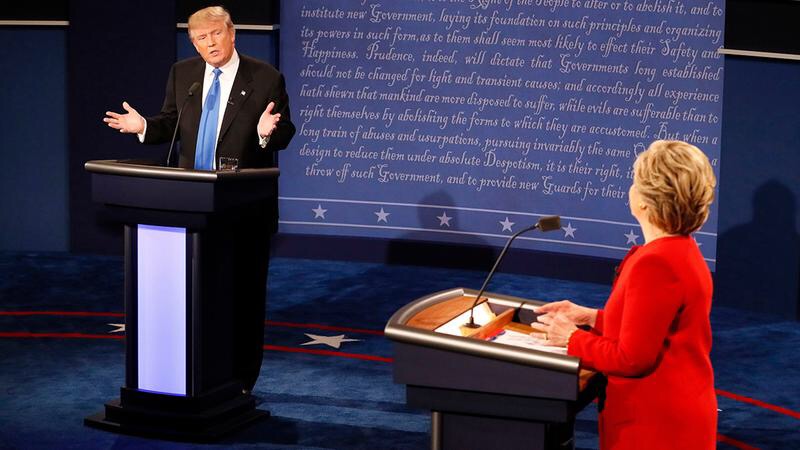
    By any equation, Hillary Clinton crushed Donald Trump in the first presidential debate.

    Trump was erratic, inconsistent and incoherent. He did not make a memorable case on any issue except perhaps his temperament (lol).

    Below are some of the things our good candidate Lied about in front of over 100 million viewers.

    • He lied about the loan his father once gave him.
    • He lied about his company’s bankruptcies.
    • He lied about his federal financial-disclosure forms.
    • He lied about his endorsements.
    • He lied about “stop and frisk.”
    • He lied about “birtherism.”
    • He lied about New York.
    • He lied about Michigan and Ohio.  
    • He lied about Palm Beach, Fla.
    • He lied about Janet Yellen and the Federal Reserve.
    • He lied about the trade deficit.
    • He lied about Hillary Clinton’s tax plan.
    • He lied about her child-care plan.
    • He lied about China devaluing its currency.
    • He lied about Mexico having the world’s largest factories.
    • He lied about the United States’s nuclear arsenal. 
    • He lied about NATO’s budget.
    • He lied about NATO’s terrorism policy.
    • He lied about ISIS.
    • He lied about his past position on the Iraq War.
    • He lied about his past position on the national debt.
    • He lied about his past position on climate change.
    • He lied about calling pregnancy an “inconvenience” for employers.
    • He lied about calling women “pigs.”
    • He lied about calling women “dogs.”
    • He lied about calling women “slobs.”

    So… who won the debate?

  • Secretary Kerry’s visit: India unfurls its big power vision

    Secretary Kerry’s visit: India unfurls its big power vision

    The military agreement signed with the US (LEMOA) has stolen all the thunder in two recent high-level interactions with the US. The spin seems to make the agreement the epitome of Indo-US ties because of its outsized political weight. The Americans had actually offered a palette of four military agreements. India had earlier signed the end-user verification agreement which is theoretically more intrusive. The real test of Indo-US strategic closeness will be the other two military agreements that have been opposed by the Indian military.

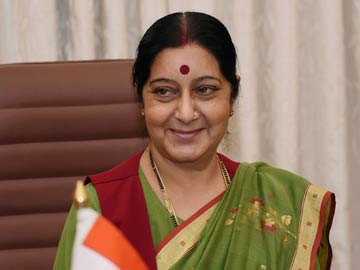
    But the LEMOA, despite its strategic ordinariness, has created a climate of freshness in Indo-US ties. Its timing should give India considerable political capital when a new US President takes office. In India, US Secretary of State John Kerry uttered platitudes on terrorism that India likes to hear but Sushma Swaraj also evoked a phrase that is music to American ears — India’s willingness to be a net provider of security to the region. In other words, it means the Indian military will rise to the occasion in case of any trouble in the region. In the diplomatic world of give and take, US President Barack Obama has already assured US backing to India’s renewed quest for Nuclear Suppliers’ Group membership.

    That is not all. Kerry’s surprise suggestion of an India-US-Afghanistan trilateral can bring New Delhi back into the Kabul game. It also suggests increasing American exasperation with Pakistan that has been reflected in the US holding back funds for F-16 fighter jets as well as $300 million in military aid. And in a reminder to the world that India should not be hyphenated with Pakistan, India stood up to its G-20 stature when Sushma Swaraj reminded the Americans about the pending transfer of $100 billion to developing countries to battle climate change. The agreement for joint Indo-US research in the Arctic may not turn many heads but this will be the arena for resource grab in the coming decades. Taken together — net provider of security, NSG, Afghanistan, climate change and the Arctic — signal India’s long-term vision on the world stage in the coming years.

  • India continues to get more H-1B visas despite fee hike: Verma

    India continues to get more H-1B visas despite fee hike: Verma

    NEW YORK (TIP): India continues to get the “lion’s share” of the H-1B visas from the US government despite the fee hike, US Ambassador to India Richard Verma.

    “India continues to receive the lion’s share of H-1B and L1 and even after the fee increase, they continue to get 70 per cent of those H-1B visas,” Verma said on the sidelines of ‘The Future is Now: From COP21 to Reality’ conference in New Delhi.

    “We understand the concern about the fee hike. I think there is an ongoing conversation. We also know this is an important part of travel and commercial enterprise in the US. And again, there is an increase in the number of visas issued, in fact, there is a slight increase,” he added.

    The US, under the 9/11 Health and Compensation Act, has imposed a special fee of USD 4,000 on certain categories of H-1B visas and USD 4,500 on L1 visas.

    Almost all Indian IT companies would be paying between USD 8,000 and USD 10,000 per H-1B visa as per the hike. According to Nasscom, this is expected to have an impact of about USD 400 million annually on India’s technology sector.

    Earlier in his speech, Verma said the ongoing deforestation and poor land management is responsible for nearly a quarter of the world’s greenhouse gas emissions as each day, greenhouse gases emitted by human activities trap the same amount of heat energy as would be released by 400,000 atomic bombs.

    “Climate change is not just an environmental challenge; it is a national security issue. Changes in climate could potentially damage critical infrastructure, create shortages of food and water, and lead to mass migrations and disease outbreaks.

    “Receding ice sheets in the Arctic and the opening of new sea passages raise concerns about maritime security and freedom of navigation,” he said. According to Verma, Prime Minister Narendra Modi’s 175 GW target for renewable energy deployments is among the most ambitious in the world and the US has done a great deal to support this effort.

    Through the US-India Partnership to Advance Clean Energy, or PACE, nearly USD 2.5 billion have been mobilized for clean energy projects in India and another USD 1.4 billion in climate finance for solar projects was announced during the Prime Minister’s visit to the US.

    “India’s success is critical to global success and I firmly believe, clean energy will be one of the biggest growth opportunities in the years ahead. Between now and 2035, investment in the global energy sector is expected to reach nearly USD 17 trillion. That’s more than the entire GDP of China and India combined,” Verma said.

    The US is actively supporting India’s solar targets through the Government of India-led International Solar Alliance and bilateral initiatives, such as rooftop solar cooperation and solar resource mapping, he said.

  • Supporting India’s Entry to the Nuclear Suppliers Group

    Supporting India’s Entry to the Nuclear Suppliers Group

    The Nuclear Suppliers Group (NSG) is a 48-nation exclusive export control regime dedicated to curbing nuclear arms proliferation while promoting safe international nuclear commerce for civil nuclear energy. After receiving a country-specific waiver for the India-United States Civil Nuclear Agreement from the NSG in 2008, most western nations advocated for India’s inclusion into the NSG, even Russia has expressed unconditional support for India. The sole outlier for the major powers remains China, though China could benefit from supporting India’s membership.

    Instead, China has spearheaded a diplomatic campaign to thwart India’s entry into the NSG. Doubling down on efforts to link India with China’s all-weather friend Pakistan, China has grasped at rationales to prevent India’s NSG membership.

    China has articulated three main pseudo-arguments against India’s entry into the NSG. The first is that India is not a signatory to the Treaty on the Non-Proliferation of Nuclear Weapons (Non-Proliferation Treaty, or NPT) of 1968 and allowing India to join does not comport with the greater non-proliferation agenda. Also, India’s entry might disturb the strategic balance in the Indian sub-continent, further encouraging Pakistan to take more desperate measures to seek strategic parity with India. Lastly, China argues that the NSG should be based on specific criteria, rather than selectively choosing suitable nations for entry.

    On all three counts, China is using clever sophistry to block India’s long overdue entry into the NSG. Whereas the roots of China’s obstructionist view stems from China’s strategic insecurity and fears of another rising Asian nation in the international geo-political theatre.

    Let us discuss China’s pseudo-arguments point by point. France’s NSG membership, in 1975, despite not being a signatory of the NPT until 1992, thus creating precedence for a non-signatory of NPT becoming a member of the NSG. China’s second argument, again fallacious, attempting to adjoin Pakistan’s nuclear program with that of India. Pakistan’s aggressive assertions regarding the potential use of tactical nuclear weapons against India, is a vast departure from India’s peaceful and defensive nuclear posture. Particularly considering India’s need for nuclear energy to support a burgeoning economy and population, and to minimize the use of fossil fuels to support current climate change initiatives.

    In addition to France, there are only four countries that are non-signatories to the NPT: India, Israel, Pakistan and South Sudan. North Korea, having withdrawn from NPT is obviously not a candidate for NSG. Israel and South Sudan are not seeking NSG membership, leaving just India and Pakistan. India and Pakistan have starkly contrasting non-proliferation records. Pakistan and China’s nuclear cooperation lacks a great deal of transparency, and is obviously a mix of civilian AND military applications, which should be cause for alarm.

    China worried about growing India-U.S. strategic cooperation, sees Pakistan as a mechanism to contain India in a perpetual regional conflict. China provided Pakistan with 50 kg of free weapons grade HEU and allowed Pakistan to test its first nuclear weapon of Chinese design in 1990 at China’s own Lop Nor nuclear test range.

    Essentially, China is a rising hegemon that can not countenance a rising India, systematically placing roadblocks to India’s entry into the diplomatic world, commensurate with India’s size and economic maturity. The time has come for the 5th generation leadership of communist to do the prudent thing by diplomatically supporting India’s entry into the NSG. China should remember that India had supported communist China’s entry into the UNSC as a permanent member in 1971 despite having bilateral border issues. Diplomatic hegemony by China cannot arrest a rising India’s entry to NSG, UNSC, APEC or any other international body. Continued attempts to limit India’s participation in the international community will actually cause China harm rather than goodwill

    China was a brotherly country to India until the occupation, and eventual annexation, of Tibet. The following attack on India in 1962 is still ingrained in the minds of the international community. India’s industrial base and growing economy is on pace to rival that of both the United States and China. If China wants the 21st century to be remembered as an Asian century, China must learn to recognize and accept India’s vital role.

    China as a nation must do some self-introspection regarding its hegemonic behavior and expansionist policies since 1949. China has no allies worth naming on the twin issues of its imperialistic behavior in the East and South China Seas. Peoples’ Republic of China can gain immense goodwill from a peaceful and rising India if it stops obstructing India’s entry into the NSG on June 24th 2016 in Seoul, South Korea.

    (The author is the President of the Council for Strategic Affairs, New Delhi, India)

  • India Contradicts US Claim Over Signing Climate Deal This Year

    India Contradicts US Claim Over Signing Climate Deal This Year

    The US claim that India will ratify the Paris climate change agreement this year was contradicted on Wednesday, June 8, by Indian official sources.

    “We agreed to join as soon as possible and that is what is reflected in the Joint Statement as well,” said the sources indicating that India had not fixed a deadline to sign.

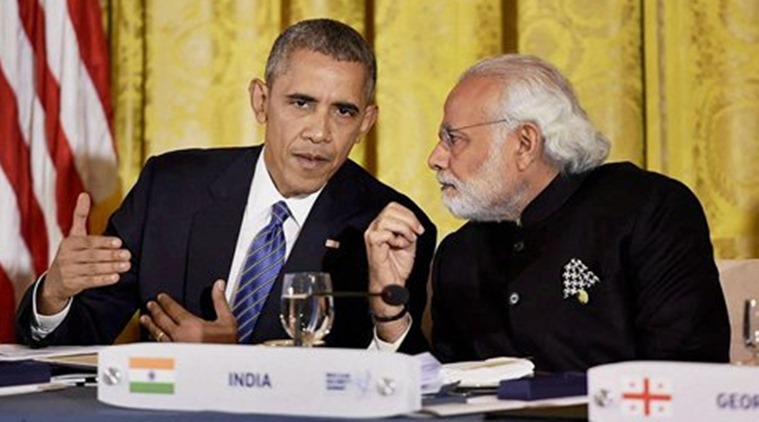
    After Prime Minister Narendra Modi’s talks with President Barack Obama here, the US had said that India will try to sign this year the landmark accord to limit greenhouse gases.

    The accord will become binding when at least 55 countries representing 55 per cent of global emissions formally join.

    India’s signature is crucial as it will guarantee that the agreement will go into effect before the next US President takes over in January, with Republican presumptive nominee Donald Trump threatening to re-negotiate it.

    The Joint Statement said that both India and the US recognised the urgency of climate change and share the goal of enabling entry into force of the Paris agreement as early as possible.

    It said the US reaffirmed its commitment to join the agreement as soon as possible this year.

    “India similarly has begun its processes to work toward this shared objective. The leaders reiterated their commitment to pursue low greenhouse gas emission development strategies in the pre-2020 period and to develop long-term low greenhouse gas emission development strategies,” it said.

    Foreign Secretary S Jaishankar yesterday said there were regulatory and legal issues to be addressed and that the Indian government was “looking at ways and means” to take the agreement forward.

  • Bronx Borough President Ruben Diaz Appreciates US move on Puerto Rico’s Debt Crisis

    Bronx Borough President Ruben Diaz Appreciates US move on Puerto Rico’s Debt Crisis

    NEW YORK (TIP): Bronx Borough President Ruben Diaz Jr. has appreciated US move on Puerto Rico’s debt crisis. He said in a statement to The Indian Panorama, May 19:”After more than a year of negotiation and advocacy by my office and many others, I am pleased to see an important first step between the White House and Congress on the future fiscal health of the commonwealth of Puerto Rico, H.R. 5278, the Puerto Rico Oversight, Management and Economic Stability Act (PROMESA).

    “This bipartisan compromise, while certainly not perfect, is a tremendous step forward and offers many of the solutions that I and others have been advocating for. Although access to bankruptcy courts would have been preferred, we are encouraged by the bill’s provision to allow Puerto Rico to reduce repayments to creditors. However, the process for appointing members of the proposed control board must ensure that the individuals selected protect the best interests of the Puerto Rican government and its people.

    “There is still much work needed to be done by Congress to update and revise the Puerto Rican economic regulatory framework. Health care must be delivered more effectively, import costs reduced and infrastructure investments made so that Puerto Rico has greener energy solutions and is prepared for the dramatic changes already being produced by climate change.

    “I thank the White House and Congress for taking the concerns of the Puerto Rican government, its citizens and their advocates on the mainland seriously and working towards this agreement. I especially want to thank those who have worked assiduously on this compromise, including House Speaker Paul Ryan, House Minority Leader Nancy Pelosi, Senators Charles Schumer and Kirsten Gillibrand; and Reps. Nydia Velázquez, Jose Serrano and Luis Gutiérrez.”

    The Borough President added: “The people of Puerto Rico are American citizens, and they deserve the same rights and protections as their countrymen.”

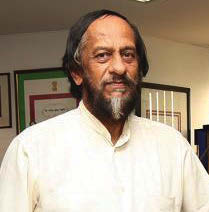
  • Prima Facie: RK Pachauri – Ex-UN climate head charged with sexual harassment

    Prima Facie: RK Pachauri – Ex-UN climate head charged with sexual harassment

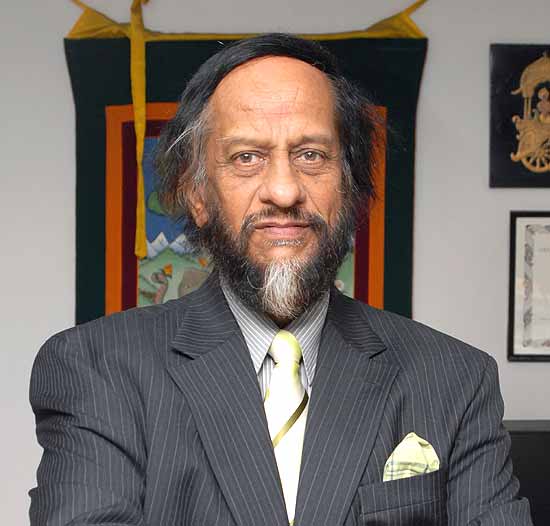
    The former head of the UN climate change panel (IPCC), Rajendra Pachauri, has been formally charged in an Indian court in a case of sexual harassment.

    A female employee at the environmental think-tank The Energy and Resources Institute (Teri) had accused him last year of harassment.

    Accusations by a second employee last month caused widespread outrage.

    Mr Pachauri, who has denied the allegations against him, stepped down from the UN panel last year.

    In February, he was forced to go on indefinite leave by Teri after the latest accusations.

    On Tuesday, March 1, charges running into more than 1,400 pages were filed in the court of metropolitan magistrate Shivani Chauhan in Delhi, the Press Trust of India reported.

    Mr Pachauri has been accused of sexual harassment, stalking and criminal intimidation, the agency said.

    The charges relate to accusations made by the first woman. The magistrate has said she will hear the case on 23 April.

    Mr Pachauri collected the Nobel Peace Prize in 2007 on behalf of the IPCC for its work in the scientific assessment of the risks and causes of climate change.

    The IPCC shared the award with former US vice-president and environmental campaigner, Al Gore.

  • Give up Beef and save the Planet

    Give up Beef and save the Planet

    There is a big debate about global warming and carbon foot prints in the Group of Twenty (also known as the G-20 or G20) and other forums and India listens to western lectures on dangers of coal and emissions etc.

    So far the discussion is only on fossil fuels and items like concrete constructions but not on eating habits of people. The latter contributes much more to global warming and Ecological destruction. We often do not bring that to the top of the table since all discussion is essentially West determined.

    An interesting report in Scientific American says:

    Most of us are aware that our cars, our coal-generated electric power and even our cement factories adversely affect the environment. Until recently, however, the foods we eat had gotten a pass in the discussion. Yet according to a 2006 report by the United Nations Food and Agriculture Organization (FAO), our diets and, specifically, the meat in them cause more greenhouse gases carbon dioxide (CO2), methane, nitrous oxide, and the like to spew into the atmosphere than either transportation or industry.(Greenhouse gases trap solar energy, thereby warming the earth’s surface. Because gases vary in greenhouse potency, every greenhouse gas is usually expressed as an amount of CO2 with the same global-warming potential.)

    Curbing the world’s huge and increasing appetite for meat is essential to avoid devastating climate change, according to a new report. But governments and green campaigners are doing nothing to tackle the issue due to fears of a consumer backlash, warns the analysis from the think-tank Chatham House.

    The global livestock industry produces more greenhouse gas emissions than all cars, planes, trains and ships combined, but a worldwide survey by Ipsos MORI in the report finds twice as many people think transport is the bigger contributor to global warming.

    More importantly it is to be noted that the study shows red meat or beef dwarfs others for environmental impact, using 28 times more land and 11 times water for pork or chicken.

    Beef’s environmental impact dwarfs that of other meat including chicken and pork, new research reveals, with one expert saying that eating less red meat would be a better way for people to cut carbon emissions than giving up their cars.

    The heavy impact on the environment of meat production was known but the research shows a new scale and scope of damage, particularly for beef. The popular red meat requires 28 times more land to produce than pork or chicken, 11 times more water and results in five times more climate-warming emissions. When compared to staples like potatoes, wheat, and rice, the impact of beef per calorie is even more extreme, requiring 160 times more land and producing 11 times more greenhouse gases.

    “The biggest intervention people could make towards reducing their carbon footprints would not be to abandon cars, but to eat significantly less red meat,” Benton said. “Another recent study implies the single biggest intervention to free up calories that could be used to feed people would be not to use grains for beef production in the US.” However, he said the subject was always controversial: “This opens a real can of worms.”

    Prof Mark Sutton, at the UK’s Centre for Ecology and Hydrology, said: “Governments should consider these messages carefully if they want to improve overall production efficiency and reduce the environmental impacts. But the message for the consumer is even stronger. Avoiding excessive meat consumption, especially beef, is good for the environment.”

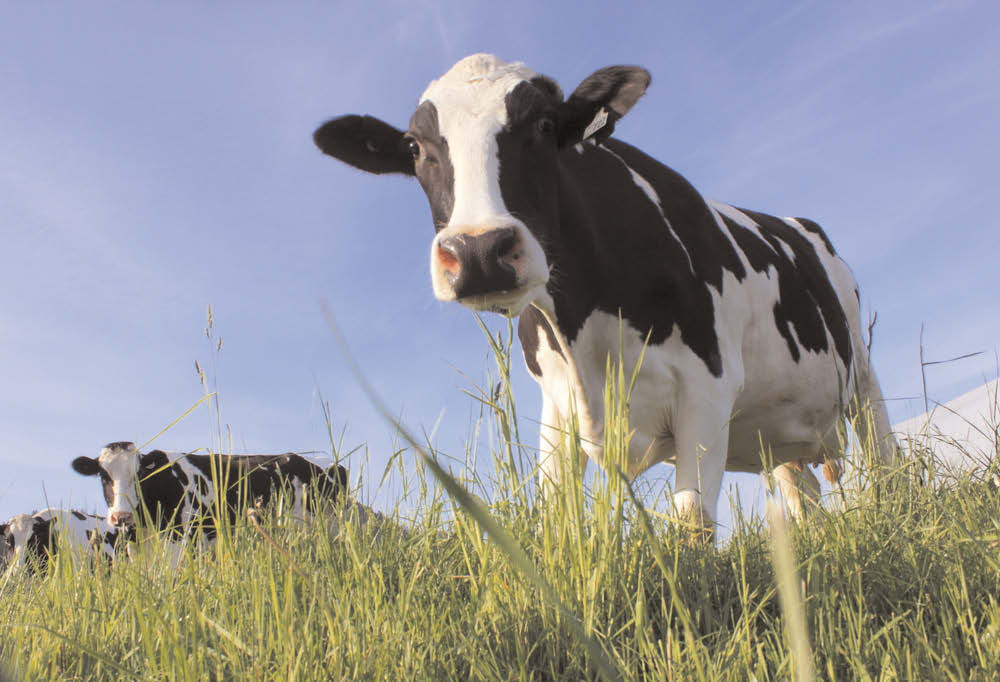
    Livestock production accounts for 14.5 per cent of global greenhouse emissions, the same amount produced by all the cars, planes, boats and trains in the world. “A single cow can belch up to 500 liters of methane every day”, writes the BBC’s Dry Michael Mosley, a gas that is 25 times more potent than a carbon dioxide. “Multiply that by the 1.5 billion cattle we have on our planet and that’s a lot of gas.”

    It is inefficient. It takes, on average, 3kg of grain to produce 1kg of meat and two thirds of all agricultural land is used to grow feed for livestock, whereas only eight per cent is used to grow food directly for human consumption. These are “basic laws of biophysics that we cannot evade,” says the study’s lead researcher, Bojana Bajzelj from the University of Cambridge.

    It places pressure on dwindling freshwater supplies and destroys forest and grasslands, which are turned over for grazing. Soil erosion, soil and water pollution from fertilizers and animal waste are other ways the meat industry impacts the environment.

    Scientists also argue that we need to stop wasting so much food, as on average, 7.2 million tons of food is wasted in the UK each year.

    In conclusion, we should put forward arguments and turn the debate on its head by asking the West to close down steak houses and consume less red-meat/ beef rather than meekly accepting their arm twisting.

    (The author is a professor of Finance at Indian Institute of Management, Bangalore. He can be reached atvaidya@iimb.ernet.in)
  • CLIMATE DEAL: DISASTER AVERTED?

    CLIMATE DEAL: DISASTER AVERTED?

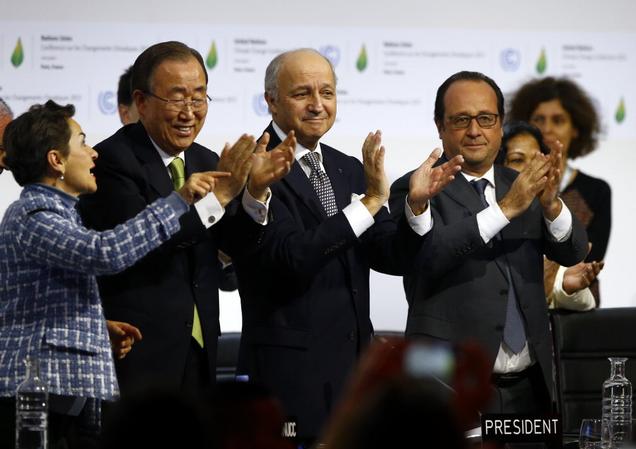
    In the early evening of December 12, French Foreign Minister Laurent Fabius banged the gavel in a conference hall in Le Bourget, marking the unanimous approval of 195 nations of a monumental pact: a global deal aiming to curb global warming to below 2ºC.

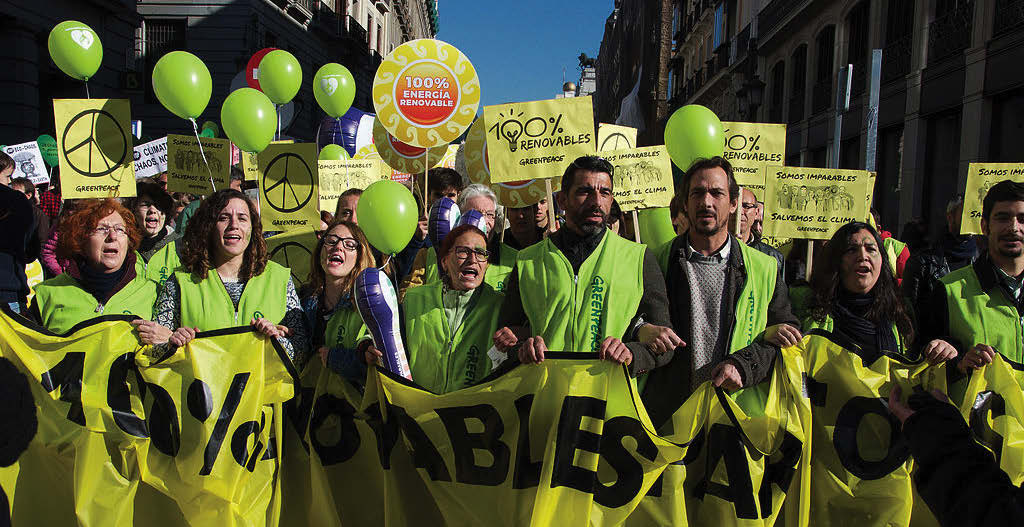
    Greenpeace activists, demanding 100% renewable energy at Climate March 2015 in Madrid.
    Greenpeace activists, demanding 100% renewable energy at Climate March 2015 in Madrid.

    The Paris Agreement is seen as the most important document produced in more than two decades of climate negotiations. In a historic first, all participating nations gave their approval to a climate-related deal, and the epic failure of Copenhagen in 2009 seemed like a distant memory. In the lead-up, host nation France and the United Nations made an all-out diplomatic push, urging countries to think about future generations.

    Many analysts, observers, and experts said the deal is imperfect, with many issues still unresolved or left open for discussion, including climate finance and the issue of loss and damage. But the deal is a good start: The world now has a reference point as it tries to put the brakes on this disaster called climate change.

  • H-1B, L-1 Visa Fee hiked by upto $4500

    H-1B, L-1 Visa Fee hiked by upto $4500

    WASHINGTON (TIP): The US Congress has imposed a special fee of up to $4,500 on the H-1B and L-1 visas popular among Indian IT companies to fund a 9/11 healthcare act and biometric tracking system.

    Such a move has been made part of the James Zadroga 9/11 Health and Compensation Act which funds health screenings and treatments for 9/11 first responders.

    The bill, named after Detective James Zadroga who died of a respiratory illness in 2006, expired on October 1. Lawmakers are seeking to permanently extend the bill and want to generate necessary funds by imposing a $2,000 additional fee on H-1B visas.

    The bill has been written in such a way that it would impact only Indian companies.

    Congressional leaders, while agreeing on the $1.1 trillion spending bill, yesterday decided to impose a special fee of $4,000 on certain categories of H-1B visas and $4,500 on L-1 visas. The US House of Representatives is slated to vote on the $1.1 trillion spending bill deal later today.

    According to the agreed bill, the new $4,000 fee would apply to companies having at least 50 employees with 50 per cent of their employees on H-1B or L-1 visa. Such companies would have to pay a new fee of $4,000 for H-1B visas and $4,500 for L-1 visas.

    While the specific provisions of the spending bill has no mention of Indian IT companies, the language of the bill has been written in such a way that it would have a big impact on Indian IT companies.

    Though the lawmakers behind the bill described it as a temporary provision, the new H-1B and L-1 visa fee increase is for a period of 10 years as against a previous provision of five years. The previous such provision from 2010 to 2015 of $2,000 for H-1B visas lapsed on September 30.

    In a study released in September this year, NASSCOM, a trade association of Indian IT industry, said Indian IT companies have paid between $70 to $80 million annually for the US Treasury approximately. Given that, the new punitive measure is expected to raise between $1.4 billion and $1.6 billion every year for the next one decade.

    Expecting that this provision would generate more than $1 billion per annum, the bill says that after $1 billion is deposited for 9/11 first responders and the Biometrics Ext account, the rest of the money would be deposited in the general fund of the Treasury.

    Notably, Prime Minister Narendra Modi had raised the issue with US President Barack Obama when the latter telephoned him to thank for his leadership role on achieving the historic agreement on climate change in Paris on December 12.


    It is learnt that the White House did raise its concerns with the Congressional leaders on the impact of such a move to dramatically increase H-1B and L-1 visas fees on India-US relationship. However, the Republican-majority Congress decided to ignore the concerns of the White House and doubled the H-1B and L-1 fees for Indian IT companies.

  • Are Attempts being made to derail the talks between India & Pakistan?

    Are Attempts being made to derail the talks between India & Pakistan?

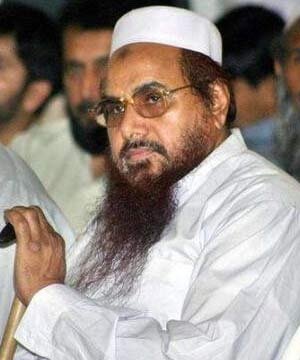
    As the governments of India and Pakistan work towards normalizing ties between the two countries, anti-humanity groups (JuD) start with their rants in hopes of destabilizing future talks.

    Hafiz Saeed questions India on 26/11, says no concrete proof in 26/11 attacks even after 7 years

    Jamaat-ud-Dawah (JuD) chief and 26/11 plotter Hafiz Saeed has dared India over the Mumbai attacks probe days after Sushma Swaraj’s visit to Islamabad.

    This rant comes after a joint declaration where India and Pakistan agreed to a composite dialogue as well as to expedite the trial of 26/11; In a speech, the JuD chief Saeed says, “Our government remained silent, but let me respond to Sushma. It’s been seven years but they could not prove who was behind the Mumbai attacks and Insha Allah (if Allah wills it) they will never be able to prove it until eternity.”

    He also mocked New Delhi for failing to establish any concrete proof in the seven years after 26/11 and claiming that India would never be able to establish his complicity in the attack.

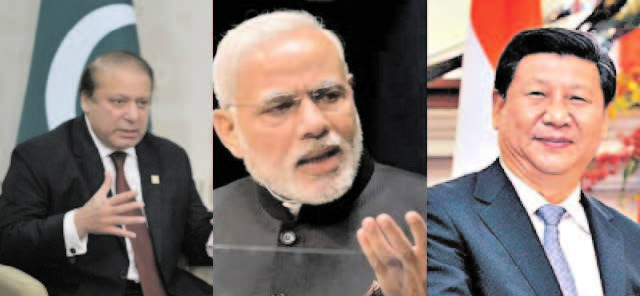
    Earlier JuD chief had slammed Pakistan Prime Minister Nawaz Sharif for holding a meeting with Narendra Modi during the Paris climate change conference.

    “Nawaz Sharif should not have met with Narendra Modi and exchanged smiles with him in Paris. It has hurt the sentiments of the Kashmiri Muslims,” Saeed said at a seminar titled ‘Kashmir Issue and Rise of Hindu Extremism in India’ at the Lahore High Court on December 2 organised by the Pakistan Justice Party.

    He said Sharif should sever relations with India till resolution of the Kashmir issue.

    “Nawaz Sharif should announce that there will be no talks with India till it ends atrocities against Kashmiri and Indian Muslims,” he said adding that till the resolution of the Kashmir dispute there should be no trade, no cricket and no talks with India.

    Saeed said “When they are not in power they talk about the oppressed Kashmiri people as if they are the champion of the Kashmir cause. But when they are in power they forget them”.

    Saeed founded the LeT whose operatives carried out the 2008 Mumbai attack that killed 166 people.

    Also read: Congress Questions Centre Over Hafiz Saeed's Rant
  • Historic COP21 climate change summit reaches deal in Paris

    Historic COP21 climate change summit reaches deal in Paris

    Dec 12 (TIP NEWSWIRE) : A landmark climate change deal was clinched with the approval of India, China and the US, after two weeks of intense discussions and negotiations, with the legally-binding pact seeking to limit global warming to “well below” 2 degrees Celsius and committing $100 billion a year from 2020 to help developing nations on Saturday, December 12.

    The pact is the first to commit all countries to cut carbon emissions.

    The agreement is partly legally binding and partly voluntary.

    Earlier, key blocs, including the G77 group of developing countries, and nations such as China and India said they supported the proposals.

    Amidst cheers and applause from delegates from 195 countries, the draft of the “historic” deal was presented by President of the UN climate conference of parties (COP) and French Foreign Minister Laurent Fabius.

    “I now invite the COP to adopt the decision entitled Paris Agreement outlined in the document,” said Fabius.

    French President Francois Hollande appealed to the gathering to approve the accord.

    “Looking out to the room I see that the reaction is positive, I see no objections. The Paris agreement is adopted.”

    Fabius has claimed that the agreement which is 31 pages long acknowledges the notion of “climate justice” and takes into account the countries’ differentiated responsibilities and their respective capabilities in the light of different national circumstances.

    Key points of Deal, to take effect from 2020

    The measures in the agreement included:

    • To peak greenhouse gas emissions as soon as possible and achieve a balance between sources and sinks of greenhouse gases in the second half of this century

    • To keep global temperature increase “well below” 2C (3.6F) and to pursue efforts to limit it to 1.5C

    • To review progress every five years

    • $100 billion a year in climate finance for developing countries by 2020, with a commitment to further finance in the future.

    average

    US President Barack Obama has hailed the agreement as “ambitious” and “historic”, but also warned against complacency. “Together, we’ve shown what’s possible when the world stands as one.” And although admitting that the deal was not “perfect”, he said it was “the best chance to save the one planet we have”.

    Prime Minister Narendra Modi has hailed the landmark climate accord in Paris, saying it pointed the world towards a greener future.”Outcome of Paris agreement has no winners or losers. Climate justice has won & we are all working towards a greener future,” PM Modi posted on Twitter. The deliberations at the climate summit and the agreement reached “demonstrates the collective wisdom” of world leaders to mitigate climate change, he added.

    China’s chief negotiator Xie Zhenhua said the deal was not perfect. But he added that “this does not prevent us from marching historical steps forward”.

    Nearly 200 countries took part in the negotiations to strike the first climate deal to commit all countries to cut emissions, which would come into being in 2020.

    The chairman of the group representing some of the world’s poorest countries called the deal historic, adding: “We are living in unprecedented times, which call for unprecedented measures.

    “It is the best outcome we could have hoped for, not just for the Least Developed Countries, but for all citizens of the world.”


  • Beijing lifts smog red alert

    Beijing lifts smog red alert

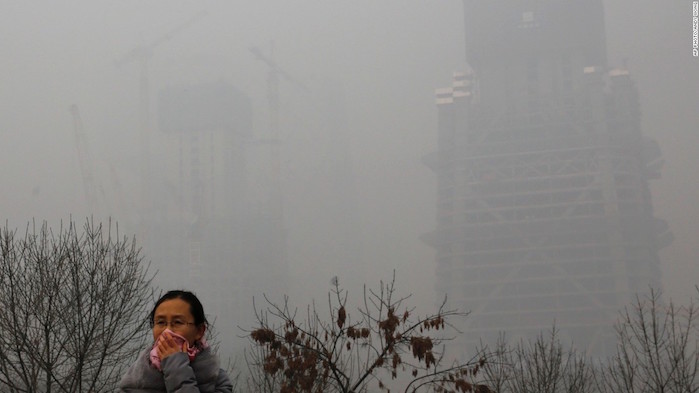
    BEIJING: Beijing’s first ever red alert for smog expired Thursday, as blue skies and sunshine replaced the thick haze that covered the city for days.

    The Chinese capital put its air pollution emergency plan into action earlier this week, pulling half of all private vehicles off the streets from Tuesday, ordering many factories to close and recommending that some schools allow students to remain home.

    The measures were being lifted from midday Thursday, according to a social media post by Beijing’s environmental protection bureau.

    The red alert, the highest tier of a four-colour warning system, came as heavy smog flooded the city for the second time in as many weeks.

    The unprecedented move followed scathing public criticism aimed at the city’s weak response to last week’s thick haze, which saw pollution sky-rocket to levels not seen in years.

    Counts of PM2.5 — harmful microscopic particles that penetrate deep into the lungs — reached well over 600 micrograms per cubic metre last week, according to the US embassy, which issues independent readings, and were regularly above 300 in recent days.

    By lunchtime on Thursday they were down to 22 as moderate winds blew from the north, below even the World Health Organization’s recommended maximum exposure of 25.

    In a note posted online, the city wrote that the emergency measures had “been effective in slowing down the process of smog accumulation”, and expressed its “heartfelt thanks” and “sincere tribute” for residents’ contributions to the effort.

    The city will “fight well a hard battle to prevent and contain air pollution”, it said.

    But the struggle is largely out of municipal officials’ hands since much of its air pollution comes from neighbouring areas, where pollution levels remained hazardous Thursday, particularly to the south in Hebei province.

    The recurrent bad air has driven residents of the capital to hospitals in growing numbers, according to a report on Internet giant Tencent’s news portal.

    During the last month’s periods of severe pollution, it said, trips to medical facilities using hailing app Didi Kuaidi — backed by Tencent — went from 3.4 percent of all journeys to 4.1 percent, an increase of more than a fifth.

    The report also cited online retailer JD.com as saying pollution mask sales soared by as much as 400 percent in response to the bad air.

    The miasma came as President Xi Jinping attended a critical meeting on climate change in Paris, a potentially embarrassing coincidence that underscored China’s struggle to control the pollution that contributes to both its chronic smog and global warming.

    Most of the country’s greenhouse gas emissions come from the burning of coal for electricity and heating, particularly when demand peaks in winter, which is also the key cause of smog.

    Earlier this month, China’s meteorological bureau said it expected at least one and possibly two more bouts of heavy pollution in December, with the first expected as soon as Saturday.

    It remains unclear how Beijing will respond to future airborne smog peaks, but other cities in the region followed its lead this week by issuing their own red alerts as pollution levels climbed even higher than those seen in the capital. (AFP)

  • EcoSikh Calls on Prime Minister Modi for Climate Agreement in Paris

    EcoSikh Calls on Prime Minister Modi for Climate Agreement in Paris

    WASHINGTON (TIP): EcoSikh has appealed to Prime Minister Narendra Modi to commit to reducing carbon emissions and to work towards a meaningful agreement at the UN Climate Summit in Paris this week on behalf of India and the Indian people. Leaders from around the world have convened in Paris this week to begin negotiating a landmark climate agreement that may alter the course of climate dialogue for the future.

    Suneet Tuli of EcoSikh with the World Bank president along with faith representatives in Washington, DC
    Suneet Tuli of EcoSikh with the World Bank president along with faith representatives in Washington, DC

    The aim of the United Nation’s 21st Conference of Parties, also known as COP21, will be to commit the nations to reducing their greenhouse gas emissions, which is one step in fighting the adverse effects of climate change. The meeting is expected to be one of the largest held for the UN Framework Convention on Climate Change (UNFCCC), with 40,000 delegates attending the negotiations.

    EcoSikhDr. Rajwant Singh, President of the Washington based EcoSikh, said, “India stands to be affected severely from the effects of climate change in the coming decades. Many important parts of the country are vulnerable. India’s policy to increase coal plants and production of coal based energy is devastating to the overall goal of controlling carbon emissions. India’s poor are some of the hardest hit by climate change, and will continue to be if India does not take a grander stand in the UN negotiations. While PM Modi makes the argument that historically, India has not been the largest emitters of carbon and therefore should be able to prioritize development over environmental conservation, India still has the duty to its citizens to provide them with a safe, clean and healthy environment to live in.”

    Singh added, “We appreciate PM Modi’s drive to increase alternate sources of energy for the country and focusing on technology transfers, research and development, and investment in India’s alternative energy sector with the overall goal of emissions reductions. But, this will only come with the commitment of Prime Minister Modi and his cabinet. Climate change is a moral issue and India should stand on the right side of history.”

    Amar Singh Sawhney, a member of EcoSikh’s Board of Directors and CEO of Boston based Ocular Therapeutix, Inc, said, “There is a cost to using fossil fuel based energy that goes beyond global warming and its catastrophic climate change implications. The additional costs come in the form of health disasters from particulate and other gaseous emissions that are affecting the Indian populace. Already, asthma, lung cancer, and other diseases are growing in incidence dramatically in India as a direct result of air pollution.”

    He added, “While understandably, India may not be able to eliminate coal and oil from its energy mix, a firm commitment to technological improvements to decrease the pollution impact of these energy sources must be undertaken. Solar energy, which has begun to gain traction in India, must be supported to increase if it is to be viable in the long term.”

    Suneet Singh Tuli, a member of the EcoSikh Board of Directors and CEO of the Datawind, said, “One does not have to look too far to see farmers in Punjab suffering from a lack of groundwater, or India’s south devastated by intense storms and strong typhoons. India is at risk, and it is time for Prime Minister Modi, and India’s energy minister Piyush Goyal to take seriously the impending damage climate change will cause for India’s 1.2 billion people, and make sure economic development is not their only agenda. For, what will they develop if there is no land left?”

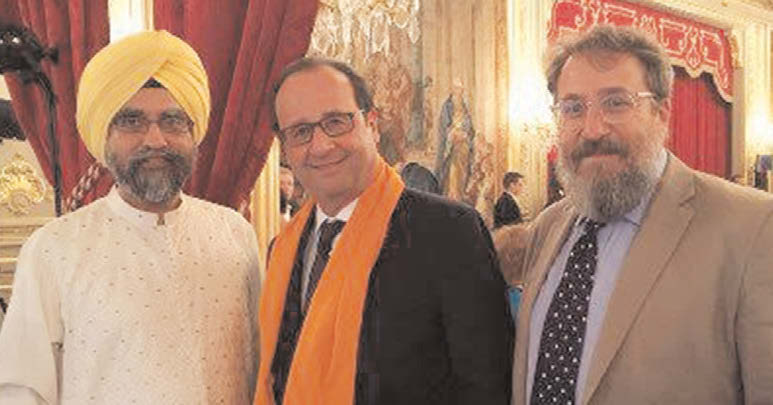
    EcoSikh has been invited by French President Francois Hollande and by the White House this year on consultations on Climate Change issues for faith perspectives. EcoSikh also took part in UN and the World Bank sponsored conference in Bristol and Paris on climate change and poverty issues leading to the UN Paris summit.

    India often finds itself in the same boat as another large greenhouse gas emitter: China. Both countries have a gone through and are currently undergoing rapid development, economic opening, and possess the top two most populous nations in the world. The difference comes with how China has led in the UN agreements. China has pledged $3.1 billion to help developing countries par down their carbon emissions, has promised an emissions peak around 2030 and committed to having 20% of their energy from non-fossil fuels sources. India, on the other hand, has made some commitments in comparison; one of which is to reduce emissions intensity by 30 to 35 percent by the year 2030. Still, India will require US$2.5 trillion to meet their goals and introduce alternative energy sources to the country.

  • Sushma Swaraj may visit Pak for Talks

    Sushma Swaraj may visit Pak for Talks

    External Affairs Minister Sushma Swaraj may travel to Islamabad next week to attend a multilateral conclave on Afghanistan.

    Though the government has not yet officially announced Swaraj’s visit to Islamabad, sources said she herself might travel to the capital of the neighbouring country for a day or two to attend the “Heart of Asia” meet on Afghanistan, instead of asking Minister of State for External Affairs V K Singh to represent her and lead the delegation from India.

    Sources said that New Delhi would factor in Prime Minister Narendra Modi’s “brief but good discussions” with his Pakistani counterpart Nawaz Sharif on the sidelines of the UN climate change summit COP 21 in Paris on Monday to arrive at a decision on the External Affairs Minister’s visit to Islamabad.

  • World’s richest 10 percent responsible for half of CO2, report says

    World’s richest 10 percent responsible for half of CO2, report says

    WASHINGTON (TIP): The world’s richest 10 percent of people are responsible for producing about half of all carbon emissions, and the average carbon footprint of the richest 1 percent is about 175 times that of the poorest 10 percent, according to a latest report.

    The paper, “Extreme Carbon Inequality,” released by the global charity Oxfam, comes as world leaders are gathered in Paris for COP21 – a United Nations conference aimed at agreeing a new global climate treaty to mitigate the worst effects of climate change.

    “While the COP21 in Paris will see a deal negotiated between governments on the basis of the total emissions produced in their territories, the real winners and losers will be their citizens,” the report reads. “The litmus test of the deal will be whether it delivers something for the poorest people who are both the least responsible for and the most vulnerable to climate change, wherever they live.”

    The 3.5 billion people that make up the poorest half of the globe produced just 10 percent of emissions – yet they live in places that are particularly vulnerable to the effects of global warming, including from catastrophic storms, severe droughts, and rising seas and flooding, the report said. Their governments are also less likely to have the resources to adapt to and mitigate those effects, the report added.

    The reported cited a recent study by the World Bank that found the poorest people in any country are most exposed to disasters including heat waves, flooding, and droughts -especially in countries in Africa and South East Asia.

    For example, when Typhoon Haiyan devastated the Philippines in 2013, killing over 7,000 people, it left the country with a humanitarian crisis so extensive it had to borrow money from other countries to rebuild – leaving the country with at least $1 billion to pay back.

    The same inequalities can also be seen in wealthy countries, including the United States, where its poorest residents in Louisiana, Mississippi and Alabama are disproportionately threatened by rising seas and coastal flooding, the report said. When Superstorm Sandy hit New York City in 2012, over a third of the people in the storm surge area lived in government-assisted housing, and half of the city’s public housing residents were displaced, it added.

    “Climate change and economic inequality are inextricably linked and together pose one of the greatest challenges of the 21st century,” Tim Gore, Oxfam’s head of food and climate policy and author of the report, said.

    The report shows that the richest 10 percent of the U.S., about 30 million people, produces three times as many emissions as the 600 million people that constitute China’s poorest half; while the poorest half of the U.S. produces five times the amount of emissions as the poorest half of India.

    By the end of COP21, each country is expected to submit final plans for cutting emissions and transitioning to green economies. Those actions will aim to help keep the global temperature increase since preindustrial times below 2 degrees Celsius (3.6 Fahrenheit). At the current pace of carbon emissions, the world is on track for a nearly 3 C rise by 2100, the U.N. has said. The earth has already passed the 1 C hotter mark, according to U.K. researchers who released new data last month.

    “Paris must be the start of building a more human economy for all – not just for the ‘haves,’ the richest and highest emitters, but also the ‘have-nots,’ the poorest people who are the least responsible for and most vulnerable to climate change,” Gore said in the release.

  • Approach of rich nations threatens an outcome at climate summit, says G77 and China group

    Approach of rich nations threatens an outcome at climate summit, says G77 and China group

    PARIS: The issue of climate finance continues to be a major sticky point with the G77 and China, a group of 134 developing countries including India, strongly objecting to the attempts made by the rich nations to dilute the Convention that sought the developed countries to extend support to their poor counterparts. The Group said the approach of the developed countries threatened an outcome of the summit in the French capital.

    “The G77 and China is deeply concerned with the attempts to introduce economic conditions in the finance section currently under negotiation here in Paris”, said ambassador Nozipho Mxakato-Diseko from South Africa while making her statement on behalf of the biggest group of developing countries.

    She said, “This approach is not consistent with the Convention, the mandate of the ADP and the sovereignty of Parties. Any attempt to replace the core obligation of developed countries to provide financial support to developing countries with a number of arbitrarily identified economic conditions is a violation of the rules-based multilateral process and threatens an outcome here in Paris”.

    The Group expressed its concerns over the narrative which suggests that the world has changed since the UNFCCC was adopted in 1992 due to the dramatic economic development gains of some of the developing countries (China, South Korea, Saudi Arabia and UAE among others) and hence that it is time to expand the pool of so-called “donors” of climate “aid” and to narrow the list of those eligible to receive this
    “support” to only the “poorest of the poor”.

    “This narrative serves narrow national interests of developed countries and says little about reality. If the world has really changed so much, we ask why it is that after all these decades all our members remain developing countries with little or no voice in global decision-making processes and institutions”, said the ambassador.

    The G77 and China stressed that nothing under the UNFCCC can be achieved without the provision of means of implementation to enable developing countries to play their part to address climate change.

    Mxakato-Diseko said that the clarity on the complete picture of the financial arrangements for the enhanced implementation of the Convention kept on eluding the Group.

    “We believe that it will help the process if all matters related to finance, whether it is under the Convention, the Kyoto Protocol and under the ADP (Ad Hoc Working Group on the Durban Platform for Enhanced Action) can be discussed in a comprehensive and coherent manner, regardless of where they will be reflected in the end, whether in the decision or the agreement”, she said.

    The Group also emphasized that it is now time for all developed countries to convert their pledges to the Green Climate Fund (GCF) into contribution agreements, as well as scaling up commitments in the ADP process.

    Under the Convention, developed countries are obliged toprovide financial resources, including technology transfer and capacity building to all developing countries.

    This is a legal obligation under the Convention. It is neither aid nor charity, nor is it the same as development assistance. Finance support from developed countries relates to the impacts of historical emissions, which will only get worse with time for developing countries.

    The Group is therefore concerned about the introduction of new language, which has no basis in the Convention, such as “Parties in a position to do so” and “dynamism” that do no take into account responsibility for historical emissions.

    The Group also made it clear that the differentiation is not just a finance issue, but about the overall Paris outcome. “The specific outcomes on finance must also not impose on our sovereignty and should not override or displace the zero poverty goals”, said the South African ambassador on behalf of the G77 and China.

  • Deadly floods bring Chennai to a Standstill

    Deadly floods bring Chennai to a Standstill

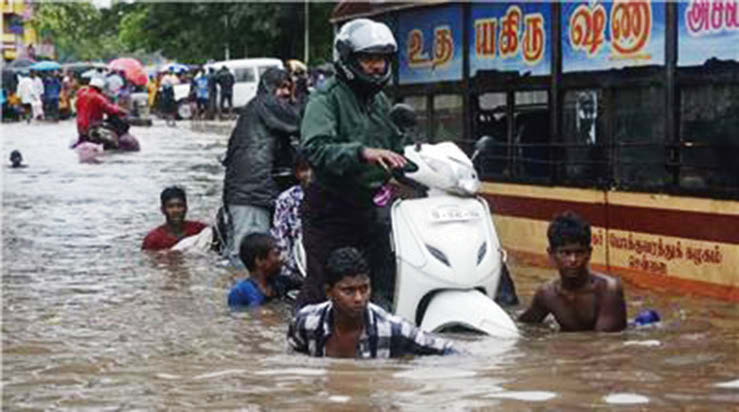
    CHENNAI (TIP) While the world is talking about climate change. Delhi is smog laden; Chennai is flooded. Lakshadweep, Andamans, Kolkata, Mumbai may face annihilation, if earth’s temperature keeps rising at the pace it has been since industrial revolution.

    The severe flooding in Chennai again questions India’s preparedness for extreme weather events like rains, droughts and cyclonic storms which are becoming more frequent and intense.

    Flooding in Chennai, the country’s fourth-largest city, has killed more than 40 people in the past 48 hours, authorities said Thursday, December 3, bringing the death toll to 260 since last month.

    A large-scale rescue operation is under way, amid neck-high water in some areas as Chennai continues to bear the brunt of the deluge. Daily downpours threaten to worsen the already severe flooding situation around Chennai, into early next week after the city endured its wettest December day in more than 100 years of record-keeping.

    Rainfall from both a weak tropical low and moisture from the Bay of Bengal will continue put southern India at risk for new and worsening flooding problems into early next week.

    New flooding problems may develop in eastern Tamil Nadu and far southern Kerala with additional rainfall of 100-200 mm (4-8 inches) expected through Sunday.

    Hundreds of soldiers and sailors from India’s armed forces have been deployed to assist in relief efforts after weeks of heavy rains since the start of November.

    Home Minister Rajnath Singh told lawmakers that the government had released 9.4 billion rupees ($141 million) for flood relief and restoration. On his arrival in Chennai Thursday, December 3, evening, PM Modi announced an additional 10 billion rupees for relief operations. “The Government of India stands shoulder to shoulder with the people of Tamil Nadu in this hour of need,” he said.

    In November, PM Modi had said the torrential rains in Chennai were a result of climate change. “We are feeling climate change’s fast-growing impact now,” he said.

    Others blamed rampant construction, including building in areas close to the city’s rivers, for the flooding. “Development in the city has not taken into account that many parts are low-lying,” said Anil Kumar Gupta, head of policy planning at India’s National Institute of Disaster Management.

    Television footage showed residents in the city wading through muddy waters and complaining about the sluggish pace of relief operations.

    Tamil Nadu’s chief minister, J. Jayalalithaa, was quoted as saying in November that “losses are unavoidable when there’s very heavy rain.”

    “Swift rescue and relief alone are indicators of a good government,” NDTV quoted Ms. Jayalalithaa as saying during the first spell of downpours during the monsoon.

    Chennai’s international airport, closed on Wednesday, November 2, because the runway was under seven feet of water, will remain shut until at least midday on Sunday, according to the state-run Airports Authority of India.

    The rains have left more than 30 aircraft stranded at the airport, the Airports Authority of India said in a statement. Almost 300 passengers had been sent by bus to the neighboring city of Bangalore to catch flights from there, but over 2000 more remained stranded at the airport, the AAI said.

    Anurag Gupta, a senior official in the National Disaster Management Authority, said efforts are underway to ferry stranded passengers in helicopters to a naval air station in Arakonnam, about 60 miles away. They are to be flown from there to other cities.

    The inundated airport, lack of mobility owing to poor roads and a breakdown of telecommunication links has severely hampered rescue operations, Mr. Gupta said.

    The National Disaster Response Force has deployed more than 1,000 personnel and 130 boats to Chennai.

    So far, they have evacuated more than 2,000 people. Meanwhile, on Twitter, social-media users were organizing help through hashtags #ChennaiRainsHelp and #ChennaiRains, with users offering food, medicines and tweeting details of shelters where those affected could take refuge.

  • Indo-Canadian Sikh Lawmaker Navdeep Bains Likely to Get Ministerial Berth

    Indo-Canadian Sikh Lawmaker Navdeep Bains Likely to Get Ministerial Berth

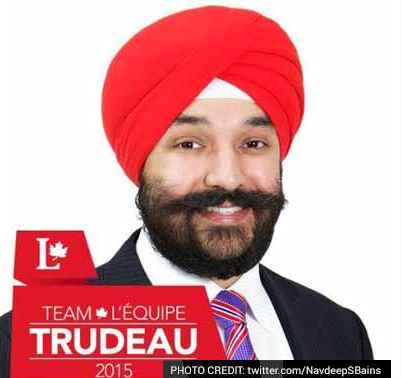
    TORONTO:  Navdeep Bains, 38-year-old Indian-origin Canadian Sikh MP who played a key role in prime minister-designate Justin Trudeau’s leadership bid in 2013, is likely to get a ministerial berth, Toronto Star reports. The Prime Minister-elect Justin Trudeau has chosen his cabinet and the members-to-be have been sworn to secrecy until the swearing-in on November 4.

    Speculation is rife that Mr Bains, a Liberal Member of Parliament (MP) from Mississauga city, may end up getting a ministry as Trudeau has already chosen ministers for his upcoming cabinet, according to The Star newspaper.

    Mr Bains, who played a key role in Mr Trudeau’s leadership bid in 2013, is presently a distinguished visiting professor at Ryerson University – Ted Rogers School of Management and holds an MBA with a specialization in Finance.

    As an MP for Mississauga-Brampton South from 2004 to 2011, Mr Bains also served as the Parliamentary Secretary to the Prime Minister in 2005.

    The Liberals won a majority government and 184 seats in the October 19 election.

    According to The Star factors to select members for the cabinet included “the size of the cabinet, gender equality, ethnic diversity, regional distribution and a balance of new and veteran MPs, but leaning to young and new versus old and experienced.”

    The cabinet is expected to have 28 members.

    In contrast, Prime Minister Stephen Harper’s cabinet had 39 ministers, including 26 senior ministers and 12 junior ministers of state.

    The Star suggests the cabinet will have 10 members from Ontario, six from Quebec, five from Atlantic Canada, three from B.C. and one each from Manitoba, Alberta and Saskatchewan and one representing the three northern territories.

    According to The Star:

    * Ralph Goodale is expected to be announced as deputy prime minister and House leader.

    * Scott Brison is expected to become finance minister.

    * Stéphane Dion, former Liberal party leader, is expected be named environment minister.

    * Chrystia Freeland (Toronto) could be foreign affairs or international trade minister. Marc Garneau could also be chosen foreign affairs minister.
    Mr Trudeau’s first big international test will come at the UN climate change conference in Paris from November 30 to December 11.

  • INDIA-AFRICA SUMMIT | PM seeks cooperation on climate change, terror

    INDIA-AFRICA SUMMIT | PM seeks cooperation on climate change, terror

    NEW DELHI (TIP): Africa is in the air as New Delhi hosted representatives of countries from the African continent for the third India Africa Forum Summit (IAFS) from 26-29 October, 2015.

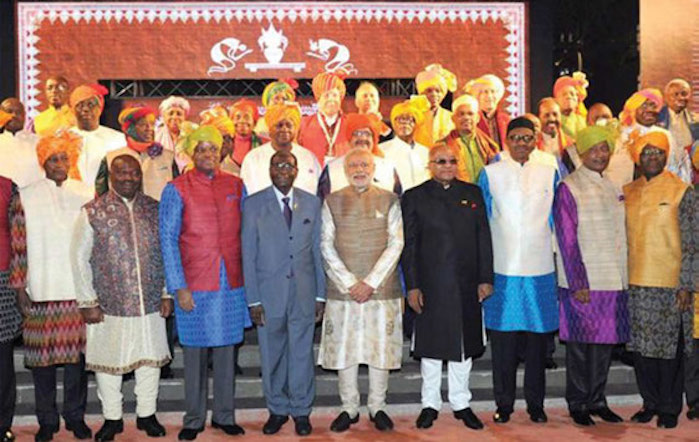
    Calling India and Africa “the two bright spots of hope and opportunities in the global economy”, Prime Minister Narendra Modi told the leaders of African nations in Delhi that India and Africa must “speak in one voice” for U.N. reforms.

    “This is a world of free nations and awakened aspirations. Our institutions cannot be representative of our world, if they do not give voice to Africa, with more than a quarter of UN members, or the world’s largest democracy with one-sixth of humanity,” Mr. Modi said.

    India and African nations decided on October 29  to step up cooperation to fight climate change and terrorism, as Prime Minister Narendra Modi made a strong pitch for partnership in these key areas amid shared concerns about global warming and extremist groups like Boko Haram.

    At the third India-Africa summit in Delhi, visiting leaders backed Modi’s call for a “comprehensive” agreement on climate change at a UN conference to be held in Paris, while the PM pointed out that India and Africa contribute very little to global warming.

    “It is also true that the excess of a few cannot become the burden of many,” he said, hinting that developing nations were made to pay for the share of developed countries in climate change.

    “So, when the world meets in Paris in December, we look to see a comprehensive and concrete outcome that is based on the well established principles in the UN Convention on Climate Change. We will all do our part for it.”

    Delegates from about 190 countries are slated to attend the Paris meet with the aim to limit the rise in global temperatures to 2°C above pre-industrial levels and move the world away from fossil fuels.

    India has opposed the binding nature of the proposed treaty to be implemented from 2020 and repeatedly said only rich countries are required under a previous UN climate convention to reduce carbon emissions.

    “For India, 175 GW of additional renewable energy capacity by 2022 and reduction in emission intensity by 33- 35% by 2030 are just two aspects of our efforts,” the Prime Minister said, adding that India was making “enormous efforts” with its “modest resources” to combat climate change.

    Leaders at the India-Africa summit also agreed to boost cooperation in counter-terrorism and maritime security against the backdrop of the growing menace of outfits like Boko Haram, the terror group based out of north-eastern Nigeria which is a threatening presence in Chad, Niger and northern Cameroon.

    “Africa, like the rest of the developing world, has its development challenges. And, like others in the world, it has its own concerns of security and stability, especially from terrorism and extremism,” Modi said. “That is why we wish to deepen our cooperation in maritime security and hydrography, and countering terrorism and extremism; and why we must have a UN Comprehensive Convention on International Terrorism (CCIT).”

    The CCIT is a treaty proposed by India which is deadlocked at the United Nations for close to two decades. It aims to criminalize all forms of international terrorism and deny terrorists, their financiers and supporters access to funds, arms and safe havens.

    The participants called on all countries to ensure their territories were not used for cross-border terrorist activities, while acknowledging that the menace of non-state actors, including armed groups, had acquired “a new dimension”.

    “We have excellent defense and security cooperation with many African countries. We have done this bilaterally and through multilateral and regional mechanisms. Closer defense and security cooperation, especially in capability development, will be a key pillar of India-Africa partnership,” said the Prime Minister. “We will intensify our cooperation against terrorism and rally the world to build a common cause against it.”

    “Two-thirds of India and two-thirds of Africa is under the age of 35 years. And, if the future belongs to the youth, then this century is ours to shape and build.”

    The PM spoke at the inaugural session of the IAFS, at the Indira Gandhi indoor stadium in Delhi that has been given a full makeover for the big summit.

    (READ The Full text of PM’s statement on www.theindianpanorama.news/modi )

    Here are 10 key highlights from PM Narendra Modi’s speech at the ceremony:

    1. Financial assistance:

    Prime Minister Narendra Modi announced concessional credit of $10 million over the next 5 years for Africa. This will be in addition to India’s ongoing credit program. PM also announced a grant assistance of $600 million, which will include India-Africa Development Fund of $100 million and India-Africa Health Fund of $10 million.

    It will also include 50,000 scholarships in India over the next five years. And, it will support the expansion of the Pan Africa E-Network and institutions of skilling, training and learning across Africa.

    India has committed $7.4 billion in concessional credit and$1.2 billion in grants since the first India-Africa Summit in 2008. It is creating 100 capacity building institutions, and developing infrastructure, public transport, clean energy, irrigation, agriculture and manufacturing capacity across Africa.

    read-more


  • KAAS PLATEAU: THE VALLEY OF FLOWERS

    KAAS PLATEAU: THE VALLEY OF FLOWERS

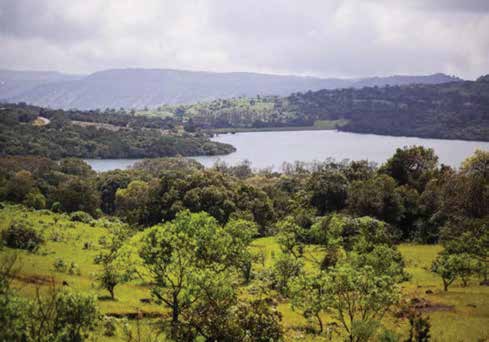
    Once the monsoon casts its spell on the Sahyadris, the entire region puts on a brilliant show for anyone who has the time to stand and stare. Teeming and bustling with life, it is home to everything from lush rainforests and waterfalls to an incredible diversity of flora and fauna. But hidden in the heart of the Western Ghats is a picturesque plateau that blooms into a riot of colour only once a year. And the time to visit is right now.

    As you are reading this, just over 280km from Mumbai, a natural phenomenon is painting an area of 1,000 hectares into a picture-perfect postcard that you can stroll into. The Kaas Pathar (‘pathar’ translates to plateau) is an ecological marvel houses over 850 varieties of plant life, of which around 600 are flowering plants.

    KAAS PLATEAUPicture this: dramatic, cloudy skies overlooking a green landscape that suddenly gets carpeted with colours to rival a rainbow— a splash of cheery yellows, tranquil whites, brilliant purples and more, as butterflies and birds flit about all around you. This is the sight that greeted us as we reached this conserved area which is listed among the UNESCO Biodiversity Heritage Sites.

    The road to heaven

    The route to Kaas was a revelation in itself as we made our way up the ghats from Satara, the nearest town. We had intended to take the local bus from Satara to Tetli that stops en route to the Kaas Plateau. However, the Satara bus stop was a confused bustle of activity which neither had any signage in English nor any helpful staff. If you speak Marathi, you should manage just fine. Otherwise, it’s a bit of a challenge trying to find your way around here.

    So, we hired an autorickshaw for `350 to climb up the 24km ghat route. As we made our way up, civilization shrunk away below, and the landscape started transforming rapidly. The air started getting cleaner and breathtaking views of the flat tabletop plateaus of the Sahyadri range opened up. We got a sneak peek of what we had in store in the form of tiny wildflower dotting the entire landscape. As auto rides go, this one was hard to beat.

    We made it to the top of the hill to reach the Kaas Plateau, which is referred to only as the ‘Valley of Flowers’ for some reason on a board erected by Maharashtra Tourism. But you should know you’ve reached Kaas just with the view. All you can see is a green landscape, with an unbridled view of the open skies and, of course, lots of flowers.

    Under nature’s spell

    The Kaas Plateau makes for the most idyllic countryside stroll that would have had the Wordsworths and Coleridges of the world waxing lyrical and spouting odes. Once we bought the entry tickets (Rs10), we walked through the trail in the picket-fenced meadows leisurely. Endless beds of happy flowers cushion the slopes, interrupted only by winding creeks that add to the beauty.

    The slower we walked, the more we noticed flowers that we would have missed at first glance. There was a surprise waiting for us everywhere we looked. Some of the tiniest blooms were no bigger than ladybugs. After walking for an hour or two, we took a break and plopped ourselves on a rock at the edge of the plateau overlooking the valley below.

    Today, environmentalists warn that due to rapid climate change and man-made imbalances in the ecosystem, the Kaas Plateau won’t stay this pristine for long. Even this year, the flowers were delayed by the sparse rains. Many of the endemic flowering species are already considered endangered.

    It makes us hold on to the memory of sitting at that spot — amid the incredible but transient beauty — that much more fiercely.

    How to get there from Mumbai

    By car: Around 4 hours | Drive down the Mumbai-Pune Expressway and take the NH4 upto Satara, where you can ask for directions to Kaas. From Satara, Kaas is a 22km drive up the hill.

    By bus: Around 7 hours | There are plenty of overnight buses plying on the Mumbai-Satara route with boarding points all across the city. Switch buses at the Satara bus stand and catch a bus to Bamnoli. Check redbus.in.

    By train: Around 8 hours | Catch the Koyna Express that departs from CST at 8.40am and arrives at Satara station by 4pm. You can catch a state transport bus to Bamnoli from Satara bus stand.

    KAAS PLATEAU2Flower spotting
    MICKEY MOUSE FLOWERS (SMITHIA HIRSUTA):
    Cheery yellow and blooming in abundance, these flowers earn their Disney name from their unique red speckles that make them look like everyone’s beloved mouse.

    SITA’S TEARS (UTRICULARIA PURPURASCENS): These pretty purple flowers are a far cry from the melancholy picture their name paints. Sita’s Tears are carnivores that feed on protozoa swimming in the wet soil.

    TUBEROUS PIPEWORTS (ERIOCAULON TUBERIFERUM): Whimsical as a dream, these tiny ball-like blooms are spread over the Kaas landscape like a blanket of white.

    Bombayensis (Senecio Grahamii): Akin to miniature sunflowers, the Sonki is a flowering plant of the Western Ghats that adds a splash of yellow to green landscapes during the monsoon.

    INDIAN SUNDEW (DROSERA INDICA): The insectivorous Flycatcher — which uses sparkling dewdrop-like sticky liquid as a decoy to trap insects — makes for a super cool spotting.If you want to know the flowers even better, read Kaas: Plateau of Flowers by Dr Sandeep Shrotri, a guide with exhaustive information on the flowers of Kaas.

    KAAS PLATEAU1Dos and Don’ts at Kaas

    • Be a sensitive and sensible traveller in this biodiversity hotspot. Always follow the trail and don’t wander off as you may trample or damage delicate flowers and plants that are not easily visible to the eye.
    • Please don’t pluck the flowers. They are not souvenirs to bring back to Mumbai.
    • Eat your wafers if you must, but do not litter.
    • Don’t be loud. And don’t blast Yo Yo Honey Singh from your phones. Others might have come here to enjoy the natural marvel in peace.
  • China as a Peer of the United States: Implications of the Joint Statement

    China as a Peer of the United States: Implications of the Joint Statement

    China is emerging as a peer and partner of the United States in international affairs. India’s response should be to work with China in the Asia Infrastructure Investment Bank and in China’s ‘Road and belt’ initiative to make the ‘Asian Century’ a reality as well as in the G20, which China will chair in 2016 (and India in 2018), to begin shaping the future global agenda, ‘global goods’ and institutions, including reform of the United Nations, while maintaining strategic autonomy to safeguard its maritime trade routes.

    New partners in climate change

    In the US-China Joint Statement on Climate Change, President Obama has met the criticism of the US Senate that unilateral emissions reductions should not give China a competitive advantage while President Xi has achieved for developing countries what the G77 collectively was finding difficult to attain.

    On 25 September, Xi and Obama outlined their “Vision for the Paris Climate Conference”,(re) defining the principle of common but differentiated responsibilities as a system that provides flexibility to developing countries “in light of their capacities” and “that differentiation should be reflected in relevant elements of the agreement in an appropriate manner”.

    They also agreed on joint support for a “global transition to a low carbon economy, renewed focus on adaptation “as a key component of the long-term response” to build resilience and reduce vulnerability and the “crucial role of major technological advancement in the transition”.

    The Statement recognizes that transparency provisions have to include both ‘action’ as well as ‘support’ provided to developing countries – a long standing demand of developing countries. Also, transparency provisions are expected to “provide flexibility to those developing countries that need it in light of their capacities”, emphasizing differentiation.

    The Joint Statement moves beyond the post-colonial North-South dichotomy and welcomes the provision of resources from countries “willing to do so;” it is no longer seen as a commitment based on notions of historical responsibility. Both countries will provide USD 3 billion each to help poor countries, with China announcing the establishment of a China South-South Climate Cooperation Fund. This puts pressure on all developed countries to enhance contributions towards the USD 100 billion to be provided by 2020. The need for bilateral investments to encourage low-carbon technologies and climate resilience, equating mitigation and adaptation (even though these terms are not mentioned) provides an opening to discuss the role of public finance in the transition.

    By endorsing a global goal of “low-carbon transformation” within the 21st century -convergence on an overarching meta-global goal is a significant development which the Sustainable Development Goals (SDGs) were not able to achieve – the statement also serves to define the ‘Objective’ of the Convention; something which has eluded the multilateral process since 1992.

    New forms of international co-operation

    Xi used his address to the United Nations General Assembly to reiterate China’s call for a “new type of international relations based on win-win cooperation.” He added: “We should resolve disputes and difficulties through dialogue and consultation,” as “the law of the jungle leaves the weak at the mercy of the strong.”

    Xi emphasized that China represents less powerful nations through its seat on the Security Council (“China’s vote at the U.N. will always belong to developing countries”) and projected China as a champion of the developing countries.

    The trip was planned so there would be major funding announcements on each of the three days Xi was at the UN General Assembly in New York, as that is what concerns the G77 the most. He pledged establishment of an assistance fund for South-South cooperation to implement the SDGs with USD 2 billion dollars; increasing investment in LDCs to USD 12 billion by 2030; and the exemption of debt owed by LDCs, LLDCs, and SIDS on interest-free loans; a USD 10 million contribution to the UN women’s agency, a USD 1 billion ‘peace and development’ fund and USD 100 million in military aid for the African Union. He also co-hosted a women’s summit at the UN.

    China already contributes more peacekeepers than other permanent members of the Security Council. Xi promised to send the first Chinese helicopter squad to join peacekeeping in Africa, train 2,000 peacekeepers from other countries in China over the next five years, and build a peacekeeping standby force of 8,000 troops. Xi’s largesse portrays China as a contributor to global growth and security amid international concerns about China’s economic stability and military ambitions.

    Global rules for the new services and knowledge economy  

    Over time, Xi’s success in implementing sweeping market reforms aimed at changing China’s economic model from an investment and export-driven one to an innovative consumer-driven and service-oriented one may be the critical factor in shaping Beijing’s economic and foreign policies in the future, as the economic relationship with the US will remain key.

    Cyber issues are now among larger concerns in the economic relationship, with bilateral trade totaling USD 590 billion in 2014 and China holding USD 1.2 trillion in US Treasury bonds. On cyber-security it was agreed that “neither country’s government will conduct or knowingly support cyber-enabled theft of intellectual property, including trade secrets or other confidential business information, with the intent of providing competitive advantages to companies or commercial sectors.” In addition, Xi and Obama agreed to create a cabinet-level mechanism and a hotline to address concerns. Both pledged to cooperate in creating a global code of conduct for cyber security. The Bilateral investment treaty Talks stalled as each side offered “negative lists” of items to be excluded and these lists can wall off industries considered strategic such as energy, aviation, telecommunications or access to state-owned industry procurement.

    New co-operative multilateralism

    The United States and China will remain the key global actors in developing a multilateral consensus on global issues as long as they successfully represent the concerns of the others. In an inter-connected world, the outcome will be a new model of co-operative multilateralism supplemented by bilateral understandings between national stakeholders that do not require the mediation of the United Nations Secretariat and prolonged negotiations over obscure texts.

    The post-world war multilateralism involved agenda setting by the G7 balanced by the G77 laying out their interests, or positions, at the start of a multilateral negotiation. Subsequent rounds of negotiations were designed to narrow the differences with secretariat documents suggesting consensus language and calls to capitals. Last minute compromises and trade-offs are very much part of the process, leaving most developing countries unhappy. The result has been continuing tension and the need for a United Nations secretariat to help mediate between the groups, siding more with the funders in achieving their goals. This arrangement has, at least for climate change, now lost its relevance.

    The 21st century, characterized by the majority of the middle class living in cities, a post-industrial knowledge economy and global trade dominated by services rather than goods, needs to respond effectively to global concerns through means for agenda-setting and securing a global consensus very different to those adopted for a fractured world emerging from colonialism and world war. With the two largest economies and most powerful countries that cut across the political divide emerging as peers and partners, agenda setting will require wider consultation in the G20, which China will chair next year. India, too, must shape the contours of the new multilateralism by working with China.

    New military and strategic balance in Asia

    The Dongfeng (East wind) 21D “carrier-killer” missile, which made a public appearance in a military parade on 3 September 2015, with a range of 1,550 km and a projected 10 times the speed of sound (faster than anything that could intercept it) after re-entering the atmosphere can manoeuvre on to a target, making it theoretically capable of landing a large warhead on or near a moving ship. Some analysts say such missiles reduce the threat from aircraft carriers – which form the basis of current US naval strategy – just what aircraft carriers themselves did to battleships with Japan’s 1941 attack on Pearl Harbor. While the potency of the DF-21D is debated in the defense community, these capabilities are changing the balance of power in Asia against the United States requiring it to strengthen its alliance system.

    The geopolitical world order established by the United States after World War II is unraveling because of the geo-economic shift to Asia. China’s Asian Infrastructure Investment Bank has served to focus minds in Europe and East Asia. The new Bank will be a rival to the IMF and World Bank and the US risks losing its ability to shape international economic rules, and global influence that goes with it. The UK described the decision as an “irresistible opportunity” and brought accusations from Washington about London’s “constant accommodation” of China, reflecting the two world-views on the emerging global order.

    For India, the lesson from the failed US attempt to obstruct the new bank is that, as Asia’s urbanization will require more than USD 8 trillion to be spent on infrastructure in this decade, countries in the region will welcome all the support they can get. Rather than be suspicious of China’s motives and seek to prevent the ‘Belt and road’ initiative, it should deal with the strategic concerns by joining in the development projects, for example, by providing the software packages required in the management of the ports. A mutual recognition of special interests of each other in the South China Sea and the Indian Ocean should be a strategic objective, and will be a strategic win-win for both.

    The ‘Asian Century’ provides an integrating theme to focus minds on shaping the economic integration of Asia, where two-thirds of future global growth is going to come from, and the alignment of the rail, road, sea routes and gas pipelines from Iran, for example, can position India as a node for South and Western Asia. Including a services component in the projects will add to their productivity and support cooperation between the Asian giants; trade is a win-win proposition.

    Conclusion

    The global trend is that countries are gaining in influence more because of the strength of their economy than the might of their military. India can either drift into the future remaining in its periphery or it can shape the future jointly with China to become one of the two engines of the Asian economy. China is likely to remain the world’s largest producer of goods and India has the potential to be the largest producer of services in the largest consumer market. According to McKinsey and Company, the services sector will be the real driver of growth in Asia as affluence will be concentrated in cities. The ability to design, finance, build and implement the big data-technology systems will be the defining comparative advantage in the future, and India and China can work together to make this happen sharing their respective expertise. The complex interdependencies will be a strong stabilizing force.

    According to Prime Minister Modi, China and India are “two bodies, one spirit” and President Xi has emphasized the “need to become global partners having strategic coordination”. The G20 meeting in 2016 provides the opportunity for the Asian giants to work together to define a global agenda, ‘global public goods’ and institutions to respond to the global middle class and the Asian Century with two centers of gravity, with India seeking to achieve this joint agenda when it chairs the G20 in 2018.

    (The author is an Ex civil servant and diplomat) – IDSA


  • India ready to work with Pacific Islands to harness resources

    NEW DELHI (TIP): President Pranab Mukherjee on august 20 said India is keen to work with Pacific Island countries in harnessing their mineral, marine and hydrocarbon resources. Addressing the Heads of States from Pacific Island countries who coverged here for the second summit of the Forum for India-Pacific Islands Co-operation (FIPIC) at Rashtrapati Bhavan, Mukherjee said these countries are generously endowed with natural resources and India would be happy to work with these countries in harnessing these resources. “We would be happy to work with you in harnessing your mineral, marine and hydrocarbon resources. Our Government and private sector are keen to strengthen and diversify our bilateral trade and encourage investments in fisheries, agriculture, oil and natural gas, mining and water desalination,” the President said. The island nations participating in the FIPIC summit include Fiji, Marshall Islands, Nauru, Niue, Palau, Papua New Guinea, Samoa, Tuvalu, Vanuatu, Cook Islands, Kiribati, Micronesia, Solomon Islands, Tonga.

    “Towards this end, India’s annual grant-in-aid to each Pacific Island Country has been enhanced from $125,000 to $200,000 last year. We hope this will support specific projects prioritised by you,” he said. Mukherjee also highlighted the challenges faced by India and pacific countries due to climate change. “…Like you, we are confronted with serious challenges in preserving our fragile ecosystems while stimulating growth. We believe that the sharing of best practices and eco-friendly technologies among our countries will greatly help us all to collaborate in obtaining finances and technology transfers required to combat the impact of climate change,” he said.

  • Pachauri sacked as TERI chief, Ajay Mathur appointed new head

    Pachauri sacked as TERI chief, Ajay Mathur appointed new head

    NEW DELHI (TIP): After 33 years of service, environmentalist R K Pachauri, accused of sexual harassment, was removed as the chief of The Energy and Resources Institute (Teri) on July 23.

    Pachauri had recently succeeded in obtaining a court order that enabled him to resume work at the institute.

    The governing council of Teri, which met in Bengaluru, removed Pachauri and appointed Ajay Mathur— an old Teri hand, currently the director-general of Bureau of Energy Efficiency — to head the organisation.

    Pachauri’s removal comes six months after a young woman  colleague accused him of sexual harassment. The septuagenarian, who is fighting a court battle in this regard, attended office only two days ago armed with an order from a Delhi court that allowed his entry to all Teri offices, except its headquarters in Lodhi Road and Gurgaon office.

    This had upset the victim, who gave television interviews claiming that while Pachauri was welcomed back with garlands and flowers, she was shunted out of work. She also appealed to the governing council to take strong action against the tainted chief.

    Last Friday, after getting a favourable court order, he had issued a statement saying he  looked forward towards “ensuring a safe and secure workplace that is sensitive to human values and dignity, particularly in respect to gender and social class”.

    Following the allegation from the 29-year-old woman, TERI had also formed an internal committee to probe the charges. The three-member committee, headed by a senior TERI official, whose husband used to work in the prime minister’s office, also found Pachauri guilty, sources said. The panel noted that when the woman resisted his advances, Pachauri retaliated by taking away her work.

    The governing council had considered the possibility of taking action on the report by the internal complaints committee at TERI. “Action on this report has been stayed by the court. This judgment of May 29, 2015 also stated that the principles of natural justice have not been followed at all by the said committee, contrary to rules. The governing council of TERI respects all court proceedings and abides by its direction,” the institute said in a statement. In February, Pachauri resigned as the chairperson of the UN Inter-governmental Panel on Climate Change in the wake of the allegations and police complaints, after serving the UN body for 13 years. As the IPCC chair, he accepted the Nobel Prize, which was awarded to the world climate body in 2007.

  • India to build next aircraft carrier with US technology

    India to build next aircraft carrier with US technology

    NEW DELHI (TIP): India and the US have worked out the terms of reference for building the next Indian aircraft carrier with US technology.

    This has been pushed through after the visit of US defence secretary Ash Carter. As both countries prepare for a September round of strategic dialogue in Washington DC, India is preparing to send a team to speed up talks on the aircraft carrier and the Light Combat Aircraft jet engine, which is also slated to be built with US assistance.

    The agenda has been set in the two summits held in September and January, but the key will be checking off the ambitious bucket list of projects.

    This will be the first strategic dialogue to be held in the new 2+2 format, including the foreign and commerce ministers. From the US side, it will be John Kerry and Penny Pritzker, commerce secretary, rather than Michael Froman their chief trade negotiator, who is generally believed to take a dim view of India and its trade practices. The US and India are expected to take forward earlier agreements on smart cities, which is likely to get priority.

    This year India-US relations will be tested on climate change as the Paris climate change summit, COP 21 looms. India will be under unprecedented pressure to declare ambitious emission targets. Climate change is a legacy issue for Barack Obama and he’s expected to push hard.

    China has been smarter – first, by clinching a climate deal with the US during Obama’s visit, and second, by declaring their INDC (intended nationally determined contributions) just before a meeting with the French president, which made it seem like it was a special gesture by China. India tried to match it somewhat with an energy deal when Barack Obama visited India.

    Even though India is far below China on per capita emissions, India will be cynosure of global, particularly US attention when it does finalize and announce its INDC. Officials expect this to be done in the coming weeks.