Tag: Congress

  • Crippling debt trap: Punjab, HP can take a cue from Haryana

    The AAP government in Punjab has been waging a war on drugs as well as corruption, but it hasn’t put up a strong fight against fiscal indiscipline. Successive governments in the state have been living beyond their means, and the current dispensation is continuing in the same vein as if there is no tomorrow. Punjab is the second-most indebted state (after Arunachal Pradesh) in the country in terms of the debt-to-GSDP (gross state domestic product) ratio. There is nothing surprising or shocking about this dubious distinction. The state finished last among 18 major states on the NITI Aayog’s Fiscal Health Index just two months ago. A similarly grim picture was painted by the Comptroller and Auditor General’s audit report in September last year — the state’s expenditure has been consistently outpacing its revenue receipts.

    Things have come to such a pass that fresh loans are being taken not only to repay previous ones but also to meet routine expenses. AAP never tires of blaming the Akali-BJP and Congress governments for the crippling debt burden, but it has added to the mess by offering subsidies and freebies without bothering about the state exchequer’s precarious position. It’s obvious that tough, unpopular decisions have to be taken. Having antagonized the farming community by evicting protesters from Shambhu and Khanauri borders, will AAP go on to withdraw or rationalize free electricity for farmers? And will it also discontinue the freebie being given to domestic power consumers? However, electoral compulsions may prevent the ruling party from taking such drastic steps, even though they may be beneficial for Punjab in the long run.

    Neighboring Himachal Pradesh is also facing a financial crisis, despite conscious efforts by the Congress government to tighten its belt. Revenue from the tourism, hydropower and agriculture sectors has been dwarfed by mega borrowings to fund infrastructure projects. Arresting the alarming slide should be a top priority for both Punjab and HP, which can take a cue from Haryana’s reasonably good model to manage debt and generate revenue.

    (Tribune, India)

  • Congress hits out at SEBI chief with fresh allegations

    Congress hits out at SEBI chief with fresh allegations

    New Delhi (TIP)- The Congress on Tuesday, October 29, renewed its attack on Securities Exchange Board of India (Sebi) chief Madhabi Puri Buch, alleging that she rented out one of her properties to a company owned by someone associated with the top management of financial conglomerate Indiabulls. The Congress on Tuesday renewed its attack on Securities Exchange Board of India (Sebi) chief Madhabi Puri Buch, alleging that she rented out one of her properties to a company owned by someone associated with the top management of financial conglomerate Indiabulls. The party also accused Buch of holding shares in unlisted companies named in the so-called Paradise Papers.
    “Ms Madhabi Buch owns another flat in Mumbai. In 2021-22, she earned rental income from a property rented out to a company called Green World Buildcon and Infra Private Limited, owned by Mukul and Vipul Bansal. Mukul Bansal has a significant background with Indiabulls Group,” Congress spokesperson Pawan Khera said at a press conference in Delhi.
    The Sebi chief is under fire over US short-seller Hindenburg Research’s report that alleged that she and her husband Dhaval Buch owned stakes in offshore entities linked to businessman Vinod Adani.
    The couple, however, had dismissed the allegations saying, “Our life and finances are an open book. All disclosures as required have already been furnished to Sebi over the years. We have no hesitation in disclosing any and all financial documents, including those that relate to the period when we were strictly private citizens, to any and every authority that may seek them. Further, in the interest of complete transparency, we would be issuing a detailed statement in due course.”
    The Congress leader also added that Buch was among the initial shareholders of Predible Health, which received funds from the central government, and continued to hold equity in the company while being a SEBI member. Among other investors was Jacesa Investments Limited , named in the l Paradise Papers, with an address in St. Vincent in The Caribbean, infamous for being a tax haven, he added.
    “This was discovered in 2017. Despite that, Buch held the company’s equity (Predible Health) till 2021… She sold her stake to a US company making a return of almost 226 times,” Khera said.
    There was no immediate response from Sebi on the allegations.

  • Cong adopts multi-pronged media strategy in polls, 20,000 volunteers spread message

    Cong adopts multi-pronged media strategy in polls, 20,000 volunteers spread message

    New Delhi (TIP)- The Congress has adopted a multi-pronged social media strategy with Rahul Gandhi directly reaching out to people via the ‘speak to the camera’ mode on various issues and deploying of 20,000 volunteers spreading the party’s messages on WhatsApp platform, party sources said on Thursday. The core theme of the outreach is direct connect with people and get a feedback about their problems, aspirations and come up with solutions in form of party’s much talked about Nyay Patra manifesto, they said.
    According to the sources, more than 88 lakh people have downloaded its manifesto from Congress website so far. Apart from his letter to party workers, rallies and press conferences, Gandhi is connecting directly with people through his interactive sessions such as Yuva Nyay Manch, lectures on Samajik Nyay and his outreach to farmers and women in Chhattisgarh and Karnataka.
    The former Congress president’s YouTube channel has 5.6 million subscribers and had about 350 million views in last one month, the sources said, adding his Instagram account has over 190 million views and 7.9 million subscribers.
    He also has 25.5 million followers on Twitter, 6.3 million followers on his WhatsApp channel and 70 lakh on Facebook.
    Gandhi had walked more than 4,000 km from Kanyakumari to Kashmir in the Bharat Jodo Yatra and then undertaken the 6,000-km-long hybrid Bharat Jodo Nyay Yatra from Manipur to Mumbai.
    Through these two yatras, Gandhi engaged with millions of farmers, youngsters, women, labourers, traders, SCs/STs/OBCs, and made a direct outreach to them. This also helped the party to understand the pulse of the ground and shape the campaign keep that genuine feedback from ground, the sources said.
    Gandhi has been using the ‘speak to the camera’ mode to reach out to people on various issues.
    “There are 20,000 committed volunteers who are directly in touch with more than 5 lakh people via WhatsApp. These volunteers then shared the posts/video messages/You Tube Links instantly with people through WhatsApp groups and other social media platforms,” a party source said.”These volunteers are in direct touch with Rahul Gandhi’s office. And they regularly provide feedback on each and every content that is being shared/released on social media platforms of his,” the source said.
    Source: PTI

  • India Election special

    India Election special

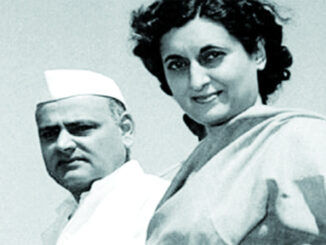
    Feroze Gandhi to Rahul Gandhi: Rae Bareli’s tryst with Congress

    The strong foundations that Feroze Gandhi laid in the constituency were later nurtured and strengthened by his wife and former prime minister Indira Gandhi, who won from the seat in 1967, 1971 and 1980, followed by friends and family members of the Gandhi family.

    The surprise nomination of Rahul Gandhi from Uttar Pradesh’s Rae Bareli brings the focus back on the VVIP segment which was first represented in the Lok Sabha by the former Congress president’s grandfather Feroze Gandhi, who held the seat in the first two elections after Independence.
    The strong foundations that Feroze Gandhi laid in the constituency were later nurtured and strengthened by his wife and former prime minister Indira Gandhi, who won from the seat in 1967, 1971 and 1980, followed by friends and family members of the Gandhi family.
    Indira Gandhi contested from two seats in 1980 — Rae Bareli and Medak in Telangana — and chose to retain the Medak seat. Arun Nehru won the 1980 bypoll and subsequently in 1984.
    From Arun Nehru, who was late prime minister Rajiv Gandhi’s right-hand man, to Sheila Kaul, another Gandhi kin, Rae Bareli returned several of the Gandhi family members and aides to the Lok Sabha.
    The seat was held by Congress’ R P Singh in the 1960 bypoll after the demise of Feroze Gandhi, and by another Congress leader Baij Nath Kureel in 1962.
    Sheila Kaul, an aunt of Indira Gandhi, represented the seat in 1989 and 1991.
    In 1999, another friend of the Gandhis, Satish Sharma represented the Rae Bareli constituency, till Sonia Gandhi shifted there.
    The only time the Congress did not represent the seat was in the wake of the Emergency in 1977 when Janata Party’s Raj Narain defeated Indira Gandhi, who was then the prime minister, and BJP’s Ashoke Singh in 1996 and 1998.
    Although Sonia Gandhi upon entering electoral politics chose to make her electoral foray from neighbouring Amethi Lok Sabha seat in 1999, a seat her husband Rajiv Gandhi had held earlier, she soon vacated it for her son Rahul’s debut in politics in 2004.
    Sonia Gandhi subsequently held Rae Bareli four times between 2004 and 2019, although of late, her winning margins began dwindling. The party’s calculation behind fielding Rahul from Rae Bareli instead of Amethi, also rests on the conclusion that Rae Bareli is a better, safer seat for the former Congress president, who lost Amethi to BJP’s Smriti Irani in 2019 by nearly 50,000 votes.
    Amid criticism that the Congress had given a walkout to Irani in Amethi, sources said, the party in its wisdom believed that Rae Bareli’s historical, emotional and electoral importance for the Gandhi family was higher than that of Amethi.
    In her farewell message to the people of Rae Bareli, Sonia Gandhi had expressed confidence that the seat which always stood by her and the Gandhis will continue to support her family in future also.
    In the message on February 15, former party chief Sonia Gandhi informed voters of her Rae Bareli constituency that she will not contest the upcoming Lok Sabha polls due to health and age issues.
    In an emotional message to the constituents of the segment she has represented since 2004, the 77-year-old also threw subtle hints of a possible entry of a member of her family from Rae Bareli.
    “I am proud to say that whatever I am today, I am because of you and I have always done my best to honour your trust. Now on account of health and age issues, I will not contest the next Lok Sabha election,” she said in the message.
    “After this decision, I will not have the opportunity to serve you directly but my heart and soul will always remain with you. I know that you will stand by me and my family in future, just as you have in the past,” she said in the message.
    The message to the voters came a day after she filed her nomination for the Rajya Sabha seat from Rajasthan.
    She entered the Rajya Sabha for the first time and was the second member of the Gandhi family to do so, after Indira Gandhi who was a member of the upper house from 1964 to 1967.
    In the message to voters, Sonia Gandhi further said, “My family in Delhi is incomplete without you. It completes when I come to Rae Bareli and meet all of you. My ties with you are very old. I have inherited these ties as a good fortune from my in-laws.”
    Noting that ties of her family with Rae Bareli are “very deep rooted”, she said Rae Bareli sent her father-in-law Feroze Gandhi to Lok Sabha in the first general election held after Independence.
    After that, you accepted my mother-in-law Indira Gandhi, she noted, adding that ever since, our relationship grew stronger on the difficult road to affection despite the highs and lows of life and our faith in this bond grew stronger.
    “You allowed me space to walk along on this shining path. I came to you after losing my mother-in-law and husband and you accepted me with open arms,” the former Congress chief said.
    Sending her respect to elders and love to youngsters, she had said in her message, “I will see you soon”.
    Source: PTI

  • BJP’s Strategic Blueprint: Disabling the Opposition for Political Dominance

    Since its rise to power, the Bharatiya Janata Party (BJP) in India has pursued a systematic and calculated strategy to dismantle opposition forces, particularly targeting the Congress party, its principal adversary. Through a combination of divisive tactics, engineered defections, and financial strangulation, the BJP has sought to weaken and incapacitate the Congress party, thereby consolidating its own political dominance.

    From the outset, the BJP recognized the Congress party as its primary obstacle to hegemonic control. To undermine its adversary, the BJP employed a multi-pronged approach aimed at discrediting and dismembering the Congress party. One of the key strategies was to sow seeds of division within the Congress ranks, exploiting existing fault lines and internal dissent to weaken the party from within. By exacerbating intra-party conflicts and encouraging factionalism, the BJP created an environment of mistrust and discord, thereby undermining the cohesion and effectiveness of the Congress leadership.

    Simultaneously, the BJP engaged in a concerted effort to engineer defections within the Congress party, particularly in states where it held power. Leveraging its political clout and resources, the BJP enticed disgruntled Congress members to defect, offering inducements and promises of power and patronage in exchange for their allegiance. Through these orchestrated defections, the BJP not only depleted the Congress party’s ranks but also destabilized its governments in various states, strategically weakening its foothold at the regional level.

    When conventional tactics failed to completely incapacitate the Congress party, the BJP resorted to more extreme measures, including financial strangulation. Recognizing the pivotal role of financial resources in sustaining political campaigns and organizational infrastructure, the BJP orchestrated a campaign to starve the Congress party of funds. Under the guise of legal compliance, the Modi government misused government agencies to target the Congress party’s financial assets, effectively sealing its bank accounts and crippling its financial operations.

    The repercussions of this financial crackdown have been severe, particularly in the run-up to general elections. With its coffers emptied and its access to funds severely restricted, the Congress party finds itself severely handicapped in mounting an effective electoral campaign. Unable to finance rallies, advertisements, and other campaign activities, the Congress party faces an uphill battle in competing against the well-funded machinery of the BJP and its allies.

    The consequences of the BJP’s systematic assault on the opposition extend beyond the immediate electoral arena. By neutralizing the Congress party and other opposition forces, the BJP undermines the very essence of democracy, stifling dissent and monopolizing political power. Without a viable opposition to hold the ruling party accountable, democratic norms and institutions are weakened, paving the way for unchecked authoritarianism and executive overreach.

    The BJP’s strategy of disabling the opposition not only undermines the democratic fabric of Indian society but also erodes public trust in the political process. When opposition parties are systematically targeted and marginalized, citizens lose faith in the fairness and integrity of the electoral system, leading to disenchantment and apathy. This erosion of trust poses a grave threat to the legitimacy of democratic governance and the stability of the political order.

    The BJP’s game plan to demolish the opposition represents a calculated assault on the foundations of democracy in India. Through a combination of divisive tactics, engineered defections, and financial strangulation, the BJP seeks to consolidate its political dominance by neutralizing its adversaries. However, the consequences of such a strategy extend far beyond partisan politics, posing a grave threat to democratic values and principles. As guardians of democracy, it is incumbent upon citizens and civil society to resist and challenge attempts to undermine the democratic process and ensure the preservation of pluralism, dissent, and political accountability.

  • ‘Legal processes driven only by rule of law’: MEA rejects US remarks on Arvind Kejriwal, Congress

    ‘Legal processes driven only by rule of law’: MEA rejects US remarks on Arvind Kejriwal, Congress

    New Delhi (TIP)- Foreign Office spokesperson Randhir Jaiswal again hit back at its American counterpart for doubling down on his comments on Delhi CM Arvind Kejriwal and for also making observations on the tax authorities freezing the Congress’ bank accounts.
    Jaiswal also felt the US, a fellow democracy with similar methods of governance as India, should have no difficulty in appreciating the fact that “legal processes here are driven only by rule of law”. He termed the comments by the US State Department for the second day running as “unwarranted” and said “any such external imputation on our electoral and legal processes is completely unacceptable. The MEA, he reminded, had already lodged a strong protests on his observations on Kejriwal’s arrest made on Wednesday.
    “India is proud of its independent and robust democratic institutions. We are committed to shielding them from any external influences. Mutual respect and understanding form the foundation of international relations and states are expected to be respectful of sovereignty and internal affairs of others,” the spokesperson said.
    Despite the South Block serving a demarche on Washington for its comments on the arrest of Delhi Chief Minister Arvind Kejriwal, the US State Department in its latest media briefing late on Wednesday night not only repeated its comments but opened another front by commenting on the IT department freezing the bank accounts of the Congress.
    On the Congress issue, US State Department spokesperson Matthew Miller said, “We are also aware of the Congress’ allegations that tax authorities have frozen some of their bank accounts in a manner that will make it challenging to effectively campaign in the upcoming elections, and we encourage fair, transparent, and timely legal processes for each of these issues.”
    Miller was asked to respond to the recent political turmoil in India, including the freezing of the Opposition party’s bank account, and if the crackdown on the Opposition had “reached a crisis point ahead of national elections”. Source: TNS

  • The season of defections is here

    The season of defections is here

    • Structural weakness in Indian democracy needs to be addressed urgently

    “Poaching legislators is not new to our democracy. The terms ‘Aaya Ram’ and ‘Gaya Ram’ were coined decades ago when political leaders of Haryana adopted the method of enticing elected members of rival parties to cross over to bring down governments. Some sense of shame must have seeped in because there was a lull in such shenanigans for some time till Congress lawmakers shifted en masse to the BJP in Goa in 2019, tempted by the lure of office.”

    By Julio Ribeiro

    Very soon, the BJP ranks will be stacked with Congress leaders seeking a lucrative future. After former Maharashtra Chief Minister Ashok Chavan left the Congress and joined the BJP, former Madhya Pradesh CM Kamal Nath seems ready to jump the ‘sinking ship’.

    The inability of INDIA parties to look beyond their noses has virtually sealed their fate.
    Nath had handed over Madhya Pradesh to the BJP on a platter due to his misreading of the voters’ preferences and mishandling of other anti-BJP parties.

    Chavan’s standing in Maharashtra politics was visibly on the decline. He had even lost his Nanded seat to the BJP’s Prataprao Govindrao Chikhalikar in the 2019 Lok Sabha elections. His father, Shankarrao Chavan, was a highly respected politician who had served as the CM and Union Home Minister. Shankarrao had scruples about corruption which his son did not share.

    Chavan has been nominated to the Rajya Sabha by his new-found friends. He will have to compete for a ministership with other turncoats from Maharashtra like Narayan Rane, who was another ‘candidate’ for probes by investigation agencies had he not crossed over a few years ago.

    The migration of the inglorious from the Opposition to the ruling party has picked up steam before the Lok Sabha polls. Is the BJP’s goal a Congress-mukt polity or an Opposition-mukt one? Starting with those with skeletons in their cupboards, others who hanker for the spoils of office or just want to feel important will gravitate to the winning side. Greed is the guide. The BJP capitalizes on this.

    Recently, the AAP-Congress combine was assured of victory in the Chandigarh mayoral poll with 20 votes out of 36. The returning officer invalidated eight votes to ensure the BJP’s win. The Supreme Court had to intervene and order the prosecution of the returning officer. It declared the AAP-Congress candidate as the winner. Before the SC verdict, the BJP, the party that had once proclaimed that it was ‘different’, carried out ‘Operation Lotus’ to make three AAP councilors switch camps.

    Poaching legislators is not new to our democracy. The terms ‘Aaya Ram’ and ‘Gaya Ram’ were coined decades ago when political leaders of Haryana adopted the method of enticing elected members of rival parties to cross over to bring down governments. Some sense of shame must have seeped in because there was a lull in such shenanigans for some time till Congress lawmakers shifted en masse to the BJP in Goa in 2019, tempted by the lure of office.

    The BJP has sharpened this unethical method to a fine art after tasting blood. In Karnataka, it displaced the Congress government by successfully luring a good number of its legislators to change sides. In Maharashtra, this game is being played out even today. The voters who voted against the BJP have been short-changed. They vote for a particular party on ideological grounds but cannot be sure that those whom the party has chosen to represent them will continue to reflect their aspirations, once elected.

    This is a structural weakness of Indian democracy. It needs to be urgently addressed. No legislator or corporator should be allowed to cross over mid-term. If he has concerns about the policies of the party on whose ticket he was elected, he should resign from the Assembly and re-contest on the ticket of his new party. If he is popular in his constituency, he may well win again, but at least those who voted for him or her on ideological grounds will not be let down.

    Since the BJP’s new tactic of remaining in power at any cost, fair or foul, has obviously kicked in, it is urgent to restore our good name in the democratic world by devising a mechanism to combat this menace of ‘Aaya Rams’ coming and ‘Gaya Rams’ going for reasons far removed from dissatisfaction with the policies followed by the party which they have decided to discard.

    The inability of INDIA parties to look beyond their noses has virtually sealed their fate. After the votes are counted and Modi is back in North Block for another term of five years, expect Opposition leaders to face the music in a much more defined degree. The ED, the CBI and other Central agencies will make their lives uncomfortable. Only those who cross over can expect to be absolved of their sins.

    If the BJP gets a two-thirds majority in Parliament, the Constitution will be subject to revision. Women, in particular, will have to conform to a rigid standard of morality. Live-in relationships, which are now common among the urban liberated youth, will be frowned upon, like we have seen in Uttarakhand, whose holier-than-thou Chief Minister Pushkar Singh Dhami has introduced the Uniform Civil Code (UCC), which restricts choices in love and marriage.

    I have no objection to the UCC as long as the objective is to ensure that women are treated on a par with men. The rights of the woman in inheritance of her father’s property and her right to choose her life partner should be upheld. There are myriad related issues like divorce and adoption, but the right to inheritance and the right to choose one’s spouse are paramount.

    It is not wise to advise the BJP to desist from accepting tainted members of Opposition parties in its fold. The BJP is on a roll. Modi consecrated the Ram Mandir at Ayodhya, secured the release of eight former Navy personnel sentenced to death by a court in Qatar for alleged spying, and inaugurated a Hindu temple in a Muslim-majority country (UAE).

    Unfortunately, there are counter-balancing issues. The farmers’ agitation for legal guarantee for procurement at the MSP is one such issue. If the demand is conceded, it will compromise fiscal responsibility. The unabated violence in Manipur is another. The BJP knows the people responsible for the raging fire, but its hands are tied. If the incompetent CM Biren Singh is replaced, the Meitei vote will be in doubt. Reservation for Marathas is yet another issue that defies accepted solutions. It is not going to be an easy ride!

    There are many other such problems that Modi will have to solve, but he is postponing action till the Lok Sabha polls are over.
    (The author is a former governor, and a highly decorated Indian Police Service officer)

  • BJP on a roll, Opposition needs to regroup

    BJP on a roll, Opposition needs to regroup

    • The least resilient among the INDIA members are in danger of disappearing from the political scene

    “PM Modi’s most urgent task is to lift millions of his countrymen from the poverty in which they are mired. The affluent are certainly much better off since 2014. The stock market is booming. Those who have invested in stocks will become even richer if he is re-elected in 2024. The freebies now given away to the rural poor will eventually have to be stopped. The youth of those poor households, belonging mainly to the lower castes, must be equipped with skills to enable them to fend for themselves. Industrialists and entrepreneurs, who have prospered in the last 10 years, should be motivated to enter less-profitable segments of the economy so that jobs are created for our unemployed youth.”

    By Julio Ribeiro

    I write this piece as a member of a minority community — just 2 per cent of the country’s population. In a ‘first past the post’ system of electing people’s representatives, the BJP has swept the Assembly polls in the Hindi heartland. The Congress lost the tribal and women’s votes. The shift in votes from the Congress to the BJP catapulted the latter to power in Madhya Pradesh, Rajasthan and Chhattisgarh.

    ‘Sabka Saath, Sabka Vikas, Sabka Vishwas’ needs to be put into practice instead of being merely parroted every now and then.

    The difference in the overall vote share of the BJP and the Congress was roughly 2 percentage points in Rajasthan and 4 in Chhattisgarh. It was 8 percentage points in Madhya Pradesh, where the winner garnered 48 per cent of the votes as against 40 per cent by the Congress.

    It was a resounding victory for the BJP and Modi in particular. Not even his bitterest critic can say that he is not the most popular and charismatic of all political leaders in the country. It looks certain that he will be elected for a third term. The Hindi heartland is with him and that should tilt the scales in his favor. The South is not with him, but the West is his for the taking. What is in store for the country after the 2024 Lok Sabha elections? In the past decade, India has been divided on communal lines. The consolidation of the Hindu vote was what the Hindutva forces strived for. It succeeded to the extent of ensuring the BJP’s poll victories. Muslims and Christians together make up just 16 per cent of the population. The Sikhs account for less than 2 per cent.

    After the 2024 polls, the forward castes in the Hindu fold will be the chosen ones, like the Christian Brahmins and Kshatriyas were in Goa during the Portuguese rule. The BJP under Modi, influenced by the RSS, will placate the OBCs and the Scheduled Castes/Scheduled Tribes, counting them within the 80 per cent whose pride in being Hindu has to be ‘created’.

    The Muslims were in the doghouse in Modi’s first two terms. Beef-related lynchings, ‘love jihad’ accusations and the fear generated by the CAA-related NRC had stifled their quest for equality as citizens of India. Now, I envisage that they and the Christians, who are next in line on the extremists’ hit list, will have to adjust to second-class citizenship like Hindus and Christians in Pakistan have done in that religion-influenced country.

    Delivering his victory speech at the BJP’s headquarters in Delhi, PM Modi mentioned ‘appeasement’, besides corruption and dynastic politics, as the evils that he has been fighting. I do not know what he means by ‘appeasement’. If he is referring to the Muslims, it is only the mullahs who were appeased by the Congress, and that too in religious matters. That is not the mandate of a democratically elected government. Muslims should be ‘appeased’ like all poor communities, such as the Scheduled Castes and the Scheduled Tribes, in terms of education and healthcare. Religious issues should be sorted out by the community itself or by the courts.

    Extremist elements in the Hindutva camp have consistently railed against the Muslim minority. There have even been calls to exterminate Muslims and boycott their traders selling vegetables and fruits in Hindu localities. Modi should rein in these extremists by ordering penal action against them as ordained by law. He hesitates to do that for fear of losing their support. They, in turn, misinterpret this silence as tacit approval.

    PM Modi’s most urgent task is to lift millions of his countrymen from the poverty in which they are mired. The affluent are certainly much better off since 2014. The stock market is booming. Those who have invested in stocks will become even richer if he is re-elected in 2024. The freebies now given away to the rural poor will eventually have to be stopped. The youth of those poor households, belonging mainly to the lower castes, must be equipped with skills to enable them to fend for themselves. Industrialists and entrepreneurs, who have prospered in the last 10 years, should be motivated to enter less-profitable segments of the economy so that jobs are created for our unemployed youth.

    The possible re-election of Modi and the BJP in 2024 will consolidate the right-wing economic trend in the country. All left-of-center parties, like the Congress, TMC and the AAP, should come together to form an effective Opposition. If they fail to do so, the least resilient among the INDIA members are in danger of disappearing from the political scene. Many leaders of those parties, such as Arvind Kejriwal, will find themselves targeted by the ED, the CBI and other Central agencies with ruthless precision just before the elections.

    Nearly a century ago, writer-philosopher Aldous Huxley, in his futuristic work Brave New World (1932), prophesied: “By means of ever more effective methods of mind manipulation, the democracies will change their nature; the quaint old forms — elections, parliaments, Supreme Courts and all the rest — will remain. The underlying substance will be a new kind of non-violent totalitarianism. Democracy and freedom will be the theme of every broadcast and editorial… Meanwhile, the ruling oligarchy and its highly trained elite of soldiers, policemen, thought-manufacturers and mind-manipulators will quietly run the show as they see fit.” Does that ring a bell? An Opposition-mukt democracy is no democracy.

    PM Modi has often stated: “India is the mother of democracy.” If he really believes what he says, we, members of the minority in our own land, will be reassured if ‘Sabka Saath, Sabka Vikas, Sabka Vishwas’ is put into actual operation instead of being merely parroted every now and then.
    (The author is a highly decorated Indian Police Service (IPS) Officer and a former governor)

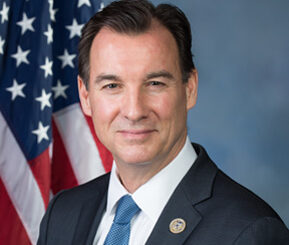
  • Democrats repose trust in Tom Suozzi for special election for Congress to fill expelled congressman Santos’s seat

    Democrats repose trust in Tom Suozzi for special election for Congress to fill expelled congressman Santos’s seat

    “I delivered for this district before, and I will do it again”, says Suozzi

    • I.S. Saluja

    NEW YORK (TIP): Tom Suozzi, on December 7, was named the Democratic candidate for the special election to fill the 3rd Congressional District seat left vacant since George Santos was expelled last week.
    “Tom Suozzi has a proven record of fighting for his constituents, fighting to safeguard our suburban way of life here on Long Island and Queens and always advocating for sensible solutions to the real challenges affecting everyday average Americans,” said a joint statement from Nassau County Democratic Chair Jay Jacobs and Queens County Chair, Congressman Gregory Meeks.

    Jay Jacobs, the state and Nassau Democratic chairman, and Fifth District Rep. Gregory Meeks, the Queens County party chairman, announced Suozzi’s selection as the party’s nominee on Thursday, December 7, after an advisory vote of party executive committee members.

    Political party leaders choose the candidates in a special election, according to New York elections law. There will be no primary in the special election.

    Meeks said voters “want someone to represent the district with somebody that they know. Many of the constituents previously were coming to other members to get constituency services. Those days will soon be over.”
    Jacobs said the race will get, “national attention, as it should.”
    “We have begun already. We knew this day was coming,” he said.

    Suozzi, who held the seat from 2017 through 2022, said in a statement he would “work day and night with both parties to deliver for the people to make living here more affordable, safer, and better. I delivered for this district before, and I will do it again by putting you ahead of partisanship. Let’s reject the nonsense and get back to work. Let’s Fix This!” National Republicans and Democrats view the Third District race as key to the battle for control of the House. After Santos’ expulsion and California Rep. Kevin McCarthy’s resignation at the end of the year, Republicans will be able to lose only three votes on a party-line vote and still get a bill passed, if every House member is in attendance.

    The Third District includes parts of Queens and the North Shore of Nassau County, as well as parts of southwestern Nassau. The district has more than 531,000 registered voters, state board of election filings show. 38 % are registered Democrats, 28% are Republicans and 28% are not registered with any political party.

    Whoever wins the special election will have to run for election to a full two-year term in November and could face the prospect of having to run in a June party primary. The job pays $174,000 a year.

    Suozzi is a former mayor of Glen Cove and two-term Nassau County Executive. In the House, he sat on the powerful Ways and Means Committee and served as a vice-chair of the bipartisan House Problem Solvers Caucus.

    Suozzi, who did not seek re-election in 2022, instead ran that year for New York governor. He finished third in the Democratic primary. The Third District has changed substantially since 2020, the last time Suozzi ran for the seat, when it included parts of Suffolk County. The election takes place on Feb. 13. Republicans are expected to choose their challenger early next week.

  • George Santos faces new motion to expel him from Congress

    George Santos faces new motion to expel him from Congress

    WASHINGTON, D.C. (TIP): Rep. George Santos will face a third vote to oust him from Congress the week after Thanksgiving as a growing number of lawmakers say they will back a new expulsion motion filed Friday, November 17, a day after the release of a scathing House Ethics Committee report, Newsday reported.

    Santos (R-Nassau/Queens), in an interview with Newsday Friday, November 17, defended some of the expenses cited in the report — such as payments for Botox treatments — accusing his former campaign treasurer of telling him the purchases were considered campaign expenses. His assertions came hours after House Ethics Committee Chairman Mike Guest (R-Miss.) on Friday filed a motion to expel Santos that is expected to start the process to require a vote within two legislative days when the House reconvenes on Nov. 28.

    Santos survived one expulsion vote on May 16, initiated by Rep. Robert Garcia (D-Calif.) and another on Nov. 1 on a measure sponsored by Rep. Anthony D’Esposito (R-Island Park), but he may not dodge the third try after the release Thursday of a detailed and damning Ethics Committee report.

    A growing number of lawmakers who voted previously against expelling him say Santos no longer should be a member of the House after release of the 55-page report that laid out the case that Santos exploited his position for personal gain. Only five House members have been expelled — three for disloyalty in the Civil War era and two after being convicted of criminal activity. It takes two-thirds of those voting to approve a motion to expel, a high hurdle considering that Santos would be the first to be expelled while indicted but before conclusion of a trial.

    House Speaker Mike Johnson (R-La.), who had raised concerns about ousting Santos because of the slim Republican House majority and Santos’ due process rights, issued a statement Thursday night that did not discourage his Republican conference from ousting Santos.

    “As members from both parties, members of the Ethics Committee and Representative Santos return to Congress after the Thanksgiving break, Speaker Johnson encourages all involved to consider the best interests of the institution as this matter is addressed further,” Johnson spokesman Raj Shah said.

    At least three of the House Ethics Committee members — Guest (R-Miss.), Rep. Andrew Garbarino (R-Bayport) and Rep. Susan Wild (D-Pa.), the ranking member — said they would vote to expel Santos.

    “I think the fact that the Republican Ethics Committee chairman not only supports expulsion, but is leading the resolution to do it, is a good indicator that for some of my more senior colleagues following suit,” said Rep. Nick LaLota (R-Amityville). Also, Rep. Jamie Raskin (D-Md.) and Rep. Jeff Jackson (D-N.C.), who were among the 31 Democrats who voted against expelling Santos earlier this month, said Thursday they would now vote to force him out of the House. Rep. Ken Buck (R-Colo.) said Thursday on MSNBC he would vote to expel Santos after having voted against expulsion earlier this month. Possibly easing concern over losing a Republican vote by expelling Santos is the special election on Tuesday to fill the House’s only current vacant seat in a majority Republican district in Utah, which could maintain the Republicans’ current eight-vote majority. After the report came out, Santos said he would not run for reelection.

    Santos, who faces trial in U.S. District Court in Central Islip in September on a 23-count federal criminal indictment, complained in a social media post Thursday about allegations in the Ethics Committee report about issues such as misuse of campaign funds. Santos has denied all the federal charges. “What the ‘ethics committee’ did today was not part of due process, what they did was poison a the (sic) jury pool on my ongoing investigation with the DOJ. This was a dirty biased act and one that tramples all over my rights,” Santos wrote.

    Santos told Newsday on Friday that several of the charges were campaign related, but never reported to the Federal Elections Commission by his former campaign treasurer, Nancy Marks of Shirley.

    Asked about the $1,500 in charges for Botox cited in the ethics panel’s report, Santos said he was advised by Marks the cosmetic procedure was considered a campaign expense because it was “to keep fresh because of a campaign.” “I’ve always gotten my Botox on myself, I’ve always paid it out of my pocket, but then during the campaign, she told us it was covered,” Santos said.

    Marks’ attorney, Ray Perini, did not immediately return a phone call seeking comment on Friday.

    Asked about a $12 expense for the OnlyFans adult website, Santos said the charge was made on his business credit card, not his campaign credit card. He denied making the charge and said he was looking into who was behind it.

    “It wasn’t put there because it was significant, it was put there to smear me,” Santos said.

    He said he would respond in further detail to the report at a Nov. 30 news conference on the U.S. Capitol steps — which could coincide with the vote to expel him.

  • Patna HC stays Bihar caste survey, setback for Nitish

    In a setback for the Opposition’s demand for a nationwide caste census and a similar exercise in states, the Patna High Court on Thursday, May 4, stayed the ongoing caste-based enumeration in Bihar, besides restricting the state government from sharing the already collected data till final orders are passed.
    In an interim order on petitions challenging the Nitish Kumar-led Mahagathbandhan’s move at caste-based survey in the state, Chief Justice K Vinod Chandran and Justice Madhuresh Prasad directed the state to halt the ongoing exercise with immediate effect. The matter has now been posted for July 3. “We are of the considered opinion that the petitioners have made out a prima facie case against the continuation of the process of caste-based survey, as attempted by the state of Bihar. There is also the question raised of data integrity and security, which has to be more elaborately addressed by the state,” the court said after advocate general PK Shahi argued for the state. The move comes at a time when several Opposition parties, including the Congress, JDU, RJD, SP, DMK, BRS and the BJD, have raised the pitch for caste census amid the ruling BJP’s Hindu pitch. Three days ago, Odisha also began an OBC survey on the lines of Bihar.

  • Indian diaspora, Congress played ‘pioneering role’ in boosting bilateral ties: Ambassador Sandhu

    Indian diaspora, Congress played ‘pioneering role’ in boosting bilateral ties: Ambassador Sandhu

    WASHINGTON, D.C.(TIP): The Indian diaspora and the US Congress have played a “pioneering role” in building and strengthening the relationship between the two countries, India’s ambassador to the US Taranjit Singh Sandhu has said. He addressed a gathering of Indian Americans at a reception here on Thursday, April 27. A group of Indian Americans from across the US observed India Advocacy Day at the US Capitol on Thursday, reaching out to more than 70 lawmakers, over a dozen of whom addressed the community at a reception later in the evening. Sandhu said the diaspora and the US Congress have played a “pioneering role” in building and strengthening the India-US relationship.
    “It is interesting to see all the Indian American community, the diaspora is so active on the Hill,” he said at the event organized by Foundation for India and Indian Diaspora Studies (FIIDS), a US-based non-profit organization working on India and Indian-related studies on socioeconomic, political and international security matters.
    “With a population of 4.5 million and direct contribution in diverse fields including tech, hotels, transportation, health care, finance and agriculture, Indian Americans are well established and respected but their issues and concerns on policy matters are not reflected on the Hill. We are here to make an impact and our voice is heard,” Khanderao Kand, director of FIIDS told PTI.
    “We are mainly focused on the long-term strategic issues like US-India relations (ICET, strengthening and expanding India Pacific Quad, I2U2), immigration issues like country-wise quota and H-1B, as well as religious phobia towards all religious traditions originated from India,” he said.
    More than 65 delegates from 20 states of the US, throughout the day, visited the offices of over 70 Congressmen and held discussions with their senior staffers on issues of importance to the Indian Americans.
    “We ask to expand the Indo-Pacific quad to include countries around the Indian Ocean, particularly the Philippines, South Korea, Vietnam, and Indonesia and strengthen the framework like NATO for regional security,” Kand said.
    “The feedback I got is, you did it very respectfully and eloquently and did it in a very effective way. You should be really proud of that. I’m really proud to see how far this community has come,” Congressman Ro Khanna, Co-Chair of the Congressional India Caucus told the diaspora community about their visits to of Congress’ offices. “I have no doubt that we’re going to continue to grow, and continue to have this impact… Our involvement is not just good for the Indian American community, our involvement is good for the United States of America,” he said.
    Applauding the role of the diaspora in the relationship, Nancy Jackson, Deputy Assistant Secretary of State for South and Central Asia, said that America’s partnership with India is strong and growing.
    “I really want to thank all of you for all the work that you do to advance and support this important global relationship. This friendship between our two democracies is a global force for good in the world, as are our partnerships in the QUAD,” she said.
    Mukesh Aghi, president of the US-India Strategic and Partnership Forum, said the economic prosperity of India is good for America and its companies and a militarily strong India is good for regional stability.
    Congressman Raja Krishnamoorthi said the reason why the India-US partnership is so strong is that Indian Americans are the bridge, that glue that brings India and the United States together.
    Indian American Congressman Shri Thanedar called for comprehensive immigration reform and supported FIIDS recommendations to remove country quota in issuing the Green Card.
    He also called for increasing the number of H-1B visas issued by the US every year for foreign technology workers.
    Congresswoman Carolyn Maloney said America and India have always been very strong allies and trading partners.
    “It is very appropriate that the world’s largest democracy, and one of the world’s oldest democracies are such good friends, not only as commerce allies and we’ve worked together in so many ways,” she said.
    “I have the honor of representing a very large and diverse and dynamic Indian American community. And, people that are in this community have contributed successfully in so many areas,” she said.
    Congressman Dr Rich McCormick said Indian Americans are the most important demographic in the future of American politics.
    “You could really choose the next President of the United States,” he said.
    (Source: PTI)

  • Congress veteran AK Antony’s son joins BJP

    In an embarrassment for the Congress, party veteran and steering committee member AK Antony’s son Anil Antony on Thursday, April 6,  joined the BJP, saying while those in the Congress considered “serving a family” their religion, he considered “serving the nation” his duty.

    Anil Antony had quit the Congress on January 25, protesting the party’s stand on the BBC documentary on Gujarat riots.” Nowadays, some Congress leaders believe it is their dharma to serve the interests of a single family. But I believe it is my duty to serve the nation,” Anil Antony said, joining the BJP in the presence of Union Commerce Minister Piyush Goyal, MoS External Affairs V Muraleedharan and Kerala BJP chief K Surendran. Back in Kerala, former Defence Minister AK Antony termed the development “very painful.”

    Currently, chairman of AICC’s disciplinary committee and a confidant of former Congress chief Sonia Gandhi, AK Antony said, “My son’s action is wrong and very painful.” AK Antony had authored the 2014 Lok Sabha election debacle report identifying Muslim appeasement a major factor for the party’s rout.

    Asked if he had consulted his father on joining the BJP, Anil Antony replied: “This is not about personalities, this is about difference of opinion and ideas. I strongly believe that I have taken the right step. But my respect for my father remains. There is no question of any politics in my family.”

  • 14 political parties move SC against ‘misuse’ of CBI, ED

    Alleging misuse of central probe agencies against political rivals, 14 political parties, including the Congress, Rashtriya Janata Dal, DMK, TMC and Bharat Rashtra Samiti, on Friday moved the Supreme Court seeking pre-arrest and post-arrest guidelines. A Bench led by CJI DY Chandrachud agreed to take it up on April 5 after senior advocate AM Singhvi mentioned it for urgent listing and hearing. Alleging that 95 per cent of the cases were against opposition leaders, Singhvi said, “We’re asking for pre-arrest and post-arrest guidelines to be followed by the prosecuting agencies and courts.” He, however, clarified, “We’re not trying to affect the existing investigations.” The 14 political parties represented 42% spectrum, Singhvi said, adding that the petitioners were saying that democracy was in peril. The petition comes at a time when several leaders of the political parties — which have moved the top court — are facing CBI and Enforcement Directorate probes in corruption and money-laundering cases.


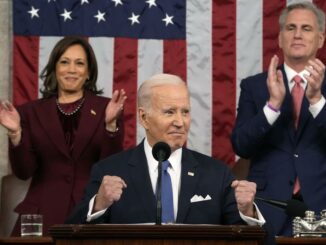
  • US President Biden touts  administration’s economic policies in State of the Union address

    US President Biden touts administration’s economic policies in State of the Union address

    • Asserts  that his administration is building an economy where no one is left behind

    WASHINGTON, D.C. (TIP): America today is in a much better shape than it was two years ago when its economy was “reeling”, President Joe Biden has asserted, touting his administration’s economic accomplishments in his State of the Union address as he laid the groundwork for his 2024 White House run.

    The economy is coming back, even if there’s more to do on inflation, Biden told Americans on Tuesday, February 7,  in his primetime address to the nation, his second since assuming the presidency in 2021.

    The economy was reeling two years ago, he said, adding that today the unemployment rate is at a 50-year low.

    “We’ve been sent here to finish the job,” Biden said, a phrase he used repeatedly as he laid out his agenda for the next two years.

    In his 72-minute speech, 80-year-old Biden, the oldest sitting US President, touted areas of bipartisan agreement, telling Republicans that “there’s no reason we can’t work together” after the Republican Party took control of the House of Representatives in the midterm elections. His remarks amounted to the opening of a re-election campaign he plans to announce by this spring, The New York Times Newspaper reported.

    “Two years ago, our economy was reeling. As I stand here tonight, we have created a record 12 million new jobs, more jobs created in two years than any president has ever created in four years,” he said before the joint session of the US Congress.

    “Two years ago, COVID had shut down our businesses, closed our schools, and robbed us of so much. Today, COVID no longer controls our lives. And two years ago, our democracy faced its greatest threat since the Civil War. Today, though bruised, our democracy remains unbowed and unbroken,” Biden said.

    Confronting a divided Congress for the first time since taking office, Biden talked back as Republicans heckled him from the floor of the House of Representatives they now control.

    Biden told the lawmakers that as they gather at the US Capitol they are writing the next chapter in the great American story, a story of progress and resilience.

    “When world leaders ask me to define America, I define our country in one word: Possibilities. You know, we’re often told that Democrats and Republicans can’t work together. But over these past two years, we proved the cynics and the naysayers wrong,” he said.

    “Yes, we disagreed plenty. And yes, there were times when Democrats had to go it alone. But time and again, Democrats and Republicans came together. Came together to defend a stronger and safer Europe,” he said.

    “Came together to pass a once-in-a-generation infrastructure law, building bridges to connect our nation and people. Came together to pass one of the most significant laws ever, helping veterans exposed to toxic burn pits,” he said amidst applause from the Congressmen. Biden told Congress that the State of the Union is strong.

    “As I stand here tonight, I have never been more optimistic about the future of America. We just have to remember who we are,” he said. Biden used the phrase “finish the job” 13 times in his address — calling on Congress to do everything from capping the price of insulin at USD 35 per month to imposing new taxes on the wealthiest Americans to passing a ban on assault weapons.

    He said he would not let Republicans “take the economy hostage” over the debt ceiling,

    Biden asserted that his administration is building an economy where no one is left behind.

    “Jobs are coming back, pride is coming back, because of the choices we made in the last two years. This is a blue-collar blueprint to rebuild America and make a real difference in your lives,” he said.

    Biden asserted that manufacturing has been one of the top priorities of his administration.

    “For too many decades, we imported products and exported jobs. Now, thanks to all we’ve done, we’re exporting American products and creating American jobs,” he said.

    “Inflation has been a global problem because of the pandemic that disrupted supply chains and (Russian President Vladimir) Putin’s war (against Ukraine) that disrupted energy and food supplies,” Biden said.

    But the United States is better positioned than any country on Earth, he insisted.

    Acknowledging that his administration has more to do, “but here at home, inflation is coming down”, he said.

    Gas prices are down USD 1.50 a gallon since their peak. Food inflation is coming down, he said.

    Inflation has fallen every month for the last six months while take-home pay has gone up, he added.

    Biden said that his administration is making sure the supply chain for America begins in America.

    “We’ve already created 800,000 manufacturing jobs even without this law. With this new law, we will create hundreds of thousands of new jobs across the country,” he said.

    “That’s going to come from companies that have announced more than USD 300 billion in investments in American manufacturing in the last two years,” Biden said.

    He said that “Made in America” is the top priority of his administration and announced that bridges, roads and highways in the country will be made with American construction materials.

    To maintain the strongest economy in the world, the US also needs the best infrastructure in the world.

    The US used to be number 1 in the world in infrastructure, but then it fell to number 13th, he said.

    “Now we’re coming back because we came together to pass the Bipartisan Infrastructure Law, the largest investment in infrastructure since President Eisenhower’s Interstate Highway System,” he said.

    He said ‘Buy American’ has been the law of the land since 1933.

    “But for too long, past administrations have found ways to get around it. Not anymore,” Biden said in his joint address to the US Congress. “Tonight, I’m also announcing new standards to require all construction materials used in federal infrastructure projects to be made in America. American-made lumber, glass, drywall, fiber optic cables,” he said.

    He said under his watch, American roads, bridges and highways will be made with American products.

    (With inputs from PTI)

  • Indian American academic Prof. Sheila Sen Jasanoff joins Rahul Gandhi during Bharat Jodo Yatra in Haryana

    Indian American academic Prof. Sheila Sen Jasanoff joins Rahul Gandhi during Bharat Jodo Yatra in Haryana

    PANIPAT (TIP): Indian American academic Prof Sheila Sen Jasanoff Holberg Awardee, 2022,  along with Prof Jay H. Jasanoff and social science students Alan Jasanoff and Hilton Simmet from Harvard University USA, joined Congress leader Rahul Gandhi in Bharat Jodo Yatra on Friday, January 6 morning.

    The yatra resumed from the Sanoli-Panipat Road in Haryana.

    A public meeting will also be addressed by Rahul Gandhi in Panipat. Thousands of people welcomed the ‘Bharat Jodo Yatra’ in the Panipat district of Haryana with fireworks. Congress’s Bharat Jodo Yatra on Thursday, January 5  completed its Uttar Pradesh leg and re-entered the state of Haryana.

    Talking to ANI about the Yatra, Congress leader Selja Kumari said, “Under the leadership of Rahul Gandhi, we will walk from the border to Panipat. We will have a massive rally, where Rahul Gandhi will address the public. There is a lot of enthusiasm in the people of Haryana, as they look up to Rahul Gandhi for their future. Taking inspiration from Rahul Gandhi, Congress will work hard in Haryana,” she added.

    Launching a scathing attack on the Bharatiya Janata Party (BJP), the Congress leader said, “BJP is anxious because what started as a ‘Yatra’ has now become a ‘Jan Aandolan’.

    Selja Kumari alleged that the industries in Panipat were in bad shape. “We should have been top in export, but we are not,” she said. Former Congress President Rahul Gandhi has been leading the Bharat Jodo Yatra which started from Kanyakumari last year.

  • Opposition cedes space as Congress in decline

    Opposition cedes space as Congress in decline

    By Saba Naqvi

    “The Opposition space is so badly fragmented that it seems incapable of reaching the critical mass necessary to take on the BJP. At the heart of the problem is the thinly-spread-out Congress that has a notional presence across the country but lacks depth and gets quickly uprooted. Hence, it keeps losing bases to regional forces, such as the recent loss of Punjab to AAP. Attempts to stay afloat in the face of regional powerhouses have also produced dismal results as in Bengal and UP……………

    Rational thought demands that the Congress and regional forces unite. It necessitates that the Congress pull itself up by its bootstraps and tie up with strong regional parties — ruling or in the Opposition in the states. But the irrational is happening. Last week, Rahul Gandhi travelled to Telangana, where he launched a scathing attack on Chief Minister K. Chandrashekar Rao. KCR, he tweeted, had single-handedly destroyed the dream of the people of Telangana when statehood was granted. He also said that Telangana was not ruled by the CM but by a ‘Raja’.”

    It has been a year since two significant states, West Bengal and Tamil Nadu, were won by two big regional parties, the TMC and DMK, even as the Left Front retained Kerala, giving rise to speculation that some kind of national Opposition could be mustered against the BJP in 2024. But a year down the line, after the BJP’s recent win in state polls in Uttar Pradesh, Uttarakhand, Goa and Manipur, and the continued disarray in the Congress, the vision of a grand Opposition coalition against the BJP has evaporated. Indeed, one may well say that in 2022, two years before the next General Election, the world’s largest democracy is a country without a national Opposition.

    This is cause for great concern in Opposition-ruled states: they are owed huge amounts in GST arrears and complain of being deliberately overlooked by the Centre. With inflation skyrocketing, they are coping with increased costs for infrastructure and development schemes even as avenues for raising revenue have shrunk since the roll-out of the GST. While they struggle for funds, both at the party and government levels, the BJP/RSS project of expanding to each part of the country, continues

    with purpose and is well funded. For instance, the BJP is opening offices in the districts of Tamil Nadu, a state where they have no real presence, yet are investing in the long game. Opposition states are living through a particularly difficult era as all the niceties of cooperative federalism have been abandoned by the current Central dispensation. The onslaught is pretty ruthless and states not ruled by the national party, complain of being treated as hostile entities with enforcement wings of the Centre routinely used against them. For instance, in Maharashtra, two ministers of the ruling coalition are in jail, while a dozen are being investigated by Central agencies.

    As prices soar in India and jobs are not created, in normal times the Opposition should have been emerging with strength and purpose. Instead, political narratives appear to be getting delinked from economic issues. Equally, the Opposition space is so badly fragmented that it seems incapable of reaching the critical mass necessary to take on the BJP. At the heart of the problem is the thinly-spread-out Congress that has a notional national presence across the country but lacks depth and gets quickly uprooted. Hence, it keeps losing bases to regional forces, such as the recent loss of Punjab to AAP. Attempts to stay afloat in the face of regional powerhouses have also produced dismal results, such as getting zero seats in Bengal and one in Uttar Pradesh. And when it comes to Congress vs BJP, even if the Congress wins, the BJP has a high strike rate in toppling the regimes through defections.

    Rational thought demands that the Congress and regional forces unite. It necessitates that the Congress pull itself up by its bootstraps and tie up with strong regional parties – ruling or in the Opposition in the states. But the irrational is happening. Last week, Rahul Gandhi travelled to Telangana, where he launched a scathing attack on Chief Minister K. Chandrashekar Rao. KCR, he tweeted, had single-handedly destroyed the dream of the people of Telangana when statehood was granted. He also said that Telangana was not ruled by the CM but by a ‘Raja’.

    It may be recalled that it was the Sonia Gandhi-led Congress that took political decisions that effectively destroyed the party’s own bases in erstwhile Andhra Pradesh (the largest chunk of Congress MPs during the decade of UPA rule came from undivided Andhra Pradesh). Central to this success was chief minister YSR Reddy, a pioneer in designing popular welfare schemes (and having links with big business donors). But YSR’s death in a plane crash in 2009, led to chaos that in turn resulted in the Congress national leadership taking decisions that in hindsight only finished them off in both Telangana, carved out of the state in 2014, and in Andhra Pradesh where YSR’s son Jagan Mohan Reddy, denied power by the Congress, is now in power with his party named YSR Congress.

    It’s entirely possible that Rahul Gandhi feels compelled to speak up for what remains of his party in those parts; just as he would have been asked to do so by the Congress in Bengal. But surely it is time for the Congress leadership to get a reality check and recognize that ‘the party is over’ in many parts of India and the only way forward is to make arrangements with regional forces even if that involves giving up on what remains in the debris (the best template actually exists in Tamil Nadu where the Congress is the junior partner in the DMK-led alliance).

    Presumably, political consultant Prashant Kishor had offered the blueprint of a national plan when he was negotiating to join the Congress last month. It may not have worked but the data with which the consultancy I-PAC, founded by Kishor, works would have been valuable as could have been the professionalism in calibrating other aspects of elections. Ironically, TRS is now reportedly a client of I-PAC just as Jagan Reddy was during the campaign that won him the state. But Kishor, meanwhile, after his talks with the Congress failed, has taken off for his home state Bihar where he has announced a padayatra and the beginning of a process that can culminate in the foundation of another political party/front.

    Indeed, the great irony is that while there is not much of a national Opposition, the space is also getting very crowded. AAP is set to contest the Assembly elections in Gujarat and Himachal Pradesh later this year. The TMC has plans in the North-east, even as a foray into Goa was a disaster that did nothing to improve relations with the Congress. Kishor, consultant to various parties, has also begun a political process in Bihar where Chief Minister Nitish Kumar is again making enigmatic moves.

    The Congress, meanwhile, has not revealed any plan. Rahul Gandhi is reportedly deeply interested in philosophies of the world and perhaps believes in the live-life-one-day-at-a-time and what-will-be-will-be approach. Currently, the hopes seem to exist on a wing and a prayer, a phrase that comes from a fighter pilot trying to land his aircraft in World War II after a wing was destroyed. The Congress will have a brainstorming meeting in Udaipur between May 13 and 15. Let’s hope the party leaders won’t spend all the time trying to chase their own tails. The expectations are very low, so perhaps they can pull a surprise.

    (The author is a senior journalist)

  • Congress must reform: It’s in the interest of democracy

    The rout of the Congress in the recent Assembly elections confirms the view that the grand old party is in terminal decline, and that the 2024 parliamentary election would pit the BJP not against the Congress but a coalition of regional parties, with or without the Congress. When the BJP won power at the Centre in 2014, the Congress ruled nine states — now, with the loss of Punjab, the number is down to two. In the last eight years, the Congress has won just five of the 45 elections held in the country. Its hope of wresting back Himachal Pradesh from the BJP later this year would be reduced in the absence of state supremo Virbhadra Singh, who died last year; the two states it still rules, Rajasthan and Chhattisgarh, go to the polls in 2023 and there is a real possibility that by the 2024 General Election, it may be in power in no state at all. The decimation of the Congress robs the voter of a centrist option at the national level, and makes the contest in national electoral politics multipolar, with various regional parties — with vastly different ideologies and ambitions — coming together to challenge the BJP. India must have a strong Opposition to hold the government to account.

    However, a motley collection of parties — competing for prime ministership among themselves — may not be best suited to serve the interests of democracy. The Congress, despite its spectacular decline over the last decade, had seemed the most viable alternative to the BJP, but even veteran Congressmen are losing hope now. The Congress’ vote share in the last two General Elections was the second-best — at 19.31% and 19.46% — behind the BJP, and it has the potential to represent Indian citizens across the country. It still may be the biggest single challenger to the BJP, but it’s obvious that it has got stuck in a rut. There is confusion at the top — after Rahul’s resignation as president in 2019, Sonia Gandhi has been interim president — and panic in the ranks. Organizational reform is the need of the hour, in the interest of a strong Opposition — and, thus, in the interests of India.

    (Tribune, India)

  • Challenges before Bhagwant Mann and his Government

    Challenges before Bhagwant Mann and his Government

    By Prabhjot Singh

    “Expectations of people of Punjab who voted out the two earlier ruling parties – Congress and Shiromani Akali Dal –  are high as they expect that instead of subsidies, the delivery systems in education and health care should be reliable and affordable. Similarly, civic issues, which the people have been fighting since Independence, need to be tackled in a more professional and competent manner. Corruption in public offices is another irritant that people want the new Government to handle with a firm hand.”

    After a landslide triumph in the just concluded Punjab Assembly elections, the Aam Aadmi Party (AAP) has set upon itself the onerous task of reviving not only the tottering economy but also in establishing the Rule of Law in this border State. After an impressive oath ceremony, attended by hundreds of thousands of the party workers and well-wishers at the historic Khatkar Kalan, the birthplace of Shaheed-e-Azam Bhagat Singh, the Chief Minister, Bhagwant Singh Mann, is faced among other things , a difficult challenge of not only naming members of his Council of Ministers but also in deciding who seven will sit in the Upper House of Parliament, Rajya Sabha, as representatives of AAP. These are ticklish issues as some loyalists workers and leaders tend to feel offended if their loyalty and sincerity to the party is not recognized. While some of the second time MLAs, including Harpal Cheema, Aman Arora and Baljinder Kaur look certain choices for inclusion in the Council of Ministers, there may be pressures on the Chief Minister from other quarters and groups also. There will be similar pressures for nomination to Rajya Sabha.

    Though these party level decisions will be taken in consultation with the national convener Arvind Kejriwal, Bhagwant Mann will have to put his head down to go about the task of restructuring the State Administration while following the legislative requirements in a time bound manner. He has to tone up the civil administration by making it  responsive to public needs.

    Convening of the session of the newly constituted Punjab Vidhan Sabha with a Pro-Tam Speaker administering oath of secrecy to all members, election of Speaker will follow. A date has also to be fixed for passing a vote on account as the new ruling party may need time to finalize its budget for the current financial year. The new excise policy that must become effective from April 1, too, needs to be drafted and approved by the Council of Ministers. While Vote on account must be done before March 31, the new Budget may take a couple of months and a special session of Vidhan Sabha. In between, the AAP government must take policy decisions on several issues of public interest, including implementation of promised 300 units of free power in the power tariff from April 1.

    The AAP national convener Arvind Kejriwal had been talking about replicating the Delhi model in Punjab with certain promises, including free 300 electricity units to all. Punjab has almost 1 crore electricity consumers, including 73 lakh domestic consumers, 14 lakh agriculture consumers, 11.50 lakh commercial consumers and 1.5 lakh industrial consumers. The State spends Rs 10,000 crores as electricity subsidy of which a major chunk – Rs 7180 crores – goes to the farm sector alone.

    The AAP government will also become cynosure of all eyes as it takes on the battle to fight mafias. The first step of the battle will get initiated with the announcement of the new Excise policy. How the State reins in those controlling the liquor trade, both in retail and wholesale, besides tightening control over the running of distilleries and breweries – major sources of evasion of excise duty – will be watched with bated interest. Simultaneously, it will face an uphill task of controlling  deeply entrenched sand and gravel mafia not only to bring down these essential building raw materials but also to check the massive drain of State resources. Illicit mining has also been posing a serious threat to the ecology and environment of the State.

    Expectations of people of Punjab who voted out the two earlier ruling parties – Congress and Shiromani Akali Dal –  are high as they expect that instead of subsidies, the delivery systems in education and health care should be reliable and affordable. Similarly, civic issues, which the people have been fighting since Independence, need to be tackled in a more professional and competent manner. Corruption in public offices is another irritant that people want the new Government to handle with a firm hand.

    Equally challenging will be handling the problem of unemployment and drain of youth to developed nations. Not only the able-bodied young men and women, especially those belonging to the 18-15 age group are heading for green pastures overseas, they are also adding to the debt of their aging and helpless parents and guardians by taking huge sums of money with them. The faith of the people in governance needs to be restored. It can be done only when the new Government with an unprecedented mandate starts delivering by keeping its pre-election promises. Fortunately, the coffers of the State are neither empty nor do they have any pending bills needing clearance. All the State needs is an honest government with a vision. Will Bhagwant Mann and his team deliver? Time will tell.

    (The author  is a veteran journalist with over three decades of experience covering a wide spectrum of subjects and stories. He has covered  Punjab and Sikh affairs for more than three decades besides covering seven Olympics and several major sporting events and hosting TV shows. For more in-depth analysis please visit probingeye.com  or follow him on Twitter.com/probingeye)

    For Jatin

    Categories: Breaking News, Front page,  Politics, India, Punjab,

    Tags:Facebook, WhatsApp, Twitter  LinkedIn,  snap chat, Bhagwant Mann, Kejriwal, Punjab, India, NRIs

  • Congress Clears $1.5 Trillion Spending Bill, including 13.6 billion in emergency aid for Ukraine

    Congress Clears $1.5 Trillion Spending Bill, including 13.6 billion in emergency aid for Ukraine

    WASHINGTON, D.C. (TIP): Congress cleared the first major federal spending legislation of President Biden’s administration on Thursday, March 10, approving a $1.5 trillion measure with substantial increases for domestic and national security programs, along with $13.6 billion in emergency aid for Ukraine as it battles Russia’s invasion. The Senate approved the 2,700-page measure by a vote of 68 to 31 less than two days after it was finalized and pushed through the House, a rapid timetable that reflected strong bipartisan support for assisting Ukraine and a sense of urgency to avert a government shutdown within days. The bill, which funds the government through September, includes generous spending on domestic programs long prioritized by Democrats and military investments championed by Republicans. Mr. Biden was expected to quickly sign the measure, which marked the first time since he took office and Democrats won unified control of Congress that they have been able to enact a spending bill that reflects their priorities, including investing in climate resilience, public assistance programs and unlocking aid for projects contained in the $1 trillion bipartisan infrastructure law. In remarks on the Senate floor, Senator Chuck Schumer of New York, the majority leader, called it “the strongest, boldest and most significant government funding package we’ve seen in a very long time.” But to clear the way for passage, Democrats had to drop some priorities, most notably a White House request for more pandemic aid. Republicans objected to spending any new federal money on the coronavirus response, prompting Democrats first to whittle down the size of that package, and then to claw back funding from existing aid programs, including money for state governments, to pay for it. But that strategy infuriated rank-and-file Democrats and governors in both parties, who balked at yanking promised state assistance, and leaders were forced to strip the aid from the package. They vowed to try again to pass it in the coming days, but Republican support was unclear, leaving in doubt the fate of the administration’s new pandemic plan.

    Republicans claimed credit for prodding Democrats to accept a $42 billion increase in military spending, bringing the total this year to $782 billion. The negotiations, said Senator Mitch McConnell of Kentucky, the minority leader, “put us Republicans in the surreal position of having to push a commander in chief’s party into giving his own commanders the funding they need.” “But over many Democrats’ objections, Republicans made sure this deal gets the job done for our armed forces,” he said. Democrats hailed the $46 billion increase they secured for domestic programs, calling the $730 billion total the largest investment in four years.

    “This bill invests in future  prosperity, in our health, and reduces everyday costs for millions of Americans, such as childcare, a college education, and heating and cooling costs,” said Senator Patrick J. Leahy, the Vermont Democrat who leads the Appropriations Committee.The last-minute scuffles reflected the arduous negotiations over the package, which dragged out more than five months past the Oct. 1 start of the fiscal year that it is supposed to fund. To secure Republican support, Democrats agreed to go above the administration’s request for Pentagon spending and maintain a series of longstanding restrictions on federal money that they had hoped to remove, including the Hyde Amendment, which bans federal funding for most abortions.

    The package provides $145 billion to invest in new aircraft, ships and other vehicles, including 13 new Navy vessels, a dozen F/A-18 Super Hornets and 85 F-35 Joint Strike Fighters. It also provides a 2.7 percent pay raise for all 2.1 million uniformed service members as well as the approximately 750,000 civilian employees in the Defense Department.

    Even without the emergency aid package, Democrats secured additional funds for pandemic preparedness. That includes $745 million, an increase of $148 million, for the Biomedical Advanced Research and Development Authority, and $845 million, an increase of $140 million, for the Strategic National Stockpile, an emergency medical reserve intended to guard against infectious disease and bioterrorism threats. Democrats also won increases for maternal and child health programs, tribal programs, public education and programs addressing mental health crises. And Congress agreed to direct millions of dollars toward its own employees and support of the Capitol complex. The U.S. Capitol Police will receive $602.5 million, an increase of $87 million, to help expand its ranks after the Jan. 6 riot, while House congressional offices will see their budgets expand 21 percent, the largest increase since 1996, to try to stem the drain of institutional knowledge and prevent staff from seeking better pay off Capitol Hill.

    Because the package is one of the few must-pass bills remaining in the legislative session, lawmakers seized on the opportunity to attach an array of additional priorities. Most notably, the bill includes a reauthorization of the Violence Against Women Act, a law aimed at preventing domestic violence, stalking and sexual assault that lapsed in 2019. Mr. Biden helped craft the law as a senator in 1994, and a bipartisan group of senators had recently unveiled a deal on an expanded version. The legislation also includes $1 billion in funding for Israel’s Iron Dome missile defense system, which had been held up in the Senate because of objections from Senator Rand Paul, Republican of Kentucky. And it would close a loophole to ensure that makers of flavored e-cigarettes can no longer sidestep the Food and Drug Administration’s ability to regulate products derived from tobacco.

    To push the package through the Senate, lawmakers had to navigate a series of objections from conservative Republicans, who complained that they had little time to examine the legislation and pushed to prioritize the emergency aid to Ukraine. “It’s hard to express my anger and frustration,” said Senator Rick Scott, Republican of Florida, as Democrats blocked his effort to pass the emergency aid for Ukraine without the $1.5 trillion to fund the government. “What in the hell are we doing here?”

    Like other budget hawks, Mr. Scott also derided the return of earmarks, which allowed lawmakers in both parties to direct money toward projects in their states or districts. But lawmakers rejected an amendment, offered by Senator Mike Braun, Republican of Indiana, that would have stripped those projects, now rebranded with stricter guardrails, from the package.

    “That’s what this is about — politics,” said Senator Jon Tester, Democrat of Montana, defending the package. He warned that Mr. Scott was risking a shutdown by seeking to change the spending measure.

    “You can be unhappy with the” legislation, he added, “but the fact of the matter is, it has been negotiated over the last year by Democrats and Republicans.” Before passing the sprawling measure, lawmakers also voted down additional Republican amendments, including a measure to prevent funding from going toward coronavirus vaccine mandates and an amendment providing disaster relief for Louisiana for recovery for hurricane damage.

    Senator Brian Schatz, Democrat of Hawaii, instead called for a separate disaster aid bill to be passed in the future. Any changes to the spending package would have forced another House vote and risked a government shutdown.

    (With inputs from agencies)

  • Pegasus row: Storm in House, Opp says democracy in crisis

    Pegasus row: Storm in House, Opp says democracy in crisis

    New Delhi (TIP): The row over an alleged surveillance operation using the Pegasus spyware rocked Parliament  as the Opposition and some parties friendly to the ruling coalition, seeking answers from the government, disrupted proceedings in Lok Sabha and did not allow the treasury benches to transact any business for the second consecutive day — signalling that the first week of the Monsoon Session could be a washout.

    The Congress-led Opposition did, however, allow a discussion in Rajya Sabha on the Covid-19 pandemic situation — it led the debate — after the government agreed to its demand for a debate on the floor of the House ahead of a briefing outside Parliament on the Covid preparedness levels.

    There were stormy scenes in Lok Sabha where members of the Congress, Trinamool Congress and DMK raised slogans, showed placards over the alleged snooping controversy – there was an uproar over this in Rajya Sabha as well.

    They demanded a probe by a Supreme Court judge into claims that the Pegasus spyware had been used to snoop on journalists, politicians, ministers, judges and others.

    While YSRCP members raised issues like the Polavaram project and special status for Andhra Pradesh, members of the SAD and the AAP demanded that the government repeal the farm laws at the centre of an ongoing protest.

    A second list of possible targets of alleged surveillance using the Pegasus spyware, which was published Monday by digital news platform The Wire as part of a global collaborative investigation, included mobile phones of Congress leader Rahul Gandhi, TMC MP Abhishek Banerjee, political strategist Prashant Kishor, among others.

    The stage for an offensive was set before the House proceedings began Tuesday with some Opposition MPs staging a protest against the alleged snooping outside Parliament House and Congress members giving multiple adjournment motion notices on the issue in Lok Sabha and notices for discussion in Rajya Sabha.

    While Congress leader KC Venugopal gave a notice under Rule 267 in Rajya Sabha to suspend business and discuss the alleged use of the Pegasus spyware, party MPs Gaurav Gogoi and Hibi Eden gave adjournment notices in Lok Sabha.

    Eden, in his notice, said democracy is in crisis: “There are eyes and ears snooping on us everywhere. Even those holding high offices of the government, several senior Opposition leaders, constitutional authorities, reporters and activists are being spied on and their personal conversations being watched, monitored and transferred to unknown locations and people.”

    “This poses a grave problem to the unity and integrity of India and is a high concern for national security. This grave crisis of snooping into our citizens’ private life goes against the basic ethos of our Constitution whereby the fundamental right to privacy is being violated. I request the Government to constitute an inquiry into the allegations of Pegasus spying into citizens of our country.”

    When the Lok Sabha met, Opposition MPs — from the Congress, DMK, TMC, NCP, SP, BSP and YSRCP — stormed the well of the House, holding placards and raising different issues. Congress MPs were holding placards with slogans demanding the resignation of the Prime Minister and Home Minister over the alleged surveillance, and they were joined by the DMK, TMC and NCP members.

    TMC’s Saugata Roy tried to speak on the alleged use of the spyware to snoop on his party leader and colleague Abhishek Banerjee.

    Speaker Om Birla tried to take up Question Hour, but the protesting MPs shouted slogans against the government. In four minutes, Birla adjourned the proceedings until 2 pm. The House witnessed similar scenes when it met again and it was adjourned for the day at 3 pm.

    Shashi Tharoor: No need for JPC into Pegasus, IT panel will do its duty

    Ruling out a Joint Parliamentary Committee (JPC) probe into alleged surveillance using the Pegasus spyware, Congress leader Shashi Tharoor, who heads the Parliamentary Standing Committee on Information Technology, said Wednesday that the committee will “do its duty” and that the subject is “already on the mandate of my committee”.

    The House committee has called representatives of the Ministry of Electronics and Information Technology, Ministry of Home Affairs and Department of Telecommunications on July 28 to discuss citizens’ data security and privacy.

    Speaking to The Indian Express, Tharoor said there was no need to set up a JPC to look into the disclosures since the standing committee and the JPC have identical rules.

                    Source: The Indian Express

  • Cong demands vax for all, starts social media campaign

    New Delhi (TIP): Amid rising cases of Covid-19 in the country, the Congress has started a social media campaign for vaccination for all. Claiming that the country is facing shortage of vaccines, the party said that export of the vaccine should be stopped immediately, and the people of India should be vaccinated first. Speaking on the campaign, Congress leader Rahul Gandhi said: “The country needs corona vaccine, please raise your voice as everybody has a right for secured life.”

    Congress leader Shashi Tharoor said there should be ban on vaccine exports.

    “Indians should be vaccinated first… that’s indispensable… before we take care of the rest of the world. We urge the Centre to first ensure that vaccines are available to all Indians and only then lift the export moratorium on vaccines.”

    Former Home Minister and senior Congress leader P. Chiadmbaram has also attacked the government and said that “one day the government calls the vaccination drive a ‘festival’ (utsav). Another day, it calls the drive ‘the second war’. Which is it?

    “Remember, the day after the PM had announced the first lockdown, he claimed that the war against Covid will be won in 21 days, as compared to the Mahabharata war that was won in 18 days “ What happened to that war?” India reported 1,68,912 new Covid-19 cases in the last 24 hours, setting another grim one-day record as the overall tally reached 1,35,27,717 so far. The health ministry data said here on Monday. With this, India has once again taken its spot as the second-worst hit nation in terms of infections after the US.

  • Opposition puts government in the dock over farm agitation

    Opposition puts government in the dock over farm agitation

    Tells Centre to stop monologue, start dialogue; Says show aggression on border, not protest sites

    Today we are very touchy about remarks coming from outside on the farmers’ agitation. But who said this ‘Abki baar Trump sarkar’. And now we are talking about interference?”- TMC MP Derek O’Brien

    I.S. Saluja

    NEW DELHI (TIP): Hitting out at the government over its “failure” on various fronts, including the ongoing farmers’ agitation, Opposition members in Rajya Sabha today asked the ruling NDA leadership to stop “monologue” and instead “initiate dialogue with the protesters”.

    Why isn’t PM talking to farmers, why fences?

    When the PM says he’s only a phone call away, who is coming between him and farmers… Why have fences been built, toilets removed, Net blocked? — Deepender Hooda, Congress

    Opening the second day of discussion on a motion thanking the President for his address to the joint sitting of Parliament at the start of the Budget session, RJD MP Manoj Kumar Jha said the government had “lost the patience to hear and any criticism was painted as anti-national”.

    “With folded hands, I request you to please understand the pain of farmers. In harsh winter you stopped water supply and toilet facilities, dug trenches, put barbed wires and installed spikes,” the RJD MP said. “Such aggressive approach wasn’t even heard of towards the neighboring nations who came inside (the Indian territory),” he added.

    On a tweet by pop star Rihanna on the farmers’ protest, Jha said the democracy would not be weakened by a tweet, but by the approach of the government.

    In a veiled reference to cold storage chain and godowns built by private corporates, Jha said, “Your backbone is the farmer…. 303 (seats won by the BJP in last General Election) did not come from cold storage or godowns, but from these very people.” Hitting out at the government, TMC MP Derek O’Brien said, “Today we are very touchy about remarks coming from outside on the farmers’ agitation. But who said this ‘Abki baar Trump sarkar’. And now we are talking about interference?”

    As he rose to participate in the discussion earlier, the TMC MP said, “Such are times… we should be thankful for small freedoms. Freedoms like being allowed to speak without the microphones being muted, or the television feeds censored, or MPs not being escorted out by marshals.”

    (With inputs from agencies)

  • Indian American Lawmakers named to key Congressional Committees

    Indian American Lawmakers named to key Congressional Committees

    WASHINGTON (TIP): Indian American lawmakers Pramila Jayapal and Raja Krishnamoorthi have been named to key congressional committees on budget and the COVID-19 pandemic by House Speaker Nancy Pelosi.

    While Congresswoman Ms Jayapal, 55, was named to the powerful budget committee, Congressman Mr Krishnamoorthi, 47, was appointed to a key Congressional committee on the coronavirus crisis on Tuesday.

    The Select Subcommittee on the Coronavirus Crisis was established to provide oversight of the federal COVID-19 pandemic response. “I am honored to join Chairman Clyburn and our colleagues on this panel to provide vital oversight of the federal coronavirus response to protect the health and safety of the American people as we defeat the pandemic and rebuild our economy,” said Mr Krishnamoorthi, serving as the US Representative for Illinois’s 8th congressional district since 2017. “I look forward to working with members of both parties as we ensure that the trillions of dollars in taxpayer funds dedicated to our country’s response to this pandemic and its economic impacts are used as efficiently, transparently and effectively as possible,” he said.

    Ms Jayapal, the US Representative for Washington’s 7th congressional district since 2017, has been named as a member of the House Budget Committee that plays a key role in passage of the budget. Congressman John Yarmuth has been named to chair the House Budget Committee. Ms Jayapal is the first Indian-American woman to be elected to the US House of Representatives. She is leading the effort on USD 15 per hour as minimum wage.

    The US is the worst-affected country from the COVID-19 which has killed more than 420,000 people in the last one year. The country also has over 25,293,000 confirmed cases. President Joe Biden has proposed a USD 1.9 trillion rescue package, which includes USD 1,400 relief payments for most Americans, extended unemployment benefits and substantial aid to cash-strapped state and local governments.

  • Rajasthan slugfest: Need for impartial probe into horse-trading allegations

    Rajasthan slugfest: Need for impartial probe into horse-trading allegations

    What had initially appeared to be an intra-Congress tussle in Rajasthan has turned into a ‘Congress vs BJP’ slanging match after the emergence of audio clips in which Union minister Gajendra Singh Shekhawat is purportedly heard having a conversation with a Congress MLA and a BJP leader about toppling the Ashok Gehlot government. The state’s Special Operations Group has promptly registered a couple of FIRs on a complaint by the Congress. An impartial, time-bound inquiry is needed to verify the authenticity of the recordings and unearth the underlying conspiracy, irrespective of which political party is at fault, even as Shekhawat has denied that the clips have his voice. The development has provided ammunition to the Congress to accuse the ruling BJP at the Centre of horse-trading. The onus is on the NDA government to convince all and sundry that it has no hand in the goings-on in the border state.

    Attempts to subvert democracy and the electoral process have become far too common in recent years. Several states have witnessed post-poll machinations and short-lived governments, with the latest casualty being Madhya Pradesh. The Congress had wrested power from the BJP by winning the 2018 MP Assembly polls, but the latter turned the tables on the ruling party earlier this year with the help of some obliging MLAs. In Goa and Manipur, which produced hung Assemblies in 2017, the BJP formed the government despite having won fewer seats than the Congress. Last year, the long-drawn-out Karnataka ‘nataka’ and the Maharashtra muddle also amounted to a betrayal of the voters’ mandate.

    Whenever a government finds itself on shaky ground, the clamor for strengthening or reviewing the anti-defection law gets louder. Indeed, loopholes in this law enable unscrupulous elected representatives to switch loyalties as whopping sums of money allegedly change hands. With the power struggle in Rajasthan set to get uglier inside as well as outside the courts, the credibility of the parties concerned has come under sharp scrutiny. How the major players acquit themselves will demonstrate their respect, or lack of it, for democracy.

    (Tribune, India)