Tag: COVID 19

  • Addressing the Growing Crisis of Mental Health: The Role of Yoga in Cultivating Well-being

    Prof. Indrajit Saluja
    Prof. Indrajit Saluja

    In recent years, the issue of mental health has emerged as a pressing concern worldwide. According to the World Health Organization (WHO), depression is the leading cause of disability globally, affecting over 264 million people of all ages. Moreover, the COVID-19 pandemic has exacerbated existing mental health challenges, with increased levels of stress, anxiety, and depression reported across populations. As we grapple with this growing crisis, it is imperative to explore holistic approaches to mental well-being, including the ancient practice of yoga.

    Mental health issues can arise from a myriad of factors, including genetic predispositions, traumatic experiences, societal pressures, and environmental stressors. In today’s fast-paced world, individuals often find themselves overwhelmed by the demands of modern life, leading to burnout, anxiety disorders, and depression. Moreover, the stigma surrounding mental illness can prevent individuals from seeking help, exacerbating their symptoms and perpetuating the cycle of suffering.

    While medical interventions such as therapy and medication play a crucial role in managing mental health conditions, there is a growing recognition of the importance of holistic approaches that address the interconnectedness of mind, body, and spirit. This is where the ancient Indian practice of yoga comes into play.

    Yoga is more than just a physical exercise; it is a holistic discipline that integrates breath control, meditation, and physical postures to promote overall well-being. At its core, yoga emphasizes the cultivation of self-awareness, inner peace, and harmony with one’s surroundings. By fostering a deep connection between the mind, body, and soul, yoga offers a powerful tool for managing stress, alleviating symptoms of anxiety and depression, and promoting resilience in the face of adversity.

    Research has shown that regular practice of yoga can have profound effects on mental health. Studies have found that yoga interventions can reduce symptoms of depression, anxiety, and PTSD, as well as improve quality of life and overall psychological well-being. Moreover, yoga has been shown to regulate the body’s stress response system, lowering levels of cortisol and promoting relaxation.

    One of the key strengths of yoga lies in its adaptability and accessibility. Whether practiced in a traditional studio setting or in the comfort of one’s own home, yoga offers a range of techniques that can be tailored to individual needs and preferences. From gentle, restorative practices to more dynamic, physically challenging sequences, there is a style of yoga suitable for everyone, regardless of age, fitness level, or prior experience.

    Additionally, yoga promotes a supportive and inclusive community that encourages self-acceptance, compassion, and connection with others. By fostering a sense of belonging and mutual respect, yoga helps to combat feelings of isolation and alienation, which are common contributors to poor mental health.

    As we navigate the complexities of the modern world, it’s essential to prioritize mental health and well-being as integral components of overall health. By embracing holistic approaches such as yoga, we can cultivate resilience, inner peace, and vitality, empowering ourselves to lead fulfilling and meaningful lives. In the words of B.K.S. Iyengar, one of the foremost yoga teachers of the 20th century, “Yoga is a light, which once lit, will never dim. The better your practice, the brighter the flame.” Let us harness the transformative power of yoga to illuminate the path towards mental well-being for all.

  • Covid impairs brain health, but not more than pneumonia, cardiac arrest, or critical illness: Study

    Covid impairs brain health, but not more than pneumonia, cardiac arrest, or critical illness: Study

    NEW DELHI (TIP): Brain function is impaired in patients following severe COVID-19, but no more than that of people hospitalized with illnesses like pneumonia and cardiac arrest with similar severity, new research has found.

    Researchers found that patients hospitalized due to COVID-19 had worse cognitive, neurological and psychiatric effects than healthy participants after an 18-month follow-up period.

    However, the researchers at the University of Copenhagen, Denmark, also found that these deficits in brain function were not significantly different to those in “carefully matched” patients requiring hospitalization for pneumonia, myocardial infarction (cardiac arrest), or non-COVID-19, intensive care-requiring illness.

    Thus, they say that long-term associations with brain health might not be specific to COVID-19 but associated with overall illness severity and hospitalization. They also said that this information was important for putting understandable concerns about brain health after COVID-19 into perspective. Their findings are published in the Journal of American Medical Association (JAMA) Network Open. Previous studies have found COVID-19 to compromise brain function.

    However, long-term prospective investigations with matched control cohorts and face-to-face assessments were lacking, the researchers said. In this study, the team included 345 participants, including 120 patients with COVID-19, 125 patients hospitalized for non-COVID-19 pneumonia, myocardial infarction, or non-COVID-19, ICU-requiring illness and 100 healthy controls.

    Over the follow-up period, the participants were evaluated for their cognition and executive function, along with depression and anxiety. They also underwent a neurological examination, which measured their sensorimotor and cerebellar functions and cranial nerves. The team also conducted interviews with the patients to gather data on cognitive and neuropsychiatric symptoms they were experiencing, including fatigue. The symptoms attributable to the hospitalization were included in the study, they said.

    All the evaluations, except for executive function and impaired sense of smell, showed that patients hospitalized with COVID-19 performed worse than the healthy individuals, but no worse than those hospitalized with similarly severe illnesses, the researchers said.

    They also found that patients with COVID-19 had a higher incidence of new psychiatric diagnoses – anxiety and depression – compared with healthy controls, but again, not more than the hospitalized control patients. They said this observation corroborated previous studies. The researchers acknowledged that because healthy controls had fewer comorbidities than hospitalized individuals, thus multimorbidity could play a role in both hospitalization and lasting associations with brain health.

    Further, even as studies with broader cognitive test batteries are needed to confirm these findings, brain health after COVID-19 seems overall comparable to that after other diseases of similar severity, they said.
    (Source: PTI)

  • Being overweight hampers body’s immune response to Covid infection

    Being overweight hampers body’s immune response to Covid infection

    Being overweight can impair the body’s antibody response to SARS-CoV-2 infection but not to the protection offered by COVID-19 vaccination, according to a study.
    The finding, published in the journal Clinical & Translational Immunology, builds on the team’s existing research on how COVID-19 affects people who are overweight.
    “We have previously shown that being overweight not just being obese increases the severity of SARS-CoV-2,” said Marcus Tong, a Ph.D. candidate at the University of Queensland in Australia. “But this work shows that being overweight creates an impaired antibody response to SARS-CoV-2 infection but not to vaccination,” Tong said. The team collected blood samples from people who had recovered from COVID-19 and not been reinfected during the study period, approximately three months and 13 months post-infection.
    “At three months post-infection, an elevated BMI was associated with reduced antibody levels,” Tong said. “And at 13 months post-infection, an elevated BMI was associated with both reduced antibody activity and a reduced percentage of the relevant B cells, a type of cell that helps build these COVID-fighting antibodies,” he added. The body mass index (BMI) is defined as the body mass divided by the square of the body height.
    In contrast, an elevated BMI had no effect on the antibody response to COVID-19 vaccination at approximately six months after the second vaccine was administered, the researchers said.
    According to Kirsty Short, Associate Professor at the University of Queensland, the results should help shape health policy moving forward.
    “If infection is associated with an increased risk of severe disease and an impaired immune response for the overweight, this group has a potentially increased risk of reinfection,” Short said. “It makes it more important than ever for this group to ensure they’re vaccinated,” she added. The researchers noted that from a public health perspective, this data draws into question policies around boosters and lockdowns.
    “We’d suggest that more personalised recommendations are needed for overweight people, both for ongoing COVID-19 management and future pandemics,” Short said.
    “Finally, the data provides an added impetus to improve SARS-CoV-2 vaccination in low-income countries, where there’s a high percentage of people who are overweight and are dependent on infection-induced immunity,” she added. Source: PTI

  • New COVID-19 vaccine available in New York starting September 15 : Hochul

    New COVID-19 vaccine available in New York starting September 15 : Hochul

    ALBANY, NY (TIP): The newest COVID-19 vaccine will be made available in New York starting Friday, September 15, as the state sees a slight increase in case numbers and hospitalizations now three-and-and-half years after the pandemic began, Gov. Kathy Hochul announced Wednesday, September 13.
    “I know everyone wants to be done with COVID, but COVID is not done with us,” Hochul said at a briefing in New York City. Advisers to the Centers for Disease Control and Prevention on Tuesday endorsed the new shots for everyone 6 months of age and older. These newest shots replace combination vaccines that mixed protection against the original coronavirus strain and even older omicron variants. Like earlier versions, they’re expected to be most protective against severe illness, hospitalization and death, rather than mild infection.

    “It is literally a new vaccine. It is not a booster shot. It is not an enhancer. It is a new vaccine designed to attack the new variants,” Hochul said. The new vaccine will be available at doctors’ offices, pharmacies and other health care providers on Friday. “I’m calling on New Yorkers once again as we have many many times to take the right precautions and we can handle this. There’s no need to be careless. We have the tools we need,” Hochul said.

    The governor said she is also reinforcing that nursing homes are required to make the new vaccine available for their residents and are responsible for stockpiling COVID-19 test kits, masks and PPE.

    “The whole idea of dealing with this is to be pre-emptive,” Hochul said.

    The state last week said it is also making rapid test kits and masks available to school districts and Boards of Cooperative Educational Services (BOCES) if they request them as the new academic year gets underway.

    “It’s our job to make sure that every school district has what they need to continue safe in-person learning,” she said. “In-person learning because we’re still dealing with the fallout of what happened when children were disconnected from their normal environment, the effect it had on them emotionally, the effect it had on them academically, and they’re still far behind.” As of now, New York is seeing a seven-day average of 14 COVID-19 cases per 100,000 people, higher than it was over the summer but still well below peak levels in the winters of 2021 and 2022. “This is not the bad old days. At all. We don’t anticipate getting there. But shame on us if we don’t see the warnings,” Hochul said. The governor said the current numbers do not “raise the red flag” for any potential return to certain pandemic-era restrictions at this time.

  • Bolsonaro home searched as Brazil probes fake vaccine cards

    BRASILIA (TIP): Brazil’s Federal Police searched former President Jair Bolsonaro’s home and seized his phone May 3 in what they said was an investigation into the alleged falsification of COVID-19 vaccine cards. Several other locations also were searched and a half dozen people faced arrest, police said.
    The former president confirmed the search of his residence while speaking with reporters, as did his wife, Michelle, on her Instagram account.
    A police official, who spoke on condition of anonymity because the person wasn’t authorized to speak publicly, said Bolsonaro would be questioned at Federal Police headquarters and confirmed that one of his closest allies, Mauro Cid, was arrested.
    Asked about the search of Bolsonaro’s home, the Federal Police’s press office provided a statement saying officers were carrying out 16 searches and six arrests in Rio de Janeiro related to the introduction of fraudulent data related to the COVID-19 vaccine into the nation’s health system. The statement didn’t name Bolsonaro or Cid.
    Local media reported that the vaccine cards of Bolsonaro, his advisers and his family members were altered. The police statement said the investigation focused on cards altered in order to comply with U.S. vaccine requirements to enter the country.
    “There was no adulteration on my part, it didn’t happen,” Bolsonaro told reporters after the search. “I didn’t take the vaccine, period. I never denied that.” In an interview for Jovem Pan television, Bolsonaro said his vaccination records were not required for any of his trips to the U.S.
    “The way heads of state are treated is different than for the common citizen. Everything is arranged ahead of time, and in my travels to the United States, I was not at any time required to have a vaccination card,” Bolsonaro said. Bolsonaro visited the U.S. at least three times after it began generally requiring in November 2021 that non-citizens be fully vaccinated to enter. He went in June 2022 for the Summit of the Americas, September 2022 for the U.N. General Assembly and last December after he left office for a stay in Florida.
    The investigation raises questions about whether falsified vaccine information might have been included in documentation for any members of the former president’s entourage during those trips.
    During the pandemic, Bolsonaro spent months sowing doubt about the efficacy of the vaccine and defiantly refusing to get a shot.(AP)

  • XBB.1.16 variant accounting for 38.2% of Covid-19 infections in India: Report

    XBB.1.16 variant accounting for 38.2% of Covid-19 infections in India: Report

    New Delhi (TIP)- The newly emerged recombinant coronavirus variant XBB.1.16 has been observed in different parts of the country, accounting for 38.2 per cent of the infection till date, according to the latest INSACOG bulletin. The bulletin of March 27, which was released on Thursday, said among the samples collected till the third week of March 2023, XBB continued to be the most commonly circulating Omicron sublineages.

    Noting that Omicron and its sublineages continue to be the dominant variants in India, the bulletin said an increase in infection rate has been observed, especially in western, southern and northern parts of India.

    “A newly emerged recombinant variant XBB.1.16 has been observed in different parts of India, accounting for 38.2 per cent of the infection till date,” the bulletin said. The bulletin further said a few BA.2.10 and BA.2.75 sublineage was detected in some part of the country whereas XBB was the most prevalent sublineage of the Omicron variant.

    The INSACOG said globally, nearly 3.7 million new cases and 26,000 deaths have been reported in the last 28 days. During the week nine of the year 2023, there has been a continued increasing trend in the proportions of recombinant lineages globally, it said.

    India has logged 5,335 fresh coronavirus cases, the highest in 195 days, while the active cases have increased to 25,587, according to the Union health ministry data updated on Thursday, April 6.

  • Human antibodies found that can block multiple coronaviruses: Study

    Human antibodies found that can block multiple coronaviruses: Study

    Scientists have found antibodies in the blood of certain Covid-19 donors that can block infection from a broad set of coronaviruses, specifically in people who have recovered from the SARS-CoV-2 virus and were then vaccinated.

    The researchers from Scripps Research and the University of North Carolina (UNC), US, found this includes not only the Covid -19-causing SARS-CoV-2, but also SARS-CoV-1 and MERS-CoV.

    The study, published in the journal Immunity, could lead to the development of a broad coronavirus vaccine and related antibody therapeutics. Both could be used against future coronavirus pandemics as well as any future variants of SARS-CoV-2.

    “We show here that there are individual human monoclonal antibodies that can be found that protect against all three recent deadly coronaviruses: SARS-CoV-1, SARS-CoV-2 and MERS-CoV,” said study co-senior author Raiees Andrabi, institute investigator at Scripps Research.

    SARS-CoV-2, along with SARS-CoV-1 — the cause of the 2002-04 SARS outbreak — and MERS-CoV, the cause of deadly Middle East Respiratory Syndrome, belong to a broad grouping of coronaviruses known as betacoronaviruses.

    These viruses mutate at a modestly high rate, creating a significant challenge for the development of vaccines and antibody therapies against them.

    In the case of SARS-CoV-2, although existing vaccines have been very helpful in limiting the toll of disease and death from the pandemic, new SARS-CoV-2 variants have emerged that can spread even among vaccine recipients.

    However, over the past two years, the team has been finding evidence that SARS-CoV-2 and other betacoronaviruses have a vulnerable site that does not mutate much. This site, which is in the S2 region (or base) of the viral spike protein, is relatively conserved on betacoronaviruses that infect a variety of animal species.

    By contrast, current SARS-CoV-2 vaccines mainly target the viral spike protein’s relatively mutable S1 region, with which the virus binds to host-cell receptors.

    The S2 site plays a key role in how betacoronaviruses progress from receptor-binding to the membrane fusion that enables entry into host cells in the respiratory tract.

  • Indian-origin British schoolboy travels to Poland with stationery for war-hit Ukrainians

    Indian-origin British schoolboy travels to Poland with stationery for war-hit Ukrainians

    Nirpal Shergill

    LONDON (TIP): A 10-year-old Indian-origin schoolboy and award-winning fundraiser has travelled to Poland with his parents to hand over books and other stationery products collected in the UK for Ukrainian children displaced by Russia’s invasion.

    Milan Paul Kumar from Bolton in Greater Manchester, northern England, arrived in the Polish city of Krakow earlier this week ahead of the first anniversary of the Russia-Ukraine conflict on Friday. According to local reports, Kumar and his family visited the Meeting Point integration center organized with the support of UNICEF and run by the Zustricz Foundation, among others.

    “Most importantly, I have made lots of new friends who I will visit again,” Kumar tweeted during his humanitarian mission. He handed over colored pencils, markers and coloring books acquired in a collection organized in Bolton and also donated gifts to add to the resources of a neighboring public library so that they could be used by Polish and Ukrainian children.

    The schoolboy began his journey at the Ukrainian Centre in Bolton and while in Krakow was also invited to the Ukrainian Consulate by Wiaczeslaw Wojnarowskyj, the General Consulate of Ukraine.

    His humanitarian mission this week has been backed by several organizations, including the Tesco Staff and National Literacy Trust.

    Kumar, who washed vehicles to raise funds and donated his pocket money to the Ukraine Schools Appeal last year, is a recipient of the Princess Diana Award 2022 for his fundraising efforts and is also the #iwill Ambassador for Social and Humanitarian Action for the youth action movement based in London.

    Last month, he received a letter from Queen Consort Camilla in praise of his story-telling efforts through a charity called Silver Stories.

    The idea behind the initiative is to help children in their reading skills as Silver Readers while reading to older members of the communities, called Silver Listeners. In 2020 during the COVID lockdown, he was honored with the British Prime Minister’s Points of Light Award for his fundraising activities through a self-published book entitled ‘COVID Christmas Parade’, about a young boy spreading festive cheer during the pandemic. It raised money for the National Literacy Trust to support children whose literacy and learning had been adversely impacted by COVID-19.

    “I feel proud knowing I have made a difference in the lives of other children affected by COVID-19 because reading promotes health and well-being. I love reading and learning about the world through books and I want to help as many children as possible discover the magic of reading and all the great benefits it comes with,” said Kumar.


  • THE LAURIE M. TISCH ILLUMINATION FUND AWARDS $3 MILLION DONATION TO EXPAND NYC HEALTH + HOSPITALS ARTS IN MEDICINE PROGRAM

    THE LAURIE M. TISCH ILLUMINATION FUND AWARDS $3 MILLION DONATION TO EXPAND NYC HEALTH + HOSPITALS ARTS IN MEDICINE PROGRAM

    • The award will support arts programs serving healthcare staff, patients, and communities in patient care sites across the city
    • Funding will promote employee wellness and resilience, create 20 new community murals, present live music, host exhibitions from the health system’s art collection, and provide artists in residence at hospitals

    NEW YORK (TIP): NYC Health + Hospitals announced on February 22 the receipt of a $3 million grant from the Laurie M. Tisch Illumination Fund to expand the health system’s Arts in Medicine program. The grant is the second from the Illumination Fund for the Arts in Medicine program. The first grant — which was for $1.5 million in 2019 — launched the system’s Arts in Medicine program, creating arts programs citywide in all 11 hospitals and five long-term care facilities, as well as many NYC Health + Hospitals/Gotham Health community clinics. Arts programs at NYC Health + Hospitals are designed to support patient recovery and help address staff burnout and compassion fatigue. The new grant is the foundation’s largest gift to the health system since launching its Arts in Health initiatives prior to the pandemic. NYC Health + Hospitals has the largest public art collection in the city.

    “NYC Health + Hospitals cares for their patients physically, mentally, and emotionally, ensuring every New Yorker who walks through their doors is supported holistically,” said New York City Mayor Eric Adams. “This grant from the Laurie M. Tisch Illumination Fund for NYC Health + Hospitals’ Arts in Medicine programs will support health care staff by encouraging creativity, wellness, and resilience, and will bring the power of the arts to patients and community members in every borough. Philanthropic gifts like this one are vitally important and enable us to raise the bar of care even higher. I’m grateful to Laurie and her foundation for making these programs possible.”

    The expansion of the Arts in Medicine program includes 20 new community murals, building on the 26 murals created in the first wave of the initiative and featured in a new book, Healing Walls: New York City Health + Hospitals Community Mural Project 2019-2021. The funding will also expand access to NYC Health + Hospitals’ important art collection through exhibitions and enable partnerships with major museums to use artwork from the NYC Health + Hospitals collection for a visual observational training tool for doctors, nurses and non-clinical staff through the HHArt of Medicine program. A professional artist in residence will be placed in various facilities to bring activities and experiences that support staff wellness. Additionally, Arts in Medicine will use some of the donation to present live concerts for patients, visitors, and staff in hospitals as part of the Music for the Soul concert series. Furthermore, the grant money will support research into and evaluation of the impact of the Arts in Medicine program, acquisitions of new art by artists representative of the hospitals’ communities and gender diversity. Lastly, it will bolster current programming such as the Lullaby Project with Carnegie Hall and the Music and Memory program.

    “Engaging in the arts fosters an engaging environment and experiences for patients and staff, and we want our care community to benefit from a substantive and accessible Arts in Medicine program,” said NYC Health + Hospitals President and CEO Mitchell Katz, MD. “We are enormously grateful to Laurie Tisch and the Illumination Fund for their generosity and for having the appreciation and foresight to encourage the arts as a tool for fostering wellness and making it a priority for our patients and staff.”

    “Our partnership with NYC Health + Hospitals, which began before COVID, truly deepened during the pandemic as we saw how everyone in the system heroically stepped up to provide care to all who needed it, no matter their circumstances,” said Laurie Tisch, Founder and President of the Laurie M. Tisch Illumination Fund. “We saw first responders and all healthcare workers under unprecedented pressure, and we witnessed firsthand how the arts are used to help relieve stress, provide joy and care and pride in the system. It is our pleasure to increase our support of the Arts in Medicine program and we look forward to seeing the programs grow and provide more services to more people.”

    “The funding from the Laurie M. Tisch Illumination Fund has a profound impact on the Arts in Medicine department at NYC Health + Hospitals,” said Larissa Trinder, Senior Director for Arts in Medicine at NYC Health + Hospitals. “We continue to expand and grow to provide programming that reduces stress and compassion fatigue while offering evidence-based opportunities for the health care providers, patients, and families that make up the NYC Health + Hospitals community.”

    Healthcare worker burnout is a national health crisis, and the continuing COVID-19 pandemic has created mental health challenges across New York City, especially in low-income, immigrant and underserved communities, which are significant patient populations for NYC Health + Hospitals. Decades of research have shown that the arts can play a role in “healing the healers,” as well as improving patient outcomes and forging community health awareness and partnerships.

    NYC Health + Hospitals has a collection of more than 4,000 artworks, including the historic murals commissioned through the Works Progress Administration in the 1930s, and paintings, mosaics, photographs, sculptures, installation art, and murals by both emerging and established professional artists. The collection includes works by some of America’s leading artists, such as Jacob Lawrence, Romare Bearden, Helen Frankenthaler, Mary Frank, Betty Blayton, Candida Alvarez, Andy Warhol, Alexander Calder, Keith Haring.

    Arts in Medicine initiatives include:

    HHArt of Medicine, in partnership with the Brooklyn Museum, is an art observation and discussion program for health care staff that promotes individual reflection, fosters empathy, and brings together clinical and non-clinical teams to learn from one another’s experiences, gain comfort, and increase open-mindedness when faced with ambiguity.
    The Community Mural Project selects artists to design murals in collaboration with patients, staff, and neighborhood residents, followed by community events to paint the mural. The final project is installed permanently at a NYC Health + Hospitals facility, developing cultural ties between all of the collaborators.
    Music for the Soul offers live concerts at NYC Health + Hospitals facilities for patients, staff, visitors, and the general public.
    Music & Memory engages patients with Alzheimer’s disease and other forms of dementia and cognitive loss by creating personalized playlists with familiar songs for enhanced memory retrieval and cognitive functioning, among a variety of other positive health effects.
    The Lullaby Project, in partnership with Carnegie Hall, partners pregnant women and new mothers with professional musicians to compose lullabies for their babies, ultimately reducing maternal anxiety and depression, aiding in child development, and strengthening the bond between parent and child.
    Artists in Residence at each hospital to develop art with that facility’s staff and patients.
    NYC Health + Hospitals’ first Public Artist in Residence, part of the NYC Department of Cultural Affairs Public Artists in Residence program, which embeds artists in city agencies to propose and implement creative solutions to pressing civic challenges. The Public Artist in Residence will develop a project with the health system on gun violence.

    NYC Health + Hospitals’ Arts in Medicine program was recently featured on PBS NewsHour: “Art and medicine intersect in New York City hospitals.”

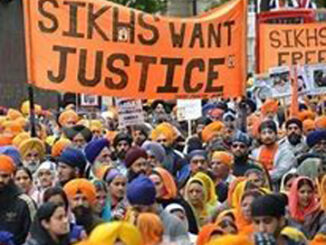
  • Indian-origin Sikhs in US told to shave or face strict action, slam correctional agency’s discriminatory beard policy

    Indian-origin Sikhs in US told to shave or face strict action, slam correctional agency’s discriminatory beard policy

    SACRAMENTO (TIP): Members of the penal law enforcement agency in the US state of California are now required to shave their facial hair, regardless of any religious or medical reasons they may have for keeping it, media reports said, a move civil rights activists say was disproportionately targeting religious minorities like the Sikhs and Black Americans. The California Department of Corrections and Rehabilitation (CDCR) in an order on February 1 said staff members are required to shave facial hair, irrespective of any religious or medical reasons they may have for keeping it.
    A CDCR official said the policy change was prompted to comply with the department’s Covid-19 safety measures.
    According to the American Civil Liberties Union of Northern California and the Sikh Coalition, the new policy would disproportionately target religious minorities like Sikh and Black Americans.
    “They’ve rolled out this blanket, very over-broad policy, that all peace officers must shave to wear N-95s,” Harsimran Kaur, Sikh Coalition’s senior legal counsel, told media.
    “But we know that there are alternative respirators out there that bearded people can wear safely to do their jobs… We think there’s a way to keep bearded people safe and not trample on their civil rights,” Kaur said.
    A US federal court on December 23 last year ruled that the Marines Corps, a part of the US Armed Forces, can’t restrict entry to Sikhs with a beard and a turban, according to media reports.

  • ‘Isolate for 10 days’: WHO issues fresh

    Covid-19 guidelines

    Covid-19 continues to spread en masse in several coutnries across the globe. While the scare of another probably pandemic wave has not died down, the World Health Organisation (WHO) has issued new guidelines with respect to people who get infected by the deadly virus. WHO informed that they have updated its guidelines on ‘mask wearing in community settings, Covid-19 treatments, and clinical management.’

    Amid spread of newer variants of Covid-19, WHO has urged everyone to continue wearing masks and take the booster doses of vaccine in order to curb the spread of the virus.

    Here is a detailed look at WHO’s updated guidelines

    ISOLATION PERIOD

    –              WHO has said that if Covid-19 patients are displaying symptoms of the virus they will have to be isolated for at least 10 days from the date of onset of the symptoms

    –              Earlier WHO’s guidelines had stated that Covid-19 patients who displayed symptoms of Covid-19 be discharged after 10 days of onset of symptoms, along with a vigilance of at least 3 days after the symptoms have disappeared

    –              WHO has mentioned that if a Covid patient tests negative with an antigen-based rapid test, they can be discharged early from isolation

    –              Asymptomatic Covid patients or individuals who have tested positive for the virus, but do not experience any symptoms, should be isolated for 5 days, WHO mentions in their updated guidelines

    –              Earlier the isolation period for these patients was ten days

    WEARING MASKS

    The WHO recommends the use of masks ‘ irrespective of the local epidemiological situation, given the current spread of the Covid-19 globally.’

    –              WHO says wearing a mask in public spaces is still key against the prevention of the deadly virus

    –              In their statements, WHO recommended the use of masks ‘ irrespective of the local epidemiological situation, given the current spread of the Covid-19 globally.’

    –              WHO also says that one should wear masks in the following situation

    –              If one has recently been exposed to Covid-19

    –              When someone has or suspects they have Covid-19

    –              When someone is at high-risk of severe Covid-19

    –              Anyone in a crowded, enclosed, or poorly ventilated space

    TREATMENT OF COVID-19

    –              WHO has extended its strong recommendation for the use of nirmatrelvir-ritonavir

    –              WHO also reviewed the evidence on two other medicines, sotrovimab and casirivimab-imdevimab, and maintains strong recommendations against their use for treating COVID-19

  • World plagued by perfect storm on multiple fronts, we can work together to control damage: Guterres

    World plagued by perfect storm on multiple fronts, we can work together to control damage: Guterres

    Now more than ever, it is time to forge the pathways to cooperation in our fragmented world, he said

    DAVOS (TIP): The world is facing a perfect storm on multiple fronts and all that can be done now is working together to control the damage and seize the opportunities, UN Secretary General Antonio Guterres said on Wednesday, January 18. In a special address at the World Economic Forum Annual Meeting 2023 here, he also called for ending the addiction to fossil fuels, and stopping “our self-defeating war on nature.” “There are no perfect solutions in a perfect storm. But we can work to control the damage and seize opportunities,” he added.

    Now more than ever, it is time to forge the pathways to cooperation in our fragmented world, he said.

    “I am not here to sugarcoat the scale of that challenge, or the sorry state of our world. We can’t confront problems unless we look them squarely in the eye. And we are looking into the eye of a Category 5 hurricane,” he said.

    “Our world is plagued by a perfect storm on a number of fronts. Start with the short-term, a global economic crisis. The outlook is bleak. Many parts of the world face recession. The entire world faces a slowdown,” Guterres warned.

    He further said COVID-19 is still straining economies while the world’s failure to prepare for future pandemics is straining credulity. “Somehow, after all we have endured, we have not learned the global public health lessons of the pandemic. We are nowhere near ready for pandemics to come,” he said.

    In addition to that, there is an existential challenge with the world flirting with climate disaster, he said.

    “Every week brings a new climate horror story. Greenhouse gas emissions are at record levels. The commitment to limit global temperature rise to 1.5 degrees is going up in smoke. Without further action, we are headed to a 2.8 degree increase,” he added. “The consequences will be devastating. Several parts of our planet will be uninhabitable. And for many, this is a death sentence,” he cautioned.

    “But it is not a surprise. The science has been clear for decades… We learned last week that certain fossil fuel producers were fully aware in the 1970s that their core product was baking our planet,” he said.

    “Just like the tobacco industry, they rode rough-shod over their own science. Big Oil peddled the big lie. And like the tobacco industry, those responsible must be held to account. Today, fossil fuel producers and their enablers are still racing to expand production, knowing full well that their business model is inconsistent with human survival,” he said. Guterres said all these challenges, including violence and war, are inter-linked and they are piling up like cars in a chain reaction crash.

    “It would be difficult to find solutions to these global problems in the best of times — if the world was united. But these are far from the best of times, and the world is far from united,” he said.

    “We risk what I have called a Great Fracture — the decoupling of the world’s two largest economies,” he said, adding that it would result in a tectonic rift that would create two different sets of trade rules, two dominant currencies, two internets and two conflicting strategies on artificial intelligence. There are many aspects in which US-China relations diverge — particularly on questions of human rights and regional security. But it is possible and essential for the two countries to have meaningful engagement on climate, trade and technology to avoid the decoupling of economies or even the possibility of future confrontation, Guterres said.

    He also said that a “morally bankrupt financial system” is amplifying systemic inequalities and called for a new debt architecture that would provide liquidity, debt relief and long-term lending to enable developing countries to invest in sustainable development. According to him, the multilateral development banks must also change their business models and must concentrate on systematically directing private finance towards developing countries, providing guarantees and being first risk takers.

    (Source: Agencies)

  • Three Indian Americans among 2023 Presidential Leadership Scholars Program

    Three Indian Americans among 2023 Presidential Leadership Scholars Program

    WASHINGTON, D.C. (TIP): Three Indian Americans, Anahita Dua, Sonia Singhvi, and Neil Vora are among this year’s 60 Presidential Leadership Scholars (PLS) program serving as a catalyst for a diverse network of established leaders. The eighth annual PLS class comprises accomplished leaders including service members, educators, physicians, public servants, and corporate professionals, the program announced Jan 12.

    A partnership among the presidential centers of George W. Bush, William J. Clinton, George H.W. Bush, and Lyndon B. Johnson, the PLS program kicks off in Washington, DC, on Jan 24.

    “Scholars were selected based on their leadership growth potential and their personal leadership projects aimed at improving civic engagement or social good by addressing a problem or need in their community, the country, or the world,” according to a PLS news release.

    Over the course of several months, Scholars will travel to each participating presidential center to learn from former presidents, key former administration officials, business and civic leaders, and leading academics, it said.

    They will study and put into practice varying leadership principles and exchange ideas to help maximize their impact in the communities they serve.

    The latest class joins an active network of more than 400 Scholars who are applying lessons learned through the program to make a difference in the United States and around the world, the release said.

    Scholars have consistently reported remarkable growth in skills, responsibilities, and opportunities for impact since the program began in 2015, it said.

    For example, 94% of Scholars said their confidence in how they lead social change has improved as a result of PLS, and 98% of Scholars reported they are inspired to accomplish more since beginning the program.

    2023 Indian American scholars

    Anahita Dua, Associate Professor of Surgery at the Massachusetts General Hospital/Harvard Medical School in Newton, Massachusetts.

    She completed her vascular surgery fellowship at Stanford University Hospital, and her general surgery residency at the Medical College of Wisconsin.

    At Massachusetts General Hospital, she is the director of the Vascular Lab, and co-director of the Peripheral Artery Disease Center and Limb Evaluation and Amputation Program.

    Last August, the 39-year-old Newton resident, a mother to two young children, took the plunge into politics, forming the Healthcare for Action PAC, “a federal political action committee that aims to elect Democratic health care workers to Congress,” as reported by the Commonwealth.

    She told the media she started the PAC because of personal experiences she had with her patients and her 5-year-old daughter. “What I’m noticing is in each realm I’m not able to do what I want to do to protect these people, whether my patients or my daughter,” she said.

    Sonia Singhvi, Global Head of Culture, Inclusion, & Diversity at the Boston-based Alexion Pharmaceuticals. A strategic, patient-centric, biopharmaceutical executive with over 20 years of industry experience across multiple therapeutic and functional areas, Singhvi joined the company and rose through the ranks, according to her LinkedIn profile. Singhvi says she’s “excited” to be accepted into the 2023 Presidential Leadership Scholars Program. “PLS serves as a catalyst for a diverse network of leaders to collaborate and create meaningful change in the United States and around the world as they learn from former US Presidents and their administrations.”

    “I will leverage these insights to advance health equity, improve patient outcomes, and enhance diversity in clinical trials,” she wrote in a LinkedIn post.

    Neil Vora, a physician with the New York-based Conservation International where he leads its efforts on pandemic prevention.

    “Throughout his career, he has focused on the link between human health and the health of the planet – particularly as it relates to the increasing threat of ‘spillover’ of viruses from animals to humans because of the destruction of nature,” according to his Conservation International profile.

    He served for nearly a decade with the Centers for Disease Control and Prevention (CDC), including as an Epidemic Intelligence Service officer and a Commander in the US Public Health Service (USPHS).

    He deployed for CDC to Liberia in 2014 and to the Democratic Republic of the Congo in 2019 to assist in the responses to the two largest Ebola outbreaks ever.

    He previously led the investigation of a newly discovered virus in the country of Georgia related to the smallpox virus. For his work, he has received numerous accolades including the USPHS Physician Researcher of the Year Award, CDC James H. Steele Veterinary Public Health Award, CDC Donald C. Mackel Memorial Award, and CDC Alexander D. Langmuir Prize Manuscript Award.

    From 2020-2021, Vora developed and led New York City’s Covid-19 contact tracing program, overseeing a team of over 3,000 people. His program traced more than half a million people who had contracted the virus. He still sees patients in a public tuberculosis clinic in New York City.

    He has published over 60 articles in various medical journals. He’s an Adjunct Professor of Internal Medicine and Infectious Diseases at Columbia University, and a Term Member of the Council on Foreign Relations.

    He completed medical school at the University of California, San Francisco (UCSF) in 2009 and his Internal Medicine training at Columbia University in 2012.

  • Japan, South Korea protest China visa stoppage amid Covid spat

    Japan, South Korea protest China visa stoppage amid Covid spat

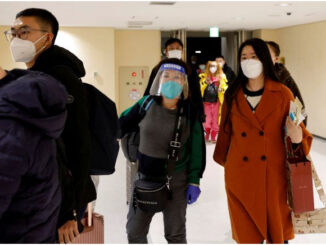
    Tokyo (TIP): Japan and South Korea defended public health restrictions on travellers from China on January 11, a day after China stopped issuing new visas in both countries in apparent retaliation.

    Chinese embassies stopped issuing new visas for South Koreans and Japanese on Tuesday. It wasn’t clear whether China would expand the visa suspensions to other countries that have imposed stricter virus testing on passengers from China following its Covid-19 surge.

    South Korean Foreign Minister Park Jin said on Wednesday he finds “significantly regrettable” that China stopped issuing short-term visas to South Koreans and called for China to align its pandemic steps with “scientific and objective facts”.

    According to South Korea’s Disease Control and Prevention Agency, about 17 per cent of the 2,550 short-term travellers from China from January 2 to Tuesday have tested positive. South Korea has stopped issuing most short-term visas at its consulates in China through the end of January while also requiring all passengers from China, Hong Kong and Macau to submit proofs of negative tests taken within 48 hours of their arrival in addition to Covid-19 tests at the airport.

    Japanese Chief Cabinet Secretary Hirokazu Matsuno criticised China for “one-sidedly” restricting visa issuances to the Japanese nationals “because of a reason that is not related to Covid-19 measures”.

    Tokyo protested and demanded China scrap the measures and that Japan will “respond appropriately while closely watching China’s infection situation and how information disclosures are handled by the Chinese side”, Matsuno said.

    Matsuno said Japan had to take temporary measures to avoid rapid inflow of infections into Japan because of China’s spreading infections and lack of transparency about the situation.

    He said that Japanese border measures are purely aimed at preventing infections and have aimed to limit effects on international travel. “It is extremely regrettable that China has one-sidedly restricted visa issuances.” The Chinese embassies in Tokyo and Seoul announced the suspensions in brief online notices, without providing reasons or details such as when visa issuances will resume.

    China’s Foreign Ministry threatened countermeasures last week against countries that had announced new virus testing requirements for travelers from China. At least 10 governments in Europe, North America and Asia have done so recently.

    Meanwhile, Thailand sent three ministers to Bangkok’s Suvarnabhumi Airport to welcome the country’s first planeload of Chinese tourists in years, in a bid to revive inbound tourism.

    Japan reopened its borders for individual tourism in October. Most travellers can show proof of vaccination instead of testing at the airport, unless they show symptoms, but since December 30 travellers from China must show pre-departure negative tests and take an additional test upon arrival. Those who test positive must quarantine at designated facilities for up to seven days. (AP)

  • AAPI’s 17thGlobal Healthcare Summit Announced During Curtain Raiser in Delhi

    AAPI’s 17thGlobal Healthcare Summit Announced During Curtain Raiser in Delhi

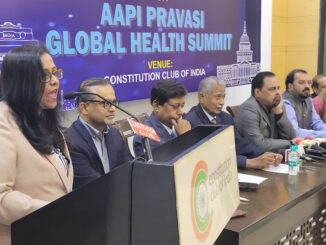
    NEW DELHI / NEW YORK (TIP): “After the highly successful Global Healthcare Summit in Visakhapatnam last weekend, I am happy to announce that the 17th annual Global Healthcare Summit will be held in New Delhi from January 2nd to 4th, 2024,” Dr. Anjana Samadder, President-Elect of the American Association of Physicians of Indian Origin (AAPI) announced here during a Curtain Raiser held at the prestigious Constitution Club in New Delhi on January 9th, 2023.

    Organized under the leadership of Dr. Udaya Shivangi, Women’s Forum Chair of AAPI, the kickoff event and press conference was attended by nearly 50 journalists from the nation’s capital and several leaders of APPI, who had come all the way from the United States to be part of this important ceremony. Prominent among those who attended the event included Dr. Seema Arora, past BOT Chair of AAPI, Dr. Raghu Lolabhattu, vice chair of AAPI BOT, Dr. Gautam Samadder, past president of AAPI, Dr. Sreeni Gangasani, Dr. Amit Chakrabarty, Dr. Raj Bhayani, and Dr. Joseph Chalil. Dr. Sampat Shivangi, Chair of AAPI’s Legislative Chair joined the meeting through a message of felicitation sent to the media and AAPI leadership.

    In her address, Dr. Anjana Samadder said, the theme for the next global healthcare summit will be “Maa Bachao,” meaning, protecting the mother, which will be a great way to strengthen families and humanity as a whole.

    Dr. Sushi Singh, chief guest at the event said, saving the mother and giving her due respect and honor is essential today more than ever. She pointed to the high infant mortality rate in India and urged all sections of society to work together to save girl children.

    Shri Karthikeyan, a decorated former IPS Officer, in his keynote address,  shared of the many sacrifices and contributions by the fraternity of doctors, and lauded them for their services to humanity, especially during the covid pandemic. He shared with the audience his personal experiences working with the most vulnerable people across society and urged everyone to work compassionately towards the poor and help uplift their lives.

    At the Delhi Press conference. From L to R: Dr. Anjana Samadder, Shri Karthikeyan, Dr. Sushi Singh , Dr. Udaya Shivangi

    In a message, Dr. Ravi Kolli, president of AAPI said, “The Global Healthcare Summit held annually in India across several states, has become a major contributing factor, where Indian American Doctors focus on various programs and policies in their efforts to make a huge difference in the delivery of healthcare in India.”
    “Coming from a nation that has given us so much, today Physicians of Indian origin have become a powerful influence in healthcare across the world,” said Dr. Shivangi.  “Nowhere in the world is their authority more keenly felt than in the United States. The overrepresentation of Indians in the field of medicine is striking – in practical terms, one out of seven doctors in the United States is of Indian Heritage. We provide medical care to over 40 million of the US population.”

    During an interactive session with the media persons who had filled the meeting venue, the leaders of AAPI shared with them of the numerous initiatives taken up by AAPI during the course of the past four decades in India as well as in the United States.

    “We the physicians of Indian origin are proud of our great achievements and contributions to our motherland, India, our adopted land, the US, and in a very significant way to the transformation of Indo-US relations and help India to have a cost-effective, efficient and advanced healthcare delivery benefitting India’s 1.4 billion people,” they pointed out.

    The Global Health Summit held annually in India has been a major contributing factor by Indian American Doctors, focusing on various programs and policies, and making a difference in the delivery of healthcare in India.

    In addition to educational seminars/workshops on current topics, the GHS includes a well-organized CEO forum with a panel of eminent healthcare leaders from the US and India, reinforcing the need for preventive care rather than disease management, to control the non-communicable diseases which are the biggest silent killers.

    Areas of ongoing skill training, investment in infrastructure, modernizing healthcare delivery, and private-public collaboration specific to each state in the healthcare sector are discussed and specific plans laid out, which are sent in a White Paper report for follow up in the coming months.

    Over the past 17 years and beyond, AAPI leadership has been able to establish Collaboration and multiple medical organizations – ACP – FSMB – ECFMG – NMC (India) – IMA (India)  GAPIO – UNICEF – Red Cross Society – CWC – Lifestyle Medicine – MDTok – Apollo Groups, only to name a few. These connections and collaborations are vital for us to stay connected and make a powerful impact on our communities.

    Through AAPI’s charitable activities with service to our motherland as the motto, AAPI has several programs in India and the United States.  Despite the Covid challenges of Delta and Omicron waves, in spite of limited resources, AAPI blood donation drives were done in several cities with several of them organizing multiple events.

    Journalists at the press conference

    Among several other initiatives, AAPI’s “Adopt a village” Rural Preventive Healthcare Screening Initiative in India, where free health screening camps with free physician consultations were done in several Indian rural villages in the middle of Covid pandemic.

    Continuing the efforts towards the Covid-19 Fund – Post-Covid Relief Activities, AAPI has raised over $5 million during the delta wave in India. The ongoing Covid-19 relief work in India is in progress, donating lifesaving equipment to support critically ill patients – Biochemical Analyzers, Ventilators, Oxygen Flow Meters, and Oxygen Plants. The funds will continue to support Covid patients in rural hospitals. Since its inception 40 years ago, AAPI has served as a link to foster stronger US-India relations and has been lauded by the governments of both nations for their great achievements and contributions.

    “We urge you to be part of this event in January 2024 and help create awareness and reach our services to the neediest in India and the United States,” said Dr. Anjana Samadder. For more details about AAPI and its many noble initiatives, please visit: www.aapiusa.org

  • Corbevax, Covovax, Molnupiravir approved for restricted emergency use against Covid-19

    Expanding India’s basket of Covid-19 vaccines, the Central Drug Authority has approved Serum Institute of India’s vaccine Covovax, Biological E’s jab Corbevax and anti-Covid pill Molnupiravir for restricted use in emergency situation. The announcement by Union Health Minister Mansukh Mandaviya on Tuesday came a day after the Subject Expert Committee (SEC) on Covid-19 of the Central Drugs Standard Control Organisation (CDSCO) recommended granting emergency use authorisation (EUA) to the Covid-19 vaccines Covovax and Corbevax with certain conditions.

    The committee also had recommended granting restricted emergency use approval to the drug Molnupiravir for treatment of adult patients with Covid-19 and who have high-risk of progression of the disease. In a tweet, the minister said, “Congratulations India. Further strengthening the fight against Covid-19, CDSCO, @MoHFW_INDIA has given 3 approvals in a single day for: – CORBEVAX vaccine – COVOVAX vaccine – Anti-viral drug Molnupiravir For restricted use in emergency situation”. With this approval, the number of Covid vaccines which have received EUA in the country has increased to eight.

    Six Covid-19 vaccines — Serum Institute’s Covishield, Bharat Biotech’s Covaxin, Zydus Cadila’s ZyCoV-D, Russia’s Sputnik V and the US-made Moderna and Johnson and Johnson — had already received EUA from the Indian drug regulator earlier.

    “Corbevax vaccine is India’s 1st indigenously developed RBD protein sub-unit vaccine against #Covid19, Made by Hyderabad-based firm Biological-E. It’s a hat-trick! It’s now 3rd vaccine developed in India,” Mandaviya said in another tweet. The Nanoparticle Vaccine, Covovax, will be manufactured by Pune-based firm Serum Institute of India, he said.

    Source: PTI

  • Modi holds first bilateral meeting with President Biden; discusses Indo-Pacific, climate and COVID

    Modi holds first bilateral meeting with President Biden; discusses Indo-Pacific, climate and COVID

    US – India relationship is destined to be “stronger, closer and tighter”, says Bide

    TIP Special Correspondent

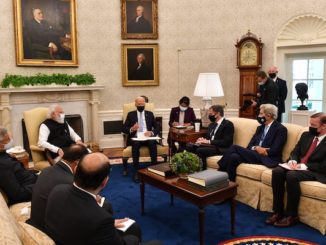
    WASHINGTON, DC (TIP): Prime Minister Narendra Modi on Friday, September 24, described as “outstanding” his first bilateral meeting with US President Joe Biden who said the Indo-US relationship is destined to be “stronger, closer and tighter” as the two leaders discussed a wide range of issues, including combating COVID-19, climate change, trade and the Indo-Pacific. President Biden, who welcomed Prime Minister Modi in the Oval Office of the White House said that today they are starting a new chapter in US-India relationship.

    Observing that he has long believed that the US, India relationship can help them solve global challenges, Biden in his opening remarks before a battery of India and American media said they are now “are launching a new chapter in history of India US ties, taking on some of the toughest challenges we face together.”

    And this starts with a shared commitment to end COVID-19, he said. Prime Minister Modi, who is visiting the US for the 7th time after assuming office in 2014, described Friday’s bilateral meeting with Biden that lasted more than 60 minutes as “important” as they’re meeting at the start of the third decade of this century.

    “Your leadership will certainly play an important role in how this decade is shaped. The seeds have been sown for an even stronger friendship between India and the US,” Prime Minister Modi told Biden.

    “Had an outstanding meeting with @POTUS @JoeBiden. His leadership on critical global issues is commendable. We discussed how India and USA will further scale-up cooperation in different spheres and work together to overcome key challenges like COVID-19 and climate change,” Modi tweeted after the meeting. Biden said the relationship between India and the US, the largest democracies in the world, is “destined to be stronger, closer and tighter.” “I’ve long believed that the US-India relationship can help us solve a lot of global challenges. In fact, back in 2006, I had said that by 2020 India and the US will be among the closest nations in the world,” Biden told Modi. “Today, we’re launching a new chapter in the history of US-India ties, taking on some of the toughest challenges we face together, starting with a shared commitment,” he said.

    Biden said he and Prime Minister Modi would talk about what more they can do to fight COVID-19, take on the climate challenge that the world face, and ensure stability in the Indo-Pacific, including with their quiet partners.

    India, the US and several other world powers have been talking about the need to ensure a free, open and thriving Indo-Pacific in the backdrop of China’s rising military maneuvering in the region.

    “Of course, our partnership is more than just what we do. It’s about who we are in our shared responsibility to uphold democratic values, our joint commitment to diversity, and it’s about family ties, including four million Indian-Americans make the United States, stronger every single day,” he said.

    Noting that the world would celebrate Mahatma Gandhi’s birthday next week, Biden said, “We’re all reminded that his message of non-violence, respect, tolerance, matters today maybe more than ever had.”

    On this, Modi said, “Gandhi Ji spoke about trusteeship, a concept which is very important for our planet in the times to come.” Noting that trade will be an important factor in the Indo-US ties in the coming decade, the Prime Minister said that there is much to be done in the area.

    Modi said this decade will be shaped by talent and people-to-people linkages. “I am glad the Indian diaspora is making an active contribution towards the US’ progress.” He said that technology is becoming a driving force. “We have to utilize our talents to leverage technology for greater global good.”

    Modi recalled his interactions with Biden in 2014 and 2016, saying “that time you had shared your vision for ties between India and US. I am glad to see you are working to realize this vision.”

    He said that each of the subjects mentioned by the president are crucial for the India-US friendship. “His efforts on COVID-19, mitigating climate change and the Quad are noteworthy,” Modi added.

    “This morning I’m hosting Indian Prime Minister Narendra Modi at the White House for a bilateral meeting. I look forward to strengthening the deep ties between our two nations, working to uphold a free and open Indo-Pacific, and tackling everything from COVID-19 to climate change,” President Biden had tweeted minutes before the meeting. While the two leaders have met earlier when Biden was the Vice President of the country, this is for the first time that Biden is meeting Modi after he became the 46th president of the US in January.

    Both Biden and Prime Minister Modi have spoken over the phone multiple times and have attended a few virtual summits, including that of the Quad in March hosted by the US president. The last telephone conversation between them took place on April 26.

    Spokesperson of the Ministry of External Affairs Arindam Bagchi said that India US relationship is a partnership of trust. “Globally we will make a difference!” he tweeted.

    “Vibrant discussions between” Modi and Biden. “Joseph Biden on global, regional & bilateral issues. An expansive agenda including defense, security, health, education, trade, IT, economic, Science and Technology energy and People to People ties,” Bagchi said. The Prime Minister also signed the visitor book in the Roosevelt Room of the White House. “Registering the spirit of India United States friendship in ink,” the spokesperson tweeted. The Indian delegation included S Jaishankar, Minister of External Affairs; Ajit Doval, National Security Advisor; Harsh Vardhan Shringla, Foreign Secretary and Taranjit Singh Sandhu, India’s Ambassador to the United States.

    The American delegation included Antony Blinken, Secretary of State; Jake Sullivan, National Security Advisor; John Kerry, Special Presidential Envoy for Climate; Kurt Campbell, Deputy Assistant to the President and Coordinator for Indo-Pacific Affairs; Donald Lu, Assistant Secretary of State for South and Central Asian Affairs and Sumona Guha, Special Assistant to the President & Senior Director for South Asia at National Security Council.

    Visit www.theindianpanorama.news for more stories on PM Modi’s US visit


  • PM Modi and US Vice President Kamala Harris discuss bilateral ties, Indo-Pacific

    PM Modi and US Vice President Kamala Harris discuss bilateral ties, Indo-Pacific

    September 23, 2021

    TIP Special Correspondent

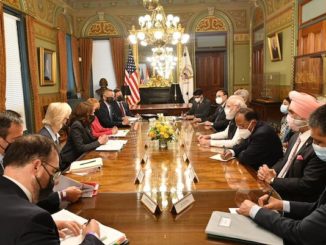
    WASHINGTON, DC (TIP): Prime Minister Narendra Modi on Thursday, September 23, described India and America as ”natural partners” as he held the first in-person meeting with Vice President Kamala Harris at the White House during which they decided to further cement the Indo-US strategic partnership and discussed global issues of common interest, including threats to democracy, Afghanistan and the Indo-Pacific.

    ”India and America are natural partners. We have similar values, similar geopolitical interests,” Modi said in a joint media appearance with Harris, the first-ever person of Indian origin to be elected as the vice-president of the United States.

    Noting that India and the US are the largest and oldest democracies, Modi said the two countries share values and their coordination and cooperation are also gradually increasing.

    This is the first meeting between the two leaders. Harris had earlier spoken with Modi over the phone in June during the COVID-19 crisis in India.

    ”You are the source of inspiration for so many people across the world. I am completely confident that our bilateral relationship will touch new heights under President Biden and your leadership,” Modi told Harris.

    The two leaders were wearing masks as they both spoke in front of a battery of pool reporters from both India and the US.

    Modi invited the 56-year-old Democratic leader and Second Gentleman Douglas Emhoff to visit India.

    ”Both President Biden and you assumed office at a time when our planet faced very tough challenges. In a short time, you have had many achievements to your credit be it COVID-19, climate change or the Quad,” Modi said.

    In a statement, the Ministry of External Affairs said the two leaders exchanged views on recent global developments, including in Afghanistan and reaffirmed their commitment towards a free, open and inclusive Indo-Pacific region.

    The two leaders discussed the COVID-19 situation in their countries, including ongoing efforts to contain the pandemic through expedited vaccination efforts, and ensuring supply of critical medicines, therapeutics and healthcare equipment, it said.

    ”As relates to the Indo-Pacific, the US stresses on maintaining a free and open Indo-Pacific,” Harris said, amidst China’s aggressive moves in the strategically vital region.

    India, the US and several other world powers have been talking about the need to ensure a free, open and thriving Indo-Pacific in the backdrop of China’s rising military maneuvering in the region.

    China claims nearly all of the disputed South China Sea, though Taiwan, the Philippines, Brunei, Malaysia and Vietnam all claim parts of it. Beijing has built artificial islands and military installations in the South China Sea.

    Harris said the world is more interconnected and more interdependent than ever before. “And the challenges that we face today have highlighted that fact. COVID-19, climate crisis and the importance of our shared belief in the Indo-Pacific region,” she said. “Both sides acknowledged the importance of collaborative action on climate change. Prime Minister spoke about India’s push for increasing renewable energy and the recently launched National Hydrogen Mission. He also emphasized the importance of lifestyle changes to promote environmental sustainability,” the statement said.

    Modi noted that he had the opportunity to speak to Harris after she assumed the Vice Presidency. ”One of our interactions happened when India was battling a very tough wave of COVID-19 infections. I recall your kind words of solidarity that time,” Modi said.

    India was confronted with the second wave of the COVID 19 pandemic. A very difficult time for India, he said. “Like a family, the sense of kinship and so warmly, you extended a helping hand, the words that you chose when you spoke to me, I will always remember that, and I’d like to thank you from the bottom of my heart,” the prime minister said.

    ”Like a true friend, you had given a message of cooperation, and were very full of sensitivity and immediately after that we found that the US government, the US corporate sector and the Indian community, all came together to help India,” he said.

    Modi said that the US Government, companies based in the USA and the Indian diaspora were very helpful when India was fighting a tough wave of COVID-19 infections.

    Both leaders acknowledged the vibrant people-to-people linkages as the bedrock of the mutually beneficial education linkages and the flow of knowledge, innovation and talent between our two countries.

    Modi said that four million people of Indian origin are acting as a bridge of friendship between the two countries.

    Harris described India as a ”very important partner” to the US and welcomed New Delhi’s announcement that it will soon resume vaccine export.

    India stopped the export of COVID-19 vaccines after the second wave of the pandemic hit the country in April this year.

    On Monday, India said that it will resume export of surplus COVID-19 vaccines in the fourth quarter of 2021 under the ”Vaccine Maitri” programme and to meet its commitment to the COVAX global pool. On the issue of the climate crisis, she told Modi that the US working together with India can have not only a profound impact on people of nations but around the world itself.

    Harris said that it is incumbent on the two nations to protect democracies in the best interests of people of the two countries.

    ”As democracies around the world are under threat, it is imperative that we defend democratic principles and institutions within our respective countries and around the world. And that we maintain what we must do to strengthen democracies at home and it is incumbent on our nations to of course protect democracies in the best interests of people of our countries,” she said.

    Their meeting comes a day ahead of the maiden bilateral meeting between Modi and President Joe Biden and the Quad Leaders’ Summit at the White House on Friday.

    Since taking office, Harris has met with or spoken to over 30 world leaders, promoting US interests on issues ranging from global health to climate change to cyber threats.

    PM Modi later tweeted:

    Narendra Modi

    @narendramodi

    Glad to have met

    @VP

    @KamalaHarris

     Her feat has inspired the entire world. We talked about multiple subjects that will further cement the India-USA friendship, which is based on shared values and cultural linkages.


    Visit www.theindianpanorama.news for more stories on PM Modi’s US visit

  • VP Harris in her first meeting with PM Modi talks about defending democracies

    VP Harris in her first meeting with PM Modi talks about defending democracies

    TIP Special Correspondent

    WASHINGTON, DC (TIP): Voicing concern over the threat to democracies around the world, Vice President Kamala Harris on Thursday, September 23, underscored the need to defend democratic principles and institutions in both India and the US.

    Harris made the remarks in a joint media appearance with Prime Minister Narendra Modi before their first in-person meeting at the White House during which they decided to further cement the Indo-US strategic partnership and discussed global issues of common interest, including the Indo-Pacific.

    “As democracies around the world are under threat, it is imperative that we defend democratic principles and institutions within our respective countries and around the world, and that we maintain what we must do to strengthen democracy at home and it is incumbent… to protect democracy in the best interest of the people of our country,” she said in her remarks as she welcomed Modi to her ceremonial office.

    “I know from personal experience and from my family of the commitment of the Indian people to democracy, and the work that needs to be done, we can begin to imagine, and then actually achieve our vision for democratic principles and institutions,” she said.

    Harris said that she looks forward to discussing how the two countries can continue to best work together to strengthen their relationship around their mutual concerns and the challenges they face, but also the opportunities that those challenges present.

    She had earlier spoken with Modi over phone on June 3.

    India, she said, is a very vital partner to the United States.

    “Throughout our history, our nations have worked together and stood together, to make our world a safer and stronger world.

    “Mr. Prime Minister, when you and I last spoke, we talked about how our world is interconnected… and the challenges that we face today highlighted that fact… with COVID-19, the climate crisis and the importance of our shared belief in a free and open Indo-Pacific region,” Harris said.

    She said that early in the COVID-19 pandemic, India was a vital source of vaccines for other countries.

    “When India experienced a surge of COVID… the United States was very proud to support India and needed its and responsibility to vaccinate its people,” she said.

    Harris welcomed India’s announcement that it will soon be able to resume vaccine export and it is of particular note and admiration that India is currently vaccinating approximately 10 million people a day.

    “The President and I believe very strongly that the United States working together with India would have not only a profound impact on the future of our respective nations but on the world itself” on climate, she said.

    “And as it relates to the Indo-Pacific, the United States, like India, feels very strongly about the pride of being a member of the Indo Pacific, but also the fragilities of the importance and the strength as well of those relationships, including maintaining a free and open Indo Pacific,” the Vice President said.

    Harris also touched upon the issue of climate change.

    “On the issue of the climate crisis, I know that India and we take this issue quite seriously. The President and she believe very strongly that the United States working together with India would have a profound impact on people of the two countries,” she added.

    Their meeting comes a day ahead of the maiden bilateral meeting between Modi and President Joe Biden and the Quad Leaders’ Summit at the White House on Friday, September 24.

    Since taking office, Harris has met with or spoken to over 30 world leaders, promoting US interests on issues ranging from global health to climate change to cyber threats.

  • Nassau County Executive wants to Send $375 Direct Payments to Homeowners

    Nassau County Executive wants to Send $375 Direct Payments to Homeowners

    MINEOLA, NY (TIP): Nassau County executive has a bold new proposal to distribute $100 million in direct cash payments to homeowners.

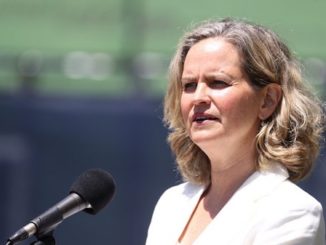
    Laura Curran hopes her new plan to stimulate the economy of Nassau County will get approval from the County Legislature to give $375 payments to residents.

    “This is to benefit the middle class,” Curran said Monday, May 17. “It is my hope that people who receive this check spend this money in Nassau – go to your downtown restaurants, go to the movies, she said.

    The county is projected to receive roughly $380 million from the American Rescue Plan passed by Congress in March, $200 million of which is getting to Nassau County this year, Curran said. She wants half of that money to go directly into the pockets of county residents.

    “In order for us to have a strong economic recovery we must continue to address the economic impact of the virus. Since day one of this crisis Nassau County has focused on providing relief to taxpayers whenever possible,” she said.

    Under the Nassau County Homeowner Assistance Program, eligible households would be determined by Basic and Enhanced STAR data. Curran estimates 300,000 homeowners in the county would benefit from the program.

    The executive highlighted dropping virus cases and increasing vaccination rates in the county’s long road back from the pandemic. Nassau County’s COVID-19 positivity rate now sits below 1% and health officials recorded four days last week without a single virus death, she added.


  • President Biden Signs into Law the COVID-19 Hate Crimes Act

    President Biden Signs into Law the COVID-19 Hate Crimes Act

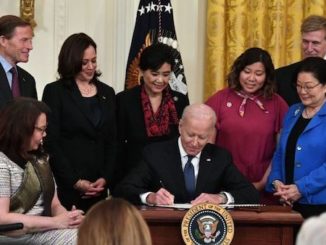
    WASHINGTON (TIP): Following overwhelming support from both chambers of Congress, President Joe Biden signed legislation Thursday, May 20, that addresses hate crimes throughout the COVID-19 pandemic, with particular emphasis on the increase in violence against Asian Americans.

    At an event in the East Room of the White House, Biden thanked lawmakers for coming together to pass the legislation. He said standing against hatred and racism, which he called “the ugly poison that has long haunted and plagued our nation,” is what brings Americans together.

    “My message to all of those who are hurting is: We see you and the Congress has said, we see you. And we are committed to stop the hatred and the bias,” he said.

    The legislation, introduced by Rep. Grace Meng, D-N.Y., and Sen. Mazie Hirono, D-Hawaii, aims to make the reporting of hate crimes more accessible at the local and state levels by boosting public outreach and ensuring reporting resources are available online in multiple languages.

    It also directs the Department of Justice to designate a point person to expedite the review of hate crimes related to COVID-19 and authorizes grants to state and local governments to conduct crime-reduction programs to prevent and respond to hate crimes.

    Vice President Kamala Harris introduced Biden ahead of the signing and reflected on the increase in violence against Asian Americans.

    “This violence — it did not come from nowhere, and none of it is new. In my life, my lived experience, I have seen how hate can pervade our communities,” she said. Harris, who is the first Asian American vice president, added, “I have seen how hate can impede our progress. And I have seen how people uniting against hate can strengthen our country.”

    Harris noted the work to combat racism doesn’t end with the signing of the bill.

    “Here’s the truth: Racism exists in America. Xenophobia exists in America, antisemitism, Islamophobia, homophobia, transphobia — it all exists. And so, the work to address injustice wherever it exists remains the work ahead,” she said.

    The signing comes two days after the House of Representatives passed the COVID-19 Hate Crimes Act by a vote of 364-62; all 62 votes against the bill were from Republicans. The Senate approved the legislation last month, with near-unanimous support; Missouri Republican Josh Hawley was the sole senator to vote against the bill.

    Senate Minority Leader Mitch McConnell, R-Ky., attended Thursday’s ceremony along with a number of Democrats, advocates, families of victims of hate crimes and others. Sen. Susan Collins, R-Maine, who helped co-author a key provision that paved the way for the bill’s passage, was also in attendance.

    Asian Americans have faced a dramatic spike in violence throughout the pandemic. The organization Stop AAPI Hate documented 6,603 hate incidents from March 2020 to March 2021, and leaders said the true number is much higher as many hate crimes go unreported. Democrats have pointed to former President Donald Trump’s frequent use of racist phrases such as “kung flu” to describe the coronavirus as a link to the increase in anti-Asian sentiment in the country.

    Stop AAPI Hate praised the legislation for investing in “community-centered solutions and provisions to mitigate anti-Asian rhetoric” but said further legislation is needed to address the “root causes of systemic racism and oppression.”

    “Because the Act centers criminal law enforcement agencies in its solutions, it will not address the overwhelming majority of incidents reported to our site which are not hate crimes, but serious hate incidents,” the coalition said in a statement after the House passage.

    Attorney General Merrick Garland called the bill signing an “important step toward protecting everyone in our country from acts of hate and intolerance.”

    “The Department of Justice is proud to play a central role in implementing this legislation,” he said in a statement following the signing. “Investigating and prosecuting hate crimes is a top priority, deeply rooted in the department’s founding. We will use the new law to enhance the aggressive measures we are taking to combat crime motivated by bigotry and discrimination.”

    (Source: MPR NEWS)

  • Dig out Covid truth

    Dig out Covid truth

    The world must question China on bio-warfare documents

    Over 34 lakh (3.4 million) people have succumbed to the coronavirus pandemic in the past year and a half, but the world is still awaiting conclusive answers to the all-important questions: Is Covid-19 a man-made bioweapon? Did the virus leak accidentally from a lab in Wuhan? Or was there no human lapse at all? Was it just a case of transmission from animals to humans? Media reports referring to Chinese documents allegedly obtained by the US State Department have turned the spotlight on sinister possibilities. The papers written by Chinese military scientists and public health officers in 2015 describe SARS (Severe Acute Respiratory Syndrome) coronaviruses, of which Covid is an example, as presenting a ‘new era of genetic weapons’. According to the reports published in the Australian and British media, the People’s Liberation Army documents seem to fantasize that a bioweapon attack could cause the ‘enemy’s medical system to collapse’.

    These ‘revelations’, predictably dismissed by China’s state-run Global Times newspaper as an attempt to tarnish the country’s image, have reignited the global clamor for getting to the bottom of the matter. It’s a pity that the World Health Organisation (WHO), the UN nodal agency spearheading the fight against Covid-19, has not been able to bring us closer to the truth. A probe conducted by a team of experts from the WHO in Wuhan in January-February this year had dismissed as ‘unlikely’ the theory that the virus leaked from a lab. The investigation left a lot to be desired amid allegations that the Chinese authorities did not offer ‘full cooperation’ to the visiting contingent.

    China, which again finds itself under intense international scrutiny, needs to do a lot of explaining for the whys and wherefores of the 2015 documents. The WHO, on its part, has to ensure that a thorough investigation is conducted, making it incumbent on the Chinese government to keep the proceedings transparent. Reeling under the second wave of the pandemic, India should push harder for ascertaining the truth and fixing responsibility. With the Union Health Minister heading the WHO’s Executive Board, India needs to use this platform effectively so that Covid-like catastrophes don’t recur.

    (Tribune, India)

  • Covid corpses on Ganga

    Covid corpses on Ganga

    Visuals of Buxar and Ghazipur expose bogey of a new India

    Covid seems to have taken us back to the colonial times of pestilence and famines, when the poor just floated their dead down the nearest river. All the tall claims of a new India have washed up on the banks of the holy Ganga in Buxar in Bihar. Some say 48, others claim to have counted 150 bodies of suspected Covid victims on the Ganga at Chausa block in Buxar bordering Uttar Pradesh. The gruesome visuals leave us in no doubt, unless UP Chief Minister Yogi Adityanath disputes it to lock up those who have caught the corpses on camera. The officials on either side of the river are only trying to disown the corpses. Bihar’s officials believe that these bodies must have drifted downstream from neighboring Ghazipur or further up, Varanasi. Tuesday’s sighting of bodies at Ghazipur in UP leaves no doubt that villagers upstream are throwing their dead in the river, unable to afford their last rites.

    This is the story of Covid hitting the Hindi heartland, particularly UP, which has lost four ruling party MLAs to the pandemic. Union Minister Santosh Gangwar had last week written an angry letter to Adityanath pointing out the glaring lapses, apathy of medical officers and hoarding of oxygen cylinders. UP Minister and Lucknow MLA Brajesh Pathak, Bareilly MLA Kesar Singh (who later died), Mohanlalganj MP Kaushal Kishore, Basti MP Harish Dwivedi, Bhadohi MLA Dinanath Bhaskar, Kanpur MP Satyadev Pachauri and others have written similar letters expressing their inability to help their constituents. Jasrana MLA Pappu Lodhi released a video on social media of his wife lying on the floor of a Covid ward.

    There are BJP MLAs who have no qualms about blaming UP’s aggravated second surge on the state’s panchayat polls and the Kumbh Mela. While they claim that things are getting better, there is no denying that the situation is dismal in UP. This is the real India of mindless politico-religious priorities with no health infrastructure, no advance planning for a known disease, no treatment and finally, no dignity for its dead.

    (Tribune, India)

  • Education in the Post- Pandemic New Normal

    Education in the Post- Pandemic New Normal

    By Bidisha Roy

    In the post pandemic ‘New normal’ era, undoubtedly everything is going to change forever.  Amongst them, education is of utmost importance as it would shape the future of the world. But how? The tone was set by the panel discussion organized by Newmark J-School for their fellows prior to the EWA National seminar which helped structure my line of thinking as a journalist.

    The first seminar I chose to attend was ‘A Conversation with Education Secretary Miguel Cardona’ because I was curious to know the Govts’ upcoming plans for education policy.

    While outlining the government’s efforts to help schools and students recover from the pandemic, Cardona said that to hit the reset button on things, they want to see more of ‘natural authentic engagement of families.’ Which triggered the immediate thought in my mind that – for proper ‘family engagement’, it’s very crucial to know the cultural background of families in America because it’s a country of immigrants. The upbringing of kids in an Indian family, for example, is totally different from that of an American family. So, bridging the cultural gap would be a key factor for this ‘natural authentic engagement’, isn’t it? I asked Sec Cardona that question; and his answer was – ‘Thank you for that question because it really highlights how our reopening efforts are not just about turning on the lights, it’s not just about making sure we have enough PPE. We have to be trained or learn the cultural norms of different places, then we have to do that in order to serve the students. So, Yes, that’s exactly what it means. It means that in communities that have high concentrations of cultural norms, it’s our responsibility and our privilege as educators to learn those norms, to help engage those families in ways that they’re comfortable, so that their students can be successful.”

    One of the next sessions I attended which related to the same context was “Family Engagement in a Post-COVID Era.” Experts explored how the role of families in education may shift as the pandemic changed the relationship of parents to their children’s learning, and ways in which schools and others can support the change; but as we came out of that session, many of the questions remained unanswered. I would love to hear more about research and new thinking in this space, which I am sure will emerge slowly.

    “What Pandemic-Driven Changes in Education Will Last, and Why?” – was one more session I attended, as I was trying to gather answers about the future of international students from countries severely hit by COVID like India and Brazil. In this session as well, total clarity did not emerge which is understandable at this stage as the education fraternity is trying their best to cater to the new norm.

    As a representative of ethnic media, I would definitely try to explore the unanswered questions further for the community that I serve with the information and understanding I gathered from the EWA national seminar.

  • My bridge over troubled waters

    My bridge over troubled waters

    By Prabhu Dayal
    • Bridge is the best intellectual exercise which doubles up as an engrossing game
    • You face new situations every ten minutes, and make decisions based on what you think is rational
    • You weigh gain versus loss, doing calculations all the time while playing the hand you are dealt
      In his message to bridge lovers, Sundarshan said: “The Second wave of COVID-19 has witnessed severe damage to human life and its activities with its reeling negative effect for the past few months. Our fellow bridge players have been patiently waiting for this pandemic to ease out and only online bridge has been a soothing medicine to most of them.” Moving beyond this, he also says: “In extreme cases for those suffering from COVID-19 infection, BFI under the current stressed environment will endeavor to seek financial assistance from its well-wishers towards meeting their medical needs so far as possible.”

      Thus, the BFI has taken on two enemies at the same time-Covid and boredom. People like me can stay inside the safety of their homes and still enjoy themselves to the hilt. Sundareshan and his BFI team are Covid-warriors of a different kind, coming to our aid in these dismal times.

      Yesterday morning, I received the heartbreaking message that one of my closest childhood friends had been snatched away by Covid-19. Last week, it was a retired colleague who was staying one floor above me in my apartment complex. The week before it was another dear friend with whom I had played a round of golf just a month earlier.

      My Facebook page is also becoming an obituary column these days.

      What is going on?  Have the Chinese unleashed biological warfare on us, as some experts are saying? Or are we simply inept, incompetent and incapable of handling the situation created by the pandemic?

      There are hundreds of opinions in the market. As regards the black market, it is simply thriving and making hay while the Covid- sun shines, conquering ever-newer horizons–antivirals, hospital beds, oxygen concentrators and even oxygen itself, which we always took for granted!

      A few months back, most people had not heard of Remdesivir, but now they are exchanging WhatsApp messages on where it can be procured if the need arises.

      Everyone is battle ready, so to say, but survival of the fittest can be a misleading axiom. Burning calories and developing six-packs may not save you. You will not know when, where and from whom you can get infected.

      Survival of the cautious is the new ‘mantra’. Lock yourselves indoors to keep the virus out of your lives; isolate yourself from the herd till there is herd immunity (another expression now getting embedded in our current daily lexicon).

      However, this is easier said than done. Apart from mundane needs such as groceries, there is the problem of ‘ennui’.

      Staying indoors for days on end can be so boring! A near septuagenarian like me can read, watch TV, exchange WhatsApp messages–but is that all?

      No, there is a wonderful game played with a pack of cards which is called bridge which brings great cheer to me and many others in these Covid-stricken times like nothing else. Warren Buffet had famously said “Bridge is such a sensational game that I wouldn’t mind being in jail if I had three cellmates who were decent players.”

      For the uninitiated, let me say that Bridge is the best intellectual exercise which doubles up as an engrossing game. You face new situations every ten minutes and make decisions based on what you think is rational. You weigh gain versus loss, doing calculations all the time while playing the hand you are dealt. The strategy involves deducing all the information you are provided by your hand and then keeping on adding to that base of information as things develop; you modify your approach as you get new information as the hand is played out.

      Like bridge, chess is also regarded as an intellectual game. Comparisons are sometimes unfair, but let me recall that in 1996-97, there were two six-game matches between Gary Kasparov, the reigning world champion and Deep Blue, an IBM supercomputer. Kasparov won the first match, but Deep Blue won the next. Deep Blue’s win was seen as a sign that artificial intelligence was catching up on human intelligence and could defeat one of the great intellectual champions of the human race. However, artificial intelligence has not been able to completely master the game of bridge, and human capability reigns supreme in this sport which has been described as a game that combines strategy, communication, creative deception, and of course, devilish tactics.

      In these Covid-dominated times, how does one get the three other players needed for a bridge foursome? As they say, a friend in need is a friend indeed. My laptop provides the solution, for there are sites where you can register and play online bridge. I play on a popular site called ‘Bridge Base Online’, or simply BBO. I cannot describe in mere words how it has converted what would have been hours of boredom into fun-filled hours of enjoyment.

      Of all the sporting bodies in India, one keeps hearing of the Board of Cricket Control (BCCI), but it has also been taken out of the action by Covid; the much-hyped IPL has been postponed indefinitely as BCCI looks on helplessly. In this grim scenario, a retired IAS officer Suresh Sundarshan, President of the Bridge Federation of India (BFI) has stepped in like a knight in shining armor, challenging the might of Covid and providing an amazing entertainment platform. Through his initiative, the Bridge Associations of various states have created several daily tournaments where people like me can play for as many hours as we want, competing for master-points and thoroughly enjoying ourselves without having to leave the safety of our homes.

      In his message to bridge lovers, Sundarshan said: “The Second wave of COVID-19 has witnessed severe damage to human life and its activities with its reeling negative effect for the past few months. Our fellow bridge players have been patiently waiting for this pandemic to ease out and only online bridge has been a soothing medicine to most of them.” Moving beyond this, he also says: “In extreme cases for those suffering from COVID-19 infection, BFI under the current stressed environment will endeavor to seek financial assistance from its well-wishers towards meeting their medical needs so far as possible.”

      Thus, the BFI has taken on two enemies at the same time-Covid and boredom. People like me can stay inside the safety of their homes and still enjoy themselves to the hilt. Sundareshan and his BFI team are Covid-warriors of a different kind, coming to our aid in these dismal times.

      I would like to end with another quotation from Warren Buffet: “If I’m playing bridge and a naked woman walks by, I don’t even see her.” Well, I do bring a great deal of concentration when I play, but can we lesser mortals ever aspire to be a Warren Buffet?

      Your guess is as good as mine!

      (The author is a retired diplomat)