Tag: COVID 19

  • UK medical experts urge caution as Covid toll tops 90K

    British medical experts have called on the public to remain cautious despite the progress in vaccine rollout as Britain is still not out of woods in fighting coronavirus. Their appeal came after Britain on Tuesday reached the grave milestone of 90,000 Covid-related deaths, Xinhua news agency reported. Liverpool-based Public Health expert John Ashton, who last Spring predicted the virus would lead to at least 100,000 deaths across the country, said the latest figures did not surprise him. Ashton told Xinhua: “Although the official figure has now exceeded 90,000, if you study the reports from the (British) Office for National Statistics (ONS), more than 100,000 people have already died with Covid-19 listed on their death certificates.” Possible allergic reactions to Moderna COVID-19 vaccine under probe

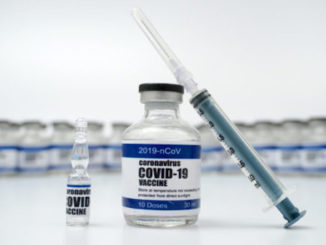
    US-based drugmaker Moderna has confirmed that it has received a report from California’s health department that several individuals at one vaccination centre in San Diego were treated for possible allergic reactions after vaccination from one lot of the company’s COVID-19 vaccine.

    The company is “fully cooperating” with the California Department of Public Health (CDPH) in investigating these reported adverse events, Moderna said. The confirmation comes after California State Epidemiologist Dr Erica Pan on Sunday recommended halting the administration of lot 41L20A of the Moderna COVID-19 vaccine due to possible allergic reactions that are under investigation.

    “A higher-than-usual number of possible allergic reactions were reported with a specific lot of Moderna vaccine administered at one community vaccination clinic. Fewer than 10 individuals required medical attention over the span of 24 hours,” said Dr Pan. “Out of an extreme abundance of caution and also recognizing the extremely limited supply of vaccine, we are recommending that providers use other available vaccine inventory and pause the administration of vaccines from Moderna Lot 041L20A until the investigation by the Centers for Disease Control and Prevention (CDC), US Food and Drug Administration (FDA), Moderna and the state is complete.”

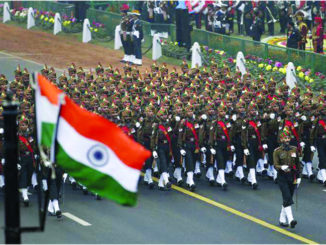
  • Curtailed by pandemic, the R-Day parade will be different this year

    Curtailed by pandemic, the R-Day parade will be different this year

    New Delhi (TIP): Many events that were a regular feature of the Republic Day Celebrations in the national capital will be missing this year owing to the Covid-19 pandemic and the social distancing measures put in place to contain its spread, said government officials. One prominent event that drew crowds and cheers – stunts on motorcycles by the army and the personnel of the paramilitary forces – have been cancelled this year.

    The veterans’ parade by ex-servicemen and women, too, has been knocked off the programme chart, and so is the parade by recipients of the national bravery awards. In the 2020 Republic Day parade, veterans as old as 99 and 100 years had participated in the parade and the motorcycle stunts were performed by women officers of the Central Reserve Police Force. Government officials, who did not wish to be named, said these events were cancelled because the elderly and children are more susceptible to contract Covid-19. “There will be no enclosure for schoolchildren this year either. The total number of the enclosures has also been reduced — from 36 to 22. The number of attendees will be 25,000 as against 150,000 until last year. Only 4,000 entries will be through tickets, the others would be invitation-based. The motorcycle stunt event was cancelled as it involved the participants sitting closely together and supporting each other while staying in close proximity on moving motorcycles,” said a senior official involved in the Republic Day arrangements. The official further said no children below the age of 15 years would be allowed at the venue on the India Gate lawns on January 26. Unlike the 12X12 format of the marching contingent with 124 participants, the format this year is 8X12, with only 96 participants.

    “Not just the spectators but the number of media persons has also been reduced from 300 to 100. The workers on the lawns are currently being tested at the Covid booth set up at the venue. Police personnel who will be at the gates and in charge of frisking will be wearing personal protective equipment suits and will carry thermal scanners. Officers from the security unit, who will guard the VIPs, will undergo Covid-19 testing and are already in quarantine for seven days before the Republic Day function,” a second official, privy to the arrangement details, said.

    Also, this year, instead of a gallery (benches arranged in rows and raised on platforms) for spectators, the ministry of defence has arranged for chairs — so that they can be kept apart on the lawns to ensure a distance of six feet between spectators.         Source: HT

  • India’s coronavirus recovery rate rises to 96.53 percent

    India’s coronavirus recovery rate rises to 96.53 percent

    New Delhi (TIP): India’s COVID-19 caseload rose to 1,05,27,683 with 15,590 people testing positive for the infection in a day while the recoveries have surged to 1,01,62,738, according to the Union Health Ministry data updated on Friday, January 15. The country’s death toll increased to 1,51,918 with 191 daily new fatalities, the data updated at 8 am showed. The number of people who have recuperated from the disease surged to 1,01,62,738, pushing the national COVID-19 recovery rate to 96.53 per cent, while the COVID-19 case fatality rate stands at 1.44 per cent. The COVID-19 active caseload remained below 3 lakh. There are 2,13,027 active cases of coronavirus infections in the country which comprises 2.02 per cent of the total caseload, the data stated. India’s COVID-19 tally had crossed the 20-lakh mark on August 7, 30 lakh on August 23, 40 lakh on September 5 and 50 lakh on September 16. It went past  60 lakh on September 28, 70 lakh on October 11, crossed 80 lakh on October 29,  90 lakh on November 20 and surpassed the one-crore mark on December 19. According to the ICMR, 18,49,62,401 samples have been tested up to January 14 with 7,30,096 samples being tested on Thursday. The 191 new fatalities include 70 from Maharashtra, 19 from Kerala, 17 from West Bengal, 14 from Uttar Pradesh, 10 each from Chhattisgarh and Punjab, eight from Madhya Pradesh, six from Haryana, and four each from Delhi, Andhra Pradesh and Tamil Nadu.

    A total of 1,51,918 deaths have been reported so far in the country, including 50,291 from Maharashtra followed by 12,246 from Tamil Nadu, 12,155 from Karnataka, 10,722 from Delhi, 10,010 from West Bengal, 8,543 from Uttar Pradesh, 7,138 from Andhra Pradesh and 5,473 from Punjab. The Health Ministry stressed that more than 70 per cent of the deaths occurred due to comorbidities. “Our figures are being reconciled with the Indian Council of Medical Research,” the Ministry said on its website and added that state-wise distribution of figures was subject to further verification and reconciliation.

  • India took ‘very decisive’ steps to deal with corona virus: IMF chief

    Washington (TIP): IMF chief Kristalina Georgieva has praised India for taking “very decisive” steps to deal with the coronavirus pandemic and its economic consequences and asked the country to do more this year to support an accelerated transformation of the economy. The IMF Managing Director during a global media roundtable on Thursday predicted a less bad outlook for India in the upcoming World Economic Update due to the steps taken by it. “When I called on everybody to stay tuned for January 26, that applies very much to India. You would see a picture in our update that is less bad. Why? Because the country actually has taken very decisive action, very decisive steps to deal with the pandemic and to deal with the economic consequences of it,” Ms Georgieva said. The International Monetary Fund is scheduled to release its World Economic Update on January 26.

    Talking about India, she said it was a very dramatic lockdown for a country of this size of the population with people clustered so closely together. “Then India moved to more targeted restrictions and lockdowns. What we see is that that transition, combined with policy support, seems to have worked well. Why? Because if you look at mobility indicators, we are almost where we were before COVID in India, meaning that economic activities have been revitalised quite significantly,” she said.

  • 3 lakh healthcare workers to get Covid vaccine on January 16

    3 lakh healthcare workers to get Covid vaccine on January 16

    New Delhi (TIP): Around 3 lakh healthcare workers will be inoculated at 2,934 sites across the country on the first day of the massive nationwide COVID-19 vaccination drive which is set to begin from January 16, official sources said.

    Each vaccination session will cater to a maximum of 100 beneficiaries and the Union Health Ministry has advised states not to organise “unreasonable numbers of vaccination per site per day”. “States have been advised to organise vaccination sessions taking into account 10 per cent reserve/wastage doses and an average of 100 vaccinations per session each day. “Therefore, any undue haste on the part of states to organise unreasonable numbers of vaccination per site per day is not advised,” the ministry said on Wednesday. It also said that states and UTs have also been advised to increase the number of vaccination session sites that would be operational every day in a progressive manner as the vaccination process stabilises and moves forward. “Around 3 lakh frontline healthcare workers will be inoculated at 2,934 sites across the country on the first day of January 16,” a source said. The government on Tuesday, Jan 12,  hinted that vaccine recipients, for now, will not have the option to choose from the two vaccines—Oxford COVID-19 vaccine, Covishield, manufactured by Serum Institute of India (SII) and indigenously developed Covaxin of Bharat Biotech—that have been approved for restricted emergency use in India. According to the Health Ministry getting vaccinated for COVID-19 will be voluntary.  Union Health Secretary Rajesh Bhushan had said on Tuesday, “At many places in the world more than one vaccine is being administered. But, presently, in no country vaccine recipients have the option of choosing the shots.”   According to the government, the shots will be offered first to an estimated one crore healthcare workers, and around two crore frontline workers, and then to persons above 50 years of age, followed by persons younger than 50 years of age with associated comorbidities. The cost of vaccination of healthcare and frontline workers will be borne by the central government, officials had said. All 1.65 crore doses of COVID-19 vaccines—1.1 crore of Covishield and 55 lakh of Covaxin—procured by the Centre have been allocated to all states and UTs in proportion to their healthcare workers database, it said. According to official sources, most of the 1.1 crore Covishield doses from Pune-based SII have been shipped to 60 consignee points across India from where they will be sent to smaller centres.

    Of the 55 lakh doses of indigenously developed Covaxin of Bharat Biotech ordered by the Centre, the first tranche of 2.4 lakh doses has been dispatched to 12 states.

    Covaxin has been sent to 12 sites—one each in Ganavaram, Guwahati, Patna, Delhi, Kurukshetra, Bengaluru, Pune, Bhubaneswar, Jaipur, Chennai, Lucknow and Hyderabad, an official source said.

    Covaxin has been developed by Bharat Biotech in collaboration with the Indian Council of Medical Research (ICMR).

    Health Ministry officials said that there will be a gap of 28 days between two doses of COVID-19 vaccines and its effectiveness can be seen only after 14 days, and urged people to keep following COVID appropriate behaviour.

    The ministry, which has listed series of frequently asked questions (FAQs) on COVID-19 vaccine, also stated that it was advisable to receive a complete schedule of the anti-coronavirus vaccine irrespective of the past history of coronavirus infection as this will help in developing a strong immune response against the disease. On whether a person with an active COVID-19 infection is vaccinated, AIIMS Director Dr Randeep Guleria said a person with active and symptomatic COVID-19 infection may increase the risk of spreading the same to others at the vaccination site and thus infected individuals should defer vaccination for at least 14 days after the symptoms are resolved.

    Elaborating on the possible side-effects of COVID-19 vaccine, Guleria said that as is true for other vaccines, some will have some degree of side effects in some individuals which could be in form of mild fever, pain at the site of injection, body ache, etc. States have been asked to making arrangements to deal with any COVID-19 vaccine-related side effects as one of the measures towards safe vaccine delivery.

                    Source: PTI

  • Canada continues to record soaring Covid-19 cases

    Covid-19 cases continued to rise in Canada as 486, 393 new infections and 13, 865 deaths were recorded on Thursday, the media reported. Ontario, Canada’s most populous province, reported 2, 432 new cases of Covid-19 on Thursday, Dec 17, the highest number of cases recorded in a single day since the start of the pandemic in the country, Xinhua reported.

    Thursday marked the third straight day in which the province logged more than 2, 000 cases of the novel coronavirus. The Ontario Hospital Association called for a four-week lockdown in every public health unit where there is an infection rate of 40 per 100, 000 people or higher. There are 75, 885 active cases across the country with a daily average of 6, 614 new cases reported in the past seven days, according to the Public Health Agency of Canada on Thursday.

  • A Misnomer Causes Confusion

    A Misnomer Causes Confusion

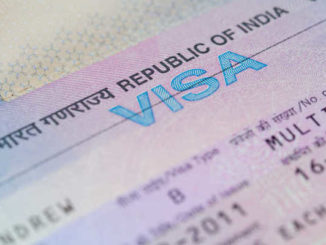
    India’s  10- Year Multiple Entry Visa is wrongly termed as Tourist Visa

    Prem Bhandari recommends entry visa on departure (E-VoD)

    I.S. Saluja

    My friend Prem Bhandari who is Chairman, Jaipur Foot USA , was at JFK airport in New York on December 2, 2020  where he is a regular visitor to find for himself how NRI’s are being taken care of. Ever Since the government of India launched the Vande Bharat Mission to help stranded Indians to get back to India, Mr. Bhandari has been a regular visitor to extend a helping hand to travelers and Air India. In fact, he led from the front and exhibited rare courage in what he was doing for community at a time when most of us took refuge within the safe four walls of our homes. Undeterred by the raging pandemic, he was out at the airport day after days, helping people.

    On December 2, he was, as usual visiting JFK to see if travelers were receiving proper attention of airline officials when   he came across 6 persons who told him they were not allowed to board an Air India flight to India. One of them was a lady with 2 toddlers. Mr. Bhandari, a man well known in India and USA, particularly in New York, as a committed  social activist and do-gooder was upset to find the lady in distress for not being able to board the flight.

    Mr. Bhandari who has often raised  issues impacting Indian Americans , among others, tried to get at the bottom of the situation. He spoke with the passengers who were denied travel. He spoke with Air India staff present at the JFK airport.

    Prem Bhandari at JFK, New York with travelers he helped during Vande Bharat Mission in May 2020

    Mr. Bhandari said  the lady was traveling in an emergency to be with her people in India.  She was not going for tourism. It was under compelling circumstances that she was going with the two toddlers, aged  to India, in extreme weather and under dangerous COVID-19 conditions. Nobody goes to India these days for tourism, anyway. They all travel only driven by a desire to see a family member who may be sick, or to be with family to mourn the loss of a loved one. So it was with the lady.

    The Air India people at JFK told the lady  to visit the Consulate in New York to get an emergency visa for the kids. Now, this lady who has come from outside New York will need to hire a cab and go to the Indian Consulate in Midtown Manhattan. Pay for the cab. She may not get the emergency visa then and there. She may have to wait for a day. She will need a hotel room for which she will have to pay. If she is lucky, and if there are no intervening holidays, she gets the visa on the next day. Now the flight. She has to wait  until she can be accommodated in the next available flight, subject of course to availability of seats. And when finally, the seats are available, she has to pay an extra amount for the change in her flight schedule. She does it. She settles the hotel bill for all these days of stay.

    The next scene now. The lady with two toddlers in tow reaches Delhi. Now she is to go to a different destination in India. She has missed the flight originally booked. Her tickets are canceled. She has to rebook a flight and pay for it, besides waiting, may be, for a day or two to get seats. She spends again, another few hundred dollars on buying tickets and for stay in a hotel. What a colossal loss of time and money!, one may say. No, friends, it is much more than that. It is a stressful experience which may make one sick. It is only loss of time, money, inconvenience, stress, it is a frightening threat of being exposed to rampaging COVID-19.

    Whose fault is it? Government officials will say the travel advisory is posted on website of each embassy and consulate, and travelers should look into guidelines before undertaking travel. Well, nobody can dispute this claim. All embassy and consulate websites carry the advisory.

    A travelers’ advisory well publicized in print, electronic and social media can prove educative for travelers

    The Indian Panorama asked Mr. Bhandari for his comment, because he was much upset to see  the plight of the stranded travelers.

    Mr. Bhandari concluded that the villain of the piece was a wrong term used for 10-Year Multiple Entry Visa. It is a misnomer to call this visa a Tourist Visa.

    One can understand the constraint of the airline,  which did not permit  boarding to any tourist, because tourist visa has been cancelled in the wake of COVID-19.

    In October this year, the Indian government had decided to restore with immediate effect the validity of all existing visas, except electronic, tourist and medical category visas, almost eight months after their suspension following the coronavirus outbreak and subsequent imposition of a nationwide lockdown.

    Mr. Bhandari explained to The Indian Panorama that almost 80% Indians do not apply for OCI card for children. They feel quite comfortable with the 10-Year Multiple Entry Visa  which is wrongly termed as Tourist Visa.  The denial to board the flight arose out of the fact that the two kids had “Tourist Visa”. And because, government of India had canceled the Tourist Visa , as stated above, the kids could not be allowed to board the flight.

    Mr. Bhandari had enough reason to sympathize with those denied boarding a flight to India, and at the same time think deep how the situation could be rectified. The first thing he did immediately was to call concerned officials in India government in Delhi. He called the Foreign Secretary Mr. Harsha Vardhan Shringla, Mr. Ajay Bhalla, the Home Secretary, and Civil Aviation Secretary Pradeep Singh Khasola, and apprised them of the suffering of the passengers he had met at the airport. Each one of them appeared to sympathize with the harassed passengers, and assured Mr. Bhandari that a way will be found to remedy the situation. Mr. Bhandari told The Indian Panorama that he was very happy to see the positive attitude of the officials, and that he is grateful to them.

    Mr. Bhandari followed up with an identical letter to each one of them, drawing their attention to the problem, and suggesting immediate solutions.

    In his letter, Mr. Bhandari pointed out that the core of  “ the issue is lack of information and deficiency in educating travelers on visa eligibility (visa issued prior to March 12, 2020 are ineligible)”.

    His suggestions to all three Secretaries mentioned above are given below:-

    1. All airlines flying into India under the air-bubble arrangement should proactively verify travelers with foreign passports have eligible visas at time of ticket booking
    2. Key websites in this air-bubble program, namely Air Suvidha, Air India, United Airlines, MoCA, MHA, BOI.gov, MEA, all Consulates, Indianvisa.gov etc. must advertise eligible and ineligible visas
    3. MoCA & AI have been very active in advertising flight schedules in social media. Similarly, it is imperative that the visa eligibility is broadly advertised on the same social platforms.

    As a more considered solution to ease a broad swath of travelers all over the world facing similar situation,  I propose the following , Mr. Bhandari wrote:-

    1. Any Indian origin person with either of parents with Indian passport/PIO/OCI card be allowed to travel with their US born minor sons/daughter under the age of 14 with any unexpired visa obtained anytime without applying emergency visa at consulate. As per US federal law, children under 14 cannot be left alone without their legal custodians, which in almost all cases are their parents.

    1. Likewise, all unexpired visas issued in the past should be restored to avoid unnecessary burden as well as expenses of obtaining the emergency visa. It is a fallacy to assume anyone will like to travel to India for tourism during Corona pandemic. This step will alleviate workload on embassy staff, smoothen out travel process for global diaspora and will generate goodwill for the country.

    1.  In case it is difficult to carry out above suggested measures, it may be explored to either grant Emergency Visa on Departure (E-VoD) on the line of Visa on arrival OR restore immediate e-Visa process for immediate approval online – travelers can be able to do so digitally from the airport. This small gesture will win heart of the NRI community not only from US but from all over the World.


  • November 20 New York & Dallas E-Edition

    [vc_row][vc_column][vc_column_text]

    E-Edition

    [/vc_column_text][/vc_column][/vc_row][vc_row][vc_column width=”2/3″][vc_custom_heading text=”” font_container=”tag:h2|text_align:center” google_fonts=”font_family:Istok%20Web%3Aregular%2Citalic%2C700%2C700italic|font_style:700%20bold%20regular%3A700%3Anormal” link=”url:https%3A%2F%2Fwww.theindianpanorama.news%2Fwp-content%2Fuploads%2F2020%2F11%2FTIP-November-20-Dual-Edition.pdf|||”][vc_single_image image=”102898″ img_size=”full” add_caption=”yes” alignment=”center” onclick=”custom_link” link=”https://www.theindianpanorama.news/wp-content/uploads/2020/11/TIP-November-20-Dual-Edition.pdf”][/vc_column][vc_column width=”1/3″][vc_single_image image=”82828″ img_size=”medium” alignment=”center” onclick=”custom_link” link=”https://www.theindianpanorama.news/advertising-media-kit-portal-indian-panorama/”][vc_single_image image=”82829″ img_size=”medium” alignment=”center” onclick=”custom_link” link=”https://www.theindianpanorama.news/advertising-media-kit-portal-indian-panorama/”][/vc_column][/vc_row][vc_row][vc_column width=”2/3″][vc_custom_heading text=”Lead Stories This Week” font_container=”tag:h2|text_align:center” google_fonts=”font_family:Istok%20Web%3Aregular%2Citalic%2C700%2C700italic|font_style:700%20bold%20regular%3A700%3Anormal” link=”url:https%3A%2F%2Fwww.theindianpanorama.news%2F%20|||”][/vc_column][vc_column width=”1/3″][vc_widget_sidebar sidebar_id=”mh-sidebar”][/vc_column][/vc_row]

  • November 6 New York & Dallas E – Edition

    [vc_row][vc_column][vc_column_text]

    E-Edition

    [/vc_column_text][/vc_column][/vc_row][vc_row][vc_column width=”2/3″][vc_custom_heading text=”” font_container=”tag:h2|text_align:center” google_fonts=”font_family:Istok%20Web%3Aregular%2Citalic%2C700%2C700italic|font_style:700%20bold%20regular%3A700%3Anormal” link=”url:https%3A%2F%2Fwww.theindianpanorama.news%2Fwp-content%2Fuploads%2F2020%2F11%2FTIP-November-6-Dual-Edition.pdf|||”][vc_single_image image=”102372″ img_size=”full” add_caption=”yes” alignment=”center” onclick=”custom_link” link=”https://www.theindianpanorama.news/wp-content/uploads/2020/11/TIP-November-6-Dual-Edition.pdf”][/vc_column][vc_column width=”1/3″][vc_single_image image=”82828″ img_size=”medium” alignment=”center” onclick=”custom_link” link=”https://www.theindianpanorama.news/advertising-media-kit-portal-indian-panorama/”][vc_single_image image=”82829″ img_size=”medium” alignment=”center” onclick=”custom_link” link=”https://www.theindianpanorama.news/advertising-media-kit-portal-indian-panorama/”][/vc_column][/vc_row][vc_row][vc_column width=”2/3″][vc_custom_heading text=”Lead Stories This Week” font_container=”tag:h2|text_align:center” google_fonts=”font_family:Istok%20Web%3Aregular%2Citalic%2C700%2C700italic|font_style:700%20bold%20regular%3A700%3Anormal” link=”url:https%3A%2F%2Fwww.theindianpanorama.news%2F%20|||”][/vc_column][vc_column width=”1/3″][vc_widget_sidebar sidebar_id=”mh-sidebar”][/vc_column][/vc_row]

  • India  relaxes visa norms; except for tourism, all categories of foreigners allowed to enter India

    India relaxes visa norms; except for tourism, all categories of foreigners allowed to enter India

    NEW DELHI / NEW YORK (TIP): India  on Thursday, October 22,  relaxed visa restrictions to allow all categories of foreign nationals to enter India through air or sea for any purpose except for tourism.

    In an order issued by the Ministry of Home Affairs (MHA), the government said, “It has been decided to permit all OCI and PIO card holders and all other foreign nationals intending to visit India for any purpose, except on a tourist visa to enter by air or water routes through authorized airports and seaport immigration check posts.”

    It said that the decision was to make a graded relaxation in visa and travel restrictions for more categories of foreign nationals and Indian nationals who wish to enter or leave India.

    According to the MHA order, the relaxations include flights operated under Vande Bharat Mission, Air Transport Bubble arrangements or by any non-scheduled commercial flights as allowed by the Ministry of Civil Aviation. “All such travelers, however, will have to strictly adhere to the guidelines of the Ministry of Health and Family Welfare regarding quarantine and other health/COVID-19 matters,” it added.

    The MHA in its order said that under this graded relaxation, “Government of India has also decided to restore with immediate effect all existing visas (except electronic visa, tourist visa and medical visa).”

    “If the validity of such visas has expired, fresh visas of appropriate categories can be obtained from Indian Mission/Posts concerned. Foreign nationals intending to visit India for medical treatment can apply for a medical visa, including for their medical attendants,” the order said.

    With these relaxations, now foreign nationals will be allowed to come to India for various purposes such as business, conferences, employment, studies, research, medical purposes and a few others.

    In view of the situation arising out of the COVID-19 pandemic, the government had taken a series of steps and had decided in February this year to curtail the inward and outward movement of international passengers.

    (Source: MHA)

  • Indian American co-founded company and University of Houston partner for COVID-19 vaccine

    Indian American co-founded company and University of Houston partner for COVID-19 vaccine

    HOUSTON (TIP): The University of Houston (UH) has joined hands with an Indian American co-founded biotech company, AuraVax Therapeutics, to develop a ‘differentiated-approach’ vaccine against aggressive respiratory diseases, such as COVID-19.

    AuraVax, however, has the option to exclusively license a new intranasal vaccine technology developed by its Indian-American co-founder, Navin Varadarajan, M.D. Anderson Professor of Chemical and Biomolecular Engineering at the University of Houston.

    “A safe and durable vaccine is urgently needed to tackle the COVID-19 pandemic that has infected millions of people and caused over 620,000 deaths globally,” Vardarajan stated.

    “We plan to stop COVID-19, a respiratory virus, at its point of entry – the nasal cavity – and we believe our intranasal platform is a differentiated approach that will lead to a vaccine with increased efficacy to create sustained immunity to COVID-19,” he said.

    Based on pre-clinical experiments, Varadarajan reports his technology not only elicits a mucosal immune response, but also systemic immunity, according to the UoH.

    Varadarajan is targeting the spike proteins, which allow infections to penetrate host cells, in his study. The professor also prefers proteins because of their ability to induce strong immune responses, flexibility and scalability, and the absence of infectious particles, as per an UoH statement.

    AuraVax describes its vaccine administration platform as ‘next-generation’, one which could be administered at home.

    “We are excited to be collaborating with the University of Houston and look forward to future success by advancing the development of this novel intranasal vaccine platform to address a multitude of respiratory viruses, starting with COVID-19. We plan to stop COVID-19, a respiratory virus, at its point of entry — the nasal cavity — and we believe our intranasal platform is a differentiated approach that will lead to a vaccine with increased efficacy to create sustained immunity to COVID-19,” said Varadarajan.

    “AuraVax, being created by an UoH professor, is the ideal partner for us, and what better cause than to advance the creation of a vaccine to COVID-19, arguably the primary challenge facing our generation. The partnership has my wholehearted support,” said Amr Elnashai, University of Houston vice president for research and technology transfer.

    “The race for more effective ways of vaccinating against COVID-19 and other respiratory diseases has led to a broad and extensive focus on various protective mechanisms of action. Based on pre-clinical work, our technology not only elicits a mucosal immune response, but also systemic immunity. We believe AuraVax has a competitive advantage given the immune responses and a supply chain that is well-suited for widespread distribution and self-administration distribution,” said Dr Varadarajan.

  • Trump says he supports larger coronavirus relief package

    WASHINGTON (TIP): U.S. President Donald Trump said on Thursday, Oct 15  he was willing to support a comprehensive COVID-19 coronavirus relief package larger than $1.8 trillion to make a deal with Democrats and get a bill passed.

    “I would,” he said during a telephone interview with Fox Business News. “Absolutely, I would. I would say more. I would go higher. Go big or go home.”

    He went on to say that he had directed Treasury Secretary Steven Mnuchin to make an offer over the $1.8 trillion package previously supported by the White House but said Mnuchin “hasn’t come home with the bacon.”

    Trump said he would not accept “goodies” in the Democrats’ proposal.

    House Democrats, led by Speaker Nancy Pelosi (D-CA), have been pushing for a $2.2 trillion package that would include funding for state and local governments, schools, and coronavirus testing and tracing, among other priorities.2

    Republicans in the Senate support a $500 billion bill that would not offer a wide a range of measures. Senate Majority Leader Mitch McConnell said the upper chamber would be working on the bill next week.

    REPUBLICANS

    Democrats demanding a ‘wish list’

    “(Democrats) say anything short of their multi-trillion-dollar wish list, jammed with non-COVID-related demands, is ‘piecemeal’ and not worth doing,” McConnell said in a statement. “Speaker Pelosi frequently says she feels ‘nothing’ is better than ‘something.’ And she has worked hard to ensure that nothing is what American families get.”

    DEMOCRATS

    Republicans have the wrong priorities

    “We want to have an agreement. Yet Republicans refuse to ensure that such an agreement puts #FamiliesFirst,” Pelosi said.

    (Agencies)

  • India fares poorly in hunger index

    India fares poorly in hunger index

    Country has the highest prevalence of ‘wasted children’; even Bangladesh and Pakistan score better

    NEW YORK (TIP): India has the highest prevalence of wasted children under five years in the world, which reflects acute undernutrition, according to the Global Hunger Index 2020. The situation has worsened in the 2015-19 period, when the prevalence of child wasting was 17.3%, in comparison to 2010-14, when it was 15.1%.

    Overall, India ranks 94 out of 107 countries in the Index, lower than neighbors such as Bangladesh (75) and Pakistan (88). 2020 scores reflect data from 2015-19. The Index, which was released on Friday, is a peer-reviewed report released annually by Concern Worldwide and Welthungerhilfe.

    It uses four parameters to determine its scores. India fares worst in child wasting (low weight for height, reflecting acute undernutrition) and child stunting (low height for age, reflecting chronic undernutrition), which together make up a third of the total score.

    Although it is still in the poorest category, however, child stunting has actually improved significantly, from 54% in 2000 to less than 35% now. Child wasting, on the other hand, has not improved in the last two decades, and is rather worse than it was decade ago.

    India has improved in both child mortality rates, which are now at 3.7%, and in terms of undernourishment, with about 14% of the total population which gets an insufficient caloric intake.

    In the region of south, east and south-eastern Asia, the only countries which fare worse than India are Timor-Leste, Afghanistan and North Korea.

    Pandemic effect

    Globally, nearly 690 million people are undernourished, according to the report, which warns that the COVID-19 pandemic could have affected the progress made on reducing hunger and poverty.

    “The world is not on track to achieve the second Sustainable Development Goal — known as Zero Hunger for short — by 2030. At the current pace, approximately 37 countries will fail even to reach low hunger, as defined by the Global Hunger Index Severity Scale, by 2030,” says the report. “These projections do not account for the impacts of the COVID-19 pandemic, which may worsen hunger and undernutrition in the near term and affect countries’ trajectories into the future … COVID-19 has made it clearer than ever that our food systems, as they stand, are inadequate to the task of achieving Zero Hunger.”

    (Source: The Hindu)

  • Beware of the consequences of disregarding recommendations of health experts

    Beware of the consequences of disregarding recommendations of health experts

    Prof. Indrajit Saluja

    Politicians all over the world, by and large, are guided by similar lust for power. For them, all is fair in love and war. Their standards of morality are grounded deep in immorality. Of course, there are exceptions. Once in a while, you see a politician who is unlike his breed. He is not a politician. He is a visionary. He is a philosopher. He is a saint.

    For the traditional politician, to grab power, to hold on to power, and to stay on in power, by hook or by crook is his most pious duty. He is not the one to ever doubt his ability to continue to wield power. In a democracy, power flows from the people, and he knows well how to influence them and get their support and vote.

    Thus, a Trump is ready to risk the lives of his blind faithfuls at his rallies where  he declares his defiance to the threat of the deadly Coronavirus, encourages them to insult the wisdom of the health experts who recommend certain precautions to keep the virus away. The health experts recommend covering of face in public, but the President of the country would tell the rallyists by his example of not wearing a mask, that face covering is not required, and that the idea of  social distancing is  a stupid one. And his cronies join him in propagating the hoax.

    We know for certain that many who attended the Trump rallies suffered the consequences. They got infected. Many of them may have recovered, but many of them may still be fighting for survival. Innocent people fall a prey to the machinations of vile politicians; we have known it for long.

    Take a cue from a former Governor of New Jersey Chris Christie who until the other day  was mixing around in the Rose Garden in White House, without a face covering. He  realized, after he got infected, that health experts are right, and that their recommendations are for the protection of the people,  and has now recommended that the guidelines issued by CDC be followed.

    I will expect people like Chris Christie to take upon themselves to educate Americans of the dangerous consequences of disregarding the recommendations of health experts to protect themselves from the deadly virus which has already claimed more than 215,000 precious American lives, and struck more than a million, and is still raging all over America, threatening to bring more misery in the approaching winter season.

    Stay safe. Stay healthy. Stay blessed.


  • AIA Celebrates Diwali on a luxury boat

    AIA Celebrates Diwali on a luxury boat

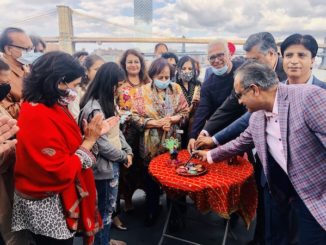
    NEW YORK CITY (TIP): Undaunted by the COVID-19, AIA NY celebrated on Sunday October 4th 2020, the 33rd Deepavli festival event at Hudson river in front of South Street Seaport, NYC on a luxury boat with AIA sponsors, media partners and AIA executive members.

    Due to Coronavirus (COVID 19) there were very limited number of invited guests for this event. For the last 32 years, Association of Indians in America (AIA), New York chapter has organized Deepavali festival with sparkling fireworks, classical fusion performances, fashion show, vegan expo, fun-filled children’s activities and booths with a variety of fine cuisine, handicrafts and gift items along with rich and varied works of contemporary Indian artists at South Street Seaport.

    According to Harish Thakkar, President of AIA- NY chapter, Deepavali festival is one of the landmark events of AIA-NY chapter, enjoyed by over 50,000 New Yorkers every year since 1987. Considered by far the largest attraction for Indian Americans from all over the tri-state, Deepavali festival celebrates the tradition of a faraway land in a new world. This celebration has itself become a tradition that unites New York in a world of myths and colors.

    AIA is a grass-roots national organization of Asian-immigrants in the U.S with chapters and membership spread across the nation. It was founded on August 20th, 1967. The New York Chapter was established in 1968 and is well known for its social, cultural and educational activities. AIA represents the hopes and aspirations of those immigrants who are united by their common Indian heritage and American commitment.

    AIA is thankful to its supporters like CheapOair and Qatar Airways, McDonald’s, New York Life, ICICI Bank, all media partners, Sony Entertainment, ITV Gold, TV Asia, Jus Punjabi, South Asian Times, Desi Talk, Indian Panorama, Indian Express and Hum Hindustani “We are grateful to all our sponsors who made this festival a big success for many years” AIA president Harish Thakkar said.

  • Permanent UNSC membership for India — mirage or achievable?

    Permanent UNSC membership for India — mirage or achievable?

    By Prabhu Dayal
    • PM Narendra Modi advocated India’s inclusion among the permanent members of the UNSC during the 75th session of the UN General Assembly
    • The only increase in the membership of the Security Council came in 1965, when the number of non-permanent members was increased from six to 10
    • Any reform to the Security Council would require an amendment to the UN Charter

    There have been expressions of support for India’s candidature from four out of the five permanent members–USA, UK, Russia and France. But what about China? Given the nature of Sino-Indian relations, it is not surprising that Beijing does not support India’s case. China’s close friendship with Pakistan is a compounding factor in this regard.

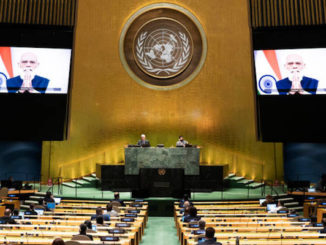
    On September 26, Prime Minister Narendra Modi delivered a virtual address during the General Debate of the 75th session of the UN General Assembly in which he made an impassioned and forceful plea for India’s candidature for permanent membership of the UN Security Council. His speech was brilliant, but when he had finished I was still asking myself this question: Is India’s quest heading anywhere, or is it just a pipe dream?

    The composition of the Security Council was established in 1945. The victors of the Second World War shaped the UN Charter in their national interests, giving to themselves the veto power in the Security Council. Since then the geopolitical realities have changed drastically, but the Council has changed very little. The Prime Minister did well to stress this when he said that the world of 1945 was significantly different from today’s world; the global situation, sources-resources, problems-solutions; all were quite different. Keeping this in mind, he urged that “Reform in the responses, in the processes, and in the very character of the UN is the need of the hour”.

    This was not the first time in recent months that PM Modi had urged the need for UN reforms. It would be recalled that while speaking at the high-level dialogue of the U.N.’s Economic and Social Council (ECOSOC) on July 17 this year, he had said that “Only reformed multilateralism with a reformed United Nations at its center can meet the aspirations of humanity.”

    PM Modi put forward several arguments that make India’s case for permanent membership appear quite strong. Highlighting India’s achievements and role in 75 years of the United Nations, he called for reforms with “changing times” and India’s inclusion in the decision-making process within the global body. He mentioned that India is the largest democracy of the world, with more than 18% of the world population; it had sent its soldiers for about 50 peacekeeping missions; it is also the country that has lost the maximum number of soldiers in the course of establishing peace; even during these very difficult times of the Covid 19 pandemic, the pharma industry of India has sent essential medicines to more than 150 countries. In this context, PM Modi assured that India’s vaccine production and delivery capacity will help all humanity in fighting the COVID-19 crisis.

    Thus, articulating the role being played by India for lending a helping hand to other nations, and putting forward cogent arguments for India to be given a permanent membership of the UN, he asked the General Assembly a very pointed question: “For how long will India be kept out of the decision-making structures of the United Nations?”

    It may be recalled that the only increase in the membership of the Security Council occurred in 1965 when the non-permanent membership was increased from six to 10 members, thus increasing the total strength from 11 to 15 members; fifty-five years have elapsed since then. Thus, PM Modi was right on target when he pointed out that the United Nations in its present form is out of date: “The international community today is faced with a very important question: Whether the character of the institution, constituted in the prevailing circumstances of 1945, is relevant even today”?

    However, the challenges which lie in India’s path should not be underestimated. Any reform of the Security Council would require an amendment to the UN Charter. In this regard, it is useful to remember that Article 108 of the UN Charter states:

    ‘Amendments to the present Charter shall come into force for all Members of the United Nations when they have been adopted by a vote of two thirds of the members of the General Assembly and ratified in accordance with their respective constitutional processes by two thirds of the Members of the United Nations, including all the permanent members of the Security Council’.

    Thus, any reform of the Security Council not only requires the support of at least two-thirds of UN member states, but also all the permanent members of the UN Security Council must also agree to this as they have veto powers. Assuming that India can get the support of two-thirds of the members of the General Assembly, the question which arises is simply this: Will all the Security Council’s permanent members give their nod for adding India as a permanent member?

    India’s quest has to be viewed in a broader perspective. The need for Security Council reform has been actively discussed among the UN member states for quite some time. By 1992, Japan and Germany had become the second and third-largest financial contributors to the United Nations , and they started to demand a permanent seat; so too did Brazil (the world’s fifth largest country in terms of territory) and India (the largest democracy and the second largest country in terms of population) which had emerged not only as the most important countries within their regional groups but also key players in the emerging global scenario. These four countries formed an interest group which came to be known as the G-4.

    On the other hand, their regional rivals opposed the idea of G4 countries becoming permanent members. Italy, Pakistan, Argentina and South Korea formed an interest group, known as the ‘Uniting for Consensus’ (also nicknamed the ‘Coffee Club’) which later grew to around 40 members. The Coffee Club members are opposed to increasing the number of the Security Council’s permanent members while wanting an increase in the non-permanent members category.

    Simultaneously, the African countries also started to demand two permanent seats for themselves, arguing that historical injustices had been done to them, and also that much of the Council’s agenda related to their continent. All these developments have further complicated the situation.

    On their part, the G-4 countries have shown flexibility on the veto issue in their bid to get the United Nations reform process moving. In a joint statement on their behalf delivered by India’s Permanent Representative to the UN Ambassador Syed Akbaruddin at an inter-governmental negotiations meeting in March 2017, the G4 nations– India, Brazil, Germany and Japan–stated that while the new permanent members would in principle have the same responsibilities and obligations as the current permanent members, they shall not exercise the veto until a decision on the matter has been taken during a review. Despite this flexibility, there has not been any progress in regard to the G4 demands.

    There have been expressions of support for India’s candidature from four out of the five permanent members–USA, UK, Russia and France. But what about China? Given the nature of Sino-Indian relations, it is not surprising that Beijing does not support India’s case. China’s close friendship with Pakistan is a compounding factor in this regard.

    There are many who believe that in actual fact, all the P-5 countries have reservations about adding any other country including India to their privileged group. The support extended to India by the US, UK, Russia and France has to be viewed against the background of their being fully aware that in any case, the process of Security Council reform is making no headway whatsoever. Many analysts think that they only render lip service by way of support to India in order to derive political mileage as they are fully aware of the Chinese position. In other words, whether their support is genuine is a matter of debate, for it is extended whilst knowing full well that the Chinese will oppose India anyway.

    Meanwhile, China, the world’s biggest dictatorship sits on the high table as a permanent member of the UN Security Council while India, the world’s largest democracy has to be content with getting a seat on that table from time to time as a non-permanent member. We can raise our voice against this injustice, as Prime Minister Modi has done. However, one cannot say when the winds of change will actually reach the UN Security Council, for diplomacy, like politics is only the art of the possible.

    Prime Minister Modi said in his address: “Today, people of India are concerned whether this reform-process will ever reach its logical conclusion”. He asked:” How long would a country have to wait particularly when the transformational changes happening in that country affect a large part of the world?” His words had a ring of anguish as well as disappointment.

    As I reflect on Prime Minister Modi’s address at the UN, I cannot help reminding myself of a verse from the Rubaiyat of Omar Khayyam:

    “Could thou and I with fate conspire,

    To grasp this sorry scheme of things entire,

    Would we not shatter it to bits–and then

    Remold it nearer to the heart’s desire.”

    (The author is a career diplomat. He can be reached at prabhu_dayal70@hotmail.com)

    (Courtesy OPOYI)


  • Indian American researchers making Covid-19 vaccine for older adults

    INDIANA (TIP): A team of Indian American scientists is working to develop a unique covid-19 vaccine to protect all segments of the population, especially older adults using an adenovirus that causes disease in cattle.

    Led by Purdue University virologist Suresh Mittal, the team aims to create a vaccine that uses a bovine adenovirus as a safe and effective delivery vehicle with a nearly $3.9 million grant from the National Institutes of Health.

    “Adenoviral vectors have emerged as a promising gene-delivery platform for a variety of therapeutic and vaccine purposes during the last two decades,” said researcher Suresh Kuchipudi of Penn State University in a media release.

    Kuchipudi is clinical professor of veterinary and biomedical sciences and associate director of Penn State’s Animal Diagnostic Laboratory.

    “Historically, we have used human adenoviruses as platforms for vaccine delivery, but using a delivery system based on an animal adenovirus means that the human population will have no preexisting immunity to the vector, thereby improving its effectiveness.”

    Kuchipudi explained that human adenoviruses are widespread and can cause common illnesses such as cold-like symptoms, fever, sore throat, bronchitis, pneumonia, diarrhea and pink eye.

    “As a result, most people may have preexisting immunity that could impact the efficacy of vaccines delivered via a human-adenovirus-based vector.

    The team which also includes immunologist Suryaprakash Sambhara from the Centers for Disease Control and Prevention, has adapted an adenovirus typically found in cattle to prevent it from replicating, which enhances safety.

    The researchers also modified the adenovirus to express a peptide that stimulates a robust immune response to influenza viruses in mice.

    “Our preliminary work has revealed that this novel vaccine platform provides significantly higher levels of immunity compared to that of human adenovirus vectors,” Kuchipudi said.

    “We hypothesize that immunization with this vector expressing relevant antigens of SARS-CoV-2 will strengthen an effective anti-COVID-19 immunity.”

    The researchers noted that because SARS-CoV-2 is a newly emerged virus for which humans have no previous immunity, any vaccine will have to be highly immunogenic to provide protection, particularly among older adults, whose immune systems naturally decline with age.

    “This work suggests that the bovine adenovirus vector system could serve as an excellent delivery vehicle for the development of recombinant vaccines against emerging pathogens — for the elderly and other segments of the population,” Kuchipudi said.

    “We believe this effort will yield an effective COVID-19 vaccine and could make a significant contribution to flattening the pandemic’s trajectory and helping to manage its second wave.”

  • Indian-Origin Oxford University  Academic Leads Criticism of UK’s COVID  Lockdown Approach

    Indian-Origin Oxford University Academic Leads Criticism of UK’s COVID Lockdown Approach

    LONDON (TIP): A prominent Indian-origin Oxford University academic leads a group of over 30 academics who have expressed their doubts over the UK government’s localized and national lockdown approach to tackling a second wave of the coronavirus pandemic.

    Professor Sunetra Gupta, Professor of Theoretical Epidemiology at the University of Oxford, co-authored a letter addressed to Prime Minister Boris Johnson, Chancellor Rishi Sunak and the Chief Medical Officers (CMOs) of England, Wales, Scotland and Northern Ireland this week as a “constructive input” into the government’s policy response to the rising number of coronavirus infections.

    The Gupta-led group recommends more targeted measures that protect the groups most vulnerable to the deadly virus.

    “In summary, our view is that the existing policy path is inconsistent with the known risk-profile of COVID-19 and should be reconsidered,” notes the open letter.

    “Instead, more targeted measures that protect the most vulnerable from COVID, whilst not adversely impacting those not at risk, are more supportable… Such targeted measures should be explored as a matter of urgency, as the logical cornerstone of our future strategy,” the group says.

    They argue that because 89 per cent of COVID-19 deaths are in the over 65 group and are also concentrated in people with pre-existing medical conditions, these are the groups at which interventions should be targeted.

    “This large variation in risk by age and health status suggests that the harm caused by uniform policies (that apply to all persons) will outweigh the benefits,” the letter reads, warning that the effect on cancer treatment is especially acute, with people delaying or missing screenings, tests, or treatments.

    However, Ms Gupta’s team goes head to head with a contrary scientific point of view put forward in an open letter by Trisha Greenhalgh, Chair of Primary Care Health Sciences at Oxford University, signed by Edinburgh-based Indian-origin academic Devi Sridhar, Chair of Global Public Health, Edinburgh Medical School, among 23 other academics.

    “We strongly support your continuing efforts to suppress the virus across the entire population, rather than adopt a policy of segmentation or shielding the vulnerable until “herd immunity” has developed,” reads the letter addressed to the CMOs.

    “Society is an open system. To cut a cohort of “vulnerable” people off from “non-vulnerable” or “less vulnerable” is likely to prove practically impossible, especially for disadvantaged groups… The goal of “herd immunity” rests on the unproven assumption that re-infection will not occur. We simply do not know whether immunity will wane over months or years in those who have had COVID-19,” they write.

    Their letter, published in the ‘British Medical Journal”, says that the UK may have to move flexibly between levels of restriction rather than either full lockdown or release, depending on how well the virus is controlled.

    They also flag that measures that would help control the virus while also promoting economic recovery include making face coverings mandatory in crowded indoor spaces, improving ventilation in schools and workplaces, continuing to require social distancing, and discouraging large indoor gatherings.

    The face- off within the scientific community comes as Johnson laid out a new set of restrictions to come in force from Thursday, which once again requires people to work from home where possible and for hospitality businesses to bring down their shutters hours earlier in the evening.

    Plans for a further easing up for sporting and exhibition venues, scheduled for next month, have also been halted as part of the tougher measures to be enforced via fines between 100 pounds and 10,000 pounds. Johnson has told Parliament that the country should expect the restrictions to remain in place for around six months.

    “The unstated objective currently appears to be one of suppression of the virus, until such a time that a vaccine can be deployed. This objective is increasingly unfeasible,” warns Prof. Gupta’s group in their letter.

    On the other hand, the group backed by Prof. Sridhar, notes: “Despite claims to the contrary from some quarters, there are no examples of a segmentation-and-shielding policy having worked in any country.”

    The two sets of open letters indicate a growing split across the UK over tackling the second wave of the pandemic, with rival camps divided between strict lockdowns and greater freedom on people’s movements and businesses.

    It comes as the R number, or the rate at which the infection is transmitted, remains above the preferred mark of one and the UK’s death count from the deadly virus edges towards 42,000.

  • COVID-19 could fuel more conflict, poverty, starvation, says UN

    COVID-19 could fuel more conflict, poverty, starvation, says UN

    26 million confirmed cases of COVID-19 and more than 860,000 deaths.

    Roughly a third of the cases and fatalities are in countries affected by humanitarian or refugee crises, or those facing high levels of vulnerability.

    NEW YORK (TIP): Top UN officials have warned that the COVID-19 pandemic has aggravated discrimination and other human rights violations that can fuel conflict, and its indirect consequences are dwarfing the impact of the virus itself in the world’s most fragile countries.

    UN political chief Rosemary DiCarlo and UN humanitarian chief Mark Lowcock on Wednesday, September 9,  painted a grim picture to the UN Security Council of the global impact of the pandemic that has blanketed the world, with over 26 million confirmed cases of COVID-19 and more than 860,000 deaths.

    Mr. Lowcock warned the council that the indirect economic and health effects from the crisis in fragile countries “will be higher poverty, lower life expectancy, more starvation, less education and more child death”.

    He said roughly a third of the cases and fatalities are in countries affected by humanitarian or refugee crises, or those facing high levels of vulnerability.

    But the full extent isn’t known because testing in these fragile countries is very low and in some places many people are reluctant to seek help, perhaps fearing being quarantined or fearing they won’t get useful medical treatment, he said.

    “The better news is that it seems possible that the fatality rate from COVID-19 may be lower in these fragile countries than initially feared,” he said, but the indirect impact is greater.

    Ms. DiCarlo said Secretary-General Antonio Guterres’ March 23 call for a global ceasefire to deliver life-saving aid during the pandemic had an encouraging initial response, with temporary truces announced from Colombia and Ukraine to the Philippines and Cameroon.

    “However, many expired without extensions, resulting in little improvement on the ground,” the undersecretary-general for political and peace-building affairs said.

    Still, UN envoys are pursuing Mr. Guterres’ call for peace negotiations and ceasefires in conflict-torn Yemen, Libya, Syria and elsewhere, Ms. DiCarlo said.

    She said another potential driver of instability is people’s perception that “authorities have not addressed the pandemic effectively or have not been transparent about its impact”, adding that “reports of corruption related to COVID-19 responses are accentuating this trend“.

    As for growing human rights challenges during the pandemic, Ms. DiCarlo pointed to increased discrimination including in access to health services, surging violence against women particularly in the home during lockdowns, and “growing limitations being placed on the media, civic space and freedom of expression”.

    “Social media platforms are used to spread disinformation about the pandemic,” Ms. DiCarlo said. “And there has been a rise in stigma and hate speech, especially against migrants and foreigners.”

    During the pandemic, UN peacekeeping chief Jean-Pierre Lacroix said the UN’s far-flung missions, with over 100,000 personnel, “continued to prevent and respond to threats to civilians, which have unfortunately not decreased in the past six months despite the secretary-general’s global ceasefire call“.

    He singled out continued violence in Mali, Central African Republic and Congo.

    Mr. Lacroix told the council the responses to COVID-19 have been criticized in some countries, “resulting in heightened political tensions in the areas of operation of some peacekeeping missions”.

    And he said the pandemic’s impact has slowed down the implementation of peace agreements and transitions, pointing to South Sudan as an example.

    Mr. Lowcock, the undersecretary-general for humanitarian affairs, said the main indirect effects of the pandemic on fragile countries are economic — weakening commodity prices, declining remittances, disruptions to trade, and lockdown measures making it harder for people to survive, especially day laborers and many women.

    The humanitarian chief said another important impact is on health and education, because in the most fragile countries people are vulnerable to killer diseases like measles, malaria, tuberculosis and HIV/AIDs, and because infant mortality and the numbers of women losing their lives in childbirth are much higher than in better off countries.

    Unfortunately, Mr. Lowcock said, “there is evidence of a significant crunch on health services as a result of the pandemic”.

    As for education, he said, “more than half a billion children in humanitarian crises and fragile contexts have been affected by school closures” and “many girls now unable to go to school will never go back”.

    One example of the impact has been the disruption to vaccination campaigns in 45 countries facing humanitarian or refugee crises or high levels of vulnerability from other causes, Lowcock said, stressing that this could put “more than 80 million children under the age of one at risk of vaccine-preventable diseases”.

    He said the UN World Food Program and Food and Agriculture Organization also report that “food insecurity is spiking as people lose their incomes and have to reduce consumption“.

    Mr. Lowcock said 27 countries “are now in danger of a sharp deterioration in food security” and without quick action “child wasting”, or acute malnutrition, could affect an additional seven million children in the first year of the pandemic.

  • Indian Origin Doctor in UK Wins Royal Academy Award for Transformative Work during Pandemic

    Indian Origin Doctor in UK Wins Royal Academy Award for Transformative Work during Pandemic

    LONDON (TIP): Dr Ravi Solanki, an Indian-origin physician is among 19 winners of the UK’s Royal Academy of Engineering President’s Special Awards for Pandemic Service for exceptional engineering achievements in tackling COVID-19 throughout the UK.

    During the early stages of the UK’s COVID-19 lockdown, two things were obvious: the NHS needed more support and the public wanted to help. As everyone was required to stay indoors as isolation requirements intensified, it became clear this goodwill needed to be channeled digitally.

    Dr Pimenta’s idea for HEROES, the NHS charity founded by and for NHS workers, was quickly supported by former premiership footballer Joe Cole, and the race to build a secure and fully functioning website was live before it was talked about on primetime TV.

    Ravi Solanki, a physician working on neurodegenerative diseases, and Raymond Siems, an engineer working in machine learning, volunteered to fulfil this need. They started building www.helpthemhelpus.co.uk only 36 hours before Cole appeared on Good Morning Britain to promote the newly launched charity. The website included a crowdfunding page and resources for NHS staff as well as directing members of the public to NHS-approved COVID-19 information, crucial at a time when misinformation was spreading rapidly.

    The duo then worked alongside Evan Martin and Wilson Griffiths to make the platform more sophisticated and efficient, ensuring it could enable funding, provide counselling and wellbeing services, childcare support and sustainable PPE to NHS workers. This included building secure end-to-end infrastructure to allow NHS workers to apply for and receive financial relief grants digitally. Staff can now submit an application through the HEROES website and, if approved, payments are made directly to their bank account with notifications sent to their NHS email address.

    Solanki and Siems built the website using GatsbyJS, Netlify, Firebase and introduced a content management system so that non-engineers within the leadership team could more easily update content with resources ranging from mental health resources to ambassador announcements. They also partnered with low-cost payment processor Banked to allow members of the public to make donations without paying administration fees to other platforms.

  • Indiaspora Releases Report on Philanthropic Impact of Indian Americans on COVID-19 Relief

    Indiaspora Releases Report on Philanthropic Impact of Indian Americans on COVID-19 Relief

    WASHINGTON (TIP):  Indiaspora, a nonprofit organization of global Indian diaspora leaders from various backgrounds and professions, released  last month 2020 Indian Diaspora in Action: Tracking the Indian American Response to COVID-19, a report detailing the philanthropic impact of the diaspora on COVID-19 relief.  The tremendous outpouring of support for both the U.S. and India has been witnessed across the board from helping to provide meals to migrant workers in India, personal protective equipment to frontline healthcare workers, education through e-learning and healthcare.

    The report details the actions of 58 non-profit organizations re-purposing their efforts in response to the pandemic and illustrates the power of the Indian Diaspora community.

    “Never before have we witnessed such a united all-out community relief effort amongst the diaspora. One of the most unique aspects we witnessed was the efforts by the next generation of philanthropists through their incredible volunteer efforts,” said Gabrielle Trippe, Indiaspora Philanthropy Initiatives Manager.

    A notable group that has been at the forefront of the response since the onset of the pandemic is the India Philanthropy Alliance (IPA). IPA is a coalition of twelve development and humanitarian organizations working together to mobilize resources and build alliances to benefit India. Charmain of India Philanthropy Alliance Deepak Raj stated, “It is an honor to lead such a remarkable group of organizations coming together in a historic response to support those most in need during these incredibly challenging times.”

    The actions taken by the Indian Diaspora show they are committed to providing sustained long-term relief during the pandemic and serve as a model and inspiration for individuals and communities across the globe.

    “We feel it is our dharma, or duty, to help others during this time,” said Arun Kankani, President at Sewa International, USA, whose nonprofit has been providing on-the-ground relief, and also began a COVID-19 plasma registry to help physicians treat patients with respiratory failure from COVID-19. “When we saw so many affected, we didn’t feel like we had a choice in the matter.”

  • Indian American Congressman Krishnamoorthi Introduces Legislation to Ensure Safety and Efficacy of any COVID-19 Vaccine

    Indian American Congressman Krishnamoorthi Introduces Legislation to Ensure Safety and Efficacy of any COVID-19 Vaccine

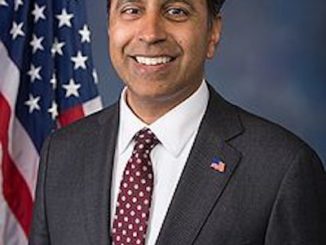
    WASHINGTON, DC (TIP): On Aug 6, Indian American Rep. Raja Krishnamoorthi (D-IL), Chairman of the House Oversight Subcommittee on Economic and Consumer Policy, introduced the “Expeditious Vaccine Advice with Legitimate, Unbiased, Apolitical, and Technical Expertise Act,” or the “EVALUATE Act,” to require the Food and Drug Administration (FDA) to solicit and consider advice from the Vaccines and Related Biological Products Advisory Committee (VRBPAC) before licensing or authorizing any COVID-19 vaccine. Rep. Krishnamoorthi introduced the bill with all of the Democratic Members of the Subcommittee: Representatives Mark DeSaulnier (D-CA), Ro Khanna (D-CA), Ayanna Pressley (D-MA), Rashida Tlaib (D-MI), Gerald Connolly (D-VA), and Katie Porter (D-CA).

    “While it is essential that a COVID-19 vaccine become available to the public as quickly as possible, it is even more important that quality is not sacrificed for speed in testing and evaluating any such vaccine,” said Congressman Raja Krishnamoorthi. “Though the FDA has refused to commit to subjecting coronavirus vaccines to an independent advisory committee, we owe it to the American people to ensure a scientifically rigorous review. The EVALUATE Act would address this need by requiring the FDA to present its analysis of clinical trial data for independent examination in a public setting, so that the country can put their trust in COVID-19 vaccines.”

    As the urgency of the coronavirus crisis has placed pressure on the FDA to approve a COVID-19 vaccine quickly, concerns have been raised in the scientific community that the FDA might approve a vaccine before its safety and efficacy is fully established. In lieu of the typical licensure process, the FDA could issue a more flexible Emergency Use Authorization. Meanwhile, any perception of hastiness or political meddling has the potential to erode public confidence in any vaccine that is approved and could lead to a substantial portion of the American population refusing to be inoculated. On July 15, the Subcommittee heard from an expert panel about the value of VRBPAC review to protect scientific integrity and increase public confidence.

    The EVALUATE Act would require the FDA to first solicit and consider advice from VRBPAC before licensing or authorizing any potential COVID-19 vaccine. Such advice would have to pertain to the safety and efficacy of the vaccine and whether there should be additional studies to evaluate the vaccine. This advice would be received at a meeting open to the public, and all materials presented for or by the Advisory Committee would have to be promptly made available to the public.

  • India is a constructive, dependable actor globally

    India is a constructive, dependable actor globally

    Through the pandemic, it has not only met its domestic requirements but taken a range of steps for global good

    By Harsh Vardhan Shringla
    We reaffirmed our position as first responder to humanitarian crises in the region by deploying medical teams to help Maldives, Mauritius, Comoros and Kuwait deal with the pandemic. India also dispatched naval assets to Maldives, Mauritius, Madagascar, Comoros and Seychelles to deliver assistance. This demonstrated our strong commitment to the PM’s vision of Security and Growth for All in the Region (SAGAR).

    At the virtual Global Vaccine Summit, the PM highlighted how India’s contribution to the global response in terms of sharing medicines was guided by our philosophy of Vasudhaiva Kutumbkum.

    Covid-19 continues to exact a heavy toll worldwide. In India too, positive cases are rising. However, India’s effective response has led to a significant improvement in its recovery rate, which is now 68.78%. The case fatality rate at 2.01% remains one of the lowest in the world.

    High recovery and low-fatality outcomes can be attributed to proactive measures taken to deal with the outbreak from its early stages. In comparative terms, India started screening Covid-19 cases a full 13 days before the first case was detected in the country.  India implemented full lockdown on the 55th day of the outbreak when it had only around 600 cases. Its public health response has been appreciated by the World Health Organization (WHO). The government took rapid steps to augment health infrastructure. As Prime Minister Narendra Modi noted, “India now has over 11,000 Covid-19 facilities and 1.1 million isolation beds. We have ramped up testing to over half-a-million tests a day, to be scaled up to a million”.

    India’s response has not been confined to meeting its domestic requirements. India has been significantly engaged with the international community in providing the leadership that the global situation demanded. As a responsible stakeholder in global health supply chains, India ensured  timely access to essential drugs and medical items for over 150 countries while meeting our own domestic requirements.

    We reaffirmed our position as first responder to humanitarian crises in the region by deploying medical teams to help Maldives, Mauritius, Comoros and Kuwait deal with the pandemic. India also dispatched naval assets to Maldives, Mauritius, Madagascar, Comoros and Seychelles to deliver assistance. This demonstrated our strong commitment to the PM’s vision of Security and Growth for All in the Region (SAGAR).

    From being a net importer of Covid-19-related medical items, India has emerged as a net exporter. Today, India manufactures over 500,000 personal protective equipment (PPE) kits and over 300,000 N-95 masks every day. Our system has shown the necessary adaptability and agility to significantly ramp up production to go beyond our domestic requirements.

    The repatriation of Indian nationals stranded abroad and the evacuation of foreigners from India to their home countries have been among the most successful aspects of our response. In the initial days, the ministry of external affairs had promptly set up a Covid cell and a 24×7 control room to assist Indian citizens abroad. The PM had also personally directed our heads of missions to extend all possible assistance to our nationals stranded abroad. Subsequently, the Vande Bharat mission, launched to repatriate our nationals stranded overseas, has been the largest exercise of its kind ever undertaken by the government and has demonstrated our capacity to effectively carry out complex humanitarian missions. Over a million Indians have returned under the ‘Vande Bharat’ mission so far through flights, across land borders and on naval ships.

    We have not only been able to bring home Indian nationals from distant locations but also facilitated the return of Bhutanese, Nepalese and other nationals stranded in third countries to their homes on these repatriation flights. In recognition of the immense contribution played by the Indian American community in building bridges between India and USA, India has allowed all holders of Overseas Citizenship of India cards to travel freely between the two countries. The institution of ‘travel bubbles’ between India and USA and a few other countries has further facilitated such travel.

    Rigorous screening of returnees by our diplomatic missions has ensured that the proportion of positive cases remains extremely small (less than 0.2%). Testing on arrival by the health ministry and state governments has helped detect these cases. The mission just doesn’t end with the return  of Indian nationals. Recognizing that a lot of expatriate Indians would have lost their jobs particularly in the Gulf area, the Govt is mapping the skills of Indians on arrival to reskill and  link them with companies for job opportunities.

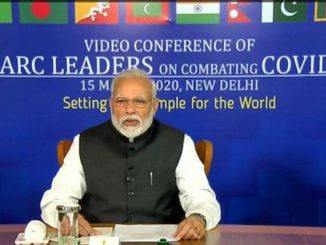
    There has also been no let-up in India’s diplomatic outreach during the pandemic. We have initiated and been part of several important conversations globally. Our ‘Neighborhood First’ policy was on full display when the PM hosted a video conference of the South Asian Association for Regional Cooperation (Saarc) leaders early in the crisis — our first such engagement on Covid-19. He announced a series of measures to deal with the pandemic, including the creation of a Covid-19 emergency fund with a commitment of $10 million from India.

    We have also called for a better multilateral response to global crises in the future. The PM has, on several occasions, including in the G-20 and Non-aligned Movement virtual summits, proposed the reform of multilateral cooperation by bringing people to the center of our efforts. Our own initiatives such as the International Solar Alliance and the Coalition for Disaster Resilient Infrastructure are prime examples of this approach. The decision of the G-20 on debt service suspension for developing countries, which India fully supported, reflects this people-centric approach.

    At the virtual Global Vaccine Summit, the PM highlighted how India’s contribution to the global response in terms of sharing medicines was guided by our philosophy of Vasudhaiva Kutumbkum.

    The PM also hosted the first virtual bilateral summit with Australia, which was followed by the India-European Union summit. In addition, the PM has spoken to his counterparts from 61 countries during this period. The external affairs minister has spoken to foreign ministers from 77 countries. I have been part of several dialogues with several of our partners countries, notably the Indo Pacific Group that convenes every other week to coordinate health, travel, immigration and related issues during COVID times,  We have kept open channels of virtual communication to strengthen partnerships and deal with situations that require diplomatic engagement.

    We have been constantly adjusting, adapting and innovating to deal with the changed reality, particularly in our engagement with the world. And in the process, we have been successful in elevating India’s profile as a constructive and dependable actor on the global stage.

    (The author  is foreign secretary, Government of India. The views expressed are personal)

  • Indian Origin Tech Executive Charged with COVID-Relief Fraud and Money Laundering

    Indian Origin Tech Executive Charged with COVID-Relief Fraud and Money Laundering

    SEATTLE (TIP): A Washington tech executive of Indian origin was taken into custody July 23 and charged with fraudulently seeking over $5.5 million in Paycheck Protection Program (PPP) loans and laundering the proceeds. Mukund Mohan, 48, of Clyde Hill, Washington, was charged by criminal complaint, unsealed after he was taken into custody, in the Western District of Washington with one count of wire fraud and one count of money laundering.

    Mohan currently serves as chief technology officer at BuildDirect.com Technologies Inc., a website that connects people with home contractors, according to its website. Before that, he worked for Amazon.com Inc. and Microsoft Corp.

    The complaint alleges that Mohan submitted at least eight fraudulent PPP loan applications on behalf of six different companies to federally insured financial institutions.  The complaint alleges that, in support of the fraudulent loan applications, Mohan made numerous false and misleading statements about the companies’ respective business operations and payroll expenses.

    The complaint also alleges that, in further support of the fraudulent loan applications, Mohan submitted fake and altered documents, including fake federal tax filings and altered incorporation documents.  For example, Mohan misrepresented to a lender that, in 2019, his company Mahenjo Inc., had dozens of employees and paid millions of dollars in employee wages and payroll taxes.  In support of Mahenjo’s loan application, Mohan submitted incorporation documents showing that he incorporated the company in 2018 and filed federal unemployment tax forms for 2019.  In truth, Mohan purchased Mahenjo on the Internet in May 2020 and, at time he purchased the company, it had no employees and no business activity.  The incorporation documents he submitted to the lender were altered and the federal tax filings he submitted were fake.

    The complaint further alleges that Mohan transferred at least $231,000 in fraudulently-obtained loan proceeds to his personal brokerage account for his personal benefit.

  • The ‘Right to return’ and violations of a sacred principle

    The ‘Right to return’ and violations of a sacred principle

    By George Abraham
    Are the NRIs at the mercy of the authorities for a ‘right to return?’ Don’t they deserve a better reception when they arrive home during a crisis such as this? At the minimum, don’t the migrant laborers deserve an advance notice of an impending shutdown so they could safely plan for their right to return home? These questions cry out for answers from those who sit in the citadels of power and appear indifferent to the plights of the NRIs and poor migrant laborers.
    “Instead of bringing home the stranded nationals, during the lockdown, they were left to fend for themselves under trying conditions to the detriment of their health and wellbeing. A state like Kerala that lives off the foreign NRI remittances appeared to have placed several roadblocks before the returning residents even from neighboring States. By requiring COVID negative certificates and delaying entry clearance documents, Kerala has sent mixed signals of readiness.  In their eagerness to score brownie points from the International media for their management expertise containing the contagion’s spread, NRI interests have become the sacrificial lambs at the altar of provincialism and self-indulgence.”

    Article 13 of the Universal Declaration of Human Rights says that ‘everyone has the right to freedom of movement and residence within the borders of each state, and everyone has the right to leave any country, including his own and to return to his country’.  However, during the pandemic’s challenging times, these grand old principles have taken a severe beating. Many countries, including India, may not have said ‘No’ to their citizens but advertently or inadvertently put roadblocks in every which way of their timely return to the home country.

    The right to return is a principle in international law that guarantees that everyone has a right of voluntary return to or re-entry to their country of origin or citizenship. International covenant on civil and political rights Article 12 (4) states that ‘No one shall be arbitrarily deprived of the right to enter his own country’. The right of a person to return to his own country recognizes the special relationship of a person to that country.

    Aren’t we supposed to be a global village where our lives have been transcended into a borderless world? Well, COVID-19 has changed everything! The famous writer and columnist Thomas Friedman’s dream of the ‘world is flat, and the theory of globalization now shifted into warp drive’ appears to have gone out of the window. The countries one by one started erecting new barriers and preventing people from traveling to their desired destinations. They were soon deciding which foreign nationals are welcome and who are not. Next, they were closing borders and effectively shutting down all travel and thereby stranding millions of foreign nationals away from their homes.

    What happened consequently is a story of people everywhere of pain and sufferings of immense proportions. Although many countries facilitated their nationals’ return through provisional means of transportation, millions more were left in a quandary without adequate finances or accommodations. Take, for example, the sad cases of Keralites, who got trapped in the Middle East due to the central government’s inaction or bureaucratic bungling. Many of them were confined to a single room, some infected with COVID, and few others either furloughed or out of work lacking resources for food or essential medicines.

    After the initial evacuation of a few thousand NRIs from places like China, Italy, and few other places, India sealed its borders, closed the airports, and stopped train and bus services, and practically shut down the entire country. The Modi Government gave just four hours of notice before making the whole country comes to a standstill. Millions of migrant laborers who were caught off guard by these fast-moving developments became the ultimate victims of this horrific tragedy orchestrated by a government’s ill-advised action.

    “Air India, the national carrier known for its money-losing ways, wasted no time exploiting the situation to its advantage in charging exorbitant prices for a one-way journey. It is not only the Government and the Bureaucracy that has done a disservice to the Indian nationals who are living abroad, but also the neighbors and friends who have targeted them and falsely accused them as carriers of Covid virus.”

    A photograph of an Indian in the Guardian newspaper, his face contorted with anguish talking with his wife about his sick boy has come to symbolize the plight of the migrant laborers who are penniless but had to walk hundreds of miles under extreme conditions, to reach home! The right to return principle also applies to these migrant laborers within a country. In one of the court rulings by the International Court of Justice, a criterion established for the right of return includes “close and enduring connection,” “tradition,” “establishment,” “interests,” and “family ties.” It includes not only the right to return after having left one’s own country; it may also entitle a person to come to the country for the first time if he or she was born outside the country.

    Many of these conventions and rules were allegedly circumvented or violated by those in power for political expediency. Instead of bringing home the stranded nationals, during the lockdown, they were left to fend for themselves under trying conditions to the detriment of their health and wellbeing. A state like Kerala that lives off the foreign NRI remittances appeared to have placed several roadblocks before the returning residents even from neighboring States. By requiring COVID negative certificates and delaying entry clearance documents, Kerala has sent mixed signals of readiness.  In their eagerness to score brownie points from the International media for their management expertise containing the contagion’s spread, NRI interests have become the sacrificial lambs at the altar of provincialism and self-indulgence.

    Thomas T. Oommen, a community activist in New York who is an intercessor for the NRIs regarding passports and visas with the consular offices, told a heartbreaking story of a family on an H-1B visa refused by Air India to board because their newborn baby only carried an OCI card. Having lost the job, this family vacated their apartment, sold off their possessions, and were ready to move back to India when they were turned back. This bureaucratic mischief not only denied the right to return of a national but also questioned the very validity and reliability of the OCI card itself.  Even without an OCI card, that baby is entitled to come to India because of the “family ties.” Although the politicos continue to hail the rights and privileges of the OCI cards, the hollowness of it all was so vivid throughout this pandemic period.

    Air India, the national carrier known for its money-losing ways, wasted no time exploiting the situation to its advantage in charging exorbitant prices for a one-way journey. It is not only the Government and the Bureaucracy that has done a disservice to the Indian nationals who are living abroad, but also the neighbors and friends who have targeted them and falsely accused them as carriers of Covid virus. I agree with the premise that returnees ought to be responsible for their conduct as per the rules and regulations. However, there are cases of People who were denied the rightful entry to their apartments and families refusing to receive their loved ones as if they are perpetrators, not anything but hapless victims. Those accolades and praises showered upon the NRIs in the past by the politicians and their fellow citizens not only ring hollow now but expose their duplicity and insincerity at its highest form.

    According to Human Rights Watch, “like all rights, the right to return binds governments. No government can violate this right. Only individuals may elect not to exercise it. Government’s legitimate security or health concerns should be met consistently with these principles and other internationally recognized human rights”.

    Are the NRIs at the mercy of the authorities for a ‘right to return?’ Don’t they deserve a better reception when they arrive home during a crisis such as this? At the minimum, don’t the migrant laborers deserve an advance notice of an impending shutdown so they could safely plan for their right to return home? These questions cry out for answers from those who sit in the citadels of power and appear indifferent to the plights of the NRIs and poor migrant laborers.

    (The author is a former Chief technology officer of the United Nations and Vice-Chairman of the Indian Overseas Congress, USA)