Tag: Cricket

  • Has the Indian team management ignored claims of players on the periphery?

    Has the Indian team management ignored claims of players on the periphery?

    MUMBAI (TIP): Stuart Binny and Ishwar Pandey must have been thrilled to bits when they got their maiden India call-up for the tour of New Zealand. ‘It’s an opportunity I’m not going to let go of,’ both must have promised themselves. Alas, that opportunity never arrived. All that Binny, amongst the most talented all-rounders in India at the moment, got was one over in the fourth ODI. He was luckier than Pandey, though, who played just a warm-up game.

    Both, perhaps, should have taken a ‘reality check’ from legspinner Amit Mishra, who must have become sick and tired of serving drinks to his teammates, having warmed the bench during India’s last two tours. The mettle of the ‘bench strength’ is not being tested enough, with the tried and tested lot being persisted with, despite failing at times. Experts are divided in their opinion on whether India have used their resources in the best possible way on away tours. But with the team floundering the way it has on foreign shores recently, some drastic measures may be needed.

    Is the team keen on discovering new talent? The case of Mishra serves as a good example. The 31-year-old leggie has been in and out of the team and former India selector Raja Venkat blamed skipper MS Dhoni for Mishra’s plight. “His career is finished. He was our best bet after Anil Kumble in the leg-spin department. By dropping him again and again, you have finished his confidence,” Venkat told TOI. Venkat’s colleague in the selection panel, former India leggie Narendra Hirwani, though, spells out a reason. “Mishra doesn’t enjoy Dhoni’s confidence. For a leg-spinner to do well, it is critical that he gets the backing of his skipper. Maybe, because Dhoni himself plays leg spin so well, he doesn’t feel Mishra can be a dangerous bowler.

    A leg-spinner is an attacking option. He may go for runs, so a defensive captain may not play him. But Dhoni is not a cricketer who will harm a youngster’s career deliberately,” he says. Perhaps it is time a national selector travels with the team on overseas tours now. Having seen a player in domestic cricket, the selector would have a better idea about his skills, rather than a foreign coach, who hardly watches domestic cricket in India, or Dhoni, who is busy with international cricket. “It makes sense. The problem is, currently the selectors’ role finishes once he picks the squad.

    You have to let the selector have a say in the final XI too,” recommends Venkat. Since it would involve contributing in crucial calls, former India skipper and chief selector Dilip Vengsarkar feels the selector who joins the team abroad must be “an experienced former India player, who has a stature in international cricket. Any other selector would be just a tourist.” Former India skipper, and later a selector and manager, Chandu Borde opined that the team needed a “manager who understands the game well and contributes with useful suggestions.” Another former India skipper, Ajit Wadekar, though, doesn’t welcome the idea. “As a captain, I would not have liked a selector to dabble in decision-making. On a tour, that is the sole responsibility of a captain or coach. It is the captain who has the best idea about what exactly is happening between the 22 yards,” he stresses. “I don’t think it makes sense. It will complicate things. Some people don’t like interference,” agreed ex-India opener and selector VB Chandresekhar. He also backed Dhoni’s call to persist with the same XI as far as possible.

  • IPL AUCTION 2014: 154 PLAYERS SOLD IN 2 DAYS, YUVRAJ COSTLIEST AT RS 14 CRORE

    IPL AUCTION 2014: 154 PLAYERS SOLD IN 2 DAYS, YUVRAJ COSTLIEST AT RS 14 CRORE

    BANGALORE (TIP):
    A total of 154 players sold, including 50 overseas players, as the two-day IPL auction ended in Bangalore on February 13, with Yuvraj Singh ending up as the top-earner, bought by Royal Challengers Bangalore for a whopping Rs. 14 crore. After a spending spree on the first day, the franchises were more frugal in their purchase on the concluding day, with only 84 being sold out of total players going under the hammer. Karan Sharma and Rishi Dhawan hit the jackpot on the second and of the auction as they were bought for a mammoth Rs 3.75 crore and Rs 3 crore by Sunrisers Hyderabad and Kings XI Punjab respectively.

    Sharma played a key role in Hyderabad’s campaign last season of the IPL as the franchise managed to reach the last four of the competition. Rishi, Ranji Trophy’s top wicket-taker this season, was signed by Kings XI Punjab using their ‘Right to Match’ after the bowler was bought by the Sunrisers Hyderabad. Also, Kedar Jadhav, Ranji Trophy’s topscorer this season, went to Delhi Daredevils for Rs 2 crore after intense bidding. Delhi also used their ‘Right to Match’ after he was initially taken by Hyderabad. Rishi is primarily a fast-bowling allrounder who bats in the middle-order.

    The 23-year-old has played for Kings XI Punjab in the 2008 IPL and was signed by the Mumbai Indians last season. The 26-year-old Jadhav has had a splendid domestic season and has also shown glimpses of his talent in the IPL. He was with the Royal Challengers Bangalore development squad to start with before being signed by Delhi Daredevils in 2010. Former New Zealand captain Ross Taylor, who had surprisingly gone unsold on the opening day, finally found a buyer as Delhi snapped him for his base price of Rs. 2 crore.

    However, stalwarts like former Sri Lankan captain Mahela Jayawardene, West Indian allrounder Marlon Samuels, Australian allrounders Cameron White and David Hussey and New Zealand batsman Martin Guptill were once again snubbed by the franchises despite being requested back into the auction pool after being unsold on February 12. The other big winners were Rajat Bhatia (Rs 1.70 crore, Rajasthan Royals), Manish Pandey (Rs 1.70 crore Kolkata Knight Riders), Aditya Tare (Rs 1.60 crore, Mumbai Indians), K L Rahul (Rs 1 crore, Sunrisers Hyderabad), Ishwar Pandey (Rs 1.50 crore, Chennai Super Kings), Gurkeerat Singh (Rs 1.30 crore, Kings XI Punjab), Dhawal Kulkarni (Rs 1.10 crore, Rajasthan Royals and Parveez Rasool (Rs 95 lakh, Sunrisers Hyderabad). Also getting decent deals were allrounders Jalaj Saxena (90 lakh, Mumbai Indians) and Akshar Patel (Rs 70 lakh, Punjab), left-arm spinner Shahbaz Nadeem (Rs 85 lakh, Hyderabad) and batsman Karun Nair (Rs 75 lakh, Rajasthan Royals).

    Allrounder Rasool, meanwhile, scored 594 runs from seven matches at an average of 54 including two centuries in the last Ranji season. He also took 33 wickets at an average of 18 with three five-wicket hauls. The 25-year-old had become the first cricketer from Jammu and Kashmir to be a part of the IPL when he bagged a contract with the now-discarded Pune Warriors last season. Promising pacer Jasprit Bumrah was bought by his previous team Mumbai for Rs 1.20 crore. The 20-year-old has played 11 Twenty20 matches, taking 13 wickets. Allrounder Mandeep Singh, former vicecaptain of the Indian Under-19 team, was grabbed for Rs 80 lakh by Punjab through the ‘Right to Match’ provision. The 22-yearold had been a part of the franchise earlier as well.

    Among the foreigners, most of whom went unsold, it was South African pacer Beuran Hendricks, who triggered a bidding competition among the franchises. In the pool at a base price of Rs 30 lakh, Hendricks was bought for Rs 1.80 crore by Punjab. The 23-year-old was the fifthhighest wicket-taker in the South African first-class cricket last season when he grabbed 35 scalps for Cape Cobras at a brilliant average of 17.74. After the uncapped players, the ones who were unsold on Wednesday got another chance at finding a buyer when the franchises gave their preferred names to be called back into the auction pool.

    In the first round of re-bidding, 41 batsmen, 37 bowlers and 24 allrounders went under the hammer. But surprisingly, very few of them found any takers. One such lucky player was promising Australian batsman Chris Lynn, who came in with a base price of Rs 50 lakh. He was snared by Kolkata Knight Riders for a rather handsome purse of Rs 1.30 crore. Another Australian to find a good deal was pacer Patrick Cummins (base price Rs 1 crore).

    Cummins was bought by KKR for the base price in the final round of re-bidding. Indian wicketkeeper-batsman Naman Ojha, who had also gone unsold yesterday, was more lucky today with Hyderabad buying him at his base price of Rs 50 lakh. Some of the other Indian uncapped players such as Apoorv Vijay Wankhede (Rs 10 lakh, Mumbai Indians), Ricky Bhui (Rs 10 lakh, SRH), Tanmay Mishra (Rs 10 lakh, RCB), and Milind Kumar (Rs 10 lakh, DD) found buyers in the second round.

    THE MOST EXPENSIVE PLAYERS

    Yuvraj Singh Rs14 crore to RCB
    Some may say he’s gone for a lot of money, but Vijay Mallya seems happy about the inclusion of another marquee T20 player who will add to the talents of Virat Kohli, Chris Gayle, Ravi Rampaul and AB de Villiers. The World Cup and World T20 winner with India will add more allround ability to the team — however, the price tag will be a burden.

    Dinesh Karthik Rs 12.5 crore to Delhi
    Proven customer in the tournament and a match-winner as he showed last season. It was slightly surprising that Mumbai Indians didn’t retain him and Mitchell Johnson or used their Right to Match card — but Karthik’s not losing out on anything — not money at least. With 1741 runs in 92 IPL games, he may be worth it too.

    Kevin Pietersen Rs 9 crores to Delhi
    KP is cricket’s latest mercenary and he doesn’t have to care about the international calendar anymore. His presence in the batting lineup is unsettling enough for bowlers — but now they’ll have to contend with a fit and available Pietersen for the whole season.

    Mitchell Johnson Rs 6.5 crore to Kings XI Punjab
    Mitchell Johnson is fast, fearsome and in insane form. Enough said.

    Glenn Maxwell Rs 6 crore to Kings XI Punjab
    He went for a million dollars last time out too and his poor showing didn’t deter Kings XI from coughing up the cash. He’s out to prove a point and justify the dollars doled out — so probably worth it. And yes, he can do everything — the perfect T20 player.

    Jacques Kallis Rs 5.5 crore to KKR
    He’s 38 but that didn’t stop KKR from knighting him again. He has a whopping 2276 runs in 90 IPL matches and a strike-rate above 100. Add to that 61 wickets. 5.5 crores? Oh yes, ka-ching!

    David Warner Rs 5.5 crore to Sunrisers Hyderabad
    Last year’s surprise package have added loose-cannon Warner to their side. They’ll be happy to see that side of him on the pitch though, rather than off it. When he’s in the mood, he can devour the opposition bowlers. Also, he had a cracking IPL 6 – scorign 410 runs in 16 matches. His strike-rate was 126.93.

    Robin Uthappa (KKR), Murali Vijay (DD), Michael Hussey (MI) and Mitchell Starc (RCB) Rs 5 crore
    Uthappa’s value has come down a bit but he’s still handy with that bat and a reliable customer. Vijay’s permanent place in the Indian team guarantees quality and we’ll go with the cliche for Huseey. As for Starc, a good fast bowler will always cost good money.

  • Prof CNR Rao becomes 3rd scientist to be awarded Bharat Ratna

    Prof CNR Rao becomes 3rd scientist to be awarded Bharat Ratna

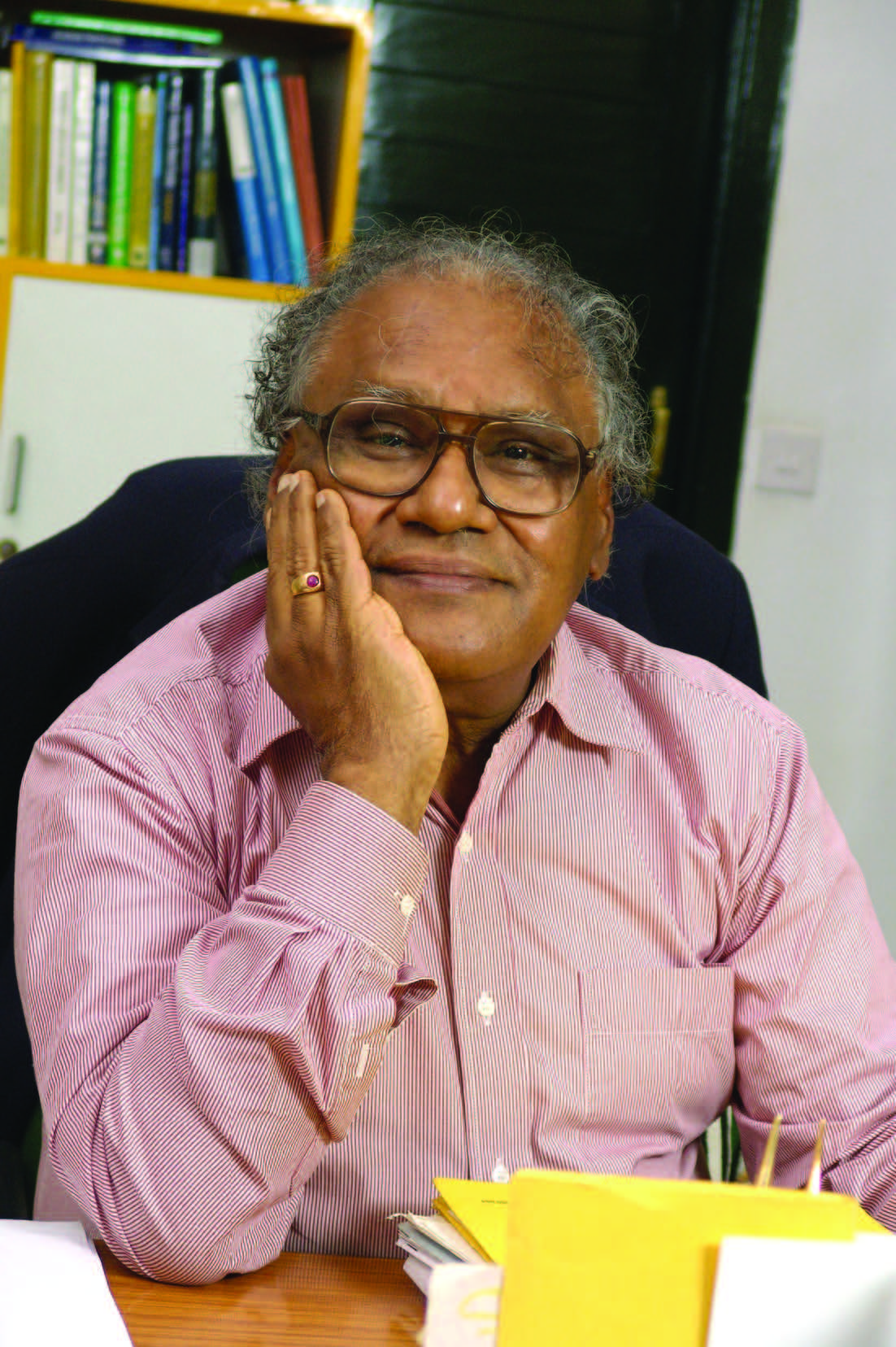
    NEW DELHI (TIP): Professor Chintamani Nagesa Ramachandra Rao is the third scientist to be awarded the highest civilian award — Bharat Ratna, a crowning glory of his inexorable list of outstanding achievements. Before Rao, C V Raman and former President A P J Abdul Kalam were bestowed with the award.

    Professor Chintamani Nagesa Ramachandra Rao is the third scientist to be awarded the highest civilian award — Bharat Ratna, a crowning glory of his inexorable list of outstanding achievements. Rao was conferred with the honour along with cricket icon Sachin Tendulkar on Saturday. Before Rao, C V Raman and former President A P J Abdul Kalam were bestowed with the award.

    The 79-year-old Prof Rao has honorary doctorates from 60 universities that speaks volumes about the world wide acclamation and recognition that he has earned as a scientist par excellence. Rao is the third scientist after C V Raman and former President A P J Abdul Kalam to be bestowed with the honour. Rao, founder of the Bangalore-based Jawharlal Nehru Centre for Advanced Scientific Research, has served as Chairman of the Scientific Advisory Council to Prime Minister under different regimes, a manifestation of immense faith different governments have placed in him.

    A renowned scientist and an institution builder, Rao has worked mainly in solid-state and structural chemistry. Rao, born on June 30 in 1934 to Hanumantha Nagesa Rao and Nagamma Nagesa Rao in Bangalore, could have settled for a cushy job armed with a BSc in 1951 but his unsatiable quest for learning took him to the path of unending scientific journey. Rao was thinking of joining IISc for a diploma or a postgraduate degree in chemical engineering after obtaining bachelors degree from Mysore University in 1951 but destiny took him to Banaras Hindu University where he got admitted for a MSc course.

    He obtained his Ph.D. in 1958 from Purdue University and joined the faculty of Indian Institute of Technology, Kanpur, in 1963. The only son to his parents, he grew up in the old part of Bangalore. Rao recalled once that his mother telling him mythological stories and her daily pujas greatly impacted him, which influenced his own journey into spirituality. “My father wanted me to speak in English too, and it helped that there was an academic atmosphere at home,” Rao noted in an article. During his school days, the freedom movement was in full swing and a young Rao listened to the stirring speeches by leaders like Pandit Jawaharlal Nehru and Dr Sarvapalli Radhakrishnan. He also took part in some of the freedom movement meetings in whatever capacity he could.

    During the early years, Rao once recollected, one of the fondest memories was meeting Nobel laureate professor C V Raman when he visited his school in 1946. MIT, PennState, Columbia and Purdue offered admission with financial support, but Rao chose Purdue, where he completed PhD in two years and nine months, a record of sorts. Life was on a swing for Rao but home pull prevailed and in 1959 he landed in Bangalore to join the IISc as a lecturer on a monthly salary of Rs 500. Rao has made immense contributions to nanomaterials over the last two decades, besides his work on hybrid materials.

    He has worked mainly in solid-state and structural chemistry. His work on transition metal oxides has led to basic understanding of novel phenomena and the relationship between materials properties and the structural chemistry of these materials. Rao was one of the earliest to synthesize two-dimensional oxide materials such as La2CuO4 and his work has led to a systematic study of compositionally controlled metal-insulator transitions. Such studies have had a profound impact in application fields such as colossal magneto resistance and high temperature superconductivity.

    He is the author of around 1,500 research papers and authored and edited 45 books. Rao is currently is serving as the Head of the Scientific Advisory Council to Prime Minister Manmohan Singh. It has been fame and glory all through for Rao until two years ago when he was involved in a plagiarism related controversy. He had been accused of indulging and allowing plagiarism. In December 2011, Rao apologised to ‘Advanced Materials’ — a peer-reviewed journal, for reproducing text of other scientists in his research paper. Rao’s collaborator and other senior author of the paper Professor S B Krupanidhi accused a co-author PhD student at IISc for the mistake.

    “These sentences were part of the introduction of the paper, which was written by our student, that neither of us — namely, the senior authors, Rao and Krupanidhi — paid attention to.” The PhD student took the responsibility for the incident and issued an apology. Later Rao offered to withdraw the article from the journal, but the editor let the publication stay as it is. Rao is also the recipient of Padma Shri and Padma Vibhushan and Karnataka Ratna, the state’s highest civilian honour. Rao received Honorary Doctorates from many Universities spread across the world such as Colorado, Khartoum, Liverpool and Oxford among others.

    He is currently the National Research Professor and Linus Pauling Research Professor and Honorary President of the Jawaharlal Nehru Centre for Advanced Scientific Research in Bangalore. He is also the director of the International Centre for Materials Science. Rao has been bestowed with other awards such as Hughes Medal by the Royal Society in 2000 and he became the first recipient of the India Science Award, instituted by the Union government for his contributions to solid state chemistry and materials science in 2004. The important academic positions Rao held include; Prof of Chemistry, Indian Institute of Technology, Kanpur, India (Head of Department and later Dean of Research of the Institute) (1963-76), Visiting Professor, Purdue University, 1967-68, Commonwealth Visiting Professor, University of Oxford and Fellow, St. Catherine’s College, Oxford (1974-75).

    He was also Distinguished Visiting Professor, LaTrobe University, Melbourne, Australia, Jawaharlal Nehru Professor, University of Cambridge and Professorial Fellow, King’s College, Cambridge Rao is the Founder Chairman, Solid State and Structural Chemistry Unit and Materials Research Laboratory, Indian Institute of Science (1977-84). He was also Director, Indian Institute of Science (1984-94), Visiting Professor, University Joseph Fourier, Grenoble, France (1990), Honorary Professor, University of Wales, Cardiff (1993-1997), President, Jawaharlal Nehru Centre for Advanced Scientific Research (1989-99), Albert Einstein Research Professor (1995-1999) Honorary Professor, Indian Institute of Science (1994). Rao is also Fellow of Indian Academy of Sciences, The Royal Society, London and Foreign Associate, National Academy of Sciences, USA and Founding Fellow and Third World Academy of Sciences, among others.

    Important positions in National and International Bodies include Chairman, Science Advisory Council to the Prime Minister, Immediate Past President, The Academy of Sciences for the developing world (TWAS), Trieste, Chairman, National Nano Initiative, Government of India and Member, Atomic Energy Commission of India. Rao had also served as Member, Planning Commission, Government of India and Chairman and Director of Reserve Bank of India. At the Hall of Sciences at JNCASR are a bust of Rao’s guru Pauling — one of the two greatest scientists of the 20th century (the other being Einstein). Rao’s advice to school children who visit JNCASR is dream big, study hard, and study science.

  • Bharat Ratna for Sachin Tendulkar

    Bharat Ratna for Sachin Tendulkar

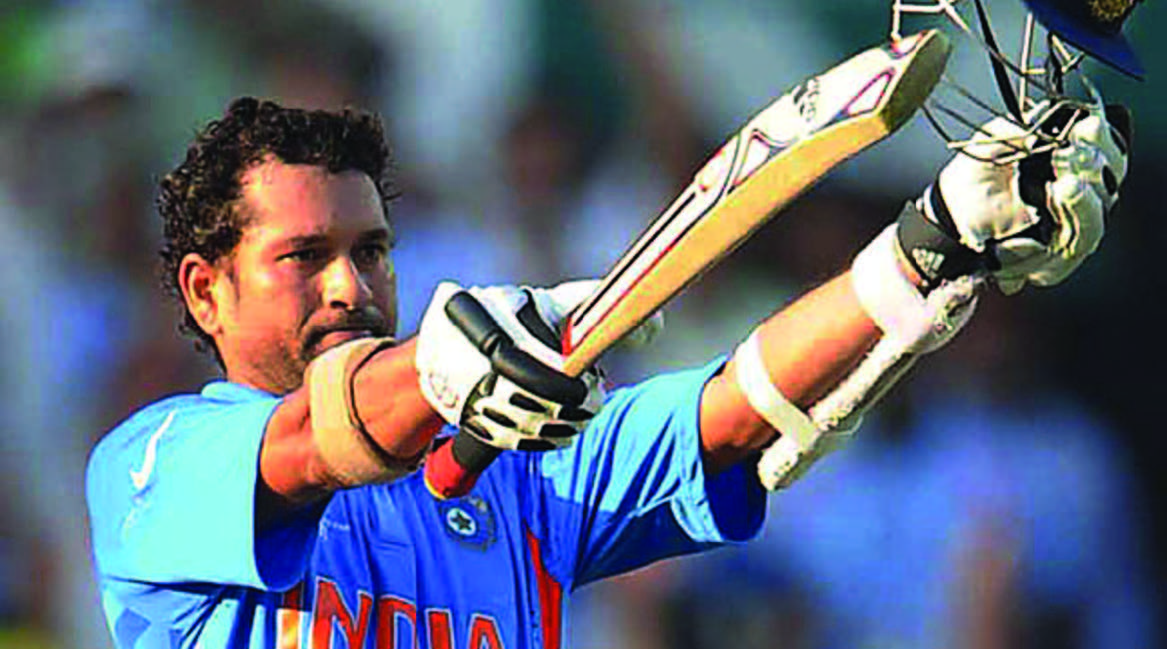
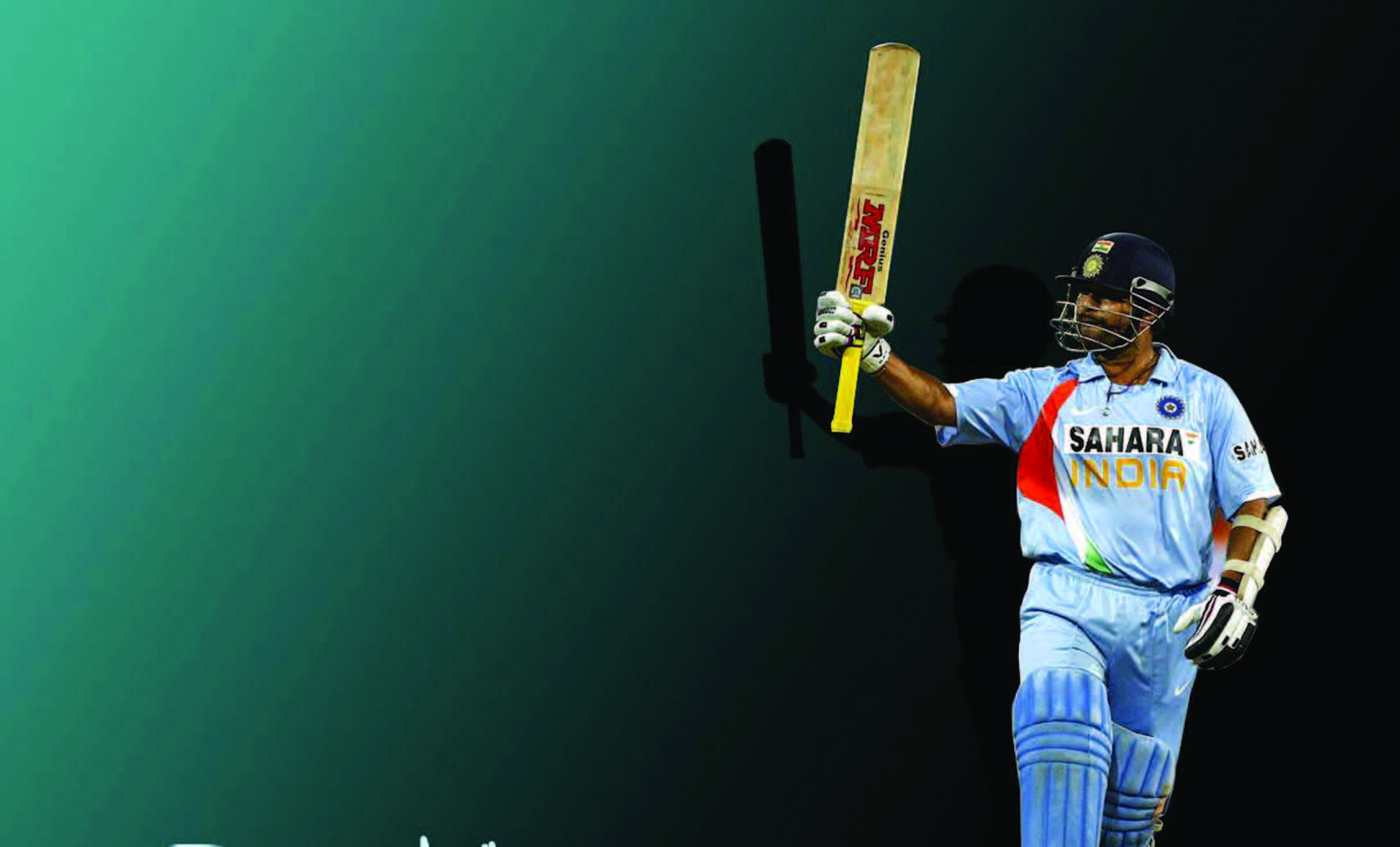
    NEW DELHI (TIP): Sachin Tendulkar was conferred the Bharat Ratna, India’s highest civilian award, by the president Pranab Mukherjee on February 4. Tendulkar, 40, is the first sportsperson, as well as the youngest person to receive the award.

    Sachin Tendulkar was conferred the Bharat Ratna, India’s highest civilian award, by the president Pranab Mukherjee on Tuesday. Tendulkar, 40, is the first sportsperson, as well as the youngest person to receive the award. Speaking during the ceremony at the Rashtrapati Bhawan, Tendulkar said that though he had retired from the game, he would “continue to bat” for India in all spheres of life.

    “It’s the biggest honour for me and I am extremely delighted on receiving the Bharat Ratna,” Tendulkar said. “I am extremely proud to be born in this beautiful nation and I would like to express my gratitude to all the love, affection and support I have received for number of years.

    “My cricket has stopped, but I will continue to bat for India and try my best to give people of India a reason to smile,” he said. “I would like to reiterate what I said a couple of months ago about this recognition and dedicate this to my mother and along with her, all the mothers in India who sacrifice their wishes, aspirations for their children so that their dreams come true.” Tendulkar, who retired from cricket on November 16, 2013 as the game’s highest runscorer in both Tests and ODIs, also saved praise for Professor CNR Rao, the other recipient of this year’s Bharat Ratna.

    8

    “I would like to congratulate Prof CNR Rao for the Bharat Ratna. He has been instrumental in motivating and inspiring youth of India to become scientists. I wish him all the happiness and good health.” India captain MS Dhoni, speaking before the first Test against New Zealand in Auckland, said Tendulkar thoroughly “deserved” the honour. “As a civilian, you cannot get a bigger honour than this. Definitely he deserves it. “The way he has handled himself, not only on the field, off the field as well… Whenever we talk about him, we keep saying the same thing: ideal role model. The kind of pressure there is in Indian cricket, he handled it very well. The kind of performance he has given since the time he debuted was fantastic. An honour well deserved.”

    PROFILE
    Sachin Ramesh Tendulkar famously known as Little Master or Master Blaster is one of the greatest cricketer to have ever played the game. He is the leading run scorer and century maker in both formats of the game. Tendulkar is the only player to be in top 10 ICC Batsmen ranking for 10 years in Tests and in 2002, Wisden ranked Sachin as second greatest Test batsman of all time next only to legendary Sir Donald Bradman and the second greatest ODI batsman behind West Indies great Sir Vivian Richards.

    A normal person can be a specialist in one thing he does the best but Sachin is one man in this world who defies these laws and is a specialist in everything he does. Whether it is batting, bowling or fielding, this man will give everything to help India win. Sachin Tendulkar is one person capable of bringing his country to a standstill. Whenever Sachin strides into the middle, the crowd goes berserk, TRP ratings and TV volume go through the roof, tension levels hit all time high and expectations increase to unprecedented levels. From a child to an 80- year-old man, all have their sights set on Sachin.

    If one has to describe Sachin Tendulkar as a player, he would soon run out of adjectives; words like awesome, brilliant, magnificent are certain to cross your mind, though. He is a genius, with God given talent no doubt. He stands at the crease, with such wonderful balance and poise and at the same time intimidating the bowlers. His footwork is near perfect and he is the nearest thing to Bradman there’s ever been. At 5’5, Tendulkar was not the most colossal player to stride on to the field but he bows out as a giant, who ruled cricket for 24 years and gave his legion of fans mesmerizing and emotionally overwhelming memories.

    With a mountain of runs, Tendulkar’s retirement creates a void so big that one can safely say cricket would never be the same again. His journey started way back in 1989 at the tender age of 16. A disarming smile, curly locks, resolute eyes and abundant talent, this was Sachin who first stepped on to Test cricket against a fiery Pakistani bowling attack boasting of that deadly combination of Imran Khan,Wasim Akram and Waqar Younis. Tendulkar has niched out a career out of innovation and adaptability. No bowler has single handedly dominated the master.

    In his glorified two decade journey, Sachin has won almost every award associated with cricket. He also owns the highest number of Man-of-the-Match (62) and Man-of-the-Series awards (26) along with 50,000 in every format of the game. Sachin got the better of every bowling attack. With wickets falling around, he always decided to take the fight to the opposition and single handedly won India several matches. Sachin has been a part six World Cups, a record jointly held by Pakistan’s Javed Miandad. He has scored more than 2000 runs in the competition which is the highest by any batsman.

    The talent and genius of Sachin was best summed up by Bradman when he said Tendulkar’s batting reminded him of his own. Tendulkar was the first cricketer to have scored a double century in ODI cricket, the feet he reached at Gwalior on February 25th 2010 against South Africa, at 37 years of age. During the later half of the ’90s, Tendulkar dominated both ODI and Test cricket at will producing memorable innings all across the globe, including the famous ‘Desert Storm’ against Australia which are arguably two of the best ODI knocks ever played. Sachin’s tremendous performances soon elevated him to the most challenging task of captaining the Indian side. But sadly, the pressure of Captaincy took it’s toll on Sachin as his batting form dipped and many criticized Sachin for not leading from the front. Much has been said about the characteristics of a great batsman by many pundits over the year.

    But when Tendulkar produced what many believe “the most aweinspiring innings” at Sydney in January 2004 against the might Aussies, he redifined greatness. After being repeatedly dismissed playing shots on the off-side, Tendulkar did not attempt even a single off-side stroke until he was a good 150 not out and went to score 241 in that innings. More recently, he was woefully out of form during India’s Test and ODI whitewash at the hands of England last year and carried the weight of expectations to what turned out to be a horror tour of Australia.

    But eventually, the best batsman of the modern era dug in deep and ensured that he went out on his own terms. His impact resonated much beyond the cricket field as he accomplished a rare feat by becoming a Rajya Sabha member last year. “Beneath the helmet, under that unruly curly hair, inside the cranium, there is something we don’t know, something beyond scientific measure. Something that allows him to soar, to roam a territory of sport that, forget us, even those who are gifted enough to play alongside him cannot even fathom. When he goes out to bat, people switch on their television sets and switch off their lives- BBC Sports, on Sachin Tendulkar.”

  • Simon Doull questions India’s selection policy

    Simon Doull questions India’s selection policy

    WELLINGTON (TIP): Former New Zealand fast bowler Simon Doull has questioned Indian team’s selection policy in the ongoing five-match ODI series, which the visitors have already lost, and said he was surprised by the side’s reluctance to change things around them.

    The Men in Blue haven’t won a game in the ongoing tour so far, losing three of the four ODIs (one in Napier and twice in Hamilton), while tying one match at Auckland. The visitors also lost their hard-earned number one ODI ranking. “I am surprised by the reluctance shown by the Indian team to change things around in this series,” said Doull, after India lost the fourth ODI in Hamilton by seven wickets. “They bowled first throughout the series and then batted in a must-win game.

    Before that they selected two new players in the eleven and made a whole lot of changes in their batting line-up. They changed too much at one go and usually it doesn’t work like that,” he insisted. “After the first two ODIs, it was clear that the New Zealand batsmen had found out a weakness in their spin bowling, particularly during the middle overs. But they still persisted with Ravindra Jadeja and R Ashwin. Don’t get me wrong, they are both fantastic cricketers, but why not try Amit Mishra once? He is a leg spinner and could have used the bounce better, and more than anything else, it would have been a change when the series was still there to play for.

    “It is just one of many things that have gone wrong for India, but they didn’t react to it quickly enough,” he added. The Indian bowling has also come under heavy criticism from skipper MS Dhoni, who expressed his dissatisfaction time and again during the series, and most lately after the loss in Hamilton. Doull felt the Indian team were trying too many things. “They are trying too many things,” he said, talking about the young Indian pace contingent. “They have played too much ODI and T20 cricket, or they have played too little. There is no experience in this bowling line-up and they are getting easily carried away.

    They have bowled really short throughout the series, instead of cutting off runs on atleast one side of the ground,” Doull explained. “That is how you bowl overseas and build pressure. They haven’t stuck to the basics. Someone like Bhuvneshwar Kumar, who is otherwise a very good swing bowler, I haven’t seen much swing coming from him in this series. But he has definitely bowled short and wide to the batsmen. Why are they not sticking to the basics and getting carried away so easily? Inexperience cannot be an excuse for too long,” added the former Black Caps’ international with 98 Test and 36 ODI wickets. Asked if the Indian batsmen should also take some of the blame, Doull replied, “For sure.

    They haven’t come in with a game plan against the New Zealand bowling line-up. They must have known that they would be facing a lot of short stuff from the bowlers here, yet their application has been lacking. And their main batsmen aren’t in form, or willing to apply themselves. Their game plan against this bowling has been lacking and New Zealand isn’t even the quickest bowling attack in the world. “Shikhar Dhawan is out of touch and Rohit Sharma has been tied down at the starts. There are not major runs coming from lower down either. You cannot expect Virat Kohli or MS Dhoni to score runs every time.

    Again, they should have realised it earlier than the fourth ODI and adapted to it more quickly, but that didn’t happen and that is why India have lost the series,” he added. This series was billed as preparation for the 2015 ODI World Cup to be hosted jointly by Australia and New Zealand, but the embarrassing loss has raised question marks over India’s title defence, while forwarding the case for the Kiwis in a tournament that they will be playing at home. “This series has thrown up two angles. One, New Zealand have played some good cricket and their plans with respect to stopping a very talented Indian team have worked perfectly, be it in terms of batting, bowling or fielding.

  • Dhoni wants his openers and bowlers to step up

    Dhoni wants his openers and bowlers to step up

    HAMILTON (TIP): Mahendra Singh Dhoni blamed the slow start for India’s second successive failure in chasing down a big target, despite coming so close in both the games. “If you are chasing 290-odd, and in the first 10 you are close to 30, (and then) 38 and two wickets down, it becomes very difficult for the middle-order, especially on a wicket which becomes two-paced due to a drizzle,” he said, shortly after the defeat here on Wednesday evening. “Even the fast bowlers’ deliveries were not coming on nicely. As the game progressed, it became more and more difficult. We got off to a good start in terms of not losing wickets, but the openers should have carried on a bit longer so that they could have played a few more shots, scored a few more runs,” he explained.

    The captain conceded that the bowlers’ poor show was putting more pressure on the batsmen. “That is always the case as we have always been a batting-heavy side, and the new rules have affected us (badly). Unless it is a very seamer-friendly wicket, we have gone for runs. The batsmen are getting starts but are not converting them. It is crucial outside India to turn those starts into big partnerships,” he said. Dhoni felt that the pacers are progressing slowly, adapting to the new rules: “Our death bowling has improved. There is scope for improvement but we must not give easy boundaries, especially off the first or the last ball of the over.”

    He said that the team morale remained good despite the two close defeats. “We have always emphasised that a victory or defeat should not affect the dressing room atmosphere. We will try to make it 1-2 at Auckland, but we will have to change a few things, how we play our cricket. A few things haven’t gone our way but it is very important that if you get the chance you win the game.” His counterpart Brendon McCullum was expectedly pleased with his team’s performance. “We constructed our innings very well, on the back of Kane and Ross’ partnerships.

    They gave us the platform to launch and we were in a nice position even though the game was shortened. We were under pressure against a good Indian batting lineup, but we delivered at key times.” He too felt that starting well with the ball was crucial. “We want to take wickets up front and that’s where we spend our resources. We weren’t able to do that tonight, but we did the next best thing: control the run rate.

    That put them under pressure and the wickets followed.” Man of the match Kane Williamson said that he was happy with his role as sheet-anchor. “With so many big boys is the middle to play the shots, I like to stay there, put up partnerships.”

  • Old Order Changeath Yielding Place to New: IALI New Leadership Takes Over

    Old Order Changeath Yielding Place to New: IALI New Leadership Takes Over

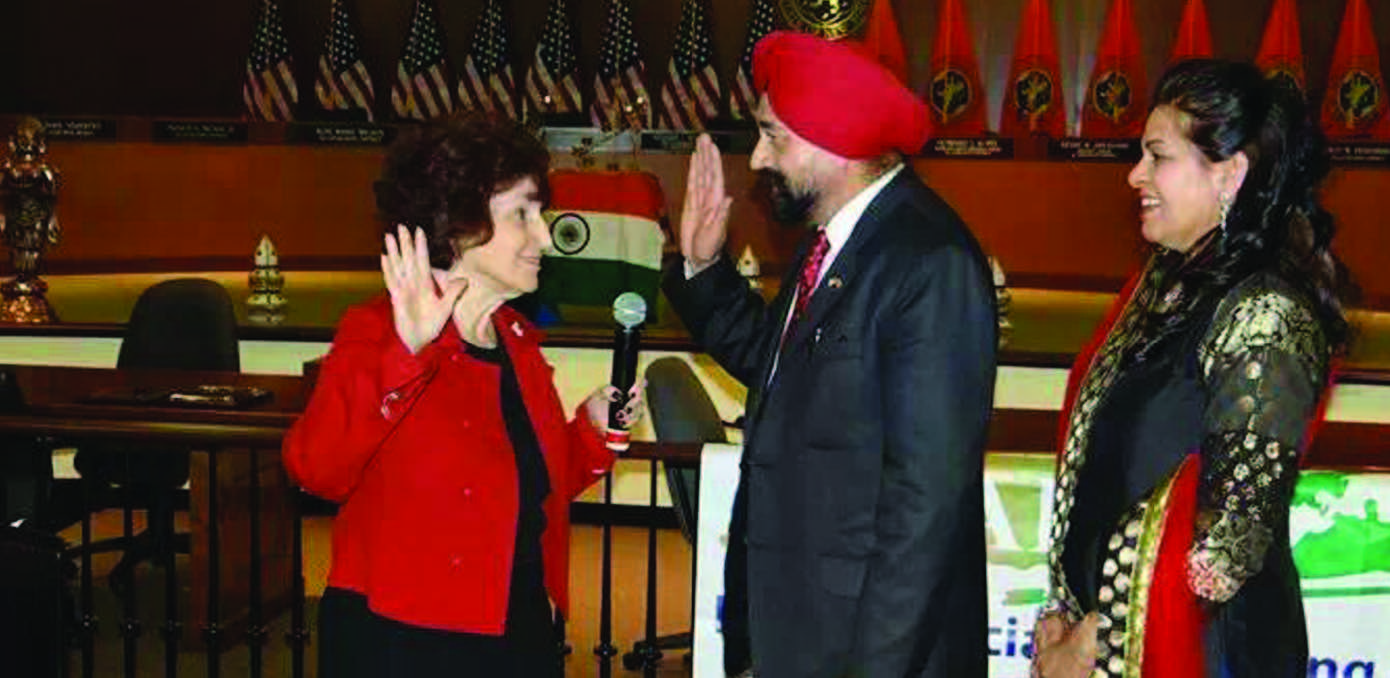
    NEW YORK (TIP): India Association of Long Island (IALI) one of the largest organizations serving the Indian community on Long Island held the inauguration of office-bearers for the year 2014 on January 12. The inauguration held at the Nassau County Legislature on Long Island was attended by over 300 people comprising of IALI members, past presidents, dignitaries and community leaders The Oath of office was administered by Nassau County Legislature Presiding Officer Norma Gonzalez to the four ranking officers of the Association – President, Vice President, Secretary and Treasurer.

    Mike Venditto, Nassau County legislator swore in Members-at-Large, Standing Committees, Chairs and Co-Chairs. It was the 26th Installation function. The 2000 member strong India Association of Long Island is more than 30 years old. It had a humble beginning when the idea occurred to a small band of pioneering individuals who had made Long Island their home more than 30 years ago to forge a bond whereby the extrinsic beauty, culture, history, festivals, food and arts & crafts of India aptly showcased could “foster a better understanding of the diversity and the rich culture of the Indian subcontinent to Indians and the larger community of Long Island”, as IALI’s mission statement expresses. There were bridges to be built and crossed and the need to assimilate as new immigrants in the new homeland which was America.

    This then became the creed and mission statement of the newly formed not-for-profit India Association of Long Island. It was the 1970s and Indians back then had mostly just started to trickle in and arrive on Long Island shores. They were a mix of different languages and varied geographical locations, India being the vast sub-continent that it is, and in some ways impossible to define. There was a need to be met for unity and of a broad-based organization uniting Indians from all regions – east, west, north, south and central – however dissimilar their origins, customs, languages and practices. The dedication and commitment of those few paid off. A foundation was laid which was carried through. decades. Membership grew. A fledgling Association weathering daunting obstacles and hurdles took shape and became much more sizeable and visible in the fluidity of its expanding reach and scope. The rest as they say is history.

    Today IALI has many year-long signature events outstandingly and energetically showcased – Indiafest, Family Picnic, Valentine’s Dinner & Dance / Holi Festival, Health Camps, Diwali, Annual Fund-Raising Dinner and more – besides its regular monthly programs for Women, Seniors and Youth. All of these are looking to expand. Music, song and dance have found a voice. Sports has been added to the mix so that tennis and particularly the ever popular game of cricket may be loudly encouraged and kept alive among the youth. IALI’s collaborative efforts of teaming up with Nassau and Suffolk Counties through local universities or at Eisenhower Park to celebrate cultural diversity at Asian Summer Festivals is widely received. IALI’s on-going relationships with many other organizations such as National Indo-American Association for Senior Citizens (NIAASC), Association of Indians in America (AIA), Federation of Indians in America (FIA), Indian American Forum (IAF), India Day Parade (IDPUSA) and many others is active.

    Many of IALI’s well known members and leaders have gone on to staying in the forefront in other noteworthy organizations such as American Association of Physicians of Indian Origin (AAPI) and Nargis Dutt Memorial Foundation (NDMF) besides political organizations. IALI’s Annual Food Drive and donations to Interfaith Nutrition Network (INN) which supports soup kitchens and provides shelters for the homeless on Long Island and to Rotacare is in its 18th year of continued promise receiving robust support from the community at large to be able to give back to the community.

    The development of an India Center where the richness of our Indian heritage may be maintained and displayed and relegated for posterity is on the table and one of the main projects awaiting fruition for this current year 2014. The Indian community on Long Island has certainly come a long way. With the India Association of Long Island (IALI) this journey has taken exciting strides and could go much further. It is a journey which once embarked upon continues to this day. “Accomplishments have been met through commitment, hard work, endeavors of the many and diligence on the part of its multitude of members and of the leadership. However, the journey is never at an end till goals are met, challenges overcome and ports of call are reached. The journey endures”, says Rekha Valliappan, the dynamic General Secretary of IALI.

  • 2013: DEFINING EVENTS IN SPORTS

    2013: DEFINING EVENTS IN SPORTS

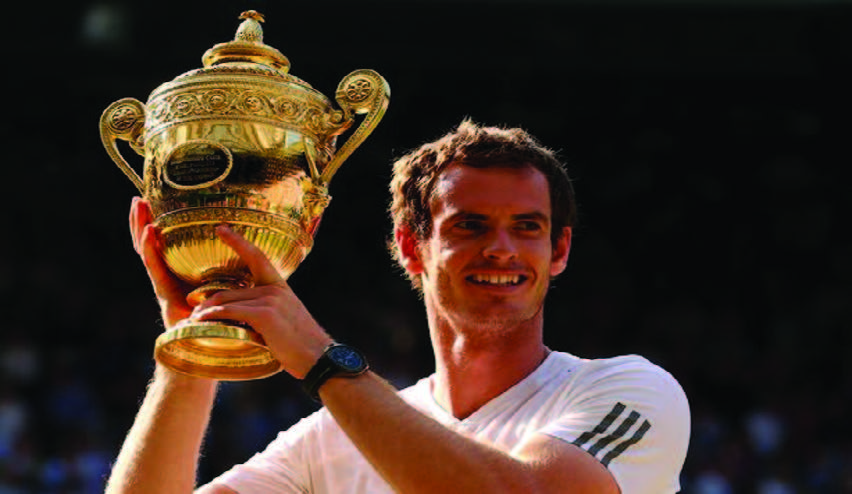
    When it did finally happen, there was a sense of relief — not just for one man but an entire nation. After a successful 2012, Andy Murray broke one of the biggest hoodoos in sport by ending Britain’s 77-year wait to become the first male to win the Wimbledon title this year, beating the then World No. 1 Novak Djokovic in straight sets. The satisfaction and sheer joy on the Scot’s face was palpable.

    Murder mystery
    How does the story of the first double amputee athlete to compete in Olympics go on from being inspiration to a murder mystery? On the cold morning of Valetnine’s Day, South Africa’s Oscar Pistorius allegedly shot his girl friend Reeva Steenkamp dead in Pretoria. She was found dead in the bathroom with bullet wounds. Oscar says he mistook her to be an intruder. Police cry murder. The case is on.

    Wonder boy
    11

    Two days after Tendulkar played his last Test, Mumbai’s Prithvi Shaw was labelled the next Sachin. And why not, for his achievement was beyond imagination. The 15-year-old entered records books scoring 546 in a Harris Shield game. It is the third highest score going by all the registered scorecards available worldwide.

    Achtung Munchen
    Amidst all the hullabaloo over the English and Spanish league, it was Bayern Munich who kept the fabled German consistency going with their astounding treble. The Bundesliga, German Cup and the UEFA Champions League trophies now sit pretty in the office of the Munich club. The team has a registered fan club in India. And surely in that corner of the country, this was celebrated.

    World at sindhu’s feet
    While Indian badminton was obsessed with Saina Nehwal’s show on the field (and Jwala Gutta’s off it), an 18-year-old Hyderabad girl went on to become the first Indian female to win a singles medal at the World Championships. PV Sindhu was the toast of 2013 in many ways, for she also broke into the top-10. Now, India’s not just about Saina and Sania as far as sportswomen are concerned.

    Champions one last time
    12
    Before departing to England, India’s press conference was quite a scene. MS Dhoni faced questions on IPL spot-fixing, and hardly any on the Champions Trophy. And as Dhoni most often does, he merely grinned. Maybe, the grin signified confidence, as the Men in Blue went on to bag the final edition of the ‘mini World Cup’ being undefeated.

    Spot-Fixing
    If you don’t see bowlers with towels tucked in trousers anymore, blame it on S Sreesanth. The harmless piece of cloth was allegedly used by the pacer as a signal to the bookies during IPL-6. Kerala’s maverick athlete has since has been slapped with life ban for spot-fixing. Ankeet Chavan and Ajit Chandila too have been punished and a horde of bookies arrested. Cricketers now blame Sree for sweaty days.

    Dhawan’s Dabangg act
    13

    Indians fans did not miss Virender Sehwag, not least on that day. Shikhar Dhawan produced one of the most swashbuckling innings to hit the fastest ton on debut against a hapless Aussie attack that could just stand, watch and admire. He finished with 187, and has since gone on to score many a century this year in the shorter format, but that one knock stamped his arrival in world cricket, along with his moustache.

    Fall of the legend
    14

    An inspiration, a champion survivor, author of one of the most amazing book on sports and life. And what a let down. Seven straight Tour de France title winning cyclist Lance Armstrong admitted to using performance-enhancing drugs and was stripped of his titles. The survivor of testicular cancer continues with his fund-raising activities. The America’s global hero proved that at the end of the day, it wasn’t about his bike after all.

    Goodbye, Sir Alex
    So United fans, how does life feel without Sir Alex? In one of the most shocking retirements of the year (Graeme Swann can wait), Sir Alex Ferguson ended his 26-year-old love affair with Manchester United to hang up his boots in May. More than his 13 English League titles, five FA Cups and two Champions League trophies whilst at Old Trafford, the world would miss some of his oh-so-memorable quotes. Have you grabbed his autobiography yet?

    Jacques in the box
    15

    The South African will possibly be one of those greats who will be unsung in their lifetime. Or hopefully, not. As he puts his white flannels away permanently after the ongoing Durban Test, there would be or at least there should be a debate on whether he is the greatest all-rounder. We have had enough of Bradman vs Tendulkar, Lara vs Tendulkar etc, there is room for more debates and Kallis surely deserves it.

    Bale’s €100mn bonanza
    16

    Real Madrid, known as the ‘Galacticos’ in the footballing world, broke their bank once again this summer. This time for 26-year-old Welshman, Gareth Bale who’d lit up the Premier League on fire. And boy did they do it in style. Signed from Tottenham Hotspurs for a staggering 100 million euros, the winger pipped Cristiano Ronaldo’s transfer fee by six million euros.

  • GOD OF CRICKET RETIRES

    GOD OF CRICKET RETIRES

    Thank you – these two words very much summed up India’s mood on 16 December when Tendulkar bowed out from all forms of cricket. The legend carried the hopes and aspirations of a billion people and it was only apt when fans stood up to salute a hero who had united India like nobody else in the past 25 years. Tendulkar’s formidable cricketing records aside, most people will remember him as a player who remained humble and grounded despite his stardom. The news about his retirement, arguably the biggest story of the year, sparked emotions of sadness, joy and pride in the media as writers filled pages with what can be best described as their love for the Little Master, as Tendulkar was fondly called.

  • ZAHEER, ASHWIN PROMISE FIGHT IN TESTS

    ZAHEER, ASHWIN PROMISE FIGHT IN TESTS

    DURBAN (TIP):
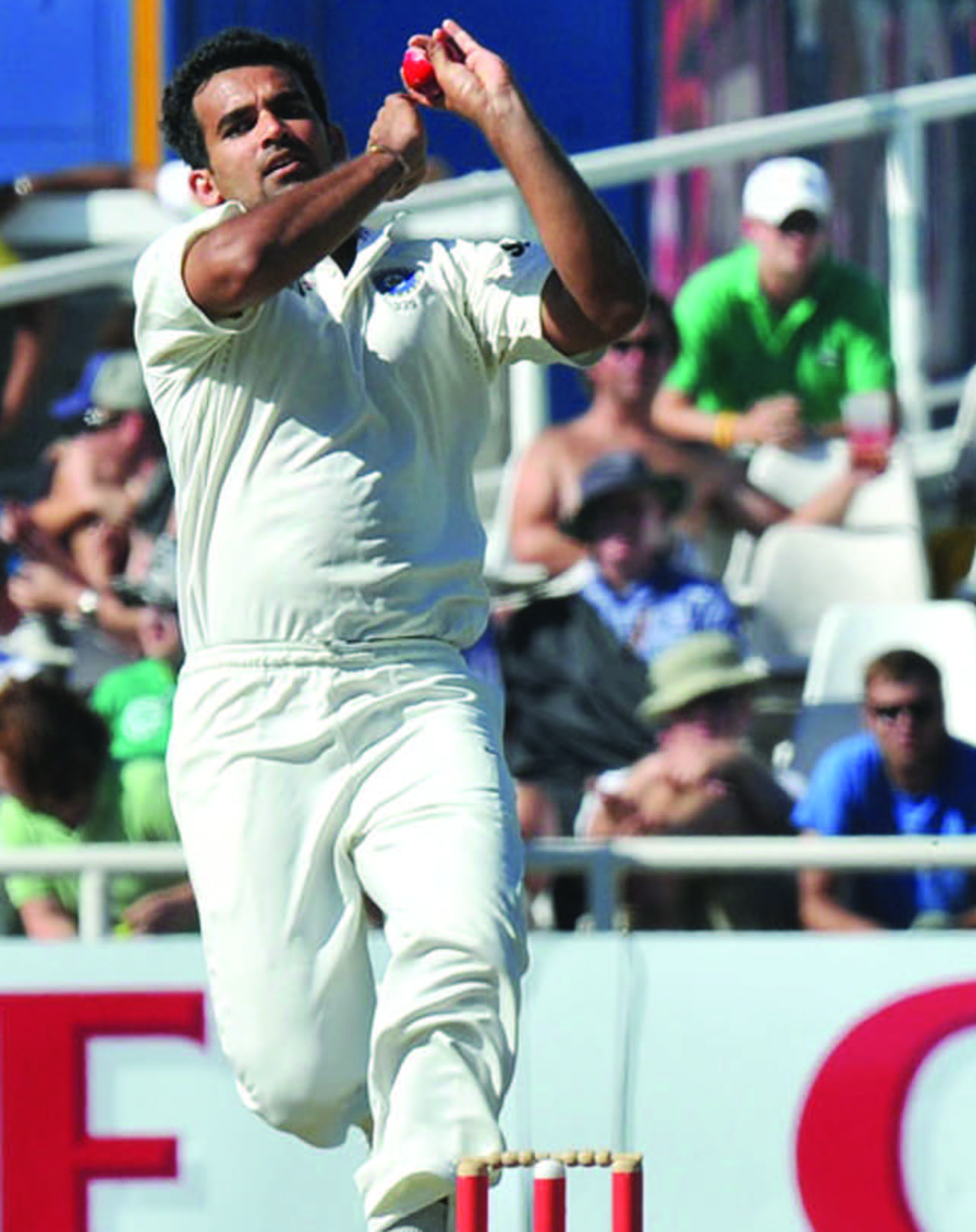
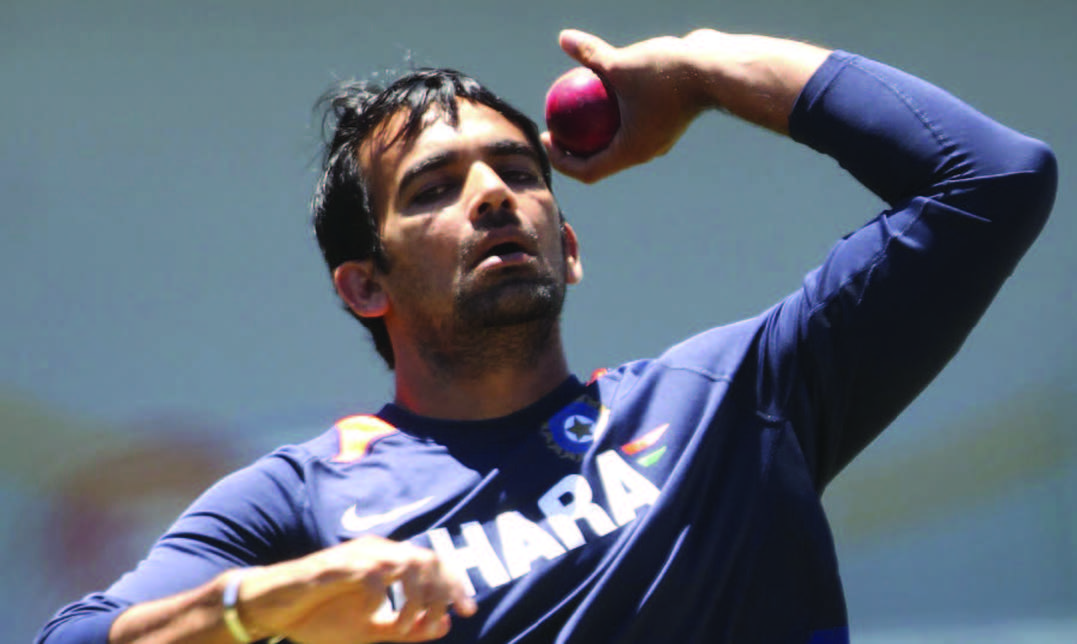
    Two of India’s most experienced bowlers, Zaheer Khan and R Ashwin, have promised a better fight in the upcoming Tests after India were blanked 2-0 in the ODIs. Zaheer, one of the few in this Indian team not shy to have a word, has begun to stir up the opposition. Ashwin, meanwhile, has said he will not throw in the towel just yet. When asked to respond to South Africa players’ comments that they have scarred a few of the visitors, Zaheer made his feelings known. “You know, talk is talk,” Zaheer said. “You can talk as much as you like outside. Once you go on to the field, it’s all about doing. And I think this Indian team will do the needful. Whatever it’s going to take to win this series.” Zaheer is a bowler who plays mind games well. Once he spots a weakness in a batsman, he goes all the way with it.

    He has done that to South Africa’s Test captain, Graeme Smith, successfully in the past. This in itself, many Indian pundits felt, was reason enough to bring Zaheer to South Africa. And he is no mood to let Smith forget that he has dismissed him 13 times in 396 balls in all international cricket. Asked if he had any new plans to get Smith out, Zaheer said, “I just have to turn up.” Just so he didn’t sound too obnoxious, though, Zaheer added, “Having said that, Graeme Smith has got a terrific record in Test matches. He’s a good leader.


    9

    It’s good to have that advantage. When you go into a match and have that edge over someone who has been a good opener and [has] been scoring consistently at the highest level.” Ashwin is part of the ODI side that has taken a hammering in the recently concluded ODI series, which India lost 2-0. He is a combative and proud man too. It doesn’t sit well with him that he has gone for 169 runs off 168 balls for a solitary wicket in the series thus far. He might, rightly, not agree that India’s performance so far is a “disaster”, but pride says he will have give it his all in the Tests. “I am definitely here in terms of looking to fight and just go on fighting,” Ashwin said. “I am prepared for a fight.

    I want to take it to the field and see what I can actually do. Be it with catching, be it with bowling or be it with batting. I am prepared for all. So I am just going to go out there and make sure that I at least give it 100% of what I can to try for a series win. It cannot get any better. It means the most to me in life.” Ashwin said that he started to work on his Test bowling during the last, inconsequential, ODI, although he did also, for some reason, mention that he had achieved what he wanted to achieve through his bowling in the ODIs. “In terms of what I wanted to achieve out of the ODI series, it’s pretty much through,” Ashwin, on his first tour to South Africa, said.

    “I wanted to test the conditions, see how much it responded to what I was delivering. Yesterday, pretty much, the Test match was more on my mind. I thought I can toss a lot more balls up and see where it goes. Definitely the ball was drifting much more. “I think it’s got to [do] much [with] the air in terms of what I’m planning to do here. [I just] try and set fields and bowl straighter lines. I’ve chatted to a few people who have been here and done well so that’s going to help. I’d like to play the situation rather than anything else.

    I’ve prepared myself in terms of what I can deliver at the best of my abilities, and then I’ll take the situation at hand and do what the situation demands.” Patience and accuracy, Ashwin said, were going to be key to performing well in the Test series. Asked if his mindset changes from being a wicket-taker to the one holding up one end when he goes out of Asia, he said, “Whatever I have heard and whatever tour I have gone on, I was always expected to take wickets.

    There’s no two ways about it. I have my personal expectations, and I would like to do well anywhere I go. “Nothing means more to me than an overseas victory. In terms of planning a spell or building up a scenario, it’s going to be the key here. Need to be patient here, in terms of let[ting] things happen, rather than look to make things happen. The time will come when you can make things happen.” Ashwin said he will need to contribute not only as a bowler, but also as a batsman and fielder. “There are three facets of the game,” Ashwin said.

    “I’ll be standing at slips, I’ll be bowling, I’ll be batting. I would fight in every department. I am dead serious about it. I will definitely throw every bit. I will never throw the towel, and I’ll try and see where I can go [from] here. There is nothing that will mean more to me than a victory overseas.”

  • SA TROUNCE INDIA IN HARSH WELCOME

    SA TROUNCE INDIA IN HARSH WELCOME

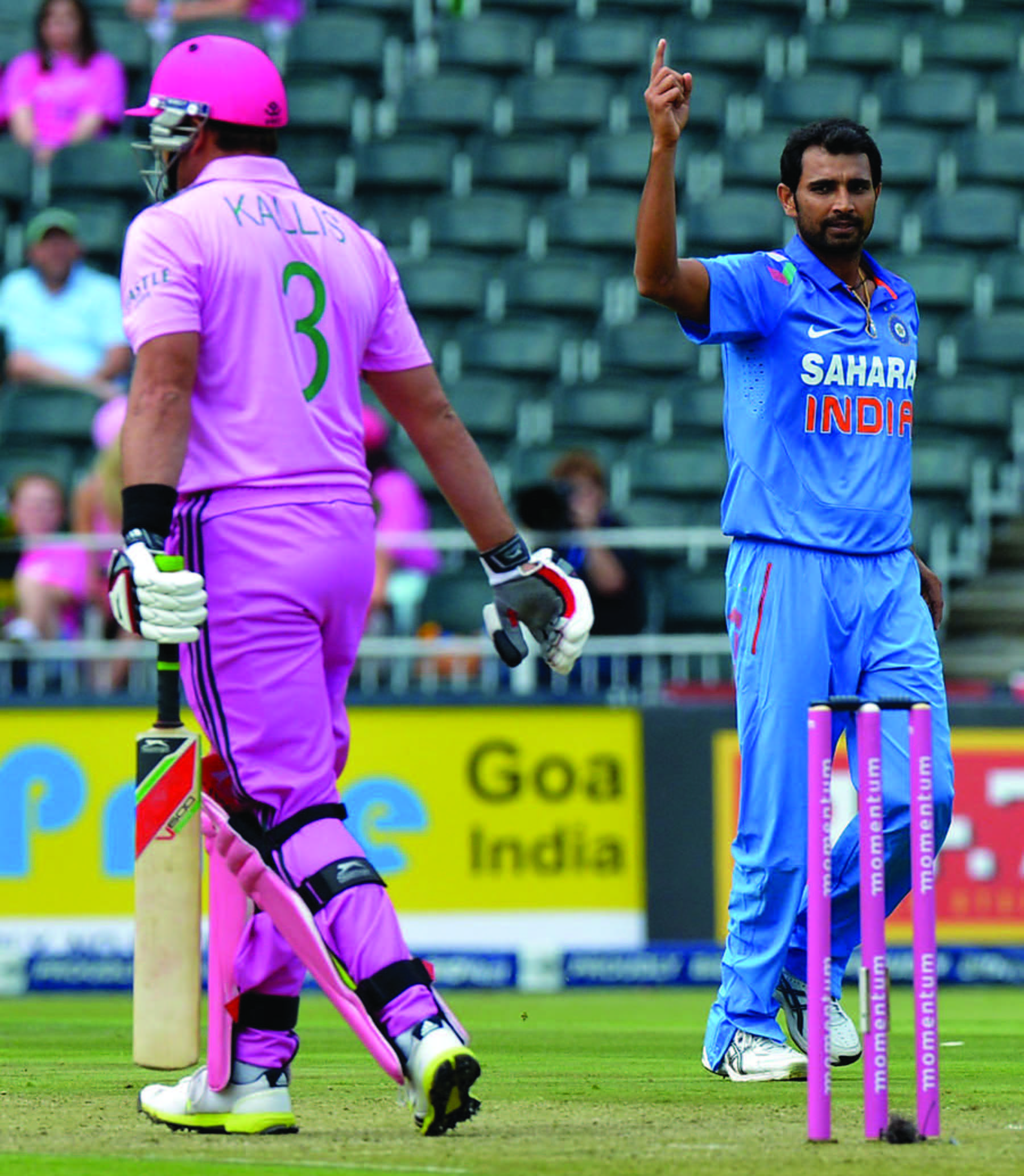
    JOHANNESBURG (TIP): South Africa brought Floyd-like edge to the word pink as they welcomed a clearly undercooked Indian side to the country with a 141-run hammering. Quinton de Kock, the baby face in baby pink, combined ferocity and cheek in his 135, and assisted by supporting fifties from Hashim Amla, AB de Villiers and JP Duminy, gave India 359 to chase. On a pitch made to look placid by their bowlers, the India batsmen were on a hiding to nothing against a six-man pace attack that was at them from the start, when it took them 16 balls to even touch a Dale Steyn delivery. During that first spell, Steyn caused India more trouble than the visiting bowlers did in the whole South African innings. On their first day of international cricket on this trip, the India bowlers were given the best of conditions: they won the toss, bowled when the pitch was at its freshest, and avoided the dew.


    27

    However, with the exception of Mohammed Shami, they didn’t test the batsmen for long enough, and when they did their fielders were off their game. Amla could have been run out on 7, and should have been caught on 8, but was let off by the India openers Shikhar Dhawan and Rohit Sharma. De Kock, too, survived a half chance early in the innings, but that was all impression the bowlers created. Amla started scratchily, he scored just 65 out of the 152-run opening stand, but de Kock looked in fine touch from the start. The third ball he faced was a leg-side half-volley from Bhuvneshwar Kumar, and he tucked into it. The last ball of that over was short and wide, and was cut away for four more. Mohit Sharma at the other end produced a fine fourth over, but he saw a top edge from de Kock fall short of the diving Shami at third man, and Rohit at cover did not come in to take a loopy leading edge from Amla. Two overs earlier Dhawan had missed the stumps from pretty close at mid-on. Amla would rub it in by soon taking 14 off three balls to reach 23 off 29: a punch through cover, a walk across the stumps to play the pick-up over midwicket, and then a cut past point. De Kock needed no such acceleration, and his 27 off 23 had taken South Africa to 53 in nine overs.

    Shami began with a maiden, and it was about the time when Dhoni goes to his spinners for control back in India. At the Wanderers, however, the ball didn’t grip and the pitch didn’t slow down; R Ashwin bowled too short, and Ravindra Jadeja too fast. It was not all milking from the opening pair: they found boundaries in six of the seven overs between Nos. 22 and 28. After 11 overs of spin for 62, MS Dhoni had to go to pace, not least because South Africa had called for an early Powerplay in the 30th over. An offcutter from Shami, and a mistimed chip from Jacques Kallis gave India two wickets in that 32-run Powerplay. During that period de Kock smacked a Mohit slower ball for six, and then took two singles to bring up his century. It was just a sign of things to come. As Dhoni went back to spin in the 36th over, de Kock and AB de Villiers began to push into a higher gear. Without any violence – mainly through chips over mid-off, a late cut and one slog sweep – de Kock went from 101 off 102 to his eventual 135 off 121. When Virat Kohli, who took de Kock’s return catch, gave the batsman a send-off, little did he know the wrath that awaited India. De Villiers and Duminy hit the bowlers around at will.

    Most of it was just clearing the front leg, and smacking length balls to all the stands. De Villiers even hooked a six from one knee. This was a statement of intent: we can do what we please. The yorkers were few, the slower balls easily picked and dispatched, and de Villiers and Duminy added 105 in the 7.4 overs they batted together. Between them the two hit nine sixes and eight fours. De Villiers had scored 77 off 47 when he fell, which looked sedate in comparison to Duminy’s unbeaten 59 off 29. An even hundred came off the last six overs. Then it was over to the other wing of the welcome committee. Conditions couldn’t have looked more different. The ball began to seam, swing and bounce. Dhawan looked comfortable during two Lonwabo Tsotsobe overs, but top-edged the first ball from Morne Morkel. Steyn softened Rohit up well and proper, but it was Virat Kohli who fell first to a shortish delivery from Ryan McLaren that seamed away to take the edge. In the next two balls, McLaren delivered the good-old one-two to Yuvraj Singh: a bouncer into the crash helmet followed by a fuller one that took the top of off stump. Suresh Raina came in, didn’t fancy the strike, called Rohit through for a poor run. Rohit should have said no. He now had a lot of time to go over his innings. The contest was finished well before it became 65 for 4 in the 16th over. Even as South Africa bowled their less-menacing bowlers, MS Dhoni’s 65 only delayed the inevitable.

  • Zaheer returns to India Test squad

    Zaheer returns to India Test squad

    MUMBAI (TIP): Zaheer Khan has been recalled to the India Test squad for the forthcoming tour of South Africa. Zaheer is one of five fast bowlers for the two-Test series, and the only newcomer to the 17- member squad is the batsman Ambati Rayudu. However, there was no place for the opener Gautam Gambhir, who scored a century for Delhi in the Ranji Trophy days before the selection meeting.

    It is learnt that the team management indicated to the selectors that they did not want Gambhir in the squad. Zaheer, who last played for India during the home Tests against England last December, was recently omitted from the list of centrally contracted players for the current season. The injury-prone left-arm seamer made a return to the longer format this season with 13 wickets in three Ranji games for Mumbai, including a five-wicket haul. However, he was not considered for the one-day squad.

    Virender Sehwag and Harbhajan Singh – two other players who were not handed central contracts – have been left out of both squads. The Test squad also has Wriddhiman Saha as the backup wicketkeeper for MS Dhoni, the captain. Saha last played for India during the Adelaide Test of 2012. Ravindra Jadeja, the allrounder, returns after sitting out the West Indies Tests to rest his injured shoulder. He is the third spinner in the squad after R Ashwin and Pragyan Ojha. Rayudu, 28, made his international debut during the one-day tour of Zimbabwe in August, where he scored one fifty.

    Amit Mishra, the legspinner, remains in the oneday team but was not included for the Tests. The surprise inclusion in the one-day squad is the fast bowler Ishant Sharma, who was expensive during the seven-match ODI series against Australia recently. Ishant leaked 189 runs in three matches and was dropped after he conceded a whopping 30 runs in one over, which cost India the Mohali ODI. Ishant was part of the Test squad against West Indies but lost his place to the impressive Mohammed Shami, playing his first Test series. Ishant and fast bowler Umesh Yadav were included in the one-day squad in place of seamers Jaydev Unadkat and Vinay Kumar.

    Batsman Ajinkya Rahane has been included in both squads. Yadav said he was pleased with Zaheer’s return to the Test squad, as the latter’s experience was invaluable to the young pacers in the team. “Zaheer has had a great influence on youngsters with his ability to guide us through the bump and grind of international cricket,” Yadav aid. “I have got a lot of valuable tips on fast bowling and there is no better exponent of reverse swing than Zak. He is like a mentor to us and it is an honour to play international cricket alongside him. Zaheer’s advice in match situations is invaluable as he is a brilliant reader of opposition batsmen.” The tour gets underway with the first of three ODIs starting December 5, followed by the two Tests.

    Test squad: MS Dhoni (capt & wk), M Vijay, Shikhar Dhawan, Cheteshwar Pujara, Virat Kohli, Rohit Sharma, Ajinkya Rahane, R Ashwin, Bhuvneshwar Kumar, Umesh Yadav, Mohammed Shami, Ravindra Jadeja, Zaheer Khan, Ambati Rayudu, Wriddhiman Saha (wk), Ishant Sharma, Pragyan Ojha ODI squad: MS Dhoni (capt & wk), Shikhar Dhawan, Suresh Raina, Virat Kohli, Rohit Sharma, Ajinkya Rahane, Yuvraj Singh, R Ashwin, Bhuvneshwar Kumar, Mohammed Shami, Ambati Rayudu, Umesh Yadav, Ishant Sharma, Mohit Sharma, Ravindra Jadeja, Amit Mishra

  • I HAVE NO REGRETS: SACHIN TENDULKAR

    I HAVE NO REGRETS: SACHIN TENDULKAR

    MUMBAI (TIP): Fielding questions from the media with as much savvy as he did in delivering his farewell speech at the Test match, Sachin Tendulkar endeared himself to all women saying he shares his Bharat Ratna with all mothers who have made tremendous sacrifices for the sake of their children. “They have sacrificed everything and the beauty about it is till this date, I was never told we did this for you. When you grow up, you realise all those things. That’s the reason I feel this award is for my mother. And not just her -I would like to go a step further.

    It is not just my mother but like my mother, there are millions and millions of mothers in India who sacrifice thousands of things for their children. So I would like to share this award with all the mothers for all the sacrifices they have made,“ he said on Sunday in his first interaction with the media after calling stumps on his 24-year career. He declared that he had retired at the “perfect time“ as his body was finding it tough to cope with the rigours of international cricket. Saying 75 per cent of his life had revolved around cricket, Tendulkar said he had “no regrets“ about hanging his boots after 24 years.

    “It hasn’t struck me that I won’t play cricket again. It has been a dream journey, no regret that I am leaving cricket. This was the right time to stop playing cricket. It was an enjoyable journey.“ he said at a packed press conference. A day after retirement, Tendulkar says it hasn’t sunk in yet.

    What did you do this morning?
    I woke up at 6.50. I go according to my body clock. I suddenly realised that I didn’t need to quickly have a shower and get ready for a match. I made myself a cup of tea and enjoyed a nice breakfast with my wife. It was a relaxed morning. A lot of people had sent me their wishes, so I spent some time responding to those text messages and thanking them for their support and good wishes over the last 24 years.

    Q Did it all feel like a dream, the cricketing journey?
    That was a dream journey of 24 years but last night, when I sat back and thought about it, till now it has not sunk in that I won’t play cricket again. I will go somewhere and play some cricket. I have no regrets at leaving cricket. I felt it was the right time to stop playing cricket.

    Q Fans want you to keep playing, how will you be associated with cricket?
    It has been my life. I have said in an interview that cricket is my oxygen. Seventy five per cent of my life has been cricket. So at different levels, I will be associated with cricket, maybe not in the immediate future.

    Q You had said you will stop playing when you will stop enjoying. How did you reach this decision to stop playing?
    I was enjoying it, but honestly speaking, I have always maintained the day I get the feeling that I should stop playing cricket, I will definitely tell you. I remember there have been questions about my retirement for a few years and I have always said when I get the feeling, I will let you know. I got that feeling because I felt after playing 24 years, you have to appreciate that I had many injuries in the past and to overcome those injuries was not easy. I think somewhere down the line, a stage comes in life when your body gives you the message `enough’. Enough of this physical load. I think the body requires rest now.

    So I thought the body is not able to take that load consistently. Earlier when I trained, everything used to happen automatically. Sometimes I used to feel of late that let me sit back and watch some TV. Thus, I requested the BCCI to have the last match in Mumbai because before this match,my mother had never seen me play a ball in my life. She never told me that she wanted to come to a match. I wanted it to be a surprise for her that I was making this arrangement for her. To answer the question, when I got the feeling that it is time to stop, I took that decision.

    Q Do you still maintain you would play for India?
    Even though physically I will not be playing for India, in my heart I will always be playing for India and praying for India’s victory. Whether I am a part of the team really doesn’t matter.What I think as an Indian that whenever India participates in any field, not just cricket, India comes first and then the rest.

    Q On mentoring the next generation and starting a cricket Academy:
    It’s a nice thought. I need to be involved with cricket and I would definitely be. It is not just because I have retired. Even before retirement, I have spent time with youngsters from U-19 teams to Ranji Trophy teams. I like interacting with players. It’s just nice to share your knowledge and understand sometimes their problems also which in return teaches you more about the game. It may not be done publicly, it may be done quietly at a very low profile but I would like to help the youngsters.

    Q The lasting image, going back to the pitch and touching it…
    That is where my life started. And those 22 yards have given me everything in life. Whatever I have achieved today is because of the time I spent between those 22 yards. It’s like a temple for me. So I just wanted to say a big thank you to cricket. When I decided to retire, my family was more emotional than me. I became emotional when I got the kind of send off from the players and while coming back from the wicket. Whenever I see those images on TV, that particular moment, I will get emotional.

    Q Achrekar never said well played in 28 years and on Saturday he said well done after the government announced Bharat Ratna. Do you think it took too long for the compliment?
    He had never said `well played’ and the reason was very clear. He didn’t want me to become complacent. He always reminded me that the game is bigger than any player and you have to respect it. He called me after the award announcement last night and said `well done’. He was happy, I was very delighted about it. The joy of receiving such awards enhances when you share it with some special people and that is what happened to me last night.

    Q You endured a lot of injuries in the 24-year career. Shed some light on the recovery process?
    When I had a surgery for tennis elbow, it took four and a half months to recover. I tried to come back earlier, but it was not possible. So I understood to respect nature and time. Sometimes, I felt that my career was over, that I might not be able to lift a bat again. After the tennis elbow sur gery, I could not even lift Arjun’s plastic bat. It was a difficult phase in my life and because of the support of a lot of people, I could come back so I would like to say thank all of them.

    Q Are you happy with your last innings of 74 and what was your mother’s reaction?
    My mother was extremely happy. Earlier I was not sure whether she would come or not because it’s a little difficult for her to travel. After the first day itself, I was worried that she might not be able to sit there for long. For safety I had also told MCA to keep a room for my mother at the Garware guesthouse. But my mother preferred to sit and watch each and every ball. It was special and when I went to meet her in the president’s box, I could see in her eyes what it meant. She spoke to me more through her eyes than her words.

    Q On his son Arjun’s cricket journey:
    As a father I will say leave alone Arjun. I will say let him enjoy the cricket and don’t burden him with expectations. If I had such pressure on me, then I would have pen in my hands because my father was a professor and he was in literature field. That time nobody has questioned my father as why your son has a cricket bat in his hand, and why not a pen? So, Arjun has opted for cricket bat in his hand, and he’s passionate about it. I will say that you need to be madly in love with cricket to bring the best, and he’s madly in love with it.

    Q The best and most disappointing moments:
    Winning the World Cup. It was my dream to win it, but I had to wait for 22 years, and that was such a long period. I will also say that Saturday was also a very special day . The way people responded to me. And the disappointing moments, I will say it came in the 2003 World Cup. It was big disappointment that we couldn’t cross the final hurdle despite playing well.

    Q Where do critics stand in your book?
    I observe it to a certain stage about who is writing and about what subject. Opinions will be available all around the world. A stage comes when you are convinced as to which person’s advice you should follow and who are the ones who offer constructive criticism and what is the motive behind it. I don’t think I have paid much attention to it because those who were guiding me were by my side and they didn’t hold a pen for a long time. They had either a bat in their hand or cricket thoughts in their mind to encourage me to perform better so that I could perform better. I was normally interacting with such people whose interests was in how I could make more runs. I didn’t think much about the critics.

  • Mumbai boy Prithvi Shaw scores 540 plus runs

    Mumbai boy Prithvi Shaw scores 540 plus runs

    Next Sachin Tendulkar?

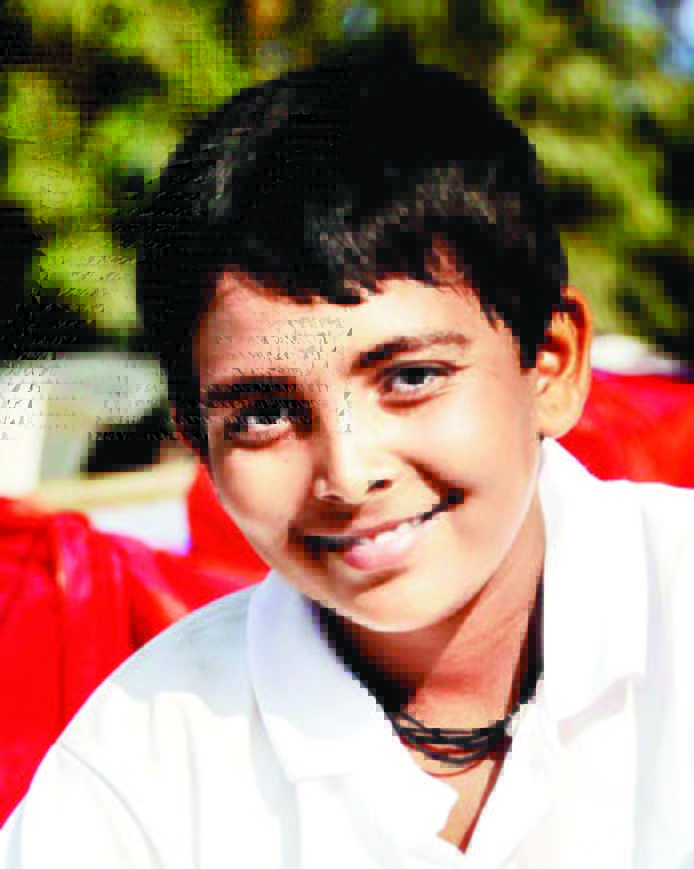
    MUMBAI (TIP): Barely four days after a legendary Mumbai cricketer retired, Prithvi Shaw, created a sensation by plundering a world record 546 for Rizvi Springfield against St Francis D’Assissi in the elite division of theHarris Shield tournament for senior schoolboys. Prithvi, a Class 9 student who was appointed captain of the Mumbai Under-16 team on November 20, celebrated the occasion with this special knock, going past the previous highest score in school cricket (498) recorded by his schoolmate Armaan Jaffer in 2010.

    Captain of his school team, Prithvi, an opener, had been unbeaten on 257 on Tuesday after his team had bowled out D’Assissi for 92 on Day One of the three-day game. On Wednesday, he continued his innings and spent almost six hours at the wicket in all, slamming 85 boundaries and five sixes in his 330-ball knock. He was finally out caught-and-bowled. Riding on Prithvi’s knock and his 619-run partnership with Satyalakshya Jain (164), Rizvi amassed 991 runs in 116 overs against the opposition’s hapless bowling attack. Prithvi and Jain missed going past the 664-run partnership betweenSachin Tendulkar and Vinod Kambli in 1988 when Jain got stumped.

    Prithvi is a well-known name on the Mumbai schools circuit and has had two playing stints in England. He was in Manchester for three months last year and earlier this year played for Gloucestershire’s second team, which is just below the level of first-class cricket. He now joins the highest scorers globally. His is the third highest score if one goes by all registered scorecards available worldwide since the start of competitive cricket. Englishman A E J Collins had scored 628 not out in a match in England in 1899, and Australian C J Eady had got 566 in 1901.

  • CAG QUESTIONS RS 3,000 CRORE OF INVESTMENTS BY TWO TATA TRUSTS

    CAG QUESTIONS RS 3,000 CRORE OF INVESTMENTS BY TWO TATA TRUSTS

    NEW DELHI (TIP): A detailed audit by the Comptroller and Auditor General of India of some major trusts run by business houses and sports bodies has allegedly revealed misuse of income tax exemptions granted to them. Among them are at least two Tata trusts and a number of state cricket associations. The audit report, one of the first to be signed by the new CAG, S K Sharma, is to be tabled in Parliament in the winter session. In the meantime, the CAG has written to the finance ministry, which has advised the income-tax department to initiate action.

    In the report, ‘Exemptions to Charitable Trusts and Institutions’, the CAG has said that some of the trusts have invested, or transferred to other trusts, large surpluses instead of spending the money for charitable purposes. According to the CAG, Jamsetji Tata Trust and Navajbai Ratan Tata Trust together invested over Rs 3,000 crore in ‘prohibitive modes’, meaning investments that cannot be accepted as charitable in nature. In the wake of the CAG audit, the government has initiated steps to recover over Rs 1,000 crore from the two trusts. All the Tata trusts together hold 66% in Tata Sons, the holding company of the $100 billion salt-to-software-to-steel conglomerate. The CAG’s audit covered over 80,000 of the six lakh-odd registered trusts in India.

    A source close to the development said the two Tata trusts were the most prominent among them. The finance ministry has admitted to the CAG that the administration of Section 13(1)(d) of the Income Tax Act, which provides tax exemption to trusts, was flawed. Another 20 major trusts have illegally enjoyed IT exemption, the audit report said, but no details are as yet available. The section specifies that if a charitable trust has invested in ineligible securities, its income will not be tax exempt.

    In other words, the charitable trust will lose its tax exemption status. The audit also reports that four state cricket associations-Maharashtra, Saurashtra, Baroda and Keralahave engaged in commercial activities, linked mostly to telecast rights, and received “irregular exemptions”. The CAG has said that the illegal acts of the state boards have resulted in revenue loss of over Rs 38 crores.

    TATA’S RESPONSE:
    In response to a detailed questionnaire from TOI, AN Singh, managing trustee of the Sir Dorabji Tata Trust (of which the Jamsetji Tata Trust is an affiliate), said: “We are not aware of the recent audit of the CAG of India referred to by you. However, we confirm that a tax demand has been raised by the income-tax department against the trust in relation to the subject matter of your query. The department has stayed the recovery of demand against an interim tax payment made by the Trust, pending appellate proceedings.

    An appeal has been filed with the commissioner of I-T since there is a difference in opinion between the I-T department and the Trust on the legal interpretation of the relevant provisions of the Act. The proceedings are currently ongoing. It may also be mentioned here that the trust is governed by the provisions of the Bombay Public Trusts Act and had accordingly sought and obtained the prior approval of the Charity Commissioner as required by the Act before making the subject investment which was made to avail of an optimised and stable yield. In the opinion of the trust, there is no loss of revenue to the exchequer resulting from the said investment.”

  • TENDULKAR EXITS FOR 74, INDIA BUILD LEAD

    TENDULKAR EXITS FOR 74, INDIA BUILD LEAD

    TENDULKAR EXITS FOR 74, INDIA BUILD LEAD MUMBAI (TIP): Virat Kohli and Cheteshwar Pujara, two of India’s brightest young talents, were pummelling West Indies into submission at the Wankhede stadium on the second morning, but cricket had rarely felt this anti-climactic for Indian fans. During the first hour, however, Test cricket had rarely felt so alive. With Sachin Tendulkar playing what could be his final Test innings, his legion of fans were put through the emotional wringer. This whole series has been drenched in Tendulkar nostalgia, and every vintage shot he played today only highlighted what fans are going to miss in the days ahead. Every mis-step – like the two attempted upper cuts – caused massive anxiety. Fans were uncertain whether they wanted Tendulkar to be on strike – so they could lap up a few more of his shots – or at the non-striker’s end as the tension was close to unbearable when he batted.

    The assuredness with which Tendulkar played had made it seem inevitable that there would be a fairytale century in his final Test. The year-long wait for the 100th hundred should have taught Indian fans to be wary about expecting fairytale Tendulkar centuries and like at the Wankhede in 2011, a slip catch from Darren Sammy cut short Tendulkar’s innings on 74 and stunned a frenzied crowd into silence. The mute-button was on only for a few moments though, as the crowd regained its voice to appreciatively roar Tendulkar off the field. Tendulkar muttered a few words to himself, but as has been the case over virtually his entire career, he maintained his poise after being dismissed, acknowledging the adoring crowds as he trudged off.

  • FAREWELL SACHIN

    FAREWELL SACHIN

    A time line of Sachin Tendulkar’s 24-year-old illustrious career:

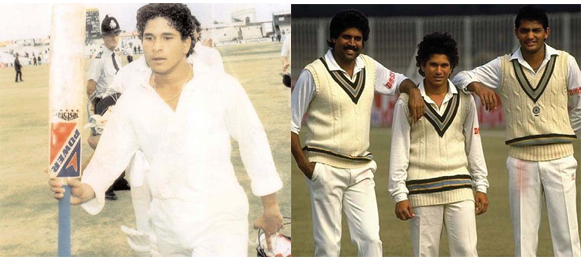
    Feb 23-25, 1988: Tendulkar (14) and Vinod Kambli (16) compile a 664-run unbroken partnership for Shardashram Vidya Mandir against St Xavier’s at Azad Maidan, Mumbai. Kambli remains ubeaten on 349 not out and Tendulkar scores 326 not out. It remains the highest partnership recorded in any form of cricket, until in November 2006. Dec 11, 1988: Makes First-Class debut at the age of 15 and scores an unebaten century against Gujarat at the Wankhede Stadium. Becomes youngest Indian to make a hundred on First-Class debut. Nov 15, 1989: Makes his Test debut in Karachi against Pakistan at the age of 16. Makes 15 on debut. Dec 14, 1989: Suffers a bloody nose in the last Test in Sialkot after being hit by Waqar Younis. Makes 57 in the innings. August 14, 1990: At the of 17 years and 112 days, becomes the then secondyoungest to score a Test century. He scores 119 not out against England at Old Trafford which helped India to get a draw.


    19

    April, 1992: Signs up for Yorkshire and becomes the first overseas signing for the English county. Nov 27-28, 1992: Becomes the youngest player to score 1,000 Test runs at the age of 19 years and 217 days after he scores 111 in India’s 227 in Johannesburg. Feb 11-12, 1993: Gets his first Test century (165) at home against England. Nov 24, 1993: The world saw the first glimpse of Tendulkar as a matchwinning bowler. Bowls India to sensational last-ball win against South Africa in the Hero Cup semi-final. South Africa needing six runs to win off the last over, Tendulkar gave them just three, and India a victory. March 27, 1994: Opens the innings for the first time in an ODI against the New Zealand. Scores 82 off 49 balls. October 1995: Becomes the richest cricketer in the world after he signs up a five-year contract worth Rs 31.5 crore with WorldTel. Feb-March, 1996: Plays his first World Cup at home and scores 523 runs at an average 87.16 and becomes the highest scorer. Aug 8, 1996: Becomes the Indian captain at the age of 23. Jan 2, 1998: Sacked from captaincy after a 15-month stint during which India won just three of 17 Tests. Feb-March, 1998:

    In the best of his form against Australia in a home Test series and also gets his maiden double hundred. He also scored two hundreds and a fifty in the three-Test series that India won 2-1. July 28, 1999: Gets back his captaincy after Mohammad Azharuddin is sacked for India’s failure to reach the semi-finals of the World Cup in England. March 20, 2001: Scores a thrilling century in the deciding Test in Chennai and denies Australia the “final frontier”. March 31, 2001: Becomes the first payer to score 10,000 runs in ODIs en route to his 139 against Australia in Indore. Nov 19, 2001: Fined by match referee Mike Denness for ball tampering. The decision was later overturned after an outcry by the Indian cricket board. Aug 22-23, 2002: Surpassed Don Bradman’s tally of 29 Test centuries. Misses double century by seven at Headingley, but India win by an innings and 46 runs. February-March, 2003: Scores 673 runs at 61.18 in the World Cup and also takes India to sniffing distance of winning the crown. His 98 against Pakistan was one of the best knocks played by Indians at World Cup. Australia are the champions, but Tendulkar is named the Man of the Series. Aug, 2003: Is presented with a Ferrari 360 Modena for going past Bradman’s 29 Test centuries.

    Jan 2-4, 2004: Scores 241 in Sydney, one of his best, even as Australia manage to hold on for a draw, and the series ends 1-1. Aug, 2004: Suffers from tennis elbow during the Videocon Cup in Holland. Misses the Champions Trophy in England, and then the first two home Tests against Australia. March 16, 2005: Scores 52 against Pakistan and becomes the fifth man to score 10,000 Test runs. Dec 10, 2005: Becomes the highest centurion in Test cricket as he overtakes Sunil Gavaskar’s 34 en route to his 109 against Sri Lanka in Delhi. March 19, 2006: Is booed at the Wankhede Stadium after he was dismissed for duck in 33 minutes against England in Mumbai. March, 2006: Again goes under the knife. This time for surgery on his right shoulder in England. May, 2007: For the first time in his career, Tendulkar is rested for the three-ODI series in Bangladesh. Jan 4, 2008: Scores an unbeaten 154, against a major Test playing nation in two years and 19 Tests, against Australia at the Sydney Cricket Ground. March 2, 2008: Sachin scores his first ODI century in Australia, in first of the CB Series final. Oct 17, 2008: Surpasses Brian Lara’s record of most Test runs against Australia at Mohali. Nov 5, 2009: Gets to 17,000 runs during his 175 off 141 balls in a 351-run chase against Australia in Hyderabad.

    India fall short by 19 runs. Feb 24, 2010: Becomes the first player in the history of the game to score 200 in a single innings in a One-Day International. He took 147 deliveries to power India to 401 and a 153-run win against South Africa. Oct 2010: Tendulkar bags his first ICC award, the Sir Garfield Sobers Trophy. Dec 19, 2010: Gets his 50th Test hundred against a difficult South African attack in Centurion. April 2, 2011: Realises his childhood dream of winning the World Cup that too at his home town of Mumbai and at the Wankhede. India beat Sri Lanka to win the World Cup for the second time. March 16, 2012: Gets the 100th international century, scoring 114 in an Asia Cup match against Bangladesh in Mirpur. But India lost the match. The century came after 34 innings and more than a year after scoring his 99th international hundred. Dec 23, 2012: Just minutes before the selectors were set to name the squad for the ODI series against Pakistan, Tendulkar announces his retirement from the format. Tendulkar finished with 18,426 ODI runs and 49 hundreds, well clear of any other batsman. Oct 10, 2013: Tendulkar announces his retirement from Test cricket.

  • I KNEW THERE WILL BE A TIME WHEN THE RUNS WILL FLOW: ROHIT

    I KNEW THERE WILL BE A TIME WHEN THE RUNS WILL FLOW: ROHIT

    KOLKATA (TIP): In less than a week, Rohit Sharma has joined most of India’s batting elite. In Bangalore, he said hello to Sachin Tendulkar and Virender Sehwag in the ODI double-century club, hitting 16 sixes in the innings. Five days later, in Kolkata, he took 165 deliveries before he even lofted the ball in the air, and joined Sourav Ganguly, Sehwag, Gundappa Vishwanath, Mohammad Azharuddin and recently Shikhar Dhawan as those with a century on Test debut. What makes this innings really special is that he has been yearning for the chance in Tests for a few years now, coming close – he was once listed to play in 2010 but injured himself moments before the toss – but not getting to put that white India shirt on.

    However, he couldn’t say what satisfied him more: the Bangalore double or this century on debut when India were struggling at 82 for 4 in response to West Indies’ 234. “I cannot really say,” Rohit said. “That was a 200, really special. And this is even more special because it’s a Test hundred on debut. See, anywhere you get a hundred, it’s very special. And on top of that if your team wins, that’s like the icing on the cake.We’ve got to wait another three days to see what happens in the game. Both these innings are very close to my heart.With that innings in Bangalore we won the series, and here… let’s hope that we can get into a good position tomorrow, and then I’d be more happy.

    ” This has been an exceptional year for Rohit. He has led Mumbai Indians to the IPL and Champions League T20 titles, has transformed his career by opening in ODIs, and now has had a dream Test debut. This time last year he was licking his wounds from a disastrous ODI series in Sri Lanka, which somehow cost him the Test place that should have been his after the retirements of Rahul Dravid and VVS Laxman. How did he turn the corner? “Being a sportsman, there is a lot of inspiration to take from so many sportspersons from around the world,” Rohit said. “You look at Michael Hussey, he made his debut when he was 30. There are a lot of other cricketers who had to wait for their opportunity. I’m no different, I’m one of them. I knew once I got an opportunity, I’d try and make the most of it.

    I never wanted to put my head down, I believe that if you have the ability, the talent, if you know you can do it, there is no need to worry about anything. “There was this phase when things were not going my way. But I never put my head down, I just wanted to focus because I knew there will be a time when the runs will flow. I just waited, waited… kept working on my game very hard. Yes, today I’m really happy with what’s happened.” This was not a freebie century from 400 from 4. Rohit had to fight hard for every single of his initial runs. India were struggling, the ball was turning, and West Indies were on top when Virat Kohli was the fifth man out. “See, they were bowling quite well when we lost five early wickets,” Rohit said. “We wanted to build partnerships then, but they were bowling very well so we just thought we’ve got to respect these bowlers who were bowling in tandem.

    The five-ten overs of Shillingford and the bowler at the other end were very important, so we just thought that we needed to stick there, and that once we get in, we can capitalise later when the bowlers get tired. That’s exactly what happened at the end of the day.” He spoke about the innings with the same maturity that he played it with. “They were varying their pace so when I and MS [Dhoni] were batting runs were not really coming so easily,” Rohit said. “So we just had a plan of negotiating these overs and as I said, we had to stick [to] whatever we’d decided and then capitalise when the day was coming to an end. I knew this exactly because the outfield here is very fast so you just need to play your normal cricket. After MS got out, me and Ashwin had a really good partnership.

    At Eden Gardens, if you just can manage those few initial overs, thereafter it becomes… I wouldn’t say easy but you get a lot of runscoring opportunities.” And Rohit knows from personal experience. He made his first-class debut here and scored a century. He started captaining Mumbai Indians here, and won the IPL final here. The same maturity was evident when he was asked to talk about the earlier nearmisses. “Whenever it happens, you’ve got to be proud, you’ve got to take that,” Rohit said. “I was really disappointed with what happened in 2010, but now I just wanted to focus on what was happening at the moment, so my focus was on this Test match, and I was really happy.

  • Umesh Yadav, Rohit Sharma in India Test squad

    Umesh Yadav, Rohit Sharma in India Test squad

    MUMBAI (TIP): Rohit Sharma, who is yet to make his Test debut, has made a comeback to the squad selected for the two Tests against West Indies. Ravindra Jadeja missed out because of a shoulder strain, creating an opening for the third spinner that was filled by legspinner Amit Mishra.

    The surprise, however, was that Zaheer Khan didn’t make it to the four-man pace unit, while Ishant Sharma retained his place. Umesh Yadav returned after a back injury had forced him out of the Australia series, and Mohammed Shami was the new inclusion. After spending the off season training in France and coming back fitter, Zaheer took match hauls of five wickets in successive first-class matches against West Indies A and Haryana.

    Dropped during the England series last year, Zaheer was expected to make it back into the squad. He has not, but the selectors are still looking at him as a prospect for the South Africa tour. The selectors debated whether to bring him back immediately or give him more match time in domestic cricket. The eventual consensus was that he needed more overs under his belt before coming back to Test cricket. “He is very much a part of the plans for South Africa,” the source said. Rohit made his way back into the squad with consistent performances at the top of the order in ODIs, and could even be used as a back-up opener should the need arise.

    As it stands, he and his Mumbai team-mate Ajinkya Rahane will compete for the middle-order vacancy that arises because of the absence of Jadeja, who has been advised two weeks’ rest. Suresh Raina, who was part of the previous Test squad, was dropped. Harbhajan Singh and Ashok Dinda were also dropped. Bhuvneshwar Kumar, the main spinners – R Ashwin and Pragyan Ojha – and other batsmen retained their places. A big matter of debate will be the retention of Ishant, whose results in international cricket have been ordinary of late.

    To go with the recent hidings in one-day cricket, Ishant last took more than three wickets in a Test innings more than two years ago, at Lord’s in July 2011. His overall average of 38 is uninspiring, and since that Lord’s Test every wicket he has taken has cost India 60 runs. Squad: MS Dhoni (capt. & wk), Shikhar Dhawan, M Vijay, Cheteshwar Pujara, Sachin Tendulkar, Virat Kohli, R Ashwin, Bhuvneshwar Kumar, Pragyan Ojha, Amit Mishra, Ajinkya Rahane, Umesh Yadav, Mohammed Shami, Rohit Sharma, Ishant Sharma.

  • Kavi Sammelan/ Mushaira for peace and Unity in Dallas

    Kavi Sammelan/ Mushaira for peace and Unity in Dallas

    DALLAS (TIP): It was an incredibly lovely session of Urdu and Hindi poetry at Hall of State at Fair Park, Dallas, Texas on October 25, with a galaxy of poets locally and from India and Pakistan coming together to give a rare intellectual treat. However, the attraction was Munawwar Rana Saheb one of the greatest poets of our times. Hon. Kapil Sibal, India’s law Minister (Secretary, Department of Justice) was to be the Chief Guest of the event, unfortunately, he was called back in the last minute to stay in New Delhi to handle the national affairs.


    img5

    However, the greatness of the man lay in his response to the need of the day, he realized his absence will embarrass the organizers and the people of Dallas/ Fort Worth. So, he took the time to address the organizer Noor Amrohvi and the audience in a powerful video message with regrets. We the people of Texas appreciate it and honor this gesture of dignity.

    In 1996, when we held a big Cricket event and invited the Ambassadors of Common Wealth Nations, and the Ambassador of Australia and New Zealand were bat ready to come and play, but were pulled back due to back home politics. This happens. The set up was incredible; I have never seen anything like that. It looked like Mughal Shahi Darbar or a Roman Coliseum; Corinthian columns in Gold in the back drop and rows of two white long stretched Sofas that ran across the spectrum of the outdoor arena. It provided a historicity to the samaa (environment).


    img6

    Jyoti Kumar was pleased with the efforts of her team made up of Hindus, Muslims, Sikhs and Christians from the subcontinent. From the planning stages to the execution of the program, each one in the team was committed to the unity theme and she is positive about moving forward with the mashaal (torch bearer) of the Unity. I would encourage Noor Amrohvi, the Chief Organizer to repeat this set next year.

    Janab DD Maini Saheb suggested that we bring the “Kambals” and enjoy the outdoor program. Tirmizi Saheb said, it happens in UK and Germany. Unfortunately, weather did not permit sitting outside, and instead, the program was carried in the auditorium. Agar Chandni raat hoti to kya baat hoti! Every poet was great, but as always a few leave lasting impressions on each one of the audience members.


    img7

    What appeals to you is different than what appeals to me; it is as simple as that. The old saying, beauty is in the heart of the believer remains an eternal truth. I would encourage you to write your impressions in the comment section below, so we have a full range of expressions.

    It is not customary to praise a few and skip the others. Indeed, everyone of the poets came prepared to deliver his and her best and they did, when I get the time, I will write a note about all the poets, but for the time being, here are a few mentions. The biggest hit was Munawwar Rana Saheb, he was everything he was projected to be; one of the best in Urdu/Hindi poetry. Of course, as Noor Amrohvi Saheb said, it’s like “sooraj ko chiragh dikhani wali baat.”

    His style, voice and delivery kept us all sit with full tawajjay (attention) through the very end of the program around 1 AM. His poem Mahajir was just incredible. Indeed, Zia Khan Saheb was sitting two seats from me, it was his story too… they left everything when they went to Peshawar from UP and it is also the story of Maini Saheb, whose family sold their stuff in Lahore for damdies and made it to New Delhi.

    There was a lot of mention about Allahbad, so I bought his book and CD to share it with my wife whose mother was from Allahabad. I did miss Renu Chandra Saheba, who is also from Allahabad. I believe it was Sarfaraz Abad Saheb who said, writing poetry is an amazing experience, you can tell so much in just two lines…. sometimes the whole story can be said in a Rubayee – a Qurartet.

    Poetry is indeed a powerful story telling medium. That was very encouraging to me personally, as I am reviving the poet in me after 35 some years of writing 32 short stories and 43 poems in Urdu/ Hindi, but this time, it will be on social issues and religious and societal pluralism. Dr. Zubair Farooq’s poetry won many hearts – he is an Arab, a medical Doctor serving two hospitals in Dubai but he has learned Urdu and Hindi, and has a passion for the languages, and has written over 24 books.

    His poetry was simply enjoyable and his Urdu accent was delightful and so was his tarannum (Singing). Of course we all have different accents of Urdu, ranging from Dakkani to Punjabi, Bengali, Malayalee, Bihari, Sindhi, Dogri or Gujarati tones. However the standard bearers of Urdu are speakers from New Delhi, Karachi and Lucknow. Why does Dr. Farooq have a passion for the language? Munawwar Rana Saheb used a sentence for a different purpose, but fits right in… Columbus ka Khoon! Meaning why did Columbus sail to different lands? Actor Mahmood would have said, “khujli ka jhaad”.

    Indeed, it was his passion – just as each one of us is driven by a different passion. Mine is Pluralism, what is yours? Think about it and make an effort to say in poetry format, you can do it, it is a challenge for you! Archana Panda Saheba had a powerful message about women and freedom. She shared a story in her poem, about the laanat (curse) of Dowry.

    How a girl is constantly trained to put up with things, the girl in her narrative tells the Groom off while sitting in the Mandap (wedding altar) to his demands of dowry – and then comes the most sensitive moment where parents would normally scream at the girl for bringing shame to the family… instead, her Mother said she was proud of her for the action, and her father puts his hand around her giving her confidence that she did the right thing.

    It is a powerful story and I hope to pass on her information to Dallas organizations like Chetna and Muslim Community Center committed to address the domestic violence issues. She will make a good speaker with little training on Domestic Violence. When I get the time, I will write a note about the other poets. I also appreciate the team led by Noor Amrohvi, Jyoti Kumar, Irfan Ali, Azhar Bukhari, Anand Punjabi, Javed Gill, Sanjeev Gupta, Mushtaq Raes, Nutan Arora, Rehan Kaiser and others.We should always appreciate the sponsors who believe in the program and make it happen – Jyoti and Ashok Kumar, SK Mittal and several others were big supporters.

    Noor Amrohvi Saheb was thorough in appreciating and thanking the poets, volunteers, sponsors and the supporters – he gets 10 for 10 from me. Please note that in March 2014, we will go for the 2nd Annual Pluralism Mushaira/ Kavi Sammelan, where we are planning to start a new dhaar (stream) on poetry with exclusive focus on social, cultural, religious and work place pluralism. Pluralism in one sentence is respecting the otherness of others, and when we do that, conflicts fade and solutions emerge.

  • WE COULD HAVE CHASED DOWN 296, SAYS SKIPPER MS DHONI

    WE COULD HAVE CHASED DOWN 296, SAYS SKIPPER MS DHONI

    RANCHI (TIP): Anything close to 300-run mark is always tough to chase down but India captain Mahendra Singh Dhoni backed his batsmen to overhaul the 296-run target set by Australia in the fourth ODI which was called off due to rain on October 23. Dhoni said all that his side would have needed was a good start to chase down the target after Australia made 295 for eight after being asked to bat at the JSCA Stadium. “It depended on the first 15 overs, on the start we get. If we didn’t lose too many wickets the pitch would have become better to bat on,” he said after the match was washed out. India were 27 for no loss in 4.1 overs when heavens opened up for the second time during the match. The match was stopped at 6.18 pm because of light drizzle which later intensified, making the ground unplayable. The match was called off after the umpires found out that the ground was too water logged to continue the proceedings. “The weather is not in our control. To some extent you are a bit disappointed, but whatever result it was we have to accept it. We wouldn’t have minded a 20 over game with the start we had,” Dhoni said. The Indian skipper was full of praise for fast bowler Mohammed Shami (3/42) who impressed with his deceptive bowling. “He (Shami) is deceptive. He bowls quicker than you think. What was important was he bowled full and the wickets he got, he was hitting the bails,” Dhoni said.

    “In the death he was getting the yorkers in pretty consistently. I know they will come back strong.” India’s fielding was not up to the mark today as they dropped as many as six catches, but Dhoni backed his butterfingered fielders to come back strongly in the next match. “At times it happens, some of the stadiums it is difficult to sight the ball,” he said. Australian captain George Bailey, who top-scored for his team with a 94-ball 98, also expressed disappointment with the wash out. “It could have been a reasonably good game of cricket. We snuck away with the bat, thanks to Glenn Maxwell’s innings. There was a little bit of swing and seam and he assessed the conditions well, especially considering he had to bat longer than he is normally used to,” he said. With a lively pitch on offer, Bailey said he backed his side to win the match. “We fancied our chances, with the pitch providing a bit of seam and pace and Mitch ( Mitchell Johnson) was getting it to go,” he said. “But it’s obviously important to be in the lead in any series and hopefully we’ll get to Cuttack and get a good game in and get a win.”

    Watch out for Shami:

    Bailey Rattled by Mohammed Shami’s threewicket burst with the new ball in the abandoned fourth ODI, Australian skipper George Bailey has instructed his batsmen to watch out for the rookie Indian pacer in the remaining games of the ongoing sevenmatch series. Taken aback by Shami’s pace and swing, Bailey said: “Obviously Shami bowled very well. He’s someone we haven’t seen in the series and he was a little bit quicker than what we expected. He certainly got movement off the seam,” Bailey told reporters after the fourth one-dayer at the JSCA Stadium on Wednesday. “That’s something to be pretty aware of for the rest of the series. That’s obviously what’s going to be coming at us,” he said. Shami rocked the Australian top-order but half-centuries from Bailey (98) and Glenn Maxwell (92) in a record 153-run fifth wicket stand enabled them to post a challenging 295/8. However, rain played spoilsport when India were 27 for no loss after 4.1 overs and the match was abandoned with Australia continuing to lead the series 2-1. Amassing 318 runs, Bailey on October 23 became the first Australia skipper to go past 300 in any bilateral ODI series. Yet a modest Bailey said it was ridiculous for him to think of making to the Ashes squad in the Australian summer. “I think there’s probably eight guys who have got a chance of playing in that Ashes team. It’s so far away. It’s just ridiculous to look at it,” Bailey said. “There are guys who will be at home playing Shield cricket, we’ve got Australia A games when we get back. It’s a completely different format. I don’t think there’s anyone out playing in these games thinking about that series.” Asked whether he had any special preparation for the series in India, Bailey said: “I didn’t do anything different. I think coming over here you focus a little bit more on how you’re going to play spin, because India have good spinners. “It’s important to be at the top of your game there. I’d done a lot of that leading into England as well, so that wasn’t too much different.”

    The lower-order added just 57 runs in the last 10 overs as Australia posted a less than 300-plus total for the first time in the series but Bailey begged to differ in his assessment. “I actually thought we played really really smartly in the last 10 overs. We were two or three wickets further down than we wanted to be. So it was really important that James (Faulkner) and Mitch ( Mitchell Johnson) actually got us into the latter part of that innings. “If we’d lost one of them there then 295 would’ve been 250 or 260. It was really important that they actually took some time out of the game and continued to score. I thought they played it better than I expected.” Standing in as skipper in the absence of an injured Michael Clarke, Bailey has impressed one and all with his smart captaincy and he attributed this to his Tasmanian skipper Dan Marsh. “I learnt a lot from him. He’s now the Tasmanian coach. Both temperament, the way he communicated, his knowledge of the game, I don’t think I’ll ever have that but I certainly learnt a lot and continue to learn a lot off him,” Bailey said. The 31-year-old also said he had learnt a lot from Ricky Ponting and Clarke. “I think you take little bits from absolutely everyone you play. Playing a year with Ricky last year was fantastic, just to see how he was around the group and how hard he trained, how he communicated with guys and how much he backed his own team was great. “And I’ve loved playing under Pup too. From everyone you play under and everyone you play with, you learn so much. There’s so much to learn if you’re willing,” he signed off.

    Rains travel with teams
    Even as India and Australia teams arrived in Bhubaneswar on October 24 afternoon amid cheers of cricket enthusiasts and were given a warm welcome, rain continued to play havoc at the Barabati stadium in Cuttack for the fifth day on the trot. The teams are scheduled to play the fifth ODI of the 7-match series in Cuttack on October 26. While curator Pankaj Patnaik and his 50 odd staff members were elated to see clear skies in the morning and were working on war footing to get the outfield in order at the Barabati Stadium, after 9.30 am it started pouring again which continued till late afternoon, much to the frustration of the groundstaff. Quizzed about the ground conditions, Patnaik said, “We are helpless if rain does not stop. The continuous rain for last 4-5 days has even raised water level of the drain outside the stadium. So even if we pump out water from the ground, where does it go?” Asked if it would be possible to have nets at the venue on Friday, the curator said, “It would not be possible on the outfield. But we have five pitches at the centre and we can devote two of those for practice if there is no rain from Friday.” He informed that the pitch and the area within the 30-yard circle has been covered. If there is hot sun on Friday and no rain there would be no problem in having a full match.

  • VIRAT KOHLI & ROHIT SHARMA STAR IN INDIA’S RECORD-BREAKING ODI WIN

    VIRAT KOHLI & ROHIT SHARMA STAR IN INDIA’S RECORD-BREAKING ODI WIN

    JAIPUR (TIP): An inspired India pulled off an incredible nine-wicket victory over Australia in the second cricket onedayer on Wednesday, achieving the second highest ever run chase in ODI history. Chasing an mammoth victory target of 360 on a belter of a track at the Sawai Man Singh Stadium, India crossed the line with 40 balls to spare as records tumbled like nine pins. This is also India’s highest ever successful run chase as the hosts restored parity 1-1 in the seven-match series. Rohit Sharma (141 not out), Virat Kohli (100 not out) and Shikhar Dhawan (95) were the main contributors for India. This is his 16th ODI century in 115 matches. His innings had eight fours and seven sixes. Rohit Sharma (141 not out from 123 balls) got a well-deserved third ODI century while Shikhar Dhawan (95) again showed love for anything Australian but was unlucky to miss out on a ton. It was a match where the Australians created a world record with their five top batsmen scoring half-centuries but the Indian batsmen proved they were better on the night.


    img45

    The Australians now have the ignominy of ending second best in two highest run-chases having faced similar fate against Herschelle Gibbs’ South Africa seven years back, when they failed to defend a mammoth score of 434. Indian batting’s ‘Gen-Next’ troika showed why they are not afraid of any target and reasserted India’s supremacy in the 50-over format. While bowling continues to be a worrying factor for skipper Mahendra Singh Dhoni, he should at least feel happy that Kohli along with Rohit and Shikhar are ready to take the legacy of Indian batting forward in the next decade. The victory was built on two partnerships. An opening stand of 174 between Dhawan and Rohit followed by another 186 runs scored in only 17.2 overs between Rohit and Kohli. The duo put on 100 runs in only 62 balls. The chase practically started in the ninth over when Dhawan, in his bid to break the shackles, hit Shane Watson for three successive boundaries. In the next over from Clint McKay, Rohit got a couple of boundaries more as 26 runs came off these two overs. While Dhawan repeatedly charged out to the pacers piercing the off-side cordon, Rohit used field restrictions to good effect by lofting the deliveries over in-field.

    Rohit hit Glenn Maxwell for a six over deep mid-wicket to bring up the team’s 100 and then got his half century with a tickle down leg-side off Xavier Doherty. If Dhawan muscled the deliveries, Rohit found a way to caress them to the boundary. However, after reaching his 50, Dhawan upped the ante with some sizzling strokeplay before James Faulkner got him to edge one trying to hit one shot too many. His 86-ball stay had 14 sweetly timed boundaries as he missed out on what would have been a well-deserved hundred. Kohli did not take time to settle down as he raced to a half-century in only 27 balls with four huge sixes. Whether hitting Faulkner over long-off or smashing Watson over deep mid-wicket, each shot came out of the top drawer as India steadily inched towards victory with minimum fuss. Earlier, Australian batsmen yet again took the Indian bowling attack to the cleaners as they scored a massive 359 for five, equaling their highest ever total against India. Led from the front by their skipper George Bailey (92 not out), the Australian batsmen made merry of a listless Indian attack on a good track. This incidentally is Australia’s highest total on Indian soil surpassing their previous best of 350 for four in Hyderabad in 2009. This total also equalled their highest ever total of 359 for two against India made during 2003 World Cup final in South Africa as well as 359 for four in a VB Series match in Sydney back in 2004.

    Phil Hughes (83), Aaron Finch (50), Shane Watson (59) set up the platform for skipper Bailey and Glenn Maxwell (53) to finish the innings with a flourish. Indian bowlers conceded 122 runs in the last 10 overs of the innings as Bailey and Maxwell sent the Indian attack on a leather-hunt putting on a staggering 96 runs in only 8.3 overs for the fourth wicket. Bailey bludgeoned the Indian bowling as he faced only 50 balls in his unbeaten innings, hitting eight fours and five sixes. Both Ishant Sharma (0/70 in 9 overs) and Bhuvneshwar Kumar (0/54 in 10 overs) lacked penetration as both Finch and Hughes negotiated the duo with ease. The third seamer R Vinay Kumar was guilty of bowling either too short or only slower deliveries and it only added to skipper Mahendra Singh Dhoni’s woes. Vinay (2/73 in 9 overs) had the worst figures among the pacers. The worst among the Indian bowlers was though left-arm spinners Ravindra Jadeja (0/72 from 10 overs) and Yuvraj Singh (0/35 from four overs) and the duo gave away 107 runs in 11 overs between them. Ravichandran Ashwin (1/50 from eight overs) fared marginally better. While Finch, as usual, was at his attacking best, Hughes complemented him by playing the second fiddle to perfection. Any width outside the off-stump was dealt with severity by Finch, who also pulled a slow bouncer from Vinay Kumar for a six to complete his second successive halfcentury of the series.

  • THE LEGEND:SACHIN TENDULKAR

    THE LEGEND:SACHIN TENDULKAR

    I LOOK FORWARD TO PLAYING MY 200TH TEST MATCH ON HOME SOIL, AS I CALL IT A DAY -Sachin Tendulkar

    Sachin Ramesh Tendulkar famously known as Little Master or Master Blaster is one of the greatest cricketer to have ever played the game. He is the leading run scorer and century maker in both formats of the game. Tendulkar is the only player to be in top 10 ICC Batsmen ranking for 10 years in Tests and in 2002, Wisden ranked Sachin as second greatest Test batsman of all time next only to legendary Sir Donald Bradman and the second greatest ODI batsman behind West Indies great Sir Vivian Richards. A normal person can be a specialist in one thing he does the best but Sachin is one man in this world who defies these laws and is a specialist in everything he does. Whether it is batting, bowling or fielding, this man will give everything to help India win. Sachin Tendulkar is one person capable of bringing his country to a standstill. Whenever Sachin strides into the middle, the crowd goes berserk, TRP ratings and TV volume go through the roof, tension levels hit all time high and expectations increase to unprecedented levels. From a child to an 80-year-old man, all have their sights set on Sachin.

    If one has to describe Sachin Tendulkar as a player, he would soon run out of adjectives; words like awesome, brilliant, magnificent are certain to cross your mind, though. He is a genius, with God given talent no doubt. He stands at the crease, with such wonderful balance and poise and at the same time intimidating the bowlers. His footwork is near perfect and he is the nearest thing to Bradman there’s ever been. At 5’5, Tendulkar was not the most colossal player to stride on to the field but he bows out as a giant, who ruled cricket for 24 years and gave his legion of fans mesmerizing and emotionally overwhelming memories. With a mountain of runs, Tendulkar’s retirement creates a void so big that one can safely say cricket would never be the same again. His journey started way back in 1989 at the tender age of 16. A disarming smile, curly locks, resolute eyes and abundant talent, this was Sachin who first stepped on to Test cricket against a fiery Pakistani bowling attack boasting of that deadly combination of Imran Khan, Wasim Akram and Waqar Younis. Tendulkar has niched out a career out of innovation and adaptability. No bowler has single handedly dominated the master. In his glorified two decade journey, Sachin has won almost every award associated with cricket. He also owns the highest number of Man-of-the-Match (62) and Man-of-the-Series awards (26) along with 50,000 in every format of the game.

    Sachin got the better of every bowling attack. With wickets falling around, he always decided to take the fight to the opposition and single handedly won India several matches. Sachin has been a part six World Cups, a record jointly held by Pakistan’s Javed Miandad. He has scored more than 2000 runs in the competition which is the highest by any batsman. The talent and genius of Sachin was best summed up by Bradman when he said Tendulkar’s batting reminded him of his own. Tendulkar was the first cricketer to have scored a double century in ODI cricket, the feet he reached at Gwalior on February 25th 2010 against South Africa, at 37 years of age. During the later half of the ’90s, Tendulkar dominated both ODI and Test cricket at will producing memorable innings all across the globe, including the famous ‘Desert Storm’ against Australia which are arguably two of the best ODI knocks ever played. Sachin’s tremendous performances soon elevated him to the most challenging task of captaining the Indian side. But sadly, the pressure of Captaincy took it’s toll on Sachin as his batting form dipped and many criticized Sachin for not leading from the front. Much has been said about the characteristics of a great batsman by many pundits over the year. But when Tendulkar produced what many believe “the most awe-inspiring innings” at Sydney in January 2004 against the might Aussies, he redifined greatness.

    After being repeatedly dismissed playing shots on the off-side, Tendulkar did not attempt even a single off-side stroke until he was a good 150 not out and went to score 241 in that innings. More recently, he was woefully out of form during India’s Test and ODI whitewash at the hands of England last year and carried the weight of expectations to what turned out to be a horror tour of Australia. But eventually, the best batsman of the modern era dug in deep and ensured that he went out on his own terms. His impact resonated much beyond the cricket field as he accomplished a rare feat by becoming a Rajya Sabha member last year. “Beneath the helmet, under that unruly curly hair, inside the cranium, there is something we don’t know, something beyond scientific measure. Something that allows him to soar, to roam a territory of sport that, forget us, even those who are gifted enough to play alongside him cannot even fathom. When he goes out to bat, people switch on their television sets and switch off their lives- BBC Sports, on Sachin Tendulkar.”

    Achievements
    1994: Sandeepreddy Award Recipient for achievements in cricket 1997: Tendulkar was one of the five cricketers selected as Wisden Cricketer of the Year 1997/98: India’s highest sporting honour – Rajiv Gandhi Khel Ratna 1999: Padma Shri – India’s fourth highest civilian award 2008: Padma Vibhushan – India’s second highest civilian award 2010: ICC Cricketer of the year – Highest award in the ICC listings 2010: LG People’s Choice Award ICC World Test XI: 2009, 2010, 2011 ICC World ODI XI: 2004, 2007, 2010 Wisden Leading Cricketer in the World 1997, 2010, 2012.

  • Tendulkar to retire after 200th test match

    Tendulkar to retire after 200th test match

    NEW DELHI (TIP): Sachin Tendulkar on October 10 announced his decision to retire from Test cricket after playing his landmark 200th match against the West Indies next month, bringing an end to the intense speculation about his future. The 40-year-old Tendulkar, who has not been in the best of form in recent times, has informed the BCCI about his decision to quit Test cricket after a glorious career spanning 24 years. “All my life, I have had a dream of playing cricket for India. I have been living this dream every day for the last 24 years. It’s hard for me to imagine a life without playing cricket because it’s all I have ever done since I was 11 years old. “It’s been a huge honour to have represented my country and played all over the world. I look forward to playing my 200th Test Matchon home soil, as I call it a day,” Tendulkar, who has already retired from the ODIs, said in the released issued by BCCI Secretary Sanjay Patel.

    Tendulkar thanked the BCCI for its support throughout his career and also for allowing to walk into Test sunset at a time of his choosing. “I thank the BCCI for everything over the years and for permitting me to move on when my heart feels it’s time! I thank my family for their patience and understanding. Most of all, I thank my fans and well-wishers who through their prayers and wishes have given me the strength to go out and perform at my best,” he said. Reacting to the news of his retirement, BCCI President N Srinivasan said that he is one of the greatest admirers of Sachin Tendulkar. “We respect Sachin’s decision to retire but many of us can’t imagine an Indian team without him,” he said. “Sachin has been an inspiration for generations of sportsmen and not just for cricketers,” he added. There was intense pressure on Tendulkar to bid adieu to Test cricket after a prolonged form slump and particularly with the advent of a number of young players. Tendulkar’s 200th Test match is most likely to be held at his home ground in Mumbai from November 14. The Eden Gardens in Kolkata is also a contender for hosting that historic match. The BCCI has not yet announced the venues for the two Tests against the West Indies.

    The fact that the BCCI squeezed in a home series against the West Indies had raised speculation that it was done to give Tendulkar the opportunity to retire in front of his home fans. Although Tendulkar had always maintained that he would continue playing cricket as long as he enjoys playing the game, the pressure of playing at the international level has gradually taking a toll on his ageing body. He recently retired from the IPL and the Champions League T20 event after his franchise Mumbai Indians won both the titles this year. Although the decision to retire was in the offing for some time, the BCCI release did create a flutter, prompting many former Test crickets to pay glorious tributes to the champion batsman who virtually held every batting record. Tendulkar has been the most complete batsman of his time and the most prolific runmaker of all time. His 198 Test appearances yielded 15,837 runs at an average of 53.86. From his 463 ODI matches, he had, under his belt, a whopping 18,426 at an average of 44.83. He is the only batsman to score 100 international centuries — 51 in Tests and 49 in ODIs.

    Much before his debut on November 15, 1989 against Pakistan, Tendulkar’s precocious talent was there to be seen when he shared an unbeaten 664-run stand with buddy Vinod Kambli in the Lord Harris Shield Inter-School Game in 1988. His first Test century came in England in 1990 at Old Trafford and the Mumbaikar rose in stature after the 1991-92 tour of Australia, hitting sublime hundreds on a Sydney turner and a Perth minefield. Tendulkar was also the first batsman in the world to score a double ton in ODIs, a feat he achieved in Gwalior against South Africa in February 2010. This was included in Times magazine’s top 10 sports moments of the year. A perfect team-man, Tendulkar limited his Twenty20 ambition to the Indian Premier League, ruling himself out of national reckoning lest it upsets the existing equilibrium of the side. The biggest compliment to his batting came from Bradman himself in 1999 when he said that Tendulkar’s style of playing resembled his style. His 154 scalps in ODIs underline the fact that Tendulkar could have also staked claim to be that elusive all-rounder that India has been desperately looking for since the legendary Kapil Dev. In the field, he is among the safest pair of hands in the slip and his flat throw releasing strong arm saw him manning the deep with equal aplomb. He has taken 114 catches in Test cricket and 140 in the ODIs.

  • CLARKE A DOUBT FOR ASHES OPENER

    CLARKE A DOUBT FOR ASHES OPENER

    SYDNEY (TIP): Australian captain Michael Clarke admitted he may not be fit for the first Ashes Test against England next month, with his long-standing back problem needing extended treatment and rest. Clarke was ruled out of Australia’s one-day tour of India in October and while desperate to be ready for the first Ashes Test in Brisbane on November 21, the star batsman is pragmatic. “Where I sit right now is I don’t know when I’ll be back playing cricket,” he said. “We have no idea how long it’s going to take. “There’s certainly no guarantee (for the first Test) at this stage. It’s hard for me to say that because I’m trying my best not to look at it like that. “I’m always positive and if they ask me, I’ll say I’ll be fit in a week’s time. But you ask Alex (Kountouris, team physio) who knows me very well, and he’d say there’d be doubt I won’t be right.” Clarke has been plagued by back problems for years and they flared up again before Australia’s final ODI in Southampton last month at the end of a gruelling five-Test Ashes tour to England, which Australia lost 3-0. He played in that game, but selectors were reluctant to take any more risks with him given the big home summer coming up, and ruled him out of the India tour. Coach Darren Lehmann said all he could do was hope Clarke would be fit to face arch-rivals England. “I hope he improves his back pretty quickly,” Lehmann said. “(The Ashes) is a long way off so hopefully with all the medicos behind him getting it right he should be right. “But only time will tell. I can’t worry about that. What I can worry about is making sure all the other players are ready to go as well… getting the right side for the first Test match.” Australia are due to play five Tests against England, starting in Brisbane