Tag: Education

  • NJPAC ACCEPTING STUDENTS FOR  FALL PROGRAM: JAZZ FOR TEENS

    NJPAC ACCEPTING STUDENTS FOR  FALL PROGRAM: JAZZ FOR TEENS

    Jazz Students (Credit: NJPAC.org)
    • By Mabel Pais

    The New Jersey Performing Arts Center (NJPAC), the state’s anchor cultural institution, celebrates 27 years of offering thousands of high schoolers from Newark and beyond, music lessons and performance experiences through its popular ‘JAZZ FOR TEENS’ program. One of the first of many arts education institutions at NJPAC, it has grown into a nationally recognized and revered program producing stellar alumni such as MacArthur “Genius” Fellow Tyshawn Sorey.

    The 2024-25 school year is about to begin and is now accepting students for both the Fall 2024 and Spring 2025 semesters. Registration is now open and closes Sep 23.

    ‘Jazz for Teens’ is a comprehensive and sequential jazz education program that provides access to top-notch musical training and study with world-class working artists, opportunities for artistic exchange within the community, and college and career exploration.

    This school year offers a new program “Business of the Music Business” with class topics including: financial wellness and budgeting; contracting; marketing and publicity; production and more. Classes include jazz history, theory/composition, technique, ensembles, and more. Prospective college students are guided through the application process. Students are given many performance opportunities as members of the James Moody Jazz Orchestra and/or George Wein Scholars Ensemble (performing at the Newport Jazz Festival). All students record their own compositions together in a studio setting. Field trips to Rutgers University-Newark’s remarkable Institute of Jazz Studies, the largest archive of jazz-related materials in the world, are regular treats for students.

    Since 2015, ‘Jazz for Teens’ has been at the helm of Mark Gross, the Director of Jazz Instruction for NJPAC. A multiple GRAMMY-winning alto sax player and composer, Gross has performed and recorded with a roster of greats, including Dizzy Gillespie, Buster Williams, Nat Adderley, Dave Holland, Wynton Marsalis, and more. In addition to Gross, a roster of more than a dozen working jazz musicians including saxophonist Wayne Escoffery and guitarist Alex Wintz (himself an alumnus of the program) as well as celebrated percussionist Alvester Garnett and acclaimed, Russian-born trumpeter Valery Ponomarev, a Jazz Messenger, to name a few — make up the ‘Jazz for Teens’ faculty.  Even more bold-faced names, including eight-time GRAMMY-winning bassist Christian McBride, the Arts Center’s Jazz Advisor, vibraphonist Stefon Harris, and MacArthur “Genius” and Doris Duke Artist award winner Regina Carter offer master classes, working directly with students.

    PROGRAM

    When: Fall Semester: Oct 5–Dec 14, 2024; Spring Semester: Jan 25-May 17, 2025, 10:00am-5:00pm (schedules vary)

    Where: New Jersey Performing Arts Center (NJPAC), Colton Institute for Research and Training in the Arts, 24 Rector Street, Newark, NJ, 07102.

    Who: Student musicians ages 13-18.

    Registration and Fees: Registration is required.

    For more information and Fee Schedule, visit NJPAC.org/education or call 973.353.7058. Scholarships and/or financial aid are available.

    Arts Education @ NJPAC

    Learn more at NJPAC.org/education

    The New Jersey Performing Arts Center (NJPAC)

    Follow NJPAC Online:

    Website:   njpac.org

    Twitter:    @NJPAC

    Instagram:  @NJPAC

    Hashtag:   #NJPAC

    Facebook:   facebook.com/NJPAC

    YouTube:    NJPACtv

    Follow NJPAC’s Standing in Solidarity Series Online:

    Website: njpac.org/takeastand

    Hashtag: #NJPACTakeAStand

    Youtube: Standing in Solidarity playlist

    (Mabel Pais writes on The Arts and Entertainment, Spirituality, Social Issues, Cuisine, Health & Wellness, Business, and Education)

  • WALL STREET EXEC INSPIRES TEACHING TEENS LIFE LESSONS

    • By Mabel Pais

    “I believe it is important for all young people to have time, resources and opportunities to think about the life they want to make for themselves and not just how they will make a living,” Ed Hajim

    What is the Ed Hajim Professional Readiness Program?

    Ed Hajim (Credit: NJPAC.org)

    This fall, The New Jersey Performing Arts Center (NJPAC) will launch a new initiative for its arts education students, the Ed Hajim Professional Readiness Program, which will offer rising teen artists, 14 and up, a series of free classes and opportunities that will propel them towards a successful career in the performing arts. The program will equip student performers with skills and strategies necessary to succeed professionally in the performing arts.

    Inspired by Hajim’s book, ‘Island of the Four Ps: A Modern Fable About Preparing for Your Future,’ a guide to success in life and business told in the form of a fable, the program is designed to let young artists harness the elements of success that propelled Hajim himself from foster care to Wall Street board rooms.

    Hajim, a leading business executive who held senior management positions with the Capital Group, E.F. Hutton, and Lehman Brothers before becoming chairman and CEO of Furman Selz, is supporting the program with a significant gift to the Arts Center. He will also meet with participants to share with them how he made his way from an orphanage to Harvard Business School and the C-suite of multiple financial firms.

    Watch 2015 Horatio Alger Award Winner Edmund Hajim speak of the troubles of his youth during the Depression, including time spent in foster care while his father was at sea during World War II, and how he discovered his passion for financial management while at Harvard Business School

    – youtu.be/i-9q2bKSCwM

    While career preparedness has always been an element of NJPAC’s extensive arts education programs  – which offer thousands of young people skills instruction in vocal and instrumental jazz music, acting, musical theater and hip-hop arts every year – the PREP initiative will formalize and significantly expand those offerings. 

    “Ed Hajim’s life story is a remarkable one, and the lessons he’s gleaned from his extraordinary career have inspired us to create a series of workshops and programs for our students to ensure they’re fully prepared for their professional lives. Success in the performing arts requires talent, of course, but also practical and interpersonal skills that Ed has uniquely identified,” says John Schreiber, President and CEO of NJPAC. “The career-readiness aspect of our arts education programming will be turbocharged by this gift and by Ed’s personal engagement with our students.”

    “These initiatives will help our students marry their raw talent with the skills they need to become thriving businesspeople as well as great performers. They’ll be able to explore their passions, and develop the skills that will allow them to make informed plans for their futures, all here at the Arts Center,” says Rosa Hyde, Senior Director Arts Ed Performances and Special Events at NJPAC.

    PROGRAM

    NJPAC Arts Ed Students (Credit: NJPAC.org)

    The  program – which is FREE to current NJPAC students who desire to pursue a profession in the arts, and to alumni of the Arts Center’s arts training programs – will guide students through a series of steps that will advance their career readiness. Starting at age 14, and continuing through their university-level education and the early years of their professional work, students will receive both instruction in key skills and access to a ready-made professional network. The programs that will be available to NJPAC students beginning in Fall 2024 include:

    • Business of the Arts Workshops: For students ages 14 to 18

    A year-long series of two-hour Saturday seminars (offered immediately following NJPAC’s Saturday arts training classes)  on the practical skills young artists will need to advance their careers, including resume-writing, social media management, contract and financial literacy and audition etiquette, taught both by working artists and professionals in other fields.

    • The Production Education Assistants program: For students and alumni ages 18-30

    Students and alumni will be offered the opportunity to take a month-long series of bi-weekly classes in technical theater skills, from light and sound design to stage management. Once classes are completed, they will have the opportunity to learn from and shadow professional stagehands. Participants will have the opportunity to sit for the United States Institute for Theatre Technology (USITT) BACKstage Exam (Basic and Comprehensive Knowledge Exam for High School Technical Theatre Students), a prerequisite for consideration for union membership.

    • NJPAC Alumni Network: For graduates of the Arts Centers arts training programs New alumni will now be able to join and learn from a community of NJPAC-trained artists. Through this network, not only will alumni be able to share insights and information with fellow artists, but the Arts Center will be able to call upon its graduates to provide mentorship to younger artists, perform at events, advise on programming and share their success stories. Through a new online platform, alumni will be able to network with peers who can provide advice, share job leads, and collaborate creatively. These additions to the Arts Center’s arts education curriculum will also include expansions of career-focused initiatives that have been piloted at NJPAC in recent years including:
    • Creative Coaching: For student artists ages 14 through 18. The Creative Coaching program pairs arts training students with teaching artists who serve as their mentors for two years. Working together, student and mentor identify a career-focused goal for the year – from producing a student’s first EP to preparing a repertoire of songs and monologues for auditions – and work together on the steps toward achieving that goal. Mentors and students meet twice a week throughout the school year.
    • The Creator’s Room: For students ages 16 to 18 A quarterly series of conversations at which students can meet with working professional artists to both network and pick up tips and insight on how to handle auditions, how to find representation, where best to seek our job opportunities in today’s market, even how to dress for auditions and rehearsals. These meetings are designed to offer students the nitty-gritty details of pursuing a career in the arts, from artists who are currently working in the field.

    Finally, with this training supporting them, students engaged in the  program will be able to take on paid performance jobs through the Arts Center’s unique placement service for the students it trains:

    • Brick City Booking: For current students aged 14 and up, and NJPAC alumni

    Student artists and recent alumni can access paid performance opportunities, and work with staff and mentors to negotiate contract terms, prepare repertoire, and nurture ongoing relationships with clients, through this service, NJPAC’s student and alumni “booking agency.”

    Watch the video of Arts Ed Students – player.vimeo.com/external/351250473.hd.mp4?s=0659a112ecadb56e1fbe83d3c38de29ca4c3b345&profile_id=175

    For more information about NJPAC’s arts education and career readiness programs, visit njpac.org/arts-education.

    Ed Hajim

    Ed Hajim is the author of the critically acclaimed memoir, ‘On The Road Less Traveled: An Unlikely Journey from the Orphanage to the Boardroom’ and ‘The Island of the Four Ps: A Modern Fable About Preparing for Your Future’.

    The son of a Syrian immigrant, he is a seasoned Wall Street executive with more than 50 years of investment experience. He has held senior management positions with the Capital Group, E.F. Hutton, and Lehman Brothers before becoming chairman and CEO of Furman Selz. Hajim has been the co-chairman of ING Barings, Americas Region; chairman and CEO of ING Aeltus Group and ING Furman Selz Asset Management. He is now non-executive chairman of High Vista, a Boston-based money management company.

    In 2008, after 20 years as a trustee of the University of Rochester, Hajim began an eight-year tenure as chairman of the university’s board. Upon assuming that office he gave the school $30 million—the largest single donation in its history—to support scholarships and endow the Edmund A. Hajim School of Engineering and Applied Sciences. Through the Hajim Family Foundation, he has made generous donations to organizations that promote education, health care, arts, culture, and conservation.

    In 2015, he received the Horatio Alger Award, given to Americans who exemplify the values of initiative, leadership, and commitment to excellence and who have succeeded despite personal adversities. Married for 59 years, Ed and his wife Barbara have three children and eight grandchildren. Learn more at edhajim.com.

  • INDRA NOOYI TO BE HONORED WITH HONORARY DOCTORATE

    By Mabel Pais

    Graduation is one of life’s most important and memorable milestones in the life of a student….. and teacher!  Congratulations, Class of 2023!

    Seton Hall University (shu.org), while congratulating its 2023 graduates for a job well done, celebrates its 167th baccalaureate commencement ceremony on Monday, May 22, 2023, at 9 a.m. at the Prudential Center in Newark, New Jersey.

    Rev. Borys Gudziak. (Photo credit : shu.edu)

    Delivering the commencement keynote address will be His Excellency Borys Gudziak, the Metropolitan-Archbishop of the Ukrainian Catholic Archeparchy of Philadelphia. At the ceremony, Archbishop Gudziak receives an Honorary Doctorate of Humane Letters alongside Indra Nooyi, former CEO and chairman of PepsiCo from 2006 to 2019.

    HIS EXCELLENCY BORYS GUDZIAK

    Learn more  about the Archbishop at ukrarcheparchy.us/most-rev-borys-gudziak/archbishop-borys-gudziak-biography

    INDRA NOOYI

    Indra Nooyi.(Photo credit : shu.edu)

    A role model for women and immigrants, Nooyi is celebrated for her empowering messages on inclusivity. She is the author of the New York Times best-selling book ‘My Life in Full: Work, Family and Our Future,’ a memoir that offers insight and a call-to-action on how our society can blend work and family — and advance women — in the 21st century. At PepsiCo, she was the chief architect of ‘Performance with Purpose,’ the company’s mission to deliver sustained growth by making more nutritious products, limiting the company’s environmental footprint, and empowering its associates and people in the communities it serves. Nooyi served as a member of the PepsiCo Board of Directors from 2001 to February 2019, and is now a member of the board of Amazon, where she chairs the audit committee.

    MORE INFORMATION

    For links to livestream and more information about the speakers and Seton Hall’s 167th baccalaureate ceremony, visit shu.edu/commencement/index.cfm.

    SETON HALL UNIVERSITY

    Learn more at shu.edu.

    ————————————————-

    LIFT YOUR SPIRITS WITH SPA DAY:  A DAY OF PAMPERING & RENEWAL

    By Mabel Pais

    Would you like to lift your spirits with a free Spa Day…. those living with breast or ovarian cancer? A Free Day of Pampering and Renewal?

    Breast Cancer Awareness, symbol. (Photo credit / mmjccm.org)

    This Annual Spa Day is available in-person for part of the day or all day virtually on Sunday, May 21, 10 am to 4 pm, and is hosted by the JCC Manhattan. The offer is presented by the

    Shirley Kohn Spa Day for Individuals Living with Breast or Ovarian Cancer (mmjccm.org/programs/virtual-jcc-shirley-kohn-spa-day-women-living-breast-or-ovarian-cancer-free-day-pampering).

    The free virtual spa day is designed to lift the spirits of those with cancer, and the lineup includes a sampling of spa experiences, including mindful movement, as well as nutrition and self-care.

    PROGRAM

    JCC Shirley Kohn Spa Day for Women Living with Breast or Ovarian Cancer: A Free Day of Pampering and Renewal

    Sunday, May 21 from 10AM–4PM

    Keynote: Author Maria Sirois

    Drop in for part of the free, virtual event, or tune in for the whole day

    Schedule highlights include Meditation, Zentangle, Positive Psychology, Self Care Massage, Health Harp Music + Yoga.

    RSVP

    If you’d like to attend, RSVP Lauren Magy: lmagy@mmjccm.org.

    ———————————————

    BROADWAY’S BEST FOR PD INVOLVES IN THE CHALLENGE

    Exercise Class for PD. (Photo credit / mmjccm.org)

    By Mabel Pais 

    Broadway’s Best for Parkinson’s: When PD Enters the Relationship, is a free in-person event, with virtual streaming option, hosted by the Marlene Meyerson JCC Manhattan (MMJCCM) on Wednesday, May 24 at 6:00 PM. The final Broadway’s Best event of the season will feature a panel of experts on how Parkinson’s impacts a relationship, from intimacy to balancing needs of care partners, to communication strategies, and even the importance of dance in a relationship.

    The experts joining the panel for May’s Broadway’s Best for Parkinson’s include David Loud, Broadway actor, musical director, arranger (vocal arrangements: New York, New York), and author, who is living with Parkinson’s; Rebecca Gilbert, M.D., chief scientific officer, American Parkinson’s Disease Association (APDA); and Gloria Lebeaux, LCSW, director of social work services at the Barry + Florence Friedberg JCC.

    PROGRAM

    Moderator: Caroline Kohles, MMJJC senior program director of Health + Wellness

    David Leventhal, program director of Dance for PD, featuring a movement segment, demonstrates how to improve communication and connection through dance.

    Matt Castle, Broadway actor – conversation & musical performances and his husband

    Frank Galgano, director, musical arranger, and actor

    Both are two years into their PD journey.

    Musical Performances

    Ziyang Zhou and Xavier Cornell of David Loud’s Manhattan School of Music give musical performances

    Discussion

    The lively discussion will also feature personal stories from Rhoda Cahan and Sam Rudick, a couple living with PD for nearly a decade.

    REGISTRATION

    Register for attendance in-person at (mmjccm.org/programs/person-broadways-best-parkinsons-when-pd-enters-relationship) and for virtual attendance at (mmjccm.org/programs/virtual-broadways-best-parkinsons-when-pd-enters-relationship).

    Broadway’s Best for Parkinson’s

    This free hybrid event is part of a groundbreaking MMJCCM Parkinson’s program

    (mmjccm.org/parkinsons) founded 15 years ago to improve the lives of those impacted by Parkinson’s.

    Broadway’s Best for Parkinson’s: When PD Enters A Relationship begins at 6:00 PM on Wednesday, May 24 at the MMJCCM, in person, as well as online.

    The initiative helps improve the lives of those impacted by Parkinson’s. Through education, exercise, and other programs, and in collaboration with the medical and local communities, people impacted by Parkinson’s remain active, connected, and empowered.

    Bios of Co-Hosts and Participants

    Learn about each co-host and participants Rhoda Cahan and Sam Rudick, Matt Castle, Frank Galgano, Rebecca Gilbert, M.D., Gloria Lebeaux, David Leventhal, David Loud at mmjccm.org/parkinsons.

    Caroline Kohles is the senior program director, Health + Wellness, at the Marlene Meyerson JCC Manhattan. In her 19 years at the JCC, she has spearheaded a progressive slate of fitness programming, creating 100-plus group fitness class schedules and health and wellness programs for populations ranging from tweens/teens to prenatal/postnatal moms and seniors. Her signature work includes developing a range of cancer care programs and she  designed the nationally and internationally recognized Edmond J. Safra Parkinson’s program at the JCC, now in its 16th year. She is also co-founder of NIA New York, a holistic lifestyle and fitness practice.

    The Marlene Meyerson JCC Manhattan

    Learn more at mmjccm.org. Follow the JCC on

    Instagram –    instagram.com/mm_jccmanhattan,

    Facebook –     facebook.com/jccinmanhattan, and

    Twitter –       twitter.com/MM_JCCManhattan

    (Mabel Pais writes on Health & Wellness, Education, The Arts and Entertainment, Social Issues, Cuisine, Spirituality, and Business)


  • Education important pillar of India-US ties: Ambassador Sandhu

    Education important pillar of India-US ties: Ambassador Sandhu

    WASHINGTON (TIP): Education is an important pillar of India-US partnership, India’s top diplomat in the United States said after a virtual meeting with the Chancellor of the University of California, Davis. Good discussion this afternoon with Chancellor Gary May and his team on the big potential for knowledge and research partnership in agriculture, health, digital and climate change, said Taranjit Singh Sandhu, India’s Ambassador to the US.

    “Education is an important pillar of India-United States partnership,” Sandhu said in a tweet after the meeting with Chancellor May.

    Chancellor May is known as a highly engaged educational leader with a passion for helping others succeed.

    In 2015, the then President Barack Obama honored him with the Presidential Award for Excellence in Mentoring students in science, technology, engineering and maths. In 2021, he received the prestigious Lifetime Mentor Award from the American Association for the Advancement of Science for demonstrating extraordinary leadership to increase the participation of underrepresented groups in the fields of science and engineering.

    The university is located in the heart of the region which has historical ties with the US Sikh community, which includes many immigrants from Punjab.

    Today, half of the Sikh population in the US resides in California.

    To preserve the stories and history of the immigrants from Punjab and share their contributions to the state of California, the university has created an archive of videos, photos and other documents. The ambassador’s interaction with Chancellor May is part of his continuing outreach to US universities.

    (Source: PTI)

  • Four-year-old Indian- Origin British Sikh girl joins Mensa club of high IQ kids

    Four-year-old Indian- Origin British Sikh girl joins Mensa club of high IQ kids

    LONDON (TIP): A four-year-old Indian -Origin British Sikh girl has become one of the youngest in the UK to be accepted into the elite Mensa membership club of children with a high intelligence quotient (IQ).

    Dayaal Kaur, who lives with her family in Birmingham, displayed exceptional learning abilities from very early on and had mastered the entire English alphabet by the time she was just 14 months old.

    She expressed an enthusiasm to appear for the Mensa test, conducted online from home due to the coronavirus lockdown, and achieved an IQ score of 145, which puts her in the top one per cent of the UK’s population in the “very gifted or highly advanced” category.

    We are delighted to welcome Dayaal to Mensa, where she joins a community of about 2,000 junior and teen members,” said John Stevenage, British Mensa’s chief executive.

    “Her family can make use of the supportive parents’ network that has developed, and we hope that as she grows up, Dayaal makes many lifelong friends and experiences some of the many learning and network opportunities that Mensa offers,” he said.

    The journey to this recognition has not been an easy one for the family as they struggled to convince local experts that Dayaal needed access to the gifted intelligence program within the education system.

    Her father, Sarbjit Singh, himself a teacher as a Health, Well-being and Pastoral Lead, persisted to prove that his daughter indeed was gifted.

    “Now there is official documentation that proves that she is way beyond her level. As parents, it is natural for us to consider our child is special, but in this case there is actual proof that she is one in a million,” said Singh.

    “There is a big debate to be had about how we cultivate our youth and provide the right kind of support and education so that we don’t lose future inventors and high achievers,” he said.

    Dayaal, whose dream for now is to become an astronaut and also to have a stable full of horses, took the test just before her fourth birthday in October last year.

    Her parents explained what the online process would involve, and she readily agreed in her usual spirit of “coming alive” in any kind of learning scenario.

    In her assessment, expert Lyn Kendall recommended that Dayaal’s “ability and maturity” meant that it would be worth considering accelerating her beyond her peer group in a classroom setting.

    “I am so glad we persisted because otherwise Dayaal would have been lost in the system and got frustrated when she didn’t feel like she was being challenged enough to learn new things constantly,” said her proud father, who was born and raised in Birmingham and whose family traces its roots back to Hoshiarpur in Punjab.

    “Dayaal is equally enthusiastic when we are reading about Sikh history and has a fascination for icons such as Banda Singh Bahadur and Guru Gobind Singh so we try and do our best to make that learning fun. She hasn’t yet been to India, but we hope to go as a family someday post-lockdown,” he said.

    Meanwhile, Dayaal has been celebrating her big achievement with her father, one-year-old sister Kalyaan and solicitor mother Rajvinder Kaur as she has worked out that she is a “genius now”.

    As with most families, the Covid-19 lockdown has been tough because she has had to curb her sociable side but can’t wait to return to the nursery and play with her friends again.

  • Gandhi-King Exchange Act Passed in House Foreign Affairs Committee

    Gandhi-King Exchange Act Passed in House Foreign Affairs Committee

    WASHINGTON (TIP): Indian American Congressman Ami Bera, M.D. (D-CA) hailed the passage of the Gandhi-King Scholarly Exchange Initiative Act out of the House Foreign Affairs Committee. The bill, written by the late Congressman John Lewis and cosponsored by Congressman Bera, would establish an exchange initiative between the United States and India to study the work and legacies of Mahatma Gandhi and Martin Luther King Jr.

    “John Lewis was a civil rights hero not only in the United States, but across the globe. John fought for human rights, equality and justice, and democracy for all. Just like Gandhi and Dr. King, Congressman Lewis shaped the world through his actions of nonviolence, and his life story will reverberate throughout history. The Gandhi-King Scholarly Exchange Initiative Act is a fitting tribute to his incredible legacy,” said Representative Bera, who is the longest serving Indian-American Member of Congress in history. “As the world’s oldest and largest democracies, the United States and India have long traditions of upholding these shared values championed by figures like Gandhi, King, and Congressman Lewis. But they are increasingly under threat in both countries. This legislation will help those values endure and remind us that by holding true to them, we embody and live up to the best of our two nations.”

    In 2009, Congressman John Lewis led a congressional delegation visit to India to commemorate the 50th Anniversary of Dr. King’s pilgrimage to India. Inspired by his visit, Congressman Lewis created the Gandhi-King Exchange Act to seek to apply the philosophies of Gandhi and Dr. King, Jr. to conflict resolution efforts and current policy challenges.

    The Gandhi-King Scholarly Exchange Initiative Act authorizes the State Department, in cooperation with the Indian government, to:

    • Establish an annual educational forum for scholars from both countries that focuses on the legacies of Mohandas Gandhi and Martin Luther King, Jr;
    • Develop a professional development training initiative on conflict resolution based on the principles of nonviolence; and
    • Establish a foundation to address social, environmental, and health priorities in India.

    Representative Ami Bera serves as Chairman of the House Foreign Affairs Subcommittee on Asia, the Pacific, and Nonproliferation.


  • Indian American Shankari Rajagopal Named Stanford Science Fellow

    Indian American Shankari Rajagopal Named Stanford Science Fellow

    NEW YORK (TIP): Indian American Shankari Rajagopal has been named as one of the 2020 Stanford Science Fellows. She is among eight postdoctoral researchers from around the world who are studying a variety of topics, including geoscience, computational chemistry and condensed matter physics. The program arose from Stanford’s Long-Range Vision as a way to cultivate new directions in foundational scientific research by advancing and bridging disciplines in the physical, mathematical and life sciences.

    Rajagopal came to Stanford as a postdoctoral scholar studying quantum physics and will continue to pursue experimental investigations of novel phases of matter as a Stanford Science Fellow.

    The Stanford Science Fellows Program will recognize and support scholars who reflect a diversity of perspectives, identities, life experiences and backgrounds, including those from groups that are underrepresented in the sciences. Stanford Science Fellow appointments are for three-year terms.

  • Indian American Author Lilly Irani Wins Outstanding Book Award by International Communication Association

    Indian American Author Lilly Irani Wins Outstanding Book Award by International Communication Association

    SAN DIEGO (TIP): Lilly Irani, Associate Professor, UC San Diego has been honored with Outstanding Book Award by International Communication Association for her book Chasing Innovation: Making Entrepreneurial Citizens in Modern India.

    Lilly Irani is an Associate Professor of Communication & Science Studies at University of California, San Diego. She also serves as faculty in the Design Lab, Institute for Practical Ethics, the program in Critical Gender Studies, and sits on the Academic Advisory Board of AI Now (NYU). Her research examines the cultural politics of high-tech work and the counter-practices they generate, as both an ethnographer, a designer, and a former technology worker. She is a co-founder and maintainer of digital labor activism tool Turkopticon. Her work has appeared at ACM SIGCHI, New Media & Society, Science, Technology & Human Values, South Atlantic Quarterly, and other venues. She has a Ph.D. in Informatics from University of California, Irvine.

    Her book is described as “A richly detailed, multi-year ethnography of the ways in which social entrepreneurship, design, and innovation work underscore national and global chains of value and power. The book marshals history and political economy around stories of everyday people who invested in impossible dreams that if they are more creative, they will achieve upward social mobility. Instead, innovation and human-centered design projects most benefited those already with social and economic capital. Precarious Indian citizens remained so despite their passionate aspirations. Deconstructing these rationalities and identities of entrepreneurialism in the context of development and governance in India, the book charts a new theoretical frame for understanding the entrepreneur as a figure of exploitation and a tool of nation-building. Dr. Irani asks critically “Who modernizes whom, and towards what horizon?” As such, the book de-Westernizes the figure of entrepreneur as a hero of teleological progress.”

  • Senate Majority Passes New York State Budget

    Senate Majority Passes New York State Budget

    Focus on Protecting New Yorkers’ Health and Values & Combating the Coronavirus Pandemic

    “Our state’s financial situation has been thrust into a true economic crisis due to the coronavirus pandemic”, said Senate Majority Leader Andrea Stewart-Cousins.

    ALBANY, NY (TIP): The Senate Majority passed the 2020-2021 State Budget that addresses the needs of New York residents and businesses, especially in light of the ongoing coronavirus pandemic. Despite the anticipated long-term economic problems caused by this crisis, the Senate Majority fought to increase education aid, protect health care spending, and maintain essential services New Yorkers rely on. The enacted State Budget supports struggling taxpayers, farmers and businesses, environmental protection efforts, and local governments as they combat the COVID-19 epidemic.

     “This is not the budget we had hoped to pass at the beginning of Session, or even the budget we had envisioned just a month ago,” Senate Majority Leader Andrea Stewart-Cousins said. “Our state’s financial situation has been thrust into a true economic crisis due to the coronavirus pandemic. Yet even in this crisis we managed to achieve a balanced budget that includes victories for the people of New York. The Senate Majority will continue to fight for our progressive values and priorities in the months ahead.”

     Senate Finance Committee Chair Liz Krueger said, “This budget is a crisis budget. It is not what we expected to be passing when we came to Albany in January, but it is what this moment calls for. Through this budget we will keep New York State solvent and functioning, and meet the needs of the present emergency. In the face of challenges the likes of which our state and our nation have not faced in generations, we will protect New Yorkers’ health, and stand up for New York students, families, and small businesses. But make no mistake – this budget is not the final word. Far from it. When the immediate crisis is over, we must take a hard look at where we stand and how we got here; we must face down the structural flaws and inequities in our society that this crisis has revealed; and we must begin to chart a path for New York in which no one is left behind or sacrificed, in which everyone pitches in their fair share, and in which we make the hard and complex decisions to ensure the future is bright for all New Yorkers.”

    Protecting New Yorkers Health and Health Care Services

    As New York State confronts the coronavirus pandemic, the need to protect health care spending and invest in quality medical services for New Yorkers has never been more essential. To advance those goals, the State Budget passed by the Senate Majority includes:

    • Expanding access to telehealth in the Medicaid program so more New Yorkers can connect with their physical and mental health providers.
    • Tobacco and vaping control regulations, including:

    o  Prohibiting the retail sale of flavored vapor products, unless the product is approved by the Federal Food and Drug Administration through the premarket tobacco product application process;


    ○    Prohibiting the public display of tobacco products, electronic cigarettes, or vapor product advertisements near schools;

    ○     Increasing the general penalties for selling tobacco or vape products to minors;

    ○     Requiring disclosure of ingredients in vape products;

    ○     Regulating dangerous carrier oils that cause vaping illnesses; and

    ○     Creating a new education campaign regarding the dangers of vaping for school aged youth.

    • Designating 13 fentanyl analogs to Schedule I controlled substances to get these drugs off the streets and protect New Yorkers.
    • Authorizing the Department of Financial Services to investigate prescription drug price increases of over 50% and indications of fraud, and creating the Drug Accountability Board to participate in the investigations.
    • Limiting out-of-pocket expenses for a 30-day supply of insulin to be capped at $100.
    • Establishing the Curing Alzheimer’s Health Consortium within SUNY to identify genes that predict an increased risk for developing Alzheimer’s.

     Standing Up for Struggling New Yorkers

    The Senate Majority understands that New Yorkers are struggling due to the ongoing coronavirus pandemic and the economic downturn as businesses work to stay open and pay employees. To help New York taxpayers address this crisis, the 2020-2021 State Budget includes:

    • Providing $200 million in additional support through the Child Care Development Block Grant to assist families affected by the public health emergency.
    • Increasing funding for Unemployment Insurance (UI) Administration by $1.05 billion in anticipation of increased UI claims.
    • Prohibiting gender pricing discrimination, commonly referred to as the ‘Pink Tax.’
    • Ensuring all New York employees have between five to seven days (40 to 56 hours, respectively) of sick leave.
    • Eliminating the current photo identification requirement for public assistance recipients and allowing these New Yorkers to access a free identification card from the state Department of Motor Vehicles.
    • Allowing the State Department of Taxation and Finance to provide the Earned Income Tax Credit to eligible New Yorkers who qualify, but hadn’t applied.
    • Expands prevailing wage requirements to private projects over $5 million paid in whole or partially with public funds as well as projects where public funds make up at least 30 percent of the aggregated total costs, with certain exemptions.

    Investing in New York Students 

    The Senate Majority understands that education is the great equalizer in our society and that every student, regardless of their zip code, deserves access to a world-class education. The Senate Majority fought to restore proposed cuts and maintain funding for New York State schools and education programs, despite the economic downturn and lower anticipated revenue. The 2020-2021 State Budget includes:

    • Providing a $104 million increase in School Aid for a total of $27.9 billion
    • Ensuring every school district is held harmless in Foundation Aid and will receive the same amount as in 2019-20 – a total state-wide investment of $18.4 billion.
    • Providing a $96 million increase for expense-based aids for a total funding level of $8.99 billion
    • Providing $10 million in new funding for student mental health support grants and $1 million for civics curriculum development. Additionally, past years’ competitive grants are maintained, totaling more than $230 million in funding to school districts for programs such as early college high schools, after-school programming, and advanced courses.
    • Authorizing a regional high school in Syracuse, known as the Syracuse Comprehensive Education and Workforce Training Center, to offer a high school curriculum that focuses on science, technology, engineering, arts, and math (STEAM).


    • Establishing a monitor system for the Rochester City School District and directing the State Education Commissioner to designate a monitor whose appointment will last through June 30, 2023. Additionally, spin up aid will be provided to the Rochester City School District to address the district’s $35 million shortfall.


    Boosting Economic Development across New York State:

    The economic fallout from the coronavirus pandemic is harming New York businesses and workers. The Senate Majority has already stepped up to help struggling employees and small businesses impacted by coronavirus quarantines and will continue to support New York job creators. To help grow the economy and rebound from the COVID-19 situation, the 2020-2021 State Budget includes:

    • Extending the application period for START-UP NY for five years to December 2025.
    • The enacted budget provides an additional $4,714,000 for statewide and local economic development programs.
    • Extending the Excelsior Tax Credit Program for 5 years.
    • Making the New York Buy American Act permanent.
    • Expanding the eligibility of the Economic Transformation Facility Redevelopment Program through 2021 to support the economies of communities affected by the closure of certain correctional facilities in 2011.
    • Providing an additional $365,000 Minority and Women-Owned Business Development.


    Protecting New York Communities and Reforming the Criminal Justice System

    Building on the Senate Majority’s historic legislation to protect New York children and communities from the scourge of gun violence, the 2020-2021 State Budget includes provisions to help keep more guns off New York streets. Additionally, as part of the Senate Majority’s ongoing efforts to fix the state’s broken criminal justice system and keep New York communities safe, key provisions were advanced in the Budget to ensure New York continues to serve as a progressive leader to the nation. The 2020-2021 State Budget includes:

    • Improvements to New York’s bail law such as making several high-level offenses now bail eligible including certain sex crimes, high level drug offenses, domestic violence felonies, crimes resulting in a death, and offenses directly related to an individual’s flight risk. The reform proposal also:

    ○    Creates a mechanism to address individuals who repeatedly commit crimes;

    ○    Expands reporting requirements so that the Department of Criminal Justice Services and the Office of Court Administration can better track outcomes of the state’s new bail law; and

    ○   Maintains the existing bail structure where most misdemeanors and non-violent felonies are not bail eligible.

    • Providing $40 million to support the implementation of discovery reforms.
    • The enacted budget establishes two degrees of Domestic Act of Terrorism Motivated by Hate and establishes a Domestic Terrorism Task Force.
    • Barring gun ownership for individuals who commit serious offenses in other states.
    • Empowering law enforcement to seize weapons for at least 48 hours when responding to domestic violence incidents. Law enforcement will be authorized to seize firearms that are in plain view when conducting a lawful search in responding to a domestic violence incident.
    • Keeping guns out of the hands of domestic abusers by ensuring District Attorneys follow current practices and Court Clerks promptly provide information on misdemeanor domestic violence convictions to the State Department of Criminal Justice Services to ensure these offenses are easier to identify on a criminal record for gun background checks.


    Helping New York Farmers and the Agriculture Industry

    The state’s agriculture industry is an essential economic driver, job creator, and source of vital food for millions of people here and throughout the world. To help New York farmers endure the coronavirus pandemic and invest in the future, 2020-21 State Budget includes:

    • Investing $51.8 million in statewide agricultural programs to support New York farmers.
    • Doubling the Child Nutrition Programs discretionary spending limit for school districts from $50,000 to $100,000 so more healthy, New York-grown products can be purchased by schools.
    • Expanding the definition of “immediate family member” in Farm Labor Statutes to clarify that immediate family means third degree of consanguinity and affinity.
    • Increasing the housing development fund for grant limits for the Farmworker Housing Program.

    ○       Increasing loan caps for the Farmworker Housing Project from $100,000 up to $200,000.


    Supporting Local Government and New York Taxpayers

    Local governments have stepped up to work with the State government to address the coronavirus pandemic. The Senate Majority understands that reducing burdens on local governments will help avoid increased taxes on struggling New Yorkers. To support local governments, the 2020-21 State Budget includes:

    • Investing millions of state dollars for municipalities to continue providing essential services to New Yorkers.
    • Allowing for up to 40 years’ maturity for loans helping low-income communities finance water infrastructure improvements.
    • Ensuring pay equity at state and local public authorities.
    • Moving the NYC Housing Vacancy Study to accommodate the Federal Census.


      Protecting New York’s Environment and Natural Resources

    The Senate Majority has been at the forefront of protecting New York State’s environment and natural resources. The 2020-2021 State Budget builds on the historic environmental protection efforts undertaken by the Senate Majority last year, and includes:

    • Authorizing the $3 billion ‘Restore Mother Nature Bond Act’ which includes:

    ○        $1 billion for restoration and flood risk reduction;

    ○        $700 million for climate change mitigation;

    ○        $550 million for open space land conservation and recreation;

    ○        $550 million for water quality improvement and resilient infrastructure; and

    ○        Specific provisions for projects benefiting environmental justice communities

    • Banning polystyrene food packaging and polystyrene packaging peanuts beginning January 1, 2022.
    • Banning high-volume hydraulic fracturing plus imposing a moratorium on applications for gelled propane hydraulic fracturing filed with the Department of Environmental Conservation.
    • Creating a new Office of Renewable Energy Siting, a NYSERDA build-ready program, and an electric power transmission plan to accelerate the development of renewable energy, while ensuring community input and benefits and environmental protections.


     Supporting our Veterans

    The Senate Majority understands the importance of protecting and providing services to over 800,000 veterans in New York State. The 2020-21 State Budget includes:

    • Providing funds for programs that help connect veterans with peers, address PTSD, and transition back to civilian life.
    • Extending the ‘Hire-a-Vet’ tax credit to help incentivize New York businesses to provide good paying jobs for returning veterans.


     Investing in New York Transportation Options

    The Senate Majority understands that investing in New York’s mass transit and public transportation infrastructure is an investment in our state’s future economic success. Maintaining public transportation and state roadways is essential for New Yorkers’ quality of life and the state economy. The 2020-21 State Budget includes:

    • Committing $3 billion to the MTA’s 2020-24 Capital Plan.
    • Providing the State Department of Transportation with $6 billion in capital funds to help ensure vital investments are made to the state’s transportation system.
    • Allocating funds for extreme winter recovery road reconstruction to keep these roads functional so New Yorkers can continue traveling safely.
    • Increasing Statewide Mass Transportation Operating Assistance to support public transit systems across the state.


    ( Follow on Twitter at http://www.twitter.com/NYSenDems

    New York State Senate | senatedemocraticmajority@nysenate.gov | 518-455-2415)

    (Press Release)

  • Indian American philanthropist Dr. Kiran C. Patel offers tuition-free education in Florida

    Indian American philanthropist Dr. Kiran C. Patel offers tuition-free education in Florida

    TEMPLE TERRACE, FL(TIP): Indian American entrepreneur and philanthropist Dr. Kiran Patel in this northern Tampa suburb will provide free quality education to students from the area and beyond through a new state-of-the-art charter school.

    The construction of Dr. Kiran C. Patel High School will be completed in the summer of 2019 and classes will begin in August. Ground for the more than 60,000-square-foot school, which will include a 11,000-square-foot gymnasium, was broken on December 13. The $20 million high school building, located on a 32-acre plot near the University of South Florida, will be funded fully by the Tampa-based philanthropist.

    The groundbreaking in the waning days of the year marks the end of a hectic 15-month period for Patel and his wife, Dr. Pallavi Patel, during which they committed approximately a quarter-billion dollar for various philanthropic causes and made their second billion-dollar-plus exit from health insurance business in a decade and a half.

    In this file photo, Dr. Kiran C. Patel and his wife, Dr. Pallavi Patel are seen with NSU President Dr. George Hanbury (extreme left) when the couple announced $200 million donation to Nova Southeastern University (NSU)

    In September 2017, the Patels had committed a whopping $200 million — the single largest donation by an Indian American to date — to Nova Southeastern University (NSU) in Fort Lauderdale. The gift, the largest in the university’s history, will impact healthcare delivery in the United States, India and globally.

    Like the NSU donation, the latest philanthropic commitment also focuses on an area that’s close to the Zambia-born Patel’s heart, education. In fact, a vast majority of Drs. Kiran & Pallavi Patel Family Foundations’ works globally — including in the United States, India, Africa and the Caribbean — have been in healthcare and education.

    Noted Indian American entrepreneur and philanthropist from Tampa, Dr. Kiran Patel is the Chairman and President of Freedom Health, Inc. and Optimum Health, Inc. in Florida. He sees philanthropy as his responsibility and passion. Dr. Patel built the WellCare Management Group which he sold in 2002 to a private equity group. The Patel’s have used these proceeds to continue their generous philanthropic work in the Tampa Bay community. Recently, Dr. Patel purchased the former Clearwater Christian College property and has plans to create a college of osteopathic medicine to attract more doctors to this area. Their non-profit organization, the Kiran and Pallavi Patel Foundation for Global Understanding, funds a number of initiatives in health, education and culture. It even offers an annual scholarship to the underprivileged youth in the United States.

    As longtime residents of the Carrollwood community, the Patels have been giving back to the Tampa Bay area for decades. In addition to their previous accomplishments, Dr. Patel served as an accomplished Cardiologist and his wife, Dr. Pallavi Patel specialized in Pediatrics.

  • Success without Stress:  Free Lecture series in NJ

    Success without Stress: Free Lecture series in NJ

    NEW BRUNSWICK, NJ(TIP): Teresa Lopez announced, September 21, a fascinating lecture series on the theme of ancient wisdom and its role in everyday life. The speaker is the eminent philosopher from India Sunandaji, who is the daughter-disciple of world- renowned Guru and author Swami Parthasarathy.

    The topic is “The Perfect Action” from Chapter 3 of the Bhagavad Gita, which explains the art of making your actions more dynamic, focused and productive, while remaining mentally peaceful and stress-free.

    To be held at the beautiful Trayes Hall in Rutgers University, New Brunswick from September 28th to 30th, this series is organized as a service to the community and is free to the public. Everyone is invited to take advantage of this wonderful opportunity to benefit from this timeless wisdom.

    Where:Trayes Hall at Rutgers University, 100 George Street, New Brunswick, NJ

    When:September 28 to 30, 2018, 6.30 pm to 8.00 pm.

    Free Admission.All are welcome.

    More information and RSVP: www.vedantausa.org

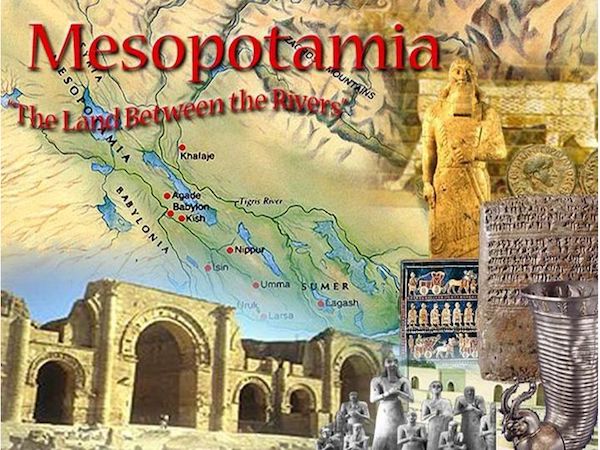
  • A Young Student’s Perception of Mesopotamian and Egyptian Civilizations

    A Young Student’s Perception of Mesopotamian and Egyptian Civilizations

    By Chitagam Saluja

    Egypt was a more stable civilization compared to Mesopotamia and also fuller of life and fun. Economically perhaps Mesopotamia flourished more than Egypt, and in art and culture Egypt edged over Mesopotamia”, says the young scholar.

    Mesopotamian and Egyptian Civilizations of Middle East and North Africa were closely interlinked and influenced by each other. In more ways than one these civilizations grew up in contrast of each other.

    The structure of Government of Egypt was central and authoritative and Mesopotamian stressed mostly on city state layout. The difference in architecture was huge. Where the Egyptians liked majestic structures, the Mesopotamian art was simple and had a strong literary element which Egypt lacked.

    The bureaucracy was endlessly affected by the structures.  Mesopotamians were more practical in their thinking and did not believe in the Egyptian preparation for afterlife.

    Both these civilizations carried out extensive trading, but the economic implication varied in most cases. Mesopotamia was more technological in its approach and the environment was very difficult to manage than the Nile valley. The contacts of trade were a lot vaster and far flung and special importance was given to the merchant class and commercial law.

    The social differences were also huge. Like the difference in social status of women in the two contrary civilizations. It is concluded that in Egyptian society women were given more importance as well. To stabilize the Egyptian monarchy women of the upper class were important and were treated with much care and respect which wasn’t the case in Mesopotamian.

    Since these civilizations grew up in similar environments they had a symbiotic relationship. Their origins are largely different; so is their way of working.

    Egypt- The prosperity of the ancient civilization came partly from the ability to adapt to the condition of the Nile valley

    Egypt was a more stable civilization compared to Mesopotamia and also fuller of life and fun.
    Economically perhaps Mesopotamia flourished more than Egypt, and in art and culture Egypt edged over Mesopotamia.

    (The author is an undergraduate student at Nassau County Community College in New York. He can be reached at agysaluja1@gmail.com)

     The Indian Panorama invites young students to contribute their articles. They may write on any subject under the Sun. Articles may please be submitted to editor@theindianpanorama.com


  • Indian-Origin Professor Awarded “Outstanding Investigator Award”

    Indian-Origin Professor Awarded “Outstanding Investigator Award”

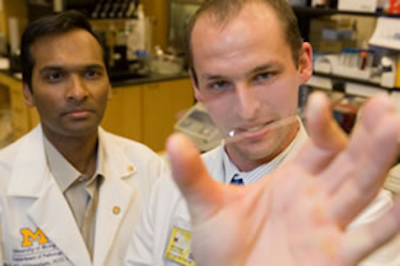
    WASHINGTON(TIP): Indian–origin Professor Arul Chinnaiyan has been recognized by the US National Cancer Institute and given the “Outstanding Investigator Award”.

    Prof. Chinnaiyan is from the University of Michigan. He has been awarded $6.5 million in funding over seven years, to identify cancer biomarkers to improve diagnosis and develop new targeted therapies.

    “The field of precision oncology continues to evolve with the overarching goal of providing cancer patients with enhanced diagnostic and prognostic capabilities and better treatments,” Mr Chinnaiyan, said in a statement.

    “This grant will help us identify new biomarkers and understand their biological roles in cancer progression,” he added.

    A pioneer in precision oncology, Mr Chinnaiyan in 2010, launched the Michigan Oncology Sequencing (Mi-ONCOSEQ) program. Mi-ONCOSEQ is a research protocol for sequencing the DNA and RNA of metastatic cancers and normal tissue to identify alterations that could help drive treatment.

    The program includes a precision medicine tumor board in which experts discuss each case.

    Mr Chinnaiyan’s lab has also analyzed the global landscape of a portion of the genome that has not been previously well-explored — long non-coding RNAs (lncRNAs).

    Earlier, considered as the dark matter, new evidence suggests that lncRNAs may play a role in cancer and that understanding them better could lead to new potential targets for improving cancer diagnosis, prognosis or treatment.

    Mr Chinnaiyan’s lab has also identified and explored several lncRNAs that could be promising targets for future therapy.

    “We want to further characterize the dark matter of the genome. Some of these lncRNAs will certainly be very useful as cancer biomarkers and we think a subset are important in biological processes,” Mr Chinnaiyan noted.

    “We hope to make it commonplace for patients to have a molecular blueprint of their tumor to guide treatment choices.”


  • Indian-Origin US Student to get ‘Young Scholar’ Award

    Indian-Origin US Student to get ‘Young Scholar’ Award

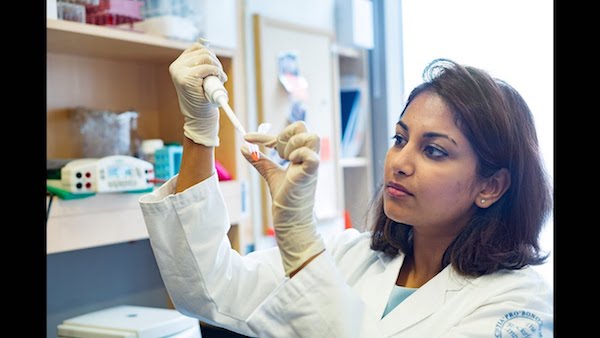
    WASHINGTON(TIP): India-origin scholar in the US, Rajalakshmi Nandakumar, has been chosen for a prestigious award for her work to help detect potentially life-threatening health issues using smartphones.

    Ms. Nandakumar, studying at the University of Washington, has created a technology that turns an ordinary smartphone into an active sonar system capable of detecting physiological activities, such as movement and respiration, without requiring physical contact with the device.

    She has been selected for the 2018 Marconi Society Paul Baran Young Scholar award.

    She took inspiration from bats, which use sonar technique to navigate in the dark by sending out acoustic signals and using the reflections to identify objects.

    Her system works by transmitting inaudible sound signals from the phone’s speaker and tracking their reflections off the human body. The reflections are then analyzed using a combination of algorithms and signal processing techniques, a media release said.

    Ms. Nandakumar received her bachelor’s degree in Computer Science and Engineering from Chennai.

    She worked for Microsoft Research India before beginning her graduate work at the University of Washington in 2013. Her Madurai-based parents founded a company for distribution of diagnostic medicines to hospital laboratories in Tamil Nadu.

    Young scholars are selected by an international panel comprising engineers from leading universities and companies and receive a USD 5,000 prize plus expenses to attend the annual awards event.

    Three other young scholars were also selected this year. Being named ‘Young Scholar’ brings valuable mentorship and guidance by Marconi Prize winners who include some of the world’s leading scientists and researchers.

    “I always wanted to find a way to detect physiological signals, like breathing and heart rate, because they are the most commonly used signals for healthcare applications,” said Ms. Nandakumar.

    Her system is disrupting the sleep industry by creating a non-intrusive, low-cost application ApneaApp for detecting sleep apnea, a breathing disorder affecting millions of people worldwide that often goes undiagnosed, a media release said.

    “Rajalakshmi has a knack for selecting problems with high social impact,” says Dr Shyam Gollakota, an associate professor at the Allen School.

    “Our Young Scholar award attracts the world’s brightest young communications researchers,” said Dr Vinton Cerf, Chairman of the Marconi Society and ‘Father of the Internet’.


  • Indian American Assistant Professor wins prestigious Blavatnik Young Scientists award 

    Indian American Assistant Professor wins prestigious Blavatnik Young Scientists award 

    NEW YORK(TIP): Indian American Shruti Naik, an assistant professor at NYU School of Medicine, has won the prestigious Blavatnik Regional Awards for Young Scientists in the “Life Sciences” category. A postdoctoral researcher at Stony Brook University Priyanka Sharma, another Indian American, received honorable mention in the “Chemistry” category.

    The Blavatnik Family Foundation and the New York Academy of Sciences, award and support outstanding postdoctoral researchers in Tri- State of New York. The Foundation said in a press release that 125 nominated researchers competed for the nine spots.

    The winners and finalists will be honored at the New York Academy of Sciences’ annual gala in New York on November 5, 2018.

    Naik, who was nominated while she was doing a postdoctoral fellow at The Rockefeller University, is being recognized for “demonstrating that skin stem cells retain a ‘memory’ of previous inflammatory experiences, allowing for a more robust and rapid response to subsequent injury,” the release said.

    Her groundbreaking work uncovered a new property of skin stem cells that explains how our largest and most vulnerable organ — the skin — responds to and remembers injuries and inflammatory stimuli such as injury or exposure to skin irritants. The skin is the body’s primary barrier to the outside world and it is critical to our survival that it remains intact.”

    Her discovery that skin stem cells “can be sensitized to inflammation may aid the development of better treatment strategies for a variety of skin conditions,” it added.

    Naik earned her bachelor’s degree in cellular and molecular biology from the University of Maryland College Park, and graduate and doctoral degrees from University of Pennsylvania.

    Sharma, a polymer chemist, is being honored for “her pioneering work on the low-cost conversion of untreated biomass to carboxycellulose nanofibers, which have applications in biomedicine and in water purification in developing nations,” the release added.

    The Blavatnik Family Foundation, founded by industrialist and philanthropist Len Blavatnik, supports educational, scientific, cultural, and charitable institutions in the United States and other parts of the world.

    The New York Academy of Sciences, a 200-year-old nonprofit, advances scientific research, education, and policy.

  • Rebooting the system for a skills upgrade

    Rebooting the system for a skills upgrade

    There needs to be a road map to rescue private Industrial Training Institutes from their weak state

    The only way to mobilize adequate resources the right way is to do skills training and have equipment and tools that keep pace with changing needs and ensure that employers have skin in the game.

    Small shops, basements, tin sheds and godowns. These are not random workplaces but places where private Industrial Training Institutes (ITIs) are running in the country (India). Disturbing facts such as these come from the report of the Standing Committee on Labour (2017-18) headed by Bharatiya Janata Party MP Kirit Somaiya, on the “Industrial Training Institutes (ITIs) and Skill Development Initiative Scheme” of the Ministry of Skill Development and Entrepreneurship (MSDE). It was submitted to Parliament few months ago.

    Explaining the scale-up

    The ITIs were initiated in the 1950s. In a span of 60 years, until 2007, around 1,896 public and 2,000 private ITIs were set up. However, in a 10-year period from 2007, more than 9,000 additional private ITIs were accredited.

    What explains this huge private sector scale-up? The committee says that it is not efficiency but a disregard for norms and standards. However, the ITIs are not alone. The National Skill Development Corporation (NSDC) today has more than 6,000 private training centers. Since it has short-term courses and its centers open and close frequently, it is all the more prone to a dilution of standards. Private training partners have mushroomed at the rate of five a day (mostly with government support) and it is clear that the government has been unable to regulate private institutions for quality. Private sector engagement in skill development has been taken up by standalone private training partners and not employers. The latter could have made the system demand-driven. Meanwhile, the lack of a regulator for skill development, with teeth, has led to poor quality affiliation, assessment and certification.

    The Somaiya committee report is scathing in its tone and specific in details. It outlines instances of responsibility outsourcing, no oversight, connivance and an ownership tussle between the Central and State governments.

    Private-ITI accreditation troubles started when the Quality Council of India (QCI), a private body, was hired due to “high workload of affiliation and shortage of [government] staff”. The QCI did not follow accreditation norms created by the National Council for Vocational Training (NCVT) and it appears that neither scale nor standard was achieved, but only speed. ‘Speed’ now risks the future of 13.8 lakh students (on an average, 206 students per ITI) studying in these substandard ITIs, which can be closed any time.

    The ITIs have a unique functioning set-up. While they were formed under the government’s Craftsman Training Scheme, their day-to-day administration, finances and admissions are with State governments. The NCVT performs an advisory role. The ITIs often run into issues with no one to take ownership. A case in point is the examination process — the question paper is prepared by the NCVT, but administered and evaluated by instructors of the State Councils for VT. The NCVT is just a stamp with no role in actually assessing quality. How can quality outcomes be expected without quality assessments?

    The parliamentary committee has shed light on the ITIs. If the same exercise were extended to other skill development schemes, the picture would be grimmer. There are 183 cases pending in High Courts on non-compliance of norms by the ITIs. However, the short-term training programs of the Ministry evade any scrutiny and action. For example, the Standard Training Assessment and Reward scheme spent ₹850 crore in 2013-14 with no norms for quality. There were no Aadhaar checks, attendance requirements and batch size limitations. Private training operators have made a profit with no court cases.

    The report also reinforces disturbing findings of a national survey by the research institute (NILERD) of the Planning Commission in 2011 about private ITIs: they offered training in less than five trades (in government ITIs it is less than 10); had fewer classrooms and workshops for practice; and their teachers were very poorly paid.

    A starting point

    So, what can we do systemically? A good point to start would be the Sharda Prasad Committee recommendations.

    We need better oversight, with a national board for all skill development programs. The core work (accreditation, assessment, certification and course standards) cannot be outsourced. Like every other education board (such as the CBSE), a board is required in vocational training that is accountable. Since we have the NCVT as a legacy, it should be used as a kernel to constitute the board. We should also have a mandatory rating system for the ITIs that is published periodically. A ranking of the ITIs on several parameters such as the one done by the National Assessment and Accreditation Council in tertiary education can be replicated.

    There should be one system, with one law and one national vocational education and training system. The silos in which vocational training happens in India is unfortunate. We need to create a unified national vocational system where the ITIs, NSDC private vocational trainers and vocational education in schools, and the other Central ministries conducting training gel seamlessly and can learn from, and work with each other. A unified legal framework can facilitate such a unification. The absence of a law has only weakened regulation and monitoring. What we need is a national vocational act that replaces all scattered regulations — recommended in the 12th Five Year Plan.

    Micro-institutional reforms

    The ITIs have many internal issues such as staffing and salaries that need attention, as the NILERD nationwide survey in 2011 had found. There is also a critical need to reskill ITI teachers and maintain the student-teacher ratio. Since technology obsolescence is a continuous challenge, financial support envisaged through the NSDC should be extended to the ITIs.

    The primary reason for hiring the QCI and the mess that followed was this: “huge workload of affiliation and shortage of staff”. This is true even today. It is unlikely that without fixing this, the QCI mistake will not be repeated. There has been a tremendous push by the government for private sector talent in government; perhaps it is worth considering talent from the open market to fill up higher posts in skill development.

    Institutional reforms such as moving the office of the Directorate General of Employment (the arm that has all data on employment) from the Ministry of Labour to the MSDE would help. It would also complement the Directorate General of Training already under MSDE.

    Employers and financing

    This is the last but perennial challenge. Given the scale of our demographic challenge, a belief that financing from corporate social responsibility, multilateral organizations such as the World Bank, and the government will meet the financial needs for skill development is wishful thinking.

    The only way to mobilize adequate resources the right way is to do skills training and have equipment and tools that keep pace with changing needs and ensure that employers have skin in the game. This is possible through a reimbursable industry contribution (RIC) — a 1-2% payroll tax that will be reimbursed when employers train using public/private infrastructure and provide data. RIC, which is implemented in 62 other countries, was recommended in the 12th Plan and is an idea whose time has come. An estimate by the first author of this article indicated that such a tax would generate ₹17, 000 crore per annum for skilling in India — which is several multiples of State/Union governments’ current annual budget for skilling.

    Finally, while there is so much talk of skills for the future and the impact of artificial intelligence and automation, data show that 13.8 lakh students in the ITIs are suffering due to poor institutional accreditation. Placement in NSDC training has been less than 15%. Maybe if we take care of the present, we will be better prepared for the future.

    (Santosh Mehrotra is Professor of Economics, Centre for Labour, Jawaharlal Nehru University, a member of the Prasad Expert Committee on Sector Skill Councils, and a lead author of the National Skills Qualification Framework. Ashutosh Pratap works on skills and jobs issues and has worked with the Expert Committee)


  • University of Texas Dallas Indian American Lecturer Amandeep Sra Earns ‘National Award for Excellence in Undergrad Teaching’

    University of Texas Dallas Indian American Lecturer Amandeep Sra Earns ‘National Award for Excellence in Undergrad Teaching’

    DALLAS (TIP): Dr. Amandeep Sra is the recipient of the 2018 Centennial Award for Excellence in Undergraduate Teaching from Iota Sigma Pi, the national honor society for women in chemistry. Founded in 1902, Iota Sigma Pi serves to promote the advancement of women in chemistry by granting recognition to women who have demonstrated superior scholastic achievement and high professionalism.

    The organization presents several awards to professionals in the field of chemistry and scholarships to graduate, undergraduate and high school students. The Centennial Award is given each year to a female educator for excellence in teaching chemistry.

    Sra teaches freshman- and sophomore-level chemistry and is the general chemistry lab coordinator in the School of Natural Sciences and Mathematics. These classes enroll about 250 students per lecture section, and each semester serve about 1,200 students in the lab.

    Such large classes include a large number of nontraditional students, many of whom said in nomination letters for the award that Sra finds ways to reach everyone and will go above and beyond with workshops, study sessions and mentoring to help students understand the material.

    “Having one-on-one interaction with students is very important. As I get to know them, I feel I can better help them in the areas they need most.”

    Before she began teaching part time in 2011 and full time in 2012, Sra conducted research in materials science and engineering and electrical engineering at UT Dallas and did biomedical research at the Harold C. Simmons Comprehensive Cancer Center at UT Southwestern Medical Center. Such diverse research experiences have made her a better teacher, she said.

    “My basic training is as a chemist,” said Sra, who earned her PhD in chemistry at the Bhabha Atomic Research Center in India. “Multidisciplinary research experiences have helped me a lot because freshmen who take my classes have different majors.

    “My knowledge from working in a biology-oriented field, as well as in materials science and electrical engineering, has helped me integrate these topics into teaching chemistry. I think this has been really helpful for the students because now they see that chemistry is not just an isolated subject but is the basic foundation of many sciences.”

    Sra was nominated for the national award by Dr. Julia Chan, professor of chemistry and biochemistry at UT Dallas, who won the 2008 Agnes Fay Morgan Research Award from Iota Sigma Pi. That award recognizes the achievements of scientists under the age of 40.

    “Dr. Sra is creative and able to inspire students because of her ability to integrate current research trends, and this effort is not trivial,” Chan said. “She is also a mentor to veterans and nontraditional students in her classes, and she takes an active role in ensuring students’ success.”

    Sra also received UT Dallas’ 2018 President’s Teaching Excellence Award in Undergraduate Instruction for a non-tenure-track faculty member and a 2017 Outstanding Teaching Award from the School of Natural Sciences and Mathematics.

    “When I first started teaching, it was part-time. But once I realized how much I enjoyed it and enjoyed interacting with students, I decided it was a good career move to switch to full-time teaching,” Sra said.

    (Press Release)

  • Indian American Professor nominated to Privacy and Civil Liberties Agency

    Indian American Professor nominated to Privacy and Civil Liberties Agency

    WASHINGTON(TIP): An Indian American law professor and legal expert has been nominated by US President Donald Trump to an agency on privacy and civil liberties.

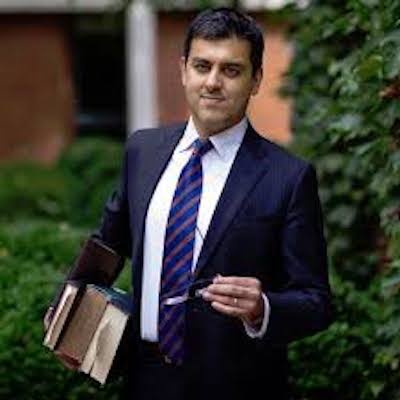
    Aditya Bamzai, a professor at University of Virginia’s School of Law, has been nominated by Donald Trump to be a member of the Privacy and Civil Liberties Oversight Board for the remainder of a six-year term expiring January 29, 2020.

    The agency works to ensure that efforts by the executive branch of the government to protect the nation from terrorism are balanced with the need to protect privacy and civil liberties.

    According to Mr Bamzai’s profile on the university website, he teaches and writes about civil procedure, administrative law, federal courts, national security law and computer crime.

    He joined the University of Virginia School of Law’s faculty as an associate professor in June 2016.

    Mr Bamzai has argued cases relating to the separation of powers and national security in the US Supreme Court, Foreign Intelligence Surveillance Court of Review, DC Circuit and other federal courts of appeals.

    He is a graduate of Yale University and of the University of Chicago Law School, where he was the editor-in-chief of the law review

    Before entering the academy, Mr Bamzai served as an attorney-adviser in the Office of Legal Counsel of the US Department of Justice and as an appellate attorney in both private practice and for the National Security Division of the Department of Justice.

    Earlier in his career, he was a law clerk to Justice Antonin Scalia of the US Supreme Court and to Judge Jeffrey Sutton of the US Court of Appeals for the Sixth Circuit.


  • Indian American 15-year-old Graduated as a Biomedical Engineer

    Indian American 15-year-old Graduated as a Biomedical Engineer

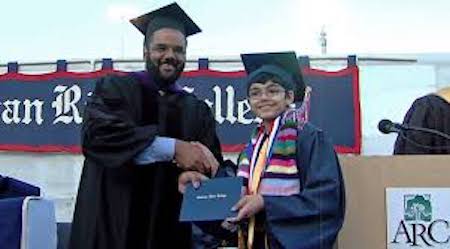
    SACRAMENTO(TIP): Indian American Tanishq Abraham,15, reached a milestone in his academic journey and is all set to start his doctorate after completing his graduation in biomedical engineering, according to a media report.

    This child prodigy, graduated from the University of California, Davis with the highest honors of summa cum laude.

    “Of course, I feel very happy, very excited, and I’m very proud of my accomplishments,” Tanishq told the media.

    “He’s got a lot of passion and we have to keep up with him, pretty much,” said his parents, Taji and Bijou Abraham, hailing from Kerala.

    Tanishq has also designed a device that could measure the heart rate of burn patients without touching them.

    As for the future, it’s back into the lab at Davis for a Ph.D. and eventually medical school. Tanishq has big dreams of finding solutions to problems, the report said.

    “Yeah, of course, what everybody likes to say and what I am also interested in is, of course, cancer and developing new treatments for cancer, more effective treatments for cancer,” he said.

    Tanishq has already been accepted into the University of California, Davis graduate program where he plans to get his MD in the next four to five years.

  • Indian Australian Mathematician Wins Fields Medal, the “Nobel of Mathematics”

    Indian Australian Mathematician Wins Fields Medal, the “Nobel of Mathematics”

    NEW YORK(TIP): Indian-Australian mathematician, is one of four winners of mathematics’ prestigious Fields medal, known as the Nobel prize for math.

    The Fields medals are awarded every four years to the most promising mathematicians under the age of 40.

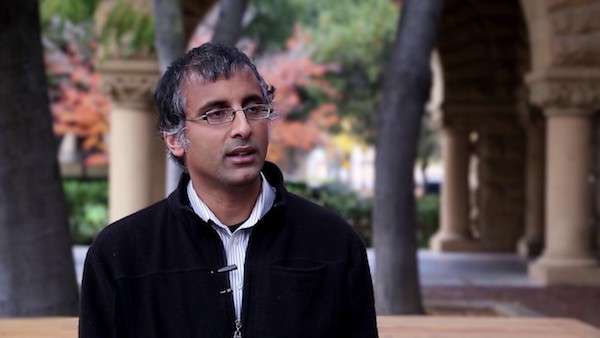
    Akshay Venkatesh, 36, who is currently teaching at Stanford University, has won the Fields Medal for his “profound contributions to an exceptionally broad range of subjects in mathematics.”

    The citation for his medal – awarded on August 1, at the International Congress of Mathematicians in Rio de Janeiro – highlights his “profound contributions to an exceptionally broad range of subjects in mathematics” and his “strikingly far-reaching conjectures.”

    Each winner received a 15,000 Canadian-dollar cash prize.

    At least two, and preferably four people, are always honored in the award ceremony.

    The prize was inaugurated in 1932 at the request of Canadian mathematician John Charles Fields, who ran the 1924 Mathematics Congress in Toronto.

    From being a child prodigy to becoming one of the most renowned researchers in the field of mathematics, Mr Venkatesh’s journey has been full of achievements and accolades.

    He moved to Perth, Australia, with his parents when he was 2 from New Delhi, India.

    He participated in physics and math Olympiads – the premier international competitions for high school students and won medals in the two subjects at ages 11 and 12, respectively.

    He finished high school when he was 13 and went to the University of Western Australia, graduating with first class honors in mathematics in 1997, at the age of 16.

    In 2002, he earned his PhD at the age of 20. Since then, he has gone from holding a post-doctoral position at MIT to becoming a Clay Research Fellow and, now a professor at Stanford University.

    Mr Venkatesh has worked at the highest level in number theory, arithmetic geometry, topology, automorphic forms and ergodic theory.NT

    His research has been recognized with many awards, including the Ostrowski Prize, the Infosys Prize, the Salem Prize and Sastra Ramanujan Prize.

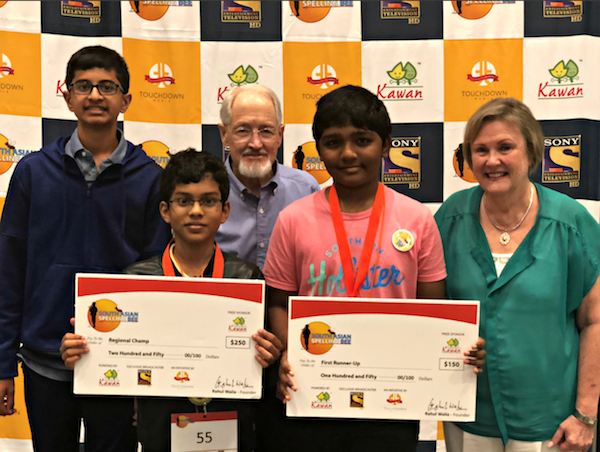
  • The 2018 South Asian Spelling Bee Announces Dallas and New Jersey Winners

    The 2018 South Asian Spelling Bee Announces Dallas and New Jersey Winners

    DALLAS, TX  (TIP):Continuing its quest for the best speller in the community, the 2018 South Asian Spelling Bee (www.SouthAsianSpellingBee.com) traveled to Texas and New Jersey  with stops in Dallas and New Brunswick.

    With a huge turnout this year, the Bee attracted some top talent as well as young and new spellers that competed for the coveted prizes and titles.

    At the Dallas Regional, current Scripps National Champion and South Asian Spelling Bee alumnus Karthik Nemmani was at hand to interact with spellers and parents. Having attended the South Asian Spelling Bee for 5 years, Nemmani  had specific insights about his experience at the event and its contribution to his success.

    “The South Asian Spelling Bee gave me exposure and a competitive edge that other bees lacked,” he told a standing room only crowd at the regional.

    Sohum Sukhatankar (12) of Dallas, Texas was the regional champ and Rohan Raja (12) of Irving, Texas, was the first runner up at the Dallas Regional.

    In New Jersey, Nitya Kathiravan (9) of Edison, New Jersey was the regional champ and Sujata Choudhury (11) of Cherry Hill, New Jersey, was the first runner up.

    The event is open to children of South Asian descent up to 14 years of age. It will give South Asian children a chance to test their spelling skills in their core peer group. Interested spellers need their parent or guardian to register them online at www.southasianspellingbee.com.

    Organized by Touchdown Media Inc., the South Asian Spelling Bee is celebrating its 11th anniversary this year and with regionals being held in 6 locations across the United States. Regional centers for this season include Washington, D.C. Metro, Charlotte, the Bay Area, Chicago, New Jersey, and Dallas. All events will be free to attend and open to the public. An international regional in Accra, Ghana was conducted earlier this year, from where spellers of South Asian descent will qualify for the finals.

    “For the past ten years, the Bee has consistently provided a firm platform for the community to come together and hone their craft. It’s become a family activity that contributes towards the overall development of the child. We are proud to enter our eleventh consecutive year and look forward to engaging some of these wonderful spellers,” said Rahul Walia, founder of the South Asian Spelling Bee and CEO of Touchdown Media Inc.

    Within the past year the South Asian Spelling Bee has been exhaustively featured in “Breaking the Bee” and an exclusive story on VICE News that followed the journey of South Asian Spelling Bee spellers and the importance of the South Asian Spelling Bee platform being a vital step in their spelling journey.

    The top two spellers of each regional competition will advance to the finals to be held in New Jersey in August. Champion’s grand prize of $3,000 will be awarded to the winner at the finals.

    This year, the Bee is proudly powered by Kawan- the world’s most popular Roti paratha brand returns as the powered by sponsor and as always, Sony Pictures Networks is the exclusive broadcast partner for the South Asian Spelling Bee and will be airing the series across 120 countries.

    “Kawan is proud to return as a sponsor and we have tremendous faith in contributing towards crucial family time for the community. We look forward to getting to know the spellers and their families through this wonderful journey,” said Tim Tan, Managing Director Kawan Food.

    “Year over year, the South Asian Spelling Bee has made for great programming that gels with our ethos of compete family entertainment. We are all about family values and encourage platforms such as these that highlight the talent of our community,” said Jaideep Janakiram, Head of Americas, Sony Pictures Networks.

    For a complete schedule, registration and any other information, please visit: www.SouthAsianSpellingBee.com.

    Find us on Facebook at South Asian Spelling Bee and you can follow us on our Twitter handle at Spell South Asian.


  • Indian appointed head of top Chinese biz institute

    Indian appointed head of top Chinese biz institute

    BEIJING(TIP): Dr. Dipak Jain, a prominent Indian professor in the US, has been appointed as the new head of a top global business school in China, according to a media report. Jain, 61, will take over as the European president of the Shanghai-based China Europe International Business School (CEIBS), replacing Pedro Nueno who held the position for 28 years.

    Dr.  Jain is the European President-Designate, Professor of Marketing and Global advisor at CEIBS. He is a globally recognized marketing and innovation expert whose insights have inspired a generation of business leaders to pursue success with significance. Dr. Jain’s influential career spans nearly four decades as an educator, a senior business school administrator, and a consultant to corporations and governments. Throughout his career, he had furthered a pedagogical model that combines academic excellence and business relevance to produce high-impact results with social significance.

    Prior to being named Sasin’s Director in 2014, he served from 2011 to 2013 as Dean of INSEAD, an international business school with campuses in France, Singapore and Abu Dhabi. Before joining INSEAD, Dr. Jain was Dean of Northwestern University’s Kellogg School of Management from 2001 to 2009. In recognition of his many scholarly achievements and outstanding teaching, he also was named the Sandy and Morton Goldman Professor of Entrepreneurial Studies and Professor of Marketing at Kellogg, whose Marketing Department he joined as a faculty member in 1986.

    Dr. Jain’s academic career began as a student in Tezpur, Assam India. He earned his bachelor’s degree in statistics (1976) with Honors from Gauhati University, where he taught for four years before enrolling in the University of Texas (Dallas), where he completed his Ph. D in Marketing in 1986.

    An award-winning scholar in his own right, Dr. Jain’s areas of research expertise include the marketing of high-tech products; market segmentation and competitive market structure analysis; cross-cultural issues in global product diffusion; new product innovation; and forecasting models. He has published more than 60 articles in leading academic journals and has earned the prestigious John D.C. Little Best Paper Award. Among the many distinctions for his teaching and service, Dr. Jain received the Pravasi Bharatiya Samman from the Prime Minister of India, an award that recognizes exceptional leadership contributions of overseas Indians.

    Jain, a former dean of two of the world’s leading business schools, the Kellogg School of Management and INSEAD, will work alongside his Chinese counterpart Li Mingjun.  Brought up in Assam, Jain, who lives in Chicago and works in Shanghai for 10 to 15 days each month, has been teaching marketing at CEIBS since September last year when he took on the president-designate role.

    (With inputs from CEIBS)

  • Curtin ranked among top 20 young universities in the world

    Curtin ranked among top 20 young universities in the world

    PERTH(TIP): Curtin University has been ranked among the world’s top 20 young universities in the 2019 edition of the QS Top 50 Under 50 released, June 21.

    The ranking, which measures the world’s best universities under 50 years of age, positions Curtin University at 20th in the world, an improvement on last year’s results.

    Curtin University Vice-Chancellor Professor Deborah Terry said Curtin continues to establish itself as a leading young university on the world stage.

    “With campuses in Malaysia, Singapore, Dubai and Mauritius, as well as Western Australia, Curtin is a truly global university and I am delighted the University continues to receive global recognition in prestigious world rankings,” Professor Terry said.

    “This latest result ranks Curtin among the top 20 young universities in the world and as Australia’s fourth-best young university, continuing the University’s upward trajectory on last year’s results.”

    Professor Terry congratulated staff and students for their commitment to excellence in learning and research.

    “Even though Curtin is a young university by global standards, the University continues to prove itself on the world stage by rising in international rankings and this result is a credit to both staff and students,” Professor Terry said.

    The QS Top 50 Under 50 are sourced from the latest QS World University Rankings.

    For more information about the QS Top 50 Under 50, visit here: https://www.topuniversities.com/top-50-under-50

    About Curtin University

    Curtin University is Western Australia’s largest university, with more than 56,000 students. Of these, over 14,000 are international students. The University’s main campus is in Bentley near the Perth CBD. Curtin has six other campuses across WA, Malaysia, Singapore, Dubai and Mauritius. Curtin also has a presence at a number of other global locations.

    Curtin celebrated ‘50 Years of Innovation’ in 2017 – the combined history of the Western Australian Institute of Technology (WAIT), which opened its doors to students in 1967 and Curtin University, which opened in 1987.

    Today, Curtin is estimated to be ranked 180th and in the top one per cent of universities worldwide, and 9th in Australia in the Academic Ranking of World Universities 2017 (ARWU) and features highly in a number of other key world rankings.

    The University has built a reputation around innovation and an entrepreneurial spirit, being at the forefront of many high-profile research projects in astronomy, biosciences, economics, mining and information technology. It is also recognized globally for its strong connections with industry, and for its commitment to preparing students for jobs of the future.

    For further information visit curtin.edu.au.


  • The 2018 South Asian Spelling Bee Kicks Off the Season with 4 Regionals

    The 2018 South Asian Spelling Bee Kicks Off the Season with 4 Regionals

    WASHINGTON (TIP): Continuing its quest for the best speller in the community, the 2018 South Asian Spelling Bee (www.SouthAsianSpellingBee.com) traveled to Illinois, California, Maryland, and North Carolina this past weekend with stops in Chicago, The Bay Area, Washington DC, and Charlotte.

    With a huge turnout this year, the Bee attracted some top talent as well as young and new spellers that competed for the coveted prizes and titles.

    Chicago: Snehal Choudhury (Regional Champion) and Maya Jadhav (First Runner Up)

    In the Chicago Regional, Snehal Choudhury (13) of Massillon, Ohio was the regional champ and Maya Jadhav (9) of Fitchburg, Wisconsin, was the first runner up.

    Bay Area: Rishik Ghandhasri (Regional Champion) and Vayun Krishna (First Runner Up)

    In Bay Area, Rishik Gandhsri (12) of San Jose, California was the regional champ and Vayun Krishna (11) of Sunnyvale, California, was the first runner up.

    DC: Christopher Serrao (Regional Champion) and Srivarun Hathwar (First Runner Up)

    In DC, Christopher Serrao (12) of Whitehouse Station, New Jersey was the regional champ and Srivarun Hathwar (12) of Virginia Beach, Virginia, was the first runner up.

    Charlotte: Vishal Madhudi (Regional Champion) and Kyu-Carlo Alegre (First Runner Up)

    In Charlotte, Vishal Madhudi (14) of Painted Post, New York was the regional champ and Kyu-Carlo Alegre (13) of Carrollton, Georgia, was the first runner up.

    The event is open to children of South Asian descent up to 14 years of age. It will give South Asian children a chance to test their spelling skills in their core peer group. Interested spellers need their parent or guardian to register them online at www.southasianspellingbee.com.

    Organized by Touchdown Media Inc., the South Asian Spelling Bee is celebrating its 11th anniversary this year and with regionals being held in 6 locations across the United States. Regional centers for this season include Washington, D.C. Metro, Charlotte, the Bay Area, Chicago, New Jersey, and Dallas. All events will be free to attend and open to the public. An international regional in Accra, Ghana was conducted earlier this year, from where spellers of South Asian descent will qualify for the finals.

    “For the past ten years, the Bee has consistently provided a firm platform for the community to come together and hone their craft. It’s become a family activity that contributes towards the overall development of the child. We are proud to enter our eleventh consecutive year and look forward to engaging some of these wonderful spellers,” said Rahul Walia, founder of the South Asian Spelling Bee and CEO of Touchdown Media Inc.

    Within the past year the South Asian Spelling Bee has been exhaustively featured in “Breaking the Bee” and an exclusive story on VICE News that followed the journey of South Asian Spelling Bee spellers and the importance of the South Asian Spelling Bee platform being a vital step in their spelling journey.

    The top two spellers of each regional competition will advance to the finals to be held in New Jersey in August. Champion’s grand prize of $3,000 will be awarded to the winner at the finals.

    This year, the Bee is proudly powered by Kawan- the world’s most popular Roti paratha brand returns as the powered by sponsor and as always, Sony Pictures Networks is the exclusive broadcast partner for the South Asian Spelling Bee and will be airing the series across 120 countries.

    For a complete schedule, registration and any other information, please visit: www.SouthAsianSpellingBee.com.

    Find us on Facebook at South Asian Spelling Bee and you can follow us on our Twitter handle at Spell South Asian.

    Touchdown Media Inc. is a specialized South Asian advertising and promotions firm based in New Jersey. Now in its 11th successful year, Touchdown has helped clients- both mainstream and otherwise, reach out to the lucrative South Asian market, Touchdown Media represents more than 35 years of collective experience in this niche market. As a full-service ad firm, Touchdown has helped many clients achieve their media and marketing goals within the South Asian Diaspora in the US.


  • Xavier University holds 11th Graduation Ceremony

    Xavier University holds 11th Graduation Ceremony

    QUEENS, NY(TIP): On Saturday, June 16th, 2018, Xavier University School of Medicine held its eleventh Graduation Ceremony. This year’s festivities took place at St. John’s University in Queens, New York.

    52 graduates took the stage to receive their coveted hoods and well-earned diplomas. These students have spent tireless hours in their studies, and it was wonderful to see them finally graduate. Graduates Christophe Jerjian, Salutatorian, and Roopak Sekhon, Valedictorian, had the honor of addressing their fellow graduates during the ceremony. Christophe spoke about responsibility, and its new definition now that they are MDs. Roopak talked about trust and respect, and emphasized the importance of respect for colleagues in the medical field, including those who do not have an MD after their names. These two students were honored with plaques to commemorate their successes.

    Dignitaries

    Xavier had the pleasure of welcoming back an alumnus to address the graduates: Dr. A. Aboud. Dr. Aboud is currently at Michigan State University Hospital in a Family Medicine residency. Dr. Aboud gave the students advice about their futures, and how to be successful during residency. Some of his tips included goal setting, the importance of organization, and how to acknowledge one’s strengths and weaknesses and learn from mistakes. Xavier encourages alumni to continue their involvement with the University, and it was wonderful to welcome back Dr. Aboud for this special event.

    Trustees

    Aside from students, Xavier was honored to have many dignitaries present for the event, including Chairman Edwin Casey, Chancellor Dr. J.G. Bhat, President Ravishankar Bhooplapur, Trustee Dr. Obi Nwasokwa, Trustee Dr. Anthony Shallash, Trustee Mr. Frank Croes, Trustee Dr. Ravindra Kota, Advisor Dr. Dayan Naik, Chief Academic Officer Dr. Arun Dubey, Associate Provost Dr. Burton Herz, Clinical Deans Dr. Joseph Balsamo and Dr. Ahmad Abazid, Vice President of Academic Affairs Dr. Richard Pestell, Clinical Chairs, Dr. Paul Liu, Dr. Parvez Mir, and Dr. Sanjivan Patel, Vice Chair of Internal Medicine Dr. Ramesh Naik, and Professor Neelam Dwivedi. Xavier also had the privilege of welcoming Dr. Harry Jacobson as the Keynote Speaker.

    Dr. Jacobson earned his MD from the University of Illinois, and went on to complete a residency at Johns Hopkins University Hospital. He now serves as the Managing Partner and Co-Founder of TriStar Health Partners. In his address to the graduates, he touched on a number of topics, including health care in America, and the opportunities that are now available to students with their MDs. It is not just that they are doctors, they can now conduct research, enter into academics, and become entrepreneurs. Xavier thanks Dr. Jacobson for attending.

    Members of the Board of Trustees also spoke to the students and gave their advice for the future. Chancellor Dr. J.G. Bhat talked about the changing medical field, and how students now need to study societal concerns in medicine, whereas in the past it was purely about diagnosis. Chairman Mr. Edwin Casey defined success and love, and stated the importance of sharing success with others. Finally, President Ravishankar Bhooplapur talked about the growing technology available to these new graduates, but how they must always remember to be empathetic towards their patients. Technology may change over time, but empathy and connecting with patients never will.

    Graduates with dignitaries

    Graduation is always a wonderful opportunity to recognize students and their successes, and congratulate them and their loved ones for all of their hard work. Xavier cannot wait to see where these students go in the future and have them among our prestigious alumni.

    Xavier University School of Medicine 2018 Graduates:

    1. Abdulmuttableb Al Soufi
    2. Amar Gokli
    3. Andrea Hernandez *
    4. Angitha Alex
    5. Biju Kallumkal
    6. Chidelu Onyeani-Nwosu *
    7. Christophe Jerjian *
    8. Dale Adebayo
    9. David Martinez
    10. Fahad Nagaria
    11. Farah Khan
    12. Harija Khan
    13. Hashem Rifai
    14. Jenna Rabadi-Innabi
    15. Jessica Kainth
    16. Karisma Kothari
    17. Kaycee Umeoji *
    18. Majd Jazaerly
    19. Manpreet Kaur
    20. Marcus Jennings
    21. Maria Belaev
    22. Michael Arroyo
    23. Mohammed Hnoosh
    24. Mohsin Altaf
    25. Nabeel Borazan
    26. Nabil Ahmed
    27. Naval Walia *
    28. Nejma Louahlia
    29. Neveen Al-Atiyat
    30. Parshotam Kundan
    31. Pooja Bathija
    32. Pooja Solanki
    33. Pratick Patel
    34. Rafay Cheema
    35. Rami Sakaan
    36. Robert Statz
    37. Rochard Sauveur *
    38. Roopak Sekhon *
    39. Samer Al-Daheen
    40. Sean Arora
    41. Seshu Pisipati
    42. Seung Eun Kim
    43. Shabnam Zahedi
    44. Shannon Arora
    45. Sheila Joshi
    46. Shivan Patel
    47. Suha Qasem
    48. Tatyana Beaubrun
    49. Terence Riley
    50. Utsav Aiya
    51. Vishal Ganta
    52. Zain Nagaria

    * With honors

    (Press Release)