Tag: Edward Snowden

  • Snowden honored by U.S. whistleblowers in Moscow

    Snowden honored by U.S. whistleblowers in Moscow

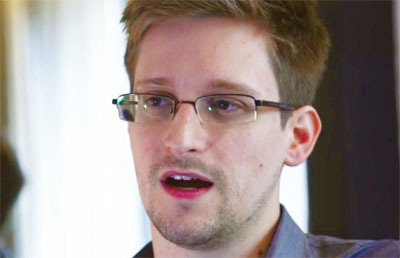
    MOSCOW (TIP): Edward Snowden who had not been in news for quite some time, burst back into the limelight Thursday, October 10 after four whistleblowing advocates from the United States reported meeting him to give him an award, and after his father arrived for the first time since his son received asylum. Through it all, the fugitive remained hidden, said a report in The Washington Post. The four activists, who said they met him Wednesday, gave Snowden a truth-telling award on behalf of the Sam Adams Associates for Integrity in Intelligence, an organization of former national security officials. They ridiculed U.S. government assertions that Snowden has caused grave damage to national security. The United States has charged Snowden under the Espionage Act for revealing secrets he acquired as a contractor for the National Security Agency. “Integrity must trump blind loyalty,” countered Coleen Rowley, a former FBI agent who was at the meeting, Snowden’s first with visitors.

    The four Americans told their story Thursday in a 15-minute program on the RT channel, which is financed by the Kremlin and broadcasts its point of view. Snowden’s father, Lon, met reporters in the company of Anatoly Kucherena, Snowden’s Kremlin-connected lawyer, and sped from the airport to an appearance on the main Russian television channel, also controlled by the Kremlin. “I’m Mr. Kucherena’s guest,” Lon Snowden said, “and I’m very thankful for his hospitality, and I’m going to follow Mr. Kucherena’s advice and that will determine where my day leads.” Lon Snowden acknowledged that Julian Assange and anti-secrecy group WikiLeaks had helped arrange his travel here, and the four Americans said Sarah Harrison, an Assange aide, remained with Snowden in refuge. Kucherena declined to reveal any details about a meeting between father and son, saying security concerns were paramount and suggesting the United States might somehow take action if it knew Edward Snowden’s whereabouts.

    “We need to understand he is America’s most wanted man,” the lawyer said. The Sam Adams award was announced in July but presented in person Wednesday, honoring Snowden as a whistleblower, a description the United States describes as wrong. U.S. officials contend that whistleblowers reveal information after efforts to go through official channels are ignored. Snowden, they say, made no such efforts before leaking secrets, forfeiting whistleblower protections. Thomas Drake, a former NSA executive who became a critic of the agency, praised Snowden for speaking truth to power. “Russia, to its credit, recognized international law and granted him asylum,” he said, asserting that U.S. officials drove Snowden into Russia’s arms by making him stateless. The United States points out that Snowden remains a citizen even though his passport was revoked and that he should return home to answer the charges against him. “This is an extraordinary person,” said Ray McGovern, a former CIA analyst. “He’s convinced what he did was right.” “I thought he looked great,” said Jesselyn Radack, who once accused the FBI of ethics violations and now defends whistleblowers for the Government Accountability Project.

    She said the United States has presented no evidence that Snowden harmed national security and was acting vengefully. “We weren’t worried about coming into your country,” she told a Russian TV host. “We’re worried about getting back into ours.” Rowley, who has testified to the Senate Judiciary Committee about problems facing the agency and the broader intelligence community, said the Sept. 11, 2001, attacks had taught Americans that national security was harmed when agencies failed to share information with one another and the public. “He’s remarkably centered,” she said of Snowden. Snowden, they said, has no regrets about what he did. He has been on the run since May, leaving his home in Hawaii and turning up in Hong Kong, then fleeing to Moscow on June 23, spending five weeks hiding in the airport where his father arrived Thursday. “I’ve had no direct contact with my son despite previous reports,” Lon Snowden told reporters gathered outside the airport. “If the opportunity presents itself, I certainly hope I’ll be able to meet my son.” Kucherena told reporters that the son was running out of money.

    “What he really needs to do today is find a job and I hope he can do that in the nearest future,” he said. “He could get a job in IT or maybe human rights. But we haven’t decided yet.” He said it was natural that Snowden has not been seen. “This is because he is being persecuted by a huge power, the U.S. government,” he said. “This anger persists, and we understand this very well.” Speculation has been rife about why he has remained in Russia. Authorities here say he could not travel onward because the United States revoked his passport, although Russia could have provided him with travel documents if it had so desired. “I’m here to learn more about my son’s situation,” Lon Snowden said, “and I’m thankful, extremely thankful, to the Russian people, President Vladimir Putin and Mr. Kucherena and his staff for their help in keeping my son safe and secure.” He said he doubted his son would return to the United States but said it was up to him. “I’m his father,” he said. “I love my son.”

  • End of Euphoria

    End of Euphoria

    “What prompts Obama to bracket Manmohan Singh with Hassanal Bolkiah is not difficult to fathom – simply put, both are potential buyers of American products” says the author.
    For a prime minister who got branded – unfairly, to my mind – as the most ‘pro- American’ in independent India, Manmohan Singh’s visit to the White House on Friday has an anti-climactic touch. There is near-total absence, on either side, of the sort of rhetoric that traditionally characterized such events. Meanwhile, next Monday also happens to be an important anniversary date. Five years ago the US Congress gave final approval on October 1, 2008 to the agreement facilitating nuclear cooperation between the US and India. Ironically, neither side is eager to celebrate the 5th anniversary. The nuclear deal was expected to bring India and the US together beneath the canopy of a strategic partnership based on an unprecedented convergence of interests. The leitmotif was the containment of China. The hyperbole raised very high expectations about a brave new world in which the US and India would fasten the “global commons”, exorcise terrorists, clean up environment and propagate democracy. But the unfulfilled expectations have come to haunt the relationship.

    There has been criticism that the US-India relations are in a state of drift and New Delhi should take the blame. Indeed, the nuclear deal brought about a sea change in the mutual perceptions regarding the relationship. In tangible terms, India is able to access uranium supplies from abroad, which in turn enables it to divert the scarce domestic reserves for the nuclear weapon program. As for the US, the new climate of relationship enabled it to make an entry into the massive Indian market and arms deals so far struck by it already exceed $10 billion in value. On the other hand, the US gradually lost the enthusiasm it claimed to have possessed in 2008 for getting India inducted into the technology control regimes, especially the Nuclear Suppliers Group. Nor is Washington fulfilling its 2008 commitments on transfer of reprocessing technology. Indeed, no one talks anymore about India’s permanent membership of the UN Security Council. On the contrary, the US behaves like the aggrieved party, complaining that India got ‘more’ out of the nuclear deal, since the expected dozens of billions of dollars worth nuclear commerce that Delhi had pledged may remain a distant dream unless the Indian government ‘tweaked’ its nuclear liability legislation. The blame game has put the Indian elites under pressure to ‘perform’ – that is, to ‘compensate’ the American side by at least buying more weapons from the US so that Washington is somehow kept in good humor. It also works as pressure to open up the Indian economy to boost US exports.

    Exceptional honor
    The American side knows how to play the game, especially the present administration whose top agenda is the recovery of the US economy. Thus, President Barack Obama is hosting a lunch in honor of Manmohan Singh and the US officials claim this to be an exceptional honor being bestowed on our prime minister because he would only be the second visiting dignitary that the US president is hosting to a lunch – other than the Sultan of Brunei. What prompts Obama to bracket Manmohan Singh with Hassanal Bolkiah is not difficult to fathom – simply put, both are potential buyers of American products. However, if the fizz has disappeared from the 2008 nuclear deal, the real reasons for it are to be found somewhere else. On the one hand, the US is a diminished world power today and is rebalancing its global strategies. On the other hand, India is acutely aware of the shift in the global balance of power that is happening and is making own adjustments to meet emergent realities. Thus, even as Manmohan Singh arrives in Washington, an Indian team landed in Beijing to prepare for a historic visit by the prime minister to China in October. Again, the impending visit of Manmohan Singh to Washington did not deter Delhi from talking loudly about stepping up its oil imports from Iran.

    Similarly, at the recent G20 summit in St Petersburg, President Vladimir Putin was pleasantly surprised at the forceful opposition to foreign military intervention in Syria by Manmohan Singh. The heart of the matter is that the euphoria of the nuclear deal was simply not sustainable. The latest revelations of the US National Security Agency whistleblower Edward Snowden come as a reality check. New Delhi covered up for the US so far by bravely defending the widespread snooping by American intelligence agencies as in the interests of preventing ‘terrorist attacks.’ The argument won’t wash anymore. The disclosures on Tuesday reveal that the NSA selected India’s Permanent Mission to the UN at New York and its embassy in Washington with great deliberation as “location targets” for infiltrating the hard disks of office computers and telephones with hi-tech bugs. Are we to believe that Indian diplomats posed threat to America’s homeland security? The disclosures say the Indian missions were specifically marked for various snooping techniques including one codenamed “Lifesaver,” which “facilitates imaging of the hard drive of computers.” It is fortuitous that Snowden’s disclosures have come on the eve of the fifth anniversary of the US-India nuclear deal. They serve to bring a sense of proportions to the India-US discourse. Hopefully, this will also be the end of the blame game that the US-India ties have lost their ‘sheen’ due to the Indian inertia. There never was any real sheen in the first instance – except in the rhetoric.

  • CIA finds 1-in-5 job applicants hail from Hamas, Hezbollah, al Qaeda

    CIA finds 1-in-5 job applicants hail from Hamas, Hezbollah, al Qaeda

    WASHINGTON (TIP): An estimated one-fifth of all applicants for Central Intelligence Agency positions had significant ties to the terror groups, Hamas, Hezbollah and al Qaeda, a newly released document from the Edward Snowden collection revealed on Monday, September 2. The document – released by Mr. Snowden as part of his National Security Agency intelligence dump – said that the terrorist groups worked hard to infiltrate America’s top security agencies. CIA officials uncovered thousands of applicants, roughly 1-in-5, with “significant terrorist and/or hostile intelligence connections,” the document states, Ynet News reported.

    The specifics of those ties were not revealed. But the groups most often cited as attempting to infiltrate the U.S. intelligence network were al Qaeda, Hamas and Hezbollah. The NSA, in response, launched investigations into 4,000 instances of suspected abnormal staff activity, Ynet News said. Those investigations included the tracking of employee keystrokes on agency computers and the recording of document downloads. “Over the last several years, a small subset of CIA’s total job applicants were flagged due to various problems or issues,” one unnamed agency official said, Ynet News reported. “During this period, one in five of that small subset was found to have significant connections to hostile intelligence services and-or terrorist groups.”

  • Threats to National Security and threats to Civil Liberties

    Threats to National Security and threats to Civil Liberties

    SACRAMENTO (TIP): Geneva Liberty Group’s event “1984 Day Rally to ‘Restore the Fourth’ amendment attracted about sixty attendees on August 4th, 3:00-5:00 PM, at Cesar Chavez Park located in heart of the Downtown of Sacramento. The nationwide movement ‘Restore the Fourth’ has been drawing attention of people against the National Security Administration’s surveillance program to preempt any threat to America.

    The rally was one of about 50 peaceful demonstrations in cities across the country. Pieter Singh, one of the organizers, declared that the rally was to correct ongoing oppression of N.S.A, and rebuke the oppressor boldly. “Our organization seeks to secure individual liberty as the solution to ills affecting mankind, support self-government, and oppose oppression anywhere in the world.”

    It is believed the movement originated on Reddit hardly a month ago. NSA’s unreasonable searches and seizures, almost all speakers emphasized, violate Fourth Amendment. Steve Macias, executive director of Cherish California Children and vice president of California Assembly referred to George Orwell’s novel, Nineteen Eighty- Four, to highlight tendency of the Obama administration for a totalitarian control of Americans’ liberties. Most speakers acknowledged Bradley Manning and Edward Snowden as keepers of Americans’ conscience in exposing the surveillance program of the federal government. India born, Eric Arthur Blair wrote under pseudonym of George Orwell. As a member of the British India’s intelligence service, Orwell had witnessed tampering of India’s history and languages.


    img22

    The devious colonial network incapacitated humans to entertain any rebellious thoughts even in their private thoughts. Orwell’s fictional writing is believed to be based on his personal experiences in India and United Kingdom. The predominant theme in Orwell’s novel is that the highly organized system of surveillance and contrivance could, indeed, alter perception of reality. “And if all others accepted the lie which the Party imposed-if all records told the same tale-then the lie passed into history and became truth.’Who controls the past’ ran the Party slogan, ‘controls the future: who controls the present controls the past.’” – George Orwell, Nineteen Eighty-Four Steve said that NSA’s wiretaps targets phone records, emails, and children’s computer.

    In an attempt to provide security, N.S.A., in fact, is endangering the very American society it pretends to protect. Jada Bernard, another speaker, stressed, “Dollars of the lobbyist are louder than the voices of the people. Chris Schwegler warned that criminals should not be allowed to define American culture. “I’m worried that our government has surpassed all limits in invading our privacy,” said Joe Hall, a 21-year-old Sacramento resident. “I am pissed off how our sacred constitution is being violated with impunity,” another young man added. The hallmark of the “Restore the Fourth” rally was that young boys and girls demonstrated a great concern at the dangerous direction the US had been taking in the 21st century.

    Bhajan Singh Bhinder who represented a non-profit, Bhim Rao Ambedkar Sikh Foundation (BRASF) expressed a great concern at ever increasing wiretapping of American citizens. He said facing the truth and ending the regime of lies could only lead to peaceful coexistence. Referring to Dr. Bhimrao Ambedkar, a giant intellectual luminary of Columbia University, New York, Bhinder said that he fought relentlessly to abolish caste system of India as necessary for a healthy global society. Joel Beall and his associates in the end entranced the audience with playing of Berembau, a Brazilian musical instrument. Capoeira, a dance form most common with Berembau, the percussion instrument, demonstrates a martial and rebellious spirit in its movements.

  • Obama cancels meeting with Putin over asylum to Snowden

    Obama cancels meeting with Putin over asylum to Snowden

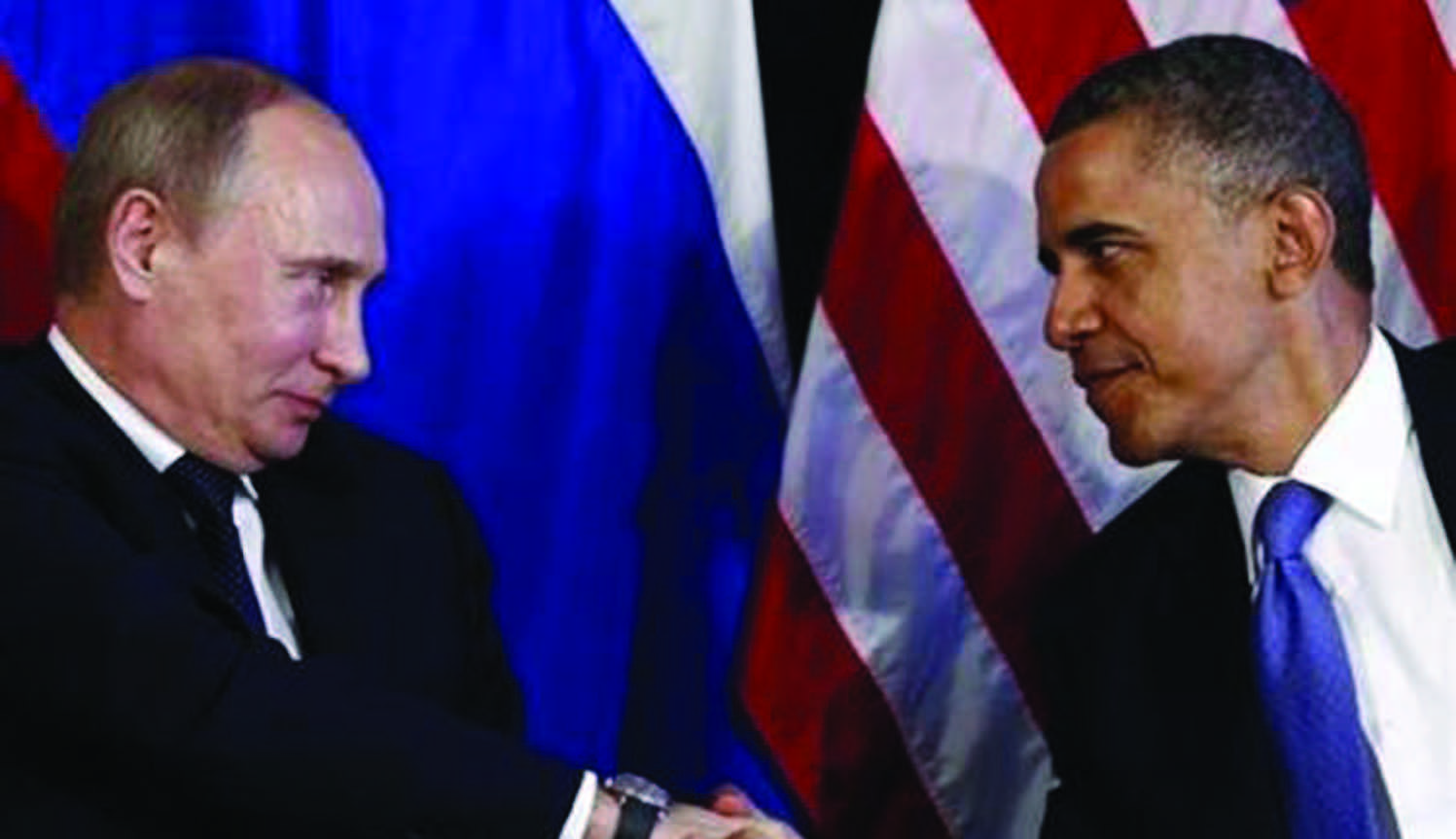
    WASHINGTON (TIP): Relations between the United States and Russia deteriorated further on Wednesday, August 7 when Barack Obama abandoned a presidential summit with Vladimir Putin that was due to be held next month, amid fury in Washington over Moscow’s decision to grant asylum to the NSA whistleblower Edward Snowden.

    US President Barack Obama has canceled his scheduled visit to Moscow to meet his Russian counterpart Vladimir Putin, as tension builds up between two countries over fugitive intelligence leaker Edward Snowden.

    The mini-summit had been scheduled for early September, days before the G-20 meeting of world economic leaders in St. Petersburg, Russia. Obama still plans to attend the main G-20 summit. Authorities in Moscow last week granted temporary asylum to Snowden, who is wanted by U.S. authorities for leaking classified intelligence information to newspapers. That decision infuriated Washington. Sen. John McCain, R-Ariz., called on the U.S. “to fundamentally rethink our relationship with Putin’s Russia.”

    In a statement Wednesday, the White House noted cooperation in some areas, such as policies toward Afghanistan and Iran, but said Moscow’s decision to help Snowden was “disappointing.” “Given our lack of progress on issues such as missile defense and arms control, trade and commercial relations, global security issues, and human rights and civil society in the last twelve months, we have informed the Russian Government that we believe it would be more constructive to postpone the summit until we have more results from our shared agenda,” the White House said. Senator Charles E. Schumer, who had urged Obama to cancel the summit, welcomed the White House decision. State Department spokeswoman Jen Psaki said the decision to abandon the summit was made after a unanimous decision by the White House national Security Council.

    A meeting between defense secretary Chuck Hagel, secretary of state John Kerry and their Russian counterparts will go ahead in Washington on Friday as planned. In a separate announcement, the White House said Obama will visit Sweden instead, traveling to Stockholm the day before the St Petersburg summit. “Sweden is a close friend and partner to the United States,” it said in a statement. “[It] plays a key leadership role on the international stage including in opening new trade and investment opportunities.” Speaking on Tuesday night, Obama said he was disappointed that Russia had allowed Swowden to stay instead of sending the former government contractor back to the US to face espionage charges.

    In his first direct comments about Snowden since Russia’s decision last week, the president said the situation reflected “underlying challenges” in dealing with Moscow. “There have been times where they slip back into cold war thinking and a cold war mentality,” Obama said on NBC’s Tonight Show. The decision to cancel the meeting was greeted with little surprise in Moscow, where analysts and lawmakers have been predicting such a step.

    Presidential aide Yuri Ushakov said the Kremlin was disappointed that Obama cancelled the meeting with Putin, state news agency RIANovosti reported. “It’s obvious that this decision is connected to the situation with the American intelligence services employee Snowden, which was not created by us,” he said.

  • NSA Spy Edward Snowden Granted Temporary Asylum In Russia

    NSA Spy Edward Snowden Granted Temporary Asylum In Russia

    MOSCOW (TIP): A long wait for US intelligence leaker Edward Snowden at Moscow’s Sheremetyevo Airport’s transit zone ended with Russia granting him temporary asylum, July 31. Snowden has been staying in the transit zone of the airport since June 23 after having arrived from Hong Kong. Snowden’s lawyer said Snowden had left the airport’s transit zone after receiving the papers he needed to enter Russian territory. The US has charged Snowden with leaking details of its electronic surveillance programs. Russia’s decision is likely to further strain its ties with the US.

    Snowden later issued a statement via the website of the whistleblowing organization Wikileaks thanking Russia for granting him asylum and accusing the US government of showing “no respect” for international law. “Over the past eight weeks we have seen the Obama administration show no respect for international or domestic law, but in the end the law is winning,” he said. US Senator Robert Menendez, chairman of the powerful Senate Foreign Relations Committee, described Thursday’s development as “a setback to US-Russia relations”.

    “Edward Snowden is a fugitive who belongs in a United States courtroom, not a free man deserving of asylum in Russia,” he said. Republican Senator John McCain also issued a stinging rebuke, saying Russia’s actions were “a disgrace and a deliberate effort to embarrass the United States”. “It is a slap in the face of all Americans. Now is the time to fundamentally rethink our relationship with [President] Putin’s Russia. We need to deal with the Russia that is, not the Russia we might wish for,” he said.

    Snowden arrived in Moscow on 23 June from Hong Kong, after making his revelations. The affair has caused diplomatic ructions around the world. His lawyer, Anatoly Kucherena, said: “His location is not being made public for security reasons, since he is the most pursued man on the planet. “He himself will decide where he will go.” Wikileaks, which has been helping him since he made his revelations, said in a tweet that he had been given asylum.

    “Edward Snowden was granted temporary asylum in Russia for a year and has now left Moscow airport under the care of Wikileaks’ Sarah Harrison,” it said. Ms Harrison is a member of the Wikileaks legal team and has been helping Snowden. Kucherena also said he had been awarded temporary asylum and showed a photocopy of the document issued to his client. The document, which resembles a Russian ID card and features a fingerprint, shows an issue date of 31 July and expiry date of 31 July 2014.

    US Attorney General Eric Holder has given Moscow an assurance that Snowden will not face the death penalty if extradited. But the Russians say they do not intend to hand him over. Russian President Vladimir Putin said previously that Snowden could receive asylum in Russia on condition he stopped leaking US secrets. Putin’s foreign policy adviser Yury Ushakov said the situation was “rather insignificant” and should not influence relations with the US.

    “We know what sort of noise surrounds this [situation] in America, but we have not received any signals from the United States,” he said. US President Barack Obama is due to visit Moscow next month. Among the information leaked by Snowden, which first surfaced in the UK’s Guardian newspaper in early June, was the revelation that the NSA was collecting the telephone records of tens of millions of Americans.

    The systems analyst also disclosed that the NSA had tapped directly into the servers of nine internet firms including Facebook, Google, Microsoft and Yahoo to track online communication in a surveillance program known as Prism. Prism was allegedly also used by Britain’s electronic eavesdropping agency, GCHQ. The agency was further accused of sharing vast amounts of data with the NSA. Allegations that the NSA had spied on its EU allies caused indignation in Europe.

    Snowden leaks timeline
    ● 5 June: First leak published in the Guardian saying the NSA is collecting the telephone records of millions of Americans
    ● 6 June: Details of the published by Guardian and Washington Post
    ● 9 June: Guardian identifies Edward Snowden as source of the leaks, at his own request
    ● 14 June: US files criminal charges against Snowden
    ● 23 June: Snowden leaves Hong Kong for Moscow, applies for asylum in Ecuador
    ● 2 July: Bolivian leader Evo Morales’ plane apparently searched for Snowden
    ● 6 July: Bolivia, Venezuela and Nicaragua say they would offer Snowden asylum
    ● 12 July Snowden gives news conference saying he is seeking asylum in Russia

  • US ‘Very Disappointed’ With China On Edward Snowden

    US ‘Very Disappointed’ With China On Edward Snowden

    WASHINGTON (TIP): The United States told China in talks on Thursday it was “very disappointed” that Beijing did not hand over US intelligence leaker Edward Snowden when he fled to Hong Kong. Deputy secretary of state William Burns, in a joint press appearance after two days of annual talks, said that the two countries’ presidents agreed at a summit last month at the California resort of Sunnylands to work closely.

    “That is why we were very disappointed with how the authorities in Beijing and Hong Kong handled the Snowden case, which undermined our effort to build the trust needed to manage difficult issues,” Burns said. “We have made clear that the handling of this case was not consistent with the spirit of Sunnylands,” said Burns, who was filling in for secretary of state John Kerry whose wife is ill. Snowden, a former government contractor, fled the United States for Hong Kong after revealing details of pervasive US intelligence surveillance on the internet.

    The United States sought his extradition to face charges. But Snowden was allowed to leave Hong Kong, a territory of China that enjoys a large amount of autonomy, for Russia where he remains in limbo as he seeks a way to a country, likely in Latin America, that will offer him asylum. State Councilor Yang Jiechi, speaking next to Burns, defended decisions on Snowden, whose allegations of US snooping in Chinese Internet networks have caused a stir in Beijing.

    “The central government of China has always respected the Hong Kong Special Administrative Region government’s handling of cases in accordance with the law,” he said. Hong Kong “handled the Snowden case in accordance with the law and its approach is beyond reproach,” said Yang, a central figure in Chinese foreign policy.

  • Snowden’s PRISM: Friends Looking Out for Friends Or Spying and Breach of Privacy

    Snowden’s PRISM: Friends Looking Out for Friends Or Spying and Breach of Privacy

    Eddie Snowden has unleashed into the sunlight a core shadowy principle of statecraft, which Ronald Reagan in the midst of his warm engagement with Mikhail Gorbachev seeking to end the Cold War and the falJ of the Berlin Wall. used a Russian proverb translated as: Trust, but verify. Short of soldiers and bullets, is there a better way to protect sovereignty and public safety than “looking,” aka spying? The answer to the former is an easy “no,” but to the latter is split – threats from foreigners are “easier,” but homegrown threats have Constitutional bars, and hence, “tougher.” Upon learning the name PRISM, Europe has reacted with Casablanca-like feigned shock and protested, to help those in their own public squares feel good , and in so doing kept the distance between statecraft and internal democracy intact. Only India has acted with reasoned sanity in accepting cyber security.

    knowing that social media is forcibly shortening the necessary distance between statecraft and democracy. thereby forcing every government and its leaders to speak more truth, more often , to their own better­ informed and better-connected citizenry, To those confused by the Arab Spring and effects of social media, it is quite simple: the citizenry is better informed and better connected, and will no longer buy “the moon is made of blue cheese,” or worse, calculated and instigated hate at neighbors or neighboring countries as a distraction , with the notable exception of Syria’s Assad , who has successfully unleashed sectarian violence to drown out the discontent-based Arab Spring. Instead, citizenry will use its better understanding and connectivity to make governments perish that don’t honor Lincoln’s promise during his 1863 Gettysburg Address of “government …for the people…”. Just ask Egypt’s Morsi when Tahrir Square was refilled with proud Egyptians holding their government to account well before the election cycle, and welcomed the military’s overthrow of Morsi and instalJation of Chief Justice Adli Mansour as Interim President (no relation to Palestine’s UN Ambassador Riyad Mansour).

    The better informed citizenry is harder to please with platitudes , and harder to govern when the floor of basic human existence is breached with tanking economies – again, ask Morsi. To make matters worse for governance, social media , in addition to television and movies, has created a higher expectation in every human being of his/her basic rights and needs – in another 25 years or so, it will reach a near-universally accepted standard, such that what one is paid in New York for a particular task will be similarly paid in Seoul. Beijing, Tokyo, Mumbai, Jerusalem , Moscow, Cairo, Berlin, Palermo, Madrid , Rio, Toronto, Sidney, Cape Town and Casablanca. Itwould be as if the AFL-CIO had negotiated a global salary for all labor. Just “imagine,” as John Lennon warned , what that would do to alJ governments who are forced to do more good more efficiently to more people – it would be as if the rules of capitalism and corporate governance were applied to sovereign governments.

    Accountability. per GAAP. Just imagine. Now, turning to PRISM and listening to embassies of friends and foes alike. Anyone not watching embassies of other nations ought to be fired by their citizens, for the first order of business for any government , at any time in history, is to protect public safety from enemies foreign and domestic. That requires keeping your eyes open , at alJ times. So, looking and listening of embassies is good and needed . PRISM , on the other hand , is a very mild act of looking at a sender’s and a recipient’s email address, that’s it. No different than looking at a sealed envelope sent through the postal service (unlike a post card, which has open contents _ but, which converting envelope to postcard- power is available to Google, Microsoft and all other ISPs, including, Rediff mail in India , as they can and do read email- contents). What makes PRISM hot and heavy isn’t the email addresses, but the ability to remember them alJ , forever, and calculate nearly infinite permutations from them that generates an alert of danger-possibilities .

    It is akin to a really perfect card counter, like Dustin Hoffman in the movie “Rain Man ,” playing blackjack at a casino and winning each time as he could remember what had come and what was left in the card shoe. Pretty cool; and, pretty normal and legal even as casinos hate it. The United States, as a friend to many, armed with PRISM knowledge , alerts other nations of possible danger from terror. Friends looking out for friends. Indeed , other nations have warned the United States of possible danger to us, from their intelligence activities – again, friends looking out for friends. Indeed, this kind of help can convert an enemy into a friend! In any event, the right response to such help is a “Thank you ,” not friend-bashing. Left for last. is the right of privacy. This is a confusing topic, if one isn’t careful. Right of privacy – large, medium and smalJ – is an individual’s right against one’s government , corporate defalcation and foreign government. Rules of contract govern the dispute between a citizen and a corporation .

    It is what it is, unless the public policy says otherwise. As to one’s own government. as in the United States we have the 4th Amendment against “unreasonable searches and seizures,” and the 4th Amendment jurisprudence is well developed and privacy is at its “strongest.” Lastly, an individual’s rights against a foreigngovernment runs smack into the sovereign immunity of the intruding government. leaving the individual to ask their own government to complain to the intruder-government , as permitted in the comity of nations. A parting thought on privacy. Most citizens, natural and corporate, have ripped any privacy from any public space by installing security cameras, audio mikes etc.. and broadcasting it on the web. People, voluntarily, driven to be celebrity- like, have made Facebook and Twitter billions while giving up privacy over private acts and private thoughts. Perhaps.

    what is left somewhat private is an unspoken thought or an idea yet-not- born. But, PRISM like programs can already predict which fork in the road down yonder you will likely take, or if a shopper in a store is a mere “looker” or a real “buyer.” As to Snowden, he lost all principle- credibility and civic martyrdom when he left America, to bash it. To drive home that point is none other than the Russian President. Vladimir Putin, telling Snowden that he ought to stop anti- American activities and deeming his asylum application withdrawn. Not since the city-state of Athens has society endured chaotic democracy (mob rule) in its pure direct citizen-vote manner. Society has chosen republics as a better model. Over time, statecraft relied upon different tactics.

    Rome used “Bread and Circus” and Maximilien de Robespierre used Reign of Terror during the French Revolution; each, a friendly reminder of resident evil at any spot of the governance spectrum. With the representative form of republican government , statecraft is vital and necessary, and needs the governmental privacy that Snowden breached: deliberation privilege, along with the executive, legislative andjudicial privileges to function. The ultimate danger is that social media has the ability. in citizen-hands, to do to governments what a government can do with PRISM to citizens or foreigners. Lurking, in the shadows is chaos emanating from converting representative governments into direct citizenship-democracy of the city-state of Athens. The ultimate answer may well reside in the hard line of freedom drawn across history by Thomas Jefferson’s Declaration of Independence , subscribed by the brave, for it led to the hallowed Constitution and its goal “…to form a more perfect union.” The world , I submit. given its digital shrinkage, requires us all to “form a more perfect world .” Happy Birthday America! (The author is a New York based attorney. He can be reached at ravibatralaw@aol.com)

  • Snowden Needs Legal Guarantees To Return To U.S., Father Says

    Snowden Needs Legal Guarantees To Return To U.S., Father Says

    WASHINGTON (TIP): Former U.S. spy agency contractor Edward Snowden might voluntarily return to the United States if given assurances of his constitutional rights, his father said in a letter to Attorney General Eric Holder. Lonnie Snowden was “reasonably confident” his son, who faces espionage charges in the United States for alleged leaking of secret surveillance information, would return if certain conditions were met, the June 27 letter said.

    It was written by a lawyer on Snowden’s behalf, and was obtained by Reuters. The younger Snowden, a former contractor for the National Security Agency, should not be detained or imprisoned before trial, should not be subject to a gag order, and should be tried in a venue of his choosing, the letter said. Edward Snowden, a U.S. citizen, fled the United States to Hong Kong in May, a few weeks before publication in the Guardian and the Washington Post of details he said he provided about U.S. government surveillance of Internet and phone traffic.

    He has not been seen since he arrived in Moscow on Sunday, but Russian officials said he was in a transit area at Sheremetyevo airport. He has requested political asylum in Ecuador. Representatives for the Justice Department could not be reached immediately for comment on the letter. Lonnie Snowden said he was concerned that his son was being manipulated by others, including people from the anti-government secrecy group WikiLeaks, he said in an interview on NBC television earlier on Friday.

    “I am concerned about those who surround him,” he told NBC. “Wikileaks – if you look at past history – their focus isn’t necessarily the Constitution of the United States. It’s simply to release as much information as possible. So that alone is a concern for me.” Snowden’s father said he has not had contact with his son since April, NBC reported. “I love him.

    I would like to have the opportunity to communicate with him. I don’t want to put him in peril,” he said in the interview. Snowden said he did not think his son had committed treason, even though he said Edward Snowden broke U.S. laws in releasing details about the federal monitoring programs. “He has betrayed his government, but I don’t believe that he’s betrayed the people of the United States,” he said.

  • Obama Recasts Chase For Snowden As Unexceptional

    Obama Recasts Chase For Snowden As Unexceptional

    WASHINGTON (TIP): The last thing President Barack Obama wants to do is turn Edward Snowden into a grand enemy of the state or a hero who speaks truth to power. In the shifting narrative of the Obama administration, the man whose leaks of top-secret material about government surveillance programs have tied the national security apparatus in knots and brought charges under the Espionage Act has now been demoted to a common fugitive unworthy of international intrigue or extraordinary pursuit by the US government.

    A “29-year-old hacker,” in the words of Obama; fodder for a made-for-TV movie, perhaps, but not much more. “This is not exceptional from a legal perspective,” the president said on Thursday of Snowden’s efforts to avoid capture by hopscotching from Hawaii to Hong Kong to Russia. “I’m not going to have one case of a suspect who we’re trying to extradite suddenly being elevated to the point where I’ve got to start doing wheeling and dealing and trading on a whole host of other issues simply to get a guy extradited,” the president told reporters in Senegal.

    It was the second time in a week that the administration had toned down its rhetoric as Snowden remained out of reach and first China and then Russia refused to send him back. Just Monday, Secretary of State John Kerry was talking tough against China and calling Snowden a traitor whose actions are “despicable and beyond description.” By Tuesday, Kerry was calling for “calm and reasonableness” on the matter, and adding, “We’re not looking for a confrontation.

    We are not ordering anybody.” There are plenty of reasons for Obama to pull back, beyond his professed desire to avoid international horse-trading for the leaker. The president, in his own words, has “a whole lot of business to do with China and Russia.” Why increase tensions in an already uneasy relationship when Obama is looking for Russia’s cooperation in finding a path to peace in Syria, for example? In addition, less-heated dialogue could make it easier to broker Snowden’s return because, despite the latest shrugs, US officials very much want him.

    “There’s a lot of signaling going on,” said Steve Aftergood, director of the Project on Government Secrecy for the Federation of American Scientists. “If the White House were issuing ultimatums, then Russia might feel obliged not to cooperate. But if it’s merely one request among many others, that might make it easier to advance to a resolution.” The president also may have a US audience in mind for his comments.

    Obama’s Democratic base includes plenty of defenders of civil liberties who are sympathetic to Snowden’s professed goal of making government more transparent. Benjamin Pauker, managing editor of Foreign Policy magazine, said the president was loath to elevate Snowden to a state enemy or “an Ellsberg-type truth-teller,” referring to the 1971 leaker of the Pentagon Papers, which showed the U.S. government had misled the public about the war in Vietnam.

    Daniel Ellsberg himself recently called Snowden’s revelations the most significant disclosures in US history. The administration, though, would rather marginalize Snowden, a former National Security Agency systems analyst who is thought to have custody of more classified documents. “Calling him a hacker, as opposed to a government contractor or an NSA employee, brings him down a notch to someone who’s an irritant, as opposed to someone who has access to integral intelligence files,” Pauker said. “To externalize him and brand him with a black-hat hacker tag distances him from the government.”

  • Ecuador Yet To Decide On Snowden Asylum: Correa

    Ecuador Yet To Decide On Snowden Asylum: Correa

    QUITO (TIP): Ecuador’s president said on June 27 he had yet to consider letting US intelligence leaker Edward Snowden enter his country as tensions with the United States rose, with Washington warning Quito against granting the fugitive asylum. The Ecuadoran leftist government defiantly pulled out of a trade pact with the United States, claiming it had become an instrument of “blackmail” as Quito considers Snowden’s asylum bid.

    But despite voicing support for Snowden, the Andean nation denied reports that it authorized a “safepass” travel document for the former National Security Agency contractor and said it would not be able to process his asylum bid until he enters Ecuadoran territory. “Would he be allowed to arrive on Ecuadoran territory? This is something that, in principle, we haven’t considered,” President Rafael Correa told a news conference.

    “We would probably examine it, but for now he is in Russia,” he said, adding that Ecuador’s ambassador to Russia met Snowden just once on Monday in the transit area of Moscow’s Sheremetyevo airport and that no more contact had been made. WikiLeaks founder Julian Assange, whose anti-secrecy website has assisted Snowden, said on Monday that Quito had given Snowden a “refugee document of passage” that would allow him to travel here.

    The US Spanish-language television network Univision published on its website what appeared to be a “safepass” document with the letterhead of Quito’s consulate in London, asking authorities in transit countries to “give the appropriate help” as the bearer travels to Ecuador. “You request asylum when you are on a country’s territory. Snowden is not on Ecuadoran territory, so technically we cannot even process the asylum request,” Correa said.

    The United States revoked Snowden’s passport after he revealed a massive US surveillance program, and the 30-year-old computer specialist has been holed up at the Moscow airport’s terminal since arriving there from Hong Kong on Sunday. In Washington, US State Department deputy spokesman Patrick Ventrell warned that giving Snowden asylum would create “grave difficulties for our bilateral relationship.”

    “If they take that step, that would have very negative repercussions,” Ventrell said. But a US official also denied that a bilateral trade pact was being used as “blackmail” in the case, insisting that Washington wanted to maintain a good economic relationship with Quito. Ecuador’s communications minister Fernando Alvarado announced earlier that the country “unilaterally and irrevocably renounces these preferential customs tariff rights.”

    “Ecuador does not accept pressure or threats from anyone, and does not trade on principles or make them contingent on commercial interests, even if those interests are important,” he said. Correa’s government said that while it had received the preferential rights in exchange for its cooperation in the war on drugs, they had become a “new instrument of blackmail.” But the US State Department said the trade program was granted by Congress and Quito could not withdraw unilaterally. The pact, which covers key Ecuadoran exports such as fresh-cut roses, fruits, vegetables and tuna, is set to expire on July 31 unless the US Congress renews it.

    The arrangement, which dates back to the early 1990s, originally benefited four Andean nations, and Ecuador was the last country still participating in it. Analysts have warned that Washington may refuse to renew it if Quito grants asylum to Snowden. The United States is Ecuador’s main trade partner, buying 40 percent of Quito’s exports, or the equivalent of $9 billion per year. The Ecuadoran business community disapproved of the government’s decision.

    “It’s a hasty and wrong decision because there was no formal US government announcement threatening to remove us from the ATPDEA (Andean Trade Promotion and Drug Eradication Act) over the Snowden case,” Roberto Aspiazu, head of the Ecuadoran Business Committee, said. Ecuador has said it could take as little as one day or as long as two months to decide whether to grant asylum to Snowden. An online publication of the Ecuadoran presidency said Washington has put “explicit and implicit” pressure on Quito over Snowden’s asylum petition as well as its decision to shelter Assange at its London embassy and its ties with “nations considered ‘enemies’ of the United States.”

  • Wikileaks Plane ‘Ready’ To Bring Snowden To Iceland

    Wikileaks Plane ‘Ready’ To Bring Snowden To Iceland

    A chartered private jet is ready to bring US intelligence leaker Edward Snowden to Iceland from Hong Kong, a businessman connected to whistleblowing website WikiLeaks said on June 23. “Everything is ready on our side and the plane could take off tomorrow,” Icelandic businessman Olafur Sigurvinsson, head of WikiLeaks partner firm DataCell, told Channel2 television. “We have really done all we can do. We have a plane and all the logistics in place.

    Now we are only awaiting a response from the (Icelandic) government,” added the boss of Datacell, which handles donations to WikiLeaks. The private jet belongs to a Chinese firm and has been chartered at a cost of more than $240,000 thanks to individual contributions received by Datacell, he said. WikiLeaks founder Julian Assange said on June 22, he had been in contact with representatives of Snowden to discuss his possible bid for asylum in Iceland following his disclosure of US surveillance programmes.

    Former US government contractor Snowden, who turns 30 on June 24, fled to Hong Kong on May 20. The United States has yet to file any formal extradition request after his bombshell leak of the National Security Agency programmes. Iceland has said it held informal talks with an intermediary of Snowden over the possibility of seeking political asylum, but that he must present himself on Icelandic soil. Snowden has expressed an interest in taking refuge in Iceland, saying it is a country that stands up for internet freedoms.

    However, observers say Iceland’s new centre-right coalition may be less willing to anger the United States than its leftist predecessor. Interior Minister Hanna Kristjansdottir said Tuesday that the government did not feel bound by a 2010 resolution by parliament seeking to make the country a safe haven for journalists and whistleblowers from around the globe. “The resolution is not a part of the laws that apply to asylum seekers,” she told public broadcaster RUV. Sigurvinsson said it was unlikely that Snowden would travel to Iceland without receiving a green light from the government in Reykjavik.

    “It would be stupid to come here only to be extradited to the United States. In that case he’d be better off where he is,” the businessman said. Snowden has gone to ground in Hong Kong, surfacing to conduct media interviews from undisclosed locations. Assange this week marked a year in refuge at the Ecuadoran embassy in London. Sweden wants to put him on trial for rape, but the WikiLeaks founder says the prosecution is politically motivated.