
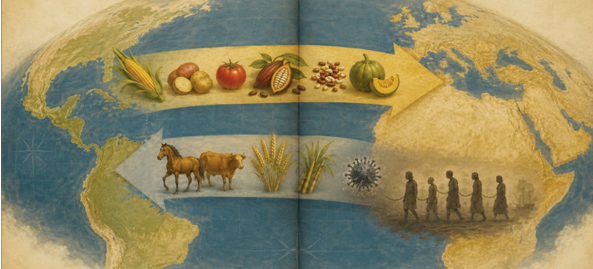

The sustained movement of plants, animals, peoples, technologies and diseases between the hemispheres is known as the Columbian Exchange. Foods domesticated in the Americasincluding maize, potatoes, tomatoes, cacao, beans and squash-transformed diets and agriculture across Europe, Africa and Asia. Wheat, sugarcane, cattle, pigs and horses traveled westward. Horses, in time, reshaped life for many Indigenous nations. The exchange was profoundly unequal. Smallpox, measles, influenza and other diseases caused devastating epidemics among Indigenous peoples who had no previous exposure. Disease did not act alone: warfare, enslavement, displacement and the disruption of food systems compounded the losses. Meanwhile, European demand for labor helped expand the transatlantic slave trade, forcibly carrying millions of Africans across the ocean over succeeding centuries.
“The meeting of worlds enriched human diets-and devastated human communities.”



Be the first to comment