
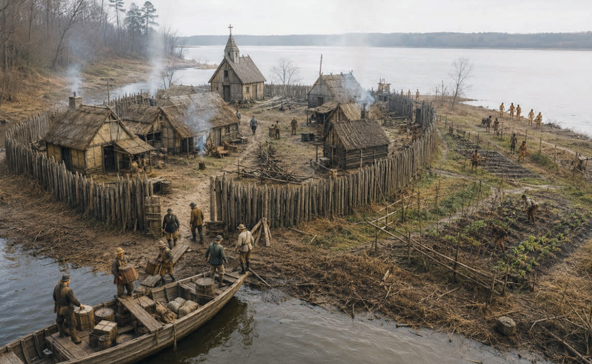

In 1607, an English expedition established Jamestown in Virginia, the first enduring English settlement in what became the United States. The site offered defensive advantages but poor drinking water, disease and difficult farming conditions. Many colonists arrived expecting quick profit rather than prolonged labor. Hunger, illness, factionalism and conflict brought the colony close to destruction. Jamestown survived partly through supplies and knowledge obtained from the Powhatan peoples, whose paramount chiefdom dominated the region. Trade alternated with suspicion and war. John Rolfe’s successful cultivation of tobacco eventually gave Virginia a profitable export, but it also created a relentless demand for land and labor. In 1619, an English privateer brought captive Africans to Point Comfort, Virginia. Their legal status in the colony’s earliest years was not yet identical to the fully codified hereditary racial slavery that developed later. Nevertheless, the event stands at the beginning of a system that would harden through colonial law and bind race, labor and power together for generations.
“The English colony survived; the human cost of its survival would shape the nation for centuries.”



Be the first to comment