Racketeers use SIJS to make big money
By I.S. Saluja & The Indian Panorama Investigative Team
Number of Undocumented Children Who Cross U.S. Border Alone Has Tripled
(The Pew Charitable Trusts: May 9, 2013)
Each year, thousands of unaccompanied alien children (UACs) risk harrowing journeys and travel alone to seek refuge in the United States. These children come from all over the world for many reasons, including to escape persecution in their home countries, to reunify with family members and to look for a better life. In recent years, the U.S. government has had roughly 6,000-8,000 of these children in its care and custody each year. While these children may be as young as infants, most (approximately 70 percent) have been between the ages of 15 and 17. – Women’s Refugee Commission
(The Migrationist: August 8, 2013)
Hundreds of thousands of youth (under age 18) attempt to enter the U.S. every year. Some come with their families, others alone, either of their own will seeking jobs, protection and family reunification or they are smuggled into the country for sweatshop labor or sexual exploitation. The exact number of children who attempt to enter the country is unknown. In 2005, the U.S. granted legal permanent resident (LPR) status to 175,000 children under 14 years of age and to 196,000 youth ages 15 to 24. Twenty thousand youth ages 17 and under were accepted as refugees and 2,000 were granted asylum in the same year. Customs and Border Protection (CPB) apprehended almost 122,000 juveniles in the U.S. in 2004. Of this total, 84.6 percent were released back to Mexico, or in rare cases to Canada.
(National Juvenile Justice Network)
It has been said the crooks will always find creeks to enter any system in the world. And when the system is welcoming and benevolent, the infiltration is much easier. Special Immigrant Juvenile Status law (Please read the article below by eminent attorney Anand Ahuja) was enacted with a humanitarian objective to provide protection to these minors who are victims of domestic abuse.
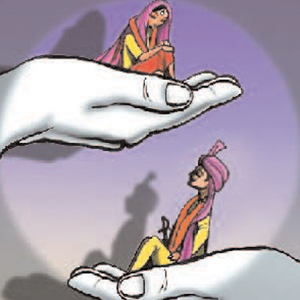
Over the years, the law stands abused. It has become a booming business in many countries to push young boys and girls, mainly boys (77%), in to the United States territory and make them take advantage of SIJS.
The Indian Panorama Investigative team came across quite a few people in Queens and Long Island in New York who are part of the thriving racket to smuggle in young boys and girls from India. The reports received by us indicate that it is a big business in many South Asian countries, in particular, India, Sri Lanka and Pakistan as also in many other countries across the world.
We were taken for a shock to get to know how elaborate the racket’s dragnet is, which involves agents in countries from which the young people are sent, agents at the Mexican side of the US border who help them cross over in to the United States, agents in the US who manage a guardian for the boy/girl and so on so forth. All this involves huge money. In India, the price to send a young boy or a girl in to USA is anywhere between $80,000 to $100,000.
Another shocking revelation was the involvement of church in this racket. During our talk with some who are involved in the racket told us, on condition of anonymity, that at least, one priest from a Christian Church in New York and a Sikh priest from a Sikh Gurudwara in Arizona are actively involved in running the racket. The authorities do not suspect the priests of any wrong doing and the latter take advantage of it.
Our source told us that the Christian Priest who is based in New York and comes from Punjab, India, visits his home state in India to “recruit” the youth who want to come to USA. It was pointed out to us that the pries has been making regular trips for the job. He arranges the incoming youth’s stay and finds him a guardian. Interestingly, all the young people who come here and come to have guardians, work and stay elsewhere, not necessarily with their guardians.
The person agreeing to be a guardian to a youth is offered a payment of between $5000.00 to $10,000. The attorney’s fees is anywhere between $3000.00 and $5000.00. We were also told about two attorneys whose services the priest utilizes regularly. Also, there are some attorneys who specialize in such cases. The gentleman who offered to be guardian to a young man confided in us that the young man had disappeared and that he had to report the disappearance to the court.
The malaise is much deeper and goes beyond simple monetary racket. It has serious implications for America’s security. With ISIS and Al Qaeda stepping up recruitment of young people from all over the world, USA is threatened as never before because of such soft laws which allow easy infiltration in to the country. Our source, on condition of anonymity, told us that he had come to know that the enemies of USA are all set to push in young people in to USA to carry out their agenda in America, which is to harm the country in every way.
A thorough investigation by the US administration agencies concerned in to the racket and the possible infiltration of enemies of USA in to the country, taking advantage of the benevolent soft humanitarian laws needs to be done sooner than later. And the earlier, the better.
Special Immigrant Juvenile Status
Throughout its history, the United States has been a refuge for oppressed people from around the world. The Pilgrims, the Quakers, the Amish, and countless others came to this country in centuries past, while in the more recent past immigrants have been Cubans, Jews, Southeast Asians, and others.What those diverse people shared was a belief that America could offer them refuge from government oppression. The United States has always been at the forefront of protection issues, and traditionally has granted sanctuary to victims of human rights abuses from around the world.
This refuge or protecting in the USA, however, is not limited to victims of political oppression but also is available to those who are victims of domestic violence and abuse specially minors.With an objective to provide protection to these minors who are victims of domestic abuse, Congress, in 2008, enacted a new statute, the William Wilberforce Trafficking Victims Protection Reauthorization Act of 2008, (TVPRA 2008).
The statute expands the definition of Special Immigrant Juvenile so that more children can qualify for the status, provides greater protections from aging out, removes additional grounds of inadmissibility to lawful permanent residence, and requires the US government to process the cases within 180 days for those undocumented youth who qualify for SIJS.
The Trafficking Victims Protection and Reauthorization Act has expanded the definition of Special Immigrant Juvenile Status (SIJS) to allow undocumented immigrant youth to petition for legal status based on abuse, neglect, or abandonment by one or both parents. SIJS waives unlawful entry, working without authorization, status as a public charge, and certain immigration violations. Once a minor receives SIJS, he/she will be able to adjust his/her status to that of a lawful permanent resident, obtain work authorization, and eventually apply for U.S. citizenship.
To be eligible under SIJS, one must be (a) under 21 at the time of filing, (b) Currently must be unmarried, and (c) Must be present in the United States. Further, SIJS visa program is different from other types of visas in that it requires coordination with a state family or Surrogate court. Special Immigrant Juvenile Status has two prong tests. First, the minor has to engage in a custody/adoption proceedings in the Family or Surrogate’s Court in the county where he/she resides.
As part of this proceeding, the court is to find minor’s eligibility for SIJS. Besides a guardianship petition, it is also possible to file a petition requesting an order though a custody, neglect, adoption, permanency hearing for children in foster care etc., proceeding. An order from a Family Court or Surrogate Court granting custody/adoption is a pre-requisite to applying for SIJS status. On February 5, 2014, the New York Appellate Division, Second Department, stated that New York State Family Courts do in fact have the authority to appoint a natural parent to be the guardian of his or her own children.
The court explained that under the Surrogate’s Court Procedure Act, any person may petition for guardianship of an infant. SCPA §1703. Therefore, the court reasoned that since the statute does not impose any limitations, appointment of guardianship may also be granted to a natural parent. The court’s reasoning was based upon prior decisions involving contests for guardianship between a natural parent and a relative or nonrelative of a child, where the natural parent has been named as the guardian or co-guardian of the child.
Matter of Revis v. Marzan (100 AD 3d 1004); Matter of Justina S. (180 AD 2d 641). One is to keep in mind that a state Family court and/or Surrogate court that grants custody/adoption petition does not make any immigration decision. After receiving this order from the Family or Surrogate’s Court, one has to go through the second stage, i.e., the one is to then apply to the United States Citizenship and Immigration Service (USCIS) for SIJS. Though USCIS one will get SIJS that would bestow upon the child lawful permanent residence and work authorization.
Whether one receives one’s special immigrant juvenile visa and green card concurrently or applies for an adjustment of status after your SIJ application is approved, one generally receives most of the same rights and privileges as other lawful permanent residents. If the petition is approved and the child becomes a lawful permanent resident, he or she will have access to financial aid for college, be able to work legally, be eligible for some public benefits, and be able to apply for US citizenship five years after becoming a permanent resident.
However; one is to keep in mind that the granting of SIJ status is based on allegations of abuse, abandonment or neglect by the applicant’s parents, a person who receives a green card or even ultimately citizenship through the SIJ program cannot petition for a green card on behalf of those parents. Moreover, SIJ program participants cannot petition on behalf of their siblings until they become U.S. citizens through naturalization. “Immigration law is extremely complicated-and with children, more so,” says Lenni Benson, a New York Law School professor and director of Safe Passage, a nonprofit that provides legal assistance to immigrant children in the state.
Since expertise in both the family law and immigration law is required for SIJS, therefore, it’s better to retain the services of a competent attorney for these cases.
(The author, an Attorney at Law, is licensed to practice law in the States of New York, Connecticut, Virginia, United States Court of Appeals for the Federal Circuit, U.S. Tax Court, U.S. District Court; Southern District of NY, U.S. District Court; Eastern District of NY. He works as an attorney with Anand Ahuja Associates, Attorneys at Law and International Business Consultants, 76 North Broadway Suite # 2000, Hicksville, NY 11801. He can be reached at anandesq@hotmail.com or on phone nos. (516) 502-3262, and (718) 850-1952. )
Tag: Exploitation
-

A Benevolent Law Abused
-

Freedom, not just Independence
Independence is a sweet sounding word. However, mere political independence does not guarantee freedom. The constitution may enumerate freedoms available to a nation’s citizens, yet they may not enjoy them. That’s what precisely has been happening in India during 67 years of independence. We are on August 15th entering the 68th year of independence. But freedoms elude the laege mass of India.
Going by the statistics, India has developed and made progress. Politicians in India do not tire repeating that Indian economy is one of the most stable economies, growing at a reasonably good rate despite global recession. They keep telling the people of the country that it is a matter of pride for India that she will be one of the three major economies of the world by 2050. Nobody will dispute that India’s GDP has shown remarkable progression and that Indian economy has survived the scare of global recession.
India has wealth, no doubt. But this wealth is concentrated in the hands of a small percentage of the Indian population. Benefits of national growth have not percolated down to the common people. It is the unequal distribution of wealth that is the bane of India. India’s claim to democracy will be a hollow claim if India cannot reach the benefits of growth to every single person. In the absence of means of sustenance, freedoms enshrined in the Constitution have no real worth, no meaning, and no relevance.
On the 67th anniversary of India’s independence let each Indian ponder how each Indian can have real freedom which means freedom from hunger, from ignorance, from exploitation. One of the worst enemies of freedom not reaching people is the corrupt system obtaining in the country. Hordes of scandals involving politicians, businessmen, government officials are an indication that our society is sick. There is a mad race for amassing wealth. There is a wanton desire to have power.
Gandhi Ji who prized means so much must be an uncomfortable soul in heavens to see the “by hook or by crook” approach being adopted by the people of the country he rid from slavery to a foreign rule. He must be very uncomfortable that no body had the vision he so much cherished to wipe every tear in every eye. Let him have peace. Let us resolve to annihilate the corrupt people and the corrupt system and ensure the people have not independence but freedom.
The sooner the better it will be for all. Prime Minister Modi will do well to speed up the pace to bring about the change the country is crying for. We will well be reminded of an Urdu couplet which reads: “Kaun rahata hai teri zulf ke sir hone tak”? which means who can wait for all that long to happen. Happy Independence Day, nevertheless. -

BOLIVIA CONGRESS ALLOWS CHILD LABOUR FROM AGE 10
LA PAZ (TIP): Bolivian lawmakers have approved child workers as young as 10 years old, under a new law that lays out specific conditions for employing children. Congress passed the measure by consensus on July 2, requiring employers to follow certain criteria to ensure the physical and mental health of employed children, and to prevent child exploitation.
“The age limit, as defined formally by the Code for Children and Adolescents, is 14 years old,” Senator Adolfo Mendoza said after the enactment of the bill, which he co-sponsored. But the new code allows exceptions, when specific legal criteria have been met, so that children may begin “working for others from age 12, which is allowed by international conventions, and self-employment from age 10.”
The senator stressed that required factors include a voluntary decision from the child to work, consent from the parent or guardian and permission from the public ombudsman. “The request is then filed with the Labor Ministry,” Mendoza said. The previous code, which allowed no exceptions to the 14-year-old minimum, had prompted protests from critics who stressed that, in Bolivia, children must work from an early age out of necessity.
-

Pakistan’s religious body endorses underage marriage
ISLAMABAD (TIP): In a retrogressive step, a religious body in Pakistan has declared girls as young as nine years old eligible to be married “if the signs of puberty were visible”, a media report said today. Council of Islamic Ideology (CII) chairman Maulana Mohammad Khan Sheerani of the Jamiat Ulema-i-Islam- Fazl (JUI-F) said after a meeting yesterday that media and ‘some other segments of society’ were not taking the council’s decisions seriously.
He said laws that defined a minimum age for marriage were not Islamic and should be repealed, adding that the council would recommend that the Parliament amend these laws to bring them in accordance with Islamic principles, Dawn news reported. He also criticised the Sindh Assembly which last month passed Sindh Child Marriage Restraint Bill, banning underage marriages.
The CII chief said marriages that were solemnised at a time when both individuals were minors were only binding if they were arranged by the ‘wali’ (father or grandfather) of the two individuals. In cases where marriages were solemnised by someone other than the ‘wali’, both individuals had the option to refuse or reconsider the match upon achieving adulthood. Clarifying the decision, Sheerani said that a ‘nikah’ could be performed at any age, but the bride could only start living with the groom after reaching puberty, the report said.
The CII chief also said that most of the clauses of the existing Muslim Marriage Law, 1961 were un-Islamic. He said that section 6 of the law, which required men to seek permission from their wives before entering into another marriage, was not in accordance with Islamic principles.
Civil society took strong exception to the statement. “Women and children are the most vulnerable groups in the country. If such legal cover as a minimum age prohibiting child marriages are done away with, then exploitation of women and children will increase,” human rights commission of Pakistan chairperson Zohra Yousuf said.
-

Texas man found guilty in Lafayette federal court of attempted sex crime
LAFAYETTE, TX (TIP): A Texas man was convicted this week in a federal trial for trying to entice a 14-year-old into a sexual relationship through online chats in 2012, U.S. Attorney Stephanie Finley said in an emailed release.
Elton Ray Jones, 67, of Zavalla, Texas, faces 10 years to life in a federal prison after a jury found him guilty of one count of trying to entice a minor to engage in criminal sexual activity. After a two-day trial, the jury deliberated for one hour before announcing the verdict Tuesday.
Finley said Jones engaged in online conversations with a law enforcement officer posing as a 14-year-old girl in an online chat room from Sept. 11, 2012, to Oct. 17, 2012. “Jones engaged in explicit conversations with the girl and planned a sexual encounter,” Finley said. Jones was arrested Oct. 17, 2012, in Lafayette after traveling from Texas for the date.
In addition to the possible life sentence, Jones faces five years to life of supervised release and a $250,000 fine. He also will be ordered to register as a sex offender if he’s released. U.S. District Judge Elizabeth Foote, who presided over the trial, did not set a date for sentencing. The case was part of a U.S. Department of Justice program called Project Safe Childhood, a federal policeprosecutor initiative designed to combat the sexual exploitation of children.
-

Historic day as European Union legalizes selling sex but criminalizes buying it
LONDON (TIP): In a landmark vote, the European parliament has voted in favor of a resolution to criminalize the purchase of sex. On February 26, 343 members of the European Parliament backed a proposal placed by London MEP and Labour spokeswoman for women in Europe— Mary Honeyball, which recommends the adoption of the Nordic model of prostitution – legalizes selling sex but criminalizes buying it.
Some 139 MEPs voted against while 105 abstained. Rather than blanket legalisation— which has been a disaster in Holland and Germany— we need a more nuanced approach to prostitution, which punishes men who treat women’s bodies as a commodity, without criminalizing those who are driven into sex work, said Mary Honeyball who drafted the resolution.
“We send a strong signal that the European Parliament is ambitious enough to tackle prostitution head on rather than accepting it as a fact of life”. EU countries should reduce the demand for prostitution by punishing the clients, not the prostitutes, said the parliament in a non-binding resolution passed on Wednesday.
It stressed that prostitution violates human dignity and human rights, whether it is forced or voluntary, and calls on member states to find exit strategies and alternative sources of income for women who want to leave prostitution. Most MEPs believe that one of the best ways to combat prostitution and trafficking of women and girls is the socalled Nordic model, followed in Sweden, Iceland and Norway.
It views prostitution as a violation of human rights and as a form of violence against women and criminalises those who buy sex rather than those who sell it. They call on EU countries to take the Nordic model as an example. Buying sexual services from prostitutes under the age of 21 should be a criminal offence in the entire EU, they added.
MEPs point to Commission data showing that 62% of the victims of trafficking are trafficked for purposes of sexual exploitation and that 96% of the identified and presumed victims are women and girls. EU countries should strengthen their policies to fight trafficking and protect victims, say MEPs.The resolution also called on national authorities to set up exit schemes to support women who want to get out of prostitution and help them find other sources of income.
Better education and reducing the poverty that forces women and children into prostitution, are needed to prevent prostitution, MEPs add. In a separate resolution, voted on Tuesday, MEPs said violence against women must be tackled at EU level. Sweden was the first country to criminalise the purchase of sex, in 1999. Norway and Iceland adopted the model in 2009, and in December 2013 France followed suit.
-

India-US talks may resume in March
WASHINGTON (TIP): The India-US dialogue, which was marred by the row over the arrest of diplomat Devyani Khobragade, is likely to get back on track by March. US energy secretary Ernest Moniz will be on a two-day visit to India for the energy security dialogue from March 10.
The trip ran into rough weather in December last year in the aftermath of Khobrgade’s arrest. India is keen on US help in exploring shale gas in the country. New Delhi is keen getting on US technology in the shale gas resource assessments as well as sharing lessons on its exploitation, officials pointed out.
The other ongoing cooperation in the energy sector between the two nations include in the areas of electrical grid cooperation, energy efficiency, expanding markets for renewable energy technologies and addressing barriers to clean energy deployment, clean coal technology development, and civil nuclear energy. Meanwhile, the US continues to have reservations about India’s nuclear liability law and the slow progress in beginning the nuclear commerce.
Moniz’s visit will signal the bilateral calendar of events being back on track. The visit of the commissioner of the US food and drug administration, Margaret Hamburg, will be next on the agenda. “The two ministers reviewed recent developments in India-US relations. They agreed that the bilateral relationship was very important for both countries. Both sides looked forward to the early realization of the mutually-agreed calendar of bilateral exchanges,” a statement issued after the meeting between external affairs minister Salman Khurshid and US secretary of state John Kerry in Montreux, Switzerland in January had said.
-

HANUKKAH
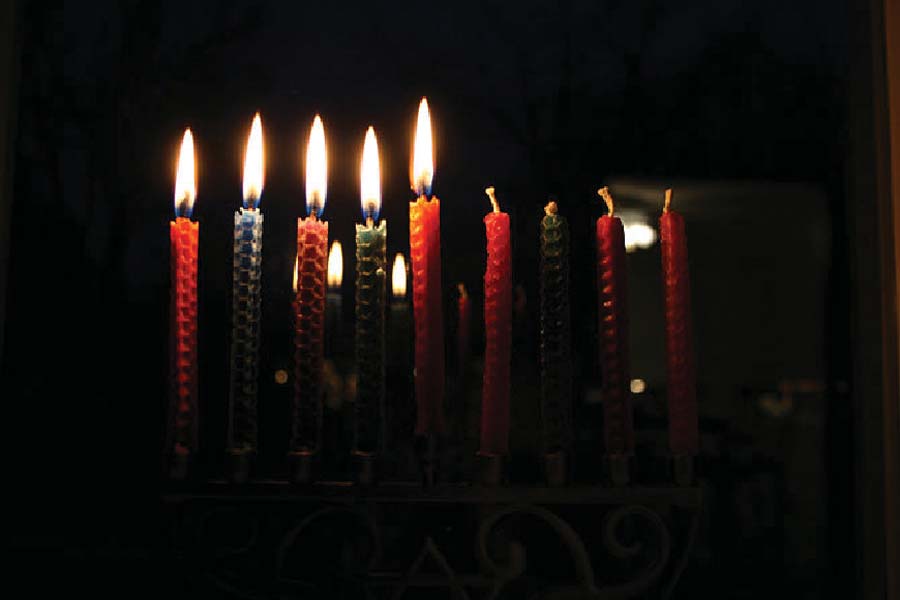
Afestival is a collective celebration of an achievement in a given community. The Festival of Hanukkah is a Jewish celebration, and it is celebrating the recovery and re-dedication of the Jewish Temple in Jerusalem in 165 B.C. Hanukkah is spelled in many different ways in case you want to Google it; Hanuka, Chanukah, Chanuka, Hanuka, Hanukka and other variations. Hanukkah is celebrated for eight days and nights. It is also called the festival of lights. It starts on the 25th of the Jewish month of Kislev each year. The actual date differs due to the lunar calendar.
It is about 11 days earlier in each successive year. The Jews, Muslims and some Hindu festivals follow the moon for observing their holidays and the date is different every year. This year the festivities will begin with the lighting of Menorah on Thursday, November 28th and will continue thru December 5, 2014. This year, I found one of the best pieces written by Rabbi Michael Lerner, who and I met in Melbourne, Australia and have kept up writing to each other since then. Rabbi Michael Lerner wrote about Chanukah, describing it as “the holiday celebrating the triumph of hope over fear, light over darkness, and the powerless over the powerful.”
He went on to say that Chanukah is about “understanding that when we connect with the transformative power of the universe, the Force of Healing and Transformation, YHVH, we become aware that the powerless can become powerful, that oppression of any sort is in contradiction to the fundamental nature of human beings as loving, kind, generous, free, creative, intelligent, attuned to beauty, caring for and needing each other beings created in the image of God. When that energy and awareness permeates our consciousness, no ruling elite and no system of exploitation can possibly last for very long.”
The Hanukkah Story
Here is a story I received in email that tells the story and significance of Hanukkah. In 168 B.C.E. the Jewish Temple was seized by Syrian-Greek soldiers and dedicated to the worship of the god Zeus. This upset the Jewish people, but many were afraid to fight back for fear of reprisals. Then in 167 B.C.E. the Syrian-Greek emperor Antiochus made the observance of Judaism an offense punishable by death. He also ordered all Jews to worship Greek gods. Jewish resistance began in the village of Modiin, near Jerusalem.
Greek soldiers forcibly gathered the Jewish villages and told them to bow down to an idol, and then eat the flesh of a pig – both practices that are forbidden to Jews. A Greek officer ordered Mattthias, a High Priest, to acquiesce to their demands, but Mattthias refused. When another villager stepped forward and offered to cooperate on Matthias’ behalf, the High Priest became outraged. He drew his sword and killed the villager, then turned on the Greek officer and killed him too.
His five sons and the other villagers then attacked the remaining soldiers, killing all of them. Matthias and his family went into hiding in the mountains, where other Jews wishing to fight against the Greeks joined them. Eventually they succeeded in retaking their land from the Greeks. These rebels became known as the Maccabees, or Hasmoneans. Once the Maccabees had regained control they returned to the Temple in Jerusalem. By this time it had been spiritually defiled by being used for the worship of foreign gods and also by practices such as sacrificing swine. Jewish troops were determined to purify the Temple by burning ritual oil in the Temple’s menorah for eight days.
But to their dismay, they discovered that there was only one day’s worth of oil left in the Temple. They lit the menorah anyway and to their surprise the small amount of oil lasted the full eight days. This is the miracle of the Hanukkah oil that is celebrated every year when Jews light a special menorah known as a hanukkiyah for eight days. One candle is lit on the first night of Hanukkah, two on the second, and so on, until eight candles are lit.
Significance of Hanukkah
Muslims, Hindus, Buddhists and others have figured out a way to keep their children in the joyous mood of receiving gifts, so they have their own version of Christmas. Similarly, Jewish children receive gifts for Hanukkah – often one gift for each of the eight nights of the holiday. Many parents hope that by making Hanukkah extra special their children won’t feel left out of all the Christmas festivities going on around them. America is an amazing land!

Hanukkah Traditions
Every community has its unique Hanukkah traditions, but there are some traditions that are almost universally practiced. They are: lighting the hanukkiyah, spinning the dreidel and eating fried foods. Get a Hanukkiah. The most basic thing you need to celebrate Hanukkah is a 9- branched candelabra, called a Hanukkiah (or often a Menorah, although technically aMenorah is a 7-branched candelabra), and candles. Eight of the branches represent the eight nights, while the last one (at a different height, usually higher than the rest) is called theshamash or helper candle, and is used to light the rest of the candles. The Hanukkiah is usually lighted at or right after sunset. -

Freedom, Not Just Independence
Independence is a sweet sounding word.However, mere political independence does not guarantee freedom. The constitution may enumerate freedoms available to a nation’s citizens yet people may not enjoy them. That’s what precisely has been happening in India during 66 years of independence.We have only on August 15th entered the 67th year of independence. But freedoms elude the large mass of India.
Going by the statistics, India has developed and made progress. Politicians in India do not tire repeating that Indian economy is one of the most stable economies, growing at a reasonably good rate despite global recession. They keep telling the people of the country that it is a matter of pride for India that she will be one of the three major economies of the world by 2050. Nobody will dispute that India’s GDP has shown remarkable progression and that Indian economy has survived the scare of global recession.
India has wealth, no doubt. But this wealth is concentrated in the hands of a small percentage of the Indian population. Benefits of national growth have not percolated down to the common people. It is the unequal distribution of wealth that is the bane of India. India’s claim to democracy will be a hollow claim if India cannot reach the benefits of growth to every single person.
In the absence of means of sustenance, freedoms enshrined in the Constitution have no real worth, no meaning, and no relevance. On the 66th anniversary of India’s independence let each Indian ponder how each Indian can have real freedom which means freedom from hunger, from ignorance, from exploitation. One of the worst enemies of freedom not reaching people is the corrupt system obtaining in the country. Hordes of scandals involving politicians, businessmen, government officials are an indication that our society is sick. There is a mad race for amassing wealth. There is a wanton desire to have power.
Gandhi Ji who prized means so much must be an uncomfortable soul in heavens to see the by hook or by crook approach being adopted by the people of the country he rid from the slavery to a foreign rule. He must be very uncomfortable that no body had the vision he so much cherished to wipe every tear in every eye. Let him have peace. Let us resolve to annihilate the corrupt and the corrupt system and ensure the people have not just independence but freedom. The sooner the better it will be. We will well be reminded of an Urdu couplet which reads: “Kaun rahata hai teri zulf ke sir hone tak”? which means who can wait for all that long to happen?
-

Obama faces choice on morning-after pill limits
WASHINGTON (TIP): President Barack Obama supports requiring girls younger than 17 to see a doctor before buying the morning-after pill to help prevent unwanted pregnancies. But fighting that battle in court, after a new decision makes the pill available without a prescription, comes with its own set of risks. A federal judge on Friday ordered the US Food and Drug Administration to lift age restrictions on the sale of emergency contraception, ending the current requirement that buyers show proof they’re 17 or older if they want to buy it without a prescription. The ruling accused the Obama administration of letting the president’s pending re-election in 2012 cloud its judgment when it set the age limits in 2011. “The motivation for the secretary’s action was obviously political,” US District Judge Edward Korman wrote in reference to Health and Human Services Secretary Kathleen Sebelius, who made the decision. The FDA had been poised to allow over-thecounter sales with no age limits when Sebelius took the unprecedented step of overruling the agency. If the Obama administration appeals the ruling, it could re-ignite a simmering cultural battle over women’s reproductive health, sidetracking Obama just as he’s trying to keep Congress and the public focused on gun control, immigration and resolving the nation’s budget problems. “There’s no political advantage whatsoever,” said Democratic strategist Hank Sheinkopf. “It’s a side issue he doesn’t need to deal with right now. The best idea is to leave it alone.” Still, Obama has made clear in the past that he feels strongly about the limits.. “As the father of two daughters, I think it is important for us to make sure that we apply some common sense to various rules when it comes to over-the-counter medicine,” Obama said in 2011 when he endorsed Sebelius’ decision. The Justice Department said it is evaluating whether to appeal. The White House said Obama’s view on the issue hasn’t changed since 2011. “He supports that decision today. He believes it was the right common-sense approach to this issue,” White House spokesman Jay Carney said Friday. Half the nation’s pregnancies every year are unintended. Doctors’ groups say more access to morning-after pills, by putting them near the condoms and spermicides so people can learn about them and buy them quickly, could cut those numbers. Appealing the decision could anger liberal groups and parts of Obama’s political base that are already upset with his forthcoming budget, which includes cuts to long-protected programs like Medicare health aid for the aging and Social Security pensions.
But currying favor with conservatives who want the ruling to stand also is unlikely to do much to help Obama make progress on his second-term priorities. Also weighing on Obama is the unpleasant memory of previous battles over contraception, including an electionyear fight over an element of Obama’s health care overhaul law that required most employers to cover birth control free of charge to female workers as a preventive service.
That controversy led to a wave of lawsuits and anger from Catholic and other faith-based groups. When Obama offered to soften the rule last year, religious groups said it wasn’t enough.
Obama proposed another compromise on the rule in February, to mixed response. If the court order issued Friday stands, Plan B One-Step and its generic versions could move from behind pharmacy counters out to drugstore shelves, ending a decade-plus struggle by women’s groups for easier access to these pills. Women’s health specialists hailed the judge’s ruling, dismissing concerns that it could encourage underage people to have sex.
But social conservatives, in a rare show of support for Obama’s approach to social policy, said the ruling removes commonsense protections and denies parents and medical professionals the opportunity to be a safeguard for vulnerable young girls. “The court’s action undermines parents’ ability to protect their daughters from such exploitation and from the adverse effects of the drug itself,” Deirdre McQuade, spokeswoman for the US Conference of Catholic Bishops. Absent an appeal or a government request for more time to prepare one, the ruling will take effect in 30 days, meaning that over-the-counter sales could start then.
-

As I see it:Judgment call
By Kalyan Mitra
It can hardly be disputed that judicial activism is now a central feature of every system that vests adjudicatory power, like Mr. Justice PN Bhagwati pointed out, in a free and independent judiciary.
The judiciary is the last bastion of democracy and it may well be said that judicial activism is the elan vital, the essence of social justice.
Preservation of the rule of law in a wide perspective is indeed the primary remit of the judiciary. For this, the wellspring of the common law evolved in England and subsequently followed in India was a body of laws refined by imaginative and wise application of the principles of ethics, fair play and good conscience. Thus maxims of equity were propounded for delivering justice and the principle of promissory estoppels makes it imperative that no one (including the state) reneges on a promise on the basis of which another had altered his position to his detriment. Also, that one who seeks equity must do equity, and that all must come before the court with clean hands. The concern of the judges who helped evolve the common law was not just maintenance of status quo but also rendition of true justice, especially social justice.
The Indian Constitution with its unique provisions of fundamental rights and the Directive Principles of State Policy enjoins upon the judiciary to be dynamic so that rights are defended in keeping with the Directive Principles. The country’s apex judiciary acted very boldly in the face of strong ad hoc political actions to impulsively amend the Constitution under Article 368 to suit immediate political purposes. In the landmark Keshavananda Bharati case (AIR 1973 SC1461), the Supreme Court, sitting en bloc, held that the basic structure of the Constitution could not be changed by an amendment to the Constitution and that fundamental rights could not be abridged. In the recent 2G case, the court cancelled 120 2G licences on the ground that arbitrary and wrongful procedure had been followed in giving away of material resources of the country. In a case related to the proclamation of President’s Rule in Bihar, the Supreme Court had even held the proclamation to be in breach of the Constitution. All this is indicative of a strain of judicial activism dedicated to preserve a stable social order for the fulfillment of social justice.
The Supreme Court has gone far in upholding the role of Articles 14 and 21 of the Constitution with imaginative and positive interpretation, especially in the area of human rights. For this, it has relied extensively on the Universal Declaration of Human Rights. The Supreme Court has thus fine-tuned immunity against torture or cruel or inhuman or degrading treatment or punishment to defend fundamental rights enshrined in Article 21 of the Constitution. The treatment of women in police lock-ups has also been addressed by the country’s highest court admirably.
Very recently, the Supreme Court ordered that the privacy and dignity of an endangered, simple-minded tribe in the Andamans be protected against indecent, vulgar and sadistic intrusion by foreign photojournalists. This is an example of positive and imaginative interpretation of the Constitution for protection of the dignity and liberty of the vulnerable people of India.
In the Francis Coralie Mullin case (1981) 2 SCR 516, the Supreme Court had asserted that Article 14 of the Constitution did not just guarantee right to life but also the right to live with basic human dignity intact as also basic necessities of life. So, the court went on to hold that the right to life included the right of society to a clean and healthy environment. Such a view is far-sighted and increasingly relevant considering growing environmental pollution and depleting ecological balance that are currently ravaging the planet. More so, as industrial wastes and effluents as well as hazards posed by technological developments are defiling nature and adversely affecting social welfare. A much-cleansed Ganges owes a lot to judicial activism in India.
It is judicial activism again that has made jurisprudence more inclusive. The poor and disadvantaged can now petition the courts with more confidence as can socially-active persons or groups. To give an example, this has brought judicial relief to bonded laborers or legal assistance to poor undertrials. The Supreme Court has also introduced a very purposive innovation in setting up socio-legal committees to examine issues and report to it. Such findings are to be made available to all parties as evidence. The Bandhua Mukti case (AIR 1981 SC 802) that concerned resettlement of tribal people affected by construction of a dam is a case in point. A few weeks ago, the Supreme Court awarded very substantial compensation to the family of a victim of a road accident who was its sole breadwinner. A special leave petition before the Court in this regard had remained unheard for several years. The court has, in several cases, directed the state to award compensation for its failure to protect human rights without entertaining arguments of sovereign immunity.
The country’s highest court has set healthy precedents for the High Courts and lower judiciary for dealing with the problems of the socially-vulnerable and people who become victims of exploitation by organized vested interests. But despite the positive and pioneering attitude of the higher judiciary, caution must be urged. Judges must not go overboard in their zeal for unrestrained judicial intervention. Some judges have observed that such over-zealousness should not lead to the subversion of the Constitution and the existing framework of law and precedents. They have also pointed out that there is a need to steer clear of the by-lanes of judicial sophistry. Judges, as also the entire legal fraternity, must practice introspection, keep on acquiring knowledge as well as wisdom and should not get carried away either by motivated public approbation or censure.