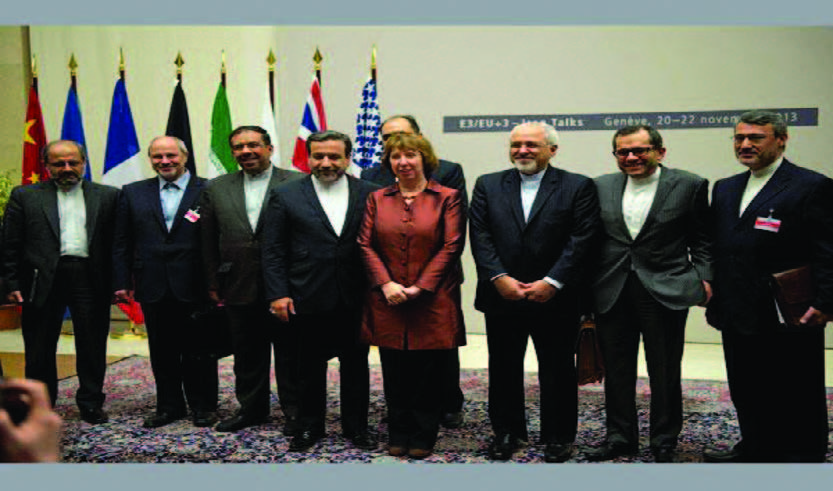
Iran signed a crucial nuclear deal with the USA and five other world powers on November 24, marking it as a significant foreign policy achievement of the Barack Obama Presidency.
Tag: Foreign Policy
-

John Kerry to join Iran nuclear talks as hopes of deal rise
GENEVA (TIP): US secretary of state John Kerry will join nuclear talks between major powers and Iran in Geneva on Friday in an attempt to nail down a long-elusive accord to start resolving a decade-old standoff over Tehran’s atomic aims. Kerry, on a Middle East tour, will fly to the Swiss city at the invitation of European Union foreign policy chief Catherine Ashton in “an effort to help narrow differences” in the negotiations, a senior State Department official said. Ashton is coordinating talks with Iran on behalf of the five permanent UN Security Council members plus Germany. After the first day of meetings set for Thursday and Friday, both sides said progress had been made towards an initial agreement under which the Islamic state would curb some of its nuclear activities in exchange for limited relief from punitive measures that are severely damaging its oildependent economy. US President Barack Obama said the international community could slightly ease sanctions against Iran in the early stages of negotiating a comprehensive deal on Tehran’s atomic programme to remove fears about Iranian nuclear intentions. “There is the possibility of a phased agreement in which the first phase would be us, you know, halting any advances on their nuclear programme … and putting in place a way where we can provide them some very modest relief, but keeping the sanctions architecture in place,” he said in an interview with NBC News.
Negotiators in Geneva cautioned, however, that work remained to be done in the coming hours in very complex talks and that a successful outcome was not guaranteed. Iran rejects Western accusations that it is seeking a nuclear bomb capability. Kerry said in Israel, Iran’s arch foe, that Tehran would need to prove that its atomic activities were peaceful, and that Washington would not make a “bad deal, that leaves any of our friends or ourselves exposed to a nuclear weapons programme”. “We’re asking them to step up and provide a complete freeze over where they are today,” he said in a joint interview with Israel’s Channel 2 television and Palestinian Broadcasting Corporation recorded in Jerusalem on Thursday. In Geneva, Iranian deputy foreign minister Abbas Araqchi said it was too early to say with certainty whether a deal would be possible this week, although he voiced cautious optimism. “Too soon to say,” Araqchi told reporters after the first day of talks between Iran and the United States, Russia, China, Britain, France and Germany. He added, “I’m a bit optimistic.” “We are still working. We are in a very sensitive phase. We are engaged in real negotiations.” The fact that an agreement may finally be within reach after a decade of frustrated efforts and hostility between Iran and the West was a sign of a dramatic shift in Tehran’s foreign policy since the election of a relative moderate, Hassan Rouhani, as Iranian president in June. The United States and its allies are aiming for a “first-step” deal that would stop Iran from further expanding a nuclear programme that it has steadily built up in defiance of tightening international pressure and crippling sanctions. The Islamic Republic, which holds some of the world’s largest oil and gas reserves, wants them to lift increasingly tough restrictions that have slashed its daily crude sales revenue by 60 percent in the last two years. Both sides have limited room to manoeuvre, as hardliners in Tehran and hawks in Washington would likely sharply criticise any agreement they believed went too far in offering concessions to the other side.
US Senate may seek more sanctions
Lending urgency to the need for a breakthrough was a threat by the US Congress to pursue tough new sanctions on Iran. Obama has been pushing Congress to hold off on more sanctions against Iran, demanded by Israel, to avoid undermining the diplomacy aimed at defusing fears of an Iranian advance towards nuclear arms capability. But many US lawmakers, including several of Obama’s fellow Democrats, believe tough sanctions brought Iran to the negotiating table and that more are needed to discourage it from building a nuclear bomb. -

India, China ink border pact
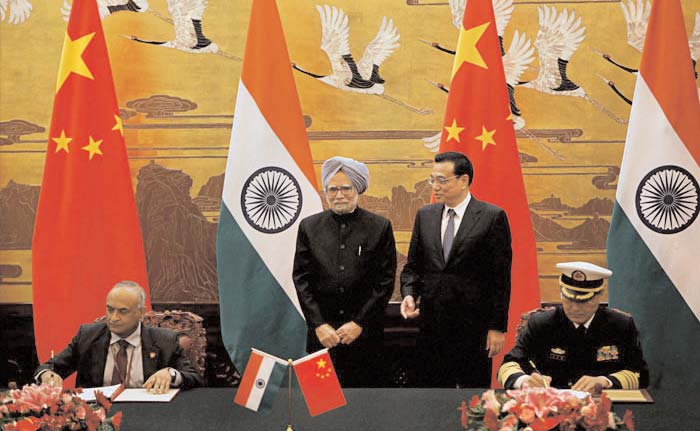
NEW DELHI (TIP): India and China took a leap towards reducing recurring tensions across the border and promised to strengthen cooperation on trans-border rivers, even as New Delhi delayed a pact for a liberalised visa regime. The Border Defence Cooperation Agreement (BDCA) was among the nine pacts the two countries signed here at the conclusion of talks between the two sides led by Prime Minister Manmohan Singh and Premier Li Keqiang. The BDCA envisages having incremental interaction across levels starting with border personnel meetings at designated places along the 4,000-km border; periodic meetings between officers of the Military Regions of China and Army Commands of India, and similar meetings between representatives of Defence Ministry on either side; meetings of the Working Mechanism for Consultation and Coordination; and the regular Sino-India annual defence dialogue. The Prime Minister also met President Xi Jingping, who underscored the need for the two countries to charter a course for the future need to stand tall and look far.
The Prime Minister invited Xi to visit India, while the Chinese President promised to take New Delhi’s concern on river water into account from a human angle. China’s assistance to Pakistan was also brought up during the meetings with the two Chinese leaders. Underscoring the significance of Prime Minister Singh’s visit, Premier Li noted that this was the first time since 1954 that exchange visits of Prime Minister of India and Chinese Premier took place within the same calendar year. Premier Li came to India in May, the first overseas country he chose to start international engagement after assuming the office. Both India and China held wide ranging talks on bilateral, regional and international issues and arrived at a broad consensus and reaffirmed their commitment to take forward the “Strategic and Cooperative Partnership for Peace and Prosperity” for its 2.5 billion people. As Prime Minister Singh characterised the development at the joint press conference: “When India and China shake hands, the world takes notice.” He noted that both India and China had agreed that as large neighbours, the relationship pursued with other countries following independent foreign policy should not become a cause for concern for each other. “This will be our strategic reassurance.” Prime Minister Singh and Premier Li mentioned that both sides had agreed to strengthen strategic communication at all levels, including on shared neighbourhood in order to build mutual trust.
The liberalised visa regime that would have enhanced extended period of stay for business visitors was put on the hold by India to convey its unease over the decision to give stapled visas to two archers from Arunachal Pradesh recently. India did not allow the sportspersons to take part in the event in China and raised the issue during the talks today. But having placed the issue on the table, Foreign Secretary Sujatha Singh said it would remain in discussion. Asserting Arunachal Pradesh is an integral part of the country, India felt the state cannot be discriminated against by such a policy which China felt was a practice followed by countries in some cases. Through the Memorandum of Understanding on trans-border rivers pertaining to Brahmaputra or Yaluzangbu, as the Chinese call it, both agreed to extend the hydrological data provision period during flood season in China from May 15 to October 15, instead of existing start period of June 1 each year. The two will further strengthen cooperation and cooperate through existing Expert Level Mechanism on provision of flood-season hydrological data and emergency management.
India has expressed concerns over China’s plans to construct a series of dams across the river as an upper riparian state. Manmohan Singh said Premier Li was receptive when he expressed concern about the unsustainable trade imbalance and explore avenues to bridge the gap. India agreed to take forward the suggestion by Premier Li for setting up an industrial park to attract investment from China to India. India faces an adverse trade balance of up to 42 per cent while bilateral trade touched $ 62 billion last year as against the 2015 target of $100 billion. Around the time the two leaders were meeting, CEOs Forum of India and China were engaged in a discussion in an adjoining room of the Great Hall of the People. Besides, both countries envisage further discussion on concept of alignment of the ambitious BMIC (Bangladesh, Myanmar, India and China) economic corridor. Deputy Chairman of Planning Commission Montek Ahluwalia said besides understanding on water efficiency, railway modernisation was being looked at as an idea including technology for heavy haul of freight and increasing speed of trains.
-

China – Pak Nuclear Deal Vs Sino- Indian ‘Strategic Partnership’
With India’s ascent in global hierarchy and American attempts to carve out a strong partnership with India, China’s need for Pakistan is only likely to grow. A rising India makes Pakistan all the more important for the Chinese strategy for the subcontinent. It’s highly unlikely that China will give up playing the Pakistan card vis-à-vis India anytime soon. Indian policymakers would be well advised to disabuse themselves of the notion of a Sino-Indian ‘strategic partnership.’ China doesn’t do sentimentality in foreign policy, India should follow suit”, says the author.
When Prime Minister Manmohan Singh was getting ready to leave for his trip to China, news emerged of China- Pakistan nuclear cooperation. In what will be the first foreign sale of its indigenous 1,100 MW nuclear reactor, ACP 1000, China is all set to sell two more nuclear reactors to Pakistan in direct contravention of its own global commitments as a member of the NPT and the NSG. India has been reduced to protesting ever since the details of a potential Sino-Pak deal came to light some months back. New Delhi, we are told, has made its reservations known to Beijing through diplomatic channels. But should it really come as a surprise that China is trying its best to maintain nuclear parity between India and Pakistan? After all, this is what China has been doing for the last five decades. Based on their convergent interests vis-à-vis India, China and Pakistan reached a strategic understanding in the mid-1950s, a bond that has only strengthened ever since. Sino- Pakistan ties gained particular momentum in the aftermath of the 1962 Sino-Indian war when the two states signed a boundary agreement recognizing Chinese control over portions of the disputed Kashmir territory and since then the ties have been so strong that Chinese President Hu Jintao has described the relationship as “higher than mountains and deeper than oceans.”
Pakistan’s President, Asif Ali Zardari, has suggested that “No relationship between two sovereign states is as unique and durable as that between Pakistan and China.” Maintaining close ties with China has been a priority for Islamabad and Beijing has provided extensive economic, military and technical assistance to Pakistan over the years. It was Pakistan that in early 1970s enabled China to cultivate its ties with the West and the US in particular, becoming the conduit for Henry Kissinger’s landmark secret visit to China in 1971 and has been instrumental in bringing China closer to the larger Muslim world. Over the years China emerged Pakistan’s largest defense supplier. Military cooperation between the two has deepened with joint projects producing armaments ranging from fighter jets to guided missile frigates. China is a steady source of military hardware to the resource-deficient Pakistani Army. It has not only given technology assistance to Pakistan but has also helped Pakistan to set up mass weapons production factories. Pakistan’s military modernization process remains dependent on Chinese largesse. In the last two decades, the two states have been actively involved in a range of joint ventures, including JF-17 Thunder fighter aircraft, K-8 Karakorum advance training aircraft, and Babur cruise missile the dimensions of which exactly replicate the Hong Niao Chinese cruise missile.
The JF-17 venture is particularly significant, given its utility in delivering nuclear weapons. In a major move for China’s indigenous defense industry, China is also supplying its most advanced home-made combat aircraft, the thirdgeneration J-10 fighter jets to Pakistan, in a deal worth around $6 billion. Beijing is helping Pakistan build and launch satellites for remote sensing and communication even as Pakistan is reportedly already hosting a Chinese space communication facility at Karachi. China has played a major role in the development of Pakistan’s nuclear infrastructure and emerged Pakistan’s benefactor at a time when increasingly stringent export controls in Western countries made it difficult for Pakistan to acquire materials and technology from elsewhere. The Pakistani nuclear weapons program is essentially an extension of the Chinese one. Despite being a member of the NPT, China has supplied Pakistan with nuclear materials and expertise and has provided critical assistance in the construction of Pakistan’s nuclear facilities. It has been aptly noted by non-proliferation expert Gary Milhollin, “If you subtract China’s help from Pakistan’s nuclear program, there is no nuclear program.” Although China has long denied helping any nation attain a nuclear capability, the father of Pakistan’s nuclear weapons program, Abdul Qadeer Khan, himself has acknowledged the crucial role China has played in his nation’s nuclear weaponization by gifting 50 kg of weapon-grade enriched uranium, drawing of the nuclear weapons and tons of uranium hexafluoride for Pakistan’s centrifuges.
This is perhaps the only case where a nuclear weapon state has actually passed on weapons grade fissile material as well as a bomb design to a non-nuclear weapon state. India has been the main factor that has influenced China’s and Pakistan’s policies vis-à-vis each other. Whereas Pakistan wants to gain access to civilian and military resources from China to balance the Indian might in the subcontinent, China, viewing India as potential challenger in the strategic landscape of Asia, views Pakistan as it central instrument to counter Indian power in the region. The China-Pakistan partnership serves the interests of both by presenting India with a potential twofront theatre in the event of war with either country. In its own way each is using the other to balance India as India’s disputes with Pakistan keep India preoccupied, failing to attain its potential as a major regional and global player. China, meanwhile, guarantees the security of Pakistan when it comes to its conflicts with India, thus preventing India from using its much superior conventional military strength against Pakistan. Not surprisingly, one of the central pillars of Pakistan’s strategic policies for the last more than four decades has been its steady and ever-growing military relationship with China. And preventing India’s dominance of South Asia by strengthening Pakistan has been a strategic priority for China. But with India’s ascent in global hierarchy and American attempts to carve out a strong partnership with India, China’s need for Pakistan is only likely to grow. A rising India makes Pakistan all the more important for the Chinese strategy for the subcontinent. It’s highly unlikely that China will give up playing the Pakistan card vis-à-vis India anytime soon. Indian policymakers would be well advised to disabuse themselves of the notion of a Sino-Indian ‘strategic partnership.’ China doesn’t do sentimentality in foreign policy, India should follow suit.
-

The Pivot under Pressure
It’s not just the canceled trip. Other factors are limiting the ability of the U.S. to focus on the Asia-Pacific.
Senior U.S. administration officials have been at pains in recent weeks to demonstrate how Washington’s strategic focus is shifting from the military quagmires of the greater Middle East to the dynamism of Asia. It’s a tough sell, and there is reason to doubt that America’s allies and friends in the region are buying it. Even before the cancellation of President Barack Obama’s Asia trip, which would have included the APEC and East Asia summits, doubts about U.S. focus were rising. Take Obama’s address before the UN General Assembly earlier this month. Its core takeaway is that the manifold problems of the Middle East have once more re-asserted their claim on Washington’s attention. Unveiled with much fanfare (here and here) two years ago, the so-called Asia pivot is all about shoring up the U.S. presence in a vital region that is increasingly under the sway of an ascendant China.
Obama dubbed himself “America’s first Pacific president” and declared that Asia is where “the action’s going to be.” Vowing that the future would be “America’s Pacific Century,” his lieutenants rolled out two specific initiatives: 1.) A buildup of military forces that is plainly directed against China; and 2.) An ambitious set of trade and investment negotiations known as the “Trans-Pacific Partnership” (TPP) that would contest Beijing’s economic hegemony in East Asia. But the pivot – or the “strategic rebalance,” as administration officials now prefer to call it – was birthed with two congenital defects: It was unveiled just as the convulsions of the Arab Spring began tearing apart the decades-old political order in the Middle East, and just as an era of severe austerity in U.S. defense budgeting was taking shape. Until a few weeks ago, Obama gave every appearance of a man wishing the problems of the Middle East would just go away. But much like the Glenn Close character in Fatal Attraction, the region refuses to be ignored. For all the talk about turning the page on years of military and diplomatic activism in the region, Obama keeps having to take notice.
Indeed, he was forcefully reminded of its combustibility when the outbreak of fighting in Gaza between Israel and Palestinian militants intruded on his last trip to Asia a year ago. And despite his stubborn determination to steer clear of it, he now finds himself sucked into Syria’s maelstrom. The president’s General Assembly address underscores the power of this gravitational pull. In it, Mr. Obama affirmed: “We will be engaged in the region for the long haul,” and outlined the security interests that he is prepared to use military action to protect. He reiterated his intention to see through the uncertain prospect of Syria’s chemical disarmament and then staked his prestige on two longshot projects: stopping Iran’s nuclear weapons program and brokering an Israeli-Palestinian peace accord. He also pledged renewed focus on sectarian conflicts and humanitarian tragedies like the Syrian civil war. This marks quite an evolution in Obama’s thinking from earlier in the year when he justified his Hamlet-like ambivalence on Syria by pondering: “And how do I weigh tens of thousands who’ve been killed in Syria versus the tens of thousands who are currently being killed in the Congo?” In all, Obama’s remarks last month mark a noticeable change in his foreign policy agenda.
As the New York Times noted: “For a president who has sought to refocus American foreign policy on Asia, it was a significant concession that the Middle East is likely to remain a major preoccupation for the rest of his term, if not that of his successor. Mr. Obama mentioned Asia only once, as an exemplar of the kind of economic development that has eluded the Arab world.” This shift will only renew the multiplying doubts in the region about his commitment to the pivot. So too will the fiscal policy drama currently being played out in Washington, which regardless of its precise outcome, looks certain to end up codifying the sequestration’s deep budget cuts that have disproportionally affected defense spending. Already the drama in Washington has prompted him to cancel his Asia visit. Meanwhile, many in Asia are questioning whether the administration has the fiscal wherewithal to undertake its promised Asia pivot, including the military aspect. The budget squeeze is already cutting into military readiness. The U.S. Navy is slated to play a central part in the buildup, but two thirds of its non-deployed ships and aviation units reportedly don’t meet readiness goals, and the frequency of naval deployments has been noticeably pared back. The Air Force has grounded a third of its fighter squadrons and “Red Flag,” its premier combat training exercise, was canceled for the fiscal year that just ended. Deep reductions in Army and Marine Corps ground forces are in the offing, and joint exercises involving U.S. forces and their Asian counterparts have been scaled back.
Moreover, a senior officer working on strategic planning for the Pentagon’s Joint Staff recently acknowledged the difficulty of militarily disengaging from the Middle East and re-directing forces to Asia. As Defense News reported: “‘We’ve been consumed by that arc of instability from Morocco to Pakistan for the last 10 years,’ Rear Adm. Robert Thomas said. And while the senior staffs at the Pentagon are dutifully discussing how they are rebalancing to the Pacific, ‘I suspect, though, for the next five years, just as the last 10 years, we will have this constant pull into the’ Middle East.” “Over the next several years, he continued, ‘I think that you’re going to continue to talk about a rebalance to Asia, and you’re going to do some preparatory work in the environment, but the lion’s share of the emphasis will still be in that arc of instability.’” Thomas also predicted a constant tug for resources between the U.S. military commands responsible for Asia and the Middle East. This strain may explain why the Pentagon has yet to develop a comprehensive game plan for the military buildup in Asia. Likewise in doubt is U.S. resolve on the TTP, which involves 12 Pacific Rim countries that together account for a third of the world’s trade.
The Obama administration, having already missed the initial November 2011 deadline it set for completion, was hoping to have a basic agreement in place in time for the Asia Pacific Economic Cooperation (APEC) summit that convened in Indonesia on the weekend. But there has been slow progress in the negotiations (see here, here and here for background), and even the revised deadline looks likely to slip. Moreover, the White House has not even moved to formally request socalled “trade promotion authority,” a traditional indicator of serious intent because it puts trade deals on a quick path to Congressional approval. The administration announced more than a year ago that it would request this authority from Congress but Michael Froman, the new U.S. Trade Representative, recently stated there is “no particular deadline in mind.” Nor has the White House used its political capital to address rising domestic opposition (here and here) to the trade deal. Washington will continue to proclaim the Obama administration’s steadfastness to the Asia pivot. But U.S. allies and friends now have even more reason to think otherwise.
-

Ambassador Rao Visits Orange County, CA at the Invitation of HFAC Chairman Ed Royce
WASHINGTON (TIP): India’s Ambassador to the U.S. Nirupama Rao visited Orange County in the vicinity of Los Angeles, California on September 14, 2013 at the invitation of the Chairman of the House Foreign Affairs Committee, Congressman Ed Royce, who represents that district in the United States Congress. As one of the well-respected leaders on foreign policy in the U.S. Congress, Chairman Royce has been an ardent supporter of India and India-U.S. relations, and one of the earliest protagonists of the Congressional Caucus on India and Indian Americans, which he has co-chaired in the past on more than one occasion. He continues to be an active member and a leading voice of the Caucus. Speaking at a welcome gathering of local leaders and the Indian American community hosted in her honor by the former Mayor of Anaheim, Mr. Harry Sidhu, Ambassador Rao thanked Chairman Royce and Mrs. Marie Royce for their invitation, saying that she counted them among her closest friends in the United States.
Ambassador Rao described the “great resurgence” in India-U.S. ties as a partnership in a “state of irreversible excellence” and “with its sights firmly set on the future”. She praised Chairman Royce’s personal contribution in this transformation, calling him “one of the greatest champions and pioneers of the India-U.S. Strategic Partnership.” She spoke of the “natural affinity” between the peoples of the two countries, who she said were at the heart of this partnership spanning from defense cooperation and counter-terrorism to trade, innovation, technology and education. Ambassador Rao affirmed that geopolitical shifts in the world made India and the U.S. “natural partners in the advancement of common goals of peace, prosperity and development for all of humanity”. In his welcome remarks, Chairman Royce praised Ambassador Rao’s untiring efforts to promote India-U.S. cooperation in diverse fields. He reflected on the role of the India Caucus in the transformation of India-U.S. relations over the last two decades, which he described as “phenomenal” and “based on same interests and values”.
Chairman Royce counted deepening of India- U.S. trade relations and counter-terrorism cooperation among his priorities. He commended the role of the Indian American community in building closer India- U.S. partnership with their talent and determination. The California State Senator Mimi Walters also joined the event to welcome Ambassador Rao. Later that afternoon, the American Women for International Understanding (AWIU) hosted Ambassador Rao for a discussion on recent developments in India and India-U.S. relations. AWIU is a non-government organization which has been working on promoting awareness and understanding on issues facing women through worldwide delegations and international networking. During the discussion moderated by Mrs. Marie Royce, Ambassador Rao answered questions on women’s empowerment, economy, education and technology, as well as foreign policy issues in India’s neighborhood.
-

Karzai stresses need for Pakistani help in Taliban peace process
ISLAMABAD (TIP): Afghan President Hamid Karzai on Aug 25 stressed the need for Pakistan’s help in arranging peace talks with the Taliban in a meeting with Pakistani Prime Minister Nawaz Sharif who assured him of his support. Pakistan backed the Taliban’s rise to power in Afghanistan in the mid- 1990s and is seen as a crucial gatekeeper in attempts by the US and Afghan governments to contact insurgent leaders who fled to Pakistan after the group’s 2001 ouster. But Afghanistan has long accused Pakistan of playing a double game in the 12-year-old war, saying its neighbour, facing a Taliban insurgency of its own, makes pronouncements about peace, but allows elements of its military to play a spoiling role. Pakistan is keen to limit the influence of its old rival, India, in Afghanistan.
Karzai, who has close ties with India, said he had “primarily and with emphasis” asked the Pakistanis to help with reconciliation as most foreign troops prepare to leave Afghanistan by the end of next year. He wants Pakistan to help arrange contacts between the Taliban and the Afghan High Peace Council, the government body tasked with reconciliation, or release highranking Taliban prisoners who might act as interlocutors. Sharif, who appeared with Karzai to deliver statements after their talks in the Pakistani capital, did not specifically address those requests. It is unclear whether the Afghan Taliban, in power from 1996 and 2001, will have a role in the next government.
The Taliban, fighting to expel foreign forces and impose Islamist rule, have refused to talk to Karzai, accusing him of being an American puppet. “For the two countries, the primary concern is lack of security for their citizens and the continued menace of terrorism,” said Karzai. “It is this area that needs to have primary and focused attention from both governments.” ‘Strong, sincere support’ Sharif assured him of support and closed his address by listing economic deals the two countries had struck. “Pakistan (has) strong and sincere support for peace and reconciliation in Afghanistan. We fully agreed that this process has to be inclusive, Afghan-owned and Afghan-led,” Sharif said. The Taliban in June set up an office in Doha, touted as a conduit for peace talks with the United States, but the office infuriated Karzai the day it opened by displaying a flag bearing symbols from the time the Taliban ruled Afghanistan. Karzai accused the Taliban of running an embassy rather than an office.
The office has now closed. Karzai has made 19 trips to Pakistan but this was his first meeting with Sharif since Sharif’s landslide election win in May. An Afghan-based analyst said people there might be disappointed that Karzai and Sharif had not show more solidarity on the question of the Taliban insurgency. “The two leaders were not on the same page,” said Barhan Osman of the Afghanistan Analysts Network think-tank. “One was talking about the peace process as the top issue and one was talking about trade as the top issue … it was not what the Afghans were looking for.” Even if Sharif wanted to persuade the Taliban to talk to Karzai, it was unclear how much influence he had, Osman said. Security and foreign policy in Pakistan is overseen by the military. Ever since Muslim Pakistan was carved out of British-ruled India in 1947, the military has seen India as Pakistan’s greatest threat.
-

US-India ties hit a Plateau
It has now been confirmed that before going to New York to participate in the UN General Assembly deliberations in New York, Prime Minister Manmohan Singh will be visiting Washington in September for his second bilateral engagement with US President Barack Obama. Though New Delhi was very keen on the visit and the US President had extended an invitation to Manmohan Singh earlier this year, it’s not entirely clear what a lame-duck Prime Minister is likely to achieve during this visit.
That US-India ties have hit a plateau has been evident from the lackluster engagements between the two sides in recent months. It was the turn of US Vice President Joseph – a month after Secretary of State John Kerry’s visit — to India to reassure New Delhi how Washington remains keen on a robust partnership with India. Biden’s four-day visit to India last month, first for a US Vice President in three decades, was aimed at laying the groundwork for the Indian Prime Minister’s visit to the US in September. Though it was clear from the very beginning that Biden’s trip will not result in any ‘deliverables’, it also remains a mystery as to what an Indian Prime Minister at the fag-end of his term and with hardly any political capital left will be able to do to galvanize this very important relationship with a perfunctory visit to the US.
These are difficult times for the USIndia bilateral relationship which has been flagging for quite some time now and there is little likelihood of it gaining momentum anytime soon. The growing differences between the two today are not limited to one or two areas but are spread across most areas of bilateral concern. These include market access issues, the problems in implementing the US-India civil nuclear accord, the US immigration changes, changing US posture towards Afghanistan, defense cooperation and trade. Biden’s visit was specifically focused on trying to give a push to economic ties, enhancing cooperation on defense issues, pushing India for a greater role in the Asia-Pacific and addressing climate change. That the US is clearly concerned about Indian economic slowdown was reflected in Biden’s comments.
He exhorted New Delhi to try to take bilateral trade with the US to $500 billion by removing trade barriers and inconsistencies in the tax regime. He recommended more measures like recent relaxation in the FDI rules by underlining “caps in FDI, inconsistent tax system, barriers to market access, civil nuclear cooperation, bilateral investment treaty and policies protecting investment.” Investor confidence in the Indian economy, Asia’s third largest, is at an all-time low with growth slowing down to its lowest level in a decade. Foreign direct investment slid about 21 per cent to $36.9 billion last fiscal year compared with 2011-12. The US is keen to see India remove investment caps in sectors like finance, retail and insurance. The US corporate sector has been up in arms in recent months about India’s trade policies, complaining that American firms are being discriminated against and the US intellectual property rights are being undermined by India.
Sporadic outbursts of reform measures from New Delhi have not been enough to restore investor confidence in India even as Indian policymakers are now busy trying to secure their votes for the next elections. Policy-making in India remains paralyzed and haphazard with Washington getting increasingly frustrated with the Indian government’s lackadaisical public policy. For his part, Biden went out of his way to assuage the concerns of the Indian corporate sector by suggesting that Washington plans to increase the number of temporary visas and green cards to highly skilled workers from India. The concerns, however, continue to persist because the US Senate has already cleared the much talked-about immigration Bill that will significantly restrict Indian IT companies in the US. If the House of Representatives ends up endorsing it, then the Obama Administration will have to do some heavy lifting to mollify India. Meanwhile, the civil nuclear deal is floundering as the US companies remain wary of Indian laws on compensation claims in the event of a nuclear accident. India’s nuclear liability law is aimed at ensuring that foreign companies operating in Indian nuclear sector assume nearly unlimited liability for accidents, a condition that all but precludes the participation of US firms. After all the political and diplomatic investment that Washington made in making the nuclear deal happen, there is a pervading sense in the US that the returns have not been at all impressive.
On climate change where the Obama Administration is focusing significantly, Biden pushed India to work with the US to reduce the flow of hydroflurocarbons and provide opportunities to the scientific establishment to work on green technology options. The US is already working with China on a joint effort to curb greenhouse gases. Biden also tried to ease Indian concerns on Afghanistan by underlining that the Taliban would have to give up ties with Al Qaeda and accept the Afghan constitution as part of the reconciliation process. New Delhi remains concerned about the impact of US withdrawal from Afghanistan for Indian security. The recent bombing outside the Indian consulate in Jalalabad merely highlights the challenges India faces in Afghanistan. According to Biden, “there are no obvious places where Indian interests and American interests diverge worldwide, regionally or domestically.” That may well be true but in the absence of a big idea to push the relationship forward strategically, the tactical issues where there are significant differences between Washington and New Delhi continue to shape the trajectory of the US-India bilateral ties. The relationship stands at a serious inflection point.
The two sides need to start thinking seriously about bringing it back on track. New Delhi, in particular, needs to acknowledge the importance of what Biden suggested when he said that “there is no contradiction between strategic autonomy and strategic partnership.” In the name of ‘strategic autonomy’ New Delhi has become quite adept at scuttling its own rise. At this moment of significant geostrategic flux in the Indo-Pacific, India and the US need each other like no other time in the past. Biden’s visit has underlined India’s importance in US strategic calculus. It is now for India to decide what role it sees for the US in its foreign policy matrix and as a corollary what role it sees for itself in the rapidly changing global order.
-

Japan’s Deputy PM Aso Says He Won’t Resign Over Nazi Comments
TOKYO (TIP): Japan’s deputy Prime Minister Taro Aso said on Friday he has no intention of resigning over comments he made, but were later retracted, that were interpreted as praise for Germany’s Nazi regime and Adolf Hitler’s rise to power. The comments by Aso, who is also finance minister and a former premier, drew criticism from a US-based Jewish rights group as well as in media in South Korea, where bitter memories of Japan’s World War 2 militarism run deep.
The gaffe could complicate foreign policy for Prime Minister Shinzo Abe because there are lingering worries that Abe is shifting Japan to the right by pushing for a bigger role for the military and a less apologetic view of Japan’s wartime history. “I have no intention of resigning,” Aso told reporters after a cabinet meeting on Friday. Aso’s original remarks were made while he was discussing constitutional reform in a speech to a conservative group on Monday. “Germany’s Weimar constitution was changed before anyone realised,” Aso said, according to Japanese media accounts.
“It was altered before anyone was aware. Why don’t we learn from that technique?” Aso said. “I don’t want us to decide (on the constitution) amid commotion and excitement. We should carry this out after a calm public debate.” On Thursday, Aso said he had meant to seek a calm and indepth debate on the constitution. He said he wanted to avoid the kind of turmoil that he said helped Hitler change the democratic constitution established by Germany’s Weimar government after World War One, under which the dictator had taken power.
Abe wants to revise Japan’s constitution, drafted by the United States after World War Two, to formalise the country’s right to have a military. Critics say his plan could return Japan to a socially conservative, authoritarian past.
-

US Senate Approves Samantha Power As New UN Ambassador
WASHINGTON (TIP): The US Senate easily confirmed President Barack Obama’s selection for ambassador to the United Nations on August 1. The Irish-born Samantha Power, a former Obama foreign policy adviser and outspoken human rights advocate, moves into the job formerly held by Susan Rice, who is now Obama’s national security adviser. “As a long-time champion of human rights and dignity, she will be a fierce advocate for universal rights, fundamental freedoms and US national interests,” Obama said in a statement.
Power, a one-time journalist who has a Harvard Law School degree, has reported from many of the world’s trouble spots. She won a 2003 Pulitzer Prize for a book on the meek US response to many 20th century atrocities, including those in Rwanda and Bosnia in the 1990s. She has long backed intervention — including military force — to halt human rights violations. Power’s past outspokenness has included her 2002 call for a “mammoth protection force” to prevent Middle East violence, from which she has distanced herself.
Two weeks ago, Venezuela said it was calling off efforts to restore normal relations with the US after Power said at her Senate confirmation hearing that the South American country was guilty of a “crackdown on civil society.” She also called the UN’s inaction to end the large-scale killing in Syria’s civil war “a disgrace that history will judge harshly.” In 2008, she resigned as an adviser to Obama’s presidential campaign after calling then-rival Hillary Rodham Clinton a “monster.”
-

OFBJP Organizes Public Reception For BJP President Rajnath Singh
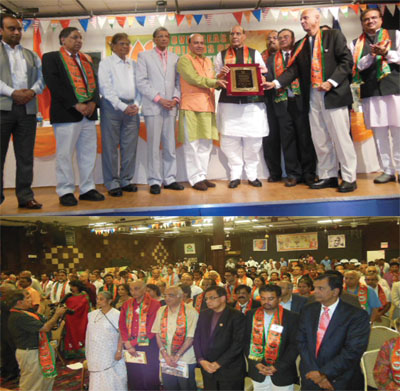
EDISON, NJ (TIP): Indian American community of tri-state area (New Jersey, New York, and Connecticut) gave a rousing welcome to Rajnath Singh, President of Bharatiya Janata Party (BJP) and his BJP delegation Ananth Kumar, General Secretary; Sudhanshu Trivedi, National Spokesperson; and Vijay Jolly, Convener of Overseas Affairs and Overseas Friends of BJP (OFBJP) in TV Asia Studio Auditorium at Edison, NJ on Sunday July 21, 2013. The program was organized by OFBJP-USA as part of its community global outreach program.
The program was broadcasted live on TV Asia across US reaching out to 1.5 million viewers. The program was also relayed live in India, Canada, UK, Europe and Middle East thru various channels. Addressing the jam-packed auditorium, Rajnath Singh said that he was elated by the warm welcome that had been accorded to him by the Indian Americans here in US. He said that trust and credibility have become a big problem in India and BJP is the only option. No party in India has grown bigger than Congress except the BJP.
BJP is the only party that has not suffered a vertical split. Communists have lost relevance and Congress has no policy on any of the issues nor has any ideology. Since its inception in 1951 as Bharatiya Jan Sangh and later on as BJP, the party has been pursuing a policy of Nation first. He continued that Atal Behari Vajpayee led a 24 party coalition for 6 years and the NDA rule was far better than 55 years of Congress rule in every aspect.
Corruption, Inflation and price rise are the signature of congress rule whereas NDA government controlled the inflation and price rise in spite of the prevailing severe drought and economic sanctions imposed by the entire West after Pokhran nuclear tests. NDA inherited a GDP growth of 4.8% and 10% inflation whereas BJP handed UPA a GDP of 8.4% and inflation 3.5% in 2004. Amidst applause from the audience he said that Pokhran test was a big step wherein the BJP led govt made India a nuclear power even though we knew economic sanctions were staring at us.
Countries that are much smaller have become developed countries but India is still a backward country and not sure why 55 years of Congress rule did not change much. Congress has to answer as to how much time they need to make India better, to remove poverty. BJP invited FDI in telecom sector but encouraged Indian investors whereas Congress has opened up the telecom sector 100%, increased in the LIC sector from 26% to 49%. Foreign investors have pulled out $7.5 billion from India and no one is ready to invest.
Even after 60 years of Independence we still have 67% of people who don’t get food and we need a food security bill. We need leaders with firm conviction and leaders with vision and when we come in power we will make India a super economic power in 10-15 years. National Highway development has seen tremendous growth during NDA rule. 50% of the highways that were built during 1980-2012 happened during 6 years of NDA rule and the other 50% were built during 26 years of non-BJP rule.
Gujarat development has become a role model across the world. Madhya Pradesh agricultural growth (19%) is the highest in the world and very soon will be providing 24hrs of power supply. Chhattisgarh PDS system serves 90% of the population without any corruption and is a model for other states to emulate. Goa is the only state in India where Petrol is cheaper than Diesel. India has a GDP growth of 4.8% whereas BJP ruled states have 10% GDP growth. UPA government has no plan to tackle Naxalism or terrorism.
Appeasement has become the state policy whereas BJP never links terrorism to any religion, caste or region. After Mumbai terror attack, Prime Minister made a statement that he will not talk to Pakistan until it gives an assurance that they will control terror activities and not support any groups that work against India but changed all that in a matter of few months. Our foreign policy is at its worst with no friendly neighbors around us. During NDA rule we maintained good relations with Russia and development excellent relations with US.
We made US our strategic partner. He appealed to the US govt to lift the ban on visa to Narendra Modi, he said on one side US agencies rate Gujarat as the best state and Modiji as an excellent administrator and on the other hand they deny visa to him. It will be better if US takes a decision soon as they will be forced to take a decision anyway later. When BJP comes to power we will make India a power of Rishi and Krishi (knowledge and Prosperity), he said. Indian culture influenced the world for thousands of years.
We never planned to dominate the world and even Swami Vivekananda came to Chicago on his own and had great influence on the world by his teachings. Citing the example of Newsweek columnist Lisa Miller who stated that by imbibing Yoga, Pranayam, Ayurveda and Organic farming people in the West are becoming Hindus whereas it is a crime in India if you say you are a Hindu.Talking on the recent controversy related to Narendra Modi statement that he is a Hindu and Nationalist, media created and pseudo secularists made a big fuss.
Professing your Hindu culture became a communal word in India. He said that as per the Supreme Court, Hindutva is a way of a life. Hindutva teaches love not only for human beings but even for animals, plants, rivers, mountains etc. It is Hindutva that teaches us to serve milk to a snake and take care of animals like ants and birds. He called on the Indian American Community to support BJP to build a strong India.
Shri Rajnath Singh was accorded standing ovation. Shri Rajnath Singh was honored by the OFBJP executive committee with a plaque for his contributions to the party and the country. Earlier, Ram Rakshpal Sood (Sr.Advisor, OFBJP) acting as the Emcee welcomed the audience, chief guests and the sponsors of the event. After the traditional lamp lighting ceremony amidst the chanting of Vedic mantras by Pandit Pravin Shastri and Chandrakant Trivedi and blowing of conch shell by Pravin Shashtri. Mrs. Vidya Labroo led the rendition of Vandemataram.
Jayesh Patel (President, OFBJP) welcomed the distinguished guests and said that entire India is chanting Narendra Modi (NaMo) mantra and expressed hope that BJP will be able to get majority on its own merit in the next election. Ram Kamath (General Secretary, OFBJP) introduced Dr. Mahesh Mehta, National Coordinator of OFBJP-USA. Speaking on the occasion, Dr. Mehta said that mission 2014 is about transforming India into a global leader and Global Indians should contribute to be the part of this great movement that will eventually contribute to the development of India.
Dr. Adapa Prasad (Immediate Past President) introduced Vijay Jolly, Convener of BJP Overseas Affairs and OFBJP, as a dynamic leader and former MLA who took on Delhi Chief Minister during the last election.
In his electrifying speech, Vijay Jolly urged the audience to applaud for Rajnath Singh for honoring the feelings of the people by making NaMo as the chairman of the campaign committee. Stressing the fact the OFBJP is on a mission to develop leaders by inducting youth into the organization to dethrone the corrupt Congress regime in India. Stating that NRI’s have always made India proud, he said that OFBJP has setup its chapters in UK, Norway, Nepal, Kenya and other countries to work for the welfare of Indian diaspora.
He got the past Presidents of OFBJP-USA honored by Rajnath Singh Introducing SudhanshuTrivedi, BJP National Spokesperson, Dr. Dinesh Agrawal (Former- President, OFBJP) said that as the national spokesperson, he is very active effective on TV channels spreading the message and its ideology of BJP. SudhanshuTrivedi reminded that July 21st the day of the program is a historical day when US astronauts landed on the moon. Edison town, the venue of the program, is also a historical town, named after the inventor of light bulb.
Hence, he said that word Bharat stands for light and inspires us to take India to the pinnacle of glory. Stating that BJP is all set to form the next government is not based on hope but on facts. He concluded reciting a poem by A.B. Vajpayee. R.P. Singh (Org. Secretary, OFBJP) introduced Ananth Kumar, BJP general Secretary. Amidst thunderous applaud from the audience, Shri Ananth Kumar introduced himself as the Hanuman of South as Kishkinda, the birth place of Lord Hanuman is in Karnataka whereas Rajnath Singh is from U.P, the land of Ram. For Ram’s team to win we need Hanuman and he is there to lend services for the party and the country.
India, he said is going through turbulent times and like A.B. Vajpayee model, we have Gujarat model of development under NaMo leadership and we will soon have NaMo model of governance. He said that BJP is already in battle mode, under NaMo and Rajnath Singh’s leadership we are all set to take on the corrupt congress government. Once in power, BJP will make India a global player not only in spirituality but in culture, strategic matters and will be a decisive player in the world. He urged the NRI’s to connect with their districts back home and work for BJP’s victory in 2014.
Chandrakanth Patel introduced Rajnath Singh as a man of impeccable image in spite of being in political life for 40+ years. Born in a farmer’s family in Varanasi, he rose to be the president of BJYM. He was part of the J.P movement and became the Agricultural minister in A.B. Vajpayee’s government. He was the President of BJP between 2007-2009 and again became the President in January, 2013.
Currently, he is a Member of Parliament from Ghaziabad, U.P. Earlier, the President of TV Asia and a well known community leader, Shri H.R.Shah addressed the gathering and said that TV Asia always supported India causes and he has been an admirer of Mahatma Gnadhi and Sardar Patel. He said he felt close to BJP principles and supported BJP. He wished that Narendra Modi would be elected as the Prime Minister. Krishna Reddy (Treasurer, OFBJP) presented the vote of Thanks.
-

New Bhutan Govt Has To Win India’s Trust
HIMPHU (TIP): Irrespective of the results in July 13 election, the new Bhutan government will have to go the extra mile to end suspicion and distrust that cloud its relationship with India. New Delhi is understood to be upset with the manner Bhutan under Druk Phuensum Tshogpa (DPT) allegedly overlooked India’s basic national interests in the past five years.
Bhutan’s stated policy is that it won’t allow the UN Big Five to have diplomatic missions in Thimphu. But, New Delhi believes, Bhutan circumvented this by appointing a Briton to act as UK’s honorary consul in its capital and subsequently gave him Bhutanese citizenship. This, many felt, is not in alignment with Bhutan’s stated policy. So far, the kingdom, acknowledged as India’s staunchest ally worldwide, had refrained from taking any such step in deference to Delhi’s security concerns.
Ex-PM Jigmi Y Thinley’s critics in Bhutan and India claimed that the first strain in bilateral ties appeared over the way he described his meeting with then Chinese premier Wen Jiabao in 2012. They alleged that although the meeting was “pre-arranged” , Thimphu projected it as “an impromptu interaction”. They were of the view that such “distortion” of facts made New Delhi suspicious of Thimphu’s intentions.
Many saw New Delhi’s decision to invite the King to this year’s Republic Day ceremony as a signal that it wants to directly deal with the palace and the people. All Bhutanese Kings, according to them, have been great protagonists of India-Bhutan friendship. It was perhaps because of this that New Delhi in 2007 agreed to revise the 1949 India-Bhutan Treaty after the king reportedly expressed his wish to have an agreement suitable to a country on the threshold of democracy. The revised treaty gave Thimphu freedom to pursue an independent foreign policy.
A year later, the kingdom embraced democracy. The revision of the treaty enabled the DPT government to extend Bhutan’s diplomatic ties from 21 to 53 countries between 2008 and 2013. New Delhi apparently wanted Thimphu to take geopolitical realities into consideration while expanding its diplomacy across the globe.
India, Thinley’s detractors claimed, did not take kindly to the alleged use of Chinese experts to instal heavy machinery in Bhutan. For China, they said, investing in a small country like Bhutan is a pittance. Amid reports of friction in India-Bhutan friendship, New Delhi recently cut cooking gas and kerosene subsidies for Bhutan. This not only became an election issue but also spread fear among the Bhutanese that India would punish their country because of diplomatic reasons.
Against this backdrop, Bhutan on Saturday will choose between DPT and PDP to head it new government. In 2008, DTP won 45 of 47 seats and PDP two. Bhutan follows a bi-party system. In the primary round that was held weeks ago to choose the top two parties for Saturday’s polls, DPT won in 33 and PDP 12. The remaining two seats went to Druk Nyamdrup Tshogpa that merged with the PDP.
The PDP-DNT union may put DPT in trouble in a number of constituencies where it won by small margins in the preliminary round. Bhutan’s three giant leaps First big reform: Third King Jigme Dorji Wangchuk set up National Assembly (Tshogdu) in 1953 It elected members representing Gewogs (smallest administrative units) This was legislating body, people discussed national issues SECOND BIG REFORM: Setting up of Royal Advisory Council (Lodoe Tshogde) in 1963 Served as link between king, council of ministers and people Liaison ensured projects’ timely implementation King Jigme Singye Wangchuk set up District Development Committee in 1981 (Dzongkhag Yargay Tshogdue) In 1991, he set up Gewog Yargay Tshogchhung (block development committees) THIRD BIG REFORM: The 1998 devolution of powers to cabinet ministers King became head of state while PM head of govt PM has council of ministers Constitution signed in 2008
-

Sujatha Singh is new Foreign Secy
NEW DELHI (TIP): Adhering to the seniority principle, the government on July 3 named Indian Ambassador to Germany Sujatha Singh as the next Foreign Secretary to succeed Ranjan Mathai on his retirement on July 31. An IFS officer of the 1976 batch, Sujatha will be the third woman to navigate India’s foreign policy as the country’s top diplomat. Earlier, Chokila Iyer and Nirupama Rao have held the coveted post. Sujatha, who was due to retire in July next year, will now have a two-year term from August 1. Though she has not done any diplomatic posting in India’s neighbourhood, clearly an added qualification for any Foreign Secretary, she was Undersecretary in the External Affairs Ministry looking after Nepal in early 80s. Apart from Sujatha, there were four contenders for the Foreign Secretary’s post. They were S Jaishankar, India’s Ambassador to China, Jaimini Bhagwati, Indian High Commissioner to Britain, Sudhir Vyas, Secretary (West) in the External Affairs Ministry, and Pinak Ranjan Chakravarty, Secretary (Economic Relations) in the ministry.
-

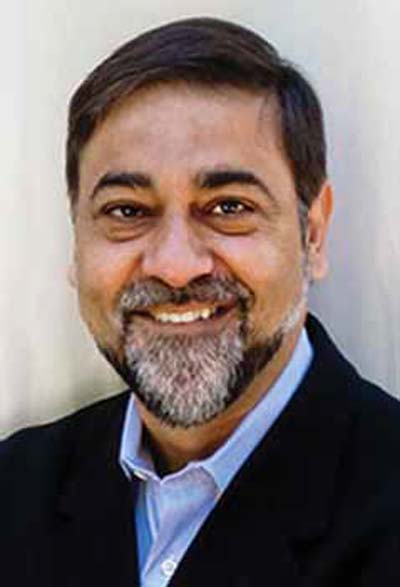
Vivek Wadhwa named to Time’s List of Top Tech Thinkers
NEW YORK (TIP): Vivek Wadhwa, who holds academic appointments at Singularity University, Stanford University and Duke University, and last year was named to Foreign Policy magazine’s list of the Top 100 Global Thinkers, was named by Time magazine recently to its list of the 40 “Most Influential Minds in Tech.” Wadhwa, the magazine said, “has become a leading voice in debates over technology policy, particularly with respect to entrepreneurship, innovation and immigration.” “In his recent book, ‘The Immigrant Exodus: Why America Is Losing the Global Race to Capture Entrepreneurial Talent,’ Wadhwa describes how the U.S. is now telling the best immigrants to go home, due to a lack of immigration visas,” Time said. “As a result of this ‘reverse brain drain,’ as Wadhwa and his colleagues call it, highly skilled workers and professionals are increasingly looking to other global markets to locate their businesses.” “We’re seeing a boom in technology entrepreneurship in India, China, and even Russia, because the U.S. won’t let people stay here,” Wadhwa told Time. Early in his career, Wadhwa worked at Credit Suisse First Boston, where he helped develop technology for creating computeraided software-writing systems. The Indian American entrepreneur later founded software firm Relativity Technologies. Wadhwa is a columnist at Bloomberg Business Week and a contributor to various other publications, including The Indian Panorama.
-

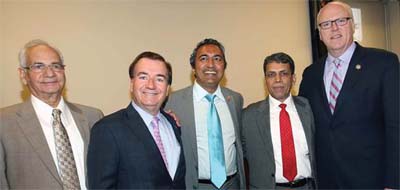
Indian Americans host Reception in Honor of Congressional leaders in Washington, D.C.
WASHINGTON D.C.(TIP): The American India Public Affairs Committee (AIPACom) organized a reception in honor of Congressional leaders in Washington, D.C. on June 27th. Congressman Ed Royce, Chairman, Foreign Affairs Committee; Joe Crowley, Chair, India Caucus; Steve Chabot, Chairman, Subcommittee, South Asia; Gregory Meeks, Joe Wilson, Ami Bera, Grace Meng and several high-ranking officials from State Department, Senate and India Caucus participated. Joe Crowley Congressmen present expressed their whole-hearted support for India.
Addressing the gathering, Mr. Jagdish Sewhani, President of the AIPACom said that the issue of pulling out the United States and its allied forces from Afghanistan by the end of 2014 and the rise of Taliban have created a sort of anxiety in the region. “There is a fear in the region that Taliban, supported by radicalized Pakistani army may make a forceful bid to take over Afghanistan and establish Sharia. This could trigger tension in the region,” he said.
Disappointed over Pakistan’s sluggish pace of trial in the 26/11 Mumbai terror attack, Congressman Ed Royce, Chairman of the House Foreign Relations Committee demanded that the seven suspects, including LeT operational commander Zakiur Rehman Lakhvi, be handed over to the International Criminal Court to bring them to justice. Royce said there are rogue elements in the ISI who would use the opportunity of any instability in Afghanistan to go back to the Taliban era. “Ethnic cleansing is going on in Pakistan today against those who are speaking against it,” he said, alleging that the population of Hindus in Pakistan has now dropped to 1.5 per cent as against 25 per cent at the time of independence. Tracing the history of India Caucus, Sewhani said that the India Caucus has been a source of strength. It has done a commendable job to further cement an Indo-American relationship. Reminding the audience, Sewhani said that Pakistan is still the epicenter of terrorism.
It is a wellknown fact that Pakistan is using terrorism as a tool to achieve its foreign policy objectives. At the moment, Pakistani society is the most radicalized society. Even though Pakistan Prime Minister Nawaz Sharif ostensibly wants to mend the relationship with India, Pakistan Intelligence Agency ISI is reported to have opened two new centers to train a large number of youngsters in terrorism on the other side of Jaisalmer in Indian state of Rajasthan. Trade between India and the USA has increased by 40% since the launch of Indo-US Strategic Dialogue by the Obama Administration 3 years ago and could cross $100 billion.
The bilateral trade between India and the US could touch $500 billion mark over the next decade. Time has come for the oldest democracy in the world, the USA, to support the largest democracy in the world, the Republic of India and fourth economy in the world, in its bid to become the permanent member of the UN Security Council. “Both, USA and India are natural allies. Because of our mutual understanding and regard for each other, a new era in Indo-American relationship has dawned. The time has come to take this relationship from a mere friendship to a strategically meaningful relationship”, said Sewhany. (Based on a press release)
-

Bhutan’s Road To Democracy Leads To China?
NEW DELHI (TIP): There’s a new anxiety in the top echelons of New Delhi about what’s arguably India’s only friendly neighbour, Bhutan. As the hill kingdom takes another baby step in its transition from monarchy to democracy with its second parliamentary election on July 13, there’s realization here that complacence has possibly allowed some disturbing developments there to go unnoticed. Friendship with Bhutan is often taken for granted by our foreign policy mandarins.
So, it was a rude shock when they learned last year from a Chinese press release that the new Bhutan PM, JigmeThinley, has had a meeting with the then Chinese premier Wen Jiabao and the two countries were set to establish diplomatic ties. Given that Bhutan’s foreign policy is conducted by and large in close consultation with New Delhi, such an important step without its knowledge created disquiet.
Although the PM’s office in Thimpu sought to play it down, senior officers recalled that Thinley had said months after taking over as PM that he only saw growing opportunities in China and no threat. As part of Bhutan’s outreach to China was the decision last year to procure 20 Chinese buses, typically the kind of purchase that would normally be booked with, say, Tata Motors. It raised eyebrows. It did not help that the person who got the contract for supplying the buses was reported to be a relative of Thinley.
What’s ironic is that in his poll campaign, Thinley is said to be impressing upon the electorate that he was the best upholder of Bhutan’s ties with India, whereas he has possibly complicated them. Thinley’s Bhutan Peace and Prosperity Party is again the main contender for power in this tiny, landlocked nation of 700,000 which saw transition to democracy from an over 100-yearold hereditary monarchy in 2008.
Democracy in Bhutan was ushered in by Bhutan’s benevolent fourth king Jigme Singye Wangchuck. The last month saw the Bhutanese repose faith in the system with 55% of 380,000-strong electorate braving thunderstorms and landslides to exercise their franchise. As the world’s largest democracy, India welcomed Bhutan’s transition in 2008, but not everyone in South Block realized that the proposed model wasn’t like India’s Westminister model of parliamentary democracy. It’s a diarchy in Bhutan with the monarch retaining certain overriding powers.
Article 20.7 of Bhutan’s Constitution says the cabinet shall be collectively responsible to the Druk Gya88lpo (the king) and to Parliament”. The government must also enjoy the confidence of the king as well as parliament. Further Article 20.4 says “the PM shall keep the Druk Gyalpo informed from time to time about the affairs of the state, including international affairs, and shall submit such information and files as called for by the Druk Gyalpo”. It now appears that the king wasn’t quite in the loop as Bhutan expanded its diplomatic ties with 53 countries, as against 22 in 2008.
-

NELSON MANDELA’S health is showing great improvement, says ex-wife
ORLANDO (TIP: South Africa’s ailing anti-apartheid icon Nelson Mandela is showing “great improvement”, his former wife said on June 28 as his countrymen continued to pray for the speedy recovery of the 94-year-old former president. “I’m not a doctor but I can say that from what he was a few days ago there is great improvement,” Winnie Madikizela-Mandela told reporters outside his former home in Orlando, Soweto. Madikizela-Mandela called on the media not to “get carried away” in their reporting on her former husband’s illness.
“Please understand the sensitivities and the feeling of the family,” she said. “It can also happen that you have crossed the boundaries.” The medical condition of Mandela, South Africa’s first black president, has improved slightly from an earlier “critical” state, the country’s Presidency said yesterday. Mandela, who turns 95 on July 18, has been admitted to a hospital here on June 8 with a recurring lung infection.
Well wishers are continuing to gather outside the hospital where Mandela, regarded the founding father of South Africa’s multiracial democracy, was admitted 21 days ago. They have been singing and saying prayers outside the hospital and at Soweto former home of Mandela, who is revered across the globe as a symbol of resistance against injustice. South African children released 94 balloons – one for every year of Mandela’s life – into the air in his honour.
US President Barack Obama also arrived in South Africa, the second stop in his three-country tour of Africa. But he is not expected to meet the globally admired statesman. Mandela had a long history of lung problems, dating back to the time when he was a political prisoner on Robben Island during apartheid. While in jail he contracted tuberculosis. Mandela is revered for leading the fight against white minority rule in the African country and then preaching reconciliation despite being imprisoned for 27 years.
Mandela served as the country’s first black president from 1994 to 1999.He left power after five years as president. Mandela was awarded the Nobel Peace Prize in 1993. He retired from public life in 2004 and has not been seen in public since the football World Cup finals in in 2010. Meanwhile, South Africans protested against Obama’s visit to the country. Trade union activists, students and South African Communist Party cadres staged the demonstration to protest Obama’s “arrogant, selfish and oppressive” foreign policy.
-

Pakistan, Afghanistan Trade Accusations At UN Over Extremist Havens
UNITED NATIONS (TIP): Afghanistan and Pakistan traded accusations in the UN Security Council on June 20 over the whereabouts of Islamist extremists on their porous border as the United Nations described increased tensions between the neighbors as “unfortunate and dangerous.” Afghanistan’s UN envoy, Zahir Tanin, told a council debate on the situation in Afghanistan that “terrorist sanctuaries continue to exist on Pakistan’s soil and some elements continue to use terrorism as an instrument of foreign policy.”
Pakistan’s UN ambassador, Masood Khan, said “terrorists operate on both sides of the porous border” and many attacks against Pakistan were planned on Afghan soil. He said aggressive policing and border surveillance were needed. “I reject most emphatically Ambassador Tanin’s argument – root, trunk and branch – that terrorist sanctuaries exist in Pakistan and some elements continue to use terrorism as an instrument of foreign policy,” Khan told the council.
He told Reuters in an interview afterward that Tanin had been “ill-advised” to raise the border issues at the Security Council as Kabul and Islamabad were already talking through other channels. Khan blamed Afghan President Hamid Karzai for stoking tensions. “When President Karzai meets our leadership, he’s most gracious, engaging, he’s a statesman. But when he talks to the media, he says things which inflame sentiment and that’s most unhelpful and destabilizing,” Khan said.
“We have given very restrained responses.” Pakistan’s role in the 12-year-old war in Afghanistan has been ambiguous – it is a US ally but has a long history of supporting the Taliban in Afghanistan in a bid to counter the influence of its regional rival India. Pakistan’s military played a key role in convincing Afghan Taliban leaders to hold talks with the United States, US and Pakistani officials said, but Afghan anger at fanfare over the opening of the Taliban’s Qatar office this week has since delayed preliminary discussions.
“We were talking to multiple interlocutors behind the scenes and we have been asking them to participate in these talks, (telling them) that we think the war should come to an end,” Khan told Reuters. ‘Succeed or fail together’ US-backed Afghan forces toppled the Taliban in late 2001 for refusing to hand over al-Qaida leader Osama bin Laden after the Sept. 11, 2001, attacks on the United States. Pakistan helped the Taliban take power in Afghanistan in the 1990s and is facing a Taliban insurgency itself.
The Pakistani Taliban, known as the Tehreek-e-Taliban, is a separate entity from the Afghan Taliban, though allied with them. “Stability and sanctity of Pakistan- Afghanistan border is a shared responsibility. Robust deployment of Pakistani troops on our side is meant to interdict terrorists and criminals,” Khan told the council. “This must be matched from the other side.” A spate of cross-border shelling incidents by the Pakistani military, who said they were targeting Taliban insurgents, has killed dozens of Afghan civilians in the past couple of years.
“We are very concerned with ongoing border shelling,” Tanin told the council. “This constitutes a serious threat to Afghan sovereignty and the prospect of friendly relations between the two countries.” UN special envoy to Afghanistan, Jan Kubis, told the Security Council that the heightened tensions between Afghanistan and Pakistan were a serious concern, especially at this stage of Afghanistan’s development.
“Such tensions are unfortunate and dangerous,” he said. The NATO command in Kabul on Tuesday handed over lead security responsibility to Afghan government forces across the country and most foreign troops are due to withdraw from the country by the end of 2014.
-

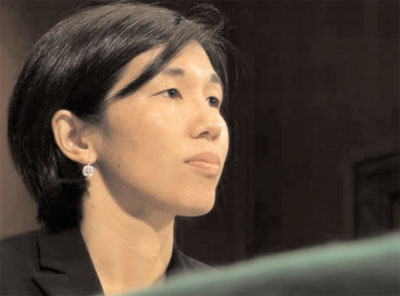
Twitter Lawyer Nicole Wong Appointed To Senior White House Technology Role
WASHINGTON (TIP): The Obama administration has appointed Twitter lawyer Nicole Wong to a new senior advisory position to focus on internet and privacy policy, a White House official said on June 20. Wong will work with federal chief technology officer Todd Park, and will join the White House as Obama focuses more attention and resources on fighting hackers.
Her appointment comes as the Obama administration grapples with issues that arose from the US government’s surveillance of internet and phone communications in its antiterrorism effort. Rick Weiss, a spokesman for the White House Office of Science and Technology, said Wong is joining as deputy US chief technology officer and will work with Park on internet, privacy and technology issues. “She has tremendous expertise in these domains and an unrivaled reputation for fairness, and we look forward to having her on our team,” Weiss said.
Congress and the White House have been arguing about how best to address cybersecurity for more than a year. Last month, the House of Representatives passed a new cybersecurity bill which will next be considered by the Senate. It is designed to help companies and the government share information on cyber threats, though concerns linger about the amount of protection it offers for private information. Wong, who was legal director at Twitter, has testified before Congress about her concerns about internet censorship in countries around the world.
In 2010, when she was Google’s vicepresident and deputy general counsel, Wong told a Senate Judiciary Committee hearing that the US government should make internet freedom a key part of foreign policy. At Google, Wong was nicknamed “the Decider,” author and law professor Jeffrey Rosen has written, because part of her job was deciding whether to remove content from YouTube and links from Google that governments objected to.
-

Pak PM To Progressively Pursue Normalcy In Ties With India
ISLAMABAD (TIP): Unveiling Pakistan’s foreign policy roadmap, Prime Minister Nawaz Sharif , on June 6, vowed to “progressively pursue” normalcy in ties with India while actively seeking solutions to outstanding issues, including Kashmir. Listing his government’s foreign policy priorities a day after assuming office, Nawaz in a message sent to the heads of all Pakistani missions, said neighbors will be the focus of “immediate attention”.
“Unless the region is peaceful, our efforts for growth and development will not meet success,” he said. “With India, the Prime Minister stressed the need to progressively pursue normalcy in our bilateral relations, while actively seeking solutions for all outstanding issues, including Jammu and Kashmir,” said a statement issued by the Foreign Office.
Nawaz (63), who was sworn in for a record third term as premier yesterday, had signaled even before the May 11 general elections that he intended to work on improving relations with India.
-

Democracy wins, federation loses
While Nawaz Sharif has won the election decisively, he faces the challenge of reaching out beyond his main base in Punjab to the rest of Pakistan
Pakistan achieved a historic landmark with the completion of its five-year term by the civilian coalition government led by the Pakistan Peoples Party (PPP) and the successful completion of elections resulting in the clear victory for Nawaz Sharif’s Pakistan Muslim League (PML-N). The election results, surprising for many, point to the challenges ahead for the country. Although the PML won enough seats to be able to form the government without having to bargain too much with too many factions, its success comes entirely through the support of one ethnic group – the Punjabis. Every Pakistani province appears to have chosen a different party to represent it. The overall high turnout nationwide masks the harsh reality that very few people voted in Balochistan, where alienation from the centre has been growing.Ethnicity
There is no doubt that people voted out the incumbents amid questions about their performance. But the virtual wiping out of the PPP in Punjab means that each Pakistani political party now reflects the dominant sentiment of a particular ethnic group. The PPP was the only party that had representation from all four provinces of Pakistan in the outgoing Parliament. The election result may be a step forward for Pakistani democracy. It is a step backward for the Pakistani federation. Given the history of complaints about Punjabi domination, Nawaz Sharif will have to reach out to the leaders of other provinces. Authoritarian rule has undermined national unity in the past because of Punjab’s overwhelming supremacy in the armed forces, judiciary and civil services.Democracy should not breed similar resentment among smaller ethnic groups through virtual exclusion from power at the centre. In addition to bringing the provinces other than Punjab on board, Sharif’s other major headache would be to evolve a functioning relationship with Pakistan’s military establishment. Although he rose to prominence as General Zia-ul Haq’s protégé, Sharif clashed with General Pervez Musharraf over civilian control of the military. He might be tempted to settle that issue once and for all, partly because of the sentiment generated by his overthrow and imprisonment by Musharraf. Changing the civil-military balance in favor of the civilians would be a good thing. But if it is done without forethought and caution, it could end up risking the democratic gains of the last several years. The PML-N’s view of Pakistani national identity being rooted in Islam and the two-nation theory does not differ much from that of the Pakistani establishment. His real difference with the establishment is over his belief that he, as the elected leader, and not the military must run the country.
Foreign policy
Sharif has publicly stated his intention to pick up the threads of the peace process he initiated with Atal Behari Vajpayee in 1999. That process was undermined by the Kargil war, which Sharif now says was initiated by Musharraf without his authority. There can be no assurance that the establishment will let Sharif move forward over changing Pakistan’s posture towards Afghanistan and India, something it did not allow the PPP-led coalition to pursue. Moreover, having been elected with the support of hardline conservative Punjabis, how far can Sharif go against the wishes of his base? During the election campaign, Sharif said little about Afghanistan. In his previous two terms he maintained close ties with the United States but did nothing against the jihadi groups.It was under Sharif’s rule that Pakistan officially recognized the Taliban regime and established diplomatic relations. This time, he has spoken of good relations with the West but his voters are overwhelmingly anti-American. The best he might be able to do on foreign policy would be to say the right things publicly without making tough policy decisions. The Punjab electorate, in particular, and some parts of Khyber-Pukhtunkhwa were clearly swayed by a hypernationalist tide, with tinges of Islamist grandiloquence.
Sharif’s PML-N and Imran Khan’s PTI used similar hypernationalist, anti-American language about Pakistan no longer asking the West for aid. Both parties courted Islamist extremists to bolster their respective vote banks. It might be difficult for them to get off that tiger any time soon. The National Assembly seat break-up is skewed in favor of one province, the largest province of Punjab. Punjab sends 148 general and 35 women’s seats or a total of 183 out of 342 seats which is more than half the seats in the lower house of Parliament.With deep ethnic, linguistic and economic diversity among the provinces, with trust between the provinces being at an all-time low and with the challenge of terrorism facing the country, there is a need for Mr. Sharif to show statesmanship and to appeal beyond his urban Punjabi base.
Other players
Sharif is not the only one facing challenges. The PPP has suffered a national setback but has held onto its base in Sindh. It is now time for the party to look inwards and understand that the country has changed. It is growing more urban and Sindh is also doing so. The party is down but not out. It will have to reinvigorate itself by asserting its liberal, social democratic roots. Like the Congress in India, it can continue to seek unity in leadership from the family of Zulfikar Ali Bhutto and Benazir Bhutto. But it has to be a party that is not dismissed as a family enterprise. As for Imran Khan, he achieved a breakthrough by mobilizing disenchanted, apolitical youth. But if he seeks to remain relevant he must realize that there is more to politics than slogans and catch-all phrases. Railing against corrupt and patronage-based politicians is one thing, offering a viable democratic alternative is quite another.