Tag: Goods and Services Tax #GST

  • Moody’s says India recovering from GST, DeMo; sees 7.6% growth rate

    Moody’s says India recovering from GST, DeMo; sees 7.6% growth rate

    NEW DELHI (TIP): Moody’s Investors Service said on Wednesday Indian economy is starting to recover from the negative impact of demonetisation and disruption caused by GST roll out, but kept GDP growth estimates unchanged at 7.6% for 2018.

    In its global growth forecasts for 2018 and 2019, Moody’s said the Budget for fiscal year beginning April 1 (2018-19) includes some measures to stabilise rural economy that was disproportionately hit by scrapping of high denomination 500 and 1000 rupee notes.

    “There are some signs that the Indian economy is starting to recover from the soft growth patch attributed to the negative impact of the demonetisation undertaken in 2016 and disruption related to last year’s rollout of the Goods and Service Tax (GST),” Moody’s said.

    It kept the growth forecast for India in the calendar year 2018 unchanged at 7.6% and for 2019 at 7.5%. “Among the other major emerging market countries, we have left our growth expectations for India and Indonesia unchanged.”

    In November last year, Moody’s had raised India’s sovereign rating for the first time in 13 years, saying growth prospects have improved with continued progress on economic and institutional reforms. The US-based agency had upped India’s rating to Baa2 from Baa3 and changed its rating outlook to ‘stable’ from ‘positive’, saying the reforms would help stabilise rising levels of debt.

    At that time, it had projected India’s real GDP growth to moderate to 6.7% in the current fiscal year ending March 31 (2017-18), from 7.1% last year, and put the growth at 7.5% for 2018-19 fiscal.

    “The 2018 budget includes some measures that could stabilise the rural economy that was disproportionately hit by the demonetisation policy and is yet to recover,” Moody’s said today.

    “As we have said before, the bank recapitalisation plan should also help credit growth over time, thereby supporting growth,” the agency added.

    Moody’s Investors Service revised its global growth forecasts for 2018 and 2019, incorporating stronger than expected economic data and reflecting the likely pick up tied to additional US fiscal stimulus.

    It revised real GDP growth forecasts upwards for the US, Japan, Germany, France, UK, South Korea, Russia, Saudi Arabia, South Africa and Turkey for 2018.

    The rating agency raised its projections of real GDP growth for the US to 2.7% in 2018 and 2.3% in 2019, from a prior forecast of 2.3% and 2.1%, respectively. “These revisions account for stronger than expected momentum going into 2018 and additional fiscal stimulus from the February 2018 congressional budget deal. The recent financial market selloff does not alter Moody’s US and global growth outlook,” it said.

    G20 economies will collectively grow 3.4% in 2018 and 3.2% in 2019, up from prior forecasts of 3.2% and 3.1%, respectively, Moody’s says. “Notably, the euro area is exhibiting the best economic performance since the 2012 sovereign debt crisis.”

    Moody’s said stronger inflationary pressures would lead to a steady convergence of the monetary policy outlooks of global central banks over the next two to three years.

    The current “goldilocks” period of synchronised upward growth momentum, low inflation, low interest rates, steadily rising asset prices and historically low volatility will gradually wane, it said adding the recent return to financial market volatility is likely here to stay.

    Source: PTI

  • GST RATES ON 29 GOODS, 53 SERVICES CUT

    GST RATES ON 29 GOODS, 53 SERVICES CUT

    NEW DELHI (TIP): The Goods and Services Tax (GST) Council has reduced the rates on 29 goods and 53 categories of services, Finance Minister Arun Jaitley said following the Council’s meeting on Jan 18.

    Against the backdrop of declining GST collections and waning compliance, the Council also discussed in detail various approaches to ease the return filing compliance burden, and the need for the implementation of anti-evasion measures.

    Some of the services for which the rates have been cut include tailoring (18% to 5%), admission to theme parks (28% to 18%), and petroleum and natural gas mining and exploration (18% to 12%). The goods on which the rates have been reduced include biodiesel buses used for public transport (28% to 18%), sugar boiled confectionery, biodiesel, drinking water packed in 20 litre containers (all from 18% to 12%), and LPG supplied to domestic consumers by private distributors (18% to 5%). The new rates would come into effect on January 25.

    “Rates have again been rationalised on few items, which is a step in the right direction,” Pratik Jain, Leader, Indirect Tax at PwC India, wrote in a note. More cuts to come “One would expect that over the next few months, this process would continue, particularly with respect to 28% category, which should only be for select luxury and demerit products,” he wrote.

    Jaitley said that while the latest round of rate reductions would have an affect on the Centre’s revenues, the impact would be small.

  • DEMO, GST DRAG GROWTH TO THREE-YEAR LOW

    NEW DELHI (TIP): Unable to recover from frequent policy disruptions, which started with demonetisation last November to Goods and Services Tax (GST) destocking and the new real estate law among others, India’s economic growth dropped to a three-year low of 5.7 per cent in April- June and in the process falling below China’s growth rate.

    This is much lower than the revised growth of 7.9 per cent in the first quarter of 2016-17. Even on a sequential basis, the Gross Domestic Product (GDP) growth was 6.1 per cent in the preceding quarter.

    Following the abysmal numbers, several analysts and brokerages said they would revise downwards the full-year numbers for GDP forecast.

    Crisil said for fiscal 2018, it was in the process of revising down its GDP growth forecast of 7.4 per cent. Part two of the Economic Survey has already warned that reaching the upper end of the 6.5-7.5 per cent GDP forecast would be difficult.

    Ever since the shock decision of demonetisation, the economy, which was already sluggish, has slumped further as businesses and consumers are adjusting to new disruptions, which at least in the short term are hurting growth.

    Given the latest RBI figures, stating that only Rs 16,000 crore worth of scrapped Rs 500 and Rs 1,000 notes did not return to the system, the amount gained is miniscule compared to a much higher loss due to a hit in economic activity caused due to the note ban.

    So while there was a fading impact of demonetisation left to be absorbed by industry, especially the informal sector, the fresh uncertainty came in the form of GST, which has been rolled nationwide as the indirect tax system.

    Manufacturing has been worst hit in the first quarter of 2017-18 as the GST implementation from July 1 led to destocking of inventories much in advance. Manufacturing fell sharply in the quarter from 10.7 per cent to 1.2 per cent with the predominant pressure coming from the private sector small and medium-sized enterprise (SME) segment.

    Finance Minister Arun Jaitley said the 5.7 pc GDP growth in Q1 was a matter of concern. Manufacturing was down due to GST impact on destocking and with GST implemented, the curve could turn for better, he added.Crisil Research said in a note that the government had also revised down gross value added (GVA) growth for the fourth quarter of last fiscal by 50 basis points (bps) to 5.6 per cent, suggesting that the impact of demonetisation on the economy was more than earlier estimated. Source: The Tribune

  • 4 GST bills passed after Rajya Sabha makes no changes

    4 GST bills passed after Rajya Sabha makes no changes

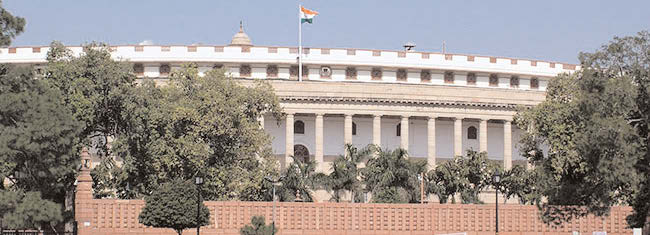
    NEW DELHI (TIP): Parliament on April 6 passed four GST-related bills, paving the way for the new indirect tax to be implemented nationwide.

    Parliament passed four GST-related bills on April 6 with the Rajya Sabha’s support, bringing the new tax reform closer to being implemented nationwide in July

    The bills were supported by the Rajya Sabha without any amendments, and follows after the Lower House passed them last week. They will now be presented before the President for his consent, following which, states will pass another legislation, readying the country for a uniform Goods and Services Tax (GST).

    The four bills are the Central Goods and Services Tax Bill (CGST), the Integrated Goods and Services Tax Bill (IGST) the Goods and Services Tax (Compensation to States) Bill and the Union Territory Goods and Services Tax Bill (UTGST).

    The CGST will give powers to the Centre to charge a tax after levies of excise, service tax and additional customs duty is subsumed. The IGST will be a tax to be levied by the Centre on inter-state movement of goods and services. Besides, GST compensation law allows for imposition of cess on certain luxury goods like tobacco, high-end cars and aerated drinks to create a fund for compensating states for any loss of revenue in the first five years after implementing the new indirect tax.

    The UTGST is for UTs like Chandigarh and Daman and Diu which do not have assemblies.

    The State GST or SGST law that will allow them to levy sales tax after levies like VAT are subsumed.

    “The broad approach of every member has been to support the legislation. Even the Constitutional Amendment Bill was supported overwhelmingly,” finance minister Arun Jaitley said while summing up the debate at the Upper House.

    “Not only did both the Houses of Parliament support the GST bills, all the states have arrived at a consensus,” he added. In the backdrop of a reconciliatory mood, Rajya Sabha members showed consensus that the new indirect tax is the biggest reform since Independence and is the need of the hour. But still, concerns were raised about the sweeping powers of the GST council, the GST network and the GST rates. Allegations were also levelled against BJP trying to steal all credit of implementing this landmark tax reform.

    CPI-M’s Sitaram Yechury was among the many MPs who raised the issue of the overarching power that the GST council. “The proposals before GST council should also come before the Parliament,” he said. In the new tax regime, this council will be the highest decision making body; this led to many Opposition members claiming that this provision takes away from the Parliament’s authority. Highlighting the federal structure of the Council, Jaitley said 32 representatives from the Centre and states are finalising the GST rules.

    “We have had 14 meetings at the GST Council…and arrived at a consensus on all issues,” he said, adding there has been no voting on any issue.

    “Mr Jaitley is only giving final touches to a reform that was set rolling many years ago by his predecessors,” said Congress MP Jairam Ramesh.

    Congress’ Kapil Sibal and CPI’s D Raja raised concerns about data privacy under a private company in-charge of the IT backbone of GST or the GST-N.

  • Manmohan Singh lends support to GST bills

    Manmohan Singh lends support to GST bills

    NEW DELHI (TIP): Former PM Manmohan Singh lent his strong backing to the goods and services tax (GST) bills on Thursday. As amendments to the bills were being taken up in Rajya Sabha by deputy chairman PJ Kurien, Congress MP Jairam Ramesh said he was not moving them. “Former PM Manmohan Singh has taken this approach in the spirit of consensus and in respect of the federal structure,” he said.

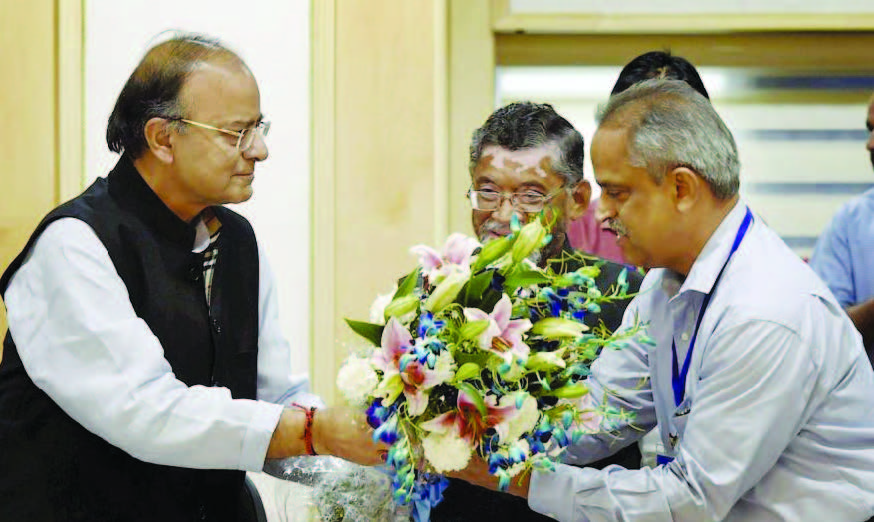
    As soon as the four bills were cleared, finance minister Arun Jaitley walked up to Singh and shook his hands. Singh congratulated the BJP member on passage of the bills.

    Manmohan Singh termed the move a game changer. “It could be a game changer but can’t assume there will be no difficulties on the way,” the former PM said after the bills were passed.

  • Parliament Passes Finance Bill: Jaitley invites suggestions for Transparency in electoral funding

    Parliament Passes Finance Bill: Jaitley invites suggestions for Transparency in electoral funding

    NEW DELHI (TIP): India’s Parliament approved, March 30, the Finance Bill, 2017, subsequent to the Lok Sabha rejecting amendments moved to it by the Rajya Sabha and upholding its form it had adopted earlier. This marks the accomplishment of the budgetary exercise for 2017-18.

    Lok Sabha’s consideration of the amendments was marked by an engaging debate, which was initiated by Congress Whip Deepender Hooda. It was laced by searching questions from the Opposition and combative reply by Union Finance Minister Arun Jaitley. The core of the amendments revolved against changes in income tax and company laws in the Bills, which, the Opposition said, gave powers to taxmen to raid and seize without being accountable. The objection was to lift the ceiling on electoral funding by companies; and to prevent disclosure of identity of benefactor (donor) company and the beneficiary political parties.

    Winding up the discussion, Jaitley extended “open invitation” to the Opposition to suggest steps to improve transparency in electoral funding. “I am only hearing adjectives like the system must be clean…It must be transparent,” Jaitley said.

    The changes were necessitated on account of ground realities. Companies are inhibited from being identified for obvious reasons. The system of payment and receiving through checks would continue though.

    The identities of companies purchasing electoral bonds and the donee political parties would be known to the Election Commission and the banks. Rejecting amendments and the apprehensions of the Opposition, Jaitley said: “Do not give a fictional argument that anyone has been given power to conduct raids without being accountable.”

    “Never has it happened that the person raided is informed beforehand. It would be a disaster,” he said, and justified the provision of attachment of properties.


  • GST Council caps cess on demerit goods at 15%

    GST Council caps cess on demerit goods at 15%

    NEW DELHI (TIP): With the Goods and Service Tax (GST) Council on Thursday approving the remaining two draft bills- UTGST (Union Territory GST) and SGST (state GST), all the five enabling draft bills stand approved to enable a likely rollout of the new indirect tax regime by July 1.

    The draft bills now need to be approved by the Cabinet and tabled in Parliament’s ongoing budget session.

    A maximum of 15 per cent cess on top of the peak GST rate of 28 per cent will be levied on luxury goods and aerated drinks after the Council approved a cap on cess along with supporting legislations.

    The actual cess on demerit goods, which will help create a corpus for compensating states for any loss of revenue from GST implementation in the first five years, may be lower than the cap as the Council has kept a “little” headroom for future exigencies, finance minister Arun Jaitley said.

    Giving an example, he said if a luxury car at present commands a total tax of 40 per cent, under the new indirect tax regime, a GST of 28 per cent plus 12 per cent cess would be levied to keep the tax incidence at the same level.

    The 15 per cent cess cap would apply on luxury cars and aerated drinks. On pan masala, the cess has been capped at 135 per cent ad valorem.

    Tobacco cess will be capped at a mixture of Rs 4,170 per 1,000 sticks or ad valorem of 290 per cent. Cess on coal would be at Rs 400 per ton. No decision has been taken to levy cess on bidis as of now, an official said.

    The panel today also cleared the State-GST (S-GST) and Union Territory GST (UT-GST) legislations, Jaitley said while briefing reporters on the deliberations at the 12th meeting of the all-powerful GST Council.

    The panel at its last meeting approved the final draft of central GST (C-GST) and integrated GST (I-GST) laws.

    The supporting S-GST and UT-GST legislations together with the GST Compensation Law will go to the Cabinet for a formal nod before they are presented in Parliament in the ongoing Budget session that ends on April 12.

    Experts are sounding a warning about lack of preparedness for the GST rollout. Sachin Menon, national head, indirect tax of audit firm KPMG said, “Clearance of the model GST law is warning bell for those who have not yet commenced their preparations for introduction of GST. It will be too short a time for the industry for preparation if the states are not passing GST law latest by second half of April.”

  • GST: JAITLEY PUSHES  FOR CONSENSUS

    GST: JAITLEY PUSHES FOR CONSENSUS

    NEW DELHI (TIP): The Centre on Wednesday said that it will wait for consensus to emerge on GST laws and will not push for a decision by vote despite the threat of a delay in rolling out the new tax regime from April.

    “I have consciously avoided voting and we have decided on issues based on consensus, often after a long discussion. The GST Council is a federal institution and a delicate one,” finance minister Arun Jaitley said after the body comprising states and the Centre failed to finalise the draft laws once again. Jaitley said that given that the precedent from earlier meetings would be cited in future decision-making, GST Council was trying to decide on all issues by consensus.

    Two major issues -the proposed levy of tax on sale in the high-seas and dual control over entities with annual turnover of less than Rs 1.5 crore -have held up the finalisation of the draft laws. The laws need to be cleared by the state legislatures and Parliament before GST can be rolled out and industry is demanding time to prepare itself for the new tax regime.

    As a result, the possibility of rolling out GST from April seems remote and state FMs are talking about a delay with Kerala finance minister Thomas Issac suggesting that implementation may not take place before September, which is the Constitutional deadline. “I am not very optimistic about GST rolling out in June or July.It is better to move to GST after all the preparations are done. To my understanding, it will be implemented September on wards,” he told reporters.

    While West Bengal finance minister Amit Mitra did not indicate a date, he said that a number of steps had to be taken, including software upgradation by companies. Jaitley too acknowledged that it was a race against

    time.”We know the difficulties, we are moving against time,” he said, adding that the GST Council would try to clinch a deal at its next meeting on January 16.

    Source: TOI

  • GST matters but so does fiscal federalism

    GST matters but so does fiscal federalism

    As expected, the latest Goods and Services Tax (GST) Council meet, headed by the Union Finance Minister Arun Jaitley and with state finance ministers as members, could not arrive at any policy decision as far as the dual control of assessees is concerned. Consequently, the switchover to a single GST, subsuming almost all other commodity taxes will miss the stipulated date of its implementation, April 1, 2017.

    The Union Finance Minister has now set September 16 as the new deadline. For the first time, a tax would be placed in the Concurrent list, which our Constitution makers meticulously avoided so as to ensure smooth Centre-state financial relations. One should go slow in view of the turmoil created by the demonetization drive. Jaitley’s contention that GST must be implemented before September 16 is not convincing. With the consent of states, the implementation could be postponed. The adoption of VAT took nearly 30 years, though it did not have any implications for our federal set-up. It simply replaced state sales tax by state VAT and central excise duty by Cenvat.

    The chaos created by the demonetization drive has shaken the confidence of some states. After GST, they consider it the second blow to states’ autonomy, even though demonetization and the GST regime are aimed at ensuring transparent transactions. GST will neutralize the ill-effects of demonetization   like fall in demand, market shrinkage and unemployment by extending market frontiers.

    As GST ensures that tax credit is given to producers/ sellers for the taxes already paid, specialization and efficiency in production will be promoted. Producers and traders will get tax credit even on inter- state movement of goods and services. India will emerge as one common national market, with a seamless flow of goods and services across the country. There will be no tax on tax, so production and distribution of goods would become less costly, thereby boosting consumption and investment. Producers will be induced to invest in logistics and building warehouses and inventories, giving a fillip to ease of doing business. Implementing GST should not be viewed as a matter of prestige by the states or the Centre and both should adopt a pragmatic approach.

    The most significant impact of GST will be on extending the volume of trade. A National Council of Applied Economic Research (NCAER) study has evaluated the possible impact of GST on India’s international trade. It has been observed that, “The differential multiple tax regimes across sectors of production are leading to distortions in the allocation of resources as well as production inefficiencies. Complete offsets of taxes are not being provided to exports, thus affecting their competitiveness”. The study has estimated that “implementation of a comprehensive GST across goods and services will enhance the nation’s Gross Domestic Product (GDP) by between 0.9 and 1.7 per cent”. Boosting trade, both internal and external, with forward and backward linkages may lift the GDP by 1-2 per cent. Of course, the organized sector may gain at the cost of the unorganized sector, yet the conversion of the informal sector into the formal is the prerequisite for reducing poverty and inequalities. Demonetization too has induced the informal sector to convert into the formal sector.

  • Another session lost: A timely rebuke from a marg darshak

    Another session lost: A timely rebuke from a marg darshak

    The continued disruptions of the Lok Sabha provoked a strong reaction from a sidelined BJP veteran, LK Advani.

    The latter has blamed both Speaker Sumitra Mahajan and his one-time protégé, Parliamentary Affairs Minister Ananth Kumar, for the logjam. The superannuated leader, who gave voice to public disgust at the systemic paralysis, found an opportunity to get even with the BJP leadership which thought it had justifiably consigned him to political oblivion. The Advani rap has re-emphasized the established democratic norm that it is the ruling party’s responsibility to smoothly run Parliament. Prime Minister Modi’s call to the party MPs to “expose” the Opposition got lost in the political excitement that Advani’s sudden outburst generated.

    Opposition parties, too, need to have second thoughts if they think they are entitled to public gratitude for repeatedly highlighting hardships over demonetization. Noise is not a substitute for debate. Nor is disruption appreciated by the people who pay for it. Getting the day’s allowances without work should weigh on their conscience. It needs a level-headed legislator to articulate what agitates him. Who benefits from thoughtless sloganeering and kicking up of ruckus? A divided Opposition has weakened its case. AAP and TMC insist on a repeal of the demonetization notification. Most parties support the move against black money but agitate over its flawed implementation without offering alternatives or ways to plug loopholes. There was a lot opposition parties could do to pin down the government but by running away from debate they have perhaps ended up playing to the government-scripted tune.

    With just three effective sittings left for the winter session the government has got away lightly. A Bill to tax black or undeclared money was cleared by voice vote within minutes of being taken up as a money Bill in the Lok Sabha without a discussion. If GST is delayed, the blame would be passed on to the recalcitrant Opposition. Both sides have managed to skip a debate or action on the related issue of political funding. Chief Election Commissioner Nasim Zaidi has demanded that bribing voters and paid news should be made cognizable offences. For the Opposition and the government these do not seem to be priority issues.


  • DEMONETIZATION STALLS Parliament

    DEMONETIZATION STALLS Parliament

    Chaotic scenes witnessed in both Houses of Parliament over scrapping of Rs1,000 and Rs 500 notes

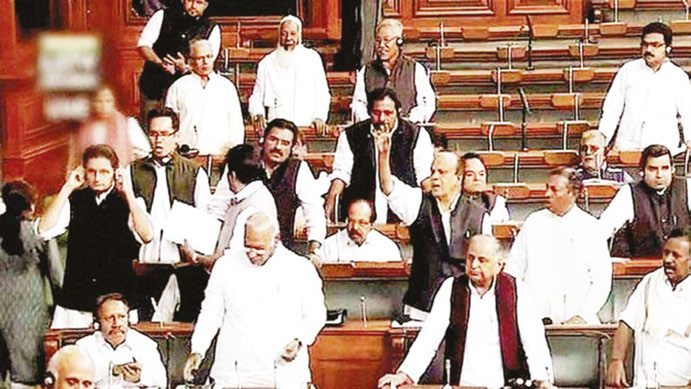
    NEW DELHI (TIP): Both Houses of parliament were adjourned on Thursday, November 17, as opposition lawmakers continued their attack on the government over the impact of its ban on 500 and 1000 rupee notes. Today was the second day of the winter session. Union finance minister Arun Jaitley later rejected all demands of the opposition.

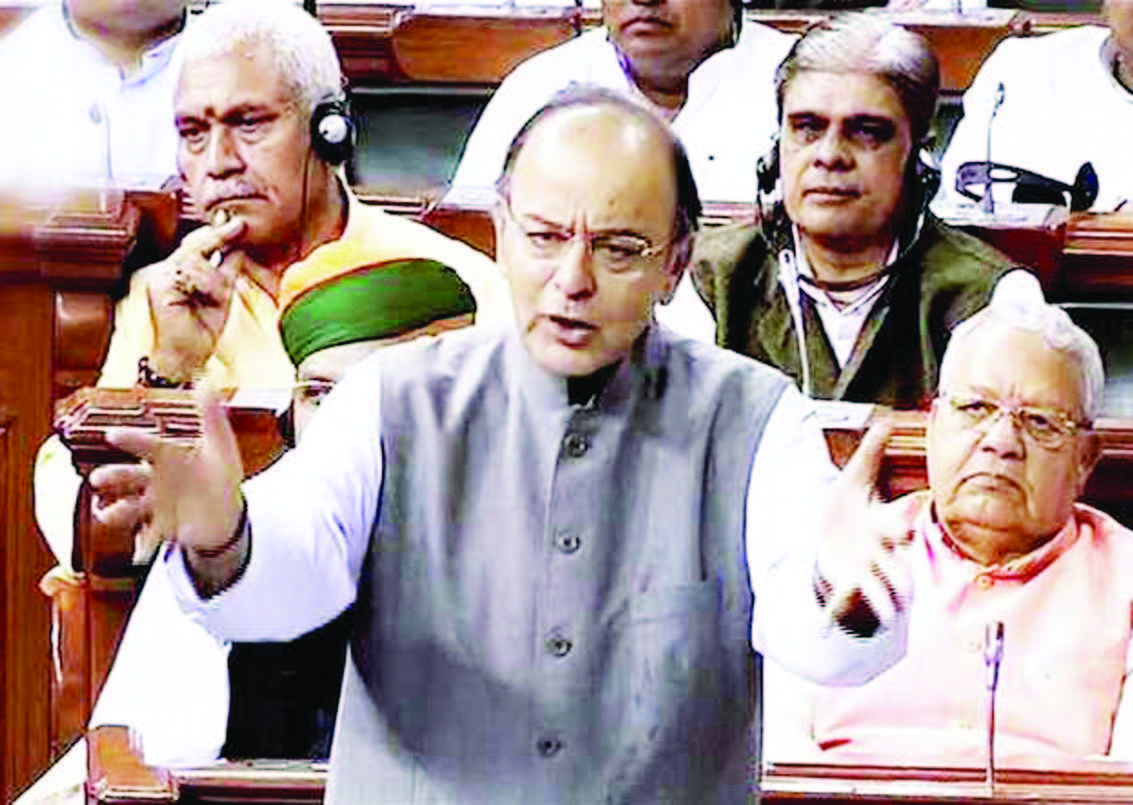
    In the Rajya Sabha or Upper House, where a debate on demonetization has been on since Wednesday, the opposition shouted slogans demanding that Prime Minister Narendra Modi come to the house, listen to debate and respond to their questions. It’s a stalemate, with the government refusing to give in to that demand. Finance Minister Arun Jaitley will reply to the debate, in which a united opposition has attacked the government over what they call “economic anarchy”.

    In the Lok Sabha, which did not function yesterday after obituaries, opposition parties have moved 21 adjournment motions, which seek to put aside regular work to debate and vote on the notes ban. Speaker Sumitra Mahajan said she would allow the debate but not until lawmakers stopped shouting. When that did happen, she adjourned the Lower House for the day. “We are ready to discuss any issue, there is nothing to hide. We want the Congress to clarify, are they with the government decision or not? You’ve got every right to make demands, and the government will reply to it all,” said senior union minister Venkaiah Naidu this morning.

    ‘There is no question of a rollback of the government’s cash clean-up move,’ Finance Minister Arun Jaitley said, rejecting the Opposition’s demand of a probe by a Joint Parliamentary Committee into the alleged leak of information to BJP units and “friends of BJP” on notes ban. Regarding the opposition’s other demand, that the Prime Minister respond to the debate, Mr. Jaitley said it was the prerogative of the party and government to decide who would reply. Opposition parties, except for the Trinamool Congress, have not demanded that the government withdraw the notes ban, but have criticized the manner in which it was implemented causing hardship to common people who have had to queue up for hours at banks amid a cash crunch. Ministers speaking in the debate said the radical step was taken in national interest to end corruption and black money. No honest taxpayer would lose a single rupee, while those with unaccounted wealth would suffer, as would terror organizations that had been choked by the currency ban, they said.

    Before the winter session began PM Modi had said he was counting on “good debates” on key issues and hopes the opposition will cooperate to support key legislation like taking the next steps to introduce the national Goods and Services Tax or GST, the biggest tax reform in decades.