Tag: Google

  • 2 killed, 100 wounded in suicide attack on German consulate in northern Afghanistan

    2 killed, 100 wounded in suicide attack on German consulate in northern Afghanistan

    MAZAR-I-SHARIF (TIP): A powerful Taliban truck bomb struck the German consulate in Afghanistan’s northern Mazar-i-Sharif city late on Nov 10, killing at least two people and wounding more than 100 in a major militant assault in the war-torn country.

    The Taliban called it a “revenge attack” for US air strikes in the volatile province of Kunduz earlier this month that left up to 32 civilians dead.

    The huge explosion, followed by sporadic gunfire, reverberated across the usually tranquil city, smashing windows of nearby shops and leaving terrified local residents fleeing for cover.

    “The suicide attacker rammed his explosives-laden car into the wall of the German consulate,” local police chief Sayed Kamal Sadat told AFP.

    The German foreign ministry said the attack had ended and that all German staff from the consulate were unharmed.

    “The consulate building has been heavily damaged. It is not yet clear how many Afghan civilians and security personnel died or were injured in the attack,” the ministry said in a statement.

    “Our sympathies go out to the Afghan injured and their families.”

    A diplomatic source in Berlin said Foreign Minister Frank-Walter Steinmeier had convened a crisis meeting.

    “There was fighting outside and on the grounds of the consulate,” a ministry spokesman said. “Afghan security forces and Resolute Support (NATO) forces from Camp Marmal (German base in Mazar-i-Sharif) are on the scene.”

    Afghan special forces cordoned off the consulate, previously well-known as Mazar Hotel. Helicopters were heard flying over the diplomatic mission early Friday as ambulances with wailing sirens rushed to the area, according to an AFP reporter near the scene.

    At least two dead bodies and more than 100 wounded people — including at least 10 children — had so far been brought to two city hospitals, said local doctor Noor Mohammad Fayez. Some of the wounded were in a critical condition, he added. The carnage underscores worsening insecurity in Afghanistan as Taliban insurgents ramp up nationwide attacks despite repeated government attempts to jump-start stalled peace negotiations. Taliban spokesman Zabihullah Mujahid said the “martyrdom attack” on the consulate had left “tens of invaders” dead. The insurgents routinely exaggerate battlefield claims. Posting a Google Earth image of the consulate on Twitter, Mujahid said the assault was in retaliation for American air strikes in Kunduz.

    US forces conceded last week that its air strikes “very likely” resulted in civilian casualties in Kunduz, pledging a full investigation into the incident.

    The strikes killed several children, after a Taliban assault left two American soldiers and three Afghan special forces soldiers dead near Kunduz city.

    The strikes triggered impassioned protests in Kunduz city, with the victims’ relatives parading mutilated bodies of dead children piled into open trucks through the streets. Civilian casualties caused by NATO forces have been one of the most contentious issues in the 15-year campaign against the insurgents, prompting strong public and government criticism.

    The country’s worsening conflict has prompted US forces to step up air strikes to support their struggling Afghan counterparts, fuelling the perception that they are increasingly being drawn back into the conflict. (AFP)

  • How to fast track your IT Career – You don’t have to be an IITian to get to Google

    How to fast track your IT Career – You don’t have to be an IITian to get to Google

    The IIT tag has helped many a student in India bag coveted jobs at Google, but many non-IITians too have made it to the company straight out of college on the back of their skills rather than campus placements.

    Vishwas Tripathi, a student of Motilal Nehru National Institute of Technology, went on to join Google not via campus placements but on his own, by focusing on the basics as well as treading the path less followed.

    Tripathi posted an answer on popular Q&A website Quora detailing how he prepared, along with the most important things any student should follow while gearing up for such an interview. Below is his account:

    Appeared for APAC Round A: Got a call for anti-abuse profile from Google; could not go for interview as it clashed with mid semester exams.

    Appeared for APAC Round B: Got a call for software engineer profile.

    Researched little bit about Google interview process. Found out you have to explain answers on a whiteboard; bought a whiteboard for practice.

    Re-read first five chapters of “Cracking The Coding Interview.” This is most important thing I have ever read about interview process. It has helped me crack the interview of Flipkart, DirectI, Codenation, and Google. These chapters are about interview process and how to handle it.

    Always read from good sources. Do not read from websites offering codes for standard problems. Understand the algorithm and code it yourself. If you want to read something new first try to find it on:

    • “Introduction to Algorithms” by Cormen, Leiserson, Rivest, Stein
    • Data Science tutorials
    • Or blogs on Topcoder, Codeforces, CodeChef
    • Original research paper of algorithm

    I love participating in CodeChef long contest, and would recommend it. It gives you ample amount of time to learn something new. Most of the algorithms I know are because of this contest. Spend days in understanding, coding and testing them. You will at least learn one new algorithm every month by giving CodeChef long contest.

    Most of us give many coding contests but do not pay attention to most important part of coding contest, the part after contest ends.

    Up-solving: Make it a point to solve at-least one more question, after the contest.

    Editorials: People give in lot of time to make editorials (CodeChef have best editorials). Read Them. They often have multiple approaches to solve, and links to best sources to read more.

    Read codes of red coders, you will find how beautifully and easily can something be coded which took you so long. You will get inspiration to write better code.

    Ask: If you have any doubts, ask them. Ask them in relevant threads. Ask them to your friends or seniors who have solved it. This is the fastest way to learn.

    Most of all love what you do, and do what you love.

    Disclaimer: I got in because of my interest of competitive programming and algorithms, though this is not the only way to get a job. But this answer is focused on entry through competitive programming.

  • GOOGLE REBRANDS CLOUD BUSINESS, ADDS MORE ARTIFICIAL INTELLIGENCE

    GOOGLE REBRANDS CLOUD BUSINESS, ADDS MORE ARTIFICIAL INTELLIGENCE

    Alphabet Inc’s Google said on Thursday it renamed its business-to-business cloud computing brand and enhanced some enterprise applications using artificial intelligence, the company’s latest gambit to better compete with Amazon.com and Microsoft Corporation in the lucrative cloud business.

    Discussing the rebranded Google Cloud, Diane Greene, senior vice president of Google’s enterprise business, said the company has made good progress courting customers and improving its technology.

    Cloud computing uses remote internet servers to store, manage and process data, and Google offers a range of apps like word processing and email, as well as the ability to host data and offer resources for developers. The new name replaces the Google for Work brand.

    “We are closing the gap incredibly fast” with competitors, Greene, a former CEO of VMware who joined Google last year to ramp up its cloud business, told experts and journalists at an event.

    Analysts say Google trails Amazon and Microsoft in market share but is gaining under Greene. Although the business is not big enough to break out separately in its quarterly earnings statement, Google reported a 33 percent surge in

    “other revenue” in its most recent quarter, which analysts said was probably due largely to gains in cloud computing. Greene has moved quickly to streamline engineering and appointed new leadership to beef up the company’s cloud business. This has helped improve sales, Google Chief Executive Officer Sundar Pichai said during the company’s latest earnings call. Earlier this month, Google acquired cloud software company Apigee Corp in a deal valued at about $625 million.

    The company  also announced a partnership with consultant Accenture to develop cloud services for clients in industries such a retail, healthcare and finance.

    In addition, the company said it had woven more artificial intelligence into its apps to help employees work more efficiently. Using machine learning to crunch troves of data, Google says its apps will prompt users to, say, open files at certain times of day or propose meetings based on their habits.

  • Indian-Origin South African Teen Wins Big At Google Science Fair

    Indian-Origin South African Teen Wins Big At Google Science Fair

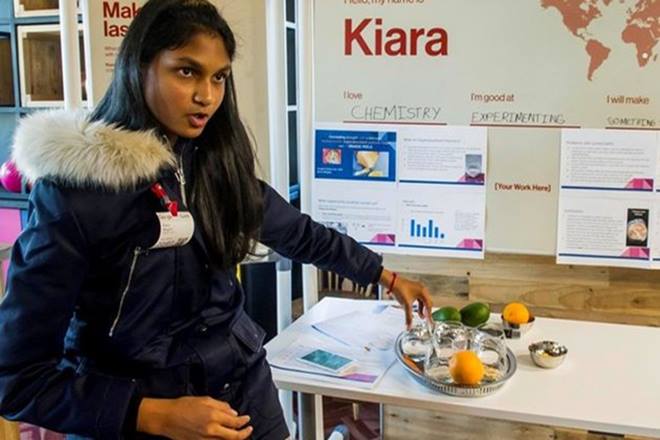
    Johannesburg:   A 16-year-old Indian-origin South African teen has won a USD 50,000 scholarship at the annual Google Science Fair in the US for using orange peel to develop a cheaper “super-absorbent material” that helps soil retain water.

    Kiara Nirghin, a Grade 11 student at private school St Martin’s, submitted her project titled ‘No More Thirsty Crops’ which was aimed at alleviating the severe drought plaguing South Africa.

    Her solution to the problem of drought uses the peels from orange and avocado fruits, which were normally discarded. The Google Science Fair is a programme for any budding scientists between the ages of 13 to 18, who are invited to solve world’s biggest challenges using science and technology.

    “I have always had a great love for chemistry since I was young. I vividly remember at the age of seven experimenting with vinegar and baking soda solutions in plastic cups,” Nirghin said in her submission, in which she cited a renowned Indian scientist as her greatest inspiration.

    “M S Swaminathan, has always been an inspiration of mine as he truly believed in the necessary movement of not only India but the whole world towards sustainable agricultural development,” she said.

    “I hope to one day become a scientist specialising in agricultural science and also become a molecular gastronomist,” she added.

    Nirghin explained how she had found an alternative in the fruit peels to super-absorbent polymers (SAPs), which absorb and carry about 300 times its weight in liquid relative to their own mass.

    “These SAPs are not biodegradable, costly and full of acrylic acid, sodium hydroxide and other chemicals. During more research in the topic, I found that natural occurring polymers exist in most citrus fruits,” Nirghin said.

    After 45 days of experimentation, Nirghin was successful in creating a low-cost super-absorbent polymer, made out of waste products found in the juice manufacturing industry, that is biodegradable, can retain large amounts of water, keep soil moist and improve crop growth without regular water supplements.

    “The only resources involved in the creation of the ‘orange peel mixture’ were electricity and time, with no special equipment or materials required,” she said.

    Nirghin’s discovery has huge financial implications for agriculture, as her creation could retail at USD 30 to USD 60 per metric tonne, as compared to the USD 2,000 plus costs of SAPs.

    The young scientist is convinced that her mixture will help assist farmers in agricultural drought disaster areas, where food security could increase by 73 per cent.

    Now Nirghin has set her sights on using orange peel SAP in experiments testing water filtration and oil removal from water.

    “I would also like to make large amounts of orange peel SAP and apply it to crops such as maize and wheat in poorer communities in South Africa,” she added.

  • Google Station will bring pubic Wi-Fi to schools, Malls, and other paces in India

    Google Station will bring pubic Wi-Fi to schools, Malls, and other paces in India

    MUMBAI (TIP): Google, a unit of Alphabet Inc., said on Tuesday, September 27, it launched Google Station in India, a service that aims to deepen its reach across the country, as the search giant seeks to bring more people on to its Google platform.

    HIGHLIGHTS

    • Google will roll-out Wi-Fi hot spots in places most frequented
    • Google currently offers free Wi-Fi access at 53 railway stations in India
    • Company looking at monetizing the service it offers at railway stations

    Under the service, Google will roll-out Wi-Fi hot spots in places frequented by a large number of people, such as malls and transit stations, and in social hangout locations such as cafes and universities, the company said on Tuesday.

    “The goal is to give people many hot spots within a few minutes’ walk from their home, university, or workplace, unified by a simple login process that works across all of them,” Caesar Sengupta, Vice-President, Next Billion Users at Google was quoted as saying in the statement.

    Google currently offers free Wi-Fi access at 53 railway stations across India and plans to scale up the service to 100 by year-end, the company said.

  • Google rebrands cloud business, adds more artificial intelligence

    Google rebrands cloud business, adds more artificial intelligence

    MOUNTAIN VIEW (TIP): Alphabet Inc’s Google said on Sept 29 it renamed its business-to-business cloud computing brand and enhanced some enterprise applications using artificial intelligence, the company’s latest gambit to better compete with Amazon.com and Microsoft Corporation in the lucrative cloud business.

    Discussing the rebranded Google Cloud, Diane Greene, senior vice president of Google’s enterprise business, said the company has made good progress courting customers and improving its technology.

    Cloud computing uses remote internet servers to store, manage and process data, and Google offers a range of apps like word processing and email, as well as the ability to host data and offer resources for developers. The new name replaces the Google for Work brand.

    “We are closing the gap incredibly fast” with competitors, Greene, a former CEO of VMware who joined Google last year to ramp up its cloud business, told experts and journalists at an event.

    Analysts say Google trails Amazon and Microsoft in market share but is gaining under Greene. Although the business is not big enough to break out separately in its quarterly earnings statement, Google reported a 33 percent surge in “other revenue” in its most recent quarter, which analysts said was probably due largely to gains in cloud computing. Greene has moved quickly to streamline engineering and appointed new leadership to beef up the company’s cloud business. This has helped improve sales, Google Chief Executive Officer Sundar Pichai said during the company’s latest earnings call.

    Earlier this month, Google acquired cloud software company Apigee Corp in a deal valued at about $625 million.

    The company on Thursday also announced a partnership with consultant Accenture to develop cloud services for clients in industries such a retail, healthcare and finance. Source: Reuters

  • The latest App for Devotional Music on-the-go – SAREGAMA SHAKTI

    The latest App for Devotional Music on-the-go – SAREGAMA SHAKTI

    NEW YORK (TIP): Saregama Shakti, the latest app from the RP-Sanjiv Goenka Group owned music label Saregama offers a large collection of devotional music on demand to provide users across the world with a medium to imbibe positivity and mental strength at any time of the day. The bhajans on the app are sung by renowned artistes like Lata Mangeshkar, Anup Jalota, Jagjit Singh, Asha Bhosle,Suresh Wadkar, Anuradha Paudwal and Sadhna Sargam, amongst others. The app also offers audio recitals of granths like Tulsi Ramayana, Geeta Govinda, Sundar Kand, Satyanarayan Katha, Sai Satcharitra Granth and Krishna Charit Manas etc.

    The Saregama Shakti App has the entire content catalogue of Art of Living with Gurudev Sri Sri Ravi Shankar’s talks on Vedic Wisdom, Ashtavakra Gita, Patantali Yog Sutras, Guided Meditations and much more. In addition, Saregama Shakti is endowed with over 100 hours of discourse, chants and bhajans from Gurudev Swami Chinmayananda, Swami Tejomayananda and other Acharyas of Chinmaya Mission. Through the Chinmaya section in the app, one can learn the ageless wisdom of Advaita Vedanta for inner growth and self-unfoldment. This content can be enjoyed by all age groups.

    ● Single destination for Bhajans, Aartis & Mantras dedicated to 8 deities – Lord Rama, Hanuman, Sai Baba, Shiva, Krishna, Devi Maa, Ganesha, Shabad Gurbani ● Entire Content Catalogue of Art of Living ● Chinmaya Mission’s audio, videos and wallpapers ● 10k music videos and songs on-demand, accessible globally ● 9 dedicated TV channels and 10 dedicated radio stations, 24 hours x 365 days ● Option to save songs in offline mode and enjoy later without internet or data charges

    Commenting on the launch of this app, Mr. Vikram Mehra, Managing Director, Saregama India Ltd. says, “The US market is cluttered with music apps but our research shows that Indian consumers still find it difficult to discover and listen to Hindu devotional musicsuch as Shiv mantras or Durga aartis or even the Ramanyana. Basis this feedback, we’ve realised that majority of Indians residing in America want an application where theycan easily access their choice of devotional content, especially during the festive season and other significant religious days.”

    SAREGAMA Shakti is a free to download app with a 30-day trial period (applicable for iOS users only).Payment for subscriptions can be made through iTunes, Google Wallet andCredit Card.

    About Saregama India Ltd: Listed on the NSE and BSE, Saregama India Limited, is India’s largest and best-known music recording company. Formerly known as The Gramophone Company of India Ltd, Saregama owns the largest music archives in India, one of the biggest in the world. The ownership of nearly 50 per cent of all the music ever recorded in India also makes Saregama the most authoritative repository of the country’s musical heritage. Saregama has now expanded into other branches of entertainment – it is involved in publishing, television software and digital content. It also runs studio facilities in Dum Dum, Kolkata making it one of the best end-to-end entertainment houses in the country.

  • Intel Acquires Indian American-led San Diego-based Firm Nervana Systems

    Intel Acquires Indian American-led San Diego-based Firm Nervana Systems

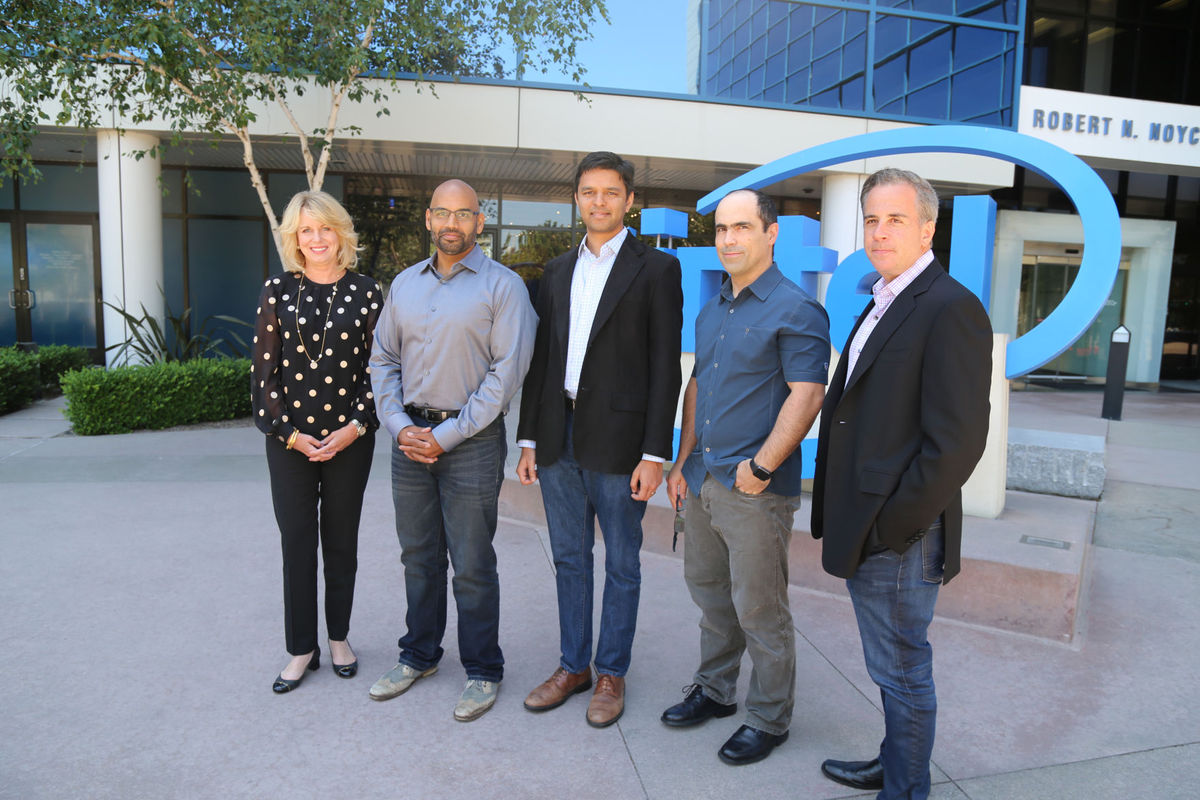
    San Diego based deep learning startup Nervana Systems, headed by Indian Americans, has been acquired by Intel as per media reports.

    According to media reports – Intel is buying deep learning startup Nervana Systems for $350 million, while several reports have indicated the price exceeded $400 million..

    Intel will use the acquisition to give them a leg up in Artificial Intelligence solutions.

    The San Diego-based company is two years old with 48 employees and had raised almost $25 million prior to the sale.

    In a blog post, Nervana CEO and co-founder Naveen Rao specified that his company is intending to continue development on efforts related to its deep learning framework, platform and hardware. The San Diego-based team of 48 will all join Intel’s Data Center Group once the deal has closed.

    “[Nervana’s] IP and expertise in accelerating deep learning algorithms will expand Intel’s capabilities in the field of AI,” Diane Bryant, EVP and GM of the Data Center Group at Intel said in a blog post. “We will apply Nervana’s software expertise to further optimize the Intel Math Kernel Library and its integration into industry standard frameworks.”

    Furthermore, Bryant specified that the startup’s expertise would “advance Intel’s AI portfolio and enhance the deep learning performance and TCO of our Intel Xeon and Intel Xeon Phi processors.”

    The two-year-old startup had raised nearly $25 million from investors including DFJ, Data Collective, Fuel Capital, Lux Capital and Allen & Co. The company captured attention early-on with its hardware-centric approach to AI solutions and has since pursued technologies aimed at training neural nets.

    Data Collective Managing Partner Matt Ocko, who directed the firm’s Series A lead investment in Nervana had nothing but praises to sing of the company’s potential.

    “Intel didn’t just buy something that is simultaneously faster and more power-efficient than Nvidia,” he said. “Intel bought something that it can sell on boards and systems and even supercomputers to its customers ready-to-go that out-punches anything that Facebook or Google or Baidu or Microsoft has.”

    Ocko believes that there was little standing in Nervana’s way from continuing to make waves in the space and going on to be worth “multiple billions,” but Intel’s scale and prestige offered Nervana the quickest route to getting their tech into people’s hands as quickly as possible.

    “This thing was a freight train,” Ocko told me. “[The founders] wanted to get the technology to the maximum number of people at the maximum speed and Intel came in and said, come on in, we’re going to give you guys the world’s best semiconductor process at the biggest scale with an effectively unlimited budget, marketing, customer support, you name it.” Ocko detailed.

    “And no one says no to Intel.”


  • Two Women among 25 Highest Paid Indian-American Executives

    Two Women among 25 Highest Paid Indian-American Executives

    BOSTON (TIP): Sundar Pichai, Chief Executive Officer of Google, and General Growth Properties CEO Sandeep Mathrani are the two highest-paid Indian-American executives in the United States, earning a whopping $100.50 million and $39.25 million respectively, according to a report released by the IndUS Business Journal.

    “Two top-ranking women also grace the list of the highest-paid Indian-American executives,” said Upendra Mishra, publisher of the IndUS Business Journal. “We hope that the number of women-led businesses increases in the near future. However, it is still exciting to see that there are at least two women in this top list.”

    Indra NooyiThe two women in the list are: PepsiCo CEO Indra Nooyi, who made $22.19 million, and Sona Chawla, Chief Operating Officer of Kohl’s Corp., who made $10.69 million. The list is based on the total compensation in 2015, including base salary, bonus, incentives and stock award value. The report is compiled based on public documents filed with the Securities and Exchange Commission, public records and news reports.

    Here is the list ranked by total compensation in 2015:

    Rank: 1
    Sundar Pichai
    Title: CEO
    Company: Google

    Rank: 2
    Name: Sandeep Mathrani
    Title: CEO
    Company: General Growth

    Rank: 3
    Name: Hari Ravichandran Title: CEO
    Company: Endurance International Group

    Rank: 4
    Name: Bhavesh (Bob) Patel Title: CEO
    Company: LyondellBasell Industries

    Rank: 5
    Name: Indra Krishnamurthy Nooyi
    Title: Chairman and CEO Company: PepsiCo

    Rank: 6
    Name: Shantanu Narayen Title: CEO
    Company: Adobe Systems

    Rank: 7
    Name: Satya Nadela
    Title: CEO
    Company: Microsoft Corp.

    Rank: 8
    Name: Ajay Banga
    Title: President and CEO Company: MasterCard

    Rank: 9
    Name: Pankaj Patel
    Title: Executive Vice President Company: Cisco Systems

    Rank: 10
    Name: Varun Mehta
    Title: Vice President of Engineering
    Company: Nimble Storage, Inc.

    Rank: 11
    Name: Akhil Johri
    Title: Executive Vice President and Chief Financial Officer Company: United Technologies Corp.

    Rank: 12
    Name: Francisco D’Souza Title: CEO
    Company: Cognizant Technology Solutions

    Rank: 13
    Name: Rajiv De Silva
    Title: President and CEO Company: Endo International Plc

    Rank: 14
    Name: Sanjay Mehrotra
    Title: President and CEO Company: SanDisk Corp.

    Rank: 15
    Name: Sona Chawla
    Title: Chief Operating Officer Company: Kohl’s Corp.

    Rank: 16
    Name: Ashish Bhutani
    Title: CEO
    Company: Lazard Asset Management

    Rank: 17
    Name: Dinesh C. Paliwal Title: Chairman and CEO Company: Harman International

    Rank: 18
    Name: Dinesh C. Jain
    Title: Chief Operating Officer Company: Spectrum Management Holding Company

    Rank: 19
    Name: Abhijit Y. Talwalkar Title: President and CEO Company: LSI Corp.

    Rank: 20
    Name: Sudhir Steven Singh Title: CEO
    Company: Concur Technologies, Inc.

    Rank: 21
    Name: Sunit S. Patel
    Title: Executive Vice President Company: Level 3 Communications, Inc.

    Rank: 22
    Name: Dharmesh Mehta Title: Executive Vice President Company: Weatherford International

    Rank: 23
    Name: Mohan R. Maheswaran Title: CEO
    Company: Semtech Corp.

    Rank: 24
    Name: Deepak Chopra
    Title: President and CEO Company: Osi Systems, Inc.

    Rank: 25
    Name: Vijay C. Advani
    Title: CEO
    Company: Franklin Resources, Inc.

  • Turkey Coup

    Turkey Coup

    “In a nation, citizens proud to be Turks, that democratically elected their government, a military coup, even if patriotic in motive, is the ultimate insult of the people – to replace their choice of leadership.

    If the military feels that they are better, Turks, or anything else in any other nation, let them resign their military commission and face the voters’ judgment on a ballot – democracy’s judgment.

    Turkey is an important nation, not just on a Google map connecting the East with the West, but because it’s a bridge between cultures, continents and religions – and as America’s ally. That Turkey is a NATO member, makes the Coup even more offensive.

    As Kazakh president Nazarbeyev’s 21st century manifesto declared, in my words, “war on war,” any Coup anywhere is an offense against every nation under law.

    So, I humbly ask the patriotic but misguided Turkish soldiers to return to the barracks and defend Turkey’s sovereignty.”

  • Eid Mubarak, Happy Ramadan, Eid al-fitr

    Eid Mubarak, Happy Ramadan, Eid al-fitr

    The Word Ramadan is also pronounced Ramzan and in many other ways depending on the linguistic influence.

    The Arabic influenced languages call it Ramadan, whereas the Persian affiliated languages call it Ramzan, and with the touch of Sanskrit, it is also called Hari Raya. I am pleased to include the various names of Ramadan around the world in the list below. It is like the British and American variations in English.

    Please note the simplicity in writing is designed for people of other faiths to learn and to know, so we can relate with each other. If you like to wish a Muslim on this happy occasion, you can say Eid Mubarak, Happy Eid, Eid ki Shubh Kamnaeyien, Best wishes, Ramadan Kareem or Happy Ramadan.

    After fasting for 29 or 30 days, and based on the moon sighting, NASA calculations or other traditions, the fasting would come to an end with the celebration. It is one of the three major events for Muslims besides Bakrid and Muharram. Muslims typically gather in a large space and perform their thanksgiving prayer. Doctor Saab, add the link as a Reference previous article

    In the Hindu tradition at the end of Navaratri, Dussehra is celebrated on the 10th day; women fast for Karva Chouth, similarly in the Jain tradition; Paryushan and Daslakshan are celebrated after fasting for 7 to 9 days. The Jews observe fasting during Yom Kippur and Christians during lent through Easter Sunday. Fasting is also observed for medical reasons.

    Although Ramadan is popularly known in the West for its culinary delicacies and fancy Iftaar (ceremonial breaking of fast at sun down), the spirit and intent of Ramadan lies in a human transformation in a month long inner spiritual journey of finding oneself in tune with spirituality. God has no need for the hunger or thirst of someone who hurts others, violates their dignity or usurps their rights, said Prophet Muhammad (PBUH). The fasting of the stomach must be matched by the fasting of the limbs. The eyes, ears, tongue, hands and feet all have their respective fasts to undergo. The tongue’s temptations, for example – lies, backbiting, slander, vulgarity and senseless argumentation – must be challenged and curbed to maintain the integrity of the fast.

    Consciousness of behavior and vigilance over action are the most profound dimensions of fasting: the fasting of the heart focuses on the attachment to the divine. That is when Ramadan really becomes a source of peace and solace, just as Christmas goes beyond the rituals to bring forth kindness, charity and caring.

    True fasting is self-purification; and from this, a rich inner life that bring about values such as justice, generosity, patience, kindness, forgiveness, mercy and empathy – values that are indispensable for the success of the community.

    The purpose of fasting, i.e., abstaining from consuming food, liquids and sensual pleasures during a specified period brings self discipline, self-checking on one’s own integrity and health benefits.

    During fasting one is supposed to become honest, caring, just and a kind human being, a majority of people get that right, some don’t. It’s like the class room where the teacher teaches the same book to every student, yet one become the top scorer and one fails, while most of them pass at varying grades. Fasting is no different.

    Piety (Taqwa) is all about- getting closer to God, or becoming God-like. What is God like? It is to be free from prejudice and to be just, fair, safe and secure.

    So what do Muslims do on the day of Eid?

    From the moment we are born to the last rites of our life and every moment in-between is loaded with rituals, though some of us may deny it. Whether we go to the gym, eat our food; go to sleep, wear clothes, drive some place, in our intimate moments, or picking that phone up, we follow rituals or a system.

    Discipline is necessary to do things on time, managing personal relationships, driving to a destination or keeping within budget to achieve the goals; the result is worth the discipline to most people. When joyous, whether we are a theist or not, we have to express that sentiment, otherwise a sense of incompleteness lingers in our hearts.

    1. Chand Raat is the evening when moon is sighted; everyone gets out and goes shopping for a variety of things to wear the next day. It is really the first day out from 29 days of fasting and everyone looks forward to it.
    2. Mehendi (henna) is applied to female hands over night – these traditions vary from region to region and nation to nation.
    3. Most Muslims wear new clothes signifying a new beginning and that tradition is prevalent in almost every faith.
    4. Zakat is due; it is tithe, like tax, and it is approximately 2.5% of your wealth that you share with your less fortunate fellow beings. It is a way to reduce your guilt that you are blessed with resources while some are not, and also to ensure the society you are not a hoarder.
    5. On the morning, usually around 8 AM -Muslims gather up near a Mosque and walk to a central place to pray together.
    6. It’s a short prayer with a sermon before and after the Namaz. We need an improvement in this area; most of the Sermons are boring and irrelevant.
    7. In the United States, if the Mosque is big enough, they all gather up at the Mosque, or rent a large hall for the congregation.
    8. In many nations people gather up near the cemetery to pray. We did that in my town Yelahanka, a suburb of Bangalore.
    9. Invariably, Muslim throughout the world visits a cemetery to honor their dead. However, the long held tradition is losing its tractions as we become more and more mobile. Memorial Day -http://centerforpluralism.com/memorial-day-and-muslims/
    10. Almost all Muslims hug each other, it is time to put aside the differences and reconnect with each other, they hug three times, each time signifying, I seek your forgiveness and lastly both seek friendship.
    11. On the day of Eid, Muslims cook the best of their foods. Usually it is an open house to friends and family members; no one eats full meal anyplace, but eats a little at each home they visit.
    12. Dessert made out of Vermicelli is the most common item across the world, most of the Desi’s be it Indians, Pakistanis, Bangladeshis and Sri Lankans enjoy Sheer Khurma -Vermicelli’s in liquid form with cashew, dried grapes, pistachio and their likes. I like the thin version that I can pour in a cup of tea and drink.
    13. As it happens on Ugadi, Baisakhi, Dussehra, Christmas and Thanksgiving, people eat more that they can consume on that day and complain that they should not have had that much food, including this writer.

    Everything you had always wanted to know about Ramadan is finally here at this website. www.RamadanNews.com. It has got everything about Ramadan – from how it is celebrated around the world (including Mayans) to what the world leaders say to fantastic TV commercials about Ramadan – The essence, politics, rituals and traditions of Ramadan and more. Plus the most read articles and the current articles about Ramadan.

    “Festivals of the World” is an educational series by Mike Ghouse since 1993 with a belief that, when we live as neighbors, we might as well learn about each other. The best way to build cohesive societies is for its members to understand each other’s sorrows and joys, and festivities and commemorations. We are updating the website www.CenterforPluralism.com , until such time, you can Google the name of Festival with my name and hopefully you will have some information about most festivals of the world.

    (The author is President of the Center for Pluralism, a think tank that offers pluralistic solutions on issues of the day, be it religious, political, social, cultural or racial. He is a motivational speaker on Pluralism, Interfaith, Islam, politics, terrorism, human rights and foreign policy. A community consultant, pluralist, social scientist, thinker, writer, activist, news maker and an Interfaith Wedding Officiant. He is committed to building cohesive societies and offers pluralistic solutions on issues of the day. Please visit www.CenterforPluralism.com and www.MikeGhouse.net)

  • Mayor of Burr Ridge Mickey Straub to host Akshaya Patra Chicago Gala

    Mayor of Burr Ridge Mickey Straub to host Akshaya Patra Chicago Gala

    CHICAGO, IL (TIP): The Akshaya Patra Foundation will be holding its 2016 Chicago Benefit Event on Saturday, May 7th. The Mayor of the Village of Burr Ridge, Mickey Straub, will be the honorary host of the event. The event’s Host Committee will also be led by Mafat Patel of Patel Brothers.

    Gopi Kallayil, Google’s Chief Evangelist for Brand Marketing will serve as the event’s keynote speaker. Comedian and actor Omi Vaidya will serve as the event’s Master of Ceremonies. The event will be held at the Meadows Club in Rolling Meadows, Illinois, and will begin with a welcome reception at 6:30 PM.

    Mickey Straub was elected Mayor of Burr Ridge, a suburb of Chicago, in 2013. Nicknamed “Mayor Mickey,” he is a husband, parent, speaker, and is active in his township and church. He is the author of a newly released BIG GOALS…Short Deadlines, an inspirational book with a patriotic and spiritual message. Mickey Straub is also the founder and president of Sales Activity Management, Inc., a faith-based company providing custom business management tools and services nationwide. In 2012, Mickey became the only person in history to take a patriotic pilgrimage in honor of Lincoln and our veterans to 50 capitols in 50 days.

    The event’s Host Committee is composed of prominent leaders of the Chicago community: Mayor Mickey Straub, Mafat Patel of Patel Brothers, Himanshu Patel, Ila Vyas, Saroj Patel, Sunil Kumar, Mohanbir Sawhney, Dipak Kapadia, Dr. Bharat Barai, Dr. Umang Patel, Harish Bhatt, Alok Gaur, Midwest Molding Inc., Cheena Chandra, Prashant Sheth, Vandana Walia, Dr. Romi Chopra, Ketki Parikh, Bhailal Patel, Ram Prashantha, Chhotalal Patel, Kanti S. Patel of the Gujarat Culture Samaj, Moti Agarwal of the Millennium Bank, Suketu Amin, Nilesh Naren Patel of MedStar, Kantilal Patel of New York Life, Kishan Patel of New York Life, Ram Barat, Babu Amin, Natubhai Bajee Patel, Madan Meadows Club, and Share with Love. Over 400 other business, non-profit, government, and philanthropic leaders from around the region are expected to attend and support the organization’s dual mission of addressing childhood hunger and malnutrition, and to promote education for underserved children in India.

    As Google’s Chief Evangelist for Brand Marketing, Gopi Kallayil connects corporate clients to their customer base using Google and Google social applications. In his time with Google, Mr. Kallayil has also been responsible for Google +, AdWords, and AdSense. Prior to joining Google, Gopi Kallayil was on the management team of two Silicon Valley venture startups. He also worked on information technology and business performance projects for global corporations in India, China, and the United States as a consultant with McKinsey & Co.

    Omi Vaidya is one of the few actors and filmmakers working in Hollywood and Bollywood. A graduate of NYU’s Film School, Omi started as a video editor on independent films and went on to direct short films that have won awards at film festivals worldwide. Omi’s work in front of the camera includes memorable characters on American TV shows like The Office, Arrested Development, Bones, Growing up Fischer, and The Comeback. In Bollywood, Omi made his major debut in Aamir Khan’s film, Three Idiots, which became the biggest Indian box office success of all time.

    Established in 2000, Akshaya Patra began by serving 1,500 in 5 schools in Bangalore. Today Akshaya Patra is the largest NGO-run school meal programs in the world and serves over 1.5 million children daily in over 11,501 schools through 24 kitchens in ten states in India. This March, Akshaya Patra will celebrate its 15th Anniversary and the serving of its 2 billionth meal to children in India.

    Akshaya Patra has received international recognition for its life-changing mission. In 2016, Akshaya Patra’s Founder Madhu Pandit Dasa received the Padma Shri Award, India’s fourth highest civilian award, for his work with Akshaya Patra. Shridhar Venkat, CEO of Akshaya Patra India, was recognized as being among the 50 Most Impactful Social Innovators in the world. Akshaya Patra was recently awarded the Nikkei Asia Prize, an award established to recognize an organization’s outstanding achievements that contribute to the region’s sustainable development.

    year’s Chicago Gala event will feature an evening of networking, entertainment, and dinner. Individuals interested in purchasing tickets and sponsoring the event, can contact Manisha C Gandhi, Director of Development, at 832-876-2142.

    To Register:
    www.foodforeducation.org/chicago

    For more Information: www.foodforeducation.org

    To register: Manisha C Gandhi,
    832-876-2142 | Piyali Dutta, 781-462-8454

    (Photographs and Press release courtesy Asian Media USA)

  • Google’s new Fiber Phone service allows unlimited domestic calling

    Google’s new Fiber Phone service allows unlimited domestic calling

    SAN FRANCISCO (TIP): Google has unveiled a new landline telephone service aimed at helping consumers stay connected in the Internet cloud.

    The new Fiber Phone service will be made available to a few US markets and later expanded to other cities where Google offers high-speed Internet. The service will provide unlimited local and nationwide calls for $10 per month (around Rs 660).

    The new service adds a few high-tech features to the landline, such as transcribing voice mails and delivering them as written messages, and connecting with mobile phones when consumers are away.

    “While mobile phones have pushed us toward the future, home phone service is still important to many families,” Google’s John Shriver-Blake said in a blog post. “Landlines can be familiar, reliable and provide high-quality service, but the technology hasn’t always kept up,” he said. “That’s why today, we’re introducing Fiber Phone as a new option to help you stay connected wherever you are.” The new service enables “getting access on the road, in the office, or wherever you are,” Shriver-Blake said. “Your Fiber Phone number lives in the cloud, which means that you can use it on almost any phone, tablet or laptop. It can ring your landline when you’re home, or your mobile device when you’re on-the-go,” he added. Google Fiber, which offers ultra-fast service, is now available in four US cities, with several others set to come online soon.

  • Indian-American Students Create App For On-Demand Tutors

    Indian-American Students Create App For On-Demand Tutors

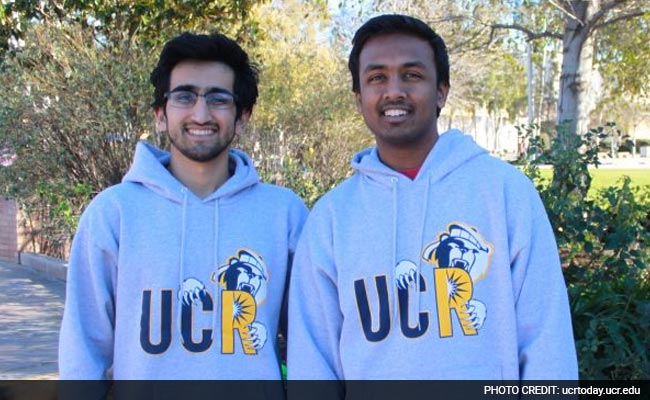
    HOUSTON:  Two Indian-American computer science students in the US have created an education app that helps college students connect with tutors in the locality. Described as “The Uber for Tutors”, the “Scholarly” app available as a free download on Google Play and in the Apple App Store helps users view tutor profiles, set meeting locations, and get help with their studies at the click of a button.

    The app, that won the first place at the world’s largest education Hackathon in October, has been created by Sultan Khan and Haasith Sanka of the University of California, Riverside (UCR).

    The way it works is simple: tutors create profiles, which can be viewed by students looking for help in a certain subject. After setting a meeting location, the two parties can meet to untangle whatever academic knot a student is wrestling with.

    In addition to being easy, it’s mutually beneficial. Tutors can earn extra cash, while students can get the academic help they need – all with no middle man other than a smartphone.

    The duo hope the on-demand tutoring service will help fellow students.

    “We both believe that one-on-one tutoring is beneficial, so we are proud to have created something that will contribute to students’ success,” said Sanka.

    The duo developed the android version of ‘Scholarly’ at Hacking EDU in last October. The competition drew more than 1,000 hackers from universities around the world. Within a 36-hour time-frame, students were challenged to turn their ideas into functional software that would improve the education system.

    After presenting ‘Scholarly’ to a panel of judges, Khan and Sanka ultimately left with a first place ranking for their app.Since then, the two have been working to improve the android app and create the iOS version.

    “One of the challenges about developing apps is that even when you’ve done a good job there is always room for improvement. That’s one of the things I love about creating apps and the reason I want to work in the field of software development when I graduate,” said Khan, in a statement issued by UCR.

    For Sanka, the reward will be seeing how the app helps other students.

    While most of the app’s activity is currently generated by UCR students, Khan and Sanka hope to expand the service to K-12 (Kindergarten to Class 12) students and their parents in the coming months.

  • Three Indian Americans among 26 of the Top Women Engineers

    Three Indian Americans among 26 of the Top Women Engineers

    WASHINGTON (TIP): Three Indian Americans were among the top women engineers recognized in a Business Insider piece.

    The Business Insider Feb. 24 piece on the “Most Powerful Women Engineers” of 2016 was released in the midst of National Engineer’s Week, Feb. 21 through Feb. 27. The list was generated to give a “shout-out to the female engineers with powerful careers who are leading important technologies at their companies or being pioneers in other ways.”

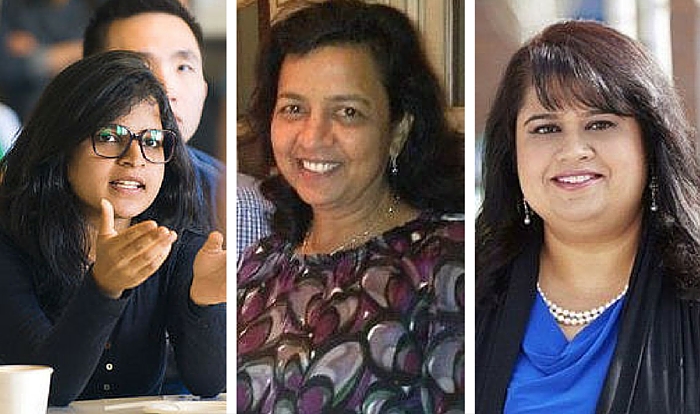
    Oracle’s Vinita Paunikar, Affirm’s Trisha Kothari and Intel’s Sumita Basu were recognized in the Business Insider list.

    Oracle's Vinita Paunikar
    Oracle’s Vinita Paunikar

    Paunikar was the highest ranked of the Indian Americans, coming in at No. 14.

    Vinita Paunikar is a vice president at Oracle responsible for release management of products and services.

    She created a release-management team that has launched 200 products across more than 20 lines.

    She’s also worked on several of Oracle’s mainstay products, including its flagship systems-management solution, Enterprise Manager Cloud Control, now also the core-management platform for Oracle’s cloud services.

    A graduate of Visvesvaraya National Institute of Technology in Maharashtra.

    Affirm's Trisha Kothari
    Affirm’s Trisha Kothari

    Trisha Kothari is making a name for herself at the young age of 23.

    Kothari is Affirm’s first female engineer at the financial-technology startup cofounded and led by Max Levchin, the former cofounder of PayPal.

    Affirm turns your smartphone into a credit card of sorts, allowing you to make monthly payments on things you buy from merchants that accept it.

    “Trisha was instrumental in building the core aspects of a financial platform that powers everything we do,” Affirm’s COO, Huey Lin, said about her.

    Levchin even goes so far as to say that “Trisha Kothari is one of the most exciting up-and-coming coders in America.”

    Before joining Affirm, Kothari did several internships at Google and LinkedIn. She also earned a Google Anita Borg scholarship and one from Microsoft and is a member of the high-IQ organization Mensa.

    She is a graduate of Dhirubhai Ambani International School and the University of Pennsylvania.

    Intel's Sumita Basu
    Intel’s Sumita Basu

    At No. 26: Intel’s Sumita Basu is a strategist and technical assistant to the Intel vice president and general manager.

    She’s been with Intel since 2002 with increasing responsibilities. In her last gig with the company, she oversaw the equipment installation for Intel factories worldwide — a huge job.

    For her PhD, she did experiments with the International Space Station.

    One of Basu’s most impressive accomplishments is that she invented the world’s first lead-free patterning process, allowing Intel to become the first chip company in the world to limit the use of that toxic substance in its manufacturing processes.

    A graduate of Jadavpur University (bachelor’s) and Rensselaer Polytechnic Institute (doctorate), Basu has also invented the world’s first lead-free patterning process. The invention has allowed Intel to become the first chip company in the world to limit the use of that toxic substance in its manufacturing process, according to the Insider piece.

  • 10-year-old Indian girl proves age is just a number at ‘brainiacs’ meet in NY

    10-year-old Indian girl proves age is just a number at ‘brainiacs’ meet in NY

    Growing up is a wonderful experience, but when we grow up, one particular question from elders makes us confused: “ What do you want to become when you grow up?” Well, “Why not talk about their present? What they want to do or want to be at present?” says Ishita Katyal from Pune who was invited to speak at TED Youth Conference in New York.

    10-year-old Pune writer and middle-schooler who, quite extraordinarily, debuted as the opening speaker at the TED2016 (Technology, Entertainment, Design), a nerdy conference of some of the world’s smartest people.

    Alpha-geeks from Google and Tesla, Apple and Uber, not to speak of marquee names such as Al Gore and Bill Gates are attending the annual brainiacs gig, but it was the singsong voice of this pre-teen, with her pink-frame spectacles and burgundy velvet gown, that held centerstage on when the conference opened.

    “We can do a lot in this moment, in the present. The problem is our world has many forces working against the dreams of children.” Adults, she said, chronically underestimate kids, and in the process they pass on fear to children who are born without fear.

    The nerdy audience, with an average age perhaps in the forties, absorbed the mild admonition, responding with frequent applause as she pressed on to issues such as hunger, education, and war.

    “My dream for the future is that people think 10 times before raising school fees, a hundred times before going to war with another country, a thousand times before wasting food and water, and ten thousand times before letting their child’s childhood go away,” she said. “I hope you adults can look after the world long enough to give us our chance.”

    After she concluded to rousing cheers (AR Rahman, who performed a little later in the opening session, was in the anteroom), scientists and savants, poets and philosophers, mandarins and musicians ambushed her in the lobby, wanting selfies with her.

    Her mother, Nancy Katyal, an image consultant in Pune, beamed with pride, recalling how Ishita, who wrote her first book “Simran’s Diary”, came into limelight after she organized a TEDx talk at her school Vibgyor High, Balewadi, last February.

    But this was the big stage, a world event that was for the first time, simulcast in movie theaters across the world as TED grows bigger and better. A large TEDx initiative involving Infosys in India is to be unveiled later in the day, but for now all eyes are on Ishita, even as she’s yawning and swaying lightly on her feet from jetlag, held up by adulation.

  • Silicon Valley Wants ‘Dramatic Expansion’ Of H1-B Visa: Top American CEO

    Silicon Valley Wants ‘Dramatic Expansion’ Of H1-B Visa: Top American CEO

    WASHINGTON:  With IT firms struggling to find quality and right number of professionals, a top American CEO has called for a “dramatic expansion” of the H-1B visa scheme popular among Indian tech firms to meet the growing demand.

    “The entire Silicon Valley believes that the H-1B visa policy needs to be dramatically expanded,” Bill Coleman CEO of Veritas told news agency PTI in an interview.

    “We can’t hire enough good people. They are just not available here. The salaries here are going through the roof, because everybody is competing to hire from everybody else,” he said.

    Mr Coleman, a former chairman of Silicon Valley Leadership Group, is involved with the Silicon Valley for about 40 years.

    Early this month, he became the CEO of Veritas, which has re-emerged as a newly-independent company after its purchase by The Carlyle Group for USD 7.4 billion on January 29.

    Soon headed to India, where Veritas has about 1,700 people working for it with Pune being a major centre, Mr Coleman said he plans to migrate some of his facilities to India from Florida.

    “That is a priority,” he said. The H1B visa is designed to allow US employers to recruit and employ foreign professionals in speciality occupations within the US. But in a blow to Indian IT firms, the US has imposed an additional fee of up to USD 4,500 for certain categories of H-1B visa.

    Amidst revival of the US economy wherein the unemployment rate has hit below 5 per cent, Mr Coleman referred to the huge shortage of quality IT professionals the Silicon Valley faces.

    “In Silicon Valley you go to Apple, Facebook or Google, open their websites, you will find thousands of open jobs. One of the biggest problem here is that everybody is trying to hire from everybody else. As they can’t find enough good candidates what they are doing is pushing the salaries through the moon,” he said.

    Referring to a conversation he recently had with Alphabet chairman Eric Schmidt, Mr Coleman described a “crazy” incident when the hiring-salary of a data scientist skyrocketed.

    “I know this is a very very extreme example. I was talking to Eric Smith a while ago. He was telling me that they had a really really top machine learning data scientist who they were trying to recruit. They ended up getting him, but with a USD 10 million sign on bonus. That’s crazy,” he said.

    Mr Coleman said the number of H-1B visas should be based on market demand and the programme’s expansion is one of the top priorities for the Silicon Valley.

  • Cost of Piracy

    Cost of Piracy

    An Indian firm will pay a fairly hefty restitution to the state of California for using pirated software. This unauthorized use, according to the state’s Attorney General, Kamala Harris, gave the company unfair advantage and also constituted theft of intellectual property. Pratibha Syntex Ltd, an apparel manufacturer, will pay $1 lakh in restitution, clean up its act, put into place proper policies to stop such practice in the future, and conduct regular audits to ensure that this is done.

    The US has again demonstrated the long reach of its law, and the figure of $22 billion is being cited as estimated loss in revenue to California manufacturers due to global companies using pirated American software. The use of pirated software is practically ubiquitous and different studies come up with varying figures, but it is generally agreed that the US is the largest paying consumer of software with a low piracy rate of 17 per cent. Emerging economies like Venezuela, Indonesia, China and India indulge in the rampant use of pirated software.

    While propriety software will always be necessary, and should always be paid for, there are now many options that allow open-source software or ‘shareware’ to be used. Some such software is of very high quality and is given free, Google’s Android systems being one example. Individuals and companies can thus, with some effort, find free or reasonable substitutes for almost all kinds of software in common use, and thereby benefit from it without infringing the law. There is also evidence of a change in attitude.

    The emerging idea of software as a service available on shared ‘cloud’ servers, rather than as a product, makes it available at a less daunting price. But that requires robust Internet services, which may not be readily accessible in many parts of the world. It is in the interest of software vendors to price their products fairly and to make them approachable in emerging markets, just as it is in the interest of users to eschew pirated software, as the latest case has demonstrated.

  • ‘FOR GOOGLE, INDIA TO BE BIGGER MARKET THAN US’

    ‘FOR GOOGLE, INDIA TO BE BIGGER MARKET THAN US’

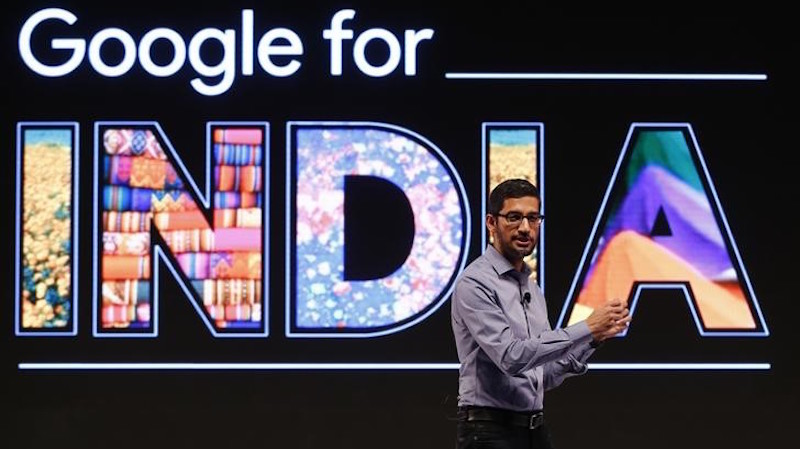
    NEW DELHI (TIP): Sundar Pichai, global chief executive at Goggle, the giant search engine, believes India will become a bigger market for the company than the US sometime in the middle of 2016.

    In an interaction with half a dozen journalists here on Wednesday, he said it was not only with regard to the use of Android-based phones that India would scale ahead of the US. There were also many areas of technological development where India would become Google’s first market for experimentation and trial, before launch in other markets.

    “We developed the offline version of YouTube in India, tried it here, and are now taking it to other countries,” Pichai said in his first media address since taking over as Google global head in August this year.

    Alumnus of IIT-Kharagpur, who joined Google in April 2004 within days of the company launching Gmail, he said it was an emotional experience to come to India and launch these initiatives here.

    Elaborating on the Google Loon project, which envisages the use of floating balloons to transmit data to devices using the internet, Pichai said the company was working with data carriers like phone service providers to roll out the new facility. Google believes in a systems approach and would follow through the processes in India as well, he said. Google Loon would essentially derive its advantage from these balloons, which would be like floating towers and naturally work more effectively in less densely populated areas.

    Innovation would continue to be the platform on which Google would work, he said making payments more effective was now a big focus area. He hoped India, too, could exploit its potential as an innovation hub. For this, he emphasised the need for an education system to encourage creativity, and taking the risks. Aadhaar, the biometrics-based identity system launched by former Infosys CEO Nandan Nilekani, he said, was foundational.

    On net-neutrality, Pichai said the principle was critical for growth and innovation. Google endorsed it, since it underlined the core internet principle of a free and open environment.

    The values of diversity were universal and applied to the US as much as to India. Pichai said this in response to a question on what he felt about the intolerance debate in India, amid his recent comments criticising anti-Muslim views coming from some US leaders.

    Earlier in the day, Pichai announced Google would work with the Indian Railways to provide free Wi-Fi at rail stations, launching the first such service at Mumbai Central  next month. Pichai also said his company was making Google products work better for Indians.

    New initiatives would include a lighter version of search results on webpages, creation of a virtual keyboard, making it easy to type in 11 Indian languages, launch of offline maps providing real-time navigation of roads and searches for locations without a data connection, and adding the facility of panoramic images for 250 Indian monuments.

    Pichai also announced that in the first quarter of 2016, Google would release a feature called ‘Tap to Translate’ that would allow instant translation of any text on an Android phone.

  • Now an app from ISIS to promote terror

    Now an app from ISIS to promote terror

    In the past, extremist groups have used tools and forums which were available: Rallies, pamphleteering, and marching in parades were the primary means used for recruitment and spreading their message.

    Now, the Islamic State (IS a.k.a ISIS or ISIL) terrorist group has reportedly launched an android app that features news and videos showing executions and battlefield victories and propagates its agenda, the media reported.

    Discovered by the hacking collective Ghost security group, the app called “Amaq News” is designed to “streamline access” to the terrorist group’s “propaganda”.

    According to a Fortune report, the Android-based app is essentially a news portal run by the Amaq News Agency — a group believed to be tied to IS.

    When users start the app, it displays a scrolling news feed and icons to play videos. It also has options for users to have the feed automatically check for new posts.

    “It can even be automatically updated whenever the app’s developers send out new versions of the programme,” the report added.

    The app, however, may not work in regions outside the IS control.

    According to Ghost security group, the app is not available as a download in a marketplace like Google Play store.

    Instead, a link to the download is shared between IS members through Telegram app and other encrypted communication methods.

    Telegram is an app that can be set up on almost any device and allows messages to be sent to users with utmost privacy.

    Users can then download “Amaq News” in an Android device, the report said.

    IS has also created its own social network for jihadists called “Kilafahbook” to get around social media bans by Twitter, Facebook and YouTube.

    For IS, social media is prominent in formulating recruitment strategies.

    According to theconversation.com, Facebook is a key platform to gather young fans, supporters and recruits to incite them to acts of violence by the means of propaganda and the use of Islamic grievance.

    When it comes to real-time orchestrating of terror strikes, IS network works with encrypted messaging applications — including Kik, Surespot, Wickr and Telegram — that are very difficult to hack.

    Ghost security group is a hacking collective similar to Anonymous that focuses solely upon counter-terrorism.
    It claims to have “terminated over 100,000 extremist social media accounts” used by militant groups to recruit members.
    Earlier, Hacker group Anonymous declared December 11 as “International IS Trolling Day” to poke fun at IS militants, using memes and cartoons.

    Members of the hacking group also posted images on social media mocking the IS.

  • 4 Persons of Indian Origin Named in Foreign Policy Magazine’s List of 100 Leading Global Thinkers

    4 Persons of Indian Origin Named in Foreign Policy Magazine’s List of 100 Leading Global Thinkers

    WASHINGTON (TIP): Four persons of Indian origin are featured in Foreign Policy magazine’s list of 100 Leading Global Thinkers who have generated ideas that could promise humankind a better future.

    Featured among ‘Innovators’ whose work has advanced “progress in global health, human rights, security, and more” is Nina Tandon, co-founder of Epibone, New York City, “For healing broken bones by growing new ones.”

    Typically, to reconstruct bone, surgeons must take bone either from somewhere else in a patient’s body, necessitating a double surgery, or from an outside source, such as a prosthesis or a donor.

    But Nina Tandon has created a third way: Growing new bones. A patient’s stem cells are placed in a bone-shaped mold, which is then put into a special chamber that simulates the body’s temperature, nutrient composition, and other conditions.

    After three weeks, the cells have essentially formed a new bone. This method requires only one surgery and avoids implanting foreign materials, thereby reducing pain and complications, Foreign Policy noted.

    EpiBone has successfully replaced the jaw of a pig and is gearing up to start its first clinical trials, to be held within two years.

    Among the ‘Moguls’ who have “showed that progress is possible, whether in corner offices or on factory floors” are Rajan Anandan, managing director of Google, Southeast Asia and India, and Ayesha Khanna, founder of the Civic Accelerator, an investment fund for socially conscious enterprises.

    While Sri Lanka-born Rajan Anandan is included “For lobbying on behalf of the unconnected”, Ayesha Khanna gets in “For nudging women into the corner office”.

    Mr Anandan “has used his stewardship of Google in India to greatly improve tech access for the poor by successfully lobbying Indian manufacturers to launch low-cost phones, pushing carriers to bring down the prices of data plans, and increasing the translation of Google products into many Indian languages.”

    “Beyond that, he’s also one of the country’s most active tech investors: Between January 2014 and June 2015, he was the most prolific, according to Quartz, investing in 15 start-ups.”

    “Anandan’s work simply proves that good business doesn’t have to be at odds with good citizenry,” FP said.

    In November 2014, Ayesha Khanna and Shannon Schuyler, head of corporate responsibility at PricewaterhouseCoopers (PwC), pooled resources to help women gain access to capital.

    This spring, with PwC funding, Civic Accelerator’s cohort of 13 US start-ups -all of which had at least one female founder, and 11 of which were started entirely by women – participated in a 10-week boot camp to test ideas and connect with investors.

    Ayesha Khanna and Shannon Schuyler have pledged that at least half of future Accelerator-supported ventures will be owned by women.

    Featured among ‘Challengers’ who have “proved that even sacred cows can be toppled” is India-born Zainab Ghadiyali “For cracking the STEM ceiling.”

    In Menlo Park, California, Ghadiyali and Erin Summers, both engineers at Facebook, are running “wogrammers,” a movement to end the “brogrammer” stereotype and highlight the technical accomplishments of their peers.

    In its first year, wogrammers highlighted 50 female engineers from around the globe.

  • German carmakers win US antitrust approval to buy Nokia maps

    German carmakers win US antitrust approval to buy Nokia maps

    WASHINGTON (TIP): German carmakers BMW , Audi and Mercedes have won US antitrust approval to buy Nokia’s maps business for around 2.5 billion euros ($2.8 billion), the Federal Trade Commission said.

    The deal, which was announced in early August, was on the FTC’s list of uncontroversial transactions which won approval from the FTC or the Justice Department. The two agencies share the work of antitrust enforcement.

    Germany’s three premium carmakers will hold equal stakes in the business, known as HERE, and may allow automakers to offer new premium features, like autonomous driving, in luxury cars, shaking up the pecking order between car makers, their parts suppliers and software rivals like Uber and Google.

    HERE’s primary competitor is Google Maps. In addition, it competes with smaller Dutch mapping firm TomTom. HERE was created by Nokia following the $8.1 billion acquisition of Navteq in 2008.

  • Judge increases bond for Uber driver charged with sexual assault to $250,000

    Judge increases bond for Uber driver charged with sexual assault to $250,000

    DALLAS  (TIP): A Dallas County judge increased the bond Thursday, August 13, for the Uber driver accused of sexually assaulting a passenger in Dallas last month.

    Bond for Talal Ali Chammout, 56, was increased at a morning hearing from $100,000 to $250,000, according to court records.

    According to records, Chammout’s attorney filed a motion last Friday to lower Chammout’s bond claiming it was excessive.

    But on Monday prosecutors filed a motion asking Judge Gracie Lewis to increase Chammout’s bond due to the seriousness of the sexual assault charge and his previous convictions for an assault and a federal weapons charge.

    In addition to the increased bond, the judge also said that upon Chammout’s release, he must surrender his passport and not possess any firearms or weapons. According to court records, Chammout was born in Lebanon.

    He also must not have any contact with the victim, cannot leave the state without court permission and cannot act as a driver or provide any transportation, court records show.

    Chammout was arrested last week after police said he picked up a woman about 8 p.m. July 25 in Oak Lawn and drove her to her home in West Oak Cliff.

    According to an arrest warrant affidavit, the woman told police Chammout followed her inside and she asked him to leave. She said she later lost consciousness and when she came to, he was on top of her. She said “her vision was cloudy and her ears were ringing.” According to the affidavit, she passed in and out of consciousness and when she woke up the next morning she was naked and had “a large bump on the back of her head and scrapes on her knees.”

    She also told police that after the assault she began receiving several texts and calls from an unknown number. She said she did a Google search and found the number coming back to a limousine company owned by Talal Chammout, the affidavit said.

    She was able to identify Chammout as the person who attacked her, the documents said.

    On Monday city spokeswoman Sana Syed said Chammout was not authorized to be an Uber driver in the city and was using a fraudulent Dallas city permit.

    Syed said Chammout, a felon, wouldn’t have passed the city’s background check if he had applied to be a driver.

    She said officials don’t know how Chammout slipped through the cracks at Uber, or how he was able to get a permit with a number that had belonged to a different driver and expired in 2010.”We can say with 100 percent certainty that Chammout was not permitted to be a driver in the city of Dallas,” Syed said Monday.

    Uber officials said Wednesday they were still investigating.

  • Global Indians – 13 Global CEOs

    Global Indians – 13 Global CEOs

    Prime Minister Narendra Modi has all along been appreciative of the struggles and achievements of NRIs. His close association with a number of NRIs all across the world is well known. There is no country in the world where Modi does not have NRI friends.

    And it is not only Modi who is appreciative of the NRI movers and shakers, the common Indian whether in India or abroad, takes great pride in the achievements of persons of Indian origin. So, here we are sharing with our readers information on the NRIs who are “global CEOs”. We congratulate them and take pride in their achievements which have done the Indian nation and its 1.3 billion people proud. They have made India’s Independence Day a very special one, with the laurels they have won.

    Sundar PichaiSundar Pichai – Pichai is an Indian American computer engineer and Indian Institute of Technology, Kharagpur alumnus. He is the new CEO of Google. The decision came after Google’s founders Larry Page and Sergei Brin decided to re-organize the company by creating a mother company called Alphabet.

    The new mother company will include, besides Google, units such as Calico (which focuses on Longevity), X lab (which incubates new efforts like Wing, Google’s drone delivery effort) and units dealing with life sciences (such as the one working on smart contact lens that detects blood sugar level). Google’s investment arms, Ventures and Capital, will also be part of Alphabet.

    The journey of Sundar Pichai from a student of IIT-Kharagpur to Google CEO has been truly remarkable.

    Satya NadellaSatya Nadella – Satya Narayana Nadella was born in Hyderabad on 19 August 1967. He is the current Chief Executive Officer (CEO) of Microsoft. He was appointed as CEO on 4 February 2014, succeeding Steve Ballmer. Before becoming CEO of Microsoft, Nadella was Executive Vice President of Microsoft’s Cloud and Enterprise group, responsible for building and running the company’s Computing Platforms, Developer Tools and Cloud Computing Services.

    Nikesh Arora Nikesh AroraNikesh Arora – Nikesh Arora is a former Google executive and President & Chief Operating Officer of SoftBank Corp.

    Arora graduated from the IIT, Banaras Hindu University, Varanasi.

    He holds a degree from Boston College and an MBA from Northeastern University. He also holds the CFA designation.

    Ajaypal Singh BangaAjaypal Singh Banga – Ajay Banga is the current president and chief executive officer of MasterCard.MasterCard announced on April 12, 2010 that Ajay Banga, previously MasterCard’s president and chief operating officer, had been named by the Board of Directors to serve as the company’s president and chief executive officer, effective July 1, 2010.

    Banga succeeded Robert W. Selander, who had been MasterCard’s chief executive officer since March 1997.

    Presently, he is also the chairman of the US-India Business Council (USIBC) representing more than three hundred of the largest international companies investing in India.

    Indra NooyiIndra Nooyi – India-born Indra Krishnamurthy Nooyi is the current Chairperson and Chief Executive Officer of PepsiCo, the second largest food and beverage business in the world by net revenue.

    She has consistently ranked among the World’s 100 Most Powerful Women.

    In 2014, she was ranked 13 in the list of Forbes World’s 100 most powerful women.

    Rakesh SachdevRakesh Sachdev – Rakesh Sachdev has been the Chief Executive Officer and President of Sigma-Aldrich Corporation since November 2010.

    He served as the Chief Financial Officer of Sigma- Aldrich Corporation from November 18, 2008 to November 2010 and also served as its Chief Administrative Officer from May 2009 to November 14, 2010 and Senior Vice President from May 2005 to November 2010.

    He is a graduate of the Indian Institute of Technology, New Delhi with a Bachelor’s Degree in Mechanical Engineering. He holds a Master’s Degree in Business Administration in Finance from Indiana University, as well as a Master’s Degree in Mechanical Engineering from the University of Illinois.

    Francisco D'SouzaFrancisco D’Souza  – Francisco D’Souza was born on 23 August 1968. He is the CEO of Cognizant and was part of the team that founded the NASDAQ-100 company in 1994.

    Francisco is Cognizant’s CEO since January 2007.

    Francisco D’Souza is among the youngest Chief Executive Officers in the software services sector. In 2007, at the age of 38, he took over from Lakshmi Narayanan, who was promoted to Vice Chairman.

    Rakesh KapoorRakesh Kapoor – Rakesh Kapoor was born 4 August 1958. He is Chief Executive of Reckitt Benckiser plc, a UK FTSE-listed multinational consumer goods company, a major producer of health, hygiene and home products.

    Anshu JainAnshu Jain – Anshuman Jain was born on 7 January 1963 in Jaipur. He took over as Co-CEO of Deutsche Bank on 1 June 2012 to succeed Management Board Chairman Josef Ackermann.

    He was a co-CEO of the bank between 2012 and July 2015. He is a member of Deutsche Bank’s Management Board.

    Earlier, as head of the Corporate and Investment Bank, he was globally responsible for Deutsche Bank’s corporate finance, sales and trading, and transaction banking business. Jain resigned as co-CEO in July 2015 though he is expected to remain a consultant to the bank until January 2016.

    Vikram PanditVikram Pandit – Vikram Shankar Pandit was born on 14 January 1957. He is the former chief executive of Citigroup, a position he held from December 2007 until he was forced to resign, on 16 October 2012.

    Shantanu NarayenShantanu Narayen – Shantanu Narayen was born on May 27 1963. He is the CEO of Adobe Systems. Prior to this, he was the president and chief operating officer since 2005. He is also the president of the board of the Adobe Foundation.

    Padmasree WarriorPadmasree Warrior – Padmasree Warrior is the former Chief Technology & Strategy Officer (CTO) of Cisco Systems, and the former CTO of Motorola, Inc.

    As of 2014, she is listed as the 71st most powerful woman in the world by Forbes.

    rajeevRajeev Suri – Rajeev Suri headed Nokia Solutions and Networks (NSN) since October 2009, has been credited for “presiding over consistently improving results leading to the successful turnaround and restructuring of the company.” Suri joined Nokia in 1995 and headed the Asia Pacific region for NSN in 2007.

    According to his official profile, Suri has a Bachelor of Engineering degree in Electronics and Telecommunications from Mangalore University. He is based in Espoo, Finland.

  • Indian-origin Harvard student who found Privacy Flaw in Facebook , Denied Internship after being confirmed

    Indian-origin Harvard student who found Privacy Flaw in Facebook , Denied Internship after being confirmed

    NEW YORK (TIP): Indian-origin Harvard student, Aran Khanna was denied a chance to intern at Facebook after the company learned that one of his creations exposed a critical flaw in its Messenger service, Boston.com reported.

    In May, Khanna released Marauder’s Map, a browser extension for Google Chrome that used location data to show you exactly where your friends were. It was downloaded 85,000 times in three days, before Facebook asked him to disable it.

    Facebook also disabled location sharing from desktops and subsequently updated Messenger for mobile, giving users the option to control their GPS data. Prior to that, the app had been sharing users’ locations by default since it launched in 2011.

    Khanna was then informed by a Facebook employee that the company was rescinding his summer internship offer, as he had violated its user agreement when he scraped the site for location data.

    He also received an email from Facebook’s head of global human resources and recruiting, who told him that his Medium post didn’t meet the high ethical standards expected of interns.

    A Facebook spokesperson told Boston.com, “This mapping tool scraped Facebook data in a way that violated our terms, and those terms exist to protect people’s privacy and safety. Despite being asked repeatedly to remove the code, the creator of this tool left it up. This is wrong and it’s inconsistent with how we think about serving our community.”

    Khanna accepted another internship with a tech start-up in Silicon Valley and later detailed the experience in a case study titled ‘Facebook’s Privacy Incident Response: A study of geolocation sharing on Facebook Messenger’ in the Harvard Journal of Technology Science.