
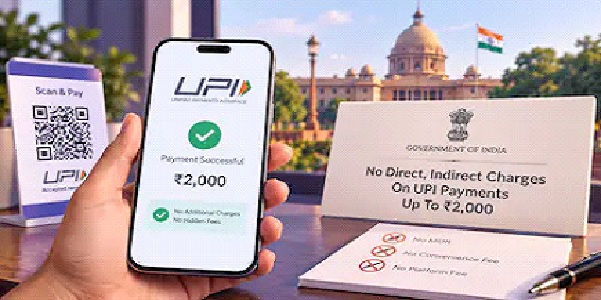

New Delhi (TIP): The Union finance ministry is preparing a monitoring system to ensure that the burden of the Merchant Discount Rate (MDR) on Unified Payments Interface (UPI) transactions above Rs 2000 is not passed on to consumers.
According to sources quoted in a PTI report, the ministry has already initiated discussions with payment aggregators and other stakeholders in the UPI ecosystem to sensitise them about the MDR and ensure that the burden is not passed on to consumers.
The NPCI, which operates the UPI platform, issued a circular on September 15 introducing MDR for certain UPI transactions to create a sustainable revenue framework for the digital payments ecosystem.
A 0.4 per cent MDR will apply to person-to-merchant UPI payments above Rs 2,000 from October 15. The government says that the charge will be paid by merchants, not consumers. MDR will be capped at Rs 300 for transactions of Rs 75,000 or more.
Payments between individuals, as well as the vast majority of everyday merchant payments, will remain free.
The finance ministry on Thursday dismissed allegations that US pressure influenced the decision to levy a 0.4 per cent MDR on select UPI transactions, saying the latest NPCI guidelines do not give international credit cards any advantage over RuPay
The ministry also asserted that it does not expect the levy to trigger a shift towards cash transactions.
The Department of Financial Services (DFS) issued the clarification in response to observations in the US Trade Representative’s (USTR) 2026 report on the inability of US electronic payment service providers to participate in the UPI ecosystem, including credit transactions on UPI, on a level playing field with RuPay.
“The NPCI circular of September 15, 2026, does not allow credit transactions on UPI by any other credit card other than the RuPay credit card. There is a clear policy of only allowing RuPay credit cards on UPI to enable RuPay credit cards to become the preferred choice of credit cards amongst users in India,” the DFS said in a post on X.
“The allegation that MDR has been introduced under any external influence is patently false and misleading,” it added.
The assertion comes amid allegations by some Opposition parties, including the Congress, that the government had succumbed to US pressure in deciding to impose a 0.4 per cent MDR on UPI transactions above Rs 2,000.
According to the US Trade Representative’s 2026 National Trade Estimate Report on foreign trade barriers, the US continued to raise concerns over informal and formal policies with respect to electronic payment services that appear to favour Indian domestic suppliers over foreign suppliers, creating a non-level playing field.


Be the first to comment