Tag: Gujarat

  • Strong Indian American challenge in US Congressional election in Silicon Valley

    Strong Indian American challenge in US Congressional election in Silicon Valley

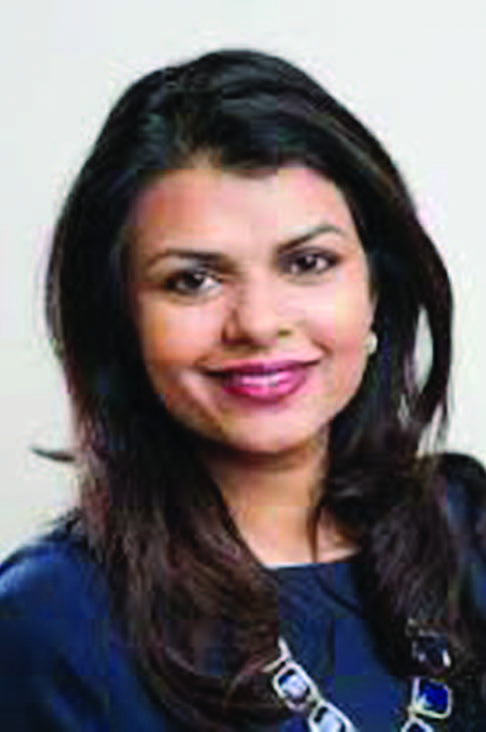
    SAN JOSE (TIP): US Congressional election in Silicon Valley this year was being seen as a two-person race between incumbent Congressman Mike Honda (Democrat) and his main challenger Rohit “Ro” Khanna (Democrat) until recently. It all changed when Dr. Vanilla Mathur Singh (Republican), a member of Hindu American Foundation (HAF), entered the race in December 2013.

    The HAF first made headlines in 2005 with its failed attempt in California state to “improve 6th grade textbooks so that these books actually reflect their (Hindu) beliefs and their religious practices.” Media reports indicate that Singh was recruited to run by Shalabh “Shalli” Kumar, a Chicago-based Indian-American businessman and Republican fundraiser.

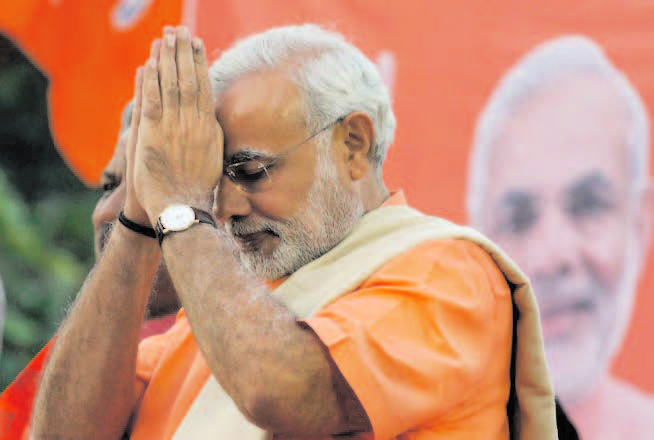
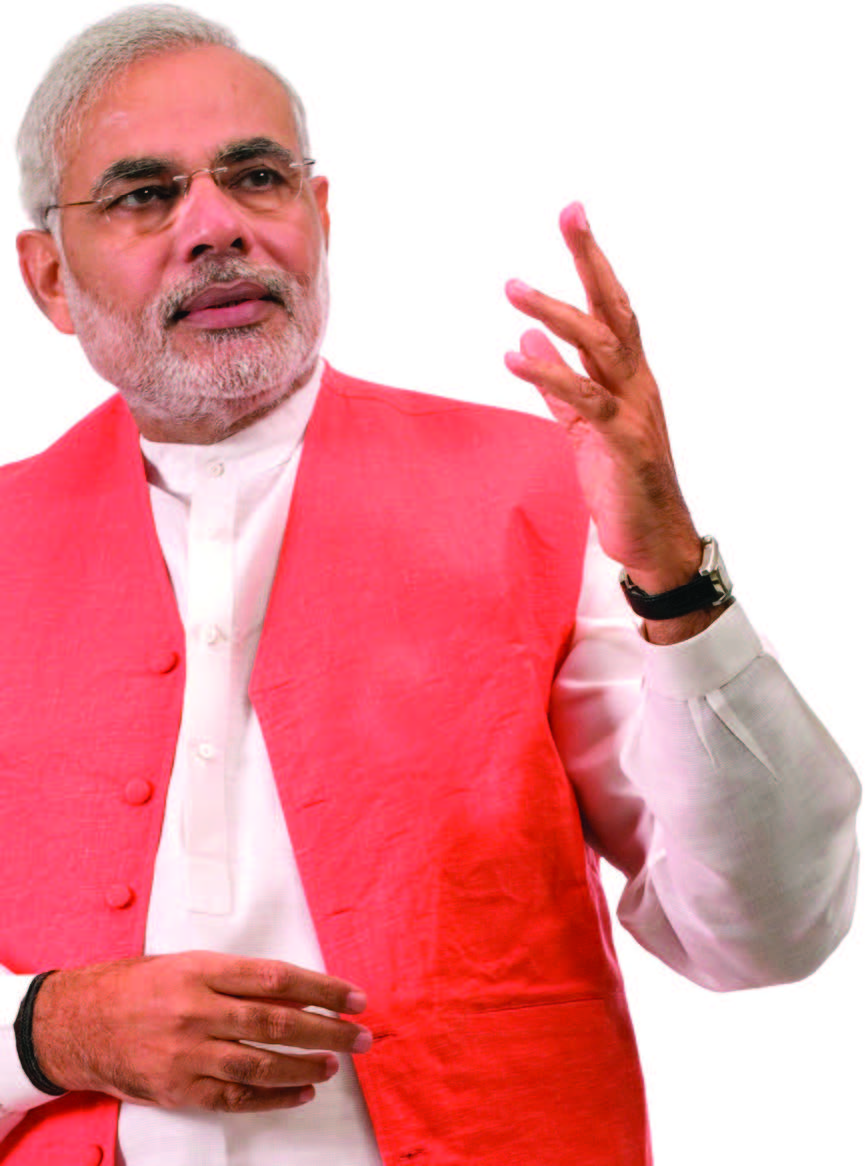
    Kumar is the founder of a super PAC, Indian Americans for Freedom, with close ties to Hindu Nationalists. He has been lobbying members of US Congress to help rehabilitate his “idol” Narendra Modi of India’s Hindu Nationalist Bharatiya Janata Party (BJP). Modi has been denied US visa multiple times by the State Department because of his widely suspected role in the killing of thousands of Muslims in 2002 Gujarat riots.

    Singh said that she raised $100,000 in the five days after declaring her candidacy, including $25,000 of her own money. The rest, she said, came from about “20 family and friends.” Kumar’s super PAC could change the dynamics of the South Bay race if he chooses to back Singh financially. In 2002, his super PAC spent $500,000 in an unsuccessful attempt to defeat Rep. Tammy Duckworth, D-Ill., including producing an ad set to Middle Eastern music that showed the double amputee Iraq war veteran wearing a headscarf during a visit to a local Muslim community center.

    Ro Khanna, a Silicon Valley patent attorney of Indian origin, is backed by many of Silicon Valley’s top VCs and executives at Google, Facebook, Yahoo and other tech companies. Other Notables include Marc Andreessen, the Netscape co-founder; John Doerr, the venture capitalist; and Randi Zuckerberg, the chief executive of Zuckerberg Media and the sister of Mark Zuckerberg and Sean Parker, former President pf Facebook.

    Four months before the primary, Khanna has $1,975,000 in cash on hand, or more than triple the incumbent’s $623,000, according to campaign finance records filed last Friday as reported by the New York Times. Khanna supporters expect him to win to push legislation in Congress to liberalize US visas for foreign workers needed to fill Silicon Valley tech jobs. He supports raising the number of H1-B visas, keeping a lid on capital gains taxes and cracking down on patent trolls while charting a progressive agenda on most social issues.

    Faced with the surprise new challenge from the Hindu Right, Ro Khanna has refused to denounce Narendra Modi for fear of alienating a significant chunk of the substantial pro-BJP Indian-American voters in Silicon Valley. Mike Honda, the incumbent congressman from 17th district, is a Japanese-American who was put by the United States in an internment camp as a child during World War II. He has been a featured speaker at many Muslim- American events where he has spoken out for American Muslims’ civil rights since the terrorist attacks of September 11, 2001.

    During a 2009 keynote speech at Human Development Foundation fund-raiser that I attended, Congressman Honda said the US foreign policy should have the same goals that the HDF has in Pakistan. Drawing from his experience as a US peace corps volunteer to support education and infrastructure development in Central America in the 1960s, he proposed a similar effort in restoring US credibility in Pakistan and Afghanistan. Honda praised the US emphasis on economic aid and said he supports the 80/20 rule that General Petraeus had outlined, with 80% emphasis on the political/economic effort backed by 20% military component to fight the Taliban insurgency. Honda says he has been a strong advocate for the tech industry in Congress.

    As a member of the House Appropriations Committee, he helped get millions of dollars in funding for BART extension to San Jose, a top priority for Valley leaders, as well as federal investment in nanotechnology research. His strong backing from organized labor and veteran Democrats reflects the decades he’s spent in public service. Honda also supports an increase in H1-B visas, although he’s also expressed concerns about its potential harm to the local labor pool.

    A number of polls in 17th district so far show that Honda enjoys a healthy lead over his challenger Khanna. Honda’s lead could increase if Singh takes a significant chunk of Indian- American votes away from Khanna. In spite of a powerful tech industry funded challenge by Ro Khanna, Honda remains a favorite to win. Honda also enjoys the strong endorsement of President Obama and Democratic Party’s establishment. Singh’s entry in the race could further help Honda extend his lead and keep his seat in Congress. I intend to vote for Mike Honda based on the Congressman’s strong record of service to Silicon Valley and his unambiguous pro-civil rights stance.

  • DESI CARAVANS FROM PCP MOTORS TO HIT ROAD SOON

    DESI CARAVANS FROM PCP MOTORS TO HIT ROAD SOON

    NEW DELHI (TIP):
    PCP Motors, a division of Kolkata-based Paracoat Products, is gearing up for a plunge into the fledgling caravan or motor home market in the country with the launch of its Terra Home Car, the first ever locally-made recreation vehicle (RV), which typically includes bathroom, kitchen and sleeping facilities. The first set of vehicles is expected to be rolled out in Rajasthan or Gujarat in the next few months. RVs are defined as either motor vehicles or tow-able trailers, and are primarily intended for a group of people or a family while holidaying.

    “With changing preferences of people, we decided to develop a compact vehicle for a family of 5-6, and the vehicle is a result of our tie-ups with Japan-based Vantech, a popular name for camping cars, and Siam Motohome Ltd. (for customisation),” Rajesh Poddar, Director- Business Development, PCP Motors, told The Hindu at the Auto Expo 2014. The company showcased a prototype from Thailand at the Auto Expo 2012, and last year, the company showcased it to travel agents and tour operators. In 2013, it started working with ARAI (Automotive Research Association of India) to create a category of motor home for vehicle registration.

    Last month, ARAI created the same. Terra Home Car, which will be manufactured at the company’s Bhiwadi unit in Rajasthan, will hit the road after the clearance from ICAT (International Centre for Automotive Technology). PCP intends to focus on tourism industry, and will initially concentrate on states such as Rajasthan and Gujarat. It has commenced the process of setting up dealerships in these states. . “Considering the immense land area and the multitude of landscapes in India, Caravans and Caravan Parks are sure to add an exciting new facet to tourism. The initial demand in this niche segment is expected to come from domestic tourists and then from inbound tourists,” said a document of Indian Tourism Department.

  • ISHRAT JAHAN CASE: CBI FILES CHARGESHEET AGAINST IB OFFICERS

    ISHRAT JAHAN CASE: CBI FILES CHARGESHEET AGAINST IB OFFICERS

    AHMEDABAD (TIP): The Central Bureau of Investigation (CBI) on Thursday filed a supplementary chargesheet in the alleged Ishrat Jahan fake encounter case.

    “CBI has filed a case against three IB officers, especially against Special Director Rajinder Kumar (now retired). Kumar has been charged with the arms act, section 120b and 302 as well as for abduction and kidnapping,” said a lawyer. Ishrat, Javed Shaikh alias Pranesh Pillai, Amjadali Akbarali Rana and Zeeshan Johar were killed in an encounter allegedly with Gujarat Police on the city outskirts on June 15, 2004.

    Police had then claimed the four were terrorists on a mission to kill Gujarat Chief Minister Narendra Modi. However, according to the CBI ‘s charge sheet filed in July, the encounter, a joint operation by Gujarat Police and Intelligence Bureau, was stage-managed. Seven Gujarat policemen, including Pandey, have been named as accused and charged with murder and criminal conspiracy, among others.

  • Another Indian-American jumps into combative US House race

    Another Indian-American jumps into combative US House race

    WASHINGTON (TIP): An Indian-American Republican candidate has jumped into an already combative electoral House race in the Silicon Valley featuring a former aide of President Barack Obama challenging the sitting fellow Democrat.

    The new entrant to the race between the seven-term Democrat incumbent Mike Honda of San Jose and his main challenger, former Obama administration trade representative Ro Khanna, is Vanila Singh, a Stanford Medical Centre anaesthesiologist. India-born Singh, 43, who came to the US as a toddler, says she entered the South Bay contest because it is “time to do my civic duty”.

    But her critics, according to SFGate.com, say the man who recruited her to run, Chicago businessman Shalabh ‘Shalli’ Kumar, “has a far more divisive agenda”. Kumar is founder of the Indian Americans for Freedom, a super PAC or an independent-expenditure only Political Action Committee, which can spend unlimited amounts as long as it doesn’t coordinate directly with the candidate.

    Singh acknowledges that after “multiple conversations” with Kumar and other Republican insiders late last year, she filed to run Dec 26 – a day after switching her voter registration from “declined to state” to Republican. In recent weeks, Singh met Kumar, who chairs the Indian American Advisory Council of the House Republican Conference, in Washington, D.C. said SFGate. Kumar told ethnic publication IndiaWest that he approached Singh to be part of a “project” he founded with Republican House member Pete Sessions to build a Republican congressional “team” that supports a “pro-India” agenda.

    However his critics, according to SFGate.com, suggest his agenda includes securing a visa for Bharatiya Janata Party’s prime ministerial candidate Narendra Modi. Modi’s US visa was revoked in 2005 because of his alleged role or inaction during the 2002 Gujarat riots. Singh, according to SFGate, says she has received no money and “no promises” from Kumar or his super PAC. “I’m not part of his project per se,” and Kumar’s agenda “is not mine”, she was quoted as saying.

  • London ‘Run for Unity’a Grand Success: Jolly

    London ‘Run for Unity’a Grand Success: Jolly

    Gujarat Leader Amit Thaker mandated for organizing ‘Run for Unity’ globally

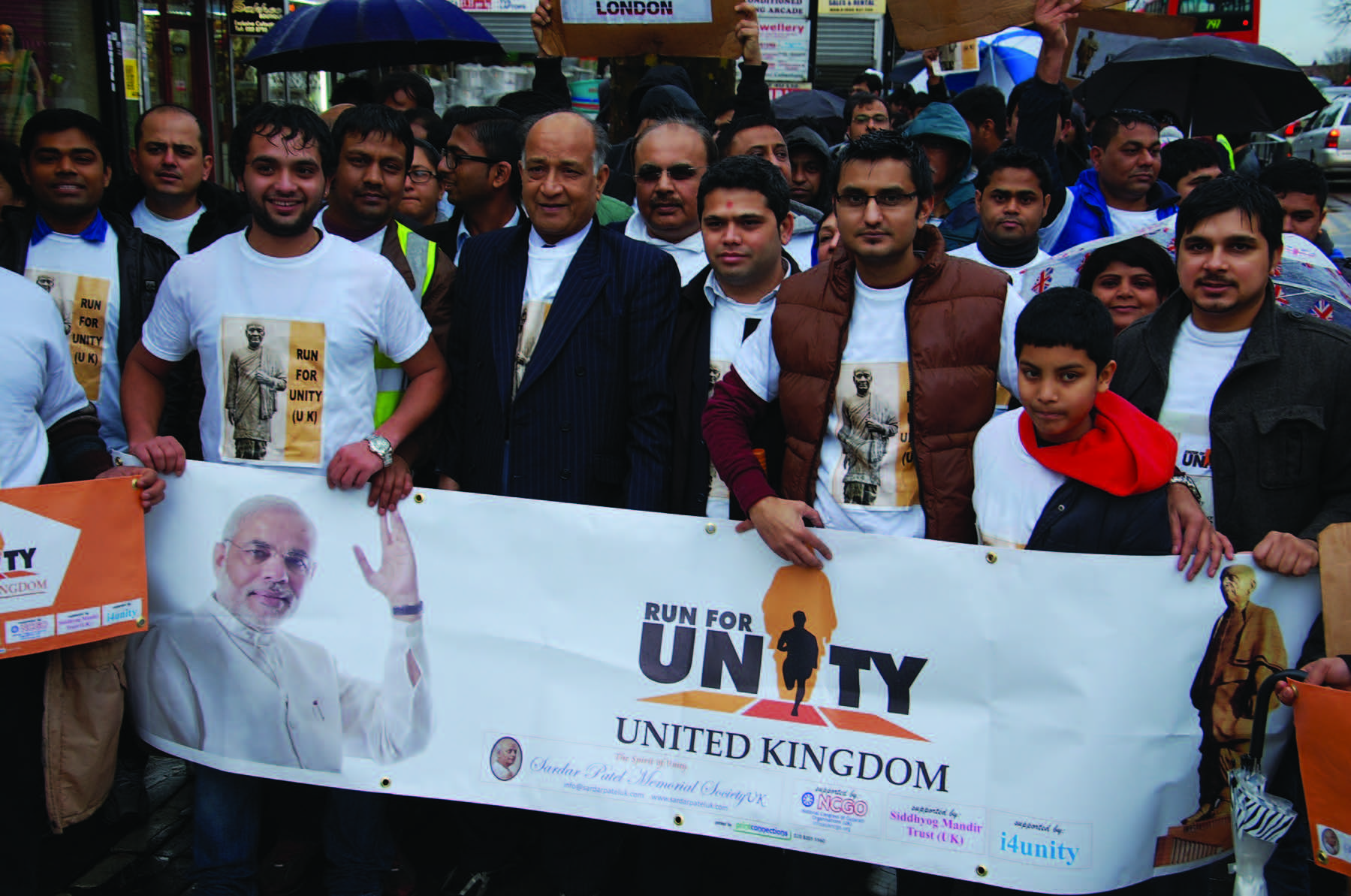
    NEW DELHI (TIP): Encouraged by the success of London Run for Unity, OFBJP Convener Vijay Jolly announced January 29 that “Run for Unity” programs will be organized in various countries soon.

    Jolly mandated OFBJP Co-Convenor & Gujarat leader Amit Thaker to coordinate globally the “Run for Unity” programs. Thaker will plan, propose, organize & coordinate all such programs in close association with OFBJP units in USA, UK, Norway, Sweden, Denmark, Nepal, Mauritius, Canada, Kenya, Nigeria etc.

    Jolly claimed that “RUN FOR UNITY” recently organized in London attracted a large crowd of NRI’s. The UK program was organized by “14 – Unity” a young professional group in UK led by dynamic Nachiket Joshi, OFBJP Central Committee Member (Bharat) and permanently based in London. Gujarati, Punjabi and English British leaders participated along with young boys & girls.

    Over 1000 strong crowd and participants walked in pouring rain wearing raincoats & carrying umbrellas in severe cold London weather, stated OFBJP leader Vijay Jolly. Cheering for “Modi” and national unity, wearing T-shirt of Sardar Patel’s image, the ‘London Run for Unity’ was flagged off by Bob Blackman, British MP & Chairman of All Party Parliamentary Group for British Hindus.

    Bob, in his speech on the occasion pledged British support for Modi and hoped that trade between UK & India will increase “ten -times” in case Narendra Modi became PM of India. Muhammad Butt, leader of London Council, Lord Sardar Singh, Virendra Sharma South Hall MP, C.B. Patel Chairman Asian Voice & Gujarat Samachar, Lalu Bhai Parekh (OFBJP, UK President), Councilor Darshan Grewal (OFBJP-UK Vice President), P.G. Patel Chairman SPMS, UK, Mahendra Jadeja Sec. Gen. of NCGO, C.J. Robheru, Narendra Thakran, Vinod Halai, Dr. M. Ambekar etc. participated in the historic program in London.

  • SIT TO PROBE ANTI-SIKH RIOTS: DELHI GOVT

    SIT TO PROBE ANTI-SIKH RIOTS: DELHI GOVT

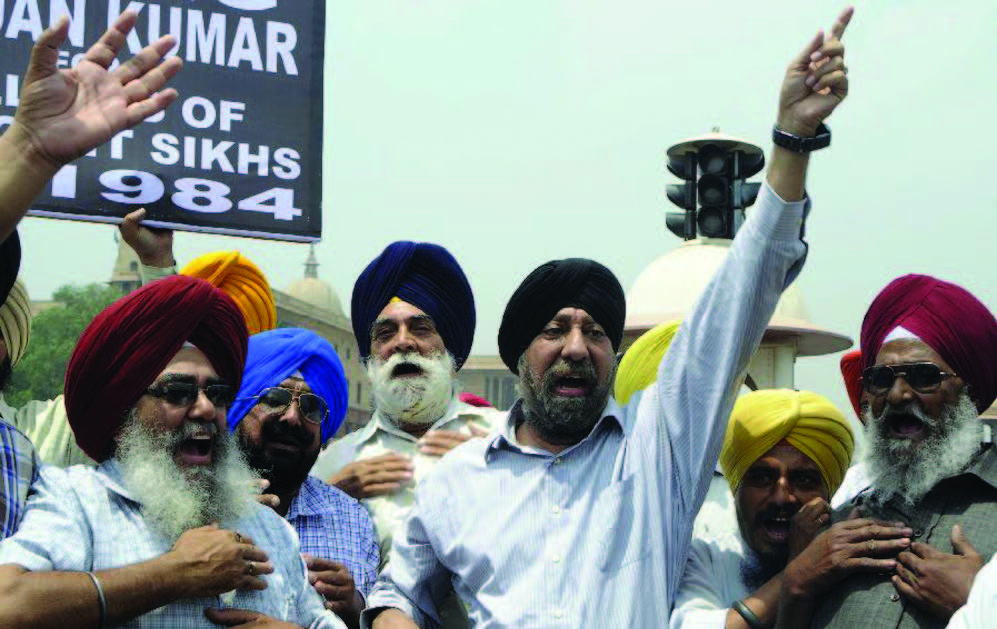
    NEW DELHI (TIP): The Delhi Government on January 29 decided on a probe by a Special Investigation Team into the 1984 anti- Sikh riots, two days after Congress vice-president Rahul Gandhi said some of the partymen were probably involved in the violence but were punished.

    The politically sensitive decision to form the SIT to investigate the riots which left around 3,000 Sikhs dead following the assassination of the then prime minister Indira Gandhi on October 31, 1984, may create trouble in the relationship between AAP and Congress which has been providing outside support to Kejriwal dispensation.

    But the move was welcomed by riot victims with one of their prominent lawyers saying it gave them a “ray of hope”. “Government is going to form a SIT to probe the 1984 riots. The modalities of the probe will be discussed at a cabinet meeting on Friday. Lt Governor Najeeb Jung has in-principle agreed to the proposal to appoint the SIT,” PWD Minister Manish Sisodia told reporters. Earlier in the day, Chief Minister Arvind Kejriwal discussed the issue with Jung.

    To a query on effectiveness of SIT as the riots had taken place nearly 30 years back, Sisodia said “honest efforts will definitely yield results”. Two days back, in an interview to a TV channel, Gandhi had admitted that “some Congress men were probably involved in 1984 anti-Sikh riots and they have been punished for it”. Gandhi had insisted that the Congress government in 1984 “was not aiding and abetting the riots” but had tried to stop the violence.

    Congress leaders Jagdish Tytler and Sajjan Kumar are facing allegations of involvement in riots after Indira Gandhi was assassinated on October 31, 1984. Claiming that effective investigation into the anti-Sikh riots was part of AAP’s agenda, Sisodia said the party had held a day-long fast atJantar Mantar to express solidarity with the victims. Senior lawyer HS Phoolka, who joined AAP recently, said, “The decision of government to form SIT has given a ray of hope to riot victims that justice would be done to them.”

    Phoolka has been taking up the causes of victims of anti-Sikh riots. Phoolka said SIT should be formed on the lines of the special team which probed Gujarat cases. “Police officers from other states should head the SIT while Delhi police should only assist them,” said Phulka. Delhi Police and CBI have investigated the riots cases so far.

  • Opinion poll predicts gains for BJP, losses for UPA

    Opinion poll predicts gains for BJP, losses for UPA

    NEW DELHI (TIP): Despite an apparent wave of Arvind Kejriwal-led Aam Aadmi Party (AAP) till recently, the National Democratic Alliance (NDA) would have won 200-odd seats if the general elections were held in January 2014, the findings of the latest India Today Group’s Mood of the Nation opinion poll suggest.

    The opinion poll gives the Congress-led United Progressive Alliance (UPA) only around 100 seats, down by over 150 seats in the current Lok Sabha. It also underlines the significance of a possible Third Front in the forthcoming Lok Sabha election as the non-UPA, non-NDA parties and Independents are expected to win 220-odd seats. The NDA thus crosses the 200-mark for the first time since 2010. Both, the NDA and the likely Third Front, gains substantially in numbers and vote share. The opinion poll suggests that the NDA’s vote share of 34 per cent will be significantly more than the UPA’s 23.

    However, the others will have the maximum vote share of 43 per cent. Under the leadership of Narendra Modi as its prime ministerial candidate, the Bharatiya Janata Party (BJP) looks all set to become the single largest party as it is also likely to emerge the biggest gainer in the Lok Sabha polls. Its 2009 tally of 116 is expected to rise to 188 in 2014, an increase of more than 60 per cent. Congress, under the leadership of its vice-president Rahul Gandhi, might win just 91 seats, as compared to its current tally of 206, a drop of about 55 per cent. The Congress ploy of propping AAP to counter Modi at the national level seems to have a limited impact, as Kejriwal’s gains are restricted to areas around Delhi and a few metro cities only.

    Modi consolidates his position
    Modi, who emerged as the strongest leader within his party after the BJP’s hat-trick in Gujarat in December 2012, cemented his position further through strong campaigning across the country. As the party’s lead campaigner in the recently held assembly elections in Madhya Pradesh, Chhattisgarh, Rajasthan and Delhi he consolidated his position further. In the latest India Today Mood of the Nation opinion poll, as many as 47 per cent people voted him as the best prime ministerial candidate against his previous best of 42 per cent polled in August 2013.

    The Gandhi scion was way behind Modi with just 15 per cent votes, followed by Kejriwal with 9 per cent votes and 6 per cent votes each to Prime Minister Manmohan Singh and Congress president Sonia Gandhi. During these five months Modi was also able to improve his image from being a communal leader to being pro-development. To a question “what does Modi represent”, the option “communalism” saw a drop of 11 per cent from 18 per cent in August 2013, while “economic development” increased by 6 per cent to 30 per cent. The number of people thinking Modi should apologize for the 2002 Gujarat riots also fell drastically during this period to 39 per cent from the previous figure of 51 per cent.

    Modi as a role model
    The Gujarat chief minister emerged as a role model for the highest 17 per cent respondents, a gain of as much percentage as nobody earlier saw him as one among the overall personalities of India. Modi was followed by Kejriwal with 14 per cent votes, up from 2 per cent. Bollywood superstar Salman Khan too saw a big jump in his popularity as 10 per cent people saw him as a role model, up from the previous 1 per cent, followed by legendary singer Lata Mangeshkar’s 9 per cent against 2 per cent in the earlier opinion poll.Veteran anti-corruption activist Anna Hazare’s position as a role model remained unchanged with 7 per cent votes.

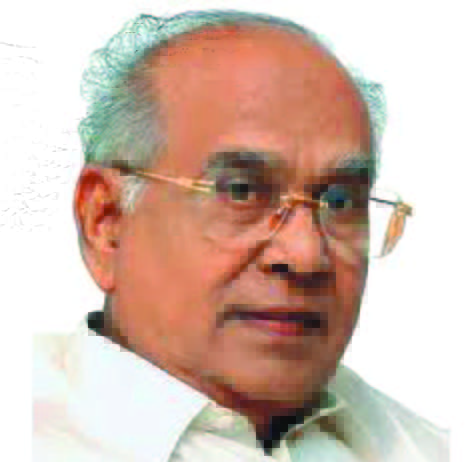
  • Akkineni Nageswara Rao is dead: Condolences pour in from across the world

    Akkineni Nageswara Rao is dead: Condolences pour in from across the world

    HYDERABAD (TIP): Legendary Telugu actor and film producer Akkineni Nageswara Rao, also known as ANR, died January 22 in Hyderabad at the age of 90. Dada Saheb Phalke Award winner ANR, who is the father of famous Telugu actor Nagarjuna, had been battling cancer for several months.

    He had in October last year told media that he was diagnosed with cancer and that he would fight it till the end. Nageswara Rao, who recently underwent a surgery for intestinal cancer, is survived by three daughters and two sons. His funeral on January 23 was attended by thousands of grieving admirers. The Telugu film industry wants a monument to be constructed for Akkineni Nageswara Rao on the premises of Annapurna Studios which he founded.


    6
    Thousands of grieving admirers of Akkineni Nageswara Rao joined the funeral procession on January 23, 2014Photos/

    Paying respect to ANR, Movie Artistes Association (MAA) president M Murali Mohan said it would be appropriate to have a monument near ANR’s museum where his awards are located. “We have made a suggestion to the family about it,” he said. Meanwhile, as a mark of respect, the film industry cancelled all shootings for two days. Mohan said an appeal has also been made to theatre owners to stop screenings and cancel shows on Thursday, January 23. Throughout the day, condolences and praises flooded in for the late actor from his Tollywood and Bollywood colleagues and politicians.

    Dadasaheb Phalke award winner D Rama Naidu said ANR had always adopted a discipline towards his work and life. “It used to be a pleasure working with him,” he said. Union minister for tourism Chiranjeevi said he had met ANR only a couple of weeks ago and spent nearly an hour with him. “I want to hit a century with the best wishes of the people,” ANR reportedly told him. “It is sad that he is no more,” Chiranjeevi said. He also recalled how his mother was a big fan of ANR and how when she was pregnant she wanted to watch a film. “My father was concerned. However, she did go to watch the movie in which ANR had acted,” he said, adding that his mother gave birth to a boy a few days later.

    “That boy was me,” he reminisced. Filmmaker S S Rajamouli said he was “saddened by the news of the legendary Nageswararao garu.” “He stood as a towering father figure for the Telugu film industry. Irreparable loss,” he said. Tributes also poured in from other parts of the country. Veteran actor Amitabh Bachchan tweeted: “Another great iconic legend of cinema passes away this morning: Nageshwar Rao, of Telugu cinema, a most affable considerate human!” Actor Anupam Kher described ANR as “an actor, a gentleman and a cinematic phenomenon”. “Have learnt a lot from him,” he . “He was not just a great artist but a wonderful human being. I had the opportunity to meet him four years ago… I had received an award from him.

    May god bless his soul and I pray for his family,” 84-year-old singer Lata Mangeshkar tweeted. Several political leaders also joined in paying tributes. Gujarat chief minister Narendra Modi described ANR as “one of Indian cinema’s stalwarts who will be remembered for his rich contribution. Saddened by his demise. RIP.” Union minister of state for information and broadcasting Manish Tewari recalled that he had met Nageshwar Rao in Hyderabad last January, describing it as an “inspirational experience”. BJP leader Rajnath Singh said Nageshwar Rao’s contribution to Indian cinema would always be cherished. TDP president N Chandrababu Naidu also said he was grieved beyond words at the demise of ‘legend’ ANR. “An era comes to an end.

    Great actor & a great human being,” he said on a social networking site. Naidu also visited Annapurna Studios to pay tributes to actor. In New York, Rao Anumolu, President, CEO & Founder at ASR International Corporation, a close friend of late ANR, said he was deeply saddened to hear of ANR’s death and that whereas in his death, Telugus had lost a great actor and a fine human being, for him it was the loss of a close friend and end of an era.

  • Congress poll strategy: Rahul eyes ‘sandwiched class’

    Congress poll strategy: Rahul eyes ‘sandwiched class’

    NEW DELHI (TIP): Not rich, notmiddle class, not BPL, is quite a mouthful. But shrunk to NRMB, the acronym stands for 70 crore Indians tagged by Rahul Gandhi as a vibrant vote bank sandwiched between poverty and middle class status.

    Congress is busy devising poll hooks for this section that party strategists feel can be welded into a powerful support base that aspires to be middle class but is acutely vulnerable to economic and political shocks. Speaking at the Congress plenary last week, Rahul Gandhi pledged concrete measures for “daily wagers, painters, builders, carpenters, farm labour and street vendors”, a section above the poverty line but often only just.

    The number crunching leading to the 70 crore estimate rests on assuming Rs 1000 per person per month as the threshold for poverty, in line with the official poverty line – currently under review —at Rs 960 a month. Having coined the acronym NRMB, the Congress backroom calculates those earning between Rs 1000 to Rs 15,000 fit the bill for Rahul’s definition of incomes susceptible to even minor flux like illness of an earning member or economic change.

    Based on these benchmarks, the BPL population is pegged at 36 crore and the middle class, assuming Rs 1 lakh per person a month as a cut off, is around 16 crore. Of these, the rich, largely immune to inflation, are seen to number 50 lakh. Congress’s manifesto, currently in the works, is expected to flesh out Rahul’s lengthy reference to NRMBs, an acronym that has gained salience in the party back room.

    Congress sources argue that it is the in-between NRMBs who need most attention as the BPL have schemes like rural employment guarantee and food security while the middle class benefit most directly from liberalization. Rahul’s target is to mobilize the support of a section that the party sees as a vote that could be lured by BJP leader Narendra Modi’s promise of a “better tomorrow” comprising higher incomes, more jobs and housing. Interestingly, Modi has also spoken of a “neo middle class”, with stakes in the growth opportunities unleashed by liberalisation and pointedly thanked this section of voters after winning the 2012 Gujarat election.

    A 2012 paper by the center for global development looked at the National Council of Applied Economic Research definition of middle class as two subgroups : “seekers” with annual household income between Rs. 200,000 and Rs. 500,000, and “strivers” with incomes between Rs. 500,000 and Rs. 1 lakh. “Assuming an average household size of 5 people and converting into constant 2005 purchasing power parity (PPP) dollar, these numbers would be about $8 to $20 per capita per day for seekers, and $20 to $ 40 per capita per day for strivers,” the paper says.

    Congress strategists have accepted this premise in the context of the household survey conducted in 2004/2005 that concludes that India’s “middle class” doubled over the last decade, growing from 5.7% of all Indian households in 2001/02 to 12.8%. This corresponds to about 28.4 million households or 153 million people. The large slice of the population below this middle class and above BPL could be a deciding factor in the 2014 election, Congress feels. A conclusion that BJP might reach as well.

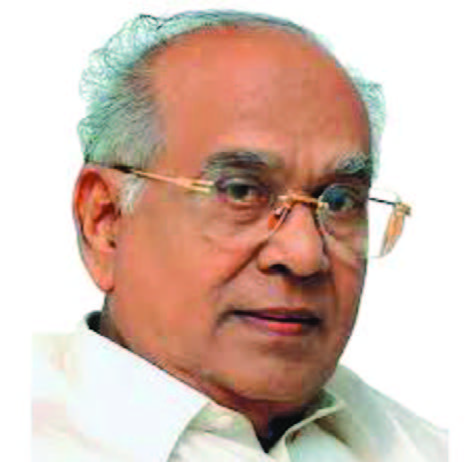
  • Akkineni Nageswara Rao is dead: Condolences pour in from across the world

    Akkineni Nageswara Rao is dead: Condolences pour in from across the world

    HYDERABAD (TIP): Legendary Telugu actor and film producer Akkineni Nageswara Rao, also known as ANR, died January 22 in Hyderabad at the age of 90. Dada Saheb Phalke Award winner ANR, who is the father of famous Telugu actor Nagarjuna, had been battling cancer for several months.

    He had in October last year told media that he was diagnosed with cancer and that he would fight it till the end. Nageswara Rao, who recently underwent a surgery for intestinal cancer, is survived by three daughters and two sons. His funeral on January 23 was attended by thousands of grieving admirers.

    The Telugu film industry wants a monument to be constructed for Akkineni Nageswara Rao on the premises of Annapurna Studios which he founded. Paying respect to ANR, Movie Artistes Association (MAA) president M Murali Mohan said it would be appropriate to have a monument near ANR’s museum where his awards are located. “We have made a suggestion to the family about it,” he said. Meanwhile, as a mark of respect, the film industry cancelled all shootings for two days.


    6
    Thousands of grieving admirers of Akkineni Nageswara Rao joined the funeral procession on January 23, 2014

    Mohan said an appeal has also been made to theatre owners to stop screenings and cancel shows on Thursday, January 23. Throughout the day, condolences and praises flooded in for the late actor from his Tollywood and Bollywood colleagues and politicians. Dadasaheb Phalke award winner D Rama Naidu said ANR had always adopted a discipline towards his work and life. “It used to be a pleasure working with him,” he said.

    Union minister for tourism Chiranjeevi said he had met ANR only a couple of weeks ago and spent nearly an hour with him. “I want to hit a century with the best wishes of the people,” ANR reportedly told him. “It is sad that he is no more,” Chiranjeevi said. He also recalled how his mother was a big fan of ANR and how when she was pregnant she wanted to watch a film. “My father was concerned. However, she did go to watch the movie in which ANR had acted,” he said, adding that his mother gave birth to a boy a few days later. “That boy was me,” he reminisced.

    Filmmaker S S Rajamouli said he was “saddened by the news of the legendary Nageswararao garu.” “He stood as a towering father figure for the Telugu film industry. Irreparable loss,” he said. Tributes also poured in from other parts of the country. Veteran actor Amitabh Bachchan tweeted: “Another great iconic legend of cinema passes away this morning: Nageshwar Rao, of Telugu cinema, a most affable considerate human!” Actor Anupam Kher described ANR as “an actor, a gentleman and a cinematic phenomenon”. “Have learnt a lot from him,” he . “He was not just a great artist but a wonderful human being.

    I had the opportunity to meet him four years ago… I had received an award from him. May god bless his soul and I pray for his family,” 84-year-old singer Lata Mangeshkar tweeted. Several political leaders also joined in paying tributes. Gujarat chief minister Narendra Modi described ANR as “one of Indian cinema’s stalwarts who will be remembered for his rich contribution. Saddened by his demise. RIP.” Union minister of state for information and broadcasting Manish Tewari recalled that he had met Nageshwar Rao in Hyderabad last January, describing it as an “inspirational experience”.

    BJP leader Rajnath Singh said Nageshwar Rao’s contribution to Indian cinema would always be cherished. TDP president N Chandrababu Naidu also said he was grieved beyond words at the demise of ‘legend’ ANR. “An era comes to an end. Great actor & a great human being,” he said on a social networking site. Naidu also visited Annapurna Studios to pay tributes to actor. In New York, Rao Anumolu, President, CEO & Founder at ASR International Corporation, a close friend of late ANR, said he was deeply saddened to hear of ANR’s death and that whereas in his death, Telugus had lost a great actor and a fine human being, for him it was the loss of a close friend and end of an era.

  • Opinion poll predicts gains for BJP, losses for UPA

    Opinion poll predicts gains for BJP, losses for UPA

    NEW DELHI (TIP): Despite an apparent wave of Arvind Kejriwal-led Aam Aadmi Party (AAP) till recently, the National Democratic Alliance (NDA) would have won 200- odd seats if the general elections were held in January 2014, the findings of the latest India Today Group’s Mood of the Nation opinion poll suggest.

    The opinion poll gives the Congress-led United Progressive Alliance (UPA) only around 100 seats, down by over 150 seats in the current Lok Sabha. It also underlines the significance of a possible Third Front in the forthcoming Lok Sabha election as the non- UPA, non-NDA parties and Independents are expected to win 220-odd seats.

    The NDA thus crosses the 200-mark for the first time since 2010. Both, the NDA and the likely Third Front, gains substantially in numbers and vote share. The opinion poll suggests that the NDA’s vote share of 34 per cent will be significantly more than the UPA’s 23. However, the others will have the maximum vote share of 43 per cent. Under the leadership of Narendra Modi as its prime ministerial candidate, the Bharatiya Janata Party (BJP) looks all set to become the single largest party as it is also likely to emerge the biggest gainer in the Lok Sabha polls.

    Its 2009 tally of 116 is expected to rise to 188 in 2014, an increase of more than 60 per cent. Congress, under the leadership of its vice-president Rahul Gandhi, might win just 91 seats, as compared to its current tally of 206, a drop of about 55 per cent. The Congress ploy of propping AAP to counter Modi at the national level seems to have a limited impact, as Kejriwal’s gains are restricted to areas around Delhi and a few metro cities only.

    Modi consolidates his position
    Modi, who emerged as the strongest leader within his party after the BJP’s hat-trick in Gujarat in December 2012, cemented his position further through strong campaigning across the country. As the party’s lead campaigner in the recently held assembly elections in Madhya Pradesh, Chhattisgarh, Rajasthan and Delhi he consolidated his position further. In the latest India Today Mood of the Nation opinion poll, as many as 47 per cent people voted him as the best prime ministerial candidate against his previous best of 42 per cent polled in August 2013.

    The Gandhi scion was way behind Modi with just 15 per cent votes, followed by Kejriwal with 9 per cent votes and 6 per cent votes each to Prime Minister Manmohan Singh and Congress president Sonia Gandhi. During these five months Modi was also able to improve his image from being a communal leader to being pro-development. To a question “what does Modi represent”, the option “communalism” saw a drop of 11 per cent from 18 per cent in August 2013, while “economic development” increased by 6 per cent to 30 per cent. The number of people thinking Modi should apologize for the 2002 Gujarat riots also fell drastically during this period to 39 per cent from the previous figure of 51 per cent.

    Modi as a role model
    The Gujarat chief minister emerged as a role model for the highest 17 per cent respondents, a gain of as much percentage as nobody earlier saw him as one among the overall personalities of India. Modi was followed by Kejriwal with 14 per cent votes, up from 2 per cent. Bollywood superstar Salman Khan too saw a big jump in his popularity as 10 per cent people saw him as a role model, up from the previous 1 per cent, followed by legendary singer Lata Mangeshkar’s 9 per cent against 2 per cent in the earlier opinion poll.Veteran anti-corruption activist Anna Hazare’s position as a role model remained unchanged with 7 per cent votes.

  • Cultural Organizations or Trojan Horses?

    Cultural Organizations or Trojan Horses?

    The author finds fault with cultural organizations who dabble in politics. In fact, US administration will do well to screen these organizations who, if allowed to have their own way, may pose a threat to security of the US nation. A thorough overhaul of the mechanism for formation and functioning of these organizations is the need of the hour.

    In ordinary times, a U.S. House resolution ( 417) that calls for ‘reaffirming the need to protect the rights and freedom of the religious minorities while praising India’s rich religious diversity and commitment to tolerance and equality’, may not have ruffled any feathers let alone garnered some media attention. However, in a surprising twist, emotions were flying high over the move by the US lawmakers with some of the national and local Indian organizations that are quite active on the Capitol Hill in lobbying for various causes back in India.

    In particular, the Hindu American Foundation (HAF) and the Indian American Muslim Council (IAMC) are at loggerheads over this resolution that may not bode well for the larger interest of India. There is a potential that the ongoing fight might imperil India’s image as well as damage national interests among the US legislators at the Capitol. We have heard of charges and counter-charges by both sides and it is time to examine not only the veracity of these charges but also the propriety of actions undertaken by some of these organizations ‘on behalf of the community’ and ‘for the sake of India’. The recent incident involves a Modi supporter and Chicago-based entrepreneur Shalabh “Shalli’ Kumar who tried to hijack a carefully planned event by the Republican Party to woo Indian Americans to GOP.

    Once the story broke, many organizations and individuals like Mr. Juned Qazi, the Executive Committee member and the President of the Madhya Pradesh Chapter of Indian National Overseas Congress (I) USA wrote to the Republican lawmakers stating that the Republican Party was going against its own fundamental principles and traditions of tolerance and dignity by hosting and promoting such an event. The leaders of the GOP woke up and learned of the nefarious design by Mr. Kumar under the aegis of the National Indian American Public Policy Institute, to promote Narendra Modi and his candidacy for Prime Minister of India in the upcoming election. Mr. Kumar has committed the egregious error – and is probably in violation of the US ethics rules that prohibit the use of the Congressional seal, stationary and indicia – used the House seal and circulated a flyer that indicated Modi would address the meeting via video link. This action orchestrated by Mr. Kumar probably in collusion with other Modi supporters brought shame and disrepute to our community.

    A simplistic view might be that this is an isolated incident. However, if one examines the growth of the Indian Organizations and their activities under cover, a much clearer picture would seem to emerge. NIAPPI is not the first nonprofit organization that engaged in this sort of activity. Many of these organizations are founded to promote cultural or religious activities. To an average Indian American, these are noble objectives and for which they would volunteer their time, efforts and resources to promote the heritage and culture of India in a faraway land. It appears to be rewarding especially when these efforts are directed to educate the younger generations of age-old traditions and customs, and build bridges between the two countries and two cultures. However, some of these organizations seem to be operating under dubious objectives. The US India Political Action Committee (USINPAC), an organization that is dedicated to lobby Congress to promote India’s interest in the US has generally done a credible job promoting US-India relations.

    Their recent intervention on behalf of BJP and Narendra Modi exposes their narrow hidden agenda. A newly issued statement says ‘USINPAC has successfully led a grassroots lobbying efforts in Washington DC to stop the above Resolution from going to the House Floor for a vote. ‘ From now until the National elections in India anticipated in mid.2014, USINPAC will spare no effort in making sure the U.S. Congress does not intentionally or unintentionally influence the outcome of India’s upcoming elections. India is a sovereign nation and its citizens have a right to choose their leaders’ a recent press release stated. Yes, it appears that USINPAC would like to see the election impacted only one way: to assure a Modi victory! Sadly, the organization that is supposed to stand up for the common values and principles both the nations cherish, has decided to throw in their lot with a leader of a party that is no longer welcome in the U.S.

    That also explains the deafening silence on their part when minorities in India fall victims to human rights violations in places like Gujarat. Hindu American Foundation (HAF), is an organization that is said to promote and protect the Hindu philosophy and way of life in U.S. However, lately it has become the lightening rod for the ‘ Hindutva’ agenda. They professes to be ardent supporters of the separation of church and state in US often aligning them with ACLU to fight any Christian symbolism and yet supportive of a supremacist agenda of Rashtriya Swayamsevak Sangh (RSS) that has pushed the Narendra Modi candidacy for the Prime Minister in the upcoming election in India. Dr. Raja Swamy, a spokesperson for the ‘Coalition Against Genocide’ recently commented, “American audiences need to know that HAF and its ilk are rooted in supremacist and majoritarian ideologies. They pay lip service to caste oppression issues and pluralism but have a monoculture and elitist view of the Indian society. They want pluralism and minority rights for themselves here in the US but want minorities, Dalits and women to be second class citizens in India”.

    They ought to examine whether they truly share the same values both these countries are founded upon, freedom, liberty and justice for all. Federation of Indian Associations (FIA), the umbrella organization for various cultural and regional outfits in NY Tristate area was established in 1970’s to bring the community together. Their flagship event is the India Day Parade in New York every August to coincide with India’s Independence Day. If one carefully analyzes these events, the guest lists often include some of those vehemently anti- Congress leaders from India who would participate in the Parade and then go on to do negative propaganda on the UPA Government led by the Congress Party. This year, one of the invitees made the rounds openly promoting Bharatiya Janata Party (BJP). In a nutshell, some of these organizations are carrying on with a stealth agenda to promote the BJP and advance the cause of Narendra Modi. This overt political activity by cultural organizations might be in direct violation of the by-laws or the approved Constitutions and some of them may even be putting their hard-earned tax-exempt status at risk .

    Another disturbing aspect in the Asian Indian public arena is the notion that like some other communities, we could maneuver through the political process using money power to achieve any narrow political objectives from some of the largely unsuspecting and often naïve political leaders in this country. Shalli Kumar’s action is a prime example of such behavior. Two top members of a US Congress constituted commission on religious freedom have recently expressed sadness over nomination of Gujarat Chief Minister Narendra Modi as BJP prime ministerial candidate, terming him as the ‘poster boy’ of India’s failure to punish the violent. “It was another son of Gujarat, Mahatma Gandhi, who once offered a broad, tolerant vision for the country and its multireligious society” wrote Katrina Lantos Swett and Mary Ann Glendon in an Op-ed to CNN. It is a known fact the Gujarat’s High Court rapped Modi for inaction and ordered compensation for religious structures that suffered damage. In 2005, the U.S. State Department agreed with United States Commission for International Religious Freedom (USCIRF) and others and revoked Modi’s visa. It is time to ask a pertinent, albeit rhetorical question to many of these organizations that are acting as Trojan Horses on behalf of Modi: would these USbased organizations support for example, a Chris Christie Candidacy for Presidency if he is to show the same ‘inaction’, as Modi did in 2002 for not protecting the lives and properties of all Indians alike who live in New Jersey?

  • UPA OKAYS PROBE INTO GUJARAT SNOOP CASE

    UPA OKAYS PROBE INTO GUJARAT SNOOP CASE

    The woman was tailed as she visited shopping malls, ice-cream parlours, hospitals and airports, according to the websites’ expose

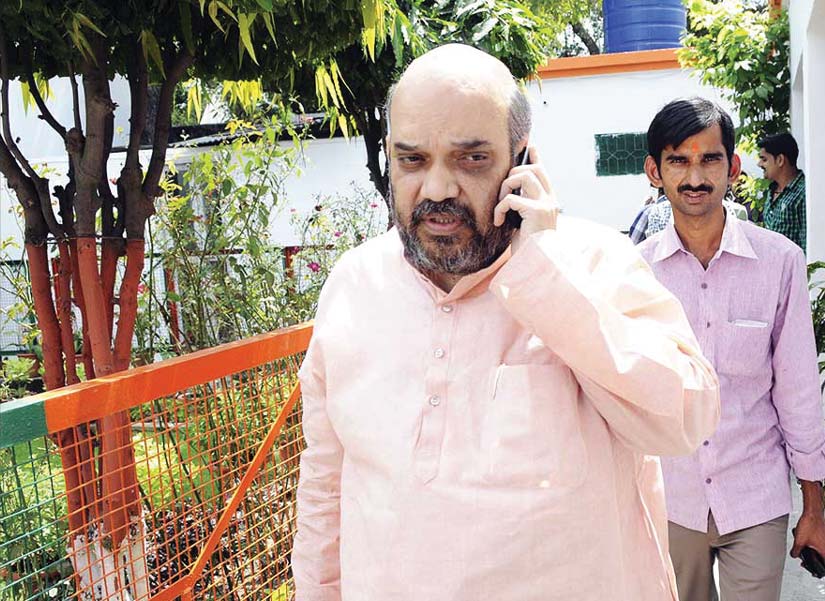
    NEW DELHI (TIP): Spelling trouble for BJP’s prime ministerial candidate Narendra Modi, the Centre today has ordered the setting up of an inquiry commission to probe into the alleged snooping of a young woman by the Gujarat police, at the behest of then state home minister Amit Shah. The decision was taken according to Section 3 of Commissions of Inquiry Act which enables the government the government to set up such a commission. The committee will be headed by a retired judge and the probe will be completed in three months. The Gujarat government had earlier already ordered a probe into the case. BJP spokesperson Nirmala Sitharaman said: “Congress is trying to hit at the principal opposition party’s prime ministerial candidate.

    It is a clear case of political vindictiveness coming into play.” Flaying the Centre’s decision, senior BJP leader Arun Jaitley tweeted: ‘Cabinet decision to appoint a Commission to probe alleged snooping is violative of the Federal structure.’ He also said that the decision will be challenged in court. Jaitley said: “The Central Government has announced the setting up a Commission of Inquiry to probe the allegations of alleged snooping by the Gujarat Government. This action is politically motivated. The Congress Party has not learnt from the drubbing it got in the elections recently. It has continued with its strategy of fighting Narender Modi not politically but through investigative agencies and now through a Commission of Inquiry.” Two investigative websites – Cobrapost and Gulail – said earlier this month that they had access to 267 audio recordings that had been handed over to the Central Bureau of Investigation.

    They said the recordings contain telephone conversations from 2009 in which Modi’s former junior home minister Amit Shah orders a police officer to track the woman. In the phone recordings, the person alleged to be home minister Shah asks the surveillance to be carried out for his “saheb” – the respectful Hindi word for boss – when giving orders to police officer G L Singhal, who secretly recorded the conversations. Modi is not named. The woman was tailed as she visited shopping malls, ice-cream parlours, hospitals and airports, according to the websites’ expose. It was unclear why the woman was being followed. A letter by the woman’s father last week denied that there had been any unwanted surveillance. The father stated that he had asked Modi to keep a watch on his daughter for her safety. The BJP has dismissed the charges as part of “dirty tricks” in the lead-up to the elections.

  • 40 years after war, bridge opens near Hussainiwala border

    40 years after war, bridge opens near Hussainiwala border

    FEROZEPUR (TIP): A strategically important bridge, which was blown up during 1971 India-Pakistan war to save Ferozepur, was opened at Hazara village near Hussainiwala international border on Wednesday. The bridge is a lifeline of nearly 10 villages and their only land link with the country. Militarily, it can support offensive operations in developing a thrust towards Kasur and Lahore in Pakistan. It is also vital for Border Security Force ( BSF) guarding the international border near Ferozepur, as the supply of their ration, weaponry and troops would now be an easy task.

    The bridge was blown up during the 1971 India-Pakistan war to prevent advances of the Pakistan army. Till date, troops and the villagers of adjoining areas used to cross the Satluj using a makeshift wooden bridge. The newly-opened bridge has been named after two Army officers, Maj Kanwaljit Singh Sandhu and Maj S P S Waraich of 15-Punjab Regiment, who had fought valiantly to defend Hussainiwala during the Indo-Pak war exactly 42 years back on December 3-4 in 1971.Wives of these two 1971 war heroes, Jasbir Kaur Sandhu and Rupinder Kaur Warraich, inaugurated the bridge in the presence of other civil dignitaries.

    15-Punjab Regiment lost its 53 men in this battle and two officers – Maj Sandhu and Maj Waraich – while 35 men were taken prisoners. Both the officers were declared prisoners of war (POW) and their whereabouts are not known since 1971 war. According to the Army, Sandhu and Waraich had delayed the Pakistan army attack led by a squadron of enemy’s tank. In the ensuing battle over Hussainiwala barrage was blown up and Ferozepur was saved.

    The strategic bridge has been constructed by Border Road Organization (BRO) under their project “Chetak” at the cost of around Rs 3.80 crore. Project “Chetak” of BRO, which has the mandate of building strategic roads and infrastructure for armed forces, has the jurisdiction over the three states Rajasthan, Punjab and a part of Gujarat.

  • Narayan Sai caught after two-month cross-country run

    Narayan Sai caught after two-month cross-country run

    NEW DELHI/CHANDIGARH (TIP): After dodging police for nearly two months, godman Asaram Bapu’s son Narayan Sai, accused of rape by two Surat-based sisters, was arrested on Delhi-Chandigarh National Highway-1 after a 72-hour cat-andmouse chase by Delhi Police crime branch. Sai, police said, was disguised as a Sikh when he was caught. He had also stocked utensils and ration in his Ford Eco Sport and a juvenile cook to prepare him food. Sai, who mistook the cops as kidnappers, first tried negotiating a ransom saying he was going to Delhi to sign some legal documents.

    Sai, police said, was hoping to evade cops busy with Delhi elections, which was why he was so close to the national capital. Sai is wanted in connection with a complaint lodged by two sisters of sexual assault,unnatural sex, criminal intimidation and criminal conspiracy at a police station in Surat, Gujarat. He was taken on transit remand to Surat after being produced at Rohini court. Asaram is in Jodhpur jail since his arrest in September for allegedly sexually assaulting a teenager who lodged an FIR with Delhi Police.

    “A team led by DCP Kumar Gyanesh and ACP KPS Malhtora arrested Narayan Sai and two of his associates… Six mobile phones used by all the accused were also recovered along with the Eco Sport in which they were travelling,” said SBK Singh, joint commissioner of police, crime branch. Apart from Sai, his PSO Kaushal Thakur and driver Ramesh Malhotra were also arrested. Sai carried a reward of Rs 5 lakh on information leading to his arrest and his staff Rs 1 lakh. It’s learnt that a close associate of Sai’s driver, Ramesh, played a key role in the arrests.

    There were protests outside crime branch office and Rohini court by Sai’s supporters who lay flowers on the path inside the court and sloganeered in his favour. A team of 22 Delhi policemen camped in Ludhiana for 24 hours. Police said Sai used 32 SIM cards and six cell phones to duck cops. The first batch of 10 cops reached Ludhiana on December 2 in Sarabha Nagar. Sai was hiding in a gaushala owned by electronic goods dealer Pankaj Agnihotri in Model Town area.

    “Out of the past 70 days, he was putting up at this place for almost a month and Agnihotri was his disciple,” said ACP (crime) Ravindra Yadav. During his crosscountry run, Sai used several vehicles like Toyota Camry, Toyota Altis, Toyota Fortuner, Swift Dzire apart from Ford Eco Sport in which he was nabbed.

  • NCW NOTICE TO GUJARAT FOR SNOOPING AS CONG, BJP SPAR

    NCW NOTICE TO GUJARAT FOR SNOOPING AS CONG, BJP SPAR

    AHMEDABAD (TIP): The Congress on November 20 said Gujarat chief minister Narendra Modi had awarded government contracts without bidding to the woman who was later allegedly put under police surveillance at his behest. Gujarat Congress leader Shaktisinh Gohil told a press briefing that Modi must come clean on what “benefits have been given to the woman’s company and her family” and if he fails to do so the Congress will reveal the “evidence to expose the government’s dirty deeds”.

    “The chief minister, who talks about everything, makes comments about somebody’s wife, makes derogatory remarks about national leaders’ illness, must come clean on this,” Gohil said. “How many works in Gandhinagar grid solar project and other government projects have been given to the woman and her family?” he asked. The Gujarat Congress leader’s remarks came hours after the BJP warned the Congress it “will have nowhere to hide if the skeletons in its cupboards are brought in the open”. BJP spokesperson Prakash Javadekar told reporters in New Delhi the Congress should let the matter rest following the letter written by the woman’s father to the National Commission for Women, which states the Modi government had made security arrangements for his daughter with the family’s consent.

    “If personal attacks begin, Congress has many skeletons in its cupboards and it will have nowhere to hide,” Javadekar said, accusing Congress of attacking the privacy of a family to target Modi. Union minister Manish Tewari countered the BJP’s onslaught saying the main concern for Indian voters was whether they should be voting for a person who backs unauthorised state surveillance on “mothers, sisters and daughters”. “There is a difference between surveillance and security. They are trying to fool people about it,” he said. Two news portals recently claimed Modi aide Amit Shah had asked a senior IPS officer to put the woman under surveillance in 2009. Tewari told reporters in Goa his party will not demand Modi’s resignation as “we should ask resignation from that person who has got some morality, shame and etiquette”.

    “If he had to submit his resignation he would have given it after the 2002 (Godhra) massacre,” Tewari said. It appears the issue will simmer for some time, especially after home minister Sushilkumar Shinde said security agencies were collecting information on the whole issue and a probe could be ordered if needed. The NCW meanwhile asked the Gujarat government to probe the snooping charges, while asking the woman’s father to come the forefront and clarify the matter.

    The NCW wants the Gujarat government to explain whether due process was followed before orders were given to put the woman under 24×7 state surveillance; it has requested Shinde to institute a probe into the surveillance; while it wants the woman’s father to confirm the authenticity of the letter believed to have been sent by him to the NCW on Tuesday.

    In the letter, the woman’s father says that his request to Modi to keep an eye on his daughter was done with her knowledge while requesting no further pursuance of the matter. “We have sent notice to the Gujarat home minister, chief secretary and Amit Shah who was home minister in 2009 when the snooping took place to probe under what circumstances orders were passed, if it violated constitutional rights of privacy and whether state machinery was misused for the purpose,” Nirmala Samant Prabhavalkar said.

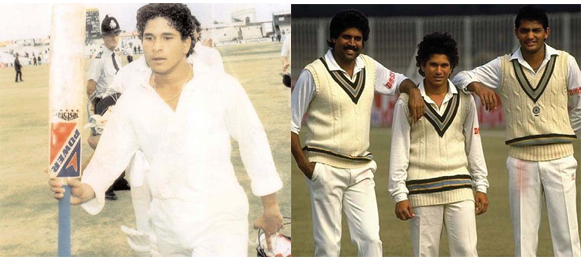
  • FAREWELL SACHIN

    FAREWELL SACHIN

    A time line of Sachin Tendulkar’s 24-year-old illustrious career:

    Feb 23-25, 1988: Tendulkar (14) and Vinod Kambli (16) compile a 664-run unbroken partnership for Shardashram Vidya Mandir against St Xavier’s at Azad Maidan, Mumbai. Kambli remains ubeaten on 349 not out and Tendulkar scores 326 not out. It remains the highest partnership recorded in any form of cricket, until in November 2006. Dec 11, 1988: Makes First-Class debut at the age of 15 and scores an unebaten century against Gujarat at the Wankhede Stadium. Becomes youngest Indian to make a hundred on First-Class debut. Nov 15, 1989: Makes his Test debut in Karachi against Pakistan at the age of 16. Makes 15 on debut. Dec 14, 1989: Suffers a bloody nose in the last Test in Sialkot after being hit by Waqar Younis. Makes 57 in the innings. August 14, 1990: At the of 17 years and 112 days, becomes the then secondyoungest to score a Test century. He scores 119 not out against England at Old Trafford which helped India to get a draw.


    19

    April, 1992: Signs up for Yorkshire and becomes the first overseas signing for the English county. Nov 27-28, 1992: Becomes the youngest player to score 1,000 Test runs at the age of 19 years and 217 days after he scores 111 in India’s 227 in Johannesburg. Feb 11-12, 1993: Gets his first Test century (165) at home against England. Nov 24, 1993: The world saw the first glimpse of Tendulkar as a matchwinning bowler. Bowls India to sensational last-ball win against South Africa in the Hero Cup semi-final. South Africa needing six runs to win off the last over, Tendulkar gave them just three, and India a victory. March 27, 1994: Opens the innings for the first time in an ODI against the New Zealand. Scores 82 off 49 balls. October 1995: Becomes the richest cricketer in the world after he signs up a five-year contract worth Rs 31.5 crore with WorldTel. Feb-March, 1996: Plays his first World Cup at home and scores 523 runs at an average 87.16 and becomes the highest scorer. Aug 8, 1996: Becomes the Indian captain at the age of 23. Jan 2, 1998: Sacked from captaincy after a 15-month stint during which India won just three of 17 Tests. Feb-March, 1998:

    In the best of his form against Australia in a home Test series and also gets his maiden double hundred. He also scored two hundreds and a fifty in the three-Test series that India won 2-1. July 28, 1999: Gets back his captaincy after Mohammad Azharuddin is sacked for India’s failure to reach the semi-finals of the World Cup in England. March 20, 2001: Scores a thrilling century in the deciding Test in Chennai and denies Australia the “final frontier”. March 31, 2001: Becomes the first payer to score 10,000 runs in ODIs en route to his 139 against Australia in Indore. Nov 19, 2001: Fined by match referee Mike Denness for ball tampering. The decision was later overturned after an outcry by the Indian cricket board. Aug 22-23, 2002: Surpassed Don Bradman’s tally of 29 Test centuries. Misses double century by seven at Headingley, but India win by an innings and 46 runs. February-March, 2003: Scores 673 runs at 61.18 in the World Cup and also takes India to sniffing distance of winning the crown. His 98 against Pakistan was one of the best knocks played by Indians at World Cup. Australia are the champions, but Tendulkar is named the Man of the Series. Aug, 2003: Is presented with a Ferrari 360 Modena for going past Bradman’s 29 Test centuries.

    Jan 2-4, 2004: Scores 241 in Sydney, one of his best, even as Australia manage to hold on for a draw, and the series ends 1-1. Aug, 2004: Suffers from tennis elbow during the Videocon Cup in Holland. Misses the Champions Trophy in England, and then the first two home Tests against Australia. March 16, 2005: Scores 52 against Pakistan and becomes the fifth man to score 10,000 Test runs. Dec 10, 2005: Becomes the highest centurion in Test cricket as he overtakes Sunil Gavaskar’s 34 en route to his 109 against Sri Lanka in Delhi. March 19, 2006: Is booed at the Wankhede Stadium after he was dismissed for duck in 33 minutes against England in Mumbai. March, 2006: Again goes under the knife. This time for surgery on his right shoulder in England. May, 2007: For the first time in his career, Tendulkar is rested for the three-ODI series in Bangladesh. Jan 4, 2008: Scores an unbeaten 154, against a major Test playing nation in two years and 19 Tests, against Australia at the Sydney Cricket Ground. March 2, 2008: Sachin scores his first ODI century in Australia, in first of the CB Series final. Oct 17, 2008: Surpasses Brian Lara’s record of most Test runs against Australia at Mohali. Nov 5, 2009: Gets to 17,000 runs during his 175 off 141 balls in a 351-run chase against Australia in Hyderabad.

    India fall short by 19 runs. Feb 24, 2010: Becomes the first player in the history of the game to score 200 in a single innings in a One-Day International. He took 147 deliveries to power India to 401 and a 153-run win against South Africa. Oct 2010: Tendulkar bags his first ICC award, the Sir Garfield Sobers Trophy. Dec 19, 2010: Gets his 50th Test hundred against a difficult South African attack in Centurion. April 2, 2011: Realises his childhood dream of winning the World Cup that too at his home town of Mumbai and at the Wankhede. India beat Sri Lanka to win the World Cup for the second time. March 16, 2012: Gets the 100th international century, scoring 114 in an Asia Cup match against Bangladesh in Mirpur. But India lost the match. The century came after 34 innings and more than a year after scoring his 99th international hundred. Dec 23, 2012: Just minutes before the selectors were set to name the squad for the ODI series against Pakistan, Tendulkar announces his retirement from the format. Tendulkar finished with 18,426 ODI runs and 49 hundreds, well clear of any other batsman. Oct 10, 2013: Tendulkar announces his retirement from Test cricket.

  • WHISTLING GROUP TO SET UP UNIVERSITY IN GUJARAT

    WHISTLING GROUP TO SET UP UNIVERSITY IN GUJARAT

    AHMEDABAD (TIP): In what could see University of Oxford’s foray into Indian education scenario through its wholly owned subsidiary Isis Innovation, the renowned institution has tied up with Whistling Group for a private university in Gujarat. To come up in an area of over 50 acres in its first phase, the varsity will be based out of the auto hub of Sanand near Ahmedabad. The Whistling Group, an industrial group created by Gujarat entrepreneur Parag Shah, has signed a consultancy agreement with Isis Innovation Ltd, a wholly owned subsidiary of the University of Oxford. To be called ‘Whistling University’, the new university will offer postgraduate training in alternative energy, conventional energy and management, and will establish its own research programmes, aiming to become a national hub for innovation. “It aims to be an independent, worldclass university that will provide an opportunity to a number of underprivileged students who cannot afford or access world-class education, and will promote women’s participation in the field of alternative energy. The new university will also establish a policy think tank to influence strategic decisions in the field of energy, environment, and sustainability on a global scale,” said Parag Shah, chairman of the Whistling Group.

    Isis Innovation Ltd is the technology transfer company of the University of Oxford, which manages consultancy work carried out by the University’s experts. The agreement is the first such agreement Isis Innovation has signed in India. Isis Innovation will be engaged as a lead consultant to advice on the creation of an ‘Innovation Centre’ to facilitate translation of knowledge from the university. “Oxford University has no plans in the foreseeable future to offer full degree courses anywhere other than Oxford itself, and so has no plans to establish an overseas campus. However, the university has identified increasing global cooperation as a key objective of its 2013-2018 strategic plan. This agreement between the Whistling Group and Isis will broaden overseas ties. We anticipate that the project will make a positive contribution to providing energy security for India,” said Loren Griffith, Director of International Strategy at Oxford University.

    The Whistling University will offer B.Tech, M.Tech, BBA, MBA, LLB, PhD and post doctoral work programs with the help of both Oxford sourced faculty and Oxford trained Indian faculties. According to Aviruk Chakraborty, director of Whistling Sun Education Pvt. Ltd., the Oxford arm will also offer 100% placement assistance in its eight year long exclusive partnership with the group, after which Isis can enter into partnership with any other group in India. “We will invest around Rs 290 crore over next four years through 25% equity and 75% debt and will have a fee structure comparable to that of other private universities. We will be applying for a university status under the Gujarat Private Universities Act, University Grants Commission (UGC) and All India Council for Technical Education (AICTE). We will begin the academic session of the first phase within a year from getting the university status with a batch size of 500 students,” said Chakraborty. In its full strength in the seventh year since inception, Whistling University will have a full-time faculty strength of 400 and a total student strength of 4,000.

  • CBI can’t act as a police force, Gauhati high court rules

    CBI can’t act as a police force, Gauhati high court rules

    NEW DELHI (TIP): In a startling decision which has ramifications for sensitive cases, the Gauhati high court has ruled that the Central Bureau of Investigation (CBI) was legally not a police force and stripped it of its powers to investigate crimes, arrest suspects and file charge-sheets. The ministry of home affairs (MHA) had, by a resolution dated April 1, 1963, constituted the CBI as a police force under the Delhi Special Police Establishment (DSPE) Act, 1946. The CBI had drawn its powers to investigate cases from the DSPE Act. A division bench of the high court comprising Justice IA Ansari and Justice Indira Shah on Wednesday upheld the constitutional validity of DSPE Act but held that “the CBI is neither an organ nor a part of the DSPE and the CBI cannot be treated as a ‘police force’ constituted under the DSPE Act”. Unless this ruling is reviewed and amended by a higher court, the CBI will not function as a police force and will be unable to proceed further — in fact, not even file FIRs — in highprofile cases like Coalgate, 2G spectrum scam and those related to the Gujarat riots.

    In these cases, the CBI was directed by the Supreme Court to investigate and report to it. Once the cover of the law under DSPE Act is taken away, the very existence of the CBI comes to naught. A worried Centre is preparing to rush to the SC on Friday to appeal against the HC judgment. “We hereby also set aside and quash the impugned (under challenge) resolution dated April 1, 1963, whereby the CBI has been constituted,” the HC said. Interestingly, the HC also limited the application of DSPE Act to Union Territories. This means, even if a new police force was set up validly as per the HC’s logic, its power to investigate crimes would remain confined to the UTs. The bench said, “A careful reading of the preamble to the DSPE Act, 1946, would make it evident that the DSPE Act, 1946, has been made for the Union Territories. This legislative power cannot be exercised by Parliament except under Article 246(4) of the Constitution, which enables Parliament to enact laws on subjects covered by List-II (State List), in respect of Union Territories.”

    Chargesheets invalid
    Allowing a writ petition filed by one Navendra Kumar, the bench quashed the chargesheet filed against him by the CBI but said the alleged offence could be investigated afresh by the regular state police. As a triggering effect, this judgment would render all chargesheets filed by the CBI till date invalid. The HC had on January 20 this year directed the CBI to produce records relating to the creation of the agency. After scrutinizing these, the HC said that the 1963 MHA Resolution creating the CBI under the DSPE Act did not even receive the President’s assent. “Hence, strictly speaking, the resolution in question cannot even be termed as the decision of the Government of India. That apart, it is apparent from the records that the CBI is a newly constituted body and not the same as DSPE,” said Justice Ansari, who authored the judgment on behalf of the bench. The HC went through the 1963 resolution minutely and relied on Constituent Assembly debates on the role of the force to be created through legislation under Entry 8 of Union List. It said, “The central government had set up altogether a new body known as CBI by the impugned Resolution… Admittedly, at that time, no legislation was made to set up the CBI and the source of power being traced to Entry 8 of Part-I (Union List), which reads ‘Central Bureau of Intelligence and Investigation’.

    ” The HC said: “The word ‘investigation’; was, therefore, according to the Constituent Assembly debates, intended to cover general ‘enquiry’ for the purpose of finding out what was going on and this ‘investigation’, which amounts to a mere ‘enquiry’, is not an ‘investigation’ preparatory to the filing of chargesheet against an offender, for, such an ‘investigation’ can be carried on only by a police officer, under the Criminal Procedure Code, and none else”. “This apart, it is the state legislature, which is entitled to constitute a ‘police force’ for the purpose of conducting ‘investigation’ into crime,” it said. “From the above discussion, which took place in the Constituent Assembly, it becomes crystal clear that Parliament cannot, by taking resort to Entry 8 of List-I (Union List), make any law empowering a police officer to make ‘investigation’ in the same manner as is done, under the Criminal Procedure Code, by a police officer while conducting an ‘investigation’ into an offence for the purpose of bringing to book an offender,” it said.

    ‘CBI probe under statutory rules’
    What the sc had said on CBI In Vineet Narain Judgment delivered on December 18, 1997: “In 1994 due to increased workload relating to bank frauds and economic offences a separate Economic Offences Wing was established in CBI with the result that since then the CBI has three investigation divisions, namely, anticorruption division, special crimes division and economic offences division.” “We are informed that almost all the state governments have given concurrence for extension of the jurisdiction of the Delhi Special Police Establishment in their States with the exception of only a few. The result is that for all practical purposes, the jurisdiction in respect of all such offences is exercised in the consenting states only by the CBI and not by the state police. This is the significance of the role of the CBI in such matters and, therefore, technically the additional jurisdiction under the general law of the state police in these matters is of no practical relevance.” “Once the CBI is empowered to investigate an offence generally by its specification under Section 3, the process of investigation, including its initiation, is to be governed by the statutory provision which provide for the initiation and manner of investigation the offence. This is not an area which can be included within the meaning of “superintendence” in section 4(1).” “It is, therefore, the notification made by the central government under Section 3 which confers and determines the jurisdiction of the CBI to investigate an offence; and once that jurisdiction is attracted by virtue of the notification under Section 3, the actual investigation to be governed by the statutory provisions under the general law applicable to such investigation. This appears to us the proper construction of section 4(1) in the context, and it is in harmony with the scheme of the act, and section 3 in particular.”

  • CELEBRATIONS AROUND THE WORLD

    CELEBRATIONS AROUND THE WORLD

    Diwali is also celebrated outside of India mainly in Guyana, Fiji, Malaysia, Nepal, Mauritius, Myanmar, Singapore, Sri Lanka, Trinidad & Tobago, Britain, Indonesia, Japan, Thailand, Africa, Australia and the US among the Hindus across the world.

    Britain
    The Indians are the second largest ethnic minority in Britain. To get rid of the feeling of missing their homeland, especially during festival times, the Indians here celebrate most of the festivals. The occasion is marked by visit to the local temple to worship the shrine of Lakshmi, which they have made for Diwali. Eating special sweets, burning of incense sticks, lighting the home and surroundings and the blowing of the conch shell follows the prayer session in the Lakshmi temple. The festival here is celebrated according to the Hindu solar calendar hence it falls in the months of October-November, amongst the cold, damp and windy months in Britain. Still the enthusiasm of the festival celebration makes the task of leaving small lamps on windowsills or by open doorways possible ignoring the chill. The lamps and diyas play their part in maintaining the atmosphere of Diwali at home.

    Guyana
    Guyana, formerly known as British Guiana, is located on the northeast coast of South America. Guyana is 82,978 square miles in area and has a population of about 7,70,000. Hindus constitute 33% of Guyana’s total population. The Co-operative Republic of Guyana in Southern America celebrates Diwali according to the Hindu Solar calendar. The day of the festival is declared as a national holiday in the official calendar of Guyana. The tradition of celebrating the festival is believed to have been brought to Guyana in the year 1853 by the first indentured people from India.

    The legends related to the festival are similar to that of India. The celebration of the festival includes, distribution of sweets, illuminating the inside and outside of the house, exchange of greetings, cleaning of houses and wearing of new clothes. The celebrations hold special significance for the people of Guyana. The distribution of sweet signifies the importance of serving and sharing whereas exchange of greeting cards denotes the goodwill of each other.

    The sweets distributed mainly consist of pera, barfi, and kheer. The tradition of wearing new cloth for the people of Guyana is significant especially in this festival. They believe that wearing new cloth is the symbol of healthy souls in healthy bodies. Cleaning of their homes and keeping them well illuminated in and outside is a practice meant to illuminate the road for Goddess Lakshmi so that while goddess Lakshmi visits their home she faces no problem of light as the Diwali night is regarded as the darkest night of the year.

    Indonesia
    The name Indonesia came from two Greek words: “Indos” meaning Indian and “Nesos” meaning islands. The majority of population follows Islam. Hindus constituent about 2% of Indonesia’s total population. However, the Indonesian island of Bali is famous for celebrating the festival of Diwali, as a majority of the population here is that of Indians. It is one of the most revered festivals of the locals here. The celebration and rituals of the festival is mostly similar to that celebrated by their counterparts in India.

    Malaysia
    Fascinating in its diversity, Malaysia has many mesmerizing charms and attractions. With a population of about 20 million, comprising of a harmonious multi-ethnic mix of Malays, Malaysia promises a colorful potpourri of cultural traditions. Most are based on the various religious practices, beliefs and traditions influencing the costumes, festivals, ceremonies and rituals. The Hindu community of Malaysia constitutes about 8% of its total population .The community celebrates Diwali as a symbol of triumph of good over evil. The Malaysian people call Diwali as Hari Diwali.

    This festival is celebrated during the 7th month of the Hindu solar calendar. The south Indian traditional of oil bath precedes the festivities. The celebration includes visits to temples and prayers at household altars. Small lamps made from clay and filled with coconut oil and wicks are a common sight to signify the victory of Lord Rama, the hero of the Hindu epic Ramayana, over the demon king Ravana. Diwali is celebrated almost all over the Malaysia except in Sarawak & Federal Territory of Labuan.

    Mauritius
    Mauritius is an island in the Indian Ocean that lies to the east of Madagascar. This beautiful landmass is full of picturesque landscapes and enchanting spots. Mauritius accounts a 63% of Indian majority of which 80% follow Hinduism. Hence, celebration of almost all the Hindu festivals in this island is a common phenomenon. In Mauritius, Diwali celebration is an age-old tradition. It holds special significance for the natives, who believe that Diwali has been celebrated even long before the return of Lord Rama from 14 years of exile and his coronation as the king. The festival is marked by lightening of earthen lamps in rows making images out of the rows. Lakshmi is worshiped as the goddess of wealth and crackers are burnt to scare away evil spirits.

    Nepal
    Nepal is a landlocked country nestled in the foothills of the Himalayas. Nepal, a multi-ethnic and multi-lingual society is the only Hindu Kingdom of the world. Diwali is celebrated here with the usual Hindu festivities and rituals. Diwali in Nepal is known as Tihar. Just like most places in India Diwali is celebrated here to honor the goddess of wealth and god of prosperity Lakshmi and Ganesh respectively. The festival of light falls in the months of October or November on the day of Amavasya – the darkest day of the year. The festival here continues for five days. Every day has its special significance. The first day is dedicated to cows as they cook rice and feed the cows believing that goddess Lakshmi comes on cows. The second day is for Dogs as the Vahana of Bhairava.

    Preparation of delicious food especially meant for the dog is a typical characteristic of the day. Lights and lamps are lit to illuminate the entire surrounding and some of the specialty items are prepared to mark the third day of the festival. Fireworks, Lamps and crackers are widely used. The fourth day is dedicated to Yama, the Hindu God of Death. He is prayed for long life. The fifth final day is Bhhaya Dooj dedicated for the brothers who are wished long life and prosperity by their sisters.

    South Africa
    South Africa is located at the southern tip of the continent of Africa. It is a mix of cultures and has one of the largest immigrant Indian communities in the world. The country has almost one million immigrant Indians. Most of these Indian immigrants are concentrated in the eastern regions of Natal and Transvaal of the country. About 65% of Hindus, 15% of Muslims and 20% of Christians live in this area. Due to the majority of the Hindu population, a number of Hindu festivals are celebrated here. Diwali also holds an important place in the festival calendar of the region. The celebration is more or less same to that in India. Most of the Hindus here are from Gujarat and Tamil Nadu and continue to follow their regional variations of Hinduism.

    Trinidad & Tobago
    Trinidad is the most southern of the Caribbean islands, lying only seven miles off the Venezuelan coast, is one of the most exciting, colorful islands of the West Indies. Considered as the land of the Humming Bird, Trinidad and Tobago has a good number of Indian population. For that reason, Hindu festivals, customs, traditions and observances forms an integral part of the society, which comprises the unique beauty of the twin island state. The Diwali celebration has a unique flavor here in the Caribbean island nation. Here 43 per cent of the 1.3 million populations are ethnic Indians. The Diwali celebrations are usually marked as an occasion to unify the nation that consists of Hindus, Muslims, Christians, Indo-Trinidadians and Afro- Trinidadians.

    The festival day is regarded as a national holiday. The festival is also marked by scores of functions besides the usual rituals of the festivity. The functions and celebrations also have an official imprint as the Ministers of the Government also participate in the celebrations sometimes. The belief behind the festival is same as of India, which is, prevalence of good over evil. The celebrations continue for over a week and the headquarters of the National Council of Indian Culture at Diwali Nagar becomes the focal point.

    America
    Diwali is one of the biggest Hindu festivals celebrated among many people and communities in the United States. Many schools, community groups, Hindu associations, Indian organizations and corporate businesses get involved in celebrating Diwali. Politicians, including governors and past presidents, previously made public announcements expressing their greetings and well wishes to Hindus on Diwali. Many Indian stores sell jewelry and traditional outfits, such as chiffon saris, as well as statues of Hindu deities and incent sticks used in prayer around this time of the year. Many women and girls use mehendi, which is a temporary henna decoration, on their palms. It is also common to wear fine jewelry and silk outfits to celebrate this joyous festival.

  • CELEBRATIONS AROUND THE WORLD

    CELEBRATIONS AROUND THE WORLD

    Diwali is also celebrated outside of India mainly in Guyana, Fiji, Malaysia, Nepal, Mauritius, Myanmar, Singapore, Sri Lanka, Trinidad & Tobago, Britain, Indonesia, Japan, Thailand, Africa, Australia and the US among the Hindus across the world.

    Britain
    The Indians are the second largest ethnic minority in Britain. To get rid of the feeling of missing their homeland, especially during festival times, the Indians here celebrate most of the festivals. The occasion is marked by visit to the local temple to worship the shrine of Lakshmi, which they have made for Diwali. Eating special sweets, burning of incense sticks, lighting the home and surroundings and the blowing of the conch shell follows the prayer session in the Lakshmi temple. The festival here is celebrated according to the Hindu solar calendar hence it falls in the months of October-November, amongst the cold, damp and windy months in Britain. Still the enthusiasm of the festival celebration makes the task of leaving small lamps on windowsills or by open doorways possible ignoring the chill. The lamps and diyas play their part in maintaining the atmosphere of Diwali at home.

    Guyana
    Guyana, formerly known as British Guiana, is located on the northeast coast of South America. Guyana is 82,978 square miles in area and has a population of about 7,70,000. Hindus constitute 33% of Guyana’s total population. The Co-operative Republic of Guyana in Southern America celebrates Diwali according to the Hindu Solar calendar. The day of the festival is declared as a national holiday in the official calendar of Guyana. The tradition of celebrating the festival is believed to have been brought to Guyana in the year 1853 by the first indentured people from India. The legends related to the festival are similar to that of India. The celebration of the festival includes, distribution of sweets, illuminating the inside and outside of the house, exchange of greetings, cleaning of houses and wearing of new clothes. The celebrations hold special significance for the people of Guyana. The distribution of sweet signifies the importance of serving and sharing whereas exchange of greeting cards denotes the goodwill of each other. The sweets distributed mainly consist of pera, barfi, and kheer. The tradition of wearing new cloth for the people of Guyana is significant especially in this festival. They believe that wearing new cloth is the symbol of healthy souls in healthy bodies. Cleaning of their homes and keeping them well illuminated in and outside is a practice meant to illuminate the road for Goddess Lakshmi so that while goddess Lakshmi visits their home she faces no problem of light as the Diwali night is regarded as the darkest night of the year.

    Indonesia
    The name Indonesia came from two Greek words: “Indos” meaning Indian and “Nesos” meaning islands. The majority of population follows Islam. Hindus constituent about 2% of Indonesia’s total population. However, the Indonesian island of Bali is famous for celebrating the festival of Diwali, as a majority of the population here is that of Indians. It is one of the most revered festivals of the locals here. The celebration and rituals of the festival is mostly similar to that celebrated by their counterparts in India.

    Malaysia
    Fascinating in its diversity, Malaysia has many mesmerizing charms and attractions. With a population of about 20 million, comprising of a harmonious multi-ethnic mix of Malays, Malaysia promises a colorful potpourri of cultural traditions. Most are based on the various religious practices, beliefs and traditions influencing the costumes, festivals, ceremonies and rituals. The Hindu community of Malaysia constitutes about 8% of its total population .The community celebrates Diwali as a symbol of triumph of good over evil. The Malaysian people call Diwali as Hari Diwali. This festival is celebrated during the 7th month of the Hindu solar calendar. The south Indian traditional of oil bath precedes the festivities. The celebration includes visits to temples and prayers at household altars. Small lamps made from clay and filled with coconut oil and wicks are a common sight to signify the victory of Lord Rama, the hero of the Hindu epic Ramayana, over the demon king Ravana. Diwali is celebrated almost all over the Malaysia except in Sarawak & Federal Territory of Labuan.

    Mauritius
    Mauritius is an island in the Indian Ocean that lies to the east of Madagascar. This beautiful landmass is full of picturesque landscapes and enchanting spots. Mauritius accounts a 63% of Indian majority of which 80% follow Hinduism. Hence, celebration of almost all the Hindu festivals in this island is a common phenomenon. In Mauritius, Diwali celebration is an age-old tradition. It holds special significance for the natives, who believe that Diwali has been celebrated even long before the return of Lord Rama from 14 years of exile and his coronation as the king. The festival is marked by lightening of earthen lamps in rows making images out of the rows. Lakshmi is worshiped as the goddess of wealth and crackers are burnt to scare away evil spirits.

    Nepal
    Nepal is a landlocked country nestled in the foothills of the Himalayas. Nepal, a multi-ethnic and multi-lingual society is the only Hindu Kingdom of the world. Diwali is celebrated here with the usual Hindu festivities and rituals. Diwali in Nepal is known as Tihar. Just like most places in India Diwali is celebrated here to honor the goddess of wealth and god of prosperity Lakshmi and Ganesh respectively. The festival of light falls in the months of October or November on the day of Amavasya – the darkest day of the year. The festival here continues for five days. Every day has its special significance. The first day is dedicated to cows as they cook rice and feed the cows believing that goddess Lakshmi comes on cows. The second day is for Dogs as the Vahana of Bhairava. Preparation of delicious food especially meant for the dog is a typical characteristic of the day. Lights and lamps are lit to illuminate the entire surrounding and some of the specialty items are prepared to mark the third day of the festival. Fireworks, Lamps and crackers are widely used. The fourth day is dedicated to Yama, the Hindu God of Death. He is prayed for long life. The fifth final day is Bhhaya Dooj dedicated for the brothers who are wished long life and prosperity by their sisters.

    South Africa
    South Africa is located at the southern tip of the continent of Africa. It is a mix of cultures and has one of the largest immigrant Indian communities in the world. The country has almost one million immigrant Indians. Most of these Indian immigrants are concentrated in the eastern regions of Natal and Transvaal of the country. About 65% of Hindus, 15% of Muslims and 20% of Christians live in this area. Due to the majority of the Hindu population, a number of Hindu festivals are celebrated here. Diwali also holds an important place in the festival calendar of the region. The celebration is more or less same to that in India. Most of the Hindus here are from Gujarat and Tamil Nadu and continue to follow their regional variations of Hinduism.

    Trinidad & Tobago
    Trinidad is the most southern of the Caribbean islands, lying only seven miles off the Venezuelan coast, is one of the most exciting, colorful islands of the West Indies. Considered as the land of the Humming Bird, Trinidad and Tobago has a good number of Indian population. For that reason, Hindu festivals, customs, traditions and observances forms an integral part of the society, which comprises the unique beauty of the twin island state. The Diwali celebration has a unique flavor here in the Caribbean island nation. Here 43 per cent of the 1.3 million populations are ethnic Indians. The Diwali celebrations are usually marked as an occasion to unify the nation that consists of Hindus, Muslims, Christians, Indo-Trinidadians and Afro- Trinidadians. The festival day is regarded as a national holiday. The festival is also marked by scores of functions besides the usual rituals of the festivity. The functions and celebrations also have an official imprint as the Ministers of the Government also participate in the celebrations sometimes. The belief behind the festival is same as of India, which is, prevalence of good over evil. The celebrations continue for over a week and the headquarters of the National Council of Indian Culture at Diwali Nagar becomes the focal point.

    America
    Diwali is one of the biggest Hindu festivals celebrated among many people and communities in the United States. Many schools, community groups, Hindu associations, Indian organizations and corporate businesses get involved in celebrating Diwali. Politicians, including governors and past presidents, previously made public announcements expressing their greetings and well wishes to Hindus on Diwali. Many Indian stores sell jewelry and traditional outfits, such as chiffon saris, as well as statues of Hindu deities and incent sticks used in prayer around this time of the year. Many women and girls use mehendi, which is a temporary henna decoration, on their palms. It is also common to wear fine jewelry and silk outfits to celebrate this joyous festival.

  • Sexual assault case: Asaram Bapu undergoes potency test, son still missing

    Sexual assault case: Asaram Bapu undergoes potency test, son still missing

    AHMEDABAD (TIP): Asaram, 72, was brought to Ahmedabad on a transit remand from a court in Jodhpur where he was lodged in a jail since August in another sexual assault case involving minor daughter of one of his devotees. Controversial godman Asaram Bapu was on October 16 subjected to a potency test in connection with a sexual assault case lodged against him and his son Narayan Sai by two Surat-based sisters. “Asaram was taken to civil hospital for potency test in connection with the sexual assault case lodged against him,” a senior police official said. A magisterial court in Gandhinagar had remanded him in four-day police custody. Surat police recently registered two complaints – one against Asaram and another against his son Narayan Sai – of rape, sexual assault, illegal confinement and other charges as alleged by the two sisters. The elder of the sisters, in her complaint, had accused Asaram of repeated sexual assault between 1997 and 2006 when she had been living in his ashram on the outskirts of Ahmedabad city. The case against Asaram was transferred to Chandkheda police station as the incident took place in Ahmedabad. The younger of the two sisters had filed a complaint against Narayan Sai, whose whereabouts are still not known, accusing him of repeated sexual assault between 2002 and 2005 when she was living in their Surat ashram. Narayan Sai and Asaram had also filed petitions in the Gujarat High Court, seeking quashing of the complaints on the grounds of delay in filing them and that they are based on flimsy grounds.

    Asaram’s ashrams raided
    A team of the Gujarat Police assisted by the Delhi Police raided controversial selfstyled godman Asaram Bapu’s ashrams in the Capital on Thursday. They were in search of his son Narayan Sai, who is facing charges of sexual assault in a case registered in Surat. Sources in the Delhi Police said that while intercepting Sai’s cell phone locations, the investigating sleuths traced the phone number of one of his followers somewhere in Delhi and suspecting that the phone could have been used by Sai, a team from Gujarat was dispatched. Here, the team was joined by the Delhi Police’s Crime Branch and it raided Sai’s possible hideouts in Najafgarh, Rohini, Jaffarpur Kalan and Ridge Road. However, Sai could not be found and the phone, too, was found switched off later in the day. It is also learnt that there are strong possibilities that he may have slipped into Haryana from South-West Delhi.

    Asaram’s wife, daughter get anticipatory bail
    The Gandhinagar Sessions Court on October 17 granted anticipatory bail to wife and daughter of self-styled godman Asaram Bapu, Laxmi and Bharti respectively, in connection with the alleged rape of a Surendranagar woman in 2001 at Asaram’s farm near Motera in Ahmedabad. The court granted bail to the two while enforcing several conditions, including that they cannot leave Gujarat without the court’s permission. The court has also directed the two to remain present before the police on October 19 between 10 am and 2 pm. Apart from Asaram, seven others have been named as accused in the FIR registered with Chandkheda police station of Ahmedabad. Asaram has been arrested in the case and is currently on police custody remand of Ahmedabad police. Laxmi and Bharti have been accused of abetting the rape. Earlier this week, Laxmi, Bharti and one another woman accused, Dhruvben, had moved anticipatory bail petitions before the Gandhinagar District and Sessions Court, while claiming innocence in the case.

  • India-US Partnership

    India-US Partnership

    Defense Trade to be the Driving Engine

    Contrary to the forecasts of doom and gloom and the skepticism surrounding his visit to Washington, the third Manmohan- Obama Summit meeting on September 27 has been quite productive. With hindsight, one can say that media reports about growing impatience of US NSA Susan Rice, impact of the comprehensive immigration law, lobbying in the Capitol Hill by Microsoft, IBM and American drug manufacturing giants against Indian IT and drug manufacturing companies and differences on Afghanistan, Iran, Syria, nuclear liability Act etc were highly exaggerated. An honest and dispassionate assessment of India-US relations in the last decade clearly shows that they have been transformed beyond recognition; India-US strategic partnership is for real and it is in for a long haul in spite of serious differences on some issues in the short run. Nothing demonstrates this better than the exponential expansion of defense trade; US exports of defense and military hardware to India in the last five years have crossed US$ 9bn; with the long shopping lists of the Indian Army, Air Force and Navy this is bound to expand further.

    If the promise of transfer of defense technology, joint research and co-production mentioned in the joint statement is taken to its logical conclusion, this collaboration could become the driving engine of closer Indo-US strategic partnership. In this regard, the US decision to supply offensive weapons to India will be the leitmotif of this burgeoning relationship. Notwithstanding these positive signals, well-known strategic analyst Brahma Chellaney feels that India-US strategic relationship is somewhat “lopsided and unbalanced” on account of structural and strategic limitations of India. A lot is made out of the flattering phrases such as the “defining relationship of the 21st century” (used by Obama and John Kerry) which might transcend into the 22nd century and India being the “lynch pin” of the US policy in Asia (used by Leon Panetta) and optimistic projections made by the heads of think tanks such as Ashley Tellis of Carnegie Endowment. Visiting American dignitaries seldom fail to stress the commonalities between India and the US: democracy, rule of law, human rights, and multi-ethnic, multireligious, multi-lingual, plural societies. These are, no doubt, important factors but must be taken with a pinch of salt.

    In the real world, so long as it serves their national interests, countries don’t mind doing business with other countries where these factors don’t hold water. The US-China relations are an obvious example of this phenomenon. While the US IT companies might continue urging the US government to apply some indirect brakes on the Indian IT companies, the fact is they have been receiving “great service, great quality at low costs” from Indian companies and it has enabled them to operate efficiently and profitably. The misperception created by media reports that the US wishes to “contain” China and hence is trying to warm up to India warrants closer scrutiny. The US-China economic, financial, trade, business and investment ties are so huge and millions of jobs in the US depend on this collaboration that the US will never risk them. As a matter of fact, the US has been quite careful not to hurt China’s sensitivities; it’s decision to call its new approach in Asia now as “Asia Rebalance” instead of “Asia Pivot” is a “course correction” keeping China in mind. On the issues of alleged incursions into Indian territories by the Chinese troops and the India-China spat regarding the ONGC-Vietnam offshore oil drilling collaboration, the US has maintained strict neutrality.

    Conversely, it is also a fact that the US won’t like to see a China-dominated Asia. This, apart from the economic considerations, explains its concerted efforts to come closer to India, ASEAN and beyond to shore up its influence in Asia-Pacific and maintain pressure on China to keep trade routes through the South China Sea open to international trade according to international laws. Some recent developments have eased the alleged “drift”, “wrinkles” and imaginary or real “plateau” in relations. The preliminary contract between the US nuclear companies, Westinghouse and NPCIL for setting up a nuclear plant in Gujarat is a welcome beginning. The establishment of “an American India- US climate change working group” and convening the “India-US Task Force on HFCs” are viewed as positive developments. And the reiteration of US support for a place for India in the reformed UNSC should be music to Indian ears. Besides, a temporary postponement by the US Federal Reserve to end the stimulus package should give countries like India some breathing time to put their finances in order. Though nothing concrete has been promised, some negotiated compromise on the new Immigration laws shouldn’t be ruled out.

    In the field of foreign affairs, the biggest relief has come from Iran. There is thaw in the air in the US-Iran relations thanks to the speech of the newly elected President Rouhani in the UN General Assembly and his wishes on the Jewish New Year on his Twitter which prompted Obama to make the historic Presidential phone call for the first time in 30 years! Unless, this process is cut short by the Iranian supreme leader, US-Iran relations should see some further easing of tension and resolution of the nuclear issue which has led to the imposition of crippling UN sanctions on Iran. This thaw has the potential of lightening India’s oil import bill if more Iranian oil comes on the market. India’s expectations from the US to put further pressure on Pakistan to bring the perpetrators of 26/11 Mumbai attack to book and rein in the terrorist groups like Al-Qaida and LeT and dismantle terror infrastructure and go slow on co-opting the Taliban in the talks on the future of Afghanistan aren’t likely to be met fully because of the US priorities to exit from Afghanistan smoothly. In the meanwhile, India should brace itself for a Taliban-dominated Afghanistan after the withdrawal of the American troops in 2014.

    What role India could play in Afghanistan after the US exit can’t be guaranteed by the US; it will have to work out a strategy with countries like China, Russia, and Iran and, of course, the US. As the economies of India and the US aren’t doing as great as they would have expected, there are domestic pressures in both countries which impact negatively on the bilateral relations. The IT and pharma MNCs in the US and the constituencies in India which didn’t favor FDI in retail and pressed for a more stringent nuclear liability Bill are manifestations of such domestic pressures. As both India and the US have strategic partnership with a number of countries, in crises situations each country will take a decision based on its strategic interests. From this perspective, KS Bajpai, a former Ambassador to the US, injects a reality check: “If ever India finds herself in an open conflict with another country, she will be just by herself; none will come to her help”. That should give us a wake-up call to mend our fences with our neighbors and create an environment of goodwill and warmth without lowering our guards and ignoring defense preparedness.

  • Girls were sent to Asaram’s quarter, former aide tells court

    Girls were sent to Asaram’s quarter, former aide tells court

    Jodhpur/Ahmedabad (TIP): There is no end to troubles for self-styled godman Asaram and his son Narayan Sai. A former Asaram aide Ajay Kumar has now deposed before a Jodhpur judge and has brought out more shocking details against the ‘godman’. He has told the court that when he was working at Asaram’s ashram in 1995, girls used to be brought routinely to the ashram and sent to Asaram’s quarters. He also told court that two workers died under suspicious circumstances after they fell out with Asaram. The revelation came even as Gujarat Chief Minister Narendra Modi summoned the state DGP on Wednesday asking him for an update on the investigation into the second case of sexual assault. The Gujarat Police is looking to get the custody of Asaram who is facing trial in Rajasthan. If the custody is granted, Asaram will then be brought to Gujarat where he will be questioned. Two sisters filed a sexual assault against him and his son Narayan Sai in Gujarat. The lawyers of Narayan Sai have released an advertisement in local newspapers in Gujarat claiming that their client is not absconding. In the ad they have claimed that Narayan Sai is innocent and that the case lodged against him is false. The ad published in Gujarati claims that Narayan Sai will seek legal recourse.

  • ASARAM, SON MOVE GUJARAT HC SEEKING QUASHING OF SEXUAL ASSAULT CASES

    ASARAM, SON MOVE GUJARAT HC SEEKING QUASHING OF SEXUAL ASSAULT CASES

    JODHPUR (TIP): A petition has been filed by self-styled godman Asaram and his son Narayan Sai in the Gujarat High Court seeking quashing of the complaints of sexual assault filed against them by two Surat-based sisters. “We have filed a petition seeking quashing of complaints filed against Asaram Bapu and son Narayan Sai,” said their lawyer advocate Yatin Oza. The petition is likely to come up for hearing in a few days. Asaram, 72, is currently lodged in Jodhpur jail in connection with another sexual assault case while the whereabouts of Sai are not known. Surat police had recently registered two complaints – one against Asaram and another against son Narayan Sai – of rape, sexual assault, illegal confinement and other charges. The elder of the two sisters has accused Asaram of repeated sexual assaults between 1997 and 2006 when she was living in his ashram. The younger sister has accused Sai of repeated sexual assaults between 2002 and 2005 when she was living in Asaram’s Surat ashram. City police have approached a Jodhpur court to seek custody for Asaram in the present case while Surat police have issued a lookout notice for Narayan Sai.