Tag: Gujarat

  • Indian, Chinese firms sign 15 MoUs worth $590 million | China-India Economic and Trade Cooperation Conference

    Indian, Chinese firms sign 15 MoUs worth $590 million | China-India Economic and Trade Cooperation Conference

    Ahmedabad: Mr Chen Yuehua, Guangdong’s Deputy Director General of Department of Commerce, has announced that Indian and Chinese firms have signed 15 Memorandum of Understanding (MoUs) worth US$ 590 million at the China-India (Gujarat) Economic and Trade Cooperation Conference.

    The deals were made in various crucial sectors such as infrastructure, energy, agriculture, information technology, electronics, and pharmaceuticals. An MoU to develop the Ahmedabad Industrial Park has been signed by the Gunagdong-based Wangtat Construction and Investment Holding Group of China and the Apollo Group of Companies. Wangtat Group has also inked a deal with the Gujarat-based Payal Properties to develop an industrial park in Bharuch.

    An investment cooperation agreement has been signed between the Silkroad Development Holdings Ltd of China and India-based Vasundhara Infra-Developers to develop the ambitious Silk Road project.

    A three-party cooperation agreement to boost cross-border e-commerce has been signed between SFC Service Ltd, Global Private, and Gati. An MoU has been signed by Guangdong Silique International Group and Shah Silk and Fabrics for cotton yarn trade.

    Few other MoUs were also signed between Indian and Chinese firms in the field of biotechnology, LED illuminators, furniture trade, engineering, ICT equipment, pharmaceuticals, and infrastructure projects

  • A Sarsanghchalak’s very own Sarkaar

    A Sarsanghchalak’s very own Sarkaar

    15 years ago, this month, a prime minister of India had traveled to the United States for the annual United Nations General Assembly mela. During that visit, he found time to attend a Vishwa Hindu Parishad event in Staten Island where he declared himself a swayamsevak – yes, as in the Rashtriya Swayamsevak Sangh. This was music to the ears of the Nagpur Gharana. A prime minister who all along was pretending to have little to do with this Hindu outfit suddenly got into a confessional mood.

    Back in New Delhi, Atal Behari Vajpayee’s exuberance did not last long. The conflict between the demands the RSS would make on a prime minister and his constitutional oath was too palpable to permit any kind of meaningful jugalbandi. Though Vajpayee continued to mark his token attendance at the annual guru dakshina rites, he was not afraid to antagonize the Nagpur crowd. After the 2002 anti-Muslim riots in Gujarat, it was simply not possible for Vajpayee to maintain any civilized conversation with these comrades among the swayamsevaks. The gurus never forgave Vajpayee for wanting to draw outside the lines.

    And, again, 10 years ago, July 2005 to be precise, three designated gurus of the Nagpur Gharana traveled to Delhi to tell the then BJP president, LK Advani, to put in his papers. Advani had committed the solecism of saying something vaguely in praise of Muhammad Ali Jinnah. All the top leaders of the BJP held their collective peace as the “unknown, unelected, unaccountable” Nagpur-empowered busybodies roughed up Advani as if he was just a taluka-level politician. Advani was rendered hors de combat. By the end of the year, he was gone as the party president. The Nagpur bosses wanted to reaffirm the first principle: No BJP leader would be allowed any deviation. They had had enough of Vajpayee and his liberal tantrums.

    And, last week, it was this very first principle that was re-asserted when the Sarsanghchalak summoned Prime Minister Modi and his ministers. Well, if you are a swayamsevak, you do respond to summons from the superior in the hierarchy. Period. That is the code of the saffron brotherhood. Admitted, Sushma Swaraj is not an RSS bhakt. Nor is Arun Jaitley. Unless, he has managed to keep this fact away from his “moderate and decent” friends in Delhi. But neither of them had any choice.

    Why are the liberal souls losing their shirt just because the Prime Minister and his ministerial colleagues had all chosen to put in an appearance before the RSS chief and his advisers? After all, the Modi-RSS connection is not new.

    It was no secret that it was the RSS’s unequivocal endorsement of Modi that proved decisive in the BJP making him its prime ministerial mascot. Nor was the RSS’s involvement on behalf of Narendra Modi in the 2014 electoral process a secret affair. It was open and fairly well documented.

    From his Gujarat days, Modi has written the blue book on how to look after the RSS and its functionaries. Modi is smarter – which is not the same thing as being wiser – than Vajpayee. He has shrewdly sized up the small men and their small needs.

    To be fair, Modi never kept anyone in the dark about his RSS links. Yet, if the best and the brightest among the New Delhi-based intellectuals and others ‘thought leaders’ chose to be taken in by the ‘vikas’ mantra, it is their problem – not Modi’s.

    Instead of having the buyer’s regret, every moderate voice should welcome this national-level seduction of the RSS. There is no dark side to it.

    Look at what has already happened: The RSS, which has arrogated to itself the role of the sole arbiter of moral values, is now wasting its breath on explaining the excesses and aberrations of the BJP chief ministers – Shivraj Singh Chouhan in Madhya Pradesh and Vasundhara Raje in Rajasthan. It would be instructive to find out how that fly-by-night entrepreneur, Lalit Modi, is described in the morning shakha meetings in Jaipur. Just as it would be revealing to know what explanation the swayamsevaks in Bhopal offered regarding the horror of a scandal called Vyapam.

    Indeed, none seems to have noticed that the RSS has reduced itself to being a BJP spokesperson.

    Its two other chief ministers – in Haryana and Maharashtra – both proud products of the Sangh brain-washing factory system – have turned out to be such poor advertisements for good governance or for the RSS brand. Apart from exhibiting a new willingness to provoke -Manohar Lal Khattar’s absurd infatuation with Baba Ramdev and Devendra Fadnavis’ with petty preoccupations with bans – these two have hardly enhanced the reputation of the RSS.

    More interestingly, the BJP apologists have cockily explained Modi and his ministers’ attendance at the Sangh Shivir as not very dissimilar to some Congress ministers and Prime Minister Manmohan Singh’s response to the Sonia Gandhi-led National Advisory Council.

    Never mind that the NAC was a government-constituted, gazetted body; it has now been easily done away with. Never mind that Sonia Gandhi is the head of a legally recognized political party, which enters the electoral fray with its own symbol. Yet any suggestion of a moral equivalence between Sonia Gandhi and Mohan Bhagwat should not be resented.

    Perhaps, it should even be a matter of some satisfaction that the RSS has come out of its bogus pretence of being just a cultural organization. The democratic forces should welcome it and demand that it should be brought within the ambit of the Right-to-Information regime.

    Nonetheless, a matter of grave concern is the new attempt aimed at an intellectual hegemony. For instance, the culture minister in the Modi government.

    Mahesh Sharma, a black-belt saffronite, has argued that by voting for Modi and the BJP, the voters have given a mandate for “saffronisation” of education, culture and other institutions. With just 31 per cent of the votes, the Modi sarkaar would like to believe that it has been given a license to operationalize the RSS agenda?

    This is an anti-democratic argument and is laced with morally unpleasant smells. Whatever obedience the Prime Minister and his ministers may choose to render to the Sarsanghchalak, they need to be reminded that they are still governed and bound by something called the Constitution of India. India is still a constitutional democracy and its rulers, irrespective of the number of seats in the Lok Sabha, are still answerable to a robust Parliament and an independent judiciary.

  • Census 2011: Hindus dip to below 80% of population; Muslim share up

    Census 2011: Hindus dip to below 80% of population; Muslim share up

    NEW DELHI (TIP): The percentage of Muslims in the country’s population increased 0.8 percentage points between 2001 and 2011 to 14.23% or 17.22 crore. In the previous decade, i.e. between 1991 and 2001, their share in the total population had increased by a bigger measure or 1.73 percentage points to 13.43%. They were, however, the only community to register a growth in terms of their share in the total population. The Census 2011 data on Population by Religious Communities, released by the Registrar General of India on Tuesday, also showed that the percentage of Hindus dipped by 0.7 percentage points (PP) in the decade 2001 to 2011, pulling it for the first time below 80%. Hindus now constitute 79.8% of the country’s total population. In the previous decade, the proportion of Hindus in the population showed a sharper fall by 1.94 percentage points.

    In January this year, The Indian Express had reported about the fall in percentage of the Hindu population. According to the 2011 Census data, India’s population in the 2001-2011 grew 17.7% to 121.09 crore, with Hindus numbering 96.63 crore. The decadal growth rate of Hindus was 16.8% during the period. The previous UPA government did not release the census data on religious composition in the last couple of years for political reasons.

    The data release coincides with Assembly elections due in three states with significant Muslim population —Bihar in October this year and Assam and West Bengal in 2016. Except Madhya Pradesh, the increase in the Muslim population in all big states remained above the national average of 24.6%. In Rajasthan, it increased by 29.81%, Bihar 27.95%, Gujarat 27.3%, Maharashtra 26.3% and in Uttar Pradesh by 25.19%. In Madhya Pradesh,the increase was marginally less than the national average at 24.29%. Among the other big states which have sizeable Muslim numbers, Assam has seen their count increase 29.59% and West Bengal 21.81%, both of which are poll-bound. Barring Manipur and Puducherry, Muslims as a percentage of the population increased in all other states. In Assam, their share increased 3.3 percentage points to 34.22%. In Manipur and Puducherry, it fell 0.41 and 0.04 percentage points respectively to 8.4% and 6.05%. According to the 2011 data, Christians formed 2.3% of the total population at 2.78 crore. The Sikh population stood at 2.08 crore making up 1.7%, Buddhists at 84 lakh accounted for 0.7%, and 45 lakh Jains accounted for 0.4% of the total population. While there has been no significant change in the proportion of Christians and Jains, that of Sikhs has declined by 0.2 percentage points and of Buddhists by 0.1 percentage points during the decade.

    The growth rate of Christians over the decade stood at 15.5%, Sikhs at 8.4%, Buddhists at 6.1%and Jains 5.4%.

  • Indian American Girl from NJ Crowned Miss Nepal US-Ambassador

    Indian American Girl from NJ Crowned Miss Nepal US-Ambassador

    NEW YORK CITY (TIP): Nisha Kalamdani, a resident of New Jersey was crowned Miss Nepal US Ambassador 2015, on Saturday August 22nd at the New York Society for Ethical Culture in New York City. Nisha is the first ever Indian American to win the crown.

    The star-studded event; 5th Miss Nepal US with the theme of “Rebuilding Nepal” primarily focusing on charity for Nepal’s earthquake disaster relief in the hopes of recovering and rebuilding was organized by Event Planet Inc. in association with Consulate General of Nepal in New York & Nepalese American Foundation.

    Bollywood actress & Goodwill Ambassador of Nepal Government PM Fund for Disaster; Manisha Koirala graced the occasion as a Guest of Honor & Chief Jury along with several other dignitaries.

    With their annual Miss Nepal USA pageant, the organizers opened up a new platform this year to elect an Ambassador from American females of all races, in an effort to strengthen the Nepalese-American Youth relationship and to give opportunities to those who want to help Nepal, and have elaborately formulated relief effort concepts to support the Nepal earthquake victims and thus give an opportunity to the winner to help in the development of a newer Nepal.

    Nisha was bestowed this honor by the unanimous vote of the judges. Nisha will be representing the USA and will also be visiting Nepal for an official trip to meet with the Government officials, including the President and  the Prime Minister of the country to formulate a plan to work on her project related to support Rebuilding Nepal campaign. The organizers of the Miss Nepal US Ambassador are currently working with the Consulate General of Nepal with the required formalities. It is a proud moment for all Indians and Americans, as Nisha is the first  Miss Nepal US Ambassador, as well as the first  American of Indian descent to get  this high honor.

    Nisha has been doing volunteer work since her high school days, be it for Autism Awareness, Cancer patients at the Robert Wood Johnson Hospital, Veteran’s Home in New Jersey, Indian Soldiers, The Lions Club or other such causes.

    Nisha is a fashion model and an actress. She has done many fashion shows as a showstopper for Indian & Main stream American designers. She has been featured in 3 American magazines. She has also done several commercials in the US and shot for products for print ads in India. She has acted in short films and a couple of feature films. One of her feature films ‘Uncommitted‘ has been awarded Best Narrative Feature at The World Indie Film Fest (TWIFF). Uncommitted also bagged another award – Best Feature Film at Online Film Festival (#TOFF) in June 2015. Uncommitted was officially selected by The Los Angeles CineFest and Brooklyn, New York City based ‘Festival of Colors 2015’. The movie world premier will be held by TWIFF on September 26th, 2015 at New People Cinema in San Francisco, CA.

    Nisha has recently completed a Gujarati feature film ‘Romance Complicated‘. The movie has been shot in New York, New Jersey, Florida, Ahmedabad & Rajkot.

    Last year, Nisha was selected as the TOP 5 finalists at the Miss India USA 2014 pageant, where she also won the Miss Beautiful Hair award. Later, she also won the Miss Photogenic at the IMIFF 2015. In addition, she has walked the ramp at the exclusive fashion show, as a Showstopper for Silk Threads by Designer Ruby Bhandari at the recently concluded 2-day Glorious Gujarat 2015 in New Jersey.

    Always a photographer’s delight, she plans to Major in Acting, pursue her career as a Model & Actor and is keen to do some quality work in this profession.

    Nisha says, ” It’s a great feeling to be receiving the honor that I was given. I think it’s very important for anyone who is given such platform to utilize it and make a difference in people’s lives. I believe it’s even more important for me because my generation is the one that should make the most difference, as we are the next leaders. With this Miss Nepal US Ambassador platform I plan on raising awareness and knowledge around the world. I think in America we are blessed with resources and education, but it’s important for us to extend beyond that to help the less privileged. As a Miss Nepal US Ambassador, I plan to truly help rebuild Nepal and make a difference in their lives. I feel that through this honor and platform, I will have more access to the needed resources and thus help the less fortunate in a better way. I hope that my friends and colleagues will further assist me in every possible way to help those affected. This is not a task that any single person can accomplish. It is a joint effort and I request each and every one to do their little bit in this mammoth task of rebuilding our neighbor – “Rebuilding Nepal”.

  • GUJARAT THROWS UP A YOUNG LEADER

    GUJARAT THROWS UP A YOUNG LEADER

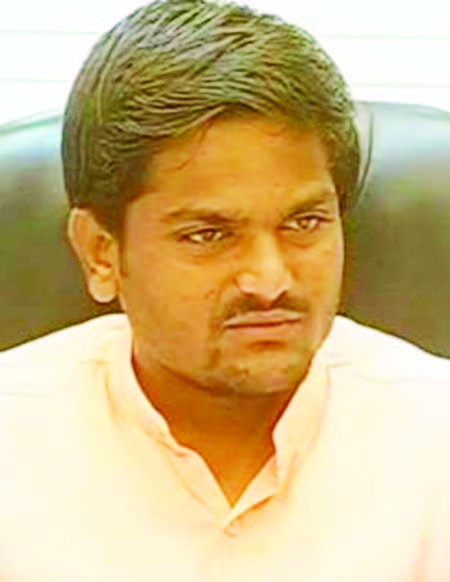
    Twenty one year old Hardik Patel is emerging as the unlikely new leader from Gujarat, the home state of Prime Minister Narendra Modi.

    He has built up a new fan following, comprising of people in the age group of 15 to 70, and has been organizing huge rallies much to the envy of most political leaders. His claim to organize a rally of 40 lakh people on August 25 in Gujarat is not being taken lightly by the state government as well as the Centre.

    He has taken up the leadership of the influential community of Patels who constitute a population of 14 per cent in the state but have a significant political clout. So much that the Anandiben government has no less than six ministers from the Patel community. Modi has replaced Keshubhai Patel as the state chief minister in 2001. Till lately octogenarian Keshubhai Patel was the undisputed leader of Patels and the mantle has now shifted to someone one fourth of his age.

    Hardik Patel does not even look like a copybook neta. He prefers a shirt and jeans to the ubiquitous kurta pyjama of Politicians. He does not mind himself to be compared to the best known Patel – Sardar Vallabhbhai Patel – called the Loh Purush of India.

    For the last couple of months, the influential Patel community has hit the streets demanding reservation in government jobs and in admissions to schools and colleges. Hardik Patel is leading the protest and says they are affiliated to no political party, though his father is a member of the ruling BJP.

    Interestingly he has also uploaded a video on YouTube which shows him posing with a rifle, a sword and a pistol. A banner on the video says “Jai Sardar”, an apparent reference to Gujarat icon Sardar Vallabhbhai Patel. “If need be we can also follow the footsteps of Bhagat Singh”, he says.

    Hardik had launched the Patidar Anamat Sangathan as a college movement to protect the interests of the Patel community when he was a 17-year-old student of commerce in an Ahmedabad college. He has not looked back since then.

    Hardik who graduated in commerce, hails from a middle class business family and runs a small business of supplying water in Viramgam about 64 kilometers from Ahmedabad.

    He said what prompted him to lead the struggle was the concerns of the youth from the community who did not get jobs or admission in government educational institutions due to the reservation policy.

    This despite the general perceptions about the Patels, who belong to the Patidar community, that they are a rich and prosperous community.

    Hardik has been drawing crowds in both urban and rural areas. His following has forced the state government to appoint a six minister panel, headed by Health Minister Nitin Patel, to look into the demand.

  • Birla to buy two Lafarge India cement units

    Birla to buy two Lafarge India cement units

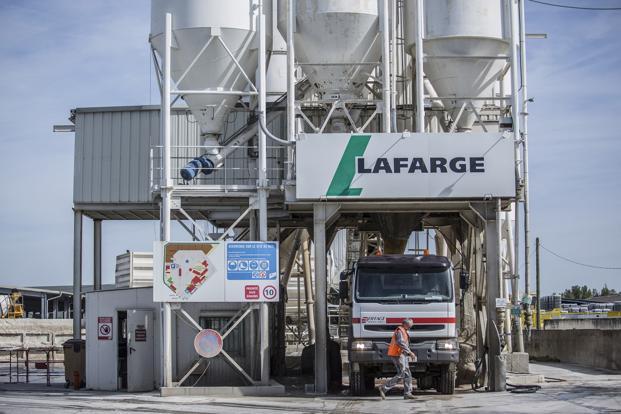
    Birla Corp. Ltd on Monday said it had agreed to acquire two cement assets from the local arm of Lafarge SA with a combined production capacity of around 5.15 million tonnes (mt) for a total enterprise value of Rs.5,000 crore.

    The plants in Chhattisgarh and Jharkhand were put up for sale after Holcim of Switzerland and France-based Lafarge agreed this year to a global merger that required the divestment of the assets to meet local competition rules.

    Although driven by the antitrust regulator, the Competition Commission of India (CCI), the deal also reflects the perennially consolidating nature of the cement industry in India, which has seen 20 mt of production capacity change hands in seven deals worth a combined Rs.16,000 crore in the past two years. With some more cement assets on the block, industry experts expect more consolidation.

    Birla Corp. will acquire Lafarge’s Sonadih Cement, a grinding unit in Jojobera, Jharkhand, along with its brands Concreto and PSC. It will also acquire the Sonadih unit in Chhattisgarh.

    The two units being sold by Lafarge are among the most profitable cement plants in India, generating about Rs.700 crore in pre-tax profits a year even in the current depressed market. That is partly because of the availability of raw materials in close proximity to the plants.

    “The acquisition, together with the Concreto and PSC brands, perfectly fit into our strategic vision and ambition of enhancing competitiveness in our chosen markets,” said Harsh Lodha, chairman of Birla Corp.

    Besides regulatory clearances, the deal is conditional upon Birla Corp. securing the limestone mining rights of the two units. The mining rights may not be automatically transferred to Birla Corp., but without access to the deposits estimated at 145 mt, the plants will have to be mothballed.

    The brands Concreto and PSC were crucial for the closure of the transaction, which would take Birla Corp.’s total annual capacity to manufacture the building material from 10 mt to 15 mt.

    Concreto is one of the strongest cement brands in India, and in some markets commands a premium of up to Rs.55 for a 50kg bag. PSC, too, is considered a premium brand.

    “The deal would not have happened had these brands not been a part of the deal. Birla Corp. was keen on these brands, as they are established brands names in the relevant market,” a person directly involved in the deal said on condition of anonymity.

    Birla Corp.’s shares jumped 19.27% to Rs.540.25 on BSE on a day the benchmark Sensex fell 0.67% to 27,878.27 points.

    Birla Corp. plans to fund the transaction with existing cash reserves and incremental debt. As of 31 March, Birla Corp. had total debt of Rs.1,300 crore and a debt-equity ratio of 0.5 times.

    Birla Corp. has secured commitment from its lenders for up to Rs.3,500 crore of loans, according to chairman Lodha. The remaining Rs.1,500-1,700 crore will come from the company’s own coffers.

    If the deal goes through, Birla Corp. will make small investments in the plants such as for generating electricity from waste heat recovery, he added.

    The deal may not be earnings per share accretive—or shore up Birla Corp.’s profit per share—in the short term, according to an analyst. “It may, however, turn out to be a prized catch in the long run because the acquisition can potentially bring down the cost of operation of Birla Corp.’s own units,” this person said, asking not to be identified.

    The top management of Birla Corp. was initially divided over whether to bid for the plants, according to a key official who also did not wish to be named. “Because of the price, one section was a little apprehensive, but in the end, we decided to go for it,” this person said. “Because building a new plant from scratch with such raw material linkages isn’t easy.”

    Last year, Holcim and Lafarge announced plans for a merger of equals to create LafargeHolcim. The transaction was concluded in July this year. As a precondition to clearing the Indian leg of the union, the Competition Commission of India directed Lafarge to sell the two assets in Chhattisgarh and Jharkhand.

    Discussions between Birla Corp and Lafarge, according to people familiar with the situation, started in May 2015.

    “To close the deal by August, this deal has surely been a rapid-fire one. However, Lafarge, with its strong global presence, has been a hard negotiator,” the person cited in the first instance said.

    The person added that Irish firm CRH Plc. and HeidelbergCement India Ltd and a couple of private equity firms were also interested in acquiring the assets.

    Heidelberg Cement India on 24 July told BSE that it is “not considering any such proposal at the moment”.

    “JSW Cement was part of the bidding initially, however, did not pursue it further as it did not fit the company’s strategic interests,” said another person directly involved in the initial talks between JSW Cement and Lafarge.

    LafargeHolcim plans to utilize the Rs.5,000 crore cash proceeds to retire debt at the global level, a spokesperson for LafargeHolcim said in an emailed response on Monday to queries from Mint.

    While the sale of the LafargeHolcim assets had been anticipated, analysts say further consolidation in the cement sector cannot be ruled out.

    In March 2015, Mint had reported Aditya Birla Group’s UltraTech Cement Ltd, Rajasthan-based JK Lakshmi Cement Ltd, HeidelbergCement India, JSW Cement and Orient Cement Ltd were among the companies evaluating potential acquisitions.

    Most of these firms continue to scout for potential acquisition targets.

    “Looking at more assets is a regular process,” said Sushil Agarwal, chief financial officer, Grasim Industries Ltd of the Aditya Birla Group, at a 7 August press conference where the company announced its latest quarterly results.

    The group could not bid for the Lafarge assets because of a rider imposed by the CCI that only cement companies with a less than 5% market share in the relevant market can buy the Lafarge plants.

    There seems to be no dearth of sellers in the market either.

    “Surely, we expect more consolidation in the cement sector. In the next few years, the Indian cement industry would be dominated by five to six prominent cement companies as a result of this consolidation. We expect deals in the South India cement market and debt-laden cement companies to offload assets,” said Amey Joshi, associate director at India Ratings and Research Pvt. Ltd.

    “Jaypee group is looking for a buyer for its Bhilai cement plant and one of its assets in South India,” said a banker with a domestic investment bank who did not wish to be identified.

    Jaiprakash Associates has a 2.2 million tonne grinding unit in Bhilai, Chhattisgarh. In South India, Jaiprakash Associates has two cement units in Andhra Pradesh with six million tonnes of combined operational capacity.

    An email sent to officials at Jaypee Group on Monday remained unanswered.

    Reliance Infrastructure Ltd and ABG Cement were earlier on the lookout for buyers for their cement assets.

    On 9 March, Reliance Infrastructure informed the BSE that the company was constantly exploring strategic opportunities to unlock value in its existing businesses, which may or may not necessarily result in transactions. Reliance Infrastructure has an operational cement capacity of 5.8 mt.

    ABG Cement was in the market looking for a buyer for its six million tonnes cement capacity in Gujarat, said an executive from a cement company looking to buy assets.

    This was earlier confirmed by a banker with a foreign investment bank advising cement clients.

    The company’s promoter Rishi Agarwal said in a text message that ABG Cement wasn’t in the market.

  • Hero Cycles founder OP Munjal dead

    Hero Cycles founder OP Munjal dead

    LUDHIANA/NEW DELHI (TIP): India’s ‘Cycle Man’ and founder of Hero Cycles Om Prakash Munjal died at Dayanand Medical College and Hospital in Ludhiana on August 13 morning after a brief illness. He was 86 and is survived by a son and four daughters.

    Munjal not only gave Ludhiana the unique identity of being the city of cycles, but also shaped the industry in the country by entering the international club of leading cycle manufacturers.

    Born in a small business family in Kamalia on August 26, 1928, Munjal, along with his three brothers —Brijmohan Lall, Dayanand and Satyanand — started a bicycle spare parts business in Amritsar in 1944.

    Later they moved to Ludhiana and set up Hero Cycles in 1956. He was married to Sudarshan, who died in February this year.

    Entrepreneurs looked at him as an example of grit and determination. Munjal’s success story bears testimony to the fact that a business empire can be created from scratch by sheer hard work and the spirit to take on challenges.

    “I believe life is the biggest teacher and world is the biggest school. I learnt from my mistakes and crisis. There has hardly been a day when I have not learnt something,” Munjal had said.

    Fond of poetry since his childhood, he was known in the industry for greeting people with Urdu couplets, mostly spontaneous verses by him.

    He was also chairman of Hero Briggs and Stratton and Majestic Auto Ltd, besides being director of Hero Honda Motors, Rockman Cycle Industries, Highway Cycle Industries, Sunbeam Castings and Gujarat Cycles. He was also the president of the All India Cycle Manufacturers Association.

    From a production capacity of 639 bicycles a year in 1956, Hero Cycles now manufactures over 18,500 cycles a day, the highest in the world. With 48% share of the Indian market, this volume catapulted Hero Cycles, which has four manufacturing units with 7,000 employees, into the Guinness Book of World Records in 1986. Since then, the brand has been able to maintain its leadership in the cycle manufacturing industry.

    The 86-year-old industry legend was facing health issues for the past few months. Munjal had last month ceded chairmanship of Hero Motors group and retired from active role in the business. His son Pankaj Munjal succeeded him as the chairman and managing director of the Group.

  • Ahead of I-Day, security agencies warn against 26/11 influx of terrorists

    NEW DELHI (TIP): Security agencies have warned about a possible 26/11 style influx of terrorists from the sea and an attack on BJP offices, asking the forces to remain alert on the occasion of Independence Day to thwart any such attempt.

    The Home Ministry has also cautioned that the terrorists might use the air route to strike using a para gliders to attack and has asked the security forces to remain vigilant against any such attempt to sabotage, especially targeting high risk dignitaries.

    The advisory said that recent terror attack in Gurdaspur, several terror incidents in the past including serial blasts in Patna in 2013 targeting election rally of Narendra Modi indicated that threat emanates from Pakistan based terrorist groups and their Indian affiliates like the Indian Mujahideen and members of ex-SIMI to possible targets like

    Lotus Temple, Malls in Noida, Metro Stations, Red Fort and Political Personalities.

    In a communication to all the forces and state police the Ministry has cited an April 16 input suggesting that Al Qaeda in the Indian Sub-Continent (AQIS) was actively engaged in planning attack against India at Indian Naval facilities and other unsecured waterfronts as potential target.

    “In this regard the Southern Naval Command in Kochi (INS Venduruthy), Western Naval Command in Mumbai and the Naval base in Karwar (INS Kadamba) could be targeted,” it said adding that Gujarat may also be targeted.

    The communication said an input received in September last year claims that AQIS has been planning to target BJP offices, commercial, tourist, religious, aviation and railway infrastructure in various states.

    “To counter threat from remote pilotless vehicles, remote controlled aircraft, para gliders and hang gliders, open grounds and spaces, abandoned air strips etc allowing lift off or launching pads for these flying objects need to be identified and suitably secured by patrolling and deploying of security forces.

    “Checks of flying/gliding clubs may be carried out to rule out use of aero modules by hostile elements,” it said . According to another uncorroborated input the ISI has “plan to hijack/explode Air India flights operating in Kabul-Delhi sector as they are being used by senior Indian officials.”

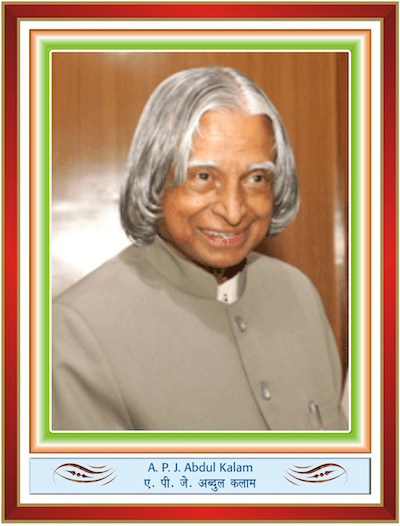
  • The Indian Panorama’s Tribute to India’s Missile Man Bharat Ratna APJ Addul Kalam

    The Indian Panorama’s Tribute to India’s Missile Man Bharat Ratna APJ Addul Kalam

    Shakespeare may as well had APJ Abdul Kalam, an outstanding human being, teacher, scientist, thinker and much more, in mind, when he penned these words in Julius Caesar in which Antony pays tribute to the slain Caesar.

    The spontaneous outpouring of public grief at the passing away of Bharat Ratna Abdul Kalam was unprecedented. Be it the long queues of people ranging from VIPs to slum dwellers wanting to pay personal homage to the great man, top trending of tributes to him on the social media, focus of all main stream media channels and newspapers, the sentiment was simply overwhelming. Rather than the usual and clichéd messages of condolences from nation’s leaders, there was a genuine feeling of a huge loss and several international leaders joined in to pay their respects.

    Prime Minister Narendra Modi, instead of issuing a formal note of condolence, wrote an entire column on the country’s Missile man saying that `Bharat has lost a Ratna, but the light from this jewel will guide us towards Kalam’s dream destination : India as a knowledge superpower, in the first rank of nations”.

    Abdul-KalamModi wrote that Abdul Kalam, who was genuinely loved and admired by the masses, “never measured success by material possessions. For him, the counterpoint to poverty was the wealth of knowledge, in both its scientific and spiritual manifestations”. He concluded by saying that he was father to every Indian child and “the good that he did, will not be interred with his bones, because his children will preserve his memory through their lives and work, and gift it to their children”.

    US President Barack Obama, in his condolence message spoke of Dr. Kalam’s great contribution in promotion of US – India space cooperation and forging stronger ties between the two countries. “A scientist and statesman, Dr. Kalam rose from humble beginnings to become one of India’s most accomplished leaders, earning esteem at home and abroad. An advocate for stronger US-India relations, Dr. Kalam worked to deepen our space cooperation, forging links with NASA during a 1962 visit to the United States. His tenure as India’s 11th President witnessed unprecedented growth in US-India ties. Suitably named “the People’s President”, Dr. Kalam’s humility and dedication to public service served as an inspiration to millions of Indians and admirers around the world.”

    APJ2 APJ1In his event-filled 83 year long life, Abdul Kalam had evidently touched millions of lives and his life was in itself a message and inspiration. All those who were fortunate to interact with him, and he never let go an opportunity, he left a lasting impression which remained with that person for an entire life time. Be it the scientific community, the educators, the students, world leaders and even the media, everyone who met him left mesmerized by the man’s simplicity and humility. At the same time, all that weighed on his mind, all the time, was the development and growth of India and the improvement in the quality of life of its citizens, particularly those belonging to the rural areas. His pet and passionate project remained PURA (Providing Urban Facilities in Rural Areas) and he looked for opportunities to spread his vision.

    Such was the respect he commanded among all sections of the society, including the political parties, that he emerged as one of the rare consensus candidate for the post of president in 2002 yet he kept himself aloof from politics and never got into any discussion on the subject. Even when the then Pakistan President Parvez Musharraf visited India in 2005, he gave him a complete lesson on his vision on improving the living standards of the poor and the downtrodden. He advised Musharraf to initiate a program in his country on the lines of PURA and assured him all help in the area.

    He was not just a role model for millions of Indians and even those in other countries, he led by personal example. He led a simple life and immersed himself into studying. He was childlike in his approach towards learning. An example of never-say-die attitude was his desire to ride in a Sukhoi-30 fighter jet cockpit at the age of 74. It is not easy to ride the small jet and most youngsters one-third that age would fall sick of the speed and maneuvers of the fighter plane. Yet Kalam insisted and flew the jet for about 40 minutes. His pilot, Air Commodore Ajay Rathore, who sat next to him later said he behaved as excited as an eight year old boy and was in great spirits throughout.

    Born in a boatman’s family at Rameshwaram on October 15, 1931, Avul Pakir Jainulabdeen Abdul Kalam faced a tough childhood. He graduated in Physics in 1954 from St Joseph’s College, Tiruchirapalli and studied Aeronautical Engineering at the Madras Institute of Technology. He later joined Indian Scientific Research Organisation (ISRO) and made significant contribution as project director to develop the country’s first indigenous Satellite Launch Vehicle (SLV-III) which injected the Rohini Satellite in the earth’s orbit in 1980 thus making India a member of the exclusive international space club. After working at ISRO for two decades he was given the responsibility of developing guided missiles as chief executive of the Integrated Guided Missile Development Programme at the Defence Reseach and Development Organisation (DRDO) in 1982.

    He was responsible later for the development and operationalization of AGNI and PRITHVI missiles. He played a vital role in building indigenous capability in critical technologies. He was subsequently made the Scientific Adviser to Defence Minister and Secretary, DRDO from July 1992 to December 1999.

    He was the main force behind the weaponization of the strategic missile systems and the Pokhran-II Nuclear blasts in collaboration with the department of Atomic Energy which made India a Nuclear power state.

    He was awarded the Padma Bhushan in 1981, Padma Vibhushan in 1990 and was conferred the highest civilian award, the Bharat Ratna, in 1997 and served as the country’s 11th president from 2002 to 2007.

    Even as the President, he redefined the Indian presidency. Till he was elected with an overwhelming 9,22,884 votes (the only invalid vote had a note saying he would look much better with a hair cut !), the office of the president of India was considered that of a titular head. In fact his advent to the post came shortly after the 2002 riots in Gujarat when communal situation in the country was on a boil. The then Prime Minister Atal Behari Vajpayee, in a political masterstroke, proposed Kalam’s name as the president and the opposition Congress readily agreed to support him. He made it a point to visit riot ravaged Gujarat despite objections from the government of the day. Throughout his tenure he remained active and earned the epithet of People’s President.

    APJ3A devout Muslim, a player of Veena and a profound lover of Carnatic classical music, as comfortable with Quran as the Bhagwat Geeta, first unmarried Indian President, spiritual thinker and much more, he was a multi-faceted personality.

    Abdul Kalam often spoke at length about his childhood in Rameswaram as a boatman’s son. However, it was never about tragic struggles or of events that should be remembered with either pity or outrage. There was no anger or bitterness; it was always about hard work and hope. He believed in dignity of labor and was as comfortable with primary students as with scientists and thinkers, and world leaders.

    However, he was most passionate as a teacher. He once said : “If the people remember me as a good teacher that will be the biggest honour for me” .

    That’s what he was doing when the end came. In fact his last day on Mother Earth itself is a reflection of what a great man he was. Even at his age, he preferred to travel by the circuitous road from Guwahati to Shillong – to deliver a lecture and interact with students. While on his way to Shillong, he noticed that a pilot vehicle ahead of his convoy had a man (a security personnel) standing in a vehicle even as the convoy meandered its way up the 100-kilometer route to Shillong. He asked those sitting next to him to ask the man to sit down but was told that he was merely doing his duty.

    Not convinced by the explanation but helpless in view of the security drill, Abdul Kalam reached Shillong and the very first demand he made was to call that man over. He profusely thanked him even as the bewildered security man didn’t expect such a gesture from a former president of the country. The man somehow gathered his wits and responded that he respected Kalam so much that he could have stood for even six hours or more. The gesture reflected the humbleness and kind hearted nature of Kalam.

    He then went to the stage to deliver the lecture which was to be followed by an interaction with the students. However, merely five minutes into the lecture he slumped down and was rushed to the hospital where he was declared dead. The man who had passion for teaching and spreading the light of knowledge all his life, died in consummation of exactly the same love. What a glorious end to an illustrious life!

    Indeed, “This was a Man”.

  • HONDA CARS HOPES TO JAZZ UP ITS SALES

    HONDA CARS HOPES TO JAZZ UP ITS SALES

    HYDERABAD (TIP): Japanese auto major Honda Cars India Limited (HCIL) expects its newly launched third generation Honda Jazz to rev up the company’s sales and help it register a double digit growth in FY16 surpassing the industry growth figures, said HCIL senior vice-president (marketing and sales) Jnaneswar Sen here on Wednesday. The company sold 1.89 lakh units last fiscal.

    “During the first quarter of this fiscal, we have registered a growth of 9% and are hopeful that the launch of the new Jazz will help us attain a double digit growth in 2015-16,” Sen said on the sidelines of the launch of third generation Honda Jazz in Andhra Pradesh and Telangana.

    Sen pointed out that the auto industry is expected to grow at 8-9% this fiscal, which is “neither good nor bad” and HCIL expects to outstrip this growth.

    On the expansion of the company’s dealership network he said, HCIL had 232 dealerships in FY15 and this fiscal, it expects to add another 68.

    Sen pointed out that the all new Jazz has been developed at Honda’s R&D Centre located in Tochigi, Japan. The car has been designed on the basis of results obtained from extensive market surveys across the world, including India, for people’s driving needs and lifestyles. The petrol variants of the compact hatchback are priced between Rs 5,40,900 – Rs 7,98,500 (ex-showroom Hyderabad), while its diesel variants are priced between Rs 6,62,900 – Rs 8,75,500 (ex-showroom Hyderabad), the company said.

    The new Jazz will be manufactured at the company’s Tapukara plant in Rajasthan, which is being expanded at an overall cost of Rs 380 crore to increase the total annual capacity to 3 lakh per annum from the current 2.4 lakh per annum. The company has also acquired land in Gujarat to cater to its long-term manufacturing plans, he added.

  • Work force from India

    Work force from India

    Prime Minister Narendra Modi ‘s emphasis on India having a huge and young work force and his assertions that India can provide work force to the whole world, clearly reveal his mind. He realizes that it will not be possible to create employment for the large number of young people in the country. Having learnt a long time ago from the experience of the Gujarati community how rewarding it could be to be working abroad, and realizing that there is enough demand from countries across the world for work force, Modi has set his ken on adding work force to the list of exports.

    People from Gujarat are all over the world today. They are in African countries; in European countries, in USA, in Canada, in Australia and in New Zealand. They are everywhere. It is easier to list the countries where they are not present than to count the countries where they are. And they are amongst the best. They have established themselves particularly as sensible and intelligent businessmen. Business is in their blood. Look at all the top businessmen and industrialists in India and you will find they all belong to Gujarat. Similarly, those who are in professions are doing very well. It is another matter that every day you come across a dubious character who is involved in illegal activity and suffers the consequences.

    Readers will recall that it is not for the first time that PM Modi has spoken of India having a huge work force. He had said that earlier too. Now, with the launch of “Skill India” campaign, he has added an adjective to work force. The adjective is “skilled”. It may sound ambitious to be creating Crores of skilled young people over the next 5 years, as claimed by the Prime Minister but then they say the goal should not be mean. And given the fact that the Indian Prime Minister believes in the best, whether it be clothes or travel, we should suspend our disbelief and go along with him.

    Moreover, just as the NRIs , today, are making India rich with their remittances and investments, the would -be NRIs , too, would enrich the country. The mathematics is perfect. Young people will have jobs abroad and India will benefit from their presence overseas in terms of acquisition of foreign exchange. So we have employment generation and generation of wealth going hand in hand. One would wish it happens sooner than later.

  • Government clears defence proposals worth Rs 30,000 crore, to buy four P8I maritime patrol aircraft

    Government clears defence proposals worth Rs 30,000 crore, to buy four P8I maritime patrol aircraft

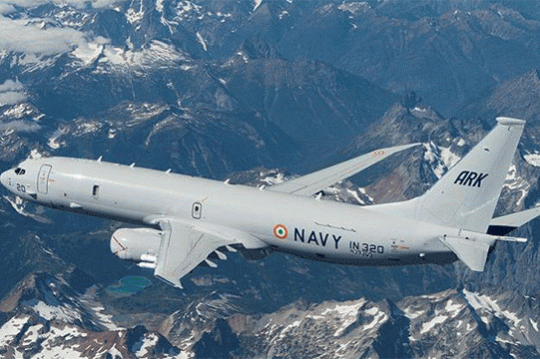
    New Delhi: The Defence Acquisition Council has cleared purchases of over Rs 29,000 crore of equipment, including four maritime spy planes from Boeing worth Rs 4,380 crore and hundreds of air defence guns. The largest order approved was for 428 L-70 and ZU-23 air defence guns worth around Rs 16,900 crore, a defence spokesman said after the meeting chaired by minister Manohar Parrikar.

    The guns are to be manufactured in India, the spokesman said, as part of the push to expand the defence industry and end the country’s status as the world’s largest arms importer. As reported by ET, only two Indian companies — Punj Llyod and Bharat Forge — had responded to an Army request on the project. But there is now a possibility to broadbase the competition by inviting other players as well.

    Other proposals cleared include upgradation of the weapons and sensor systems of six ships of the Delhi and Talwar class for Rs 2,900 crore, a Brahmos training facility in Gujarat for Rs 3,000 crore and an air combat manoeuvring system for the Navy’s MiG-29Ks and Hawk aircraft for Rs 200 crore.

  • GANG BEHIND RS 10,000 CRORE HAWALA RING BUSTED

    NEW DELHI (TIP): The Enforcement Directorate has busted a hawala network in Ahmedabad which had allegedly laundered more than Rs 10,000 crore through a private bank in Surat to Dubai and Hong Kong.

    The ED has registered a case under Prevention of Money Laundering Act and arrested five accused. The agency is on the trail of the network’s kingpin who has been evading arrest for the past eight months.

    A Mumbai-based bullion trader has been identified as the kingpin of the hawala network that had deposited Rs 10,000 crore in cash in two Surat branches of a private bank in December 2013 and January 2014.

    This was immediately transferred to a public sector bank’s overseas branch in Dubai and in a Hong Kong branch of a foreign bank. The money was later transferred to several beneficiaries from those foreign accounts.

    The network was busted by the Ahmedabad unit of the ED which is investigating the case. A source said the case was also on the radar of India’s external intelligence agency RAW. The huge cash transfer to foreign accounts is believed to be illicit money of some politicians and bureaucrats.

    The agency has traced one transaction to a Chennai company which was also accused in the 2G spectrum scam and was linked to a former telecom minister.

    A senior officer associated with the probe said the agency discovered forged customs invoices from the accused. “This time, they had forged documents which revealed dates of 2011 and payments made two years later in 2013 and 2014 which alerted us,” he said.

    The probe revealed that two accused based in Gujarat had been running dummy companies and forging documents of customs department and routing cash through the banking channels to Dubai and Hong Kong.

    The trail further led to the kingpin based in Mumbai. The ED arrested two of his nephews — one based in Surat and the other operating dummy companies in Dubai.

    The agency is probing the Mumbai kingpin’s association with some big politicians from Maharashtra and is likely to make some more arrests in the coming weeks.

  • CHURU: THE LAND OF SHIFTING SAND DUNES

    CHURU: THE LAND OF SHIFTING SAND DUNES

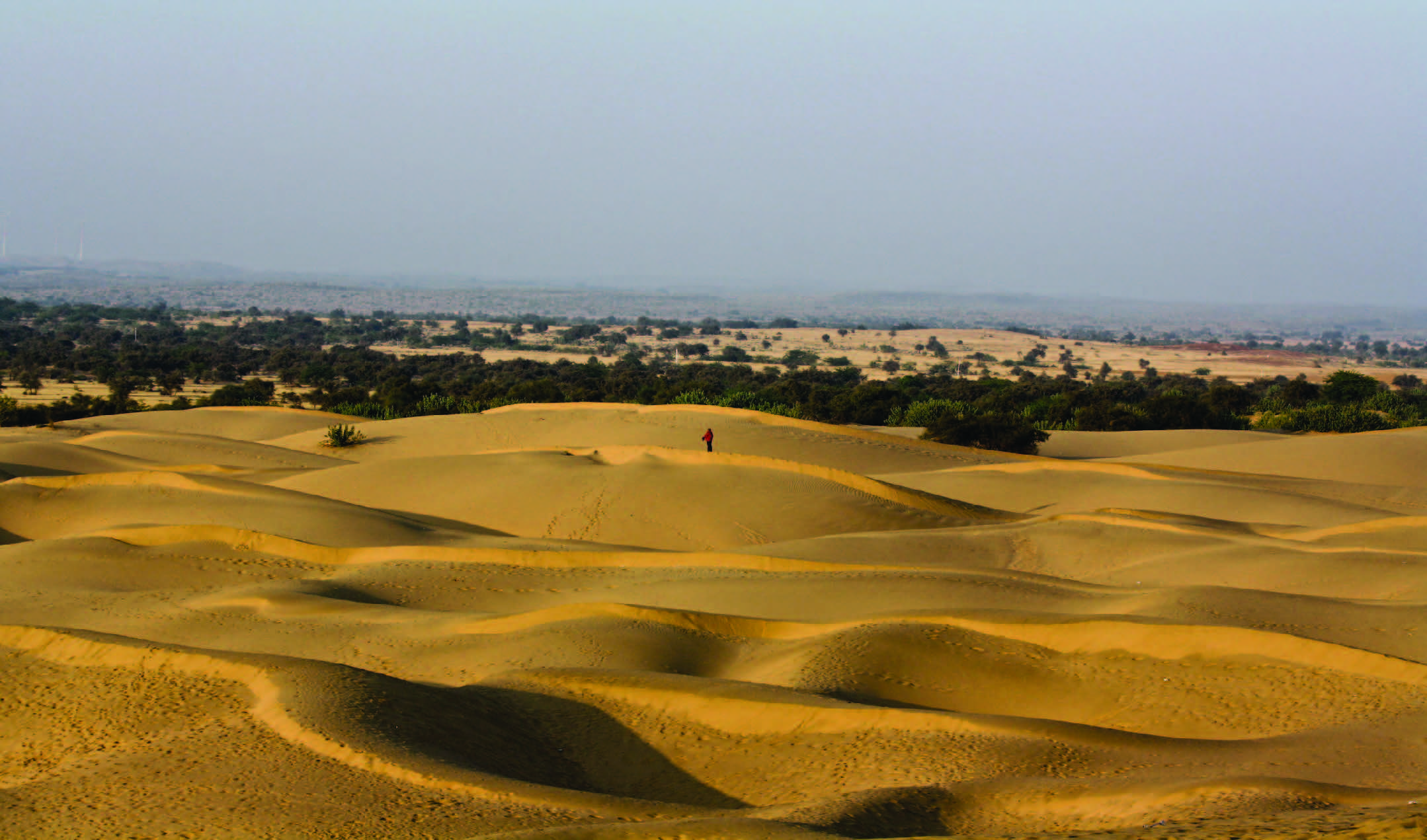
    Churu is a town in the desert region of Rajasthan state of India. It lies in the Thar Desert. The city of Churu was founded in 1620 by a Jat chieftain Churru. It was part of Jangladesh prior to annexation by Rathores.

    It is famous for the shifting sand dunes of the Thar Desert and beautiful grand havelis with marvelous fresco paintings, namely Kanhaiya lal Bagla ki Haweli and Surana Haweli, with hundreds of small windows. It also has some fine Chhatris. Near the town is a religious seat of the Nath sect of Sadhus where there are life-size Marble statue of their deities and a place for prayers. There stands a Dharam Stup, a symbol of religious equality. At the centre of the town is a fort built about 400 years ago.

    Black Buck Santuary 

    Talchhapar Sanctuary, situated in Churu is famous for endangered black-buck. Other wild animals found in the sanctuary are chinkara, fox, juangle cat, rojra along with many resident and migratory birds. It lies on the way of migratory pass of many birds and therefore it is also popular with bird lovers. Talchhapar, actually a flat saline depression, has a unique ecosystem.

    Talchhapar area was a game reservoir for the erstwhile Maharaja of Bikaner State and was declared a reserved area for the protection of wild animals and birds in the year 1962. Total area of Talchhapar Sanctuary is 719 hectare. The sanctuary area is mostly covered by grasses with a very few and sparse trees of Khejri, Salvadora, Ber, Ker and Neem. Main grasses found in the area are Sewan, Doob, Dhaman Lampla, Lana and Moth etc. The area gives a lush green look during rainy season but again dries up during summer season.

    Kanhaiyalal Bagla HaveliChhatries (Cenotaph)

    Churu has some good memorial domes, mostly raised to rich merchants, north of the town. Historically the most significant is ‘Aath Kambh Chhatri’ (Eight Pillar Dome) west of the vegetable market. Built in 1776 on a Rajput’s cremation site. Its base has been virtually buried by windblown sand. The interior is covered with murals, one detail depicting an early European mercenary on foot, bearing a musket. Further north are chhatris of the Mantri , Bagla and Lohia merchant families.

    Dudhwa Khara

    Just 36 kms from Churu It is an historical village which lies on Thar desert. The village has enticing topography and have huge beautifully designed havelis. One can enjoy the rural life and camel safaris in the village.

    CHURU- THE LAND OF SHIFTING SAND DUNES IMAGEGogaji

    Gogaji also known as Gugga is a folk deity of Rajasthan state in India. He is an eminent warrior-hero of the region. Hindus and Muslims alike honor him. He is also venerated as a saint and even as ‘snake-god’. He is known as Goga among the Hindus and Jahar Peer among the Muslims. Gogaji is popular as a snake-god and almost every village in Rajasthan has a Than (sacred place) dedicated to him.Rabari community in Gujarat and Rajasthan is great believer in Gogaji.

    It is believed that Gogaji went into samadhi at Gogamedi. Thousands of devotees gather to pay homage at this memorial annually in the month of Bhadrapada during the Gogaji fair, which lasts for 3 days.The fair is held from the ninth day of the dark half of Bhadrapada (Goga Navami) to the eleventh day of the dark half of the same month.

    Kanhaiyalal Bagla Haveli

    Just south of the main bazaar, this haveli built around 1880 boasts the finest frieze in all the Shekhawati region. It illustrates Dhola and Maru on a camel fleeing the wicked Umra-Sumra, Sassi and Punu side by side on horseback, two set of lovers from folk tales. To the south-west is a mosque, Jama Masjid, and a little Muslim haveli decorated with non-figurative work.

    Kothari and Surana Haveli

    A group of handsome painted havelis built by two prominent Oswal Jain merchant families, the Kothari and Surana clans. Amongst them are ‘Malji Ka Kamra’ (Malji’s Haveli), an exotic stucco extravagaza built by Malaji Kothari around 1925 and the massive Surana Double Haveli, said to boast 1111 windows and doors built in the 1870s.

    Mantri Haveli

    The Mantri Haveli is one of the most beautifully designed Havelis in India. The Mantri Haveli, Churu reflects the rich grandeur and splendor of the Rajput era. One of the major tourist attractions of Rajasthan, the Mantri Haveli, Churu attracts tourists from all over to Rajasthan. The Mantri Haveli is truly a beautiful symbol of Rajput grandeur and beauty. In the Mantri Haveli, Churu you can get to see beautiful paintings and exquisite mirror work that brings travelers from all over.

    Mantri Haveli, Churu was built in the 18th century and is completely covered with paintings. From exotic images to beautiful and unique silhouettes the paintings are simply a class apart. One of the oldest Havelis in Churu, the Mantri Haveli is an art gallery. Dedicated to one of the ministers of the royal family the Mantri Haveli in Churu attracts tourists for its beauty and uniqueness.

    From floral swirls, motifs, and excellent mirror work, to balconies and alcoves, the exquisite artistry of the Rajputs are explicitly reflected in its artwork as well as architecture. From lavish ornamentation, spacious courtyards to sprawling areas, the Mantri Haveli, Churu attracts people from all over. However the front facade is completely worn out and you can feel the medieval aura and ambience once you enter inside the Mantri Haveli.

  • Putting India Emphatically on Global Map – Part 2

    Putting India Emphatically on Global Map – Part 2

    Continued from Putting India Emphatically on Global Map – Part 1

    It defies logic that a country that is considered as our most serious adversary and whose policies in our region has done us incalculable strategic harm should have been accepted as India’s strategic partner during Manmohan Singh’s time. Such a concession that clouds realities serves China’s purpose and once given cannot be reversed. Pursuant to discussions already held during the tenure of the previous government, the Chinese announced during Xi’s visit the establishment of two industrial parks in India, one in Gujarat and the other in Maharashtra, and the “endeavour to realise” an investment of US $ 20 billion in the next five years in various industrial and infrastructure development projects in India, including in the railways sector. The Chinese Prime Minister’s statement just before Modi goes to China on May 14 that China is looking for preferential policies and investment facilitation for its businesses to make this investment suggests that the promised investment may not materialise in a hurry. While the decision during Xi’s visit to continue defence contacts is useful in order to obtain an insight into PLA’s thinking and capacities at first hand, the agreement, carried forward from Manmohan Singh’s time, to explore possibilities of civilian nuclear cooperation puzzles because this helps to legitimise China’s nuclear cooperation with Pakistan.

    Even as Modi has been making his overall interest in forging stronger ties with China clear, he has not shied away from allusions to Chinese expansionism, not only on Indian soil but also during his visit to Japan. During his own visit to US in September 2014 and President Obama’s visit to India in January 2015, the joint statements issued have language on South China Sea and Asia-Pacific which is China-directed. A stand alone US-India Joint Vision for Asia Pacific and the Indian Ocean Region issued during Obama’s Delhi visit was a departure from previous Indian reticence to show convergence with the US on China-related issues. India has now indirectly accepted a link between its Act East policy and US rebalance towards Asia. The Chinese have officially chosen to overlook these statements as they would want to wean away India from too strong a US embrace. During Sushma Swaraj’s call on Xi during her visit to China in February 2015 she seems to have pushed for an early resolution of the border issue, with out-of-the-box thinking between the two strong leaders that lead their respective countries today. Turning the Chinese formulation on its head, she called for leaving a resolved border issue for future generations.

    It is not clear what the External Affairs Minister had in mind when she advocated
    “out-of-the-box” thinking, as such an approach can recoil on us. That China has no intention to look at any out-of-the-box solution has been made clear by the unusual vehemence of its reaction to Modi’s visit to Arunachal Pradesh in February 2015 to inaugurate two development projects on the anniversary of the state’s formation in 1987. The pressure will be on us to do out-of-the-box thinking as it is we who suggested this approach. China is making clear that it considers Arunachal Pradesh not “disputed territory” but China’s sovereign territory. This intemperate Chinese reaction came despite Modi’s visit to China in May. The 18th round of talks between the Special Representatives (SRs) on the boundary question has taken place without any significant result, which is not surprising in view of China’s position on the border. The Chinese PM has recited the mantra a few days ago of settling the boundary issue “as early as possible” and has referred to “the historical responsibility that falls on both governments” to resolve the issue, which means nothing in practical terms. As against this, India has chosen to remain silent on the China-Pakistan Economic Corridor (CPEC) which will traverse territory that is legally Indian, and which even the 1963 China-Pakistan border agreement recognises as territory whose legal status has not been finally settled. The CPEC cannot be built if China were to respect its own position with regard to “disputed” territories which it applies aggressively to Arunachal Pradesh. Why we are hesitant to put China under pressure on this subject is another puzzle.

    Modi’s visit to Seychelles, Mauritius and Sri Lanka in March 2015 signified heightened attention to our critical interests in the Indian Ocean area. The bulk of our trade- 77% by value and 90% by volume- is seaborne. Modi was the first Indian Prime Minister to visit Seychelles in 34 years, which demonstrates our neglect of the Indian Ocean area at high political level and Modi’s strategic sense in making political amends. During his visit Modi focused on maritime security with agreement on a Coastal Surveillance Radar Project and the supply of another Dornier aircraft. In Mauritius, Modi signed an agreement on the development of Agalega Island and also attended the commissioning of the Barracuda, a 1300 tonne Indian-built patrol vessel ship for the country’s National Coast Guard, with more such vessels to follow. According to Sushma Swaraj, Modi’s visit to Seychelles and Mauritius was intended to integrate these two countries in our trilateral maritime cooperation with Sri Lanka and Maldives.

    In Pakistan’s case, Modi too seems unsure of the policy he should follow- whether he should wait for Pakistan to change its conduct before engaging it or engage it nevertheless in the hope that its conduct will change for the better in the future. Modi announced FS level talks with Pakistan when Nawaz Sharif visited Delhi for the swearing-in ceremony, even though Pakistan had made no moves to control the activities of Hafiz Saeed and the jihadi groups in Pakistan.

    The Pakistani argument that Nawaz Sharif was bold in visiting India for the occasion and that he has not been politically rewarded for it is a bogus one. He had a choice to attend or not attend, and it was no favour to India that he did. Indeed he did a favour to himself as Pakistan would have voluntarily isolated itself. The FS level talks were cancelled when just before they were to be held when the Pakistan High Commissioner met the Hurriyet leaders in Delhi. Pakistan’s argument that we over-reacted is again dishonest because it wanted to retrieve the ground it thought it had lost when Nawaz Sharif did not meet the Hurriyet leaders in March 2014.

    Modi ordered a robust response to Pakistani cease-fire violations across the LOC and the international border during the year, which suggested less tolerance of Pakistan’s provocative conduct. We have also been stating that talks and terrorism cannot go together. Yet, in a repetition of a wavering approach, the government sent the FS to Islamabad in March 2015 on a so-called “SAARC Yatra”. Pakistan responded by releasing the mastermind of the Mumbai attack, Lakhvi, on bail and followed it up by several provocative statements on recent demonstrations by pro-Pakistani separatists in Srinagar, without any real response from our side. Surprisingly, in an internal political document involving the BJP and the PDP in J&K, we agreed to include a reference to engaging Pakistan in a dialogue as part of a common minimum programme, undermining our diplomacy with Pakistan in the process.

    Pakistan believes that it is US intervention that spurred India to take the initiative to send the FS to Pakistan, which is why it feels it can remain intransigent. Pakistan chose to make the bilateral agenda even more contentious after the visit by the FS by raising not only the Kashmir cause, but also Indian involvement in Balochistan and FATA. On our side, we raised the issue of cross border terrorism, the Mumbai terror trial and LOC violations, with only negative statements on these issues by Pakistan. Since then the Pakistani army chief has accused India of abetting terrorism in Pakistan. The huge gulf in our respective positions will not enable us to “find common ground and narrow differences” in further rounds of dialogue, about which the Pakistani High Commissioner in Delhi is now publicly sceptical.

    Even though one is used to Pakistan’s pathological hostility towards India, the tantrums that Nawaz Sharif’s Foreign Policy Adviser, Sartaj Aziz, threw after President Obama’s successful visit to India were unconscionable. He objected to US support for India’s permanent seat in the UNSC and to its membership of the Nuclear Suppliers Group (NSG). He castigated the Indo-US nuclear deal, projecting it as directed against Pakistan and threatened to take all necessary steps to safeguard Pakistan’s security- in other words, to continue to expand its nuclear arsenal.

    Chinese President Xi’s April 2015 visit to Pakistan risks to entrench Pakistan in all its negative attitudes towards India. The huge investments China intends making through POK constitutes a major security threat to India. China is boosting a militarily dominated, terrorist infested, jihadi riven country marked by sectarian conflict and one that is fast expanding its nuclear arsenal, including the development of tactical nuclear weapons, without much reaction from the West. President Ashraf Ghani’s assumption of power in Afghanistan and his tilt towards Pakistan and China, as well as the West’s support for accommodating the Taliban in Afghanistan with Pakistan’s help will further bolster Pakistan’s negative strategic policies directed at India. Ghani’s delayed visit to India in April 2015 has not helped to clarify the scenario in Afghanistan for us, as no change of course in Ghani’s policies can be expected unless Pakistan compels him to do by overplaying its hand in his country. Modi is right in biding his time in Afghanistan and not expressing any undue anxiety about developments there while continuing our policies of assistance so that the goodwill we have earned there is nurtured.

    Prime Minister Modi, belying expectations, moved rapidly and decisively towards the US on assuming office. He blindsided political analysts by putting aside his personal feelings at having been denied a visa to visit the US for nine years for violating the US law on religious freedoms.

  • Statue of Shivaji in Arabian Sea by 2019- Maharashtra CM Phadnavis

    Statue of Shivaji in Arabian Sea by 2019- Maharashtra CM Phadnavis

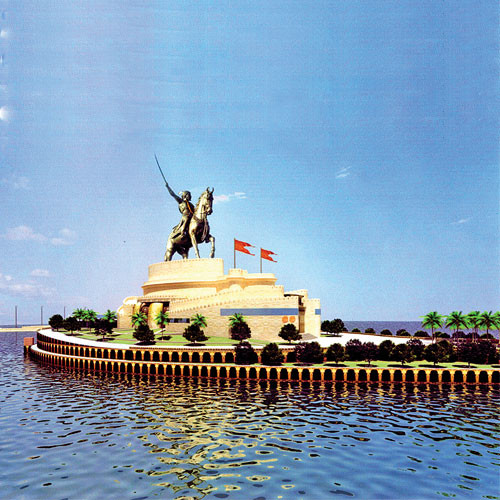
    NEW YORK (TIP): Chhatrapati Shivaji’s statue, off the coast of Mumbai in Arabian Sea will come up by 2019. Devendra Phadnavis, Maharashtra Chief Minister, disclosed it to The Indian Panorama Chief Editor Prof. Indrajit S Saluja in a meeting the latter had with him in New York on June 29.

    Phadnavis visited June 29 the Liberty Island to see the Statue of Liberty, a colossal neoclassical sculpture in New York Harbor, to commemorate liberty, fraternity and equality. Maharashtra will have, by 2019, a colossal statue of Shivaji in the Arabian Sea, off the coast of Mumbai, to commemorate the golden period of rule of the Maratha King, who had fought relentlessly against the attempts of the Mughal emperors to enslave the people of Maratha region. Shiva Ji is regarded as a great warrior in the true Indian tradition and is ranked with the greatest heroes of Indian history, like Maharana Pratap and Guru Gobind Singh. The height of the latest tribute to the Maratha king will be 200 meter, making it taller than the Statue of Liberty, which is 93 meter.

    The Congress-led Democratic Front government in Maharashtra had first made an announcement on Shivaji memorial in 2004. The decision to install the statue was taken by the Congress government in August, 2009. It was to come up on a 16-hectare bedrock in the Arabian Sea. The Navy had opposed the project citing restrictions on construction in the Coastal Regulatory Zone.

    Planned on the lines of the Statue of Liberty in New York and the Swami Vivekananda Rock Memorial in Kanyakumari, the Shivaji statue is to be located off the Marine Drive. The government had then approved the design submitted by Bensley Design Studios, Thailand and Team One Architects, Mumbai. The government had also approved   a sum of INR50 crore for the memorial in 2009-10 and budgeted INR300 crore more the next year. A museum of the Maratha king is to be a part of the project.

    The then Chief Minister of Maharashtra Prithviraj Chavan had claimed that the statue would be the world’s tallest, twice the size of the Sardar Patel statue championed by Prime Minister Narendra Modi in Gujarat. However, the project had remained dormant in view of environment ministry sitting over it.

    When the BJP led NDA government came to power at the center in 2014, the project was expeditiously cleared. The Environment ministry okayed, on December 4, 2014 Shivaji statue in Arabian Sea. Union Minister of State for Environment and Forest Prakash Javadekar said the clearance has been given and a notification for the same would be out soon. “The issue of having a statue of Shivaji Maharaj, which was pending for the last few years, has been sorted out. The chief minister of Maharashtra (Devendra Phadnavis) had discussion with me a few days back and I had assured him to expedite the process soon.

    “We have given clearance for the issue and a notification would be out by Friday night,” Javadekar had then told a news conference in New Delhi.

  • Putting India Emphatically on Global Map – Part 1

    Putting India Emphatically on Global Map – Part 1

    Prime Minister Modi has surprised his own people and, no doubt, external observers, by his foreign policy activism since he took office. In his year in power he has travelled abroad 16 times- and 19 if the forthcoming visits to China, Mongolia and South Korea are included- inviting some criticism that these peregrinations have meant less attention devoted to domestic affairs. This is misplaced criticism because today, with the change in the nature of diplomacy, the heads of governments play a critical role in external affairs. Frequent personal contacts at the highest political level have now become the norm, leaders often are on first name terms and difficult knots are untied by exertions at their level, sometimes in an unorthodox manner. Modi, even if seemingly inexperienced in the foreign policy domain, has had to, therefore, wade into the deep waters of diplomacy as soon as he took over because his position has demanded this. But no one was prepared for a Modi with a natural flair for diplomacy, to which he has brought a surprising degree of imagination and self-assurance. From the start, he seemed to have a clear idea of where the interests of his country lay and the initiatives needed to advance them.

    All Indian Prime Ministers on taking over give priority to ties with neighbouring countries. The belief is that either India has neglected its neighbours or has been insensitive and overbearing, leading to their alienation and consequent opportunities for external powers to intervene at the cost of India’s interests. Modi too began by reaching out to the neighbours, but in a manner not anticipated. He invited all the SAARC leaders to his swearing-in, with the intention no doubt to signal that his elevation to power would usher in a new era of South Asian relations, that the clear victory in elections of a supposedly nationalist party did not denote a more muscular policy towards neighbours and that, on the contrary, India intended to work together with them to move the whole region forward towards peace and prosperity. This gesture had most meaning for India-Pakistan relations, and Nawaz Sharif’s decision to attend the swearing-in was “rewarded” with the announcement of FS level talks between the two countries.

    Continuing the emphasis on the neighbourhood, he chose Bhutan as the first country to visit in June 2014. This made sense as Bhutan is the only neighbour that has not played an external card against us or politically resisted building ties of mutual benefit. His August 2014 visit to Nepal made a notable impact in local political and popular thinking about India as a well-wisher. His extempore address to the Nepalese parliament was a tour de force. He handled sensitive issues during his visit with finesse and played the cultural and religious card dextrously. External Affairs Minister Sushma Swaraj visited Bangladesh in June 2014. A very notable development is the approval of the Land Boundary Agreement with Bangladesh approved by the Indian parliament in May 2015. Modi visited Myanmar in November 2014 to take part in the East Asia summit and for bilateral discussions with this strategically placed neighbour whose honeymoon with China is waning.

    SAARC figures prominently in Modi’s foreign policy vision. He invited all SAARC leaders to his swearing-in ceremony, which was unprecedented. It is true that SAARC is one of the least integrated regions economically speaking, which means that the potential of the region remains unexploited. This also means that external actors find it easier to intrude into the loose equations in the subcontinent. While in terms of aspirations for the region, Modi is right in imagining a more tightly textured SAARC, India’s capacity to do this is limited in the face of Pakistani recalcitrance. A strengthened SAARC means a stronger Indian role in it, which is anathema to a Pakistan that is obsessed with countering Indian “hegemony” in South Asia. Pakistan will be reduced to its true importance if it ceases to confront India, which is why it will continue its confrontational policies. it also means that Afghanistan will not be adequately integrated into SAARC structures as that is contingent on Pakistan’s willingness to facilitate access to this landlocked country. At the Kathmandu SAARC summit in November 2014, Modi encouraged neighbours to benefit from opportunities provided by India’s growth, promised a special funding vehicle overseen by India to finance infrastructure projects in the region and announced India’s readiness to develop a satellite specifically for the region by 2016. He warned at the Kathmandu summit that regional integration will proceed with all or without some, which suggested that if Pakistan did not cooperate, others could go ahead without it, though under the SAARC charter this is not possible and other countries may not support a strategy of isolating Pakistan.

    Modi seems to admire China’s economic achievements, which would not be surprising given China’s spectacular rise. His several visits to China as Gujarat Chief Minister no doubt gave him familiarity with the country and take its pulse. His view that economic cooperation is the key driver in relations between countries and that all countries give more importance to economic growth and prosperity for their peoples than creating conditions of conflict evidently guides his thinking towards China. He was quick to court China after assuming power, with reinforcement of economic ties as the primary objective. The huge financial resources at China’s disposal, its expertise in infrastructure building, its need for external markets for off-loading the excess capacity it has built in certain sectors has made cooperation with China a theoretically win-win situation. The Chinese Foreign Minister was the first foreign dignitary to be received by Modi. He invited the Chinese President to make a state visit to India in September 2014, during which unprecedented personal gestures were made to him in an informal setting in Ahmedabad on Modi’s birthday. This imaginative courting was marred by the serious border incident in Ladakh coinciding with Xi’s visit- one more case of China reaching out to India and simultaneously staging a provocation so that India remains unsure about China’s intentions and finds it difficult to make a clear choice about what policy to pursue, and in the process has to accept faits accomplish that are to China’s advantage.

    Unlike the timidity of the previous government to treat such incidents as acne on the beautiful face of India-China relations, Modi raised the border issue frontally with XI at their joint press conference, expressing
    “our serious concern over repeated incidents along the border”. His call for resuming the stalled process of clarifying the Line of Actual Control (LAC) and mention of “India’s concerns relating to China’s visa policy and Trans Border Rivers” while standing alongside Xi Jinping at the joint press conference indicated a refreshing change from the past in terms of a more open expression of India’s concerns. With regard to Bangladesh-China-India-Myanmar Economic Corridor that China has been pushing hard, Modi was cautious. Why we accepted to discuss such a proposal in a working group in the first place is a puzzle. Engagement with China ought not to mean that we let it set the agenda when the downsides to us of what it seeks are clear. Equally importantly, he did not back another pet proposal of Xi: the Maritime Silk Road, which is a repackaged version of the notorious “string of pearls” strategy, as the joint statement omitted any mention of it. Since then China is pushing its One Belt One Road (OBOR) proposal which seeks to tie Asian and Eurasian economies to China, create opportunities for Chinese companies to bag major projects in this region financed by the Asian Infrastructure Investment Bank (AIIB) that China has floated. This ambitious concept is intended to establish China’s hegemony in Asia and outflank India strategically.

    On a more positive side, during Xi’s visit, the two sides agreed to further consolidate their Strategic and Cooperative Partnership, recognised that their developments goals are interlinked and agreed to make this developmental partnership a core component of this partnership.

    Read More : Putting India Emphatically on Global Map – Part 2

  • OZ FIRMS TO INVEST US$100 MILLION

    VADODARA (TIP): Australian firms will invest US $100 million in Vadodara region between Surat and Ahmedabad. This investment will generate close to 10,000 jobs. This was claimed by New South Wales (NSW) Labour Party secretary Hassan Kureshi here on Wednesday.

    “The investments will be made in five sectors including pharmaceutical, chemical, electrical, tourism and education,” he said. Kureshi said the proposals are in their final stage and are awaiting the final nod from the central government.

    A three-member delegation including members of NSW parliament – leader of opposition in NSW parliament Luke Foley and Labour upper house and NSW parliament member Daniel Mookey – along with Kureshi met chief minister Anandiben Patel on Tuesday.

    Projects based on nine proposals have been identified as the starting point of an improved trade relation, Kureshi said during his visit to the city.

    “During the Vibrant Gujarat summit of 2014, as many as 383 memorandums of understanding (MoUs) were signed between the two countries. We are hoping to put 43 MoUs in effect, of which these nine will be the first to go on the floors,” Kureshi said.

    “Gujarat and New South Wales can be sister states. Vadodara region is an ideal point to start because of the student base and it already has an industrial set-up which has been explored enough globally,” he added.

    The NSW delegation also announced the setting up of special skill development and training centers in the region. Kureshi said, “The centers will focus on producing globally accepted skilled labour.

    They will be based on the Industrial Training Institutes that India has.”

    “The plans include a Narmada museum near Sardar Sarovar Dam along with a state-of-art water treatment laboratory. Multiple spots along Narmada will be developed to offer water sports. The pilgrim sites on the Reva belt on Chandod-Karnali belt will also be developed,” he said.

    Indian companies are also planning to approach the Australian government with export proposals including pharmaceutical and chemical products.

    Federation of Gujarat Industries will be the nodal point in these deals.

  • IN INDIA-US TIES, THE LONG DISTANCE RACE HAS NOW GOT UNDERWAY

    [quote_box_right]”The key to attracting much needed investment in the country is predictability and transparency in areas like tax and intellectual property. When these principles are consistently applied, business will boom for both the US and India as investors will have the certainty they need to proceed in projects that require long-term commitment. Laws, rules and policies have to be framed in a manner that eliminates ambiguity, whimsical discretion, and interpretation”, says the author.[/quote_box_right]

    The India-US Delhi Declaration of Friendship, which was upgraded from a bilateral strategic dialogue to a strategic and commercial dialogue, has provided a renewed sense of optimism to the business community in the US. If the first year of the NDA government was about the formation of this alliance and setting the tone of the friendship, the second year will focus on bringing ideas to fruition. Undoubtedly, this journey will be one that takes a U-turn from past trends and it requires political manoeuvrings and skilful negotiations.

    Much like US President Barack Obama, Prime Minister Narendra Modi too acquired a troubled economy, desperately in need of a facelift and new direction. During Modi’s first year in office, the economic and strategic partnership between the US and India has gone forward in a sure-footed manner. Businesses in the US have been encouraged by the government’s commitment to ‘ease of doing business’. A survey conducted by Forbes India-BMR Advisors shows a positive affirmation for Modi’s ‘minimum government and maximum governance’ agenda. He has led by example -cutting down red tape and bureaucracy in his own office.

    The cornerstone of Modi’s campaign and reforms agenda has been trade and investment relations – the passage of the significant coal mines Bill, mines and mineral amendment Bill, and raising FDI in insurance and pension have sent powerful signals to investors that the PM is serious about getting the economy back on track.

    Government-led initiatives like Make in India, Digital India, Smart Cities, Swachh Bharat Abhiyan and Jan Dhan Yojna will be Modi’s calling card in the next year. But the key to breathing life into these initiatives rests on the overarching theme of ‘ease of doing business’ at both the central and state levels. The Centre should fund states based on whether they have implemented ‘ease of doing business’ policies. Flexible environmental clearances, increasing single-window clearance for FDI proposals to attract new investments, increased budgetary allocation to infrastructure, railways, power and urban development will be the recipe for long-term success for this government. In a nutshell, what Modi did in Gujarat needs to be replicated for retooling the economy and opportunities to the people of India.

    However, in thriving democracies like the US and India, consensus building is an uphill task. Modi’s government will be tested this year as it tries to pass critical legislation such as the Land Acquisition Bill and Goods and Services Tax (GST) Bill. Bilateral trade between the US and India currently stands at $100 billion. Increasing that number five-fold is achievable if the countries work as partners and avoid protectionist tendencies. The next chapter of Make in India will be reliant on ensuring that all these policies are translated into action, where states and local municipal authorities have a shared vision with the government.

    An important step in further strengthening the partnership will be US defence secretary Ashton B Carter’s on-going visit. Carter has been widely credited for ‘upgrading’ the US-India defence relationship through the formation of the iconic Defence Technology & Trade Initiative (DTTI). His first visit as defence secretary promises a framework for defining the scope of an upgraded defence relationship with India – one that has seen explosive growth in bilateral defence trade and an increase in the number of joint exercises and intelligence sharing. As we embark on the next chapter of bilateral defence ties, US companies will seek close collaboration with India’s defence industry to co-produce and co-develop defence capabilities that serve common interests and mutual benefit. A time-bound commitment to procurement, more transparent and decisive offset policy and regime, and closer consultation with industry will serve to advance the bilateral defence relationship.

    The key to attracting much needed investment in the country is predictability and transparency in areas like tax and intellectual property. When these principles are consistently applied, business will boom for both the US and India as investors will have the certainty they need to proceed in projects that require long-term commitment. Laws, rules and policies have to be framed in a manner that eliminates ambiguity, whimsical discretion, and interpretation.

    Innovation is an intrinsic part of India’s DNA. But innovation too needs to be backed by appropriate policy measures. Young start-up companies and India’s vibrant informal sector will gain from uniform tax standards. Their success will place India on a firm growth trajectory.

    The speediness of economic reforms and avoidance of politically driven distractions will determine the success of the government. Few political leaders have been so closely watched in their first year of assuming office as Modi. The close scrutiny has been for obvious reasons -the expectations of 1.25 billion people who gave him the mandate to lead the nation to economic prosperity rest on his shoulders. Further private sector investment in areas of skill development and early education can fast track India’s growth story. The time is ripe to tap into the skills and enthusiasm of the youth population and prepare them for better opportunities. Hope, optimism and working with a strategy – all these lie before the nation and the PM in this next phase.

    (The author is  president, US-India Business Council)

  • Why Is Pakistan Such a Mess? Blame India

    Why Is Pakistan Such a Mess? Blame India

    [quote_box_center]

    After a year in office, Modi’s gestures of conciliation toward Islamabad have gone nowhere. That’s because India’s founding fathers set Pakistan up to fail.

    “With rabid 24-hour satellite channels seizing upon every cross-border attack or perceived diplomatic affront, jingoism is on the rise. Indian strategists talk loosely of striking across the border in the event of another Mumbai-style terrorist attack; Pakistani officials speak with disturbing ease of responding with tactical nuclear weapons. From their safe havens in Pakistan meanwhile, the Taliban have launched one of the bloodiest spring offensives in years in Afghanistan, even as U.S. forces prepare to draw down there. If he truly hopes to break the deadlock on the subcontinent, Modi needs to do something even Gandhi could not: give Pakistan, a nation born out of paranoia about Hindu dominance, less to fear”, says the author.


    [/quote_box_center]

    Of all the hopes raised by Narendra Modi’s election as prime minister of India one year ago, perhaps the grandest was ending the toxic, decades-long rivalry with Pakistan. Inviting his counterpart Nawaz Sharif to the swearing-in — remarkably, a first since their nations were born out of the British Raj in 1947 — was a bold and welcome gesture. Yet within months of Modi’s inauguration, Indian and Pakistani forces exchanged some of the most intense shelling in years along their de facto border in Kashmir. Incipient peace talks foundered. And in April, a Pakistani court freed on bail Zaki-ur-Rehman Lakhvi, operational commander of the militant group Lashkar-e-Taiba (LT) and the alleged mastermind of the 2008 Mumbai terrorist attacks, infuriating many in India.

    Most Indians believe Pakistan’s generals have little interest in peace, and they’re not entirely wrong. For decades now, hyping the threat from across the border has won the army disproportionate resources and influence in Pakistan. It’s also fueled the military’s most dangerous and destabilizing policies — from its covert support of the Taliban and anti-India militants such as LT, to the rapid buildup of its nuclear arsenal. One can understand why Modi might see no point in engaging until presented with a less intractable interlocutor across the border.

    But however exaggerated Pakistan’s fears may be now, Indian leaders bear great responsibility for creating them in the first place. Their resistance to the very idea of Pakistan made the 1947 partition of the subcontinent far bitterer than it needed to be. Within hours of independence, huge sectarian massacres had broken out on both sides of the border; anywhere from 200,000 to a million people would ultimately lose their lives in the slaughter. Pakistan reeled under a tidal wave of refugees, its economy and its government paralyzed and half-formed. Out of that crucible emerged a not-unreasonable conviction that larger, more powerful India hoped to strangle the infant Pakistan in its cradle — an anxiety that Pakistan, as the perpetually weaker party, has never entirely been able to shake.

    Then as now, Indian leaders swore that they sought only brotherhood and amity between their two nations, and that Muslims in both should live free of fear. They responded to charges of warmongering by invoking their fealty to Mohandas K. Gandhi — the “saint of truth and nonviolence,” in the words of India’s first prime minister Jawaharlal Nehru. In fact, Nehru, and Gandhi himself — the sainted “Mahatma,” or “great soul” — helped breed the fears that still haunt Pakistan today.

    There’s little question, for instance, that Gandhi’s leadership of the Indian nationalist movement in the 1930s and 1940s contributed to Muslim alienation and the desire for an independent homeland. He introduced religion into a freedom movement that had until then been the province of secular lawyers and intellectuals, couching his appeals to India’s masses in largely Hindu terms. (“His Hindu nationalism spoils everything,” Russian writer Leo Tolstoy wrote of Gandhi’s early years as a rabble-rouser.) Even as Gandhi’s Indian National Congress party claimed to speak for all citizens, its membership remained more than 90 percent Hindu.

    Muslims, who formed a little under a quarter of the 400 million citizens of pre-independence India, could judge from Congress’s electoral victories in the 1930s what life would look like if the party took over from the British: Hindus would control Parliament and the bureaucracy, the courts and the schools; they’d favor their co-religionists with jobs, contracts, and political favors. The louder Gandhi and Nehru derided the idea of creating a separate state for Muslims, the more necessary one seemed.

    Ironically, Gandhi may have done the most damage at what is normally considered his moment of triumph — the waning months of British rule. When the first pre-Partition riots between Hindus and Muslims broke out in Calcutta in August 1946, exactly one year before independence, he endorsed the idea that thugs loyal to Mohammad Ali Jinnah, leader of the Muslim League, the country’s dominant Muslim party, had deliberately provoked the killings. The truth is hardly so clear-cut: It appears more likely that both sides geared up for violence during scheduled pro-Pakistan demonstrations, and initial clashes quickly spiraled out of control.

    Two months later, after lurid reports emerged of a massacre of Hindus in the remote district of Noakhali in far eastern Bengal, Gandhi fueled Hindu hysteria rather than tamping it down. Nearing 80 by then, his political ideas outdated and his instincts dulled by years of adulation, he remained the most influential figure in the country. His evening prayer addresses were quoted and heeded widely. While some Congress figures presented over-hyped casualty counts for the massacre — party chief J.B. Kripalani estimated a death toll in the millions, though the final tally ended up less than 200 — Gandhi focused on wildly exaggerated claims that marauders had raped tens of thousands of Hindu women. Controversially, he advised the latter to “suffocate themselves or … bite their tongues to end their lives” rather than allow themselves to be raped.

    Within weeks, local Congress politicians in the nearby state of Bihar were leading ugly rallies calling for Hindus to avenge the women of Noakhali. According to New York Times reporter George Jones, in their foaming outrage “it became rather difficult to differentiate” between the vicious sectarianism of Congress and radical Hindu groups like the Rashtriya Swayamsevak Sangh (RSS), whose cadres had begun drilling with weapons to prevent the Partition of India.

    Huge mobs formed in Bihar — where Hindus outnumbered Muslims 7 to 1 — and spread across the monsoon-soaked countryside.

    Huge mobs formed in Bihar — where Hindus outnumbered Muslims 7 to 1 — and spread across the monsoon-soaked countryside. In a fortnight of killing, they slaughtered more than 7,000 Muslims. The pogroms virtually eliminated any hope of compromise between Congress and the League.

    Equally troubling was the moral cover the Mahatma granted his longtime followers Nehru and “Sardar” Vallabhbhai Patel — a Gujarati strongman much admired by Modi, who also hails from Gujarat and who served as the state’s chief minister for over a decade. Echoing Gandhi’s injunction against pushing anyone into Pakistan against their wishes, Nehru and Patel insisted that the huge provinces of Punjab and Bengal be split into Muslim and non-Muslim halves, with the latter areas remaining with India.

    Jinnah rightly argued that such a division would cause chaos. Hindus, Muslims, and Sikhs were inextricably mixed in the Punjab, with the latter in particular spread across both sides of the proposed border. Sikh leaders vowed not to allow their community to be split in half. They helped set off the chain of Partition riots in August 1947 by targeting and trying to drive out Muslims from India’s half of the province, in part to make room for their Sikh brethren relocating from the other side.

    Jinnah also correctly predicted that a too-weak Pakistan, stripped of the great port and industrial center of Calcutta, would be deeply insecure. Fixated on building up its own military capabilities and undermining India’s, it would be a source of endless instability in the region. Yet Nehru and Patel wanted it to be even weaker. They contested every last phone and fighter jet in the division of colonial assets and gloated that Jinnah’s rump state would soon beg to reunite with India.

    Worse, Congress leaders threatened to derail the handover if they weren’t given power almost immediately. The pressure explains why Britain’s last viceroy, Lord Louis Mountbatten, rushed forward the date of the British withdrawal by 10 months, leaving Pakistan little more than 10 weeks to get established. (Excoriated ever since, the British seemed vaguely to believe they might keep governing Pakistan until the state had gotten on its feet.) Nehru and Patel cared little for Jinnah’s difficulties. “No one asked Pakistan to secede,” Patel growled when pressed by Mountbatten to show more flexibility.

    Yes, once the Partition riots broke out, Gandhi and Nehru strove valiantly to rein in the killings, physically risking their own lives to chastise angry mobs of Hindus and Sikhs. Yet to many Pakistanis, these individual efforts counted for little. Gandhi and Nehru couldn’t stop underlings from sabotaging consignments of weapons and military stores being transferred to Pakistan. They didn’t prevent Patel from shipping out trainloads of Muslims from Delhi and elsewhere, which raised fears that India meant to overwhelm its neighbor with refugees. They didn’t silence Kripalani and other Congress leaders, who warned Hindus living in Pakistan to emigrate and thus drained Jinnah’s new nation of many of its clerks, bankers, doctors and traders.

    Nor did the Indian leaders show much compunction about using force when it suited them. After Pakistan accepted the accession of Junagadh, a tiny kingdom on the Arabian Sea with a Muslim ruler but almost entirely Hindu population, Congress tried to spark a revolt within the territory — led by Samaldas Gandhi, a nephew of the Mahatma’s; eventually, Indian tanks decided the issue. When Pakistan attempted in October 1947 to launch a parallel uprising in Kashmir — a much bigger, richer state with a Hindu king and Muslim-majority population — Indian troops again swooped in to seize control.

    The pacifist Gandhi, who had earlier tried to persuade Kashmir’s maharajah to accede to India, heartily approved of the lightning intervention: “Any encroachment on our land should … be defended by violence, if not by nonviolence,” he told Patel. After Gandhi’s assassination in January 1948, Nehru continued to cite the Mahatma’s blessings to reject any suggestion of backing down in Kashmir.

    Gandhi’s motivations may have been pure. Yet he and his political heirs never fully appreciated how the massive power imbalance between India and Pakistan lent a darker hue to their actions. To this day, Indian leaders appear more concerned with staking out the moral high ground on Kashmir and responding to every provocation along the border than with addressing Pakistan’s quite-valid strategic insecurities.

    This serves no one except radicals on both sides. With rabid 24-hour satellite channels seizing upon every cross-border attack or perceived diplomatic affront, jingoism is on the rise. Indian strategists talk loosely of striking across the border in the event of another Mumbai-style terrorist attack; Pakistani officials speak with disturbing ease of responding with tactical nuclear weapons. From their safe havens in Pakistan meanwhile, the Taliban have launched one of the bloodiest spring offensives in years in Afghanistan, even as U.S. forces prepare to draw down there. If he truly hopes to break the deadlock on the subcontinent, Modi needs to do something even Gandhi could not: give Pakistan, a nation born out of paranoia about Hindu dominance, less to fear.

    (The author can be reached at syn2002@qatar-med.cornell.edu)

  • PM’s pledges can’t be implemented in a year

    PM’s pledges can’t be implemented in a year

    The media is being flooded with assessments of the Prime Minister’s “first year”in office. Has he taken the bull by the horns or has he been gored by an untamed beast?

    Fashionable as these exercises are, they beg the question: What’s so sacrosanct about one year -come to think of it, nothing really. One year or birthdays are different according to the lunar and solar calendars, both prevalent in India. Then again, if you are born in a leap year, you have a longer stretch of time before your birthday arrives. And monarchs have their official birthdays. Leaving these complications aside, substantive issues plague us. Reforms the PM has promised can’t succeed or fail and be abandoned in a year. They can come in two forms, often complementing one another: Either they occur slowly but gather speed defined by the democratic process that sets up roadblocks identified centuries ago by Niccolo Machiavelli when he argued: “There’s nothing more difficult to take in hand… or more uncertain… than to take the lead in the introduction of a new order of things…The innovator has for enemies all those who’ve done well under the old conditions and lukewarm defenders in those who may do well under the new.”

    Today we say more pointedly that old ideas resulting in policies we wish to dismantle, now that our ideas have changed, run into difficulties as democratic leaders try to navigate around institutions built around old policies (the licensing system under the defunct brand of socialism) and interest (lobbies) that prospered under old policies (businessmen who enjoy monopoly rents in sheltered markets).

    Thus, while PM Narasimha Rao and his FM Manmohan Singh understood reforms such as the defanging of the counterproductive industrial licensing system starting 1991, and opening of the economy to imports, they could only start a long-term process of reduction of trade barriers that went on for almost 15 years. Any hastening of that process would have led to a revolt by business lobbies and a reversal of the process: As policy economists say, if you try to kick a door open, it will likely rebound shut. So, as of today, Indian trade barriers have come down hugely: “Gradualism”worked where excessive speed would have undermined the reform.

    So, we must give PM Modi full credit for the accretion of important reforms, steadily moving India in desired directions, since he assumed office. These include his reforms in the factor markets for labor and land, in each using the brilliant tactic of letting states initiate these reforms (just as Gujarat under his leadership used openness to trade and inward foreign investment to demonstrate their efficacy). Thus, MP and Rajasthan have undertaken important labor market reforms which should lead to diffusion through emulation of success.

    Modi has shown ingenious resilience using Ordinances to get around legislative obstructionism by the defeated Congress, especially in Rajya Sabha. This parallels President Obama’s resort to executive action to get around Republican obstructionism in the US Congress. While progressive constitutional lawyers in the US generally support Obama, some “committed”Indian constitutional lawyers fault the PM; but they’re best dismissed as ideologically blinkered.

    The PM succeeded in turning the economic situation back from the brink where UPA II had led it, increasing social spending while the revenue intake had fallen. The resulting inflation, which hurt the poor, has been tamed. GDP growth has been turned around; and India is now regarded as a good prospect by investors.

    The Economist had run a cover story about India in its February 2127, 2015 issue with the title: “India’s Chance to Fly”, correcting its earlier approach which had flown in the face of growing evidence that Modi would win and then indeed fly . Now, it seems, this illustrious magazine has regained its perspective and joins the many that see India as a growing economic success that may even better China’s performance.

    Despite the ill-informed ideological contention by left-wing Indians that Modi has enriched the rich and immiserized the poor, evidence shows that Indian poverty has declined significantly as growth accelerated after the 1991 reforms and the same is promised by the accentuation of these reforms since Modi took power.

    Perhaps the most impressive aspect of Modi’s performance to date is on the social side. There has been no communal violence in his Gujarat in recent years when it was commonplace for decades; and the recent allegations that Modi and BJP were persecuting Christians has been exposed as a canard that was unfortunately bought into by unsuspecting Christians: a small minority that is much beloved in India, like the Parsis.

    (Jagdish Bhagwati is a professor at Columbia University and Pravin Krishna is a professor at Johns Hopkins
    University)

  • SUPPRESSING DISSENT – Why Greenpeace is first on the Indian government’s chopping block

    Source: World Resources Institute
    Source: World Resources Institute

    As Greenpeace India struggles to stay afloat, the real reason why the government wants to shut down the global environmental NGO hasn’t got much attention: Coal, the single biggest source of primary energy in India, is at the heart of the Narendra Modi government’s ambitious plans to ramp up industrial production in the country.

    Source: PwC
    Source: PwC

    A total of 1,199 new coal-based thermal power plants with a total installed capacity of more than 1.4 million MW proposed worldwide, the lion’s share – 455 plants – are in India, according to data from the World Resources Institute.

    India is overwhelmingly dependent on fossil fuels – coal, oil and gas – which meet more than three fourths of the country’s energy needs, despite Modi’s plans to promote alternative energy sources.

    Of the fossil fuels, oil and gas account for just about 30% of India’s energy needs, the bulk imported (80% in the case of crude oil). India has abundant reserves of coal, the fourth-largest in the world.

    Coal meets 54.5% of India’s energy needs, and 61.5% of the installed power generation capacity, and plays a key role in industries like steel and cement.

    India is set to more than double its coal consumption by 2035 and become the world’s largest coal importer by around 2020, according to the International Energy Agency.

    The cheapest of fossil fuels, coal is also the most polluting in terms of carbon emissions. Coal-burning power plants are the single biggest cause of climate change, way ahead of the burning of petroleum in transportation.

    Greenpeace has been at the forefront of a global campaign against coal mining and burning, and its Indian wing has mounted several high-visibility campaigns against coal-burning thermal power plants and coal mining in forest areas.

    Coal India and Adani in the spotlight

    Greenpeace graph2
    Especially irksome to the government must have been Greenpeace’s targeting of two domestic entities that are also major global players in coal – public-sector company Coal India, India’s 5th most valuable company by market capitalization at $35.9 billion (Rs 2.3 lakh crore) and the Gujarat-based Adani Group, whose promoter Gautam Adani is known to have a close relationship with Modi.

    Coal India is number one, and the Adani Group number three on the list of the top 200 coal companies globally ranked by the potential carbon emissions content of their reported reserves, according to Fossil Free Indexes, a stock market index that promotes ethical investing.

    Greenpeace has campaigned against both companies, exposing their claims on reserves and financial health, and documenting environmental and other violations. Greenpeace’s Australia chapter has opposed Adani’s plans to develop the world’s largest coal deposit, the Carmichael mine in Queensland, which it acquired for 16.5 billion dollars.

    Breakneck industrialization, Chinese style Companies like Coal India and Adani are expected to play a vital role in the Modi government’s grand plan for India to take over from China as the new ‘factory of the world’. With GDP growth dipping to 7% for the first quarter of 2015 (the lowest since 2009), China is clearly slowing down. India seems intent on capitalizing on this slowdown and the newfound limits on growth imposed by environmental and health concerns in China.

    The first signs that the Modi government is pushing for a Chinese-style industrialization project came when it announced a clutch of mega projects under the Make-In-India initiative. Work is underway on the most ambitious of these projects, the Delhi-Mumbai Industrial Corridor, across six states, to be built at an estimated cost of $100 billion.

    For the government, one of the chief obstacles in this path is land acquisition, which is being tackled through amendments to the existing legislation. The other big hurdle is energy, in which coal will continue to play the biggest part-and this is at the core of its grouse with organizations such as Greenpeace.

    Coal and Climate Change – an existential threat

    The burning of fossil fuels – coal, oil and gas, in that order – releases massive amounts of carbon into the atmosphere, and has been proven to be the biggest culprit behind climate change.green peace chart 4

    With carbon-dioxide levels at record highs – as IndiaSpend reported – only a fraction of the known extractable fossil fuel reserves, least of all, coal, can be burned without endangering the world’s future, the reason why campaigners like Greenpeace are dead set against the fuel. But for the Modi government, and India’s elites and middle classes in general, this would amount to the big prize being snatched away from sniffing distance. That’s why the shots fired against Greenpeace may be only the first in the long, bruising battle ahead.

    (This article was originally published on IndiaSpend.com, a data-driven and public-interest journalism non-profit)

  • MODI IN CHINA – A high-octane reception

    MODI IN CHINA – A high-octane reception

    [vc_row][vc_column width=”1/1″][vc_images_carousel images=”35692,35693,35694,35695″ onclick=”link_no” custom_links_target=”_self” mode=”horizontal” speed=”1500″ slides_per_view=”2″ autoplay=”yes” hide_pagination_control=”yes” hide_prev_next_buttons=”yes” partial_view=”” wrap=”yes” title=”LIST OF 24 AGREEMENTS SIGNED BETWEEN INDIA AND CHINA – India and China on Friday signed 24 deals worth over $10 billion during Modi’s visit to the country.” img_size=”full”][/vc_column][/vc_row][vc_row][vc_column][vc_column_text][quote_box_center]Here’s the complete list[/quote_box_center]

    1. Protocols between India and China on the establishment of cousulates-general at Chengdu and Chennai and the extension of the consular district of the consulate general of India in Guanzhou to include Jiangxi province.
    2. MoU between the ministry of skill development and entrepreneurship of India and the ministry of human resources and social security of China on cooperation in the field of vocational education and skill development.
    3. Action plan on cooperation in setting up of the Mahatma Gandhi National Institute for Skill Development and Entrepreneurship in Ahmedabad/Gandhinagar in Gujarat.
    4. MoU between India and China on consultative mechanism for cooperation in TRADE negotiations.
    5. MoU on cooperation between the ministry of external affairs of India and international department of the central committee of the Communist Party of China.
    6. Action plan between the National Railway Administration of China and the ministry of railways of India on enhancing cooperation in the railway sector. (2015-16).
    7. MoU on education exchange programme.
    8. MoU between the ministry of mines of India and the ministry of land and resources of China on the cooperation in the mining and minerals sector.
    9. Space Cooperation Outline (2015-2020).
    10. Protocol on health and safety regulations on importing Indian rapeseed meal between the export inspection council, ministry of commerce and industry of India and the general administration of quality supervision, inspection and quarantine.
    11. MoU between Doordarshan and China Central Television on cooperation in the field of broadcasting.
    12. Agreement between the ministry of tourism of India and the national tourism administration of China on cooperation in the field of tourism.
    13. MoU on establishing India-China think-tanks forum.
    14. MoU between India’s Niti Aayog and the Development Research Centre, State Council of China.
    15. MoU between India’s ministry of earth sciences and the China Earthquake Administration concerning cooperation in the field of earthquake science and earthquake engineering.
    16. MoU between India’s ministry of earth sciences and the State Oceanic Administration of China on cooperation in the field of ocean science, ocean technology, climate change, polar science and cryosphere.
    17. MoU on scientific cooperation between Geological Survey of India, ministry of mines of India and the China Geological Survey, ministry of land and resources of China in geoscience.
    18. MoU between the ministry of external affairs of India and ministry of foreign affairs of China on establishment of states/provincial leaders’ forum.
    19. Agreement on the establishment of sister-state/province relations between state government of Karnataka and provincial government of Sichuan of China.
    20. Agreement on establishment of sister-city relations between Chennai and Chongqing of China.
    21. Agreement on establishment of sister-city relations between Hyderabad and Qingdao of China.
    22. Agreement on establishment of sister-city relations between Aurangabad and Dunhuang of China.
    23. MoU between the Indian Council for Cultural Relations and Fudan University on the establishment of a centre for Gandhian and Indian studies.
    24. MoU between Indian Council for Cultural Relations and Yunnan Minzu University on the establishment of a yoga college.

    [/vc_column_text][/vc_column][/vc_row]

  • Another Earthquake strikes Nepal & India

    Another Earthquake strikes Nepal & India

    [vc_row][vc_column width=”1/2″][vc_column_text]

    Nepal: A powerful earthquake jolted mountainous Nepal today (May 12th), killing 42 people, bringing down buildings and triggering landslide less than three weeks after a devastating temblor left a swathe of destruction in the Himalayan nation.

    Hundreds of terrified people rushed out of their homes and buildings toppled as the 7.3-magnitude earthquake, centred 68km west of the town of Namche Bazaar near Mount Everest, sent ripples in India all the way from the border states of Bihar and West Bengal to Gujarat and Delhi.

    At least 17 people died in India in the fresh quake.

    “I was taking my afternoon nap after lunch and somehow managed to rush out with my baby. My house is safe but I am afraid to go inside,” said Bimala Magar, a resident of Kathmandu’s Dhumbarahi.

    More than 1,000 people were injured as the quake flattened buildings in Kathmandu and other parts of Nepal already weakened by the 7.9-magnitude April 25 earthquake.

    The fresh tremors, which lasted nearly a minute, came just as residents of Kathmandu and other districts were picking up the pieces after last month’s quake that killed about 8,000 people and uprooted millions.

    Nepal Police sent out tweets asking residents to clear the roads for movement of rescue workers while police also asked people not to clog the mobile network with calls and use text messages for sending information.

    Operations at Kathmandu’s Tribhuwan International Airport were suspended and Nepal’s parliament, which was in session when the quake struck, was also adjourned.

    “Search and rescue teams have been sent to all affected districts. These are difficult times for Nepal, I appeal for all friends to help us and urge our citizens to stay strong,” Prime Minister Sushil Koirala said.

    (With agency inputs)

    [/vc_column_text][/vc_column][vc_column width=”1/2″][vc_column_text]Patna: Sixteen persons were killed and 21 others injured in incidents of wall and roof collapse after two high intensity quakes and five more of moderate intensity rattled Bihar today May 12th, over a fortnight after the April 25 temblor that claimed 58 lives in the state.

    Two deaths have been reported from Darbhanga while one each have been confirmed from Patna, Siwan, East Champaran and Samastipur.

    There has been report of 21 people being injured in different parts of the state in the wake of the temblor. Darbhanga district magistrate Kumar Ravi confirmed the death of one person at Manigachi in the quake, while additional district magistrate Jay Chand Yadav confirmed death of another at Khagaul village in the district.

    According to state Meteorological department, the first temblor measuring 7.3 on the Richter scale was felt in Patna and other parts of the state at 12.35 PM. A second quake was experienced at 1.09 PM which measured 6.2 on the Richter scale, the Met office said adding five more temblors of moderate intensity were recorded in the state after this.[/vc_column_text][/vc_column][/vc_row]

  • Busting the government myths around land acquisition law 

    Busting the government myths around land acquisition law 

    A big question that is begging a credible answer today is- why is the National Democratic Alliance (NDA) government hell bent on road rolling amendments on to the land acquisition law without even implementing it despite  vociferous opposition from several quarters.

    Several spokespersons for the government and the political parties which support it have repeatedly said that the amendments to the Right to Fair Compensation and Transparency in Land Acquisition, Rehabilitation and Resettlement Act (LARR Act) enacted by Parliament in 2013, first promulgated as an Ordinance and then re-promulgated because they could not get the approval of Parliament last month, are necessary to arrest the slowing down of the economy and breathing life into the stalled development projects. The mainstay of this argument has been that the process of acquiring privately owned land for developmental projects laid down in the LARR Act is too cumbersome and requires simplification.

    The state of the economy reported in Parliament by the Government in the form of the Economic Survey 2014-15 (ES14-15), a day before tabling the budget in February 2015 pointed out that the stalling of a large number of projects in the public and the private sector was the primary reason for the slowdown that the Indian economy was experiencing. However detailed data on such projects was not annexed to that report. Official spokespersons repeatedly argued that the amendments to the land acquisition law were necessary to pull up the economy out of the nadir it had reached. After reading ES 14-15, I sought granular data from the Ministry of Finance under The Right to Information Act, 2005 (RTI Act) out of sheer curiosity. Finance Ministry, moved with exceptional speed and provided a list of projects within less than a month of receiving the RI application and surprisingly without demanding any additional fee (the RTI application and reply are in the 1st attachment).

    Major findings from an analysis of the data about stalled projects obtained through RTI

    1) The list supplied by Finance Ministry contains a total of 804 projects that have stalled as of February 2015 for a variety of reasons across 24 States and two Union Territories. Maharashtra with 125 stalled projects topped the list followed by Gujarat (63 projects), West Bengal (55 projects), Karnataka (52 projects) and Telangana (52) making the rest of the top 5. The States highlighted in yellow have districts placed under the 5th Schedule of the Constitution where a significant proportion of the population is of tribal origin. Obtaining their consent for implementing any developmental project if it falls in their area is indispensable.

    2) The private sector projects (78%) outnumber the public sector projects planned by the Central or State Governments, or public sector enterprises or local municipal boards and autonomous authorities (22%).

    3) Only 8% (66 nos.) of the 804 projects are said to have stalled due to land acquisition problems. If the data provided under the RTI Act is an accurate reflection of the state of affairs, the argument that the slowdown in the economy is due to land acquisition projects becomes a busted myth- not on the basis if any biased analysis- but s simple count of the reasons provided in the last column of the attached list.

    4) Of the 66 projects stalled due to land acquisition issues, only 11 (1.36% of 804 projects) directly relate to the well being of the disadvantaged or less affluent segments of society such as slum rehabilitation projects or construction of budget housing projects or a bus stand (which few affluent people use). So the proposal to amend the LARR Act to waive the requirement for taking consent of the village assembly in the areas where land is to be acquired for providing affordable housing for the poor will affect a miniscule number of projects. Therefore the justification tomtomed for the amendment becomes untenable.

    5) Ironically on the other hand, at least 145 of the stalled projects (18%) are for the affluent and the rich as they are projects involving the construction of shopping malls or elite hotels and resorts (4 and 5 star), multiplexes, elite residences and villas, golf courses and a racing track. Another 25 stalled projects are about setting up townships- nothing in the list provided by Fin Min indicates which segment of society they are intended to benefit. 10 of the 66 projects stalled due to land acquisition problems are in this elite category. However, it must also be said that the list of 804 projects also includes power generation, airport construction or expansion, road and railway expansion, pharmaceutical, textile, software and SEZ projects amongst others. Mining projects for coal and uranium amongst other metals are also part of the stalled projects list.

    6) Of the total of 804 projects the list mentions “Others” as the reason for the stalling of 19% of the projects (153 nos.) Reasons for stalling are simply not available for 15% of the projects (121 nos.) Taken together the projects for which reasons for stalling are either unspecified or simply not available amount to more than a third of the total number of projects (34%).

    7) The largest proportion of projects that have stalled (38.8%) are due to unfavourable market conditions or lack of funds or promoter interest or raw material or fuel supply problems. Several of these projects are owned or promoted by some of the biggest industrial houses in India and a handful of foreign ownership. If readers are interested they may compare this list of Indian business houses with the list of corporates that made large sized donations to the leading national and State level political parties on the Political Party Watch segment of the website of the Association for Democratic Reforms
    (ADR): http://adrindia.org/research-and-report/political-party-watch

    8) Lack of environmental clearances account for a mere 4.2% of the stalled projects whereas lack of clearance from the State Governments amount to 11.8% of the total. It looks like the regulatory regimes have contributed to only 16% of the staled projects. So the -license-inspector raj also does not appear to be a major contributor to the stalling of the 804 projects, if the dataset is accurate.

    So it is neither land nor the regulatory regime that appears to have contributed to the stalling of the developmental projects. One is reminded of the slogan that characterised the Presidential campaign of Mr. Bill Clinton in the USA during the 1990s- “It’s the economy, stupid”.

    Some hard questions to which the RTI document does not provide answers
    1) For how long have these 804 projects remained in stalled condition? The RTI reply does not throw any light on this issue. Perhaps RTI users in the States might like to seek this information by demanding this information from the State and Central Governments through RTI applications.

    2) Are there only 804 projects across the country that have stalled and none other or is this only a sample of a larger universe of stalled projects?

    3) Of the 804 stalled projects the total monetary value of just 300 projects (37%) is said to be Rs. 18.13 lakh crores (USD 287.42 billion where 1USD=INR 63.07) when they were reviewed yesterday at a meeting held by the Finance Ministry (See: http://economictimes.indiatimes.com/new s/economy/finance/finance-ministry-discusses-85-large-projects-npas-with-rbi-banks/articleshow/47083242.cms). What is the total value of all 804 projects? The RTI data does not mention monetary value against all projects.

    4) The data that the Finance Ministry provided under the RTI Act does not appear to be data that it has generated itself. The ES 14-15 clearly states that the figures are based on inputs provided by the Centre for Monitoring Indian Economy Ltd. (CMIE). CMIE is a private sector business information company. What measures were taken to cross-check the veracity of the database that they provided the Ministry before it was inserted in the Economic Survey? Or is the database itself created on the basis of information gleaned from government records? Most importantly, if more than a third of the projects have stalled for reasons unspecified or unknown how can such incomplete data be used for reporting on the state of the economy to Parliament without making the effort to verify the claims contained in the database?

    Ideally, the Government should have volunteered this information under Section 4 of the RTI Act in order to inform the citizens of India about the nature and magnitude of the problem. Finance Ministry earmarked the RTI reply – “for RTI purpose” while sending it to me. I am circulating this data and analysis so that readers may form their own conclusions by analysing the data and influence their elected representatives to debate the need for the amendments to LARR Act, in an informed manner. http://www.indiaresists.com/busting-the-government-myths-around-land-acquisition-law/

    (The author is a well-known RTI activist based in New Delhi. He is Commonwealth Human Rights Initiative Program Coordinator)