Tag: Hanukkah

  • Tradition of Happy Holidays in the US

    Tradition of Happy Holidays in the US

    The Christmas season, also called the holiday season (often simply called the holidays), or the festive season, is an annually recurring period recognized in many Western and other countries that is generally considered to run from late November to early January.

    It is defined as incorporating at least Christmas Day, New Year’s Day, and sometimes various other holidays and festivals. It also is associated with a period of shopping which comprises a peak season for the retail sector (the “Christmas (or holiday) shopping season”) and a period of sales at the end of the season (the “January sales”).

    Christmas window displays and Christmas tree lighting ceremonies when trees decorated with ornaments and light bulbs are illuminated are traditions in many areas.

    In the denominations of Western Christianity, the term “Christmas season” is considered synonymous with Christmastide, which runs from December 25 (Christmas Day) to January 5 (Twelfth Night or Epiphany Eve), popularly known as the 12 Days of Christmas, or in the Catholic Church, until the Baptism of the Lord, a Christmas season which can last for more or fewer than twelve days.

     As the economic impact involving the anticipatory lead-up to Christmas Day grew in America and Europe into the 19th and 20th centuries, the term “Christmas season” began to become synonymous instead with the liturgical Christian Advent season, the period observed in Western Christianity from the fourth Sunday before Christmas Day until Christmas Eve. The term “Advent calendar” continues to be widely known in Western parlance as a term referring to a countdown to Christmas Day from the beginning of December, although in retail the countdown to Christmas usually begins at the end of the summer season, and beginning of September.

    Beginning in the mid-20th century, as the Christian-associated Christmas holiday and liturgical season, in some circles, became increasingly commercialized and central to American economics and culture while religio-multicultural sensitivity rose, generic references to the season that omitted the word “Christmas” became more common in the corporate and public sphere of the United States, which has caused a semantics controversy that continues to the present.

    By the late 20th century, the Jewish holiday of Hanukkah and the new African American cultural holiday of Kwanzaa began to be considered in the U.S. as being part of the “holiday season”, a term that as of 2013 had become equally or more prevalent than “Christmas season” in U.S. sources to refer to the end-of-the-year festive period. “Holiday season” has also spread in varying degrees to Canada; however, in the United Kingdom and Ireland, the phrase “holiday season” is not widely synonymous with the Christmas-New Year period, and is often instead associated with summer holidays.

    Happy Holidays compared to Merry Christmas

    While “Merry Christmas” has been a largely common greeting during the holiday season, many have begun to transition to a new phrase, “Happy Holidays.” There are many different holidays that fall during the month of December such as: Hanukkah, Kwanzaa, New Years and Christmas. The adjustment to “Happy Holidays” has been done out of respect for those celebrating holidays besides Christmas.  The term “Happy Holidays” has become more popular in use to promote a more inclusive culture, although the transition has caused friction and added to the “War on Christmas” debate. “The idea of a “War on Christmas” has turned things like holiday greetings and decorations into potentially divisive political statements. People who believe Christmas is under attack point to inclusive phrases like “Happy Holidays” as (liberal) insults to Christianity,” according to The New York Times.

    Each holiday celebrated during the month of December has its own traditions, celebrations and principles. There are over 320 million people in the U.S. that celebrate different holidays and partake in different traditions.

    Hanukkah is an eight-day Jewish celebration beginning this year the evening of Dec. 22 and ending Dec. 30. The holiday celebrates the overthrow of the Syrian Greeks, as well as the rededication of the Second Temple of Jerusalem. After the overthrow of the Syrian Greeks, the Jewish citizens attempted to relight the menorah. In every home, on each night of the eight nights of Hanukkah, a new candle is lit on a menorah. It is celebrated with holiday songs, games, gift-giving and food.

    A popular game played during the celebration is dreidel, which involves the spinning of a four–sided dreidel, winning and losing pennies, raisins, chocolate pieces, or whatever is chosen to be put in the “pot”. The food prepared during the holiday consists of fried food, another reminder of the lasting oil. Fried potato latkes and sufganiyot are popular items commonly seen in Jewish households during the holiday.

    Kwanzaa is a holiday that is reflective of African cultures and begins on Dec. 26 and lasts until Jan. 1. The holiday is a celebration of family, community, and culture. Kwanzaa was created by Doctor Maulana Karenga in 1966, after the Watts riots in Los Angeles as an attempt to unite African American communities. Each night of the seven celebratory days, a candle is lit on the Kinara (candleholder). After the candle is lit, the family gathers to discuss one of the seven principles Kwanzaa is based around.

    Each household celebrates Kwanzaa in their own way, usually involving songs, dances, storytelling, poetry reading and a large feast on the sixth day.

    Another holiday celebrated during the winter is Chinese New Year. Chinese New Year is celebrated in January and is known as the most important Chinese holiday. The holiday goes by many names including Lunar New Year or Spring Festival. Jan. 25 is the first day of the first month on a traditional Chinese lunisolar calendar. This calendar is different than the Gregorian Calendar because it uses both the phase of the moon and the solar calendar. In order to “catch up” with the solar calendar, an extra month is added every few years. This makes the Chinese New Year fall on a different day every year.

    Typical celebrations are done beginning on New Year’s Eve and last around 15 days. The celebrations include: decorations, dinners with family, fireworks, and public ceremonies with dragon dances and imperial performances. Red is the main color for the festival because it is said to bring good luck. It can be seen on every building and decoration. The New Year’s “reunion dinner” is said to be the most important meal of the day celebrated with family. The common foods that are considered good luck and eaten during the meal include fish, dumplings, and rice cakes.

    Christmas is celebrated on Dec. 25, to commemorate the birth of Jesus Christ. The holiday is celebrated by exchanging gifts, putting Christmas trees in the home, decorating with lights, caroling and hanging stockings. Modern traditions for Christmas also include, visiting and receiving gifts from Santa Claus, hanging of the Mistletoe and ringing bells.

    The reasoning behind the evergreen tree was introduced by Martin Luther, explaining they were a symbol of eternal life. Candles during the holiday reason represent a picture of Christ being the light of the world. Holly is another symbol used around Christmas time, showing the thorns in Jesus’s crown. The color red is a large staple in Christmas traditions as well, representing Christ’s blood and death.

    With all the different holidays celebrated during the month, “happy holidays” is an all-encompassing greeting that covers holidays celebrated throughout many different cultures.

  • Embassy of India Celebrates Hanukkah

    Embassy of India Celebrates Hanukkah

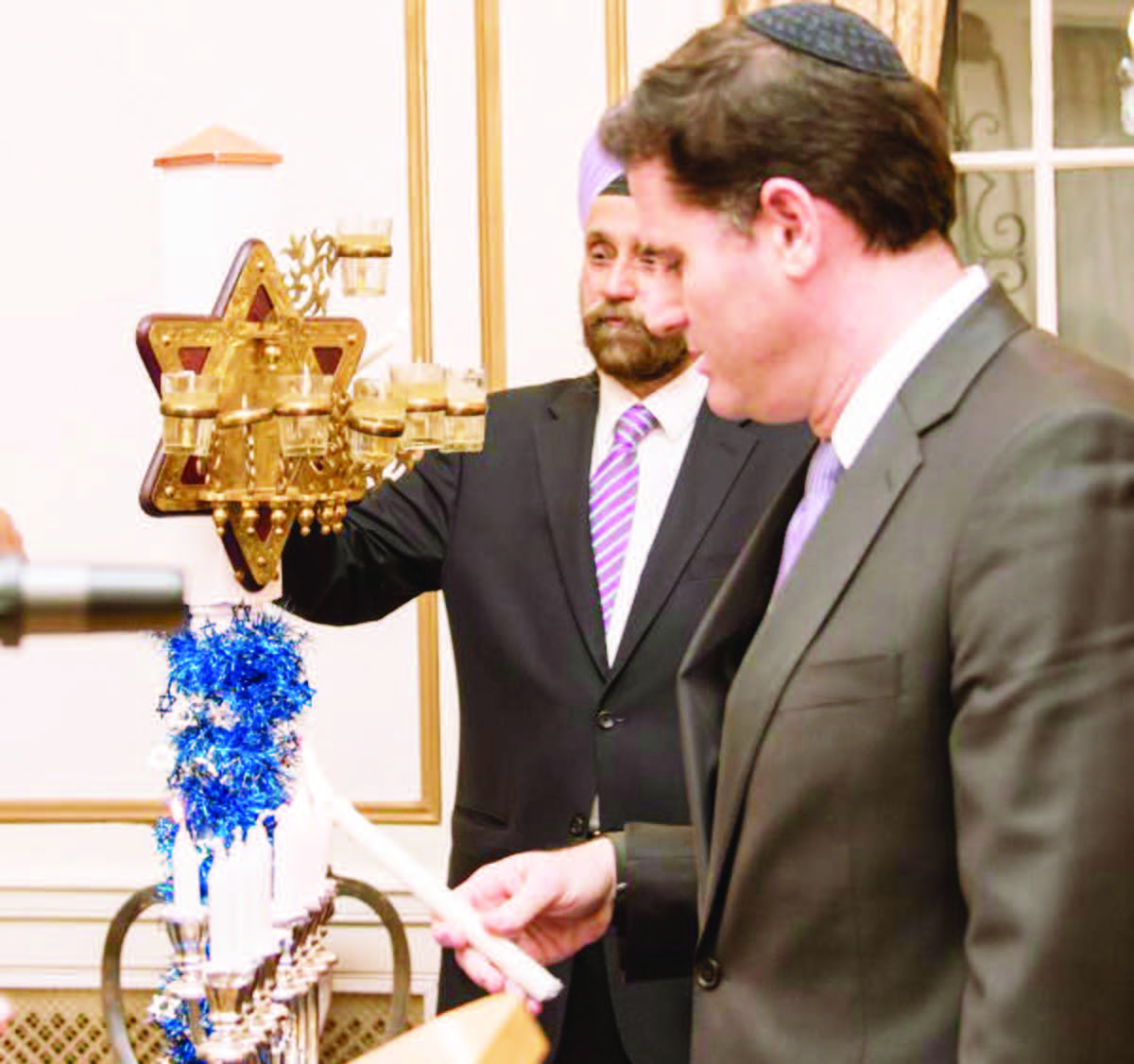
    WASHINGTON (TIP): Embassy of India organized celebration of the Jewish festival of Hanukkah at Indian Ambassador Navtej Sarna’s residence on December 19, 2016. The event was attended by around 200 guests including leading members of the Jewish community, representatives from US Administration, Congressional staff, business, think-tanks and media. The event has been held at the Indian Embassy for the last 15 years. Following the lighting of the Menorah, Ambassador Sarna evoked the rich and historic Jewish tradition in India and the continued deepening of bilateral ties as reflected in the recent high-level exchanges of visits. In his remarks,

    Ambassador Ron Dermer, Ambassador of Israel to the US described the gathering as a celebration of the remarkable history of both our nations. He noted the truly unique ability of both Israel and India to balance the currents of globalization while preserving their identity. Also, both countries face the threat of terrorism.

    Mr. Stanley Bergman, Honorary President of American Jewish Committee recalled his growing years in South Africa where they celebrated Diwali and Hanukkah together. Congressman-elect from Maryland, Jamie Raskin emphasized that this was a celebration of freedom and democracy. Other speakers referred to the strengthening India-US relationship based on democratic traditions and human values.

  • A Renewed Push for Elusive Diwali Stamp

    A Renewed Push for Elusive Diwali Stamp

    Congresswoman Maloney calls on President Obama to support Diwali stamp on his upcoming trip to India; announces introduction of congressional resolution in support of stamp


    NEW YORK CITY (TIP): Congresswoman Maloney (NY-12), the Consul General of India in New York Ambassador Dnyaneshwar M. Mulay, Chair of the Diwali Stamp Project Ranju Batra, and Chair of the National Advisory Council of South Asian Affairs Ravi Batra on January 16 gathered at the Indian Consulate to encourage the United States Postal Service to issue a postage stamp to commemorate the holiday Diwali. Maloney on Jan 14 wrote to President Obama urging him to support a Diwali stamp when he visits India next week.


    “Although Diwali holds a great significance for many Americans and well over a billion people across the globe, the United States Postal Service has still not recognized this beautiful festival of lights with a commemorative stamp, although it has done so for other major religious and cultural holidays such as Christmas, Hanukkah, Kwanzaa, and Eid,” said Congresswoman Maloney. “It is time for the USPS to step up and recognize the importance of this holiday in the lives of many of our citizens by issuing a commemorative stamp. A relatively small action would hold great meaning for millions of people and I think it would be historic if President Obama would announce his support for a Diwali stamp during his upcoming trip to India”


    ”Diwali is a festival that is integral to the life of every person of Indian ancestry irrespective of whether the person lives in India or abroad,” said Consul General Mulay. “It bonds together a billion people all over the world who celebrate the uplifting spirit behind the lighting of lamps – Diwali. The Diwali stamp by the United States shall definitely add to the already existing good will and strengthen the relations between our two countries. The laudable effort by Ranju Batra and Congresswoman Carolyn Maloney, and all others of goodwill supporting this focused effort, is a welcome gesture that is bound to bring cheer to everybody invested in the India-US relationship.”


    “We have gathered thousands upon thousands of signatures, letters and petitions, said Ranju Batra. “Apparently, what we have done so far has not been enough to get the Diwali Stamp issued. We are going to continue our efforts, with grassroots’ support, and won’t stop until we get it.”


    “USPS can no longer ignore Hinduism and the calls for a Diwali Stamp from the Hindu community and our dear friend and champion, Congresswoman Carolyn Maloney,” said Ravi Batra. “This year, the Diwali Stamp will be approved – US Postmaster General Patrick R. Donahoe has to be reminded that they are currently in violation of a core Constitutional obligation of government – ‘Equal Protection of the Law.’”     


    Shiv Dass, President of Jackson Heights Indian Merchants’ Association recalled his effort in 2003 to have a Diwali stamp issued. He said his friend Congressman Joe Crowley had tried to have the stamp issued but the effort proved abortive. He said he was happy that Ranju Batra had revived the demand and Congresswoman Maloney and community leaders were supportive of the demand. He appreciated the  role of Ambassador Mulay in encouraging the community to come together in support of Ranju Batra and Congresswoman Maloney.


    On January 14, 2015 Congresswoman Maloney introduced H. Res. 32, urging the USPS to issue a commemorative holiday stamp for Diwali. For several years, Congresswoman Maloney has headed efforts in Congress to push the Citizens Stamp Advisory Committee (CSAC) to consider issuing a commemorative Diwali stamp. In 2013, Congresswoman Maloney introduced H.Res. 47, expressing the sense of the U.S. House of Representatives that the CSAC should issue a Diwali stamp. The bill had 46 cosponsors. Maloney wrote letters to the CSAC in 2010 and 2012 requesting the same action.

  • HANUKKAH

    HANUKKAH

    Afestival is a collective celebration of an achievement in a given community. The Festival of Hanukkah is a Jewish celebration, and it is celebrating the recovery and re-dedication of the Jewish Temple in Jerusalem in 165 B.C. Hanukkah is spelled in many different ways in case you want to Google it; Hanuka, Chanukah, Chanuka, Hanuka, Hanukka and other variations. Hanukkah is celebrated for eight days and nights. It is also called the festival of lights. It starts on the 25th of the Jewish month of Kislev each year. The actual date differs due to the lunar calendar.

    It is about 11 days earlier in each successive year. The Jews, Muslims and some Hindu festivals follow the moon for observing their holidays and the date is different every year. This year the festivities will begin with the lighting of Menorah on Thursday, November 28th and will continue thru December 5, 2014. This year, I found one of the best pieces written by Rabbi Michael Lerner, who and I met in Melbourne, Australia and have kept up writing to each other since then. Rabbi Michael Lerner wrote about Chanukah, describing it as “the holiday celebrating the triumph of hope over fear, light over darkness, and the powerless over the powerful.”

    He went on to say that Chanukah is about “understanding that when we connect with the transformative power of the universe, the Force of Healing and Transformation, YHVH, we become aware that the powerless can become powerful, that oppression of any sort is in contradiction to the fundamental nature of human beings as loving, kind, generous, free, creative, intelligent, attuned to beauty, caring for and needing each other beings created in the image of God. When that energy and awareness permeates our consciousness, no ruling elite and no system of exploitation can possibly last for very long.”

    The Hanukkah Story

    Here is a story I received in email that tells the story and significance of Hanukkah. In 168 B.C.E. the Jewish Temple was seized by Syrian-Greek soldiers and dedicated to the worship of the god Zeus. This upset the Jewish people, but many were afraid to fight back for fear of reprisals. Then in 167 B.C.E. the Syrian-Greek emperor Antiochus made the observance of Judaism an offense punishable by death. He also ordered all Jews to worship Greek gods. Jewish resistance began in the village of Modiin, near Jerusalem.

    Greek soldiers forcibly gathered the Jewish villages and told them to bow down to an idol, and then eat the flesh of a pig – both practices that are forbidden to Jews. A Greek officer ordered Mattthias, a High Priest, to acquiesce to their demands, but Mattthias refused. When another villager stepped forward and offered to cooperate on Matthias’ behalf, the High Priest became outraged. He drew his sword and killed the villager, then turned on the Greek officer and killed him too.

    His five sons and the other villagers then attacked the remaining soldiers, killing all of them. Matthias and his family went into hiding in the mountains, where other Jews wishing to fight against the Greeks joined them. Eventually they succeeded in retaking their land from the Greeks. These rebels became known as the Maccabees, or Hasmoneans. Once the Maccabees had regained control they returned to the Temple in Jerusalem. By this time it had been spiritually defiled by being used for the worship of foreign gods and also by practices such as sacrificing swine. Jewish troops were determined to purify the Temple by burning ritual oil in the Temple’s menorah for eight days.

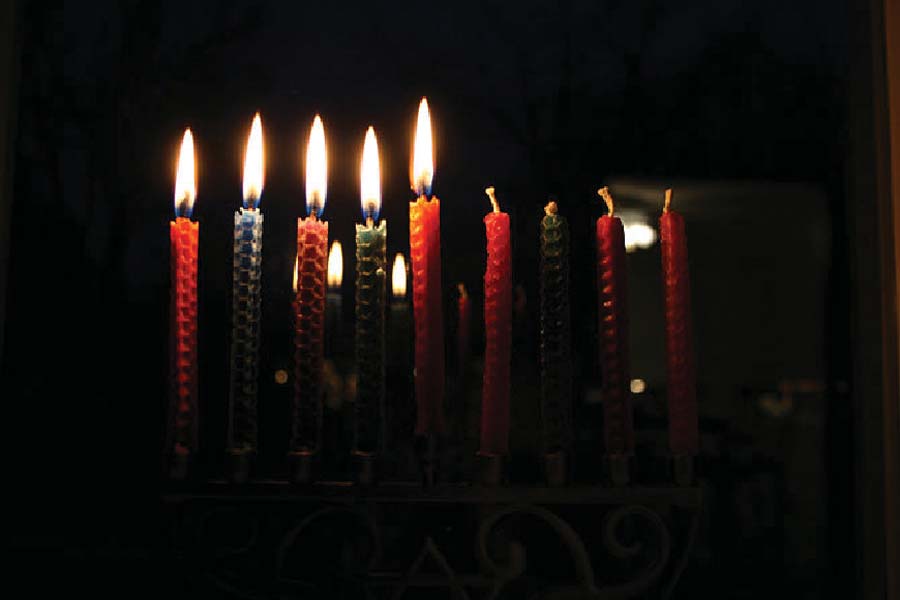
    But to their dismay, they discovered that there was only one day’s worth of oil left in the Temple. They lit the menorah anyway and to their surprise the small amount of oil lasted the full eight days. This is the miracle of the Hanukkah oil that is celebrated every year when Jews light a special menorah known as a hanukkiyah for eight days. One candle is lit on the first night of Hanukkah, two on the second, and so on, until eight candles are lit.

    Significance of Hanukkah
    Muslims, Hindus, Buddhists and others have figured out a way to keep their children in the joyous mood of receiving gifts, so they have their own version of Christmas. Similarly, Jewish children receive gifts for Hanukkah – often one gift for each of the eight nights of the holiday. Many parents hope that by making Hanukkah extra special their children won’t feel left out of all the Christmas festivities going on around them. America is an amazing land!


    26

    Hanukkah Traditions
    Every community has its unique Hanukkah traditions, but there are some traditions that are almost universally practiced. They are: lighting the hanukkiyah, spinning the dreidel and eating fried foods. Get a Hanukkiah. The most basic thing you need to celebrate Hanukkah is a 9- branched candelabra, called a Hanukkiah (or often a Menorah, although technically aMenorah is a 7-branched candelabra), and candles. Eight of the branches represent the eight nights, while the last one (at a different height, usually higher than the rest) is called theshamash or helper candle, and is used to light the rest of the candles. The Hanukkiah is usually lighted at or right after sunset.

  • DFW Diwali Mela a Smashing Hit- 50,000 plus Celebrate

    DFW Diwali Mela a Smashing Hit- 50,000 plus Celebrate

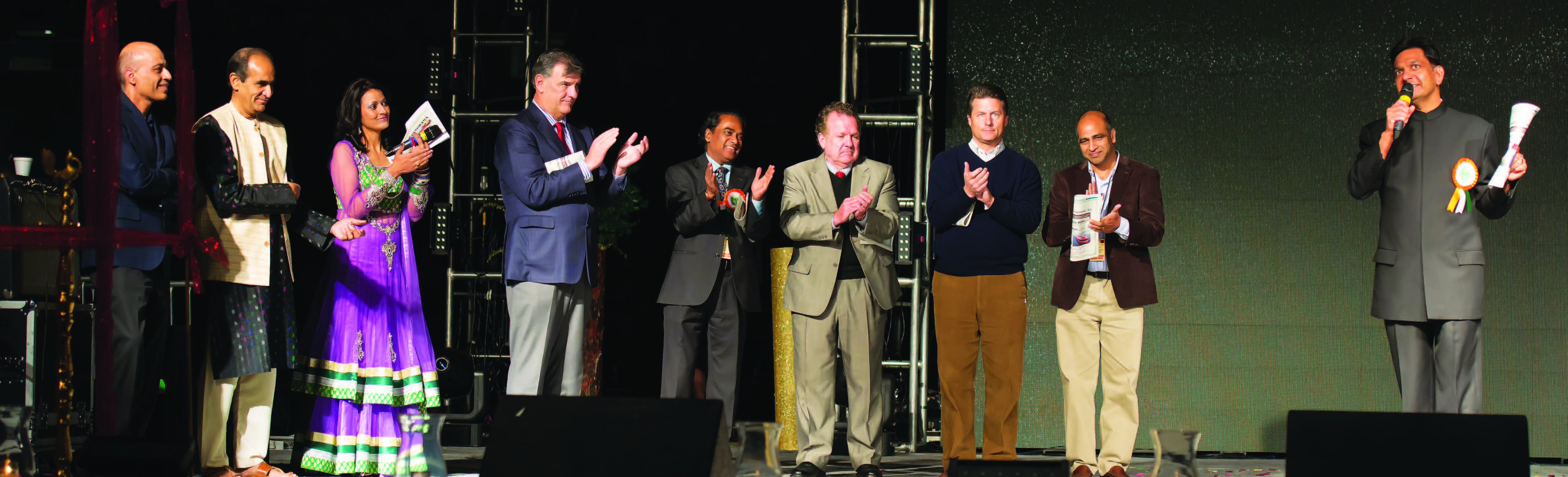
    DALLAS (TIP): A mammoth gathering of enthusiastic Indian Americans to celebrate the festival of India- Diwali- must have hugely pleased the organizers- the DFW Indian Cultural Society who have been working hard to put in place an event which has made history. 50,000 plus. In the last eight years, since Satish Gupta, the present President of DFW Indian Cultural Society moved the Diwali Mela out of his house where for years he has been celebrating the event with community, the mela has been growing in proportions. With every passing mela, the organizers learnt from their experience and over the years have perfected the art of organizing well such a massive event. I was pleasantly surprised when I received a letter, addressed to all sponsors and booth holders from one of the organizers, Mr. R.K. Panditi, expressing the gratitude of the organizers and being almost apologetic for any deficiencies that they may have come across. I feel tempted to quote it ad verbatim, because I would let my reader know how humble even in success the organizers are. A lesson that may do good to many. It reads:


    img2

    EXPERIENCE LEADS TO PERFECTION

    To achieve the level of success is only possible with the help of a dedicated team of people and more importantly the support of all the participants, booth vendors (Food and Non-Food), Sponsors and well wishers who contribute with one aim i.e. the success of this Gigantic Mela without any expectations or personal boundaries. For each one of them their participation and presence was more important. Whenever the food and non-food booths are assigned, it is always a major challenge and certain people are set in their mind that the assignment given was not a good spot or sometimes the crowd would not attract their booth for whatever reason. We want to assure each one of you that DFWICS makes every effort to give their best with one thing in mind that is your success, because your success is the success of our entire community at large.

    Help and support received from all the booth owner’s is greatly admired despite the fact that some of them could not get the returns or results as they expected but each one of you made sure and gave hundred percent of your presence and support. Your dedication and support is recognized and appreciated by the entire community and DFWICS. We have learned a lot more to make it better next time. This year we were able to give all the vendors their entry passes in advance except the out of town folks. Next year we want to assure you all out of town booth owners will receive the best and would get the hospitality that would be second to none.

    That’s a promise. Everyone appreciated the barricades set in front of food booths for proper lining without any chaos. Finally, we are climbing the ladder of becoming better than best with each one of your sincere support and participation. You all make a difference. Thanks a million. On behalf of DFWICS RK Panditi & team Nitu Singhal who was a master of ceremonies at the Mela has this to say about the Mela. 5F’s- Food, fun, festivities, fireworks and fans is how we can best describe the Diwali Mela 2013 of Dallas Fort Worth Indian Cultural Society (DFWICS), that was celebrated at the Cotton Bowl Stadium on November 2. “We like how DFW celebrates Diwali promoting our Indian culture. We are so far away from our motherland but with such active participations we do not feel an inch of separation from our families.


    img3

    Thanks DFWICS for doing this”, says Mr. Arun Agarwal who visits every year with his ten and six year old kids. Speaking with The Indian Panorama, Mr. R.K. Panditi said that a record 50,000 to 52,000 persons visited the Mela where there were 146 booths. Educational institutions, like University of Dallas, media, entertainers and sellers of wares of different type, including food of a diverse variety were a part of the grand mela. The organizers clubbed Dussehra and Diwali festivities. Thus a Ram Lila was enacted before the fireworks heralded the spirit of Diwali. The scenes of Rama vanquishing Raana and returning to Ayodhya, with his wife Sita and brother Lakshaman were the culmination of Ramayana.

    It was followed by Ravana dahan (burning the effigy of Ravana) followed by exquisite fireworks. A Bollywood entertainment segment is the sine qua non of any successful event in the US. The organizers made sure that the craze was well satisfied. The star entertainers were Monali Thakur and Aayushman Khurana who captured the moment with their spellbinding performances. Monali, an Indian idol, comes of a Bengali family. She made her mark in Bollywood with playback singing. Born in a family of singers, music runs in her blood. This cutest singing diva is making her career now as an actress in upcoming movies Lakshmi and Mango. TheChandigarh boy, Aaayushman Khurana made his Bollywood debut in the movie Vicky Donor two years ago and received many accolades for his performance. He is a rare combination of a singer and an actor.,

    Kishore Kumar He has won the Filmfare Award for Best Male Playback Singer and Best Male Actor. Having worked in many radio and TV shows, this uprising star was worth watching and hearing. Earlier, Mike Rawlings, Mayor of City of Dallas, some other dignitaries that included Thomas W. Keefe, President of University of Dallas, and DFW Indian Cultural Society office bearers led by the president Satish Gupta lighted the lamp to do the formal inauguration of the Diwali Mela. The Mayor also launched on the occasion the first ever Indian American English weekly newspaper The Indian Panorama. He congratulated the publishereditor Prof. Indrajit S Saluja for the “commendable service ” he was doing to the community. So much for the Diwali Mela.


    img4

    But our correspondent was curious to know how the mela got started and who was responsible for starting it. So, she went to the DFW Indian Cultural Society President Satish Gupta who has been organizing the now legendary Diwali mela for the last many years. This is what she writes about Satish Gupta. Now we talk about this man who grew up near Delhi but traveled throughout India before he landed up in USA and that too at a very young age. DFW ICS President Mr. Satish Gupta in an exclusive interview to the correspondent told her that growing up in Delhi was definitely fun filled especially the Diwali celebrations around October-November. They started preparing for the festivities 2-3 weeks in advance before the actual day of Diwali.

    Preparing sweets, visiting relatives, rangoli designs, lighting the diyas (earthern pots used specially at this time of the year for this festival), buying new clothes, Ramlila, fireworks and last but not the least, a very happy atmosphere that lightens up the whole mood are the peak highlights of Diwali festival in India. “Our kids in particular missed all the festive mood here while being in USA. Temples have given their best and tried hard to establish a room whereby our kids get a medium to perform and get to know our culture. However, we needed a much bigger platform where our kids could come with their parents, grandparents, uncles and aunties, friends and relatives from all over and enjoy all these festivities under one roof.

    So definitely we needed much bigger space and lot more accommodation to cope up with everybody’s needs”, says Mr. Satish Gupta. During the entire interview, Mr. Gupta kept emphasizing that putting together everything is primarily for kids that are born in USA because they really need exposure about our culture. Thus it all started from the backyard of his house where a few friends used to get together and celebrate the festival with full fervor including Ram-lila(short enactment about the life of Lord Rama-an Indian God). Slowly and steadily, the friend circle started growing and it became hard to have everybody under a roof.

    It is then that Mr. Gupta and his team decided to hold Diwali Mela eight years ago on bigger grounds so lots of families could come together and celebrate. The team was expecting around a few thousands and, to their surprise, the turnout came to be nearly 20,000. Today, after successfully holding the event for 8 years, the crowd keeps on increasing and it has come to nearly 50,000 which is not only impressive but highly commendable and appreciative. “We will bring and do whatever connects each one of us to our roots”, says Mr. Gupta. The presence of highly recognized local dignitaries on this event makes it even more memorable. Many local non-profit organizations and educational institutes have shown their co-operation and support to the entire team of Diwali Mela.

    This establishes a strong bond between different cultures not only within Indian origin but even those outside it. People are coming close and getting to know how vast and deep these roots are by spreading the word. Mr. Gupta says that they have received very positive response from all of them. They are indeed very thrilled and surprised at the fact that how close these festivities bring the families together.

    The unity and integrity is there in each one of us but become far more visible when such grand events take place. With all the participation, kids talk about it in schools so their friends and teachers also get to know the importance of Diwali, like Christmas or Hanukkah has for others. According to Mr. Gupta, there are so many Indians everywhere in this world but there is a vacuum and it needs to be filled in a wider sense. He says, “Our vision as a parent, as a guide, as a teacher, as a Hindu should be to keep our culture alive within our kids because this was the vision of our parents when we were small. Our kids need to enjoy our festivities with fun rather than feeling bored.”

  • Petitions Supporting A Commemorative Diwali Stamp Presented To Deputy Postmaster General

    Petitions Supporting A Commemorative Diwali Stamp Presented To Deputy Postmaster General

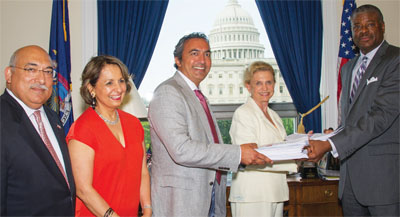
    WASHINGTON, DC (TIP): Reps. Carolyn B. Maloney (D-NY), Ami Bera (D-CA), Grace Meng (D-NY) and representatives of the Indian- American community today presented Ron Stroman, Deputy Postmaster General, with petitions signed by thousands of supporters of a commemorative stamp honoring the Indian holiday Diwali.

    Maloney is sponsor, and Reps. Meng and Bera are cosponsors of, H. Res 47, a resolution which requests that the U.S. Postal Service issue a commemorative U.S. stamp in honor of the Indian holiday Diwali, the five-day “festival of lights,” celebrated by Hindus, Sikhs and Jains around the world. “Today’s meeting with the Deputy Postmaster General is another important step on the road to a Diwali stamp,” Rep. Maloney said.

    “I am optimistic that the Citizens Stamp Advisory Commission will respond favorably to the 1300 signatures presented today, and the 400,000 signatures presented in the online campaign.” “I appreciate Deputy Postmaster General Stroman meeting with my colleagues and me today to discuss the US Postal Service issuing a Diwali stamp,” said Rep. Bera. “Introducing a Diwali stamp makes business sense, giving the USPS more revenue at a time when it’s sorely needed, and is also the right thing to do, giving this holiday-and the India American Community-the equal recognition that it deserves.”

    “The Postal Service has issued stamps for Christmas, Hanukkah, Kwanzaa and Eid and now it’s time for one to honor Diwali,” said Rep. Meng. “Diwali, the festival of lights, is observed by 1.2 billion people in over 120 countries including the United States and India. These include thousands of constituents who reside in my district which includes one of the largest South Asian populations in the country.

    Issuing a stamp would be an outstanding way to salute the tremendous contributions of Hindu and Indian Americans, and it would give Diwali the recognition that it deserves. I thank the Deputy Postmaster General for meeting with us and we will continue to keep up the fight.” Ranju Batra, chair of Diwali Stamp Project, said “I’m truly excited by today’s meeting with Deputy Postmaster General Stroman. Rep. Carolyn Maloney’s durable national leadership is bearing fruit.

    I’m also grateful for the support of Rep. Grace Meng along with Rep. Ami Bera for attending today. Rep. Tulsi Gabbard has worked hard to support Carolyn’s HR47. I was delighted to have the letter-petitions presented to DPMG Stroman and have Carolyn read out loud Ambassador Mulay’s poem, ‘Towards Diwali Stamp,’ now the official poem of the Diwali Stamp Project.We are closer than ever before, and we will not stop until our Diwali Stamp is issued.

    ” Ravi Batra said, “Ron Stroman is a serious public official, who comprehends the compelling need to issue the Diwali Stamp, consistent with CSAC’s necessary merit-driven independent judgment, and I applaud Carolyn Maloney’s tireless leadership and Ranju’s limitless work ethic in driving the Diwali Stamp to critical mass – with scores of members of congress supporting, including Tulsi and Ami – and now an official poem too.

    When the USPS decides, sooner rather than later, to issue the Diwali Stamp ‘E Pluribus Unum’ shall include Hindu-Americans too.” As part of the campaign for the Diwali stamp, Maloney asked Dnyaneshwar M. Mulay, the Consul General of India in New York, to write the following poem, “Towards Diwali Stamp” in support of the campaign: “Towards Diwali Stamp” Brighten up the world Light up the nearest Lamp Stamp out clouds of darkness Bring in the Diwali Stamp.

  • Congresswoman Maloney Seeks A Diwali Stamp: CG Calls For Community Support

    Congresswoman Maloney Seeks A Diwali Stamp: CG Calls For Community Support

    NEW YORK (TIP): Congresswoman Carolyn Maloney spoke before the Consul General of India, in New York, July 8 to urge members and leaders in the Indian American communities to continue supporting an effort to get the Citizen’s Stamp Advisory Committee (CSAC) of the United States Postal Service (USPS) to issue a commemorative Diwali stamp. “It is high time the USPS issues a Diwali stamp.

    Diwali, also known as the Holiday of Lights, marks the triumph of good over evil, light over darkness and the beginning of the Hindu New Year. It is one of the oldest and most storied religious holidays in the world, and is celebrated by people of several faiths. There are commemorative stamps for Christmas, Hanukkah, Eid and more. Issuing a Diwali stamp would officially recognize the size and significance of the country’s Indian American population, which comprises over three million people, and would provide the USPS with sorely needed revenue,” Maloney said.

    For several years, Maloney has headed efforts in Congress to push the CSAC to consider issuing a commemorative Diwali stamp. In January, Maloney introduced H.Res. 47 that the CSAC should issue a Diwali stamp. She wrote letters to the CSAC in 2010 and 2012 requesting the same action. Ranju Batra, a former President of the Association of Indians in America – NY, who attended the event at the Indian Consulate, is a close friend of Congresswoman Maloney and was a major catalyst in the effort to get the Diwali stamp issued.

    She asked that Congresswoman Maloney provide national leadership on the effort, and Congresswoman Maloney obliged her request by remaining strongly dedicated to the issue. Aside from the cultural significance of the Diwali stamp, there are economic benefits associated with its issuance. There are over 3 million Indian Americans residing in the United States and over 1 billion Indians living in India.

    The sale of the Diwali stamp could provide the USPS with a much-needed revenue surge. The meeting was held to urge supporters and members of the Indian American communities to contact their members of Congress and the CSAC and express support for the issuance of a Diwali stamp. Speaking on the occasion, Ranju Batra said, “When I took over as president of AIANY, I set two goals: To make the 25th Silver Diwali celebrations history-making, and they were, and to laser-focus on getting the Diwali Stamp issued.

    I asked my dear friend Congresswoman Carolyn Maloney to take the lead in Congress. I am so delighted to have the support of Reps. Eliot Engel, Steve Israel, Greg Meeks, Yvette Clarke, Grace Meng, and others. Worthy of special note is the support from Reps. Ami Bera and Tulsi Gabbard. The time is now to get as much support as possible, as the USPS’ CASC will make its recommendations later this month.

    We need each of you and every media outlet to help get the word out: call your Congress member and ask them to sign on to H. Res. 47 now. If we do this, together, we have the chance to get the Diwali Stamp issued this year,” said Ranju Batra, Chair of the Diwali Stamp Project and immediate past President of the Association of Indians in America-NY.

    “The target audience of the Diwali stamp is over 5 million Americans of South Asian and Caribbean ancestry, along with over 1 billion Hindus across the world. The sale of Diwali Stamps would be a much-needed source of revenue for the US Postal Service in tough economic times. It will reduce the Postal Service’s need to always raises postage rates for everyone, while finally acknowledging Hindus here at home and abroad,” said Ravi Batra, an attorney and chair of the National Advisory Council on South Asian Affairs.

    “This laudable initiative by Ms. Ranju Batra seeks not only to embellish the great American democracy in its embrace of pluralism and diversity but also because Diwali commemorates civilizational values of respect for women’s rights and their empowerment which the United States also tries to advance everywhere. On the occasion of Diwali, Goddess Lakshmi — symbolizing prosperity and well-being of humanity — is worshiped, as is the triumph of good over evil and light over darkness, which she brings about, is celebrated.

    I wish Ranju and Congresswoman Carolyn Maloney every success in their endeavor, which will not only strengthen the cultural and people-to-people links between the democracies of India and United States, but also mark their dedication to the cause of gender equality and women’s empowerment,” said Lakshmi Puri, Acting Executive Director of UN Women.

    Mr. D. Mulay, the Consul General of India in New York lauded the efforts of Ranju Batra and Congresswoman Maloney and stated that Diwali is a secular festival celebrated by all Indians and it will be appropriate for the US Postal department to issue a Diwali commemorative stamp. He appealed to the Indian American community to support the Diwali stamp initiative of Ranju Batra and Maloney.

  • U.S. Reps. Maloney And Meng, Leaders Of South Asian Communities Rally Support

    U.S. Reps. Maloney And Meng, Leaders Of South Asian Communities Rally Support

    NEW YORK, NY (TIP): CongresswomanCarolyn Maloney (D-Manhattan andQueens) joined Congresswoman GraceMeng (D-Queens) and South Asiancommunity leaders led by Ranju Batra,President of the Association of Indians in America-NY to rally grass-roots supportto press the Citizens Stamp AdvisoryCommission of the U.S. Postal Service toissue a postage stamp to honor Diwali, the”festival of lights” observed by Hindus,Sikhs, Christians, Jains, and Buddhists inIndia, the United States, and around theworld.

    “Diwali is an important spiritual andcultural festival along with other majorreligious holidays for which stamps areissued, such as Christmas, Kwanzaa,Hanukkah, and Eid, and it merits similarrecognition,” said CongresswomanMaloney.”Diwali – which literally translatedmeans ‘row of lights’ – is a festive andimportant Indian holiday that also signalsthe start of the Hindu New Year. As one ofthe world’s oldest religious holidays, itserves not only as a time for celebration,but also as an occasion for communitiesand families to convene in spiritual enlightenment.

    The practice of Diwali hassurvived political, economic and socialchanges throughout history, while alwayscarrying the universal symbolism of thevictory of light, goodness, knowledge andtruth.” Congresswoman Maloney said.Ranju Batra said “When I took over aspresident of AIA-NY, I set two goals: Tomake the 25th Silver Diwali celebrationshistory-making, and they were, and tolaser-focus on getting the Diwali Stampissued. I asked my dear friend Rep. CarolynMaloney to take the lead in Congress. I amso delighted to see Congresswoman GraceMeng here in person, and to have thesupport of Steve Israel, Ami Bera and Tulsi Gabbard.

    We need everyone who supportsreligious freedom and mutual respectamongst neighbors to sign on. We nowfinally have a strong core group to make ithappen.”Ravi Batra, attorney and chair ofNational Advisory Council on South AsianAffairs who emceed the meeting, added,”The target audience of the Diwali stampisn’t just 3 million Indian-Americans butover 1 billion in India alone. The sale of aDiwali Stamp would be a much-neededsource of revenue for the US Postal Servicein tough economic times. It may reduceUSPS’ need to raise first class rates for all.”

    “The Postal Service has issued stamps forseveral major religious holidays and nowit’s time for them to do the same forDiwali,” said U.S. Rep. Grace Meng. “Creating a Diwali stamp would be anoutstanding way to recognize and celebratethe vibrancy of the Hindu American andIndian American communities, and salutethe traditions and tremendouscontributions that they’ve made to ournation. Diwali deserves its own stamp, andI’m pleased to join my Congressionalcolleagues in urging the Postal Service tocreate one.”Congressman Steve Israel echoed thesentiments of his fellow New Yorkers,saying “I am proud to cosponsor thisresolution urging the Postal Service toissue a stamp that would recognize thefestival of Diwali, commonly known as the’festival of lights.’

    The holiday embodies theessential lessons of good triumphing overevil and embracing one’s inner light. Today,I join my colleagues to call on the Citizens’Stamp Advisory Committee to give Diwalithe recognition it deserves and issue acommemorative stamp.”India’s Permanent Representative to theUnited Nations, Ambassador HardeepSingh Puri and Ambassador LakshamiPuri, Deputy Secretary General, Women atthe United Nations also spoke.Others who addressed the gatheringincluded Mayor Ernie Davis, KamleshArya, a former President of AIA, NY andNew York City Council Member LetitiaJames.

    Indian-American Congressman AmiBera, in his statement, said “Diwali is oneof the world’s oldest religious holidays. Itcelebrates goodness and truth and isobserved by people from differentbackgrounds all across the United Statesand around the world. We should honor itsplace in our country’s tradition of religiousdiversity with a postage stamp, as we havedone for many other religious holidays. “Co-host of the lunch meeting SudhirVaishnav, President and CE of GlobosatEntertainment proposed a vote of thanks.

    Background:Diwali traditionally marks the lastharvest of the year before winter and overtime has come to also mark the first day of the new financial year in India. This”festival of lights” marks the triumph ofgood over evil, light above darkness, andinsight and knowledge over ignorance anddisregard. Diwali is celebrated byadherents of many faiths across the world.Congresswoman Carolyn Maloneyintroduced House Resolution 47 on January25th of this year to urge the Citizens’ StampAdvisory Committee, an entity of theUnited States Postal Service, to issue acommemorative stamp in honor of thefestival of Diwali.

    The bi-partisan and bicoastalresolution is co-sponsored byIndian-American Congressman Ami Bera(CA-07), Hindu-American Tulsi Gabbard,(HI-02), and by several members of the NewYork Congressional Delegation includingRep. Grace Meng (NY-06), Rep. Joe Crowley(NY-14), Rep. Steve Israel (NY-03) and Rep.Peter King (NY-02).Founded in 1967, the Association ofIndians in America is the oldestorganization of Indians in the country. TheNew York chapter is a microcosm of theextraordinary diversity of the Indiancommunity in the New York area, withmembers of all regions and religions ofIndia represented across the tri-stateregion.

    AIA prides itself on its tradition ofopenness and respect for persons of allreligious faiths, with members, as well as awide range of professions, backgroundsand occupations. AIA’s New York chapterperforms countless acts of public serviceand philanthropy, reflecting its motto,”Indian Heritage and Americancommitment.” Indeed, AIA-NY celebratedits history-making 25th Silver Diwali with adinner at the Pierre and the festival at theSouth Street Seaport, the largest suchcelebration in North America.

  • Rep. Tulsi Gabbard Cosponsors Commemorative Diwali Stamp Resolution

    Rep. Tulsi Gabbard Cosponsors Commemorative Diwali Stamp Resolution

    WASHINGTON (TIP):Congresswoman Tulsi Gabbard (HI-02) this week cosponsored a HouseResolution calling for the U.S.Postal Service to establish a postagestamp to commemorate Diwali, the”festival of lights” marking theHindu New Year. Diwali is observedby Hindus, Christians, Jains, Sikhs,and Buddhists in the United States,India, and around the world.”The Diwali festival honors selfawareness,righteousness, andservice to others before ourselves,”said Congresswoman Tulsi Gabbard,who is the first Hindu-American toserve in the U.S. Congress.

    “Thisyearly festival is a time to celebratethe triumph of goodness and truth,and to reflect on the year. It is onlyappropriate that we commemoratethis widely observed holiday and itsplace in our nation’s rich tapestry ofreligious and cultural diversity.”Diwali, celebrated in October or November annually,originated as a celebration of the last harvest of the yearbefore winter. Indians around the world celebrate withfamily gatherings, glittering clay lamps, festive fireworks,strings of electric lights, bonfires, flowers, sharing ofsweets, and worship to the goddess Lakshmi.

    The resolution (H.Res.47) calls on the Citizens’ StampAdvisory Committee, an entity of the U.S. Postal Service, toissue a Diwali stamp, as it has done for other popularreligious celebrations in the United States such asChristmas, Eid, Kwanzaa, and Hanukkah.

  • Ambassador Prabhu Dayal A Job Well Accomplished

    Ambassador Prabhu Dayal A Job Well Accomplished

    It is not easy to describe a man who has so many attributes of near perfection. A brilliant student, an accomplished sportsman, a forceful debater, a successful career diplomat, a loving husband, a doting father and a friend of friends. That, to some extent, describes Mr. Prabhu Dayal. Ambassador Prabhu Dayal has been heading the Indian Consulate in New York since September 2008. The New York Consulate is one of the most important and prestigious Diplomatic Missions of the Government of India and its jurisdiction covers Connecticut, Maine,

    Vermont, Massachusetts, New Hampshire, New Jersey, New York, Ohio, Pennsylvania, ,Puerto Rico, ,Rhode Island and Virgin Islands. Says Ambassador Dayal about his posting in New York, ‘This assignment gives me the opportunity to interact with the creme de la creme of New York — including people from the world of business, finance, media, culture, politics etc. Iam delighted that so many Americans of Indian origin have done so well in the United States and made their countrymen back home proud of their achievements:’ India has always chosen a senior and experienced diplomat to head the New York Consulate. Prabhu Dayal joined the Indian Foreign Service in 1976 and has served in a number of high-ranking positions including as Ambassador to Morocco (2004- 2008),Ambassador to Kuwait (1998- 2001) and Consul General in Dubai (1994-1998). His other postings have been to Egypt, Pakistan,, India’s Permanent Mission in Geneva and Iran. He is of the rank of Secretary to the Government of India ,and is one of the senior-most Foreign Service officers of India.

    During his tenure in New York, ,he has tactfully handled some of the ticklish issues that arose concerning NRIs (Non-Resident Indians) and PIOs (People of Indian Origin) such as the requirement of cancellation of Indian passport requirement for OCI/PIO cards and hike of surrender fee and its revocation. He oversaw the outsourcing of some of the consular functions to improve efficiency and convenience of people seeking consular services. And, of course, he is the gracious host to frequent visits of Indian ministers and dignitaries, particularly in September/ October when the United Nations General Assembly is in session. Dayal has a refreshing style of functioning and reaching out to the community. He is accessible and obliges as and when possible when invited to grace community events as a guest or honor or to address conferences and conventions. But what Indians in Tri-State area are grateful to Ambassador Dayal for is introducing a number of cultural events and holding of Indian festivals besides the mandatory celebration of Republic Day and Independence Day.

    In his own words, “,India has a rich culture, and not only Indian Americans but other friends of India here like to avail of opportunities to attend cultural events”. “We have been inviting a number of prominent artistes to perform at the Consulate from time to time under the “Jewels of India” series. Prominent artistes who have performed under the series include Ustad Amjad Ali Khan, Anup Jalota, Sivamani and Sujata Mahapatra. We also celebrate various Indian festivals such as Diwali, Dussehra, Eid, Baisakhi, Hanukkah and Christmas. These events reflect the cultural diversity of India and provide members of Indian community and friends of India, regardless of religion, an opportunity to take part in them. The idea is to promote unity in diversity”, says Dayal Ambassador Dayal is all praise for the Indian American community. Indian Americans have served as a bridge of friendship between India and the US. .They have become patriotic Americans while remaining proud Indians at the same time. They have left Indian shores but have retained their Indianness. It has been correctly said that ‘you can take an Indian out of India, but you cannot take India out of an Indian’. “My message to the community is that they should continue to do the wonderful work which they have been doing to bring India and America closer.” Born in 1953, Dayal holds a Masters Degree in Political Science from Allahabad University where he was amongst the toppers. He taught for a while before joining t the Indian Foreign Servicein1976. He is married to Mrs. Chandini Dayal and the two have a son, Akshay Dayal and a daughter, Akansha Dayal. Post superannuation, Dayal plans to play golf and bridge, relax and write a book detailing his experiences as a diplomat.

  • Indian Consulate says Happy Holidays

    Indian Consulate says Happy Holidays

    NEW YORK (TIP): The Indian Consulate in New York, in the last few years, ever since Ambassador Prabhu Dayal took over as Consul General, has become a cultural center for the Indian American community. Over the years, from national events to important cultural events in the lives of Indian Americans have come to be celebrated with equal respect and fervor.

    The month of December saw two of these events. One, celebration of the Jewish event Hanukkah on December 12, followed by a Holidays party on the 14th.At the outset, a minute’s silence was observed to pay homage to the lives lost in Newton Elementary School shootout. About 200 Indian Americans were invited who enjoyed the hospitality of the Consulate staff. The CG pointed out that the party was entirely hosted by the Consulate staff.

    The Consular staff was lovingly presented to the applauding gathering. Speaking on the occasion, Ambassador Prabhu Dayal said that he always felt happy to have the Indian American community. He told the gathering that the Consulate staff was more than willing to assist and help the community. An atmosphere of bonhomie marked the event at which Deputy CAG of India Mr. Arvind K. Awasthi and his wife Vandana were also present. They were in New York on their way back to India and were staying with Ambassador Prabhu Dayal. Mr. Awasthi and Ambassador Prabhu Dayal are old time friends.

  • Hanukkah Celebrated at the Indian Consulate

    Hanukkah Celebrated at the Indian Consulate

    NEW YORK (TIP): The Indian Consulate held a reception to celebrate Hanukkah, the eight-day Jewish celebration. Hanukkah also known as Chanukah commemorates the rededication during the second century B.C. of the Second Temple in Jerusalem, where according to legend Jews had risen up against their Greek-Syrian oppressors in the Maccabean Revolt. Hanukkah, which means “dedication” in Hebrew, begins on the 25th of Kislev on the Hebrew calendar and usually falls in November or December. Often called the Festival of Lights, the holiday is celebrated with the lighting of the menorah, traditional foods, games and gifts.

    The American Jewish Committee put together the event which was supported by Foundation for Ethnic Understanding. Speaking on the occasion, Consul General of India in New York, Ambassador Prabhu Dayal spoke of his friendly relationship with Jewish community in New York said this relationship had “grown from strength to strength”. Ambassador Dayal said that it was 20 years ago, in 1992, that India and Israel had established diplomatic relationship and over the years the relationship has grown and today Israel happens to be a India’s major partner in trade and military supplies.

    In fact, Israel is India’s second biggest arms supplier after Russia. He wished the Jewish community all happiness and prosperity on the auspicious occasion, Rabbi Marc Schneier led the prayers and the lighting of the menorah. Others to join him were the Israeli Deputy Consul General Shlomi Kofman, AJC Directors Patty Friedman Marcus and Nissim B. Reuben. India’s Consul General Ambassador Prabhu Dayal and his wife Mrs. Chandini Dayal also lighted the Menorah. The Jewish community that had turned up in strength was joined by a couple of Indian Americans who conveyed their greetings to the Jewish community.