Tag: Health

Read the latest health news, diet, fitness, medical news and healthcare tips on theindianpanorama.news/health. Get all the healthcare news, including wellness, fitness, diet and weight loss & more.

  • Dr. V. K. Raju: Proud of Ancient Indian Medical Traditions

    Dr. V. K. Raju: Proud of Ancient Indian Medical Traditions

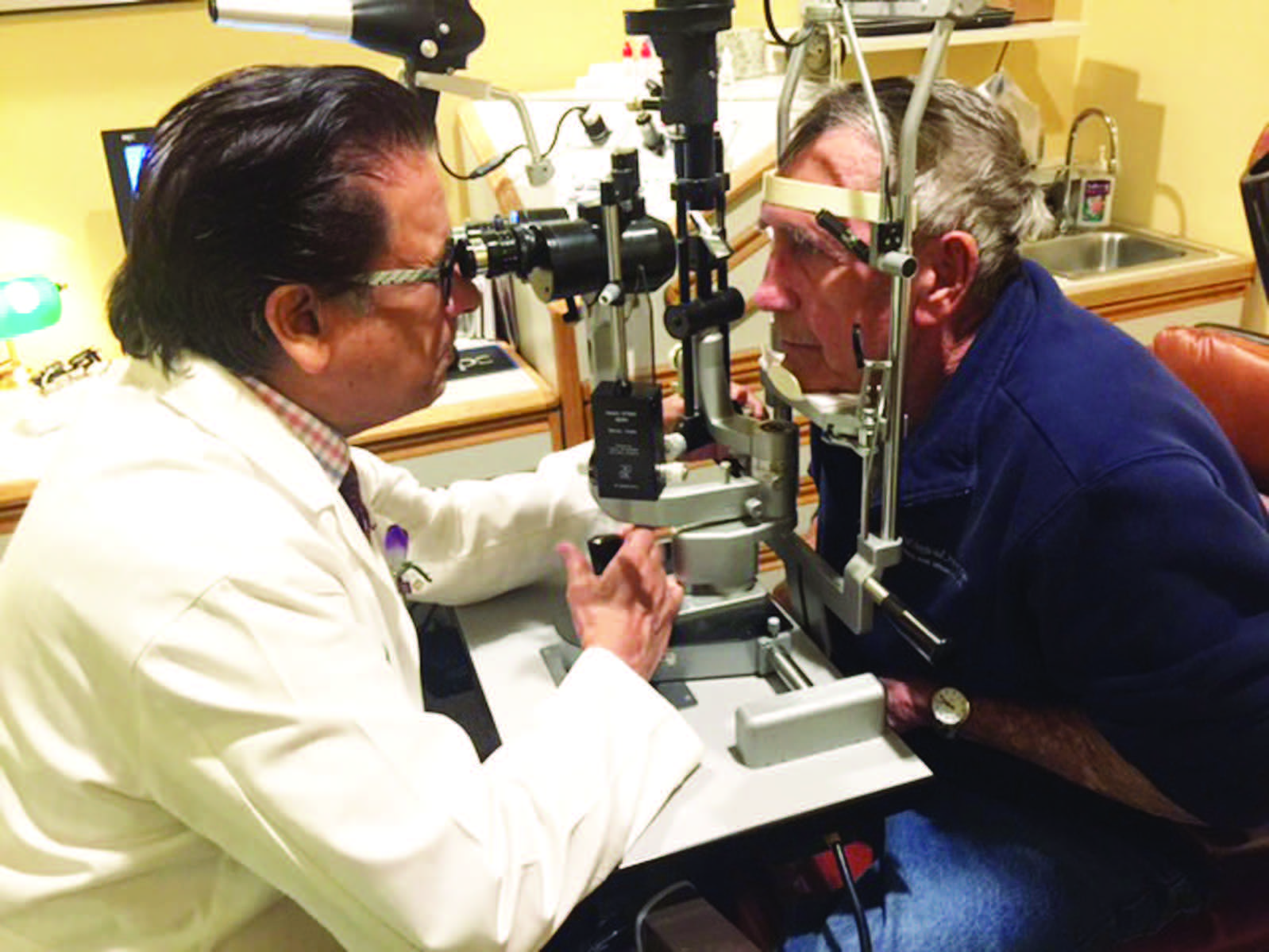
    The inside walls of Dr. V. K. Raju’s eye clinic in this picturesque town of Morgantown in West Virginia are covered with a variety of historical facts about the history of eye treatment in the world. The exhibit not only informs the visitor about the need to protect one’s vision, but also educate about major developments in the field of eye surgery in Western countries as well as in India.

    Exhibits at Dr. Raju's Eye Care Clinic
    Exhibits at Dr. Raju’s Eye Care Clinic

    Dr. Raju moved to Morgantown almost forty years ago. “This is the place I settled down after moving to America”, he said. Morgantown is situated among the hills of West Virginia offering a wide variety of natural wonders just a few miles away from the urban society. As his practice thrived in this town, Dr. Raju continued to treat his patients with care and teach at the West Virginia University. All along his journey as an eye doctor, he remained deeply committed to helping people in India, who needed help for restoring their vision.

    A native of Rajahmundry, India, Raju was educated in India, Great Britain, and the US. He serves as an adjunct clinical professor of ophthalmology at West Virginia University’s School of Medicine. “Many years ago, when I was visiting India, I met a villager who needed immediate surgery of his eyes. Unfortunately, I hadn’t carried my surgical equipment with me. I felt very sad for not being able to help him. Since then I realized the need to do much more for those who needed care for their eyes”, he recalled.

    Dr. Raju continued to visit India where he volunteered his time conducting eye camps to provided free service to patients. In order to institutionalize his efforts he established the Eye Foundation of America in 1979. Today, the foundation has touched many lives in USA and in India. “The foundation has partnered with many organizations with similar goals in order to maximized its capabilities”, he told me.

    Raju also helped found the Goutami Eye Institute in 2006, a fully equipped eye hospital in Rajahmundry, India, where a wing is dedicated to children’s eye problems. The Institute, also a teaching hospital, has trained 200 ophthalmologists, served 400,000 patients, and performed 50,000 surgeries since its operation.

    “The medical facilities are still out of reach for poor people in India”, Dr. Raju said as he was discussing the ancient traditions of Ayurveda in India. “Even today, we hear news about people losing their visions due to after surgery complications. It is not because eye camps are not capable of treating patients with eye problem. We lack after care facilities for them”, he said.

    Dr. Raju proudly talked about India’s golden age of surgery. Pointing to one of the exhibits on the wall depicting the tools used for surgeries during the ancient time of famed eye surgeon Susruta, he said, “RishiSusruta, who may be called the father of surgery due to his extensive work found in ‘Susruta-Samhita’, taught and promoted ophthalmology and cataract surgery in India way back in 600 BC. For hundreds of years India was a leader in medical practices. We have since lost most of our ancient traditions of medicine and surgery. It is sad that majorities of eye ailments have been successfully eradicated in the West while treatable eye problems leaves children blind for life”, he commented with a sad face.

    Title page of Dr. Raju's recently released book, 'Musings on Medicine, Myth, and History'
    Title page of Dr. Raju’s recently released book, ‘Musings on Medicine, Myth, and History’

    In a recently released book, ‘Musings on Medicine, Myth, and History’, that Dr. Raju authored along with his physician daughter Leela, he wrote extensively on problems faced by children and poor people in India, ‘…three quarters of the world’s blind children live in developing countries, and about five hundred thousand become blind each year. In India alone such childhood blindness results in a four billion dollar economic loss.” (Page 82)

    Dr. Raju told me that Goutami Eye Institute conducts workshops and other programs to teach its staff about new medical techniques and equipment. This program has been expanded to include physicians and medical practitioners from all over the world. Some workshops provide Continuing Medical Education (CME) credits. Fellowships available through Goutami Institute allow postgraduate physicians from India to further their education.Residents at the hospital are expected to participate in screenings during an eye camp for a day after which they examine outpatients with consultants in the clinics and gain hands-on experience with supervision in the operating room. The OR portion of this experience is geared toward 3rd year residents and 2nd year residents with previous experience in performing cataract surgery. First year residents will gain an exposure as assistants to the consultants.

    Dr. Raju can be described as a human being who touches the heart of everyone. His long time technician EJ Clark, who has been working with him for the past 30 years comments about him, “The most important thing I like about Dr. Raju is the way he cares for the children of the world. He cares for everyone and treats his patients with equal care.”

    “West Virginia is little bit like India”, Mr. Clark, who confidently said that she will retire when Dr. Raju will retire, commented about similarity among the people of West Virginia and India, “We are very friendly people. Some parts of the state is poor and need care, very much like those in India.”

    The Eye Clinic of Dr. VK Raju in Morgantown, WV
    The Eye Clinic of Dr. VK Raju in Morgantown, WV

    Dr. Raju continued to elaborate upon his vision, also posted on the wall in his office, “There are three things people need, Education, education and education.” I laughed, “Can’t agree more with you, Doc!”, I said complimenting him for his untiring services for eradicating blindness among adults in general and children in particular.

    As I lay down in bed in the night, I scrolled the pages of his book and stopped to read, “But if people around the world can remember the contributions to medicine that sages like Charaka and Susruta once made, perhaps they will be encouraged to lend their assistance to India-and India will finally enter another golden age of medicine and will once again be a world leader in the study and practice of medicine.” (Page 84)


    Can’t agree more with you, Doc!


  • HIGH-FIBRE DIET MAY CHECK ONSET OF DIABETES, FINDS STUDY

    HIGH-FIBRE DIET MAY CHECK ONSET OF DIABETES, FINDS STUDY

    A diet rich in high-fibre foods, such as fruits, vegetables, legumes and whole grains, encourages the production of short-chain fatty acids that are beneficial for the immune system and may help protect against the onset of Type 1 diabetes, a study shows.

    The findings showed that the western diet, which lacks dietary fibre affects human gut microbiota and the production of short-chain fatty acids acetate or butyrate. The specialised diet uses starches – found in many foods including fruit and vegetables – that resist digestion and pass through to the colon or large bowel where they are broken down by microbiota (gut bacteria).

    This process of fermentation produces acetate and butyrate which, when combined, provided complete protection against Type 1 diabetes, the researchers said.

    “Our research found that eating a diet which encourages the gut bacteria that produce high levels of acetate or butyrate improves the integrity of the gut lining, which reduces pro-inflammatory factors and promote immune tolerance,” said Eliana Marino researcher at Monash University in Australia. “We found this had an enormous impact on the development of Type 1 diabetes,” Marino added.

    The study, published in the journal Nature Immunology, highlighted how non-pharmaceutical approaches including special diets and gut bacteria could treat or prevent autoimmune diseases such as Type 1 diabetes.

    “The materials we used are something you can digest that is comprised of natural products – resistant starches are a normal part of our diet. The diets we used are highly efficient at releasing beneficial metabolites. I would describe them as an extreme superfood,” explained Charles Mackay, professor at Monash University.

    However, the diet was not just about eating vegetables or high-fibre foods but involved special food and a special process and would need to be managed by nutritionists, dietitians and clinicians, Mackay noted.

  • BENEFITS OF CASHEW NUT: FROM HEART HEALTH TO GORGEOUS HAIR

    BENEFITS OF CASHEW NUT: FROM HEART HEALTH TO GORGEOUS HAIR

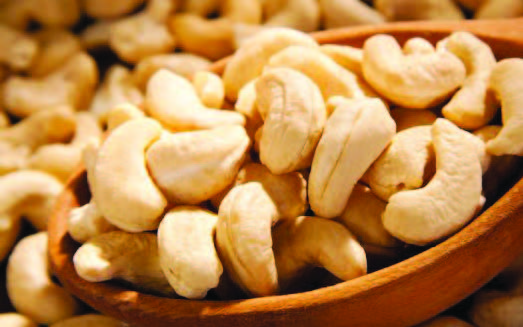
    A popular ingredient finding its way into many Indian gravies, cashew – a plant originating from Brazil, is a nut high in minerals. Brought to India by traders, the cashew tree grows up to exceptional heights having a rather irregular trunk. Hanging from the branches are large juicy apples at the bottom of which are attached the cashew nut. Made available round the year, the nut has a great shelf life if stored properly.

    The nut and the fruit, both have multiple uses. The nut, often known as the poor man’s plantation although now it is sold for steep prices, is used to make delectable and rich curries and also roasted and eaten dry. Back when nomads had no idea how to consume the fruit, the nut was discarded while the fruit was given more importance. A book written by SP Malhotra, World Edible Nuts Economy, points out, “Natives also knew of many medicinal uses for the apple juice, bark and caustic seed oil that were later exploited by the Europeans.”

    Heart Health

    The National Centre for Biotechnology Information (NCBI) in its case study points out that nuts are likely to be beneficial for health, keeping a check on various ailments, such as heart disease. Studies consistently show that nut intake has a cholesterol-lowering effect, in the context of healthy diets, and there is emerging evidence of beneficial effects on oxidative stress, inflammation, and vascular reactivity. Cashews help lower LDL and increase the carrying capacity for HDL. HDL is responsible to absorb the cholesterol from the heart and take it to the liver where it can be broken down.

    In 2003, the Food and Drug Administration had stated that a fistful of nuts a day as part of a low-fat diet may reduce the risk of heart disease. The heart association recommends four servings of unsalted, unoiled nuts a week and warns against eating too many, since they are dense in calories. Another study, published in the New England Journal of Medicine (NEJM), also establishes a significant association between the consumption of nuts and a lower incidence of death due to heart diseases, cancer and respiratory diseases. The study stated that nutrients in nuts, such as unsaturated fatty acids, protein, fiber, vitamins, minerals and antioxidants may confer heart-protective, anti-carcinogenic and anti-inflammatory properties.

    Prevents Blood Disease

    The consumption of cashews on a regular basis and limited manner may help in avoiding blood diseases. Cashew nuts are rich in copper, which plays an important role in the elimination of free radicals from the body. Copper deficiency can lead to iron deficiencies such as anemia. Hence our diet should contain recommended quantity of copper. And cashew nuts are a good source.

    Protects the Eye

    In the urban environment matched with its excessive pollution, our eyes often suffer from various infections. Cashews contains a powerful antioxidant pigment called Zea Xanthin. This pigment is readily and directly absorbed by our retina, says nutritionist Anju Sood. This then forms a protective layer over our retina which prevents the harmful UV rays. Dr Anshul Jaibahrat Bhatnagar says small quantities of Zea Xanthin helps prevent age related macular degeneration in elderly and hence helps maintain eyehealth.

    Good for the Skin

    Derived from the cashew seeds, “cashew oil does wonders for your skin,” says Gargi Sharma, Manager Weight Management, Aayna. Cashew nut oil is rich in selenium, zinc, magnesium, iron and phosphorous. Also, they are great sources of phytochemicals, proteins and antioxidants. The high percentage of selenium in cashews is not only good for your skin but “helps prevent cancer as well,” says nutritionists.

    Weight Loss

    In comparison to diets excluding the intake of nuts, people consuming nuts on a moderate and regular basis lose weight faster. Based on the evidence from epidemiological and controlled clinical studies, nut consumption is not associated with higher body weight. The study done by the Journal of Nutrition states that the epidemiological evidence indicates consistently that nut consumers have a lower BMI than non-consumers. With respect to clinical studies, the evidence is nearly uniform that their inclusion in the diet leads to little or no weight gain. Moreover, nuts like cashews are “packed with Omega 3 fatty acids that contribute to giving a boost to the metabolic process to burn excess fat,” says a Delhi-based nutritionist. Nuts are a great snack for those who are looking to lose weight as they are nutritious and tend to keep you full for a longer time. Nuts should always be eaten raw and unsalted, so they are beneficial for weight loss efforts.

    Source of Dietary Fibres

    According to studies, cashew nuts have a great percentage of dietary fibers. The two essential dietary fibres required by our body are, oleic acid and palmitic acid. “These fibers are not produced by our body hence they need to be consumed externally,” says nutritionist Anju Sood. Cashew nuts are good sources of these fibers. Dietary fibers help digest food better, however excessive consumption may cause bloating and significant intestinal gas production. Consumption of nuts like cashews have been related to decreased incidences of several digestive diseases.

    Healthy and Shiny Hair

    Experts say that the consumption of cashews as well as the application of cashew oil on your scalp ensures healthy hair. “Copper present in cashew nut oil helps in the production of skin and hair pigment called melanin,” says nutritionist Gargi Sharma. It also enhances hair colour and can provide a silky-smooth texture due to the presence of linoleic and oleic acids.

  • Is Economic Despair What’s Killing Middle-Aged White Americans?

    Is Economic Despair What’s Killing Middle-Aged White Americans?

    By Alana Semuels
    By Alana Semuels

    Two Princeton economists elaborate on their work exploring rising mortality rates among certain demographics

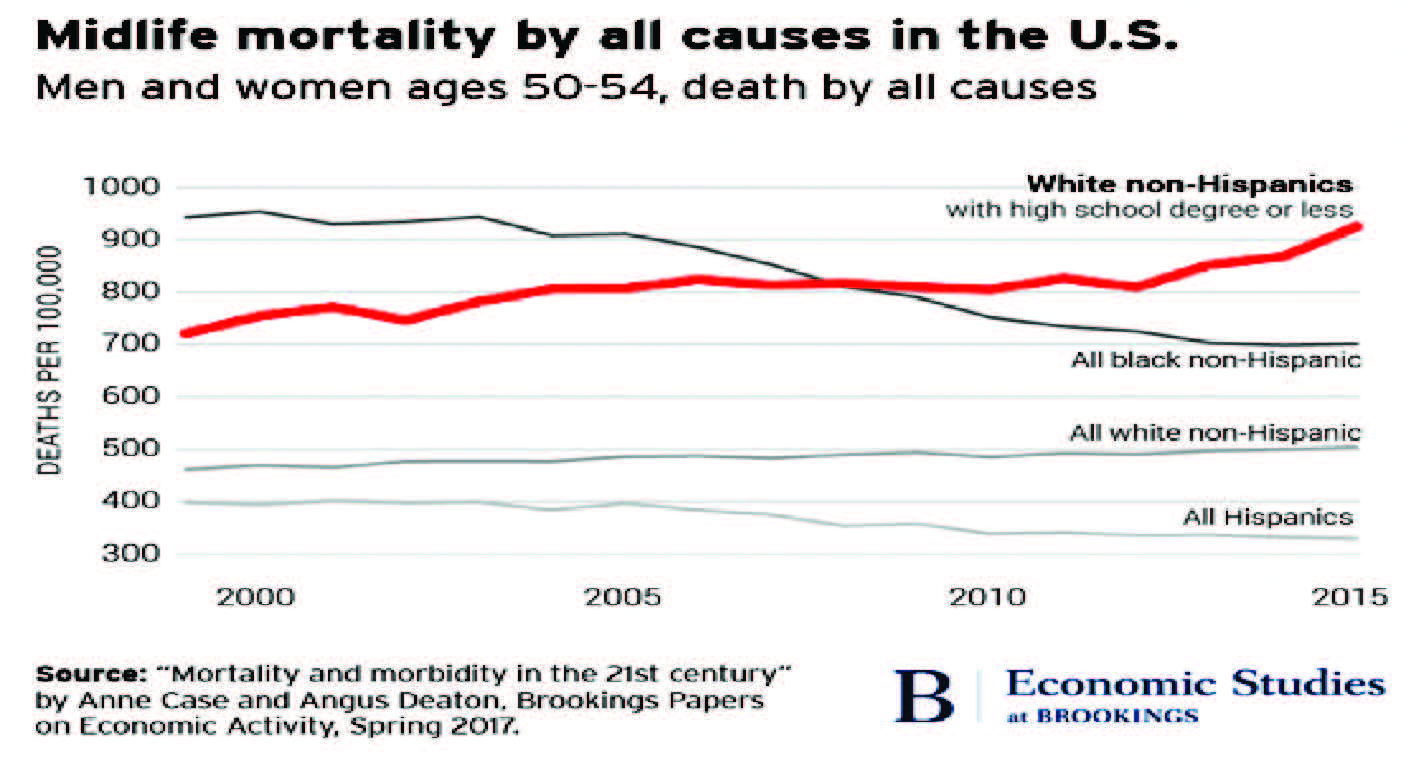
    Two years ago, the Princeton economists Anne Case and Angus Deaton published an alarming revelation: Middle-aged white Americans without a college degree were dying in greater numbers, even as people in other developed countries were living longer. The husband-and-wife team argued, in a study in the Proceedings of the National Academy of Sciences, that these white Americans are facing “deaths of despair”-suicide, overdoses from alcohol and drug, and alcohol-related liver disease.

    The paper caused a stir in academic circles and in the media, and has remained in the public discourse following Donald Trump’s win partly on the strength of his support from these same middle-aged white Americans (the alive ones, to be clear). The paper, however, couldn’t answer the question everyone had: Why was this demographic in particular struggling? It couldn’t be purely the economic pain they faced in the wake of globalization; after all, European countries are also affected by globalization, and their residents are getting healthier and living longer. And non-whites in the U.S. are living longer than they used to as well, and they are subject to the same economic forces as middle-age whites and are struggling, at least in economic terms, even more.

    As I wrote yesterday, the poor health of middle-aged white Americans is having an impact on the labor force. Men aren’t working or looking for jobs because they’re sick, on pain pills, or abusing alcohol or drugs, research suggests. Just why they’re so sick was not something that Case and Deaton elaborated on in their 2015 paper.

    Now, in a new paper, the economists explore why this demographic is so unhealthy. They conclude it has something to do with a lifetime of eroding economic opportunities. This may seem like a circular argument, when put together with previous work: Middle-aged Americans aren’t working because they’re sick, and middle-aged Americans are sick because they’re not working. But Case and Deaton argue that it’s not just poor job opportunities that are affecting this demographic, but rather, that these economic misfortunes build up and bleed into other segments of people’s lives, like marriage and mental health. This drives them to alcoholism, drug abuse, and even suicide, they say, in a new paper released Thursday in advance of a conference, the Brookings Panel on Economic Activity.

    “As the labor market turns against them, and the kinds of jobs they find get worse and worse for people without a college degree, that affects them in other ways too,” Deaton told me.

    What differentiates Case and Deaton’s paper is this idea that as people get older and their fates deviate more and more from those of their parents, they struggle to keep their lives together. The very act of doing worse than their parents’ generation-what Case and Deaton call “cumulative disadvantage”-is killing them.

    As my colleague Olga Khazan has written, there are other convincing theories about why this demographic may not be doing well health-wise. A study from the Commonwealth Fund released last year suggested that while suicide and substance abuse contributed to deaths of middle-aged white people, factors such as heart disease, diabetes, and respiratory disease also played a big role. These factors may themselves have causes, such as diet and lifestyle, that are independent of macro-economic changes.

    Case and Deaton agree that deaths from those factors are important, but emphasize that they see a large uptick in deaths from suicides, poisonings, and alcoholic liver disease among whites with lowest levels of educational attainment. This is in contrast to Europe, where people of all educational backgrounds are living longer, which suggests that there’s something unique among middle-aged Americans without a college education that’s making them sicker. It’s also in contrast to other Americans. For instance, whites aged 50-54 with a high-school degree or less had been dying at a rate 30 percent lower than that of that of all blacks in the same age group in 1999, but by 2015, their mortality rate was 30 percent higher than that of all blacks in that age group. Between 1998 and 2013, death rates for Hispanics fell as well.

    What makes this group unique? It’s not just that they don’t have the guarantee of good jobs that they once did, Deaton said. Life doesn’t turn out as this age group hopes it would, creating a sense of hopelessness, and as a result, they turn to risky behaviors such as overeating, alcohol abuse, or drug use, the economists say. They divorce or have trouble finding a marriage partner because of their poor economic prospects. They no longer turn to social organizations like churches, which can provide important social support, the economists write. They don’t have structure in their lives, which in some cases makes them turn to suicide, the authors say.

    “We are trying to say that low income and low job opportunities, after a long period of time, tears at the social fabric,” Deaton told me. “It’s the social fabric that keeps you from killing yourself.”

    There is other evidence that people who might have been on the brink of an unhealthy lifestyle are becoming less healthy. There has been an increase of emergency-room visits for alcohol consumption, between 2006 and 2010, suggesting that people who are binge drinking are going to greater extremes than they once did, according to Aaron White, senior scientific advisor to the director at the National Institute on Alcohol Abuse and Alcoholism. Per capita consumption of alcohol has increased about 10 percent since 2000.

    Over-prescription of opioids “pours fuel on the flames,” Deaton said, leading to more people addicted to drugs and more people dying because of lethal combinations of drugs and alcohol.

    Case and Deaton theorize that this trend is not happening in Europe because of the social safety net there. While middle-aged whites in the United States are left adrift once economic opportunities go away, those in Europe are provided with financial support and health care that make it easier to be satisfied with life, Deaton believes. What’s more, Europeans enter into more stable cohabiting relationships than Americans do, providing a stronger support network than Americans have. This may also be linked to the safety net: Single parents in Britain don’t need to seek additional partners for financial stability because they receive child allowances, for example.

    This is a “very pessimistic” paper, Deaton told me, in part because there are few policy prescriptions that could help slow the rising death rate of middle-aged white Americans. A European-style welfare state could help stabilize some people, but it’s an unlikely occurrence in the U.S.-indeed, the trend in the GOP-controlled Congress seems to be currently to roll back the welfare state. Reducing over-prescription of opioids could be helpful, but would just address a small part of the problem.

    Donald Trump promised, on the campaign trail, a return to the heady days of manufacturing, in which middle-aged whites without a college education could make a good living, and this return to the past would seem to be one solution. It is, after all, the divergence between the past and today that is causing people such anguish. But it’s going to be difficult to bring back good manufacturing jobs, especially in the face of widespread automation. Few other solutions have been put forward, as I’ve written before. This new paper emphasizes a growing problem: For middle-aged whites without a college degree, the future continues to look bleak.

    (Source: Alana Semuels in The Atlantic. The author is a journalist for The Atlantic in New York)

  • MOBILE USE FOR 10 YRS RAISES TUMOUR RISK

    MOBILE USE FOR 10 YRS RAISES TUMOUR RISK

    Is radiation from mobile phones harmful? Multiple studies globally have not conclusively reached an answer. But an analysis by AIIMS of all research on the subject has found an interesting pattern-government-funded studies show increased risk of brain tumour on long-term exposure to mobile phone radiation while industry-funded research tends to underestimate the risk.

    “We found that industry funded studies are not of good quality and tend to underestimate the risk. Government funded studies show increased risk of brain tumour on long-term exposure,” said Dr Kameshwar Prasad, head of neurology at AIIMS, who is lead author of the study .

    According to Prasad, based on studies on long-term mobile use (at least 10 years or over 1,640 hours), it can be said that such exposure increases brain tumour risk by 1.33 times. In other words, if 100 people suffer from brain tumour, factoring in radiation exposure increases the number to 133. The AIIMS professor and his team of neurologists recently analysed results of 22 case-controlled studies conducted globally on 48,452 participants from 1966 to 2016 that reported the results for the risk of brain tumour.

    Of this, 10 were funded by government, seven had mixed funding from phone industry, government and mobile manufacturers and at least three studies were solely funded by the phone industry.

    Results of this analysis, which has been published in medical journal Neurological Sciences, states that while government funded studies have a quality score of 7 or 8, all studies by phone industry and mixed sources have a score of 5 or 6. Lower quality score points to increased risk of selection or measurement bias that can affect results.

    AIIMS research shows studies with higher quality score show a trend towards harm, while lower quality score studies show a trend towards protection. “It is baffling how certain studies even propound that mobile phone use can protect against brain tumour,” said a researcher.

    Meta-analysis, according to sources of funding, clearly shows a consistent increase in risk of brain tumour with mobile phone use of more than 10 years.

    While summary estimate of government funded studies shows a 1.64 times increase in odds, mixed funded studies shows a 1.05 times increase in the odds of risk of brain tumours, the AIIMS research states.

    It clarifies that data for more than 10 years of use were not available for phone industry funded studies, a major weakness from the point of view of analysing a possible link between mobile phone radiation and the risk of brain tumour on long-term use.

    Dr Prasad said the association between mobile phone use and the risk of brain tumour is beset with controversies. The AIIMS paper provides an insight into the underlying reasons for this. Source: TOI

  • TANNING MAY TRIGGER SKIN AGEING, CANCER

    TANNING MAY TRIGGER SKIN AGEING, CANCER

    Heading to the beach to get a beautiful tan? Think again. A new study has found that radiation from the Sun or tanning sessions hasten skin ageing in the long run.

    Environmental factors can damage the skin in multiple ways, from short wave ultraviolet B (UVB) rays causing sunburns and uneven pigmentation to long wave ultraviolet A (UVA) and infrared radiation penetrating more deeply into the skin to damage existing collagen and reduce collagen production, resulting in wrinkles and sagging skin.

    “Ultraviolet radiation from the sun and indoor tanning beds not only can increase your risk of skin cancer but also can contribute to skin ageing,” said Arianne Shadi Kourosh, of Massachusetts General Hospital in the US.

    “Moreover, other forms of radiation, such as heat and visible light, can negatively impact the skin, as can pollution, so protecting your skin from the environment can benefit both your health and appearance,” said Kourosh on Saturday. Researchers from Massachusetts said that habitual ultraviolet exposure could cause blood vessels to become more prominent, causing skin redness, while visible light and pollution could cause uneven skin tone, especially in darker skin types.

    “Since both types of ultraviolet (UV) rays can damage the skin, it is important to use a broad-spectrum sunscreen that provides both long wave ultraviolet A and short wave ultraviolet B protection, with an SPF of 30 or higher” Kourosh said.

  • CAFFEINE CAN PROTECT AGAINST DEMENTIA

    CAFFEINE CAN PROTECT AGAINST DEMENTIA

    A recent study lists caffeine amongst the 24 compounds that have the potential to boost an enzyme in the brain which protects against dementia. The study appears in the journal Scientific Reports.

    The protective effect of the enzyme, called NMNAT2, was discovered last year through research conducted at IU Bloomington.

    “This work could help advance efforts to develop drugs that increase levels of this enzyme in the brain, creating a chemical ‘blockade’ against the debilitating effects of neurodegenerative disorders,” said Hui-Chen Lu, who led the study.

    Lu is a Gill Professor in the Linda and Jack Gill Center for Biomolecular Science and the Department of Psychological and Brain Sciences, a part of the IU Bloomington College of Arts and Sciences.

    Previously, Lu and colleagues found that NMNAT2 plays two roles in the brain: a protective function to guard neurons from stress and a “chaperone function” to combat misfolded proteins called tau, which accumulate in the brain as “plaques” due to aging. The study was the first to reveal the “chaperone function” in the enzyme.

    Misfolded proteins have been linked to neurodegenerative disorders such as Alzheimer’s, Parkinson’s and Huntington’s diseases, as well as amyotrophic lateral sclerosis, also known as ALS or Lou Gehrig’s disease. Alzheimer’s disease, the most common form of these disorders, affects over 5.4 million Americans, with numbers expected to rise as the population ages.

    To identify substances with the potential to affect the production of the NMNAT2 enzyme in the brain, Lu’s team screened over 1,280 compounds, including existing drugs, using a method developed in her lab. A total of 24 compounds were identified as having potential to increase the production of NMNAT2 in the brain.

    One of the substances shown to increase production of the enzyme was caffeine, which also has been shown to improve memory function in mice genetically modified to produce high levels of misfolded tau proteins.

    Lu’s earlier research found that mice altered to produce misfolded tau also produced lower levels of NMNAT2.

    To confirm the effect of caffeine, IU researchers administered caffeine to mice modified to produce lower levels of NMNAT2. As a result, the mice began to produce the same levels of the enzyme as normal mice.

    Another compound found to strongly boost NMNAT2 production in the brain was rolipram, an “orphaned drug” whose development as an antidepressant was discontinued in the mid-1990s. The compound remains of interest to brain researchers due to several other studies also showing evidence it could reduce the impact of tangled proteins in the brain.

    Other compounds shown by the study to increase the production of NMNAT2 in the brain — although not as strongly as caffeine or rolipram — were ziprasidone, cantharidin, wortmannin and retinoic acid. Source: ANI


  • COCA-COLA TO GO THE ‘HEALTHY’ WAY, MAY LAUNCH COCONUT WATER

    COCA-COLA TO GO THE ‘HEALTHY’ WAY, MAY LAUNCH COCONUT WATER

    NEW DELHI (TIP): Coca-Cola is preparing to launch packaged coconut water in India, as increasing consumer preference towards non-sugary drinks take the fizz out of cola sales.

    In India, Coke is test marketing Zico, a US coconut water brand it acquired in late 2013. Packaged coconut water is one of the fastest growing beverage categories in the world and the 2013 deal has given the company the top position in the segment. Positioned as a ‘natural replenishment’, brand Zico has been gaining traction in world markets, information posted on its website said.

    Coke is importing the product and testing it in at least two Indian markets, two trade officials directly aware of the matter said. “Though brands such as these are niche, Coca-Cola has to prepare the decks and hedge bets, as the backlash on cola consumption and health activism is gaining ground in the country,” one of them said.

    A Coca-Cola spokesperson didn’t respond to an email seeking comment. In India, Coke and rival PepsiCo are facing more troubles. Some trader associations in Tamil Nadu and Kerala said their members would not sell the soft drinks made by the two companies, which they accuse were drawing too much groundwater and depleting the water resources in the states facing a severe drought.

  • DIY FACE PACKS TO GET GLOWING SKIN NATURALLY

    DIY FACE PACKS TO GET GLOWING SKIN NATURALLY

    In case you head to a salon for facial, clean-up or any other treatment whenever your skin feels dull, here’s something that will save your money and time. Your kitchen is loaded with ingredients that can be put together to make an amazing face mask, and give you a glowing in just 10-15 minutes. Plus, they are free from harsh chemicals, and are suitable for all skin types. Here, take a look…

    1. Honey and Egg Mask

    This two ingredient face mask is super easy and effective. All you need to do is to mix a tablespoon of honey with egg white, and keep it for 10-12 minutes. Honey moisturises your skin, and makes it supple. Egg white is rich in protein that helps to tighten your skin, and provide it the much needed nutrition.

    1. Lemon and Yogurt Pack

    Start by mixing two tablespoons of plain yogurt with one tablespoon of lemon juice. Apply this mixture on your face for 10 minutes, and wash it off with lukewarm water. Lemon helps to reduce pigmentation and dark spots. Yogurt moisturises the skin and helps to smoothen it.

    1. Gram Flour Mask

    Mix four tablespoons of gram flour with one tablespoon of sandalwood powder, and a pinch of turmeric. Add two-three tablespoons of milk to make it a paste and apply it on your face. Keep it for 10-12 minutes and wash it off with cool water. Gram flour will help to exfoliate your skin, and turmeric will help to tackle pimples and blemishes. Sandalwood also acts as a natural antiseptic, and this mask also effective for those with acne.

    1. Apple Cider Vinegar and Honey

    Start with mixing two tablespoons of honey with one tablespoon of apple cider vinegar. Apply this mask for 15 minutes, and wash it off with lukewarm water, followed by cold water. Apple cider vinegar helps to maintain the pH balance of the skin and also helps to repair the damaged skin. On the other hand, honey moisturises and smoothens the skin.

    1. Olive Oil Mask

    This mask is again pretty simple to make. All you need to do is to mix one tablespoon of olive oil with half tablespoon of lemon juice. Olive oil contains Vitamin C, D and E, along with anti-oxidants that helps to moisturise as well as repair the damaged skin. Lemon juice is a natural bleaching agents and works on your blemishes.

    Source: TOI

  • WANT MORE SEX? THEN STOP GOING TO THE GYM!

    WANT MORE SEX? THEN STOP GOING TO THE GYM!

    Well, if you’ve been hitting the gym regularly, only to seem more attractive to girls, then here’s a bad news! Chances are you are missing on some good sex because of your beloved gym.

    According to a research carried out by researchers by University of North Carolina in Chapel Hill, US, men who go to the gym have less active sex life.

    As per the study, men who workout rigorously strenuously have a lower libido than those who do low intensity exercise.

    Each of the respondants were then categorised according to the duration of their workouts – light, moderate, or intense. Also, their sexual appetite was categorised into high, moderate or low libido.m It was also concluded that people who exercised for a shorter amount of time wanted more sex as well.

    Apparently, the problem lies in the fact that gym going men reach a point when they become too tired to have sex or lose interest in it.

    Lead researcher Anthony Hackney, a professor of exercise physiology and nutrition concluded that those who had a less intense workout had a higher libido.

    The study which has been published in the journal Medicine & Science in Sports & Exercise, read, “Exposure to higher levels of chronic intense and greater durations of endurance training on a regular basis are significantly associated with a decreased libido scores in men.”

  • LOWERING SYSTOLIC BP BELOW 120 MAY PREVENT EARLY DEATH

    LOWERING SYSTOLIC BP BELOW 120 MAY PREVENT EARLY DEATH

    Intensive treatment to lower systolic (top number) blood pressure to below 120 mm Hg can prevent 107,500 early deaths every year, according to a new study.

    Systolic blood pressure refers to the pressure in the arteries when the heart beats. The bottom number, diastolic, refers to the pressure between beats.

    Current guidelines recommend keeping systolic blood pressure below 140 mm Hg (millimeters of mercury).

    However, the results also revealed that there was a 27 per cent reduction in mortality from all causes when systolic blood pressure was lowered to below 120, compared to the standard treatment of lowering blood pressure to below 140 mm Hg.

    “If fully implemented, intensive lowering of systolic blood pressure could prevent about 107,500 deaths per year,” said researchers at Loyola University in Chicago.

    For the study, published in the journal Circulation, the team enrolled more than 9,350 adults aged 50 and older who had high blood pressure and were at high risk for cardiovascular disease.

    High blood pressure, or hypertension, is a leading risk factor for heart disease, stroke, kidney failure and other health problems.

    While saving lives, an intensive blood pressure regimen also would cause serious side effects, the researchers said.

    The study estimated that approximately 56,100 more episodes of low blood pressure, 34,400 more episodes of fainting and 43,400 additional electrolyte disorders would occur annually with implementation of intensive systolic blood pressure lowering in US adults.

    But most of these effects do not have lasting consequences and are reversible by lowering blood pressure medications, the researchers noted. Source: IANS

  • Walnuts make men more fertile: Scientists claim

    Walnuts make men more fertile: Scientists claim

    Eating a walnut-enriched diet with 75 grams of walnuts every day may improve sperm vitality (movement) and morphology (form) — markers of semen quality, which is a predictor of male fertility — in men who added walnuts to their diet compared to men who did not, a study has found.

    The findings showed that mice that consumed a diet containing 19.6% of calories from walnuts (equivalent to about 2.5 ounces per day in humans) had significant improvements in sperm quality by reducing lipid peroxidation — a process that can damage sperm cells.

    “The study found that eating walnuts can actually help improve sperm quality, likely by reducing peroxidative damage in sperm cells,” said lead researcher Patricia A. Martin-DeLeon from the University of Delaware in Newark, US.

    Cell damage harms sperm membranes, which are primarily made up of polyunsaturated fatty acids (PUFAs).

    However, eating walnuts, the only tree nut that are predominantly comprised of PUFAs, may help reduce that damage as one ounce of walnuts contain 13 grams of PUFAs out of 18 grams of total fat, the researchers said.

    “The findings suggest that walnuts may be beneficial for sperm health,” Martin-DeLeon added. For the study, the team took healthy male mice as well as mice that were genetically predetermined to be infertile (Pmca4-/- gene deletion) were randomly assigned to a walnut-enriched diet or a control diet without walnuts that was followed for 9-11 weeks.

    Among the mice that consumed walnuts, fertile mice experienced a significant improvement in sperm motility and morphology and the infertile mice had a significant improvement in sperm morphology.

  • A WEIGHT-LOSS DRUG CAN HELP PREVENT RISK OF TYPE 2 DIABETES

    A WEIGHT-LOSS DRUG CAN HELP PREVENT RISK OF TYPE 2 DIABETES

    Researchers in the UK have found that a weight-loss drug also reduces the risk of type 2 diabetes by 80% compared to a placebo.

    The drug, which increases the amount of appetite-supressing hormones produced by the gut, was tested on overweight people with ‘prediabetes’. This is also known as ‘borderline diabetes’, and is characterised by slightly increased blood sugar levels. The condition often leads to type 2 diabetes when untreated.

    Prediabetes affects one in ten people in the UK, and progresses into diabetes in 5-10% of patients within ten years.

    Prediabetes is curable with exercise and a healthier diet, but once it progresses into diabetes, it is significantly harder to treat. Both conditions are strongly linked to early death and poor health outcomes like nerve damage, blindness and amputation.

    Now, obesity expert professor Carel le Roux from Imperial College London and colleagues have found that a drug already used for obesity and diabetes can help to prevent progression into diabetes when combined with diet and exercise, and could even cure patients of prediabetes altogether.

    The study was published in The Lancet and was funded by Novo Nordisk.

    The researchers recruited 2,254 obese adults with prediabetes at 191 research sites in 27 countries worldwide. After splitting participants into two groups, they studied whether adding daily self- administered injections of liraglutide to diet and exercise helped to prevent progression into diabetes, compared to diet and exercise alone.

    After three years, the researchers found that the patients given liraglutide were 80% less likely to develop diabetes than those in the placebo group. In 60% of those patients, prediabetes was reversed and patients returned to healthy blood sugar levels. Of the patients who did go on to develop diabetes, those who were given liraglutide took nearly three times longer to develop the disease than those in the placebo group. In addition, liraglutide was linked to greater sustained weight loss after three years compared to placebo, with those on liraglutide losing 7% body weight compared to 2% body weight in the placebo group.

    Co-author professor le Roux, from Imperial’s Department of Medicine, said: “These groundbreaking results could pave the way for a widely used, effective, and safe drug to reverse prediabetes and prevent diabetes in 80% of at-risk people.

    This could improve the health of the population and save millions on healthcare spending.”

    Professor le Roux added that the drug seems to work by mimicking the action of naturally-produced hormone that supresses appetite, called GLP-1. This compound is released in response to food, and interacts with the brain’s hypothalamus to suppress appetite.

    However previous studies have found that many obese people produce less of this hormone, which may lead to them over-eating. Liraglutide mimics the effects of GLP-1, essentially doing the hormone’s job to regulate appetite.

    Professor le Roux said: “Liraglutide promotes weight loss by activating brain areas that control appetite and eating, so that people feel fuller sooner after meals and their food intake is reduced. Although liraglutide’s role in weight loss is well known, this is the first time it has been shown to essentially reverse prediabetes and prevent diabetes, albeit with the help of diet and exercise.”

    Liraglutide is already being used to manage weight and diabetes, but it is expensive and not yet widely available in the UK. However, future studies could help develop a test for GLP-1 deficiency, to ensure the drug is given only to those who would benefit.

    Alternatively, patients could undergo a 12-week trial where the drug is stopped if there is no improvement within that time.

  • A FASTING DIET MAY HELP REVERSE DIABETES

    A FASTING DIET MAY HELP REVERSE DIABETES

    A type of fasting diet may reprogramme pancreas cells, promote the growth of new insulin-producing pancreatic cells and reduce symptoms of Type 1 and Type 2 diabetes, a study has showed.

    In the study, led by researchers from the University of Southern California, mice were placed on fasting mimicking diet (FMD) for four days each week which showed remarkable reversal of diabetes.

    The mice regained healthy insulin production, reduced insulin resistance and demonstrated more stable levels of blood glucose — even in the later stages of the disease, the researchers said in the paper published in the journal Cell.

    The genes normally active in the developing pancreas of embryonic/foetal mice are reactivated in diabetic adult mice when cycling FMD with normal diets.

    This increases production of the protein neurogenin-3 (Ngn3) and, as a result, promotes the creation of new, healthy insulin-producing beta cells.

    Researchers also examined pancreatic cell cultures from human donors and found that, in cells from Type 1 diabetes patients, nutrients mimicking fasting also increased expression of the Ngn3 protein and insulin production.

    “These findings warrant a larger FDA trial on the use of the Fasting Mimicking Diet to treat diabetes patients,” said Valter Longo from the University of Southern California.

    “People with diabetes could one day be treated with an FDA-approved Fasting Mimicking Diet for a few days each month, eat a normal diet for the rest of the month, and see positive results in their ability to control their blood sugar by producing normal levels of insulin and improving insulin function,” Longo added.

  • ACNE-CAUSING HABITS YOU SHOULD STOP

    ACNE-CAUSING HABITS YOU SHOULD STOP

    Not washing your face properly : It is important to use good medicated cleansers twice a day, but hard cleansers and washing too frequently can make the acne worse and face drier.

    Using dairy products on a daily basis : Dairy products have abundance of hormone IGF 1 (Insulin-like growth factor 1) which is specially found in milk. It can cause inflammation in humans. Milk causes insulin spike in humans that makes the liver produce IGF 1. This can cause excess sebum production causing more clogged pores and thus, the acne. Try to reduce dairy product consumption.

    Using smartphones too much : Smartphones are one of the common causes of breakouts. This is because when your phone is placed on skin while talking to someone, you press bacteria into your pores and ultimately, get pimples. So, use ear phones to keep a check on breakouts.

    Applying body cream on face : Many body care products can give you acne on your face. Some people apply body products on their face to get some more beauty benefits. But it is better not to use body products on face. Feel free to use face cream on dry patch of body, but using a body lotion on your face could cause acne.

    This could specifically be the case if your skin is sensitive and the facial lotion you generally use is oil and fragrance-free, and then you reach for a scented and thicker body lotion in the hope to achieve the same hydrating results.

    Diet issue : Sweet food items may not always be good for skin. Diet rich in sugar or food with high glycemic index can be a cause for acne. Avoid sugar, carbohydrate-rich food and starch for acne-free skin. Eat small meals with diet rich in fruits and vegetables.

    Here’s how you can choose your night cream smartly

    Night time is when one’s skin gets the maximum rest, repair and time to rejuvenate. So always remember to wash and deep cleanse your face before you apply your night time moisturiser for the best results. But how do you decide what constitutes a good moisturiser? Divya Mehta, co-founder of skincare brand Epique, shares tips to keep in mind when deciding on a good night cream:

    It doesn’t need to have the word ‘night’ to describe it : The difference between a night cream and any other is that it doesn’t have UV protection or any sunscreen ingredients in it. Hence you don’t necessarily need to use a cream that uses the word ‘night’ to define it. So long as the cream does not contain sunscreen, works well with your skin type and is rich in active ingredients, you are good to go!

    High concentration of active ingredients : Look for components such as boswellia serrata, coffee bean extract, centella asiatica, andrographis, liquorice, coleus forskolin, horse chestnut, oils, vitamins like E and C and other antioxidants to name a few (in your night creme). In addition to these, actives need to be highly concentrated to address specific mature skin issues.

    Deep penetrating and light weight in texture : Ensure the cream texture is light, penetrates deeply and is comfortable for your skin. Try avoiding creams that sit on the skin’s surface and don’t get absorbed well, causing the skin to feel oily.

    Choose a night cream that is compatible with your skin type : This step may require some trial and error. Whether your skin is oily, dry or combination, there is a perfect solution for you out there. Find a moisturizer that is compatible with your specific skin type. Try testing the cream on the back of your hand before you buy it. The product should sink into your skin easily and leave a dewy look. That is a good sign that this cream may work well for you.

  • EAT LESS TO LIVE MORE, FINDS STUDY

    EAT LESS TO LIVE MORE, FINDS STUDY

    Finally, an answer to the question ‘How to live a long life?’ has been found. At least, that’s what it seems from a recent research.

    There’s a multi-billion-dollar industry devoted to products that fight signs of ageing, but moisturizers only go skin deep. Ageing occurs deeper, at a cellular level, and scientists have found that eating less can slow this cellular process.

    Recent research published in Molecular and Cellular Proteomics offers a glimpse into how cutting calories impacts ageing inside a cell. The researchers found that when ribosomes, the cell’s protein makers, slow down, the ageing process slows too. The decreased speed lowers production but gives ribosomes extra time to repair themselves.

    “The ribosome is a very complex machine, sort of like your car, and it periodically needs maintenance to replace the parts that wear out the fastest,” said Brigham Young University biochemistry professor and senior author John Price. “When tyres wear out, you don’t throw the whole car away and buy new ones. It’s cheaper to replace the tyres.”

    So what causes ribosome production to slow down in the first place? At least for mice: reduced calorie consumption.

    Price and his fellow researchers observed two groups of mice. One group had unlimited access to food while the other was restricted to consume 35 percent fewer calories, though still receiving all the necessary nutrients for survival.

    “When you restrict calorie consumption, there’s almost a linear increase in lifespan,” Price said. “We inferred that the restriction caused real biochemical changes that slowed down the rate of ageing.”

    Price’s team isn’t the first to make the connection between cut calories and lifespan, but they were the first to show that general protein synthesis slows down and to recognize the ribosome’s role in facilitating those youth-extending biochemical changes.

    Read More

  • SODA, PIZZA AND SALTY FOOD UP LIVER DISEASE IN KIDS: STUDY

    SODA, PIZZA AND SALTY FOOD UP LIVER DISEASE IN KIDS: STUDY

    Children who regularly intake fructose present in soda, sweetened beverages, pizza and salty food, biscuits, yogurt may be be prone to liver disease, researchers warn.

    According to a study, led by researchers from Bambino Gesu Hospital in Italy, dietary fructose increases serum uric acid concentrations.

    Both uric acid concentration and fructose consumption may be high in individuals with non-alcoholic fatty liver disease (NAFLD) — a condition where extra fat is accumulated in liver cells in people who drink little or no alcohol.

    It is estimated to affect up to 30 per cent of the general population in Western countries and up to 9.6 per cent of all children and 38 per cent of obese children across a spectrum of liver disease, including NASH (defined as steatosis, hepatocyte ballooning and inflammation).

    Although NASH is a less aggressive form of NAFLD, it can progress to severe fibrosis and cirrhosis, with development of hepatocellular carcinoma in adults.

    The findings suggested that fructose consumption was independently associated with high uric acid, which occurred more frequently in patients with NASH than in not-NASH patients.

    “It is plausible that dietary fructose intake and uric acid concentrations are potential risk factors for liver disease progression in NAFLD,” said Valerio Nobili from Bambino Gesu Hospital in Italy.


  • EXERCISE IN PREGNANCY MAY HELP OBESE WOMEN AVOID COMPLICATIONS

    EXERCISE IN PREGNANCY MAY HELP OBESE WOMEN AVOID COMPLICATIONS

    Exercise may be an efficient way for obese pregnant women to lower their risk of diabetes, dangerously high blood pressure and other complications, research suggests.

    “The study suggests that a prenatal exercise-based intervention leads to both decreased costs and improved outcomes in obese women,” said Leah Savitsky, a medical student at Oregon Health and Science University in Portland who led the study.

    As reported at the 37th annual meeting of the Society for Maternal-Fetal Medicine in San Diego, California, Savitsky and her team analyzed previously published research on the effect of exercise on pregnant women with a body mass index (BMI) of at least 30.

    The normal range for BMI – a ratio of weight to height – is 18.5 to 24.9; a BMI of 30 or more indicates obesity. (A BMI calculator is here, on the website of the U.S. Centers for Disease Control and Prevention. Based on their analyses of those earlier studies, the researchers estimated the benefit of exercise for women who are obese at the start of their pregnancy.

    They calculated that for every one million such women, there would be 38,176 cases of a dangerous pregnancy-related blood pressure problem known as preeclampsia among those who exercised, compared to 113,000 cases among those who didn’t exercise.

    Exercise would also be linked to a decrease in so-called gestational diabetes, with a rate of 195,520 per million among exercisers compared to 305,500 among non- exercisers, according to their calculations.

    Likewise, they estimated, for every million obese pregnant women the preterm birth rate would drop from 105,059 to 90,923 with exercise, the maternal death rate would fall from 90 to 70 and the neonatal death rate would drop from 1,932 to 1,795.

    Based on a cost-effectiveness threshold of$100,000 per quality-adjusted life year, an exercise intervention could save money as long as expenses are held to just under$3,000. The effects of exercise may be even more beneficial than the study suggests, Savitsky said. “This study did not consider additional downstream benefits on control of weight beyond pregnancy as well as the downstream potential benefits on hypertension and diabetes,” she told Reuters Health by email.

    Women who are not obese may benefit as well. The researchers applied their model to women with a normal BMI of 18.5 – 24.9 and found similar improvements in outcomes among those who exercise, although the cost-effectiveness thresholds were lower.

    “With the obesity epidemic looming in our society, perhaps we should be turning our attention to prevention of disease. It does not seem to be too late even for obese pregnant women to engage in lifestyle change that may substantially reduce health care costs,” Mottola told Reuters Health by email.

    The current study was not designed to develop specific exercise guidelines for obese pregnant women; these women should consult their obstetricians for guidance. In the meantime, the American College of Obstetricians and Gynecologists advises obese pregnant women to “start with low-intensity, short periods of exercise and gradually increase as able.”

  • Brain unable to form new memories when you’re sleep deprived

    Brain unable to form new memories when you’re sleep deprived

    Alert! Your memories are in danger of being lost if you are sleep derived, suggests a study. Studying mice, scientists at Johns Hopkins have fortified evidence that a key purpose of sleep is to recalibrate the brain cells responsible for learning and memory so the animals can “solidify” lessons learned and use them when they awaken — in the case of nocturnal mice, the next evening.

    A summary of their study appears online in the journal Science.

    The researchers, all of the Johns Hopkins University School of Medicine, also report they have discovered several important molecules that govern the recalibration process, as well as evidence that sleep deprivation, sleep disorders and sleeping pills can interfere with the process. “Our findings solidly advance the idea that the mouse and presumably the human brain can only store so much information before it needs to recalibrate,” says Graham Diering, Ph.D., the postdoctoral fellow who led the study. “Without sleep and the recalibration that goes on during sleep, memories are in danger of being lost.”

    Diering explains that current scientific understanding of learning suggests that information is “contained” in synapses, the connections among neurons through which they communicate.

    On the “sending side” of a synapse, signaling molecules called neurotransmitters are released by a brain cell as it “fires”; on the “receiving side,” those molecules are captured by receptor proteins, which pass the “message” along. If a cell receives enough input through its synapses, it fires off its own neurotransmitters. More specifically, experiments in animals have shown that the synapses on the receiving neuron can be toggled by adding or removing receptor proteins, thereby strengthening or weakening them and allowing the receiving neuron to receive more or less input from nearby signaling neurons.

    Scientists believe memories are encoded through these synaptic changes. But there’s a hitch in this thinking, Diering says, because while mice and other mammals are awake, the synapses throughout its brain tend to be strengthened, not weakened, pushing the system toward its maximum load. When neurons are “maxed out” and constantly firing, they lose their capacity to convey information, stymying learning and memory. One possible reason that neurons don’t usually max out in a process that has been well-studied in lab-grown neurons but not in living animals, asleep or awake. Known as homeostatic scaling down, it is a process that uniformly weakens synapses in a neural network by a small percentage, leaving their relative strengths intact and allowing learning and memory formation to continue.

  • Former NYC Health& Hospitals CEO Dr. Ram Raju takes key role at Northwell Health

    Former NYC Health& Hospitals CEO Dr. Ram Raju takes key role at Northwell Health

    NEW YORK (TIP):Dr. Ram Raju, former president and CEO of NYC Health + Hospitals, is joining Northwell Health, the largest healthcare provider in the state of New York.

    Raju, who in November stepped down from his position as president and CEO of NYC Health + Hospitals, will serve as senior vice president and community health officer at Northwell.

    In his new role, Raju will evaluate the needs of the most- vulnerable communities Northwell Health serves, assess programs that enhance the health system’s ability to respond to those needs and collaborate with community-based organizations to create problem-solving solutions.

    “Ram’s vast experience, deep commitment to caring for vulnerable communities and keen understanding of New York’s healthcare delivery system make him the ideal individual to lead our efforts,” said Michael J. Dowling, president and CEO of Northwell Health, according to a press release. “His most recent work with NYC Health + Hospitals certainly enhances his ability to respond to this challenge.”

    NYC Health + Hospitals, which Raju led from January 2014 until November 2016, is the largest municipally owned health system in the U.S. and a major safety net provider, serving a large proportion of poor and uninsured patient. But it has struggled financially, facing a potential budget gap of $1.8 billion in 2020. At Northwell, Raju’s role will entail examining programs aimed at improving the health system’s response to the community’s needs and working with local organizations to address them.

    Northwell created the position of community health investment officer specifically for Raju, who said his time at NYC Health + Hospitals taught him about what vulnerable communities need and how health policies can affect their outcomes. “My new role with Northwell will enable me to promote, sustain and advance an environment that supports equity and diversity, and help eliminate health disparities

    within the communities served by Northwell throughout the city, Long Island and Westchester County,” Raju said in a press release.

    Before working at NYC Health + Hospitals, Raju was CEO of the Cook County Health & Hospitals System in Chicago, the country’s third-largest public health system. Dr. Raju has extensive leadership experience. Prior to NYC Health + Hospitals, he served as CEO for the Cook County Health & Hospitals System in Chicago, the nation’s third-largest public health system, where he improved cash flow by more than $100 million and changed the system’s financial health during his tenure from 2011-14. He began his medical career at Lutheran Medical Center in Brooklyn and went on to serve as chief operating officer and medical director at NYC Health + Hospitals’ Coney Island Hospital. In 2006, he became the HHC chief medical officer, corporate chief operating officer and executive vice president. Under his leadership, HHC continued to reach great heights in quality, patient safety and health care data transparency.

    Dr. Raju earned his medical diploma and Master of Surgery degree from Madras Medical College in India. He underwent further training in England, where he was elected as a Fellow of the Royal College of Surgeons and later received an MBA from the University of Tennessee and CPE from the American College of Physician Executives.

    He served as vice-chair of the Greater New York Hospital Association and currently sits on the boards of numerous city, state and national health care organizations, including the American Hospital Association, the New York Academy of Medicine and the Asian Health Care Leaders Association.

    Dr. Raju is the recipient of numerous national recognitions, including Modern Healthcare’s list of the nation’s “100 Most-Influential People in Healthcare.” Modern Healthcare also named him one of the “Top 25 Minority Executives in Healthcare” and one of the “50 Most-Influential Physician Executives in Healthcare.” In 2013, he was named a Business Leader of Color by Chicago United.

  • ANTIBIOTICS CAN BOOST BACTERIAL GROWTH: STUDY

    ANTIBIOTICS CAN BOOST BACTERIAL GROWTH: STUDY

    Repeated antibiotic treatment not only can increase bacteria’s resistance to drugs but also help them reproduce faster, warns a new study.

    The finding that growth of bacteria can be stimulated by antibiotics underlines the importance of using the right antibiotic on patients as soon as possible.

    For the study, the researchers exposed E.coli bacteria to eight rounds of antibiotic treatment over four days and found the bug — which can cause severe stomach pain, diarrhoea and kidney failure in humans –had increased antibiotic resistance with each treatment.

    This had been expected, but researchers were surprised to find mutated E.coli reproduced faster than before encountering the drugs and formed populations that were three times larger because of the mutations.

    This was only seen in bacteria exposed to antibiotics — and when researchers took the drug away, the evolutionary changes were not undone and the new-found abilities remained, said the study published in the journal Nature Ecology & Evolution.

    “Our research suggests there could be added benefits for E.coli bacteria when they evolve resistance to clinical levels of antibiotics,” said lead author Robert Beardmore, Professor at University of Exeter in Britain.

    “It’s often said that Darwinian evolution is slow, but nothing could be further from the truth, particularly when bacteria are exposed to antibiotics,” Beardmore said.

    “Bacteria have a remarkable ability to rearrange their DNA and this can stop drugs working, sometimes in a matter of days,” Beardmore explained.

    The researchers tested the effects of the antibiotic doxycycline on E.coli as part of a study of DNA changes brought about by antibiotics.

    “It is said by some that drug resistance evolution doesn’t take place at high dosages but our paper shows that it can and that bacteria can change in ways that would not be beneficial for the treatment of certain types of infection,” Mark Hewlett, also of the University of Exeter, pointed out.

    “This shows it’s important to use the right antibiotic on patients as soon as possible so we don’t see adaptations like these in the clinic,” Hewlett noted.

  • WALK CAN EASE YOUR STRESS

    WALK CAN EASE YOUR STRESS

    Imagine a scenario – You have to submit that critical report one week early. Your pulse races and blood pressure increases. What are you going to do? Before you face a sudden breakdown due to anger, try going out for a stress busting walk. One of the best ways to relieve the stress is to simply walk them away. Yes, walking has multiple benefits including reducing stress and anxiety.

    It’s now well medically and practically proven that a walk is the best stress buster we always had and it costs us nothing. Walking is really the magic talisman! But is it just some pep talk or is there really some truth?

    Lodes of it! Heard of Endorphin – the cool chemical within us that soothes brain and but keeps hiding till knocked? Walking triggers the release of endorphins and immediately helps you relieve anxiety and pain. The higher your level of endorphins, the greater your sense of calm and well-being! No wonder walking makes us feel so good and elevates our mood almost instantly. And the beauty is, one can walk anytime, anywhere.

    Yes, morning walks have other important benefits too. Investing significant time to pursue walking can get your mind off stress and give you a feeling of detachment from daily pressures of life. By unwinding and giving your mind the space to meander, you may be able to see the situation in a different positive light. You may even come up with a solution to your problem.

    Here’s how walking helps beat stress besides the release of that cool chemical endorphin:

    Meditate in motion: As you begin to regularly shed your daily worries through physical activity and constant movement, you might find that this enables you focus more. The resulting energy and optimism, can further help you to remain calm and clear in everything you do.

    Time to introspect: “All truly great thoughts are conceived while walking,” said philosopher Friedrich Nietzsche. Walking increasing the blood flow to your brain. It gives you time to consider different aspects of your problems away from the distractions of your office or home. Creative ideas and solutions may flow more effortlessly.

    Blood pressure control: Stress can be one of the factors for a high blood pressure. Studies have shown that walking can lower your blood pressure and reduce your heart health risk.

    Increased stress relief: Studies found that walking in a natural environment had greater effects for stress relief.

    Next time you feel you are too stressed, simply go for a walk and feel re-energized. Since, it is the most simple, fun and a healthy way to manage your stress levels, so lace up and start walking!

  • Let’s Talk Health – DIABETES & YOU

    Let’s Talk Health – DIABETES & YOU

    In general, we are not seeing eye to eye with this dreadful disease. It need not be, if we educate ourselves and take of ourselves.

    • Our guts are against us
    • Our minds are against us
    • Food companies are against us
    • Have we left anything out?
    • YES!  Our friends and families are against us too.

    Readers are welcome to reach Dr. Raju directly with their questions on health

    A recent study in the New England Journal of Medicine found that over the course of 32 years, a person’s chance of becoming obese jumps by 57% if he or she has a friend who becomes obese, 40% if siblings become obese, 37% if the spouse does.

    • Neighbors had little influence
    • Friends and family members of the same sex had more influence than those of the opposite sex.
    • Statistically significant effects could be seen even from friends-of-friends
    • The same study also found that friends and families who lost weight imparted a similarly powerful influence on people’s odds of losing weight themselves.

    Either way, though, the implication is the same:

    WE ARE ALL IN THIS TOGETHER.

    Eye Disease in Diabetes

    Eye disease in Diabetes refers to a group of eye problems that people with Diabetes may face as a complication of diabetes leading to severe vision loss or even blindness.

    1. Retinopathy (damage to the blood vessels of retina)
    2. Cataract (clouding of the lens of the eye) Cataracts develop at an earlier age in people with diabetes.
    3. Glaucoma (increase in pressure inside the eye that leads to optic nerve damage and loss of vision) A person with diabetes is twice as likely to get glaucoma as other adults.

    Today, with the advances in technology, new medications and understanding, 90% of people need not be blind. Early screening, diagnosis and management are keys. One in four diabetics may not need medication if they eat right and exercise right.

    Look what Susruta of Ancient India said about Diabetes, “It may be prognosticated that an idle man, who indulges in day sleep, or follows sedentary pursuits or is in the habit of taking sweet liquids, or cold and fat making or emollient food, will ere long fall an easy victim to this disease.”

    (Dr VK Raju is Clinical Professor, Department of Ophthalmology; West Virginia University. He is the Founder/ Medical Director of The Eye Foundation of America (www.eyefoundationofamerica.org); Chairman, Goutami Eye Institute, AP; Advisor – Indo-US Healthcare Summit; Director, International Ocular Surface Society.

    Dr. Raju presides over Monongalia Eye Clinic located at 3140 Collins Ferry Road, Morgantown, WV 26505. He can be reached at vkr@vkraju.com. The phone nos. are:(Clinic) 304-598-0055; (Cell) 304-288-2080; (Home) 304-599-0705; (Fax) 304-598-0058.

  • Four Indian Americans chosen for Presidential Early Career Awards for Scientists and Engineers

    WASHINGTON (TIP): On January 9, President Barack Obama named 102 scientists and researchers including Four Indian-Americans as recipients of the Presidential Early Career Awards for Scientists and Engineers (PECASE), the highest honor bestowed by the United States Government on science and engineering professionals in the early stages of their independent research careers.

    The ‘Fab Four’ Indian scientists are Pankaj Lal from Montclair State University, Kaushik Roy Chowdhury from Northeastern University, Manish Arora from Icahn School of Medicine at Mount Sinai and Aradhna Tripati from University of California, Los Angeles.

    ‘I congratulate these outstanding scientists and engineers on their impactful work,” President Obama said. “These innovators are working to help keep the United States on the cutting edge, showing that Federal investments in science lead to advancements that expand our knowledge of the world around us and contribute to our economy.”

    Pankaj Lal, PhD, is an associate professor in the Department of Earth and Environmental Studies and associate director PSEG Institute for Sustainability Studies, Montclair State University. He undertakes integrative, interdisciplinary research that explores interconnections among society and the environment.

    Kaushik Roy Chowdhury is Associate Professor in the Electrical and Computer Engineering Department at Northeastern University and Faculty Fellow of the College of Engineering. He was earlier Assistant Professor in the same university from 2009-2015.

    Manish Arora, B.D.S., M.P.H., Ph.D., is the Director of Exposure Biology at the Senator Frank Lautenberg Environmental Health Sciences Laboratory in the Department of Preventive Medicine. Dr. Arora is an environmental epidemiologist and exposure biologist.

    Aradhna Tripati is Associate Professor. Department of Earth and Space Sciences, Department of Atmospheric and Oceanic Sciences, Institute of the Environment and Sustainability at University of California, Los Angeles.

    The Presidential Early Career Awards highlight the key role that the Administration places in encouraging and accelerating American innovation to grow the economy and tackle greatest challenges.

    The awards, established by President Clinton in 1996, are coordinated by the Office of Science and Technology Policy within the Executive Office of the President. Awardees are selected for their pursuit of innovative research at the frontiers of science and technology and their commitment to community service as demonstrated through scientific leadership, public education, or community outreach.

  • Amitabh Bachchan honored by US Embassy for TB awareness

    Amitabh Bachchan honored by US Embassy for TB awareness

    NEW DELHI (TIP): Megastar Amitabh Bachchan has been honored by the US Embassy to acknowledge his immense contribution to the India-US ties on tuberculosis. The award was presented on January 8 by US Ambassador to India Richard R Verma to the 74-year-old actor, who himself is a TB survivor and brand ambassador for the cause.

    After receiving the award, Bachchan went live on Facebook with Verma to discuss the cooperation between the two nations to spread awareness about the much-feared disease.

    Remembering his first encounter with Verma, Bachchan said that they have been associated since 2015, when the latter was awarded the Padma Vibhushan.

    Bachchan adds, “Within a week later, I received a letter from the ambassador (citing that) … We are looking at doing something about tuberculosis in India. Would you be kind enough to entertain in joining this effort? And I readily agreed.” The “Pink” actor also said that it was embarrassing that India is the largest carrier of TB in the world.

    Recounting his “Kaun Banega Crorepati” days, when he experienced excruciating pain in the spine, he said, “I survived on 8-9 painkillers every day. In 2002, it was discovered in a general investigation that I was suffering from the tuberculosis of the spine.”

    Bachchan added, “Without immodesty, I can say that if it (TB) can happen to me it can happen to anyone. If it is detected in time, there is a cure.” The actor was especially impressed with the involvement of women in spreading awareness and busting myths about the disease under this initiative. He said that it was inspiring how they fought both with the disease and fear of alienation due to the social stigma about the disease.

    On giving the award to Bachchan, Verma said, “We are proud to give you this award for your leadership and everything that you have done.”

    The US ambassador also said that the US government has been working with the Indian government for over 20 years on tuberculosis.

    “Over USD 100 million have been invested… we have treated over 15 million people with our Indian partners, saved millions of lives from the disease,” he added. (PTI)