Tag: Health

Read the latest health news, diet, fitness, medical news and healthcare tips on theindianpanorama.news/health. Get all the healthcare news, including wellness, fitness, diet and weight loss & more.

  • CARTOON CHARACTERS AS SUPER VEGGIES HELP KIDS EAT HEALTHY

    CARTOON CHARACTERS AS SUPER VEGGIES HELP KIDS EAT HEALTHY

    Influencing kids to make the right food choice could be a lot easier for parents as researchers have found that children exposed to animated cartoon characters that take the shapes of healthy vegetables such as carrots or cucumber are more likely to eat salad on their own.

    Marketing vegetables in school lunchrooms using the Super Sprowtz — a team of fun-loving characters with super powers — almost tripled the percentage of elementary school students choosing items from the salad bar,the findings showed.

    “If we put the time and good resources into marketing healthy choices to kids, it can work,” said lead researcher Andrew Hanks, Assistant Professor at The Ohio State University in the US.

    Further, such interventions were found to improve nutrition, behaviour as well as performance in school.

    For the study, published in the journal Pediatrics, the team analysed the behaviour of children from 10 public elementary schools in urban New York State.

    In some schools, they wrapped the bottom portion of the salad bar with a vinyl banner depicting the cartoon characters as super veggies.

    In others, they played cartoon videos in the lunch room. And in others, they tried both tactics.

    According to researchers, in schools with the salad bar banners, 24 percent of kids took vegetables from the salad bars.

    In those schools that had characters on the salad bar and video, the vegetable selection jumped from 10 per cent to almost 35 per cent.

    “If we can encourage kids to take vegetables of their own accord, rather than have someone put it there for them, they’re much more likely to eat them,” Hanks noted.

    No significant improvement was found in schools with videos alone.

    However, the researchers said that it is unlikely such a technique would work with older students.

    “It’s important to be strategic. If you use these characters in a middle or high school I doubt they will have much of an impact,” Hanks said adding, “our study is best generalized to an urban elementary school setting.”

  • Dr. Ajay Lodha Takes over as President of AAPI

    Dr. Ajay Lodha Takes over as President of AAPI

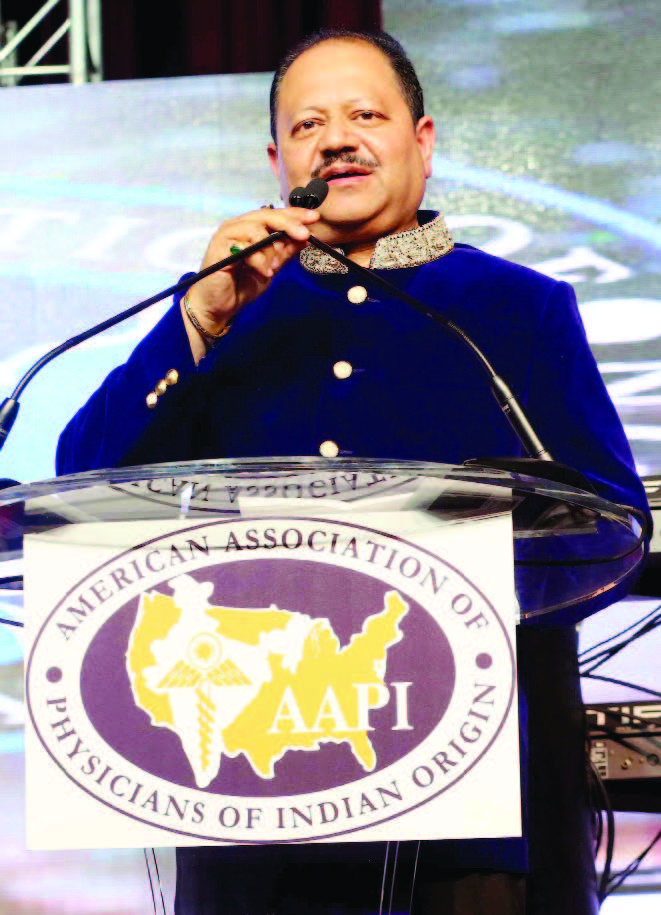
    NEW YORK CITY (TIP): New York Indian American community had reason to feel proud when a New Yorker Dr. Ajay Lodha took over as the national President of American Association of Physicians of Indian Origin (AAPI), an organization which leads the largest ethnic medical society in the United States, representing the interests of over 100,000 Indian American physicians. And what he said in his inaugural address at the AAPI convention, after taking over on July 3, made the entire medical fraternity associated with AAPI to celebrate. He said he wants AAPI to be “more vibrant, united, transparent, politically engaged, ensuring active participation of young physicians, increasing membership, enabling that AAPI’s voice is heard in the corridors of power, and thus taking AAPI to new heights.” Surely, for AAPI members, here was a man with a vision and his words indicated a certain determination and resolve.

    Dr. Lodha, who was administered the oath of office as the President of AAPI during the 34th annual convention in New York on July 3rd, 2016 vowed to take the more than three decades old organization to the new heights and “bring all the AAPI Chapters, Regions, Members of the Executive Committee and Board of Trustees to work cohesively and unitedly for the success of AAPI and the realization of its noble mission.”

    Acknowledging that leading AAPI is a daunting challenge, Dr. Lodha said, “I’m very honored, privileged and consider myself fortunate to announce that I have an excellent group of dedicated, hardworking, and loyal officers and executive committee members who are with me to take AAPI to new heights.”

    Dr. Lodha received the gavel from Dr. Seema Jain, the out-going president of AAPI as the more than 2,000 delegates cheered loudly, greeting the new President of AAPI. Along with him, Dr. Gautam Samadder as President-Elect, Dr. Naresh Parikh as Vice President, Dr. Suresh Reddy as Secretary, and Dr. Manju Sachdev as the Treasurer of AAPI, assumed charge in the presence of leading luminaries from across the nation. Dr. Madhu Agarwal assumed charge as the Chairman of the Board of Trustees, AAPI from the out-going chairman, Dr. Aravind Pillai. He stressed the importance of having YPS president Aditya Desai and MSRF President Atul Nakshi along with a diversified group of regional directors. “Their leadership will help us move forward with our current and future initiatives.”

    An Internist by profession, Dr. Lodha has had experiences in leading almost all areas of Medicine. He owns two Nursing Homes on Long Island, New York and has been credited to be the founder of the Accountable Care Organization (ACO) and the Independent Physicians Association (IPA).

    A graduate of RNT Medical College, Udaipur, Rajasthan, Dr. Lodha completed his Residency at the Flushing Hospital, NY. He is the founder and president of Queens Medical Services, a primary care practice with two locations serving Queens, NY since 1995 and is a partner in Hillaire and Nesconset Nursing homes. Dr. Ajay Lodha was appointed a member of the Nassau County Comptroller George Maragos’s MWBE Advisory Council last year.

    The New York-based physician and leader, who was honored with the prestigious Ellis Island Medals of Honor on May 7th, this year, rose through the ranks of AAPI and has been elected the President of AAPI. He is a recipient of Lawrence J. Scherr Award of Excellence for being an Outstanding Physi-cian. He has also been honored for Out-standing Contributions to Research & Hypertension Department at the Flushing Hospital, NY. In 2008, he was bestowed with the Nargis Dutt Memorial Foundation Physician of the Year Award.

    Ajay Lodha hides a power house of entrepreneurial skills. Dr. Lodha has extensive background of overseeing quality assurance and quality improvement. He is a past president of RANA and RAJMAAI (Rajasthan Medical Alumni Associ-ation Inc.),

    A past President of AAPI-QLI, Dr. Lodha was a former Chief Medical Officer and Senior Vice President of Caritas Health Care System representing St. John’s Hospital and Mary Immaculate Hospital in New York.

    Dr. Lodha was appreciative of increased involvement of women within AAPI. “We have a woman as the chair of the Board of Trustees, a woman treasurer, and 33% of this year’s regional directors are women. Women face the added challenge of maintaining the household in addition to their medical careers and their role in AAPI. I am looking forward to a great women’s forum from our women leaders and chair not only in USA but also in India. I salute all the women leaders,” he said.

    Soon after assuming office as the President of AAPI, Dr. Lodha declared that he will make every possible effort to restore AAPI’s image and enhance cohesiveness among different Chapters and Regions of AAPI. “When our founders first conceived of AAPI, they could not have imagined how well it would grow and develop. Let us not forget the achievements of those who have come before me. Their hard work and dedication serves as both an inspiration and a challenge to me,” he stated with gratitude and appreciation for the founders of this noble organization.

    According to him, “The growing clout of the physicians of Indian origin in the United States is seen everywhere as several physicians of Indian origin hold critical positions in the healthcare, academic, research and administration across the nation.” Dr. Lodha’s vision for AAPI is to increase the awareness of APPI globally and help its voice heard in the corridors of power. “I would like to see us lobby Congress for an increase in the number of available Residency Positions so as to help alleviate the shortage of Doctors.”

    AAPI has been able to serve as a platform in helping young physicians coming from India to seek residencies and help them in settlement and get jobs. Knowing that AAPI’s growth lies with the younger generation, Dr. Lodha has made it his priority to support and promote YPS and MSRF, the future of AAPI. “We need to host more educational and social activities to get young physicians more involved, and be able to stay connected with AAPI. That younger physicians and MSRF members feel fully integrated into AAPI and take more active roles. They should feel that they are benefitting by joining AAPI, which is, an extended family and they can turn to when in need of support and guidance,” he says. He wants to increase AAPI membership by offering more benefits and opportunities for mem-bers.

    The new executive committee members: Dr. Ajay Lodha, President, Dr. Gautam Samadder President-Elect, Dr. Naresh Parikh, Vice President, Dr. Suresh Reddy, Secretary, and Dr. Manju Sachdev, Treasurer of AAPI
    The new executive committee members: Dr. Ajay Lodha, President, Dr. Gautam Samadder President-Elect, Dr. Naresh Parikh, Vice President, Dr. Suresh Reddy, Secretary, and Dr. Manju Sachdev, Treasurer of AAPI

    Dr. Lodha, with the active support from the General Body, wants to “re-activate AAPI – HEALTH- PAC, commonly known as HEALTH- POLITICAL ACTION COMMITTEE, which will help raise funds amongst its members to advocate its Health Care issues to give a higher profile.” He urged all interested members to support and join the H-PAC by making a contribution, which will handle the HPAC matters and comply with the reporting requirements. Dr. Lodha wants to offer honorary memberships to past US Presidents, Senators and Congressmen, which will “bring us higher level of recognition and profile in the USA.

    “In my role as the President of AAPI in the coming year, I will continue to dedicate my services for the growth of AAPI. I am sure AAPI will grow multiple folds under the current team and will put all my efforts to make sure all the programs supersede from the past.”

    One of the major objectives of founding AAPI was to offer a platform and opportunities for members to give back to their mother land and the adopted nation. Realizing this, the new President believes that AAPI members will be provided with opportunities to support charitable activities in India and in the United States and increase donations to AAPI Charitable Foundation.

    Endowed with the desire to give back to his motherland and lead AAPI to identify and invest in the delivery of cost effective, efficient and advanced medical care in India, Dr. Lodha says, “AAPI does a lot of work in India. The Global Healthcare Summit 2016, planned to be held in Udaipur, Rajasthan, from December 28-30th this year, will be a great way of achieving our objectives for mother India.”

    In 2008, Dr. Lodha was part of a coalition that built a state-of-the-art 11 bed Surgical Intensive Care Unit for Government Hospital located in Udaipur, Rajasthan, India – free care is given to all the patients. Dr. Lodha in his commitment to the health of the community has organized numerous Health Fairs, Blood Pressure Screenings, and Medical Awareness programs as well as the delivery of educational materials at churches, temples and senior centers.

    Financial stability is an important area, where Dr. Lodha wants to focus on as President, and promises “to make sincere efforts in making AAPI financially stronger by increasing fund raising activities.”

    His leadership and commitment were much appreciated during the nine city Shreya Ghoshal Fund Raising tour by AAPI. Under the stewardship of Past President Dr. Narendra Kumar, the pioneering event generated a record $1.25 million and transformed AAPI’s financial strength as he took over as a Treasurer in early 2012. He was responsible for bringing complete transparency in accounting and keeping the books up to date.

    US District Attorney Preet Bharara with AAPI leaders at the podiumDr. Lodha is committed to upholding and further augment the ideals for which AAPI stands. “I am confident that my experience, work ethic and firsthand experience in organizing Conventions and fundraisers are best suited to carry on the responsibilities and lead this noble organization to new heights.” In all of his efforts, Dr. Lodha wants to work with his executive committee and all branches of AAPI membership in a congenial and non-competitive manner, focusing on the noble mission of this prestigious organization. His experiences in organizing conferences and meetings which help to bring members together and attract new members is vital to the success of the organization.

    The growing influence of doctors of Indian heritage is evident, as increasingly physicians of Indian origin hold critical positions in the healthcare, academic, research and administrative positions across the nation. With their hard work, dedication, compassion, and skills, they have thus carved an enviable niche in the American medical community. AAPI’s role has come to be recognized as vital among members and among lawmakers. AAPI is also transitioning into a multiyear thinking and behavior by maintaining core continuity.

    Dr. Lodha expressed his sincere gratitude and appreciation to the media, for their continued support. ” As it is said by Mark Twain: “There are only two forces that can carry light to all corners of the globe -the sun in the heaven and the media down here.”

    Dr. Seema Jain, outgoing President passes over the gavel to Dr. Ajay Lodha
    Dr. Seema Jain, outgoing President passes over the gavel to Dr. Ajay Lodha

    Dr. Lodha calls upon AAPI members to join in this historic journey: “AAPI’s mission is clear, our programs will continue to strive and our impact is infectious on benefiting society. Today I ask you to set aside your differences, and join me in this noble journey to make our mission possible.’

    Dr. Lodha lives on Long Island, New York with his wife Dr. Smita and their two children Amit and Shweta. AAPI will continue to be an active player in crafting the delivery of healthcare in the most efficient manner in the United States. “We will strive for equality in healthcare delivery globally.” Dr. Lodha is confident that with the blessings of elders, and the strong support from the total membership of AAPI and his family, he will be able to take AAPI to stability, growth and greater achievements. “A new era has begun. AAPI will continue to discover her own potential to be an active and vital player in shaping the landscape of national healthcare delivery system with a focus on health maintenance than disease intervention,” Dr. Lodha said.

    AAPI executive committee along with Regional leaders of AAPI
    AAPI executive committee along with Regional leaders of AAPI
  • India continues to get more H-1B visas despite fee hike: Verma

    India continues to get more H-1B visas despite fee hike: Verma

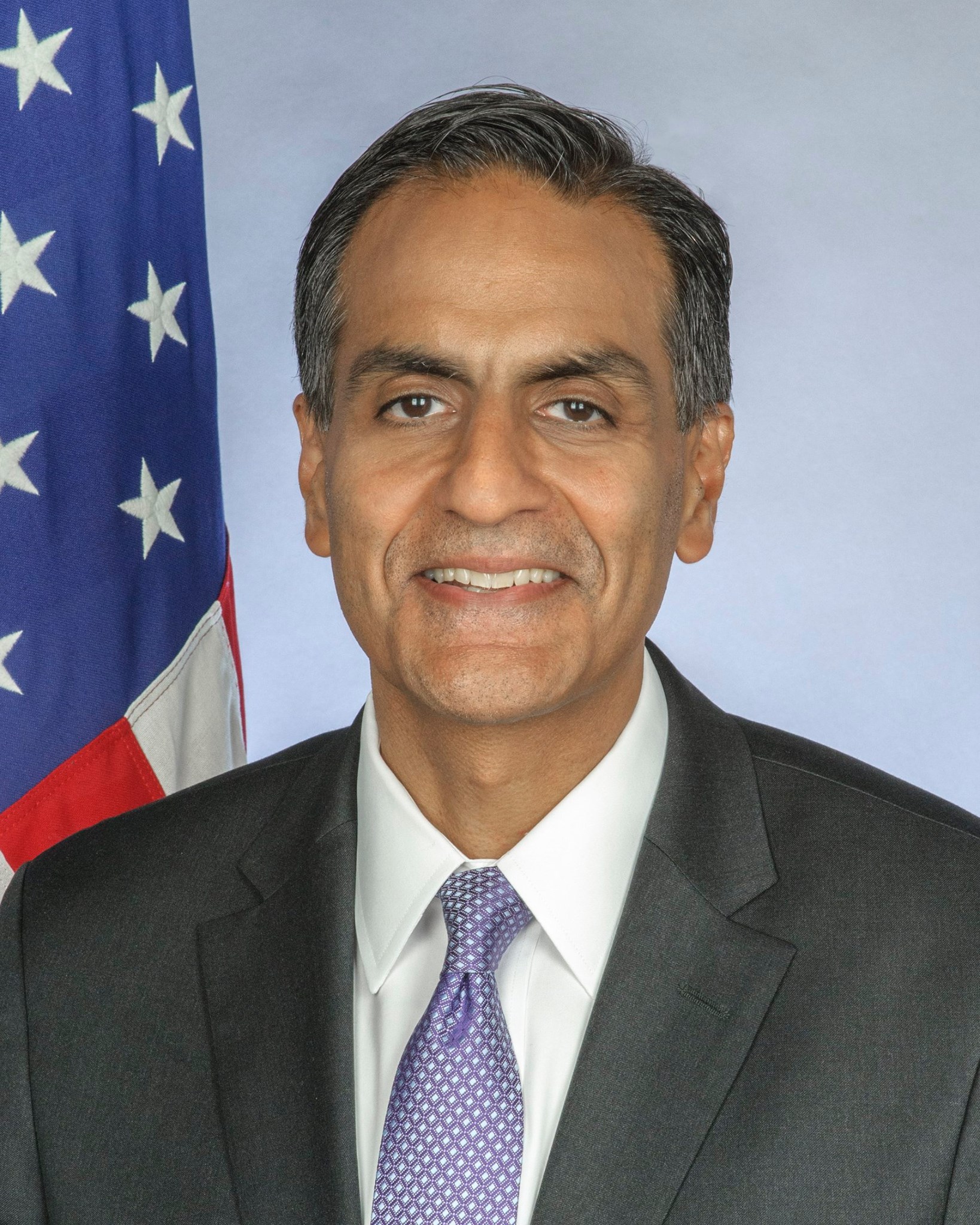
    NEW YORK (TIP): India continues to get the “lion’s share” of the H-1B visas from the US government despite the fee hike, US Ambassador to India Richard Verma.

    “India continues to receive the lion’s share of H-1B and L1 and even after the fee increase, they continue to get 70 per cent of those H-1B visas,” Verma said on the sidelines of ‘The Future is Now: From COP21 to Reality’ conference in New Delhi.

    “We understand the concern about the fee hike. I think there is an ongoing conversation. We also know this is an important part of travel and commercial enterprise in the US. And again, there is an increase in the number of visas issued, in fact, there is a slight increase,” he added.

    The US, under the 9/11 Health and Compensation Act, has imposed a special fee of USD 4,000 on certain categories of H-1B visas and USD 4,500 on L1 visas.

    Almost all Indian IT companies would be paying between USD 8,000 and USD 10,000 per H-1B visa as per the hike. According to Nasscom, this is expected to have an impact of about USD 400 million annually on India’s technology sector.

    Earlier in his speech, Verma said the ongoing deforestation and poor land management is responsible for nearly a quarter of the world’s greenhouse gas emissions as each day, greenhouse gases emitted by human activities trap the same amount of heat energy as would be released by 400,000 atomic bombs.

    “Climate change is not just an environmental challenge; it is a national security issue. Changes in climate could potentially damage critical infrastructure, create shortages of food and water, and lead to mass migrations and disease outbreaks.

    “Receding ice sheets in the Arctic and the opening of new sea passages raise concerns about maritime security and freedom of navigation,” he said. According to Verma, Prime Minister Narendra Modi’s 175 GW target for renewable energy deployments is among the most ambitious in the world and the US has done a great deal to support this effort.

    Through the US-India Partnership to Advance Clean Energy, or PACE, nearly USD 2.5 billion have been mobilized for clean energy projects in India and another USD 1.4 billion in climate finance for solar projects was announced during the Prime Minister’s visit to the US.

    “India’s success is critical to global success and I firmly believe, clean energy will be one of the biggest growth opportunities in the years ahead. Between now and 2035, investment in the global energy sector is expected to reach nearly USD 17 trillion. That’s more than the entire GDP of China and India combined,” Verma said.

    The US is actively supporting India’s solar targets through the Government of India-led International Solar Alliance and bilateral initiatives, such as rooftop solar cooperation and solar resource mapping, he said.

  • WHY WOMEN LIVE LONGER THAN MEN

    WHY WOMEN LIVE LONGER THAN MEN

    It’s queer but true – women have a longer lifespan compared to men.

    Researchers Steven Austad and Kathleen Fischer of the University of Alabama explored this riddle in their latest perspective piece.

    “Humans are the only species in which one sex is known to have a ubiquitous survival advantage,” the researchers write in their review covering a multitude of species.

    “Indeed, the sex difference in longevity may be one of the most robust features of human biology,” they added.

    Though other species, from roundworms and fruit flies to a spectrum of mammals, show lifespan differences that may favour one sex in certain studies, contradictory studies with different diets, mating patterns or environmental conditions often flip that advantage to the other sex.

    With humans, however, it appears to be all females all the time.

    “We don’t know why women live longer. It’s amazing that it hasn’t become a stronger focus of research in human biology,” said Austad.

    One of the evidences of the longer lifespan for women includes ‘The Human Mortality Database,’ which has complete lifespan tables for men and women from 38 countries that go back as far as 1751 for Sweden and 1816 for France.

    Again, longer female survival expectancy is seen across the lifespan, at early life (birth to 5 years old) and at age 50. It is also seen at the end of life, where Gerontology Research Group data for the oldest of the old show that women make up 90 percent of the super centenarians, those who live to 110 years of age or longer.

    Longevity may relate to immune system differences, responses to oxidative stress, mitochondrial fitness or even the fact that men have one X chromosome (and one Y), while women have two X chromosomes.

    But the female advantage has a thorn.

    “One of the most puzzling aspects of human sex difference biology,” write Austad and Fischer, “something that has no known equivalent in other species, is that for all their robustness relative to men in terms of survival, women on average appear to be in poorer health than men through adult life.”

    This higher prevalence of physical limitations in later life is seen not only in Western societies, they say, but also for women in Bangladesh, China, Egypt, Guatemala, India, Indonesia, Jamaica, Malaysia, Mexico, the Philippines, Thailand and Tunisia. But this is just one of several plausible hypotheses for the mystery of why women live longer, on aver age, than men.

  • NOW, A MAGNET THAT MAY MAKE SURGICAL STITCHES HISTORY

    NOW, A MAGNET THAT MAY MAKE SURGICAL STITCHES HISTORY

    A magnetic doughnut-shaped device has been developed that could be the end of stitches and staples.

    It’s being tested in a trial in the U.S. after results from animal studies suggested it could be highly effective, the Daily Mail reported.

    Researchers leading the California trial say the device could be suitable for tens of thousands of procedures and will “revolutionise this area.”

    Surgery often involves tying the ends of blood vessels or other structures together until they naturally fuse. This connection is called an anastomosis and is usually done with staples or stitches. Anastomoses are most commonly used in bowel surgery and weight-loss procedures for obese patients.

    The new device holds the two ends with a strong magnetic bond that researchers believe leads to a more secure anastomosis and faster healing and it is safer than standard techniques, as it can be done using less invasive surgery, meaning a lower risk of complications such as leaks. It’s also said to be cheaper.

    The new device, the Magnamosis, is a method of connecting the pieces using the attraction between two magnets, rather than staples or stitches. It consists of two ring magnets, each 23mm in diameter, which have concave or convex surfaces so that they fit snugly against each other.

    So far, this process has been shown to take less than a week using the magnet. It then automatically loosens its magnetic hold and is naturally removed from the body.

    A series of animal studies have shown that it is reliable and effective, and it is now being used in a clinical trial with patients for the first time.

    Ten patients who have planned intestine surgery which requires an anastomosis will have it done using the Magnamosis device. They’ll be monitored for two years to check how good the connection is and to look for side-effects such as fevers and leaks.

  • FOOD CAN ACTUALLY SLIM YOU DOWN

    FOOD CAN ACTUALLY SLIM YOU DOWN

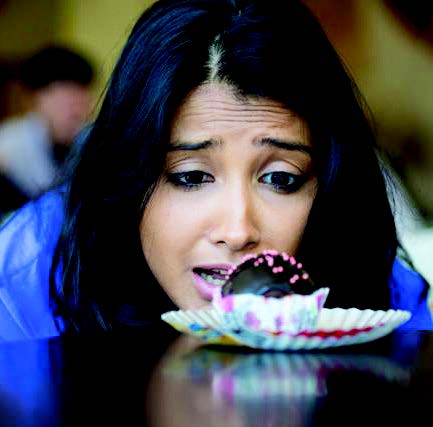
    If you know how to eat right, food can actually help you lose weight. There are many myths surrounding topics of dieting and weight loss. And there are numerous unhealthy misconceptions about it. Of course, if you are looking for some magical foods and ways that can melt away excess body fat, you will be disappointed. In order to reduce weight, you need to make small, achievable changes to your lifestyle, increase your physical activity and eat smart.

    Potatoes don’t make you fat Getting rid of carb-rich foods is not the key to weight loss, say experts. Rather, carbohydrates are the body’s main source of energy. So banning potatoes, rice, pasta etc will not make you magically slim. Of course, you can have potatoes but in a healthy way — following basic rules like not frying them, not using butter and full cream for your mash, etc, work.

    A healthy mix of foods is necessary People feel that mixing and combining foods does not work. Experts however negate it. Most diets are naturally a healthy mix of carbs and proteins and the enzymes in our digestive system break it all down well. You should have different food groups in your plate to get a healthy mix of it all. When you are having orange juice, the vitamin C in it can help boost the iron absorption from legumes, lentils and beans that are fortified with plant-based iron.

    Having only fruits won’t help Just having a fruit plate for breakfast is not ideal at all, say nutritionists. Post your all-night fast, your body needs fuel in the form of complex carbohydrates for breakfast, and just fruits cannot provide that. They are a great source of fibre and vitamins, and you could consume fruits with or before your breakfast of wholegrain cereals, multigrain muffins and breads. They can add to your breakfast but they cannot replace breakfast, say dieticians.

    Magic foods can’t help you slim down Gorging on superfoods cannot help
    you to lose weight. There are no magical fruits or vegetables that can burn your fat and give you a slim body, if you do not undergo a strict exercise regime and a healthy balanced diet along with it. Nutritionists say that dietary fibre could help you feel full for longer and thereby reduce your hunger pangs, and help you stop overeating.

    Your daily diet should consist of foods like whole fruits (avoid juices), vegetables, wholegrain breads and cereals, and legumes that are low in fat but high in fibre.

    Source: TOI

  • INCLUDE SALMON, WALNUTS IN YOUR DAILY DIET TO CUT HEART DISEASE RISK

    INCLUDE SALMON, WALNUTS IN YOUR DAILY DIET TO CUT HEART DISEASE RISK

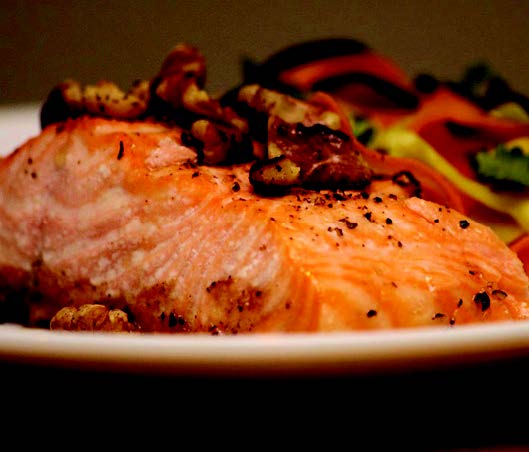
    Eating foods rich in omega-3 fatty acids such as salmon, trout, walnuts and flaxseed oil may significantly cut the incidence of developing a heart disease, finds a new global study.

    By pooling findings from diverse large studies that had measured blood or tissue levels of omega-3 fatty acids, researchers evaluated relationships with heart disease events over time.

    They found that blood levels of seafood and plant-basedomega-3 fatty acids are moderately associated with a lower risk of dying from heart attacks.

    “These new results, including many studies which previously had not reported their findings, provide the most comprehensive picture to-date of how omega-3s may influence heart disease,” said Liana C Del Gobbo from Stanford University in the US.

    “At a time when some but not other trials of fish oil supplementation have shown benefits, there is uncertainty about cardiovascular effects of omega-3s,” said Dariush Mozaffarian from Tufts University in the US. “Our results lend support to the importance of fish and omega-3 consumption as part of a healthy diet,” he added.

    Fish is the major food source of omega-3 fatty acids, including eicosapentaenoic acid (EPA), docosapentaenoic acid (DPA), and docosahexaenoic acid (DHA), researchers said.

    Fatty fish such as salmon, trout, anchovies, sardines, and herring contain the highest amounts of omega-3 fatty acids, although all fish contain some levels.

    In addition to omega-3 fatty acids, fish provide specific proteins, vitamin D, selenium, and other minerals and elements, researchers said.

    Alpha-linolenic acid (ALA) is the plant-based omega-3 fatty acid found in walnuts, flaxseed oil, and canola oil and some other seed and nuts and their oils, they said.

    A total of 19 studies were involved from 16 countries and including 45,637 participants. Of these, 7,973 people developed a first heart attack over time, including 2,781 deaths and 7,157 nonfatal heart attacks.

    Overall, both plant-based and seafood-based omega-3s were associated with about a 10% lower risk of fatal heart attacks, researchers said.

    In contrast, these fatty acids biomarkers were generally not associated with a risk of nonfatal heart attacks, suggesting a more specific mechanism for benefits of omega-3s related to death, they said.

    Source: PTI

  • Indian American Professor Gets DoD Funding for Lung Cancer Drug Resistance

    Indian American Professor Gets DoD Funding for Lung Cancer Drug Resistance

    Keck Graduate Institute (KGI) Professor Animesh Ray’s research titled, “A novel approach to understand and prevent the evolution of drug resistant lung cancer cells: A feasibility study,” on lung cancer drug resistance was recently approved by the Department of Defense.

    The Indian America professor’s research will focus on lung cancer drug resistance and aims to examine the emergence of therapy resistant forms of lung cancer using state-of-the-art advances in genomic technology.

    According to a KGI news release, the re-emergence of drug resistant lung cancers in patients who initially responded to the therapy is a major cause of death. And while many lung cancer patients who exhibit the spread of cancer to other parts of the body do respond well to treatment with anti-cancer drugs, it has been documented that the cancer can return aggressively, having developed resistance to the drugs used to treat the original cancers.

    “When lung cancers are targeted with an anti-cancer drug, the genome of the cancer cells, due to their robustness, can find ways to become resistant to drugs,” Ray said in a statement. “The current research proposal aims to use next-generation DNA sequence technology coupled with CRISPR technology to address this problem.”

    “The hope is that this preliminary work will help discover a new approach to prevent the appearance of relapsed drug resistant cancer,” added Ray.

    The study intends to target and prevent the adaptation of cancer cells to drugs, ultimately hoping to undercut the major factor for death related to lung cancer.

    It will include the use of a recently developed genome-wide gene-targeting technology coupled with massively parallel DNA sequencing, followed by computational modeling.

    Should Ray’s research result in success, it would benefit patients who have been treated for metastatic lung cancers and who are the among the most vulnerable lung cancer patients to succumb to the disease.

    Ray believes that successful research could lead to a new paradigm of cancer treatment, in which a novel class of drugs with relatively low toxicity can be developed, according to the KGI news release. The drugs, additionally, are expected to be less toxic than current anti-cancer drugs, it added.

    Ray, who is on sabbatical leave from KGI and serving as a visiting faculty member at Caltech, has been a professor at the institute for 15 years. He has also had teaching stints at U.C. San Diego, the University of Rochester and the Institute for Systems Biology.

    A graduate of Presidency College, Jawaharlal Nehru University and Monash University, earning a bachelor’s, master’s and doctorate, respectively, as well as a postdoctoral fellow at the University of Oregon and MIT, Ray developed his idea following a previous study on a National Science Foundation-funded research project.

    The U.S. Army Medical Research Acquisition Activity, 820 Chandler Street, Fort Detrick MD 21702-5014 is the awarding and administering acquisition office. This work was supported by the Office of the Assistant Secretary of Defense for Health Affairs, through the Lung Cancer Research Program under Award No. W81XWH-16-1-0170.

  • GOPIO 2016 Biennial Convention deliberates wide range of issues

    GOPIO 2016 Biennial Convention deliberates wide range of issues

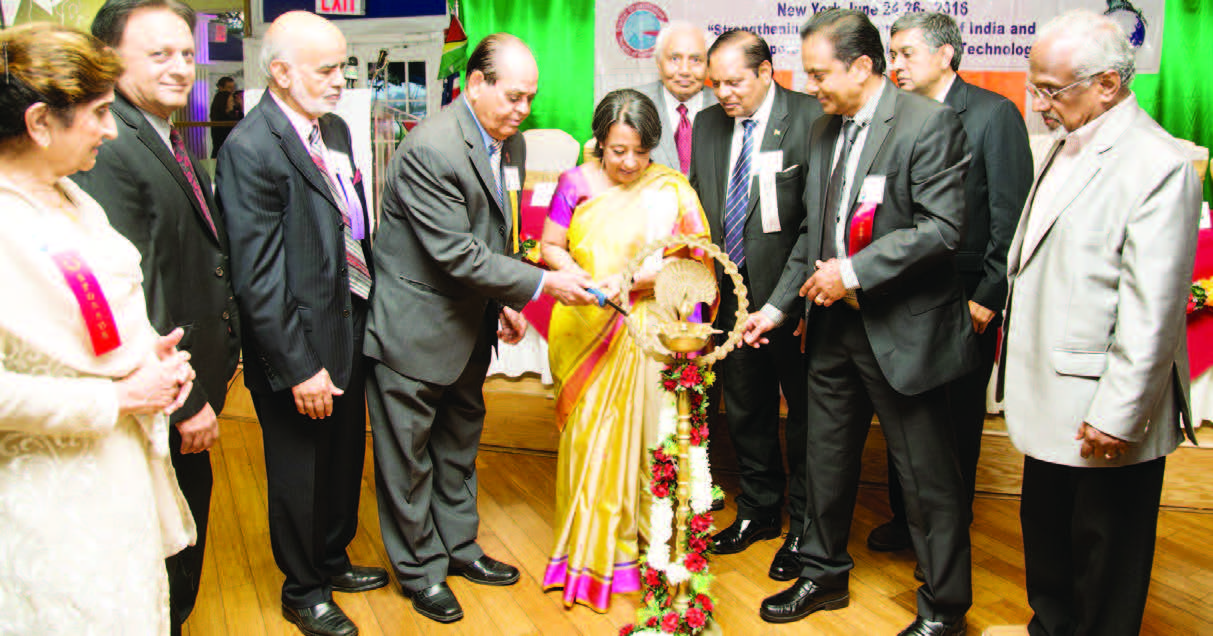
    NEW YORK CITY (TIP): With the theme “Strengthening Connections between India and Indian Diaspora through Business,” GOPIO International, Global Organization of People of Indian Origin (www.gopio.net), is held its 27th Anniversary Celebrations and GOPIO Biennial Convention 2016 in New York, USA at the Marriott LaGuardia Hotel with evening banquet held at World’s Fair Marina on June 24-25, 2016. Over 200 delegates from 20 countries participated. GOPIO’s New York Area Coordinator Lal Motwani served as the Convener along with Dr. Asha Samant, Kenny Desai, Shelly Nichani, Nohar Singh and Jayant Baxi as Co- Conveners.

    On Saturday June 25, a full day GOPIO conference was held at the New York LaGuardia Marriott Hotel from 9 a.m. to 5:30 p.m. There were 9 sessions to deliberate on the Global Indian Diaspora; evaluate GOPIO’s progress in 27 years; network, exchange ideas, and connect with PIO/NRI delegates from around the world. The conference, organized by Dr. Thomas Abraham, Chairman, Conference Committee and Founder President, GOPIO International, consisted of an inaugural plenary session with keynote speaker Raj Jaswa, former President of TiE Silicon Valley and director and trustee of TiE International, Serial technology entrepreneur, and an Adjunct

    The convention was inaugurated at the World’s Fair Marina on June 24th evening by welcome remarks by Convention Convener Lal Motwani and by GOPIO President Niraj Baxi and at a welcome dinner. The chief Guest was Guyana Prime Minister and First Vice President Moses V. Nagamootoo, a freedom fighter for Guyana. PM Nagamootto invited the Indian Diaspora community to consider Guyana as a destination for investment and business and spoke on many incentives Guyana could offer. India’s Consul General in New York Ambassador Riva Ganguly Das representing Govt. of India, delivered the inaugural address in which she noted the role played by GOPIO in launching and building a worldwide movement as a united force for the Indian Diaspora. The evening program ended with classical and semi-classical dances performed by students of Pandit Satya Narayana Charka.

    Professor at several Universities in India. This was followed by two track conference sessions, (1) Business and Technology ventures and opportunities and (2) Social, Political, Gender and Health challenges.

    Make in India – Diaspora role
    Major Issues of Indian Diaspora
    Indian Diaspora Promoting Medical and Pharmaceutical Industries
    Diaspora Indian Women Forum -Empowering Diaspora Indian Women
    Diaspora in Hospitality and Convenience Foods
    Diaspora Writers Form
    Promoting Diaspora Entrepreneurship, Technology and Business
    Health and Wellness of the Indian Diaspora

    The conference ended with a concluding presentations session from the Session Chairs, namely, Prakash Shah, Dr. Rajeev Mehta, Nitin Shah, Dr. Neerja Arun Gupta, Viresh Sharma, Sudha Parekh, Dr. Asha Samant, Jagdish Lodhia and Ram Gadhavi. Several resolutions were presented by a committee headed by Dr. Rajeev Mehta. Resolutions for the conference session were added to these, and will be sent to Govt. of Indian and other government agencies.

    The 27th Anniversary celebrations concluded with a Grand Finale Banquet and Recognition of Businesses and Entrepreneurs with Social Responsibility at the World’s Fair Marina. The honorees were Lord Diljit Rana of Belfast (Northern Ireland, UK), Raj Jaswa of Silicon Valley and TV Asia Chairman H.R. Shah. Dr. Sudhir Parikh, Chairman of Parikh Worldwide Media and Prof. Indrajit Singh Saluja were honored with Media Awards for their contribution and support of the community.

    The Chief Guest was Sir Isaac Vivian Alexander Richards, KNH, OBE, known as Viv Richards, a former West Indian cricketer, regarded as one of the greatest batsmen of all time. He was joined in the evening by Antigua & Barbuda Minister Trade, Industry, Commerce, Sports and National Festivals Mr. E.P. Chet Greene. The banquet ended with a Bollywood performances put together by Dharmatma Saran of India Festival Committee and Anita Bhat of Miss India-CT.

    With gratitude, GOPIO acknowledged support of Platinum sponsors Embassy National Bank, State Bank of India, Labidco Port Services Ltd; Gold sponsors Dr. Asha Samant and Kenny Desai; and Silver sponsors Bank of Baroda, Adani North America, S.S. White Technologies Inc. and Dr. Praveen Chopra.

    A Number of resolutions were adopted.

  • Spectacular mega ATA Convention to begin July 1, 2016

    Spectacular mega ATA Convention to begin July 1, 2016

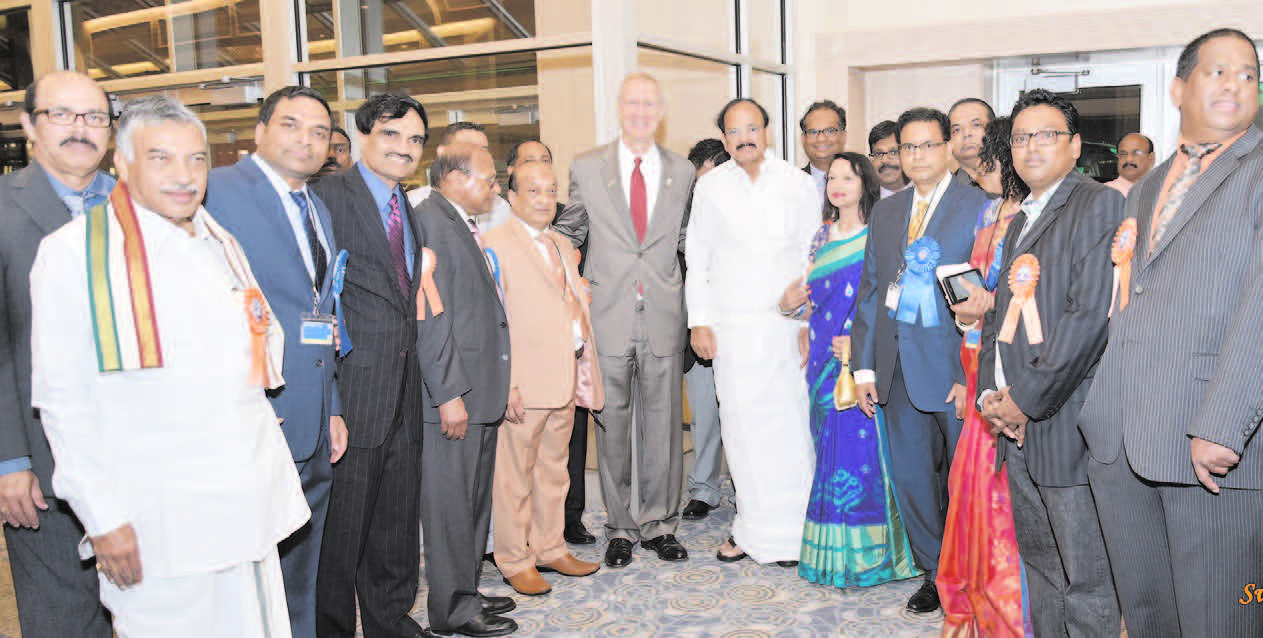
    CHICAGO (TIP): A large contingent of artists, musicians, singers, dancers, poets, dramatists, authors, folk musicians, eminent Telugu personalities bolstered by a bevy of dazzling movie actors, celebrities, music directors complimented by prominent elected officials from India -have begun steadily arriving in Chicago for a spectacular global ATA Convention to be held at the Rosemont Convention center from July 1-3, 2016 in Rosemont, IL.

    Shri. Venkaiah Naidu, Union Minister for Urban Development and Parliamentary Affairs is expected to formally inaugurate this grand 3-day convention barring any unforeseen compulsions.

    This monumental ATA convention is poised to draw a huge constituency of Telugu families ever to converge in grand celebration of Telugu language, culture and tradition. With the registrations trajectory showing an upward trend matched by palpable groundswell, outpouring support. The exciting convention details were disclosed by ATA convention team at the Convention Planning meeting held on Sunday, June 26, 2016 at Tamarind Restaurant in Aurora, IL. Which was attended by Dr. S. Venu Gopala Chary, Telangana State Minister.

    Sudhakar Perkari, ATA President said we enthusiastically welcome families to this 3-day grand convention celebrated on an extraordinary scale to showcase Telugu culture, art, literary, religion, social economic, health and political forums surpassed only by great gourmet food, fashion shows, contemporary music and epic dance presentations.

    Chandrasekhar Reddy Palvai, Conference Convener expressed shining optimism to see the overwhelming outpouring of Telugu diaspora standing up to jubilantly join the silver jubilee ATA convention showcasing its grand majestic journey of 25 years.

    K.K. Reddy, Conference Director said he is excited at the enthusiastic participation of Telugu people gallantly illustrating the indomitable Telugu spirit that will lay foundations to help carry the Telugu torch to the succeeding generations to maintain sustainable Telugu identity amidst the rapidly changing world. Hanumanth Reddy, ATA Founder/Past President who is overseeing massive convention arrangements said we have made an emotional commitment to this silver jubilee convention to demonstrate the exponential growth and its rich history since it hosted the first convention in Chicago in 1991. For more information, please visit ATA website: http://www.ataconference.org/(Press release by: Asian Media USA)

  • Eid Mubarak, Happy Ramadan, Eid al-fitr

    Eid Mubarak, Happy Ramadan, Eid al-fitr

    The Word Ramadan is also pronounced Ramzan and in many other ways depending on the linguistic influence.

    The Arabic influenced languages call it Ramadan, whereas the Persian affiliated languages call it Ramzan, and with the touch of Sanskrit, it is also called Hari Raya. I am pleased to include the various names of Ramadan around the world in the list below. It is like the British and American variations in English.

    Please note the simplicity in writing is designed for people of other faiths to learn and to know, so we can relate with each other. If you like to wish a Muslim on this happy occasion, you can say Eid Mubarak, Happy Eid, Eid ki Shubh Kamnaeyien, Best wishes, Ramadan Kareem or Happy Ramadan.

    After fasting for 29 or 30 days, and based on the moon sighting, NASA calculations or other traditions, the fasting would come to an end with the celebration. It is one of the three major events for Muslims besides Bakrid and Muharram. Muslims typically gather in a large space and perform their thanksgiving prayer. Doctor Saab, add the link as a Reference previous article

    In the Hindu tradition at the end of Navaratri, Dussehra is celebrated on the 10th day; women fast for Karva Chouth, similarly in the Jain tradition; Paryushan and Daslakshan are celebrated after fasting for 7 to 9 days. The Jews observe fasting during Yom Kippur and Christians during lent through Easter Sunday. Fasting is also observed for medical reasons.

    Although Ramadan is popularly known in the West for its culinary delicacies and fancy Iftaar (ceremonial breaking of fast at sun down), the spirit and intent of Ramadan lies in a human transformation in a month long inner spiritual journey of finding oneself in tune with spirituality. God has no need for the hunger or thirst of someone who hurts others, violates their dignity or usurps their rights, said Prophet Muhammad (PBUH). The fasting of the stomach must be matched by the fasting of the limbs. The eyes, ears, tongue, hands and feet all have their respective fasts to undergo. The tongue’s temptations, for example – lies, backbiting, slander, vulgarity and senseless argumentation – must be challenged and curbed to maintain the integrity of the fast.

    Consciousness of behavior and vigilance over action are the most profound dimensions of fasting: the fasting of the heart focuses on the attachment to the divine. That is when Ramadan really becomes a source of peace and solace, just as Christmas goes beyond the rituals to bring forth kindness, charity and caring.

    True fasting is self-purification; and from this, a rich inner life that bring about values such as justice, generosity, patience, kindness, forgiveness, mercy and empathy – values that are indispensable for the success of the community.

    The purpose of fasting, i.e., abstaining from consuming food, liquids and sensual pleasures during a specified period brings self discipline, self-checking on one’s own integrity and health benefits.

    During fasting one is supposed to become honest, caring, just and a kind human being, a majority of people get that right, some don’t. It’s like the class room where the teacher teaches the same book to every student, yet one become the top scorer and one fails, while most of them pass at varying grades. Fasting is no different.

    Piety (Taqwa) is all about- getting closer to God, or becoming God-like. What is God like? It is to be free from prejudice and to be just, fair, safe and secure.

    So what do Muslims do on the day of Eid?

    From the moment we are born to the last rites of our life and every moment in-between is loaded with rituals, though some of us may deny it. Whether we go to the gym, eat our food; go to sleep, wear clothes, drive some place, in our intimate moments, or picking that phone up, we follow rituals or a system.

    Discipline is necessary to do things on time, managing personal relationships, driving to a destination or keeping within budget to achieve the goals; the result is worth the discipline to most people. When joyous, whether we are a theist or not, we have to express that sentiment, otherwise a sense of incompleteness lingers in our hearts.

    1. Chand Raat is the evening when moon is sighted; everyone gets out and goes shopping for a variety of things to wear the next day. It is really the first day out from 29 days of fasting and everyone looks forward to it.
    2. Mehendi (henna) is applied to female hands over night – these traditions vary from region to region and nation to nation.
    3. Most Muslims wear new clothes signifying a new beginning and that tradition is prevalent in almost every faith.
    4. Zakat is due; it is tithe, like tax, and it is approximately 2.5% of your wealth that you share with your less fortunate fellow beings. It is a way to reduce your guilt that you are blessed with resources while some are not, and also to ensure the society you are not a hoarder.
    5. On the morning, usually around 8 AM -Muslims gather up near a Mosque and walk to a central place to pray together.
    6. It’s a short prayer with a sermon before and after the Namaz. We need an improvement in this area; most of the Sermons are boring and irrelevant.
    7. In the United States, if the Mosque is big enough, they all gather up at the Mosque, or rent a large hall for the congregation.
    8. In many nations people gather up near the cemetery to pray. We did that in my town Yelahanka, a suburb of Bangalore.
    9. Invariably, Muslim throughout the world visits a cemetery to honor their dead. However, the long held tradition is losing its tractions as we become more and more mobile. Memorial Day -http://centerforpluralism.com/memorial-day-and-muslims/
    10. Almost all Muslims hug each other, it is time to put aside the differences and reconnect with each other, they hug three times, each time signifying, I seek your forgiveness and lastly both seek friendship.
    11. On the day of Eid, Muslims cook the best of their foods. Usually it is an open house to friends and family members; no one eats full meal anyplace, but eats a little at each home they visit.
    12. Dessert made out of Vermicelli is the most common item across the world, most of the Desi’s be it Indians, Pakistanis, Bangladeshis and Sri Lankans enjoy Sheer Khurma -Vermicelli’s in liquid form with cashew, dried grapes, pistachio and their likes. I like the thin version that I can pour in a cup of tea and drink.
    13. As it happens on Ugadi, Baisakhi, Dussehra, Christmas and Thanksgiving, people eat more that they can consume on that day and complain that they should not have had that much food, including this writer.

    Everything you had always wanted to know about Ramadan is finally here at this website. www.RamadanNews.com. It has got everything about Ramadan – from how it is celebrated around the world (including Mayans) to what the world leaders say to fantastic TV commercials about Ramadan – The essence, politics, rituals and traditions of Ramadan and more. Plus the most read articles and the current articles about Ramadan.

    “Festivals of the World” is an educational series by Mike Ghouse since 1993 with a belief that, when we live as neighbors, we might as well learn about each other. The best way to build cohesive societies is for its members to understand each other’s sorrows and joys, and festivities and commemorations. We are updating the website www.CenterforPluralism.com , until such time, you can Google the name of Festival with my name and hopefully you will have some information about most festivals of the world.

    (The author is President of the Center for Pluralism, a think tank that offers pluralistic solutions on issues of the day, be it religious, political, social, cultural or racial. He is a motivational speaker on Pluralism, Interfaith, Islam, politics, terrorism, human rights and foreign policy. A community consultant, pluralist, social scientist, thinker, writer, activist, news maker and an Interfaith Wedding Officiant. He is committed to building cohesive societies and offers pluralistic solutions on issues of the day. Please visit www.CenterforPluralism.com and www.MikeGhouse.net)

  • GOPIO-CT honors 5 and gives 4 college scholarships

    GOPIO-CT honors 5 and gives 4 college scholarships

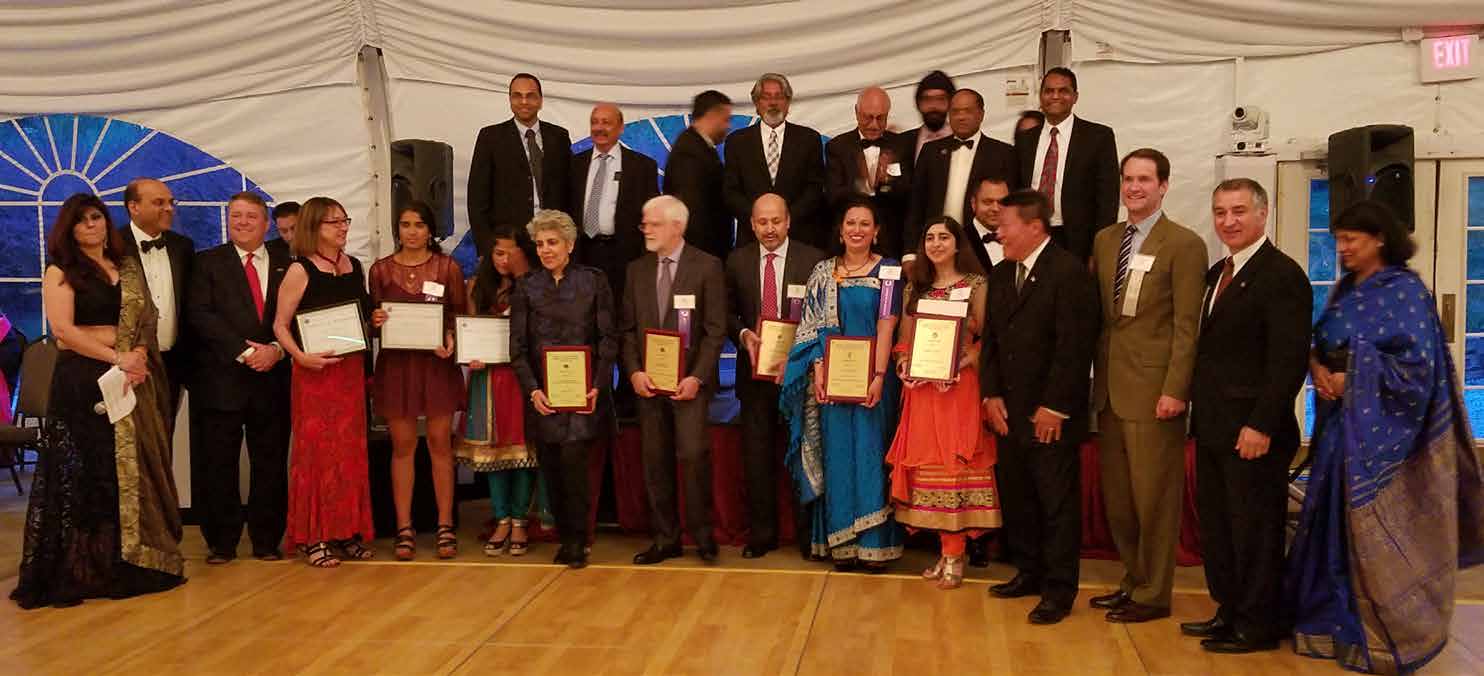
    It was a memorable evening in every possible way. The Ballroom at The Hilton Hotel in Stamford, CT was filled with more than 200 invited guests from across the state of Connecticut, including community leaders, elected officials, and honorees and their families on Saturday, June 18, 2016. The event was the 10th annual Gala and awards nite organized by The Global Organization of People of Indian Origin (GOPIO) Connecticut Chapter honoring five for their achievements and contributions to the community: The gala included a cocktail reception, dinner, music, live DJ and dances by participants, eloquent speeches, touching lifestories and inspiring narratives on the lives of the five distinguished honorees.

    Prominent among those who had attended and spoke at the annual gala included, Congressman Jim Himes, Stamford Mayor David Martin, Norwalk Mayor Harry Rilling, Connecticut State Senators Tony Hwang and Toni Boucher and CT State Assemblyman Dan Carter.

    Sachin Lawande, President and CEO of Visteon Corporation (Van Buren, MI), was recognized for his achievement as a Corporate Leader. Visteon is one of the world’s leading suppliers of vehicle cockpit electronics, serving auto manufacturers around the globe. Sachin was described to be leading a rapid evolution of electronics technology and software to meet the demands of the connected car era. In his response, Laweande, while thanking GOPIO-CT, he said, “May this award given to me today be an inspiration to the younger generation.”

    Anjali Sharma, a Greenwich resident, was honored for Community Service and promoting philanthropy. Anjali, a Trustee of AIF, has worked tirelessly to as a humanist and philanthropist to promote India’s development. She won the loudest applause from the audience for her simple narration of the many effort she and her organization do to bring a little cheer in the lives of hundreds of people in India she has been instrumental in touching with her monetary help. While acknowledging the award, Sharma applauded GOPIUO and said, “Your efforts show that you are working to have our community integrated with the mainstream world.”

    Annapurna Duleep, a  former Norwalk Councilwoman, was recognized for her contributions and achievements in Political Involvement. Anna is the first woman and South Asian to be elected Sheriff of Norwalk City in 2014.  She is an ardent proponent of gun control.  Duleep urged the participants and the larger Indian American community to “Join with me in the effort to take the community to the next level.”

    GOPIO-CT President’s Young Professional Achiever Award was given to Roopa Modha of Shelton, who has been working tirelessly to promote women’s issues using her legal expertise to further women’s causes. Her commitment is to empower women and bring the issues of domestic violence and rape into the public domain. A lawyer by profession, She attended the White House’s United State of Women Summit in 2016.

    Dr. Thomas Abraham, Founder President of GOPIO International who is also a Trustee of GOPIO-CT, while introducing, David Smith, FACHE of Stamford Hospital as the recipient of the Friend of GOPIO and the Indian American community award, said, “For the first time, GOPIO-CT is recognizing an employee of an institution. Mr. Smith currently serves as Senior Vice President, Strategy and Chief Strategy and Network Development Officer at Stamford Health, Stamford, Connecticut.  He has worked in the Health Care Sector for over 35 years. He is an ardent supporter of good health and healthy food habits. David has supported IndianAmerican community for many years.” In his response, shared with the audience as to how he developed an increasing taste for India and the people from this large nation. He spoke about his his close association with many people of Indian origin in the US.

    GOPIO-CT President’s Young Professional Achiever Award was given to Roopa Modha, who has been working tirelessly to promote women’s issues using her legal expertise to further women’s causes. Her commitment is to empower women and bring the issues of domestic violence and rape into the public domain. In her passionate address, Modha hoped that “this award will inspire many more to join in the efforts to make a just world.” She urged the audience to “be passionate about making a positive impact on others.”

    For the second year in a row, GOPIO-CT Scholarship for College Tuitions were given to Gunja Shah, a prospective student at Massachussetts College of Pharmacy; Tanusri Balla, entering University of Pennsylvania; Nikita Jaaswal, who has enrolled to begin her studies at University of California; and Sirin Vahora, amother of two, who has accepted into Norwalk Community Ciollege’s Nursing Program. GOPIO-CT Scholarship Committee consisted of Sanjay Santhanam (Chairman), Hari Srinivasan, Tara Sharma, and Priya Easwaran coordinated GOPIO-CT efforts and led the fundraising at the event to expand the scholarship to other parts of Connecticut in the coming years.

    Proclamations from Governor Malloy, Mayor David Martin, and US Senator Richard Bllomenthal to the awardees were read out at the awards ceremony. In welcoming the guests and dignitaries, Shelly Nichani, President of GOPIO-CT said “We are celebrating the achievements of five distinguished individuals and the award is a reflection of their remarkable accomplishments and commendable services.” He said, over the last ten years, GOPIO-CT has become an active and dynamic organization hosting interactive sessions with policy makers and academicians, community events, youth mentoring and networking workshops, and working with other area organizations to help create a better future.

    Congressman Jim Himes, who represents Connecticut’s 4th District in the United States House of Representatives, where he is serving his fourth term, said he was delighted to be at the event to honor the accomplishments of so many talented individuals. He complimented the IndianAmerican community as the highly educated 3.2 million strong, making tremendous contributions to the economic quality of this country.

    “You are the community. You are not part of the community,” Mayor David Martin told the Indian Americans. Pointing to the historic nature of the upcoming general elections in November, Mayor Martin urged the members to register and vote, and thus become ensure that your voices are heard.”

    Mayor Harry Rilling said “I am honored to be here to celebrate among friends and am thankful for the warm welcome the Indian community has always extended to me and my family.” He also congratulated GOPIO-CT for its 10 years of service and bringing the Indian community together.

    Niraj Baxi, the President of International GOPIO congratulated the awardees for “bringing honor to your Indian heritage. We are all very proud of you.” He said he was “delighted to be part of the celebration in Connecticut honoring distinguished IndianAmericans and David Smith, a Friend of GOPIO.”the Friend of GOPIO and the Indian Community award.

  • DIABETES UPS RISK OF HEART ATTACK DEATH BY 50 PER CENT

    DIABETES UPS RISK OF HEART ATTACK DEATH BY 50 PER CENT

    Individuals suffering from diabetes are at nearly 50 per cent increased risk of dying from the effects of a heart attack, a new study has found.

    “The results provide robust evidence that diabetes is a significant long-term population burden among patients who have had a heart attack,” said lead researcher Chris Gale, Consultant Cardiologist and Associate Professor at University of Leeds in Britain.

    The findings showed that people with diabetes were 56 per cent more likely to have died if they had experienced a ST elevation myocardial infarction (STEMI) heart attack – in which the coronary artery is completely blocked – than those without the condition.

    Further, they were 39 per cent more likely to have died if they had a non-ST elevation myocardial infarction (NSTEMI) heart attack – in which the artery is partially blocked – than those without diabetes.

    The study indicated that the adverse effect on survival is linked to having diabetes, rather than other conditions people with diabetes may suffer from.

    “Managing diabetes effectively can reduce the risk of developing cardiovascular disease. This includes eating healthily, keeping active and taking medications as prescribed by your doctor,” added Anna Morris, Head of Research Funding at Diabetes UK — a research organisation.

  • WALNUTS MAY HELP FIGHT AGEING EFFECTS

    WALNUTS MAY HELP FIGHT AGEING EFFECTS

    Eating an overall healthy diet, including certain foods such as walnuts and other whole foods, may reduce the risk of physical function impairments throughout the ageing process in women, a new study has found.

    Women who consumed 1-2 servings of walnuts per week (1/4 cup per serving) showed reduced risk of developing impairments in physical functions, the study said. Walnuts are unique among nuts in that they are primarily composed of polyunsaturated fat (13 grams per ounce), which includes alpha-linolenic acid (ALA), the plant-based omega-3 fatty acid.

    They are the only nut to contain a significant amount of ALA with 2.5 grams per one ounce serving, the study noted.

    “There is a lot of research that looks at specific health conditions in ageing, such as diabetes and heart disease, but less attention to research on quality of life and ability to maintain independence with ageing,” said Francine Grodstein, Professor at Brigham and Women’s Hospital and Harvard Medical School in the US.

    Further, a higher intake of fruits and vegetables, lower intake of sugar-sweetened beverages, trans fat and sodium and moderate alcohol intake were diets most associated with reduced rates of incident physical impairment.

    Among food components, the strongest relations were found for increased intakes of oranges, orange juice, apples, pears, romaine or leaf lettuce and walnuts.

    Overall diet quality, rather than individual foods, may have a greater impact on reducing risk of physical function impairments, emphasised the paper published in the Journal of Nutrition.

    For the study, the team looked at data from 54,762 women in the Nurses’ Health Study, which tracked women for over 30 years.

    Between 1992 and 2008, the team examined these participants’ association between the dietary habits of the participants and subsequent impairment in physical function.

    Helps weight loss

    Contrary to what people believe, walnuts can form a part of weight management diet. Several studies have suggested that regular consumption of walnuts is unlikely to cause weight gain or obesity. In fact, an ounce of walnuts contains 2.5g of omega 3 fats, 4g of protein and 2g of fibre that help provide satiety. Any successful weight management plan must include satiety factor; so walnut is undoubtedly the right food to consider if you are into a weight management programme. Despite being ‘dense in calories, walnuts can be an important tool in helping you lose weight.

    Induces sleep

    Walnuts contain a compound called melatonin, responsible for conveying messages regarding the cycle of light and dark to the body. Since melatonin is already synthesised by the body, consumption of walnuts increases the blood levels of melatonin, thereby inducing sleep. That’s why eating walnuts can be a great way to improve sleep.

    Great for your hair

    Walnut is a good ‘hair food’ too. This is because walnuts contain biotin (vitamin B7) that helps strengthen hair, reduce hair fall and improve hair growth to certain extent. In addition to walnuts, you can try these foods to prevent hair loss.

    Prevents heart disease

    Among all the dietary plants and nuts, walnuts contain the highest amount of antioxidants. Around 100 g of walnuts will give more than 20 mmol antioxidants, which makes them extremely effective in combating heart disease by their ability to destroy free radicals. They are also loaded with omega-3 fatty acids that lowers bad cholesterol and increases the production of good cholesterol making it a great snack to keep your heart in great health.

    Prevents diabetes

    All types of nuts are associated with a lowered risk of diabetes and walnuts are no exception. According to a study, women who consumed 28 grams of walnuts twice a week were 24% less likely to develop type 2 diabetes. The study was published in the Journal of Nutrition, and even though it was conducted on women, experts believe that the benefits would be similar for men too.

    Boosts your sperm quality

    Eating 2.5 ounces of walnuts per day improves semen quality in healthy young men, researchers say. According to a study by UCLA researchers, eating 75 grams of walnuts a day improves the vitality, motility, and morphology of sperm in healthy men aged 21 to 35. Here are 8 easy ways to boost your sperm quality and count.

  • 90% OF LUNG CANCER PATIENTS ARE SMOKERS

    90% OF LUNG CANCER PATIENTS ARE SMOKERS

    Lung cancer is the leading cancer amongst men in Kerala despite a ban on smoking in public places and several anti-tobacco awareness campaigns, show the latest estimates by the National Centre for Disease Informatics and Research (NCDIR) of the Indian Council of Medical Research.

    What is worrying is that majority men detected with lung cancer are married and almost 30% of them are in the working age group of 45-60. The study, based on four hospital-based cancer registries in the state from 2012 to 2014, also puts the average prevalence rate of the disease at 16%.

    “We note a high smoking rate in patients with lung cancer. Only 10 to 15% of them are non-smokers. The average age at which they start smoking is 16-20 and they continue to smoke for 15-20 years,” said Dr V P Gangadharan, leading oncologist and NCDIR scientific advisory committee member.

    He said tobacco, like in the rest of the country, continued to be the major cause of cancer for men. “Some ten years ago, oral cancer was the leading cancer amongst men due to tobacco chewing. It is lung cancer now, due to smoking.”

    Oncologists said despite the advances in cancer treatment, the problem with lung cancer is that it is mostly detected in the advanced stage, with the cure rate just around 5%. “It is a bad disease with poor outcome. Around 60% of lung cancer patients are in stage IV and the average life span is around 12 months,” said Dr Arun Warrier, consultant medical oncologist, Aster Medcity .

    The registries included in the study were from Regional Cancer Centre (RCC), Thiruvananthapuram; Amrita Institute of Medical Sciences (AIMS), Kochi; Malabar Cancer Centre (MCC), Kannur and Caritas Cancer Institute & Caritas Hospital (CCICH), Kottayam.

    In the RCC, 15% of the 11,447 men who underwent cancer treatment had lung cancer while it was 11.2% of 6,017 patients in AIMS, 22.9% of 3,934 patients in MCC and 15.7% of 1,659 patients in CCICH. On an average, 90%lung cancer patients in these hospitals were married.

  • Five Nepalese injured in Kabul attack brought to Apollo hospital

    Five Nepalese injured in Kabul attack brought to Apollo hospital

    NEW DELHI (TIP): Five Nepalese guards, injured in a suicide attack in Kabul two days ago, are under treatment at the city-based Indraprastha Apollo Hospital, hospital authorities confirmed on June 23.

    “We have received five Nepalese patients who were working as private security guards in Kabul. They are being treated for blast related injuries,” a senior authority of Apollo told IANS.

    The injured Nepalese worked for private security company Sabre International to guard the Canadian embassy in Kabul.

    On Monday, 12 Nepalese security guards were killed in a suicide blast targeting their minibus in Kabul. Nine other people were wounded, including five Nepalese and four Afghans.

    The bodies of the 12 Nepalese guards killed were on Wednesday flown to Nepal in a special chartered flight.

  • GOPIO 2016 Biennial Convention and Conference: June 24 & 25

    GOPIO 2016 Biennial Convention and Conference: June 24 & 25

    NEW YORK CITY (TIP): GOPIO International, the Global Organization of People of Indian Origin (www.gopio.net), is holding its 27th Anniversary Celebrations and GOPIO Biennial Convention 2016 in New York, USA at the World’s Fair Marina and Marriott LaGuardia Hotel on June 24-25, 2016. The theme of the conference is “Strengthening Connections between India and the Global Indian Diaspora through Business and Technology,” and will provide an opportunity to connect and network with people of Indian origin worldwide.

    Delegates from over 25 countries are expected to attend the convention which starts on Friday, June 24 with an inauguration and welcome reception from 7.00 p.m. to 10 p.m. at 1 World’s Fair Marina, Flushing, New York. The Chief Guest is Ambassador Arun Singh, Indian Ambassador to the US from Washington, DC. Other Honored Guests are Guyana Prime Minister and First Vice President Moses V. Nagamootoo, Congressman Gregory Meeks and Queens Borough President Melinda Katz. On behalf of GOPIO, Lal Motwani, Convener, and Co-Conveners Dr. Asha Samant, Kenny Desai, Shelly Nichani, Nohar singh and Jayant Baxi extend their invitation to join in for this biennial international GOPIO Convention 2016.

    On Saturday June 25 a full day GOPIO conference will be held at the New York LaGuardia Marriott Hotel (102-05 Ditmars Blvd., East Elmhurst, New York) from 9 a.m. to 5:30 p.m. There will be 9 sessions to deliberate on the Global Indian Diaspora; evaluate GOPIO’s progress in 27 years; network, exchange ideas, and connect with PIO/NRI delegates from around the world.

    The conference, organized by Dr. Thomas Abraham, Chairman, Conference Committee and Founder President, GOPIO International, will consist of an inaugural main tent session followed by four Diaspora related topics in each of two tracks: (1) Business and Technology ventures and opportunities and (2) Social, Political, Gender and Health challenges. The keynote speaker will be Raj Jaswa, former President of TiE Silicon Valley and director and trustee of TiE International, technologySerial entrepreneur, and an Adjunct Professor at several Universities.

    GOPIO International President Niraj Baxi invites all PIOs (People of Indian Origin) and NRIs (Non Resident Indians) to avail of this opportunity to attend, saying, “The conference will evaluate, assess, debate, discuss and deliberate on the current critical issues of interest and concern that confront over 25 million people of Indian origin, living in countries outside of India.”  Conference sessions listed below are open to all with pre-registration.

    ● Make in India – Diaspora role
    ● Major Issues of Indian Diaspora
    ● Indian Diaspora Promoting Medical and Pharmaceutical Industries
    ● Diaspora Indian Women Forum -Empowering Diaspora Indian Women
    ● Diaspora in Hospitality and Convenience Foods
    ● Diaspora Writers Form
    ● Promoting Diaspora Entrepreneurship, Technology and Business
    ● Health and Wellness of the Indian Diaspora

    The conference will end with a concluding presentations session from the Session Chairs, namely, Prakash Shah, Dr. Rajeev Mehta, Nitin Shah, Dr. Neerja Arun Gupta, Viresh Sharma, Sudha Parekh, Dr. Asha Samant, Jagdish Lodhia, Ram Gadhavi. A Presentation of Resolutions will be made by Dr. Rajeev Mehta, Chairman Resolution Committee and GOPIO International Coordinator for North America, Piscataway, NJ, USA.

    The 27th Anniversary celebrations will conclude with a Grand Finale Banquet and Recognition of Businesses and Entrepreneurs with Social Responsibility from 7 p.m. to 11 p.m. at the World’s Fair Marina. The Chief Guest will be Ambassador Riva Ganguly Das, Consul General of India, New York. With gratitude, GOPIO acknowledges support of Platinum Sponsors Embassy National Bank, State Bank of India, Labidco Port Services Ltd; Gold sponsors Dr. Asha Samant and Kenny Desai; and Silver Sponsors Bank of Baroda, Adani North America, S.S. White Technologies Inc. and Dr. Praveen Chopra.

    For Convention registration and sponsorship opportunities, contact: Convention Convener Lal Motwani at lmotwani@verizon.net or call the following numbers: 516-581-3332, 516-616-0233 or 203-329-8010.

    About GOPIO International: GOPIO is a non-partisan, not-for-profit, secular organization. GOPIO’s volunteers are committed to enhancing cooperation and communication between NRIs/PIOs, building bonds, friendships, alliances, and the camaraderie of citizens and colleagues alike. GOPIO volunteers believe that when they help network the global Indian community, they facilitate making tomorrow a better world for the Indian Diaspora. GOPIO publishes a very informative monthly newsletter. Interested persons can receive free of charge at www.gopio.net or by request email to: gopio-intl@sbcglobal.net or by calling +1-818-708-3885 (USA).

  • Indian American Star hedge fund manager found dead in apparent suicide a week after arrest

    Indian American Star hedge fund manager found dead in apparent suicide a week after arrest

    NEW YORK (TIP): Hedge fund manager Sanjay Valvani was found dead on Monday, June 20 night in an apparent suicide, less than one week after the star investor was arrested on insider-trading charges.

    Sanjay, 44, was found unconscious on the bedroom floor at home in the upscale neighborhood of Brooklyn Heights with a slash wound to his neck late on Monday afternoon, a police spokesman told AFP.

    He was found by his 44-year-old wife. The knife and a brief, handwritten note were recovered at the scene. A medical examiner will determine the official cause of death, police said.

    His defense lawyers Barry Berke and Eric Tirschwell called his death “a horrible tragedy that is difficult to comprehend.” They paid tribute to Valvani as a loving father, husband, son and brother.

    “We hope for the sake of his family and his memory that it will not be forgotten that the charges against him were only unproven accusations and he had always maintained his innocence,” they said.

    Valvani surrendered to police last Tuesday in connection with an alleged 2005 to 2011 scheme to obtain confidential information from the Food and Drug Administration about pending drug approvals to trade in pharmaceutical securities.

    The Securities and Exchange Commission alleged that he reaped unlawful profits of nearly USD 32 million for hedge funds investing in health-care securities by insider trading on tips he received.

    He was charged on five counts, including security and wire fraud. The most serious charges carried a maximum sentence of 20 years if he had been convicted.

  • MCI set to be replaced by medical education commission

    MCI set to be replaced by medical education commission

    NEW DELHI (TIP): The Medical Council of India, often in the news for controversial approvals and corruption, is set to be replaced by a medical education commission that will have three independent wings to oversee curriculum, accreditation of colleges and medical ethics.

    The new commission could be run by eminent persons from the medical field, who will be allowed to continue their professional commitments as the Niti Aayog panel that framed the guidelines felt this would ensure a wider talent pool.

    The scandal-hit MCI will be a thing of past as the panel, headed by Niti Aayog chairperson Arvind Panagariya, has sought a detailed overhaul of the medical education regulator that aims to bridge shortages of skilled health workers and address a major hurdle in meeting growing quality health careneeds.

    The proposed commission will be an umbrella organisation at the top with a mandate to regulate and monitor medical education and practices and the division of responsibilities is intended to ensure more responsive functioning. “The plan is to totally disband MCI and set up an entirely new entity,” said a source.

    TOI had on March 28 reported that during a health sector review, PM Narendra Modi and the health ministry had discussed the option of scrapping the MCI, which has been shrouded in controversy in recent years, altogether. Keen to reform the medical education sector and make the healthcare system deliver, the government set up a three-member committee to prepare a blueprint to revamp the current set-up. The committee has PM’s additional principal secretary P K Mishra, Niti Aayog CEO Amitabh Kant as members, besides Panagariya.


  • Yoga for Health & Fitness

    Yoga for Health & Fitness

    Yoga and Stress Yoga minimizes the impact of stress on the individual. Yogic science believes that the regular practice of asanas and pranayama strengthens the nervous system and helps people face stressful situations positively.

    We have all experienced the way unrelieved tension results in both mental disorders and physical ill-health. This is not a modern phenomenon. In the centuries-old Yoga Sutras, the sage Patanjali attributed the causes of mental affliction to the ego, spiritual ignorance, desire, hatred of others, and attachment to life. He called these kleshas or “sorrows”.

    Origins of stress Through advances in science and technology, modern civilization has been able to conquer ignorance in many fields, but its pride in technological achievement is excessive and misplaced. It has triggered widespread feelings of competitiveness and envy. Financial tensions, emotional upheavals, environmental pollution and, above all, a sense of being overtaken by the speed of events have all increased the stress of daily life.

    All these factors strain the body, causing nervous tension, and adversely affecting the mind. This is when feelings of isolation and loneliness take over.

    To deal with this, people turn to artificial solutions to cope with the pressures of daily life. Substance abuse, eating disorders, and destructive relationships are some of the substitutes people grasp at in their desperate search for consolation. But while these measures may provide temporary distraction or oblivion, the root cause of unhappiness – stress -remains unresolved.

    Yoga is not a miracle cure that can free a person from all stress, but it can help to minimize it. The worries of modern life deplete our reserves of bioenergy, because we draw on our vital energy from the storehouse – the nerve cells. This can, ultimately, exhaust our energy reserves and lead to the collapse of mental and physical equilibrium. Yogic science believes that the nerves control the unconscious mind, and that when the nervous system is strong, a person faces stressful situations more positively. Asanas improve blood flow to all the cells of the body, revitalizing the nerve cells. This flow strengthens the nervous system and its capacity for enduring stress.

    Relieving stress  The diaphragm, according to yogic science, is the seat of the intelligence of the heart and the window to the soul. During stressful situations, however, when you inhale and exhale, the diaphragm becomes too taut to alter its shape. Yogic exercises address this problem by developing elasticity in the diaphragm, so that, when stretched, it can handle any amount of stress, whether intellectual, emotional, or physical.

    The practice of asanas and pranayama helps to integrate the body, breath, mind, and intellect. Slow, effortless exhalation during the practice of an asana brings serenity to the body cells, relaxes the facial muscles, and releases all tension from the organs of perception: the eyes, ears, nose, tongue, and skin.

    When this happens, the brain, which is in constant communication with the organs of action, becomes shunya, or void, and all thoughts are stilled. Then, invading fears and anxieties cannot penetrate the brain. When you develop this ability, you perform your daily activities with efficiency and economy. You do not dissipate your valuable bioenergy. You enter the state of true clarity of intellect. Your mind is free of stress and is filled with calm and tranquility.

    Yoga and Fitness Most types of exercise are competitive. Yoga, although non-competitive, is nevertheless challenging. The challenge is to one’s own willpower. It is a competition between one’s self and one’s body.

    Exercise usually involves quick and forceful body movements. It has repeated actions that often lead to exertion, tension, and fatigue. Yoga asanas, on the other hand, involve movements that bring stability to the body, the senses, the mind, the intellect, the consciousness, and finally, to the conscience. The very essence of an asana is steady movement, a process that does not simply end, but finds fulfilment in tranquility.

    Most diseases are caused by the fluctuations in the brain and in the behavioral pattern of the body. In yogic practice, the brain is quietened, the senses are stilled, and perceptions are altered, all generating a calm feeling of detachment. With practice, the student of yoga learns to treat the brain as an object and the body as a subject. Energy is diffused from the brain to the other parts of the body. The brain and the body then work together and energy is evenly balanced between the two. Yoga is thus termed sarvanga sadhana or “holistic practice”. No other form of exercise so completely involves the mind and self with the body, resulting in all-round development and harmony. Other forms of exercise address only particular parts of the body. Such forms are termed angabhaga sadhana or “physical exercise”.

    Stimulative exercise  Yoga asanas are stimulative exercises, while other endurance exercises are irritative. For instance, medical experts claim that jogging stimulates the heart. In fact, though the heartbeat of the jogger increases, the heart is not stimulated in the yogic sense of being energized and invigorated. In yoga, back bends, for example, are more physically demanding than jogging, but the heart beats at a steady, rhythmic pace.

    Asanas do not lead to breathlessness. When practicing yoga, strength and power play separate roles to achieve a perfect balance in every part of the body as well as the mind. After such stimulating exercise, a sense of rejuvenation and a fresh surge of energy follow.

    Exercise can also be exhausting. Many forms of exercise require physical strength and endurance, and can lead to a feeling of fatigue after 10-15 minutes of practice. Many such exercises improve energy levels by boosting nerve function, but ultimately, this exhausts the cellular reserves and the endocrine glands. Cellular toxins increase, and though circulation is enhanced, it is at the cost of irritating the other body systems and increasing the pulse rate and blood pressure. Ultimately, the heart is taxed and overworked.

    An athlete’s strong lung capacity is achieved by hard and forceful usage, which is not conducive to preserving the health of the lungs. Furthermore, ordinary physical exercise, such as jogging, tennis, or football, lends itself to repetitive injuries of the bones, joints, and ligaments.

    Such forms of exercise work with – and for – the skeletal and muscular systems. They cannot penetrate beyond these limits. But asanas penetrate each layer of the body and, ultimately, the consciousness itself. Only in yoga can you keep both the body and the mind relaxed, even as you stretch, extend, rotate, and flex your body.

    Yoga, unlike other forms of exercise, keeps the nervous system elastic and capable of bearing stress. Although all forms of exercise bring about a feeling of well-being, they also stress the body. Yoga refreshes the body, while other systems exhaust it. Yoga involves the equal exertion of all parts of the body and does not overstrain any one part.

    In other forms of exercise, the movements are restricted to a part or parts. They are reflex actions, which do not involve the intelligence in their execution. There is little space for precision and perfection, without extra expenditure of energy.

    Yoga can be practiced at any age  With advancing age, physically vigorous exercises cannot be performed easily because of stiffening joints and muscles that have lost tone. Isometric exercises, for example, cannot be practiced with increasing age, as they lead to sprained muscles, painful joints, strained body systems, and the degeneration of organs. The great advantage of yoga is that it can be practiced by anyone, irrespective of age, sex, and physical condition.

    In fact, yoga is particularly beneficial in middle age and after. Yoga is a gift to older people when the recuperative power of the body is declining and resistance to illness is weakened. Yoga generates energy and does not dissipate it. With yoga one can look forward to a satisfying, healthier future, rather than reflecting on one’s youthful past.

    Unlike other exercises, yoga results in the concentration of immunity cells in areas affected by disease, and thus improves immunity. That is why the ancient sages called yoga a therapeutic as well as a preventive science.

  • WHY INDIAN WORKING MOTHERS MAKE THE BEST PROFESSIONALS

    If you are a working mother, you already know the struggles of juggling between a career and kids (and home, husbands, in-laws and so many more things). It can get really tough and overwhelming. Rushing out of an important meeting on the pretext of getting some papers to call the daycare to check on the safe arrival of kids or missing out on a crucial doctor’s appointment in the middle of the week to give that dreaded presentation to the boss. We all have been there, done that.

    At professional front, a lot of us have witnessed or undergone ‘motherhood penalty’. In one experiment, sociology professors Shelley Correll, Stephen Benard, and In Paik at Harvard questioned college students to rate a pair of job applicants offering them their resumes along with notes from screening interviews. Once they picked all the qualified professionals, they were told that one was a mother. As part of the experiment, it was found that mothers stood lesser chances to be recommended for hire. And if they were, they were offered less in starting salary over childless women.

    According to Dr. Simrat Kaur, Doctorate in Neuro Psychology and presently working as a Consultant Neuro Psychologist with Doctor Insta, “The ‘motherhood penalty’ at workplace is quite worrisome. What many don’t realize is that the brightest side of becoming a mother is that you learn patience, which is an extremely essential trait to function better in day to day life, especially at a workplace. Motherhood makes you wiser, more adept to handle stress and the ability to maintain a healthy balance in your life.”

    Yet people often stay conflicted about the positives of having a working mother as an employee. They may give you a significant cut on your appraisal because you were away on your maternity for three months or talk behind your back for leaving office on time; mind you, if working mums unite, they can change the power structure of the world. Here’s how:

    WORKING MOTHERS CAN MULTITASK Undeniably so, they are doing a lot at once. The fact that she handles a child back home along with the umpteen tasks that she handles at work in itself shows her prowess to handle multiple things at one go. She could be researching about her presentation, shooting urgent mails to the support staff, replying to the kid’s teacher over Whatsapp and also pouring herself a cup of green tea -all at once.

    HAVE BRILLIANT PEOPLE MANAGEMENT SKILLS A working mother handles the ungodly tantrums of her little one back home, yet resists every urge to give up and strike back. Motherhood teaches her brilliant people management skills. And this wisdom enters with her at the workplace too. She is adept at handling tough colleagues and is often the best person to go if you are in dire need of some sensible advice. Clearly so, she barely has time for office politics and tries to keep her surroundings clear of it.

    WILL NEVER DELAY WORK Yes, she likes to leave office in time but that’s also why she finishes her work well in time. She is very well aware that delaying work would mean staying back in office till late or completing work assignment at home. A single delay at work can cause mayhem back home and she will never let that happen. Thus, she gives her best in her working hours.

    ARE ORGANISED A woman who is basically nurturing another life (and family) knows darn well the importance of staying organized. What’s more? She is always more focused on practical solutions to ensure that there is balance in everyday life, both at work and back home.

    WILL NEVER COMMIT A working mother knows her limitation and she will never over commit at the workplace. “Whatever she will says, she will mean it,” adds Dr Kaur. The underlying insight remains that motherhood is the most trying roles and also the greatest learning experience ever.

  • Hydrate, exfoliate, moisturize to avoid dry skin

    Hydrate, exfoliate, moisturize to avoid dry skin

    Save your skin from dryness and dehydration. Increase water intake and exfoliate the dead skin cells to achieve smooth skin, says an expert.

    An expert from Advanced Beauty and Cosmetic Clinic has shared a few tips to get spotless skin:

    Hydrate: Hydrating yourself is absolutely essential to keep your skin healthy. A lot of water content from the body is lost while you sweat during summer season. Therefore, it is essential to increase water intake by a couple of glasses every day.

    Avoid caffeinated drinks and keep away from aerated drinks too as they further dehydrate the skin. Instead, opt for freshly squeezed lime juice or go for coconut water and other fresh juices.

    Exfoliate: Exfoliation helps in the removal of dead skin cells and in achieving smooth skin. You can do it yourself at home with the right mix.

    Oatmeal, honey, lemon, curd, cucumber are some of the ingredients that can work wonders on your skin. In summer season, exfoliate at least thrice a week to remove dead skin and improve blood circulation.

    Moisturize: It is necessary to moisturise your skin before you step out in the searing sun. This will keep your skin hydrated and prevent it from becoming dry and scaly.

    Apply a light and non-greasy moisturiser after you step out from a shower and before applying sunscreen. Follow this procedure in the night.

    Balanced diet: It is not just water that helps you to stay hydrated; indulging in fresh fruits, leafy vegetables and salads help as well. Eat the right food to nourish your skin and stay fit during summer. Avoid boiling or steaming vegetables for too long, as this will reduce their water content. Junk food, beverages, non-vegetarian and spicy preparations are a strict no-no as well during summer.

    Milk

    Milk products work wonders on your skin. If you have dry and itchy skin, try applying milk. Take a piece of cloth, soak it in milk and apply it on your skin. Leave it on for five to eight minutes and wash with lukewarm water. Apply it on alternate days and see how your skin begins to glow in a matter of weeks.

    Olive Oil

    Olive oil helps condition your skin since it has many properties that can leave your skin smooth. Take some olive oil and apply it on your skin half an hour before you take shower. Take a hot water bath, and moisturise your skin using a cream. As the procedure takes time, try this over the weekends.

  • FOLIC ACID DURING PREGNANCY COULD CUT OBESITY RISK IN CHILDREN

    FOLIC ACID DURING PREGNANCY COULD CUT OBESITY RISK IN CHILDREN

    Thank your doctor for asking you to have folic acid during pregnancy. By doing so you may have shielded your child’s future risk of obesity, a study reveals.

    This is more in the case of mothers who were obese.

    Folic acid or folate — an essential B vitamin — reduces the foetus’ risk for neural tube defects, which are malformations affecting the brain, spine and spinal cord.

    “Maternal nutrition during pregnancy can have long-lasting effects on child health, as well as the health of a mother after pregnancy,” said lead researcher Xiaobin Wang, from Johns Hopkins University in the US.

    The study, published online in JAMA Pediatrics, suggested that adequate maternal folate may mitigate the effect of a mother’s obesity on her child’s health.

    “Folate is well known for preventing brain and spinal cord defects in a developing foetus, but its effects on metabolic disorders, such as diabetes and obesity, is less understood,” added Cuilin Zhang from the National Institute of Child Health and Human Development (NICHD) in the US.

    During pregnancy, maternal obesity increases the risk for a range of pregnancy complications, such as stillbirth, birth defects and preterm birth, the researchers said.

    The findings showed that babies born to obese mothers have long-term health risks, including a higher risk of obesity in childhood. Obese mothers in the study tended to have lower folate levels than normal weight mothers.

    Children of mothers who had the lowest levels of folate in the gestation period showed the highest risk of obesity.

    “This study uncovers what may be an additional benefit of folate and identifies a possible strategy for reducing childhood obesity,” Zhang noted.

    However, the children of obese mothers with adequate folate levels (at least 20 nm/L) showed a 43 per cent lower risk of obesity compared to children of obese mothers with lower folate (less than 20 nm/L).

    Conversely, when folate levels reached approximately 20 nanomoles per litre
    (nm/L), which is within the normal range for adults, further increases in folic acid did not confer additional benefits, indicating a threshold or ceiling effect.

    Establishing an “optimal” rather than “minimal” folate concentration may be beneficial for women planning a pregnancy, especially obese women, the researchers suggested. For the study, the team analysed health records of more than 1,500 mother-child pairs, ranging from two to nine-years-old.

  • JUST 15 MINUTES OF DAILY EXERCISE CAN CUT DEATH RISK IN ELDERLY

    JUST 15 MINUTES OF DAILY EXERCISE CAN CUT DEATH RISK IN ELDERLY

    Just exercising for 15 minutes daily may lower the risk of death in the elderly, a new study has claimed.

    “Age is not an excuse to do no exercise. It is well established that regular physical activity has a better overall effect on health than any medical treatment,” said David Hupin from University Hospital of Saint-Etienne in France.

    “But less than half of older adults achieve the recommended minimum of 150 minutes moderate intensity or 75 minutes vigorous intensity exercise each week,” said Hupin.

    Researchers studied two cohorts. A French cohort of 1,011 subjects aged 65 in 2001 was followed over a period of 12 years. An international cohort of 122,417 subjects aged 60 was included from a systematic review and meta-analysis, with a mean follow up of 10 years.

    Physical activity was measured in Metabolic Equivalent of Task (MET) minutes per week, which refers to the amount of energy (calories) expended per minute of physical activity.

    One MET minute per week is equal to the amount of energy expended just sitting. The number of MET minutes an individual clocks up every week depends on the intensity of physical activity, researchers said.

    For example, moderate intensity activity ranges between 3 and 5.9 MET minutes while vigorous intensity activity is classified as 6 or more, they said.

    The recommended levels of exercise equate to between 500 and 1000 MET minutes every week. Researchers looked at the associated risk of death for four categories of weekly physical activity in MET minutes, defined as inactive (reference for comparison), low (1-499), medium (500- 999) or high (1000).

    During the follow up there were 88 (9%) and 18,122 (15%) deaths in the French and international cohorts, respectively, researchers said.

    The risk of death reduced in a dose response relationship as the level of exercise increased. Compared to those who were inactive, older adults with low, medium and high activity levels had a 22%, 28% and 35% lower risk of death, respectively, they said.

    “These two studies show that the more physical activity older adults do, the greater the health benefit they have. The biggest jump in benefit was achieved at the low level of exercise, with the medium and high levels bringing smaller increments of benefit,” said Hupin.

    “We found that the low level of activity, which is half the recommended amount, was associated with a 22% reduced risk of death in older adults compared with those who were inactive,” he said. This level of activity equates to a 15 minute brisk walk every day.

  • Drinking caffeine has little to no benefit after three nights of poor sleep

    Drinking caffeine has little to no benefit after three nights of poor sleep

    Caffeine is known for its effects as a stimulant, boosting levels of alertness and concentration. However, new American research suggests that caffeine may no longer be beneficial after three nights of just five hours’ sleep. The study was presented June 14 at the 30th Anniversary Meeting of the Associated Professional Sleep Societies in Denver, Colorado, USA.

    Grabbing a coffee is a familiar reflex for many people when they feel sleep deprived, tired or overrun. And, the more tired we feel, the more likely we are to up our consumption.

    New research, published June 14 in the journal of the American Academy of Sleep Medicine, could call into question coffee’s famous reputation as an effective pick-me-up in certain situations.

    In fact, the scientists found that after three nights of just five hours’ sleep, continuing to drink coffee had little or no benefit.

    The researchers were surprised to find that the benefits brought by two 200mg doses of caffeine per day were lost after three nights of restricted sleep.

    They studied a group of 48 healthy individuals, restricting their sleep to five hours per night for a total of five days. Some were given 200mg of caffeine per day and others were given a placebo.

    While awake, the participants were given a series of cognitive tasks every hour to monitor their alertness and mood.

    The scientists found that caffeine significantly improved participants’ performance during the first two days, but not during the last three days of sleep restriction.

    The research was presented Tuesday, June 14, at SLEEP 2016, the 30th Anniversary Meeting of the Associated Professional Sleep Societies in Denver, USA.

    European Food Safety Authority (EFSA) guidelines recommend a daily caffeine intake of no more than 400 milligrams for adults, which is equivalent to just over four espressos.