Tag: Health

Read the latest health news, diet, fitness, medical news and healthcare tips on theindianpanorama.news/health. Get all the healthcare news, including wellness, fitness, diet and weight loss & more.

  • August 22 New York & Dallas E – Edition

    [vc_row][vc_column][vc_custom_heading text=”E-Edition” font_container=”tag:h2|text_align:center” google_fonts=”font_family:Istok%20Web%3Aregular%2Citalic%2C700%2C700italic|font_style:700%20bold%20regular%3A700%3Anormal” css=”” link=”url:https%3A%2F%2Fwww.theindianpanorama.news%2Fwp-content%2Fuploads%2F2025%2F08%2FTIP-August-22-E-Edition.pdf”][vc_single_image image=”196039″ img_size=”full” alignment=”center” onclick=”custom_link” css=”” link=”https://www.theindianpanorama.news/wp-content/uploads/2025/08/TIP-August-22-E-Edition.pdf”][/vc_column][/vc_row][vc_row][vc_column width=”2/3″][vc_custom_heading text=”Lead Stories This Week” google_fonts=”font_family:Istok%20Web%3Aregular%2Citalic%2C700%2C700italic|font_style:700%20bold%20regular%3A700%3Anormal” css=”” link=”url:https%3A%2F%2Fwww.theindianpanorama.news%2F”][vc_wp_posts number=”5″ show_date=”1″][/vc_column][vc_column width=”1/3″][vc_single_image image=”82828″ img_size=”medium” alignment=”center” onclick=”custom_link” css=”” link=”https://www.theindianpanorama.news/advertising-media-kit-portal-indian-panorama/ “][vc_single_image image=”82829″ img_size=”medium” alignment=”center” onclick=”custom_link” css=”” link=”https://www.theindianpanorama.news/advertising-media-kit-portal-indian-panorama/ “][/vc_column][/vc_row]

  • India’s journey of triumphs, trials and transformation

    India’s journey of triumphs, trials and transformation

    When the clock struck midnight on August 15, 1947, a newly free India stepped into the unknown-scarred by Partition, burdened by poverty, yet fuelled by an unyielding spirit. As Pandit Nehru spoke of the nation’s “tryst with destiny,” few could have imagined that within eight decades, this struggling colony would emerge as a global powerhouse-economically dynamic, technologically advanced, and democratically resilient.
    But progress has not been even. India’s post-independence journey has been a tale of two realities: extraordinary achievements on one hand, and stubborn challenges on the other.
    Achievements: Building a Modern Nation
    Democracy: India’s Greatest Triumph
    Universal Adult Franchise from Birth: Unlike many new nations that restricted voting to the educated or wealthy, India trusted its citizens fully. Every adult, regardless of caste, gender, or literacy, had a vote.
    Stable Democratic Institutions: Over seventeen general elections and hundreds of state polls, India has witnessed peaceful transfers of power-even after deeply divisive campaigns.
    Robust Judiciary and Free Press: The Supreme Court’s power of judicial review and an independent media have kept governments in check. Historic judgments-from Kesavananda Bharati (1973) protecting constitutional supremacy to Navtej Johar (2018) decriminalizing homosexuality-reflect India’s evolving social contract.
    Innovation in Electoral Processes: Electronic Voting Machines, Voter ID programs, and massive voter awareness drives have made India’s electoral process both efficient and inclusive.
    Agricultural Transformation:
    From Famine to Surplus
    Green Revolution (1960s-70s): Led by M. S. Swaminathan and supported by Prime Minister Lal Bahadur Shastri’s call to “Jai Jawan, Jai Kisan,” India introduced high-yield crop varieties, irrigation expansion, and fertilizer use.
    Result: India went from importing food under PL-480 aid programs to self-sufficiency in grain production by the 1970s, and today is a leading global exporter of rice and wheat.
    White Revolution: Operation Flood, spearheaded by Verghese Kurien, transformed India into the largest producer of milk, empowering rural farmers.
    Economic Growth and Global Integration
    Planned Economy to Liberalization: Post-independence India followed Nehruvian socialism, building public-sector heavy industries, dams, and premier institutions (IITs, AIIMS).
    – 1991 Economic Reforms: Facing a severe foreign exchange crisis, PM P. V. Narasimha Rao and Finance Minister Manmohan Singh dismantled the License Raj, liberalized trade, and attracted foreign investment.
    – Results: GDP growth accelerated, millions entered the middle class, and India emerged as a hub for IT, outsourcing, and software exports. By 2023, India became the fifth-largest economy globally.
    – Digital India Revolution: In the 2010s, Aadhaar biometric ID, UPI payment systems, and massive telecom penetration brought financial inclusion to millions, changing everyday life.
    Science, Technology and Strategic Power
    Space Achievements:
    – Aryabhata (1975)-first satellite launch.
    – Mangalyaan (2014)-world’s lowest-cost Mars mission.
    – Chandrayaan-3 (2023)-soft landing on Moon’s south pole.
    – Nuclear and Defense Programs: India developed indigenous nuclear capability (Smiling Buddha test in 1974, Pokhran-II in 1998) and built advanced missiles under the Integrated Guided Missile Development Program.
    – Healthcare and Pharma: India became known as the “pharmacy of the world”, supplying affordable medicines and vaccines globally, particularly during the COVID-19 pandemic.
    Social Justice and Inclusion
    – Abolition of Untouchability (Article 17): Legal equality laid the foundation for social reforms.
    – Affirmative Action: Reservations in education and employment uplifted Scheduled Castes, Tribes, and OBCs.
    – Education Expansion: Literacy rose from 12% in 1947 to over 77% today, driven by schemes like Sarva Shiksha Abhiyan and Mid-Day Meals.
    – Women in Leadership: From Indira Gandhi to President Droupadi Murmu, women have assumed the highest offices, while legal reforms improved inheritance, workplace equality, and political participation.
    Challenges: The
    Unfinished Agenda
    – Poverty, Inequality, and Unemployment
    – Progress but Uneven: Extreme poverty dropped sharply-from 45% in 1983 to under 10% today-yet income inequality has widened, with wealth concentrated among a few.
    – Jobless Growth: While GDP has surged, employment generation has lagged, creating frustration among India’s vast youth population.
    Population Pressure and
    Infrastructure Deficit
    – Demographic Dividend at Risk: India’s young workforce (median age \~28) could fuel economic growth-but only with adequate jobs, skills, and infrastructure.
    – Urban Overcrowding: Cities like Delhi and Mumbai face congestion, housing shortages, and pollution, reflecting planning gaps.
    Governance and Corruption
    – Institutional Weaknesses: Despite RTI laws and digital transparency, high-profile scams (Bofors, 2G spectrum, coal allocations) have eroded public trust.
    – Bureaucratic Inefficiency: Delays, red tape, and inconsistent policies continue to discourage investment and reforms.
    Social Harmony Under Strain
    – Caste, Religious, and Regional Tensions: Violence, discrimination, and political polarization challenge the vision of “unity in diversity.”
    – Need for Inclusive Nationalism: Social cohesion must rise above divisive rhetoric to ensure long-term stability.
    Environmental and Climate Crisis
    – Pollution and Resource Stress: India is home to some of the most polluted cities, and rivers like the Ganga remain under stress despite cleanup efforts.
    – Climate Vulnerability: Erratic monsoons, droughts, and heatwaves threaten agriculture and health. Sustainable energy and urban planning are critical for the future.
    The Road Ahead: Vision for 2047
    As India approaches its centenary of independence in 2047, the nation has set an ambitious goal: to become a developed country. Achieving this vision requires a multi-pronged strategy:
    Inclusive Economic Growth
    – Invest heavily in education, vocational training, and entrepreneurship to turn the youth bulge into a demographic dividend.
    – Strengthen manufacturing through initiatives like Make in India and build global supply chain integration.
    Good Governance and
    Institutional Strengthening
    – Deepen transparency using e-governance, AI-powered services, and judicial reforms.
    – Ensure federal balance, empowering states to innovate while maintaining national cohesion.
    Sustainable Development
    – Aggressively expand renewable energy (solar, wind) to meet climate goals.
    – Implement urban reforms to create smart, liveable cities with better public transport and waste management.
    Social Harmony and Equality
    – Expand affirmative action into quality education and skill-building programs, not just quotas.
    – Promote dialogue, cultural exchange, and inclusive nationalism to reduce caste and communal divides.
    Global Leadership
    – Use India’s position in G20, BRICS, and the Quad to shape global economic, security, and climate policies.
    – Leverage India’s soft power-Bollywood, yoga, diaspora, IT leadership-for cultural diplomacy.
    A Nation Still in Motion
    India’s journey since 1947 is a testament to resilience. From a country battling famine to a spacefaring power and global economic leader, its achievements are undeniable. Yet, poverty, inequality, and social divisions remind us that independence is not a destination but an ongoing project.
    As the world’s largest democracy marches toward its centenary, India must marry growth with justice, modernity with tradition, and power with compassion. The promise of 1947 still shines bright-waiting to be fully realized by 2047.

  • India’s freedom struggle: From first invasion to midnight of Independence

    India’s freedom struggle: From first invasion to midnight of Independence

    India’s journey to freedom was neither swift nor simple-it was a centuries-long saga of resilience, rebellion, and renaissance. While the climax arrived on 15 August 1947, the struggle had its roots in the earliest invasions that disrupted the subcontinent’s autonomy. This story spans from medieval conquests to colonial exploitation, from fragmented resistance to unified nationalism, and from armed uprisings to non-violent mass movements.
    Before the Raj: Early Invasions
    The Turkish and Mughal Periods

    The first significant foreign incursions into India’s political structure began with Mahmud of Ghazni’s raids in the 11th century, followed by Muhammad Ghori’s conquests in the late 12th century. These invasions led to the establishment of the Delhi Sultanate (1206-1526), which reshaped governance and trade but also saw resistance from local rulers like the Rajputs.
    The arrival of the Mughals in 1526, under Babur, ushered in a new imperial order. While the Mughal period (especially under Akbar) was known for cultural synthesis, by the 18th century, weakening central control allowed European trading companies to gain influence.
    The European Footprint: Traders to Rulers
    Portuguese and Dutch Presence
    The Portuguese, led by Vasco da Gama’s arrival in 1498, were the first Europeans to establish a foothold, controlling ports like Goa. The Dutch East India Company followed, though their influence remained largely in trade.
    The British East India Company
    An official of the East India Company in processionSurrounded by Indians, a colonial official of the British East India Company moving on horseback in a procession. Watercolor on paper, c. 1825–30. The British first arrived not as conquerors, but as merchants, drawn by India’s extraordinary wealth, which had been famous in the West since Greek times. They arrived to find India dominated by the vast Mughal empire, which had been established in the 16th century by the conqueror Babur and now ruled most of the subcontinent. In 1613, the Mughal emperor Jahangir granted the British permission to establish a trading post in Surat, Gujarat, which would become the first British foothold in India.
    Over the following century, the British East India Company established additional trading posts and also gradually increased its economic and political influence throughout the subcontinent. After the death of Emperor Aurangzeb in 1707, the Mughal empire entered a rapid phase of decline, providing an opening for various regional powers, including the Marathas, the Sikhs, and the northern Rajput chiefs to assert their sovereignty. By the middle of the 18th century, there was no longer a single dominant power in the subcontinent, leaving the region vulnerable to colonial ambitions.
    The Battle of Plassey
    The Battle of Plassey in 1757, part of the larger Seven Years’ War between Britain and France, was a turning point in the British conquest of India. The East India Company had increasingly solidified its position and was now regarded by native rulers as a serious threat. The nawab (ruler) of Bengal, Siraj al-Dawlah, favoring an alliance with the French, had previously attacked company trading posts. With the help of some of the nawab’s own generals, the British were able to defeat and depose the nawab at the Battle of Plassey and appointed their own administration in Bengal. This crucial victory marked the transformation of the British East India Company from a mere mercantile presence into a military and political power in India. The company would go on to consolidate its power over the Indian subcontinent through a series of military campaigns. It established its dominance in Bengal and Bihar with the Battle of Buxar (1764), in southern India with Tipu Sultan’s defeat in the fourth Mysore War (1799), and in the Punjab following the second Sikh war (1848-49).
    The Rebellion of 1857 and the British raj
    By the 1850s, the company had consolidated its rule over much of India, fostering widespread discontent and a pattern of unrest that produced localized uprisings such as the Sannyasi Rebellion in the late 18th century and the Santhal Rebellion of 1855–56. On May 10, 1857, however, a rebellion erupted in Meerut that would profoundly alter the dynamic between India and Britain. Sepoys (Indian soldiers) in the company’s service shot their British officers and marched to Delhi, rallying local troops to their cause. By the evening of May 11, they had declared the aged Bahadur Shah II the emperor of India, symbolically restoring the Mughals to power and rejecting British rule.
    The Rebellion of 1857, often called as the Sepoy Mutiny in traditional British historiography, spread rapidly across northern and central India. It produced fierce battles at Delhi, Kanpur, and Lucknow, and it eventually involved leaders such as Nana Sahib, Tantia Tope, and Lakshmi Bai, the rani (“queen”) of Jhansi. Lakshmi Bai in particular became a legendary symbol of resistance against British rule; after the British attempted to annex Jhansi using the pretext of the doctrine of lapse, Lakshmi Bai took command of the rebels in the Bundelkhand region and fought valiantly before being killed in battle on June 17, 1858.
    By the end of 1858, the revolt was largely suppressed. The British captured Bahadur Shah II and exiled him to Rangoon (now Yangon, Myanmar [Burma]), where he died in 1862, marking the end of the Mughal dynasty. In response to the revolt, the British government recognized the administrative failures of the East India Company, and the British crown assumed direct rule of India, initiating the period known as the British raj.
    The failure of the revolt had a profound psychological impact on the people of India. The sepoys, the native princes, the queen of Jhansi, and the heir of Mughal grandeur had made their stand against the British—and they had failed. From this time all serious hope of a revival of the past or an exclusion of the West diminished. The traditional structure of Indian society began to break down and was eventually superseded by a Westernized class system, from which emerged a strong middle class with a heightened sense of Indian nationalism.
    Formation of the Indian National Congress
    Yet the struggle continued. On December 28, 1885, the Indian National Congress (Congress Party) was formed, marking the inception of the first major nationalist movement to emerge in the British Empire outside Britain. Led largely by Allan Octavian Hume, a retired British civil servant sympathetic to the cause of Indian freedom, the Congress Party was initially established as a platform for educated Indians to discuss political issues and advocate for a greater role in governance. The first meeting was held in Bombay (now Mumbai), drawing 72 delegates from across the Indian subcontinent. These initial delegates were largely Western-educated and from elite backgrounds and focused on moderate reforms rather than outright independence.
    By the early 20th century, a strong “extremist” faction emerged within the Indian National Congress in response to British policies, especially after the 1905 partition of Bengal, which was widely viewed as an attempt to weaken nationalist sentiment in the region. The partition of Bengal sparked the Swadeshi Movement (swadeshi: “of one’s own country”), the first organized mass action against British rule; though it declined by 1908, its central aim was achieved when the partition was annulled in 1911. By 1907, a clear delineation existed within the Congress between the “extremists,” led by Bal Gangadhar Tilak, Bipin Chandra Pal, and Lala Lajpat Rai, and the “moderates,” led by Gopal Krishna Gokhale.
    Formation of the All-India Muslim League
    The All-India Muslim League, the first political party for Muslims in India, was founded in Dhaka (now the capital of Bangladesh) on December 30, 1906. This development was driven by the increasing dissatisfaction among Indian Muslims with the Indian National Congress, which many perceived as primarily representing Hindu interests. The party was heavily influenced by the visionary Indian Muslim leader Sir Sayyid Ahmad Khan, who had died in 1898, and was founded by leaders including Mian Muhammad Shafi, Nawab Waqar-ul-Mulk, Nawab Mohsin-ul-Mulk, Syed Ameer Ali, Mualana Mohammad Ali Jouhar, and Sir Sultan Mohammed Shah (the league’s first president, also known as Aga Khan III). Sir Muhammad Iqbal would emerge as a key voice within a few years of the party’s founding.
    The league aimed to safeguard the rights of Indian Muslims and initially espoused loyalty to the British raj as a means to achieve greater civil rights and counterbalance the dominance of the Congress Party. The Muslim League would eventually lay the groundwork for modern Pakistan. Mohammed Ali Jinnah, who joined the league in 1913, would later transform the political party into a mass movement for Muslim autonomy.
    Gandhi’s return from South Africa
    Mohandas Karamchand Gandhi, later known as Mahatma (“Great Soul”) Gandhi, was born in 1869 in Porbandar, India, and initially trained as a lawyer in England before relocating to South Africa. There, he advocated for civil rights and developed his foundational philosophy of nonviolent resistance. After spending over two decades in South Africa, Gandhi returned to India in 1915 amid the backdrop of World War I and joined the Indian National Congress. Initially, he remained at the periphery of the movement, supporting the British war effort and refraining from political agitation. However, his perspective shifted dramatically following the enactment of the Rowlatt Act in 1919.
    The Rowlatt Act is passed
    In February 1919 the British government passed the Rowlatt Act, which empowered authorities to imprison suspected independence activists without trial and allowed for certain political cases to be tried without juries. The object of this act was to replace the repressive provisions of the wartime Defence of India Act with a permanent law. Indians felt profoundly betrayed after their support of Britain throughout World War I, and resentment spread throughout the country. Gandhi, provoked by the act, announced his initial satyagraha (“clinging to truth”) struggle, advocating nonviolent civil disobedience, which would lead to a political earthquake throughout the spring of 1919.
    The Jallianwala Bagh Massacre
    On April 13, 1919, British troops under the command of Gen. Reginald Dyer fired on a crowd of unarmed civilians in Amritsar. Following Gandhi’s calls for resistance and a one-day general strike earlier that month, protests had broken out across the country, particularly in Punjab. In Amritsar, following the arrests of prominent Indian leaders, protests had turned violent on April 10. A force of several dozen troops commanded by General Dyer was tasked with restoring order, and among the measures taken was a ban on public gatherings.
    On the afternoon of April 13, a crowd of at least 10,000 men, women, and children gathered in the Jallianwala Bagh, a public garden near the Golden Temple that was nearly completely enclosed by walls and had only one exit. It is not clear how many people there were protesters who were defying the ban on public meetings and how many had come to the city from the surrounding region to celebrate Baisakhi, a spring festival. Dyer and his soldiers arrived and sealed off the exit. Without warning, the troops opened fire on the crowd, reportedly shooting hundreds of rounds until they ran out of ammunition. It is not certain how many died in the bloodbath, but, according to one official British report, an estimated 379 people were killed, and about 1,200 more were wounded. After they ceased firing, the troops immediately withdrew, leaving behind the dead and wounded.
    The shooting was followed by the proclamation of martial law in Punjab that included public floggings and other humiliations. Indian outrage grew as news of the shooting and subsequent British actions spread throughout the subcontinent. The Bengali poet and Nobel laureate Rabindranath Tagore renounced the knighthood that he had received in 1915. Gandhi was initially hesitant to act, but he soon began organizing the noncooperation movement (1920–22), his first large-scale and sustained nonviolent protest campaign.
    The noncooperation movement
    Launched in 1920 Gandhi’s noncooperation movement, backed by the Congress Party, was a mass protest against British authority advocating nonparticipation in colonial institutions. Indians were encouraged to resign from their titles; boycott government educational institutions, courts, government services, foreign goods, and elections; and, eventually, refuse to pay taxes. The noncooperation movement rapidly gained momentum amid growing national anger toward the British raj, particularly in the wake of the Rowlatt Act and the Jallianwala Bagh massacre. The heavy-handedness of the British government and its failure to adequately address the actions of General Dyer only intensified the Indian resolve for self-governance.
    By 1921 the British government, confronted with a united Indian front for the first time, was visibly shaken. The noncooperation movement had definitively shown the potential of united, nonviolent civil disobedience against the colonial regime; additionally, it marked the transition of Indian nationalism from a middle-class movement to a nationwide struggle. Gandhi, at this point, emerged as the de facto leader of both the Indian National Congress and the independence movement itself. The noncooperation movement also drew support from the Khilafat movement, which was mobilizing Muslim protest against the dissolution of the Ottoman empire after World War I. Gandhi’s solidarity with the Khilafat movement helped strengthen Hindu-Muslim unity during this phase of the independence struggle.
    However, Gandhi called an end to the noncooperation movement in 1922 after an angry mob in Chauri Chaura killed 22 police officers. Gandhi feared that the movement was becoming violent, contrary to its principles. Gandhi was arrested for sedition that year and sentenced to six years in prison. Jawaharlal Nehru, a young leader within the Congress Party who would later become India’s first prime minister, had been arrested the previous year for anti-government activity and released a few months later.
    Gandhi was released in 1924 after serving only two years of his sentence. By the time of his release, the political landscape had changed significantly. The Indian National Congress had split into two factions: one led by Chittaranjan Das and Motilal Nehru (the father of Jawaharlal Nehru), favoring participation in the British-dominated legislative councils as a means to gain political influence, and the other led by Chakravarti Rajagopalachari and Vallabhbhai Patel, opposing this approach and advocating for a more assertive stance against British authority. Additionally, the unity between Hindus and Muslims had deteriorated. In 1924 Gandhi was named president of the Congress Party, a position he held for a year.
    Declaration of Purna Swaraj
    On January 26, 1930, the Indian National Congress publicly declared its Purna Swaraj (“Complete Self-Rule”) resolution, decisively rejecting the idea of dominion status within the British Empire and establishing full sovereignty as the goal of the independence movement. Initially, some leaders within the movement had aimed for dominion status, which would have given India a position similar to that of Canada and Australia within the British Empire. However, as the movement progressed, this idea was increasingly viewed as inadequate by Congress Party leaders.
    The resolution was initially passed by the Congress Party on December 19, 1929, during the presidency of Jawaharlal Nehru, who at the time was the youngest person to hold that position in the party. The resolution was publicly declared the following month, with the Congress Party urging Indians to celebrate January 26 as Independence Day. Although August 15 was later chosen as India’s official Independence Day after achieving independence in 1947, the date January 26 remained significant. The constitution of India was drafted to take effect on January 26, 1950, to honor the 1930 declaration, marking India’s transition to a republic. Today, January 26 is celebrated annually as Republic Day in India.
    The Salt March
    In March 1930 Gandhi launched the Salt March (popularly known as the Dandi March), a satyagraha campaign against the British monopoly on salt. Salt production and distribution in India had long been a lucrative monopoly of the British. Through a series of laws, the Indian populace was prohibited from producing or selling salt independently, and instead Indians were required to buy expensive, heavily taxed salt that often was imported. This affected the great majority of Indians, who were poor and could not afford to buy it. Indian protests against the salt tax began in the 19th century and remained a major contentious issue throughout the period of British rule.
    Gandhi decided to mount a highly visible demonstration against the increasingly repressive salt tax by marching through what is now the western Indian state of Gujarat from his ashram (religious retreat) at Sabarmati (near Ahmadabad) to the town of Dandi (near Surat) on the Arabian Sea coast. He set out on foot on March 12, accompanied by several dozen followers. After each day’s march the group stopped in a village along the route, where increasingly larger crowds would gather to hear Gandhi speak about the unfairness of the tax on poor people. Hundreds more would join the core group of followers as they made their way to the sea, until on April 5 the entourage reached Dandi after a journey of some 240 miles (385 km). On the morning of April 6, Gandhi and his followers picked up handfuls of salt along the shore, thus technically “producing” salt and breaking the law.
    In May Gandhi was arrested after informing Lord Irwin, the viceroy of India, of his intention to march on the Dharasana saltworks. Gandhi’s arrest further fueled the movement, prompting tens of thousands more people to join the satyagraha. On May 21 Sarojini Naidu, a well-known political activist and poet, led a march to the saltworks, where many of the 2,500 peaceful marchers were brutally attacked and beaten by police. By the end of 1930 approximately 60,000 people were imprisoned as part of the civil disobedience campaign. In January 1931 Gandhi was released from custody and began negotiations with Irwin, leading to the Gandhi-Irwin Pact, signed on March 5, 1931. This truce ended the satyagraha campaign and allowed Gandhi, accompanied by Naidu, to represent the Indian National Congress at the second section of the Round Table Conference in London later that year. This session, however failed to reach agreement, either on a constitutional framework or on communal representation.
    The Poona Pact, Ambedkar, and the movement against “untouchability”
    The Poona Pact, signed on September 24, 1932, was a significant agreement between Hindu leaders and Dalit representatives, granting new rights to Dalits, Hindu caste groups then labeled “untouchables.” This agreement arose from the British government’s Communal Award, which proposed separate electorates for Dalits to ensure their political representation. Bhimrao Ramji Ambedkar, the most prominent Dalit leader, supported the proposal, believing that it would allow Dalits to advance their interests. However, Mahatma Gandhi opposed separate electorates, fearing that it would divide the Hindu community and weaken India’s fight for independence. While imprisoned, Gandhi began a fast unto death on September 18, 1932, to protest the separate electorates. Faced with Gandhi’s deteriorating health, Ambedkar and Hindu leaders negotiated the Poona Pact, which increased Dalit representation within the Hindu electorate instead of creating separate electorates.
    Ambedkar’s advocacy of Dalit rights was rooted in his personal experiences of discrimination and his extensive education. Born on April 14, 1891, into a Dalit Mahar family, Ambedkar faced severe social exclusion from an early age. Nonetheless, he excelled academically, to the extent that he came to the attention of Sayajirao Gaekwad III, the maharaja of Baroda (now Vadodara). The maharaja provided financial support for Ambedkar’s education at Bombay’s Elphinstone College and later at Columbia University in the United States and the London School of Economics in Britain. Ambedkar would use this education to champion the cause of Dalit rights upon his return to India. Ambedkar would also later become the chairman of the Drafting Committee of the Constitution for the future Republic of India.
    Although the Poona Pact was a significant development in the movement against “untouchability,” Ambedkar felt coerced into the agreement by Gandhi’s threat of suicide by starvation. Nonetheless, Ambedkar’s work would continue. He would found several journals for Dalits and, through his later role in drafting the Indian constitution, secure special representation for them in legislative councils. His efforts laid the foundation for future advancements in social justice and the eventual outlawing of untouchability, although cultural caste prejudice continues to persist in India.
    Provincial elections of 1937
    Following the Government of India Act of 1935, which granted significant autonomy to the provinces of India in response to increasing momentum in the struggle against British rule, elections were held during the winter of 1936–37, and results were declared in February 1937. The Indian National Congress emerged victorious in seven provinces, demonstrating its popularity with the Indian populace. This allowed the Congress Party to form provincial governments, giving Indians significant control over local governance for the first time in over a century. The Muslim League, however, was unable to establish a government in any province, even the Muslim-majority provinces of Punjab and Bengal. The Congress Party ministries resigned only a few years later, in 1939, in protest against India being declared a belligerent nation in World War II without consultation.
    World War II begins
    With the outbreak of World War II in 1939, the Indian Independence Movement entered its last, crucial phase. The viceroy of India, Victor Alexander John Hope (commonly known as Lord Linlithgow), declared that India was at war with Germany, to the dismay of the Congress Party, which had not been consulted. Throughout the war, Indian soldiers would fight for Britain in Asia, Africa, and Europe.
    The Indian National Congress, under the leadership of figures like Mahatma Gandhi and Jawaharlal Nehru, grappled with how to respond to the war. Gandhi, a staunch anti-fascist, was fundamentally opposed to all forms of violence, including war. However, he was equally critical of British colonialism. Initially, the Congress Party was willing to support the British war effort, provided that Britain assured India of eventual self-governance. However, the British did not agree to this condition, leading the Congress Party to distance itself from Britain as the war progressed. In contrast, the Muslim League fully supported the war effort.
    The Lahore Resolution and the idea of Pakistan
    In March 1940 the Muslim League fully resolved to chart its own path. In Punjab’s ancient capital of Lahore, the league called for the creation of a separate state for Muslims, under the leadership of Mohammad Ali Jinnah. The famous Lahore Resolution, later known as the Pakistan Resolution, was passed by the largest gathering of league delegates just one day after Jinnah informed his followers that “the problem of India is not of an inter-communal but manifestly of an international character.” The league resolved, therefore, that any future constitutional plan proposed by the British for India would not be “acceptable to the Muslims” unless it was so designed that the Muslim-majority “areas” of India’s “North-Western and Eastern Zones” were “grouped to constitute ‘independent States’ in which the constituent units shall be autonomous and sovereign.” Although the term “Pakistan” was not mentioned in the resolution itself, it was popularized by the Hindu press in their coverage shortly after the resolution was passed, and the term was then widely adopted by Muslims. Jinnah later clarified that the resolution envisioned the establishment of not two separately administered Muslim countries but rather a single Muslim nation-state—namely, Pakistan.
    The Quit India Movement
    On July 14, 1942, the Congress Party passed its “Quit India” resolution calling for an immediate end to British rule in India. The involvement of India in the war outraged many Indian political leaders, who, despite a range of opinions on the just nature of the war, thought it was morally wrong for the British to force their subjects into the fighting without consulting Indian leadership and to use Indian resources for the effort. By the war’s end 2.5 million Indians had served in the British armed forces, though the majority were volunteers.
    As the war continued and Japanese armies swept through Britain’s Southeast Asian colonies—Singapore, Malaya (now Malaysia), and Burma (now Myanmar)—a faction of the Congress Party began to call for India to gain immediate independence from Britain in order to avoid a Japanese invasion. Japanese forces moved into the Bay of Bengal, attacked British ships, and bombed the east coast ports of Visakhapatnam and Kakinada, thus making the threat of full-scale war on Indian soil seem imminent. Gandhi became more adamant about the departure of the British colonists and less concerned about internal squabbles among Indian leadership. He notably demanded of the British in his magazine Harijan on May 24, 1942: “Leave India to God. If that is too much leave her to anarchy.”
    The Congress Party’s resolution authorized Gandhi to lead a mass nonviolent protest movement if independence was not granted. The slogan “Quit India” was coined by the mayor of Bombay (now Mumbai), Yusuf Meherally. When the British government failed to meet its demands, the Congress Party met in Bombay and voted on August 8 to initiate the Quit India Movement. During that meeting, Gandhi delivered his “Do or Die” speech, in which he famously declared: “The mantra is ‘Do or Die.’ We shall either free India or die in the attempt; we shall not live to see the perpetuation of our slavery.”
    The morning after the Quit India resolution was agreed upon in Bombay, British authorities invoked the Defense of India Act, which permitted detention without a trial, to arrest Gandhi and dozens of other leaders of the Congress Party, including Jawaharlal Nehru, Abul Kalam Azad, and Vallabhbhai Patel. Concern for Gandhi’s age and fear of worldwide condemnation persuaded the British not to jail Gandhi, and instead they confined him in the Aga Khan summer palace in Pune along with his wife, Kasturba, his secretary, and some followers. The British authorities erroneously hoped they could stifle the movement by imprisoning its leaders.
    The British authorities were, however, misguided. Younger leaders stepped forward; among the most prominent of these was Aruna Asaf Ali, who presided over the August 9 Congress session in Bombay, hoisted the Congress flag, and galvanized protesters across the country. The absence of senior Congress leaders also enabled more militant forces to turn the movement in a more incendiary direction. The British government, particularly secretary of state Leopold Amery in a radio address, further fanned the flames by justifying the arrests of the Congress Party leaders as a means of preventing mass violence. Amery’s description of the movement’s disruptive tactics might have inadvertently given voice and legitimacy to those very actions among more militant protesters. Also partly due to the lack of Congress Party leaders emphasizing nonviolence, many demonstrations turned into attacks on the British themselves and parts of the British raj’s infrastructure. Telegraph lines and railroads were destroyed, and hundreds of railway stations, post offices, and police stations were burned down or damaged.
    The British response to these protests was often brutal. The military, already present in India in larger than usual numbers for the war effort, was deployed to disperse rioters, and in a few cases airplanes were instructed to fire their machine guns on the crowds from the air. Parts of the United Provinces, Bihar, the North-West Frontier, and Bengal (now West Bengal state and Bangladesh) were bombed and strafed by pilots as the British raj resolved to crush all Indian resistance as swiftly as possible. Thousands of people were killed or wounded, and roughly 60,000 arrests were made in the first few months. Most of those arrested, along with the leaders of the Congress Party, were imprisoned for the duration of World War II to prevent further protests, although Gandhi was released on May 6, 1944, because of his failing health.
    Although the movement failed to achieve its stated aim of gaining India’s immediate independence from British rule, its impact was profound. The Quit India Movement demonstrated the willingness of ordinary Indians to take action to advance their independence and proved to the British government the necessity of decolonization after World War II.
    Subhas Chandra Bose and his Indian National Army
    Running parallel to the activities of Gandhi, Nehru, and the other nationalist leaders was the career of Subhas Chandra Bose, an individual with a biography worthy of Shakespearean tragedy. Commonly known as Netaji (“Respected Leader”), he was at times an ally and at other times an adversary of Gandhi. Dedicated to the independence movement from a young age, he advocated for broad industrialization, in contrast with Gandhi’s preference for cottage industries, and favored a militant approach to the independence struggle, as opposed to Gandhi’s insistence on nonviolence.
    During World War II, Bose sought alliances with Germany and Japan. Desperate for military support, he believed that they could aid India in driving the British out. In 1943, with Japanese aid and assistance, he proclaimed the establishment of a provisional independent Indian government and formed a trained army of about 40,000 troops in Japanese-occupied Southeast Asia, which he called the “Indian National Army” (Azad Hind Fauj). Alongside Japanese troops, his forces advanced to Rangoon (now Yangon) and thence overland into India, reaching Indian soil on March 18, 1944, and moving into Kohima and the plains of Imphal.
    In a stubborn battle, the mixed Indian and Japanese forces, lacking Japanese air support, were defeated and forced to retreat; the Indian National Army nevertheless for some time succeeded in maintaining its identity as a liberation army, based in Burma (now Myanmar) and later broader Southeast Asia. With the defeat of Japan, however, Bose’s fortunes ended. A few days after Japan’s announced surrender in August 1945, Bose, fleeing Southeast Asia, reportedly died in a Japanese hospital in Taiwan as a result of burn injuries from a plane crash.
    World War II ends
    By the end of World War II, Britain was greatly diminished, under immense international pressure to decolonize and, following the Quit India Movement, increasingly recognizing the necessity of withdrawal from India. In the 1945 United Kingdom general elections, Churchill’s Conservative Party government was voted out of power, and the new Labour Party prime minister, Clement Attlee, appointed one of Gandhi’s old admirers, Lord Frederick William Pethick-Lawrence, as Secretary of State for India and Burma. With the dawn of the atomic age in August and Japan’s surrender, London’s primary concern in India was how to find the political solution to the Hindu-Muslim conflict that would most expeditiously permit the British raj to withdraw its forces and to extricate as many of its assets as possible from what seemed to the Labour Party to have become more of an imperial burden and liability than any real advantage for Great Britain.

    The 1946 Cabinet Mission
    In 1946 Pethick-Lawrence personally led a three-man cabinet deputation to New Delhi with the hope of resolving the Congress Party–Muslim League deadlock and, thus, of transferring British power to a single Indian administration. Richard Stafford Cripps was responsible primarily for drafting the ingenious Cabinet Mission Plan, which proposed a three-tier federation for India, integrated by a minimal central-union government in Delhi, which would be limited to handling foreign affairs, communications, defense, and only those finances required to care for such unionwide matters. The subcontinent was to be divided into three major groups of provinces: Group A, to include the Hindu-majority provinces of the Bombay Presidency, Madras (now Chennai), the United Provinces (now Uttar Pradesh), Bihar, Orissa, and the Central Provinces (virtually all of what became independent India a year later); Group B, to contain the Muslim-majority provinces of Punjab, Sindh, the North-West Frontier, and Balochistan (the areas out of which the western part of Pakistan was created); and Group C, to include the Muslim-majority Bengal (a portion of which became the eastern part of Pakistan and in 1971 the country of Bangladesh) and the Hindu-majority Assam. The group governments were to be virtually autonomous in everything but matters reserved to the union center, and within each group the princely states were to be integrated into their neighboring provinces. Local provincial governments were to have the choice of opting out of the group in which they found themselves should a majority of their populace vote to do so.
    Punjab’s large and powerful Sikh population would have been placed in a particularly difficult and anomalous position, for Punjab as a whole would have belonged to Group B, and much of the Sikh community had become anti-Muslim since the start of the Mughal emperors’ persecution of their Gurus in the 17th century. Sikhs played so important a role in the British Indian Army that many of their leaders hoped that the British would reward them at the war’s end with special assistance in carving out their own country from the rich heart of Punjab’s fertile canal-colony lands, where, in the kingdom once ruled by Ranjit Singh (1780–1839), most Sikhs lived. Since World War I, Sikhs had been equally fierce in opposing the British raj, and, though never more than 2 percent of India’s population, they had as highly disproportionate a number of nationalist “martyrs” as of army officers. A Sikh Akali Dal (“Party of Immortals”), which was started in 1920, led militant marches to liberate gurdwaras (“doorways to the Guru”; the Sikh places of worship) from corrupt Hindu managers. Tara Singh (1885–1967), the most important leader of the vigorous Sikh political movement, first raised the demand for a separate Azad (“Free”) Punjab in 1942. By March 1946 many Sikhs demanded a Sikh nation-state, alternately called Sikhistan or Khalistan (“Land of the Sikhs” or “Land of the Pure”). The Cabinet Mission, however, had no time or energy to focus on Sikh separatist demands and found the Muslim League’s demand for Pakistan equally impossible to accept.
    Direct Action Day
    As a pragmatist, Jinnah—terminally afflicted with tuberculosis and lung cancer—accepted the Cabinet Mission’s proposal, as did Congress Party leaders. The early summer of 1946, therefore, saw a dawn of hope for India’s future prospects, but that soon proved false when Nehru announced at his first news conference as the reelected president of the Congress Party that no constituent assembly could be “bound” by any prearranged constitutional formula. Jinnah read Nehru’s remarks as a “complete repudiation” of the plan, which had to be accepted in its entirety in order to work. Jinnah then convened the league’s Working Committee, which withdrew its previous agreement to the federation scheme and declared August 16, 1946, to be “Direct Action Day,” a day of nationwide protest by the “Muslim Nation.” Thus began India’s bloodiest year of civil war since the mutiny nearly a century earlier. The Hindu-Muslim rioting and killing that started in Calcutta sent deadly sparks of fury, frenzy, and fear to every corner of the subcontinent, as all civilized restraint seemed to disappear.
    Lord Mountbatten’s arrival
    Lord Louis Mountbatten (served March–August 1947) was sent to replace Archibald Percival Wavell as viceroy as Britain prepared to transfer its power over India to some “responsible” hands by no later than June 1948. Shortly after reaching Delhi, where he conferred with the leaders of all parties and with his own officials, Mountbatten decided that the situation was too dangerous to wait even that brief period. Fearing a forced evacuation of British troops still stationed in India, Mountbatten resolved to opt for partition, one that would divide Punjab and Bengal, rather than risk further political negotiations while civil war raged and a new mutiny of Indian troops seemed imminent. Among the major Indian leaders, Gandhi alone refused to reconcile himself to partition and urged Mountbatten to offer Jinnah the premiership of a united India rather than a separate Muslim nation. Nehru, however, would not agree to that, nor would his most powerful Congress Party deputy, Vallabhbhai Patel, as both had become tired of arguing with Jinnah and were eager to get on with the job of running an independent government of India.
    The Indian Independence Act
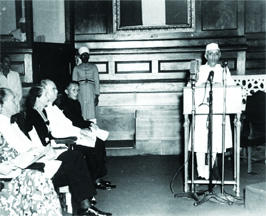
    Britain’s Parliament passed in July 1947 the Indian Independence Act. It ordered that the dominions of India and Pakistan be demarcated by midnight of August 14–15, 1947, now celebrated annually as Independence Day in both Pakistan (August 14) and India (August 15). It was both a glorious and a tragic moment. The peoples of the subcontinent, though deeply divided, were now free and the masters of their own destinies. Just before midnight, Nehru made his famous “Tryst with Destiny” speech to the Indian Constituent Assembly in the Parliament House.
    The Partition of India and Pakistan
    The Indian Independence Act ordered that the assets of the world’s largest empire—which had been integrated in countless ways for more than a century—be divided within a single month. Racing the deadline, the Boundary Commission, appointed by Mountbatten, worked desperately to partition Punjab and Bengal in such a way as to leave the maximum practical number of Muslims to the west of the former’s new boundary and to the east of the latter’s. The commission consisted of four members from the Congress Party and four from the Muslim League and was chaired by Cyril Radcliffe, a lawyer who had never before been to India. With little agreement between the parties and the deadline looming, Radcliffe made the final determination of the borders, which satisfied no one and infuriated everyone.
    Dividing Punjab and Bengal, the provinces with a slim Muslim majority, caused tremendous problems, as the demographic distributions of those regions were heterogeneous and diverse. The new borders ran through the middle of villages, towns, fields, and more. When Pakistan was created, East and West Pakistan were separated by about 1,000 miles (1,600 km).
    The commission also effectively cut in half the large Sikh population in Punjab. The western half of the community reacted with great concern over potential Muslim rule: the Mughal emperors had persecuted the Sikh Gurus in the 17th century, and the legacy of that persecution remained deeply felt. Although the commission had placed Amritsar, the Sikhs’ most sacred city, under Indian dominion, many other important Sikh shrines and landed estates were set to become part of Pakistan. Some Sikhs of western Punjab tried initially to retain control over their estates by pushing out local Muslims, but their attempts were met with violent reprisals. Nearly the entirety of the Sikh community ultimately fled to areas that would become part of India.
    The transfer of power was completed on August 14 in Pakistan and August 15 in India, held a day apart so that Mountbatten could attend both ceremonies. With the birth of the two independent countries, the British raj formally came to an end on August 15, 1947.
    The borders of the new countries were not published until August 17, two days after the end of British rule. This set the stage for an immediate escalation of communal violence in areas around the new borders. Many people did not understand what partition meant until they were in the middle of it, sometimes literally. If a border village was roughly evenly divided between Hindus and Muslims, one community could argue that the village rightly belonged to India or Pakistan by driving out or killing members of the other community.
    As soon as the new borders were announced, roughly 15 million Hindus, Muslims, and Sikhs fled from their homes on one side of the newly demarcated borders to what they thought would be “shelter” on the other. Some people were able to take trains or buses from one country to another, but most were forced to flee on foot, joining refugee columns that stretched for miles. These columns were the target of frequent ambushes, as were the trains that carried refugees across the new borders. In the course of that tragic exodus of innocents, as many as 2 million people were slaughtered in communal massacres (although scarce documentation left a wide range of estimates). Sikhs, settled astride Punjab’s new division, suffered the highest proportion of casualties relative to their numbers.
    While the worst of the violence took place during the first six weeks of partition, the consequences of those weeks played out for decades. Even provinces that had initially escaped violence later saw outbreaks of conflict; for example, Sindh struggled to absorb large numbers of refugees (muhajirs) from India who, although Muslim, belonged to different ethnolinguistic groups from the local population. Disparities that arose from the hasty creation of Pakistan led ultimately to a devastating war in 1971 between its eastern and western provinces, which resulted in the independence of East Pakistan as Bangladesh. Territorial disputes between India and Pakistan, particularly the question of the Kashmir region, have also led to multiple wars. Moreover, tensions over the rights of Sikhs and the preservation of their communal integrity have also led to violent confrontations in India, most notably with the storming of the Harmandir Sahib in 1984 and the subsequent assassination of Indira Gandhi.
    The assassination of Mahatma
    Gandhi and aftermath
    Amid growing communal violence, Gandhi traveled to New Delhi, India’s capital, to take part in a fast for peace and to participate in prayer meetings. His presence on the day of his death, January 30, 1948, attracted a crowd of followers estimated at between several hundred and 1,000 people. About 5:15 PM, Gandhi and his two granddaughters left Birla House, where he had been living, with the intent of leading his followers to a nearby summer pagoda where he often made his evening devotions. Nathuram Godse approached the frail politician, greeted him, then fired three shots at close range from a small-caliber revolver that he had hidden in his clasped hands, striking Gandhi in the upper thigh, abdomen, and chest. As Gandhi fell to the ground, he put his hand to his forehead in the Hindu gesture of forgiveness. He was quickly carried back into Birla House and placed on a couch, his head resting in the lap of his granddaughter Mani, who minutes later told the crowd: “Bapu is finished.” His final words were, allegedly, “He Ram, He Ram” (“Oh God, Oh God”).
    News of Gandhi’s death spread quickly throughout India, generating a sometimes violent response. In Bombay (now Mumbai), riots set fundamentalist Hindus against terrified Muslims. In New Delhi, throngs of people left their homes and businesses to mourn at Birla House. Troops were sent to maintain order. A few hours after Gandhi’s death, a balcony window at Birla House was opened and Gandhi’s body was carried outside and placed in a chair facing the crowd. Prime Minister Jawaharlal Nehru gave a radio address later in the evening in which he proclaimed a day of national mourning and appealed for calm:
    The light has gone out of our lives, and there is darkness everywhere. I do not know what to tell you and how to say it. Our beloved leader, Bapu as we called him, the Father of the Nation, is no more.…We will not run to him for advice and seek solace from him, and that is a terrible blow….The light has gone out, I said, and yet I was wrong….The light that has illumined this country for these many years will illumine this country for many more years, and a thousand years later, that light will be seen in this country and the world will see it and it will give solace to innumerable hearts.
    At the end of his speech, Nehru informed listeners that Gandhi’s body would be brought out at 11:30 AM the following day and taken to the banks of the Yamuna River, a tributary of the Ganges, and cremated there at 4 PM.
    Nathuram Godse was an acolyte of a right-wing fundamentalist political ideology known as Hindutva, championed at the time by the Rashtriya Swayamsevak Sangh (RSS), a Hindu nationalist organization. Godse was tried by a special court inside the historic Red Fort in May 1948. When it came time for him to speak, Godse read a 30,000-word confession in which he referred to Gandhi’s murder as “wholly and exclusively political” and held Gandhi responsible for partition and communal violence. Godse said he acted alone, although seven others were later convicted in relation to the murder. Godse and an accomplice, Narayan Apte, were executed by hanging on November 15, 1949; the other six were sentenced to life in prison.
    Yet Nehru carried on at India’s helm, and, owing in part to his secular enlightened leadership, not only did India’s flood of religious hatred and violence recede, but also some progress was made toward communal reconciliation and economic development. Nehru spoke out fearlessly against India’s “caste-ridden” and “priest-ridden” society, which, as a Hindu Brahman pandit, he could do without fear of too much upper-caste criticism. His charismatic brilliance, moreover, continued to make him a major vote-winner in each election campaign that he led (1951–52, 1957, and 1962) throughout his 17 arduous years in office as the Indian National Congress—opposed only by minor parties and independent candidates—dominated political life. Nehru’s modernist mentality and cosmopolitan popularity helped to hide the traditional continuity of India’s internal problems, few of which disappeared under his leadership.
    The promulgation of the Indian constitution
    The dominion of India was reborn on January 26, 1950, as a sovereign democratic republic and a union of states. That day is celebrated annually as Republic Day, a national holiday commemorating the adoption of India’s constitution on January 26, 1950. The constitution was crafted under the chairmanship of Bhimrao Ramji Ambedkar and resolved to secure for its citizens liberty, equality, and fraternity.
    With universal adult franchise, India’s electorate was the world’s largest, but the traditional feudal roots of most of its illiterate populace were deep, just as their religious caste beliefs were to remain far more powerful than more recent exotic ideas, such as secular statehood. Elections were to be held, however, at least every five years, and the major model of government followed by India’s constitution was that of British parliamentary rule, with a lower House of the People (Lok Sabha), in which an elected prime minister and a cabinet sat, and an upper Council of States (Rajya Sabha). Nehru led his ruling Congress Party from New Delhi’s Lok Sabha until his death in 1964. The nominal head of India’s republic, however, was a president, who was indirectly elected. India’s first two presidents were Hindu Brahmans, Rajendra Prasad and Sarvepalli Radhakrishnan, the latter a distinguished Sanskrit scholar who had lectured at the University of Oxford. Presidential powers were mostly ceremonial, except for brief periods of “emergency” rule, when the nation’s security was believed to be in great danger and normal constitutional procedures and civil rights were feared to be too cumbersome or threatening.

  • 5 things that can raise blood sugar and they’re not food

    5 things that can raise blood sugar and they’re not food

    When we think of high blood sugar, the first thing that comes to mind is food. But your blood sugar levels can go up even when you haven’t eaten a single bite. Here are five surprising factors that can cause these changes and what you should know about them. According to Dr Pranav Ghody, consultant endocrinologist and diabetologist, Wockhardt Hospitals, Mumbai Central, stress, poor sleep, exercise, infections, and hormonal changes can all cause your blood sugar levels to rise. For example, stress triggers the release of cortisol, which tells your liver to release stored glucose to give you energy, a useful response in emergencies, but not so helpful during daily stress. “One bad night of sleep can make the body temporarily more insulin-resistant, which keeps glucose in your blood longer,” said Dr Ghody.
    Exercise, especially intense or resistance training, can also cause temporary spikes as your body releases glucose for energy, though this usually leads to better blood sugar control over time. “Illnesses or infections push your immune system into overdrive, needing extra energy in the form of glucose. Lastly, hormonal changes, especially around menstrual cycles, perimenopause, and menopause, can make the body less sensitive to insulin, causing fluctuations in blood sugar,” said Dr Ghody. These spikes aren’t always bad. “For instance, temporary increases after exercise or during an immune response are natural and necessary. But chronic stress, regular poor sleep, or persistent hormonal imbalances can lead to long-term blood sugar issues, which need attention. Women in their 40s and 50s, in particular, may notice changes in weight, energy, or mood due to these hormonal effects on blood sugar,” said Dr Ghody.
    Understanding these triggers is the first step. It is essential to manage stress with relaxation techniques, prioritise good sleep,and keep a regular exercise routine. “Consulting a healthcare professional for hormonal or long-term concerns can make a big difference. If you notice unusual blood sugar spikes, especially without any change in diet, it’s worth discussing with your doctor,” said Dr Ghody.
    The Indian Express

  • An excellent source of protein: Health, hype and hard truths

    An excellent source of protein: Health, hype and hard truths

    Protein is having its moment: From grocery store shelves to Instagram feeds, high-protein foods are everywhere. Food labels shout their protein content in bold, oversised fonts, while social media overflows with recipes promising to pack more protein into your favourite dishes.
    And according to the International Food Information Council’s Food and Health Survey, “high protein” topped the list of popular eating patterns in 2024.
    But does the hype match the science?
    Yes and no.
    Protein is essential to good health and boosting protein intake can support healthy aging and fitness goals, but the rush to pile on grams — often driven by marketing more than medical need — raises questions. How much do you really need? Can you overdo it? What’s the best source of protein?
    This article breaks down the facts, debunks common myths and answers the most pressing questions about protein today.
    What is dietary protein and why do we need it?
    Protein is one of the three essential macronutrients your body needs in large amounts, alongside carbohydrates and fats. While carbs and fats are primarily used for energy, protein plays a more structural and functional role. It helps build and repair tissues, supports immune health and produces enzymes, hormones and other vital molecules.
    Proteins are made of amino acids. Your body can make some amino acids, but nine must come from food. These are called essential amino acids. That’s why protein is a daily dietary requirement, not just a delicious post-workout bonus.
    Unlike fat and carbohydrates, which the body can store for later use, protein doesn’t have a dedicated storage system. That means you need to replenish it regularly. In extreme situations — like prolonged fasting or severe illness — your body will break down its own muscle to release amino acids for energy and repair. It’s a last-resort mechanism that underscores just how essential protein is for survival.
    How much protein do people need?
    The amount of protein an individual needs to consume each day may vary based on age, physical activity levels and the presence of health conditions. However, the recommended dietary allowance (RDA) for daily protein intake is the same for almost everyone: 0.8 grams of protein per kilogram of body weight per day (g/kg/d).
    For example, a woman weighing 65 kilograms should aim to consume approximately 52 grams of protein daily.
    An important caveat is that the RDA is set to prevent protein deficiency, not to promote optimal health. Older adults who have a reduced ability to utilise the nutrients they consume, athletes whose bodies need more substrate for tissue growth and repair, and pregnant or breastfeeding individuals whose protein intake is shared with another being, often need more protein. Sometimes as much as 1.2 to 2 grams per kilogram of body weight. Therefore, an older person of the same body mass (65 kilograms) might need between 78 g and 130 g of protein daily, far exceeding the RDA.
    Is there such a thing as too much protein?
    While several expert groups agree that consuming more protein can be beneficial in certain situations — particularly for older adults — there is probably little to no advantage in consuming protein amounts exceeding two grams per kilogram per day.
    The good news is that if you are generally healthy, increasing your protein intake will not shorten your lifespan, cause your kidneys to fail, give you cancer or lead to bone loss.
    When should I consume my protein?
    A prominent social media influencer recently claimed that post-menopausal women must consume protein within a very short window (Rs 45 minutes) after exercise, or any benefits from exercise will quickly dissipate and they will lose all their muscle. This is absolutely not the case.
    The idea of an “anabolic window” — a brief period after exercise when recovering muscles make the best use of protein — has long been debunked. Perhaps more accurately described as a garage door rather than an anabolic window, there is a generous period of at least 24 hours to consume protein after exercise.
    This means your muscles remain sensitive to the muscle-building effects of protein for a long time after exercise. So, focusing your efforts on consuming enough protein each day is much more important than stressing about guzzling your protein shake in the changing room immediately following your workout.
    As long as you’re eating enough protein each day, feel free to consume it on a schedule that fits your daily routine.
    But if increasing the amount of protein that you eat at each meal helps you feel fuller and curb your appetite, you may be a little less likely to overeat or indulge in sweet treats.
    And with the increasing off-label use of Type 2 diabetes medications such as GLP-1 agonists, which significantly reduce appetite, putting protein on your plate first might — and it’s a considerable might — help slow muscle loss that accompanies this drastic weight loss. However, this is rather speculative, and resistance exercise will probably be your best option for slowing muscle loss while on these medications.
    Are all proteins created equal?
    Protein is found in a wide variety of foods, from animal sources such as meat, fish, eggs and dairy to plant-based options like legumes, soy products, whole grains, nuts, seeds and even some vegetables. Protein is also widely available as a nutritional supplement, with whey, casein and collagen being among some of the most popular options.
    Animal-based proteins are often touted by many online as superior, especially when it comes to supporting muscle growth, but the reality of protein quality is more nuanced.
    Animal proteins often contain more of the essential amino acids and are more bioavailable, meaning they are easier for the body to absorb and use. However, a well-planned plant-based diet can also supply all the essential amino acids the body needs — it just takes a bit more variety and intention. Source: PTI

  • August 15 New York & Dallas E – Edition

    [vc_row][vc_column][vc_custom_heading text=”E-Edition” font_container=”tag:h2|text_align:center” google_fonts=”font_family:Istok%20Web%3Aregular%2Citalic%2C700%2C700italic|font_style:700%20bold%20regular%3A700%3Anormal” css=”” link=”url:https%3A%2F%2Fwww.theindianpanorama.news%2Fwp-content%2Fuploads%2F2025%2F08%2FTIP-August-15-E-Edition.pdf”][vc_single_image image=”194118″ img_size=”full” alignment=”center” onclick=”custom_link” css=”” link=”https://www.theindianpanorama.news/wp-content/uploads/2025/08/TIP-August-15-E-Edition.pdf”][/vc_column][/vc_row][vc_row][vc_column width=”2/3″][vc_custom_heading text=”Lead Stories This Week” google_fonts=”font_family:Istok%20Web%3Aregular%2Citalic%2C700%2C700italic|font_style:700%20bold%20regular%3A700%3Anormal” css=”” link=”url:https%3A%2F%2Fwww.theindianpanorama.news%2F”][vc_wp_posts number=”5″ show_date=”1″][/vc_column][vc_column width=”1/3″][vc_single_image image=”82828″ img_size=”medium” alignment=”center” onclick=”custom_link” css=”” link=” https://www.theindianpanorama.news/advertising-media-kit-portal-indian-panorama/”][vc_single_image image=”82829″ img_size=”medium” onclick=”custom_link” css=”” link=” https://www.theindianpanorama.news/advertising-media-kit-portal-indian-panorama/”][/vc_column][/vc_row]

  • August 8 New York & Dallas E – Edition

    [vc_row][vc_column][vc_custom_heading text=”E-Edition” font_container=”tag:h2|text_align:center” google_fonts=”font_family:Istok%20Web%3Aregular%2Citalic%2C700%2C700italic|font_style:700%20bold%20regular%3A700%3Anormal” css=”” link=”url:https%3A%2F%2Fwww.theindianpanorama.news%2Fwp-content%2Fuploads%2F2025%2F08%2FTIP-August-8-E-Edition.pdf”][vc_single_image image=”192610″ img_size=”full” alignment=”center” onclick=”custom_link” css=”” link=”https://www.theindianpanorama.news/wp-content/uploads/2025/08/TIP-August-8-E-Edition.pdf”][/vc_column][/vc_row][vc_row][vc_column width=”2/3″][vc_custom_heading text=”Lead Stories This Week” google_fonts=”font_family:Istok%20Web%3Aregular%2Citalic%2C700%2C700italic|font_style:700%20bold%20regular%3A700%3Anormal” css=”” link=”url:https%3A%2F%2Fwww.theindianpanorama.news%2F”][vc_wp_posts number=”5″ show_date=”1″][/vc_column][vc_column width=”1/3″][vc_single_image image=”82828″ img_size=”medium” alignment=”center” onclick=”custom_link” css=”” link=”https://www.theindianpanorama.news/advertising-media-kit-portal-indian-panorama/ “][vc_single_image image=”82829″ img_size=”medium” alignment=”center” onclick=”custom_link” css=”” link=”https://www.theindianpanorama.news/advertising-media-kit-portal-indian-panorama/ “][/vc_column][/vc_row]

  • August 1 New York & Dallas E – Edition

    [vc_row][vc_column][vc_custom_heading text=”E-Edition” font_container=”tag:h2|text_align:center” google_fonts=”font_family:Istok%20Web%3Aregular%2Citalic%2C700%2C700italic|font_style:700%20bold%20regular%3A700%3Anormal” css=”” link=”url:https%3A%2F%2Fwww.theindianpanorama.news%2Fwp-content%2Fuploads%2F2025%2F08%2FTIP-August-1-E-Edition.pdf”][vc_single_image image=”190503″ img_size=”full” alignment=”center” onclick=”custom_link” css=”” link=”https://www.theindianpanorama.news/wp-content/uploads/2025/08/TIP-August-1-E-Edition.pdf”][/vc_column][/vc_row][vc_row][vc_column width=”2/3″][vc_custom_heading text=”Lead Stories This Week” google_fonts=”font_family:Istok%20Web%3Aregular%2Citalic%2C700%2C700italic|font_style:700%20bold%20regular%3A700%3Anormal” css=”” link=”url:https%3A%2F%2Fwww.theindianpanorama.news%2F”][vc_wp_posts number=”5″ show_date=”1″][/vc_column][vc_column width=”1/3″][vc_single_image image=”82828″ img_size=”medium” alignment=”center” onclick=”custom_link” css=”” link=” https://www.theindianpanorama.news/advertising-media-kit-portal-indian-panorama/”][vc_single_image image=”82829″ img_size=”medium” alignment=”center” onclick=”custom_link” css=”” link=” https://www.theindianpanorama.news/advertising-media-kit-portal-indian-panorama/”][/vc_column][/vc_row]

  • Coronary calcium scan: A simple heart test that could save your life

    Coronary calcium scan: A simple heart test that could save your life

    When we think about a cardiac arrest, we usually imagine dramatic scenes – chest pain, ambulances, and emergency surgeries. However, the truth is, for most people, heart disease is quietly brewing long before any symptoms actually show up. That’s exactly where a test called the Coronary Artery Calcium (CAC) scan comes in. It’s quick, non-invasive, and surprisingly underused, especially considering how much life-saving information it can provide.
    “Yes, traditional blood tests and stress tests are useful, but they don’t actually show the disease. CAC scanning does,” says Dr. Dinesh Narang, a senior interventional cardiologist at the Lilavati Hospital. “It’s one of the few tools we have that can spot a heart attack risk that’s otherwise invisible.”
    It is a CT scan with a very specific goal: checking for calcium deposits in the arteries that feed our heart. These deposits are early warning signs of plaque build-up (known as atherosclerosis) which can eventually lead to cardiac arrest. The test gives you a “calcium score” which speaks volumes about your heart health and whether you need to heed warning signs.
    A score of 0 translates to Zero Plaque, which means you’re in the clear. No visible heart disease. Similarly, a calcium score between 1–100 is Mild Plaque, which shows some build-up, but it is usually manageable with lifestyle changes. A score on the scan that reads between 101–400 is Moderate Plaque. That means it is time to get proactive. Medications like statins may be recommended for such patients.
    A score of 401+ is known as Extensive Plaque. This simply means you’re at high risk; immediate action is non-negotiable for these patients.
    Dr. Aakruti Mehta, a preventive cardiologist and faculty member, believes, “a CAC score of zero is the most powerful negative predictor we have in cardiology. It’s like getting a clean bill of health for your arteries.” And 401 plus is also an assurance that your heart is at risk.
    There’s a caveat here that experts want you to be mindful of. The CAC isn’t a scan for everyone. It is for those patients who fall somewhere “in-between” — when you’re not low-risk, but not high-risk either.

  • Dementia diagnosis takes over 3 years: Study reveals why that’s a problem

    Dementia diagnosis takes over 3 years: Study reveals why that’s a problem

    When we talk of dementia, it is one of the most frightening neurodegenerative diseases in the world. And, not to mention, among the fastest growing neurological conditions. Known as a brain-shrinking disease, dementia is an umbrella term for a variety of symptoms causing various brain disorders.
    It includes memory, thinking, reasoning, changes in behaviour and also personality. Alzheimer’s disease is the most common type of dementia. But what makes it so frightening is that the diagnosis takes years, in fact, three years on average, a new study has found.
    The research led by University College London (UCL) has found that people with dementia are often diagnosed three and a half years after symptoms first appear, and the delay is even longer, 4.1 years, for those with early-onset dementia.
    Published in the International Journal of Geriatric Psychiatry, the study is the first systematic review and meta-analysis of global data examining how long it typically takes for dementia to be diagnosed.
    The researchers reviewed data from 13 previous studies conducted in the US, Europe, Australia, and China, covering 30,257 participants. They looked at the average time between the first symptoms noticed by patients or their family members and the final medical diagnosis.
    The study highlights how delays in diagnosis can affect patients and families, and why improving early detection must be a global priority.
    Dr Vasiliki Orgeta, lead author from the UCL Division of Psychiatry, spoke to Science Direct and said, “Timely diagnosis of dementia remains a major global challenge, shaped by a complex set of factors, and specific healthcare strategies are urgently needed to improve it. Other studies estimate that only 50-65% of cases are ever diagnosed in high-income countries, with many countries having even lower diagnostic rates. Timely diagnosis can improve access to treatments and for some people prolong the time living with mild dementia before symptoms worsen.”

  • Vitamin C with Zinc: A powerful duo for immunity, skin health

    Vitamin C with Zinc: A powerful duo for immunity, skin health

    In today’s fast-paced world, maintaining a strong immune system and healthy skin is more important than ever. One simple yet effective way to support both is through Vitamin C with Zinc tablets. These two essential nutrients, when combined, offer a range of health benefits — from defending against common illnesses to enhancing skin vitality.
    Why Vitamin C and Zinc?
    Vitamin C (ascorbic acid) is a water-soluble vitamin well-known for its antioxidant properties and critical role in immune function. Zinc is a trace mineral essential for immune regulation, cellular repair, and enzymatic reactions. Deficiencies in either nutrient can impair immune response and skin integrity.
    How Vitamin C Supports Immunity
    – Enhances White Blood Cells: Vitamin C stimulates the production and activity of neutrophils, lymphocytes, and phagocytes – white blood cells that detect and destroy pathogens.
    – Antioxidant Protection: By neutralizing free radicals, Vitamin C prevents oxidative damage to immune cells, preserving their effectiveness.
    – Supports Skin Barrier: The skin acts as the first line of defense against pathogens. Vitamin C is essential in collagen synthesis, ensuring skin strength and wound healing.
    – Increases Iron Absorption: Vitamin C enhances non-heme iron absorption from plant-based foods, which is vital for maintaining healthy red blood cells and immune competence.
    The Immune Role of Zinc
    – Immune Cell Function: Zinc is crucial for the normal development and function of cells mediating innate immunity, including neutrophils and natural killer cells.
    – Inflammation Control: Zinc modulates the production of inflammatory cytokines, helping prevent excessive immune reactions.
    – Antiviral Effects: Some studies suggest zinc may inhibit replication of certain viruses, contributing to reduced severity and duration of infections.
    – Wound Healing: Zinc’s role in cell division and repair accelerates tissue recovery from injury.
    Skin Health: A Dynamic Duo
    – Collagen Production: Vitamin C is a cofactor for enzymes that hydroxylate proline and lysine residues during collagen synthesis, essential for skin elasticity and firmness.
    – Protection from UV Damage: Vitamin C’s antioxidant properties reduce photodamage caused by ultraviolet radiation.
    – Regulation of Sebum Production: Zinc helps balance oil production, reducing acne and preventing clogged pores.
    – Anti-inflammatory Effects: Both nutrients reduce skin inflammation, aiding conditions like acne, eczema, and rosacea.

  • July 25 New York & Dallas E – Edition

    [vc_row][vc_column][vc_custom_heading text=”E-Edition” font_container=”tag:h2|text_align:center” google_fonts=”font_family:Istok%20Web%3Aregular%2Citalic%2C700%2C700italic|font_style:700%20bold%20regular%3A700%3Anormal” css=”” link=”url:https%3A%2F%2Fwww.theindianpanorama.news%2Fwp-content%2Fuploads%2F2025%2F07%2FTIP-July-25-E-Edition.pdf”][vc_single_image image=”189540″ img_size=”full” alignment=”center” onclick=”custom_link” css=”” link=”https://www.theindianpanorama.news/wp-content/uploads/2025/07/TIP-July-25-E-Edition.pdf”][/vc_column][/vc_row][vc_row][vc_column width=”2/3″][vc_custom_heading text=”Lead Stories This Week” google_fonts=”font_family:Istok%20Web%3Aregular%2Citalic%2C700%2C700italic|font_style:700%20bold%20regular%3A700%3Anormal” css=”” link=”url:https%3A%2F%2Fwww.theindianpanorama.news%2F”][vc_wp_posts number=”5″ show_date=”1″][/vc_column][vc_column width=”1/3″][vc_single_image image=”82828″ img_size=”medium” alignment=”center” onclick=”custom_link” css=”” link=”https://www.theindianpanorama.news/advertising-media-kit-portal-indian-panorama/ “][vc_single_image image=”82829″ img_size=”medium” alignment=”center” onclick=”custom_link” css=”” link=”https://www.theindianpanorama.news/advertising-media-kit-portal-indian-panorama/ “][/vc_column][/vc_row]

  • Top foods for heartburn relief: Oatmeal, fennel seeds to apples

    Top foods for heartburn relief: Oatmeal, fennel seeds to apples

    Heartburn, that uncomfortable burning sensation rising from the stomach to the chest or throat, affects millions of people daily. While medications like antacids can help, making the right dietary choices is one of the most effective natural strategies for managing heartburn. Certain foods not only soothe the digestive tract but also help reduce the production of excess stomach acid and keep reflux at bay. Here’s a list of the top heartburn-relieving foods – gentle, healing, and easy to include in your diet.
    Oatmeal: A Gentle Morning Start
    Oatmeal is one of the best breakfast options for people prone to heartburn. It’s high in fiber, which helps regulate digestion and keeps you feeling full, potentially reducing overeating – a common heartburn trigger. Oats also absorb stomach acid and reduce its reflux into the esophagus.
    – Why it helps: Low in fat and acid, high in soothing fiber
    – Tip: Avoid sugary toppings – stick to bananas, apples, or a splash of almond milk.
    Fennel Seeds: Ancient Digestive Aid
    Fennel seeds have long been used in traditional medicine to aid digestion and reduce bloating. They have a mild licorice-like flavor and can relax the gastrointestinal tract, helping to prevent acid from splashing back up.
    – Why it helps: Anti-inflammatory, aids digestion, reduces gas
    – Tip: Chew a teaspoon of fennel seeds after meals or brew into a calming tea.
    Apples: Nature’s Antacid
    Apples, especially sweet varieties like Red Delicious or Fuji, are low in acid and high in fiber. Pectin, a natural fiber in apples, helps firm up the stomach lining and improve digestion.
    – Why it helps: Natural antacid effect, neutralizes stomach acid
    – Tip: Eat raw or stewed, but avoid citrusy or sour apples if you’re sensitive.
    Leafy Greens: Alkaline and Light
    Spinach, kale, lettuce, and arugula are low-acid, high-nutrient foods that don’t overstimulate stomach acid. They are also high in water content, which helps dilute stomach acid and ease reflux.
    – Why it helps: Low in fat and acid, full of soothing fiber
    – Tip: Enjoy as a salad with grilled chicken and a non-citrus vinaigrette.
    Bananas: Soft, Sweet, and Stomach-Friendly
    Bananas are naturally low in acid and help coat the stomach lining, which may reduce irritation. They’re also a good source of potassium, which supports pH balance in the body.
    – Why it helps: Mild and soothing, helps protect the stomach lining
    – Tip: Pair with oatmeal or blend into smoothies with almond milk.

  • Pumped up with poison: New research shows many anabolic steroids contain toxic metals

    Pumped up with poison: New research shows many anabolic steroids contain toxic metals

    Eighteen-year-old Mark scrolls Instagram late at night, watching videos of fitness influencers showing off muscle gains and lifting the equivalent of a baby elephant off the gym floor. Spurred on by hashtags and usernames indicating these feats involve steroids, soon Mark is online, ordering his first “steroid cycle”. No script, no warnings, just vials in the mail and the promise of “gains”. A few weeks later, he’s posting progress shots and getting tagged as #MegaMark. He’s pleased. But what if I told you Mark was unknowingly injecting toxic chemicals?
    In our new research we tested products sold in Australia’s underground steroid market and found many were mislabelled or missing the expected steroid entirely.
    Even more concerning, several contained heavy metals such as lead, arsenic and cadmium. These substances are known to cause cancer, heart disease and organ failure.
    Anabolic steroids are synthetic drugs designed to mimic the effects of testosterone. Medical professionals sometimes prescribe them for specific health conditions (for example, hypogonadism, where the body isn’t making enough sex hormones). But they are more commonly taken by people looking to increase muscle size, improve athletic performance, or elevate feelings of wellbeing.
    In Australia, it’s illegal to possess steroids without a prescription. This offence can attract large fines and prison terms (up to 25 years in Queensland).
    Despite this, they’re widely available online and from your local “gym bro”. So it’s not surprising we’re seeing escalating use, particularly among young men and women.
    People usually take steroids as pills and capsules or injectable oil- or water-based products. But while many people assume these products are safe if used correctly, they’re made outside regulated settings, with no official quality checks. Source: PTI

  • Moringa leaves: A natural boost for protein and inflammation relief

    Moringa leaves: A natural boost for protein and inflammation relief

    In the world of superfoods, few plants are as quietly powerful as moringa. Known as the “miracle tree” in many cultures, moringa (Moringa oleifera) has been used for centuries in traditional medicine, and modern science is now catching up to what ancient healers already knew. From its exceptional protein content to its natural anti-inflammatory properties, moringa leaves offer a wide range of health benefits – making them one of the smartest additions you can make to your diet today.
    Let’s start with the basics: moringa leaves are incredibly nutrient-dense. They’re packed with vitamins A, C, and E, minerals like calcium, iron, and potassium, and most impressively, they’re a complete source of plant-based protein. That means moringa contains all nine essential amino acids – a rare trait in the plant kingdom. Just a tablespoon of moringa leaf powder can provide around 3 grams of protein, making it a valuable supplement for anyone on a vegetarian, vegan, or low-meat diet. It’s a simple, clean way to support muscle health, tissue repair, and energy levels – no artificial powders or processed bars required.
    But moringa isn’t just about protein. One of its most valuable features is its potent anti-inflammatory effect. Inflammation is the underlying cause of countless health issues, from joint pain and fatigue to heart disease and autoimmune conditions. Moringa’s rich supply of plant compounds – including isothiocyanates, flavonoids, and chlorogenic acid – work to naturally reduce inflammation in the body. Studies have shown that moringa can help lower levels of inflammatory markers like CRP and interleukin-6, making it a helpful tool for those managing arthritis, chronic pain, or even recovery from physical stress.
    Beyond protein and inflammation, moringa leaves also act as a natural antioxidant powerhouse. They help protect your cells from oxidative damage, balance blood sugar, and support healthy digestion. Some research even suggests moringa can aid in mood and cognitive function, thanks to its effect on oxidative stress and nutrient density. It’s a full-body booster – gentle, versatile, and easy to use.
    So how do you actually use moringa? The easiest way is to add moringa powder to your daily smoothie, oatmeal, or yogurt.

  • July 18 New York & Dallas E – Edition

    [vc_row][vc_column][vc_custom_heading text=”E-Edition” font_container=”tag:h2|text_align:center” google_fonts=”font_family:Istok%20Web%3Aregular%2Citalic%2C700%2C700italic|font_style:700%20bold%20regular%3A700%3Anormal” css=”” link=”url:https%3A%2F%2Fwww.theindianpanorama.news%2Fwp-content%2Fuploads%2F2025%2F07%2FTIP-July-18-E-Edition.pdf”][vc_single_image image=”188339″ img_size=”full” alignment=”center” onclick=”custom_link” css=”” link=”https://www.theindianpanorama.news/wp-content/uploads/2025/07/TIP-July-18-E-Edition.pdf”][/vc_column][/vc_row][vc_row][vc_column width=”2/3″][vc_custom_heading text=”Lead Stories This Week” google_fonts=”font_family:Istok%20Web%3Aregular%2Citalic%2C700%2C700italic|font_style:700%20bold%20regular%3A700%3Anormal” css=”” link=”url:https%3A%2F%2Fwww.theindianpanorama.news%2F”][vc_wp_posts number=”5″ show_date=”1″][/vc_column][vc_column width=”1/3″][vc_single_image image=”82828″ img_size=”medium” alignment=”center” onclick=”custom_link” css=”” link=” https://www.theindianpanorama.news/advertising-media-kit-portal-indian-panorama/”][vc_single_image image=”82829″ img_size=”medium” alignment=”center” onclick=”custom_link” css=”” link=” https://www.theindianpanorama.news/advertising-media-kit-portal-indian-panorama/”][/vc_column][/vc_row]

  • Subtle signs you’re not eating enough vegetables

    Subtle signs you’re not eating enough vegetables

    We all know vegetables are essential for good health—but even if you’re eating some, you might not be eating enough. A lack of vegetables in your diet can show up in surprising (and not-so-subtle) ways. Here are some signs your body may be telling you it’s time to pile more greens on your plate.
    Low Mood
    Vegetables are an important source of numerous vitamins and minerals needed for the body’s critical functions. She added that not eating enough vegetables and focusing mainly on high-fat, high-carb or highly processed foods will result in getting a burst of energy followed by a crash, resulting in fatigue, memory loss and mood swings. Swapping these high-fat foods for more nutrient-dense foods like vegetables will prevent you from feeling that crash. It will also give you sustained energy for a longer period of time. Similarly, the vitamins and minerals found in vegetables can play an important role in your mood regulation. Some studies suggest that there is a relationship between diet and mood and diets low in fruits and vegetables are associated with higher risk for depression.
    Easily Feeling Hungry
    Adequate fiber from veggies helps increase satiety, keeping you fuller for longer while helping sustain energy. She also added that by not eating enough vegetables, you may be craving another meal or snack shortly after the food that you just consumed.
    Dull Skin
    Vsegetables are loaded with antioxidants that can help protect your body from free radicals, which may damage skin texture. The author of “The Small Change Diet” added that many veggies like tomatoes are packed with water, which can be hydrating for the skin.
    Muscle Cramps
    Muscles need enough potassium for smooth muscle contraction and that muscle cramps and twitches can happen due to extremely low blood levels of the mineral. Fsruits and vegetables are the best sources of potassium. The best vegetable sources of potassium include spinach, swiss chard and other dark leafy greens, in addition to sweet potatoes.
    Constipation
    Enough dietary fiber from vegetables helps in adding more bulk to waste and helps move waste more quickly through the intestines.
    High Stress
    Magnesium helps promote relaxation by maintaining healthy levels of GABA, a neurotransmitter that calms both the body and mind. This mineral also plays a role in the body’s stress response system and that deficiency of it is linked to higher stress and anxiety. Veggies, especially dark leafy greens like spinach, are one of the best sources of magnesium. So, not getting enough veggies in your diet could certainly cause low blood levels of this mineral.

  • Habits that can help ease inflammation

    Habits that can help ease inflammation

    Inflammation is your body’s natural response to injury, infection, or harmful substances. Redness, heat, swelling and pain are a few signs of inflammation. While short-term inflammation is beneficial for healing, long-term inflammation can disrupt healthy bodily functions and increase the risk of developing these chronic illnesses.
    Here, we have a list of healthy everyday habits that can help reduce inflammation.
    Eat right
    Several foods are naturally loaded with anti-inflammatory properties. Berries, turmeric, garlic, ginger, leafy greens, olive oil, dark chocolate and nuts and seeds are a few to name. Additionally, foods rich in antioxidants and omega-3 fatty acids can help lower inflammation. Also, limit consumption of processed and sugary foods.
    Drink enough water
    Dehydration can cause the body to retain toxins, leading to inflammation. Hydrate well throughout the day to flush out waste and maintain healthy blood circulation. Aim for at least eight glasses of water a day, and more if you’re active or in a hot climate.
    Exercise
    Regular exercise is crucial for your health and overall well-being in more ways than one. Engaging in moderate physical activity several times a week can help reduce inflammation.
    Get adequate sleep
    Sleep deprivation raises inflammatory markers and weakens the immune system. Quality sleep for 7-9 hours each night allows the body to repair and rejuvenate, reducing inflammation.
    Manage stress
    Excess cortisol levels can exacerbate inflammation. Techniques such as mindfulness, meditation, yoga, or simply taking time to relax can help balance stress levels and reduce inflammatory responses.

  • How seasonal changes impact your digestive health

    How seasonal changes impact your digestive health

    The rainy season may bring cooler weather and scenic views, but it also increases the risk of gut problems like bloating, nausea, and infections. Doctors say the combination of high humidity, contaminated food or water, and poor hygiene habits can upset digestion and lead to uncomfortable symptoms.
    WHY MONSOON AFFECTS DIGESTION
    “Digestion tends to slow down during the monsoon,” says Dr. Adarsh CK, chief consultant gastroenterologist at Gleneagles BGS Hospital, Bengaluru. “Humidity and cooler temperatures reduce gastric motility, meaning food stays in the stomach longer. This leads to bloating and discomfort after meals.” Dr. Divya Gopal, consultant, internal medicine at Sir HN Reliance Foundation Hospital, Mumbai, adds that “bloating and nausea often originate from consuming contaminated food or water.” She explains that damp weather increases bacterial and fungal growth, making food spoil faster.
    Even without an obvious infection, the gut can react. “Sometimes the stomach just feels off, or there’s a lingering fullness,” says Dr. H. Guru Prasad, Head of General Medicine at CARE Hospitals, Hyderabad. “Spoiled or poorly stored food can irritate the stomach even if it looks fine.”
    WHAT TO EAT AND WHAT TO AVOID
    Doctors agree that warm, fresh meals are easier to digest during the monsoon than raw or oily foods.
    “Street food and raw salads should ideally be avoided during this time, as they’re harder to clean thoroughly,” says Dr. Adarsh. He recommends warm, home-cooked meals with natural digestive aids. “Adding cumin, ginger, or ajwain to meals can offer some natural support.”
    Dr. Divya suggests sticking to light, nourishing foods. “Choose soups, steamed dishes, or khichdi. Avoid oily or spicy foods, which can overburden the stomach. Probiotic-rich foods like yogurt or fermented rice help maintain good gut bacteria.”
    Source: India Today

  • Global Leaders Unite to End Childhood Blindness

    Global Leaders Unite to End Childhood Blindness

    • Lord Rami Ranger and Dr. VK Raju to Lead Historic Campaign Declaring January 31 as the ‘International Day for a World Without Childhood Blindness’
    • Landmark Launch Set for January 31, 2026, at the House of Lords, UK

    LONDON / NEW YORK (TIP): In a defining moment for global child health, Lord Rami Ranger, FRSA, Member of the UK House of Lords, and Dr. VK Raju, globally renowned ophthalmologist and humanitarian, have been appointed Chair and Co-Chair respectively of a worldwide campaign to designate January 31 as the International Day for a World Without Childhood Blindness.

    This high-impact initiative, led by the Eye Foundation of America (EFA), Eye Foundation of the UK, Goutami Eye Institute, Rotary International, and a coalition of global partners, calls on the United Nations and the Commonwealth of Nations to recognize childhood blindness as a global health emergency—and to rally international efforts to eliminate it.

    “No child should be condemned to darkness when proven, cost-effective solutions already exist,” said Lord Rami Ranger.

    “This campaign is not just about vision—it is about justice. I’m honored to help make January 31 a beacon of global action and hope.” 

    The Crisis: Preventable, Yet Ignored

    Over 1.4 million children around the world currently live in blindness—most of it avoidable or treatable. Each year, this results in over 70 million “blind person years”—a devastating burden on families, communities, and national economies.

    The leading causes? Retinopathy of Prematurity (ROP), congenital cataracts, vitamin A deficiency, and infections—conditions that are often preventable with timely intervention.

    “With today’s advances, over 90% of childhood blindness can be prevented or treated,” said

    Dr. VK Raju, Founder-President of EFA.

    “And because 80% of learning happens through vision, this is also an education and

    inclusion issue. It’s time to align global action with the UN’s SDG 3 (Health) and SDG 4 (Education).” 

    The Movement: Fueled by Global Alliances

    This campaign is already backed by a powerful and growing alliance of international leaders and organizations, including:

    • VK Raju, Co-Chair, IDWCB Campaign; Founder, Eye Foundation of America; Chairman, Eye Foundation of UK
    • Leela Raju, Secretary-General, IDWCB Campaign; Secretary, EFA; Leading Ophthalmologist, Louisiana
    • Rtn Sandeepp Saxena, Chair, ROP Program, Rotary District 3011; Global Director, EFA
    • Rotary International District 3011, leading a $1 million “Hope For Tomorrow” fundraising campaign, matched by EFA
    • Rotary Clubs, NGOs, and health institutions across Asia, Africa, Europe, and the Americas
    • 25+ Global Campaign Ambassadors, with support from UN agencies, the

    Commonwealth Secretariat, and health ministries worldwide 

    Why January 31? A Date with Global Significance

    January 31 commemorates the tireless efforts of Dr. VK Raju, whose four-decade-long mission since 1977 has transformed pediatric eye care from India to Africa to the United States.

    Designating this day will:

    • Elevate international awareness of childhood blindness
    • Catalyze public policy, funding, and innovation
    • Promote global collaboration in line with the UN Sustainable Development Goals
    • Inspire governments, institutions, and citizens to take meaningful action

    A Global Day, A Shared Responsibility

    A formal petition is being submitted to the United Nations General Assembly and the Commonwealth Secretariat. Governments, ministries, parliaments, medical bodies, and civil society are invited to endorse the declaration and organize awareness programs each year on January 31.

    “Lord Ranger’s leadership brings international gravitas and unmatched momentum to this mission,” added Dr. Raju.

    “Together, we can prevent a lifetime of darkness for millions of children—and give them the light of opportunity.” 

    Join the Global Movement

    A dedicated campaign portal and participation toolkit will launch in July 2025, offering resources for institutions, Rotary clubs, schools, and individuals to host coordinated global events and advocacy efforts.

    About the Campaign Chair

    Lord Rami Ranger, FRSA is a distinguished Member of the UK House of Lords, founder of Sun Mark Ltd., and a global advocate for education, diversity, and social progress. His leadership will bring scale and stature to the global campaign.

    About the Campaign Co-Chair

    Dr. VK Raju is the Founder-President of the Eye Foundation of America and Chairman of the Eye Foundation of UK. A tireless advocate since 1977, he also serves as Adjunct Professor at the Wilmer Eye Institute, Johns Hopkins University.

    “A world without childhood blindness is not a dream. It is a decision.”

    #Jan31ForSight | #VisionForEveryChild | #WorldWithoutChildhoodBlindness

    Media Contact & Inquiries

    Rtn Sandeepp Saxena

    Vʌ□•□ sandeepp.saxena@eyefoundationofamerica.org

    www.eyefoundationofamerica.org

    ! +91 70659 68122

    Campaign Secretariat

    VʌV•□ □ worldwithoutchildhoodblindness@eyefoundationofamerica.org

    www.eyefoundationofamerica.org

  • July 11 New York & Dallas E – Edition

    [vc_row][vc_column][vc_custom_heading text=”E-Edition” font_container=”tag:h2|text_align:center” google_fonts=”font_family:Istok%20Web%3Aregular%2Citalic%2C700%2C700italic|font_style:700%20bold%20regular%3A700%3Anormal” css=”” link=”url:https%3A%2F%2Fwww.theindianpanorama.news%2Fwp-content%2Fuploads%2F2025%2F07%2FTIP-July-11-E-Edition.pdf”][vc_single_image image=”186779″ img_size=”full” alignment=”center” onclick=”custom_link” css=”” link=”https://www.theindianpanorama.news/wp-content/uploads/2025/07/TIP-July-11-E-Edition.pdf”][/vc_column][/vc_row][vc_row][vc_column width=”2/3″][vc_custom_heading text=”Lead Stories This Week” google_fonts=”font_family:Istok%20Web%3Aregular%2Citalic%2C700%2C700italic|font_style:700%20bold%20regular%3A700%3Anormal” css=”” link=”url:https%3A%2F%2Fwww.theindianpanorama.news%2F”][vc_wp_posts number=”5″ show_date=”1″][/vc_column][vc_column width=”1/3″][vc_single_image image=”82828″ img_size=”medium” alignment=”center” onclick=”custom_link” css=”” link=”https://www.theindianpanorama.news/advertising-media-kit-portal-indian-panorama/ “][vc_single_image image=”82829″ img_size=”medium” alignment=”center” onclick=”custom_link” css=”” link=”https://www.theindianpanorama.news/advertising-media-kit-portal-indian-panorama/ “][/vc_column][/vc_row]

  • Amanda Anisimova, Iga Swiatek to face off in Wimbledon final

    Amanda Anisimova, Iga Swiatek to face off in Wimbledon final

    London (TIP)- After two very contrasting semifinals, American Amanda Anisimova and Poland’s Iga Swiatek will face each other in the Wimbledon final on Saturday, July 12. Anisimova came through a long and grueling match against world No. 1 and fellow big-hitter Aryna Sabalenka, triumphing 6-4, 4-6, 6-4 after a tense and often unpredictable deciding set.
    The upset victory is a landmark moment in Anisimova’s career, coming 18 months after she returned from an extended break to prioritize her mental health. That time away from the sport will now seem worth it.
    The 23-year-old has played some of the best tennis of her career at Wimbledon, much of which was on display against Sabalenka.
    For Swiatek, it was a different story. She needed just an hour and 12 minutes – less than half the time of the first semifinal – to cruise to a 6-2, 6-0 victory over Belinda Bencic.
    But like Anisimova, the five-time grand slam winner is also an unlikely finalist having historically toiled on grass courts, her game much more suited to the clay of Roland-Garros.
    Something, however, has clicked for Swiatek at this year’s tournament, and against Anisimova she has the advantage of having played in five previous grand slam finals – winning them all.
    Needless to say, it will be a fascinating contest when both players return to Centre Court on Saturday with a first Wimbledon title on the line.
    Given her incredible achievement, Amanda Anisimova was in a remarkably relaxed mood during her post-match press conference.
    Just as the media session began, Iga Swiatek booked her place in Saturday’s Wimbledon final and Anisimova said she was looking forward to testing herself against the Polish player.
    The pair have not played against each other on the senior tour, last playing when they were both juniors.
    “Iga is such an unbelievable player and she’s also been an inspiration to me. Her work ethic and all of her achievements have been really inspiring,” she said.
    “I’m sure it’ll be an amazing match. Getting to compete against an unbelievable player again is going to be super special. Hopefully, I can bring some high quality tennis and make it a battle out there.
    “But I’m just gonna go out and enjoy every moment and try to not think about what’s on the line.”
    Anisimova also spoke about how important her prolonged break from tennis was back in 2023, when she was able to prioritize her mental health.
    “A lot of people told me that you would never make it to the top again if you take so much time away from the game,” she said. “And that was a little hard to digest, because I did want to come back and still achieve a lot.
    “So just me being able to prove that you can get back to the top if you prioritize yourself, that’s been incredibly special to me.”
    Coming into this year’s Wimbledon, few would have earmarked Iga Swiatek as a potential finalist, even with her status as a five-time grand slam winner.
    A clay-court specialist with four French Open titles to her name, Swiatek has struggled on grass throughout her career, only once advancing beyond the fourth round at Wimbledon prior to this year.
    Moreover, she has struggled for form of late, failing to add to her 22 WTA titles since her French Open victory in 2024. But, as the Pole said herself after the impressive win against Belinda Bencic, tennis can always finds a way to surprise you.

  • A pinch too much? What science says about salt

    A pinch too much? What science says about salt

    Salt is a staple in kitchens across the world. It enhances flavour, preserves food, and is essential to human life. But too much of it can silently wreak havoc on our health. For decades, health experts have warned us: Cut down on salt! But how much is too much? And is there such a thing as too little? We sift through the data to answer the deceptively simple question: How much salt is just right?
    THE MEDICAL MATHS: WHAT DO GUIDELINES SAY?
    The World Health Organisation (WHO) recommends that adults consume less than 5 grams of salt per day – that’s about 2 grams of sodium (salt is about 40% sodium and 60% chloride).
    The American Heart Association (AHA) goes further, recommending no more than 1,500 mg of sodium daily, especially for people with high blood pressure.
    But here’s the problem: most people around the world consume way more.
    – Global average salt intake: 9–12 grams per day (almost double the WHO limit)
    – India’s average: 10.9 grams per day, according to the India Hypertension Management Initiative
    – China’s average: 11–12 grams per day
    – USA: 3,400 mg sodium per day (8.5 grams of salt)
    SO, WHAT’S THE RISK?
    High salt intake has been linked to:
    – High blood pressure (hypertension)
    – Heart disease and stroke
    – Kidney disease
    – Stomach cancer
    – Osteoporosis (excessive sodium increases calcium excretion)
    A 2021 study published in the New England Journal of Medicine found that reducing sodium by even 1 gram per day could prevent 9 million cardiovascular deaths worldwide by 2030.
    BUT WAIT, CAN TOO LITTLE SALT BE HARMFUL?
    Some researchers argue that extremely low sodium intake can also have adverse effects like insulin resistance, elevated cholesterol, and even higher mortality in people with existing heart conditions. A 2016 review published in The Lancet found that both very high and very low sodium intake were linked to cardiovascular risk, forming a U-shaped curve. The sweet spot? Around 3-5 grams of salt per day (1.2-2 grams of sodium).
    This sparked a global debate: Are we being told to eat too little salt? Some scientists suggest moderation over restriction, especially for healthy individuals without hypertension.
    WHERE IS SALT HIDING IN YOUR DIET?
    In India, 75% of salt intake comes from home-cooked meals, unlike in the West where it’s mainly from processed foods.
    Hidden salt sources include:
    – Pickles, papads, chutneys
    – Ready-to-eat snacks and packaged foods
    – Breads and biscuits
    – Restaurant meals
    – Salted butter and cheese

  • Japanese scientists develop artificial blood that stores without refrigeration

    Japanese scientists develop artificial blood that stores without refrigeration

    Japanese scientists have developed artificial blood, which serves as a substitute for real blood. It is a new type of universal artificial blood that could be used for any blood type, stored without refrigeration.
    This breakthrough could eliminate one of the biggest challenges in emergency medicine: finding the right blood type in time. The World Health Organisation (WHO) has highlighted a global shortage of blood supply. This innovation could play a crucial role in treating trauma and could be used in surgeries and emergencies.
    Japan’s Nara Medical University is set to begin a clinical trial this year to test whether expired donated blood, normally thrown away, can be reused by turning it into artificial red blood cells. If the trials are successful, Japan could become the first country to deploy artificial blood in real-world medical systems by 2030. Because this artificial blood lacks the specific markers that typically determine compatibility (like A, B, AB, or O types), it can be safely transfused into any patient without cross-matching. The artificial blood is also virus-free and has a much longer shelf life than donated human blood.
    While traditional blood must be used within a few weeks and kept under refrigeration, this synthetic alternative can be stored for several years at room temperature, making it especially useful in remote areas, disaster zones, and for military use.
    Professor Hiromi Sakai at Nara Medical University in Japan has pioneered the project. The researchers developed the product by extracting haemoglobin, the oxygen-carrying component of red blood cells, from expired donor blood.
    They then encapsulate it in tiny fat-based bubbles that mimic natural red blood cells, allowing the haemoglobin to circulate safely through the body without triggering an immune response. “When a blood transfusion is urgently needed, it takes some time before starting the transfusion because the patient’s blood type needs to be examined,” said Hiromi Sakai told The Japan Times.

  • New tech tracks blood sodium without needle

    New tech tracks blood sodium without needle

    Scientists have developed a new method to monitor sodium levels in the blood without drawing a single drop.
    By combining terahertz radiation and optoacoustic detection, they created a non-invasive system that tracks sodium in real-time, even through the skin. The approach bypasses traditional barriers, such as water interference, and opens up the potential for fast and safe diagnostics in humans.
    Accurate measurement of blood sodium is essential for diagnosing and managing conditions such as dehydration, kidney disease and certain neurological and endocrine disorders.
    Terahertz radiation, which falls between microwaves and the mid-infrared region of the electromagnetic spectrum, is ideal for biological applications because it is low-energy and non-harmful to tissues, scatters less than near-infrared and visible light and is sensitive to structural and functional biological changes.
    “For biomedical applications, terahertz spectroscopy still faces two key challenges: detecting molecules other than water in complex biological samples and penetrating thick tissue layers to enable detection inside the body,” said research team leader Zhen Tian from Tianjin University in China.
    “By adding optoacoustic detection, we were able to overcome these challenges and demonstrate the first in vivo detection of ions using terahertz waves. This is an important step toward making terahertz-based techniques practical for clinical use,” added Zhen.
    In Optica, the flagship journal of Optica Publishing Group for high-impact research, researchers describe their new multispectral terahertz optoacoustic system and demonstrate that it can be used for non-invasive, long-term monitoring of sodium concentration in live mice without the need for labels. Source: ANI