Tag: Health

Read the latest health news, diet, fitness, medical news and healthcare tips on theindianpanorama.news/health. Get all the healthcare news, including wellness, fitness, diet and weight loss & more.
  • Your smartphone may be harbouring bacteria

    Your smartphone may be harbouring bacteria

    Agroup of students from University of Surrey in Britain has revealed that the home button on your smartphone may be harbouring millions of bacteria – some even harmful.


    They found that it is not just your own germs that can be found on your phone. The devices also carry bacteria you have picked up from other people, news.com.au reported.


    For the study, the team dipped phones into Petri dishes and watched the growths of bacteria flourish. According to Simon Park, the lecturer behind the university’s annual study, phones store a record of our personal touch as well, especially on the home button.


    “It is unusual but very effective way of engaging our students with the often overlooked microbiology of everyday life,” Park was quoted as saying.


    Most of the bacteria is harmless but some disease-carrying bacteria such as the Staphylococcus aureus were also seen during the experiment.

  • Home remedies to treat high BP

    Home remedies to treat high BP

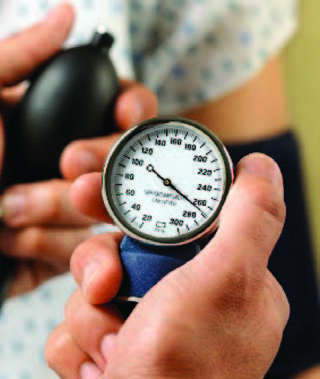
    High blood pressure or Hypertension is a common condition in which the force of the blood against your artery walls is high enough that it may eventually cause health problems such as heart disease.


    Blood pressure is determined by the amount of blood your heart pumps and the amount of resistance to blood flow in your arteries. The more blood your heart pumps and the narrower your arteries, the higher your blood pressure.


    High blood pressure, a silent killer can cause heart attacks, strokes, heart disease, organ failure, and death if not treated on time. Your doctor will give you medical prescriptions if you have high blood pressure, but did you know that there are several things in your kitchen cabinets that can be used to lower the same problem?


    Red Vs white


    Fish and chicken are helpful in lowering blood pressure. But red meat will spike your blood pressure and even make matters worse. Try clubbing chicken or fish with vegetables and you are sorted!


    Garlic


    Garlic is a key ingredient of the Indian diet and many cuisines around the world. Remember your grandma asking you to eat a piece of garlic every day? Well she was right! This natural medicine helps in lowering cholesterol and also keeps your blood pressure in check.


    Onion and honey


    A quick tip to lower your blood pressure is to take a tbsp of onion juice in a cup and add two tbsp of honey. Have this concoction every day.


    Curry leaves 


    This is one remedy that our south Indian friends mostly opt for. Curry leaves are a natural source that battles various illnesses. In a vessel add drinking water and 4-5 curry leaves, cool it and use it for daily drinking.


    Carrots


    Blend a carrot and spinach to get a tall glass of juice. Drink this twice a day to lower your blood pressure.


    Beet root


    This beautiful vegetable juice is a great way to lower your blood pressure. Drink it twice a day. Decrease the salt in your diet: 1,500 milligrams (mg) a day

  • BED NETS AND VACCINES TOGETHER MAY WORSEN MALARIA

    BED NETS AND VACCINES TOGETHER MAY WORSEN MALARIA

    Combining insecticide-treated bed nets with vaccines may not provide the best chance at eliminating malaria, finds a study. Currently, over 20 malaria vaccine candidates are in different stages of development but none are licensed for use. No one knows for sure what will happen when vaccines and bed nets are used together.


    A University of Michigan-led research team used a mathematical model of malaria transmission to find this out. The researchers examined potential interactions between the two control measures and found that – in some cases – the combination of bed nets and a vaccine actually makes the problem worse.


    “The joint use of bed nets and vaccines will not always lead to consistent increases in the efficacy of malaria control. In some cases, the use of vaccines and bed nets may actually make the situation worse,” said Mercedes Pascual, professor in the department of ecology and evolutionary biology.


    The study suggests that the combined use of some malaria vaccines with bed nets can lead to increased morbidity and mortality in older age classes. “Ironically, the vaccines that work best with bed nets are the ones that do not protect the vaccinated host but, instead, block transmission of malaria in mosquitoes that have found an opportunity to bite vaccinated hosts,” Artzy-Randrup said.


    The malaria vaccines under development fall into three categories, each focusing on a different stage of the malaria life cycle. That cycle involves human hosts and Anopheles mosquitoes infected with Plasmodium parasites. In 2013, there were an estimated 198 million malaria cases worldwide, including 584,000 deaths, according to the World Health Organisation (WHO).


    Most deaths occur among children living in Africa, where a child dies every minute from malaria, according to the WHO.

  • Friends of Madhya Pradesh Conclave on February 1

    Friends of Madhya Pradesh Conclave on February 1

    Friends of Madhya Pradesh Conclave on February 1 at Avery Fisher Hall, Lincoln Center


    NEW YORK CITY (TIP): The Government of Madhya Pradesh, India, in association with, the Consulate General of India, New York, will be organizing the “Friends of Madhya Pradesh Conclave” at the Avery Fisher Hall, 10 Lincoln Centre Plaza, New York, NY 10023, on Sunday, 1st of February, 2015.


    “Friends of MP” is a talent pool of individuals of Indian origin, or otherwise, living outside MP, who are passionate about becoming a part of the State’s success story. This initiative is aligned to the vision of the  Prime Minister of India, who suggested that each state should constitute its own global talent pool as a network of its friends —  wherever in the world they may be, and utilize their experience and talent for the country’s development.


    Madhya Pradesh has taken a lead in creating such a talent pool with the involvement of the vast and widespread well-wishers of MP all  over the world. Through a web-enabled platform, five sectors – education, health, skill development, rural development and tourism would initially be thrown open for engagement and would be further expanded in due course. The “Member Friends” can share an idea, sponsor a project or undertake volunteer work.


    The first conference of “Member Friends” is being held in the United States of America. Chief Minister of MP, Shri Shivraj Singh Chauhan, will be visiting the US and will launch the “Friends of MP” initiative at the “Friends of Madhya Pradesh Conclave” in New York city on 1st February 2015 at 10.00 am.


    All interested associations, groups and individuals are invited to join the Conclave. A simple registration process has been set up to facilitate the invitees. Please visit www.friendsofmp.com for further details.

  • INDIA’S RELATIONS WITH THE US MUST NOT BE ONE-SIDED

    INDIA’S RELATIONS WITH THE US MUST NOT BE ONE-SIDED

    ‘It is in the interest of both sides that the visit is seen as being successful. Both sides have invested considerable political capital in it…….This rapid exchange of visits and the decisions taken have to be justified, beyond the symbolism, which is no doubt important in itself. This opportunity to impart a fresh momentum to ties should not be missed………. What we need is a pragmatic approach by both sides. On the side this is assured by Modi. He has shown that he is essentially pragmatic. The only principle he is attached to is India First”, says the author. 


    Prime Minister Narendra Modi’s ready acceptance of United States President Barack Obama’s invitation to visit Washington in September 2014 came as a surprise against the background of the visa denial humiliation heaped on him for nine years.


    Modi’s invitation to Obama to visit India as chief guest at our 2015 Republic day celebrations came as an equal surprise, as did Obama’s acceptance at such short notice.


    The messaging from both sides is clear. Modi wants to give a fresh impetus to the India-US relationship, seen as languishing for some time now. Obama has conveyed that he is ready to respond.


    Now that Obama is coming and the two sides want to reinvigorate the relationship, the outcome of the visit will be watched closely not only in India and the US, but internationally too.


    To look ahead, we should look backwards a little bit so that the potential for the future can be seen through a better understanding of the past.


    There are no instant solutions to the issues in India-US relations. The US demands in many cases require policy, legislative and administrative responses by India, not to mention care by us that a balance in our external relations is maintained.


    Obama had said during his visit to India in 2009 that he saw the India-US relations as potentially a ‘defining partnership of the 21st century.’ It is very hard to define what a defining partnership is, but what he meant presumably is that relations between the oldest and the largest democracy, between the world’s foremost economic power and, in time, the third biggest economy will define the contours of international relations in the decades ahead.


    Our leaders say that India and the US are natural partners. This is not borne out objectively by the history of the relationship, the differences that currently exist on a whole host of issues and the inherently unequal nature of the relationship.


    The US is the world’s only superpower with global interests whose contradictory pulls and pressures they have to manage even in our region, and we are not even a credible regional power yet.


    If the argument is that it is the shared values of democracy, pluralism and respect for human rights make us natural partners, then the US relationship with Pakistan and China — often at our cost — which are not democracies, has to be explained. US interests often take precedence over its declared values.


    Even if rhetoric does not measure up to realities, the fact remains that improvement of India-US ties has been the most important development in India’s external relations in the last decade.


    It is the 2005 nuclear deal that opened the doors to a transformative change in bilateral ties. Reflecting the new intensity of bilateral engagement, about 28 dialogues were set up between the two sides covering the fields of energy, health, education, development, S&T, trade, defence, counter-terrorism, nonproliferation, high technology, innovation etc.


    The US now supports India’s permanent membership of the UN Security Council in principle. It is backing India’s membership of the four international export control organisations — the Nuclear Suppliers Group, the Missile Technology Control Regime, the Wassenaar Arrangement and the Australia Group.


    Trade in goods and services between the two countries has grown to almost $100 billion (about Rs 620,000 crore).


    A big breakthrough has been made in defence. In the last five or six years the US has bagged defence orders worth about $10 billion (about Rs 62,000 crore). These include C-130, C-17 and P-80 I aircraft and heavy lift, attack and VIP helicopters. The US has emerged as the biggest supplier of arms to India in this period.


    The US has proposed joint manufacture of several defence items in India under its Defence Trade and Technology Initiative. While India has overcome its mistrust of the US and fears that at critical moments the US may cut off spares for its equipment as part of its liberally used sanctions instrument, India has been reticent in its response to the DTTI, possibly because it is still not convinced that the US will transfer the technologies that India would want or not tag unacceptable conditions to it.


    The US proposed at one time three ‘foundational’ agreements covering the areas of logistics, interoperability and access to high technology equipment, but India has been cautious, presumably because it was concerned about slipping into the US defence orbit and losing its autonomy.


    To balance this, India and the US have been conducting a large number of military exercises, far more than with any other country. The naval exercises in the Indian Ocean to protect the sea lanes of communication are particularly important because of their geopolitical implications. Trilateral India-US-Japan naval exercises have obvious significance.


    In Obama’s second term, however, the ties lost momentum for various reasons. Economic reforms in India slowed down, its growth rates fell, India was seen as reluctant to deepen the strategic partnership, it was lukewarm to the US pivot towards Asia, US nuclear firms saw their business opportunities in India blocked because of our Nuclear Liability Act, major US corporations began campaigning against India’s trade, investment and intellectual property rights policies in the US Congress and instigated investigations into them by the US International Trade Commission and the US Trade Representative.


    The US began criticising India for being a fence sitter, a free-loader on the international system because of its reluctance to uphold it even at the cost of its interests as other Western powers were supposedly doing. This was the sense of the ‘burden sharing’ demand of the US.


    India had its own complaints against the US regarding the implications of the new US immigration legislation for India’s IT industry, the movement of its professionals, the increase in cost of H1B and L1 visas, the totalisation agreement and outsourcing.


    During his Washington visit, Modi struck an unexpectedly good rapport with Obama who accompanied him personally to the Martin Luther King Jr Memorial and later in Myanmar described him as a ‘man of action.’


    Modi clearly signalled during the visit that he intends to reinvigorate bilateral ties and that he views them as vital for his development agenda at home.


    The joint press conference by the two leaders and their joint statement set an ambitious agenda, with many positives, if all goes according to plan.


    The two leaders agreed to increase the bilateral trade five-fold to $500 billion (about Rs 36 lakh crore).


    Modi asked publicly for more openness and ease of access to the US market for Indian IT companies, even if Obama failed to give any response.


    In order to raise investment by institutional investors and corporate entities, it was agreed to establish an Indo-US Investment Initiative led by India’s finance ministry and the US department of treasury, with special focus on capital market development and financing of infrastructure.


    It was also agreed to establish an Infrastructure Collaboration Platform convened by the ministry of finance and the US department of commerce to enhance participation of US companies in infrastructure projects in India.


    Modi invited the US to send two trade missions to India in 2015 focused on India’s infrastructure needs with US technology and services.


    It was decided to activate the Trade Policy Forum that had not been convened for a long time. An empowered annual working group was approved for addressing IPR issues and it was agreed to set up a contact group for implementing the India-US civil nuclear deal.


    US involvement was sought in the railways sector and in smart city projects (Ajmer, Visakhapatnam and Allahabad).


    It was also agreed that USAID will serve as knowledge partner to support Modi’s 500 Cities National Urban Development Mission and Clean India Campaign.


    Obama offered to reinvigorate the higher education dialogue, which has languished. He welcomed India’s proposal to establish the Global Initiative of Academic Networks under which India would invite and host up to 1,000 American academics each year to teach in centrally-recognised Indian universities, at their convenience.


    The decisions and understandings reflected in the joint statement on the energy front are potentially problematic as they could give the US more handle to put pressure on India on climate change issues.


    Both leaders expressed their commitment to work towards a successful outcome in Paris in 2015 of the conference of the UN Framework Convention on Climate Change, including the creation of a new global agreement on climate change.


    The two leaders, in recognition of the critical importance of reducing greenhouse gas emissions and improving resilience in the face of climate change, agreed to ‘a new and enhanced strategic partnership’ on energy security, clean energy, and climate change, to further which a new US-India Climate Fellowship Programme to build long-term capacity to address climate change-related issues in both countries was launched.


    A MoU was concluded between the Export-Import Bank and the Indian Renewable Energy Development Agency, which would make up to $1 billion (about Rs 6,200 core) in financing available to bolster India’s transition to a low-carbon and climate-resilient energy economy, while boosting US renewable energy exports to India.


    Modi and Obama stated their intention to expand defence cooperation to bolster national, regional, and global security. This broad-based formulation has important geopolitical implications. They agreed to renew for ten more years the 2005 Framework for the US-India Defence Relationship with plans for more ambitious programs and activities.


    They welcomed the first meeting under the framework of the DTTI in September 2014 and its decision to establish a task force to expeditiously evaluate and decide on unique projects and technologies for enhancing India’s defence industry and military capabilities.


    To intensify cooperation in maritime security, the two sides considered enhancing technology partnerships for India’s Navy, besides upgrading their existing bilateral exercise Malabar.


    They committed to pursue provision of US-made mine-resistanta ambush-protected vehicles to India.


    On terrorism, they stressed the need for dismantling of safe havens for terrorist and criminal networks, to disrupt all financial and tactical support for networks such as Al Qaeda, Lashkar-e-Tayiba, Jaish-e-Mohammad, the D-Company, and the Haqqani Network.


    The two countries also expressed the intention to start a new dialogue on space situational awareness.


    Obama affirmed that India met MTCR requirements and was ready for NSG membership. Noting India’s ‘Act East’ policy and the United States’ rebalance to Asia, the leaders committed to work more closely with other Asia Pacific countries through consultations, dialogues, and joint exercises. They underlined the importance of their trilateral dialogue with Japan and decided to explore holding this dialogue among their foreign ministers.


    Modi spoke of great convergence on the issue of peace and stability in Asia-Pacific and more joint exercises with Asia-Pacific countries.


    Very significantly, he stated that the US was intrinsic to India’s Look East and Link West policies, according thus a central role for the US in India’s foreign policy.


    They agreed to continue close consultations and cooperation in support of Afghanistan’s future.


    The principal points agreed during Modi’s visit will serve as a guide to what can be realistically achieved during Obama’s visit. To assess that, we should take into account some limitations and negatives that mark the India-US relationship.


    Already, what was agreed to is mostly not capable of quick implementation or rapid results. These are largely medium term objectives and not always clear in implications. In the course of implementation, many issues will provoke internal political debates, will require detailed processing and negotiations, parliamentary approval and intensive diplomatic effort on the international front by both parties. In some cases real differences have been glossed over by use of diplomatic language.


    On IPR issues it will not be easy to reconcile US demands on IPRs and our position that our IPR policies are in conformity with the World Trade Organisation’s Trade-Related Aspects of Intellectual Property Rights agreement. Legal issues involving our courts are involved.


    The USTR decided to put unilateral pressure on India by investigating India’s IPR policies under Section 301, but this has been halted in November 2014 in view of some forward looking announcements by the Modi government. The USTR’s ‘cautiously optimistic’ statements during his Delhi visit in November suggest that the US will wait and watch what the Modi government actually delivers.


    The US Congress has extended the investigation of India’s investment, trade and IPR policies by the USITC by another year.


    On climate change issues, under cover of its ‘political’ agreement with China, the US seems determined to put pressure on India to agree to some reduction commitments. In actual fact, this is political pressure unrelated to the merits of India’s case. Climate change is a multilateral issue, but the US is making it a bilateral one, with the commercial interests of its companies in mind.


    While the US claims that what it is offering under the DTTI has the green light from all those in the US who control technology exports, it can be doubted whether the US will be as liberal in transfer of technologies as it would have us believe. The US record in this regard with even its allies and partners is not inspiring.


    The US has shown no activism in pushing for India’s membership of NSG or MTCR as a start. It is to be hoped that it is not looking


    for a resolution of the nuclear liability issue and the finalisation of the vexed question of ‘administrative arrangements’ that is needed to complete the India-US nuclear deal before


    it does the heavy lifting again to promote India’s membership of the cartels in question.


    Surprisingly, the list of terror organisations against whom US and India have agreed to work together excludes the Taliban, pointing to a crucial difference between the two countries on the issue of accommodating this extremist force with its close Pakistani links into the power structure in Afghanistan.


    In reaching out to the Taliban the US gives priority to orderly withdrawal of its forces from Afghanistan, treating India’s concerns as secondary. The language on Afghanistan in the Modi-Obama joint statement in Washington was remarkably perfunctory.


    Worse, the US wants to retain complete freedom of action in dealing with Pakistan, irrespective of India’s concerns about its continuing military aid to that country. General Raheel Sharif, the Pakistani army chief, was accorded high level treatment during his recent visit to the US, meeting Secretary John Kerry who indirectly endorsed the role of the Pakistani army in nation building and politics by terming it as a truly binding force.


    It is worth recalling that after accepting the invitation to visit India, Obama felt diplomatically obliged to phone Premier Nawaz Sharif to say he could not visit Pakistan now and would do so later.


    The US involvement in developing our inadequate infrastructure — our ports, airports, railways highways etc — seems unrealistic as its companies are hardly likely stand up to international competition in India.


    As regards our nuclear liability legislation, it appears that the US government may be moving away from its fundamentalist position that supplier liability cannot be accepted and may be open to some practical solution to the issue in terms of limiting the liability in time and costs. The lawyers at Westinghouse and General Electric will, of course, have to be convinced.


    This is a highly charged issue politically and it is doubtful whether the decks can be cleared before Obama’s visit. The larger question of the economic viability of US-supplied nuclear power plants remains, not to mention the fact that GE does not have as yet a certified reactor.


    Work on a bilateral investment treaty will take time It appears that our side wants to be able to announce a couple of projects under the DTTI during Obama’s visit. In this connection anti-tank missiles, naval guns, pilotless aircraft and magnetic catapult for our aircraft carrier are being mentioned as possibilities.


    The US would want at least one project to be announced. Defence Minister Manohar Parrikar has let it be known publicly that US proposals are being seriously examined.


    The announcement of a more ambitious Defence Cooperation Framework Agreement valid for another 10 years is a certainty.


    The government’s decision on the GST, raising the FDI ceiling in insurance, the amendment to the land acquisition law are advance signals of its commitment to reform and attracting FDI, which is a positive from the US point of view.


    The emphasis on Make in India and developing India’s manufacturing sector, coupled with a commitment to ease doing business in India, have begun to change investor sentiment towards India, and this creates a better atmosphere for Obama’s visit.


    It is in the interest of both sides that the US President’s visit is seen as being successful. Both sides have invested considerable political capital in it.


    This rapid exchange of visits between the two leaders, leaving little time to process the decisions taken in Washington in September, has to be justified, beyond the symbolism, which is no doubt important in itself. This opportunity to impart a fresh momentum to ties should not be missed.


    But there is need also to be clear-headed about the relationship that is not easy to manage given US power, expectations, impatience and constant endeavour to do things the way it wants.


    It is a bit disturbing that an atmosphere has been created in which the focus is on what we can do for the US and Obama and not what the US must do to meet our needs and concerns. The agenda has become one-sided.


    The US should not expect India to support all its demands and polices, however questionable. India does not have to prove it is a responsible country by supporting even irresponsible US policies. Of course, India too should not expect the US to always adjust its policies to suit us.


    What we need is a pragmatic approach by both sides. On the side this is assured by Modi. He has shown that he is essentially pragmatic. The only principle he is attached to is India First.


    (By Kanwal Sibal who is a former Foreign Secretary of India)
    (British English)

  • Melville in New York to have $9 million Hindu temple in 2016

    Melville in New York to have $9 million Hindu temple in 2016

    LONG ISLAND, NY (TIP): Two-storey BAPS Shri Swaminarayan Mandir complex, currently under construction on a 5-acre plot with cost estimates of $9 million, besides a spacious sanctuary, will also include classrooms. In addition to worship services, it will also offer educational programs, cultural classes and activities, religious lessons, free health clinics, children and youth activities, humanitarian projects, etc., and shall make efforts in social outreach. All its statues were sculpted in India, reports suggest. Meanwhile, Hindu statesman Rajan Zed, in a statement in Nevada (USA) applauded efforts of BAPS, temple management and volunteers, and area community for realizing this Hindu temple complex.


    Rajan Zed, who is President of Universal Society of Hinduism, further said that it was important to pass on Hindu spirituality, concepts and traditions to coming generations amidst so many distractions in the consumerist society and hoped that this new temple would help in this direction. Zed stressed that instead of running after materialism; we should focus on inner search and realization of Self and work towards achieving moksh (liberation), which was the goal of Hinduism. Originally envisioned in 1988, its Bhumi Pujan ceremony was held on November 11, 2012 and its foundation stone was laid on October 27, 2013. Community leaders associated with raising of this temple include Harshad Bhatt, Girish Patel, etc.


    Bochasanwasi Shri Akshar Purushottam Swaminarayan Sanstha (BAPS), headquartered in Ahmedabad (India), is a socio-spiritual Hindu organization revealed by Bhagwan Swaminarayan in the late 18th century. Its followers take five lifetime vows: No Alcohol, No Addictions, No Adultery, No Meat, No Impurity of body and mind. It envisions “a society whose joy lies in the joy of others”. With Pramukh Swami Maharaj as the current Spiritual Guru, it has over 3,850 centers and over 880 sadhus worldwide.


    Hinduism, oldest and third largest religion of the world, has about one billion adherents. There are about three million Hindus in USA.


    Melville, an affluent hamlet in Huntington (New York) known to Native Americans as Sunsquams, houses US headquarters of several national/international corporations and hosts operations for various Fortune 500 companies.

  • Meet Padma Shri Dr. Dattatreya Nori – Featured Indian American

    Meet Padma Shri Dr. Dattatreya Nori – Featured Indian American

    NEW YORK (TIP): Dr. Dattatreya Nori, an internationally renowned Oncologist is a recipient of one of India’s highest civil awards, “Padma Shri”. The award was announced on the eve of India’s Republic Day, January 26, 2015.

    Government of India recognizes excellence and contributions of Indians within  India and abroad every year on the eve of Republic Day.

    Dr. Nori, Professor and Executive Vice Chairman of the Radiation  Oncology Department at the New York- Presbyterian Hospital/Weill Cornell Medical College in New-York City is passionately committed to help the less fortunate.

    Meet Padma Shri Dr. Dattatreya Nori, the renowned Oncologist

    Man does not live by bread alone. What else does one need depends on the thinking of the person.

    To Dr. Dattatreyudu Nori, it is a touch of spirituality that lends strength to him as a medical professional. A derivative of the spirituality that he possesses and practices is the desire to serve and help the less fortunate in society. In Dr. Nori one sees  a glorious combination of material success and spiritual excellence.

    Dattatreya Nori2

    Dr. Nori’s professional excellence and humanitarian approach have endeared him in both USA and India, the country of his origin. Here he is seen sharing lighter moments with President of USA Barack Obama. Dr. Dattatreyudu Nori M.D., FACR, FACRO, is Professor and Executive Vice Chairman of the Radiation Oncology Department at The NewYork-Presbyterian Hospital/Weill Cornell Medical College in New York City. In addition, Dr. Nori is Chairman of Radiation Oncology at The New York Hospital Medical Center of Queens. He is also the Director of the Cancer Center at the New York Hospital Queens, in which capacity he heads that organization’s cancer program. Dr. Nori completed his undergraduate training at Kurnool Medical College and received his postgraduate medical degree from Osmania University in India. He then joined the staff of Memorial Sloan-Kettering Cancer Center in New York City, where he became Chief of the Brachytherapy Service before accepting the current position as Chairman of Radiation Oncology at Cornell.


    Dr. Dattatreyudu Nori, Professor and Executive Vice Chairman of the Radiation Oncology Department at the New York – Presbyterian Hospital / Weill Cornell Medical College in New York City is passionately committed to help the less fortunate. In recognition of  his professional excellence and tremendous contribution, Government of India, on 66th Republic Day of India on the January 26, 2015,  honored Dr. Nori with “Padma Shri”, one of the highest civilian awards of the country.  We, at The Indian Panorama, congratulate Dr. Nori on getting the prestigious award and wish him many more honors in times to come.

    Dr. Nori has an international reputation as a pioneer and authority in radiation oncology and brachytherapy. He was instrumental in introducing the current techniques and clinical concepts of High Dose Rate Brachytherapy for gynecological, genitourinary, thoracic and head and neck tumors. His research also included efforts to improve the outcome for patients with prostate cancer, lung cancer, pancreas, breast and other cancers. Dr. Nori has served as principal investigator for numerous clinical trails sponsored by the National Cancer Institute and has received several national and international awards for his contributions to cancer research, including the Distinguished Alumnus Award of the Memorial Sloan-Kettering Cancer Center Alumni Society. He has been called “a recognized leader in his specialty” by the prestigious New England Journal of Medicine. 

    Dr. Nori served in the American Cancer Society in various positions including Chairmanship of the Professional Education Committee. The American Cancer Society honored him with their highest prestigious award “Tribute to Life” for his accomplishments in cancer research.


    Dattatreya Nori4
    Dr. Nori inaugurated the Brachytherapy Department of Indo-American Cancer Institute

    Dr. Nori has trained more than 150 residents and fellows, some of whom have become Chairman of academic departments in the U.S. Dr. Nori is a Fellow in the American College of Radiology, Fellow in the American College of Radiation Oncology, past President of the American Brachytherapy Society, and a current member of several national and international oncology societies. He is also an Associate Editor of three oncology journals as well as a Visiting Professor to many universities in the U.S. and abroad. He has published three books and more than 200 scientific articles. He has given several prestigious lectureships such as the Probstein Oncology lecture at Washington University in St. Louis. He received a Gold Medal from the Indian Medical Association for his contributions to cancer research and training Indian physicians in the U.S. He also received the Excelsior Award from the Network of Indian Professionals in the United States and many Indian Organizations in the U.S., such as the Nargis Dutt Cancer Foundation and the Federation of Indian Associations have honored him for his contributions to cancer research.

    Dattatreya Nori3 Dattatreya Nori5Dr. Nori has provided technical and scientific help to many cancer centers in India, South America and Israel, and he is also the Founding Member of the Indo-American Cancer Institute for Women and Children, a state-of-the art 250 bed cancer and research institute located in Hyderabad, A.P. which was inaugurated by the Prime Minister of India in 2001. In addition, Dr. Nori is a Consultant to the United Nations International Atomic Energy Agency, advising on the formulation of guidelines for the treatment of cancer in developing countries. In a recent survey conducted by the reputable Castle Connolly Medical Ltd and published in America’s Top Doctors, Dr. Nori has been selected as one of the top doctors in America. In this survey, more than 250,000 leading doctors were asked to name the nation’s best physicians in various specialties -those “to whom you would send members of your family”. The most important criterion for physician selection was excellence in patient care, education, residency, board certification, fellowships, professional reputation, research, hospital affiliation, academic stature and medical school faculty appointment and experience. In a more recent survey done by the most popular woman’s magazine in the U.S., The Ladies’ Home Journal, Dr. Nori has also been named as one of the top doctors in America for the treatment of cancers in women. Dr. Nori was also honored by Senator Jon Corgine, Chairman of the Democratic Senatorial Committee and by Council Speaker Gifford Milller for his contributions to cancer research.

    Dattatreya Nori8 Dattatreya Nori7 Dattatreya Nori6Dr. Nori continues to be active as clinician, teacher, researcher and administrator of two large Radiation Oncology Departments and the Cancer Center at New York Hospital Queens.

    As I write his profile here in New York Dr. Nori is away to India  where he is  addressing  a Global Health Summit in Kochi from January 2 to 5. Dr. Nori is there to talk about prevention of Cervical cancer in India. He is there to give out the message that it can be prevented in India just as well as it is prevented in USA. Dr. Nori is a visiting professor to many universities across the globe and is frequently traveling.


    In India, which is his country of origin, he has helped set up a number of hospitals. One  such hospital – Indo American Cancer Hospital  with 500 beds is state of the art cancer hospital in Hyderabad. It was founded in 2002 and was inaugurated by the then Prime Minister of India Mr. Atal Behari Vajpayee.


    Dr. Nori lives with his wife Subhadra in Scarsdale, New York. His wife is a physician, academician and chairperson of the Department of Rehabilitation at Jacobi Medical Center affiliated with Albert Einstein College of Medicine in New York. His son, Sateesh and daughter-in- law Joy, are both attorneys and his daughter, Priya and son-in-law Himanshu, are both physicians.


  • VICE PRESIDENT OF INDIA CONFERS PRAVASI BHARATIYA SAMMAN

    VICE PRESIDENT OF INDIA CONFERS PRAVASI BHARATIYA SAMMAN

    13th PBD closes with call strengthen links between young Pravasis and Indian youth

    GANDHINAGAR(GUJARAT) (TIP), January 9, 2015: The Vice President of India, Mr. M Hamid Ansari, today felicitated 15 overseas with the Pravasi Bharatiya Samman Awards at the Valedictory Session at the 13th Pravasi Bharatiya Divas. Speaking on the occasion, Mr. Ansari said, “This year is a special one. It coincides with the centenary of Mahatma Gandhi’s to India from South Africa, following which he took on the mantle of leadership of perhaps greatest non-violent struggle for independence against the colonial yoke. Gandhi ji was also, unquestionably, the greatest Pravasi Bharatiya of all.” He said, “Relationships, even emotional ones, are not a one-way street. The Overseas Indians have expectations aimed at facilitating and intensifying their involvement with India. The Government of India, and the State Governments, have acknowledged the validity of these sentiments and taken or initiated steps to attract, assist and promote a deeper and multifaceted relationship, which is mutually beneficial and long lasting. We in India attach highest importance to issues of interest and concern to the overseas Indians.”

    The Vice President stated, “India today is on the cusp of change, in the process of actualizing the expectations of its vast population for a better life. India aspires for a better place in the comity of nations. Both of these require rapid economic development, accompanied by better educational, health and social parameters. This requires a massive collective effort by all segments of our population. The governments at central and state levels need to provide visionary leadership and are determined to do so.”

    Mr. Ansari added, “In this endeavor, an important role can be and must be played by the Overseas Indians. They have knowledge and resources to reinforce the effort in niche areas; they also have the experience of other lands where similar efforts were pursued successfully. We welcome such initiatives, which will replicate these valuable experiences here and save us from reinventing the wheel.”He said,
    “What then is the challenge before us in this task of linking India more closely with its overseas community? In my view it is to maintain and strengthen the linkages between the next generation of Pravasis and their counterparts in India.

    It is essential that the new generations at both ends continue and strengthen this mutually beneficial bond. The Youth Pravasi Bharatiya Divas organized on the 7th of January is a good step in the right direction.”

    The recipients of Pravasi Bharatiya Samman Awards are Mrs. Mala Mehta, Australia; Mr. Donald Rabindernauth Ramotar, Guyana; Dr. Rajaram Sanjaya, Mexico; Mr. Kanwaljit Singh Bakshi, New Zealand; Mr. Rajmal Parakh, Oman; Mr. Duraikannu Karunakaran, Seychelles; Mr. Essop Goolam Pahad, South Africa; Mr. Shah Bharatkumar Jayantilal, UAE; Mr. Ashraf Palarakunnummal, UAE; Mr. Mahendra Nanji Mehta, Uganda; Prof. Nathu Ram Puri; Lord Raj Loomba, Britain; Mr. Satyanarayana Nadella; Dr. Lulla Kamlesh, US and Dr. (Mrs.) Nandini Tandon, USA.

  • WAYS TO TACKLE YOUR INVASIVE PARTNER

    WAYS TO TACKLE YOUR INVASIVE PARTNER

    One of the most essentialcomponents of a healthyrelationship is trust. Lack oftrust makes one an intruder in his orher partner’s life.And needless to say, the person endsup eating into the other’s space, whichleads to quarrels as the relationshipbecomes suffocating. Instead of beingfond of it, the people in it begin tothink of ways to end it. If you areputting up with such a partner, it’shigh time that you paid someattention to this problem. Instead ofrunning away, sit back, think over itand take the following steps.

    Talk to your partner
    Find a suitable time. Do not startexplaining things to him or her in themiddle of a fight. It will make mattersworse and the person will never seethe point. Talk to your partnerwhenever you two are in a good mood.Take him or her out — for a walk,preferably and talk about things thathave been hurting you. Explain it tothem that you require space to have ahealthy co-existence in therelationship. Do not be rude. Keepcalm and be composed.

    Stop proving things
    Most importantly, do not let yourpartner check your phone all the time.If you let him or her do this, theperson will never learn to trust you. Ifyour partner doesn’t trust you a bitand wants to check your phone afterevery fight that you have, realize that the person has severe trust issues. Ifyou want to make sure that yourpartner gives up this habitpermanently then, tell him or her thathe or she has to stop feeling insecure.Know that neglecting them and notloving them will only make matters worse.

    Give up the mentality to avenge
    You cannot sit and plan revengeevery time your partner is insecureabout you or suspects you. It is sheerwaste of time. Seize the conversationby telling them that they matter toyou. Stop if the are putting up stupidarguments in return. Do not answer.Avoid any conversation for some time

    Confrontation is necessary
    Do not avoid a confrontation thinking that it might lead to anembarrassment for your partner.Sweeping matters under the carpetdoes not help. Some people evenfollow their partners to feed theirsuspicious minds. If you find yourpartner doing that, confront him or her.

    Do not get frustrated
    Often people get so frustrated thatthey tend to prove their partner’ssuspicion true by doing what theyhave been accused of. Do not give up.And most importantly, do not stoopand do this. Be patient and prove thatyou have been accused for all thewrong reasons. The best method tofight back is to not get frustrated andhave the strength to take a stand for yourself.

  • Probiotics may ease anxiety, depression

    Probiotics may ease anxiety, depression

    Supplements to boost probiotics — the helpful microorganismsthat reside in our bodies — can alter theway people process emotional information andease anxiety and depression, new research suggests.Gut bacteria may also affect the immune system,which could in turn, influence the brain, Philip Burnet,researcher at the University of Oxford was quoted assaying. For the study, researchers recruited 45 healthypeople aged 18 to 45 years to take either a probioticsupplement to boost “good” bacteria or a placebo, everyday for a period of three weeks.They completed several computer tests to assess howthey processed emotional information such as negativeand positive words.During one test, people who took the supplement paidless attention to negative information and more attentionto positive information, compared with people who took aplacebo, the findings showed.

  • HEADACHE MAY BE ONLY SYMPTOM OF BRAIN TUMOUR

    HEADACHE MAY BE ONLY SYMPTOM OF BRAIN TUMOUR

    Headache could be the onlysymptom of brain tumour inmany cases, say researchers,suggesting that CT scans and otherneuro-imaging tests for people withheadache could prove to be helpfultools in spotting the deadly disease.The suggestions come in view ofrecent proposed guidelines in the USseeking to reduce the use of neuroimagingtests for patients withheadaches, as part of initiatives tolimit the use of unnecessary and costlymedical tests.”Although the intentions arelaudable, these guidelines areinconsistent with the neurosurgeon’sexperience with patients with braintumour,” said Ammar H. Hawasli fromWashington University’ School ofMedicine in the US.”Specifically, patients with braintumours may present with isolatedheadaches in the absence of otherneurological symptoms and signs,”added Hawasli.To illustrate the point, theresearchers analysed 95 patients with aconfirmed diagnosis of brain tumour.They found that in 11 patients,headache was the only symptom ofbrain tumour. Four of these patientshad “new-onset” headaches that wouldhave qualified them for neuro-imagingunder the recently proposed guidelines.The remaining seven patients hadmigraine or other types of headachefor which imaging may not have beenperformed under the proposed”choosing wisely” guidelines of ABIM(American Board of Internal Medicine)Foundation, the researchers said.Therefore, neuro-imaging wouldhave been delayed or never performedin three to seven percent of patientswith brain tumours.”We support careful and sensible useof neuro-imaging in which physiciansexercise excellent clinical judgment toreduce waste in the medical system,”Hawasli said.

  • Yoga, a therapy for cardiovascular disease

    Yoga, a therapy for cardiovascular disease

    Asystematic review and meta-analysis ofrandomised controlled trials has concluded thatthe popular mind-body practice of yoga can be apotential therapy for cardiovascular disease andmetabolic syndrome.Out of 1,404 records, 37 randomised controlled trialswere included in the systematic review and 32 in themeta-analysis.Compared to non-exercise participants, yoga showedsignificant improvement for body mass index, systolicblood pressure, low-density lipoprotein cholesterol, andhigh-density lipoprotein cholesterol.Significant changes were seen in body weight, diastolicblood pressure, total cholesterol, triglycerides and heartrate but not fasting blood glucose.”This review helps strengthen the evidence base foryoga as a potentially effective therapy for suchconditions. The results support earlier reviews on thepositive benefits of yoga for cardiovascular diseaseprevention,” the authors noted.However, no significant difference was found betweenyoga and exercise.One study found an impact on smoking abstinence.The team concluded that there is promising evidence ofyoga on improving cardio-metabolic health.

  • SEX HORMONES PUT WOMEN AT ALLERGY RISK

    SEX HORMONES PUT WOMEN AT ALLERGY RISK

    Female sex hormones called oestrogens can worsenallergic reactions in women, says a study.”Women are more likely to suffer lethal allergicreactions because the female sex hormone makes thecondition worse,” says a Telegraph report, quoting thestudy by the National Institute of Allergy and InfectiousDiseases in the US.Researchers found that oestradiol – a type of oestrogen- enhances the levels and activity of the chemical whichdrives life threatening allergic reactions in women.One such condition is anaphylaxis – an allergicreaction triggered by food, medication or insect stingsand bites.In experiments on mice, the team found that femalemice experience more severe anaphylactic reactions thanmales.Oestrogen influences blood vessels, enhancing thelevels and activity of an enzyme that causes some of thesymptoms of anaphylaxis.The researchers found that giving oestrogen-blockingtreatments to female mice reduced the severity of theirallergic responses to a level similar to those seen inmales.

  • Fifty Shades of Saffron

    Fifty Shades of Saffron

    On December 11, 2014, when the U.N. General Assembly adopted June 21 as the International Day of Yoga, as recommended by Prime Minister Narendra Modi, India rejoiced. Never mind that the day before was the first Human Rights Day under his watch; this crept by unnoticed.

    At the SAARC Summit, Mr. Modi declaimed, “As we seek to build bridges to prosperity, we must not lose sight of our responsibility to the millions living without hope.” He was, as always, matchless as a kathakar, an artiste whose fabulous retelling of fables reinforces them in the minds of the faithful as fact. But while his performances have zero defects, on the lives of the multitudes hanging on to his words, believing in them and daring to hope, they have had zero effect so far, because the responsibility of which the Prime Minister spoke is usually ignored.

    In 1990, the U.N. launched the Human Development Report based on the challenging predicate that “people are the real wealth of a nation.” How wealthy are we really? After two decades of rapid GDP growth, we bestride SAARC like a colossus doing the splits, one foot splayed eastward to keep China out, the other westward to keep Pakistan down. We loom like a giant among midgets, but on every parameter that measures equity in development, there is little to choose between us and our neighbors.

    The Human Development Index (HDI) for 2014 ranks us at 135 among 187 countries; Sri Lanka at 73 did way better than us, and we were shadowed by Bhutan at 136, Bangladesh at 142, Nepal at 145 and Pakistan at 146. The fact that India was a stable democracy, as the others were not, that our economy had galloped along, as theirs had not, had made very little difference to the lives of our citizens.

    Within the HDI, the Gender Inequality Index which measures three critical parameters – reproductive health, women’s empowerment and their participation in the labor market – is particularly important because it shows how a society treats its more vulnerable half. Sri Lanka at 75 is well ahead of us, but so is Nepal at 98, Bhutan at 102 and Bangladesh at 115. India is in lock-step with Pakistan, both ranked at 127. The Criminal Law Amendment Act, which brought in far-reaching measures to protect women, is now almost two years old; sadly, it has made little difference.

    Depth of deprivation

    My five years on the National Human Rights Commission were a humbling experience. In 2009, we had 82,000 complaints, in 2013, a lakh. A five-member Commission could not possibly do justice to more than a fraction of these. We dismissed 60 per cent of complaints in limine, or at the outset, 11 per cent with directions to officials to act (but never had the time to check if they did) and transferred 6 per cent to the State Human Rights Commissions, which were mostly ramshackle.

    Our investigative visits to rural India were dives into the darkness that contained the mass of the iceberg of which the complaints coming to us were only the tip. In a country still largely illiterate, a terrible violation of human rights in itself, very few knew the NHRC existed. Those who did wondered if it would be able to help; many thought it would not. For every complaint that came to us, a hundred did not, but since so many were on systemic problems affecting entire communities, they brought home to us the range, depth and persistence of discrimination and deprivation in India. The two are often linked, and that is the real cause of worry with our new dispensation. The poorest and the most vulnerable – women, Scheduled Tribes, Scheduled Castes and Muslims – suffer because the social bias against them is rooted in Hindu belief and practice, and still so strong that the laws meant to protect them are impotent. Even under a secular government, public servants would plead with the NHRC that there would be law and order problems if they tried to implement these. The danger now is that under a government so overtly Hindu, these practices will flourish even more. The hate speeches of Cabinet members signal where this could lead us.

    “Discrimination and deprivation are often linked to one another, and that is the real cause of worry with our new dispensation”

    Mr. Modi wants his party to be careful with their words, but there are fifty shades of saffron around, most of it strident. He wants civil servants to be sensitive, but they always are, to the wishes of the powers that be. He wants the police to be SMART, but they already are, reporting to the National Crime Records Bureau that in 2013 there were only two incidents of human rights violations by their personnel. The same year, 33,753 complaints to the NHRC, a third of the total received, were against the police, detailing how they preyed on those they should protect.

    In Mr. Modi’s defense, these are national problems he has inherited, not created, but Gujarat is the template he holds up to the rest of India, and there are a range of impartial reports that show how cavalier it has been about the lives of the State’s people. A 2013 Lancet study found that among the 11 rich States, Gujarat had done the worst in bringing down the mortality rate of children under five, one of the Millennium Development Goals. The Census established that the sex ratio in Gujarat has declined from 934 in 1991 to 920 in 2001 to 918 in 2011. Not surprisingly, the NCRB data shows a high incidence of crimes against women. So too, the data shows, are crimes against Scheduled Castes, at levels higher than in the other developed States: Maharashtra, Punjab and Tamil Nadu. The ASER/Pratham Reports on Education show low percentages of students in Standard V who could read a Standard II text, and could do divisions. That is not a model to copy.

    Dreadful cost

    Despite what he said in Kathmandu, Mr. Modi’s record as Gujarat Chief Minister shows that his sights are set on prosperity, not on “the millions living without hope.” ‘Make in India’ is his priority, and there the signs are ominous. A few weeks back, ASSOCHAM issued an advertisement which announced, “Repeal of archaic laws is the need of modern times…ASSOCHAM has identified 105 laws for review, which can promote a better regulatory framework for successfully actualizing Mr. Modi’s vision of ‘Make in India’.” These include 43 laws that protect human rights and safeguard labor welfare, including the Bonded Labor System (Abolition) Act, Protection of Forest Rights Act, Inter-State Migrant Workers Act, Child Labor (Prohibition and Regulation) Act, and the Minimum Wages Act. If these are the voices he listens to, development will come at a dreadful cost.

    India’s governments have so far pursued development with a human face. Vast social welfare programs protect those whom the market forces savage, but these are riddled with huge problems. For instance, hardly any materials go into the rural employment guarantee projects, but each year material costs claimed are well over 20 per cent of its budget. A survey done for the NHRC showed that 60 per cent of the allocation for the Integrated Child Development Services was being stolen. The list goes on. The answer does not lie in jettisoning these programs, but in making them work better. Without them, rural India will empty out.

    Our Prime Minister’s many admirers believe that Sardar Patel’s mantle has descended on him. Vallabhbhai Patel made India, Narendra Modi can unmake it. But with his extraordinary talents, integrity and ability, our Prime Minister can also be the making of India, and make India, all of India, proud. That should be his tribute to his idol, not the monstrous statue of the Sardar now rising in Gujarat like a prelapsarian Ozymandias.

    By Satyabrata Pal

  • Post-elections, what J &K needs

    Post-elections, what J &K needs

    The announcement of the election results has justifiably generated enormous excitement, both in the state as also the rest of the country, since the formation of a coalition government is proving to be a daunting proposition. With a turnout of 65 per cent-the highest in two decades-the people have voted overwhelmingly for change. It is a loud cry for basic amenities, people-sensitive governance, development, more jobs and justice. The results have been fragmented. In the 87-member House, the People’s Democratic Party is the largest with 28 seats. The National Conference, expectedly headed for a drubbing, has done better with 15. Its former coalition partner, the Congress, has escaped being fully singed and retains 12. Smaller parties and independents, having won seven seats, are now much sought after for support in forming a stable coalition. It is the BJP, the second largest party (25 seats), that has emerged as the belle of the ball.

    Having been inconsequential for long in the fractious politics of the Valley, the BJP, without even winning a single seat, has occupied political mind-space there, and emerged as a major player in the politics of the state. Its unsuccessful forays across the Pir Panjal range augur well for the democratic health of the state as all the ideological impulses of the political spectrum would now find traction. But on the flip side, it is the polarization of the Hindu vote in Jammu and the counter-polarization in Kashmir, to keep the BJP at bay, which has resulted in a vote palpably on religious and regional lines. Here lies the danger to the internal coherence of the sensitive border state, said to be a microcosm of India as an idea.

    Leaving the acrimony of electioneering behind, this is perhaps not the time to reheat the bubbling curry of recriminations in the state. Prime Minister Narendra Modi and the new coalition government would need to understand the looming dangers of fragmentation, and grapple with the highly complex challenges the state faces. For J&K is central to India’s vision of a truly secular, diversified and decentralized Union. It has consumed enormous political, economic, diplomatic and military resources, and remains to this day one of our national security pre-occupations. Post-elections, Narendra Modi and Mufti Mohammad Sayeed-in the event he heads the coalition – would have been cast in historic moulds. Modi must rise above his party’s Hindutva agenda, being pursued elsewhere in the country, and fulfill his promised commitment to Bharat Ratna Atal Bihari Vajpayee’s vision of “Insaniyat, Jamhooriat and Kashmiryat” to build a future for the youth of the state. The Mufti’s statesman-like and sagacious political attributes would help provide the psychological-emotional ‘healing touch’ for the much-needed youth engagement.

    Externally, India would have no truck with major powers taking initiatives to help address the Kashmir issue. Nor for that matter would it countenance the United Nations. The problem can only be resolved bilaterally by India and Pakistan. This track remains blocked. For even after the recent barbaric and heart-rending Peshawar school killings, it is unlikely that Pakistan would end its terror doublespeak any time soon.

    As Nida Fazli laments:
    Khoon ke napaak yeh dhabey Khuda se’ kaise chupaoge’ Masoomon ki kabron’ par chad kar Kaun se ‘jannat jaoge’?
    It is the internal New Delhi-

    Srinagar/Jammu/Leh pathway that offers myriad opportunities. First, in Kashmir, over a quarter of a century, the sense of alienation, notably among youth, runs deep. Their move from victimhood to grievance to resistance, with possible temptations of armed fighting is discernible. Afzal Guru’s hanging and the shoddy handling of the episode exacerbated the angst. Prime Minister Modi would need to encourage and empower regional sentiments and voices, and help provide political space rather than dilute regional identity. This is an important consideration to achieve greater cohesiveness of the three regions and dilute the consequential impact of religious identities and regional orientations affirmed by the vote.

    Secondly, equitable development of the three regions and promotion of a deep inter-regional (in effect, inter-faith) dialogue would dilute belligerence, and bridge the gap between Srinagar, Jammu and Leh. Simultaneously, layers upon layers of mutual inter-dependence, in a rising economic trajectory, would help create countervailing resilience against disruptive trends.

    Lastly, Wahabi-Salafi impulses have generated trends of religious radicalization among youth and its offshoot of willingness to take up arms, fanned by social media networking. This challenge is best met politically. Also the state’s inherently tolerant society, its elders, and community leaders, would need to draw upon the wellsprings of the sub-continent’s famed Sufi Islam which still envelops Kashmir, like the rest of India. Significantly, over 71 per cent of those elected are known to be committed to inclusive, secular and pluralistic sentiment.

    The important issues of Article 370, Armed Forces Special Powers Act
    (AFSPA) and return of Kashmiri Pandits need imaginative and creative handling. It would be instructive to recall that J&K is the only Part B state that negotiated its membership with the Indian Union, leading to its special status, legally sanctified by Article 370 of the Indian Constitution. It is a special identity marker the Kashmiris deeply cherish, and it would be unwise to seek to revoke it.

    As to AFSPA, people see it as one of the anti-democratic draconian statutes in force for decades along with the Disturbed Area Act and the Public Safety Act. Yet if the Army has to perform under tough conditions and circumstances, such powers are necessary for effective counter-terrorism operations. The answer perhaps lies in a discerning and gradual lifting of AFSPA from select areas, in consultation with the Army, along with stricter adherence to the guidelines, rules of engagement and standard operating procedures.

    The return of the hapless Kashmiri Pandit community, circumstantially clawed out from their geo-cultural moorings, has wide-ranging support in the Valley. But their proposed housing in ghetto-like conclaves would fly in the face of Kashmir’s inclusive and secular credentials, and give rise to a feeling of ‘otherness’. A dribble rather than mass flow needs to be encouraged through provision of liberal financial assistance, attractive employment packages and improved living conditions. Such initiatives would serve to create a congenial environment for the dignified return of a proud community that has for millennia been the cultural pivot of Kashmir.

  • BHARAT RATNA for Vajpayee, Malviya

    BHARAT RATNA for Vajpayee, Malviya

    NEW DELHI (TIP): Former Prime Minister Atal Bihari Vajpayeeand Madan Mohan Malaviya will be conferred the nation’s highest civilian honor, the Bharat Ratna, the government announced on December 24 This came on the eve of Vajpayee’s 90th birthday and Malaviya’s 153rd birth anniversary.

    Prime Minister Narendra Modi and other senior BJP members, including LK Advani, will be present when the Bharat Ratna is presented to Vajpayee at his residence in Delhi as he won’t be able to attend a ceremony at Rashtrapati Bhavan due to ill health, a government official said. The date for this hasn’t been decided.

    Pandit Bhimsen Joshi also received the award at his home, in Pune, in 2009. Modi moved the Bharat Ratna proposal to President Pranab Mukherjee on December 23 evening.

    It was accepted by him on December 24 morning. The government had decided a while ago to give the Bharat Ratna to Vajpayee, said the official cited above. “It was only looking for a fitting occasion and what better than his 90th birthday,” the person said. He said the government was also keen to bestow the honour upon Malaviya as he was considered a Hindu nationalist besides being founder of the Banaras Hindu University in Modi’s constituency, Varanasi.

    “Malaviya’s grandson, Giridhar Malaviya, was a proposer of Modi when he filed nomination papers from Varanasi,” the official said. A Bharat Ratna for Malaviya, who was Congress president in 1909 and 1918, also serves to show that the award is not dictated by political affiliation. PM Modi tweeted: “Atal ji means so much to everyone. A guide, inspiration & giant among giants. His contribution to India is invaluable. Pt. Madan Mohan Malaviya is remembered as a phenomenal scholar & freedom fighter who lit the spark of national consciousness among people. Country’s highest honour to these illustrious stalwarts is a fitting recognition of their service to the Nation.”

    The government steered clear of criticising the previous UPA government for not bestowing the honour on Vajpayee. “The time and occasion is correct for the Bharat Ratna to Vajpayee,” Home Minister Rajnath Singh said.

  • Jharkhand gets first non-tribal CM

    Jharkhand gets first non-tribal CM

    Ranchi (TIP): The Jharkhand BJP Legislature Party (BJPLP) on December 26 elected Raghubar Das as its leader, paving the way for the first non-tribal to become the chief minister of the state.

    Das’s name was announced in the presence of two central observers — Union Health Minister J P Nadda and BJP vice-president Vinay Sahasrabuddhe — who arrived here as Narendra Modi’s emissaries.

    The swearing-in will take place on December 28 at Morabadi ground here, which will be attended by the prime minister.

    Since its creation in November 2000, Jharkhand has seen five chief ministers in nine governments and was under President’s Rule three times.

    While Arjun Munda and Shibu Soren each served as the chief minister thrice, Babulal Marandi, Madhu Koda and Hemant Soren each were chief ministers once. Incidentally, all were tribals representing either Kolhan region or Santhal Parganas.

    Das, who began his career as an employee of Tata Group, and later as a trade union leader, has won the Assembly polls for the fifth consecutive time from Jamshedpur East this time.

    The 59-year-old OBC leader, who earlier served as deputy chief minister, had previously won from Jamshedpur East in 1995, 2000, 2005 and 2009. In 2014, he won from his bastion with the highest margin of 70,157 votes.

    In the good books of Modi and Shah, Das is presently the BJP vice-president and was an undeclared rival of Arjun Munda for the top job in the state.

    The defeat of Munda cleared the decks for him. On Friday, he promised “sabka saath, sabka vikas”.

    Deccan Herald was the first national newspaper to have carried a story last week how a non-tribal was likely to be sworn in as the chief minister.

    Senior BJP leader Saryu Roy who won from Jamshedpur West, is one of the contenders for the Speaker’s post. The MLA from Ranchi, C P Singh, who was earlier Assembly Speaker, is the other claimant for the top constitutional post.

    A small ministry is likely to be sworn in on December 28 when Das takes oath. His Cabinet may include Loius Marandi, the Christian BJP leader who defeated outgoing Chief Minister Hemant Soren in Dumka, besides Rajkishore Mahto.

    The All Jharkhand Students’ Union (AJSU), which contested the polls in alliance with the BJP and won five seats, on Friday gave a letter of support to the Jharkhand Governor, thereby taking the strength of the ruling BJP-led alliance to 42 (The BJP has won 37 seats in 81-member House).

    Since AJSU president Sudesh Mahto himself lost from Silli, the regional party elected Chandraprakash Choudhary as its legislature party leader. He, too, is likely to be sworn in as a minister in the Das government.

  • Inquiry planned in Dallas tower fire that killed 3 workers

    Inquiry planned in Dallas tower fire that killed 3 workers

    DALLAS (TIP): One of the three men who died last week in a construction fire in downtown Dallas had worked as a welder for only three months and had no training in the field, his family says.

    Concerns about whether lax standards contributed to the fire have prompted two of the workers’ families to launch an independent inquiry into the fatal fire in an underground tank at Thanksgiving Tower, their attorney said Thursday, December 18.

    “It’s been a very difficult time for these families to lose their husbands and fathers in this holiday season,” said lawyer Domingo Garcia, who is representing the relatives of Nicacio Carrillo-Martinez and Oscar Esparza-Romo.

    The family of the third man, Luis Carrillo-Solorzano, hasn’t decided whether to pursue legal action, Garcia said.

    Best Mechanical Inc. had subcontracted the three Texas HVAC employees to clean several water tanks at the 50-story tower. They died of smoke inhalation after they were trapped by fire in one of the 35-foot-deep tanks, which was part of the building’s heating, ventilation and air-conditioning system.

    Questions of liability have arisen since officials said the men and Best Mechanical lacked permits for welding, cutting and hot work. Best Mechanical has said safety equipment and evacuation procedures were in place at the work site.

    Dallas Fire-Rescue and the federal Occupational Safety and Health Administration are investigating the fire. But Garcia said his firm also has hired a former OSHA investigator.

    He said an inspection is scheduled next week that will lay the foundation for a private inquiry, which will include interviews with witnesses.

    A family spokesman said Esparza-Romo, who worked for Texas HVAC for about two years, had 10 years of welding experience but had not been formally trained.

    Carrillo-Martinez, 60, moved to North Texas three months ago. He had recently been introduced to welding when his nephew, Luis Carrillo-Solorzano, helped him get a job at Texas HVAC.

    At a news conference Thursday, the workers’ relatives expressed their grief and discussed their decision to seek legal representation.

    “We’re here because we want justice. As you can see, it’s caused a lot of pain and suffering to my family,” said Jose Velasquez, a spokesman for Esparza-Romo’s family. “More than anything, we want to prevent this stuff from happening to other families.”

  • Indian American  Vivek Murthy is confirmed as surgeon general

    Indian American Vivek Murthy is confirmed as surgeon general

    WASHINGTON (TIP): The US Senate has at long last confirmed Vivek Murthy, M.D., M.B.A., to be the 19th surgeon general of the United States. An educator and practicing internal medicine physician, Murthy has been an outspoken champion on a number of public health issues of keen importance to family medicine.

    The 37-year-old Indian-American physician Vivek Hallegere Murthy is youngest person and first person of Indian-origin to hold the post.

    The upper house of US Congress confirmed Murthy’s nomination by 51 votes to 43 more than a year after President Barack Obama had nominated him to this top administration post on public health issues in November 2013 which saw a strong opposition from the powerful pro-gun lobby National Rifle Association (NRA).

    The final voting came yesterday soon after the Senate invoked cloture – a procedural hurdle – by same numbers (51 to 43 votes)

    href=”theindianpanorama.news/wp-content/uploads/2014/12/Vivek-Murthy2.jpg”>Vivek Murthy2

    Pitching strongly for Murthy’s confirmation, Senator Dick Durbin praised Murthy for his dedication to fighting obesity, tobacco related diseases and other chronic diseases that account for seven out of the top 10 causes for death in America and make up for 84 per cent of America’s health care costs.

    “I believe Dr Murthy understands the importance of the national crises before him, and feel confident that his experiences, his training, and his tenacity have provided him the qualifications he needs to tackle these issues, and the many more he’s sure to face, head-on,” Durbin said.

    “Not only is Dr Murthy an outstanding doctor and public health expert, but he also remains closely connected to his community and family,” he said.

    “There is no question about the qualification of Dr Murthy to do his job,” said another Senator Chris Murphy, adding that Murthy has a really impressive history of commitment to international public health, building two international organizations, one that empowers hundreds of youths in the US and India to educate over 45,000 students on HIV prevention.

    Senator Richard Blumenthal said Murthy has addressed some of the nation’s most pressing health problems over the times. “Dr Murthy’s credentials are without question. They are impeccable, unquestionable and indisputable”.

    Coming out in support of Murthy, senator Daniel Markey said he has developed a skill set which is much needed for the 21st century and in an era where disease cross international boundaries.

    “It is an opportunity to put a real leader in this position,” he said.

    Senator Mazie Hirono said Murthy would make an effective surgeon general.

    On the one hand, when several senators have lauded Murthy’s nomination there were others who continued to oppose his confirmation.

    “The American people deserve a surgeon general who has proven, throughout his or her career that their main focus is a commitment to patients, not a commitment to politics.

    Murthy’s confirmation has been widely applauded.

    Rep. Joe Crowley (D-Queens, the Bronx), Vice Chair of the Democratic Caucus and Co-Chair of the Congressional Caucus on India and Indian-Americans, released the statement below following the U.S. Senate’s confirmation of Vivek Hallegere Murthy as the next surgeon general

    “I congratulate Dr. Murthy on his confirmation as our nation’s next surgeon general. He is a dedicated fighter for public health and I know he will work tirelessly to improve the health of all Americans. I was proud to stand with him during his confirmation process, and I look forward to working with him in his new role.

    “I’m glad that this nomination didn’t fall victim to partisan bickering and pressure from special interests, but this is more than a political victory. The confirmation of the first surgeon general of Indian descent is a victory for the entire Indian-American community, whose young children will grow up knowing that anything is within their reach.

    “It’s a victory for our medical community, with a dynamic and skilled physician leading our public health policies as our nation’s top doctor.

    “And, this is a victory for the American people and ensuring better health for all.”

    Rep. Tulsi Gabbard in her Statement on Confirmation of Vivek Murthy as Surgeon General, said “I extend my sincere congratulations to our new Surgeon General, Dr. Vivek Murthy, who has demonstrated dedication to serving others. Dr. Murthy has shown his commitment and passion for improving healthcare, especially in the areas of mental health, obesity, chronic disease, and vaccinations. I look forward to working with him to serve the health and wellness needs of the American people.”

    Dr. Murthy’s parents are originally from Karnataka, India. He was born in Huddersfield, England and the family relocated to Miami, Florida when he was three years old. Dr. Murthy attended college at Harvard University, where he graduated magna cum laude in three years with a bachelor’s degree in Biochemical Sciences. He received an MD from the Yale School of Medicine and an MBA in Health Care Management from the Yale School of Management. He is currently a practicing physician at Brigham and Women’s Hospital in Boston, as well as the Hospitalist Attending Physician and Instructor in Medicine at Harvard Medical School.

  • Boston suspect makes rare court appearance

    Boston suspect makes rare court appearance

    BOSTON (TIP): Shaggy-haired, bearded and attentive, accused Boston Marathon bomber Dzhokhar Tsarnaev made his first public appearance in 17 months on December 18, at a brief court hearing before his trial next month.

    Tension was high at the US federal court in the northeastern city where the April 15, 2013 attack killed three people and wounded 264 — the worst such incident in the United States since 9/11.

    A woman yelled out support for Tsarnaev in Russian at the end of the hearing. On the way into court, one of the victims angrily showed his artificial leg to demonstrators proclaiming the suspect’s innocence.

    Dressed in a black sweater and gray pants, a skinny 21-year-old Tsarnaev with unruly curls sat between two female lawyers in the packed court room to hear preparations for his January 5 trial.

    He answered questions from Judge George O’Toole calmly and quietly in the brief session that lasted less than half an hour. “Very much so,” he said when asked if he was satisfied with his representation.

    Tsarnaev is accused of carrying out the attacks with his brother, Tamerlan, who was killed in a shootout with police, and faces the death penalty.

    He pleads not guilty to 30 charges. The attacks plunged Boston’s world-famous marathon into mourning and revived fears of terrorism in the United States more than a decade after the alQaida hijackings.

    Thursday’s hearing was the first time he has been seen in public since entering his not guilty plea in July 2013.

    At the time he was suffering from injuries from his time on the run. On Thursday he seemed in good health.

    At the end, Elena Teyer, whose son-in-law Ibragim Todashev was shot dead by an FBI agent while being questioned in May 2013 about his friendship with Tamerlan, cried out in Russian.

    “You have a lot of supporters. We all pray for you, we all know you’re innocent,” she said. “Stop killing innocent people!” she added in English before being forced out.

    Families of the victims, with drawn faces, were separated from the rest of the public in the gallery.

  • GOVT DECLARES BIRD FLU IN CHANDIGARH

    GOVT DECLARES BIRD FLU IN CHANDIGARH

    CHANDIGARH (TIP): The Central Governmenton December 18 notified the outbreak of AvianInfluenza in captive ducks and geese at SukhnaLake in Chandigarh, putting into operation the birdflu prevention and surveillance plan to sanitise theaffected area and prevent the infection fromspreading.The UT Administration late on December 18evening began culling and destroying around 150ducks and geese on the island in the lake after theAnimal Husbandry Division of the Ministry ofAgriculture confirmed H5N1 (highly pathogenicavian influenza) and instructed the administrationto cull the birds.Culling was restricted to the lake, where at leastone sample of the dead geese tested positive for birdflu at the National Institute of High SecurityAnimal Diseases Laboratory (HSADL), Bhopal.Migratory birds in and around the lake will not beculled, officials said.The operation was jointly launched by theAnimal Husbandry Department, Forest and WildlifeDepartment and Chandigarh Tourism DevelopmentCorporation (CITCO) under the supervision ofPrince Dhawan, Director, UT Animal HusbandryDepartment.Rajbir Singh Rana, Joint Secretary (LivestockHealth), Animal Husbandry, and the nodal officerfor the animal disease outbreaks in the country, saidthe lake would have to be sanitised for three monthsas part of the surveillance plan to end the infection.“We have notified the outbreak of H5N1 incaptive ducks and geese at Sukhna Lake and theculling operations are on.We are also sending analert on avian influenza in Chandigarh to the WorldOrganization for Animal Health. The next step afterthe culling operations will be to sanitise the areaand undertake active surveillance for threemonths,” Rana said.“The movement around the lake will remainrestricted for a month to begin with and possibly forthree months, which is our normal drill as part ofthe surveillance programme. The idea is to sanitisethe area,” he said. The Animal HusbandryDepartment said samples of the lake water will alsobe screened to rule out infection. “Teams from ourBhopal lab will be sent for environmental samplingof water and droppings of infected birds at SukhnaLake. The future course of action will depend on theresults of those samplings,” Rana said.Around 60 samples taken from migratory birdshave come out negative at a Jalandhar laboratory.The samples of around 25 ducks at Golf Club inChandigarh were also negative.Anup Kumar Thakur, secretary, AnimalHusbandry, said there was no reason to panic sincethe infection was localised around the Sukhnaisland. “The scale of the problem in Chandigarh isnot the same as was reported recently in Kerala.Weare keeping a close watch,” Thakur said.Dr Lovelesh Kant Gupta, Joint Director, UTAnimal Husbandry Department, and nodal officerfor the operation, said the island would have to bekept out of bounds for people for a year. Onconsumption of eggs or poultry products, he saidthe avian influenza virus vanished if the food wascooked at 70 degree heat. “Once you cook yourchicken or eggs properly, there is no problem,” hesaid. The UT Administration will send its report onculling to the Centre on December 19. The Ministryof Health dispatched a central team to assess publichealth consequences of the culling operations andbird flu in and around Sukhna. The central teamwill assist the team engaged in culling and watchout for respiratory tract infections in the populationwithin a 3-km radius of the lake

  • First of its kind law in Britain concerning babies with three genetic parents

    First of its kind law in Britain concerning babies with three genetic parents

    LONDON (TIP): Britain has announced a series of laws — the first of its kind in the world — which will concern babies being born with three genetic parents in the UK.

    One of the laws will be that only two of the three adults involved in the process will be considered legal parents of the offspring.

    Other regulations include that the fertility regulator must assess each case for a significant risk of disability or serious illness, fertility clinics would need a new licence to offer the technique, the woman donating her egg would not be related to the child and any child born would have no right to information about the donor.

    The first baby in Britain with three genetic parents is all set to take birth by next year.

    Fetuses can now be conceived using genetic material from three people — a mother, father, and a second woman, who serves as a donor of a vital cellular component.

    The controversial IVF method will prevent mothers from passing on serious mitochondrial diseases to their children. Mitochondrial disease is passed from mother to child through faults in the mitochondrial DNA. It is estimated that 1 in 6,500 children are born every year in the UK with a serious mitochondrial DNA disorder.

    The defect lies in so-called mitochondria, the “power houses” of cells. To get rid of defective mitochondria the nucleus of one egg cell has to be transferred to another egg cell bearing intact mitochondria.

    Mitochondria are cell organelles located within animal and human cells. They produce energy for the organism, possess their own genetic material -mitochondrial DNA (mtDNA) – and are transmitted exclusively by the mother.

    Depending on their activity and tasks, different numbers of mitochondria are present in a cell -usually a few hundred to a thousand per body cell. Inherited mitochondrial disorders occur in about one of 10,000 humans throughout the world. Diseases such as diabetes, stroke, cardiac defects, epilepsy, or muscle weakness may originate from mitochondrial defects.

    Inherited mitochondrial disorders have been incurable so far. Therefore, efforts are now being made to enable women with this disease to bear healthy children by means of nuclear transfer.

    The process is currently illegal throughout the world.

    The technique was pioneered by researchers in Newcastle, and the first of the procedures will be carried out in that city. The new regulations would likely keep such conceptions down to just 10 zygotes each year. “I’m delighted that it’s being moved forward to the next stage. We want to apply for a licence next year and hope to do the procedure in 2015,” Doug Turnbull of Newcastle University said.

    Regulations will remain in draft form until Parliament votes on the rules around May 2015.

    Public Health Minister Jane Ellison said “The government considers that the time is now right to give Parliament the opportunity to consider and vote on these regulations”.

    Rules clearly state that the Human Fertilisation and Embryology Authority (HFEA) would have to be satisfied that there is both a particular risk of mitochondrial abnormality and a significant risk the person will develop a serious illness or condition. The HFEA will consider each application on a case-by-case basis.

  • WHY IS HENNA GOOD FOR YOU

    WHY IS HENNA GOOD FOR YOU

    Henna isn’t just for covering grey hair. It makes your hair strong, voluminous and shiny. Find out why applying henna pack is good for your hair.

    Henna is one of the most popular beauty herbs in India and tropical countries that is known for its cooling effects. Since ages it has been used to make hair shiny, healthy and gorgeous. The power of this green herb is not only used to decorate hands or cover greys, but is also applied on hair to bring back the health of your tresses.

    Healthy hair

    Apply henna pack twice a month to make hair healthy, glossy and voluminous. It helps bring back the lost health of your hair and repairs damaged locks. Henna restores the acid-alkaline balance of the scalp without affecting the natural balance of your hair. Steep henna for two hours in amla-brewed water and apply on hair including scalp to get the best results.

    Conditions hair

    Henna is a very good conditioner for your hair. It covers each hair shaft and builds a protective layer that safeguards the strands from damage. Regular use of henna makes your hair thick and strong by locking the essential moisture in the hair. This herbal hair pack adds a natural shine and gloss to your mane and makes them two times stronger.

    Covers greys

    If you want a rich coloured mane without affecting the health of your hair like other chemical dyes, then henna is your answer. It has no amino acid or other chemicals that takes away the moisture from your hair which leaves it damaged and dull. Boil water with two tablespoons of dried amla, one teaspoon of black tea and two cloves. Strain the water and add in henna to make a thick paste. Leave overnight or for at least two hours and apply on hair.

    Treats dandruff

    Henna is known to cure dandruff quite effectively. Soak one two teaspoons of fenugreek seeds overnight in water and grind them in the morning. Heat some mustard oil and add a few henna leaves. Let it cool down and add fenugreek paste in the oil. You can strain the oil mixture to get rid of coarse particle and apply on the scalp an hour before the shampoo.

  • SIMPLE BREATHING CAN HELP YOU SHED EXTRA KILOS

    SIMPLE BREATHING CAN HELP YOU SHED EXTRA KILOS

    Tlose extra fat, all you have to do is breathe in and breathe out more during exercise or brisk walking, new research has revealed.

    “Our calculations show that the lungs are the primary excretory organ for fat,” the researchers said, noting that more than 80 percent of body fat can be exhaled away.

    Excess carbohydrate or protein in the diet is converted to triglyceride, which consists of just three kinds of atoms – carbon, hydrogen and oxygen.

    Shedding unwanted fat requires unlocking the atoms in triglyceride molecules by a process known as oxidation, the researchers explained.

    “Losing weight requires unlocking the carbon stored in fat cells, thus reinforcing that often heard refrain of ‘eat less, move more,” said researchers Ruben Meerman and Andrew Brown from University of New South Wales in Australia.

    They discovered that when 10 kg of fat are fully oxidised, 8.4 kg departs via lungs as carbon dioxide (CO2). The remaining 1.6 kg becomes water (H2O).

    Their analysis showed that the inhaled oxygen required for this metabolic process weighs nearly three times more than the fat being ‘lost’.

    To completely oxidise 10 kg of human fat, 29 kg of oxygen must be inhaled producing a total of 28 kg of carbon dioxide and 11 kg of water.

    “Keeping the weight off simply requires that you put less back in by eating than you have exhaled by breathing,” the authors explained.

  • FOODS THAT HELP YOU SHED WEIGHT

    FOODS THAT HELP YOU SHED WEIGHT

    If losing weight is on your mind, then running the whole day on the treadmill after over-eating unhealthy food won’t work.

    Without making some changes in your lifestyle, your goal to lose weight will not be achieved. Though there are many hoax assurances available in the market for fast weight loss, most of them are dangerous and unreal. The key to weight loss, besides exercise and diet changes is boosting your metabolism. The best way to kickstart your metabolism is by including some fat burning foods in your regular diet.

    Today, Priya Kathpal – Nutritionist, Mumbai, shares a list of fat burning food items to make your weight loss program more simple and effective.

    Calcium

    You must have heard that calcium helps to strengthen bones and teeth, but you will be amazed to hear that calcium also helps to control hunger pangs. Consumption of dairy products and other calcium rich products have low fat mass in their body and have more control over appetite. Hence, consume more of calcium rich products, if you want to shift your body to a fat burning mode.

    Apples

    Besides keeping the doctor visits away, consumption of apple everyday also assists in reducing fat cells in the body. The skin of the apple possesses great magical properties towards fulfilling your goal of weight reduction. The presence of pectin limits the absorption of fat by the cells and also releases fat deposits through its water binding property.

    Walnuts

    Walnuts possess a healthy dose of omega-3 fat alpha-linolenic acid and mono-unsaturated fats. The presence of mono-unsaturated fat helps to burn a large amount of fat and boosts the metabolism at the same time. Just a handful of walnuts are needed to reduce weight in a healthy way. It is also one of the healthiest nuts available.

    Beans

    Beans are low-fat, low glycemic index and high – fiber and protein. This is the best food for protein intake for vegetarians. Besides, it is the best fat burning food as it provides great a metabolic environment for releasing and metabolizing fatty acids.

    Ginger

    Ginger possesses many magical properties. It helps to relieve digestive problems, reduces inflammation, increases blood flow and aids muscle recovery. If you are on a weight loss program, include ginger in your diet as it helps to boost calories and fats.

    Oatmeal

    Include oatmeal in the morning after a workout or after a normal morning walk. Oatmeal is a slow-digesting carb which helps to keep blood sugar and insulin level at its minimum whilst fastening the fat burning process. Due to its slow-digesting carb property it is a must have food for every individual who wants to reduce some pounds.

    Green tea

    The presence of anti-oxidants EGCG creates a suitable environment for metabolism in healthy people. Besides, it also possesses anti cancer and cholesterol maintenance properties.