Tag: Health

Read the latest health news, diet, fitness, medical news and healthcare tips on theindianpanorama.news/health. Get all the healthcare news, including wellness, fitness, diet and weight loss & more.

  • CHANGE YOUR DECOR WITHOUT SPENDING A FORTUNE

    CHANGE YOUR DECOR WITHOUT SPENDING A FORTUNE

    Having the same decor can be quite tiresome. But there is no need to spend money by going for structural changes. Play with your imagination and bring in the changes Are you getting bored of the same decor? Yet structural changes can be really expensive. Don’t lose heart as you can still bring in change by adding a bit of colourful furnishing, lighting, wall decor and the like. All that you need is to break the monotony and bring in the desired changes. So, get ready for the festive season ahead and come out of your comfort zone. Be bold and be ready to surprise your friends and loved ones.

    So, here are some tips to make that makeover: GO BOLD WITH COLOUR: You can change the look of a room by choosing a bold color. Give light and neutral colour a miss. A makeover is best when you will go for a brighter shade for your room. The market these days give lots of options to choose from. A STATEMENT PIECE: Do you have a visually delightful object d’ art or an interesting piece of furniture? Make that the centre of attraction in the room and then design the rest of the room keeping this in mind. Sometimes, instead of too many objects, one statement object really works wonders. FRAMES ON THE WALL: Decorating the walls with family photographs, paintings, old film posters and the like is a wonderful idea. You need not spend lots of money to buy an expensive art work. Use your imagination and bring in vibrancy, colour and most importantly a bit of your own personality to the decor.

  • HEALTH BENEFITS OF JOWAR

    HEALTH BENEFITS OF JOWAR

    The humble ancient grain, Jowar (Sorghum), which has been known to man since 3000 BC, it rapidly gaining importance for its nutritional and health benefits. Nutritionist Neelanjana Singh, Heinz Nutri Life Clinic, Delhi shares with us, the health benefits of jowar. Belonging to the millet family, the use of this grain was restricted to animal feed. However, recent research has revealed that this grain has unique health benefits for humans. When compared to rice and wheat, Sorghum has a higher content of calcium. Besides calcium, it also packed with iron, protein and fibre.

    The latest revelations in connection with this grain point to cardiac benefits. This benefit accrues from the presence of antioxidants in fairly large amounts. These antioxidants present in Sorghum are polyphenolic compounds. In addition to the antoxidants, the presence of sorghum wax, contributes to the cardiac benefit that this millet provides. The wax in this grain contains policosanols , which help in lowering cholesterol levels.

    The rising incidence of Celiac disease has also led to new interest in this grain. Newer hybrid variety of this grain is being used to produce gluten free foods for such patients. Sorghum does not contain gluten, which also happens to be the component responsible for the viscosity and elasticity of the dough. Thus, in the absence of gluten, when making food items from Sorghum flour, a batter of this flour is prepared. The batter of the flour goes into making bread, pizza base, pancakes and rotis.

  • BRUSHING YOUR TEETH CAN LOWER HEART DISEASE RISK

    BRUSHING YOUR TEETH CAN LOWER HEART DISEASE RISK

    Anew study has revealed that taking care of your gums by brushing, flossing, and regular dental visits could keep heart disease at bay. Researchers at Columbia University’s Mailman School of Public Health have shown for the first time that as gum health improves, progression of atherosclerosis slows to a clinically significant degree. Artherosclerosis or the narrowing of arteries through the build-up of plaque is a major risk factor for heart disease, stroke, and death.

    “These results are important because atherosclerosis progressed in parallel with both clinical periodontal disease and the bacterial profiles in the gums. This is the most direct evidence yet that modifying the periodontal bacterial profile could play a role in preventing or slowing both diseases,” Moise Desvarieux, MD, PhD, lead author of the paper and associate professor of Epidemiology at the Mailman School, said. The researchers followed 420 adults as part of the Oral Infections and Vascular Disease Epidemiology Study ( INVEST), a randomly sampled prospective cohort of Northern Manhattan residents. Participants were examined for periodontal infection. Overall, 5,008 plaque samples were taken from several teeth, beneath the gum, and analyzed for 11 bacterial strains linked to periodontal disease and seven control bacteria.

    Fluid around the gums was sampled to assess levels of Interleukin-1a, a marker of inflammation. Atherosclerosis in both carotid arteries was measured using highresolution ultrasound. Over a median follow-up period of three years, the researchers found that improvement in periodontal health—health of the gums—and a reduction in the proportion of specific bacteria linked to periodontal disease correlated to a slower intima-medial thickness (IMT) progression, and worsening periodontal infections paralleled the progression of IMT. Results were adjusted for potential confounders such as body mass index, cholesterol levels, diabetes, and smoking status. There was a 0.1 mm difference in IMT change over three years among study participants whose periodontal health was deteriorating compared with those whose periodontal health was improving.

    Previous research has shown that a .033 mm/year increase in carotid IMT (equivalent to approximately 0.1 mm over three years) is associated with a 2.3-fold increased risk for coronary events. “When it comes to atherosclerosis, a tenth of a millimeter in the thickness of the carotid artery is a big deal. Based on prior research, it appears to meet the threshold of clinical significance,” Tatjana Rundek, MD, PhD, a co-author of the study and professor at the University of Miami whose lab read the carotid ultrasounds, said.

  • SIGNS OF VAGINAL INFECTION

    SIGNS OF VAGINAL INFECTION

    Do you have itching and redness around your vagina, abnormal vaginal discharge with an unpleasant smell, irritation, a burning sensation during urination? It could be Vaginitis, a very common disease, which affects millions of women each year. Vaginitis is medically described as an irritation and/or inflammation of the vagina. Some women have no symptoms at all. And some may have symptoms, which include:

  • Health benefits of carrots

    Health benefits of carrots

    Carrots are considered superfoods for fertility and help boost the quality and quantity of sperm. But there are far more health benefits of eating carrots. We list out the top six health benefits of eating carrots. Ageing: Carrots are considered anti-ageing foods as they are rich in beta-carotene, an antioxidant that fights free radicals. Boost beauty: Carrots are rich in antioxidants and vitamin A, both responsible for healthy skin, hair and nails.

    Fight cardiovascular diseases: Carrots consists of beta-carotene, alpha-carotene and lutein are antioxidants that fight cholesterol. Carrots are also fibrous; hence it helps soak out bad cholesterol. Dental health: Consumption of carrots improves the dental health by clearing plaque. Biting on carrots increases the production of saliva, hence balances the acid level which fight cavity-causing bacteria. Improves liver health: Carrots are considered detox food, as it cleanses the liver.

    Carrots help reduce bile and fat storage in the liver. Prevent infection: Raw carrot or boiled are applied on cuts and wounds as an antiseptic. Did you know there are 100 species of carrots? Choose bright colour carrots, smooth ones and medium size carrots as these are fresh. Carrots also contain minerals and vitamins like thiamin, niacin, vitamin B6, folate and manganese. Carrots are also a good source of fibre, vitamin A, vitamin C, vitamin K and potassium.

  • REVAMP YOUR HOUSE THIS DIWALI

    REVAMP YOUR HOUSE THIS DIWALI

    They say that on the night of Deepavali, goddess Lakshmi (the goddess of wealth) makes her way to all the clean houses to shower wealth and prosperity. Now, who can possibly afford to say no to her? But the prerequisite, as we said, is that the home should be clean. So, pick up the broom and get started to clear the way for her. The following steps will give your house a brand new look.

    Clear the clutter
    It’s time to get rid of all those unnecessary items of clothing and cooking, old newspapers, old curtains and other things that you do not need any more. If you have a secret dumping corner in your house, clear that up. Donate all the stuff you have piled up there and clean the place. Decorate the space with a piece of furniture or a big flower vase.

    Get new furnishings
    Select your drapes meticulously. Go by the light and dark rule. If you have dark hues like purple, crimson or green on your walls, get lighter shades of curtains and vice versa. Try the lacy off-whites or the patterned satin ones. Both look very classy when hung well. Also, those who have slipcover sofas can easily change the colours of the cover. Those who have fitted furnishing can revitalize the same by adding in fresh cushions. Most good furnishing stores have a seasonal range. Keep in mind that the space should look warm, cosy and comfortable. Avoid the usual shimmer material!

    Revamp your bedroom
    Renew your bedroom with new bed linen. If you are one of those who swear by white bed sheets, it’s time you gave other colours a chance. If you have little sofas in your bedroom, get cushions for it. Make sure that the colour of the cushions matches the colour of your bedsheet.

    Are your old rugs colourful enough?
    If the answer is no, then it’s high time you hit the market to get some rugs for yourself. Go for bright colours like fuchsia, crimson, bright navy blue, yellow, neons, orange. Place the rugs right. You might place them under a centre table in your living room. Bright coloured rugs brighten up the room instantly.

    Get arty
    Art lovers generally gather a lot of art, many of which cannot be displayed all the time. If you have an ethnic collection, you may use these centre space during Deepavali. It is also good to keep rotating your artworks. Many of them provide the focal point in a room and when you rotate, your focal art work may change, so rotate carefully so that you do have a focal piece that matches your sensibilities.

    Throw in some contrasts
    Search for areas where you can create subtle contrasts. Mix and match the luster of silk with vintage accessories, for example. If you have a monotone palette, bring in a bold colour in one corner to create a sumptuous contrast. Have a colourful window blind on a white wall. Contrast fuchsia with lime green, purple with vintage grey. Go in for material contrasts, like silk with matt textures and so on. Or printed contrasts, like florals with plain fabrics.

    Go ethnic
    An antique wooden chest, a brocade silk textile, a paisley motif highlighted over a lamp shade or a wall. This is the time to celebrate your roots. The ethnic usually has a celebratory appeal, just fine for the festive season. You can use your old silk saris as curtains in the living room. Consult an expert to get the right cut.

  • SIGNS THAT YOUR RELATIONSHIP HAS ENDED

    SIGNS THAT YOUR RELATIONSHIP HAS ENDED

    It was almost love at first sight for you two. People who saw you too couldn’t help but comment on your chemistry. And as if it wasn’t enough both of you hit it off like a house on fire. All was hunky-dory for the first few months. However, of late you have began to notice that there’s no spark in the relationship anymore. Sometime you just don’t care to go out of your way to accommodate him and vice versa. Does it mean the chemistry has fizzled out?
    The following signs signal the end of a relationship.
    No more talking late into nights.
    No more surprises, mushy messages, flowers or love notes.
    You don’t look forward to meeting anymore.
    You have nothing to talk over the phone or even when you meet in person.
    You can’t help but compare the good ol’ times with the imperfect present.
    You would rather prefer watching a three-hour movie than spending time in a coffee shop with him.
    You don’t feel guilty fantasizing about other hunks.
    Holding hands or peck on the cheek doesn’t release endorphins (feel good chemicals) anymore.
    You suddenly discover that your tastes are a total mismatch.
    Your lover suddenly starts praising his ex, telling you what fun they had together.Worst they are still in touch! Should this be the case with you, you know it’s time to move on!

  • The India of 2013 is not the India of 1991

    The India of 2013 is not the India of 1991

    With simple ideas that do not require big bang reforms, India can weather the storm caused by global and domestic economic factors, believes the author.

    There are ways of looking at India’s present economic woes marked by a rapid fall in the value of the rupee caused by persistent inflation of the past few years and the high current account deficit (CAD) of about $85 billion (4.5 per cent of GDP) which needs to be funded through uncertain capital inflows year after year. The description of the present crisis by various economic and political analysts by itself tends to carry shades of ideological bias.

    Some well known economists on the far right prefer to describe the external sector situation as worse than the 1991 economic crisis India had faced. This narrative suggests the 1991 crisis was marked by a severe, external sector crunch and it acted as a trigger for the big bang reforms of the early 1990s. This section believes that the present crisis may be worse than that of 1991 but the government this time round is much more complacent, and less inclined to implement drastic reforms to revive growth.

    Then and now

    Of course, not everyone agrees with the narrative that the India of 2013 is worse than it was in 1991. Actually it is not. And more of the same kind of reforms is perhaps not the answer either. The world was very different in 1991 when western economies were still strong and looking outward, trying to deepen the process of economic globalization.

    Today, major OECD economies are looking much more inward than before, trying to fix their own domestic economy and polity. Emerging economies like India,which managed to avoid until 2011 the negative impact of the global financial crisis, began to dramatically slowdown after 2011. Most of the BRICS economies have lost over four per cent off their peak GDP growth rates experienced until 2010.

    After 2010, excess global liquidity flowing from the West, the consequent high international oil and commodity prices fed seamlessly into India’s domestic mismanagement of the supply of key resources such as land, coal, iron ore and critical food items to create a potent cocktail of high inflation and low growth, and a bulging CAD. The key difference between 1991 and 2013 is the availability of global financial flows.

    In 1991,western finance capital had not significantly penetrated India. Now, a substantial part of western capital is tied to India and other emerging economies where OECD companies have developed a long-term stake. The broader logic of the global capital movement is that it will seamlessly move to every nook and corner of the world where unexploited factors of production exist and there is scope to homogenize the modes of production and consumption in a global template. This relentless process may indeed gather steam after the United States shows further signs of recovery.

    Indeed, some experienced watchers of the global economic scene have said that a recovery in the U.S. will eventually be beneficial for the emerging economies. This basic logic will sink into the financial markets in due course. At present, the prospect of the U.S. Federal Reserve withdrawing some of the liquidity it had poured into the global marketplace is causing emerging market currencies to sharply depreciate. In a sense, the depreciation of 15 to 20 per cent this year of the currencies in Brazil, South Africa, Turkey, Indonesia and India can be seen partially as a kneejerk reaction to the smart recovery of the housing market in the U.S. and the consequent prospect of the Federal Reserve gradually unwinding its ongoing $40 billion a month support to mortgage bonds over the next year or so.

    But eventually, a fuller recovery in the U.S. will mean better economic health globally. Besides, some tapering of liquidity by the U.S. Federal Reserve is inevitable as such an unconventional monetary policy cannot last forever. The U.S. Federal Reserve balance sheet was roughly $890 billion in 2007. It has ballooned to a little over $3 trillion today simply by printing more dollars. Such massive liquidity injection by printing dollars in such a short period is probably unprecedented in American history.

    This is also unsustainable because sooner rather than later, such excess liquidity could send both inflation and interest rates shooting up in the U.S. – which again may not be good for the rest of the financially connected world. So what should India learn from the current situation? One, it needs to understand that cheap, finance capital flowing in from the West is a doubleedged weapon. If not used judiciously to enhance productivity in the domestic economy, such finance will tend to become an external debt trap.

    This lesson is as important for the government as it is for the Indian capitalist class which has shown a tendency to use cheap finance and scarce resources such as spectrum, coal, land and iron ore to play stock market games in collusion with the political class. Of course, this is a systemic issue and needs to be addressed at the level of electoral funding reform. Indeed, this is more important than “fresh economic reforms” that blinkered economists advocate.

    Using natural resources

    India still has time to work towards insulating itself from the vagaries of global finance causing much weakness in the currency and the current account. To begin with, the government can easily generate $20 billion or one per cent of GDP by allowing higher coal and iron ore production from its large reserves. Our annual coal imports have gone up from roughly $7 billion five years ago to about $18 billion now. The increased dollar outflow was largely avoidable because India has among the largest coal reserves in Asia.

    India could have saved $10 billion simply by producing more domestic coal. The government must, under a specially regulated dispensation, maybe under the Supreme Court’s watch, revive the export of iron ore from Karnataka and Goa where much of the mining has stopped following judicial intervention. Prime Minister Manmohan Singh spoke about making a special plea to the Supreme Court to restart mining and exports from here.

    This could add another $7 to $8 billion to the foreign exchange reserves. These are simple ideas which do not require “big bang reforms,” as some overzealous economists might suggest. If some of these resources are produced optimally and gold imports are brought down by about $20 billion, to the levels that existed before 2011, the CAD should be back to the comfort zone of less than three per cent of GDP. The moment CAD comes below three per cent of GDP, the overall sentiment would definitely change for the better.

  • SPIRITUAL SIGNIFICANCE OF DIWALI

    SPIRITUAL SIGNIFICANCE OF DIWALI

    There are various alleged origins attributed to this festival. Some hold that they celebrate the marriage of Lakshmi with Lord Vishnu. In Bengal the festival is dedicated to the worship of Kali. It also commemorates that blessed day on which the triumphant Lord Rama returned to Ayodhya after defeating Ravana. On this day also Sri Krishna killed the demon Narakasura. In South India people take an oil bath in the morning and wear new clothes. They partake of sweetmeats. They light fireworks, which are regarded as the effigies of Narakasura who was killed on this day. They greet one another, asking, “Have you had your Ganges bath?” which actually refers to the oil bath that morning as it is regarded as purifying as a bath in the holy Ganga.


    img8

    Give and Forgive
    Everyone forgets and forgives the wrongs done by others. There is an air of freedom, festivity and friendliness everywhere. This festival brings about unity. It instills charity in the hearts of people. Everyone buys new clothes for the family. Employers, too, purchase new clothes for their employees.

    Rise and Shine
    Waking up during the ‘Brahmamuhurta’ (at 4a.m.) is a great blessing from the standpoint of health, ethical discipline, efficiency in work and spiritual advancement. It is on Deepavali that everyone wakes up early in the morning. The sages who instituted this custom must have cherished the hope that their descendents would realise its benefits and make it a regular habit in their lives.

    Unite and Unify
    In a happy mood of great rejoicing village folk move about freely, mixing with one another without any reserve, all enmity being forgotten. People embrace one another with love. Deepavali is a great unifying force. Those with keen inner spiritual ears will clearly hear the voice of the sages, “O Children of God unite, and love all”. The vibrations produced by the greetings of love, which fill the atmosphere, are powerful enough to bring about a change of heart in every man and woman in the world. Alas! That heart has considerably hardened, and only a continuous celebration of Deepavali in our homes can rekindle in us the urgent need of turning away from the ruinous path of hatred.

    Prosper and Progress
    On this day, Hindu merchants in North India open their new account books and pray for success and prosperity during the coming year. The homes are cleaned and decorated by day and illuminated by night with earthen oil-lamps. The best and finest illuminations are to be seen in Bombay and Amritsar. The famous Golden Temple at Amritsar is lit in the evening with thousands of lamps placed all over the steps of the big tank. Vaishnavites celebrate the Govardhan Puja and feed the poor on a large scale.

    Illuminate Your Inner Self
    The light of lights, the self-luminous inner light of the Self is ever shining steadily in the chamber of your heart. Sit quietly. Close your eyes.Withdraw the senses. Fix the mind on this supreme light and enjoy the real Deepavali, by attaining illumination of the soul. He who Himself sees all but whom no one beholds, who illumines the intellect, the sun, the moon and the stars and the whole universe but whom they cannot illumine, He indeed is Brahman, He is the inner Self. Celebrate the real Deepavali by living in Brahman, and enjoy the eternal bliss of the soul. The sun does not shine there, nor do the moon and the stars, nor do lightnings shine and much less fire. All the lights of the world cannot be compared even to a ray of the inner light of the Self. Merge yourself in this light of lights and enjoy the supreme Deepavali. Many Deepavali festivals have come and gone. Yet the hearts of the vast majority are as dark as the night of the new moon. The house is lit with lamps, but the heart is full of the darkness of ignorance. O man! Wake up from the slumber of ignorance. Realise the constant and eternal light of the Soul, which neither rises nor sets, through meditation and deep enquiry.May you all attain full inner illumination! May the supreme light of lights enlighten your understanding! May you all attain the inexhaustible spiritual wealth of the Self! May you all prosper gloriously on the material as well as spiritual planes!

  • DIWALI: LIGHT UP YOUR LIFE

    DIWALI: LIGHT UP YOUR LIFE

    Deepawali or Diwali is certainly the biggest and the brightest of all Hindu festivals. It’s the festival of lights (deep = light and avali = a row i.e., a row of lights) that’s marked by four days of celebration, which literally illumines the country with its brilliance, and dazzles all with its joy. Each of the four days in the festival of Diwali is separated by a different tradition, but what remains true and constant is the celebration of life, its enjoyment and goodness.


    img6

    The Origin of Diwali
    The Origin of Diwali Historically, the origin of Diwali can be traced back to ancient India, when it was probably an important harvest festival. However, there are various legends pointing to the origin of Diwali or ‘Deepawali.’ Some believe it to be the celebration of the marriage of Lakshmi with Lord Vishnu. Whereas in Bengal the festival is dedicated to the worship of Mother Kali, the dark goddess of strength. Lord Ganesha, the elephant-headed God, the symbol of auspiciousness and wisdom, is also worshiped in most Hindu homes on this day. In Jainism, Deepawali has an added significance to the great event of Lord Mahavira attaining the eternal bliss of nirvana. Diwali also commemorates the return of Lord Rama along with Sita and Lakshman from his fourteen year long exile and vanquishing the demon-king Ravana. In joyous celebration of the return of their king, the people of Ayodhya, the Capital of Rama, illuminated the kingdom with earthen diyas (oil lamps) and burst crackers.

    These Four Days
    Each day of Diwali has its own tale, legend and myth to tell. The first day of the festival Naraka Chaturdasi marks the vanquishing of the demon Naraka by Lord Krishna and his wife Satyabhama. Amavasya, the second day of Deepawali, marks the worship of Lakshmi, the goddess of wealth in her most benevolent mood, fulfilling the wishes of her devotees. Amavasya also tells the story of Lord Vishnu, who in his dwarf incarnation vanquished the tyrant Bali, and banished him to hell. Bali was allowed to return to earth once a year, to light millions of lamps to dispel the darkness and ignorance, and spread the radiance of love and wisdom. It is on the third day of Deepawali — Kartika Shudda Padyami that Bali steps out of hell and rules the earth according to the boon given by Lord Vishnu. The fourth day is referred to as Yama Dvitiya (also called Bhai Dooj) and on this day sisters invite their brothers to their homes.

    The Significance of Lights & Firecrackers
    All the simple rituals of Diwali have a significance and a story to tell. The illumination of homes with lights and the skies with firecrackers is an expression of obeisance to the heavens for the attainment of health, wealth, knowledge, peace and prosperity. According to one belief, the sound of firecrackers are an indication of the joy of the people living on earth, making the gods aware of their plentiful state. Still another possible reason has a more scientific basis: the fumes produced by the crackers kill a lot of insects and mosquitoes, found in plenty after the rains.

    The Tradition of Gambling
    The tradition of gambling on Diwali also has a legend behind it. It is believed that on this day, Goddess Parvati played dice with her husband Lord Shiva, and she decreed that whosoever gambled on Diwali night would prosper throughout the ensuing year. Diwali is associated with wealth and prosperity in many ways, and the festival of ‘Dhanteras’ (‘dhan’ = wealth; ‘teras’ = 13th) is celebrated two days before the festival of lights.

    From Darkness Unto Light…
    In each legend, myth and story of Deepawali lies the significance of the victory of good over evil; and it is with each Deepawali and the lights that illuminate our homes and hearts, that this simple truth finds new reason and hope. From darkness unto light — the light that empowers us to commit ourselves to good deeds, that which brings us closer to divinity. During Diwali, lights illuminate every corner of India and the scent of incense sticks hangs in the air, mingled with the sounds of fire-crackers, joy, togetherness and hope. Diwali is celebrated around the globe. Outside India, it is more than a Hindu festival, it’s a celebration of South-Asian identities. If you are away from the sights and sounds of Diwali, light a diya, sit quietly, shut your eyes, withdraw the senses, concentrate on this supreme light and illuminate the soul.

  • Only 248 signed up for Obamacare in first two days

    Only 248 signed up for Obamacare in first two days

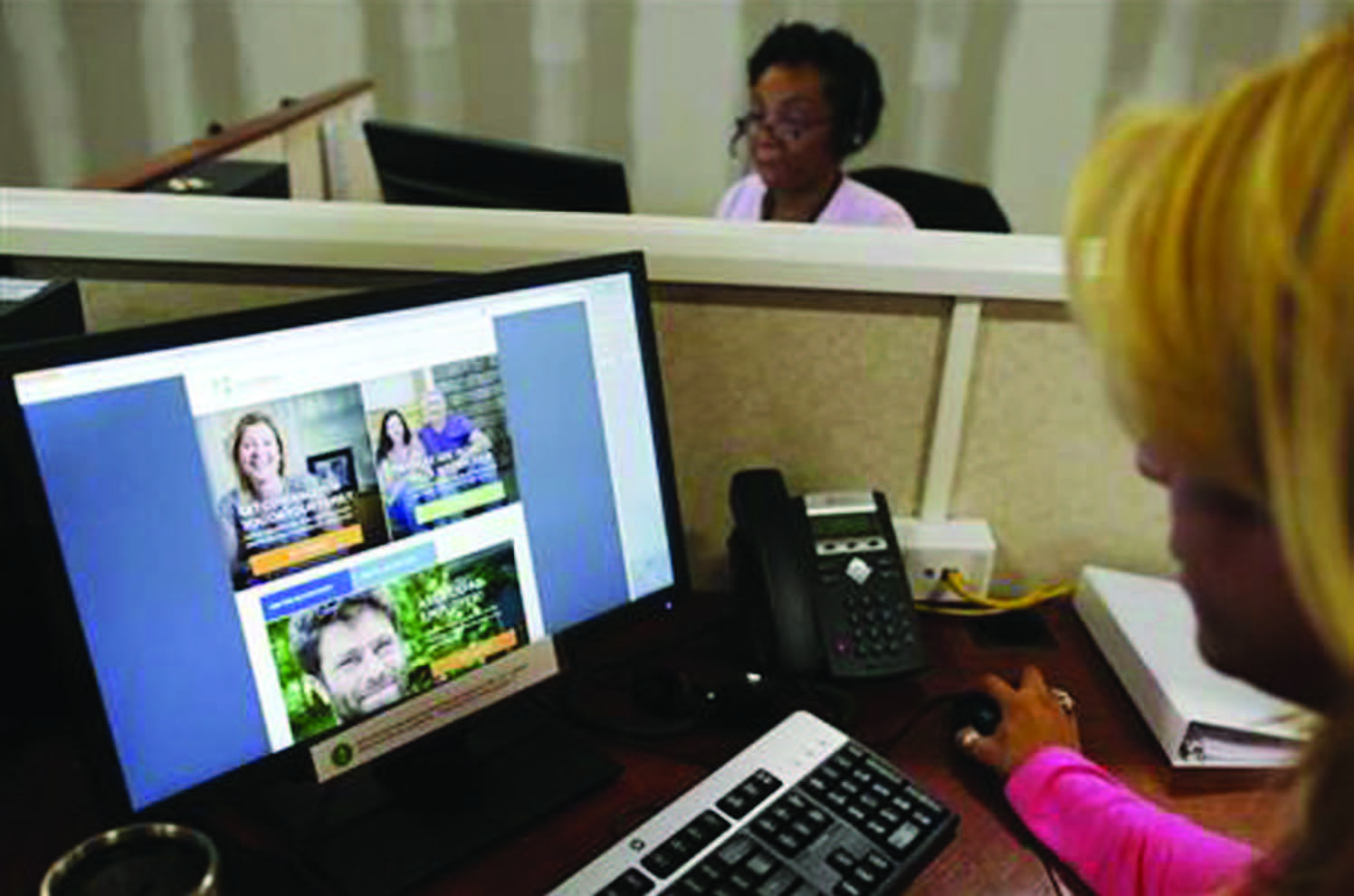
    WASHINGTON (TIP: Enrollment in health insurance plans on the troubled Obamacare website was very small in the first couple of days of operation, with just 248 Americans signing up, according to documents released on October 31 by a US House of Representatives committee. The Obama administration has said it cannot provide enrollment figures from HealthCare.gov because it doesn’t have the numbers. The federal website, where residents of 36 states can buy new healthcare plans under President Barack Obama’s law, was launched on October 1. “We do not have any reliable data around enrollment, which is why we haven’t given it to date,” Health and Human Services Secretary Kathleen Sebelius told lawmakers on Wednesday. But the documents, which are labeled “war room” notes and appear to be summaries of issues with the problematic website beginning on October 2, indicate a mere six enrollments had occurred by that morning – the day after the website was launched and almost immediately crashed. “High capacity on the website, direct enrollment not working,” the October 2 notes said. By later that day, “approximately 100” enrollments had taken place. “As of yesterday, there were 248 enrollments,” said the notes from the morning of October 3.

    The documents were released by the House Oversight and Government Reform Committee, which has been demanding information from the administration about the website’s problems. The committee is chaired by Representative Darrell Issa, a Republican opponent of Obamacare. The notes were from meetings at the Centers for Medicare and Medicaid Services, the arm of the Health and Human Services Department that has been overseeing the website, an Issa spokeswoman said. The documents were first reported by CBS News. Health and Human Services spokeswoman Joanne Peters said the department will release Obamacare enrollment statistics on a monthly basis after coordinating information from different sources. This will including call centers, paper applications for insurance, and data from insurers and states. The first release of enrollment data will likely be mid-November, she said. “These appear to be notes, they do not include official enrollment statistics,” Peters said of the documents Issa’s panel released. “As the secretary (Sebelius) said before Congress, we are focused on providing reliable and accurate information and we do not have that at this time … We have always anticipated that the pace of enrollment will increase throughout the enrollment period.” HealthCare.gov has been plagued with technology problems since its rollout. It was back up on Thursday after not being fully functional for much of Wednesday. Both the federal exchange and the exchanges built by 14 other states and Washington D.C. were set up to let residents enroll in new plans created under the Affordable Care Act, Obama’s 2010 healthcare reform law commonly known as Obamacare. The government has said it expects about 7 million people to enroll for individual insurance in 2014, many of whom are expected to receive government subsidies.

  • AROMATHERAPY TO DE-STRESS

    AROMATHERAPY TO DE-STRESS

    We are all aware that stress, can be very harmful for our health — it lowers our resistance and makes us more vulnerable to illness and disease. Stress can also be mentally crippling and that is what makes it even more necessary to combat. Natasha Tuli, co-founder and CEO of a lifestyle brand that deals in aromatherapy products says, “When you use aromatherapy to break the pattern of circular thinking that is keeping you stressed, even when there is nothing you can do about a situation, you can easily get past the thoughts that are interfering with the task you need to focus upon and become more efficient in your work, or play.” Aromatherapy is the practice of using volatile plant oils, including essential oils, for psychological and physical well-being. Essential oils, the pure essence of a plant, have been found to provide both psychological and physical benefits when used correctly and safely.

    Do it right

    “Close your eyes and envision sitting a rock on a mountain top with a clear running stream below your feet, breath in the calming aroma and imagine listening to the flowing water,” says Natasha. Essential oils are generally very concentrated and highly effective. She adds, “Take a few drops of essential oils on a wet cotton ball and place these balls in your living room, bedroom and office to always be surrounded in the pleasant world of aroma.”

    Popular stress relieving essential oils

    Clary Sage, Orange, Bergamot, Lavender, Lemongrass and YlangYlang. Clary sage is instrumental in calming the nervous system. – Lavender is known to be an all round healer. The sweet fragrance is calming and gives a sense of clarity to thinking. – Bergamot brings freshness by uplifting the mood almost instantaneously. – Lemongrass invokes fresh energy within one’s body making it more dynamic. – Orange, with its fruity fragrance and feeling, lifts the spirit bringing peace and happiness to the mind. – YlangYlang helps get rid of feelings of anger, tension and nervous irritability. It is also known to relax the body and make one lose their inhibitions that usually are a major source of stress.

  • LOW VIT D LEVELS UP ANEMIA RISK IN KIDS

    LOW VIT D LEVELS UP ANEMIA RISK IN KIDS

    Anew study has revealed that low levels of vitamin D may increase a child’s risk of anemia. Investigators at the Johns Hopkins Children’s Centre caution that their results are not proof of cause and effect, but rather evidence of a complex interplay between low vitamin D levels and haemoglobin. The investigators said several mechanisms could account for the link between vitamin D and anemia, including vitamin D’s effects on red blood cell production in the bone marrow, as well as its ability to regulate immune inflammation, a known catalyst of anemia. To capture the interaction between the two conditions, researchers studied blood samples from more than 10,400 children, tracking levels of vitamin D and hemoglobin. It was found that vitamin D levels were consistently lower in children with low hemoglobin levels compared with their non-anemic counterparts. The sharpest spike in anemia risk occurred with mild vitamin D deficiency, defined as vitamin D levels below 30 nanograms per milliliter. Investigators also found that black children had higher rates of anemia compared with white children (14 per cent vs. 2 per cent) and considerably lower vitamin D levels overall, but their anemia risk didn’t rise until their vitamin D levels dropped far lower than those of white children.

  • 10 GLASSES OF WATER A DAY TO CUT FAT

    10 GLASSES OF WATER A DAY TO CUT FAT

    We have all heard this advice innumerable times. Drink eight to 10 glass of water a day. Experts say that if you are overweight or tend to get most of your calories from processed and salty food, eight to 10 glass of water could actually help you reduce your weight. Water could lower your BMI. If you drink eight to 10 glass of water everyday you will end up eating less and also drink fewer calorie-laden beverages. Drinking about 500 ml of water before meal can cut the calories and help in losing weight and as a result lower body mass index (BMI). Water helps in burning fat. You can burn about 50 per cent more fat after drinking water compared with a higher calorie beverage. Water helps you play your sports better. Sweating away just two per cent of your body’s water content affects the performance of a sportsperson to a great extent. Drinking enough water can improve your game and save you from the risk of dehydration. Water can fight hangovers. Being adequately hydrated is the best way not to feel lousy and grouchy after a late night party. Drink a couple of glasses of water hours before the event. Even when you are flying a long distance flight, staying hydrated helps you fight hangover.

  • Surviving the puff challenge

    Surviving the puff challenge

    Smoking is a hard habit to break. Ask Ajay Devgn. Experts help you identify the pitfalls to watch out for once you’ve told yourself that you have quit

    Your vigilance falters
    You were enthusiastic at first but a few weeks in and you’ll find your urge to smoke returns with a vengeance and you’re tempted to have “just one”. You must prepare a counter-argument to this powerful inner voice telling you that one won’t hurt. Be ready to remind yourself of your health, the cash you are saving and the fresh, smoke-free breath you now have.

    You fall into old habits
    Smoking’s an incredibly powerful addiction, based on patterns of behaviour. For instance, you stroll out each morning and pop into your favourite cafe near work for coffee, and suddenly you’re holding a cigarette in the smokers’ area. You’ve gone on autopilot into your old chain of habitual behaviour. Keep focused until you’ve ‘retrained’ yourself not to be caught out if offered a cigarette.

    You need a crisis buddy
    Hook up with someone who’s already trying to quit. You’ll feel highly motivated. When you have a bad moment, he/she can be your personal crisis buddy.

    You continue to drink
    For many smokers, cigarettes go hand in hand with alcohol, coffee and tea. That old craving hits hard with a drink in your hand or the morning cuppa. Be prepared to muster the strength to fight it off.

    You have an unhelpful friend
    There’s always one joker who tells you it doesn’t matter if you have the occasional cigarette. Often, they are smokers themselves, they want company and your good efforts make them feel guilty. When you are trying to stop, don’t be surprised by those who wriggle a cigarette under your nose. Have a reply ready: “No, thanks”.

  • A ROMANTIC TOUCH

    A ROMANTIC TOUCH

    Bedroom decor should have a romantic essence to it, don’t you think? Considering that we spend a major part of our lives in our bedrooms, we should make it one of the most comfortable zones in our homes. It should be a room that spells romance and makes you feel good as soon as you step inside — a space that stimulates your senses. So, what do you need to make your boudoir a cosy love nest? Read on to find out some tips…

    Make it look great

    The way your bedroom is lit, can make or break the look you want to create. Interior designer Ketki Passi says, “The right kind of lighting can help create a romantic ambience.” Candles can work wonders — they are what romance is all about. the mysterious light and shadow effect of a candle can give a very special aura to your bedroom. Bright, harsh bulbs are a big no-no. For the ideal romantic look dim, soft lights are key. Use heavy curtains to escape the glare of harsh streetlights. Of course, table and floor lamps are indispensable.

    Make it comfortable

    A bed that looks comfortable is a basic essential here. Four-poster beds look romantic. Use light fabric drapes in pastel shades around the bed to get a soft look. When it comes to bedspreads and covers, avoid rough and uncomfortable fabrics — soft, smooth and comfortable ones like satin, silk and very good quality airy cotton are essential. Using sexy colours makes your room look, well, sexy. Choose bright bold colours like red, orange or rust. Place plush pillows on the bed of different sizes to make it look comfortable and inviting. Two large pillows, four medium rectangular pillows and around four to five smaller square cushions. A fluffy and soft comforter can add to the romantic look.

    Prioritise privacy

    Curtains spell romance — pretty, flimsy, sheer curtains that sway with the breeze, light ones in lovely pastel shades that leave you feeling calm and relaxed. Of course, you should also have those heavy drapes to guard your privacy.

    Indulge the senses

    Romance is about titillating the senses and the sense of smell is important. Spraying room freshener is passe. Opt for fragrances of incense sticks, scented sachet, aromatic candles in lavender, vanilla, and camomile etc. Go and have fun doing up your bedroom!

  • BROWN SUGAR FOR HEALTHY, RADIANT SKIN

    BROWN SUGAR FOR HEALTHY, RADIANT SKIN

    Did you know that scrubbing with sugar can instantly make your skin glowing? If you’ve been wondering which kitchen ingredient can give you a flawless radiant skin — the answer is sugar. This beauty treatment is easy, good for your skin, low maintenance and also cheap. Use as an exfoliator: Make sure that you are using brown sugar as an exfoliator, rather than normal white sugar. Brown sugar’s granulated particles exfoliate your skin, clearing away dry and dead skin cells. This helps create a smoother skin and lends a youthful glow. Brown sugar also has anti-bacterial properties and glycolic acid that keeps your skin radiant and healthy. It also moisturises your skin and conditions it and protects your skin from harmful toxins. You can also use it as a form of aromatherapy. A warm sugar scrub smells delicious and can be used at home as a relaxing spa treatment to exfoliate dead skin cells from your body and also works as a body polisher. You can also mix brown sugar along with olive oil to add moisture and create a sticky consistency that is easy to apply. You can apply this paste all over your body and face every day to make your skin gently and radiant.

  • India gets 101st rank on global gender gap index

    India gets 101st rank on global gender gap index

    NEW DELHI/GENEVA (TIP): Indicating a poor state of affairs on gender parity front, India was today ranked at a low 101st position on a global Gender Gap Index despite an improvement by four places since last year. The index, compiled by Geneva-based World Economic Forum (WEF), has ranked 136 countries on how well resources and opportunities are divided between men and women in four broad areas of economy, education, politics, education and health. While India has been ranked very high at 9th place globally for political empowerment, it has got second-lowest position (135th) for health and survival. Its rankings for economic participation and opportunity are also low at 124th and for educational attainment at 120th. The high rank for political empowerment is mostly because of India getting the top-most score in terms of number of years with a female head of state (President), as its political scores is not very good for factors like number of women in Parliament and women in ministerial positions. While India has moved up four positions from its 105th position in 2012, it still remains lowest-ranked among the five BRICS nations.

    Top-four positions on the global have been retained by Iceland, Finland, Norway and Sweden. Philippines has moved up to 5th place, while Ireland has slipped one position to sixth rank. They are followed by New Zealand, Denmark, Switzerland and Nicaragua in the top ten. Other major countries on the list include Germany at 14th, South Africa at 17th, UK at 23rd, Russia at 61st, Brazil at 62nd and China at 69th. Those ranked lowest include Pakistan at 135th and Yemen at 136th. The countries that are ranked below India also include Japan (105th), UAE (109th), Republic of Korea (111th), Bahrain (112th) and Qatar (115th). About India, WEF said that India continues to struggle to demonstrate solid progress towards gender parity. Its economic participation and opportunity score has actually gone down in the past twelve months, although it has done well on political empowerment front. “This is largely down to the number of years it has had a female head of state and for the other two indicators — women in parliament and women in ministerial positions — it ranks 106 and 100 respectively,” it said. While no country has reached parity in terms of years with a female head of state, India has managed to get top rank for this indicator, whereas 65 per cent of countries have never had a female head of state over the past 50 years.

    India’s ninth position on political empowerment front is also its best-ever rank for this sub-index, where it was ranked 17th in 2012 and its lowest score was 25th in 2008. The overall ranking of 101st is also its highest in the past seven years. India had ranked better at 98th position in the WEF’s inaugural Gender Gap Index in 2006. WEF said that increased political participation has helped narrow the global gender gap across the world. A total of 86 countries have improved their rankings since last year, while Iceland has maintained narrowest gender gap for fifth year running. Globally, progress is being made in narrowing the gender gap for economic equality, but women’s presence is economic leadership positions is still limited in both developing and developed countries alike. “Countries will need to start thinking of human capital very differently ? including how they integrate women into leadership roles. This shift in mindset and practice is not a goal for the future, it is an imperative today,” WEF founder and executive chairman Klaus Schwab said. “Both within countries and between countries are two distinct tracks to economic gender equality, with education serving as the accelerator,” said Saadia Zahidi, co-author of the Report and Head of the Women Leaders and Gender Parity Programme at WEF. “For countries that provide this basic investment, women’s integration in the workforce is the next frontier of change. For those that have not invested in women’s education, addressing this obstacle is critical to women’s lives as well as the strength of economies,” Zahidi added.

  • Boy who killed Nazi dad at age 10 to be sentenced

    Boy who killed Nazi dad at age 10 to be sentenced

    SANTA ANA, CALIFORNIA (TIP): The blond boy was 10 when he put a gun to the head of his sleeping neo-Nazi father and pulled the trigger. It was over in an instant for Jeff Hall, but sorting out the fate of his troubled son has been a 2{-year journey that approaches its final stage Friday in a hearing to determine where he’ll spend his teens and, possibly, his early adult years. The judge hearing the case must decide not how to punish a child for seconddegree murder, but how to rehabilitate someone who grew up in an abusive home, attacked his school teachers and was indoctrinated in the beliefs of white supremacy. Attorneys have sparred for months over what is best for the boy. He has been living in the county’s juvenile hall since the killing but spent about three months at a state youth detention center where he was evaluated to see whether a placement there could serve his needs. Several people from the state are expected to testify at the hearing. In the meantime, the small child who scribbled on a notepad and looked bored during his trial as prosecutors displayed photos of his father’s blood-splattered body has grown into a gangly teenager who is more focused than ever before.

    He attends class, gets regular therapy and has made progress in controlling the violent outbursts that got him kicked out of almost every school he attended. He has even, with time, won the affection of the prosecutor who got him convicted. “I have grown attached to him in an odd way. I enjoy watching him grow and change but I am convinced he has done better in a quasi-military penal environment,” said Deputy District Attorney Michael Soccio. “He seems to like it, he knows what the rules are and what is expected and he is treated with dignity.” That’s why Soccio believes the boy, now 13, would do best in the state’s juvenile justice system, where he would go to school and live in a dorm-like setting at a high-security facility for young offenders, possibly until age 23. Defense attorneys, however, say the teen has serious emotional disabilities that the state isn’t equipped to handle. They want to see him placed in a residential treatment center, where security would be lighter and the therapy would be more intense. Punam Patel Grewal, the boy’s defense attorney, said he would also be at risk in a state facility because of his father’s neo- Nazi beliefs. “It is a very dangerous place for him. He’s got a lot of vulnerability here,” she said. “When he comes out at 23, we’ve got a huge problem.”

    Murders by defendants as young as the one in Riverside are extremely rare and usually involve children who have mental health issues and have lived through extreme physical and psychological trauma, said Sarah Bryer, director of the National Juvenile Justice Network. “If the end goal is rehabilitation, then that youth’s mental health concerns are going to have to be front and center,” she said. “I think the judge has to ask the question, when this kid walks out, and this kid will walk out eventually, how is this kid going to be better?” Hall’s killing attracted national attention when it happened on May 1, 2011, and not just because of the defendant’s age. Hall, an out-of-work plumber, was also a regional leader of the National Socialist Movement who organized neo-Nazi rallies at synagogues and day labor sites and had hosted a meeting for the group at his house the day before he died. Hall, 32, ran unsuccessfully for a water board in 2010 and alarmed voters with his white supremacist rhetoric. Prosecutors said the boy shot his father behind the ear at point-blank range as he slept on the sofa after coming home from a night of drinking.

    The child took the .357- Magnum from his parents’ bedroom and later told police he was afraid he would have to choose between living with his father and his stepmother, who had been fighting and were headed for a divorce. The boy’s stepmother initially told police she had killed her husband, but later recanted and said she was trying to protect her stepson. His sister testified that he told her of his plan the day before, while they were playing on a swing set. During trial, the boy’s defense attorney portrayed him as a victim of both his father’s racist beliefs and of his violent upbringing. The boy’s stepmother told authorities that Hall had hit, kicked and yelled at his son for being too loud or getting in the way. Hall and the boy’s biological mother had each accused the other of child abuse multiple times during a protracted custody dispute. Social service workers visited 20 times but never removed the boy or his siblings from Hall’s custody. The child also had a history of being expelled from school for violent outbursts, starting at age 5 when he stabbed a teacher with a pencil on the first day of kindergarten. He also tried to strangle a teacher with a telephone cord.

  • Clintons to get public health awards from Harvard

    Clintons to get public health awards from Harvard

    BOSTON (TIP): Former President Bill Clinton and daughter Chelsea Clinton are being honored during the Harvard School of Public Health’s centennial celebration. At Thursday’s ceremony in Boston, the former president will receive a Centennial Medal along with two world health leaders. Also being honored are Dr Jim Yong Kim, president of the World Bank Group and co-founder of Partners in Health, and Dr Gro Harlem Brundtland, former prime minister of Norway and director-general of the World Health Organization. Chelsea Clinton will receive the Next Generation Award. The Centennial Medals honor people whose leadership has had a significant global impact, improving the health and well-being of people around the world. The Next Generation Award honors someone under 40 whose commitment to health inspires young people to make “health for all” a global priority.

  • Detroit operating on ‘razor’s edge’’ before bankruptcy

    Detroit operating on ‘razor’s edge’’ before bankruptcy

    DETROIT (TIP): Detroit was operating on a “razor’s edge” and had no options to avoid running out of cash and filing bankruptcy, the city’s top adviser testified on Thursday in a trial to determine whether the city is eligible to file the largest municipal bankruptcy in US history. Kenneth Buckfire, the city’s top outside financial adviser, said the city tried to avoid filing bankruptcy in July by cutting expenses and looking at city assets that might be sold to raise cash. The case is being closely watched for the precedents it could set for other US cities facing huge healthcare and pension obligations amid declining revenue. Unions, pension funds and others who would face large financial losses if Detroit is granted bankruptcy protection are arguing that the city does not qualify and is rushing into bankruptcy as an effort to avoid meeting its financial obligations. Buckfire, an investment banker hired by the city in January to advise on its financial restructuring, described in his testimony the city’s search for cash in the weeks before the state-appointed emergency manager, Kevyn Orr, determined a bankruptcy filing was Detroit’s best option.

    Detroit’s best source of revenue was its three casinos, which brought in about $180 million a year, or 20 percent of the city’s budget, Buckfire testified. But those funds have been locked up since they were pledged as collateral to interest-rate swap contracts agreed to in 2009. And the city now hopes to use them as collateral on $350 million of debtor in possession financing to end the unfavorable swap deals. To raise cash, Detroit considered selling everything from masterpieces at the Detroit Institute of Arts to city infrastructure. But no deals could be closed before the July 18 bankruptcy filing, he said. The city’s Coleman Young Municipal Airport is “effectively worth nothing,” Buckfire testified. The city can’t sell its portion of the Detroit-Windsor tunnel until at least 2020, and the works of the Detroit Institute of Arts are currently being appraised by Christie’s auction house, Buckfire testified. The city also is looking to lease the Detroit Water and Sewerage Department to a regional authority. Detroit Emergency Manager Kevyn Orr proposed the deal in June, and negotiations are ongoing. But Buckfire testified that several private equity firms were potentially interested in purchasing the department if they could charge higher water rates.

    Buckfire’s testimony was part of Detroit’s efforts to convince Judge Steven Rhodes that Detroit meets the legal requirements of municipal bankruptcy. Lawyers representing unions, retirees and pension funds who oppose the bankruptcy will be able to question Buckfire, the third of five witnesses the city is expected to call, when the trial resumes Friday morning. Gaurav Malhotra, a financial analyst who has advised the city since 2011, testified earlier Thursday that Detroit could improve its cash flow only by restructuring its pension and health benefits, not by selling assets or deferring payments to its pension funds. Even if the city could sell some assets, the proceeds would do little to close the more than $18 billion in liabilities the city faces, he said. The city expects to wrap up its case on Friday. Michigan governor Rick Snyder, who appointed emergency manager Orr, is expected to testify on Monday. The trial could wrap up as early as next Tuesday. Rhodes is not expected to make a ruling on eligibility until at least mid-November.

  • Somdet Phra Nyanasamvara, Thai Buddhism’s supreme patriarch, dies at 100

    Somdet Phra Nyanasamvara, Thai Buddhism’s supreme patriarch, dies at 100

    BANGKOK (TIP): Thai doctors say the supreme patriarch, the head of the country’s Buddhist monks, has died. He was 100. Chulalongkorn hospital doctors say Somdet Phra Nyanasamvara died on October 23 from an infection in his blood vessels. He was the 19th supreme patriarch of Thailand and led the nation’s monks since 1989. The patriarch had battled health problems and had been hospitalized since 2002. He had undergone surgery earlier this month. His inability to perform his duties in recent years has led to speculation about his successor. A senior Buddhist monk who worked on his behalf since 2004 also died this year. Thailand is the world’s most heavily Buddhist country. More than 90 per cent of its 67 million people are members of the religion.

  • Three Indian-Americans elected to US Institute of Medicine

    Three Indian-Americans elected to US Institute of Medicine

    WASHINGTON (TIP): Three Indian-Americans have been elected members of the prestigious Institute of Medicine (IOM), including Subra Suresh, who has become the only current university president to be elected to all three US national academies. Currently president of Pittsburgh, Pennsylvania-based Carnegie Mellon University, Suresh is one of only 16 living Americans to be elected to all three national academies- IOM, the National Academy of Sciences and the National Academy of Engineering. Besides Suresh, two other Indian-Americans have also been elected as members of IOM, among 70 new members and 10 foreign associates, during its 43rd annual meeting. They are Ashish K Jha, professor, health policy and management, Harvard School of Public Health, Boston, and Nirav Ramesh Shah, commissioner, New York State Department of Health, Albany. Election to the IOM is considered one of the highest honours in the fields of health and medicine and recognises individuals who have demonstrated outstanding professional achievement and commitment to service. “It is an honour to welcome our highly distinguished colleagues to the Institute of Medicine,” said IOM President Harvey V. Fineberg. “These individuals have inspired us through their achievements in research, teaching, clinical work and other contributions to the medical field. Their knowledge and skills will deeply enrich the IOM.” Suresh earlier served as director of National Science Foundation (NSF), a $7-billion independent government science agency charged with advancing all fields of fundamental science, engineering research and education. The IOM recognised Suresh for advancing health and medicine through his research into cell mechanics related to malaria, blood diseases and certain types of cancer.

  • MANAGE HIGH BP WITHOUT PILLS

    MANAGE HIGH BP WITHOUT PILLS

    Hypertension on the high? Here are top 10 tips to get it down and keep it down. Seven in 10 adults are at a greater risk of stroke or heart attack because their blood pressure is too high. Desk jobs, lack of exercise and eating salty fast foods have contributed to the problem, even among the young. If your level is consistently at or above 140mmHg/ 90mmHg (referred to as 140 over 90). The 140 figure is the systolic pressure — the pressure reached when the heart forces the blood around the body — and 90 is the diastolic pressure — the lowest pressure that occurs between heartbeats when the heart relaxes. In India, experts say, the prevalence of hypertension ranges from 20-40 per cent in urban adults and 12-17 per cent among rural adults. But there’s no reason to worry. Simple measures will help to cut your risk.

    1. Go for a weekly jog
    Jogging for just an hour a week can increase your life expectancy by six years, according to a Copenhagen City Heart cardiovascular study of around 20,000 men and women aged from 20 to 93. Researchers believe jogging delivers multiple health benefits, improving oxygen uptake and lowering blood pressure, as well as many more benefits. However, any physical activity can help lower blood pressure by strengthening the heart so it can pump more blood with less effort, thereby decreasing the force on the arteries. Power walking can be just as effective as jogging.

    2. Enjoy yoghurt
    Just one small pot a day can reduce your chances of developing high blood pressure by a third, according to a study presented at the University of Minnesota in the US. Scientists think naturally occurring calcium can make blood vessels more supple, enabling them to expand slightly and keep pressure low. They found those who ate a 120g pot daily were 31 per cent less likely to develop high blood pressure over a 15-year period than those who did not.

    3. Go bananas
    Eating potassium-rich foods, such as bananas, and reducing salt intake could save thousands of lives every year, according to a new study published in the British Medical Journal online. Potassium is an important mineral that controls the balance of fluids in the body and helps to lower blood pressure. Making sure you eat five.

    4. Down with salt
    Salt draws in fluid, raising the volume and pressure of blood in your arteries. But it’s not just the salt cellar you have to worry about — processed foods such as biscuits, breakfast cereals, takeaways and ready meals contain 80 per cent of the salt we consume, says the Blood Pressure Association. Check labels: more than 1.5g salt per 100g is a lot, but less than 0.3mg per 100g is a little.

    5. Lose weight
    Research has shown that dropping just a few kilos can have a substantial impact on your blood pressure. Excess weight makes your heart work harder and this strain can lead to high blood pressure.

    6. Don’t smoke
    The nicotine in cigarettes stimulates your body to produce adrenaline, making your heart beat faster and raises your blood pressure, making your heart work harder.

    7. Work less
    Regularly putting in 40 hours per week at the office raises your risk of hypertension by 14 per cent, the University of California, US, found.The risk rises with overtime. Compared with those who worked fewer than 40 hours a week, workers who clocked up more than 51 hours were 29 per cent more likely to have high blood pressure. Overtime makes it hard to exercise and eat healthily, say researchers. So try to down tools with enough time to relax in the evening and eat a healthy supper. Set a message on your computer as a reminder to go home.

    8. Seek help for snoring
    Loud, incessant snoring is a symptom of obstructive sleep apnea. And more than half of those with this have blood pressure significantly higher than expected for their age and general health. Cutting out cigarettes and alcohol and losing weight will help.

    9. Switch to decaf
    Duke University Medical Center, North Carolina, US, found caffeine consumption of 500mg, roughly three cups, increased blood pressure by three points. Effects lasted until bedtime. Scientists say that caffeine can raise blood pressure by tightening blood vessels and magnifying the effects of stress.

    10. Think beetroot
    A study published in the journal Hypertension found drink ing a 250ml cup of the juice can cut blood pressure readings in those with high blood pressure by around seven per cent. It’s thought the effect is produced by beetroot’s naturally high levels of nitrate. Eating other-rich foods — cab bage and spinach — might also help.

  • HEALTH SYMPTOMS YOU CAN’T IGNORE

    HEALTH SYMPTOMS YOU CAN’T IGNORE

    While a few aches and pains are common, some symptoms might not just be what they seem like. Make sure you don’t ignore certain health symptoms…

    Recurring bloating
    While women tend to get bloated more often than men due to their menstrual cycle, if you discover that you’re bloated more often than not, it’s worth getting it investigated. Keep an eye out for gas, pain in the abdomen or difficulty while eating. It could be due to an underlying gynaecological problem, which may need to be checked. What to do: Visit your gynaecologist soon.

    Excruciating headaches
    A burst blood vessel in your brain could trigger sudden and extremely painful headaches. Called a ruptured aneurysm, this requires urgent attention. Additional symptoms include chest pain, exhaustion and deteriorating vision, which could indicate cardiac cephalgia or meningitis. What to do: Ask your GP whether you need to do any tests to diagnose the reason for the agonising headaches.

    Painful toothache
    A little bit of a sting or pain while having an icecream or a chilled drink is okay, shooting pain is not. If you feel like your teeth are feeling extra sensitive, it’s time you make a trip to the dentist. A bad toothache could mean that a nerve in the tooth has been damaged — a sign of rotting teeth. The more you keep postponing a visit to the dentist, the more the bacteria will spread in your mouth, leading to severe pain. What to do: Book an appointment with your dentist asap.

    Pain in the chest
    Certain foods cause heartburn or indigestion. You need to identify the difference between that and something that could be potentially more dangerous. Don’t let the thought of a heart problem deter you from visiting the doctor.When you feel like there is a load on your chest — quite literally — or pain, it may just be one of the many signs of a heart attack. What to do: Don’t wait — get yourself checked immediately to find out how serious the problem is.

    Unnatural hair growth
    While all of us have hair on our bodies, if you notice thick, dark hair on your face, chest, stomach or near your breasts, it could indicate a gynaecological problem Polycystic Ovary Syndrome (PCOS). This occurs when there is an imbalance of female hormones in the body. Other symptoms include irregular periods and trouble conceiving.What to do: Your gynaecologist may ask you to do tests to detemine the cause.

    Sudden weight loss
    Whether you’re dieting and exercising or not, losing a lot more weight than you should or losing weight suddenly for no apparent reason, is a cause for concern. Unexplained weight loss could be pointing out towards an underlying illness, a sign of diabetes or several other health problems. What to do: Don’t procrastinate. Get a check-up done immediately.

    Problem in the bedroom
    One of the most common problems, erectile dysfunction happens to all men at some point in their lives. But if it is a recurring problem, you need to get it checked. What to do: Visit a sexpert or a urologist who will ask you to do some tests.