Tag: Health

Read the latest health news, diet, fitness, medical news and healthcare tips on theindianpanorama.news/health. Get all the healthcare news, including wellness, fitness, diet and weight loss & more.

  • Now, A Black Market for Sperm in China

    Now, A Black Market for Sperm in China

    BEIJING (TIP): There is a thriving black market in China — for sperm. With the country’s only 11 sperm banks unable to meet the needs of childless couples, many donors are pitching in with sperm for sale. There are only 11 sperm banks in China, and they face a shortage of sperm donors, said Jiang Xiang-long, director of the Jiangxi Province Human Sperm Bank. Yu Hua was on the Shanxi Human Sperm Bank’s waiting list for one year without success. ‘The reproductive medical centre told us that we have to wait for another 15 months, after I have done all the medical checkups. I’m already 32 and could not wait any longer,’ Yu Hua told the state-run daily.

    Huang has assured the couple that he could guarantee conception. ‘They could choose to have me either inject my sperm into the wife’s body artificially or through direct sexual intercourse,’ Huang told the Global Times.

    ‘I have been working on helping infertile couples and have accumulated some experience. Many clients come to me because they could not get sperm from the sperm bank,’ he said. ‘I will keep my sperm in a small vacuum cup after masturbation, and then inject it into the wife’s body through a plastic injector.’ Huang injects it himself and no doctors are involved in the process.

    Li Shaohua, 28, the organizer of an internet group of voluntary sperm donors, said donors suggest that intercourse is easier and more successful than artificial injection. Couples often insist on trying injection anyway, but in the end, they usually resort to sex, the media report said. The health ministry said that a sperm bank is the only place to get sperm legally. ‘This kind of deal to sell or offer sperm is not protected by Chinese law or accepted by social morality,’ an official said.

  • Duke University Nobel Prize winner blazing trail to new medicines

    Duke University Nobel Prize winner blazing trail to new medicines

    DURHAM (TIP): A scientist who has spent his career at Duke University, Robert Lefkowitz, will share the 2012 Nobel Prize for chemistry with a Stanford University researcher he trained in the 1980s. Lefkowitz, 69, and his former student, Brian Kobilka, 57, were recognized by the Royal Swedish Academy of Sciences for discoveries about how the body’s cells respond to outside signals – a key to the workings of beta blockers, antihistamines and as many as half of all prescription medications. Their discoveries have opened the door to creating medicine that is more effective and less likely to cause side effects. Lefkowitz, a thin, energetic professor of biochemistry, immunology and medicine in Duke’s medical school, is known for his enthusiasm and a love of mentoring younger scientists.

    He has long been mentioned for the Nobel. Still, he said, it caught him off guard. The news was announced via an elbow from his wife, Lynn, at 5 a.m. He hadn’t heard the phone because he sleeps with earplugs. “It’s Stockholm calling,” she said. Lefkowitz joked during a news conference at Duke a few hours later that he was pretty sure a bunch of Swedes weren’t calling to check the weather in Durham, so he got up and took the phone. He said the honor was all the sweeter when he found out it included Kobilka. “Needless to say, I’m thrilled, I’m excited, I’m delighted to be sharing the award with a former student of mine who I admire and who I’m very fond of,” he said.

    His voice cracked as he described talking with Kobilka after they were notified, and thanking his younger colleague for taking their work a level further, which Kobilka thinks may have elevated it enough to make the prize possible. Despite Duke’s global reputation for research, academics and health care, it was the first Nobel for a scientist there, and university leaders basked in the moment at the news conference Wednesday afternoon. Dr. Nancy Andrews, dean of the medical school, said Lefkowitz is known as much for his skill at mentoring other researchers as for his groundbreaking work. “I think there are three ways that medical scientists can be great: by making discoveries that immediately transform patient care, by making scientific contributions that stand the test of time, and by mentoring the next generation of scientists,” she said. “Bob Lefkowitz has accomplished all three, and I think it’s fair to say he has done it over and over and over again.” One of the biggest days in the university’s history was nearly 40 years in the making. Lefkowitz came to Duke in 1973 from Harvard, after training there and at Columbia University as a cardiologist. In the 1980s, he discovered a class of tiny cell structures called G proteincoupled receptors.

    The receptors, which are stitched through a cell’s outer membrane, give the cell information about chemical changes in the body, acting as a kind of middleman to trigger the cell’s response to chemicals such as adrenaline or a drug. He showed that they respond to chemical changes outside the cell in the same way that other receptors in the body detect smells, taste and light. About half of all medicines act on these receptors. As scientists learn how they work, they are leading to improvements in drugs. Drugs such as beta blockers, antihistamines and various psychiatric medicines have been around for some time, but before Lefkowitz and Kobilka’s discoveries, their impact on the human body wasn’t fully understood, said Sven Lidin, chairman of the prize committee. “All we knew was that they worked, but we didn’t know why,” Lidin said. There is hope that the Nobel-winning research will lead to new medicines, he added. Lefkowitz now oversees a lab with as many as 30 scientists at a time, and has mentored more than 200 students and post-doctoral researchers. The pair will travel to Stockholm in December to receive the $1.2 million prize.

    Lefkowitz said he would continue his work. “If you were a fly on the wall in 1973, and now, my daily activities wouldn’t look very different,” he said. “I’m still hard at it. My lab is bigger. But I’m pretty much doing what I was doing, which is doing science, interacting with my fellows, and having a hell of a good time.” He said that he’ll continue collaborating with Kobilka, too. “The two of us,” he said, “will soldier on together.”

  • Amitabh Bachchan turns 70

    Amitabh Bachchan turns 70

    MUMBAI (TIP): It was dance, music and masti galore at Amitabh Bachchan’s 70th birthday bash, says Shah Rukh Khan who shook a leg with the “birthday boy”. Vishal Dadlani called it a “stellar party” and for Karan Johar it was a beautiful blend of nostalgia, reverence and legendary.

    Bollywood celebrities can’t stop raving about the fun they had while ushering in Amitabh’s 70th birthday at the Reliance Media Works, Film City, Goregaon.

    Here`s what the guests have to say:

    SALIM MERCHANT: Nice speeches by the family, Yash Chopra especially Javed Akhtar’s speech was heartwarming! Karan Johar was a fab master of ceremony. And it ended with a mashup of Bachchan’s biggest hits on the dance floor! I’ll always cherish this party.

    SHAH RUKH KHAN: Danced with Amitji and Jaya aunty to all the songs I have grown up listening. Too much fun. Thanks Abhishek, Aishwarya and Aaradhya for the warmth.

    KARAN JOHAR: The B70 bash was a beautiful blend of nostalgia, reverence and legendary acknowledgement… SrBachchan has a legacy of abundant goodwill….

    VISHAL DADLANI: Feet hurt, voice hoarse, heart full of love for Amitabh Bachchan, Mrs. (Jaya) Bachchan, Abhishek, Aishwarya and Aaradhya! Stellar hosts, stellar party! Happy Birthday Sir! There can only ever be one ‘Amitabh Bachchan’! Much love and respect, always!

    MADHURI DIXIT: Had an amazing time at Amitji’s party. Was a re-union of sorts. Got to spend time with so many of my friends! It was great seeing everyone! It was an honour to be in the presence of so many talented people. It brought back so many amazing memories. Looking forward to more!

    RITEISH DESHMUKH: Love and respect to the entire Bachchan family for hosting such a gracious function last night, specially Jaya aunty. everything was mesmerizing.

    KAILASH KHER: What an epic birthday bash… a true larger than life kind of experience… God Bless you sir.

    SANJAY GUPTA: Sir Happy Birthday and thank you for a fantabulous party. Wishing you health and happiness.

    ARSHAD WARSI: Mr Bachchan`s party last night was absolutely amazing, it was great to see the entire film industry under one roof….

    RANGANATHAN MADHAVAN: The most wonderful evening yesterday… Whatever the Bachchans do has to be classy and this was right up there. Met the industry after the longest time, but the highlight was to realise that I was part of
    the industry as the same time as Mr. Bachchan.

    KUNAL KOHLI: What a great party.Party is the wrong word. Event. To celebrate Bachchan`s bday. Honoured to be there. He`s a legend. He`s the ultimate hero. He`s Amitabh Bachchan.

    RAJ KUNDRA: Many many happy returns of the day sir. Thank you for a lovely party. Love and respect.Who was present

    Who attended the party? Everyone who is anyone! Well, everyone except for the three Khans, who seemed conspicuous by their absence. Celebrities like Karan Johar and mother Hiroo, business tycoon Mukesh Ambani’s mother Kokilaben, late actor Shammi Kapoor’s wife and son Aditya Raj Kapoor and others arrived to the main gate in a golf cart-like vehicle. Shashi Kapoor came on a wheel chair.Shah Rukh Khan arrived with wife Gauri Also present at the bash were Vinod Khanna, Hema Malini, Pran, Jeetendra, Waheeda Rehman, Prem Chopra, Randhir Kapoor, Rishi Kapoor with wife Neetu, Moushmi Chatterjee, Aruna Irani, Yash Chopra with wife Pamela, Sridevi with husband Boney Kapoor, Subhash Ghai, Jeetendra, Ashutosh Gowarikar, Priety Zinta, Vidya Balan, Bipasha Bau, Sanjay Dutt, Madhuri Dixit with husband, Ajay Devgn, Kajol, Juhi Chawla, Anil Kapoor, Deepika Padukone and Govinda.

    Apart from the film industry, others who came to greet the actor included Anil Ambani, Aditya Godrej, Kumar Manglam Birla, Mulayam Singh Yadav with son Akhilesh, Chaggan Bhujbal, Uddhav Thackeray with wife and son.

    Wishes for Big B

    He has everything. But I have all my love for him – TABU

    Blessings – WAHEEDA

    May God wish him good life and good health – RAJINIKANTH

    Well, we’re all here, the whole city’s here to wish him – ANIL KAPOOR

    I’ve just come for the love of Amitji – SHILPA SHETTY

  • Doing up Your Study your way

    Doing up Your Study your way

    Everyone wants a room of one’s own. No, not the kind that Virginia Woolf had referred to but a small, quiet room where you can spend some time with your favorite books away from the madness of the world outside. For many, reading is recreational.Given a choice, everyone would want to have that little space in the house to do what you like the most without any speck of distraction. Having a study at homes and apartments is a rare luxury, thanks to space constraints. However, it is not impossible. “A study or an office space in home should be a cosy corner that is relatively tucked away from the on-goings in the house especially away from the television,” says Shweta Kaushik, a multi-disciplinary design consultant based in Mumbai. There are umpteen things that go into planning and decorating a study room – from the colour and kind of furniture to the allotment of space and so on. Below are a few ideas that you may implement while doing up your own study at home:

    Decor

    Ambience is the foremost important thing to be taken care of while decorating your study. The comfort level of the room rests in your hands. Casual setting: Do up your reading corner with a laid-back and relaxed theme in mind.

    Throw a few bean bags, cushions and sitting mats on the floor. Get a low, wooden coffee table where you can place your computer or laptop. A bright colored rug will help add more drama to the already informal setting. For newspapers and magazines, pick multi-colored book holders that will further take away the seriousness of a conventional study room. Not to mention, pick a contemporary design for the bookshelf and stack all your favorite books.

    Formal setting: Serious work needs serious atmosphere. A large bookshelf is a must for such setting, especially the one that has glass doors. Place your books neatly on the shelf to give it an organized look. A smaller bookshelf can be placed beside it to store all your stationery. A dark wooden table and a chair to go along with it will complete the look. Ensure that the table has sufficient drawers where you can store important documents. Also, arrangement of equipments like printers and routers can be neatly done up using wire managers that help reduce clutter.

    Lighting

    The role of lights while you read or work is vital. You don’t want your study to be too bright or too dim therefore choosing the apt lighting can be tricky. If there are windows in the room, try using drapes or blinds to keep the glaring sunshine out.

    Study rooms should have recessed lights as it helps in overall illumination spread evenly across the whole room. Pendant fixtures are a good option if you need light at only one particular spot.

    Colors

    Your study should be an extension of your personality, a place where you can be at ease. Choosing the colors, therefore, is a tricky task. Wall colors that best complement a study room are cheerful greens, sunny yellows and soothing creams. You may also go for soft, floral prints done up on neutral shades of ivory and beige. Add gravity to the decor by opting for blinds instead of curtains.

    Furniture

    There are a few must-have furnishings in a study room – a table, a bookshelf, and a chair.

    And usually, a study room is devoid of clutter and no nonsense furniture. “One should keep the ergonomics in mind like proper seating, table heights and foot rests. The idea is to be as comfortable as possible to be able to create a productive work space,” adds Shweta.

    You may include a few more things to add to the spirit of the room such as carpets, rugs, cushions, and a mini refrigerator for drinks and snacks.

  • Naughty at your Fingertips

    Naughty at your Fingertips

    Nail art gets a twist with some naughty stick-ons and designs. Neha Kaura explores. When you want to look and feel naughty, there’s lots that you can do. Pick a funky ensemble, go shop for all things naughty, indulge in fun conversations or more. What we really enjoyed were the new entrants in the realm of nail art. These stick-ons and designs spell ‘mischief’! Whether it’s a cartoon character, a bikini, net and lace bits, feathers, diamond, rings, or halloween themed designs – women in the city go all out to make their nails look like they’re having fun! Ludima Lamont flaunts her Betty Boop nail art and says, “It is super cool.

    For me being naughty is cool. It was fun getting this done on my nails. Betty is my favourite cartoon character and it’s good to have her on my fingertips now.” This trend of funky nail art is getting more and more popular among women over 30. The partygoers in particular spend time getting their nails done to add that extra zing to their party look.

    Priya Kripalani, nail professional and owner of a nail spa, says, “I have seen a change in the age-group of people who are getting feathers, or chains, rings, studded diamonds on their nails. I have been in this profession for years now and I see older women, who want to look young, getting these naughty nail designs.” For those who want to be naughty at a party, Priya recommends feathers, bikinis or a bling quotient. Riona Biyani, who owns another nail spa in the city, says that funky and naughty nail art catches on even more in summer. She says, “It is gaining popularity because it allows people to express themselves.We have customers who come to us for nail art for some theme party. There are a lot of variations and options.

    There’s something that suits all personalities and moods of individuals. Naughty nail art is very popular among youngsters and teenagers who are going for theme parties.” And, for those who’re wondering about the nail art damaging the nails, worry not. Riona adds, “They are safe and anyone can get it done.” And, to add to it, the nail art lasts for days. So you can continue looking naughty for as long as you like!

  • How 	to booze and not add calories

    How to booze and not add calories

    with a little handy information you can enjoy a drink or two and still manage to keep diet your on track. Never thought it was possible to drink and watch your weight at the same time? It’s time to get smart about it. No one can really ignore the empty calories additional sugar alcohol and its mixers bring into your body, but there are a few tricks to enjoying an occasional drink and keeping the love handles at bay. Here are a few diet friendly drinking tips that can come in handy, especially as the festive and barbecue seasons comes calling.

    Choose wisely

    There are a few diet-friendly alcohols that pack in fewer empty calories and weight clinchers than others. If you are watching your weight and counting calories, you don’t have to sit sipping juices at parties. Don’t forget portion control in addition to selecting the right drink. A few good choices (less than 100 calories) are – a shot (25ml) of gin with diet tonic, a shot of white rum with a soda, a small glass of wine or champagne, or a single measure of whisky or brandy. Opt for light beer. Keep away from cream liqueurs or sangrias since they ride heavy on the calorie count.

    Pace yourself

    Alternate alcoholic drinks with mineral water or diet soft drinks. Make a glass of wine last longer by turning it into a spritzer – add sparkling water or lemonade. Not only does this reduce your chances of getting tipsy, it also hydrates the body and reigns in far fewer calories than the other heavy weights.

    Be prepared

    down on calorie intake overall by being prepared. Fortify yourself with a healthy breakfast and lunch based on starchy carbohydrates (bread, rice, pasta, potatoes or cereal) along with a little protein (lean meat, fish or soya bean). If you think you won’t be able to eat while you drink, have a pre-drink meal or light snack, ideally with some fat, to line the stomach and slow down the alcohol absorption into your system. A hearty sandwich or a bowl of porridge or yogurt is ideal.

    Steer clear

    A handful of peanuts have around 150 calories and a bag of chips has a deadly 183 calories. If it’s a pre-meal lunch or dinner drink you’re having, avoid these snacks altogether. Try waiting for your starters to arrive before you start drinking. If nibbles are necessary, breadsticks are a good option.

    One at a time

    Don’t let others top up your glass. Finish a whole glass of your drink before you get another. This will ensure you know exactly how much you are consuming during the course of your session.

    Morning after

    If the next morning, you feel like you grossly overshot your limit and are nursing a headache, there is a healthier option for a fry-up that doesn’t call for oodles of calories.

    Try a lighter option of poached or scrambled eggs on a whole wheat bread. Eggs contain cysteine, which is siadi to break down the destructive chemicals that build up in the liver after a night of drinking. Milk, yogurt with fresh fruits, and poha are also simpler, healthier alternatives that will help ease your discomfort without much
    drama.

  • Say Good bye to Flu this Winter

    Say Good bye to Flu this Winter

    Flu season usually begins in October, and flu activity is expected to increase in the coming weeks to months. How do you face the onslaught of Flu?

    Here are some tips from Dr. Shallu Sharma.

    • Make sure you get a flu vaccine Flu vaccine protects you from three most common flu viruses and an early vaccine may eliminate the chances of catching the infection. Anyone with age 6 months or older should get a flu vaccine. These vaccines are provided at your local pharmacies including Rite Aid, Walgreen’s, Duane Reade etc. For a complete list of pharmacies, please visit www.nyc.gov and enter flu vaccine in search option.
    • Everyday precautionary measures Cover your nose and mouth while sneezing to prevent virus from spreading. Try not to touch open surfaces in bus or trains. Wash your hands frequently or carry a hand sanitizer with you at all times. Also, avoid close contact with sick people.
    • Have a Healthy diet and Exercise Good health leads to a stronger immune system. So make sure you eat fresh fruits and green vegetables to remain in top health. Any exercise performed on a daily routine enhances the immunity levels in the body. Hence, stay healthy this season to fight the flu virus.

    References:

    http://www.cdc.gov/flu/protect/preventing.htm

    http://www.nyc.gov/html/doh/flu/html/home/home.shtml

  • Suryanamaskar is more than weight loss

    Suryanamaskar is more than weight loss

    Suryanamaskar can do to your body what months of dieting cannot. And it can do to your mind what no spiritual discourse can. Not surprising, the world is going crackers over this ancient yogic tradition of worshipping the rising sun. What with the likes of Jennifer Aniston, Victoria Beckham and Kareena Kapoor endorsing it over gym workouts and bizarre diets. From improving your posture, strengthening muscles to whittling extra inches around the waist, the benefits of Suryanamaskar are many, provided you adapt it the right way. A set of 12 fixed, cyclic postures define Suryanamaskar which when performed repeatedly at an easy pace can bring a sense of well being, almost immediately. However, those with a heart condition, arthritis or slip-disk, need their doctor’s consent before starting the routine. Suryanamaskar’s surging popularity notwithstanding, jumpstarting a schedule is most definitely not the best thing to do for a fitness novice

    • Neck:

      Breathe in while you turn your neck to the right and breathe out as you come back to the starting position. Again, breathe in while turning your neck to the left and breathe out in the centre. Repeat this movement thrice. Rotate your neck first clockwise and then anti-clockwise.

    • Arm and shoulder: Stretch your arms out in front of your chest and move your palms up and down, then sideways. Further on, rotate your fist clockwise and anti-clockwise. To relax your arms, place your palm on your shoulder and move your shoulders first clockwise then anti-clockwise.
    • Knee:

      Bend forwards with your palms resting on your knees, join your knees and move forwards and backwards. End the routine by rotating your knees clockwise and anti-clockwise.

    • Stomach and back:

      Interlock your fingers over your chest and slowly raise your hands upwards while you breathe in and stand on your toes. Return to Position 1 as you breathe out. Repeat this cycle three times.

    • Legs and waist:

      Stretch your legs wide in standing position, touch you left toe with the right hand, then the right toe with the left. Keep your knees straight while you do so. Repeat a few times. By now your body is suitably warmed up to begin the Suryanamaskar routine. Here is a step-by-step account of the 12 postures. Don’t try this routine on a mat, you are better off on the bare floor or on the grass.

  • Cabinet approves 12th Five-Year

    Cabinet approves 12th Five-Year

    New Delhi (tip): The union cabinet on oCTOBER 4 approved the 12th Five-Year Plan (2012-17) that seeks an average annual economic growth of 8.2 percent and identifies infrastructure, health and education as thrust areas.

    “It’s an ambitious plan,” Finance Minister P. Chidambaram said after a meeting of the cabinet, adding that it gives a broad definition of inclusiveness and “expand interventions” in the social sector.

    The Plan sets targets for poverty alleviation, infant mortality, enrolment ratio and job creation.
    Chidambaram said the Plan stressed speeding up infrastructure projects, removing bottlenecks.

    A full Planning Commission meeting, chaired by Prime Minister Manmohan Singh, Sep 15 endorsed the document.
    The growth rate has been lowered to 8.2 percent from the 9.0 percent projected earlier in view of the current slowdown in the economy and adverse international situation. During the 11th Plan period, the average annual growth was 7.9 percent.

    The 12th Plan seeks to achieve 4 per cent agriculture sector growth during the five-year period ‘critical to achieve inclusive growth’.

    Agriculture in the current plan period has grown at 3.3 percent, compared to 2.4 percent during the 10th plan period.

    The growth target for manufacturing sector has been pegged at 10 per cent.

    The Plan for final approval would be placed before the National Development Council (NDC), which has all chief ministers and cabinet ministers as members and is headed by the prime minister.

  • An Overview of the  67th UN General Assembly

    An Overview of the 67th UN General Assembly

    What did we learn from the 67th UNGA?

    Every year, United Nations General Assembly brings world leaders from across the world to New York under a single roof, to address the global issues that stare us in the face. The 67th United Nations General Assembly (UNGA) was no different, with more than 120 world leaders sharing a single podium to make statements.

    The General Assembly convened on 18th September 2012 with the theme “Bringing About Adjustment or Settlement of International Disputes or Situations by Peaceful Means.” The session officially ended on 1st October 2012.

    The UNGA is usually a dramatic affair where we see several debate boycotts and menacing threats that are openly made. And this year’s General Assembly did not fail to meet such standards. This year, the GA’s line up had an impressive transition. Mohammed Morsi, Egypt’s first democratically elected President addressed the world leaders for the first time while Iran’s Mahmoud Ahmadinejad spoke for the last time as Iranian President from the same podium.

    As the GA sessions started soon after the Benghazi attacks, the topic of Freedom of Speech was debated heavily. However, Syrian crisis remained the main issue at the UNGA. Almost all countries condemned the spiraling civil war in the region but they could not agree on a solution. Although there was no Muammar Gaddafi to tear up the UN charter this year, the debate was ‘action-packed’ nonetheless.

    Syrian crisis

    Once again, the world leaders who met at the UNGA failed to reach an amicable approach to solve the Syrian crisis. In his opening speech during the General Debate, UN Secretary-General Ban Ki-moon urged all the assembled nations to extend efforts to end the Syrian crisis and to immediately stop all arms flow into Syria. According to UN reports, approximately 28,000 have been killed in the crisis ridden Syria so far and thousands have been forced to take refuge in neighboring countries. Syrian civil war is slowly spilling across its borders, causing tensions in the region.

    Neither the nations supporting the opposition nor the nations supporting the Assad regime could eventually come to a unanimous decision on the appropriate steps that need to be taken in Syria. The Syrian Foreign Minister Walid Moellem accused several ‘well known countries’ of using the Syrian crisis as a pretence to pursuing their ‘colonial interests’ in the region. He also said that calling for Bashar Assad to step down is a ‘blatant interference in the domestic affairs of Syria.’

    Anti-Islam film

    US President Barack Obama delivered a speech that highlighted and honored the importance and preservation of freedom of speech. Violence erupted in the Islamic nations after a controversial movie made in the United States about the Islamic Prophet was televised in Egypt. The violence led to attacks on the US consulates and resulted in the murder of Christopher Stevens, US Ambassador to Libya. President Obama’s powerful speech contained the message meant for new Islamic leaders to “speak out forcefully against violence and extremism”. He also termed the video as ‘disgusting’ but maintained that no amount of controversies in video justifies the violence that surfaced in the Middle East. “There is no video that justifies an attack on an embassy. There is no slander that provides an excuse for people to burn a restaurant in Lebanon, or destroy a school in Tunis, or cause death and destruction in Pakistan. Like me, the majority of Americans are Christian, and yet we do not ban blasphemy against our most sacred beliefs,” he added.

    However, Islamic leaders assembled in the UN strongly disagreed with the President Obama’s opinion. Egyptian President Morsy said the contents of the film are ‘unacceptable’. Yemen’s President Abed Rabbo Mansour Hadi also agreed saying, “There are limits to the freedom of expression especially if such freedom blasphemes the beliefs of nations and defames their figures.”

    Iran and Israel

    Iranian President Ahmadinejad did not deter from his usual zealous attacks against Israel. He condemned “uncivilized Zionist military threats against Tehran”. He also accused the West for its “oppressive international order” and termed them as “handmaidens of the devil”. Tension has been mounting between Israel and Iran after Israel warned that Tehran is close to achieving nuclear weaponry and Iran maintaining that its nuclear program is peaceful. Israeli Prime Minister Netanyahu pushed President Obama to clearly set ‘red lines’ for Iran that would initiate military action against Iran’s nuclear developments. Obama took a clear stand against Iran at the UNGA by saying that US will “do what it must do” on Iran. He assured that the consequences of a nuclear armed Iran will be immense.

    Meanwhile Netanyahu literally drew the ‘red lines’ for the assembled world leaders to make Israel’s stand on Iran extremely clear. In his speech at the UNGA backed with a chart with a bomb drawn on it, Netanyahu suggested that threshold for a military strike should be set at the point Iran produces enough highly enriched uranium to produce a nuclear weapon. “Red lines don’t lead to a war, red lines prevent war”, said Netanyahu in his speech before the UNGA.
    Palestine

    Palestinian President Mahmoud Abbas stood before the General Assembly once again to bid for a full membership of Palestine in the UN. In his speech he condemned numerous attacks on Palestinians by Jewish settlers and claimed that the Israeli polices undermined the functioning of the Palestinian National authority and warned of a possible collapse of the nation. His speech was very well received by the UN leaders who gave him a standing ovation. Israel’s Netanyahu responded by saying that ‘libelous speeches’ at the UN could hardly further the cause of peace.
    India

    On the sidelines of the UN General Assembly, India participated in several meetings related to the international and regional stakeholders in Afghanistan after the proposed 2014 withdrawal of foreign forces is completed. Meanwhile, Kashmir once again made it to the General debate in the UN after a remark by Pakistani President Asif Ali Zardari triggered the issue. Zardari said in his speech that the ‘people of Kashmir have chosen their destinies’ and it was followed up by Pakistan’s Deputy Permanent representative at the UN, Raza Bashir Tarar’s remark that Jammu and Kashmir was never an integral part of India.

    India’s External Affairs Miniter S.M. Krishna spoke before the UN members and made it ‘abundantly clear’ that Jammu and Kashmir ‘has always been a part of India’. It must be noted that India always maintained that the issue of Kashmir should never be discussed on the UN podium and even President Obama conceded that Kashmir is an ‘internal issue’ for both India and Pakistan.

    Other issues

    Most of the UN member countries asked for strengthening of the nuclear Non-Proliferation Treaty (NPT). The nations asked for disarmament of nuclear weaponry and destruction of chemical weapons. Egyptian President Morsy accused Israel of disrupting peace in the Middle East region by saying, “Middle East no longer tolerates any country’s refusal to join the nuclear Non-Proliferation Treaty (NPT), especially if this is coupled with irresponsible policies or arbitrary threats”. Meanwhile most countries asked for Iran’s complete cooperation with UN’s nuclear wing, International Atomic Energy Agency.

    India took a strong stand at the UNGA and asked all the member states to ensure a “zero tolerance” approach towards terrorism. Countering Terrorism was also discussed extensively at the United Nations and many member states pledged support for India’s stance on terrorism.

    Cuban Foreign Minister Bruno Rodriguez denounced the embargo that was put in place in 1960 by the United States. He also added that the embargo has caused several downturns for its economy and that it has caused “invaluable human and economic damage.”

    North Korea’s Vice Foreign Minister Pak Kil-yon criticized the United States claiming that it wants to conquer the Korean Peninsula and use it as a stepping stone to achieving complete Asian domination.

    South Sudan’s President Riek Machar vowed to fight poverty in the region through diversifying its economy by utilizing its oil revenue.

    Middle East was the center of focus at this year’s General Assembly. This eventually led to many other global issues that were either almost sidelined or merely mentioned callously. The high-level meetings conducted on the Rule of Law at both International and National level only called for the reformation of the UN. Most of the member states called for a structural change in the working of the UN, including extending veto powers to members beyond the Permanent Council. However, issues such as the realization of the Millennium Development Goals found strong supporters among the participating countries. Yet, the session saw a mere reiteration of the importance of completing the goals before the deadline that seems to be closing in very soon. But discussion on efforts that are to be made and solutions to problems that surfaced were limited.

    Global warming and other environmental issues also found very few mentions, which could be attributed to the recent completion of the Rio-20 meetings. But considering the fact that the Rio meetings were less than successful, superficial discussion on global climate changes were rather surprising.

    Global health issues also found a backseat at the UN this year. At the event “New Alliance: Progress and the Way Forward”, USAID Administrator Rajiv Shah discussed U.S. efforts to address global hunger and food security through the Feed the Future Initiative and the New Alliance for Food Security and Nutrition. US Secretary of State Hilary Clinton also engaged in the meetings on health and water security pledging US support and efforts that are to be taken to achieve an AIDS free world and dispel wars for water.

    Education also did not receive complete focus this year at the UNGA and was only discussed with the Middle East crisis. Governments of several countries addressed the pressing concerns of lack of education in countries that are facing ongoing crisis. In a statement that was circulated on the sidelines of the UNGA, many member states ensured participation to eradicate lack of education in these regions. “Few Education Sector Plans and budgets address disaster risk reduction and emergency preparedness, response and recovery. This lack of plans, capacity and resources makes it harder for schools to keep children and youth safe and continue to hold classes when a crisis strikes, to inform communities of risks and actions to take, and for education systems to recover after a crisis,” the statement read.

    The 67th United Nations General Assembly focused heavily on the ongoing Middle East crisis. However, the participating nations remained ‘disunited’ on the appropriate solutions that need to be taken to resolve these issues. Such major differences led to an expected silence and complete inaction on other globally significant issues such as health, poverty, education, etc

  • How to get rid of Haldi Stains

    How to get rid of Haldi Stains

    • Soak the area in lukewarm water, blot glycerin onto the stain, and add baking soda. Let it sit overnight, and then wash with detergent.
    • Rub a piece of lemon on the stain and let it sit in the sun for a bit so the stain fades.Wash with detergent and repeat if the stain isn’t considerably lighter.
    • Make a little mixture of three parts dishwashing liquid and one part rubbing alcohol. Put a rag beneath the cloth and dab a lot of this onto the stain. Let it soak the cloth instead of rubbing it, and after 10-15 minutes, rinse it with hot water.
  • Fish oil supplements slow effect of ageing

    Fish oil supplements slow effect of ageing

    Taking enough omega-3 fatty acid supplements to change the balance of oils in the diet could slow a key biological process linked to aging, researchers say. The study showed that most overweight but healthy middle-aged and older adults who took omega-3 supplements for four months altered a ratio of their fatty acid consumption in a way that helped preserve tiny segments of DNA in their white blood cells.

    These segments, called telomeres, are known to shorten over time in many types of cells as a consequence of aging. In the study, lengthening of telomeres in immune system cells was more prevalent in people who substantially improved the ratio of omega-3s to other fatty acids in their diet. Omega-3 supplementation also reduced oxidative stress, caused by excessive free radicals in the blood, by about 15 percent compared to effects seen in the placebo group. “The telomere finding is provocative in that it suggests the possibility that a nutritional supplement might actually make a difference in aging,” Jan Kiecolt-Glaser, lead author of the study from Ohio State said. In another recent publication from this study, Kiecolt-Glaser and colleagues reported that omega-3 fatty acid supplements lowered inflammation in this same group of adults. “Inflammation in particular is at the heart of so many health problems. Anything that reduces inflammation has a lot of potentially good spinoffs among older adults,” she said. Study participants took either 2.5 grams or 1.25 grams of active omega-3 polyunsaturated fatty acids, which are considered “good fats” that, when consumed in proper quantities, are associated with a variety of health benefits.

    Participants on the placebo took pills containing a mix of oils representing a typical American’s daily intake. According to the researchers, this combination of effects suggests that omega-3 supplements could represent a rare single SLOW EFFECT OF AGEING nutritional intervention that has potential to lower the risk for a host of diseases associated with aging, such as coronary heart disease, Type 2 diabetes, arthritis and Alzheimer’s disease.

    Participants received either the placebo or one of the two different doses of omega-3 fatty acids. The supplements were calibrated to contain a ratio of the two cold-water fish oil fatty acids, eicosapentaenoic acid (EPA) and docosahexaenoic acid (DHA), of seven to one. Previous research has suggested that EPA has more anti-inflammatory properties than DHA.

    In the case of fatty acids, omega-3 supplementation alone doesn’t tell the whole story of how this dietary change can affect health, explained Martha Belury, professor of human nutrition at Ohio State and a coauthor of the study. Also important is the ratio of omega-6 fatty acids to omega-3 fatty acids that are present in a person’s blood. Omega-6 fatty acids come from vegetable oils, and since the 1960s, research has suggested that these oils, too, can help protect the cardiovascular system. However, the typical American diet tends to be heavy on omega-6 fatty acids and comparatively low in omega-3s that are naturally found in cold-water fish such as salmon and tuna. While the ratio of omega-6 to omega-3 fatty acids averages about 15- to-1, researchers tend to agree that for maximum benefit, this ratio should be lowered to 4-to-1, or even 2- to-1. Martha Belury said that the long chains – or bigger molecules – that make up EPA and DHA fatty acids are believed to be the secret to their effectiveness.

  • Depression

    Depression

    Depression is considered a medical illness of chronic duration that deals with altering all medical, physiological and psychological aspects of the personality of patient. Depression refers to a persistent feeling of low self esteem and unhappiness that may or may not be associated with any provoking event in the life of patient. However in some cases there may not be any trigger.

    What increase your risk to develop depression?

    Depression may occur at any age, from young to very old. Most cases of depression in people of old age. There are a few risk factors that can greatly increase the risk of depression in people.

    These are

    • A positive family history of depression or other psychiatric disorder in the family. The risk is significantly higher if the depression is seen in immediate relatives.
    • Any sudden change in the environment or in people around. This may be as normal of an event as switching a job, change of home or neighborhood, change of school (especially in children as they are more sensitive to changes around them and takes longer to adapt). If stressful events are more extreme, the risk of depression increases significantly with the severity of stress. For example the risk of depression is fairly high with the loss of parents or death of close relatives/friends and with the divorce.
    • Personality of the individuals also matter. Some people take more time to adapt to their surrounding then others. Sensitive people are more vulnerable to get the influence of things happening in their surroundings.
    • People who are patients of a chronic illness that may be any surgery or medical issue that affects the day to day activities, limit mobility, affect dependency or make people dependent on other may also lead to depression.

    How to deal with depression?

    Depression is a more complicated subject than it appears. Our brain has a right blend and balance of some neurotransmitters and any alteration or imbalance in the production or release of some neurotransmitters may culminate in widespread psychological alterations, an example of which is Depression. It is very important to deal with depression at the right time as if left untreated; depression may lead to suicidal tendency and other psychological alterations.

    • Although behavioral management can sort out a number of issues, but in most cases depressive patients may need pharmacotherapy to control the level of neurotransmitters. It is poorly understood how day to day events can affect the level of different neurotransmitters in the brain but in either case, it is mandatory to remove the stressful event too.
    • It is advised to keep yourself busy in activities that are productive and entertaining. Avoid spending time alone even if you are living alone. Improvement is social dealings can improve the symptoms of illness greatly.
      It is also advised to go to counseling after any stressful event that has changed your life to give yourself time to adapt to the change and to deal with it in a better fashion.
    • If you have constant low levels of activity, it is better to go see a doctor for medical prescription.
  • Naga Chilli comes with health warning in UK

    Naga Chilli comes with health warning in UK

    UK’s hottest commercially grown chilli pepper – the Bedfordshire Super Naga, can now be found on supermarket shelves, complete with a warning not to handle with bare hands. Salvatore Genovese, a Bedfordshire farmer who produces an astonishing 500,000 mouth-scorching chilli peppers every week, has unleashed the hellraising Super Naga, his most powerful variety of chilli yet, and it will be sold exclusively by Tesco, the Daily Mail reported.

    A chilli pepper’s heat is measured in Scoville Units, and last year the 40- year-old farmer produced his notorious Bhut Jolokia, a pepper of just over one million Scovilles that the Guinness Book of Records has described as 400 times hotter than Tabasco sauce. Genovese’s brand new wrinkly little red devil, the Super Naga, climbs the ladder of heat to an almighty 1.12 million Scovilles.

    The Naga’s Tesco packaging is emblazoned with a six chilli icon warning and labels reading “Super Super Hot,” “The Hottest” and, in full block capital letters: “Warning! Do not touch without gloves. Skin irritant. Avoid contact with eyes. Wash hands thoroughly after preparation to avoid irritation.” The Bedfordshire Super Naga costs 90 pence for a 15-gram packet.

  • SIAEA: Raising Prestige of Indian American Engineers and Architects

    SIAEA: Raising Prestige of Indian American Engineers and Architects

    Society of Indo American Engineers and Architects (SIAEA), the representative body of engineers and architects of Indian origin, will celebrate its accomplishments once again at the forthcoming Annual Gala Dinner at Grand Hyatt Hotel in New York City on Saturday, September 29th.

    SIAEA has lived up to the goal it has set itself which reads: “The goal of SIAEA shall be to organize and unite in fellowship the engineering and architectural professionals of Indian origin; to assimilate the arts and sciences of Indian Heritage in to the American society; to enhance the image and high visibility of Indian professionals; and to stand tall within American mainstream”.

    Indian American engineers, architects, and contractors have greatly contributed to the development of New York City. SIAEA represents the very best of the construction industry in the Metro area and is committed to creating structures to make New Yorkers proud of.

    The President of SIAEA, Mr. Nayan Parikh told The Indian Panorama that SIAEA which had a humble beginning more than thirty years ago, in 1981, to be exact, has a membership of around 1500 and growing. Many of them are business owners, managers and executives in the construction industry in the Tri-State area.

    SIAEA has created an important place in the construction industry of Tri-state area. Its members have been recognized for their unique contributions to the development of our communities. The Society offers scholarship to meritorious students who decided to pursue engineering as their chosen career. Every year the organization provides financial incentive to each selected student to the tune of $2000 per student.

    As a body of professionals belonging to Indian American community, SIAEA (Society of Indo American Engineers and Architects) has been serving our communities for almost three decades. It truly represents the enterprising spirit of its members and the community. SIAEA in partnership with the State Societies, is the organization of licensed Professional Engineers (PEs), Architects and Engineer Interns (EIs). Through education, licensure advocacy, leadership training, multi-disciplinary networking, and outreach, SIAEA enhances the image of its members and their ability to ethically and professionally practice engineering providing credits by AIA.

    SIAEA organizes and unites in fellowship the engineering and architectural professionals of Indian origin. It assimilates the arts and sciences of Indian Heritage into the American society to enhance the image and high visibility of Indian professionals stand tall within American mainstream.

    According to Nayan Parikh, president of SIAEA, the organization is committed to generate employment opportunities through networking for our fellow professionals. He said that his organization has embarked upon a program to reach out to younger generation of architects and engineers of Indian origin and enlist them as members in order to help them avail the resources for professional development.

    Nayan Parikh said that the Society truly represents the enterprising spirit of our members and our community. SIAEA has been helping its members in professional development since its inception in 1981. “We have developed an excellent rapport with various government agencies and private sector firms that employ many of our members.” Parikh is very keen to connect with the younger generation of engineers and architects through seminars and social networking events, such as, the outreach programs that provide great learning opportunities for fellow professionals. He also wants the Indian American community to get involved in the activities of the Society.

    A number of officials including Ambassador Prabhu Dayal will attend this year’s gala event. It is going to be a grand occasion to showcase society’s strength and its close relationship with the mainstream engineers and professionals. The officials have recognized the professionalism of engineers and architects of Indian origin who have greatly contributed to improve the financial health of New York State.

    Parikh pointed out that SIAEA was progressing at a fast pace whose members demonstrated high caliber in executing challenging projects and earned good reputation. “The success of SIAEA is due to the enterprising spirit of our members and our community.” He said that the Society was geared to expand its activities throughout the United States. “Very soon we will be launching SIAEA’s new chapters in Philadelphia, Washington DC and Boston. More exciting happenings await us in the year 2013”, he added.

    Parikh said that the members ensured that the Society represented the success and accomplishments of its members for which they were honored every year. “Every year we reach out to institutions where the next generation of engineers and architects were being trained. We continue to recognizing their talents by offering scholarships to ten meritorious engineering and architect students”, he said.

    Talking about the gala on September 29th, Mr. Parikh gave out the list of guests, awardees and honorees attending the event.

    Ambassador Prabhu Dayal, Consul General of India in New York will address the gathering. William C. Thompson Jr. former NYC Comptroller is the keynote speaker. The Chief Guest at the event is Scott Stringer, President of Manhattan Borough. Luis M. Tormenta P.E. CEO, the URO Group, is the Guest of Honor. Special guests include Robert J. Duffy, Lt. Governor of New York State and Gregorio Mayers, Spl. Policy Advisor, Office of the Mayor, NY.
    Special Award -Government Agency of the Year 2012 goes to MTA which will be received by Michael Garner, Chief Diversity Officer.

    The honored guests include David J. Burney, FAIA, Commissioner, Department of Design & Construction; Carter H. Strickland Jr. Commissioner, DEP, NYC; Eric Macfarlane, P.E. Deputy Commissioner, Department of Design & Construction; Kathryn Garcia, Deputy Commissioner, DEP, NYC; James Roberts, Deputy Commissioner, DEP, NYC; D. Clark Pile, P.E. Senior VP and NY Regional Manager, Hill Int’l; and Denise Pease, Regional Administrator, US General Services Admn.

    The story will remain incomplete without a note on the man who commands a team of dedicated colleagues who have the responsibility to make the event a great success and a memorable one.
    Mr. Nayan Parikh has had a long association with SIAEA. He has been very active in Society’s programs and has been instrumental in organizing many successful events. A man with a vision and the will to succeed, he has taken the SIAEA under his presidency to new heights and set higher bars for his successors.

    Mr. Parikh who was appointed a Commissioner of Housing in Woodbridge Housing Authority in 2009 is now Vice Chairman . Mayor Bloomberg appointed him a Member of the Advisory Board, New York City Department of Environmental Protection (NYC DEP), a key department of New York City to supervise contractors issues, including the issues concerning minority and women contractors. He is a member of Mayor Bloomberg’s Advisory Panel on Construction and Development of New York City.

    Mr. Parikh is adding another feather in his cap. He has been nominated for Contractor of the Year Award by Regional Alliance for Small Contractors. The award will be presented to him on September 28th by Mayor Bloomberg at a glittering function at the Light House in New York City.

    Mr. Parikh who lives in Woodbridge, NJ with his lovely wife, Asha, has two wonderful daughters -Anushi and Revetee.

  • Why eat three bananas a day

    Why eat three bananas a day

    British and Italian researchers have found that eating three bananas cuts the risk of a stroke.

    They said that having one banana for breakfast, one for lunch and one in the evening would provide enough potassium to reduce the chances of suffering a blood clot on the brain by around 21 per cent.

    The findings suggest that thousands of strokes could be prevented by the consumption of other potassium-rich foods such as spinach, nuts, milk, fish and lentils, reports the Daily Mail.

    Although some previous studies have suggested bananas could be important for controlling blood pressure and preventing strokes, results have not always been consistent.

    In the latest research, scientists analyzed data from eleven different studies – dating back to the mid-Sixties – and pooled the results to get an overall outcome.

    They found a daily potassium intake of around 1,600 mg, less than half the UK recommended daily amount for an adult of 3,500mg, were enough to lower stroke risk by more than a fifth.

    The average banana contains around 500 milligrams of potassium, which helps to lower blood pressure and controls the balance of fluids in the body.

    Too little potassium can lead to an irregular heartbeat, irritability, nausea and diarrhea.

    Researchers from the University of Warwick and the University of Naples said, “Potassium intake in most countries is well below the recommended daily amount.”

    But if consumers ate more potassium-rich foods and also reduced their salt intake, the annual global death toll from strokes could be cut by more than a million a year.

  • Improve posture FOR A FLAT TUMMY

    Improve posture FOR A FLAT TUMMY

    All of us wish for a washboard tummy but the very thought of all those sit-ups and stomach crunches put us off, right?

    Well, there are other means of reducing your paunch, or rather, of stopping it from getting bigger, without even stepping into the gym. Check them out:

    Improve your posture

    If you spend long hours sitting at a desk, in front of a screen, chances are that you slouch, thus leaving the stomach loose and bulging. The first step towards a taut tummy is to never slouch, whether sitting, standing or walking. Says Merin, physiotherapist, Biorhythm fitness centre,”Weak back muscles affect the abs as well.

    Something you can do while at your desk is to maintain a straight back, yet comfortable position. A chin up, shoulders back, stomach in posture while walking not only makes you look fitter but makes your tummy look flatter.”

    Do stretch exercises at work

    While at your workseat, stretch your back and pull in the stomach. Hold your breath and release. Sway from side to side a few times. Rest your arms on the armrest of the chair and lift your feet, one at a time. Hold for a few seconds and release. Repeat every half hour or as often as you can. There are also forced breathing techniques for the stomach which you can learn from a professional.

    Walk to work

    “A common misconception is that stomach crunches are the only way to a flat stomach. Stomach fat is just one part of general body fat; only it shows more,” points out Merin. She recommends walking or cycling instead of driving if your workplace is near, and taking the stairs instead of the elevator wherever possible.

    A bulging tummy is the result of poor distribution of fat in the body, not necessarily a sign of obesity. Try out these tricks and see if you take off a few inches from your waist!

  • 9 MEALS A DAY CUTS CHOLESTEROL, FLAB

    9 MEALS A DAY CUTS CHOLESTEROL, FLAB

    Suggesting that eating little and often is healthier for us, experts have said that we should eat as many as nine meals every day.

    They say this may help lower blood pressure and cholesterol, and even encourage weight loss, the Daily Mail reported.
    “Splitting food intake so we eat many times a day will have metabolic benefits over and above the same food consumed in a small number of meals,” the paper quoted Dr Susan Jebb, head of the Medical Research Council’s Human Nutrition Research Unit, as saying.

    In one of the latest studies, scientists from Imperial College, London, compared the diets of more than 2,000 people from the UK, Japan, China and the U.S.

    While they all had the same calorie intake and food, half the participants ate fewer than six times a day, while the remainder ate more than six times.

    Results show the first group had a significantly higher systolic blood pressure – the pressure that blood exerts on vessels while the heart is beating – compared with the more frequent eaters. They were also significantly heavier.
    Another research from the University of Athens, based on more than 2,000 children aged nine to 13, found those who ate five times a day were 32.6 per cent less likely to have high levels of bad cholesterol than those who ate fewer meals.

    Meanwhile, eating at least four small meals a day – a ‘nibbling’ diet, as researchers called it – sped up metabolism and lowered the risk of obesity, according to a Maastricht University study.

    It’s not clear why eating more often has these benefits, but one theory is that frequent meals prevent a high influx of fatty acids – compounds that are released from foods and can lead to a build-up of fats in the arteries, and also contribute to high cholesterol levels.

    The build-up can also narrow the blood vessels, leading to high blood pressure.

    Eating more frequently during the day means there are no sudden spikes of fatty acids, enabling the body to deal with the intake more effectively.

    Eating more frequently may boost energy levels, suggests a study from the University Of Montana. When forest firefighters were given standard lunches or ration ‘grazing’ packs designed to be eaten over a long period of time, those who had grazing packs did 25 per cent more work than the lunchbox workers.

  • Aishwarya Rai Bachchan appointed UN Goodwill Ambassador

    Aishwarya Rai Bachchan appointed UN Goodwill Ambassador

    UNITED NATIONS (TIP): The United Nations Program on HIV/AIDS (UNAIDS) has appointed global Indian icon, Mrs. Aishwarya Rai Bachchan as International Goodwill Ambassador. UNAIDS Executive Director Michel Sidibe announced Aishwarya as the Goodwill Ambassador at a press conference in New York on Monday, September 24.. Ash will raise global awareness on protecting children from HIV infection & increasing access to antiretroviral treatment.

    In her acceptance remarks, Aishwarya said, “I am honored to accept this appointment. Spreading awareness on health issues especially related to women and children has always been of concern. And now as a new mother, I can personally relate to this – the joys and concerns of every mother, and the hopes that we have for our children. I pray and strongly believe that no baby should be born with HIV. And I wish that every woman living with HIV stays healthy and has access to treatment. I promise that with UNAIDS, I will do my utmost to make this happen. My father-in-law Amitabh Bachchan had served as the International Goodwill Ambassador for UNICEF.”

    Dressed in black outfit and clearly happy about her appointment, Aishwarya said that she does not just want to be a poster girl but will work at the grassroots level to eradicate the social barriers and stigmas attached with the disease. Ash also said she would be going to sites across India and other countries, interact with people, appeal to governments and talk with pharma companies to see what works need to be done in the area.

  • Hair smoothening better than straightening

    Hair smoothening better than straightening

    Experts suggest smoothening over straightening to re-texture your unruly locks. Find out why.

    Straightening hair is often our last resort or probably the first remedy to rectify frizzy and fuzzy hair. While a few do this to tame their hair, a majority get their hair straightened to sport a trendy look. But does straightening give your hair a fake texture? Is smoothening hair a better option than straightening?

    “Smoothening is always a better option than straightening. Smoothening makes hair look natural soft, unlike the results from straightening that can give the hair pin-straight tips, which contributes a fake look,” says Theertha Sasidharan, a beauty expert.

    Hair stylists can sweep your wavy or curly hair into straight, soft and shiny strands, all with the iron rod and chemicals. “Most of my customers prefer to have a naturally straight hair, which is why we advise smoothening, though the process and duration of the result are the same,” says beauty expert Beena.

    However, Beena warns that the effects of smoothening are better when it is done on thin hair, than thick locks. Though most of them walk in to get their hair straightened, when informed about the end-results of smoothening, they would not hesitate to experiment and invest in smoothening.

    For extremely curly hair, she suggests straightening therapy. “This of course is similar to straightening, but the product used is different,” she adds.

  • Nirmal Lifestyle Becomes First Indian Company to Sponsor U.S. Open

    Nirmal Lifestyle Becomes First Indian Company to Sponsor U.S. Open

    Major Indian Developer Partners With US Open to Promote Healthier Lifestyle

    NEW YORK (TIP): Nirmal Lifestyle, the leading developer of real estate in India, has become the first Indian company chosen to sponsor the US Open. the company has furthered its commitment to healthier living by introducing the first sports lifestyle apartment complex in affiliation with the US Open, the “Nirmal – US Open Apartments”.
    In becoming the first Indian company sponsoring the 2012 US Open, Nirmal Lifestyle has once more shown its commitment to health and physical fitness. None was more evident than the development of a lifestyle living complex dedicated to the US Open philosophy of showcasing the best of the best. Nirmal – US Open Apartments in Mumbai offers extensive fitness facilities including a hi-tech gymnasium, Olympic-sized tennis and basketball courts, jogging and cycling tracks and swimming pools. The complex is designed with the most state of the art amenities to ensure a healthy lifestyle.

    At a press conference attended by many prominent officials, Mr. Dharmesh Jain, Chairman and Managing Director for Nirmal, said, “We are proud to be the first Indian company sponsoring the US Open. Nirmal has always been committed to promoting healthier living through innovative design. Working with the US Open organization in developing the US Open Apartments in Mumbai reinforces Nirmal’s commitment in supporting a more active life for young and old. We look forward to continuing our partnership with the US Open in the years to come.”

    The US Open, held at the USTA National Tennis Center in Flushing, New York runs through September 9, 2012. For more information on Nirmal Lifestyle and the US Open Apartments, visit www.nirmallifestyle.com.

    About Nirmal Lifestyle

    Nirmal Lifestyle is a leading real estate company in India based in Mumbai, where it has been instrumental in developing Mulund as a preferred suburb of the city through its integrated development plan including developing retail spaces, residential apartments, office complexes and luxury hotels. The company has an exclusive alliance with US Open (USTA) and Discovery to bring world class sporting facilities of international standards to India.

    For More Information Contact: Walter Ocner, MediaMorphosis O: (718) 474-3700 C: (347) 475-7008
    walter@mediamorphosisinc.com

    (Press Release)

  • As i see it: Dollar Billionaires in Poor Countries India’s Philanthrocapitalism

    As i see it: Dollar Billionaires in Poor Countries India’s Philanthrocapitalism

    In this time of global financial crisis, when so many are suffering financial hardship, most countries have witnessed increases in their number of dollar millionaires. These ‘High Net-Worth Individuals’ (HNWI), according to a report by Capgemini and Merrill Lynch Wealth Management, have in recent years more than doubled in India. In 2008-09, India had 84,000 HNWIs. By 2010, it had risen by 50 per cent (126,700), the biggest increase of all countries.

    In the worldwide list of dollar billionaires for 2010, India ranked third with 69, behind China (128) and the US (403). Forbes states, however, that the wealthiest 100 Indians are collectively worth $276 billion, while their top 100 Chinese counterparts are worth $170 billion. The three richest Indians together had more wealth than the top 24 Chinese billionaires combined.

    You don’t have to look very far for evidence of their wealth, with more than 30 luxury skyscrapers springing up in Mumbai. For the rich occupants, the taller, the better, to escape from the reality of India below – the railway tracks, low-rise tenements, choking traffic and the 55 per cent of the city’s population who live in slums. People are paying nearly two million dollars for a designer apartment, built in complexes with private cinemas, swimming pools, floodlit tennis courts and high-level security. Developers believe each year Mumbai can absorb between 30,000 and 40,000 more homes in the one million dollar-plus category. (Another housing bubble in the making?)

    Such extreme wealth doesn’t go unnoticed. In the UK, people are questioning the decision to keep giving India some $460 million of aid annually, which makes India the largest single recipient of British aid. Many ordinary Brits are asking if it can be right that the downtrodden British taxpayer gives such sums to a nation that boasts such wealth (albeit highly concentrated).

    Siphoning off the country’s wealth

    Some of the most damning comments about India come from French author Dominique Lapierre, whose book royalties from ‘City of Joy’ fund projects for the underprivileged in India. He is frustrated by the greed and corruption that he encounters.

    Lapierre’s nonprofit organization, City of Joy Aid, runs a network of clinics, schools, rehabilitation centers and hospital boats. It operates 14 projects in India, most in the Sunderbans area. However, 90 per cent of free medicines get stolen in the journey from Delhi to Kolkata, and the project is thus forced to buy them at high prices from the market.

    A few years ago, Lapierre set up in Delhi a trust which offers a tax-deductible certificate for all donations. With more than a hint of disappointment, he notes the foundation still does not have any funds from affluent Indians who seem reluctant to help their fellow country-folk.

    Quite the opposite, it seems. Much of India’s wealth has been creamed off into Swiss banks, robbing ordinary folk of a quality of life they can now only but dream of. According to some estimates, it could be over Rs 7,280,000 crore (around $1.6 trillion). Data from the Swiss Banking Association in 2006 indicated that India had more black money than the rest of the world combined, or 13 times India’s total national debt. Global Finance Integrity notes this siphoning of wealth has served to widen the gap between rich and poor and asserts the main guilty parties have been private organizations and High Net Worth Individuals.

    By contrast, Global management and consulting firm Bain notes philanthropic donations amount to just 0.6 per cent of India’s GDP. This is not too good when compared to giving in the US and UK, for example, but is better than rates in other developing countries like Brazil and China. In the US, individuals and corporations are responsible for 75 per cent of charitable gifts, whereas in India individual and corporate donations make up only 10 per cent of charitable giving. Some 65 per cent comes from India’s central and state government, and the remaining gifts are provided by foreign organizations.

    In India, giving does not rise with income and education. As a percentage of household income, donations by the wealthy actually decrease. From an analysis of 30 HNWIs in India, Bain noted that they contribute, on average, just around one-fourth of one per cent of their net worth to social and charitable causes.

    All of this is not meant to imply that philanthropy is absent in India. Far from it. Vineet Nayyar’s Rs 30 crore gift (just under $7 million) to the Essel Social Welfare Foundation is a high-profile example of philanthropic giving. Over the years, Rohini Nilekani has donated $40 million to numerous causes that try to tackle the root causes of social problems and not merely the symptoms. Her biggest contribution has been to Arghyam, a Bangalore foundation that promotes clean water and hygiene, which now has projects in 800 villages. Philanthropy can and does positively impact people’s daily lives.

    Philanthrocapitalism: a plaster on a gaping wound

    What is really required, though, is a proper redistributive system of taxation, effective welfare provision and genuine economic democracy through forms of common ownership to help address inequality and poverty. In the absence of such things, wealthy philanthrocapitalists will have a major say in deciding which problems are addressed and how, and some will be highly selective.

    For instance, critics of Bill Gates say his foundation often ends up favoring his commercial investments. Instead of paying taxes to the state coffers, he donates his profits where it is favorable to him economically, such as supporting GM crops in Africa or high tech patented medicines. ‘Giving’ often acts as a smokescreen for channeling funds into pet projects and ‘business as usual’, with rich corporations receiving money to shape the world in their own image and ultimately for their own benefit. Apparent benevolence can have sinister motives, just like certain governments which provide money in the form of ‘development aid’ that is intentionally used to fund actions that serve geo-political self interest and ultimately undermine the recipient state.

    Philanthropy isn’t necessarily opposed to capitalism; it’s very much part of it. Capitalism is designed to ensure that the flow of wealth goes upwards and remains there via, among other things, the privatization of public assets, deregulation of the financial sector, the use of subsidies and tax policies that favor the rich, the legal obligation to maximize shareholder profits and the consistent downward pressures on labor costs.

    Professor Ha Joon Chang of Cambridge University says that economics isn’t a social science anymore, but adopts the role the Catholic Church played in medieval Europe. Essentially, economic neo liberalism is secular theology used to justify the prevailing system, with the hope that some drops of wealth will trickle down an extremely thin funnel to placate the mass of the population. Widening the funnel slightly by making benevolent donations will not address the underlying issues of a failed system.

    For example, consider that one in four people in India, is hungry and every second child is underweight and stunted. Environmentalist Vandana Shiva argues that hunger is a structural part of the design of the industrialized, globalize food system and of the design of capital-intensive, chemical-intensive monocultures of industrial agriculture. The long-term solution for hunger lies in moving away from and challenging the centralized, globalised food supply controlled by a handful of profiteering corporations.

    This type of built-in structural inequality, whether it concerns hunger, poverty, housing, income or health, is part and parcel of a development process that is skewed by elite interests in India and at the World Bank and by the corporations that pull the strings at the World Trade Organization, who have all succeeded in getting their ‘globalization’ agenda accepted. No amount of philanthropy, regardless of how well meaning it may be, will remedy the overall destructive effects of the type of capitalism (and massive corruption) being embraced by India’s economic and political leaders.

    (Originally from the northwest of England, Colin Todhunter has spent many years in India. He has written extensively for the Bangalore-based Deccan Herald, New Indian Express and Morning Star (Britain). His articles have also appeared in many other newspapers, journals and books. His East by Northwest site is at: http://colintodhunter.blogspot.com)

  • Nargis Dutt Memorial Cancer Foundation: a Lighthouse of Hope for Cancer Patients

    Nargis Dutt Memorial Cancer Foundation: a Lighthouse of Hope for Cancer Patients

    It was a pleasant afternoon on September 18 that I was in the company of Nargis Dutt Memorial Foundation Board of Governors and Executive Members at Akbar Restaurant in Garden City, Long Island. Sher S Madra, Chairman of Nargis Dutt Memorial Foundation was present with his colleagues to give an exclusive interview to The Indian Panorama.

    Present on the occasion were members of Board of Governors and executive committee members that included Inder Bindra, Founder and a Past President, Peter Bheddah, a Past President and a member of Board of Governors, Shammi Singh, another member of Board of Governors and a Past President; she is chair, Entertainment and Fashion Show, Hussain Baqueri, General Secretary, Gurdip Singh Narula, Treasurer and Zinda Singh, member, Board of Directors.

    In reply to my question as to how the idea of forming NDMF came up, the septuagenarian Inder Bindra, one of the original 14 founding members and the only one to be going strong, a Past President and currently a member of Board of Governors recounted how the great organization with a noble vision came into being.

    In 1981 Nargis Dutt who was suffering from Pancreatic cancer was treated at Sloane Kettering Institute in New York. In spite of best efforts of doctors and the loving care of her husband, Sunil Dutt, cancer ultimately snuffed life out of the legendary cine artist.

    Inder Bindra recalled that in April/May, 1981 Sunil Dutt had come to New York to settle the bill for Nargis Dutt’s treatment at Memorial Sloan- Kettering Cancer Center. They were together in the Bahamas when the idea of forming Nargis Dutt Memorial Cancer Foundation came to their mind. It was later that he , along with 13 other persons with philanthropic disposition (some of whom have since withdrawn or have migrated to the other world ) held a meeting with Sunil Dutt and discussed the issue of forming the organization.

    Sunil Dutt, Bindra said, felt mightily pleased and said he was obliged for the offer to form Nargis Dutt Memorial Cancer Foundation. Thus, the embryonic idea took a shape in 1981. And soon, the first formal meeting took place in the month of May, 1981 itself. The NDMF was registered as 501-C 3 Not-for Profit corporation. Ranjit Ghura and Russel Rosen in Wall Street who was the attorney helped in the formation of the corporation. Inder Bindra recalled the first meeting of the 14 founding members at the residence of Dr. Amarjit Singh. Each of them contributed $500.00. That was the beginning, 31 years ago.

    Sher Madra added that from that humble beginning, in 31 years NDMF has come a long way. During this period the NDMF has completed 56 projects valued at more than 5 million dollars. NDMF today has chapters all over the world. In North America itself, the Foundation has chapters in New York, Chicago, Portland, Seattle, Austin , and Vancouver.
    During the course of the interview, each person present contributed to giving a view of the organization; much of it however came from Inder Bindra.

    To a question on the broad objective of the NDMF, Inder Bindra said it was to “improve and upgrade medical care and treatment of cancer related patients; and to provide financial support for the training of doctors from India specializing in the field of cancer”.

    To another question about the criteria for giving financial assistance to an institution working to fight the scourge of cancer, Inder Bindra said that there are clear guidelines in this respect. He said the Foundation gives financial assistance to only charitable hospitals in India. Also, no cash is given; only equipment is provided. There is another condition attached to the assistance that it should be used for treating the poor and the needy. All equipment sent to a charitable organization has to be installed in the hospital for the care of the cancer patients.
    Bindra added that in India the nodal chapter is in Mumbai which is managed by Priya Dutt. Earlier, it was managed by Sunil Dutt until his death. The India center overseas the entire project. In fact, the procedure followed is India office sends recommendation and NDMF creates resources to fund the project.

    Speaking about the projects undertaken by the NDMF, Peter Bheddah said the Foundation had completed 56 projects worth more than $ 5 million. He said that last year the Foundation provided Radiation Field Analyzer valued at $150,000 for cancer treatment to Indore Cancer Foundation Charitable Trust, Madhya Pradesh. The grant has been made possible, in part, to the efforts of Ms. Priya Dutt.

    Peter Bheddah quickly listed some of the more notable projects undertaken by NDMF in the last 31 years. In 2010, NDMF donated $20,000 to American Red Cross for Haiti Relief . In 2006, Guru Nanak Mission Medical and Educational Trust Hospital in Dhahan Kaleran, Punjab was gifted a Mammography unit, valued at $80,000.In 2005, NDMF donated 425,000 towards Indian Prime Minister’s Relief Fund for Tsunami Relief in South India. In 2001, NDMF provided earthquake relief consisting of medical supplies and providing primary health care facility in earth quake ravaged Gujarat. Similarly, Sohana Eye Hospital in Punjab was provided eye equipment valued at $45,000.

    Peter added that NDMF has already completed the Pune Project that was reported as being under consideration which takes the total number of projects done to 57. Further details of the projects undertaken by NDMF can be obtained from www.nargisduttny.org.

    Sher Madra clarified that besides the projects that NDMF does regularly, the Foundation also attaches great importance to the training of doctors from India in cancer treatment in the US. He said NDMF is affiliated with Indian American Cancer Society who have their offices all over the United States. This Society selects doctors from India for training in the treatment of cancer. NDMF sponsors the doctors thus selected.

    Of the proud achievements, Bindra said, is the one relating to first bone marrow transplant in India in 1984. He said it was sponsored by NDMF. He added that the beneficiary- a girl- is still alive. Also, he recalled that Praful Desai from Tata Cancer Institute, Mumbai was the first doctor from India who was sponsored by NDMF for training in cancer treatment in the US. Dr. Desai was trained here for 6 months.

    Inder Bindra listed another great job that NDMF has been doing since its inception. It is to recognize talent, achievement, accomplishment and contribution of people.

    He mentioned some of the more notable honorees from the past. They included Dr. Jatin P Shah, world renowned Oncologist at Memorial Sloan- Kettering Cancer Center, Dr. Manjit Bains, Dr. Nori, Dr. P. Narsimhan, and Dr. Jeremy Boal, Bindra said that each year 5-7 eminent personalities are selected for honors.

    The 2012 honorees include Kamlesh Mehta (Lifetime Achievement), Haridas Kotahwala (Lifetime Achievement), Gurdev Singh (D.P.) (Business Entrepreneur), Dr. Parag H. Mehta (Excellence in Healthcare), Dr. Tanveer Mir (Excellence in Palliative Medical Care), Ravi Chopra (business Entrepreneur), Sudhir Vaisnav (Community Service) and Gurdip S. Narula ( Services to NDMF)

    Those honored in 2011 included Mrs. Anupam Goenka, Mr.Arvind Walia, Dr. I.G. Bhat, Dr. Digpal Dharkar, Mrs. Vandana Govil, Mr. Mohinder Singh Taneja, and Dr. Dev Ratnam.

    Shammi Singh, a prominent Member of Governing Body and Chairman, Entertainment promised a very entertaining evening with the Fashion Show being presented by Ginni Jaggi in conjunction with Parvesh & Jai , leading designers from New Delhi who will showcase their latest range of fashion wear. which has a 25 models who will showcase

    Giving information about the Chief Guest, General Secretary Hussain Bacqueri said that Mrs. Priya Dutt, Hon. Member of Parliament, and daughter to Nargis and Sunil Dutt will be gracing the occasion as the Chief Guest. Keynote speakers include Hon. Mrs. Priya Dutt, Hon. Ambassador Prabhu Dayal, Consul General of India in New York and Nassau County Executive Hon. Edward P. Mangano

    NDMF Treasurer Gurdip S. Narula said that they expected 500 guests at the gala. He made a special note of the fact that NDMF incurs no operative costs. All money is paid by the members themselves.

    Asked about the composition of Board of Governors, Sher S Madra explained that it consists of six active Past Presidents. The Board of Governors at present, consists of Inder Bindra, Founder and the oldest Past President, Peter Bheddah, a man of all seasons, N.D. Mansukhani, ever ready to help, Dr. Jagdish K. Gupta, one size fits all, Shammi Singh, the entertainment maestro, and Dr. Inderpal Singh Chhabra, the smart organizer.

    Inder Bindra made a closing statement that NDMF has members from all walks of life and from all faiths even though the Foundation primarily is concerned with providing relief against cancer and thus, is of a medical nature, and the cancer care is provided in India.

    The 31st Annual Fund Raising Gala is being held on September 30th, 2012 at Marriott Hotel & Convention Center, 101 James Dolittle Boulevard, Uniondale, NY 11553.

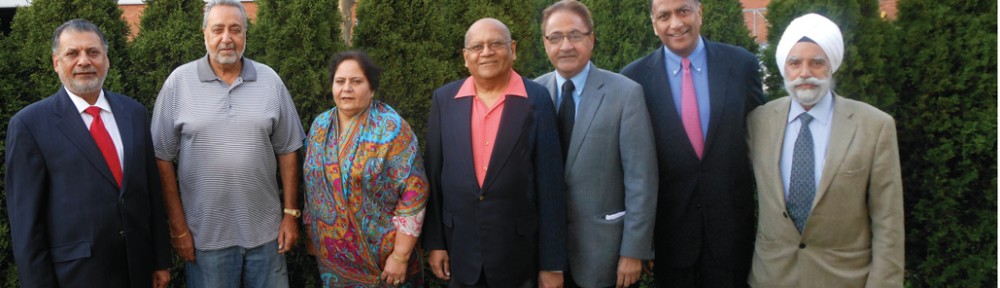
  • When sex

    When sex

    There’s a scientific explanation for the alleged ‘headache’ women use with their ‘honey’. Female Sexual Arousal Disorder commonly plagues sex lives and is just as easily resolved. Here’s how It could be a scene from Sex and the City.

    Five friends, 30- somethings, decide to have an overnight picnic to reconnect and relive their pre-marriage days. After dinner and enough alcohol, they chat about their sex lives. Three of them gloat over how much they enjoy love-making sessions while two figure something is amiss. Their sex lives are not as exciting as the others’. They confide in their friends, “There are no fireworks. It’s over within minutes.

    ” Sex seems like a chore. Are they frigid? The word is used, often pejoratively, for cold, sexually unresponsive women and feared by many. But Female Sexual Arousal Disorder (FSAD) is a real problem among many Indian women, but not without a solution. According to Dr Rajan Bhonsle, MD Hon Professor and HOD, Department of Sexual Medicine, KEM Hospital and G S Medical College, “FSAD can be applied at three levels. First, at a mental level – it involves wrong information about sex. The second is usually the phobia of penetration.

    Women hear about pain and bleeding during sex, which makes them nervous and anxious. The third is vaginismus – where there is optimum desire and arousal but just as penetration is about to happen, there is an involuntary spasm which interferes with intercourse.” Most problems stem from wrong information and bad experiences with an impatient partner. When a woman cannot respond to a particular man, it could be because of a past traumatic sexual encounter, watching a father abuse the mother, or hormonal imbalance.

    Many women in arranged marriages face FSAD. Dr Sanjoy Mukerji, psychologist and marriage counselor, says many woman lament the lack of experience in their husbands. “They wish husbands would learn how to treat a woman instead of just jumping into bed,” he says. Mind over pleasure FSAD is often the result of inadequate foreplay. Dr Mukerji talks about a case where a couple had not consummated their marriage even after two years. The wife enjoyed foreplay but held back at penetration. She had been sexually abused as a child and this led to panic before intercourse.

    “Her psychotherapy involved releasing the painful past slowly with the help of hypnotherapy.” Dr Mukerji emphasises on the importance of being a cooperative and understanding husband. Unfortunately, not all husbands are. A 30-year-old Mumbaikar wants to improve her sex life but her husband will not accept that there is a problem. “He comes into bed and wants to have sex without any foreplay. I just cannot respond,” she said. The counselor assured her she wasn’t to blame, but when her husband was called in for a session, he refused to talk.

    This left her disappointed. “Lack of foreplay is a common problem. Men need to be counseled about a woman’s needs. Women are scared of addressing the issue as they don’t want to hurt their husbands but men must realize that they may not know everything,” adds Dr Mukerji. Even with a wealth of information available online, sex counselors and sex query columns, some couples are still groping in the dark. To enjoy sex, one needs to be comfortable with one’s own body and sexuality. It involves understanding and talking to one’s partner and communicating without inhibitions.

  • A reason to worry

    A reason to worry

    Diabetes is a very serious ailment and it can cause numerous health complications. When people have diabetes, their bodies fail to produce insulin or produce very little insulin.

    It is also related to issues like vision problems, high blood pressure, heart ailments and strokes. Therefore it is important to know how you can prevent diabetes.

    Being overweight or being older may predispose you to diabetes. The common reasons for Diabetes to occur are age, family history, ethnicity weight, activity level, smoking, high blood pressure and weight loss.

    “While Type 1 diabetes is an auto-immune disease where the body’s immune system destroys the insulin-producing beta cells in the pancreas. Type 2 diabetes is the most common form of diabetes, affecting 85-90% of all people . It’s also known as late-onset diabetes, characterized by insulin resistance and relative insulin deficiency”, informs Dr. Shreepad Khedekar, Specialist in Genetic Chronic Diseases, Imperial Clinics.

    While Type 1 diabetes can be treated with insulin and control through the use of glucose meters. Type 2 diabetes may be treated by dietary changes, exercise and/or tablets. Insulin injections may later be required.

    There is no cure for diabetes. Treatment involves medicines, diet, and exercise to control blood sugar and prevent symptoms and problems

    Dr. Shreepad Khedekar, Specialist in Genetic Chronic Diseases, Imperial Clinics gives quick tips to control diabetes:

    Get physical

    Exercise can help you:
    Lose weight
    Lower your blood sugar
    Boosts your sensitivity to insulin – which helps keep your blood sugar within a normal range
    Research shows that both aerobic exercise and resistance training can help control diabetes, but the greatest benefit comes from a fitness program that includes both.

    Get plenty of fiber
    It’s rough, it’s tough – and it may help you:
    Reduce your risk of diabetes by improving your blood sugar control
    Lower your risk of heart disease
    Promote weight loss by helping you feel full
    Foods high in fiber include fruits, vegetables, beans, whole grains, nuts and seeds.

    Go for whole grains

    Although it’s not clear why, whole grains may reduce your risk of diabetes and help maintain blood sugar levels. Try to make at least half your grains whole grains. Many foods made from whole grains come ready to eat, including various breads, pasta products and many cereals. Look for the word “whole” on the package and among the first few items in the ingredient list.

    Lose extra weight

    If you’re overweight, diabetes prevention may hinge on weight loss. Every pound you lose can improve your health. And you may be surprised by how much.

    Skip fad diets and make healthier choices

    Low-carb diets, the glycemic index diet or other fad diets may help you lose weight at first, but their effectiveness at preventing diabetes isn’t known nor is their long-term effects. And by excluding or strictly limiting a particular food group, you may be giving up essential nutrients. Instead, think variety and portion control as part of an overall healthy-eating plan.