Tag: Hinduism

  • A Renewed Push for Elusive Diwali Stamp

    A Renewed Push for Elusive Diwali Stamp

    Congresswoman Maloney calls on President Obama to support Diwali stamp on his upcoming trip to India; announces introduction of congressional resolution in support of stamp


    NEW YORK CITY (TIP): Congresswoman Maloney (NY-12), the Consul General of India in New York Ambassador Dnyaneshwar M. Mulay, Chair of the Diwali Stamp Project Ranju Batra, and Chair of the National Advisory Council of South Asian Affairs Ravi Batra on January 16 gathered at the Indian Consulate to encourage the United States Postal Service to issue a postage stamp to commemorate the holiday Diwali. Maloney on Jan 14 wrote to President Obama urging him to support a Diwali stamp when he visits India next week.


    “Although Diwali holds a great significance for many Americans and well over a billion people across the globe, the United States Postal Service has still not recognized this beautiful festival of lights with a commemorative stamp, although it has done so for other major religious and cultural holidays such as Christmas, Hanukkah, Kwanzaa, and Eid,” said Congresswoman Maloney. “It is time for the USPS to step up and recognize the importance of this holiday in the lives of many of our citizens by issuing a commemorative stamp. A relatively small action would hold great meaning for millions of people and I think it would be historic if President Obama would announce his support for a Diwali stamp during his upcoming trip to India”


    ”Diwali is a festival that is integral to the life of every person of Indian ancestry irrespective of whether the person lives in India or abroad,” said Consul General Mulay. “It bonds together a billion people all over the world who celebrate the uplifting spirit behind the lighting of lamps – Diwali. The Diwali stamp by the United States shall definitely add to the already existing good will and strengthen the relations between our two countries. The laudable effort by Ranju Batra and Congresswoman Carolyn Maloney, and all others of goodwill supporting this focused effort, is a welcome gesture that is bound to bring cheer to everybody invested in the India-US relationship.”


    “We have gathered thousands upon thousands of signatures, letters and petitions, said Ranju Batra. “Apparently, what we have done so far has not been enough to get the Diwali Stamp issued. We are going to continue our efforts, with grassroots’ support, and won’t stop until we get it.”


    “USPS can no longer ignore Hinduism and the calls for a Diwali Stamp from the Hindu community and our dear friend and champion, Congresswoman Carolyn Maloney,” said Ravi Batra. “This year, the Diwali Stamp will be approved – US Postmaster General Patrick R. Donahoe has to be reminded that they are currently in violation of a core Constitutional obligation of government – ‘Equal Protection of the Law.’”     


    Shiv Dass, President of Jackson Heights Indian Merchants’ Association recalled his effort in 2003 to have a Diwali stamp issued. He said his friend Congressman Joe Crowley had tried to have the stamp issued but the effort proved abortive. He said he was happy that Ranju Batra had revived the demand and Congresswoman Maloney and community leaders were supportive of the demand. He appreciated the  role of Ambassador Mulay in encouraging the community to come together in support of Ranju Batra and Congresswoman Maloney.


    On January 14, 2015 Congresswoman Maloney introduced H. Res. 32, urging the USPS to issue a commemorative holiday stamp for Diwali. For several years, Congresswoman Maloney has headed efforts in Congress to push the Citizens Stamp Advisory Committee (CSAC) to consider issuing a commemorative Diwali stamp. In 2013, Congresswoman Maloney introduced H.Res. 47, expressing the sense of the U.S. House of Representatives that the CSAC should issue a Diwali stamp. The bill had 46 cosponsors. Maloney wrote letters to the CSAC in 2010 and 2012 requesting the same action.

  • Melville in New York to have $9 million Hindu temple in 2016

    Melville in New York to have $9 million Hindu temple in 2016

    LONG ISLAND, NY (TIP): Two-storey BAPS Shri Swaminarayan Mandir complex, currently under construction on a 5-acre plot with cost estimates of $9 million, besides a spacious sanctuary, will also include classrooms. In addition to worship services, it will also offer educational programs, cultural classes and activities, religious lessons, free health clinics, children and youth activities, humanitarian projects, etc., and shall make efforts in social outreach. All its statues were sculpted in India, reports suggest. Meanwhile, Hindu statesman Rajan Zed, in a statement in Nevada (USA) applauded efforts of BAPS, temple management and volunteers, and area community for realizing this Hindu temple complex.


    Rajan Zed, who is President of Universal Society of Hinduism, further said that it was important to pass on Hindu spirituality, concepts and traditions to coming generations amidst so many distractions in the consumerist society and hoped that this new temple would help in this direction. Zed stressed that instead of running after materialism; we should focus on inner search and realization of Self and work towards achieving moksh (liberation), which was the goal of Hinduism. Originally envisioned in 1988, its Bhumi Pujan ceremony was held on November 11, 2012 and its foundation stone was laid on October 27, 2013. Community leaders associated with raising of this temple include Harshad Bhatt, Girish Patel, etc.


    Bochasanwasi Shri Akshar Purushottam Swaminarayan Sanstha (BAPS), headquartered in Ahmedabad (India), is a socio-spiritual Hindu organization revealed by Bhagwan Swaminarayan in the late 18th century. Its followers take five lifetime vows: No Alcohol, No Addictions, No Adultery, No Meat, No Impurity of body and mind. It envisions “a society whose joy lies in the joy of others”. With Pramukh Swami Maharaj as the current Spiritual Guru, it has over 3,850 centers and over 880 sadhus worldwide.


    Hinduism, oldest and third largest religion of the world, has about one billion adherents. There are about three million Hindus in USA.


    Melville, an affluent hamlet in Huntington (New York) known to Native Americans as Sunsquams, houses US headquarters of several national/international corporations and hosts operations for various Fortune 500 companies.

  • Following New York, Hindus urge rest 49 US states to allow Diwali school holiday

    Following New York, Hindus urge rest 49 US states to allow Diwali school holiday

    NEVADA (TIP): Hindus have welcomed reports of New York Governor’s signing the bill allowing school holiday on Diwali, most popular of their festivals.

    Hindu statesman Rajan Zed, in a statement in Nevada , December 25, describing it as a step in the right direction, urged other 49 US states also to do the same.

    Zed, who is President of Universal Society of Hinduism, pointed out that it would be a positive thing to do in view of presence of a substantial number of Hindu students at schools around the country, as it was important to meet the religious and spiritual needs of these students.

    Rajan Zed indicated that schools should make efforts to accommodate the religious requirements of Hindu students and show respect to their faith by not conducting regular business and scheduling classes on Diwali. We did not want our students to be put at an unnecessary disadvantage for missing
    tests/examinations/papers, assignments, class work, etc., by taking a day-off to observe Diwali.

    If schools had declared other religious holidays, why not Diwali, Zed asked. Holidays of all major religions should be honored and no one should be penalized for practicing their religion, Zed added

    Rajan Zed urged all US schools, both public and private, to seriously look into declaring Diwali as a holiday, recognizing the intersection of spirituality and education. Zed noted that awareness about other religions thus created by such holidays like Diwali would make all students well-nurtured, well-balanced, and enlightened citizens of tomorrow.

    Zed further says that Hinduism is rich in festivals and religious festivals are very dear and sacred to Hindus. Diwali, the festival of lights, aims at dispelling the darkness and lighting up the lives and symbolizes the victory of good over evil. Besides Hindus, Sikhs and Jains and some Buddhists also celebrate Diwali, which falls onNovember 11 in 2015.

    Hinduism is oldest and third largest religion of the world with about one billion adherents and moksh
    (liberation) is its ultimate goal. There are about three million Hindus in US.

  • Excesses of Hindutva hotheads

    Excesses of Hindutva hotheads

    There is urgent need to restrain those making provocative and poisonous statements, says the author.

    All through his campaign that brought him spectacular victory in the parliamentary poll, Prime Minister Narendra Modi had concentrated on only “development” and “good governance” and avoided any item on the Hindutva agenda that could have upset the pluralist Indian society. Unfortunately, however, even then he did absolutely nothing to silence or even restrain those of his irresponsible supporters belonging to the Sangh parivar who made provocative, polarizing and even poisonous statements.

    For instance, at an early stage, Giriraj Singh, a Bhumihar leader of Bihar, declared that all those who opposed Mr. Modi in any way would have “no place in India” and must therefore “go to Pakistan”. Mr. Modi said not a word about this preposterous pronouncement. All that Rajnath Singh, then the BJP president and now Union Home Minister, did was to “disassociate his party” with Mr. Giriraj Singh’s statement. No wonder there followed a spate of equally absurd and dangerously divisive observations.


    49


    The head of the BJP unit in Uttar Pradesh, Laxmikant Bajpai, and the five-time MP, Yogi Adityanath, discovered that the Muslims were engaged in “love jihad” – a campaign to lure Hindu women into marriage or romance and then “forcibly” convert them to Islam. Mr. Bajpai stated that of the rapes taking place “99 per cent were committed by Muslims”. As for Amit Shah, Mr. Modi closest confidant and soon to be the party president, the Election Commission was constrained to deny him permission to hold public rallies.

    This ban was withdrawn only after Mr. Shah had apologized to the Commission and assured it that he would say anything that was “unacceptable”. On none of these disconcerting episodes Mr. Modi said a word during his powerful oration on all other subjects under the sun. Sadly, most people’s hope that what had been permitted during the election would be quietly disallowed after the BJP-led government had settled down has turned into a dupe. The bitter stand-off between the ruling party, on the one hand, and nine Opposition parties, including the Congress, that have a clear majority in the Rajya Sabha, on the other, that led to the disruption of the Upper House for several days could be the foreshadow of the shape of things to come.

    The sequence of events was distressingly sordid. A 47-year-old, firsttime BJP MP, Sadhvi Niranjan Jyoti – who was recently made a Minister of State, together with Mr. Giriraj Singh – had delivered an election speech in a Delhi suburb as the national capital is due to have assembly elections. Pontifically she told her audience that the choice before them was clear: They could elect a government of “Ramzadas” (children of Lord Ram) or that of “Haramzadas” which really means “b******s” but the BJP propagandists translated it as “illegitimate” to dilute the vulgarity. Inevitably there was a wave of outrage.

    When the matter exploded in Parliament, as it was bound to, the Prime Minister chose to stay away. Some senior cabinet ministers told the House that at a party meeting Mr. Modi had “strongly disapproved of the language used” whereupon the sadhvi offered an apology of sorts. This, declared the BJP leaders magisterially, was the “end of the matter”. The Opposition in both Houses, but particularly that in the Rajya Sabha where the saffron party is in a minority, demanded that Mr. Modi should come to the House to explain his position. He took three days to do so and declared that discussion was all over.

    An easily avoidable disruption of the Rajya Sabha followed. For, the determined Opposition gave up its initial demand for the sadhvi’s resignation or dismissal and asked for only a resolution to denounce the use of foul language by everybody in politics. The government contemptuously rejected this. In the end a “consensus statement,” appealing to all MPs “to maintain civility at all costs in public discourse” settled the bitter dispute.

    The crowning irony is that just when Vice-President Hamid Ansari, who is also the Chairman of the Rajya Sabha, was reading out the consensus document, a former BJP minister, Swami Chinmayanand was publically using the H-word in relation to, of all people, Imam Bukhari of Jama Masjid for advertising his association with a foreign place, Bukhara. Far more shocking was what so senior and experienced a leader as Foreign Minister Sushma Swaraj, who was earlier leader of the Opposition in the Lok Sabha, did only a few hours earlier. She strongly advocated that the Gita should be declared the “National Scripture” of India.

    Remarkably, even before anyone from religions other than Hinduism could speak, vigorous opposition to Swaraj’s demand came from Tamil Nadu, ironically from the BJP’s allies. One of them, MDMK leader Vaiko, simultaneously announced that he was ending the alliance. He accused the Centre of working against Tamil Nadu and suggested that the Dravidian forces should unite to fight the “Sanskritisation” of cultural and social spheres. He added that “Hindutva will not be allowed to gain a foothold in Tamil Nadu”. PMK’s founder S. Ramadoss, who is still an ally of the BJP, also came out against Swaraj’s idea and stated that “apart from “cultural imposition” the Modi government had “hardly come out with any constructive programs in the last six months”. The BJP would be making a grave mistake if it underestimates the Tamil sentiment. Those who did so in 1965 over the official language issue paid a very heavy price.

    At that time even Prime Minister Shastri did not dare to go to the trouble-spot. Only Indira Gandhi had the necessary courage. Finally, it cannot be overlooked that while Mr. Modi has full control on his government he is either unwilling or unable or both to discipline the wrongdoers among other members of the Sangh parivar who seem determined to build up a Hindu rashtra by hook or by crook. They enjoy the protection of the Rashtriya Swyamsevak Sangh (RSS) of which the BJP is only the political face.

    (The author is a Delhi-based political commentator.)

  • RSS body seeks donations to fund Christmas ‘conversions’ in Aligarh

    RSS body seeks donations to fund Christmas ‘conversions’ in Aligarh

    ALIGARH (TIP): Dharam Jagran Samiti, an RSS offshoot, has distributed pamphlets in Aligarh seeking donations for converting Christians and Muslims to Hinduism. The pamphlet says it costs Rs 2 lakh to convert a Christian and Rs 5 lakh to convert a Muslim. It has set December 25 as the date for a major conversion ceremony and put down an annual target of 2 lakh conversions — 1 lakh Muslims and 1 lakh Christians. The pamphlets, carrying the letter head of the Dharam Jagran Samiti, pashchim chhetra (western UP, Braj prant, Meerut and Uttarakhand), have found their way to many houses in Aligarh.

    It proposes a fund for a grand “ghar vapsi” (homecoming) of Christians and Muslims, who are a “samasya” (problem) in the country. The letter addresses recipients as “bandhuvar” (friends) and says: “Lots of money will be required in the ‘ghar vapsi’ because the work of conversion is increasing — more workers and more people to be covered. Please contribute money so that all arrangements are in place.” Asked why are Muslims and Christians a “samasya”, Kanshinath Bansal, a key member of the Samiti, said, “Because Christianity is a samasya. Muslim (sic) is also a samasya.

    One worker needs that much money to work on a samasya every year.” This came even as Yogi Adityanath, the firebrand BJP MP from Gorakhpur, confirmed his visit on December 25 to Aligarh for an event that aims to convert 5,000 Muslims and 1,000 Christians at the local Maheshwari College. Adityanath said: “The administration and media have given it an exaggerated look. People are willingly converting themselves in ‘ghar vapsi’. The event will happen as scheduled and I will be there.” He added, “When Hindus convert to Islam or to Christianity, nobody comes in for a check.

    Why is this being done when they want to convert back to Hinduism? There are many other issues that the administration and media should concentrate on rather than this. Muslims in Agra had also written a letter asking for a mandir. The situation went out of control because of the interference of media, administration and sundry religious leaders.” The district administration, already anxious, said it is not taking any chances. J Ravinder Goud, SSP Aligarh, said, “There is no question of giving permission for the ‘ghar vapsi’ that is being planned in Maheshwari College. The issue has already flared up.

    We are not allowing it and if in case there is a violation, we will deal with the situation accordingly.” Not long ago, the Hindu outfit had taken over a small church on the outskirts of Aligarh, replacing the cross with a Shiva picture. Then, too, it had conducted a ‘ghar vapsi’ for 72 Valmikis, all of them Christians. Christian and Muslim groups reacted with anger and caution. Community leader Vincent Joel said, “Ever since the church incident in Asroi, Christians have been praying for the dawn of achche din, where the country is not divided on the basis of religion or caste. We are praying to the Lord to grant the perpetrators of such mischief some wisdom.” Muslim organizations Millat Bedari Muhim Committee and Forum for Muslim Studies and Analysis condemned the “open and public call for conversion”.

    Professor Razaullah Khan, president of both the outfits, said, “It is very disturbing to see how publicly they call for ghar vapsi. (UP) elections are slated for 2017 and now this gathering is being done to polarize society and divide votes. We should not let it happen.”

  • Walkout in LS over ‘conversion’

    Walkout in LS over ‘conversion’

    NEW DELHI (TIP): A heated debate in the Lok Sabha on the alleged conversion of 200 Muslims to Hinduism in Agra saw a united opposition accusing the government of engineering “religious polarisation” for political gains. However, the government outrightly rejected any hand in the RSS affiliated bodies’ campaign for “homecoming” of those converted to other religions. Parliamentary Affairs Minister M Venkaiah Naidu went a step ahead and tried to utilise the opportunity to appeal to all parties for reaching a consensus on bringing a national anti-conversion law, saying religious conversion was an “old national challenge” and that it was also opposed by Mahatma Gandhi.

    Angered by the government’s response and Naidu’s assertion that he was “proud” of his association with the Rashtriya Swayamsevak Sangh (RSS), the entire Opposition staged a walkout even before the Union minister concluded his reply. “I appeal to all parties to seriously introspect on this. Let there be anticonversion laws in all the states and at the Centre. Let us all seriously work towards the progress and preserve our culture,” Naidu told the members.

    He said the government remained committed to maintain communal harmony in the country. Earlier, initia-t-ing the debate, Congress’s -Jyotiraditya Scindia claimed that Muslims were promised ration cards to convert to Hinduism, wondering if these were the “achchhe din (good days)” the BJP had promised. “I am also proud of being Hindu. But my religion does not teach me narrow mindedness and bitterness,” Scindia said while demanding a clarification from Prime Minister Narendra Modi.

    Trinamool Congress (TMC) member Saugata Roy said the BJP with engineering “religious polarisation”. “I thought the BJP is for Ram. I got to know that it is for Nathuram,” he said taking a dig at a BJP MP’s comment that Nathuram Godse was a patriot like Mahatma Gandhi, whom he had killed. Samajwadi Party chief Mulayam Singh Yadav, who staged a walkout along with other opposition members, however, termed the debate “unnecessary”, saying that it had no impact in Agra.

    All India Majlis-E-Ittehadul Muslimeen (AIMIM )leader Assaduddin Owaisi evoked sharp reactions from the treasury benches when he said the BJP had an “umbilical cord” attached to the RSS. “The Muslims are not scared of RSS and Bajrang Dal members. We will continue to follow our religion,” he said. Attacking the government, Nationalist Congress Party (NCP) leader Tariq Anwar said India was witnessing “Taliban-style” decrees on issues like religion and clothes. Communist Party of India-Marxist (CPM) member Mohammed Salim also hit out at the government and said a person does not become a ‘swami’ by wearing a saffron headgear. His remark evoked an angry reaction from BJP members.

  • What Modi did not say on Oct 2

    What Modi did not say on Oct 2

    In the cleanliness drive Gandhi’s real message of communal harmony was missing

    “That communal harmony was his (Gandhi’s) foremost concern was emphasized again in 1921 and repeated on March 24, 1947, at a prayer meeting in Rajghat thus: “I would say that Hindus and Muslims are the two eyes of mother India – just as the trouble in one eye affects the other too, similarly the whole of India suffers when either a Hindu or a Muslim suffers”, says the author

    The Modi government has, by a not-so-clever sleight of hand, converted the most important day in India, October 2, Gandhi’s birthday, into a cleanliness day. Of course this was buttressed by a repeat of Gandhi’s exhortation of “cleanliness is next to godliness”. No one can be against spreading awareness about cleanliness. But when an attempt, and not so subtle one, is made by the RSSdominated Modi government to sidetrack the real message of Gandhi, one cannot ignore this mischievous move.

    Days before Modi was to do the cleaning act at the Valmiki quarters in New Delhi, the whole area was checked for security (right, no objection to the security angle). But what was hypocritical was the fact that the whole area was cleaned by the sanitation staff regularly for days earlier. Have we not seen in newspapers how ministers, in order to show their extra loyalty, had empty bottles thrown by the sanitary staff without any embarrassment and then made a mockery of the cleanliness drive by removing them while getting themselves photographed? My objection is not to the observance of the cleanliness day – do it by all means provided it is on another day. But I do have a serious objection to converting Gandhi’s birthday as the cleanliness day, as if that is the most important message of Mahatma Gandhi.

    If one watched TV channels, it was Modi and his cohorts waving the broom. Gandhi’s real message of communal harmony was totally missing. Gandhi’s stature of being the tallest Indian was reduced to a small mention and the whole focus was on Modi holding a broom. If the Modi government denies this, will it explain why it never mentioned the real message of Gandhi which he consistently emphasized? Let me reproduce the pledge which Mahatma Gandhi wanted Indians to take in 1919: “With God as a witness we Hindus and Mohamedans declare that we shall behave towards one another as children of the same parents, that we shall have no differences, that the sorrows of each will be the sorrows of the other and that each shall help the other in removing them. We shall respect each other’s religion and religious feelings, and shall not stand in the way of our respective religious practices.

    We shall always refrain from violence to each other in the name of religion.” That communal harmony was his foremost concern was emphasized again in 1921 and repeated on March 24, 1947, at a prayer meeting in Rajghat thus: “I would say that Hindus and Muslims are the two eyes of mother India – just as the trouble in one eye affects the other too, similarly the whole of India suffers when either a Hindu or a Muslim suffers.” Gandhi’s emphasis against communalism was again shown in the letter he wrote in Harijan in January 1948 in Gujarati (emphasis mine) where he specifically said: “I think it is proper to address a few words to the people of Gujarat. (Modi as a Gujarati should have in all propriety and claiming to be spreading the message of Gandhi reminded the nation of what Gandhi wrote in 1948) Delhi has always been the Capital.

    It would be the limit of foolishness to regard it as belonging only to the Hindus or the Sikhs. All Hindus, Muslims, Sikhs, Parsis, Christians and Jews who people this country from Kanyakumari to Kashmir and from Karachi to Dibrugarh in Assam and who have lovingly and in a spirit of service adopted it as their dear motherland, have an equal right to it. No one can say that it has a place only for the majority and the minority should be dishonoured” (emphasis mine). Modi went to pay homage at Rajghat on the 2nd October 2014 morning.

    Surprisingly, no one told him about this solemn pledge taken by Gandhi. But then Modi could not have taken this pledge with a clear conscience, considering the B.J.P. is shame-facedly busy in congratulating and felicitating party workers accused of violent crimes against Muslims in Muzaffarnagar (U.P.) even when they are being prosecuted in a court of law. Such open demonstration in favor of the accused is a clear case of contempt of the court.

    Also, how can Modi spread the message of Hindu-Muslim harmony when his mentor, RSS chief Bhagwat, was provided the services of Doordarshan to spread communal poison against the Muslims by falsely bringing up the question of Bangladeshi immigrants in Assam and West Bengal, Bihar and creating panic by a canard that it had the potential to endanger the life of Hindu society there – very mischievously ignoring the fact that hundreds of Muslims were killed in the recent flare-ups in Assam, Bodoland? Modi’s claim to be secular is unacceptable in the context of his silence at the crude thinking of some of the BJP diehards who are planning to celebrate the birthday of Hemu, employed as a General in the army of Afghan ruler Sher Shah – he vainly chose to describe himself as King Vikramaditya and challenged the King. Akbar’s army was defeated.

    The diehard in the RSS are so perverse that they are claiming it as a very big battle of a Hindu king against the great Akbar who has been praised in the U.N. Human Development Report 2004 for his pronouncements on religious tolerance such as “no one should be interfered with on account of religion, and any one is allowed to go over to a religion that pleases him”. Modi in his radio speech has rightly referred reverentially to Swami Vivekanand as one of the greatest Indians. But will Modi tell his RSS followers to remember and follow Swami Vivekanand, who believed in total Hindu-Muslim unity and profusely praised Islam?

    In a letter to his friend Mohammed Sarfraz Hussain (June 10, 1898 ) Vivekanand wrote without any hesitation: “Therefore I am firmly persuaded that without the help of practical Islam, theories of Vedantism, however fine and wonderful they maybe, are entirely valueless to the vast mass of mankind. For our own motherland a junction of the two great systems Hinduism and Islam – Vedanta brain and Islam body – is the only hope……” There thus can be no real progress in India which does not include the minorities such as Muslims and Christians as equal stakeholders. This is the real message which Modi should have spoken of on Gandhi’s birthday if he meant to pay a genuine respectful tribute to Mahatma Gandhi.

    (The author is an Indian lawyer and a former Chief Justice of the Delhi High Court. He was a member of United Nations Sub-Commission on the Promotion and Protection of Human Rights.)

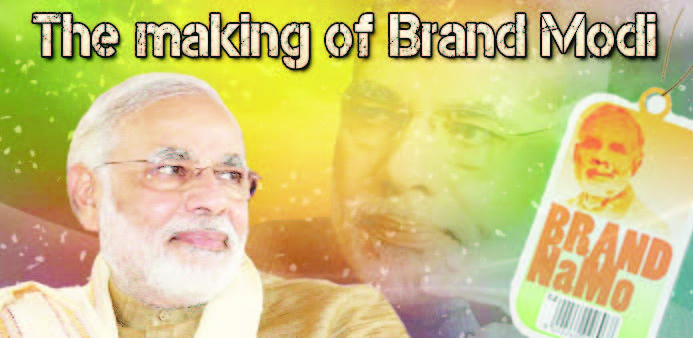
  • The Making of NAMO

    The Making of NAMO

    A Hindu pracharak becomes Prime Minister of India. Here are milestones in his journey of ascension to the pinnacle of power through landslide election victory in the 16th General Election of the world’s largest democracy.


    arendra Modi was born on 17th Sept 1950 in a middle class family of grocers in the small town of Vadnagar- the Temple Town of ancient India which is Varanasi of Gujarat. The town has a long and varied history. Sharmistha Lake, Hatkeshvar Mahdev and artistic Toran Gate are hallmarks of the past glory of the capital of Anart Province. Chinese traveler Yuan Swang visited this town in the sixth century. Akbar’s music maestro Tansen came to normalcy after listening to perfect Meghmalhar singing of Naggar girls Tana and Riri. Poet Narsinh Mehta ‘s son got married to Vadnagar Naggar Community’s bride here. Small town boy Narendra Modi imbibed the past glory of his birth place in Mehsana district of Gayakwad princely state in Gujarat. Modi became a member of RSS in childhood and acquired deep understanding of Hinduism, reading Hindu Scriptures and literature of Swami Vivekananda. He left home with the consent of his parents at a young age of 17 in search of his life’s mission. He traveled extensively and spent some time in the Himalaya , meditating in the tradition of Buddha who has influenced his life and thought considerably. Returning home after some time, he became a PRACHARAK with Rashtriya Swayamsevak Sangh in 1972. He stayed with his maternal uncle in Ahmedabad and helped him selling common people’s popular drink, tea, a job which he had done before in his father’s tea stall at the Vadanagar Railway station. One astrologer who was dinner guest at their family house in Vadnagar predicted to his mother that some day her son Narendra will either be a great sage of Shankaracharya’s caliber or supreme commander of the nation if he enters politics. Jawaharlal Nehru was supreme commander in Prime Minister’s position in those days in India. Savarkar’s message to Hinduise politics and militarise Hinduism appealed to young Narendra. He worked underground during the emergency period 1975-1977 and went jail briefly.
     

    Then, Jan Sangh adopted a new name BJP after losing partnership in the government with the collapse of Prime Minister Morarji Desai’s government . Narendra Modi actively participated in all activities of BJP especially Advani’s Rath Yatra and Unity pilgrimage of Murli Manohar in 1989-90. He was assigned the responsibilities of General Secretary in Gujarat and subsequently at the national level. Modi acquired mastery in public relations and party organization. His contribution in the capacity of General Secretary was well noticed by party stalwarts Advani and Vajpayee. He did not contest any legislative election and had no experience in any capacity in government when one day in the first week of October, 2001, Prime Minister Vajpayee asked him to be the Chief Minister of Gujarat in replacement of Keshubhai Patel who had received more complaints than complements in his handling of problems in the aftermath of earthquake in Kutch -Bhuj area on the Republic Day in January, 2001.

    A Timeline : 
    October 7,2001 Modi takes oath of office of Chief Minister. He is not a member of the legislative body.
    ● Feb.24,2002 : He is elected from Rajkot constituency . Next day he is officially admitted into membership of Gujarat Assembly.
    ● Feb 27,2002 . At Godhara Station in South Gujarat 59 passengers including women and children are burned down by the terrorist group which praised Bin Laden and his methods of terrorism. Those killed were active members and volunteers of Hindu organizations .In retaliation riots spread in Ahmedabad and elsewhere in Gujarat. Both Hindus and Muslims became targets of each others’ wrath for weeks .Media all over the world gave coverage of these events in their own ways.
    ● April 12,2002 BJP High Command meeting in Goa where discussion on the riots remained major issue, some demanded removal of Modi . Narendra Modi offered his resignation . Prime Minister Vajpayee was not soft towards Modi but Advani was firm on not accepting Modi’s resignation.
    ● July 19, 2002 C.M. Modi dissolved assembly and opted to seek new mandate
    ● December 15, 2002 . Favorable election results: BJP won 127 seats out of 182 assembly seats. Modi took oath for the second time in the presence of the Prime Minister. First time in India, a Prime Minister attended oath ceremony of a state chief minister. The Modi Government received national and international praise for restoration programs of earthquake disaster. Seminars for continuing education for elected assembly members and EGovernance were Modi’s new initiatives. Prime Minister Vajpaiyee invited the dynamic C.M. Modi to be in his entourage of Russia visit. Modi observed keenly Russian growth model . He vowed to make Gujarat a shining super state in India . The first vibrant Gujarat festivity program in 2003 attracted attention of investors . Progress
    Person Modi visited China, Japan and other countries to promote investment in Gujarat.
    ● May 21,2005. Rajiv Gandhi Foundation awarded Modi Government for the most well managed State.
    ● December 25,2007: Modi takes oath for the 3rd time after election victory.

    2012: 

    Modi became Chief Minister of Gujarat for the fourth time. In a lighter vein, he stated: ‘ I will remain CM for ever’.
    But Modi was destined for a higher position, as the stranger had once predicted.
    In September, 2013, Bharatiya Janata Party named him the party’s candidate for prime
    Minister’s position. Modi had already nominated to lead the election campaign. With every passing day, it became clearer that Modi had succeeded in convincing voters of India that BJP could bring about a change to their advantage. Some doubted BJP could have the numbers to forma government with its allies, not to speak of forming a government on their own.
    Some simply could not bear to see BJP in power. Eminent Economist Nobel Laureate A.K. Sen wrote: “I do not want Modi to be my Prime Minister “.
    However, voters of the largest democracy in the world countered him : “WE WANT MODI TO BE
    OUR PRIME MINISTER.”
    And there he is. Let us wait and watch his work.

  • Global Citizen Forum Launches New York Chapter

    Global Citizen Forum Launches New York Chapter

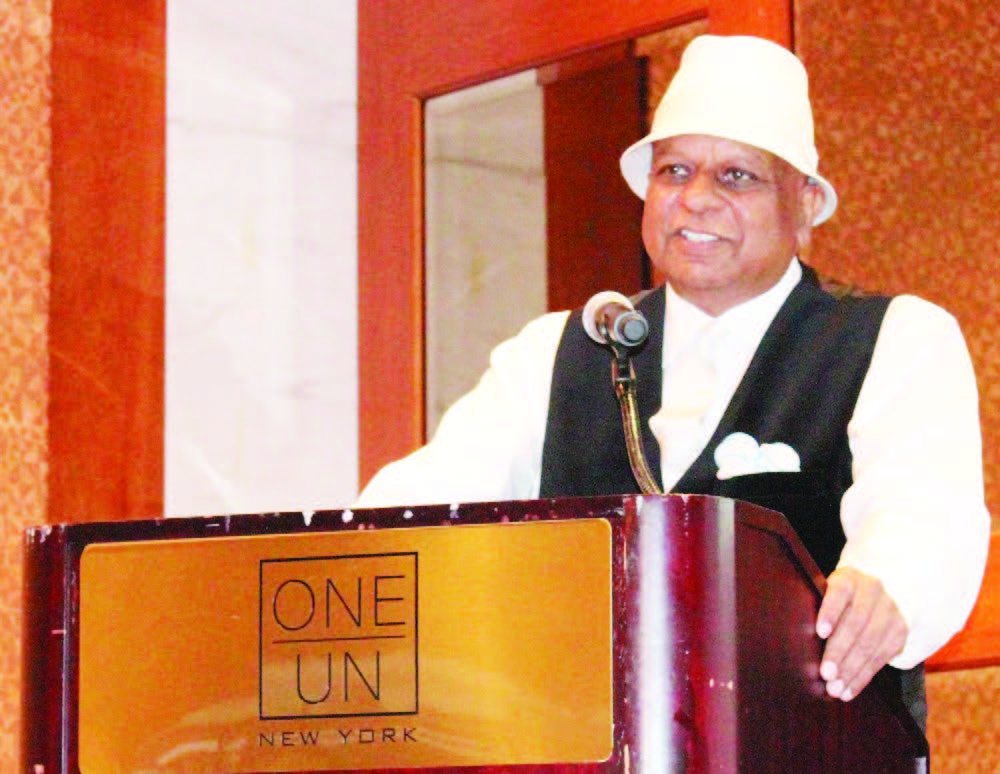
    NEW YORK (TIP): The Global Citizen Forum, New York branch was launched here on August 23. Addressing prominent members of the Indian-American community and representatives of some American think-tanks at the launch, at the UN New York Millennium Hotel, the founder and chairman of the GCF, Indian industrialist Bhupendra Kumar Modi said that the world today is not defined by countries, but by cities and metropolises, thereby heralding a big change in the world order.

    Modi talked about laying the foundation of a new world order under India’s leadership, and promoting understanding between India, China and the U.S., under the leadership of India’s Prime Minister Narendra Modi. The world has changed rapidly in the past decade, and so have the people of India, Modi, said. “There is not a single city in the world where there is no ‘Little India,” he said, noting how the Diaspora has made its presence in every part of the world.


    15
    Bhishma Agnihotri, former Ambassador at Large, Government of India, in his keynote address congratulated B.K. Modi for taking the age old Indian message of “Vasudhaiva Kutumbakam”- the whole world is a family – to every nook and corner of the world. He also said India had now an opportunity to be the world leader under Prime Minister Narendra Modi.


    It was with this growing change in mind that Modi founded the GCF in January 2013 to create a world without boundaries. Modi, lived in New York City from 1999 to 2004, before moving to California and then to Singapore and is currently based in New Delhi. Modi is also the chairman of Spice Global, an Indian conglomerate headquartered in Singapore as well as the council and chairman of Asia Crime Prevention Foundation’s India chapter. He was appointed by the United Nations as the coordinator for the Indian subcontinent for the Millennium World Peace Summit. Modi became a citizen of Singapore in 2012 and ranks 23rd in the Forbes list of Singapore’s richest people.


    16
    A view of the gathering at the launch of Global Citizen Forum in New York on August 23, 2014.


    On Feb. 17, 2004, the U.S. House of Representatives issued a proclamation in appreciation of Modi’s efforts to promote deeper understanding between the two countries and congratulated him on his innovations and humanitarian efforts worldwide. Author of many books, including “One God, Hinduism – The Universal Truth” and “Performance – A Manager’s Challenge and Whispers of Peace”, Modi is essentially a man of ideas and vision. On the idea of establishing the forum, Modi said, one of the main reasons was to make sure that humanity remains the number one priority of people around the world.

    “Over the years one has seen a change in the business and spiritual leadership”, Modi said, adding that what is lacking is political change. “One first needs to be a global citizen and then a citizen of his or her respective country he said. “How many take the world as a family,” he questioned. Elaborating on the concept of ‘one world,” Modi told the gathering that India, under the leadership of Narendra Modi, could be the answer to bring the world closer. Narendra Modi has taken Indian psyche, and is bringing changes according to that and is seen as a man of wisdom and has thus raised hopes for a global change, Modi said.

    The philosophy of a global India, Modi said, is based on Gautama Buddha’s teachings, which expounded the virtues of compassion and giving. “When you give [something] to somebody, you receive more happiness than the man who receives it,” Modi said. While striving for being a global citizen, one should not forget the “poorest people” in the world, and should find ways in connecting with them, he warned. “Wisdom to see world as one, courage to go to any part of the world and live there, and compassion”are the three main qualities of a global citizen, he said. A film on Gautam Buddha was screened.

    It depicted Buddha’s disillusionment with princely life and his search for enlightenment. The Creative Producer of the film which is telecast in episodes on a TV channel in India, Ms. Ridwana was also present on the occasion and spoke with the media about the making of the film. Some more notable guests at the event included Bhishma Agnihotri, former Ambassador at Large, Government of India, who was the keynote speaker, and Swami Chidananda Saraswati, president and spiritual head of the Parmarth Niketan Ashram in Rishikesh, India, and co-founder of the Global Interfaith WASH Alliance (GIWA) at the UNICEF Headquarters at the United Nations.

  • India must never be a ‘Hindu Pakistan’

    India must never be a ‘Hindu Pakistan’

    By Inder Malhotra

    Modi should restrain Bhagwat & others

    Mr. Bhagwat at first propounded the strange theory that since every citizen of America is called American and that of Germany is known as German, every citizen of Hindustan “must be called a Hindu”. Someone should explain to this learned gentleman that by his own logic citizens of Hindustan should be known as Hindustanis, not Hindus”, says the author

    When Narendra Modi was swept to power spectacularly just over three months ago high hopes of an early improvement in both development and governance were accompanied by some fears that Hindutva hotheads and other extremists in the Sangh Parivar might try to queer the pitch by promoting the cult of “Hindu Rashtra”. Sadly, this seems to be coming to pass, not by the efforts of only foot soldiers and fringe elements.

    The minister of state in the Prime Minister’s Office (PMO) was the first to talk of repealing Article 370 of the Constitution that gives the state of Jammu and Kashmir a special status. This produced a reaction in the sensitive state so vehement that the state’s Chief Minister, Omar Abdullah, and his father and then Union Cabinet minister Farooq Abdullah, even threatened secession.

    This did not deter another minister to propose that it was time to have a uniform civil code, inviting another furore. Then something startling happened, of all places, in Goa. A BJP leader there announced that Mr. Modi would make India a “Hindu State” before the end of his first term. He was upstaged by the state’s Deputy Chief Minister, who blandly stated that this was already the case. Obviously, no one took him seriously because the international president of the Vishwa Hindu Parishad, Ashok Singhal, mounted the rostrum to declare that the Muslims had citizenship rights in this “Hindu” country, but they also had the duty to accept Hindutva’s doctrines and demands.

    One specific demand he made was that, the Babri Masjid at Ayodhya out of the way, “the Muslim community should willingly give up two other mosques in the holy cities of Varanasi and Mathura”. In Parliament and elsewhere Opposition members and people continued to ask Prime Minister Modi to say something about these “objectionable and divisive” declarations but he continued to maintain his eloquent silence.

    A few of those who claimed to know him pointed out that to remain silent was both his strategy and style. This reading seemed to be correct. For Parliament’s first session ended on a very sharp note just before Independence Day. The Congress and other Opposition parties condemned his government for having encouraged both polarisation and increasing communal violence since its very formation. His ministers retorted that the greatest communalist in the country was the Congress. But while speaking from the ramparts of the Red Fort, the Prime Minister dealt with the burning issue very briefly.

    He appealed to everyone to embark on a ten-year moratorium on all violence whether the “poison” be casteism, communalism, regionalism or discrimination of any kind because all these “are obstructions in our way forward”. This attracted no criticism although some did ask: “Why should there be a moratorium for a limited number of years? Why not get rid of all these evils permanently”? Ironically, it was at this precise moment that the leadership of the campaign to Hinduise the Indian state – that under the Constitution has to be secular – was taken over by the chief of the Rashtriya Swayamsevak Sangh (RSS), Mohan Bhagwat.

    He is the head of the entire Sangh Parivar of which the Bharatiya Janata Party is but one member. Nor has it gone unnoticed that the new BJP president, Amit Shah, who is also the right-hand man of Mr. Modi, has given the RSS representation in his team that is greater than ever before. Mr. Bhagwat at first propounded the strange theory that since every citizen of America is called American and that of Germany is known as German, every citizen of Hindustan “must be called a Hindu”.

    Someone should explain to this learned gentleman that by his own logic citizens of Hindustan should be known as Hindustanis, not Hindus. No America would call himself/herself as an “Am” or the German as “Ger”. If every Indian is called a Hindustani there would be no problem. Followers of the Hindu religion in this country are a huge majority of over 80 per cent. But the rest are Muslims, Christians, Sikhs, Jews, Parsis and so on. To call them Hindus would be an invitation not to a disaster but to a catastrophe.

    Probably for this reason the RSS chief changed his tune. “Hindustan (he has stopped using the names India or Bharat)”, he proclaimed, “is a Hindu state and Hidutva is the identity of our nation … and it (Hinduism) can incorporate in itself other religions”. No fewer than seven political parties, including the Congress, the Samajwadi Party and the CPM, have lambasted Mr. Bhagwat for planning to “impose Hindu majoritarianism” on the country. Several Opposition leaders have called him “Hitler” and a radical Sikh organisation, Dal Khalsa, has declared that it would not allow the RSS to “foist its fascist agenda on Punjab”.

    This said, one must add that communalism of every religious community is equally dangerous and deplorable. The entire Kashmiri Pandit minority was hounded out of the Kashmir valley two decades ago. The Pandits have become refugees in their own country, and their return to their homes remains problematic. Some Sikhs in Punjab have made a film glorifying the assassins of Indira Gandhi that cannot but cause trouble.

    In all fairness, it must also be recognised that the Congress that ruled the country for the last 10 years must accept its share of responsibility for encouraging the votaries of Hindutva. It always declared that its fight against the BJP was a contest between secularism and communalism. But, as former Defence Minister A. K. Antony, who investigated the causes of the Congress party’s electoral debacle has admitted, the Congress’ practice of secularism was more rhetorical than real.

    The country perceived it as the “appeasement of Muslim minority”. Whatever might have happened in the past, the two sides must learn a lesson from what the Pakistani Taliban have done to that Islamic country in the name of Islam. India doesn’t deserve that.

  • PLACES TO VISIT NEAR AHMEDABAD

    PLACES TO VISIT NEAR AHMEDABAD

    From glimpses of wildlife at Gir National Park to exploring the architectural marvels of Ajanta and Ellora to the charming hill town of Mount Abu, there are a range of places to visit near Ahmedabad. Offering a respite from the daily bustle of Gujarat’s commercial hub, these rejuvenating long weekend escapes will compel you to pack your bags and hit the road.

    SURAT

    From by-lanes lined with quaint eateries offering the most delectable Gujarati snacks to upscale markets housing massive jewellery showrooms, Surat is a city that offers almost everything you can ask for. One of the most rapidly growing cities in India, Surat is the second largest city in Gujarat and also known as the Diamond City. With the majestic Surat Fort and the Mughal-era monument Mughal Sarai for history buffs, the Lake Garden on the banks of Tapi River for those who want to take it easy, and a line-up of street markets for shoppers—Surat has a range of options for all kinds of travellers.


    25

    Baroda

    Formerly the seat of the Gaekwad dynasty, a Maratha clan which ruled over it from the mid-18th century till 1947, the erstwhile princely state of Baroda (also known as Vadodara), is today best known for its heritage and historic university. Often described as the cultural capital of Gujarat, much of modern Baroda was shaped by Sayajirao III, a far-sighted ruler in the late 19th century who patronised art and music, introduced free primary education, and established institutions such as the Bank of Baroda, a railway system and the university.

    The city’s beautiful old quarter filled with heritage buildings, and the historical city of Champaner – a UNESCO World Heritage Site – located an hour’s drive out of town, provide a fascinating insight into the past and will prove irresistible for history and culture buffs.

    Daman

    A short three-hour-long drive from Mumbai, the Union Territory of Daman (no, it’s not in Gujarat, which also means you’re good for a tipple) offers all the perks of a Goa vacation sans the teeming crowds. There are two beaches—Devka and Jampore—of which the latter is infinitely better for sun and sand.

    The Mirasol Lake Garden—replete with an artificial lake, swan boats and even a toy train chugging along the periphery—is a good spot if you’re travelling with kids in tow. For the more culturally inclined, this former Portuguese colony is dotted with architectural remains (Fort of Nani Daman, the lighthouse, Our Lady of Rosary Church) that speak of its bygone glory.

    Rann of Kutch

    Currently under consideration as a biosphere reserve, this salt wetland is abundant in biodiversity, and shrimp farming is one of the chief means of a livelihood in the area. With a host of wildlife sanctuaries, and rich presence of rare animals, this is one of Gujarat’s major tourist draws. Occupying about 4,953 square kilometres spread across the districts of Surendranagar, Banasakantha, Patan, Kutch and Rajkot, the topography of the Little Rann of Kutch features large marshlands interspersed with patches of soil supporting shrubbery. While you’re there, be sure to pay a visit to the Indian Wild Ass Sanctuary, which is one of the largest wildlife reserves in the country, and keep aside a morning to go bird spotting at Banjana Creek.

    Gir National Park

    No trip to Gujarat is complete without a visit to the Gir national Park. Sprawling across a vast expanse of 1412 square kilometres of dense forest, it is the natural abode of the lion – the only place outside of Africa where you get to experience the wild cats in their natural habitat. Take in the experience in its entirety by exploring everything, from the 250 species of chirping birds darting out of the thick canopy of trees overhead, to the crocs in the marsh waters.

    Spot the leopard, nilgai, hyenas, chinkara and antelopes, including the world’s only four-horned antelopes known as chousingha. Additionally, the Gir is the homeland of a tribe called the Maldharis, that thrives on pasturing and livestock. Spend a few days to really take it all in. We suggest a visit to the Crocodile Breeding Farm, and both the morning and evening safaris – the forest tells a different story after sundown.

    Ajanta and Ellora

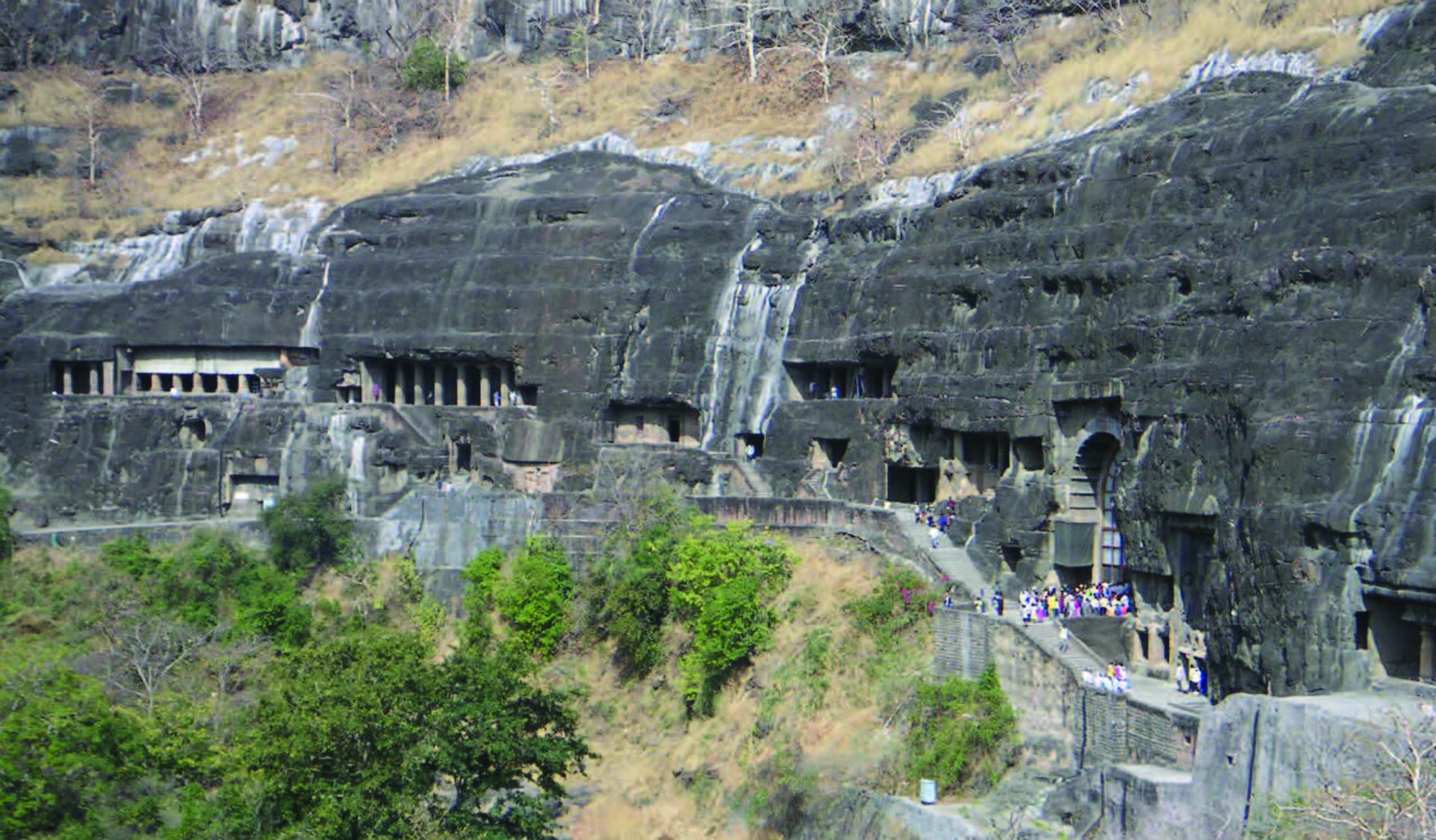
    Ajanta and Ellora are two monumental rock-cut caves that define Indian art and architectural accomplishment. Though these two monuments are separated by a distance of approximately 100 km, they are often mentioned together since their aesthetics and importance are at par and the fact that both are situated in the Aurangabad district of Maharashtra.

    While Ajanta is mostly about beautiful paintings made on cave walls on the theme of Buddhism, Ellora is all about sculpture and architecture belonging to three different religions prevailing in the country during those times—Buddhism, Hinduism and Jainism. Ajanta is a cluster of 30 caves of different sizes excavated in a horseshoe shaped stretch of rock embedded in a hill facing a narrow stream called Waghora. Each cave was connected to the stream by a flight of steps, which are now demolished with few remnants left behind. These caves are named after a nearby village called Ajanta.

    It includes masterpiece paintings of Buddhist religious art, with figures of the Buddha and depictions of the stories that tell about the previous lives of Buddha. The caves were built in two phases— starting around the 2nd century BC, with the second group of caves built around 400- 650 AD. Buddhist monks used to retreat to this serene place during the monsoon, and as they had plenty of time during such retreats, they used it for deepening their religious quest through prayer and discussion.

    Jodhpur

    The second largest city (after Jaipur) in Rajasthan, Jodhpur is an architecturelover’s feast for sore eyes. The older historic section of the city of Jodhpur is located around the grand Mehrangarh Fort which is bounded by a wall and several gates. Winding streets and unending bazaars run throughout the city that are littered with shops and thronged by visitors throughout the year.

    Also referred to as the Blue City, Jodhpur is home to the magnificent Umaid Bhawan Palace. A fivehour- drive from the hill-station of Mount Abu, Jodhpur makes for a perfect getaway once the hill station’s charms stop making an impression on you.

  • Only 22% Americans know a Hindu

    Only 22% Americans know a Hindu

    NEVADA (TIP): Only 22 percent Americans know someone who is Hindu, according to a Pew Research Center survey published on July 17. This number is lowest than any other religion/denomination surveyed. Catholics rank highest with 87 percent, followed by evangelical Christians, Jews, Atheists, Mormons, Muslims, Buddhists and Hindus. Americans express warmest and more positive feelings towards Jews (average rating 63); followed by Catholics, evangelical Christians, Buddhists, Hindus, etc., the survey adds.

    Reacting to this survey findings, Hindu statesman Rajan Zed, in a statement in Nevada (USA) , July 18, , urged American Hindus to make outreach efforts towards non- Hindu communities, do charity, invite others to visit Hindu temples/ashrams, offer help to neighbors, be good role models, act for the benefit of all, volunteer, try to stay pure and exhibit warmth and love towards fellow Americans. Zed, who is President of Universal Society of Hinduism, pointed out that ancient Hindu scripture Bhagavad-Gita (Song of the Lord) urged us to act selflessly without any thought of personal profit.

    Rajan Zed suggested to each American Hindu to take a vow of undertaking at least one charitable project during this year for less fortunate members of the community. Quoting scriptures, Zed stressed that charity was a duty, which should be undertaken with sympathy and modesty. Headquartered in Washington DC, “Pew Research Center is a nonpartisan fact tank that informs the public about the issues, attitudes and trends shaping America and the world”. Alan Murray is President. Hinduism, oldest and third largest religion of the world, has about one billion adherents and moksha (liberation) is its ultimate goal. There are about three million Hindus in USA.

  • Gurudev blesses and inspires 3,000 seekers at NJ event

    Gurudev blesses and inspires 3,000 seekers at NJ event

    NEWARK, NJ (TIP): Over 3,000 people from all walks of life from the US and 14 other countries including India availed the opportunity to get personally blessed by Brahmrishi Sri Guruvanand Swami at the International Guru Poornima 2014 celebration on July 12 at the New Jersey Performing Arts Center (NJPAC) here, according to a press release issued by the organizers. It was a magical night of bhakti, anand, spirituality and celebration, marked by memorable devotional dance sequences, and climaxing in a powerful, inspirational discourse by Sri Guruvanand Swami, lovingly addressed as ‘Gurudev’ by his hundreds of thousands of devotees around the world.


    In his moving discourse which appealed to the heart and met with a hearty applause, Gurudev promised to help pull his devotees out of adversity and to cut their bonds of karma with his spiritual powers and siddhis gained over decades of sadhna. “I have come to awaken you into spirituality lest your life goes waste,” he thundered. He asked of people not big sacrifices but starting with small vows like not losing one’s temper for 24 hours. He also said that he wants to focus on ensuring that Indian tradition and sanskars are kept alive in the second generation NRIs. Gurudev also enjoyed and applauded – as did the audience in the packed hallthe superb dance items. Guru Rachna Sarang, who has her own Academy of Performing Arts, mesmerized the audience with a Ganesh Vandana. Her students’ enactment of Hanuman Chalisa in Kathak style stole everybody’s heart.


    14
    Artists enact Hanuman Chalisa in dance form Photo courtesy Diana De Rosa Photography

    The grand finale was a Guru Stuti especially composed and dedicated to Gurudev. On July 11 a Bhakti Sandhya with Gurudev was attended by over 1,000 people. Some came from as far as India, Hong Kong, Dubai and Europe. Several people who have contributed to the spread of Gurudev’s programs were recognized at the event. A disciple of revered Yogiraj Devraha Baba, Sri Guruvanand Swami is a perfected master (Satguru) who is also a renowned scholar of Hinduism and Jainism with a deep understanding of other religions. He teaches people to lead morally uplifting and spiritually fulfilling life, which leads to overcoming karmic debts while fulfilling worldly duties.

  • All you need to know about OPERATION BLUE STAR

    All you need to know about OPERATION BLUE STAR

    “Operation Blue Star” in the Government’s view was a necessary military operation to flush out the terrorists and recover arms from the Golden Temple whereas “Ghallughara” is how the Sikhs of Punjab remember this episode.

    Operation Blue Star” and “Ghallughara”. Two different terms for the same episode – the Army action on the Golden Temple in June 1984. Two different meanings given to the same unprecedented event.

    The history leading to the massacre at the Golden Temple complex:

    Gurbachan Singh , the head of Nirankaris, led a procession in Amritsar in 1977. Singh had declared that “If Guru Gobind Singh can make five beloved one’s, he will make seven stars”. The Nirankaris wanted to reform Hinduism. They were of the opinion that the Sikhs should shave off their beards, doff their turbans and doubtless shear their long hair, losing many of their ties to Guru Gobind Singh’s 5 Kakars, and assimilate into Hinduism.

    So on the occasion of Vasakhi, the day that the Khalsa was born , also the same day of the Jallianwala Bagh massacre– Gurbachan Singh lead an armed mob of Nirankaris right through Amritsar, Jarnail Singh Bhindrenwale, a little known preacher at that time, would visit villages and preach to the youngsters to reaffirm the essential credos of their Gurus and return to Sikhi.


    24

    The Akhand Kirtani Jatha (an Akali group with a totally opposing viewpoint, to say the least), set out from the Akal Takht to stop Gurbachan Singh for his disgraceful procession, However, Gurbachan and his armed accomplices opened fire on the Akalis and, one by one, a total of 13 Akalis were killed. After this incident, Bhindranwale’s reputation as the next powerful Sikh leader, rose tremendously in the Sikh community and in Sikh political circles.

    From 1977 until 1983, Bhindrenwale led his agitation against the Arya Samajis and other fanatic Hindu organisations who were working against the Sikhs. Although many Sikh leaders did not accept his views, young rural Sikhs, who had been disappointed with both the state and central government due to unemployment, poverty and other problems, supported Bhindranwale. Bhindranwale openly spoke against the government for not doing anything against Gurbachan Singh.

    He united the individuals in Punjab to come together for the rights of the sikhs. The messages that Bhindranwale gave influenced the people very much.

    Operation Bluestar commences:

    In 1982, Bhindranwale and around 600 armed followers moved into a guest-house called the Akal Takht, in the precinct of Harmandir Sahib. It was a known fact that by 1983, that the Akal Takht had become a fort for a large number of separatists.

    On 23 April 1983, the Punjab Police Deputy Inspector General AS Atwal was shot dead as he left the Harmandir Sahib compound. The following day, after the murder, it was hinted that Bhindranwale was involved in the murder. Bhindranwale was also accused of amassing weapons in the premise in order to start a major armed uprising. However, keeping weapons in Akal Takhat is well within the precincts of Sikhism.

    According to the Indian government, Operation Blue Star was only launched to eliminate Jarnail Singh Bhindranwale and his armed followers who had sought refugee in the Amritsar Harmandir Sahib Complex. The armed Sikhs were led by Jarnail Singh Bhindranwale and former Maj. Gen.Shabeg Singh, who was expelled from the Indian army for being a Khalistan sympathiser, while Lt. Gen. Kuldip Singh Brar had command of the action, operating under Gen. Sunderji.

    On June 1, 1984:

    The CRPF started firing at ‘Guru Ram Das Langar’ building. The Border Security Force and the CRPF, under orders of the Army, started firing upon the Complex, in which at least 8 people died.

    On June 2, 1984:

    The Indian Army had sealed the international border from Kashmir to Ganga Nagar, Rajasthan. As many as seven divisions of army were deployed in villages of Punjab. By the nightfall media and the press were removed from the area and the transport route in Punjab was suspended. Entry to Foreigners’ and NRIs’ was also banned . The water and electricity supply was also cut off by the army in order to flush out the insurgents from the temple premise.

    On June 3, 1984:

    A complete curfew was ordered by the army and para-military was patrolling the whole of Punjab. The army had sealed off all the routes of entry and exit around the temple complex

    On June 4, 1984:

    The army started bombarding the historic Ramgarhia Bungas and other fortified positions. The army achieved in destroying the outer defences laid by General Shabeg Singh. The army then placed tanks and Armoured Personnel Carrier’s (APC) on the road separating the Guru Nanak niwas building, thus forming a wall of iron. More than 100 people died in pitched battles from both sides.

    Nearly fifty thousand Sikhs had gathered in the Golewal village about 25 km from Amritsar to fight the Indian army. Thirty thousand converged from the side of Batala in Gurdaspur district and about twenty thousand Sikhs gathered at Chauk Mehta, the headquarters of Damdami Taksal. Another formation of about twenty thousand were marching from the side of Harik Patan at confluence of the rivers Sutlej and Beas.

    The army helicopters spotted the massive movements. General K Sunderji sent tanks and APCs. Hundreds/thousands of Sikhs were killed at this rendezvous. The artillery and small arms firing stopped for a while, and Gurcharan Singh Tohra, former head of SGPC was sent to negotiate with Bindrawale; however, he was unsuccessful and returned with empty hands. The firing was resumed again.

    On June 5, 1984:

    On June 5, 1984:The generals decided to launch a simultaneous attack from three sides. 10 Guards, 1 Para Commandos and Special Frontier Force (SFF) would attack from the main entrance of the Golden Temple complex, and 26 Madras and 9 Kumaon battalions from the hostel complex side entrance from the south.

    The objective of the 10 Guards was to secure the northern wing of the Temple complex and draw attention away from SFF who were to secure the western wing of the complex and 1 Para Commandos who were to gain a foothold in Akal Takht, and in Harmandir Sahab with the help of divers. 26 Madras was tasked with securing the southern and the eastern complexes, and the 9 Kumaon regiment with SGPC building and Guru Ramdas Serai. 12 Bihar was charged with providing a cordon and fire support to the other regiments by neutralising enemy positions under their observance.

    On June 6, 1984:

    Due to shelling by Vijayanta tanks, the Akal Takhat was destroyed. People trying to escape were mowed down by machine gun fire. The resistance continued from the neighbouring structures of the Akal Takhat.

    On June 7, 1984:

    The Indian army gained effective control of the Harmandir Sahib complex.

    On June 8, 1984:

    The Army fought about four militant Sikhs holed up in basement of a tower. By the afternoon of 10 June, the entire operation was completed by the army and Jarnail Singh Bhindranwale and former Maj. Gen.Shabeg Singh were killed.

  • INDIA’S ELECTION: Gujarat Model of Development Vs. Nation’s Conscience

    INDIA’S ELECTION: Gujarat Model of Development Vs. Nation’s Conscience

    The author is saddened at the turn of events in the 2014 elections. He fears the
    heterogeneity of the nation will receive a hard kick if Narendra Modi led BJP came to power.

    “It is India’s heterogeneity that has earned the admiration of the world and has received the label “mother of all civilizations”. The existence of multiple religions, cultures, languages, social groups have enabled the country to enjoy the boons of “unity in diversity” making it intriguing to the outside world as well as conducive to an egalitarian society”, says the author.

    Priyamvada Gopal, in the faculty of English at the University of Cambridge, writing in Independent stated that if Modi won the election, India would have crossed a moral Rubicon, a reference to the river Rubicon in north-eastern Italy, which means to pass a point of no return. It refers to Julius Caesar’s crossing of the river in 49 BC, which was considered an act of war, because crossing it with an army was forbidden by the Roman Senate.

    The writer appears to give a stern warning that India is at the crossroads where the electorate may soon decide whether the country that has been a functioning democracy with pluralist and inclusive agenda will remain the same or give way to installing Narendra Modi, as prime minister, thereby “crossing a blood-soaked moral Rubicon”. Many also fear that this election could fundamentally transform India to the point of no return beyond an open society, where all citizens, regardless of whether they belong to a majority or minority community, are treated equally before the law.

    While the BJP might have earned the right to pursue their agendas through the traditional process of democratic governance, do they need to radically alter the face of the nation? However, if they are to pursue the radical nature of their goals, there will be consequences, the first of which would be to divide the nation based on religion, caste and region. It is India’s heterogeneity that has earned the admiration of the world and has received the label “mother of all civilizations”. The existence of multiple religions, cultures, languages, social groups have enabled the country to enjoy the boons of “unity in diversity” making it intriguing to the outside world as well as conducive to an egalitarian society.

    Moreover, India is known as the land of spirituality and philosophy. It was the birthplace of three world religions: Hinduism, Buddhism and Jainism. Our great sages attained extraordinary scholarship; mastered power of meditation; and lived simple and sacrificial lives advocating punishment for the wicked and protecting the poor and weak. Fast forward to 2014 and listen to an average Indian on the street or an NRI who is on an overseas assignment. They tend to make very similarsound bytes as this Indian woman from Detroit: “Even if Narendra Modi was involved in Gujarat riots, I don’t care. His economic work wins out.

    I will vote for him.”One wonders as to what happened to our age old civilization that emphasized good over evil? As I was thinking of writing this article two images came to mind. One is that of Dr. Manmohan Singh, the current Prime Minister and the chief architect of India’s new economy. He has taken a centrally planned, inward looking, public-centered economy and reversed its direction. What he has accomplished is just phenomenal. Actually this dramatic change paints a picture of a man who is some sort of a revolutionary. If India entered the 21st century, the current Prime Minister has a lot to do with it. Take a look and see how fellow Indians perceive himnow and many of whom appear to be repeating every word ofthe western critics calling him an ‘under achiever’ or ‘a complacent leader’.

    The opposition party leaders even label him as the ‘weakest Prime Minister ever’! It is quite astounding thatmany Indians look at this brilliantman of integrity and honorwith almost disdain. On the contrary, Mr. Narendra Modi, has presided over a pogrom in Gujarat; ran an autocratic administration that instilled fear in people for the past 13 years; silenced the opposition while putting potentialrivals in their place; and ran a propaganda campaign on Gujarat model of development based on falsehoods.

    Yet, Indians appear to be in awe of this man who is being heralded as a Messiah of the nation! Are we missing something here? What happened to our value system that once promoted positive attributes in behavior and glorifiedcompassion and empathyfor fellow human beings? It is indeed a dramatic shift that is taking place in India though many are stillvery judgmental on the western materialism and its narcissist lifestyle. Modi’s campaign has been tremendously successful in creating a positive narrative and cultivatingthe mindset of the majority community. The campaign incites that the majority isincreasingly at a disadvantage in India, as minorities are raking in all the benefits and even occupying the higher echelons of power. This notion is sinking in and the Congress party, so far, has been unable to counter it.

    As someone who has visited Gujarat right after the riots, my perspectives are shaped by what I have witnessed in many refugee camps and affected villages. I was part of a NRI Sadhbhavana Mission team headed by Mr. Shrikumar Poddar to promote peace and harmony in a state torn by religious and sectarian violence in 2002. We were accompanied by Nishrin Jafri Hussain, daughter of former Congress Member of Parliament Ehsan Jaffri who was killed during the riots. Gulbarg Society, a complex of 18 bungalows and two apartment blocks once occupied by upper-middle-class Muslims in the largely Hindu neighborhood of Chamanpura, is now a cluster of door-less burned shells where at least 35 Muslims were hacked and burned to death, including Nishrin’s father Ehsan Jafri.

    In a recent New York Times report, Roopa Mody, who was a witness to this attack recalled the final minutes of the onslaught on this complex by the mob. “When the mob grew restive, attempting to knock down a wall of the compound, Mr. Jafri made a final call to Mr. Modi, the chief minister. “All he got in return were abuses,” Roopa said in an interview, reiterating what she said in deposition before the Supreme Court. “We prepared ourselves to die.Everyone says that Modi is a good leader who built roads and bridges, these roads are built on dead bodies.”

    Thane Richard, founder of the Dabba, an independent digital radio station poses this poignant question “Has India become so desperate for rapid economic growth, so blinded by the promise of prosperity, that she has forgotten basic humanity? It seems that, in the race towards higher GDP, the majority of India is willing to inject itself with steroids of bigotry or ruthlessness. Ethics be damned.”

  • AHMEDABAD

    AHMEDABAD

    There are many places of interest in Ahmedabad especially the mosques that are excellent examples of inspired workmanship, the Jain temples, and other historical buildings with unique stone step and ornately carved wooden balconies and more. Ahmedabad has a number of architectural monuments and edifices of historical importance which has become common places of interest in Ahmedabad.

    PLACES TO SEE
    Religious Places

    Ahmedabad is a prosperous city where you can find a fine blend of the history, art and culture, rich architecture and imposing monuments. The metropolis of Ahmedabad presents a rich and different religious backdrop. Ahmedabad is the home to people following many religions. Consequently a number of religious places in Ahmedabad are noticed which are beautiful and worth visiting. Hinduism is the main religion followed by the people of Ahmedabad. Some of the Religious destinations of Ahmedabad are :

    Ahmed Shah’s Mosque
    Ahmed Shah’s Mosque is a very attractive mosque of Ahmedabad that is located in the south-west end of the famous Bhadra fort. Ahmed Shah’s Mosque is a very ancient mosque, built in 1414 AD by the founder of the city, Ahmed Shah. Ahmed Shah’s Mosque in Ahmedabad is an exclusive mosque of the period built only for the nobles and the royals place of worship. Ahmed Shah’s Mosque in Ahmedabad is one of the ancient religious places of worship that is worth visiting.

    Bhadrakali Temple
    Bhadrakali Temple of Ahmedabad is situated inside the famous Bhadra Fort. The Bhadrakali Temple of Ahmedabad was constructed during the rule of Aazam Khan. The Bhadrakali Temple in Ahmedabad was believed to be built by the Marathas in the medieval India.


    8

    Rani Sipri’s Mosque
    The Rani Sipri’s Mosque is yet another example where we find a fine blend of Hindu and Islamic styles of architecture. The Rani Sipri’s Mosque is a small mosque located in the south-eastern part of the city. The Rani Sipri’s Mosque of Ahmedabad was built in 1514 AD by Rani Sipri, wife of Mehmud Begada who executed their son for a misdemeanor.

    Sidi Sayed Jhali
    Sidi Sayed Jhali of Ahmedabad is an important mosque of Ahmedabad. The Sidi Sayed Jhali is located near the famous Lal Darwaja near Ahmedabad. Sidi Sayed Jhali of Ahmedabad is well known for its splendid stone tracery. The Jali screen of the the mosque of Sidi Sayed is framed in ten semicircular windows.

    Akshardham Temple
    The well known Akshardham Temple is located at Gandhi Nagar that witnesses more than 2 million of visitors every year. The Akshardham Temple is an architectural masterpiece where you will witness the hoarded wealth of Gujarati architecture. The Akshardham Temple is dedicated to Lord Swaminarayan, the father of Swaminarayan Faith. You will find a big idol of Lord Swaminarayan inside this grand temple.

    Swaminarayan Temple
    Swaminarayan Temple is the world renowned temple situated at Kalupur in Ahmedabad. Swaminarayan Temple was built in the 19th Century. The Swaminarayan Temple of Ahmedabad, is an important tourist destination. The Swaminarayan Temple of Ahmedabad witnesses thousands of devout and tourists visiting the temple to pay homage to the deity. The offshoots Swaminarayan Temple can be traced in all the major cities of the world.

    The Hatheesing Jain Temple
    The Hatheesing Jain Temple came into existence in the year of 1850. It was the inspiration of an extremely wealthy business person engaged in retail trade named Sheth Hatheesing. This shrine is devoted to the worship of the 15th ‘Jain Tirthankar’ or Jain apostle renowned as Dharamnath.

    GARDENS IN AHMEDABAD
    The Victoria Garden

    The Victoria Garden is placed at the southern verge of the majestic Bhadra Fort sited in Ahmedabad. The Victoria Garden is in true spirit a holiday-maker’s delight, aptly loaded with all sorts of recreational amenities and an unparalleled exotic back drop which will beyond a shadow of a doubt free you from all your vexations. More…

    The Law Garden
    The Law Garden is sited at the ever-sopopular hub of the city entitled Ahmedabad. The Law Garden represents a center in Ahmedabad that is renowned for the exquisite handicrafts and a mind-boggling assemblage of Gujrati outfits which is reminiscent of the rich and coveted Gujrati tradition. These tempting amenities are provided by a host of local hawkers who present you with a lavishing opportunity to bargain to your heart’s content. More…

    Bal Vatika
    The Bal Vatika as the name suggests is distinguished as a venue where your children can spend a few leisurely moments far away from the ever-so-busy schedule of their schools and the train of worries associated with the exams. The Bal Vatika of Ahmedabad was set up on the banks of the emerald blue waters of the Kankari Lake. The Bal Vatika is an island that will surely hold you spellbound at its soul-stirring scenic grandeur.

    Amusement Parks
    There is an entire brigade of amusement parks in Ahmedabad that function together to satiate the needs related to entertainment, put forward by the masses. Like the majority of cities in this country, Ahmedabad is also approaching a point where it will be able to entertain big mobs of fun-hungry people.

    Shanku’s Water Park
    Shanku’s Water Park :- Being regarded as the largest and earliest Water Park ever built in Eurasia, it is undoubtedly the most famous water park amongst the amusement parks in Ahmedabad. It is set up at Mehsana Highway which is about 60 kilometers away from Ahmedabad.

    LAKES IN AHMEDABAD
    Lakes in Ahmedabad have their own charm. They are indeed a spectacle to watch out for. Flocks of tourists from all over the globe gather here to witness the splendor that is presented before their eyes by mother nature. The clear blue waters of the lakes have an enchanting and mesmerizing effect on the holiday-makes which is why they always return to cherish the scenic grandeur of the lakes in Ahmedabad one more time.

    Chandola Lake
    Chandola Lake Situated on the Dani Dalmi Road, it serves as a significant reservoir of Ahmedabad. This is also an artificial lake that was the inspiration and dream of an imperial Sultan belonging to the Mughal dynasty, Tajn Khan Nari Ali’s better half.

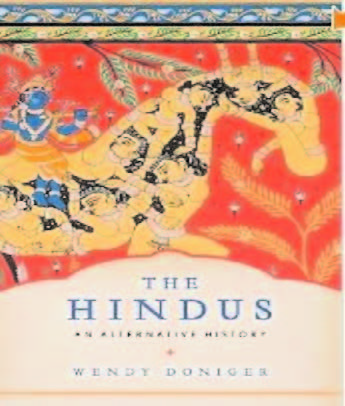
  • Wendy Doniger’s book on Hinduism; a Muslim’s Perspective

    Wendy Doniger’s book on Hinduism; a Muslim’s Perspective

    As a Muslim, I stand with Rajiv Malhotra’s crusade to set the record straight. I understand what the faulty writings do; destroy the cohesiveness of a given society and its world”, says the author

    On March 5, 2010, I wrote, “The book: ‘Hindus, An Alternate History’ is out now. Wendy Doniger writes on Indian history laden with errors,. The petition points out specific mistakes and if you agree with the contents please sign; my signature is # 5935.” Today, on February 18, 2014, I looked at the Petition again, and it’s a disappointing number: 11,020.

    I am right in the middle after four years of signatures. Everyone had dropped the ball. As members of the civil societies we cannot perpetuate the errors and pass these on to the next generation as facts. It is our responsibility to highlight the errors, and let the reader “beware clause” be added to the book that the facts are not verified, particularly when the book proclaims it to be an alternate history of Hinduism. Wendy Doniger is a popular author and the responsibility falls squarely on her shoulders to set the record right.

    The publishers need to add a note of caution; that it is her version of the history and not necessarily the absolute truth. It is still not too late to add that caveat in the electronic version of the book. Indeed, all history books revisited must contain that warning. A few clauses in the petition may not have any grounding, but overall, the book has well documented errors that need to be addressed. The following video is a must to understand the errors. It is 2:33:45 long, but covers the errors in good detail. https://www.youtube.com/watch?v=C tiARMXwI0Q As a Muslim, I stand with Rajiv Malhotra’s crusade to set the record straight.

    I understand what the faulty writings do; destroy the cohesiveness of a given society and its world. This was done to Quran as well, not the Arabic version, but the translation. The European Kings deliberately mistranslated the Quran in 1142 AD – to paint it in bad light and get their subjects worked up and fight for them against the invading Arabs. The Monastery of Abbey even coined the word Mohammadan to complete their propaganda.

    They frightened the Christians to fight against the “evil marauding” men from the desert, thus Islamophobia was born. Just like some of the European and American non-Hindu scholars of Hinduism have perpetuated the errors based on prejudices against Paganism, the Non-Muslim scholars have made the similar mistakes about Islam. The European and American scholars of Islam base their knowledge on those mistranslations. Unfortunately, even a Muslim has mistranslated it to do the opposite (www.QuraanConference.com). Just like the Hindus did nothing about it, Muslims did nothing either.

    They simply endured the abuse silently. All of this has come to the fore since 9/11, and work has begun on it. I have done my share of work and need to go on a crusade like Rajiv Malhotra to rekindle the pluralistic heritage embedded in Islam, as he did with Hinduism. Criticism of Prophet, Quran and Islam will not make them disappear; I will repeat Criticism of Hinduism will not make Hinduism disappear either. Islam is not going anywhere; prophet is not going anywhere, and by opening ourselves up to criticism, we will learn a lot more about our faith than we would ever know.

    We need to move away from intolerance to acceptance of a different point of view without having to agree with it. Prophet Muhammad lived through it and Muslims can learn from his examples. The best way to combat anything in life is to produce a better product- said Prophet Muhammad, which we successfully employed against Pastor Jones challenge to burn 2998 Quran copies. Rajiv Malhotra has done a similar thing in response to Wendy Doniger’s book. I am glad to read both sides of the issues – that’s what ups us to see things rationally. I watched the Video, it is good as well.

    Indeed, some of the references made in the book were pulled out of thin air. However, forcing the book to be withdrawn goes against the God given right to free speech, just as the fatwa against Satanic Verses by Salman Rushdie is wrong. The right thing to do is publish a book to counter it – as is done by Rajiv Malhotra. The real issue is freedom of press. No matter how bad and ugly it is, freedom is the right way to guard all in the end. I have opposed any censorship of freedom of expression. If we introduce discretion, then it will create more problems.

  • PLACES THAT DEFINE KOLKATA

    PLACES THAT DEFINE KOLKATA

    Fringing the Hooghly River, the city of Kolkata has a rich lineage in culture, history and cuisine, and a versatile ability to keep up with changing times. The capital of West Bengal and the birthplace of Indian communism, the city has many monikers – some perceive it as the ‘cultural capital of India’, while others know it as the ‘city of processions’ and yet more call it the ‘city of joy’.

    Through a long association with the British, there is much to show for its years as the showpiece capital of colonised India with its marvellous Victorian architecture which stand tall as testimonials to its past. The city of Kolkata is full of sights and sounds that reveal traces of its colonial past. From Gothic architecture to science parks, the city is full of experiences that will humour every kind of traveller.

    BOTANICAL GARDEN
    Known for its 250-year-old Great Banyan Tree, this ‘East India Company Bagan’ is nearly two centuries old and is the largest and oldest in South East Asia

    SHAHEED MINAR
    Famously called the ‘cloud kissing monument’ by Mark Twain, the Shaheed Minar stands tall at Esplanade in Central Kolkata

    MARBLE PALACE
    The Marble Palace is an architectural wonder built by Zamindar Raja Rajendralal Mullick in 1840

    ST PAUL’S CATHEDRAL
    Streaks of European architecture are apparent at the St Paul’s Cathedral which is one of the finest examples of Indo-Gothic fusion with its large stained-glass windows and Florentine frescos

    BELUR MATH
    This breath-taking place is scattered with numerous shrines with manicured lawns that line the riverbank

    SCIENCE CITY
    Satisfy your curiosity about the world of science at Science City, the largest science centre in India

    NALBAN
    Located in Salt Lake in the outskirts of Kolkata, this placid lake surrounded by lush greenery, offers picnickers an option to go boating

    JORASANKO THAKUR BARI
    Rabindranath Tagore’s ancestral home which was built in 1784 now houses the Rabindra Bharati museum which is locally called the Jorasankho Thakurbari

    PRINCEP GHAT
    Named after orientalist James Princep, the Princep Ghat is perhaps the oldest recreational spot in Kolkata.

    FORT WILLIAM
    Not only was Kolkata a British stronghold, it was also the main centre for Indian Army operations after independence. The majestic Fort William was constructed in 1781 in the honour of King William III. Situated on the picturesque banks of the Hooghly, it stands tall as a testimony to all the suffering, defeats and victories of the past.

    Constructed in an octagonal shape the fort houses the famous St. Peter’s Church in addition to army accommodation, offices, and recreation and training facilities including a swimming pool, a movie hall, a boxing stadium and a firing range.

    HOWRAH BRIDGE
    Much like the Bay Bridge in San Francisco, the Howrah Bridge is a landmark that has become the very identity of Kolkata. Popularly referred to as Rabindra Setu and even the gateway of Kolkata, this structure has become the face of the city owing to its grandeur and majestic appeal.

    15

    Connecting the city to the Howrah district, this steel structure runs 705 metres long and has eight lanes for traffic. It is said that over a lakh vehicles and 20 lakh commuters cross over it everyday. Illuminated by night, it is a sight to behold.

    VICTORIA MEMORIAL
    One of the everlasting impressions that stay with you long after you’ve left the City of Joy, is the gleaming white Victoria Memorial surrounded by lush greenery and wide roads. It was built to commemorate Queen Victoria’s diamond jubilee in 1901, but was completed only two decades later.

    It has been built it the Indo-Saracenic architectural style by Sir William Emerson, and makes extensive use of white marble. It exhibits an impressive collection of colonial-era paintings, manuscripts and other memorabilia, which provide interesting insights into Indian history right from the arrival of the British, up to independence.

    KALIGHAT
    The best known of Mother Teresa’s many homes and clinics, is Nirmal Hriday in Kolkata, which is a hospice for destitutes. In the face of local resistance, Mother Teresa chose its site at Kalighat – Kolkata’s most important centre of Hinduism – in the knowledge that many of the poor specifically come here to die, next to a holy crossingplace.

    However, the area’s most famous landmark is the temple dedicated to the goddess Kali. The temple itself is hidden behind narrow alleys lined with shops, and generally thronging with devotees throughout the year. In the 19th-century, the neighbourhood around the temple also gave rise to the Kalighat school of painting.

    Nearest Airport: Netaji Subhas Chandra Bose International Airport
    Best Time to Visit: November – February
    Currency: Indian Rupee
    Languages: English, Bengali
    Festivals: Durga Pooja

  • US raps India on SC cop-out on gay sex

    US raps India on SC cop-out on gay sex

    WASHINGTON (TIP): The Obama administration on December 11 came out sharply against the Indian Supreme Court’s decision that has led to re-criminalizing gay sex, and urged New Delhi to advance freedom, including rights for LGBTs. There was no ducking the issue with the boilerplate “it’s an internal matter for India to consider” when the Indian apex court’s ruling came up at the state department briefing. “We oppose any action that criminalizes consensual same-sex conduct between adults. LGBT rights are human rights … we call on all governments to advance equality for LGBT individuals around the world,” spokesperson Jen Psaki said bluntly.

    The United States, she added, places great importance on the protection of human rights and fundamental freedoms of all people, and that includes lesbian, gay, bisexual, and transgender (LGBT) persons around the world. Unlike the Bush administration, which was weighed down by conservative values, and the Clinton administration before that which was constrained by social mores of the last century, the Obama administration has been in tune with the changing public sentiment on LGBT issues. Opposition to same-sex marriage in US is dropping all the time and polls now show a majority of Americans (52 per cent in a recent poll) would vote in favor of a law legalizing gay marriage in the country. Even US lawmakers, including many Republicans, are starting to change their tune. It came as no surprise that the Indian Supreme Court decision figured in foreign secretary Sujatha Singh’s exchanges on Capitol Hill with New York’s democratic congressman Joe Crowley, co-chair of the India Caucus, who has a strong record on LGBT rights, raising the issue.

    There was also widespread dismay and condemnation of the SC ruling from USbased LGBT groups and even advocates of Indian cultural values, most notably the Hindu-American Foundation (HAF), which saw the decision as a legacy of India’s colonial past rather than any religious stricture. Expressing disappointment at the apex court decision, HAF spokesman Harsh Voragunti said Section 377 of IPC which criminalizes even consensual gay sex is “based on arcane, Victorian mores … and does not reflect the understanding of many contemporary Hindu lay and spiritual leaders who emphasize the teachings of every individual’s inherent divinity — be they heterosexual or homosexual.”

    HAF, he said, has repeatedly taken a stand in support of equal rights for LGBT individuals in the United States, from joining an amicus brief asking the Supreme Court to strike down the Defense of Marriage Act (DoMA) to advocating for the passage of the Employment Non-Discrimination Act (ENDA) which is current making its way through the US Senate. The Foundation’s policy brief on the subject maintains that Hinduism provides no spiritual basis to discriminate against homosexuals and also does not provide a basis for broad-based punishments. “The essential core of Hindu teachings is that an individual’s value is not based on his or her sexual orientation, but on one’s ability to transcend the body, senses, and ego,” says Swaminathan Venkataraman, an HAF’s Director who developed the brief. “And unlike many interpretations of Abrahamic scripture, Hinduism does not provide a fundamental spiritual reason to reject or ostracize homosexuals.”

    The brief says it would like to evolve a uniquely Hindu perspective on this issue rather than follow existing social mores blindly and end up aping the Semitic religions. “We feel comfortable anchoring ourselves to the eternal truths of our religion and letting social practices change with time as they indeed have on so many other matters,” the brief said. Change with the times is also what a growing South Asian LGBT community in the US is chiming. Candlelit vigils are planned before Indian missions by South Asian LGBT organizations, including the oldest of them, Trikone in the Bay Area, which said in reference to the Supreme Court judgment that it wanted “to show light to those who have lost their way.” There was also editorial condemnation. New York Times called the Supreme Court’s decision “disgraceful,” and said its statement inviting Parliament to amend the law is “disingenuous.” “Given the fractious nature of India’s Parliament, the conservative views of many of its members, and the political stakes in the run-up to general elections next spring, the Legislature is unlikely to take up this issue on its own,” it said. “Prime Minister Manmohan Singh now has an opportunity to leave a lasting legacy of progress before his government steps down next spring. His cabinet should act immediately to seek a repeal of Section 377. This 1861 law has no place in a 21st-century democracy,” it added.

  • CELEBRATIONS AROUND THE WORLD

    CELEBRATIONS AROUND THE WORLD

    Diwali is also celebrated outside of India mainly in Guyana, Fiji, Malaysia, Nepal, Mauritius, Myanmar, Singapore, Sri Lanka, Trinidad & Tobago, Britain, Indonesia, Japan, Thailand, Africa, Australia and the US among the Hindus across the world.

    Britain
    The Indians are the second largest ethnic minority in Britain. To get rid of the feeling of missing their homeland, especially during festival times, the Indians here celebrate most of the festivals. The occasion is marked by visit to the local temple to worship the shrine of Lakshmi, which they have made for Diwali. Eating special sweets, burning of incense sticks, lighting the home and surroundings and the blowing of the conch shell follows the prayer session in the Lakshmi temple. The festival here is celebrated according to the Hindu solar calendar hence it falls in the months of October-November, amongst the cold, damp and windy months in Britain. Still the enthusiasm of the festival celebration makes the task of leaving small lamps on windowsills or by open doorways possible ignoring the chill. The lamps and diyas play their part in maintaining the atmosphere of Diwali at home.

    Guyana
    Guyana, formerly known as British Guiana, is located on the northeast coast of South America. Guyana is 82,978 square miles in area and has a population of about 7,70,000. Hindus constitute 33% of Guyana’s total population. The Co-operative Republic of Guyana in Southern America celebrates Diwali according to the Hindu Solar calendar. The day of the festival is declared as a national holiday in the official calendar of Guyana. The tradition of celebrating the festival is believed to have been brought to Guyana in the year 1853 by the first indentured people from India.

    The legends related to the festival are similar to that of India. The celebration of the festival includes, distribution of sweets, illuminating the inside and outside of the house, exchange of greetings, cleaning of houses and wearing of new clothes. The celebrations hold special significance for the people of Guyana. The distribution of sweet signifies the importance of serving and sharing whereas exchange of greeting cards denotes the goodwill of each other.

    The sweets distributed mainly consist of pera, barfi, and kheer. The tradition of wearing new cloth for the people of Guyana is significant especially in this festival. They believe that wearing new cloth is the symbol of healthy souls in healthy bodies. Cleaning of their homes and keeping them well illuminated in and outside is a practice meant to illuminate the road for Goddess Lakshmi so that while goddess Lakshmi visits their home she faces no problem of light as the Diwali night is regarded as the darkest night of the year.

    Indonesia
    The name Indonesia came from two Greek words: “Indos” meaning Indian and “Nesos” meaning islands. The majority of population follows Islam. Hindus constituent about 2% of Indonesia’s total population. However, the Indonesian island of Bali is famous for celebrating the festival of Diwali, as a majority of the population here is that of Indians. It is one of the most revered festivals of the locals here. The celebration and rituals of the festival is mostly similar to that celebrated by their counterparts in India.

    Malaysia
    Fascinating in its diversity, Malaysia has many mesmerizing charms and attractions. With a population of about 20 million, comprising of a harmonious multi-ethnic mix of Malays, Malaysia promises a colorful potpourri of cultural traditions. Most are based on the various religious practices, beliefs and traditions influencing the costumes, festivals, ceremonies and rituals. The Hindu community of Malaysia constitutes about 8% of its total population .The community celebrates Diwali as a symbol of triumph of good over evil. The Malaysian people call Diwali as Hari Diwali.

    This festival is celebrated during the 7th month of the Hindu solar calendar. The south Indian traditional of oil bath precedes the festivities. The celebration includes visits to temples and prayers at household altars. Small lamps made from clay and filled with coconut oil and wicks are a common sight to signify the victory of Lord Rama, the hero of the Hindu epic Ramayana, over the demon king Ravana. Diwali is celebrated almost all over the Malaysia except in Sarawak & Federal Territory of Labuan.

    Mauritius
    Mauritius is an island in the Indian Ocean that lies to the east of Madagascar. This beautiful landmass is full of picturesque landscapes and enchanting spots. Mauritius accounts a 63% of Indian majority of which 80% follow Hinduism. Hence, celebration of almost all the Hindu festivals in this island is a common phenomenon. In Mauritius, Diwali celebration is an age-old tradition. It holds special significance for the natives, who believe that Diwali has been celebrated even long before the return of Lord Rama from 14 years of exile and his coronation as the king. The festival is marked by lightening of earthen lamps in rows making images out of the rows. Lakshmi is worshiped as the goddess of wealth and crackers are burnt to scare away evil spirits.

    Nepal
    Nepal is a landlocked country nestled in the foothills of the Himalayas. Nepal, a multi-ethnic and multi-lingual society is the only Hindu Kingdom of the world. Diwali is celebrated here with the usual Hindu festivities and rituals. Diwali in Nepal is known as Tihar. Just like most places in India Diwali is celebrated here to honor the goddess of wealth and god of prosperity Lakshmi and Ganesh respectively. The festival of light falls in the months of October or November on the day of Amavasya – the darkest day of the year. The festival here continues for five days. Every day has its special significance. The first day is dedicated to cows as they cook rice and feed the cows believing that goddess Lakshmi comes on cows. The second day is for Dogs as the Vahana of Bhairava.

    Preparation of delicious food especially meant for the dog is a typical characteristic of the day. Lights and lamps are lit to illuminate the entire surrounding and some of the specialty items are prepared to mark the third day of the festival. Fireworks, Lamps and crackers are widely used. The fourth day is dedicated to Yama, the Hindu God of Death. He is prayed for long life. The fifth final day is Bhhaya Dooj dedicated for the brothers who are wished long life and prosperity by their sisters.

    South Africa
    South Africa is located at the southern tip of the continent of Africa. It is a mix of cultures and has one of the largest immigrant Indian communities in the world. The country has almost one million immigrant Indians. Most of these Indian immigrants are concentrated in the eastern regions of Natal and Transvaal of the country. About 65% of Hindus, 15% of Muslims and 20% of Christians live in this area. Due to the majority of the Hindu population, a number of Hindu festivals are celebrated here. Diwali also holds an important place in the festival calendar of the region. The celebration is more or less same to that in India. Most of the Hindus here are from Gujarat and Tamil Nadu and continue to follow their regional variations of Hinduism.

    Trinidad & Tobago
    Trinidad is the most southern of the Caribbean islands, lying only seven miles off the Venezuelan coast, is one of the most exciting, colorful islands of the West Indies. Considered as the land of the Humming Bird, Trinidad and Tobago has a good number of Indian population. For that reason, Hindu festivals, customs, traditions and observances forms an integral part of the society, which comprises the unique beauty of the twin island state. The Diwali celebration has a unique flavor here in the Caribbean island nation. Here 43 per cent of the 1.3 million populations are ethnic Indians. The Diwali celebrations are usually marked as an occasion to unify the nation that consists of Hindus, Muslims, Christians, Indo-Trinidadians and Afro- Trinidadians.

    The festival day is regarded as a national holiday. The festival is also marked by scores of functions besides the usual rituals of the festivity. The functions and celebrations also have an official imprint as the Ministers of the Government also participate in the celebrations sometimes. The belief behind the festival is same as of India, which is, prevalence of good over evil. The celebrations continue for over a week and the headquarters of the National Council of Indian Culture at Diwali Nagar becomes the focal point.

    America
    Diwali is one of the biggest Hindu festivals celebrated among many people and communities in the United States. Many schools, community groups, Hindu associations, Indian organizations and corporate businesses get involved in celebrating Diwali. Politicians, including governors and past presidents, previously made public announcements expressing their greetings and well wishes to Hindus on Diwali. Many Indian stores sell jewelry and traditional outfits, such as chiffon saris, as well as statues of Hindu deities and incent sticks used in prayer around this time of the year. Many women and girls use mehendi, which is a temporary henna decoration, on their palms. It is also common to wear fine jewelry and silk outfits to celebrate this joyous festival.

  • The Essence of Diwali

    The Essence of Diwali

    The DFW Indian Cultural Society’s mega event-the Diwali Mela- is being organized on November 2 at Cotton Bowl. It will be the 8th super mela in a row. As our tribute to the grand event, we bring to our readers an article on Diwali specially written for The Indian Panorama by Mike Ghouse, a noted literateur and journalist. Read on.


    img8

    Diwali is the Indian festival of lights and is celebrated on a large scale throughout India and the Indian Diaspora. It is also celebrated in Nepal, Sri Lanka, Myanmar, Bangladesh, Malaysia, Singapore, Guyana, West Indies, Fiji, and of course, here in the United States. Thanks to the Gupta’s for placing Dallas on the World Map of Diwali Celebrations.

    I believe it is one of the biggest celebrations in the United States, if not the biggest in the western Hemisphere. Ramesh Gupta initiated the event eight years ago, fully supported, encouraged and funded by the Dallas billionaire couple Satish and Yasmin Gupta.

    DFW Indian Cultural Society (DFW ICS) made its debut on the Dallas scene with the very first “Diwali Mela 2006”, which drew over 38,000 people to Texas Stadium. . Attendance has been increasing every year and is currently at an impressive figure of over 70,000. Diwali Mela has become an annual signature event for DFW IC


    img10
    The inauguration of an earlier Diwali Mela

    DFW ICS has a strong commitment to the community which is reflected in the variety projects that it has undertaken, such as organizing the Diwali Mela, entertainment programs, sponsoring the Medical Clinics in Plano and Lewisville, for the uninsured and has recognized the contribution of teachers to the community by giving cash rewards.

    DFW ICS has supported multiple non-profit organizations throughout metropolis. Under the leadership of Satish Gupta, DFW ICS is moving forward by organizing various programs and dedicating itself to serving the needs of the communities in the Dallas Fort Worth area


    img9
    Huge gathering in Cotton Bowl

    Nearly 50,000 people attend the event. First it was held in Texas Stadium, former home of the Dallas Cowboys and now it is held at the Cotton Bowl Stadium in Fair Park, Dallas, where college football is played and home to Texas State Fair. There is nothing like it.

    Satish Gupta, president of the organizations writes this information on their website, http://www.dfwdiwalimela.com/, “This year again we have decided to pack all the fun for children, youth, adults and seniors. From Ram Leela and Bollywood singers to spectacular fireworks, elephant rides to slides, Cultural dances to mouth watering Indian food, all packed in one of the biggest Carnival of its kind in America. There will be three elephants and two camels available for the rides this year! We bring all this to you at a very minimal cost to you.”


    img11
    The moving spirit behind the Diwali Mela, Satish Gupta, President of DFW Indian Cultural Society

    “The large number of people the Carnival attracted in the past years is a testimony to its success. The number of attendees keeps growing and it presents an important platform for a quick reach to the Asian Community of Dallas Fort worth and the nearby cities of Texas.

    We would like to thank all our Sponsors who support us in this huge task. The purpose of this message is to request you to come with your family and friends and make the event a grand success. Your participation will go a long way in promoting our culture to the kids and youths of our community.” Diwali is spelled differently, and is called by many names.

    There is Divali among others, and Deepavali, meaning the festival of lights. Although Diwali is a Hindu tradition, people of all faiths participate in celebrations – Hindus, Jains, Muslims, Sikhs, Christians, Buddhists, Zoroastrians and others. People decorate their homes with lights and Rangoli, i.e., colorful drawing in the front yard of the home, sidewalks, even roads in India with colorful powders or colorful pieces of chalk.

    Women and Children look forward to express their artistic talent in this season. Their surroundings filled with colorful lights to enliven the day, to mark the dawn of a new era in one’s life. My childhood is filled with good memories of Diwali; the sparklers, the food and everything joyous you can imagine.

    A few years ago, Jyoti and Nishi Bhatia, former President of DFW Hindu Temple and President of Dallas Hindi Association respectively, asked me to speak about Diwali in a dinner gathering to a group of people from different faiths and cultures, and I cherished it, I love talking about Diwali, as its essence reflects the ideals of pluralism, and symbolizes hope and positive energy, victory of good over evil; a new beginning.

    It is indeed seeing the light at the end of tunnel. Diwali Celebration is a part of the epic Ramayana, and the Ram Lila is played out all night long in towns across India. I grew up watching it in front of my house, and my friends played different roles in the show. Indeed, one of my former relatives played Hanuman’s role.


    img12
    Ramayan being enacted

    It was a challenge for me to teach Ramayana to a group of people who knew nothing about it. It turned out to be a successful program. I prepared the nearly all white audience that I will be narrating the story through the power point and along will be reinforcing the names and roles of the key persons in the story and will ask them for feed back at the end.

    Friends, I cannot tell you the joy, the Bhatias and I felt when each one of them answered the questions from the story. They got it! It is a powerful story and takes about 30 minutes to narrate. The epic is filled with educative tales, edifying poems, and fables. It is probably through their constant retelling in the villages over centuries that Hinduism is most efficiently disseminated from generation to generation


    img13
    Ravana’s effigy is set on fire

    Whenever a society rots with adharma (wrong path), where no one cares about the other, lying, stealing and dishonesty become rampant, Lord Krishna says, I will emerge among you and restore the righteousness and trust in the society to function smoothly.

    Zarathustra, Moses, Jesus, Buddha, Muhammad, Krishna, Nanak, Mahavira, Confucius, Tao and others served the same purpose… it is almost like the laws of physics ; water finds its own level, and righteousness finds its own existence. Rama is one such incarnation who reestablished the moral code for social conduct and proper relation of mankind to divinity. He was truthful and a just king. Diwali symbolizes hope and positive energy

    ● People wear new clothes
    ● Share sweets as a symbol of happiness
    ● Renew the relationships
    ● Strengthen the bonds It signifies a new beginning, starting out fresh.
    ● for most businesses it is the new financial year
    ● An inventory of assets is taken
    ● An assessment of family and relationship
    ● Last harvest for the farmers
    ● New things are bought

    President Obama in his message last Diwali said it perfectly,
    “Many who observe this holiday will light the Diya, or lamp, which symbolizes the triumph of light over darkness and knowledge over ignorance.

    As that lamp is lit, we should all recommit ourselves to bring light to any place still facing darkness. Earlier this year, we were reminded of the evil that exists in the world when a gunman walked into the Sikh Gurdwara in Oak Creek, Wisconsin and opened fire.

    In the wake of that horrible tragedy, we saw the resilience of a community that drew strength from their faith and a sense of solidarity with their neighbors, Sikh and non-Sikh alike. We also saw compassion and love, in the heroic actions of the first responders and the outpouring of support from people across the country. Out of a day of sadness, we were reminded that the beauty of America remains our diversity, and our right to religious freedom. To those celebrating Diwali, I wish you, your families and loved ones Happy Diwali and Saal Mubarak.”


    img14

    Today, on this blessed day, we have a blank slate to start, let’s plan on filling it with doing good things for ourselves, to our family, friends, community, nation and the world until next Diwali. What are good things? Words and actions that bring peace, Mukti, salvation, Moksha, nirvana, Nijaat and freedom to us, yes us.

    There is so much of joy waiting to be had. If we can remove hatred and anger towards others, forgive others and ask for forgiveness (Michami Dukadam is a beautiful phrase the Jain’s use), then a blissful year is sure to come for each one of you and me.
    ● May this Diwali purge your heart, mind and soul from hate, malice, anger and ill-will;
    ● May this Diwali open your hearts and minds towards fellow being;
    ● May this Diwali brighten your life, and may this Diwali mark the dawn of a new era; Muslims are a big part of Diwali as well, and innumerable poets have written poetries and songs about Diwali.

    Here is my effort, I wrote this seven years ago on the occasion when Diwali and Ramadan were celebrated around the same time.

    A meri diwali hai, a meri eid hai donon may khushi hi khushi hai Diwali say naya saal shuru hota hai Ramzan ek naya insaan banata hai Diwali may ek baat ka hisab hota hai Ramzan may her baat ka review hota hai Diwali nayay saal ke liye clean slate deta hai Ramzan pichlay saal ki slate clean karta hai Baat hi baat may, my nay a sher likh diya Sahir Diwali aur Ramzan say subka acha hi hota hai Shubh kamnaein | Diwali Mubarak | Blessed Diwali. Happy Diwali to you my friends, may this Diwali bring happiness, serenity and peace to you. Amen!

  • CELEBRATIONS AROUND THE WORLD

    CELEBRATIONS AROUND THE WORLD

    Diwali is also celebrated outside of India mainly in Guyana, Fiji, Malaysia, Nepal, Mauritius, Myanmar, Singapore, Sri Lanka, Trinidad & Tobago, Britain, Indonesia, Japan, Thailand, Africa, Australia and the US among the Hindus across the world.

    Britain
    The Indians are the second largest ethnic minority in Britain. To get rid of the feeling of missing their homeland, especially during festival times, the Indians here celebrate most of the festivals. The occasion is marked by visit to the local temple to worship the shrine of Lakshmi, which they have made for Diwali. Eating special sweets, burning of incense sticks, lighting the home and surroundings and the blowing of the conch shell follows the prayer session in the Lakshmi temple. The festival here is celebrated according to the Hindu solar calendar hence it falls in the months of October-November, amongst the cold, damp and windy months in Britain. Still the enthusiasm of the festival celebration makes the task of leaving small lamps on windowsills or by open doorways possible ignoring the chill. The lamps and diyas play their part in maintaining the atmosphere of Diwali at home.

    Guyana
    Guyana, formerly known as British Guiana, is located on the northeast coast of South America. Guyana is 82,978 square miles in area and has a population of about 7,70,000. Hindus constitute 33% of Guyana’s total population. The Co-operative Republic of Guyana in Southern America celebrates Diwali according to the Hindu Solar calendar. The day of the festival is declared as a national holiday in the official calendar of Guyana. The tradition of celebrating the festival is believed to have been brought to Guyana in the year 1853 by the first indentured people from India. The legends related to the festival are similar to that of India. The celebration of the festival includes, distribution of sweets, illuminating the inside and outside of the house, exchange of greetings, cleaning of houses and wearing of new clothes. The celebrations hold special significance for the people of Guyana. The distribution of sweet signifies the importance of serving and sharing whereas exchange of greeting cards denotes the goodwill of each other. The sweets distributed mainly consist of pera, barfi, and kheer. The tradition of wearing new cloth for the people of Guyana is significant especially in this festival. They believe that wearing new cloth is the symbol of healthy souls in healthy bodies. Cleaning of their homes and keeping them well illuminated in and outside is a practice meant to illuminate the road for Goddess Lakshmi so that while goddess Lakshmi visits their home she faces no problem of light as the Diwali night is regarded as the darkest night of the year.

    Indonesia
    The name Indonesia came from two Greek words: “Indos” meaning Indian and “Nesos” meaning islands. The majority of population follows Islam. Hindus constituent about 2% of Indonesia’s total population. However, the Indonesian island of Bali is famous for celebrating the festival of Diwali, as a majority of the population here is that of Indians. It is one of the most revered festivals of the locals here. The celebration and rituals of the festival is mostly similar to that celebrated by their counterparts in India.

    Malaysia
    Fascinating in its diversity, Malaysia has many mesmerizing charms and attractions. With a population of about 20 million, comprising of a harmonious multi-ethnic mix of Malays, Malaysia promises a colorful potpourri of cultural traditions. Most are based on the various religious practices, beliefs and traditions influencing the costumes, festivals, ceremonies and rituals. The Hindu community of Malaysia constitutes about 8% of its total population .The community celebrates Diwali as a symbol of triumph of good over evil. The Malaysian people call Diwali as Hari Diwali. This festival is celebrated during the 7th month of the Hindu solar calendar. The south Indian traditional of oil bath precedes the festivities. The celebration includes visits to temples and prayers at household altars. Small lamps made from clay and filled with coconut oil and wicks are a common sight to signify the victory of Lord Rama, the hero of the Hindu epic Ramayana, over the demon king Ravana. Diwali is celebrated almost all over the Malaysia except in Sarawak & Federal Territory of Labuan.

    Mauritius
    Mauritius is an island in the Indian Ocean that lies to the east of Madagascar. This beautiful landmass is full of picturesque landscapes and enchanting spots. Mauritius accounts a 63% of Indian majority of which 80% follow Hinduism. Hence, celebration of almost all the Hindu festivals in this island is a common phenomenon. In Mauritius, Diwali celebration is an age-old tradition. It holds special significance for the natives, who believe that Diwali has been celebrated even long before the return of Lord Rama from 14 years of exile and his coronation as the king. The festival is marked by lightening of earthen lamps in rows making images out of the rows. Lakshmi is worshiped as the goddess of wealth and crackers are burnt to scare away evil spirits.

    Nepal
    Nepal is a landlocked country nestled in the foothills of the Himalayas. Nepal, a multi-ethnic and multi-lingual society is the only Hindu Kingdom of the world. Diwali is celebrated here with the usual Hindu festivities and rituals. Diwali in Nepal is known as Tihar. Just like most places in India Diwali is celebrated here to honor the goddess of wealth and god of prosperity Lakshmi and Ganesh respectively. The festival of light falls in the months of October or November on the day of Amavasya – the darkest day of the year. The festival here continues for five days. Every day has its special significance. The first day is dedicated to cows as they cook rice and feed the cows believing that goddess Lakshmi comes on cows. The second day is for Dogs as the Vahana of Bhairava. Preparation of delicious food especially meant for the dog is a typical characteristic of the day. Lights and lamps are lit to illuminate the entire surrounding and some of the specialty items are prepared to mark the third day of the festival. Fireworks, Lamps and crackers are widely used. The fourth day is dedicated to Yama, the Hindu God of Death. He is prayed for long life. The fifth final day is Bhhaya Dooj dedicated for the brothers who are wished long life and prosperity by their sisters.

    South Africa
    South Africa is located at the southern tip of the continent of Africa. It is a mix of cultures and has one of the largest immigrant Indian communities in the world. The country has almost one million immigrant Indians. Most of these Indian immigrants are concentrated in the eastern regions of Natal and Transvaal of the country. About 65% of Hindus, 15% of Muslims and 20% of Christians live in this area. Due to the majority of the Hindu population, a number of Hindu festivals are celebrated here. Diwali also holds an important place in the festival calendar of the region. The celebration is more or less same to that in India. Most of the Hindus here are from Gujarat and Tamil Nadu and continue to follow their regional variations of Hinduism.

    Trinidad & Tobago
    Trinidad is the most southern of the Caribbean islands, lying only seven miles off the Venezuelan coast, is one of the most exciting, colorful islands of the West Indies. Considered as the land of the Humming Bird, Trinidad and Tobago has a good number of Indian population. For that reason, Hindu festivals, customs, traditions and observances forms an integral part of the society, which comprises the unique beauty of the twin island state. The Diwali celebration has a unique flavor here in the Caribbean island nation. Here 43 per cent of the 1.3 million populations are ethnic Indians. The Diwali celebrations are usually marked as an occasion to unify the nation that consists of Hindus, Muslims, Christians, Indo-Trinidadians and Afro- Trinidadians. The festival day is regarded as a national holiday. The festival is also marked by scores of functions besides the usual rituals of the festivity. The functions and celebrations also have an official imprint as the Ministers of the Government also participate in the celebrations sometimes. The belief behind the festival is same as of India, which is, prevalence of good over evil. The celebrations continue for over a week and the headquarters of the National Council of Indian Culture at Diwali Nagar becomes the focal point.

    America
    Diwali is one of the biggest Hindu festivals celebrated among many people and communities in the United States. Many schools, community groups, Hindu associations, Indian organizations and corporate businesses get involved in celebrating Diwali. Politicians, including governors and past presidents, previously made public announcements expressing their greetings and well wishes to Hindus on Diwali. Many Indian stores sell jewelry and traditional outfits, such as chiffon saris, as well as statues of Hindu deities and incent sticks used in prayer around this time of the year. Many women and girls use mehendi, which is a temporary henna decoration, on their palms. It is also common to wear fine jewelry and silk outfits to celebrate this joyous festival.

  • Council Member Daniel Dromm leads demand for Diwali as School Holiday

    Council Member Daniel Dromm leads demand for Diwali as School Holiday

    NEW YORK (TIP): Council Member Daniel Dromm (D-Jackson Heights, Elmhurst), along with several elected officials and community members, are demanding that the Department of Education designate the Hindu, Jain, Buddhist and Sikh holiday of Diwali as an official day off for public school students. “There are tens of thousands of public school students in New York City who celebrate Diwali,” CM Dromm said. “These students must pick between attending class or spending the day with their families, while students in the Christian and Jewish faiths do not have to make this decision when they celebrate holidays like Rosh Hashana and Christmas. There shouldn’t be this discrepancy. I urge the Department of Education to recognize this important holiday called Diwali.” “I would like to wish all New Yorkers a safe and happy Diwali,” state Senator Toby Stavisky (D-Flushing) said. “With the South Asian population growing quickly in my district and across the city, more and more parents unfortunately have to make the tough choice between celebrating an important holiday or sending their children to school.

    I urge the City Council to strongly consider Council Member Dromm’s resolution to designate Diwali as a public school holiday. As New Yorkers and Americans what makes us special is our commitment to respecting new customs and I hope that the Council can follow through on this commitment for the over 200,000 Diwali celebrants that live in our great city.” “Diwali is one of our community’s key celebrations, and is deserving of the same respect from our school system as other religious days,” Assembly Member Michael Den Dekker (D-Jackson Heights) said. CM Dromm introduced a resolution to the City Council on July 24. Since then, 15 Council Members have signed on as cosponsors and several state elected officials have voiced their support. Diwali or Deepavali, known as the festival of lights, wherein millions of celebrants worldwide light lanterns to symbolize inner light to dispel ignorance and darkness, is a five-day festival that begins on the 13th day of the Hindu month of Kartik. It is the most important festival on the Hindu calendar.

    For Sikhs, Diwali is the day the Mughal Emperor released Hargobind, the revered sixth Guru, from captivity. For Jains, Diwali marks the anniversary of the attainment of moksha, or liberation, by Mahavira, who was the last of the Tirthankaras, or the great teachers of Jain dharma. Some Buddhists celebrate Diwali to commemorate the day King Ashok converted to Buddhism. According to the Census Bureau’s 2011 American Community Survey, there were 207,414 New York City residents who identify themselves as Asian Indian, of which many are adherents of Hinduism, Sikhism, Jainism or Buddhism. Despite the large number of Hindus, Sikhs, Jains, and Buddhists in New York City, Diwali is not recognized as a school holiday in the city’s public school system. The DOE closes for Christmas, Rosh Hashanah and Easter. Those who celebrate Diwali should be given the same respect. “To me, Diwali’s message of ‘Light over Darkness’ means eliminating ignorance and discrimination of every kind. Diwali’s row of diyas is very significant. It is the row of diyas, their unity and unified light that beats the darkness – not one diya alone. Its togetherness – Diwali’s hidden message of necessary unity,” said Ranju Batra, Chair of the Diwali Stamp Project and President of Association of

    Indians in America-NY 2011-2013. “I celebrate Council Member Daniel Dromm and his Diwali School Holiday Resolution, and ask all good people to support it.” “Danny Dromm’s Diwali School Holiday Resolution 1863 is an American landmark to be achieved on the road to forming ‘ . . . a more perfect union.’ It is E Pluribus Unum in action. I call upon Mayor Bloomberg or the next Mayor to have the DOE observe Diwali as a school holiday, so that New York City’s principled action is followed across our land, in every town and city across America, and ‘equal protection of the law’ becomes a sweet reality. Danny Dromm is an American hero,” said Ravi Batra, attorney and chair of National Advisory Council on South Asian Affairs. “Chhaya CDC is very happy to support these efforts to make Diwali an official holiday in the city’s public schools,” said Seema Agnani, Executive Director at Chhaya CDC. “This is one of the more important holidays that is celebrated by millions across the globe. Chhaya also closes its doors on this day to mark the occasion so staff can celebrate with their families and friends. We are so lucky to have so much diversity in New York City and making Diwali an official holiday will serve to increase awareness about the communities here that celebrate the holiday.” The federal government has slowly given the important holiday more respect.

    In 2007, the United States House of Representatives passed a resolution recognizing the religious and historical significance of Diwali, and since 2009, the White House has held an annual Diwali celebration. The United States Postal Service has recently decided it will issue a Diwali commemorative stamp. On the city level the significance of Diwali is acknowledged by suspending alternate side parking rules on Lakshmi Puja, the third and most important day of the holiday. For years the Muslim community has petitioned that the important holidays of Eid Al Adha and Eid Al Fitr be a day off for public school students, but in 2009 a City Council approved resolution was not signed by Mayor Bloomberg. This year Diwali will be celebrated on Sunday, Nov. 3. Next year, the day falls on Oct. 23, a Thursday, and in 2015 on Wednesday, Nov. 11. In Jackson Heights, the community celebrated Diwali last Sunday on 74th Street, the heart of Little India in New York City. Council Members Inez Dickens, Charles Barron, Margaret Chin, Leroy Comrie, Vincent Gentile, Letitia James, Peter Koo, Karen Koslowitz, Rosie Mendez, Annabel Palma, Donovan Richards, Deborah Rose, Ydanis Rodriguez and Daniel Halloran support the resolution.

  • Sri Srinivasan takes oath holding Gita in hand

    Sri Srinivasan takes oath holding Gita in hand

    WASHINGTON (TIP): Sri Srinivasan, 46, was sworn in an overflowing court room by retired Supreme Court judge Sandra Day O’Connor, in the presence of legal luminaries, friends and families as his mother Saroja Srinivasan held the Gita, the sacred book of Hinduism, before him. Gursharan Kaur literally rushed from the airport with just a short halt at the hotel to watch the investiture of Srinivasan on the bench of the US Courts of Appeal for the District of Columbia Circuit. O’Connor, for whom Srinivasan once clerked, called him “fair, faultless and fabulous”. Confirmed by the US Senate in May by a 97 to 0 vote, Srinivasan was earlier principal deputy solicitor general of the US to which job he succeeded another Indian American, Neal Kumar Katyal, in August last year.

    Srinivasan came to the US with his parents in the 1970s at the age of four. His family settled in Lawrence, Kansas, where his father was a mathematics professor at the University of Kansas, and his mother taught at the Kansas City Art Institute. He received his BA with honors and distinction in 1989 from Stanford University and his JD with distinction in 1995 from Stanford Law School, where he was elected to Order of the Coif and served as an editor of the Stanford Law Review. Addressing the gathering, Srinivasan acknowledged the contribution of his parents and family on his achievements. Srinivasan was first nominated by Obama on June 11, 2012. On January 2, his nomination was returned to the President, due to the sine die adjournment of the Senate. On January 3, 2013, Obama re-nominated him for the same office. His appointment is a testimony to his credibility and caliber as a brilliant legal luminary of the US. Srinivasan was previously the Principal Deputy Solicitor General of the United States. He is a highly respected appellate advocate who has spent a distinguished career litigating before the US Supreme Court and the US Courts of Appeals, both on behalf of the United States and in private practice.

  • ENCYCLOPEDIA OF HINDUISM LAUNCHED

    ENCYCLOPEDIA OF HINDUISM LAUNCHED

    CHARLOTTE (TIP): South Carolina Governor Nikki Haley launched the Encyclopedia of Hinduism at the University of Southern California campus in the presence of Gandhian Anna Hazare and Indian Consul General in Atlanta Ajit Kumar. Hundreds of scholars, dignitaries, Hindu leaders, students and the public converged on the university’s campus to witness the release of the much anticipated and definitive 11- volume guide conceived, compiled and produced by the India Heritage Research Foundation and published by Mandala Publishing in California. The meet coinciding with the release featured some of most prominent Indian scholars who discussed the significance of the encyclopedia and the richness and diversity of Indian culture that binds more than one billion people worldwide. The event is the launch of the international edition of the Encyclopedia of Hinduism.

    His Holiness the Dalai Lama launched the Indian edition in April 2010 in Rishikesh. Dr. Harris Pastides, President of University of South Carolina (USC) said that he was humbled to see the encyclopedia being launched in his campus. “It is a deep honor to be participating in the American release of the Encyclopedia of Hinduism. This is a remarkable work of scholarship and research. I hope that many in academia and in everyday life will turn to it as a resource to better understand the characters, the tenets, and the impact that Hinduism has had, and is having in the world.” Consul General Ajit Kumar said India and Hindus all over the world are grateful to the University of South Carolina for the launch of the monumental work. The Comprehensive encyclopedia of one of the world’s major religions has 11-volume work covers Hindu spiritual beliefs, practices and philosophy, and is the culmination of a 25-year academic effort.

    The encyclopedia is written in English and includes about 7,000 articles on Hinduism and its practices. The work also deals with Indian history, languages, art, music, dance, architecture, medicine, and women’s issues. The entire encyclopedia contains more than 1,000 illustrations and photographs. Brightly colored images of Hinduism’s deities fill entire pages, with foot-noted explanations of the forms and powers God can take in the religion. “The goal was to have something pretty definitive – not just about Hinduism, but about the whole South Asian tradition,” said University of South Carolina professor Hal French, who met a small group of scholars in 1987 to offer academic support for the project. “This hadn’t really been attempted before,” said French an octogenarian distinguished professor emeritus of religious studies at the school and an associate editor. “It is a milestone of research that brought together both Eastern and Western scholarship.” French, who specializes in the religions of Asia and served as an associate editor of the encyclopedia, said the primary inspiration is one of India’s most revered spiritual leaders, Swami Chidanand Saraswati.

    The encyclopedia’s volumes run from 600 to more than 700 pages. Some 3,000 copies are being issued in the first printing and will be of interest to libraries, religious institutions, and those studying Indian culture around the world, French said. Board of Editors -Dr. Subhash Kak, Regents Professor of Computer Science, Oklahoma State University, Dr. V.V. Raman, emeritus professor of physics and humanities, Rochester Institute of Technology and senior fellow at Metanenexus Institute, Dr. Rama Rao Pappu, senior professor of philosophy at Miami University in Ohio and Dr. Ratna Lahiri, senior fellow, Encyclopedia of Hinduism spoke on the project dedicated to humanity. The encyclopedia is the brain child of Swami Chidanand Saraswati president of Parmarth Niketan Ashram in Hrishikesh and founder of the India Heritage Research Foundation. Swami Chidanand Saraswati said the idea of the encyclopedia was not to convert anyone to Hinduism but help others becoming a good citizen. It presents Hinduism as a living religion with application to modern times and contains over six million words and 10,000 original entries. “It’s for the parents who have no answers to the queries of their inquisitive children about Hinduism and gods and also to educate themselves on their own religion,” he said. Some of the subjects covered include art, architecture, iconography, painting, history, philosophy, language and literature, polity, spirituality, sciences, social institutions and spiritual disciplines.