

-
By TIP Team
If defense cooperation has become the backbone of the India-U.S. strategic partnership, science and technology have become its engine of growth. From Silicon Valley to Bengaluru, from semiconductor fabrication to artificial intelligence, and from the Moon to deep space exploration, India and the United States are building one of the world’s most dynamic innovation partnerships.
The two are not simply exchanging technology—they are increasingly creating it together.
From Technology Transfer to Technology Partnership
In the years following India’s economic liberalization in the 1990s, cooperation centered largely on education, software services, and research exchanges. Indian engineers helped power America’s technology revolution, while U.S. companies became major investors in India’s growing digital economy.
Today, the relationship has entered a new phase. Instead of a one-way flow of expertise, the two countries increasingly collaborate as innovation partners.
Joint research programs now cover AI, quantum computing, biotechnology, advanced materials, renewable energy, cybersecurity, telecommunications, and next-generation manufacturing.
This evolution reflects India’s emergence as a global innovation hub and America’s recognition that many of tomorrow’s technological breakthroughs will come through international collaboration.
The Silicon Valley-Bengaluru Connection
Perhaps nowhere is the partnership more visible than in technology.
Indian-origin CEOs lead some of America’s most influential technology companies, while thousands of Indian entrepreneurs have founded successful startups across the United States. At the same time, nearly every major American technology company has established research, engineering, and development centers in India.
The result is an innovation corridor connecting Silicon Valley, Seattle, Austin, Boston, Hyderabad, Pune, Chennai, and Bengaluru.
Ideas, investment, talent, and capital move in both directions.
Indian engineers contribute to breakthroughs in cloud computing, artificial intelligence, semiconductors, cybersecurity, and digital infrastructure, while American investment helps accelerate India’s expanding startup ecosystem.
Rather than competing, the two innovation systems increasingly complement one another.
Artificial Intelligence and Emerging Technologies
Artificial intelligence is becoming the defining technology of the 21st century, and India and the United States have every incentive to work together.
The United States remains a global leader in AI research, advanced chips, and frontier innovation. India contributes one of the world’s largest pools of software talent, rapidly expanding digital infrastructure, and enormous datasets capable of supporting AI applications in healthcare, agriculture, education, finance, and governance.
The bilateral Initiative on Critical and Emerging Technology (iCET) has become an important framework for cooperation in AI, quantum technologies, advanced telecommunications, defense innovation, biotechnology, and semiconductor ecosystems.
The objective is not only economic growth but also ensuring that democratic societies remain leaders in setting ethical standards and governance for rapidly evolving technologies.
Building the Semiconductor Ecosystem
Recent global supply chain disruptions revealed the strategic importance of semiconductor manufacturing.
Recognizing this challenge, India and the United States have significantly expanded cooperation in semiconductor research, fabrication, workforce development, and supply-chain resilience.
American companies are increasing investments in India’s semiconductor ecosystem, while Indian universities are expanding engineering education in chip design and electronics manufacturing.
This cooperation serves economic as well as strategic purposes. Secure semiconductor supply chains are now considered essential for everything from smartphones and automobiles to defense systems and medical equipment.
For both nations, reducing dependence on concentrated manufacturing hubs has become a shared priority.
Clean Energy Through Science
Climate change has become another major area of scientific collaboration.
India and the United States are working together on renewable energy technologies, battery storage, hydrogen fuels, carbon capture, smart electric grids, and energy-efficient manufacturing.
Joint research institutions bring together scientists from both countries to develop affordable clean-energy solutions that can be deployed not only in India and the United States but across the developing world.
India’s ambitious renewable energy targets and America’s advanced research capabilities create opportunities for long-term collaboration that addresses both environmental and economic challenges.
The transition to clean energy will require breakthroughs in science as much as political commitment.
Space: From Competition to Collaboration
Perhaps no field better symbolizes the transformation of India-U.S. relations than space exploration.
Only a generation ago, cooperation in sensitive space technologies was limited by export controls and political mistrust.
Today, NASA and ISRO work together across multiple areas, including Earth observation, climate science, satellite navigation, planetary exploration, and human spaceflight.
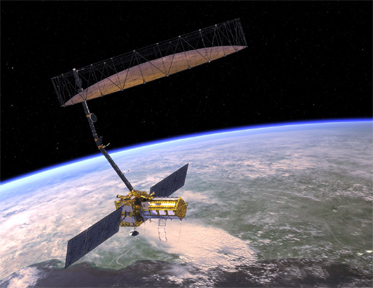
One of the landmark projects is the NASA-ISRO Synthetic Aperture Radar (NISAR) mission, designed to map Earth’s changing surface with unprecedented precision. The satellite will help scientists monitor earthquakes, glaciers, forests, agriculture, coastal changes, and natural disasters around the globe.
The mission demonstrates how scientific collaboration can directly improve lives by strengthening disaster preparedness and environmental monitoring.
Looking Beyond the Moon
India’s successful Chandrayaan missions have established the country as a major space power.
The successful landing of Chandrayaan-3 near the Moon’s south pole in 2023 captured worldwide attention and showcased India’s growing technological capabilities.
Meanwhile, NASA continues preparations for sustained lunar exploration through the Artemis program.
Rather than pursuing separate paths, the two nations are increasingly exploring opportunities for cooperation in lunar science, deep-space communications, robotics, satellite technologies, and future human exploration.
India has also joined the Artemis Accords, reinforcing its commitment to the peaceful, transparent, and sustainable exploration of outer space.
As commercial space activity expands, cooperation between India’s rapidly growing private space sector and America’s established aerospace industry is expected to accelerate even further.
The Indian American Advantage
Few immigrant communities have shaped scientific cooperation as profoundly as Indian Americans.
Scientists of Indian origin work at NASA, the National Institutes of Health, national laboratories, major pharmaceutical companies, research universities, and virtually every leading technology company in America.
They serve as natural bridges between two innovation ecosystems.
Indian American entrepreneurs have founded companies that generate billions of dollars in economic activity, while researchers collaborate across continents on projects that address global challenges.
Equally important, this community helps strengthen educational exchanges, venture capital networks, philanthropic initiatives, and research partnerships.
Their success demonstrates how immigration, education, and innovation reinforce one another.
Challenges and Opportunities
Despite remarkable progress, challenges remain.
Differences over data governance, digital regulation, intellectual property, export controls, and immigration policies occasionally complicate cooperation.
Competition for highly skilled talent is also increasing globally.
Both countries must continue investing in research funding, STEM education, workforce development, and regulatory frameworks that encourage innovation while protecting security and privacy.
Managing these issues will require sustained dialogue between governments, universities, industry, and civil society.
A Partnership for the Future
The India-U.S. science and technology partnership is about much more than economic growth or commercial opportunity.
It is about solving problems that no country can address alone—pandemics, climate change, food security, clean energy, cybersecurity, responsible artificial intelligence, and sustainable space exploration.
Unlike many geopolitical partnerships rooted primarily in military alliances or trade, the India-U.S. innovation partnership is driven by people: scientists, engineers, students, entrepreneurs, investors, and researchers who collaborate every day across borders.
For Indian Americans, this relationship is especially significant because they have helped build it from the ground up. Their contributions in laboratories, classrooms, startups, hospitals, and boardrooms have strengthened one of the world’s most productive innovation ecosystems.
As the global economy becomes increasingly knowledge-driven, the partnership between India and the United States will be measured not only by diplomatic agreements but by discoveries made, companies created, technologies developed, and lives improved.
In the decades ahead, the most important bridge between the two democracies may not be built of steel or concrete. It will be built through ideas, innovation, and the shared belief that science and technology can expand human opportunity while advancing peace, prosperity, and progress for the world.


Be the first to comment