Tag: India Politics

  • MOS for External Affairs Meenakshi Lekhi Welcomed at the Jan Aashirwad Aabhar Meet in New York

    MOS for External Affairs Meenakshi Lekhi Welcomed at the Jan Aashirwad Aabhar Meet in New York

    NEW YORK (TIP): Jaipur Foot USA and Gracious Givers foundation welcomed Ms. Meenakshi Lekhi, Minister of State for External Affairs and Culture at the Jan Aashirwad Aabhar event organized in New York City. Mr. Randhir Jaiswal, Consul General, New York, was also present at the event. Alok Kumar, former FIA president, did the introductions.

    KK Mehta and wife Chanda Mehta welcome minister Meenakshi Lekhi with a bouquet.

    Ms. Meenakshi Lekhi, Minister of State for External Affairs and Culture spoke on occasion. She highlighted that Indian diaspora acts as goodwill ambassadors for the country, and their achievements in the professional, business, and education fields add value to the country’s goodwill. She also appreciated the contributions of the powerful Indian community in helping the country whenever in need. She also highlighted the COVID pandemic impacts in India and the capacity to deal with such grave situations and coming together to dealing with these. The contributions of the Indian community, including doctors & nurses, oxygen help during COVID was commendable. She also voiced that the whole world is one big family and each member country supported each other during the COVID crises, considering the COVID infections and waves going in circles affecting the entire world. She also highlighted India’s contributions through providing vaccines and other required help to the world. She also praised honorable PM Narendra Modi ji and the timing of his leadership and the serious health crisis India and the world is going through. She mentioned that bureaucracy has been in place before and will be in the future, but the way current leadership under Shri Modi ji is taking right decisions at the right time and drive bureaucracy relentlessly to implement these decisions so people on the ground get help and positive impacts very quickly. She also praised Shri Modi ji’s quick decision-making, allocating Rs 3000 crore for vaccine research to enable medical scientists to conduct research and development rolling out vaccines in less than one year, which used to take years. This is a great achievement for our Indian scientists and is a great level playing for India on international research and development in the medical field.

    Jaipur Foot USA Chairman Prem Bhandari (extreme right) speaking on the occasion. Seen sitting, from L to R: Attorney Sanjay Chaubey, Consul General Randhir Kumar Jaiswal, minister Meenakshi Lekhi

    Earlier, Mr. Prem Bhandari, Jaipur Foot USA Chairman and social activist, strong voice for the Indian diaspora spoke at the event. He spoke about the difficulties the Indian diaspora faced due to lockdown and travel restrictions that came into place during COVID and the help, and excellent support received from MEA and secretaries from Home, External Affairs, and Civil Aviation. He also briefed about the partnership of BMVSS, the parent organization of Jaipur Foot USA and MEA under India for Humanity banner to conduct prosthetics fitment camps to help differently abled people around the world and reinforce India’s soft power. He also thanked honorable Prime Minister Narendra Modi ji, the guiding force and blessed this partnership. The host countries very well received these 13 camps and BMVSS helped over 6000 differently abled people. The Government of India provided funding for all these 13 camps and the Ministry of External Affairs offices coordinated and facilitated these prosthetics fitment camps.

    Prem Bhandari also extended his heartfelt thanks to Shri Harsh Vardhan Shringla, Foreign Secretary of India for extending the partnership to organize another 12 prosthetic fitment camps on a historical day, Aug 5th, 2020. Under this partnership, BMVSS already conducted the first prosthetics fitment camp last December in Uganda. Mr. Bhandari voiced words of Padma Bhushan, D.R. Mehta, Founder & Chief Patron of BMVSS, about the bravery of our leg-warriors, who conducted this Uganda camp in the middle of the COVID pandemic. He also expressed that Jaipur Foot USA is working under the guidance and mentorship of Mr. Mehta and his vision to expand the help of the prosthetic within India and abroad.

    Another important point Mr. Bhandari brought forward was related to 6 million-plus OCI cardholders who suffered tremendously since 2019 due to cumbersome renewal regulations and administrative issues when one is traveling with OCI. These regulations are eased, made simple and frequent OCI renewal is not required. Earlier, there were many difficulties and to name a few, the most difficult one was the necessity to renew OCI every 5 years; every time foreign passport is renewed, OCI needed renewal due to regulation to carry the passport which has OCI stamp along with the new passport until the age of 20 years, as well as renewal of OCI at the age 50 again. As a result of this requirement, 1000s of passengers and their families around the world were not allowed to travel without carrying old, expired passport with OCI number and it caused emotional pain and resulted in significant financial loss and logistical nightmares.

    (Based on a press note issued by Nishant Garg, Secretory, Jaipur Foot USA.)

  • Hathras a setback for Hindutva’s social project

    Hathras a setback for Hindutva’s social project

    By Saba Naqvi

    There is an undeniable political vacuum in the space for the Opposition in UP, but even an unrivaled political force has to stand on a structure that has strong foundational beams. The Yogi regime is beginning to disgust its own supporters. As long as the Hindutva wave was moving along smoothly, Yogi was even being spoken of as a possible successor to Prime Minister Narendra Modi in the emerging Hindu rashtra. But the Hathras episode has diminished him.

    The Yogi Adityanath regime in Uttar Pradesh has responded hysterically and undemocratically to the criticism and protest generated by the terrible Hathras case. The state police have now filed FIRs against members of Opposition parties and threatened protesters with sedition charges, even as the chief minister has alleged a conspiracy to trigger caste and communal riots. The touchiness over this case comes from the fact that it has the potential to set back the BJP-RSS socio-political project in the nation’s most populous state. The most tangible damage comes from the fact that the Valmiki sub-caste of the Dalit community, to which the victim belonged, has been overwhelmingly voting for the BJP in recent elections in Uttar Pradesh (unlike the numerically larger Chamars/Jatavs who have traditionally been backers of the BSP led by Mayawati).

    The Hindutva project in Uttar Pradesh rode on upending the state parties that became prominent in the Mandal era, by using cadre, narratives and mobilization, to reach out to non-dominant Dalit and backward caste groups. This was achieved by giving them a sense of belonging and telling them that they were included in the Hindutva project. In some instances, Valmikis were the foot soldiers of anti-Muslim mobilization.

    To give an example from the ground in Moradabad in western UP, a seat with a large Muslim population, in the middle of the minority-dominated part of the town is a Valmiki settlement in an area known as Bhude ka Chauraha. In the 2019 Lok Sabha elections and the 2017 Assembly polls, residents of this Valmiki basti were among the most determined BJP voters and foot soldiers on the ground. They were the new voters the BJP has been getting in its consolidation of power in this electorally crucial state, achieved after consistent cadre outreach by the Sangh Parivar.

    But post Hathras, the manner in which the Thakur community (to which the four rape-murder accused belong) has postured with the patronage of BJP leaders as if they are the aggrieved party with the license to protest their arrests, suggests these fragile gains could be lost. Thakurs make up 7.9 per cent of the population, while Dalits account for 21 per cent. So, the question is that as a politician, why is the CM inclined to give a free pass to his own caste although the BJP got the support of both forward and backward sections of society minus Muslims? The answer lies in the fact that despite being an MP from Gorakhpur, the seat of the Gorakhnath temple that he heads, for five consecutive terms, Yogi Adityanath is not really a politician but a religious mascot who likes to talk tough and give the license to shoot to the police in the state.

    Before he got the state as his stage, stormtroopers of the Hindu Yuva Vahini, a so-called youth organization founded by Yogi Adityanath in Gorakhpur in 2002, went about dispensing vigilante justice and intimidating minorities. On its website, under ‘Type of Business’, the Yuva Vahini calls itself ‘far right Hindu nationalist organization.’ As long as just Muslims were at the receiving end, it did not really jar sensibilities in the now deeply communalized state. But now that it has become clear that crime against Dalits is increasing at an alarming rate, it’s an altogether different matter.

    It is common knowledge in Lucknow and the district headquarters that the CM trusts only members of his own caste, as he was groomed and raised in the Thakur-run Gorakhnath monastic order. As the state will have elections in early 2022, it’s possible that Yogi intends to rely solely on the mix of Hindutva and muscle power that Thakurs supply. The community has clout way beyond its numerical strength; in spite of the abolition of the zamindari system, Thakurs are believed to still own half the agricultural land in parts of Uttar Pradesh.

    But the Hathras incident has served the larger social purpose of shining the arc lights on the dark and regressive social impulses that have got a free run during the reign of Yogi Adityanath. Seeing the pushback from the Thakurs, imagine the scale of the bullying that can go unseen. The outrageous scale of injustice at Hathras also raises the larger question about whether the social gains of the Mandal era were superficial at best, dependent solely on a Dalit figure occupying high office? BSP leader and four-time CM Mayawati did leave monuments and parks; her coming to power did make many Dalits believe they need not sit on the floor if a high-caste individual came by; and once upon a time, she famously jailed all the notorious Thakur strongmen of the state.

    But the palpable regression in the years of BJP rule raises the question about whether she left a lasting legacy or just a lot of statues. Has she hollowed out her own movement by selling tickets and making deals with whosoever could keep her person and assets safe? Or is Mayawati just helpless today, reduced to being a Team B of the BJP? During the Hathras episode, for instance, she made more attacks on the Congress than the BJP.

    There is an undeniable vacuum in the space for the Opposition in Uttar Pradesh, but even an unrivalled political force has to stand on a structure that has strong foundational beams. The Yogi regime is beginning to disgust its own supporters and the pillars holding it up are looking rotten. As long as the Hindutva wave was moving along smoothly, Yogi was even being spoken of as a possible successor to PM Narendra Modi in the emerging Hindu rashtra. But the Hathras episode has diminished him.

    Like Yogi, Modi was not an elected but a selected CM. But Modi would remain in control of whatever image or narrative he wished to project, be it the Hindu Hriday Samrat of the 2002 Gujarat riots or the friend of industrialists by 2007, the liberator of Gujarat, the undisputed leader and so on till he cast his eye on Delhi by 2013. Yogi Adityanath in contrast seems to have lost control of any narrative beyond his open desire to erase the names of Muslim historical figures and eras. From aspiring to be the next Hindu Hriday Samrat, he has been caught out to be a mere Thakur strongman in saffron robes. The ghost of that young woman of Hathras who met such a terrible end will haunt him.

    (Saba Naqvi is a senior journalist)

  • All is Well That Ends Well

    All is Well That Ends Well

    By Dr. Yash Goyal

    Congress party gets an Independence Day gift in Rajasthan

    JAIPUR (TIP): Hitting hard at Opposition BJP for its interference in the internal affairs of the Congress party, the Gehlot Government in Rajasthan on Friday, August 14,  won the Confidence Motion by a voice vote in the state Legislative Assembly after over 3 hours of debate.

    The  victory of the Congress  in the  State has  sent a clear message  to the saffron party that its  Mission Lotus in the garb of ‘Congress Mukt Bharat’ would not be applicable in a majority led government anymore,  not in Rajasthan, at least. The ruling members in the House blamed the judiciary and the Governor  for causing hurdles in the democratic  process. Opposition BJP without creating an uproar in the House could not move its ‘no confidence motion’ notice against Gehlot government.

    Proving that he is with the Congress, Pilot interrupted the BJP legislators in the House claiming that he was the ‘strongest warrior’ of the Congress party despite his new sitting arrangement.  ‘I am sitting on border line close to the Opposition members but I will protect my party at all costs. This is not important where one sat but what mattered was what people had in their heart and mind about him”, he warned.

    This was all made possible as a ‘Ram-Bharat Milap’ was witnessed in the Pink City a day ago when a known Jadugar turned Chief Minister Ashok Gehlot and Sachin Pilot, former Deputy CM, came face to face with warmth and anticipating to revive the Congress government’s image and prestige in public once again.

    It seems to give the impression that All Is Well with the Congress Party in Rajasthan. However, only time will tell whether there was a genuine feeling of brotherhood in the hug, or it was another feigned show of amity.

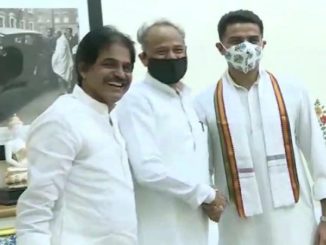
    After a major revolt,  and leading the rebel camp with 18 MLAs for the last  31 days, Pilot was given a warm welcome on his arrival at CMR by AICC’s top functionaries K C Venugopal (now RS MP from Rajasthan), Avinash Pandey, Randeep Surjewala, Ajay Makan and PCC President G S Dotasra.

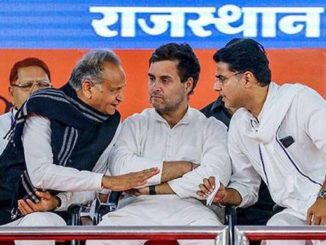
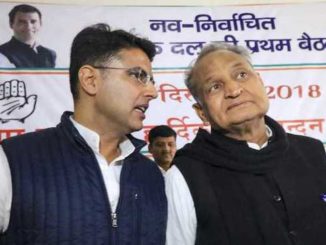
    Gehlot and Pilot shook  hands enthusiastically, while Gehlot was also seen holding Pilot’s right upper arm as a gesture of unity and political bond. Both were wearing face masks and no emotions were captured, but their glowing eyes gave the impression that both were pleased.

    The brief Ram-Bharat-Milap was followed by Congress Legislature  Party meeting in which Pilot faction also made attendance. Still scared of poaching,  the  Gehlot camp MLAs returned to the hotel, whereas Pilot flock’s MLAs returned  to their residences separately.

    Ending  a month-long  tug of war between the CM and his rebel faction that was piloted  by Sachin with 18 dissidents over ‘political ambitions of youngsters’ in Rajasthan now appears to be settled down, like dust storm in the sandy desert. Rebels have cooled down their feet, and Opposition party (BJP) gave up the hope to be king makers  in case Gehlot government  fell.

    Four days ahead of the Assembly Session slated for August 14, a sudden somersault  by  Pilot, who was sacked on twin posts of Deputy-CM and PCC President, has stunned everyone , especially the ambitious rival BJP that has projected ‘Congress Mukt Bharat’ since 2014 and tried this slogan in Madhya Pradesh, Karnataka, Manipur and Goa to ‘topple’ the governments.

    After  quandary with Gehlot government, keeping only Twitter handle open, and hiding with his flock under alleged  Haryana Government’s hospitality’, Pilot got an appointment very late and met the Congress leaders Rahul Gandhi & Priyanka Gandhi Vadra with his 18 supporting MLAs. This is utterly surprising  that when Pilot first moved to Delhi in early July  to approach and raise his resentment to the party high command, he was not heard because Gehlot had disclosed  alleged audio-clips on ‘horse trading deal struck’  in which the names of a veteran Congress MLA Bhanwarlal Sharma and Union Minister for Jalshakti Gajendra Singh Shekahawat, LS MP from Jodhpur in Modi Government surfaced on police records.

    The deadlock of government’s functioning has been partially paralyzed since July 12 when Pilot had revolted with his camp against CM threatening that the Gehlot government had come in minority. The soup was thicker when  Gehlot had sacked Pilot and two other ministers Ramesh Meena and Vishwendra Singh for their alleged involvement in poaching with huge cash secretly offered by the BJP for toppling the ruling  government having majority of 119 MLAs in a house of 200. Pilot was furious and moved to coup when he was served a notice by SOG under section 124-A of IPC along with CM, and Chief Whip.

    The instability of the state government has revolved around Gehlot vs Pilot over supremacy, Speaker vs Court (High Court and Supreme Court) over notice to rebel MLAs under the  Anti-defection Law (10th schedule of the Constitution) by the Speaker C P Joshi, Gehlot vs Governor over calling early assembly session, and  Gehlot vs BSP’s Mayawati over direct merger of six MLAs with the Congress last year.  After facing the legal challenges under the Article 174 of the Constitution and rejecting Gehlot cabinet’s three-time proposal to convene the assembly session on a short notice,  the Governor Kalraj Mishra  finally issued order to convene the session on August 14,  covering 21 day- notice.

    The BJP appointed Governor’s clash with a  non-BJP Chief Minister in Rajasthan was nothing new.  In Delhi, it was CM Arvind Kejriwal vs Lt Governors, Mamata Banerjee vs Jagdip Dhankar in West Bengal, Uddhav Thackeray  vs Bhagat Singh Koshiyari in Maharashtra, P Vijayan and Arif Mohd Khan in Kerala, V Narayana Swami vs Lt Governor Kiran Bedi in Puducherry, and K Chandrasekhar Rao vs T Sundararajan in Telangana.

    Pilot faction got scared when it calculated that its herd hiding with a meagre  19 rebels  could not cut the ice, and rival party (BJP) which he did not want to join at this juncture would not support him despite alleged ‘poaching’ of some MLAs. Gehlot succeeded in keeping 102 MLA’s in  ‘political quarantine’  under unprecedented security cover, and when time came,  paraded his loyalists before the Governor.

    Later Gehlot’s confidence weakened when BJP and BSP moved to the courts against merger of all six BSP MLAs into the Congress last year. Probably under pressure of raids by Central investigating agencies like IT, ED, CBI against Gehlot’s  one MLA,  friends and relatives, the government bowed down and adopted damage control exercise. The Special Operation Group (SOG) of state Police)  dropped the sedition charges (section 124-A of IPC) in two cases  of horse trading exposed in alleged audio-conversation clip between one BJP Minister and a Congress MLA. The case is now referred to the  slow-paced Anti-Corruption Bureau.

    A hypothesis indicates that the government’s move to go on back foot was a big respite for  Pilot camp.  Though Pilot  was now free from SOG but not having desired support of other party MLAs and deficiency of outside support from rebel party to kick out the ruling government, perhaps they returned to alma mater with their list of grievances.  This time Pilot also lacked active support of Gurjar community on which he won the assembly poll in 2018 from the Tonk constituency. It was the political compulsion to live inside the party and sit in the assembly as a legislator and not to face any ‘disqualification’ clause under Anti-defection Act by flouting any whip of the treasury bench.

    A question remains  unanswered whether a three member AICC Committee comprising Ahmed Patel, Priyanka Gandhi Vadra  and K C Venugopal will redress 19-MLAs’ grievances and  look into demands which include re-allocating cabinet berths to two MLAs . Will Pilot get any parallel post in the cabinet of Gehlot who bluntly  described Pilot as ‘Nikkama, Nakara and Conspired against his own government”. However,  in his face saving move Pilot received a warm welcome to Jaipur where he held a series of individual media interactions. Pilot, son for late Union Minister Rajesh Pilot and former MP Mrs. Rama Pilot, assured that he has not asked for post but there should  be  no vendetta politics. This is a hidden deal when Gehlot says he was unaware under what conditions Pilot group has come back to the party fold.

    Why and how the veteran MLA Sharma, whom the SOG police has failed to search in the audio-conversation case in the country, made a surprise  landing at CM’s  House after Pilot met Gandhi family in Delhi remains a mystery.   Gehlot had openly assailed Sharma’s attempts to destabilize his government and former CM B S Shekhawat’s government and turning coat frequently in the past.

    At a recently held CLP meeting, a number of MLAs and a few Ministers have expressed their displeasure at homecoming of ‘rebels’.  A million-dollar question would chase CM how he is going to appease Independent MLAs who had merged their affiliation with the Congress – 6 BSP turned Congress MLAs, and BTP legislators while fulfilling his promise of ministerial reshuffle in near future after assembly session. Another big puzzle   Congress party will have to address  is how to accommodate   the Pilot camp in the state in remaining term of the government.

    Is this a victory of Ashok Gehlot, 3rd timer Chief Minister in Rajasthan, without a floor test in State Legislative Assembly after a suo moto surrender of Sachin Pilot with his 18-rebellion Congress MLAs  before the Congress High Command for an ‘amicable mediation’ on his flock’s grievances ?  It seems to be a win-win situation more for Pilot and less for Gehlot government as ‘horse trading of lawmakers’ is unpredictable alike Cricket in future too.  Political Pandits feel after some time Pilot may raise his ante against Gehlot rule if more rebels join to saddle him (Gehlot) out of power. Gehlot urged his MLAs to forgive him and move, but would it be so easy for the voters who have noticed fragility of oldest party, the Congress. Caste politics would again emerge as a threat to the Gehlot who is always known as Jadugar of Politics.

    (Dr Goyal is a senior journalist, and has  worked for PTI and The Tribune)

  • Rajasthan slugfest: Need for impartial probe into horse-trading allegations

    Rajasthan slugfest: Need for impartial probe into horse-trading allegations

    What had initially appeared to be an intra-Congress tussle in Rajasthan has turned into a ‘Congress vs BJP’ slanging match after the emergence of audio clips in which Union minister Gajendra Singh Shekhawat is purportedly heard having a conversation with a Congress MLA and a BJP leader about toppling the Ashok Gehlot government. The state’s Special Operations Group has promptly registered a couple of FIRs on a complaint by the Congress. An impartial, time-bound inquiry is needed to verify the authenticity of the recordings and unearth the underlying conspiracy, irrespective of which political party is at fault, even as Shekhawat has denied that the clips have his voice. The development has provided ammunition to the Congress to accuse the ruling BJP at the Centre of horse-trading. The onus is on the NDA government to convince all and sundry that it has no hand in the goings-on in the border state.

    Attempts to subvert democracy and the electoral process have become far too common in recent years. Several states have witnessed post-poll machinations and short-lived governments, with the latest casualty being Madhya Pradesh. The Congress had wrested power from the BJP by winning the 2018 MP Assembly polls, but the latter turned the tables on the ruling party earlier this year with the help of some obliging MLAs. In Goa and Manipur, which produced hung Assemblies in 2017, the BJP formed the government despite having won fewer seats than the Congress. Last year, the long-drawn-out Karnataka ‘nataka’ and the Maharashtra muddle also amounted to a betrayal of the voters’ mandate.

    Whenever a government finds itself on shaky ground, the clamor for strengthening or reviewing the anti-defection law gets louder. Indeed, loopholes in this law enable unscrupulous elected representatives to switch loyalties as whopping sums of money allegedly change hands. With the power struggle in Rajasthan set to get uglier inside as well as outside the courts, the credibility of the parties concerned has come under sharp scrutiny. How the major players acquit themselves will demonstrate their respect, or lack of it, for democracy.

    (Tribune, India)


  • What Sachin Pilot fiasco teaches Congress

    What Sachin Pilot fiasco teaches Congress

    By George Abraham
    The RSS has powerful ideologues, ideology, and cadre, which fuels and propels the BJP.  Until the Congress party makes an earnest effort to create a new cadre of leadership from the grassroots who are truly committed to the dearly held values and principles of the party, those who parachuted to the top using their patronage and money will continue to be easy prey for BJP’s nefarious political games, says the author.

    History continues to repeat itself. It was Karnataka, then Madhya Pradesh and now Rajasthan that is embroiled in a power struggle that could delegitimize an election and undermine the will of the people. What is taking place in India’s political landscape before our very own eyes does not bode well either for democracy or the institutions that support it.

    Sachin Pilot undoubtedly was considered one of the future promises for the Congress party that is increasingly lacked any long-term vision or strategic planning. There is little doubt that the party is mired in the past without necessary grassroots support or needed financial resources. More and more, Smt. Sonia Gandhi, who has rescued the party from its dire straits in the ’90s, appears to be in a caretaker mode. The indecision of the Party hierarchy to fill the void created by the resignation of Rahul Gandhi as Party president has consequences far and beyond, and the Rajasthan crisis plainly points to that.

    Having said that, I am as confused and perplexed as anyone how a bright young man like Sachin Pilot who has become a Member of Parliament at the age of 26 and a Central Minister by 32 appeared to have walked away from a party that nurtured him and made it possible to scale these greater heights. When this crisis started, he held the positions of the PCC President as well as that of the Deputy Chief Minister of Rajasthan.  It is indeed a phenomenal rise for a young man at the age of 42, especially in a country where the patriarchy and age-old wisdom still holds the key to power and prestige.

    It says a lot more about this generation who have become narcissists in their thinking and self-indulging in their behavior.  When one decides to devote his/her lifetime in public service, it is a huge commitment that deserves appreciation and community support.  However, the objective is to ‘serve’ the people, without arrogance and rashness, who entrusts their confidence and vote them into powerful offices.  Mr. Sam Pitroda, who helped transform India’s Telcom sector, said recently, “Values, Character, and fundamentals matter the most in life and leadership. What do you believe in, defines you? Are you for posts and positions or selfless service to people?”

    Today, the number of young leaders in the Congress party lacks any devotion to the ideals that governed the party for a century or more. Even in the best of times, the party had its share of crisis. History is replete with fights by these erstwhile leaders on issues and winning or losing their arguments. However, those conflicts were ideological and often mirroring their deeply held beliefs and reflecting their passion for justice and fairness.

    However, What the Scindias and Pilots are fighting for? Are they advocating any policy differences or expressing concerns that the democracy itself is in peril under Modi-Shah duo or frustrated at the party’s lackadaisical approach to bring the issue into focus? Are they in rebellion because the Congress party has not provided adequate support for the cause of migrant laborers? Or the party has failed to highlight the rising unemployment among the youth? Or they are fleeing the party because it has drifted away from the cherished principles?

    It is none of the above! It is simply blind ambition, hunger for power and greed driving a section of the youth in the Congress party today. It is not difficult to see that these folks owe their rise in power and visibility to patronage.  Rahul Gandhi once said about Jyotiraditya Scindia that he could walk into his home any time of the day. Their proximity has indeed defined their places in the political landscape; however, they appear to have betrayed their trust for sheer opportunism.

    If we recollect, many of these young leaders quickly applauded Prime Minister Modi when Article 370 was revoked. There is a clear indication now that many of them are softening their stand towards the philosophy of Hindutva.  The BJP’s assault on secularism through the weaponization of Hindutva is paying off, as many of them are even reluctant to defend those core party principles. There is a slow drift towards ‘majoritarian thinking’, and any minority accommodation is increasingly seen in a negative light. That explains how easily they could transform their mindset switching to BJP.

    The RSS has powerful ideologues, ideology, and cadre, which fuels and propels the BJP.  Until the Congress party makes an earnest effort to create a new cadre of leadership from the grassroots who are truly committed to the dearly held values and principles of the party, those who parachuted to the top using their patronage and money will continue to be easy prey for BJP’s nefarious political games.

    (The author  is a former Chief Technology Officer, United Nations, and the Vice-Chairman of the Indian Overseas Congress, USA)

  • The BJP’s  hegemonic narrative

    The BJP’s hegemonic narrative

    By Zoya Hasan

    Since 2014, the BJP’s stated objective of a Congress-free India has seen attempts to unsettle and unseat Congress governments in several States. One of Prime Minister Narendra Modi’s first statements after taking over as the chairman of the BJP’s election campaign committee in 2013 was the declaration that getting rid of the Congress would be “the solution to all problems facing the country”. “The Congress party is a burden on this nation,” he said. Since coming to power in 2014, the BJP has been using various means, notably money power and the coercive power of state agencies, to achieve this goal by bringing down elected Congress governments in State after State.

    Ever since the colossal defeat of the Congress in the 2019 general election, there has been a ceaseless debate in the media and in political circles about the future of the Congress party. The defection of Jyotiraditya Scindia to the Bharatiya Janata Party (BJP) and the replication of a similar script by Congress leader Sachin Pilot has intensified this debate which centers around the leadership, organizational and ideological challenges confronting the Congress. After Rahul Gandhi’s resignation as Congress President in July 2019, the party has witnessed disintegration in States including Karnataka, Madhya Pradesh and Rajasthan. Several prominent leaders have quit the party and joined the BJP. Defections, splits and electoral decline are not new phenomena in the party’s long history, but the crisis the Congress faces in the wake of two massive defeats in the last two Lok Sabha elections is unprecedented and has clearly been aggravated by its inability to resolve the leadership issue.

    A clutch of young(ish) leaders close to Mr. Gandhi have resigned. These leaders have caught the media’s attention more than many others who have quit in the last one year. The narrative in sections of the media built around these rebellions is that the Congress mishandled the crisis and the concerns of these leaders regarding the party’s functioning. The dominant argument is that the Congress lacks inner party democracy and hence cannot keep young leaders in its fold. Sections of the mainstream media blame Mr. Gandhi for the crisis and want him to vacate space to make way for other leaders.

    Two important dimensions

    Big-ticket leaders leaving the Congress should be a matter of concern for the party. But to view Mr. Pilot’s rebellion in Rajasthan as only the result of failure of leadership and organizational politics misses two important dimensions of this crisis. Mr. Pilot was willing to sacrifice the government, of which he was the Deputy Chief Minister until a few days ago, because he has differences with Chief Minister Ashok Gehlot. Even though he says he is not joining the BJP, Mr. Pilot does not put much distance between himself and the party. Mr. Pilot made it clear that he was unwilling to settle for anything less than the chief ministership even though he has the support of just 18 MLAs. Mr. Pilot is heading a minority faction but making claims to the top job is a sign of the neoliberal times we live in where ambition trumps commitment to party and ideology.

    The narrative in sections of the media that younger leaders are not allowed to grow in the Congress is not evident from the career graphs of some of these leaders. They had been given top posts by the Congress. That they still chose to rebel is an aspect disregarded in the narrative built up around them. Many of them are exiting the Congress with alacrity because the party is out of power and is not in a position to offer the loaves and fishes of office to leaders waiting in the departure lounge. When the party was in power it could adjust and accommodate conflicting interests and ambitions in multiple ways but it is much harder to do so in Opposition. The BJP, on the other hand, is routinely able to attract disgruntled leaders to its side. Arguably, it has given in to Mr. Scindia’s huge demands in Madhya Pradesh to attract Mr. Pilot in Rajasthan. The bottom line is this: Mr. Pilot’s escapade into Haryana couldn’t have taken off without the BJP’s support. His jaunt to ITC’s Best Western can’t be passed off as a struggle for inner party democracy in the Congress.

    The second and more important dimension of the Rajasthan crisis is the concerted effort mounted by the ruling party to topple the Congress government in the State. The pursuit of this single-minded objective amid the pandemic has been given short shrift in the loud narrative of sections of the media. Since 2014, the BJP’s stated objective of a Congress-free India has seen attempts to unsettle and unseat Congress governments in several States. One of Prime Minister Narendra Modi’s first statements after taking over as the chairman of the BJP’s election campaign committee in 2013 was the declaration that getting rid of the Congress would be “the solution to all problems facing the country”. “The Congress party is a burden on this nation,” he said. Since coming to power in 2014, the BJP has been using various means, notably money power and the coercive power of state agencies, to achieve this goal by bringing down elected Congress governments in State after State.

    Hunt for power

    We have seen many States witnessing a change of guard. In 2016, in Arunachal Pradesh, the BJP backed the rebel Congress faction when deep cracks surfaced within the ruling party. The BJP lost the election but managed to replace the Congress government with its own in Karnataka (in 2019) and in Madhya Pradesh (in 2020). In 2019, the Congress emerged the single largest party in Goa, but the BJP was quick to cobble together a coalition and form a government. Now Rajasthan is on the cusp of change though the game is not over yet.

    In Goa, Karnataka and Madhya Pradesh, scores of Congress legislators were allegedly lured into deserting the Congress which enabled the BJP to gain power after losing in elections. These reports are in the realm of speculation but one thing is clear: the BJP is not short on resources for financing defections given its absolute power at the Centre. The Association of Democratic Reforms estimates that a whopping 95% of all electoral bond money before the 2019 election went to the BJP. The Congress received less than 10% of bond money. The loss of so many State governments further reduces the party’s financial power and the opportunity to generate funds.

    Although the BJP disclaims authorship of this long-running drama, Rajasthan’s political crisis has underlined once again its unscrupulous hunt for power. Given its enviable record in forming governments through political defections, the perception that a government with a clear majority is being deposed may not really matter to the party. However, it should matter to the media. But the media spotlight is not on the BJP’s dubious methods of destabilizing elected governments, but on the disarray in the Congress, which allows the BJP to get away even with constitutional transgressions. Thus far, the Congress has managed to save its government in Rajasthan. Regardless of the final outcome, an obvious conclusion to draw from this crisis would be that the Congress party has to put its house in order to stop further desertions and breakup. It has to bring an end to the unmitigated drift and elect a new president and begin the process of rebuilding the party.

    That so many in the media have seen Mr. Pilot’s unhappiness with the Congress as an example of a talented politician being forced to jump ship to the BJP shows that the BJP’s narrative is completely hegemonic. That so many in the political class (including Congress politicians) and the media are echoing the same line (as though it’s a party line), and are willing to overlook the majoritarian might of the BJP, the illegitimacy of the power grab, and the wholly unjustified attempt to dislodge an elected government betokens a debasement of politics and a disregard for democratic norms that should concern us all.

    (The author  is Professor Emerita, Centre for Political Studies, JNU)

  • Pulwama attack: Politicizing a conflict for electoral gains

    Pulwama attack: Politicizing a conflict for electoral gains

    What we have witnessed following the strike , from the Government and the BJP leaders would not only sully the image of India but also the nation’s credibility through overt politicization of this conflict, as the country is preparing itself for a critical election.

    By George Abraham

    Ever since the attack in Pulwama by a suicide bomber killing 42 of India’s security personnel, the country has been on the edge,  fearing an all-out war with Pakistan.  Any civilized person could view the barbarity of this dastardly terrorist act only with disgust and rage. However, a confrontation between these two nuclear powers is neither in the interest of these two nations nor does it bode well for the future of this turbulent region. Pakistan has been waging a proxy war with India over the Kashmir issue from the time of Independence, and a final solution to this crisis is not within sight.

    Some would argue that this is the time of war and everyone should keep their apprehensions about its conduct or any other questions they may have close to their chest.  However, a massive intelligence failure of this magnitude over the Pulwama tragedy should  not be missed. How did a young man in his twenties, who was already on the radar of the Security personnel, come to possess, pack & conceal, and then drive 300KG  explosives towards a military convoy undetected? Reports from the region suggest that a police advisory was already in effect a week before this, stating that the Central Reserve Police Force deployment would be targeted. Where is the accountability on these massive security lapses?

    A recent New York Times report paints a scathing image of India’s vintage military equipment and its impact on military readiness. “India’s armed forces are in alarming shape. If intense warfare broke out tomorrow, India could supply its troops with only 10 days of ammunition,  according to government estimates. And 68 percent of the army’s equipment is deplorably old. It is officially considered ‘vintage’”.  A swollen bureaucracy together with lack of funding obviously rendered these procurement and training processes anything but cumbersome.

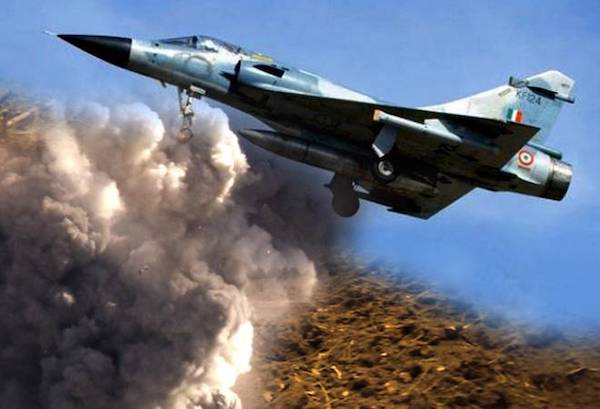
    Nevertheless, India was left with no choice but to retaliate. Pakistan has been aiding and abetting Jaish-e-Mohammed and its leader Masood Azhar for long despite the pressure from the U.N. and other international bodies. The Air Force was tasked to strike the  terror targets in Balakot region: an order that was carried out despite bad weather conditions. The Indian Military has been known for its professionalism and respect for civilian leadership in a democratic setup. Air Chief Marshal B.S. Dhanoa refused to give a casualty count saying  “IAF doesn’t count the number of dead” and the “casualty figure in an air strike on Balakot camp will be given by the government,” referring to the air strike it had carried out on February 26, 2019.

    Another shameful spectacle that is unfolding in India today is the blatant display of jingoism by the media and their networks to propel a wider war.  Instead of bringing together the nation at a time of crisis, some of these news channels are creating divisions, promoting hate and sowing discord.

    However, what we have witnessed following the strike , from the Government and the BJP leaders would not only sully the image of India but also the nation’s credibility through overt politicization of this conflict, as the country is preparing itself for a critical election. First, the leaked information from sources to the media put the casualty count at 300 to 350. Western intelligence sources and the International press immediately cast severe doubt on these numbers, and some reports directly from the ground characterized the damages as minimal.

    However, in public speeches, Amit Shah, the President of the ruling party BJP, talked about 250 terrorists being wiped out. Other BJP leaders like BS Yeddyurappa said  that his party would win 22 seats in Karnataka after the strike. It is as if BJP leaders are relishing these moments of war and salivating about the prospects of riding to victory in the fog of a protracted fight between the two  nations. It boggles one’s mind to believe that after the Pulwama attack, the terrorists associated with Jaish-e-Mohammed just gathered together to sleep in one place, making an easy target of themselves for the IAF!

    Anyone who questioned the veracity of the BJP leaders’ claims is called an anti-national and accused of doing Pakistan’s bidding. “At a time when our army is engaged in crushing terrorism, inside the country and outside, some people within the country are trying to break their morale, which is cheering our enemy,” Modi said at an election rally. “I want to know from Congress and its partners why they are making statements that are benefiting the enemies”, he added. Modi is apparently absent from the capital in managing the conflict. Instead, he is entirely taking advantage of the ongoing battle on his campaign trail, vilifying the opposition and questioning their patriotism for political advantage.

    Another shameful spectacle that is unfolding in India today is the blatant display of jingoism by the media and their networks to propel a wider war.  Instead of bringing together the nation at a time of crisis, some of these news channels are creating divisions, promoting hate and sowing discord. They broadcast manufactured news; shamelessly appropriate nationalism; and designate a segment as enemy’s  allies. Many of them have become vassals of special interests mostly controlled by crony capitalists aligned with the ruling party.

    It is also sad to hear that there is an atmosphere of fear and intimidation created for Kashmiri students across the country, as Sangh Parivar forces target them for revenge attacks. “It is no secret that the Bajrang Dal and the student wing of the Sangh were foremost in fomenting trouble against Kashmiri students in various parts of India. This was done keeping in mind the upcoming general election”, Omar Abdulla, former Chief Minister of Kashmir said. “It is obvious that  BJP sees an advantage in such environments. It helps them paper over Modi’s mistakes like demonetization, joblessness, India’s poor economic growth and the distress faced by the country’s agricultural sector” he added.

    We collectively admire the bravery and sacrifice of our armed forces. They are fighting to keep all Indians safe and protect the sovereignty of the nation from terrorists and a country that provides haven to them. Moreover, they are fighting to safeguard our democratic traditions and way of life. As Sashi Kumar, a commentator eloquently put it recently, “they are not fighting for this or that political party; they are not fighting for the electoral gains of the ruling party or of the opposition. However, they are, if anything,  fighting the religious fundamentalism of one kind but not to replace it with the rampant religious fundamentalism of another kind, even of the majoritarian variety”.

    The BJP’s strategy appears to be clear and straightforward: playing up Hindu nationalism; linking Kashmiri youth and Jihadi terrorists supported by an enemy, Pakistan; and providing ‘red meat’ to a large segment of the voting public, who are so disappointed with Modi’s failure to deliver his campaign promises. However, this is all at the risk of endangering India’s democratic and pluralistic values, and accelerating animosity between two armed nuclear neighbors, which may even put them on a path to potential disaster!

    (The author is a former Chief Technology Officer of the United Nations and current Vice-Chairman of the Indian Overseas Congress, USA)


  • Pak Prime Minister’s appeal for being given a chance

    Pak Prime Minister’s appeal for being given a chance

    By Gen. Dilawar Singh (Retd)

    “Modi can strike and  inflict casualties, allow continued conflict and win elections on the one hand, or give Imran a week’s time to handover the trio of Salahuddin, Masood and Hafeez, dismantle all camps and a genuine agreement on the three critical issues, and then strike as per plan,  if Imran Khan is unable to deliver. This would deprive him of the alibi that he would have, if  given a chance.”

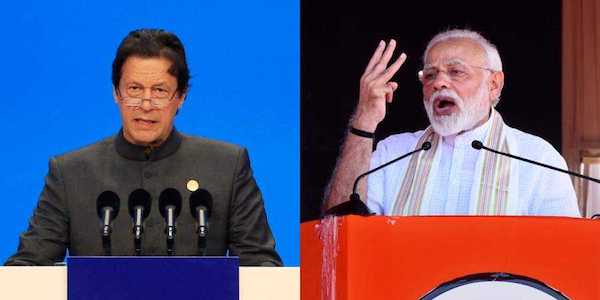
    Recently, in response to the tough call for a strong action against the perpetrators of the Pulwama, Jammu and Kashmir terrorist attack on the CRPF convoy by an explosive laden, vehicle borne,  suicide bomber of Jaish e Mohammed, a Bahawalpur, Pakistan based terrorist organization, leaving 33 of the CRPF men martyred, Imran Khan, the Pakistani Prime Minister has appealed to India to give peace a chance.

    India has been  more than fair, transparent and patient in so far as giving a chance is concerned over the past almost three decades

    In doing so, India has repeatedly given information about numerous incidents carried out by the various terrorist organizations based in PoK and Pakistan, viz the Hizbul Mujahideen, the Lashkar e Taiba and the Jaish e Mohammad and sought necessary legal action against the named wanted persons as well as moved the UN Security Council to declare them as wanted/banned terrorist persons/ organizations, but due to denial by Pakistan and being supported by China not much success was achieved resulting in continued terrorist attacks and thousands of innocent civilian and security forces persons losing their lives.

    The incidents conducted by these organizations have been evidently clear cases of terror as seen in the incidents carried out by the terrorists belonging to these organizations at Akshardhaam, Mumbai, Bengaluru, Indian Parliament in New Delhi, Pathankot, Uri and Pulwama. In fact when evidence was sought by Pakistan,  India gave sufficient, well documented dossiers of evidence especially for the Parliament attack and Mumbai attacks. In these cases India went to the extent of giving both technical evidence and documentary evidence some of it being sourced from neutral third country.

    In case of Pathankot incident the Modi Government went beyond all past precedents across the world, to invite Pakistani investigation teams to the site of incident for early onsite evidence collection from  an Air Force base, a confidential layout location, at the cost of inviting criticism by the civilian population and certain quarters of the Security forces, under the hope that Pakistan would honor its  commitment and demonstrate fair and transparent legal action against the perpetrators of that attack, however, such hopes were bellied.

    On the other hand it was more than evidently clear that the responsibility for all these terrorist attacks lay across Indian borders as the leaders and headquarters of all those terrorist organizations carrying out terror attacks in India were on Pakistani side.

    Moreover those organizations had repeatedly themselves claimed responsibility of such terror attacks justifying them as jehadi actions.  Pervez Musharraf and other leaders on numerous occasions had admitted having raised, financed, trained and armed these terrorist organizations. In fact they claimed them as strategic assets.

    The tasking, coordination and monitoring of the terrorist actions of these organizations by the Pakistani ISI and well established support to them by the Pakistani Army in housing them at their border outposts both before and after infiltration as well as fire support and bombardment to assist their infiltration into Indian side and exfiltration back was admitted and confessed by both the terrorists and the Pakistani forces on number of occasions and has been well known.

    The visit by Pakistani senior Army officers including the self-confessed visit by Pervez Musharraf in Kargil before occupation by them prior to the Kargill conflict if 1999 is well documented.

    That Azhar Masood, the Chief of Jaish e Mohammed was a terrorist and was in Indian jail, and was sought to be released by the terrorist hijackers of the Indian aircraft was enough proof of him being an important terrorist leader and that after release he-established Jaish e Mohammad and continues to engage in masterminding terror attacks in India, most of which were self claimed by his organization are enough evidence of his continued terrorist activities at large scale using the Pakistani soil repeatedly, a violation of assurance given to India by Pakistani Government. A similar trend continues to be followed by the Lashkar e Taiba and Hizbul Mujahideen.

    Even after the Pulwama attack, almost on every day basis the terrorist attacks as well as incidents of cross border firing from Pakistani side towards Indian side are continuing even while Imran Khan is pleading for a chance for peace. This dilutes his credibility and genuineness on one hand and his ability to control either his Armed Forces, Pakistani ISI or the terrorist organizations.

    His actions to take control of the Bahawalpur camp of Jaish e Mohammad on the pretext of providing safety to so called students further dents his credibility and genuineness of his actual intentions.

    Imran Khan has a very critical and onerous duty to perform and that is to honestly weigh avoidable suffering to his millions of innocent population who may become victims of violence inadvertently on one hand and protect the rogue elements whose time has come in any way.

    The world opinion is against terror, it is against mass killings by terror groups operating out of Pakistani soil, the irreversible clamor for retribution among the billions of Indian populations is evident, numerous influential countries and the opposition has been taken into confidence, the intent to take a decisive action has been reiterated by Prime Minister Narendra Modi, hence Indian action is about to come. Where, when, how much and how will be known as it happens.

    In the very narrow keyhole opportunity for reconsideration, the leaders on both sides have that extremely critical opportunity to rise above the normal, usual, common stance and emerge as a global statesman and leader who could take the highest degree of risk of personal indulgence.

    Modi can strike and  inflict causalities, allow continued conflict and win elections on the one hand, or give Imran a week’s time to handover the trio of Salahuddin, Masood and Hafeez, dismantle all camps and a genuine agreement on the three critical issues, and then strike as per plan,  if Imran Khan is unable to deliver. This would deprive him of the alibi that he would have, if  given a chance.

    Imran has a choice to offer the trio, destruction of camps and a genuine agreement on critical issues, which may earn him the wrath of his people and the Army but give Pakistan a lasting solution and an opportunity to improve the health of its economy and the wellbeing of its population or be guided by the past and by its Army Commanders and risk heavy casualties of both Armed forces, terrorists and may be some innocent civilians, which will eventually earn him ridicule by history certainly. His position is precarious as he is between the devil and deep sea,  something like that of  Lt. Gen AAK Niazi in East Pakistan in 1971. Niazi earned the reputation of a person who surrendered but earned the blessings from the families of more than a lakh families. We wish both leaders the best and hope that they emerge as leaders of substance and not rhetoric. Remember  my dictum “Nation First Character Must”.

    Let the Nation win not the people and let posterity remember you respectfully as Statesman of Global order.

    I, as a veteran,  have volunteered to rejoin and serve my motherland in a manner desired out of me by my  leaders. Jai Hind.

    (The author, a  former Additional Director General of Rashtriya Rifles, has served six tenures in counter terrorist areas, commanded two Counter Terrorist Battalions and is the only officer to have received three citations . He holds unbroken record for academic and operational excellence as well as long term planning for the Indian Army) 

  • CAG on IAF purchases: Rafale reflects the need for major corrections

    CAG on IAF purchases: Rafale reflects the need for major corrections

    The Rafale tender stole the political thunder in the Comptroller and Auditor General of India’s (CAG) assessment of 11 capital acquisitions by the Indian Air Force over a time period that spanned both the UPA and Modi governments. Considering that previous CAG reports on coal and 2G had irrevocably damaged the credibility of the UPA government, the Modi government can consider itself fortunate to have escaped unscathed because of the inventiveness of the auditors. The CAG used a never-used formula (called alignment pricing) to declare the Modi tender cheaper than the UPA era’s now-cancelled 126 aircraft bid. An audit basically evaluates four criteria in a defense platform: quality, cost-effectiveness, delivery and objectivity. The CAG report gives conditional thumbs up on only two: cost-effectiveness and the delivery schedule. Even these are up for debate.

    But the benchmark of objectivity, which includes intangibles such as transparency, fair play and integrity, stands in a grey zone. For instance, the comparison of UPA and NDA-era prices on the basis of a French index is debatable when payments are made in dollars. A dissent note alleging parallel negotiations (dismissed by then Defence Minister Parrikar as an overreaction) went unchallenged, while there was just a mild rap for not signing an integrity pact and succumbing to French refusal on opening an Escrow account. The Modi government was also easily let off the hook for failing to respond to a 20 per cent price cut by a Rafale competitor. Who knows whether Rafale would have still played tough if it had not been the single vendor?

    Rafale was one of the 11 purchases studied by CAG and the common tale that emerges is of overambitious services whose requirements are frequently changed, leading to several vendors dropping out; the contract negotiations committee that rarely establishes the benchmark price, which, in turn, makes it difficult to establish the reasonability of the price. Complex and multi-level approval processes further add to the delays. Overall, the existing capital acquisition system is unlikely to effectively support the IAF in its war preparedness and modernization.

    (Tribune, India)

  • General Election in India likely to result in a hung parliament : Modi may not form government

    General Election in India likely to result in a hung parliament : Modi may not form government

    The January 2019 MOTN predicts that if an election were held now, the NDA tally would drop by 100 seats from the 336 seats it got in the 2014 election.  The BJP would be the single largest loser in the alliance with the number of seats dropping as much as 80 from 282 in 2014 to 202 now.

    By Ven Parmeswaran

    I wrote on December 19, 2018 that the next general election in India may result in a hung parliament.  As things stand today, one can predict no party will be able to win a majority.  A hung Parliament looks imminent as both the ruling NDA and challenger UPA fail to reach the majority mark of 272 by a distance. The NDA remains the biggest political alliance, with the BJP emerging as the single largest party.  This is the stunning conclusion of the India Today Group-Karvy Insights biannual Mood of the Nation (MOTN) survey conducted between December 28, 2018, and January 8, 2019. This MOTN is significant as it comes barely four months before the general election.

    It must be pointed out that it is the first time since Modi came to power in May 2014 that an MOTN poll is predicting that the NDA will not cross the majority mark.  It confirms the declining trend in its fortunes that these surveys have recorded in the past two years with the NDA and the BJP progressively losing ground.

    The January 2019 MOTN predicts that if an election were held now, the NDA tally would drop by 100 seats from the 336 seats it got in the 2014 election.  The BJP would be the single largest loser in the alliance with the number of seats dropping as much as 80 from 282 in 2014 to 202 now.  In such an eventuality, the NDA would have to scout for other partners to garner a majority and there could also be doubts about Modi emerging as the consensus candidate to head the coalition government.

    While the opposition may rejoice at having put the NDA and Modi on the mat, the survey also reveals that neither the Congress-led UPA nor any other Opposition alliance will be in a position to form the government on their own.  The UPA is likely to multiply its tally by three times, according to this survey,  from 59 in 2014 to 166.  That is still 106 shy of a majority.  And the rest of the opposition, that includes the Samajwadi Party, Bahujan Samaj Party, the AIDMK (Tamil Nadu) and dozen others, will get the remaining.

    For many voters, such a fractured mandate and the political uncertainty it spells is a disconcerting scenario.  That is why Modi and the BJP have been hammering home the need for voters to give them a full majority or, as they warn, the country could be plunged into chaos.

    THE SINGLE BIGGEST FAILURE OF MODI IS HIS INABILITY TO CREATE ADEQUATE NUMBER OF JOBS. 

    Lack of jobs rank 34%; Rising prices 20%; Demonetization 14%; Farm Subsidies 7%; Ineffective Implementation of GST 7%; Agrarian distress 5%; and Crisis in the CBI 2%.

    THE VOTERS WILL BE ASKING: “Is India better off today than 5 years ago?”

    1. Failure of Prime Minister Modi to create 10 million new jobs per year has changed the public opinion against his government.Modi could have done what the Congress  failed to do, that is to emulate China.  Modi failed to liberalize India’s economy to attract sizeable foreign private investment.  Modi could have built modern infrastructure and built large scale factories to produce consumer and industrial goods for export.  President Trump, after winning the election offered India “closest ally” status on a par with the U.K.    India has a comparative advantage over China and if India had the capability and the capacity to produce consumer goods, the US was ready to replace China.  Failure of Modi to embrace President Trump’s offer  may cost him in the coming election.
    2. Modi by overemphasizing Hindutva and not being fair to the minorities,has invited severe opposition of Christians, Muslims, Sikhs.   In addition, 300 million Dalits are unhappy , giving a great political opportunity to  the leader of BSP, Mayavati.     Killing of cows and serving beef in restaurants were banned, but India is the largest exporter of beef meat in the world to the tune of $5 billion.
    3. The Demonetization created severe hardships to the vast majority of Indians living from hand to mouth with cash economy.
    4. Modi failed to privatize public sector corporations.He has failed even to sell the most inefficient Air India which is running at a heavy loss.
    5. On his inauguration, Modi invited the heads of all neighbors, signaling development of better relations.  That was just a photo opportunity.  His foreign policy towards India’s neighbors failed miserably. China capitalized on the opportunity.  China has almost taken over Nepal, and its influence in Sri Lanka, Maldives, Bangladesh, Sikkim, and Bhutan is a huge setback for India.    Modi also failed to deal with Pakistan, which has refused to mete out justice to the terror organizations Lashkar-e-Taiba and its leaders.    Though President Trump requested India to influence and help Afghanistan, Modi has nothing new to show.
    6. Today, the public opinion is against Modi’s government on the administration of coming elections. There have been reports of computer tampering, manipulating computers to suit the goals of BJP and other irregular methods.  The public has lost confidence in Modi government in running a fair and just election.

    The Achilles’ heel of Modi and the NDA, though, lies in the widespread farmer unrest, rural distress and the perceptible lack of jobs.

    The UPA and the other opposition partners, especially BSP (Mayavati) are bound to push the knife deeper in o  these three big issues.   Large sections of people have been pushed to the margins by a series of blows dealt to the economy, including demonetization and GST.  This will determine the course of the coming election.

    If Rahul Gandhi and his party have surged ahead in the ratings, it is because he has successfully mobilized public opinion on these issues.  The recent wins of Congress in the Hindi heartland states of Rajasthan, Madhya Pradesh and Chhattisgarh are an indication of the traction Rahul has been able to get.  But the Congress President will not be able to win by just running down Modi’s performance. He will also need to come out with a convincing enough vision of how he plans to put the nation on a high grown path, apart from maintaining peace and harmony.

    U.P. being the largest State with 80 parliamentary seats, is surely more important than other States. Mayavati has already formed coalition with Samajwadi Party.  Thus, this coalition should be able to challenge Modi’s B.J.P.  The Congress and the Muslims are also challenging Modi. The result may  be shocking on for . BJP which may have to  to accept a very small number of seats from  U.P.

    I am getting the impression that almost all parties are opposed to Modi except BJP ruled states. West Bengal with the leadership of Mamata Banerjee; Tamil Nadu; Karnataka; Kerala; Andhra Pradesh and other States could mount a formidable opposition to Modi.

    In a hung Parliament, the President  will be forced to accept any leader who can attract enough coalitions to create a majority. Although Modi  may try, he has severe competition from Mayavati and other non-Congress leaders.   The big question  between now and the general election is :  can Modi do anything to turnaround the precarious situation he is in?

    (The author is a Senior Adviser to Imaagindia Institute, a think tank in New Delhi. He lives in  Scarsdale, New York.  He can be reached at vpwaren@gmail.com)


  • President Kovind defends Demonetization,  Rafale deal

    President Kovind defends Demonetization, Rafale deal

    Addressing House, heaps praise on govt on triple talaq, surgical strikes

    NEW DELHI(TIP): Ahead of the Lok Sabha elections, President Ram Nath Kovind, on January 31,  defended the BJP government’s controversial decisions, from Rafale jet purchase and demonetization to GST implementation, saying the government had commenced its journey towards building a “New India”.

    His hour-long Address to the joint sitting of Parliament marked the start of Budget Session with PM Narendra Modi, former PM Manmohan Singh, BJP chief Amit Shah and Congress president Rahul Gandhi in attendance. Gandhi debuted in the front rows.

     The President used the occasion to hail demonetization as “a defining moment in the government’s war on corruption and black money”; term the GST a “means to establish an honest system of trade”; call surgical strikes India’s “new policy and strategy”; and laud Rafale jets as ultra-modern aircraft that will strengthen India’s strike capability.

    The speech also lavished praises on government’s recent legislative moves, including the controversial Citizenship Amendment Bill that the Opposition is questioning, Triple Talaq Bill, death penalty for aggravated child sexual assault and the new law on 10 per cent quota for General Category poor in education and public jobs. The Address drew thunderous applause from the ruling MPs when the President mentioned Rafale jet induction into the IAF and surgical strikes by the Army.

    On both occasions Opposition leaders Rahul Gandhi, Manmohan Singh and Ghulam Nabi Azad sat unamused as the Congress continues to question the government over Rafale fighter jets deal, demonetization and  GST.

    The President said: “The (demonetization) decision struck at the very root of parallel economy thriving on black money and the money outside the formal system was brought within the ambit of nation’s economy… and broke the back of the forces destabilizing the country and the systems sustaining the flow of black money.”

    Listing other achievements of the government, including women-centric schemes like Mudra loan, Swachh Bharat and Pradhan Mantri Ujjwala Yojana besides Ayushman Bharat for cashless medical care, Kovind said the “new India” vowed by the BJP-led NDA government had no place for “imperfect, corrupt and inertia-ridden systems”.

    On Rafale fighter jets purchase, he said, “My government believes that neglecting the country’s defense needs even for a moment is detrimental to the present and future of the country… after a gap of many decades, the Indian Air Force is preparing to welcome, in the coming months, its new generation ultra-modern fighter aircraft Rafale and strengthen its strike capability.”

    Hailing surgical strikes, the President said, “Through the surgical strike on cross-border terror posts, India has shown its new policy and strategy.” The President also listed the Central Government’s flagship plans, including doubling farmers’ incomes and housing for all by 2022 as he wished the best to first time voters of the 2019 General Election before delineating contours of government’s “New India”.

    The Budget Session will conclude on February 13.

    (Source: Tribune India)


  • Lok Sabha elections 2019: The contours of contest ahead

    Lok Sabha elections 2019: The contours of contest ahead

    By Mahesh Rangarajan

    In the Lok Sabha election, voters will assess whether they are better off today than they were five years ago

    This summer will see a carnival of democracy in the general election. Much has changed in just five years. The elan of Narendra Modi’s party is more muted this time. Last weekend, key opponents, the Samajwadi Party and the Bahujan Samaj Party, joined forces in Uttar Pradesh, making the contest real and not a walkover. The Index of Opposition Unity cannot predict outcomes, but no one can afford to ignore it.

    The Congress’s victories in the Assembly elections in three north Indian States have given it a shot in the arm. Equally important, the older party is firming up alliances in the southern States. The 131 Lok Sabha seats in five States (Andhra Pradesh, Karnataka, Kerala, Tamil Nadu and Telangana) and two Union Territories (Lakshadweep and Puducherry) have been critical to it in times of trouble.

    The Telangana poll outcome was sobering for both the large national parties. Regional nationalism is not new to Indian politics: Jammu and Kashmir and Tamil Nadu were precursors. Regional formations have long governed West Bengal, Odisha and now Telangana. They may well hold the keys to power in New Delhi.

    In 2014, it was the Bharatiya Janata Party (BJP) that led in securing allies. Between then and now, BJP president Amit Shah has helped expand its footprint. Not only does it have more MLAs than the Congress, but its cadre fights every election like there is no tomorrow.

    The challenge lies elsewhere. The Congress may have lost in 2014 and come down to a historic low of less than one in five votes cast. Yet, only a decade age, in May 2009, the roles had been in reverse. It was Congress that had then polled 29% and the BJP just 19% of the popular vote.

    Pages of political history

    This time is different. It is 1971 that will be the textbook case for the ruling party. When the Grand Alliance said it would oust Indira Gandhi, she replied she wished to banish poverty. She won hands down.

    Mrs. Gandhi did not have to contend with a powerful Dalit-led formation in the Ganga valley which commands 20% of the vote. Many of today’s regional parties were yet to be formed. She captured the public imagination. It was a gamble and she won hands down. Mr. Modi too will fight to the last voter. He will try to be the issue. He has sounded the tocsin against dynasty, caste and corruption. Hence the record in getting visible benefits to the individual and the family. The gas cylinder, the light bulb, that rural road: each will, he hopes, add to his appeal.

    History has another instance too. The 2004 general election was held early. Atal Bihari Vajpayee was confident that ‘India was Shining’. The dream came apart on counting day. Rather than a unified Opposition (for there was none in the all-important State of Uttar Pradesh), ground-level discontent denied the ruling alliance another chance.

    And yet, there is the cloud of the horizon. Even in 2004, the Congress was only a whisker ahead of the BJP — just seven seats more in the Lok Sabha. The Congress had 145 seats to the BJP’s 138. The key was on the ground, where the mood had shifted. The economic upturn began in 2003, but voters did not see gains early enough for the ruling bloc to reap an electoral harvest.

    The poll planks

    In 2014, the challenger drew on the tiredness with a decade of a Congress-led government and promised a fresh start. Runaway inflation and the specter of corruption undercut the appeal of the Congress. This time the issues have changed. It is the squeeze on farm incomes and rural debt that are the key poll planks. Similarly, the issue of jobs is more pressing than ever. Cultivators across all strata and young people seeking productive employment want answers.

    Two States are key. Maharashtra, a State critical in the histories of both the Congress and the BJP, is not only seeing a coming together of Opposition forces; it is undergoing drought and rural distress. Ominously, key farmer-led allies have walked across. Uttar Pradesh, a bastion of the BJP, has rival Dalit- and Mandal-led parties coalesce for the first time in a quarter century. Both States have something in common. In both, sugarcane cultivation is a determinant of electoral fortunes.

    Cane (not caste) and jobs (not community slogans) may hold the key. Ganna and Naukri, not reservations or the emotive Mandir issue. What matters more: bread or identity? Even when both count what takes precedence?

    Government policy has had a key role in this denouement. By according priority to consumers in cities (who want low prices for cereals, oil seeds and pulses), the government did not have to pay heed to rural residents who need to earn more. The latter, as producers, are larger in number and percentage than in any other democracy.

    India still lives and votes in its villages. Under Mr. Shah, the cadre, organization and outreach have made the BJP a vastly larger party than any other. But economic policies can strain such organizational gains.

    Democracy is about more than development. In a polity where people can throw their rulers out, it is centrally about politics. Since 1999, there has been a bi-nodal system, and the choice is not simply between Mr. Modi and Congress president Rahul Gandhi.

    The battle lines

    We have effectively a one-party government with a firm hand on the wheel (but with the danger of an over-centralization of power). Against this, is ranged a looser coalition in which regional forces and rural interests have more play. Needless to add, the latter will be rockier, more contentious and tough to manage in a coherent fashion.

    The Modi government is driven by ideology and not pragmatism on a range of issues. This is the first ever BJP government with a view of culture, history and politics that seeks to remake history as much as the future. Is this the party’s agenda or the country’s? This is a question in the background: if the Ram temple issue comes to the fore, it will be a major choice for the voter.

    The pluralism and Hindutva debate have another dimension more so than ever, namely the federal question. Across the Northeast (including Sikkim), far more important to the country than its 25 Lok Sabha seats indicate, the idea of citizenship is at variance with the new Citizenship Bill passed by the Lok Sabha. Across the country, State-level parties see an accretion of powers in the federal government unseen since the 1980s.

    True, Mr. Modi has a wider mass appeal than any one since Mrs. Gandhi. But history is witness that such appeal can also have limits if voters decide that enough is enough. Has that point been reached? We simply do not know.

    More central is the question of questions. Are you better off than you were five years ago, and if not, why not? If so, and even if not, do you think we are moving in the right direction?

    In 2014, The Economist observed that if India had the per capita wealth of Gujarat, the country would rank with Spain. Has that dream come true or it is unravelling and fast? How voters answer that will show who they stand with.

    (The author  is Professor of History and Environmental Studies at Ashoka University, Haryana)

  • Indian Overseas Congress, USA applauds Congress victory in Assembly  elections

    Indian Overseas Congress, USA applauds Congress victory in Assembly elections

    NEW YORK  (TIP): ‘People of India have spoken once again through the ballot box, and the message has been sent loud and clear that they are simply unhappy with the direction of the country under the stewardship of Prime Minister Modi. He has become a man of hollow promises, and unfulfilled pledges to the people of India ’ said George Abraham, Vice-Chairman of the Indian Overseas Congress, USA. ‘What happened to the grandiose promises on youth unemployment, farmer’s distress, and rural development?  On all those scores, BJP has failed miserably. Ordinary people are interested in improving their lives and their family’s lives and less interested in dividing people based on religion and caste or focusing their energy on temple building’ Abraham added. IOC congratulates Rahul Gandhi for his stellar leadership and round the clock campaigning that has made an enormous difference in these state elections.

    Congress Party needs to be cautious as well no to read too much into these results considering the anti-incumbency factors in those 3 States as the party appears to be on the eve of forming the governments, nevertheless, these victories would undoubtedly rejuvenate the Congress loyalists at the grass root level for the upcoming National election in 2019. As Rahul Gandhi spoke in the post-election press conference, it is a victory for the Congress worker who has neither given up on the values and principles of the party nor lost hope on the Nehruvian vision for the country.

    In over four years under the Modi rule, the country has gone through a disastrous demonetization process, a messy GST implementation, corruption at the highest levels and crony capitalism in its worst form. The institutions which guarded the democracy and freedom since independence for its citizens are under assault and in steep decline. The recent developments with RBI and CBI speak a volume of government interference that may have undermined the independence of these revered Institutions.

    Congress party is also urged to build the grass root support that would be critical in winning the upcoming national election and IOC believes that only Congress party could unite the country and put it back on track for peace, security and inclusive development for all its citizens.


  • AgustaWestland bribery: Can CBI make the rare catch sing?

    Christian Michel fought long and hard to avoid a deportation to India. He was earlier successful in preventing a court appearance in Italy where the case against the chief of AgustaWestland for bribing Indian officials and politicians fell through for want of sufficient proof. Significantly, the then UPA government had moved the Italian court as a civil party. The die was cast for the extradition of Michel from Dubai in July last year when the Enforcement Directorate arrested Shivani Saxena for routing money on his behalf. The claim then, as it is now, was that Saxena will lay out the money trail, especially to politicians, since she herself was a conduit.

    Little has been heard of that case. Even in the first CBI charge-sheet, except for former IAF chief SP Tyagi and his kin, no other bureaucrat felt the heat. Indeed, probe into defense deals worldwide is like entering the Bermuda Triangle. Investigations generally run into lack of response from countries and companies involved in the case. The massive financial muscle of the worldwide military industrial complex is generally successful in ensuring that cases where graft is alleged are brushed under the carpet. Against that backdrop it is gratifying that India has bagged a foreigner middleman, an  elusive species in all past instances of corrupt defense deals.

    The BJP has hoisted Michel’s arrest into a poll issue even though two middlemen remain out of India’s grasp. The CBI also requires considerable legwork to prove that the alleged money trail went to highly placed political beneficiaries. The issue of middlemen infiltrating the IAF, the Defense Ministry and the higher political echelons needs sincerity of purpose rather than political grandstanding. The ball is in now in the legal domain and will be argued on merits. But there is also a gaping lacuna in the Indian defense acquisition process — onerous conditions have caused a paucity of authorized liaison persons to navigate foreign companies through the shoals of Indian babudom. This gives space for shadowy operators to ply their trade.

    (Tribune, India)

  • Sardar, Nehru and British duplicity

    Sardar, Nehru and British duplicity

    By Vappala Balachandran

    Menon had said that the Political Department, instead of following Viceroy’s scheme of persuading the princes to accede, was secretly warning them of “the loss the rulers would suffer if they were to federate”.

    There was something totally inappropriate about the idea of elevating a modest man like Sardar Patel to a Colossus of Hellenistic times. The Rhodians who built the statue for Sun God Helios, used to fling into the sea four horses and a chariot “for his use” every year.  Left to himself, it is doubtful whether Patel would ever have liked his grand statue against the protests of 22 villages when throughout his life he cared more for them than tall statues or glittering public rallies.

    That leads to a conclusion that the idea was to appropriate Patel into the BJP- Narendra Modi pantheon which Rajmohan Gandhi, the celebrated biographer of Patel, had rejected in 2013. He said, “The country’s first home minister would not have recognized Mr. Modi as his ideological heir and been very ‘pained’ with his behavior towards Muslims”. He said that Patel was a great “team builder” and “other people were prominent in his daily life”. On October 31, 2018, LK Advani who was the central figure during the foundation stone ceremony in 2013, was conspicuously absent.

    That Patel and the BJP could not have coexisted will be evident if we read Patel’s speech of February 27, 1947 on minority protection while accepting the chairmanship of the Advisory Committee to the Constituent Assembly on fundamental rights. His frank speech on August 11, 1947 at a public meeting why the Congress accepted Partition needs to be quoted verbatim:  “I would make no efforts to explain away the responsibility of the Congress for dividing the country. We took these extreme steps after great deliberation. In spite of my previous strong opposition to Partition, I agreed to it because I felt convinced that in order to keep India united, it must be divided now.”

    PM Modi in his Op-Ed piece on October 31 had quoted VP Menon on how Patel led “from the front” the integration of 550 Indian States. May I point out that this was just one problem that the Congress leadership had faced during the process of independence. More serious was the pernicious plotting by some elements in the Viceroy’s administration to leave India in tatters. This would be clear if we read VP Menon’s another landmark book “The Transfer of Power in India” (1957) and Mountbatten’s frank memoirs published in 1949 which has received scant attention in India.

    Menon was associated with constitutional developments since 1917. From 1942 till August 1947, he was Constitutional Adviser to the Viceroy. Mountbatten, who took over as Viceroy on March 22, 1947, had frankly admitted that his predecessor, Lord Wavell, had made secret plans of quick British withdrawal from India in 1946 with the anticipated chaos following the rejection of the Cabinet Mission’s plan “affecting the loyalty of the Indian Army”. If that had happened, it would have left a serious administrative vacuum in India since the superstructure was still with British civil and military officers although the “Interim Government” (Governor-General’s Executive Council) under Jawaharlal Nehru as Vice-President with Sardar Patel as Home Member had taken charge on September 2, 1946. The Constituent Assembly had first met from December 9, 1946.

    During this period, Menon was the link between the Viceroy and Congress leadership, including Nehru and Patel, and at times even Gandhiji, and he kept them informed of some secret planning by a coterie of British officers in the Political Department.

    The deliberate British mischief in our nation-building had started earlier. The 1935 Government of India Act on a “Federation” with three categories of constituents would have left the future Central government out of control of the Indian nation. While the British Indian provinces and Chief Commissioners’ Provinces would accede to India, the 562 Princely States would be entitled to decide their own accession.

    Menon had said that the Political Department, instead of following Viceroy’s scheme of persuading the princes to accede, was secretly warning them of “the loss the rulers would suffer if they were to federate”. He said that such scheming princes were rudely jolted when Nehru declared, while addressing the annual session of the All-India States People’s Conference on April 18, 1947 that “any state which did not come into the Constituent assembly would be treated by the country as a hostile state”.

    The British tried to stifle the process of nation-building even later. Their declaration to the Cripps Mission in 1942 gave the right to even British provinces to accede or not accede to the Union or to form a separate Union or Unions. Menon said, “This was really the death blow to Indian unity”. This trend continued even during Mountbatten Viceroyship. Mountbatten records one such difficult meeting on June 13, 1947 to discuss the “paramountcy” after the transfer of power and its effect princely states: “Pandit Nehru also attacked Sir Conrad Corfield, the political adviser, to his face and said that he ought to be tried for misfeasance”.

    In June 1947, Patel asked Menon to take charge of the States Department. In fact, it was Mountbatten who had created the department. He says: “Mr. V.P. Menon, my Reforms Commissioner was, much to my delight, appointed Secretary”. Pakistan’s nominee Ikramullah was appointed as Joint Secretary. From then on till August 15, 1947, all negotiations with the princes were under the leadership of Mountbatten who says the idea of accession of Indian states on three subjects (Defence, External Affairs and Communications) was Menon’s idea to get as many accessions as quickly before the transfer of power on August 15, 1947.

    Our independence was won under the leadership of Gandhiji with all top leaders like Nehru, Sardar Patel, Maulana Azad,  Rajendra Prasad, Jagjivan Ram and others assuming equally important roles. Our nation-building was done after August 15, 1947 with the participation of several non-Congress leaders like Dr Ambedkar, Dr SP Mukherjee, Dr John Mathai and others. They all had their differences but were united on the task of nation-building. It will be highly facile for a new BJP pantheon to claim in 2018 that only Sardar Patel was responsible for our nation-building.

    (The author is Ex-Special Secretary, Cabinet Secretariat. He is author of  ‘A Life in Shadow: The Secret Story of ACN Nambiar’)

  • India to be among 3 largest economies in coming years: Jaitley

    India to be among 3 largest economies in coming years: Jaitley

    NEW DELHI(TIP): Finance Minister Arun Jaitley said on Friday, November 2,  India would become the world’s fifth largest economy in 2019 and among the top three in the coming years.

    Speaking at the ‘Support and Outreach Initiative for the MSME sector’ event here, the minister said since Prime Minister Narendra Modi’s government took over about four years ago, India has moved from the ninth to sixth position in the global economic landscape.

    “Next year, India will become the fifth largest economy,” he said, adding he hoped that the country would be among the top three economies of the world in the next few years.

    India emerged as the world’s sixth largest economy in 2017, surpassing France, and is likely to go past the United Kingdom, which is at the fifth position, according to an analysis of data compiled by the World Bank.

    In 2017, India became the sixth largest economy with a Gross Domestic Product (GDP) of $2.59 trillion, relegating France to the seventh position.

    The United Kingdom, which is facing Brexit blues, had a GDP of $2.62 trillion, which is about $25 billion more than that of India, the data showed.

    The US is the world’s largest economy with a size of $19.39 trillion, followed by China ($12.23 trillion). Japan ($4.87 trillion) and Germany (USD 3.67 trillion) are at the third and fourth places, respectively.

    Referring to India’s significant jump in the World Bank’s ease of doing business index, Jaitley said it has improved 65 notches to the 77th position during the four years of the NDA government.

    He said the Prime Minister has set a target of taking India among the top 50 nations in the World Bank’s ease of doing business ranking.

    “We are very near the target,” Jaitley said, as he criticized the Congress-led UPA government for “policy paralysis” and “corruption”, which discouraged domestic as well as foreign investors.

    He said during the last five years of the UPA government, inflation averaged around 10.4 per cent, whereas all economic parameters are now stable.

    Jaitley further said that Aadhaar, which was criticized by the Opposition, has actually helped the government in saving Rs 90,000 crore annually, which is enough to fund four schemes like Ayushman Bharat.

    The minister also said the MSME sector has benefited from implementation of GST, under which taxes were reduced on 334 items in the first year of its rollout.

    (Source: PTI)

  • #MeToo Storm: Union Minister M.J. Akbar Resigns a Day before Hearing in Defamation Case against Scribe

    #MeToo Storm: Union Minister M.J. Akbar Resigns a Day before Hearing in Defamation Case against Scribe

    NEW DELHI(TIP): Three days after he returned from his foreign trip to face embarrassing allegations of sexual harassment, Union Minister of State for External Affairs MJ Akbar on Wednesday, October 17, resigned from his post, maintaining that he would challenge the false accusations against him.

    Akbar has slapped a criminal defamation case against Priya Ramani, the first journalist who publicly named and shamed the junior minster. The hearing in the defamation case is scheduled to come up for hearing on Thursday in the Patiala House court here.

    Prime Minister Narendra Modi accepted Akbar’s resignation after which it was sent to President Ram Nath Kovind. Later, the President also accepted his resignation from the council of ministers.

    Though the pressure was high, both on him and the government, from women groups and also saffron ideologues, sources said the final decision was taken after “carefully testing the waters” and when it eventually became clear that his presence was causing “irreparable harm” to the reputation of the BJP, in the country as well as abroad.

    Akbar has threatened “appropriate legal action” against those who levelled “wild and baseless allegations” against him, but that did not stop survivors to come out in public about their horror tales. Quite clearly, he was asked to put in his papers by Prime Minister Narendra Modi after it became clear that it was neither morally nor politically tenable for him to continue in the high post, especially given his profile.

    PM Modi, as they say, is also quite particular about perceptions about him in foreign countries.

    As clamor for action against Akbar from his former women colleagues grew, there were worries in the BJP about the allegations damaging the party’s “pro-women” image ahead of elections to five states. While the BJP and government functionaries maintained a stoic silence, it was perhaps the first time in his tenure that PM Modi faced the piquant Catch-22 situation when either way it would have been detrimental for the image of his government.

    However, his presence in the government had become far too “embarrassing for PM Modi” though he continues to be a Rajya Sabha member and also a member of the BJP.

    For the BJP, holding on to Akbar would have served no purpose given his lack of mass-based appeal. Holding on to him would have come at a cost, the price of which it may have had to pay with a dent in its “pro-women” image in the run-up to the 2019 Lok Sabha in urban pockets. It can now take a moral high ground, safely.

    In a statement, Akbar said, “Since I have decided to seek justice in a court of law in my personal capacity, I deem it appropriate to step down from office and challenge false accusations levied against me, also in a personal capacity. I have, therefore, tendered my resignation from the office of Minister of State for External Affairs. I am deeply grateful to the Prime Minister Shri Narendra Modi and to the External Affairs Minister Smt. Sushma Swaraj for the opportunity they gave me to serve my country.”

    The Rashtrapati Bhawan said later on Wednesday that President Ramnath Kovind had accepted Akbar’s resignation.

    “The President of India, as advised by the Prime Minister, has accepted the resignation of Shri M. J. Akbar from the Union Council of Ministers, with immediate effect, under clause (2) of Article 75 of the Constitution.,” a communiqué from the President’s office said.

    Reacting to Akbar’s resignation, Priya Ramani said, “As women we feel vindicated.”

    “I look forward to the day when I will also get justice in court,” she tweeted.

    As women we feel vindicated by MJ Akbar’s resignation.

    However, this raises questions as to why PM Modi did not intervene earlier? Why was Akbar allowed to complete his overseas trip to Nigeria and Equatorial Guinea last week instead of being recalled as the #MeToo storm hit? And why did the government wait it out for Akbar to threaten accusers with legal action and sue Priya Ramani in court?

    It is learnt that what also made the government jittery was the fact that despite the legal case against Priya Ramani, another woman journalist Tushita Patil penned an article alleging sexual abuse against Akbar dating back to 1992-1993 when she was a rookie reporter and he a prominent journalist and editor.

    Some 20 women also in a statement joined hands with Ramani and asked the court to hear them out in the defamation case while two former male colleagues and journalists also came out in support of the reported #MeToo victims.

    (Source: Tribune, India)

  • End of an epoch: on M. Karunanidhi’s death

    End of an epoch: on M. Karunanidhi’s death

    By Gopalkrishna Gandhi
    “He will be long remembered for three outstanding accomplishments — his passion for Tamil as a language and a metaphor for the dignity of its users; his refusal to be bullied by political hubris during the national emergency; and his uncompromising secularism.
    “Jakkirathaiya irunga,”he said in Tamil, over which his command was legendary. “Take care” is how the phrase would translate. But in the way he said it, laying stress on the double ‘kk’, I could see he meant to say, “Take every care.” This was on August 13, 2000. I was on my way to Colombo to join duty as High Commissioner.

    A federal mind

    Calling on Tamil Nadu Chief Minister M. Karunanidhi would have been on the wish list and task list of any Indian envoy on her or his way to Sri Lanka. But, for me, this was not just about protocol. Nor was it about politics, the Dravida Munnetra Kazhagam (DMK) then being a crucial presence in the National Democratic Alliance government led by Atal Bihari Vajpayee. It was about plain common sense, sheer self-interest. There was no way I would present letters of credence in Colombo without finding out what Tamil Nadu’s senior-most and completely wide-awake leader thought about the island nation’s travails, the present and future state of its Tamil population and that of the Liberation Tiger of Tamil Eelam’s supremo, Velupillai Prabhakaran. To go to Colombo without the ‘input’ — to use a crassly opportunistic expression — of a veteran of Tamil Nadu’s political chemistry would be absurd. What I needed and was to get from him was the insight, as knowledgeable as it was detached, of ‘one who knew’. The hinterland of any foreign policy is ground knowledge of the roots of that policy in the soil of its origin.

    It was not easy, even for one on ‘relevant’ official duty, to get an appointment with the Chief Minister. He had his hands more than full with the complexities of Tamil Nadu’s polity, where facing the All India Anna Dravida Munnetra Kazhagam and its charismatic leader J. Jayalalithaa meant being alert 24×7; where running a government of which he was the alpha and the omega meant working harder than the mind and body could take. And where, to make matters more complex for him, explaining to the people of Tamil Nadu how and why India-Sri Lankan relations were a foreign policy matter and foreign policy was the prerogative of the Union government was just about impossible. He was on the cusp of India’s federal dilemmas.

    A lesser politician could have played politics on that fluid crest, just to remain ‘on top’. But, as the direct successor-in-office to C.N. Annadurai (CNA) who had given up secession as the DMK’s policy goal, he was going to do nothing of the kind.

    The Chief Minister was seated in the sitting room on the first floor of his Gopalapuram residence in Chennai. He half-rose to greet me, a gesture that neither his age — he was 76 at the time — nor his high office necessitated. “Sir… sir… Please do not get up,” I protested. Sitting back, he commenced what was for me a lesson on the limitations of diplomacy and of politics. He said I was going to a highly troubled land at a highly incendiary time. “Ranil Wickremesinghe [now Prime Minister of Sri Lanka] met me the other day,” he said, “and we spoke for more than an hour. He is a visionary… He wants to build a physical bridge from Rameswaram to Talai Mannar… I welcomed the idea and told him that our own Bharathiar [Subramania Bharati] had envisioned the very thing…palamaippom… But today who is going to be crossing that bridge and in which direction?” Then followed an analysis of the ethnic problem on the island which for its crisp pragmatism could not have been equaled, let alone bettered.

    “Nobody knows Prabhakaran’s mind,” he said. “Nobody from our side is in touch with him… Nobody can be… We used to know his deputies… Amirthalingam… Now they are all dead… assassinated. But militancy is no solution… Secession will never be countenanced by Sri Lanka… And it will never be given up by Prabhakaran… We grope in the dark.” And then doing a fast-forward: “Yet, we have to keep trying for our Tamil kin’s urimai (rights) there.” The insights continued for some 10 more minutes and then he rose to conclude the call, saying, as if in a summing-up: “Prabhakaran will never have a change of heart.” As I thanked him and prepared to leave, he gave the advice I started this tribute with, very softly, “Jakkirathaiya irunga.”

    I had received briefings, each very helpful, very skilled, from officials, ministers, politicians, military leaders, strategists. But the one I got at Gopalapuram that afternoon covered every facet of the Sri Lankan scene in brief sentences, replete with historical, geopolitical and diplomatic nuances, topped with an intuitive sense of urimai being the long-shot aim and jakkirithai an immediate concern.

    Another meeting

    Seventeen years later, last year, I was to see him again, in the same room. He was seated on a wheelchair. And this time he did not — could not — get up. His son, M.K. Stalin, and his daughter, Kanimozhi, who were beside him, gave him the caller’s name. The 93-year-old looked long and steadily at me. No sign of recognition appeared on his face. There was no immediate response, but a few seconds later, when everyone present was waiting for a response, a wisp of a half-smile played across his face for but a fleeting moment. I will not presume to imagine he recognized me. But that was not really necessary.

    Kalaignar Karunanidhi was now a legend, an icon of the old mold, but without the patina of obsolescence on its form or features. He was a living legend, an icon of the here and now as a symbol of aspirational politics negotiating electoral quicksand. In his case the aspirational politics was Dravida self-esteem combined with social radicalism, derived from Periyar and C.N. Annadurai (CNA). And the quick sands were Tamil Nadu’s political uncertainties, with his mentors having become history and rivals from a different ‘stage’ scripting a very new, very glitzy theatre. Here was an idealism being taunted by reality to be pragmatic, a pragmatism being haunted by history to be idealistic. Some predicaments are cruel.

    And yet, he emerged from it, un-bowed, the see-saw of electoral results being another matter.

    He will be long remembered for three outstanding accomplishments — his passion for Tamil as a language and a metaphor for the dignity of its users; his refusal to be bullied by political hubris during the national emergency; and his uncompromising secularism.

    Such a long journey

    CNA was in office for far too little for the dust of any controversy to settle on him. The Kalaignar was in office for far too long for that dust to stay away. Did he shake it off?

    Did the flatterer and the tale-carrier manage to reach ear-distance? Was the sponger spurned, the money-spinner, the corrupter, family-splitter, the party-breaker turned away? Was the fear-instiller, the superstition-planter, the suspicion-sower shown the door? Equally, was the caring critic, the daring dissenter, the worried warner given welcome? Was the frank friend, the bold biographer shown in, given time, consideration?

    Only his family would know.

    On it — all generations of it — falls the privilege and the challenge now to stay and work together, to take the legacy of this extraordinary statesman further afield and make it a force for Tamil Nadu’s redemption from localism, myopia and the power of floating cash. And beyond that, a force for India’s federal intelligence, her plural wisdom and, above all, her Constitution-enshrined mandate for justice — social, economic and political.

    (The author is a former administrator, diplomat and Governor)

  • Rs 1,484 crore ($223.06 million) spent on PM Modi’s foreign travel since 2014, RS told

    Rs 1,484 crore ($223.06 million) spent on PM Modi’s foreign travel since 2014, RS told

    NEW DELHI(TIP): An expenditure of Rs 1,484 ($223.06 million) crore was incurred on chartered flights, maintenance of aircraft and hotline facilities during Prime Minister Narendra Modi’s visits to 84 countries since June 2014, according to the government.

    The details of Modi’s foreign travel expenditure under the three heads were shared in the Rajya Sabha by Minister of State for External Affairs V K Singh.

    According to the data, a total of Rs 1088.42 crore was spent on maintenance of the prime minister’s aircraft and Rs 387.26 crore on chartered flights during the period between June 15, 2014 and June 10, 2018.

    The total expenditure on hotline was Rs 9.12 crore.

    Modi visited a total of 84 countries in 42 foreign trips since taking over as prime minister in May 2014.

    The details provided by Singh did not include expenditure on hotline facilities during his foreign visits in financial years 2017-18 and 2018-19. The cost of chartered flights for visits in 2018-19 was also not included.

    According to Singh’s reply, the prime minister visited a maximum of 24 countries in 2015-16 followed by 19 in 2017-18 and 18 nations in 2016-17.

    In 2014-15, Modi had visited 13 countries with first one as prime minister to Bhutan in June 2014. In 2018, he travelled to 10 countries with the last one being to China last month.

    The cost for chartered flights to overseas destinations in 2014-15 was Rs 93.76 crore while in 2015-16, it was Rs 117 crore. In 2016-17, the cost was Rs 76.27 crore and in 2017-18, the expense on chartered flight was Rs 99.32 crore.

    “Diplomatic outreach during this period (since May 2014) has included first ever visits from India to several countries at the head of government level,” Singh said.

    He said the outreach has led to enhanced engagement of India’s foreign partners in its flagship programs.

    (Source:  PTI)

  • A hard outlook will have pitfalls in Kashmir

    A hard outlook will have pitfalls in Kashmir

     By Arun Joshi

    The state is hurting. Some degree of sensitivity and a ‘highly disciplined’ approach will possibly yield better results. The security forces must remain calm in the event of any provocation.

    Kashmiris happy, somewhat. The PDP-BJP split was much awaited; by people who were unable to reconcile to the rule of the saffron party by proxy. Fear was deeply entrenched in the minds of the locals that right-wing Hindutva forces, with the high pitch for the abrogation of Article 370, may succeed in undermining Kashmir’s special status. Naturally, Kashmiri Muslims were insecure after the alliance came about. And so, it became easier to support the forces of violence, as for them, the PDP had committed an unpardonable sin by shaking hands with the BJP; and getting nothing in return. The first shocker came when the Centre delayed the flood relief package by more than a year after the devastating floods in the autumn of 2014, a couple of months before the Assembly elections that year.

    The PDP-BJP government has disappeared from the corridors of power, but the apprehensions of Kashmiris have not. Aware of political expediencies and vulnerabilities of the parties, they suspect more political compromises may be in the offing. They are waiting and watching the developments very closely. The street mood will be determined by the governance they get, and the way they are treated at their homes, and out on the streets. Kashmiris have become hyper-sensitive about their identity and dignity — siding with secessionist forces is a manifestation of that emotion.

    Some voices in the BJP are linking a ‘hard approach’ toward militants as a way of pulling out Kashmir from the vicious cycle of violence it finds itself in. They believe the militants would/should be hunted and neutralized but forget that this approach prevailed earlier too, and nothing came of it.

    What is really needed is to take into account the attendant pressing matters that have come into play over the past two years — the civilian population, mostly youth with rocks thronging encounter sites and disrupting anti-militancy operations; and the clashes that follow as a result of accidental civilian killings, or what is seen as ‘collateral damage’. Over these two years, the civilian population has identified itself with militants, primarily for two reasons. First, many militants are locals. They are boys they saw in the neighborhood, hence the affinity which exists in the well-knit Muslim society.

    Second, they do not perceive the violent acts as being out of sync with their newly-acquired ethos of resistance. It is a big shift — this ‘new-found’ relationship between the civilians and the militants. In the 1990s, the militants were seen as mujahideen (warriors). There were no doubts. They had picked up the gun and should be ready for the consequences — to die fighting the security forces. Sympathy and sentiment was surely with them, but it was not manifested in the desperate and visible attempts to save them while risking their own lives; as we see now. This is the fundamental truth of the changed situation in Kashmir. The psyche of the common Kashmiri has undergone a sea change.

    Today, the way of looking at the militants has changed, almost hero-like: their arms training may be limited to few weeks, even less, but they are hardened. They have shown their will and grit to fight unto the last. What is more, there is societal approval of their ‘sacrifices’.  Some of them have spurned appeals of their parents to return home.

    Some extraordinary real-life visuals have paled the reel-life images — the mother of Saddam Padder, a top militant of Shopian in South Kashmir recently killed in an encounter, giving a gun salute to her slain son. Her gesture left a deep impact on the minds of youngsters who watched the video that went viral on social media; and is seen as a universal endorsement of militancy by their mothers.

    In such circumstances, reckless actions, with the rhetoric of hard approach, (BJP general secretary Ram Madhav has distanced his party from it) — without taking into account the fallout — have the potential to blow up in the face. The way forward should be specific operations without making much noise. It will help keep civilians out of harm’s way. This is important, because there is widespread impression that the security forces will be striking hard, not necessarily a militant-specific action. It will be deemed as an action against the people who would come to defend them. Stone-throwers will not only seek to disrupt the cordon and search operations — a prelude to the actual gunfight with militants — but also attack patrol parties.

    This phenomenon is interlinked. Militants attack convoys of security forces even as stone-throwers use tactics to distract, thereby creating situations where the Army and police either suffer casualties or inflict casualties. At times, both sides suffer casualties, speeding up the cycle of killings.

    Kashmir-centric parties, the PDP and the National Conference are convinced that the hard approach is not the answer to the problem. Other ways can be found to ease the situation without making the hard approach visible: the security forces must change their attitude towards the public at large. Treating the common Kashmiri with contempt and suspicion will only breed a psyche of resistance and rebellion. A highly disciplined approach would yield better results. Effort should be made to stay calm in the event of any provocation.

    The past cannot be reversed, but the future can be built on, with a new and sophisticated approach.

    (The author can be reached at ajoshi57@gmail.com)


  • PM Modi Arrives in Wuhan for talks with Xi Jinping

    PM Modi Arrives in Wuhan for talks with Xi Jinping

    Both leaders are expected to define a pathway that could transform India-China ties into a major force for tackling global problems.

    WUHAN(TIP): Prime Minister Narendra Modi arrived in Wuhan late Thursday, April 26 night for a two-day informal summit with Chinese President Xi Jinping. He is due to hold one-to-one talks with Xi.

    “A special moment past midnight as PM @narendramodi was warmly welcomed in Wuhan for the 1st Informal Summit with Chinese President Xi. The two leaders will review the developments in our bilateral relations from a strategic and long-term perspective,” External Affairs Ministry spokesperson Raveesh Kumar tweeted.

    Both leaders are expected to define a pathway that could transform India-China ties into a major force for tackling global problems.

    The ambitious undertaking hopes to realign the underlying premises of India-China ties, so that festering irritants are removed, and the two countries can work together to fulfill common global aspirations.

    They will meet in the famous villa, which was once Mao Zedong’s retreat. The property — a total of three buildings–at the bank of the East Lake of Wuchang– is set amid pine, bamboo and plum trees. A boat ride by the two principals or a walk among the pines is expected during the two-day event.

    In a statement released ahead of his departure to Wuhan, Mr. Modi underscored that both leaders, during their upcoming dialogue, would be looking at the big picture.

    Discussions on “a range of issues of bilateral and global importance,” would be shaped by the “visions and priorities for national development, particularly in the context of the current and future international situation,” the dense statement said.

    It also highlighted that during the talks, both countries would take a long view of their ties. “We will also review the developments in the India-China relations from a strategic and long-term perspective.”

    Diplomatic sources said that the two leaders, in their free-wheeling dialogue, would discuss the border row, and look for underlying principles to resolve it.

    “This time the two sides have decided to hold the informal summit between the two leaders. This is because both our countries attach great importance to each other on external strategy and not because of boundary question that still remains unresolved, and we need talk about it during the informal summit,” Chinese vice Foreign Minister Kong Xuanyou said during a media briefing on Tuesday.

    Analysts say that China may be gradually shifting its position from “managing” and shelving the border issue, to a fledgling stance of resolving the China-India border dispute. Such a position would align well with Prime Minister Modi’s approach of seeking a final resolution of the boundary dispute.

    (Source: PTI)