Tag: Indian Politics

  POLITICS & POLICY  

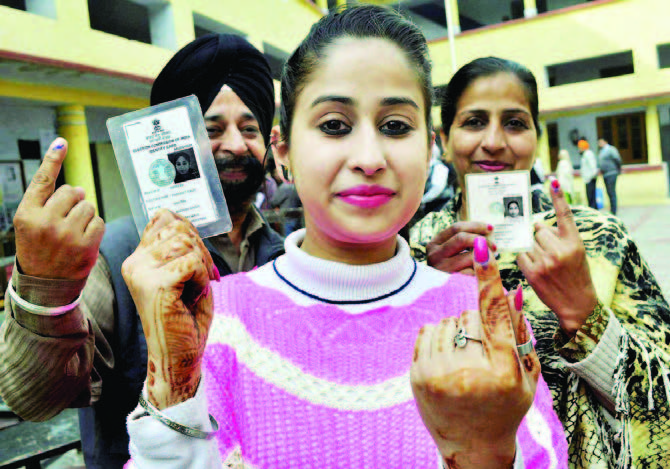
  • 65% voter turnout in UP, 68% in Uttarakhand

    65% voter turnout in UP, 68% in Uttarakhand

    LUCKNOW (TIP): A voter turnout of 66% was recorded in Uttar Pradesh as 69 constituencies went to the polls in the second phase of Assembly elections. In the first phase of polls in the state, 63%of the electorate voted. In Uttarakhand, where elections to 69 seats were being held, 68% of the electorate came out to vote till 5 pm.

    Assembly Elections 2017

    Voting began at 7 am in both states on Wednesday. In Uttar Pradesh, there were reports of glitches at some electronic voting machines.

    Polling in Uttarakhand’s Karnaprayag seat was postponed to March 9 on as Bahujan Samaj Party candidate Kuldeep Singh Kanwasi’s died in a road accident on Sunday.

    Around 74.2 lakh voters will elect the next government in Uttarakhand. As many as 628 candidates are in the fray. The ruling Congress party, headed by Chief Minister Harish Rawat, is combating anti-incumbency as well as corruption charges. The Bharatiya Janata Party, on the other hand, hopes to gain from this. Recently, Prime Minister Narendra Modi had accused the Congress of turning the “dev bhoomi” into “loot bhoomi”.

    In Uttar Pradesh, the 67 constituencies that are voting today are spread across 11 districts. The ruling Samajwadi Party had won 34 of these seats in the last Assembly election. However, the BJP and the BSP have upped the stakes this time, highlighting the state’s poor law-and-order situation.

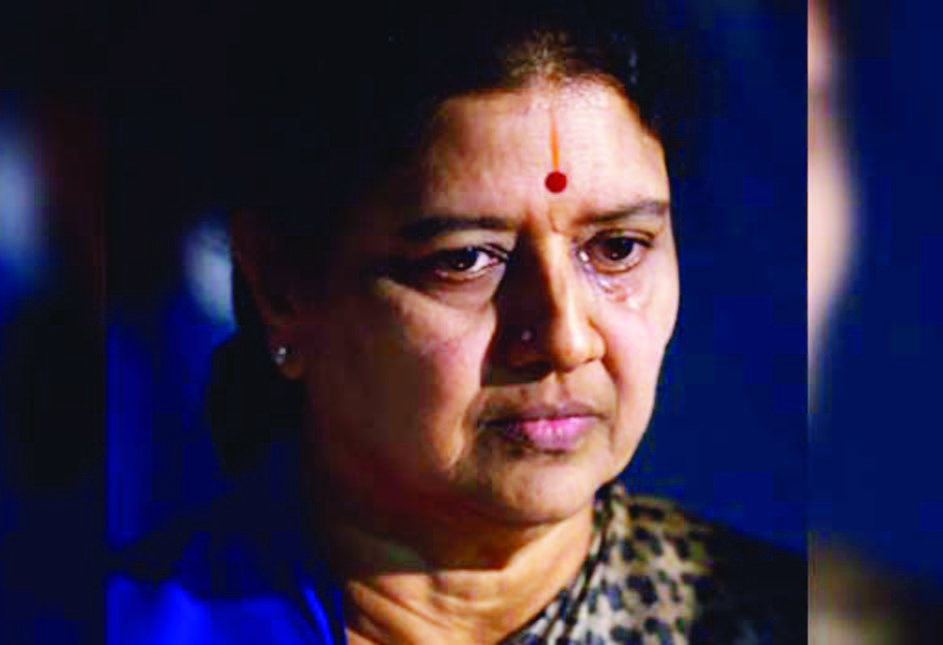
  • Sasikala’s new identity: Qaidi Number 9234 in Bengaluru Central Prison

    Sasikala’s new identity: Qaidi Number 9234 in Bengaluru Central Prison

    We have the family format now firmly consecrated. The Chautalas, the Badals, the Muftis, the Abdullahs, the Gandhis, the Deve Gowdas, the Karunanidhis, the Lalu Yadavs, and many other aberrations have mocked our democratic pretensions. Yet there was something so blatant, so ignominious in the Sasikala’s chief ministerial push that it disturbed our collective equanimity”, says the author – Harish Khare

    Tamil Nadu has a new chief minister. And the new chief minister’s name is not VK Sasikala. Even if the new man, Edappadi K Palaniswami happens to be a Sasikala proxy, the Indian democracy has something to celebrate. A judicial intervention has stopped a power grab in its tracks. Instead of lording over the secretariat at Chennai, Ms Sasikala now has to do with the crowded quarters in cell number 9234 in Bengaluru Central Prison. Why this sense of relief ?

    Over the decades the Indian democracy has indeed become inured to many aberrations and absurdities. After all, we have had the spectacle of a Rabri Devi presiding over Bihar, in circumstances somewhat similar to what prevailed after Jayalalithaa’s death. We have the family format now firmly consecrated. The Chautalas, the Badals, the Muftis, the Abdullahs, the Gandhis, the Deve Gowdas, the Karunanidhis, the Lalu Yadavs, and many other aberrations have mocked our democratic pretensions. Yet there was something so blatant, so ignominious in the Sasikala’s chief ministerial push that it disturbed our collective equanimity. Rabri Devi was 1997; 20 years later, we do not feel we need to countenance ‘a chief minister Sasikala’. Have we not evolved as a polity? Has our democracy not deepened these last two decades? Why was the sense of a cheapening of our democracy felt so acutely, not just in Tamil Nadu but across the land?

    Maybe we were offended because Ms Sasikala sought to extend the principle of ‘family’ to ‘household’ control. Her only claim to the AIADMK leadership was/is that she was a trusted aide and a confidante of “Amma” and, therefore, was best equipped to carry forward the revolutionary leader’s legacy. Suddenly, we felt our democratic sensibilities violated. Irrespective of whatever help and assistance and comfort she provided to Jayalalithaa in the privacy of the Poes Garden, this companionship did not qualify her for a public role. What the country witnessed was how an established political party, with a sizeable presence in the two Houses of Parliament, had got reduced to a den of intrigue and conspiracy. All of a sudden we understood that why our political parties have become so devoid of legitimacy and respectability.

    Admittedly, Tamil Nadu is no stranger to this household syndrome. Not long ago, the Karunanidhi household had produced its own script of warring sons, greedy cousins, rapacious daughters, formal and informal wives, each more wayward than the other, each extracting corrosive rent from the formal structure of government. That type of family control and its collateral benefits were deemed ‘normal’ and acceptable. But the stench could be smelled all the way up in New Delhi. The DMK’s first family can claim the dubious honor of blue-printing this family control and command model. The only redeeming aspect of the Karunanidhi clan was that its major honchos got themselves sanctified and certified in the electoral arena.

    Despite this familiarity was the family nexus, there was something deeply disagreeable about Sasikala’s hijacking of the AIADMK leadership. It is bad enough that political parties stand reduced to family heirlooms, but a profound transformation was inflicted in converting a political outfit into a household arrangement. And it was her chief ministerial putsch that got our democratic goat. As has been pointed out by every sensitive observer, Ms Sasikala has had no experience of public or political life. As part of the Jayalalithaa household she may have domain knowledge of the AIADMK’s internal affairs but these limited encounters in intrigue and conspiracy could not make up even remotely for her total unfamiliarity with the rites and obligations of public office. Whatever trust or confidence Jayalalithaa reposed in this domestic impresario could not be deemed as certificates of competence for a chief ministerial innings.

    This narrow escape should also make us re-state the meaning and purpose of an electoral ‘mandate.’ In this time and age of democratic discontent no leader or a political party can claim that a certain number of seats in the Vidhan Sabha/Lok Sabha bestows a license for experiments in authoritarianism. Political parties in India are beyond the reach of most institutional arrangements of accountability.

    Sasikala could come so close to a total usurpation of the chief ministerial gaddi because as a political party the AIADMK is beyond public scrutiny. Henceforth, this immunity would need to be justified and located in public good.

    And, it also follows that just because a ‘leader’ is successful in leading a political party to victory at the hustings does not necessarily mean that he or she be granted god/goddess-like reverence and obeisance. No chief minister or prime minister need be elevated beyond the democratic mortal ordinariness. Nor does a victory in an election give to anyone a mandate to subvert the established procedures of decision-making and lawful conduct of authority.

    Tamil Nadu is a good example of governing arrangements being reduced to rogue operations. It is no consolation that the DMK and the AIADMK could take turns in allowing their leaders, cadres and activists to inflict unhappiness on the citizens. Time has come to note that such delinquencies go unchallenged only because the bureaucracy becomes an enabling agent. Had the Sasikala chief ministerial gambit come to pass, she would have not had any difficulty in securing the requisite acquiescence of a handful of IAS and IPS officers and their state-level counterparts. This nexus has to be smashed, not just in Tamil Nadu but all over India and in New Delhi as well.

    No one can foresee whether the new chief minister of Tamil Nadu would allow himself to be dictated to by the Sasikala-aligned mafia. But it must be devoutly hoped by one and all that trappings and pomp of the office would make the worm turn, sooner than later. Any attempt to govern decently and reasonably would garner its own public goodwill and support – two basic ingredients in good governance. Civil society has found its voice and it must not allow itself to be shut down by the new goons.

    Perhaps it is possible to suggest that we are entering an inflection phase in our national political life. In a changing India we seem ready to demand that political arrangements justify themselves in terms larger and nobler than just a will of the ‘leader’ or the ‘demand of the cadres’ or the ‘internal affairs’ of a party. It is inevitable that sooner or later our democratic energy and vibrancy would demand that the political parties become an institution of popular aspiration rather than a handmaiden of private control and command. This Tamil Nadu spasm has painful lessons way above the Deccan plateau.

    (The author is the editor-in-chief of Tribune group of newspapers)

  • Modi’s war on civil society; Minority NGOs are specially targeted

    Modi’s war on civil society; Minority NGOs are specially targeted

    Indian law stipulates that non-governmental groups register under the Foreign Contributions Regulation Act (FCRA) to operate while receiving foreign donations. Increasingly this provision is being used by this government as a political tool to stifle dissenting opinions and to undermine the constitutional rights of its citizens”, says the author – George Abrahim.


    During the recent confirmation hearing for the job as the U.S. Secretary of State, Rex Tillerson was urged by Cory Gardner, the Senator from Colorado to take up the issue of ‘Compassion International,’ a Christian Charity that operates 580 centers in India for destitute children, with authorities in India.

    ‘Since 2014, Compassion (International) has been the target of multiple coordinated governmental attacks because of its unapologetically Christian belief, but it has been delivering humanitarian services to hundreds of thousands of Indian Children. But due to restrictions by the Indian Government, they have been unable to fund its India operations since February 2016, despite having broken no laws. I believe the State Department should take notice that this ill treatment of Compassion International should stop, and it is a broader pattern by the Government of India, where other NGOs have seen similar problems’, Senator Gardner said at the hearing.

    Mr. Tillerson responded by saying that he appreciated the Senator bringing this issue during the hearing and assured that he would work with the Senator on the matter once he is confirmed. The Chairman of the Foreign Relations Committee Mr. Bob Corker who was said to be actively engaged with the Indian Government over this issue for a year now followed up the exchange with a comment of his own saying that he was grateful for Senator Gardner for raising this issue and further stating that the Chairman Ed Royce of the House International Committee also cares deeply about this matter.

    The broad pattern that was referenced by the Senator on Non-Governmental Organizations in India appears to be real and disconcerting to freedom loving people everywhere. What is unraveling in Modi’s India today is the systematic banishment of those organizations that do not share his sectarian or environmental vision.

    Indian law stipulates that non-governmental groups register under the Foreign Contributions Regulation Act (FCRA) to operate while receiving foreign donations. Increasingly this provision is being used by this government as a political tool to stifle dissenting opinions and to undermine the constitutional rights of its citizens.

    Civil rights activist Teesta Setalvad, who has fought hard for justice for the 2002 riot victims of Gujarat and accused the Modi Government of allegedly overseeing the violence now stands accused of defrauding funds from ‘Unity for Peace & Justice and Sabrang International,’ an organization she headed and subsequently lost the FCRA license. Green Peace India’s Priya Pillai was removed from a flight en route to London to attend a conference on the charges that she would have damaged India’s ‘national interest’ and further yanking out its FCRA privilege. Even NGOs who were engaged in Rights-based advocacy work such as Amnesty International were not spared.

    Cancellation of these FCRA licenses would mean that henceforth these organizations are forbidden to receive foreign donations, thereby essentially killing their operations. Many of these NGOs solely depends on the foreign funding as Corporations or other entities in India are reluctant to fund them often characterizing them as either politically charged or a risk due to fear of reprisals from the power centers. It should also be noted that with all the wealth creation that occurred in the last three decades or so, the Indian attitude towards charitable giving is still much to be desired!

    It is estimated that FCRA licenses of 20,000 NGOs have been canceled. Some of these organizations have come together and issued a joint statement accusing Modi government of using FCRA as a tool of repression. ‘Prima-facie it appears FCRA license non-renewal is neither legal nor objective and thereby impinging on the rights of the human rights defenders in access to funding, including foreign funding,” the apex human rights watchdog in the country said in a notice.

    Apart from the sound and fury created by these exchanges between some of the world renowned NGOs such as Green Peace and Amnesty International and the government, there is also a secret war being waged against Christian NGOs that are engaged in welfare work for the very poor in rural India. Caritas International that works with 350 NGOs across India that boasts a force of 25000 volunteers is another victim to Government’s authoritarian agenda and being accused of indulging in anti-India activity.

    Undoubtedly, there appears to be an unprecedented, deliberate and systematic effort to dislodge various Christian NGOs from India that may have nothing to do with their performance or violations of any rules. A joint statement from Amnesty International and Human Rights Watch said the government was using the FCRA to muzzle NGOs. “The law’s use of broad and vague terms such as ‘public interest’ and ‘national interest’ have left it open to abuse”, read the statement. The ‘national interest’ government invokes in these cases seems to be an excuse for strengthening the Hindu identity of the country and is egged on by the Hindutva activists led by RSS.

    Almost eighty percent of the Charity work among the poorest of the poor is delivered by Christian NGOs in India often on difficult terrains and under trying conditions. ‘Compassion’ began operating in 1968 in India, where today its Indian-staffed development centers care for more than 145,000 children. ‘Compassion sends about $50 million per year in humanitarian aid to India. That makes it the single largest contributor of aid for children living in extreme poverty’ said Tim Glen, the US communication director for the organization.

    Why Modi government is shutting down ‘Compassion’ and denying vital services to this vulnerable part of the society may be debatable considering that this particular organization or similar entities rarely get involved in policy debates to the discomfiture of the establishment! However, one thing is certain, the politicians and bureaucrats who are formulating these disastrous policies are unaffected in their own bubble and do not seem to give a hoot about the well-being or the future of these children. “In Compassion’s case, Prime Minister Modi’s Government has since April blocked $3.5 million in aid to India’s most vulnerable children, as far as we can tell, no other reason than that Compassion is founded on and demonstrates Christian values” wrote Compassion president and CEO Santiago Mellado in an article for the ‘Hill’.’The Ministry of Home Affairs views Christian values as a threat to the ‘national interest’, particularly if those values are taught to the poor’ said Charity’s lead Attorney Stephen Oakley.

    In December 2016, House Foreign Affairs Committee Chairman Ed Royce convened a hearing to discuss Compassion International’s work in India. The hearing was entitled “American Compassion in India: Government Obstacles”. As the Chairman of the India Caucus and champion of the US-India civil nuclear agreement on the House floor, Mr. Royce was well placed in mediating a resolution to the standoff but to no avail. The belligerence from the administration was finally on full display when a Compassion official was subjected to a ‘dressing down’ at the Ministry of External Affairs thereby dashing any hope for a positive outcome.

    These moves appear to be consistent with the Hindutva philosophy that the Modi government has embraced to advance the saffron agenda that challenges the very idea of India as a multi-cultural and pluralistic society. Modi appears to pay lip service to Gandhiji’s idea of India upon his visits abroad but remains silent when Institutions that are supposed to promote those principles come under attack back at home.

    While the BJP government is hard at work restricting Christian NGOs from receiving funds from abroad, no such limitations are placed on the Sangh Parivar organizations that collect millions of dollars from Western Democracies. A recently released report from the United States Commission for International Religious Freedom (USCIRF) states that “While the Indian government continues to use the FCRA to limit foreign funding for some NGOs, Hindutva supported organizations have never come under the scrutiny of the FCRA. With the new amendment to the FCRA, these foreign-based radical Hindu organizations will be able send funds to India, without restriction, to support hate campaigns. Under the new definition of FCRA, so long as the foreign company’s ownership of an Indian entity is within the foreign investment limits prescribed by the government for that sector, the company will be treated as “Indian” for the purposes of FCRA.” The latest report on the constitutional and legal challenges faced by religious minorities in India comes after the controversy last March when Indian government denied USCIRF the visas to visit the country. The powerful US religious freedom body that exercises considerable influence on the US Senate and Administration had at that point described the situation in India as “worrisome”.

    It is also common knowledge that Christian church leaders from the United States have a harder time obtaining a visa to visit their fellow faithful in India or attend a conference while no such restrictions are placed on Indians based on religious affiliations. It is indeed hypocritical to deny a religious conference visa to an American citizen while crying foul about H1B visa program that could take jobs away from American workers!

    More than 100 million children in India live without access to proper nutrition or other basic needs. The government does not have well established anti-poverty programs to address this critical issue and relies primarily on foreign aid groups for humanitarian relief. It would not only be irresponsible on the part of the government but immoral to let these children fall through the cracks for the sake of political expediency orin the name of religious bigotry.


  • Sasikala’s pick Palaniswami takes over as Tamil Nadu Chief Minister

    Sasikala’s pick Palaniswami takes over as Tamil Nadu Chief Minister

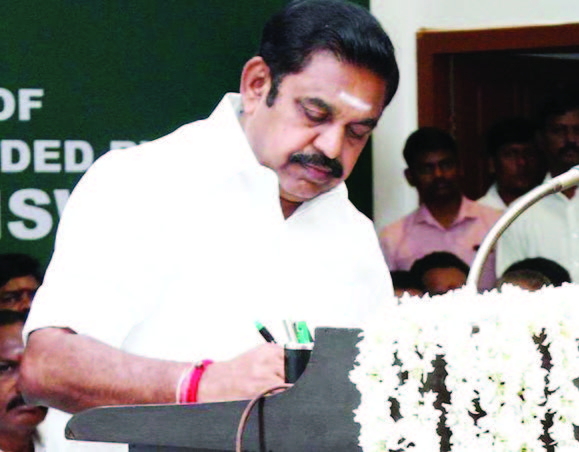
    CHENNAI (TIP): The political potboiler in Tamil Nadu ended on February 16 with the swearing-in of jailed AIADMK general secretary VK Sasikala’s proxy, Edappadi K Palaniswami, as the chief minister.

    A long-time confidante of former AIADMK supremo and chief minister J Jayalalithaa, Sasikala’s hopes to become the CM were dashed when the Supreme Court sent her to prison for four years in a two-decade-old corruption case, prompting her to name Palaniswami as her successor and brought two nephews into the party who were expelled by Jayalalithaa.

    Palaniswami retained almost all the ministers in the O Panneerselvam government, barring the ousted chief minister as well as education minister MF Pandiarajan who have rebelled against Sasikala. Governor C Vidyasagar Rao administered the oath of office to the chief minister and his 30-member council at a function in which Sasikala’s family members took the front row, leaving no room for guesswork as to where the party leaders draw their strength from. The governor invited Palaniswami to form the government after he presented a list of 124 AIADMK lawmakers supporting him. The new chief minister will have to take a floor test in the assembly in a fortnight to prove that he enjoys support of the majority of legislators.

    The AIADMK posted on its twitter handle that the trust vote will be held on Saturday.

    Senior party leaders said the leadership wanted to get it done without delay – lest some of the legislators changed their mind and crossed over to the Panneerselvam camp that has vowed to fight the “wrongdoing”.

    Tamil Nadu chief minister Edappadi K Palaniswami after taking the oath of secrecy administered by governor Vidyasagar Rao during the swearing-in ceremony at Raj Bhavan in Chennai on February 16. Photo courtesy PTI
    Tamil Nadu chief minister Edappadi K Palaniswami after taking the oath of secrecy administered by governor Vidyasagar Rao during the swearing-in ceremony at Raj Bhavan in Chennai on February 16. Photo courtesy PTI

    Until then the MLAs would remain at Golden Bay resort at Kuvathur, 80km from Chennai, where they have been staying since Sasikala corralled them there last Wednesday night to stop them from switching loyalties.

    Panneerselvam backers were confident about several legislators joining their side.

    “During the floor test, even if seven MLAs switch sides, the government will be in a minority. Wait and see what happens,” former education minister Pandiarajan said.

    The Panneerselvam camp requested the election commission to nullify the election of Sasikala as the AIADMK general secretary, alleging that the process violated the party constitution.

    “Freeing the party from the control of Sasikala is the larger battle and this is a step in that direction,” said Rajya Sabha member V Maitreyan, who went to poll panel with the request in New Delhi.

    The 61-year-old Sasikala – a long-time confidante of former AIADMK supremo and chief minister J Jayalalithaa – had been anointed as the late leader’s successor by the ruling party and was due to be sworn in last week.

    But she was pulled into a bruising power struggle by Panneerselvam, who alleged he was forced to resign. Since then, he has been backed by several MPs and MLAs who have switched sides but a majority of the party lawmakers is said to be behind Sasikala.

    Her hopes were dashed when the Supreme Court sent her to prison for four years in a two-decade-old corruption case, prompting her to name Palaniswami as her successor and brought two nephews into the party who were expelled by Jayalalithaa.

    The conviction disqualifies her from holding a public office and contesting elections for the next 10 years. She is now lodged in Bengaluru central jail as prisoner number 9324, but political analysts said she would wield the remote control with a proxy heading the government.

    Panneerselvam, also known as OPS, vowed to free the state from the clutches of Sasikala and her family.

    “We will defeat them in the assembly,” he told his supporters outside his home in Chennai. But for now, the initiative appears lost in the rebel camp. Sasikala supporter and senior minister OS Manian was confident that the government would complete its term, a little more than four years to the next assembly elections. “Most of the MLAs with OPS will return to us. You wait and see,” he said, hinting that the cabinet would be expanded after trust vote.

    The lawmakers would prefer to complete their term, rather than going for fresh elections without their charismatic leader, Jayalalithaa, and with the burden of an ugly power spat. The fear of facing the ballot will bind the AIADMK legislators, political analysts said.


  • India Assembly elections: Change of guard on cards in Punjab, Goa

    India Assembly elections: Change of guard on cards in Punjab, Goa

    NEW DELHI (TIP): Punjab and Goa, which reported high voter turnout for assembly elections on February 4, could be looking at a change, an analysis of past poll data reveals. In around 80% of the state assembly polls whenever voting percentage has been higher than the previous election, there has been a change in the government, election commission data for the last 20 years reveal. The probability of change is even higher when women voters outnumber men.

    Also Read Related Story: PUNJAB RECORDS 77.37% VOTER TURNOUT & Goa notches record 83% turnout

    Punjab reported 77.37% polling, a shade lower than 78.57% in the 2012 election. Goa turnout was 82.23% against 81.73% the last time. In both the states, more women turned up at polling booths than men.

    High voting, a recent phenomenon, has led to change in governments in most states though there are exceptions. Voters in Punjab took everyone by surprise in 2012 when they returned SAD-BJP to power, a first for the state where Akalis and Congress took turns to rule the state.

    Last year, Mamata Banerjee was given a second successive term by voters in West Bengal. When she ended the Left’s three decades of rule in 2011, it was a new voting record for the state. Sheila Dikshit returned as the chief minister of Delhi with a higher majority in 2003.

    “Invariably the enthusiasm at polling booths is for a change,” said Sanjay Kumar of the Centre for the Study of Developing Societies, which has been monitoring voting patterns of assembly elections for the last 20 years.

    Kumar said understanding voting pattern was a complex issue and could vary from state to state in a big country like India, as elections also have caste and community dimensions. “But what we observe from analyzing long-term data is that if people are satisfied with the incumbent government, they normally may not come out in large numbers,” he said.

    In the last 20 years, India has seen voters’ enthusiasm rise. Higher turnouts can primarily be attributed to three factors -weeding out of bogus names from poll rolls, the election commission’s efforts to encourage voting and bring polling stations closer to voters’ homes and adequate security. The number of polling stations has more than doubled in the last two decades. All polling booths now have a central election observer to ensure free and fair polling.

    At least 10% of the names on polls rolls were found to be bogus or duplicate and were struck off, EC has said. “The ECI has worked a lot on this and it is showing results,” former chief election commissioner SY Quraishi said. These factors have helped build voter’s confidence. In around 160 assembly polls, including those for union territories, held since 1990, higher voter turnout was reported in about 122 elections, leading to change in the government in about 79.4% cases. Moreover, data also show that it is getting increasingly difficult for the ruling parties to retain power when compared to early years of Independence.


  • Indian Union Budget 2017 Presented – Finance Minister unveils series of post-demonetization digital reforms

    Indian Union Budget 2017 Presented – Finance Minister unveils series of post-demonetization digital reforms

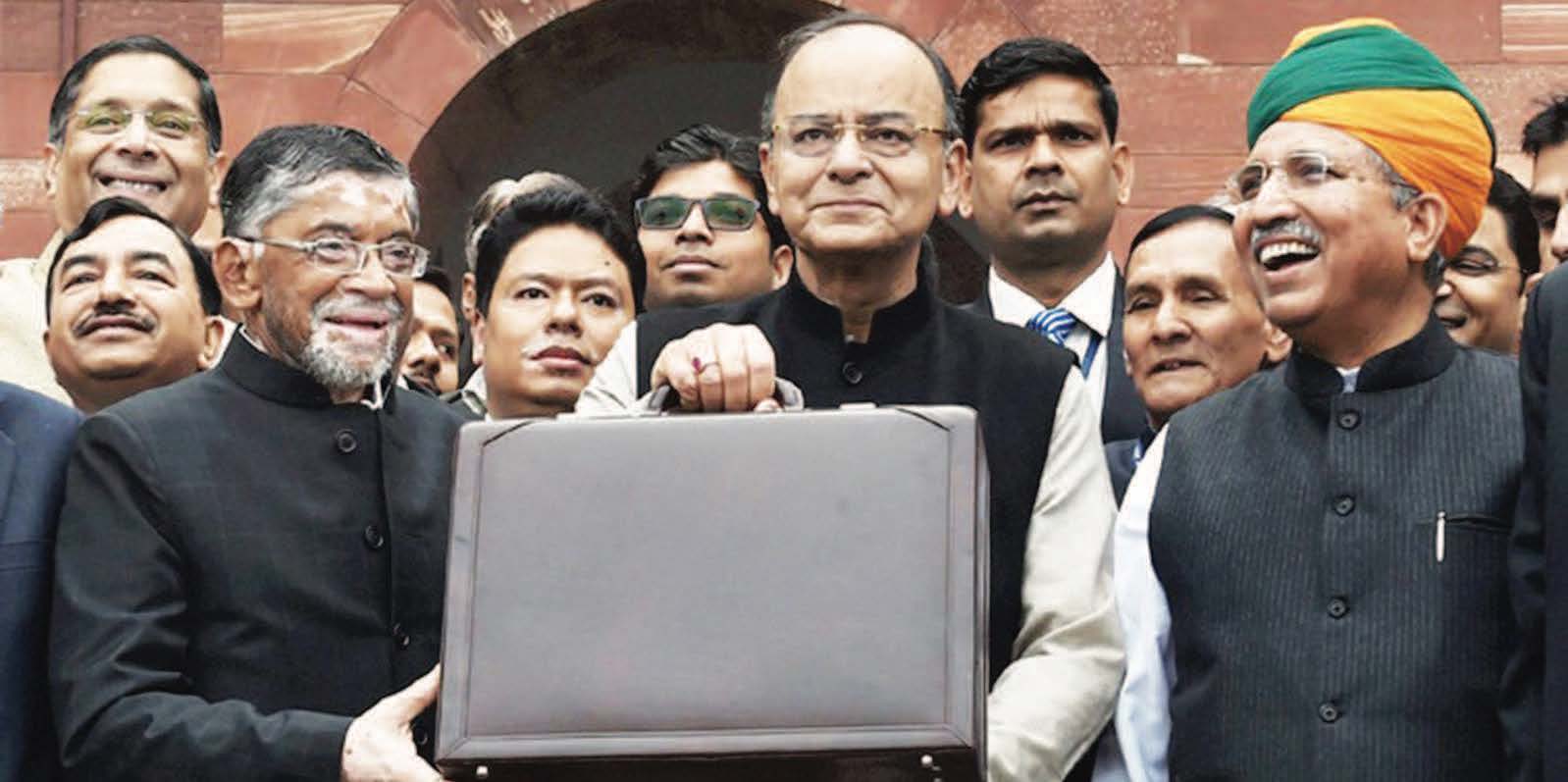
    NEW DELHI (TIP): In a pre-election Budget aimed at softening the demonetization blow, Finance Minister Arun Jaitley on February 1 halved the basic income tax rate to 5 per cent and lowered the rate for small companies, while boosting spending on rural employment, agriculture and infrastructure.

     
    HIGHLIGHTS
    I-T halved to 5% for assessees in Rs 2.5-Rs 5 lakh slab

    ● Rs 12,500 relief for taxpayers in other categories

    ● 10% surcharge on income between Rs 50 lakh-1 cr

    ● Rs 1 lakh cr Rail Safety Fund for network upgrade

    ● Highest-ever Rs 48,000-cr grant for MGNREGA

    ● FIPB shut; FDI norms to be further eased

    ● 5% corporate tax cut for small firms

    ● No cash deals above Rs 3 lakh

    Jaitley presented a merged railway and general Budget after advancing the dates by a month that provides a record outlay of Rs 3,96,135 crore for infrastructure schemes, besides a capital expenditure of Rs 1.3 lakh crore on railways and Rs 64,000 crore on highways.

    The FM perhaps was asked to build on the political gains of demonetization, and that is why sections hurt by it were targeted for incentives. Small and medium enterprises got a tax cut and taxpayers were rewarded – though not to the extent expected. And much against expectation again, the Budget lacked the surprise factor.

    The Budget seeks to provide a record Rs 10 lakh crore in loans to farmers, boost funds for rural employment guarantee program, bring one crore households out of poverty and promised to build one crore houses by 2019 for the homeless ahead of the crucial elections in five states.

    In view of the fact that the proposed GST is expected to be rolled out soon, he left indirect taxes largely untouched.

    While the tax rate for income between Rs 2.5 lakh and Rs 5 lakh has been lowered to 5 per cent, a 10 per cent surcharge has been slapped on income between Rs 50 lakh and Rs 1 crore. The 15 per cent surcharge on income above Rs 1 crore will continue.

    The tax liability of all persons below Rs 5 lakh would be reduced to either zero (with rebate) or 50 per cent of the existing liability. In order not to have duplication of benefit, the existing benefit of rebate available to them is being reduced to Rs 2,500 available only to assessees up to income of Rs 3.5 lakh.

    While the taxation liability of people with income up to Rs 5 lakh is being reduced to half, all other categories of taxpayers in the subsequent slabs will also get a uniform benefit of Rs 12,500 per person.

    In the case of senior citizens above 60 years, there will be no tax up to Rs 3 lakh, while the exemption will be up to Rs 5 lakh in case of citizens above 80. Both the categories will attract a tax of 20 per cent on income between Rs 5-10 lakh and 30 per cent for income above Rs 10 lakh.

    FISCAL DEFICIT DOWN TO 3.2% FROM 3.5%

    Moving ahead with the fiscal consolidation path, Finance Minister Arun Jaitley has pegged the fiscal deficit for 2017-18 at 3.2 per cent, down from 3.5 per cent expected in the current financial year. Addressing the media, he said the Budget estimate for fiscal deficit was 3.5 per cent for 2016-17 and revised estimate is also 3.5 per and it will be achieved. Fiscal deficit is the difference between revenue receipts plus non-debt capital receipts (NDCR) and total expenditure. This indicates the total borrowing requirements of the government from all sources. Fiscal deficit of 3.2 per cent in absolute terms for the next fiscal comes out to be Rs 5,46,532 crore.

    AFFORDABLE HOUSING GETS INFRA STATUS

    Aiming to boost real estate sector, the government announced infrastructure status to affordable housing for encouraging investment and offered tax sops to developers sitting on completed but unsold homes. The allocation for Pradhan Mantri Awaas Yojana- Gramin has also been raised.

    INCENTIVES TO BOOST INVESTMENT IN NPS

    In a bid to boost NPS, Finance Minister Arun Jaitley has proposed higher tax rebate for investment in flagship social security programs and allowed tax relief on partial withdrawal of up to 25 per cent of the contribution.

    NOW, TAX EXEMPTION TO CM, LG RELIEF FUNDS

    The government announced extension of tax exemption on contributions to Chief Minister’s Relief Fund and Lieutenant Governor’s Relief Fund. At present, there is tax exemption on funds given to Prime Minister’s National Relief Fund. Jaitley said Chief Minister’s Relief Fund (CMRF) and Lieutenant Governor’s Relief Fund (LGRF) are of the same nature as the Prime Minister’s National Relief Fund at the level of state or the union territory. “Therefore, it is proposed to amend the said clause to provide the benefit of exemption to the Chief Minister’s Relief Fund or the Lieutenant Governor’s Relief Fund,” he said. This amendment to I-T Act will take effect retrospectively from April 1, 1998.

    “The Union Budget for 2017-18 is in line with the BJP’s changed political stance of wooing the poor and shedding its “suit-boot-ki-sarkar” image. The Modi government has changed track and turned to the side where the numbers are -the poor, farmers and the middle class – which makes sense electorally. This is what every party tries to do – look credible on welfare and capture the constituency of the deprived. Congress and BJP budgets frequently look similar. How to deliver the dole is the real challenge and the switchover to a technology-based foolproof system is being unnecessarily delayed”, commented a newspaper.

  • The Serenading over, the silent voter holds the key

    The Serenading over, the silent voter holds the key

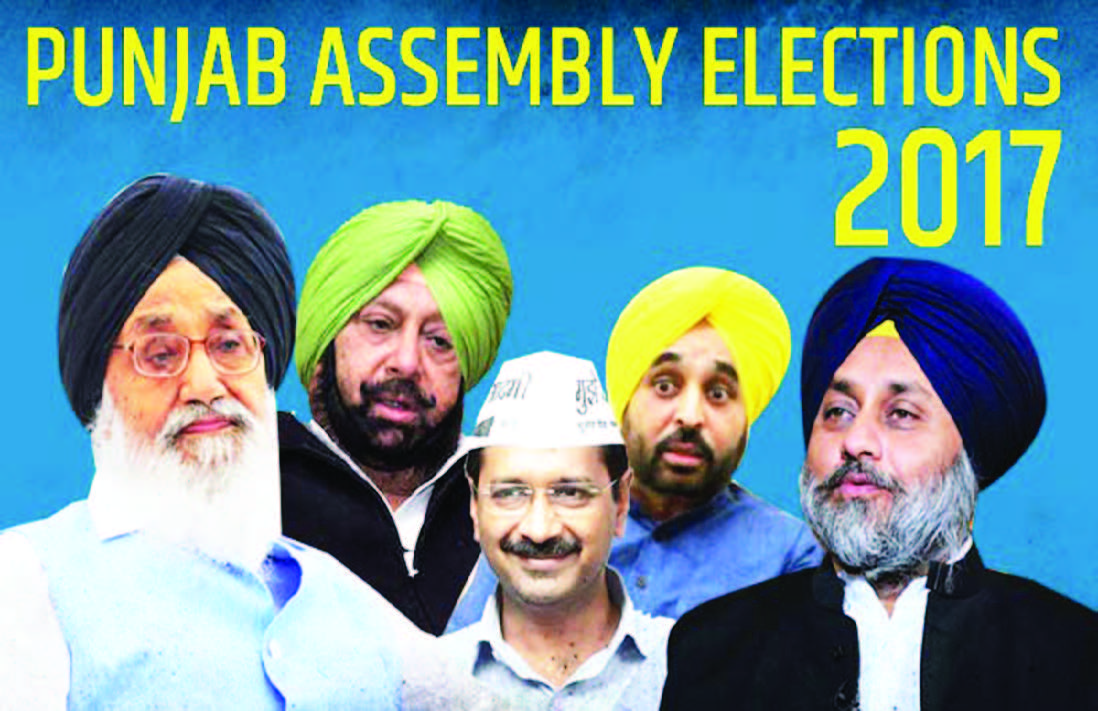
    A do or die battle for the three contenders-Parkash Singh Badal, Capt. Amarinder Singh and Arvind Kejriwal.

    CHANDIGARH (TIP): Two days before the polling on February 4, campaign din ended on February 2. The three main contenders for power- the ruling SAD-BJP combine, the Congress Party and the Aam Aadmi Party (AAP) held impressive roadshows to give a final push to their campaigns. As loudspeakers went silent at 5 pm, on February 2, party cadres were seen going door-to-door to persuade the voters. SAD-BJP combine is trying to retain power which the Congress Party and the AAP are trying to wrest from it. AAP is fighting the Assembly elections in Punjab for the first time.

    Election campaign in Punjab has always been marred with violence. It was no different this time. Often shrill and at times nasty, it was marred by the twin blasts at Maur Mandi in Bathinda on January 31 in which six persons were killed and several injured.

    In the first round, the electioneering revolved around the issues of drugs, unemployment, agrarian crisis and incidents of sacrilege. It was reduced to mere rabble-rousing in the last phase, with leaders making wild allegations against one another. What stood out was the participation of the Punjab youth in a big way.

    Polling for the 117 Assembly constituencies in Punjab on February 4 will decide the fate of 1,145 candidates in the fray. There is a stiff triangular contest among the SAD-BJP, Congress and AAP candidates in most constituencies. Other parties, such as the BSP, too, are in the election arena.

    On the last day of campaigning, AICC vice-president Rahul Gandhi chose to focus on Malwa, including Lambi, where PPCC chief Capt. Amarinder Singh is pitted against Chief Minister Parkash Singh Badal. Deputy CM Sukhbir Singh Badal held a roadshow in Lambi. The AAP convener, Arvind Kejriwal, held one in Ludhiana. Union Minister Harsimrat Kaur Badal spent the day in Jalalabad, her husband’s constituency.

    AAP’s Bhagwant Mann and Congress’ Navjot Singh Sidhu drew huge crowds during campaigning. Among the key campaigners were Prime Minister Narendra Modi, BSP chief Mayawati, Union Home Minister Rajnath Singh and a number of senior leaders from various parties.

    The Prime Minister addressed two rallies in Jalandhar and Kotkapura where he sought votes on the “stability” plank, saying Pakistan was trying to disturb the state’s peace.

    On the other hand, Rahul claimed Punjab, a front-ranking state, had fallen behind as the ruling Akalis had “plundered” it to serve their own interests. He promised tough laws to curb the drug menace.

    New entrant AAP accused the SAD and the Congress of “hobnobbing” with each other and vowed to put the Badal family behind bars on the issue of drugs. All parties wooed the Dalits who constitute over 30 per cent of the electorate.


  • INOC, USA expresses strong objection at ‘Modi’ replacing Gandhiji on KVIC calendar

    INOC, USA expresses strong objection at ‘Modi’ replacing Gandhiji on KVIC calendar

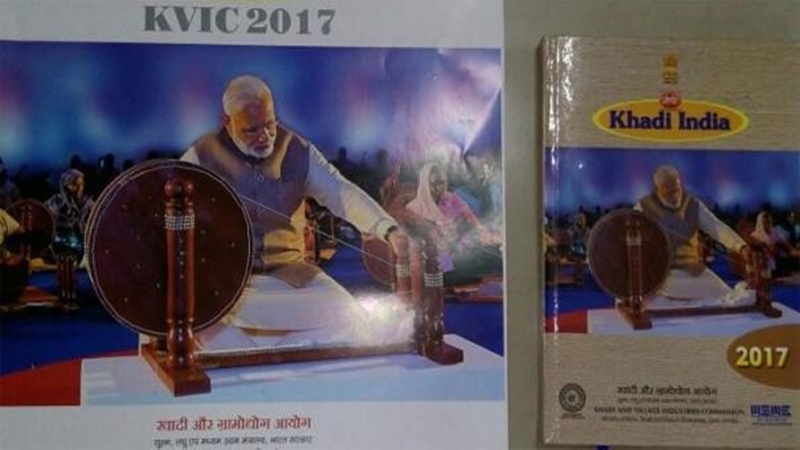
    NEW YORK (TIP): Indian National Overseas Congress, USA strongly opposes the fact that the Prime Minister has replaced Mahatma Gandhi on the wall calendars and table diaries issued by the Government-owned Khadi Village Industries Commission (KVIC). The 2017 Calendars and Diaries carry a cover photograph of Narendra Modi, instead of Mahatma Gandhi, who had been on it for decades.

    “We are indeed pained by the action of the commission that reinforces the deep suspicion in the public domain that this is part of an ongoing effort to diminish the heroes of our independence and to erase their relevance”, said George Abraham, Chairman of the Indian National Overseas Congress, USA. “Despite the current Government’s efforts, Gandhiji will continue to live forever in the hearts and minds of the freedom loving people everywhere”, Mr. Abraham added.

    “The entire Khadi industry is based on Gandhi’s philosophy, ideas, and ideals. It is ludicrous to think that Modi can ever replace Gandhi as it biggest brand ambassador” said Mohinder Singh Gilzian, President of INOC. He further agreed with the assessment in the media that, ‘sitting in front of spinning wheel will never make anyone a Gandhi.’

    “We hope that KVIC will reexamine its wrongheaded decision and restore those calendars with the decade-long practice of using the image of Gandhi Ji who is adored and respected the world over”, Gilzian further added.

  • Notebandi not enough to end corruption

    Notebandi not enough to end corruption

    By Beena Kothari - President, India Association of Long Island Email: beena.kothari@gmail.com
    By Beena Kothari – President, India Association of Long Island Email: beena.kothari@gmail.com

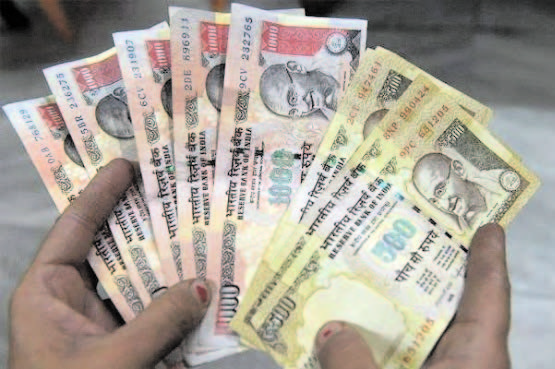
    The historic decision of Nov 9, 2016 to demonetize currency notes of Rs. 500/1000, which represents 86 %of the total currency in circulation, was ‘overdue’ since the last time in 1978.

    Many reports suggest that it has resulted in shrinking the size of the parallel economy and black money tremendously, at the least by 20%. and likely to be more in the coming year as follow up measures indicate .The business of counterfeit currency  is almost 80,000 crores which has been pumped by ISI and our enemies  has been badly hit  and almost stopped for now. The terror funding by the enemies across the border and the illegal mafia activities, communal riots, human trafficking, including Naxalites activities have been extremely reduced for the time being. The huge inflow of the cash money into the banks thus into the economy, has resulted into loan interest rates going down and lowering the cost of doing business and making more affordable the products.

    It is well known that many political parties are the biggest hoarders of the black money. Now, we may see a better election process and the fair practices in the upcoming assembly elections in a more democratic ways. The cash deposits of over 14 lakhs crores after this move which will very positively impact Indian economy and improve the GDP by at least 1.5%. People are becoming hopeful that there is likely increase in public expenditure due to more tax collections which govt. will be spending on infrastructure, health, education, social welfare schemes and creating job opportunities.

    The demonetization move has been seen as a “Masterstroke” by many among us. Is it a Masterful enough?

    This mammoth tasks lacked in the great detailed planning as seen by the long queues at the banks for many weeks and the empty ATMs. It caused public inconvenience in many medical emergencies and health issues, the wedding seasons was also around the corner. In rural area, the banking structure was not sound enough to support this transition. As 90 % of the Indian economy is on cash, this cash crunch has the worst impact in the service sector and would continue for more months .Ongoing period is high activity for agriculture is a major concern and have felt the big pinch. There is a fear of return of “inflation” contrary to the fundamentals that it should go down after demonetization. So we could see short-term pain for India’s economic trajectory but eventual long-term gains for Indian economy.

    “Black money is not synonymous with corruption; it is rather one of several symptoms of corruption”. This intervention is a one-time draining of this current stock of black money but unless the root causes of corruption are removed, corruption will continue. It is sort of like a dialysis, more of a short term cleaning up than a solution of the problem. It needs to be repeated periodically. More enforcements   and tightening of the laws and regulations is required on ongoing basis to get rid of the menace of the corruption.

    Digitization provides equal access to education and communication. Digitization also ensures that the public goods and services are reaching people cost effectively and timely in an efficient manner. Whether it is banking, railways or even Public distribution system or any public utility service, it makes their delivery faster and easier to keep track with. People can now do almost everything online, to apply for a PAN card, passport and to book a railway ticket or pay bills they no longer need to stand in long queues. There is also an online grievance system for almost every service and therefore people’s problems are now better attended because everything is now recorded, monitored and tracked. We have even seen People directly tweet the grievance to the concerned minister, the role of Smt. Sushma Swaraj, MEA Minister is exemplary outstanding and extra ordinary and getting it resolved promptly. So with this another value of democracy, service for the people is effectively implemented. Digitization is truly strengthening and enhancing the Indian democracy and widening its scope for betterment of common man. Digitization is the way to advance.

  • Poll schedule for 5 states announced, UP to vote in 7 phases; counting on March 11

    Poll schedule for 5 states announced, UP to vote in 7 phases; counting on March 11

    NEW DELHI (TIP): The Election Commission on January 4 (Wednesday) announced the poll dates for Uttar Pradesh, Uttarakhand, Punjab, Manipur and Goa. Chief Election Commissioner Nasim Zaidi said that the state of Manipur will have a two-phase election and Uttar Pradesh will have a seven-phase election. Counting for all states will be held on 11 March.

    A total of 690 assembly constituencies will go to polls in these elections. Twenty three of these have been reserved from Scheduled Tribes candidates. Over 160 million voters – that’s the size of the electorate in these assembly elections. There will be 1,85,000 polling stations across five states.

    Seven-phase elections in Uttar Pradesh from February 11 to March 8; Punjab and Goa will vote on February 4 while Uttarakhand on Feb 15; results on March 11

    NEW DELHI (TIP): Assembly elections in UP, Punjab, Uttarakhand, Goa and Manipur will be held between February 4 and March 8, the results of which — to be announced on March 11 — are likely to be seen as a referendum on the demonetisation move by PM Narendra Modi.

    The terms of the legislative assembly of Goa, Manipur and Punjab are due to expire on March 18 while that of Uttarakhand expires on March 26. The legislative term of Uttar Pradesh ends on May 27. Goa has 40 assembly seats, Manipur has 60, Punjab has 117, Uttarakhand has 70 while Uttar Pradesh has 403.

    Election Commission made the much-anticipated announcement of dates on January 4 (Wednesday), setting in motion a process that will impact Indian polity in the coming months. The UP polls are already being dubbed as a “semi-final” to the 2019 general elections. These polls are significant for BJP as a good electoral harvest will boost its strength in the Rajya Sabha in the near future. The outcome will also have a bearing on the Presidential elections later this year.

    UP will have a seven phase election, with polling on February 11, 15, 19, 23, 27, March 4 and 8.

    Manipur, which continues to be under a blockade and is facing law and order problems, will have a twophase election with polling on March 4 and 8.

    Seven-phase elections in Uttar Pradesh from February 11 to March 8; Punjab and Goa will vote on February 4 while Uttarakhand on Feb 15; results on March 11Punjab and Goa will vote on February 4 while Uttarakhand on Feb 15. While the Code of Conduct has come into force with the announcement, the state-wise notification process will begin with Punjab and Goa on January 11.

    Demonetisation is likely to be a big issue in these elections, though the polling pattern will be guided by local factors, caste equations and identity politics. With the Centre propagating a less-cash economy, the extent to which money power is at play in these polls will be keenly watched. One of the new rules of these elections allows parties to use cash for campaign payments only up to Rs 20,000.

    Candidates will also have to take oath this time that they have no pending public utility bills. The SC order last week barring political parties and candidates from seeking votes in the name of religion or caste has also added to the worries of the contestants. While SP is seeking to retain power in UP and is facing a challenge from BJP and BSP, Congress is trying to beat anti-incumbency in Uttarakhand and Manipur. BJP is a part of the ruling coalition in Punjab and rules Goa. The caste-ridden politics of UP now has an added dimension with the feud in the first family of SP. CM Akhilesh Yadav is fighting over the symbol, bicycle, with his father and party patriarch Mulayam.

    SAD-BJP combine, which has ruled Punjab for two consecutive terms, has not lost hope, especially if AAP makes it a triangular contest at the expense of Congress. AAP is also making things difficult for BJP and Congress in Goa.

    BJP is still confident of retaining power. BJP is hopeful of defeating Congress in Uttarakhand while CM Harish Rawat is playing the victim card, citing the saffron party’s attempt to topple his government a few months ago. BJP is hopeful of defeating Congress in Manipur currently under Congress rule. Manipur has been facing an economic blockade on its two highways since November 1 over creation of seven new districts.

  • Najeeb Jung Quits as Delhi Lieutenant Governor:  Political Circlesare Surprised

    Najeeb Jung Quits as Delhi Lieutenant Governor: Political Circlesare Surprised

    NEW DELHI (TIP): New Delhi could not have a more surprising news than the one that Najeeb Jung resigned as the Lieutenant Governor of Delhi, with 18 months left in his tenure, saying he wants to return to his “first love, academics”.

    Jung’s three years in office were dogged by his constant power tussle with Chief Minister Arvind Kejriwal and his Aam Aadmi Party (AAP) government.”Sh Jung’s resignation is a surprise to me, my best wishes in all his future endeavors.(sic)” Mr Kejriwal tweeted.

    Jung’s adviser Ajai Chaudhari said he was shocked too. “He resigned since he had personal reasons. He said he has worked for 45 years, now he wants to spend time with family and his grandchildren,” Chaudhari told mediapersons.

    Sources close to Jung claimed it was not a sudden decision and he had been thinking of quitting for some months.

    An undated letter of Jung, however, has surfaced in which he has written to Union Home Secretary Rajiv Mehrishi that he would be on a private visit to Goa from December 25 to January 1. The letter, news agency Press Trust of India reported, also said the Delhi Chief Secretary will keep in touch with Jung “about important developments” and when needed, seek Mehrishi’s advice.

    A statement from Jung’s office said he thanked “the people of Delhi for all their support and affection, especially during the one year’s President Rule in Delhi, when he got unstinted support from them and which in turn helped run the administration in Delhi smoothly and effortlessly. ”

    He also thanked Kejriwal, who accused him of acting as the Centre’s agent.

    Kejriwal’s deputy Manish Sisodia said in a statement.

    AAP leader Kumar Vishwas commented that Jung probably “was controlled elsewhere” and that he had no choice in the way he navigated a hostile relationship with the elected government in Delhi.

    Jung is a former bureaucrat and Vice Chancellor of the Jamia Millia Islamia University.

    AAP alleges that as the center’s representative in Delhi, Jung used his veto to strike down several Delhi government decisions in recent months.

    Earlier this month, the Supreme Court had observed that “an elected government should have some power to run, otherwise the government cannot function.”

    The center and Jung said because Delhi is not a state, the Lieutenant Governor has special powers, an argument accepted by the Delhi High Court which, in August, ruled against Kejriwal. The court said that Jung is the administrative head of the capital and has to sign off on government decisions. Kejriwal challenged that verdict in the Supreme Court, which will hear his appeal in January.

    Meanwhile, aspirants for the job have begun lobbying for the position. A former Police Commissioner of Delhi is also being mentioned as a candidate.

  • Navjot Singh Sidhu’s Wife Navjot Kaur along with Pargat Singh Join Congress

    Navjot Singh Sidhu’s Wife Navjot Kaur along with Pargat Singh Join Congress

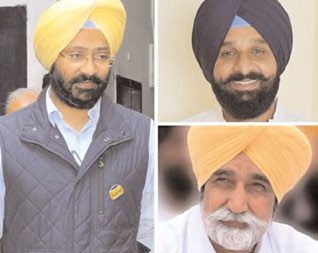
    Former BJP MP Navjot Singh Sidhu’s wife Navjot Kaur Sidhu and former Awaaz-e-Punjab leader Pargat Singh today have formally joined the Congress party in the presence of Punjab Congress chief Amarinder Singh.

    About the joining of Navjot Singh Sidhu in the Congress, Kaur said he would follow suit soon.

    Navjot Kaur clears the air, says, “We are two bodies and one soul, it’s only a matter or time that Navjot Siddhu will also follow suit.”

    Navjot Kaur Sidhu is a former MLA and represented Amritsar in Punjab Assembly. She resigned from the BJP recently after quitting the state assembly on 8 October.

    Pargat Singh is a former hockey player and was formerly associated with the ruling Shiromani Akali Dal (SAD) in Punjab. He represents Jalandhar Cantt constituency in the state assembly.

    On September 8, cricketer-turned-politician Navjot Singh Sidhu formally launched his political party Awaaz-e-Punjab along with Pargat Singh, and the Bains brothers — Simarjit Singh Bains and Balwinder Singh Bains, two former independent MLAs from Ludhiana. But, they were not ready to go out alone in Punjab polls and has expressed its desire to align with like-minded parties.

    The Bains brothers have recently joined the Aam Aadmi Party recently. Elections to the 117 Punjab assembly seats are likely to be held in January or early February in 2017.

  • ‘Lungi’ wearing visitor not allowed into Kerala Assembly

    ‘Lungi’ wearing visitor not allowed into Kerala Assembly

    THIRUVANANTHAPURAM(TIP): A man wearing a white check lungi (kallimundu) was denied entry into the visitors’ gallery in the Kerala assembly on the ground it was an ‘informal’ dress, following which the state Human Rights Commission has sought a clarification from the officials.

    Kunjimoyin from Kondotty in Malappuram, who had come with a group of 38 persons to witness the assembly proceedings on Nov 8, was denied permission as he was wearing the white lungi.

    An upset Kunjimoyin filed a complaint before the Kerala Human Rights Commission stating that he was not prevented entry either at the gate or at the entrance of the assembly building.

    But he was not allowed to enter the visitor’s gallery. Commission has sought a clarification from legislative Secretary V K Babu Prakash on whether there was a dress code in the assembly.

    Meanwhile, the Assembly Speaker’s office said that ‘informal dressing is not allowed inside the house and gallery. That is the usual practise. A decorum has to be followed. The ‘Kallimundu’ is an informal dress and so the person was not allowed’, an official said.

    “We are adhering to the procedures followed by Parliament on dressing. Only exception is given to religious symbols,” he said.

  • ‘JAYA STARTS SPEAKING,  TO WALK SOON’

    ‘JAYA STARTS SPEAKING, TO WALK SOON’

    CHENNAI (TIP): Apollo Hospitals chairman Dr Prathap C Reddy on Nov 25 said that Tamil Nadu Chief Minister J Jayalalithaa has started speaking well and would walk soon. He said Jayalalithaa is undergoing static and active body physiotherapy. “Now, the next thing is to see that she (Jayalalithaa) stands up and walks, and then she is ready to go home,” Reddy said.

    Jayalalithaa was admitted to Apollo Hospitals on September 22 following fever and dehydration. Since then, she has been constantly monitored by experts and specialists from the UK and AIIMS.

    Reddy said that most of the time Jayalalithaa is breathing without respiratory support, and now she has started talking with the help of a speaking device.

    Explaining that it is not easy for people to talk with a speaker (device) since they have to hold their breath, Reddy said for now Jayalalithaa is only using the speaker for a few minutes. “It is only temporary,” he said.

  • Former Minister Ponnala Laksmaiah given a reception by INOC Telangana Chapter

    Former Minister Ponnala Laksmaiah given a reception by INOC Telangana Chapter

    NEW YORK (TIP): Indian National Overseas Congress USA – Telangana Chapter organized a meet and greet event with Former PCC President and Ex Minister Shri. Ponnala Lakshmaiah on November 12th 2016. This event was attended by NRIs from Telangana based in New Jersey.

    Shudh Parkash Singh, National Chairman of the Indian National Overseas Congress (I) USA and other senior leaders of Telangana chapter addressed the meeting. “Mr. Ponnala is the first leader who blessed the formation of the Telangana chapter of INOC USA when he was the TPCC President”, Shudh said in his speech.

    Ponnala Lakshmaiah while blaming the Telangana government for pressurizing the media not to report any negative news in the state of Telangana, urged all the responsible NRIs to rely on social media to expose the ground reality and the problems faced by the people of the state.

    Ravinder Thota, Sravanth Poreddy and Krishna Chaitanya (KC) also spoke on the occasion.

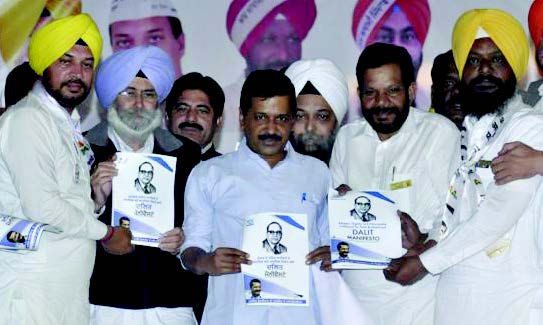
  • Dalit to be deputy CM if AAP wins Punjab: Kejriwal at manifesto release

    Dalit to be deputy CM if AAP wins Punjab: Kejriwal at manifesto release

    JALANDHAR (TIP): With an eye on nearly 32% Dalit voters in Punjab, Aam Aadmi Party (AAP) convener Arvind Kejriwal on Friday playing the masterstroke by declaring that if his party formed the government in Punjab, the post of deputy CM will go to a Dalit. The announcement was made at a rally here during which he also unveiled the party’s 19-point manifesto meant exclusively for the Dalits.

    Kejriwal said it was a historic announcement by a political party wherein Dalits have been promised a high place in the corridors of power.

    “Saari partiyan kehti hain hum Daliton ko ye denge, wo denge…lekin koyi kursi nahin deta. They only give you choice for MLAs, that too because of the reservation. But AAP is not here to exploit you for votes. We will share the power with you . Bhim Rao Ambedkar and Kanshi Ram had stated that Dalits can only be brought in the mainstream if power is shared with them,” said Kejriwal, addressing a gathering in Dalit-dominated Doaba region.

    Even as the gathering was less in comparison to other AAP rallies, Kejriwal managed to steal the show with his announcement. AAP’s all Dalit candidates from across the state were present on the stage. He said it will be difficult for the traditional parties

    (Akali Dal and Congress)?to match what AAP has announced for the Dalits.

    The Delhi CM also said that even seven decades after the Independence, the Dalits are deprived off their rights. “Look at the plight of Dalits in Punjab. A journalist just told me that 18 lakh students study in government primary schools in Punjab, of which 14 lakh belong to Dalit families,” said Kejriwal. He said AAP enjoyed full confidence of Dalits in Delhi where it won all the 12 reserved seats. “In Delhi, we delivered what we promised for the Dalits. We have started regularising all safai sewaks,” he said, adding Dalits are being given free education and health care facilities in the national capital.

    Dalit manifesto: Old wine in new bottle?

    Except for promising deptuy chief minister’s post to a Dalit, the Aam Aadmi Party manifesto lacks innovation. Most promises in the document are more or less the same as those of rival parties.

    Concept of ‘mohalla clinic’ in Delhi has a mention in the document under the ‘Modern Pind Sehat Clinic’,, besides ?5 lakh health insurance. The promise to provide free gas connection, along with burner and stove, to all Dalit families is already being implemented in Punjab under the Pardhan Mantri Ujjwala Yojna. The party also announced free education for Dalit girls up to Class 12.

    Why Dalit vote counts

    • ? 32% of Punjab’s population is Dalit – the highest in the country.
    • ? 33 of 117 seats in the state assembly are reserved.
    • ? With 23 seats, the Dalit-dominated Doaba is a decisive factor in power sweepstakes. Source: HT
  • Pakistan is damaging itself by fighting against India: PM

    Pakistan is damaging itself by fighting against India: PM

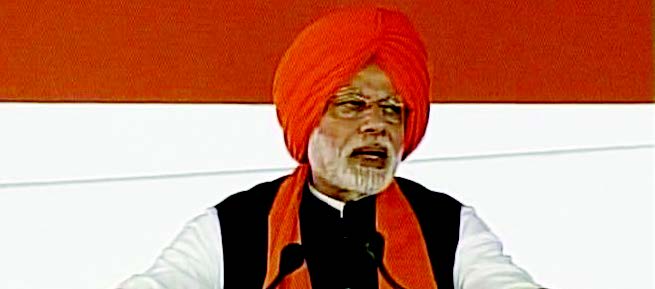
    BATHINDA (TIP): Prime Minister Narendra Modi today said Pakistan was yet to settle from the setback of surgical strikes and was damaging itself by fighting against India.

    “Earlier, soldiers were unable to show their valor despite having the strength. But now Pakistan has seen strength of our brave soldiers after they carried out surgical strikes in 250-km area across the LoC,” Modi said while addressing a public rally.

    He said there were tremors across the border after these strikes and they have not yet settled.

    Reaching out to Pakistani public, Modi said, “125 crore Indians eyes were wet with tears after killing of school kids in Peshawar. Every Indian felt the pain of Pakistani.”

    Reiterating that Pakistani public should ask their rulers that fight should be against black money and corruption rather than fighting any country, Modi said,

    “By fighting against India they (Pakistan) are damaging themselves and killing innocents also.” “Pakistani people also want freedom from poverty. For the sake of political benefits this atmosphere has been created by them,” he added. Modi was speaking at the foundation stone laying ceremony of AIIMS in Bathinda.

  • UP polls: Truce in SP as Mulayam takes back Ram Gopal

    UP polls: Truce in SP as Mulayam takes back Ram Gopal

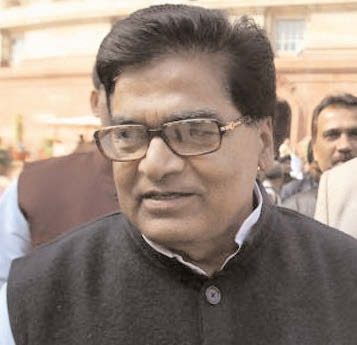
    LUCKNOW (TIP): Over three weeks after expelling him from the SP on charges of anti-party activities, SP chief Mulayam Singh Yadav on Nov 17 revoked the expulsion of his cousin Ram Gopal Yadav and also reinstated him to all posts that he used to hold.

    am Gopal (70), who was shown the door last month in the midst of a raging feud in the Yadav clan, will continue as leader of SP in the Rajya Sabha, Mulayam said in a release in Lucknow. He added that Ram Gopal will also stay on as the SP national general secretary, spokesperson and a member of the SP central parliamentary board.

    State SP chief Shivpal Yadav, who had announced Ramgopal’s expulsion on October 23, said he would abide by all directives of Netaji (Mulayam).

    Speaking to mediapersons, Ram Gopal, who is a cousin of Mulayam and Shivpal, said he was happy with the decision and called it his “comeback” in the party.

    “Mulayam cannot take any decision against me from the core of his heart…that is why he revoked the decision. I was technically not expelled from the parliamentary party. I was member of Samajwadi Party,” he said.

    “It’s my comeback in the party. This is Netaji’s (Mulayam’s) ‘kripa’, he was never against me. I will work as per the directions of the party. I have always worked as a disciplined worker… I have always been part of the Samajwadi Party. I will always be in the Samajwadi Party. Now that I am officially back, I thank Netaji,” said the Rajya Sabha MP.

    The development comes a day after Ram Gopal’s fiery speech in Rajya Sabha, where he represented SP in the debate on the government’s sudden ban on Rs 500 and Rs 1,000 notes and its impact on people. Ram Gopal was sacked on October 23, hours after Shivpal and three other ministers considered close to him were sacked from the state cabinet by Chief Minister Akhilesh Yadav. Shivpal had announced the expulsion a few hours after Ram Gopal issued a letter to SP workers alleging that a group within the party wanted Akhilesh to face defeat in Assembly elections next year. Within hours of Ram Gopal’s letter, Akhilesh had sacked Shivpal along with his close aides— Om Prakash Singh, Narad Rai and Syeda Shadab Fatima — from his cabinet. Shivpal had then alleged that Ram Gopal was “hand-in-gloves with the BJP and has already met a senior BJP leader thrice because his son and MP Akshay Yadav, daughter-in-law and he himself are involved in a scam with former chief engineer of NOIDA, Yadav Singh, who had been arrested”. “To save himself from CBI, he is doing conspiracy on the directives of BJP. He is running a campaign to weaken Netaji and Samajwadi Party. The chief minister is not understanding these conspiracies. He should understand who is his blood relatives and who is his well-wisher,” Shivpal had said, adding that Ram Gopal had always insulted SP leaders and workers.

    After his expulsion, Ram Gopal, in a statement, had denied the charges. He had said that “Mulayam was surrounded by demonic powers and would realise the reality when he gets free from such powers”. He had added that whether he remains in the SP or not, he was with Akhilesh in the ‘dharmayudhha’ and will remain with him till he becomes chief minister for the second time.

    Ram Gopal had stated that he was not disappointed with his expulsion but was pained at the “cheap” allegations leveled against him. “Meeting leaders of other parties is not a crime… I had met Prime Minister Narendra Modi too with Mulayam to invite him for a family function in Saifai,” he had added.

    A few days ago in Lucknow, Mulayam had said that he gives no importance to Ram Gopal’s words. In an emotional outburst at a press conference in his native place in Etawah on Monday, Ram Gopal had virtually broken down, saying injustice had been meted out to him as he trashed the corruption charges levelled against him. He had demanded that SP should withdraw the expulsion of various leaders who were shown the door in the past two months in an “unconstitutional manner”. Alleged that Assembly tickets were being distributed by ignoring Akhilesh, Ram Gopal had then demanded that Mulayam should declare Akhilesh as the party’s CM face in the 2017 polls.

  • Rajya Sabha MP Subhash Chandra files criminal  defamation case against Kejriwal

    Rajya Sabha MP Subhash Chandra files criminal defamation case against Kejriwal

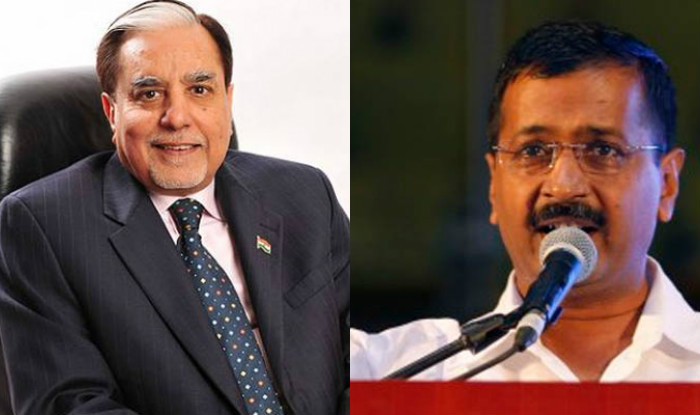
    NEW DELHI (TIP): Rajya Sabha MP Subhash Chandra approached a city court on Thursday seeking prosecution of Delhi Chief Minister Arvind Kejriwal for allegedly defaming him by levelling false allegations in the wake of demonitisation of higher currency notes.

    In his plea, Chandra, chairman of the Essel group, has alleged that Kejriwal, while addressing a press conference on November 11 had made “false, fabricated and defamatory allegations” against him.

    The complaint, which is likely to come up for hearing on Friday, sought chief minister’s prosecution under section 500 (defamation) of the Indian Penal Code.

    The complaint, filed through advocate Vijay Aggarwal, claimed that Kejriwal “defamed the complainant (Chandra) by making inherently defamatory statements and caused serious harm to his reputation by imputing behaviour incompatible with proper conduct and suggestions of involvement in illegal activity.”

    “On November 11, Kejriwal, while addressing a press conference in front of the national television, made false, fabricated and defamatory allegations against complainant,” it said.

  • Jaya breathing without respiratory support: AIADMK

    Jaya breathing without respiratory support: AIADMK

    CHENNAI (TIP): Tamil Nadu Chief Minister Jayalalithaa’s lung infection has been cured and she is breathing without respiratory support and may be discharged from hospital any day, her party AIADMK said.

    “Amma’s (Jayalalithaa) health has improved excellently. She is (continuing) undergoing physiotherapy and she may be discharged any day,” AIADMK spokesperson C Ponnaiyyan said.

    Her lung infection and respiratory problem was totally cured and she “is breathing on her own” without respiratory support, he told reporters here.

    Other health parameters of Jayalalithaa, who has been undergoing treatment at the Apollo Hospital since September 22, including heart (functioning) are “excellent”, he said. “She is having food by herself, she is sitting, she is able to talk freely… she is cheerful,” Ponnaiyyan said. He said she thanked the Almighty for her recovery and the people for their prayers. Jayalalithaa was admitted to the hospital after she complained of fever and dehydration.

    Later, the hospital had said she was being treated for infection with respiratory support.

    On November 13, the 68-year old leader said she has taken “rebirth” and that she was waiting to resume her duties after complete recovery.

    Source: PTI

  • Old and new faces, turncoats figure in SAD’s first list of 69

    Old and new faces, turncoats figure in SAD’s first list of 69

    Greenhorns, turncoats, industrialists and party’s old war horses are all there in the first list of 69 candidates released by the ruling Shiromani Akali Dal on Wednesday for the Assembly elections due early next year. As per seat-sharing arrangement with ally BJP, SAD will contest 94 out of the total of 117 seats. While BJP and Congress are yet to announce their lists, AAP has announced its candidates for 79 seats.

    The first SAD list has focussed on seats reserved for Scheduled Caste candidates where either new faces have been given party tickets or sitting legislators have been shifted to other constituencies.

    Punjab’s Finance Minister Parminder Singh Dhindsa would contest from Lehra instead of Sunam, the constituency he currently represents. All other ministers who figure on SAD’s list on Wednesday will contest from their current constituencies. Chief Minister Parkash Singh Badal, who represents Lambi constituency, and Deputy Chief Minister Sukhbir Badal, who represents Jalalabad constituency, do not figure in the first list.

    Vidhan Sabha Speaker Charanjit Singh Atwal has been dropped from Payal (SC) constituency, from where Isher Singh Meharban has been fielded by SAD. However, in a balancing act to placate Atwal, the party has given ticket to his son and former MLA Inder Iqbal Singh Atwal for Raikot (SC) constituency. Isher Singh Meharban had contested as Congress candidate from Jagraon, also an SC constituency, in the 2012 Assembly polls and lost by merely 206 votes to SAD’s S R Kler.

    SAD has decided to field S R Kler from Nihalsinghwala (SC) constituency, currently represented by Akali MLA Rajvinder Kaur. Kaur had defeated Congress’s Ajeet Singh Shant in the 2012 Assembly polls by a margin of 591 votes. In the run-up to the 2014 Lok Sabha polls, Shant joined SAD in August 2013. Akali Dal will field Shant from Mehal Kalan, the SC reserved seat Akali Dal had lost to Congress in 2012 polls where Harchand Kaur, contesting on Congress ticket, defeated SAD nominee Gobind Singh by a margin of over 7,000 votes.

    With Kler being shifted to Nihalsinghwala, SAD has given ticket to Amarjit Kaur Sahoke for Jagraon. Currently Moga Zila Parishad Chairman, she is contesting Assembly polls for the first time.

    In Phillaur (SC) constituency, SAD has decided to drop sitting MLA Avinash Chander, instead fielding Baldev Singh Khaira, a former BSP heavyweight from Phillaur who joined SAD in July this year. Seth Satpal Mal, a prominent activist of Dera Sachkhand Ballan who had quit Congress as party’s state general secretary in October to join SAD, would be the ruling party’s candidate from another SC reserved constituency of Kartarpur. Mal replaces sitting Akali legislator Sarwan Singh Phillaur. Chander and Phillaur were questioned by Enforcement Directorate in multi-crore Jagdish Bhola drug racket case.

    To consolidate its position on yet another SC constituency that SAD lost badly in 2012 polls, the party has chosen Kabir Das as its candidate from Nabha. Das, formerly with Congress leader and key activist of Dera Sachkhand Ballan, joined SAD only last month. In 2012, SAD nominee Balwant Singh Shahpur had lost to Congress’s Sadhu Singh Dharamsot in Nabha by a margin of over 22,000 votes.

    Replacing its sitting MLA From Balluana (SC) constituency, Gurtej Singh Ghuriana, SAD will field Parkash Singh Bhatti, the current constituency in-charge of Jaito (SC) constituency who had unsuccessfully contested the 2012 Assembly polls from Balluana.

    Meanwhile, SAD has dropped liquor baron and sitting Faridkot MLA Deep Malhotra, replacing him with youth leader and Students Organisation of India coordinator Parambans Singh Bunty Romana, one of the 17 new faces who would contest polls on SAD tickets for the first time.

    Bunty is contesting Assembly polls for the first time. So does Harinderpal Singh Chandumajra who has been given ticket from Sanour in Patiala district. Harinderpal is the son of sitting Lok Sabha MP and senior Akali leader Prem Singh Chandumajra.

    Another new face of Akali Dal is Gurpreet Singh Raju Khanna, who has been fielded from Amloh.

    Dilraj Singh Bhunder, son of Rajya Sabha MP and senior Akali leader Balwinder Singh Bhunder, has also got party ticket from Sardulgarh.

    Punjab Police’s Deputy Inspector General Ranbir Singh Khatra’s son Satbir Singh Khatra would also contest on a SAD ticket for the first time. He has been chosen as the party candidate for Patiala Rural. Khatra was appointed as Patiala Rural constituency in-charge of Sanour by SAD, replacing late Akali stalwart Gurcharan Singh Tohra’s daughter Kuldeep Kaur Tohra, in June this year. Contesting as an Independent in 2012 polls, Khatra had finished third in Patiala Rural segment.

    Hardeep Singh Dimpy Dhillon, who is a transporter, will contest on SAD ticket from Gidderbaha.

    Another new face who would be contesting Assembly polls for the first time is Gurmeet Singh Kular. A big industrialist in Ludhiana, Kular will be party’s bet from Atamnagar constituency. Another noted industrialist from Doaba, Jarnail Singh Wahid, has been given party ticket for Nawanshahr.

    The cabinet ministers who figure in Wednesday’s list of SAD include Bikram Singh Majithia (Majitha), Gulzar Singh Ranike (Attari), Sikander Singh Maluka (Rampura Phul), Janmeja Singh Sekhon (Maur), Sohan Singh Thandal (Chabbewal), Ajit Singh Kohar (Shahkot), Tota Singh (Dharamkot), Daljit Singh Cheema (Ropar) and Adaish Partap Singh Kairon (Patti).

    Source: The Indian Express

  • PUNJAB EX-MINISTER PHILLAUR QUITS SAD, LIKELY TO JOIN CONG

    PUNJAB EX-MINISTER PHILLAUR QUITS SAD, LIKELY TO JOIN CONG

    JALANDHAR (TIP): In a jolt to the ruling Shiromani Akali Dal (SAD), six-time MLA and former minister Sarwan Singh Phillaur has resigned from the party and also as legislator after he was denied ticket from his Kartarpur constituency in the first list of party candidates released on November 16.

    Sources in the Congress said  Phillaur is likely to join the party on Friday in the presence of its state chief Captain Amarinder Singh in Chandigarh. He has been in touch with the Congress for the past few days.

    Phillaur, who had to resign as tourism and jails minister in April 2014 after his son Damanvir Singh’s name cropped up in the Bhola drug case, has been sidelined in SAD for the past two years.

    He was also summoned and quizzed by the Enforcement Directorate (ED) in the drug case twice because of his alleged “business association” with Goraya-based businessman Chunni Lal Gaba, whose properties worth more than `100 crore were attached by the ED in the drug case. The former minister saiud he submitted his resignation as SAD member to party chief Sukhbir Singh Badal and as MLA to assembly speaker Charanjit Singh Atwal on Thursday morning through his “representative”, but did not disclose his future course of action. “I will give all details, especially why I left the SAD, in a press conference in the coming days,” he said.

    Phillaur, who became MLA for the first time in 1977 when he was just 26, was considered among the tallest leaders of the SAD in Doaba region and a staunch loyalist of chief minister Parkash Singh Badal.

    He represented Phillaur constituency of Jalandhar district five times before he was shifted in 2012 to Kartarpur where he managed to win by a narrow margin of around 800 votes.

    Source: HT

  • Tohra’s daughter Kuldeep on AAP’s 5th list of 12 candidates

    Tohra’s daughter Kuldeep on AAP’s 5th list of 12 candidates

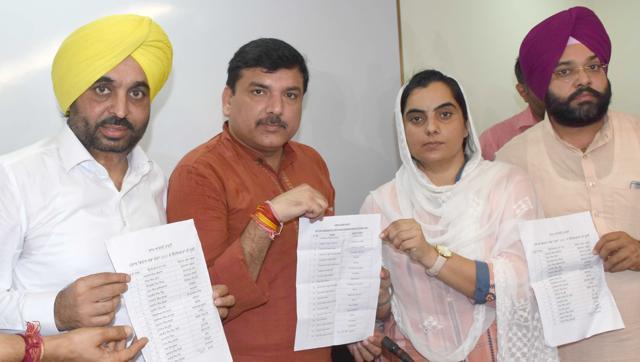
    CHANDIGARH (TIP): Aam Aadmi Party on Thursday declared its fifth list of 12 candidates for the upcoming Punjab assembly polls. Kuldeep Kaur Tohra, daughter of former Akali stalwart late Gurcharan Singh Tohra, secured ticket from Sanour.

    Here is the complete list of candidates:

    1 Raj Kumar Mahajan from Pathankot
    2 Balwinder Singh Sahota from Amritsar (West)
    3 Dr Sanjeev Sharma from Jalandhar (Central)
    4 Narender Sandha from Ferozepur
    5 Malkit Thind from Guru Har Sahai
    6 Giriraj Rajora from Balluana
    7 Kawanlpreet Singh Kaki from Qadian
    8 Harbhajan Singh from Jandiala
    9 Bhupender Singh Bittu from Khadoor Sahib 10 Capt Bikramjeet Singh from Khem Karan
    11. Kuldeep Kaur Tohra from Sanour
    12. GS Kang from Bhagha Purana

  • Now, Punjab wants royalties for its river waters

    Now, Punjab wants royalties for its river waters

    CHANDIGARH (TIP): The Punjab Assembly on November 16 passed a resolution seeking royalties for river water supplied to its non-riparian neighbours Haryana, Rajasthan and Delhi. It urged the government of Parkash Singh Badal to seek the help of the Union government in extracting the dues.

    The demand for royalties for river waters adds another dimension to the Sutlej-Yamuna Link (SYL) canal dispute between Punjab and several of its neighbours. The state has already adopted a hostile stance towards this week’s Supreme Court advice to the President that Punjab had indeed been acting unconstitutionally in scrapping all its previous pledges under the SYL project.

    The Assembly’s stance that royalties would have to be paid for the Sutlej river waters it supplied to its neighbours since 1966 is likely to raise the stakes much higher.

    Moving the resolution in the special session, Parliamentary Affairs Minister Madan Mohan Mittal said seeking royalties for river waters was not anything new. Punjab has in the past demanded and received them. The erstwhile riyasats of Bikaner, Patiala, Nabha and Jind paid such royalties till 1945-46 for using Sutlej waters. A law mandating such riparian royalties was in place during the British Raj since 1873.

    The resolution, passed unanimously, asked the Badal government to seek New Delhi’s help to recover water dues from Rajasthan, Haryana and Delhi since November 11, 1966.

    Chief Minister Parkash Singh Badal moved another resolution directing the state government not to do three things: (a) handing over any land to any agency for construction of the SYL canal; (b) allowing any agency to do any work on the project; (c) cooperating with any agency for the construction of the canal.

    Speaking during the special session, Badal repeated the same oaths he has been uttering since the Supreme Court verdict, “I would rather shed every drop of my blood than allow even a single drop of water to flow out of my state.”

    The resolution reads, “Whereas Punjab has legislative and executive right over the whole land falling under its boundaries as per the entry number 14 and 18 of the state list of the seventh schedule of the Constitution of India.” The house also took notice of the fact that Punjab needs 56 million acre feet (MAF) of water for agriculture, out of which river waters account for only 27 per cent. The Central Ground Water Commission has already declared 105 of the 138 blocks in Punjab as over-exploited.

    Cong to Prez: SYL canal issue may trigger violence

    CHANDIGARH (TIP): A Punjab Congress delegation, led by state party chief Captain Amarinder Singh, urged President Pranab Mukherjee to direct the central government to consider the ground realities and the availability of water in the state before taking any action on the advice of the Supreme Court on the (SYL canal issue. All Punjab Congress MLAs, along with several central party leaders, called on Mukherjee on Thursday evening, to seek his urgent intervention in the matter. The party leaders warned of the possible outbreak of violence in the state, where the situation was “extremely fluid and tense” following the SC verdict. Later speaking to mediapersons, Amarinder accused the Parkash Singh Badal government in Punjab of further “inflaming passions” and aggravating the situation with its irresponsible actions, including the passage of the two “illogical” resolutions in the state assembly.

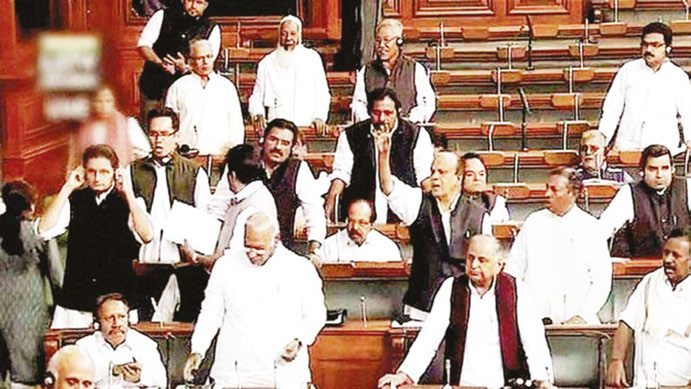
  • DEMONETIZATION STALLS Parliament

    DEMONETIZATION STALLS Parliament

    Chaotic scenes witnessed in both Houses of Parliament over scrapping of Rs1,000 and Rs 500 notes

    NEW DELHI (TIP): Both Houses of parliament were adjourned on Thursday, November 17, as opposition lawmakers continued their attack on the government over the impact of its ban on 500 and 1000 rupee notes. Today was the second day of the winter session. Union finance minister Arun Jaitley later rejected all demands of the opposition.

    In the Rajya Sabha or Upper House, where a debate on demonetization has been on since Wednesday, the opposition shouted slogans demanding that Prime Minister Narendra Modi come to the house, listen to debate and respond to their questions. It’s a stalemate, with the government refusing to give in to that demand. Finance Minister Arun Jaitley will reply to the debate, in which a united opposition has attacked the government over what they call “economic anarchy”.

    In the Lok Sabha, which did not function yesterday after obituaries, opposition parties have moved 21 adjournment motions, which seek to put aside regular work to debate and vote on the notes ban. Speaker Sumitra Mahajan said she would allow the debate but not until lawmakers stopped shouting. When that did happen, she adjourned the Lower House for the day. “We are ready to discuss any issue, there is nothing to hide. We want the Congress to clarify, are they with the government decision or not? You’ve got every right to make demands, and the government will reply to it all,” said senior union minister Venkaiah Naidu this morning.

    ‘There is no question of a rollback of the government’s cash clean-up move,’ Finance Minister Arun Jaitley said, rejecting the Opposition’s demand of a probe by a Joint Parliamentary Committee into the alleged leak of information to BJP units and “friends of BJP” on notes ban. Regarding the opposition’s other demand, that the Prime Minister respond to the debate, Mr. Jaitley said it was the prerogative of the party and government to decide who would reply. Opposition parties, except for the Trinamool Congress, have not demanded that the government withdraw the notes ban, but have criticized the manner in which it was implemented causing hardship to common people who have had to queue up for hours at banks amid a cash crunch. Ministers speaking in the debate said the radical step was taken in national interest to end corruption and black money. No honest taxpayer would lose a single rupee, while those with unaccounted wealth would suffer, as would terror organizations that had been choked by the currency ban, they said.

    Before the winter session began PM Modi had said he was counting on “good debates” on key issues and hopes the opposition will cooperate to support key legislation like taking the next steps to introduce the national Goods and Services Tax or GST, the biggest tax reform in decades.