Tag: Indian Politics

  POLITICS & POLICY  

  • ‘Final decision yet to be made’: India clarifies about Modi’s Pakistan visit

    ‘Final decision yet to be made’: India clarifies about Modi’s Pakistan visit

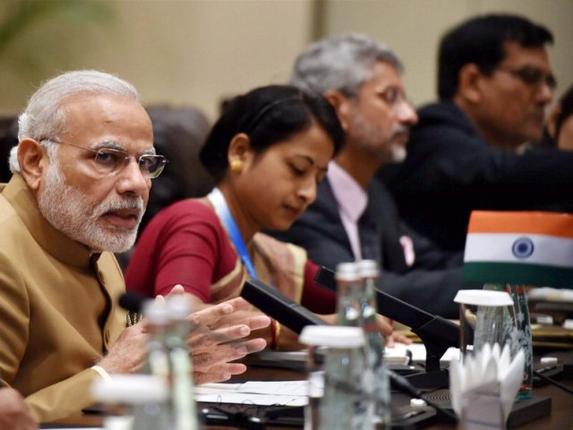
    HANGZHOU (CHINA) (TIP): India was left scrambling on Sept 6 after its envoy to Pakistan said Prime Minister Narendra Modi was “looking forward” to visiting Islamabad for the Saarc Summit in November, with officials clarifying a final decision is yet to be made.

    High commissioner Gautam Bambawale made the remarks during an interactive session organised by the Karachi Council on Foreign Relations in the Pakistani port city on Monday. Coming against the backdrop of a spike in tensions between the two countries , the comments took some in New Delhi by surprise.

    “I can’t say about the future but as of today, Prime Minister Modi is looking forward to visiting Islamabad for the Saarc summit in November this year,” Bambawale was quoted by Dawn newspaper as saying in response to a question at the event.

    After Bambawale’s remarks were reported by the Indian media, external affairs ministry spokesperson Vikas Swarup clarified that “decisions and announcements of such nature are not made so far in advance”.

    Other officials said a final decision is yet to be made and it would be announced at the right time. “We will only announce dates for any visit of the prime minister just before the visit,” said one official who did not want to be named.

    Another source questioned the envoy’s remarks. “Whether he should have made the comment now is another question. But it’s also a fact that it was a qualified statement,” the source said.

    Pakistan has formally invited Modi to the summit and foreign minister Sushma Swaraj had said in December –before the attack on Pathankot airbase that was blamed on the Jaish-e-Mohammed – that Modi would attend.

    Bambawale also said there had been contacts at the operational level between the two governments even while tensions were high. Over the past month-and-a-half, there had been “cordial” interactions between Pakistani and Indian border forces and several meetings of the South Asian Association for Regional Cooperation (Saarc).

    A Saarc Summit cannot go ahead if even one of the heads of state or government of the eight member states opts out. No Indian prime minister has skipped a summit so far.

    India-Pakistan ties have nosedived several times since January over the Pathankot attack, the unrest in Kashmir and Modi’s remarks about Islamabad answering for “atrocities” in Balochistan and Pakistan-occupied Kashmir. The two sides had announced a new Comprehensive Dialogue when Swaraj visited Islamabad in December but the process is yet to take off.

    Home minister Rajnath Singh visited Pakistan last month for a meeting of Saarc interior ministers but his interactions with his Pakistani counterpart were marked by a lack of warmth. Finance minister Arun Jaitley subsequently skipped another Saarc meet held in Islamabad during August 25-26.

    At the interaction in Karachi, Bambawale also said it was India’s desire to see a Pakistan that is moderate, prosperous and stable, and at peace with itself, its neighbours and the rest of the world. The way forward is to increase trust and confidence between the two countries because this had been lacking for the many years, he said.

    There had been contacts at the operational level between the two governments even when tensions were high, he said. Over the past month-and-a-half, there had been “cordial” interactions between Pakistani and Indian border forces and several meetings of Saarc had been held, he added.

    The Indian government, Bambawale said, had been saying: “Let’s work together to get to the bottom of terrorism which was a headache not only for Pakistan, but for India and the world.” The two countries should not be talking on just one issue but on all issues, he said.

    Replying to a question about alleged atrocities in Kashmir, he said Indians were as concerned about the people of Kashmir as anyone else in the world. However, the issue of Jammu and Kashmir is domestic and “you should focus on your problems”, he added. Asked about India’s alleged interference in Balochistan, Bambawale referred to the arrest of former Indian Navy officer Kulbhushan Jadhav by Pakistani authorities and the capture of Lashkar-e-Taiba operative Bahadur Ali in Jammu and Kashmir and said there is a need to discuss these matters though there would be difficulties. When Pakistan arrested Jadhav on charges of spying, India said he was an Indian national and sought consular access, but it was not given, Bambawale said. (PTI)

  • People taking cots thieves but Mallya a defaulter: Rahul takes dig at BJP

    People taking cots thieves but Mallya a defaulter: Rahul takes dig at BJP

    GORAKPUR (TIP): Congress vice-president Rahul Gandhi on Sept 7 attacked the Modi government saying those who took away cots were being branded as thieves while industrialists like Vijay Mallya who escaped with Rs 1,000 crore was being labelled a ‘defaulter’.

    Using Sept 6 ‘khat loot’ incident in Deoria to attack the Modi government, Congress vice-president Rahul Gandhi said that those who took away cots were being branded as thieves while the liquor baron who escaped with Rs 1,000 crore was being called a ‘defaulter’.

    Rahul Gandhi“When people like Vijay Mallya escape from the country with Rs 1,000 crore they are referred to as defaulters. BJP and media label poor farmers as thieves when they take away cots,” said Gandhi while addressing farmers during the ‘khat sabha’ in Gorakhpur’s Sant Kabir Nagar. Gandhi was referring to Tuesday’s incident at Deoria where villagers took away nearly 1,000 stringed cots – khats in local parlance – after his rally. The Congress vice-president, who is undertaking about a month-long 2500-km mahayatra from Deoria to Delhi that started on Tuesday, is highlighting the plight of farmers.

    As part of the yatra, “Khaat Sabha” (Charpoy meetings) are being organised for Rahul to interact with farmers.

    On Wednesday, Gandhi again raised the issue of PM Narendra Modi’s suit which he wore during his visit to the US.

    “Modiji’s suit was sold for several crores of rupees but he does not have time to waive off loan of farmers,” he said. “The Modi government waived off loans of industrialists which were to the tune of Rs 1.4 lakh crore but ignored the poor farmers. The UPA government had written off farm loan of Rs 70,000 crore,” he added.

    Earlier in the day, Gandhi also met Japanese encephalitis patients and took out a road show in Gorakhpur and used both the occasions to hit out at Prime Minister Narendra Modi.

    Addressing the gathering after the road show, Gandhi said that the Prime Minister was busy with his foreign tours while the farmers were crying for help.

    “Kisan trast hain, Modiji mast hain (Farmers are suffering while Prime Minister Narendra Modi is carefree). Modiji is touring China, USA and Japan. He likes foreign trips, it’s okay. (PTI)

  • A New Political Outfit in Punjab

    A New Political Outfit in Punjab

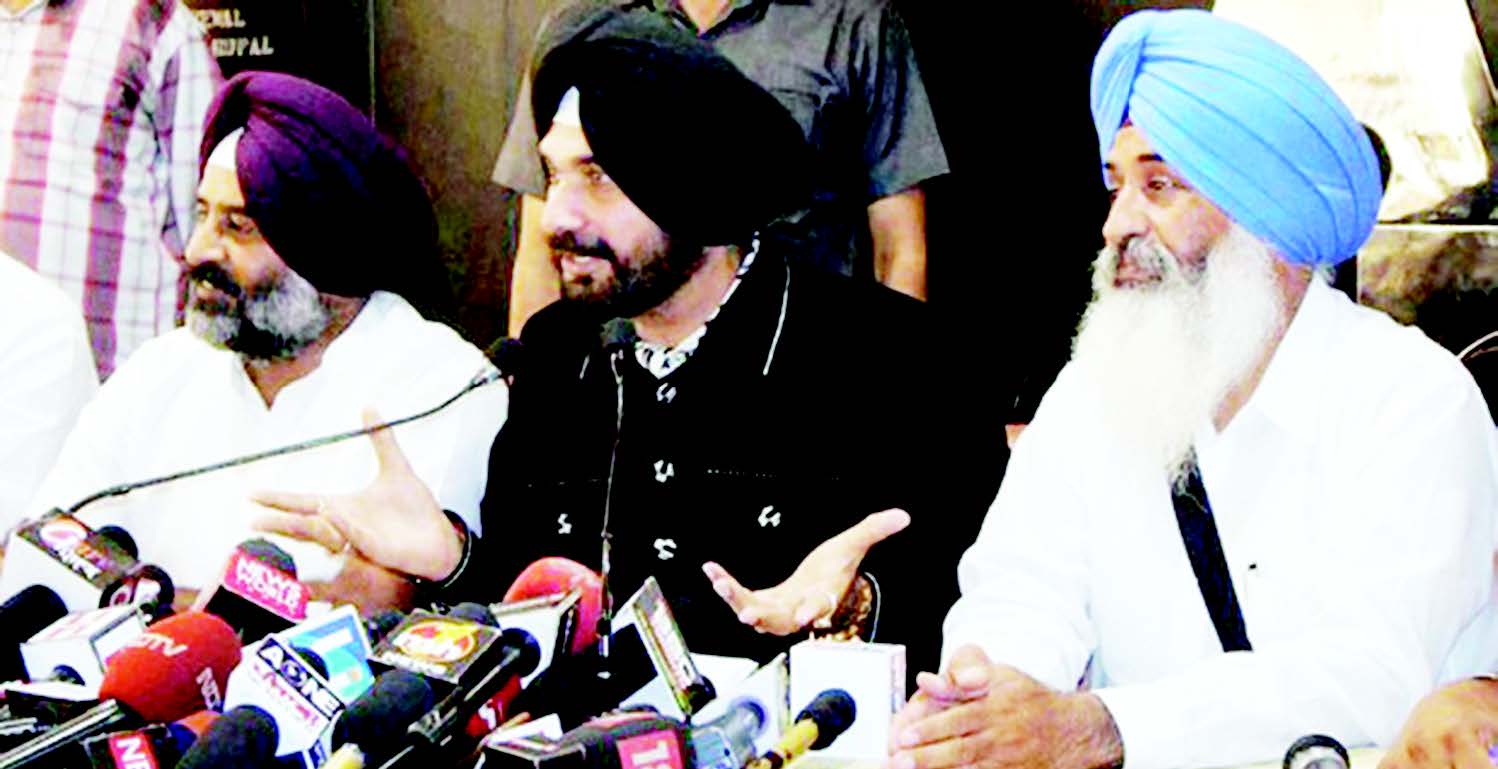
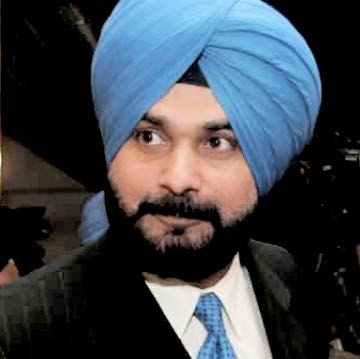
    CHANDIGARH (TIP): Cricketer-turned-politician Navjot Singh Sidhu formally announced his new political front ‘Awaaz-e-Punjab’ in Chandigarh on Thursday, September 8.

    “At this stage ‘Awaaz e Punjab’ is not a party, it’s a forum. The redemption, resurrection and revival of this state is the aim of our Awaaz-e-Punjab,” Sidhu said at a media briefing in Chandigarh. Sidhu had resigned from the Rajya Sabha on July 18, fueling speculation that he may join the Aam Aadmi Party (AAP). On Thursday, he attacked both AAP chief Arvind Kejrwal and the BJP.

    “Kejriwalji told him don’t fight (the upcoming Punjab) elections. Ask your wife to contest, (i/we) will make her a minister. I said ‘Sat Shri Akal’,” Sidhu said. The AAP chief, Sidhu added, only wants “yes men.” The former cricketer said his resignation from the Rajya Sabha “had nothing to do with Kejriwalji”.

    In a veiled attack on the BJP, Sidhu said that good leaders in India have been reduced to mute spectators. “There is a tradition in India that good people are kept as decoration pieces and used only for campaigning,” Sidhu said.

    The former Rajya Sabha member had on September 2 floated the ‘Awaaz-e-Punjab’ front. It is expected to contest the Punjab assembly elections that are slated for early next year.

    Other members of the new front include former Indian hockey team captain Pargat Singh, a legislator of Punjab’s ruling Shiromani Akali Dal, and two independent legislators, Balwinder Singh Bains and Simarjeet Singh Bains. Pargat Singh was last month suspended from the Akali Dal for “anti-party” activities. The Bains brothers, who had fallen out with the Akali Dal top leadership three years ago, have significant influence in Ludhiana district.

    Highlighting the blueprint of his front for the upcoming Punjab elections, Sidhu said that their aim is to make the state prosperous again by fighting people who have ‘ruined Punjab’. In his media briefing, he also talked about Punjab’s drug menace. “Where is the Punjab that used to produce so many sportsmen? Today, the streets are filled with drug addicts,” Sidhu said.

    Elections to 117 assembly seats are likely to be held in January or early February next year.

  • AAP leader Ashutosh slams action on him, questions media

    AAP leader Ashutosh slams action on him, questions media

    Aam Aadmi Party leader Ashutosh, who is under attack for his controversial blog defending sacked Delhi minister Sandeep Kumar, on Tuesday said the police case against him was an “infringement” on his right to freedom of expression. In a barrage of tweets, he also hit out at the media saying it was indulging in “vulturisation” and “doing embedded journalism”.

    “Atmosphere is created where critical analysis of history not allowed, freedom of expression will be crushed, voice of dissent suppressed. Registering police cases against me is an infringement on my fundamental right to freedom of expression mandated by Constitution,” he wrote in a series of tweets.

    “Even media is not interested in finding the truth, indulging into vulturisation and doing embedded journalism,” he said. Following the blog post, the NCW summoned the AAP spokesperson.

    “We have asked him to come on September 8. This is in response to what we feel is a very reprehensible and demeaning blog Ashutosh wrote, where he defended a man accused of rape,” NCW chairperson said.

  • ‘One nation in South Asia is spreading terror in the region’ says Modi at G20

    ‘One nation in South Asia is spreading terror in the region’ says Modi at G20

    HANGZHOU, China – Prime Minister Narendra Modi Sept. 5 told the G20 summit here that Pakistan was spreading terror in South Asia and using terrorism as an instrument of state policy.

    He also appealed the grouping to “isolate and sanction supporters of terrorism.”

    At the two-day G20 summit which began in the eastern Chinese city of Hangzhou, India raised the issue of terrorism at various sessions.

    Modi told Chinese President XI Jinping how the scourge of terrorism was affecting the region.

    “There are some nations that use it as an instrument of state policy. One single nation in South Asia is spreading agents of terror in our region,” Modi said, without naming Pakistan.

    India’s ties with Pakistan have soured after Islamabad declared Jammu and Kashmir terrorist Burhan Wani, shot dead by security forces, as a “martyr.”

    “For us a terrorist is a terrorist,” Modi said. He was speaking during his intervention at the last session of the G20.

    The Prime Minister said “growing forces of violence and terror pose a fundamental challenge” and urged the international community to act in unity and respond against terrorism.

    “India has a policy of zero tolerance to terrorism. Because anything less than that is not enough,” he said.

    In his meeting with President Xi, Modi expressed concern over terrorism emanating from Pakistan’s restive regions of Giligit-Baltistan and Pakistani Kashmir where the China Pakistan Economic Corridor is coming up.

    Modi also raised the issues of black money and tax evasion, urging member countries to act against financial corruption.

    “Fighting corruption, black money and tax evasion are central to effective financial governance,” said the Prime Minister. “We need to act to eliminate safe havens for economic offenders, track down and unconditionally extradite money launderers and break down the web of complex international regulations and excessive banking secrecy that hide the corrupt and their deeds,” he said.

    Representing 85 percent of the world’s GDP, the G20 is composed of Argentina, Australia, Brazil, Canada, China, France, Germany, India, Indonesia, Italy, Japan, Mexico, Russia, Saudi Arabia, South Africa, South Korea, Turkey, the UK, the US and the European Union.

  • Mehbooba Mufti wants Delhi to talk with Hurriyat

    Mehbooba Mufti wants Delhi to talk with Hurriyat

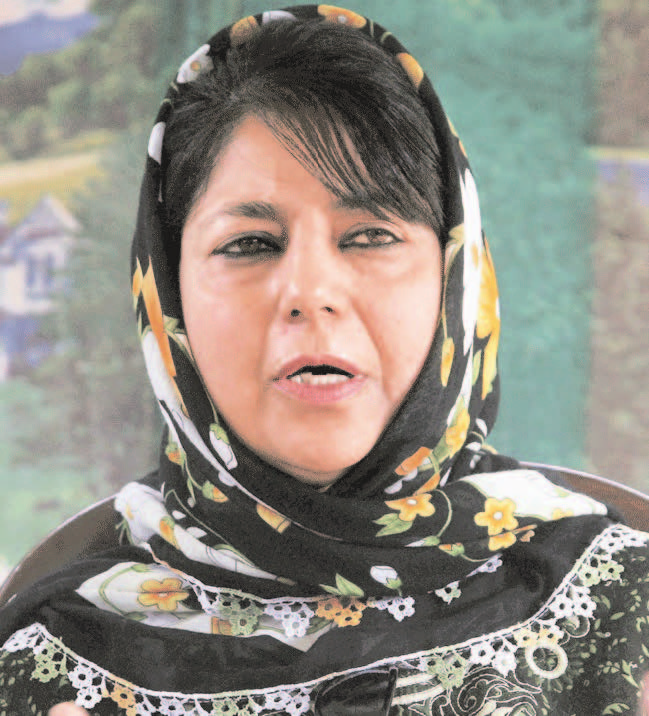
    Ahead of the all party delegation’s visit to the valley, Jammu & Kashmir Chief Minister Mehbooba Mufti in a post on Facebook has suggested that the Indian government “reach out to separatists” as a part of their measures to resolve the unrest in the Kashmir Valley.

    The ground is still tense and volatile. After 57 days of lockdown, protests are still on across the Valley, especially in rural Kashmir. With the killing of a 23-year-old man in Qazigund this evening, the death toll has risen to 74. Another body was fished out of the Jhelum in Srinagar. Today, more than 40 were injured taking the number of wounded to around 9,000 since July 9.

    “The country’s political leadership must, without any further delay, reach out and engage all sections of the society including the leaders of the Hurriyat Conference in a productive dialogue process, to resolve the issue and make peace a reality in Jammu and Kashmir,” Mufti stated in her post.

    She also spoke of a three pronged approach advice in her post and said “During my meeting with the Prime Minister last month, I suggested a three-pronged approach ; talks with all sections of society within J&K including the separatist leadership, and also with PAKISTAN to put the reconciliation and resolution process back on track.”

    Chief Minister Mehbooba Mufti has also written to the separatist leadership requesting them to “take a lead and engage” with the delegation, “which will be the start of a credible and meaningful political dialogue and resolution process.”

    Significantly, this letter, signed by her as chief of the Peoples Democratic Party, marks a visible shift from her recent hardtalk at the press conference with Union Home Minister Rajnath Singh who leads the delegation. She had said, echoing her ally BJP, that only 5 per cent of the people were involved in the protests.


  • Recalling Mother Teresa’s Grace

    Recalling Mother Teresa’s Grace

    Mother Teresa sainthoodMother Teresa will be canonized on September 4. The world seems to be converging at the Vatican to witness the historic occasion. President Obama has announced the presidential delegation for the ceremony. India, too, is participating. India’s Foreign Minister, Mrs. Sushma Swaraj will lead the Indian government’s delegation to the sainthood ceremony of Blessed Mother Teresa of Calcutta, on September 4 in the Vatican. The official spokesman of the foreign ministry, Vikas Swarup made the announcement at a press conference. “In view of eh importance that we attach to this very significant event – the canonization of Mother Teresa – let me tell you, the government of India’s delegation will be led by the Honorable External Affairs Minister herself,” Swarup told journalists. He noted that the composition of the delegation is being finalized and its members will be announced in due time.

    Prof. Indrajit S Saluja leaving the dais after welcoming Mother Teresa, seen sitting (third from right). Bishop Symphorian Keeprath is to her right
    Prof. Indrajit S Saluja leaving the dais after welcoming Mother Teresa, seen sitting (third from right). Bishop Symphorian Keeprath is to her right

    Ashutosh, the spokesperson of the Aam Aadmi Party (AAP) which heads the government of the National Capital Territory of Delhi said that Chief Minister Arvind Kejriwal will be travelling to the Vatican as he has accepted the invitation of Missionaries of Charity to attend the event. The Delhi chief minister met Mother Teresa in 1992, who asked him to work with the Missionaries of Charity in Calcutta, now called Kolkata. He remained there for several months, before joining the Indian Revenue Service. Earlier in May, Mamata Banerjee, chief minister of West Bengal state said she has accepted the invitation of the Missionaries of Charity in Kolkata to attend the ceremony in the Vatican.

    The whole world, as I said earlier is converging at the Vatican.

    My thoughts go back to January 27th, 1980. Mother Teresa had come to Ludhiana, Punjab where I was a college lecturer. She had visited the town to inaugurate Missionaries of Charity’s new home in Salem Tabri neighborhood on Jalandhar Byepass.

    A few days before she arrived, I received a call from Father Kurian Muttathupadam who was then Director Principal of the Sacred Heart Boys School, which was run under the Diocese of Jalandhar. Father Kurian told me about Mother Teresa’s coming visit and asked me to welcome her on behalf of the citizens of Ludhiana. I was overwhelmed with joy at the prospect of getting an opportunity to be in the gracious company of a wonderful soul. I kept counting the days. I kept rehearsing my speech which was to be brief. I was only to extend Mother a welcome and speak briefly about the noble work she and her organization -Missionaries of Charity -were doing. Even though I was trained to speak ex tempore on any subject under the Sun and for long periods, here I was framing, reframing my sentences.

    Mrs. Gurdarshan Kaur watches as her husband Prof. Saluja as he kisses the hands of Mother Teresa.
    Mrs. Gurdarshan Kaur watches as her husband Prof. Saluja as he kisses the hands of Mother Teresa.

    And then on the 27th January, 1980, Mother Teresa arrived at the venue to inaugurate the new house for Missionaries of Charity and the inmates which I faintly recall, would have been around 20. And I am told now there are a hundred inmates who include sisters, destitute women and children.

    It was a huge gathering, mainly of Catholic Christians who had come not only from Ludhiana but also from neighboring towns of Phillaur, Phagwara, Jalandhar, Nakodar, Kapurthala, Jagraon, Moga, Khanna, Chandigarh etc. to catch a glimpse of Mother Teresa.

    The Bishop of Diocese of Jalandhar Bishop Symphorian Keeprath and several priests were present, as was my dear friend Father Kurian who unfortunately died a year ago. I was invited to speak. In fact, I was the only person to speak, besides the Bishop and Mother Teresa herself. After I made a brief speech I came down from the dais and sat in the front row with my lovely wife Gurdarshan Kaur. The two of us listened to Mother’s message. She spoke of importance of compassion and love. Her message was simple and clear. God has created all in His own image and we all are His children. As such, we must love one another.

    Later, Mother went around meeting people. When Gurdarshan and I got our opportunity to be with her, I held her small, tender hands and kissed them, even as my wife looked on. I remember Mother uttering blessings and then she moved on.

    Little did I know then that Mother Teresa would one day be a Blessed one, that one day, she will be canonized. I feel so elated to think that I touched the tender, sift, loving small hands of a great soul. I feel her presence whenever I think of her. I rejoice in her canonization.

    Mother Teresa with orphans in Kolkata. She will become "St. Teresa of Calcutta" in a Sept. 4 canonization ceremony led by Pope Francis
    Mother Teresa with orphans in Kolkata. She will become “St. Teresa of Calcutta” in a Sept. 4 canonization ceremony led by Pope Francis

    Mother Teresa was widely known as a living saint as she ministered to the sick and the dying in some of the poorest neighborhoods in the world. Although some people criticized her for not also challenging the injustices that kept so many people so poor and abandoned, her simple service touched the hearts of millions of people of all faiths.

    Born to an ethnic Albanian family in Skopje, in what is now part of Macedonia, she went to India in 1929 as a Sister of Loreto and became an Indian citizen in 1947. She founded the Missionaries of Charity in 1950.

    Shortly after she died in 1997, St. John Paul II waived the usual five-year waiting period and allowed the opening of the process to declare her sainthood. She was beatified in 2003.

    After her beatification, Missionary of Charity Father Brian Kolodiejchuk, the postulator of her sainthood cause, published a book of her letters, “Mother Teresa: Come Be My Light.” The letters illustrated how, for decades, she experienced what is described as a “dark night of the soul” in Christian spirituality; she felt that God had abandoned her. While the letters shocked some people, others saw them as proof of her steadfast faith in God, which was not based on feelings or signs that he was with her.

    The date chosen for her canonization is the eve of the 19th anniversary of her death and the date previously established at the Vatican for the conclusion of the Year of Mercy pilgrimage of people like her who are engaged in works of mercy.

    Affectionately known as the “saint of the gutter” for her unconditional love for the poor, abandoned and the marginalized, she earned several international honors, including the Nobel Peace Prize in 1979.

  • Arvind Kejriwal sacks Sandeep Kumar: Skeletons keep tumbling out of Aam Aadmi Party’s cupboard

    Arvind Kejriwal sacks Sandeep Kumar: Skeletons keep tumbling out of Aam Aadmi Party’s cupboard

    NEW DELHI (TIP): Was Delhi Chief Minister Arvind Kejriwal always aware of the dubious background of certain legislators and chose to turn a blind eye until shamed publicly by the media?

    Why did he choose people with such credentials to represent Aam Aadmi Party (AAP), whose USP has been honesty?

    The latest is Delhi’s Women and Child Development Minister Sandeep Kumar, who was sacked on August 31 evening by the CM after receiving an

    ‘objectionable’ CD, in which the minister was purportedly shown in a

    ‘compromising position with two women’.

    Prior to this, two other ministers —Jitender Singh Tomar and Asim Ahmed Khan — in Kejriwal’s Cabinet had met a similar fate in 2015 on the charges of fake degrees and bribery respectively.

    “Within an hour of receiving the CD at his residence in Civil Lines, the CM sacked Sandeep Kumar, after having a high-level meeting with senior leaders. It’s a very unfortunate incidence and the CM didn’t hesitate to take strong action, which will be a message for others,” an AAP source said.

    On 14 February, 2015, when Kejriwal after taking oath, promised an unprecedented, honest government to the people of Delhi, he wouldn’t have envisaged that quite a few of his legislators would have skeletons in their cupboards to embarrass him.

    The decision to remove the minister was taken at a high-level meeting and the announcement was made by Kejriwal himself through a tweet.

    “Received ‘objectionable’ CD of minister Sandeep Kr. AAP stands for propriety in public life. That can’t be compromised. Removing him from Cabinet wid immediate effect,” Kejriwal tweeted.

    The surprising part of this unfortunate episode is that unlike in the case of the other minister —Jitendra Singh Tomar, who resigned after his arrest in the bogus degree case— 36-year-old Kumar was not in the list of AAP candidates against whom the former leader and co-founder of AAP Prashant Bhushan had raised questions about their dubious reputation and referred the matter to party’s internal Lokpal.

    That red flag against a dozen leaders turned out to be the bone of contention between Kejriwal and the duo —Yogendra Yadav and Prashant Bhushan— which ultimately led to the expulsion of the latter in 2015.

    But, with time moving ahead, skeletons are tumbling out of AAP’s cupboard

    The ‘bogus degree’ issue of the law minister had snowballed into a major political controversy in April, with the opposition parties demanding the minister’s sacking. But, what amazed the opposition was Kejriwal’s stoic silence on the entire controversy and not taking any action. The minister resigned only after the police arrested him in June.

    Delhi’s Food & Civil Supplies minister Khan was sacked on charges of serious corruption, after a series of audio clips surfaced in public domain.

    Similarly, there are many other AAP legislators with various charges against them, who could further embarrass Kejriwal and AAP. However, none of the sacked ministers has been expelled from the party.

    “Three of the six ministers of Kejriwal government have already been sacked. One for forgery, second for bribery, whereas the third for adultery. But all three of them not only continue to be members of AAP, they also enjoy a status in the party. What stops Mr Kejriwal from removing them from the party? Does AAP act only when the misdeed committed by its legislators becomes undeniable and indefensible?” questioned Anupam, national executive member of Swaraj Abhiyan, an AAP splinter group.

    The critics see this impromptu action of Kejriwal as a ‘face-saving exercise’ ahead of the upcoming Punjab Assembly polls.

    “Ahead of Punjab election, Kejriwal has been compelled to sack the minister in order to save party’s image and project a good one, which otherwise has received a beating due to controversies and breakups in the state. The latest is the removal of the convener of Punjab AAP, Sucha Singh Chottepur,” Sardar Singh, an ex-AAP volunteer from Punjab remarked.

    State BJP president Satish Upadhyay tweeted, “So Kejriwal had this sex CD for 15 days & sacked Sandeep Kumar only whn CD reached Media.”

    But, Kejriwal’s action this time has got support from Delhi Commission for Women — a statutory body of the Delhi government.

    DCW chairperson Swati Maliwal tweeted immediately after Kumar was sacked, “Acts of Sandeep Kumar shocking and unfortunate. Such people don’t deserve to be Minister, yet alone WCD Minister! Good Govt has sacked him.”

    HERE ARE SOME AAP MLAs UNDER THE SCANNER

    • ?          Akhilesh Pati Tripathi (Model Town): Six cases registered against him. Booked for molesting and misbehaving with a woman and rioting. Arrested in November, 2015.
    • ?          Manoj Kumar (Kondli): Cases of land grabbing, outraging a woman’s modesty and hurt filed against him. 4 FIRs registered at three east Delhi police stations. Arrested after 14 months in July, 2015.
    • ?          Mahinder Yadav (Vikaspuri): Various charges including rioting and assaulting public servant during a protest seeking action against an alleged sexual offender. Arrested on 29 January.
    • ?          Naresh Balyan (Uttam Nagar): Liquor bottles found from building allegedly owned by relative of this Uttam Nagar MLA ahead of polls. Balyan questioned.
    • ?          Somnath Bharti (Malviya Nagar): Former Delhi law minister. Case of attempt to murder, domestic violence, cheating registered on his wife Lipika Mitra’s complaint. Two other cases registered in connection with the Khirki raid in which African women were manhandled. Arrested in September 2015. Out on bail.
    • ?          Kartar Singh Tanwar (Chhatarpur): Under Income Tax lens. The I-T department reportedly found unaccounted income worth Rs 130 crore from Tanwar in August.
    • ?          Surinder Singh ‘commando’ (Delhi Cantt): Booked for making casteist remarks against an New Delhi Municipal Council sanitary inspector belonging to schedule caste and obstructing him and other NDMC employees from performing government duty. Arrested and got bail from court.
    • ?          Rakhi Birla (Mongolpuri): Booked for assault a government employee in 2014.
    • ?          Somdutt (Sadar Bazar): FIR against him and supporters for assaulting a person.
    • ?          Sanjeev Jha (Burari): Booked for rioting, injuring police personnel. Six volunteers were arrested
  • Setting out for New Friends

    Setting out for New Friends

    A Modi doctrine on Pakistan is now visible after two years of Pakistan policy vacillations. It basically has old elements which are newly interpreted.

    First is ‘zero tolerance to terror’, which even the Vajpayee government espoused. The Congress in opposition ridiculed it, arguing that a dialogue with Pakistan could not be made so contingent as that would give terrorists veto on the normalization process.

    In power, the Congress discovered that dialogue and terror could indeed not subsist if the attack caused widespread loss. Neither of the two governments, however, could devise a counter-strategy to deter future attacks. This was because military options ran into the nuclear conundrum i.e. retaliation could lead to nuclear holocaust. The Vajpayee government retaliated when Parliament was attacked in December 2001 by mass troop mobilization. The Manmohan Singh regime cancelled parleys after coordinated train bombings in Mumbai, a copy of similar strikes in London and Madrid, caused massive carnage. Dialogue was resumed only when a new counter-terrorism mechanism was established.

    The Modi government is trying to break out of this catch-22 situation by lowering the threshold of terror tolerance. The Pathankot attack did not cause significant loss of life or assets. But because the planning and abetting was traced to Pakistan, the arrest and prosecution of perpetrators was made an additional precondition to dialogue.
    Second, is the new approach to the Hurriyat. It is to have no role in India-Pakistan parleys. Again, past Indian governments have scowled at Pakistan using the Hurriyat as a co-interlocutor. Now, any blatant contact with the Hurriyat during India-Pakistan parleys would be a deal breaker.

    India reasons that Pakistan cannot determine the representatives of J&K people when they have elected the government of the state.

    Why should not India have the serving Chief Minister in attendance when talking to Pakistan instead of, or in addition to, the Hurriyat?

    Third, is the Modi government’s alacrity in bringing on record, what was whispered in the past, regarding Sino-Pak activities in Gilgit-Baltistan. This would now be on the agenda of talks with both countries, particularly when China itself has conceded in the past in Article 6 of the 1963 Sino-Pakistan border agreement that all understandings were subject to settlement of the Kashmir issue between India and Pakistan.

    The doctrine got the Prime Minister’s imprimatur in his Red Fort Independence Day speech. It played well domestically, with social media in a tizzy over the new assertiveness. But there are international ramifications for which the government is calibrating its diplomacy. Besides UN Secretary General Ban Ki-moon, who has to issue homilies on peace and security, even the US is beginning to lean on India. The Organization of Islamic Conference (OIC) is getting proactive and Pakistan is unleashing a major diplomatic offensive by dispatching two dozen envoys to plead its case over Kashmir. Pakistan senses an opportunity with the widespread protests in the Valley and the approaching session of the UN General Assembly in September.

    But both nations have domestic imperatives too. In Pakistan, despite the chief of army staff, Gen Raheel Sharif, announcing retirement when his three-year term ends in November, speculation is rife about an extension. PM Nawaz Sharif would prefer a new appointee as the incumbent has developed an overpowering persona. A strong pitch on Kashmir helps Sharif regain legitimacy that his long medical absence and lackluster performance has dented. The Obama administration may favor a transition too, as the US appears tired of the Pakistan army’s role in Afghanistan. Newly anointed Taliban leader Mullah Mansour’s killing by a US drone and the US urging India to give military assistance to Afghanistan convey a policy shift, transitory though it may be.

    The Modi government likewise faces crucial elections in Punjab, with extreme anti-incumbency and UP, where the BJP must score to justify having won there a quarter of its total seats in Parliament. Then, come the elections in Gujarat, which paved Modi’s path to Delhi. What if the Patel agitation, Dalit ire and ineffective successors to Modi cost BJP its ‘model’ state? It is thus not the polls in magazines today, but in states tomorrow that will determine his political standing. Some well-heeled ambassadors in town are quizzing Indian analysts if fueling tension with Pakistan is not a precursor to actual hostilities.

    The Modi government’s twin strategy thus is to woo select Muslim nations to counter Pakistani offensive as well as to bolster Muslim votes in UP. Newly drafted Minister of State MJ Akbar spent a week in Lebanon, Syria and Iraq, including a pilgrimage to the shrine of Hussain at Karbala. Besides the outreach to the Shia crescent that Iran dominates, the BJP eyes the Shia vote in UP, realizing that Sunnis will largely vote to defeat them. But the UN Security Council has begun examining the use of chemical weapons by the Assad regime in Syria. Akbar may have bitten more than India can diplomatically chew.

    Punjab was also covered when Akbar sought help to locate three dozen-odd, mostly Punjabi/Sikh, workers from around Mosul. Minister Sushma Swaraj has been for two years assuring their families that they were alive when the disarray of the IS and military pressure on them makes it highly unlikely that those non-Sunni stragglers can be alive among them. However, in Punjab, it covers the Akali/BJP flanks. Akbar also elicited support from Syria on India’s Kashmir position. ‘Secular’ Muslim nations are a rarity in today’s world.

    President Abdel Fattah el-Sisi of Egypt is another leader holding out against the Muslim Brotherhood and radical Islam. He began his India visit on August 31. For decades, President Hosni Mubarak was unable to visit and receive an honor conferred by India. But Egypt, the heart and mind of the Arab world, is today worth cultivating again. Many nations stand ready to reconfigure around the idea of religious tolerance and cohabitation, much as once the non-aligned movement cohered around the belief in strategic independence and post-colonial South-South inter-dependence.

    But the new outreach to ‘secular’ Muslim nations can only work if Modi aligns his domestic politics with his foreign policy. Merely milking the latter for domestic electoral reasons would be short-sighted and alienate both new and old friends.

    (The author, KC Singh, is a former Secretary, Ministry of External Affairs)

  • WHY MODI CHOSE URJIT PATEL AS RBI GOVERNOR

    WHY MODI CHOSE URJIT PATEL AS RBI GOVERNOR

    NEW DELHI (TIP): How the governor of the Reserve Bank of India came to be finalised is an interesting story.

    Urjit Patel was Prime Minister Narendra Modi’s first choice for the top job, according to the first tweet from the closed circle of officials privy to the process of selection.

    The appointment had to be made based on the recommendation of the Financial Sector Regulatory Appointments Search Committee (FSRASC), headed by the cabinet secretary. The committee undertook an extensive exercise to suggest a panel of names to the Appointments Committee of Cabinet (ACC)

    There were at least six names before the committee [ACC] that did the shortlisting. The ACC had to pick some and leave some to start with.

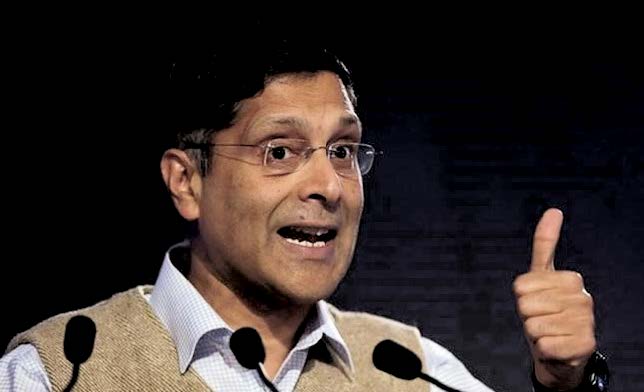
    The names that got picked were Urjit Patel, Arvind Subramanian and Kaushik Basu – the first, the present RBI deputy governor; the second, the current Chief Economic Adviser (CEA) and the third, of course, some of us may remember as the former CEA.

    The names that had to be left out in the first round were Arundhati Bhattacharya, SBI chief; Subir Gokaran, who was deputy governor, RBI some time ago, but presently at World Bank; and Shaktikanta Das, the present economic affairs secretary and an old hand at budgets, including the first Modi Budget.

    There was an hour-long meeting between the PM and finance minister Arun Jaitley, a week before the actual process of selection commenced over the appointment of a new RBI governor, a post that will fall vacant on September 4. It is to be noted that the FM was not a part of the committee of selection.

    After Raghuram Rajan having opted out already from continuing for a second term, the three under consideration were Urjit Patel, Arvind Subramanian and Kaushik Basu.

    Senior officials familiar with the ACC’s selection process confided that Patel was chosen by Modi himself at first to be a contestant. In the second round, the choice had come down to a contest between Urjit Patel and Arvind Subramanian. Officials are believed to have said later that Patel was the final pick since he was always Modi’s first choice.

    The reason, it is believed, is that Modi was particular to have a chief from within the RBI itself. This is not to understate the competence of any of the contestants and rank them second or last.

  • AAP likely to suspend Punjab convener Chhotepur over tickets for cash charge

    AAP likely to suspend Punjab convener Chhotepur over tickets for cash charge

    NEW DELHI/CHANDIGARH (TIP): AThe Aam Aadmi Party (AAP) is contemplating action against its Punjab unit convener Sucha Singh Chhotepur for taking a packet of cash in a reported video sting operation . Not only may he be removed from his post, but even be expelled from the party, barely six months before the assembly elections are due.

    The video was shown to AAP national convener and Delhi chief minister Arvind Kejriwal upon his return from Himachal Pradesh, where he had gone for a Vipassana retreat from August 1 to 11, and he was “very upset”, said a Delhi-based, senior AAP leader, who briefed the media on the issue on Wednesday, on the condition of not being named.

    “That is one of the reasons why Kejriwal did not meet Chhotepur regarding any change in tickets,” said the leader, adding that Delhi deputy CM Manish Sisodia last week “confronted” Chhotepur with the video, for a reaction before any “appropriate action against him in the next few days”.

    Chhotepur has expressed objections over the two lists of candidates announced so far, and has been waiting for an appointment to meet Kejriwal. He was absent at both press conferences where the lists, containing 32 names so far out of 117, were revealed earlier this month.

    The video was made by an AAP supporter following verbal complaints that Chhotepur was demanding money for various purposes, the Delhi-based leader said. When asked for a copy of the video, the leader refused to part with it saying that will bring bad name to the party. “But the video is incriminating,” he said, adding that it had more content than acknowledged by Chhotepur in an interview to HT on Tuesday.

    When contacted, Chhotepur said he is not aware of the party mulling any action : “I have already said that it (sting) is a move to embarrass me. I don’t have anything more to say on the matter. I will speak up when the time is right.” He refused to comment on his meeting with Sisodia.

    ‘No tolerance’

    The Delhi-based leader, when asked if Chhotepur was being targeted for raising his voice against the party’s Delhi leadership, said rules are the same for everyone. “If a similar video of mine surfaces, I will be the first to quit politics. There is no tolerance in AAP for such things,” he said.

    When HT contacted party MP and campaign panel head Bhagwant Mann on the matter, said the party has taken the matter “very seriously”. “But I don’t know what the party’s next course of action is,” he added.

  • Modi asserts importance of good governance in Independence Day Address

    Modi asserts importance of good governance in Independence Day Address

    NEW DELHI (TIP): In what can be viewed as a significantly aggressive shift in India’s foreign policy, PrimeMinister Narendra Modi attacked Pakistan over alleged human rights abuses in Balochistan, Gilgit and “occupied” Kashmir, probably a first ever accusation against Pakistan by an Indian Prime Minister, in his Independence Day address from the ramparts of the historic Red Fort on August 15.

    The broadside at Pakistan was the high point of his 94-minute speech and part of the government’s attempts to counter Islamabad’s ploy of raising in international forums alleged human rights abuses by Indian security forces in Kashmir. At least 58 people have died and 2,000 injured in the Valley in a month-long spell of violence sparked by the killing of a militant leader in July.

    “I want to specially thank some special people from the Red Fort. In the last few days, people of Balochistan, Gilgit and Pak-occupied Kashmir had conveyed good wishes and gratitude to me,” Modi said in his address from the ramparts of the 17th century Red Fort, a tradition started by Jawaharlal Nehru’s historic “tryst with destiny” speech in 1947.

    India and Pakistan, both born out of independence from Britain, celebrated their 70th Independence Day a day apart.

    “I have never seen these lands or met them. But when they congratulate (the) Indian Prime Minister, they congratulate our 1.25 crore people. And this is why I am grateful from the bottom of my heart to the people of Balochistan, Gilgit and Pak-occupied Kashmir.”

    In a sharp retort, Pakistan’s foreign affairs adviser Sartaj Aziz said Modi was “only trying to divert world attention from the grim tragedy that has been unfolding in the Indian-occupied Kashmir over the past five weeks”.

    Modi did not mention Kashmir where many areas are still under curfew. India has accused the western neighbor of stoking unrest in the Valley.

    During an all-party meeting on Kashmir last week Modi said the time has come to expose Islamabad’s brutalities on its own people in the three restive areas where Pakistan’s security forces are accused of carrying out extra-judicial killings in crackdowns on dissidents.

    “What kind of life is this, inspired by terrorism? What kind of government set-up is it that is inspired by terrorism?” asked Modi.

    “The world will know about it and that’s sufficient for me,” said Modi, the first Indian PM to raise in an Independence Day speech rights abuses by Pakistani security forces in these areas.

    He mentioned how India was “devastated” to hear about the killing of students in an army school in Peshawar.

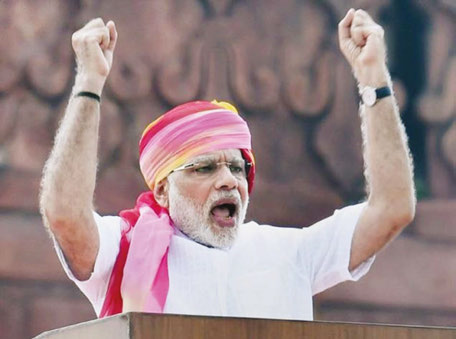
    “It brought tears in Parliament and every corner of India. This is our culture of humanity. On the other side, killing of innocents by terrorists are celebrated by a government inspired by terrorism,” said Modi who sported a red, pink and yellow turban.

    Modi made another significant departure in his address this Independence Day. Instead of making promises, he dwelt more on the government’s achievements. Also, he emphasized the importance of good governance in realizing objectives.

    “There was a time when people were more scared of income tax authorities than police officials, particularly among middle class families. I want to change that,” Modi said on Monday. He also said that while Income Tax refunds used to take time, now people get their refunds in no more than three weeks.

    Similarly, Modi said, while it took six to eight months to get a passport, it just takes a couple of weeks now even though around two crore people apply for it annually now compared with around 20,000 earlier.

    “We have also connected 70 crore Indians to Aadhaar and social security schemes,” he said in his address.

  • Pak says Modi crossed red line by mentioning Balochistan, India says it’s your own fault

    Pak says Modi crossed red line by mentioning Balochistan, India says it’s your own fault

    NEW DELHI (TIP): Hours after Pakistan said Prime Minister Narendra Modi had crossed the ‘red line’ by discussing Balochistan, India hit back by saying Pakistan’s record of cross-border terrorism was central to the current situation in the region.

    Vikas Swarup, spokesperson of the Ministry of External Affairs, said, “Pakistan recognises no red lines in conduct of its own diplomacy. Pakistan’s record of cross-border terrorism and infiltration were central to the problems in Balochistan. And this isn’t just India’s view. You can ask some of the other countries in the region too.”

    “We need to understand the context in which the prime minister made the statements. Several people from Balochistan and Pakistan-occupied Kashmir, including Gilgit-Baltistan, wrote to the PM after his comments at the all-party meet on August 12, thanking him for flagging their cause. PM was touched by these messages and thought of sharing it during his Independence Day speech,” he added.

    Swarup also said that this was not the first time that India had made a statement on Balochistan.

    “India had made such remarks in the past as well. My predecessor has commented on this issue,” the spokesperson said.

    On India’s decision to discuss solely terror and not Kashmir in the upcoming bilateral talks in Islamabad, Swarup said, “The ball is in Pakistan’s court now. They made an offer, we responded to it. Now it’s up to them to reply.”

    Talking about the atrocities being committed in PoK, Swarup said the MEA would do whatever it takes to assist people in the region.

    The MEA’s remarks at a press conference came after Pakistan today said that PM Modi crossed the “red line” by discussing Pakistani atrocities on people of Balochistan and asserted that it will “forcefully” raise the Kashmir issue at the UN General Assembly session next month.

    “The Prime Minister strongly pleaded the case of Kashmir during General Assembly session last year and we will again forcefully raise the issue,” Foreign Office Spokesperson Nafees Zakaria said. “It is the violation of the UN Charter…He (Modi) crossed the red line by talking about Balochistan,” he added.

    Zakaria alleged that India was involved in subversive activities in Balochistan and Karachi. Zakaria also claimed that India was referring to Balochistan to cover up its human rights violations in Kashmir.

    Zakaria said the UN and international community should remind India that it must fulfil its commitment to give the right of self-determination to the people of Jammu and Kashmir as per Security Council resolutions.

    “Pakistan strongly condemns the continuing use of force by India and violation of human rights. The brutal use of force has killed at least 80 people and at least 100 have been blinded by use of pellet guns,” Zakaria alleged.

    Zakaria said Pakistan had proposed to India to hold talks on Kashmir. However, he refused to confirm if India had responded to the proposal.

  • NO PRECONDITION FROM SIDHU, HE NEEDS TIME TO THINK: ARVIND KEJRIWAL

    NO PRECONDITION FROM SIDHU, HE NEEDS TIME TO THINK: ARVIND KEJRIWAL

    NEW DELHI: Chief Minister Arvind Kejriwal on Friday sought to scotch “rumours” on Navjot Singh Sidhu’s possible induction in Aam Aadmi Party, saying the cricketer- turned-politician has not put any pre-condition and just needs “time to think”.

    Kejriwal said his respect for Sidhu, who met him last Friday at his residence, will continue irrespective of whether “he joins (AAP) or not”.

    Earlier, the AAP chief had said that talks of Sidhu becoming the party’s face in Punjab were “premature”.

    “Wud Navjot Sidhu ji join AAP- lot of rumours? Its my duty to put forward our side. We have greatest greatest regard for this ckt legend. He met me last week.

  • BJP suffered more post-1947 than Cong did under British: PM

    BJP suffered more post-1947 than Cong did under British: PM

    NEW DELHI: Prime Minister Narendra Modi pledged on August 18 not to abandon party ideology even if this costs BJP relegation to the opposition in future as he asserted that the saffron outfit has suffered more post-Independence than Congress did under British rule.

    “We shall not compromise with our ideology… even if it means sitting in opposition for years,” said Modi after performing `bhoomi pujan’ for the new BJP office building on Deendayal Upadhyay Marg here. He said that unlike other parties, BJP lives with its ideology , which has a long history of sacrifices and hard work of millions of committed party workers. He said BJP had to suffer a lot in the past as adversities were stacked against it with most of parties treating them as political untouchables.

    “Even Congress did not suffer during the British period as much the BJP has suffered in the past 50-60 years since independence,” said Modi, addressing party workers and senior leaders including veterans LK Advani and MM Joshi. “There have been attempts to present BJP in bad light. When Jansangh formed the government in Madhya Pradesh, American agencies conducted a research about how our organi sation works,” said Modi.

    He asked party workers to maintain record of the party feats for the coming generations as few in the world know about the party’s journey to this stage.
    “Sacrifice of generations of karyakartas (workers) inspires us to work,” he said. He cited recent examples about how party suffered for the office space and it had been a challenge to think about an office in states like Bengal, which was a apparent hint towards BJP’s recent spate of tussle with the Trinamool Congress.

  • PM Modi On GST Bill

    PM Modi On GST Bill

    Prime Minister Narendra Modi on Monday, August 8, spoke on the Good And Service Tax (GST) bill in the Lok Sabha, here is how he defined this newly passed billed in the lower house.

    Our aim is “Economical and educational empowerment of the poor”. GST can help us achieve this aim.

    #GST will send across a message that ‘Consumer is the King’.

    With #GST we intend to bring in uniformity in taxes. The message is clear that the ‘consumer is the king’.

    ‘Lok Tantra’ is not just a game of mandate, it is also a journey of forming consensus.

    #GST-ek moti hum maala mein piro rhe hain jo ‘Ek Bharat’ ko taakat deta hai.

    GST means ‘Great Step towards transformation’, ‘Great Step towards transparency’ in India.

    It’s true that someone gives ‘birth’ while someone else ‘nutures it’ (on GST Bill). It is not a victory of a particular pol party.

    Rashtraneeti’ is bigger than ‘Rajneeti’, says PM Narendra Modi in Lok Sabha

    -Most of the things that can impact consumer inflation have been kept out of the ambit of #GST: PM Modi in LS

    -The ‘kacha bill’ and ‘pakka bill’ system in our country has helped mobilise black money. GST will help put an end to this: PM Modi in LS

    -We say a lot about corruption but to eradicate corruption it is important to strengthen our system as well: PM Modi in LS

    -‘Economic dev of poor’ & ‘Educational dev of poor’-2 ways with which we cn build an Army of poor that’ll fight agnst poverty itself-PM in LS

    -Our aim is “Economical and educational empowerment of the poor”. GST can help us achieve this aim: PM Modi in LS
    – ‘Faith’ very important to strengthen federal structure of India.  will act as a catalyst in this regard-PM in LS
    – It is true that consumer States will benefit more from  but Centre will compensate manufacturing States in case of losses: PM Modi in LS
    –  will act as catalyst to help strengthen trust between Centre and States: PM Modi in LS
    – States in our country are not self sufficient but are interdependent. GST will boost economy of under developed States: PM Modi in LS
    – ‘Rashtraneeti’ is bigger than ‘Rajneeti’, says PM Narendra Modi in Lok Sabha 
    –  will send across a message that ‘Consumer is the King’: PM Modi in Lok Sabha
    – With  we intend to bring in uniformity in taxes. The message is clear that the ‘consumer is the king’: PM Modi in LS
    – I held consultations with Sonia ji and Manmohan Singh Ji. We made efforts to take into consideration everyone’s suggestions: PM Modi in LS
    – I had called Sonia Gandhiji & Manmohan Singhji to talk about . We have always tried to discuss this with everyone: PM Modi in LS
    – ‘Lok Tantra’ is not just a game of mandate, it is also a journey of forming consensus: PM Modi in LS 
    – My experience as CM has helped me understand the problems of the states very well: PM Modi in LS
    – This is not a victory of a particular party.It’s a victory of high democratic principles,victory of all political parties-PM Modi in LS
    – GST means ‘Great Step towards transformation’, ‘Great Step towards transparency’ in India: PM Modi in Lok Sabha
    – It’s true that someone gives ‘birth’ while someone else ‘nutures it’ (on GST Bill). It is not a victory of a particular pol party : PM in LS
    – This example is good enough to understand the ups and downs nation has seen with respect to tax situation: PM Modi in LS
    – You might know that some time ago an issue regarding tax came up in SC. Issue was Coconut should be considered a fruit or vegetable-PM in LS

    GST, the biggest economic reform since 1991, is likely to sail through smoothly in the Lower House. It will replace a raft of different state and local taxes with a single unified value added tax system to turn the country into world’s biggest single market.

    Earlier Updates from August 8

    – Congress supports GST bill: Moily in Lok Sabha

    – Stakeholders are plenty. We dont know their reaction on this. GST Council has to tackle all the states and UTs: Veerappa Moily

    – But this House has been taken for a junior party. Rajya Sabha is given more importance. Although we dont have grudges: Veerappa Moily in LS

    – Rates of taxation will be decided by GST Council: Arun Jaitley

    – Centre has addressed concerns of all states on GST: Arun Jaitley

    – GST is a massive reform in the country. I am thankful to all the political parties for making it happen: Arun Jaitley

    – Future road map is that this is an enabling amendment, three more laws have to be created. Two of those have to come before Parliament: FM

    – If one pays tax at one stage, they wont have to give another tax on that tax component. So tax on tax will be eradicated: Arun Jaitley in LS

    – Govt at a fairly advanced stage in discussions with Andhra CM on special status; Will shortly arrive at a solution: FM Jaitley

    – The government is trying to accommodate opinions of all the parties: Arun Jaitley

    – Majority of political parties have supported GST Bill: Arun Jaitley

    Prime Minister Narendra Modi is likely to intervene during the debate on the Bill in Lok Sabha.
    The Bill was passed by Lok Sabha last year and now it has to go back to the Lower House for incorporating the amendments approved by Rajya Sabha.

    Congress leader Jyotiraditya Scindia today said the party will support GST Constitutional Amendment Bill and has issued whip to all its MPs to be present in the House tomorrow where it is scheduled to be taken up for passage.

    Aiming for early implementation of the Goods and Services Tax (GST), senior Union ministers have spoken to chief ministers of NDA-ruled states to ensure that the
    constitutional amendment is ratified by state assemblies at the earliest.

    The chief ministers have assured that, if required, they will call a special session for the passage of the Bill in their state assemblies.

    The GST Bill has to be ratified by at least 16 states in 30 days after it is passed by Parliament. After facing fierce opposition over the Bill for almost a year, the government succeeded in bringing all major opposition parties, including Congress, on board and it was
    passed in the Upper House with an overwhelming majority on August 3.

    The Constitution (122nd Amendment) Bill, 2014, that would lay the ground for roll out of GST regime, was passed by the opposition-dominated Upper House after the government moved four amendments.

    Once implemented, GST will subsume various taxes, including excise, services tax, octroi and other levies, and the proceeds will be shared between the Centre and the states. Under the new GST regime goods would be taxed at the point of consumption, instead of the goods being taxed multiple times at different rates.

    The GST, which was first proposed a decade back, is seen as potentially transformative for India’s economy, adding as much as 2 percentage points to the GDP while also improving
    the ease of doing business and encourage investment in manufacturing.

    It is also expected to result in greater tax compliance, boosting government revenues.

  • Phoolka, 18 others on AAP’s first poll list in Punjab

    Phoolka, 18 others on AAP’s first poll list in Punjab

    CHANDIGARH (TIP): The Aam Aadmi Party on August 4 released its first list of candidates for 19 constituencies for Punjab Assembly elections scheduled early next year, nominating senior lawyers H S Phoolka and Himmat Singh Shergill, stealing a march over its rivals Shiromani Akali Dal and Congress.

    Besides Phoolka and Shergill, who will contest the polls from Dakha and Mohali respectively, the list includes several office-bearers of the party’s youth wing, including Harjot Singh Bains, one of the founder members of the party in Punjab.

    Bains, who heads the youth wing, will conest from Sahnewal. Two former basketball players, Arjuna awardee Sajjan Singh Cheema and Gurdit Singh Sekhon, who also figure in the list, will contest from Sultanpur Lodhi and Faridkot respectively.

    The party has given tickets to two former members of Bahujan Samaj Party–Mohan Singh Phalianwala and Santokh Singh Salana. Phalianwala will contest from Ferozepur (Rural) and Salana from Bassi Pathana.

    Kultar Singh Sandhwa, a member of the extended family of former President Giani Zail Singh, will contest from Kotkapura.

    The first list was announced here by AAP MP Bhagwant Mann who was accompanied by party’s Punjab affairs in-charge Sanjay Singh and women’s wing in-charge Baljinder Kaur.

    “The party has allotted tickets to its committed workers and youth, who all have a clean image. We will soon release the next list,” Mann said.

  • Modi to connect with citizens via 1st townhall meet on Aug 6

    Modi to connect with citizens via 1st townhall meet on Aug 6

    NEW DELHI (TIP): Prime Minister Narendra Modi is all set to reach out to citizens through his first-ever ‘townhall’ style event on August 6.

    A new PMO app to enable mobile users to connect with the Indian Prime Minister’s website will also be launched at the mega event, which is being organised by MyGov – the government’s citizen engagement platform – to mark its second anniversary.

    The townhall to be held at the Indira Gandhi Stadium Complex in New Delhi will be preceded by a series of panel discussions and sessions in keeping with the ‘Do, Discuss and Disseminate’ theme of MyGov and will culminate in the first ever townhall address by the Prime Minister.

    “The Prime Minister will talk about the concept of citizen engagement, MyGov, the response to this participative governance initiative and how he sees the platform evolving,” MyGov Chief Executive Officer (CEO) Gaurav Dwivedi said.

    He said a process is already on to short-list those who will get to interact with Modi. “They would be selected from among the regular users of MyGov, based on their ideas, level of engagement, questions and suggestions,” he added.

    The townhall address will also see launch of new MyGov initiatives and distribution of awards to winners of MyGov contests – Ek Bharat Shrestha Bharat, Duties of a Citizen, Governance Quiz and India Africa Quiz.

    The event is expected to see participation of various ministers and senior government officials, which will be inaugurated by IT Minister Ravi Shankar Prasad and will have four sessions.

    The first session ‘Do’ will cover contests on design innovation, eGreetings as also volunteering, poll and survey functionalities of MyGov while the second one ‘Discuss’ will see officials and MyGov contributors in an interactive discussion on brainstorming ideas and sharing experiences.

  • 2006 arms haul case: 12 convicted of plot against then Gujarat CM Modi

    2006 arms haul case: 12 convicted of plot against then Gujarat CM Modi

    MUMBAI (TIP): A special court on July 28 (Thursday) convicted 12 persons, including 26/11 Mumbai attacks accused Abu Jundal and Faisal Shaikh, the bomb planter sentenced to death for the 11/7 train blasts, in the 2006 Aurangabad arms haul case. Eight of the 22 accused were acquitted, one faces a separate trial and another is on the run.

    Arguments for the sentencing will begin on Friday and the convicts face a maximum punishment of life imprisonment, said the prosecutor. The Maharashtra Control of Organised Crime Act (MCOCA) charges against all of them were dropped.

    The cache of 43kg of RDX, 16 AK-47 assault rifles, 3,200 live cartridges and 50 hand grenades were sourced from Pakistan and were intended for attacks on then Gujarat CM Narendra Modi and Vishwa Hindu Parishad leader Pravin Togadia to avenge the 2002 Gujarat riots, observed special judge S L Anekar. The accused had worked to strike terror by carrying out jihad, the court added.

    The arms and ammunition were intercepted by the state ATS after a chase on a highway near Aurangabad after a tip-off. In his ruling, special judge Anekar relied on the confession statements of three accused, all of whom were found guilty and significantly included Faisal Shaikh, who’s on death row since last year for the 2006 train bombings.

    The judge accepted that key arms haul accused Mohammed Amer Shaikh was in touch with another accused Mohammed Aslam Kashmiri, both convicted from the Lashkar-e-Taiba since 1996. Amer conceived the terror plot, and was joined in 1999 in the conspiracy by Zabihuddin Ansari alias Abu Jundal and absconding accused Fayaz Kagzi.

    The accused were convicted separately under sections of the Unlawful Activities Prevention Act (UAPA), the Explosive Substances Act, the Explosives Act and the Indian Penal Code.

    Eight were acquitted of all charges, and Munna Mustafa, who turned approver but later retracted his statement, is being tried separately. Nayeem Shaikh, another accused, gave the police the slip during the trial and has been absconding since.

    The trial in the case, conducted mostly at the special court on the premises of the Arthur road jail. started in right earnest in 2013 after Jundal was handed over by Saudi Arabia. The trial could not begin earlier as Amer challenged the slapping of MCOCA in the Supreme Court. In 2010, the SC vacated the stay, but the trial did not move forward for the next few years as several applications such as bail pleas were being heard. A supplementary chargesheet was filed on November 3, 2012, naming Jundal and Kagzi. In June 2015, the SC directed the trial court to expedite the trial.

  • GST Deadlock: PM Modi Meets Top Minister To Firm Up Strategy

    GST Deadlock: PM Modi Meets Top Minister To Firm Up Strategy

    Prime Minister Narendra Modi on Friday night held a meeting with the top minister of his cabinet to firm up strategy for the long-awaited Goods and Service Tax (GST) bill.

    According to reports, the government will most likely table its proposal for the tax reform to the Rajya Sabha on Tuesday.

    Meanwhile, Union Finance Minister Arun Jaitley and Chief Economic Adviser Arvind Subramanian have been busy in holding several rounds of exhaustive negotiations with leaders of Congress and other parties, including the Samajwadi Party, the Janata Dal-United and the Communist Party of India-Marxist.

    “We have our fingers crossed,” Jaitley said in a statement to the media.

    Of the 32 parties, 30 are now supporting the bill.

    Discussion on the matter is going on with different political parties to build a consensus. The government is hopeful of passage of the Bill,” Minister of State for Parliamentary Affairs Mukhtar Abbas Naqvi told reporters outside Parliament on Friday.

    “Most of the parties are on board,” he added.

    Dubbing the GST as an “instrument of growth”, the Congress, however, said on Friday that it must be passed but it must be practically implementable.

    “There is no final assurance yet given to government either by Congress or other Opposition parties,” Congress spokesman Randeep Singh Surjewala told a press conference.

    The Congress leader said that “issues” are still being deliberated and the party is willing to negotiate.

    The party, however, welcomed the Union cabinet’s decision to approve key changes in the proposed legislation, including dropping the proposed one per cent additional tax on inter-state sale.

    Congress sources said party Vice President Rahul Gandhi also expects a positive outcome from these consultations, which have entered a “decisive and positive phase”.

  • PM Modi may get me killed: Delhi CM Arvind Kejriwal

    PM Modi may get me killed: Delhi CM Arvind Kejriwal

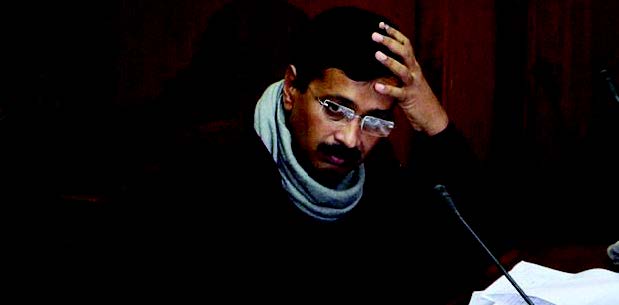
    NEW DELHI (TIP): Prime Minister Narendra Modi may “get me killed”, Arvind Kejriwal said on July 27, unleashing one of the most severe attacks on him as the Delhi Chief Minister wondered if the country was in “safe hands”.

    Referring to series of arrests of AAP MLAs and workers in the last one-and-a-half years, Kejriwal dubbed Modi to be the “mastermind” behind the “cycle of oppression” against them and that he was hell bent on “vanquishing” the party.

    Calling the current period to be “very critical”, Kejriwal sought to remind AAP volunteers, MLAs and Delhi Government Ministers that things will get worse in the coming days and exhorted them to “leave” if they are not strong enough.

    “I want to tell all the volunteers, MLAs and Ministers that this is a very critical period. You think over it, talk to your families. This is going to get worse in the coming days.

    “He (Modi) can go to any extent and may get us killed. He may get me killed as well. Talk to your families and see if you are ready for the ultimate sacrifice. All the MLAs will anyway have to go to jail. If you are ready, then stay with us or if you have weaknesses, then leave,” he said.

    “Modi has lost all sense of proportion and is hell bent on vanquishing the AAP,” Kejriwal said in a nearly 10-minute-long video message posted online.

    Kejriwal, who has called Modi a psychopath and coward in the past, said the country would be in danger if the Prime Minister starts taking decisions guided by “no rhyme or reason but anger”.

    “For me, the biggest reason to worry is the fact that if a country’s PM starts taking decisions in anger then the country will be in danger. Who knows he might be doing the same when it comes to many such decisions.

    “The important question is whether the country is in safe hands or not? Important thing is not the arrests of our MLAs. Is the country in safe hands ?” he asked.

    The Delhi Chief Minister referred to arrests of 10 MLAs, income tax raids on one legislator and attempts to disqualify 21 MLAs through “false allegations”.

    “You must have seen the attempts to crush the AAP. 10 MLAs have been arrested, IT raid has been conducted on one, and attempts are being made to disqualify 21 MLAs through false allegations of office-of-profit.

    “This is like a cycle of oppression. I was wondering why is this happening. People question as to why I blame Modiji. I want to know who is the mastermind behind the raids by CBI, IT etc. Someone has to be the mastermind behind them. Who is the mastermind?

    “Amit Shah, Modiji, PMO. All of them are together. Shah is doing it on Modiji’s prodding but it is happening from one source.

    “Insiders say that Modiji is extremely angry with us and he is not thinking logically about it. Because daily arrests make no logic. Especially when all of them get bail within days and they could not prove a thing.

    “He is not using his brain while dealing with us. Few people say he has been unable to digest the good work in Delhi, others say the defeat in Delhi, while the rest say it is due to the support we are getting in Punjab, Goa and Gujarat,” the Delhi CM said.

    Kejriwal said Modi, in his “relentless pursuit” for power, had taken the route of “crushing” his opponents as he and the BJP have “failed” to fulfill a single poll promise, thus angering various sections of the society.

    The AAP chief claimed that Modi was “frustrated” as he has failed to crush the courage of AAP despite putting the entire government machinery after it.

    “He unleashed the ACB, police, CBI, IT after AAP. But he could not crush our courage. We have refused to bend. So he is frustrated and does not know what to do next.

    “There are two ways to capture power. One is to do good work like us. But BJP and Modiji have failed in all the fronts. All sections of the society are angry including the dalits, minorities, farmers, jewellers and the youth,” he said.

    Kejriwal said Congress’ “silence” had also got to do with Modi’s attempts to muzzle voice of the Opposition.

    “The second way is to crush your opponents. And he is doing it now. He has crushed all the parties. Do you ever see the Congress raising its voice? Or any other party? Dalits have been crushed. Rohith Vemula was crushed. Youth was crushed,” he said.

    Kejriwal said India’s “souring” relations with its neighbours such as Nepal and Pakistan was also due to Modi’s inconsistency.

    “The more I think about this, the less I am being able to sleep. Is it the reason India’s age-old relations with Nepal has soured, or with Pakistan?

    “You went to say happy birthday (to Nawaz Sharif), then called ISI, then you blame them (Pakistan). So many flipflops. We can see many such decisions being taken based solely on anger which is dangerous for the country,” he said.

  • AAP MP’S RESPONSE STUMPS HOUSE PANEL

    AAP MP’S RESPONSE STUMPS HOUSE PANEL

    NEW DELHI (TIP): Controversial Aam Aadmi Party (AAP) lawmaker Bhagwant Mann on July 28 (Thursday) questioned the rationale of constituting a Parliamentary committee to probe his act of filming his way into Parliament.

    Mann appeared before the nine-member committee Bhagwant Mann constituted by Speaker Sumitra Mahajan on Thursday and submitted a five-page letter in which he apologised for his actions. But Mann reiterated his demand for expanding the ambit of the committee to summon Prime Minister Narendra Modi, and at the same time asserted that the probe should be wound up.

    “We have given him two more days to clear his confusion or contradiction and correct his written response to the committee,” said Kirit Somaiya, chairman of the probe committee.

    In his deposition before the committee, Mann sought to raise the issue of the prime minister “compromising” on national security by allowing a Pakistani investigation team to visit Pathankot airbase, which came under terror attack in January. “You stick to your statement. Your action has made Parliament security vulnerable,” a committee member told Mann. The committee also strongly disapproved of Mann treating the incident “casually”. The AAP member has been asked to appear before the committee on Monday at 3 pm when he may be subjected to cross-questioning by the members.

    Earlier in the day, Mann had sought permission of the committee to bring along a lawyer to argue on his behalf. The plea was rejected by the committee after due consultation with the Speaker.

  • NAVJOT SIDHU LIKELY TO JOIN AAP ON I-DAY EVE,  CAMPAIGN FOR PUNJAB POLL

    NAVJOT SIDHU LIKELY TO JOIN AAP ON I-DAY EVE, CAMPAIGN FOR PUNJAB POLL

    NEW DELHI (TIP): Former Bharatiya Janata Party lawmaker Navjot Singh Sidhu is likely to join the Aam Aadmi Party on August 14 and plunge into the campaign for the Punjab assembly elections from the next day, party sources said on July 28 (Thursday).

    The cricketer-turned-politician, who stunned his Navjot Singh Sidhu party on July 19 by suddenly resigning from Rajya Sabha to which he had been nominated just two months ago, will be one of the AAP’s chief campaigners in Punjab. However, he will not be named its chief ministerial candidate, a member of the party’s top body, the Political Affairs Committee (PAC), told HT.

    Sidhu, who is in Mumbai, was not available for comment.

    The move is seen as a symbiotic boost for the AAP, and the three-time Amritsar MP and his legislator wife, who will follow suit.

    For days after he quit Rajya Sabha, Sidhu remained incommunicado. On the day of his resignation, his wife Navjot Kaur Sidhu – who is a BJP MLA in Punjab and chief parliamentary secretary – said it implied he had quit the party. When Sidhu finally surfaced and made a brief statement to the media on July 25, neither did he say he quit the BJP nor clarify on where he was headed.

    Instead, he used the opportunity to say that he quit because he was asked to stay away from Punjab.

    “Rashtra dharma (duty towards the nation) is the most superior. How can Navjot Singh Sidhu stay away from his motherland,” Sidhu said in his brief appearance before the media in New Delhi, where he did not field questions. “No party in this world is above or greater than Punjab … If it comes to choosing between my family, my party and Punjab, I will choose Punjab a hundred times.” Delhi chief minister and AAP chief Arvind Kejriwal tweeted after Sidhu’s July 24 press conference: “Sidhu wud hv spoken against drugs, if he went to Punjab. BJP prevented him. Who was BJP trying to protect? Shocking (sic).” Source: HT

  • ED SLAPS MONEY  LAUNDERING CASE AGAINST EX-HARYANA CM HOODA

    ED SLAPS MONEY LAUNDERING CASE AGAINST EX-HARYANA CM HOODA

    NEW DELHI (TIP): The Enforcement Directorate (ED) on July 22 (Friday) registered a case against Former Haryana chief minister Bhupinder Singh Hooda and the Associated Journal Ltd under the Prevention of Money Laundering Act (PMLA) in a disproportionate land allotment case.

    When Hooda was the chief minister, he allocated the land to Associated Journal Ltd in Panchkula under wrong terms. For this land allocation, the loss for the state government revenue was more than crores.

    Hooda is already under the scanner of the CBI involving alleged irregularities in the allocation of industrial plots when he was chairman of Haryana Urban Development Authority (HUDA).

    It is alleged that the 14 plots, ranging from 496 sq.m, were allegedly allotted at throwaway prices.

    Those allotted the plots included Renu Hooda, Manjot Kaur, Nandita Hooda among others.

    Allegedly, all of them were related to politicians, bureaucrats and other influential people which included Hooda.

  • @NarendraModi – Engaging Africa….

    @NarendraModi – Engaging Africa….

    I returned from a very successful Africa visit, where I got to interact with political and business leaders across four nations. My visit began in Mozambique and ended in Kenya. The other two nations visited were Tanzania and South Africa.

    Naturally, the economic agenda of the visit was high on the priority of my delegation and I. In all the four nations I went, ways to deepen our economic cooperation and improve trade ties were comprehensively discussed.

    With Mozambique, I see a great scope for wide ranging economic cooperation. Mozambique’s strengths are also the areas of India’s need. And, what Mozambique requires, is available in India. We want to fast track cooperation in the field of agriculture and food security. There is a rich potential to deepen cooperation in skill development and healthcare as well.

    In South Africa, President Zuma and I addressed a business forum, where both Indian and South African CEOs were present. India and South Africa enjoy historical people-to-people and economic ties. 

    You would be delighted to know that India-South Africa bilateral trade has grown by 380% over the last few years. There is continuous flow of investments both ways. Many Indian companies are active in South Africa and vice versa.

    However, we do not want to stop here. The scope of bettering this cooperation is increasing by the day. And, India and South Africa are uniquely positioned to complement each other.

    I see India and South Africa working together in areas like defence, dairy, IT, skill development to name a few.

    The third nation I visited, Tanzania, has a healthy economic relationship with India and this relationship is growing. Our annual trade is on the rise and so are Indian investments. I told President Magufuli that India will be a trusted partner in Tanzania’s development priorities. With Tanzania, the scope of cooperation in the fields of agriculture, energy, natural gas, economic capacity building is immense. India is also ready to meet the healthcare priorities of the Tanzanian government, including supply of medicines and equipment.

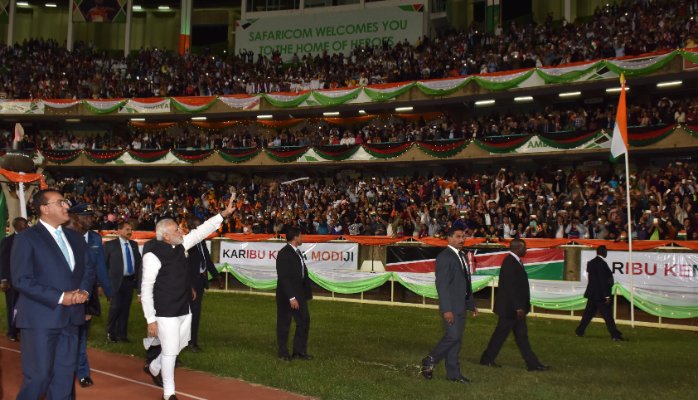
    My visit to Kenya was memorable because of the wide range of programme and the comprehensive level of discussions with President Kenyatta, particularly on trade and the economy. President Kenyatta and I addressed a business summit and even met Kenyan as well as Indian innovators before the summit.

    It is a fact that the India-Kenya friendship is a win-win situation for both our nations. Together, this partnership can be beneficial for India, Kenya and the rest of the world. 

    Here are some of the avenues of cooperation that I highlighted:

    I also extended India’s deepest appreciation and total support for the ‘Make it Kenya’ initiative of the Kenyan government. This is a wonderful effort to raise the economic potential of Kenya and provide opportunities for the Kenyan youth.

    In conclusion, I wish to state that together, India and Africa constitute a third of humanity. Africa is at the core of our foreign policy. Last year, I had the honour of welcoming African heads of state for the India-Africa Summit. This was the start of new era in India-Africa ties and will lead to empowerment of the youth both in India and across Africa.