Tag: Indian Politics

  POLITICS & POLICY  

  • Centre-farmers talks : Ahead of 9th round, Mann recuses himself from SC-appointed committee

    Centre-farmers talks : Ahead of 9th round, Mann recuses himself from SC-appointed committee

    NEW DELHI (TIP): Ahead of the ninth round of Centre-farmer talks on Friday, January 15, there have been some major developments on the ongoing agitation. Amid growing criticism, including from his own union, BKU’s Bhupinder Singh Mann (one of the four experts nominated by the Supreme Court for negotiations with farmers protesting against the three farm laws) , on January 14,  recused himself from the committee.

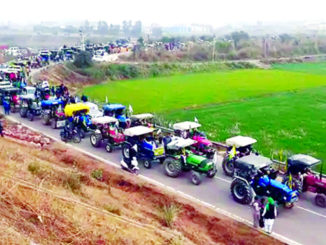
    Meanwhile, amid the growing social media buzz on unions “tractor parade” on the Republic Day, farmers’ leader Balbir Singh Rajewal said the January-26 plan will be revealed after the meeting with the Union ministers. He also urged everyone to maintain peace and harmony and not pay heed to “false and unfounded inflammatory propaganda and rumor mongering” on the tractor march to “malign and scuttle the movement”.

    Even as Rajewal said unions will finalize the contours of January 26 tractor march after their meeting with Central ministers on Friday, BKU leader from Uttar Pradesh Rakesh Tikait announced the program for the day saying that farmers will hold simultaneous parade from Red Fort to India Gate on the Republic Day.

    “The Republic Day Parade has been cut short, it will now be from Rashtrapati Bhawan to India Gate, I am told. We will march from Red Fort to India Gate and meet it there. It will be a historic event,” Tikait said in what is being seen as breaking ranks in the agitation.

    Agriculture Minister Narendra Singh Tomar expressed hope of positive discussions on January 15.

    Clearing the confusion over the fate of tomorrow’s meeting (the only outcome of the January-8 talks) after the SC ruling on Tuesday and Mann recusing from the court-appointed panel today, Tomar said the talks will be held as scheduled. While they have already specified that they will not appear before the court-appointed panel, farmer unions said they were ready to attend the scheduled talks with the government.

    In his statement, Mann said he was thankful to the Supreme Court for nominating him to the committee to start a dialogue with unions on the laws. However, as a farmer leader and union leader, “in view of the prevailing sentiments and apprehensions amongst the farm unions and public in general, I am ready to sacrifice any position offered or given to me so as to not compromise the interests of Punjab and farmers in the country, I am recusing myself from the committee and I will always stand with my farmers and Punjab,” Mann said after the union he headed also distanced itself from him.

    After being selected by the SC, he had urged everyone to put forward their views before the panel.

    Union leaders claimed others on the panel will “also resign soon”.

    Rajewal said efforts were being made to malign the agitation through ‘dushprachar’ (false propaganda). “The whole world is watching. This is not just a farmers’ movement. It has become a mass movement across the country. A movement is successful only when it is completely peaceful, if there is violence it collapses.

    “Misconceptions/false inflammatory propaganda are being spread about the 26 January movement. Some people are saying that the national flag should be hoisted at the Red Fort, some are saying the Parliament will be stormed,” he said, accusing “anti-farmer forces and government agencies” of trying to malign and scuttle the peaceful agitation of farmers and common people. Urging everyone to maintain peace and calm, he told the farmers that the tractor march will be “from” Delhi borders. The exact outline of the programme for January 26 will be given after tomorrow’s meeting.

                    (With inputs from TNS)

    Farmers to attend ninth round of talks with government without ‘much hope’

    New Delhi (TIP): Protesting farmer leaders on January 14 said they will attend the ninth round of talks with the government amid indication that it may be the last such meeting with the Centre, but added that they don’t have much hope as they will not settle for anything less than the repeal of the contentious farm laws.

    Since a Supreme Court-appointed panel on farm laws is likely to hold its first meeting on January 19, the meeting on January 15 between with the government and the unions may be the last one.

    Bhartiya Kisan Union (Ekta Ugrahan) Joginder Singh Ugrahan told PTI, “We are going to hold talks with the government tomorrow. We don’t have much hope from the Friday meeting as the government will cite the SC-appointed panel. The government doesn’t have good intention to resolve our issues.” Mr. Ugrahan said that the unions do not want any committee, adding “we just want a complete repeal of three farm laws and legal guarantee on minimum support price for our crops”. He said that farmers will not call off their protest until their demands are met.

    Another farmer leader, Abhimanyu Kohar, said that government knows that the court cannot repeal the laws and added that the Centre should stop playing with the sentiments of farmers who have been camping at several Delhi borders since November 28.

    He said that forming a committee is not a solution, adding that the new farm laws have been enacted by Parliament and the court cannot do much. While the previous eight rounds of negotiations have failed to end the protests continuing for several weeks on various borders of the national capital, Agriculture Minister Narendra Singh Tomar said earlier in the day that the government is hopeful of positive discussions at the scheduled January 15 meeting.

    In an interview to PTI, Anil Ghanwat, a member of the Supreme Court-appointed committee, said that the panel will have no “ego or prestige issue” if it has to go to farmers’ protest sites to talk to them.

    On the government holding parallel talks with protesting farmers scheduled for January 15,  Ghanwat said, “I think this will be their last meeting with the government. They will say henceforth you (farmers) have to sit with the committee, which will give a report to the Supreme Court.”

    Agriculture Ministry denies RTI query on farm law consultations

    New Delhi (TIP): The Agriculture Ministry has denied a Right to Information (RTI) request for details on pre-legislative consultations on the farm reform laws, saying the matter is sub judice.

    In its response, the Ministry cited the clause from the RTI Act that exempts information which has been expressly forbidden to be published by a court of law or whose disclosure would amount to contempt of court.

    This comes after an earlier response claiming that the Ministry did not have any record of such consultations.

    RTI activist Anjali Bhardwaj had filed her request on December 11, asking for specific details regarding the stakeholder consultations held before the Centre promulgated the three ordinances on agricultural reforms in June. Within the 30-day period given to respond, two Central Public Information Officers (CPIOs) in the agricultural marketing divisions of the Ministry disposed of her request, saying that they did not have any record of such consultations.

    The Hindu had reported this on January 12, a day after the Ministry told the Supreme Court that farm unions were “peddling an erroneous notion” that no consultations were held.

  • EU farmers could get cash to curb emissions from belching livestock

    EU farmers could get cash to curb emissions from belching livestock

    Brussels (TIP): Farmers should get European Union funding to reduce methane emissions from livestock or increase organic farmland, the European Commission said on Thursday, under plans to make agriculture greener.

    The EU is nearing the end of a two-year battle to overhaul its massive farming subsidies scheme, to attempt to align the agriculture sector – which contributes roughly 10% of EU greenhouse gas emissions – with the bloc’s target to have net zero emissions by 2050.

    The farming policy will suck up 387 billion euros from the EU’s next budget, for 2021-2027, with agriculture spending split between direct payments to farmers and other support for rural development.

    EU negotiators are wrangling over whether to spend 20% or 30% of payments for farmers on programmes to protect the environment. The Commission on Thursday outlined what those so-called “eco-schemes” could include.

    Organic farming, use of feed additives to reduce the amount of methane – a potent greenhouse gas – belched out by animals, and “carbon farming” where farmers restore wetlands or peatlands to suck CO2 out of the atmosphere, are among its suggestions.

    European farmers association Copa Cogeca welcomed the suggestions but said farmers should not be obliged to participate in them.

    “The voluntary nature for farmers of these potential practices, as proposed by the Commission, should be maintained,” a spokeswoman said.

    Campaigners said some of the proposed measures could fuel the environmental degradation caused by current intensive farming practices.

    The Commission’s suggestion of paying farmers to improve “housing conditions” for animals amounted to “hidden subsidies to the highly-polluting intensive animal farming industry,” said Celia Nyssens, agriculture policy officer at the European Environmental Bureau.

    Agriculture is facing increased scrutiny for its contribution to the twin crises of biodiversity loss and climate change. The EU is drafting legally-binding targets to restore nature – a move likely to impact agricultural sites, which make up 40% of EU land.

    The sector is the most frequently reported pressure on Europe’s habitats and species, from intensified farming practices including pesticide use and irrigation, according to the EU Environment Agency. Reuters

  • Ajit Doval meets Afghan President Ashraf Ghani in Kabul, visit unannounced

    Kabul (TIP): National Security Adviser Ajit Doval on Wednesday met Afghan President Ashraf Ghani and his counterpart Hamdullah Mohib during an unannounced two-day visit to Kabul.

    “Both sides discussed expansion of cooperation in countering terrorism and strengthening regional consensus on the Afghan peace process,” said Afghan President’s spokesman Sediq Sediqqi. “The Afghan National and Defence Security Forces are the righteous pillars of Afghanistan’s stability, the front lines against regional and global terrorism… in collaboration with NATO and the US could achieve more success in the fight against terrorism,” the President said.

    Doval arrived in Kabul days after US Afghan envoy Zalmay Khalilzad, followed by a top US military official, met Pakistan Army officials at Rawalpindi. “The two sides held extensive conversations on issues of strategic mutual interest, including on synchronising efforts to combat terrorism and build peace,” said a statement from the Afghan NSA’s office. Mohib also met Chinese Ambassador Wang Yu. TNS

  • Farm laws on hold:  Panel composition thwarts forward movement

    Farm laws on hold: Panel composition thwarts forward movement

    By putting on hold the implementation of the three controversial farm laws until further orders, the Supreme Court has said it is trying to solve the problem in the best way. There is little room to disagree, considering the deadlock and unlikelihood of any forward movement in the talks between the Centre and the protesting farmers. The unions’ immediate reaction not to back down from their demand of the repeal of laws is not surprising. A month-and-a-half of a peaceful, organized protest in extreme conditions, riding on popular sentiment and support, lends strength to the conviction of purpose. But opting for a point of no return and a prolonged holdout — by the government and the protesters — cannot be seen as a prudent stand. As Chief Justice Bobde observed, ‘These are matters of life and death. We are concerned with laws. We are concerned with lives and property of people affected by the agitation.’

    The court’s intervention lends an opportunity to come out with possible solutions which both sides can agree not to disagree on, but questions are bound to be raised over the composition of the committee if the perception is that all the four members support the new laws. Only a suitable mix would make the discussions meaningful and lend weight to it being a forum for a frank and open discussion. If the opposition is to the manner and intent of the reform proposed and not the idea of reform itself, there is merit in bringing forth articulate, informed depositions on the pros and cons, the apprehensions, the distrust. Much of the onus lies on the government. It has to show its willingness to new proposals and assurances that the farmers cannot do without. Keeping in view the proposed protest march in the Capital on Republic Day, a notice has been issued to the unions on a Delhi Police plea to stop their tractor rally during the January 26 parade. The fervent hope is that the need for such a protest does not arise.

    (The Tribune)

  • The Indian American Action Group seeks to promote community

    NEW YORK (TIP) New York based The Indian American Action Group (IAAG) is a bipartisan movement launched by a group of visionary Indian Americans. These individuals have achieved positions of leadership across a broad range of professions, have served their communities selflessly and have been champions of change. Based on U.S. Census statistics, the Indian American community has grown over 100 percent in the last decade, continuously outpacing every other ethnic group along socio-economic dimensions. Despite our financial strength and professional achievements, our social and political voice to support the four million Indian Americans requires strengthening.

    The Indian American Action Group has three primary objectives it seeks to accomplish:

    1. IAAG recognizes that great democracies depend on new and bold ideas and our future political leaders that need our support today. Our goal is to ensure that the Indian American community is represented in all levels of government. To further this, we aim to provide support to Indian American political candidates at the federal, state, and local levels by fund raising by attending voting campaigns and providing strategic and tactical assistance where needed. We seek to promote and support non-Indian American, visionary, progressive and inclusive leaders who have proven their commitment to the values and interest of the Indian American community.
    2. We recognize that two of the world’s greatest democracies share a lot in common. Our objective to strengthen the relationship between India and USA begins with focusing on the people. This is highlighted in matters of homeland security and standing for India’s solidarity and sovereignty at its borders. India has entered the 21st century with vigor, attaining new levels of innovation and enterprise. The innovation of technology centric companies which is fueled by the large talent pool of Indian professionals has reinforced the U.S. leadership position in technology and innovation globally. Sustaining this leadership requires championing judicious immigrations laws, respect for our faith and religious beliefs, and an inclusive immigration and civic experience for all.
    3. India is one of the world’s oldest civilizations and its rich culture and traditions are legendary. IAAG will work towards establishing a positive narrative and discourse, by undertaking education campaigns. We seek to engage the broader audience to highlight the richness of our birth nation, address misunderstandings and misinterpretations and showcase our contributions in all areas of civic engagement, business leadership and social causes.

    Indians in the US have permeated the established power bastions that for immigrants can often be virtually impenetrable. We are at the dawn of a politic awakening and civic engagement within our community and IAAG will harness and leverage this strength to shape the national dialogue for Indian Americans and its future generations.

    The founding members of the IAAG :-

    Dr. Sankar Niranjan, MD FASN, is a physician and nephrologist based out of West Hartford Connecticut. He has been very involved with the community locally and in India. He is the Connecticut Chapter coordinator for two different non-profit organizations – AIM for SEVA and Tamil Nadu Foundation that do amazing work with rural education in India.

    Neha Kiran Chopra, Esq, received her Juris Doctorate and is a practicing Attorney in the State ofNew York with a specialization in Real Estate Law. She thrives in serving her community anddesires to combat social and political problems affecting the Indian diaspora.

    Vipul Kashyap, Ph.D. has a doctorate in Computer and is focused on outreach and education ofIndian culture, traditions and philosophy to the broader American society at large. Vipul is theboard member of the Connecticut Center for Interfaith Understanding (CCIU) and works withvarious Indian organizations such as AIM for Seva – for various fundraising activities – for bothlocal charities in the Connecticut area and for education of rural kids in India.

    Suraj Kurtakoti is passionate about fostering and strengthening the relationship between US andIndia. He has been involved in programs helping to build more engaged relationship between theIndian American community and wider community in general, through programs such asintroducing Yoga to school kids/teachers and celebrating Indian cultural events with our localfirst responders.

    Dr. Renee Mehrra, a doctorate in Public Health is a tenacious broadcaster with a burning passionfor accurate and compelling storytelling. She has been consistently appraised by the Asian Indiancommunity as one of the most prominent broadcast journalists in the tri-state area.

    Naresh Gehi, Esq has been a profoundly strong advocate for human rights, working to helpindividuals acquire citizenship and working in grassroots settings in order to help enact positivesocial change. His track record in this regard is unprecedented and has been given exposure &critical acclaim for his work in places like the New York Times, CNN, Politico, and ABC News,among others.

    Contact Information: Vipul Kashyap, Founder, IAAG

    iaagmovement@gmail.com

    (860)368-0014

    (Advertorial)

  • BJP’s new power orderTweaked hierarchy gives it full control, reducing RSS’s interventions

    BJP’s new power orderTweaked hierarchy gives it full control, reducing RSS’s interventions

    By Radhika Ramaseshan

    The BJP took advantage of its commanding position to minimize the presence of the RSS pracharaks in Nadda’s team and overturned an arrangement ostensibly cast in stone.

    An organizational restructuring in the BJP is rarely newsworthy unless the change is effected at the top or a big-time functionary such as Ram Madhav is dropped from the central team of office-bearers and Vasundhara Raje is shafted to pave the way for a leadership makeover in Rajasthan. Recently, JP Nadda, the BJP president, quietly tweaked the organizational hierarchy to reinforce a significant political message: the BJP will exercise complete control over the party and its apparatuses and the patriarch RSS’s interventions could become minimal, if not nominal. The Sangh-BJP equation that was in a permanent flux has settled into a constant in the Modi regime. PM Modi rules over a BJP-majority government that is not rocked by the coalition partners or an Opposition. Until he confronted his first challenge in the farmers’ movement, his authority appeared incontestable. The RSS is hands-off towards the protests. Its farmers’ front, the Bharatiya Kisan Sangh (BKS) issued innocuous statements. The paterfamilias is in no mood to rock the boat.

    The BJP took advantage of its commanding position to minimize the presence of the RSS pracharaks in Nadda’s team and overturned an arrangement ostensibly cast in stone. BL Santhosh remains the general secretary (organization), and there is no dilution in the power he wields as the second-most important person in the party. In the past, a general secretary, however influential, had two or more deputies ‘assisting’ him. This line-up of the general secretary and the joint general secretaries (organization) under him was generally made up of obscure figures who avoided the media, although Sunder Singh Bhandari and KN Govindacharya were exceptions and liberally shared information and political insights. Santhosh and Ramlal, his predecessor, had a trio under them, comprising V Satish, Saudan Singh and Shiv Prakash all of who were ‘loaned’ to the BJP for long-term work.

    Last week, the loanees were relocated in the BJP with new designations, their mandate vastly diminished. It is unclear whether the joint general secretary’s post will remain. Essentially the recast means the Sangh will have only Santhosh to deal with. He will be the sole conduit between the RSS and the BJP, and for all intent and purpose both will depend largely on the feedback he gives and the inputs he shares. A quintessential pracharak from Karnataka, he earned the moniker, poornavadi karyakarta (full-time volunteer). Every pracharak is a full-time volunteer but the sobriquet denoted Santhosh’s ‘exceptional dedication’. During his stint in the Karnataka BJP, also as a general secretary, he allegedly played his share of intra-BJP politics and was rarely on the same page as CM Yediyurappa. But he is credited with ‘discovering’ and nurturing young ‘talent’ such as Lok Sabha MPs Tejaswi Surya and Prathap Simha and the Karnataka BJP president, Nalin Kumar Kateel. The choice of protégés reveals Santhosh’s unmistakable preference for those who are wedded to hard Hindutva.

    In that sense, Santhosh, as also the BJP brass, sorted out the existential dilemma that dogged Vajpayee when he was the PM. Vajpayee had the RSS snapping at his heels. If the VHP got aggressive and amped up the Ram temple demand with violent consequences, on occasions, it was the Swadeshi Jagran Manch (SJM) and the Bharatiya Mazdoor Sangh (BMS) that scuttled Vajpayee’s pet reforms. He was disinclined to give the Sangh fronts unbridled latitude, and suffered as a result.

    Modi has no such issues, regardless of the problems he lived with in Gujarat from the VHP and BKS. He is adept in managing their occasional tantrums. In December 2019, when the VHP threatened to besiege the government if it would not intervene decisively to seek a ‘resolution’ of the Ayodhya ‘dispute’ and got the RSS sarsanghachalak’s endorsement for the agenda, the Centre earned more than a breather when the apex court cleared the way. For Modi, it was an opportune moment to dispel the few misgivings the VHP cast over his ‘commitment’. He presided over an elaborate ground-laying ceremony in Ayodhya to mark the start of the construction.

    Of all RSS fronts, the VHP has the greatest potential to marshal agent provocateurs, whip up communal passions and immobilize an administration. If the outfit is given a free pass to flout the law, a government can breathe easy. This is what has happened in MP. The VHP galvanized its storm-troopers to strike terror in the minority-dominated pockets in the guise of collecting funds for the temple. CM Shivraj Singh Chouhan has embraced hard-core Hindutva, and giving the VHP leeway suits him politically. In UP, the temple’s epicenter, the VHP does little or nothing because CM Yogi Adityanath has everything laid out: a pliant state machinery, public opinion and the voluntary militia of his Hindu Vahini in case action was demanded.

    In contrast, an issue stares the BKS in the face, but it refused to react. In the Centre-farmer face-off, all that the Sangh’s peasant wing asked for was guaranteeing the MSP in the open market and a designated court to adjudicate disputes related to contract farming. At no point did it suggest that the farming laws should be relooked, let alone repealed. Like the BKS, the SJM opted for the straight and narrow.

    Had the RSS, the BKS and the SJM confronted the Centre on the peasantry, it would have been forced to respond and perhaps withdraw the laws. In 2015, it was an ultimatum the SJM served that nudged the government to freeze the proposed amendments in the Land Acquisition Act. The RSS astutely figured that keeping the peace with the Modi dispensation is mutually advantageous and disputes must be buried.

    (The author is a senior journalist)

  • Indian Americans Neha Gupta and Reema Shah Named by  Joe Biden to Office of White House Counsel

    Indian Americans Neha Gupta and Reema Shah Named by  Joe Biden to Office of White House Counsel

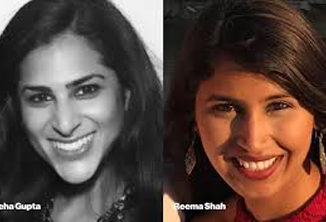
    WASHINGTON  (TIP): US President-elect Joe Biden on Monday, January 11,  named two Indian Americans – Neha Gupta  and Reema Shah – to the Office of the White House Counsel.

    Ms Shah, who had served on the debate preparation team for Joe Biden on the Biden-Harris Campaign, has been named as Deputy Associate Counsel while Ms Gupta, currently an attorney in the Office of the General Counsel for the Biden-Harris Transition, has been named as Associate Counsel in the Office of the White House Counsel.

    Ms Shah was an associate at Latham & Watkins and a Bristow Fellow in the Office of the Solicitor General at the Department of Justice. She served as a law clerk to Justice Elena Kagan on the US Supreme Court and Judge Sri Srinivasan on the US Court of Appeals for the DC Circuit. Originally from New Jersey, Ms Shah is a graduate of Harvard College, Cambridge University and Yale Law School.

    Ms Gupta served as a Deputy City Attorney in the San Francisco City Attorney’s Office, where she was general counsel to several city agencies, litigated constitutional and statutory challenges to city laws and administrative decisions, and participated in the office’s affirmative public protection advocacy.

    Previously, Ms Gupta clerked for Judge Michael Daly Hawkins of the US Court of Appeals for the Ninth Circuit and Judge Richard Seeborg of the US District Court for the Northern District of California. A New York native born to Indian immigrants, Ms Gupta is a graduate of Harvard College and Stanford Law School.

    Joe Biden also named Samiyyah Ali as Deputy Associate Counsel, Funmi Olorunnipa Badejo as Associate Counsel, Tona Boyd as Special Counsel, Megan Ceronsky as Associate Counsel, Martine Cicconi as Associate Counsel, Sean Crotty as Associate Counsel and Ashley Deeks as Associate Counsel and Deputy Legal Advisor to the National Security Council.

    These officials will, under the direction of White House Counsel Dana Remus, help restore faith in the rule of law and the accountability of government institutions, the transition said.

    “My administration has no greater task than restoring faith in American government. Our White House Counsel’s Office will be built upon a foundation of integrity and honesty. This qualified and crisis-tested legal team will ensure that this administration is accountable and always operates in service of the American people,” said Joe Biden.

    Vice President-elect Kamala Harris said: “The American people deserve a government that is open, honest, and transparent. These dedicated public servants will help us meet the unprecedented challenges facing our nation while upholding the highest standards of ethics and integrity”.

  • Indian American Lawmaker Ro Khanna Sees Two challenges before America after Capitol riot

    Indian American Lawmaker Ro Khanna Sees Two challenges before America after Capitol riot

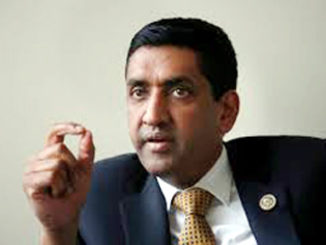
    WASHINGTON (TIP): In the aftermath of the Capital riot by supporters of outgoing President Donald Trump, Indian American lawmaker Ro Khanna believes America faces two challenges on the economic and cultural fronts to rebuild faith in democracy.

    “It’s a big challenge for us,” the third-term progressive Democrat in the House told Business Insider in a telephonic interview on Jan 8, two days after the riot when asked about the state of American democracy.

    “I think there’s two challenges for the country,” Khanna said. “The challenge of economically-left behind places and people where you don’t have economic wealth generation, without basic healthcare, without basic housing.”

    “And then you have the deeper question, and that is the cultural challenge,” he said noting “how we’ve become a multi-racial multi-ethnic democracy” thanks to the immigration post-’65 from non-European countries.

    “I mean we’re the most diverse we’ve ever been in our nation’s history — it’s easy to conceive of a nation on philosophical principles if there is also a cultural similarity,” Khanna said.

    “To conceive of a nation on philosophical principles, of a commitment to our constitution, when you have such incredible racial diversity, such incredible religious diversity and the racial history we do, is a very, very difficult project,” he said.

    “And I think a large part of our challenges — how do we begin to improve the communication between Americans who come perhaps from very different perspectives,” Khanna said.

    “I guess the point is we need a bold economic vision, but we need to couple that with leadership that looks for finding commonalities of Americans with great differences,” he said.

    “And it’s a difficult project, but there’s never been a multiracial, multiethnic democracy in the history of the world. And so what we’re trying to do is very hard as well,” Khanna said.

    “In the Congress, we need to begin a dialogue with each other in ways that lowers the volume of the screaming on cable news and looks for ways to respect Americans and understand their anxieties, understand their perspectives, and find some common fabric for this country,” he said.

    Khanna also stressed the “need to rethink the role that social media has had in encouraging diversion realities and how we try to structure and design social media so that there are common sources of information.”

    “We have to look at education across the country in terms of giving people the ability to sort out facts from conspiracy theory,” Khanna said.

    “And then we have to look at the communities that have been left out and why and why some of the anger may be there and the anxiousness may be there with the changes the country is going through, and how to respect the dignity of these places that have been left behind,” he said.

    “And if we can do that, you’re not going to get to everyone, but maybe you’ll get to some, and that builds a coalition of people going forward,” Khanna said.

    Khanna, who has made a name for himself as a strident opponent of the US government’s interminable support for the “forever wars”, hoped the US would end the war in Yemen and pull out the remaining US troops in Afghanistan.

    The Indian American lawmaker said he was also “working with Sen. Bernie Sanders on a war powers resolution to make sure that Congress has to be consulted before we get into any other wars.”

    Asked about his expectations from the Biden administration on the national security and foreign policy front, Khanna said, “I’m hoping we end the war in Yemen.”

    Encouraged by preliminary conversations with people in Biden’s team, he believed the new administration is “going to make it a priority to stop our support for the Saudis and stop the bombing in Yemen. That has to be a priority.”

    Favoring a pull out of the remaining US troops in Afghanistan, Khanna said, “There needs to be a peace negotiation, and then we ought to leave.”

    “We should make it clear that if there’s ever emerging threats or terrorist threats to our homeland from [Afghanistan], we reserve the right to conduct and we reserve the right to go in again,” he said. “But there’s no point in having a permanent presence there.”

    Asked if after the Capitol insurrection, Republicans will still support Trump, Khanna said, “It’s the first time I’ve seen a break. Not just by lawmakers, but also by [Trump’s] Republican friends.”

    “I think the images of the Capitol being stormed, it really shifted people’s mindsets,” Khanna said. “There’s something about the sacredness of the Capitol, about a belief in stability for American democracy.”

  • Supreme Court order has confirmed farmers’ fears

    Supreme Court order has confirmed farmers’ fears

    ON GUARD: The farmers have been suspicious of being pushed into mediation that they never asked for or consented to.

    By Yogendra Yadav

    A committee is only as good as its members. It is no secret that the farmers’ organisations were apprehensive about the composition of a committee appointed by the court. The process by which the court arrived at these four names left a lot to be desired, to put it mildly. The same court that chided the government for passing the farm laws without consulting the farmers adopted an even less transparent process to decide upon this committee.

    In rejecting the Supreme Court-appointed expert committee to mediate between farmers and the Narendra Modi government, the farmers’ organisations have not only wisely sidestepped a possible trap, but have also reaffirmed a basic principle of democratic accountability and responsible governance.

    Let there be no confusion about it. The expert committee appointed by the SC is not meant to advise the court on technical matters of agricultural marketing or on the implications of the disputed agricultural laws. The order of the Supreme Court makes it clear that the committee is to facilitate negotiations between the government and farmers’ organizations: “The negotiations between the farmers’ bodies and the government have not yielded any result so far. Therefore, we are of the view that the constitution of a committee of experts in the field of agriculture to negotiate between the farmers’ bodies and the government of India may create a congenial atmosphere and improve the trust and confidence of the farmers.”

    The court goes on to specify that the committee has been “constituted for the purpose of listening to the grievances of the farmers relating to the farm laws and the views of the government and to make recommendations.” Presumably, the committee will try to find a middle ground and advise the government on how the laws should be tweaked in a way so as to satisfy both the government and the protesting farmers. That is precisely why the farmers’ organizations had resisted, right from the beginning, the idea of any such committee. They have objected to being forced into binding mediation, questioned the instrument of a committee and suspected the composition of such a committee. On all three counts, their assessment has been proven right.

    First of all, the farmers have been suspicious of being pushed into mediation that they never asked for or consented to. They have never said no to negotiations with the government. Sure, the talks with the government have been frustrating. The Modi government has been intransigent. Yet, that is the only site for negotiations in a democracy. In the last instance, elected representatives are there to speak to the people. They are accountable to the people and to the farmers. The courts are there to adjudicate between right and wrong, legal and illegal. The courts are not there to engage in give and take, which is part of any negotiation. That is why the courts are responsible to the Constitution and not accountable to the people. That is the logic of democratic governance. Any attempt to shift the site of negotiation from the government to the judiciary amounts to overturning this basic democratic logic. The government’s keenness to shift this ‘headache’ and the Supreme Court’s alacrity to take over have strengthened the resistance of the farmers. It needs to be underlined that the protesting farmers did not approach the court. Nor did the government, at least not on paper. The initial petitioners were third parties who wanted the court to evict the farmers from their protest site. The other set of petitioners questioned the constitutionality of the three laws and wanted these scrapped. None of the petitioners prayed for mediation from the court. Yet, from day one, that is what the court was interested in. The court dismissed, and rightly so, the pleas asking for eviction of the protesting farmers. It recognized, again rightly so, the democratic rights of the farmers to engage in a peaceful protest. As for the pleas, regarding the constitutional validity of the three laws, the court put this on the back burner, saying that it will consider these at an appropriate time.

    The Supreme Court could have expedited this process by setting a time frame within which it will decide upon the constitutional validity of these three laws. That would have been most appropriate. But it chose not to do so. Instead, the court chose to focus on a third issue beyond what was asked for by any party and beyond its legal remit. Farmers’ organizations were smart enough to resist this move from the beginning.

    The second objection of the farmers’ organizations was to the very mechanism of a technical committee of experts. This idea was proposed by the Modi government in the very first round of negotiations held on December 1, and the farmers rejected it there and then. Such a committee would be very useful to clarify a point of law or to work out policy or fiscal implications of the proposed laws. Such a committee could also help work out the details of a compromise formula, once the basic framework is agreed to. But a technical committee cannot possibly work out the basic framework itself. Mediation is not done by technocrats. It is done by non-specialists who have some familiarity with the subject, but more importantly, who enjoy the trust and confidence of both parties. The Supreme Court-appointed committee of experts was never going to be that mechanism.

    Dushyant Dave and the other three lawyers representing just eight out of 400-plus farmers’ organizations involved in this protest were wise to keep away from the court’s deliberations on this issue.

    Finally, a committee is only as good as its members. It is no secret that the farmers’ organizations were apprehensive about the composition of a committee appointed by the court. The court’s order confirmed their worst fears. The process by which the court arrived at these four names left a lot to be desired, to put it mildly. The same court that chided the government for passing the farm laws without consulting the farmers adopted an even less transparent process to decide upon this committee. Names like P Sainath and ex-CJIs were thrown around and quietly dispensed with. No one knows who suggested the four names that the court came up with. Little surprise then that the four names have invited disappointment and ridicule. Not because the four members are not respectable, but because these are arguably the four best advocates for the government’s position and the laws. That the court chose such a partisan committee to mediate between the farmers and the government has cast a shadow on itself.

    Someone might ask: Forget the technicalities, but what’s wrong in the top court stepping in to resolve a deadlock? Well, that is possible, provided the Supreme Court were to enjoy moral authority over and above its legal and constitutional powers. Such moral authority is commanded, not demanded.

    (The author is President, Swaraj India)

  • ‘India pursues independent foreign policy’: MEA on US warning against S-400 purchase from Russia

    New Delhi (TIP): India has been pursuing an independent foreign policy based on national security interest which also applies to its defence acquisition and supplies, Ministry of External Affairs said on Friday, after US warned New Delhi against the purchase of S-400 air defence system from Russia.
    “India-US has a comprehensive global strategic partnership. India has a special and privileged partnership with Russia. We pursue an independent foreign policy, this also applies to our defence acquisition and supplies guided by a national security interest,” Ministry of External Affairs spokesperson Anurag Srivastava said.
    Outgoing US envoy Kenneth Juster said on Tuesday that the Indian government may have to make hard decisions regarding its decision to purchase S-400 air defence system from Russia.
    Speaking at an event here, the diplomat asserted that the US does not want to impose sanctions under Countering America’s Adversaries Through Sanctions Act (CAATSA) against “its friends”. But he noted that very soon India would have to make choices between “trade-offs” and acquiring modern military hardware from the US.

  • Sonia slams govt over fuel price hike, farmer stir, says country standing at crossroads

    Sonia slams govt over fuel price hike, farmer stir, says country standing at crossroads

    New Delhi (TIP): Congress president Sonia Gandhi on Thursday, Jan 7, attacked the Modi government over the ongoing farmer agitation and the hike in fuel prices, and said the country was today standing at the crossroads for the first time since Independence.
    On the hike in fuel prices, she accused the government of profiteering and said it is turning a disaster into an opportunity to fill its coffers.
    She also alleged that the government was breaking the back of the poor, the farmers, and the middle class due to its “insensitivity”.
    “I demand from the government that the rates of excise duty on petrol and diesel be made similar to that during the UPA regime and provide immediate relief to the affected people. I once again appeal to the government to repeal the three farm laws immediately and fulfil all the demands of farmers,” she said in a statement.
    Congress leader Rahul Gandhi also accused the government of “looting” the people by imposing heavy taxes on fuel and alleged that that was the reason it was not bringing them under the purview of the Goods and Services Tax (GST).
    “There has been unprecedented ‘development’ in prices of petrol and diesel. The Modi government is looting the public by charging heavy taxes on fuel. This is the reason why the government is not willing to bring petrol-diesel under GST,” he said in a tweet in Hindi.
    Sonia Gandhi said in the midst of a collapsing economy due to the coronavirus pandemic, the Modi government was trying to turn the disaster as an opportunity to fill its coffers.
    She said while the price of crude oil was USD 50.96 per barrel — just Rs 23.43 per litre internationally — diesel is being sold for Rs 74.38 and petrol at Rs 84.20 per litre in the national capital.
    This was the highest in the last 73 years, she alleged.

  • Covishield, Covaxin to be available very soon in India: Health minister

    Covishield, Covaxin to be available very soon in India: Health minister

    New Delhi (TIP): Ahead of the Covid-19 vaccine dry run on 8 January, Union Health Minister Harsh Vardhan met the health ministers of states and Union Territories on Thursday, January 7. Guiding the state health ministers on conducting the dry run, Harsh Vardhan said, “Feedback on the dry run of Covid vaccine in four states was reviewed. We have made improvements based on the feedback. Tomorrow dry run will be done in 33 states and Union Territories.””Covid-19 vaccines ‘Covishield’ and ‘Covaxin’ are on the verge of being available in the country. Our efforts are to ensure seamless last-mile delivery of the vaccine,” Harsh Vardhan said.
    The Health Minister also said that priority groups have been decided for vaccination as advised by the experts’ group formed by Prime Minister Narendra Modi.
    On spike in coronavirus cases, he said, “Maharashtra, Kerala and Chhattisgarh have seen a sudden spike in coronavirus cases recently. This gives us a warning that we shouldn’t forget precautions and continue our fight against Covid-19.”
    Meanwhile, news agency ANI reported that the transportation of coronavirus vaccines might begin today or tomorrow.
    The Centre has allowed passenger aircraft to transport the Covid-19 vaccines. Pune will be the central hub from where the vaccine distribution will take place, the report said.
    Around 41 destinations across the country have been finalised for the delivery of vaccines.
    New Delhi and Karnal will be made mini hubs for delivery of coronavirus vaccines in northern India. For the eastern region, Kolkata will be the hub and will also be a nodal point for the northeast.
    Chennai and Hyderabad will be the designated points for Southern India.
    India has two vaccines against the novel coronavirus which are ready for rollout. One is Covaxin, which has been developed by Hyderabad-based Bharat Biotech in collaboration with the Indian Council for Medical Research (ICMR) and the National Institute of Virology. The other one is Covishield, a vaccine developed by the University of Oxford and pharmaceutical giant AstraZeneca. Its India partner is Pune-based Serum Institute of India.

  • India to chair UNSC panels on counter-terrorism, sanctions

    India to chair UNSC panels on counter-terrorism, sanctions

    New Delhi (TIP): India will chair the Taliban and Libya sanctions committees and the Counter-Terrorism Committee of the UN Security Council during its tenure as non-permanent member of the powerful 15-nation UN body. India, which has been at the forefront of the years-long efforts to reform the UNSC, began its two-year tenure at the Council on Friday last.
    “The UN Security Council establishes subsidiary bodies on specific issues, including on the sanctions regimes.
    “I’m happy to announce that India has been asked to chair three important committees of the Security Council, which include the Taliban Sanctions Committee, Counter-Terrorism Committee (CTC) and the Libyan Sanctions Committee, India’s Permanent Representative to the UN Ambassador T.S. Tirumurti said in a video message on Thursday, January 7.
    Tirumurti said the Taliban Sanctions Committee, also known as the 1988 Sanctions Committee, has always been a high priority for India, keeping in mind the country’s strong interest and commitment to peace, security, development and progress of Afghanistan.
    “Our chairing this committee at this juncture will help keep the focus on the presence of terrorists and their sponsors threatening the peace process in Afghanistan. It has been our view that peace process and violence cannot go hand in hand,” he said.
    Tirumurti will chair the CTC in 2022, the year in which India will commemorate the 75th anniversary of its independence. “India will also chair the Counter-Terrorism Committee in 2022, which coincides with the 75th anniversary of India’s independence. The chairing of this committee has a special resonance for India, which has not only been in the forefront of fighting terrorism, especially cross-border terrorism, but has also been one of its biggest victims,” he said.
    Tirumurti said the Libya Sanctions Committee, also called the 1970 Sanctions Committee, is a very important subsidiary body of the Council, which implements the sanctions regime, including a two-way arms embargo on Libya and assets freeze, a travel ban and measures on illicit export of petroleum.
    “We will be assuming the chair of this committee at a critical juncture, when there is international focus on Libya and on the peace process,” he said.
    The three committees are highly significant subsidiary bodies of the UNSC and India chairing them is a ringing endorsement of the country’s leadership to steer the panels. India is a leading voice at the UN in the fight against the global scourge of terrorism, particularly the threat posed in the region by cross-border terrorism emanating from Pakistan.
    India has underscored that the fight against terrorism will be a key priority for it as it sits at the UN high-table for the 2021-22 term. Prime Minister Narendra Modi had said as a Council member, India will not hesitate to raise its voice against the enemies of humanity, including terrorism and will always speak in support of peace, security and prosperity.
    Former Indian Ambassador to the UN, Hardeep Singh Puri, had chaired the CTC for the term 2011-12 when India was last in the UNSC as the non-permanent member.
    The CTC, established in the wake of the 9/11 terror attack in the US, works to bolster the ability of UN member states to prevent terrorist acts both within their borders and across regions. It is assisted by the Counter-Terrorism Committee Executive Directorate (CTED), which carries out the policy decisions of the body, conducts expert assessments of each member state and facilitates counter-terrorism technical assistance to countries.
    Tirumurti thanked Permanent Representative of St Vincent and the Grenadines Ambassador Rhonda King, who, as the chair of the informal Working Group on Security Council Working Methods, had steered this process to its logical conclusion.
    The 1988 Sanctions Committee relating to Taliban oversees the sanctions measures imposed by the Security Council. Individuals and entities are designated on the 1988 Sanctions List as individuals, groups, undertakings and entities associated with the Taliban in constituting a threat to the peace, stability and security of Afghanistan.

  • Opposition slams govt: Show compassion to farmers, not rules

    Opposition slams govt: Show compassion to farmers, not rules

    New Delhi (TIP): As the eighth round of talks between the government and farmer’s unions ended inconclusively, the Opposition on Friday, January 8, hit out at the government, accusing it of trying to tire out the farmers by holding meeting after meeting.
    “Our farmers are fighting for justice and deserve compassion and sensitive understanding, not merely technical reading of rules. The government and the Hon’ble Supreme Court must understand that while farmers will survive Covid, their satyagrah is for their very survival,” senior Congress leader Anand Sharma said.
    Congress communication department head Randeep Surjewala said the government is trying to tire out the farmers by holding meeting after meeting. “But the farmers will neither get tired nor bow down,” Surjewala said.
    Sharma said that in a free country, the farmers would have had the right to protest inside the national capital and not be stopped at the borders.
    Alleging that the BJP government has crossed all limits of “cruelty” and “ruthlessness”, AICC general secretary Priyanka Gandhi Vadra said “the country has to think whether laws for farmers should emerge from their fields or in made the drawing rooms of a handful of billionaire friends of the BJP government.” She said the Congress will not back down from its demand that the laws should be repealed.
    Former Congress president Rahul Gandhi tweeted in Hindi: “Those whose intentions are not clear, it is their strategy to give one date after another.” Condemning the attitude of the government, CPI general secretary D Raja said the government must be sincere in holding talks and sensitive to the concerns of farmers. “The government remains rigid, adamant and arrogant, not accepting the demand of the farmers. It should accept the demand of farmers and repeal the three agri-laws,” he said.
    Farmers’ protest in Delhi political, not part of it: Bharatiya Kisan Sangh
    The Bharatiya Kisan Sangh (BKS), a farmers’ body associated with the Rashtriya Swayamsevak Sangh (RSS), came out in support of the Union government on the new farm laws in Gandhinagar on Friday saying that they are not part of the ongoing farmers’ protest on the Delhi border as it is “political” in nature.
    The Sangh also announced a countrywide campaign on Republic Day to educate people on the new farm laws.
    Speaking at a press conference in Gandhinagar on Friday, Mohini Mohan Mishra, national secretary of BKS, said, “We are not part of this agitation because it has given ample space to politicians to spread their agenda and these people (protestors) have no control over violence. The agitation that is going on at the Delhi border is primarily due to issues faced by the farmers of Punjab and Haryana.”
    Mishra added, “We believe that the new farm laws are for the benefit of farmers across the country… especially small, landless farmers. To repeal the laws for a section of farmers (those protesting) is not a viable option. At the beginning of the farmers’ agitation, BKS was in dilemma as we could see many political figures hijacking the agitation. We told the agitating Kisan unions to not allow any political figures at their protests but today we all know the path this agitation has taken.”
    The BKS also added that it has given its own set of demands to the union government on the new farm laws and said that they will hold an agitation in the future in a peaceful manner.

  • Indian American Vijay Shaker Nominated by Donald Trump for the position of Associate Judge

    Indian American Vijay Shaker Nominated by Donald Trump for the position of Associate Judge

    Washington (TIP): US President Donald Trump has nominated Indian American advocate Vijay Shanker for the position of Associate Judge of the District of Columbia Court of Appeals.
    In a communiqué to the Senate on Sunday, Trump said the nomination of Vijay Shanker is for a period of 15 years.
    If confirmed by the Senate, Vijay Shanker will replace John R Fisher, who has now retired. The District of Columbia Court of Appeals is the highest court for Washington DC.
    Trump had first announced Shaker’s nomination last June. Currently, he serves as Senior Litigation Counsel in the Department of Justice, Criminal Division, and as Deputy Chief of the Appellate Section.

    Before joining the Department of Justice in 2012, Vijay Shanker was in private practice with the Washington, DC, offices of Mayer Brown, LLC
    Upon graduation from law school, Vijay Shanker served as a law clerk to Judge Chester J Straub on the United States Court of Appeals for the Second Circuit.
    Vijay Shanker completed his bachelors, cum laude, from Duke University and his Juris Doctor from the University of Virginia School of Law, where he served as a Notes Editor for the Virginia Law Review and was inducted into the Order of the Coif.

  • Indian American Muslim Council asks Modi to stop persecution of Muslims

    Indian American Muslim Council asks Modi to stop persecution of Muslims

    WASHINGTON (TIP): Alleging that persecution of Muslims in India has “increased beyond one’s imagination,” a leading advocacy organization of Indian Muslims in the US has urged Prime Minister Narendra Modi to stop the violence and save India’s secular constitution. “The Narendra Modi government must demonstrate to all Indians and the international community that the Constitution is still in effect,” Ahsan Khan, president of the Indian American Muslim Council (IAMC) stated Monday.

    “This will require putting a stop to the violence against Muslims by groups affiliated to the larger ideological fraternity of the Rashtriya Swayamsevak Sangh (RSS),” Khan added in a media release.
    India’s ruling Bharatiya Janata Party (BJP) is ideologically affiliated with RSS, a Hindu nationalist right wing volunteer organization. IAMC noted that India is set to celebrate its Republic day on Jan. 26 in honor of the day its Constitution came into effect in 1950 “to secure for all its citizens justice, liberty and equality and to promote fraternity among them all, without regard to caste or creed.”
    Khan alleged that a series of recent incidents suggested “Indian state legitimized the persecution of Muslims, encouraged, and enabled violence against the largest minority community in the country.”
    Condemning the vandalization of the grave of Brigadier Mohammed Usman, an Indian Muslim war hero killed in action during the Indo-Pakistan war of 1947, Khan said it “marks yet another low in India’s rapid descent into fascism.” “The fact that the grave of a true national hero and martyr like Brigadier Usman was targeted shows that the nationalism of Hindutva is not about the nation at all, nor does it adhere to the norms of any religion,” he said.
    “Rather, it is a narrow, bigoted creed that does not regard anything as sacred in its naked drive for power and supremacy.” “Be it Uttar Pradesh or Madhya Pradesh, there is no limit to persecution of Muslims by the state,” said Khan. “Being a Muslim in India has become a nightmare and that needs to stop.”
    Numerous cases of harassment of interfaith couples had been reported in the aftermath of the anti-conversion ordinance issued by Chief Minister Yogi Adityanath’s BJP government in Uttar Pradesh, he said.
    Khan noted that over 100 former civil servants from the Indian Administrative Service (IAS), Indian Foreign Service (IFS), Indian Police Service (IPS) and other branches of the services, declared that the Ordinance turned the state into “the epicenter of politics of hate, division and bigotry.”
    These former civil servants including former National Security Adviser Shivshankar Menon, former Foreign Secretary Nirupama Rao and former Adviser to the Prime Minister TKA Nair have urged Adityanath, to withdraw the controversial law.
    Mohammad Jawad, IAMC national general secretary, referred to recent attacks on Muslim households and places of worship in Ujjain, following rallies carried out by Hindu right wing groups.
    “In Ujjain district of Madhya Pradesh on Jan. 31, police razed the house of a daily wager who had built his house over the past 35 years, pushing a family of 19 to the street,” he alleged.
    “It was done in a one-sided action by the Police after the local Muslim community resisted vandalism of Bharatiya Janata Yuva Morcha workers who tried to create communal disturbance by chanting Hanuman Chalisa in front of a mosque, and later damaging its minaret,” Jawad said.
    Members of right-wing Hindu groups used collection of donations for the construction of Ram temple as a pretext to create fear among Muslims, he alleged.
    Claiming that the “agitation for demolition of Babri mosque during the 1990s was turned into a source of majoritarian violence,” Jawad alleged that “Hindutva groups are following a familiar model of violence.”
    IAMC said it’s is dedicated to promoting the common values of pluralism, tolerance, and respect for human rights that form the basis of the world’s two largest secular democracies – the United States and India.

  • Indian Americans in the incoming Biden administration

    Indian Americans in the incoming Biden administration

    Jaskiran Saluja

    NEW YORK (TIP): Joe Biden-Kamala Harris team has nominated a number of Indian Americans to positions in their administration. It is a common knowledge that Indian Americans have excelled in every field. They are CEOs of top Corporations, distinguished professionals and academics, besides doing very well in businesses. In politics, too, they have announced their arrival in a big way. Their administrative acumen is also well recognized.

    Here are some Indians Americans whose nominations have already been announced. It is believed, many more Indian Americans will soon be joining the incoming Biden-Harris administration. 

    1. Neera Tanden
      Director of the Office of Management and Budget

    President-elect Joe Biden nominated Neera Tanden to be the next director of the Office of Management and Budget on November 30, 2020. If confirmed by the U.S. Senate, she would make history becoming both the first woman of color and the first South Asian American to lead the OMB.

    Born in 1970 in Bedford, Massachusetts, obtained her Bachelor of Arts degree from the University of California, Los Angeles, in 1992, and a law degree from Yale Law School in 1996.

    She worked for the campaign of President Bill Clinton, who was seeking reelection that year. The following year, she landed a job at the White House press office. Later, Tanden joined the White House domestic policy office as an associate director.
    In 2000, she served as a policy director and deputy campaign manager for former First Lady Hillary Clinton’s victorious senatorial bid from New York. She went on to work for the newly elected senator as a legislative director from 2003 to 2005. During Clinton’s first presidential run in 2008, Tanden served as a policy director, and in the general election campaign, she worked for Barack Obama as domestic policy director.

    In the first Obama administration, Tanden was one of the point persons on the Affordable Care Act, as a senior advisor to Health and Human Services Secretary Kathleen Sebelius.

    In 2010, she joined the Center for American Progress, a liberal think tank, as the chief operating officer. In November 2011, she succeeded John Podesta as the organization’s President and CEO.

    1. Vivek Murthy
      Surgeon General of the United States

    Vivek Murthy was nominated as the next US Surgeon General, a role he previously held during the Obama administration, by President-elect Joe Biden on December 7, 2020. Currently serving as a member of Biden’s team, as co-chair of the COVID task force, Murthy will reprise the role he held from 2014-2017, albeit with more responsibility.

    If confirmed, this time around Murthy will be a part of a team responsible for responding to the coronavirus pandemic, which has claimed the lives of more than 280,000 Americans and hospitalized millions more.

    Murthy could face difficulty in receiving a confirmation from the senate however, given the opposition he faced during his Senate confirmation process in 2014.

    Born in England to Indian immigrants, Murthy was raised in Miami after his parents moved to the US to establish their medical practice. After earning his BA in biochemical sciences and graduating magna cum laude from Harvard University in 1997, Murthy received his MD from Yale School of Medicine and his MBA from Yale School of Management. As an 18-year-old freshman at Harvard, Murthy co-founded VISIONS Worldwide, a non-profit organization aimed to raise HIV/AIDs education in the US and India, with his sister Rashmi.

    1. Vanita Gupta

      Associate Attorney General

    If confirmed by the Senate, Gupta would be the first woman of color to serve in the role of associate attorney general

    Biden told reporters in Wilmington, Delaware, as he announced some of the key nominations in the Justice Department on Thursday, January 8, “As associate attorney general, the number three job at the department, I nominate Vanita Gupta. A woman I’ve known for some time. One of the most respected civil rights lawyers in America”.

    Gupta started her career at the NAACP Legal Defense Fund. She then went on to the ACLU and then to the Justice Department during the Obama-Biden administration, where she led the civil rights division, Biden said.

    “At every step, with every case, she fought for greater equity and the right to right the wrongs of a justice system where they existed,” he said.

    She has done so by bringing people together, earning praise from across the ideological spectrum for her approach to solving some of the thorniest problems the country faces, he added. During the Obama-Biden administration, Gupta was put in charge of investigating the abuse of power in police departments in Ferguson, Missouri and other communities torn apart by acts of violence and racial injustice.

    1. Bharat Ramamurti
      Deputy Director of the National Economic Council

    Bharat Ramamurti was nominated as the Deputy Director of the National Economic Council (NEC) by President-elect Joe Biden on Dec. 21, 2020.

    He is currently the Managing Director (MD) of the Corporate Power program at the Roosevelt Institute. Ramamurti previously worked as the top economic advisor to Senator Elizabeth Warren during her 2020 presidential campaign.

    “I’m honored to be joining the Biden-Harris administration as Deputy Director of the National Economic Council. We have much to do to get through this crisis and create a stronger and fairer economy — and I’m excited to get to work alongside this great team,” he tweeted.

    He will also be working with Biden-picks Joelle Gamble and David Kamin on the National Economic Council.

    After earning his bachelor’s from Harvard College, Ramamurti received his JD from Yale Law School. He then worked as an intern for the Boston Red Sox’s legal department.

    Ramamurti currently lives in Boston with his wife and child.

    1. Vedant Patel
      Assistant Press Secretary

    Before being named as Assistant Press Secretary, Vedant Patel served as a senior spokesperson of the Biden Presidential Inaugural Committee. During the 2020 general election campaign, he was the Regional Communications Director for the Democratic nominee. During primary campaign, he served as the Nevada and Western Primary-States Communications Director for Biden. Patel has also worked as Communications Director to Rep. Pramila Jayapal (D-WA), Western Regional Press Secretary at the Democratic National Committee, and Communications Director to former Rep. Mike Honda. Born in Gujarat, India and raised in California, Patel is a graduate of the University of California-Riverside and the University of Florida.

    1. Vinay Reddy
      Director of speechwriting

    Before being named as director of Speechwriting, Vinay Reddy served as a Senior Advisor and Speechwriter for the Biden-Harris campaign. During President Obama’s second term, Reddy served as chief speechwriter to Vice President Biden.

    Reddy played several roles during the Obama administration, having served as both senior speechwriter at the US Environmental Protection Agency and the Department of Health and Human Services, and as deputy speechwriter for the Obama reelection campaign.

    Reddy, who grew up in Dayton, Ohio, also worked as a speechwriter for the Buckeye State Sen. Sherrod Brown.

    After leaving the White House, he worked as Vice President of Strategic Communications for the NBA.

    Reddy, second of three sons of Indian American parents, studied in Ohio’s public schools from kindergarten through law school. He is an alumnus of Miami University and the Ohio State University College of Law. He currently lives in New York with his wife and their two daughters.

     7.Gautam Raghavan
    Deputy Director of the Office of Presidential Personnel

    Gautam Raghavan is a trailblazing Indian American who has served in multiple positions at the White House and on Capitol Hill in the past decade. Prior to being named as the Deputy Director of the Office of Presidential Personnel, he worked as the Deputy Head of Presidential Appointments on the Biden’s transition team. Raghavan is one of a number of Obama officials tapped by Biden who has worked with the president-elect. Before joining the Biden transition last year, Raghavan served as Chief of Staff to Rep. Pramila Jayapal, D-WA, for roughly two years.

    Before that, he was the founding executive director of Indian American Impact Fund, a political advocacy group that encourages and support members of the community that run for elected offices across the country.

    Like many Biden officials, Raghavan also has experience working with the president-elect, having served as an Advisor to the Biden Foundation.

    Raghavan also worked as the Policy Director of the Gill Foundation, based in Denver, Colorado, one of the oldest and largest private foundations dedicated to the cause of LGBTQ equality.

    From 2011 to 2014, Raghavan served in the Obama White House as the president’s liaison to the LGBTQ and the Asian American and Pacific Islander communities. He was the first openly gay Indian American official in the Obama administration.

    He also served in the White House Liaison Office for the US Department of Defense and as Outreach Lead for the Pentagon’s “Don’t Ask, Don’t Tell” Working Group.

    1. Mala Adiga
      Policy director Jill Biden

    Mala Adiga has been named the policy director to the would-be First Lady Jill Biden in November 2020. Previously, she served as a senior advisor to Dr. Jill Biden, and as one on the Biden-Harris Campaign. Adiga has also served as the Director for Higher Education and Military Families at the Biden Foundation.

    During the Obama administration, Adiga served as Deputy Assistant Secretary of State for Academic Programs at the Bureau of Educational and Cultural Affairs. She also served as both Senior Advisor to the Ambassador-at-Large and as Director for Human Rights on the National Security Staff.

    Prior to that, she was Counsel to the Associate Attorney General in the Department of Justice. Before entering government service, Adiga worked on the 2008 Obama presidential campaign.

    Adiga was a litigation associate at Kirkland & Ellis LLP in Chicago and clerked for US District Court Judge Philip Simon in the Northern District of Indiana before joining the campaign.

    Adiga, whose parents are from Udupi in the southern Indian state of Karnataka, grew up in Illinois. She is a graduate of Grinnell College, the University of Minnesota School of Public Health, and the University of Chicago Law School.

    Adiga’s father Dr. Ramesh Adiga, who is the second among three siblings, came to the United States at the age of 25 to hone his skills as a vascular surgeon. Mala’s mother Jaya Adiga had studied medicine in Vellore.

    1. Aisha Shah
      Partnerships Manager, White House Office of Digital Strategy

    Aisha Shah, who was born in Kashmir and raised in Louisiana, has been named as a Partnerships Manager in the 12-member White House Office of Digital Strategy. Shah, an Advancement Specialist for the Smithsonian Institution in Washington, DC, previously served as a Digital Partnerships Manager for the Biden campaign. Her previous stints include working as an Assistant Manager on the Corporate Fund of the John F. Kennedy Center for the Performing Arts and serving as a Strategic Communications Specialist at Buoy, an integrated marketing firm that specializes in social impact communications. She is a graduate of Davidson College.

  • India’s major foreign policy overdrive in 2020

    India’s major foreign policy overdrive in 2020

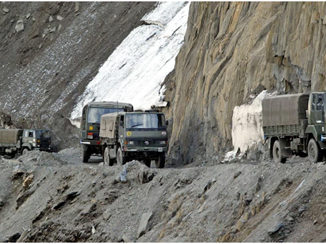
    India embarked on a major foreign policy overdrive in 2020, bringing its vision for a rules-based Indo-Pacific as a cornerstone of its diplomacy and displaying a steely resolve to fashion a regional environment conducive to its strategic interests in the face of China’s transgression attempts in eastern Ladakh that caused the most serious damage to the bilateral relations in over four decades.

    As the bitter border standoff with China forced it to recalibrate its external engagements, India mounted a diplomatic push, focusing on boosting ties with major global players like the US, Japan, the UK and France with a larger goal to increase its geo-political heft and position itself as a credible force wedded to peace, stability and international law in contrast to Beijing’s expansionist behaviour.

    The ties between the two Asian powers nosedived significantly following a fierce clash in the Galwan Valley that left 20 Indian soldiers dead in mid-June. The Chinese side also suffered casualties but it is yet to give out the details. According to an American intelligence report, the number of casualties on the Chinese side was 35. External Affairs Minister S Jaishankar bluntly told his Chinese counterpart that the “unprecedented development will have a serious impact on the bilateral relationship”.

    Drawing a firm and clear line on its China policy, India held the neighbouring country accountable for triggering the Ladakh standoff by violating rules of engagement on border management and conveyed that peace and tranquillity along the Line of Actual Control (LAC) are the basis for progress of the rest of the relationship and they cannot be separated.

    In the midst of the standoff that erupted in early May, Jaishankar and Chinese Foreign Minister Wang Yi agreed on a five-point pact to resolve the row at a meeting in Moscow on September 10. However, a concrete breakthrough is yet to be found to end the faceoff at the friction points.

    “India’s rise will evoke its own reactions and responses. There will be attempts to dilute our influence and limit our interests. Some of this contestation can be directly in the security domain; others could be reflected in economics, connectivity and even in societal contacts,” Jaishankar said at a think-tank recently.

    Outlining the broad contours of an assertive foreign policy, Jaishankar held that India’s “relationship with the world” cannot be the same as when its ranking was much lower, adding the country now matters more on key issues and its global view must process that in all its aspects.

    With the region witnessing new geopolitical alignments, India too redoubled efforts to boost strategic cooperation with countries in India’s immediate neighbourhood, Gulf region, Central Asia and member nations of the ASEAN (Association of Southeast Asian Nations) grouping.

    Ties with Pak

    However, India’s relations with Pakistan remained unchanged as Islamabad continued with its support to cross border terrorism to create instability in Jammu and Kashmir while New Delhi maintained a policy of hot pursuit to deal with the menace. India also continued its diplomatic offensive against Pakistan on the issue of terrorism and remained firm on not having any talks with Islamabad until it stops cross border terrorism.

    One of the key takeaways of India’s diplomatic engagement in 2020 was major expansion of strategic partnership with the US including on key regional and global issues like resolve to work jointly for a free and stable Indo-Pacific. The two countries elevated their ties to a “comprehensive global strategic partnership” during a two-day visit to India in February by President Donald Trump, accompanied by First Lady Melania, daughter Ivanka and son-in-law Jared Kushner and a host of top officials of his administration.

    “This relationship is the most important partnership of the 21st century,” Prime Minister Narendra Modi said in his media statement after talks with Trump on February 25, reflecting growing congruence in ties between the two leading democracies. In October, India and the US sealed the long-pending BECA (Basic Exchange and Cooperation Agreement) agreement to further boost bilateral defence ties. The pact provides for sharing of high-end military technology, logistics and geospatial maps between the two countries. India expects the relations to grow further under Joe Biden’s presidency as he is known to be a strong proponent of closer India-US ties since his days as a senator in the 1970s.

    In many ways, New Delhi’s efforts to further improve relations with Russia, Australia, Germany, South Korea, Vietnam, Indonesia and the African continent resulted in rich dividends.

    In the neighbourhood, India’s relations with Nepal came under some strain after Defence Minister Rajnath Singh inaugurated an 80-km-long strategically crucial road connecting the Lipulekh pass with Dharchula in Uttarakhand in May. Nepal claimed the road passed through its territory.

    The relations appeared to be back on track to a significant extent following visits to Kathmandu by Foreign Secretary Harsh Vardhan Shringla and Army Chief Gen MM Naravane in November.

    In the last eight months of 2020, India played a key role in calibrating a comprehensive approach in dealing with the coronavirus pandemic globally. It also supplied medical assistance to over 150 countries to help them deal with the pandemic that infected over 79 million people and killed 1.7 million.

    In May India launched a mega evacuation mission under which commercial jets, military transport aircraft and naval warships were deployed to bring back hundreds of thousands of Indians stranded across the world in view of the coronavirus lockdown. Nearly, 39 lakh Indians have been brought back home under the mission, billed as the biggest repatriation exercise in India’s history.

    As Chinese actions in key maritime channels fueled greater concerns, foreign ministers of India, the US, Australia and Japan held extensive in-person talks under the framework of the Quadrilateral coalition or Quad in Tokyo on October 6, signalling serious resolve to work vigorously towards a collective vision for a free, open and inclusive Indo-Pacific.

    In the overall policy framework, concerns relating to Indo-Pacific and the way forward found greater salience in India’s diplomatic engagements with majority of the countries as well as leading blocs.

    India also focused on improving regional connectivity with countries in its neighbourhood as well as well with several central Asian nations as China’s opaqueness in rolling out projects under its ambitious Belt and Road Initiative (BRI) continues to draw suspicion.

    In another important development, India scored a major diplomatic victory in June to become a non-permanent member of the UN Security Council for the 2021-22 term. India won 184 votes out of 192 valid votes in the elections held for the vacant non-permanent seats.

    With the pandemic bringing to fore the prospect of a new global power-play, India also focused policy initiatives to deal with the complexity and pace of change. In 2020, India also carefully focused on consequences of Brexit, the Abraham Accords, fast evolving scenario in the Gulf region and overall relations with the African continent.

    The Abraham Accords are agreements that Israel signed with the United Arab Emirates and Bahrain marking the normalisation of diplomatic relations between the two Gulf nations and the Jewish state.

  • Microsoft building new password manager for Edge, Chrome

    Microsoft building new password manager for Edge, Chrome

    Microsoft is building a new passcode manager that will work across a slew of products like Edge, Chrome and mobile devices – Android and iOS. According to a report in The Verge, the tech giant is in the process of creating a full password manager for its Microsoft 365 consumer service.
    The new password manager will sync credentials across its Edge browser, Google Chrome, and mobile iOS or Android devices.
    “A preview version of the password manager is now built into Microsoft Authenticator, a free mobile app that’s used for multi-factor authentication,” the report mentioned.
    Autofill only works with consumer Microsoft Accounts and is disabled for enterprise users who are using the app for phone sign-in or multi-factor authentication.
    “Passwords are synced from the Microsoft Edge browser, and can be shared across multiple devices using a Microsoft Account. You can also sync these passwords to Google Chrome, using a new Microsoft Autofill extension,” the report mentioned.
    Japan space agency confirms asteroid soil inside capsule
    Japan’s space agency said Monday it has confirmed the presence of black soil samples inside a capsule that the spacecraft Hayabusa2 brought back from a distant asteroid last week. The pan-shaped capsule, 40 cm in diameter, was dropped by Hayabusa2 from space onto a spot in a sparsely populated Australian desert on December 6. It arrived in Japan last Tuesday for research that will hopefully provide insights into the origins of the solar system and life on Earth. The Japan Aerospace Exploration Agency said its scientists opened the capsule and found an unspecified amount of sandy black particles.
    Samsung to release 4 folding smartphones in 2021: Report
    Samsung is reportedly planning to launch four folding smartphone devices in 2021 with 5G support.
    According to the South Korean news outlet ETNews, the smartphone manufacturer Samsung will release two variants of Galaxy Z Fold 3 and two variants of Galaxy Z Flip 2 and both these models will have support for 5G.
    The report also stated that all four foldable phones are only planned to be launched in the second half of 2021. Therefore, do not expect these devices to be unveiled with the Galaxy S21 series.

    Apple TV app is coming to new Chromecast with Google TV
    Google has announced a sweet surprise for Chromecast users. The company announced the availability of the Apple TV app on Chromecast. The announcement follows the availability of Apple Music on Google’s Nest smart speakers.
    Up until now, the Apple TV app could only be accessed only on Apple devices. That is about to change as now new Chromecast with Google TV users will be able to access the Apple TV on their devices.
    On the Apple TV app, users can access their entire library of movie and TV show purchases from Apple. They can also enjoy personalised and curated recommendations on Apple TV channels. Additionally, users will also be able to save their favourite shows and movies on their Watchlist. Google says that through Family Sharing, up to six family members can share subscriptions to Apple TV channels using the new Chromecast with Google TV.
    With Google TV, you’ll be able to see Apple Originals in your personalized recommendations and search results, making it even easier to find your favorite shows and movies. And, you’ll be able to save them to your Watchlist to catch up on later.
    In addition to this, Google announced that Chromecast with Google TV users will also be able to access Apple TV+ on the connected devices. Of course, users will have to first download the app and get a paid subscription to use the service on the supported devices.
    The catch, however, is that this feature will be rolled out to Chromecast with Google TV early next year. Other devices powered by Android TV OS will get this update in the future.

  • Bitcoin surpasses $21,000 for first time amid dizzying rally

    Bitcoin surpasses $21,000 for first time amid dizzying rally

    Bitcoin surpassed $21,000 for the first time, another milestone in what’s been an eye-popping rally for the controversial digital asset this year.
    The world’s largest cryptocurrency surged as much as 10% to $21,293 in New York on Wednesday, vindicating forecasts that were scoffed at months ago and leading to even higher prognostications. Bitcoin has almost tripled this year, with the rally accelerating Wednesday after breaching $20,000 earlier for the first time.
    “We have a new line in the sand and the focus shifts to the next round number of $30,000,” said Antoni Trenchev, co-founder and managing partner of Nexo, a crypto lender. This “is the start of a new chapter for Bitcoin. It’s a narrative the media and retail crowd can properly latch onto because they’ve been noticeably absent from this rally.”
    Bitcoin has surged despite a severe crash in March that saw it lose 25% amid the coronavirus pandemic. Proponents have seized on the narrative that the coin could act as a store of wealth amid supposed rampant central-bank money printing, even as inflation remains mostly muted.
    In addition, some Wall Street firms have taken a greater interest, with many seeking to capitalize on its gains in a world of rock-bottom interest rates. Guggenheim Partners LLC, for instance, recently said it might invest up to 10% of its $5.3 billion Macro Opportunities Fund in a Bitcoin trust.
    Bitcoin’s cross above the $20,000 and $21,000 levels were its latest milestones in recent weeks — the coin at the end of November reached a new high three years after setting a prior peak. It had traded at a few cents for several years after its late 2008 launch by an unknown software developer in the wake of the global financial crash.
    “People tend to pile into momentum trades, so Bitcoin could have more upside from here,” said Ed Campbell, portfolio manager and managing director at QMA.
    Peer coins also rose on Wednesday, with the Bloomberg Galaxy Crypto Index — which tracks some of the major cryptocurrencies — gaining as much as 7.2%. Dash and Litecoin each advanced at least 6%.

  • Russia banned from using its name, flag at next two Olympics

    Russia banned from using its name, flag at next two Olympics

    Russia was banned Thursday from using its name, flag and anthem at the next two Olympics or at any world championships for the next two years.
    The Court of Arbitration for Sport’s ruling also blocked Russia from bidding to host major sporting events for two years.
    Russian athletes and teams will still be allowed to compete at next year’s Tokyo Olympics and the 2022 Winter Games in Beijing, as well as world championships including the 2022 World Cup in Qatar, if they are not implicated in doping or covering up positive tests.
    The punishments are less than the four-year ban the World Anti-Doping Agency had proposed.
    The case centered on accusations that Russian state authorities tampered with a database from the Moscow testing laboratory before handing it over to WADA investigators last year.

  • Mohammad Amir retires from international cricket claiming ‘mental torture’

    Pakistan fast bowler Mohammad Amir has retired from international cricket, the PCB has confirmed. Amir represented Pakistan in 36 Tests, 61 ODIs and 50 T20Is, and recently played in the inaugural Lanka Premier League for runners-up Galle Gladiators.
    “Pakistan Cricket Board chief executive Wasim Khan spoke with Mohammad Amir this afternoon following reports that the fast bowler had announced his retirement from international cricket. The 28-year-old confirmed to the PCB chief executive that he has no desires or intensions of playing international cricket and as such, he should not be considered for future international matches,” a PCB statement said. “This is a personal decision of Mohammad Amir, which the PCB respects, and as such, will not make any further comment on this matter at this stage.”
    The statement serves as another reminder of the extent to which relations between Amir and the current team management have broken down.

  • Lewandowski beats Messi, Ronaldo to win FIFA best men’s player award

    Geneva (TIP): Robert Lewandowski won the biggest individual prize of his career Thursday, Dec 17, showing that a forward not named Messi or Ronaldo can be voted the world’s best soccer player.
    The Poland captain was named the FIFA Best Men’s Player for 2020 after his 55-goal season lifted Bayern Munich to a sweep of international and domestic trophies.
    Lewandowski topped a three-player shortlist that included Lionel Messi and Cristiano Ronaldo. Voting was by a global jury of national team captains and coaches, plus selected journalists and fans. Lewandowski received 52 voting points, with Ronaldo second on 38 Messi third with 35.
    Though FIFA hosted the virtual ceremony in Zurich, its president Gianni Infantino went to Munich to present the trophy in person.
    “It’s an incredible feeling” said Lewandowski, who at age 32 made the shortlist for the first time.
    Lewandowski joined Luka Modric, the Croatia and Real Madrid midfielder who won in 2018, as the only players in the past 13 years to deny both Messi and Ronaldo the victory.
    “Today I am among them,” Lewandowski said in comments translated from German. “It means I’ve always done the right things in my life.”
    Lucy Bronze was voted the best women’s player to give England its first individual victory at the FIFA awards. A Champions League winner with Lyon, she has since joined Manchester City.

  • Disha Patani Takes a Trip to Dubai with Tiger & His Family

    It is fairly evident that Disha Patani is quite close to rumoured boyfriend Tiger Shroff’s family. She is often seen hanging with his family members, including Tiger’s mom Ayesha and sister Krishna.
    Now, Disha has reportedly accompanied Tiger, his sister Krishna as well as mother Ayesha Shroff on a trip to Dubai. Though none of them have posted a picture together, they shared individual photos and videos from the same hotel on their Instagram stories.
    They are in Dubai for an event of Krishna and Tiger’s venture Matrix Fight Night (MFN), reported India Today.
    Disha posted a picture of a cake designed in the form of a purse. The Bharat actress tagged the hotel and wrote, “Thanks for the cutest cake (sic).”
    Krishna posted several videos on her Instagram stories giving a glimpse from her hotel in Dubai. In the videos, she is seen wearing a black dress for an event. She also shared videos from the event of MFN.
    Tiger Shroff posted a video on his Instagram stories informing his fans that he would be going live for MFN.
    Disha finished shooting for Salman Khan’s Radhe last month. Directed by Prabhudheva, Radhe also stars Randeep Hooda, Jackie Shroff, Megha Akash and Zarina Wahab in important roles. Disha will also feature in Ekta Kapoor’s film KTina. She also has Ek Villain 2 coming up with Tara Sutaria and John Abraham. Tiger and Disha will soon be seen in a cold drink commercial.

  • Jacqueline flaunts washboard abs with pop philosophy

    Jacqueline flaunts washboard abs with pop philosophy

    Bollywood actress Jacqueline Fernandez flaunts a toned midriff in a new picture she shared on social media, and fans are thrilled. Along with the picture, she has shared some quick pop philosophy about human nature, too.
    Jacqueline posted the picture on Instagram, where she is seen dressed in black gym wear. A huge mirror catches her reflection.
    “They tell you to be yourself and then they judge you,” she wrote alongside the image.
    Jacqueline will be seen in in films such as Bhoot Police, Bachchan Pandey and Kick 2.
    She recently completed a long outdoor schedule for the horror comedy Bhoot Comedy in locations across Himachal Pradesh, along with the rest of the cast including co-stars Saif Ali Khan, Yami Gautam and Arjun Kapoor.