Tag: Indian Politics

  POLITICS & POLICY  

  • Ekal Foundation’s Unprecedented$6.5 Million Magnificent Gala

    Ekal Foundation’s Unprecedented$6.5 Million Magnificent Gala

    Prakash Waghmare

    NEW YORK (TIP): On Saturday, December 5, “Ekal Vidyalaya Foundation (EVF)” hosted a magnificent Star-studded Gala, called ‘Future of India’. This Gala-2020 raised record-setting $6.5 Million in pledges & donations for the special projects. The highlight of this virtual event wasnot only the participation of a galaxy of outstanding personalities, but also, the way they expressed their vote of confidence in‘Ekal’ movement (as “EVF” is popularly known). The celebrities that lent their wholehearted support were iconic cricketer Kapil Dev, Moviestar Vivek Oberoi, Hon. Minister Piyush Goyal, leading entrepreneur Ajay Piramal, Bollywood singer Sanjeevani Bhelande and numerous entrepreneurs. The Gala was chaired by Mohan Wanchu, Chairman  & CEO of EC Info Systems who, like all previous Galas, had ushered the concept in the first place. The main objective of the eveningwas, not only, to raise funds, but also, to acknowledge gratitude to loyal philanthropists who had consistently supported ‘Ekal’ through the years. Earlier in the year, after successfully controlling ‘Covid-19 pandemic in 102,000 rural & tribal villages of India, ‘Ekal’ had raised funds through 10 regional mid-year virtualconcerts for its conventional activitieseven in the current covid-19 pandemic.

    Despite a snowstorm and tornado that created some technical problemsin transmission, the delayed startfor the evening could not dampenthe spirit of generous philanthropists to support their favoriteprojects at Ekal. There was overwhelming support for ‘Integrated Village Development’ (IVD),E-Shiksha, Tailoring Center, Telemedicine, ‘Arogya Initiative’, Ekal-on-wheels’, ‘Gramotthan Research Ctr’ (GRC), Computer Center etc. Among the high net-worth donors, 15 pledged $250,000 or more while Ajay Keshap confirmed donation of cool $1,000,000.

    Mohan Wanchu, welcoming the virtual audienceopened up the evening withan anecdote about a ‘Rikshaw-puller’ and how a ‘Lok-kathakars’ (a cadre of cultural storyteller) from an Ekal village transformed his life for better. Kamlesh Shah, co-chair of Gala started the pledge-drive by contributing $580,000 and appealing donors to raise the bar of Gala-2020 to unprecedented level. Ranjani Saigal, Executive Director of “EVF” gave a brief outline of all Ekal special projects, which was followed by former ZEE-TV CEO & Chairperson of Ekal-Global, Dr Subhash Chandra giving an overview of what Ekal is all about. The person that stole the show was the movie star, philanthropist Vivek Oberoi who also happens to be the Ekal-brand Ambassador. He emphasized that “the donation to Ekal wasn’t a subsidy for the needy, but a divine investment in India’s future”. He further appealed to the youths of India to join ‘inquisitive, creative and passionate organization like Ekal’ to give purpose to their life. Global business tycoon, Ajay Piramal said,” Ekal’s emphasis on dispensing quality education and primary healthcare in rural area is a game changer. No one understands rural-tribal mindset better than Ekal with its widespread presence in villages nor anyone has a committed pool of huge selfless volunteers”. Sajjan Agarwal, not only donated $250,000 for ‘Arogya Sevika’ (Healthcare Assistant) in the villages, but also,appealed other donors to match his willingness to donate additional $250,000. This challenge, in the very next moment, was met by Manubhai Shah. When it comes to healthcare, it is imperative to know that the donation of $250,000 benefits 7,500 people in 150 villages. A new initiative, called ‘GRANE’ (Gramotthan Atma-Nirbharata for Ekal), that is going to change farmer’s life forever, was introduced by Vivek Sharma. It is aimed at bringing E-commerce activities to the villages so as to avail villagers with new profitable economic opportunities. Hon. Minister Piyush Goyal affirmed his own and his family’s long association with Ekal. He lauded Hon PM Modi’s August 15 speech whereby all villages would be interconnected by digital broadband in next 1,000 days. Itis likely to promote widespread digitization of Education & Telemedicine. It is worth noting that Ajay Poddar of ‘Artech Int’L and Himanshu Shah of ‘Shah Capital’ have established “Gramotthan Research Ctr” that would soon circuitously help up to one Million people, at each place with the state-of-the-art information on multiple levels .The evening was interspersed with brief video-clips of Ekal’s outstanding work, its impact on rural lives and its initiatives to empowerrural folks. Kapil Dev was interviewed live for his unique achievements in Cricket. He asserted that, “in life, winning is not everything”. The most endearing memoryto him was the fact that he got to play his game for his beloved country – and not winning the ‘World Cup’ or the captainship of the team etc. He was impressed by Ekal’s infusion of fun-sports in education. Earlier this year in September, Bajrang Bagra, CEO of ‘Ekal Abhiyan’ (umbrella organization of all ‘Ekal’ satellite-divisions) had proposed to keep 102,000 school tallies ‘as is’ and embark on a transformative ‘roadmap’ that would revolutionize rural life in all its aspects. Among the primary goals proposed were to increase parameters of various special project, in next 5 years –forexample : to increase ‘Ekal On Wheels’ vans from current 25 to 85; ‘Integrated Village Clusters’ (30 villages each) from current 12 to 51; ‘Skill Development Ctrs’ from current 33 to 100; ‘Gramotthan Resource Ctrs’ (GRC) from current 16 to 27; ‘Telemedicine’ from current 120 villages to 6,000 villages and ‘Intensive Health Care’ from current 1,200 villages to 6,000 villages. In addition, the most ambitious project that Ekal wants to push hard is that of ‘E-Shiksha’ or digital education. It wants to spread it from current 1,200 villages to 100,000 villages. With the success of Gala-2020, it is quite apparent that Ekal is on the wayto achieve its ambitious goals. For more information to join this organization or to support it, kindly tap into www.ekal.org.

  • Children’s Hope India Gratitude Awards Conferred

    Children’s Hope India Gratitude Awards Conferred

    NEW YORK (TIP):  Children’s Hope India, a 501c3 nonprofit organization dedicated to lifting children from poverty to prosperity in India and the United States, announced, November 28,  the honorees for its first-ever Gratitude Awards, recognizing individuals who have made bold civic and charitable contributions in a particularly challenging year.

     CHI co-founder, board member and journalist, Lavina Melwani, hosted the virtual event on Thanksgiving Day. “In these uncertain times of the pandemic, we may be isolated from our loved ones and unable to share the joy of a Thanksgiving meal in person but we can still warm ourselves by sharing thanks,” Melwani said.

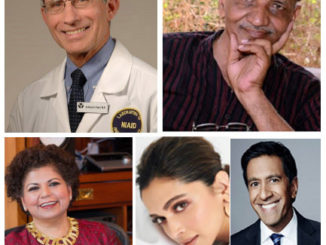
    Children’s Hope India’s inaugural Gratitude Awards honored the heroes around the world who contributed to helping the community weather such uncertain times. Dr. Anthony Fauci, Director of the National Institute of Allergy and Infectious Diseases, was honored for being the voice of comfort, reason and science.

    Dr. Sanjay Gupta, host of the CNN show Sanjay Gupta MD and co-host with Anderson Cooper of global town halls throughout the pandemic, for coming into our homes and giving us wisdom and truth. Follow him on Twitter @drsanjaygupta.

    Deepika Padukone, actress, producer and founder of The Live Love Laugh Foundation, for her bold and courageous championship around mental health issues. Follow her on Twitter @deepikapadukone.

    Chandrika Tandon, Grammy-nominated artist, humanitarian, and business leader, for her calming chants and dedication to helping children succeed. Follow her on Facebook @chandrikatandon.

    Hindu Singh Sodha, Rajasthan-based activist working on refugee rights, conflict resolution and peace movements, and founder of the Universal Just Action Society, for his passionate advocacy and support of the refugee communities in Jodhpur, providing them hope for a new life. Follow him on Twitter  @HinduSinghSodh1.

    Dina Pahlajani, Cofounder and President of Children’s Hope India added that this year’s awards were also dedicated to, “the braveheart children of Children’s Hope India for adapting in such difficult times and staying committed to learning despite the challenges of the pandemic.”

    Children’s Hope India launched the Gratitude Awards to showcase the work of individuals around the world who give what they can–whether a monetary contribution, a helping hand or a kind word. The Gratitude Awards will take place annually to recognize the many that truly make our world better and safer, and empower us all to be stronger individuals. In honor of this year’s awards, Children’s Hope India donated gift certificates, turkeys and Thanksgiving meals to families and individuals in Manhattan, Queens and Long Island.

    About Children’s Hope India

    Children’s Hope India was founded in 1992 when a group of professional women in New York gathered to make a difference in the lives of children. Now, as then, the mission of Children’s Hope India is to lift children from poverty to prosperity through education. This is accomplished with a whole child approach that seeks to ensure that each child is healthy, safe, supported, engaged and challenged with comprehensive programming including informal learning and vocational training, critical medical support, and nutrition.

    Today, Children’s Hope India supports more than 20 projects and 300,000 children across India and the United States to improve children’s health and education prospects. To learn more, please visit www.childrenshopeindia.org.

  • Gurdwara Baba Makhan Shah Lobana Sangat  rallies to support agitating farmers in India

    Gurdwara Baba Makhan Shah Lobana Sangat rallies to support agitating farmers in India

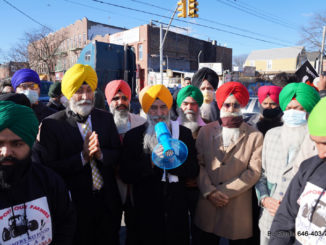
    Picture of rally organized by Gurdwara Baba Makhan Shah Lobana

    RICHMOND HILL, NY (TIP): Hundreds of Sikhs participated in a rally organized by the management of Gurdwara Baba Makhan Shah Lobana, one of the two largest Sikh shrines in New York, December 6. The Sikh community which hails from Punjab in India is deeply upset with the recent farm laws promulgated by government of India which, farmers allege,  go against their interests.

    In India, Punjab farmers have been demanding repeal of these laws since their promulgation in June 2020. When the government of India did not consider their demand, they decided to go to the national capital Delhi to demand justice. They have been on sit in for a fortnight now, joined by farmers from all over India.

    They have made their intentions clear to government of India that they will not be satisfied with anything less than the repeal of the anti-farming and anti-farmer farm laws.

    Punjabis the world over have expressed their solidarity with the agitating farmers I India. In New York and New Jersey, a number of rallies have been held, and more are planned.

  • Immortal legacy of Nehru

    Immortal legacy of Nehru

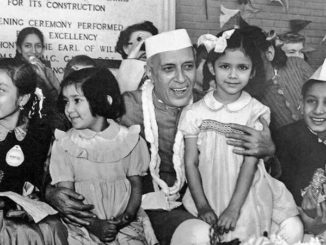
    Pandit Jawaharlal Nehru was born November 14, 1889 in  Allahabad, India, and died May 27, 1964 in  New Delhi. The first Prime Minister of Independent India from 1947 to 1964,  Nehru is credited with establishing  parliamentary government and making India   powerful voice among  the nonaligned  nations of the world.  He was also one of the principal leaders of India’s independence movement in the 1930s and ’40s.

    By George Abraham

    Here is an article by George Abraham on the occasion of the 131st birth anniversary of one of the best-known leaders of the modern world.- EDITOR

     “Regardless of how hard some might oppose, Nehru’s vision and the democratic path he has shown the nation will continue to remain relevant, without which a modern and democratic India might cease to exist! To revise a famous quote to fit this narrative, ‘if India is to progress, Nehru is inescapable…we may ignore him at our own risk’!”   

    An article was published in Modern Review in Calcutta, a leading journal of the progressive politics under the title ‘Rashtrapati’ written ostensibly by one ‘Chanakya’ in November 1937. It turned out to be pseudonymous with the man who a decade later would be India’s first Prime Minister. The article describes Nehru as ‘some triumphant Caesar passing by’ who might turn dictator with ‘a little twist.’ Chanakya criticizes Nehru as unsafe for democracy, an aristocrat, and has all the makings of a dictator’.

    Nehru’s own article went on to say, “For two consecutive years Jawaharlal has been President of the Congress, and in some ways, he has made himself so indispensable that there are many who suggest that he should be elected for a third term. But a greater disservice to India and even to Jawaharlal can hardly be done. By electing him a third time, we shall exalt one man at the cost of the Congress and make the people think in terms of Caesarism. We shall encourage in Jawaharlal the wrong tendencies and increase his conceit and pride. He will become convinced that only he can bear this burden or tackle India’s problems. Let us remember that, in spite of his apparent indifference to office, he has managed to hold important offices in the Congress for the last seventeen years. He must imagine that he is indispensable, and no man must be allowed to think so. India cannot afford to have him as President of the Congress for a third year in succession”.

    It is quite extra-ordinary that Nehru would write a strong criticism of himself scrutinizing his own assets and liabilities from the vantage point of the nation’s best interests. He has written the article after his election as the President of the Indian National Congress for the third time. Obviously, he was worried that his dominance in Indian politics would be perceived as the dictatorship of Roman Emperor Julius Caesar, who ran his Empire with a cult of personality. By writing this piece, Nehru was highlighting the importance of checks and balances in the accountability of those who hold power.

    Jawaharlal Nehru, the prime minister of India from 1947-1964, was a man on a mission. He was born into a feudalistic and caste-driven system that he wanted to transform, promoting education for all as a way out of the status quo. He felt strong as well that an educated nation is critical to an independent India.  In his book, An Autobiography, he tells the world that he wanted to accomplish more, that he did not bring India far enough, but again, he may be expressing disappointment instead of not necessarily indulging in self-pity.

    As we are celebrating the 131st birth anniversary of Jawaharlal Nehru on November 14, 2020, we are still in awe as we recollect his contribution, not only towards gaining India’s independence but also for laying a strong foundation of a pluralistic and forward-looking India. Nehru brought together exceptional people of differing ideologies such as B. R. Ambedkar, S.P. Mookerjee, John Mathai, C.H. Bhabha, and Shanmukham Chetty to be reflective of India’s secular and multi-faceted character in the Constituent Assembly. The Congress Party, under the leadership of Nehru, delivered on the promise that the constitution they were about to create would reflect the aspirations of the people. The constitution of India is  amongst the largest in the world, with 395 Articles and 9 Schedules. The preamble spells out the basic philosophy and the solemn resolve of India’s people to secure justice, liberty, equality, and fraternity for all its citizens. What Nehru accomplished through this document with significant help from Ambedkar also is part of his vision to empower marginalized sections of the society. Nehru was a strong proponent of self-reliance, clearly recognizing that underdevelopment was the result of a lack of technological progress. Consequently, a new Industrial policy was enacted to develop key industries. While independent India was in its infancy, he identified the production of power and steel for self-sufficiency and planning. In collaboration with other countries, India built steel plants in Rourkela, Bhilai, and Durgapur. Dam projects were undertaken in various places to produce hydro-electric power, including the flagship Dam at Bhakra Nangal. The first Oil Refinery was inaugurated in Noonmati in 1962 as another leap towards industrialization. Nehru called them ‘the temples of Modern India.’

    Nehru was determined to foster a ‘scientific temper’ as he provided leadership in establishing many new Engineering Institutes, the most important being the Indian Institute of Technology, 5 of which were started between 1957 and 1964. His farsightedness is also evident in granting deemed university status to the Indian Institute of Science in Bengaluru, setting up the Council of Scientific and Industrial Research, and the Defense Research and Development Organization, and laying the foundation stone for the Tata Institute of Fundamental Research. Nehru’s own words state that these would become visible symbols of building up the new India and providing life and sustenance to our people’. Nehru recognized the importance of education as a tool for empowerment and established University Education Commission under the Chairmanship of Dr. S. Radhakrishnan and the Secondary Education Commission under the Chairmanship of Dr. A.L. Mudaliar. The Indian Council of Cultural Relations was also established under Maulana Azad to promote India’s external cultural relations policies.

    Soon after independence, India embarked upon a Nuclear Program aimed at developing its nuclear capacity for peaceful purposes. As we know by now, Dr. Homi Bhabha’s pioneering work in this regard is widely acclaimed in enhancing India’s capabilities in that area. Dr. Vikram Sarabhai, the Indian Space program’s father, helped establish the Indian Space research Organization (ISRO).

    Unfortunately, there are forces hard at work today, undoing the great legacy of Nehru. Among the reflective NRIs, especially those who were beneficiaries of the valuable education at IITs and IIMs, nevertheless spending their time on the ‘Net denouncing Nehru and downplaying the accomplishment of the successive Congress Governments, an introspection is very much in order. Regardless of how hard some might oppose, Nehru’s vision and the democratic path he has shown the nation will continue to remain relevant, without which a modern and democratic India might cease to exist! To revise a famous quote to fit this narrative, ‘if India is to progress, Nehru is inescapable…we may ignore him at our own risk’!

    (The author  is a former Chief Technology Officer at the United Nations and the Vice-Chairman of the Indian Overseas Congress, USA)


  • A universally loved politician: Vajpayee set templates that surprised

    A universally loved politician: Vajpayee set templates that surprised

    The man was a marvel. There have been few politicians like Atal Bihari Vajpayee who so effortlessly stepped across the Lakshman rekha of party propriety and ideology and yet garnered all-round respectability. Right from his debut in the Lok Sabha, there were murmurs by his constipated colleagues about his waywardness and ‘un-swayamsevak-like’ behavior. The minders kept their counsel because of the rarity in their ranks of a silver-tongued communicator like Vajpayee. Compared with other anti-Congress young Turks of the time, Vajpayee was entirely home-schooled in politics. Yet, the man gave the impression of being more forgiving, open-hearted and oriented towards politics of consensus than those schooled in tenets of western liberalism.

    His speech in Parliament that was noticed by Nehru marked him out as a politician to watch out for. And Vajpayee paid the price when it rolled out one of its big guns to humble him in the 1962 elections. Vajpayee was to brush off this dust of defeat several times in his career even as he silkily positioned himself for the top job in the party, leaving it to LK Advani to wield the axe on their one-time mentor Balraj Madhok to land control of the party. The Emergency tested his resolve and staying power as did a barren stretch after Indira Gandhi’s assassination. Vajpayee braved them both.

    Vajpayee’s hour arrived in 1998. And till ill-health laid him low, he occupied the political center-stage with hardly a single blemish of graft, nepotism or rank opportunism blighting his 50 years of public service. As PM, he endured the usual tumultuousness of helming a country, besides countering challenges to his authority with customary élan and panache. His experience enabled him to control the narrative — be it the nuclear tests, the Kargil conflict or the 2002 Gujarat riots. His inclusion in the pantheon of greats was guaranteed when he was felled by a paralytic attack in 2009. The only regret would be that Vajpayee entered South Block 10 years late when his health was already on the decline.

    (Tribune, India)


  • ’84 anti-Sikh riots: New SIT fails to start work as member’s position remains vacant

    ’84 anti-Sikh riots: New SIT fails to start work as member’s position remains vacant

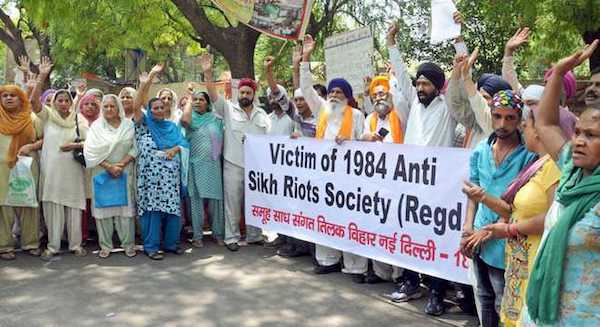
    NEW DELHI(TIP): A new SIT headed which was set up in January this year to further investigate 186 cases relating to the 1984 anti-Sikh riot cases in Delhi, has failed to start its work, the Supreme Court was informed on Thursday.

    Counsel for the petitioner who has been instrumental in getting the order for a fresh SIT probe told a Bench headed by Chief Justice of India Dipak Misra that a member’s position was vacant in the SIT headed by former Delhi High Court judge SN Dhingra.

     The SIT which is to probe 186 cases closed by the police, has yet to commence its work despite the court’s order to submit its first report in August, the petitioner’s counsel told the Bench.

    CJI Misra said he was aware of the matter and he would soon look into it.

    The Centre had on February 5 told the Supreme Court that ex-IPS officer Rajdeep Singh has refused to be a part of the new SIT and he would be replaced by former Indian Police Bureau Director General of Police NR Wasan. Serving IPS officer Abhishek Dular is the third member of the SIT.

    Justice Dhingra was a trial judge when punishments were handed out in 1990s to the accused of the Trilokpuri massacre of 1984. Kishori Lal, dubbed as the ‘butcher of Trilokpuri’, was among those sentenced by him.

    Almost 3,000 people were killed, most of them in Delhi, in the anti-Sikh riots that broke out following the assassination of then Prime Minister Indira Gandhi on October 31, 1984.

     The Bench had in January noted that the previous SIT had not carried out further probe into these 186 cases in which closure reports were filed. It had taken the decision after perusing the report of a two-judge supervisory panel which scrutinized 241 cases relating to 1984 anti-Sikh riots in Delhi closed by an earlier SIT formed by the NDA government for re-investigation.

     Submitted on December 6, the report of the supervisory committee comprising Justice JM Panchal and Justice KSP Radhakrishnan was perused by the court.

     The court had already made it clear that it would not reopen cases in which accused had been acquitted.

     It had assigned the task of examining the said 241 cases closed by SIT to the supervisory committee which was to make recommendations as to whether the cases were rightly closed or not.

    Counsel for the petitioner who has been instrumental in getting the order for a fresh SIT probe told a Bench headed by Chief Justice of India Dipak Misra that a member’s position was vacant in the SIT headed by former Delhi High Court judge SN Dhingra.

     The SIT which is to probe 186 cases closed by the police, has yet to commence its work despite the court’s order to submit its first report in August, the petitioner’s counsel told the Bench.

    It had assigned the task of examining the said 241 cases closed by SIT to the supervisory committee which was to make recommendations as to whether the cases were rightly closed or not.

     More than two years after the Narendra Modi government set up the SIT to re-investigate serious anti-Sikh riots cases of 1984 that had been closed, it has managed to file charge sheets only in very small number of cases taken up for further probe.

  • Punjab’s war on drugs

    Punjab’s war on drugs

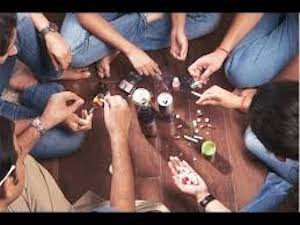
    Giving a societal push to the Punjab Government’s war on the hydra-headed drug menace, are the villagers — the common people suffering the effects of the consumption blowback. There is hardly any home in the countryside that does not have a family shattered by an addict whose only interest is how to get his next fix, even going to desperate and often deadly extremes. His treatment leaves them penniless, and the children crying and uncared for, and at times, even orphaned. Shattered by the ruin and misery unleashed by drugs over the years, some villages have taken upon themselves the task of eradicating this deadly menace through vigilantism. They are nabbing alleged drug peddlers and handing them over to the police. A political leader has also spearheaded one such campaign.

    However well-meaning this practice may be, it is not without pitfalls. While being vigilant against a potential supplier of drugs, the people need to guard against going over the top. In mob fury lies the inherent danger of individuals tipping over to the side of vigilantism in the heat of the moment and taking law into their hands. The examples of recent lynchings in Maharashtra over rumors of child-lifting as well as some innocent people becoming victims of cow vigilantes are fresh. Rather than even one innocent person being victimized, law enforcement is best left to the government. After all, only the law enforcement agencies are equipped to tackle the drug mafia. Bringing the small fry in the net will not end the menace.

    The Amarinder Singh government has in the past couple of days unveiled a heady mix of strategies that promise to take on the problem of intoxication. Regular dope tests for all 3.25 lakh Punjab Government employees have been made mandatory as cases of drug-tainted officers, especially in the police, are coming to the fore with shocking regularity. Death penalty has been sought for the peddlers of illicit substances as an alarming number of people are becoming addicted to drugs as well as dying from them. Treatment and rehabilitation of addicts with a renewed goal figure high on its mission. Instead of the death penalty, a strict implementation of the existing NDPS laws is sufficient to take the problem head on.

    (Tribune, India)

  • Supreme Court seeks response from Sajjan Kumar in 1984 anti-Sikh riots cases

    Supreme Court seeks response from Sajjan Kumar in 1984 anti-Sikh riots cases

    The Supreme Court on Thursday sought response from Congress leader Sajjan Kumar, accused in the 1984 anti-Sikh riots cases, on a plea filed by SIT challenging the anticipatory bail granted to him by Delhi HC. The apex court said it is high time that these cases are tried at the earliest

    NEW DELHI (TIP): The Supreme Court on July 5 sought response from Congress leader Sajjan Kumar, accused in the 1984 anti-Sikh riots cases, on a plea filed by the Special Investigation Team (SIT) challenging the anticipatory bail granted to him by Delhi high court.

    A bench of Justice AK Sikri and Ashok Bhushan said it is high time that these cases are tried at the earliest.

    The bench said it was an over 30- year-old case and it took around “200 pages” for the high court to grant anticipatory bail when it could have been done in just “40-50 pages”.

    Additional solicitor general Maninder Singh, appearing for the SIT, said the investigation started against Kumar only in 2016 and now he has come armed with a battery of lawyers and dictates his statement to the investigating officer of the case.

    The ASG said that while granting anticipatory bail to him, the high court had said that everything will be tested in trial of the case but at the end it granted him the relief saying there was no evidence.

    To this, the bench said whether all this was considered at the time of anticipatory bail. Singh said, “Yes. This is totally contrary to the established procedure of law.” The bench then issued notice.

    The Delhi HC had on February 22 upheld a trial court order granting anticipatory bail to Kumar in two anti- Sikh riots cases of 1984, saying that according to records, he was available throughout the investigation.

    The Congress leader was granted anticipatory bail by the trial court on December 21, 2016, in two cases of killing of three Sikhs during the riots which had occurred after the assassination of then prime minister Indira Gandhi.

    Kumar had submitted that his name was never taken earlier and it was a case of fresh allegations coming up after 32 years.

    Source: PTI

  • The Karnataka effect: Mending fences with Advani & allies

    The Karnataka effect: Mending fences with Advani & allies

    BJP president Amit Shah is busy making pilgrimages to places he had rarely bothered to visit while his party logged a steady record of victories in state elections. His first port of call was Matoshree, home to Shiv Sena chief Uddhav Thackeray to be followed by a closed-door meeting with the Badals in Chandigarh. His boss, PM Modi is on a pacifying and reconciliation mission too: an olive branch to party veteran LK Advani after studiously ignoring him all these years and there is talk of rapprochement with other estranged party elders as well.

    A walk-back in politics, as in war, is an accepted tactic to cut the losses and recoup energy. The message from the high-value losses in UP and Karnataka seems to be that the BJP’s brand of ethno-religious political activism and the Modi charisma may not be adequate in a bipolar competition in 2019. It is also a realization that the NDA needs to again summon the spirit of 2014 but with a slight twist in the arrangement: it is no longer the rising tide of Modi’s populism and antipathy to the Congress that unconditionally brought allies to the BJP’s fold.

    The Congress’ readiness to take the backseat in Karnataka and play the understudy to the BSP and SP in UP have also brought a matching pressure on the BJP to be accommodative to its allies as well. However, power brings in its own complications. The BJP has a much harder task on hand in trying to separately renegotiate the terms of alliance with its partners. For its allies of UP and Bihar, the BJP needs to allay their fears of abandonment and emasculation; with Akali Dal and Shiv Sena, conciliation is easier on the back of decades of association but the ball game in the South is different: the BJP may have invested in the wrong AIADMK faction in Tamil Nadu, is without a partner in Karnataka and divorced but not separated with the TDP in Andhra.  J&K also requires a greater flexibility of alignment. A helping hand from the sidelined elders could make this arduous task easier.

    (Tribune, Chandigarh)

  • Former President of India Pranab Mukherjee at RSS Headquarters defines India and Patriotism

    Former President of India Pranab Mukherjee at RSS Headquarters defines India and Patriotism

    Says any attempt to define India through religion, intolerance will dilute its existence

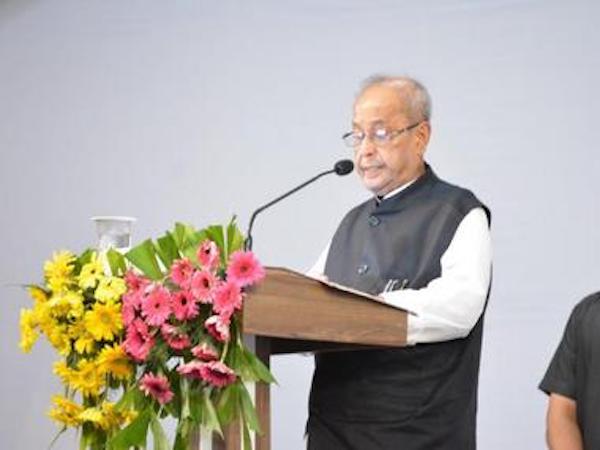
    NAGPUR, INDIA(TIP): Highlighting the pluralistic and secular strengths of “our democracy” former President of India and Congress veteran Pranab Mukherjee on Thursday, June 7 spoke from an RSS platform to declare nationalism was not bound by race or religion.He cautioned that any attempt to define India through “religion, dogma or intolerance” would only dilute the country’s existence.

    His half-an-hour address had a lesson for everyone. To the RSS, the former President recalled “vasudhaiv kutumbakam” (the world is one family) as the soul of Indian nationalism; to new Sangh recruits he spoke of the need for harmony; to his parent party Congress, he emphasized the need for dialogue and to PM Narendra Modi, he quoted Kautilya’s lessons in governance.

    Unfazed by the fact that he was standing with people he had ideologically opposed all his life, Mukherjee used the occasion to drive home “diversity and acceptance” as the bedrock of Indian nationalism and to remind the pracharaks of the need for unity.

    “We derive our strength from tolerance. We accept and respect our pluralism. We celebrate our diversity. Any attempt at defining our nationhood in terms of dogmas and identities of religion, region, hatred and intolerance will only lead to dilution of our national identity,” the former President said.

    To sceptics, including his daughter Sharmishtha, the ex-President said informed public engagement was essential in democracy. “A dialogue is necessary not only to balance competing interests, but also to reconcile them. We may argue, may agree, may not agree but we cannot deny the existence of multiplicity of opinions,” he said.

    Wading through India’s past, Mukherjee spoke of how through 3,500 years of being ruled by dynasts, India’s 5,000 years of civilizational unity remained unchanged while foreign elements were absorbed to create a new synthesis of national unity.

    “Multiplicity of cultures, faith and languages makes us special,” Mukherjee repeated to 707 pracharaks, passing out after rigorous RSS training. He carefully dotted his speech with quotes from S Radhakrishnan, Rabindranath Tagore, Mahatma Gandhi, Jawaharlal Nehru and Bal Gangadhar Tilak to hammer home his point. “When Tilak spoke of swaraj, he meant a swaraj for people encompassing all castes and religions and languages.”

    He lauded the Constitution at a gathering full of RSS sympathizers, saying, “For us, democracy is not a gift, but a sacred trust… The Constitution is not a legal document but a Magna Carta for the socio-economic transformation of society. From our Constitution flows our nationalism.”

    The former President also commented on the “routine of violence” in the country, saying India may be the fastest growing economy but it was lagging on the World Happiness Index.

    “You are young. I must tell you that manifestations of rage are tearing our social fabric. We must free public discourse of violence, both physical and verbal. We must move from anger and conflict to love and harmony. Our motherland is asking for happiness. Our motherland deserves happiness,” Mukherjee said as he marveled the fact that 1.3 billion Indians used 120 languages, 1,600 dialects, followed seven major religions, belonged to three ethnic groups and still stood united under one flag, one Constitution and one identity.

    “This is Bhartiyata,” the former President said at the RSS headquarters after he had paid tributes to Sangh founder KB Hedgewar, calling him a “great son of Mother India”. Earlier, RSS chief Mohan Bhagwat spoke of the irrelevance of controversy around Mukherjee’s visit.

    Veiled message to PM 

    “When we go to Parliament, just above the lift at gate no. 6 is inscribed Kautilya’s quote “In the happiness of people lies the happiness of the king, their welfare is his welfare. The State is for the people. People are at the center of all activities of the State and nothing should be done to divide them. The aim of the State should be to galvanize them to fight a concerted war against poverty, disease and deprivation. Only then can we create a nation where nationalism flows automatically.”

    Message to Sangh

    “India’s nationhood is not one language, one religion and one enemy. It is perennial universalism of 1.3 billion people who use 122 languages and 1,600 dialects… practice 7 major religions… live under one system, one flag and one identity of being Bharatiya and have no enemies”.

    Bhagwat on visit

    RSS Chief Mohan Bhagwat said on Mr. Mukherjee’s address: “Pranab Mukherjee will remain what he is and the Sangh will remain the Sangh even after the event. The RSS wants to unify the entire society, and no one is an outsider for it. People may have different views, but they are all children of mother India.”

    Congress comments

    Hours after Congress leaders had slammed former President Pranab Mukherjee for attending an RSS event, the party on Thursday praised him for showing “mirror of truth” to the Sangh by reminding it of India’s pluralism, tolerance, secularism and inclusiveness as an article of faith and soul of the country.

    The party also said Mukherjee reminded the Prime Minister Narendra Modi of his ‘Rajdharma’ and that “Indian nationalism is constitutional patriotism”.

    Congress spokesperson Randeep Singh Surjewala said Mukherjee’s visit to the RSS headquarters had caused wide-ranging discussion, comment, concern and even consternation amongst a large section of Indians, who have an innate belief in foundational values of democracy, pluralism, and diversity.

    His statement came soon after Mukherjee had delivered his nearly 30-minute address at the RSS headquarters during its third year annual training camp.

    Earlier, several Congress leaders, including Ahmed Patel and Anand Sharma, had slammed Mukherjee for attending an RSS event in Nagpur.    Patel, who is UPA chairperson Sonia Gandhi’s confidant and has been her political secretary, voiced his view on Twitter, in reply to Mukherjee’s daughter who too spoke out against the decision of the former President to address the RSS event. “I did not expect this from Pranab da!” Patel tweeted.

    Congress senior spokesperson Anand Sharma also took to Twitter to express his anguish after Mukherjee’s images attending an RSS event in Nagpur appeared on television. “The images of Pranab Da, veteran leader and ideologue at RSS Headquarters have anguished millions of Congress workers and all those who believed in pluralism, diversity and the foundational values of the Indian Republic,” he said. “Dialogue can only be with those who are willing to listen, absorb and change. There is nothing to suggest that RSS has moved away from his core agenda as it seeks legitimacy,” he added.

    ‘Dirty tricks at play’

    Tagging a morphed picture showing Pranab sporting the RSS cap, his daughter and Congress leader Sharmishtha Mukherjee said: “See, this is exactly what I was fearing and warned my father about. Not even few hours have passed, but BJP/RSS dirty tricks dept is at work in full swing!”

    Mr. Mukherjee came, spoke and left. But his visit to RSS headquarters is now a part of contemporary and future history of India. For long, political parties and political analysts will be commenting over the 30-minute speech of one of the most experienced and best-known politicians of our times.

  • BJP gets drubbing in Bypolls, losing 11 of 14 as regional players set new rules for 2019

    BJP gets drubbing in Bypolls, losing 11 of 14 as regional players set new rules for 2019

    NEW DELHI(TIP): Opposition unity got a booster dose on Thursday, May 31, as the BJP faced stunning defeats in 11 of the 14 byelections for which results were announced and regional forces emerged on top of electoral charts, signaling a new phase in Indian politics.

    The ruling BJP faced a crushing defeat in Uttar Pradesh’s Kairana parliamentary segment where Tabassum Hasan, the joint nominee of Rashtriya Lok Dal and Samajwadi Party — backed by Bahujan Samaj Party and Congress — defeated Mriganka Singh of the saffron fold by around 50,000 votes. BJP’s loss in the communally sensitive Kairana stood out considering it had won the segment by over two lakh votes in the 2014 General Election when the Narendra Modi wave swept UP.

    Of the four Lok Sabha seats where bypolls were held on May 28, the BJP managed to retain only Palghar in Maharashtra, where it defeated a Shiv Sena candidate. Kairana went to the kitty of a united Opposition; Congress’ UPA partner NCP snatched Bhandara-Gondia in Maharashtra from the BJP and the Nationalist Democratic Progressive Party, a BJP ally in the North-East, bagged the Nagaland segment.

    While the trend of BJP’s losses in parliamentary byelections is not new (it has only won five of 27 Lok Sabha bypolls since its historic 2014 landslide), shockwaves for the saffron party came from states where regional satraps convincingly halted the BJP in nine of the 10 Assembly byelections.

    The BJP managed to retain only Tharali in Uttarakhand. In UP, it lost the Noorpur seat to SP’s Naim-ul-Hasan, who was propped up by the joint Opposition. Lalu Prasad’s RJD claimed sweet revenge in Bihar by wresting the Jokihat seat from the Nitish Kumar-led JD(U), which deserted the Opposition ranks some time ago to go and settle with the BJP.

    Maheshtala in West Bengal went to the Mamata Banerjee-led TMC though the BJP was second, pushing the state’s old players CPM and Congress far behind. In Kerala’s Chengannur, the ruling CPM-led LDF won comprehensively while Silli and Gomia in Jharkhand went to the Jharkhand Mukti Morcha. In Punjab’s Shahkot also, the Congress dealt a severe blow to BJP ally Akali Dal.

    An emboldened Opposition saw a clear message in BJP’s multiple defeats. “Victory of a united Opposition,” said Congress’ Pramod Tewari. The results equally established the emergence of a new leader — RJD’s Tejashwi Yadav in Bihar.

    Though signaling a receding Modi wave, Home Minister Rajnath Singh put a spin on the saffron losses by saying, “You have to take two steps back for a big leap.” Overall, it was a day of defense for the BJP, whose spokesman Sambit Patra came up with this reasoning: “We won 325 seats in UP and formed a government. How did we lose bypolls and win later… because bypoll is fought on local issues.”

    That said, ahead of the 2019 General Election, Thursday’s most abiding message is that the time for bipolar politics may be over. A senior politician (name withheld) commented:” BJP ke acche din jaane wale hain”.

    (With inputs from Tribune, Delhi)

  • Architecture of the Mandate

    Architecture of the Mandate

    The lesson from Karnataka: the parties opposed to the BJP must work together from the word go

    By Gopalkrishna Gandhi
    With the two parties having come together, and out-numbering the BJP MLAs, the real test of their political integrity lies in their staying together and defeating the Yeddyurappa government in the first confidence vote. There is only one way in which they can do that. And that is by staying together, staying determined, and voting on vote day unitedly. Will they let their unity and determination, numerical strength, numerical integrity be diminished?  How may that be done? We know the way that happens.

    Mathematics is about numbers, and mathematics is an exact science. The addition, subtraction, division and multiplication of numbers in ganita is about getting problems right. Just that. Right. And a satisfaction is derived, both mathematical and aesthetic, in getting the exercise right. Precision is its sole dharma. Numbers, after a problem is done, stand still. They do not pull at each other, jumping from a plus to a minus, from the times or multiplication sign into an obelus or division sign. A sum does not try to or want to alter itself. The problem-solver or sum-beholder derives satisfaction from the purity of its precision.

    Integrity of the arithmetic

    Elections too are about numbers and are an exact exercise. But only until the sum is reached. That is, until the Election Commission finishes its calculations and declares the ‘sum’. The Election Commission counts and then announces the counts, and once it has done that, retires. After that has been done, the President in the case of Lok Sabha elections or the Governor in the case of Vidhan Sabha elections takes over. It is in their hands that the result of the counting converts itself into the pattern of seats in the elected House. The President or Governor then becomes the keeper of the sum’s integrity and has to see that the pattern of the sum is honored by the pattern of the seats. In other words, the architecture of the sum is retained by the architecture of their power. The keeper has to see that the integrity of that architecture is not garbled to create a house different in shape from the blueprint of the sum’s design.

    What was the blueprint of the design that the people of Karnataka drew? The blueprint came in four folds. All of us know them now only too well.

    The first fold for the single largest party was the Bharatiya Janata Party, or BJP’s.

    The second fold for the second largest party was the Congress’s.

    The third fold for the third largest party was that of the Janata Dal (Secular), or JD(S).

    The fourth fold, which showed the first three in a pie, gave their relative shares: the first was smaller, if only slightly, than the second and third seen together.

    We have to switch now from designs, graphs, squares and pies to what the Governor had to make of this four-fold design. We have to switch from arithmetic and geometry to a kind of algebra, the study of mathematical symbols, the rules for their handling, their groups, rings, fields. In other words, we have to switch now from how to move from the numbers to their mandate and see how a House is to be made from out of its mandate, a House for the mandate of the gana to dwell in. In this task, though working on and with numbers, a President or a Governor cannot function like a calculator. His task is mathematics plus ethics.

    The Governor’s options

    The Governor of Karnataka saw and may well have felt somewhat like this: If only Party One had just crossed the halfway mark and got a simple majority, his task would have been simple. He would have called its leader to form the government. But that did not happen. The people of Karnataka voted in greater strength against Party Number One than for it.

    If only Party Two and Party Three had entered the election as a joint team, in what is called a pre-poll alliance, his work would again have been simple. He would have had to call that two-colored rainbow to name its leader and invite him to take the oaths of office. But that too did not happen. The majority of the people of Karnataka voted against the BJP but they did not vote cohesively for the Congress-JD(S) combine.

    So, the Governor did not get it all that simple. But was what he did get all that complicated? Not really.

    Though not a pre-poll alliance, Parties Two and Three did get together with a verve and vim they did not show before the elections to become one, and not only drew up a joint list of the newly elected MLAs to be but also chose a joint leader, unconditionally. There is nothing in any electoral law or court verdict to say that a post-poll alliance is ab initio null, void and to be disregarded. True, a pre-poll alliance is a neater, more up-front arrangement, but a post-poll one is not out of order.

    The numbers in Karnataka were clear. They showed the people’s integrated will, albeit in two frames hinged together requiring Parties Two and Three to be asked to form the government and seek the approval of the House by its users on its floor. If defeated, then ask Party One to try its luck.

    That has not happened.

    Had Party Two and Party Three not come together post-poll, Governor Vajubhai Vala could have ignored the fact that the non-BJP MLAs outnumber the BJP MLAs — and left it to the Chief Minister or the putative leader of the House to navigate his majority through the first confidence vote. But he has decided and that is that.

    What now? With the two parties having come together, and out-numbering the BJP MLAs, the real test of their political integrity lies in their staying together and defeating the Yeddyurappa government in the first confidence vote. There is only one way in which they can do that. And that is by staying together, staying determined, and voting on vote day unitedly. Will they let their unity and determination, numerical strength, numerical integrity be diminished? How may that be done? We know the way that happens.

    The principle of it

    With millions of other Indians I have a political position that opposes the ideology of the BJP and the Rashtriya Swayamsevak Sangh (RSS). But I also have a sense, again with millions of others, of a political ethics that tells me if the Congress had been in the position of single largest party in Karnataka as the BJP is in, and if the BJP and the JD(S) had got together post-poll as the single largest group, and if Governor Vala, citing the single largest party line, had called the Congress to form the government, I would have said exactly the same thing I have said here – in the reverse.

    The lesson of the Karnataka Kanda is this: the parties opposed to the BJP and RSS’s ideology must work together from the word go, and not let the imponderables of post-election decision-making imperil the will of the people.

    (The author is a former Governor of West Bengal)

  • Karnataka floor test at 4 pm on May 19th: Supreme Court of India Order

    Karnataka floor test at 4 pm on May 19th: Supreme Court of India Order

    NEW DELHI(TIP): The Supreme Court on May 18thordered that the Yeddyurappa government seek majority on the floor of the House at 4 pm on Saturday, May 19th.

    Earlier, Yeddyurappa had been given 15 days’ time, but then the Congress-JDS leaders challenged the decision.

    BJP leader BS Yeddyurappa placed before the Supreme Court the letters he had sent to Governor Vajubhai Vala in which he had staked claim to form the government in Karnataka.

    The Supreme Court was hearing a petition moved by the Congress-JDS combine challenging the governor’s decision to invite the BJP to form the government.

    Yeddyurappa, who was sworn in as the chief minister of Karnataka on Thursday, May 17, told a special bench headed by Justice AK Sikri that being the single largest party the BJP had the “mandate of people” of the state who had thrown out the Congress.

    Senior advocate Mukul Rohatgi, appearing for Yeddyurappa, told the bench that there was no pre-poll alliance between the Congress and JDS and they had formed an “unholy alliance” after the elections.

    In the May 12 polls, the BJP emerged as the single largest party with 104 members, while Congress secured 78, the JD(S) 37 and others three.

    (Agencies)


  • Modi on Jinnah

    Modi on Jinnah

    By Mike Ghouse

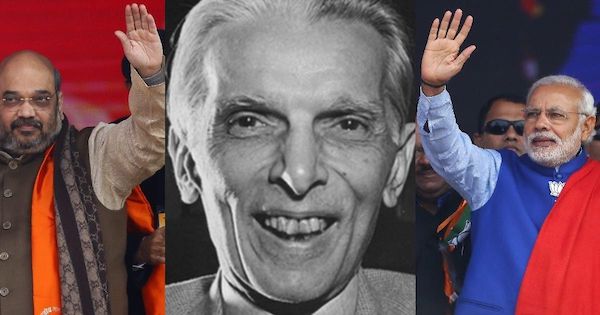
    Prime Minister Modi has missed many opportunities to show his goodwill; he is yet to translate his ‘good’ intentions into ‘outcomes.’ The troublemakers from his party have presented him another opportunity to show his mettle and stop them from tearing the society apart. All he has to do is speak up about Jinnah’s picture at Aligarh Muslim University.

    Whether it is good, bad or ugly, we have to have to preserve our history as a reference. Every society has portrayed evil and good simultaneously, and religious scriptures are full of such stories. Not a single religion has wiped the wicked men in their narration.

    Ravan is a part of our story. Should the man who abducted Ma Sita be removed from Ramayana?

    Hitler is one of the evilest men in human history for attempting to annihilate a whole race. How can such a man be a hero to Modi’s organization, the RSS?

    Godse killed Mahatma Gandhi, and Godse’s picture adorns the sacred halls of the parliament; does it mean Modi would have approved Godse to kill Gandhi?

    No, we cannot change or alter history, it is what it is, and we have to live with it.

    The rogues among us, the Indians are continually looking to brew trouble, while the Prime Minister remains silent or tacitly approves the agitation.

    Sometimes I wonder, why didn’t we heed Sanjeev Bhatt? When the Gujarat riots broke out, Mr. Bhatt said, Modi chose to remain silent for three days and hinted to his men to go ahead and do all the damage they can until he is forced to stop it.

    Do you see a pattern here? When Dalit girls were raped and hung on the tree, Modi did not say a word. When Kalburge, Gauri Lankesh, and others were killed in broad daylight, Modi did not say a word.  When Akhlaq was lynched and murdered, Modi did not say a word. The list is quite long, but the pinnacle of his silence came when the six-year-old Asifa and a four-year-old girl were raped, he did not say a word for two days until the entire nation came together to compel him to speak.

    Vinayak Damodar Savarkar, in one of his books Six Glorious Epochs of Indian History clearly explains why raping of Muslim women is justifiable and not to do so when the occasion permits is not virtuous or chivalrous but cowardly. This idea is repulsive to the moderate majority of Hindus, but that is Modi’s indoctrination as a pracharak of the RSS. Is that the reason he chooses to remain silent when rapes tear up the nation?

    If Modi were dumb, I would not complain, but he is not.

    If Modi were deaf, I would not complain, but he hears everything.

    Some of his party members are raising hell over Jinnah’s photo at the Aligarh Muslim University. As head of the most important democracy in the world, his role is to build cohesive societies and not allow destruction and chaos. It will damage India in the long haul.

    All Modi has to do is a tweet or hold a press conference immediately after the incident- and say that he will not tolerate anyone messing with law and order, even if it were his ministers. If this man has good intentions, it is time to prove it.  He should try this method at least five times and see how quickly things will stop from spreading.

    No Indian should live in fear of the other; it is not good for the county, we should not be spending our time battling out on what you wear, eat, drink or believe. We should be spending time on how to save farmers, create jobs so fellow Indians can have three healthy meals.

    India’s prosperity is partially driven by foreign direct investment and trade.  If Modi does not control and puts a stop to harassment, lynching, rapes and chaotic situations, India may face what apartheid South Africa faced once. There is no incentive for the investors to feel safe with their investments in India. Modi’s friends will run away with money; the average Indian will lose.

    If Modi does not reign on these, he will sink India. https://www.theindianpanorama.news/featured/modi-will-sink-india-if-he-does-not-rein-in-the-rapists/

    There are many Indians who have left India and gone on to become Citizens of other nations.  Let’s say if America and India are at odds, the American Indians will stand with the US, they have to prove their loyalty to America and will go against India.  Should India strip all the civilian awards given to them because they are with the enemy now? I say no, what was done with good intentions should remain intact.

    Jinnah was a part of our independence movement, together, we got the freedom. As Indians, we generally disagree with the partition, and Muslim Indians in particular, feel betrayed. That is a part of our history, and we have to live with it.

    As a civilized nation, we cannot remove Jinnah’s picture. Jinnah is part of India’s history and will remain one. Will Modi speak up and put an end to the chaos or does it help him to play dirty and stay silent?

    A few good videos:

    1. https://www.youtube.com/watch?v=7R-uF_T0sgw&feature=share
    2. https://www.facebook.com/NationalMirror1/videos/2009302016002489/

    (The author is the president of the Center for Pluralism in Washington, DC. He is committed to building cohesive societies and offers pluralistic solutions on issues of the day).

  • Can the BJP wrest Karnataka from the Congress?

    Can the BJP wrest Karnataka from the Congress?

    “Yes”, says Muralidhar Rao; Rajeev Gowda says “No”; For Sandeep Shastri, “It’s Complicated”

    Yes | Muralidhar Rao

    The JD(S) and the Congress are two faces of the same coin. The BJP will win with a majority

    Yes, we will definitely wrest power from the Congress. The Bharatiya Janata Party’s preparation, both organizationally and politically, points to a victory for the party. We can also sense that the mood of the people in Karnataka has changed. People have problems, which the State government has failed to address. Whether it is in the agricultural sector, infrastructure, or urban management, mismanagement has become a major issue. People have been agitating for quite some time and their disillusionment with the ruling Congress is complete. The BJP leadership has worked hard to mobilize public opinion against the ruling party. The BJP will continue to do what it has been doing in the rest of the country, which is to fight against the Congress.

    Issues in Karnataka

    As far as the issues in the campaign are concerned, in the last two years, the farm sector has been in the grip of an acute crisis and the government has been unable to address and arrest the problem of farmers’ suicides. Close to 3,800 farmers have committed suicide in the last five years. The government has been insensitive to the issue. Even before the elections, we organized a special campaign for farmers, collected grains from them, and pledged to put an end to the crisis.

    Look at Bengaluru. It has become a city of crime. It is full of potholes. It faced floods. Even the Lokayukta, P. Vishwanath Shetty, is not safe in his office and the attack on him demonstrated how law and order has deteriorated in the State. Corruption, scams and scandals have added to people’s restlessness with the ruling party. The attitude of the State government to terror groups, particularly in coastal areas, is appalling. More than 24 activists have been killed by extremists. Not a single case has been pursued; arrests have not been made. The Congress’s silence on the Popular Front of India, which should have been banned a long time ago, appears to indicate that the PFI enjoys protection from the government.

    We have been accused of associating ourselves with the Bellary brothers. This has been completely misrepresented. Janardhana Reddy, who has been named in the FIR, has not been given a ticket and we have not used him in the campaign. His brother is a sitting MLA. There is no case against him. Also, don’t you think Chief Minister Siddaramaiah could have taken action against the two brothers? Why didn’t he?

    The BJP’s promises

    I think the promises made in our manifesto will persuade people to vote for us. In the farming sector, we have spelt out the issues we are going to pursue. For instance, to address the debt crisis, we have declared a ₹1 lakh loan waiver for farmers rom nationalized banks and co-operative banks.

    Bengaluru is a hub for translating the global ambitions of India. Instead, we now see the city being associated with crime and corruption. On the welfare front, we have conceptualized many programs for the people of Karnataka: free education for all students in government colleges, for BPL families, smartphones for women. We are working on a growth-centric plan and that’s our promise to the people of Karnataka. We will get more than 150 seats. I have no doubt that a massive majority will come to the BJP. The Janata Dal (Secular) and Congress are two faces of the same coin. Both are pursuing vote-bank politics and are family-driven parties. We will win on the promise of development alone.

    (Muralidhar Rao is a national general secretary of the BJP)

    (As told to Anuradha Raman)

     NO | Rajeev Gowda

    The voters prefer a stable government that has ensured inclusive growth

    Prime Minister Narendra Modi belatedly descended on Karnataka in a desperate attempt to revive the BJP’s collapsing campaign. Unfortunately for him, the ground reality will demonstrate that Karnataka is not Gujarat. Mr. Siddaramaiah’s inclusive welfare programs have ensured that voters remain steadfastly with the Congress.

    Achievements of the Congress

    Hunger will soon be history due to the Anna Bhagya scheme. Mathru Poorna is transforming the health of women, during and after pregnancy, while ensuring healthier children. Indira canteens help the urban poor access a nutritious meal at low cost. Dairy farmers received higher prices and children get milk in schools. Farmers gained from a loan waiver, subsidized rental equipment, and farm ponds. An integrated e-market increased farmer’s income by 38% in 2015-16, according to a Niti Aayog report.

    Karnataka leads India in investment intentions and follow through. The youth flock to Bengaluru, India’s start-up capital. A quarter of jobs created in India were in Karnataka, as reported in April 2016. Mainstays like IT and biotechnology crossed revenues of $50 billion. With an average GSDP growth of 8% over five years, people will be happy to stay with a government that works.

    Nightmare years of the BJP

    Voters have not forgotten the five nightmare years, which were marked by incompetence and instability, when the BJP ran Karnataka. Three Chief Ministers took turns to defend corruption on a scale that shamed the State. B.S. Yeddyurappa led his Cabinet colleagues, the Reddy brothers, Katta Jagadish, Krishnaiah Setty, Harta Halappa, etc. to jail. Mr. Modi’s rhetoric and flood of falsehoods cannot cover up that sorry track record, especially when the same crew is back helming the BJP’s election campaign.

    A track record in abetting instability is also true for the JD(S). Widely regarded as untrustworthy, it is now confined to the Old Mysore region. It will garner at least 10 seats less than its 40 in 2013. However, it has kept the BJP from gaining a foothold in Old Mysore. The BJP’s absence in Old Mysore means that in 10 of Karnataka’s 30 districts, it is likely to win only a handful of seats. Its old Hindutva laboratory, the coast, rejected it in 2013, and will do so again, turned off by polarization. The BJP won nearly half of Bengaluru Urban last time but will do worse now. It is in closely fought Mumbai-Karnataka and Central Karnataka that the BJP is hoping to gain seats. While it may be aided here by the Karnataka Janata Paksha and the Badavara Shramikara Raithara Congress coming back to the BJP fold, the chemistry has gone all awry owing to competing factions. In Hyderabad-Karnataka, it is counting on the eight seats given to the Reddy family to help it, but the leadership of Mallikarjun Kharge and the fact that the United Progressive Alliance granted 371(J) status to this region will ensure that the Congress stays ahead. Dalit anger at the BJP’s injustice nationwide is reflecting across Karnataka. In contrast, Mr. Siddaramaiah has allocated budgets in proportion to the population percentage of Scheduled Castes and Scheduled Tribes.

    Opinion polls show that Mr. Siddaramaiah remains the number one choice for Chief Minister. According to polls, voters consider the BJP to be the most corrupt party. A section of the Lingayats is expected to quietly vote for the party that responded to their aspirations. The Supreme Court awarding a larger share of Cauvery water to Karnataka has marked Mr. Siddaramaiah as a champion of the State’s interests. He has also highlighted Kannada pride. A stable government which has delivered to all sections and ensured inclusive growth is what the voters prefer. On May 15, the Congress will be back with a bang, setting the trend for 2019.

    (Rajeev Gowda is a Congress MP and chairman of the AICC’s research department)

     It’s Complicated | Sandeep Shastri

    In several constituencies, the BJP, JD(S) and the Congress are engaged in a three-way fight

    The Karnataka electoral contest seems to be heading for a photo finish and is fascinatingly complex and suspense-filled.

    Contradictory trends

    For the last three decades, Karnataka has never given a clear majority to the ruling party. This should make it easier to make predictions. The BJP could argue that it is the natural alternative to the Congress. Yet politics often defies logic. Karnataka was also witness to another trend during the same period: it has almost always gone against the national trend during Assembly elections. Karnataka seems set to negate one of these two trends, but the question is which one.

    The BJP is convinced that it will wrest Karnataka from the Congress and make a grand entry in the south on the strength of what it will term as an anti-incumbency vote. Even if one were to assume that there is anti-incumbency, the BJP does not become the natural beneficiary of that. Opinion polls have pointed to the split of the anti-Congress vote between the BJP and the JD(S). The BJP is also heavily banking on its star campaigner, Prime Minister Narendra Modi, to help it. The dependence of the party on the Prime Minister was evident in the last-minute increase in the number of rallies that Mr. Modi was scheduled to address. Yet, the impact of his campaign is still a matter of debate.

    This is the first major test of Mr. Modi’s capacity to sway an electorate in a State Assembly poll south of the Vindhyas. But can the faction-ridden State unit of the BJP and an increasingly sidelined chief ministerial candidate take the possible momentum generated by the Prime Minister’s whirlwind campaign to the ground and translate that into votes? More importantly, has the BJP pitched its campaign on appropriate and relevant State-level issues and has its chief ministerial candidate inspired the electorate to favor the party?

    The ruling Congress has its visible strengths but could well have peaked too early and lost the momentum in the crucial final week of the campaign. In the run-up to the campaign, it was clearly setting the agenda, pushing the BJP on the defensive. In its Chief Minister, the party found a campaigner who could bring together the diverse elements within the party to take on the opposition with a conscious focus on the local. Yet, there are factors that could halt this movement. The responsibility of defending the State government has virtually been left to the Chief Minister, with other Ministers busy managing their own small constituencies and contributing very little to the State-wide campaign.

    The JD(S) question

    Further, the unhappiness of the electorate with the track record of the State government on the key issues of tackling price rise, generating employment, and controlling corruption is visible. A key strategy of the Congress to win over the Lingayats by recommending them a minority religion status appears to have backfired.

    The presence of the JD(S) as a key player in select regions has converted the electoral battle in several constituencies into a three-way fight. By carving out for itself a segment of the anti-Congress vote, the JD(S) is surely eating into the BJP vote. Yet, the same could be said about the anti-BJP vote, which, especially in communally sensitive areas, could be split between the JD (S) and the Congress. The JD(S)’s efforts to be king-maker has led to a debate on whether Karnataka is once again heading for an Assembly with no party securing a clear majority.

    (Sandeep Shastri is a political scientist and the national coordinator of the Lokniti network)

    (Source: The Hindu)


  • “Our revered institutions are under severe threat; It is time to wake up”! George Abraham at the AICC Plenary session

    “Our revered institutions are under severe threat; It is time to wake up”! George Abraham at the AICC Plenary session

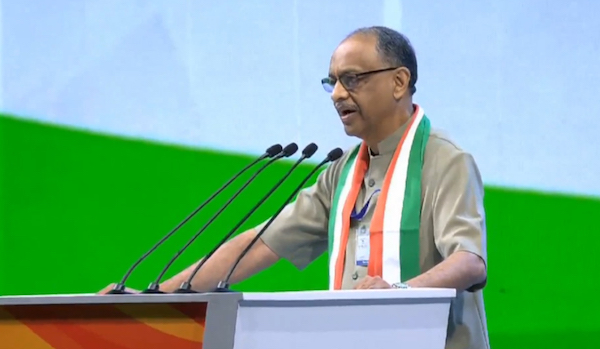
    NEW YORK (TIP): “Many of the Colonial Nations that gained independence from their Colonial masters faltered because they failed to build Institutions. However, India under the leadership Nehru, built institutions that provided security, safety, and justice for all its citizens”, said New Yorker George Abraham, Vice-Chairman of the Indian Overseas Congress. He was addressing the All India Congress Committee Plenary session which was held in New Delhi in March 2018. “Today, these revered Institutions are under growing threat, and it is time for us to wake up and deal with it. Freedom of Conscience is fundamental to all freedoms. It is innate and God-given; nobody has any right to trample it” he was alluding to the growing attacks on people of faith and other minorities in the country. “The NRI community is indeed concerned about these and other issues plaguing the country, and we will work together with AICC to coordinate our actions while working as goodwill ambassadors in the U.S. to help to forge stronger ties” added Mr. Abraham.

    George Abraham speaking at the AICC Plenary session.

    Mr. Abraham also thanked Sonia Gandhi for inaugurating the Overseas Congress in 2001 and applauded the appointment of Mr. Sam Pitroda as the Chairman of the newly created ‘Overseas Congress Department’ under AICC.


  • What democracy now means? Which way is India headed?

    What democracy now means? Which way is India headed?

    By KC Singh
    Thus, the current attempt to weaken institutional base of democracy needs countering. The attack on the independence of media has been thwarted after uproar over the “fake news” order of the Ministry of Information and Broadcasting, but the recasting of the Press Council of India leaves doubts about government’s intentions. The attempt to bend judiciary to the executive’s dictates surfaced dramatically after open defiance of the Chief Justice by his four senior colleagues when they went public with their angst. The government, not seriously attempting to make Parliament function, poses further questions about its commitment to constitutionalism, says the author.

    The Lok Sabha eventually adjourned sine die after weeks of being non-functional. The Opposition’s no-confidence motion was ruled by the Speaker as un-implementable as the House was not in order. Under similar conditions, the important annual Budget was allowed to be passed without debate. Prime Minister Narendra Modi has called for all BJP members of Parliament to observe a one-day fast against disruption by the Opposition. The Opposition, on the other hand, has alleged that those disturbing the House were, in fact, allies of the government.

    Denying Opposition the right to test the majority of a government sets a bad precedent as any government having lost majority can create conditions of chaos, with Speaker’s connivance, and preclude a floor test. Thus, a government can rule without a majority till its term ends while avoiding debate on important issues facing the nation. Democracies to succeed require not only written guidelines, but also many unwritten ground rules. Many books this year are addressing these fundamental questions.

    In How Democracies Die, authors Steven Levitsky and Daniel Ziblatt reach into history for answers. They hypothesize that in the US post-election of President Donald Trump “politicians say and do things that are unprecedented in the United States”. They add that “American politicians now treat their rivals as enemies, intimidate free Press, and threaten to reject the results of elections”. Even more worrisome, they “weaken the institutional buffers of our democracy, including the courts, intelligence services, and ethics offices”. Finally, they note that in 2016 Americans elected a President, who for first time in US history, had “no experience in public office, little observable commitment to constitutional rights, and clear authoritarian tendencies”. Larry Diamond, an authority on democracy worldwide, believes the world has entered a period of democratic recession.

    In India, too, as it enters the final year before parliamentary elections, attempts are afoot to weaken institutional sinews. India thus shares the global democratic recession referred to above. Of course, this is not happening for the first time, as worse was witnessed during the Emergency, or in the unwise move by the Rajiv Gandhi government to curb Press freedom via legislative action. Clearly, all Prime Ministers since the 1980s having single-party majorities have shown a tendency to override democratic principles.

    Europe, which saw in the 1930s the rise of authoritarian leaders and parties in Germany and Italy, using democratic processes to enter the political space, is again witnessing the slow strangulation of democratic principles. Take the example of Hungary, which gained freedom from communist stranglehold after the fall of the Berlin wall in 1989. Despite the history of its brave, but unsuccessful fight to overthrow communist shackles in 1956, and the memory of authoritarianism, its PM, Viktor Orban, is today allegedly centralizing political and economic power unknown since communist times. He is using the bugbear of immigration and external threats from the likes of his old patron Soros, who gave him a scholarship as a young dissident to study at Oxford in 1988, to get re-elected after eight years in power.

    Likewise, in Germany, the rise of extreme right-wing Alternative for Germany (AfD), particularly in former East Germany, is forcing other moderately right-of-center parties to adopt politics of identity and belonging. At the federal level, after the last election and following the new grand alliance, Chancellor Angela Merkel’s Christian Democratic Union (CDU) is, as The Economist states, “steering clear of culture wars in favor of bread and butter issues”. In faraway Costa Rica in central America, the victor Carlos Alvarado scored for liberal values by roundly defeating his fulminating rival Fabrico Alvarado who wanted to “put God in government”, targeting gays to start with. In Ethiopia, run for three decades by the Ethiopian People’s Revolutionary Front (EPRDF), this time, a charismatic and young Abiy Ahmed was elected by secret ballot among the top brass to be Prime Minister. Though hardly democracy in play, it showed a display of controlled freedom to choose a successor by all players representing different factions in the EPRDF. Whether this is the first step towards more open governance remains to be seen.

    Against this background and the consolidation of power by Chinese President Xi Jinping, the banner of democracy and liberalism has to be carried by India. It is a misnomer to think of these values as imports from the West. There is enough historical evidence in Greek and old Indian sources that India had thriving republics even at the time of Alexander’s invasion, though they existed alongside kingdoms run autocratically. The Dalai Lama puts it in Buddhist terms saying that the Himalayas were never as pristine white till the light came from India. That light includes liberal values strewed across Indian religious and philosophical discourses.

    Thus, the current attempt to weaken institutional base of democracy needs countering. The attack on the independence of media has been thwarted after uproar over the “fake news” order of the Ministry of Information and Broadcasting, but the recasting of the Press Council of India leaves doubts about government’s intentions. The attempt to bend judiciary to the executive’s dictates surfaced dramatically after open defiance of the Chief Justice by his four senior colleagues when they went public with their angst. The government, not seriously attempting to make Parliament function, poses further questions about its commitment to constitutionalism. That leaves the Election Commission as the last bastion to ensure free and fair elections. Many opposition parties are pointing fingers at the possibility of EVMs being tampered with. Belfer Centre at Harvard University has produced a report on EVMs in the US. In their federal system, the choice of machines is left to the states. The report calls machines, like the ones used in India, as “hackable”. It recommends the alternative machines used in the US, where vote is cast on paper and then scanned by machine. Thus, paper record remains in case of recount.

    Karnataka election is a watershed moment for Indian democracy. If the BJP wins, it can draw a wrong lesson that people endorse its tactics. If it loses, PM Narendra Modi will have a choice to go for reforms or perish.

    (The author is a former Secretary, Ministry of External Affairs)

  • Narendra Modi’s U.K. visit in April signals new goals

    Narendra Modi’s U.K. visit in April signals new goals

    ‘Bharat ki baat, sabke saath’ event on April 18

    NEW DELHI (TIP): Prime Minister Narendra Modi’s second visit to the U.K. in less than three years is due to take place in April, with a community event in central London planned alongside bilateral engagements, and the Commonwealth Heads of Government Meeting.

    A publicity campaign for the ‘Bharat ki baat, sabke saath’ event on April 18 kicked off on Wednesday, March 28. “A unique niche event… it will be a one of its kind live interactive conversation,” tweeted the BJP’s Vijay Chauthaiwale.

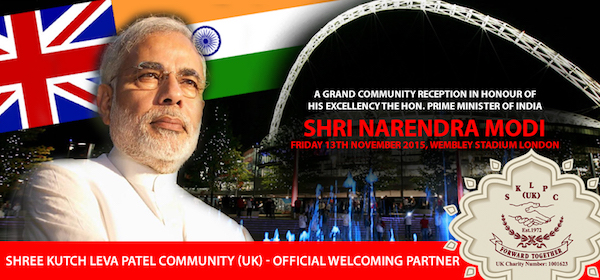
    The event will be held in central London, as against the Wembley Stadium, where Mr. Modi addressed a gathering of around 60,000 people, and will be a smaller affair, with around 1,500 to 2,000 people.

    Within the first hours of the website for free registration going live, the number of registrations had already exceeded this figure.

    The planned format highlights the different tone of the current visit and the audience Mr. Modi hopes to focus on — while the Wembley event was pitched very much as a “diaspora” event, with community performances — the April event is targeted at a more global audience, matching the aspirations of the visit, which is pegged around the ambitions of taking the Commonwealth to a new level. India’s active engagement is seen as key to the revival of the Commonwealth during the heads of government meeting on April 19 and 20, and the preceding Commonwealth Business Forum.

    Visiting London earlier this year, Suresh Prabhu touted the leadership role that India could adopt in the organization.

    However, others are hopeful the visit will also provide an opportunity for the U.K. government to express concerns over a number of developments in India. Earlier this month Foreign Office Minister Mark Field, responding to a debate in the House of Commons Westminster Hall, during which MPs expressed concerns, said the government would raise the issue of the treatment of Christian and Sikh minorities in India in the “appropriate manner” during CHOGM to ensure that Parliament’s voice was “properly heard.”

    “He will appreciate that diplomacy sometimes needs to be done behind closed doors, rather than with megaphones,” he told MPs.

    With the government of Theresa May touting a free trade deal with India as one of the ambitions of a “global” post-Brexit Britain, the visit will be a crucial, though sensitive one for the UK.

    Earlier this year Britain and India agreed to the terms of a memo on the swift return of Indian illegal immigrants from the U.K. – an issue that has repeatedly been raised by the British government and seen as an obstacle to immigration reform on the British side.

    India’s action will park the ball back in Britain’s court and strengthen calls for change from the U.K. when it comes to immigration and visa issues, particularly for business travelers, students and those in professional services.

    Protests and rallies are also expected to take place, as they did during Mr. Modi’s last visit. The Sikh Federation, U.K. said it expected large numbers to turn out for a protest rally during the visit. The protest will raise issues including the detention of U.K. citizen Jagtar Singh Johal by Indian authorities last year.

    (Source: The Hindu)

  • Arvind Kejriwal on apology spree: 3 down, 30 more to go?

    Arvind Kejriwal on apology spree: 3 down, 30 more to go?

    NEW DELHI (TIP): Aam Aadmi Party (AAP) national convener and Delhi CM Arvind Kejriwal has been humble pie.

    Kejriwal’s spree of apologies has generated mixed reactions, with some amused, some piqued and others downright infuriated.

    The AAP chief, with 33 defamation cases against him in 22 states, has crossed three cases off his list by saying sorry to the complainants.

    Kejriwal has tendered a series of apologies, starting with Akali Dal leader Bikram Singh Majithia, followed by Union minister Nitin Gadkari, and subsequently Congress leader Kapil Sibal and his son.

    Deputy chief minister of Delhi and senior AAP leader Manish Sisodia justified the apologies. “We are here to work for public. If someone is hurt by our remarks, we will apologise. We do not have time for courts. We do not want to indulge in battle of ego,” he said.

    In contrast to the moral high ground by AAP leaders in Delhi, cracks appeared in party’s Punjab unit after Kejriwal apologised to Majithia with AAP’s Punjab chief Bhagwant Mann quitting from the post in protest. Lok Insaaf Party, AAP’s alliance partner in Punjab, said it will snap ties with Kejriwal-led party.

    Kejriwal’s apologies have provided readymade ammunition to the Opposition to target AAP. Congress, taking a dig at the Delhi Chief Minister, said that Kejriwal should change his name to “Arvind Sorry Kejriwal”. Delhi BJP president Manoj Tiwari slammed Kejriwal for being a “regular and habitual offender”. Punjab Chief Minister Amarinder Singh dismissed Kejriwal’s apology as an “antic”.

    Kejriwal’s apology episode is the latest in a series of recent events that have earned the party criticism from several corners and could hurt its public image in the long run.

    However, things will be difficult for Kejriwal in the case involving Finance Minister Arun Jaitley.

    According to the sources, Kejriwal sent one of his newly inducted Rajya Sabha MPs as an emissary to Jaitley to discuss the possibility of an apology.

    “The finance minister hasn’t agreed with the apology proposal,” a source said.

    It’s also learnt that Jaitley wanted to know whether Kejriwal could ensure apologies from other AAP leaders Sanjay Singh, Kumar Vishwas, Ashutosh, Raghav Chadha and Deepak Bajpai against whom defamation case has been filed.

    The finance minister had filed a Rs 10 crore defamation suit against Kejriwal and five other AAP leaders. A civil defamation case was filed in Delhi High Court and a criminal defamation suit was filed in lower court in Delhi.Besides, a separate defamation case was filed against Kejriwal after certain remarks were made by his lawyer Ram Jethmalani during the trial. Kejriwal wanted to take the apology route with Jaitley as the next hearings in the high court and lower court are respectively on 3 April and 8 April.

  • Iraq deaths: Cong moves privilege notice against Sushma, VK Singh N

    Iraq deaths: Cong moves privilege notice against Sushma, VK Singh N

    NEW DELHI (TIP): Congress members from Punjab on March 22 gave a breach of privilege notice in the Rajya Sabha against External Affairs Minister Sushma Swaraj and her colleague MoS VK Singh, accusing them of “deliberately misleading Parliament and the country on the status of 39 Indians who went missing in Iraq in 2014”, repoted The Tribune.

    Moving the notice, MPs Ambika Soni, Shamsher Singh Dullo and Partap Singh Bajwa said, “The External Affairs Minister and her colleague VK Singh deliberately misled families of 39 individuals who were slain in Mosul. For a period spanning between June 2014 and March 2018, the minister continued to state as a matter of fact that the individuals are not only alive, but that the government is also undertaking steps for their rescue. As such claims were made on the floor of Parliament and outside, this is a serious breach of Parliament privilege and a stringent action must be taken against the members for their gross acts of dereliction of public duty.”

    The Congress leaders said the government actively worked to conceal the truth from the families of those killed in Iraq. The trio said the information about the death of slain Indians came out at least seven months ago, but the government still did not disclose that. “It is a tragic and inexcusable breach of duty that the External Affairs Minister, being in possession of this information (of the killing of Indians), failed to share the same with the grieving families. In fact, it is now clear that the only reason the government has disclosed the information now is compulsion because the Iraqi government would have otherwise done so,” they said.

    Bajwa said, “It is also sad that Swaraj waited to come to Parliament to make the tragic announcement on March 20 when she knew it already. This could have been made known outside Parliament.”

    Family members grieve by a portrait of one of the 39 Indian workers from Amritsar killed in Iraq by ISIS. External Affairs Minister Sushma Swaraj in Rajya Sabha stated that the 39 bodies exhumed from a mount in Badoosh in Iraq have been identified.

    On March 20, Swaraj said that the 39 missing Indians in Iraq have been killed. She was speaking in Rajya Sabha. Forty Indians, mostly from Punjab, were originally abducted by terrorist organisation Islamic State from Mosul, Iraq. One of them escaped by posing as a Muslim from Bangladesh, Swaraj said in a statement in Rajya Sabha at 11 am, as soon as the House convened. The remaining 39 Indians were taken to Badoosh and killed. Swaraj said search operations led to a mound in Badoosh where locals said some bodies were buried by the ISIS. Deep penetration radars were used to establish that the mound indeed was a mass grave, she said, adding the Indian authorities requested their Iraqi counterpart to exhume the bodies.

    The external affairs minister added that the mass grave had exactly 39 bodies, with distinctive features like long hair, non-Iraqi shoes and IDs. The bodies were then sent to Baghdad for DNA testing.DNA testing by Martyrs Foundation has established identity of 38 Indians while there has been 70 per cent matching of the DNA for the 39th person, she said. Minister of State for External Affairs V K Singh will be flying to Iraq to bring back the bodies on a special flight.

  • RAHUL MAY UNVEIL BLUEPRINT FOR CONGRESS REVIVAL AT THREE-DAY PLENARY

    RAHUL MAY UNVEIL BLUEPRINT FOR CONGRESS REVIVAL AT THREE-DAY PLENARY

    NEW DELHI (TIP): Is the Congress ready to shed its status quoist tag and take hard decisions as it prepares to fight a rampant BJP in the 2019 Lok Sabha elections? The answer may lie in Rahul Gandhi’s choice of candidates for the upcoming Rajya Sabha elections.

    Selecting the “right” candidates for the Rajya Sabha elections was a key test for the 47-year Gandhi, who took over the reins of the grand old party from his mother Sonia Gandhi two months ago .

    Gandhi nominated local leaders as the party’s candidates, ignoring, in the process, some well-entrenched Congressmen.

    The move has rekindled hopes among Congress workers that Gandhi may be willing to take tough decisions in the party’s interest.

    Sonia Gandhi would try not to antagonise the “Delhi coterie” and at times ignore the aspirations of regional leaders.

    “Rahulji’s decision to field local leaders in Rajya Sabha elections has gone down well within the rank and file. It marks a significant shift in the party’s policies when it comes to rewarding hard working local workers,” senior Congress leader from Bihar Kishore Kumar Jha said.

    “I am confident this will also check the growth of paratroopers and opportunists who seek all the benefits and then desert the party at critical times. The move will also encourage regional leaders to put in more effort on the ground and work for the party’s revival across the country,” he added.

    Commenting on Rahul’s style of functioning, Sonia Gandhi said last week at an event that every person has a particular style of working.

    Source: HT

  • DHINAKARAN NAMES PARTY AFTER JAYALALITHAA

    DHINAKARAN NAMES PARTY AFTER JAYALALITHAA

    MADURAI (TIP): Rebel AIADMK leader TTV Dhinakaran on March 15 floated a new political party — Amma MakkalMunnetra Kazhagam — named after late Tamil Nadu CM J Jayalalithaa.

    “From today, we will function with a name to retrieve the great movement of AIADMK from the betrayers,” Dhinakaran told a gathering on the occasion, challenging the ruling dispensation in the state. Dhinakaran and his followers often use the word “betrayers” to refer to the ruling AIADMK in Tamil Nadu, led by CM K Palaniswami and his deputy, O Panneerselvam. The party’s name roughly translates to

    “Amma’s party for people’s development”.

    Source: PTI

  • YSR Congress gives notice for no-confidence motion against govt

    YSR Congress gives notice for no-confidence motion against govt

    NEW DELHI (TIP): For the first time in its term, the Narendra Modi government may face a no-confidence motion on the floor of the house.

    Andhra Pradesh’s YSR Congress Party led by Jagan Mohan Reddy, has given a notice to move a no-confidence motion against the government in the Lok Sabha over the issue of not giving the so-called “special category” status to his state. But before any vote takes place, the notice needs the support of 50 MPs ‘in an orderly house’. It is not clear the notice will get that.

    With a comfortable majority in the house, the government is safe and will cruise through, even if the motion is admitted. The move is however expected to hasten the exit of The Telugu Desam

    Party (TDP), which pulled its ministers out of the Bharatiya Janata Party led government, from National Democratic Alliance. The YSRCP has nine MPs, but four have defected, leaving it with an effective strength of five; the TDP has 16 MPs, and it can’t risk not supporting a motion that purportedly has the state’s best interests in mind.

    TDP MP Thota Narasimham told PTI that the party will also support the motion. Later, Andhra Pradesh chief minister N Chandrababu Naidu too said the TDP would support the no-confidence motion.

    “We will support a no-confidence motion, whoever moves it. We will be ready for that and our 16-17 MPs will fully support that. We will cooperate with whoever fights for the state’s rights,” Naidu told the state assembly, according to PTI. YSRCP MP YV Subba Reddy submitted a notice with the Lok Sabha secretariat, desiring to move a no confidence motion on Friday. Reddy has also written a letter seeking support from all non-NDA parties. The party initially planned to the motion on March 21, but advanced it amid apprehension that Parliament might adjourn sine die early in the wake of disruptions.

    It has also suggested that its MPs will quit from Lok Sabha at the end of the session if the demands are not met.

    The budget session is scheduled to end on April 6. The Congress, with 48 MPs, and the Trinamool Congress, with 34, were yet to take a call on the no-confidence motion late on Thursday. “We will firm up our strategy by Friday morning,” Congress’ chief spokesperson Randeep Singh Surjewala said. A TMC leader said the YSRCP had not reached out to the party yet. The Biju Janata Dal is unlikely to support the notice. A party leader said, “It is for a parochial issue. We may not support it.”

  • Kejriwal apologises to Majithia over drugs charge; AAP’s Punjab leaders term it ‘meek surrender’

    Kejriwal apologises to Majithia over drugs charge; AAP’s Punjab leaders term it ‘meek surrender’

    NEW DELHI (TIP): Delhi Chief Minister Arvind Kejriwal on March 15 apologized to former Punjab minister Bikram Singh Majithia for making “unfounded” allegations against him over his involvement in the illegal drug trade.

    Majithia, a senior Shiromani Akali Dal leader, had filed a criminal defamation case against Kejriwal and two other AAP leaders for allegedly “tarnishing” his reputation by levelling “false, baseless and malicious charges”.

    Following the apology, Majithia has decided to withdraw the court case against him.

    However, the “meek surrender” drew flak from AAP Punjab unit leaders who termed Kejriwal’s step a “letdown”.

    AAP leaders in New Delhi, however, said the move was to shed court cases, in which the party convenor finds himself mired, and hinted that a similar course could be adopted in the defamation case filed by Finance Minister Arun Jaitley.

    Kejriwal apology “In the recent past, I made certain statements and allegations against you regarding your alleged involvement in drug trade. These statements became a political issue. Now I have learnt that allegations are unfounded,” Kejriwal said in a letter addressed to Majithia.

    “I hereby withdraw all my statements and allegations made against you and apologies for the same,” the Aam Aadmi Party (AAP) chief said.

    The damage caused to your esteem, the hurt caused to you, your family, friends, well-wishers, followers and the loss caused to you is regretted, he said.

    Former Punjab minister Majithia claimed he was grateful that truth had won and Kejriwal had realized his mistake. Since the AAP leader had “tendered his apology”, he did not want to pursue the defamation case filed against him, Majithia said.

    Accusing Majithia of playing with the youth of Punjab by “unleashing narcoterrorism in the state,” Kejriwal had once declared that he would “drag” the then Punjab cabinet minister “by his collar” to jail for his alleged role in a multi-million rupee drug racket.

    Majithia, who was once probed by the ED in connection with the alleged Rs 6,000 crore money laundering drugs racket case, had often been at the receiving end of Kejriwal’s ire during the AAP convenor’s rallies in Punjab in the run-up to the Assembly election last year.

    Drug abuse was a major issue in the high-octane Punjab Assembly elections last year and Kejriwal, who was leading the AAP charge, accused Majithia, then a minister in the state government, of being involved in narcotics trade.

    Majithia had denied the charges against him.

    In May 2016, he filed a criminal defamation case against Kejriwal, Sanjay Singh and Ashish Khaitan. Majithia said Kejriwal, Singh and Khaitan have “made it a habit” to target their political opponents by resorting to statements “filled with lies with the sole motive of hoodwinking the people”.

    “I will not let anyone besmirch my and family’s honour. Anyone doing so will have to face the consequences. I am determined to make them face trial and be punished for their misdeeds,” the minister had said.

    Majithia ‘accepts’ Kejriwal’s apology Talking to reporters, Majithia said he had accepted the apology.

    “I thank Kejriwal for showing greatness in seeking apology for his remarks made against me. I have told my lawyers that from our side, this case ends as Kejriwal has sought apology. I have asked my counsels to withdraw the defamation case. Person makes mistake and with the grace of God, if I have the ability to forgive and I will forgive,” the SAD leader said.

    Majithia had filed a defamation case against Kejriwal and Ashish Khetan in May 2015.

    “I had said from the beginning that either he will say sorry or he will go to jail. Sending someone to jail is not my intention,” he asserted.

    It is indeed a historical moment that a sitting chief minister has submitted a written apology in court withdrawing all statements he made against me,”said Majithia.

    The SAD leader said although it was

    “very torturous journey” for him as he battled the allegations. “The AAP, however, did not benefit as their candidate lost his security forfeited in my constitutency,” he said.

    Majithia said the entire controversy

     had taken a toll on his mother because she could not understand this kind of politics.

    “My wife also went through a difficult phase, I thank the almighty that this chapter has ended and truth has prevailed,” he said, adding, “If my two little kids were asked in school that your father does such things, you can imagine what could have been my position. What answer I could have given to them.” AAP

    leader Ashish Khetan had apologized as well, he added.

  • UTTAR PRADESH BY-ELECTION:Samajwadi Party wins Yogi Adityanath’s Gorakhpur, UP CM says result ‘unexpected’ UTTAR PRADESH

    UTTAR PRADESH BY-ELECTION:Samajwadi Party wins Yogi Adityanath’s Gorakhpur, UP CM says result ‘unexpected’ UTTAR PRADESH

    LUCKNOW (TIP): Delivering a major blow to the BJP, the Samajwadi Party won Gorakhpur and Phulpur Lok Sabha seats in Uttar Pradesh by-election. Samajwadi Party’s Nagendra Pratap Singh Patel defeated BJP’s Kaushlendra Singh Patel by 59,613 votes in Phulpur. In Yogi Adityanath’s bastion, SP’s Praveen Kumar Nishad defeated BJP’s Upendra Dutt Shukla by 21000 votes.

    Gorakhpur and Phulpur are highprofile constituencies as both the seats were represented by BJP’s firebrand leader and current UP Chief Minister Yogi Adityanath and Deputy Chief Minister Keshav Prasad Maurya respectively. Adityanath represented Gorakhpur five times in the Lok Sabha, and it went vacant in 2017 when he was elected to UP Assembly to take over as the Chief Minister of the state.

    In 2014, BJP had won both the seats with over 3 lakh vote margin. In Gorakhpur, BJP’s Yogi Adityanath had defeated SP’s Rajmati Nishad by 31,2783 votes. And in Phulpur, BJP’s Keshav Prasad Maurya defeated SP’s Dharam Raj Singh Patel by 3,08,308 votes. However, currently the BJP is trailing on both the seats. Ten candidates are in fray from Gorakhpur and 22 candidates contested from Phulpur.

    ALARM BELLS IN BJP

    The defeat of the Bharatiya Janata Party in all six Lok Sabha seats where byelections were held this year has sounded alarm bells in the party in Uttar Pradesh ahead of the 2019 Parliamentary polls, while stoking speculation about the Opposition stitching an alliance together to take the BJP on after tasting success in the recent bypolls.

    The BJP failed to break the jinx of repeated failures in Parliamentary byelections in 2018 when it was defeated yesterday in Gorakhpur, the bastion of Chief Minister Yogi Adityanath, and Phulpur, earlier held by deputy Chief Minister Keshav Prasad Maurya.

    The ruling partys candidates in the two constituencies lost to the Samajwadi Party (SP), triggering a debate on whether political outfits opposed to the BJP could forge a mega alliance before the 2019 Lok Sabha polls.

    The SP, supported by the BSP, romped home in the bypolls.

    SPs Pravin Nishad defeated Upendra Dutt Shukla of the BJP by 21,961 votes in Gorakhpur, a seat which had been with the BJP since 1989. Nagendra Pratap Singh Patel of SP cornered the Phulpur seat, drubbing the saffron partys Kaushalendra Singh Patel by 59,460 votes.

    As the results of the two by-election were declared yesterday, Adityanath said there was a “lesson” to be learnt from the outcome, and cited over-confidence and the inability to understand the implications of the pact between SP and BSP as the prime reasons for the BJPs defeat.

    UP Congress spokesperson Ashok Singh told PTI the outcome had brightened the prospects of the formation of a “maha gathbandhan” (grand alliance) ahead of the 2019 polls to defeat the saffron party.

    “We will ponder seriously about a larger alliance keeping the next Lok Sabha polls in mind,” he said. The Congress had contested the 2017 UP Assembly polls jointly with the SP and might want to tackle the polls together next year, too, another senior party leader told PTI, requesting that he not be named.

    The outcome of the March 11 bypolls has sparked talk in political circles about a continuing pact between the SP and the BSP — once bitter critics in Uttar Pradesh.