Tag: Indian Politics

  POLITICS & POLICY  

  • Democracy put to test: Change in paradigms of contemporary polity

    Democracy put to test: Change in paradigms of contemporary polity

    By KC Singh
    The debate now veers around the reliability of the EVMs. Would they be the determinant of victory rather than public’s will? Two recent books and a Belfer Center, Harvard Kennedy School, report on the risks to democratic elections of cyber attacks and information operations raise some uncomfortable questions. How Democracies Die by Steven Levitsky and Daniel Ziblatt and People v. Democracy by Yascha Mounk debate the direction of democracy globally. The lessons apply to India under Modi.

    While Prime Minister Narendra Modi accompanied visiting French President Emmanuel Macron on the Ganges at Varanasi, at times hand-in-hand, for an iconic view of the Ghats, India hovered over multiple domestic inflexion points. While agreements were signed with France for strategic engagement, either by “reciprocal logistics” to enable mutual utilization of military facilities in the Indian Ocean or by advancing opaque defense purchases like the Rafale deal, or the kick-starting of the stalled giant nuclear project at Jataipur, promising untested EPR design reactors; farmers marched, many barefooted and hungry, towards the center of India’s financial capital Mumbai. Rural India, where still a majority of Indian voters reside, was signaling that India could not become a great power by lopsided growth and mere promises of achhe din.

    The Modi government has, at best, just a year left or less, if early Lok Sabha elections are held, in tandem with the crucial state elections, due by December, in Rajasthan, Madhya Pradesh and Chhattisgarh, where the BJP faces anti-incumbency. But the Modi slogan of a corruption-free India is no longer paraded. The Nirav Modi and Mehul Choksi duo fleeing after swindling Punjab National Bank of over Rs 13,000 crore have dented the government’s reputation. A photo of Nirav amid top Indian businessman with PM Modi, and a video with prominent jewelers where the PM identifies “Mehul Bhai” by name while speaking, are  seen as clues to their coziness with the regime.

    The BJP’s poor performance in the recent bypolls in Rajasthan, Madhya Pradesh and even Uttar Pradesh fuel the debate that the re-election of Modi, taken as a given months ago, may no longer be certain. The debate now veers around the reliability of the EVMs. Would they be the determinant of victory rather than public’s will? Two recent books and a Belfer Center, Harvard Kennedy School, report on the risks to democratic elections of cyber attacks and information operations raise some uncomfortable questions. How Democracies Die by Steven Levitsky and Daniel Ziblatt and People v. Democracy by Yascha Mounk debate the direction of democracy globally. The lessons apply to India under Modi.

    Levitsky-Ziblatt argue that in the 21st century democracies are endangered, not so much by military coups, like in the 20th century South Asia, or by younger hereditary rulers in the Gulf or by clerical rule (supreme leader in Iran), but the election of populist autocrats. The playbook is old, as Mussolini and Hitler also took the electoral route, albeit laced with threat of street violence, but the methodology is now subtler. The elected leader debases state institutions by weakening the judiciary, putting compliant appointees in control of the Election Commission, handing over investigative agencies to reliable and ruthless protégés for targeting businessmen and opposition figures, emasculates Parliament by negating its checks and balances. Intelligence agencies are co-opted or devalued, as Trump does regularly, and media bought or bludgeoned into submission.

    The Mounk book explores flagging interest in democracy amongst youth and the millennials. While 71 per cent of those born in the 1930s in Europe and the US value living in a democracy, only 29 per cent of those born in the 1980s are so inclined. In fact, a quarter of the millennials think democracy is a bad way to run a nation. In polls in India, there is a tendency to favor authoritarian rulers, something that feeds Modi’s persona as a leader unmatched by his peers. Social media algorithms entrap users in vacuum chambers of similar prejudices and thus curtail debate. The leaders use the reach of Twitter and Facebook to perpetuate their skewed thoughts and browbeat opponents directly, or by their armies of bots. President Donald Trump routinely terms independent news outlets as “fake news”. A former Indian Army Chief, and now minister of state in the Modi government, coined the phrase “presstitutes”. As Rudyard Kipling wrote: “For the colonel’s lady and Judy O’Grady, Are sisters under their skins”. It seems so are the new breed of populist, rabble-rousing politicians across all continents.

    The Belfer report is more worrisome as it reflects a debate in India that the Aam Aadmi Party initiated but was ignored — the possibility of integrity of EVMs being compromised — and thus the electoral process itself getting highjacked by the ruling party. In the US, the states have greater control over the electoral process, but two methods are used for vote casting. One, is optical scanners (OS), where voters cast a ballot by traditional pen and paper, or electronic ballot marking device, and then, the ballot is run through scanning machines. Thus, while an electronic tabulation is retained in the machine, so are the original paper ballots as physical record for subsequent audit or vote verification. Two, is direct recording electronic (DRE), as is done in India with option, as now proposed, of voter-verified paper audit trail (VVPAT). The problem is that the test audit of VVPATs by the Election Commission is of small samples and in a few constituencies.

    The Belfer report concludes that “voting machines can be compromised via physical tampering (including using removable media) or through external connectivity (e.g. WiFi)”. It recommends that the OS method is safer than the DRE machines, including with VVPATs. This is a matter that needs debate in India, as a second time, after Indira Gandhi in the 1970s, a powerful Prime Minister is bending institutions to his own will. Therefore, the integrity of the electoral process needs to be not only safeguarded against the slightest doubt, but also done so publicly.

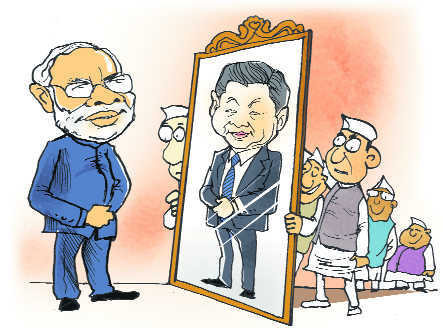
    The next year is critical for Indian democracy, as indeed the idea of India as enshrined in the Constitution. While in 1975-77, when the Emergency was declared, the world was still mired in Cold War and democratic rule had not flowered globally. Now even the US and its Western allies are casting doubts on the efficacy of its functioning. President Xi Jinping having seized almost total power from the party and the military posits the Chinese model of economic success via authoritarian structures. Can India keep the flame of democracy and liberalism alive in Asia as a counterpoint? That is the drama that is about to unfold in coming year.

    (The author is a former Secretary, Ministry of External Affairs)

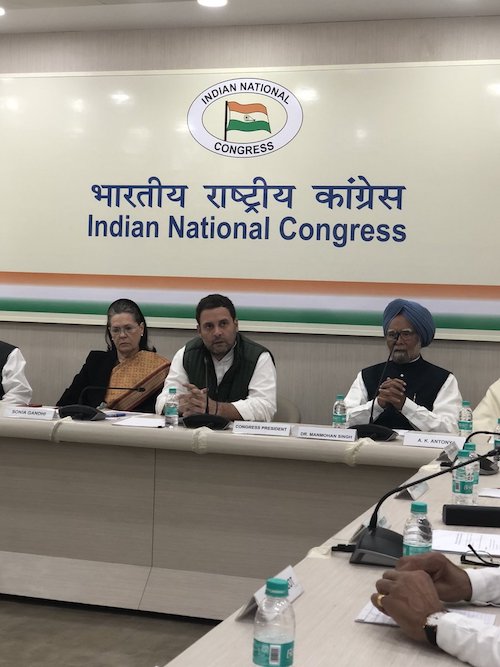
  • Indian National Congress Party Plenary Session to take place from March 16

    Indian National Congress Party Plenary Session to take place from March 16

    George Abraham and Mohinder Singh Gilzian from New York are special invitees to the Congress Party Plenary session.

    NEW YORK (TIP):  Indian National Congress will hold its plenary session to discuss and evolve the party’s future strategy in Delhi on March 16, 17 and 18.

    George Abraham, Vice-Chairman of the Indian Overseas Congress, USA and Mr. Mohinder Singh Gilzian, President of the INOC have been invited to attend the 84th plenary session of the Indian National Congress.

    This will be the first Congress Plenary session after the election of Rahul Gandhi as the President of the Indian National Congress. The leadership of the party from all states is expected to participate.

    George Abraham is the Founder-General Secretary of Indian National Overseas Congress and served as its President and Chairman. He is a former Chief Technology Officer at the United Nations and regularly writes on the political dynamics in India.

    Mohinder Singh Gilzian served as its Vice-President before assuming the post of the President.

    AICC recently has appointed Mr. Sam Pitroda as the Chairman of the newly created Overseas Congress department who also act as the Chairman of the Indian Overseas Congress, the newly reorganized wing of Congress Party in the USA.

  • Chandrababu Naidu’ TDP exits Modi govt but not NDA

    Chandrababu Naidu’ TDP exits Modi govt but not NDA

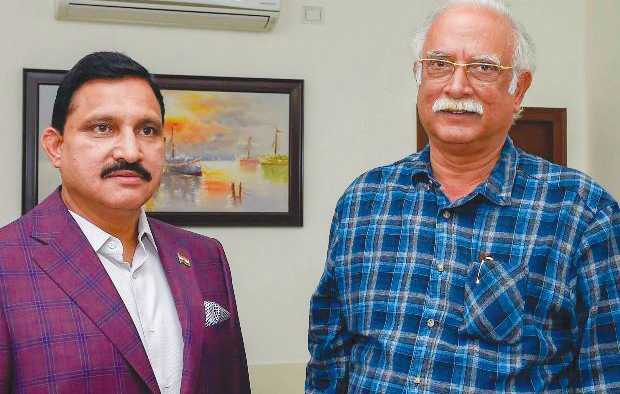
    NEW DELHI (TIP): Andhra Pradesh’s ruling Telugu Desam Party (TDP), led by N Chandrababu Naidu, on March 8 pulled out of the Narendra Modi government, with two of its minister in the Union Cabinet tendering their resignations. TDP’s exit from the Narendra Modi-led central government came as a result of the Centre’s refusal to grant Andhra Pradesh a special category status.

    However, a split within the ruling National Democratic Alliance (NDA) at the Centre was averted for now, with the party deciding to remain in the alliance, a move many view as TDP’s attempt to keep the window for rapprochement open.

    Civil Aviation Minister P Ashok Gajapathi Raju and Minister of State for Science and Technology & Earth Sciences Y S Chowdary, the two TDP ministers in the Modi government, met the prime minister on Thursday evening and tendered their letters of resignation. However, as of the time this report was filed, there had been no official word on whether the resignation letters were forwarded to President Ram Nath Kovind for acceptance. This has also set off speculations that backchannel talks could still be taking place to iron out differences.

    The Union ministers’ resignation came after a 20-minute talk between the TDP boss and Andhra Pradesh Chief Minister N Chandrababu Naidu and Prime Minister Modi. Apparently, the conversation was not successful in removing the irritants plaguing the TDP’s ties with the BJP-led government at the Centre.

    In a tit-for-tat response, the two BJP ministers in the Andhra Pradesh government – K Srinivasa Rao and T Manikyala Rao – also quit.

    While speaking to the media after tendering his resignation letter, Raju said the TDP would continue to be part of the NDA. Chowdary, for his part, said the issue of a special-category status was very emotive for Andhra Pradesh and that the Centre had not addressed it.

    He added that the special package put forth by Finance Minister Arun Jaitley was not adequate.

    Government sources have ruled out the possibility of any compromise on N Chandrababu Naidu’s demand for giving Andhra Pradesh a special-category status. In off-the-record briefings, BJP leaders said granting a special-category status to the state was impossible after the recommendations of the 14th Finance Commission were accepted.

    The party’s leadership added that doing so would also open a Pandora’s Box, with states like Punjab, Bihar and Odisha also demanding a similar treatment.

  • Nirav Modi Scam: a case of deceit and plunder of the public exchequer

    Nirav Modi Scam: a case of deceit and plunder of the public exchequer

    There is a pattern to mega fraud cases- involvement of bank officials and government

    By George Abraham
    At present, the bad debt of these Banks is greater than that of the GNP of the 137 countries in the world
    The data shows that between years 2012-2013 and 2016-2017, Indian banks saw a total number of 22,949 instances of fraud, with total losses to the banks amounting to 10.8 billion dollars.
    The deep mystery surrounding some of the biggest fraud cases is that many of these perpetrators were simply allowed to flee the country, including this one! Nirav Modi and his accomplices appeared to have fled India just before Punjab National Bank filed the complaint with the CBI on 29th January 2018.
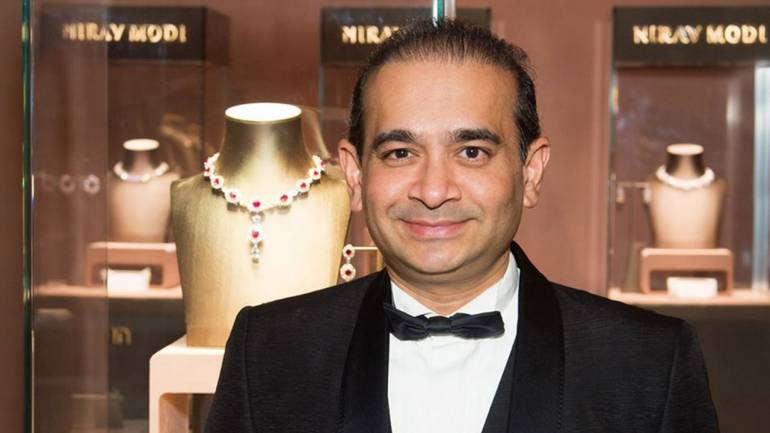
    The bankruptcy declarations by jeweler Nirav Modi’s companies — Firestar Diamond Inc, A Jaffe Inc and Fantasy Inc — may offer some clues to where the money went in the ₹12,622-crore Punjab National Bank.
    According to a Chapter 11 filing, A Jaffe owes more than $6 million to “unsecured creditors” in the United Arab Emirates (UAE) — Pacific Diamonds and Tricolor Diamonds FZE. The CBI FIR names these two as “exporters” who were beneficiaries of the letters of undertaking issued by the PNB employees accused of perpetrating the fraud along with Modi, his uncle Mehul Choksi, also a jeweler, and their companies.
     Punjab National Bank, India’s second-largest bank, is known as a Public Sector Bank (PSB) whose major shares are owned by the government. That means, when a bank accumulates NPA (non-performing assets) also known as bad debt, it is the Indian taxpayers and the shareholders that ultimately pay the price.

    The fraudulent financial behavior of some of the wealthiest people in India was once again on full display as the diamond jeweler Nirav Modi, a billionaire and the preferred jeweler of celebrities, was accused of orchestrating the biggest banking scam the nation has ever witnessed. He is now a target of the investigation by CBI after Punjab National Bank alleged that Modi and his uncle Mehul Choksi, defrauded the bank to the tune of 2 billion dollars using the cover of several shell companies abroad.

    According to the complaint by PNB, two junior officers of a Mumbai branch of the Bank issued “letters of undertaking” to firms linked to Modi and Choksi for them to obtain credit from overseas branches of other Indian lenders.

    A recent NDTV investigation has also unearthed links between money from Indian Banks allegedly embezzled by the Jeweler Nirav Modi and his US-based companies. In its formal charges, CBI claims that the loans Mr. Modi took from Punjab National bank to pay off his overseas suppliers may have been diverted elsewhere.

    The latest report from New York also indicates that Firestar Diamond Inc., a registered business by Nirav Modi in the U.S. has filed the Chapter 11 voluntary petition for the protection from its creditors. Prime Minister Modi who claimed to be the ‘chowkidar’ of the country has gone relatively silent on this matter other than to make a general statement.

    How is it possible for a businessman in India to defraud a bank of such a large sum of money? Where is the due diligence and what happened to the risk management mechanism? Was the Reserve Bank of India asleep on the wheel?  Why there was no oversight by the Finance Ministry dealing with such a huge transfer of reserve currency? Where is the accountability of the Modi government?

    The deep mystery surrounding some of the biggest fraud cases is that many of the fraudsters were simply allowed to flee the country, including this one! Nirav Modi and his accomplices appeared to have fled India just before Punjab National Bank filed the complaint with the CBI on 29th January 2018. It was reported that top officials including the Prime Minister were made aware of this case that included 42 FIRs on 22nd July 2016. Why then were these perpetrators not stopped from running away that included Choksi (Nirav’s uncle who ran the ‘Gitanjali Gems’) whose spurious activities were already exposed by a whistleblower and was under active investigation?

    This is not the first time since Modi took the reins of the government that a high flying billionaire has evaded justice by escaping abroad before he could be caught. Liquor magnate Vijay Mallya was accused of defaulting on 1.4 billion worth of loans before leaving the country in March 2016. It is not far-fetched to believe that these bad actors might have solicited some inside help that allowed them to leave the country and to stay beyond the reach of Indian jurisprudence.

    Punjab National Bank, India’s second-largest bank, is known as a Public Sector Bank (PSB) whose major shares are owned by the government. That means, when a bank accumulates NPA (non-performing assets) also known as bad debt, it is the Indian taxpayers and the shareholders that ultimately pay the price.

    The data shows that between years 2012-2013 and 2016-2017, Indian banks saw a total number of 22,949 instances of fraud, with total losses to the banks amounting to 10.8 billion dollars. In the last three-and-half years, the government pumped in more than Rs. 51000 crore capital to the public sector banks. They are expected to infuse PSBs with another Rs.2.11 lakh crore in the coming two years. Non-performing assets (bad debt) of the Public sector banks alone are calculated to be around Rs. 7.33 lakh crores as of June 2017, from Rs. 2.78 lakh crore in March 2015.

    Further analysis of the data reveals that the bad debt at these PSBs has increased almost fourfold in the last three years. Significant portions of these bank loans are from Corporates who have borrowed and now unwilling to pay back. Recent research brought out by Ernst and Young said the following: “While corporate borrowers have repeatedly blamed economic slowdown as the primary factor behind defaulting on bank loans, periodic independent audits on borrowers have revealed diversion of funds or willful default leading to stress situations.”

    How do we explain this massive level of willful default other than systematic manipulation of this institution by the rich and well-connected? We are asked to believe that two junior officers in a Mumbai branch of PNB made decisions to transfer 12000 crores of Rupees to a business entity especially dealing with Diamonds where Banks have little or no expertise!

    On the other hand, an ordinary Indian will have such an arduous task on hand if he ventures out into requesting a personal loan from one of these PSBs. Even farmers are often subjected to voluminous paperwork and harsh scrutiny before securing even a small amount in a loan. In case of delay or default, many of them are subjected to harassment, lien attachment on their primary residence and too often have witnessed auctioning off their property. Many of the ongoing suicides are directly attributed to these stressful situations.

    In the meantime, the crony capitalists are getting away with murder. They siphon off the taxpayer’s money often presenting bogus project plans using influential connections in the banking as well as in politics facilitating the process. Upon default, they tend to flee the country and spend their time abroad while enjoying the loot. Recently, it was also revealed that Mr. Vikram Kothari, of the ‘Rotomac Pen’ (a company that manufactures various types of pens), is charged with defrauding Rs 3695 crores from the public sector banks!

    When these banks finally reach a real crisis mode, the government steps in to ‘recapitalize’ or in other words get ‘bailed out’. The process is said to be as follows: through budgetary allocations, the government may buy so many crores of shares, then the banks will further raise additional crores from the market, and the government may issue Bank recapitalization bonds to buy even more shares of the banks.

    Under the Modi regime, the crony capitalism has flourished, and a high transfer of wealth is allowed to take place from the ordinary taxpayers to these wealthy billionaires; many of them hail from Gujarat, Prime Minister’s home state. While poor folks are penalized for not keeping a minimum balance in their government-mandated bank accounts, these so-called industrialists are accorded unprecedented access to public money, without any matching equity, which should have gone to building schools, bridges, health facilities and other infrastructure while creating prosperity for all its citizens.

    It is about time; the Modi government takes a serious look at this mushrooming scandal of deceit and plunder which has grave implications for the financial stability and the well-being of the nation. At present, the bad debt of these Banks is greater than that of the GNP of the 137 countries in the world and a thorough audit of many of these large loans for accountability will very much be in order. But it needs will on the part of the government.

    (The author is a former UN Technical Officer and is presently the Vice-Chairman of the Indian Overseas Congress, USA. He can be reached at gta777@gmail.com)


  • Furious over ‘special invitee’ tag, Mallikarjun Kharge boycotts Lokpal meet

    Furious over ‘special invitee’ tag, Mallikarjun Kharge boycotts Lokpal meet

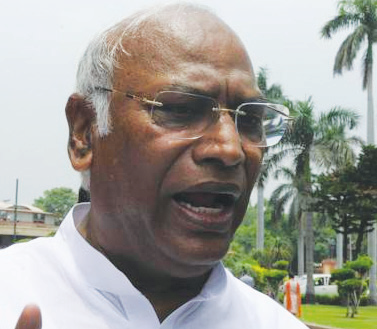
    NEW DELHI (TIP): Mallikarjun Kharge, leader of the Congress party in Lok Sabha on March 1 boycotted a meeting of the committee that will select an anti-corruption ombudsman, or Lokpal, in protest against being asked to attend as a “special invitee”.

    The selection committee is supposed to have the Prime Minister, Chief Justice of India, Lok Sabha Speaker, the opposition leader and an eminent jurist.

    Though Kharge leads the Lok Sabha’s largest opposition party, he is not the designated leader of the opposition since his party falls short of the minimum number required to claim that post.

    In a strongly worded letter to the Prime Minister, Kharge said he “respectfully denied” the invite as the process was being reduced to “political pretence”.

    Kharge charged that there was a concerted effort by the Union government to exclude the independent voice of the opposition from the Lokpal selection process.

    “A perusal simplicitor of the Lok Pal Act, 2013; its intent and objective reflects that Leader ‘of Opposition’ cannot be substituted as a Special Invitee’. It is a matter of surprise that your government is choosing to adopt this route as a mere paper formality rather than seek any meaningful and constructive participation,” Kharge said in the letter.

    The Lokpal and Lokayuktas Act was passed in 2013 to constitute a statutory body to inquire into allegations of corruption against public functionaries.

    “The Select Committee of Parliament had put its seal of approval on the amending bill, yet the government has failed to introduce and pass it. This amending bill continues to languish in cold storage for want to appropriate intent, commitment and objectivity on part of the government,” Kharge said in the letter.

    A party that lays claim to the leader of opposition post in Lok Sabha must have at least 10% of its 545 seats. Congress, which won 44 seats in the 2014 general election, currently has 48 seats.

    The meeting of the selection panel took place on Thursday evening at the official residence of the Prime Minister.

    “At the outset, let me state on behalf of myself, my party and the entire opposition that the ‘Special Invitee Invitation’ is a concerted effort to exclude the independent voice of the opposition altogether from the selection process of the most important anticorruption watchdog,” Kharge wrote in the letter to Modi.

  • INX Media case: Karti Chidambaram sent to five-day CBI custody

    INX Media case: Karti Chidambaram sent to five-day CBI custody

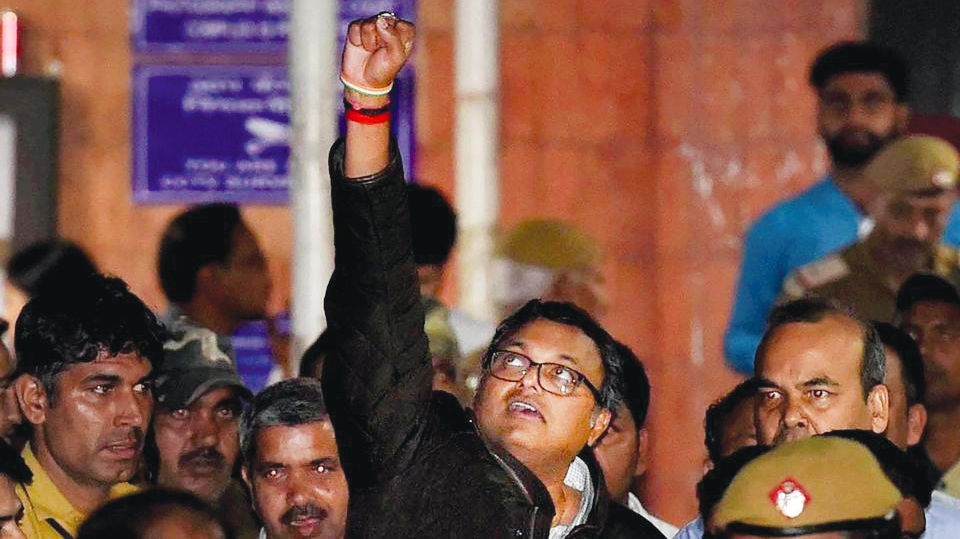
    NEW DELHI (TIP): Karti Chidambaram, arrested in the INX Media case, was on March 1 remanded to five days of CBI custody by a Delhi court.

    Special Judge Sunil Rana extended Karti’s custody till March 6 after the CBI contended that there were “very shocking evidences” of what he has done when he went abroad and alleging “when he went abroad, he closed bank accounts in which funds were received”.

    Karti was produced before the court on expiry of one-day CBI custody amidst the presence of his parents P Chidambaram and Nalini Chidambaram, both senior advocates, and were seen talking to him.

    Additional Solicitor General Tushar Mehta, appearing for CBI, maintained that this was “not a case of political vendetta” and the investigation was going on in accordance with Article 21 of the Constitution.

    “There are very shocking evidences of what Karti did when he went abroad,” he said, adding that “when he went abroad, he closed bank accounts in which funds were received”.

    Even though Karti did not complain of any uneasiness during his regular medical check up yesterday, doctors at Safdarjung Hospital last night sent him to cardiac care unit and he was brought to CBI office only in the morning.

    Due to his hospitalisation, the CBI’s one-day custody was virtually wasted as it got Karti’s custody only at 7:30 pm and he returned from the hospital this morning, he said.

    Senior advocate Abhishek Mani Singhvi, who is leading a team of lawyers for Karti, contended that in connection with the May 2017 FIR, CBI has spent roughly 22 hours with Karti in August last year and no fresh summons was issued to him after August 2017 till date, which shows the agency has nothing more to ask him.

    “The only way of establishing noncooperation is to issue summons. You never tested my non-cooperation.

    Sudden arrest after six months. Its bizarre, I am arrested as I stepped out of plane.

    “There is not an iota of evidence against Karti. He is being arrested despite complying with court orders repeatedly.” he said.

    Singhvi asked if Karti has done something illegal while being abroad, why didn’t CBI file a contempt petition before the court which allowed him to travel abroad.

    The CBI said that in May 2007, first FIPB approval was given to INX Media and in April 2008, this reference was made in the Finance Ministry.

    From June 2008 onwards, the payment of the bribe money was started. The second FIPB approval was given on November 2, 2008. We are investigating whether the April 2008 reference was a “pressure technique”, the CBI contended.

    “We have emails and invoices indicating money was given to Advantage Strategic Consultancy Private Limited (ASCPL), which is related to Karti, around the time period when INX Media received favours.

    “There is substantial evidence with the agency which needs to be confronted with Karti. Three mobile phones have been recovered from him which need to be examined. 14 days is the minimum time required to keep him in custody,” Mehta contended.

    Karti was arrested yesterday at Chennai Airport on his return from the United Kingdom in connection with the FIR lodged on May 15 last year alleging irregularities in the Foreign Investment Promotion Board (FIPB) clearance to INX Media for receiving overseas funds to the tune of Rs 305 crore in 2007 when P Chidambaram was the union finance minister.

    Source: PTI

  • Primary task at Cong plenary: Rescuing the polity from the creeping authoritarianism

    Primary task at Cong plenary: Rescuing the polity from the creeping authoritarianism

    By Harish Khare
    It is already a matter of considerable dismay that otherwise decent officials, educated aides and learned advisers have acquiesced in the organized worship of a man who grandiloquently pretends to know profoundly about everything, from gaming the examinations to disrupting the economy, even without the benefit of a Harvard education, and making a virtue of “hard work”. From senior most ministers to junior joint secretary, all find themselves subscribing to this “daddy knows best” syndrome, very much reminiscent of the Narayan Datt Tiwari hymns to Sanjay Gandhi during the Emergency days. 
    History of the last hundred years has taught us one simple lesson:  personality cults do introduce undesirable imbalances in the body politic. Personality cult produces very little democratic good; it always ends up badly, even disastrously.      
     The greatest danger we face is Narendra Modi is using all the accruements of democracy to de-legitimize democracy’s good practices and values, and, to turn all its bad habits to  make democratic arrangements look inadequate and unequal to the task of restoration of our national glory.

    The top Congress leaders are due to gather, in a fortnight from now, for their party’s plenary session. Apart from consecrating Rahul Gandhi’s election as the party president, the gathering will need to undertake far more serious a task: they will have to perform a duty to start a conversation with the nation and to take the citizens into confidence on how the entire political system is groaning under the weight of one man — his whims, his fancies, his attitudes and his limitations. The Congress and its leaders need to make a case before the nation as to why the current state of affairs is neither desirable nor acceptable. At the end of this three-day gathering, the Congress should have given the country a good enough reason to look beyond Narendra Modi, as and when the Lok Sabha elections get organized.

    Since it will be a political gathering, there will be plenty of partisanship and mouthfuls of philippics against Narendra Modi, the BJP and the Sangh Parivar. But it would be a waste of time and resources if the Congressmen confine themselves to abuses; it will be an even greater farce and greater shame if the Congressmen were to engage in their familiar weakness for sycophancy. Instead, they have to behave and speak as responsible and reasonable keepers of the best of the constitutional values. As those who claim to be committed to the Idea of India and who subscribe to the Nehruvian virtues, the Congressmen have a sober and serious task at their hands:  a democratic obligation to talk to fellow-citizens as to how we are all mindlessly getting sucked into the small-time viciousness of a small-time man; how as a nation and as a society we are getting infected with pettiness and small-mindedness.  More than that, the Congressmen need to convince the nation that they have the legacy, the leadership, and the experience to rescue us all from this quagmire of petty vindictiveness being palmed off as a new normal.

    We remain — for now — a constitutional democracy; but, all our constitutional arrangements stand diluted and all-out constitutional functionaries — be it the President of India or the Union Home Minister or External Affairs Minister —have been made to feel diminished. The Cabinet system of government has been reduced to a joke that no longer invokes a laugh. The country needs to be told that the fine architecture of checks and balances is in serious jeopardy.

    It is for the Congressmen to enlighten the citizens how all the key relationships in our national scheme of things are being  revised and reduced: first,  the majority-minority equation has been systematically reshaped and the secular commitments stand eroded; second, the Centre-States federal equation has tipped dangerously in favor of New Delhi and the state governments  are being reduced to whining tots; third, the State-Citizen balance has changed  drastically, an all-intrusive Aadhaar arrangement is demanding compliance and surrender of privacy, and, we are beginning to look like a misshapen  authoritarian setup; then, we have the creeping distortions  in the Civil-Army relationship, with the Army in danger of losing its institutional rectitude; and, lastly, the virtual governmental takeover of the electronic media. All these key equations are off the keel. And, our citizens need to be told how these institutional distortions are unknowingly putting the nation on a road to a totalitarian-lite experiment.

    When the Opposition fails to impart a democratic vibrancy to the polity, all other institutions of restraint — like the judiciary, the Election Commission — too feel discouraged; and, independent regulatory authorities like the Reserve Bank of India feel inclined to give in to the government’s unreasonable demands. The Congress, as the principal opposition party, has an obligation to create conditions for robust counterpoises.

    If nothing else, the country needs to be repeatedly educated about the whimsicality that has dictated the (mis) management of the economy, and how all the great projects — like Make in India — stand in tatters; and, more importantly, whether the Congress has an answer to jobless growth and whether the Congressmen can help the country find its way out of a deepening agrarian crisis.

    Notwithstanding the loud chanting of deshbhakti, and balidaan mantras, it is the Opposition’s task to inform the country that we stand isolated in our own backyard because we have needlessly and arrogantly alienated all our South Asian neighbors; and, the nation needs to be educated that India today is less safe than it was five years ago.  The Congress has to introduce the citizens to a new narrative that takes us away from this excessive preoccupation with national security and an unwarranted and unworkable flexing of muscles at home and abroad. We are losing our national self-assurance without making smaller nations in the neighborhood respect us.

    Then, there is a personality overload. A personality cult may have been “normalized” in New Delhi but it remains a personality cult, with all its unhealthy demands on men and institutions. It is already a matter of considerable dismay that otherwise decent officials, educated aides and learned advisers  have acquiesced in the organized worship of a man who grandiloquently pretends to know profoundly about everything, from gaming the examinations to disrupting the economy, even without the benefit of a Harvard education, and making a virtue of “hard work”. From senior most ministers to junior joint secretary, all find themselves subscribing to this “daddy knows best” syndrome, very much reminiscent of the Narayan Datt Tiwari hymns to Sanjay Gandhi during the Emergency days.

    History of the last hundred years has taught us one simple lesson:  personality cults do introduce undesirable imbalances in the body politic. Personality cult produces very little democratic good; it always ends up badly, even disastrously.

    The greatest danger we face is Narendra Modi is using all the accruements of democracy to de-legitimize democracy’s good practices and values, and, to turn all its bad habits to make democratic arrangements look inadequate and unequal to the task of restoration of our national glory.  Those associated with national security are already muttering that there-is-too-much-democracy claptrap. The next pit-stop in this journey would be to look temptingly at the Xi Jinping kind of authoritarian option.

    (The author is editor-in- chief of Tribune group of newspapers)

  • Kamal Haasan launches political party

    Kamal Haasan launches political party

    CHENNAI (TIP): Kamal Haasan’s telegenic charm was on full display on Feb 21 night when he told a rapturous crowd of supporters in Madurai that his new party would be called the Makkal Needhi Maiam.

    The Tamil words roughly translate into People’s Justice Party, or People’s Justice Front, although technically, “maiam” means centre.

    “The newly founded Makkal Needhi Miram is your party. It’s here to stay, and to make the change we all aspire for. Guide us to serve you,” Kamal Haasan wrote on Twitter, even as he was joined on stage in Madurai by Delhi Chief Minister Arvind Kejriwal and the Aam Aadmi Party’s Tamil Nadu unit chief, Somnath Bharti.

    He explained that people had asked him if he was on the Right or the Left. Maiam means “centre,” and that’s why he named his party Makkal Needhi Maiam, he said.

    “Six hands is the representation of the six states and the star in the centre is you,” he added.

    Earlier, Kamal met former president APJ Abdul Kalam’s elder brother and other family members at the residence here.

    “Greatness can come from simple beginnings,” he said.

    “Actually it will come only from simplicity. Glad to start my journey from a great man’s simple abode,” the actor added in a tweet.

  • Congress will not name CM candidate before Rajasthan polls

    Congress will not name CM candidate before Rajasthan polls

    NEW DELHI (TIP): The Congress will not declare its chief ministerial face ahead of the Rajasthan Assembly polls, party general secretary in-charge for the state Avinash Pande said on Thursday, stressing that it has been the party’s “tradition”.

    He said the party’s Rajasthan leaders will put on a united performance to ensure victory “as they did” during the recently-held bypolls in Ajmer and Alwar parliamentary seats and Mandalgarh assembly segment in the state.

    “It has been the Congress tradition that it never declares a CM face, barring exceptional cases, ahead of assembly polls.

    The high command decides the chief minister after discussing it with elected MLAs. This tradition will be followed in Rajasthan too,” Pande said.

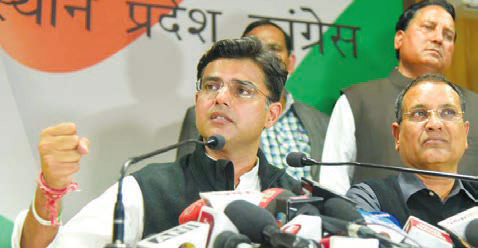
    Earlier in the day, Congress president Rahul Gandhi held a meeting with Rajasthan Congress leaders, including former Chief Minister Ashok Gehlot, state unit chief Sachin Pilot and others on the party’s activities for the next six months.

    Pande maintained that the leadership issue in connection with the state assembly polls, scheduled to be held later this year, did not figure during the meeting.

    “We sought the final approval for the party programme for next six months (from Gandhi). All the leaders in unison assured that the programme will be implemented jointly.

    Rahul ji wished them good luck,” he added.

    Pande also said that the leaders have decided that the state unit’s ‘Mera Booth, Mera Gaurav’ programme will be implemented in all the assembly segments of the state, which goes to polls later this year.

    “Hamara hoga ek hi agenda, Congress ka jhanda (Our only agenda is to see Congress flag flies high),” Pande added.

    Asked about the meeting with Gandhi, Pilot said it was decided that the party will undertake a mass outreach programme in all the 200 assembly segments of the state. “We have now a lot of weight on our shoulders (following the success in bypolls). Expectations are very high from the Congress and we must not rest and immediately start a mass outreach programme the youth, farmers, middle class, rural areas in 200 constituencies. The meeting discussed the details of the same,” Pilot added.

    Source: PTI

  • Flying on wits alone, Modi’s biases can involve India in Islamic world’s quarrels

    Flying on wits alone, Modi’s biases can involve India in Islamic world’s quarrels

    By KC Singh

    This paradox in Modi foreign policy of selectively engaging Islamic nations, even ostentatiously hugging their leaders, while allowing the fringe at home to bait Muslims can only work fitfully or in the short run, says the author.

    Prime Minister Narendra Modi is three months shy of entering the last year of his term. Post-Rajasthan wipe-out of his party in two Lok Sabha and one legislative byelection — of which even the Congress was confident of winning one — murmurs within the BJP are louder about state of the party and the nation. All leaders use foreign visits to bolster domestic standing as the pageant and protocol, carefully calibrated in advance, rarely goes off-script. But the exercise has diminishing returns once the electorate at home begins to wonder where the promised achhe din are. The recent foray of Modi into West Asia and the Gulf falls into that category.

    A Palestine visit was expected after Modi’s stand-alone visit to Israel and Israeli PM Benjamin Netanyahu’s Indian sojourn last year, with fanfare, including the shutting down of Ahmedabad for street extravaganza. President Mahmoud Abbas of Palestine Authority (PA) has been in power since the death of charismatic Yasser Arafat in 2004. There has, however, been no presidential election since 2005 nor parliamentary polls since 2006. His moral and political authority had dropped perceptively, particularly after his inability to implement the Cairo deal for gaining administrative control of Gaza, run by rivals Hamas. The continued siege of Gaza and sanctions have caused human misery and an explosive situation. Israel has been able to exploit the Palestinian disunity and civil war in Syria to stall any international push for West Asian settlement.

    President Donald Trump opened his presidency by nominating his Jewish son-in-law Jared Kushner to obtain an Israel-Palestine peace deal. But his December 6 decision to recognize Jerusalem as Israeli capital ruffled Arab feathers. Abbas has employed it to reassert control over rival factions by espousing the popular argument that US sponsorship of peace process had now ended. India by sensibly voting for a UN resolution condemning US move kept its door open to the PA. Thus, Modi’s visit was timed well as President Abbas was regaining lost authority. The $50 million developmental aid should keep India’s traditional relations with Palestinians on track. Hamas has, meanwhile, revived links with Iran, overcoming misunderstanding over Iran supporting the embattled Assad regime in Syria. Future course would depend on Abbas holding long-delayed elections to Palestinian parliament and his own office, acquiring control over Gaza and ameliorating the humanitarian crisis and the political fortunes of Netanyahu on way to being indicted for corruption. By its untimely step, the US handed the reward before obtaining Israeli compliance with UN Security Council resolutions, including stopping construction of new settlements in occupied West Bank.

    But by altering standard Indian formulations on the Palestinian issue, especially omitting mention of East Jerusalem as capital of Palestine, Modi succumbed to pro-Israel views in the RSS, which sees Israeli control over ancient lands of Judea and Samaria as analogous to their perception of Akhand Bharat as encompassing South Asia. They ignore that Theodor Herzl, the founding father of Zionism, conceived Der Judenstaat or Jewish Homeland at the beginning of the 20th century as any place on earth to colonize with people of Jewish faith. Even Uganda was considered for resettlement to escape anti-Semitism in Russia and Europe. The World War I and Ottoman Turkey aligning with Germany opened the possibility of Britain allowing European Jews to return to Palestine, post-liberation from Ottoman control.

    This paradox in Modi foreign policy of selectively engaging Islamic nations, even ostentatiously hugging their leaders, while allowing the fringe at home to bait Muslims can only work fitfully or in the short run. His second visit to the UAE was really pegged on laying the foundation stone of a temple in Abu Dhabi and a global summit at Dubai on governance. Hardly any world leaders were visible in the first row, other than local sheikhs. It was vintage Dubai marketing itself as a focal point for global commerce.

    The UAE has had temples for decades, although not in the capital Abu Dhabi. The late president, Sheikh Zayeed, father of Modi’s host Sheikh Mohammed bin Zayed, had in 2001, when I was ambassador to the UAE, allotted land in the capital for a cremation ground, which was to have a small temple. When the then Home Minister LK Advani called on him and thanked him for this gesture, he replied that his family accepted religious pluralism. Thus, the current gesture is a next step in an old tradition rather than some strategic leap in bilateral engagement. In fact, two English television channels, devoted even more vigorously than Doordarshan to spin BJP’s accomplishments, broadcast a clip wrongly showing Sheikh Mohammed chanting ‘Jai Sri Ram’ at a function. As the adage goes with friends like these who needs enemies? The UAE embassy in Delhi and newspapers in the UAE reacted with indignation.

    The Indian purchase of a share in an oilfield and ADNOC, Abu Dhabi’s oil major, participating in Indian oil reserve are old decisions announced during Sheikh Mohammed’s India trip. The UAE and Saudi Arabia are aligned against Iran, exacerbating the Shia-Sunni confrontation, thus splitting the six-member Gulf Coordination Council as, indeed, the Sunni world. Modi laying a wreath at the military memorial in Abu Dhabi, largely honoring the UAE’s dead in their intervention in Yemen and thus in a war against Iranian allies Houthis, would be read by Iran’s Revolutionary Guards as India taking sides. The forthcoming visit of Iran President Hassan Rouhani cannot alter that reality.

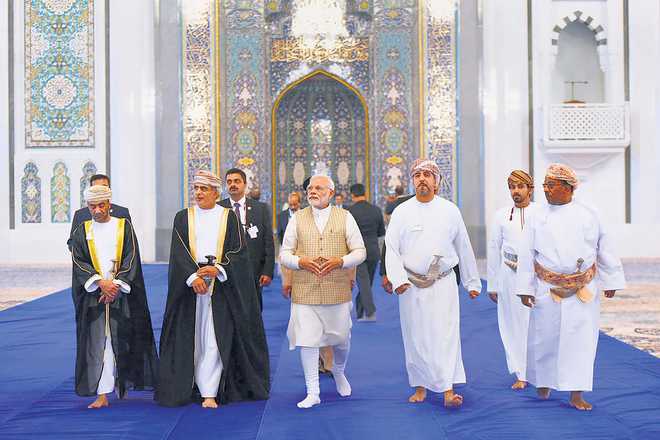
    Leaders who preceded Modi, whether of the Congress or BJP, operated from a shared vision to retain strategic independence vis-a-vis great powers and not get embroiled in Islamic world’s quarrels. Modi tends to play by ideological biases and hope that sequential and tactical moves will paper over strategic weakness in his approach. The UAE would like to create a fissure between India and Iran. Iran would like the reverse. Modi’s last stop was Oman to meet Sultan Qaboos, the last surviving titan of Gulf politics. He has kept Oman neutral in the Gulf nations’ quarrels created by gen-next leaders of the UAE, Saudi Arabia and Qatar. Hopefully, he would have passed that wisdom to his Indian guest.

    (The author is a former Secretary, Ministry of External Affairs, Government of India)

  • UNION MINISTER GIRIRAJ BOOKED FOR LAND GRAB

    UNION MINISTER GIRIRAJ BOOKED FOR LAND GRAB

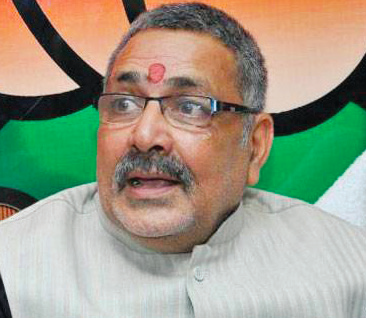
    ATNA (TIP): Union Minister Giriraj Singh has been booked for grabbing land belonging to a Dalit in his native Bihar, the police said today.

    The FIR against Singh and 32 others was lodged on February 2 on the orders of a special SC&ST court where the complainant had filed an application under Section 156(3) of the CrPC, seeking directions to the police for registering a case against the accused, SHO of Danapur police station in Patna district Sandeep Kumar Singh said.

    The BJP MP from Nawada is Union Minister of State (independent charge) for Micro, Small and Medium Enterprises. The complainant, Ram Narain Prasad, a resident of Asopur village, alleged that the accused grabbed 2.6 acres that he owned and abused him when he protested.

    Tejaswi Yadav, Leader of the Opposition in the Bihar Assembly, demanding the resignation of Chief Minister

    Nitish Kumar, whose party (JD-U) is a BJP ally, tweeted:

    “Nitish Kumar ji, don’t hesitate, speak up, awaken your inner voice and rush to the Governor’s house with your letter of resignation. Your dearest friend Giriraj Singh has grabbed three acres of land belonging to Dalits.” In another tweet, he took potshots at Bihar Deputy Chief Minister Sushil Kumar Modi.BJP spokesman Rajiv Ranjan said Giriraj Singh was a law-abiding citizen. “Attempts by some people to politicise the issue is deplorable.”

    Source: PTI

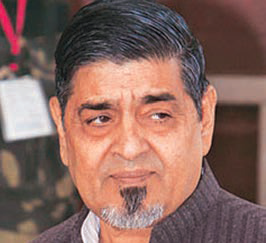
  • 1984 riots: Delhi Sikh body releases Jagdish Tytler’s ‘confessional’ video

    1984 riots: Delhi Sikh body releases Jagdish Tytler’s ‘confessional’ video

    NEW DELHI (TIP): The Delhi Sikh Gurdwara Management Committee (DSGMC) on Feb 5 released a video of a purported sting operation of former Congress MP Jagdish Tytler wherein he has allgedly admitted to killing 100 Sikhs during the 1984 anti-Sikh riots.

    While releasing a series of five video clips before the media in New Delhi, DSGMC president and Shiromani Akali Dal (SAD) national spokesperson Manjit Singh GK claimed that an unknown man on February 3 handed over an envelope to his security guards. The envelope had GK’s name written over it with the instruction “to be opened only by GK.” It contained a pen drive having the five video clips allegedly recorded in 2011 and some documents of transcripts thereof, he added.

    GK alleged that in clip 3, Tytler has admitted that he has killed 100 Sikhs and nothing happened to him except a sham inquiry.

    “This is Tytler’s confession to the crime he has committed during the 1984 anti-Sikh riots. He should be arrested,” he said.

    He added, “Tytler has audaciously confessed to his crimes like a proclaimed offender. In clip 1, Tytler has expressed remorse for not being able to recover Rs 150-crore cash from his friends. In clip 2, he has stated that his son is in a company which has accounts in Swiss bank and he also boasts about going to Rajya Sabha or being offered the chief ministership of Delhi.”

    GK further alleged, “Clip 3 is shocking wherein Tytler said he had lost faith in then PM Manmohan Singh. Clip 4 contains videos where Tytler boasts about being close to judiciary and how he got justice Pathak and his wife appointed to the court.”

    He warned that in case the investigation agencies fail to arrest Tytler within 24 hours, the DSGMC will launch protests against the police and other government agencies, besides raising the issue in Parliament.

    SUKHBIR SEEKS CASE AGAINST GANDHI FAMILY

    Meanwhile, SAD president Sukhbir Singh Badal demanded a case be registered against the Gandhi family for “engineering the massacre” of thousands of Sikhs in Delhi and in other parts of the country in the wake of the “evidence” on Tytler.

    Sukhbir alleged that the fact that Tytler was seen bragging that he was behind the murder of 100 Sikhs in Delhi in 1984 and boasting that he had been promised a Rajya Sabha seat or chief ministership of Delhi by the Congress high command proved the Gandhi family’s “direct involvement in the 1984 genocide”. He added, “Now it is incumbent that the courts of law to ask the Gandhi family to explain why it was offering such inducements to a criminal who had the blood of innocent Sikhs on his hands?”

    Tytler files police complaint against GK

    NEW DELHI (TIP): Senior Congress leader Jagdish Tytler has filed a complaint with the Delhi Police against Delhi Sikh Gurdwara Management Committee (DSGMC) president Manjit Singh GK and unknown persons, saying that they had released a doctored video which allegedly showed him admitting to killing hundreds of Sikhs in 1984.

    He asked the Delhi Police to register an FIR against Manjit Singh and remove the objectionable video from websites and social media.

    The complaint said: “Manjit Singh recently played several doctored video clips at a press conference claiming them to be of some sting operation. He falsely stated that I had confessed to having killed hundreds of Sikhs in the riots. The statement attributing the killing of Sikhs to me is false and outlandish and the video clips are doctored.”

    “GK could not convincingly state as to how he got the alleged video clips and/or who conducted the sting operation. His explanation was that an unidentified youth had left a sealed packet with a security guard at his residence is ridiculous,” the complaint reads.

  • Treat Ayodhya case as a ‘land issue’, rules Supreme Court

    Treat Ayodhya case as a ‘land issue’, rules Supreme Court

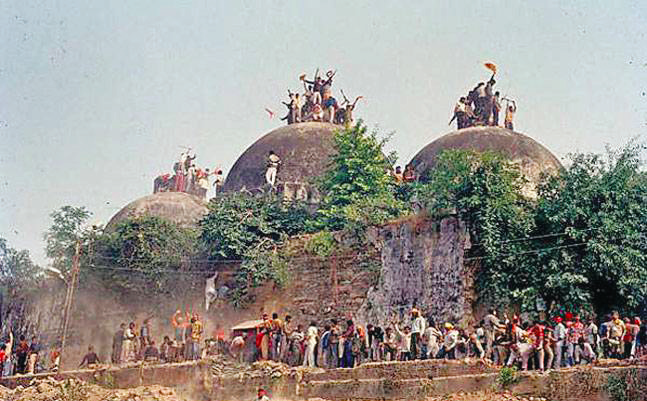
    NEW DELHI (TIP): Amid claims and counter-claims by various Hindu and Muslim leaders over the Ram Janmabhoomi-Babri Masjid site in Ayodhya, the Supreme Court on Feb 8 refused to be drawn into religious arguments, saying it was only a property dispute.

    “We are treating it only as a land dispute. There are appeals and crossappeals,” a three-judge Bench headed by Chief Justice of India Dipak Misra said after an advocate, who wanted to intervene in the matter, said it involved sentiments of 100 crore Hindus.

    The Bench chose to keep pending all intervention applications filed by those who were not parties to the dispute before the Allahabad High Court. “We are not allowing the intervention application… We are not dismissing them… The applications for impleadment and intervention shall be considered at the appropriate time,” said the Bench, which also included Justices Ashok Bhushan and S Abdul Nazeer.

    One such intervention application pending before the Bench is from BJP leader Subramanian Swamy.

    The top court asked all parties to file English translation of documents relied upon in two weeks and posted the matter for March 14. It did not commit to a “dayto- day” hearing of the case.

    The top court is seized of crossappeals challenging the Allahabad High Court’s September 30, 2010, verdict dividing the 2.7-acre disputed land at the Ram Janmabhoomi-Babri Masjid site equally between Ram Lalla, Nirmohi Akhara and Sunni Wakf Board. All three chose to challenge the order before the top court. Besides, there are more than 10 other appeals as well.

    Thursday’s hearing was in sharp contrast to the one held on December 5, which was marred by a heated exchange after senior counsel Kapil Sibal, Rajiv Dhawan and Dushyant Dave — representing Muslim appellants — insisted that the case should be heard only after the 2019 Lok Sabha poll as it might impact the electoral outcome.

    Additional Solicitor General Tushar Mehta, representing the Uttar Pradesh Government, told the Bench that 504 exhibits, including scriptures such as the Ram Charit Manas and the Bhagavad Gita, their excerpts and 87 depositions along with the translations had been filed.

    Advocate Ejaz Maqbool, appearing for one of the appellants, gave an overview of the documents already filed and those required to be filed. The Bench directed the Registry to make available copies of two video cassettes to advocates for various parties on payment of actual cost.

    The otherwise peaceful proceedings witnessed some banter after senior counsel representing Ram Lalla, CS Vaidyanathan, said the other side should submit a synopsis of their legal propositions to make it easy for all concerned to assist the court.

    “The High Court’s verdict is an insult to justice,” Dhawan said. He requested day-to-day hearing, but the Bench didn’t appear inclined. “There are 700 cases pending where citizens are crying for justice,” said CJI Misra, clarifying he was not commenting on the importance of the Ayodhya case.

  • Indian American President of USIBC is pleased with the Indian budget

    Indian American President of USIBC is pleased with the Indian budget

    WASHINGTON DC (TIP):  US-India Business Council on Friday, February 2, praised the Union Budget 2018-19 calling it a move by the Modi government to leverage the growth and prosperity of India in the coming years.

    The organization said, in a press release, that it is pleased that the budget contains many of its recommendations in critical areas such as infrastructure development, access to health care, affordable housing, energy, and education for all citizens form the backbone of any growing economy.

    “American industry is committed to growing, strengthening, and sustaining these areas of collaboration with India,” it said.

    The three years of Modi-led government has given shape to a robust economy, which is on a growth path backed by strong reform agenda, the group said.

    For the current year, USIBC has put the priority on ensuring greater ease of doing business, promoting certainty, transparency, and predictability in decision-making to ultimately, unlock greater growth and investment opportunities for businesses in both US and India whereby strengthening the US-India commercial partnership, it added.

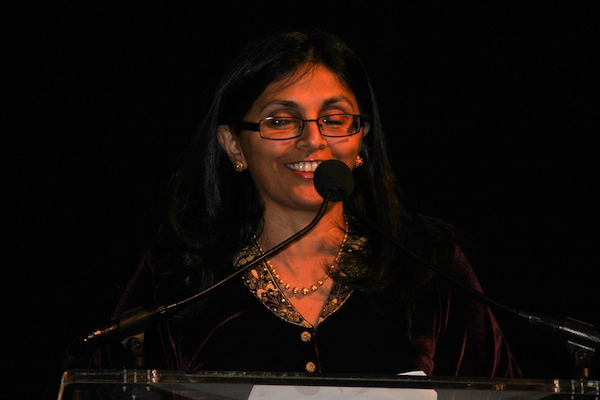
    “[The] American industry is committed to growing, strengthening, and sustaining these areas of collaboration with India,” said USIBC President Nisha Biswal.

    “In the last three years, India has been on a robust path to growth, backed by a strong economic reform agenda. USIBC’s goal is to keep up the momentum of the US-India commercial partnership to ultimately, unlock greater growth and investment opportunities for businesses in both nations,” she added.

    The USIBC, an advocacy organization, consists of 350 top-tier U.S. and Indian companies doing business in both the United States and India. It is part of the US Chamber of Commerce, the world’s largest business federation.


  • Anti – Sikh Riots 1984: Rs 10 crore allocated for enhanced compensation to victims

    Anti – Sikh Riots 1984: Rs 10 crore allocated for enhanced compensation to victims

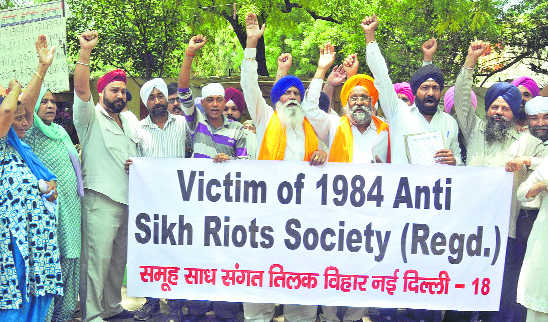
    NEW DELHI (TIP): A modest Rs 10 crore has been earmarked for handing out enhanced compensation to victims of the 1984 anti-Sikh riots in the Budget 2018-19.

    The amount was allocated in the Budget, presented by Finance Minister Arun Jaitley in Parliament on Thursday, February 1, and it would be distributed among victims of the riots.

    The riots broke out following the assassination of the then Prime Minister Indira Gandhi by her Sikh bodyguards on October 31, 1984.

    Of the 3,325 victims, 2,733 were killed in Delhi while rest of the victims were from Uttar Pradesh, Haryana, Madhya Pradesh, Maharashtra and other states.

    Soon after the Narendra Modi government came to power in 2014, it had announced an additional compensation of Rs 5 lakh each to the next of kin of victims of the anti-Sikh riots.

    The amount in the 2017-18 Budget was Rs 15 crore.

    Some of the anti-Sikh riot cases are still continuing in courts and many Sikh organizations have alleged that the key conspirators of the violence were at large, and victims have not yet got justice.

    (Source: PTI)

  • Aadhaar, India: Personal data of about a billion people sold online for $8

    Aadhaar, India: Personal data of about a billion people sold online for $8

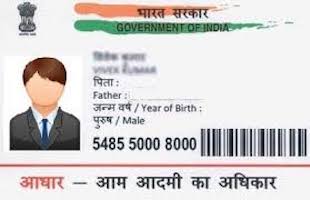
    NEW DELHI (TIP): Personal information from Aadhaar cards (personal identification card) of more than a billion Indians stored in the world’s largest biometric database was sold online for less than $8, according to a report by an Indian newspaper.

    An investigative story by The Tribune revealed that it is possible to buy login credentials of the Aadhaar database, which can collect the photographs, thumbprints and other identifying details of every citizen. It further added that fake Aadhar cards can be generated by purchasing software online and that the publication also bought access to such database by merely paying $7.89 on a WhatsApp group.

    The Unique Identification Authority of India (UIDAI), which controls the Aadhaar system said that the “case appears to be an instance of misuse.”

    UIDAI said that it has filed a police complaint against the people responsible for misusing the access but did not identify them.

    A follow-up story by The Tribune mentioned that the agency has denied any misuse of data. “UIDAI reassures that there has not been any data breach of biometric database which remains fully safe and secure with highest encryption at UIDAI and mere display of demographic information cannot be misused without biometrics,” it added. “Claims of bypassing or duping the Aadhaar enrolment system are totally unfounded.” This kind of problems in a program facing increasing scrutiny over privacy concerns will ask more questions about data safety.

    The current administration, under Prime Minister Narendra Modi, had also made it mandatory for individuals to link Aadhaar to private and public services. Now India’s Supreme court is holding hearings to decide whether the decision made by Modi will affect the privacy rights of individuals or not.

    Several national leaders in India have expressed concerns over the safety of private information.

    Sitaram Yechury, a leader of a communist party in India, tweeted, “The Perils of making Aadhaar mandatory and linking it to bank accounts, as insisted upon by the Modi government, are visible here.”

    Last month, the telecom firm Bharti Airtel was barred by the agency for using Aadhaar details to verify customers identities because the facility was being misused to open accounts on its payment platform.

  • Punjab CM accepts power minister Rana Gurjit’s resignation

    Punjab CM accepts power minister Rana Gurjit’s resignation

    CHANDIGARH (TIP): Punjab Chief Minister Amarinder Singh has accepted the resignation of power and irrigation minister Rana Gurjit Singh on Jan 18 following a meeting with AICC president Rahul Gandhi.

    Rana Gurjit had submitted his resignation to Amarinder a few days ago. But the CM had not accepted it. He had left it to Rahul to take a call. The decision to accept the resignation was taken after a thorough discussion on the issue during a meeting of CM and Rahul Gandhi in Delhi today morning.

    While sources said Amarinder was still backing his loyalist, Rahul and other leaders in the meeting are learnt to have prevailed upon the CM. PPCC President Sunil Jakhar, General Secretary Incharge Asha Kumari and AICC Secretary Harish Choudhary were also a part of the meeting.

    Rana Gurjit was caught up in a controversy related to sand mine auction in May. His two ex employees had bagged sand mines in the first ever auction done by the Congress-led government. Then CM had then ordered a probe Justice JS Narang (retd) into the case. The commission had however given Rana a clean chit.

  • Tired Titan: Who, after Modi?

    Tired Titan: Who, after Modi?

    By Virendra Pandit

    Within three years, however, the BJP is huffing and puffing, tired of its own baggage of successes, whereas the much pilloried and humbled Congress is seen as rejuvenating like a fallen Arnold ‘Terminator’ Schwarzenegger being revived by his emergency batteries. If in the early 1960s, India faced the huge question mark, ‘Who, after Nehru?’, and in the 1970s, ‘Who, after Indira Gandhi? the year 2018 has arrived with ‘Who, after Modi?’

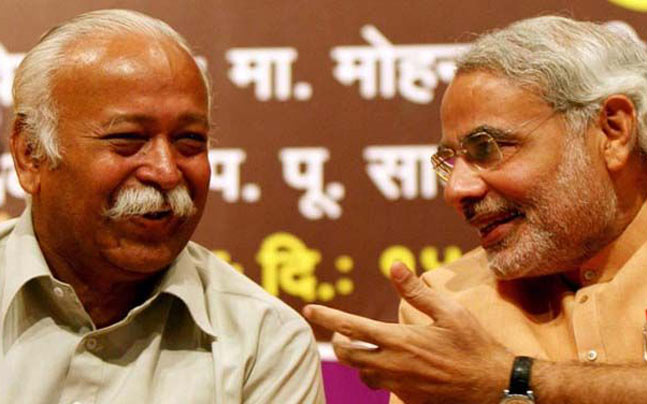
    Bhagwat, who succeeded K S Sudarshan as the RSS chief in March 2009, has been junior to Modi in the Sangh Pariwar hierarchy and seen as the one unable to tame the man who now helms India from 7, Race Course Road in New Delhi. On the contrary, Bhagwat is seen as a Modi-acolyte and many of the RSS subsidiaries—the Vishwa Hindu Parishad (VHP), the Bharatiya Mazdoor Sangh (BMS), Swadeshi Jagaran Manch (SJM) etc.—have, from time to time, raised the standard of rebellion ostensibly against the Government’s failures to deliver on the promises and also, indirectly, against the Modi-Bhagwat stranglehold that may pull down the entire edifice built since the founding of the RSS in 1925. RSS is the “socio-cultural-spiritual” parent of the BJP, its political front, which is part of dozens of organizations having Hindutva ideological affinities with the Grand Master across India.

    In 2014, when Narendra Modi, 64, became India’s 16th Prime Minister, he, and many, believed and boasted that he would continue to helm the affairs at least until 2024, what with the decimated main Opposition party, the Indian National Congress, touching the nadir of its entire political existence since 1885. Managing to win a measly 44 seats, out of 543, in the Lok Sabha (Lower House of Parliament), the corruption-accused, Jurassic Era’s Grand Old Party (GOP) had become laughing stock of the nation. Modi was the flavor of the season, the Knight-in-Shining-Armor, the Messiah…the very God Who Could Do No Wrong…

    The ‘belief’ that the right-wing Bharatiya Janata Party (BJP), led by a ‘youthful’ and energetic Modi as the fulcrum of National Democratic Alliance (NDA), had finally arrived as an effective alternative to the Congress was further buttressed with the BJP winning a series of State Assembly elections across India, replacing the Congress everywhere. Indeed, a gloating Modi himself has been talking about how to make India celebrate the Diamond Jubilee of her Independence in 2022 and, hinting, how he will continue to helm India until 2024!

    Within three years, however, the BJP is huffing and puffing, tired of its own baggage of successes, whereas the much pilloried and humbled Congress is seen as rejuvenating like a fallen Arnold ‘Terminator’ Schwarzenegger being revived by his emergency batteries. If in the early 1960s, India faced the huge question mark, ‘Who, after Nehru?’, and in the 1970s, ‘Who, after Indira Gandhi? the year 2018 has arrived with ‘Who, after Modi?’.

    For, all these three towering leaders, suffering with narcissism, would leave no second line of leaders who could replace or succeed them—but Mother India has been fecund enough to nurture a successor silently, even if via transitional leaders until the NextGen was crowned. So, Lal Bahadur Shastri succeeded Nehru while Indira was by her son Rajiv Gandhi. The Mother could, therefore, be trusted to be silently nurturing a successor to Modi as well! Next year, 2019, he will face the Lok Sabha election with a heavy baggage from the past; and his possible successor, if he loses the elections, is not visible yet!

    But why has this huge question mark emerged in the last few weeks? Has the Modi rhetoric run its course? Has his mystic and charisma seen a steep and sudden decline? Since 2014, he strode like a Colossus across not only India’s political firmament but also globally. He scripted many foreign policy firsts and successes, as millions of Indians looked with amazement at this fashion-designed Prime Minister making India proud both on national and global fronts. What has changed now, and so spectacularly?

    In November 2014, RSS chief Mohan Bhagwat compared Modi with the Mahabharata’s Abhimanyu, Arjuna’s valiant son who knew how to enter a Chakravyuha (the enemy’s phalanx in concentric circles with openings only at opposite sides) but not how to come out of it, and was, therefore, slain by seven Kaurava warriors. Modi, buffeted as he is now encircled by seven enemies, may have stepped into Abhimanyu’s shoes!

    His first enemy is, of course, the Indian economy. Only on January 5, the Central Statistical Organization (CSO) said the country’s growth in economy in 2017-18 slowed down to a four-year low of 6.5%, dragged down by sluggish manufacturing and farm sectors and the impact of the rollout of demonetization and Goods and Services Tax (GST) in the last one year. Clearly, an overall job-loss, farm distress shown by farmers’ suicides, youth unrest and the like have dragged down the people’s confidence in the government’s ability to deliver on its promises. Few, if any, are interested in what Moody’s says about Modi.

    A year on, the double whammy of demonetization and GST have begun to impact politics. In Modi’s home state of Gujarat, the recent Assembly elections left the BJP with, at best, a pyrrhic victory with the saffron party winning only 99 of the 182 seats, lowest since 1995. This steep decline in Modi’s image emboldened the BJP’s own leaders to virtually blackmail the party leadership and extract their pound of flesh! Clearly, the Modi charisma began to fade, first of all, in his own state. Successful event managements, circus-like extravaganzas, and sound-and-light razzmatazz, all at the expense of the exchequer, cannot replace good politics!

    His second enemy is India’s upwardly mobile and irreverent youth, nearly 100 million of them unemployed due to a variety of reasons. While battling for Prime Ministership in 2013-2014, Modi never tired of talking about this ‘demographic dividend’, what with 65% of the voters being in the 18-35-year age-group. He also drafted a series of plans for the youth, gave them dreams to live for and support him. But they remained pipedreams, and turned into nightmares for many. Empty promises disillusioned them, triggered youth rebellion, giving rise to the emergence of a formidable trio of Young Turks—Hardik Patel, Alpesh Thakore and Jignesh Mewani—in Modi’s own Gujarat. Together, they left the BJP with its bloodiest nose in 22 years and produced green-shoots in a Congress that lay comatose for a long time.

    With these three youths, the caste-centric politics of the 1990s has returned to India. This return to India’s basic, chaotic politics is the third enemy of Modi, who seemed to have replaced the Mandal-Kamandal era of the BJP with his own brand of vikas-centric politics that sought to stress on socio-economic development. Due to lack of resources to fund development, his boastful brand of politics collapsed, first of all, in his home state of Gujarat in the December 2017 Assembly elections. The assertive-aspirational politics of the caste-conscious youth, soon, found expression in neighboring BJP-ruled Maharashtra where the Dalits (Suppressed Castes) raised a banner of rebellion against the Upper Castes, they saw as represented by the BJP’s Chief Minister Devendra Fadanavis.

    Modi’s fourth enemy is the coming Assembly elections in eight states in 2018. Three of them are large states—Rajasthan, Madhya Pradesh and Chhattisgarh—and are BJP-ruled for years where the saffron party is expected to face a strong anti-incumbency and reverses. This is due to the BJP evolving itself as an ‘alternative’ to the Congress, i.e. as corrupt! The fourth state, Karnataka, hub of India’s IT revolution, also has little chances of going the BJP way. A caste-based social-re-engineering is now at work across the states and the “vote-banks” of yore are disintegrating everywhere, in the great socio-economic churning current in the cauldron called Modern India. Even the Muslims no longer remain a solid ‘vote-bank” as Muslim women saw in the ‘enemy’ BJP their emancipators, thanks to its support to them on the divorce issue, as evidenced in Gujarat by their large vote for the saffron party!

    With these new emerging trends reshaping Indian politics, Modi’s fifth enemy is the likely revival of the erstwhile United Progressive Alliance (UPA), led by a revivified Congress under a combative Rahul Gandhi. If the BJP fails to win back the major states this year, and with one state slipping after another from the saffron fold, the NDA itself may come apart. Some of its current regional partners may even join the UPA bandwagon. Only a few months ago, the UPA seemed to be disintegrating what with Bihar’s Nitish Kumar joining the NDA; no longer. India’s politics has entered its most mercurial state and equations change quickly.

    His sixth enemy is the overall disillusionment among the people with the political class as a whole. Modi came to power promising Achche Din (Better Days Ahead) and punishment to the corrupt UPA leaders but each one of them have been acquitted by the courts, and they are back hounding and howling at him. The general apathy of the voters for politicians of all hues, including Modi, was demonstrated by over 500,000 people who voted for the “None-Of-The-Above” (NOTA) option in Gujarat. This option, introduced by the Election Commission for the first time in an Assembly election, impacted the outcome in nearly 30 Assembly seats, out of 182, in Gujarat. It harmed both the BJP and the Congress as the number of NOTA votes were, in those 30 constituencies, more than the winning or losing margins.

    And his seventh enemy is from within: the disgruntled Sangh Pariwar (Saffron Brotherhood) and its many constituents. In 2014, the entire Pariwar, with over 25 million workers, had helped Modi climb the steps of Raisina Hills in New Delhi and take oath as the Prime Minister of an aspirational India. Three years down the line, with few results to show on the ground, his promises galore remain hollow, his bravado seems melting away, his 56-inch chest losing muscle. His recent election speeches in Gujarat showed him as a tired titan. Promising a better future, he emerged from Bharat but surrendered to India.

    But it is not Modi, the Abhimanyu, who alone may lose out. His “Krishna”, Mohan Bhagwat, having travelled with Modi so far and shielded him unconditionally, may also face heat from within the RSS rank-and-file for putting all the Hindutva eggs in Modi’s Nehru jacket.

    Their relationship, to say the list, is interesting. Bhagwat, who succeeded K S Sudarshan as the RSS chief in March 2009, has been junior to Modi in the Sangh Pariwar hierarchy and seen as the one unable to tame the man who now helms India from 7, Race Course Road in New Delhi. On the contrary, Bhagwat is seen as a Modi-acolyte and many of the RSS subsidiaries—the Vishwa Hindu Parishad (VHP), the Bharatiya Mazdoor Sangh (BMS), Swadeshi Jagaran Manch (SJM) etc—have, from time to time, raised the standard of rebellion ostensibly against the Government’s failures to deliver on the promises and also, indirectly, against the Modi-Bhagwat stranglehold that may pull down the entire edifice built since the founding of the RSS in 1925. RSS is the “socio-cultural-spiritual” parent of the BJP, its political front, which is part of dozens of organizations having Hindutva ideological affinities with the Grand Master across India.

    In a way, Modi himself may have undermined Bhagwat’s authority. In TV interviews, Modi had boasted in 2014 about his relations with Mohan’s father, Madhukar Rao, thus indirectly hinting that he (Modi) was senior to the Bhagwat Junior in the RSS hierarchy!

    It is this internal dynamics of the RSS that helped bring Modi to power in 2014. And it is this internal dynamics of the RSS that may also defeat him at the hustings in 2019, what with most of the RSS workers remaining aloof from elections, as in Gujarat recently.

    In 2014, the RSS had Modi to support. Who will it support in 2019?

     (The author is a journalist since 1983 and has worked with newspapers, news agencies and magazines in English and Hindi languages. He has contributed articles on diverse subjects. Currently, he is working as Consulting Editor with Business Line, the business daily of The Hindu Group of Publications in India. He is based in Ahmedabad in Gujarat, India. He can be reached at virendra.pandit@gmail.com)

  • BJP’s, Thakur favorites for Himachal CM post

    BJP’s, Thakur favorites for Himachal CM post

    SHIMLA (TIP): BJP central observers Nirmala Sitaraman and Narendra Singh Tomar arrived here today to meet the newly elected party MLAs to elicit their views and arrive at a consensus on a new chief minister.

    A meeting of BJP Legislature party has been convened for the interaction of central observers along with in charge for party affairs Mangal Pandey with party MLAs and a meeting of core committee is also scheduled later in the evening, the BJP sources said.

    The shock defeat of the BJP’s chief ministerial candidate Prem Kumar Dhumal from Sujanpur has opened up the race for the top post in Himachal Pradesh.

    Union Health Minister Jagat Prakash Nadda and Jairam Thakur, five-time MLA from Seraj in Mandi district, are being seen as front-runners for the chief minister’s post.

    The central observes would also hold a meeting with members of core committee which included Dhumal, state party chief Satpal Singh Satti, all five MPs from the state and organisation secretary, Pawan Rana.

    The central members are also likely to meet the MLAs individually to elicit their views and the leader would be elected by consensus, the party sources said.

    The BJP has 44 members in the 68-member Assembly.

  • ‘Gujarat poll results zabardast jhatka for BJP’

    ‘Gujarat poll results zabardast jhatka for BJP’

    NEW DELHI (TIP): A day after the Gujarat result , Congress president Rahul Gandhi said the polls had delivered BJP a “zabardast jhatka (terrific shock)” that exposed PM Narendra Modi’s credibility crisis , prompting BJP to respond that the leader was enjoying “defeat as victory”.

    In his first comments on the Gujarat election result where Congress ran rival BJP close, Rahul told reporters, “It is a very good result for us. Agreed that we lost and could have won, we fell short. But BJP suffered a massive jolt in Gujarat. People of Gujarat do not accept Modi’s model. It is high on propaganda but it’s hollow.”

    Senior BJP leader and HRD minister Prakash Javadekar said Rahul was under an illusion that the Gujarat polls were a jolt to the ruling party. “We (BJP) won both state assembly elections and in Gujarat for the sixth time. Actually this is a jolt for Congress,” he said.

    Javadekar alleged that Congress adopted divisive politics in Gujarat, but people put their faith in Modi and his development agenda. “It seems Rahul Gandhi is under an illusion and he is enjoying defeat as victory. This shows his dynastic arrogance and is an insult to the people’s mandate,” he said.

  • Raja, Kanimozhi, all other 2G scam accused acquitted

    Raja, Kanimozhi, all other 2G scam accused acquitted

    CBI court says prosecution failed to prove any charge; agency to file appeal in HC

    NEW DELHI (TIP): Former telecom minister and DMK leader A Raja, Rajya Sabha MP Kanimozhi and others were today acquitted in the politically sensitive 2G spectrum allocation cases by a special court which held that the prosecution miserably failed to prove the scam involving corruption and money laundering.

    The court, which held there was no scam in the 2G spectrum allocation in 2007-08 when Raja was the telecom minister in the erstwhile UPA regime headed by Manmohan Singh, also set free all accused in two offshoot cases lodged by the ED and the CBI.

    It said some people created a scam by “artfully arranging a few selected facts and exaggerating things beyond recognition to astronomical levels”.

    In the main CBI case, besides Raja and Kanimozhi, the 15 other accused allowed to walk free include former telecom secretary Siddharth Behura, Raja’s erstwhile private secretary R K Chandolia, Swan Telecom promoters Shahid Usman Balwa and Vinod Goenka, Unitech Ltd MD Sanjay Chandra and three top executives of Reliance Anil Dhirubhai Ambani Group (RADAG) — Gautam Doshi, Surendra Pipara and Hari Nair.

    Bollywood film producer Karim Morani, Kalaignar TV’s director Sharad Kumar, Asif Balwa and Rajiv Aggarwal of Kusegaon Fruits and Vegetables Pvt Ltd were also acquitted. The companies which were not found guilty are Shahid Balwa’s Swan Telecom Pvt Ltd, Chandra’s Unitech (Tamil Nadu) Pvt Ltd and Reliance Telecom Ltd of Anil Dhirubhai Ambani Group.

    Raja and Kanimozhi, daughter of DMK supremo M Karunanidhi, along with 17 others were also let off in another case lodged by the Enforcement Directorate under the money laundering law arising out of the 2G scam. Raja remained in jail for over 15 months while Kanimozhi was in prison for six months before they were granted bail.

    Other accused persons were also in jail for varying term.

    The court also acquitted Essar Group promoters Ravi Kant Ruia and Anshuman Ruia and six others in a separate CBI case arising out of the 2G scam probe. Besides Ruias, Loop Telecom Promoters I P Khaitan and Kiran Khaitan and Vikash Saraf, one of the Essar Group Directors, Loop Telecom Ltd, Loop Mobile (India) Ltd and Essar Teleholdings Ltd were also acquitted.

    While giving clean chit to all the accused in the three case connected with the 2G spectrum allocation, Special Judge O P Saini was critical of the CBI and the apex court-appointed special public prosecutor Anand Grover, saying the quality of prosecution had “totally deteriorated” and by the end it became “directionless”.

    It observed that the CBI had started its case with “great enthusiasm and ardour” but at the final stage of the trial, SPP Grover and the regular CBI prosecutor moved in “two different directions without any coordination”.

    Further, the judge was not convinced with the prosecution theory that the then Prime Minister Manmohan Singh was misled by Raja or that the facts were misrepresented to him, saying such arguments were taken “just to prejudice the mind of the court by invoking the high name and authority of the prime minister of the country.

    In embarrassment to the CBI, the court said the genesis of the instant case lies not so much in the actions of Raja but in the action or inaction of others and “there is no material on record to show that the telecom minister was ‘mother lode of conspiracy’ in the case”.

    “There is also no evidence of his no holds barred immersion in any wrong doing, conspiracy or corruption,” it said about the alleged scam in which high profile witnesses like the then Attorney General G E Vahanvati, Anil Ambani, his wife Tina Ambani, corporate lobbyist Niira Radia, then TRAI Chairman Nripendra Mishra, then DoT secretary D S Mathur, former RBI governor D Subba Rao and former Law Secretary T K Vishwanathan deposed.

    In the main CBI case involving Raja, Kanimozhi and others, the court held that the depositions of senior officers of Department of Telecom (DoT) and key prosecution witnesses were contrary to the record and they were just passing the buck without suggesting anything.

    However, it said Raja’s statements matched with the official record and “appeared to be cogent, truthful and as such acceptable”.

    Source: PTI

  • Perspective : How Gujarat was won

    Perspective : How Gujarat was won

                                By Shreyas Sardesai/ Sanjay Kumar

    The Bharatiya Janata Party (BJP) has managed only a modest victory in Gujarat, confirming some earlier psephological predictions and ground reports of a close electoral contest. Two polls conducted by us at Lokniti, Centre for the Study of Developing Societies (CSDS), one in end-October and another in end-November, had found the electoral race between the BJP and the Congress to have tightened considerably. In fact, the November survey had found the race to be neck-and-neck in terms of vote share. That trend, however, did not hold entirely till Voting Day. It now seems that a last-minute swing by some voters towards the final stages of the campaign ended up giving the edge to the BJP.

    We say this based on evidence gathered from a post-poll, a survey of voters at their residences after they voted, conducted by Lokniti. The poll reveals that over two in every five voters (43%) took a final call on who they would vote for in the last two weeks of campaigning — and more than half of them (53%) said they voted for the BJP while only about 38% went with the Congress. In fact, a majority of these late deciders are those who decided at the last minute, either on the day of voting or a day or two before it. In 2012 the share of late deciders had been much lower, at 31%, and back then they had split their vote evenly between the BJP and the Congress.

    The question then is, what really happened, between the last week of November when our final pre-poll took place and the second week of December when actual voting took place, that made some disaffected voters planning to vote for the Congress change their minds? The answer to this question is not so difficult to find.

    The late shift

    We believe that it is quite obviously Prime Minister Narendra Modi’s campaigning, which was for the most part controversial and divisive, that played a role in turning a section of voters towards the BJP, thus saving it from a possible defeat. This is the period when the Prime Minister, who is hugely liked in Gujarat (by 72% of those surveyed, post-poll), campaigned extensively in the State. Starting from November 27 right up till December 11, he addressed more than 30 election rallies across the State. Most of his speeches, especially the ones made at rallies post-December 5, focused on divisive themes. Mandir-Masjid, Mughals, Pakistan, Ahmed Patel, Salman Nizami, etc., he practiced classic dog-whistle politics by using coded language that might have stoked passions among some sections of the electorate.

    In our final pre-poll done in end-November, we had found only about 45% of Hindu voters to be voting for the BJP. In the post-poll, we noticed that eventually nearly 52% of them ended up voting for the incumbent party. This is also three points higher than the Hindu support that the BJP received in 2012. While our post-poll also suggests an increase in Muslim votes for the BJP compared to last time, at the same time it also points to a consolidation of Hindu votes behind the party in Assembly seats where the Muslim population is much higher than average. In constituencies where Muslims in the population are less than 10%, the BJP’s lead over the Congress among Hindu voters is only 4 percentage points. In seats where Muslims constitute 10-20% of the population, the gap is six times higher at 25 points. And in areas where Muslims are over 20% of the population, the BJP leads the Congress by 42 points among Hindu voters. In our pre-poll, these gaps had been minus-3, 16 and 11 points, respectively.

    The Hindu card

    Among the major worries of the BJP all throughout the campaign had been the Patidar disaffection with the party as well as the Congress’s attempts to build a rainbow coalition of different castes by roping in young Patel, Dalit and OBC (Other Backward Classes) leaders on its side. By giving communal overtones to the campaign, the Prime Minister seems to have ensured a subsuming of some of these caste identities within the Hindu fold, thus helping the BJP hold on to its bastion. We notice a shift away from the Congress among all Hindu communities, be it Patidars, Kshatriyas, Dalits, and Adivasis, between the pre-poll and the post-poll. To be fair, it wasn’t just the BJP that played the Hindu card; the Congress tried doing it too, albeit covertly. All throughout the campaign, Rahul Gandhi, who led the party campaign, steered clear of raising issues concerning Muslim voters and instead chose to appeal to majoritarian sentiments by visiting temples across the State.

    However, eventually it seems that in this competition to woo the Gujarati Hindus, most Hindu voters, particularly urban ones, were more convinced by Mr. Modi’s insinuations than by Mr. Gandhi’s attempts at asserting his Hindu-ness. The Congress’s strategic abandonment of its pluralistic legacy for electoral gains is to our mind as worrying as the communal rhetoric in Mr. Modi’s campaign.

    Also, the fact that a seemingly neck-and-neck election can be turned around in such a short span by appealing to the majoritarian impulses of voters raises troubling questions about the health of our electoral democracy.

    A section of the Gujarati press may have also played a role, perhaps inadvertently, in effecting the late swing of some voters. A day after Mr. Modi raised a hue and cry at one of his rallies about Congress leader Mani Shankar Aiyar’s remark calling him a “neech kisam ka aadmi (a low type of man)”, the hugely popular Gujarati newspaper, Gujarat Samachar, which has otherwise been quite critical of Mr. Modi over the years, ran a headline on its front page: “Modi neech jaatino maanas chhe: Mani Shankar Aiyar (Modi is a man from a lower caste says Mani Shankar Aiyar)”. While Mr. Aiyar had described Mr. Modi as “neech”, the newspaper chose to give the remark its own spin, or rather Mr. Modi’s spin, by adding the word “jaati” to it. Such misreporting of Mr. Aiyar’s comment in sections of the press just a day before voting was to take place in Saurashtra-Kutchh and South Gujarat may well have affected the mood of a significant proportion of voters. Our series of surveys in Gujarat suggest that on an average about one-third of voters in Gujarat are daily readers of newspapers. Among such voters, the BJP’s lead over the Congress widened from 8 points in the pre-poll to 14 points in the post-poll.

    Uncomfortable questions

     Winning the trust and confidence of a majority of voters election after election is no mean achievement, and there’s no doubt the BJP should be commended for this. But at the same time the uncomfortable question we must be asking is this — was this trust of voters won by the BJP fairly and squarely on the performance plank alone or whether a large part of it was also won through divisive innuendos, falsehoods and fear mongering?

    (Shreyas Sardesai is Research Associate at Lokniti, CSDS. Sanjay Kumar is a Professor and currently the Director of CSDS, Delhi)

  • INOC USA Congratulates Rahul Gandhi for “a brilliant campaign” in Gujarat

    INOC USA Congratulates Rahul Gandhi for “a brilliant campaign” in Gujarat

    NEW YORK (TIP): “In Gujarat, Congress Party scored a moral victory, a BJP bastion that has been turned into a Hindutva laboratory of polarization and bigotry. Despite tremendous odds, Congress Party increased its legislative seats to 77 and the vote share to 45%”, said George Abraham, Vice-Chairman of the newly reconstituted Indian Overseas Congress, USA.

    IOC congratulates Mr. Rahul Gandhi for conducting a statesman like a campaign and exposing the fallacy of the ‘Gujarat Development model’ which promotes crony capitalism at the expense of its ordinary citizens”. Gandhi said “The propaganda was good, marketing was good, but it was hollow within. I saw it there (in Gujarat).” He also underlined that in his tweet after the verdict, in which he said that the Congress “fought anger with dignity” and that “the Congress’ greatest strength is its decency and courage”.

    On the other hand, the Prime Minister was engaged in once again invoking the religious symbolism or exploiting a statement from an opposition party leader or even implying that the former Prime Minister Manmohan Singh of colluding with Pakistan to fix the Gujarat election. It was indeed a low point of the campaign, however; Modi may have succeeded in diverting the focus away from ‘development’ to these extraneous issues.

    This election has indeed exposed the rural and urban divide in the State that took a beating with misguided demonetization policy and messy implementation of GST that hurt the farmers and the trading community disastrously. Congress may have lost the election; however, Rahul Gandhi was able to drive home the message that those 22 years of BJP rule has left most of the rural folks far behind while favoring the Industrialists and the urban upper class.

    Apparently, Rahul Gandhi had an uphill battle; however, he has certainly helped himself changing the perception among the voting public that he is a caring person who is willing to listen and learn. BJP had to resort to an all-out campaign with suspending the winter session of the parliament while deploying almost the entire team from the central cabinet along with total support from national and local institutions together with the RSS cadre to protect Gujarat from falling into the opposition ranks.

    Gujarat election may also show that Modi may be vulnerable 2019 with rural areas across the country are struggling, and joblessness among the youth are increasing with more younger leaders like Harkesh Patel, Alpesh Thakur and Jignesh Movani may emerge to challenge the status-quo.

    Finally, we respect the decision of the voters to give another term to BJP manifesting the strength and resilience of India’s democracy. It is vital that the Institutions of democracy that were created under the Nehruvian vision remain strong and resolute in defending freedom and voter’s right to choose their leaders. The current allegations against the tampering of the EVM machines should be thoroughly investigated and the integrity of the election process ought to be preserved.

  • PARLIAMENT’S WINTER SESSION: OPPN PLANS OFFENSIVE AGAINST GOVT

    PARLIAMENT’S WINTER SESSION: OPPN PLANS OFFENSIVE AGAINST GOVT

    NEW DELHI (TIP): The Congress-led opposition is likely to attack the government on key economic and corruption issues when the winter session of Parliament begins on Dec 15, Friday.

    The ruling National Democratic Alliance (NDA) will be bolstered by Thursday’s exit poll results that gave clear mandates to the BJP in both Himachal Pradesh and Gujarat, the home state of Prime Minister Narendra Modi.

    Sources in both camps indicated that the impact of the Gujarat results is likely to be felt in the House. “Even if the Congress is unable to get majority but increases its tally in the Gujarat assembly, we will certainly see a more aggressive face of the principal opposition party,” said a senior party strategist.

    The session’s first full day will be on Monday – when assembly election results will be declared – as the first day is likely to be adjourned after obituary references to three former parliamentarians.

    The government pushed back the session from its usual schedule to ensure that it doesn’t clash with the Gujarat poll campaign. The BJP, however, faced flak from the opposition parties who accused the government for trying to curtail the length of the winter session.

    The government has listed nine new bills, including one to criminalise instant triple talaq, for the short session. It also intends to pass 24 bills which are stuck in either of the two houses.

    The Congress, along with other opposition parties such as the Left, Trinamool Congress and DMK, had often stalled the government’s bills in Rajya Sabha and disrupted proceedings in the Lower House, where the BJP-led NDA enjoys a brute majority.

    Rajya Sabha chairman M Venkaiah Naidu, who spoke about tough measures against disruptions, told Rajya Sabha TV on Thursday that the Opposition must have ways to express their views.

  • Cong brands EC Modi’s ‘puppet’, files complaint against PM’s ‘roadshow’ after voting

    Cong brands EC Modi’s ‘puppet’, files complaint against PM’s ‘roadshow’ after voting

    NEW DELHI (TIP): The Congress on Dec 14 (Thursday) launched a scathing attack on the Election Commission (EC), saying the “sinking ship of Prime Minister Narendra Modi’s campaign is being saved by the poll panel”.

    In Ahmedabad, the party also filed a complaint with the EC against Modi fo allegedly violating the model code of conduct by holding a “roadshow” even as voting in the second phase of Gujarat elections was underway.

    Later in the day, Congress workers marched to the Election Commission to protest against Modi’s roadshow. They were stopped by the police outside Sardar Patel Bhawan near Patel Chowk in Delhi and many were detained.

    “The Election Commission of India has set different standards for the BJP and the Congress. What is the reason for the poll panel to behave like a frontal organisation of BJP,” asked Congress spokesperson Randeep Surjewala at a press conference in New Delhi.

    “It is a great shame that PM Narendra Modi has turned all constitutional institutions into his puppets, the Election Commission of India being one of them,” added Surjewala.

    Achal Kumar Joti, the target of the Congress’ diatribe, took over as chief election commissioner in July. A 1975- batch IAS officer, Joti was the chief secretary of Gujarat when Modi was chief minister. He was also a secretary in the industry, revenue and water supply departments in the state.

    The Congress’ attack comes a day after the Election Commission sought an explanation from party president-elect Rahul Gandhi for appearing in TV interviews ahead of the second phase of voting in Gujarat, which it said was a violation of the model code of conduct.

    The EC, on Wednesday, also filed FIRs against TV channels that aired the interviews, saying rules prohibit display of any “election matter” within 48 hours of the start of polling.

    The Congress, however, accused the poll panel of favouritism and questioned why it has not taken similar action against Modi who allegedly made political statements at a business meeting on Wednesday when he targeted the previous UPA government.

    “The Election Commission of India filed an FIR on TV channels based on a complaint by BJP member within 30 minutes. Unfortunately, the Commission has denigrated the Constitution of India. This shows how the institution has become a captive puppet of the BJP,” said Surjewala.

    The party said Modi also addressed four public rallies on December 9, the polling day for the first phase of elections in Gujarat.

    “PM Modi’s roadshow after casting vote is a clear case of violation of the model code of conduct. The Election Commission, it seems, is working under pressure from the PM and the PMO,” said Ashok Gehlot, Congress’ Gujarat incharge, at the press meet.

    In Ahmedabad, Modi, while leaving the polling booth at Ranip locality after casting his vote, held up his inked finger and greeted the crowd. He also stood on the side-step of his SUV, which moved slowly through the street for some distance, which the Congress says is akin to a “political roadshow”. Gujarat chief electoral officer BB Swain said the panel will look into the complaint. Source: HT