Tag: Investments

  • Gangster Chhota Rajan says never surrendered, wants to return to India

    Gangster Chhota Rajan says never surrendered, wants to return to India

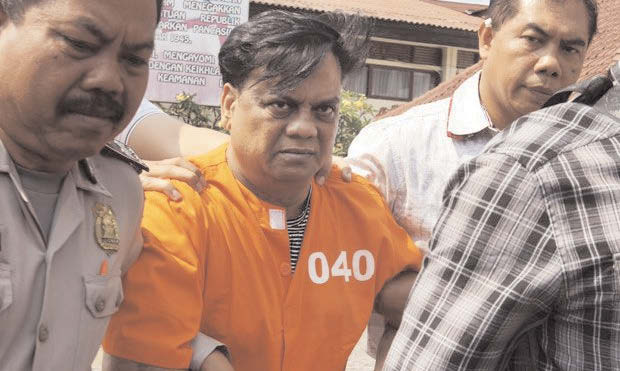
    BALI/MUMBAI (TIP): Underworld don Chhota Rajan, who has been arrested after being on the run for over two decades, claimed on October that he did not surrender and wants to return to India.

    There is intense speculation that the arrest of the gangster, who is wanted in over 75 heinous crimes ranging from murder, extortion to smuggling and drug trafficking, was part of a “deal” with Indian security agencies.

    “I never surrendered. I want to go back to India. Don’t want to go to Zimbabwe,” the one-time trusted aide of terrorist and crime boss Dawood Ibrahim told reporters.

    Rajan, one of India’s most wanted gangsters, was arrested in  Indonesia’s tourist destination Bali on a Red Corner Notice issued by Interpol after eluding law enforcement agencies for over two decades.

    Of these 75 cases, Rajan is facing four cases under Terrorist and Disruptive Activities (Prevention) Act (TADA), one under Prevention of Terrorism Act (POTA) and over 20 cases under the stringent Maharashtra Control of Organised Crime Act
    (MCOCA).

    Indian security agencies are likely to send a team of officials to Bali to bring back the gangster who has been in custody since Sunday.

    The sources are tight-lipped about the arrangements to bring him back because of security concerns arising out of his fierce rivalry with underworld don Dawood Ibrahim and his gang.

    They said agencies are working on more than one plan to bring back 55-year-old Rajan, once known as Dawood’s right hand man, factoring various permutations and combinations.

    Rajan was traveling with the identity of Mohan Kumar with passport number G9273860 when he was apprehended at the airport in Bali, after arriving there on a Garuda Indonesia flight GA715, by the Indonesian Police on a tip-off from Australian authorities, they said.

    The sources said Rajan was in touch with various police officials for the past six months seeking a passage to return to India as he feared for his life in Australia from Chhota Shakeel, a henchman of Dawood.

    In 2000, there was an attempt on his life when Dawood’s men tracked him down to a hotel in Bangkok but he managed a dramatic escape through the hotel’s roof.

    According to serving and former police officers, who have dealt with the Mumbai underworld, arrest of Rajan is a major success and his questioning is expected to shed light on hitherto unknown facts related to cases linked to his syndicate.

    Chhota Rajan assets worth over Rs 4,000 crore, claims Mumbai police

    Mumbai Police officials estimate Chhota Rajan’s current net worth to be in the range of Rs 4,000-5,000 crore. Fifty per cent of the investments are in India, especially in Mumbai and its satellite towns, they say. “According to our reports, Rajan owns a hotel in China, a few jewellery shops in Singapore, Thailand and a hotel in Jakarta. He has also invested in diamond trade in African countries, especially Zimbabwe,” said a senior Mumbai Police official.

    Sources claimed that Rajan tried to strike a deal with some officials from Zimbabwe to seek refuge in that country.

    But Zimbabwe did not want to be seen giving refuge to anyone who was wanted in India. “We found that he asked for Z-plus protection which was denied by them,” claimed the official.

    “The officials with whom Rajan negotiated promised to provide the best of health facilities but refused to extend security cover. Rajan suspected that he would eventually be tracked by the Dawood gang, and did not want to be attacked when he was at his weakest — while undergoing  dialysis for kidney failure,” said a source.

  • China’s Ocean Hegemony and Implications for India

    China’s Ocean Hegemony and Implications for India

    The fifth generation of CCP leadership under Xi Jinping has de facto abandoned the Deng doctrine of keeping low profile internationally. China has become more ambitious of becoming a superpower and has been extending its sovereignty claims on the land and the sea. As a rising hegemon, China has started to challenge the existing international strategic order. China has been in the news recently for building artificial islands with air-landing strips in the South China Sea. It has demanded 12 nautical miles exclusive economic zone around these artificial, man-made reefs. China is a signatory to the law of the Seas (UNCLOS). Chinese attempts to claim the bulk of the South China Sea goes against both the letter and the spirit of the law of the sea. Beijing will invoke its EEZ for its own economic benefits while denying the same rights to other claimants. Brushing aside the ASEAN Code of Conduct in the SCS, China claims sovereignty over all of the SCS which is disputed by Vietnam, the Philippines, Malaysia, Brunei and Taiwan.

    For the last several years, Chinese official media has been harping on safeguarding China’s “Ocean Sovereignty”. The PLA navy’s goal is to have a “Thousand Ships Navy”. This stated “TSN” Goal is to further Chinese supremacy in the Indo-Pacific region and exploit the mineral & hydrocarbon wealth in the international sea-beds. PLAN has been entrusted to fight future wars for China’s security as per the former President Hu Jintao. On December 6th 2011, while addressing the PLA Navy, Hu Jintao pronounced that PLAN should make “extended preparations for warfare in order to make greater contributions to safeguard national security”. China unilaterally declared an air-defense identification zone in the East China Sea in November 2013. Recently, a Chinese admiral declared similar intentions of setting up an air defense identification zone in the future above the disputed areas of the South China Sea if Beijing thought it was facing a strategic threat.

    China has created not only facts on the ground but also facts on the Ocean in a very predictable manner of claiming sovereignty with the “Chinese Characteristics”. China always makes maximalist claims against other countries, disputes sovereignty, and alters the facts on the grounds of medieval history or economic reasons, bullies the smaller adversaries into submission, demands mutual concessions while later on sending its armed forces. China has constructed a couple of lighthouses in the South China Sea to provide a fig-leaf for its naked hegemony and sea-resources grabbing activities. China has successfully converted the South China Sea into a virtual private lake affecting the freedom of navigation for the entire world. India has vital maritime interests in the South China Sea. 55% of Indian maritime trade passes through the South China Sea. China has objected vehemently to ONGC’s oil drilling in collaboration with Vietnam in the South China Sea and PLAN ships have started to harass the Indian drilling rigs.

    Once the heat of the South China Sea is gone and Beijing has de facto acquired the marine resources of the South China Sea, the dragon will spread its strategic tentacles into the Indian Ocean. Warning bells are already ringing in the Indian Ocean. PLAN started its naval forays in Indian Ocean up to the Gulf of Aden in 2010 under the garb of anti-piracy operations to control Somali pirates. China’s string of pearl initiative got absorbed in the 21st Century Maritime Silk Road. China did acquire significant naval facilities in Hambantota, Chittagong, Maldives, and listening & communication facilities in the Coco Islands in Myanmar besides building the naval port in Gwadar. Incidentally, India has gifted the Coco islands to Myanmar in Nehru’s realm. Gwadar port was offered to India by Oman but Nehru declined and Pakistan became the owner and the beneficiary. China also acquired naval facilities for recuperation and re-fueling in Seychelles in December 2011. China has already signed an agreement with the UN backed International Seabed Authority to gain exclusive rights to explore poly-metallic sulfide ore deposits in 10,000 square-kilometers of international seabed in Indian Ocean for 15 years. China has been sending nuclear powered submarines to Sri Lanka and Pakistan. Pakistan will receive eight Chinese nuclear powered submarines effectively neutralizing the Indian second strike capabilities in case of a nuclear attack on India. China plans to buy an island from the Maldives for $ 1 billion under the current Maldivian Government of President Abdulla Yameen.

    China’s response to Malabar naval exercises in 2007 when trilateral format included Japan was very negative leading to non-invitation to Japan later on after 2007. India plans to invite Japan in the upcoming Malabar exercises and Chinese reaction would be worth watching. China remains very paranoid about the US “Pivot to Asia” doctrine. Chinese paranoia about the Asian Quadrilateral led to Australia pulling out of that mechanism for maritime cooperation in the Indo-Pacific.

    China had sent trial balloons to US for a G2 condominium by which US will take over the Atlantic Ocean whereas China will have rights over the Pacific Ocean. Unlike Tibet, Indo-Pacific is too important to be given to China on a platter. As a trading nation with vital economic and maritime interests, India will have to safeguard the sea-lanes of communication, ensure freedom of navigation and take the strategic ownership of her maritime interests.

    China’s foreign exchange reserves were at the peak of almost $4 trillion in June 2014. Despite a recent decline in Chinese economy, China’s foreign exchange reserves totaled $3.514 trillion at the end of September 2015. China still has the largest foreign exchange reserves in the world. China will continue to extend its strategic footprints under the much enlarged One Belt, One Road (OBOR) project because it has plenty of spare cash. China also proposes to use the Beijing sponsored AIIB as the financing arm for the OBOR which will ultimately require $ 1.4 trillion in investments. China has already sanctioned$46 billion on China-Pakistan Economic corridor as part of the OBOR connectivity without taking India’s sensitivities about CPEC passing through the POK. While India has cooperated with China in the BCIM (Bangladesh, China, India, and Myanmar) Corridor project, the GOI has been deliberately silent about any synergistic cooperation with the 21st Century Maritime Silk Road project.

    read-more

  • Edelweiss starts Real Estate Fund

    Edelweiss starts Real Estate Fund

    Edelweiss Alternative Asset Advisors Ltd, part of diversified financial services firm Edelweiss Group, is raising up to $1 billion for its first residential real estate fund, a top executive said. Also, Edelweiss Financial Services is raising Rs 500 crore from domestic institutions, high networth individuals and family houses for a fresh fund to invest in mid and large-cap stocks.

    Edelweiss Real Estate Fund is a structured credit, offshore fund that is looking at investment opportunities in five property markets—National Capital Region (NCR), Mumbai, Pune, Bengaluru and Chennai with $15-75 million investment in each transaction. In the Edelweiss fund, structured credit means returns are structured keeping in mind the cash flow of the project. It keeps 1.5 to 2 times its investment amount as collateral and has control of the project cash flows.

    “We are looking to partner mid-sized developers in real estate projects that have already got the key approvals. The fund will not provide capital to buy land or invest in an early stage of a project,” said Venkat Ramaswamy, executive director and co-head of global asset management, Edelweiss Financial Services Ltd.

    “Edelweiss is a meaningful investor in all our alternative credit funds, and our fund size is decided on the basis of what we can deploy. We have an extremely good team with strong real estate market connects in our five addressed cities, which is essential in terms of deploying and recovery of capital,” said Ramaswamy.

    PE funds that invest in real estate projects typically opt for equity investments, which carry higher risks and returns; debt investments with lower but guaranteed returns; or structured transactions, which are a mix of both.

    For home-grown firms such as ASK group and Edelweiss that are raising their first offshore funds, it will be interesting to see how they tap the LP network in today’s challenging conditions, a property consultant said.

    “Funds have taken longer to raise offshore capital in recent times as most LPs are not willing to write large cheques and commit upfront capital,” said Shashank Jain, partner, transaction services, PricewaterhouseCoopers India. “Most of them give out smaller amounts, and keep monitoring the fund’s performance and as and when good transactions take place, they commit more money. As a result of which, the final closing of a fund happens in a staggered manner.”

  • China as a Peer of the United States: Implications of the Joint Statement

    China as a Peer of the United States: Implications of the Joint Statement

    China is emerging as a peer and partner of the United States in international affairs. India’s response should be to work with China in the Asia Infrastructure Investment Bank and in China’s ‘Road and belt’ initiative to make the ‘Asian Century’ a reality as well as in the G20, which China will chair in 2016 (and India in 2018), to begin shaping the future global agenda, ‘global goods’ and institutions, including reform of the United Nations, while maintaining strategic autonomy to safeguard its maritime trade routes.

    New partners in climate change

    In the US-China Joint Statement on Climate Change, President Obama has met the criticism of the US Senate that unilateral emissions reductions should not give China a competitive advantage while President Xi has achieved for developing countries what the G77 collectively was finding difficult to attain.

    On 25 September, Xi and Obama outlined their “Vision for the Paris Climate Conference”,(re) defining the principle of common but differentiated responsibilities as a system that provides flexibility to developing countries “in light of their capacities” and “that differentiation should be reflected in relevant elements of the agreement in an appropriate manner”.

    They also agreed on joint support for a “global transition to a low carbon economy, renewed focus on adaptation “as a key component of the long-term response” to build resilience and reduce vulnerability and the “crucial role of major technological advancement in the transition”.

    The Statement recognizes that transparency provisions have to include both ‘action’ as well as ‘support’ provided to developing countries – a long standing demand of developing countries. Also, transparency provisions are expected to “provide flexibility to those developing countries that need it in light of their capacities”, emphasizing differentiation.

    The Joint Statement moves beyond the post-colonial North-South dichotomy and welcomes the provision of resources from countries “willing to do so;” it is no longer seen as a commitment based on notions of historical responsibility. Both countries will provide USD 3 billion each to help poor countries, with China announcing the establishment of a China South-South Climate Cooperation Fund. This puts pressure on all developed countries to enhance contributions towards the USD 100 billion to be provided by 2020. The need for bilateral investments to encourage low-carbon technologies and climate resilience, equating mitigation and adaptation (even though these terms are not mentioned) provides an opening to discuss the role of public finance in the transition.

    By endorsing a global goal of “low-carbon transformation” within the 21st century -convergence on an overarching meta-global goal is a significant development which the Sustainable Development Goals (SDGs) were not able to achieve – the statement also serves to define the ‘Objective’ of the Convention; something which has eluded the multilateral process since 1992.

    New forms of international co-operation

    Xi used his address to the United Nations General Assembly to reiterate China’s call for a “new type of international relations based on win-win cooperation.” He added: “We should resolve disputes and difficulties through dialogue and consultation,” as “the law of the jungle leaves the weak at the mercy of the strong.”

    Xi emphasized that China represents less powerful nations through its seat on the Security Council (“China’s vote at the U.N. will always belong to developing countries”) and projected China as a champion of the developing countries.

    The trip was planned so there would be major funding announcements on each of the three days Xi was at the UN General Assembly in New York, as that is what concerns the G77 the most. He pledged establishment of an assistance fund for South-South cooperation to implement the SDGs with USD 2 billion dollars; increasing investment in LDCs to USD 12 billion by 2030; and the exemption of debt owed by LDCs, LLDCs, and SIDS on interest-free loans; a USD 10 million contribution to the UN women’s agency, a USD 1 billion ‘peace and development’ fund and USD 100 million in military aid for the African Union. He also co-hosted a women’s summit at the UN.

    China already contributes more peacekeepers than other permanent members of the Security Council. Xi promised to send the first Chinese helicopter squad to join peacekeeping in Africa, train 2,000 peacekeepers from other countries in China over the next five years, and build a peacekeeping standby force of 8,000 troops. Xi’s largesse portrays China as a contributor to global growth and security amid international concerns about China’s economic stability and military ambitions.

    Global rules for the new services and knowledge economy  

    Over time, Xi’s success in implementing sweeping market reforms aimed at changing China’s economic model from an investment and export-driven one to an innovative consumer-driven and service-oriented one may be the critical factor in shaping Beijing’s economic and foreign policies in the future, as the economic relationship with the US will remain key.

    Cyber issues are now among larger concerns in the economic relationship, with bilateral trade totaling USD 590 billion in 2014 and China holding USD 1.2 trillion in US Treasury bonds. On cyber-security it was agreed that “neither country’s government will conduct or knowingly support cyber-enabled theft of intellectual property, including trade secrets or other confidential business information, with the intent of providing competitive advantages to companies or commercial sectors.” In addition, Xi and Obama agreed to create a cabinet-level mechanism and a hotline to address concerns. Both pledged to cooperate in creating a global code of conduct for cyber security. The Bilateral investment treaty Talks stalled as each side offered “negative lists” of items to be excluded and these lists can wall off industries considered strategic such as energy, aviation, telecommunications or access to state-owned industry procurement.

    New co-operative multilateralism

    The United States and China will remain the key global actors in developing a multilateral consensus on global issues as long as they successfully represent the concerns of the others. In an inter-connected world, the outcome will be a new model of co-operative multilateralism supplemented by bilateral understandings between national stakeholders that do not require the mediation of the United Nations Secretariat and prolonged negotiations over obscure texts.

    The post-world war multilateralism involved agenda setting by the G7 balanced by the G77 laying out their interests, or positions, at the start of a multilateral negotiation. Subsequent rounds of negotiations were designed to narrow the differences with secretariat documents suggesting consensus language and calls to capitals. Last minute compromises and trade-offs are very much part of the process, leaving most developing countries unhappy. The result has been continuing tension and the need for a United Nations secretariat to help mediate between the groups, siding more with the funders in achieving their goals. This arrangement has, at least for climate change, now lost its relevance.

    The 21st century, characterized by the majority of the middle class living in cities, a post-industrial knowledge economy and global trade dominated by services rather than goods, needs to respond effectively to global concerns through means for agenda-setting and securing a global consensus very different to those adopted for a fractured world emerging from colonialism and world war. With the two largest economies and most powerful countries that cut across the political divide emerging as peers and partners, agenda setting will require wider consultation in the G20, which China will chair next year. India, too, must shape the contours of the new multilateralism by working with China.

    New military and strategic balance in Asia

    The Dongfeng (East wind) 21D “carrier-killer” missile, which made a public appearance in a military parade on 3 September 2015, with a range of 1,550 km and a projected 10 times the speed of sound (faster than anything that could intercept it) after re-entering the atmosphere can manoeuvre on to a target, making it theoretically capable of landing a large warhead on or near a moving ship. Some analysts say such missiles reduce the threat from aircraft carriers – which form the basis of current US naval strategy – just what aircraft carriers themselves did to battleships with Japan’s 1941 attack on Pearl Harbor. While the potency of the DF-21D is debated in the defense community, these capabilities are changing the balance of power in Asia against the United States requiring it to strengthen its alliance system.

    The geopolitical world order established by the United States after World War II is unraveling because of the geo-economic shift to Asia. China’s Asian Infrastructure Investment Bank has served to focus minds in Europe and East Asia. The new Bank will be a rival to the IMF and World Bank and the US risks losing its ability to shape international economic rules, and global influence that goes with it. The UK described the decision as an “irresistible opportunity” and brought accusations from Washington about London’s “constant accommodation” of China, reflecting the two world-views on the emerging global order.

    For India, the lesson from the failed US attempt to obstruct the new bank is that, as Asia’s urbanization will require more than USD 8 trillion to be spent on infrastructure in this decade, countries in the region will welcome all the support they can get. Rather than be suspicious of China’s motives and seek to prevent the ‘Belt and road’ initiative, it should deal with the strategic concerns by joining in the development projects, for example, by providing the software packages required in the management of the ports. A mutual recognition of special interests of each other in the South China Sea and the Indian Ocean should be a strategic objective, and will be a strategic win-win for both.

    The ‘Asian Century’ provides an integrating theme to focus minds on shaping the economic integration of Asia, where two-thirds of future global growth is going to come from, and the alignment of the rail, road, sea routes and gas pipelines from Iran, for example, can position India as a node for South and Western Asia. Including a services component in the projects will add to their productivity and support cooperation between the Asian giants; trade is a win-win proposition.

    Conclusion

    The global trend is that countries are gaining in influence more because of the strength of their economy than the might of their military. India can either drift into the future remaining in its periphery or it can shape the future jointly with China to become one of the two engines of the Asian economy. China is likely to remain the world’s largest producer of goods and India has the potential to be the largest producer of services in the largest consumer market. According to McKinsey and Company, the services sector will be the real driver of growth in Asia as affluence will be concentrated in cities. The ability to design, finance, build and implement the big data-technology systems will be the defining comparative advantage in the future, and India and China can work together to make this happen sharing their respective expertise. The complex interdependencies will be a strong stabilizing force.

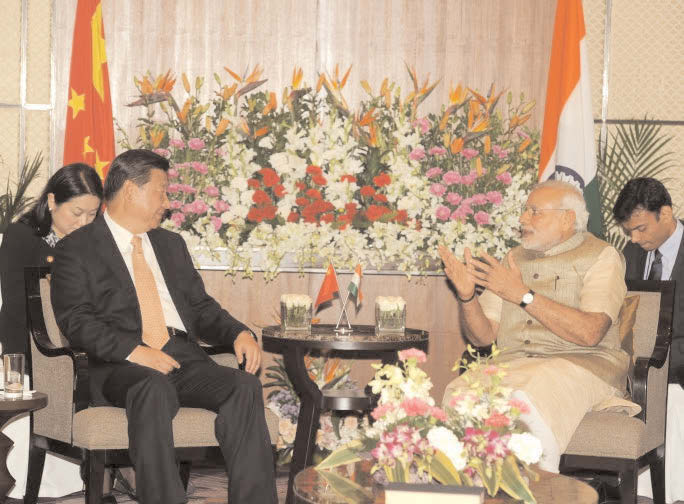
    According to Prime Minister Modi, China and India are “two bodies, one spirit” and President Xi has emphasized the “need to become global partners having strategic coordination”. The G20 meeting in 2016 provides the opportunity for the Asian giants to work together to define a global agenda, ‘global public goods’ and institutions to respond to the global middle class and the Asian Century with two centers of gravity, with India seeking to achieve this joint agenda when it chairs the G20 in 2018.

    (The author is an Ex civil servant and diplomat) – IDSA


  • “Mission 2022” Launched by Indian Americans & CII

    “Mission 2022” Launched by Indian Americans & CII

    WASHINGTON (TIP): The Indian diaspora in the US has launched “Mission 2022” in partnership with the Confederation of Indian Industries to make US-India partnership a defining partnership of the 21st century.

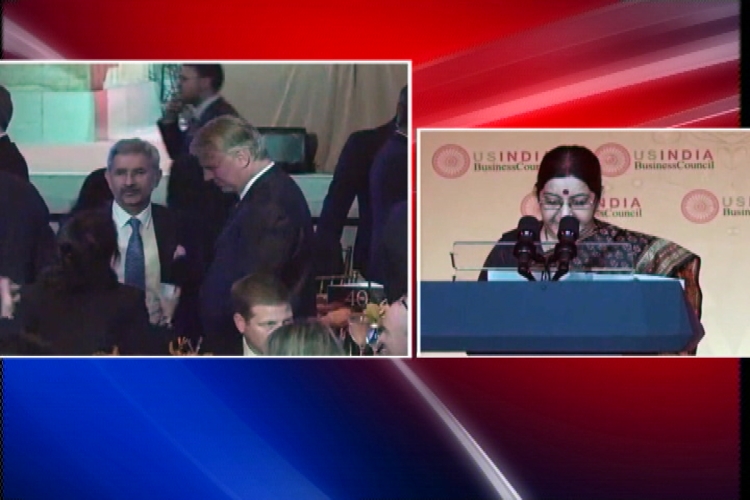
    “We have set a goal called Mission 2022, which is to have a series of dialogues with the diaspora over the next seven years as India turns 75,” entrepreneur M R Rangaswami said during a reception hosted by CII and Indian diaspora, which among others was attended by US Commerce Secretary Penny Pritzker and Commerce Minister Nirmala Sitharaman.

    These dialogues would be held every six months.

    “The goal is that by 2022, the US-India partnership is a defining partnership of the 21st century,” he said yesterday.

    Highlighting the significant positive change taking place within India, CII president Sumit Sumter invited the diaspora to invest in India’s transformation, avail the immense opportunities available today and be part of the mutual growth story.

    Mr. Sitharaman applauded the vision of President Barack Obama and Prime Minister Narendra Modi and highlighted the significant deepening of commercial ties between the two nations and their businesses.

    Mr. Pritzker stressed on the work cut out by both the governments to make this into a USD 500 billion economic engagement between the oldest and the largest democracies in the world.

    Together the two leaders highlighted the substantial steps taken by the two governments in the direction of boosting trade and investments.

    Amidst the ongoing wave of optimism and promising developments surrounding US-India Strategic and Commercial Dialogue as well as PM Modi’s anticipated second visit to the US major stakeholders joined in the reception to celebrate the flourishing Indian diaspora and to place them front and centre within the context of the overall bilateral partnership.

    Stressing the positively evolving commercial relationship between the countries, both Mr. Sitharaman and Mr. Pritzker invited the business community to help shape and deepen the economic relationship still further.

    The growing Indian-American diaspora is heavily invested in the American system and can not only rise to be the backbone of this critical partnership but can help fuel US & India’s mutual growth story.

  • Indian tech firms support more than 411,000 jobs in US: Nasscom & IBEF FACT of the Day

    Indian tech firms support more than 411,000 jobs in US: Nasscom & IBEF FACT of the Day

    Contrary to what media reports in United States; Indian information technology companies invested more than $2 billion, paid $22.5 billion in taxes between 2011 and 2013, and supports 411,000 direct and indirect jobs in the US, the apex software industry body Nasscom said on Monday ahead of Prime Minister Narendra Modi’s visit to that country later this month, reported livemint.

    In a report released on the sidelines of US-India Strategic and Commercial Dialogue in Washington, Nasscom said that direct and indirect jobs supported by India’s IT sector in the US grew at an annual rate of 10% from 2011 to 2014—or about six times higher than the average jobs growth rate of 1.7% during the same period.

    “Indian IT organizations benefit from access to the U.S. market, just as American IT organizations benefit from their investments and operations in India,” said Nirmala Sitharaman, minister of state for commerce and industry, who is visiting Washington, DC for US-India Strategic and Commercial Dialogue.

    “This momentum is surely going to increase manifold with new partnership opportunities emerging in the areas of Digital India and Smart Cities for American technology firms.”

    US states that led the numbers in direct jobs created by Indian IT companies include California, Texas, Illinois, New Jersey, New York, Georgia, Ohio, Washington, Michigan, and Pennsylvania. Texas, Michigan, Illinois, California and Georgia.

  • Hero Cycles acquires Firefox Bikes

    Hero Cycles acquires Firefox Bikes

    New Delhi, 17th September 2015: Hero Cycles, world’s largest bicycle manufacturer by volume, today announced its acquisition of Firefox Bikes in an all-cash transaction, India’s largest premium bicycle brand, as part of its strategy to further cement its position in the fast-growing premium cycling segment in India. As part of the deal, both companies have mutually agreed that Firefox Bikes will continue to have its distinct brand identity and remain a separate business entity post the acquisition.

    The acquisition will not just aim at consolidating Hero’s fledging market share, but is also aimed at expanding the horizons for Firefox Bikes. The acquisition will see transfer of key technology, and rich global experience garnered by Hero Cycles over the last 60 years to Firefox Bikes which is often credited for creating the premium range in the Indian cycling market. Firefox, which has an established presence pan-India through a network of 160 outlets, has been growing at a 3-year CAGR of 35% in revenue.

    Speaking about the acquisition Mr Pankaj Munjal, Chairman and MD, Hero Cycles said, “This acquisition is one of the most significant developments in the history of Hero Cycles. We are extremely proud to have Firefox Bikes, which is one of the most recognised brands in the premium cycle segment, as part of the Hero Cycles family. It is a delightful moment for us looking at the immense possibilities that lie in front of both these brands which have distinct branding identities. We are confident that our customers and even dealers would appreciate the infusion of Hero’s hard-earned trust, credibility and world-class manufacturing prowess into a young and vibrant brand such as Firefox.”

    “Post the acquisition, Firefox will continue to remain a young and dynamic brand with an international appeal. We at Hero Cycles have invested in Firefox only to help it realise its true potential and further its growth potential in the market. Through this acquisition, Hero Cycles will further expand its presence in all major categories of bicycles in India through its various brands such as Hero Cycles, UT, Firefox and UT Edge. The aim is to provide our customers with world-class products at every price range as per their fast evolving tastes and requirements” added Mr Munjal.

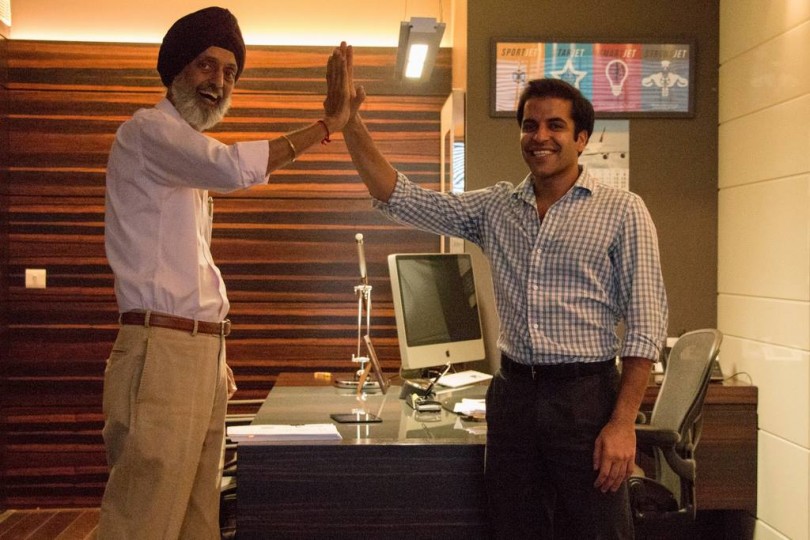
    Speaking on Firefox’s journey through the last decade, Mr Shiv Inder Singh, founder and managing director at Firefox Bikes, said, “We at Firefox were fortunate to have entered the cycling market at a time when Indian consumer had just started to expect more from their cycles. It was enriching and an exciting role to play where we not just created the premium cycle segment in India, but also introduced the next generation of performance and recreational cycles to the Indian consumer. We are very happy today that our effort into creating this segment has been recognised by market leader Hero Cycles and have now decided to take our young and an extremely vibrant brand to the next level.”

    As part of the deal, Mr Shiv Inder Singh will continue to lead Firefox Bikes post the acquisition as the Chief Executive Officer.

    Currently, Firefox sells over 70 different models of Firefox bikes and 25 Trek models through a network of 160 company-owned and franchise outlets. Firefox also has tie-ups with international brands, such as Tern, Shimano, Saris, Finish Line, Kryptonite, Super-B and Slime.

    The investments by the Ludhiana-based cycling giant, which produced 6 million cycles last year, will also help Firefox further increase its dominance in the premium cycle market through expansion of product portfolio, creating better customer reach through greater market visibility and exposure and introducing it to the latest global innovations being pioneered by Hero.


  • Kohli, Shastri join IPTL bandwagon

    Kohli, Shastri join IPTL bandwagon

    NEW DELHI (TIP): Test captain Virat Kohli is becoming quite the entrepreneur when it comes to sports leagues. After his maiden venture in partnering with the Indian Soccer League (ISL) franchise FC Goa last year, Kohli has now taken a dip in the tennis pool, becoming a co-owner of the UAE Royals team in the International Premier Tennis League (IPTL).

    The skipper joins two other owners – Neelesh Bhatnagar and Sachin Gadoya – in ownership of the Royals. The team will feature 17-time Grand Slam champion Roger Federer this season along with 2001 Wimbledon champion Goran Ivanisevic, Ana Ivanovic, Daniel Nestor, Kristina Mladenovic and Tomas Berdych.

    “Kohli is a big tennis fan, especially of Federer. He’s made some investments in sporting ventures like the ISL franchise FC Goa. The owners of UAE Royals got in touch with him and he was excited to come on board,” IPTL founder and managing director Mahesh Bhupathi told TOI from Dubai on Thursday.

    Kohli has followed Federer for some time now, flying down to London earlier this year to see the Swiss Ace in action at Wimbledon. “I am a huge fan of Federer and with him joining the Royals, my decision to be on board with the team was firm. The Royals feature some of tennis’ greatest players and I am confident about the prospects of the team in the IPTL,” Kohli said.

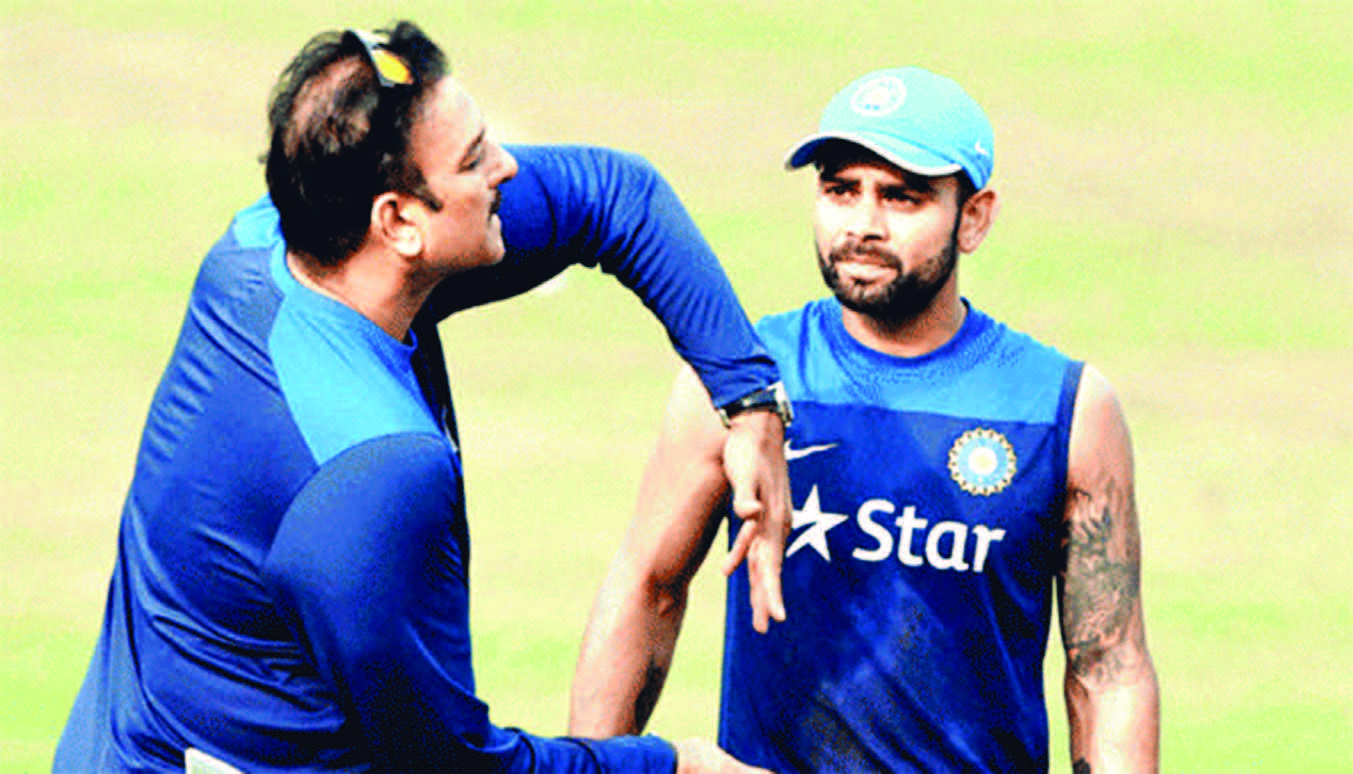
    Joining Kohli in the franchise will be cricket team director Ravi Shastri. “The owners have also brought on Shastri as a mentor-cum-advisor. He is close to Kohli and has been working with the youngsters in the Indian team,” Bhupathi said.

    The UAE leg of the league will be held from December 14- 16 at the Dubai Duty Free Tennis Stadium. Asked how many rounds that the duo will attend, Bhupathi said: “It’s still not clear how many rounds they’ll be able to attend. They will be here in Dubai for the Royals’ matches for sure. Kohli has expressed the desire to hit a few balls with Federer as well, so that will be something to look forward to.”

    The Royals team features Ivanisevic but his ward and defending US Open champion Marin Cilic is missing from the roster this season. Bhupathi, however, said negotiations are still on with some of the players. “Cilic was part of the Royals but we haven’t been able to finalise him as yet. Talks are still on with Cilic as well as a few other players. We’ll have more clarity once some of the contracts are finalized,” the IPTL managing director said.

    Meanwhile, the New Delhi leg will be held between December 10 and 12 and ticket sales are already promising.

  • Sheena Bora murder: Indrani ‘confesses’ to crime, Siddharth Das joins probe

    Sheena Bora murder: Indrani ‘confesses’ to crime, Siddharth Das joins probe

    MUMBAI (TIP): Indrani Mukerjea, the prime accused in the murder of her daughter Sheena Bora, has “confessed” to her role in it, while her former live-in partner Siddharth Das joined the investigation in the sensational crime committed three years ago.

    Indrani has “confessed” to her role in the crime, a senior police officer said without providing further details.

    Indrani’s husband Peter Mukerjea underwent a second round of marathon questioning by the police which also interrogated two other arrested accused–her former husband Sanjeev Khanna and driver Shyam Rai. Peter, the former Star India CEO reached Khar police station around 11:30 am September 4 and the questioning was still in progress.

    Das, who claimed to be Sheena’s biological father, was flown down to Mumbai from Kolkata on September 3 evening and is understood to have been brought face-to-face with the accused.

    Since her arrest late last month, Indrani had been maintaining that Sheena was very much alive and living in the US.

    Besides his wife, Peter was brought face-to-face with Sanjeev Khanna and driver Shyam Rai, both of whom are alleged to have actively participated in commission of the offence. Peter was questioned for nearly 12 hours on Wednesday, September 2.

    Meanwhile, senior lawyer Mahesh Jethmalani, who is giving legal advice to Peter Mukerjea, said he was not aware of Indrani’s confession.”One or two channels are saying with full fanfare that Indrani has confessed. Indrani’s lawyer is sitting in my office and she does not know (about the confession). Only the police and press know. Why do you ask me then?” he told the media.

    Jethmalani’s junior Gunjan Mangala is representing Indrani in the case. Jethmalani said he was not aware of what defense could be made of Indrani as her lawyer, who is his junior, has not been given “free and private” access to her client.

    Every time she (the lawyer) met Indrani, it was in the presence of 5-6 police officers, he said, adding “as far as Mr. Peter Mukerjea is concerned, the question of defending him does not arise because he is not an accused”. Some of the questions posed to Peter pertained to his financial transactions, especially his investments, his share in various companies, and how much money he had given to Indrani, son Rahul, step-daughter Sheena, and younger step-daughter Vidhie, who is Indrani’s daughter from her previous marriage.

    Sheena was engaged to Rahul, Peter’s son from an earlier marriage, when she was allegedly murdered on April 24, 2012.

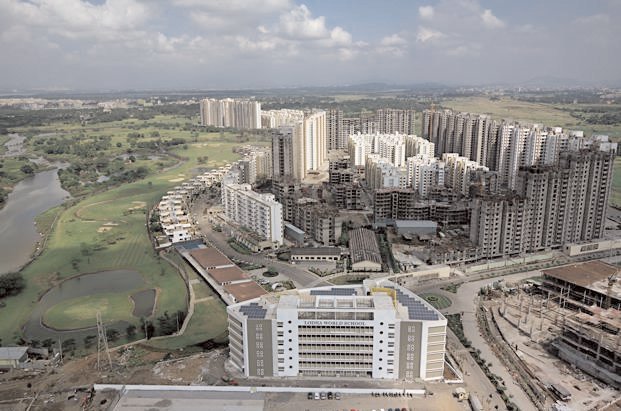
  • CENTRAL GOVT ANNOUNCES 98 SMART CITIES

    CENTRAL GOVT ANNOUNCES 98 SMART CITIES

    NEW DELHI (TIP): The union government on August 27 released the list of 98 cities that will be developed under the Smart Cities mission.

    These cities together have a population of 13 crore, accounting for 35 per cent of India’s urban population. Names of two cities — one from Jammu and Kashmir and Uttar Pradesh each — are yet to be revealed. The metros with a population of over 50 lakh each on Smart Cities list include Chennai, Greater Hyderabad, Ahmedabad and Greater Mumbai. Some of the other important urban local bodies that have been included in the list are the New Delhi Municipal Council, Vishakhapatnam, Chandigarh, Surat, Kochi, Bhopal, Navi Mumbai, Thane, Bhubaneswar, Amritsar, Jaipur, Allahabad and Lucknow.

    The Smart Cities mission, launched by PM Narendra Modi in June this year, will provide central funding of Rs 48,000 crore to the selected cities for improving their infrastructure and service delivery through application of better technology and e-governance.

    Explaining the meaning of Smart Cities in an Indian context, Venkaiah Naidu, Minister for Urban Development, said that it would ensure robust IT connectivity and digitization as also core infrastructure such as water supply, electricity supply, sanitation, public transport, solid waste management and affordable housing. “We are not just aiming at making our urban landscape fanciful and flashy but the prime objective is to enhance quality of urban life,” he said.

    He added that central government will immediately release Rs 2 crore to each of the cities for preparation of their smart city plans.

    The state and urban local bodies have to provide a matching contribution of Rs 48,000 crore to each city for the five year mission. This is in addition to thousands of crores worth investments from the private sector which they will be allowed to recover through levy of user charges on say water supply or urban transport. “In a situation such as the recent financial crisis, when private firms are looking for safe investments, I assure them that Smart Cities are safe investment. The land is going to be readily available and the returns are assured,” he said.

    According to the union government, twenty four cities on the list are industrial or business centres, 18 are cultural or tourism hubs, five are port cities and three are educational and heath care hubs and capital cities account for a quarter of total Smart Cities. However, nine state capitals have been left out of mission. These include Patna, Bengaluru, Trivandrum, Kolkata, Puducherry, Gangtok, Shimla, Daman, Itnanagar. All states and union territories were to send in their nominations according to the quota allotted to them by the centre by July 31st.

    The quota was assigned based on the the number of statutory cities and towns in the state and its total population. Accordingly, UP had the highest allotment at 13 followed by Tamil Nadu at 12 and Maharashtra at 10.  The smaller states, North eastern states and union territories mostly have only one smart city slot each. The J&K government has asked for more time to decide on whether the winter capital of Jammu or the summer capital of Srinagar should be their smart city candidate. The conflict-ridden state is allowed only one nomination to the mission after demands by the state government to allow for two was turned down by the Centre.

    According to the ministry, both Jammu and Srinagar have similar scores in the grading system. The same is the case with Rae Bareli and Meerut both of which had a tie for the 13th position in Uttar Pradesh.

    What is a ‘smart city’?

    A city equipped with basic infrastructure to give a decent quality of life, a clean and sustainable environment through application of some smart solutions.

    Basic infrastructure

    Assured water and electricity supply, sanitation and solid waste management, efficient urban mobility and public transport, robust IT connectivity, e-governance and citizen participation, safety and security of citizens.

    Smart solutions

    Public information, grievance redressal, electronic service delivery, citizens’ engagement, waste to energy & fuel, waste to compost, 100%treatment of waste water, smart meters & management, monitoring water quality, renewable source of energy, efficient energy and green building, smart parking, intelligent traffic management system.

    What’s the next step?

    The next step is identification of the 100 cities and for this a city challenge competition to be conducted by Bloomberg Philanthropies is envisaged. The current plan looks to select 20 cities this year followed by 40 each in the next two years.

  • India ready to work with Pacific Islands to harness resources

    NEW DELHI (TIP): President Pranab Mukherjee on august 20 said India is keen to work with Pacific Island countries in harnessing their mineral, marine and hydrocarbon resources. Addressing the Heads of States from Pacific Island countries who coverged here for the second summit of the Forum for India-Pacific Islands Co-operation (FIPIC) at Rashtrapati Bhavan, Mukherjee said these countries are generously endowed with natural resources and India would be happy to work with these countries in harnessing these resources. “We would be happy to work with you in harnessing your mineral, marine and hydrocarbon resources. Our Government and private sector are keen to strengthen and diversify our bilateral trade and encourage investments in fisheries, agriculture, oil and natural gas, mining and water desalination,” the President said. The island nations participating in the FIPIC summit include Fiji, Marshall Islands, Nauru, Niue, Palau, Papua New Guinea, Samoa, Tuvalu, Vanuatu, Cook Islands, Kiribati, Micronesia, Solomon Islands, Tonga.

    “Towards this end, India’s annual grant-in-aid to each Pacific Island Country has been enhanced from $125,000 to $200,000 last year. We hope this will support specific projects prioritised by you,” he said. Mukherjee also highlighted the challenges faced by India and pacific countries due to climate change. “…Like you, we are confronted with serious challenges in preserving our fragile ecosystems while stimulating growth. We believe that the sharing of best practices and eco-friendly technologies among our countries will greatly help us all to collaborate in obtaining finances and technology transfers required to combat the impact of climate change,” he said.

  • Haryana Chief Minister  Manohar Lal invites NRIs to Invest in his State

    Haryana Chief Minister Manohar Lal invites NRIs to Invest in his State

    NEW YORK (TIP): The Haryana Chief Minister, Manohar Lal, has appealed to the non-resident Indians (NRIs) in New York to come forward and help in the development of their paternal villages and support the efforts being made by the state government. The NRIs could do so by participating in the Adarsh Gram Yojana, a Government of India scheme which has been adopted by the Haryana Government, he said.

    Addressing the NRIs at a program held in New York, August 17, the Chief Minister said that the 15 MPs and 90 MLAs of Haryana were engaged in ensuring development of villages under the Adarsh Gram Yojana but the number of villages in Haryana exceeds 6,500. The NRIs of Haryana origin could adopt the remaining villages and help in their development.

    Those present on the occasion assured the Chief Minister of all possible support.

    Speaking at another event organized by Non Resident Indians to honor him in New York  the Chief Minister said that in its 10-month tenure, the Haryana Government had formulated a new industrial policy. While people from India and the rest of the world connected to Haryana would invest under the policy, those from across the globe also consider Haryana an ideal state, whether they want to invest in a welfare project or achieve their targets by investing in an earning project, he said.

    The Chief Minister said that Haryana has witnessed a remarkable growth in terms of infrastructure. While the State had only four National Highways till now, nine National Highways are being built to connect the districts. The State has an abundance of raw material for industries, which could be transported easily as a result of these new road projects.

    The Chief Minister said that Haryana being an agrarian state, the setting up and promotion of agro-based industries, food processing, pharma, information technology, auto, defense production, aerospace and aircraft industries would remain a priority for the Haryana Government. “Agro-industries are being set up in Haryana. Besides, Haryana will work further with major companies like IBM, Harley Davidson and Hollister, which have more than 1,000 projects, so that our industries can advance in an appropriate manner,” he added.

    Welcoming those investing in Haryana, the Chief Minister invited others to take advantage of facilities offered by the State and invest in Haryana.

    Later, the Chief Minister , addressed investors at a meeting of the US India Business Council in Washington on August 19.

    Emphasizing investment opportunities in Haryana, Chief Minister Manohar Lal said, “We strive to attract both international and domestic business in to the state of Haryana. To achieve this end, I am proud of the reform efforts that have gone in to making public services more efficient- land registration is now enabled through information technology (IT), long-pending land acquisition cases have been resolved and infrastructure construction is faster as evidenced by the completion of the Delhi-Faridabad Metro project and restarting of work on Kundli-Manesar-Palwal Expressway. We are pushing for policy reforms in a manner that will place Haryana as a business-friendly state and create jobs. I welcome American enterprise to be a part of our state’s growth.”

    Lauding the vision of Chief Minister Manohar Lal, Mukesh Aghi, President of USIBC, said, “Since 2000, the state of Haryana has emerged as a major investment hub in Northern India. The city of Gurgaon is a key center for the information technology and automotive industries. The state’s Enterprise Promotion Policy 2015 aims at enhancing ease of doing business, promotes micro, small-scale and medium enterprises and encourages long-term investment in the state to flourish. All these measures are critical for not just enhancing the perception of doing business in India, but also indicate the reality of ease of doing business.”

    Sonny Khurana, President and CEO of iTECH, a leading distribution company in the telecom sector, said, “Haryana, with its diversified economy and vibrant cities is well positioned to leverage initiatives such as Make in India and Smart Cities. Emerging markets are important for iTECH’s business model. A pro-growth government, under the visionary leadership of Mr. Manohar Lal, places Haryana as a strong hub for future investment opportunities.”

    The round table discussion focused on key areas for investment promotion in the state that include energy related initiatives, aerospace, food processing, auto/auto components and mass rapid transport.

    The event was attended by companies and senior leaders from every major sector of business-Blumberg Grain, IREO, Coca Cola, Wipro, Capital Novus, Cargill, Medtronic, Uber and Boston Scientific.

    Rajiv Khanna, President of India-America Chamber of Commerce was  optimistic about Haryana Chief Minister's visit
    Rajiv Khanna, President of India-America Chamber of Commerce was optimistic about Haryana Chief Minister’s visit

    Commenting on the visit of Haryana Chief Minister, Rajiv Khanna, President of India-America Chamber of Commerce, a binational chamber of commerce which is the focal point of cross border investments between the U.S. and India, said: ” We continue to be optimistic that states like Haryana would lead the country towards growth, prosperity and a greater economic co-operation with the United States. This does not mean that we under estimate the challenge in achieving these goals, particularly those posed by the failure of the Indian Parliament to pass the much needed legislations during the recent monsoon session that would have expedited the realization of these goals. It only means that we expect the state chief minister and his team to rise to the challenge and make it happen even with this setback, because failure is not an option for India.”

    On arrival in New York on August 16, Manohar Lal first went to the Memorial Tower in Downtown Manhattan and paid his homage to the victims of 9/11.

    Manohar Lal pays homage at the 9/11 Memorial , August 16
    Manohar Lal pays homage at the 9/11 Memorial , August 16

    The Chief Minister was in time for the India Day Parade, believed to be the largest India Day Parade, outside India. He stayed for a while watching the floats pass by, greeting waving hand to the milling crowds and making a brief speech.

    Chief Minister Manohar Lal at the India Day Parade in New York, August 16. Seen in the picture: Consul General Dnyaneshwar M Mulay (second left), Bollywood actor Parineeti Chopra, Manohar Lal
    Chief Minister Manohar Lal at the India Day Parade in New York, August 16. Seen in the picture: Consul General Dnyaneshwar M Mulay (second left), Bollywood actor Parineeti Chopra, Manohar Lal
  • Birla to buy two Lafarge India cement units

    Birla to buy two Lafarge India cement units

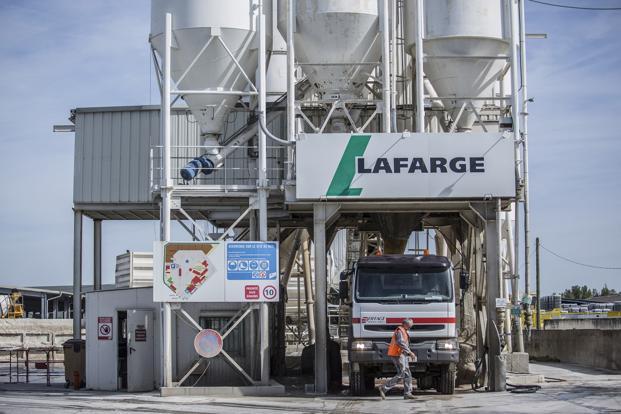
    Birla Corp. Ltd on Monday said it had agreed to acquire two cement assets from the local arm of Lafarge SA with a combined production capacity of around 5.15 million tonnes (mt) for a total enterprise value of Rs.5,000 crore.

    The plants in Chhattisgarh and Jharkhand were put up for sale after Holcim of Switzerland and France-based Lafarge agreed this year to a global merger that required the divestment of the assets to meet local competition rules.

    Although driven by the antitrust regulator, the Competition Commission of India (CCI), the deal also reflects the perennially consolidating nature of the cement industry in India, which has seen 20 mt of production capacity change hands in seven deals worth a combined Rs.16,000 crore in the past two years. With some more cement assets on the block, industry experts expect more consolidation.

    Birla Corp. will acquire Lafarge’s Sonadih Cement, a grinding unit in Jojobera, Jharkhand, along with its brands Concreto and PSC. It will also acquire the Sonadih unit in Chhattisgarh.

    The two units being sold by Lafarge are among the most profitable cement plants in India, generating about Rs.700 crore in pre-tax profits a year even in the current depressed market. That is partly because of the availability of raw materials in close proximity to the plants.

    “The acquisition, together with the Concreto and PSC brands, perfectly fit into our strategic vision and ambition of enhancing competitiveness in our chosen markets,” said Harsh Lodha, chairman of Birla Corp.

    Besides regulatory clearances, the deal is conditional upon Birla Corp. securing the limestone mining rights of the two units. The mining rights may not be automatically transferred to Birla Corp., but without access to the deposits estimated at 145 mt, the plants will have to be mothballed.

    The brands Concreto and PSC were crucial for the closure of the transaction, which would take Birla Corp.’s total annual capacity to manufacture the building material from 10 mt to 15 mt.

    Concreto is one of the strongest cement brands in India, and in some markets commands a premium of up to Rs.55 for a 50kg bag. PSC, too, is considered a premium brand.

    “The deal would not have happened had these brands not been a part of the deal. Birla Corp. was keen on these brands, as they are established brands names in the relevant market,” a person directly involved in the deal said on condition of anonymity.

    Birla Corp.’s shares jumped 19.27% to Rs.540.25 on BSE on a day the benchmark Sensex fell 0.67% to 27,878.27 points.

    Birla Corp. plans to fund the transaction with existing cash reserves and incremental debt. As of 31 March, Birla Corp. had total debt of Rs.1,300 crore and a debt-equity ratio of 0.5 times.

    Birla Corp. has secured commitment from its lenders for up to Rs.3,500 crore of loans, according to chairman Lodha. The remaining Rs.1,500-1,700 crore will come from the company’s own coffers.

    If the deal goes through, Birla Corp. will make small investments in the plants such as for generating electricity from waste heat recovery, he added.

    The deal may not be earnings per share accretive—or shore up Birla Corp.’s profit per share—in the short term, according to an analyst. “It may, however, turn out to be a prized catch in the long run because the acquisition can potentially bring down the cost of operation of Birla Corp.’s own units,” this person said, asking not to be identified.

    The top management of Birla Corp. was initially divided over whether to bid for the plants, according to a key official who also did not wish to be named. “Because of the price, one section was a little apprehensive, but in the end, we decided to go for it,” this person said. “Because building a new plant from scratch with such raw material linkages isn’t easy.”

    Last year, Holcim and Lafarge announced plans for a merger of equals to create LafargeHolcim. The transaction was concluded in July this year. As a precondition to clearing the Indian leg of the union, the Competition Commission of India directed Lafarge to sell the two assets in Chhattisgarh and Jharkhand.

    Discussions between Birla Corp and Lafarge, according to people familiar with the situation, started in May 2015.

    “To close the deal by August, this deal has surely been a rapid-fire one. However, Lafarge, with its strong global presence, has been a hard negotiator,” the person cited in the first instance said.

    The person added that Irish firm CRH Plc. and HeidelbergCement India Ltd and a couple of private equity firms were also interested in acquiring the assets.

    Heidelberg Cement India on 24 July told BSE that it is “not considering any such proposal at the moment”.

    “JSW Cement was part of the bidding initially, however, did not pursue it further as it did not fit the company’s strategic interests,” said another person directly involved in the initial talks between JSW Cement and Lafarge.

    LafargeHolcim plans to utilize the Rs.5,000 crore cash proceeds to retire debt at the global level, a spokesperson for LafargeHolcim said in an emailed response on Monday to queries from Mint.

    While the sale of the LafargeHolcim assets had been anticipated, analysts say further consolidation in the cement sector cannot be ruled out.

    In March 2015, Mint had reported Aditya Birla Group’s UltraTech Cement Ltd, Rajasthan-based JK Lakshmi Cement Ltd, HeidelbergCement India, JSW Cement and Orient Cement Ltd were among the companies evaluating potential acquisitions.

    Most of these firms continue to scout for potential acquisition targets.

    “Looking at more assets is a regular process,” said Sushil Agarwal, chief financial officer, Grasim Industries Ltd of the Aditya Birla Group, at a 7 August press conference where the company announced its latest quarterly results.

    The group could not bid for the Lafarge assets because of a rider imposed by the CCI that only cement companies with a less than 5% market share in the relevant market can buy the Lafarge plants.

    There seems to be no dearth of sellers in the market either.

    “Surely, we expect more consolidation in the cement sector. In the next few years, the Indian cement industry would be dominated by five to six prominent cement companies as a result of this consolidation. We expect deals in the South India cement market and debt-laden cement companies to offload assets,” said Amey Joshi, associate director at India Ratings and Research Pvt. Ltd.

    “Jaypee group is looking for a buyer for its Bhilai cement plant and one of its assets in South India,” said a banker with a domestic investment bank who did not wish to be identified.

    Jaiprakash Associates has a 2.2 million tonne grinding unit in Bhilai, Chhattisgarh. In South India, Jaiprakash Associates has two cement units in Andhra Pradesh with six million tonnes of combined operational capacity.

    An email sent to officials at Jaypee Group on Monday remained unanswered.

    Reliance Infrastructure Ltd and ABG Cement were earlier on the lookout for buyers for their cement assets.

    On 9 March, Reliance Infrastructure informed the BSE that the company was constantly exploring strategic opportunities to unlock value in its existing businesses, which may or may not necessarily result in transactions. Reliance Infrastructure has an operational cement capacity of 5.8 mt.

    ABG Cement was in the market looking for a buyer for its six million tonnes cement capacity in Gujarat, said an executive from a cement company looking to buy assets.

    This was earlier confirmed by a banker with a foreign investment bank advising cement clients.

    The company’s promoter Rishi Agarwal said in a text message that ABG Cement wasn’t in the market.

  • Indian Consul General Mulay Rings Nasdaq Closing Bell on Independence Day

    Indian Consul General Mulay Rings Nasdaq Closing Bell on Independence Day

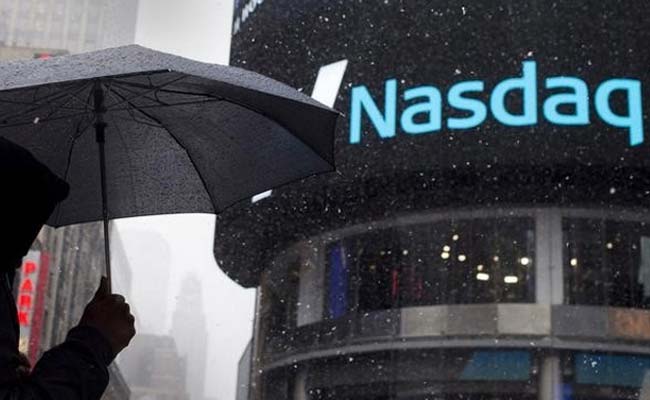
    NEW YORK:  India’s Consul General Dnyaneshwar Mulay invited American individuals and companies to join Prime Minister Narendra Modi’s flagship projects ‘Make in India’ and ‘Digital India’ as he, accompanied by Bollywood star Arjun Rampal, rang the closing bell at Nasdaq to celebrate India’s 69th Independence Day.

    Mr Mulay and Mr Rampal visited the Nasdaq market site in Times Square in New York yesterday to ring the traditional Closing Bell.

    This was the sixth year that India’s Consul General rang the closing bell at the Nasdaq stock exchange to commemorate the country’s independence day.

    Mr Mulay underlined the “growing thriving relationship” between India and the US.

    He said India’s economy is rapidly transforming and requires huge investments across various sectors.

    “Prime Minister Modi has initiated a number of reforms and flagship projects like Digital India, Make in India, Clean India and the Smart cities program,” he said.

    “I want American people to join in this great economic reforms movement. I also want more and more Indian companies coming to America (and to) Nasdaq,” he said.

    Welcoming Mr Mulay and Mr Rampal, Nasdaq Senior Vice President Bob McCooey said there is no better place to celebrate India’s independence day than at Times Square, which is the “crossroads of the world.”

    Mr McCooey noted Nasdaq’s growing presence in India, “which is on its way to becoming a global powerhouse.”

    Referring to the “great entrepreneurship” and “fantastic companies” in India, he expressed hope that many more Indian companies will list at Nasdaq in the future.

    Currently five Indian companies are listed at Nasdaq and have a combined market capitalisation of USD 43 billion. These include MakeMyTrip.com, Rediff, Videocon d2h and Cognizant.

    “For us in Nasdaq, this has now become an annual event. This is the sixth time we have been honored with your presence here to celebrate the independence day,” Mr McCooey said amid huge cheers and applause from the large number of Indian-Americans who had gathered for the closing bell ceremony.

    Mr Rampal, dressed in a dark blue shirt and gray coat, tweeted after the bell ceremony, “Feeling super proud to be an Indian. Independence Day celebrations begin.”

    Mr Rampal will be the Grand Marshal at the 35th India Day Parade tomorrow that will run through several streets in the heart of Manhattan.

    Bollywood actress Parineeti Chopra will be the Guest of Honour at the parade, which will also be attended by cricketer Virendar Sehwag.

    Nasdaq’s giant screen in Times Square extended a warm welcome to Mr Rampal, with the words “Nasdaq welcomes Arjun Rampal” displayed on it along with the Emblem of India.

    Commemorating the country’s independence day, flag hoisting ceremonies will be held at the Consulate as well as at the Permanent Mission of India to the UN’s premises.

  • $24 billion from EU to India in FDI over last 3 years

    $24 billion from EU to India in FDI over last 3 years

    NEW DELHI: Despite the Free Trade Agreement talks with the European Union being in limbo, India has received an impressive $24 billion in foreign direct investment from the 28-nation bloc over the last three years.

    As per official figures, India received $6.23 billion in FDI equity inflows from EU in 2012-13 which increased to $9.06 billion the next year.

    The FDI inflow was $8.20 billion in 2014-15, which was a decline of $862 million compared to the year ago period. In 2015-16, the amount in first two months of current fiscal was $1.39 billion.

    In total, India received $24.91 billion in FDI equity inflows from

    The EU has been India’s largest trading partner and the two-way trade is likely to swell significantly if the countries could firm up the long-pending Free Trade Agreement, officially called the Broadbased Investment and Trade Agreement (BTIA).

    India had on Wednesday deferred scheduled talks on the proposed pact later this month which was to resume after a gap of two years after the EU imposed a ban on around 700 generic drugs which were clinically tested by India’s GVK Biosciences on the ground of inaccuracy in data.

    In March, the EU had not responded to India’s proposal for a brief visit by Prime Minister Narendra Modi to Brussels, the headquarters of the bloc, during his trip to France, Germany and Canada in April.

    However, it recently invited him for the India-EU summit just before or after the G-20 summit scheduled to be held in November in Turkey. The last India-EU Summit had taken place in 2012.

    The two-way commerce between EU and India stood at about USD 99 billion in 2014-15 while it was USD 101.5 billion in 2013-14.

    The talks on FTA have been caught in a jam on sticky issues relating to intellectual property rights (IPR), data security for IT services and tariff in the automobile sector. The last round of talks on the FTA were h last round of talks on the FTA were held in May, 2013.

    The EU has been maintaining that it was ready to show flexibility on all major issues that have stalled the talks as the FTA will be a “win-win deal” for both the sides.

    The EU was also looking at insurance, banking and retail as major areas for economic engagement with India.

    Launched in June 2007, negotiations for the proposed FTA have witnessed many hurdles as both the sides have serious differences on crucial issues.

    Besides demanding significant duty cuts in automobiles, the EU wants tax reduction in wines, spirits and dairy products, and a strong intellectual property regime.

    On the other hand, India is asking for granting ‘data secure nation’ status. The country is among nations not considered data secure by the EU.

  • Government announces major highway development program worth US$ 93 billion

    Government announces major highway development program worth US$ 93 billion

    New Delhi (TIP) (Secondary Research): The Government of India has announced highway projects worth US$ 93 billion, which include government flagship National Highways Building Project (NHDP) with total investment of US$ 45 billion over next three years. NHDP envisages development of existing National Highways (NHs) into world-class roads in different phases. It is one of the largest government-led PPP development programmes in the world. There are 26,000 kms of NH projects, of which 20,000 kms are NHDP projects. Opportunities for investors include Bharat Mala project of US$ 12 billion for 6,000 kms, scheme for providing connectivity to 123 district headquarters for US$ 15 billion, construction of 350 bridges/Road over bridge (ROBs) in two years for US$ 8 billion, ‘Char Dham’ connectivity for 2,500 kms in mountainous terrains for US$ 8 billion and a strong network of roads in the North-East and Border areas for US$ 5 billion. The government plans to provide incentives like right of way (ROW) for project land being made available to concessionaires free from all encumbrances. The National Highway Authority of India (NHAI) will provide capital grant (Viability Gap Funding) up to 40 per cent of project cost to enhance viability on a case to case basis. The government will also provide 100 per cent tax exemption for five years and 30 per cent relief for next five years, which may be availed over a period of 20 years. The government is already facilitating investments through policy initiatives that include use of long-term sources of funds like pension and insurance funds in the sector in consultation with Ministry of Finance and RBI besides encouraging long-term debt re-structuring. Besides, government measures include regulatory clearances to 80 stuck projects and railway clearances for 85 projects with railway over-bridges, golden handshake with developers for 34 projects worth US$ 5.5 billion and fast-track dispute resolution which has resulted in reduction of disputed amount from US$ 2.3 billion to US$ 0.2 billion.

  • 10 foreign portfolio investors (FPIs) in India hold US$ 28 billion investments

    10 foreign portfolio investors (FPIs) in India hold US$ 28 billion investments

    TIP (Secondary Research): Europacific Growth Fund, the largest foreign portfolio investor (FPI) in India was born seven years before liberalisation ushered foreign investment into Indian equity markets. Today, it holds $131 billion in assets under management; 6.4 per cent of that is invested in Indian equities.

    Prime Database recently carried out an exercise to identify the 10 largest FPIs in India — through an examination of 1,447 listed Indian companies’ disclosure of the names of their foreign investors to stock exchange — and it turned out these FPIs together held Rs 1.79 lakh crore in Indian equities.

    FPIs hold a major chunk of the non-promoter stake in Indian companies but can be notoriously difficult to pin down. Unlike domestic mutual funds, there is no freely available ranking in terms of the size for foreign funds investing in India. Listed entities disclose the names of shareholders owning more than one per cent in them.

    The biggest FPI in terms of disclosed shareholding (above one per cent) is the Europacific Growth Fund. Among others on the list of the 10 biggest are sovereign and pension funds from Singapore and Norway, some familiar names like Franklin Templeton Investment Funds, and Morgan Stanley Asia (Singapore), besides Dodge & Cox International Stock Fund, First State Asia-Pacific Leaders Fund, Aberdeen Global Indian Equity, the Oppenheimer Developing Markets Fund and Copthall Mauritius Investment. These FPIs together hold shares equivalent to half the equity assets of the entire Indian mutual fund sector.

    While the actual number might be significantly higher, Prime’s analysis estimates Europacific’s holding in Indian equities at Rs 42,530 crore. An analysis of the fund’s own documents shows this could be around Rs 54,000 crore.

    So, the top 10 FPIs’ actual holding could be significantly higher than the Rs 1.79 lakh crore disclosed to bourses. This also means the ranking should be considered indicative, since FPIs holding company shares through participatory notes (P-notes) and the cases where holdings are less than one per cent are not required to disclose their names to stock exchanges.

    Europacific Growth Fund belongs to the US-based Capital Research and Management Company. For Europacific, India is the biggest emerging market destination and fourth-largest overall — after Japan, the UK and France — according to its disclosures at the end of June. As much as 87.5 per cent of its investments are outside the US.

    The fund managers’ commentary in Europacific’s annual report released in March this year might explain why they allocated more money to India than China.

    It noted India and China shared similar growth trends, including the rise of the middle-class. However, India’s demographics were better than China’s. The median age in India was 27, noted the report, while United Nations data showed the median age in China was around a decade higher.

    Jonathan Knowles, the Singapore-based fund manager of the Europacific Growth Fund, believes the rising middle class in India would drive consumption, leading to a rise in credit penetration, explaining the fund’s preference for financial stocks, especially private-sector banking names. “These banks have been taking share from public banks in India year after year,” said Knowles.

    Financial stocks are also high on the list of India’s second-largest FPI, the $38-billion Oppenheimer Developing Markets Fund. Led by Justin Leverenz, who has been overseeing the asset management since 2007, the fund invests 14.8 per cent of its total assets in India, second only to China, which received 19.4 per cent of its total investments as of June 2015.

    HDFC Bank, ICICI Bank, and HDFC are among the popular investment names in these funds.
    Pranav Haldea, Managing Director at Prime Database pointed out that the trend towards financials can be seen amongst all foreign investors.

    “Amongst sectors, the maximum exposure as on 30th June, 2015 was in Banks (Rs. 3.44 lakh crore) followed by IT Software (Rs.2.59 lakh crore). The sector which has seen the maximum increase in FII holdings in the last one year was also the Banking sector (from Rs.2.83 lakh crore to Rs.3.44 lakh crore),” he said as part of an emailed statement.

    The third largest fund is the Government of Singapore which invests about Rs 24,192 crore as of June 2015.
    FPIs were net buyers by Rs.1.11 lakh crore in FY15. They have been net buyers by Rs.7927 crore so far this year, shows data from depositories. FPIs held a total of Rs.20.51 lakh crore in Indian equities at the end of June. FPIs with exposure of over one% in Indian equities constitute nearly one-fourth of all FPIs with investments worth Rs 4.69 lakh crore.

  • BOEING INKS PACT TO ‘MAKE IN INDIA’ WITH TATAS

    BOEING INKS PACT TO ‘MAKE IN INDIA’ WITH TATAS

    HYDERABAD (TIP): Tata Advanced Systems Limited (TASL) and US-based aircraft maker Boeing on Wednesday signed a strategic framework agreement here to collaborate in the sphere of aerospace and defence manufacturing as well as explore the potential of developing integrated systems, including unmanned aerial vehicles. The pact was signed by Shelley Lavender, president of Boeing Military Aircraft, and Sukaran Singh, MD & CEO of Hyderabad-based TASL.

    Though Boeing has been procuring components from 18 suppliers in India, the latest deal will actually see it ‘Make in India’ along with the Tatas. For the first time, Boeing will develop high-end aerospace and defence sector technology in India, which can cater to the global markets. TASL will get “significant work packages” in the aerospace-defence manufacturing space, said a Boeing spokesperson.

    The Tatas have a big manufacturing footprint at the Adibatla Aerospace and Precision Engineering Park on the outskirts of Hyderabad, where they have already invested over Rs 1,000 crore, and are expected to further beef up their presence here. TASL, whose focus areas include aerospace, missiles, homeland security, optronics, UAVs and radars, among other defence-related products, already has a couple of JVs — Tata Sikorsky Aerospace and Tata Lockheed Martin Aerostructures — that manufacture aerospace and defence products at the Adibatla park.

    “This framework agreement is the result of TASL’s world-class competencies as well as the vendor eco-system it has helped establish in India. It gives us an opportunity to explore the massive potential in India for aerospace manufacturing and make the investments required to grow the industry,” TASL chairman S Ramadorai.

  • Work force from India

    Work force from India

    Prime Minister Narendra Modi ‘s emphasis on India having a huge and young work force and his assertions that India can provide work force to the whole world, clearly reveal his mind. He realizes that it will not be possible to create employment for the large number of young people in the country. Having learnt a long time ago from the experience of the Gujarati community how rewarding it could be to be working abroad, and realizing that there is enough demand from countries across the world for work force, Modi has set his ken on adding work force to the list of exports.

    People from Gujarat are all over the world today. They are in African countries; in European countries, in USA, in Canada, in Australia and in New Zealand. They are everywhere. It is easier to list the countries where they are not present than to count the countries where they are. And they are amongst the best. They have established themselves particularly as sensible and intelligent businessmen. Business is in their blood. Look at all the top businessmen and industrialists in India and you will find they all belong to Gujarat. Similarly, those who are in professions are doing very well. It is another matter that every day you come across a dubious character who is involved in illegal activity and suffers the consequences.

    Readers will recall that it is not for the first time that PM Modi has spoken of India having a huge work force. He had said that earlier too. Now, with the launch of “Skill India” campaign, he has added an adjective to work force. The adjective is “skilled”. It may sound ambitious to be creating Crores of skilled young people over the next 5 years, as claimed by the Prime Minister but then they say the goal should not be mean. And given the fact that the Indian Prime Minister believes in the best, whether it be clothes or travel, we should suspend our disbelief and go along with him.

    Moreover, just as the NRIs , today, are making India rich with their remittances and investments, the would -be NRIs , too, would enrich the country. The mathematics is perfect. Young people will have jobs abroad and India will benefit from their presence overseas in terms of acquisition of foreign exchange. So we have employment generation and generation of wealth going hand in hand. One would wish it happens sooner than later.

  • Companies in India create thousands of US jobs

    Companies in India create thousands of US jobs

    “The 100 Indian-based companies surveyed for the study have made an aggregate $15.3 billion investment in their U.S. operations. That, in turn, has created 91,000 jobs in the U.S., which by any measure is a substantial contribution to the American economy. Those jobs are scattered throughout the country. In fact, the survey found that Indian companies have a presence in all 50 states.”

    “In the U.S., IT comprises 40 percent of Indian-company investment, according to the survey. The rest is highly diversified. Life sciences, pharmaceuticals and health care companies make up 14 percent of Indian investment here. Another 14 percent are manufacturers and mining companies. 16 percent offer financial, engineering, construction and entertainment services. The remainder is companies in the automotive, energy, hospitality and food businesses.”

    “The exchange is good for both nations and should be encouraged. The U.S. and India have much in common. They are the largest democracies in the world. They are also economic powerhouses that are helping each other grow in a dynamic global marketplace. We have a stake in each other’s economic future – and that future is very bright.”

    A remarkable story that has often escaped public attention in the overall context of the vibrant India-U.S. relationship is that Indian companies have been pouring investment dollars into businesses in the U.S. and creating tens of thousands of American jobs. A new report from the Confederation of Indian Industry and the accounting firm Grant Thornton reveals that not only is Indian investment in the U.S. large, it’s also extremely widespread and clearly growing.

    The 100 Indian-based companies surveyed for the study have made an aggregate $15.3 billion investment in their U.S. operations. That, in turn, has created 91,000 jobs in the U.S., which by any measure is a substantial contribution to the American economy. Those jobs are scattered throughout the country. In fact, the survey found that Indian companies have a presence in all 50 states.

    The U.S. isn’t just a favored destination for the time being; it is likely to remain attractive for Indian investors for years. When asked if they plan to invest in the U.S. in the next five years, 84.5 percent of the Indian companies surveyed said yes. Only 4 percent said no. Asked if they plan to hire more employees locally in the U.S. over the next five years, 90 percent of the companies answered in the affirmative.

    The survey also challenges the greatest stereotype about the kinds of Indian companies in the U.S. They are not all information technology companies. Far from it. In the U.S., IT comprises 40 percent of Indian-company investment, according to the survey. The rest is highly diversified. Life sciences, pharmaceuticals and health care companies make up 14 percent of Indian investment here. Another 14 percent are manufacturers and mining companies. 16 percent offer financial, engineering, construction and entertainment services. The remainder is companies in the automotive, energy, hospitality and food businesses.

    The average investment received from Indian companies per state is substantial: $433 million. The top five states with the highest volume of investment – $1 billion or more – are Texas ($3.85 billion), Pennsylvania ($3.56 billion), Minnesota ($1.8 billion), New York ($1.01 billion) and New Jersey ($1 billion).

    In terms of employment generated by Indian companies, the top five states are New Jersey and California, each with about 9,000 jobs, Texas (6,000 jobs), Illinois (5,000 jobs) and New York (4,000 jobs).

    All of these numbers have been rising steadily, a sign that the U.S. market is among the strongest investment destinations in the world. These substantial investments are also a testament to the trust and openness that India and the U.S. enjoy both at the people-to-people and government-to-government levels. According to Select USA, India is now the fourth-fastest growing source of foreign direct investment into the United States. The significant and growing contributions of Indian investments in the U.S. remain a vital component of the bilateral relationship.

    American firms, of course, have long been major investors in India. Foreign direct investment by U.S. firms in India has been more than $1 billion a year. Efforts by Prime Minister Narendra Modi to make economic growth a hallmark of his administration have accelerated U.S. investment there.

    India has been lowering barriers to investment and encouraging business expansion. For example, the Indian government has over the past year raised limits on foreign investment in sectors such as insurance, medical devices, railways and defense. This will no doubt provide myriad opportunities for U.S. companies to increase their presence in India and will strengthen Indian companies so that they can enlarge their footprint in the U.S.

    The exchange is good for both nations and should be encouraged. The U.S. and India have much in common. They are the largest democracies in the world. They are also economic powerhouses that are helping each other grow in a dynamic global marketplace. We have a stake in each other’s economic future – and that future is very bright.

    By Ambassador Arun K. Singh (The author is India’s ambassador to the U.S.)

  • FDI in equity jumped 48% after launch of ‘Make in India’: Commerce and industry ministry

    FDI in equity jumped 48% after launch of ‘Make in India’: Commerce and industry ministry

    New Delhi: Foreign direct investment (FDI) into equity jumped 48 per cent after the launch of the ‘Make in India’ programme, the commerce and industry ministry said on Tuesday, July 14.

    The ‘Make in India’ initiative, which seeks to make the country a global manufacturing hub, was launched on September 25 last year. Between October 2014 and April 2015, equity FDI rose 48 per cent, according to the ministry. Total FDI includes fresh equity inflows and reinvested earnings of foreign investors.

    The ministry also said that in 2014-15, investment by foreign institutional investors (FIIs) rose 717 per cent to $40.92 billion. “These indicators showcases remarkable pace of approval being accorded by the government and confidence of investors in the resurgent India,” the ministry said.

    FDI inflows under the approval route grew 87 per cent to $2.22 billion in the last fiscal.

    “The increased inflows of FDI in India, especially in a climate of contracting worldwide investments, indicate the faith that overseas investors have imposed in the country’s economy and the reforms initiated by the government towards ease of doing business,” the ministry added.

    The ‘Make in India’ initiative and its outreach to all investors have made a positive investment climate for India, it said.

  • 100 Indian companies invested $15 billion in United States creating 91,000 jobs so far: Report

    100 Indian companies invested $15 billion in United States creating 91,000 jobs so far: Report

    New York (TIP) July 15: A total of one hundred India-based companies have invested over $15 billion across the US and have created more than 91,000 jobs in a wide range of sectors across 35 American States, according to a latest report released by the Confederation of Indian Industry (CII) and Grant Thornton (GT).

    The southern State of Texas received the maximum ($3.84 billion) foreign investment from Indian companies followed by Pennsylvania ($ 3.56 billion), Minnesota ($1.8 billion), New York ($1.01 billion) and New Jersey ($1 billion), said the report titled “Indian Roots, American Soil”.

    More than 20 top lawmakers including Senators, John Cornyn and Mark Warner, attended the report released yesterday at the Capitol Hill.

    “As India surges forward to become the fourth fastest growing source of FDI into the US, it is critical that we recognise the positive impact of Indian business investments in the country,” said Senator Warner, co-chair of the Senate India Caucus.

    The top five states where the Indian companies have generated maximum employment are New Jersey (9300 jobs), California (8400), Texas (6,200), Illinois (4,800) and New York (4,100) and are home to the most Americans directly employed by Indian companies.

    The CII study draws attention to the growing contribution and influence of the Indian industry, which forms an important component of our growing and vibrant relationship with the United States, said Indian Ambassador to the US Arun K Singh.

    “Today Indian companies are not just investing and creating jobs, they have also become significant stakeholders in the growth and prosperity of their local communities,” Mr Singh said.

    Highlights

    * Together, 100 Indian companies employ more than 91,000 people across 35 states and the Washington DC, the American capital.

    * The total value of tangible investments made by these 100 companies exceeds $15.3 billion.

    * The top five states in which Indian companies have generated maximum employment are: New Jersey (9,278 jobs), California (8,937 jobs), Texas (6,230 jobs), Illinois (4,779 jobs) and New York (4,134 jobs).

    * The top five states in which Indian companies have contributed the highest foreign direct investment are: Texas ($3.84 billion), Pennsylvania ($3.56 billion), Minnesota ($1.8 billion), New York ($1.01 billion) and New Jersey ($1 billion).

    * The average amount of investment received from Indian companies per state is $443 million.

    * 84.5% of the companies plan to make more investments in the US.

    * 90% of the companies plan to hire more employees locally in the next five years.

  • FIPB clears Bandhan, 22 other FDI proposals

    FIPB clears Bandhan, 22 other FDI proposals

    New Delhi (TIP) July 14: The foreign Investment Promotion Board (FIPB) today cleared 23 FDI proposals out of the 47 proposals which were considered in the meeting.

    The proposals cleared includes Bandhan, Catholic Syrian Bank, GSK Pharma, Mylan Laboratories and Den Networks, among others.

    Universal banking licence has been granted to Bandhan by the Reserve Bank of India (RBI) and Catholic Syrian Bank has received approval from Securities and Exchange Board of India(SEBI) to raise up to Rs 400 crore (US$ 63 million) through an initial public offer.

    During FY2014-15, Foreign Direct Investment(FDI) registered a growth of 27 per cent Y-o-Y to reach US$ 30.93 billion as against US$ 24.29 billion in FY2013-14, according to the data released by Department of Industrial Policy and Promotion (DIPP).

  • Maharashtra CM Devendra Fadnavis creates vision of  his State as a top destination for investments

    Maharashtra CM Devendra Fadnavis creates vision of his State as a top destination for investments

    NEW YORK (TIP): Maharashtra Chief Minister, Devendra Phadnavis was given a rousing welcome, June 29, by the Indian American community at a Community Reception, appropriately named  ‘Maharashtra meets Manhattan’. The reception in his honor was  hosted by Friends of Maharashtra and Consulate General of India at the Taj Pierre in New York City, where  Prime Minister Modi was hosted last year.

    Maharashtra Chief Minister lauded the contribution of NRI’s. He said, “The success of Indians here gives me immense pride. But now it’s time to give back.”

    Phadnavis spoke of the demographic advantage of India where 50% population is below the age of 25. He said  India was in a position to provide human resource to the entire world and the time to fulfill the dream of becoming the topmost nation of the world had arrived.

    Pitching for ‘Make in Maharashtra’, he mentioned that his government has reduced the number of permissions from 148 to 20 to make Maharashtra investor friendly. He also spoke about different upcoming projects undertaken by him like coastal road, Mumbai-New Mumbai connecting  road, and second international airport near Navi Mumbai. He said the projects of roads and bridges the government was contemplating would decongest entire Western Mumbai. He also spoke of the project to have 30 smart cities, each with a different theme and another project, an automobile hub in Aurangabad.

    “Maharashtra is full of possibilities. There are huge opportunities”, he said. He invited the gathered Indian Americans to invest in Maharashtra and assured them of his personal attention to their needs . He said he works 24/7 and is available 365 days of the year.

    Others who spoke included Consul General Dnyaneshwar Mulay who welcomed the Chief Minister and the Industries Minister Subhash Desai who outlined the opportunities for investors in the industries sector in his State.

    Earlier, in the day, a group of U.S. industry executives from the U.S.-India Business Council (USIBC) met with him for a discussion about investment opportunities in the state.

    The Chief Minister engaged with senior business executives on important topics that have dominated the bilateral commercial relationship in recent months and addressed areas such as Maharashtra’s comparative edge as an investment destination, regulatory reform measures that have been undertaken by the government to promote ease of doing business in the state, and cultural dialogues that can enhance the bilateral relations between India and the United States.

    Emphasizing the investment opportunities that are available in Maharashtra, Chief Minister Fadnavis said, “The Government has taken a variety of measures to promote ease of doing business in the state and we want to be viewed as a top destination for both domestic as well as international investments. The state eagerly awaits the formation of joint ventures in critical projects such as the Delhi – Mumbai Industrial corridor, Smart Cities and in sectors such as manufacturing, agriculture, aviation, engineering and IT. Our Government is committed to providing a boost to both Make in India and Make in Maharashtra campaigns, provide business to both medium and small enterprises and create much-needed jobs. We invite investors from the United States to be a part of Maharashtra’s growth story.”

    Lauding the vision of Chief Minister Fadnavis, Mukesh Aghi, President of USIBC, said, “The Council’s member companies have been encouraged by the ease of doing business in Maharashtra. Many of the companies have significant investments in the state. Therefore, appropriate and timely policy measures are critical. USIBC and member companies look forward to participating in the state’s investment opportunities that will not only promote entrepreneurship, but also inclusive growth, positioning it as a model state both in India and globally. I have no hesitation in saying that the state has the potential to emerge as a high ranking state on the ease of doing business index.”

    Ashok Vasudevan, Chairman and CEO of Preferred Brands International, manufacturer and marketer of the natural foods brand, Tasty Bite, said, “Tasty Bite has been operating in Maharashtra since the early 90’s and has become one of India’s largest exporter of prepared foods. The state is remarkably resilient due to its diversified base of industry that includes energy, agriculture, food processing, entertainment, engineering, chemicals, pharmaceuticals and financial services. The infrastructure, a mature workforce, a series of business friendly administrations over the last few decades makes it an attractive FDI destination.”

    The event was also attended by companies and senior leaders from every major sector of business- Monsanto, Taj Hotels, HSBC, Caterpillar, Cargill, Johnson and Johnson, KPMG, Baker & McKenzie, Citi, New Silk Route and Pfizer.

  • Putting India Emphatically on Global Map – Part 2

    Putting India Emphatically on Global Map – Part 2

    Continued from Putting India Emphatically on Global Map – Part 1

    It defies logic that a country that is considered as our most serious adversary and whose policies in our region has done us incalculable strategic harm should have been accepted as India’s strategic partner during Manmohan Singh’s time. Such a concession that clouds realities serves China’s purpose and once given cannot be reversed. Pursuant to discussions already held during the tenure of the previous government, the Chinese announced during Xi’s visit the establishment of two industrial parks in India, one in Gujarat and the other in Maharashtra, and the “endeavour to realise” an investment of US $ 20 billion in the next five years in various industrial and infrastructure development projects in India, including in the railways sector. The Chinese Prime Minister’s statement just before Modi goes to China on May 14 that China is looking for preferential policies and investment facilitation for its businesses to make this investment suggests that the promised investment may not materialise in a hurry. While the decision during Xi’s visit to continue defence contacts is useful in order to obtain an insight into PLA’s thinking and capacities at first hand, the agreement, carried forward from Manmohan Singh’s time, to explore possibilities of civilian nuclear cooperation puzzles because this helps to legitimise China’s nuclear cooperation with Pakistan.

    Even as Modi has been making his overall interest in forging stronger ties with China clear, he has not shied away from allusions to Chinese expansionism, not only on Indian soil but also during his visit to Japan. During his own visit to US in September 2014 and President Obama’s visit to India in January 2015, the joint statements issued have language on South China Sea and Asia-Pacific which is China-directed. A stand alone US-India Joint Vision for Asia Pacific and the Indian Ocean Region issued during Obama’s Delhi visit was a departure from previous Indian reticence to show convergence with the US on China-related issues. India has now indirectly accepted a link between its Act East policy and US rebalance towards Asia. The Chinese have officially chosen to overlook these statements as they would want to wean away India from too strong a US embrace. During Sushma Swaraj’s call on Xi during her visit to China in February 2015 she seems to have pushed for an early resolution of the border issue, with out-of-the-box thinking between the two strong leaders that lead their respective countries today. Turning the Chinese formulation on its head, she called for leaving a resolved border issue for future generations.

    It is not clear what the External Affairs Minister had in mind when she advocated
    “out-of-the-box” thinking, as such an approach can recoil on us. That China has no intention to look at any out-of-the-box solution has been made clear by the unusual vehemence of its reaction to Modi’s visit to Arunachal Pradesh in February 2015 to inaugurate two development projects on the anniversary of the state’s formation in 1987. The pressure will be on us to do out-of-the-box thinking as it is we who suggested this approach. China is making clear that it considers Arunachal Pradesh not “disputed territory” but China’s sovereign territory. This intemperate Chinese reaction came despite Modi’s visit to China in May. The 18th round of talks between the Special Representatives (SRs) on the boundary question has taken place without any significant result, which is not surprising in view of China’s position on the border. The Chinese PM has recited the mantra a few days ago of settling the boundary issue “as early as possible” and has referred to “the historical responsibility that falls on both governments” to resolve the issue, which means nothing in practical terms. As against this, India has chosen to remain silent on the China-Pakistan Economic Corridor (CPEC) which will traverse territory that is legally Indian, and which even the 1963 China-Pakistan border agreement recognises as territory whose legal status has not been finally settled. The CPEC cannot be built if China were to respect its own position with regard to “disputed” territories which it applies aggressively to Arunachal Pradesh. Why we are hesitant to put China under pressure on this subject is another puzzle.

    Modi’s visit to Seychelles, Mauritius and Sri Lanka in March 2015 signified heightened attention to our critical interests in the Indian Ocean area. The bulk of our trade- 77% by value and 90% by volume- is seaborne. Modi was the first Indian Prime Minister to visit Seychelles in 34 years, which demonstrates our neglect of the Indian Ocean area at high political level and Modi’s strategic sense in making political amends. During his visit Modi focused on maritime security with agreement on a Coastal Surveillance Radar Project and the supply of another Dornier aircraft. In Mauritius, Modi signed an agreement on the development of Agalega Island and also attended the commissioning of the Barracuda, a 1300 tonne Indian-built patrol vessel ship for the country’s National Coast Guard, with more such vessels to follow. According to Sushma Swaraj, Modi’s visit to Seychelles and Mauritius was intended to integrate these two countries in our trilateral maritime cooperation with Sri Lanka and Maldives.

    In Pakistan’s case, Modi too seems unsure of the policy he should follow- whether he should wait for Pakistan to change its conduct before engaging it or engage it nevertheless in the hope that its conduct will change for the better in the future. Modi announced FS level talks with Pakistan when Nawaz Sharif visited Delhi for the swearing-in ceremony, even though Pakistan had made no moves to control the activities of Hafiz Saeed and the jihadi groups in Pakistan.

    The Pakistani argument that Nawaz Sharif was bold in visiting India for the occasion and that he has not been politically rewarded for it is a bogus one. He had a choice to attend or not attend, and it was no favour to India that he did. Indeed he did a favour to himself as Pakistan would have voluntarily isolated itself. The FS level talks were cancelled when just before they were to be held when the Pakistan High Commissioner met the Hurriyet leaders in Delhi. Pakistan’s argument that we over-reacted is again dishonest because it wanted to retrieve the ground it thought it had lost when Nawaz Sharif did not meet the Hurriyet leaders in March 2014.

    Modi ordered a robust response to Pakistani cease-fire violations across the LOC and the international border during the year, which suggested less tolerance of Pakistan’s provocative conduct. We have also been stating that talks and terrorism cannot go together. Yet, in a repetition of a wavering approach, the government sent the FS to Islamabad in March 2015 on a so-called “SAARC Yatra”. Pakistan responded by releasing the mastermind of the Mumbai attack, Lakhvi, on bail and followed it up by several provocative statements on recent demonstrations by pro-Pakistani separatists in Srinagar, without any real response from our side. Surprisingly, in an internal political document involving the BJP and the PDP in J&K, we agreed to include a reference to engaging Pakistan in a dialogue as part of a common minimum programme, undermining our diplomacy with Pakistan in the process.

    Pakistan believes that it is US intervention that spurred India to take the initiative to send the FS to Pakistan, which is why it feels it can remain intransigent. Pakistan chose to make the bilateral agenda even more contentious after the visit by the FS by raising not only the Kashmir cause, but also Indian involvement in Balochistan and FATA. On our side, we raised the issue of cross border terrorism, the Mumbai terror trial and LOC violations, with only negative statements on these issues by Pakistan. Since then the Pakistani army chief has accused India of abetting terrorism in Pakistan. The huge gulf in our respective positions will not enable us to “find common ground and narrow differences” in further rounds of dialogue, about which the Pakistani High Commissioner in Delhi is now publicly sceptical.

    Even though one is used to Pakistan’s pathological hostility towards India, the tantrums that Nawaz Sharif’s Foreign Policy Adviser, Sartaj Aziz, threw after President Obama’s successful visit to India were unconscionable. He objected to US support for India’s permanent seat in the UNSC and to its membership of the Nuclear Suppliers Group (NSG). He castigated the Indo-US nuclear deal, projecting it as directed against Pakistan and threatened to take all necessary steps to safeguard Pakistan’s security- in other words, to continue to expand its nuclear arsenal.

    Chinese President Xi’s April 2015 visit to Pakistan risks to entrench Pakistan in all its negative attitudes towards India. The huge investments China intends making through POK constitutes a major security threat to India. China is boosting a militarily dominated, terrorist infested, jihadi riven country marked by sectarian conflict and one that is fast expanding its nuclear arsenal, including the development of tactical nuclear weapons, without much reaction from the West. President Ashraf Ghani’s assumption of power in Afghanistan and his tilt towards Pakistan and China, as well as the West’s support for accommodating the Taliban in Afghanistan with Pakistan’s help will further bolster Pakistan’s negative strategic policies directed at India. Ghani’s delayed visit to India in April 2015 has not helped to clarify the scenario in Afghanistan for us, as no change of course in Ghani’s policies can be expected unless Pakistan compels him to do by overplaying its hand in his country. Modi is right in biding his time in Afghanistan and not expressing any undue anxiety about developments there while continuing our policies of assistance so that the goodwill we have earned there is nurtured.

    Prime Minister Modi, belying expectations, moved rapidly and decisively towards the US on assuming office. He blindsided political analysts by putting aside his personal feelings at having been denied a visa to visit the US for nine years for violating the US law on religious freedoms.