Tag: Iraq

  • Netanyahu, Abbas may visit India in 2016

    Netanyahu, Abbas may visit India in 2016

    India’s relation with the West Asian region is expected to be in focus during the first few months of 2016 as South Block appears set to host top Israeli and Palestinian leaders.

    Sushma_swaraj_MEA_PTI_360x270Diplomatic sources told The Hindu on Tuesday that both Israel Prime Minister Benjamin Netanyahu and President of Palestinian Authority Mahmoud Abbas, have been invited by India and External Affairs Minister Sushma Swaraj will hold talks with both Israeli and Palestinian leaders during her January 16 to 19 trip to Israel-Palestine to firm up the dates for the visits.

    Diplomatic sources also informed that Syrian Foreign Minister Walid Moalem is expected to visit New Delhi soon. The Hindu had earlier reported that Ms. Swaraj and Mr. Moalem had invited each other during their meeting on the sidelines of the UN General Assembly session in New York.

    The high power political engagement plan for West Asia by the South Block will be in line with Ms. Swaraj’s May 31 annual press conference when she had announced a first ever visit to Israel by Prime Minister Narendra Modi. A visit by Mr Modi will be symbolically significant as Israel has not been visited by Indian Prime Ministers since both sides established full and normal diplomatic ties in January 1992. Analysts say that a visit by Prime Minister Netanyahu will also be symbolically significant as the last Israeli Prime Minister to visit India was Ariel Sharon in 2003.

    Ms. Swaraj had earlier cancelled her January visit plan for Israel due to Israeli election season. Subsequently, President Pranab Mukherjee visited Israel and Palestine in October re-starting the chain of high level engagements. “As a result of President Mukherjee’s visit to Israel, it is now the turn of Israel to reciprocate suitably,” a source told The Hindu.

    There is also a possibility that Israel might send President Reuven Rivlin to India later during 2016 as President Mukherjee had extended invitation to President Rivlin to visit Delhi. However, the diplomatic season will be kick-started a few days before Ms. Swaraj’s arrival in Israel by her colleague Agriculture Minister Radha Mohan Singh who will hold discussion with his counterpart for greater Israeli scientific support for meeting Indian agricultural production goals.

    Preparation is also on to welcome Ms. Swaraj in Ramallah where her counterpart Riyad Al Maliki has been interacting with Indian diplomats to finalise commercial, educational and regional diplomatic plans for Ms. Swaraj. Ms. Swaraj had earlier told the media that Palestinians had been helpful in getting information about the 39 Indians kidnapped in Iraq.

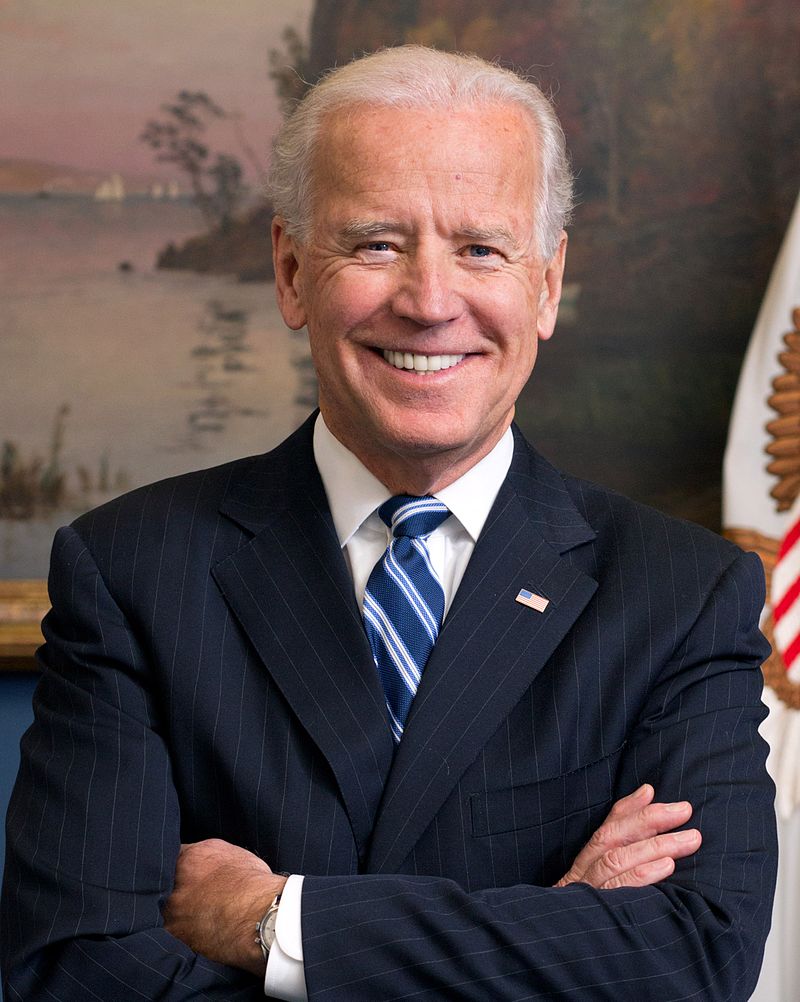
  • Joe Biden to meet with leaders in Turkey in mid-January

    Joe Biden to meet with leaders in Turkey in mid-January

    WASHINGTON (TIP): Vice president Joe Biden will travel to Turkey next month amid the ongoing fight against the Islamic State group.

    Biden is adding a stop in Turkey to his previously announced trip to Davos, Switzerland, for the World Economic Forum the week of January 17. The White House says Biden will meet with Turkish President Recep Tayyip Erdogan and Prime Minister Ahmet Davutoglu.

    The US is pressing Turkey to do more to fight IS and tighten its border with Syria. Turkey has been a target of IS attacks, and on Wednesday detained two suspected IS militants believed to be planning suicide attacks.

    Biden is also working to tamp down a spat between Turkey and Iraq over Turkish troops staged at a training camp in northern Iraq.

    (AP)

  • Finding a Niche in the Emerging World Order

    Finding a Niche in the Emerging World Order

    Prime Minister Narendra Modi’s apparently impromptu visit to Lahore on Christmas day is readily explained by the need to contain the Taliban and ensure regional stability and connectivity in the ‘Heart of Asia’ after the US-led International Security Assistance Force withdraws next year. The visit follows growing realization in capitals across the region that mutual security interests must supersede Cold War alliances or ideological mindsets to avoid the fate of nations like Iraq and Syria. The Taliban and/or its mutants cannot be permitted to spread in the Afghan neighborhood, which includes Central Asia, Iran, Pakistan and India, an effort that calls for convergence between Kabul, Islamabad and New Delhi. One can discern the benign presence of Moscow and Beijing as both have huge stakes in a revitalized Asian economic boom independent of Western hegemony.

    Besides China’s Silk Road project, several multi-nation projects centre on Afghanistan, viz, the Turkmen railways, transmission lines, highways, oil pipelines and gas pipelines including the Turkmenistan-Afghanistan-Pakistan-India pipeline. India wants to join the Afghanistan-Pakistan trade and transit agreement so that Afghan products can directly enter India and its products reach Afghan and Central Asian markets.

    These mega-development prospects doubtless prompted Mr. Modi to engage with Pakistani Prime Minister Nawaz Sharif on the sidelines of the Paris climate conference in late November. Thereafter the National Security Advisors met in Bangkok and smoothened the way for External Affairs Minister Sushma Swaraj’s visit to Islamabad for the Heart of Asia-Istanbul Process conference on Afghanistan. India has huge stakes in the integration of Central Asia, East Asia and West Asia.Though not opposed, India does not expect a lasting peace to emerge from talks between the Afghan Government and Afghan Taliban groups. A better option is state-level engagement which Kabul too prefers. Hence, it is inconceivable that as he went through his Kabul engagements – inaugurating the India-built $90 million Parliament House, gifting three Mi-25 attack helicopters and 500 new scholarships for children of martyrs of Afghan security forces -Mr. Modi would not have discussed the Lahore stopover with President Ashraf Ghani and CEO Abdullah Abdullah. It seems equally likely he mentioned it to Russian President Vladimir Putin before departing from Moscow. It may be relevant to note that since Russia began bombing IS positions in Syria, Pakistan does not favor regime change in Damascus.

    Pakistan Tehreek-e-Insaaf party leader Imran Khan’s presence in India (possibly to deliver the Sharif family wedding invitation) and the mature welcome to Mr. Modi’s stopover by Pakistan political parties (as opposed to the Congress’s petty squabbling) suggests that the Pakistani polity may have achieved some degree of cohesion in tackling terrorism. The Peshawar school attack last year is a grim warning of the danger from non-state actors.

    Mr. Modi’s first state visit to Russia, as part of the 16th Annual Bilateral Summit, has revitalized India’s most tried and trusted friendship and sent a signal to the international community that President Putin cannot be downsized by Western machinations. Mr. Modi secured Mr. Putin’s backing for India’s permanent membership of the UN Security Council and reiterated the commitment of both nations to a multipolar world order. Both nations already cooperate in forums like Brics and the Shanghai Cooperation Organisation (where Russia helped in India’s full membership), the G20 and the East Asia Summit.

    Syria, Afghanistan and the common threat posed by terrorism figured in the talks, but the summit’s main takeaway was Russia’s big bang return to India’s defense and nuclear energy sectors. Mr. Modi’s Make in India project in the defense sector got a major boost with the deal to jointly manufacture 200 Kamov-226T light military helicopters.

    The real triumph is the acquisition of five S- 400 Triumf surface-to-air missile systems (and 6,000 missiles). Literally the ‘crown jewels’ of Russia’s defense capability, the S-400 can destroy aircraft that use stealth technology, other fighter aircraft, cruise missiles and tactical missiles from up to 400 kilometers away, as effectively demonstrated earlier this month when Russia deployed the system to protect its Hmeimim airbase in Syria after Turkey downed a Russian jet.

    This will give India the ability to engage multiple targets at long range and restore the strategic balance with China and Pakistan. With Prime Minister Modi reportedly budgeting $150 billion to upgrade India’s military, with the Navy planning to order three Russian frigate warships and a possible joint development of a fifth generation fighter aircraft, New Delhi could be Moscow’s salvation as the latter faces a second year of recession amid Western sanctions.

    With the Paris climate conference failing to yield a comprehensive deal, the burden of combating global warming with clean energy expectedly fell upon individual nations. Mr. Modi having previously identified nuclear energy as pollution-free, the two nations are moving ahead with plans to build at least 12 nuclear power plants in India with the highest safety standards in the world, over the next 20 years. Two plants are slated to come up in Andhra Pradesh under the Make in India program. A vibrant partnership, however, calls for deeper economic integration. The Indian Prime Minister hopes to take advantage of the US-led Western sanctions against Russia to meet the latter’s demand for dairy products, seafood, and other goods and to attract Russian cash-rich billionaires to invest in India’s infrastructure fund, since they are no longer welcome in the old European financial havens due to Mr. Putin’s resistance to Western geo-political agendas to dismember West Asian and African countries on the lines of the old Yugoslavia.

    Access to Russian capital for his Make in India campaign would empower Mr. Modi’s drive to build a strong indigenous manufacturing base to generate employment and export revenues. Given the sharp downturn in Russo-Turkey relations, Mr. Modi hopes that Russian tourists will flock to India (not just in Goa) and tasked the tiny Indian community in Russia to motivate Russian families to discover India.

    Another gain is Russia’s commitment to ship 10 million ton of oil annually to energy-starved India in the next 10 years. Both countries plan to intensity collaboration in developing space exploration, rocket manufacture and engine manufacture, nano-technology, metallurgy, optics and software sectors. In substance, the visit announced that the Asian quest to forge a rational world order has moved to a new level. Mr. Modi’s short and informal visits to Afghanistan and Pakistan may be read as an invitation to take a seat of honor at the evolving new world concert.

    (The author is a social development consultant and a columnist with The Pioneer, a leading newspaper of Delhi).

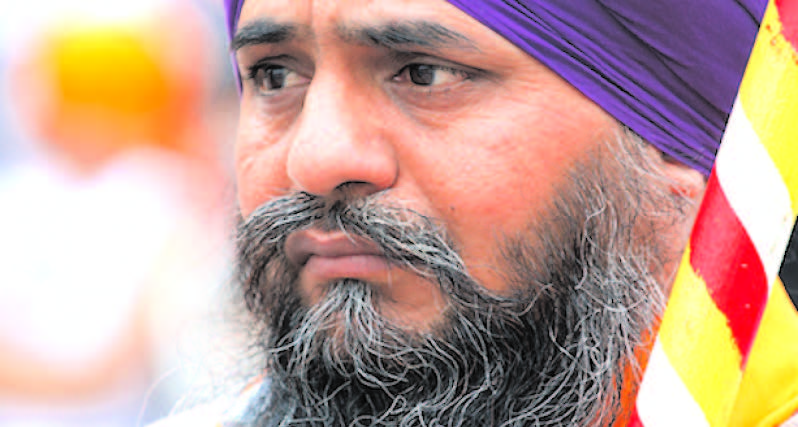
  • Sikh Americans are not Muslims, but they still suffer from Islamophobia

    Sikh Americans are not Muslims, but they still suffer from Islamophobia

    Shah Noor, a recent transplant to California from Maryland, was driving through a nearby community one evening with his wife and stopped at a 7-Eleven to get some milk.

    A police car pulled up with lights flashing. Officers walked to their car and grilled them for 45 minutes. They were aggressive, he said, and asked what they were doing there, where they work. At one point, he saw the officer put his hand on his gun.

    “It was scary,” Noor said. “Pure harassment.”

    Police — Noor declined to identify the agency because of an ongoing investigation —cited him for talking on his cell phone while driving. He said the charge is bogus.

    “My phone had been dead for over three hours,” said Noor, 32, a lawyer who now runs JS Noor, a jewelry business. And the log on his wife’s cell phone shows no activity during that time.

    He’s convinced that racial profiling was in play. He wears a turban and has a beard. His wife, Stephanie, is African-American. And all of this happened within days of a mass shooting in San Bernardino carried out by a Muslim couple.

    After every attack on U.S. soil committed by Muslims, the backlash seems to increase. But hate crimes don’t target only Muslims.

    Noor is originally from India and a Sikh, not an Arab or Muslim.

    ‘[Sikhism] preaches a message of devotion, remembrance of God at all times, truthful living, equality between all human beings, social justice, while emphatically denouncing superstitions and blind rituals.’ – Sikh Coalition

    Since 9/11, Islamophobia has spread and has targeted groups indiscriminately. Sikhs, who wear a turban as an article of faith, have often been mistaken for Muslims in the U.S. They pray at a gurdwara, not a mosque, but a gurdwara in Buena Park, Caifornia, was vandalized days after the San Bernardino shooting. Graffiti sprayed on the façade included the misspelled “Islahm” and an expletive directed at the Islamic State of Iraq and the Levant.

    The San Bernardino shooters had apparently been inspired by the group that has been behind horrific violence worldwide, including the Nov. 13 attacks in Paris.

    The 20-year-old man arrested for the vandalism issued a public apology to the congregation of Buena Park Gurdwara Singh Sabha, a Sikh house of worship in Orange County.

    But other assaults have been more violent. On Sept. 15, 2001, four days after the attacks on the World Trade Center towers, Balbir Singh Sodhi was shot and killed outside of his Mesa, Arizona, gas station by Frank Roque. Roque wanted to “kill a Muslim” in retaliation for the attacks on Sept. 11. Sodhi is considered the first murder victim of post-9/11 backlash. Roque was convicted of first-degree murder and sentenced to life in prison for the hate crime.

    The Sikh Coalition was founded by volunteers in 2001 in response to a spate of attacks against Sikh Americans.

    “Sikh adults were assaulted, Sikh children were bullied, places of worship were vandalized,” said Arjun Singh, the coalition’s law and policy director. “Terrorist attacks lead to xenophobia and anyone who looks different is targeted, including Sikhs.”

    The Sikh Coalition reports a spate of attacks and harassment this month alone.

    A Sikh woman traveling to California shortly after the San Bernardino attacks said she had to show her breast pump to airline employees to prove she wasn’t a “terrorist”.

    In Grand Rapids, Michigan, a store clerk originally from the state of Punjab in India was shot during an armed robbery. The assailants called the clerk a terrorist.

    Five days after the San Bernardino attack, Gian Singh, a 78-year-old grandfather, was walking to pick up his grandson from school in Bakersfield, when a man in a pick-up truck threw an apple at him with such force that the apple split when it hit his head, according to the Sikh Coalition, which is representing him.

    ‘Sikh adults were assaulted, Sikh children were bullied, places of worship were vandalized. Terrorist attacks lead to xenophobia and anyone who looks different is targeted, including Sikhs.’ – Arjun Singh, law and policy director, Sikh Coalition

    There have been Sikhs in the U.S. for more than a century. Many came to build the railroads in the West. There is no accurate data on the number of Sikhs here, and estimates vary widely between 750,000 and 1.6 million, according to the coalition. Almost half of them live in California, the state with the largest Sikh population, but the densest concentration of Sikhs is in the tri-state area of New York, Connecticut and New Jersey.

    The Sikh religion is a monotheistic religion that originates in the Punjab region of India. According to the coalition, it “preaches a message of devotion, remembrance of God at all times, truthful living, equality between all human beings, social justice, while emphatically denouncing superstitions and blind rituals.”

    “We were shocked after finding out about the graffiti,” said Jaspreet Singh, 40, on the board of the Buena Park gurdwara that was vandalized. “Especially the hate words being used.”

    For Sikhs who grew up in the U.S., harassment has been a way of life. For Noor, schoolyard teasing was common but never did he feel so much hatred as after 9/11.

    “You feel people don’t like you, like an outsider,” he said. People would call him “Osama” in reference to Osama bin Laden, the founder of Al-Qaeda, the group that claimed responsibility for the 9/11 attacks. They also called him “Taliban,” the armed fundamentalist movement in Afghanistan.

    “Sometimes, I would walk up to [the hecklers] and yell back, ‘I’m not a terrorist,’” Noor said.

    One time, someone pulled a knife on him in Wheaton, Maryland, a suburb of Washington. Another time, in Amsterdam, people in a car yelled out “bin Laden” at him, he said. When he yelled back, they followed him up an alley. He escaped.

    And there was another encounter with police in a Detroit suburb. He had a bracelet in his hand that he was playing with. Police mistook it for a masbaha, Muslim prayer beads. He showed them that it had a cross on it.

    “I wear religious symbols of all kinds,” Noor said. “I go to church, to gurdwara, to mosque.”

    He has attended service at a Baptist congregation, his wife’s religion.

    His cousin, Jaisal Noor, 30, a reporter for The Real News Network, a nonprofit news and documentary service based in Baltimore, wrote about assaults on Sikhs for the 10th anniversary of 9/11.

    “The day of 9/11, I was confronted with the reality that things changed,” he said in an interview.

    He was in high school when the World Trade Center towers collapsed.

    “I remember that day feeling worried for my family, my parents,” he said. His father was a frequent business traveler who encountered a lot of discrimination at airports.

    His classmates would rant, “We’re gonna get these A-rabs” but then would turn to him and tell him they had no problem with him because he was Indian.

    “But it’s never gone away,” said Jaisal Noor. “Whenever we’re at war, the attacks increase … They see images of turban-wearing men as the enemies.”

    Sikhs say their first reaction may be to distance themselves from Muslims and explain to people that they are not Arabs or Muslim. But they stress that no one, Sikh or Muslim or any other religious or ethnic minority, should be targeted.

    “Many Sikhs are worried, and rightly so,” said Arjun Singh. “If the bigoted rhetoric continues, hate violence will continue too … Today’s toxic political climate has led to bias, discrimination and hate violence.”

  • ISIL members linked to Paris attacks killed in US raids, says Pentagon

    ISIL members linked to Paris attacks killed in US raids, says Pentagon

    U.S. led airstrikes in Syria and Iraq have killed 10 high-ranking ISIL members over the last month, including a fighter with “direct” links to the alleged mastermind of the Paris attacks, the Pentagon said Tuesday, Dec. 29.

    Army Col. Steve Warren, a spokesman for the U.S.-led coalition’s military operation against the Islamic State in Iraq and the Levant, said those killed in the raids included “several external attack planners.” Some were linked to the assaults in Paris that killed 130 people in November, and others “had designs on further attacking the West,” he said.

    He said one of those killed was Abdul Qader Hakim, who facilitated ISIL’s external operations and had links to the Paris attack network. He was killed in the northern Iraqi city of Mosul on Dec. 26.

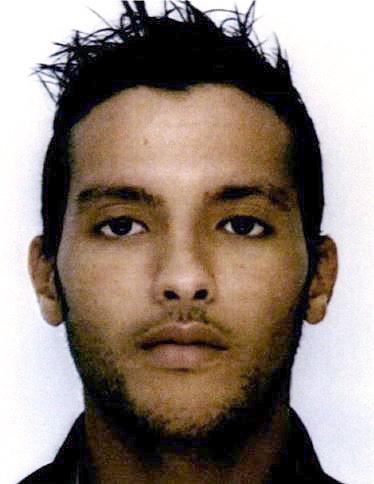
    A coalition airstrike on Dec. 24 in Syria killed Charaffe al-Mouadan, a Syrian-based ISIL member with a direct link to Abdelhamid Abaaoud, the suspected ringleader of the coordinated bombings and shootings in Paris. Mouadan was planning further attacks against the West, Warren said.

    The US military says such strikes are helping to weaken the jihadist group, which captured large parts of Iraq and Syria last year but has recently seen significant setbacks including this week’s loss of Ramadi in Iraq.

    “Part of those successes is attributable to the fact that the organization is losing its leadership,” Warren said.

    He warned, however, “It’s still got fangs.”

    A French source, speaking on condition of anonymity, told AFP there was no immediate evidence showing Mouadan was involved in the Paris attacks.

    But the official said Mouadan had been close to Samy Amimour, one of the suicide bombers who attacked the Bataclan music venue.


  • In taking economic war to Islamic State, US developing new tools

    In taking economic war to Islamic State, US developing new tools

    WASHINGTON (TIP): Since last month, US warplanes have struck Islamic State’s oil infrastructure in Syria in a stepped-up campaign of economic warfare that the United States estimates has cut the group’s black-market earnings from oil by about a third.

    In finding their targets, US military planners have relied in part on an unconventional source of intelligence: access to banking records that provide insight into which refineries and oil pumps are generating cash for the extremist group, current and former officials say.

    The intent is to choke off the Islamic State’s funding by tracking its remaining ties to the global financial system. By identifying money flowing to and from the group, US officials have been able to get a glimpse into how its black-market economy operates, people with knowledge of the effort have said.

    That in turn has influenced decisions about targeting for air strikes in an effort that began before Islamic State’s Nov. 13 attacks on Paris and has intensified since, they said. While Islamic State’s access to formal banking has been restricted, it retains some ties that US military and financial officials can use against it, the current and former officials said.

    “We have done a really good job of largely keeping the Islamic State out of the formal financial system,” said Matthew Levitt, who served as deputy assistant secretary for intelligence at the US Treasury in the George W. Bush administration. “But we haven’t been entirely successful, and that may not be a bad thing.”

    Reuters was unable to verify key aspects of the campaign, including when it started or exactly which facilities have been destroyed as a result. Two current officials who confirmed the operations in outline declined to comment on their details.

    It was unclear how US intelligence, Treasury, and military officials working on what the government calls “counter threat finance” operations have used banking records to identify lucrative Islamic State oil-related targets in Syria and whether that involved local banks.

    A report this year by the intergovernmental Financial Action Task Force found there were more than 20 Syrian financial institutions with operations in Islamic State territory. In Iraq, Treasury has worked with government officials to cut off bank branches in the group’s territory from the Iraqi and international financial systems.

    Gerald Roberts, section chief of the FBI’s terrorist financing operations section, said that Islamic State’s recruits from outside Syria often come with financial trails that officials tracking them can “exploit.”

    “We are seeing them using traditional banking systems,” he said at a banking conference last week in Washington, adding that young, tech-savvy Islamic State members are also familiar with virtual currencies such as Bitcoin.

    Islamic State, also known as IS, ISIS or ISIL, is sometimes forced to use commercial banks because the amounts involved are too large to move using other means, said Levitt.

    The US Treasury’s Financial Crimes Enforcement Network (FinCEN) uses a set of “business rules” to screen the roughly 55,000 reports it receives daily from financial institutions for signs of activity involving Islamic State, a spokesman said. He declined to describe the rules, but law enforcement sources say names, IP addresses, email addresses, and phone numbers are among the data that intelligence authorities try to match.

    The matches allow FinCEN “to connect the dots between seemingly unrelated individuals and entities,” the FinCEN spokesman said. At present, FinCEN finds about 1,200 matches suggesting possible Islamic State-linked financial activity each month, up from 800 in April, the spokesman said.

    Bank of America, JP Morgan and Wells Fargo declined to comment on whether they provided financial reports to the US government. Such reports are supplied confidentially.

    Citigroup, HSBC, and Standard Chartered did not immediately respond to requests for comment.

    “Tidal Wave II” The use of financial records linked to Islamic State is only one part of the intelligence-gathering exercise for air strikes in Syria that also includes methods such as aerial surveillance by drones, officials said.

    One former military official familiar with the process said that any financial intelligence collected by FinCEN would require “significant vetting” before the military acted on it.

    Earlier this month, US-led coalition planes struck 116 fuel trucks used to smuggle Islamic State oil 45 minutes after dropping leaflets warning drivers to flee, a Pentagon spokesman said. Coalition strikes destroyed another 283 Islamic State fuel trucks on Saturday, the Pentagon said.

    On November 8, a coalition air strike destroyed three oil refineries in Syria near the border with Turkey.

    US defense officials estimate that Islamic State, an adversary the United States calls the wealthiest terrorist group of its kind in history, was earning about $47 million per month from oil sales prior to October.

    That month, the US military launched an intensified effort to go after oil infrastructure, dubbed “Tidal Wave II,” named after the bombing campaign targeting Romanian oil fields in World War Two.

    The Pentagon estimates the strikes have reduced the Islamic State’s income from oil sales by about 30 percent, one US defense official with knowledge of the previously unreported estimate said. Reuters was unable to confirm this.

    The use of financial records in helping to pick US targets was first disclosed last week at the banking conference in Washington. At the conference, Kurt Gredzinski, the Counter Threat Finance Team Chief at US Special Operations Command, cited the importance of information provided by banks in the war against Islamic State.

  • Colorado shooting suspect pleads guilty and says he is a ‘warrior for the babies’

    Colorado shooting suspect pleads guilty and says he is a ‘warrior for the babies’

    COLORADO SPRINGS (TIP): The man accused, Robert Lewis Dear, of killing three at a Planned Parenthood clinic in Colorado has said in court that he is guilty and a “warrior for the babies”.

    “I am guilty. There will be no trial. I am a warrior for the babies,” he said during a court hearing where prosecutors announced his charges. During the hearing, he was formally charged with first-degree murder.

    Robert Dear, 57, faces 179 charges for the attack that killed two civilians and a police officer, and wounded nine.

    Dear said something about “no more baby parts” during his arrest and had asked for directions to the clinic prior to the attack.

    Those who were killed in the attack include police officer Garrett Swasey, 44, Iraq War veteran Ke’Arre Stewart, 29, and Jennifer Markovsky, 35, who was taking a friend to the clinic.

    Police have not discussed a motive in the shooting despite signs that Dear was concerned about abortion, a service provided by Planned Parenthood, a national family planning clinic.

    The Planned Parenthood group has drawn anti-abortion protests in the past.

    Here is what is known about Robert Lewis Dear

    • ? Aged 57, owns a trailer on land in Hartsel, Colorado, about 60 miles (100km) west of Colorado Springs
    • Also owns a mountain cabin with no electricity or running water 15 miles west of Asheville, North Carolina, and had previously lived at Walterboro, South Carolina
    • Had arrest records in South and North Carolina including two counts of cruelty to animals in 2002, the Colorado Springs Gazette reported
    • A neighbor in North Carolina said he would often avoid eye contact and said religion or abortion never came up in conversation
    • Was an independent art dealer with a degree in public administration, according to the New York Times
    • Ex-wife Pamela Ross said told the paper she once called the police to accuse him of domestic violence
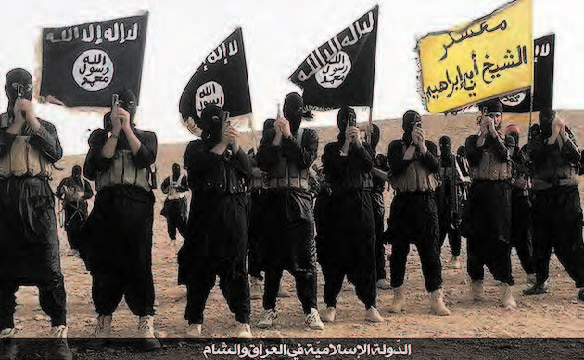
  • Islamic State vows to expand and take the war to India

    Islamic State vows to expand and take the war to India

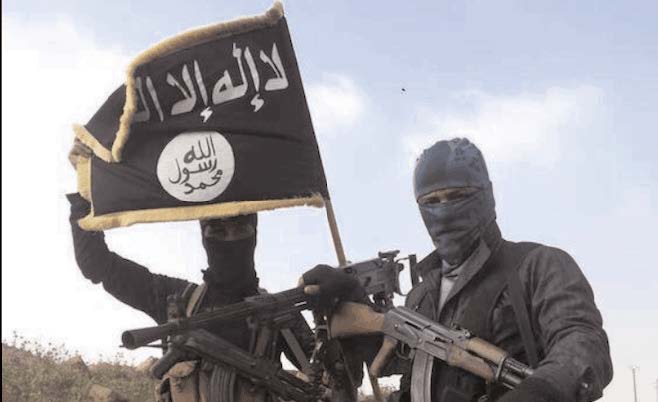
    NEW DELHI  (TIP): The increasing incidents of ‘intolerance’ that have created an atmosphere of fear amongst the Muslim minority community and the rise of Hindu nationalist fringe elements dominating the headlines in recent times, have not gone unnoticed in the world of Islamist jihad. Nor has the number of Indians who have fled to Iraq and Syria to join the ranks of the extremist militant groups or are amongst its ardent supporters on social media. Citing doomsday prophecies which say the Ultimate War will take place against the New World Order before the Day of Judgement, the group has made a direct indication that its future war strategy will include India among other countries.

    The threat is made in a new e-book titled, ‘Black Flags from the Islamic State’ (2016) released online on jihadist platforms on Tuesday, December 1. Laying out its strategy, the IS has predicted how its war against the kuffars (infidels, apostates) will pan out in the coming year and provides ‘guidance’ on how to fight back the oppressors to defend religion and life.

    The 130-page book, charts the history of modern jihad starting from the formation of al Qaeda in 1989 to the post 9/11 world which resulted in the onslaught of war in Iraq from which resulted in the birth of the previous manifestation of the Islamic State and its final establishment of Caliphate. The book states that the Islamic State is not limited to Iraq and Syria and will expand beyond the Levant region.

    “Into [countries from East to West:] the Phillipines, India, Pakistan, Bangladesh, Afghanistan…” Earlier the Islamic State leader Abu Bakr al Baghdadi had mentioned India as a part of the global Caliphate that the group envisions to capture.

    In chapter titled ‘The Scary Events leading to the Future Global Jihad’ the book talks about how Muslims in non-Muslim countries are facing discrimination and are considered as enemies since the rise of the Islamic State. As a result, it notes there is a growth of right wing movements “like India where the President (Narendra Modi) is a right wing Hindu nationalist who worships weapons and is preparing his people for a future war against Muslims.”

    Making reference to the incident in Dadri where a Muslim man was lynched by a mob on the suspicion of eating cow meat, the book adds that the leaders of such right wing groups encourage violence. “In India, a movement of Hindus is growing who kill Muslims who eat beef (cow meat).”

    In order to find this growing threat, the book states that Muslims have three options: either to make Hijrah (emigration) to a Muslim country, Jihad (fighting back), or face humiliation.

    In the following chapter ‘Lone wolves -> Clandestine Cells -> Insurgency -> Army’, the book provides details on how a single individual or small group of individuals can come together to form sleeper cells, including ideas of what kind of attacks can be conducted and what precautions one needs to take while making homemade explosives. It describes in detail how insurgency can be developed with the coming together of sleeper cells. And goes into a practical case study of how all this was successfully manifested in the recent case of attacks in Paris.

  • Iraq does not need foreign ground forces to defeat IS: PM Haider al-Abadi

    Iraq does not need foreign ground forces to defeat IS: PM Haider al-Abadi

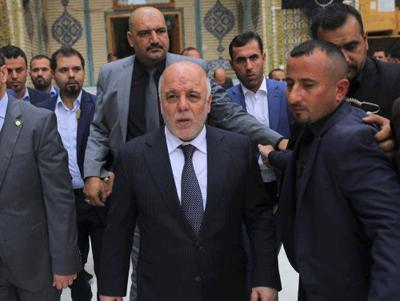
    BAGHDAD (TIP): Prime Minister Haider al-Abadi said Iraq does not need foreign ground troops to defeat the Islamic State group, after Washington announced it would deploy special forces to fight the jihadists.

    Abadi did not directly reject the deployment, which US secretary of state John Kerry said Baghdad had been informed about before the announcement, but he did insist that any operations be coordinated with the Iraqi government.

    The presence of American ground forces is a contentious issue in Iraq, where the United States fought a nearly nine-year war, and it is politically expedient for Abadi to distance himself from the deployment.

    “There is no need for foreign ground combat forces in Iraqi territory,” Abadi said in a statement released late Tuesday in which he praised the performance of Iraqi special forces. “The Iraqi government stresses that any military operation or presence of any foreign force, special or not, in any place in Iraq cannot be done without its approval and coordination with it,” the statement said.

    Defence Secretary Ashton Carter said Tuesday that the US was deploying a “specialized expeditionary targeting force” to Iraq to work alongside local forces against IS, which overran large parts of the country last year.

    On Wednesday, Kerry said in Brussels that “the government of Iraq was of course briefed in advance of Secretary Carter’s announcement”.

    “We will continue to work very, very closely with our Iraqi partners on exactly who would be deployed, where they would be deployed, what kinds of missions people would undertake, how they would support Iraqi efforts to degrade and destroy” IS, Kerry said.

    (AFP)

  • Intolerance Fuels Radicalisation

    Intolerance Fuels Radicalisation

    India is awash with Islamophobia and there could not be a more dangerous time for this pernicious slant in our national politics.

    Hateful vitriol was spewed upon actor Aamir Khan recently, for expressing concern over the rising anti-minority attitude, just as black ink was literally spilled on the Observer Research Foundation’s Sudheendra Kulkarni last month for organising a book release event for a former Pakistani foreign Minister.

    Even more violent and disquieting were September’s mob lynching of Mohammad Akhlaq in Dadri, Uttar Pradesh, over rumours that he had stored beef in his home, and August’s murder of notable rationalist M.M. Kalburgi, who was shot dead after being threatened for his criticism of idolatry in Hinduism.

    There will no doubt be more such displays of bigotry in the months ahead, as fringe elements of the Hindutva brigade, emboldened by Prime Minister Narendra Modi’s description of the Dadri lynching as “unfortunate” and “undesirable”, go on the rampage to correct what they perceive to be injuries to the sentiments of the majority.

    The most compelling reasons for Mr. Modi to decisively stymie this rising tide of hatred are quite obvious: respect for India’s constitutionally protected secular credentials, and the maintenance of broader societal peace and harmony between communities.

    Yet there is a third feature of the Indian political firmament that makes it urgent, nay imperative, that the country’s leadership effectively tamp down on the flames of extremism – the alarming proliferation of support for Islamic State (IS), the jihadist terror outfit that controls parts of Syria and Iraq.

    The discovery of these IS-sympathisers has had a creeping quality, starting late last year with a handful of youth travelling to West Asia from Kalyan, near Mumbai, but more recently has been gathering momentum with a much larger cohort being pulled into the net by intelligence operations.

    The fact that this trend has been coterminous with the surge in anti-minority violence ought to be a red flag for the Modi government, for there is a risk that the two developments may begin to feed off one another, leading to a perfect storm linking an ongoing foreign policy crisis to a community under siege on Indian soil.

    Consider the speed and pattern of IS proliferation on Indian soil over the past year.

    Back in January The Hindu received a response on a Freedom of Information Act request to the U.S. Department of Defence asking what information it had on Indian nationals discovered to be fighting for IS in Syria and Iraq.

    Their answer was simple: none. Clearly the few Indians that had made it into the ranks of IS at that point were either relegated to menial tasks or used as cannon fodder on the frontlines as they have generally been considered “inferior” fighters.

    Yet, as outlined in a series of reports in The Hindu (“The IS Files”), the last past year has witnessed a slew of intelligence operations that have flushed out a number of potential IS recruits, and they hail from across the breadth of India.

    For example, Haja Fakkrudeen and Gul Mohamed Maracachi Maraicar both grew up in Cuddalore district in Tamil Nadu, and while Maraicar is now lodged in an Indian prison, Fakkrudeen, who may have been radicalised by Maraicar, is likely to be fighting alongside IS in Syria.

    The case of Muhammed Abdul Ahad, a U.S.-educated computer professional from Bengaluru, reflects the diversity of backgrounds from which IS has managed to woo supporters in India. Ahad was intercepted by Turkish authorities last year on the Syrian border and deported earlier this year after authorities suspected him of seeking to enter the Syrian battlefield.

    At the opposite end of the nation, in the Kashmir Valley, Kamil Wada spoke to The Hindu about how his older brother Adil had travelled to Syria, with authorities noting that he may have got radicalised by an Australian Islamic group after a visit to that country.

    As Indian intelligence agencies continue to grapple with the “foreign fighter” question, an issue that has long been front and centre for the U.S., Canada and Western Europe, it behoves the government of Mr. Modi to more effectively address societal forces that make the isolation, demonisation and ultimate radicalisation of minority communities more likely.

    Unless there is a concerted effort to neutralise the impunity of extremist elements that regularly engage in anti-Muslim violence, there may be little to halt the drift of a few members of an overwhelmingly moderate community into the arms of IS radicals.

    In the present climate of hostility, a vicious cycle is likely, as there are groups that would happily seize upon the insidious presence of the IS in India to paint the entire Muslim community with the broad brush of negative propaganda or worse.

    To have any hope of success in this context, anti-radicalisation strategies of the government must foster a sense of physical security, democratic space and cultural sensitivity towards traditions of minority communities while adopting a no-nonsense, intelligence-based crackdown on the shadowy menace of the IS.

  • US ‘terror’ arrests at the highest level since 9/11

    US ‘terror’ arrests at the highest level since 9/11

    WASHINGTON (TIP): As of right now, US authorities have arrested 56 people in 2015 on charges related to their attempts to join or aid the Islamic State of Iraq and the Levant (ISIL) group, according to a new report from George Washington University.

    It’s the most terrorism-related arrests in a single year since the 9/11 attacks on the US.

    Why the high number? – “I think US prosecutors have got-ten a bit creative on their charges in some cases,” said Seamus Hughes, a former counterterrorism official with the US government and co-author of the report.

    “I think there’s a realization and a concern on law enforce-ment’s part to rightly try to prevent the next attack.”

    But ISIL’s online efforts have also been a big contributor to the uptick in arrests.

    “I think their use of social media has attracted more peo-ple than it has in the past,” said Hughes.

    Indeed, the majority of the people charged with aiding ISIL were between the ages of 18-26 years old, according to the report, a key demographic when it comes to social media. ISIL is particularly active on Twitter, the report found.

    According to Ambassador Alberto Fernandez, a former state department official who specializes in ISIL’s social media presence, the group produced 1,800 videos in the past year, 14,523 graphics, worked in nine languages and created 50 songs.

    Much of the message to Westerners is positive and less religious than its Arabic output. “The material in English is more superficial,” said Fernandez. “It’s fervent, incessant, but shallow.”

    The report also found that 86 percent of the Americans who join ISIL are male and 40 percent of them are converts to the Muslim faith. Their motives vary.

    Roughly half of those charged with an offence attempted to travel abroad or successfully left the US before they were caught, according to the report.

    Although there were ISIL-related arrests in 21 states, New York and Minnesota had the highest numbers.

  • ISIS: Muslim-majority countries across the world overwhelmingly detest terrorist group

    ISIS: Muslim-majority countries across the world overwhelmingly detest terrorist group

    LONDON (TIP): ISIS is almost universally detested across the Middle East, Asia and Africa, even in Muslim-majority countries, a new poll has shown.

    Despite rhetoric about supposed “sympathy” for the terrorist group among Muslims in the UK and around the world, research by the Pew Research Centre indicated almost non-existent support in 11 surveyed countries and territories.

    In Lebanon, where ISIS’ recent bombing in Beirut killed 43 people, 99 per cent of respondents said they had a “very unfavourable” opinion of the group, while 94 per cent of Israelis and 89 per cent of Jordanians felt the same.

    In the Palestinian territories, 84 per cent of people had a negative view of ISIS, both in the Gaza Strip (92 per cent) and the West Bank (79 per cent).

    Chris Doyle, director of the Council for Arab-British Understanding (Caabu), told The Independent that the results were no surprise.

    “I think it emphasises that ISIS are seen as a threat to communities across the Arab world – Muslims have been their primary victims after all, as was the case with al-Qaida,” he said.

    “The brutal nature of their rule, the way they have treated women, all the beheadings, have not endeared them to people.

    “(Respondents) also know that by their actions, ISIS are trying to turn the non-Muslim world against them.”

    Mr Doyle said that while all the surveyed areas had experience of jihadist groups, Lebanon was particularly conscious of the carnage next door in Syria, which has driven hundreds of thousands of refugees across its borders.

    In no country surveyed did more than 15 per cent of the population declare support for ISIS, but in Pakistan views appeared more mixed.

    The majority of respondents – 62 per cent – said they did not know how they felt, while almost a third held negative opinions and around nine per cent thought positively of the group.

    Mr Doyle said the high proportion of “don’t knows” could be a sign of reluctance to answer the question.

    “ISIS don’t have as much of presence there so I would like to see further analysis,” he added.

    Opinions differed across religious groups in some areas including Nigeria, where Boko Haram declared allegiance to ISIS earlier this year while attempting to establish its own “caliphate” with a bloody insurgency.

    Around three quarters of Nigerian Christians had an unfavourable view of ISIS, as did 61 per cent of Nigerian Muslims, although a fifth of the same group supported the so-called Islamic State.

    The Pew Research Centre took the figures from its Global Attitudes Survey conducted in spring this year, before ISIS’ latest round of atrocities targeting France, Russia, Lebanon, Egypt, Tunisia, Iraq and Syria.

    Its latest findings came after The Sun was criticised for claiming that one in five British Muslims “have sympathy” for extremists going to fight with ISIS in Syria.

    One in five respondents to the poll did say they had “some” or “a lot” of sympathy with people going to Syria but did not specify who they would be fighting for, following high-profile coverage of volunteers going to combat ISIS with the Kurds and other forces.

    It was also pointed out that the word “sympathy” does not necessarily indicate approval. (Source: Reuters)

  • Fighting the Islamic State: Role of the P-5 Nations and India

    Fighting the Islamic State: Role of the P-5 Nations and India

    In the course of one week in November 2015, militants from Abu Bakr Al-Baghdadi’s self-proclaimed Islamic Caliphate – also called ISIS, ISIL and Daesh – struck multiple targets in Beirut, Paris and Mali. Earlier, on October 31, ISIS claimed to have brought down a Russian civilian aircraft flying from Sharm al-Sheikh to St. Petersburg.

    The ISIS militia, numbering between 20,000 and 30,000, now controls approximately 300,000 square kilometre of territory straddling the Syria-Iraq border. Its brand of fundamentalist terrorism is gradually spreading beyond West Asia and the militia is slowly but surely gaining ground. In Africa, ISIS fighters and their associates have been active in Algeria, Lebanon, Libya, Mali, South Sudan and Tunisia in recent months. Boko Haram, the militant Islamist group in Nigeria, has pledged allegiance to ISIS.

    Fighting Back
    Recent acts of terrorism have steeled the resolve of the international community. Significant help is being provided to the government of Iraq by the US and its allies. The Peshmerga, forces of the Kurdistan Regional Government (KRG) which had captured oil-rich Kirkuk, have joined the fight against the ISIS and recaptured the Syrian (Kurdish) border town of Kobani.

    The US began launching air strikes against the ISIS militia about a year ago, while simultaneously arming anti-Assad forces like the Free Syrian Army with a view to bringing about a regime change in Syria. The US has been joined in this endeavour by Australia, Britain, Canada, Denmark, France and Netherlands as well as five Arab countries (Bahrain, Jordan, Saudi Arabia, Qatar and the United Arab Emirates). The air strikes have resulted in substantial collateral damage. It is being gradually realised that the ISIS militia cannot be defeated from the air alone.

    Putin’s Russia joined the fight on September 30, 2015 with the twin aims of defeating the ISIS and destroying anti-Assad forces. However, the initial air strikes launched by the Russian Air Force were directed mainly against the forces opposed to President Assad of Syria. Russian ground troops are also expected to join the fight soon. The Russians have also descended on Baghdad to establish a military intelligence coordination cell jointly with Iran, Iraq and Syria – a move that has not been appreciated by the Americans.

    In a rare show of unity after the Paris attacks, the United Nations Security Council passed a unanimous resolution stating that “The Islamic State in Iraq and the Levant constitutes a global and unprecedented threat to international peace and security,” and called upon all member states to join the fight against the ISIS.

    Diplomatic moves have been initiated to coordinate operations and work together for peace and stability in the region. The US and Russia agree that the objective of their interventions should be to end the civil war in Syria through a political deal and that both Iraq and Syria should retain their territorial integrity. They also agree that the ISIS extremists must be completely eliminated. Iran has agreed to join the negotiations to resolve the conflict in Syria. However, while the political objectives are similar, the methods being used to achieve them are different and are designed to extend the influence of each of the protagonists in the region.

    Implications for South Asia
    Al-Baghdadi has openly proclaimed the intention of ISIS to expand eastwards to establish the Islamic state of Khorasan that would include Afghanistan, the Central Asian Republics, eastern Iran and Pakistan. The final battle, Ghazwa-e-Hind – a term from Islamic mythology – will be fought to extend the caliphate to India. An ISIS branch has already been established in the Subcontinent. It is led by Muhsin al Fadhli and is based somewhere in Pakistan. Some factions of the Tehrik-i-Taliban Pakistan have declared their allegiance to al-Baghdadi. Afghanistan’s new National Security Adviser, Mohammad Hanif Atmar, has said that the presence of Daesh or the ISIS is growing and that the group poses a threat to Afghan security. And, some ISIS flags have been seen sporadically in Srinagar.

    Instability and major power rivalry in West Asia do not augur well for India’s national security and economic interests. Combined with the increase in force levels in the Indian Ocean, the heightened tensions in West Asia may ultimately lead to a spill-over of the conflict to adjacent areas. India now imports almost 75 per cent of the oil required to fuel its growing economy and most of it comes from the Gulf. The long-drawn conflicts of the last two decades of the 20th century had forced India to buy oil at far greater cost from distant markets, with no assurance of guaranteed supplies. The 1991 oil shock had almost completely wrecked India’s foreign exchange reserves. The situation could again become critical. Oil prices had shot up to USD 115 per barrel in June 2014, soon after the Caliphate was proclaimed, but have since stabilised around USD 50 to 60 per barrel.

    Since the early 1970s, Indian companies have been winning a large number of contracts to execute turnkey projects in West Asia. The conflict in the region has virtually sealed the prospects of any new contracts being agreed to. Also, payments for ongoing projects are not being made on schedule, leading to un-absorbable losses for Indian firms involved, and a dwindling foreign exchange income from the region.

    India also has a large Diaspora in West Asia. A large number of Indian workers continue to be employed in West Asia and their security is a major concern for the government. Some Indian nurses had been taken hostage by ISIS fighters, but were released unharmed. All of these together constitute important national interests, but cannot be classified as ‘vital’ interests. By definition, vital national interests must be defended by employing military force if necessary.

    US officials have been dropping broad hints to the effect that India should join the US and its allies in fighting ISIS as it poses a long-term threat to India as well. India had been invited to send an infantry division to fight alongside the US-led Coalition in Iraq in 2003. The Vajpayee government had wisely declined to get involved at that time as it was not a vital interest.

    It must also be noted that India has the world’s third largest Muslim population. Indian Muslims have remained detached from the ultra-radical ISIS and its aims and objectives, except for a handful of misguided youth who are reported to have signed up to fight. This could change if India sends armed forces to join the US-led coalition to fight the ISIS militia.

    Prime Minister Narendra Modi proposed at the G-20 summit in Antalya last week that the war against terrorism must isolate and contain the sponsors and supporters of terrorism. He clearly implied that India is willing to join the international coalition against the ISIS and other non-state actors. Besides contributing to the global war against terrorism, India’s participation would help to isolate the Pakistan Army and the ISI – the foremost state sponsors of terrorism.

    Direct Indian military intervention against the ISIS militia would depend on the manner in which the situation unfolds over the next one year. It could become necessary if ISIS is able to extend the area controlled by it to the Persian Gulf as that would affect the supply of oil and gas from the Persian Gulf to India – clearly a vital national interest. For the time being, India should cooperate closely with the international community by way of sharing information and intelligence and providing logistics support like port facilities if asked for. India should also provide full diplomatic support and work with the United Nations for evolving a consensual approach in the fight against the ISIS.

    A concerted international effort is needed to first contain and then comprehensively defeat the ISIS and stabilise Iraq and Syria, failing which the consequences will be disastrous not only for the region, but also for most of the rest of Asia and Europe. Helping the regional players to gradually eliminate the root causes of instability will not be an easy challenge for the international community to address. As an emerging power sharing a littoral with the region, India has an important role to play in acting as a catalyst for West Asian stability.


  • India steps up surveillance on ISIS propaganda: over 150 Indians under the scanner

    India steps up surveillance on ISIS propaganda: over 150 Indians under the scanner

    NEW DELHI (TIP) : Nearly 150 Indians are on the radar of intelligence agencies for actively following Islamic State propaganda and engaging on social media with pro-IS elements, according to government sources.

    A majority of those under surveillance are from the southern states, sources said.

    Though agencies are not planning any action or crackdown on the youth who may be showing a more-than-keen interest in pro-IS websites or social media posts, the tracking is meant to pre-empt the possibility of their becoming indoctrinated enough to join the IS. As and when those under surveillance show signs to radicalization, an intervention may be made to alert their families and facilitate their counseling, if need be.

    Online tracking of pro-IS websites, Twitter handles and Facebook accounts is a key part of India’s counter-IS strategy. Agencies, with the help of experts from the National Technical Research Organization (NTRO), track online traffic related to IS across the country, and constantly flag any unusual trend or activity.

    Sources in the security establishment told TOI that 23 Indians, including about a dozen from the diaspora, had joined the IS and traveled to Iraq-Syria for ‘jihad’. These include four youth from Kalyan, one of whom Areeb Majeed returned to India and is now in custody here, a Kashmiri based in Australia, a Singapore-based Indian, an Oman-based man and one person each from Karnataka and Telangana and a journalist from Kerala.

    Of the six Indian recruits believed to have got killed in IS territory are three Indian Mujahideen cadre including Bada Sajid and Sultan Ajmer Shah who joined the outfit from Pakistan, two from Maharashtra and one from Telangana.As many as 30 Indians, including a woman based in Delhi, have been prevented from joining the IS. Besides, around 8-10 Kerala-origin men and an alleged woman recruiter, Afsha Jabeen, were recently deported by the UAE after they were found to be in touch with active IS members.

    A senior government officer said there was threat of an Indian IS recruit indulging in a “lone wolf” attack here upon return from Iraq-Syria. “Unlike other countries that strip their citizens who join and fight for IS of their passports, we have no such plan. We’d rather let them return and intercept them here,” said the officer.

    In an advisory sent on Monday, the home ministry had warned of the possibility of an IS-sponsored terrorist action on Indian soil. “Though the IS has not been able to establish any significant presence in India, its success in radicalizing some youth, attracting certain sections of the local population or the Indian diaspora to physically participate in its activities or the possibility of piggy-backing on terrorist groups operating in India have opened up the possibility of IS-sponsored terrorist action on Indian territory,” said the advisory issued to all the states and Union Territories.

  • New Islamic State video threatens to blow up White House

    New Islamic State video threatens to blow up White House

    WASHINGTON (TIP): Islamic State militants released a video on Thursday threatening the White House with suicide bombings and car blasts and vowing to conduct more attacks on France. The six-minute video, released by Islamic State fighters in Iraq, applauds last week’s Paris attacks, according to a translation of the Arabic provided by the Maryland-based SITE Intelligence Group.

    The latest threat comes one day after the militant group put out a video showing scenes of New York City, which suggested it was also a target.

    Islamic State, which controls a large territory in Syria and Iraq, has claimed responsibility for last Friday’s attacks in Paris in which 129 people were killed.

    FBI Director James Comey said on Thursday he was not aware of any credible threat of a “Paris-type attack” in the United States.

    State Department spokesman John Kirby told CNN that Thursday’s video was being examined to determine its “veracity.”

  • Paris Exposes the Limitations of the West’s Approach  to Counter Terrorism

    Paris Exposes the Limitations of the West’s Approach to Counter Terrorism

    The ‘notion’ of Critical Infrastructure Protection (CIP) has taken a beating after the November 13, 2015 terrorist attacks in Paris. CIP is about protecting vital infrastructure, which, if attacked, would have deleterious consequences for the state and society. Such infrastructure includes essential services on which the population depends heavily for various routine but essential activities like managing water and electric supply, maintenance of rail and airline networks, etc. For the last couple of years many states have placed a major emphasis upon CIP and have made significant investments to ensure that the architecture for CIP gets appropriately established. However, the recent attacks in Paris and the nature of targets selected there by the terrorists indicate that the ‘process’ behind identifying what is Critical Infrastructure has limitations and terrorists could select many more targets that are outwardly not Critical.

    The idea of CIP could be said to have begun when US President Bill Clinton issued Presidential Decision Directive [PDD]-63 in May 1998 to set up a national program of ‘Critical Infrastructure Protection’. Europe too views CIP as an important instrument and has in place the ‘European Program for Critical Infrastructure Protection’ (EPCIP). For its part, India has the ‘National Critical Information Infrastructure Protection Centre’ (NCIPC), which essentially handles cyber security related issues.

    The terrorist attacks in Paris and prior to that in Mumbai (26/11) demonstrate that terrorists are not concentrating on Critical Infrastructure as a target of choice. Instead, they are targeting places where they can inflict maximum damage to human life as well as garner wide publicity. This is, however, not to argue that Critical Infrastructure has lost its relevance as a ‘rewarding’ terror target. Perhaps realizing that such targets are difficult to attack owing to security measures put in place, terrorists seem to have shifted their attention to softer targets.

    This raises some basic questions: Are global powers unable to visualize the probable patterns of terrorism? Are the tools used by them to handle current asymmetric threats appropriate? Are attacks like those in Paris exposing the limitations of the existing preparedness and response mechanisms?

    It is well-known that ‘terrorists have to be lucky only once but the state has to be vigilant all the time’. The successes achieved by intelligence agencies are normally not known but their one odd failure has large-scale ramifications. Also, policing or military measures are unlikely to eradicate terrorism and the solution has to be political, economic and socio-cultural. Zero terrorism is not an achievable objective. However, all this should not justify the failures of security agencies at Paris or Mumbai. The success of terrorists indicates policy and policing failure at both tactical and strategic levels.

    Against the backdrop of the Paris attacks, there is a need to introspect about the effectiveness of the approaches adopted by major states to counter terrorism. It could be broadly argued that the ‘Global War on Terror’ being a US construct, the global response also has a US bias. States are mostly building their respective policy structures based on the US ‘interpretation and response’ to this challenge.

    As a result, CIP became a buzzword and the idea spread globally owing to the degree of emphasis given to it by the US and the EU. Post 9/11, many terrorism experts ‘mushroomed’ and some ended up converting the issue into an academic debate. This led to non-specialists influencing major policy decisions. Various forecasting and modeling techniques borrowed from military studies, management and economics were used to analyze terrorism. Multiple justifications were offered to understand the ‘method behind the madness’ for various acts of terrorism. Theoretical conceptualizations were evolved to ‘situate’ terrorism under preconceived ‘formats’.

    None of this appears to have helped to stem terrorism as is evident from the continuing activities of ISIS, Boko Haram, Al Qaeda, and Talban during the last decade and a half. The Paris attacks only reinforces the case for states to recalibrate their approaches to intelligence gathering, data interpretation and policy response. Analysts need to recognize that the use of smart language and analyses based on Cold War era theories are unlikely to offer appropriate solutions to current problems. For example, the ‘game of chicken’ metaphor used to explain how people avoid a potentially fatal head-on collision may not hold good in the scenario of a suicide terrorist who is ready to die for a cause.

    Post 26/11, it appears that India is essentially following the Western model to counter terror-related challenges. The Paris attacks show that such models have limitations. India is often criticized for lacking in ‘Strategic Thought’. However, states that are lauded for their ‘Strategic Thought’ have only faced failures from Vietnam to Iraq to Afghanistan to Syria. The Paris attacks should make India think for itself.

  • Pentagon says it targeted ‘Jihadi John’

    Pentagon says it targeted ‘Jihadi John’

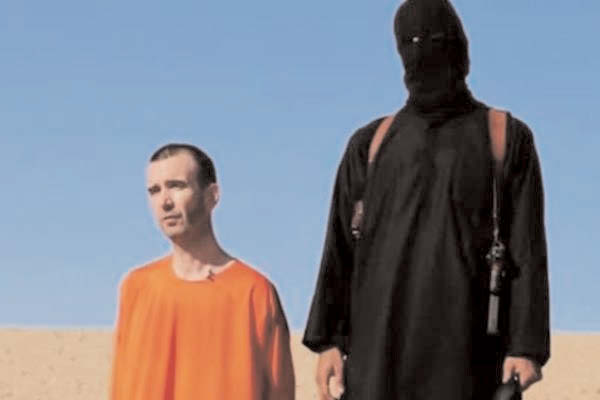
    WASHINGTON (TIP): The Pentagon said late Thursday that it had targeted Mohammed Emwazi, a member of the Islamic State often referred to as Jihadi John, in an airstrike near Raqqa, Syria.

    Peter Cook, the Pentagon press secretary, said in a statement that the military was “assessing the results” of the strike to determine if Emwazi had been killed.

    Emwazi, considered the most prominent British member of the militant group, was shown in videos in 2014 and 2015 killing several U.S. and other Western hostages. European governments, including those in Britain and France, are grappling with how to stem the tide of thousands of European citizens who are traveling to Iraq and Syria to fight alongside the Islamic State.

    Emwazi, born in Kuwait and reared in London, has appeared as a black-masked figure in videos in which U.S. journalists James Foley and Steven J. Sotloff and U.S. aid worker Peter Kassig are beheaded. The militant traveled to Syria in 2012.

    Emwazi, who is in his mid-20s, grew up in a trim housing estate in West London and graduated from the University of Westminster with a degree in computer programming.

    In the mid-2000s, he was part of a loose network of young Muslims, some with friendships going back to childhood, who became deeply alienated from British and Western society.

    The North London Boys, as the network is sometimes called, has sent dozens of young men to fight, first in Somalia and more recently in Syria.

    The men appear to have been motivated initially by a civil war in Somalia.

    Court documents show that Emwazi and others were well known to the British security services. According to a legal document from 2012, they were part of “a network of United Kingdom and East African-based Islamist extremists involved in the provision of funds and equipment to Somalia for terrorism-related purposes.”

  • Kurdish Iraqis enter Sinjar in push to oust IS fighters

    SINJAR(IRAQ) (TIP): Iraqi Kurdish militias battling to take back Sinjar from Islamic State militants raised a Kurdish flag and fired off celebratory gunfire in the center of town Nov 13, though US and Kurdish officials cautioned that it was too soon to declare victory in a major offensive to retake the strategic community.

    The Kurdish forces encountered little resistance, at least initially, suggesting that many of the IS fighters may have pulled back in anticipation of Friday’s advance. It was also possible that they could be biding their time before striking back.

    Kurdish militia fighters known as peshmerga launched a major offensive to retake Sinjar and succeeded in cutting a key nearby highway on Thursday. U.S.-led coalition airstrikes supported the offensive, dubbed Operation Free Sinjar.

    Peshmerga Maj. Ghazi Ali, who oversees one of the units involved in the offensive, said thousands of Kurdish fighters entered the town from three directions Friday morning. Associated Press journalists saw them raise a flag over a building in the center of the city.

    They encountered minimal resistance during Friday’s push, Ali said.

    “No one was fighting back. They placed some IEDs and had some snipers in position, but there were no clashes,” he said, using the abbreviation for improvised explosive devices, a military term for homemade roadside bombs.

    Gunfire fell silent as peshmerga fighters marched into the town. He described the situation in the city as still dangerous, however, and warned that it was too soon to declare victory.

    “I can’t say the operation is complete because there are still threats remaining inside Sinjar,” he said. The risks include ambushes from suicide bombers, roadside bombs and booby-trapped houses, he added.

    Iraq’s highest Shiite religious authority, Ayatollah Ali al-Sistani, praised peshmerga fighters in his Friday sermon for their efforts to capture Sinjar from the Sunni militant group.

    Col. Steven Warren, a spokesman for the U.S.-led coalition, confirmed only that peshmerga fighters raised their flag on grain silos in the eastern part of the town. He said they had not fully retaken Sinjar.

    There is reason for officials’ caution. An earlier attempt to wrest back control of the town, at the foot of Sinjar Mountain about 50 kilometers (30 miles) from the Syrian border, stalled in December. Militants have since been reinforcing their ranks.

    The fight to dislodge IS militants from the Kurdish town of Kobani in northern Syria, meanwhile, took about four months _ despite hundreds of U.S. airstrikes in support of the Kurdish fighters.

    Islamic State extremists overran Sinjar as they rampaged across Iraq in August 2014, leading to the killing, enslavement and flight of thousands of people from the minority Yazidi community. Its members follow an ancient faith that the Islamic State group considers heretical.

    The U.S. later launched an air campaign against the Islamic State militants, also known as ISIL, ISIS and, in Arabic, as Daesh.

    Hundreds of pickup trucks and sport-utility vehicles carrying Kurdish fighters were seen gathering at the entrance of Sinjar earlier Friday ahead of a planned push into the town center.

    Diar Namo, the 26-year-old deputy commander of the peshmerga unit stationed there, said the skies above Sinjar were largely quiet overnight following intense coalition airstrikes on Thursday.

    From his frontline observation post, he said he saw little movement inside the city before Kurdish forces moved in.

    “We saw more than 50 Daesh (fighters) flee overnight,” Namo said, using an Arabic acronym for the Islamic State group, “Before there were only 200 to 300 in the city.”

    Officials with the U.S.-led coalition estimated there were between 400 and 550 IS fighters inside Sinjar before the offensive began Thursday.

    Save taxes & make money. Get rich with tax-saving funds.

    Southeast of Sinjar, in the village of Soulag, four peshmerga fighters were killed when a homemade bomb targeting their truck exploded, according to fighters in their unit.

    Homemade roadside bombs and explosives-laden cars targeting peshmerga convoys significantly slowed Thursday’s advance through Sinjar’s eastern and western fringe.

    The blasts continued Friday. Just an hour after the first Kurdish forces entered Sinjar, an Associated Press team saw an explosion 700 meters (yards) from the northern edge of town.

    Ali said he will only consider the operation a success once Sinjar is completely free of land mines and homemade bombs.

    “We are waiting on the engineering team,” he said, referring to the teams of peshmerga who specialize in diffusing explosives. “Right now, it depends on them.”

  • US fighter jets track drifting military blimp

    MUNCY, PENNSYLVANIA (TIP): An unmanned Army surveillance blimp broke loose from its mooring in Maryland and floated over Pennsylvania for hours on Oct 28 with two fighter jets on its tail, triggering blackouts across the countryside as it dragged its tether across power lines.

    The bulbous, 240-foot helium-filled blimp eventually came down in at least two pieces near Muncy, a small town about 80 miles north of Harrisburg, as people gawked in wonder and disbelief at the big, white, slow-moving craft. No injuries were reported.

    Fitted with sensitive defense technology, the radar-equipped blimp escaped from the military’s Aberdeen Proving Ground around 12:20 p.m. and drifted northward, climbing to about 16,000 feet, authorities said. It covered approximately 150 miles over about 3½ hours. As it floated away, aviation officials feared it would endanger air traffic, and two F-16s were scrambled from a National Guard base in New Jersey to track it. But there was never any intention of shooting it down, said Navy Capt. Scott Miller, a spokesman for the nation’s air defense command.

    The blimp — which cannot be steered remotely — eventually deflated and settled back to Earth on its own, according to Miller. He said there was an auto-deflate device aboard, but it was not deliberately activated, and it is unclear why the craft went limp.

    He said it was also unknown how the blimp broke loose, and an investigation was under way. Residents watched it float silently over the sparsely populated area, its dangling tether taking out power lines.

    Tiffany Slusser Hartkorn saw it fly over her neighborhood on the outskirts of Bloomsburg around 2:15 p.m. and soon disappear from sight.

    “I honestly was worried that there were people in it that would be injured. A neighbor down the road is thinking it knocked down a tree branch and power pole by his house that could’ve potentially destroyed his house,” Hartkorn said.

    Wendy Schafer’s first thought upon seeing the blimp near her job at a spa and salon in Bloomsburg was that a nearby school was conducting an experiment.

    “I had no idea what it was. We lost power at work, so I looked outside and saw the blimp,” Schafer said. “My first thought was Vo-Tech was doing something at the school until my friends tagged on Facebook about the blimp. It was crazy.”

    About 27,000 customers in two counties were left without power, according to electric utility PPL, and Bloomsburg University canceled classes because of the outage. Electricity was restored to most people within a few hours.

    The craft even knocked out power to the State Police barracks at Bloomsburg before settling in a wooded hollow, where it was swiftly cordoned off while military personnel began arriving to retrieve it, State Police Capt. David Young said. He said trees will probably have to be cut down to get it out.

    Miller, the spokesman for the North American Aerospace Defense Command, said the tail portion broke off and hit the ground about a quarter-mile from the main section. The craft is known as a Joint Land Attack Cruise Missile Defense Elevated Netted Sensor System, or JLENS, and can be used to detect hostile missiles and aircraft. Such blimps have been used extensively in the Iraq and Afghanistan wars to provide radar surveillance around US bases and other sensitive sites.

    (Source : AP)

  • Women like burqas as they don’t need to wear makeup: Donald Trump

    Women like burqas as they don’t need to wear makeup: Donald Trump

    NEW YORK: In yet another controversial jibe, Republican presidential front-runner Donald Trump has said women in the Islamic world like wearing burqas because it is easier as they do not have to wear makeup.

    During a New Hampshire rally, Trump briefly spoke about his belief that the United States imposes its own version of Western democracy upon cultures that do not necessarily want it.

    Citing failed interventions in Libya and Iraq, Trump suggested it has been futile to try to export “freedom” to Muslim countries.

    “I saw somebody say ‘We want it over there where the women don’t have to wear the you-know-what,’” Trump told the crowd, wiping his hand in front of his face to mimic the look of a burqa.

    “And then I saw women interviewed. They said, ‘We want to wear them, we’ve worn them for thousands of years. Why would anyone tell us not to?’ They want to!” he was quoted as saying by CNN.

    “Fact is, it’s easier. You don’t have to put on makeup. Look how beautiful everyone looks. Wouldn’t it be easier? Right? Wouldn’t that be easy?” the real-estate mogul joked.

    “I tell ya, if I was a woman, I don’t want to. I’d be like, bwah (gesturing the burqa), ‘I’m ready, darling, let’s go.’ It’s true!” he said.

    Trump has a history of making controversial remarks about immigrants and other groups.
    Earlier on in his campaign, Trump had made controversial statements about Mexican immigrants and did not dispute a man’s assertion that US President Barack Obama was a Muslim.
    Last week Trump said the world would be a better place if dictators such as Saddam Hussein and Muammar Gaddafi were still in power.


  • India’s Economy Impacted by Terror Attacks: Moody’s

    India’s Economy Impacted by Terror Attacks: Moody’s

    In a report dated 6 October 2015 Moody’s says “more than 60% of all (terrorist) incidents in 2013 were concentrated in just four countries. Iraq (24% of terrorist incidents, Pakistan 19%, Afghanistan 12% and India 5.8%.” With India facing fourth largest number of terror attacks across the world in 2013, such incidents have a significant and long-lasting negative impact on the economy, according to Moody’s Investors Service.

    India has been mentioned with terrorist havens like Pakistan, Afghanistan and Iraq; However, unlike these three nations, India does not harbor and nurture terrorists. By Moody’s algorithm, every developed country would be termed as a terror state whereas the truth is they are victims, actual or potential, of terrorist attacks.

    India in 2013 faced 690 terror attacks. Topping the list was Iraq with 2,852 incidents, followed by Pakistan (2,212 attacks) and Afghanistan (1,443 incidents). In 20 years (from 1994 to 2013), India faced 6,024 attacks, a little less than tenth of 68,962 incidents worldwide.

    “Even normalised by the size of the country, Iraq and Afghanistan are at the top of the list with 82 and 47 incidents per million people, respectively, in 2013. This compares with a global average of 2.4 incidents per million people in 2013,” it said. Terrorist attacks, it said, are diverse in terms of the personal and property damage inflicted. Moody’s said its study shows that terrorist attacks significantly weaken economic activity, with long-lasting effects on the economy.

    The study measures the impact of terrorism on a country’s economic growth, investment growth, government expenditure and government cost of borrowing. “For example, in 2013 the 10 countries most affected by terrorism took an immediate and significant hit to growth, dampening GDP between 0.5 and 0.8 percentage points,” says Moody’s Merxe Tudela.

    “Even worse is that the negative impact continues for years after the attack, taking up to five years for the effects to peter out.” Investment growth takes an even greater immediate hit, with Moody’s estimating for the same episodes that investment growth declines between 1.3 and 2.1 percentage points.

    “Terrorist events of the type and frequency seen in the top ten most terrorism-inflicted countries just in 2013 immediately weaken GDP growth between 0.51 percentage points (pps) and 0.80 pps; they further deteriorate growth between 0.37 pps and 0.59 pps after one year, and by 0.05 pps and 0.07 pps after three years,” it said. Terrorist attacks reduce investment growth (and hence impair potential growth) on the year of the terrorism event, by between 1.31 pps and 2.07 pps, for the top ten most affected countries.

    Terrorist events lift the government cost of borrowing. In the most terrorist-inflicted countries, the cost of borrowing jumps between 41 and 65 basis points within one year and by 51-81 bps after one year of the event.

  • Europe’s Refugee Crisis

    Europe’s Refugee Crisis

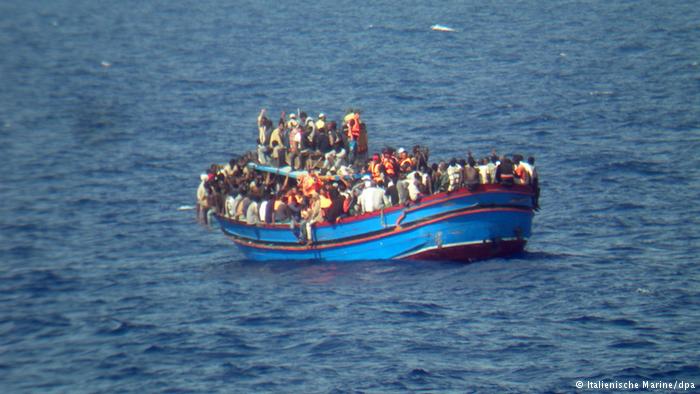
    Another major crisis is unfolding in Europe. Still struggling to find solutions for the Eurozone and Ukrainian crises, The European elite was hardly prepared to face a serious refugee and migration challenge. The problem has already been unfolding for some time. This year alone, more than 300,000 people have risked their lives to cross the Mediterranean Sea (including 200,000 to Greece). Over 2,600 did not survive this dangerous journey. More than 70 people were found dead in an abandoned truck in Austria. Even last year about 3500 people were reported dead or missing in the Mediterranean Sea. For years, these people were seen by many Europeans merely as economic migrants. The images of Syrian toddler Aylan Kurdi whose body was found on Turkish shores after a failed attempt to reach Greece finally shocked the Europeans and the world. Further, chaotic scenes in Budapest, where the Hungarian government tried to stop Syrian refugees’ journey towards Germany, forced the European media and its institutions to change the narrative. The UNHCR has clearly declared now that “this is a primarily refugee crisis, not only a migration phenomenon”.

    The way different EU governments have responded to the present crisis has again exposed structural flaws of common EU policies. The Dublin procedure established that the first EU country where a migrant or refugees enters, is responsible for processing his or her asylum claim. This obviously put tremendous pressure on countries like Greece and Italy where most asylum seekers arrived first. In recent months, Hungary has also joined frontline status as refugees are entering its territory from neigbouring Serbia. As most asylum seekers want to go to Germany, Sweden, France or Italy, questions are raised as to why register and house them in a country where they do not want to stay any way.

    To alleviate the problem, the EU proposed a quota system to distribute migrants among different nations. All 28 EU member states were required to accept asylum seekers in proportion to the size of their economy, unemployment rate and population. Although the plan was initially backed by Germany, France and Italy, they have now suggested many corrections. The UK was already out of the system. Many East Europeans say it will not work as most asylum seekers want to settle in West Europe. Spain has also rejected the plan. Some have objected to the principle itself. The Hungarian Prime Minister Victor Orban asserted that “the idea that somebody allows some refugees in their own country and then distributes them to other member states is mad and unfair”. Later he even added that “the problem is not European, it’s German. Nobody would like to stay in Hungary, neither Slovakia, Poland or Estonia”. The smaller nations in former Eastern bloc feel that policies are being imposed on them by bigger members.

    The number of asylum seekers in the EU has increased significantly in the last few years. Eurostat data shows that about 625,000 claimed asylum in the EU in 2014. The numbers were high but perhaps not as alarming as presented in European media. Europe has seen high numbers even before, particularly during the Yugoslav crisis. In 1992 alone, there were close to 700,000 applications. In the first half of 2015, close to 434,000 people have filed applications for asylum in Europe. Last year, the largest number of asylum seekers came from Syria (20%), followed by Afghanistan (7%), Kosovo (6%), Eritrea (5%), Serbia (3.5%) and Pakistan (3%). In fact, more people from Pakistan applied for asylum than from Iraq. About one third people applied for asylum in Germany only. One in four asylum seekers was a minor.

    As per the UNHCR, over 4 million Syrians are now refugees. It is not that all Syrians are moving towards Europe. About 1.9 million have taken refuge in Turkey. Similarly, about 1.1 million and 630,000 have found shelter in Lebanon and Jordon respectively. Only about 350,000 Syrians have applied for asylum in Europe.
    Europeans know that they cannot run away from their responsibility as many of these people have become refugees due to European involvement in shaping conflict outcomes in Syria, Iraq, Afghanistan, Libya and Kosovo. Both Russian and Turkish presidents have blamed the western world for their policies on this crisis.

    To tackle the crisis, the EU has urged member states to work out a common strategy based on responsibility and trust. So instead of accusing each other, can Europe’s nations agree on some joint action? Many new plans including EU-wide border protection force, destruction of smuggler ships, reallocation plan for already entered refugees, list of safe countries of origin (Balkan states, Bangladesh, Pakistan, Senegal etc) and reception centres closer to conflict areas will be discussed in the coming weeks. European Commission president Jean-Claude Juncker is soon going to outline his plans to relocate 160,000 asylum seekers across Europe over the next two years.

    In the meanwhile, Hungary is building 175 km fence on its border with Serbia. Germany has suspended Dublin rules for Syrian refugees. The Visegrad group (Hungary, Poland, Czech Republic and Slovakia) has declared that any proposal to introduce quota system is unacceptable to them.

    As political and military solutions to the conflicts in Syria and Afghanistan are nowhere in sight, the refugee crisis in Europe is not going to disappear in a hurry. UN High Commissioner for Refugees, Antonio Guterres has urged Europe to “reaffirm the values upon which it was built”. Many West European countries led by Germany have shown courage to accept large numbers of refugees this year. Still the message from the Hungarian prime minister to Syrian refugees was entirely different – “please don’t come. Why you have to go from Turkey to Europe? Turkey is a safe country. Stay there, it’s risky to come. We can’t guarantee that you will be accepted here”.

    (Gulshan Sachdeva is Chairperson, Centre for European Studies, School of International Studies, JNU)

    Views expressed are of the author and do not necessarily reflect the views of the IDSA or of the Government of India

  • 14 YEARS LATER, US REMEMBERS THE TRAGIC EVENTS OF 9/11 ATTACKS

    14 YEARS LATER, US REMEMBERS THE TRAGIC EVENTS OF 9/11 ATTACKS

    The September 11 attacks (also referred to as 9/11) were a series of four coordinated terrorist attacks by the Islamic terrorist group al-Qaeda on the United States on the morning of Tuesday, September 11, 2001. The attacks consisted of suicide attacks used to target symbolic U.S. landmarks.

    Four passenger airliners—which all departed from airports on the U.S. East Coast bound for California—were hijacked by 19 al-Qaeda terrorists to be flown into buildings. Two of the planes, American Airlines Flight 11 and United Airlines Flight 175, were crashed into the North and South towers, respectively, of the World Trade Center complex in New York City. Within an hour and 42 minutes, both 110-story towers collapsed with debris and the resulting fires causing partial or complete collapse of all other buildings in the World Trade Center complex, including the 47-story 7 World Trade Center tower, as well as significant damage to ten other large surrounding structures. A third plane, American Airlines Flight 77, was crashed into the Pentagon (the headquarters of the United States Department of Defense) in Arlington County, Virginia, leading to a partial collapse in the Pentagon’s western side. The fourth plane, United Airlines Flight 93, initially was steered toward Washington, D.C., but crashed into a field near Shanksville, Pennsylvania, after its passengers tried to overcome the hijackers. In total, the attacks claimed the lives of 2,996 people (including the 19 hijackers) and caused at least $10 billion in property and infrastructure damage. It was the deadliest incident for firefighters and law enforcement officers[4] in the history of the United States, with 343 and 72 killed respectively.

    TRAGIC EVENTS OF 9:11 ATTACKSSuspicion for the attack quickly fell on al-Qaeda. The United States responded to the attacks by launching the War on Terror and invading Afghanistan to depose the Taliban, which had harbored al-Qaeda. Many countries strengthened their anti-terrorism legislation and expanded the powers of law enforcement and intelligence agencies to prevent terrorist attacks. Although al-Qaeda’s leader, Osama bin Laden, initially denied any involvement, in 2004, he claimed responsibility for the attacks. Al-Qaeda and bin Laden cited U.S. support of Israel, the presence of U.S. troops in Saudi Arabia, and sanctions against Iraq as motives. Having evaded capture for almost a decade, bin Laden was located and killed by members of the U.S. military in May 2011.

    The destruction of the World Trade Center and nearby infrastructure caused serious damage to the economy of Lower Manhattan and had a significant effect on global markets, closing Wall Street until September 17 and the civilian airspace in the U.S. and Canada until September 13. Many closings, evacuations, and cancellations followed, out of respect or fear of further attacks. Cleanup of the World Trade Center site was completed in May 2002, and the Pentagon was repaired within a year. On November 18, 2006, construction of One World Trade Center began at the World Trade Center site. The building was officially opened on November 3, 2014. Numerous memorials have been constructed, including the National September 11 Memorial & Museum in New York City, the Pentagon Memorial in Arlington County, and the Flight 93 National Memorial in a field near Shanksville.

    Casualties

    The attacks resulted in the deaths of 2,996 people, including the 19 hijackers. The 2,977 victims included 246 on the four planes (from which there were no survivors), 2,606 in the World Trade Center and in the surrounding area, and 125 at the Pentagon. Nearly all of those who perished were civilians with the exceptions of 72 law enforcement officers, 343 firefighters, and 55 military personnel who died in the attacks. After New York, New Jersey lost the most state citizens, with the city of Hoboken having the most citizens that died in the attacks. More than 90 countries lost citizens in the September 11 attacks. The attacks of September 11, 2001, marked it the worst terrorist attack in world history and the deadliest foreign act of destruction to life and property on American soil since the Japanese surprise attack on Pearl Harbor on December 7, 1941.

    In Arlington County, 125 Pentagon workers lost their lives when Flight 77 crashed into the western side of the building. Of these, 70 were civilians and 55 were military personnel, many of them who worked for the United States Army or the United States Navy. The Army lost 47 civilian employees, six civilian contractors, and 22 soldiers, while the Navy lost six civilian employees, three civilian contractors, and 33 sailors. Seven Defense Intelligence Agency (DIA) civilian employees were also among the dead in the attack, as well as an Office of the Secretary of Defense (OSD) contractor Lieutenant General Timothy Maude, an Army Deputy Chief of Staff, was the highest-ranking military official killed at the Pentagon.

    In New York City, more than 90% of the workers and visitors who died in the towers had been at or above the points of impact. In the North Tower, 1,355 people at or above the point of impact were trapped and died of smoke inhalation, fell or jumped from the tower to escape the smoke and flames, or were killed in the building’s eventual collapse. The destruction of all three staircases in the tower when Flight 11 hit made it impossible for anyone above the impact zone to escape. 107 people below the point of impact died as well.

    In the South Tower, one stairwell, Stairwell A, was left intact after Flight 175 hit, allowing 14 people located on the floors of impact (including one man who saw the plane coming at him) and four more from the floors above to escape. 911 operators who received calls from individuals inside the tower were not well informed of the situation as it rapidly unfolded and as a result, told callers not to descend the tower on their own. 630 people died in that tower, fewer than half the number killed in the North Tower.

    Casualties in the South Tower were significantly reduced by some occupants deciding to start evacuating as soon as the North Tower was struck.

    At least 200 people fell or jumped to their deaths from the burning towers (as exemplified in the photograph The Falling Man), landing on the streets and rooftops of adjacent buildings hundreds of feet below.[119] Some occupants of each tower above the point of impact made their way toward the roof in hope of helicopter rescue, but the roof access doors were locked. No plan existed for helicopter rescues, and the combination of roof equipment and thick smoke and intense heat prevented helicopters from approaching. A total of 411 emergency workers died as they tried to rescue people and fight fires. The New York City Fire Department (FDNY) lost 343 firefighters, including a chaplain, two paramedics, and a fire marshal. The New York City Police Department (NYPD) lost 23 officers. The Port Authority Police Department (PAPD) lost 37 officers. Eight emergency medical technicians (EMTs) and paramedics from private emergency medical services units were killed.

    Cantor Fitzgerald L.P., an investment bank on the 101st–105th floors of the North Tower, lost 658 employees, considerably more than any other employer. Marsh Inc., locatedimmediately below Cantor Fitzgerald on floors 93–100, lost 358 employees, and 175 employees of Aon Corporation were also killed. The National Institute of Standards and Technology (NIST) estimated that about 17,400 civilians were in the World Trade Center complex at the time of the attacks. Turnstile counts from the Port Authority suggest 14,154 people were typically in the Twin Towers by 8:45 a.m. The vast majority of people below the impact zone safely evacuated the buildings.

    Weeks after the attack, the death toll was estimated to be over 6,000, more than twice the number of deaths eventually confirmed.[138] The city was only able to identify remains for about 1,600 of the World Trade Center victims. The medical examiner’s office collected “about 10,000 unidentified bone and tissue fragments that cannot be matched to the list of the dead”. Bone fragments were still being found in 2006 by workers who were preparing to demolish the damaged Deutsche Bank Building. In 2010, a team of anthropologists and archaeologists searched for human remains and personal items at the Fresh Kills Landfill, where seventy-two more human remains were recovered, bringing the total found to 1,845. DNA profiling continues in an attempt to identify additional victims. The remains are being held in storage in Memorial Park, outside the New York City Medical Examiner’s facilities. It was expected that the remains would be moved in 2013 to a repository behind a wall at the 9/11 museum. In July 2011, a team of scientists at the Office of Chief Medical Examiner was still trying to identify remains, in the hope that improved technology will allow them to identify other victims. On March 20, 2015, the 1,640th victim was identified.

    There are still 1,113 victims who have not been identified.

    Damage

    Along with the 110-floor Twin Towers, numerous other buildings at the World Trade Center site were destroyed or badly damaged, including WTC buildings 3 through 7 and St. Nicholas Greek Orthodox Church. The North Tower, South Tower, the Marriott Hotel (3 WTC), and 7 WTC were completely destroyed. The U.S. Customs House (6 World Trade Center), 4 World Trade Center, 5 World Trade Center, and both pedestrian bridges connecting buildings were severely damaged. The Deutsche Bank Building on 130 Liberty Street was partially damaged and demolished some years later, starting in 2007. The two buildings of the World Financial Center also suffered damage.

    The Deutsche Bank Building across Liberty Street from the World Trade Center complex was later condemned as uninhabitable because of toxic conditions inside the office tower, and was deconstructed.The Borough of Manhattan Community College’s Fiterman Hall at 30 West Broadway was condemned due to extensive damage in the attacks, and is being rebuilt. Other neighboring buildings (including 90 West Street and the Verizon Building) suffered major damage but have been restored. World Financial Center buildings, One Liberty Plaza, the Millenium Hilton, and 90 Church Street had moderate damage and have since been restored. Communications equipment on top of the North Tower was also destroyed, but media stations were quickly able to reroute the signals and resume their broadcasts.

    The Pentagon was severely damaged by the impact of American Airlines Flight 77 and ensuing fires, causing one section of the building to collapse. As the airplane approached the Pentagon, its wings knocked down light poles and its right engine hit a power generator before crashing into the western side of the building. The plane hit the Pentagon at the first-floor level. The front part of the fuselage disintegrated on impact, while the mid and tail sections kept moving for another fraction of a second. Debris from the tail section penetrated furthest into the building, breaking through 310 feet (94 m) of the three outermost of the building’s five rings.

    TRAGIC EVENTS OF 9:11 ATTACKS Memorial 1

    National September 11 Memorial & Museum

    The National September 11 Memorial & Museum (known separately as the 9/11 Memorial and 9/11 Memorial Museum) is the principal memorial and museum, respectively, commemorating the September 11 attacks of 2001 and the World Trade Center bombing.

    The Tribute in Light is an art installation of 88 searchlights placed next to the site of the World Trade Center to create two vertical columns of light in remembrance of the September 11 attacks. It is produced annually by the Municipal Art Society of New York.
    The Tribute in Light is an art installation of 88 searchlights placed next to the site of the World Trade Center to create two vertical columns of light in remembrance of the September 11 attacks. It is produced annually by the Municipal Art Society of New York.

    The memorial is located at the World Trade Center site, the former location of the Twin Towers (which were destroyed during the September 11 attacks). It is operated by a non-profit corporation, headed by Joe Daniels, whose mission is to raise funds for, program, own and operate the memorial and museum at the World Trade Center site.

    TRAGIC EVENTS OF 9:11 ATTACKS MemorialA memorial was planned in the immediate aftermath of the attacks and destruction of the World Trade Center for the victims including those involved in rescue operations.The winner of the World Trade Center Site Memorial Competition was Israeli architect Michael Arad of Handel Architects, a New York- and San Francisco-based firm. Arad worked with landscape-architecture firm Peter Walker and Partners on the design, a forest of trees with two square pools in the center where the Twin Towers stood. In August 2006, the World Trade Center Memorial Foundation and the Port Authority of New York and New Jersey began heavy construction on the memorial and museum. The design is consistent with the original Daniel Libeskind master plan, which called for the memorial to be 30 feet (9.1 m) below street level—originally 70 feet (21 m)—in a plaza, and was the only finalist to disregard Libeskind’s requirement that the buildings overhang the footprints. The World Trade Center Memorial Foundation was renamed the National September 11 Memorial & Museum in 2007.

    On September 11, 2011, a dedication ceremony commemorating the tenth anniversary of the attacks was held at the memorial. It opened to the public the following day; the museum was dedicated on May 15, 2014 and opened on May 21. Three months after its opening, the memorial had been visited by over a million people.

    In 2012 Tuesday’s Children, a non-profit family-service organization dedicated to individuals directly impacted by 9/11 and those who have lost loved ones to terrorism worldwide, joined with the 9/11 Memorial to offer private tours to family members of
    9/11 victims and first responders.

  • Iran’s Khamenei backs parliamentary vote on nuclear deal with powers – state TV

    Iran’s Khamenei backs parliamentary vote on nuclear deal with powers – state TV

    ANKARA (TIP): Iran’s supreme leader said on September 3 he favoured a parliamentary vote on its nuclear deal reached with world powers and called for sanctions against Tehran to be lifted completely rather than suspended, state television reported.

    President Hassan Rouhani, a pragmatist whose 2013 election paved the way to a diplomatic thaw with the West, and his allies have opposed such a parliamentary vote, arguing this would create legal obligations hampering the deal’s implementation.

    “Parliament should not be sidelined on the nuclear deal issue … I am not saying lawmakers should approve the deal or reject it. It is up to them to decide,” said Ayatollah Ali Khamenei, who has the final say on all state policy in Iran.

    “I have told the president that it is not in our interest to not let our lawmakers review the deal,” he said in remarks broadcast live on state television.

    Khamenei himself has not publicly endorsed or voiced opposition to the Vienna accord, having only praised the work of the Islamic Republic’s negotiating team.

    A special committee of parliament, where conservative hardliners close to Khamenei are predominant, have begun reviewing the deal before putting it to a vote. But Rouhani’s government has not prepared a bill for parliament to vote on.

    The landmark deal, clinched on July 14 between Iran and the United States, Germany, France, Russia, China and Britain in July, curbs Iran’s nuclear activities to help ensure they remain peaceful in exchange for a removal of economic sanctions.

    US president Barack Obama appeared to secure enough Senate votes on Wednesday to see the nuclear deal through Congress, but hardline Republicans pledged to pursue their fight to scuttle it by passing new sanctions on Tehran.

    Khamenei said that without a lifting of sanctions that have hobbled Iran’s economy, the deal would be jeopardised.

    “Sanctions …. should be lifted and not only suspended … If not, then we will only suspend our nuclear activities … and there would be no deal if the sanctions are only suspended.”

    Khamenei also criticised the United States’ Middle East policy, ruling out normalisation of ties with Iran’s arch-foe. “Our officials held only nuclear (negotiations) with America. We will never support America’s policies on Syria and Iraq.”

  • ISIS fighters flaunt American M16 rifles in new video

    ISIS fighters flaunt American M16 rifles in new video

    WASHINGTON (TIP): In a new Islamic State video, jihadist fighters are shown flaunting the American M16 rifles that may have been seized by them from Iraqi soldiers or found in weapons caches dropped by the US.

    A video released by Islamic State of Iraq and Syria’s media arm in northern Iraq purportedly shows more than a dozen of the terror group’s fighters undergoing weapons training wielding American M16 rifles, according to Flashpoint Intelligence.

    “It is noteworthy that the use of American rifles by Islamic State fighters is rare and is only seen in Iraq,” Flashpoint said in a research note, using another name for the militant group.

    “These rifles were likely left by US forces or seized from Iraqi soldiers,” it said. Most jihadist fighters have been found to be using Russian AK-47 rifles and that the video’s release could suggest ISIS recently seized a cache of M16s, the NBC News reported. ISIS propaganda material in the past has shown fighters flaunting what appear to be US-made weapons, tanks and Humvees seized from retreating Iraqi forces.

    The United States has supplied Iraq with hundreds of millions of dollars in military hardware — including humvees. Iraq’s government said in June that it lost 2,300 Humvees to ISIS when the militants seized the city of Mosul. Last year, an ISIS video claimed that an airdrop of weapons intended for Kurdish fighters had ended up in the militants’ hands.