Tag: Iraq

  • Pentagon probing alleged distorting of war intelligence

    Pentagon probing alleged distorting of war intelligence

    WASHINGTON (TIP): The Pentagon’s inspector general is investigating an allegation that the U.S. military command overseeing the anti-Islamic State campaign distorted or altered intelligence assessments to exaggerate progress against the militant group, a defense official said Wednesday.

    The official was not authorized to discuss the probe publicly and so spoke on condition of anonymity.

    The investigation was first disclosed by The New York Times. The paper reported that the investigation began after at least one civilian Defense Intelligence Agency analyst told authorities that he had evidence that officials at US Central Command were improperly reworking conclusions of assessments prepared for policy makers, including President Barack Obama.

    Details of the allegations were not available. A spokeswoman for the inspector general’s office, Bridget Serchak, declined to comment.

    Pentagon press secretary Peter Cook said he could not confirm the probe. The Pentagon typically does not publicly comment on the work of the inspector general’s office, which is an independent arm of the Defense Department.

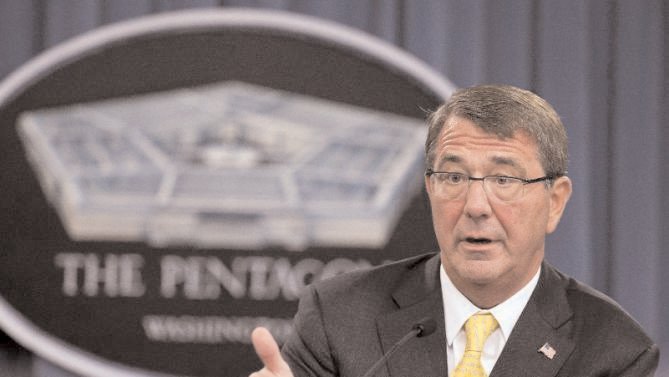
    Cook said defense secretary Ash Carter “counts on independent intelligence and analysis from a variety of sources to help him make critical decisions about the nation’s security.”

    A Pentagon spokesman, Navy Capt. Jeff Davis, said Pentagon and Central Command officials have been publicly candid about the difficulty of the war against the Islamic State. At times, however, they have painted a rosier picture than was reflected by developments on the ground.

    On May 15, for example, Brig. Gen. Thomas Weidley, who at the time was chief of staff to the military headquarters running the war, told reporters that the Islamic State was
    “losing and remains on the defensive.” Even as he spoke, Iraqi officials were saying that IS fighters had captured the main government compound in Ramadi, the capital of Anbar province. Two days later the city fell, marking a significant victory for IS and a setback for the US and Iraq.

    Air Force Col. Patrick Ryder, a spokesman for Central Command, said he could not discuss ongoing investigations.

    “The (inspector general) has a responsibility to investigate all allegations made and we welcome and support their independent oversight,” Ryder said.

    Ryder said the government’s numerous intelligence agencies routinely produce a wide range of “subjective assessments related to the current security environment,” and that it is customary for agencies to comment on others’ draft assessments.

    “However, it is ultimately up to the primary agency or organization whether or not they incorporate any recommended changes or additions. Further, the multi-source nature of our assessment process purposely guards against any single report or opinion unduly influencing leaders and decision-makers,” Ryder said.

  • GERMANY SAYS IRAQI KURDISH FORCES REPORT CHEMICAL ATTACK

    GERMANY SAYS IRAQI KURDISH FORCES REPORT CHEMICAL ATTACK

    BERLIN (TIP): Kurdish forces fighting Islamic State (IS) jihadists in northern Iraq have reported being attacked with chemical weapons in recent days, the German defence ministry has said.

    The allegations, deemed “plausible” by a US official, follow claims in March by the autonomous Kurdish government in northern Iraq which said it had evidence that the jihadist group used chlorine in a car bomb attack on January 23.

    “We have indications that there was an attack with chemical weapons” against Kurdish peshmerga fighters that left many suffering from “respiratory irritation”, a German defence ministry spokesman told AFP yesterday.

    A senior official from the peshmerga told AFP the attack happened this week and wounded several dozen fighters.

    “Last Tuesday afternoon, peshmerga forces in the Makhmur area 50 kilometres (30 miles) west of the city of Arbil were attacked with Katyusha rockets filled with chlorine,” the peshmerga official said on condition of anonymity.

    The defence ministry in Germany, which is providing arms and weapons training to the Kurdish forces, said that “American and Iraqi specialists from Baghdad are on their way to find out what happened”.

    A ministry spokesman had said earlier “there was a chemical weapons attack” near Arbil, the capital of Iraq’s Kurdish region.

    A second ministry spokesman later stressed that German forces were not present during the attack, but that “we have indications that there was an attack with chemical weapons”.

    Germany has been supporting peshmerga fighters since September to back their push against IS jihadists, and currently has about 90 personnel on the ground.

    “German soldiers were not affected or in danger” during the reported attack, the spokesman said. “The protection of our soldiers in northern Iraq is already at the highest level.”

    A US official, speaking on condition of anonymity, said on Thursday that claims IS had used chemical weapons on the Kurds were “plausible”.

    The Pentagon, meanwhile, said it was “seeking additional information” about the alleged attack.

  • US cops adopt face-recognition tech used in wars

    SAN DIEGO (TIP): Facial recognition software, which American military and intelligence agencies used for years in Iraq and Afghanistan to identify potential terrorists, is being eagerly adopted by dozens of police departments around the country to pursue drug dealers, prostitutes and other criminal suspects. But because it is being used with few guidelines, it is raising questions of privacy and concerns about potential misuse.

    Law enforcement officers say the technology is much faster than fingerprinting, although it is unclear on how much it is helping the police make arrests. When Aaron Harvey was stopped by the police here in 2013, an officer not only searched his car, he said, but also took his photograph and ran it through the software to confirm whether he had a criminal record, Eric Hanson, a retired firefighter, had a similar experience too, though neither of them were arrested. “I felt like my identity was being stolen. I was treated like a criminal,” Hanson said.

    Lt. Scott Wahl, a spokesman for San Diego Police Department, said the department does not require police officers to file a report when they use the technology but do not make an arrest.

    County documents show that in January and February, San Diego law enforcement agencies used the software on more than 20,600 occasions — finding a match to criminal records only about 25% of the time. But people who are not criminal suspects are included in the database, and the error rate for the software is as high as 20% — meaning the authorities could misidentify millions of people.

  • US issues worldwide caution for its citizens on terror threats

    US issues worldwide caution for its citizens on terror threats

    WASHINGTON (TIP): The US has issued a worldwide travel caution for its citizens including in India in the wake of increased threat coming in particular from the expanding global presence of the Islamic State.

    In its advisory, the US has mentioned that terrorist organisations like Lashkar-e-Taiba pose a major threat in India. In August 2014, the US and regional partners commenced military action against the Islamic State of Iraq and the Levant (ISIL), a designated terrorist organisation in Syria and Iraq, an official statement on Wednesday said. “In response to the airstrikes, ISIL called on supporters to attack foreigners wherever they are. Authorities believe there is an increased likelihood of reprisal attacks against the US, western and coalition partner interests throughout the world, especially in the Middle East, North Africa, Europe, and Asia,” the US state department said.

    India, it said, continues to experience terrorist and insurgent activities which may affect US citizens directly or indirectly. Anti-western terrorist groups active in India include Islamist extremist groups such as Harkat-ul-Jihad-i-Islami, Harakat ul-Mujahidin, Indian Mujahideen, Jaish-e-Mohammed, and Lashkar-e Tayyiba, the statement said.

    Past attacks have targeted public places, including some frequented by Westerners, such as luxury and other hotels, trains, train stations, markets, cinemas, mosques, and restaurants in large urban areas.

  • Transnationals | Tax Havens | Terrorism

    Transnationals | Tax Havens | Terrorism

    “Westphalian sovereignty is the principle of international law that each nation state has sovereignty over its territory and domestic affairs, to the exclusion of all external powers. The principle of non-interference in another country’s domestic affairs, and that each state (no matter how large or small) is equal in international law is recognized. This doctrine is named after the Peace of Westphalia, signed in 1648, which ended the Thirty Years’ War.” 

    “It is ironical that Terror organizations on one side and Tax havens on the other have completely undermined Westphalia consensus. In that context countries like India have every right to exercise its freedom to pursue terrorists who are undermining its existence whether sponsored by foreign countries or home grown. The concept of territorial jurisdictions and sovereignty are no more valid in the context of terror organizations since they damage both India and its own host countries over period of time. India must protect its national interests and institutions by challenging inimical forces wherever they are located without worrying about Westphalia consensus”.


    In the context of the strikes made against terror camps on the border of Manipur/Nagaland by the Indian Army; there has been number of discussions about national sovereignty and the role of individual States. Actually in the last few decades the activities of transnational corporations aided by tax havens on one side and terrorists on the other side have destroyed the concept of nation state and its sovereignty evolved after the 30 years’ war in 1648 in Westphalia. Westphalian sovereignty is the principle of international law that each nation state has sovereignty over its territory and domestic affairs, to the exclusion of all external powers. The principle of non-interference in another country’s domestic affairs, and that each state (no matter how large or small) is equal in international law is recognized. This doctrine is named after the Peace of Westphalia, signed in 1648, which ended the Thirty Years’ War .After that war major continental European states – the Holy Roman Empire, Spain, France, Sweden and the Dutch Republic – agreed to respect one another’s territorial integrity. As European influence spread across the globe, the Westphalian principles, especially the concept of sovereign states, became central to international law and to the prevailing world order.

    Scholars of international relations have identified the modern, Western-originated, international system of states, multinational corporations, and organizations, as having begun at the Peace of Westphalia. Henry Kissinger in his important book on “world Order” says:

    “No truly global “world order’ has ever existed. What passes for order in our time was devised in Western Europe nearly four centuries ago, at a peace conference in the German region of Westphalia, conducted without the involvement or even the awareness of most other continents or civilizations. A century of sectarian conflict and political upheaval across Central Europe had culminated in the Thirty Years’ war of 1618-48- a conflagration in which political and religious disputes commingled, combatants resorted to “total war” against population centers, and nearly a quarter of the population of Central Europe died from combat, disease, or starvation. The exhausted participants met to define a set of arrangements that world stanch the bloodletting. Religious unity had fractured with the survival and spread of Protestantism; Political diversity was inherent in the number of autonomous political units that had fought to a draw. So it was that in Europe the conditions of the contemporary world were approximated: a multiplicity of political units, none powerful enough to defeat all others, many adhering to contradictory philosophies and internal practices, in search of neutral rules to regulate their conduct and mitigate conflict.

    “The Westphalian peace reflected a practical accommodation to reality, not a unique moral insight. It relied on a system of independent states refraining from interference in each other’s domestic affairs and checking each other’s ambitions through a general equilibrium of power. No single claim to truth or universal rule had prevailed in Europe’s contests. Instead, each state was assigned the attribute of sovereign power over its territory. Each would acknowledge the domestic structures and religious vocations of its fellow states as realities and refrain from challenging their existence. With a balance of power now perceived as natural and desirable, the ambitions of rules would be set in counterpoise against each other, at least in theory curtailing the scope of conflicts. Division and multiplicity, an accident of Europe’s history, became the hallmarks of a new system of international order with its own distinct philosophical outlook. In this sense the European effort to end its conflagration shaped and prefigured the modern sensibility: it reserved judgment on the absolute in favor of the practical and ecumenical; it sought to distill order from multiplicity and restraint.

    “The seventeenth-century negotiators who crafted the peace of Westphalia did not think they were laying the foundation for a globally applicable system. They made no attempt to include neighboring Russia, which was then reconsolidating its own order after the nightmarish “Time of Troubles” by enshrining principles distinctly at odds with Westphalian balance; a single absolute ruler, a unified religious orthodoxy, and a program of territorial expansion in all directions. Nor did the other major power centers regard the Westphalian settlement (to the extent they learned of it at all) as relevant to their own regions.1

    The three core principles on which the consensus rested are:

    1. The principle of the sovereignty of states and the fundamental right of political self determination
    2. The principle of legal equality between states
    3. The principle of non-intervention of one state in the internal affairs of another state

    Interestingly, all three are questioned by contemporary leaders of West and radical Islam.

    Tony Blair the then Prime Minister of UK in his famous Chicago Address -1999-suggests

    “The most pressing foreign policy problem we face is to identify the circumstances in which we should get actively involved in other people’s conflicts. Non -interference has long been considered an important principle of international order….

    “But the principle of non-interference must be qualified in important respects. Acts of genocide can never be a purely internal matter. When oppression produces massive flows of refugees which unsettle neighboring countries then they can properly be described as “threats to international peace and security”.2

    The NATO intervention in Kosovo and Afghanistan as well as US intervention in Iraq provide recent examples of breakdown of idea of Westphalia. Similar is the humanitarian crisis faced by India regarding refugees from East Pakistan.

    Interestingly Radical Islam also considered that the world order based on Westphalian consensus will collapse. “In the aftermath of the 11 March 2004 Madrid attacks, Lewis ‘Atiyyatullah, who claims to represent the terrorist network al-Qaeda, declared that “the international system built up by the West since the Treaty of Westphalia will collapse; and a new international system will rise under the leadership of a mighty Islamic state.”3

    The spread of ISIS across countries and activities of Boko Haram based in Nigeria in Kenya and Chad re-emphasis this point. Radical Islam do not accept territorial boundaries since it works for a global regime for global Ummah.

    The recruitment by these terror organizations is also across continents and countries which does not respect territorial sovereignty. The talk about Caliphate indicates that they are trans-border organizations.

    On the other side we find global corporations transcending sovereignty in search of global profits. For this they use tax havens as a tool.

    Tax havens–numbering more than 70 jurisdictions–facilitate bank facilities with zero taxes and no-disclosure of the names and in many cases anonymous trusts holding accounts on behalf of beneficiary. Basically lawyers and Chartered accountants will deal with mattes. Sometimes a post box alone will be operative system. In the case of Bahamas one building seems to have had tens of thousands of companies registered there.

    Luxemburg (population half a million!) registered companies of various countries have evaded taxes significantly from their legal jurisdiction. The key findings of the activities of transnational companies cutting across territorial jurisdiction is given below.

    • Pepsi, IKEA, AIG, Coach, Deutsche Bank, Abbott Laboratories and nearly 340 other companies have secured secret deals from Luxembourg that allowed many of them to slash their global tax bills.
    • PricewaterhouseCoopers has helped multinational companies obtain at least 548 tax rulings in Luxembourg from 2002 to 2010. These legal secret deals feature complex financial structures designed to create drastic tax reductions. The rulings provide written assurance that companies’ tax-saving plans will be viewed favorably by Luxembourg authorities.
    • Companies have channeled hundreds of billions of dollars through Luxembourg and saved billions of dollars in taxes. Some firms have enjoyed effective tax rates of less than 1 percent on the profits they’ve shuffled into Luxembourg.
    • Many of the tax deals exploited international tax mismatches that allowed companies to avoid taxes both in Luxembourg and elsewhere through the use of so-called hybrid loans.
    • In many cases Luxembourg subsidiaries handling hundreds of millions of dollars in business maintain little presence and conduct little economic activity in Luxembourg. One popular address – 5, rue Guillaume Kroll – is home to more than 1,600 companies.
    • A separate set of documents reported on by ICIJ on Dec. 9 expanded the list of companies seeking tax rulings from Luxembourg to include American entertainment icon The Walt Disney Co., politically controversial Koch industries and 33 other firms. The new files revealed that alongside PwC tax rulings were also brokered by Ernst & Young, Deloitte and KPMG, among other accounting firms.4

    The big four accounting firms namely KPMG/E&Y/Deloitte and PwC have facilitated the movement of funds of clients across borders and territories to make tax “planning” easier for these companies. USA is literally waging war with major Giants like Amazon/Google/Microsoft etc. for not paying adequate taxes in USA in spite of being US based companies. Most of these companies have moved their profits to other Tax Havens.

    Global firms such as Starbucks, Google and Amazon have come under fire for avoiding paying tax on their British sales. There seems to be a growing culture of naming and shaming companies. But what impact does it have?5

    Royal Commission into tax loopholes a must—says a report in Australia.6

    There is an increasing clamor in USA about Congress Should Pass the Stop Tax Haven Abuse Act to Combat International Tax Avoidance. This has been highlighted by both TAX justice network as well as Global Financial Integrity.

    A simple method of trade mis-invoicing by global companies using tax-havens have impacted developing countries nearly 730Billion USD in 2012 says Global Financial integrity. Another interesting finding by GFI is about terror financing using Tax haven route.

    Because of the increasing wariness of MNCs using Tax havens for avoidance of taxes and the opaque ways of functioning of these off-shore structures, demands are growing about their activities and even closing down of these tax havens by European parliament etc.

    Due to relentless pressure from OECD as well as G20 many of these secretive jurisdictions are becoming more transparent.

    But the fact of the matter is these Trans National Companies and Tax Havens together have significantly undermined the concept of sovereignty and territorial jurisdictions.

    It is ironical that Terror organizations on one side and Tax havens on the other have completely undermined Westphalia consensus. In that context countries like India have every right to exercise its freedom to pursue terrorists who are undermining its existence whether sponsored by foreign countries or home grown. The concept of territorial jurisdictions and sovereignty are no more valid in the context of terror organizations since they damage both India and its own host countries over period of time. India must protect its national interests and institutions by challenging inimical forces wherever they are located without worrying about Westphalia consensus.

    (The author is Professor of Finance at IIM-Bangalore)

  • Saud al-Faisal, former Saudi foreign minister, dies

    RIYADH (TIP) (Saudi Arabia): Saudi Arabia’s prince Saud al-Faisal, who was the world’s longest-serving foreign minister with 40 years in the post until his retirement this year, has died, the ministry spokesman said July 9. He was 75.

    The tall, stately Prince Saud was a fixture of Mideast diplomacy, representing the oil-rich Gulf powerhouse as it wielded its influence in crisis after crisis shaking the region _ from Lebanon’s civil war in the 1970s and 1980s, through multiple rounds of Arab-Israeli peace efforts, the 1990 Iraqi invasion of neighboring Kuwait and the subsequent Gulf War, al-Qaida’s Sept. 11, 2001, attacks in the United States, the 2003 U.S.-led invasion of Iraq to the current day’s tensions between the Arab Gulf bloc and Iran, Arab Spring uprisings, Syria’s civil war and the spread of Islamic State group extremists.

    The country’s government-owned media announced Saud’s death after midnight Friday. The official announcement, carried by state television, did not state the cause of death. The prince had undergone multiple surgeries in recent years for his back, which left him walking with a cane, and for other ailments.

    Word of his passing first emerged late Thursday when Saudi Foreign Ministry spokesman, Osama Nugali, wrote on his official Twitter feed, “The eye tears, the heart saddens. We all are saddened to be separated from you.”

    The prince, who took the ministry post in 1975, retired on April 29, citing health reasons. At the time, U.S. Secretary of State John Kerry hailed him, saying he “has not just been the planet’s longest-serving Foreign Minister but also among the wisest.” He was succeeded in the post by Adel al-Jubeir, who before that was Saudi Arabia’s ambassador in Washington.

    Kerry expressed his condolences to Saud’s family and friends, King Salman and to the people of Saudi Arabia, saying the prince was “a man of vast experience, personal warmth, great dignity, and keen insights who served his country loyally and well.” “I personally admired him greatly, valued his friendship, and appreciated his wise counsel,” Kerry added. “His legacy as a statesman and diplomat will not be forgotten.” President Barack Obama said in a statement that generations of U.S. leaders and diplomats benefited from Saud’s “thoughtful perspective, charisma and poise, and diplomatic skill.”

  • Indians in UK face risk of radicalization by terrorists, says British Parliament

    Indians in UK face risk of radicalization by terrorists, says British Parliament

    LONDON (TIP): Indian youngsters in UK face real time risk of being radicalized by Islamic terrorist organizations and handlers, says Britain’s House of Commons.

    Keith Vaz, Britain’s longest-serving Indian-origin MP who was recently re-elected as chair of Parliament’s influential Home Affairs Select Committee told TOI in an exclusive interview that Indian families in UK need to be vigilant. Indians are the largest foreign-born group in London. Nearly 9% of all foreign-born residents in London are now Indian. In sheer numbers, this means 2.63 lakh persons born in India are now living in London.

    Vaz told TOI “radicalization of our young people is at the forefront of our minds”.

    He added “So far there has not been much evidence of young Asian and Indian individuals falling victim to the propaganda and extremist influence on the internet or via other means, but members of the community should remain vigilant. The government needs to be far better at working with communities, not against them”.

    UK’s Office of National Statistics has confirmed that Indians had overtaken the Irish to become the largest foreign-born ethnic group in the whole of England and Wales. The latest census had revealed that the number of Indians went up by over 52%, from 4.56 lakh in 2001 to 6.94 lakh a decade later.

    Britain’s International Centre for the Study of Radicalization (ICSR) says that a record number of foreign fighters have now been confirmed to have joined militant organizations in Syria and Iraq. It is now estimated that the total now exceeds 20,000 – of which nearly a fifth were residents or nationals of western European countries.

    The largest European countries -France, the UK, and Germany – also produce the largest numbers of fighters. This has made the conflict in Syria and Iraq the largest mobilization of foreigner fighters in Muslim majority countries since 1945. It now surpasses the Afghanistan conflict in the 1980s, which is thought to have attracted up to 20,000 foreigners.

  • TERROR TALKS TOP PM’S CENTRAL ASIA VISIT

    TERROR TALKS TOP PM’S CENTRAL ASIA VISIT

    NEW DELHI (TIP): As Prime Minister Narendra Modi heads for Central Asia, the first PM to visit all the five ‘Stans’ in one shot, India is hoping political outreach, counter-terrorism cooperation, energy and soft power will overcome the challenge of physical connectivity with the region.

    PM is expected to visit Uzbekistan and Kazakhstan on his way out to Russia, and Turkmenistan, Kyrgyzstan and Tajikistan on his return journey. The growing threat of extremist terrorism, of the kind unleashed by Islamic State is perceived as a clear threat by these states — they have watched with concern, thousands of their young citizens travelling to Iraq and Syria to join IS. The prospect of IS taking root in these countries is real. India hopes to engage these countries in a deeper conversation on counter-terrorism. “They are worried about radicalization, and we hope to be able to cooperate and look for solutions together,” said government sources.

    Energy has always been an attractive draw between India and Central Asia but there is the challenge of getting that energy to India. That will be the focus of conversations in both Kazakhstan and Turkmenistan. Many pipelines, including TAPI, have been the subject of intensive discussions, but there has been little progress so far. India already has a uranium supply agreement with Kazakhstan.

    The Afghanistan situation post-2014 will be a common thread in the discussions. There is a resurrection of Taliban forces, even in their regions which means all countries involved have an interest in Afghanistan’s immediate future. The bigger aim behind Modi’s visit is to reclaim politically a part of India’s near neighbourhood. India has always believed this to be its strategic backyard, but in recent years, Central Asia has built very close trade and security links with China. India cannot possibly replace China, or compete with such a large presence, but New Delhi hopes to be a viable alternative in the region.

  • India ranks 143rd on global peace index topped by Iceland

    India ranks 143rd on global peace index topped by Iceland

    India ranks a lowly 143rd on a global peace index, lagging way behind the likes of Bhutan, Nepal, Sri Lanka and Bangladesh with Iceland emerging as the most peaceful nation in the world.

    According to the nonprofit Institute for Economics and Peace, Iceland, the thinly populated island in the midst of the North Atlantic has retained its place as the most peaceful country in the world.

    The institute released its Global Peace Index for 2015 recently, which ranks 162 nations around the globe based on factors like the level of violent crime, involvement in conflicts and the degree of militarisation. The nations are given a score on that basis. The more the score, the less peaceful the country is.

    India is ranked at 143 on the index with a score of 2.504. “The number of casualties from internal conflict also rose in India where a Maoist insurgency stills runs rife. The downgrade in India’s score is tempered, however, by an improvement in political stability. The world’s second most populous country witnessed an historic election in 2014 as the Bharatiya Janata Party secured India’s first one-party majority since the mid-1980s,” the report said.

    Six out of the top 10 most peaceful countries were European, with Denmark and Austria holding the second and third spots.

    “Europe maintained its position as the most peaceful region in the world, supported by a lack of domestic and external conflicts,” the report said.

    Pakistan fares badly ranked at 154 with its score deteriorating on the back of a worsening of its perceptions of criminality, as a result, the country remains second from the bottom in South Asia.

    “The country’s dire domestic security situation continues to be hampered by the presence of Islamist militant groups. Even though the number of deaths from internal conflict did not worsen significantly over the past twelve months, Pakistan suffered a handful of high-profile incidents — most notably the separate attacks on Jinnah International Airport and an army-run school in Peshawar,” the report said.

    Afghanistan remains the most lowly ranked in South Asia at 160. Bhutan (18), Nepal (62), Bangladesh (84) and Sri Lanka (114) are all ranked above India, Pakistan and Afghanistan.
    US is also ranked at a lowly 94 scoring badly in terms of militarisation, homicides and fear of violence. China is ranked 124.

    Syria and Iraq where the Islamic State terror group has taken over large swathes of land are at the bottom of the table as the least peaceful countries.

  • $9BN-MAN DONALD TRUMP JOINS WHITE HOUSE RUN

    $9BN-MAN DONALD TRUMP JOINS WHITE HOUSE RUN

    WASHINGTON (TIP): “In America, anybody can be president. That’s one of the risks you take,” joked American politician Adlai Stevenson, sometimes described as the greatest president US never had.

    An already packed field of White House aspirants got even more crowded on Tuesday with real estate mogul Donald Trump, a perennial presidential hopeful, announcing that he too would run for President in 2016.

    Trump will run as a Republican, becoming the 12th aspirant shooting for the party nomination, although his political affiliation is incidental. He represents wealth, extravaganza, and outsized hairdo and promises of turning America into manna. He has toyed with and threatened to run for president so often in the past, going back to 1987, that no one would take him seriously. But on Tuesday, he took the plunge from his lavish Trump Tower in New York’s Fifth Avenue.

    “So, ladies and gentlemen, I am officially running for president of the US, and we are going to make our country great again,” he told a gathering in a rambling speech that meandered from the threat from China to job creation in the US to the Iraq War.

    He said his Republican opponents, including Jeb Bush, don’t have a clue about running the country (although most of his opponents have been governors and senators), while suggesting his wealth, and the way he had gotten rich (by beating China all the time), made him fit to lead the country. “Our country is in serious trouble. We don’t have victories anymore,” said the man who is called The Donald and is lately better known as Reality Show host.

    Trump is polling about last in the GOP presidential hopefuls list but that was before he formally declared his candidature. His $9 billion fortune could help bump him up to within the top 10, which will allow him to come on stage for a debate among Republicans. From then on, all bets are off in a country that after all elected a freshman African-American Senator as President.

  • Islamic State says shot down Iraqi fighter plane

    BAGHDAD (TIP): Islamic State said on June 18 it had shot down an Iraqi fighter plane north of the city of Ramadi in Anbar Province.

    It was not immediately possible to independently confirm the claim made on one of Islamic State’s Twitter accounts. A member of an anti-Islamic State Sunni force called Sahwa (Awakening) said an Iraqi fighter jet, a Russian-made Su-25, was seen in flames as it crashed after being shot down north of Ramadi.

    Iraq’s government relies on a U.S.-led coalition and Iranian-backed Shi’ite militias in its fight against Islamic State, which holds a third of the country as well as parts of neighbouring Syria.

    The Islamic State Twitter site said the fighter jet had been shot down as it conducted a raid on areas north of Ramadi, the provincial capital of Sunni heartland Anbar.

    Islamic State militants seized Ramadi last month and the city is a focal point of efforts to slow the group’s advances in Iraq, a major oil producer and OPEC member

  • Pentagon: Price tag for war on Islamic State is $2.7 billion

    WASHINGTON (TIP): The US has spent more than$2.7 billion on the war against Islamic State militants in Iraq and Syria since bombings began last August, and the average daily cost is now more than $9 million, the Pentagon said June 11.

    Releasing a detailed breakdown of the costs for the first time, the defense department showed that the Air Force has borne two-thirds of the total spending, or more than $1.8 billion. The daily combat, reconnaissance and other flights eat up more than $5 million a day.

    The data also provided a rare look into the often secret special operations costs, which totaled more than $200 million since August.

    The release of the spending totals came as Congress debated and rejected legislation Thursday that would have banned spending on the combat operations until lawmakers passed a new war powers resolution.

    Military operations cost have grown since airstrikes began in Iraq in August, and then expanded to Syria the following month. The bulk of the strikes has been in Iraq, as the US and coalition strikes have tried to help Iraqi forces retake key and hold key cities.

    Other total costs include $438 million for the Navy, including fighters and other ship support; $274 million for the Army, which has trainers and special forces troops on the ground; $16 million for military pay; $646 million for munitions; and $21 million for intelligence and surveillance operations.

  • OIL PRICES FALL AS WORLD BANK CUTS ECONOMIC GROWTH OUTLOOK

    SINGAPORE (TIP): Crude oil futures fell on Thursday as the World Bank cut its global economic growth forecast, ending a two-day rally triggered by a sharp US inventory drawdown.

    In its twice-yearly Global Economic Prospects report, the World Bank predicted the global economy would expand 2.8 per cent this year, below its 3 per cent outlook in January, with India recording the biggest growth of major economies for the first time, ahead of slowing China.

    Front-month Brent crude oil prices were down 13 cents at $65.57 a barrel by 0512 GMT, while US crude shed 23 cents to trade at $61.20 a barrel.

    “Considering China’s economic slowdown, we lean towards lower prices today,” said Daniel Ang, an analyst at Singapore-based Phillip Futures. In South Korea, the world’s No. 5 importer of crude oil, the central bank cut its policy rate by 25 basis points to a record-low 1.50 per cent in a bid to shield a tottering economy from an outbreak of a deadly respiratory disease.

    Despite Asia’s slowing economies, Iraq on Thursday increased its July official selling price for Basra Light crude following strong demand for the grade last month.

    Crude prices, however, drew support from a big US stocks drawdown that has boosted the outlook for summer fuel demand.

    The US energy information administration (EIA) reported that crude oil stocks shrank by 6.8 million barrels last week, their largest drop in almost a year and four times more than forecast by analysts in a Reuters poll. Prices in North America have been buoyed recently by high gasoline demand for road vehicles as well as low production in Canada as a result of wildfires.

    “In Western Canada, crude oil inventories are at their lowest level since October as maintenance shutdowns and wildfires in northern Alberta take their toll on supply,” ANZ bank said.

  • UN appeals for $497 million of humanitarian aid for Iraq

    BRUSSELS (TIP): The United Nations launched an appeal on Thursday for half a billion dollars in international aid to help tackle a worsening humanitarian crisis in Iraq triggered by the conflict with Islamic State militants.

    Lise Grande, the UN humanitarian coordinator for Iraq, launched the appeal in Brussels, and said the United Nations would be forced to slash or shut down more than half its aid operations in Iraq without an immediate injection of new funds.

    The world body said it was asking donors for $497 million to pay for shelter, food and water over the next six months for 5.6 million people displaced or affected by violence between Iraqi government forces and Islamic State.

    “The crisis in Iraq is one of the most complex and volatile anywhere in the world,” Grande said in a statement.

    A sharp cutback in the humanitarian aid effort due to lack of funding would have catastrophic implications, she said.

    Three million people have been displaced within Iraq since the beginning of last year.

    A renewed Islamic State offensive in western Iraq has displaced tens of thousands of people over the past month.

    In an interview with Reuters in Erbil on Monday, Grande forecast a “summer of discontent”.

    “We know that in the next couple of months the humanitarian situation is only going to get worse. Right now our biggest problem is financing. We’re running out of money,” she said. Emergency kits provided to people fleeing violence are running low, food rations have been reduced, and 77 health clinics are at risk of closing by the end of June if no funding comes through, Grande said.

  • Beau Biden, son of vice president and former Delaware AG, dies at 46

    Beau Biden, son of vice president and former Delaware AG, dies at 46

    Beau Biden died of brain cancer at the age of 46 on Saturday. Beau, the son of Vice President Joe Biden, was being treated at the Walter Reed Military Medical Center in Bethesda, MD, at the time of his death. The Iraq War veteran and former attorney general of Delaware had previously planned to run for the state's governorship in 2016.
    Vice President Biden commented on his son's death in the following statement released by the White House:

    It is with broken hearts that Hallie, Hunter, Ashley, Jill and I announce the passing of our husband, brother and son, Beau, after he battled brain cancer with the same integrity, courage and strength he demonstrated every day of his life.

    The entire Biden family is saddened beyond words. We know that Beau’s spirit will live on in all of us—especially through his brave wife, Hallie, and two remarkable children, Natalie and Hunter.

    Beau’s life was defined by service to others. As a young lawyer, he worked to establish the rule of law in war-torn Kosovo. A major in the Delaware National Guard, he was an Iraq War veteran and was awarded the Bronze Star. As Delaware’s Attorney General, he fought for the powerless and made it his mission to protect children from abuse.

    More than his professional accomplishments, Beau measured himself as a husband, father, son and brother. His absolute honor made him a role model for our family. Beau embodied my father’s saying that a parent knows success when his child turns out better than he did.

    In the words of the Biden family: Beau Biden was, quite simply, the finest man any of us have ever known.

    President Barack Obama also honored Beau's memory, sharing his thoughts in the following statement:
    Michelle and I are grieving tonight. Beau Biden was a friend of ours. His beloved family – Hallie, Natalie, and Hunter – are friends of ours. And Joe and Jill Biden are as good as friends get.
    Beau took after Joe. He studied the law, like his dad, even choosing the same law school. He chased a life of public service, like his dad, serving in Iraq and as Delaware's Attorney General. Like his dad, Beau was a good, big-hearted, devoutly Catholic and deeply faithful man, who made a difference in the lives of all he touched – and he lives on in their hearts.
    But for all that Beau Biden achieved in his life, nothing made him prouder; nothing made him happier; nothing claimed a fuller focus of his love and devotion than his family.
    Just like his dad.
    Joe is one of the strongest men we've ever known. He's as strong as they come, and nothing matters to him more than family. It's one of the things we love about him. And it is a testament to Joe and Jill – to who they are – that Beau lived a life that was full; a life that mattered; a life that reflected their reverence for family.
    The Bidens have more family than they know. In the Delaware they love. In the Senate Joe reveres. Across this country that he has served for more than forty years. And they have a family right here in the White House, where hundreds of hearts ache tonight – for Hallie, Natalie, and Hunter; for Joe and for Jill; for Beau's brother, Hunter; his sister, Ashley, and for the entire Biden clan.
    'I have believed the best of every man,' wrote the poet William Butler Yeats, 'And find that to believe it is enough to make a bad man show him at his best or even a good man swing his lantern higher.'
    Beau Biden believed the best of us all. For him, and for his family, we swing our lanterns higher.
    Michelle and I humbly pray for the good Lord to watch over Beau Biden, and to protect and comfort his family here on Earth.
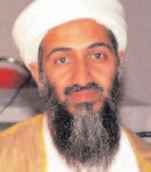
  • Secrets of the bin Laden ‘treasure-trove’ – 106  documents released

    Secrets of the bin Laden ‘treasure-trove’ – 106 documents released

    In his final years hiding in a compound in Pakistan, Osama bin Laden was a man who at once showed great love and interest in his own family while he coldly drew up quixotic plans for mass casualty attacks on Americans, according to documents seized by Navy SEALs the night he was killed.

    On May 20th  morning, the U.S. Office of the Director of National Intelligence released an unprecedented number of documents from what U.S. officials have described as the treasure-trove picked up by the SEALs at bin Laden’s compound in Abbottabad, Pakistan, on May 2, 2011.

    Totaling 103 documents, they include the largest repository of correspondence ever released between members of bin Laden’s immediate family and significant communications between bin Laden and other leaders of al Qaeda as well as al Qaeda’s communications with terrorist groups around the Muslim world.

    Also released was a list of bin Laden’s massive digital collection of English-language books, think tank reports and U.S. government documents, numbering 266 in total.

    To the end bin Laden remained obsessed with attacking Americans. In an undated letter he told jihadist militants in North Africa that they should stop “insisting on the formation of an Islamic state” and instead attack U.S. embassies in Sierra Leone and Togo and American oil companies. Bin Laden offered similar advice to the al Qaeda affiliate in Yemen, telling it to avoid targeting Yemeni police and military targets and instead prioritize attacks on American targets.

    Much of bin Laden’s advice either didn’t make it to these groups or was simply ignored because al Qaeda affiliates in Yemen and North Africa continued to attack local targets.

    ISIS, of course, didn’t exist at the time bin Laden was writing. The group, which now controls a large swath of territory in the Middle East, grew out of al Qaeda in Iraq and has charted a different path, seeking to create an Islamic state and not prioritizing attacks on the United States and its citizens.

    Taken together, these documents and reading materials paint a complex, nuanced portrait of the world’s most wanted man in the years before he was killed in the raid on his compound.

    In the letters that bin Laden exchanged with his many sons and daughters, he emerges as a much-loved and admired father who doted on his children. And in a letter he sent to one of his wives, he even comes off as a lovelorn swain.

    That’s in sharp contrast to the letters bin Laden sent to al Qaeda leaders that demanded mass casualty attacks against American targets and insisted that al Qaeda affiliates in the Middle East stop wasting their time on attacks against local government targets. “The focus should be on killing and fighting the American people,” bin Laden emphasized.

    What bin Laden was reading

    Bin Laden’s digital library is that of an avid reader whose tastes ran from “Obama’s Wars,” Bob Woodward’s account of how the Obama administration surged U.S. troops in Afghanistan in 2009 and 2010, to Noam Chomsky as well as someone who had a pronounced interest in how Western think tanks and academic institutions were analyzing al Qaeda.

    Bin Laden was a meticulous editor, and some of the memos he wrote were revised as many as 50 times. Of the thousands of versions of documents recovered from computers and digital media that the SEALs retrieved at bin Laden’s compound, the final tally numbers several hundred documents.

    The new documents show how bin Laden reacted to the events of the Arab Spring, which was roiling the Middle East in the months before his death. While bin Laden had nothing to say publicly about the momentous events in the Middle East, privately he wrote lengthy memos analyzing what was happening, pointing to the “new factor” of “the information technology revolution” that had helped spur the revolutions and characterizing them as “the most important events” in the Muslim world “in centuries.”

    Some of the documents paint an organization that understood it was under significant pressure from U.S. counterterrorism operations. One undated document explained that CIA drone attacks “led to the killing of many jihadi cadres, leaders and others,” and noted, “(T)his is something that is concerning us and exhausting us.” Several documents mention the need to be careful with operational security and to encrypt communications and also the necessity of making trips around the Afghan-Pakistan border regions only on “cloudy days” when American drones were less effective.

    Al Qaeda members knew they were short on cash, with one writing to bin Laden, “Also, there is the financial problem.”

    Some of the documents have nothing to do with terrorism. One lengthy memo from bin Laden worried about the baleful effects of climate change on the Muslim world and advocated not depleting precious groundwater stocks. Sounding more like a World Bank official than the leader of a major terrorist organization, bin Laden fretted about “food security.” He also gave elaborate instructions to an aide about the most efficacious manner to store wheat.

    Family concerns

    Many of the documents concern bin Laden’s sprawling family, which included his four wives and 20 children. Bin Laden took a minute interest in the marriage plans of his son Khalid to the daughter of a “martyred” al Qaeda commander, and he exchanged a number of letters with the mother of the bride-to-be. Bin Laden excitedly described the impending nuptials, “which our hearts have been looking forward to.”

    Bin Laden corresponded at length with his son Hamza and also with Hamza’s mother, Khairiah, who had spent around a decade in Iran under a form of house arrest following the Taliban’s fall in neighboring Afghanistan during the winter of 2001.

    Hamza wrote a heartfelt letter to bin Laden in 2009 in which he recalled how he hadn’t seen his father since he was 13, eight years earlier: “My heart is sad from the long separation, yearning to meet with you. … My eyes still remember the last time I saw you when you were under the olive tree and you gave each one of us Muslim prayer beads.”

    In 2010 the Iranians started releasing members of the bin Laden family who had been living in Iran. Bin Laden spent many hours writing letters to them and to his associates in al Qaeda about how best he could reunite with them.

    In a letter to his wife Khairiah, he wrote tenderly, “(H)ow long have I waited for your departure from Iran.”

    Bin Laden was paranoid that the Iranians –who he said were “not to be trusted” — might insert electronic tracking devices into the belongings or even the bodies of his family as they departed Iran. He told Khairiah that if she had recently visited an “official dentist” in Iran for a filling that she would need to have the filling taken out before meeting with him as he worried a tracking device might have been inserted inside.

    U.S. intelligence officials have a theory that bin Laden might have been grooming Hamza eventually to succeed him at the helm of al Qaeda because the son’s relative youth would energize al Qaeda’s base. But Hamza never made it to his father’s hiding place in Abbottabad. When the SEALs raided bin Laden’s compound, they assumed Hamza would likely be one of the adult males living there, but he wasn’t.

    U.S. intelligence officials say they don’t know where Hamza, now in his late 20s, is today.

  • Two Indian cities at high risk of terror strike

    Two Indian cities at high risk of terror strike

    LONDON (TIP): Two Indian cities -Imphal (ranked 32) and Srinagar (ranked 49) have been named to be at “extreme risk” of a terrorist attack, mainly aiming to cause mass casualty and destroy public transport networks.

    According to an analysis of the terror risk to 1,300 commercial hubs and urban centres around the world, populations and businesses in 113 Indian cities have been identified to be at some risk – high, medium or low risk of facing terrorist attacks.

    The next major Indian city after these two that faces a terrorist threat is Chennai even though the risk quotient has been marked as medium risk.

    Bangalore is the fourth most prone city even though it is placed at 204th in the global threat list followed by Pune and Hyderabad at 206th and 207th respectively

    Cities like Nagpur (ranked 2010) and Kolkata (2012) have been found to face a higher risk of a mass attack by terrorists that the usually expected targets like Delhi (447) and Mumbai (298).

    Around 64 cities around the world are at “extreme” risk, with most in the Middle East and Asia – and three in Europe.

    London ranked as low as at 400 due to the lack of a terror incident since the 7/7 bombings while Paris has soared into the top 100 cities following the Charlie Hebdo shooting, according to Verisk Maplecroft’s new Global Alerts Dashboard (GAD).

    Arvind Ramakrishnan, head of Maplecroft India said “When it comes to Imphal and Srinagar, terrorist attacks aren’t on commercial targets as much as against the security forces. However n most of the other metropolitan cities, the targets are both to cause mass casualty and cripple its commercial hubs. Public transport networks in India are also prime targets”.

    Ramakrishnan added “The Mumbai attack in 2008 was the turning point for India. But lack of intelligence sharing among states is a big worry. Law and order is still a state subject in India and political rivalries across states leads to state intelligence agencies not sharing actionable data. Virtually all police forces in India lack modern equipment and adequate manpower to counter a terrorist threat. This brings down the overall morale of the force. India does not face threats from cross border terror organisations but also from home grown ones like the Indian Mujahideen”.

    Charlotte Ingham, head of security analytics at Maplecroft UK said in total, 64 cities are categorised as
    ‘extreme risk’ in an online mapping and data portal that logged analysed every reported terrorism incident since 2009.

    Based on the intensity and frequency of attacks in the 12 months following February 2014, combined with the number and severity of incidents in the previous five years, six cities in Iraq top the ranking.

    Over this period, the country’s capital, Baghdad, suffered 380 terrorist attacks resulting in 1141 deaths and 3654 wounded, making it the world’s highest risk urban centre, followed by Mosul, Al Ramadi, Ba’qubah, Kirkuk and Al Hillah. Ingham said “just because a city in India hasn’t seen a terrorist attack in a while does not mean it isn’t potentially facing one. The rankings are based on the frequency and intensity of attacks.

    Belfast has been named as the most dangerous city in Europe while Baghdad topped the list worldwide.

    Outside of Iraq, other capital cities rated ‘extreme risk’ include Kabul (13th most at risk), Mogadishu in Somalia (14th), Sana’a in Yemen (19th) and Tripoli in Libya (48th).

    However, with investment limited in conflict and post-conflict locations, it is the risk posed by terrorism in the primary cities of strategic economies, such as Egypt, Israel, Kenya, Nigeria and Pakistan that has the potential to threaten business and supply chain continuity.

    “An estimated 80% of global GDP is generated from cities,” states Ingham. “Visibility of the sub-national differences in terrorism levels should be an imperative for multinational organisations looking to understand and price the risks to assets, employees and supply chains”.

    As Africa’s largest economy, Nigeria’s role as a commercial hub is central to economic growth across the region. Because of Boko Haram 13 out of the 24 Nigerian cities experienced a significant increase in the intensity and frequency of terrorist attacks compared to the previous quarter.

    Paris (97th and ‘high risk’) has experienced one of the steepest rises in the ranking, reflecting the severity of the terrorist attack in January 2015 that left 17 people dead. The risk level in Paris is representative of a wider trend for Western countries, including Belgium, Canada and Australia, where the level of risk in key urban centres is substantially higher than elsewhere in the country”.

  • U.S. Special Forces kill top ISIS commander in secret raid

    U.S. Special Forces kill top ISIS commander in secret raid

    U.S. Special Forces have killed a top ISIS commander in charge of their lucrative oil business, and captured his slaver wife in a dramatic overnight raid.

    Elite forces stormed a residential building in the Syrian city of Deir Ezzor, killing 12 jihadists in hand-to-hand combat.

    The ISIS commander, Abu Sayyaf, was killed after he fought capture in the raid at al-Omar, U.S. Secretary of Defense Ash Carter said in a statement. Sayyaf’s wife, an Iraqi named Umm Sayyaf, was caught and is being held in Iraq.

    Terrified militants tried to use women and children as human shields as the American troops advanced, but Pentagon officials said the raid was pulled off with no harm to civilians.

    “Abu Sayyaf was a senior ISIL leader who, among other things, had a senior role in overseeing ISIL’s illicit oil and gas operations — a key source of revenue that enables the terrorist organization to carry out their brutal tactics and oppress thousands of innocent civilians,” she said in a statement.

    “He was also involved with the group’s military operations.”

    Abu Sayyaf was a Tunisian citizen, a senior administration official said.

    A U.S. official with direct knowledge of the intelligence and the ground operation described Sayyaf as “CFO of all of ISIS with expertise in oil and gas” who had an increasing role in operations, planning and communications.

    “We now have reams of data on how ISIS operates, communicates and earns its money,” the official told CNN, referring to some of the communications elements, such as computers, seized in the raid.

    Umm Sayyaf, his wife, is currently in military detention in Iraq. A young woman from the Yazidi religious minority was rescued.

    “We suspect that Umm Sayyaf is a member of ISIL, played an important role in ISIL’s terrorist activities, and may have been complicit in the enslavement of the young woman rescued last night,” said Meehan. ISIL is an alternative acronym for ISIS.

    Airdrop, firefight

    There is reason to believe that Abu Sayyaf may have been in contact with ISIS leader Abu Bakr al-Baghdadi, sources familiar with the operation told CNN.

    Although he was not taken alive, U.S. forces did capture some of his communications equipment, the sources said.

    More details are starting to emerge of how the overnight raid deep in ISIS-controlled territory was carried out.

    There was hand-to-hand combat during the operation, which was helicopter-borne, the sources told CNN.

  • Abu Bakr al-Baghdadi calls on supporters to join him : Audio

    BEIRUT (TIP) : The leader of the Islamic State militant group that controls swathes of Syria and Iraq issued an audio statement on Thursday in which he called on supporters to join him or to take up arms wherever they live in the world.

    “There is no excuse for any Muslim not to migrate to the Islamic State … Joining (its fight) is a duty on every Muslim.

    We are calling on you either join or carry weapons (to fight) wherever you are,” Abu Bakr al-Baghdadi said in the statement, issued by the group’s al-Furqan media outlet and posted on several websites.

  • US arms Pakistan with combat aircraft, trainer jets

    US arms Pakistan with combat aircraft, trainer jets

    WASHINGTON (TIP): As the United States withdraws its forces from Afghanistan, the Obama administration has armed Pakistan with 14 combat aircraft, 59 military trainer jets and 374 armored personnel carriers, an internal Congressional report has said.

    The major defense articles have been transferred to Pakistan under its ‘Excessive Defense Article’ category, which are mostly from its war combat zones of Afghanistan and Iraq.

    India had in the past have opposed the transfer of such arms to Pakistan as it believes Islamabad would eventually use the fighter jets against it.

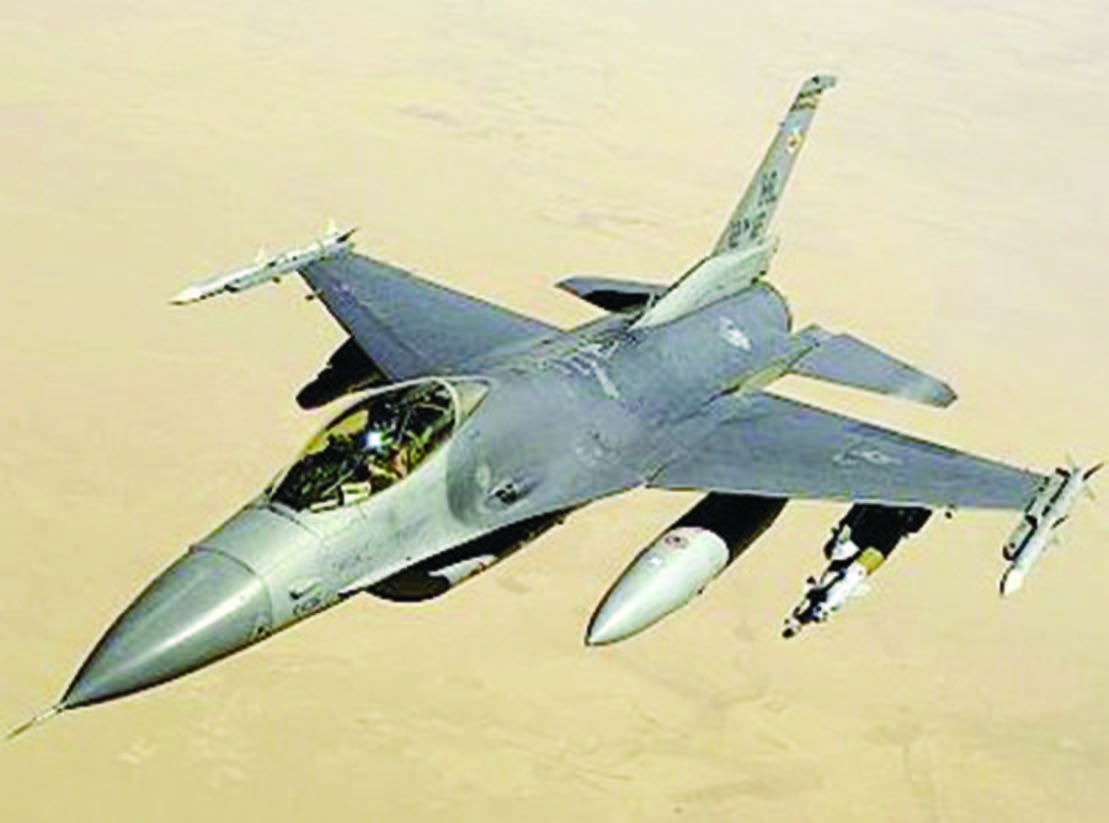
    According to an internal report prepared by Congressional Research Service – an independent research wing of the Congress – Pakistan has either made full payment or will make payments from its national funds towards the purchase of 18 new F-16C/D Block 52 Fighting Falcon combat aircraft worth USD1.43 billion.

    This includes F-16 armaments including 500 AMRAAM air-to-air missiles; 1,450 2,000-pound bombs; 500 JDAM Tail Kits for gravity bombs; and 1,600 Enhanced Paveway laser-guided kits. All this has cost Pakistan USD629 million.

    Pakistan has also paid USD298 million for 100 harpoon anti-ship missiles, 500 sidewinder air-to-air missiles (USD95 million); and seven Phalanx Close-In Weapons System naval guns (USD80 million).

    Under Coalition Support Funds (in the Pentagon budget), Pakistan received 26 Bell 412EP utility helicopters, along with related parts and maintenance, valued at USD235 million.

    Pakistan is also receiving military equipment with a mix of its national funds and America’s foreign military funding.

    These include 60 Mid-Life Update kits for F-16A/B combat aircraft (valued at USD891 million, with USD477 million of this in FMF).

    Pakistan has purchased 45 such kits, with all upgrades completed to date. This include 115 M-109 self-propelled howitzers (USD87 million, with USD53 million in FMF).

    Under Frontier Corps, and Pakistan Counterinsurgency Fund authorities, US has provided four Mi-17 multirole helicopters (another six were provided temporarily at no cost), four King Air 350 surveillance aircraft, and 450 vehicles.

    Pakistan has also received 20 Buffalo explosives detection and disposal vehicles, helicopter spare parts, explosives detectors, night vision devices, radios, body armor, helmets, first aid kits, litters, and individual soldier equipment.

    Through International Military Education and Training and other programs, the US has funded and provided training for more than 2,000 Pakistani military officers.

    In April, the State Department approved a possible USD- 952 million FMS deal with Pakistan for 15 AH-1Z Viper attack helicopters and 1,000 Hellfire II missiles.

    Congress has appropriated about USD3.6 billion in Foreign Military Financing for Pakistan since 2001, more than two-thirds of which has been disbursed.

    President Barack Obama has slowed the drawdown of the roughly 10,000 US troops remaining in Afghanistan until at least the end of the year.

  • Decline of American clout – Gulf countries ”loss of trust in the leadership and credibility of the US”

    Decline of American clout – Gulf countries ”loss of trust in the leadership and credibility of the US”

    A near unanimous decision by the six heads of state of the Gulf Cooperation Council not to personally attend the meeting convened by the American President is a most dramatic demonstration of the decline of American clout in a part of the West Asian region where it was the strongest. The meeting was called by the President to explain and reassure his Gulf allies about the Iran nuclear deal. The boycott is a measure of the extent of the loss of trust of the Gulf countries in the leadership and credibility of the United States. The American Administration has of course been aware of the widening gulf in mutual trust between the two sides but was probably not aware of its depth. It tried to assuage its erstwhile protégés’ sensibilities by vocally and strongly supporting the Saudi-led intervention against the Houthi-led insurrection in Yemen. It provided crucial logistic and intelligence support and deployed powerful naval armada in the Gulf of Aden, even ordering the hugely powerful   aircraft carrier USS Enterprise to those waters. Evidently, these efforts and gestures have not had the desired result.

    The causes of this disenchantment among the kingdom and its GCC allies are well known. It started with the phenomenon which prematurely came to be described as the Arab Spring. The Saudis were deeply disappointed with the American lack of decisiveness in standing behind President Mubarak and for eventually ditching him.

    They left the Americans in no doubt about their displeasure. When Morsy was overthrown, the Americans again were on the other side since they openly condemned what they called the coup against the ‘democratically elected’ leader, even though they knew that Saudi Arabia was firmly opposed to Moslem Brotherhood.

    The Saudi disillusionment with America became stronger with the developments in the Syrian civil war. The Saudis expected their American friends to be more forthright in joining the campaign to topple President Bashar Al Assad. The kingdom had never been happy with the unwillingness of the Syrian regime to align itself with them. Syria’s dominance of Lebanon, especially during the period when Rafiq Hariri was its Prime Minister, was intensely resented by the then King who considered Hariri as his protégé. (Hariri made his millions in Saudi Arabia.)

    President Obama had declared that if the Assad regime used chemical weapons, that would mean crossing a ‘red line’ for him and he would bomb the regime’s strongholds. Chemical weapons were used and Obama did nothing. The Saudis were furious at being let down. The concerted propaganda launched by them as well as Qatar had succeeded in creating a strong perception that it was the Assad government which had used the weapon of mass destruction. However, an internal investigation in Washington, at the least, found several holes in the story, compelling Mr. Obama not to carry out his threat or promise.

    The proverbial last straw which broke the camel’s back was the determined push   by the American President in the nuclear talks with Iran. Both Iran and Saudi Arabia have been polite in their public utterances and played down the intense mistrust and hostility which they entertain for each other. The fact remains that the two are rivals in the region for dominance. The sectarian divide is no doubt one important factor since the kingdom regards itself as the leader of all the Muslims in the world and the Islamic Republic considers itself as the defender of the Shia community. Shias and Sunnis deliberately downplay their differences in public discourse but the theological gap between them is unbridgeable. Worldwide, Shias are only 10 to 15 % of the Muslim Ummah and are in majority in only four countries – Iran, Iraq, Bahrain and Azerbaijan. Shia minorities have been persecuted in most Sunni majority     countries, and it is only in recent years that they have asserted themselves. Iran’s rise as the Islamic Republic has undoubtedly a lot to do with this assertiveness.

    Saudi Arabia has legitimate concerns at the rise of Iran, given the fact that its Shia population, about 10-12 %, is located in the eastern province where the kingdom’s oil resources are concentrated. If Iran comes to have an effective voice in Yemen, it might generate dissidence in the country. Sectarian considerations, while important, have been overplayed by the Saudis. Their principal concern is that if Iran succeeds in striking a deal with the US, which would permit it to retain its nuclear weapon capability, it would forever tilt the balance of power in favor of Iran. Consequently, when the talks between Iran and P-5 + 1 made progress, raising expectations about a successful conclusion by the end of June, the Saudi kingdom thought something had to be done.

    That something turned out to be the intervention in Yemen. In this adventure, they were actively encouraged and assisted by Israel whose Prime Minister has mounted a most effective campaign against the nuclear deal for his own reasons. The Saudis and Israelis are allies in this anti-Iran exercise. If the nuclear talks conclude in a mutually acceptable agreement, Iran will undoubtedly emerge as the dominant power in the region.

    Saudi Arabia has mounted a huge media blitz to convince the major powers of Iran’s active involvement on the side of the Houthis, alleging political, logistical and military support to the Houthi insurgency. Iran denies all such allegations. The U.S. has warned Iran against helping the Houthis, accusing it of everything that     the   Saudis accuse Iran of. But not all Western politicians subscribe to the claim of Iranian involvement. Even by the UN account, Yemen is flush with 40 to 60 million weapons of different sorts. Yemen’s deposed President has aligned himself with the Houthis, mainly to secure political future for his son, and he has strong following in the Yemeni army.

    If Iran miscalculates, it might force Mr. Obama to rethink the nuclear deal. He is already under tremendous pressure domestically. Mr. Netanyahu has mobilized the Republican Senators against the deal. It is to the President’s credit that he has withstood all the pressure and persevered in the negotiations. A misstep by Iran just might force Obama’s hand and call off the talks. Iran of course realizes this danger.

    Not everyone in Iran is in favor of the deal, but a huge majority is, especially the one person whose voice counts the most, namely, the Supreme Leader. It is perhaps more up to Iran to make sure that it exercises maximum restraint in the Yemeni affair. It is also Iran’s responsibility to reassure its smaller neighbors about its peaceful and good neighborly intentions towards them.

    The unprecedented public display of no-confidence by the Gulf countries in President Obama is equally a challenge for him as well as for Iran.

  • All 39 Indian IS hostages alive, says Sushma

    NEW DELHI (TIP): India was informed by “eight different sources” that 39 citizens of the country abducted in Iraq 11 months ago were still alive, External Affairs Minister Sushma Swaraj said on May 14.

    Swaraj, who had a meeting with members of the families of the hostages, dismissed media reports claiming that the Indians abducted by Islamic State militants at Mosul in northern Iraq in June 2014 had been killed. The media-reports quoted Harjit Masih, who was among the hostages, but managed to flee, telling journalists that all others abducted by the IS had been killed. “We are not sparing any efforts to find them. We are hopeful that we will be able to find them and bring them back home. I have eight different sources who are saying they are alive,” Swaraj said.

    She assured the families of the hostages that the government was making sincere efforts for the safe and early release of the Indian workers.She said she had earlier personally spoken to her counterparts in the countries.

  • EU humanitarian chief sounds warning on Iraq

    BAGHDAD (TIP): The head of the European Union’s humanitarian aid department warned on Thursday that the situation in Iraq is deteriorating rapidly while the world is preoccupied with crises elsewhere.

    Jean-Louis de Brouwer told The Associated Press that the number of displaced people in Iraq has quadrupled in the last year and shows no signs of decreasing.

    “The worst is still to come,” he said. “The situation is deteriorating, humanitarian aid is becoming even more essential than it was, the problem is funding.”

    Iraq is convulsed in a battle between the government, its militia allies and forces of the Islamic State group that have taken over large parts of the north and west in the country.

    The fighting has displaced some 2.7 million people inside the country, including 110,000 who fled from renewed fighting in and around the city of Ramadi in the western Anbar province in the past two weeks.

    Many of these are living with other families, inside mosques or in makeshift camps around the western periphery of Baghdad. Meanwhile, there are hundreds of thousands more in the Kurdish northern regions.

    “This is quite a matter for concern as the needs are skyrocketing and the resources are not increasing,” said de Brouwer. “I’m afraid there is also — not donor fatigue — but donor exhaustion.”

    An even larger refugee problem in neighboring Syria and most recently and earthquake in Nepal has drawn attention away from the slow building crisis in Iraq, he said.

    In June, the EU is to co-host with the UN a new call for humanitarian aid for Iraq in Brussels. The EU has nearly doubled its allocation for Iraq from$22 million in 2014 to $43 million this year.

    De Brouwer also criticized the practice of not allowing those displaced from Sunni areas into Baghdad or the Kurdish region without sponsorship, leaving most people stranded.

    “If they keep on with this kind of practice, they will end up with the kind of ethnic division that will not be good for the country,” he said.

  • ISIS chief Abu Bakr al-Baghdadi dead: Claims Radio Iran

    ISIS chief Abu Bakr al-Baghdadi dead: Claims Radio Iran

    NEW DELHI: The enigmatic chief of Islamic State jihadist group Abu Bakr al-Baghdadi is dead, Radio Iran has reported on Monday.

    Earlier, a Guardian report quoting sources with inside knowledge of the group reported that al-Baghdadi was severely injured in a US-led coalition air strike in March.

    According to that report, al-Baghdadi was inujred at al-Baaj district of Nineveh, close to the Syrian border. It also said he was making a slow recovery and was out of his day-to-day control of the jihadist group.

    Al-Baghdadi, believed to be in his 40s, had a $10 million US bounty on his head. Since taking the reins of the Islamic State in 2010, he had transformed it from a local branch of al-Qaida into an independent transnational military force, positioning himself as perhaps the pre-eminent figure in the global jihadist community.

    ISIS suffered a series of major setbacks in the recent months with many of its top commanders being killed or severely injured.

    Recently, a top Iraqi military commander Lieutenant General Abdul Amir al Shammari told Sky News that his forces had killed “more than 250 terrorists in the past few days”.

    He said this had been achieved with assistance from the Iraqi air force, military helicopters and coalition air strikes. “The coalition strikes provided cover for our troops to push forward.”

    Under the leadership of al-Baghdadi, the Islamic State, which called itself as the Islamic State of Iraq and Syria (ISIS) earlier, had gained ground across northern and western Iraq in a lightning advance in June and July last year, causing several of Iraq’s army and police divisions to fall into disarray.

    It had carried out thousands of public executions using brutal methods and implemented strict Islamic law in areas they captured, which sent shockwave across the global community.


  • US is often unsure about who will die in drone strikes

    US is often unsure about who will die in drone strikes

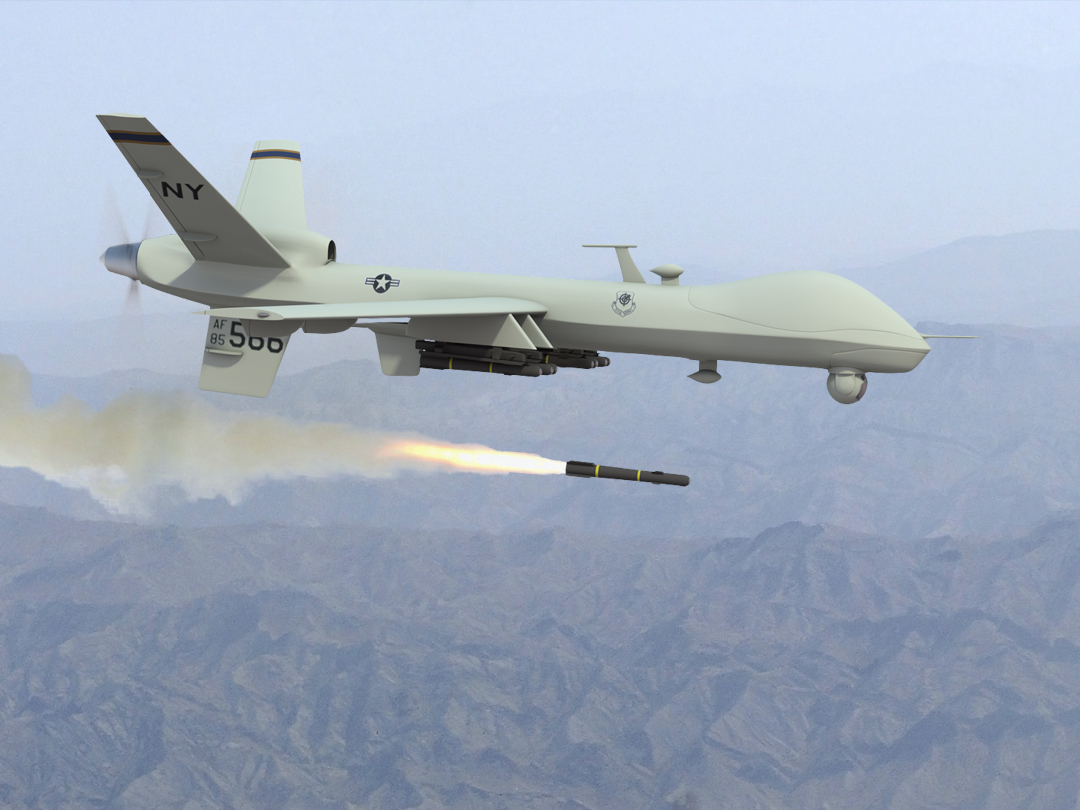
    WASHINGTON (TIP): Barack Obama inherited two ugly, intractable wars in Iraq and Afghanistan when he became president and set to work to end them. But a third, more covert war he made his own, escalating drone strikes in Pakistan and expanding them to Yemen and Somalia.

    The drone’s vaunted capability for pinpoint killing appealed to a president intrigued by a new technology and determined to try to keep the United States out of new quagmires. Aides said Obama liked the idea of picking off dangerous terrorists a few at a time, without endangering American lives or risking the years long bloodshed of conventional war.

    “Let’s kill the people who are trying to kill us,” he often told aides.

    By most accounts, hundreds of dangerous militants have, indeed, been killed by drones, including some high-ranking al-Qaida figures. But for six years, when the heavy cloak of secrecy has occasionally been breached, the results of some strikes have often turned out to be deeply troubling.

    Every independent investigation of the strikes has found far more civilian casualties than administration officials admit. Gradually, it has become clear that when operators in Nevada fire missiles into remote tribal territories on the other side of the world, they often do not know who they are killing, but are making an imperfect best guess.The president’s announcement on Thursday that a January strike on al-Qaida in Pakistan had killed two Western hostages, and that it took many weeks to confirm their deaths, bolstered the assessments of the program’s harshest outside critics. The dark picture was compounded by the additional disclosure that two American members of al-Qaida were killed in strikes that same month, but neither had been identified in advance and deliberately targeted.

    In all, it was a devastating acknowledgment for Obama, who had hoped to pioneer a new, more discriminating kind of warfare. Whether the episode might bring a long-delayed public reckoning about targeted killings, long hidden by classification rules, remained uncertain.Even some former Obama administration security officials have expressed serious doubts about the wisdom of the program, given the ire it has ignited overseas and the terrorists who have said they plotted attacks because of drones. And outside experts have long called for a candid accounting of the results of strikes.

    “I hope this event allows us at last to have an honest dialogue about the US drone program,” said Rachel Stohl, of the Stimson Center, a Washington research institute. “These are precise weapons. The failure is in the intelligence about who it is that we are killing. “Stohl noted that Obama and his top aides have repeatedly promised greater openness about the drone program but have never really delivered on it.

    In a speech in 2013 about drones, Obama declared that no strike was taken without “near-certainty that ano civilians will be killed or injured.” He added that “nevertheless, it is a hard fact that US strikes have resulted in civilian casualties” and said “those deaths will haunt us as long as we live.”