Tag: Iraq

  • Ex-general, CIA chief Petraeus gets probation, $100,000 fine in leak case

    Ex-general, CIA chief Petraeus gets probation, $100,000 fine in leak case

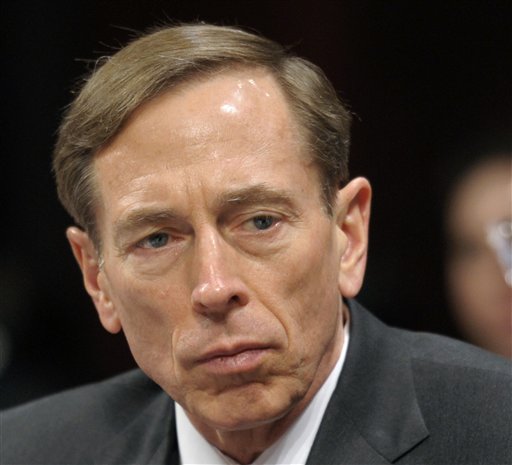
    CHARLOTTE, NC (TIP): Former US military commander and CIA director David Petraeus was sentenced to two years of probation and ordered to pay a$100,000 fine but was spared prison time on April 23 after pleading guilty to mishandling classified information.

    The retired four-star general apologized as he admitted in federal court in Charlotte, North Carolina, to giving the information to his mistress, who was writing his biography. He agreed under a plea deal to a misdemeanor charge of unauthorized removal and retention of classified material. US magistrate judge David Keesler raised the fine from the $40,000 that had been recommended to the maximum possible financial penalty for that charge, noting it needed to be higher to be punitive and reflect the gravity of the offense. “This constitutes a serious lapse of judgment,” Keesler said during the hour-long hearing. The guilty plea ended an embarrassing chapter for a man described in letters to the court as one of the finest military leaders of his generation. Petraeus, 62, a counter-insurgency expert with a Princeton University doctorate, served stints as the top U.S. commander in the wars in Iraq and Afghanistan and was once considered a possible vice presidential or presidential candidate.

  • Bringing Yemen’s tragedy to an end – Need for a fair Shia-Sunni deal

    The civil war in Yemen, exacerbated by the intervention of outside powers, is poised at a delicate stage which could impinge on the larger picture of the Middle East’s future trajectory. The truth is that the poorest country in the region lies along several fault lines.

    They are the Shia-Sunni schism in the Muslim world, the rivalry between Saudi Arabia and Iran, the interest of outside powers such as the United States and the major European trading nations and the broader state of US-Russian relations. Despite its appeals, the United Nations is, for the present, a spectator, rather than an effective actor.

    The military intervention of Saudi Arabia and its Gulf allies by launching air strikes on Houthi rebels in Yemen, who are aided by Iran and are in the process of capturing the better part of the country, has complicated the picture. In a sense, it was inevitable because Riyadh could hardly stand aside even as a Shia sect set about conquering a Sunni majority country. The Saudis are now demanding the surrender of the Houthis before stopping their bombing runs.

    The United States is helping the Saudis by providing logistical and other technical assistance, a delicate dance for US Secretary of State John Kerry. He decries Iranian help to the Houthis. Tehran denies even as he eyes a landmark deal with Iran on its nuclear program. Pakistan, on its part, is facing a cruel dilemma in accepting the Saudi demand to join the intervention against the backdrop of its substantial Shia population at home.

    For Pakistan, the dilemma is of a state beholden to Riyadh for its generous subsidies. A contingent of Pakistani troops is permanently stationed in Saudi Arabia in part payment for Saudi goodies. Prime Minister Nawaz Sharif himself is beholden to the Saudis for saving him from possible execution in the days of Gen Pervez Musharraf rule, first giving him refuge and then re-injecting him into the Pakistani political scene.

    Grave as the dilemmas for Pakistan are, the larger picture is more menacing because of the fault lines. The most salient is the Saudi-Iranian contest in the Middle East in which Tehran is seeking to spread its wings through fortuitous circumstances and its own activism. Thanks to the American invasion of Iraq, the latter, with its Shia majority, ultimately fell into its lap. Iran is well placed in Lebanon with its allied Hezbollah movement in a confessional division of political factions.

    Bahrain remains a tempting target because it is ruled by a Sunni monarch underpinned by Saudi power over a Shia majority. Saudi apprehension over the proposed nuclear deal with Iran, shared by Israel, is that it would give Tehran greater opportunities to strengthen its regional role.

    As if the picture were not complicated enough, the growth of Sunni extremists, first in the form of Al-Qaida and its affiliates, then their evolution into ISIS and ultimately into a caliphate holding territory in the shape of the Islamic State (IS), is a fact of life. Americans have reluctantly returned to the region by undertaking bombing runs on the IS and are ironically on the same side as Iran in trying to attain this goal.

    How then is the world, or the major powers, to unscramble the mess because of the very nature of the crises? If relations between the United States and Russia were not as frigid as they are over Ukraine and other issues, they could have joined hands to bring about at least a temporary ceasefire in Yemen. After all, in the five plus one (UN Security Council permanent members plus Germany) format of talks on Iran’s nuclear program, Russia was a participant. But the prevailing animosities in what was once the Big Two make the going tough.

    Individuals and circumstances have contributed to creating the Yemen crisis. Mr. Ali Abdullah Saleh, the long-time dictator, was eased out of office with the help of Gulf monarchies in the wake of the short-lived Arab Spring in 2011. He was nursing his wounds while keeping his powder dry and still had ambitions – for son, if not for himself. He chose to ally with the Houthis while still retaining the loyalty of sections of the country’s armed forces.

    Houthis, who traditionally control the north of the country, were ready to revolt against the Sanaa dispensation presided over by an unimpressive Sunni imposed by Saudis. They felt their interests were being sacrificed and, thanks to Saleh’s support, they had the strength to overrun the capital and even try to take over Aden, the principal city of South Sudan.

    The nature of the strikes being what it is, there are reports of increasing civilian casualties. Although some humanitarian aid has now got in and India, among other countries, has managed to evacuate most of its citizens, international demands are growing by the day to stop the bombing runs and seek a political solution.

    Houthis, being a minority, cannot hope to rule Yemen. Yet, given the military prowess they have demonstrated, they will insist on a fair share of the national cake in any future framework agreement. Saudi Arabia shares a long border with Yemen and will not tolerate a Shia-dominated dispensation despite the earlier long rule of Mr. Saleh, himself a Houthi.

    For its part, Iran has already suggested that the Saudi-led action is a “mistake” and the United States is seeking to maintain a balance between the hoped-for nuclear deal with Iran and warnings to Tehran to refrain from aiding the Houthis. Ultimately, the problem will land in the lap of the United Nations, but the question is how much longer the process will take and how long the regional contestants will drag their feet before a truce is called.

    The scale of the fighting and deaths is leading to growing demands for a ceasefire. The Saudis have made their point that there cannot be a Shia-dominated dispensation along its shared border. But a compromise must include a fair sharing of power with Houthis.

  • ISIS claims Tunisia attack that killed 23

    TUNIS (TIP): The Islamic State group issued a statement on March 19 claiming responsibility for the deadly attack on Tunisia’s national museum that killed 23 people, mostly tourists. The statement described on March 18 attack in Tunisia as a “blessed invasion of one of the dens of infidels and vice in Muslim Tunisia”, and appeared on a forum that carries messages from the group. The statement said there were two attackers and they weren’t killed until they ran out of ammunition and it promised further attacks.

    “Wait for the glad tidings of what will harm you, impure ones, for what you have seen today is the first drop of the rain,” the statement, which was also announced by US-based SITE Intelligence Group. The jihadist group (also known as ISIS), which is based in Syria and Iraq, has affiliates in neighboring Libya, where many Tunisians have gone to fight and train with extremist groups. Earlier this week, a prominent Tunisian field commander for IS was killed in fighting inside Libya. Tunisia’s government, meanwhile, announced the arrest of nine people — four of whom were connected directly to the attack and five others who supported them elsewhere in the country, authorities said.

  • Abu Bakr al-Baghdadi accepts allegiance of Nigeria’s Boko Haram

    Abu Bakr al-Baghdadi accepts allegiance of Nigeria’s Boko Haram

    BEIRUT (TIP): The leader of the Islamic State militant group that controls tracts of Syria and Iraq has accepted a pledge of allegiance from Nigerian Islamists Boko Haram, his spokesman said, calling on supporters to fight in Africa.

    Boko Haram, which has killed thousands and kidnapped hundreds during a six-year campaign to carve out an Islamist state in northern Nigeria, pledged its allegiance last week, highlighting increased coordination between jihadi movements across north Africa and the Middle East.

    “Our caliph, God save him, has accepted the pledge of loyalty of our brothers of Boko Haram so we congratulate Muslims and our jihadi brothers in West Africa,” Islamic State spokesman Abu Mohammad al-Adnani said in an audio message, referring to his group’s leader Abu Bakr al-Baghdadi.

    Islamic State, an ultra-hardline offshoot of al Qaeda, has declared a caliphate in captured territory in Iraq and Syria and has gained global notoriety for killing or kidnapping members of ethnic and religious minorities and posting videos of its members killing Arab and Western hostages.

    In the audio message, Adnani called on Muslims who could not join Islamic State in Iraq and Syria to enter combat in Africa instead, saying Boko Haram’s pledge had opened a “new door for you to migrate to the land of Islam and fight.” 

    “We are calling you up for jihadis, go.” 

    The group, which rejects all but its own limited interpretation of early Sunni Muslim theology as heresy, also issued a threat to Jews and Christians.

    “If you want to save your blood and money and live in safety from our swords … you have two choices: either convert or pay jezyah,” he said, referring to tax for non-Muslims under Islamic rule.

    “(Otherwise) you will soon bite your fingers with remorse.” 

    Adnani also played down reports of military setbacks for the group which is coming under attack from Iraqi and Kurdish forces as well as US-led air strikes.

    In Syria, Kurdish YPG fighters have cut an important supply route from territory controlled by Islamic State in Iraq.

    Islamic State has also faced a major counter-offensive by Iraqi security forces and militias in Iraq, who fought their way into Saddam Hussein’s home city of Tikrit on Wednesday, advancing on two fronts.

    “The State remains steadfast … and is becoming stronger and continues to be victorious,” Adnani said, describing gains claimed by its enemies as “fake”.

    “It is a mere taking back of a few villages in a war that is about attack and retreat,” he said, in the group’s first official reaction to the developments.

    While Islamic State’s enemies seek to control Iraqi cities and other places, the group is targeting western capitals, Adnani said. “We want, God willing, Paris before Rome.” 

    Islamic State fighters stormed into Tikrit last June during a lightning offensive that was halted just outside Baghdad.

  • IRAQ SAYS ISLAMIC STATE MILITANTS ‘BULLDOZED’ ANCIENT SITE

    IRAQ SAYS ISLAMIC STATE MILITANTS ‘BULLDOZED’ ANCIENT SITE

    BAGHDAD (TIP): Islamic State militants “bulldozed” the ancient Nimrud archaeological site near the northern Iraqi city of Mosul on Thursday using heavy military vehicles, the government said.

    A statement from Iraq’s Ministry of Tourism and Antiquities didn’t elaborate on the extent of the damage, saying only that the group continues to “defy the will of the world and the feelings of humanity” with this latest act.

    Nimrud is a 13th century B.C. Assyrian archaeological site located on the Tigris River just south of Iraq’s second largest city, Mosul, which was captured by the Islamic State group in June. The extremists, who control a third of Iraq and Syria, have attacked other archaeological and religious sites, claiming that they promote apostasy.

    Turkey rules out combat mission to to help Iraq retake Mosul

    Earlier this week a video emerged on militant websites showing Islamic State militants with sledgehammers destroying ancient artifacts at the Mosul museum, sparking global outrage.

    Last year, the militants destroyed the Mosque of the Prophet Younis – or Jonah – and the Mosque of the Prophet Jirjis, two revered ancient shrines in Mosul. They also threatened to destroy Mosul’s 850-year old Crooked Minaret, but local residents surrounded the structure, preventing the militants from approaching.

    Iraq’s national museum in Baghdad opened its doors to the public last week for the first time in 12 years in a move Prime Minister Haider al-Abadi said was to defy efforts “to destroy the heritage of mankind and Iraq’s civilization.”

    The Islamic State group has imposed a harsh and violent version of Islamic law in the territories it controls and has terrorized religious minorities. It has released gruesome videos online showing the beheading of captives, including captured Western journalists and aid workers.

    A U.S.-led coalition has been striking the group since August, and Iraqi forces launched an offensive this week to try to retake the militant-held city of Tikrit, on the main road linking Baghdad to Mosul.

  • EU leaders debate new anti-terror measures

    BRUSSELS (TIP): Galvanized by the recent terror attacks in France, European Union leaders on February 12 debated a range of ambitious steps to better protect their 28 nations, including exchanging airliner passenger manifests, tightening controls at the border and combating extremism on the Internet.

    EU President Donald Tusk, the summit meeting’s host, said he would seek agreement on a “work plan to step up the fight against terrorism.” The bloc’s top official for counter-terrorism warned member governments last month that “Europe is facing an unprecedented, diverse and serious threat.”

    Counter-terrorism policy shot to the top of the EU agenda following the Jan. 7-9 terror attacks in Paris against a satirical weekly, a policewoman and a kosher grocery store that claimed a total of 17 victims. The three gunmen, who proclaimed allegiance to Al-Qaida in Yemen and the Islamic State group, were also shot dead by French police.

    The attacks mobilized France and other EU countries to seek more effective ways to deal with armed Islamic militancy, especially the problem of radicalized European-born Muslims who go to fight in Syria or Iraq and then return home.

    The attacks in the French capital “were a game-changer” for EU counter-terrorism policy, said Alexandra de Hoop Scheffer, senior trans-Atlantic fellow and director of the Paris office of the German Marshall Fund think tank. To prepare for Thursday’s summit in Brussels, EU foreign, finance and interior and justice ministers drew up recommendations on what to do.

    But as the leaders met, some officials urged caution. Finnish Prime Minister Alexander Stubb said it was imperative to strike “a careful balance between civil liberties and security.” European Parliament President Martin Schulz, who addressed the summit, told a news conference afterward that rashly limiting individual rights in the name of boosting public safety would play right into the terrorists’ hands by discrediting Western-style democracy.

    “We need to be a state of law and democracy,” Schulz said. “We need to protect our values.”

    Some of the steps the leaders were expected to consider:

    AN EU-WIDE PASSENGER REGISTRY TO SHARE INFORMATION ON AIR TRAVELERS 

    “It sounds crazy, but we don’t have that system within the EU, though we have it with the U.S., Canada and Australia,” said de Hoop Scheffer. An earlier attempt to launch an EU-wide exchange of air traveler data for prevention, detection, investigation and prosecution of terrorist offenses and other serious crimes died in the European Parliament in 2013 when a committee rejected it on civil liberties grounds.

    On Wednesday, European Parliament members, by a 532-136 vote, pledged to work toward getting a passenger name record program enacted by the end of 2015, but insisted the EU simultaneously rewrite its rules on data collection and sharing to ensure legally-binding protections.

    Even that wasn’t sufficient for Europe’s Greens, who opposed the resolution, saying it gave “carte blanche for EU governments to scale back personal freedoms.” The Greens said it would be more effective to conduct targeted surveillance on individual suspects already known to authorities.

    TIGHTER BORDER CHECKS ON TRAVELERS 

    Twenty-six European countries, among them 22 EU nations, have abolished passport and customs controls among one another in what’s commonly known as the “Schengen area.” According to EU officials, current identity checks on European travelers leaving or re-entering the area are often cursory.

    Gilles De Kerchove, the EU’s counter-terrorism chief, has called for the swift implementation of a new screening system to detect suspicious travel movements, and suggested it is also time to change some of the rules governing the Schengen area.

    FIGHTING THE USE OF THE INTERNET TO SPREAD RADICAL IDEAS 

    A draft statement prepared for Thursday’s summit calls for measures to “detect and remove Internet content promoting terrorism and extremism,” including reinforced cooperation between public and private sectors and a coordinating role for Europol, the EU’s law enforcement agency.

    “Preventing radicalization is a key element of the fight against terrorism,” the draft statement says. It also calls for development of communication strategies to promote tolerance, non-discrimination, fundamental freedoms and solidarity throughout the EU, and use of education, vocational training and rehabilitation to limit the lure of radicalization, including for people in prison.

    If all three of the major proposals are adopted, “the EU would be better equipped” to deal with the terrorism challenge, said de Hoop Scheffer.

    The EU leaders were expected to consider other measures as well, including better coordination among existing institutions like Europol, Eurojust _ the EU-wide agency of prosecutors, police and investigating magistrates _ and the bloc’s counter-terrorism coordinator.

  • Senate confirms Ashton B. Carter as secretary of defense

    Senate confirms Ashton B. Carter as secretary of defense

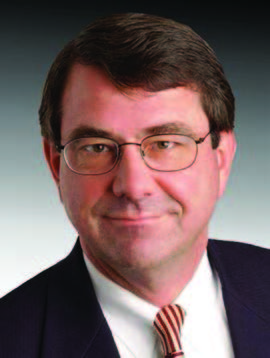
    WASHINGTON (TIP): Ashton B. Carter, a physicist with long experience in national security circles, handily won Senate confirmation Thursday, February 12, as secretary of defense, becoming President Obama’s fourth pick in six years to lead the Pentagon.

    The Senate voted 93 to 5 to approve Carter’s nomination, paving the way for him to be sworn into office sometime in the next few days.

    Voting against him were five Republicans senators: Roy Blunt (Mo.), Mike Crapo (Idaho), Mark Kirk (Ill.), James E. Risch (Idaho) and John Boozman (Ark.).

    Carter, 60, will replace Chuck Hagel, the former Republican senator from Nebraska who agreed in November to step down after Obama lost confidence in his leadership. The White House has said it wanted a new Pentagon chief to oversee the fight against the Islamic State in Syria and Iraq, as well as the continued drawdown of U.S. troops from Afghanistan.

    “With his decades of experience, Ash will help keep our military strong as we continue the fight against terrorist networks, modernize our alliances, and invest in new capabilities to keep our armed forces prepared for long-term threats,” said Obama in a statement.

    A Rhodes scholar with eclectic interests – he wrote an undergraduate thesis at Yale on the Latin writings of 12th-century Flemish monks – Carter will return to the Pentagon just 14 months after he resigned as deputy secretary of defense. He previously served as the Pentagon’s chief weapons buyer and also as a senior defense official during the Clinton administration.

    During testimony before the Senate Armed Services Committee last week, Carter pledged to keep an independent voice and demonstrated a willingness to differ with the White House. For example, he said he was “inclined” to support arms deliveries to Ukraine and that he would be open to reviewing the timetable for withdrawing troops from Afghanistan.

    Sen. Jack Reed (D-R.I.), said Carter would have to focus on existing problems such as the fighting in Ukraine, Syria, Iraq and Afghanistan but also longer-term challenges such as China’s military buildup.

    Even more daunting crises, he added, could emerge in the near future. For example, if negotiations with Iran over its nuclear program fail this year, he noted, “the consequences could alter the face of the region for generations and generations to come.”

    Sen. John McCain (R-Ariz.), the committee chairman, praised Carter on Thursday as a “committed public servant” who has drawn bipartisan support. But he questioned how much sway he would have with the White House.

    “When it comes to much of our national security policy, I must candidly express concern about the task that awaits Dr. Carter and the limited influence he may have,” McCain said. He said he had “sincere hope, but sadly little confidence, that the president who nominated Dr. Carter will empower him to lead and contribute to the fullest extent of his abilities.”

  • ISIS EXPANDING ‘INTERNATIONAL FOOTPRINT’

    ISIS EXPANDING ‘INTERNATIONAL FOOTPRINT’

    The Islamic State, despite being driven by Kurdish fighters from its one-time Syrian stronghold in Kobani last week, nevertheless is extending its reach well beyond Iraq and Syria, military officials and analysts warn — represented, by some estimates, in nearly a dozen countries.

     ISIS History

    The Islamic State, despite being driven by Kurdish fighters from its one-time Syrian stronghold in Kobani last week, nevertheless is extending its reach well beyond Iraq and Syria, military officials and analysts warn — represented, by some estimates, in nearly a dozen countries.


    Lt. Gen. Vincent Stewart, director of the US Defense Intelligence Agency, delivered a grim assessment earlier this week in testimony to the House Armed Services Committee, as he described how the group was surfacing in North Africa.


    “With affiliates in Algeria, Egypt, Libya, the group is beginning to assemble a growing international footprint that includes ungoverned and under governed areas,” Stewart said.


    ISIS continues to hold a wide swath of territory, bigger than the state of Pennsylvania, in its home base spanning parts of Iraq and Syria, propped up by more than 20,000 foreign fighters from at least three dozen countries. But the terror network’s tentacles, as Stewart indicated, are creeping into other nations; largely those with fragile governments.


    “ISIS, like Al Qaeda, has thrived in the failed states where there is a vacuum of power,” said James Phillips, Middle East senior research fellow with the Heritage Foundation.


    A key worry is the group’s potential ambitions in Afghanistan, where the U.S. combat mission just ended and Afghan security forces are in control.


    Defense secretary nominee Ashton Carter, who had his confirmation hearing Wednesday, told Congress he is aware of reports that ISIS may try to expand into Afghanistan, and vowed to work with coalition partners to stop the group. He said he would consider changing plans for withdrawing the remaining 10,600 U.S. troops from Afghanistan by the end of 2016 if security conditions further deteriorate.


    The Islamic State’s ambitions do not stop at Afghanistan, the so-called Graveyard of Empires. Militant groups in Pakistan, the Philippines, Israel and the Gaza Strip, Lebanon, Indonesia and Jordan, among other areas, reportedly have pledged formal support for ISIS. New York Magazine, in a recent report, wrote, “Think of them as ISIS’s self-appointed foreign bases.”


    It’s impossible to know precisely how many members are involved in these groups, but analysts say the biggest groups generally are still affiliated with Al Qaeda, while others are starting to stand with ISIS – and execute attacks.


    An ISIS-tied group in Egypt, for instance, claimed responsibility for a series of coordinated attacks on Jan. 30 that killed at least two dozen security officers in restive Sinai.


    The Caliphate Soldiers Group in Algeria, which pledged loyalty to ISIS in September, kidnapped and beheaded a French tourist the same month. Terrorists posted a video of the beheading, saying it was in response to French airstrikes in Iraq. Algerian Special Forces killed the terror leader late last year, which analysts say dealt a morale blow to the small group.


    In Libya, the Islamic State’s Tripoli Province took credit for a hotel attack on Feb. 1 which killed nine people, including an American.


    Published reports tie other groups to ISIS including The Jundallah militant group and the Tehreek-e-Khilafat groups in Pakistan; the Philippines’ Abu Sayyaf group; Sinai Province in Egypt; Lebanon’s The Free Sunnis of Baalbek Brigade; Indonesia’s Jama’ah Ansharut Tauhid; and Sons of the Call for Tawhid and Jihad in Jordan.


    The Heritage Foundation’s Phillips said it’s not just groups like these that have declared loyalty. “There are an unknown number of self-radicalized militants in many different countries that may self-identify with ISIS and carry out ‘lone wolf ’ terrorist attacks in its name, without necessarily being members of the group,” he said. He cited the hostage crisis in Sydney, Australia, last December as an example.


    ISIS continues to get pounded by coalition airstrikes in Iraq and Syria, where Kurdish forces recently took back the vital city of Kobani. Those strikes are likely to increase following the brutal execution of a captured Jordanian pilot (though the coalition is down a member, with the United Arab Emirates having suspended airstrikes after the pilot’s capture in December.)


    Phillips said the purpose of the group’s grisly propaganda videos – including of the Jordanian pilot being burned alive in a cage — is to change the subject, from recent setbacks in Kobani as well as some areas in Iraq, through “jihadist pornography.” He said the point is to show the group as an
    “invincible army,” psychologically attractive to European teenagers who might join the fight.


    Raymond Stock, a Shillman-Ginsburg writing fellow at the Middle East Forum, argued the message carries more weight with Muslims worldwide than most realize. He told Fox News the propaganda videos are “so well-produced and so well-targeted –extremely effective. We have nothing counteracting that.”


    Stock, who spent 20 years living in Egypt, sees the group’s ambitions as limitless and argues it is a mistake to believe the Islamic State is an organization seeking to control limited territory.


    He also suggested Al Qaeda and ISIS are not necessarily direct competitors. He cited an Arabic proverb, which he translates as: “Me and my brother against my cousin; me and my cousin against the outsider.”


    In Senate Armed Services Committee confirmation hearing for defense secretary, Sen. John McCain, R-Ariz., pressed Carter on the need to have a strategy against ISIS.


    “I believe I understand our strategy at this time,” Carter explained. “I also have the intention, again if confirmed, to make it my first priority to go there, to talk to our military leaders there, to confer with you …I think a strategy connects ends and means, and our ends with respect to ISIL needs to be its lasting defeat.”


    McCain retorted: “Well, it doesn’t sound like a strategy to me, but maybe we can flesh out your goals.”


    (Source: AP)

  • AF TALIBAN NOT A TERROR GROUP: WHITE HOUSE

    AF TALIBAN NOT A TERROR GROUP: WHITE HOUSE

    WASHINGTON (TIP): The US does not consider the Afghan Taliban as a terrorist outfit, describing it as “an armed insurgency”. It called the Islamic State as a “terrorist” group, drawing a controversial distinction between the two outfits.


    “The Taliban is an armed insurgency. ISIL (Islamic State of Iraq and Levant) is a terrorist group. So we don’t make concessions to terrorist groups,” White House deputy press secretary Eric Schultz told reporters on January 28.


    When asked for a second time whether the Taliban is a terrorist group, he replied, “I don’t think that the Taliban, —the Taliban is an armed insurgency.” 


    Asked whether the Jordanian government’s decision to swap prisoner with the ISIL was similar to the US trading five Taliban members for Army Sgt. Bowe Bergdahl, he said, “As you know, this was highly discussed at the time and prisoner swaps are a traditional end-of-conflict interaction that happens.” 


    “As the war in Afghanistan wound down, we felt like it was the appropriate thing to do. The president’s bedrock commitment as commander in chief is to leave no man or woman behind. That is the principle he was operating under,” the White House press secretary said.


    “This was the winding down of the war in Afghanistan and that’s why this arrangement was dealt,” Schultz added, referring to the prisoner swap deal with the Taliban brokered through Qatar.


    Though the US state department has not designated the Afghan Taliban as a foreign terrorist organization, it has designated its two allies — the Tehreek-e-Taliban Pakistan and the Haqqani Network.


    The US is offering up to US $10 million for information leading to the capture of Afghan Taliban leader Mullah Omar. ISIL or ISIS (or IS) is an al-Qaida splinter group and it has seized hundreds of square miles in Iraq and Syria, declaring an Islamic caliphate.

  • US SAYS TALIBAN ‘ARMED INSURGENCY’, ISIS ‘TERRORIST’ GROUP

    US SAYS TALIBAN ‘ARMED INSURGENCY’, ISIS ‘TERRORIST’ GROUP

    WASHINGTON (TIP): The United States has described the Afghan Taliban as “an armed insurgency”, while the Islamic State as a “terrorist” group, drawing a controversial distinction between the two militant organizsations.


    “The Taliban is an armed insurgency. ISIS or ISIL (Islamic State of Iraq and Levant) is a terrorist group. So we don’t make concessions to terrorist groups,” White House deputy press secretary Eric Schultz told reporters in response to questions at the daily press briefing on January 28.


    Asked whether the Jordanian government’s decision to swap prisoner with the ISIS was similar to the US trading five Taliban members for Army Sgt. Bowe Bergdahl, he said, “As you know, this was highly discussed at the time and prisoner swaps are a traditional end-of-conflict interaction that happens.” 


    “As the war in Afghanistan wound down, we felt like it was the appropriate thing to do. The president’s bedrock commitment as commander in chief is to leave no man or woman behind. That s the principle he was operating under,” he said.


    When asked for a second time whether the Taliban is a terrorist group, Schultz replied, “I don’t think that the Taliban, – the Taliban is an armed insurgency.”


    “This was the winding down of the war in Afghanistan and that’s why this arrangement was dealt,” he added, referring to the prisoner swap deal with Taliban brokered through Qatar.


    Though the US State Department has not designated the Afghan Taliban as a Foreign Terrorist Organisation, it has designated its allies – the Tehreek-e-Taliban Pakistan and the Haqqani Network.


    The US is offering up to $10 million for information leading to the capture of Afghan Taliban leader Mullah Omar.


    ISIS is an al-Qaida splinter group and it has seized hundreds of square miles in Iraq and Syria, declaring an Islamic Caliphate.

  • ‘Birdman’, ‘Budapest Hotel’ lead Oscar race

    ‘Birdman’, ‘Budapest Hotel’ lead Oscar race

    BEVERLY HILLS, CALIFORNIA (TIP) Show business satire ‘Birdman’ and colorful caper ‘The Grand Budapest Hotel’ led the Academy Award nominees on Thursday with nine nods apiece, including best picture, in the quest for Hollywood’s top film prize.

    The two Fox Searchlight films are joined in the best picture Oscar race by ‘American Sniper’, ‘Boyhood’, ‘The Imitation Game’, ‘Selma’, ‘The Theory of Everything’ and ‘Whiplash’. The Academy chose only eight films to compete for its highest honor, although it could nominate up to 10. British World War-II biopic ‘The Imitation Game’ garnered eight nominations, including best actor for Benedict Cumberbatch, while Iraq war portrait ‘American Sniper’ and coming of age tale ‘Boyhood’ each earned six.

    The best picture race promises to be competitive, with no clear frontrunner before the February 22 Oscars ceremony. Several of the top films have pushed cinematic boundaries with novel approaches to storytelling.

    ‘Boyhood’, which director Richard Linklater made over 12 years with the same actors, was considered a favorite after winning the Golden Globe for best drama last weekend.

    ‘Birdman’ from Mexican director Alejandro G Inarritu lost in the best comedy or musical category to Wes Anderson’s quirky ‘Grand Budapest Hotel’. Both films offer innovative visual spectacles and original characters.
    ‘Birdman’ features Michael Keaton, a best actor nominee, as a washed-up former superhero actor battling to make a comeback by putting on his own Broadway play, his angst captured in what looks like one long shot in the cramped confines of the theater.

    ‘The Grand Budapest Hotel’ was an early favorite last year with critics, with its whimsical story of a hotel concierge caught up in a murder plot. It won nominations for its colorful production design, costumes and makeup, among others.

    “It’s harder and harder to get any film made, and all of these movies are really original and difficult,” said Tim Gray, awards editor at Variety. “On the scale of difficulty, all of these are off the chart.”

  • IMPLICATIONS OF AMERICAN WITHDRAWAL FROM AFGHANISTAN

    IMPLICATIONS OF AMERICAN WITHDRAWAL FROM AFGHANISTAN

    “The Taliban attacks within Afghanistan reached unprecedented levels in 2014. Moreover, while Washington proclaims that any process of “reconciliation” between the Taliban and the Afghan Government will be “Afghan led and Afghan driven,” the reality is that Rawalpindi will ensure that the entire “reconciliation” process will be controlled and driven by the ISI”, says the author.

    American military interventions in recent times – be these in Vietnam, Somalia, Lebanon, Libya, or Iraq -have undermined regional stability and left deep scars on the body politic of these countries. The society and the body politic of America have felt the tremors of these misadventures. The American military intervention in Afghanistan, code-named
    “Operation Enduring Freedom”, commenced in the aftermath of 9/11. Its combat role ended 13 years later on December 31, 2014. The Americans tried to win “Operation Enduring Freedom” cheaply, outsourcing many operations to the erstwhile Northern Alliance. Adversaries comprising the Mullah Omar-led Afghan Taliban, Al-Qaida, thousands of Islamic radicals from the Arab world, Chechnya, Uzbekistan, Tajikistan, China’s Xinjiang province and ISI-linked Pakistani terrorist groups escaped across the Durand Line, to safe havens under ISI protection, in Pakistan.

    The US has paid a heavy price for this folly. Some 2,200 of its soldiers were killed in combat, suffering heavy losses in the last four years after it became evident that it was pulling out. As the US was winding down its military presence and transferring combat responsibilities to the Afghan National Army (ANA), an emboldened Taliban and its Chechen, Uzbek, Uighur and Turkmen allies have emerged from their Pakistani safe havens and moved northwards. In subsequent fighting 4,600 Afghan soldiers were killed in combat in 2014 alone. The Afghan army cannot obviously afford such heavy casualties continuously, if morale is to be sustained. Its available tactical air support and air transport infrastructure are woefully inadequate. The Afghans do not have air assets which were available to the NATO forces.

    Apart from what is happening in southern Afghanistan, Taliban-affiliated groups are now increasing their activities in northern Afghanistan, along its borders with Turkmenistan, Uzbekistan, Tajikistan and China’s Xinjiang province. Afghanistan’s northern provinces like Kunduz, Faryab and Takhar have seen increased attacks by the Taliban allies, from Tajikistan, Turkmenistan and Uzbekistan. These Central Asian countries are getting increasingly concerned about the security situation along their borders. American forces are scheduled to be halved in 2015 and reduced to a token presence, just sufficient to protect American diplomatic missions by the end of 2016. Not surprisingly, President Ashraf Ghani has asked the US to review its withdrawal schedule.

    Afghanistan’s southern provinces, bordering the disputed Durand Line with Pakistan, are increasingly ungovernable. Following Gen Raheel Sharif’s assault on the Pashtuns in Pakistan’s tribal areas, over one million Pashtun tribals have fled their homes in Pakistan, with an estimated 2, 50,000 fleeing into neighboring Afghanistan. If Mullah Omar, his Taliban associates and Sirajuddin Haqqani’s terrorist outfit are finding safe havens in Pakistan, Mullah Fazlullah and his followers in the Pakistani Taliban (TTP) appear to have disappeared into the wilderness, in Afghanistan. Senator Kerry will likely secure a waiver on legislative requirements that Pakistan has stopped assistance to terrorist groups operating against Afghanistan and India, to enable the flow of American aid to Pakistan. The reality, however, is that even after the Peshawar massacre of schoolchildren, terrorist groups like the Haqqani network, Jaish e Mohammed and Lashkar e taiba receive safe haven and support in Pakistan.

    Despite professed American understanding of a “change of heart” in Islamabad and Rawalpindi, the reality remains that Mullah Omar is still leading the Afghan Taliban from a safe house in Karachi. The day-to-day conduct of operations in Afghanistan has reportedly been transferred by the ISI to one of his deputies, Mullah Akhtar Muhammad Mansour. The Taliban attacks within Afghanistan reached unprecedented levels in 2014. Moreover, while Washington proclaims that any process of
    “reconciliation” between the Taliban and the Afghan Government will be “Afghan led and Afghan driven,” the reality is that Rawalpindi will ensure that the entire
    “reconciliation” process will be controlled and driven by the ISI. China, now endorsed by the US as the new “Good Samaritan” to facilitate Afghan “reconciliation,” has maintained ISI-facilitated links with Mullah Omar’s Quetta Shura. Beijing will naturally endorse the wishes of its “all-weather friend,” Pakistan.

    Afghanistan’s Central Asian neighbors, which are members of the Shanghai Cooperation Organization (SCO), to which India was recently admitted, can expect little from this organization to deal effectively with their concerns, given the fact that China has been now joined by Pakistan as a member of the SCO. Given its growing economic woes and sanctions imposed by the US and its allies, Russia will have little choice, but to fall in line with China, though its special envoy Zamir Kabulov has expressed Moscow’s readiness to supply weapons to Kabul “when it will be necessary to supply them”. Past Russian policy has been to supply weapons to Kabul on strictly commercial terms.

    Adding to the prevailing uncertainty is the fact that Afghanistan is today ruled not by the provisions of its Constitution, but by a patchwork coalition of two formerly implacable political foes, President Ashraf Ghani and Chief Executive Abdullah Abdullah. The political gridlock in Kabul is tight. After the presidential elections, which were internationally regarded as neither free nor fair, the ruling duo, stitched together by Senator John Kerry, took months just to agree on the names of new ministers.

    India can obviously not countenance the return of an ISI-backed Taliban order in Afghanistan. The US-Afghanistan Bilateral Security Agreement envisages the possibility of a US military presence “until the end of 2024 and beyond.” Will it be realistic to expect a war-weary US and its NATO partners, now heavily focused on combating ISIL and radical groups across the Islamic world ranging from Iraq, Syria, Libya and Lebanon, to Somalia and Nigeria, to continue to bail out a politically unstable Afghanistan? Will the Americans and their allies continue providing Afghanistan adequate air support, weapons and financial assistance amounting to $5-10 billion annually?

    These are realities we cannot gloss over. A thorough review of issues like safety and security of Indian nationals and our missions in Afghanistan, access and connectivity through Iran and completion of assistance projects like Salma Dam and Afghan Parliament, has to be undertaken.

    By G Parthasarathy (The author is a career diplomat and author. He remained envoy of India to many countries, including Pakistan and was spokesperson of the Ministry of External Affairs and the Prime Minister’s Office)

  • US TRAINS IRAQIS FOR HOUSE-TO-HOUSE BATTLE AGAINST ISLAMC STATE

    US TRAINS IRAQIS FOR HOUSE-TO-HOUSE BATTLE AGAINST ISLAMC STATE

    TAJI BASE, Iraq (TIP): A team of camouflage-clad Iraqi soldiers lines up near the door of a one-storey house north of Baghdad with rifles ready, preparing to enter and search it.

    For now, there are no militants inside, and American and Iraqi instructors are on hand to tell them how to position themselves, where to look when they enter and how to hold their Kalashnikov assault rifles.

    But these are skills the soldiers, who are some two weeks into a six-week training programme at the massive Taji base complex, may soon need to employ against foes who shoot back.

    The Islamic State (IS) jihadist group led a sweeping militant offensive last June that overran large areas north and west of Baghdad, and multiple Iraqi divisions collapsed during the assault.

    A US-led coalition is carrying out air strikes against IS, and is also providing training aimed at rebuilding the Iraqi forces and readying them to fight.

    The aim is to eventually train 5,000 federal soldiers and Kurdish fighters at five sites every six to eight weeks — a tight timeline, especially for newly recruited troops.

    There are four Iraqi battalions, of roughly 400 soldiers each, being instructed in infantry skills at Taji by a combination of US and Iraqi trainers.

    Around 80 more are receiving tank training. Most are recent recruits who volunteered after the IS-led offensive began, knowing that they would likely see combat. Before this course, they received just a few months of basic training. Now they are being trained for the house-to-house fighting that will be necessary to recapture the cities, towns and villages that IS holds. The recruits will have to make split-second distinctions between militants and civilians if they are to avoid casualties among residents whose support will be vital in the long run if IS is to be defeated.

    Knowing how to approach, enter and clear a building are key skills that theywill need. The exercise begins with small teams of Iraqis rushing across open ground, going prone to avoid simulated enemy fire, then moving to take cover behind makeshift obstacles, including wooden doors. The training programme is still in its infancy and some improvisation is necessary. To mimic the sound of gunfire as the exercise unfolds, one American soldier has the unenviable task of repeatedly hitting a piece of metal with a hammer.

    When they reach cover, the Iraqi soldiers are supposed to ready their assault rifles to fire — saying “bang” to simulate shooting, as they are not using blank ammunition — and then put the safeties back on before advancing again.

    The second step is periodically forgotten, and US instructors yell “put your safety on” at the errant trainees, sometimes accompanied by profanity. The Iraqi soldiers then reach the building they will clear and “stack,” lining up one behind the other along the wall with rifles ready, before moving inside. The exercise also includes simulated casualties, with some soldiers being declared “wounded” so others can practise battlefield first aid.

    “It’s really taking a lot of the training from throughout the last couple weeks and kinda combining them into an event that… brings it all together,” says Captain David Neveau. The units training at Taji have a shortage of experienced officers and non-commissioned officers, so they are being selected from the ranks during the course.

    “From a newly formed unit, they don’t really have a bunch of NCOs and a bunch of officers, so we’re trying to pick leaders from the group,” Neveau says.

    There is training for officers focusing on leadership, but another aim is to spread responsibility down the ranks.

    We “actually have some of the commanders off to the side… letting some of the soldiers take their squads and teams through,” says Command Sergeant Major Tony Grinston, who is overseeing the training programme.

    “We’re just trying to take small steps so that when… a leader goes down, the mission continues,” he says.

    But the key question is whether the Iraqi army will continue the training after the course is over — something that US soldiers say was not done after American forces departed in

    “If you… teach them and then stopped doing it for a year or six months, you can’t expect them to be good at it,” Grinston says.

  • Pope’s Christmas address focuses on Pakistani school attack victims

    Pope’s Christmas address focuses on Pakistani school attack victims

    VATICAN (TIP): A sombre Pope Francis steeped his Christmas message to the world in sadness for those with little cause for joy — abused children, refugees, hostages and others suffering from violence in the Middle East, Africa, Ukraine and elsewhere.

    Anguish for children who suffer maltreatment or violence, including in the recent attack on a Pakistani military school, tempered the pontiff’s traditional Christmas Day speech, which he delivered from the central balcony of St. Peter’s Basilica in Rome.

    “Truly there are so many tears this Christmas,” said Francis, looking solemn and smiling little, in contrast to his often jocular demeanour when addressing crowds.

    Francis decried the persecution of ancient Christian communities in Iraq and Syria, at the hands of ISIS militants, along with those from other ethnic and religious groups.

    “May Christmas bring them hope,” he said.

  • Why this massacre of the innocents?

    Why this massacre of the innocents?

    It was a massacre of the innocents. Every report must admit this – because it’s true. But it is not the whole truth. The historical and all-too-real connections between the Pakistan army, the Inter-Services Intelligence (ISI) security police and the Taliban itself – buoyed by the corruption and self-regard of the political elite of the country – may well explain just how cruel this conflict in the corner of the old British Empire has become. And the more ferocious the battle between the military and the Islamists becomes in Waziristan, the more brutal the response of the Islamists.

    Miltary barbarity

    Thus when stories spread of Pakistani military barbarity in the campaign against the Taliban in Pakistan – reports which included the execution of Taliban prisoners in Waziristan, whose bodies were left to lie upon the roads to be eaten by animals- the more certain became the revenge of the Taliban. The children of the military officers, educated at the army school just down the road from the famous Edwardes College in Peshawar – were the softest and most obvious of targets. For many years, the ISI and the Pakistani army helped to fund and arm the mujaheedin and then the Taliban in Afghanistan.

    Saudis & weapons

    Only a few months ago, the Pakistani press was reporting that the Saudis were buying weapons from the Pakistani army to send to their rebel friends in Syria. Pakistan has been the tube through which America and its Arab allies supplied the anti-Russian fighters in Afghanistan, a transit route which continued to support the Taliban even after America decided that its erstwhile allies in that country had become super-terrorists hiding Osama bin Laden. Turkey is today playing much the same role in Syria.

    David Gosling, who was the principal of Edwardes College for four years until his return to Britain in 2010, believes that while individuals in the Pakistani army may wish for revenge after the Peshawar schoolchildren atrocity, the military may well now
    “soft-peddle their activities in Waziristan”. The Taliban, he says, “has always reacted to the army’s campaigns in Swat and Waziristan with bombs. The Pakistan army is going to be very disturbed by all this. Attacking civilian targets has a powerful effect on the population. These are soft targets. The army is going to be furious – but you have these close links between the ISI, the army and the Taliban…”

    Old loyalties

    For years, the Pakistani authorities have insisted that the old loyalties of individual military and security police officers to the Taliban have been broken – and that the Pakistani military forces are now fully dedicated to what the Americans used to call the “war on terror”. But across the Pakistan-Afghan border, huge resentment has been created by the slaughter of civilians in US drone attacks, aimed – but not necessarily successfully targeted – at the Taliban leadership. The fact that Imran Khan could be so successful politically on an anti-drone platform shows just how angry the people of the borderlands have become. Pakistani military offensives against the Taliban are now seen by the victims as part of America’s war against Muslims.

    But if the Pakistan security forces regard the Taliban as their principal enemy, they also wish to blunt any attempt by India to destroy Pakistan’s influence in Afghanistan; hence the repeated claims by the Afghan authorities – if such a term can be used about the corrupted institutions of Afghanistan – that Pakistan is assisting the Taliban in its struggle against the pro-American regime in Kabul. The army hates the Taliban – but also needs it: this is the terrifying equation which now decides the future of Pakistan.

    It may well be that the Taliban, knowing the dates of the American withdrawal in Afghanistan, now wishes to extend its power in Pakistan. More seriously, the greater the extension of Islamist rule in the Muslim Middle East – in Algeria and Libya, as well as in Syria, Iraq and Yemen, even in Lebanon – the more encouraged the Taliban becomes. As Sunni Muslims, they have often inflicted enormous carnage on their fellow Shia citizens in Pakistan -although without the headlines devoted to yesterday’s massacre.

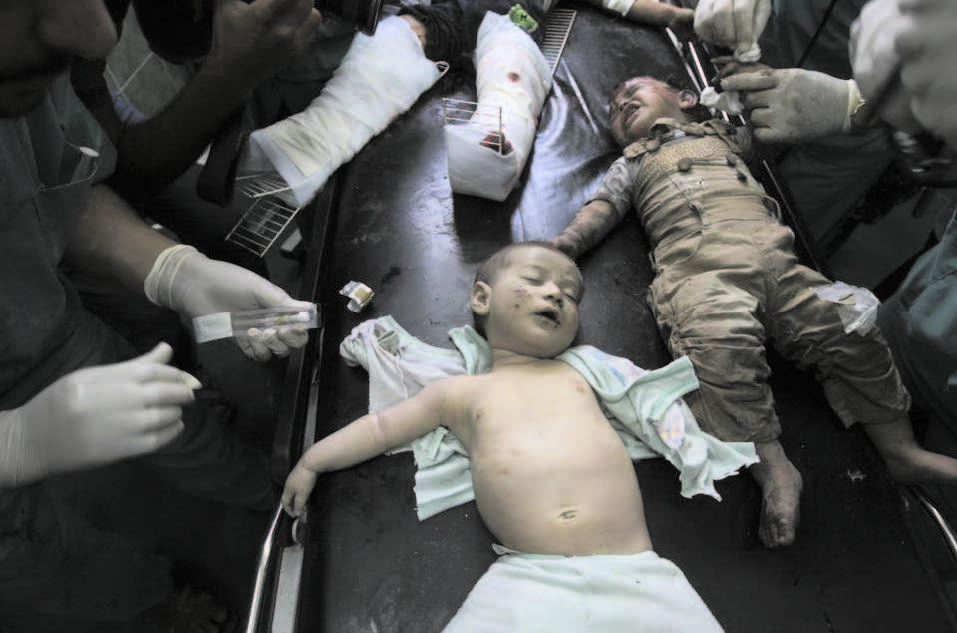
    “You must remember,” Gosling says, “how enraged people were with the Israeli attacks on Gaza this year. People in Pakistan were furious at the casualty toll – more than 2,000 people, many of them children.” Needless to say, the phrase “massacre of the innocents” was not used about those children.

    Eight deadly years

    2014

    2 NOVEMBER: Taliban suicide bomber kills 60 people in an attack on a paramilitary checkpoint close to the Wagah border crossing with India.

    8 JUNE: A suicide bomber in the country’s south-west killed at least 23 Shia pilgrims returning from Iran.

    2013

    22 SEPTEMBER: Twin suicide bomb blasts in a Peshawar church kill at least 85 people.

    3 MARCH: Explosion in Karachi kills 45 Shia outside a mosque.

    10 JANUARY: Bombing in Shia area of Quetta kills 81 people.

    2012

    22 NOVEMBER: A Taliban suicide bomber struck a Shia procession in the city of Rawalpindi, killing 23.

    5 JANUARY: Taliban fighters kill 15 Pakistani frontier police after holding them hostage for more than a year.

    2011

    20 SEPTEMBER: Militants kill at least 26 Shia on a bus near Quetta.

    13 MAY: A pair of Taliban suicide bombers attack paramilitary police recruits in Shabqadar, killing 80, in retaliation for Osama bin Laden’s killing.

    2010

    5 NOVEMBER: A suicide bomber strikes a Sunni mosque in Darra Adam Khel, killing at least 67 during Friday prayers.

    1 SEPTEMBER: A triple Taliban suicide attack on a Shia procession kills 65 in Quetta.

    9 JULY: Two suicide bombers kill 102 people in the Mohmand tribal region.

    2 JULY: Suicide bombers attack Pakistan’s most revered Sufi shrine in Lahore, killing 47 people.

    29 MAY: Two militant squads armed with hand grenades, suicide vests and assault rifles attack two mosques of the Ahmadi minority sect in Lahore, killing 97.

    1 JANUARY: A suicide bomber drives a truckload of explosives into a volleyball field in Lakki Marwat district, killing at least 97 people.

    2009

    28 DECEMBER: Bomb blast kills at least 44 at a Shia procession in Karachi.

    9 OCTOBER: A suicide car bomber hits a busy market area in Peshawar, killing 53.

    2008

    20 SEPTEMBER: A suicide bomber devastates the Marriott Hotel in Islamabad with a truck full of explosives, killing at least 54.

    2007

    27 DECEMBER: Former Prime Minister Benazir Bhutto and 20 other people are killed in a suicide bombing and shooting attack in Rawalpindi.

  • Islamic State militants release pictures of mass execution

    Islamic State militants release pictures of mass execution

    BAGHDAD (TIP): The Islamic State (IS) group on Monday, December 15, released pictures of the execution of 13 men described as anti-jihadist Sunni tribal fighters near the northern city of Tikrit.

    Three pictures published on a jihadist forum and pro-IS social media accounts show the execution of the men wearing orange jumpsuits.

    Local residents confirmed that a mass execution had taken place on a large roundabout four miles east of the city of Tikrit at around 3:30 pm (1230 GMT).

    The first picture shows 11 men kneeling, heads bowed, with one black-clad and masked gunman behind each one and black IS flags in the background.

    Residents said the roundabout is at an intersection for roads leading to Tikrit, Kirkuk and the town of Al-Alam.

    They said the men who were executed were members of an anti-IS group of Sunni tribal fighters known as the Knights of Al-Alam who were captured by jihadists in Tikrit and Al-Alam around 10 days earlier.

    The city of Tikrit has been under IS control since the beginning of the jihadists’ major offensive in Iraq six months ago.

    Iraqi government forces, backed by Shiite militia and in some areas by Sunni tribal fighters have inflicted a string of defeats on the jihadists in recent weeks.

  • ‘300 Chinese fighting for ISIS in Mideast’

    ‘300 Chinese fighting for ISIS in Mideast’

    BAGHDAD (TIP): About 300 Chinese people are fighting alongside the ISIS in Iraq and Syria, a Chinese state-run newspaper said on Monday, December 15, a rare tally that is likely to fuel worry in China that militants pose a threat to security. China has expressed concern about the rise of ISIS in the Middle East, nervous about the effect it could have on its Xinjiang region. But it has also shown no sign of wanting to join US efforts to use military force against the group.


    Chinese members of the East Turkestan Islamic Movement are traveling to Syria via Turkey to join the ISIS, the Global Times, a tabloid run by China’s ruling Communist Party’s official newspaper, the People’s Daily, said.

    “According to information from sources, including security officers from Iraq’s Kurdish region, Syria and Lebanon, around 300 Chinese extremists are fighting with IS in Iraq and Syria,” the Global Times reported.

    Chinese officials blame the ETIM for carrying out attacks in Xinjiang, home to the Muslim Uighur people. But the government has been vague about how many people from China are fighting in the Middle East.

    In July, China’s envoy to the Middle East, Wu Sike, cited media reports when he said about 100 Chinese citizens, most of them from the ETIM, were in the Middle East fighting or being trained.

    China says ETIM militants are also holed up along the ungoverned Afghan-Pakistani border and want to create a separate state in Xinjiang, though many foreign experts doubt the group’s cohesiveness.

    Instead, human rights advocates argue that economic marginalization of Uighurs and curbs on their culture and religion are main causes of ethnic violence in Xinjiang that has killed hundreds of people in the past two years.

    China has criticized the Turkish government for offering shelter to Uighur refugees who have fled China through Southeast Asia and said such a channel creates security risks.

  • US Secret Service too insular, needs outside leader, more agents: REVIEW

    US Secret Service too insular, needs outside leader, more agents: REVIEW

    WASHINGTON (TIP): The US Secret Service needs an outsider to overhaul the insular agency, beef up staffing and improve training — after building a higher fence around the White House, an independent review concluded on December 18.

    An executive summary of the highly classified review revealed deep problems at the top of the Secret Service, which is charged with guarding the US president and other senior government officials.

    “The panel heard one common critique from those inside and outside the Service: The Service is too insular,” the published summary said.

    Homeland security secretary Jeh Johnson appointed a four-member independent panel in October after a Sept. 19 intrusion by an Iraq war veteran who scaled the White House fence, sprinted across the lawn and got deep inside the mansion before an off-duty agent stopped him.

    That incident prompted the panel’s first recommendation: build a better fence “as soon as possible.” It recommended one that is at least 4 or 5 feet (120 or 150cm) higher and curves outward at the top to give agents more time to assess the risk of a jumper.

    But the agency’s problems, it noted,”go deeper than a new fence can fix.”

    A director not tied to agency traditions and personal relationships will be better equipped to do an honest reassessment and encourage a culture of accountability.

    The last Secret Service director, Julia Pierson, was a 30-year veteran who was tasked with cleaning up the agency’s culture after a 2012 presidential trip to Colombia in which up to a dozen agents were found to have hired prostitutes.

    Pierson resigned under fierce criticism on Oct 1, less than two weeks after the Sept. 19 White House intrusion. That fence jumper breach came a day after the disclosure that an armed private security contractor rode on an elevator with Obama in Atlanta in a breach of protocol earlier in September.

    The security lapses, along with a 2011 incident in which seven gunshots were fired at the White House, had raised concerns across Washington that Obama was not as well protected as he should be in an age of global tumult.

  • Political shadow boxing, threat & reality

    Political shadow boxing, threat & reality

    “The American invasion of Iraq cost the lives of millions of children. Whatever the changing definitions of terror, it is children that are so often the forgotten victims of conflict – regardless of the perpetrator”, says the author.

    Well, heaven preserve us: the most useless “peacemaker” on earth has just used an Arabic acronym for the greatest threat to civilisation since the last greatest threat. Yup, ol’ John Kerry called it “Daesh”, which is what the Arabs call it. It stands for the “Islamic State in Iraq and the Levant”. We prefer Isis or Isil or the Islamic State or Islamic Caliphate. Most journos prefer Isis because – I suspect – it’s easier to remember. It’s the name of an Egyptian goddess, after all.

    It’s the name of a university city’s river. Many an American scribe has questioned why Kerry should be using this goddam Arabic lingo – although we use Fatah for the PLO. It, too, is an acronym which, translated, means “the Party for Palestinian Liberation”. And in 2011, we called Tahrir Square in Cairo “Tahrir”, only occasionally reminding readers and viewers that it, too, meant “liberation”. None explained why the place was important: because this was the square mile of Cairo in which was based the largest British barracks and into which the Brits – during their much-loved occupation of Egypt – refused to allow any Egyptian to walk without permission. That’s why it was called Tahrir – liberation – when the Brits left.

    That’s why Hosni Mubarak’s attempt to prevent the protesters entering the square in 2011 placed him firmly in the shadow of Egypt’s former colonial masters. But why do we care what the great leaders of the West (or the East for that matter) actually say, when we all know it’s the kind of material that comes out of the rear end of a bull? Let me give you an example from Canada. Two years ago, the country’s Foreign Affairs Minister, John Baird, closed Canada’s embassy in Tehran because he feared his diplomats might be harmed. “Canada views the government of Iran as the most significant threat to global peace and security in the world today,” he quoth then – although CBC broadcasters have dug up a Foreign Ministry report which reported the biggest threat to the Tehran embassy was an geophysical earthquake.

    Since then, as the Toronto Star’s pesky columnist Thomas Walkom has pointed out, the Canadian Prime Minister Stephen Harper – whose pro-Israeli policies might earn him a seat in the Israeli Knesset -has discovered more threats. Russia under Vladimir Putin, Harper says, “represents a significant threat to the peace and security of the world”. The aforesaid Baird, taking his cue, no doubt from our own beloved Prince Charles, compared Putin’s Russia to Hitler’s Third Reich. More recently, Canada’s defence minister, Rob Nicholson, described the men of Isis (or Isil, or the Islamic State, or the Islamic Caliphate, or Daesh) as “a real and growing threat to civilisation itself”.

    The war against Isis/ Isil/ IS/ IC/ Daesh, he informed the people of Abu Dhabi, was “the greatest struggle of our generation”. Well, blow me down.Wasn’t Iran the greatest threat, ever since 1979? Wasn’t Abu Nidal, the Palestinian gun-for-hire? Wasn’t that British prime minister chappie, with the habit of saying “absolutely” and “completely” over and over again, convinced that Saddam was the greatest threat to our civilisation or generation, what with all his WMDs and links to Al-Qaida and tubes from Niger, and so on? For that matter, wasn’t Osama bin Laden’s Al-Qaida – the very bunch which morphed into Isis/ Isil/ IS/ IC/ Daesh in Iraq – the greatest threat to our civilisation/generation? Yet now, when the Iranian air force has joined the battle against Isis/ Isil/ IS/ IC/ Daesh alongside the US, Britain, Canada, Australia, old Uncle Tom Cobley and all, Kerry, in “Daesh” mode, tells us that the Iranian military action in Iraq (in any other circumstances, a ruthless assault on Iraq’s sovereignty) is “positive”. And Kerry, remember, was the fellow who told us last year that America was going to attack the regime of Bashar al-Assad, the greatest enemy of Isis/ Isil/ IS/ IC /Daesh – whom Obama reprieved in favour of bashing Isis/ Isil/ IS/ IC/ Daesh itself – with its ally Iran described by Canada’s Baird only two years ago as “the most significant threat to global peace and security in the world”.

    But what the hell … Don’t we live in a world where Save the Children (American branch only, you understand) gave an award to the same former British prime minister quoted above? Having given a prize to the man who encouraged George W Bush to embark on an Iraqi invasion which cost the lives of tens of thousands of children, surely this fine charity (again, the American branch only) must reinvent and re-name itself “Abandon the Children”. And by the way, one of the ex-PM’s supporters blandly told Channel 4 not long ago that our British “peace envoy” had travelled to the Middle East more than 160 times.Which means, doesn’t it, that our Middle East envoy had left his station in the Middle East more than 160 times! But again, what is a child’s life worth? In 2002, a Israeli missile attack on a Gaza apartment block killed a Palestinian militants but also 14 civilians, including several children.

    The Bush administration, draw in your breath here, folks, and grit your teeth, said that this “heavy-handed action” did not “contribute to peace”. Wow, now that was telling them. Killing kids is a bit heavy-handed, isn’t it? And I can see what the Bush lads and lassies meant when they said that eviscerating, crushing and tearing to bits a bunch of children didn’t really, well, “contribute” towards peace. It’s important, you see, to realise who our enemies are. Muslims, Iranians, Iraqis, Syrians, Russians, you name it. Not Israel, of course. Nor Americans. Think generational. Think civilisation. Think the most significant threat to global peace. Daesh. Isn’t that the name?

    (The author is an English writer and journalist from Maidstone, Kent. He has been Middle East correspondent of The Independent for more than twenty years, primarily based in Beirut) British English. (Source: The Independent)

  • 423 criminals from India living in Britain

    423 criminals from India living in Britain

    LONDON ()TIP): Around 423 criminals from India are presently living in Britain. Data revealed by Britain’s National Audit Office has shown that as of March 2014, 10,650 criminals from overseas have been living in UK. Shockingly, between January 2009 and March 2014, 151 foreign national offenders (FNOs) left prison without being considered for deportation. One in six FNOs in the community – 760 convicted criminals – had absconded with 400 of them had been missing since before 2010.

    Around 58 of them have been classed as “high harm” individuals including rapists, murderers and pedophiles. Poland dominated the list of top 10 nationalities of foreign offenders living in UK – 898 followed by Ireland 778, Jamaica 711, Romania 588, Pakistan 522, Lithuania 518 and Nigeria 468. India stands next with the number of offenders living in UK increasing from 402 to 423 between 2013 and 2014. Figures from the Home Office show that there are more than 700 murderers and 500 rapists among nearly 12,000 foreign offenders in UK. The full list, entitled the Foreign National Offender Caseload include 775 murderers, 587 rapists, 155 child rapists and 15 convicted terrorists.

    Also in the category of most serious offences are 99 other killers convicted of manslaughter and 228 paedophiles. The list also includes 88 criminals found guilty of attempted murder, 1,022 of serious violent assaults, 497 burglars, and 43 arsonists. NAO said “Removing FNOs from the UK continues to be inherently difficult and public bodies involved have been hampered in their efforts by a range of barriers, although poor administration has still played a part. The number and speed of removals can be restricted by law – typically the European Convention on Human Rights and EU law on the free movement of persons.” “Until recently, FNOs had 17 grounds for appeal that could delay removal.

    Administrative factors also form barriers with some FNOs exploiting legal and medical obstacles to removal. Many overseas countries are unwilling to receive FNOs back home. However, lack of joint working and administration errors have often led to missed opportunities for removal.” Just over half of the 2,710 persons arrested for terrorism-related offences since September 11, 2001 self-declared their nationality as British or of British dual nationality (1,420, or 52%). Of the remaining persons arrested and excluding those who declared a dual nationality, the most frequently selfdeclared nationalities were: Algeria (156 persons), Pakistan (135), Iraq (117), Afghanistan (75), Iran (63), India (59), Turkey (50) and Somalia (49). The most frequent principal offences for persons convicted since September 11, 2001 under terrorism legislation were preparation for terrorist acts (25% of persons convicted), collection of information useful for an act of terrorism (16%) and failing to comply with duty at a port or border controls (12%).

    In recent years the proportion of persons arrested who self-defined as either British or British dual nationality has been higher than the proportion since September 11, 2001. Of the 239 persons arrested for terrorismrelated offences in the year ending June 30, 2014, 181 (76%) self-defined as either British or British dual nationality.

  • 2 car bomb attacks kill 18 people in Iraq

    2 car bomb attacks kill 18 people in Iraq

    BAGHDAD (TIP): Two separate car bomb attacks at a group of restaurants and a market on Thursday killed 18 people in Baghdad, said Iraqi officials. Police officials said the first attack targeted a line of small restaurants in the Shiite district of Sadr City Thursday night, killing 11 people and wounding 25 others. Minutes later, a second car bomb blast near an outdoor market in the same district killed seven people and wounded 21 others. Several cars were either burnt or damaged due to both attacks. Medical officials confirmed the casualties. All officials spoke on condition of anonymity because they were not authorized to brief the media. Iraq sees near-daily bombings and other attacks mainly targeting Shiite neighborhoods and security forces. The attacks are often claimed by the Sunni extremist Islamic State group which seized much of northern and western Iraq in a summer offensive.

  • Pope Francis pleads for dialogue to end extremism on Turkey visit

    Pope Francis pleads for dialogue to end extremism on Turkey visit

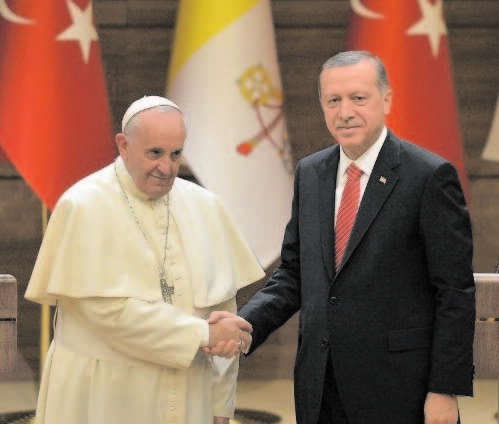
    ANKARA (TIP): Pope Francis on November 28 called for dialogue between faiths to end the Islamist extremism plaguing the Middle East as he visited Turkey on his first trip to the overwhelmingly Muslim but officially secular state. Turkish President Recep Tayyip Erdogan, who welcomed Pope Francis as the first foreign dignitary to his controversial new presidential palace outside Ankara, for his part issued a strong warning about rising Islamophobia in the world.

    The visit of the pope is seen as a crucial test of Francis’s ability to build bridges between faiths amid the rampage by Islamic State (IS) jihadists in Iraq and Syria and concerns over the persecution of Christian minorities in the Middle East. “Inter-religious and inter-cultural dialogue can make an important contribution… so that there will be an end to all forms of fundamentalism and terrorism,” the leader of the world’s Roman Catholics said after talks with Erdogan. He said the world “could not remain indifferent” to the causes of the tragedies in the Middle East and appeared to indicate military action could be permitted with the proper legal backing.

    While an “unjust aggressor” could be thwarted, the problem cannot be resolved solely through a military response, Francis said. Speaking in an overwhelmingly Muslim country which has a tiny but culturally significant Christian minority, the pope pointedly said all faiths should share the same rights. “It is essential that all citizens — Muslim, Jewish and Christian — both in the provision and practice of the law, enjoy the same rights and respect the same duties.”

    Turkey’s own Christian community is tiny — just 80,000 in a country of some 75 million Muslims — but also extremely mixed, consisting of Armenians, Greek Orthodox, Franco-Levantines, Syriac Orthodox and Chaldeans. Erdogan — long been accused by opponents of seeking to erode Turkey’s secular foundations with creeping Islamisation — chose the occasion to make a characteristically strong-worded warning against growing Islamophobia in the world. “Islamophobia is rising seriously and rapidly.

    We must work together against the threats weighing on our planet – – intolerance, racism and discrimination,” said Erdogan. He angrily accused the international community of “simply being spectators” in the face of the “state terror” of the regime of Syrian President Bashar al-Assad and Israel’s bombardment of Gaza earlier this year. “There is a double standard and an injustice,” he said. Turkey’s top cleric Mehmet Gormez went even further in comments after his meeting with the pope, expressing concern that Islamophobic “paranoia that has already been spread among Western public opinion” was being used as a pretext for discrimination against Muslims.

  • War in Iraq ‘different’ this time: US MILITARY CHIEF

    War in Iraq ‘different’ this time: US MILITARY CHIEF

    WASHINGTON (TIP): US military action in Iraq has a better chance of success than the last war there because American troops are playing a supporting role to local forces from the start, top officer General Martin Dempsey has said. The chairman of the Joint Chiefs of Staff also voiced cautious optimism yesterday that Iraqi forces were gaining strength and predicted they would make progress on the battlefield in the coming months against the Islamic State group. Asked at a Washington conference why Americans should expect the latest US intervention in Iraq to go better this time, Dempsey said “we think we’re taking a different approach.” “Instead of grabbing a hold of it, owning it and then gradually transitioning it back, we’re telling them from the start, look, that is about you, this has to be your campaign plan,” the general said at a conference organised by the Defence One website.

    As an example, Dempsey cited an episode that played out during his recent visit to Iraq over the weekend. The Iraqi army asked for US assistance to parachute supplies to about 1,300 Kurdish forces on Mount Sinjar in the country’s north, he said. But the American commander in Baghdad pointed out that the Iraqis had a C-130J cargo plane and trained pilots that were capable of carrying out the mission. “As this unwound, what the commander on the ground … said was, ‘We’ll provide you with the expertise for what you don’t have, but you have what you need to accomplish this mission,’” Dempsey said. “And so the only thing we provided at that point was the expertise to actually rig the parachute extraction system that would do the air drop.”

    The outcome reflected the difference in the US approach compared to the 2003 US invasion and the occupation that followed, he said. “So they do what they can do, and we fill in the gaps and continue to build their capability,” said Dempsey, who led troops in Iraq in the previous conflict. President Barack Obama has ruled out a large US ground force in Iraq but has backed air raids against the IS group and sent in hundreds of military advisers to help Iraqi forces. US-trained Iraqi army units suffered humiliating defeats earlier this year when they were overrun by Islamic State jihadists in the west and north, but Dempsey said Baghdad’s forces had been shored up and new commanders were being named.

  • US internal review cites secret service failures in White House intrusion

    US internal review cites secret service failures in White House intrusion

    WASHINGTON (TIP): An intruder was able to scale the White House fence and enter the executive mansion in September because of major secret service failures including an agent who was distracted by a personal cellphone call, according to an internal review released on Thursday. Iraq war veteran Omar Gonzalez, 42, is accused of breaking into the heavily guarded complex on Sept 19 armed with a knife in one of the most significant security breaches since President Barack Obama took office in 2009.

    The suspect was not stopped until he entered the main floor of the White House. In addition to the knife he was carrying, officers found more weapons in his car. The incident helped spur the resignation of Secret Service Director Julia Pierson. According to the review by the US department of homeland security, the suspect climbed over the 7-foot (2- metre) fence where a “trident,” or ornamental spike was missing. Several uniformed secret service agents were stationed in the area but were unable to see the intruder because of a construction project along the fence line, the report said, which also cited breakdowns in radio communications.

    A canine officer stationed on the White House driveway with a guard dog was on his personal cellphone at the time of the intrusion and was not wearing his earpiece, the review said. After spotting the intruder, the officer moved toward him and gave the dog the command to apprehend the suspect. But the canine “did not have enough time to lock onto” the intruder and “may not have seen him at all,” according to the report’s executive summary.

    “This report indicates that the Secret Service’s response at the White House was significantly hampered on September 19th because of critical and major failures in communications, confusion about operational protocols and gaps in staffing and training,” the review said. “While some of these problems can be attributed to a lack of resources, others are systemic and indicative of secret service culture.” Michael McCaul, who chairs the US House of Representatives homeland security committee, introduced legislation on Thursday to form a panel “to conduct a top-to-bottom review” of the Secret Service. House judiciary committee chairman Bob Goodlatte said the review “reads as a comedy of errors by the U.S. Secret Service and confirms that fundamental reform is needed to improve both the security of the White House grounds and staff training.”

  • Iraq needs 80,000 good troops to retake lost territory: US general

    Iraq needs 80,000 good troops to retake lost territory: US general

    WASHINGTON (TIP): Iraq will need about 80,000 effective military troops to retake the terrain it lost to Islamic State militants and restore its border with Syria, the top US general said on November 13. “We’re going to need about 80,000 competent Iraqi security forces to recapture territory lost, and eventually the city of Mosul, to restore the border,” Army General Martin Dempsey, the chairman of the Joint Chiefs of staff, told a congressional hearing. Dempsey said the request for more US forces in Iraq would create centers to help train the additional troops needed.