TAMPA, FLA (TIP):
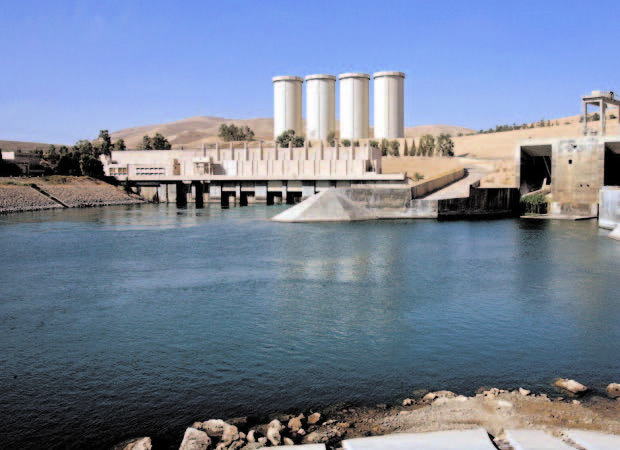
The U.S. military conducted, August 12 night, a sixth airdrop of food and water for thousands of Iraqi citizens threatened by the Islamic State of Iraq and the Levant (ISIL) on Mount Sinjar, Iraq, a press release issued by the State Department. This airdrop was conducted from multiple airbases within the U.S. Central Command area of responsibility and included two C-17 and two C-130 cargo aircraft that together dropped a total of 108 bundles of supplies. U.S. fighter aircraft in the area supported the mission.
The two C-17s dropped 80 container delivery system bundles of fresh drinking water totaling 7,608 gallons. In addition, the two C-130s dropped 28 bundles totaling 14,112 meals ready to eat. To date, in coordination with the government of Iraq, U.S. military aircraft have delivered nearly 100,000 meals and more than 27,000 gallons of fresh drinking water, providing muchneeded aid to the displaced Yazidis, who urgently require emergency assistance.
The United States military will continue to work with the Department of State, the U.S. Agency for International Development, as well as international partners including the Government of Iraq, the United Nations, and non-government organizations to assess the need for additional humanitarian operations in Iraq going forward.
Tag: Iraq
-

Humanitarian Assistance Operations Near Sinjar, Iraq continue
-

PENTAGON CONFIRMS US GENERAL KILLED IN KABUL ATTACK
WASHINGTON: The Pentagon on Tuesday confirmed that a US general was killed in an attack in Afghanistan — the highest-ranking American fatality since the 9/11 attacks. The US defence department also identified the assailant, who was wearing a uniform, as an Afghan soldier and said that he was killed after he opened fire on coalition forces, his supposed allies.
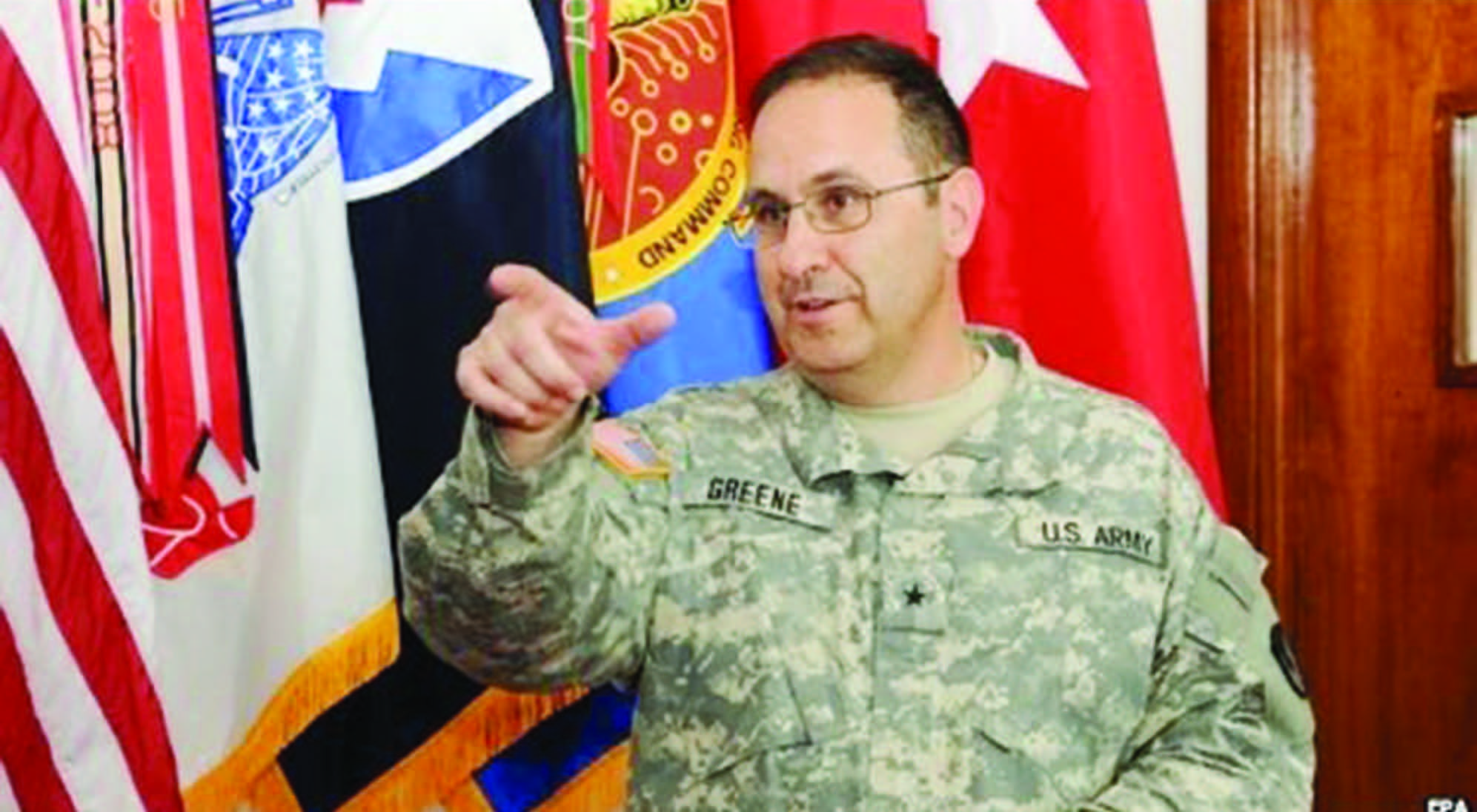
“I can … confirm among the casualties was an American general officer who was killed,” Pentagon spokesman, Rear Admiral John Kirby, told reporters. Kirby said that he would not give the general’s name pending notification of next of kin. The Washington Post identified the deceased as Major General Harold J Greene, who served as the deputy for systems acquisitions at the US army headquarters. Greene’s official biography said that the New York State native held a doctorate in materials science from the University of Southern California as well as three master’s degrees.
The general was the highest-ranking US officer killed since the September 11, 2001 attacks when Lieutenant General Timothy Joseph Maude was killed by a hijacked airliner that crashed into the Pentagon. No US general has been killed in combat since the Vietnam War, with topranking service members spared during the Iraq war and, until now, the Afghanistan conflict. President Barack Obama plans to withdraw most troops from Afghanistan later this year.
A US official, speaking to AFP on condition of anonymity, said that around 15 people were injured including eight Americans. The nationalities of the other victims were unclear, but the German army said that one of its generals was wounded and the US official said that the injured included Afghans. The Pentagon spokesman said that the assailant was killed, although he did not have more detail on how the incident unfolded. “We believe that the assailant was an Afghan soldier,” Kirby said.
Kirby said it was too early to assess whether US forces needed to improve vetting of Afghan troops. But he described the attack as an isolated incident and credited Afghan troops for their work in securing national elections. “I’ve seen no indication there’s a degradation of trust between coalition members and their Afghan counterparts,” Kirby said.
“It’s impossible to eliminate, — completely eliminate — that threat, I think, particularly in a place like Afghanistan, but you can work hard to mitigate it,” Kirby said of insider attacks. “As terrible as today is — and it is a terrible day, a terrible tragedy — we haven’t seen in the course of the last year or so… a ‘spate’ of these insider threat attacks. I think that’s testament to the good work authorities have done,” he said in response to a question. -

Killing of American general stirs new fears
WASHINGTON (TIP): The brazen killing of an American two-star general in an Afghan “insider attack” is raising new concerns in Washington that U.S. forces, when the combat mission ends in December, could leave behind a country vulnerable to extremists waiting in the wings.
Leading Republican lawmakers, who have long accused the administration of following a political timetable in Afghanistan and worry the country could follow in the path of unstable Iraq, pointed to the attack as another sign that militants are sending a message to the Afghan population. “The Taliban’s recent campaign of high-profile attacks is calculated to accompany a global PR strategy highlighting the fact that U.S. and coalition forces will soon be leaving Afghanistan and abandoning its weak and ineffective government.
The Taliban wants everyone to know it will soon dominate all aspects of life in Afghanistan once again,” House Speaker John Boehner said in a statement. “I have told the president privately and publicly that my biggest concern is that America will end its mission in Afghanistan just short of the goal line. … So let me reiterate: if the president decides to re-think his strategy, including withdrawals, deadlines, and policy restraints, particularly on certain associated terrorist networks, he will have my support.”
According to the administration’s latest timetable, announced in May, the U.S. combat mission will end in December of this year. Under the tentative plan, 9,800 U.S. troops will remain at the start of 2015, but that number will be cut in half by the end of next year. By the end of 2016, the U.S. is expected to maintain a “normal embassy presence” like it does in Iraq. The plan is subject to change, particularly if Afghanistan’s next president does not sign a vital security pact.
Hamid Karzai would not sign the agreement — while the next president is expected to, that election remains contested as candidates Abdullah Abdullah and Ashraf Ghani battle over allegations of fraud and await a vote audit. House Armed Services Committee Chairman Buck McKeon, R-Calif., after the shooting on Tuesday, said “the event only underscores the importance of leaving Afghanistan when the job is finished — rather than stubbornly adhering to arbitrary political deadlines.” Sen. Jim Inhofe, R-Okla., top Republican on the Senate Armed Services Committee, said the incident is a reminder that “force protection” remains a critical mission.
“As the president withdraws our forces, it is critically important that we listen to our commanders on the ground to determine what is necessary to safely and effectively accomplish our mission in Afghanistan,” he said in a statement. The investigation into the killing of Maj. Gen. Harold J. Greene, the highestranked U.S. officer to be slain in combat since 1970 in the Vietnam War, continued Wednesday , August 6 without any clear answers into why a man dressed in an Afghan army uniform opened fire.
The shooting wounded about 15 people, including a German general and two Afghan generals. Greene, a 34-year U.S. Army veteran, was the highest-ranked American officer killed in combat in the wars in both Afghanistan and Iraq. About half of the wounded in Tuesday’s attack at Marshal Fahim National Defense University were Americans, several of them reported to be in serious condition.
At the White House on Tuesday, August 5 Press Secretary Josh Earnest called the shooting a “painful reminder of the service and sacrifice that our men and women in uniform make every day for this country.” But he maintained that coalition forces have “made tremendous progress in disrupting, dismantling and defeating Al Qaida operations and leadership in Afghanistan.” He also cited “progress in winding down U.S. involvement in that conflict.” -

US Vice President Joe Biden praises Japan’s new military policy
WASHINGTON (TIP):
US Vice President Joe Biden is welcoming Japan’s decision to loosen restrictions on its military to allow greater use of force to defend other countries. Biden spoke to Japanese Prime Minister Shinzo Abe on Thursday.
The White House says the two agreed that Japan’s policy will strengthen US-Japanese ties and help Japan contribute more to regional peace and security. Japan’s move has drawn criticism from rival China as Beijing increases its own military posture.
The White House says Biden also praised Japan’s sanctions on Russia. The US and Europe are sanctioning Russia over its actions in Ukraine. Japan is part of the Group of Seven nations seeking to pressure Moscow. The two leaders also discussed the nuclear threats from North Korea and Iran, plus conflicts in Iraq and Syria. -

UNITED STATES HAS A STAKE IN INDIA’S SUCCESS
It is my hope that Prime Minister Modi and his government will recognize how a deeper strategic partnership with the US serves India’s national interests, especially in light of current economic and geopolitical challenges”, says the author.
Iwant Prime Minister Modi to succeed because I want India to succeed. It is no secret that the past few years have been challenging ones for India – political gridlock, a flagging economy, financial difficulties, and more. It is not my place or that of any other American to tell India how to realize its full potential.That is for the Indians to decide. Our concern is simply that India does realize its full potential, for the United States has a stake in India’s success. It is also no secret that India and the US have not been reaching our full potential as strategic partners over the past few years, and there is plenty of blame to be shared on both sides. Too often recently we have slipped back into a transactional relationship.
We need to lift our sights again. The real reason India and the US have resolved to develop the strategic partnership is because each country has determined independently that doing so is in its national interests. It is because we have been guided by our national interests that the progress of our partnership has consistently enjoyed bipartisan support in the US and in India.
When it comes to the national interests of the US, the logic of a strategic partnership with India is powerful. India will soon become the world’s most populous nation. It has a young, increasingly skilled workforce that can lead India to become one of the world’s largest economies.
It is a nuclear power and possesses the world’s second largest military. It shares strategic interests with us on issues as diverse and vital as defeating terrorism and extremism, strengthening a rules-based international order in Asia, securing global energy supplies, and sustaining global economic growth. We also share common values. It is because of these shared values we are confident that India’s continued rise as a democratic great power will be peaceful and thus can advance critical US national interests.
That is why, contrary to the old dictates of realpolitik, we seek not to limit India’s rise but to bolster and catalyze it – economically, geopolitically, and, yes, militarily. It is my hope that Prime Minister Modi and his government will recognize how a deeper strategic partnership with the US serves India’s national interests, especially in light of current economic and geopolitical challenges.
For example, a top priority for India is the modernization of its armed forces. This is an area where US defense capabilities, technologies, and cooperation can benefit India enormously. Similarly, greater bilateral trade and investment can be a key driver of economic growth in India. Put simply, I see three strategic interests that India and the US clearly share, and these should be the priorities of a reinvigorated partnership. First, to shape the development of South Asia as a region of sovereign democratic states that contribute to one another’s security and prosperity; second, to create a preponderance of power in the Asia-Pacific region that favors free societies, free markets, free trade, and free comments; and, finally, to strengthen a liberal international order and an open global economy.
It is important for US leaders to reach out personally to Prime Minister Modi, especially in light of recent history. That is largely why I am traveling to India, and that is why I am pleased President Obama invited the prime minister to visit Washington. When the prime minister comes to Washington, I urge our congressional leaders to invite him to address a joint session of Congress.
Yet we must be clear-eyed about those issues that could weaken our strategic partnership. One is Afghanistan. Before it was a safe haven for the terrorists who attacked America on September 11, 2001, Afghanistan was a base of terrorists that targeted India. Our Indian friends remember this well, even if we do not. For this reason I am deeply concerned about the consequences of the president’s plan to pull all of our troops out of Afghanistan by 2016.
If Afghanistan goes the way of Iraq in the absence of US forces, it would leave India with a clear and present danger on its periphery. It would constrain India’s rise and its ability to devote resources and attention to shared foreign policy challenges elsewhere. It would erode India’s perception of the credibility and capability of US power and America’s reliability as a strategic partner.
The bottom line here is clear: India and the US have a shared interest in working together to end the scourge of extremism and terrorism that threatens stability, freedom, and prosperity across South Asia and beyond.
I hope the president will be open to reevaluating and revising his withdrawal plan in light of conditions on the ground. Another hurdle on which our partnership could stumble is our resolve to see it through amid domestic political concerns and shortterm priorities.
If India and the US are to build a truly strategic partnership, we must each commit to it and defend it in equal measure. We must each build the public support needed to sustain our strategic priorities, and we must resist the domestic forces in each of our countries that would turn our strategic relationship into a transactional one.
If the 21st century is defined more by peace than war, more by prosperity than misery, and more by freedom than tyranny, I believe future historians will look back and point to the fact that a strategic partnership was consummated between the world’s two preeminent democratic powers: India and the United States. If we keep this vision of our relationship always uppermost in our minds, there is no dispute we cannot resolve, no investment in each other’s success we cannot make, and nothing we cannot accomplish together. -

Kerry arrives in Afghanistan to meet candidates
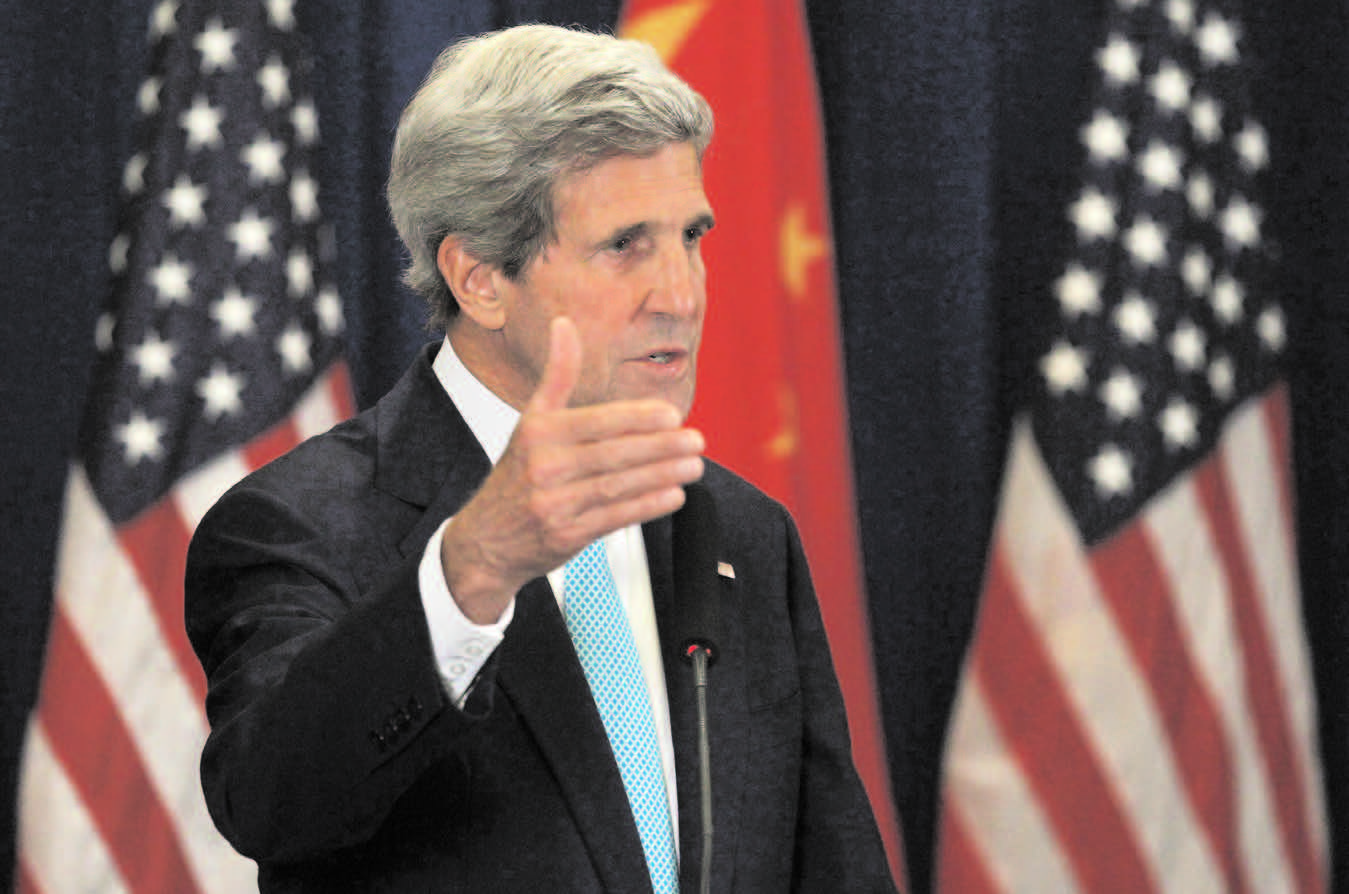
KABUL, AFGHANISTAN (TIP): The US and its allies are growing increasingly concerned as Afghanistan shows signs of unraveling in its first democratic transfer of power from President Hamid Karzai. With Iraq wracked by insurgency, Afghanistan’s dispute over election results poses a new challenge to President Barack Obama’s effort to leave behind two secure states while ending America’s long wars. US Secretary of State John Kerry made a hastily arranged visit to Afghanistan on Friday to help resolve the election crisis, which is sowing chaos in a country that the US has spent hundreds of billions of dollars and lost more than 2,000 lives trying to stabilize. He was to meet with the two candidates claiming victory in last month’s presidential election runoff. “I’ve been in touch with both candidates several times as well as President (Hamid) Karzai,” Kerry said before leaving Beijing, where he attended a US-China economic meeting.
He called on them to “show critical statesmanship and leadership at a time when Afghanistan obviously needs it.” “This is a critical moment for the transition, which is essential to future governance of the country and the capacity of the (US and its allies) to be able to continue to be supportive and be able to carry out the mission which so many have sacrificed so much to achieve.” With Iraq wracked by insurgency, Afghanistan’s power dispute over the election results is posing a new challenge to President Barack Obama’s 5 1/2-year effort to leave behind two secure nations while ending America’s long wars in the Muslim world. Obama wants to pull out all but about 10,000 US troops from Afghanistan by the end of the year, and the election of a new Afghan president was supposed to enshrine the progress the nation has made since the US-led invasion after the 9/11 terrorist attacks.
The preliminary results of the presidential election runoff suggested a massive turnaround in favor of former Finance Minister Ashraf Ghani Ahmadzai, a onetime World Bank economist who lagged significantly behind former Foreign Minister Abdullah Abdullah in first-round voting. Abdullah, a top leader of the Northern Alliance that battled the Taliban before the American-led invasion, claims the runoff was a fraud, and his supporters have spoken of establishing a “parallel government,” raising the specter of the Afghan state collapsing. Abdullah was runner-up to Karzai in a fraud-riddled 2009 presidential vote before he pulled out of that runoff.
Chief electoral officer Zia ul-Haq Amarkhail has resigned, denying any involvement in fraud but saying he would step down for the national interest. Kerry will seek to persuade both candidates to hold off from rash action while the ballots are examined and political leaders are consulted across Afghanistan’s ethnic spectrum. The US wants to ensure that whoever wins will create a government that welcomes all ethnic factions. If neither candidate gains credibility as the rightful leader, the winner could be the Taliban.
Many Afghans fear the insurgent forces will only gain strength as the US military presence recedes. Internal instability could aid the insurgency. Abdullah and Ghani each have said that as president they’d sign a bilateral security agreement with the United States, granting American forces immunity from local prosecution. Without such an agreement, the Obama administration has said it would have to pull all US troops out of Afghanistan, a scenario that played out in Iraq three years ago. Karzai has refused to finalize the deal, leaving it to his successor. James Dobbins, the State Department’s special representative for Afghanistan and Pakistan, said this week some degree of fraud was expected, but it’s believed the fraud was “quite extensive.
” Speaking in Washington, Dobbins said the Abdullah campaign particularly mistrusts the impartiality of the Afghan electoral institutions. Both campaigns and Karzai have asked the Un for help, he noted, and the Un has been designing a plan for deciding how ballots can be reviewed and which ones would be reviewed for possible fraud. A Un audit, however rudimentary, probably could be done within two weeks, US officials believe. The focus would be on clear fraud indicators, including districts with high turnout or more women going to the ballots than men. -

MILITANTS TAKE IRAQI GASFIELD TOWN
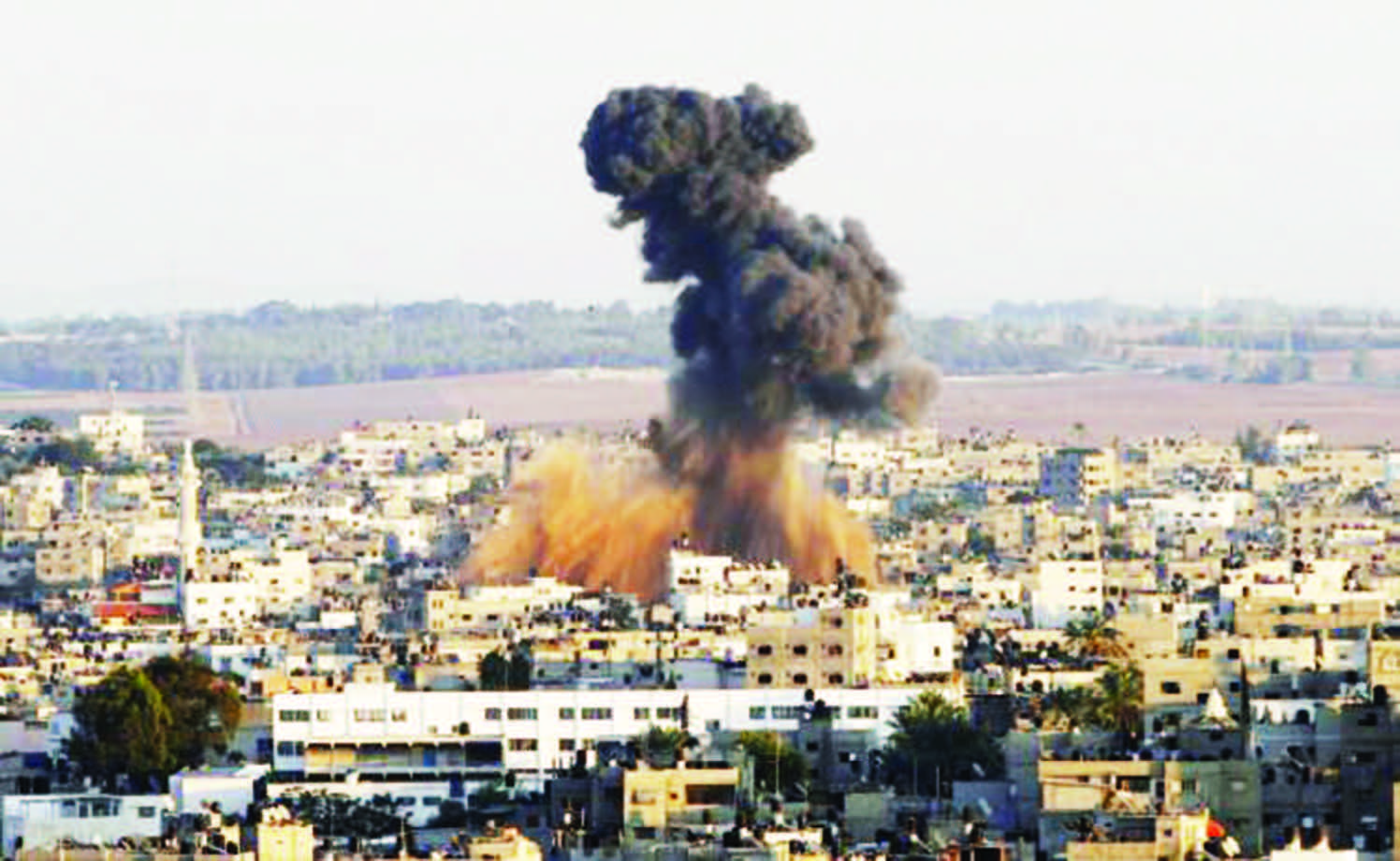
BAGHDAD (TIP): Militants took a town an hour from Baghdad that is home to four natural gasfields on June 26, another gain by Sunni insurgents who have swiftly taken large areas to the north and west of the Iraqi capital. Iraq’s presidency said a session of parliament would be held on July 1, the first step to forming a new government that the international community hopes will be inclusive enough to undermine the insurgency. The overnight offensive included Mansouriyat al-Jabal, home to the gas fields where foreign companies operate, security forces said.
The fighting threatens to rupture the country two and a half years after the end of US occupation. The insurgents, led by the hardline ISIS but also including other Sunni groups blame PM Nouri al-Maliki for marginalizing their sect during eight years in power and he is fighting for his job. Three months after elections, a chorus of Iraqi and international voices have called for the government formation process to be started, including Iraqi’s most influential Shia Grand Ayatollah Ali al-Sistani.
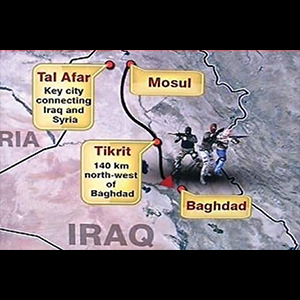
The presidency issued a decree on Thursday for a parliament session on July 1, state television said. Parliament will then have 30 days to name a president and 15 days after that to name a prime minister although the process has been delayed in the past, taking nine months to seat the government in 2010. Maliki has dismissed the call of mainly Sunni political and religious figures, some with links to armed groups fighting Maliki, for a “national salvation government” that would choose figures to lead the country and, in effect, bypass the election. Northern Iraq’s Mosul fell to Sunni insurgents on June 10 and took Tikrit city two days later.
Kurdish forces moved into Kirkuk on June 11 and now control the oil city. Sunni fighters want to form an Islamic Caliphate from the Mediterranean Sea to Iran. They control a border post with Syria and have stolen US-made weapons from Iraqi forces. Secretary of state John Kerry pressed Iraqi officials to form an “inclusive” government during a visit this week and urged leaders of the autonomous Kurdish region to stand with Baghdad against the onslaught.
The United Nations has said that more than 1,000 people, mainly civilians, have been killed during the Sunni insurgents’ advance in Iraq. The figure includes unarmed government troops machine gunned in mass graves by insurgents, as well as several reported incidents of prisoners killed in their cells by retreating government forces. In addition to the bloodshed, close to a million people have been displaced in Iraq this year. Amin Awad, director of Middle East and North Africa bureau for the UN refugee agency, called Iraq on June 25 “a land of displacement”.
-

White House sends $60 billion war-funding request to Congress
WASHINGTON (TIP): The White House sent Congress a 2015 war-funding request on Thursday of nearly $60 billion, a drop of $20 billion from the current fiscal year after President Barack Obama decided to withdraw all but 9,800 troops from Afghanistan by Dec 31. Obama, in a letter to the House of Representatives Speaker John Boehner, asked for $58.6 billion for the war in Afghanistan and other overseas military activity, the smallest Pentagon war-funding request in a decade.
In addition to funding the Afghanistan war, the request also seeks $500 million to support Syria’s moderate opposition, $1.5 billion to support stability in the countries bordering Syria that have been flooded with refugees and $140 million for non-operational training in Iraq. The administration request was about $20 billion less than the current fiscal year, which ends on Sept 30, and $20 billion less than the $79.4 billion place-holder figure in its budget submission to Congress in February.
The request to Boehner also included $1.4 billion in Overseas Contingency Operations funds for the state department, bringing its total request to $7.3 billion. The department had asked for $5.9 billion for overseas operations in its February budget. The Overseas Contingency Operations request on Thursday included $5 billion for a new Counterterrorism Partnership Fund and $1 billion for a European Reassurance Initiative. About $5 billion of the total would fall under the Pentagon’s budget and the remainder under the state department. The White House said the counterterrorism fund would be used to respond to emerging threats by “empowering and enabling our partners around the globe.”
About $2.5 billion would go to train and equip nations fighting terrorist groups that threaten the United States and its allies. The fund, for example, would cover the cost of sending US commandos to train troops in other countries. The administration proposed spending up to $140 million to provide assistance to Baghdad, including non-operational training to help Iraqi forces address shortfalls in intelligence gathering, air sovereignty, logistics, maintenance and combined arms operations. Senator Carl Levin, the Democratic chairman of the Senate Armed Services Committee, welcomed the funding request, saying the $500 million to support Syrian opposition members matched language supported by members of his panel.
-

US military advisers to be in and around Baghdad: OFFICIALS
WASHINGTON (TIP): The major focus of the initial tranche of US military advisers to be sent to Iraq would be in and around Baghdad, a senior official has said. He, however, did not rule out that they were being sent to other parts of the strife-torn country as well.
“The major focus of this initial tranche will be in and around Baghdad, but can’t rule out that they would be sent to higher headquarters at several other places,” the Obama Administration official said. Several teams of a dozen each would be sent to Iraq to assist the Iraqi forces against expanding influence of Islamic State in Iraq and the Levant (which is also translated as the Islamic State in Iraq and Syria or Islamic State in Iraq and al-Sham), the official said.
“We are going to start with several teams of a dozen each, .. the initial estimate would be in the several dozen in the initial tranche here that are going in to assess the situation. “Most of these teams will come from units that are already in the Central Command area of responsibility. They’re already in the region,” the official said, without announcing an exact date when they’ll get there.
President Barack Obama at the White House said, “we are prepared to send a small number of additional American military advisers – up to 300 – to assess how we can best train, advise and support Iraqi security forces going forward.” “American forces will not be returning to combat in Iraq, but will help Iraqis as they take the fight to terrorists who threaten the Iraqi people, the region and American interests as well,” he said.
The President, said another administration official, is focused on a number of potential contingencies that may demand US direct military action. “One of those is the threat from ISIL and the threat that that could pose not only to Iraq’s stability but to US personnel and to US interests more broadly, certainly including our homeland,” he said.
According to another senior official, the US currently has some military advisory personnel in Iraq based out of its embassy in Baghdad. “They have the protections that are necessary for them to be there, and we are confident that these additional forces would have the necessary protections and authorities to be there, particularly as Iraq has requested them,” the official said.
-

Agents promised jobs in Dubai, sent youths to Iraq
AMRITSAR (TIP): Most of the 40 Punjabi youths stuck in Iraq reached there allegedly through travel agents who with illegal recruitment syndicates operating from the Gulf countries trapped them using false promises of lucrative jobs for a hefty fee. Sources said unauthorized travel operators in various towns of Punjab are in touch with hiring agents of various construction companies in Iraq.
These agents lure youths by promising to get them jobs that offer monthly salaries in the range of $1000 to $1200 for which they are told to pay a fee of Rs 2-4 lakh to the travel agents. “There is hardly anyone willing to work in Iraq due to unrest so these agents send the boys to Dubai on tourist visas where they are ‘handled’ by the local agents,” a source said. These job-seeking youths are then made to stay in Dubai for a few days without any work. “When they get desperate to work and earn money, the agents tell them that due to some problems they couldn’t get the jobs in the promised companies in Dubai.
The hiring agents offer the hapless youngsters jobs in Iraq which are accepted by them. They are sent to Iraq from Dubai via Qatar and Kuwait,” a source said. “The youth from Punjab mostly travel illegally and without any documents, the agents also ensure crossing of borders to reach Iraq,” said Dubai-based businessmen S P S Oberoi who is the founder of NGO Sarbat Da Bhala Charitable Trust.
Sometimes these youths were illegally ‘transported’ to Iraq via the sea route as well, he added. Oberoi said the agents in India promise jobless youths they would be paid 1,200 dirham per month but they get even less than half of the promised salary in the construction companies in Iraq. He said his trust had opened offices in all districts of Punjab to save unemployed youth from falling into this trap.
“We ask such duped youths to give us their appointment letters or other documents given to them by the agents. Then our trust verifies the details so that the job aspirants are not cheated,” Oberoi said. He has offered to bear all expenses to bring the abducted Punjab youths back from Iraq.
-

China oil giants prepare Iraq evacuation plans: REPORT
BEIJING (TIP): Major Chinese oil firms have prepared evacuation plans in case spreading violence in Iraq — a key energy provider to the Asian giant — threatens their operations, state media reported June 19. China has more than 10,000 workers on a wide range of projects in the Middle Eastern country, officials say, although most are in the south, far from the current fighting.
Militants from the jihadist group the Islamic State of Iraq and the Levant (ISIL) have captured vast amounts of territory in a lightning offensive that is entering its second week. “As of today, most Chinese workers have gone to work as usual. But if insurgents begin to attack Baghdad, we will pull out of the country immediately,” an employee of Chinese state-owned energy giant China National Offshore Oil Corp. (CNOOC) told the Global Times newspaper. Resources are a key interest for China, the world’s second-largest economy, and Iraq is its fifth-largest source of crude oil imports, while China is the largest foreign investor in Iraq’s oil sector.
Production at the four oil fields of PetroChina, the listed arm of China’s largest oil producer China National Petroleum Corp (CNPC), has not been affected, a company representative told the paper. All of them are in central or southern Iraq, but the representative added: “Some Chinese nationals in the north were evacuated. We have prepared some contingency plans.” The Global Times also reported that more than 1,000 Chinese employees of state-run firm China Machinery Engineering Corp were “stranded” in the northern Iraqi city of Samarra, although a company representative disputed the description.
In recent days, some Western embassies have begun withdrawing staff from Baghdad, and on Tuesday Turkey said that it had evacuated its consulate in the southern Iraqi city of Basra. A CNPC employee was kidnapped last week from an oil field project in southern Iraq, but has since been released, Chinese foreign ministry spokeswoman Hua Chunying said Wednesday. The ministry has issued security warnings and guidance to firms operating in Iraq, and Hua said: “We don’t want to see that the situation will come to what it was like in Libya when we had to carry a large-scale evacuation” in 2011.
“We have over 10,000 Chinese employees working in Iraq. It is to my knowledge that most of them are in relatively safe areas, instead of the conflict zones.” Beijing will “take all necessary measures to safeguard the security of Chinese citizens in Iraq”, she added, depending on how the situation evolves.
-

Brent trading around $115, near nine-month high
SINGAPORE (TIP): Brent crude held near $115 a barrel on June 20, close to a nine-month high and headed for its second weekly gain on increased risks of supply disruptions from Iraq. Iraqi government forces battled Sunni militants for control of the country’s biggest refinery on Thursday.
If the 300,000 barrels per day refinery stays closed, Baghdad will need to import more oil products to meet its own domestic consumption, further tightening oil markets. Fields south of Baghdad, where most of Iraq’s 3.3 million barrels per day (bpd) of oil is produced, as well as exports remain unaffected. But heavy fighting north of the capital and foreign oil firms beginning to pull out staff pose a risk to supplies from OPEC’s number two producer.
“This raises the risk of production halts in the near future, so although there are no disruptions at the moment, we do see further upside to prices,” said Ken Hasegawa, a Tokyo-based commodity sales manager at Newedge Japan. Brent crude LCOc1 slipped 8 cents to $114.98 a barrel at 0333 GMT, after ending 80 cents higher at $115.06 a barrel, the highest settlement since Sept. 6, 2013. The contract was up 1.3 percent for the week, after rising 4.4 percent last week.
The U.S. crude oil contract CLc1, which expires on Friday, increased 27 cents to $106.70 a barrel. The contract settled 46 cents higher in the previous session, but was on course for a third weekly decline in four. “Brent is at a high for the year, triggering some short covering and possibly adding further long positions,” said Hasegawa. “The contract may go to a previous high of around $117.30 hit last August.” President Barack Obama said he was sending up to 300 U.S. military advisers to Iraq. Speaking after a meeting with his national security team, Obama said he was prepared to take “targeted” military action later if deemed necessary, although insisted U.S. troops would not return to combat in Iraq.
-

Govt on overdrive to rescue Indians trapped in Iraq
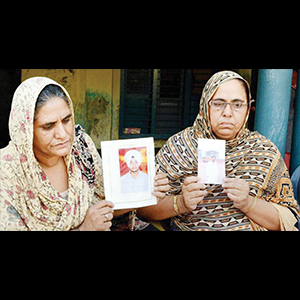
NEW DELHI (TIP): The new government led by Prime Minister Narendra Modi on Thursday, June 19 scrambled to secure the release of 40 Indians being held in war-torn Iraq but asserted it was doing its “very best” to ensure their safety in the strife-torn country. While the ministry of external affairs said that it had information on the location where the Indians are being held captive, external affairs minister Sushma Swaraj — who met families of some of the abducted Indians – said the government would leave no stone unturned to free the Indian workers. The mass abductions have arguably presented the new government with the first big challenge since it assumed power last month. Most of the abducted Indians, working for a Turkish construction company, hail from Punjab though a few are from Himachal Pradesh and Uttar Pradesh.
“I am personally mulling over all options. The government is making all kinds of efforts. We are not leaving any stone unturned,” Swaraj told reporters. “I am personally supervising this…I want to assure the families that the government and I will try our very best… make every effort,” she added. The government has already dispatched a former ambassador to Baghdad to coordinate rescue efforts in Iraq where large parts have been overran by Sunni insurgents. External affairs ministry spokesperson Syed Akbaruddin said during briefing, “We do have an understanding of the location (of the workers).
Given that the matter is underway, at this stage, I will not be able to share details of their location and what Iraqi authorities have shared with us”. Punjab chief minister Parkash Singh Badal and his Himachal Pradesh counterpart Virbhadra Singh appealed to the Centre to ensure the safe return of the abducted Indians. Badal has said he is willing to pay a ransom to gain the freedom of the workers from Punjab. Earlier in the day, Sushma Swaraj met a delegation of families of seven of the abducted Indians.
“The 40 men are safe… When the situation normalises, we will try to get them released,” she told the delegation accompanied by Badal. Himachal chief minister Virbhadra Singh said that the government has so far learnt that at least eight persons hailing from different parts of the state are missing in Iraq. “We are concerned about the safety of the all Himachal employed in Iraq,” he added. Official sources said, at least 16 residents of Haryana are believed to be stranded in strife-torn Iraq.
Tamil Nadu chief minister J Jayalalithaa also sought the Prime Minister’s personal intervention to secure safety of 46 Indian nurses, including six from the state, trapped in Iraq. In Jammu, the family-members of Rajesh Kumar, 34, informed that his phone is switched off for the last one week. “We are constantly trying but his phone is switched-off for one week. It has never happened before,” a sobbing Reema, his wife, said. Eight migrants from Gorakhpur and Deoria in Uttar Pradesh are feared stuck in the Iraq turmoil.
-

Iraqi Army retakes Tikrit, even as militants vow to march on Baghdad
BAGHDAD (TIP): The Iraqi army has retaken full control of the central city of Tikrit, a day after militant jihadists seized it, state-run Iraqiya TV reported. Fighters from the militant group known as the Islamic State of Iraq and the Levant took Saddam Hussein’s hometown of Tikrit on Wednesday as soldiers and security forces abandoned their posts and yielded ground once controlled by U.S. troops. That seizure followed the capture of much of Mosul, Iraq’s second-largest city, the previous day. The group and its allies among local tribesmen also hold the city of Fallujah and other pockets of the Sunni-dominate Anbar province to the west of Baghdad.
Emergency’ decision postponed
Meanwhile, the Iraqi Parliament’s session to consider a request to impose a state of emergency is postponed due to lack of quorum, Iraqi media reports.Sunni militant group vows to march on Baghdad
The al-Qaeda-inspired group that led the charge in capturing two key Sunni-dominated cities in Iraq this week vowed on Thursday to march on to Baghdad, raising fears about the Shia-led government’s ability to slow the assault following the insurgents’ lightning gains. The Iraqi military also abandoned some posts in the ethnically mixed flashpoint city of Kirkuk that are now being held by the Kurdish security forces known as peshmerga, Brig. Halogard Hikmat, a senior peshmerga official told the Associated Press. “We decided to move on and control the air base and some positions near it because we do not want these places with the weapons inside them to fall into the hands of the insurgents,” said Hikmat.Iraqi government officials could not be reached to confirm the account. Also on June 12, militants attacked an Iraqi security checkpoint in the town of Tarmiyah, 50 km north of Baghdad, killing five troops and wounding nine, said officials, speaking on condition of anonymity because they were not authorised to talk to the media. A spokesman for the Islamic State said the group has old scores to settle with Prime Minister Nouri al—Maliki’s government in Baghdad.
The Iraqi leader, a Shiite, is trying to hold onto power after indecisive elections in April. Al-Maliki has asked parliament to declare a state of emergency that would give him the “necessary powers” to run the country something legal experts said could include powers to impose curfews, restrict public movements and censor the media. Lawmakers are expected to consider that request later today. The Islamic State’s spokesman, Abu Mohammed al-Adnani, also threatened that the group’s fighters will take the southern Iraqi Shiite cities of Karbala and Najaf, which hold two of the holiest shrines for Shiite Muslims.
“We will march toward Baghdad because there we have an account to settle,” he urged followers in an audio recording posted on militant websites commonly used by the group. The statement could not be independently verified. Al-Adnani also said that one of his group’s top military commanders, Adnan Ismail Najm, better known as Abu Abdul-Rahman al-Bilawi al- Anbari, was killed in the recent battles in Iraq. Al-Adnani said Najm worked closely with the former leader of al-Qaida in Iraq, Jordanianborn Abu Musab al-Zarqawi, who was killed by U.S. troops in 2006.
Najm was later detained and spent years in prison before he was set free two years ago and prepared and commanded the operations that led to the latest incursions by the group in northern and central Iraq. The militants are trying to expand into other areas too. Sinjar is 400 km northwest of Baghdad in Ninevah province, outside of the semiautonomous Kurdish area, but is under Kurdish control. Iran’s foreign minister, Mohammad Javad Zarif, offered his country’s support to Iraq in its “fight against terrorism” during a phone call with his Iraqi counterpart, Iranian state TV reported. Shiite powerhouse Iran, which has built close ties with Iraq’s post-war government, a day earlier said it was halting flights to Baghdad because of security concerns and has intensified security measures along its borders.
Iranian President Hassan Rouhani on Wednesday blasted the Islamic State as “barbaric” and said that his country’s highest security body will hold an immediate meeting to review the developments in neighbouring Iraq. The Islamic State aims to create an Islamic emirate spanning both sides of the Iraq-Syria border. It has been able to push deep into parts of the Iraqi Sunni heartland once controlled by U.S. forces because police and military forces melted away after relatively brief clashes. The White House said Wednesday that the United States was “deeply concerned” about the Islamic State’s continued aggression.
There were no reliable estimates of casualties or the number of insurgents involved, though several hundred gunmen were involved in the Tikrit fight, said Mizhar Fleih, the deputy head of the municipal council of nearby Samarra. An even larger number of militants likely would have been needed to secure Mosul, a much bigger city. Baghdad does not appear to be in imminent danger from a similar assault, although Sunni insurgents have stepped up car bombings and suicide attacks in the capital in recent months.
So far, Islamic State fighters have stuck to the Sunni heartland and former Sunni insurgent strongholds where people are already alienated by the Shiite—led government over allegations of discrimination and mistreatment. The militants also would likely meet far stronger resistance, not only from government forces but by Shiite militias if they tried to advance on the capital. Mosul, the capital of Ninevah province, and the neighbouring Sunni-dominated province of Anbar share a long and porous border with Syria, where the Islamic State is also active. Mosul’s fall was a heavy defeat for al-Maliki.
His Shiite-dominated political bloc came first in April 30 parliamentary elections the first since the U.S. military withdrawal in 2011 but failed to gain a majority, forcing him to try to build a governing coalition. In addition to being Saddam’s hometown, Tikrit was a power base of his once—powerful Baath Party. The former dictator was captured by U.S. forces while hiding in a hole in the area and he is buried south of town in a tomb draped with the Saddam—era Iraqi flag.
-

US contractors in Iraq relocated due to security concerns
WASHINGTON (TIP): Top US weapons maker Lockheed Martin Corp on June 12 said it was evacuating about two dozen employees from northern Iraq due to security concerns, and the US state department said other companies were relocating their workers as well. “We can confirm that US citizens, under contract to the Government of Iraq, in support of the US Foreign Military Sales (FMS) program in Iraq, are being temporarily relocated by their companies due to security concerns in the area,” state department spokeswoman Jen Psaki said in a statement. She declined to say how many contractors were being relocated and their location, but said the US embassy and consulates were still operating normally.
“The US embassy and consulates in Iraq remain open and continue to operate on a normal status,” Psaki said. Lockheed spokesman Michael Rein said about 25 Lockheed employees were being evacuated from the Balad area in northern Iraq as part of a larger effort to ensure their safety given growing violence in the region. He said the employees were in Iraq working with the Iraqi air force as it prepared for the arrival of the first of 36 F-16 fighter jets, which are to be ferried to Iraq later this year.
-

Iraqi Kurds take Kirkuk, Sunni rebels surge towards Baghdad
BAGHDAD/ARBIL (TIP): Iraqi Kurds took control of the northern oil city of Kirkuk on June 12 after government forces abandoned their posts in the face of a sweeping Sunni Islamist rebel push towards Baghdad that threatens Iraq’s future as a unified state. Peshmerga fighters, the security forces of Iraq’s autonomous Kurdish north, swept into bases in Kirkuk vacated by the army, a peshmerga spokesman said. “The whole of Kirkuk has fallen into the hands of peshmerga,” said Jabbar Yawar.
“No Iraqi army remains in Kirkuk now.” Kurds have long dreamed of taking Kirkuk and its huge oil reserves. They regard the city, just outside their autonomous region, as their historical capital, and peshmerga units were already present in an uneasy balance with government forces. The swift move by their highly organized security forces to seize full control demonstrates how this week’s sudden advance by fighters of the al-Qaida offshoot Islamic State of Iraq and the Syria (ISIS) has redrawn Iraq’s map.
Since Tuesday, black clad ISIS fighters have seized Iraq’s second biggest city Mosul and Tikrit, home town of former dictator Saddam Hussein, as well as other towns and cities north of Baghdad. They continued their lightning advance on Thursday, moving into towns just an hour’s drive from the capital. The army of the Shia PM Nuri al-Maliki’s government in Baghdad has essentially fled in the face of the onslaught, abandoning buildings and weapons to the fighters who aim to create a strict Sunni Caliphate on both sides of the Iraq-Syria frontier.
The stunning advance of ISIS, seizing northern Iraq’s main population centres in a matter of days, is the biggest threat to Iraq since US troops withdrew in 2011. Hundreds of thousands of people have fled their homes in fear. Security and police sources said Sunni militants now controlled parts of the small town of Udhaim, 90 km north of Baghdad, after most of the army troops left their positions and withdrew towards the nearby town of Khalis.
“We are waiting for supporting troops and we are determined not to let them take control. We are afraid that terrorists are seeking to cut the main highway that links Baghdad to the north,” said a police officer in Udhaim. The global oil benchmark jumped over $2 on Thursday, as concerns mounted that the violence could disrupt supplies from the OPEC exporter.
-

UK’S INQUIRY ON IRAQ WAR “UNBLOCKED”
LONDON (TIP): The long-delayed results of Britain’s inquiry into the Iraq war came a step closer to publication on May 29 after a deal was reached on how to use notes and phone call records between then Prime Minister Tony Blair and US President George W Bush. The investigation, called the Chilcot Inquiry, was set up by former Prime Minister Gordon Brown to learn lessons from the 2003 US-led invasion of Iraq and its aftermath. It started its work in 2009. The inquiry had hoped to deliver its verdict by the end of 2011 or in early 2012.
However, five years after it was launched it has yet to report because of problems related to the release of confidential documents. On Thursday, the inquiry announced a deal had been reached between it and the British government on the disclosure of communications between Blair and Bush, previously cited as one of the big stumbling blocks to publication of its report.
The inquiry’s interest in their communications focuses on how openended Blair’s support for Bush and the war was. Blair, who has repeatedly denied blocking the release of the communications, has said that he stands by his actions. “Agreement has been reached on the principles that will underpin disclosure of material from Cabinet-level discussions and communications between the UK prime minister and the president of the United States,” the inquiry said in a statement.
“Detailed consideration of material requested by the inquiry from communications between the prime minister and the president of the United States has now begun. It is not yet clear how long that will take.” Gists and quotes The material that the inquiry has requested covers “gists and quotes” from 25 notes from Blair to Bush and more than 130 records of conversations.
The inquiry is not seeking to use material that reflects Bush’s views, it said. As Britain comes closer to a national election in May 2015 contested by David Cameron’s Conservative party and the opposition Labour party — once led by Blair — the timing of the report’s release has become increasingly politically charged. Anticipating that it could be critical of Blair and hence taint the party he led to three election victories by association, some Labour supporters are uncomfortable about the prospect of it coming out before the election.
The inquiry heard from senior politicians including Blair, who appeared twice, as well as former diplomats and military commanders. When it does report, much of the focus will be on its conclusions about Blair’s decision to commit 45,000 British troops to the invasion and on the legitimacy of a war in which 179 British soldiers were killed. Critics have long argued Blair deliberately misled the public over the reason he gave for war — former Iraqi President Saddam Hussein’s illegal weapons of mass destruction — which were never found.