Tag: Iraq

  • Bombers kill 31 at Iraq campaign rally for Shias

    Bombers kill 31 at Iraq campaign rally for Shias

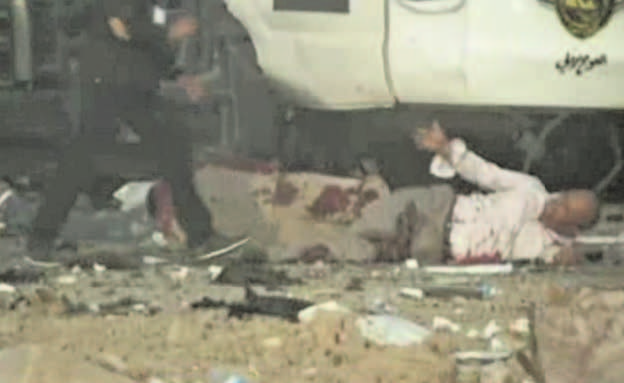
    BAGHDAD (TIP): Suicide bombers killed 31 people Friday at a sports stadium hosting a campaign rally for thousands of supporters of a militant Shia group before parliamentary elections, authorities said — an attack that could unleash more sectarian violence.

    An al-Qaida breakaway group, the Islamic State of Iraq and the Levant, claimed responsibility for the attack at the Industrial Stadium in eastern Baghdad, which drew about 10,000 backers of the Iranian-backed Asaib Ahl al-Haq group. It said on a militant website that the bombings were to avenge what it called the killing of Sunnis and their forced removal from their homes by Shia militias.

    The authenticity of the claim could not be independently verified. The attack was a stark reminder of the sectarian violence that has plagued Iraq more than two years after US troops ended an eight-year presence that often served as a buffer between the nation’s Shia majority and its Sunni Arab minority. Last year, the death toll in the country climbed to its highest levels since the worst of the sectarian bloodshed between 2006 and 2008. The Un says 8,868 people were killed in 2013, and more than 1,400 people were killed in the first two months of this year alone.

    The rally was organized to introduce the group’s candidates for Wednesday’s vote. More than 9,000 candidates are taking part and will vie for 328 seats in parliament. Parts of the Sunni-dominated Anbar province won’t take part in the election due the clashes there between security forces and al-Qaida-inspired militants. A top intelligence officer and security officials said a senior Sunni politician in the southern city of Basra, Abdul-Kareem al- Dussary, was shot and killed Friday night in what appeared to be a revenge attack for the Baghdad bombings. The officer and the officials spoke on condition of anonymity because they were not authorized to brief the media.

    The resurgence of sectarian violence is in part a reflection of the 3-year-old conflict in neighboring Syria, where forces loyal to President Bashar Assad are battling mostly Sunni rebels whose ranks are dominated by Islamists or militants from al-Qaida-inspired or linked groups. Assad follows the Alawite faith, an offshoot of Shia Islam. Asaib Ahl al-Haq, like Lebanon’s Shia Hezbollah, has sent fighters to Syria to join Assad’s side in the civil war. The bombings at the heavily guarded stadium struck about 10 minutes apart, according to two Associated Press reporters at the rally.

    Intense gunfire rang out after the first explosion and continued throughout, but it is not uncommon for Iraqi security forces to fire in the air after major attacks. Some in the crowd fled to a nearby building under construction in the complex as female parliamentary candidates screamed and prayed for safety. Others ran from the stadium or took refuge behind the large stage erected for the rally. Adding to the panic was the appearance overhead of a low-flying small aircraft that dropped election pamphlets. The first explosion struck as men and women in colorful Arab medieval costumes were engaged in a short performance of a play depicting the 7th century martyrdom of the Shias’ most revered saint, Imam Hussein, in Karbala, Iraq.

    An AP driver outside the stadium’s main gate said he was thrown back by the first blast before a second shook the area. He said guards around him began firing in all directions. Another witness said he rushed out of the stadium with his friends after the first explosion. “I saw four charred bodies and several wounded people asking for help. There were also several damaged cars. Then, other blasts took place. People were in panic,” said the man, who gave his name as only Abu Sajad. The rally was addressed by Asaib Ahl al- Haq’s leader, Sheik Qais al-Khazali, a young cleric who had spent years in US detention but was released after he was handed over to the Iraqi government.

    In his speech, he challenged the Sunni militants holding parts of two cities in Anbar province, which is predominantly Sunni. “We are ready and prepared to defend this nation,” said al-Khazali, a one-time close aide of anti-US Shia cleric Muqtada al-Sadr. “Let it be known that Asaib will be the remedy.” Security guards jumped on al-Khazali after the first explosion, and then rushed him to his armored SUV. The group remained defiant after the attack. “This is a desperate act that will not stop us from moving on and challenging” the Sunni militants, said a senior Ahl al-Haq official, Wahab al-Taie.

    “They wanted to send us a message and they did, but that will not deter us.” Police and medical officials say the attack killed at least 31 people and wounded 37. They said the first two blasts were caused by bombs, but the third was the work of a suicide bomber. The officials spoke on condition of anonymity as they weren’t authorized to release the information. It was not immediately possible to reconcile the officials’ version with that given by the Islamic State of Iraq and the Levant, which spoke of two suicide bombers. Followers of Asaib Ahl al-Haq attacked US troops before their withdrawal in 2011 and claimed responsibility for the 2007 kidnapping in Baghdad of a British contractor along with his four guards.

    The group is backed by Iran and openly admits sending fighters to Syria to bolster Assad’s forces. The top of the Baghdad stadium’s terraces was adorned by images of Asaib Ahl al-Haq fighters killed in Syria. “They fight Iraq’s enemies there on the land of Syria,” al-Khazali said, alluding to fighters in Syria. The Islamic State of Iraq and the Levant and other Sunni militants frequently use car bombs and suicide attacks to target public areas and government buildings in their bid to undermine confidence in the Shia-led government and target Shia groups.

  • Number of suicides in US military dropped in 2013

    Number of suicides in US military dropped in 2013

    WASHINGTON (TIP): The number of suicides in the US military dropped by 18 per cent in 2013 but rose among parttime soldiers in the reserves, the Pentagon said on April 25. A new report said 261 active-duty troops took their lives last year, compared to 318 in 2012, according to “preliminary” figures.

    Suicide levels, however, have not dramatically changed over the past six years even though large numbers of US forces are no longer engaged in combat in Afghanistan and have withdrawn from Iraq. Although the overall number had declined for 2013, suicides increased five percent among those in the US Army National Guard and Reserves, the report said. Suicides rose to 213 last year among reservists, up from 203 in 2012, it said.

    Reservists sometimes lack access to the kind of support services available to active-duty, full-time troops, and it was possible the suicide numbers might reflect that gap, officials said. US commanders have struggled to stem the suicide problem and have yet to identify its precise causes. The relentless pace of deployments to Iraq and Afghanistan over the past decade has often been cited as a likely trigger for the suicide problem in the armed forces, but the latest figures failed to support that hypothesis.

    When fighting peaked for American troops in Iraq, the number of suicides reached 268 in 2008 and 309 in 2009, figures that are similar to the past two years. Friday’s report said only 13 per cent of those who took their lives last year had experienced “direct combat” while 57 per cent had deployed to war zones over the past decade. The “most prevalent” aggravating factors were failed relationships, a history of administrative and legal problems and “financial or workplace difficulties,” it said.

    The overwhelming majority of those who killed themselves were male, white, under the age of 25, lowranking enlisted troops who were married, according to the report. About 65 per cent of the suicide victims used a gun to take their lives, but the firearms were bought privately and were not weapons issued by the military, it said.

  • Fort Hood Shooting leaves 3 dead, 16 injured

    Fort Hood Shooting leaves 3 dead, 16 injured

    Psychiatric issues behind shooter’s behavior

    WASHINGTON (TIP): Specialist Ivan Lopez has been identified by authorities as the man who opened fire at Fort Hood in Texas on Wednesday, April 2, killing three people before committing suicide. Sixteen more people were injured when Ivan opened fire at Fort Hood, the sprawling Army post in Texas still on edge after a mass shooting there left 13 dead in 2009, officials said.

    The gunman also died. He was engaged by military police before he fatally shot himself in the head, said the Army post’s commander, Lt. Gen. Mark A. Milley. The suspect, a soldier who had served in Iraq, “had behavioral health and mental health” issues, Milley told reporters late Wednesday.

    A day after a shooting rampage at Fort Hood, Texas, left three soldiers dead and 16 wounded, a key question looms over the investigation: Why? Authorities are still piecing together the answer, but seem to be homing in on at least one thing that they say might have made 34-year-old Spc. Ivan Lopez pull the trigger. have very strong evidence that he had a medical history that indicates an unstable psychiatric or psychological condition. (We’re) going through all records to ensure that is, in fact, correct. But we believe that to be the fundamental underlying causal factor,” Lt. Gen. Mark Milley, the post’s commanding general, told reporters Thursday.

    The rampage started around 4 p.m. Wednesday, when Lopez fired his .45-caliber handgun at two buildings at the sprawling Texas military facility. When a police officer confronted him later, he put the gun to his head and pulled the trigger, ending his life. The gunman was an experienced soldier who was grappling with mental illness, officials said. But they haven’t pinpointed why he opened fire. Authorities are interviewing witnesses and “looking at what the trigger event was” that led to the shooting, including a possible altercation with a fellow soldier “that immediately preceded the shooting,” Milley said.

    Investigators say they haven’t found any links to domestic or international terrorist organizations, but they’re keeping open minds. “At this point we have not yet ruled out anything whatsoever,” Milley said. “We are committed to letting the investigation run its course.” Another key question for investigators: did any gaps in safety and security measures allow the shooting to take place? “Obviously something went wrong,” U.S. Defense Secretary Chuck Hagel told reporters on Thursday.

    But he stressed that investigators were still trying to piece together the events leading up to the shooting. “We know a lot of things 24 hours later, but we don’t know everything,” Hagel said. “What happened? What motivated this person to do this? Where was the gap? Why did we have a gap? Why did it happen? … I think we are going to find out, and we will do everything possible to implement those reforms and fill those kinds of gaps.”

  • Veterans unemployment rises in Texas, falls nationally

    Veterans unemployment rises in Texas, falls nationally

    DALLAS (TIP): The unemployment rate of military veterans rose in Texas last year, showing it’s still tough for returning soldiers to find a job even as the economy improves.Rates are highest among veterans who have returned home since the September 2001 terrorist attacks.

    In Texas, 19,000 of those veterans, or 8.7 percent, were out of work last year, according to information released Thursday by the U.S. Bureau of Labor Statistics. That’s up from 8.3 percent in 2012 and much higher than the 2013 average unemployment rate of 6.3 percent for all Texans. A similar trend was seen for all veterans in 2013: While the unemployment rate in Texas rose slightly, it declined nationally.

    Andy Nguyen, a former U.S. Marine and president of Dallas nonprofit Honor Courage Commitment, thinks part of the reason for the increase in Texas is that more veterans are returning to Texas or moving here to look for work.”I have seen more companies be more receptive about hiring veterans,” said Nguyen, whose nonprofit recruits, educates and mentors new veterans. “It’s getting better each year, but there’s still a huge gap and a long way to go.”

    The U.S. unemployment rate for post-9/11 veterans edged down to 9 percent in 2013, from 9.9 percent in 2012. However the number of unemployed vets was the same at 205,000 as more veterans entered the workforce. Also, last year’s rate was well above the nation’s overall unemployment rate of 6.7 percent for 2013. When Glenn Roper retired as an Army lieutenant colonel last August without another job, he and his family sat down to make some tough decisions.

    He gave up his gym membership, his wife cut manicures and pedicures, his two teenagers didn’t play youth sports, and they ate out less. Roper landed a job in late October as an inventory analyst with a Dallas wireless equipment provider after searching for six months. He credits networking through LinkedIn and Nguyen’s group with helping him get hired. Still, he said it was a major transition – and one that many veterans struggle with. “You have to get into the corporate life,” Roper, 49, said. “You have to learn a new language. You have to learn to sell yourself. I had to go get a business suit.”

    Women, younger vets
    Women and younger veterans have fared the worst in the job market. “Women have a lot more to deal with – they’re often mothers with families to maintain – and more of our recent veterans are women,” said Jim Reid, president of Momentum Texas Inc., a Dallas nonprofit that helps new veterans find a job or start a business. “People returning from Afghanistan and Iraq need down time. A lot of them tend to be very young with no employment experience.”

  • US Senate confirms Indian-American Puneet Talwar for key state department post

    US Senate confirms Indian-American Puneet Talwar for key state department post

    WASHINGTON (TIP): Puneet Talwar has been confirmed by the US Senate to a key diplomatic position, becoming the second Indian-American to join the state department. Talwar, who was a key aide of President Barack Obama on the Middle East, would now serve as the assistant secretary of state for political-military affairs.

    He was confirmed on thursday by voice vote. In September last year Obama nominated Talwar, who played a key role on negotiations with Iran, to this top diplomatic position in the state department. After being sworn-in, Talwar would be the second Indian- American serving as assistant secretary in the state department after Nisha Desai Biswal, who is the assistant secretary of state for South and Central Asia.

    Talwar would provide policy direction in the areas of international security, security assistance, military operations, defence strategy and plans, and defence trade. The Bureau of Political-Military Affairs is the department of state’s principal link to the department of defence. Since 2009, Talwar has been a special assistant to the US President and senior director for Iran, Iraq, and the Gulf States on the White House National Security Staff.

    Prior to this, Talwar served as a senior professional staff member on the Committee on Foreign Relations of the US Senate (SFRC) from 2001 to 2009 and from 1997 to 1999, and was the chief adviser on the Middle East to then senator Joseph R Biden in his capacity as the chairman of the Senate Foreign Relations Committee. He served as a member of the department of state’s policy planning staff from 1999 to 2001. From 1992 to 1995, he served as a foreign policy adviser to Representative Thomas C Sawyer, and from 1990 to 1992 as an official with the United Nations. Talwar received a BS from Cornell University and an MA from Columbia University’s School of International and Public Affairs.

  • 25 killed, 55 injured in Iraq violence

    25 killed, 55 injured in Iraq violence

    BAGHDAD (TIP): At least 25 people were killed and 55 wounded in separate attacks across Iraq March 19, police said. In Anbar province, sporadic shelling and fierce clashes erupted after midnight and continued during the day between gunmen and Iraqi soldiers in Fallujah city, some 50 km from Baghdad, killing 11 people and wounding 23, Xinhua quoted a police source as saying.

    Meanwhile, four policemen, including an officer, were killed and some 20 wounded in a car bomb explosion in Ishaqi area, some 90 km from Baghdad, a police source said. In a separate incident, unidentified gunmen shot dead two civilians from al-Shabak minority at a parking lot in the city of Mosul, some 400 km from Baghdad, a source said.

    Near Baghdad, two civilians were killed when armed men opened fire randomly on a marketplace in Taji area, some 20 km from Baghdad, a police source said. Separately, two soldiers were killed and three wounded when gunmen attacked their checkpoint in Abu Ghraib area, some 25 km from Baghdad, the source said. Abu Ghraib was also the scene of another attack when two roadside bombs went off in a quick succession, leaving a civilian killed and five wounded, the source added.

    In addition, a roadside bomb exploded near a popular restaurant in Palestine Street in the eastern part of Baghdad, wounding four people, a police source said. In Diyala province, a police commando officer and two of his guards were killed by gunmen using silenced weapons near Wajihiyah town near the provincial capital city of Baquba, some 65 from Baghdad, a police source said. A total of 8,868 Iraqis, including 7,818 civilians and police personnel, were killed in 2013.

  • Attacks in Baghdad area kill 21 people

    Attacks in Baghdad area kill 21 people

    BAGHDAD (TIP):
    Bombings mainly targeting Shiite areas of Baghdad and attacks on security force checkpoints in and around the capital killed at least 21 people Wednesday, officials said. Iraq has been hit by a year-long surge in bloodshed that has reached levels not seen since 2008, driven by widespread discontent among its Sunni Arab minority and the bloody civil war in neighbouring Syria. And Baghdad is hit by near-daily bombings and shootings. Wednesday’s seven car bombs and two roadside bombs, which struck six different areas of Baghdad, killed at least 14 people and wounded more than 70 people, the officials said. One of the car bombs exploded near the University of Technology in the Karrada district of central Baghdad, killing three people and wounding at least 10.

    “The terrorist was planning to blow up the car on the main road near the university,” but security forces do not allow cars to stop there so he instead left it on a side street, a police officer at the scene said. An AFP journalist saw the charred remains of the car, and said two cars and several nearby homes were damaged by the blast. While there was no immediate claim of responsibility for the attacks, Sunni jihadists often target members of Iraq’s Shiite Muslim majority, whom they consider to be apostates. Gunmen later attacked three checkpoints in Baghdad while a roadside bomb exploded near a fourth in Tarmiyah, north of the capital, killing at least four police and three soldiers.

    Gunmen also attacked a bus northeast of the city of Baquba, killing an Indian man and wounding four others. The violence came a day after two suicide bombers attacked the city council headquarters in Samarra, north of Baghdad, and took employees hostage. A third bomber detonated an explosivesrigged vehicle after police and anti-al-Qaida militiamen arrived at the scene, while the two inside blew themselves up after exchanging fire with security forces. The violence, which showcased the impunity with which militants can strike even targets that should be highly secure, killed six people and wounded 46. Powerful militant group the Islamic State of Iraq and the Levant ( ISIL), which operates in both Iraq and Syria, claimed the attack in a statement posted on the Honein jihadist forum.

    The statement said that “three lions of the Islamic State” attacked the building, “killed its guards and executed its members, and took complete control of the council.” Militants have carried out similar assaults elsewhere in Salaheddin province, north of Baghdad, and battled security forces for control of the Sulaiman Bek area, killing dozens of people. The government also faces a more than two-month crisis in Anbar province, west of Baghdad, where it has lost the city of Fallujah as well as shifting parts of provincial capital Ramadi to anti-government militants.

    This is the first time anti-government forces have exercised such open control in major cities since the peak of the deadly violence that followed the US-led invasion of 2003. More than 370,000 people may have been displaced by the violence in Anbar during the latest crisis, according to the United Nations. Violence in Iraq has killed more than 1,800 people since January 1, according to AFP figures based on security and medical sources.

  • Strong Indian American challenge in US Congressional election in Silicon Valley

    Strong Indian American challenge in US Congressional election in Silicon Valley

    SAN JOSE (TIP): US Congressional election in Silicon Valley this year was being seen as a two-person race between incumbent Congressman Mike Honda (Democrat) and his main challenger Rohit “Ro” Khanna (Democrat) until recently. It all changed when Dr. Vanilla Mathur Singh (Republican), a member of Hindu American Foundation (HAF), entered the race in December 2013.

    The HAF first made headlines in 2005 with its failed attempt in California state to “improve 6th grade textbooks so that these books actually reflect their (Hindu) beliefs and their religious practices.” Media reports indicate that Singh was recruited to run by Shalabh “Shalli” Kumar, a Chicagobased Indian-American businessman and Republican fundraiser. Kumar is the founder of a super PAC, Indian Americans for Freedom, with close ties to Hindu Nationalists. He has been lobbying members of US Congress to help rehabilitate his “idol” Narendra Modi of India’s Hindu Nationalist Bharatiya Janata Party (BJP).

    Modi has been denied US visa multiple times by the State Department because of his widely suspected role in the killing of thousands of Muslims in 2002 Gujarat riots. Singh said that she raised $100,000 in the five days after declaring her candidacy, including $25,000 of her own money. The rest, she said, came from about “20 family and friends.” Kumar’s super PAC could change the dynamics of the South Bay race if he chooses to back Singh financially. In 2002, his super PAC spent $500,000 in an unsuccessful attempt to defeat Rep. Tammy Duckworth, D-Ill., including producing an ad set to Middle Eastern music that showed the double amputee Iraq war veteran wearing a headscarf during a visit to a local Muslim community center.

    Ro Khanna, a Silicon Valley patent attorney of Indian origin, is backed by many of Silicon Valley’s top VCs and executives at Google, Facebook, Yahoo and other tech companies. Other Notables include Marc Andreessen, the Netscape cofounder; John Doerr, the venture capitalist; and Randi Zuckerberg, the chief executive of Zuckerberg Media and the sister of Mark Zuckerberg and Sean Parker, former President pf Facebook. Four months before the primary, Khanna has $1,975,000 in cash on hand, or more than triple the incumbent’s $623,000, according to campaign finance records filed last Friday as reported by the New York Times.

    Khanna supporters expect him to win to push legislation in Congress to liberalize US visas for foreign workers needed to fill Silicon Valley tech jobs. He supports raising the number of H1-B visas, keeping a lid on capital gains taxes and cracking down on patent trolls while charting a progressive agenda on most social issues. Faced with the surprise new challenge from the Hindu Right, Ro Khanna has refused to denounce Narendra Modi for fear of alienating a significant chunk of the substantial pro-BJP Indian- American voters in Silicon Valley. Mike Honda, the incumbent congressman from 17th district, is a Japanese-American who was put by the United States in an internment camp as a child during World War II.

    He has been a featured speaker at many Muslim- American events where he has spoken out for American Muslims’ civil rights since the terrorist attacks of September 11, 2001. During a 2009 keynote speech at Human Development Foundation fund-raiser that I attended, Congressman Honda said the US foreign policy should have the same goals that the HDF has in Pakistan. Drawing from his experience as a US peace corps volunteer to support education and infrastructure development in Central America in the 1960s, he proposed a similar effort in restoring US credibility in Pakistan and Afghanistan. Honda praised the US emphasis on economic aid and said he supports the 80/20 rule that General Petraeus had outlined, with 80% emphasis on the political/economic effort backed by 20% military component to fight the Taliban insurgency.

    Honda says he has been a strong advocate for the tech industry in Congress. As a member of the House Appropriations Committee, he helped get millions of dollars in funding for BART extension to San Jose, a top priority for Valley leaders, as well as federal investment in nanotechnology research. His strong backing from organized labor and veteran Democrats reflects the decades he’s spent in public service. Honda also supports an increase in H1-B visas, although he’s also expressed concerns about its potential harm to the local labor pool.

    A number of polls in 17th district so far show that Honda enjoys a healthy lead over his challenger Khanna. Honda’s lead could increase if Singh takes a significant chunk of Indian-American votes away from Khanna. In spite of a powerful tech industry funded challenge by Ro Khanna, Honda remains a favorite to win. Honda also enjoys the strong endorsement of President Obama and Democratic Party’s establishment. Singh’s entry in the race could further help Honda extend his lead and keep his seat in Congress. I intend to vote for Mike Honda based on the Congressman’s strong record of service to Silicon Valley and his unambiguous procivil rights stance

  • Sans US, Pak-TTP peace may disturb India’s serenity

    Sans US, Pak-TTP peace may disturb India’s serenity

    “Both India and Pakistan gained from the US military intervention in Afghanistan, albeit in different ways. Both will face problems, though in diverse forms, after the US military exits Afghanistan”, says the author.

    In the midst of widespread terrorist violence, the Nawaz Sharif Government in Pakistan has been trying to reconcile with the perpetrators of such violence through dialogue. Ever since his victory in the Pakistani national election, Prime Minister Sharif has not hidden his attempt to make peace with the Tehreek-e-Taliban Pakistan (TTP) – a coalition of diverse groups of militants in the country.

    The TTP, also known as Pakistani Taliban, is a distinct entity from the Afghan Taliban, which are the creation of the Pakistani ruling establishment; but the Pakistani Taliban are the declared enemy of the Pakistani Government. The Afghan Taliban ruled Afghanistan with the full support of Islamabad for about five years and sought to establish an extreme form of Islamic rule over that country. Taking cue from its Afghan counterpart, the Pakistani Taliban have vowed to establish a similar form of Islamic rule in Pakistan and naturally the call has given migraine to the Pakistani establishment.

    Although, the Pakistan Army, the ISI, various Islamic groups and Pakistani political parties have never been averse to the creation of an Islamic State with a Constitution and a judicial system based on Sharia Law in Afghanistan, but the same is not acceptable at home. Paradoxically, the TTP demands the implementation of Sharia Law and regards the current Pakistani Constitution as un- Islamic, but the Government has sought to negotiate peace with the TTP only under the terms and conditions of the country’s Constitution.

    The irony is successive Pakistani Governments have been rewarded as well as coerced by the United States to cooperate in the war against the Taliban insurgents in Afghanistan, but the Pakistan Army and the ISI have half-heartedly sided with the US and have kept their lines of communication and assistance open with sections of Taliban fighters, particularly the Haqqani Group. Pakistan’s clandestine support to selected groups of the Afghan Taliban and open war against the TTP is a double-edged sword that threatens Pakistan’s continued existence as a unified political entity.

    Other groups of the Afghan Taliban and the TTP seem to have combined their efforts to uphold their ideology giving nightmares to Islamabad. The sanctuaries TTP allegedly enjoys on the Afghan side of the Pak-Afghan border are obviously under the protection of the Afghan Taliban and not the Karzai Government. As the United States prepares for the exit of its military from Afghanistan, Islamabad has no option but to fight a lone battle against elements of the Afghan Taliban and the TTP.

    The danger that Pakistan military perhaps perceives comes from the well demonstrated capability of the Afghan Taliban to withstand the might of the American and NATO forces. American departure from Afghanistan will surely inspire the TTP as well to pursue its own goals of Italianization of the entire Pakistani society. While the Afghan Taliban is fighting the occupant Americans on their soil, the TTP has waged a war against both the Pakistani Government and the Americans.

    Three USrelated demands of the TTP as conditions to sign peace deal with the Pakistani Government happen to be: putting a full stop to US drone attacks, Pakistan’s withdrawal from US-led war on terrorism, and breaking of “all relations” with the United States. For all practical purposes, it appears to be an ultimatum to the Nawaz Sharif Government to choose sides between TTP and the United States. However, the first two demands are not difficult to achieve. Americans may terminate drone attacks after their military depart from Afghanistan.

    After 2014, there will be no US war on terrorism, at least in this part of Asia, and therefore Washington will not need Pakistani cooperation. But by demanding to end all relations with the US, the TTP is asking for the moon! Yet another duplicity that has landed Islamabad in trouble is clandestine permission to the CIA to launch drone attacks against selected targets and then publicly complain against the US “highhandedness”. Pakistan’s helplessness in tackling the TTP-inspired violence in the country is clearly discernible. The TTP is clearly more fearful of the US drone attacks then the Pakistani security forces.

    Can Pakistan stem the spread of the TTP influence and its control to large parts of Pakistan after the US ceases its drone operations? This is a Herculean task. Yet another puzzle in coming years will be Pakistan’s ability to draw foreign assistance after the US withdraws from Afghanistan. Billions of dollars of US money that flowed into the country is simply going to dry up. Rampant instability in the country and the lack of resources may immerse Pakistan in a whirlpool that could further embolden the TTP. All these possibilities have made it imperative for the Nawaz Sahrif Government to reach out to militant groups in general and the TTP in particular for reconciliation.

    The United States started the war against terrorism in Afghanistan and subsequently extended it to Pakistan under the Obama Administration. But the Obama Administration first ended its military intervention in Iraq, and is now planning to exit from Afghanistan. With the Af-Pak strategy gone, America’s tactical alliance with Islamabad will most likely finish off. The world has witnessed the fate of Iraq after the termination of US military operations. The situation will most likely replicate in the Af-Pak region. The fallout of instability in this region will be enormous on India. Rubbing salt into its wounds, India can do little to promote peace within Pakistan. Moreover, India’s soft power will be endangered in Afghanistan post 2014. If the militancy prevails, Pakistani State may just implode.

    However, even if the Nawaz Sharif Government manages a peace accord, the danger to India will be no less. Islamabad may just try to divert the ire of these militant groups towards India. The time has actually come for Islamabad and New Delhi to cooperate in tackling terrorism together, especially because the US will most likely wash its hands off regional terrorist activities. Pakistan’s peace and prosperity partly hinges on its peaceful ties and constructive cooperation with India.

    But the psychological baggage and negative historical legacy needs to be cleaned before one can think of such a scenario. Both India and Pakistan gained from the US military intervention in Afghanistan, albeit in different ways. Both will face problems, though in diverse forms, after the US military’s exit. Self-help in the region and abiding faith in bilateralism perhaps holds the answer.

  • Strong Indian American challenge in US Congressional election in Silicon Valley

    Strong Indian American challenge in US Congressional election in Silicon Valley

    SAN JOSE (TIP): US Congressional election in Silicon Valley this year was being seen as a two-person race between incumbent Congressman Mike Honda (Democrat) and his main challenger Rohit “Ro” Khanna (Democrat) until recently. It all changed when Dr. Vanilla Mathur Singh (Republican), a member of Hindu American Foundation (HAF), entered the race in December 2013.

    The HAF first made headlines in 2005 with its failed attempt in California state to “improve 6th grade textbooks so that these books actually reflect their (Hindu) beliefs and their religious practices.” Media reports indicate that Singh was recruited to run by Shalabh “Shalli” Kumar, a Chicago-based Indian-American businessman and Republican fundraiser.

    Kumar is the founder of a super PAC, Indian Americans for Freedom, with close ties to Hindu Nationalists. He has been lobbying members of US Congress to help rehabilitate his “idol” Narendra Modi of India’s Hindu Nationalist Bharatiya Janata Party (BJP). Modi has been denied US visa multiple times by the State Department because of his widely suspected role in the killing of thousands of Muslims in 2002 Gujarat riots.

    Singh said that she raised $100,000 in the five days after declaring her candidacy, including $25,000 of her own money. The rest, she said, came from about “20 family and friends.” Kumar’s super PAC could change the dynamics of the South Bay race if he chooses to back Singh financially. In 2002, his super PAC spent $500,000 in an unsuccessful attempt to defeat Rep. Tammy Duckworth, D-Ill., including producing an ad set to Middle Eastern music that showed the double amputee Iraq war veteran wearing a headscarf during a visit to a local Muslim community center.

    Ro Khanna, a Silicon Valley patent attorney of Indian origin, is backed by many of Silicon Valley’s top VCs and executives at Google, Facebook, Yahoo and other tech companies. Other Notables include Marc Andreessen, the Netscape co-founder; John Doerr, the venture capitalist; and Randi Zuckerberg, the chief executive of Zuckerberg Media and the sister of Mark Zuckerberg and Sean Parker, former President pf Facebook.

    Four months before the primary, Khanna has $1,975,000 in cash on hand, or more than triple the incumbent’s $623,000, according to campaign finance records filed last Friday as reported by the New York Times. Khanna supporters expect him to win to push legislation in Congress to liberalize US visas for foreign workers needed to fill Silicon Valley tech jobs. He supports raising the number of H1-B visas, keeping a lid on capital gains taxes and cracking down on patent trolls while charting a progressive agenda on most social issues.

    Faced with the surprise new challenge from the Hindu Right, Ro Khanna has refused to denounce Narendra Modi for fear of alienating a significant chunk of the substantial pro-BJP Indian-American voters in Silicon Valley. Mike Honda, the incumbent congressman from 17th district, is a Japanese-American who was put by the United States in an internment camp as a child during World War II. He has been a featured speaker at many Muslim- American events where he has spoken out for American Muslims’ civil rights since the terrorist attacks of September 11, 2001.

    During a 2009 keynote speech at Human Development Foundation fund-raiser that I attended, Congressman Honda said the US foreign policy should have the same goals that the HDF has in Pakistan. Drawing from his experience as a US peace corps volunteer to support education and infrastructure development in Central America in the 1960s, he proposed a similar effort in restoring US credibility in Pakistan and Afghanistan. Honda praised the US emphasis on economic aid and said he supports the 80/20 rule that General Petraeus had outlined, with 80% emphasis on the political/economic effort backed by 20% military component to fight the Taliban insurgency. Honda says he has been a strong advocate for the tech industry in Congress.

    As a member of the House Appropriations Committee, he helped get millions of dollars in funding for BART extension to San Jose, a top priority for Valley leaders, as well as federal investment in nanotechnology research. His strong backing from organized labor and veteran Democrats reflects the decades he’s spent in public service. Honda also supports an increase in H1-B visas, although he’s also expressed concerns about its potential harm to the local labor pool.

    A number of polls in 17th district so far show that Honda enjoys a healthy lead over his challenger Khanna. Honda’s lead could increase if Singh takes a significant chunk of Indian- American votes away from Khanna. In spite of a powerful tech industry funded challenge by Ro Khanna, Honda remains a favorite to win. Honda also enjoys the strong endorsement of President Obama and Democratic Party’s establishment. Singh’s entry in the race could further help Honda extend his lead and keep his seat in Congress. I intend to vote for Mike Honda based on the Congressman’s strong record of service to Silicon Valley and his unambiguous pro-civil rights stance.

  • US spied on Merke’s predecessor after he opposed the Iraq war, says report

    US spied on Merke’s predecessor after he opposed the Iraq war, says report

    Snowden’s leaked documents reveal that the US spied on Schroeder for his opposition to the Iraq war.

    WASHINGTON (TIP): American intelligence services had not only spied on German Chancellor Angela Merkel, but also monitored her predecessor Gerhard Schroeder after he opposed the US plans to go to war in Iraq, suggest media reports.

    The Sueddeutsche Zeitung newspaper and the TV channel NDR reported that their investigations based on documents leaked by former National Security Agency (NSA) contractor Edward Snowden showed that Social Democrat (SPD) Chancellor Schroeder was spied on by the NSA at least from 2002. Schroeder, who headed a coalition government with the Green party between 2001 and 2005, was listed under the number 388 in the “National Sigint Requirements List” of the NSA.

    The list contained the names of persons and institutions to be monitored by the spy agency, the reports said. Since a document leaked by Snowden in October revealed that the NSA had eavesdropped on Chancellor Merkel’s mobile phone for several years, there have been speculations that she may not be the only German leader spied on by the NSA.

    The Sueddeutsche Zeitung and NDR said their investigations showed that Schroeder’s phone may have been bugged by the NSA from 2002 and Merkel was spied on by the agency since she began her first term in 2005. US President Barack Obama assured the German chancellor recently that spying on her would not happen again during his presidency and he would not allow US intelligence operations to damage the close friendship and cooperation between the two countries.

    Schroeder’s strong opposition to the Iraq war in 2003 could have made him a target of surveillance by the US intelligence agencies as the US feared a split in the North Atlantic Alliance (NATO), the reports said. Commenting on the revelations, Schroeder said in a statement that when he was in power he “would not have thought about being monitored by American intelligence agencies; now I will not be surprised,” according to the reports.

    Green party parliament member Hans-Christian Stroebele, the only western politician to meet Snowden in Moscow since he was granted a one-year asylum by Russia in August, said he firmly believed that Schroeder and possibly other members of the SPD-Green government were spied on by the NSA. In a TV interview, Stroebele demanded a thorough clarification of the NSA surveillance operations at least since 2002 and an investigation by a German parliamentary inquiry committee, which he expects will be constituted shortly.

  • America’s Prejudiced Media

    America’s Prejudiced Media

    “Hysteria and groupthink prevail over professionalism in covering non-western countries”, says the author.

    The observation that wealth, power and influence are shifting from the West to some key emerging actors among the rest has become a staple of international analysis. Relative decline in US global dominance will inevitably lead to a retreat of the American media footprint around the world as well and translate into a corresponding erosion of US soft power.

    This trend will accelerate if outsiders lose faith in the professional integrity of US media. An important explanation for the surprisingly rapid inroads of Al Jazeera was dissatisfaction with biased coverage of Middle East news by oncedominant western media. The vulnerability of US media to manipulation of facts, evidence and opinion was vividly shown during the 2003 Iraq war.

    Journalists failed to challenge the Bush administration’s inflated threat assessment based on manipulated evidence, cherry-picked intelligence and flawed analysis. Former Australian diplomat Alison Broinowski notes: “Of Rupert Murdoch’s 174 newspapers worldwide, not one editorially opposed the war; and, once the invasion began, many of their commentaries became hysterically supportive.”

    Mainstream US media also collaborated with the Orwellian redefinition of torture. In the seven decades before 2002, the Los Angeles Times, New York Times, USA Today and Wall Street Journal described waterboarding as torture between 81% and 96% of the times. After 2002, when the US itself began to practice waterboarding, the papers called it torture in under 5% of cases. A more recent example is Iran.

    10
    After a month in the US, Rami Khouri wrote: “Any impartial assessment of the professional conduct of most American media outlets in covering the Iran situation would find it deeply flawed and highly opinionated to the point where I would say that mainstream media coverage of Iran in the US is professionally criminal.” To this litany can now be added the coverage and analysis of the ongoing India-US diplomatic row. Multiple layers of complexity and nuance are reduced to India wrong, America right.

    It is not too hard to connect the dots and detect the structural bias against Devyani Khobragade in the following equation. The maid worked for Khobragade in New York, her husband for a US diplomat in New Delhi. The latter’s and his wife’s antipathy to Indian conditions was posted on social media. A trafficking visa is the easiest route to permanent entry into the US but requires criminal charges being filed and a willingness by the employee to testify against the employer.

    A gullible advocacy NGO and a grandstanding attorney accepted the maid’s testimony without due diligence that fit their predetermined narrative and agenda. The whole chain could of course be false. But that requires independent and impartial investigation. The US media accepted the maid’s narrative and prosecution case seemingly at face value and strongly applauded the diplomat’s arrest for committing crimes against US visa and labor laws, on the basis of two American self-sustaining myths: egalitarianism and rule of law.

    But the big picture reality is that in effect they endorsed the role of the US as a global bully that imposes rank double standards, compelling foreign diplomats to US legal jurisdiction but using all its economic and diplomatic muscle to keep its officials beyond the reach of foreign legal jurisdictions. Editorials and op-eds in the New York Times, Washington Post, Guardian, Financial Times and Australian repeatedly recalled previous Indian diplomats caught in similar troubles, but stayed silent on more heinous crimes committed by US officials misbehaving abroad, from accidental deaths in Kenya (2013) to murders in Pakistan (2011).

    In the electronic media, BBC and CNN showed better balance. They also neglected to mention that the case, involving a contract signed in India between two Indian citizens, was already before India’s courts. By failing to mention it, they saw no need to explain and justify why the US inserted itself into the middle of the case and privileged its own over India’s legal jurisdiction. Providing a justification might have been right or wrong; not noting the facts was deceitful. Similarly, in an intriguing outbreak of groupthink, they kept mentioning the recall of ID cards for US officials in India as an example of petty and vindictive overreaction.

    India had unilaterally issued diplomatic ID cards to all US embassy and consular officials. After the shabby treatment of its consular officer, it recalled all diplomatic ID cards and reissued consular ID cards. The second part was simply ignored as just another inconvenient fact that might contradict the self-righteous narrative. Outraged opinion writers pointedly noted how security barriers had been removed from around the US embassy in Delhi, but neglected to point out they were removed from public land only for causing great inconvenience to Delhi’s citizens and some adjoining foreign embassies.

    India substantially increased the police presence around the embassy to ensure there was no net reduction in the level of security coverage. All this information is publicly available. Because “few governments in the world have the geopolitical heft that India has,” says Kishore Mahbubani from Singapore, “virtually every other government in the world was quietly cheering on the Indian government as it insisted on total reciprocity in the treatment of Indian and American officials”. You’d never know this from US media. Which begs the question: Were they lazy, incompetent or deliberately dishonest?

    The whole chain could of course be false. But that requires independent and impartial investigation. The US media accepted the maid’s narrative and prosecution case seemingly at face value and strongly applauded the diplomat’s arrest for committing crimes against US visa and labor laws, on the basis of two American self-sustaining myths: egalitarianism and rule of law.

  • Dealing with a toxic legacy

    Dealing with a toxic legacy

    President Barack Obama’s recent statement of his Afghanistan policy has again revealed the intractable situation the United States has faced since it led the invasion of that country in 2001.

    In his State of the Union address to Congress on January 28, Mr. Obama said the mission there would be completed by the end of the year, and that thereafter the U.S. and its allies would support a “unified Afghanistan” as it took responsibility for itself. With the agreement of the Afghan government, a “small force” could remain to train and assist Afghan forces and carry out counterterrorism operations against any al- Qaeda remnants.

    Washington has withdrawn 60,000 of its troops from Afghanistan since Mr. Obama took office in 2009, but 36,500 remain, with 19,000 from other countries in the NATO-ISAF coalition. Western plans are for a residual force of 8,000 to 12,000, two-thirds of them American, but sections of the U.S. military have suggested a U.S. strength of 10,000, with 5,000 from the rest of the coalition. Mr. Obama is discussing the options with senior officers.

    The President wants to avoid a repeat of Iraq, which with the exception of Kurdistan has become a battleground between Sunni and Shia leaders, claiming over 7,000 lives in 2013 alone. But over Afghanistan he is caught in a cleft stick. Afghan President Hamid Karzai is yet to sign the deal for NATO-ISAF troops to stay; he would prefer his successor to sign the agreement after he leaves office in April 2014, but the successor will not take office until September.

    Secondly, Mr. Karzai has infuriated Washington by planning to release 37 Taliban detainees, by blaming American forces for terrorist attacks on civilians, and by calling the U.S. a “colonial power.” Yet the Afghan National Security Forces, which include the police, number 334,000, or about 20,000 below the numbers envisaged for them, and the U.S. Department of Defense has reported to Congress that the ANSF cannot operate on their own.

    The U.S. public have little wish to continue the war, but the military may have its own agenda. The September 2013 quarterly report by the Special Inspector General for Afghan Reconstruction shows that of nearly $100 billion in reconstruction aid, $97 billion went towards counter-narcotics, security, and other operations; only $3 billion was used for humanitarian aid. If the President feels hemmed in, it is because of the toxic legacy of his predecessor George W. Bush who went into the country in search of Osama bin Laden and al-Qaeda. At the end of 12 years of American occupation, Afghanistan has not emerged as a more secure place; nor has the U.S. had much of a success in nation-building.

  • Challenges in Indo-Pacific Region

    Challenges in Indo-Pacific Region

    INDIA MUST PLAY A PROACTIVE ROLE FOR LONG-TERM SECURITY AND STABILITY

    It would be in India’s interest to readily join cooperative efforts aimed at maintaining stability. India has acquired robust military intervention capabilities and is formulating a suitable doctrine for intervention”, says the author.

    The security environment in the Indo- Pacific region has been vitiated by territorial disputes on land in the South China Sea and the East China Sea as well as terrorism, the proliferation of small arms and piracy in the Malacca Strait. Freedom of navigation on the high seas is of critical importance for the economies of most Asian countries.

    Maintaining peace and stability and ensuring the unfettered flow of trade and energy supplies through the sea lanes of communications will pose major challenges for the Asian powers as well as the United States. Only cooperative security architecture can provide long-term stability and mutual reassurance. Through its forward military presence and its abiding military alliances, the US has played a key role in providing stability in the Indo-Pacific region through many decades of turbulence during and after the cold war.

    The US is now re-balancing or ‘pivoting’ from the Euro-Atlantic zone to the Indo-Pacific in tune with its changing geo-strategic priorities and the rise of emerging powers. It is also simultaneously downsizing its forces and will need new strategic partners to help it maintain order and stability. According to Rory Medcalf, Senior Fellow, Brookings Institution, Washington, “the choreography of this geopolitical interplay will depend on the quality of leadership and decisionmaking in Beijing, New Delhi and Washington.”

    As C Raja Mohan has averred in his book “Samudra Manthan: Sino-Indian Rivalry in the Indo-Pacific”, the major powers in the region, including Australia, China, India, Indonesia, Japan and the US, need to work creatively to frame acceptable rules for the commons in the Indo-Pacific. Unless such realization comes about, subterranean tensions will continue to hamper stability. China has so far been ambivalent in seeking to join a cooperative framework and has preferred to stand apart. It has failed to realize that its growing trade and massive dependence on energy imports through the Indian Ocean make it imperative for it to join the efforts being made to establish such a framework.

    It would be in India’s interest to readily join cooperative efforts aimed at maintaining stability. India has acquired robust military intervention capabilities and is formulating a suitable doctrine for intervention. Though India has a pacifist strategic culture rather than a proactive one that nips emerging challenges in the bud through pre-emption, it has not hesitated to intervene militarily when its national interests warranted intervention, both internally and beyond the shores. The Army was asked to forcibly integrate the states of Goa, Hyderabad and Junagadh into the Indian Union soon after Independence as part of the nation-building process. The Indian armed forces created the new nation of Bangladesh after the Pakistan army conducted genocide in East Pakistan in 1971.

    India intervened in the Maldives and Sri Lanka at the behest of the governments of these countries and was ready to do so in Mauritius in 1983 when the threat to the government there passed. India had airlifted 150,000 civilian workers from Iraq through Jordan during Gulf War I in what became known as the largest airlift after the Berlin airlift. Also, almost 5,000 civilian workers were evacuated by ship from Lebanon in 2006. After the 2004 South-East Asian tsunami, 72 naval ships had set sail within three days to join the international rescue and relief operations even though India’s eastern sea board had itself suffered extensive loss of life and damage. India’s limited military presence overseas has been mostly benign.

    According to Shyam Saran, a former Foreign Secretary, “…most South-East Asian countries and Japan welcome a larger presence of Indian naval assets in the region.” As part of the Indo-US defense cooperation, joint patrolling of the SLOCs in the Indian Ocean is already being undertaken up to the western mouth of the Malacca Strait as part of joint naval exercises. Other military exercises have led to a broad understanding of each other’s military capabilities and limitations and many interoperability challenges have been ironed out. The Indian Army has designated one infantry division as a rapid reaction division, with an amphibious brigade, an air assault brigade and an infantry brigade. The Army also has an independent parachute brigade that can be deployed at short notice.

    The Indian Navy now possesses the INS Jalashva (USS Trenton) that can carry one infantry battalion with full operational loads and is in the process of acquiring additional landing ships. Besides long-range fighter-bomber aircraft with air-to-air refueling capability like the SU-30MKI, the Indian Air Force has acquired fairly substantive strategic airlift capabilities, including six C-130 Super Hercules aircraft for the Special Forces. A permanent corps-level tri-Service planning HQ with all-weather reconnaissance and surveillance capabilities needs to be set up under the aegis of the HQ Integrated Defense Staff to monitor emerging situations on a regular basis and act as a control HQ for intervention operations.

    In future, India may undertake joint military operations in its area of strategic interest if the country’s major national interests are at stake. Such a campaign may take the form of an intervention under the UN flag – something that India would prefer – or even a “coalition of the willing” in a contingency in which India’s vital national interests are threatened. There will naturally be several caveats to such cooperation as India will not join any military alliance. It will also be necessary to work with other strategic partners and friendly countries in India’s extended neighborhood and with organizations like the Gulf Cooperation Council (GCC), the ASEAN Regional Forum (ARF) and, when possible, even the Shanghai Cooperation Organization (SCO). The aim should be to establish consultative mechanisms through diplomatic channels for the exchange of ideas, and conduct joint training and reconnaissance. Small-scale joint military exercises with likely coalition partners help eliminate interoperability and command and control challenges and enable strategic partners to operate together during crises.

  • CREED GUIDING MATURE REPUBLIC

    CREED GUIDING MATURE REPUBLIC

    Modern societies emerge out of their primitive forms. As India enters its 65th year as a republic, it is not what it used to be for the past several centuries: ruled by kings and nawabs, brutalised by Hindu orthodoxies of caste and sati, or dependent on agriculture.

    “India has changed more in last six decades than in six previous centuries,” said president Pranab Mukherjee on the eve of the Republic Day last year, adding: “It will change more in the next ten years than in the previous sixty.” The motor of change is democracy, or the republic’s politics reaffirmed every five years through the conscious act of voting.

    Democracy refers to demokratia—a political system that began in 5th to 4th centuries BC when the people (demos) of Athens revolted against the dynasties of tyrants and established their own kratos (rule). Over past decades, democracy in India has emerged as a revolt against caste and other social inequalities, empowering millions of dalits, minorities and women.


    19

    India still subjugates its women, but it will change as more than a million women, elected to political nurseries of panchayati raj, are about to alter the balance of gender relations. The Indian republic is a Greek city state in microcosm, whose citizens interact with philosophical concepts every day, acquiring new understandings of liberty and rationality. As it matures, it inculcates egalitarian ideals in its citizens who in turn guard demokratia, the republic’s dharma, or creed. The egalitarian Indian defends the order, defeating Indira Gandhi after the Emergency when democracy appeared to be failing, or producing an Aam Aadmi Party when corruption of an industrial scale emerged.

    The republic is nurtured from below. It just gave Kashmiri secessionists a recurring opportunity to prove their worth through the ballot option of NOTA, none of the above. In primitive societies, consensus emanated from similarities of beliefs and identities; in modern India consensus is derived from differences and moderated by media, political parties, voters, and the judiciary. The voter is the sane oracle, inaugurating an era of coalition politics in 1989 and shifting the polity towards federalism, in tune with the diversity of India. From the post-Emergency rise of anti-Congress parties to the AAP, the republic births new parties. It secures the confidence of minorities.

    According to a BJP research, India has seen the emergence of “smaller Muslim parties” that are determining outcomes in states from Assam to Kerala. Indian polity is ripe where any new party could transform into a countrywide behemoth by practising simple politics: electing leaders through organisational polls. There is space for all, as no party has got 50 per cent votes. In some way, parties are dying, or being obscured, eclipsed and forgotten. The Congress is forgotten in UP, Bihar, West Bengal, Delhi and many states; the BJP was reduced to irrelevance as a national opposition until Narendra Modi rose from below; the Rashtriya Janata Dal was dumped; and demokratia caught up with communists in West Bengal in 2011. It happens due to parties’ failure to abide by the republic’s dharma: more politics, more democracy. Politics has its own independent dignity.

    More parties could thrive if their funds were audited and if they held polls to elect party leaders or used secret ballot to elect chief ministers or Prime Minister. If the Congress practised politics, US-style primaries to elect party leaders could herald a revolution. Among democracies, some are religious states such as Britain whose societies are overwhelmingly secular; some are secular states like the US and India whose societies are predominantly religious. Religious neutrality, established first by Akbar, characterises the Indian state. The founders—Gandhi, Nehru and Ambedkar— wrote an array of liberties into the Constitution: equality of rights, multi-party elections, free press, individual freedoms, rule of law, independent judiciary, etcetera. Speaking at Oxford in 2005, Prime Minister Manmohan Singh noted that the founders were “greatly influenced by the ideas associated with the age of Enlightenment in Europe.”

    The political and religious freedoms Indians enjoy would not be possible if the British hadn’t arrived in India. Democracy is defined as the majority rule, but the majority is of the people, not of communities. For those who feed pessimism among minorities, the day is not far when India will see a Muslim prime minister, as religion will become irrelevant. For now, a Muslim politician is yet to be born who could read the republic’s political mind, the way Barack Obama read the American mind. There are reasons: Muslims must shed the fear of the BJP; the politics of secularism and reservation must be defeated by effective policing and through job creation by people. Primitive societies were dependent on agriculture.

    In a modern nation, while the agricultural output grows, its share in the gross domestic product must decline, accompanied by growth in knowledge sectors like biotechnology and financial services. Once seen by the West as the land of snake charmers, India is transformed into an information technology destination today. However, it is an inward-looking mystical civilisation, failing to grasp notions of power. India contemplated sending troops to Iraq in 2003, but succumbed to a perennial weakness to comprehend its place in the international state system. There were military roles in Bangladesh, Sri Lanka and Maldives that indicate India could exercise hard power abroad. Amid problems, the republic is maturing, aided by the Supreme Court which forced candidates to declare assets and criminal antecedents, disqualified elected representatives upon conviction in criminal cases, and enshrined negative voting through NOTA.

    If T N Seshan alone could retrieve autonomy of the election commission, it appears the Central Bureau of Investigation and other government institutions could cease being the ruling party’s mistress. At the heart of the country’s politics is the sane oracle, the voter: the elderly who walk to polling booths, tribesmen who defy Naxalites to vote, women who stand with men, youth who secure their aspirations in ballots. Of 790 million voters, 120 million are 18-23-yearolds, the first-time voters who must establish a relationship with people, not leaders, to secure the republic for their next generations. (The writer, Tufail Ahmad, is director of South Asia Studies Project at the Middle East Media Research Institute, Washington DC.)

  • IM PLANS TO USE ‘STICKY BOMBS’ ON OIL TANKERS

    IM PLANS TO USE ‘STICKY BOMBS’ ON OIL TANKERS

    NEW DELHI (TIP): The Indian Mujahideen is planning to turn oilcarrying tankers into fireballs using magnetic explosive device for spectacular strikes, counter-terror officials familiar with the revelations made by the terror outfit’s top operative, Yasin Bhatkal, have told HT. “Bhatkal has revealed that the plan is to convert an oil-carrying goods train into a mega-bomb,” a counter terror official told HT requesting anonymity. “Once one wagon explodes due to an IED (improvised explosive device) blast, other wagons will also blow up, turning the goods train into a big firestorm.” One can easily imagine the devastation such a train bomb would cause at a busy railway station, the official said. Sticky bombs are sophisticated, hard to detect and more lethal than IEDs. Used extensively to devastating effect in Afghanistan and in Iraq during the latter part of US occupation, sticky bombs are rare to India.

    The only known instance is when an Israeli embassy car was badly damaged in the Capital on February 13, 2012 after a sticky bomb stuck on the rear of the vehicle went off, injuring four people. The IM, sources said, had already conducted initial experiments when Bhatkal and his aide, Asadullah Akhtar, were picked up by Indian counter-terror officials from Pokhra in Nepal and formally arrested at the Indo-Nepal border on August 29. Two IM operatives Tehseen Akhtar, alias Monu, and Waqas were preparing magnetic IEDs when their hideout in Mangalore, Karnataka was raided after Bhatkal’s arrest. “More than 50 magnets were found at the hideout. When Yasin was asked about the magnets, he revealed the whole plan – of fabricating the IEDs with magnets and sticking them on oil tankers.” The outfit was also planning to convert oil tanker lorries into ‘smaller’ bombs, said the official. Monu and Waqas are on the run. Security agencies last spotted Monu in Pushkar, Rajasthan, working as a tourist guide.

  • Joe Biden calls Iraqi Kurdish leader amid oil conflict

    Joe Biden calls Iraqi Kurdish leader amid oil conflict

    WASHINGTON (TIP): Vice-President Joe Biden is urging the leader of Iraq’s self-ruled northern Kurdish region to work with the governments of Iraq and Turkey to resolve a conflict over the region’s oil. Biden called President Massoud Barzani on Thursday, the same day his Kurdish regional government announced it has unilaterally started sending crude to Turkey.

    Iraq’s government and ethnic Kurds in northern Iraq are locked in a long-running dispute over oil rights. The White House says Biden encouraged Barzani to talk with Baghdad to develop a way forward. Biden has been working the phones this week as violence flares in Iraq two years after the US pulled out troops. He has spoken twice with Iraqi Prime Minister Nouri al-Maliki and once with a leading Sunni lawmaker.

  • Christmas Celebrated around the World

    Christmas Celebrated around the World

    NEW YORK (TIP):
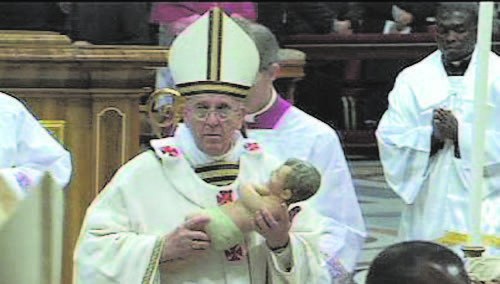
    Christmas Eve was marked by festivities and preparations around the world today. The faithful prepared for midnight services in places both traditional and unusual. At the Vatican, worshipers filled Saint Peter’s Basilica for Pope Francis’s first Christmas midnight mass as pontiff. Thousands more gathered outside in St. Peter’s Square. He was assisted by more than 300 cardinals, bishops and priests. In his homily, Pope Francis urged people to lead humble lives. “If our heart is closed, if we are dominated by pride, deceit, and the constant pursuit of self interest, then darkness falls within and around us,” he said.

    In a break with tradition, Pope Francis himself performed a task usually given to an aide. He carried a figurine of the baby Jesus to the altar at the start of the mass. The statue of Jesus was then placed in the manger of a life-size nativity scene behind the altar. Pope Francis offered a Christmas wish for a better world, praying for protection for Christians under attack, battered women and trafficked children, peace in the Middle East and Africa, and dignity for refugees fleeing misery and conflict around the globe. Francis delivered the traditional ”Urbi et Orbi” (Latin for ”to the city and to the world”) speech from the central balcony of St. Peter’s Basilica to 70,000 cheering tourists, pilgrims and Romans in the square below.

    He said he was joining all those hoping ”for a better world.” In his first Christmas message since being elected pontiff in March, he asked for all to share in the song of Christmas angels, ”for every man or woman … who hopes for a better world, who cares for others,” humbly. Among places ravaged by conflict, Francis singled out Syria, which saw its third Christmas during civil war; South Sudan; the Central African Republic; Nigeria; and Iraq. In Iraq on Wednesday, militants targeted Christians in two attacks, including a bomb that exploded near a church during Christmas Mass in Baghdad.

    The separate bombings killed dozens of people. The Vatican has been trying to raise concern in the world for persecution and attacks on Christians in parts of the Middle East and Africa. ”Lord of life, protect all who are persecuted in your name,” Francis said. pope also prayed that God ”bless the land where you chose to come into the world and grant a favorable outcome to the peace talks between Israelis and Palestinians.” Francis then explained his concept of peace. ”True peace is not a balancing of opposing forces. It’s not a lovely facade which conceals conflicts and divisions,” the pope said. ”Peace calls for daily commitment,” Francis said, reading the pages of his speech.

    Francis also spoke about the lives of everyday people, especially those struggling for a better life. In Bethlehem, parades filled the streets, as Christian pilgrims and tourists from around the world poured into Manger Square, considered the birthplace of Jesus. Decorations and holiday lights adorned the West Bank for the evening’s celebrations. And in Afghanistan, U.S. troops in Kabul marked the 13th Christmas Eve for American forces in Afghanistan with candles and hymns. In India which has a sizeable Christian population, Christmas was celebrated with zeal and enthusiasm.

    The faithful attended midnight mass in churches while a general atmosphere of celebration was witnessed in all major cities. Santa Claus has been a major attraction, as always. In the Philippines, survivors of last month’s catastrophic typhoon erected giant Christmas lanterns across the devastation in Tacloban. People in other towns sang and danced to holiday songs as they remembered lost loved ones.

    Devyani Khobragade had…
    December 12 for allegedly presenting fraudulent documents to the United States State Department in support of a visa application for an Indian national employed as a babysitter at housekeeper at Khobragade’s home in Manhattan? As it now turns out, diplomat Devyani Khobragade was accredited as an advisor to the Permanent Mission of India to the UN, allowing her full immunity from personal arrest or detention, when she was picked up from her children’s school by US authorities. India Government sources said Khobragade was accredited advisor to the Indian mission to the UN on August 26, 2013 to help the mission with work related to the General Assembly, and her accreditation was valid until December 31.

    The sources claimed the Convention on the Privileges and Immunities of the United Nations Article 4 Section 11A specifies “immunities from personal arrest or detention and from the seizure of their personal baggage” of all representatives of members to the United Nations. Section 16 of the same Article specifies that the expression “Representative” shall be deemed to include all delegates, deputy delegates, advisors, technical experts and secretaries of delegations. She was accredited as advisor on August 26 and was transferred to the permanent mission after the arrest and is currently holding the position of counselor. Because she was attached to the permanent mission only temporarily (until December 31), the State Department was not required to issue its own identity card and it is possible that they may not have known about Khobragade’s status.

    Sources said this was all the more reason for the State Department to have informed India about the move to arrest Khobragade. As the diplomat was working as acting consul general, the US ought to have notified India about her arrest under the Vienna Convention on Consular Relations. The MEA joint secretary who handles the US desk, Vikram Doraiswamy, was in that country on the day Khobragade was arrested, but he wasn’t informed about it. The alacrity with which the US “evacuated” Khobragade’s domestic help Sangeeta Richard’s family, two days before the diplomat’s arrest, rattled New Delhi. Bharara later justified this in a statement saying the Justice Department was “compelled” to make sure that victim, witnesses and their families “are safe and secure while cases are pending”.

    As the case now unravels fast, several US officials, especially those who handled Khobragade’s arrest,may have opened themselves to claims for damages and liability. The government has also discovered that the amount of $4,500 quoted by Bharara as salary promised to Sangeeta by Khobragade was actually just a mention of the employer’s salary on the help’s visa application form. The State Department’s own guidelines on diplomatic and consular immunity emphasize that law enforcement officials need to be sensitive because short-term official visitors from other States to the United Nations or to international conferences convened by the UN may enjoy full diplomatic immunity equivalent to that afforded to diplomatic agents.

    “Owing to the temporary nature of their visit, such officials will normally not have the usual official identity documents recognizable in the United States. Law enforcement officials (particularly in New York) should be sensitive to the existence of this situation and always coordinate with the US authorities indicated in the list of Useful Phone Numbers if confronted with an apparent offender appearing to fall into this category’,” it states. A diplomat’s daughter, Krittika Biswas, had last year filed a lawsuit in a NYC court seeking $1.5 million as damages for her wrongful arrest.

    Ambassador Dr. S.Jaishankar…
    Rao who has since retired. Dr. Jaishankar comes to Washington, DC with more than three decades of diplomatic experience. Joining the Indian Foreign Service in 1977, Dr. Jaishankar has represented India’s interests and fostered friendly working relationships in countries around the world. Dr. Jaishankar’s first postings abroad were as Third and Second Secretary (Political) at the Embassy of India in Moscow from 1979 to 1981. From 1981 to 1985, he served as Under Secretary (Americas) and Policy Planning in the Ministry of External Affairs.

    He then spent three years from 1985 to 1988 as First Secretary handling political affairs at the Indian Embassy in Washington, DC, followed by two years as First Secretary and Political Advisor to the Indian Peace Keeping Force (IPKF) in Sri Lanka. In 1990, Dr. Jaishankar became Commercial Counsellor in Budapest. After three years in that position, he returned to India where he served first as Director of East Europe Division of the Ministry of External Affairs, and then as Press Secretary for the President of India. Following this service in India, Dr. Jaishankar went abroad again – to Tokyo in 1996 as Deputy Chief of Mission. In the year 2000, he was appointed the Ambassador of India to Czech Republic and served in Prague till 2004.

    Upon completing his time as Ambassador in Prague, Dr. Jaishankar returned once again to India, where he led the Americas Division in the Ministry of External Affairs. After three years heading the division, he again left India in 2007 to serve as High Commissioner to Singapore for two years. Most recently, Dr. Jaishankar was the Ambassador of India to China from 2009 to 2013. Dr. Jaishankar holds a Ph.D. and M.Phil in International Relations and a M.A. in Political Science. He is a member of the International Institute for Strategic Studies in London. Dr. Jaishankar is married to Kyoko Jaishankar and has two sons and a daughter.

  • The Geopolitics of Nuclear Proliferation

    The Geopolitics of Nuclear Proliferation

    AS I SEE IT

    It is not easy for Iran and the US to end mutual hostility

    The author sees no end to three decades of mutual hostility and suspicion between Iran and the US.

    Just after the foreign ministers of the self-styled “international community” (comprising the EU members and the US) together with their Russian and Chinese counterparts met the Iranian Foreign Minister in Geneva, the Foreign Ministers of India, China and Russia issued a statement which recognized “the right of Iran to peaceful uses of nuclear energy, including for uranium enrichment, under strict IAEA safeguards and consistent with its international obligations”.

    This was an important declaration as the Republican right wing in the US, egged on by a predictable alliance of Israel and Saudi Arabia, would like to scuttle any possibility of an agreement that ends sanctions against Iran in return for Iran accepting safeguards mandated by the IAEA on all its nuclear facilities. Israel wants a termination of uranium enrichment and plutonium production in Iran, together with an end to Iran’s implacable hostility to its very existence. American policies on clandestine nuclear enrichment have been remarkably inconsistent. The country responsible for triggering the proliferation of centrifugebased uranium enrichment technology was the Netherlands.

    It was the Dutch who carelessly granted A.Q. Khan access to sensitive design documents on centrifuge enrichment technology when he worked at the Holland-based Physical Dynamic Research Laboratory, a sub-contractor of the “Ultra Centrifuge Nederland”. Former Dutch Prime Minister Ruud Lubbers has revealed that after Khan’s activities came to light, he was prepared to arrest Khan in Holland, but was prevented from doing so in 1975 and 1986 by the CIA. It is well known that the Reagan Administration had tacitly assured Pakistan that it would look the other way at Pakistani efforts to build the bomb.

    If President Reagan looked the other way at Pakistani proliferation, President Clinton winked at Chinese proliferation involving the transfer of more modern centrifuges, nuclear weapon designs and ring magnets apart from unsafeguarded plutonium facilities to Pakistan. The A.Q. Khan-Iranian nexus goes back to the days of Gen Zia-ul-Haq when the Iranians received the knowhow for uranium enrichment from Khan. Iran is now known to possess an estimated 19,000 centrifuges, predominantly at its enrichment facilities in Natanz.

    It has an old plutonium reactor used for medical isotopes which, it says, is to be replaced by a larger reactor together with reprocessing facilities being built at Arak. Given the clandestine nature of its nuclear program, its activist role in the Islamic world and its virulent anti-Semitism, Iran’s nuclear program has invited international attention. This has resulted in seven UN Security Council Resolutions since 2006, which called on Iran to halt enrichment and even led to the freezing of assets of persons linked to its nuclear and missile programs.

    There have also been cyber attacks (Stuxnet) by the Americans and the killing of some of Iran’s key scientists, believed by the Iranians to have been engineered by the Israelis. While Iran’s nuclear program enjoys widespread domestic support,what have really hurt the Iranians are the crippling economic sanctions by the US and its European allies. These sanctions have led to the shrinking of its oil exports and spiraling of inflation. They have been crucial factors compelling Iran to seek a negotiated end to sanctions, without giving up its inherent right to enrich uranium that it enjoys under the NPT.

    Crucially, the US can now afford to review its policies in the Middle East. Its dependence on oil imports from the Persian Gulf has ended, its oil production will exceed that of Saudi Arabia in the next five years and it is set to become a significant exporter of natural gas. The emergence of Saudi backing for al Qaeda-linked Salafi extremists in Iraq and Syria is not exactly comforting as the Americans prepare to pull out of Afghanistan. While the Obama Administration may make soothing noises to placate the ruffled feathers in Riyadh and Jerusalem, rapprochement with Iran does widen its options in the Muslim world at a time when Iranian Foreign Minister Mohammad Javad Sharif proclaims that Shia-Sunni tensions are “the most serious threat not only to the region but to the world at large”.

    But it would be unrealistic to expect that negotiations between the P 5 and Germany on the one hand and the Iranians on the other will produce any immediate end to the Iranian nuclear impasse. The Israelis and the Saudis, who wield immense clout in the Republican right wing, the US Congress and in many European capitals will spare no effort to secure support for conditions that the Iranians would not agree to. Iran already has one nuclear power plant built by the Russians at Bushehr, with another 360 MW plant under construction at Darkhovin. It currently has stockpiles of uranium enriched to either 3.5%, which can be used in power reactors, or to 20%, which can be relatively easily further enriched and made weapons grade.

    The Iranians are reported to have agreed that the highly enriched uranium will be converted into fuel rods or plates. Iran has an old plutonium reactor for medical isotopes, which it requires to shut down. It is constructing a larger plutonium research reactor at the city of Arak. The Iranians claim that the reactor at Arak is set to replace the existing plutonium reactor, which is being shut down. This is not an explanation that skeptics readily buy. In the negotiations at Geneva, France reportedly took a hard-line position, demanding that the construction of the Arak plutonium reactor should stop and that there should be no reference to Iran’s “right” to enrich uranium.

    This is not surprising. France has recently concluded a $1.8 billion arms deal with Saudi Arabia and is the recipient of large Saudi investments in its sagging agricultural sector. The Iranians are hard bargainers and will not unilaterally give any concessions unless these are matched by a corresponding and simultaneous lifting of economic sanctions. Having already concluded an agreement with the IAEA, granting the IAEA access to its uranium mine and heavy water plant, Iran is unlikely to agree to yield to demands to stop the construction of its new plutonium reactor.

    More importantly, given the continuing gridlock in Washington between the Obama Administration and the Republican-dominated Senate, the Obama Administration will not find it easy to secure Congressional approval for easing sanctions against Iran, especially in the face of Israeli and Saudi opposition. It is not going to be easy for Iran and the US to end over three decades of mutual hostility and suspicion.

  • The Geopolitics of Nuclear Proliferation It is not easy for Iran and the US to end mutual hostility

    The Geopolitics of Nuclear Proliferation It is not easy for Iran and the US to end mutual hostility

    The author sees no end to three decades of mutual hostility and suspicion between Iran and the US.

    Just after the foreign ministers of the self-styled “international community” (comprising the EU members and the US) together with their Russian and Chinese counterparts met the Iranian Foreign Minister in Geneva, the Foreign Ministers of India, China and Russia issued a statement which recognized “the right of Iran to peaceful uses of nuclear energy, including for uranium enrichment, under strict IAEA safeguards and consistent with its international obligations”.

    This was an important declaration as the Republican right wing in the US, egged on by a predictable alliance of Israel and Saudi Arabia, would like to scuttle any possibility of an agreement that ends sanctions against Iran in return for Iran accepting safeguards mandated by the IAEA on all its nuclear facilities. Israel wants a termination of uranium enrichment and plutonium production in Iran, together with an end to Iran’s implacable hostility to its very existence. American policies on clandestine nuclear enrichment have been remarkably inconsistent. The country responsible for triggering the proliferation of centrifugebased uranium enrichment technology was the Netherlands.

    It was the Dutch who carelessly granted A.Q. Khan access to sensitive design documents on centrifuge enrichment technology when he worked at the Holland-based Physical Dynamic Research Laboratory, a sub-contractor of the “Ultra Centrifuge Nederland”. Former Dutch Prime Minister Ruud Lubbers has revealed that after Khan’s activities came to light, he was prepared to arrest Khan in Holland, but was prevented from doing so in 1975 and 1986 by the CIA. It is well known that the Reagan Administration had tacitly assured Pakistan that it would look the other way at Pakistani efforts to build the bomb.

    If President Reagan looked the other way at Pakistani proliferation, President Clinton winked at Chinese proliferation involving the transfer of more modern centrifuges, nuclear weapon designs and ring magnets apart from unsafeguarded plutonium facilities to Pakistan. The A.Q. Khan-Iranian nexus goes back to the days of Gen Zia-ul-Haq when the Iranians received the knowhow for uranium enrichment from Khan. Iran is now known to possess an estimated 19,000 centrifuges, predominantly at its enrichment facilities in Natanz. It has an old plutonium reactor used for medical isotopes which, it says, is to be replaced by a larger reactor together with reprocessing facilities being built at Arak.

    Given the clandestine nature of its nuclear program, its activist role in the Islamic world and its virulent anti-Semitism, Iran’s nuclear program has invited international attention. This has resulted in seven UN Security Council Resolutions since 2006, which called on Iran to halt enrichment and even led to the freezing of assets of persons linked to its nuclear and missile programs. There have also been cyber attacks (Stuxnet) by the Americans and the killing of some of Iran’s key scientists, believed by the Iranians to have been engineered by the Israelis.

    While Iran’s nuclear program enjoys widespread domestic support,what have really hurt the Iranians are the crippling economic sanctions by the US and its European allies. These sanctions have led to the shrinking of its oil exports and spiraling of inflation. They have been crucial factors compelling Iran to seek a negotiated end to sanctions, without giving up its inherent right to enrich uranium that it enjoys under the NPT. Crucially, the US can now afford to review its policies in the Middle East.

    Its dependence on oil imports from the Persian Gulf has ended, its oil production will exceed that of Saudi Arabia in the next five years and it is set to become a significant exporter of natural gas. The emergence of Saudi backing for al Qaeda-linked Salafi extremists in Iraq and Syria is not exactly comforting as the Americans prepare to pull out of Afghanistan. While the Obama Administration may make soothing noises to placate the ruffled feathers in Riyadh and Jerusalem, rapprochement with Iran does widen its options in the Muslim world at a time when Iranian Foreign Minister Mohammad Javad Sharif proclaims that Shia-Sunni tensions are “the most serious threat not only to the region but to the world at large”.

    But it would be unrealistic to expect that negotiations between the P 5 and Germany on the one hand and the Iranians on the other will produce any immediate end to the Iranian nuclear impasse. The Israelis and the Saudis, who wield immense clout in the Republican right wing, the US Congress and in many European capitals will spare no effort to secure support for conditions that the Iranians would not agree to.

    Iran already has one nuclear power plant built by the Russians at Bushehr, with another 360 MW plant under construction at Darkhovin. It currently has stockpiles of uranium enriched to either 3.5%, which can be used in power reactors, or to 20%, which can be relatively easily further enriched and made weapons grade. The Iranians are reported to have agreed that the highly enriched uranium will be converted into fuel rods or plates. Iran has an old plutonium reactor for medical isotopes, which it requires to shut down.

    It is constructing a larger plutonium research reactor at the city of Arak. The Iranians claim that the reactor at Arak is set to replace the existing plutonium reactor, which is being shut down. This is not an explanation that skeptics readily buy. In the negotiations at Geneva, France reportedly took a hard-line position, demanding that the construction of the Arak plutonium reactor should stop and that there should be no reference to Iran’s “right” to enrich uranium. This is not surprising.

    France has recently concluded a $1.8 billion arms deal with Saudi Arabia and is the recipient of large Saudi investments in its sagging agricultural sector. The Iranians are hard bargainers and will not unilaterally give any concessions unless these are matched by a corresponding and simultaneous lifting of economic sanctions. Having already concluded an agreement with the IAEA, granting the IAEA access to its uranium mine and heavy water plant, Iran is unlikely to agree to yield to demands to stop the construction of its new plutonium reactor.

    More importantly, given the continuing gridlock in Washington between the Obama Administration and the Republican-dominated Senate, the Obama Administration will not find it easy to secure Congressional approval for easing sanctions against Iran, especially in the face of Israeli and Saudi opposition. It is not going to be easy for Iran and the US to end over three decades of mutual hostility and suspicion.

  • US aid needed to battle al-Qaida: IRAQI PM

    US aid needed to battle al-Qaida: IRAQI PM

    WASHINGTON (TIP): A bloody resurgence of al-Qaida in Iraq is prompting Baghdad to ask the US for more weapons, training and manpower, two years after pushing American troops out of the country.

    The request will be discussed during a White House meeting Friday between Iraqi Prime Minister Nouri al-Maliki and President Barack Obama in what Baghdad hopes will be a fresh start in a complicated relationship that has been marked both by victories and frustrations for each side. Al-Maliki will discuss Iraq’s plight in a public speech Thursday at the US Institute for Peace in Washington.

    “We know we have major challenges of our own capabilities being up to the standard. They currently are not,” said Lukman Faily, the Iraqi ambassador to the US, told The Associated Press in an interview Wednesday. “We need to gear up, to deal with that threat more seriously.We need support and we need help.” He added: “We have said to the Americans we’d be more than happy to discuss all the options short of boots on the ground.” “Boots on the ground” means military forces. The US withdrew all but a few hundred of its troops from Iraq in December 2011 after Baghdad refused to renew a security agreement to extend legal immunity for American forces that would have let more stay.

    At the time, the withdrawal was hailed as a victory for the Obama administration, which campaigned on ending the Iraq war and had little appetite for pushing Baghdad into a new security agreement. But within months, violence began creeping up in the capital and across the country as Sunni Muslim insurgents lashed out at Shiites, angered by a widespread belief that Sunnis have been sidelined by the Shiite-led government, and with no US troops to keep them in check.

    More than 5,000 Iraqis have been killed in attacks since April, and suicide bombers launched 38 strikes in the last month alone. Al-Maliki is expected to ask Obama for new assistance to bolster its military and fight al-Qaida. Faily said that could include everything from speeding up the delivery of US aircraft, missiles, interceptors and other weapons, to improving national intelligence systems. And when asked, he did not rule out the possibility of asking the US to send military special forces or additional CIA advisers to Iraq to help train and assist counterterror troops.

  • The Obama Doctrine

    The Obama Doctrine

    Is the US president veering toward isolationism? Or will he proudly carry the banner of exceptionalism?

    The recent Obama-Putin tiff over American exceptionalism reignited an ongoing debate over the Obama Doctrine: Is the president veering toward isolationism? Or will he proudly carry the banner of exceptionalism? The debate is narrower than it may seem. There is considerable common ground between the two positions, as was expressed clearly by Hans Morgenthau, the founder of the now dominant no-sentimentality “realist” school of international relations. Throughout his work, Morgenthau describes America as unique among all powers past and present in that it has a “transcendent purpose” that it “must defend and promote” throughout the world: “the establishment of equality in freedom.” The competing concepts “exceptionalism” and “isolationism” both accept this doctrine and its various elaborations but differ with regard to its application. One extreme was vigorously defended by President Obama in his Sept. 10 address to the nation: “What makes America different,” he declared, “what makes us exceptional,” is that we are dedicated to act, “with humility, but with resolve,” when we detect violations somewhere. “For nearly seven decades the United States has been the anchor of global security,” a role that “has meant more than forging international agreements; it has meant enforcing them.”

    The competing doctrine, isolationism, holds that we can no longer afford to carry out the noble mission of racing to put out the fires lit by others. It takes seriously a cautionary note sounded 20 years ago by the New York Times columnist Thomas Friedman that “granting idealism a near exclusive hold on our foreign policy” may lead us to neglect our own interests in our devotion to the needs of others. Between these extremes, the debate over foreign policy rages. At the fringes, some observers reject the shared assumptions, bringing up the historical record: for example, the fact that “for nearly seven decades” the United States has led the world in aggression and subversion – overthrowing elected governments and imposing vicious dictatorships, supporting horrendous crimes, undermining international agreements and leaving trails of blood, destruction and misery. To these misguided creatures, Morgenthau provided an answer. A serious scholar, he recognized that America has consistently violated its “transcendent purpose.” But to bring up this objection, he explains, is to commit “the error of atheism, which denies the validity of religion on similar grounds.” It is the transcendent purpose of America that is “reality”; the actual historical record is merely “the abuse of reality.”

    In short, “American exceptionalism” and “isolationism” are generally understood to be tactical variants of a secular religion, with a grip that is quite extraordinary, going beyond normal religious orthodoxy in that it can barely even be perceived. Since no alternative is thinkable, this faith is adopted reflexively. Others express the doctrine more crudely. One of President Reagan’s U.N. ambassadors, Jeane Kirkpatrick, devised a new method to deflect criticism of state crimes. Those unwilling to dismiss them as mere “blunders” or “innocent naivete” can be charged with “moral equivalence” – of claiming that the U.S. is no different from Nazi Germany, or whoever the current demon may be. The device has since been widely used to protect power from scrutiny. Even serious scholarship conforms. Thus in the current issue of the journal Diplomatic History, scholar Jeffrey A. Engel reflects on the significance of history for policy makers. Engel cites Vietnam, where, “depending on one’s political persuasion,” the lesson is either “avoidance of the quicksand of escalating intervention [isolationism] or the need to provide military commanders free rein to operate devoid of political pressure” – as we carried out our mission to bring stability, equality and freedom by destroying three countries and leaving millions of corpses.

    The Vietnam death toll continues to mount into the present because of the chemical warfare that President Kennedy initiated there – even as he escalated American support for a murderous dictatorship to all-out attack, the worst case of aggression during Obama’s “seven decades.” Another “political persuasion” is imaginable: the outrage Americans adopt when Russia invades Afghanistan or Saddam Hussein invades Kuwait. But the secular religion bars us from seeing ourselves through a similar lens. One mechanism of self-protection is to lament the consequences of our failure to act. Thus New York Times columnist David Brooks, ruminating on the drift of Syria to “Rwanda-like” horror, concludes that the deeper issue is the Sunni-Shiite violence tearing the region asunder. That violence is a testimony to the failure “of the recent American strategy of lightfootprint withdrawal” and the loss of what former Foreign Service officer Gary Grappo calls the “moderating influence of American forces.” Those still deluded by “abuse of reality” – that is, fact – might recall that the Sunni- Shiite violence resulted from the worst crime of aggression of the new millennium, the U.S. invasion of Iraq. And those burdened with richer memories might recall that the Nuremberg Trials sentenced Nazi criminals to hanging because, according to the Tribunal’s judgment, aggression is “the supreme international crime differing only from other war crimes in that it contains within itself the accumulated evil of the whole.”

    The same lament is the topic of a celebrated study by Samantha Power, the new U.S. ambassador to the United Nations. In “A Problem from Hell: America in the Age of Genocide,” Power writes about the crimes of others and our inadequate response. She devotes a sentence to one of the few cases during the seven decades that might truly rank as genocide: the Indonesian invasion of East Timor in 1975. Tragically, the United States “looked away,” Power reports. Daniel Patrick Moynihan, her predecessor as U.N. ambassador at the time of the invasion, saw the matter differently. In his book “A Dangerous Place,” he described with great pride how he rendered the U.N. “utterly ineffective in whatever measures it undertook” to end the aggression, because “the United States wished things to turn out as they did.” And indeed, far from looking away, Washington gave a green light to the Indonesian invaders and immediately provided them with lethal military equipment. The U.S. prevented the U.N. Security Council from acting and continued to lend firm support to the aggressors and their genocidal actions, including the atrocities of 1999, until President Clinton called a halt – as could have happened anytime during the previous 25 years. But that is mere abuse of reality. It is all too easy to continue, but also pointless. Brooks is right to insist that we should go beyond the terrible events before our eyes and reflect about the deeper processes and their lessons. Among these, no task is more urgent than to free ourselves from the religious doctrines that consign the actual events of history to oblivion and thereby reinforce our basis for further “abuses of reality.”

  • Pakistani passport among worst for travel: Survey

    Pakistani passport among worst for travel: Survey

    ISLAMABAD (TIP): A Pakistani passport is among the worst to travel on as the country’s citizens can only enter 32 countries without a visa, according to a survey. Pakistan shared its ranking with Somalia in the list of some 200 countries surveyed by Henley & Partners, beating only Iraq which ranked 92nd and Afghanistan, which came in last. India ranked higher than all three countries at 74. Many intervening positions were shared by several countries, showing India ranked much higher than other nations. The report said Pakistanis had access to only 32 countries without a visa, while Afghans could access just 28. The Visa Restriction Index 2013 was released by Henley & Partners to rank countries based on the visafree entry enjoyed by their citizens. The firm analysed visa regulations around the globe to determine the results. “Pakistan, Somalia, Iraq and Afghanistan remain in the bottom four places of the ranking, which means that citizens of these countries enjoy the least freedom of travel,” the firm said in a statement.

  • US faces charge of becoming Qaida’s ‘airforce’

    US faces charge of becoming Qaida’s ‘airforce’

    WASHINGTON (TIP): US president Obama and his administration will have to go against the weight of American public skepticism and legislative resistance to meet their professed goal of punishing Syria for allegedly using chemical weapons in contravention of global rules. Although the US Senate Foreign Relations Committee on Wednesday approved conditional strikes against Syria by a 10-7 margin, opposition to military involvement is high among members of the House of Representatives, considered closer to ground sentiment. Polls show Americans are massively opposed to getting into what is increasingly seen as a Shia-Sunni spat that has little bearing on American interests, aside from asserting broader principles of international accountability vis-a-vis chemical weapons.

    In a reminder of the possible folly of getting into the middleeast snake-pit, one US lawmaker went so far as to say American strikes in Syria would turn the US military into “al-Qaida’s air force”— a reference to the Sunni-dominated rebels who would benefit from the US attack. “We certainly don’t have a dog in the fight,” said Ted Cruz, a Republican senator from Texas. “We should be focused on defending the United States of America. That’s why young men and women sign up to join the military, not to, as you know, serve as al-Qaida’s air force.” The comment drew a sharp rejoinder from the hawks itching for air strikes, but already, there is deep skepticism about the veracity of the administration’s accounts that the Assad regime used chemical weapons. Those opposed to involvement are mocking the administration for depending on dubious youtube videos and plants by opponents of the Syrian regime.? On septembr 5, sections of the US media also began focusing on Syrian rebel fighters, some of who were shown in a New York Times story as brutal extremists who executed government soldiers. Other reports have suggested that the rebels are being funded by a Saudi regime in order to extend Sunni influence to make up for the loss of sway in Iraq.

  • So-Called Spring; Su-Shi Strife and The South-West Asia

    So-Called Spring; Su-Shi Strife and The South-West Asia

    “The author foresees tremendous tectonic changes in the wake of Arab Spring et al. He says, “There will be following major discernible evolutionary geo-political trends underlying the so-called Arab spring. The despotic regimes headed by dictators, monarchs, military strongmen, presidents-for-life and supreme leaders-for-life would eventually be overthrown by the popular revolt. The middle-east is surely due for a major cartographic make-over in the next few decades. The fault-lines would be sectarian, ethnic and linguistic. The glue of Political Islam supported by embedded Jihadi elements would be torn asunder while facing the sectarian, ethnic and linguistic divide.”

    Arab Spring, Arab Winter, Arab Summer, Arab Renaissance, Arab Awakening, Islamic Awakening and Islamic Rise are just few of the epithets used to describe the complex and multidimensional geopolitical changes in the middle-east region that comprises of West Asia and Northern Africa. Depending upon one’s perspective, each of these adjectives is inadequate to describe the complex geopolitical phenomena that have engulfed the region. It is important to recapitulate that barring three nations, viz. Iran, Turkey an Israel all other countries in this region are Arab. Despite Francis Fukuyama’s puerile musings about the “end of history”, we are now witnessing tectonic changes of historic proportions.

    However, it will be a very slow and bloody change that would be unstoppable despite numerous western interventions. The genie of historic change had been unleashed much earlier in 2003 when the Baathist regime was toppled in Iraq ostensibly to chase the now non-existent “weapons of mass destruction”. The ten year anniversary of the US invasion of Iraq and “the ensuing mother of all battles” does not witness peace and tranquility in that nation, divided de facto, on sectarian and ethnic fault-lines. The Iraqi Kurdistan, nominally under the central government of Iraq is on a rapid trajectory to peace, prosperity and development while Baghdad continues to witness sectarian violence and bomb attacks. The Prime Minister Nouri al- Maliki is grabbing executive powers and has inadvertently encouraged sectarian divide and Shia identity politics. Besides the Iraqi Kurds, the real beneficiary of the US invasion worth $ 870 billion has been the Islamic Republic of Iran.

    If one chooses to be historically correct, the Islamic revolution of 1979 in Iran is the real harbinger of the so-called Arab spring. A US supported dictator was overthrown by popular revolt in Iran. The popular revolution was usurped and captured by Islamist Ayatollah Khomeini leading to a lot of blood-shed and massacre of democratic and liberal sections of the Iranian society in a targeted manner. A mini-version of this so-called (“Persian”) spring was again manifest in Iran, a non-Arab Shia theocracy in 2009 under the name of “green revolution”. However, the US administration led by Barak Hussain Obama “rightly” failed to capitalize on the situation leading to brutal suppression of young Iranians by the theocratic regime and its revolutionary guards. For the first time the US and its cronies missed an opportunity for externally driven regime change in Iran. Starting with Tunisia, the Arab Spring phenomena later on engulfed Egypt and Yemen. In Yemen, an extended “managed” political change was indeed brought in grudgingly under the patronage of Western imperialistic powers. Both Tunisia and Egypt saw subsequent takeover by Islamists in democratic elections. After over-throwing of Ben-Ali, the fundamentalist An-Nahda Islamists were the victors of the Tunisian democratic elections in October 2011.

    The Jihadists and the Salafists are now working in tandem with the conservative An-Nahda Islamists to infiltrate the previously secular Tunisian state from within. The story in Egypt is not very much different where the popular revolution against Hosni Mubarak and the Armed Forces has already been annexed by the Muslim Brotherhood (MB) and Mohammad Morsey. The Egyptian judiciary, especially the Supreme Court has resisted the Muslim Brotherhood and its attempts to foist an Islamist constitution. Furthermore, the Egyptian Supreme court has postponed yet again the parliamentary elections denying the MB an opportunity to control the entire state. Parts of the civil police force have already stopped obeying orders of the Islamist government to fight against fellow citizens forcing the MB to spare its cadre for law enforcement duties. Using the fig-leaf of so-called Arab Spring, the opportunistic Western powers militarily intervened in Libya, another socialist Baathist party ruled Arab dictatorship and brought out a regime change they had craved for long.

    The subsequent Islamist take-over of Libya, the barbaric treatment (victor’s justice) given to the quixotic dictator Col Mommar Gadaffi and killings of the US ambassador and other personnel by Al Qaeda in Ben Ghazi is illustrative of the nature of the beast. Interestingly, the Shah of Iran, Saddam Hussain and Col Mommar Gadaffi, all three had indeed served with great distinction as the “useful idiots” of the Western imperialism. The ideological hollowness of the West and the cheer-leaders of the socalled Arab Spring was noted again in Bahrain where popular and public demands for political change were exterminated brutally by foreign military intervention undertaken by the Kingdom of Saudi Arabia (KSA) and Pakistan in order to prevent take-over of the Sunni ruled nation by a Shia majority population. Syrian example shows the true colors of the cheer-leaders of the so-called Arab spring.

    Another socialist and secular Arab country ruled by the Baath party is being systematically destabilized from outsideintervention for the last two years and sacrificed at the altar of Sunni-Salafi- Jihadi-Wahabi (SSJW) geopolitical interests. Foreign Sunni fighters are leading the war against the Assad regime, fully supported by the regional Sunni monarchies. What we see now is essentially a Sunni-Shia (SU-SHI) sectarian power struggle in the Islamic nations of the West Asian region with Western imperialistic intervention in a systematic manner to defeat the secular and socialist Baath party regimes and of course to safeguard the interests of the Sunni-Salafi-Jihadi-Wahabi (SSJW) alliance. This bloody sectarian conflict will not be resolved in next few months or years.

    As the geopolitical events unfold, we will witness a quasi-permanent fratricidal intra-Islamic sectarian war for decades in the west Asian region culminating in major cartographic changes. There will be multiple incarnations of Arab & Islamist “Tianamen Squares” during which the despotic rulers will brutally suppress the revolting citizens. The US strategic retreat from the middle- east and pivot to Asia will finally allow the history to emerge in the middle-east uncontaminated by the hegemonic order imposed by the US hyper-power. Right now all the Arab monarchies have tried to buy out the demands for freedom and socio-political change by bribing their respective populations with yet more goodies financed by petro-dollars. This monetary intervention would at best delay the clamor for freedom and political change only by a few years in the oil-rich nations. There will be Islamist take-over of one-kind or other in all these countries. But political Islam would not be able to provide stability and strategic security to these nations.

    Just like in the communist countries as they vied with one another for title of the adherents of the true nature of communism practiced in the former communist countries, one would witness competitive claims of “true or genuine Islamism” by various ruling dispensations in this region. Fundamentalist competitive “political Islam” in alliance with Jihadis would hijack liberal and democratic popular uprisings. Indeed, there will be immense loss of human life and Jihadi terrorism will rule the roost. Transfer of power and change of regimes will be an inherently bloody process. There will be serious human rights violations and genocide by all the sides in the name of “true Islam”. Western apologists and backers for these despotic countries under severe financial crunch would no longer be interested in maintaining the geo-political status quo ante. geopolitical tectonic changes are likely to result in emergence of new nation states. Syria might be balkanized into multiple small entities or state-lets analogous to the former Republic of Yugoslavia.

    One would not be surprised if an Independent Kurdistan finally emerges as the 4th non- Arab country in the middle-east. Iraq, Iran, Syria and Turkey may lose their respective Kurdish populations to a newly independent and democratic Kurdistan. Since the fall of the Ottoman empire, the Western imperialistic powers while arbitrarily carving out state-lets to safeguard their own economic and hydrocarbon interests, chose to sacrifice the Kurdish national interests and denied them right to a state. West Asia has app 35 million Kurdish (non-Arab) people with app half (18 million) in Turkey, 8 million in Iran, 7 million in Iraq and 2 million in Syria. Unraveling of Syria will serve as a catalyst for Turkish Kurds to revolt against the increasingly Islamist Sunni dispensation of Turkish Prime Minister Recep Tayyip Erdogan in Ankara that has systematically deviated from the secular ideology of Kemal Ata-Turk, the founding father of modern Turkey.

    Both the PKK (Kurdistan Workers Party) and its imprisoned leader Abdullah Ocalan have successfully orchestrated staggered, coordinated hunger strikes for more than two months by thousands of Kurdish prisoners in Turkish jails. Turkey is going through a schizophrenic struggle between its European aspirations and Islamic moorings. However, political Islam will not be able to hold the Turks and the Kurds together. With increasing Sunniazation of the Turkish polity, this large ethnic and linguistic Kurdish minority will eventually assert itself in this chaotic geopolitical transition. Islamic glue will not be able to hold together Turkish and Kurdish ethnic identities and a volcanic eruption of nationalist fervor will unravel Turkey as we know it. If Turkish and Syrian Kurds turn more nationalistic and declare an independent Kurdistan, Iraqi and Iranian Kurds will be forced to follow suit. As a result of this, a truncated Iraq would eventually come out as a Shia-Arab theocracy with a Sunni minority supported by the neighboring Shia-Persian theocracy, Iran. Iran would not be insulated from demands of political freedom and change if there is no external intervention.

    Young, educated and emancipated Iranians will eventually overthrow the conservative Ayatollah-cracy leading to a more democratic and liberal regime change. A non-theocratic and more democratic and liberal Iran will re-emerge as a major regional power with friendly Shia majority governments in Iraq, Azerbaijan, Bahrain and elsewhere including in Lebanon. Iran will be a longterm winner in the despite losing some territory to Kurdistan and Baluchistan. A loose federation of Shia states may become a power grouping in the region. In such a geopolitical scenario, the territorial integrity and sovereignty of the Kingdom of Saudi Arabia (KSA) would no longer be safeguarded by a strategically retreating USA. By 2017, the USA will surpass the Saudis as the largest petroleum producing nation that will become a net exporter of hydro-carbons in 2020. Future US administrations will be forced by domestic isolationists to give up the stability mantra leaving the middle-east region to its own devices.

    The ultrageriatric conservative clan of Saudi princelings with all their extremities in the grave will not be able to hold the country together especially in the face of increasingly restive and un-employed young men. Increasing modernization and “secularization” of this tribal society will be resisted violently by the ruling political establishment. There have already been small demonstrations by Sunni Muslims calling for the release of people held on security charges. Saudi women will demand equal rights and driving privileges. The Saudi women would like to emulate their more emancipated Iranian counter-parts in public discourse. If Al Qaeda or its various mutants take-over the Saudi Arabia, the House of Saud will be brutally slaughtered in the name of “liberating Islam”. The internal strife in Saudi Arabia will manifest openly in an explosive manner when the oilfields dry up in few decades. The only unrest to hit Saudi Arabia during the so-called Arab Spring wave of popular uprisings was among its Shi’ite Muslim minority. The Shia populations in the Eastern region of Saudi Arabia will eventually revolt against a Sunni-Salafi- Jihadi-Wahabi (SSJW) complex leading to emergence of another Shia state-let.

    Bahraini Shia population is likely to overthrow the ruling Sunni dynasty, leading to emergence of another Shia nation. A Palestinian state-let may eventually be established as a joint protectorate of Egypt and Jordan. Egypt and Turkey will have much diminished geo-political influence. Egypt will have to deal with the issue of human rights of an increasingly vocal Coptic Christian minority. Some countries might eventually disappear by 2030. The most putative candidates are Lebanon, Kuwait and the Palestine. The impact of these geo-political changes will without doubt creep eastwards towards the Af-Pak region of the South-Asia leading to cartographic changes in national boundaries. Pakistanoccupied Baluch principalities, exploited by the Punjabi-dominated Pakistani army will successfully revolt for an independent Baluchistan as the Chinese footprint increases in the Gwadar port. After taking over the Gwadar port, China will seriously attempt to exploit the mineral and hydrocarbon wealth of Pakistan-occupied Baluch areas, thereby, increasing the sense of alienation and marginalization amongst the Baluch tribes.

    The separatist Baluchistan Liberation Army will target Chinese companies and personnel in the ensuing war of independence. The Sistan- Baluchistan province of Iran will take its own time joining an Independent Baluchistan. The consequent undoing of the artificial geographic boundaries arbitrarily determined by the British colonialists will lead to emergence of newer states carved out of the Af-Pak region. Another fall-out of these changes would be emergence of an independent and greater Pakhtoonistan comprising of the Khyber-Pakhtoonwah province of Pakistan and the Pakhtoon areas of the Afghanistan across the now defunct Durand line. The result would a truncated but more stable Afghanistan controlled by the northern alliance comprising of the Tajeks, Hazaras and Uzbeks. A truncated Pakistan will continue to remain as a rent-seeking failed state. It may implode eventually, leading to its fragmentation followed by multi-lateral external intervention under supervision of the UN and the IAEA to secure the nuclear weapons and the fissile materials.

    Further to north-east, a restive Uighurs’ population will force the emergence of Eastern Turkistan while throwing away the 300 years’ old occupation by the Han Chinese and subsequent annexation by the Communist China led by Comrade Mao. Will this tectonic change engulf the central Asian states or the “stans” is not clear at this time as the geopolitical dynamics are entirely different in the Central Asia in comparison to the South and West Asia. There will be following major discernible evolutionary geo-political trends underlying the so-called Arab spring. The despotic regimes headed by dictators, monarchs, military strongmen, presidents-for-life and supreme leaders-for-life would eventually be overthrown by the popular revolt. The middle-east is surely due for a major cartographic make-over in the next few decades. The fault-lines would be sectarian, ethnic and linguistic. The glue of Political Islam supported by embedded Jihadi elements would be torn asunder while facing the sectarian, ethnic and linguistic divide.

    Whether some kind of democracy will eventually prevail in this region in near future is doubtful, at best. Political Islam with its Jihadi mutant will be on the ascendance temporarily as an essential bloody interim phase in the long-term development of liberal democracy in the West Asia, North Africa and Af-Pak regions of South Asia. Increasing modernization, secularization and intellectual emancipation of the common masses will eventually defeat the Islamist counterreaction in each of these countries. Iran which is way ahead in the trajectory of civilizational change and democratic evolution will emerge as the most influential regional player while Egypt, Turkey and the KSA will eclipse relatively.