Tag: ISIS

  • ISIS has a ‘kill list’ with 8,318 assassination targets, report says

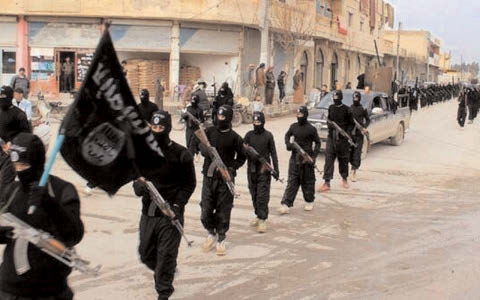
    ISIS has a ‘kill list’ with 8,318 assassination targets, report says

    LONDON (TIP): A pro-ISIS “hacking” group calling itself the United Cyber Caliphate distributed its latest “kill” list this week. The group claims the list includes names, addresses, and email addresses belonging to 8,318 people, making it one of the longest target lists ISIS-affiliated groups have distributed.

    The “kill list” includes names of Canadians, Australians and Europeans, a British media report said on June 9.

    It urged its supporters to “follow” those listed — and “kill them strongly to take revenge for Muslims”, Daily Mirror reported.

    It is one of the longest kill lists any ISIS-affiliated group has distributed to date and reportedly includes the names of 7,848 Americans, 312 Canadians, 39 Britons and 69 Australians.

    The rest of the targets listed are reported to be from a variety of nations including Belgium, Brazil, China, Estonia, France, Germany, Greece, Guatemala, Indonesia, Ireland, Israel, Italy, Jamaica, New Zealand, Trinidad and Tobago, South Korea and Sweden.

    They are mostly military or government workers or people in the public eye, like royalty or celebrities.

    The list, written in both English and Arabic, was uncovered by the media group Vocativ , which specializes in investigating the hidden side of the web.

    It discovered it on a messaging app service called Telegram earlier this week.

    (PTI)

  • Syrian rebels seize Islamic State stronghold, reports say

    Syrian rebels seize Islamic State stronghold, reports say

    AMMAN (JORDAN) (TIP) : Syrian rebel forces on Thursday took over a town near the Turkish border that had been the main stronghold of the jihadist group Islamic State (ISIS) in the northern Aleppo countryside, the Syrian Observatory for Human Rights and rebel sources said.

    The monitor said factions fighting under the banner of the Free Syrian Army (FSA), some supplied with arms by Turkey and other foreign backers, captured the town of al-Rai after fierce battles with the jihadists.

    “This is the beginning of the end of Daesh (Islamic State), those who have bet the FSA have been decimated are now proven wrong. It’s a victory for the Free Syrian Army,” said Abu Abdullah from the Nour al-Din al-Zinki brigade that participated in the assault on the heavily defended border town.

    “We will continue our path to al Raqqa and all the towns occupied by Daesh,” he said referring to Islamic State’s acronym in Arabic and its defacto capital.

    The rebels said their next step was advancing towards the Islamic State-held city of al-Bab, south of al-Rai and northeast of Aleppo.

    The recent gains by the mainly non-jihadist rebels is a boost to Turkey, which has sought to prevent Syrian Kurdish-led forces from expanding their stretch of territory along the border.

    It was the first retreat by the Islamic State jihadists since they made major advances in that area last May against rival insurgents and captured areas close to the Azaz border crossing with Turkey.

    Amaq news agency, which is linked to the militants, conceded that forces it described as “US- and Turkish-backed opposition brigades” had taken the town after days of intense “US bombing and Turkish artillery” fire.

    The news agency said al-Rai fell after heavy clashes and two suicide bombings that led to many casualties among Islamic State opponents.

    The Sunni militants have used suicide bombings to hold back offensives by the Syrian army and their allies by deploying small groups of fighters to disrupt supply lines.

  • ISIS ‘crucifies Catholic priest on Good Friday’

    ISIS ‘crucifies Catholic priest on Good Friday’

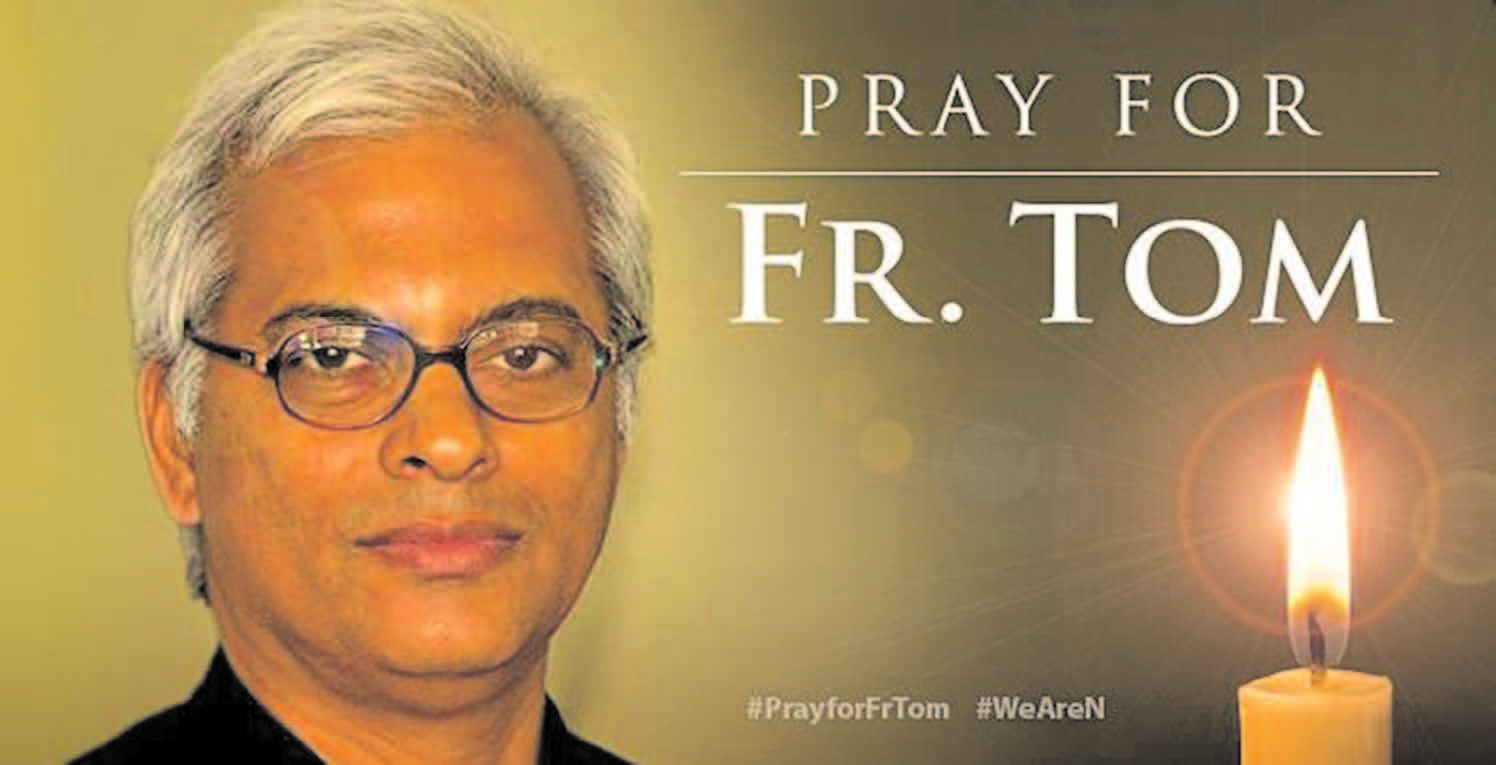
    YAMEN (TIP): The Indian Catholic priest kidnapped by ISIS-linked terrorists in Yemen earlier this month was crucified on Good Friday, it has been claimed.

    Father Thomas Uzhunnalil, 56, was taken by Islamist gunmen, reportedly linked to ISIS, killing at least 16 people, on March 4 – including four nuns – during the incident at the home in Aden, which is run by missionaries, the International Business Times India said.

    The terrorists reportedly carried out the heinous murder on Good Friday, after threatening to do so earlier in the week, according to the Archbishop of Vienna.

    However, a member of Bangalore’s Salesian Sisters of Don Bosco, Bangalore, of which Father Uzhunnalil was previously a part, told the International Business Times India: “There is no information about the whereabouts of Father Tom. We are only praying for him.”

    For more of the latest Islamic State news visit theindianpanorama.news/isis/


  • Pentagon confirms striking IS chemical weapons capabilities

    Pentagon confirms striking IS chemical weapons capabilities

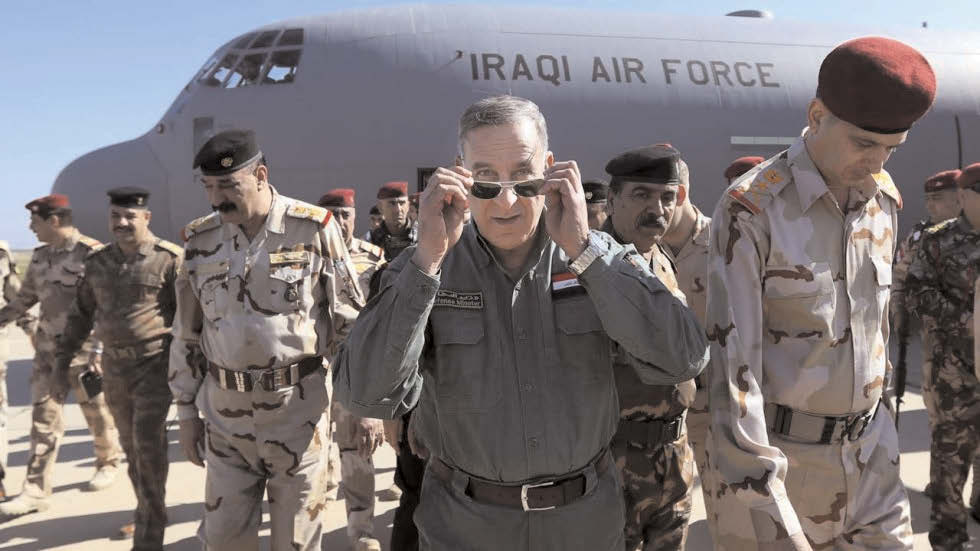
    WASHINGTON (TIP): The Pentagon confirmed on March 10 that intelligence from a captured Islamic State chemical weapons expert had led to US-led coalition airstrikes against the group’s chemical weapons production facilities.

    Calling Sulayman Dawud al-Bakkar, also known as Abu Dawud, as IS’s “emir of chemical and traditional weapons manufacturing”, Pentagon spokesman Peter Cook said at a briefing that his capture by US special forces in Iraq in February offered information that yielded almost immediate results, Xinhua reported.

    “The information has resulted in multiple coalition airstrikes that have disrupted and degraded Isis’ ability to produce chemical weapons, and will continue to inform our operations into the future,” said Cook.

    Dawud was transferred on Thursday into Iraqi custody after interrogation, added Cook.

    The spokesman refused to elaborate on the airstrikes. He acknowledged that at this point the US-led coalition was unable to curtail IS’s chemical weapons capability entirely, and additional operations would be carried out.

  • Isis commander ‘killed by captured Iraqi woman’ forced to act as a sex slave

    Isis commander ‘killed by captured Iraqi woman’ forced to act as a sex slave

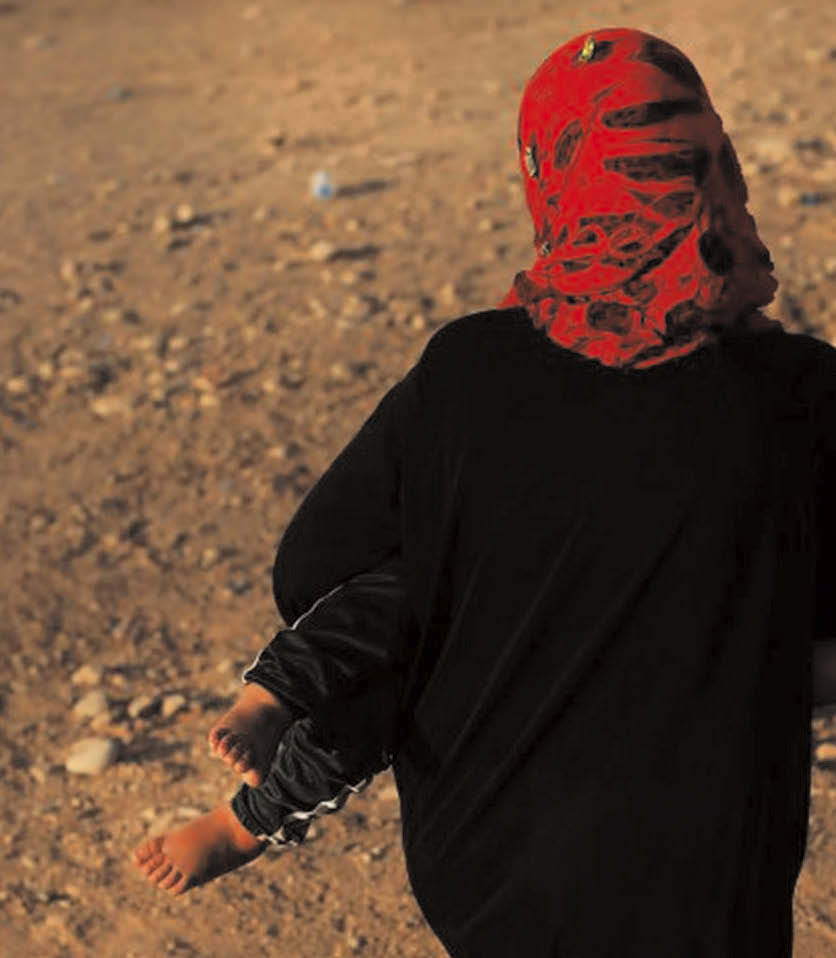
    MOSUL  (TIP): An Iraqi woman has reportedly killed an Isis commander after he forced her to become a sex slave for his fighters.

    The Isis commander, only referred to by his nom de guerre Abu Anas, was allegedly murdered by an unidentified Iraqi woman on 5 September in Mosul, Kurdistan Democratic Party (KDP) spokesperson Saeed Mamouzini told al-Sumari TV. According to Mr Mamouzini, the woman had been captured by the Isis commander and coerced into marrying several of the man’s fighters three months ago.

    The claims follow documented examples of Isis – also known as the Islamic State – systematically abusing women and girls within their captured territory.

    A Human Rights Watch report earlier this year interviewed Yazidi survivors. The women described the rape and torture meted out by their captors, justified by a narrow interpretation of the Koran. It preceded a New York Times piece also interviewing sex slave survivors, which demonstrated how Isis “enshrined a theology of rape”.

    The use of women may be part of a larger propaganda programme. The information about these women – and their treatment – is carefully released to appeal to both Western fighters and those from the Middle East, an Oxford University study recently suggested.

    (PTI)

  • New US intelligence report says Islamic State weaker

    New US intelligence report says Islamic State weaker

    WASHINGTON (TIP): Islamic State has as many as 25,000 fighters in Syria and Iraq, down from a previous estimate of up to 31,000, according to a US intelligence report revealed by the White House on February 4.

    US officials cited factors such as battlefield casualties and desertions to explain the roughly 20 percent decrease in fighters, and said the report showed a US-led campaign to crush Islamic State was making progress.

    The new intelligence estimate “means they continue to be a substantial threat, but the potential numbers have declined,” said White House spokesman Josh Earnest.

    “ISIS has sustained significant casualties,” Earnst said.

    Ground fighting efforts by coalition partners of the United States are having an effect in the conflict against Islamic State, also known as ISIS or ISIL, he said.

    U.S.-backed Iraqi security forces and tribal militias and moderate opposition groups in Syria have contributed. So too has a U.S.-led air campaign that has launched more than 10,000 strikes against the Islamist extremists, Earnest said.

    Finally, international efforts are beginning to stem the flow of foreigners seeking to join the movement.

    “ISIL is having more difficulty than they’ve had before in replenishing their ranks, and we have long been aware of the need of the international community to cooperate to stop the flow of foreign fighters to the region,” said Earnest.

    The new intelligence report of 19,000-25,000 Islamic State fighters in Iraq and Syria compares to 2014 estimates of 20,000-31,000 fighters.

    “The decrease reflects the combined effects of battlefield deaths, desertions, internal disciplinary actions, recruiting shortfalls, and difficulties that foreign fighters face traveling to Syria,” said Emily Horne, a spokeswoman for the National Security Council.

    Some North African jihadists who might otherwise have traveled to Syria to join Islamic State may instead have heeded calls by the movement’s leadership to head to Libya, where the Islamists are fighting to expand their grip on territory on the Mediterranean coast.

    The intelligence report did not account for the Islamic State’s affiliates in South Asia, other parts of the Middle East and North Africa, where its Libyan branch is expanding.

    There appear to be conflicting U.S. estimates of the strength of the movement’s Libyan affiliate. Defense officials put the number at some 3,000, while other U.S. officials put it at 5,000-6,000.

    (PTI)

  • ISIS claims responsibility for attack on media house in Pakistan

    ISIS claims responsibility for attack on media house in Pakistan

    ISLAMABAD (TIP): The dreaded Islamic State militant group has claimed responsibility for the attack on a Pakistani media house that had injured one person.

    Unidentified assailants riding a motorbike lobbed a hand grenade on ARY News office and fired several shots on Wednesday.

    Security guards present at the office entrance retaliated forcing the attackers to flee away dropping pamphlets, ARY news said in a report.

    Global terror outfit ISIS’s Afghanistan chapter claimed responsibility of the attack in the pamphlets ‘in reaction to the channels coverage of ongoing operation Zarb-e-Azb’.

    In the attack, a non-linear editor was injured who was hit by a shrapnel in the head. He was immediately whisked to a hospital for medical attention.

    Prime Minister Nawaz Sharif denounced the attack in strongest words. He directed the authorities to provide security to ARY News employees.

    A probe is going on and no arrest has been made in the case, police said.

    Pakistani police said in December they arrested eight suspected IS extremists after a raid in the central province of Punjab, accusing them of planning attacks.

    Pakistan has officially denied that Islamic State organisation is operating in Pakistan, but authorities have expressed fears the extremists could find recruits among the country’s myriad Islamist militant groups.

    (PTI)

  • Battle vs ISIS, battle for the Middle East

    Battle vs ISIS, battle for the Middle East

    ISIS or the Islamic State, also known as IS, ISIL or its Arab acronym, Da’esch, dominated the headlines for 2015. The year saw the terror group spread its hateful and vitriolic ideology beyond the borders of its “caliphate,” which encompasses large swathes of Iraq and Syria, as well as “provinces” in several Mideast and African countries.

    With millions of dollars in their pockets, and the Internet as their main channel to propagate evil, ISIS went “global” – with trained militants as well as radicalized individuals and groups carrying out the group’s mission to spread terror. Their targets ranged from a newspaper office, to a museum, from a concert hall to mosques, from military convoys to civilian planes. The toll: nearly a thousand people, from Paris to Beirut to San Bernardino.

    The spread of ISIS has further complicated the already twisted state of affairs in strife-torn Syria, already entering its fifth year in a civil war. World powers, in their attempt to untangle the mess and to gain influence in the region, bicker over which to tackle first: Bashar al-Assad, the iron-fisted dictator whose violent regime in many ways ignited the current conflict, or the terror group. Assad’s allies (namely Russia and Iran) are trying to have him stay put, while the US-led coalition wants him out.

    The year saw military movements from every side, with airstrikes targeting ISIS strongholds – and some say legitimate Syrian opposition groups. Countries around Syria and Iraq are also on their toes, with some nations such as Turkey serving as launch areas for military operations.

    Amid the mess, the peace process is still in the cards, despite several attempts to convene all sides in the past few months that yielded little results. Thanks to a landmark 18-month plan endorsed by the United Nations Security Council, the UN is preparing for another round of talks starting January 25, 2016.

  • THE RISE AND RISE OF ISIS

    THE RISE AND RISE OF ISIS

    ISIS ushered in 2015 with the terrifyingly typical displays of brutality which initially put the group in the international community’s crosshairs. They beheaded Japanese hostages, burned a Jordanian pilot alive in a cage and announced the death of American captive Kayla Mueller.

    The Sunni militants seized Ramadi in May and later the ancient city of Palmyra.

    David Phillips, a former senior adviser to the State Department on Iraq, said ISIS was “on a roll” at the beginning of the year.

    “They started off at a gallop,” explained Phillips, now director of the program on peace-building and human rights at Columbia University.

    But something was shifting as the year progressed.

    If 2014 was all taking and consolidating territory – Mosul, Tikrit and more – the seizures of Palmyra and Ramadi this year were overshadowed by losses on the ground. Key leaders were killed and territory slipped away.

    “In 2015, they’ve consistently had to abandon territory,” Phillips said.

    ISIS has been prevented from expanding operations in Iraq and Syria because of resistance they’ve encountered on the battlefield from Kurdish fighters backed by Western airstrikes, and Iran-backed militias, according to Phillips.

    “The caliphate has been restricted, hemmed in and is under more pressure now than it ever has been particularly with the start of the Russian airstrikes,” echoed Matthew Henman, head of IHS Jane’s Terrorism and Insurgency Center.

    But he and other analysts warned not to count ISIS out just yet: It’s important to note that the caliphate has survived another full year.

    “They remain hanging on,” Henman said. “They’re still in the game.”

    ISIS is still controlling “priority areas” in Syria and Iraq, Henman noted. The key cities of Fallujah, Ramadi, Mosul, Raqqa and Palmyra are still in ISIS hands despite billions of dollars worth of airstrikes against ISIS.

    “The group doesn’t need territory,” Henman added. “If it loses control of those cities it reverts back to insurgent operations – the threat doesn’t go away.”

    That’s also because ISIS in 2015 has experienced a great deal of international expansion, with operations in Libya, Yemen, Saudi Arabia, Pakistan, Egypt and Afghanistan. Even if ISIS is wiped out in Iraq and Syria, Henman warned it’s still got its hooks into other places.

    “That ideology now is something which can’t just be bombed away,” he said.

    ISIS appears to be driving that point home by increasing its attacks internationally and outside of their strongholds in Iraq and Syria, showing that it can strike out and hit its adversaries on their home turf.

    The group claimed responsibility for massive terror attacks in Tunisia, France, Yemen and the downing of a Russian passenger plane.

    “They’ve shown a consistent ability to project their terrorist goals,” Phillips said. “It’s a stark reminder that you’re not safe anywhere.”

    Those attacks outside Iraq and Syria serve several purposes, analysts said.

    First, it’s direct retribution for Western airstrikes. It also serves as a distraction from whatever losses ISIS may be suffering, according to Henman.

    “It’s that show of strength to inspire fear into the heart of their enemies but also to buoy up their supporters at a time when they’re coming under pressure,” Henman said. “It’s all about distracting away from their losses and reinforcing that narrative of continued expansion and momentum and winning victories.”

    It’s also partially about pulling the West further into the fight, Henman and other experts said.

    Analysts note that the first thing France did in response to the Paris attacks was to intensify airstrikes – which might play right into the ISIS-driven narrative.

    “They’re targeting farther abroad because they’re trying to draw the West into a major conflict and use that as a basis for a third world war,” Phillips said. “Their ideology is about the end of days and civilization as we know it being destroyed.”

    Whatever the goal – baited or otherwise -external actors have gotten more directly involved in the battle against ISIS this year.

    The killing of the Jordanian pilot drew Amman into the fight against ISIS. Moscow intensified airstrikes against ISIS following the downing of the Russian passenger plane. The U.S. said it was sending special operations forces into Syria and the Paris attacks provoked further action, confirming longstanding fears about the potential of returned foreign fighters to carry out mass-casualty attacks in the West.

    “It underlined that that threat is very real… It has catalyzed nations into acting,” Henman said.

    It also looks like the end of the year could hit ISIS particularly hard: an offensive against ISIS to retake Ramadi got under way on Tuesday and Iraqi forces have continued to advance in the days since.

    Still, ISIS released a new audio message purportedly from its leader on Saturday mocking the U.S. for not putting boots on the ground. Abu Bakr al-Baghdadi said in the clip that airstrikes against ISIS were failing and the group was thriving.

    It’s become increasingly difficult to ascertain how ISIS really is faring in terms of financing and fighter strength, analysts said. The group is particularly good at managing its image and keeping their propaganda tightly controlled.

    But while the various coalitions against ISIS have been criticized for a lack of cohesion or strategy, analysts note their impact can’t be discounted.

    “There’s a lot going on in terms of the lack of unity by the international community but nevertheless ISIS has been hit quite severely,” said Dr. Nelly Lahoud, a senior fellow for political Islamism at the London-based International Institute for Strategic Studies.

    She said some of that is clear from ISIS’ own propaganda releases. For example, ISIS has released several videos denouncing the recently-announced Saudi Arabian coalition against terrorism.

    “If you read what ISIS is saying they are very annoyed. They are alarmed,” Lahoud said. “It’s more preoccupied with attacking others on the rhetorical level and on the ideological level more so than showing the territorial victories because they don’t have any.”

    That level of alarm could bode worse for the West and the territories under ISIS control, she warned.

    “One has to be scared and concerned about what the group might decide to do when it is losing,” Lahoud said. “Mercy is not something that ISIS has shown to be part of its vocabulary … It is perhaps even more dangerous when it is losing.”

  • EXODUS: EUROPE, ASIA, AND BEYOND

    EXODUS: EUROPE, ASIA, AND BEYOND

    As the battles raged in Syria and Iraq, millions of innocent civilians have sought refuge elsewhere to escape the dire straits in their home countries. Their prime destination: Europe. They came via planes, trains, ships, boats, cars, and for many, on foot: hundreds of thousands of displaced people fleeing a war no one asked for, leaving behind everything – their careers, property, families, their lives.

    Most of the world, at first, did not seem to notice the crisis. Not until the photo of a boy in a red shirt, lying lifeless, face down on the sands of a Turkish beach, came up in newspapers, websites, and social media.

    Three-year-old Syrian refugee Aylan Kurdi’s death shocked the world into consciousness, and spurred western governments to act on the worsening humanitarian crisis.

    By the end of 2015, more than one million migrants and refugees reached the continent, nearly 970,000 of which made the journey crossing the waters of the Mediterranean. It wasn’t only Syrians and Iraqis fleeing the mess in their home countries; there were also thousands escaping poverty and persecution, mainly from other Mideast and African states.

    Europe and other western countries scrambled to address the exodus, as the crisis became another test for the EU. Following a slew of emergency summits this year, EU leaders have acknowledged they were too slow to carry out a joint strategy to tackle Europe’s worst refugee crisis since World War II. Other countries have also stepped up, like Canada, which has already welcomed its first batch of Syrian refugees.

    Asia, in particular Southeast Asia, also had its own refugee crisis. Impoverished, persecuted, and with nowhere to go, Rohingya took to rickety boats in their bid to escape the quagmire they were in. The crisis came to a head around May, when thousands of these refugees, mainly from Myanmar’s Rakhine state, were left abandoned at sea, setting off a regional crisis. Horror stories of kidnap, coercion, and hunger emerged from the hundreds who staggered ashore or were eventually rescued by Thai, Indonesian, and Malaysian authorities after weeks at sea.

    Refugee exodus is seen as logical outcome of Syrian president's survival strategy.
    Refugee exodus is seen as logical outcome of Syrian president’s survival strategy.

    The crisis has ebbed somehow in the past few months, thanks to some action of regional governments involved, as well as due to the monsoon season. But with the monsoon ending, the crisis might again surge forward into the headlines – and a solution still seems far away.

    Tensions defused? The Iran nuclear deal

    The odds were stacked against it, but on July 14, weary foreign ministers from the US, Britain, France, China, Russia, Germany, the EU, and Iran announced to the world that a deal to curb Iran’s nuclear ambitions had been forged. It was a diplomatic victory for the parties involved, especially for Iran, which has been trying to shake off its long-time image as a pariah state.

    The ministers of foreign affairs of France, Germany, the European Union, Iran, the United Kingdom and the United States as well as Chinese and Russian diplomats announcing the framework for a Comprehensive agreement on the Iranian nuclear programme (Lausanne, 2 April 2015).
    The ministers of foreign affairs of France, Germany, the European Union, Iran, the United Kingdom and the United States as well as Chinese and Russian diplomats announcing the framework for a Comprehensive agreement on the Iranian nuclear programme (Lausanne, 2 April 2015).

    Under the deal, Iran pledged to slash the number of centrifuges – which enrich uranium – from around 19,000 to 6,104, of which 5,060 will still enrich. It also has to change the design of a new nuclear reactor being built and shrink its stock of low-enriched uranium, shipping it to Russia. In return, outside powers will end some of the international sanctions that have severely squeezed the Iranian economy.

    The road to the deal, however, wasn’t an easy one. For years, Iran has maintained that its nuclear program was for peaceful, civilian purposes, but a weary West always eyed it with suspicion. In the past few years, the two sides have see-sawed between coming close to a deal and coming close to conflict. The relative success of the deal was a result of months of non-stop negotiations, as well as the presence of a more moderate government in Tehran, led by President Hassan Rouhani.

    The question now: Will both sides honor the deal?

    Greek tragedyA country teetering on the brink of bankruptcy due to years of financial mismanagement. A hardline, leftist government. An economic bloc avoiding a region-wide collapse. These were the elements of a Greek tragedy that unfolded throughout the better part of 2015, as Greece and the European Union negotiated to save the Balkan nation from crashing out of the eurozone.

    Greek Meltdown Fed up with the hated “troika” – the European Commission, European Central Bank, and the International Monetary Fund -Greeks in January voted into power their first leftist government, led by Alexis Tsipras’ SYRIZA party. Tsipras came into power with the promise to lead the country out of the debt crisis. However, after months of intense, pressure-filled negotiations and despite voters saying “no” to a new deal, Greece caved in to its creditors’ demands and signed its latest bailout deal. The deal, worth 86 billion euros ($93 billion) to be spread out over a 3-year period, ultimately saved the country from crashing out of the eurozone, but it came with strict conditions.

    The fallout: Tsipras resigned August 20 after accepting the deal, reneging on a promise to stand its ground against the country’s creditors. A snap poll in September, however, saw Tsipras and his SYRIZA party hold on to power. Adding to Greece’s economic woes is the refugee crisis, with the country acting as migrants’ main gateway to the EU, straining the already burdened nation.

    Russia and China: Show of force

    From ISIS to Iran, Russia – long overshadowed by richer and more influential countries in the West – continued to assert itself as it seeks to revive its power and influence. From Ukraine to Syria, it has made its presence felt, mostly through its military. It has been steadily fortifying its army, building and expanding bases in the Arctic, growing its defense budget, and taunting its neighbors with its planes, submarines, and ships with clandestine – and in one case, deadly – side trips outside its territory.

    China: Show of force.
    China: Show of force.

    Russia has also been making inroads on the political front, participating in some of the year’s major diplomatic issues, such as the Iran nuclear deal. But the centerpiece in the past 12 months has been Syria, as President Vladimir Putin’s government seeks to keep and gain more influence in the Middle East.

    Meanwhile, China has also made aggressive moves economically, diplomatically, and militarily. As other world powers became stuck in other issues, bogged down by economic and political matters, the Middle Kingdom continued to expand its reach, primarily through billions of dollars in economic aid and infrastructure projects.

    Despite winning a lot of new friends, China has one major thorn on its side: its long-simmering maritime and territorial disputes with its Asian neighbors. The East and South China Seas have become sensitive spots in the region – particularly the Spratlys, where Beijing has been building artificial islands in its attempt to bolster its claims in the area. The waters are now being tested by militaries from other countries, including the US and Australia, with an increasing number of confrontations near the disputed “islands.” China also lost in round one of an arbitration case lodged by the Philippines at the global maritime tribunal.

  • Indian-Origin Man Suspected To Be ‘New Jihadi John’ In ISIS Video

    Indian-Origin Man Suspected To Be ‘New Jihadi John’ In ISIS Video

    LONDON:  The terrorist who has been dubbed “new Jihadi John” and appeared in the latest ISIS video threatening attacks on the UK is suspected to be an Indian-origin British Muslim convert, media reports said today.

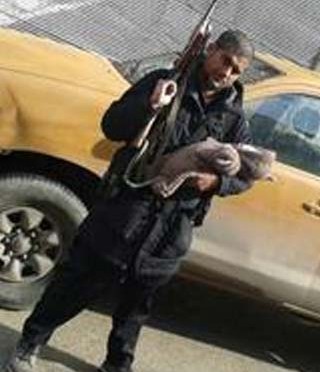
    Suspected ISIS terrorist Abu Rumaysah, who was born as Siddhartha Dhar holding his newborn son in one hand and an AK-47 assault rifle in the other. (File Photo)
    Suspected ISIS terrorist Abu Rumaysah, who was born as Siddhartha Dhar holding his newborn son in one hand and an AK-47 assault rifle in the other. (File Photo)

    Abu Rumaysah, who was born as Siddhartha Dhar, had skipped bail and fled Britain in 2014 with his wife and their four children allegedly to join ISIS in Syria.

    Born a Hindu, the 32-year-old ran a business renting out bouncy castles in London before converting to Islam and joining the radical Islamist group Al Muhajiroun.

    An official source told the BBC that Dhar is the focus of investigations into the video, which purports to show the killing of five men ISIS says were spying for the UK.

    Dhar’s mother and sister have also watched the video, released by ISIS on Sunday, and noticed similarities between the voice of the masked terrorist, being referred to as the “new Jihadi John” by the British media.

    “I heard the voice, yes, but I don’t know, I’m not sure of the voice. These are the most difficult questions to answer. I just cannot say. I’m not sure within myself whether it is the truth or not,” his mother Sobita Dhar told ‘The Daily Telegraph’.

    His sister, Konika Dhar, from north London, said: “I believed the audio to resemble, from what I remember, the voice of my brother but having viewed the short clip in detail, I wasn’t entirely convinced which put me at ease.

    “I can’t believe it. This is just so shocking for me. I don’t know what the authorities are doing to confirm the identity, but I need to know if it is.”

    She said her brother had converted to Islam more than 10 years ago and her memories of him are from when they were children and teenagers.

    “He was a very pleasant boy, and I know it may be hard to believe, but he still is, and I still believe that he still can be that person,” she added.

    One of Dhar’s former business associates told the BBC he had “no doubt” the voice on the video was that of Dhar, who had been arrested on suspicion of encouraging terrorism by the British police but was later able to travel to Syria after being bailed.

    His former neighbours from Walthamstow in east London claimed Dhar’s wife was more devout than him and suggest she may have put him on the path to extremism.

    In the months leading up to his arrest Dhar was accused of calling for the imposition of Sharia law in Britain.

    [yuzo_related]

  • Police investigate Sikh Attacked In California as a Hate Crime

    Police investigate Sikh Attacked In California as a Hate Crime

    NEW YORK:  A 68-year-old Sikh man was attacked Saturday, December 26,  morning west of Highway 99 in what Fresno police are investigating as a hate crime – the latest such attack on a Sikh resident in the Fresno area.

    Around 6:30 a.m., Amrik Singh Bal, 68, was waiting alone for a ride to work in the cold, 30-degree fog on Shields Avenue between Brawley and Blythe avenues when he was assaulted by two persons in California.

    Two white males stopped their car in front of Bal and started yelling obscenities at him, said Fresno police Sgt. Greg Noll. Fearing for his safety, Bal attempted to cross the street. It was then that the suspects backed up their car, hitting Bal with their back bumper, Noll said.

    The two men then got out of the car and attacked Mr Bal, hitting him in the face and upper body. Mr Bal fell to the ground and hit his head.

    During the assault, one of the suspects yelled “Why are you here?”

    The suspects fled only after they heard another vehicle approaching.

    Mr Bal, who was taken to a local hospital, suffered abrasions to his nose and right hand and a broken collar bone.

    Noll said police have started a hate-related criminal investigation into the attack on Mr Bal adding that the Fresno police would coordinate with the Department of Homeland Security and FBI to solve this case.

    “Sikhs have been mistaken for terrorists and radicals and continue to suffer after 9/11,” member of the Sikh Council of Central California Ike Iqbal Grewal said.

    Rights group The Sikh Coalition said its thoughts and prayers go out to Mr Bal and his family.

    “We are quickly investigating and will share updates when we have them,” it said.

    Racism & Hate Crimes on a rise 

    The attack is the latest in a line of hate crimes against Sikhs in America.

    Earlier this month, a Gurudwara in California was vandalised with hateful graffiti, including the word ‘ISIS’, in the aftermath of the mass shootings in San Bernardino.

    In September, a Sikh American father was viciously assaulted in a suburb outside of Chicago after being called ‘Bin Laden’.

    In May 2013, 82-year-old Piara Singh was attacked outside the Nanaksar Sikh Temple in south Fresno by a man who later allegedly made inflammatory comments about Muslims.

    The alleged assailant, Gilbert Garcia Jr., later pleaded no contest to a hate crime and was sentenced to 13 years in state prison.


  • ATS QUESTIONS PUNE GIRL ‘RADICALISED’ BY ISIS SYMPATHISERS

    ATS QUESTIONS PUNE GIRL ‘RADICALISED’ BY ISIS SYMPATHISERS

    PUNE (TIP): A city-based 16-year-old Muslim girl, who was reportedly radicalised by her ISIS contacts abroad and brain-washed to go to Syria, has been questioned by sleuths of Pune Anti-Terrorism Squad and sent to a de-radicalisation programme, an ATS officer said here tonight.

    According to the officer, the girl is a bright convent educated class XI student, studying in a city college.

    “The girl was interrogated by the ATS last week after monitoring her movements for many days on getting information about her. It confirmed her initiation by the ISIS.

    “The interrogation of the girl revealed that she was ready to go to any extent to carry out the ISIS directive,” Pune ATS officer Bhanupratap Barge told PTI revealing the details of the ATS operation.

    The girl is now undergoing a de-radicalisation programme with the help of her family members and community religious leaders, who are fully cooperating with us, he added.

    According to the ATS, the minor girl got attracted to the ISIS ideology after watching a documentary on television and subsequently started regularly monitoring news on Al Jazeera channel.

    “Later, she used the internet to get in touch with ISIS contacts and got in touch with about 200 young persons from different countries. Her interrogation revealed that she was told to come to Syria for medical education and for further initiation,” Barge said.

    He said that the girl, who is highly intelligent, had recently changed her lifestyle and started wearing burqa, giving up jeans she used to wear before her exposure to the ISIS contacts.

    “Even her family members noticed the change in her and felt disturbed,” the ATS inspector said.

    Barge said the de-radicalisation programme of the ATS with the help of community clergy and family members was “working” for the girl with encouraging results.

    Pune has been on the terrorist radar and had witnessed bomb blasts including the German Bakery blast that killed 17 persons including many foreigners in 2010.

  • Assad Can Stay, for Now | US changes stance for peace

    Assad Can Stay, for Now | US changes stance for peace

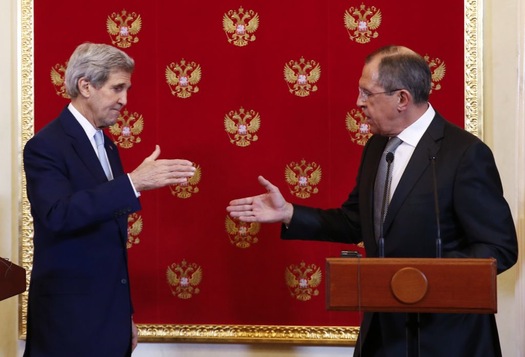
    WASHINGTON (TIP): U.S. Secretary of State John Kerry on Tuesday, December 15, accepted Russia’s long-standing demand that President Bashar Assad’s future be determined by his own people, as Washington and Moscow edged toward putting aside years of disagreement over how to end Syria’s civil war.

    Kerry announced this critical shift in Moscow where he met Russian President Vladimir Putin and Foreign Minister Sergey Lavrov to discuss the ongoing conflicts in Ukraine and Syria.

    “The United States and our partners are not seeking so-called regime change,” Kerry told reporters in the Russian capital after meeting President Vladimir Putin.

    This means Assad can stay in power for a bit longer if Russia and America cooperate together in overseeing the transition from Assad’s chaos to peace.

    A major international conference on Syria would take place later this week (Friday) in New York, Kerry announced.

    Assad is the very kind of “dictator” the US prides itself in fighting to remove. For the past four years, President Obama has called for Assad to step down. From Assad’s alleged use of chemical gas to barrel bombs to ISIS overtaking Syrian territory, Assad attracts a very diverse response from world leaders on how to achieve peace because the situation in Syria is so complex.

    But after a day of discussions with Assad’s key international backer, Kerry said the focus now is “not on our differences about what can or cannot be done immediately about Assad.” Rather, it is on facilitating a peace process in which “Syrians will be making decisions for the future of Syria.”

    Within the United States, where political debates are increasingly revolving around foreign policy — especially to do with Assad and ISIS — the presidential candidates (as well as politicians in general) find themselves equally divided on the Syrian solution. In fact, shifting positions on Assad seems to be the norm.

    The world is better off when Russia and the U.S. work together, Kerry added, calling Obama and Putin’s current cooperation a “sign of maturity.”

    “There is no policy of the United States, per se, to isolate Russia,” Kerry stressed.

    Below is a brief timeline of major American politicians on their stances regarding Assad and Syria, especially in relations to Putin and Russia.
    August 2011

    Secretary of State Hillary Clinton tells the press “it’s not going to be any news if the United States says, ‘Assad needs to go.’”

    A week later, US President Barack Obama announces for the first time — after weeks of political pressure — that Assad “must step down”.

    The American announcement happened in coordination with key allies’ announcements: Germany, France, and the UK, amongst others, also called for Assad’s departure from his presidency position around this time.

    February 2012

    Western powers reportedly ignore a Russian proposal to securely remove Assad from his position, as the US, French, and British leaders believe the Syrian president would not last much longer in power.

    September 2013

    President Obama addresses the nation, detailing the brutalities of the Assad regime and announces the US will strike Assad’s forces to deter the regime from the use of chemical weapons.
    The US and Russia then pushed for Syria to become party to the Chemical Weapons Convention, which banned the use of chemical and biological weaponry in warfare.

    November 2014

    President Obama states at the G20 press conference that “there’s no expectation that we are going to in some ways enter an alliance with Assad. He is not credible in that country.”

    The US president continues on to say that “we are looking for a political solution eventually within Syria that is inclusive of all the groups who live there — the Alawite, the Sunni, Christians. And at some point, the people of Syria and the various players involved, as well as the regional players — Turkey, Iran, Assad’s patrons like Russia — are going to have to engage in a political conversation.”

    August 2015

    Four years later, increased diplomacy between major powers — especially the US and Russia — start to cause US leaders to soften their “Assad must go” position.

    The New York Times quotes an unnamed senior American official as saying, “It’s encouraging, but we’re still a long ways off [on a solution for Assad].”

    September 2015

    Donald Trump tells Americans to let Russia take care of Assad and ISIS.

    “Let Syria and ISIS fight. Why do we care? Let ISIS and Syria fight. And let Russia, they’re in Syria already, let them fight ISIS. Look, I don’t want ISIS. ISIS is bad. They are evil. When they start doing with a head chopping … these are really bad dudes. … Let Russia take care of ISIS. How many places can we be? … Russia likes Assad seemingly a lot. Let them worry about ISIS. Let them fight it out.”

    October 2015

    Hillary Clinton, now a presidential candidate and no longer Secretary of State (since 2013), states removing Assad is America’s top priority, four years after she said it wouldn’t make US news.

    December 2015

    A month after the Paris attacks, a week after the San Bernardino attack, the day Los Angeles shut down its public schools due to a bomb threat, and the last Republican debate of the year before the holidays. Also the day Kerry meets Putin and Lavrov in Moscow.

    The Secretary of State officially reverses the position of the US on Assad, while Republican contenders for the 2016 election spar over what to do. The more memorable quotes are anti-Russian and anti-intervention.

    Donald Trump: “Spend the money [used in striking in the Middle East] in the US… It’s a tremendous disservice to humanity, and for what? [The Middle East is] a mess, [a] total and complete mess.”

    John Kasich: “In regard to Syria, understand that Assad is an ally of Iran who wants to extend that Shi’i radicalism all the way across the Middle East. He has to go. And for the Russians, frankly, it’s time to punch the Russians in the nose. They’ve gotten away with too much in this world, and we need to stand up against them, not just there, but also in Eastern Europe where they threaten some of our most precious allies.”

    Rand Paul: “We need to confront Russia from a position of strength.”

    Chris Christie: “Reckless was inviting Russia into Syria.”


    As of now, President Obama has yet to make an official statement confirming Kerry’s comments in Moscow. Kerry maintained that it is in the best interest for the world when Russia and the US cooperate, and that this cooperation is “a sign of maturity” between the two presidents.

    While it’s great for the US and Russia to be on slightly better terms again, time will only tell if this rekindling of relations will bring Assad to justice and peace to the Syrian people.

  • Robber calls Indian American store clerk ISIS “terrorist”

    Robber calls Indian American store clerk ISIS “terrorist”

    In another hate crime, an armed robber shot a store clerk of Indian origin (sikh) in the face after accusing him of being an “ISIS terrorist.”

    Following the terror attacks in Paris and San Bernardino, hate crimes against Muslims on the rise across the United States. People are not only demonizing the community for the crimes committed by a few extremists, but they are also attacking them for their faith.

    The incident took place at a convenience shop in Grand Rapids, Michigan, just before midnight on Saturday, December 12. Although it started out with gun-wielding bandits entering the store and demanding money, the robbery took a more disturbing turn as the unidentified man pointed his gun at an Indian-American store clerk.

    The store manager Gulreen Kaur told the police that after the clerk handed over a bag of cash, the robber stuck the gun in his mouth and said something along the lines of, “I shot people like you overseas in the Middle East.”

    The masked man also called the 34-year-old Indian immigrant, who goes by Tony, a “terrorist” and a member of ISIS — even though, as it was revealed later, the clerk is not even Muslim.

    The robber then dragged Tony into the backroom of the store and ordered him to stand on his knees. However, the struggle that ensued led to a bullet going through the clerk’s cheek. Although there is no video of the shooting incident, Grand Rapids police Sgt. Terry Dixon has confirmed the manager’s statements.

    “We’re very proud of how [the clerk] responded in light of this incident. This could’ve been much, much worse given the apparent intent of the suspect,” Dixon told local media. “If the victim had not fought off the suspect, then this could’ve been a much more serious incident.”

    Fortunately, Tony is still alive and recovering in a hospital.

    “We shouldn’t be targeted for it because we have nothing to do with it. We are just trying to live our normal lives,” the store manager said. “I grew up here and a lot of my Punjabi friends did. Whether we’re Indian or whether we’re (not), it doesn’t matter. You shouldn’t specifically be going for one race.”


  • Now an app from ISIS to promote terror

    Now an app from ISIS to promote terror

    In the past, extremist groups have used tools and forums which were available: Rallies, pamphleteering, and marching in parades were the primary means used for recruitment and spreading their message.

    Now, the Islamic State (IS a.k.a ISIS or ISIL) terrorist group has reportedly launched an android app that features news and videos showing executions and battlefield victories and propagates its agenda, the media reported.

    Discovered by the hacking collective Ghost security group, the app called “Amaq News” is designed to “streamline access” to the terrorist group’s “propaganda”.

    According to a Fortune report, the Android-based app is essentially a news portal run by the Amaq News Agency — a group believed to be tied to IS.

    When users start the app, it displays a scrolling news feed and icons to play videos. It also has options for users to have the feed automatically check for new posts.

    “It can even be automatically updated whenever the app’s developers send out new versions of the programme,” the report added.

    The app, however, may not work in regions outside the IS control.

    According to Ghost security group, the app is not available as a download in a marketplace like Google Play store.

    Instead, a link to the download is shared between IS members through Telegram app and other encrypted communication methods.

    Telegram is an app that can be set up on almost any device and allows messages to be sent to users with utmost privacy.

    Users can then download “Amaq News” in an Android device, the report said.

    IS has also created its own social network for jihadists called “Kilafahbook” to get around social media bans by Twitter, Facebook and YouTube.

    For IS, social media is prominent in formulating recruitment strategies.

    According to theconversation.com, Facebook is a key platform to gather young fans, supporters and recruits to incite them to acts of violence by the means of propaganda and the use of Islamic grievance.

    When it comes to real-time orchestrating of terror strikes, IS network works with encrypted messaging applications — including Kik, Surespot, Wickr and Telegram — that are very difficult to hack.

    Ghost security group is a hacking collective similar to Anonymous that focuses solely upon counter-terrorism.
    It claims to have “terminated over 100,000 extremist social media accounts” used by militant groups to recruit members.
    Earlier, Hacker group Anonymous declared December 11 as “International IS Trolling Day” to poke fun at IS militants, using memes and cartoons.

    Members of the hacking group also posted images on social media mocking the IS.

  • In taking economic war to Islamic State, US developing new tools

    In taking economic war to Islamic State, US developing new tools

    WASHINGTON (TIP): Since last month, US warplanes have struck Islamic State’s oil infrastructure in Syria in a stepped-up campaign of economic warfare that the United States estimates has cut the group’s black-market earnings from oil by about a third.

    In finding their targets, US military planners have relied in part on an unconventional source of intelligence: access to banking records that provide insight into which refineries and oil pumps are generating cash for the extremist group, current and former officials say.

    The intent is to choke off the Islamic State’s funding by tracking its remaining ties to the global financial system. By identifying money flowing to and from the group, US officials have been able to get a glimpse into how its black-market economy operates, people with knowledge of the effort have said.

    That in turn has influenced decisions about targeting for air strikes in an effort that began before Islamic State’s Nov. 13 attacks on Paris and has intensified since, they said. While Islamic State’s access to formal banking has been restricted, it retains some ties that US military and financial officials can use against it, the current and former officials said.

    “We have done a really good job of largely keeping the Islamic State out of the formal financial system,” said Matthew Levitt, who served as deputy assistant secretary for intelligence at the US Treasury in the George W. Bush administration. “But we haven’t been entirely successful, and that may not be a bad thing.”

    Reuters was unable to verify key aspects of the campaign, including when it started or exactly which facilities have been destroyed as a result. Two current officials who confirmed the operations in outline declined to comment on their details.

    It was unclear how US intelligence, Treasury, and military officials working on what the government calls “counter threat finance” operations have used banking records to identify lucrative Islamic State oil-related targets in Syria and whether that involved local banks.

    A report this year by the intergovernmental Financial Action Task Force found there were more than 20 Syrian financial institutions with operations in Islamic State territory. In Iraq, Treasury has worked with government officials to cut off bank branches in the group’s territory from the Iraqi and international financial systems.

    Gerald Roberts, section chief of the FBI’s terrorist financing operations section, said that Islamic State’s recruits from outside Syria often come with financial trails that officials tracking them can “exploit.”

    “We are seeing them using traditional banking systems,” he said at a banking conference last week in Washington, adding that young, tech-savvy Islamic State members are also familiar with virtual currencies such as Bitcoin.

    Islamic State, also known as IS, ISIS or ISIL, is sometimes forced to use commercial banks because the amounts involved are too large to move using other means, said Levitt.

    The US Treasury’s Financial Crimes Enforcement Network (FinCEN) uses a set of “business rules” to screen the roughly 55,000 reports it receives daily from financial institutions for signs of activity involving Islamic State, a spokesman said. He declined to describe the rules, but law enforcement sources say names, IP addresses, email addresses, and phone numbers are among the data that intelligence authorities try to match.

    The matches allow FinCEN “to connect the dots between seemingly unrelated individuals and entities,” the FinCEN spokesman said. At present, FinCEN finds about 1,200 matches suggesting possible Islamic State-linked financial activity each month, up from 800 in April, the spokesman said.

    Bank of America, JP Morgan and Wells Fargo declined to comment on whether they provided financial reports to the US government. Such reports are supplied confidentially.

    Citigroup, HSBC, and Standard Chartered did not immediately respond to requests for comment.

    “Tidal Wave II” The use of financial records linked to Islamic State is only one part of the intelligence-gathering exercise for air strikes in Syria that also includes methods such as aerial surveillance by drones, officials said.

    One former military official familiar with the process said that any financial intelligence collected by FinCEN would require “significant vetting” before the military acted on it.

    Earlier this month, US-led coalition planes struck 116 fuel trucks used to smuggle Islamic State oil 45 minutes after dropping leaflets warning drivers to flee, a Pentagon spokesman said. Coalition strikes destroyed another 283 Islamic State fuel trucks on Saturday, the Pentagon said.

    On November 8, a coalition air strike destroyed three oil refineries in Syria near the border with Turkey.

    US defense officials estimate that Islamic State, an adversary the United States calls the wealthiest terrorist group of its kind in history, was earning about $47 million per month from oil sales prior to October.

    That month, the US military launched an intensified effort to go after oil infrastructure, dubbed “Tidal Wave II,” named after the bombing campaign targeting Romanian oil fields in World War Two.

    The Pentagon estimates the strikes have reduced the Islamic State’s income from oil sales by about 30 percent, one US defense official with knowledge of the previously unreported estimate said. Reuters was unable to confirm this.

    The use of financial records in helping to pick US targets was first disclosed last week at the banking conference in Washington. At the conference, Kurt Gredzinski, the Counter Threat Finance Team Chief at US Special Operations Command, cited the importance of information provided by banks in the war against Islamic State.

  • Gurdwara Vandalized in Los Angeles With Anti-ISIS Graffiti

    Gurdwara Vandalized in Los Angeles With Anti-ISIS Graffiti

    BUENA PARK (TIP) Dec 6: A Gurdwara has been vandalized in Buena Park, Greater Los Angeles Area with Gang graffiti scribbled on the exterior of the Sikh Center. An expletive and the word “ISIS” was scrawled on a community member’s truck, according to the Sikh Coalition. The incident, which occurred early on Sunday, December 6, morning is being investigated by local law enforcement agencies.

    “We are concerned about the safety and security of our community members. We are of the opinion that this is a hate crime and that this is a direct result of a possible backlash from the San Bernardino killings,” said Inderjot Singh, president of Sikh Gurdwara in Buena Park.

    “We believe that the Gurdwara Singh Sabha was vandalized because it is a Sikh house of worship,” the coalition’s attorney Gurjot Kaur said in a statement. “We call on local and federal agencies to investigate this vandalism as a hate crime and request increased law enforcement security at the gurdwara immediately.”

    “The Gurdwara was vandalized during early hours of Sunday and a hateful graffiti was seen on the walls of the Gurdwara and also a truck parked in the parking lot. The graffiti included the phrase, “F@#k ISIS,” and the words “Islam” and other reference of gangs,” Washington-based Sikh Council on Religion and Education said in a statement.

    The Gurdwara is attended by over 800 community members on a weekly basis. The White House, which was informed about the incident, has forwarded the incident to the Department of Homeland Security to investigate.

    “The Sikh community across the nation is in a heightened state of alert and is deeply troubled by this latest incident. We are appealing to all Sikh place of congregation to be in touch with the local law enforcement agencies as well with the elected officials,” Dr Rajwant Singh of the Sikh Council on Religion and Education, said.

    Dr Singh also expressed concern over the recent anti-Muslim rhetoric made by some of the contenders of the American presidency.

    “This will directly result in elevated level of violence against minority religions in America and particularly the Sikhs. We are fearful that this kind of hate speech against Muslims with engulf Sikhs and members of the Muslim community across the nation,” he said.

    Buena Park police are investigating the incident, Cpl. Bret Carter said.

    When officers arrived at the temple, they saw the vandalized truck leaving the parking lot and noticed the ISIS scrawl on it, Carter said. It was unclear when the graffiti was sprayed on the vehicle, because officers were unable to speak to or identify the driver.

    In the wake of the shooting rampage in San Bernardino, the Sikh community is fearful of assaults on their members.

  • SOUTH INDIAN MUSLIMS MORE ATTRACTED TO IS: KIREN RIJIJU

    SOUTH INDIAN MUSLIMS MORE ATTRACTED TO IS: KIREN RIJIJU

    NEW DELHI (TIP): Union minister of state for home affairs Kiren Rijiju has claimed that Islamic State may carry out “lone wolf” terrorist strikes intended to create mayhem anywhere in the country even as the government is taking measures to contain the activities of the outfit.

    “Challenges are there. We have to accept that it is a reality. The threat is there,” Rijiju said in an interview to a TV channel.

    Rijiju was replying to a question on the possibility of an ISIS ‘lone wolf’ carrying out a terror attack in India on the occasion of the seventh anniversary of the 2008 Mumbai terror attack.

    The minister also stated that it has been observed that Muslims from southern states were more “attracted” to ISIS ideology than their north Indian counterparts.

    “It is a reality (some South Indian Muslims getting attracted to ISIS). It is a fact. But we should not undermine our vigil in other parts of the country,” he said.

    Rijiju said the government has been successful in enhancing the security apparatus after the 2008 Mumbai terror attack.

    Asked how the government is prepared to face the challenge of ISIS, the minister said anything that threatens the security of the country is taken seriously and the home ministry’s mandate is to provide security to the people and the country. Asked about the incidents of hoisting of the ISIS flag in Jammu and Kashmir, the minister said these were isolated cases and not spread across the state or the country.

    Rijiju said some web portals are under watch for their role in spreading ISIS propaganda, but it is important to note that these servers were not located in India.

    The Islamic State threat is being seriously viewed by the ministry of home affairs, Intelligence Bureau, Research & Analysis Wing and other agencies and regular meetings are taking place to come up with a robust strategy to avoid any Paris-like attack, say intelligence sources.

  • ISIS: Muslim-majority countries across the world overwhelmingly detest terrorist group

    ISIS: Muslim-majority countries across the world overwhelmingly detest terrorist group

    LONDON (TIP): ISIS is almost universally detested across the Middle East, Asia and Africa, even in Muslim-majority countries, a new poll has shown.

    Despite rhetoric about supposed “sympathy” for the terrorist group among Muslims in the UK and around the world, research by the Pew Research Centre indicated almost non-existent support in 11 surveyed countries and territories.

    In Lebanon, where ISIS’ recent bombing in Beirut killed 43 people, 99 per cent of respondents said they had a “very unfavourable” opinion of the group, while 94 per cent of Israelis and 89 per cent of Jordanians felt the same.

    In the Palestinian territories, 84 per cent of people had a negative view of ISIS, both in the Gaza Strip (92 per cent) and the West Bank (79 per cent).

    Chris Doyle, director of the Council for Arab-British Understanding (Caabu), told The Independent that the results were no surprise.

    “I think it emphasises that ISIS are seen as a threat to communities across the Arab world – Muslims have been their primary victims after all, as was the case with al-Qaida,” he said.

    “The brutal nature of their rule, the way they have treated women, all the beheadings, have not endeared them to people.

    “(Respondents) also know that by their actions, ISIS are trying to turn the non-Muslim world against them.”

    Mr Doyle said that while all the surveyed areas had experience of jihadist groups, Lebanon was particularly conscious of the carnage next door in Syria, which has driven hundreds of thousands of refugees across its borders.

    In no country surveyed did more than 15 per cent of the population declare support for ISIS, but in Pakistan views appeared more mixed.

    The majority of respondents – 62 per cent – said they did not know how they felt, while almost a third held negative opinions and around nine per cent thought positively of the group.

    Mr Doyle said the high proportion of “don’t knows” could be a sign of reluctance to answer the question.

    “ISIS don’t have as much of presence there so I would like to see further analysis,” he added.

    Opinions differed across religious groups in some areas including Nigeria, where Boko Haram declared allegiance to ISIS earlier this year while attempting to establish its own “caliphate” with a bloody insurgency.

    Around three quarters of Nigerian Christians had an unfavourable view of ISIS, as did 61 per cent of Nigerian Muslims, although a fifth of the same group supported the so-called Islamic State.

    The Pew Research Centre took the figures from its Global Attitudes Survey conducted in spring this year, before ISIS’ latest round of atrocities targeting France, Russia, Lebanon, Egypt, Tunisia, Iraq and Syria.

    Its latest findings came after The Sun was criticised for claiming that one in five British Muslims “have sympathy” for extremists going to fight with ISIS in Syria.

    One in five respondents to the poll did say they had “some” or “a lot” of sympathy with people going to Syria but did not specify who they would be fighting for, following high-profile coverage of volunteers going to combat ISIS with the Kurds and other forces.

    It was also pointed out that the word “sympathy” does not necessarily indicate approval. (Source: Reuters)

  • Fighting the Islamic State: Role of the P-5 Nations and India

    Fighting the Islamic State: Role of the P-5 Nations and India

    In the course of one week in November 2015, militants from Abu Bakr Al-Baghdadi’s self-proclaimed Islamic Caliphate – also called ISIS, ISIL and Daesh – struck multiple targets in Beirut, Paris and Mali. Earlier, on October 31, ISIS claimed to have brought down a Russian civilian aircraft flying from Sharm al-Sheikh to St. Petersburg.

    The ISIS militia, numbering between 20,000 and 30,000, now controls approximately 300,000 square kilometre of territory straddling the Syria-Iraq border. Its brand of fundamentalist terrorism is gradually spreading beyond West Asia and the militia is slowly but surely gaining ground. In Africa, ISIS fighters and their associates have been active in Algeria, Lebanon, Libya, Mali, South Sudan and Tunisia in recent months. Boko Haram, the militant Islamist group in Nigeria, has pledged allegiance to ISIS.

    Fighting Back
    Recent acts of terrorism have steeled the resolve of the international community. Significant help is being provided to the government of Iraq by the US and its allies. The Peshmerga, forces of the Kurdistan Regional Government (KRG) which had captured oil-rich Kirkuk, have joined the fight against the ISIS and recaptured the Syrian (Kurdish) border town of Kobani.

    The US began launching air strikes against the ISIS militia about a year ago, while simultaneously arming anti-Assad forces like the Free Syrian Army with a view to bringing about a regime change in Syria. The US has been joined in this endeavour by Australia, Britain, Canada, Denmark, France and Netherlands as well as five Arab countries (Bahrain, Jordan, Saudi Arabia, Qatar and the United Arab Emirates). The air strikes have resulted in substantial collateral damage. It is being gradually realised that the ISIS militia cannot be defeated from the air alone.

    Putin’s Russia joined the fight on September 30, 2015 with the twin aims of defeating the ISIS and destroying anti-Assad forces. However, the initial air strikes launched by the Russian Air Force were directed mainly against the forces opposed to President Assad of Syria. Russian ground troops are also expected to join the fight soon. The Russians have also descended on Baghdad to establish a military intelligence coordination cell jointly with Iran, Iraq and Syria – a move that has not been appreciated by the Americans.

    In a rare show of unity after the Paris attacks, the United Nations Security Council passed a unanimous resolution stating that “The Islamic State in Iraq and the Levant constitutes a global and unprecedented threat to international peace and security,” and called upon all member states to join the fight against the ISIS.

    Diplomatic moves have been initiated to coordinate operations and work together for peace and stability in the region. The US and Russia agree that the objective of their interventions should be to end the civil war in Syria through a political deal and that both Iraq and Syria should retain their territorial integrity. They also agree that the ISIS extremists must be completely eliminated. Iran has agreed to join the negotiations to resolve the conflict in Syria. However, while the political objectives are similar, the methods being used to achieve them are different and are designed to extend the influence of each of the protagonists in the region.

    Implications for South Asia
    Al-Baghdadi has openly proclaimed the intention of ISIS to expand eastwards to establish the Islamic state of Khorasan that would include Afghanistan, the Central Asian Republics, eastern Iran and Pakistan. The final battle, Ghazwa-e-Hind – a term from Islamic mythology – will be fought to extend the caliphate to India. An ISIS branch has already been established in the Subcontinent. It is led by Muhsin al Fadhli and is based somewhere in Pakistan. Some factions of the Tehrik-i-Taliban Pakistan have declared their allegiance to al-Baghdadi. Afghanistan’s new National Security Adviser, Mohammad Hanif Atmar, has said that the presence of Daesh or the ISIS is growing and that the group poses a threat to Afghan security. And, some ISIS flags have been seen sporadically in Srinagar.

    Instability and major power rivalry in West Asia do not augur well for India’s national security and economic interests. Combined with the increase in force levels in the Indian Ocean, the heightened tensions in West Asia may ultimately lead to a spill-over of the conflict to adjacent areas. India now imports almost 75 per cent of the oil required to fuel its growing economy and most of it comes from the Gulf. The long-drawn conflicts of the last two decades of the 20th century had forced India to buy oil at far greater cost from distant markets, with no assurance of guaranteed supplies. The 1991 oil shock had almost completely wrecked India’s foreign exchange reserves. The situation could again become critical. Oil prices had shot up to USD 115 per barrel in June 2014, soon after the Caliphate was proclaimed, but have since stabilised around USD 50 to 60 per barrel.

    Since the early 1970s, Indian companies have been winning a large number of contracts to execute turnkey projects in West Asia. The conflict in the region has virtually sealed the prospects of any new contracts being agreed to. Also, payments for ongoing projects are not being made on schedule, leading to un-absorbable losses for Indian firms involved, and a dwindling foreign exchange income from the region.

    India also has a large Diaspora in West Asia. A large number of Indian workers continue to be employed in West Asia and their security is a major concern for the government. Some Indian nurses had been taken hostage by ISIS fighters, but were released unharmed. All of these together constitute important national interests, but cannot be classified as ‘vital’ interests. By definition, vital national interests must be defended by employing military force if necessary.

    US officials have been dropping broad hints to the effect that India should join the US and its allies in fighting ISIS as it poses a long-term threat to India as well. India had been invited to send an infantry division to fight alongside the US-led Coalition in Iraq in 2003. The Vajpayee government had wisely declined to get involved at that time as it was not a vital interest.

    It must also be noted that India has the world’s third largest Muslim population. Indian Muslims have remained detached from the ultra-radical ISIS and its aims and objectives, except for a handful of misguided youth who are reported to have signed up to fight. This could change if India sends armed forces to join the US-led coalition to fight the ISIS militia.

    Prime Minister Narendra Modi proposed at the G-20 summit in Antalya last week that the war against terrorism must isolate and contain the sponsors and supporters of terrorism. He clearly implied that India is willing to join the international coalition against the ISIS and other non-state actors. Besides contributing to the global war against terrorism, India’s participation would help to isolate the Pakistan Army and the ISI – the foremost state sponsors of terrorism.

    Direct Indian military intervention against the ISIS militia would depend on the manner in which the situation unfolds over the next one year. It could become necessary if ISIS is able to extend the area controlled by it to the Persian Gulf as that would affect the supply of oil and gas from the Persian Gulf to India – clearly a vital national interest. For the time being, India should cooperate closely with the international community by way of sharing information and intelligence and providing logistics support like port facilities if asked for. India should also provide full diplomatic support and work with the United Nations for evolving a consensual approach in the fight against the ISIS.

    A concerted international effort is needed to first contain and then comprehensively defeat the ISIS and stabilise Iraq and Syria, failing which the consequences will be disastrous not only for the region, but also for most of the rest of Asia and Europe. Helping the regional players to gradually eliminate the root causes of instability will not be an easy challenge for the international community to address. As an emerging power sharing a littoral with the region, India has an important role to play in acting as a catalyst for West Asian stability.


  • India steps up surveillance on ISIS propaganda: over 150 Indians under the scanner

    India steps up surveillance on ISIS propaganda: over 150 Indians under the scanner

    NEW DELHI (TIP) : Nearly 150 Indians are on the radar of intelligence agencies for actively following Islamic State propaganda and engaging on social media with pro-IS elements, according to government sources.

    A majority of those under surveillance are from the southern states, sources said.

    Though agencies are not planning any action or crackdown on the youth who may be showing a more-than-keen interest in pro-IS websites or social media posts, the tracking is meant to pre-empt the possibility of their becoming indoctrinated enough to join the IS. As and when those under surveillance show signs to radicalization, an intervention may be made to alert their families and facilitate their counseling, if need be.

    Online tracking of pro-IS websites, Twitter handles and Facebook accounts is a key part of India’s counter-IS strategy. Agencies, with the help of experts from the National Technical Research Organization (NTRO), track online traffic related to IS across the country, and constantly flag any unusual trend or activity.

    Sources in the security establishment told TOI that 23 Indians, including about a dozen from the diaspora, had joined the IS and traveled to Iraq-Syria for ‘jihad’. These include four youth from Kalyan, one of whom Areeb Majeed returned to India and is now in custody here, a Kashmiri based in Australia, a Singapore-based Indian, an Oman-based man and one person each from Karnataka and Telangana and a journalist from Kerala.

    Of the six Indian recruits believed to have got killed in IS territory are three Indian Mujahideen cadre including Bada Sajid and Sultan Ajmer Shah who joined the outfit from Pakistan, two from Maharashtra and one from Telangana.As many as 30 Indians, including a woman based in Delhi, have been prevented from joining the IS. Besides, around 8-10 Kerala-origin men and an alleged woman recruiter, Afsha Jabeen, were recently deported by the UAE after they were found to be in touch with active IS members.

    A senior government officer said there was threat of an Indian IS recruit indulging in a “lone wolf” attack here upon return from Iraq-Syria. “Unlike other countries that strip their citizens who join and fight for IS of their passports, we have no such plan. We’d rather let them return and intercept them here,” said the officer.

    In an advisory sent on Monday, the home ministry had warned of the possibility of an IS-sponsored terrorist action on Indian soil. “Though the IS has not been able to establish any significant presence in India, its success in radicalizing some youth, attracting certain sections of the local population or the Indian diaspora to physically participate in its activities or the possibility of piggy-backing on terrorist groups operating in India have opened up the possibility of IS-sponsored terrorist action on Indian territory,” said the advisory issued to all the states and Union Territories.

  • India among 10 nations impacted by terrorism in 2014: Report

    India among 10 nations impacted by terrorism in 2014: Report

    NEWYORK (TIP): India is among the 10 countries most impacted by terrorism in 2014, according to a new report which said that ISIS and Boko Haram are now jointly responsible for more than half of all global fatalities from terrorist attacks.

    According to the third edition of the Global Terrorism Index 2015 (GTI), India ranked 6th out of 162 nations most affected by terrorism in 2014.

    India witnessed a slight increase in terror-related deaths, up by 1.2 per cent in 2014 to reach a total of 416, the highest number of terrorist incidents and deaths since 2010.

    There were 763 incidents which represents a 20 per cent increase from 2013, the report by Washington-based Institute for Economics and Peace said.

    In India, the two deadliest Islamic terrorist groups in 2014 were Lashkar-e-Taiba (LeT) and Hizbul Mujahideen.

    The Pakistan-based LeT was responsible for 24 deaths in 2014, while Hizbul Mujahideen was responsible for 11 deaths in 2014, down from 30 deaths in the previous year.

    In 2013 Hizbul Mujahideen was the only group in India to use suicide tactics, but in 2014 there were no suicide attacks in India, the report added.

    It said that the number of lives lost to terrorism around the world increased by 80 per cent in 2014, reaching the highest level ever recorded at 32,658 as compared to 18,111 in 2013.

    Pakistan was ranked fourth of the list while the US was ranked 35th among the nations most impacted by terrorism.

    The report added that just two terrorist groups, ISIS and Boko Haram, are now jointly responsible for 51 per cent of all global fatalities from claimed terrorist attacks.

    “Boko Haram, which pledged its allegiance to ISIL as the Islamic State’s West Africa Province (ISWAP) in March 2015, has become the world’s deadliest terrorist group, causing 6,644 deaths compared to ISIL’s 6,073,” it said.

    India has featured 14 times in the 10 countries most affected by terrorism for the 2000-2014 period.

    While India continues to be among the 10 countries most impacted by terrorism, 2014 was the first time since 2000 that India did not feature among the ten countries with highest fatalities from terrorism.

  • How serious a threat is ISIS to India?

    How serious a threat is ISIS to India?

    ISIS/ISIL/IS is a fundamentalist group, made of delusional individuals, who claim to be religious, and who want to create a nation state of Sunni Salafist Muslims. Their ultimate aim to wield their power over such vast and rich land is laughable and disturbing to every Indian who has heard of them (yes, not every Indian has heard of them).

    ISIS is growing at the pace of rabbits.

    The United Nations has recognized ISIS to be a terrorist group by passing a resolution to that effect. If ISIS flexes its forces to come to India, one can speculate that the UN’s stand against ISIS will become more sharp and decisive (with Obama saying “I told you so” in the background).

    Likewise, India has banned the terror group. India, however, is confused for the most part about how to go about labeling this fundamentalist group. We have hostages under the ISIS, and we would really like to have our people back in India, away from the brutal captors, before doing anything too loud against the ISIS. Thus, one can go so far as to say that this hostage situation is already a mark of the threat that India is facing, from the group.

    Is there a risk of the ISIS coming to India? 

    They can reach India through land or sea routes. Land routes, funnily enough, are not going to be welcoming to them. Our neighbours, all said and done, are not going to harbor terrorists who threaten even their own cultural ethos (ISIS has shown no mercy to non-Sunni muslims; in fact, they were the first to be affected in the emergence of the Islamic State in Syria and Libya). In any case, providing shelter to ISIS amounts to the ire of Uncle Sam. We know no one like to tick Uncle Sam off. Sea routes are probably their most hassle-free means of getting to India. India, since 26/11 has strengthened and secured her coastal fronts sufficiently (although there is much more to be desired still). ISIS will have a tougher time reaching India than waging any kind of attack against us.

    What if ISIS do get to India?

    India’s armed forces are dynamic and are trained to fight in different types of terrain, over years – something that the ISIS cannot have done, and will not be able to do. There lies our advantage. Over the last couple of decades, our defense strategy has been hinged on deterrence. Nuclear power has deterred direct war on India. But irrational parties such as the stateless (wannabe nation state) ISIS are hardly going to be deterred by atomic bombs. In the unlikely event that the ISIS unleashes terror at our frontiers, rest assured that our armed forces, and paramilitary forces (if need be), shall be deployed, they will ensure we sleep soundly.

    To not seem too complacent, let me add that we do need to be in a position to deploy the necessary amount of forces at the time of need, which can be anytime. For this, we should either equip them sufficiently or relieve them of their domestic duty, by settling domestic problems as soon as possible (for example, the recent deplorable massacre of Adivasis in Assam which needed the Indian Army’s presence to be quelled).

    In the periphery, people have to be made aware of the foolishness of the ideological beliefs that ISIS espouses. There have been worrisome reports of Indians joining the fundamentalist groups. This has to be prevented at all costs – a stitch in time saves nine.

  • Paris Exposes the Limitations of the West’s Approach  to Counter Terrorism

    Paris Exposes the Limitations of the West’s Approach to Counter Terrorism

    The ‘notion’ of Critical Infrastructure Protection (CIP) has taken a beating after the November 13, 2015 terrorist attacks in Paris. CIP is about protecting vital infrastructure, which, if attacked, would have deleterious consequences for the state and society. Such infrastructure includes essential services on which the population depends heavily for various routine but essential activities like managing water and electric supply, maintenance of rail and airline networks, etc. For the last couple of years many states have placed a major emphasis upon CIP and have made significant investments to ensure that the architecture for CIP gets appropriately established. However, the recent attacks in Paris and the nature of targets selected there by the terrorists indicate that the ‘process’ behind identifying what is Critical Infrastructure has limitations and terrorists could select many more targets that are outwardly not Critical.

    The idea of CIP could be said to have begun when US President Bill Clinton issued Presidential Decision Directive [PDD]-63 in May 1998 to set up a national program of ‘Critical Infrastructure Protection’. Europe too views CIP as an important instrument and has in place the ‘European Program for Critical Infrastructure Protection’ (EPCIP). For its part, India has the ‘National Critical Information Infrastructure Protection Centre’ (NCIPC), which essentially handles cyber security related issues.

    The terrorist attacks in Paris and prior to that in Mumbai (26/11) demonstrate that terrorists are not concentrating on Critical Infrastructure as a target of choice. Instead, they are targeting places where they can inflict maximum damage to human life as well as garner wide publicity. This is, however, not to argue that Critical Infrastructure has lost its relevance as a ‘rewarding’ terror target. Perhaps realizing that such targets are difficult to attack owing to security measures put in place, terrorists seem to have shifted their attention to softer targets.

    This raises some basic questions: Are global powers unable to visualize the probable patterns of terrorism? Are the tools used by them to handle current asymmetric threats appropriate? Are attacks like those in Paris exposing the limitations of the existing preparedness and response mechanisms?

    It is well-known that ‘terrorists have to be lucky only once but the state has to be vigilant all the time’. The successes achieved by intelligence agencies are normally not known but their one odd failure has large-scale ramifications. Also, policing or military measures are unlikely to eradicate terrorism and the solution has to be political, economic and socio-cultural. Zero terrorism is not an achievable objective. However, all this should not justify the failures of security agencies at Paris or Mumbai. The success of terrorists indicates policy and policing failure at both tactical and strategic levels.

    Against the backdrop of the Paris attacks, there is a need to introspect about the effectiveness of the approaches adopted by major states to counter terrorism. It could be broadly argued that the ‘Global War on Terror’ being a US construct, the global response also has a US bias. States are mostly building their respective policy structures based on the US ‘interpretation and response’ to this challenge.

    As a result, CIP became a buzzword and the idea spread globally owing to the degree of emphasis given to it by the US and the EU. Post 9/11, many terrorism experts ‘mushroomed’ and some ended up converting the issue into an academic debate. This led to non-specialists influencing major policy decisions. Various forecasting and modeling techniques borrowed from military studies, management and economics were used to analyze terrorism. Multiple justifications were offered to understand the ‘method behind the madness’ for various acts of terrorism. Theoretical conceptualizations were evolved to ‘situate’ terrorism under preconceived ‘formats’.

    None of this appears to have helped to stem terrorism as is evident from the continuing activities of ISIS, Boko Haram, Al Qaeda, and Talban during the last decade and a half. The Paris attacks only reinforces the case for states to recalibrate their approaches to intelligence gathering, data interpretation and policy response. Analysts need to recognize that the use of smart language and analyses based on Cold War era theories are unlikely to offer appropriate solutions to current problems. For example, the ‘game of chicken’ metaphor used to explain how people avoid a potentially fatal head-on collision may not hold good in the scenario of a suicide terrorist who is ready to die for a cause.

    Post 26/11, it appears that India is essentially following the Western model to counter terror-related challenges. The Paris attacks show that such models have limitations. India is often criticized for lacking in ‘Strategic Thought’. However, states that are lauded for their ‘Strategic Thought’ have only faced failures from Vietnam to Iraq to Afghanistan to Syria. The Paris attacks should make India think for itself.