Tag: Joe Biden

  • Trump continues to be most unpredictable, as in 2016

    Trump continues to be most unpredictable, as in 2016

    By Ven Parameswaran

    Youth interest in voting has hit its lowest since 2000, GALLUP reports

    Does Ohio provide a model?

    The shy Trump vote is bigger this year…and who falls into this category should terrify Democrats.  I will say it again, folks.  The polling is skewed.  It is a mess.  Either we are right to be highly skeptical and Trump wins an Electoral College landslide, or the pollsters are right and Biden wins landslide.  Young Americans are not excited about this election at all.  They are not planning on voting.  Gallup is reporting the youth interest in voting this cycle has hit its lowest since 2000.  That is in keeping with the results from Democracy Institute’s Patrick Basham, whose polling data, which has been mentioned in The Washington Times and Forbes, suggests there will be one million fewer young people voting this cycle.   Hill-Harris X Research shows younger voters are consistently more likely to say they do not plan to vote.

    Basham spoke with Joseph Cotto about his new data.  Pollwatch had a good thread summarizing the interview.  Democracy Institute’s poll had a sample size of 1500 voters, where Trump leads Joe Biden by one point.  He also noted that the “shy Trump” vote is very much alive and will be bigger this time.  Suburban white women and urban black women are the two groups that are most likely to fall into the shy category for the 2020 cycle.  That latter part should shake Democrats to their core.  And as for Florida, a state that Biden must carry, it could already be out of his reach.  Basham notes Trump cannot fall asleep at the wheel, but things are becoming more comfortable for him in the Sunshine State.  And based on some recent polling from the state, it looks like the tide has shifted solidly in favor of Trump.

    The outcome of Election Day 2020 would seem to be a foregone conclusion if the latest national and battleground polls are any guide as to whether President trump will win in his reelection bid.

    However, the GALLUP poll has just released the results of a new survey that suggests President Trump might have a better shot than you would think.

    Most Americans responded positively to the survey question asking whether they feel better off now than they did four years ago.

    Trump’s odds of winning reelection seem to be growing slimmer by the day—though, it is worth remembering that we have also seen this movie play out before.  This is not the first time that Trump has been in this predicament.

    DOES OHIO PROVIDE A MODEL FOR PRESIDENTIAL VICTORY?

    No Republican has won the Presidency without winning Ohio. Franklin D Roosevelt in 1944, and John F Kennedy in 1960 won without winning Ohio.    President Trump won Ohio by 8 points in 2016.  He accomplished this in spite of stiff opposition from Republican Governor John Kasich.  So far, all indications are Trump will easily win Ohio.  Biden has been visiting Ohio but his reception has been poor.   If Trump wins Ohio like in 2016, it will influence his outcome in Michigan, Pennsylvania, Wisconsin, and Minnesota.

    POINT OF CAUTION IN READING POLLS SPONSORED BY THE MAINSTREAM MEDIA:   

    All these pollsters have been interviewing registered voters  — there are much more registered Democrats than Republicans.   Polling most likely voters may give a better clue.  The undecideds and third parties comprise 10% of final voters.

    (Ven Parameswaran, Chairman, Asian American Republican Committee (Founded 1988), lives in Scarsdale, NY. He can be reached at  vpwaren@gmail.com)


  • If elected, 11 million immigrants to get citizenship, promises Biden

    If elected, 11 million immigrants to get citizenship, promises Biden

    WASHINGTON (TIP): Democratic presidential candidate Joe Biden has vowed to provide citizenship to 11 million illegal immigrants if voted to power in the November 3 presidential election. Biden identified this as one of his priorities in addition to beating the coronavirus pandemic, rebuilding the economy and figuring out how to restore American leadership around the world.

    At a virtual fundraiser on Wednesday, October 14, Biden said there is a need to deal with what’s going on at the border. “We’re going to have to deal with the immigration crisis,” he said.

    Donald Trump has been calling for the deportation of illegal immigrants.

    Meanwhile, Democratic vice-presidential nominee Kamala Harris has cancelled her travel plans through Sunday as a precaution after one of her staff members tested Covid positive.

    (Source:  PTI)

  • Battleground States hold the Key to Victory -US Election 2020

    Battleground States hold the Key to Victory -US Election 2020

    By Ven Parameswaran

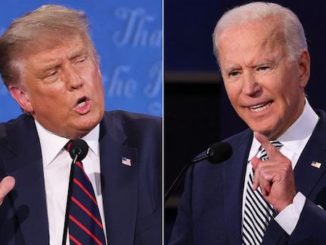
    The first Presidential debate on September 29 was watched by 73 million people.   Trump is a gambler, and not just because he owned casinos.  He ran one of the biggest gambles of his life in the debate, and whether it pays off now is very uncertain.    The President’s ultra-aggressive performance in the first presidential debate—aggressive to the point where moderator Chris Wallace had to ask him three times to simply let challenger Joe Biden answer a question—can’t have been an accident.  It was an effort by a candidate behind in the polls to shake up the race by driving home his principal line of attack: that Biden is too weak to be the president of America.

    Trump chose not simply to say that his opponent is too weak, or too old, or too afraid of his party’s left wing, but rather to try to demonstrate it before a world-wide audience by attacking and belittling him.  The subliminal message: If you can’t stand up to me, how can you stand up to the leader of China, or those perpetrating violence in the streets of Portland?

    And perhaps it worked.  Nobody who watched was left in any doubt about the core argument of Trump’s campaign, which is in large measure about the assertion that his foe is not up to the demanding job of sitting behind the Resolute Desk.

    Biden did,  at times , seem taken aback by the relentless ferocity of the onslaught—and if the plan was to get the challenger to overreact by calling the president a “clown,” well, that did happen at one point.  This is what those who call Trump undisciplined don’t entirely grasp:  He is very disciplined in driving home his main message, and will do so again and again, without remorse or apology, as he did Tuesday night.

    It is important to recall how Trump used almost the same technique in defeating 16 Republican candidates in 2016 and Hillary Clinton.  He succeeded in burying Bush and Clinton dynasties, against all odds, including vehement opposition of the mainstream media, continuous investigations, impeachment he has won.  Therefore, it is possible his strategy to defeat Biden could work.

    Trump was able to impress the audience that he was for law and order and strong economy.  He also took credit for appointing 200 judges and 3 Supreme Court judges in his first term (third appointment is in process).

    There was little likable about the presidential persona that came across in the debate stage.  Maybe that does not matter as much as it used to in politics.  Trump has demonstrated that people don’t have to like him to support him.  A common refrain among Trump voters, in fact, is that he is rough and tough, but that they see that as part of his strength.  Yes, they say, he is a bully, but he is our bully.

    Trump’s main strategy is to attract new voters from the uneducated working class located in the battleground states.  If so, his aggressive performance in the debate should help him achieve his goals.  Rush Limbaugh, most popular talk radio host has praised Trump’s debate performance.    As mentioned in my previous dispatches, Trump is not appealing to the elites.

    If Trump knew how to get elected as President in 2016, his strategy to get reelected could succeed.

    (Ven Parameswaran, Chairman, Asian American Republican Committee (founded 1988) lives in Scarsdale, NY.  H can be reached at vpwaren@gmail.com)

  • US Presidential elections: You ain’t seen nothing yet

    US Presidential elections: You ain’t seen nothing yet

    By Prabhu Dayal
    • Winning more votes in the US Presidential election does not assure a candidate victory

    • Biden’s chances of defeating Trump look good, but there’s a long way to go and things can change very quickly

    • One factor which is affecting Trump’s re-election prospects is his handling of the coronavirus pandemic

    “It cannot be overstated that U.S. Presidential elections are always contested over a host of political, economic, and social issues on which the positions of both the Republicans and the Democrats have evolved over time. As part of its economic conservatism, the Republican Party supports lower taxes, free-market capitalism, the removal of restrictions and regulations on corporations, and restrictions on labor unions. The party is also socially conservative and supports gun-rights and traditional values with a Christian foundation, such as restrictions on abortion. In foreign policy, Republicans usually favor increased military expenditure and tough action against America’s enemies. Republicans also want restrictions on immigration.
    The Democrats support social programs, labor unions, worker’s rights and work-place safety regulations, disability rights and racial equality and reform of the criminal justice system. They also support abortion rights, LGBT rights and a pathway to citizenship for undocumented workers. In foreign policy, they favor a multilateral approach, from which America under Trump has been distancing itself.”


    There are fewer than 35 days to go before American voters decide on November 3 whether Donald Trump remains in the White House for another four years. Given the hugely important role played by the US President on the global stage, psephologists all over the world are working overtime as they try to analyze various trends and developments which could indicate what the final outcome is likely to be. Opinion polls are the flavor of the election season.

    However, experience has shown that opinion polls may give an idea of how popular a candidate is across the United States, but they are not necessarily an accurate way to predict the eventual election result.

    In 2016, for example, Hillary Clinton led in most of the opinion polls and even secured more votes in the election, but she ended up losing to Trump. Thus, even winning more votes in the US Presidential election does not assure a candidate victory.

    One important reason for this is that the U.S. voters do not elect the President and Vice President directly; rather, they do so indirectly through the electoral college system. The electoral college is a body of electors who are elected by the voters in each state every four years for the sole purpose of electing the President and Vice President. The number of each state’s electors equals the sum of its representation in the Senate and the House of Representatives. Currently, there are 538 electors, based on 435 Representatives, 100 Senators from the fifty states and three electors from the Capital, Washington, D.C. An absolute majority of at least 270 electoral votes is required to win the election.

    The three electors were given to D.C. following the Twenty-third Amendment of 1961 which states that the seat of the federal government is entitled to ‘the number it would have if it were a state, but in no case more than that of the least populous state’. The seven least populous states (Alaska, Delaware, Montana, North Dakota, South Dakota, Vermont and Wyoming) have three electors each; thus, Washington D.C. was also given three seats in the electoral college.

    The six states with the most electors are California, (55), Texas (38), New York (29), Florida (29), Illinois (20), and Pennsylvania (20). U.S. territories (Puerto Rico, U.S. Virgin Islands, Guam, Northern Marina Islands and American Samoa) are not entitled to any electors.

    Thus, each state gets a minimum of three electoral votes, regardless of population, which gives states with a low population a disproportionate number of electors per capita. An electoral college member in Wyoming represents only about one-fourth the number of people as compared to an elector from California. This is one factor which explains how a Presidential candidate can secure more electors while winning lesser votes nationally. Over time, people have been migrating to the bigger states like California, Texas or New York which provide better employment opportunities, and as a result sparsely populated states are becoming increasingly over-represented in the electoral college.

    In this regard, another factor which needs to be mentioned is the winner-take-all rule. In all the states except Nebraska and Maine, the party which wins the highest votes wins all of that state’s electors. This gives the bigger states the ability to deliver a large number of votes as a single bloc. For example, even if the Republican Party wins 49% of the votes in Florida while the Democratic Party gets 51%, the latter will win all the 29 electoral seats from that state. This fact also distorts the relationship between votes secured and seats won nationwide.

    Generally, most states always vote the same way (either always Republican or always Democrat). However, there are some states where both candidates stand a chance of winning. These are the states where the election could be won or lost, and they have come to be known as the battleground states (or swing states).

    For the 2020 election, the battleground states (with their electoral numbers) are: Texas(38), Florida(29), Pennsylvania(20), Ohio(18), Michigan( 16), Georgia(16), North Carolina(15), Arizona(11), Minnesota(10), Wisconsin(10), Nevada(6), Iowa(6) and New Hampshire(4). According to analysts, Texas, Ohio and Iowa are leaning towards Trump; in Florida, Georgia and North Carolina there is a toss-up; the remainder are leaning towards Biden.

    It was on account of so many complexities that Hillary Clinton found herself losing the 2016 election to Trump even though she won more votes than him. It may be mentioned, though, that her lead over Trump in the opinion polls had been just 2 percentage points, while Biden leads his rival by at least 7-8 percentage points.

    By that reckoning, Biden’s chances of defeating Trump look good, but there’s a long way to go and things can change very quickly. Betting markets are certainly not writing Trump off just yet, though seasoned analysts are less convinced about his chances of re-election. The Economist says that Biden is very likely to beat Trump, and this view is echoed by ‘FiveThirtyEight’, a well-known US website that does poll analysis. Not surprisingly, Trump has dismissed the opinion polls and forecasts of his defeat as biased and incompetent.

    One factor which is affecting Trump’s re-election prospects is his handling of the coronavirus pandemic; there is dis-satisfaction among voters about the President’s response. Trump declared a national emergency in March and made $50 billion available to states to stop the spread of the virus, after which support for him rose to 55%. However, this support has been waning recently. His response to the pandemic is being increasingly questioned as the death toll rises; it has crossed 209,000 and it is feared that it may reach 230,000 by November 3, the election date.

    Naturally, Trump is worried on this account and wants to show that he is taking decisive action for combating the virus. He is hopeful that ‘Operation Warp Speed’, his administration’s vaccine initiative, can produce something soon which could swing things in his favor. Trump has repeatedly said a vaccine could be ready as soon as October.

    COVID-19 Vaccine. COVID-19 Corona Virus 2019-ncov Vaccine Injection Vials Medicine bottles. Vaccination, immunization, treatment to cure Covid-19 Corona Virus infection. Healthcare And Medical concept

    However, the vaccine is getting mired in controversy even before it has arrived. According to U.S. media reports, the Federal Drug Administration(FDA) has been developing stricter guidelines for the emergency authorization of a COVID-19 vaccine which will include a requirement for a median of two months of data on clinical vaccine trial participants. In other words, the vaccine may not be available before November 3, the date of the election. Trump has dismissed this as a politically motivated move and said that if the F.D.A. does propose such a two-month trial, he may not approve it (i.e. the trial period).Trump said he wants to avoid any unnecessary delay in the release of a vaccine, adding that he has “tremendous trust” in companies working on its development.

    “I don’t see any reason why it should be delayed further. Because if they delay it a week or two weeks or three weeks, you know, that’s a lot of lives you’re talking about,” he said.

    The economy is typically a top voter-issue in presidential elections. Issues that are deeply personal to their everyday lives rank among the most important priorities that influence voters; their pay-cheques often figure at the top of the list of such issues.

    Consequently, having a job is itself an important factor. This aspect has taken on new urgency with millions out of work because of the coronavirus pandemic.

    Another issue that is gaining prominence during the build-up to the election relates to racism. Donald Trump has a history of speech and actions that have been widely viewed as racist or racially charged. Although Trump has repeatedly denied accusations of racism, he is increasingly viewed as championing white supremacy. Several studies and surveys have shown that racist attitudes and racial resentment have fueled Trump’s political ascendance. Thus, matters that impact communities of color are taking center stage in the elections as non-white voters make up about one-third of the 2020 electorate.

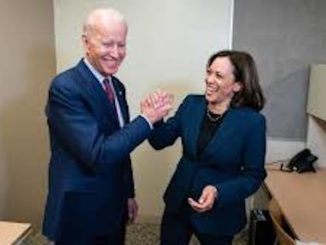
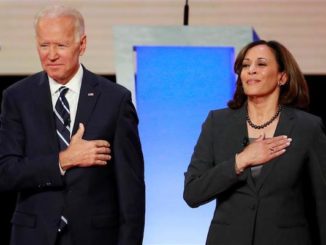
    Joe Biden’s decision to nominate Senator Kamala Harris, the first Black woman and first Asian American woman as his running mate is an out-reach to colored voters as well as to women voters.

    In this background, Joe Biden’s decision to nominate Senator Kamala Harris, the first Black woman and first Asian American woman as his running mate is an out-reach to colored voters as well as to women voters.

    It cannot be overstated that U.S. Presidential elections are always contested over a host of political, economic, and social issues on which the positions of both the Republicans and the Democrats have evolved over time. As part of its economic conservatism, the Republican Party supports lower taxes, free-market capitalism, the removal of restrictions and regulations on corporations, and restrictions on labor unions. The party is also socially conservative and supports gun-rights and traditional values with a Christian foundation, such as restrictions on abortion. In foreign policy, Republicans usually favor increased military expenditure and tough action against America’s enemies. Republicans also want restrictions on immigration.

    The Democrats support social programs, labor unions, worker’s rights and work-place safety regulations, disability rights and racial equality and reform of the criminal justice system. They also support abortion rights, LGBT rights and a pathway to citizenship for undocumented workers. In foreign policy, they favor a multilateral approach, from which America under Trump has been distancing itself.

    While the calculations involved in a U.S. Presidential election are not at all simple, present indications are that Trump faces an uphill task for getting re-elected. Interestingly, Trump is sending out signals that he will not accept defeat. In a press briefing at the White House a few days back, he refused to say whether he would support a peaceful transfer of power if he loses November’s election, ignoring a precedent that every other president in American history has accepted.

    As a matter of fact, a crisis is developing on account of the concerns which Trump has repeatedly voiced about postal ballots. He has claimed that the postal-ballot route will be misused by the Democrats, that it will result in voter fraud and thus cause his defeat. However, Ellen Weintraub, commissioner of the Federal Election Commission, has responded: “There’s simply no basis for the conspiracy theory that voting by mail causes fraud.”

    Individual states decide their own voting rules for federal elections in the U.S. About half of the states allow any registered voter to vote by post on request. In the remaining states, you have to have a valid reason for voting by post – such as being over 65, being ill, or being away from the state you are registered to vote in.

    Interestingly, President Trump himself has voted by post in the past, such as in Florida’s 2020 primary election as he is a registered voter in that state but is currently living in Washington DC.

    In the 2016 U.S. Presidential election, about 25% of votes were cast by post. That number is expected to rise this time due to public health concerns over coronavirus. Many states are encouraging mail-in voting, citing the need to keep voters safe from it. They want to prevent large gatherings at polling stations on election day–a justifiable approach given the prevailing situation.

    Moreover, six states will hold “all-mail” ballot elections this November– California, Utah, Hawaii, Colorado, Oregon and Washington. These states will automatically send all registered voters their postal ballots, which then have to be sent back or dropped off on election day – although some in-person voting is still available in certain limited circumstances. More states could follow this route due to public health concerns over coronavirus.

    Although every losing Presidential candidate in U.S. history has conceded defeat once he lost the election, Trump has refused to commit to a peaceful transfer of power in such an eventuality. When a reporter asked him a direct question on this issue, he did not say yes or no; instead, he gave an insight into his thinking and said, ” I’ve been complaining very strongly about the ballots”, adding, ” Mail-in ballots are very dangerous–there’s tremendous fraud involved”.

    At a rally in Newport News, Virginia on Friday 25 September, Trump again refused to say whether he would peacefully transition out of the White House if he loses the presidential election, suggesting he would only do so if he was convinced Democrats and their presidential nominee, Joe Biden, did not cheat. “We’ve gotta watch this ballot scam, because they’re scamming us. And then they say, ‘He doesn’t want to turn over [power].’ Of course, I do. But it’s gotta be a fair election,” Trump told the crowd at the rally. Biden has said that in this scenario he believes the military would be deployed to remove Trump from the White House!

    If he loses the election, Trump may still have some cards up his sleeve. He has said that he believes that the election result could end up in the U.S. Supreme Court. Backed by his battery of attorneys, he is believed to be preparing the groundwork to undermine an election result that does not announce him as victor.

    In this context, importance is being attached to Trump’s selection of Judge Amy Coney Barrett, a favorite of the Republicans as a new Supreme Court Judge. She will take the place of Justice Ruth Bader Ginsburg, a liberal and a Clinton appointee who died recently. Trump has announced that he will try to obtain Senate confirmation for this appointment before Election Day. Biden and the Democrats are urging that the appointment should be made by the winner of the Nov 3 election, but the Senate, which has a Republican majority is likely to go ahead and give the confirmation. This is so because a Supreme Court judge in the U.S. serves for life , and Judge Amy Coney Barret, an avowed Conservative would significantly alter the ideological makeup of the Supreme Court for years to come and ensure that the Republican agenda is not obstructed by the Court.

    For Trump, this appointment could be vital. The US Supreme Court has nine judges. After the death of Justice Ginsberg, there are three judges who are regarded as liberal, while four are conservative.  The eighth is Chief Justice Roberts who has been described as having a conservative judicial philosophy but has also shown a willingness to work with the Supreme Court’s liberal judges. Thus, he has come to be regarded as a swing vote on the Court and Trump cannot rely on him to give a favorable judgement if his own election case is to be decided. Thus, if Judge Barrett is elevated to the Supreme Court, there will be at least five conservative judges, if not six who may side with Trump, which explains his rush to appoint her, as also Biden’s opposition to it.

    To sum up, if you think that the Nov. 3 election battle has become ugly, then I would just say, “You ain’t seen nothing yet”.

    (The author is a retired career diplomat. He can be reached at prabhu_dayal70@hotmail.com)

     (Courtesy OPOYI)

  • Indian Americans favor Biden despite big shift towards Trump

    Indian Americans favor Biden despite big shift towards Trump

    Kamala Harris’ historic nomination, Modi-Trump rallies give political clout to Indian origin voters

    WASHINGTON  (TIP): Despite a significant shift towards President Donald Trump, two thirds of Indian Americans, who have emerged as an influential voting bloc in “battleground” states, currently favor his Democratic challenger, according to a new survey.

    While only 28 percent favor Trump for the 2020 presidential election, it marks a significant 12 point uptick in his support since 2016 when only 16 percent voted for Trump as against 77 percent for Democratic candidate Hillary Clinton.

    Both Democratic and Republican parties are reaching out to the increasingly influential voting bloc of Indian Americans for the 2020 presidential election, according to Indiaspora and AAPI Data’s joint survey.

    High turnout by Indian Americans could make a huge difference in this election given senator Kamala Harris’s historic vice-presidential nomination, as well as highly publicized rallies that Trump and Indian Prime Minister Narendra Modi held together, it says.

    Indiaspora is a nonpartisan community organization, while AAPI Data, records demographics and policy developments relating to Asian American and Pacific Islanders.

    Their joint survey documents the strengthening political power of the Indian American electorate in the US due to factors such as their rapidly growing population and increased political participation.

    “With increased attention being paid to the Indian American vote given our growing numbers, increasing political contributions and overall political engagement, we wanted to shine a spotlight on the issues that really matter to Indian American voters,” said MR Rangaswami, founder of Indiaspora.

    The report, which has survey results of 260 Asian Indian registered voters, regardless of party affiliation, found that some of the issues at the top of the list for Indian Americans in this election included education, jobs and economy, health care, and the environment.

    The report also chronicles the rise of the Indian American electorate as one of the fastest growing minority groups in the US, with significant numbers in “battleground” states.

    “Indian Americans are positioned to make a difference in several swing states that may be close in this election, such as Florida (87,000), Pennsylvania (61,000), Georgia (57,000), Michigan (45,000), and North Carolina (36,000), and perhaps even Texas, which has 160,000 Indian-American voters,” said Dr. Karthick Ramakrishnan, professor of public policy and political science at UC Riverside, and founder of AAPI Data.

    “Given Senator Kamala Harris’s historic vice-presidential nomination, as well as highly publicized rallies that President Trump and Prime Minister Modi held together, high turnout could make a huge difference in this election.”

    Currently, there are 1.8 million Indian Americans in the US who are eligible voters. About 310,000 Indian green card holders remain in a backlog for citizenship as of 2019, and another 310,000 Indian residents in the US are in a backlog to obtain their green cards.

    In addition, Indian American political engagement extended to several areas, with a fifth of Indian American registered voters saying they contacted their representative or government official in the US this year.

    As many as 74 percent had discussed politics with family and friends, and a quarter of those surveyed had donated to a candidate, political party or campaign this year.

    By the end of June 2020, Indian Americans had donated at least $3 million to 2020 presidential campaigns.

    As many as 54 percent of Indian Americans identified as Democrats, 16 percent as Republicans, and 24 percent as Independents.

    In 2016, 46 percent of Indian American voters identified as Democrat, 35 percent were Independent or Other, and 19 percent identified as Republican.

    Both Democratic and Republican parties have conducted outreach to Indian Americans in this election, with 56 percent of Indian American registered voters surveyed saying they had been contacted by the Democratic party in the past year, and 48 percent saying they had been contacted by the Republican party.

    This is a marked increase from 2016, when only 31 percent of Indian Americans said they had been contacted by a political party, compared to 44 percent of White voters and 42 percent of Black voters.

    In addition, several hundred Indian American candidates also are running for office in record numbers at federal, state and local levels.

    “Given the Indian diaspora’s increasing political importance in the US, it’s no surprise they are being courted by both sides of the aisle,” said Rangaswami.

    “It’s great that both major political parties have begun to realize just how critical it is to reach out to Indian Americans – our impact is only going to increase over time.

  • Harris promises jobs, fight climate change and affordable care act as part of Biden administration

    Harris promises jobs, fight climate change and affordable care act as part of Biden administration

    WASHINGTON (TIP): Kamala Harris, the presumptive Democratic party’s vice-presidential nominee, has said that once elected the Joe Biden administration will create millions of jobs, fight climate change and build an affordable care act among various other strong initiatives for the welfare of Americans.

    Hitting hard on the three and half years of the Trump administration during her first appearance after being picked as the vice-presidential nominee of the Democratic party on Tuesday, Harris, 55, presented a long list of missteps taken by the current US government.

    “As Biden-Harris Administration, we will create millions of jobs and fight climate change through a clean energy revolution, bring back critical supply chains so the future is made in America, build on the Affordable Care Act so everyone has the peace of mind that comes with health insurance, and finally offer caregivers the dignity, the respect, and the pay they deserve,” she said.

    “We’ll protect a woman’s right to make her own decisions about her own body, root out systemic racism in our justice system, and pass a new Voting Rights Act, a John Lewis Voting Rights Act, that will ensure every voice is heard and every voice is counted,” Harris added.

    During her speech alongside Biden, Harris said the case of President Donald Trump and Vice President Mike Pence is open and she has worked every day to hold the officials accountable to the American people.

    “Let me tell you, as somebody who has presented my fair share of arguments in court, the case against Donald Trump and Mike Pence is open and shut,” said Harris.

    “And the people are who Joe and I will fight for every day in the White House,” she said.

    During the speech, she mentioned a lot of sectors where the current administration has created a complete mess.

    “Just look where they’ve gotten us. More than 16 million out of work, millions of kids who cannot go back to school, a crisis of poverty, of homelessness afflicting black, brown, and indigenous people the most, a crisis of hunger afflicting one in five mothers, who have children that are hungry, and tragically, more than 165,000 lives that have been cut short, many with loved ones who never got the chance to say goodbye,” she said.

    “It didn’t have to be this way. Six years ago, in fact, we had a different health crisis. It was called Ebola. And we all remember that pandemic. But you know what happened then? Barack Obama and Joe Biden did their job. Only two people in the United States died, two,” Harris said.

    That is what’s called leadership, she told the audience.

    “But compare that to the moment we find ourselves in now. When other countries are following the science, Trump pushed miracle cures he saw on Fox News. While other countries were flattening the curve, he said the virus would just, poof, go away like a miracle,” she alleged.

    She said it was due to the fault of the Trump administration that the US had to shut down various of its regions again while other countries were opening up.

    “So when other countries open back up for business what did we do? We had to shut down again. This virus has impacted almost every country, but there’s a reason it has hit America worse than any other advanced nation,” she said.

    Harris alleged that it is because of Trump’s failure to take it seriously from the start.

    “His refusal to get testing up and running, his flip-flopping on social distancing and wearing masks, his delusional belief that he knows better than the experts. All of that is the reason, and the reason that an American dies of COVID-19 every 80 seconds,” she said.

     “It’s why countless businesses have had to shut their doors for good. It’s why there is complete chaos over when and how to reopen our schools. Mothers and fathers are confused and uncertain and angry about childcare, and the safety of their kids at school, whether they’ll be in danger if they go or fall behind if they don’t. Trump is also the reason millions of Americans are now unemployed. He inherited the longest economic expansion in history from Barack Obama and Joe Biden,” she said.

    Harris said that this is what happens when one elects a person “who just isn’t up for the job”.

    “Our country ends up in tatters, and so does our reputation around the world. But let’s be clear. This election isn’t just about defeating Donald Trump or Mike Pence. It’s about building this country back better, and that’s exactly what Joe and I will do,” she said.

    She said the Biden-Harris administration will ensure equality for the people of America.

    “The civil rights struggle is nothing new to Joe. It’s why he got into public service. It’s why he helped reauthorize the Voting Rights Act and restore unemployment discrimination–and employment discrimination laws. And today, he takes his place in the ongoing story of America’s march toward equality and justice as only–as the only, as the only who has served alongside the first black president and has chosen the first black woman as his running mate,” Harris said.

    (Source: PTI)

    Â