METUCHEN, NJ (TIP): In a nail biting and dramatic run up to the Finale of the MoneyGram Cricket Bee, Schaumburg’s Alpesh Gohil correctly answered “Michael Holding” in response to the question “who infamously kicked over the stumps during a test match against New Zealand in 1980”, to become the 2017 National Champion and win the grand prize of $10,000.
The runner-up was Sentilkumar Sethuraman of Shrewsbury, Massachusetts, who took home the $2,500 prize money.
The Cricket Bee in its second year is a game of cricket trivia that is conducted in a bee format on a miss and out basis. In 2017 the Bee was expanded to two additional cities and almost 900 enthusiastic cricket whizzes registered to battle it out for a chance to win the coveted title of National Champion.
“We are pleased to be able to return for the 2nd annual MoneyGram Cricket Bee and have it done with such great success,” said Johnny Rosario, MoneyGram’s head of account management. “Congratulations to Alpesh Gohil and all of the finalists. It is an honor to support community events like the Cricket Bee that unite friends and loved ones around the world.”
Contests were held in Hayward, Calif.; Dallas, TX; Chicago, IL; Edison, NJ; and Toronto, Canada, from where the top two were invited to the finals. Cash prizes of $300, $200 and $100 were given out at the regional levels.
MoneyGram, along with its marketing agency, AAAZA, commissioned the idea for the Cricket Bee from leading multicultural agency Touchdown Media to engage and connect with the more than 10 million cricket fans in North America.
“To watch the finals yesterday was no less gripping than the last few overs of a hotly contested T-20 match. It was intense, dramatic and extremely gripping. A hearty congratulations to Alpesh and to all the finalists for what was a truly exciting, edge of your seat finale,” said Rahul Walia, founder of the Cricket Bee.
Malaysia-based food conglomerate Kawan Foods served as the powered by sponsor, while the exclusive broadcast rights were bagged by TV Asia, which will telecast a packaged programming later this year.
“We were very happy to return as powered by sponsors of the MoneyGram Cricket Bee, and watching the finalists battle it out was exhilarating. Very impressed by the knowledge of the finalists and hats off to the winners,” said Tim Tan, managing director of Kawan Foods.
“As the oldest broadcast medium for the community, it was definitely an honor to be returning as the exclusive broadcaster for the MoneyGram Cricket Bee and continuing with its success. We pride ourselves in connecting with our community, and this initiative is in line with our continued commitment to the diaspora in North America,” said H.R. Shah, chairman and CEO of TV Asia and an avid cricketer himself.
CHICAGO (TIP): An Indian-American executive was racially abused and told to “go back to India” after he said that he will not support President Donald Trump’s economic agenda after Trump appeared to defend white supremacists following the Charlottesville violence.
Ravin Gandhi, 44, founder and CEO of GMM Nonstick Coatings, wrote an op-ed for CNBC following Donald Trump’s Charlottesville remarks but was immediately trolled and racially abused by readers, the Chicago Tribune reported.
“I recently told the New York Times I was ‘rooting’ for certain aspects of Trump’s economic agenda,” Gandhi wrote in the op-ed. “After Charlottesville and its aftermath, I will not defend Trump even if the Dow hits 50,000, unemployment goes to 1 per cent, and GDP grows by 7 per cent. Some issues transcend economics, and I will not in good conscience support a president who seems to hate Americans who don’t look like him.”
After that, he received many emails and tweets with abusive language.
“You’re a f****** Indian pig” and “Get your f****** garbage and go back to India, and sell it there,” a woman said in a voicemail she left on YouTube. “You can stick your stickies up your sticky Indian (expletive) and you can take that other half-(expletive) Bangladesh creep with you, Nikki Haley. She’s the one that started all this when she took down the Confederate flag. So, don’t tell us that you gave him a chance. We don’t give a (expletive) who you gave a chance, OK? We’re going to start taking down Buddhist statues and see how you and Nikki Haley like that,” the Trump supporter said.
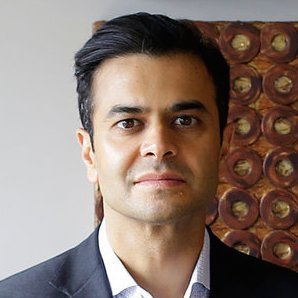
Ravin Gandhi began his career at KPMG in Chicago. In 1995, Mr. Gandhi joined Coatings and Chemicals Corporation (CCC), a family owned supplier of nonstick coatings, as Director of Global Marketing. Within a few years, CCC became the sole supplier to most American cookware, bakeware, and electrical appliance manufacturers by pioneering high quality “non-branded” non-stick coatings.
Mr. Gandhi holds a BS from the University of Illinois (Urbana-Champaign), an MBA from Northwestern University’s Kellogg Graduate School of Management, and is a Certified Public Accountant (CPA). Mr. Gandhi serves on the Board of Directors of Hester Biosciences, and is a member of Young Presidents’ Organization (YPO). Mr. Gandhi makes frequent national media appearances on CNBC, Bloomberg, Forbes, and The Wall Street Journal.
BENGALURU (TIP): Nandan Nilekani, the 62-year-old co-founder of India’s second-largest software services exporter, returned to the Infosys board after an 8-year hiatus on Thursday, August 24, as the firm’s chairman, a move that investors expect would help end a bitter stand-off between founder N. R. Narayana Murthy and the company’s board, says a Hindu report.
In an announcement, the Bengaluru-based company said that the board had unanimously approved Mr. Nilekani’s appointment as the non-executive chairman of the board “effective immediately.”
Seshasayee, chairman of the board, along with former CEO and managing director Vishal Sikka, Jeffrey Lehman and John Etchemendy had stepped down from the board, Infosys said in a statement.
Mr. Nilekani’s return was welcomed by the outgoing chairman Mr. Seshasayee, who said, “Under Nandan, Infosys will build a cohesive management team…I believe these changes will infuse further confidence to the stakeholders in executing the transition plan and in reinforcing the strategy for the future.”
Mr. Nilekani’s appointment also saw Ravi Venkatesan step down as co-chairman, while staying on as an independent director.
An electrical engineer from IIT Bombay, Mr. Nilekani was the CEO at Infosys from 2002 to 2007 and also served as co-chairman of the board before his departure in 2009 to head the Aadhaar project.
Mr. Nilekani’s return was precipitated by Mr. Sikka’s abrupt resignation as CEO on August 18 amid a bitter and public row between the board and Mr. Murthy, with both sides trading a volley of charges and counter charges.
Several institutional investors had urgently called for Mr. Nilekani’s return to help restore investor and customer confidence in the company.
The board would actively consider a broad-based shareholder consultation as a key part of its overall engagement initiatives with stakeholders, Mr. Nilekani said in the statement.
Balakrishnan, a former CFO said prior to Mr. Nilekani’s appointment, “We need a global face to pull the company up and restore confidence of investors and shareholders.”
Infosys shares fell almost 10% on August 18 and lost more than 5% in the next trading session on August 21.
25 floats, dozens of marching bands and dancing groups; thousands cheering with tricolor in hands
NEW YORK (TIP): Thousands of people from the Indian diaspora converged in the heart of New York, on August 20, to celebrate India’s 71st Independence Day at one of the largest parades outside India attended by ‘Baahubali’ actors Rana Daggubati and Tamannaah Bhatia.
Grand Marshall and the Chief Guests. L to R: Rana Daggubati, General (Retd) Dalbir Singh Suhag and Tamannaah Bhatia.
The 37th India Day Parade organized by the Federation of Indian Associations – New York, New Jersey, Connecticut – ran through several streets, from 38th to 26, on Madison Avenue in Manhattan on Sunday, August 20, and featured tableaux by several Indian-American organizations, marching bands, police contingents and cultural performances by young Indian-American children.
For the first time in the 37-year-old history of India Day parade in New York City, a tableau dedicated to the creator of the Khalsa (Sikhs), Guru Gobind Singh formed part of the parade. Guru Gobind Singh sacrificed his entire life and family at the altar of safeguarding the rights of the underprivileged. He fought against injustice, tyranny and social differences. FIA President Andy Bhatia encouraged Harry Panaser, a social activist and lobbyist to arrange to have a float dedicated to Guru Gobind Singh whose 350th birth anniversary was celebrated earlier this year.
On the float dedicated to Guru Gobind Singh. L to R: Deputy Consul General Paramita Tripathi, Harry Panaser, Consul General Sandeep Chakravorty, Jagdish Sewhany and Prof. Indrajit S Saluja
Greeting the crowd, New York city Mayor Bill de Blasio said the Independence Day parade celebrates the “extraordinary contributions” of the Indian-American community to the city.
“This is a day we appreciate what people do for the city regardless of what they look like, regardless of what language they speak, regardless of where they were born. Everyone here contributes to making New York City better and making America stronger. That is what we are celebrating today,” de Blasio said.
The mayor, holding the Indian tricolor, waved to the thousands of people gathered along the parade route.
Daggubati, the Grand Marshal for the parade, said it was a matter of great pride for him to celebrate the Independence Day with a large population of Indian-Americans.”It gives me a huge sense of pride to be here. The people here are the ambassadors of our country making us proud outside of India,” he said.
Bhatia said, “It is amazing to see Indians celebrating” the country’s culture and heritage.”India has given me lot of freedom to express myself. It is very humbling to represent India at the parade,” she said.
A float by the Indian Consulate in the city focused the rich cultural heritage of India’s northeast states.
The Consulate General of New York Float. The theme for the tableau was North East States of India. The Consul General Sandeep Chakravorty and Deputy Consul General Paramita Tripathi with participants
Thousands of people from the New York tri-state area came for the day-long celebration, which included special food stalls, cultural extravaganza and about 25 floats by various Indian organizations based in the US, including Air India and State Bank of India.
Air India float. Regional Manager Vandana Sharma, the CG and the DCG with the Air India staff and crewAll Women crew of Air India celebrates Independence Day
People, including young children and seniors, raised patriotic slogans like ‘Bharat Mata Ki Jai’, ‘Vande Mataram’ and ‘Jai Hind’ and carried banners, placards and Indian and American flags as they witnessed the floats and celebrities from the barricaded pavements along the parade route. Indian music and popular Bollywood songs reverberated through the air as people celebrated with a fervor of patriotism.
Several Americans and people belonging to different ethnicities also stopped to watch the parade and enjoy the festivities. Families had travelled from nearby states such as Connecticut, New Jersey and Massachusetts to witness the parade, an annual fixture in the city’s calendar since 1981.
Mrs. & General Dalbir Singh Suhag with the Consul General Sandeep Chankravorty on the stand
On India’s Independence Day on August 15, the iconic Empire State Building was lit up in the Indian tri-color.
Commemorating the Day, India’s Consul-General in New York, Ambassador Sandeep Chakravorty had rung the opening bell at the NASDAQ stock market in Times Square. Flag-hoisting ceremonies and commemorative events were held at the Indian Consulate as well as at India’s Permanent Mission to the UN.
Maharashtra Dhol TasaHaryana dancers
Singer Kailash Kher had attended the flag hoisting ceremony at the permanent mission. Later speaking to PTI, Kher applauded the significant contributions of Indian Americans to the social and economic fabric of the US.
He called on Indians settled in America to join hands and continue to make contributions that take India to the next level of growth and development, particularly through support of flagship Indian programs such as ‘Swachch Bharat’, ‘Beti Bachao Beti Padhao’ and ‘Digital India’.
EDISON (TIP): Victory 2017, the coordinated campaign between Murphy for Governor and the New Jersey Democratic State Committee, announced the hiring of two veteran state political operatives including Indian American Amit Jani, who will undertake crucial roles between now and Election Day.
Victory 2017 Director Iris M. Delgado said that Justin Braz and Amit Jani have joined the campaign effort. Braz will coordinate Victory 2017’s work among the state’s organized labor unions, while Jani will undertake electoral efforts among New Jersey’s growing Asian American and Pacific Islander (AAPI) communities.
“Justin and Amit both bring a wealth of first-hand organizing experience that cannot be matched,” said Delgado. “They are trusted, they are tested, and they produce results. For the next 13 weeks, they will play critical roles in building the diverse coalition that Democrats will need to elect champions up and down the ballot. We are excited to have them aboard.”
Amit Jani currently serves as a Hudson County Director for the South Asian American Caucus within the New Jersey Democratic State Committee.
In 2016, he played a leadership role in South Asians for Hillary, which assisted the Hillary for America campaign on outreach nationally to the South Asian community — and currently serves as a national co-chair of the successor organization South Asians for America, which is committed to advocating for issues important to the South Asian American community and helping to elect progressive candidates across the country.
Jani has also been a district representative for Congressman Frank Pallone, Jr., in Long Branch, and was a legislative aide to Congresswoman Judy Chu and the Congressional Asian Pacific American Caucus in Washington. He has also assisted on campaigns in the14th Legislative District for Senator Linda Greenstein and Assemblymen Wayne DeAngelo and Daniel Benson.
He is the co-founder and president of the New Jersey Leadership Program, a 501(c)3 organization that exposes South Asian youth to government and politics.
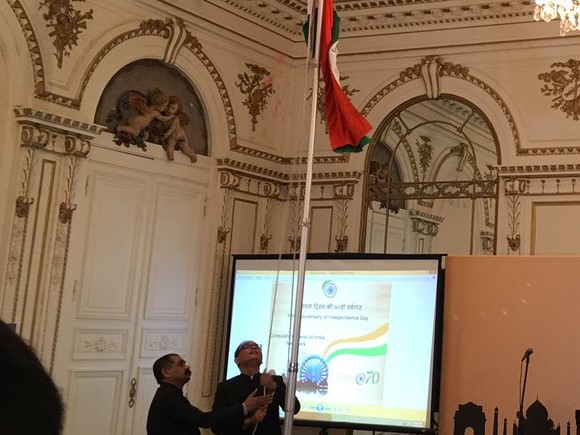
NEW YORK CITY, NY (TIP): Consul General Sandeep Chakravorty unfurled the National Flag at the Consulate premises in the morning of 15 August. The unfurling of the flag was followed by the playing of the national anthem. Consul General read out President’s Address to the Nation delivered on the eve of the Independence Day.
CG Sandeep Chakravorty reads out the President’s address
A short cultural program was held by Bhartiya Vidya Bhavan, which included singing of patriotic songs and poetry recitation.
A section of the gathering
More than 200 people including prominent members of the Indian community and local dignitaries, attended the ceremony.
At the initiative of local Indian community organizations, iconic monuments in New York and surrounding areas were lit up on the occasion with the colors of the Indian flag. These included the Empire State Building, Niagara Falls among others.
The Consulate, in association with various Indian business, professional and community organizations is organizing a series of events this year to celebrate India@70.
Four arrested, warrants issued against 4 others; Victims from 34 countries
BARCELONA (TIP): The driver of the van that ploughed into crowds in Barcelona on Thursday, killing 13 persons, was one of five men shot dead by the police in a Catalan seaside resort hours later, two Spanish newspapers reported on Friday.
There was no immediate confirmation of the reports.
Josep Lluis Trapero, police chief in Spain’s northeastern region of Catalonia, had said earlier that it was possible, but not confirmed, that the driver was among those killed. The driver abandoned the van and fled on Thursday after speeding along a pedestrianised section of Las Ramblas, the most famous boulevard in Barcelona, leaving a trail of the dead and injured.
It was the latest of a string of attacks across Europe in the past 13 months in which militants have used vehicles as weapons — a crude but deadly tactic that is near-impossible to prevent and has now killed nearly 130 people in France, Germany, Britain, Sweden and Spain.
Suspected jihadists have been behind the previous attacks. Islamic State said the perpetrators of the latest one had been responding to its call to target countries involved in a US-led coalition against the Sunni militant group.
Hours after the van rampage, the police shot dead five persons in the Catalan resort of Cambrils, 120 km down the coast from Barcelona, after they drove their car at pedestrians and police officers. The five assailants had an axe and knives in their car and wore fake explosive belts, the police said. A Spanish woman was killed in the Cambrils incident, while several other civilians and a police officer were injured.
The police have arrested four persons in connection with the attacks — three Moroccans and a citizen of Spain’s North African enclave of Melilla, Trapero said. They were aged between 21 and 34, and none had a history of terrorism-related activities. Authorities have issued arrest warrants for four further suspects in connection with the two attacks, a judicial source said, declining to give their names.
La Vanguardia, a Barcelona-based newspaper which said it had obtained an internal document from the investigation, said the four being sought were all of Moroccan origin and aged between 17 and 24.
One of those being sought by police is called Moussa Oukabir, a police source said, but it was unclear what his suspected role may be. Aged 17 or 18 and of Moroccan origin, he is the younger brother of one of the men arrested on Thursday, according to Spanish media reports.
The van attack was the deadliest in Spain since March 2004. Of 126 people injured in Barcelona and Cambrils, 65 were still in hospital and 17 were in a critical condition. The victims came from 34 countries, ranging from France and Germany to Pakistan and the Philippines.
WASHINGTON (TIP): The writing was on the wall. Only President Donald Trump had to announce the departure from White House of his controversial chief strategist. Finally, on Friday, August 18, President Trump fired Stephen Bannon as his chief strategist in the latest high-level White House shake-up, removing a powerful and controversial figure known for far-right political views.
Bannon was a force behind some of Trump’s most contentious policies, including a travel ban on people from several Muslim-majority nations, and has fought with more moderate factions inside a White House riven with rivalries and back-stabbing. Bannon’s ouster comes with the President, seven months into his term in office, increasingly isolated over his comments following white supremacist violence in the Virginia college town of Charlottesville last Saturday.
As Trump came under fire from prominent fellow Republicans, business leaders and US allies abroad, he faced mounting calls for Bannon’s ouster. “White House Chief of Staff John Kelly and Steve Bannon have mutually agreed today would be Steve’s last day,” White House spokeswoman Sarah Sanders said in a statement on Friday. “We are grateful for his service and wish him the best.”
A champion of economic nationalism and a political provocateur, Bannon, 63, is a former US Navy officer, Goldman Sachs investment banker and Hollywood movie producer. Bannon had been in a precarious position before but Trump opted to keep him, in part because his chief strategist played a major role in his 2016 victory and is backed by many of the President’s most loyal rank-and-file supporters.
The decision to fire Bannon could undermine Trump’s support among far-right voters but might ease tensions within the White House and with party leaders. Republicans control the White House and both chambers of Congress but have been unable to pass major legislative goals, including a healthcare legislation overhaul, because of fierce intra-party divisions.
Trump ran into trouble in recent days after saying anti-racist demonstrators in Charlottesville were as responsible for the violence as the neo-Nazis and white supremacists who instigated the protests. Those remarks sparked rebukes from fellow Republicans, corporate executives and close allies even as some supporters stood by Trump.
A source said Bannon had been given an opportunity to depart on his own terms. “The President made up his mind on it over the past couple of weeks,” the source said. Kelly had been evaluating Bannon’s role within the White House. “They gave him an opportunity to step down knowing that he was going to be forced to,” the source said. Bannon has told friends he could go back to Breitbart News if he were to leave the White House.
The golden voice of Asha Bhosle, having been dubbed “the last empress of music,” will be ringing in the concert halls of America at Newark, New Jersey; San Jose, California; and Boston, Massachusetts in August 2017.
Different moods of Asha Bhosle
The diva will be accompanied by talented singer Javed Ali and her granddaughter Zanai Bhosle who will also enthrall the audience with her song-and-dance performances.
Stardust, the iconic Indian entertainment media brand, has been capturing the magic of Hindi cinema and music (Bollywood) over the last 4 decades through the glossy pages of its print magazine and its online portal.
Asha Bhosle and Zania Bhosle.
The magazine now carries forward the same magic through live events like film awards and musical concerts, both in India and overseas.
Stardust has hosted some of the most successful musical concerts in the last 3 years in the United Kingdom. After the unprecedented response to the UK concert last year with 50,000+ live audience participants, Stardust decided to bring the above concept to the USA in August 2017. It is believed that the USA concerts will be landmark events.
It is impossible to summarize everything about the wonder called Asha….. but, here’s an attempt….. a career spanning 7 decades, 13,000 songs to her name and still counting, Asha’s musical journey is a milestone in itself. Quite a rebel in many ways, she has managed to break stereotypes, defied convention and created a genre that is truly Asha!
Fondly referred to as Ashaji, Bhosle is one of the distinguished voices and icons of the Indian music fraternity who started her career in 1943. She has done playback singing for over a thousand Bollywood movies. In addition, she has recorded several private albums and participated in numerous solo concerts in India and abroad. The vivacious songstress has 13,000 songs cutting across various genres. Renowned for her voice range and often credited for her astounding versatility, Bhosle’s musical work includes film music, pop, ghazals, bhajans, traditional Indian Classical music, folk songs, qawwalis and Rabindra Sangeet. Apart from Hindi, she has sung in over 20 Indian and foreign languages.
In 2013, Ashaji made her debut at age 79 as the lead actress in the film Mai, and received critical acclaim for her performance.
She has been officially acknowledged by the Guinness Book of World Records as the most recorded artist in music history. The Government of India honored her with the Dadasaheb Phalke Award in 2000 and the Padma Vibhushan in 2008.
Her last performance in New Jersey will take her fans down memory lane. It will be an emotional moment for her and her fans. But, the melody in her voice will continue to regale the USA audience forever.
Thank you, Ashaji, for such wonderful memories. Please continue making more of them…
It was the monsoon of 2007 when a movie was readying for its release. In between the promos, a song caught up the fancy of cine goers – Ek Din Teri Raahon Mei – sung by a young, relatively unknown man was topping the charts. The song soon became a hit and paved the way for one of Bollywood’s most versatile singers, Javed Ali.
Javed Ali.
Blessed by a voice of chameleon-like versatility that can charm fans of all kinds of music, Javed was soon favored by top-notch Bollywood music directors in the industry to sing songs ranging from deep soulful melodies like ‘Jashn-E-Bahaara’ (Jodhaa Akbar) to naughty and playful compositions like ‘Tinku Jiya’ (Yamla Pagla Deewana).. Other hits began raking in….. Guzarish from Ghajini, and even Arziyan from Delhi 6, Tu Hi Haqeeqat from Tum Mile, Tum Tak from Raanjhanaa, Jab Tak Hai Jaan title track from Jab Tak Hai Jaan, Ishaqzaade title track from the film Ishaqzaade, Galat Baat Hai from Main Tera Hero, Nagada Nagada from Jab We Met, Tu Jo Mila from Bajrangi Bhaijaan.
Javed’s Bollywood career began in the year 2000, with Beti No. 1. He believes that music composers, today, are looking for freshness in voice and therefore his entry in Bollywood. He has never followed anyone’s style of singing.
Thanks to his versatility, Javed Ali is brilliant on stage as well. When he is performing, he doesn’t remember who he is and where he is. His body language and attitude change according to the song.
Never one to fall in the trap of fame, he remains a simple guy, who may turn rock star on stage, but in real life is as connected to music and keen on learning more as he was on the day he began his musical journey.
The singer is also considering offers of music reality shows for which he has been approached. He would like to sing Rap because he hasn’t tried it yet.
Born in a family inclined to music, Javed has always wanted to be a singer. Son of legendary Ustad Hamid Hussain, Javed was trained under Ustad Ghulam Ali.
Having sung live around the world, his fans abidingly throng to each of his concerts. Consistent and with a track record of some amazing hits from Bollywood, Javed Ali has a very promising future.
Zania Bhosle dancing
Legendary singer Asha Bhosle’s granddaughter Zanai (Anand Bhonsle’s daughter) feels a sense of pressure given the illustrious family of great singers from which she comes.
There is a sense of pressure as there are expectations from her. She would want to continue singing and work hard towards it. Her grandmother (Ashaji) thinks she has a melodious voice. But, Zanai adds, that she also wants to be as humble as her grandmother….. who treats everyone equally.
The 14-year-old singer has recorded a song “Hil Pori Hila” (a modern take on the popular Maharashtrian folk number with the same name) with India’s first transgender band – 6 Pack.
She believes they (transgenders) are ill treated in society. So, she hopes her song makes a difference in the way transgenders are treated. She feels everyone should be treated equally…..after all, we are all human beings.
Produced by Y-Films, the band’s song with Zanai was released in 2016.
Asha Bhosle feels proud to have sung songs for Yash Chopraji and his entire family for so long, and today, her granddaughter has sung for Y-Films, which is backing the 6-Pack Transgender Band. She can’t be happier and is glad that the relationship between them (her and Y-Films) has remained the same ever since.
The performance schedule of Stardust’s Asha Bhosle and the team concert is as follows:
San Jose, CA – August 12
NJPAC, NJ – August 19, and
Boston, MA – August 20
For tickets to the NJPAC performance, visit www.njpac.org or call 1 888 go NJpac (1-888-466-5722).
For information about the events, contact Magna Publishing Inc., New York at 212 725 7833.
Mabel Pais is a freelance writer. She writes on the arts and entertainment, health and wellness, social issues and spirituality.
NEW DELHI (TIP): M Venkaiah Naidu was on Friday, August 11, sworn in as the 13th Vice President of India.
President Ram Nath Kovind administered him the oath of office and secrecy at Rashtrapati Bhavan in Delhi.
Following the ceremonial reception Naidu will take over as the speaker of the Rajya Sabha in the Parliament.
Earlier on Friday, he visited Rajghat to pay floral tribute to the memorial of Mahatma Gandhi.
National Democratic Alliance (NDA) nominee and former union minister Naidu was elected as the 13th Vice President of India with 516 votes.
Opposition nominee Gopalkrishna Gandhi secured 244 votes out of 760 valid votes.
Born at Chavatapalem in the Nellore district of Andhra Pradesh on July 1, 1949, Naidu is the second Vice-president from Andhra Pradesh.
Before joining active politics, Naidu was much of a social worker. After completing his graduation, Naidu pursued law from Andhra University in Visakhapatnam.
Venkaiah Naidu’s entry into politics was marked by his active participation in ‘Jai Andhra Movement’ of 1972. He was a swayamsevak in the Rashtriya Swayamsevak Sangh (RSS) and Akhil Bharatiya Vidyut Parish ad (ABVP) in 1973 during his college days.
After the Bharatiya Janata Party (BJP) was formed in 1980, he became Vice president of its youth wing. He was leader of the BJP Legislature Party in Andhra Pradesh, state general secretary and state unit chief.
He won the Andhra Pradesh assembly elections twice in 1978 and 1983 from Udayagiri constituency and was made national president in 2002.
Naidu was elected as a member of the Rajya Sabha from Karnataka in 1998 and was re-elected twice in 2004 and 2010 from Karnataka.
He served as the Minister of Housing and Urban Poverty Alleviation and Information and Broadcasting in Prime Minister Narendra Modi Government before he was nominated for the post of Vice President.
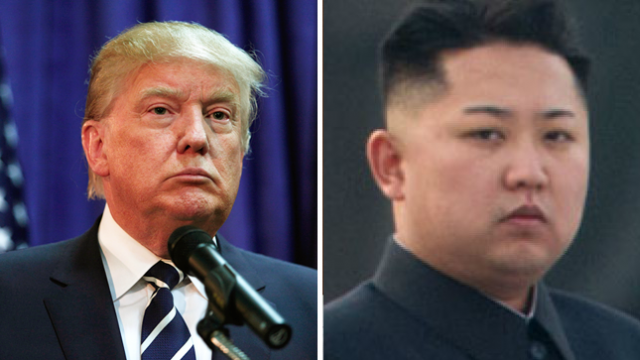
WASHINGTON (TIP): Nuclear-armed North Korea mocked President Donald Trump as “bereft of reason” on Thursday, August 10, raising the stakes in their stand-off with an unusually detailed plan to send a salvo of missiles towards the US territory of Guam.
The scheme to target the island, a key US military stronghold, was intended to “signal a crucial warning” as “only absolute force” would have an effect on the US leader, North Korea said.
The declaration came after Trump said on Twitter that America’s nuclear arsenal was “far stronger and more powerful than ever before”.
Earlier, Trump stunned the world with a bold-faced message to leader Kim Jong-Un that appeared to borrow from Pyongyang’s own rhetorical arsenal, saying the North Korea faced “fire and fury like the world has never seen”.
The war of words over Pyongyang’s nuclear and missile programs is raising fears of a miscalculation that could lead to catastrophic consequences on the Korean peninsula and beyond.
Last month North Korea carried out two successful tests of an intercontinental ballistic missile, bringing much of the US mainland within its range.
Trump’s “fire and fury” remarks were “a load of nonsense”, said General Kim Rak-Gyom, the commander of North Korea’s missile forces, according to Pyongyang’s official Korean Central News Agency.
“Sound dialogue is not possible with such a guy bereft of reason,” he added in a statement.
The military would complete the Guam plan by mid-August and submit it to Kim Jong-Un for consideration, he said.
The distinctively precise statement said the four missiles would be launched simultaneously and overfly the Japanese prefectures of Shimane, Hiroshima and Koichi.
They would have a flight time of 17 minutes 45 seconds, travel 3,356.7 kilometers (around 2,086 miles) and come down 30 to 40 kilometers away from Guam, it said — which would put the impact points just outside US territorial waters.
Japan, which has in the past warned it would shoot down any North Korean missiles that threaten its territory, responded quickly to insist it can “never tolerate” provocations from the reclusive state.
The western Pacific island of Guam is home to US strategic assets including long-range bombers and military jets and submarines, which are regularly deployed for shows of force in and near the Korean peninsula, to Pyongyang’s fury.
Two supersonic US bombers took off from the island on a fly-over mission to Korea early this week.
Analysts said a North Korean launch towards Guam would put the US in a dilemma: if it did not attempt to intercept the missiles, its credibility would be damaged and the North would feel emboldened to carry out a full-range ICBM test.
But if an intercept was attempted and any of the rockets got through it would undermine the effectiveness of the United States’ ballistic missile defense.
“This is a coercive threat to halt B-1 flights,” Adam Mount, senior fellow of the Center for American Progress said on Twitter.
“Unlike Trump’s vague, incendiary threat, DPRK’s is coercive, clear, specific, and has credible escalation potential. Response is difficult.”
Thousands of North Koreans marched through central Pyongyang Wednesday, August 9, waving clenched fists, as authorities put on a show of support for their stance.
One banner proclaimed: “10 million hearts burn with vows to defend the fatherland until death.”
Seoul’s military said the North would face “strong and resolute retaliation” in the event of an attack.
Tensions on the Korean peninsula tend to increase when Seoul and Washington launch major military joint exercises, and the next, Ulchi Freedom Guardian, is set to kick off around August 21.
US Defense Secretary Jim Mattis on Wednesday warned the North to “stand down” in its pursuit of nuclear weapons, saying Pyongyang “should cease any consideration of actions that would lead to the end of its regime and the destruction of its people”.
But Secretary of State Rex Tillerson said he did not believe “there is any imminent threat” to Guam or other US targets, and expressed hope that diplomatic pressure would prevail in the crisis.
The United Nations imposed a seventh set of sanctions on Pyongyang at the weekend that could cost North Korea $1 billion a year, with even the regime’s main ally China voting for the US-drafted proposal.
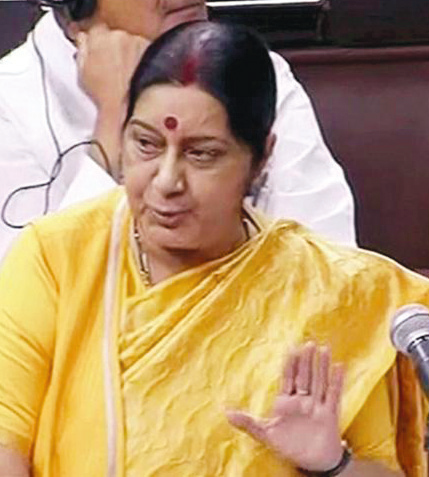
Sushma Swaraj said in the Rajya Sabha that ‘patience is key to resolving problems’ because of patience is lost, there can be provocation on the other side.
NEW DELHI (TIP): War was not a solution and India would resolve the border standoff with China through dialogue, external affairs minister Sushma Swaraj said on Aug 3 (Thursday), as the Communist neighbour again asked New Delhi to withdraw troops from Doklam if it wanted peace.
It was not possible to resolve every issue through war and solutions could be found through talks, Swaraj told the Rajya Sabha about the standoff between the border guards of the two countries close to Sikkim in India’s northeast.
“Patience and bhasha saiyam (restraint) are very important to resolve the issue. If there is no restraint, it provokes the other side,” Swaraj said during a four-and-a-half-hour discussion on India’s foreign policy and engagement with strategic partners.
Opposition member raised various issues including Doklam standoff, China’s attempts to encircle India and New Delhi’s Pakistan policy. “Countries have armies to stay prepared for war. But war is not a solution to anything. Even after war, there has to be a dialogue. So have dialogue without a war,” she said.
Faced with an aggressive Opposition charge led by the Congress, Swaraj hit back at the party over Rahul Gandhi’s meeting with Chinese ambassador Luo Zhaohui in July. Without naming the Congress vice-president, Swaraj said the Opposition leader met the Chinese envoy without seeking information about the standoff from the government.
The Opposition leader should have first understood the government’s viewpoint on and then met the Chinese envoy and conveyed him India’s viewpoint, the minister said.
“You should have first sought details from the government and then confronted the Chinese envoy,” she said. Indian and Chinese soldiers are locked in a standoff since June 16, with China accusing India of trespass and preventing its soldiers from building a road in disputed region of Doklam.
Bhutan and India maintain that Doklam, or Donglang as the Chinese call it, is a Bhutanese territory. The road, if built, would have serious implication for India’s security. The Chinese have taken an aggressive stand on the border impasse and has even warned of a war. India was negotiating with China not only on Doklam but issuing relating to the overall bilateral relationship, she said.
The minister also brushed aside the Opposition’s contention that the government had no policy to deal with Pakistan, saying India had a roadmap for peace but it could not be one-sided.
“Terror and talks cannot go together. The day they stop promoting terror, we will start the talks,” Swaraj said. She said the government had extended hand of friendship towards Pakistan but the whole story changed after Hizbul militant Burhan Wani’s killing in Kashmir last year.
“The Pakistani PM called him shaheed (martyr). Things changed after that,” she said. Dismissing allegations that Indian foreign policy wasn’t delivering, Swaraj said New Delhi was shaping global agenda.
“You say during 1971, the US was with Pakistan, and Russia was supporting India. Today both Russia and the US are supporting India. This reflects the success of our foreign policy,” she said.
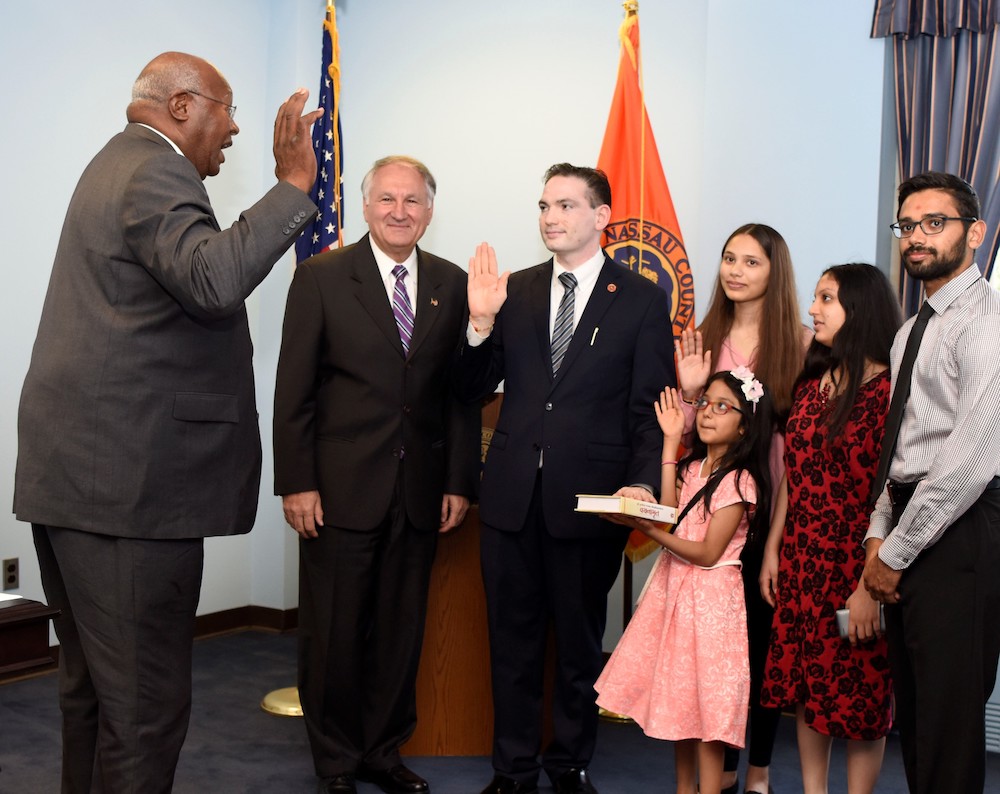
MINEOLA, NY (TIP): Nassau County Comptroller George Maragos announced, August 2, promotion of Mr. Dilip Chauhan to the position of Deputy Comptroller for Minority Affairs.
“Our minority communities are an integral part of the fabric of our County. These vibrant minority communities have grown in population accounting for nearly 40 percent of our residents, but remain under represented in government and often experience difficulty navigating the bureaucracy to get the services that they need and deserve”, Mr. Maragos said.
“The Comptroller’s Office has been a driving force in advocating for increased business opportunities for Minority and Women Owned Enterprises (MWBEs), and Veterans to meet the County’s aspirational goals. The County, however, still lags its goals and in complying with state requirements. Mr. Chauhan has been a leader in this effort in the Comptroller’s Office and his promotion recognizes the importance of helping the County increase its outreach to the minority communities” Mr. Maragos added.
Mr. Maragos further said, “Mr. Dilip Chauhan has done an outstanding job for the County in advancing the Comptroller’s mission by assisting members of the minority communities to better navigate local government, helping resolve governmental issues faced by minority constituents and ensuring MWBEs gain full access to business opportunities,” said Comptroller George Maragos. “I have the utmost confidence that Dilip will be a strong advocate for our minority communities in ensuring that Nassau County Government serves all resident equally.”
Mr. Chauhan took oath with “Vachanamrut” the Hindi scripture, and said, “it’s an honor and a privilege to be appointed the position of Deputy Comptroller. I am excited to continue my work, supporting the Comptroller’s efforts to provide equal opportunity for MWBEs to do business with Nassau County. It’s my great honor to work alongside Mr. Maragos who in one of the most honest and decent man in public service. I look forward to continue working with Mr. Maragos as I take up the responsibility as a Deputy Comptroller.”
Mr. Chauhan has been active in numerous community and business organizations including: “Advisor” to the American Association of Physicians of Indian Origin (AAPI), a “Board member” for Service Now for Adult Persons (SNAP) – a social service agency dedicated to improving and enhancing the quality of life for older adults, a “Volunteer” for the United Nations Millennium World Peace Summit, and as an “Advisor” for South Asian Affairs, New York State Assembly. Mr. Chauhan has been recognized with numerous awards for his community service in last one decade. Dilip Chauhan is married with two children and holds a Bachelor of Science Degree in Electrical Engineering.
Proposed law will scrap lottery system to come to US; Professionals from India to benefit
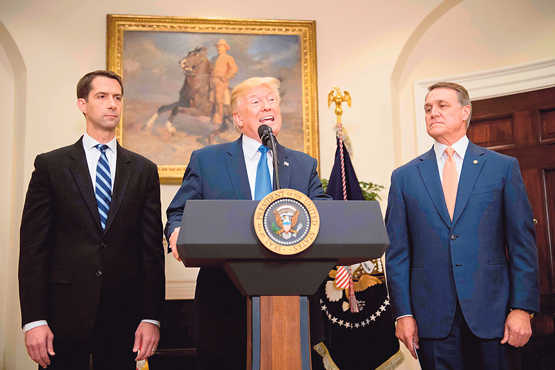
WASHINGTON (TIP): US President Donald Trump, on August 2, endorsed a legislation that would drastically cut the number of legal immigrants allowed into the country and implement “merit-based” visa scheme which could benefit highly-educated and technology professionals from countries like India.
The Reforming American Immigration for Strong Employment (RAISE) Act would scrap the current lottery system to get into the US and instead institute a points-based system for earning a Green Card. Factors that would be taken into account include English language skills, education, high-paying job offers and age.
If passed by the Congress and signed into law, the legislation could benefit highly-educated people and technology professionals from countries like India.
“The RAISE Act will reduce poverty, increase wages, and save taxpayers billions and billions of dollars. It will do this by changing the way the US issues Green Cards to nationals from other countries. Green Cards provide permanent residency, work authorization, and fast track to citizenship,” Trump said at a White House event to announce his support to the RAISE Act.
The Bill, Trump said, “would represent the most significant reform to our immigration system in half a century.”
Standing along with two top authors of the Bill-Senators Tom Cotton and David Perdue-Trump said the RAISE Act ends chain migration and replaces the low-skilled system with a new points-based system for receiving a Green Card.
This competitive application process will favor applicants who can speak English, financially support themselves and their families and demonstrate skills that will contribute to our economy, he said.
The RAISE Act prevents new migrants and new immigrants from collecting welfare and protects US workers from being displaced, he added.
“That’s a very big thing. They’re not going to come in and just immediately go and collect welfare. That doesn’t happen under the RAISE Act. They can’t do that. Crucially, the Green Card reforms in the RAISE Act will give American workers a pay raise by reducing unskilled immigration,” he said.
“It has not been fair to our people, to our citizens, to our workers,” Trump said of the current immigration system.
Trump said this legislation will not only restore America’s competitive edge in the 21st century, but it will restore the sacred bonds of trust between America and its citizens.
“This legislation demonstrates our compassion for struggling American families who deserve an immigration system that puts their needs first and that puts America first,” he said. — PTI
What authors of the Bill Cotton and Perdue say
First, we bring over a million immigrants into this country a year. That’s like adding the population of Montana every single year; adding the population of Arkansas every three years. The vast majority of those workers come here not because of their job skills or educational attainment. — Tom Cotton, senator
We looked at countries like Canada, Australia. What we’re introducing today is modelled on the current Canadian and Australian systems. It’s pro-worker, it’s pro-growth, and it’s been proven to work. Both have been extremely successful in attracting highly skilled workers to those countries. — David Perdue, senator
RAISE Act against South Asians: SAALT
The RAISE Act would hit the South Asian community, a top American non-profit body has claimed. If passed by the Congress and signed into law, the legislation would significantly reduce the number of immigrants who can obtain green cards and other visas, South Asian Americans Leading Together (SAALT), a national South Asian civil rights organization said
The RAISE Act would eliminate preferences for extended family members similar to the ‘Muslim ban’, eliminate the diversity visa lottery, limit refugees offered permanent residency to 50,000 per year, and institute a ‘skills-based points’ merit system, SAALT said
Numbering over 4.3 million, the South Asians are the fastest growing demographic group in the US, with the majority of the communities foreign-born, SAALT said.
“The ‘deep state’ has always worked with a king’s party, and there have always been politicians willing to oblige. Gen. Musharraf had encouraged Chaudhry Shujaat Hussain to set up PML(Q) to wean away Punjab during Mr. Sharif’s exile; Gen. Zia had helped form the PML(F) under Pir Pagara and later Mr. Sharif himself had been a beneficiary. This time, Imran Khan’s Pakistan Tehreek-e-Insaf played the role of the king’s party and the Supreme Court legitimized the ouster. But he too is under investigation. Coups in Pakistan come in different forms and this was a judicial coup, of a judgment reached before the trial was done. But behind it is the ‘deep state’ which exposes the fundamental fault line in Pakistan, of building a state based on faith while denying its civilizational roots.”
Had Nawaz Sharif continued as Prime Minister till 2018, he would have created history by becoming the first Prime Minister to have completed a full five-year term in Pakistan’s 70-year history. As it happens, he still created history, though of a different sort. When he resigned on July 28, he became the only thrice elected Prime Minister who had his tenure cut short each time by ‘the empire’, or the deep state in Pakistan.
Panamagate
The Panama Papers leaks in April last year consisted of more than 11 million documents, from the law firm Mossack Fonseca, containing confidential attorney-client information dealing mostly with off-shore entities and bank accounts. Of these, eight pertained to Mr. Sharif, his sons Hassan and Hussain and his daughter and political heir Maryam.
These revealed four property purchases by the family in London in the 1990s, hardly a secret in Pakistan. Opposition leader, the cricketer-turned-politician Imran Khan, immediately dubbed it ‘Panamagate’ and demanded Mr. Sharif’s resignation.
As protests mounted, Mr. Khan threatened a ‘lockdown’ in Islamabad. The government imposed Section 144, setting the stage for a confrontation. The situation was similar to the 2014 protests, also led by Mr. Khan together with the cleric-turned-politician Tahir-ul-Qadri, alleging rigging in the 2013 elections that had brought Mr. Sharif to power for the third time. At that time, the army played a role in diffusing the situation. This time, the Supreme Court stepped in to announce the setting up of a five-member bench to hear a bunch of petitions filed by opposition politicians seeking Mr. Sharif’s disqualification on grounds of corruption.
On April 20 this year, the Supreme Court came out with a split verdict. Two of the judges felt that Mr. Sharif should be disqualified, but the majority view found the evidence insufficient and recommended setting up a Joint Investigation Team (JIT) to examine the issue and submit a report within sixty days.
Establishment of the JIT was unprecedented in Pakistan’s judicial history. The team included officials from the Federal Investigation Agency, the National Accountability Bureau, State Bank of Pakistan, the Securities and Exchange Commission of Pakistan, and interestingly, an officer each from the Inter-Services Intelligence (ISI) and the Military Intelligence. The 10-volume report, submitted to the Supreme Court on July 10 highlighted irregular movements of large sums of money in the form of loans and gifts between offshore entities in Saudi Arabia, the United Arab Emirates (UAE) and the United Kingdom and recommended re-opening of a number of earlier cases while initiating a clutch of new inquiries.
The Supreme Court bench reconvened and this time, reached a unanimous verdict, disqualifying Mr. Sharif and Finance Minister Ishaq Dar (his son is married to Mr. Sharif’s daughter) and directing the National Accountability Bureau (NAB) to initiate cases against them, together with Hassan, Hussain, Maryam and her husband Capt. Safdar. Further, NAB is to complete its task within six months, before the elections next year.
A judicial coup
Ironically, after all the investigations, the disqualification verdict is based on a technicality. Mr. Sharif stood disqualified for having violated Article 62 of the Constitution which specifies that any member of Pakistan’s National Assembly must be ‘sagacious, righteous and non-profligate, honest and upright’, a provision that had been introduced by General Zia-ul-Haq. The verdict was based on the JIT discovery that Mr. Sharif had been Chairman of Capital FZE, a Dubai-based entity, from August 2006 to April 2014, at a monthly remuneration of 10,000 Dirhams, and this disclosure was missing in the asset declaration filed for the 2013 elections. The Supreme Court had therefore judged Mr. Sharif not to be ‘honest and upright’ and therefore ‘disqualified’ to be a member of the National Assembly. The defense lawyers had pointed out that the company belonged to his son Hassan, that Mr. Sharif had never drawn any remuneration, and the remuneration was notional, needed for the visa when Mr. Sharif was in political exile in the UAE. The Supreme Court interpreted differently; the amount was a ‘receivable’ and therefore ‘an asset’ that should have been declared!
The NAB will uncover many more skeletons, pertaining to money laundering and corruption, which could lead to imprisonment and fines unless Mr. Sharif is able to go into exile or do a deal. This is why he needs to keep control within the family. Former Petroleum Minister Shahid Khaqan Abbasi has been appointed interim Prime Minister for 45 days while Mr. Sharif’s younger brother Shahbaz resigns from his position as Chief Minister of Punjab, enters the National Assembly and takes over as Prime Minister. In Punjab, there is talk that Shahbaz Sharif’s son Hamza, who is a member of the provincial assembly, will take over as Chief Minister. With 209 seats in the 342-member National Assembly, Mr. Sharif can call the shots as long as the Pakistan Muslim League-Nawaz or PML(N) rallies behind the family. At stake is the Sharif legacy compounded because of lack of clarity about whether the disqualification is permanent or for a finite period. Article 63, also introduced by Gen. Zia, provides for disqualification of an elected member for five years on grounds of ‘contempt of court’ (this was used to dismiss Yousaf Raza Gillani in 2012) but Article 62 does not specify any time frame.
The irony is that Nawaz Sharif had started his political career with the blessings of the army in the Zia days. He became the Chief Minister of Punjab in 1985 and the ISI helped him cobble together the Islami Jamhoori Ittehad (IJI) coalition which won him his first term as Prime Minister in 1990. Since then, his differences with the Army and the ‘deep state’ have only grown. In 1993, amid increasing differences with Gen. Abdul Waheed Kakar, President Ghulam Ishaq Khan dismissed his government, but Mr. Sharif fought back, and the Supreme Court restored his position. The army then brokered a deal under which both he and the President resigned, ending his first stint. His second stint in 1997-1999 was more turbulent. The nuclear tests of 1998 encouraged him to respond favorably to Prime Minister Atal Bihari Vajpayee’s peace overtures which were derailed by the Kargil conflict. His botched-up attempt to replace Gen. Pervez Musharraf led to the coup in 1999 and the exile for eight years.
Basic Fault line
Like Generals Kakar and Musharraf earlier, Gen. Raheel Sharif too was his choice but differences emerged. The army had to dissuade him from going after Gen. Musharraf and he later blamed the army for encouraging Imran Khan’s agitational politics, aimed at weakening the PML(N) hold in Punjab, the largest province which accounts for 183 seats in the 342-member National Assembly. Panamagate was already unfolding when relations with the army worsened with the Dawnleaks incident last October for which the army held his office responsible. His Information Minister resigned and after a prolonged inquiry, his Adviser, Tariq Fatemi, too had to go. Differences on policy approaches with India and Afghanistan had become more pronounced. He wanted to claim credit for the projects under the China-Pakistan Economic Corridor to ensure his re-election in 2018. He had to go.
The ‘deep state’ has always worked with a king’s party, and there have always been politicians willing to oblige. Gen. Musharraf had encouraged Chaudhry Shujaat Hussain to set up PML(Q) to wean away Punjab during Mr. Sharif’s exile; Gen. Zia had helped form the PML(F) under Pir Pagara and later Mr. Sharif himself had been a beneficiary. This time, Imran Khan’s Pakistan Tehreek-e-Insaf played the role of the king’s party and the Supreme Court legitimized the ouster. But he too is under investigation. Coups in Pakistan come in different forms and this was a judicial coup, of a judgment reached before the trial was done. But behind it is the ‘deep state’ which exposes the fundamental fault line in Pakistan, of building a state based on faith while denying its civilizational roots.
(The author is a former Indian diplomat, columnist, writer and expert on foreign affairs)
MUMBAI (TIP): Internationally acclaimed Indian American Cardiac Surgeon Dr Mukesh Hariawala was recently honored with prestigious “Indian Healthcare Visionary of the Decade” award at 4th Annual Business Leadership Conclave in Mumbai. He was felicitated along with industrialists Ratan Tata, who received the Transformational Leader of the Decade award and Mukesh Ambani, who received with Millennium Business Leader of the Decade award.
Dr Hariawala is a national award winning and internationally acclaimed celebrity Indian American Cardiac Surgeon, Research Scientist & Healthcare Economist. In 1977, he went to medical school in India, then trained in cardiac surgery in London, UK and graduated with an FRCS from the prestigious Royal College of Surgeons of England. He was then subsequently invited in 1994 to USA. He then went on to also become a Fellow of the American College of Surgeons.
At the Harvard & Tufts affiliated hospitals in Boston, USA, Dr Hariawala has done pioneering research work in the field of Cardiac Angiogenesis, a topic on which he is frequently invited to deliver keynote lectures at worldwide academic medical conferences. He spearheads the implementation of novel economical cardiac treatments like Non Invasive Shockwave Therapy, Stem Cells at international hospitals including at Jaslok Hospital in Mumbai, India where he is an Honorary Visiting Cardiac Surgeon.
In 2009, Dr Hariawala acquired supplementary business education at University of Tennessee where he graduated with Honors and completed an Healthcare Executive MBA program. He has since been appointed on Faculty as Adjunct Professor at few MBA schools in US specialized in teaching International Healthcare.
In recognition of his scientific excellence, in 2012 Dr Hariawala was conferred ‘India’s Most Admired Surgeon’ by Governor of Maharashtra.
Dr Hariawala was an integral member of John Wright’s surgical team that performed the first Bypass Surgery on Prime Minister Manmohan Singh at the Harley Street Clinic in 1990. He has operated on many celebrities and is also a visiting Honorary Cardiac Surgeon at Mumbai’s Jaslok Hospital where he intends to launch many revolutionary cardiac therapies in the country like Heartmate 2 – VAD (Ventricular Assist Device), Angiogenesis, Stem Cells and the Non Invasive Modulith SLC Shockwave therapy for the heart.
In the corporate world, Dr Mukesh Hariawala is the Chairman of American Healthcare International and sits on the Board of Directors of a few other corporations. Additionally, he is a Brand Ambassador for top US & European cardiac medical devices.
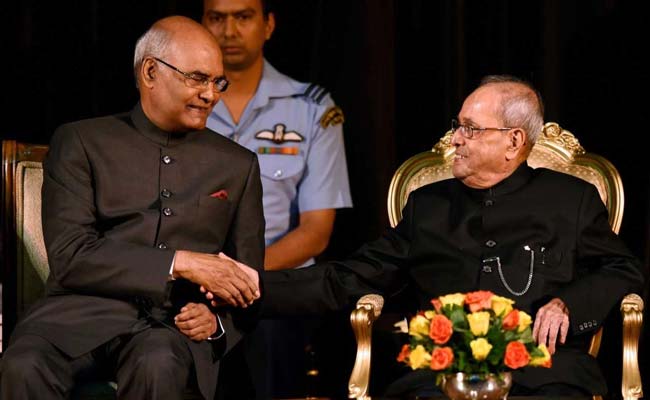
NEW DELHI (TIP): Ram Nath Kovind on July 25 took oath at the 14th President of India, the first BJP leader to occupy the Rashtrapati Bhawan, and said India’s unity in diversity was the key to its success.
Earlier, outgoing President Pranab Mukherjee on July 23 went down memory lane as he delivered his farewell speech, recalling his first day as a member of Parliament as well as his past associations.
“With a sense of gratitude and a prayer in my heart, I take leave of you. I leave with a sense of fulfillment and happiness of having served the people of this great country through this institution — as their humble servant,” he said in his address to members of both the houses at the Central Hall of Parliament.
The 71-year-old Kovind was administered the oath of office by Chief Justice of India J S Khehar at an impressive ceremony in the Central Hall of Parliament. He took oath in the name of God and pledged to “preserve, protect and defend the Constitution and the law”.
The ceremony was attended by Mukherjee, Vice President Hamid Ansari, Lok Sabha Speaker Sumitra Mahajan and Prime Minister Narendra Modi, Governors, Chief Ministers, Union Ministers, Parliamentarians diplomats and 22 members from Kovind’s family.
Kovind began his innings in office invoking Sardar Patel, Deendayal Upadhyay – leaders looked up by the Sangh parivar and dove-tailing their message with that of Mahatma Gandhi.
Absent from the President’s inaugural speech was any reference to Congress stalwarts barring those held dear by the BJP.
A section of BJP MPs raised slogans of ‘Jai Shri Ram’ and ‘Bharat Mata ki Jai’ soon after Kovind was sworn-in as the President.
Upadhyaya’s philosophy of ‘antodyaya’ was also reflected in the President’s speech as he spoke of reaching the fruits of development to the “last person, in the last house in the last village.”
At the outset, the President said he was conscious that he was following in the footsteps of stalwarts such as Dr Rajendra Prasad, S Radhakrishnan, APJ Abdul Kalam and his immediate predecessor Pranab Mukherjee.
“We need to build an India that is an economic leader as well as moral exemplar. For us, those two touchstones can never be separate. They are and must forever be linked,” said Kovind, the first leader from Uttar Pradesh to adorn the top constitutional post.
Reflecting a clear shift from the era of entitlement furthered during the UPA, the President spoke of the government being a facilitator in nation building.
“Nations are not built by governments alone. The government can at best be a facilitator, and a trigger for society’s innate entrepreneurial and creative instincts. Nation building requires national pride,” Kovind said.
Referring to Mahatma Gandhi, Sardar Patel and B.R. Ambedkar, the President said these leaders did not believe that political freedom was enough. “For them, it was crucial to also achieve economic and social freedom for millions of our people,” he said.
“The key to India’s success is its diversity. Our diversity is the core that makes us so unique. In this land, we find a mix of states and regions, religions, languages, cultures, lifestyles and much more. We are so different and yet so similar and united,” the President said.
Kovind said India of the 21st century India will be in conformity with its ancient values as well as compliant with the fourth industrial revolution. “There is no dichotomy there, no question of choice. We must combine tradition and technology, the wisdom of an age-old Bharat and the science of a contemporary India.” he said.
Earlier, the President-elect and his wife Savita were ceremonially escorted to the Rashtrapati Bhawan where Mukherjee took Kovind on a guided tour of the Rashtrapati Bhawan.
WASHINGTON (TIP): Despite President Trump’s Twitter exhortations to Republican Senators shortly before the vote, Obamacare repeal failed. The President tweeted:
Donald J. Trump ✔ @realDonaldTrump
Go Republican Senators, Go! Get there after waiting for 7 years. Give America great healthcare!
10:43 PM – Jul 27, 2017
The Senate rejected legislation to repeal parts of the Affordable Care Act, with Senator John McCain casting a decisive “no.”
Senate Republicans unveiled a “skinny repeal,” a narrow measure to roll back parts of the Affordable Care Act. It would leave 15 million more Americans without insurance next year, the Congressional Budget Office said.
Speaker Ryan tried to reassure senators balking at the narrow bill, but he left the door open for “skinny” passage.
The health insurance lobby came off the sidelines Thursday, July 27, to warn Republicans against repealing the individual mandate.
While 49 Republican Senators voted for Skinny Repeal, 3 said Nay. All 48 Democrats opposed the repeal. Senate, thus, rejected the scaled-down Obamacare repeal.
Senator John McCain, Republican of Arizona, cast a decisive vote to defeat the proposal, joining two other Republicans, Susan Collins of Maine and Lisa Murkowski of Alaska, in opposing it.
The 49-51 vote was a huge setback for the majority leader, Mitch McConnell of Kentucky, who has spent the last three months trying to devise a repeal bill that could win support from members of his conference.
The truncated Republican plan was far less than what Republicans once envisioned. Republican leaders, unable to overcome complaints from both moderate and conservative members of their caucus, said the skeletal plan was just a vehicle to permit negotiations with the House, which passed a much more ambitious repeal bill in early May.
The so-called “skinny” repeal bill, as it became known at the Capitol this week, would still have broad effects on health care. The bill would increase the number of people who are uninsured by 15 million next year compared with current law, according to the nonpartisan Congressional Budget Office. Premiums for people buying insurance on their own would increase by roughly 20 percent, the budget office said.