Tag: leadstory1

  • Special Counsel Mueller Files New Charges against Manafort and Gates

    Special Counsel Mueller Files New Charges against Manafort and Gates

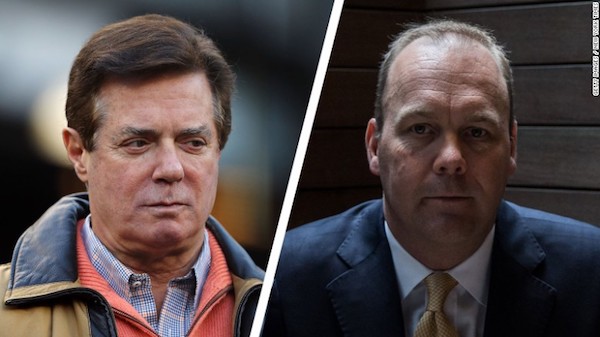
    WASHINGTON (TIP): Special Counsel Robert Mueller filed, February 22, new fraud and money-laundering charges against former Trump campaign chairman Paul Manafort and his associate Rick Gates.

    In the 37-page indictment, prosecutors describe a “scheme” in which the two longtime business partners allegedly laundered $30 million, failed to pay taxes for almost 10 years and used real estate they owned to fraudulently secure more than $20 million in loans.

    The indictments show increasing pressure from Mueller on the former top Trump campaign officials and highlight his aggressive effort to investigate Russian interference in the 2016 presidential election and any related matters uncovered during the investigation.

    Last Friday, the special counsel produced grand jury indictments for 13 Russian nationals, accusing them of operating a misinformation campaign to hurt Hillary Clinton’s presidential effort.

    In the indictment released Thursday, prosecutors allege Manafort and Gates “hid the existence and ownership of the foreign companies and bank accounts” they oversaw and laundered more than $30 million in income.

    Some of the fraud was possible because the men disguised their income as “loans” from shell corporations they ran, the prosecutors said.

    More than $75 million dollars flowed through offshore accounts the men had set up in foreign countries, including Cyprus, St. Vincent and the Grenadines and the Seychelles, the indictment alleges. These are small island nations where local laws make it easy to park money.

    Manafort used some of the money to buy real estate in the US, and they both used the money on home improvement and to refinance their mortgages, the indictment alleges. They also allegedly used money from their offshore accounts to pay for luxury goods, and, in Gates’ case, for his mortgage and children’s tuition.

    They were able to defraud banks because of the tens of millions of dollars they earned doing Ukrainian political work and lobbying from 2006 until 2015, the prosecutors allege.

    Manafort faces 18 new charges in Virginia, while Gates faces 23 new charges.

    Already, the pair face a combined 12 criminal charges in federal court in Washington for alleged money laundering and failing to disclose banking information and foreign lobbying work they did prior to 2015. Those charges are also connected to the offshore accounts in the new indictment.

    Manafort and Gates pleaded not guilty to those charges in October.

    Thursday’s indictment adds more pressure on Manafort and Gates as their Washington trial approaches this year. With mounting legal expenses and the potential for lengthy prison sentences, Manafort and Gates might reconsider cutting a deal with Mueller’s team.

    But they can only make a deal if they have valuable information that Mueller can use in other prosecutions. Gates could testify against Manafort, and Manafort could testify about any potential crimes he witnessed during Trump’s presidential campaign — if any occurred.

  • ICE’s Top Lawyer in Seattle Charged with Stealing Immigrants’ Identities

    ICE’s Top Lawyer in Seattle Charged with Stealing Immigrants’ Identities

    Raphael A. Sanchez is accused of stealing the information of seven immigrants while their cases were under review by US Immigration and Customs Enforcement

    SEATTLE (TIP): The chief counsel for US Immigration and Customs Enforcement in Seattle has been charged with stealing the identities of multiple immigrants for financial gain, says a Buzz Feed report Feb 14.

    According to an indictment filed this week, ICE’s top attorney in its Seattle office allegedly devised a plan to steal the identities of seven immigrants over a four-year period while their cases were being processed by the federal immigration agency.

    The lawyer, Raphael A. Sanchez, faces one count of wire fraud and aggravated identity theft.

    A Justice Department official told BuzzFeed News Sanchez resigned from the agency effective Monday, Feb 12,  the same day the indictment against him was filed.

    Sanchez used the identifying information of the seven immigrants to “defraud financial institutions” including American Express, Bank of America, Capital One, Citibank, Discover, and JPMorgan Chase, according to the charging document. He also allegedly used his official ICE email address to forward personal information of one of the victims, including an energy bill, a US residence card, and copy of a Chinese passport.

    A spokeswoman with ICE’s Seattle office referred all questions about the indictment and Sanchez’s employment with the agency to the Department of Justice. According to the complaint, the case was spearheaded by the DOJ’s Public Integrity Section in Washington, DC, which oversees corruption cases involving public officials.

     (Source: BuzzFeed/ DOJ))


  • Miss World 2017, Manushi Chhillar to grace South Asian Women Empowerment In New York

    Miss World 2017, Manushi Chhillar to grace South Asian Women Empowerment In New York

    NEW YORK (TIP): Miss World 2017 Manushi Chillar from India has announced that she will be gracing the South Asian Women Empowerment Gala 2018 to be hosted by Bindu Kohli in New York.

    This black tie gala event is title sponsored by Premal Badiani. Today, women have excelled in all domains and we have a lot to learn from each other. We believe in our uniqueness and are happy to be part of this event showcasing women who have made a big difference “, said Premal Badiani.

    Manushi Chillar won the coveted title after seventeen years when Priyanka Chopra, a fellow Indian won the same title. Earlier Ms Aishwarya Rai Bachchan had won the title and become the first Indian to ever win the Miss World title.

    Bindu Kohli, a household name on the East Coast is a well-known television host and a promoter of high quality events. She hosted Miss Shilpa Shetty last year in various cities in US with multiple events to mark women empowerment in USA. “This premium event will be ideal to present and felicitate Miss Manushi Chillar in USA amongst high profile guests and several women achievers in USA”, said Bindu Kohli. She continued, “I believe in quality and class and I am sure to make it a memorable event”.

    Bindu Kohli entertainment is an event management and production company based in New York.  Some of the others proud sponsors for this event are Shaheen, Leonard Palazzo, Munawar & Andrews-Santillo LLP, AR Helping, and The Indian Panorama.

  • Xavier University School of Medicine holds its 42nd White Coat Ceremony

    Xavier University School of Medicine holds its 42nd White Coat Ceremony

    34 students presented White Coat and administered the Medical Student Pledge of Professional Conduct

    ARUBA (TIP): Xavier University School of Medicine held its 42nd White Coat Ceremony on Friday, January 19th, 2018.   34 students were presented with their White Coats and they took the Medical Student Pledge of Professional Conduct.

    President Ravishankar Bhooplapur addressed the audience of students, their family members, faculty, and staff at this momentous occasion. He welcomed the first lady Prime Minister of Aruba, Honorable Mrs. Evelyn Wever-Croes, and congratulated her on her election and in taking over the beautiful, happy island.

    Ravi Bhooplapur addresses: President Ravishankar Bhooplapur addresses the audience at the White Coat Ceremony.

    In his address, President Ravishankar Bhooplapur commended the students on choosing the right medical school and for entering this most noble profession. He emphasized the importance of their studies, and assured commitment from the most qualified faculty to provide them with a superb education. He also brought to everyone’s attention Xavier’s success of a 90% first time USMLE passing rate, and a 70% residency rate. President Bhooplapur thanked Xavier’s faculty and staff, as well as the government of Aruba, for welcoming them with open hearts. He believes Aruba is the best island in the Caribbean, and a wonderful tourist destination. President Bhooplapur stated that Xavier is a “feather in the cap” of Aruba, in that is has a special place on the island. Finally, he thanked the Chair, Board of Trustees, and trustee Mr. Frank Croes for his continued guidance in Aruba.

    PM addresses: The first female Prime Minister of Aruba, Honorable Mrs. Evelyn Wever-Croes, addresses the audience at the White Coat Ceremony.

    Following the President’s address, Prime Minister, Honorable Mrs. Evelyn Wever-Croes, spoke. She explained how she wanted to attend medical school after high school, but her only option at the time was to go to Costa Rica to study. While she said the country was beautiful and her studies went well, she missed home. Ultimately, she came back to Aruba, where her father decided she would study law. Mrs. Wever-Croes was excited when Xavier first came to the happy island of Aruba, as her dreams of a medical school on the island had come true. She assured continued support for Xavier, and appreciated that the school awarded an Aruban student a scholarship. She concluded by congratulating the students on receiving their White Coats.

    Xavier is fortunate and thankful that the Honorable Mrs. Evelyn Wever-Croes was in attendance at such a special event.

    President Ravishankar Bhooplapur presents Prime Minister, Honorable Mrs. Evelyn Wever-Croes with a gift.

    Xavier University School of Medicine has received accreditation from two accrediting bodies: CAAM-HP (Caribbean Accreditation Authority for Education in Medicine and other Health Professions), and ACCM (Accreditation Commission on Colleges of Medicine). We offer special scholarships for Aruban students. We have provincial loans for Canadian students, as well as loan programs for U.S. citizens and green card holders.

    (Press Release)

  • World Cancer Day observed with Inauguration of the first Radiation Free Thermo Mammography Machine at Parmarth Niketan, Rishikesh

    World Cancer Day observed with Inauguration of the first Radiation Free Thermo Mammography Machine at Parmarth Niketan, Rishikesh

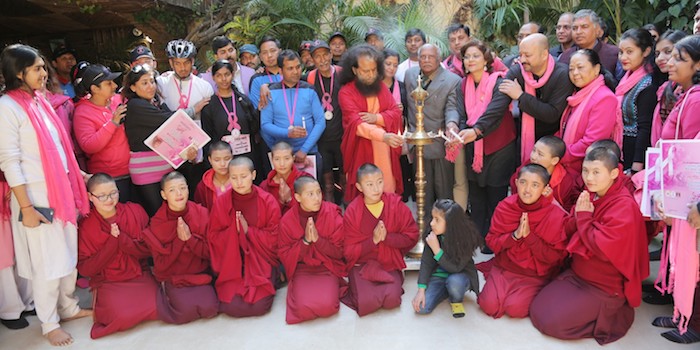
    Chief Minister of Uttarakhand, Trivendra Singh Rawat and Swami Chidanand Saraswati, President of Parmarth Niketan join Can Protect Foundation members in prayers & pledge for a Cancer Free World 

    RISHIKESH (TIP): Swami Chidanand Saraswati, President of Parmarth Niketan (Rishikesh), Founder of the Divine Shakti Foundation, was joined by Chief Minister of Uttarakhand, Trivendra Singh Rawat for a special Ganga Aarti on the occasion of World Cancer Day and the inauguration, during the world-renowned ceremony, of the first Radiation Free Thermo Mammography Machine in Northern India.

    Chief Minister Singh was pleased to hear about huge participation in the Cycle Awareness Rally that started in the morning at 6:45 am from Gandhi Maidan, Dehradun and arrived in Rishikesh at 12 pm to be blessed and welcomed by Swami Chidanand Saraswati who met and congratulated the cyclists during the Ganga Aarti for their commitment to raising awareness on these critical issues.

    Swami Saraswati and CM met with many of the women who had received free medical screenings, and check-ups done at the Parmarth Hospital earlier in the day.  Hundreds of these women joined for the Ganga Aarti and pledged to work together for a cancer free world.

    Speaking on the occasion, Swami Chidanand Saraswati said, “When we build a support system and strengthen the spirit that we are one family, addressing these issues and serving this cause in solidarity and oneness, then even if we are not able to fully end cancer we can dramatically increase survival rates. I think today we need to, as a society, celebrate and honor our cancer survivors as well as simultaneously encourage women, especially, to take their health issue on a priority, because when they are healthy, their families are healthy, thereby the nation and the world can be healthier and happier.”

    Members of Can Protect Foundation taking pledge of a plastic free life style

    The event provided a platform for women to stand in solidarity in the face of this crucial issues in women’s health for the security of India’s families and their future. According to statistics, breast cancer numbers are on the rise in India, and it is projected that by the year 2020, 76,000 Indian women will lose their lives to breast cancer.  The average age of these women is between 30 -50 years, but with early diagnosis higher survival rates can be achieved.

    Dr. Sumita Prabhakar, President of the Can Protect Foundation, said, “Our organization is so blessed to have Pujya Swamiji’s and the Hon’ble CM’s support for this cause, as well as the support of generous donors like Dr PK Dattaji who have donated the machine for the service of humanity. It is with the association of the Divine Shakti Foundation- Parmarth Niketan that we have been able to raise greater awareness on the need for pre-screenings and check-ups to help prevent breast and cervical cancer. We strongly believe that prevention and pre-screenings are the best way to create a cancer free, healthier and happier world.”

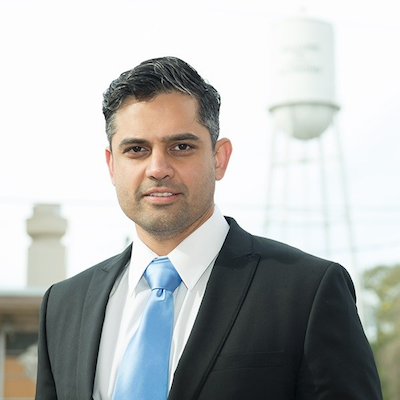
  • Former US diplomat Sri Preston Kulkarni tries to become Texas’ first Indian American congressman

    Former US diplomat Sri Preston Kulkarni tries to become Texas’ first Indian American congressman

    DALLAS (TIP): When Sri Preston Kulkarni returned to the Department of State after a two-year hiatus — during which he worked as a Pearson Fellow on the Capitol Hill and earned a mid-career master’s degree in public administration from Harvard’s Kennedy School — the veteran diplomat was planning to go to New Delhi. He was preparing to serve as a Hindi language spokesperson at the US embassy in India, the county where his father was born, in the new year.

    However, Kulkarni, whose first posting after the sabbatical was at the US embassy in Jamaica, would soon realize that, with a new administration at the White House, his workplace has changed — even though the job hasn’t. With President Trump bent on tearing down relationships, getting out of treaties and insulting minorities, ethnic and religious groups, it dawned on him that what he was doing was not what he signed up for 14 years ago.

    “When the President of the United States said at a press conference [August 11] that we might attack Venezuela, I had to explain that to my Charge D’affaires,” he told The American Bazar in a recent interview. “Even more distressing was when President Trump said, after the Charlottesville violence, that ‘there were some very fine people on both sides.’”

    That was a turning point for Kulkarni, the son of an Indian father and a West Virginian mother.  “It went against everything that I believed in as an American,” he said. “My dad taught me that America was the land of opportunity for everybody, no matter what your color or religion is.”

    So, in December 2017, Kulkarni left the job because representing a government that is “going against ideals” that he has “always believed in” is not something he could continue doing. “We can’t actually do our job and we can’t represent America, when the government is not representing America,” he said. “If this is what America represents, then I need to change that,” he said.”

    So, the 39-year-old is now trying to “change that” by running for Congress from the Houston area, where he grew up.

    He is one of the five candidates seeking the Democratic Party nomination from Texas 22nd congressional district.

    If he wins the March 6 primary, Kulkarni will take on the GOP incumbent Pete Olson, who is currently serving his fourth term in Congress.

    Gerrymandered district

    The Cook Partisan Voting Index gives a 10-point advantage to Republicans in the district. In the 2016 presidential elections, Trump beat the Democratic nominee Hillary Clinton by 8 points in the district.

    One of the dozens of highly gerrymandered districts across the nation, it contains areas of three suburban Houston counties:  most of Fort Bend County and portions of Brazoria and Harris counties to dilute the Democratic votes.

    Kulkarni said the district was “carved to be Republican” by cutting several minority areas out of it. Nonetheless, he is confident of winning the primary and trouncing Olson for two reasons.

    One is the demographic diversity of the district. Over the years, it has become a majority minority district.

    Whites constitute only a little over a third of the population. Hispanics form a quarter, Asian Americans 18 percent and African Americans nearly 14% percent.

    “We never had a minority represent the district,” Kulkarni said. “It has the largest Asian American population and the largest Indian American population in the state of Texas. We never had an Asian American or Indian American elected to congress from Texas in our history. The demographics are changing a lot, and a lot of us are interested in a representative that looks more like America, more like the district.”

    The second factor that, according to the candidate, is working in his, or the eventual Democratic nominee’s favor, is the current political climate in the district and county. Because of the unpopularity of Trump — whom he described as “more unpopular than any president in my lifetime” — Kulkarni predicated: “We are basically on the border of a tidal wave election for Democrats.”

    “We have more Democratic candidates running in Texas as far as I know since Lyndon B. Johnson was president,” he said. “There’s a lot of energy in the Democratic Party. We have candidate for every congressional district.”

    Kulkarni cited polls that show that Democrats are holding an 18-point advantage in generic ballots. “They have never recorded that number for an opposition party with 11 months to go before the election,” he said. “I don’t know it is possible to swing any farther from the president. These are unprecedented numbers. People who say that these districts are safe Republican seats, they are not looking at the sentiment of the country.

    Kulkarni said Olson hasn’t “really had a serious challenger in the last four elections here.”

    In 2016, the congressman defeated Democrat Mark Gibson, who is again vying for the party nomination, by nearly 20 points.

    Kulkarni pointed out that in the last election, Gibson raised only $24,000 for the entire campaign. With such a minuscule war chest, it is impossible to take down a well-financed incumbent. Olson, on the other hand, raised more than $1.5 million in the last election cycle, according to the nonpartisan Center for Responsive Politics.

    “My campaign raised $34,000 in the first 13 days,” he said. “We are running a different type of campaign. We are running a serious and hard campaign, and we plan to win the district.”

    In the last quarter, Gibson raised $13,000 and another primary opponent, Letitia Plummer, raised nearly $19,000.

    Targeting minority votes

    In the primary, Kulkarni is focusing on winning the backing of Asian American and other ethnic minority groups. Gibson won only 23,084 votes in the Democratic primary in 2016.

    The Indian American candidate can potentially win that many votes from just the Indian and South Asian American communities. There are 25,000 people in the district who were born in India.

    But Kulkarni understands that Indians, traditionally, have not been the most enthusiastic of voters. “A lot of them stay out of politics,” he said. “What I am trying to impress upon people as we go out to temples and to mosques I that even if you don’t find politics interesting, politics is interested in you.”

    He constantly drives home the fact that a passive attitude toward politics is not going to make Indian Americans or other ethnic minorities safe. “Some people think, well, if I keep my head down, people won’t attack me, and I won’t be noticed,” he said. “Well, in reality, if you start accepting some of these things, start accepting a president who wants to ban all Muslims, a president who thinks that a Mexican American, someone born in Indiana, can’t be a judge. When does it stop?”

    Kulkarni pointed out that he shares the same first names with Srinivas Kuchibhotla, the man who was shot and killed by a white nationalist in Olathe, Kansas, a month after Trump’s inauguration. “A lot of Indian American families need to wake up to the fact that we are under threat,” he said. “It’s not something that affect only one minority group, it affects all of us.”

    The candidate said he has been making inroads into the community. “There are several Indian Americans who are Republicans that live in my district,” he said. “They are supporting my campaign. They are hosting events. At the end of the day, the party affiliation is not as important as the values that underline.”

    Kulkarni said he is running a positive campaign, with a very optimistic message. “It’s not anti-Republican, it’s not anti-Trump event,” he said. “It’s pro-American.”

    That is why he is running a campaign focusing on issues such as education, universal healthcare, economic inequality, immigration reform and funding for veterans and national defense.

    “We believe in public school system,” he said. “A lot of families move into neighborhood specifically because they care about their children’s education. When you take money out of the public school system, then you negate all of that.”

    He also emphasized the need for having leaders who understand basic things about science. “The congressman that we have, he actually said on the floor of the House that he shouldn’t have to pay for prenatal care for women, because he has an X chromosome, which means he can’t have babies,” he said, pointing out that everyone has an X chromosome.

    Kulkarni said he envisions an inclusive America, unlike the one that Trump advocates. He said: “The problem is when you have a president who is so blatantly stereotypes people by ethnicity and religion and gender and degrading women in public, undermining the free press, attacking our democratic institutions, attacking our courts, attacking the FBI, attacking the CIA, and just recently you hear his comments about other ethnic groups — repeatedly, again and again.”

    In fact, on his campaign website, the candidate terms the Trump-inspired polarization within the country  as the raison d’etre for his candidacy: “I have spent my career trying to reduce conflict in other countries, but right now hostility and conflict are being inflamed in our own country, through the politics of anger and demagoguery, demonization of specific ethnic and religious groups, threats to rule of law, degradation of women, and an undermining of democratic institutions like a free press,” he says. “The greatest danger to our country right now is not a foreign power, but the internal divisions in our society. That is why I am coming home to Texas to serve.”

    Stellar bio

    Kulkarni is biracial: his father Venkatesh Kulkarni was an Indian immigrant; and mother Margaret Preston Kulkarni is West Virginian.

    Margaret’s family has been in the country for 400 years. “They go back to a time where there was no United States,” Sri said.

    In 1980, the couple moved to Houston, where Venkatesh would teach creative writing at Rice University. Margaret worked as a systems analyst at AIG. (According to Sri’s filings with the Federal Election Commission, his mother is the “Custodian of Records,” as well as the treasurer of the Kulkarni campaign.”)

    Venkatesh Kulkarni, who grew up in Hyderabad and graduated from Osmania University, published a critically acclaimed novel, Naked in Deccan, which he called “Indo-American fiction.”

    He died in 1998 after battling leukemia for a year.

    Kulkarni went to Lamar High School in Houston.

    He moved to Austin for his undergrad at University of Texas in linguistics and Russian. (A polyglot, besides English and Russian, he speaks three other languages, Chinese, Hebrew and Spanish.)

    During his father’s illness, he took some time off to help his mother and siblings Silas, Margo, and Kris.

    After his graduation in 2003, Kulkarni joined the Department of State and he was commissioned into the service by then-Secretary of State Colin Powell. His first overseas posting was in Taipei, where he served for two years.

    Then he moved to Russia. “We had a better relationship back then,” he joked. The diplomat would then serve in Iraq, where he was on a provisional reconstruction team, as part of a combined civilian military team.

    “For a year and a half, I lived on a military base in Kirkuk, Iraq, which was a disputed territory between Kurds and Arabs,” he recalled. “We were constantly being bombarded by rocket attacks IEDs being exploded. I was doing public affairs and training journalists there.”

    A year and a half later, he was transferred to Jerusalem. Among his main tasks serving at the US consulate in the ancient Middle Eastern city was mitigating conflict and between Israelis and Palestinians.

    Postings in Kirkuk and Jerusalem made him “an expert on disputed territories,” he joked.

    Three years later, he would return to Washington, DC, to serve in the State Department’s Bureau of Public Affairs. As digital media office, he ran the Facebook operation for the entire department.

    In 2014, when Russia took over Crimea and sent troops into Eastern Ukraine, Kulkarni served as the campaign director of a task force set up within the department to counter the Russian propaganda in Ukraine. “I didn’t know that time that the Russian government would do the same thing in the United States,” he said referring to the Russian interference in the 2016 presidential election.

    In 2015, Kulkarni was selected for the Pearson Fellowship, which allows Foreign Service Officers an opportunity to work on Capitol Hill for a year to learn about the legislative process. He worked for Sen. Kirsten Gillibrand, the junior senator from New York as a foreign policy and defense advisor.

    His stellar bio includes a midcareer master’s program from Harvard’s Kennedy School, which he did after completing the Pearson Fellowship.

    Kulkarni said his education, training and his extensive background in foreign policy and national security, and experience in working on the Hill has prepared him to be a United States House of Representative.

    (Source: AB Wire)


  • HungerBox raises $2.5 million in pre-series A funding lead by Lionrock Capital and Kris Gopalakrishnan

    HungerBox raises $2.5 million in pre-series A funding lead by Lionrock Capital and Kris Gopalakrishnan

    BENGALURU (TIP): HungerBox, the Growth Story-promoted B2B food-tech company t announced, January 22, the closing of USD $2.5 million in pre-series A funding led by Lionrock Capital and Kris Gopalakrishnan, Co-Founder, Infosys.

    Started in 2016, HungerBox is a full stack, food-tech company that is focused on the B2B space and operates 100+ digital cafeterias for more than 75 corporate clients including Qualcomm, Microsoft, FirstSource, Accenture, CapGemini, Genpact, ABB, Amazon and McKinsey, across Bangalore, Chennai, Hyderabad, Mumbai, Pune, Delhi/NCR and Jaipur.

     “HungerBox’s business has scaled tremendously over the last 15 months with nearly 7 million orders placed on our platform till date. We are clocking more than 120,000 daily orders and expect to scale this to half a million orders per day by end-2018,” said Sandipan Mitra, CEO & Co-Founder, HungerBox. “The funding we have received from marquee investors will boost our ability to scale our operations to keep pace with the traction we are seeing for our digital cafeteria management solution.”

    Kris Gopalakrishnan, Co-Founder, Infosys commented, “There is tremendous potential for innovation in the B2B food-tech arena as corporate spends on F&B are already massive and growing year-on-year. HungerBox addresses this large space with an easily scalable model and an end-to-end solution that provides a win-win to employees as well as to corporate clients”.

    “The B2B food space has plenty of headroom for growth and innovation for years to come.  The winners in the sector will be those with a powerful, tech-led offering and the ability to scale in-step with their clients. HungerBox certainly has all the credentials to be a leader in this space,” said Hari Kumar, Founder & CEO, Lionrock Capital.

     Spending on F&B in the B2B space alone is estimated to reach US $ 14 billion in India in 2018. The space is growing at ~ 15% per annum.

    HungerBox’s seamless, tech-led solution enables end-to-end digital cafeteria management with the company’s proprietary technology platform connecting food vendors to employees within client organizations through a customized mobile app available to each employee.

    Using the app, employees can view the F&B menu provided by all enlisted food vendors at their workplace café’s, place orders and track delivery accurately. They can also provide ratings / feedback. HungerBox’s solution provides admin teams at the client organization with the ability to track the entire F&B operation including food consumption, orders, feedback etc., in real-time. More than 50 different payment methods are integrated into the service offering including in-app purchases by an employee, payment via smart cards, m-wallets, self-serve kiosks at the café’s etc.

     HungerBox uses latest technology advancements like IoT in its solution to seamlessly connect the vendor side hardware (designed by HungerBox) and employees of corporate. The HungerBox solution also provides features like ‘Personalized Recommendations’ to employees through its AI-driven technology, ‘Health Mode’ for health conscious employees, ability to undertake group-ordering and orders from restaurants in the vicinity when corporate cafés are closed etc.

    HungerBox employs 200 staff across India and was started by Sandipan Mitra and Uttam Kumar, who are both veterans of the food tech space in India whose previous stints included global food takeaway ordering service Just Eat’s India operations. HungerBox is promoted by GrowthStory, the venture-builder platform founded by serial entrepreneurs, K Ganesh and Meena Ganesh.

  • Form panel to assign important cases, four SC judges tell CJI Dipak Misra

    Form panel to assign important cases, four SC judges tell CJI Dipak Misra

    NEW DELHI (TIP): The four senior judges of Supreme Court who criticised Chief Justice (CJI) Dipak Misra for his administration of the court, including allocation of cases to judges, have recommended the creation of a committee of senior judges that will assign sensitive and important cases, according to people familiar with the matter.

    The proposal is being discussed not just by them and the CJI but also, in terms of seniority, judges who stand a chance to be a future CJI, the people familiar with the matter added.

    However, the talks remained inconclusive, they said, because the CJI was reluctant to concede to the demands as it would lead to the dilution of the chief ’s power as the master of the roster.

    The four judges, the senior most in the Supreme Court after the CJI – justices J Chelameswar, Ranjan Gogoi, MB Lokur and Kurien Joseph – met the CJI for the second time this week and put forth their proposal for a just and transparent system to allocate cases.

    Three judges, who, in order of seniority, stand a chance of becoming the CJI were asked by Justice Misra to be present during the talks because the issue raised by the four judges relates to the administrative function of the office of the CJI, the people explained.

    Currently, cases are marked as per the roster notified by the Supreme Court registry. This is done once the CJI approves it. Though the marking is computer-generated, the CJI has a say when the registry informs him about a sensitive matter in advance. As the administrative head the CJI can either retain the matter, let it be heard by the bench as per the roster or send it to another bench .

    It is this discretionary power which the four judges have attacked; their claim is that senior judges were being overlooked when it came to hearing sensitive cases.

    Thursday’s meeting between the judges lasted for around 20 minutes, from 10 to 10:20 am after which the judges dispersed to their respective courts.

    The people familiar with the matter said the CJI expressed his inability to accept the proposal because it would compromise the Chief Justice’s power, a matter on which a five-judge constitution bench recently ruled.

    Justice Misra headed the bench that gave the verdict on November 10, 2017.

    Justice Misra is also understood to have cited another SC judgement that in 1997 declared chief justice as the master of the roster. The impasse is likely to continue as Justice Chelameswar left the city on a private visit and i.e. expected back on Sunday night.

    If the talks between the senior judges fail then the CJI may have to convene a full court meeting to end the stalemate, one of the people familiar with the matter said. Source: HT

  • Damocles sword hangs on government running despite House Passing Short-Term Spending Bill

    Damocles sword hangs on government running despite House Passing Short-Term Spending Bill

    WASHINGTON (TIP): The House, on Thursday, January 18 night, approved, 230 to 197, a stopgap spending bill to keep the government open past Friday, but “Senate Democrats — angered by President Trump’s vulgar aspersions and a lack of progress on a broader budget and immigration deal — appeared ready to block the measure”, said a New York Times report.

    In the Senate, at least about a dozen Democratic votes would be needed to approve the measure, and there was little chance that those would materialize. Democrats are intent on securing concessions that would, among other things, protect from deportation young immigrants brought to the country illegally as children, increase domestic spending, aid Puerto Rico and bolster the government’s response to the opioid crisis.

    The Senate held only a procedural vote on the stopgap bill late Thursday night, leaving for Friday a more consequential vote when Democrats are expected to block the measure.

                                                                                          (Developing story)

  • Landmark Brexit Bill passed

    Landmark Brexit Bill passed

    LONDON (TIP): British MPs gave the green light, on January 18, to a landmark Brexit Bill, after weeks of debate and a damaging government defeat, but the legislation now faces a battle in the House of Lords.

    The House of Commons voted by a majority of 29 to approve the EU (Withdrawal) Bill, which repeals the 1972 law that made Britain a member of theEuropean Union.

    “This bill is essential for preparing the country for the historic milestone of withdrawing from the European Union,” Brexit Secretary David Davis said.

    “We’ll have a statue book that works, delivering a smooth and orderly exit desired by people, businesses across the UK and being delivered by this government.”

    The Bill is only one of several that Prime Minister Theresa May’s minority government must pass to prepare Britain for its withdrawal from the EU in March 2019.

    MPs had tabled more than 500 amendments and spent more than 80 hours in debate, and Brexit Secretary David Davis said the Bill was heading to the Lords in an ‘improved’ state

    The unelected House of Lords may insist on further changes when peers begin their scrutiny on January 30, while ministers still face opposition from Scottish and Welsh administrations.

  • China’s visa waiver for 53 countries

    China’s visa waiver for 53 countries

    NEW YORK (TIP):  The Chinese cities of Beijing, Tianjin and Hebei will allow visitors from 53 countries to visit the region, without having to obtain a visa, for a six-day stay. The measure will be applied to visitors from 53 countries including the Schengen area member states, the US, Brazil, Mexico, Chile and Argentina.

  • Support for terror outfits must be forced to stop: India at United Nations

    Support for terror outfits must be forced to stop: India at United Nations

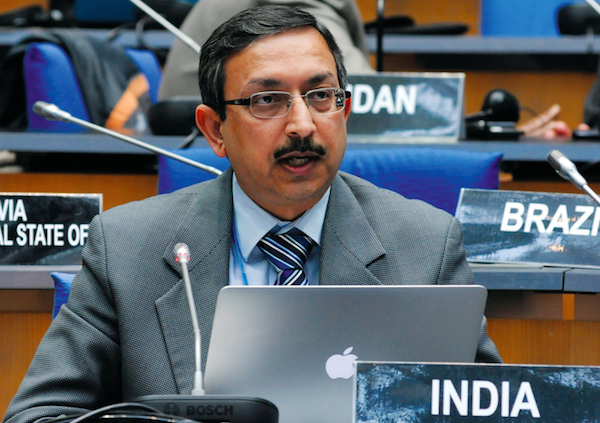
    UNITED NATIONS (TIP): Supporters of terror organisations like Taliban, Haqqani network and Lashkare- Taiba must be forced to stop and all safe havens must end, India has told the UN Security Council, expressing concern over the collapse of security situation in Afghanistan.

    Terrorists continue to attack the most vulnerable, including the sick in hospitals, children in schools, devotees in mosques and even mourners at funerals. Terrorist groups have gained territory, Deputy Permanent Representative of India to UN, Tanmaya Lal, said during an open debate of the Security Council on Afghanistan.

    “The support for terrorist organisations like the Taliban, the Haqqani Network, Daesh, Al Qaeda and its designated affiliates such as Lashkare- Taiba and Jaish-e-Mohammed from outside Afghanistan, must be forced to stop,” Lal said.

    “All safe havens and sanctuaries available to such groups outside Afghan borders must end. The Security Council has an important responsibility in this regard in our collective interest,” Lal said. “The continued resilience shown by the Afghan people and security personnel has been exemplary but hopes of a better future still appear distant.

    Our regular consultations and the work done by the Council have not been enough to more effectively reverse the situation on the ground,” he added.

    Lal said it had been painfully clear since long that the security situation in Afghanistan had implications not only for the region but the entire world.

    “While new threats emerge from the Daesh, the Security Council cannot even decide whether to designate the new leaders of Taliban or to freeze the assets of the slain leader of the group more than a year after the issue was brought to its attention,” Lal said.

    In his address to the Security Council Afghan Ambassador to the UN Mahmoud Saikal said Afghanistan’s patience on indiscriminate shelling from across the border by Pakistan should not be tested.

    “Under the pretext of receiving fire from our side, Pakistan’s violations across the Durand Line, including indiscriminate artillery shelling, have continued unabated throughout 2017, resulting in the loss of innocent lives and destruction of villages,” he said.

    The proposal of Afghanistan for engagement and operational coordination towards addressing these concerns had not seen any response, he told the UN Security Council.

    “At the same time, Afghanistan has the will and the capacity to defend its territory and our patience should not be tested,” Saikal said.

    Afghanistan believed that confidence building measures could be successful only when violations of this nature came to a complete halt, he said. “In a similar vein, we are also in communication on the imperative of addressing terrorists’ regional safe havens and hope to see positive developments on this front soon,” he said, adding that Afghanistan looked forward to the upcoming trilateral meeting in Beijing next week between the Foreign Ministers of Afghanistan, Pakistan, and China. Source: PTI

  • Perspective : How Gujarat was won

    Perspective : How Gujarat was won

                                By Shreyas Sardesai/ Sanjay Kumar

    The Bharatiya Janata Party (BJP) has managed only a modest victory in Gujarat, confirming some earlier psephological predictions and ground reports of a close electoral contest. Two polls conducted by us at Lokniti, Centre for the Study of Developing Societies (CSDS), one in end-October and another in end-November, had found the electoral race between the BJP and the Congress to have tightened considerably. In fact, the November survey had found the race to be neck-and-neck in terms of vote share. That trend, however, did not hold entirely till Voting Day. It now seems that a last-minute swing by some voters towards the final stages of the campaign ended up giving the edge to the BJP.

    We say this based on evidence gathered from a post-poll, a survey of voters at their residences after they voted, conducted by Lokniti. The poll reveals that over two in every five voters (43%) took a final call on who they would vote for in the last two weeks of campaigning — and more than half of them (53%) said they voted for the BJP while only about 38% went with the Congress. In fact, a majority of these late deciders are those who decided at the last minute, either on the day of voting or a day or two before it. In 2012 the share of late deciders had been much lower, at 31%, and back then they had split their vote evenly between the BJP and the Congress.

    The question then is, what really happened, between the last week of November when our final pre-poll took place and the second week of December when actual voting took place, that made some disaffected voters planning to vote for the Congress change their minds? The answer to this question is not so difficult to find.

    The late shift

    We believe that it is quite obviously Prime Minister Narendra Modi’s campaigning, which was for the most part controversial and divisive, that played a role in turning a section of voters towards the BJP, thus saving it from a possible defeat. This is the period when the Prime Minister, who is hugely liked in Gujarat (by 72% of those surveyed, post-poll), campaigned extensively in the State. Starting from November 27 right up till December 11, he addressed more than 30 election rallies across the State. Most of his speeches, especially the ones made at rallies post-December 5, focused on divisive themes. Mandir-Masjid, Mughals, Pakistan, Ahmed Patel, Salman Nizami, etc., he practiced classic dog-whistle politics by using coded language that might have stoked passions among some sections of the electorate.

    In our final pre-poll done in end-November, we had found only about 45% of Hindu voters to be voting for the BJP. In the post-poll, we noticed that eventually nearly 52% of them ended up voting for the incumbent party. This is also three points higher than the Hindu support that the BJP received in 2012. While our post-poll also suggests an increase in Muslim votes for the BJP compared to last time, at the same time it also points to a consolidation of Hindu votes behind the party in Assembly seats where the Muslim population is much higher than average. In constituencies where Muslims in the population are less than 10%, the BJP’s lead over the Congress among Hindu voters is only 4 percentage points. In seats where Muslims constitute 10-20% of the population, the gap is six times higher at 25 points. And in areas where Muslims are over 20% of the population, the BJP leads the Congress by 42 points among Hindu voters. In our pre-poll, these gaps had been minus-3, 16 and 11 points, respectively.

    The Hindu card

    Among the major worries of the BJP all throughout the campaign had been the Patidar disaffection with the party as well as the Congress’s attempts to build a rainbow coalition of different castes by roping in young Patel, Dalit and OBC (Other Backward Classes) leaders on its side. By giving communal overtones to the campaign, the Prime Minister seems to have ensured a subsuming of some of these caste identities within the Hindu fold, thus helping the BJP hold on to its bastion. We notice a shift away from the Congress among all Hindu communities, be it Patidars, Kshatriyas, Dalits, and Adivasis, between the pre-poll and the post-poll. To be fair, it wasn’t just the BJP that played the Hindu card; the Congress tried doing it too, albeit covertly. All throughout the campaign, Rahul Gandhi, who led the party campaign, steered clear of raising issues concerning Muslim voters and instead chose to appeal to majoritarian sentiments by visiting temples across the State.

    However, eventually it seems that in this competition to woo the Gujarati Hindus, most Hindu voters, particularly urban ones, were more convinced by Mr. Modi’s insinuations than by Mr. Gandhi’s attempts at asserting his Hindu-ness. The Congress’s strategic abandonment of its pluralistic legacy for electoral gains is to our mind as worrying as the communal rhetoric in Mr. Modi’s campaign.

    Also, the fact that a seemingly neck-and-neck election can be turned around in such a short span by appealing to the majoritarian impulses of voters raises troubling questions about the health of our electoral democracy.

    A section of the Gujarati press may have also played a role, perhaps inadvertently, in effecting the late swing of some voters. A day after Mr. Modi raised a hue and cry at one of his rallies about Congress leader Mani Shankar Aiyar’s remark calling him a “neech kisam ka aadmi (a low type of man)”, the hugely popular Gujarati newspaper, Gujarat Samachar, which has otherwise been quite critical of Mr. Modi over the years, ran a headline on its front page: “Modi neech jaatino maanas chhe: Mani Shankar Aiyar (Modi is a man from a lower caste says Mani Shankar Aiyar)”. While Mr. Aiyar had described Mr. Modi as “neech”, the newspaper chose to give the remark its own spin, or rather Mr. Modi’s spin, by adding the word “jaati” to it. Such misreporting of Mr. Aiyar’s comment in sections of the press just a day before voting was to take place in Saurashtra-Kutchh and South Gujarat may well have affected the mood of a significant proportion of voters. Our series of surveys in Gujarat suggest that on an average about one-third of voters in Gujarat are daily readers of newspapers. Among such voters, the BJP’s lead over the Congress widened from 8 points in the pre-poll to 14 points in the post-poll.

    Uncomfortable questions

     Winning the trust and confidence of a majority of voters election after election is no mean achievement, and there’s no doubt the BJP should be commended for this. But at the same time the uncomfortable question we must be asking is this — was this trust of voters won by the BJP fairly and squarely on the performance plank alone or whether a large part of it was also won through divisive innuendos, falsehoods and fear mongering?

    (Shreyas Sardesai is Research Associate at Lokniti, CSDS. Sanjay Kumar is a Professor and currently the Director of CSDS, Delhi)

  • Congress votes to avert shutdown, provide money for children’s health insurance

    Congress votes to avert shutdown, provide money for children’s health insurance

    WASHINGTON (TIP): To everybody’s relief, Congress has once again averted a government shutdown — with a short-term funding measure through mid-January — and temporarily extended funding for health insurance for children from low-income families.

    The House voted 231-188 Thursday to approve a short-term spending bill that would fund most government programs at current levels through Jan. 19.

    The Senate quickly followed suit, passing the bill on a 66-32 vote.

    Congress was forced to act because the government was scheduled to run out of money at midnight Friday, raising the possibility of a partial shutdown heading into Christmas.

    Temporary funding is needed because Congress has been unable to agree on long-term government spending levels since the 2017 fiscal year ended last September. Instead, the government has been operating on a series of short-term extensions of last year’s budget.

    The measure approved Thursday, December 21, keeps the government operating for a few more weeks but puts off until next year a number of tough decisions, including the reinstatement of government subsidies for health insurers providing coverage to low-income clients and protections for young Americans brought into the United States illegally by their parents.


  • Indian-American Ajit Pai at center of US move to repeal net neutrality rules

    Indian-American Ajit Pai at center of US move to repeal net neutrality rules

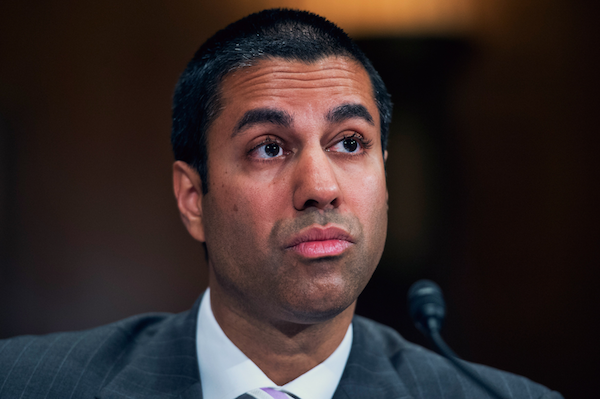
    WASHINGTON (TIP): Ajit Pai, a son of immigrant Indians, also the one who heads the US FCC is at the center of the debate ever since the Federal Communications Commission (FCC), the telecom regulator of the United States of America, has repealed a landmark law the country passed in 2015 to ensure net neutrality in the US. Net neutrality, they say, ensures that no service provider will speed up or throttle a particular service because of its business interests.

    Pai is a Republican and was made the FCC chief in January 2017, the same month the Trump administration took over the White House. Ajit Pai was appointed a commissioner in the FCC in 2012 by then president Barack ObamaThe move by Pai, whose FCC bio states that “consumers benefit most from competition, not pre-emptive regulation and regulators should be skeptical (sic) of pleas to regulate rivals”, has sharply divided America with critics saying repealing the net neutrality law will kill the spirit of free internet.

    Critics argue that the repeal plan will benefit only few big telecom players who wield immense power over the flow of internet and telecommunication channels. Opponents of the repeal bill, named Restoring Internet Freedom Order, say it will effectively shut down or marginalize small players and will start a rush of predatory discriminating practices where one telecom company will try all to disadvantage a rival company’s data flowing through its cables.

    And above all, internet users will be the ultimate losers with their freedom to get unrestrained access to all content and data gone, the critics add.


  • Cong suspends Aiyar for ‘neech’ remark against Modi

    Cong suspends Aiyar for ‘neech’ remark against Modi

    NEW DELHI (TIP): The Congress has suspended the primary membership of Mani Shankar Aiyar after the Gandhi family loyalist set off a firestorm by calling Prime Minister Narendra Modi “neech aadmi” (a vile person), remarks fraught with adverse consequences for the party in poll-bound Gujarat.

    In an apparent move to contain the possible damage barely two days ahead of the keenly contested Assembly elections in the Prime Minister’s home State, the Congress announced disciplinary action against Aiyar, insisting it showed the party’s “Gandhian leadership”.

    “The Congress party has served a show cause notice to Mani Shankar Aiyar and suspended him from the primary membership of the party,” Congress’s communications department incharge Randeep Surjewala said. “This is Congress’ Gandhian leadership and respect for its political rivals….Will Modi ji display such courage?,” he asked.

    “He (Modi) is ‘neech kism ka aadmi’ (a vile man) who has no ‘sabhyata’ (civility),” Aiyar said earlier today in an ill-timed comment, attacking Modi after the latter accused the Congress of seeking votes in B R Ambedkar’s name but trying to erase his contribution to nation building.

    An apparently rattled Congress vice president Rahul Gandhi, who is set to assume the reins of the party from his mother Sonia Gandhi midway through the Gujarat elections, admonished Aiyar through Twitter and virtually instructed him to tender apology.

    “BJP and PM routinely use filthy language to attack the Congress party. The Congress has a different culture and heritage. I do not appreciate the tone and language used by Mani Shankar Aiyer to address the PM. Both the Congress and I expect him to apologise for what he said,” Gandhi said on Twitter.

    A chastised Aiyar did proffer a conditional apology, but that did not apparently smooth the ruffled feathers of the troubled Congress leadership which suspended his primary membership to contain the possible damage his comment might cause in Gujarat elections.

    Modi, the seasoned campaigner, quickly lapped up Aiyar’s comment to launch a scalding attack on the Congress leader and his party, claiming the remark was a casteist slur against him. “Shriman (Mr) Mani Shankar Aiyar today said that Modi is of ‘neech’ (lower) caste and is ‘neech’ (vile). Is this not an insult to Gujarat?

    “You called us donkey, you called us ‘gandi nali ka keeda’ (worm of a dirty drain), you called us ‘maut ka saudagar’ (merchant of death), you said I am of ‘neech jaati’ (lower caste man) and ‘neech’. But we will live according to our ‘sanskars’ (values),” Modi said, launching an onslaught against Congress leaders who called him names in the past. “This is a Mughal mentality where if such a person (who comes from a humble background) wears good clothes in a village, they have a problem,” he said.

    After the rebuke by the Congress leadership, Aiyar, known for making offthe- cuff remarks against political rivals that often embarrassed his party, was soon on national television proffering clarification, insisting it was because of his poor understanding of Hindi language that he used the word, and tendering apology.

    “I am told that ‘neech’ has many meanings, many connotations in Hindi, and if Mr Modi chooses to distort it to claim that it means low born, then all I can do is to apologise for having used a word that could be interpreted as low born. But that was not my intention at all and certainly not a part of my culture.

    “Therefore, for the misinterpretation that can be given to the word, I extend my apologies, particularly since it is going to harm the Congress party’s interests in Gujarat,” he said, in an open admission that his comment would have adverse consequences for the party.

    When repeatedly asked if he was tendering apology for calling Modi ‘neech’, Aiyar said,”Do I apologise about the word ‘low’? No. Do I apologise about the word that is translated which says ‘low born’? Absolutely yes.” The Congress leader said he does not think Modi was low born “but the language…I would say is very low”.

    Reacting to Aiyar’s suspension, Finance Minister Arun Jaitley said on Twitter: “Mani Shankar Aiyer’s ‘Neech’ – attack on Prime Minister- a deliberate casteist statement, a convenient apology, a strategic suspension. People should see through this game.

    Source: PTI

  • Sikhs in US raise $210k for underprivileged children in Punjab

    Sikhs in US raise $210k for underprivileged children in Punjab

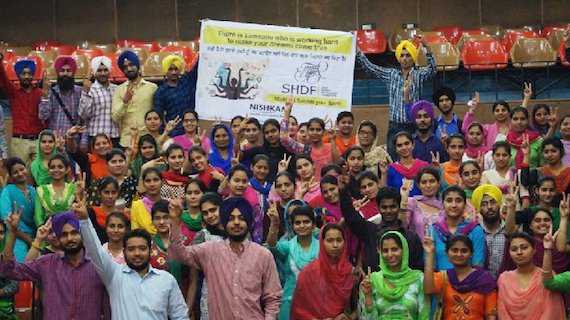
    WASHINGTON (TIP): The Sikh community here has raised US$ 2,10,000 for underprivileged youth pursuing higher education in Punjab.

    The fund was raised at an event this week by the Sikh Human Development Foundation (SHDF), featuring Bollywood actor and Punjabi comedian Gurpreet Ghuggi.

    “The SHDF has so far given more than 5,000 scholarships to students. Out of them, 2,700 have already graduated and found jobs of doctors, engineers, scientists and others. Some of them are now helping other needy children,” said Gajinder Singh Ahuja, chairman of the SHDF.

    The SHDF provides scholarships to bright but poor students in Punjab and surrounding areas, he said.

    Based in Washington, it has been giving scholarships to students since 2001 and over the years USD 2 million in scholarship money has been provided.

    Jasdeep Singh Juneja, an IT professional from Dallas in Texas, has been one of the recipients of the SHDF scholarship program. He now runs a major operation for ATT.

    “If there was no SHDF, I would not have be in the US. My family was not able to support me. It is only because of financial assistance at a very crucial time that I was able to become a professional. Now I am able to support the education of my own younger brother,” Juneja said.

    Similarly, Jasmeet Singh Bhatia, another scholarship recipient, shared his journey from an underprivileged family to being a professional in Richmond, Virginia, at the event.

    The participants donated funds for 420 scholarships with each scholarship worth US$ 510, a media release said.

    (Source: PTI)

  • “Will ‘utterly destroy” N. Korean regime: U.S. Ambassador to the Unite Nations

    “Will ‘utterly destroy” N. Korean regime: U.S. Ambassador to the Unite Nations

    Punitive sanctions around the corner, says US

    UNITED NATIONS (TIP): “If war does come, it will be because of continued acts of aggression like we witnessed yesterday. And if war comes, make no mistake, the North Korean regime will be utterly destroyed,” Ms. Haley said.

    The U.S. on Thursday, November 29, warned Kim Jong-Un’s regime that North Korea would be “utterly destroyed” if a standoff over its missile tests leads to a war and asked all countries to sever economic and diplomatic ties with Pyongyang to punish it for its “acts of aggression”.

    Speaking at an emergency meeting of the UN Security Council to discuss North Korea’s latest missile launch, US ambassador to the world body Nikki Haley said Pyongyang had brought the world closer to war with its latest test of a ballistic missile capable of striking the U.S. mainland, its most advanced yet.

    The missile was launched from Sain Ni, North Korea on Tuesday, and travelled about 1,000 km before splashing down in the Sea of Japan, within Japan’s Economic Exclusion Zone.

    “If war does come, it will be because of continued acts of aggression like we witnessed yesterday. And if war comes, make no mistake, the North Korean regime will be utterly destroyed,” Ms. Haley said.

    “The dictator of North Korea made a choice yesterday that brings the world closer to war, not farther from it. We have never sought war with North Korea, and still today we do not seek it,” she said.

    The U.S. along with Japan and South Korea had called for an emergency meeting of the Security Council after North Korea’s missile launch.

    U.S. President Donald Trump on Wednesday spoke by telephone with Chinese President Xi Jinping, whose country is an economic lifeline for North Korea, and asked him to put more pressure on Pyongyang. Mr. Trump also asked Mr. Xi to cut off China’s crude oil supplies to North Korea.

    In a tweet after the call, Mr. Trump said more punitive sanctions were around the corner.

    “As successful as we have been in levelling multilateral sanctions against it, the North Korean regime continues to test new and more powerful missiles. And as it does, it continues its march toward a functional nuclear arsenal,” Ms. Haley said.

    She said the development of North Korea’s missile systems demanded that countries further isolate the regime of Kim Jong Un.

    “So today, we call on all nations to cut off all ties with North Korea. In addition to fully implementing all UN sanctions, all countries should sever diplomatic relations with North Korea and limit military, scientific, technical, or commercial cooperation. They must also cut off trade with the regime by stopping all imports and exports and expel all North Korean workers,” she demanded.

    The White House said North Korea posed a “grave threat” to the world.

    “The North Korean threat is very grave. It’s not just a threat to the United States or a threat to the region — or the Korean Peninsula region, but a threat to the entire world and the civilized world,” White House Principal Deputy Press Secretary Raj Shah told reporters.

    “We’re encouraged that more countries are taking more significant steps to help apply as much pressure as we can on North Korea,” Mr. Shah said in response to a question.

    He, however, parried questions on Mr. Trump’s tweet about more sanctions against North Korea.

    The British Ambassador to the UN, Matthew Rycroft, said that the latest missile launch follows 19 previous launches this year, and North Korea’s sixth nuclear test in September.

    “The latest violation demonstrates, once more, North Korea’s disregard for our collective security and the international obligations, that all of us, as law-abiding states, take upon ourselves,” he said.

    The latest North Korean missile launch is a dangerous provocation, he said.

    “It demonstrates that all of our Security Council interests are at stake, and this is not just an issue for one region of the world. This affects the whole world now. So, the whole world needs to come together in response,” said the British Ambassador.

    Presiding over the meeting, the Italian Ambassador Sebastiano Cardi, who is the Security Council President for the month of November, strongly condemned the North Korean missile test.

    (Source: PTI)

  • Institute of International Social Development celebrated the ‘2017 IISD Award Ceremony’

    Institute of International Social Development celebrated the ‘2017 IISD Award Ceremony’

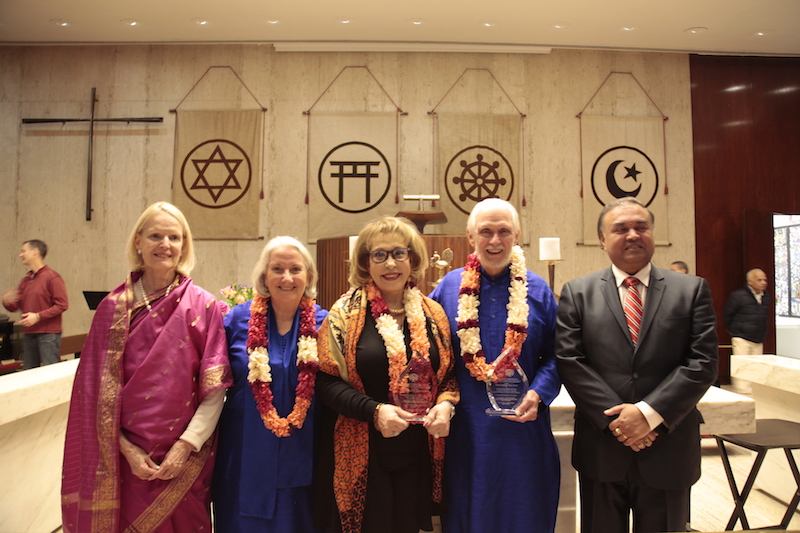
    NEW YORK (TIP): Institute of International Social Development (IISD), an international NGO in Special Consultative Status with ECOSOC of the United Nations, celebrated the ‘2017 IISD Award Ceremony’ with the recognition of three eminent personalities from the United Nations and the spiritual world for their contributions to the society. The program was held on November 17, 2017, at the Tillman Chapel at the Church Center, United Nations. The theme for the event was ‘Realization of our one human family through spirituality and the UN Goals’.

    Salwa Kader, President and Founder, International Federation of Middle East Peace and Sustainable Development, formerly the Director of United Nations Women’s Guild in Manhattan, was presented the 2017 Global Ambassador Peace Award for her immense contributions in bringing about understanding and peace in the Middle East and other regions.

    From the world of spirituality, Nayaswamis Jyotish and Devi, emissaries of Paramahansa Yogananda and Spiritual Directors of Ananda Sangha Worldwide, received the 2017 Global Ambassador Peace Award for their outstanding work in bringing about peace in the world with their international organization which teaches meditation and the kriya yoga in the tradition of Paramhansa Yogananda.

    The Institute’s goal is to attain the UN goal of ‘One Earth One Family’ through UN’s goals and programs and also instilling spiritual values to uplift humanity to a higher level of consciousness for them to help attain the UN goals.

    The award was presented by Shomik Chaudhuri, President, IISD, New York and coordinated by Sharon Hamilton-Getz, Vice President.

  • Rajvatan Singh Rathour – First Sikh Model in London -India Fashion Week

    Rajvatan Singh Rathour – First Sikh Model in London -India Fashion Week

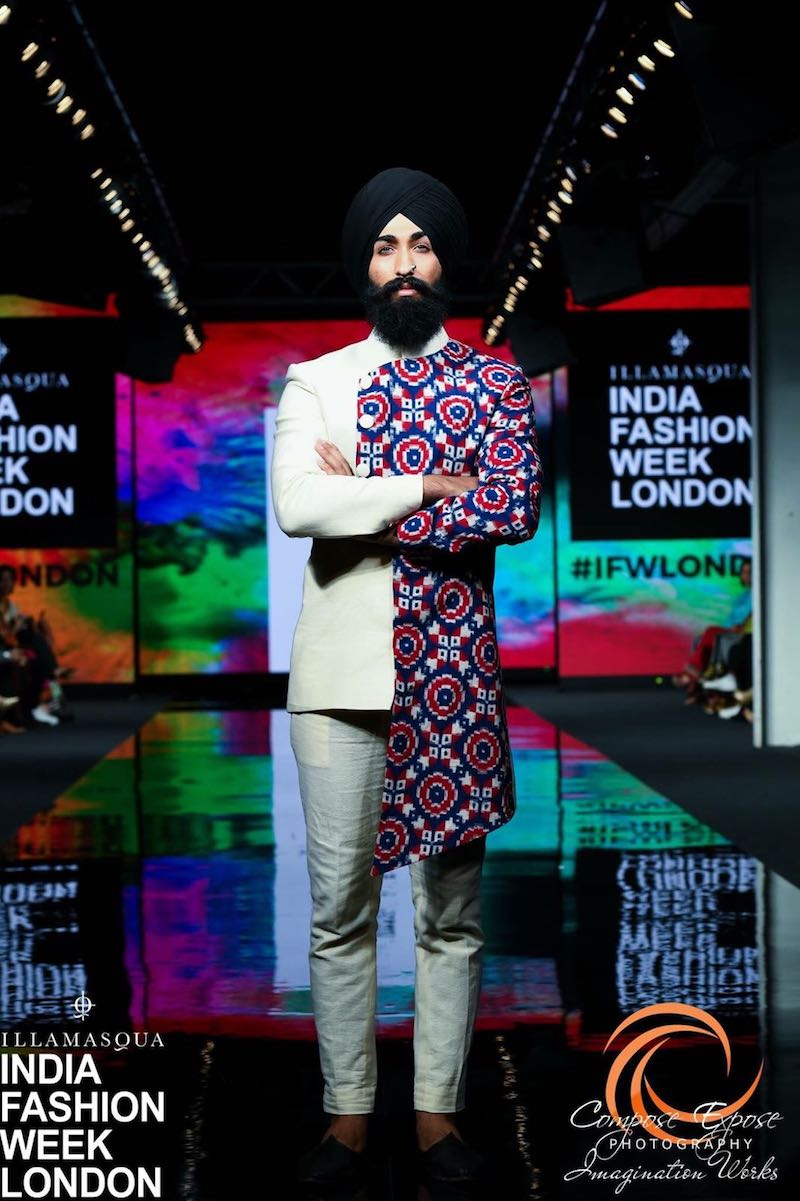
    LONDON (TIP): Rajvatan Singh Rathour has become the first Sikh Model to walk on the ramp in Olympia London in India Fashion Week 2017 along with The National Asian Wedding Show organised on 11th & 12th Nov. Rajvatan also completed shoot for a London based Khush magazine and soon will be appearing in it. Top Bollywood actresses like Sonam Kapoor, Aditi Rao have also appeared on the same page.

    The Patiala, Punjab born Rajvatan, moved permanently to UK in 2006 along with his family. In 2017 he completed his Masters of Science in International Politics from Royal Holloway, University of London. In 2015, he was appointed to be the Head Delegate representing Brunel University at the conference in the European Council at Cambridge University’s Model United Nations Conference. Rajvatan represented as a delegate in the Social, Cultural and Human Rights Committee in Oxford University’s Model United Nations Conference in 2014.

    During his time in university, he became interested in modelling, something which started off as a hobby in 2014, slowly became a passion for him to potentially pursue it as a career. Rajvatan was co-star in Diljit Dosanjh’s recently released song ‘El Sueno’.

    Transforming “Cat Walk” into a “Tiger Walk”, Rajvatan was adjudged “BEST WALK” award in International “Sardar” World model contest  in Aug 2017 in  Melbourne representing United Kingdom. Moreover, Rajvatan has successfully modelled for UK brands such as Wootz Brand, Anokhi House, and have worked with photographers such as J Dhillon, Gurvir Johal, Abs Kochhar, and Harmeet Singh Sana, and stylists such as Sahil Gulati, on various projects. Rajvatan has also featured in projects related to Sikhs in World War I as an Army man, as well as numerous fashion projects carried out by photographer Manpreet Malhi from University of Hertfordshire. Along with acting and modelling Rajvatan is also involved in the UK Punjabi community as a professional Bhangra dance instructor, and a choreographer. He is currently the captain of Gabru Furteley a UK Bhangra Team, which has competed Internationally. Therefore, Rajvatan possesses specific qualities that many film directors, designers, fashion directors and choreographers may look for.

    Facebook link – https://www.facebook.com/RAJVATANUK/?ref=bookmarks

  • Ambanis beat Lees of Samsung to become Asia’s richest family

    Ambanis beat Lees of Samsung to become Asia’s richest family

    NEW DELHI (TIP): India’s Mukesh Ambani family is the richest in Asia as its net worth rose $19 billion to $44.8 billion, toppling the Lees of the Samsung empire, to claim the numero uno position, Forbes said.

    Despite dropping to the second spot, Korea’s Lee family still saw its wealth soar by $11.2 billion to $40.8 billion this year as shares of Samsung Electronics moved up 75 per cent over the past year.

    According to Asia’s 50 Richest Families compiled by Forbes, Hong Kong’s Kwok family, Asia’s richest real estate household that controls Sun Hung Kai Properties, ranked third this year with a net wealth of $40.4 billion. Thailand’s Chearavanont family of the Charoen Pokphand Group took the fourth spot on the list, with a net worth of $36.6 billion.

    The Ambanis are the only Indian family on the top 10 richest families list in Asia.

    “No family highlights this surge better than the Ambanis of India, this year’s biggest gainer in dollar and percentage terms,” Forbes said.

    It noted that shares in Mukesh Ambani’s conglomerate Reliance Industries soared on the back of improved refining margins and the demand produced by its telecom arm, Reliance Jio, which notched up 140 million subscribers since it was launched in 2016.

    On the list of Asia’s Richest Families 2017, compiled by Forbes, India enjoys the biggest presence in the ranking for the third time with as many as 18 families.

    Other richest Indian families on the list feature the Premjis (rank 11, $19.2 billion net worth), the Hindujas (12th, $18.8 billion), the Mittals (14th, $17.2 billion), the Mistrys (16th, $16.1 billion) and the Birlas (19th, $14.1 billion). Motherson Sumi Systems Sehgal family (41st, $6.2 billion), the Wadia family (42nd, $6.14 billion), DLF’s Kushal Pal Singh (44th, $6.1 billion), the Patel family which controls Cadila (45th, $6 billion), the Piramals (47th, $5.38 billion) and the Munjals (48th, $5.37 billion) also made the cut.

    Collectively, the 50 families in the club are worth a record $699 billion, up by nearly $200 billion from last year, according to Forbes.

    The list of Asia’s 50 Richest Families is a snapshot of wealth using stock prices and currency exchange rates from the close of markets on November 3. Private companies were valued by using financial ratios and other comparisons with similar publicly traded firms.

    The ticket to entry for this year’s list was $5 billion, $1.6 billion more than in 2016.

    (Source: PTI)


  • USICOC DFW Annual Gala Organized

    USICOC DFW Annual Gala Organized

    CARL ICE, PRESIDENT & CEO, BNSF made the keynote Speech. Ambassadors Sarna and Verma engaged in conversation

    DALLAS (TIP):  US India Chamber of Commerce DFW 18th Annual Awards Banquet was held on Thursday, November 2, 2017 at The Westin Dallas Park Central.

    The USICOC Annual Award Banquet celebrates excellence and accomplishments of individuals in the areas of entrepreneurship, industry leadership, education, community, and public service.

    The US India Chamber of Commerce DFW Annual Awards Banquet is a signature business event in Dallas featuring prominent keynote speakers such as Texas Governors, US Senators and Congressman, Government Officials from the US and India, as well as other prominent business leaders. Since the Chamber was inaugurated in 1999, this event has been hosted each year. Over the years, the Annual Awards Banquet has served as an opportunity to honor the achievements of prominent business leaders, industry leaders and community servants while also offering Chamber members and members of the business community an opportunity for fantastic networking. Today, the Chamber hosts over 500 people for this event annually.

    CARL ICE, PRESIDENT & CEO, BNSF made the keynote Speech.

    Navtej Sarna, India’s Ambassador to the US and Richard Verma, Former US Ambassador to India participated in a conversation.

    The gala was attended by a large number of members.

  • Readers Write :“Vedic Yagnas were pure Satvik deeds”

    Readers Write :“Vedic Yagnas were pure Satvik deeds”

    Dear Sir,

    In reference the mischief-laden comment by the author Audrey Truschke, Beef Eating and Horse sacrifice in Vedas is a deliberate abuse of Vedic religion.

    The fact however, is the Vedic Yagnas were pure satvik deeds. The Sanskrit word yagna(यज्ञ) itself means the pious worship. There was perfect vegetarianism in Vedas and Vedic Yagnas.

    See the following references in Rig Veda-
    1. Don’t kill any beings (Rig Veda 10/87/16)
    2. In the Vedic Yagna, killing of an animal or eating meat is totally prohibited. (Mimansa 912/2/2)
    3. Just like cows are given as charity in the yahya, horses are also offered in charity. (Mimansa 10/3/65)
    4. Horses and cows are used only for giving in charity, but never eating their meat. (Mimansa 10/7/15)

    It is common knowledge that satvik food includes- grains, cereals, vegetables, dairy products, and herbs etc., but never meat.

    It is therefore, seen from above, not only meat eating, even offering the meat is avoided in the definition of Satvik food since Vedic times.

    Similar references are included in the holy books of Hindus- Bhagvatam and Mahabharata. So  much so, non-violence as one of the five Yamas means avoiding hurt by thoughts, words and deeds.

    The evil minded hypocrites such as Audrey Truschke have started telling that Vedic principles in yagnas involved intoxicants and meat eating; it is not in the Vedas.

    Prof. Ravi Rustagi

    7 Efstis Court, West Orange, NJ 07052

  • NYC Comptroller Scott Stringer hosts Diwali Celebrations; Honors Three Community Organizations

    NYC Comptroller Scott Stringer hosts Diwali Celebrations; Honors Three Community Organizations

    NEW YORK CITY (TIP): New York City Comptroller Scott Stringer hosted Diwali celebrations on October 25 when 3 leading community service organizations were honored for their services. The honored organizations included Chhaya Community Development Corporation (CDC), Federation of Indigenous Peoples of Nepal, and South Asian Council For Social Services.

    The customary prayers were offered by Pandit Manoj Jadubans, followed by the Diya lighting ceremony. At hand were Comptroller Scott Stringer, Dr. Neeta Jain, District Leader, Assembly District NY – 25, Neeta Bhasin, President and CEO of ASB Communications, who introduced the Comptroller and a large number of guests.

    Neeta Bhasin (extreme left) who introduced the Comptroller is seen with honorees

    In his remarks, the Comptroller described Diwali as a celebration of good over evil and noted it was a major festival of India. He offered his greetings to Indian American community on the occasion. He spoke of the tremendous contribution of Indian American community to the growth of New York and the US in general.

    Queens College Bhangra Knights gave a thrilling performance of Bhangra which is a folk dance of Punjab, and a rage all over the world.

    Here is a brief biography of Honorees.

    CHHAYA COMMUNITY DEVELOPMENT CORPORATION (CDC)

    Chhaya CDC was founded in 2000 to advocate for the housing needs of New York City’s South Asian community. Chhaya’s mission is to work with New Yorkers of South Asian origin to advocate for and build economically stable, sustainable, and thriving communities.

    Chhaya carries out this work in several ways, including free direct services, education, community organizing, and research and policy advocacy. Our work encompasses tenant rights, financial capacity and asset building, sustainable homeownership, civic engagement, immigration, and broader community building and research and advocacy around community needs.

    By focusing on core areas of housing and economic development—the basic necessities essential to one’s stability—Chhaya is able to impact a range of social outcomes, including education, financial well-being, civic participation, and community pride. Through our work, Chhaya aims to develop a framework that will achieve long-term stability for New Yorkers of South Asian origin, giving them the tools and resources that will enable them to create positive, lasting change in their lives.

    FEDERATION OF INDIGENOUS PEOPLES OF NEPAL

    Federation of Indigenous Peoples of Nepal in America (FIPNA) is a not for profit organization registered in the State of New York since 2005. Its headquarters are in the City of New York and its wings are extended to various cities and states in the United States. FIPNA is a federal organization comprising of 18 indigenous Nepali community organizations in New York and beyond. The primary purposes of FIPNA are to preserve and promote the indigenous cultures of Nepali communities and help enrich the diversity of the City of New York. FIPNA also participates and advocates for the immigrants’ rights in the city and help in the empowerment of the Nepali communities in the mainstreaming process.

    In coordination with the member organizations FIPNA hosts a couple of events each year which have significant impacts upon its communities and the city we live in. FIPNA hosts and leads the mega event Nepal Day Parade each year in the City of New York which helps the Nepali communities feel proud of for the diversity of the city. FIPNA is one of the major immigrants’ rights organizations who have advocated and endorsed the Citizenship Fund proposed by the NYC Comptroller, Honorable Scott M. Stringer. Nepal Indigenous Film Festival is another mega event hosted annually by FIPNA to observe Nepali cultural heritages in New York.

    For further information please visit: www.fipnausa.org

    SOUTH ASIAN COUNCIL FOR SOCIAL SERVICES

    South Asian Council for Social Services, SACSS was founded in 2000, with the mission to empower underserved South Asians and other immigrants to actively engage in the economic and civic life of New York. While SACSS, started as a healthcare and social services agency it has grown and adapted to the changing needs of the population it serves. In the last 17-years SACSS has emerged as a gateway to new immigrants who are trying to gain a foothold in their new socioeconomic environment. Through services in the areas of Healthcare Access, Benefits and Senior Services, South Asian Food Pantry, English and Computer Classes and Civic Engagement, the organization assists immigrants to become self-reliant. Over 5,000 clients are served every year by staff that is culturally competent and speaks 11 South Asian languages (Hindi, Urdu, Gujarati, Punjabi, Bengali, Kannada, Telegu, Tamil, Malayalam, Nepali and Marathi) and Spanish and Creole.

    In July 2016 SACSS started the first and only South Asian Food Pantry in New York City. In just one-year, the pantry has grown to serve 1,007 clients. This program addresses the issue of hunger and food insecurity among the underserved by ensuring clients receive food that is culturally palatable.

    A view of the gathering
  • JAWANS ARE FAMILY, SAYS MODI AS HE CELEBRATES DIWALI WITH LOC TROOPS

    JAWANS ARE FAMILY, SAYS MODI AS HE CELEBRATES DIWALI WITH LOC TROOPS

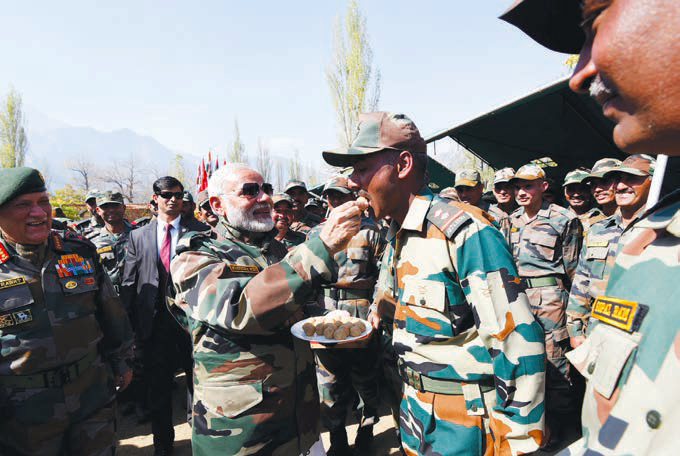
    SRINAGAR (TIP): Prime Minister Narendra Modi on Oct 19 (Thursday) celebrated Diwali with troops posted along the Line of Control in Jammu and Kashmir’s Gurez sector and lauded the soldiers for their penance and sacrifice saying he considered them his family.

    In an unannounced visit, Modi arrived at Gurez on Thursday morning to celebrate Diwali with the army and BSF soldiers posted along the LoC, officials said.

    He spent two hours with the soldiers in Gurez valley, which is shouting distance of Pakistan-occupied Kashmir and has witnessed many gunfights with infiltrating militants in the past 27 years.

    This is the fourth successive Diwali that the Prime Minister has celebrated with jawans on the border.

    Chief of the Army Staff Gen BS Rawat and other senior Army officers were present on the occasion. Modi offered sweets and exchanged greetings with the jawans, the officials said. Addressing the jawans, he said like everyone else, he too wished to spend Diwali with his family.

    Therefore, he had come among the jawans of the armed forces, whom he considered to be his “family”, he said.

    Modi said he got new energy when he spent time among the jawans and soldiers of the armed forces and appreciated their penance and sacrifice, amid harsh conditions.

    The Prime Minister said he had been told that the jawans present at the gathering regularly practised yoga. He said this would definitely enhance their abilities, and give them a sense of calm.

    He said jawans, who left the armed forces after completing their duty tenure, could become excellent yoga trainers subsequently.

    The Prime Minister spoke of the new resolve that each Indian citizen must make for 2022, the 75th anniversary of Independence.

    He also encouraged the jawans to innovate, so that their routine tasks and duties became easier and safer and mentioned how best innovations were now being recognised and awarded at the Army Day, Navy Day, and Air Force Day.

    Modi said the Centre is committed to the welfare and betterment of the Armed Forces, in every way possible.

    In this regard, he mentioned the implementation of One Rank, One Pension, which had been pending for decades.

    Protecting the motherland, far from your loved ones, displaying the highest traditions of sacrifice, all soldiers at the nation’s borders, are symbols of bravery and dedication, Modi said.

    “I have an opportunity to spend the festival of Diwali with you. The presence of brave soldiers at the border, on this festive occasion, lights the lamp of hope, and generates new energy among crores of Indians,” the Prime Minister wrote in the visitors’ book.

    “To accomplish the dream of ‘New India’, this is a golden opportunity for all of us to work together. The Army too is a part of it,” he added. Source: PTI