Meals high in protein and salt can promote sleep and lead to longer naps, claim researchers.
According to researchers, based in the US, at the Scripps Research Institute in the USA, what we eat influences post-meal sleep and its duration.
After testing the consumption of salt, sugar and protein in fruit flies — insects used for their genetic similarities with humans — the scientists found that meals with higher levels of protein and salt could promote sleep and lead to longer naps.
They identified a certain type of neuron— called leucokinin neurons — that play a role in the post-meal sleep mechanism. “A subset of leucokinin receptor (Lkr) neurons was necessary to initiate post-meal sleep in the presence of protein specifically,” explains first author Keith Murphy.
“While we expected that flies defective in protein sensing would experience post-meal sleep in a similar way to those fed only sucrose, we found instead that they had a waking response. Our analysis suggests that ingested protein promotes both sleep and wakefulness, and that the wakefulness is counterbalanced by Lkr neuronal activity. “
The research provides a starting point for future work investigating the genes and circuits that link meal size, protein and salt to post-meal sleep. Source: AFP
Let’s admit it, we all dread ageing. Expensive creams, beauty treatments, desi hacks, we do everything in our might to cease the incoming of the devil called wrinkles. A slow metabolism, declining stamina, setting in of chronic illnesses are some more troublesome signs of ageing. While you can’t do anything about the growing numbers in your age, you can do a lot to stop it from showing. How? A steady fitness routine. Creating a regular exercise routine helps you steer clear of chronic diseases, helps build stamina and strong muscles, and keeps you physically agile and just like that hide years off your age.
Frank Frisch, PhD, director of kinesiology at Chapman University in Orange, California says that exercise makes you feel younger than you are. Here are some workouts that will keep the real age from showing.
YOGA
Yoga does not work on specific body parts but on your overall well being. Yoga experts believe that yoga helps you stay younger for longer. There are specific facial yoga asanas that help keep the wrinkles away. Agrees yoga expert Dinesh Dagar, “Stress is the biggest killer today. Yoga helps reduce stress thereby not letting its after effects reflect on your face and body.”
WEIGHT LIFTING
Most women shy away from weight lifting but that should not be the case if you want to have good bone health. Fitness experts as well as medical experts believe that weight training helps combat the onset of osteoporosis. However, make sure that you practice weight training under proper guidance.
SQUATS
Squats target the biggest muscles in the human body. They not only burn calories but also keep your legs strong. Most of us squat a lot during the day without even realizing, which makes the perfect squat posture all the more important. Picking heavy grocery bags or lifting a kid, they all require you to squat. An incorrect squat posture can lead to injuries and you surely don’t want that.
WALKING
There have been studies that say walking reduces the risk of dementia by one third. Not only does it protect you from that evil, a recent study stated that walking also helps improve your cardiovascular health. A healthy heart is a great means for a youthful body.
COMPOUND MOVEMENTS
Celebrity fitness instructor Deepesh Bhatt says, “Compound moves are extremely effective as compared to isolation moves. They give you an intense workout in a shorter span. It makes you hit more muscle fibers and makes your workout more effective.”
CARDIO TRAINING
Cardio is recommended even by many beauty experts for a younger looking skin. Cardio workouts such as swimming, cycling and dance up your heart rates, as a result pumping more blood in your body. Better circulation helps strengthen our heart and give us a beautiful skin.
Imparts a natural Skin Glow: Since centuries Indians have been applying Mustard Oil as body oil for massage before their baths. One can use it to massage dry areas prior to a bath. For removing tan, mustard oil can be mixed with besan, yogurt and lemon juice and used as a body pack.
Prepping your skin: Dry patchy skin is a common problem that we all face during harsh winters and this can be a major hindrance while getting ready for a party. One can apply a few drops of mustard oil and rub it along the face, let it remain for few minutes before washing it in water. The skin becomes smooth and ready for applying foundation and make up.
Perfect Hair Care: Who doesn’t want a glossy healthy mane to go with that perfect dress and makeup? Applying mustard oil regularly on the scalp takes care of winter hair woes like dandruff, itchy scalps, hair fall etc. One can do a hot oil treatment at home with mustard oil and wash off hair with a mild shampoo to experience healthier, shiny locks this season.
Protects your lips: Chapped dry lips can play havoc on the overall appearance. Applying a few drops of mustard oil can heal chapped lips and is safer than packaged lip balms. Ironically, one of grandmothers’ old remedies say that sleeping with a drop or two of mustard oil on your naval will give you baby soft lips in the morning.
Move over animal pillows —pooches, cats, caterpillars and foxes. It’s now time to embrace the odds! And, we literally mean the odd. Recently, an online shopping portal went berserk with the sale of boyfriend pillows. BT lists out some of the interesting options that you can snuggle up to. Coz, hey!Comfort doesn’t have to be boring.
Boyfriend pillow
You don’t need a boyfriend anymore to cuddle up to. This pillow is in the shape of a guy’s arm that you can roll over your neck while sleeping. Make sure that you spritz a men’s perfume on the arm for that ‘little romantic’ effect!
Hunky guy pillow
Similar to that of a boyfriend pillow, if you fancy a muscular man, the hunky guy pillow is your best bet. This is also in the shape of a guy’s arm, just that it’s got those extra muscles!
Tissue dispenser pillow
When you want to have a good cry, there’s nothing like hugging a pillow that dispenses tissues. So, the next time you have a cold or want to vent out after a break-up, you know what to get for yourself.
Make-out pillow
If you want to get kissed to sleep, grab hold of a make-out pillow. These pillows or rather cushions have a man’s lips popping out of the cushion. This pillow allows singletons to practice their snogging skills!
Lady lap pillow
Shaped like a woman’s lap, this leggy pillow is for all the men out there. This is a cushiony mini-skirted human substitute, which is shaped like a pair of a kneeling woman. Apparently, this pillow was first created and sold in Japan and then caught on with the rest of the world.
Hand pillow
Shaped like two hands, this pillow is ideally used by parents to put their babies off to sleep. So, if you want your baby to have a sound sleep, while knowing that you are there to protect him/her, put these hands around your baby and watch him/her snoring away to glory!
Social networking sites and applications are increasingly becoming a part of our everyday lives. We use them to communicate with people around us, network for jobs, and connect with others with similar interests.
However, using social networks and apps can be fraught with serious security risks, both for your person and your data.
Here are some tips to make your social media experience better:-
Do’s
Use a strong password and use privacy settings. Insist your friends do the same.
Do not share everything on social media or upload anything you wouldn’t want everyone to see. Make sure only your accepted friends or followers can see what you put up on Facebook and Instagram. On Twitter, share your opinion carefully so as not to hurt others’ sentiments or share something which is radical in nature.
Even after taking adequate “precautions”, leaks, hacks, and privacy policy revisions are not unheard of.
Don’t assume what you post is secure, despite the settings. Ensure that it is HTTPS protocol when connecting to social networking sites, especially when using public hotspot. Be wary if your social networking service only uses HTTP for login credentials.
Whenever possible, organise contacts into “categories”. Most of us do this between friends and family anyway, but from a security standpoint it might also make sense to separate “best friends” from “person I met yesterday afternoon”.
Verify friend/follower requests. Most scams start with someone bluffing their way into your friends list. Be sure of who you are sharing your information with. Verify links, attachments, downloads, emails; in short, anything you receive. Set up proper spam filters or report abuse or spam wherever applicable.
Even trusted friends could have had their accounts hacked. Don’t wire that “emergency money” until you can voice-verify. Investigate exactly what information any third-party add-ons, games, extensions, etc. will be privy to.
Does that poker game actually need access to your contacts list?Read up on the security tips and instructions provided by the social network itself, as well as what trusted security professionals and sources have to say.
DON’Ts
Don’t give away your password or use the same password for any other services.
If a leak at Facebook causes your password to become public, you don’t want a hacker being able to use that same password to log into your gmail or Courseworks.
Don’t put more information about yourself than is absolutely necessary. Hackers, scammers, stalkers can use that information to do anything from guessing answers to security-questions, to impersonating you when trying to scam another user.
On that same note, be careful how much live information you’re putting out there.
Don’t advertise when you are going on vacation, when your possessions might be left unattended, or boast about that super expensive thing you just bought.
Be aware of auto-geotagging. Some services will automatically tag your status updates with GPS information.
If you don’t want everyone to know where you are, make sure your social networking service doesn’t turn on this “feature” for your “convenience” automatically.
Everything you post, share or upload stays on in the virtual world, nothing “disappear” from the internet. Even the picture that you deleted from your account is still sitting on Facebook’s server somewhere.
In a professional setting, be mindful of inadvertently letting slip sensitive information such as new security software, procedures, that could harm your company or may get you fired!
From using lip-liners, signing up for surgical procedures and employing natural remedies, here’s a roundup on the best ways to plump up your lips for that perfect pucker.
Many of us have sighed enviously at Angelina Jolie’s pout. Not to mention how Priyanka Chopra’s lips were made for lipstick. In a stark contrast, many of us lesser mortals are reduced to faking that pout so that we may stand out in that group selfie. (Also, considerable time is spent practising it in the mirror). Fuller lips top many girl’s wish list (and every man’s). Blame it on the selfie obsession, or garnering those 1000 likes on social media, but lips are the new eyes. While we agree that a few lucky ladies are blessed with that perfect Cupid’s bow, help is at hand for those who are not.Ranging from simple DIY options, to more long lasting cosmetic ones, there are plenty of ways to owning that luscious pair of lips.
DRAW THE LINE
An easy way to enhance one’s lips is to trace within, outside or along the natural lip line. For instance, to create the illusion of a larger upper lip, draw a line slightly above the top lip and exaggerate the Cupid’s bow. The key, however, is do this in a way that your mouth looks natural.Makeup veteran Cherag Bambboat, founder, Magic Makeovers, suggests creating a 3D or ombre lip effect to make lips look plumper. “Start by gently scrubbing the lips with a toothbrush to get rid of dead cells and dryness.Powder the area around the lips to create an even canvas and prevent bleeding. Pick a lip pencil in a shade or two darker than the natural lip colour for the corners and soften the centre with a lighter hue. Blend the colour outwards from the centre using a lip brush.The gradual saturation of colour from light to dark will create an illusion of fullness,” he says.
GIVE ME THE GLOSS
A hint of shimmery gloss at the centre of your upper and lower lips will plump your pout in an instant.But even better than glosses are lip plumpers that would make even Megan Fox turn green with envy. Infused with ingredients like hyaluronic acid, cinnamon and peppermint, these magic wands boost the lip’s natural production of collagen, stimulate blood circulation and give the lips an instant plumping effect.
Note: Most lip plumpers come with a sensation that can go from warm, burning to cool, tingling, so choose your product wisely. Just for the monsoons, it’s always better to play safe and stick to a gooey lip shine that’s long-lasting and is smudge proof.
CONTOUR IT!
“Contouring isn’t just for the face.
With this technique, you can create a faux shadow to make your pout look fuller,” says bridal makeup artist and beauty blogger Akriti Sachdev, founder, Mesmereyes Makeup.
“Ombre lips the rage this season. Once you’ve created them, dab some contour powder on the Cupid’s bow for that wow-worthy pout,” she advises.Kanishka Ramchandani, beauty blogger, recommends doing a perfectly accentuated and petite `Clara Bow’ by contouring the lips with nude pencil or concealer pen.”Blend it out for an ombre effect, overdraw the lips with a lip liner to create a heart-shaped pout and fill it in; top with a nude shiny lip balm or clear gloss to add dimension. If you’re in a mood to make a bold statement, dab some gold-toned eye shadow or shimmery powder on the top of your lip colour to draw light to the centre of the lips and blend well,” she says.
FILL ‘EM UP!
While makeup is a good way to enhance the pout, not all women like to spend hours before the mirror every morning. In such cases, lip fillers are a good idea. “The most commonly used product in lip fillers is hyaluronic acid (HA), a substance that is naturally found in the skin. When injected into the desired area with precision, it gives the lips a fuller appearance. The entire process takes about half an hour and its effects last between nine months to a year, after which your lips return to their original shape. The good thing is, these fillers are non-permanent and can also be removed within a few minutes if you’re not happy with your new look,” says Dr Ashutosh Misra, plastic surgeon. While dermal fillers are temporary, fat grafting is a more permanent surgical method that involves extracting fat from one area of the body and injecting or surgically placing it into the lips. The damage for both procedures could range between Rs 20,000 to Rs 50,000 depending on the measure of lip augmentation. Lasers, lip lifts and lip plants are other ways to flaunt a luscious pout.
COLOUR CODE
The lighter the colour of your lips, the bigger they’ll look. It’s as simple as that. “Always go light. A light natural shade like a nude rose or a warm peach will reflect light and create the illusion of a highlighted lip,” insists Sachdev. Before applying lip colour, create a base by filling the pout with a nude lip liner or a foundation. “While baby pink goes well for a fair skin tone, corals do wonders for a wheatish complexion. Women with a dusky skin tone can take a pick from maroon, aubergine or even bright orange,” says Bammboat.
GO NATURAL
Want to make a DIY lip plumper at home? Get your hands on essential oils like cinnamon and pepper mint. Both cinnamon and peppermint are known to stimulate lip capillaries and make them swell slightly. Add a drop of cinnamon or peppermint essential oil to your regular lip balm or petroleum jelly and apply the blend for a fuller pout. The flavours might cause a temporary tingling or burning sensation but it won’t last very long.Exercises like whistling, puckering and grinning not only help to tone up facial muscles, but they also tone the pout in a natural manner. Keep smiling.
Women find men who wear full beards more suitable for long-term relationships, suggests new research.
Women tend to find beardedness attractive when judging long-term relationships, perhaps as a signal of formidability among males and the potential to provide direct benefits, such as enhanced fertility and survival, to females, the study said.
“Results showed a significant interaction between beardedness and masculinity on attractiveness ratings,” the study said.
For the study, Barnaby Dixson from University of Queensland in Australia and his colleagues used computer graphic manipulation to morph male faces varying in facial hair from clean-shaven, light stubble, heavy stubble, and full beards, with additional differences in brow ridge, cheekbones, jawline, and other features so that the same man appeared more or less masculine.
Stubble was judged as most attractive overall and received higher ratings for short-term relationships than full beards, which were more attractive for long-term relationships.
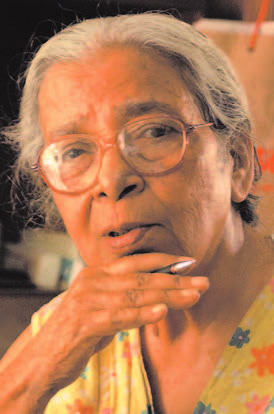
Mahasweta Devi, the 90-year-old eminent writer-activist who passed away, July 28, symbolized writing for life’s sake. As she herself said, “It is my conviction that a storywriter should be motivated by a sense of history that would help her readers to understand their own times. I have never had the capacity nor the urge to create art for art’s sake. Since I haven’t ever learnt to do anything more useful, I have gone on writing. I have found authentic documentation to be the best medium for protest against injustice and exploitation.” Mahasweta was no ivory-tower writer, a crusader’s zeal propelled her. Be it her involvement with the Singur agitation in West Bengal or welfare of tribals of Bihar, Orissa, Bengal and Madhya Pradesh that won her the Padma Shri in 1986, she chronicled the struggles of the subaltern classes. She fought for the rights of the landless and peasants, taking on corporate and politically entrenched interests. The recipient of the Jnanpith Award for 1996, explored motifs in modem Indian life through figures and narratives of indigenous tribes of India.
Born in 1926, she was reared in a Dhaka family whose bread-winner, a lawyer, chose against all odds to fight the imperialists. As she said: “My grandfather had to suffer a lot for fighting the cases of freedom fighters. But right from childhood, I was brought up in an atmosphere where compromise was taboo…”. Her father, poet Manish Ghatak, uncles Sachin Choudhury, the founder-editor of the Economic and Political Weekly, and Ritwik Ghatak, an avant garde filmmaker were dominant influences. Her mother and grandmother too wrote. In fact, the women in the family had a lively relationship with books. In 1948, Mahasweta married the legendary playwright Bijon Bhattacharya of IPTA, the author of Navanno.
Mahasweta studied literature but loved history and experienced life in varied ways – be it as a teacher or during a stint at the office of the DAG Posts and Telegraphs, assignments as a roving village reporter of the Bengali daily Jugantar. All these combined to hone the social realism that characterized her fiction. Besides 42 novels, 20 collections of short stories, five books for children, a collection of plays and translations, she also co-authored a book in Hindi – Bharat Mein Bandhua Mazdoor. Mahasweta created a span of history, allowing individuals to evolve through their interactions with the historical process. While chronicling history, she captured tones of oral narratives, in the raw idiom of everyday speech, often drawing words from several sources simultaneously. She was aghast at the casual way in which peasant up risings had been dismissed by chroniclers of India’s freedom movement. By documenting the lives and times of folk heroes, Mahasweta felt she was lending voice to the voiceless sections of society. Winning the Sahitya Akademi award for Aranyer Adhikar (1977) was a personal triumph. She had reconstructed the career of Birsa Munda, leader of a millenarian tribal revolt at the turn of the century. Her first published work, Jhansir Rani (1956), was a fictional reconstruction of the career of feudal chieftain Laxmibai, who fought against the British for her rights. For this, Mahasweta delved into archival records and travelled through the desert villages and plateau where the queen had lived and fought more than a 100 years ago.
With painstaking care, she collected scraps of legends and folk ballads treasured in the collective memory of the region. Some of her other works are Not, (1957), Ki Basantj Ki Sorate (1958), Amrita Sanchay (1964), Andhar Manik (1967), Hajar Churashir Ma (1974), Aranyer Adhikar (1977), Agnigaritha (1978) and Chotti Munda o Tar Teer (1979). Besides this, Sunghursh, (1968) Rudaali (1993), Hazar Churasi Ki Ma (1998), Maati Maay (2006) and Gangor were movies made on her stories.
From the late 1970s, the subjects of her stories became the subjects of her life and she got more and more involved with her work with tribals and underprivileged communities in the districts of Mednapur, Purulia, Singhbhum and Mayurbhanj. She set up several voluntary organizations for their welfare and helped bring their grievances to the view of an indifferent bureaucracy. With the funds sent by her translator Gayatri Spivak, she set up five schools in the tribal heartland of Purulia.
While working with the tribals, Mahasweta noticed the peculiar paradox of tribal women’s life – their almost superhuman lifestyle and their fierce independence. From this flowed greatest short stories – Standayini, Draupadi, Douloti and Gohuinni.
She was surprised at, the red-carpet treatment given to her when she visited Delhi to receive her Sahitya Akademi Award in 1979. All those who listened to her, at the India International Centre were struck by her sharp manner. No glib urban sophistication. After all, she came to Delhi very often and made the rounds of offices to collect funds for her cause. This time it was in the air-conditioned confines where she was being questioned about feminism. For a woman with a cause, her preoccupations transcended boundaries of gender and facile generalizations.
Two classes of characters dominate Mahasweta’s stories The first are mothers bearing the brunt of social and political oppression and resisting with indomitable will. The other are sensitive individuals, initially apolitical, bound to the community with strong ties. As the individual absorbs the dehumanizing experience of exploitation, he grows to the role of a leader. Mahasweta’s Bashai Tudus, Chotu, Mundas and Mastersaabs are products of exploitation, direct and inhuman. Right from Chandi, cast out by a superstitious community in Baoen (1971), to the tribal Naxalite Draupadi in the story named after her, Mahasweta’s mothers are too earthy and emotion-charged to bear overtones of any mystical, mythical or archetypal motherhood.
The most famous novel, Hajar Churashir Ma (Mother of 1084) is set against the climactic phase of the annihilation of urban Naxalite movement and its aftermath. Sujata,the mother of corpse number 1084, can find a moral rationale for her son Brati’s revolt only when she can piece together, exactly two years after his killing, part of her son’s life she had never known. She can see in Brati’s revolt an articulation of the silent resentment she has against her corrupt but respectable husband, her other children, their spouses and friends.
Urvashi o Johnny,the story about the relationship between a ventriloquist and his talking doll, is just about the Emergency.The cancer of the throat of the doll is a metaphor for the suppression of democratic rights. The shock, pain and utter helplessness which the Emergency plunged Indian sensibility is captured in this strange story. In an age where books are more about hype and market-savvy tricks, writers like Mahasweta are rare. Digging a well is a leitmotif in her stories and that is what she did even in life – digging away and carving out an existence for the people whom she had given herself to. In an era of liberalization and, fast-changing beliefs (if any), the much-awarded writer embodied the triumph of substance over style.
(The author can be reached at arutinayar@gmail.com)
NEW DELHI (TIP): This may offer a contrarian view to a compelling ‘India Shining’ narrative. A substantially higher number of Indian employees, if given an opportunity, will take the next flight to NYC than land a posting in NCR. And the lure of an overseas job has grown over the last five years despite the global slowdown and India growing in stature as an emerging market.
According to a Randstad survey, 85%of the respondents are keen on working abroad, of which 88% are women. In a similar survey conducted by Randstad in 2011, 74% of the respondents had expressed their willingness to move abroad for a job.
So, why still the foreign fascination? Bhaskar Chakravorti, senior associate dean, The Fletcher School, Tufts University, offers an explanation. One, there is an evident slowdown in economies across the world, including emerging markets. “Even economies such as India that are experiencing a rare burst of growth do not hold a promise that this growth is going to last and lead to exciting new jobs. The alternative is to look elsewhere beyond one’s home market with the hope that somehow the grass is going to be greener on the other side,” said Chakravorti.
Second, business is increasingly becoming internationalized and some dynamic opportunities are opening up in new markets outside India. Information technology, too, is making people more aware of life beyond the boundaries of one’s home country. “Naturally, it creates a desire to visit and work in these places,” said Chakravorti.
Siddharth Shekhar Singh, associate professor of marketing, Indian School of Business (ISB), said: “Earlier, going abroad for higher earnings and better lifestyle was desired because India offered few opportunities. Although India is a different place now, the old perception continues by and large, and perceptions take time to change. It is noteworthy that not everyone wants to go abroad for more income. Better lifestyle, equal opportunity for all, and lower crime are other reasons. And these remain issues of concern in India.”
Moreover, in a globalised world, many believe that some work experience abroad combined with the experience in India might open better opportunities, according to Singh. So companies, too, are being advised to create a global work environment if they wish to retain top professionals. An old hierarchy-driven structure does not appeal to a global manager.
Dream to Open Hotels in Nashville, Dallas, Palm Springs, Times Square, Long Island City and Doha, Qatar
NEW YORK, NY (TIP) : Renowned hotel brand and management company Dream Hotel Group LLC signed, May 3, its first hotel in the Middle East with Qatar-based Al Alfia Holding to develop a Dream Hotel in Doha, the state capital.
Sant Singh Chatwal with Sheikh Sultan Bin Jassim Bin Mohamed Al-Thani with whom he signed $300 million Dream -Doha deal in New York, May 3.
To cap off a red letter day, Dream Hotel Group took the opportunity to announce $1.5 billion in new hotel development, including Doha and five other locations, all with independent hotel development partners. Future U.S. locations include Nashville, Dallas, Palm Springs, and two additional New York properties in Times Square and Long Island City.
“We are thrilled that the Dream brand of hospitality, marked by vibrant nightlife and dining opportunities, has resonated so widely,” said Dream Hotel Group CEO Jay Stein. “These six new developments double the footprint of our founding brand and give our loyal guests many more options to explore the other side of themselves.”
The new locations mark a thrilling new chapter for Dream Hotels, the group’s founding luxury lifestyle brand–positioning them as international hospitality innovators. The Dream Hotels brand is on track to have five hotels operating in renowned U.S. cities by early 2019, with an additional opening in Doha, Qatar, Dream Hotels’ first foray into the Middle East.
Sant Singh Chatwal and Sheikh Sultan Bin Jassim Bin Mohamed Al-Thani with Dream Hotel team pose for a photograph, after the signing of deal, in New York. Seen from left to right: Jay Stein, Sheikh Sultan Bin Jassim Bin Mohamed Al-Thani, Sant Singh Chatwal, Johnny De Gouveia
“We’ll be announcing additional properties in the coming months, continuing to solidify our burgeoning portfolio,” added Stein. “The expansion stands as testimony to the passion that the Dream team shows me every day in bringing rich experiences to our guests.”
“We always believed in the Dream brand, but it’s exciting to see so many of our development partners believing in the same dream and turning it into a reality,” noted David Kuperberg, Chief Development Officer, Dream Hotel Group.
The news follows that of the highly anticipated David Rockwell-designed Dream Hollywood slated to open this fall in the heart of Hollywood on the corner of Selma Avenue and N. Cahuenga Boulevard at 6417 Selma Ave.
Dream Hollywood will be a driving force in the ongoing revitalization of Hollywood. The hotel features 179 guest rooms and suites, five dining and nightlife venues in or adjacent to the property, and a spacious 11,000-square-foot rooftop. Developed by FC Development in partnership with Dream Hotel Group, the property is expected to open in September 2016.
Dream Nashville will be located in the heart of the city’s historic downtown–featuring 169 rooms. Designed by Meyer Davis, the property is expected to open in mid-2018, developed by locally owned 4PANT, LLC, which is led by Royal Investments and City Development in partnership with Dream Hotel Group.
Opening in the second half of 2018, Dream Dallas will be a 260-room Dream Hotel Group development.
Slated to open in 2018, Dream Palm Springs will have 175 rooms and will be developed by Praetor Investments/Selene Developments in collaboration with Dream Hotel Group.
The first of two planned New York openings for the group, Dream Times Square will open in the second half of 2018. Designed by Meyer Davis, the 239-room property located in New York’s iconic entertainment destination will be developed by SoHo Properties in partnership with Dream Hotel Group.
Dream Long Island City will see the lifestyle hotel group’s foray into the city’s underutilized Queens Borough, a gallant follow-up to the celebrated Dream Hotels properties in Midtown and Downtown. The 254-key property is expected to open in 2019, developed by Barone Management in Partnership with Dream Hotel Group. Times Square and Long Island City will double the Dream Hotels footprint in New York, totaling four properties in the city.
Dream Doha, which is 300 million dollars project a development with Al Alfia Holding with design by Meyer Davis, will open in late 2019. The ambitious 325-room property, featuring nine dining and nightlife venues, is the first Middle Eastern development for the brand and a pivotal step in the expansion strategy. Joining Dream Phuket Hotel & Spa and Dream Bangkok in Thailand, Dream Doha marks the third international property for the group.
Born in 2004, Dream Hotels are rooted in the insatiable human need to explore the other side of oneself, and the provision of a playground to do just that. With strong foundations in delivering the maximum and highest level experience to guests, each property has upscale amenities, obsessive-meets-compulsive service, built-in nightlife that seems to come naturally, and rare raw energy drawn from some of the most stimulating cities in the world. A far cry from just another bed to lay your head on for a night or two, Dream Hotels offer an introduction to another you. The creation of a new persona for all who experience their properties, Dream Hotels’ visitors push the boundaries of their expectations for hotel stays. For more information or to book your stay, please visit www.dreamhotels.com.
About Dream Hotel Group
Dream Hotel Group is a hotel brand and management company with a rich, 30-year history of managing properties in some of the world’s most highly competitive hotel environments. Home to its Dream Hotels, Time Hotels, The Chatwal and Unscripted Hotels brands, Dream Hotel Group encompasses three business lines: Proprietary Brands, Hotel Management and Dining, and Nightlife. The Company is committed to the philosophy that forward-thinking design, service and guest experiences should be available across market segments. Dream Hotel Group is dedicated to offering travelers an authentic connection to their chosen destination through a truly original approach.
After thoughtful evaluation, and to leverage its world-renowned Dream Hotels brand, the Company decided to sunset both the Hampshire Hotels Management and Debut Hotel Group names. The change to Dream Hotel Group will capitalize on the Company’s most recognized assets to help raise awareness among guests, hotel owners and hotel developers.
Before you start getting ideas from the heading, let me clarify that we will be discussing a totally different form of wild. Goa is more than just pristine beaches, feni, floating casinos and a happening nightlife. Being a place of immense natural beauty, the state is endowed with breathtaking wilderness and there are more places to visit in Goa, which are perfect for someone who wants to get out of a mundane week and get into something peaceful.
Mhadei Wildlife Sanctuary is located in the eastern part of Goa. Spread in around 208 sq km, this sanctuary supports a wide variety of wildlife and is famous as a bird watcher’s paradise. It is considered as an International Bird Area, and is home to 255 bird species, including Nilgiri wood-pigeon and crimson-backed sunbird. Visitors can also see over 257-recorded species of butterflies flutter around. Owing to the presence of resident Bengal tigers, the sanctuary has been proposed as a tiger reserve. Along with the diverse fauna, it is also popular for its variety of flora that includes sacred grooves, creepers, evergreen species of Ashoka and colourful flowers, among others. Besides its unique biodiversity, Mhadei Wildlife Sanctuary is also popular for its cascades, especially Vazra Sakla waterfalls and Virdi Falls.
[inlinetweet prefix=”” tweeter=”” suffix=””]SALIM ALI BIRD SANCTUARY[/inlinetweet]
Salim Ali Bird Sanctuary, named after the famous ornithologist, is located on the island of Chorao along the Mandovi River. Spread in an area of 440 acres, the sanctuary is covered with a thick mangrove forest, which is usually a natural nesting ground of birds. Different varieties of swallows, bulbuls, kingfishers, swans, woodpeckers, hornbills, etc. are found in plenty at this place.
The sanctuary has 1km-long pathway on which one can walk as close as possible to see the natural habitat of birds, without disturbing them. One can also choose to hire a boat and go around the place.
Located 60 km south of Panaji, Cotigao Wildlife Sanctuary is the second largest in Goa. This sanctuary is notable for its dense forest cover with trees as high as 30m and is a haven for tree lovers. The Talpona River flows through the area and the major watering holes are located on its back. There are fewer big animals in this sanctuary than Mollem, however one can still expect to see bears, wild boars, deer and monkeys. Birds are plentiful in general and some species of eagles, which are not easily spotted elsewhere, can be seen here. Several tribal communities live inside these forests and one can get an insight into their fast fading lifestyle.
One of the important destinations within Bhagwan Mahaveer Sanctuary is the Dudhsagar Falls. Of the numerous waterfalls in the Western Ghats, this is one of the most impressive and is the second highest in India after the Jog Falls. The trip involves a short hike on the road and requires a minimum of fitness. The best season to see the falls is in the monsoons, soon after the rains.
With an area of more than 240 sq km, this park happens to be the largest wildlife sanctuary in Goa. It was earlier called Mollem Game Sanctuary and was renamed to the current one in 1969. However, the core area is still called Mollem National Park. Nestled in the Western Ghats, the sanctuary is home to pristine evergreen, semi evergreen and deciduous forests at different altitudes. The fauna includes the rare black panther, varieties of deer, bison, several members of the primate family, porcupines and a number of species of resident and migratory birds. It is also home to a great variety of butterflies.
The sanctuary contains several natural and historical attractions that make this the largest protected area. Some of them are Dudhsagar Falls, Tambdi Falls, Devil’s Canyon and ancient Kadamba Temples.
Bhagwan Mahaveer Sanctuary is 63 km from Panaji and can be reached by road or train from the capital or Margao. To go around, vehicles are provided by the Forest Department at economical rates. One can get more idea from Goa tourism.
LOS ANGELES (TIP): Nancy Reagan, the helpmate, backstage adviser and fierce protector of Ronald Reagan in his journey from actor to president – and finally during his 10-year battle with Alzheimer’s disease – has died. She was 94.
The former first lady died on Sunday at her home in Bel-Air, California, of congestive heart failure, said assistant Allison Borio.
Her best-known project as first lady was the “Just Say No” campaign to help kids and teens stay off drugs.
When she swept into the White House in 1981, the former Hollywood actress partial to designer gowns and pricey china was widely dismissed as a pre-feminist throwback, concerned only with fashion, decorating and entertaining.
By the time she moved out eight years later, Mrs. Reagan was fending off accusations that she was a behind-the-scenes “dragon lady” wielding unchecked power over the Reagan administration – and doing it based on astrology to boot.
All along she maintained that her only mission was to back her “Ronnie” and strengthen his presidency.
Mrs. Reagan carried that charge through the rest of her days. She served as a full-time caretaker as Alzheimer’s melted away her husband’s memory.
After his death in June 2004 she dedicated herself to tending his legacy, especially at his presidential library in California, where he had served as governor.
She also championed Alzheimer’s patients, raising millions of dollars for research and breaking with fellow conservative Republicans to advocate for stem cell studies.
Her dignity and perseverance in these post-White House roles helped smooth over the public’s fickle perceptions of the former first lady.
The Reagans’ mutual devotion over 52 years of marriage was legendary. They were forever holding hands. She watched his political speeches with a look of such steady adoration it was dubbed “the gaze.”
He called her “Mommy,” and penned a lifetime of gushing love notes. She saved these letters, published them as a book, and found them a comfort when he could no longer remember her.
In announcing his Alzheimer’s diagnosis in 1994, Reagan wrote, “I only wish there was some way I could spare Nancy from this painful experience.” Ten years later, as his body lay in state in the US Capitol, Mrs. Reagan caressed and gently kissed the flag-draped casket.
As the newly arrived first lady, Mrs. Reagan raised more than $800,000 from private donors to redo the White House family quarters and to buy a $200,000 set of china bordered in red, her signature color.
She was criticized for financing these pet projects with donations from millionaires who might seek influence with the government, and for accepting gifts and loans of dresses worth thousands of dollars from top designers. Her lavish lifestyle – in the midst of a recession and with her husband’s administration cutting spending on the needy – inspired the mocking moniker “Queen Nancy.”
My Dog Mexi (short for Mexi-can) hated winter the most and was in his usual complaining mood
“Can’t wait for this winter to get over, would U pls raise the heat in the house??”
“Well, it is already high enough and just to let you know, I am not a politician, just a small business man and this is the best I can afford.
It’s a pity, he said. My friend, Buzzo (a large bull dog) at the park says he has bedroom for himself while I still sleep in one corner of the family room. He has invited me over so many times to show me his lifestyle
“That’s fine”, I said, “maybe, U should go and take a look. Many times all is not what it looks.”
“Aw come on” he said. “His master drives a Lexus and it is kind of embarrassing for me to jump out of a Nissan Sentra. Even the Collar he wears has class.”
I was beginning to get a little complex “Well, a car is a car and a collar a collar. They serve the same purpose and for that matter I don’t care what anyone thinks.”
He is served with “Organic Chicken and for the weekends with his favorite fish. I get to eat practically what you eat. Leftovers mostly”
“That should make you happy. Not many dogs get to eat what their master does.Well U r lucky that U get to walk with and eat like your owner.”
Mexi continued as if I have not spoken “Oh I forgot to mention,Buzzo’s master arranges for a weekly session with the Trainer which also included a warm water bath in the Jacuzzi and a special massage after that.”
This was getting uncomfortable “Well that’s not very difficult. I can arrange that for you but without the trainer.”
Mexi sounded alarmed “Oh No!! If it’s not done by a professional, then I am better off without it. Instead why don’t you let me make a trip to Mexico with all the money, you are saving. I have not met my relatives for a while and I am sure they enjoy a much better lifestyle”
“Well, I don’t think so. If that was the case, they would not be pouring into America by the thousands. Also Donald Trump would not have to build “THE WALL.
Mexi sounded a bit annoyed this time “That’s just an election gimmick. What you must know is Mr. Trump is building the wall to prevent the Mexicans from going back to Mexico and not the other way around. He wants to ensure the cheap supply of labor year around which he uses to build Trump towers.”
I was taken aback by Mexi’s political knowledge “Well let me remind you that it is not just Mr. Trump but every American to become The President wants to build “The Wall”. Mr. Trump has discovered that Americans are mainly unemployed because of Mexicans. Also Mr. Trump has found out that many of your relatives are rapists and criminals. In fact, before he gets elected, we may have to even find out if you have entered the country legally or not.”
Mexi sounded a little alarmed this time “What do you mean by that?? Dogs do not need to have any passports. Rules that govern you do not apply to us”. In fact, my relatives can visit the US anytime. Only their Masters will be prevented from entering by the “Wall”
I pretended that I had begun to read a book. Mexi was right. He had the advantage, in this case, of being a Dog.
I would like to wish every reader a very Healthy and Prosperous New Year 2016.
2016 is a major year for changes.
This coming year will bring changes in the US and the world economy due to the upcoming elections for the US government’s Commander-in-Chief–the President. Most economists foresee a stronger growth in the first half of 2016.
Peace, Happiness, and a terror free world are my primary expectations from the New Year.
I expect freedom from discrimination and persecution in the world
Protecting forests, rivers and oceans for the future and betterment of our next generations
An honest and responsive government so that people don’t abuse and exploit loophole of the system and government official don’t take advantages of their position either.
Affordable and nutritious food for everyone to have a healthy lifestyle.
Support for the basic necessities for the People who aren’t able to work.
Better and affordable Healthcare plan for everyone, regardless of their status.
Better job opportunities for the people to Support themselves and those who depend on them.
Action plan to be well prepared for any natural disaster due to the changing climate.
A good and affordable Education, to make the youth more sensible and responsible etc…
Usually New Year’s resolutions don’t work, period. But the optimism of the New Year makes January a great time to plan the rest of the year ahead.
PUNE (TIP): A city-based 16-year-old Muslim girl, who was reportedly radicalised by her ISIS contacts abroad and brain-washed to go to Syria, has been questioned by sleuths of Pune Anti-Terrorism Squad and sent to a de-radicalisation programme, an ATS officer said here tonight.
According to the officer, the girl is a bright convent educated class XI student, studying in a city college.
“The girl was interrogated by the ATS last week after monitoring her movements for many days on getting information about her. It confirmed her initiation by the ISIS.
“The interrogation of the girl revealed that she was ready to go to any extent to carry out the ISIS directive,” Pune ATS officer Bhanupratap Barge told PTI revealing the details of the ATS operation.
The girl is now undergoing a de-radicalisation programme with the help of her family members and community religious leaders, who are fully cooperating with us, he added.
According to the ATS, the minor girl got attracted to the ISIS ideology after watching a documentary on television and subsequently started regularly monitoring news on Al Jazeera channel.
“Later, she used the internet to get in touch with ISIS contacts and got in touch with about 200 young persons from different countries. Her interrogation revealed that she was told to come to Syria for medical education and for further initiation,” Barge said.
He said that the girl, who is highly intelligent, had recently changed her lifestyle and started wearing burqa, giving up jeans she used to wear before her exposure to the ISIS contacts.
“Even her family members noticed the change in her and felt disturbed,” the ATS inspector said.
Barge said the de-radicalisation programme of the ATS with the help of community clergy and family members was “working” for the girl with encouraging results.
Pune has been on the terrorist radar and had witnessed bomb blasts including the German Bakery blast that killed 17 persons including many foreigners in 2010.
BLOOMBERG (TIP): Two decades ago, Tyler Xiong and his parents had to live in a commune guided by the strict socialist teachings of Mao Zedong.
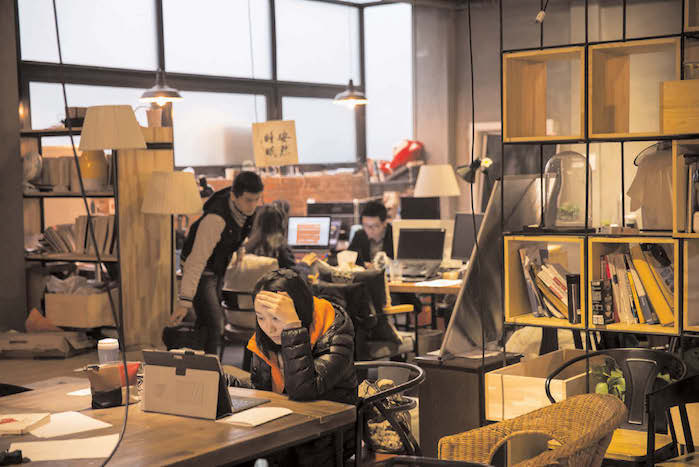
Today Xiong, a 28-year-old tech entrepreneur, voluntarily lives among 500 people in a co-sharing community near Beijing’s Silicon Valley .Xiong has two pairs of shoes and fewer than 10 outfits. He does not use a car and travels by taxi. His philosophy: if you can rent it, why own it.
Faced with a widening wealth gap and the slowest economic growth in more than two decades, millions like Xiong find themselves priced out of the big cities and are rejecting the consumer trappings of a modern lifestyle.Instead, they’re embracing the sharing economy to a far greater degree than their Western counterparts. In a recent survey , Nielsen found that 94%of Chinese are willing to share, compared with just 43% of North Americans.
Xiong is one of nearly 5,000 people across China who have moved into co-living spaces called You+, a name meant to inspire young people to infinitely expand their horizons. His community , located in a shuttered school, holds business workshops, helps register companies and s now trying to create a database to match skills and rela ionships. About 60 startups call the location home.
You+ echoes a similar movement in the West, where startups like Common (US), Nest Copenhagen (Denmark) and Sende (Spain) are selling mostly young urbanites on he co-living lifestyle.
For as little as about $500 a month, You+ residents gain access to a private room with a bathroom, co-working space that functions as an office, and entertainment facilities ncluding a bar, disco and game room. “Instead of working for years at a company to gain some capital, such a pla ce allows young people to experiment with their startup ideas at very low costs,” says Su Di, the 36-year-old You+ cofounder.
As Xiong sees it, China’s communal history combined with his generation’s embrace of social and economic change, is driving the rapid growth of the sharing economy . In China’s most recent fi ve-year plan for economic de velopment, officials highlighted the sharing economy as a way to help the county naviga te a tricky path from exportled growth to consumption.The sharing economy will generate $335 billion by 2025, up from $15 billion today , accor ding to PWC. (PTI)
From being the ‘science of life’, Ayurveda has become the ‘slice of life’ for many with the advent and positive growth of rejuvenation centres and Ayurvedic resorts in the country.
People are willing to experience a ‘healthier’ side to an otherwise indulgent holiday by touring healing resorts as an escape from the mundane, hectic everyday existence. These resorts located at the outskirts of the cityscape over sprawling and pristine forests lure tourists into its peaceful and quiet edifices.
Let’s discover and learn about some of the best Ayurveda resorts our country has:
Somatheeram Ayurveda Resort, Kerala: Nestled on a hillock a few kilometres south of the Kovalam beach is the world’s first Ayurvedic resort Somatheeram. Spread across a wide expanse of greenery, Kerala prides in Somatheeram as a getaway destination for those in search of an Ayurvedic haven away from the cacophony of city life. Established in 1985, Somatheeram has emerged as one of the frontrunners in encouraging a culture of Ayurvedic holidays and meditation tours among travel enthusiasts. The serenity of the resort by the sea, goodness of traditional Ayurvedic therapies and a healthy diet routine help people unwind here.
Acute health conditions of paralysis, fluctuating levels of blood pressure, arthritis, high cholesterol and breathing problems are first examined by a team of yoga experts and doctors after which a series of corresponding healing exercises and diet regime ensue.
Massage therapies: The massages here at Somatheeram serve more than a short-term purpose; the sessions are extensive and extend till days. ‘Pizhichil’ for instance is a special massage that uses a variety of herbal oils (lukewarm) and has been effective in curing diseases like paralysis and nervous disorders. Every session lasts 60-90 minutes over a span of 7-21 days. People with diabetes and obesity can go for the Ayurvedic ‘Abhyangam’ treatment which is again a type of oil massage for 45 minutes a day. ‘Nasyam’, ‘Snehapanam’ and ‘Kizhi’ are among the many treatments that have been proven medically capable of battling severe skin diseases, leukemia and sports injuries.
Yoga classes and boat tours in the backwaters too are included in Ayurveda packages at Somatheeram.
Where: Somatheeram Ayurveda Resort, South of Kovalam, Thiruvananthapuram. About 21 kms from International Airport at Thiruvananthapuram and about 9 kms south of the famous Kovalam beach.
1)Ananda in the Himalayas, Uttarakhand: As the name suggests, the experience too replicates a blissful journey amid the towering and guarding Himalayas. Ananda focuses on an interesting and fruitful blend of Ayurveda and Aromatherapy with contemporary spa technology for complete wellness of the human body. Located 260 kms north of New Delhi, Ananda stands tall around Maharaja’s palace estate with the views of the Ganges on one side and the mountain peaks on the other pleasing the tourist’s eyes, mind and spirit upon waking up every morning. Yoga pavilions, landscaped gardens, terraces facing a clear sky, spas equipped with hydrotherapy services, a golf course on its Himalayan axle and Rejuvenation Cuisine are some of the many distinguishing features of the resort you can indulge in. Ayurveda, yoga & meditation:
European and Thai treatments are employed in the spa boutiques here at Ananda. The Viceregal Hall is the quaint hillside garden that doubles as a refuge post an exhaustive yoga session. Marvel at the breathtaking panorama as you sip on the Himalayan tea. For couples, the Kama Suite with steam shower and exclusive massage facilities can surely add a sensual flavour to the Ayurveda tour. The Ayurvedic treatments are fashioned according to the Himalayan conditions. Use of less oil, slow and synchronised massages and regulation of a nutritious diet go into the making of customised treatments for guests under the supervision of physicians and therapists. An aftercare programme is planned for the benefit of the client at the last leg of the Ayurveda trip.
Where: The Palace Estate, Narendra Nagar, Dist. Tehri-Garhwal, Uttarakhand
Air: A 45-minute flight from New Delhi to Dehradun Jolly Grant airport followed by a one-hour drive.
Train: A four-hour journey from New Delhi to Haridwar railway station followed by a one-hour drive.
Road: The driving time between New Delhi and Narendra Nagar is approximately five and a half hours.
1)Devaaya, The Ayurveda and Nature Cure Centre, Goa: If beaches and nightlife are the first things that come to mind upon hearing Goa, then probably it’s time to widen your horizon. As much as it is a ‘party’ destination, Goa as a city has carved an identity that appreciates art, culture and holistic living. And speaking of holistic living, the city has emerged as one of the potential tourist spots on the map of Ayurveda tourism in India. Coconut palms swinging to the rhythm of the breeze and the Mandovi River flowing alongside one of the islands in Goa complete the scenery at Devaaya Ayurveda Centre in Goa. Naturopathy becomes a way of life at this Ayurvedic paradise that brings together the essential elements of ‘Panchakarma’ treatments with yoga, meditation, music, lifestyle correction, diet planning and medicines for tourists. The centre has been designed on the science of ‘Vaastu Shastra’ that adds to the harmony of the overall rejuvenation process.
Where: Devaaya – Ayurveda & Nature Cure Centre, Divar Island, Goa
1)Kairali Ayurvedic Health Village, Kerala: The captivating beauty of the Western Ghats and the rich flora define the picturesque town of Palakkad in Kerala which is home to the Kairali Ayurvedic Health Resort. Ram Mohan, Vice President of the Resort is proud to declare how the Ayurveda village has travelled miles over the recent years, “Today, we have over 20 centres abroad apart from the 25 centres across India.” Ask him about the future of Ayurveda tourism in India and he has his reservations, “The Indian mindset is still not ready to embrace the culture of Ayurveda in a manner that the European market has possibly built an industry around. Patience is a virtue we have still not mastered the art of. It is believed that Ayurveda is an expensive affair but so is allopathy. If we are willing to shed a fortune on a bypass surgery then why not spend half the money on a recreational therapy that will guarantee the elimination of the ailment from its root?”, asks Ram. The system of Ayurveda he asserts is “not superficial but comes with permanent and effective results.”
Agrees Niika Quistgard, Founder and Director Rasa Ayurveda Traditional Healing Centre for Women, Kerala and says, “People are often dissatisfied with allopathic medicines and are wary of the side-effects of drugs; natural alternatives and organic methods of healing are the preferred options. At Rasa Ayurveda we offer free consultation and treatment to women. All remedies are derived from herbal plants, a tradition that dates back to the era of our grandmothers,” adds Niika.
The Leela, Udaipur:
The city of lakes and palaces, The Leela’s ESPA Spa is yet another hot spot for Ayurvedic retreat. The ‘haveli’ style architecture of spas, tents done up in shades of royalty and opulence and the welcoming gardens contribute to the development of a relaxed mind and soul of the human body. Tricia Bannister, Group Spa Manager, says, “Our clientele has grown from in-house guests to both in-house and local guests requesting for a wellness experience set amidst the cultural heritage of Rajasthan.” From hot stone massages, facials, yoga and meditation, The Leela also features private yoga studio for visitors. On being asked if Ayurveda treatment is a rich man’s pastime Bannister replies, “There is a range of Ayurvedic resorts available for spa travellers, from more relaxed, to 5-star properties. Ayurveda tourism is growing dramatically in India; both for pure Ayurvedic treatments as well as Ayurvedic-inspired experiences. Travellers from all income-levels are curious to experience new wellness treatments,” adds Tricia.
CHICAGO (TIP): The principal of a USDA-approved lender ‘First Farmers Financial LLC “sold phony loans to transfer over $4.5 million to himself and fund his “extravagant lifestyle,” the firm’s asset receiver claimed in court. In a complaint filed in federal court on Monday, Oct 19, Patrick Cavanaugh, receiver First Farmers Financial LLC, claimed the lender’s principal, Timothy Fisher and Nikesh Patel, engaged in a “massive fraud”.
Patel and Fisher invented ‘borrowers’, printed phony loan documents, forged the signatures of USDA officials on guarantees, sent the fraudulent loan documentation and sold portions of those loans through asset managers and/or investment advisors, including a company named Pennant Management Inc.
LONDON (TIP): A teenager from Cardiff, Wales has been added to a UN banned list of the world’s most wanted terrorists at the request of Prime Minister David Cameron.
Aseel Muthana, who was 17 when he traveled to Syria in 2014, was hit with the international sanction, along with four other prominent British jihadists. It is reportedly the first time a government has requested that its own citizens be added to the UN banned list in the fight against Islamic State.
Aseel Muthana has boasted of his willingness to “die for the cause” and promoted the jihad lifestyle in media interviews since fleeing Wales last year with his brother Nasser, whose name is also on the list of banned jihadists. The sanction will see Muthana’s financial assets frozen and ban him from international travel, meaning the teenager will face deportation should he attempt to leave Syria.
According to Downing Street sources, the group was targeted because they are currently plotting terrorist attacks both in Britain and abroad, and are active recruiters for Islamic State. Other extremists added to the UN list include Sally-Anne Jones, known as “Mrs. Terror”; Omar Hussain, dubbed the Supermarket Jihadi because he worked at Morrisons; Aqsa Hussain, who fled Glasgow two years ago; and Muthana’s brother, Nasser.
A senior government official said the “notorious fighters” posed a “real threat” to the innocent public. Speaking of the list, the official stated the ban sends the “very clear signal
[that] we will absolutely take action against those people who have gone to fight for Isil and will threaten our country.”
LONDON (TIP): A British IS member living in Syria has complained about the “bad manners” of Arab fellow militants he says steal his shoes, eat like children and don’t queue.
In an online blog Omar Hussain, a former security guard at Morrison’s supermarket who previously lived in High Wycombe, also said other jihadis invade his space, talk loudly when he is asleep and behave like children. “The Arabs and the non-Arabs are united in one line,” he says, writing under the Islamist name Abu Saeed al Britani. ”
However, with the unification of tribes and cultures, there will be clashes”.
He warns Western radicals thinking of fleeing to Syria -“Arabs as a whole have a unique culture, which differs dramatically from the western lifestyle”.
Under a series of numbered subheadings, Hussain criticises various annoying habits he has encountered while living in Syria. Attack ing Arab’s administration skills, he said: “There is no queue in any of their offices.
You could be waiting in line for half an hour and then another Arab would come and push in the queue and go straight in.” Under the hea ding `etiquettes when ea ting,’ he writes –
“Our Arab brothers, or Syrians to be more precise, more precise, lack “basic manners”. When serving food to his fellow terrorists, he said he “was pounced upon by everyone in the room”.
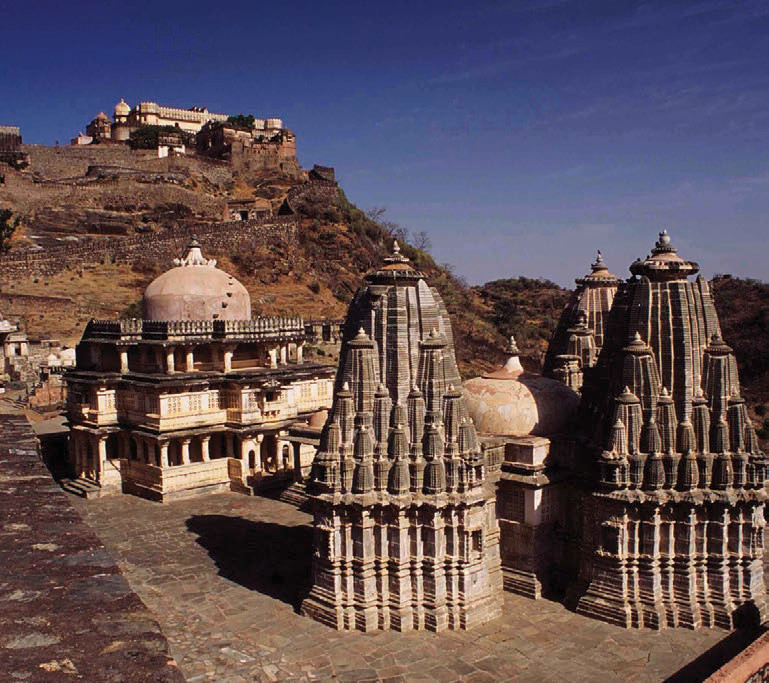
Ranakpur is named after Rana Kumbha whom Dharna Sah, a Jain businessman, approached when he had the vision of his great temple to ask for the land for its construction. Renowned for some marvelously carved Jain temples in amber stone, Ranakpur is one of the five holiest places of the Jain community and exceptional in beauty. Situated at a distance of around 60 km from Udaipur, these temples were constructed in the AD 1439.
The construction is well documented in a 1437 CE copper-plate record, inscriptions in the temple and a Sanskrit text Soma-Saubhagya Kavya. Inspired by a dream of a celestial vehicle, Dhanna Shah, a Porwad, commenced its construction, under the patronage of Rana Kumbha, then ruler of Mewar.
This charming village has derived its name after Rana Kumbha.Well-known for some excellently carved 15th century Jain temples in amber stone, Ranakpur is one of the five holiest places of the Jains and flaunts outstanding natural beauty. Dharna Sah, who happened to be a Jain businessman, approached Rana Kumbha when he had the vision of his great temple to request a portion of land for its construction. The magnificent Jain temples were built during the rule of the open-minded and gifted monarch Rana Kumbha during the 15th century. The basement of the complex covers 48,000 sq. feet area and features four additional shrines, twenty four pillared halls and domes supported by more than four hundred columns. There are 1,444 columns and all of them are intricately carved with different appearance.
The Ranakpur Jain Temple were built under the reign of Rana Kumbha in the 15th century AD. The Ranakpur Jain temples is one of the most beautiful Jain temple. An enormous basement of this temple covers 48,000 square feet. There are four subsidiary shrines, twenty four pillared halls. The total number of columns is 1444, all of which are intricately carved, no two being alike. These temples are about 400 years old and even today these temples are well preserved in a perfect condition.
The architectural design of the Jain temple Ranakpur is not only fascinating but also symbolic. It has four sides or four faces (Charmukha). The construction is symbolic of the Tirthankar’s conquest of the four cardinal directions and therefore the cosmos. While each face of the Jain temple is identical in terms of features, no two pillars in the temple are the same. The architect for the temple, referred to in stone inscriptions as Depaka, was evidently a genius. For him, art was an expression of his soul and a prayer, rather than a means of earning money. An ascetic himself, he was impressed by Dharnasha’s lifestyle and religious conviction, which was the reason why he agreed to take on the monumental assignment.
Kumbhalgarh Fort
Located 85 kms north of Udaipur in the wilderness, Kumbhalgarh is the second most important citadel after Chittorgarh in the Mewar region. Cradled in the Aravali Ranges the fort was built in the 15th century by Rana Kumbha. Because of its inaccessibility and hostile topography the fort had remained un-conquered. It also served the rulers of Mewar as a refuge in times of strife. The fort also served as refuge to the baby king Udai of Mewar. It is also of sentimental significance as it is the birthplace of Mewar’s legendary King Maharana Partap.
The fort is self-contained and has within its amalgam almost everything to withstand a long siege. The fort fell only once that too to the combined armies of Mughal and of Amber for scarcity of drinking water. Many magnificent palaces an array of temples built by the Mauryas of which the most picturesque place is the Badal Mahal or the palace of the clouds. The fort also offers a superb birds view of the surroundings. The fort’s thick wall stretches some 36 kms and is wide enough to take eight horses abreast. Maharana Fateh Singh renovated the fort in the 19th century. The fort’s large compound has very interesting ruins and the walk around it can be very rewarding.
Narlai Narlai
After breakfast drive to Luni en-route visit World famous Jain Temple Ranakpur. The exceptionally beautiful Ranakpur complex, is one of the largest and most important Jain temple in India. The main temple is the Chaumukha Temple, or Four Faced Temple, dedicated to Adhinath. Built in 1439, this huge, superbly crafted and well-kept marble temple has 29 halls supported by 1444 pillars, no two alike. Also do the city sightseeing tour of Prince Jodha founded city Jodhpur – the stronghold of the fierce Ratore clan, in 1459. Visit the Mehrangarh Fort, situated on a low sandstone hill. Within the fort, visit Moti Mahal and Phool Mahal. Also visit jaswant Thada, an imposing marble cenotaph, built in memory of Maharaja Jaswant Singh II around 1899 and Umaid Public Garden. After sightseeing continue drive to Luni. Arrive Luni and check-in at hotel. Night stay in Luni.
Mucchal Mahaveer Once upon a time, the Rana of Mewar was on a hunt in Ghanerao, in the Pali district of Rajasthan, when he ventured upon a temple of Lord Mahavir. The priest offered him refreshments and prasad. Much to the Rana’s amusement, the prasad has a white hair, probably from the priest’s head and he cracked a joke about the lord having a moustache. Failing to understand the humour and probably stumped for an answer, the priest said yes. Carrying on with the joke, the Rana told the priest that he would return in three days to see the Lord’s moustache.
Jain Temple
Ranakpur Jain Temple is famous for its excellent sculptures and architecture. Surrounded by the Aravali hills and located on the banks of ‘Magai’ river this grand & gigantic four facet structures was erected in the 14th Century.The Temple is three storied, 102 ft. high and its spread over an area of 48000 sq. ft. The present structure of the temple came into being after the hard works of 50 years by various artisans & sculptors. the land of this temple which situated at the foot hill of ‘Madri hills’ was gifted by Maharana Kumbha of Mewar. Along with this temple a small town, about 2 kms. from the temple also came into existence. this town got its name from ‘Rana’ & was named ‘Ranpur’ which later came to be known as ‘Ranakpur’. The temple is dedicated to the first Jain Teerthkar ‘Lord Adinath’. it is built on high platform, which has about nine basement. it has 84 idols of gods and demi gods., 1444 pillars elaborately and beautifully decorated along with 4 ‘Megh Mandaps’. surrounding the main temple there are small shrines of Lord ‘Parshwanath’,’Neminath’& ‘Surya Narayan’.
Sun Temple
The Surya Narayan Temple is another must-see temple in Ranakpur. The temple is dedicated to Sun God and is popular for its various wall projections in circular structure.
The most interesting sight in this temple is the image of Lord Surya driving a seven-horse chariot. Other than this the temple is also an architectural delight.
Parshuram Mahadev Temple
En route Ranakpur to Kumbhalgarh, approximately 14 kilometres from Sadri Village, is the Parshuram Mahadev Temple. This Shiva temple sits in a cave 3995 feet above sea-level and it is said that Parshuram, the lord’s sixth manifestation, made the cave himself with his axe to worship Shiva in the serene foothills of the Aravalis. The cave has naturally formed figures of Lord Ganesh and Lord Shiva and also has nine kunds or ponds which never go dry. It is estimated at approximately 9 lakh pilgrims visit this temple annually.
34-year-old Indian-American investment manager has been sentenced to six years in prison for defrauding investors of millions of dollars through a Ponzi scheme to fund his “extravagant lifestyle”, and has been ordered to pay over USD 9 million in penalty.
Neal Goyal fraudulently obtained millions of dollars from investors in a sophisticated Ponzi scheme to fund his extravagant lifestyle was sentenced to six years in federal prison.
He was the sole managing member and founder of an asset management firm and was also ordered to pay more than USD 9.2 million in restitution, by US District Judge Matthew Kennelly.
Goyal had pleaded guilty in February to one count of wire fraud and has been ordered to surrender to begin serving his sentence on September 17 this year.
“Goyal was running a Ponzi scheme and he stole much of his investors’ money to prop up his extravagant lifestyle,” Assistant US Attorney Kenneth Yeadon argued in a government sentencing memorandum.
“There is no justification for the crimes that Goyal committed other than his own desire to place his own self-interests in front of the interests of his investors.”
From 2006 to 2014, Goyal perpetrated the scheme by setting up a fake trading shop in Chicago in order to fool his investors into believing that his trading strategy generated market-beating returns.
He concealed his scheme by using existing investor money to repay investors, and by creating and distributing false account statements.
Many of the duped investors were Goyal’s friends and family members.
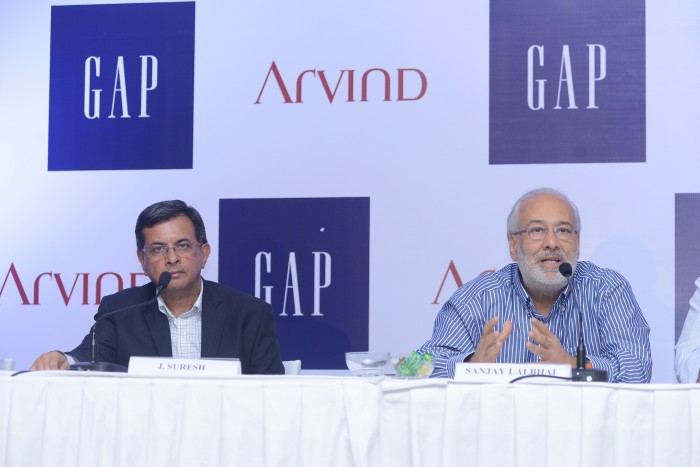
NEW DELHI (TIP): American clothing and accessories chain Gap is finally set to open its first store in India on Saturday. The company has partnered with Indian textile giant Arvind to open 40 stores in the country and is eyeing sales of around Rs 1,000 crore in the next six years.
By mid next year, Arvind plans to open 10 Gap stores in the top metros by investing around Rs 100 crore, J Suresh, MD of Arvind Lifestyle Brands, said on the eve of Gap’s first store launch in the Capital. Gap, which has been late to enter India compared to other international high street brands such as, Marks & Spencer and Zara, has kept its prices low. “We have Indianised prices of Gap products. A t-shirt will start at around Rs 999,” Suresh said.
“However, it doesn’t mean that we will compromise on quality. The products will be sourced from Gap’s global supply chain.”
Gap, which originally targeted younger generations (the word ‘Gap’ refers to generation gap), has been focusing on international expansion to counter sluggish sales in the US. “Emerging markets are a big opportunity for us,” said Ismail Seyis, VP, Gap Franchise. “We are really encouraged by the high brand awareness here.”
At present, India’s apparel retail market is pegged at around $40 billion and is expected to grow to around $60 billion in the next five years, according to industry estimates. However, Seyis rules out bringing Gap’s other brands, including Banana Republic and Old Navy, to India at the moment.
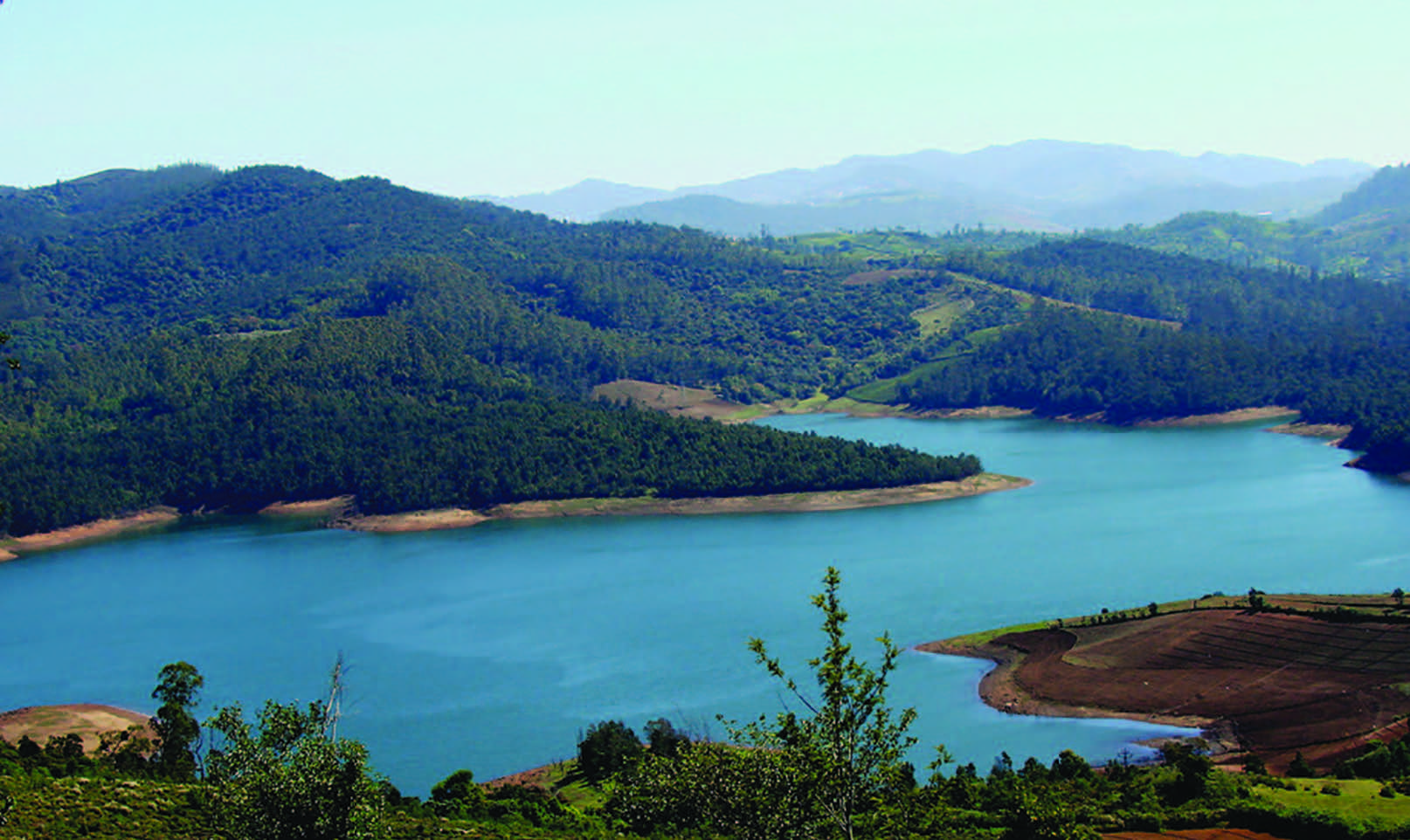
Called the Queen of Hill Stations picturesque, green Udhagamandalam better known as Ooty is the most popular hill station in the South.ooty Located in the Western ghats at a height of 2240m, Udhagamandalam is the headquarters of the Nilgiris district where the two ghats ranges meet. Nature has been generous with this region, which is by far the most beautiful in the state.
Apart from coffee and tea plantations, trees like confiers, eucalptus, pine and wattle dot the hillside in Udhagamandalam and its encirons. Summer temperature is rarely higher than 25°c with a minimum of 10°c and winter is are distinctly cooler with a high of 21°c and a low 5°c. Curiously enough, this slice of paradise remained unknown to the great southern dynasties and it took the British to discover it in the early 1800s. They were, however, not the first inhabitants of this land as a tribe called Todas had been living there long before the British came, claiming that the Nilgiris had been their home since time immemorial. But the credit for modernising Udhagamandalam and making it accessible goes to the British who constructed the first railway line in the area and made it the summer capital of the Madras Presidency.
Ooty with smaller hill stations of Coonoor – 19 kms and Kothagiri 31 kms from Ooty are the other hill stations of this district. Nilgiri is India’s first biosphere. It has been declared as one of the 14 ‘hotspots’ of the world because of its unique bio-diversity. Nilgiri presents a truly breath taking kaleidoscope of visual treats and soul stirring experience.
The Nilgiri Mountain Railway built by the British in 1908 is a World Heritage Site. It’s a 46-kilometre beautiful toy train journey that starts from Mettupalayam and goes through tunnels, curves, bridges and beautiful scenery to reach Ooty in five hours. From 300 feet to 7200 feet, the Ooty toy train is definitely a ride to cherish. Here’s a tip – try to sit on the side that looks out in to the valley for the best views on the way up.
[quote_box_center]OOTY LAKE[/quote_box_center]
Ooty Lake is a popular destination for picnicking, paddle boating and enjoying Ooty leisurely. Built in 1825, it is a 2.5-kilometre long lake meandering through the scenic beauty of the Nilgiris.
Ooty Botanical Garden, spread over a huge area of 22 hectares and with more than 650 species of flowers and trees, is a horticulturist’s delight. The highlight of the garden is a fossil tree that is believed to be 20 million years old. Another attraction here is the Toda tribe settlement towards the top of the garden. Be privy in to the lifestyle and culture of this tribe during your visit.
HOW TO REACH OOTY
Ooty’s colonial charm and innate splendor attracts tourists from all over the world every year. Ooty has a well linked network of Air, Rail and Road ways.
By Air
The nearest airport to Ooty is located in Coimbatore. The hill station is at a distance of about 98 kilometers from the Coimbatore Airport. The airport is connected to Bangalore, Chennai, Mumbai and Cochin by Indian Airlines flights. In order to reach Ooty from the airport, one has to hire a taxi or a bus to reach Ooty.
By Rail
The hill station of Ooty has a railway station of its own. It is called the Udhagamandalam railway station and can be reached by The Nilgiri Mountain Railway (a.k.a. Toy Train) from Mettupalayam. Though the toy train isn’t very fast but the scenic beauty of this route attracts many tourists. Mettupalayam is the nearest major railway station to Ooty. One can also hire a private taxi to reach Ooty here. The distance of Ooty from Mettupalayam is about 52 km.
By Road
Ooty is also connected to all the nearby towns and cities by good roads. The hill station connects to various other important cities of South India like Chennai, Bangalore, Mysore, Coimbatore, etc. The road to Ooty from Coimbatore is popular for its scenic beauty. As Ooty is located on NH 67 several tourist buses and taxis commute here without any hassle.
SHOPPING IN OOTY
Shopping in Ooty is one of the most exciting and thrilling experience for tourists who love to go on a shopping spree. Endowed with sprawling tea gardens and luxuriant green forest, Ooty is known for its fine flavored and aromatic tea leaves, delicious honey, eucalyptus oil and several fruits.
The shopping malls of Ooty are flooded with natural products of forests. Ooty is a paradise for those who love shopping. Surrounded by tea gardens, the tourists can smell the enchanting scent of fresh tea leaves while taking a stroll in the long winding paths of Ooty. The fresh tea leaves are purchased by the tourists as a relic of the beautiful place of Ooty. Another prominent itinerary in the list of items while shopping in Ooty is the pure and sweet honey which is available in all the stores and shopping centers of the place. The natural oil of Eucalyptus has a great demand among the shoppers because of its medicinal value. The markets of Ooty are full of fresh fruits that impart a colorful look to the place.
The exquisite piece of the embroidered items by the tribal community of Toda represents the rich traditional art and craft of South India. The delicately designed jewelry of Silver is another attraction for the tourists who purchase such items as souvenirs for their near and dear ones.
WASHINGTON: Three Indian-Americans are among 50 biggest philanthropists of 2015, that includes top business honchos like Microsoft co-founder Bill Gates, Apple CEO Tim Cook and Facebook CEO Mark Zuckerberg.
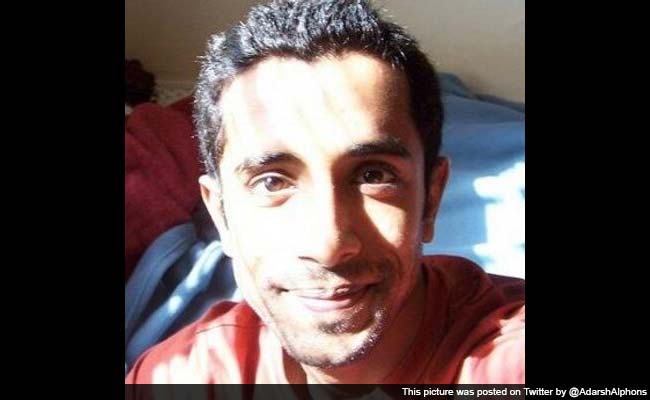
The list compiled by American lifestyle ‘Town and Country Magazine’ figures New York-based Adarsh Alphons, Reshma Saujani and Shaila Ittycheria, all under 40 years of age.
“These are the men and women whose serious dollars, bold ideas, and old-fashioned hard work have made them the year’s most noteworthy and inspiring givers,” says the magazine of people on its ‘T&C 50: The Biggest Philanthropists of 2015’ list.
Ms Saujani, 39, is the founder of ‘Girls Who Code’, a three-year-old nonprofit that teaches computer skills to girls from low-income communities to close technology’s gender-gap.
“This is more than just a programme. It’s a movement”, said Ms Saujani, who was also among four Indian-American entrepreneurs on a recent list of the 40 most talented and dynamic professionals under the age of 40 in New York City.
Meanwhile, 30-year-old Mr Alphons founded ‘ProjectArt’ to unleash the creative power in each child and change the way the world views arts education, because for him, art saves lives.
His ‘Grand Plan’ is to help troubled New York City students via ProjectArt, which provides free art classes at public libraries in all five boroughs.
It does this by public awareness and programmes. Using its unique library-partnerships model, it helps youth express their artistic visions, set goals and display their art in celebrated art galleries in New York City, all at no cost to the students.
Expelled from school when he was just seven-years-old for drawing in every class, Alphons – son of former Indian bureaucrat KJ Alphons – has been painting portraits for Mother Teresa, Nelson Mandela and the Pope by the time he was 15 – all because one art teacher perceived his passion for art and believed in him, according to information on his website.
Ms Ittycheria, 31, co-founded ‘Enstitute’ that bypasses college by placing its students in paid tech apprenticeships.
Her ‘Grand Plan’ is to educate the digitally inclined and debt-averse.
The list also includes Zuckerberg’s wife Priscilla Chan, former New York mayor Michael Bloomberg, and actors Leonardo DiCaprio and Emma Watson.
Signup to our Newsletter!
Don’t miss out on all the happenings around the world