Tag: MADHYA PRADESH

  • Running scared? Chidambaram opts out of Lok Sabha battle, Congress fields his son

    Running scared? Chidambaram opts out of Lok Sabha battle, Congress fields his son

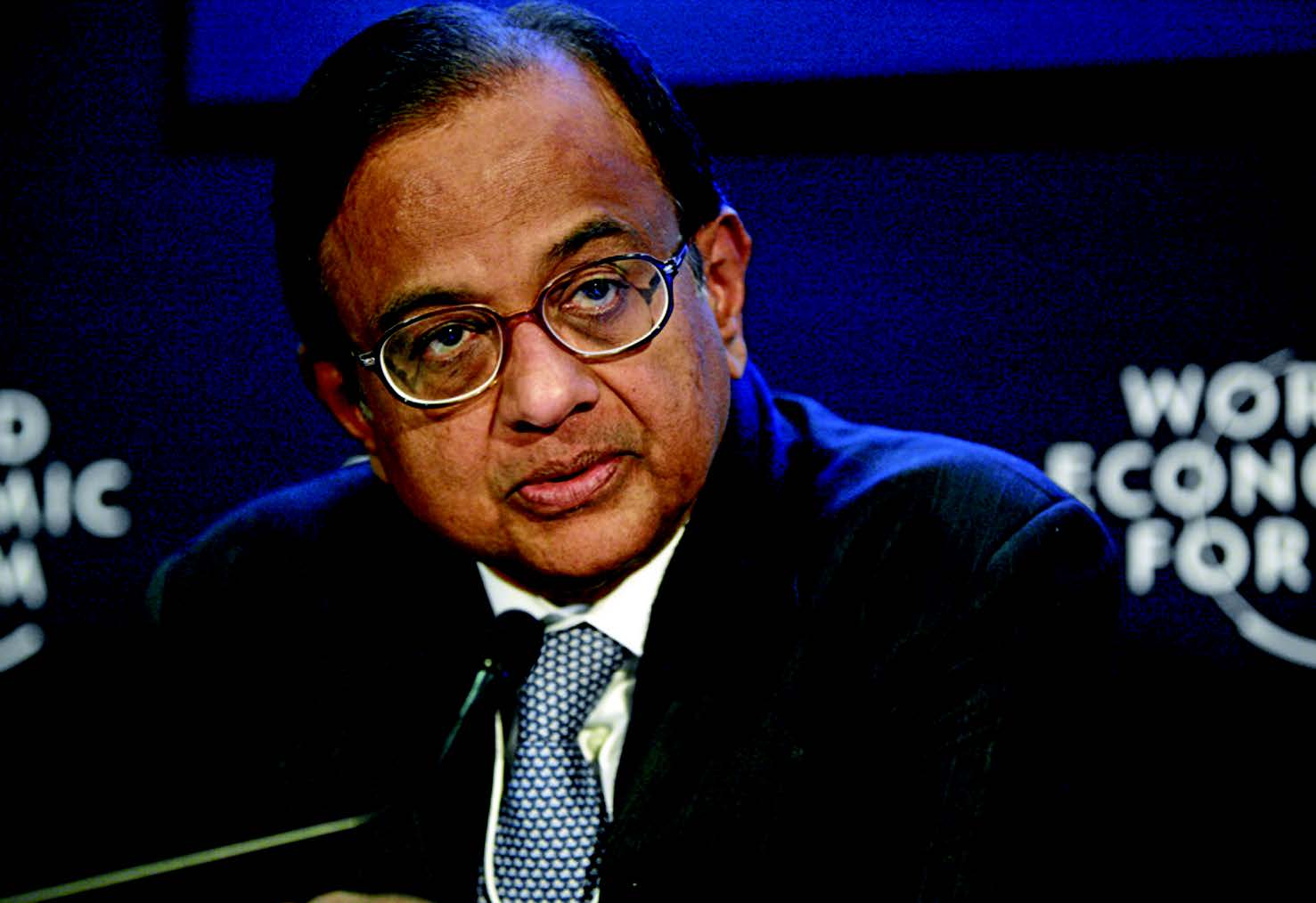
    NEW DELHI (TIP): Finance minister P Chidambaram has opted out of the Lok Sabha contest, with Congress announcing his son Karthi as the candidate from Sivaganga constituency in Tamil Nadu. Kirit Patel will take on BJP patriarch LK Advani in Gandhinagar in Gujarat.

    The passing of baton in Sivaganga caps the intense speculation on Chidambaram’s candidature in the wake of Congress’s bleak prospects in the state owing to its failure to find an ally. Congress fought the last two elections with DMK and reaped a rich tally, disproportionate to its weak organizational muscle in the state.

    The leg-up for the GenNext extends to another of the state’s political family. Mohan Kumaramangalam, son of former Union minister Rangarajan Kumaramangalam, is the rookie to contest from Salem. In what may have the making of an interesting contest, Laxman Singh has been named from Vidisha to take on leader of opposition in Lok Sabha Sushma Swaraj in Madhya Pradesh. Singh is a former MP and the brother of AICC general secretary Digvijay Singh.

    Congress announced sitting MPs Ramesh Kumar and Mahabal Mishra from South Delhi and West Delhi, a decision which means that all seven party MPs from the capital would be taking the field in the Lok Sabha polls. The names of Kumar and Mishra were held back in the earlier list which gave the go ahead to five other MPs, raising the possibility of their being replaced. However, the party leadership has settled for the status quo, finding that any attempt to change the candidate would skew the caste balance it wants in its representation in the apital.

    The reprieve for the two comes after Congress mulled possible options to sitting MPs. The Central Election Committee of the party had taken exception to the routine manner in which the MPs were recommended for renomination and had asked the Delhi managers to submit a panel of possible candidates. Union health minister and senior Congress leader Ghulam Nabi Azad would contest from Udhampur in Jammu and Kashmir. He replaces MP Lal Singh Chaudhary. Congress has also replaced Paranjayadityasinh Parmar from Panchmahals in Gujarat with Ramsingh Parmar.

    Paranjayaditya is the son-in-law of Congress general secretary Digvijay Singh and his nomination in the previous list of candidates had sparked unrest, leading to clarification from the state leadership that it was an oversight. Rajya Sabha MP and former union minister Mani Shankar Aiyer will contest from Mayiladuthurai that he represented in Lok Sabha before losing in 2009. Expelled JD(U) MP Purnmasi Ram will be the Congress candidate from Gopalganj reserved seat in Bihar. Also, Congress’s Tsering Samphel will contest from Ladakh seat in J&K.

  • HOLI: FESTIVAL OF COLORS

    HOLI: FESTIVAL OF COLORS

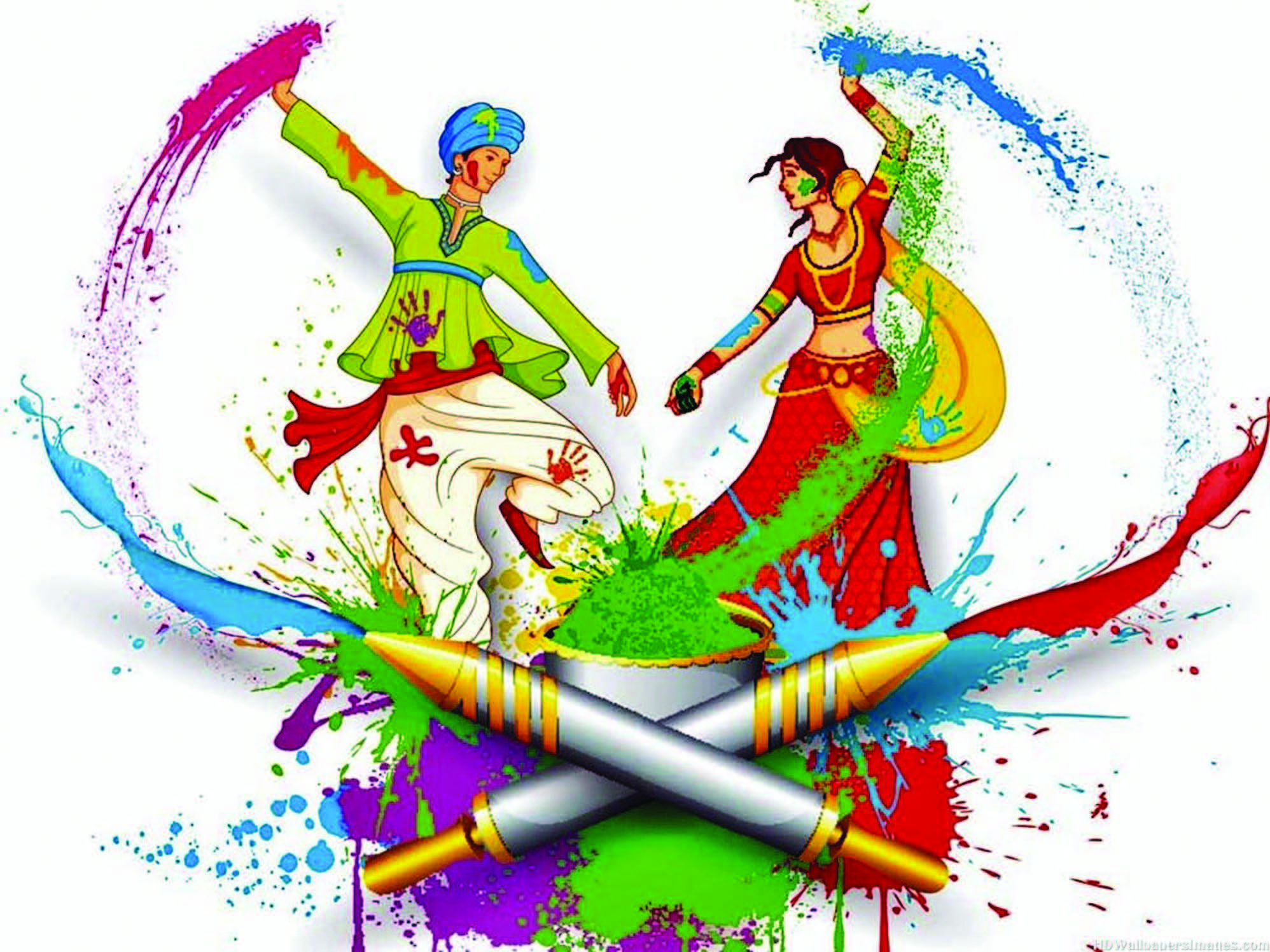
    As the brief spring warms the landscape, northern India cuts loose for a day of hijinx and general hilarity. The festival of Holi is celebrated on the day after the full moon in early March every year. Originally a festival to celebrate good harvests and fertility of the land, Holi is now a symbolic commemmoration of a legend from Hindu Mythology. The story centres around an arrogant king who resents his son Prahlada worshipping Lord Vishnu. He attempts to kill his son but fails each time. Finally, the king’s sister Holika who is said to be immune to burning, sits with the boy in a huge fire.

    However, the prince Prahlada emerges unscathed, while his aunt burns to death. Holi commemorates this event from mythology, and huge bonfires are burnt on the eve of Holi as its symbolic representation. This exuberant festival is also associated with the immortal love of Krishna and Radha, and hence, Holi is spread over 16 days in Vrindavan as well as Mathura – the two cities with which Lord Krishna shared a deep affiliation. Apart from the usual fun with coloured powder and water, Holi is marked by vibrant processions which are accompanied by folk songs, dances and a general sense of abandoned vitality. Today Holi is an excuse for Indians to shed inhibitions and caste differences for a day of spring fever and Big Fun.

    Teenagers spend the day flirting and misbehaving in the streets, adults extend the hand of peace, and everyone chases everyone else around, throwing brightly colored powder (gulal) and water over each other. The festival’s preamble begins on the night of the full moon. Bonfires are lit on street corners to cleanse the air of evil spirits and bad vibes, and to symbolize the destruction of the wicked Holika, for whom the festival was named. The following morning, the streets fill with people running, shouting, giggling and splashing. Marijuana-based bhang and thandai add to the uninhibited atmosphere.

    Promptly at noon, the craziness comes to an end and everyone heads to either the river or the bathtub, then inside to relax the day away and partake of candies. In the afternoon an exhausted and contented silence falls over India. Although Holi is observed all over the north, it’s celebrated with special joy and zest at Mathura, Vrindavan, Nandgaon, and Barsnar. These towns once housed the divine Krishna. Each area celebrates Holi differently; the Bhil tribesmen of western Madhya Pradesh, who’ve retained many of their pre-Hindu customs, celebrate holi in a unique way.

    In rural Maharashtra State, where the festival is known as Rangapanchami it is celebrated with dancing and singing. In the towns of Rajasthan, especially Jaisalmer, the music’s great, and clouds of pink, green, and turquoise powder fill the air. The grounds of Jaisalmer’s Mandir Palace are turned into chaos, with dances, folk songs, and coloredpowder confusion.

    History
    History of HoliHoli is an ancient festival of India and was originally known as ‘Holika’. The festivals finds a detailed description in early religious works such as Jaimini’s Purvamimamsa-Sutras and Kathaka-Grhya- Sutras. Historians also believe that Holi was celebrated by all Aryans but more so in the Eastern part of India. It is said that Holi existed several centuries before Christ. However, the meaning of the festival is believed to have changed over the years. Earlier it was a special rite performed by married women for the happiness and well-being of their families and the full moon (Raka) was worshiped.

    Calculating the Day of Holi
    There are two ways of reckoning a lunar month- ‘purnimanta’ and ‘amanta’. In the former, the first day starts after the full moon; and in the latter, after the new moon. Though the amanta reckoning is more common now, the purnimanta was very much in vogue in the earlier days. According to this purnimanta reckoning, Phalguna purnima was the last day of the year and the new year heralding the Vasantaritu (with spring starting from next day). Thus the full moon festival of Holika gradually became a festival of merrymaking, announcing the commencement of the spring season. This perhaps explains the other names of this festival – Vasanta-Mahotsava and Kama-Mahotsava.

    Reference in Ancient Texts and Inscriptions
    Besides having a detailed description in the Vedas and Puranas such as Narad Purana and Bhavishya Purana, the festival of Holi finds a mention in Jaimini Mimansa. A stone incription belonging to 300 BC found at Ramgarh in the province of Vindhya has mention of Holikotsav on it. King Harsha, too has mentioned about holikotsav in his work Ratnavali that was written during the 7th century. The famous Muslim tourist – Ulbaruni too has mentioned about holikotsav in his historical memories. Other Muslim writers of that period have mentioned, that holikotsav were not only celebrated by the Hindus but also by the Muslims.

    Reference in Ancient Paintings and Murals History of HoliThe festival of Holi also finds a reference in the sculptures on walls of old temples. A 16th century panel sculpted in a temple at Hampi, capital of Vijayanagar, shows a joyous scene of Holi. The painting depicts a Prince and his Princess standing amidst maids waiting with syringes or pichkaris to drench the Royal couple in coloured water. A 16th century Ahmednagar painting is on the theme of Vasanta Ragini – spring song or music. It shows a royal couple sitting on a grand swing, while maidens are playing music and spraying colors with pichkaris.

    There are a lot of other paintings and murals in the temples of medieval India which provide a pictoral description of Holi. For instance, a Mewar painting (circa 1755) shows the Maharana with his courtiers. While the ruler is bestowing gifts on some people, a merry dance is on, and in the center is a tank filled with colored water. Also, a Bundi miniature shows a king seated on a tusker and from a balcony above some damsels are showering gulal (colored powders) on him.

    Legends and Mythology
    In some parts of India, specially in Bengal and Orissa, Holi Purnima is also celebrated as the birthday of Shri Chaitanya Mahaprabhu (A.D. 1486-1533). However, the literal meaning of the word ‘Holi’ is ‘burning’. There are various legends to explain the meaning of this word, most prominent of all is the legend associated with demon king Hiranyakashyap. Hiranyakashyap wanted everybody in his kingdom to worship only him but to his great disappointment, his son, Prahlad became an ardent devotee of Lord Naarayana. Hiaranyakashyap commanded his sister, Holika to enter a blazing fire with Prahlad in her lap.

    Holika had a boon whereby she could enter fire without any damage on herself. However, she was not aware that the boon worked only when she enters the fire alone. As a result she paid a price for her sinister desires, while Prahlad was saved by the grace of the god for his extreme devotion. The festival, therefore, celebrates the victory of good over evil and also the triumph of devotion. Legend of Lord Krishna is also associated with play with colors as the Lord started the tradition of play with colours by applying colour on his beloved Radha and other gopis. Gradually, the play gained popularity with the people and became a tradition.

    Holi in Barsana
    Holi in Barsana Holi of Barsana, the birthplace of Radha, a village, 42 kms away from Mathura, is of particular interest. Here, men from Nandgaon, the land of Krishna come to play Holi with the girls of Barsana and hope of raising their flag over Shri Radhikaji’s temple. But, instead of colours they are greeted with sticks by the gopis. Hence, the Holi get its new name here- Lathmaar Holi. Smart enough, men come fully padded as they are fully aware what kind of welcome awaits them and also the fact that they are not allowed to retaliate on that day. In this mock battle of sorts, they try their best not to be captured.

    The unlucky one’s however, are forcefully led away and get a good thrashing from the women. Further, they are made to wear a female attire and dance in public. All in the spirit of Holi. Renowned poets like Surdas, Nand-das, Kumbhan-das and others have picturesquely described how Lord Krishna received similar treatment and was forced to don a sari and wear make-up and perform dance before being released by the gopies. The next day, it is the turn of men of Barsana. They reciprocate by invading Nandgaon and drench the womenfolk of Nandgaon in colours of kesudo, naturally occurring orange-red dye and palash. Today, the women of Nadagow beat the invaders from Barsana. It is a colourful site.

    However, in the interest of tourism and safety, the state tourist board has set up excellent vantage points for the public. A large open ground, on the outskirts of the town is specially set aside for the most magnificent display of the festivities. The week long Holi celebrations also continue in the various Krishna temples on different days. The celebrations are filled with clouds of colours and of course, much fun.

  • 29th STATE JUST A SIGNATURE AWAY

    29th STATE JUST A SIGNATURE AWAY

    Rajya Sabha approves Telangana bill amid din and chaos
    NEW DELHI (TIP): With the Rajya Sabha putting its seal of approval on the Bill for creating Telangana amid bedlam, the birth of the 29th State of the Union is just a presidential signature away. The historic development was preceded by prolonged “labour pangs” beginning from July 30 last year, the day the Congress Working Committee (CWC) approved a resolution for bifurcation of Andhra Pradesh.

    On Feb 20, there was a great deal of anxiety about the fate of the State as the BJP, which had helped the government push through the Bill in the Lok Sabha on Tuesday, put a spanner in the works by insisting that without a Constitution amendment it faces the danger of being legally challenged. But, thanks to hectic backroom negotiations at the highest level of the government and the BJP, it was smooth sailing in the Upper House despite protests from Seemandhra MPs, who parked themselves in the Well of the House throughout the day with banners and placards.

    Prime Minister Manmohan Singh and his team of Ministers succeeded in persuading top BJP leaders not to press for a Constitution amendment, which would have complicated the process. Mr. Singh’s team convinced the BJP brass that the government was on sound legal footing on giving special powers to the Governor over safety and security of the residents of Hyderabad, which will be the joint capital for a maximum of 10 years. It was the understanding between the government and the BJP which prompted CPI(M) leader Sitaram Yechury and all others who opposed the Bill to describe it as a classic case of “match-fixing.”

    At the meeting, it was agreed that the Prime Minister would announce a package to address the concerns of the Seemandhra people as well as those in the backward regions of Telangana. Intervening in the debate in the Rajya Sabha, the Prime Minister announced that for the purposes of Central assistance, special category status would be extended to the successor state of Andhra Pradesh for five years. He said the Centre would take steps to offer tax incentives to promote industrialisation and economic growth in both States.

    In addition, a special development package for the backward regions of the successor state of Andhra Pradesh, in particular the districts of Rayalaseema and north-coastal Andhra Pradesh, will be given on the lines of the K-B-K (Koraput- Bolangir-Kalahandi) Special Plan in Odisha and the Bundelkhand special package in Madhya Pradesh and Uttar Pradesh. Speaking about the commitment of his party to creating Telangana, Leader of the Opposition Arun Jaitley expressed dismay over the manner in which the UPA had handled the entire issue. Initiating the debate, the BJP’s M. Venkaiah Naidu said: “Telangana and Andhra Pradesh are brothers and are Telugu-speaking. Telangana people want Telangana, we are saying yes… We are not dividing the country; we are only dividing a state for speedy development.” He blamed the Congress for delaying the creation of Telangana and playing “vote bank” and “opportunistic” politics.

  • Seemandhra to get special status for 5 years, says PM

    Seemandhra to get special status for 5 years, says PM

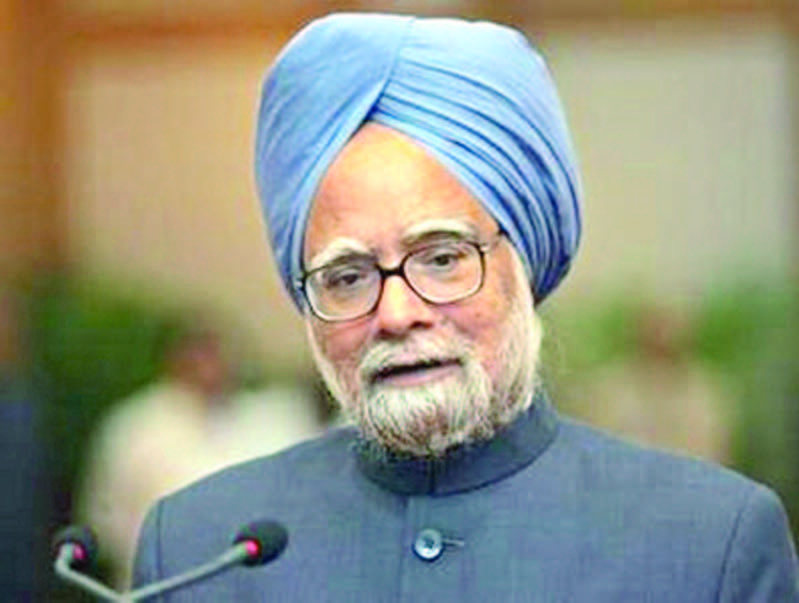
    NEW DELHI (TIP): Prime Minister Dr Manmohan Singh has said special status will be given for five years to Seemandhra region – the residual state of Andhra Pradesh following creation of a separate Telangana. Speaking in the Rajya Sabha on the bill to create a separate Telangana state, Dr. Singh said: “I have listened very carefully to the views expressed by the Leader of Opposition and all the other members who have spoken, especially those from Andhra Pradesh.

    The Home Minister has already mentioned the specific steps our Government will take to address the concerns of all regions of the state, particularly of Seemandhra.” Dr. Singh further said he would like to make a few further announcements in this regard. “First, for purposes of Central assistance, Special Category Status will be extended to the successor state of Andhra Pradesh comprising 13 districts, including the four districts of Rayalaseema and the three districts of north coastal Andhra for a period of five years. This will put the state’s finances on a firmer footing,” he said.

    “Second, the Bill already stipulates that the Central Government shall take appropriate fiscal measures, including offer of tax incentives to the successor states in order to promote industrialization and economic growth in both the states. These incentives will be along the lines extended to some other states,” he added. “Third, the Bill already provides for a special development package for the backward regions of the successor state of Andhra Pradesh, in particular for the districts of Rayalaseema and North Coastal Andhra Pradesh. This development package will be on the lines of the K-B-K (Koraput-Bolangir-Kalahandi) Special Plan in Odisha and the Bundelkhand special package in Madhya Pradesh and Uttar Pradesh,” he said.

    “Fourth, I would like to reassure Honourable Members that if any further amendments are needed to facilitate smooth and full Rehabilitation and Resettlement(Rand R) for the Polavaram project, they will be given effect to at the earliest. Our government will execute the Polavaram project-let there be no doubt about it,” he added. Dr. Singh further informed that the appointed day for the formation of the new State will be so fixed in relation to the notified date so as to enable preparatory work relating to personnel , finance and distribution of assets and liabilities to be completed satisfactorily.

    “The resource gap that may arise in the successor state of Andhra Pradesh in the very first year, especially during the period between the appointed day and the acceptance of the 14th Finance Commission recommendations by the Government of India, will be compensated in the Regular Union Budget for 2014-15,” he added. ” I hope these additional announcements will demonstrate our steadfast commitment to not just the creation of Telangana but also to the continued prosperity and welfare of Seemandhra,” he further stated. The prime minister read his statement in house amid din and slogan shouting by members opposing the bill to create the new state.

  • 29th STATE JUST A SIGNATURE AWAY

    29th STATE JUST A SIGNATURE AWAY

    Rajya Sabha approves Telangana bill amid din and chaos

    NEW DELHI (TIP): With the Rajya Sabha putting its seal of approval on the Bill for creating Telangana amid bedlam, the birth of the 29th State of the Union is just a presidential signature away. The historic development was preceded by prolonged “labour pangs” beginning from July 30 last year, the day the Congress Working Committee (CWC) approved a resolution for bifurcation of Andhra Pradesh.

    On Feb 20, there was a great deal of anxiety about the fate of the State as the BJP, which had helped the government push through the Bill in the Lok Sabha on Tuesday, put a spanner in the works by insisting that without a Constitution amendment it faces the danger of being legally challenged. But, thanks to hectic backroom negotiations at the highest level of the government and the BJP, it was smooth sailing in the Upper House despite protests from Seemandhra MPs, who parked themselves in the Well of the House throughout the day with banners and placards.

    Prime Minister Manmohan Singh and his team of Ministers succeeded in persuading top BJP leaders not to press for a Constitution amendment, which would have complicated the process. Mr. Singh’s team convinced the BJP brass that the government was on sound legal footing on giving special powers to the Governor over safety and security of the residents of Hyderabad, which will be the joint capital for a maximum of 10 years. It was the understanding between the government and the BJP which prompted CPI(M) leader Sitaram Yechury and all others who opposed the Bill to describe it as a classic case of “match-fixing.”

    At the meeting, it was agreed that the Prime Minister would announce a package to address the concerns of the Seemandhra people as well as those in the backward regions of Telangana. Intervening in the debate in the Rajya Sabha, the Prime Minister announced that for the purposes of Central assistance, special category status would be extended to the successor state of Andhra Pradesh for five years. He said the Centre would take steps to offer tax incentives to promote industrialisation and economic growth in both States.

    In addition, a special development package for the backward regions of the successor state of Andhra Pradesh, in particular the districts of Rayalaseema and north-coastal Andhra Pradesh, will be given on the lines of the K-B-K (Koraput-Bolangir-Kalahandi) Special Plan in Odisha and the Bundelkhand special package in Madhya Pradesh and Uttar Pradesh. Speaking about the commitment of his party to creating Telangana, Leader of the Opposition Arun Jaitley expressed dismay over the manner in which the UPA had handled the entire issue. Initiating the debate, the BJP’s M. Venkaiah Naidu said: “Telangana and Andhra Pradesh are brothers and are Telugu-speaking. Telangana people want Telangana, we are saying yes…We are not dividing the country; we are only dividing a state for speedy development.” He blamed the Congress for delaying the creation of Telangana and playing “vote bank” and “opportunistic” politics.

  • UTTARAKHAND CHIEF MINISTER VIJAY BAHUGUNA RESIGNS

    UTTARAKHAND CHIEF MINISTER VIJAY BAHUGUNA RESIGNS

    DEHRADUN (TIP): Uttarakhand chief minister Vijay Bahuguna, 66, has finally paid the price for the shoddy relief and rehabilitation work carried out by his government after last year’s flash floods.

    He drove down to Dehradun Raj Bhawan on January 31 and handed over his resignation to Governor Aziz Qureshi. Union minister Harish Rawat, who claims to enjoy the backing of a majority of the Congress lawmakers in the state, is the frontrunner in the race to replace Bahuguna. Bahuguna’s removal has been on the cards for quite some time, and is being viewed as part of the organizational revamp being undertaken by the Congress leadership ahead of the national elections, due by May this year.

    The party had earlier changed the state presidents of Rajasthan and Madhya Pradesh. Bahauguna, a surprise pick for the Uttarakhand chief minister’s post after the polls held in March 2012 had thrown a hung assembly, has earned a lot of flak for his poor handling of the relief work undertaken by his government after the natural calamity that wreaked havoc in large parts of Tehri district. He got a taste of popular disaffection against his rule in October, 2012, when his son Saket suffered a humiliating defeat at the hands of the BJP in the by-election to the Tehri Lok Sabha constituency.

    Bahuguna’s leadership has since then been called into question. In the 2012 polls, the Congress won 32 seats in the 70-member assembly, and was only marginally ahead of the BJP, which won a seat less. Despite commanding the support of a majority of the MLAs, Mr Rawat, who too is 66-years-old, found the chief minister’s post eluding him. It was, instead, offered to Bahuguna, the MP from Tehri. The Congress government in the state has the backing of three BSP lawmakers and the lone Uttarakhand Kranti Dal legislator. Three independent legislators too have offered their support to the Congress government. Uttarakhand sends five members to the Lok Sabha, and the party had made a clean sweep in 2009. The BJP had drawn a blank.

  • Mumbai Police Commissioner Satyapal Singh resigns

    Mumbai Police Commissioner Satyapal Singh resigns

    MUMBAI (TIP): Mumbai Police Commissioner Satyapal Singh has resigned from service and is said to be prepping to contest the general elections.

    The 1980-batch IPS officer, who was due to retire next year, is reportedly considering contesting the upcoming Lok Sabha polls either from Mumbai or Uttar Pradesh, his native state. “So far I worked for a limited jurisdiction, for Mumbai Police, for Mumbai city. Now I would like to expand my area of operation and I would like to devote my time and my energy for social harmony, national reconstruction and world peace,” Singh said.

    “I want to do something for the nation. I have not decided to join any party. You will get to know about this in a few days’ time,” he added. Singh has received several police awards, including a special service medal for extraordinary work in the Naxal-hit areas of Andhra Pradesh and Madhya Pradesh.

  • Opinion poll predicts gains for BJP, losses for UPA

    Opinion poll predicts gains for BJP, losses for UPA

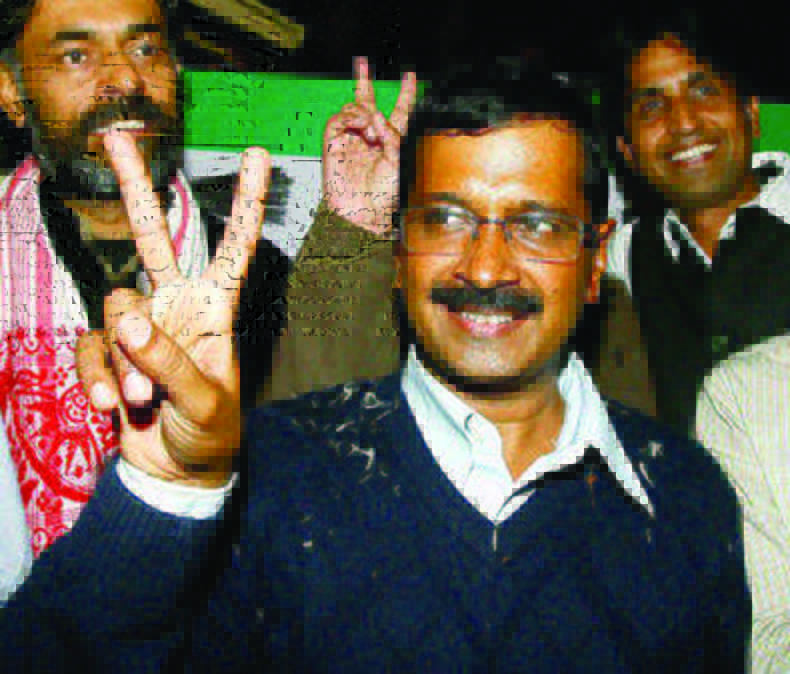
    NEW DELHI (TIP): Despite an apparent wave of Arvind Kejriwal-led Aam Aadmi Party (AAP) till recently, the National Democratic Alliance (NDA) would have won 200-odd seats if the general elections were held in January 2014, the findings of the latest India Today Group’s Mood of the Nation opinion poll suggest.

    The opinion poll gives the Congress-led United Progressive Alliance (UPA) only around 100 seats, down by over 150 seats in the current Lok Sabha. It also underlines the significance of a possible Third Front in the forthcoming Lok Sabha election as the non-UPA, non-NDA parties and Independents are expected to win 220-odd seats. The NDA thus crosses the 200-mark for the first time since 2010. Both, the NDA and the likely Third Front, gains substantially in numbers and vote share. The opinion poll suggests that the NDA’s vote share of 34 per cent will be significantly more than the UPA’s 23.

    However, the others will have the maximum vote share of 43 per cent. Under the leadership of Narendra Modi as its prime ministerial candidate, the Bharatiya Janata Party (BJP) looks all set to become the single largest party as it is also likely to emerge the biggest gainer in the Lok Sabha polls. Its 2009 tally of 116 is expected to rise to 188 in 2014, an increase of more than 60 per cent. Congress, under the leadership of its vice-president Rahul Gandhi, might win just 91 seats, as compared to its current tally of 206, a drop of about 55 per cent. The Congress ploy of propping AAP to counter Modi at the national level seems to have a limited impact, as Kejriwal’s gains are restricted to areas around Delhi and a few metro cities only.

    Modi consolidates his position
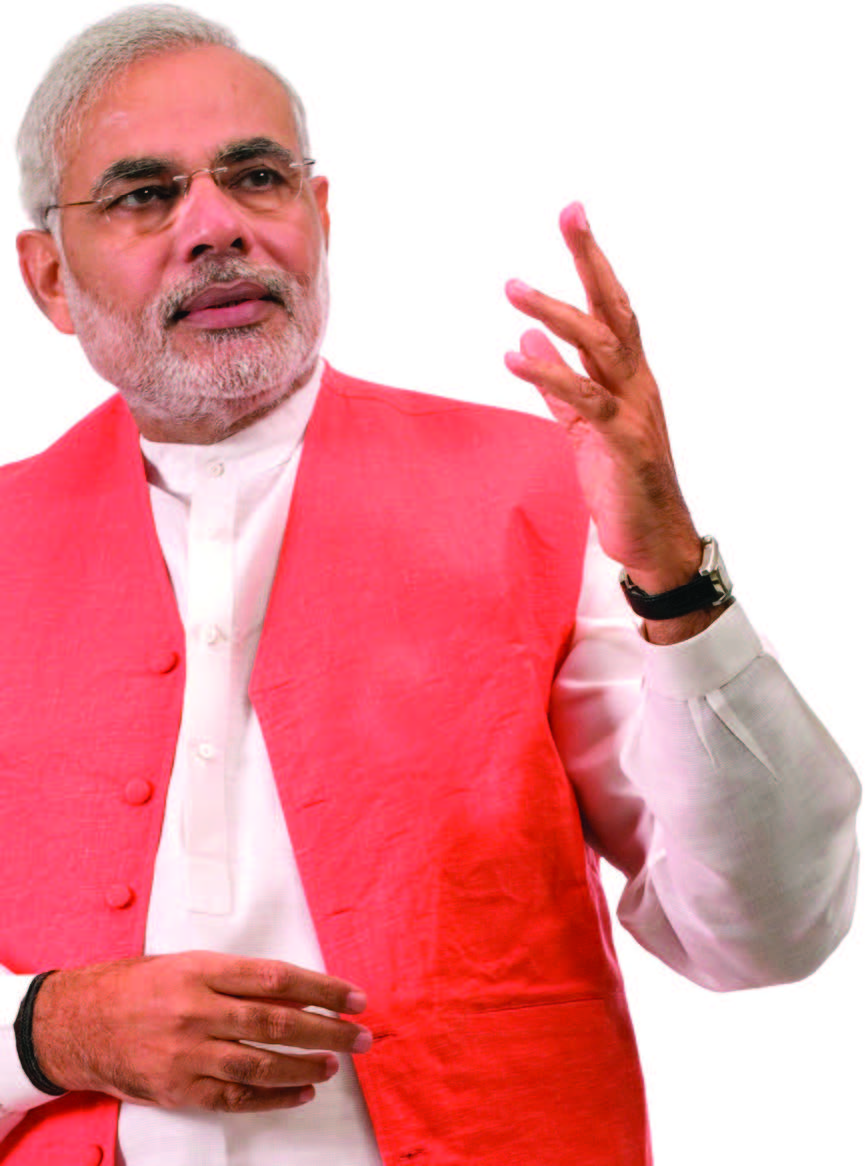
    Modi, who emerged as the strongest leader within his party after the BJP’s hat-trick in Gujarat in December 2012, cemented his position further through strong campaigning across the country. As the party’s lead campaigner in the recently held assembly elections in Madhya Pradesh, Chhattisgarh, Rajasthan and Delhi he consolidated his position further. In the latest India Today Mood of the Nation opinion poll, as many as 47 per cent people voted him as the best prime ministerial candidate against his previous best of 42 per cent polled in August 2013.

    The Gandhi scion was way behind Modi with just 15 per cent votes, followed by Kejriwal with 9 per cent votes and 6 per cent votes each to Prime Minister Manmohan Singh and Congress president Sonia Gandhi. During these five months Modi was also able to improve his image from being a communal leader to being pro-development. To a question “what does Modi represent”, the option “communalism” saw a drop of 11 per cent from 18 per cent in August 2013, while “economic development” increased by 6 per cent to 30 per cent. The number of people thinking Modi should apologize for the 2002 Gujarat riots also fell drastically during this period to 39 per cent from the previous figure of 51 per cent.

    Modi as a role model
    The Gujarat chief minister emerged as a role model for the highest 17 per cent respondents, a gain of as much percentage as nobody earlier saw him as one among the overall personalities of India. Modi was followed by Kejriwal with 14 per cent votes, up from 2 per cent. Bollywood superstar Salman Khan too saw a big jump in his popularity as 10 per cent people saw him as a role model, up from the previous 1 per cent, followed by legendary singer Lata Mangeshkar’s 9 per cent against 2 per cent in the earlier opinion poll.Veteran anti-corruption activist Anna Hazare’s position as a role model remained unchanged with 7 per cent votes.

  • Winds of Change

    Winds of Change

    November, 2013 gave a clear idea of which way the political wind in India was blowing. The rout of Congress in Delhi and Rajasthan; and its rejection by the electorate in Madhya Pradesh and Chhattisgarh indicated the loss of popularity of the party.

    Without going in to details of causes for the decline in popularity of a party that had managed to rule the center for almost 10 years at a stretch, it can now be said that the grand old party is tottering. The latest India Today Group’s Mood of the Nation opinion poll indicates huge losses for the Congress led UPA.

    The BJP led National Democratic Alliance (NDA) has been found to make significant gains. The projections are it could win 200-odd seats if the general elections were held in January 2014, the findings of the poll say. The opinion poll gives the Congress-led United Progressive Alliance (UPA) only around 100 seats, down by over 150 seats in the current Lok Sabha.

    It also underlines the significance of a possible Third Front in the forthcoming Lok Sabha election as the non-UPA, non- NDA parties and Independents are expected to win 220- odd seats. The NDA thus crosses the 200-mark for the first time since 2010. Both, the NDA and the likely Third Front, gain substantially in numbers and vote share at the cost of the Congress led UPA. The opinion poll suggests that the NDA’s vote share of 34 per cent will be significantly more than the UPA’s 23.

    However, the others will have the maximum vote share of 43 per cent. The scenario is frightening. The BJP emerges as the single largest party and yet it will not be able to form a government on its own. With its alliance partners, Shiv Sena, SAD and a few others, too, that form NDA, a government led by BJP does not appear in sight. The “others” are disparate groups. They cannot be expected to cobble together a government even though they will together be the largest group, according to the results of the poll. What happens then? Horse trading and unholy alliances will prevail. What happens then? Another round of misrule. Another five years of suffering for the common man. The writing is on the wall.

  • Opinion poll predicts gains for BJP, losses for UPA

    Opinion poll predicts gains for BJP, losses for UPA

    NEW DELHI (TIP): Despite an apparent wave of Arvind Kejriwal-led Aam Aadmi Party (AAP) till recently, the National Democratic Alliance (NDA) would have won 200- odd seats if the general elections were held in January 2014, the findings of the latest India Today Group’s Mood of the Nation opinion poll suggest.

    The opinion poll gives the Congress-led United Progressive Alliance (UPA) only around 100 seats, down by over 150 seats in the current Lok Sabha. It also underlines the significance of a possible Third Front in the forthcoming Lok Sabha election as the non- UPA, non-NDA parties and Independents are expected to win 220-odd seats.

    The NDA thus crosses the 200-mark for the first time since 2010. Both, the NDA and the likely Third Front, gains substantially in numbers and vote share. The opinion poll suggests that the NDA’s vote share of 34 per cent will be significantly more than the UPA’s 23. However, the others will have the maximum vote share of 43 per cent. Under the leadership of Narendra Modi as its prime ministerial candidate, the Bharatiya Janata Party (BJP) looks all set to become the single largest party as it is also likely to emerge the biggest gainer in the Lok Sabha polls.

    Its 2009 tally of 116 is expected to rise to 188 in 2014, an increase of more than 60 per cent. Congress, under the leadership of its vice-president Rahul Gandhi, might win just 91 seats, as compared to its current tally of 206, a drop of about 55 per cent. The Congress ploy of propping AAP to counter Modi at the national level seems to have a limited impact, as Kejriwal’s gains are restricted to areas around Delhi and a few metro cities only.

    Modi consolidates his position
    Modi, who emerged as the strongest leader within his party after the BJP’s hat-trick in Gujarat in December 2012, cemented his position further through strong campaigning across the country. As the party’s lead campaigner in the recently held assembly elections in Madhya Pradesh, Chhattisgarh, Rajasthan and Delhi he consolidated his position further. In the latest India Today Mood of the Nation opinion poll, as many as 47 per cent people voted him as the best prime ministerial candidate against his previous best of 42 per cent polled in August 2013.

    The Gandhi scion was way behind Modi with just 15 per cent votes, followed by Kejriwal with 9 per cent votes and 6 per cent votes each to Prime Minister Manmohan Singh and Congress president Sonia Gandhi. During these five months Modi was also able to improve his image from being a communal leader to being pro-development. To a question “what does Modi represent”, the option “communalism” saw a drop of 11 per cent from 18 per cent in August 2013, while “economic development” increased by 6 per cent to 30 per cent. The number of people thinking Modi should apologize for the 2002 Gujarat riots also fell drastically during this period to 39 per cent from the previous figure of 51 per cent.

    Modi as a role model
    The Gujarat chief minister emerged as a role model for the highest 17 per cent respondents, a gain of as much percentage as nobody earlier saw him as one among the overall personalities of India. Modi was followed by Kejriwal with 14 per cent votes, up from 2 per cent. Bollywood superstar Salman Khan too saw a big jump in his popularity as 10 per cent people saw him as a role model, up from the previous 1 per cent, followed by legendary singer Lata Mangeshkar’s 9 per cent against 2 per cent in the earlier opinion poll.Veteran anti-corruption activist Anna Hazare’s position as a role model remained unchanged with 7 per cent votes.

  • Man beheads woman in MP, walks into police station with severed head

    Man beheads woman in MP, walks into police station with severed head

    INDORE (TIP): A man beheaded an elderly woman and walked into the police station with the severed head in one hand and an axe in the other at a village in Madhya Pradesh. Hari Shank Gond alias Jhurru (30) decapitated a 62-year-old woman on January 10 afternoon for taking away a log from a Mahua tree he had felled in his field at Pand village in Bundelkhand region. After hacking her with his axe, Jhurru picked up the head along with the weapon. He walked 4 kilometres to Majhauli police station in order to confess. Eyewitnesses said a couple of women passing by on the road fainted after seeing the head in Jhurru’s hands.

    “The accused walked around 4 kilometres with the head of the deceased. When he was about to reach the police station, we were informed and he was arrested,” said AN Jharia, station house officer, Majhauli police station. Jhurru told police that he had got into a brawl with the woman, called Meerawati Gond, over the log. Had he not murdered her, she would have killed him by witchcraft, Jhurru said. “The accused appeared mentally stable but had no regrets about the crime. He alleged that the woman had killed his family members in the past couple of years with her witchcraft,” the officer said.

  • Cultural Organizations or Trojan Horses?

    Cultural Organizations or Trojan Horses?

    The author finds fault with cultural organizations who dabble in politics. In fact, US administration will do well to screen these organizations who, if allowed to have their own way, may pose a threat to security of the US nation. A thorough overhaul of the mechanism for formation and functioning of these organizations is the need of the hour.

    In ordinary times, a U.S. House resolution ( 417) that calls for ‘reaffirming the need to protect the rights and freedom of the religious minorities while praising India’s rich religious diversity and commitment to tolerance and equality’, may not have ruffled any feathers let alone garnered some media attention. However, in a surprising twist, emotions were flying high over the move by the US lawmakers with some of the national and local Indian organizations that are quite active on the Capitol Hill in lobbying for various causes back in India.

    In particular, the Hindu American Foundation (HAF) and the Indian American Muslim Council (IAMC) are at loggerheads over this resolution that may not bode well for the larger interest of India. There is a potential that the ongoing fight might imperil India’s image as well as damage national interests among the US legislators at the Capitol. We have heard of charges and counter-charges by both sides and it is time to examine not only the veracity of these charges but also the propriety of actions undertaken by some of these organizations ‘on behalf of the community’ and ‘for the sake of India’. The recent incident involves a Modi supporter and Chicago-based entrepreneur Shalabh “Shalli’ Kumar who tried to hijack a carefully planned event by the Republican Party to woo Indian Americans to GOP.

    Once the story broke, many organizations and individuals like Mr. Juned Qazi, the Executive Committee member and the President of the Madhya Pradesh Chapter of Indian National Overseas Congress (I) USA wrote to the Republican lawmakers stating that the Republican Party was going against its own fundamental principles and traditions of tolerance and dignity by hosting and promoting such an event. The leaders of the GOP woke up and learned of the nefarious design by Mr. Kumar under the aegis of the National Indian American Public Policy Institute, to promote Narendra Modi and his candidacy for Prime Minister of India in the upcoming election. Mr. Kumar has committed the egregious error – and is probably in violation of the US ethics rules that prohibit the use of the Congressional seal, stationary and indicia – used the House seal and circulated a flyer that indicated Modi would address the meeting via video link. This action orchestrated by Mr. Kumar probably in collusion with other Modi supporters brought shame and disrepute to our community.

    A simplistic view might be that this is an isolated incident. However, if one examines the growth of the Indian Organizations and their activities under cover, a much clearer picture would seem to emerge. NIAPPI is not the first nonprofit organization that engaged in this sort of activity. Many of these organizations are founded to promote cultural or religious activities. To an average Indian American, these are noble objectives and for which they would volunteer their time, efforts and resources to promote the heritage and culture of India in a faraway land. It appears to be rewarding especially when these efforts are directed to educate the younger generations of age-old traditions and customs, and build bridges between the two countries and two cultures. However, some of these organizations seem to be operating under dubious objectives. The US India Political Action Committee (USINPAC), an organization that is dedicated to lobby Congress to promote India’s interest in the US has generally done a credible job promoting US-India relations.

    Their recent intervention on behalf of BJP and Narendra Modi exposes their narrow hidden agenda. A newly issued statement says ‘USINPAC has successfully led a grassroots lobbying efforts in Washington DC to stop the above Resolution from going to the House Floor for a vote. ‘ From now until the National elections in India anticipated in mid.2014, USINPAC will spare no effort in making sure the U.S. Congress does not intentionally or unintentionally influence the outcome of India’s upcoming elections. India is a sovereign nation and its citizens have a right to choose their leaders’ a recent press release stated. Yes, it appears that USINPAC would like to see the election impacted only one way: to assure a Modi victory! Sadly, the organization that is supposed to stand up for the common values and principles both the nations cherish, has decided to throw in their lot with a leader of a party that is no longer welcome in the U.S.

    That also explains the deafening silence on their part when minorities in India fall victims to human rights violations in places like Gujarat. Hindu American Foundation (HAF), is an organization that is said to promote and protect the Hindu philosophy and way of life in U.S. However, lately it has become the lightening rod for the ‘ Hindutva’ agenda. They professes to be ardent supporters of the separation of church and state in US often aligning them with ACLU to fight any Christian symbolism and yet supportive of a supremacist agenda of Rashtriya Swayamsevak Sangh (RSS) that has pushed the Narendra Modi candidacy for the Prime Minister in the upcoming election in India. Dr. Raja Swamy, a spokesperson for the ‘Coalition Against Genocide’ recently commented, “American audiences need to know that HAF and its ilk are rooted in supremacist and majoritarian ideologies. They pay lip service to caste oppression issues and pluralism but have a monoculture and elitist view of the Indian society. They want pluralism and minority rights for themselves here in the US but want minorities, Dalits and women to be second class citizens in India”.

    They ought to examine whether they truly share the same values both these countries are founded upon, freedom, liberty and justice for all. Federation of Indian Associations (FIA), the umbrella organization for various cultural and regional outfits in NY Tristate area was established in 1970’s to bring the community together. Their flagship event is the India Day Parade in New York every August to coincide with India’s Independence Day. If one carefully analyzes these events, the guest lists often include some of those vehemently anti- Congress leaders from India who would participate in the Parade and then go on to do negative propaganda on the UPA Government led by the Congress Party. This year, one of the invitees made the rounds openly promoting Bharatiya Janata Party (BJP). In a nutshell, some of these organizations are carrying on with a stealth agenda to promote the BJP and advance the cause of Narendra Modi. This overt political activity by cultural organizations might be in direct violation of the by-laws or the approved Constitutions and some of them may even be putting their hard-earned tax-exempt status at risk .

    Another disturbing aspect in the Asian Indian public arena is the notion that like some other communities, we could maneuver through the political process using money power to achieve any narrow political objectives from some of the largely unsuspecting and often naïve political leaders in this country. Shalli Kumar’s action is a prime example of such behavior. Two top members of a US Congress constituted commission on religious freedom have recently expressed sadness over nomination of Gujarat Chief Minister Narendra Modi as BJP prime ministerial candidate, terming him as the ‘poster boy’ of India’s failure to punish the violent. “It was another son of Gujarat, Mahatma Gandhi, who once offered a broad, tolerant vision for the country and its multireligious society” wrote Katrina Lantos Swett and Mary Ann Glendon in an Op-ed to CNN. It is a known fact the Gujarat’s High Court rapped Modi for inaction and ordered compensation for religious structures that suffered damage. In 2005, the U.S. State Department agreed with United States Commission for International Religious Freedom (USCIRF) and others and revoked Modi’s visa. It is time to ask a pertinent, albeit rhetorical question to many of these organizations that are acting as Trojan Horses on behalf of Modi: would these USbased organizations support for example, a Chris Christie Candidacy for Presidency if he is to show the same ‘inaction’, as Modi did in 2002 for not protecting the lives and properties of all Indians alike who live in New Jersey?

  • MP TEMPLE STAMPEDE

    MP TEMPLE STAMPEDE

    The Navratra festivities ended in tragedy when 110 pilgrims including women and children were killed and more than 100 injured in a stampede on a bridge leading to the historic Ratangarh temple in Datia district of Madhya Pradesh on October 13 It was a disastrous re-run of the 2006 stampede when more than 50 pilgrims had got washed away falling in panic into the Sindh river off the same bridge in 2006.

  • BJP WINNER, CONG ZERO, AAP HERO

    BJP WINNER, CONG ZERO, AAP HERO

    Congress party’s 0-4 mauling and BJP’s triumph in Madhya Pradesh, Rajasthan and Chhattisgarh in what was billed as the “semifinal” for the 2014 elections was the big headline, but the central takeaway was Aam Aadmi Party’s stunning debut in Delhi, prising open space in national politics for an outsider.

  • Govern, or get out

    Govern, or get out

    The recent elections to assemblies in Chhatisgarh, Madhya Pradesh, Rajasthan and Delhi have a clear message for political parties. Govern or get out. The Exit Polls have indicated loss of power for the Congress Party in Delhi and Rajasthan While some may say the Congress has done badly in Delhi and Rajasthan because incumbency factor worked against it. One may as well ask, then how is that the same factor did not work against the BJP in Chhatisgarh and Madhya Pradesh? One can understand that during the last many months, rather, the last two years, the Congress Party was being attacked from all sides for its various omissions and commissions, which has done much harm to its image.

    The popular movement for Jan Lokpal led by Anna Hazare has certainly done a great damage to the Congress party. Baba Ramdev’s crusade against the Congress Party has been quite pronounced and has certainly ranged people against that party. More than the attacks of political parties on the Congress Party and its government it was the voice of social protest from Hazare, Ramdev and some others that created amongst the people’ mind a disillusionment with the Congress Party. And to top it all was the enormity of the scandals that the Congress government got enmeshed in.

    Its ministers were found to be involved neck deep in corruption. The pile grew bigger and the stone round the government and party’s neck heavier. The fall was imminent. The rout of the Congress party appeared imminent to any watcher of politics in India. One is surprised that the Congress party did not either realize it was going to be doomed or it accepted resignedly the fait accompli. But all is not lost. There is ample time between now and the 2014 General elections during which period the Congress party can do introspection and devise strategy to beat its adversaries at the polls.

    They have issues that their opponents have themselves thrown up during election campaign. The most important is the rising prices. I recall the BJP lost power once because it could not control the rising prices of onions. The Congress lost in Delhi, at least, for a similar reason. Of course, there were many other reasons, too which included power shortage and corruption. However, it will be unwise to write off the Congress as a spent political force. It has the strength but it needs a vision.

  • Exit Polls Indicate BJP Juggernaut & Congress Rout

    Exit Polls Indicate BJP Juggernaut & Congress Rout

    NEW DELHI (TIP): The Congress faces a blank-out in four states that have polled in assembly elections in November-December, while the BJP will certainly win in Madhya Pradesh and Rajasthan, is likely to retain Chhattisgarh and may just grab power in Delhi as well, according to exit polls and postpoll surveys released on December 4. If these polls prove to be accurate, it is very bad news for the Congress which faces a national election five months down the road. Equally, it is a bumper booster shot in the BJP’s arm and its prime ministerial candidate Narendra Modi.

    While Mizoram has also had assembly elections, no exit polls were available for the state and its outcome, in any case, can have little effect on the 2014 elections. While there were only minor differences among the different polls on Rajasthan, MP and Chhattisgarh, the estimates for Delhi varied widely, with two of the four polls predicting a hung assembly, but two others giving the BJP a clear though slim majority.

    One poll even suggested that debutant Aam Aadmi Party would emerge as the single largest party in the new assembly. On Delhi — the election that will be most closely watched as a pointer to the national mood — an ORG survey for Headlines Today suggested the BJP would win 41 seats, giving it a clear majority in the 70-member assembly. It said the Congress would win 20 seats, and AAP just six. The ABP News-AC Nielsen also predicted a BJP win with 37 seats, but predicted that the Congress with 16 and AAP with 15 would finish neck-and-neck.

    The C-Voter poll put the BJP tantalisingly short of a majority with 31 seats, the Congress and 20, AAP at 15 and others with four seats, which could end in a hung house. Today’s Chanakya had a radically different prediction, with AAP projected to win 31 seats, BJP 29 and Congress a mere 10. Obviously, the significant performance of newcomer AAP was seriously testing the science of psephology. The other relatively close contest appears to be in Chhattisgarh.

    Here, ORG and Today’s Chanakya gave BJP a clear majority, C-Voter predicted it would fall just short and the CNN-IBN-CSDS poll gave a range for the party of 45-55 seats in the 90-member house, which means it may or may not have a majority. What they all agreed on was that the Congress would not win, its tally ranging from a minimum of 32 to a maximum of 41 across the four polls. On Madhya Pradesh, there is unanimity that Shivraj Singh Chouhan will win a third term in style. The range of predicted tallies for the BJP in the 230-member is from a minimum of 128 in the C-Voter poll to a maximum of 161 in the poll done by Today’s Chanakya.

    The Congress tally in the state, if the polls are right, could be anywhere between 62 and 92. Rajasthan too is projected to deliver a landslide verdict in favour of the BJP, with its tally projected at 110-147 seats in the 200-member assembly across four different surveys and the Congress predicted to win at best 62 seats and at worst 39.

  • Mayawati’s ‘housing merger’ under scanner

    Mayawati’s ‘housing merger’ under scanner

    NEW DELHI (TIP): BSP supremo Mayawati has combined three bungalows into one in the prime location of the Lutyen’s zone of Delhi and the unauthorised construction has come under the scanner of state-builder Central Public Works Department (CPWD). Three Type VIII government bungalows, with four bedrooms each, were allocated in the name of Mayawati, BSP and a trust run by the party, on Gurudwara Rakab Ganj Road, next to Parliament House. These bungalows have since been amalgamated into one in the name of Bahujan Prerna Trust, according to documents available. The amalgamation has been done through an unauthorised construction which has come under the scanner of CPWD. It has reported the matter to the Department of Estates, which allocates the bungalows, as well as the Urban Development Ministry under which the Estates Department functions, sources said. Besides the three bungalows, the BSP supremo has a bungalow in her name at 4, Gurudwara Rakab Ganj Road which is separate from these three. According to the documents received through a Right to

    Information plea by Subhash Agarwal, the amalgamated single unit has been approved by the Directorate of Estates. “Rules do not allow any modification in bungalows in the Lutyen zone but unauthorised constructions have been found in all three bungalows and it has been reported to the authorities,” said a senior CPWD official. He said all the alterations and modifications were done by the allottee (BSP) and not by CPWD. According to the RTI reply, unauthorised construction of rooms, office, toilet, kitchen along with fibre sheet, covering an area of 238 sq m has been added at bungalow no 12. This bungalow is allotted to the Chairman, managing trustee of Bahujan Prerna Trust. Bungalow no 16, which has been allotted to the president of BSP, has unauthorised construction. It includes rooms with AC sheets and a toilet, AC steel shed along with three other rooms and a bathroom. In addition, there is a temporary unauthorised construction of tin sheets made of steel and metal. Terming the allotment “illegal”, Agarwal has sought a probe into it. “There should be a proper inquiry into the allotment of bungalows because it is violation of rules of Lutyen bungalow zone,” Agarwal said. To a question on BJP objecting to UPA having allocated three bungalows to BSP for party office and citing it as an example of how the Congress-led government seeks the support of allies, Information and Broadcasting Minister Manish Tewari recalled that institutional land was alloted to RSS-affiliated organisations in BJP-ruled Madhya Pradesh.

  • PM says CBI can question him on coal scam: PM

    PM says CBI can question him on coal scam: PM

    NEW DELHI (TIP): Prime Minister Manmohan Singh on October 24 on board his special aircraft offered to open his doors for questioning by the Central Bureau of Investigation (CBI) in the probe into the allocation of a coal block to Aditya Birla Group company Hindalco. “I am not above the law of the land. If there is anything that the CBI, or for that matter, anybody wants to ask, I have nothing to hide,” Singh said as he headed back from Beijing ahead of polls in five states including Delhi and Madhya Pradesh. Singh’s offer to put himself under the CBI scanner is his first. The opposition has been seeking to know why the CBI is not investigating Singh, who had cleared the allocation of the coal block in Odisha as the minister incharge in 2005. Hindalco has denied any wrongdoing in the allocation. The Prime Minister’s Office had hoped to cap the controversy before Singh left on a two-nation tour to cement ties with Russia and China with a detailed statement, explaining the circumstances and reasons for the decision. It had recalled that Odisha chief minister Naveen Patnaik had written to them to give Hindalco the coal block to help generate more employment in the state. The opposition Bharatiya Janata Party (BJP), however, did not relent and has kept up the pressure on the Congress-led UPA government and the CBI, which is investigating 14 cases in the coal scandal. Asked if a string of scandals, from the 2G spectrum allocation to the coal allocation scam, had cast a shadow on his legacy, Singh said, “That is for history to judge”. “I am doing my duty… What impact my 10 years of Prime Ministership will have is something which is for historians to judge.”

  • AVANTHA POWER SYNCHRONISES 600 MW FIRST UNIT OF RAIGARH PROJECT

    AVANTHA POWER SYNCHRONISES 600 MW FIRST UNIT OF RAIGARH PROJECT

    MUMBAI (TIP): Avantha group company Avantha Power and Infrastructure Ltd has synchronised the first unit of 600 MW in its Raigarh, Chhattisgarh project, through its whollyowned subsidiary Korba West Power Company Ltd. The company’s generation capacity stands at 626.19 MW with the commissioning. Avantha Power and Infrastructure Ltd (APIL) is part of the Rs 25,000-crore ($4 billion) Avantha group. APIL began construction in August 2010 and executed the project in 38 months. BHEL supplied the boiler, turbine and generator equipment for the project. APIL has another 1,860 MW under various stages of construction and an additional 1,320 MW under planning. Gautam Thapar, Founder and Chairman of the Avantha Group, in a statement said APIL’s subsidiary, Korba West Power Company Ltd, signed the fuel supply agreement (FSA) with South Eastern Coal Ltd (SECL) in August 2013 for feeding the plant with uninterrupted coal supply. APIL’s Chief Operating Officer K. N. Neelkant said the company is going ahead with its plans for adding to the installed capacity. A second thermal power plant of 1260 MW is also under various stages of construction at Seoni, near Jabalpur, Madhya Pradesh, through the company’s project at Jhabua Power Ltd. APIL has a plant at Malanpur, Madhya Pradesh, with an installed capacity of 26 MW, and will have a total installed capacity of 3806 MW once all the projects achieve commercial operations.

  • Babadom in India

    Babadom in India

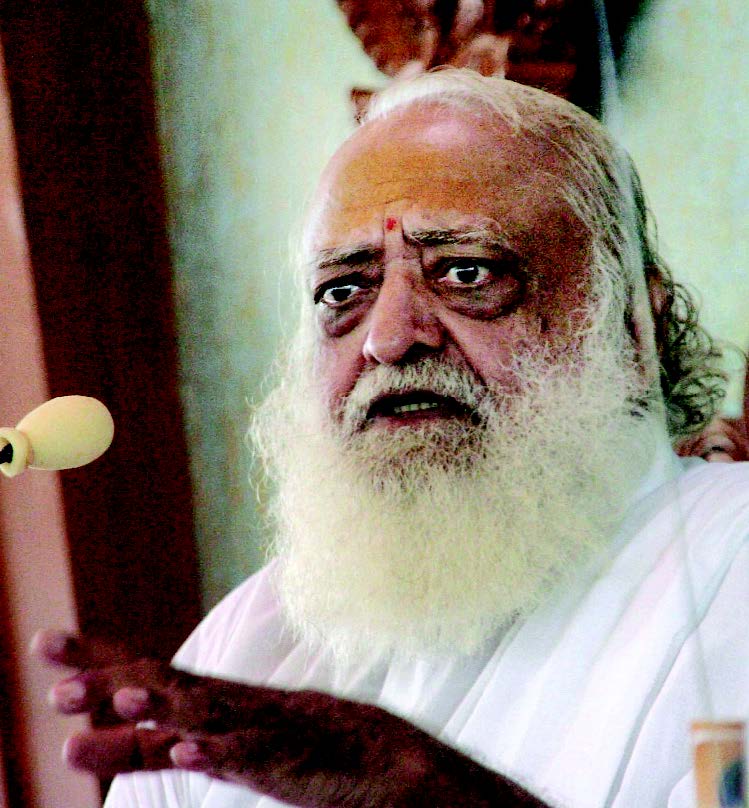
    The arrest of “Sant Sri Asaram Ji Bapu” on charges of rape has provoked strong reactions. The majority has condemned the conduct of Asaram and his son, Narayan Sain. But then there are Baba’s devotees who refuse to believe Baba could ever do anything wrong, much less commit the heinous crime of raping. They see all kinds of conspiracy to defame Baba who they look at as the manifestation of God Himself. Then we have the sadhus and sants who do not wish to be perceived as practitioners of immorality, coming forward to defend Asaram. Again, there are some more so called Babas, like Baba Ramdev, who are more in to politics than into any semblance of spirituality, who must cry foul against a government, not to their liking, when it initiates any action against an erring “godman”. Baba Ramdev was in New York a couple of days ago, attending the Hindu Unity Day celebrations. He was categorical in claiming that the Congress led UPA government harassed Sadhus and Sants and that it was being unfair to Asaram. One would like to know from Baba Ramdev if the evidence that has surfaced till now against Asaram and his son Narayan Sain is not enough to warrant a legal action against them.

    Is the evidence not enough to provoke the wrath of people against Asaram and his son, in particular, and Babas, in general? Is the evidence not enough to embarrass the class of Sadhus worth the name? If Baba Ramdev is an honest and right thinking man, he should demand the strictest possible penalty for the man who has violated with impunity the laws of the land, betrayed the trust of hundreds and thousands of believing followers and brought a bad name to all shades of spiritual leaders whether they are called Sants, Sadhus or Babas. Since the arrest of Asaram, several other cases of corruption in his ashrams have come to light. Many complaints from local residents have surfaced. Charges have been laid against his ashrams for embezzling huge sums of government funds and annexing government land. There are also reports of illegal activities being carried out in the ashrams. But these scams were not exposed earlier because most godmen have political backing. When BJP leader Uma Bharti was the Chief Minister of Madhya Pradesh, she had organized a sermon of Asaram in the state legislature. The entire cabinet and the MLAs of the ruling party attended the meet. The government even prepared the press note for the event and published it in newspapers across the state. Such support from political leaders is responsible for the widespread influence of godmen. Babas also spread their empire by selling merchandise – a multi-crore business. Their products include medicines, cosmetics and clothes and have a ready-made market among their followers. They are also sold on the pretext of encouraging indigenous products instead of foreign brands. Babadom prevails in India.

  • Asaram’s judicial custody extended till October 25

    Asaram’s judicial custody extended till October 25

    JAIPUR (TIP): A court in Rajasthan’s Jodhpur town on October 11 extended, till October 25, the judicial custody of spiritual guru Asaram Bapu, arrested for sexually assaulting a minor girl. The 72-year-old Asaram has been lodged in Jodhpur Central Jail since September 01. The court of the district and sessions judge (Jodhpur rural) will, meanwhile, decide on the plea by a Gujarat police team seeking custody of the jailed self-styled godman for questioning him in connection with a sexual assault case lodged by two sisters from Surat against him and his son. Armed with a warrant, the police team had moved a Jodhpur court on Thursday. The District and Session Court had adjourned the matter till Friday after the police team from Ahmedabad appeared before it with the production warrant issued against 72-year-old Asaram by a Gandhinagar court. The Surat Police had registered the two complaints – one against Asaram and another against son Narayan Sai – of rape, sexual assault, illegal confinement and other charges. The complaint against Asaram was transferred to Chandkheda police station in Ahmedabad as the incident took place in Asaram’s ashram here. A 16-year-old girl on August 20 lodged a police complaint, accusing Asaram of sexually assaulting her at his ashram near Jodhpur. Asaram was arrested from his ashram in Indore, Madhya Pradesh, and brought to Jodhpur on September 01.

  • 12 CRORE FIRST-TIME VOTERS HOLD KEY TO 2014 LOK SABHA POLLS

    12 CRORE FIRST-TIME VOTERS HOLD KEY TO 2014 LOK SABHA POLLS

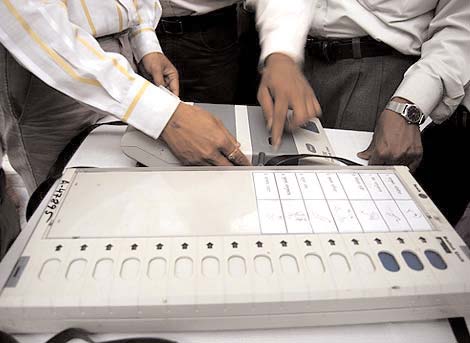
    CHENNAI (TIP): Close to 12 crore youths will be eligible to vote for the first time in the 2014 Lok Sabha elections. To put that in perspective, no single party garnered more than 12 crore votes in the 2009 polls, showing how significant this segment can be if all of them register to vote. In the 2009 polls, the Congress polled 11.9 crore votes, the BJP 7.8 crore, BSP 2.6 crore and CPM 2.2 crore. No other party polled even a crore of votes across the country.

    79 crore eligible voters
    The draft electoral rolls published by various states at this stage show that the national total is just under 79 crore votes. Uttar Pradesh will have the highest potential firsttime voters with 2.3 crore young people crossing 18 in time for the polls. They will account for 17.6% of the state’s electorate of 12.9 crore. Maharashtra comes next with 1.05 crore first-time voters or 13.2% of the state’s electorate. Bihar is third with 94.3 lakh youths, followed by West Bengal with 90 lakh. These figures are derived from the age data released recently by the census, and are based on all those aged between 15 and 19 at the time of the 2011 census. All of them will be old enough to register to vote in 2014; none of them would have been eligible in 2009. The numbers have been reduced on the basis of the age-specific death rate for people between 15 and 19 years to account for people in this age group dying between 2011 and the polls. The state-wise numbers may vary slightly if one takes into account interstate migration from this age group, but the national number would be unaffected. “As per the latest census, UP and Bihar have the maximum number of children due to high birth rate. Naturally, there will be more young people eligible to vote,” said P Arokiasamy of the International Institute for Population Sciences. The Election Commission (EC) does a study to arrive at the number of eligible voters before every general election.

    “It examines the data of those in the 18 to 25 age group. If enrolment is low, state chief electoral officers conduct special campaigns to enlist more young people. On the other hand, if there are too many voters over the age of 80, officials check again to ensure that names of all dead voters have been deleted,” said N Gopalaswami, former chief election commissioner. Among the southern states, Andhra Pradesh will have more than 80 lakh potential first-time voters followed by Tamil Nadu with 62 lakh. Karnataka and Kerala could have 58 lakh and 26 lakh such voters respectively. Delhi, which goes to the assembly polls in December, has 16.6 lakh youths eligible to register as voters. Rajasthan has 72.9 lakh and Madhya Pradesh 74 lakh. Smaller states like Himachal Pradesh and Union territories will have less than 10 lakh first-timers each. “We have tied up with internet browsing centres to make it easy for first-time voters and others to be included in the electoral rolls,” said Tamil Nadu chief electoral officer Praveen Kumar. “Volunteers are running campaigns in universities and colleges to register eligible students to vote.”

  • PROGRESS BLOW TO GUJARAT

    PROGRESS BLOW TO GUJARAT

    Human indicators put state that brags about growth behind Tripura and Sikkim

    NEW DELHI (TIP): A new development index has identified Gujarat as a less developed state, while ranking Odisha and Bihar along with eight others as “least developed” and Goa and Kerala among the seven “relatively developed” states. A panel headed by Raghuram Rajan, now the RBI governor, which submitted its report to finance minister P Chidambaram, also recommended a fresh approach to devolution of funds to states and moved away from the special category classification to devise three categories – least developed, less developed and relatively developed. According to the index, there are 10 least developed states, 11 less developed and seven relatively developed states in the country. The slotting of Gujarat, which has attracted attention due to its development model, in the “less developed” category is likely to escalate the already bitter political debate on the ‘Gujarat model of development’.

    The other states in this category are Manipur, West Bengal, Nagaland, Andhra Pradesh, Jammu and Kashmir, Mizoram, Tripura, Karnataka, Sikkim and Himachal Pradesh. The least developed states include, apart from Odisha and Bihar, Madhya Pradesh, Chhattisgarh, Jharkhand, Arunachal Pradesh, Assam, Meghalaya, Uttar Pradesh and Rajasthan. The relatively developed states according to the index are Haryana, Uttarakhand, Maharashtra, Punjab, Tamil Nadu, Kerala and Goa. The panel has developed a multidimensional index of backwardness based on monthly per capita consumption expenditure, education, health, household amenities, poverty rate, female literacy, percent of SC-ST population, urbanisation rate, financial inclusion and connectivity.

    The panel said less developed states rank higher on the index and would get larger allocations based on the need criteria. “The committee has proposed a general method for allocating funds from the Centre to the states based on both a state’s development needs as well as its development performance,” Chidambaram told reporters. “The committee has recommended that each state may get a fixed basic allocation of 0.3% of overall funds, to which will be added its share stemming from need and performance to get its overall share,” Chidambaram said. The panel was set up after persistent demand from Bihar CM Nitish Kumar who insisted a the special category status to help access more funds for its development. This sparked off a demand from several other states such Odisha for the special category state status. While the new index will ensure more funds for Bihar from the central kitty, it has stopped short of conferring the “special category” tag on the state, Shaibal Gupta, seen as Nitish’s nominee on the panel to submit a 10-page dissent note.

    However on Thursday, Nitish concealed his disappointment, if any, to celebrate the recommendation as a triumph even as BJP taunted him for failing to have his way despite cozying up to Congress. “It is a very decent report. For example under this index Odisha is at the bottom of the list and then Bihar. Therefore it recognizes that Odisha, Bihar, Madhya Pradesh are among the most backward states of India. That is I think the demand,” Chidambaram said. “The demand of these states is please recognize the fact that for a variety of reasons we are the most backward states. I think this index captures the degree of backwardness and acknowledges that Bihar is among the most backward states of India. Special category is the present categorisation. Now they are moving away from that,” finance minister said while detailing the recommendations of the panel.

    “This is not an answer to all the demands of the states. This is meant only to be a way forward on how to devolve funds to the more backwards states and areas of India. He said the index better captures the stage of development in a state, how backward it is or how relatively less backward it is and is a good measure for planning and devolution of funds. “Because some states are small very limited resources it is necessary to have a threshold below which the devolution of funds does not fall. So the committee has recommended that each one of the states will get a basic allocation of 0.3%,” Chidambaram said. The finance minister said that the report will be examined by various stakeholders before being implemented. “It will not be in the current year. It has to go through the examination process and will be implemented in an appropriate time in the next financial year.

    To which funds this should be applied a decision will be taken,” Chidambaram said. The report said that the National Development Council had accorded the status of special category state to eleven out of 28 states. They were based on a number of characteristics such as hilly and difficult terrain, low population density and or sizeable share of tribal population, strategic location along the borders with neighbouring countries, economic and infrastructural backwardness and non-viable nature of state finances. State under this category have a low resource base and are not in a position to mobilise resources for their developmental needs even though the per capita income of some of these states is relatively high, the report said.

  • SC TURNS COALGATE SPOTLIGHT ON STATES

    SC TURNS COALGATE SPOTLIGHT ON STATES

    NEW DELHI (TIP): A year after turning the searchlight on alleged irregular allotment of coal blocks, the Supreme Court on September 26 sought to know the role played by the seven coal producing states in the entire process, starting from allocation by the Centre to commencement of mining operations by private parties. A bench of Justices R M Lodha, Madan B Lokur and Kurian Joseph formulated four questions and sought responses to them from Jharkhand, Odisha, Chhattisgarh, Madhya Pradesh, Maharashtra, Andhra Pradesh and Maharashtra by October 29.

    With majority of these states ruled by parties who are not on the same political plane as the Congress-led UPA, they would not lose an opportunity to score brownie points against the Centre given the proximity of assembly polls and general elections. The issuance of notices to the states to understand their role in the coal block allocation process had become imperative after attorney general G E Vahanvati argued that the Centre had discharged its statutory role of a regulator by merely identifying the coal blocks while the rest of the formalities – signing of mining lease and all environment and forest clearances — squarely rested in the domain of states.

    Vahanvati had also said that coal block allocation letters, “at the highest”, could be treated as letters of intent conferring zero right on allottees as far as mining was concerned. “It is not a bankable document,” he had said. Apart from answering the issues raised in the two petitions – one by advocate M L Sharma and the other by NGO ‘Common Cause — the court asked the seven states to respond to four more questions: * How did the states understand the allocation of coal blocks by the central government? * What was the role of state governments in the allocation of coal blocks? * What was the role of state governments in the subsequent steps having regard to the provisions of Mines and Mineral (Development and Regulation) Act, 1957? * The details of agreements entered into by state public sector undertakings (PSUs), which were allotted coal blocks, with private parties in coal blocks located in their states.

    The last question about the status of joint ventures came to be included after intervenor Sudiep Srivastava through advocate Sanjay Parikh alleged that these joint ventures were illegally entered into by the PSUs, giving away coal mining rights to private parties. Moreover, many of the private allottees had no financial and technical capabilities to undertake the task. The court also sought the states’ view on competitive bidding. Vahanvati said, “States were crucially involved in coal mining operations.When the decision relating to competitive bidding was floated, most of them opposed it. They are the owners and that was their view.”

    He said the coal block allocation letter was mere initiation of the process, which was evident from the fact that many private companies, which were allotted coal blocks, were yet to sign mining leases given the reluctance of state governments to feed coal to projects situated outside their states. “As many as 27 mining leases in a particular state have not been executed and held up because it is saying why should it give coal to private parties whose projects are located outside the state,” the AG said. Though the AG did not take the name of the state, it was obvious that the state in question was Odisha.

    The AG said, “The state is saying why not use the coal for its own PSUs.We have taken up the matter with the chief minister and are persuading him that coal is a national asset. It is a very sensitive issue.” But the bench saw the flip side of such reluctance on the part of the states and asked, “If this is the ground reality after 11 years of allocation of coal blocks, they why did the Centre go on allocating fresh coal blocks without sorting out the issues with the states.”

  • Smriti Irani Inaugurates OFBJP National Convention

    Smriti Irani Inaugurates OFBJP National Convention

    Urges Indian Diaspora to Take Active Part in Mission 2014: BJP 272+

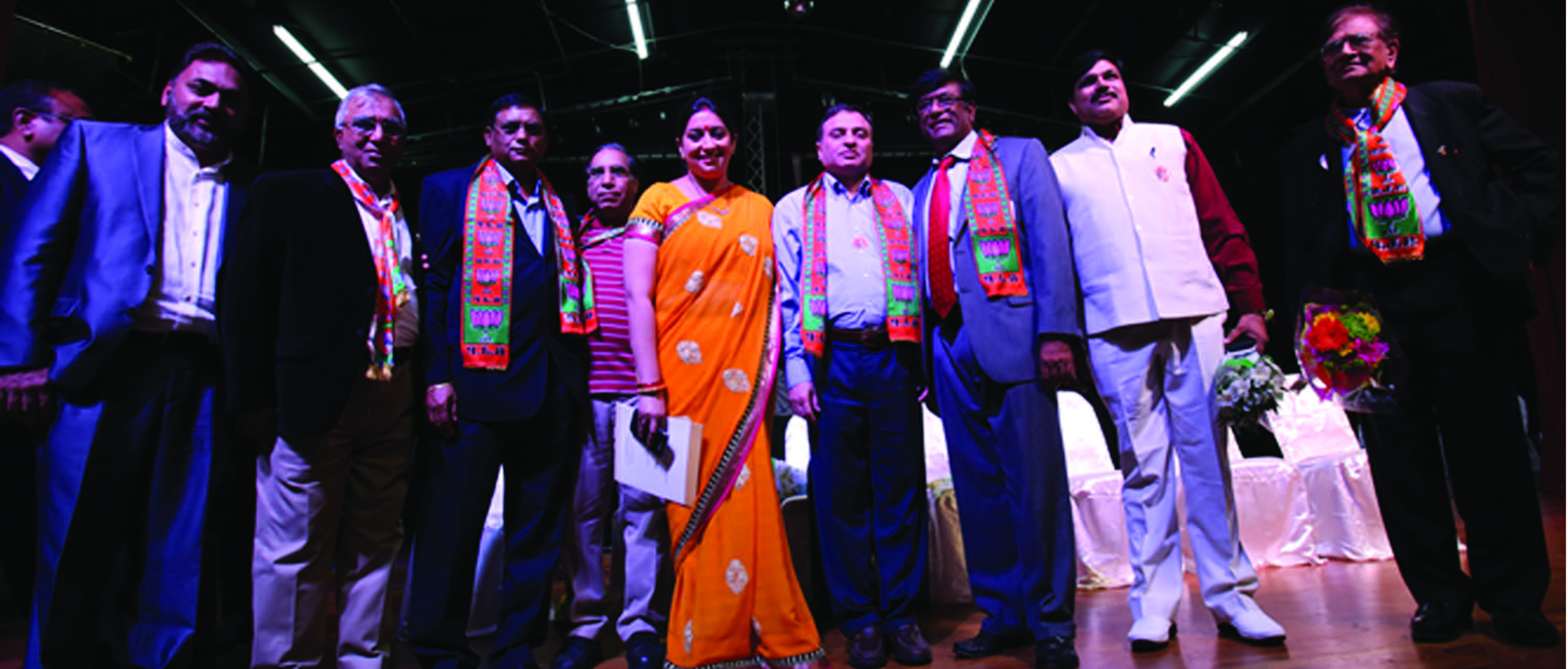
    TAMPA (TIP): Smt. Smriti Irani, BJP national Vice President, inaugurated the annual national convention of Overseas Friends of BJP (OFBJP) – USA on Friday September 20, 2013 at India Cultural Center (ICC) in Tampa, FL. Over 150 delegates including members of National Council and Executive Committee, and Advisory Council participated. The delegates representing OFBJP’s 22 chapters in USA had assembled to brain storm and evolve an effective strategy to achieve the goal of Mission 2014: a clear majority for the BJP in the next Parliamentary elections. Over 500 people attended the inaugural session on Friday evening. The theme of the convention was Mission 2014:BJP 272+. Smt. Irani highlighted the achievements of Gujarat government headed by its visionary Chief Minister, Shri Narendra Modi through sheer hard-work and good governance under trying circumstances. She said that Modi has brought the good governance on the electoral agenda through his growth oriented stellar performance.

    She said that a person who used to sell tea in his early childhood at the railway platform and became chief minister, and now prime ministerial candidate of BJP tells some-thing of the personal discipline, hard work, dedication and commitment to serve India and hard work of Shri Narendra Bhai. She continued that only in BJP, an ordinary worker can aspire to attain such a high position unlike Congress party where legacy and lineage are the primary components of leadership positions. She said that people of India are looking forward to elect NDA government headed by Shri Narendrabhai Modi and usher in India’s all round development and good governance; and bringing her to the top echelons in the international arena. Earlier, while addressing the women and youth forum during a panel discussion along with Prodyut Bora, national executive member of the BJP,Mrs. Irani said that Modi has become a “youth magnet” of India towards whom the entire young generation is looking with great hopes to solve India’s complex problems. To a question related to violence against women in the context of women gang rape cases,Mrs. Irani listed 10 strong steps to provide safety and protection to the women in the country.

    To another question related to BJP’s plan for women welfare and arresting child labor, she said that India is one of the countries that has the concept of Ardhanareeshwara, depicting equality between male and female. She personally fought for women’s bill of right to work in the Parliament and showcased amazing schemes implemented in Madhya Pradesh and Gujarat. Good examples are “Ladli Lakshmi Yojana” – girl’s economic security; “Pravash Utsav and Kanya Yojana” – girls’ right to education; and “Kanya Dhan Yojana” – giving a start-up kit for newly married couples. She also described about a 1,700 crore rupees revenue generation scheme called “Mission Mangalam” – a selfhelp group, in which 2.25 lakh companies have helped 32 lakh women and gave them employment. To a question related to youth, panelist Shri Prodyut Bora said that 50% of India’s population is below 26 years of age and asked the youth to reach out to colleges and universities to motivate them to register to vote and then vote for BJP. He also stressed that both education and experience are equally important in politics and reminded the youth that working from grass roots helps shape the character and personality in the long run. To another question related to Bangladesh infiltration, Prodyut Bora said that it is indeed a sorry state of affairs and the Congress government is responsible for this plight as they indulge in vote bank politics. He said that there are strict orders to Border Security guards to let their guard down and the migrants are rewarded with ration cards and voter ID cards. In fact, Delhi high court declared that 10 lakh illegal immigrants from Bangladesh live in Delhi and they must return to their country. The situation in Mumbai, Bhubaneswar, and Bangalore is same as in Delhi. He said that it has nothing to do with the religion but it’s the sanctity and integrity of the nation that is at stake.