

India, with its rich historical and cultural heritage, boasts some of the most magnificent palaces in the world. These architectural marvels, once the residences of royal families, stand as symbols of grandeur, elegance, and the regal lifestyle of Indian maharajas and nawabs. From Rajasthan’s desert landscapes to the lush terrains of Karnataka, here is a curated list of India’s most magnificent palaces that redefine royalty.
1. City Palace, Jaipur
A stunning fusion of Rajasthani and Mughal architecture, the City Palace in Jaipur is an iconic landmark. Built by Maharaja Sawai Jai Singh II in the 18th century, this sprawling palace complex features courtyards, gardens, and museums. The most famous structures within the complex include the Chandra Mahal, which is still home to the Jaipur royal family, and the Mubarak Mahal, which houses a museum showcasing royal artifacts, textiles, and manuscripts. The intricately designed Peacock Gate, adorned with colorful motifs, is a prime attraction for visitors.
Highlights:
– Chandra Mahal: Residence of the Jaipur royal family
– Mubarak Mahal: Houses royal textiles and artifacts
– Peacock Gate: Intricate Rajasthani craftsmanship
– Pritam Niwas Chowk: A courtyard with four season-themed gates
2. Mysore Palace, Karnataka
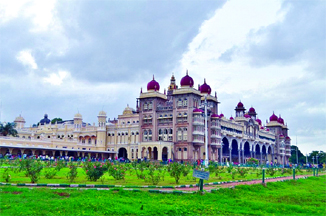
Also known as the Amba Vilas Palace, Mysore Palace is a splendid example of Indo-Saracenic architecture. It was designed by British architect Henry Irwin and is adorned with stained glass, intricate wood carvings, and magnificent chandeliers. The palace houses several halls, including the grand Durbar Hall, which is known for its ornate ceilings and massive pillars. The palace is particularly mesmerizing during the Dussehra festival when it is illuminated with over 100,000 lights, creating a breathtaking spectacle.
Highlights:
– Dussehra Celebrations: A grand annual festival with a royal procession
– Golden Throne: A priceless artifact displayed during special occasions
– Ambavilas Hall: A lavishly decorated hall used for ceremonies
3. Umaid Bhawan Palace, Jodhpur
This grand palace is one of the largest private residences in the world. Built during the reign of Maharaja Umaid Singh in the 20th century, the palace is a blend of Art Deco and Indo-Saracenic styles. It was constructed to provide employment to the people of Jodhpur during a famine. Today, it functions as a heritage hotel managed by the Taj Group, a museum displaying the Jodhpur royal family’s history, and the residence of the present Maharaja of Jodhpur, Gaj Singh II. The museum houses vintage cars, clocks, and royal memorabilia.
Highlights:
– Museum: Exhibits vintage cars, clocks, and artifacts
– Taj Hotel: Luxury accommodations with a royal touch
– Royal Gardens: Beautifully landscaped gardens surrounding the palace
4. Lake Palace, Udaipur
Floating like a dream on the serene waters of Lake Pichola, the Lake Palace in Udaipur is an exquisite white marble structure. Built in the 18th century by Maharana Jagat Singh II as a summer retreat, this palace now functions as a luxury hotel managed by the Taj Group. It features elaborate courtyards, pillared terraces, fountains, and gardens, all offering breathtaking views of the surrounding Aravalli hills and City Palace. The romantic ambiance of this palace makes it one of the most sought-after destinations for travelers and honeymooners.
Highlights:
– Boat Rides: Scenic views of Lake Pichola and City Palace
– Lotus Pond: A tranquil water feature within the palace
– Luxury Suites: Royal accommodations with historical decor
5. Falaknuma Palace, Hyderabad
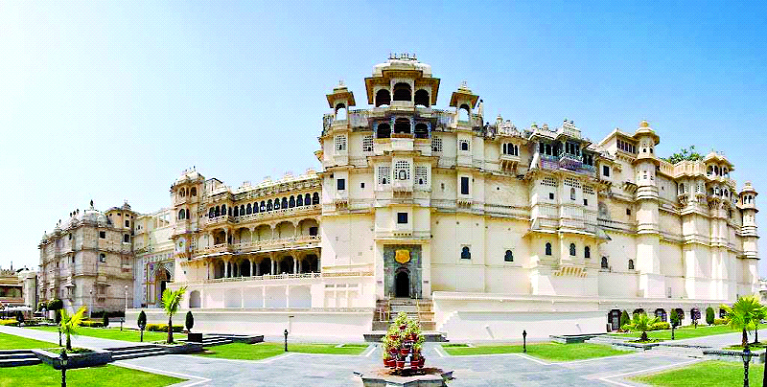 The Falaknuma Palace, built by Nawab Vikar-ul-Umra in 1894, is a masterpiece of Italian and Tudor architectural styles. Perched on a hill at an elevation of 2,000 feet, it offers a panoramic view of Hyderabad. The palace features a grand staircase, Venetian chandeliers, a collection of rare manuscripts, and a library modeled after the one at Windsor Castle. It now operates as a luxury hotel under the Taj Group, allowing guests to experience royal hospitality, including a unique horse-drawn carriage welcome.
Highlights:
– Grand Staircase: Italian marble staircase leading to the main halls
– Library: Modeled after Windsor Castle’s library
– Dining Hall: One of the world’s largest, seating 101 guests
6. Laxmi Vilas Palace, Vadodara
The Laxmi Vilas Palace, built by Maharaja Sayajirao Gaekwad III in 1890, is one of the most opulent palaces in India. Four times the size of Buckingham Palace, this Indo-Saracenic marvel is adorned with stained glass windows, marble, and mosaic decorations. The palace houses an impressive collection of artwork, including paintings by Raja Ravi Varma, a private museum, and a golf course. The sprawling gardens and intricate interiors make it an architectural wonder.
Highlights:
– Raja Ravi Varma Paintings: A collection of exquisite artworks
– Golf Course: A royal 10-hole golf course
– Mosaic Decor: Stunning stained glass and marble interiors
7. Jai Vilas Palace, Gwalior
Built by Maharaja Jayajirao Scindia in the 19th century, the Jai Vilas Palace is a blend of Tuscan, Italian, and Corinthian styles. The grand Durbar Hall is adorned with massive chandeliers, intricate ceiling carvings, and a silver train that once served food to guests. The palace also houses the Jiwaji Rao Scindia Museum, which displays artifacts, weapons, and royal furniture, including a gold-plated dining table.



Be the first to comment