Tag: Make in India

  • U.S. India Business Council Applauds Conclusion of U.S.- India Trade Policy Forum

    U.S. India Business Council Applauds Conclusion of U.S.- India Trade Policy Forum

    WASHINGTON (TIP): Following the successful conclusion of the ninth round of U.S.-India Trade Policy Forum, the USIBC hosted a reception, providing an opportunity for deeper engagement between industry stakeholders and government officials from both the United States and India. The U.S.-India Trade Policy Forum (TPF) is a government-to-government trade dialogue aimed at increasing bilateral investment between the two nations.

    The trade policy forum comes on the back of U.S.-India Strategic and Commercial as well as Prime Minister Modi’s visit to the west coast of the United States. The talks focused on four primary areas of bilateral ties-agriculture, services, promoting investment in manufacturing, and intellectual property. USIBC member companies submitted recommendations under these four working groups to the USTR.

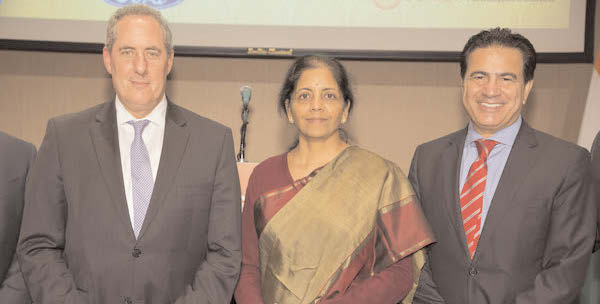
    The reception was attended by high ranking government officials such as Minister of Commerce and Industry Nirmala Sitharaman, United States Trade Representative Michael Froman, Commerce Secretary of India Rita Teotia and Deputy USTR Ambassador Holleyman.

    The event received broad representation from USIBC’s diverse membership base of 300+ companies that include Ford, MasterCard, Pfizer, Lockheed Martin, Bank of America, PayPal and Boeing.

    During the discussion, Minister Sitharaman and Ambassador Froman highlighted the direction in which the two nations are working together to foster a robust and open bilateral trade environment. Following Prime Minister Narendra Modi’s visit to the west coast and a series of successful dialogues over the last few months, both nations view the bilateral relationship with greater enthusiasm.

    Mukesh Aghi, President of the U.S.-India Business Council said, ” The trade policy forum couldn’t have come at a better time. We have seen India rise in World Bank’s Ease of Doing Business Index under the leadership of Prime Minister Modi. The Trade Policy Forum represents another important step towards strengthened trade relations between the U.S. and India. India is growing to be one of the most open economies in the world today and USIBC member companies are excited by the opportunity to grow the bilateral trade five-fold. Increasing FDI projects in sectors like manufacturing, defense, Smart Cities and clean technology along with positive environment fostered by initiatives like Make in India and Digital India are proving to be game changers and creating jobs for the Indian economy.”

    “We have seen enhanced engagement between the United States and India in the course of the past year, with a high bar set by President Obama and Prime Minister Modi,” said United States Trade Representative Michael Froman. “Our work this week under the Trade Policy Forum focused on translating engagement into tangible results that will increase the pace of trade growth between our economies. To that end, Minister Sitharaman and I focused our work on forward looking policy initiatives in intellectual property, manufacturing, agriculture and services that can expand trade and investment and benefit our manufacturers, workers, innovators, service providers, farmers, and ranchers.”

    Minister Sitharaman congratulated Ambassador Froman on the successful conclusion of the Trans-Pacific Partnership (TPP) after eight years of painstaking efforts and said, “The U.S.-India Trade Policy Forum was an intense engagement, one which we can say with confidence is moving forward with a lot of positive outcomes.”

    “Abbott continues to see India as a promising market for growth. The government’s vision for promoting ease of doing business and attracting investment enables Abbott to help more people live healthier, better lives,” said Claude Burcky, Vice President of International Government Affairs, Abbott.

  • China’s Ocean Hegemony and Implications for India

    China’s Ocean Hegemony and Implications for India

    The fifth generation of CCP leadership under Xi Jinping has de facto abandoned the Deng doctrine of keeping low profile internationally. China has become more ambitious of becoming a superpower and has been extending its sovereignty claims on the land and the sea. As a rising hegemon, China has started to challenge the existing international strategic order. China has been in the news recently for building artificial islands with air-landing strips in the South China Sea. It has demanded 12 nautical miles exclusive economic zone around these artificial, man-made reefs. China is a signatory to the law of the Seas (UNCLOS). Chinese attempts to claim the bulk of the South China Sea goes against both the letter and the spirit of the law of the sea. Beijing will invoke its EEZ for its own economic benefits while denying the same rights to other claimants. Brushing aside the ASEAN Code of Conduct in the SCS, China claims sovereignty over all of the SCS which is disputed by Vietnam, the Philippines, Malaysia, Brunei and Taiwan.

    For the last several years, Chinese official media has been harping on safeguarding China’s “Ocean Sovereignty”. The PLA navy’s goal is to have a “Thousand Ships Navy”. This stated “TSN” Goal is to further Chinese supremacy in the Indo-Pacific region and exploit the mineral & hydrocarbon wealth in the international sea-beds. PLAN has been entrusted to fight future wars for China’s security as per the former President Hu Jintao. On December 6th 2011, while addressing the PLA Navy, Hu Jintao pronounced that PLAN should make “extended preparations for warfare in order to make greater contributions to safeguard national security”. China unilaterally declared an air-defense identification zone in the East China Sea in November 2013. Recently, a Chinese admiral declared similar intentions of setting up an air defense identification zone in the future above the disputed areas of the South China Sea if Beijing thought it was facing a strategic threat.

    China has created not only facts on the ground but also facts on the Ocean in a very predictable manner of claiming sovereignty with the “Chinese Characteristics”. China always makes maximalist claims against other countries, disputes sovereignty, and alters the facts on the grounds of medieval history or economic reasons, bullies the smaller adversaries into submission, demands mutual concessions while later on sending its armed forces. China has constructed a couple of lighthouses in the South China Sea to provide a fig-leaf for its naked hegemony and sea-resources grabbing activities. China has successfully converted the South China Sea into a virtual private lake affecting the freedom of navigation for the entire world. India has vital maritime interests in the South China Sea. 55% of Indian maritime trade passes through the South China Sea. China has objected vehemently to ONGC’s oil drilling in collaboration with Vietnam in the South China Sea and PLAN ships have started to harass the Indian drilling rigs.

    Once the heat of the South China Sea is gone and Beijing has de facto acquired the marine resources of the South China Sea, the dragon will spread its strategic tentacles into the Indian Ocean. Warning bells are already ringing in the Indian Ocean. PLAN started its naval forays in Indian Ocean up to the Gulf of Aden in 2010 under the garb of anti-piracy operations to control Somali pirates. China’s string of pearl initiative got absorbed in the 21st Century Maritime Silk Road. China did acquire significant naval facilities in Hambantota, Chittagong, Maldives, and listening & communication facilities in the Coco Islands in Myanmar besides building the naval port in Gwadar. Incidentally, India has gifted the Coco islands to Myanmar in Nehru’s realm. Gwadar port was offered to India by Oman but Nehru declined and Pakistan became the owner and the beneficiary. China also acquired naval facilities for recuperation and re-fueling in Seychelles in December 2011. China has already signed an agreement with the UN backed International Seabed Authority to gain exclusive rights to explore poly-metallic sulfide ore deposits in 10,000 square-kilometers of international seabed in Indian Ocean for 15 years. China has been sending nuclear powered submarines to Sri Lanka and Pakistan. Pakistan will receive eight Chinese nuclear powered submarines effectively neutralizing the Indian second strike capabilities in case of a nuclear attack on India. China plans to buy an island from the Maldives for $ 1 billion under the current Maldivian Government of President Abdulla Yameen.

    China’s response to Malabar naval exercises in 2007 when trilateral format included Japan was very negative leading to non-invitation to Japan later on after 2007. India plans to invite Japan in the upcoming Malabar exercises and Chinese reaction would be worth watching. China remains very paranoid about the US “Pivot to Asia” doctrine. Chinese paranoia about the Asian Quadrilateral led to Australia pulling out of that mechanism for maritime cooperation in the Indo-Pacific.

    China had sent trial balloons to US for a G2 condominium by which US will take over the Atlantic Ocean whereas China will have rights over the Pacific Ocean. Unlike Tibet, Indo-Pacific is too important to be given to China on a platter. As a trading nation with vital economic and maritime interests, India will have to safeguard the sea-lanes of communication, ensure freedom of navigation and take the strategic ownership of her maritime interests.

    China’s foreign exchange reserves were at the peak of almost $4 trillion in June 2014. Despite a recent decline in Chinese economy, China’s foreign exchange reserves totaled $3.514 trillion at the end of September 2015. China still has the largest foreign exchange reserves in the world. China will continue to extend its strategic footprints under the much enlarged One Belt, One Road (OBOR) project because it has plenty of spare cash. China also proposes to use the Beijing sponsored AIIB as the financing arm for the OBOR which will ultimately require $ 1.4 trillion in investments. China has already sanctioned$46 billion on China-Pakistan Economic corridor as part of the OBOR connectivity without taking India’s sensitivities about CPEC passing through the POK. While India has cooperated with China in the BCIM (Bangladesh, China, India, and Myanmar) Corridor project, the GOI has been deliberately silent about any synergistic cooperation with the 21st Century Maritime Silk Road project.

    read-more

  • Pravasi Bharatiya Divas – Format Change

    Pravasi Bharatiya Divas – Format Change

    In a departure from the past, the government on Tuesday announced a change in the annual Pravasi Bharatiya Divas and its engagement with the diaspora. The mega jamboree will now be held every other year and a new event “focused on outcomes” will be held every other year.

    External Affairs Minister Sushma Swaraj, who is also minister of overseas Indian affairs, announced the changed format of India’s engagement with its diaspora at a press conference here.


    Swaraj said a scaled-down event would be held in January 2016 with the participation of just 150 invited foreign delegates.

    The invited diaspora guests will be experts who would attend various sessions to brainstorm on issues, including the problem of the Indian diaspora in the Gulf; on the government’s flagship programs like Make in India, Skill India, Digital India, and problems that Persons of Indian Origin face, she said.

    Sushma Swaraj announced that the “smaller events” of the PBD would be held in the Delhi office every alternate year, while the major “mela” would be held every two years in a different state in partnership with that state government.

    Besides, she announced that the Regional PBD, which is held abroad, will be held this year in Los Angeles, U.S., on November 14-15. She said U.S. Secretary of State John Kerry has said he would attend.

    She also announced a quiz competition “Bharat ko Janiye” in order to involve the diaspora youth in learning about India.

    The 20 winners — 10 from PIO countries and 10 from countries with NRIs — would be awarded at the PBD.

    Announcing the competition, Swaraj said diaspora Indians between the ages 18-35 could apply to join the quiz, in which there would be two rounds.

    After the second round, 10 successful candidates each from the PIO nations and with NRI population would be selected.

    They would be invited to the summit where they would have to participate in the third round.

    The first three winners would be awarded at the plenary of the PBD. The 20 youth would be taken on a “Bharat Darshan”, she announced, with the aim to acquaint them about Indian art, culture, heritage and also modern India.

  • Sony joins the ‘Make In India’ bandwagon

    Sony joins the ‘Make In India’ bandwagon

    Japanese electronics giant Sony Corp has hitched itself on to the Make in India bandwagon. The company is getting back to manufacturing in India, after nearly a decade with plans firmed up for two models of the Bravia brand of television sets to be made at Foxconn’s Sriperumbudur plant.

    ‘As a part of the first phase of local manufacturing we have already started local manufacturing of two models of the Bravia line of televisions in India, the second phase will begin soon,’ said Satish Padmanabhan, head of sales at Sony India. Manufacturing began last month and as part of the next phase the consumer electronics major is likely to locally add three to four more models of the same Bravia line to the manufacturing list.

    Padmanabhan said that the models that would be made in India in the next phase are yet to be finalised. According to him, the second phase could start in this calendar year though he refused to confirm a time period.

    The India arm of the company started manufacturing in India last month with two 43-inch models of its Bravia line televisions. The manufacturing is being done by Taiwanese company Foxconn at the company’s Sriperumbudur plant. At the same campus, Foxconn is also assembling products for Chinese smart phone manufacturer Xiaomi.

    ‘We wanted to be as close as possible to Indian consumers as this is an important market for us, so we took the decision of manufacturing in the country, going forward we will definitely like to increase that initiative,’ Padmanabhan said. With the central government offering sops to incentivise local manufacturing various foreign electronics major have started to manufacture in India or are mulling to do so. Electronics majors like Panasonic, Haier and Videocon are expected to increase the quantity of their local manufacturing.

    Finance Minister Arun Jaitley had made provisions in the Union Budget this year to incentivise local manufacturing in line with the government’s ‘Make in India’ initiative. To encourage manufacturing, the central government had announced extension of the Modified Special Incentive Package Scheme (M-SIPS) for five years, streamlining the process and covering more product categories. First introduced in 2012 as part of a National Policy on Electronics, it provides for 20-25 per cent subsidy on capital expenditure for manufacturers of electronics and consumer durables.

  • Haryana Chief Minister  Manohar Lal invites NRIs to Invest in his State

    Haryana Chief Minister Manohar Lal invites NRIs to Invest in his State

    NEW YORK (TIP): The Haryana Chief Minister, Manohar Lal, has appealed to the non-resident Indians (NRIs) in New York to come forward and help in the development of their paternal villages and support the efforts being made by the state government. The NRIs could do so by participating in the Adarsh Gram Yojana, a Government of India scheme which has been adopted by the Haryana Government, he said.

    Addressing the NRIs at a program held in New York, August 17, the Chief Minister said that the 15 MPs and 90 MLAs of Haryana were engaged in ensuring development of villages under the Adarsh Gram Yojana but the number of villages in Haryana exceeds 6,500. The NRIs of Haryana origin could adopt the remaining villages and help in their development.

    Those present on the occasion assured the Chief Minister of all possible support.

    Speaking at another event organized by Non Resident Indians to honor him in New York  the Chief Minister said that in its 10-month tenure, the Haryana Government had formulated a new industrial policy. While people from India and the rest of the world connected to Haryana would invest under the policy, those from across the globe also consider Haryana an ideal state, whether they want to invest in a welfare project or achieve their targets by investing in an earning project, he said.

    The Chief Minister said that Haryana has witnessed a remarkable growth in terms of infrastructure. While the State had only four National Highways till now, nine National Highways are being built to connect the districts. The State has an abundance of raw material for industries, which could be transported easily as a result of these new road projects.

    The Chief Minister said that Haryana being an agrarian state, the setting up and promotion of agro-based industries, food processing, pharma, information technology, auto, defense production, aerospace and aircraft industries would remain a priority for the Haryana Government. “Agro-industries are being set up in Haryana. Besides, Haryana will work further with major companies like IBM, Harley Davidson and Hollister, which have more than 1,000 projects, so that our industries can advance in an appropriate manner,” he added.

    Welcoming those investing in Haryana, the Chief Minister invited others to take advantage of facilities offered by the State and invest in Haryana.

    Later, the Chief Minister , addressed investors at a meeting of the US India Business Council in Washington on August 19.

    Emphasizing investment opportunities in Haryana, Chief Minister Manohar Lal said, “We strive to attract both international and domestic business in to the state of Haryana. To achieve this end, I am proud of the reform efforts that have gone in to making public services more efficient- land registration is now enabled through information technology (IT), long-pending land acquisition cases have been resolved and infrastructure construction is faster as evidenced by the completion of the Delhi-Faridabad Metro project and restarting of work on Kundli-Manesar-Palwal Expressway. We are pushing for policy reforms in a manner that will place Haryana as a business-friendly state and create jobs. I welcome American enterprise to be a part of our state’s growth.”

    Lauding the vision of Chief Minister Manohar Lal, Mukesh Aghi, President of USIBC, said, “Since 2000, the state of Haryana has emerged as a major investment hub in Northern India. The city of Gurgaon is a key center for the information technology and automotive industries. The state’s Enterprise Promotion Policy 2015 aims at enhancing ease of doing business, promotes micro, small-scale and medium enterprises and encourages long-term investment in the state to flourish. All these measures are critical for not just enhancing the perception of doing business in India, but also indicate the reality of ease of doing business.”

    Sonny Khurana, President and CEO of iTECH, a leading distribution company in the telecom sector, said, “Haryana, with its diversified economy and vibrant cities is well positioned to leverage initiatives such as Make in India and Smart Cities. Emerging markets are important for iTECH’s business model. A pro-growth government, under the visionary leadership of Mr. Manohar Lal, places Haryana as a strong hub for future investment opportunities.”

    The round table discussion focused on key areas for investment promotion in the state that include energy related initiatives, aerospace, food processing, auto/auto components and mass rapid transport.

    The event was attended by companies and senior leaders from every major sector of business-Blumberg Grain, IREO, Coca Cola, Wipro, Capital Novus, Cargill, Medtronic, Uber and Boston Scientific.

    Rajiv Khanna, President of India-America Chamber of Commerce was  optimistic about Haryana Chief Minister's visit
    Rajiv Khanna, President of India-America Chamber of Commerce was optimistic about Haryana Chief Minister’s visit

    Commenting on the visit of Haryana Chief Minister, Rajiv Khanna, President of India-America Chamber of Commerce, a binational chamber of commerce which is the focal point of cross border investments between the U.S. and India, said: ” We continue to be optimistic that states like Haryana would lead the country towards growth, prosperity and a greater economic co-operation with the United States. This does not mean that we under estimate the challenge in achieving these goals, particularly those posed by the failure of the Indian Parliament to pass the much needed legislations during the recent monsoon session that would have expedited the realization of these goals. It only means that we expect the state chief minister and his team to rise to the challenge and make it happen even with this setback, because failure is not an option for India.”

    On arrival in New York on August 16, Manohar Lal first went to the Memorial Tower in Downtown Manhattan and paid his homage to the victims of 9/11.

    Manohar Lal pays homage at the 9/11 Memorial , August 16
    Manohar Lal pays homage at the 9/11 Memorial , August 16

    The Chief Minister was in time for the India Day Parade, believed to be the largest India Day Parade, outside India. He stayed for a while watching the floats pass by, greeting waving hand to the milling crowds and making a brief speech.

    Chief Minister Manohar Lal at the India Day Parade in New York, August 16. Seen in the picture: Consul General Dnyaneshwar M Mulay (second left), Bollywood actor Parineeti Chopra, Manohar Lal
    Chief Minister Manohar Lal at the India Day Parade in New York, August 16. Seen in the picture: Consul General Dnyaneshwar M Mulay (second left), Bollywood actor Parineeti Chopra, Manohar Lal
  • Indian Consul General Mulay Rings Nasdaq Closing Bell on Independence Day

    Indian Consul General Mulay Rings Nasdaq Closing Bell on Independence Day

    NEW YORK:  India’s Consul General Dnyaneshwar Mulay invited American individuals and companies to join Prime Minister Narendra Modi’s flagship projects ‘Make in India’ and ‘Digital India’ as he, accompanied by Bollywood star Arjun Rampal, rang the closing bell at Nasdaq to celebrate India’s 69th Independence Day.

    Mr Mulay and Mr Rampal visited the Nasdaq market site in Times Square in New York yesterday to ring the traditional Closing Bell.

    This was the sixth year that India’s Consul General rang the closing bell at the Nasdaq stock exchange to commemorate the country’s independence day.

    Mr Mulay underlined the “growing thriving relationship” between India and the US.

    He said India’s economy is rapidly transforming and requires huge investments across various sectors.

    “Prime Minister Modi has initiated a number of reforms and flagship projects like Digital India, Make in India, Clean India and the Smart cities program,” he said.

    “I want American people to join in this great economic reforms movement. I also want more and more Indian companies coming to America (and to) Nasdaq,” he said.

    Welcoming Mr Mulay and Mr Rampal, Nasdaq Senior Vice President Bob McCooey said there is no better place to celebrate India’s independence day than at Times Square, which is the “crossroads of the world.”

    Mr McCooey noted Nasdaq’s growing presence in India, “which is on its way to becoming a global powerhouse.”

    Referring to the “great entrepreneurship” and “fantastic companies” in India, he expressed hope that many more Indian companies will list at Nasdaq in the future.

    Currently five Indian companies are listed at Nasdaq and have a combined market capitalisation of USD 43 billion. These include MakeMyTrip.com, Rediff, Videocon d2h and Cognizant.

    “For us in Nasdaq, this has now become an annual event. This is the sixth time we have been honored with your presence here to celebrate the independence day,” Mr McCooey said amid huge cheers and applause from the large number of Indian-Americans who had gathered for the closing bell ceremony.

    Mr Rampal, dressed in a dark blue shirt and gray coat, tweeted after the bell ceremony, “Feeling super proud to be an Indian. Independence Day celebrations begin.”

    Mr Rampal will be the Grand Marshal at the 35th India Day Parade tomorrow that will run through several streets in the heart of Manhattan.

    Bollywood actress Parineeti Chopra will be the Guest of Honour at the parade, which will also be attended by cricketer Virendar Sehwag.

    Nasdaq’s giant screen in Times Square extended a warm welcome to Mr Rampal, with the words “Nasdaq welcomes Arjun Rampal” displayed on it along with the Emblem of India.

    Commemorating the country’s independence day, flag hoisting ceremonies will be held at the Consulate as well as at the Permanent Mission of India to the UN’s premises.

  • India, US to bolster cyber security partnership, combat crime

    WASSHINGTON (TIP): Faced with evolving cyber challenges, India and the US have decided to join hands in combating cyber crime and bolster their cyber security partnership in various strategic spheres to achieve “concrete outcomes”.

    “Cybersecurity is fundamentally a team endeavour, and it is essential that international partners like India and the US work together closely, along with industry and civil society, to raise our cyber defences in both the short and long term, to disrupt and interrupt malicious actors in cyberspace, and to improve our ability to respond to and recover from cyber threats,” Michael Daniel, special assistant to the President and cybersecurity coordinator, said.

    Daniel said he is especially encouraged by India’s recent statements of support for the multi-stakeholder model of Internet governance.

    The US, he said, looks forward to a collaborative partnership with Indian colleagues and partners from industry and civil society to ensure that the Internet continues to be an open, interoperable, global platform that enables international trade and commerce, strengthens international security, and fosters free expression and innovation.

    “We are hopeful that the governments and industries from both the countries can work together to chart the way forward for a successful US-India partnership in responding to the evolving cyber challenges,” said Arvind Gupta, the deputy national security advisor.

    The Indian and the US delegations discussed a range of cyber issues including cyber threats, enhanced cybersecurity information sharing, cyber incident management, cybersecurity cooperation in the context of ‘Make in India’, efforts to combat cyber crime, Internet governance issues, and norms of state behaviour in cyberspace, a joint statement said.

    The two delegations identified a variety of opportunities for increased collaboration on cyber security capacity- building, cyber security research and development, combating cyber crime, international security, and Internet governance and “intend to pursue an array of follow-on activities to bolster their cyber security partnership and achieve concrete outcomes”, it said.

    In addition to the formal dialogue, the delegations met with representatives from the private sector to discuss issues related to cybersecurity and the digital economy.

    Industry leaders from the US submitted policy recommendations to the two governments, emphasising the need to protect cross border data flow, facilitate remote access, provide for strong encryption standards and reduce cybersecurity threats through targeted public-private partnerships.

  • Given the Time, India can be a Regional Security Provider

    Given the Time, India can be a Regional Security Provider

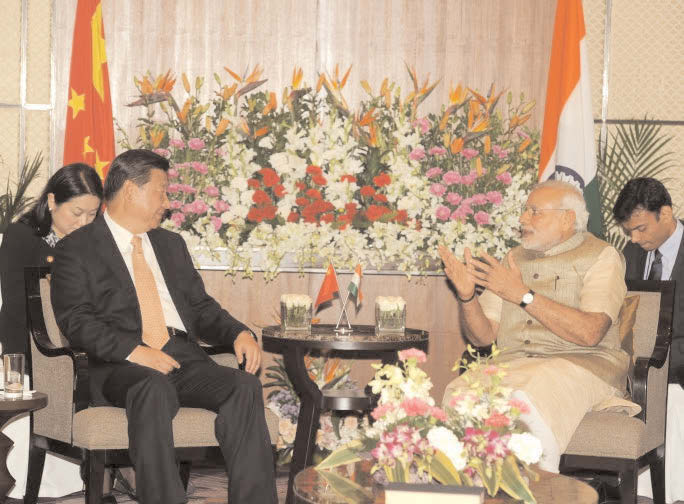
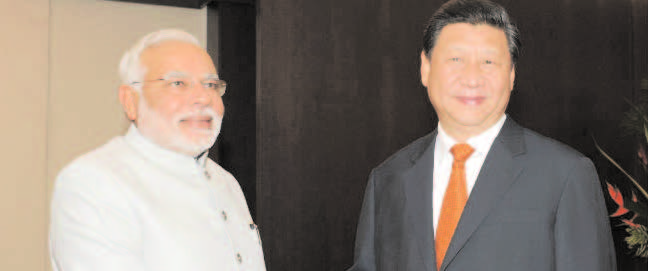
    Despite the cordial meetings between PM Modi and President Xi’s and their  photo ops on the sidelines of the BRICS and SCO summits, India has been drawing the red line with China on its concerns. Official briefings have disclosed clear communiques from India on the issue of China blocking India’s move in the United Nations to question Pakistan on the release of 26/11 attack mastermind Zaki-ur Rehman Lakhvi as well as China’s economic corridor in PoK.

    Only last month the news of Chinese submarines docking in Karachi, had rattled New Delhi. Almost a deja-vu reaction to the Chinese subs making an appearance in Sri Lanka last year. China’s statements that the Indian Ocean is not India’s backyard have only added to Indian anxiety. Not surprisingly, visits in June with US Defense Secretary Ashton Carter, who arrived at an Indian naval base, followed by a trilateral with Australia and Japan on regional security issues have focused on adventurism in the Indian Ocean Region and aggression in the South China Sea.

    There is a growing clamor for India to take up the role of a regional security provider in Asia in the wake of what is being termed as Chinese expansionism. Its was not surprising that both -the renewed India – US Defense Framework Agreement and trilateral discussions, put a strong emphasis on maritime security, and strengthening of India’s defense capabilities to fulfill this ambition. It is a  role that India is eager to take up but, in reality, has a long way to go to achieve in terms of resources and capacity.

    PM Modi’s administration has succeeded in renewing expectations from India, with his first year in office dedicated to revamping the look east policy to act east. The fundamental shift is India’s willingness to work with the U.S. and Asia-Pacific countries on regional security coalitions and shedding of timidity to call China out.

    However, while New Delhi has walked the tightrope to ensure that its strategic choices are not perceived as binary (between the US and China), it is imperative to underline that India’s resource build up is still a work in progress and jumping the gun in terms of expectations will not bode well for India’s long term vision.

    So , beyond the hype it is important to assess how India conceptualizes its own role in Asian security. What roles does it envisage for itself ? The answer perhaps lies in understanding the larger blueprint within which India is calibrating its strategy.

    Conceptually, India’s strategic approach has been rooted in three broad trends : One, revitalizing India’s strategic partnerships with major powers and being recognized as an able contributor to Asian security. Two, reclaiming the south Asian neighborhood to boost India’s role as a regional power. And three, a renewed thrust on economic diplomacy independent of strategic compulsions.

    No longer wanting to sit on the fence, India is looking to play a role in shaping the regional architecture, by increasing economic integration,
    (ASEAN, EAS, RCEP etc), building strategic partnerships and deepening defense cooperation (US, Japan, Vietnam, ASEAN, Australia) with a special emphasis on maritime security. But is all of this easier said than done?

    Realistically, the grand posturing aside, this is a tall order considering the challenges India faces. For one, many a skeptic will tell you that if India can’t even manage its own neighborhood how can it claim to extend its influence in the Asia Pacific?

    An uneasy neighborhood with constant complaints of neglect and lack of leadership from India have been an open secret. Despite PM Modi’s recent efforts, Chinese entrenchment in South Asia – from the ‘One Belt One Road’ initiative to the deepening military ties, is a glaring reality. While this is no zero game of influence, reclaiming the neighborhood would be a pre-requisite to India’s ambitions of a larger role in the great game for Asia. This is no easy task.

    A re-energized look east policy, can only take off if the gaping lacuna in the development of North East India and almost absent physical connectivity with East Asia are fixed. A reputation of slow delivery on projects and the mismatch of political aspirations and resource capacity to deliver are hard truths India has to face up to. The ‘Make in India’ campaign is looking to reverse this but the plans will need time to fructify.

    Even the much celebrated relationship with the US has fallen victim in the past to a lack of momentum and strategic mistrust. Maintaining robust Indo-US ties is imperative to give India a foot in the door of Asian geopolitics. Joint collaborations in defense and technology have to really come through for India to live up to the hype. Till then expectations will only burden India.

    As India gradually rises to its role as a regional balancer in Asia, it is important for India to tell the world to give it time to set its own house in order. New Delhi still has a long way to go in assuring these states of its reliability, not only as an economic and political partner but also as a provider of regional security. The political will is clear, it is time for the commitments to come through. Till then managing China, while building up India’s capacity is the way forward. The hype can wait.

    Shruti PandalaiAuthor | Shruti Pandalai (The author is a Research Analyst & OSD Outreach with Institute for Defence Studies and Analyses. She can be reached at shrutipandalai@gmail.com)
  • BOEING INKS PACT TO ‘MAKE IN INDIA’ WITH TATAS

    BOEING INKS PACT TO ‘MAKE IN INDIA’ WITH TATAS

    HYDERABAD (TIP): Tata Advanced Systems Limited (TASL) and US-based aircraft maker Boeing on Wednesday signed a strategic framework agreement here to collaborate in the sphere of aerospace and defence manufacturing as well as explore the potential of developing integrated systems, including unmanned aerial vehicles. The pact was signed by Shelley Lavender, president of Boeing Military Aircraft, and Sukaran Singh, MD & CEO of Hyderabad-based TASL.

    Though Boeing has been procuring components from 18 suppliers in India, the latest deal will actually see it ‘Make in India’ along with the Tatas. For the first time, Boeing will develop high-end aerospace and defence sector technology in India, which can cater to the global markets. TASL will get “significant work packages” in the aerospace-defence manufacturing space, said a Boeing spokesperson.

    The Tatas have a big manufacturing footprint at the Adibatla Aerospace and Precision Engineering Park on the outskirts of Hyderabad, where they have already invested over Rs 1,000 crore, and are expected to further beef up their presence here. TASL, whose focus areas include aerospace, missiles, homeland security, optronics, UAVs and radars, among other defence-related products, already has a couple of JVs — Tata Sikorsky Aerospace and Tata Lockheed Martin Aerostructures — that manufacture aerospace and defence products at the Adibatla park.

    “This framework agreement is the result of TASL’s world-class competencies as well as the vendor eco-system it has helped establish in India. It gives us an opportunity to explore the massive potential in India for aerospace manufacturing and make the investments required to grow the industry,” TASL chairman S Ramadorai.

  • Maharashtra CM Devendra Fadnavis creates vision of  his State as a top destination for investments

    Maharashtra CM Devendra Fadnavis creates vision of his State as a top destination for investments

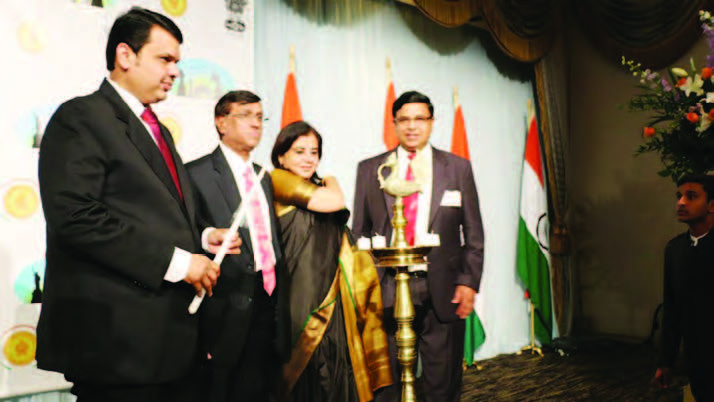
    NEW YORK (TIP): Maharashtra Chief Minister, Devendra Phadnavis was given a rousing welcome, June 29, by the Indian American community at a Community Reception, appropriately named  ‘Maharashtra meets Manhattan’. The reception in his honor was  hosted by Friends of Maharashtra and Consulate General of India at the Taj Pierre in New York City, where  Prime Minister Modi was hosted last year.

    Maharashtra Chief Minister lauded the contribution of NRI’s. He said, “The success of Indians here gives me immense pride. But now it’s time to give back.”

    Phadnavis spoke of the demographic advantage of India where 50% population is below the age of 25. He said  India was in a position to provide human resource to the entire world and the time to fulfill the dream of becoming the topmost nation of the world had arrived.

    Pitching for ‘Make in Maharashtra’, he mentioned that his government has reduced the number of permissions from 148 to 20 to make Maharashtra investor friendly. He also spoke about different upcoming projects undertaken by him like coastal road, Mumbai-New Mumbai connecting  road, and second international airport near Navi Mumbai. He said the projects of roads and bridges the government was contemplating would decongest entire Western Mumbai. He also spoke of the project to have 30 smart cities, each with a different theme and another project, an automobile hub in Aurangabad.

    “Maharashtra is full of possibilities. There are huge opportunities”, he said. He invited the gathered Indian Americans to invest in Maharashtra and assured them of his personal attention to their needs . He said he works 24/7 and is available 365 days of the year.

    Others who spoke included Consul General Dnyaneshwar Mulay who welcomed the Chief Minister and the Industries Minister Subhash Desai who outlined the opportunities for investors in the industries sector in his State.

    Earlier, in the day, a group of U.S. industry executives from the U.S.-India Business Council (USIBC) met with him for a discussion about investment opportunities in the state.

    The Chief Minister engaged with senior business executives on important topics that have dominated the bilateral commercial relationship in recent months and addressed areas such as Maharashtra’s comparative edge as an investment destination, regulatory reform measures that have been undertaken by the government to promote ease of doing business in the state, and cultural dialogues that can enhance the bilateral relations between India and the United States.

    Emphasizing the investment opportunities that are available in Maharashtra, Chief Minister Fadnavis said, “The Government has taken a variety of measures to promote ease of doing business in the state and we want to be viewed as a top destination for both domestic as well as international investments. The state eagerly awaits the formation of joint ventures in critical projects such as the Delhi – Mumbai Industrial corridor, Smart Cities and in sectors such as manufacturing, agriculture, aviation, engineering and IT. Our Government is committed to providing a boost to both Make in India and Make in Maharashtra campaigns, provide business to both medium and small enterprises and create much-needed jobs. We invite investors from the United States to be a part of Maharashtra’s growth story.”

    Lauding the vision of Chief Minister Fadnavis, Mukesh Aghi, President of USIBC, said, “The Council’s member companies have been encouraged by the ease of doing business in Maharashtra. Many of the companies have significant investments in the state. Therefore, appropriate and timely policy measures are critical. USIBC and member companies look forward to participating in the state’s investment opportunities that will not only promote entrepreneurship, but also inclusive growth, positioning it as a model state both in India and globally. I have no hesitation in saying that the state has the potential to emerge as a high ranking state on the ease of doing business index.”

    Ashok Vasudevan, Chairman and CEO of Preferred Brands International, manufacturer and marketer of the natural foods brand, Tasty Bite, said, “Tasty Bite has been operating in Maharashtra since the early 90’s and has become one of India’s largest exporter of prepared foods. The state is remarkably resilient due to its diversified base of industry that includes energy, agriculture, food processing, entertainment, engineering, chemicals, pharmaceuticals and financial services. The infrastructure, a mature workforce, a series of business friendly administrations over the last few decades makes it an attractive FDI destination.”

    The event was also attended by companies and senior leaders from every major sector of business- Monsanto, Taj Hotels, HSBC, Caterpillar, Cargill, Johnson and Johnson, KPMG, Baker & McKenzie, Citi, New Silk Route and Pfizer.

  • IN INDIA-US TIES, THE LONG DISTANCE RACE HAS NOW GOT UNDERWAY

    [quote_box_right]”The key to attracting much needed investment in the country is predictability and transparency in areas like tax and intellectual property. When these principles are consistently applied, business will boom for both the US and India as investors will have the certainty they need to proceed in projects that require long-term commitment. Laws, rules and policies have to be framed in a manner that eliminates ambiguity, whimsical discretion, and interpretation”, says the author.[/quote_box_right]

    The India-US Delhi Declaration of Friendship, which was upgraded from a bilateral strategic dialogue to a strategic and commercial dialogue, has provided a renewed sense of optimism to the business community in the US. If the first year of the NDA government was about the formation of this alliance and setting the tone of the friendship, the second year will focus on bringing ideas to fruition. Undoubtedly, this journey will be one that takes a U-turn from past trends and it requires political manoeuvrings and skilful negotiations.

    Much like US President Barack Obama, Prime Minister Narendra Modi too acquired a troubled economy, desperately in need of a facelift and new direction. During Modi’s first year in office, the economic and strategic partnership between the US and India has gone forward in a sure-footed manner. Businesses in the US have been encouraged by the government’s commitment to ‘ease of doing business’. A survey conducted by Forbes India-BMR Advisors shows a positive affirmation for Modi’s ‘minimum government and maximum governance’ agenda. He has led by example -cutting down red tape and bureaucracy in his own office.

    The cornerstone of Modi’s campaign and reforms agenda has been trade and investment relations – the passage of the significant coal mines Bill, mines and mineral amendment Bill, and raising FDI in insurance and pension have sent powerful signals to investors that the PM is serious about getting the economy back on track.

    Government-led initiatives like Make in India, Digital India, Smart Cities, Swachh Bharat Abhiyan and Jan Dhan Yojna will be Modi’s calling card in the next year. But the key to breathing life into these initiatives rests on the overarching theme of ‘ease of doing business’ at both the central and state levels. The Centre should fund states based on whether they have implemented ‘ease of doing business’ policies. Flexible environmental clearances, increasing single-window clearance for FDI proposals to attract new investments, increased budgetary allocation to infrastructure, railways, power and urban development will be the recipe for long-term success for this government. In a nutshell, what Modi did in Gujarat needs to be replicated for retooling the economy and opportunities to the people of India.

    However, in thriving democracies like the US and India, consensus building is an uphill task. Modi’s government will be tested this year as it tries to pass critical legislation such as the Land Acquisition Bill and Goods and Services Tax (GST) Bill. Bilateral trade between the US and India currently stands at $100 billion. Increasing that number five-fold is achievable if the countries work as partners and avoid protectionist tendencies. The next chapter of Make in India will be reliant on ensuring that all these policies are translated into action, where states and local municipal authorities have a shared vision with the government.

    An important step in further strengthening the partnership will be US defence secretary Ashton B Carter’s on-going visit. Carter has been widely credited for ‘upgrading’ the US-India defence relationship through the formation of the iconic Defence Technology & Trade Initiative (DTTI). His first visit as defence secretary promises a framework for defining the scope of an upgraded defence relationship with India – one that has seen explosive growth in bilateral defence trade and an increase in the number of joint exercises and intelligence sharing. As we embark on the next chapter of bilateral defence ties, US companies will seek close collaboration with India’s defence industry to co-produce and co-develop defence capabilities that serve common interests and mutual benefit. A time-bound commitment to procurement, more transparent and decisive offset policy and regime, and closer consultation with industry will serve to advance the bilateral defence relationship.

    The key to attracting much needed investment in the country is predictability and transparency in areas like tax and intellectual property. When these principles are consistently applied, business will boom for both the US and India as investors will have the certainty they need to proceed in projects that require long-term commitment. Laws, rules and policies have to be framed in a manner that eliminates ambiguity, whimsical discretion, and interpretation.

    Innovation is an intrinsic part of India’s DNA. But innovation too needs to be backed by appropriate policy measures. Young start-up companies and India’s vibrant informal sector will gain from uniform tax standards. Their success will place India on a firm growth trajectory.

    The speediness of economic reforms and avoidance of politically driven distractions will determine the success of the government. Few political leaders have been so closely watched in their first year of assuming office as Modi. The close scrutiny has been for obvious reasons -the expectations of 1.25 billion people who gave him the mandate to lead the nation to economic prosperity rest on his shoulders. Further private sector investment in areas of skill development and early education can fast track India’s growth story. The time is ripe to tap into the skills and enthusiasm of the youth population and prepare them for better opportunities. Hope, optimism and working with a strategy – all these lie before the nation and the PM in this next phase.

    (The author is  president, US-India Business Council)

  • USIBC Media Executives discuss opportunities in India’s Media and Entertainment Industry

    USIBC Media Executives discuss opportunities in India’s Media and Entertainment Industry

    WASHINGTON (TIP): The U.S.-India Business Council (USIBC) led a series of discussions and meetings between top executives of the media industry and senior Government of India officials to discuss how opportunities can support the recent initiatives of the government, including Make in India, Digital India, and improving the country’s ranking in the World Bank’s Ease of Doing Business Index.

    Led by Joe Welch, Senior Vice President for 21st Century Fox, the delegation included senior representatives from The Walt Disney Company, Time Warner, Viacom 18, and the Motion Picture Association (MPA).

    India is already home to more than 800 television channels with 140 million paid TV homes and a vibrant film industry that produces more than 1,000 movies in a year. The delegates expressed continued commitment to the market, which is expected to grow at 13.9% annually – double that of the global media and entertainment industry. Film and television are significant employment generators for the Indian economy and enhance India’s image among external audiences from a socio-cultural perspective.

    “Media and entertainment companies are celebrating over 20 years of Making in India, and as an industry we are eager to do more given the appropriate policy environment. We are encouraged by the Government of India’s willingness to see the industry as a partner for growth,” said mission leader, Joe Welch.

    Talks between industry executives and the Ministry of Information and Broadcasting, the Telecom Regulatory Authority of India (TRAI), Department of Electronics and Information Technology (DeitY), Ministry of Commerce and Industry, Ministry of Finance, Department of Telecommunications, Department of Industrial Policy and Promotion, and the Ministry of External Affairs focused on providing a further impetus to the already robust sector and taking appropriate policy measures to reach the $100bn level by 2020. Such policy measures include liberalization of foreign direct investment caps, restrictions on vertical integration, single window permitting, digitization implementation, and copyright enforcement.

    Diane Farrell, USIBC Executive Vice President said, “The two day mission was conducted with the goal to raise the profile of the media and entertainment industry as a key contributor to India’s growth. The media sector in India is promising for the Council’s member companies, but is also a real opportunity for the Government of India to create jobs and showcase itself as a global leader in content creation.”

  • India’s  Energy Minister discusses opportunities in the Power & Coal sectors with U.S. Industry

    India’s Energy Minister discusses opportunities in the Power & Coal sectors with U.S. Industry

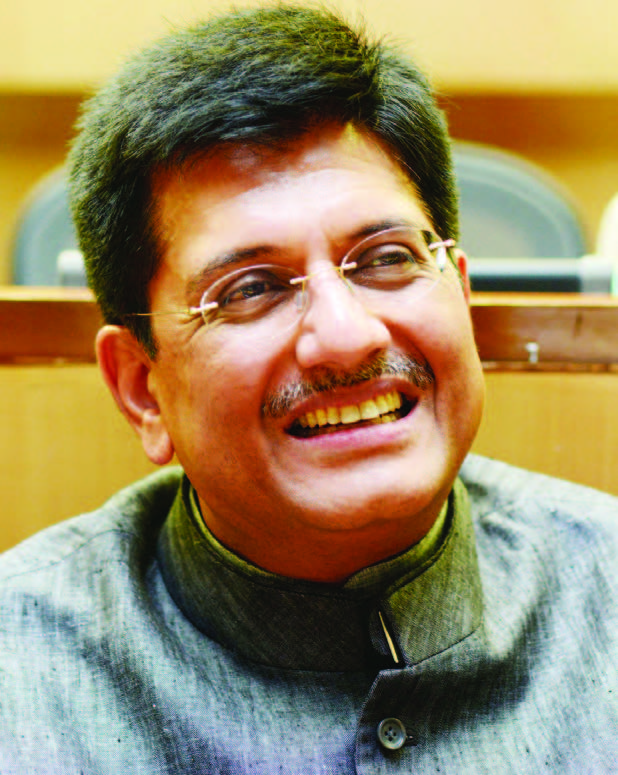
    WASHINGTON D.C. (TIP): At an industry roundtable hosted by the U.S.-India Business Council (USIBC) in Washington D.C., Piyush Goyal, Minister of State with Independent Charge for Power, Coal, New & Renewable Energy discussed the $250 billion investment opportunity in India’s growing energy sector.

    Addressing senior business executives from the energy sector, Minister Goyal said, “Since assuming office, our Government has laid a very solid foundation for the ease of doing business in the country. India’s power generation capacity has grown significantly- we have seen 8.5% growth in power generation year over year. We aim to provide electricity to all Indians by 2019. “

    USIBC Executive Vice President, Diane Farrell said, “Minister Goyal is an excellent representative for Government of India’s commitment to ease of doing business in the country. Power is the backbone of any economy and vital to the Prime Minister’s Make in India initiative. It is encouraging to see the tremendous strides being made by the sector to place India on a firm growth trajectory. USIBC member companies are responsive to the Government of India’s commitment to ease of doing business and remain optimistic about investment opportunities.”

    The event was attended by senior executives from USIBC member companies: First Solar, Oracle, GE, XCoal, Gasification Technologies Council, Vermeer, AECOM, International Paper, 3M, and Westinghouse and others.

    Formed in 1975 at the request of the U.S. and Indian governments, the U.S.-India Business Council is the premier business advocacy organization, comprised of more than 300 top-tier U.S. and Indian companies advancing U.S.-India commercial ties. USIBC is the largest bilateral trade association in the United States, with liaison presence in New York, Silicon Valley, and New Delhi. Ajay Banga, President and CEO of MasterCard, is USIBC’s Chairman.

  • US-India Business Council Inducts 6 New Board Members

    US-India Business Council Inducts 6 New Board Members

    WASHINGTON:  The US-India Business Council (USIBC) comprising more than 300 top-tier US and Indian companies advancing commercial ties between the two countries has inducted six global business leaders to serve as members of the board.

    The new appointees are Anurag Bhargava, Chairman, IREO; Marc Allen, President of Boeing International; David M Cordani, President and CEO, Cigna Corporation; Patrick Dewar, Chairman, Lockheed Martin Global; Kenneth C Frazier, Chairman and CEO, Merck; and Edward Monser, President and COO, Emerson Electric.

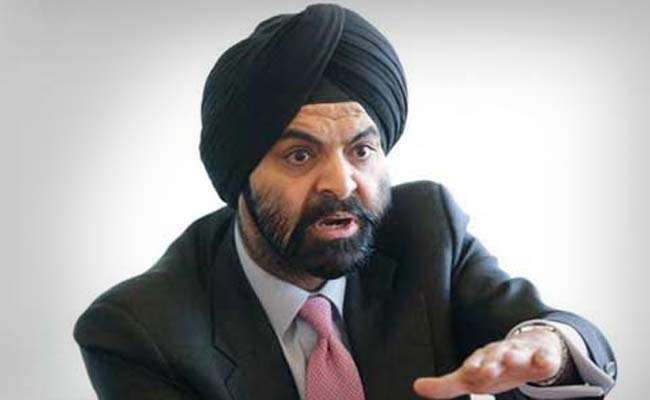
    USIBC and the board of directors remain committed to advancing the commercial relationship between the US and India, said Ajay Banga, USIBC Chairman and MasterCard President and CEO.

    “Our members are encouraged by Government of India’s commitment to economic growth, to attracting the investment needed to achieve that growth, and improving the ease of doing business in India,” he said.

    They “look forward to contributing to India’s growth story through any number of Government of India initiatives, including Smart Cities and Make in India.”

    The new group of directors is “joining the Council at a time when India is poised for tremendous growth and will undoubtedly provide valuable leadership to USIBC and its members,” said Mukesh Aghi, President of USIBC.

    Anurag Bhargava, Chairman of IREO, the largest FDI investor in the construction development sector in India said, “IREO is committed to delivering world-class homes and supporting efforts to build smart cities and urban infrastructure that enables India’s continued economic growth and middle class expansion.”

    “Promoting an innovation-based economy supports not only the growth of the life sciences industry, but also helps to expand health care access for its people,” said Kenneth C Frazier, Chairman and CEO, Merck.

    “As Cigna works to improve both health and vitality in India, we look forward to increasing our presence in the dynamic Indian market,” said David M Cordani, President and CEO of Cigna.

    “India has a lot to offer to the world as a market and US companies have a lot to consider and gain from the opportunity,” said Edward Monser, President and COO of Emerson Electric.

    “Boeing’s relationship with India dates back several decades, and we look forward to an enduring partnership for decades to come,” said Marc Allen, President of Boeing International.

    “Lockheed Martin’s commitment to teaming with the Indian Government and enterprise aligns well with the spirit of the Council’s mission to advance the bilateral relations,” said Patrick Dewar, Chairman of Lockheed Martin.

    As board members, this dynamic group of CEOs along with existing members will help promote the USIBC policy advocacy priorities across critical areas such as health, defence, designing liveable cities, technology, manufacturing and financial services, said the trade association.

  • It’s Flipkart, Snapdeal vs Amazon, eBay

    It’s Flipkart, Snapdeal vs Amazon, eBay

    NEW DELHI (TIP): The government on Thursday began consultations on FDI in B2C e-commerce amid a sharp divide between Indian and foreign players. While domestic companies such as FLIPKART and Snapdeal opposed FDI during a meeting by commerce and industry minister Nirmala Sitharaman, foreign players such as Amazon and eBay made a strong case for it.

    “We have always maintained that opening up this sector to FDI will be good for consumers and Indian businesses as it will allow us to partner with local manufacturers to source products not carried by other sellers on the marketplace, and support the Make in India vision,” said an Amazon India spokesperson.

    Around 60 players from the industry, including representatives of Amazon India, Snapdeal, Ikea, Japan Plus, eBay and FLIPKARTattended the meet.

    Domestic e-tailing companies fear it will allow global giants such as Amazon to bring its inventory-based model here, which works on the principle of buying goods in bulk at a low price from small businesses and selling them at a discount to consumers. Currently, e-tailers operate through a marketplace model where independent sellers use their websites to reach out to customers.

    “FDI in e-commerce will not have a good impact on the Make in India model. It will allow Amazon to squeeze and manipulate small businesses and flood the mar mar Chinese goods. The e-commerce industry has already received around $9 billion FDI. It has created thousands of jobs. What is the point of changing the policy now,” said an executive with a large Indian e-tailing company.

    At present, 100% FDI is allowed in B2B e-commerce space, which helps global retailers such as Walmart operate cash-and-carry business. A Snapdeal spokesperson said, “The government must tread this issue with caution to ensure that there is no adverse impact on the growth of MSMEs in the country.”

    A CII spokesperson said, “E-commerce in India is at relatively nascent stage and the market is yet to attain full maturity level. While CII is favourably inclined towards 100% FDI in B2C route, the sector should be given some time to come to a level where it can compete globally.”

    FLIPKART also flagged tax issues at the meeting, where Sitharaman said it was only the first in a series of consultations and it will take more such meetings to come to a conclusion about FDI in B2C e-commerce.

  • U.S.-India Business Council Hosts Interaction with Ambassador Arun K. Singh

    U.S.-India Business Council Hosts Interaction with Ambassador Arun K. Singh

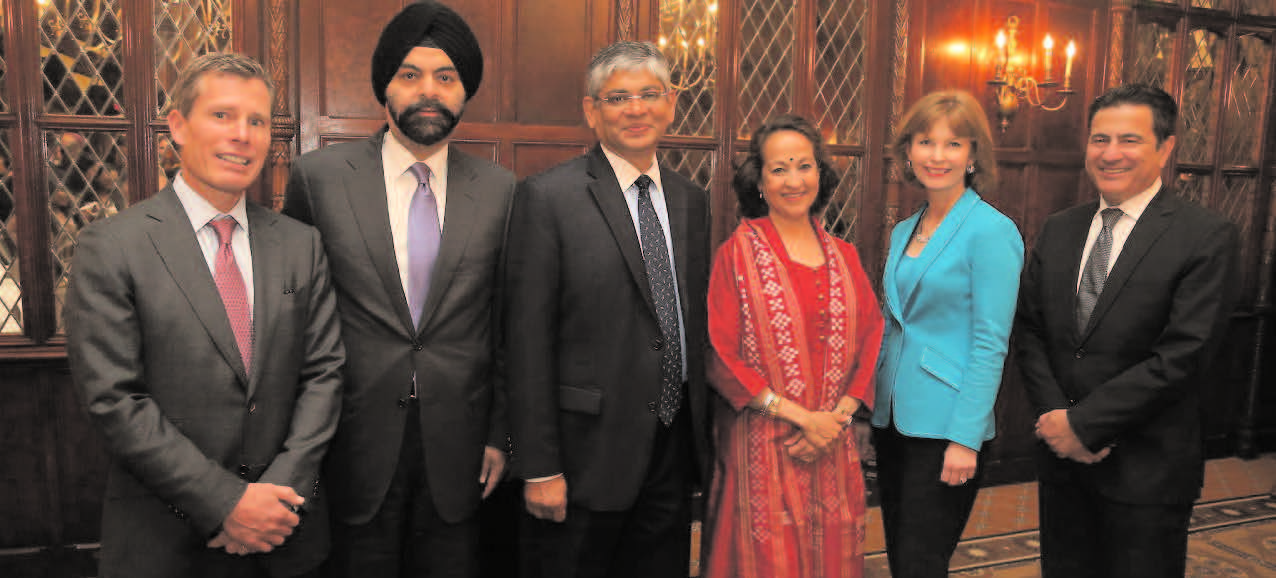
    WASHINGTON, D.C. (TIP): U.S.-India Business Council (USIBC), On May 6, 2015, hosted an exclusive interaction with Ambassador Arun K. Singh, welcoming him to Washington D.C. in his new post as India’s Ambassador to the United States. Ambassador Singh was the Deputy Chief of Mission at the Embassy of India from 2008- 2013.

    Ambassador Singh was warmly received by USIBC Chairman and President and CEO of MasterCard, Ajay Banga and USIBC President, Dr. Mukesh Aghi as well as Council members representing top American and Indian businesses.

    “Ambassador Singh returns to Washington D.C. at a time of immense opportunity in bilateral relations between the United States and India. Trade between the two countries is poised to grow from $100 billion to $500 billion in the next few years. We are excited to work with him in achieving this vision over the next few years,” said Dr. Aghi.

    “I can’t think of a more consummate diplomat to help strengthen U.S.-India Relations further than Ambassador Singh. Under Prime Minister Modi, India is focused on investment in manufacturing, infrastructure, and tourism to create jobs and improve the quality of life for its citizenry. U.S. companies have a great deal to bring to these efforts, beginning with our technology, capital, intellectual property, and a desire to be long-term players in India’s future. It’s also about how the dialogue is conducted at a time when our friendship and mutual respect continues to increase. That’s immensely important as we seek to deepen the bonds between these two great democracies. I know of no one better-suited to help do just that over the next few years than Ambassador Singh,” said Mr. Ajay Banga.

    Nancy Ziuzin Schlegel, Vice President of Lockheed Martin, pledged support for Ambassador Arun K. Singh and said, “Ambassador Singh has been an important partner and friend to U.S. business. As we near the one year anniversary of the Modi Government, I think it is safe to say that we are looking forward to more growth, increased cooperation and closer ties.”

    Ambassador Arun K. Singh remarked on the vision of the new Government for India and the actions that have been undertaken since Prime Minister Modi assumed office. He said, “Prime Minister Modi wants India to take its rightful place as a fast growing economy, tapping the potential of its huge young population. The Delhi Declaration of Friendship has been upgraded from a bilateral strategic dialogue to a strategic and commercial dialogue. Working groups such as the Trade Policy Forum, High Technology Cooperation, CEO Forum that had not met for several years have come together yet again over the past year laying the foundation for future joint activities. A U.S. – India infrastructure collaboration platform has been set up to promote deployment of cutting edge U.S. technologies to meet India’s infrastructure needs in power, urbanization, shipping and trade transportation. An inter-ministerial committee has been set up to fast track investment proposals from U.S. companies and address implementation.”

    Ambassador Singh also said, “Indian industries have increased investment in the U.S., creating jobs and generating incomes. Indian companies have invested close to $17 billion in the United States. The U.S. -India Business Council can play a proactive role by being the voice of industry on both sides.”

    In closing, Justin McCarthy, Senior VP for Global Policy and International Public Affairs at Pfizer said, “I’m encouraged by initiatives such as Make in India and the focus on innovation and research as important drivers of growth. Collaboration between the U.S. and Indian governments and with the business communities holds great promise for the future.”

    The event was also attended by Ambassador Taranjit Singh Sandhu, Charge d’Affaires of Embassy of India; Mr. Arun M. Kumar, Assistant Secretary of Commerce for Global Markets and Director General of the US and Foreign Commercial Service, U.S. Department of Commerce and International Trade Administration; Former US Ambassador to India, Timothy Roemer; and Mr. KT Rama Rao, Minister of Information Technology and Panchayat Raj, Government of Telangana, India.

  • “India’s Land Acquisition Act”

    “India’s Land Acquisition Act”

    Dear Mr. Makkar,

    I appreciate and congratulate you  for bringing the facts in India.

    It is next to impossible to find a man like Mahatma Gandhi who was almost pious and always worrying for the common man. Even the Late Prime Minister Morarjibhai Desai was always thinking for the common good of the public. In his time the prices of Sugar which sky rocketed was brought to the level of Rs.2.50 per Kilogram around 1977 or so.

    I have gone side tracked little.

    But now look after getting Independence (which we were not deserving because we do not know how to rule for the common good. These politicians are always worried for their benefits and the cast proned voting and then caste based governance at the Government has ruined the country.

    Even a talented person does not get recognition in India but he gets recognition in other country. so Indian Newspaper then tries to get credit by publishing this.

    In the last paragraph, you have touched upon :Come to India; Make in India; we will give you cheap land labor”. It is true but at the same time not new. It is an old in new bottle.

    He is visiting various countries and always talk of two things (1) invest in India (2) Make in India. So he is now increasing the cap for the foreign investor in India. So suppose foreign investors invest in India. But ultimately, the profit etc earned will go out from India. What a contradiction ? Invite FIIs to invest in India for products under :Make in India”. Why ? India has enough resources of money (white and black) why not to use Indian capital and make in India .

    As far as the agricultural land is concerned – in India, the bureacrats bifurcate land into cultivable and uncultivable land. – called Banjar land. Banjar land is owned by the Government and is sold on so called lease for 99 years with a zero level price and you know who are the buyers ? Then they notify this land for the so called benefit of the public like schools, colleges, Hospitals but who are the promoters of those so called amenities ? They loot the public.

    Again agriculture land is categorieD under R 1 zone, R 2 ZONE OR R 3 ZONE. Then certain interested parties buy this Agri land, pay money to the farmer, get it notified as NA and then executed sale deed and ownership is transferred from the farmer to the developer/builder. Then the category of such land is changed from R 1 Zone etc to R 2 Zone etc.

    In certain zone, we can not make a building of more than some floors (like 1st floor or second floor level, third floor level)So if it is shifted from one zone to another by notification etc., they can construct high rise building and put a scheme and earn huge profit Simultaneously, they increase the FSI (floor space area) by notification and thus earn huge profit.

    Now imagine, why and for whom this is being done ?

    I wish that your article should be published in Indian National Newspapers like Times of India, The Indian Express, and in regional newspapers of high demand.

    I wonder when India can improve. It is more than 1000 years back. and everybody is interested in “what will I get” and “what goes from me”. If that mindset of the people is not changed, I doubt India can improve.

    It is difficult to find hard and hardest words from the dictionary for the politicians and bureaucrats.

    Thanking you and have a nice day

  • India’s Land Acquisition Act: Bonanza for Rulers & their Financiers

    India’s Land Acquisition Act: Bonanza for Rulers & their Financiers

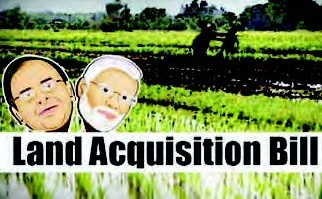
    India has a long history of its ruler’s fascination with farm land. Whether it was ancient Kings or Moghuls or British invaders turned rulers as well as the current rulers after independence; every one has been robbing the farmers of their land in broad daylight by claiming that they are doing it for the sake of development.

    Let us have a close look at the largest democracy of the world. India is a country of 1.35 billion, where 665 million practice open defecation against 37 million doing so in China. India has the world’s largest army of 85 million child labor out of 830 million poor living in extreme poverty. India’s elite, world famous billionaires, part of the 56 million rich Indians, live side by side with almost a billion poor and treat them as sub humans who are viewed as burden for the country.

    A former diplomat, politician, author and thinker Pavan Varma wrote in his book “Being Indian” that in the Indian elite “there is a remarkable tolerance for inequality, filth and human suffering”. He adds that “concern for the deprived and the suffering is not a prominent feature of the Indian personality. The rich in India have always lived a life, quite oblivious to the ocean of poverty around them”. Less than 10-15 minutes from every slum in any major city of India there are very expensive heavily guarded residential areas with mini palaces costing from a few million dollars to $1 billion Mukesh Ambani’s Palace. One city: two universes.

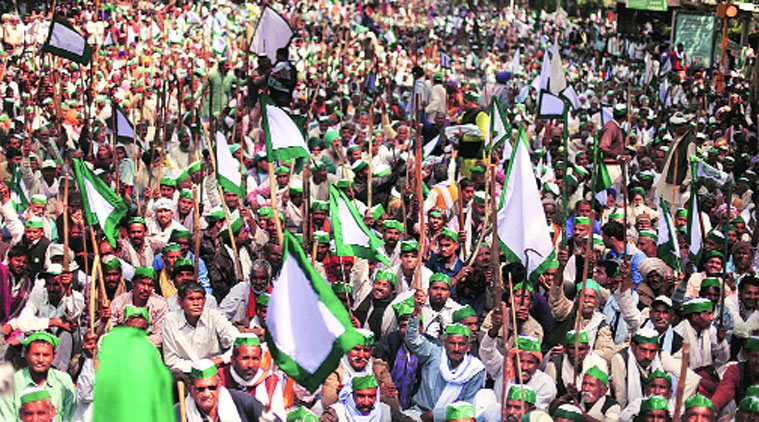
    India’s Land Acquisition Act was enacted in 1894 by British rulers. It gave unlimited power to the government to acquire any land. The Act allowed governments all over India to acquire land from the public. After independence India adopted the same Land Acquisition Act and no one bothered to make any changes in it because it was an easy way for the politicians and corporations to make money. The only person who lost money and livelihood was the individual and his family whose land was acquired. In 1985, an amendment made it easier for politicians and corporate to take over land at throw away prices. “Whenever it appears to the [appropriate Government] the land in any locality [is needed or] is likely to be needed for any public purpose [or for a company], a notification to that effect shall be published in the Official Gazette [and in two daily newspapers circulating in that locality of which at least one shall be in the regional language], and the Collector shall cause public notice of the substance of such notification to be given at convenient places in the said locality.” Practically for 66 years, from 1947 to 2013, every political party and at the center as well as all the states chose not to do anything and has been using this law as a source to generate black money to fight elections. It was only in 2013, the Congress led United Progressive Alliance (UPA) brought in “The Right to Fair Compensation and Transparency in Land Acquisition, Rehabilitation and Resettlement Act 2013. Although this also has some major flaws but it was the first time that some one thought of protecting the farmers, tribals and landless poor. However, UPA could not implement this law as it lost power and in 2014 a new government under Modi was installed at the center by the corporate world.

    Corporations and politicians all these years, in daylight robbery, after taking over farm land at throw away prices, have been getting the “land use” changed overnight and land becomes 1,000 to 10,000 times more its original price. Then the scam of acquiring Panchayat land or Shamlat land that is owned by the entire village marked for animal grazing especially for marginal farmers and landless owners of a few animals has been going on for over a century. This is done by the prospective buyer with bribes to revenue officials, from Patwari, Gram Panchayat members, Nayab Tehsildar, Tehsildar, District Collector, to ministers and judges, in case if a petition against an allotment is made for stay and, of course, the Chief Minister of the State who gets his/her share before any one else and only then a green signal is issued to go ahead with the project. Now after acquiring the farm land, to get its “land use” changed the buyer once again pays bribes to Chief Minister of the State, the District Collector, the Minister concerned, never forgetting the judicial officials in case a petitioner approaches the court for stay. The buyer also pays the usual development charges as per the rules.

    Farm Land has always been the biggest black money source for every ruling party in every state. If a serious investigation is done one can find how the real estate companies came into existence and some of the famous 5 star hotels, resorts, malls, luxury farm houses and residential complexes were built on farm land as well as Shamlat or Panchayat Land. The worst part is the farmers and their family members who used to own this land are now working as help- gardener, watchman, cleaner, cook and drivers on these properties.
    The forest land on which millions of people specially tribal and landless villagers depend for their survival by collecting minor wild oil seeds, herbs, fruits and flower, is much easier to acquire. Bribe all the concerned politicians, bureaucrats, Judges and environmentalists and get the land for a paltry sum per year on a per yard lease for 99 years. There is absolutely no need to buy and spend money on stamp papers etc.! And, in the long rum, have it to yourself, almost for free.
    Every central and state government in India believed that it owned the country’s resources. That is the reason we had numerous scams under Congress, Janata Party and BJP governments and their allies. But this time BJP that has come to rule the country at the Center as a single party with a massive majority for any party, after 30 years, has gone a step forward. It is openly sending a message that they own the resources. BJP must understand that “Country’s resources belong to the people and the land owned by farmers must remain with the farmers.” Let them decide what is to be done with the resources in the best interest of the country. Let the issue be decided by the majority of India’s citizens, not by the 1% that own the politicians and are trying to take over the country.
    Governments in India have always advanced the argument that the land is required for public use. That, it is required to build infrastructure- roads, bridges, power plants etc. That the land is required for the vital defense projects. For each of these projects that go in to private sector, the players get their profits. Even in case of government projects, governments get to recover the cost through various taxes. Where is the need to provide land at subsidized rates to any of them? The Indian industrial houses -Reliance, Adani, Tata, Jindal, Ruia etc have unprecedented political access and power. All these corporations, unlike East India Company, do not have their private army but soon will be making all kinds of warheads, missiles, helicopters, airplanes, ammunition and other sophisticated military gadgets because BJP’s Finance Minister Arun Jaitley has increased the FDI limit to 49% from 26% for defense industry. Just a few days before the budget the institution of Lobbyist ( Middleman) has been legalized in India for deals with the government, including defense deals. Now there won’t be any shortage of Radias openly operating in the corridors of power to influence law makers for favors for their corporate clients. Do these multi-billionaires really need to be given land at a subsidized rate?
    Even after Congress party’s catastrophic defeat in 2014 due to rampant corruption and massive scams the country’s crony capitalists are unlikely to suffer as a result. The nexus between business and politics, today under BJP rule, is as tight as it has ever been. BJP spent Rs 32,000 crore to bring Narendra Modi to power with massive corporate donations. BJP is estimated to have spent at least Rs 6,200 crore on print and broadcast advertising alone. Of these donations, around 90% comes from unlisted corporate sources who will be rewarded when the times comes. May be, under Land Acquisition Act it is pay back time for BJP to its financial supporters with cheap land besides the Rs. 62,398.6 crore for 2014-2015, the revenue government is expected to forego because of exemptions and deductions given to corporates.

    Modi’s Finance Minister Arun Jailey is bringing down the Corporate Tax from 30 per cent to 25 per cent in the next four years. In USA where the corporate Tax is 35% according to CAG ; US Corporation’s effective rate of tax was 12.1% in 2011 that is 40 years low. If the effective rate in USA is 12.1% in India it has to be under 10% or in some cases 0 because Indian Corporations are more innovative; they get subsidized loans, land, electricity, break on all kinds of taxes including custom, excise, dividend tax and can book their profits in foreign countries by over invoicing or under invoicing and route it back through government approved Mauritius route. Besides with the plethora of credits and deductions in tax code they buy super luxury cars, luxury homes & farm houses, air planes, yachts and expensive holidays abroad in their corporation’s name for their personal, family, executive and for the use of politicians and top bureaucrats. Interestingly, the bigger the corporate the more deductions and exemptions they take.!
    PM Modi has been going to every country in the world and telling investors: ‘Come to India; make in India; we will give you cheap land and labor’. PM Modi is certainly not lying. After robbing the farmers of their land, the farmers and their family members will have no choice but to become cheap laborers for his financial supporters- the MNC’s and the local industrial houses.
    (The New Jersey based author is a regular contributor to The Indian Panorama. He can be reached at davemakkar@yahoo.com)

  • WHY INDIA MATTERS TO CANADA

    WHY INDIA MATTERS TO CANADA

    For two countries that Prime Minister Stephen Harper calls “natural partners” in a new global economy, Canada and India might appear to share a rather meek business relationship.

    Not even one per cent of Canadian exports currently ship to India, with goods exports around $3.1 billion in 2014 – less than one-sixth what Canada exports to China.

    Promising to open India to global commerce, Indian Prime Minister Narendra Modi’s historic three-day Canadian tour this week seeks to change that.

    His trip ends a 42-year dry spell since a head of state from the world’s largest democracy visited to talk bilateral relations.

    As Harper pushes for a free-trade pact with Modi, Canadian economists and business leaders representing South Asian professionals lay out their case for why India is a social, political, cultural and economic force that matters.

    1. A hot opportunity

    “Let’s not forget there’s a race to get to India’s door,” says Jaswinder Kaur, director of the Canada-India Centre of Excellence in Ottawa.

    “We’re competing against Japan, the French, the Australians, and this is an opportunity for Canada to demonstrate how we can contribute and make a true partnership.”

    Canada’s Global Markets Action Plan identified India as a priority market, with a burgeoning economy and roughly 11 million people under 30 entering the workforce each year.

    India has for years remained the largest market for Canada’s pulses (grain legumes such as lentils and peas), and Canada also supplies lumber and potash.

    “But are Canadian companies ready to do business?” Kaur says. “That’s where the real work is going to begin.”

    The International Monetary Fund projects that by 2016, India’s GDP growth will outpace that of China’s becoming the fastest-growing major economy in the world.

    In the meantime, two-way bilateral trade has grown to $6 billion, up 47 per cent since 2010, when trade was around $4.09 billion.

    2. Energy demands

    Much has been made, Kaur notes, of Modi “shopping for uranium” as part of this Canadian tour.

    India needs the radioactive element to feed its nuclear reactors, and Canada has a vast supply.

    ‘Mr. Modi will be looking for a signed contract for Canada to be a supplier of uranium, as India desperately needs energy as it expands.’ – Elliot Tepper, Carleton University South Asian studies professor

    If Ottawa allows, Saskatchewan-based Cameco Corp. could resume uranium exports to India following a ban 40 years ago, when India was accused of testing a nuclear weapon in 1974, and then again in 1998, using Candu technology supplied by Canada.

    “Since then, our relations have slowly climbed back up to the point where we have a nuclear agreement,” said Elliot Tepper, a South Asian studies professor at Carleton University.

    “Mr. Modi will be looking for a signed contract for Canada to be a supplier of uranium, as India desperately needs energy as it expands, and wants to rely more on nuclear power.”

    Meanwhile, Canadian natural gas and oil will continue to be useful resources to India.

    3. Young population

    The under-35 demographic represents more than 65 per cent of India’s population, and many of them are migrating from rural areas to cities searching for education and employment, both of which Canada can help supply.

    Open for business. India’s Prime Minister Narendra Modi addresses the world’s largest industrial technology fair, the Hannover Messe, in Hanover, Germany, earlier this month. He has been on something of a world tour, trying to drum up industrial investment in job-hungry India.

    Modi’s “Make in India” initiative is encouraging international firms to set up manufacturing plants in India to spur job creation at home and become a low-cost alternative to China.

    Flipping the saying that China will grow old before it grows rich, Gary Comerford, president of the Canadian Indian Business Council, believes

    “India will grow wealthy before it grows old.”

    Over the last decade, he says, a large number of Indians have “pulled themselves out of poverty” and into a rising middle class.

    “And that means they’re consuming,” Comerford says of the next generation of big spenders. “They’re getting a fridge, a TV, a cellphone.

    “If you take that sheer population of 1.2 billion and convert it into a consuming group, as well as being an economic powerhouse, it will be a political powerhouse as well.”

    4. Cross-cultural understanding

    India remains a democracy with a “remarkably pluralistic society,” which Canada can appreciate as a state that welcomes diversity as a foundation of the country, says Tepper.

    Two business-friendly PMs, India’s Narendra Modi and Canada’s Stephen Harper chat at the G20 summit in Australia in November. (The Canadian Press)

    “That makes our two countries both natural allies and rather special in terms of the states of the world,” he says, adding that the two countries have worked together quietly for years on such things as counter-terrorism and sharing concerns about violent extremists.

    University of Toronto professor Kanta Murali, who analyzes Indian politics at the Centre for South Asian Studies, points to a 1.2 million-strong Indian diaspora in Canada as “central to the excitement surrounding Modi’s visit.”

    A shared history under British colonial rule, a broadly English-speaking population and a democratic system add to a sense of kinship, adds Comerford.

    5. A knowledge economy

    According to Dherma Jain, president of the Indo-Canada Chamber of Commerce, more than 15,000 Indian students have decided to pursue foreign studies at universities and colleges in Canada.

    Modi’s visit is expected to seal some educational co-operation agreements such as twinning programs, Tepper said.

    “Canada will be providing expertise that India invites as it wants to upscale its own capacity, from technology to agriculture, and attracting people to come to Canada instead of going elsewhere,” he said.

    India is interested in harnessing green tech as well, notes Karunakar Papala, chairman of the Indo-Canada Ottawa Business Chamber, which represents some 600 business owners in the capital.

    Modi’s plan for India to develop 100 high-tech “smart cities” that are more energy and resource efficient, could benefit from Canadian know-how. (The Indian prime minister made a similar pitch when he visited Germany recently.)

    “Solar technologies, green technologies, Canada has got a lot to offer there,” Papala said.

  • Infra firm AECOM to expand in India

    NEW DELHI (TIP): Looking to expand in India, US-based infrastructure design and consultancy giant AECOM plans to hire 1,500 new employees here as it prepares to participate in initiatives like ‘Smart Cities’ and ‘Make in India’, including for ports and defence sectors.

    The $20-billion group, which currently has 2,500 employees in India, is also looking to tap opportunities in ‘Clean Ganga’ and ‘Clean India’ initiatives of Prime Minister Narendra Modi, its global CEO Michael S Burke said.

    “It is the right time to be in India when administration is taking all right steps to grow the economy,” said Burke, who is here to tap new business opportunities and meet top government officials with regard to its interest in various government and P-3 (public-private partnership) programmes for infrastructure and other sectors.

    Burke said that AECOM is already involved in some capacity with all of the ten biggest infrastructure projects in India and the country presents much more growth opportunities for the group and its share could grow further going forward in the overall global business of the group.

    AECOM, which has eminent banker Deepak Parekh on its global advisory board, is providing consultancy services for various mega projects in India with total construction cost of over $22.5 billion.

    When asked about the impression foreign companies have about the new government and whether they had any concerns about factors like ease of doing business, Burke said that the new government is very actively reaching out to the global community and that was sending right signals.

  • BUDGET 2015-16 GOES FOR GROWTH, INVESTMENT

    BUDGET 2015-16 GOES FOR GROWTH, INVESTMENT

    NEW DELHI (TIP): Finance Minister Arun Jaitley on Feb 28 announced a budget that put boosting growth before painful reforms, slowing the pace of fiscal deficit cuts and seeking to put domestic and foreign capital to work.

    In his first full-year budget since Prime Minister Narendra Modi’s landslide election victory last May, Jaitley said India’s economy was about to take off. Modi tweeted that the budget would “further reignite our growth engine”.

    Billed as a test of the nationalist premier’s willingness to reform a $2 trillion economy with a bloated public sector and weak private investment, the budget was short on structural reforms and contained revenue targets some called unrealistic.

    It drew a mixed reception from economists, with some calling it a path to an investor-friendly India, but others seeing a missed opportunity to tackle deep-seated structural problems.

    “Definitely far from what some were hoping would be an event similar to the game-changing budget of 1991 which ushered in India’s economic liberalisation,” said Devika Mehndiratta, senior economist at ANZ research.

    Apparently anticipating such barbs, Jaitley, 62, said his government had acted “rapidly” to right the course of Asia’s third-largest economy.

    “People who urged us to undertake ‘big bang’ reforms also say the Indian economy is a super giant, which moves slowly but surely,” Jaitley told parliament as he wrapped up a 90-minute speech.

    Jaitley promised higher investment in India’s decrepit roads and railways, offered the carrot of tax cuts to global companies and the stick of tighter rules to get Indian tycoons to invest at home rather than stash wealth abroad. Tax evaders face jail sentences of up to 10 years, he warned.

    The tax changes and tougher enforcement would raise $2.5 billion next year, he said. Tax receipts overall would rise 15 percent and government asset sales would raise $11 billion -goals that past experience shows may be hard to meet.

    Although Jaitley forecast that growth would accelerate to 8-8.5 percent in the fiscal year starting in April, up from 7.4 percent this year, the budget contained little obvious support for Modi’s call to “Make in India”.

    “It assumes a questionable growth rate, relies too heavily on divestment to meet fiscal targets, does not address the revenue deficit issue head on and leaves the good things for the future,” said Arvind Sethi, CEO of Tata Asset Management.what will be cheaper 2015-16 Budget what will be expensive 2015-16 Budget

    Capitalizing on windfall savings stemming from cheaper oil imports, Jaitley was able to ramp up infrastructure investment without slashing spending on politically sensitive subsidies and welfare schemes.

    ROOM FOR RATE CUTS?

    Jaitley forecast inflation at 5 percent by the end of the fiscal year ending March 2016, undershooting the Reserve Bank of India’s 6 percent target and creating room to cut interest rates. Annual inflation was 5.1 percent in January.

    But he pushed back by a year, to 2017/18, a deadline for cutting the fiscal deficit to 3 percent of gross domestic product. In 2015/16, the deficit will be 3.9 percent of GDP, above the 3.6 percent target inherited from the last government.

    In volatile trading, the Nifty ended 0.7 percent higher after having briefly fallen into the red on his comment that the fiscal deficit would slip.

    Ratings agency Moody’s gave the budget a cool reception, saying it was neutral for India’s credit and left stabilising government finances at the mercy of economic growth. Moody’s rates India at the lowest notch of investment grade.

    “We were not expecting big bang reforms,” said Atsi Sheth, a Moody’s sovereign ratings analyst. “The big bang reforms are also not desirable because they have a higher chance of rollback. “

  • CEMENT PRICES LIKELY TO GO UP AS RAILWAYS INCREASE FREIGHT RATES

    CEMENT PRICES LIKELY TO GO UP AS RAILWAYS INCREASE FREIGHT RATES

    MUMBAI (TIP): Cement prices across the country are likely to go up by Rs 3-5 per 50 kg bag following railway minister Suresh Prabhu’s proposal to increase freight rates in his maiden budget. Cement producers will, however, take a call on increasing prices only after studying the Union Budget on February 28.

    Prabhu has hiked freight rates by Rs 21 per tonne of cement transportation and also announced increase in freight rates of coal and slag, by Rs 45.70 per tonne and Rs 20.9 a tonne, respectively. Although unhappy with the move, cement manufacturers said they would wait for the main Budget to take a final call on raising prices which are already subdued as demand has not picked up.

    “The industry was looking for some incentive from the Rail Budget. The impact of the freight hike would vary from company to company based upon their dependency on rail. Back of the envelop calculations suggest that our cost of production is likely to go up by Rs 7-10 per bag of 50 kg due to the proposed freight hike on various inputs and commodities,” a CEO of a leading cement firm said on conditions of anonymity.

    The coal and steel sectors, on the other hand would see only a marginal impact depending on the location of the plant frpm the raw material source. Despite increase in freight rates of coal, industry sources did not see the possibility of an increase in power tariffs. Ravi Uppal, MD & CEO, Jindal Steel and Power Ltd (JSPL) believes the 6.3% hike in freight rates for coal will dent a range of industries and is also out of whack with the Make in India spirit. Sanjeev Churiwala, CFO, Ambuja Cement believes that the proposed hike in freight of raw materials and cement will increase product prices between Rs 20 and and Rs 60 per tonne of cement. “It will be too early to say if the increased cost will be passed on to consumers as prices are already depressed and demand is yet to pick up,” Churiwala said, while adding that in case the cement firms are not able to pass on the increased cost to consumers, it will further erode their EBIDTA margins by 1%.

    “The freight increase will majorly impact cement prices as urea, LPG and kerosene prices are regulated and subsidised by the government so there won’t be any increase in prices of these commodities,” said Rajaji Meshram, director, Transport at KPMG.

    “It is surely inflationary in nature but that could have been avoided by focusing on internal efficiency improvements. Companies will tend to pass on a portion of this to end consumers. A lot depends on how the overall demand picks up in the near term, however, as long as we have higher growth, nobody would complain,” GV Subrahmanyam, partner, Grant Thornton India LLP said. According to Parikshit Arya, Jt. MD, Rhenus Logistics, the increase in freight rates will impact the manufacturing industry as these are their key ingredients. “Ultimately the manufacturing cost increase due to freight rise will be passed on to the end users. Also the consumer of these raw materials may move cargo by road rather than railways, if the rail freight is not competitive enough,” said Arya.

  • Railways Budget presented in Indian Parliament – Full Coverage

    Railways Budget presented in Indian Parliament – Full Coverage

    NEW DELHI (TIP): Railways Minister Suresh Prabhu shunned the populism of the past to deliver a reform-oriented railway budget on Thursday, February 26, that focused on modernizing an ageing network and improving amenities for the 23 million 

    Indians who ride its trains daily. There were no new services to politically important regions and no plans to set up new factories, a staple of past budgets. And while there were no passenger fare increases, freight rates for some commodities rose by an average of 3%, and aggressive projections for revenues suggested that further hikes were an option if the economy continued to pick up.

    The 61-year-old Prabhu, a chartered accountant by training, said he was determined to transform the Indian Railways, a monolith that employs over a million people and which made a massive Rs 26,000-crore loss in its passenger operations last year.

    “It will take time to neutralize the legacy of the past. It cannot be business as usual”, he said, outlining an outsize 52% increase in spending this year compared to the normal 10-12% yearly rise. A tenth of the spending will go towards building dedicated freight corridors.

    The railways, with their vast reach, are a key lever in Prime Minister Narendra Modi’s plans to boost the Indian economy, which is projected by the World Bank to grow faster than China’s next year.

    So Prabhu, seen as a modern-minded technocrat, was parachuted into the ministry in November; he did not disappoint in an hour-long speech by outlining plans for Wi-Fi at 400 stations, CCTVs in trains for women’s safety and easier norms for unreserved tickets.

    India will import a couple of trains which will run at up to 160 kilometers per hour on existing tracks, a full 30 kmph faster than the country’s speediest train. Under the PM’s pet Make in India scheme, production of such trains was likely to be indigenized, Prabhu said.

    Modi tweeted soon after Prabhu’s hour-long speech: “The rail budget is futuristic and passenger-centric and lays out a clear roadmap to make the national transporter the key driver of the country’s economic growth – combining a clear vision and a definite plan to achieve it”.

    But Congress president Sonia Gandhi was unimpressed. “Rail Budget 2015 is very disappointing, they are only presenting old UPA’s initiatives revamped,” the party’s Twitter handle quoted her as saying.

    Prabhu also listed novel plans to raise money from foreign pension funds and multilateral development banks to finance an ambitious five-year plan.

    Over this period, Prabhu plans to increase the daily passenger carrying capacity to 30 million; increase the track length by a fifth to 138,000 kilometers and increase the annual freight carrying capacity by 50% to 1.5 billion ton.

    Highlights of Railway Budget

    1. The most-expected part about this year’s Railway Budget – there is no increase in passenger rail fares.
    2. Rs.8.5 lakh crore will be invested in Railways in next 5 years.
    3. ‘Operation 5 mins’, wherein passengers gravelling unreserved can purchase a ticket in 5 minutes.
    4. Bio toilets and airplane-type vacuum toilets in trains.
    5. Surveillance cameras in select coaches and ladies compartments for women’s safety without compromising on privacy.
    6. Rail tickets can now be booked 120 days in advance. 
    7. Speed on nine railway corridors to go up to 200 km per hour 
    8. Wi-Fi in more stations, mobile phone charging facilities in all train compartments. 
    9. Facility of online booking of wheelchair for senior citizens.
    10. Satellite railway terminals in major cities
    11. Centrally managed Rail Display Network is expected to be introduced in over 2K stations over the next 2 years.
    12. All India 24/7 helpline – 138 from March 2015 ; Toll free No.182 for security.
    13. 917 road under-bridges and over-bridges to be constructed to replace 3,438 railway crossings; at a cost of Rs. 6,581 crore.
    14. Four Railway Research Centers to start in four universities.
    15. Details about new trains and increased frequency will be announced later in this session of Parliament after review.

    What is the investment plan?

    The Railway Budget envisages an investment of Rs. 8.5 lakh crore in next five years.

    How is it going to be mobilized?

    The Minister suggested that the money could be raised from multiple sources – from multilateral development banks to pension funds.

    What is the action plan in the sphere of fund raising?

    Go in for partnership with key stakeholders – States, PSUs, partner with multilateral and bi-lateral organizations other governments to gain access to long-term financing. Also, get technology from overseas. The private sector could be roped in to improve last-mile connectivity, expand fleet of rolling stock and modernize station infrastructure.

    What is the thrust?

    The thrust will be on revamping management practices, systems, processes, and re-tooling of human resources.

    What is the proposal on capacity augmentation?

    1. De-congesting networks with basket of traffic-generating projects will be the priority
    2. Priority to last-mile connectivity projects
    3. Fast-track sanctioned works on 7,000 kms of double/third/fourth lines
    4. Commissioning 1200 km in 2015-16 at an investment of Rs. 8,686 crore, 84% higher Y-O-Y.
    5. Commissioning 800 km of gauge conversion targeted in current fiscal.
    6. 77 projects covering 9,400 km of doubling/tripling/quadrupling works along with electrification, covering almost all States, at a cost of Rs. 96,182 crore, which is over 2700% higher in terms of amount sanctioned.
    7. Traffic facility work is a top priority with an outlay of Rs. 2374 crore.
    8. Award of 750 km of civil contracts and 1300 km of system contracts in 2015-16 on Dedicated
    9. Freight Corridor (DFC); 55 km section of Eastern DFC to be completed in the current year.
    10. Preliminary engineering-cum-traffic survey (PETS) for four other DFCs in progress.
    11. Acceleration of pace of Railway electrification: 6,608 route kilometers sanctioned for 2015-16, an increase of 1330%over the previous year.
  • MUNJALS TO SELL 3.5% IN HERO MOTOCORP

    MUNJALS TO SELL 3.5% IN HERO MOTOCORP

    NEW DELHI (TIP): The promoters of Hero MotoCorp, India’s largest twowheeler company, are set to raise about Rs 2,000 crore by selling 7 million equity shares, or 3.5% stake, in the flagship entity of their estimated $5 billion (about Rs 31,000 crore) Hero Group in a block deal on Wednesday, a move aimed at raising money for investments in defence and infrastructure.

    As per the term sheet of the offer, the Delhi-based Munjal family offered shares in an indicative price band of Rs 2,664 to Rs 2,720 a piece for the deal that was reportedly been arranged by Kotak Mahindra Capital.

    After selling seven million equity shares, the family led by Hero MotoCorpBSE 0.88 % chairman BML Munjal, still holds more than 36% controlling stake in the two-wheeler maker. “The group has been looking at the defence sector for quite some time now and has been exploring certain options. Infrastructure, particularly power and adjacent businesses, is another area which has been in the pipeline for some time. The money raised through this block deal will be utilised in these forays,” an industry veteran close to the promoter group said on the condition of anonymity.

    Another person close to the Munjals said, “The Hero Group and their flagship company Hero MotoCorp (formerly Hero Honda) have remained debt-free for well over a decade now due to strong management and leadership of the Munjal family.”  “The promoters want to maintain this debt-free status in future as well and, therefore, have deliberately avoided borrowing to fund diversification drive,” the person added.

    In a statement, Hero Group said, “The Prime Minister’s ‘Make in India’ platform has opened up new vistas, some in very high-growth areas, and the Hero Group -with its experience, scale of operations and brand equity – is uniquely placed to leverage these emerging opportunities…the group will use the sale proceeds to fund new growth avenues.” 

    At the same time, the group remains strongly committed to its core two-wheeler business, where it sees enormous potential, both in India and overseas.

  • Reliance Group to foray into defense sector

    NEW DELHI (TIP): The Reliance Group is ready to set foot in the defense land scape, and in a big way, said chairman Anil Ambani. “My presence here today demonstrates our commitment to the development of India’s defence industry ,” he said at the Investors’ Summit and Global CEOs’ Conference at Aero India 2015.

    He was among the many honchos who came together to discuss the Prime Minister’s ambitious Make in India plan. Ambani said there’s a need for a sovereign defense fund on a PPP model, in which the government holds a 49% share while private sector players hold the rest.

    Stating that decision making in India’s defense sector is hamstrung by the fear of regulatory censure and the long shadow of the 3Cs -CBI, CVC and CAG -is leading to a lack of initiative. Defense minister Manohar Parrikar said transparency in policy making is the best way to curb corruption, and in turn, get rid of regulatory fears which hold back investors.

    Baba Kalyani, chairman and MD of Bharat Forge, said being a country with traditional manufacturing investments in automotive, capital goods and consumer products, which show limited growth, India needs to invest in untapped industries.