India’s foreign policy in 2024 showcased a bold stance, with India asserting its influence not only in its immediate neighbourhood but also on the global stage. External Affairs Minister S. Jaishankar in December highlighted a decade-long shift toward prioritizing economic diplomacy, a trend that continued to define India’s strategic engagements this year.
As per Jaishankar, India’s foreign policy today is based on three principles. “Active engagement with countries, nation’s interests first under any circumstance and humanitarian approach with ethics”.
Here’s how India flexed its global power muscles in 2024:
India stares down China
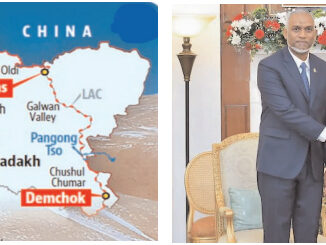
It took India and China 21 rounds of Corp Commander-level talks on disengagement to end the military impasse that plagued the relationship for five years. While military disengagement had been achieved earlier at four points, the same remained elusive in Depsang and Demchok, the two friction points.
China maintained that the impasse in these areas were legacy issues that predated the 2020 standoff and should not be allowed to block resumption of normal bilateral exchanges. However, India too steadfastly maintained there couldn’t be any progress in ties till the time disengagement is completed in the remaining areas, calling it an essential basis for peace in the border areas.
Patient and persevering diplomacy helped clinch the disengagement agreement with China, Jaishankar said.
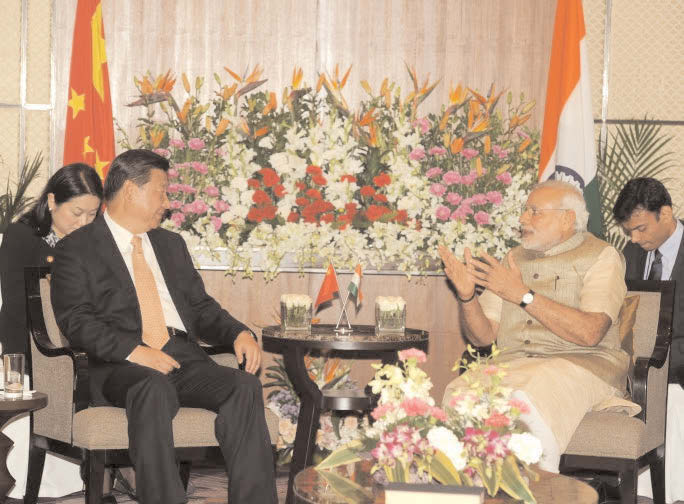
Both the countries agreed to return to the patrolling agreements along the Line of Actual Control (LAC) in eastern Ladakh that were in place before the Galwan clashes in 2020 after several negotiations.
Chabahar port powerplay
India’s agreement with Iran in May to manage the strategic Chabahar Port for the next decade marked a significant milestone, as it was the first time India assumed management of a port overseas and that too amid Iran’s tensions with the US and Israel. This move underscores Prime Minister Narendra Modi’s emphasis on using strategic ports to bolster regional connectivity and influence.
Chabahar port is a vital link in India’s efforts to enhance connectivity with Afghanistan, Central Asia, and the broader Eurasian region. It also serves as a counterbalance to Pakistan’s Gwadar Port and China’s expansive Belt and Road Initiative.
The pact with Iran was signed despite the looming threat of US sanctions. Although the sanctions were never imposed, External Affairs Minister S. Jaishankar addressed concerns raised by the US about the “potential risk” to companies involved in the India-Iran joint venture. Jaishankar stressed that India would “work at” explaining Chabahar’s importance as a project serving the region’s broader interests.
Maldives comes back
India’s relationship with Maldives faced turbulence after Mohamed Muizzu, known for his pro-China and anti-India stance, assumed office as president. Mere hours after his swearing-in, Muizzu demanded the withdrawal of Indian military personnel stationed to operate three aviation platforms gifted by India. Following negotiations, the Indian military personnel were replaced with civilian operators.
Tensions escalated further when three Maldivian deputy ministers made controversial remarks about India and Prime Minister Modi on social media. The Maldivian Foreign Ministry swiftly distanced itself from the comments, leading to the suspension of the three junior ministers.
Amid these strained ties, President Muizzu made his first bilateral visit to India in October, as Maldives grappled with an economic crisis. The financial challenges facing his country were likely a key topic in discussions with India. Before the visit, Muizzu adopted a conciliatory tone, stating that he has never opposed India and acknowledging that New Delhi was aware of Maldives’ financial difficulties and willing to assist.
Sri Lanka sides with India
Sri Lankan President Anura Kumara Dissanayake on his inaugural foreign visit since taking office in September assured Prime Minister Modi that Sri Lanka would not permit its territory to be “used in any way that is detrimental to the interest of India.
The assurance from Sri Lankan president came at a crucial point as China is intensifying its presence in the Indian Ocean region, particularly targeting Indian interests.
China’s control over Hambantota Port, acquired through Sri Lanka’s debt default, has enabled Beijing to station vessels like the Yuan Wang 5, a 25,000-tonne satellite and missile tracking ship. This development concerns India due to Sri Lanka’s geographical proximity.
Despite India’s initial objections in August 2022, Sri Lanka eventually permitted Chinese vessels to dock for ‘replenishment’ at Hambantota. Meanwhile, Chinese surveillance vessels keep on patrolling the Indian Ocean region and using the Hambantota port.
China secured a 99-year lease on Hambantota port after Sri Lanka struggled with loan repayments. The $1.7 billion project, with phase one completed in 2010, required annual payments of $100 million, which Colombo failed to meet.
The Canadian challenge
India in October this year expelled six Canadian diplomats and announced withdrawing its high commissioner and other targeted officials from Canada after strongly dismissing Ottawa’s allegations linking the envoy to a probe into the killing of Sikh extremist Hardeep Singh Nijjar, in a major downturn in already frosty ties between the two nations. India’s decision to recall High Commissioner Sanjay Verma and some other diplomats came shortly after the Canadian Charge d’Affaires Stewart Wheelers was summoned to the Ministry of External Affairs (MEA). Wheelers was bluntly told that baseless “targeting” of the Indian envoy and other officials was “completely unacceptable”.
India is not neutral in Russia-Ukraine war
Despite opposition of the West, India has managed to find a middle way on the Russia-Ukraine conflict while also constantly underlining its strong relations with Russia. During the BRICS summit in October, when Prime Minister Modi visited Russia, President Vladimir Putin remarked that he believed Modi would understand his comments without translation, highlighting the strong relationship between the two nations. Modi responded with a hearty laugh. India’s approach to the Russia-Ukraine conflict has been shaped by its steadfast commitment to peace, dialogue, and diplomacy. This year, Modi visited Ukraine and met with President Volodymyr Zelenskyy, reaffirming India’s stance. During the meeting, Modi emphasized that India has never been neutral in the conflict but has consistently sided with peace.
India’s role in the conflict has drawn international attention. Italian Prime Minister Giorgia Meloni, after her meeting with Zelenskyy, pointed out the potential roles India and China could play in resolving the crisis. Following his visit to Kyiv, Modi telephoned Putin to share his perspectives. Apart from the BRICS summit visit, Modi visited Russia in July, holding extensive talks with President Putin. While India has not proposed a peace formula like those of Brazil or China, it has maintained contact with all stakeholders, advocating for negotiations and emphasizing the importance of Russia’s involvement in peace summits for a sustainable resolution to the conflict.
Diplomatic win in Qatar
In a significant diplomatic win for India in February, eight former Indian Navy personnel, who were initially sentenced to death in Qatar on charges of spying, were released, marking a crucial turn of events in a case that had garnered international attention and led Modi critics to make it a test case for his global diplomatic clout.
India’s diplomatic efforts led to the commutation of the capital punishment to extended prison terms for the eight veterans, who had been facing severe charges in Qatar. This decision came after sustained diplomatic intervention by India, showcasing the effectiveness of bilateral engagements in resolving complex legal matters. Expressing gratitude for the release of the Indian nationals, the Indian government welcomed the decision made by the Amir of the State of Qatar to facilitate their return. The swift resolution of this sensitive issue underscores the significance of diplomatic dialogue and cooperation between nations in addressing challenges faced by their citizens abroad.
Tag: Maldives
-
Top leaders of Bangladesh, Sri Lanka, Maldives, 4 other nations likely to attend Modi’s oath ceremony
New Delhi (TIP): Top leaders of Bangladesh, Sri Lanka, the Maldives, Bhutan, Nepal, Mauritius and Seychelles are likely to attend the swearing-in ceremony of Prime Minister Narendra Modi over the weekend, authoritative sources said on June 6.
It is learnt that India has already sent invites to Bangladesh Prime Minister Sheikh Hasina, Sri Lankan President Ranil Wickremesinghe and some other leaders of the countries chosen to grace the ceremony.
Nepalese Prime Minister Pushpa Kamal Dahal ‘Prachanda’, Maldivian President Mohamed Muizzu, Bhutanese Prime Minister Tshering Tobgay, Prime Minister of Mauritius Pravind Jugnauth and President of Seychelles Wavel Ramkalawan are among the leaders being invited to Modi’s swearing-in ceremony.
Modi is all set to take charge as the prime minister for a historic third consecutive term with the Bharatiya Janata Party-led National Democratic Alliance (NDA) winning 293 seats in the Lok Sabha polls.
The guest list of foreign leaders for Modi’s swearing-in ceremony was primarily guided by New Delhi’s “Neighbourhood First Policy” and its strategic focus on island nations considered important in the Indian Ocean region, it is learnt.
Modi is likely to take oath on June 9.
The invitation to Muizzu assumes significance as it came amid frosty ties between the two countries.
The ties between India and the Maldives came under severe strain since November last year when Muizzu, known for his pro-China leanings, took charge as Maldivian president.
Within hours of his oath, he had demanded the withdrawal of Indian military personnel from his country. The Indian military personnel were replaced by civilians earlier this month.
The media division of President Wickremesinghe’s office on Wednesday said Modi invited him to the swearing-in ceremony during a phone conversation. It said Wickremesinghe accepted the invite.
“During the conversation, Prime Minister @narendramodi invited President Wickremesinghe to his swearing-in ceremony, which President @RW_UNP accepted,” it said on X.
Modi also had a phone conversation with Hasina on Wednesday. In the phone conversation, Modi invited Hasina to attend his swearing-in ceremony and she accepted it, diplomatic sources said.
Modi held separate phone conversations with Prachanda as well as Jugnauth.
On Thursday, Bhutanese PM Tobgay called up Modi and congratulated him on the victory of the NDA.
“Prime Minister Tobgay appreciated Prime Minister Modi’s visionary leadership in the last decade, and conveyed his warm wishes for his successful third term,” an Indian readout said.
“The prime minister thanked prime minister Tobgay for the warm felicitations. The prime minister conveyed that India accords the highest priority to its exemplary partnership with Bhutan,” it said.
It said India-Bhutan partnership is characterized by utmost trust, goodwill, and mutual understanding at all levels and is reinforced by robust people to people linkages and close economic and development partnership. (PTI) -
Teen dies in Maldives after Muizzu govt delays permission for his medical evacuation using Indian Dornier aircraft
NEW DELHI (TIP): In a rather tragic incident a 14 year old Maldivian boy died amid allegations that President Mohammed Muizzu denied permission for the use of an Indian Dornier aircraft that could have potentially saved his life, local media reported.
Maldives President, Mohamed Muizzu, office issued a statement on the demise of a child (in the aftermath of Indian Dorniers not being given permission). “Government has asked authorities to revise and modify the current protocols surrounding the emergency transfers of patients,” the statement read. This comes at a time when President Muizzu has set a March 15 deadline for 88 Indian personnel, who are associated with the two Dornier aircraft and one helicopter service that they use for humanitarian assistance and medical evacuation, to leave the country. The Dornier aircraft, produced by Hindustan Aeronautics Limited (HAL) and provided by India, has been used extensively in the island nation for humanitarian purposes. (AFP)
Prachanda expresses concern over recruitment of Nepalis by Russian Army to fight in Ukraine
KATHMANDU (TIP): Nepal Prime Minister Pushpa Kamal Dahal ‘Prachanda’ on Sunday expressed concern over the woes faced by Nepali youths in Russia after being recruited in the Russian Army to fight in Ukraine and asked Moscow to immediately stop the practice.
Talking to reporters at the Tribhuvan International Airport upon returning home after attending the 19th Summit of the Non-Aligned Movement (NAM) in Kampala, Prachanda said that he was trying his best to stop it since the government has no policy to allow Nepalis to join the military force in any other countries except India and the UK.
“The government is very much concerned and serious regarding the reports that Nepali youths are recruited in the Russian forces and mobilised in the Russia-Ukraine war. We don’t have such a policy on behalf of the government,” Prachanda said.
In Kampala, Nepalese Foreign Minister N P Saud told Russia’s Deputy Foreign Minister Vershinin Sergey Vasilievich not to recruit Nepalese nationals into the country’s Army and to help repatriate those who have already joined the forces, according to the private secretariat of Saud. (PTI) -

For an expanse of blue, with air so clean
On International Day of Clean Air for Blue Skies (September 7), there is urgent need to address risks posed by pollution
- By Benno Boer, Srishti Kumar, Neha Midha
“The world is not just grappling with climate change, but also with another silent killer — air pollution. Global health statistics reveal a disturbing scenario with lung cancer claiming 10 million deaths worldwide in 2020, as stated in the World Health Organization (WHO) factsheet published in 2023. This could soar by another 3.2 million by 2050 according to a report, ‘Mapping of global, regional and national incidence, mortality and mortality-to-incidence ratio of lung cancer in 2020 and 2050’, by the Indian National Institute of Health. South Asia, home to two billion people, is also home to nine of the world’s 10 most polluted cities, including Delhi, where the air quality continues to pose a perilous long-term threat putting its inhabitants at risk each day. While policy measures have led to statistical improvements in the Air Quality Index (AQI), the health risks associated with Delhi’s polluted air persist. Delhi is knocked to its knees every winter facing hazardous levels of air pollution.”
Youngsters around the world are taking charge of environmental advocacy, running marathons, and tracking real time data of air quality, creating environmental awareness. But the absence of a specific Sustainable Development Goal (SDG) for ‘Clean Air to Breathe’ indicates a lack of global attention.

Dr. Benno Boer According to UN Secretary-General António Guterres, the earth has entered the era of global boiling. Scorching heatwaves, devastating floods and erratic weather patterns are stark reminders for an urgent need to address the triple-planetary crisis of biodiversity loss, climate change and pollution.
The world is not just grappling with climate change, but also with another silent killer — air pollution. Global health statistics reveal a disturbing scenario with lung cancer claiming 10 million deaths worldwide in 2020, as stated in the World Health Organization (WHO) factsheet published in 2023. This could soar by another 3.2 million by 2050 according to a report, ‘Mapping of global, regional and national incidence, mortality and mortality-to-incidence ratio of lung cancer in 2020 and 2050’, by the Indian National Institute of Health. South Asia, home to two billion people, is also home to nine of the world’s 10 most polluted cities, including Delhi, where the air quality continues to pose a perilous long-term threat putting its inhabitants at risk each day. While policy measures have led to statistical improvements in the Air Quality Index (AQI), the health risks associated with Delhi’s polluted air persist. Delhi is knocked to its knees every winter facing hazardous levels of air pollution.
Lung cancer, cardiovascular disorders, respiratory ailments, and mental health issues continue to destroy lives. Delhi’s air, a lethal mix of SO2 (sulphur dioxide) and NOX (nitrogen oxides), along with high particulate matter concentrations (2.5 or even 10µg/m3), carbon monoxide and ozone, deprive over 30 million residents of their human right to breathe clean air.
The air pollution toll is troublesome especially for immunocompromised individuals, pregnant women, children, and the elderly. As per a Lancet Report, 1.67 million pollution-related deaths were attributed to air pollution in India in 2019, accounting for a staggering 17.8% of the total deaths in the country.
Efforts to combat this crisis are already being made. State governments, research institutions, and NGOs are pioneering solutions such as the PUSA Decomposer, developed by the Indian Agricultural Research Institute (IARI), employing biotechnology to address agricultural pollution. State-level policies such as GRAP 3 (Graded Rapid Action Plan), monitoring air quality in hotspots, and establishing Green War Rooms, have shown some potential. Many innovative startups involving young entrepreneurs are turning agricultural waste into valuable products.
Viable solutions
Acknowledging the existence of air pollution remains the primary step towards solutions. Next comes a debate on viable solutions and actions, many of which are already known. Eventually, these best practices need to be implemented. Without implementation, the best laid out plans will not lead to any improvement. Globally, cities such as Ljubljana (Slovenia), Accra (Ghana), Seville (Spain), Bogota (Colombia), Medellin (Colombia), epitomize the power of prioritizing human health and environmental sustainability. Car-free zones, green spaces, smart urban designs, electrified public transportation, nature-based solutions, and innovative biotechnology demonstrate positive results. China’s shift to clean energy and e-mobility after battling severe pollution, Indonesia’s project on ‘Carbon Efficient Farming’ assessing biomass to reduce CO2 emissions, Thailand and Vietnam undertaking measures to reduce open straw burning, are all gleams of hope.
UNESCO’s initiatives to combat air pollution include implementing an internal carbon tax on all flight tickets, and investing in emission reduction measures. The World Air Quality Project allows residents to make informed decisions by real time Air Quality data. In collaboration with UNEP, environmentally conscious practices have been introduced such as digital working via the ‘Virtual Meetings’ project. Clean-Air-For-Schools is spreading education among all for clean air. Other laudable activities include switching to electric vehicles, replacing lighting systems to greener LED arrangements, implementing solar powered offices, protecting historical sites by developing strategies to curb air pollution, and effective green solutions ( urban forests, parks, green corridors).
Youngsters around the world are taking charge of environmental advocacy, running marathons, and tracking real time data of air quality, creating environmental awareness. But the absence of a specific Sustainable Development Goal (SDG) for ‘Clean Air to Breathe’ indicates a lack of global attention.
However, in 2019, laying emphasis on the interest of the international community for clean air, and the need to improve air quality, the UN General Assembly decided to designate September 7 as the International Day of Clean Air for Blue Skies. Nevertheless, clean air remains a long stride in many mega-cities and other places. We hope that a concerted action to systematically improve the air quality including in Delhi will receive priority attention. The problem has been caused by people, so it should be people who will find and apply solutions, supported by innovative adequate air quality policies and action plans. As we inhale the consequences of our actions, the ultimate question beckons: are we the torchbearers of change for the future of our planet or will we be silent bystanders who let pollution script a tragic ending?
(Benno Böer is the Chief of the Natural Sciences Unit, UNESCO Multisectoral Regional Office for Bangladesh, Bhutan, India, Maldives, Nepal and Sri Lanka. Neha Midha is the National Programme Officer, UNESCO Multisectoral Regional Office for Bangladesh, Bhutan, India, Maldives, Nepal and Sri Lanka. Srishti Kumar is a UNESCO Natural Sciences Intern. UNESCO is a member of Team UN in India, together helping deliver on the Sustainable Development Goals)
-

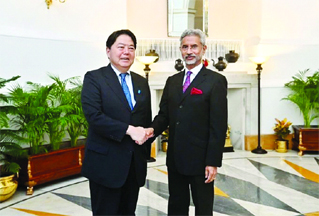
India, Japan are natural partners’: Jaishankar at event with Hayashi
New Delhi (TIP)- Japan’s foreign minister Yoshimasa Hayashi on Friday, July 28, held up India as an “indispensable” partner for achieving a free and open Indo-Pacific, while his Indian counterpart S Jaishankar said the two sides are “natural partners” for taking on challenges in areas ranging from the economy to emerging technologies. The two ministers were speaking at the second India-Japan Forum organised by the external affairs ministry. India was the first stop on Hayashi’s three-nation tour, which will also take him to Sri Lanka and the Maldives. During talks on Thursday, Jaishankar and Hayashi discussed ways to step up Japanese investments in India and deepen defence cooperation.
Building on the “Free and Open Indo-Pacific (FOIP)” vision unveiled by Japanese Prime Minister Fumio Kishida during a visit to New Delhi in March this year, Hayashi said Japan intends to deepen cooperation with India in all areas. Japan and India are also working closely together under their presidencies of the G7 and the G20 respectively, he said.
Pointing to Kishida announcing the new FOIP plan in New Delhi, he said: “This fact itself is a reflection of the critical importance Japan places on India, as your nation is an indispensable partner in achieving FOIP.”
Hayashi added: “At a time when there are many pressing challenges, including Russia’s aggression against Ukraine, Japan and India fully share the necessity to lead the world to cooperation, rather than to division and confrontation.”
Lauding the Indian G20 presidency’s focus on the Global South, Hayashi said the call to uphold a rules-based international order may sound like a slogan if there isn’t an adequate commitment to address challenges facing developing countries. At the same time, he noted that food security has deteriorated because of Russia’s aggression against Ukraine.
Hayashi said India and Japan have made progress in new initiatives in areas such as cyber and space, while discussions are underway for “substantial cooperation” in defence equipment and technology.
In his speech, Jaishankar highlighted key challenges confronting the world, including artificial intelligence, building reliable supply chains, ensuring trust and transparency in the digital domain, and upholding democratic values.
Jaishankar said India and Japan are natural partners for jointly addressing these challenges. “I would say today whether it is the future of the international order, strategy, economics, technology, culture or indeed whether it’s history or geography, I think India and Japan have a lot going for each other,” he said.
Hayashi also spoke about Japan’s plans to revise its “Development Cooperation Charter”, the basic document for development cooperation. “Under this revised charter, we will continue to undertake efforts to build quality infrastructure in India, including high-speed rail and urban transportation,” he said.
When a Japanese reporter pointed out that a bilateral partnership is tested by a war or a crisis and asked how the two sides would collaborate in case of a war in the Taiwan Strait or a conflict on the India-China border, Jaishankar replied: “I fundamentally disagree with your question because I think it is actually peacetime cooperation which is when you are tested, because if you don’t work every day to build a relationship and to put in place capabilities, comfort and structures, then when something more severe comes – if I can’t handle a good day, how will I handle a difficult day.” Source: HT -

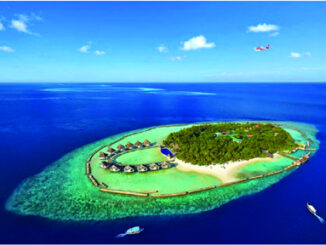
Maldives: Beyond the Beaches
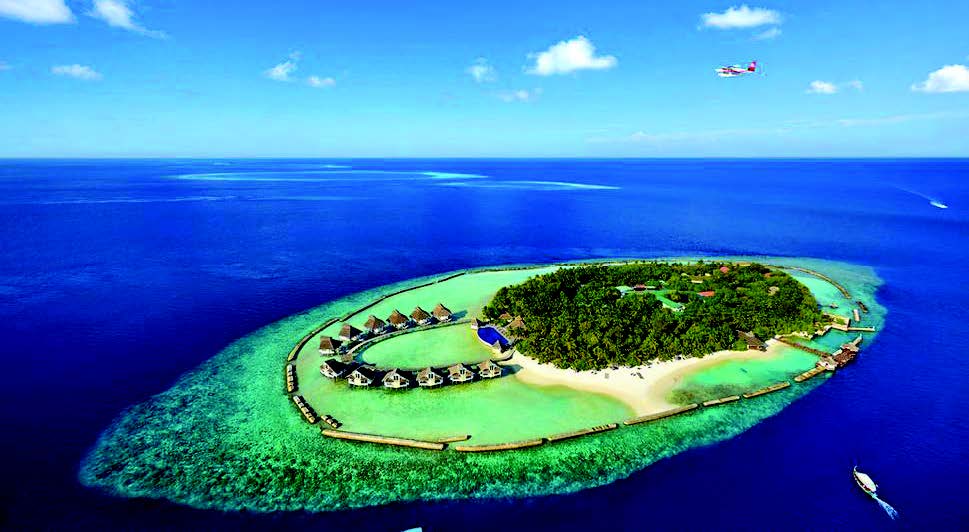
Sometimes the presumed “obvious” can be misleading, and delving deep into a place can reveal remarkable opportunities, and so Maldives – beyond the beaches present with some stunning tourist interests. Pristine white sand beaches, palm fringed islands and turquoise blue expanse of the Indian Ocean would be the first (and maybe the only) thing that comes to mind when one thinks about Maldives. But I am here to tell you about a different Maldives, buzzing with innumerable experiences, Maldives – beyond the beaches. After all, how many of us would know that Maldives before the 12th century was a Buddhist regime! There are a plethora of things to see and do in Maldives other than vegetating on fine white sand.
MALE
The capital city of Male doesn’t really show any signs of a 1400 year old Buddhist past. Although 35 mosques can be found in this seemingly expeditiously built colourful settlement, vestiges of the bygone era can still be traced to the most famous and tallest monument of Male – The Old Friday Mosque, built on a Buddhist Temple. With around 100000 people, the roads are almost crowded with scooters and mopeds. The colorful crisscrossing by-lanes are better to explore the city with every attraction being at an arm’s length. Another interesting fact about Maldives is that no other religion other than Islam can be practiced here, with the entire population being Sunni Muslim. Male presents with the best option of exploring the truest spirit of Maldives.
THE NATIONAL MUSEUM
The National Museum is a structure made up of steel and glass, and is a gift from China under a bilateral agreement, and was completed recently in 2010. The impressive part about this two floored building is the display of famous lacquer work boxes, age old cannons, broken pieces of Buddhist and Hindu idols, images of political events, and most importantly a replica of the pen that was used to sign the ‘Declaration of Independence’ from the British Empire. The tour begins downstairs with the galleries showcasing Maldivian history; they have items such as, weapons, religious items, and household items. The display on the second floor of the building is mostly from the modern period, and is a great eye opener to Maldivian history and culture. A particularly fascinating piece on display is the 6 m long skeleton of the Longman’s Beaked Whale, which is so rare that it is yet to be seen alive in the sea.
THE FRIDAY MOSQUE
In the 12th century A.D., Abu al Barakat visited Maldives which was then a Buddhist regime. He convinced the Sultan to embrace Islam and the rest is history. The mosque is supposedly built on a Buddhist temple, and has been renovated couple of times, the last being in 1656. Coral made door and window frames adorn this venerable structure. Those wishing to visit this beautiful mosque, must seek permission from a Ministry of Islamic Affairs’ officer, but it has been noted that those who are well-dressed and respectful may gain access on the spot. One can find a cemetery on the mosque grounds, located on one side; it is dotted with carved tombstones.
SUNSET CRUISE
The beauty of Maldives is best experienced with its sunset cruises, as the stunning hues of the sky come alive during this time. The evenings in Maldives more often than not seem to be created by an errant painter who runs amok with a palette of colours in a quest to master the form of modern art. The calmness of the evening sea, pampering by the wine and dine options of the resort boat, and watching the sun bid adieu with a spectacular colour riot of different shades of crimson are precisely the reasons why a sunset cruise into the open waters is a must do in Maldives.
BODUBERU DANCE
Dating back to 11th century, it is the traditional dance form of Maldives. Performed by a group of 15 or more, it consists of one lead singer and lots of drums apart from variety of thumping instruments. The pace of the music and dance gradually picks up, and usually at the end of it the spectators would be dancing along with the group. The songs and dance styles are similar to the ones found in East and South West Africa giving rise to speculation that these might have been introduced to this tiny island nation by sailors from the African continent. Check out resorts which have the option of treating you with one such evening of Boduberu dance. In the night, by the beach side, under the sparkling stars you will be transferred to a different world altogether.
LOCAL ISLANDS
Get away from the coastlines, and explore the islands of Maldives. Maldives on backpacker’s budget was unheard of a few years ago, as it was always meant to cater to luxury travel. Swanky high end resorts with jaw dropping infinity pools, hedonistic spas and international cuisine to satisfy varied palates never gave any reason to look anywhere else. Maldives, whose economy depends entirely on tourism has now opened its arms to backpackers and budget travellers by giving them access to many local islands, such as Maafushi, Fulidhoo and Guraidhoo. By staying on these local islands, one can gain an insight into Maldivian life. The downside to these islands is that they are governed under Sharia law like the rest of the country. So unlike the privately owned resort islands, strict dress code would be the norm here which may be a deal-breaker when one is visiting any island. To counter this, the Government has recently designated a few beaches on these islands as “tourist beaches” where the dress code would not be applied.
-
Conservative Friends of India and the Indian High Commission Joint Reception at the Conservative Party Conference


Speakers at the reception. 
Guests at the Conservative Friends of India Reception. BIRMINGHAM, UK (TIP): The Conservative Friends of India and the Indian High Commission jointly hosted a Reception at the annual Conservative Party Conference in Birmingham, October 6.The Reception attended by over 400 guests received rave reviews, being complimented as highlight of the Conference. The Reception celebrated the importance of the strong ties between the UK and India and the contribution of the Indian diaspora in Britain. CF India was delighted to welcome the new High Commissioner of India, HE Vikram Doraiswami. The august gathering of special guest speakers who specially attended to welcome H.E Vikram Doraswami, included the Home Secretary The Rt Hon. Suella Braverman MP, Foreign Secretary The Rt Hon James Cleverly MP, International Trade Secretary The Rt Hon Kemi Badenoch MP, Environment, Food and Rural Affairs Secretary The Rt Hon Ranil Jayawardena MP, Lord Chancellor and Justice Secretary The Rt Hon Brandon Lewis MP, Digital, Culture, Media and Sports Secretary The Rt Hon Michelle Donelan MP, CF India Patron Lord Rami Ranger CBE , Mayor of the West Midlands Andy Street, Minister for Skills, Further and Higher Education Andrea Jenkyns MP, Exchequer Secretary Felicity Buchan MP, Minister for London and Small Business Paul Scully MP , The Rt Hon Theresa Villiers MP, Foreign Secretary PPS Gagan Mohindra MP, The Rt Hon Greg Hands MP, Pam Gosal MSP, Dr Sandesh Gulhane MSP, The Bangladesh High Commissioner, HE Saida Muna Tasneem, The Maldives High Commissioner HE Dr Farah Faizal , Heather Wheeler MP, Dean Russell MP with Team CF India, Co-Chair Cllr Reena Ranger OBE, Cllr Ameet Jogia MBE and Director Nayaz Qazi.
Co-Chair Cllr Reena Ranger paid tribute to Her late Majesty the Queen and delivered the proclamation “ God Save the King”, Reena also highlighted the rich secular values of the Indian community and how CF India is led by British Indians who are Sikh, Hindu and Muslim, all working in harmony and promoting the secular and meritocratic values of India and the Conservative Party. Introducing the Guests was Co-Chair Cllr Ameet Jogia. The host for the Conference, the Conservative Mayor for the West Midlands Andy Street spoke of how proud he was to be Mayor of the Region, which the diaspora has enriched and how he was delighted to meet the New High Commissioner HE Vikram Doraiswami and looked forward to continuing the strong engagement the region has with Indian businesses. In closing Mayor Andy Street paid tribute to Team CF India, Reena Ameet and Nayaz.
H.E. Vikram Doraswami, the High Commissioner of India, greeted Birmingham and the guests. Welcoming the Lords & Ladies, Secretaries of State, Ministers, Members of Parliament, the Mayor of the West Midlands and members of the Conservative Party present. The High Commissioner paid tribute to Her late Majesty the Queen, who he said would be remembered forever. In celebrating the India and UK friendship, the High Commissioner lauded The United Kingdom, as the oldest partner of India. The people and the living bridge are important to the relationship. The finalizing of the Trade Arrangement, the Defense and the Strategic Partnership, coupled with the mobility of the brightest talent between both countries, will provide many opportunities for both countries.
The Home Secretary, The Rt Hon. Suella Braverman, MP, welcomed the High Commissioner and members. Stating she would “like to put on record and thank Rami Uncle (Lord Ranger), Reena, Ameet and Nayaz for all the work they do for CF India and the Conservative Party. CF India plays a crucial role in helping to win elections and bring the Indian community closer to the Party”. The Home Secretary in closing said, “The Conservative Party is a Party of meritocracy &talent, which has the most diverse cabinet in history, and we look forward to the start of the Free Trade Agreement between UK and India”. The Foreign Secretary, The Rt Hon James Cleverly MP, spoke of how he enjoyed the Reception, “You can tell it is an Indian event; it is noisy, busy and with so much energy in the room”. The Foreign Secretary also conveyed his special thanks and said, “The British Indian community and the links with India are hugely important to the United Kingdom; India is one of our closest friends in the world. The UK-India relationship has gone from strength to strength. Two countries bound by heritage and family, I could not be more proud to work with Kemi to make the Free Trade Agreement happen quickly. The Foreign Secretary, in closing, thanked Team CF India and the CF India Members for all their hard work”.
CF India Patron Lord Rami Ranger CBE welcomed the new High Commissioner and guests and acknowledged the great work of Team CF India Reena Ameet and Nayaz. “We are delighted that our new High Commissioner HE Vikram Doraswami is here with us, witnessing the vibration of India outside India. Britain is a vibrant economy because we are both secular democracies, and our respect for the rule of law and women. The free trade agreement between the 5 & 6th largest economies will be the mother of all Free Trade Agreements”.
The Lord Chancellor and Justice Secretary, The Rt Hon Brandon Lewis MP, spoke of the importance of the British Indian community and how it brings the UK and India closer together and how The Free Trade Agreement will create many new opportunities, including that in legal services. Celebrating our common values, the Lord Chancellor spoke about how the UK and India value democracy and the rule of law. In closing, the Lord Chancellor thanked CF India for what it does for the Party, and work at elections to get more Conservatives elected.
The Secretary of State for the Department of Environment, Food & Rural Affairs, the Rt Hon Ranil Jayawardena MP, welcomed the New High Commissioner and how proud he was to have worked on building the Enhanced Trade with India and the soon to be announced Free Trade Agreement, which will allow greater trade between both countries in many areas including food, as well as helping to work more closely on the environment strategy.
The Secretary of State for Culture, Media and Sports the Rt Hon Michelle Donelan MP, spoke of the closeness between both countries and how the soon-to-be-announced Free Trade Agreement will help to bring greater opportunities in I.T. and Digital, which are key technologies for now and the future.
In closing the Reception, the vote of Thanks was given by Director Nayaz Qazi with Co-Chairs Reena and Ameet, inviting the special guest speakers and members to the upcoming CF India Diwali Reception.
-
Exim Bank to fund $130 million Maldives project
Maldives (TIP): India Exim Bank will provide funding of $130 million to finance 2,000 Housing units in Maldives.
The Exim Bank had exchanged a Letter of Intent (LoI) with Fahi Dhiriulhan Corporation of Maldives for the design and construction of 2,000 dwelling units in Hulhumale.
This funding is proposed to be provided under the Buyer’s credit program under National Export Insurance Account (NEIA) Scheme. The project is expected to improve the socio-economic well-being of Maldivian citizens and is in line with the Government’s policy of ‘Neighbourhood First’.
India Exim Bank had earlier supported road network development in Hulhumale, Maldives under the NEIA scheme. Further, it had also supported projects in water, power, railway and road sectors in Ghana, Zambia, Cameroon, Mauritania and Senegal in Africa, Sri Lanka in Asia and Suriname in Latin America under the NEIA scheme. The NEIA scheme is a financing mechanism that provides a safe mode of financing option to Indian project exporters backed by cover from NEIA Trust.
-

Air India Regional Manager Bhuvana Rao Promoted as General Manager
NEW YORK (TIP): Ms Bhuvana Rao, Air India Regional Manager, Americas, has been promoted as General Manager , Southern Region. She will be based in Chennai overseeing Air India’s operations in the fast-growing Southern states of Tamil Nadu, Karnataka, Andhra Pradesh, Telangana and Kerala as well as Sri Lanka and Maldives. She leaves for India on June 14 and will join her new posting on June 19.
Ms Bhuvana Rao had joined the present position in New York on October 17, 2018, succeeding Ms Vandana Sharma
In a brief parting message to The Indian Panorama, Ms Rao said “During my brief stint in New York, I am happy to have had the privilege of meeting and associating with many diverse and brilliant minds in the business community and the vibrant Indian community in New York. I take with me wonderful memories of the warm interactions and learnings. I look forward to continuing the association in my new capacity in India, which I would be assuming from 19th June.
“I shall be contactable on my official Air India email b.rao@airindia.in and personal email Bhuvana_rao@yahoo.com”.
The Indian Panorama extends Ms Rao the best wishes for a successful and happy future.
-

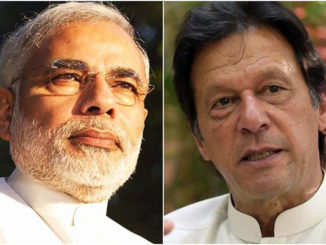
No Narendra Modi-Imran Khan Meeting Planned on the Sidelines of SCO, says MEA
NEW DELHI (TIP): There is no confirmation of a meeting between Prime Minister Narendra Modi and his Pakistan counterpart Imran Khan on the sidelines of the summit meeting of Shanghai Cooperation Organisation (SCO), the Ministry of External Affairs declared on Thursday, June 6. The clarification comes just a day before Mr. Modi begins his first round of foreign trips with stops in Maldives and Sri Lanka where sports diplomacy and counter-terror will be on the agenda.
“To the best of my knowledge I am not aware of any bilateral meeting being set up or organized, between PM Modi and Prime Minister Imran Khan at Bishkek,” said Official Spokesperson Raveesh Kumar here. Both the leaders are scheduled to travel to Bishkek, Kyrgyz Republic for the SCO summit of 13-14 June.
There has been a series of developments that indicate ongoing efforts to continue with de-escalation of the tension that erupted after the terror attack at Pulwama and the Balakot counter-terror strike.
Despite the lack of confirmation on a meeting with Pakistan, Foreign Secretary Vijay Gokhale said India will emphasize on the importance of the “Neighbourhood first” policy as PM Modi will travel to Maldives and Sri Lanka during 8-9 June.
(Source: Agencies)
-

MALDIVES: BEYOND THE BEACHES
Sometimes the presumed “obvious” can be misleading, and delving deep into a place can reveal remarkable opportunities, and so Maldives – beyond the beaches present with some stunning tourist interests. Pristine white sand beaches, palm fringed islands and turquoise blue expanse of the Indian Ocean would be the first (and maybe the only) thing that comes to mind when one thinks about Maldives. But I am here to tell you about a different Maldives, buzzing with innumerable experiences, Maldives – beyond the beaches. After all, how many of us would know that Maldives before the 12th century was a Buddhist regime!There are a plethora of things to see and do in Maldives other than vegetating on fine white sand.
Getting There
Air India and Spicejet have direct flights to Male from Thiruvananthapuram and Kochi. Flights from any other city in India have to be via one of these airports.
Best Time to Visit December to April
Visa
The country follows a Visa on arrival policy provided the tourists have valid passports, proof of accommodation and return tickets
Things to know
Tourists are not supposed to carry idols, alcohol, pork meat or any other religious paraphernalia other than Islam, to Maldives. Tourists are frisked judiciously at the airport while entering and leaving the country.
The capital city of Male doesn’t really show any signs of a 1400 year old Buddhist past. Although 35 mosques can be found in this seemingly expeditiously built colourful settlement, vestiges of the bygone era can still be traced to the most famous and tallest monument of Male – The Old Friday Mosque, built on a Buddhist Temple. With around 100000 people, the roads are almost crowded with scooters and mopeds. The colorful crisscrossing by-lanes are better to explore the city with every attraction being at an arm’s length. Another interesting fact about Maldives is that no other religion other than Islam can be practiced here, with the entire population being Sunni Muslim. Male presents with the best option of exploring the truest spirit of Maldives.
THE NATIONAL MUSEUM
The National Museum is a structure made up of steel and glass, and is a gift from China under a bilateral agreement, and was completed recently in 2010. The impressive part about this two floored building is the display of famous lacquer work boxes, age old cannons, broken pieces of Buddhist and Hindu idols, images of political events, and most importantly a replica of the pen that was used to sign the ‘Declaration of Independence’ from the British Empire. The tour begins downstairs with the galleries showcasing Maldivian history; they have items such as, weapons, religious items, and household items. The display on the second floor of the building is mostly from the modern period, and is a great eye opener to Maldivian history and culture. A particularly fascinating piece on display is the 6 m long skeleton of the Longman’s Beaked Whale, which is so rare that it is yet to be seen alive in the sea.
THE FRIDAY MOSQUE
In the 12th century A.D., Abu al Barakat visited Maldives which was then a Buddhist regime. He convinced the Sultan to embrace Islam and the rest is history. The mosque is supposedly built on a Buddhist temple, and has been renovated couple of times, the last being in 1656. Coral made door and window frames adorn this venerable structure. Those wishing to visit this beautiful mosque, must seek permission from a Ministry of Islamic Affairs’ officer, but it has been noted that those who are well-dressed and respectful may gain access on the spot. One can find a cemetery on the mosque grounds, located on one side; it is dotted with carved tombstones.
SUNSET CRUISE
The beauty of Maldives is best experienced with its sunset cruises, as the stunning hues of the sky come alive during this time. The evenings in Maldives more often than not seem to be created by an errant painter who runs amok with a palette of colours in a quest to master the form of modern art. The calmness of the evening sea, pampering by the wine and dine options of the resort boat, and watching the sun bid adieu with a spectacular colour riot of different shades of crimson are precisely the reasons why a sunset cruise into the open waters is a must do in Maldives.
BODUBERU DANCE
Dating back to 11th century, it is the traditional dance form of Maldives. Performed by a group of 15 or more, it consists of one lead singer and lots of drums apart from variety of thumping instruments. The pace of the music and dance gradually picks up, and usually at the end of it the spectators would be dancing along with the group. The songs and dance styles are similar to the ones found in East and South West Africa giving rise to speculation that these might have been introduced to this tiny island nation by sailors from the African continent. Check out resorts which have the option of treating you with one such evening of Boduberu dance. In the night, by the beach side, under the sparkling stars you will be transferred to a different world altogether.
LOCAL ISLANDS
Get away from the coastlines, and explore the islands of Maldives. Maldives on backpacker’s budget was unheard of a few years ago, as it was always meant to cater to luxury travel. Swanky high end resorts with jaw dropping infinity pools, hedonistic spas and international cuisine to satisfy varied palates never gave any reason to look anywhere else. Maldives, whose economy depends entirely on tourism has now opened its arms to backpackers and budget travellers by giving them access to many local islands, such as Maafushi, Fulidhoo and Guraidhoo. Here one can find many guesthouses with an average of $60/night. By staying on these local islands, one can gain an insight into Maldivian life. The downside to these islands is that they are governed under Sharia law like the rest of the country. So unlike the privately owned resort islands, strict dress code would be the norm here which may be a deal-breaker when one is visiting any island. To counter this, the Government has recently designated a few beaches on these islands as “tourist beaches” where the dress code would not be applied.
-

Maldives’ first democratic president allies with exstrongman
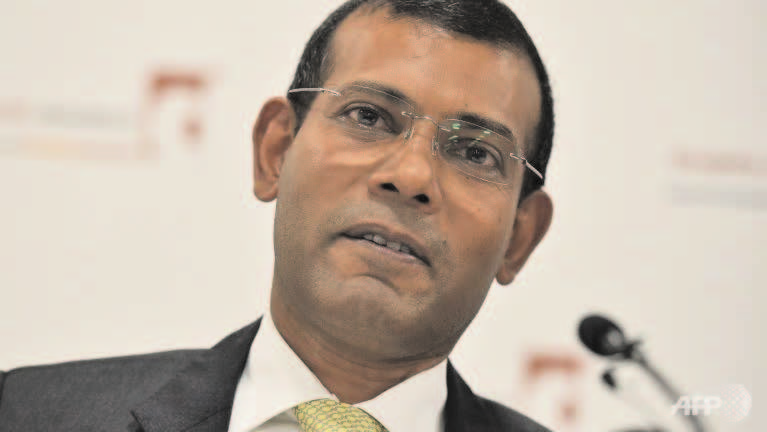
COLOMBO (TIP): The first democratically elected president of the Maldives said from exile in Britain that he has an agreement with the country’s former strongman to counter the current president, who is increasing his stranglehold on power.
Speaking to reporters via Skype on Sept 14 night, Mohamed Nasheed answered “Yes” when asked if he has an understanding with his predecessor to be part of his grand opposition coalition formed to unseat President Yameen Abdul Gayoom. He said he doesn’t want to reveal details of the discussions.
The opposition coalition says it will unseat Yameen through legal means, through an impeachment in Parliament or by having him arrested for corruption, to ensure a free election in 2018. Maumoon Abdul Gayoom ruled Maldives for 30 years with tight controls and repeatedly jailed Nasheed, who was then a pro-democracy activist. Facing protests in the last years of his presidency, Maumoon allowed multiparty democracy and oversaw the enactment of a democratic constitution that paved the way for Nasheed’s election in 2008.
Nasheed said he has decided to forget the past.
“How can you win the future if you go behind the past?” he said. “So many bad things happened … we go through a lot of experiences and come to an understanding that we can’t always run behind the past.”
Nasheed’s government lasted only three years before he resigned after losing support from sections of the military and police and the public for detaining a top judge. Nasheed maintained that officials who remained loyal to Maumoon had orchestrated a coup. Maumoon backed his half-brother Yameen in the 2013 presidential election against Nasheed. Maumoon and Yameen have fallen out with each other in recent months.
Since his election, Yameen has tightened his grip on power and erased many of the country’s democratic gains under Nasheed. Parliament has passed a criminal defamation law with fines and prison terms for journalists and social media users. Gatherings and protests are tightly controlled. Yameen is also accused of using the judiciary, police and bureaucracy to crack down on opponents. At least four top politicians, including Nasheed, have been sentenced to lengthy prison terms on terrorism charges after trials widely criticized for a lack of due process.
-

Maldives issues arrest warrant for ex-president Mohamed Nasheed
COLOMBO (TIP): The Maldives announced on September 1 it is seeking former president Mohamed Nasheed’s arrest for failing to return to the troubled archipelago to complete a prison sentence after receiving medical treatment in Britain.
Nasheed, the Maldives’ first democratically elected president, recently won political asylum in Britain after being granted permission to travel there for treatment while serving the sentence for a terror-related offence.
“A court order (has been) issued for arrest of former president Mohamed Nasheed,” the government said in a statement, issued after Nasheed flew to neighbouring Sri Lanka.
“The Maldives correctional service is seeking to have him brought back to serve the remainder of his 13-year sentence,” the statement said, without detailing how it planned to seek his return.
Opposition sources said Nasheed has been meeting Maldives opposition groups in Sri Lanka in recent days to hatch a plan to topple the archipelago’s president Abdulla Yameen.
Nasheed was among members of several exiled opposition groups meeting in Colombo, two people in Nasheed’s Maldivian Democratic Party have told AFP.
The Maldives has been gripped by political turmoil since Nasheed was forced to resign in 2012, denting its image as a paradise for upmarket tourists.
The international community has mounted fierce criticism against what they say is Yameen’s unlawful jailing of Nasheed and other opponents. Nasheed, a climate change activist who was also imprisoned during the three-decade rule of former strongman Maumoon Abdul Gayoom, was elected president in 2008. He rose to international prominence when he hosted a cabinet meeting underwater to draw attention to the threat global warming posed to the atoll nation’s existence.
But he was forced to resign in February 2012 after a mutiny by police and troops, which followed protests over the arrest of a top judge for alleged corruption, as well as for politically motivated rulings. (AFP)
-

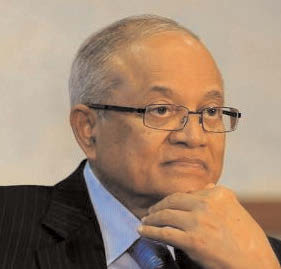
Maumoon Abdul Gayoom says India remains Maldives’ most important strategic ally
NEW DELHI (TIP): Amid the current thaw in bilateral ties, former Maldivian president Maumoon Abdul Gayoom on Tuesday said India remains the “most important strategic” partner of Maldives.
“India was and remains the most strategically important partner of Maldives, whether it is our ties in education and army and navy training and the recent goodwill visit of ships to our country only prove that. And, we wish to continue our ties,” he said.
Indian aircraft carrier INS Vikramaditya along with its support ships INS Mysore and INS Deepak recently were on a four-day visit to Maldives.
The former Maldivian president said this in response to a question after delivering an address on “Islam: A Religion of Peace” at the Observer Research Foundation here.
Gayoom also condemned acts of terrorism perpetrated globally in the name of Islam and said militant outfits like Islamic State (ISIS) are “not fighting a holy war” or upholding the rights of Muslims with their mindless violence born out of religious ignorance.
“The nature of acts committed by ISIS only stem out of ignorance about Islam. Anyone who understands the basic tenets of this religion knows that it forbids violence and killing of any kind unless prescribed by law for crimes like murder …
“ISIS by its terror activities is neither fighting a holy war or upholding the rights of the Muslim community. Thousands of people are being killed in terror attacks and I condemn all such violence and wars waged in the name of religion,” Gayoom said.
“But, let me add here that those committing acts of violence in the name of Islam are barely one per cent of the global Muslim population, which is largely peaceful and therefore fear and suspicion about Muslims generated among people in many parts of the world after events like September 11 attack also show lack of understanding of Islam on their part. So, the image of Islam gets tarnished both ways,” he said.
The Maldivian leader further said, a Muslim is not someone who says so but he becomes a Muslim by his act, or for that matter a Hindu or a Christian.
“And that act as the Holy Quran says is of kindness and compassion and tolerance … The tenets in our holy books say that killing one man equals killing whole of mankind,” he said.
“But acts of terrorism have been committed by non-Muslims groups too like the Ku Klux Klan, the IRA, Red Army and the LTTE. So, people must understand that Islam or for that matter any religion teaches peace and harmony and a few people use it for waging a war,” he said.
-

Maldives opposition leader jailed for 12 years for role in protests
MALE:A Maldives court has sentenced an Islamist opposition leader to 12 years in jail, convicting him on terrorism charges related to a speech that protested the imprisonment of the islands’ first democratically elected president, Mohamed Nasheed.
Best known as an exotic tourist destination, the Indian Ocean archipelago has been roiled by political unrest since Nasheed was ousted in disputed circumstances in 2012.
In March 2015, he was arrested, charged under the country’s terrorism laws and sentenced to 13 years for ordering the abduction of a judge, following a rapid trial that drew widespread international condemnation.
Under pressure from foreign governments, President Abdulla Yameen’s government released Nasheed last month to let him seek medical treatment in London.
Late on Tuesday, however, a court sentenced Sheikh Imran Abdulla, the leader of Islamist Adhaalath Party, to 12 years for comments he made in an anti-government speech during a mass protest against Nasheed’s arrest on May Day last year.
The government said Imran was charged for urging protesters “to confront police”, something the politician’s lawyer denied.
“We believe the judgement is grossly unfair because he has not called for violence in his speech”, Imran’s lawyer Husnu Suood told Reuters.
“He clearly asked the participants at the rally to refrain from violence and had taken all steps to prevent violence”.
Mark Toner, a spokesman for the U.S. State Department, called the judicial process that led to the sentencing “deeply flawed”.
“We renew our call for the Maldivian government to end politically motivated trials and to take steps to restore confidence and a commitment to democracy and human rights including freedom of expression and the rule of law and judicial independence”, Toner told a regular news briefing in Washington.
Clashes between protesters and police broke out at the 2015 May Day demonstration in the capital, Male, and hundreds of protesters were arrested.
“No country in the world would condone such a call for violence”, Abbas Adil Riza, the deputy high commissioner for Maldives in Colombo told Reuters.
The sentencing of the Islamist politician comes days after President Yameen called on the opposition parties to end a standoff with his own party amid rising international pressure.
Adhaalath Party Spokesman Ali Zahir said the sentencing demonstrated the absence of good faith from the government’s side in the inter party talks.
Since his release, Nasheed has called for sanctions against Yameen and his allies for detaining political prisoners, mainly opposition leaders.
(Reuters)
-

Indian community showers accolades on outgoing Consul General Mulay
NEW YORK CITY (TIP): The Indian community in New York, headed by GOPIO in collaboration with the Consulate of India organized a get together to bid farewell to the Consul General, Ambassador Dnyaneshwar M. Mulay on February 14, 2016.

Mr. Mulay addresses the gathering at Royal Albert’s Palace on February 16 Ambassador Dnyaneshwar M. Mulay, who served as the Consul General of Indian in New York for two years and ten months, received accolades from business owners and professionals alike at the farewell event which was attended by a large number of people from all walks of life.
Mr. Mulay’s rare achievements, to mention a few, include founding of monthly Media-India lectures, PM’s first visit with special reference to his public meeting with Indian community at Madison Square Garden and his interaction with the local public at Central Park, making the Consulate a model for cleaning drive by the Ministry, strengthening connection with Indian community by starting well-appreciated out-reach programs called ‘India at Your Doorstep’, besides several others.
Mr. Mulay has been appointed to head the newly formed ‘India Diaspora Division’ in the Ministry of External Affairs incorporating the Ministry hitherto known as Ministry of Overseas India Affairs. His many great contributions covering all aspect of services -personal and official were recalled and appreciated by the speakers who included India’s Permanent Representative to the United Nations Ambassador Syed Akbaruddin, H.R. Shah, Dr. Sudhir Parikh, Dr. Navin Mehta, Prof. Indrajit S Saluja, Attorney Ravi Batra, and Ashok Vyas. Deepak Dave conducted the program.

India’s Permanent Representative to the United Nations Syed Akbaruddin as a skillful diplomat who can handle any situation deftly Ambassador Syed Akbaruddin, Permanent Representative of India at UN and a contemporary of Mulay in the Indian Foreign Services, recalled his early days when Mulay was known as a poet among his batch mates. “A literary person at heart Mulay emerged as a fine diplomat fulfilling his duties, which are like writing hard prose not poetries.”
Ambassador Akbaruddin recalled that Mulay had skillfully handled delicate issues during the political turmoil in Maldives where he was serving as the High Commissioner of India before coming to New York. His diplomatic skills were put to test in New York when India-US relations reached new lows in the event of the arrest of Devyani Khobragade, the then Deputy Consul General.

Dr. Navin Mehta, a former Chairman of Bharatiya Vidya Bhavan said, “We are going to miss his down-to-earth approach in con-necting with all sections of Indian Americans.” Speaking on the occasion, Dr. Navin Mehta, a former Chairman of Bharatiya Vidya Bhavan who has known Mr. Mulay well for some years now said, “Mulay successfully implemented a policy of ‘bringing the consular services to our doorsteps’” said community leader Dr. Navin Mehta, “We are going to miss his down-to-earth approach in connecting with all sections of Indian Americans.”

Prof. Indrajit S Saluja described Mr. Mulay as a man endowed with the best of qualities of head and heart Prof. Indrajit Saluja, Chief Editor of The Indian Panorama wondered how one man could have so many diverse qualities of head and heart and commented that God must have created Mr. Mulay with some special stuff. Turning to Mr. Mulay, he said, “you are leaving a rich legacy behind. You will always be remembered for the great work you have done here as Consul General and also for being a perfect gentleman”.
A plaque was presented to Mr. Mulay by Attorney Anand Ahuja on behalf of GOPIO.
Two days later, on February 16, the Indian American community organizeda farewellevent at Royal Albert’s Palace in Fords, New Jersey. Known for his literary talents the community recognized him as an officer who transformed the way passports and visa applications were handled under his watch.

Ambassador Mulay with hosts and community leaders at Royal Albert’s Palace Those who acknowledged Mulay’s contribution as a ‘man of action’, included Ramesh Patel, Chairman, Federation of Indian Association, H. R. Shah, Chairman, TV Asia, Dr. Navin Mehta, Trustee, Bharatiya Vidya Bhavan and Dr. Sudhir Parikh, Chairman, Parikh Worldwide Media, all of who said that the consulate staff was more efficient than ever. Mulay on his part disclosed his style of functioning as that of a leader who cared for his subordinates. He pointed out that his staff needed a new vision in order to become more productive. “On the first day of my work, I called a few of my staff and asked them to give their opinion about a painting hanging on the wall. All of them said there was nothing wrong with the painting. Then I turned the painting upside down and asked them what they thought of it. All of them pointed out that the painting looked much better than before.”
Mulay narrated the above incident to bring home the point that it was possible to improve things without making a worker feel guilty. “I applauded my staff and showed them a different way to be more productive. A marked improvement in the functioning of the consulate was visible soon”, he said.
Issuing timely visas and processing applications for new passports are the most important responsibilities carried out by consulates. Any pitfall in discharging such duties is bound to bring bad reputation for the office of the Consul General. Mulay realized this fact and quickly implemented an ambitious plan to expedite applications for visa, OCI and OPI. He was promptly assisted by Dr. Manoj Kumar Mahaptra, whose youthful attitude sparked new energy among the consular staff.

Manoj Vyas, a well-known painter presenting to Mr. Mulay the latter’s portrait he made as a farewell gift “We are proud to say that we process all applications within a day or two”, said Mulay in his speech at the farewell function. His vision was to project the New India House, the consulate premises, into a center for cultural and intellectual activities. “We held more than 200 events in a year”, he said adding that his office aimed at encouraging all sections of the community within its resources.
The monthly lecture series launched by Mulay on various current topics in art, literature, journalism and judiciary were well appreciated in the cultural circle of New York. The consulate hosted high-ranking officials
from the State Department such as Nisha Desai Biswal,Assistant Secretary, Bureau of South and Central Asian Affairs and high profile New Yorker such as Salman Rushdie.
Mulay is returning to New Delhi, where he will be responsible for the Affairs of Overseas Indians. “I hope to continue working with you”; he proclaimed demonstrating his deep interest in contributing for the progress of India with the help of Indian Americans. For the past year he initiated outreach initiatives to connect with people of Indian origin in various states of USA, which fall under his jurisdiction. He established good working relations with a number of officials including the Governor of Massachusetts Charlie Baker who sent a proclamation for Mulay.
The farewell event was hosted by a host of community organizations including FIA, GOPIO, AAPI, Bharatiya Vidya Bhavan, and others. A plaque was presented to Mulay on behalf of FIA. Andy Bhatia, a former Air India official conducted the event.

A view of the gathering at the Indian Consulate on February 14 -

INDIA IMPROVES ties with neighbors
Building upon Prime Minister Narendra Modi’s initiative of inviting all SAARC leaders to his swearing-in ceremony in May 2014, the neighbourhood continued to be the primary focus of India’s foreign policy in 2015. While relations with Pakistan and Nepal remained on a tricky path, there was some forward movement in the ties with Bangladesh, Afghanistan, Bhutan, Maldives and Myanmar. Relations between India and Sri Lanka more or less maintained a status quo.
Nepal
It began with an upswing in the ties but the relationship were strained by the time the year came to an end. Bilateral ties with Nepal took a hit after the neighbouring country promulgated a new Constitution. India argued that the new Constitution did not take into account the concerns of all sections of the population, particularly the Madhesis who enjoy close ties with India. However, Nepal did not pay heed to India’s protests and rebuked it for interfering in the country’s internal affairs.
Earlier when Nepal was hit by a massive earthquake on April 25, India responded to the calamity and helped Nepal by launching its largest disaster response abroad, Operation Maitri. During External Affairs Minister Sushma Swaraj’s visit to Kathmandu in June, India pledged $1 billion grant for the reconstruction of the quake-hit country.
Pakistan

File image of Narendra Modi with Pakistan PM Nawaz Sharif Ties with Pakistan did not see any forward movement in the past one year despite two meetings between Modi and his Pakistani counterpart Nawaz Sharif. While pushing for better relations, India has maintained that talks are possible only in an atmosphere that is free of terror and violence.
Sharif and Modi first met on the sidelines of the BRICS summit in Ufa in Russia. The two sides unveiled a five-point agenda to address concerns on terrorism and to promote people-to-people contact. Despite a number of hurdles including on account of terror attacks in the aftermath of Ufa, and cancellation of initial round of NSA-level talks, a significant breakthrough was achieved in December with the NSAs meeting in Bangkok, followed by Swaraj’s visit to Islamabad for the Heart of Asia Conference.
Bangladesh

Prime Minister Narendra Modi and Bangladesh Prime Minister Sheikh Hasina shake hands in Dhaka, Bangladesh, Saturday, June 6, 2015. Modi’s visit to Bangladesh in June saw the exchange of instruments of ratification of the landmark land boundary agreement. It was a relief for over 50,000 people living in 162 enclaves across both countries as India and Bangladesh swapped enclaves, bringing to an end the 68-year-old boundary dispute. The June 6-7 visit of PM Modi also saw India-Bangladesh developmental cooperation scaling new heights, with India pledging a $2 billion Line of Credit for Bangladesh. The two countries took a host of steps to enhance trade and connectivity, including the launch of two new bus services. The two countries are a part of the sub-regional cooperation between Bangladesh, Bhutan, India and Nepal to enhance connectivity and regional integration.
Sri Lanka
Not much change taken place in the ties between India and Sri Lanka in the year gone by. Within months of the newly-elected Sri Lankan President Maithripala Sirisena taking charge of the island nation, two-way visits were held by the leaders and foreign ministers of the two countries. During Modi’s visit to Sri Lanka in March, India pledged $318 million Line of Credit for railway upgradation (New Delhi’s development assistance is already about $1.6 billion), unveiled a currency swap agreement of US $1.5 billion to help stabilise the Sri Lankan rupee and to develop Trincomalee as a regional petroleum hub with the cooperation of Lanka IOC (Indian Oil Corp’s subsidiary in Sri Lanka) and Ceylon Petroleum Corporation.
Both countries also signed four pacts regarding visa exemption for official passport holders, youth exchanges, customs agreement (to address trade concerns and reduce non-tariff barriers) and the construction of the Rabindranath Tagore auditorium at the Ruhuna University with India’s aid.
Afghanistan
Amid the backdrop of the unfolding transition in Afghanistan, India sustained its engagement with the war-torn country. During the visit of Afghan President Ashraf Ghani in April 2015, India reiterated its commitment to the reconstruction of the strife-torn country. The two sides focused on working towards a more liberalised business visa regime. Afghanistan welcomed India’s decision to extend the 1000 scholarships per year scheme by another 5 years as part of capacity building initiatives. India continues its assistance to the construction of the India-Afghanistan Friendship (Salma) Dam in Herat, expected to be completed in the first half of 2016. The Parliament Building in Kabul constructed with Indian assistance has already been completed as well as on the Doshi and Charikar power stations. But the resurgence of Taliban and Pakistan’s continued support to the group remain a huge hindrance. Taliban has regained control of large swathes of land in Afghanistan in the last few months and is now in a position to threaten the elected government once again.
Bhutan
India’s all-weather friendship with Bhutan continued on an upward curve. The visit of Bhutan’s Prime Minister Tshering Tobgay to India in January focused on optimising cooperation in the field of hydropower – the centerpiece of economic cooperation between the two countries. The two sides reiterated their commitment to the 10,000 MW initiative and in this context, to the early implementation of the four JV-model projects, totaling 2120 MW.
Maldives
India also engaged with the Maldives leadership despite political volatility in the island country. This was reflected in the meeting between the foreign ministers of India and the Maldives on the sidelines of the UN summit in New York in September. External Affairs Minister Sushma Swaraj followed it up with a visit to the island nation from October 10-11 to reinvigorate ties.
Myanmar
Bilateral relations with Myanmar improved with the first India-Myanmar Joint Consultative Commission (JCC) meeting held in New Delhi on July 16, 2015. Steps were taken to further enhance the existing air connectivity, extending a$500 million Line of Credit to the Government of Myanmar for development priorities, and a commitment to enhance the regional and sub-regional cooperation under the BCIM-EC and the BIMSTEC framework. India also played an instrumental role in providing disaster relief support to Myanmar in response to widespread floods and landslides caused by Cyclone Komen.
-

China’s Ocean Hegemony and Implications for India
The fifth generation of CCP leadership under Xi Jinping has de facto abandoned the Deng doctrine of keeping low profile internationally. China has become more ambitious of becoming a superpower and has been extending its sovereignty claims on the land and the sea. As a rising hegemon, China has started to challenge the existing international strategic order. China has been in the news recently for building artificial islands with air-landing strips in the South China Sea. It has demanded 12 nautical miles exclusive economic zone around these artificial, man-made reefs. China is a signatory to the law of the Seas (UNCLOS). Chinese attempts to claim the bulk of the South China Sea goes against both the letter and the spirit of the law of the sea. Beijing will invoke its EEZ for its own economic benefits while denying the same rights to other claimants. Brushing aside the ASEAN Code of Conduct in the SCS, China claims sovereignty over all of the SCS which is disputed by Vietnam, the Philippines, Malaysia, Brunei and Taiwan.
For the last several years, Chinese official media has been harping on safeguarding China’s “Ocean Sovereignty”. The PLA navy’s goal is to have a “Thousand Ships Navy”. This stated “TSN” Goal is to further Chinese supremacy in the Indo-Pacific region and exploit the mineral & hydrocarbon wealth in the international sea-beds. PLAN has been entrusted to fight future wars for China’s security as per the former President Hu Jintao. On December 6th 2011, while addressing the PLA Navy, Hu Jintao pronounced that PLAN should make “extended preparations for warfare in order to make greater contributions to safeguard national security”. China unilaterally declared an air-defense identification zone in the East China Sea in November 2013. Recently, a Chinese admiral declared similar intentions of setting up an air defense identification zone in the future above the disputed areas of the South China Sea if Beijing thought it was facing a strategic threat.
China has created not only facts on the ground but also facts on the Ocean in a very predictable manner of claiming sovereignty with the “Chinese Characteristics”. China always makes maximalist claims against other countries, disputes sovereignty, and alters the facts on the grounds of medieval history or economic reasons, bullies the smaller adversaries into submission, demands mutual concessions while later on sending its armed forces. China has constructed a couple of lighthouses in the South China Sea to provide a fig-leaf for its naked hegemony and sea-resources grabbing activities. China has successfully converted the South China Sea into a virtual private lake affecting the freedom of navigation for the entire world. India has vital maritime interests in the South China Sea. 55% of Indian maritime trade passes through the South China Sea. China has objected vehemently to ONGC’s oil drilling in collaboration with Vietnam in the South China Sea and PLAN ships have started to harass the Indian drilling rigs.
Once the heat of the South China Sea is gone and Beijing has de facto acquired the marine resources of the South China Sea, the dragon will spread its strategic tentacles into the Indian Ocean. Warning bells are already ringing in the Indian Ocean. PLAN started its naval forays in Indian Ocean up to the Gulf of Aden in 2010 under the garb of anti-piracy operations to control Somali pirates. China’s string of pearl initiative got absorbed in the 21st Century Maritime Silk Road. China did acquire significant naval facilities in Hambantota, Chittagong, Maldives, and listening & communication facilities in the Coco Islands in Myanmar besides building the naval port in Gwadar. Incidentally, India has gifted the Coco islands to Myanmar in Nehru’s realm. Gwadar port was offered to India by Oman but Nehru declined and Pakistan became the owner and the beneficiary. China also acquired naval facilities for recuperation and re-fueling in Seychelles in December 2011. China has already signed an agreement with the UN backed International Seabed Authority to gain exclusive rights to explore poly-metallic sulfide ore deposits in 10,000 square-kilometers of international seabed in Indian Ocean for 15 years. China has been sending nuclear powered submarines to Sri Lanka and Pakistan. Pakistan will receive eight Chinese nuclear powered submarines effectively neutralizing the Indian second strike capabilities in case of a nuclear attack on India. China plans to buy an island from the Maldives for $ 1 billion under the current Maldivian Government of President Abdulla Yameen.
China’s response to Malabar naval exercises in 2007 when trilateral format included Japan was very negative leading to non-invitation to Japan later on after 2007. India plans to invite Japan in the upcoming Malabar exercises and Chinese reaction would be worth watching. China remains very paranoid about the US “Pivot to Asia” doctrine. Chinese paranoia about the Asian Quadrilateral led to Australia pulling out of that mechanism for maritime cooperation in the Indo-Pacific.
China had sent trial balloons to US for a G2 condominium by which US will take over the Atlantic Ocean whereas China will have rights over the Pacific Ocean. Unlike Tibet, Indo-Pacific is too important to be given to China on a platter. As a trading nation with vital economic and maritime interests, India will have to safeguard the sea-lanes of communication, ensure freedom of navigation and take the strategic ownership of her maritime interests.
China’s foreign exchange reserves were at the peak of almost $4 trillion in June 2014. Despite a recent decline in Chinese economy, China’s foreign exchange reserves totaled $3.514 trillion at the end of September 2015. China still has the largest foreign exchange reserves in the world. China will continue to extend its strategic footprints under the much enlarged One Belt, One Road (OBOR) project because it has plenty of spare cash. China also proposes to use the Beijing sponsored AIIB as the financing arm for the OBOR which will ultimately require $ 1.4 trillion in investments. China has already sanctioned$46 billion on China-Pakistan Economic corridor as part of the OBOR connectivity without taking India’s sensitivities about CPEC passing through the POK. While India has cooperated with China in the BCIM (Bangladesh, China, India, and Myanmar) Corridor project, the GOI has been deliberately silent about any synergistic cooperation with the 21st Century Maritime Silk Road project.
-
ECUADOR GROUNDS MADE-IN-INDIA DHRUV CHOPPER, TERMINATES CONTRACT
NEW DELHI (TIP): Ecuador has unilaterally terminated a contract with Hindustan Aeronautics Limited (HAL) after four of the seven Dhruv advanced light helicopters bought from the state-run Indian firm were involved in crashes.
Defense minister Fernando Cordero announced the action during a news conference on Wednesday. He said two of the crashes were caused by mechanical failures. The three remaining Dhruv helicopters have been grounded.
The development is a major setback for HAL, which has sought to market the Dhruv as a low-cost alternative to military and utility helicopters from Western nations. Work on the Dhruv began in 1984 and it first flew in 2002 after a troubled development programme.
Four of the seven Dhruv helicopters delivered to Ecuador between 2009 and 2012 have crashed. One was assigned to transport President Rafael Correa, though he was not in the aircraft at the time.
Ecuador earlier complained that HAL had failed to ship some parts for the helicopters, which were bought for a total of $45.2 million.
HAL, which completed deliveries of the helicopters in 2012, has contested Ecuadorian claims that it failed to ship spares on schedule. A HAL spokesperson told leading defence publication Jane’s that maintaining the aircraft was “exclusively” the responsibility of the Ecuadorian Air Force as the 24-month warranty period for HAL to provide after-sales service support for the seven helicopters had long expired.
Besides Ecuador, the Dhruv is also operated by the security forces of Nepal, Mauritius and the Maldives. The Dhruv has also been offered to Malaysia and Indonesia.
More than 200 Dhruv helicopters are in service with the Indian military. They have been used extensively in relief operations after natural disasters such as the flash floods in Uttarakhand in 2013.
-

LAWYERS: WE WILL PURSUE SANCTIONS AGAINST MALDIVES
MALE, MALDIVES (TIP): A team of human rights lawyers said Sept 10 they will seek international sanctions and travel bans against the Maldives as part of its efforts to secure the release of the country’s jailed former president.
Lawyer Amal Clooney told reporters that they were taking the actions because the government had not fulfilled many of its promises to ex-President Mohamed Nasheed.
”The next step will be to pursue targeted sanctions, travel bans and any other action we have recourse to until the matter is resolved,” she said. ”It is disappointing it has come to this.”
The Maldives, an Indian Ocean archipelago, is a high-end tourist destination.
Government minister Mohamed Shareef said he did not wish to comment because Clooney’s remarks were mostly political rather than legal. He said the government had confidence in the judiciary.
Nasheed is serving a 13-year sentence after a court found him guilty of terrorism for ordering the arrest of a senior judge when he was president three years ago. The court said the arrest was akin to abduction and is an offense under the country’s terrorism law.
Clooney said the government had agreed in talks with Nasheed’s party members to release him and others arrested during protests that followed his jailing.
She said it not only reneged on its promise but also sent Nasheed back to jail after saying it had commuted his sentence to house arrest.
”These are not steps that are taken by a government that is operating on the basis of rule of law,” she told reporters in Male, the capital.
Clooney said her discussions on Wednesday with the country’s attorney general also covered the possibility of Nasheed being released under a presidential pardon.
-
Cops `forcibly’ take Maldives ex-president Nasheed to jail
MALE (TIP): Mohamed Nasheed has been forcibly taken back to jail by police, a month after the former Maldivian president’s 13-year prison term was commuted to house arrest, his party claimed on August 24, describing the move as “arbitrary and illegal”.
Nasheed’s party the Maldivian Dessmocratic Party (MDP) said policemen, without a court warrant forcefully entered his home on Sunday , breaking the main gate of the house and pepper sprayed those inside the house indiscriminately . The party strongly condemned Nasheed’s arrest by the Maldives Correctional Service and Maldives Police Service, calling it “arbitrary and illegal”.
The correctional service, however, said that the 48-yearold ex-president was “temporarily” transferred to house arrest for eight weeks due to health reasons -in accordance with his doctor’s advice to allow him to be in a “stressfree environment”. The eight weeks ended last Friday .
Nasheed was forced to resign as a result of a coup in February 2011.
-
Maldives arrest foreigners heading for Diego Garcia
COLOMBO (TIP): The Maldives has arrested seven foreigners who left the country illegally by trawler and were headed for a US military base on Diego Garcia, a minister said on August 11.
The foreigners were intercepted in the locally hired boat on Monday off the Maldives’ southernmost atoll of Addu heading to Diego Garcia several hundred kilometres away, said Mohamed Shareef, a minister attached to the president’s office.
He did not give the nationalities of the seven, but local newspaper Haveeru said they were Germans and Italians.
Diego Garcia, a British territory in the Indian Ocean, is currently leased to the United States, which operates a highly-guarded military base used for bombing raids on Afghanistan and Iraq.
The Maldives is holding the group for leaving the honeymoon islands illegally.
“We are continuing investigations and so far the foreigners have told us that they were on a whale-watching expedition. But you don’t step out in rough weather when there are eight-foot waves to look for whales,” Shareef told AFP.
Shareef said the group, whose governments have been contacted since the arrests, had chartered the boat at a rate of $8,000 a day.
“They had been looking for a (trawler) captain to take them to Diego Garcia and were willing to pay a very high price,” he said by phone from the Maldives capital island Male.
Shareef said it was extremely unlikely the trawler would have reached the main island of Diego Garcia, some 700 kilometres (435 miles) from Addu, given the tight security there.
“Maldivian fishermen know very well that if they stray into that territory their vessels are confiscated,” he said.
-

Indian-American Atul Keshap Confirmed as US Envoy to Sri Lanka and Maldives
WASHINGTON (TIP): Indian-American Atul Keshap has been confirmed as the US Ambassador to Sri Lanka and Maldives, becoming the second Indian-origin diplomat to be posted to the region after Richard Rahul Verma.
Mr. Keshap, 44, a former official at the US Embassy in India, was confirmed, August 5, by the US senate as the country’s envoy which would be his first Ambassadorial posting.
He is currently working as Deputy Assistant Secretary of State in South and Central Asian Affairs Bureau of State Department. He joined the Foreign Service in 1994. Mr Keshap and Dr Verma, the US envoy to India, both trace their origin to Punjab.
He was the deputy political counselor at the US Embassy in New Delhi from 2005 to 2008.
Mr Keshap also served as special assistant for the Middle East, North Africa, and South Asia for the under Secretary of state for political affairs.
In 2003, he moved to the White House as director for North African and Middle
Eastern regional affairs on the staff of the National Security Council. He was also the director for UN Human Rights in the Bureau of International Organization Affairs from 2008 to 2010.
His father, Keshap Chander Sen, was a UN development economist working in Nigeria. His mother, Zoe Calvert, had been in the US Foreign Service when she met and married Sen in London. She had also served at the US embassy in India.
“My parents’ service and my upbringing instilled in me a firm dedication and commitment to American values, and led me to a career in the Foreign Service,” Mr Keshap said in his confirmation hearing on June 23.
He had said since January, Sri Lanka has made progress on challenging issues, from fighting corruption and media censorship, to beginning the long process of healing after decades of war.
“We want to help the Sri Lankan people strengthen democracy, civil society and human rights, including media freedom and freedom of religion,” he said.
“We want to help build a lasting peace and fellowship among Sri Lanka’s ethnic and religious communities, including credible justice, accountability and reconciliation that can facilitate closure for those who suffered and lost loved ones during the war,” he added.
He said that Maldives faces challenges with youth unemployment, rising extremism, and social unrest.
“We want a better relationship with Maldives, so that we can deepen cooperation. And we want to help it return to the democratic path on which it courageously embarked a few years ago, and look forward to strengthening our relationship when that happens,” Mr Keshap added.