Tag: Manish Sisodia

  • The Recent Delhi Assembly Elections: A Shift in Power Dynamics

    By Indrajit S. Saluja

    In any democratic election, one of the most consistent patterns observed globally is the desire for change. Voters often seek a fresh government, hoping for a better deal, more responsible leadership, and greater responsiveness to their needs. This trend is universal, whether in the US, UK, Canada, India, or any other democracy. As a result, the incumbency factor — the tendency of voters to vote against the party in power — plays a significant role in shaping electoral outcomes. The longer a government remains in power, the greater the chances it will face defeat unless it has consistently delivered exceptional governance.

    This pattern was evident in the recent Delhi Assembly elections, which saw a significant shift in the political landscape of the capital. For years, the Aam Aadmi Party (AAP) has been in power in Delhi, having won a historic majority in 2015 and retaining power in 2020. However, in the latest election, the Bharatiya Janata Party (BJP), which had been out of power in Delhi for over 30 years, managed to achieve a sweeping victory, ending AAP’s reign.

    AAP’s victory in the 2015 election was nothing short of an upset. The party defeated the Congress, a long-standing political powerhouse, and emerged as a major force in Delhi politics. AAP’s success was fueled by a combination of factors: a public sentiment against the Congress, the party’s promise of corruption-free governance, and its focus on improving basic services like education and healthcare. AAP’s leader, Arvind Kejriwal, became a prominent figure and Delhi’s Chief Minister, with the party securing a resounding 67 out of 70 seats in the Delhi Assembly.

    However, by the time of the most recent elections, the political climate had shifted. AAP’s time in power had led to some degree of complacency, and many voters began to feel that the promises made by the party were no longer being fulfilled. The incumbency factor began to work against them. Despite having delivered several significant reforms, such as improvements in education and healthcare, AAP faced growing criticism over issues such as the cost of living, unfulfilled promises, and its inability to deal with the rising challenges in governance.

    On the other hand, the BJP, under the leadership of Prime Minister Narendra Modi, had been steadily building its influence in Delhi. The party’s rise to power was not just about local issues but also about its increasing prominence at the national level. The BJP’s success was bolstered by its image as a party that promotes Hindutva and its commitment to creating a Hindu nation, which resonated with a significant portion of the electorate. The consolidation of Hindu votes worked strongly in the BJP’s favor, helping it win over a large section of the population that felt disconnected from AAP’s secular rhetoric.

    One of the significant factors behind BJP’s victory was the party’s ability to promise financial allurements and freebies. While AAP had initially made its mark in the 2020 elections with promises of free electricity and water, the BJP capitalized on this by offering even more attractive schemes. Voters, often swayed by such promises, found these assurances hard to resist, despite the fact that the BJP had not always delivered on its past promises, such as the return of black money from abroad or providing a “pucca house” for every family by 2022. Nonetheless, the allure of “Acche Din” (Good Days) continued to hold strong among many voters, echoing Modi’s 2014 slogan that resonated with the hopes of millions.

    The BJP’s victory in Delhi can also be attributed to the diminishing influence of the Congress party, which has been in disarray in recent years. Once a dominant force in Indian politics, the Congress has now been relegated to irrelevance in Delhi. With the Congress struggling to find its footing, voters turned to the BJP as the only viable alternative to AAP, despite any reservations they might have had about the BJP’s past record.

    The electoral outcome in Delhi serves as a reminder of the fickle nature of politics and the complex dynamics at play. While AAP’s defeat signals the end of an era of governance in Delhi, it also presents a challenging future for the party. With leaders like Arvind Kejriwal and Manish Sisodia facing legal battles, the AAP may struggle to regain its footing in the short term.

    For the Congress, this defeat of AAP could serve as an opportunity to rebuild itself. The party once ruled Delhi for many years and has a deep-rooted connection with the electorate. While it may currently be on the backfoot, it still holds the potential to regroup and emerge as a force in the future.

    However, how the BJP governs Delhi will play a crucial role in determining the next chapter in Delhi’s politics.

  • Manish Sisodia walks out of Tihar jail after spending 17 months behind bars

    Manish Sisodia walks out of Tihar jail after spending 17 months behind bars

    “I got bail due to the power of Constitution and democracy. This power will ensure our leader Arvind Kejriwal is also released,” Mr. Sisodia said after walking out of jail.

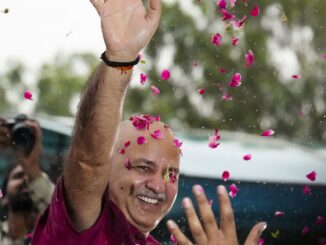
    NEW DELHI (TIP): Former Deputy Chief Minister of Delhi and senior AAP leader Manish Sisodia walked out of Tihar Jail on Friday, August 9, 2024, after 17 months behind bars.
    (Also Read Editorial – Welcome Step in Correcting a Serious Miscarriage of Justice: On Supreme Court of India Granting Bail to Sisodia)

    The Supreme Court gave him bail earlier in the day and said his long incarceration without trial had deprived him of the right to speedy justice.

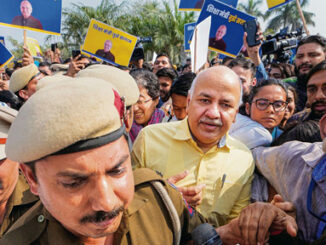
    The former Delhi Deputy Chief Minister was arrested by both the Central Bureau of Investigation (CBI) and the Enforcement Directorate (ED) in corruption and money laundering cases linked to the alleged Delhi Excise policy scam. Holding aloft flags and cheering loudly, crowds of AAP supporters waited to welcome Mr. Sisodia as stepped out of jail.

    Addressing supporters outside Tihar, Mr. Sisodia said “You all have supported me for the last 17 months, I am out for the benefit and welfare of the people of Delhi”.

    “We have brought this legal battle to its logical end through the Constitution. I thank you all for being with me,” he said amid chants of “Kejriwal, Kejriwal”.

    “Today truth has won. In the end, only truth wins,” said a post by “Team Kejriwal” on the Delhi Chief Minister’s official handle on X. Mr. Kejriwal is in Tihar jail in the same case.

    On the Supreme Court granting bail to him, Mr. Sisodia said he was “feeling indebted to Baba Saheb Ambedkar after this order”.

    “We have brought this legal battle to its logical end constitutionally,” he said after walking out of jail. “Grateful to Supreme Court that used power of Constitution to give tight slap on dictatorship, he added. “I got bail due to the power of Constitution and democracy. This power will ensure our leader Arvind Kejriwal is also released.”

    While granting bail to Mr. Sisodia, a Bench of Justices B.R. Gavai and K.V. Viswanathan said the right to a speedy trial and personal liberty were sacrosanct. Bail cannot be withheld as a punishment. If the state, prosecution agencies or even courts do not have the wherewithal to protect an accused’s right to a speedy trial, they should not withhold bail on the ground that the alleged crime was serious. The apex court allowed bail to Mr. Sisodia in both Directorate of Enforcement (ED) and Central Bureau of Investigation (CBI) cases and ordered him to be released on payment of ₹10 lakh in bail bonds. The Aam Aadmi Party leader has to surrender his passport and report to the police station every Monday.
    (Source: The Hindu)

  • May consider granting interim bail to Delhi CM Kejriwal in view of Lok Sabha election: Supreme Court

    May consider granting interim bail to Delhi CM Kejriwal in view of Lok Sabha election: Supreme Court

    Bench posts the matter for further hearing on May 7

    NEW DELHI (TIP): Noting the hearing on Delhi Chief Minister Arvind Kejriwal’s petition challenging his arrest in a money-laundering case linked to excise policy scam was likely to take time, the Supreme Court on Friday, May 3, said it may consider granting him interim bail in view of the ongoing Lok Sabha polls.

    “It appears we can’t complete it today. We will post it on Tuesday, May 7 morning itself. Mr Raju one more thing… If it’s going to take time, and it does appear it may take time, we may then consider the question of interim bail because of the elections. We may hear on that part because of elections,” a Bench led by Justice Sanjiv Khanna told Additional Solicitor General SV Raju who represented the ED.

    The Bench, which had earlier asked the ED to explain the timing of Kejriwal’s arrest, asked the ASG to be considerate and take instructions from the probe agency on the issue of interim bail to the AAP chief.

    The Bench asked Raju to suggest the conditions the ED would like to impose on Kejriwal in case he was granted interim bail. It also asked the probe agency to spell out if the Delhi Chief Minister can be allowed to sign files from jail and posted the matter for further hearing on May 7.

    The Bench, however, said, “We are not commenting on it either way. We may or may not grant (interim bail)… Don’t read anything into it,” the Bench said, even as Raju said he would oppose interim bail to Kejriwal.

    Drawing the court’s attention to statements being made by AAP MP Sanjay Singh after the top court ordered his release on bail, the ASG said, “Look at the kind of statements he is making.”

    Currently lodged in Tihar Jail in the National Capital under judicial custody after his arrest on March 21. the Delhi Chief Minister has challenged the Delhi High Court’s April 9 verdict upholding his arrest in a money-laundering case linked to the Delhi excise policy “scam”.

    Earlier, the top court had on April 2 granted bail to senior AAP leader Sanjay Singh in connection with a money-laundering case related to the Delhi excise policy scam after the ED said it had no objection to his release on bail. However, it had clarified that the concession given to Singh will not be treated as a precedent.

    The ED alleged that an employee of businessman Dinesh Arora delivered Rs 2 crore to Singh’s house on two occasions. Singh was arrested by the ED on October 4, 2023 following allegations made by Arora, who has turned approver in both the ED and CBI cases related to Delhi excise scam.

    The Bench had, however, noted that no money had been recovered from Singh and there were nine exculpatory statements given in his respect by Arora. Two other senior AAP leaders – former Delhi Deputy Chief Minister Manish Sisodia and former Delhi Health Minister Satyendra Jain – continue to be in jail in separate money-laundering cases.

    During the arguments on Friday, Singhvi said Kejriwal was not an accused till 16 March. What changed drastically… that he was arrested on March 21, he wondered as he sought to emphasize that the probe agency had no new material to justify the arrest.

    However, the Bench was skeptical about his argument that a political party can’t be covered under the PMLA. “It is a little difficult…a society is also an association of individuals. Can it be said that a society won’t come under the provision?” Justice Khanna asked.

    The Bench sought to know if the ED was bound to disclose the entire material collected during the probe or only a part of such material.

    “If we record everything in writing, it would be voluminous. That is not what is expected. It is not necessary that irrelevant material has to be reflected. Else charge sheet cannot be filed within 60 days at all. Writing will run into thousands of pages even one or two lines is about each material. Investigating officers would be bogged down,” the ASG replied.

    As Raju said, “This is not a case where there is no material against the accused”, the Bench said “He (Kejriwal) was not expecting to get arrested.”

    “We (ED) called him nine times… Evasive answers cannot be ground for arrest, yes. But cumulatively, we can take that into consideration,” the ASG said.
    (Source: TNS)

  • Excise policy ‘scam’: Delhi High Court asks CBI, ED to respond to Manish Sisodia’s pleas for bail

    Excise policy ‘scam’: Delhi High Court asks CBI, ED to respond to Manish Sisodia’s pleas for bail

    The Delhi High Court on Friday, May 3, sought response of the CBI and ED on former deputy chief minister Manish Sisodia’s pleas seeking bail in the corruption and money-laundering cases lodged in relation to the alleged excise policy scam.
    Justice Swarana Kanta Sharma issued notices to the Central Bureau of Investigation (CBI) and the Enforcement Directorate (ED) on Sisodia’s pleas challenging a trial court’s April 30 order by which his bail petitions were dismissed.
    The high court listed the matter for May 8.
    Sisodia, in an interim application, urged the court to continue the trial court’s order allowing him to meet his ailing wife once a week in custody, during pendency of his pleas.
    As the counsel for the ED submitted that the probe agency has no objection if the trial court order is continued, Justice Sharma allowed the request.

  • The devil is in the timing of ED action

    The devil is in the timing of ED action

    Arrest of a CM days after the notification of the General Election is a stunning blow to the credibility of elections

    Elected legislators, or for that matter nobody, should be locked up for an inordinately long time. Bail, and not jail, ought to be the norm.

    “The investigating agencies have not been able to open overflowing lockers stashed with cash or seize properties in Kejriwal’s or his family’s name. Kejriwal may well have devised some new methods, but what are they? Elected legislators, or for that matter nobody, should be locked up for an inordinately long time. Bail, and not jail, ought to be the norm. Indefinite detention will only be perceived as pre-conviction punishment. Coupled with the freezing of the Congress’ accounts by the Income Tax Department, Kejriwal’s arrest by the ED will only mar the credibility of the elections that PM Modi is poised to win.”

    By Rajesh Ramachandran

    In the past two decades, I have closely watched Arvind Kejriwal grow from a small-time activist in his tiny Patparganj shop-turned-office to the Delhi Chief Minister in his palatial bungalow on Flagstaff Road. As a non-political social activist, his dedication in ensuring government-subsidized food to a working-class East Delhi colony and his commitment to making the public distribution system work were admirable. It was exhilarating to drive around Delhi in a rickety Maruti 800 with him, seeking documents to expose the attempted privatization of the drinking water supply in Delhi under a World Bank scheme.

    Elected legislators, or for that matter nobody, should be locked up for an inordinately long time. Bail, and not jail, ought to be the norm.

    His remarkable growth trajectory as an activist demanding the right to information with complete self-belief in tackling corruption through information touched its apogee when he pawned his activist capital for a political career, scripting the downfall of the UPA government. The UPA had retained power in 2009, with the Opposition BJP getting reduced in size. Only a new kind of political activism could have discredited a government that had won a second term. Kejriwal’s anti-corruption crusade offered that platform, with Kisan Baburao Hazare from Ralegaon putting on the Gandhian act, rousing TV audiences into a stupefied search for a messiah.

    Behind the scenes, Kejriwal was attending conferences held at the pro-BJP think tank, the Vivekananda International Foundation. Meanwhile, politics was being practiced on social media for the first time. Then Prime Minister Manmohan Singh’s media advisers did not even have a social media account, let alone know how to target rivals on these platforms to create a false or alternative political narrative. In short, Kejriwal turned out to be the master of perception management on social media and in mainstream media. He kindled idealism in those who couldn’t be bought and struck a chord among those who wanted to bring the government down. And this eminently suited then BJP-led Opposition.

    His stunning performance in the 2013 Delhi elections proved the efficacy of politics reduced to perception without a grassroots-level organization. The RSS cadre had indeed worked hard to drum up support for the Hazare-Kejriwal protests, but the election victory was entirely Kejriwal’s. And he refused to share his party or his newfound power with colleagues who helped him build the party. In that sense, he had an acute understanding of the dynamics of power, which he proved when his party won the Delhi Assembly elections repeatedly and later even the Punjab polls. He could offer a credible alternative to the behemoths within the existing power structure.

    In a way, his achievements were magical. He could have taken the easier path of joining the Sangh Parivar forces that were helping him bring down the UPA government. His social agenda was always soft towards Hindutva — he was one of the first non-BJP Chief Ministers to visit the Ram Temple along with Punjab CM Bhagwant Mann. Kejriwal was a genuine political entrepreneur who had immense faith in his startup. His Aam Aadmi Party (AAP) was the only decacorn (of course, a political enterprise can’t be valued in business terms) to emerge from the politics of protest and social media in the new millennium, and he wasn’t going to give it away to a bigger party for a seat at the high table. He was going to build a new high table and such was his blinding self-belief.

    All founders of indefatigable startups fail when their self-belief overrides social realities — objective conditions, as the Marxists would explain. AAP’s only USP was its anti-corruption plank that catapulted it to successfully make claims of good governance and effective delivery of services — electricity, water and schools — for the poorest segments of the voters. But the new liquor policy stretched the limits of its own political credibility. In one fell swoop, a new system was brought in, which made AAP vulnerable to obvious allegations of favoring new players, who replaced the earlier ones.

    Till the story of the liquor policy scam allegations was playing itself out into a campaign weapon against AAP, the BJP’s political script was running fine. But the arrest of a sitting Chief Minister five days after the notification of the General Election is a stunning blow to the poll process. The country’s democratic credentials get questioned when a prominent Opposition leader, who holds a constitutional post, is arrested after the commencement of the poll process. This is not a new case. Delhi’s former Deputy Chief Minister Manish Sisodia was arrested by the Enforcement Directorate (ED) in the same case on March 9, 2023; AAP’s senior leader and Rajya Sabha MP Sanjay Singh on October 4, 2023; and its communication chief Vijay Nair in November 2022.

    In a case that has been dragging on for over a year and a half, there was absolutely no hurry to arrest a CM after the beginning of the process that gives the stamp of authority to the winning party to govern 140 crore people. This is by no means an attempt to give the clean chit to Kejriwal or AAP, which may or may not have indulged in a conspiracy resulting in the party receiving Rs 100 crore in bribes. This is about the timing of the arrest.

    The investigating agencies have not been able to open overflowing lockers stashed with cash or seize properties in Kejriwal’s or his family’s name. Kejriwal may well have devised some new methods, but what are they? Elected legislators, or for that matter nobody, should be locked up for an inordinately long time. Bail, and not jail, ought to be the norm. Indefinite detention will only be perceived as pre-conviction punishment. Coupled with the freezing of the Congress’ accounts by the Income Tax Department, Kejriwal’s arrest by the ED will only mar the credibility of the elections that PM Modi is poised to win.

    The Opposition has been crying itself hoarse about an undeclared emergency for long. It didn’t wash all this while, simply because all top Opposition politicians of the country were free to profess their politics. Now, the election-eve arrest of Kejriwal has a chilling effect.

    (The author is the editor-in-chief of Tribune India group of newspapers)


  • Rewind 2023: Top 10 politicians who grabbed headlines this year

    Rewind 2023: Top 10 politicians who grabbed headlines this year

    Narendra Modi
    Prime Minister Narendra Modi’s iconic waving of Indian flag at the Chandrayaan-3 launch to handing over the ODI World Cup to Australia, kept the newsrooms busy. While the PM was credited for the victories of three states — Madhya Pradesh, Rajasthan and Chattisgarh, he was also said to be the inspiration for the successful launch of Chandrayaan-3. He also added another feather to India’s achievements after hosting the G-20 global summit. PM Modi was also honoured with Ebakl Award by the Republic of Palau and Companion of the Order of Fiji, the highest honor of Fiji in May.
    Rahul Gandhi

    The Congress leader’s Bharat Jodo Yatra ended in January. However, things got bad for the leader when his membership ended after a court conviction in the Modi surname case. Rahul Gandhi was disqualified as a member of parliament in the Lok Sabha after being found guilty of defamation case. Gandhi was subsequently sentenced to two years in prison. He however was reinstated following the Supreme Court overruled the conviction on August 7.
    Bhajanlal Sharma

    The BJP named Bhajanlal Sharma as its surprise pick for the CM post on December 12. Sharma, who is from Bharatpur district, won the Sanganer constituency of Jaipur with a margin of 48,081 votes. He was regarded as a dedicated RSS and BJP worker, who went about his job without making any fuss. He moved up the ladder in the state BJP, holding responsibilities in the organisation but never in the government. About three decades back, he held his first public office as the sarpanch of a village in Bharatpur district.
    Revanth Reddy

    An indomitable Congress fighter, Revanth Reddy, took on the mighty BRS and was named the Telangana Chief Minister after the grand old party registered a win on K Chandrasekhar Rao’s turf. Reddy is credited with steering the Congress to power in Telangana by challenging both the mighty BRS, which had a stranglehold on Telangana politics, and the ambitious BJP, which was striving hard to emerge as the alternative. Reddy’s career in public life is intriguing as it began with student activism in the right-wing ABVP and later included a brief period of incarceration amid bribery allegations. He played a spirited role as PCC president in the battle against the BRS, led by former Chief Minister K Chandrasekhar Rao, who enjoys a larger-than-life image.
    Vishnu Deo Sai

    Vishnu Deo Sai was named as Chhattisgarh’s fourth Chief Minister. Vishnu Deo Sai, who began as a sarpanch in Chhattisgarh in 1990, went on to become multiple-time MP and a Union minister, emerging as the BJP’s tribal face known for humility and organisational skills. Sai, 59, is the first tribal chief minister from the BJP which decided to give the top post to a leader from the community that accounts for nearly 32 per cent of the state’s population and is the second most dominant social group after OBCs. Sai is known for his down-to-earth approach, work dedication and determination to achieve goals.
    Mohan Yadav
    The BJP has picked Mohan Yadav (58), an OBC leader and a three-time MLA, as the next chief minister of Madhya Pradesh. Yadav, the three-time BJP MLA, is the 19th chief minister of Madhya Pradesh. The elevation of Yadav, who was not among the contenders for the CM’s post, is being seen as a move by the BJP to win over the numerically significant Other Backward Classes (OBC) community in other parts of the country ahead of the Lok Sabha polls due next year. The OBCs account for more than 48 per cent of Madhya Pradesh’s population and form the core voter base for the saffron party.
    Shivraj Singh Chouhan

    Shivraj Singh Chouhan, the four-term chief minister, was replaced as Madhya Pradesh CM by BJP’s pick Mohan Yadav. BJP not giving another term to Chouhan rolled many eyeballs at a time when Chouhan was credited for the change of winds for the party in the state. Before polls, experts were of the view that Congress may win back the state. However, Shivraj Singh Chouhan’s ‘Ladli Behna scheme’, which provides eligible women Rs 1,250 monthly financial assistance, and later promised to gradually hike the amount to Rs 3,000 is said to be the game-changer in the elections. Shivraj Singh Chouhan, after being sidelined by the party, has still vowed to get maximum seats in Lok Sabha elections for the BJP.
    Manish Sisodia

    The AAP leader was arrested by the Central Bureau of Investigation (CBI) on February 26 for his alleged role in corruption in the formulation and implementation of the Delhi Excise Policy 2020-21. Sisodia, who held the excise portfolio, resigned from the Delhi cabinet on February 28. The ED too arrested the leader in a money laundering case stemming from the CBI FIR on March 9 after questioning him in Tihar jail. The AAP leader has been in custody since then. The court recently extended the judicial custody of AAP leader till January 10, 2024.
    Mahua Moitra

    TMC leader Mahua Moitra was expelled from the Lok Sabha in the ‘cash-for-query’ case. The Ethics Committee’s report, which held her accountable for accepting gifts and illegal gratification, paved the way for her expulsion, the move which is regarded as a blow to her 14-year political career. Moitra, who was an investment banker with JP Morgan Chase in New York and London before shifting her trajectory to politics, has however moved the Supreme Court to challenge her expulsion from the Lok Sabha, after the House adopted the report of its Ethics Committee that held her guilty of accepting gifts and illegal gratification from a businessman to further his interests. According to TMC sources, the party leadership has affirmed Moitra’s candidacy for the Krishnanagar seat in the 2024 Lok Sabha polls.
    Ajit Pawar
    Nephew of NCP chief Sharad Pawar grabbed the headlines when he forced split the party by taking away eight MLAs joining the Eknath Shinde government. Since then, he has been describing himself as the party’s national president. He defended his move of joining the Eknath Shinde-led Maharashtra government, saying several top politicians took “different” stand in the political history of the state. At present, the uncle and the nephew are busy fighting their cases in the Supreme Court over the name and symbol of the party.

  • Excise ‘scam’: ED claims fresh proof against Manish Sisodia

    Excise ‘scam’: ED claims fresh proof against Manish Sisodia

    New Delhi (TIP)- The ED Wednesday, April 5,  told a Delhi court the investigation in the money laundering probe against AAP leader Manish Sisodia in the alleged excise scam is at a “crucial” stage and it has found fresh evidence of his complicity. The agency made the submissions while seeking time to argue on the bail application of the former Delhi deputy chief minister.

    Special Judge M K Nagpal adjourned for April 12 the arguments on the application.

    The judge also extended till April 17 the judicial custody of Sisodia after he was produced before the court and the agency sought an extension of custody.

    During the arguments, the Enforcement Directorate counsel said the agency was “in process of gathering fresh evidence that has come to light.”

    “We need time…requesting court to grant time to advance arguments,” the counsel said after a brief argument.

    The counsel appearing for Sisodia, meanwhile, claimed before the court the ED does not have evidence to prove the charge that he had indulged in money laundering.

    “There’s no basis (for the charge). They’ve probed and examined everything, raided my residence etc. but found nothing. The (excise) policy was approved by various authorities concerned, including the LG. Now you’re blaming Sisodia solely. Also, this (the probe) is not under the preview of the ED,” the counsel said.

    He asserted the central anti-money laundering agency cannot make the vague allegation that he will tamper with evidence if enlarged on bail.

    “You never claimed any effort by me to influence, contact, threaten witnesses when I was out and holding (excise) portfolio. Now I’m not even holding any portfolio,” he said.

  • CBI books Sisodia in snooping case, Kejriwal says PM plans to keep him behind bars

    CBI books Sisodia in snooping case, Kejriwal says PM plans to keep him behind bars

    New Delhi (TIP)- The Central Bureau of Investigation has registered a first information report against jailed Aam Aadmi Party leader Manish Sisodia in connection with an alleged case of snooping on political opponents, reported The Indian Express.
    The former Delhi deputy chief minister was arrested by the central agency on February 26 in a case related to alleged irregularities in the national capital’s now-scrapped liquor policy.
    A fresh case was filed weeks after the home ministry, acting on a recommendation of the Lieutenant Governor VK Saxena, gave sanction to prosecute Sisodia. The Central Bureau of Investigation has alleged that the Aam Aadmi Party gathered “political intelligence” through its feedback unit that was set up in 2015.
    It said that the feedback unit was set up to strengthen the Delhi government’s Vigilance Department. However, a substantial number of reports submitted by the feedback unit pertained not to actionable information on corruption in the Delhi government, but to “political activities of persons, political entities and political issues touching political interest of Aam Aadmi Party, BJP [Bharatiya Janata Party]”, the central agency alleged.
    Besides Sisodia, the FIR has named Sukesh Kumar Jain, a 1992-batch Indian Revenue Service officer who was then secretary of vigilance, Rakesh Kumar Sinha who was working as special advisor to Chief Minister Arvind Kejriwal and joint director of the feedback unit, former joint deputy director of Intelligence Bureau Pradeep Kumar Punj, who was working as deputy director of the Feedback Unit, Satish Khetrapal, working as feedback officer and Gopal Mohan, anti-corruption advisor to Kejriwal. All of them have been booked under the Prevention of Corruption Act as well as Indian Penal Code Sections 120-B (criminal conspiracy), 403 (dishonest misappropriation of property), 409 (criminal breach of trust by public servant), 468 (forgery), 471 (using as genuine a forged document or electronic record) and 477A (falsification of accounts).
    “The inquiry also revealed that Sisodia gave approval for the special allowance for FBU [Feedback Unit] on a proposal moved by PK Punj vide a note dated April 22, 2016,” the complaint said, reported The Indian Express. “As described above the unlawful manner of creation and working of the FBU has caused wrongful loss to the government exchequer to the tune of approximately Rs 36 lakh.”
    According to the Central Bureau of Investigation, 60% of the reports generated by the feedback unit pertained to matters related to the vigilance department, while 40% were about political intelligence.
    On Thursday, March 16, Kejriwal said that another case against Sisodia is part of the BJP’s plan to keep the politician in jail for a long time. Sisodia is currently in the custody of the Enforcement Directorate, which is investigating a money laundering angle in the Delhi excise policy case based on the first information report filed by the Central Bureau of Investigation.

  • Manish Sisodia sent to Enforcement Directorate custody till March 17

    Aam Aadmi Party (AAP) leader and former Delhi Deputy Chief Minister Manish Sisodia was sent to Enforcement Directorate (ED) remand till March 17 in the alleged excise policy scam.

    Special Judge MK Nagpal of Delhi Rouse Avenue Court allowed ED to quiz Sisodia for the next seven days. The development comes after the AAP leader was present in court earlier today where the federal agency sought 10-day custody to interrogate him. During the hearing, the Enforcement Directorate alleged that Sisodia made false statements about the ‘scam’ and asserted that it wanted to unearth the modus operandi of the perpetrators and confront the former Delhi deputy CM with the other accused.

    ED counsel even claimed before the special court that Sisodia destroyed his phone, an important piece of evidence in the investigation.

    Referring to the meetings between restaurants association and Sisodia, the ED alleged that relaxations were afforded to the restaurants in excise policy like reducing the legal age of drinking and other things.

  • The CBI’s fishing expedition

    The CBI’s fishing expedition

    • It is not clear what offences punishable by law Sisodia is being charged with

    “Even if kickbacks are accepted and then credited to the party’s coffers, an offence would be made out under the Prevention of Corruption Act. It may not be easy to garner the evidence to prove the receipt of monies but adequate evidence to pin moral culpability must be disclosed to the public before tarring Sisodia with the accusing brush. People in our country forgive even those who have fattened themselves on corrupt practices. They will forgive Sisodia also even if the money has not gone to his personal account but to the party. His reputation, however, will then be tainted with a small stain on a white shirt.”

    By Julio Ribeiro

    Manish Sisodia, Delhi’s former Deputy CM, is presently in judicial custody after being arrested by the CBI. Narendra Modi and Amit Shah will breathe a little easy now! Sisodia’s popularity with the poorer population of Delhi surpassed Modi’s popularity with the affluent. With Sisodia out of commission, the AAP machine in Delhi will slow down or that, it appears, is the intent!

    To a neutral observer, it appears that the intent of the government is to rob the man and his party of any halo of respectability he or the party may be sporting.

    The Kejriwal government had concentrated on education and healthcare, the two subjects any government, either at the Centre or in the states, should pay particular heed to. It had done very well in both spheres, especially in education. That subject was handled by Sisodia. But the Rhodes scholar now in the AAP think tank, Atishi Marlena, will take care of that now.

    Instead of neutralizing those whose extraordinary talents and good work keep the AAP ahead of its political competitors, Modi and Shah should advise the double-engine governments in BJP-ruled states to emulate AAP’s achievements. Future generations of voters will surely discard such divisive politics. Revolutions in education and healthcare will appeal to all generations.

    I have always suspected that successive governments, starting with the Congress which was in power for decades after Independence, may not have wanted the masses to be fully literate. The uneducated blindly follow what is told to them by those with the ‘gift of the gab’. Literate individuals may not be really educated but they listen to news on the television and many of them decide to form her or his own opinion on important issues. Politicians cannot take their support for granted. Religion and caste will remain factors to contend with but votes cast without considering the pros and cons will reduce when people can read and write.

    It is not clear, to me at least, what offences punishable by law Sisodia is being charged with. An accused not cooperating with the police is certainly not an offence under any law. The police and the courts can draw an inference from the accused’s silence or refusal to answer questions but cannot force him to admit something that could later implicate him in an offence.

    Another complaint against Sisodia is that he was in the habit of using multiple phones at any one time and that he had obliterated call data. Again, inferences can be drawn from such practices but where is it laid down in law that one cannot use more than one phone at one time and that a record of calls needs to be kept?

    To a neutral observer, it appears that the sole intent of the government is to rob the man and his party of any halo of respectability he or the party may presently be sporting. To that end, the investigative agencies have been sent on a ‘fishing’ expedition that is not going to end till some fish, even a tiny one, is finally and firmly in the net.

    Investigative journalists are adept at ferreting out the truth. They manage to get hold of the remand applications that usually disclose the grounds for asking the court to give a few days of remand to force the truth out of the arrested individual. An insight into the remand application has not been established in Sisodia’s case. The public has not yet learnt of the grounds for his arrest!

    What the people have been told is that Sisodia, the man they admire and even love, is involved in a massive scam involving a hundred crores! As Excise Minister, he took decisions on his own without involving the Council of Ministers and the Lt Governor in the decision-making process. He allegedly tweaked the policy to benefit a group of licensees known to the investigators as the ‘South Group’ in which the daughter of Telangana CM K Chandrashekar Rao and an MP representing that state were members.

    The profit allowed to be earned by the group had been increased from 5% to 12%. This was sanctioned by Sisodia, who was asked to explain this decision but was unable to give a satisfactory explanation, according to the media.

    Lobbying for relaxations or workable policies is a common feature of working life in the Mantralayas, the seats of state governments. It was even more prevalent in the ministries of the Central government till the Modi administration discouraged the lobbyists. It is also true that a group like the Adanis could not have achieved success (now notoriety) without approaches to the ultimate power.

    Even if Sisodia had met someone from the South Group, that in itself would not inculpate him in a crime unless it is proved that he benefited personally from the interaction. The raids on his office, his home, his bank and the bank locker have drawn a blank.

    The party may have received kickbacks. It is a given that all political parties need money to run their business. The BJP at the Centre has electoral bonds, but in Karnataka, for instance, some ministers in the BJP government have been accused by contractors of demanding 40% cuts from contracts instead of the standard 15% (the figure quoted in the Mumbai MC is less, only 10%, and since the money is paid to the corporators, all parties benefit. Parties with a greater number of corporators benefit more!). The allegations by contractors against BJP leaders in Karnataka have been reinforced lately with the arrest of one of its prominent legislators and the recovery of crores of rupees from the home of his son.

    Even if kickbacks are accepted and then credited to the party’s coffers, an offence would be made out under the Prevention of Corruption Act. It may not be easy to garner the evidence to prove the receipt of monies but adequate evidence to pin moral culpability must be disclosed to the public before tarring Sisodia with the accusing brush. People in our country forgive even those who have fattened themselves on corrupt practices. They will forgive Sisodia also even if the money has not gone to his personal account but to the party. His reputation, however, will then be tainted with a small stain on a white shirt.

    (The author is a former governor and a highly decorated retired Indian Police officer)

  • Sisodia’s arrest

    • Transparent & fair probe a must to refute vendetta charge

    The arrest of Delhi’s Deputy Chief Minister Manish Sisodia by the CBI in connection with alleged irregularities in the formulation and implementation of the now-scrapped excise policy is a major setback for the ruling Aam Aadmi Party (AAP), which showcased corruption-free governance among its main planks to record thumping poll victories in Delhi and Punjab in recent years. The development has worsened the conflict between the state government and the BJP-ruled Centre, with the former accusing the latter of misusing Central agencies for political vendetta.

    The contentious Delhi Excise Policy was scrapped in July last year after the Lieutenant Governor recommended a CBI inquiry into the allegations. Officials are accused of receiving kickbacks from liquor traders to grant licenses, extending undue favors to the licensees, waiving/reducing license fee and renewing L-1 license without due approval. It is apparent that the policy was withdrawn due to some anomalies in its execution; AAP needs to do the answering about what had gone wrong. Meanwhile, the onus is on the CBI to come up with irrefutable evidence to establish that Sisodia was directly or indirectly involved in any wrongdoing and whether the money trail leads to him. If any inconsistency or lacuna is detected in the case against the Deputy CM, it will lend credence to AAP’s allegation that he is being victimized.

    At stake here is the credibility of the CBI as well as of the AAP government, particularly Sisodia, who has been entrusted with 18 of the 33 state departments by CM Arvind Kejriwal. Central probe agencies have repeatedly been accused of targeting ministers in Opposition-ruled states and turning a blind eye to irregularities in states where the BJP is in power. The CBI needs to allay apprehensions over its ‘pick-and-choose’ approach by bringing details of the excise policy case into the public domain and looking into the L-G’s role as well. A transparent and fair probe is a must to serve the interests of truth and justice; otherwise, the growing perception of vindictiveness will undermine the Centre’s credentials and offer a lifeline to AAP and the beleaguered Opposition a year ahead of the Lok Sabha polls.

    (Tribune, India)

  • Opposition unity remains a bridge too far

    Opposition unity remains a bridge too far

    Sisodia’s arrest has profound national implications for the direction the Opposition will eventually pursue. After tarring the TMC and AAP with the corruption taint, it is inconceivable that the Congress could include the Opposition in its anti-corruption blitzkrieg. That’s expecting too much. The core of its 2024 blueprint has only one strategy, and that is to position Rahul as Modi’s sole adversary.

    “Refusing to reconcile with the reality that its pre-eminence as the Grand Old Party might be dated by now, Congress president Mallikarjun Kharge qualified his imploration to the Opposition with the caveat that the exercise would follow the UPA template with the Congress heading the coalition because it was the only party that had never done business with the BJP. It’s a fact few would dispute, but should the Congress grandstand at every opportunity on its ‘unsullied’ ideological ‘credentials’? Can parties such as the SP be labelled as BJP’s accomplices even as the subject of whether their campaigns against Hindutva were sufficiently robust should be debated? Has the Congress scored over other non-BJP entities on this marker? If the Congress’s pro-secular, pro-minority credentials were impeccable, why did Thiruvananthapuram MP Shashi Tharoor intervene at the AICC plenary to emphasize that his party could have been ‘more vocal’ on the release of Bilkis Bano’s rapists in Gujarat, the attacks on churches, lynchings in the name of cow vigilantism and the bulldozing of Muslim homes.”

    By Radhika Ramaseshan

    The ruling BJP could be sanguine in the belief that the country’s attention has been deflected from the Hindenburg-Adani row by the arrest of Delhi minister and Aam Aadmi Party’s backbone Manish Sisodia.

    The development has profound national implications for the direction the Opposition will eventually pursue. The early indications augur well for the BJP because the arrest has reopened the fault lines running through the Congress and the regional parties, some of which it is counting on as its allies in the prelude to the 2024 General Election.

    Delhi offers only seven parliamentary states. It is a quasi-state that is partially governed by the Centre, which has increasingly shrunk the space for the exercise of powers by the Arvind Kejriwal government after the BJP lost the 2015 and 2020 Assembly polls to the AAP.

    Delhi is significant for the BJP because the seeds of the downfall of the Congress-helmed United Progressive Alliance (UPA) government were sown in the national capital in a long-drawn-out protest against the UPA’s ‘corruption’ and ‘misrule’; Kejriwal was then closely associated with the anti-corruption movement piloted by Anna Hazare. The India Against Corruption stir became a launch pad for Kejriwal’s political career, which was carefully camouflaged by his ‘activism’ with a moral underpinning. The Congress was the principal casualty of the protests and the BJP the eventual gainer.

    The arrest of Sisodia, a founding member of the AAP, provoked strong reactions from regional forces, but invited the Congress’s endorsement. KT Rama Rao, working president of the Bharat Rashtra Samithi (BRS), accused the BJP of “resorting to stealth politics by inciting Central agencies against Opposition parties in states where it can’t come to power (on its own).” For the BJP, BRS-ruled Telangana is analogous to Delhi. The party’s exertions have not fructified into tangible political gains. At best, the BJP can hope to unseat the Congress as the main Opposition party in Telangana, unless the ground situation dramatically changes. Samajwadi Party (SP) chief Akhilesh Yadav lauded Sisodia’s record in making quality education accessible to Delhi’s underprivileged children and remarked, “The BJP proved that it is not only against education, but also against the future of Delhi’s children.”

    The approval by the Congress’s Delhi unit stood out all the more against the backdrop of the party’s call for forging ‘Opposition unity’ before the next Lok Sabha battle at its just-concluded plenary in Raipur. Refusing to reconcile with the reality that its pre-eminence as the Grand Old Party might be dated by now, Congress president Mallikarjun Kharge qualified his imploration to the Opposition with the caveat that the exercise would follow the UPA template with the Congress heading the coalition because it was the only party that had never done business with the BJP. It’s a fact few would dispute, but should the Congress grandstand at every opportunity on its ‘unsullied’ ideological ‘credentials’? Can parties such as the SP be labelled as BJP’s accomplices even as the subject of whether their campaigns against Hindutva were sufficiently robust should be debated? Has the Congress scored over other non-BJP entities on this marker? If the Congress’s pro-secular, pro-minority credentials were impeccable, why did Thiruvananthapuram MP Shashi Tharoor intervene at the AICC plenary to emphasize that his party could have been ‘more vocal’ on the release of Bilkis Bano’s rapists in Gujarat, the attacks on churches, lynchings in the name of cow vigilantism and the bulldozing of Muslim homes? “If we don’t speak out in such cases, we are only surrendering our core responsibility of standing up for India’s diversity and pluralism, which should be central to the Congress’s core message,” Tharoor had stated.

    More evidence followed to demonstrate that the Congress was unwilling to cede the leadership position to a leader from a prospective ally. Addressing a meeting in Shillong, Rahul Gandhi aggressively engaged with the Trinamool Congress (which fought the Meghalaya elections solo) and listed the violence in West Bengal, the Saradha scam and the alleged profligacy exhibited by the TMC in the Goa elections as proof of its ‘tradition’ and its propensity to ‘help’ the BJP and defeat the Congress. Meghalaya’s last Congress Chief Minister Mukul Sangma had crossed over to the TMC with a dozen legislators. At the same time, at a rally in Nagaland, Kharge made it amply clear that the Congress would lead the Opposition alliance that will come to power at the Centre in 2024. “The Congress will lead. We are talking with other parties. Because otherwise, democracy and the Constitution will go,” claimed the Congress president.

    Secularism apart, it is apparent that the Congress has acquired a sense of proprietorship over the public articulation and projection of corruption, exemplified in the Centre’s alleged patronage to Adani and its silence on the questions raised by Rahul in Parliament. In his speech at the Raipur session, Rahul compared the Adani conglomerate with the East India Company and said, “History is being repeated.” “The Independence struggle was against the East India Company. That was also a company, the company that took away India’s wealth, infrastructure, ports….” he stressed.

    After tarring the TMC and AAP with the corruption taint, it is inconceivable that the Congress could include the Opposition in its anti-corruption blitzkrieg. That’s expecting too much. The core of its 2024 blueprint has only one strategy, and that is to position Rahul as Narendra Modi’s sole adversary.

    (The author is a senior journalist)


  • ‘Conspiracy’ by BJP to assassinate Arvind Kejriwal, alleges Manish Sisodia; demands probe

    ‘Conspiracy’ by BJP to assassinate Arvind Kejriwal, alleges Manish Sisodia; demands probe

    NEW DELHI (TIP): Delhi Deputy chief minister Manish Sisodia alleged that the BJP was conspiring to eliminate Delhi Chief Minister and AAM Adami Party Chief Arvind Kejriwal. The kind of language used by BJP leader Manoj Tiwari against Kejriwal on Thursday, November 24, is an open threat, alleged Sisodia, and demanded a thorough probe.

  • Delhi Deputy Chief Minister Manish Sisodia is booked  in excise policy scam

    Delhi Deputy Chief Minister Manish Sisodia is booked in excise policy scam

    NEW DELHI (TIP): The CBI today conducted raids at the official residences of Delhi Deputy Chief Minister Manish Sisodia and IAS officer Arava Gopi Krishna, besides 29 other locations in seven states and union territories, after registering an FIR to probe alleged irregularities in formulating and executing the city government’s excise policy, which was brought in November last year. The agency has named 15 persons, including Sisodia, in its FIR, lodged on August 17. Besides Sisodia, other public servants who have been named in the FIR as accused include then Excise Commissioner Arava Gopi Krishna, then Deputy Excise Commissioner Anand Kumar Tiwari and Assistant Excise Commissioner Pankaj Bhatnagar, besides nine businessmen and two companies. In a statement, the CBI said, “Searches are being conducted at 31 locations, including Delhi, Gurugram, Chandigarh, Mumbai, Hyderabad, Lucknow and Bengaluru, which have led to the recovery of incriminating documents, articles and digital records.”

    Last month, Delhi Lieutenant Governor VK Saxena had recommended a CBI probe into the Arvind Kejriwal-led AAP government’s Excise Policy (2021-22) over alleged violations of rules and procedural lapses.

    Officials in the CBI said the deputy Chief minister and other accused in the case would soon be summoned for questioning and those who failed to cooperate in the investigation might be arrested.

    In his first reaction to the raids, Sisodia took to Twitter and wrote saying that he welcomed the CBI and asserted that the truth would come out. He said these people were troubled because of the excellent work done by the Delhi Government in the health and education sectors.

    “That is why ministers of both departments are targeted to stop us from the good work in the health and education sectors,” he said referring to the arrest of Health Minister Satyendra  Jain under criminal provisions of the Prevention of Money Laundering Act (PMLA).

    Delhi Chief Minister Arvind Kejriwal said the CBI raid at his junior colleague’s house was the result of his good performance, which is being appreciated globally. “The day Delhi’s education model was appreciated and Manish Sisodia’s photo appeared on the front page of the New York Times, the Centre sent the CBI at the residence of Manish. The CBI is welcome. Will extend full cooperation. Earlier also there were raids and a probe. Nothing came out. Nothing will come out now also,” Arvind Kejriwal said.

    AAP Rajya Sabha member Raghav Chadha said, “Earlier it was “Modi vs who”, today it is “Modi vs Kejriwal”, Kejriwal is an alternative to Prime Minister Modi.” Delhi Congress leader Alka Lamba said Manish Sisodia should face the action by the probe agency instead of “running away” to the cool climes of Himachal Pradesh. She also claimed that the “corrupt face” of the self-acclaimed “truly honest” minister of AAP today stood exposed.

    Allegations against  Sisodia and  14 others are:

    • Irregularities in formulation of excise policy, 2021-22
    • Liquor trader paid Rs 1 cr to firm managed by Sisodia’s associate
    • Sisodia and public servants took decisions without approval
    • Intention was to extend undue favors to licensees post tender
    • Sisodia aides Amit Arora, Dinesh Arora, Arjun Pandey involved
    • Collected money from licensees, also gave it to public servants
    • Excise Dept gave a waiver of Rs 144 cr to licensees on Covid excuse
  • Bhagwant Mann sworn in as 18th Chief Minister of Punjab

    Bhagwant Mann sworn in as 18th Chief Minister of Punjab

    Punjab Governor Banwarilal Purohit (right) administering the oath of office and secrecy to Bhagwant Mann at Khatkar Kalan. Khatkar Kalan (TIP): Punjab Governor Banwarilal Purohit administered the oath of office and secrecy to Bhagwant Mann in the swearing-in ceremony  at Khatkar Kalan, the ancestral village of legendary freedom fighter Bhagat Singh in Punjab’s Shaheed Bhagat Singh (SBS) Nagar district. The venue was  brimming with ‘basanti’ turbans and dupattas,

    Mann, the 18th CM of Punjab,  took oath in Punjabi. Besides newly-elected AAP MLAs, Delhi Chief Minister & Aam Aadmi Party national convener Arvind Kejriwal, deputy chief minister Manish Sisodia, and other leaders wearing yellow turbans took part in the ceremony.

    The AAP romped home winning 92 seats in the 117-member Punjab Assembly, decimating the Congress and the SAD-BSP combine.

    Besides the newly-elected AAP MLAs, Delhi Chief Minister Arvind Kejriwal, deputy chief minister Manish Sisodia, Delhi minister Satyendar Jain, and other leaders were also present in bright yellow turbans.

    The 48-year-old Mann, who took the oath in Punjabi, also delivered a brief address after the ceremony.

    In his first speech after becoming the chief minister, Mann assured the people of the state that his party’s government in Punjab will work to address issues like unemployment, corruption and farmers’ plight.

    Starting his speech after the Governor left, the new Chief Minister said: “Bhagat Singh had a dream of taking this freedom to every household. AAP is fighting that battle. You have supported us. I will require many lifetimes to pay off the debt of this love that you have showered over me,” he said from the stage.

    Kejriwal, Delhi deputy CM Manish Sisodia and other party leaders, who were seated on a separate stage on Mann’s left, were seen applauding as the new CM took oath and later spoke. The newly-elected 91 AAP MLAs were also seated on another stage to Mann’s right. Mann and Governor were on the podium in the middle. AAP’s Punjab affairs in-charge Jarnail Singh and co-incharge Raghav Chadha also attended the event. Dressed in a white kurta-pyjama, blue blazer and a ‘basanti’ turban, Mann sounded a note of caution as he asked AAP supporters to exercise restraint.

    “I am not going to speak against anyone today. I want to tell you too that we do not have to be arrogant. We do not have to go to anyone’s house and challenge him. We do not have to say that we are the winners. Those who did not vote for us, we are their Chief Minister also. We are their government too. It is democracy. Everybody has the right. I should not get this news that these people are arrogant,” said Mann.

    He reiterated that the new government will start working without losing any time.

    “We will work. We have to start working from today. We have already wasted 70 years. We have no time to waste anymore,” he said.

    Later, in the evening, Mann assumed charge of the office at the Punjab Civil Secretariat.

    During his speech after taking oath, Mann also touched upon the issue of youth of Punjab migrating to other countries for better opportunities and said that this trend has to be reveresed. He assured the people of the state that his party’s government in Punjab will work to address issues like unemployment, corruption and farmers’ plight.

    “I want to share a couplet by Bhagat Singh – ‘Ishq karna sab ka paidayashi haq hai, kyo na iss baar vatan ki sar-zameen ko mehboob bana liya jaye (Loving is everyone’s birthright. Why not choose the nation as our beloved this time)’. We will change the state like Delhi. People will come from abroad to take selfies at our schools. You people created history. Punjab’s name was written in golden words on March 10. It will be written in the school books that February 20, 2022, was the day when people started voting without fear or greed of inducements,” he said.

    Saying that he paid obeisance to the martyrs and sought courage and wisdom to carry out his task as CM, Mann said: “I am not even the dust of their feet. But when public supports you, then you can expect anything from a person.”

    He also thanked Kejriwal for changing country’s politics by creating a political party out of an “aandoolan”.

    He ended his speech, saying: “Haqumat who karate hain jinka dilon par raj hota hai, yun kehne ko toh murge ke sarr pe phi taj hota hai (Real rulers are those who rule over people’s hearts, otherwise even a rooster has a ‘crown’ over its head)’.”

    A number of singers and artists, including Gurdas Mann, Karamjit Anmol, singer-turned-politician and Congress MP Mohammad Sadique, and Amar Noorie, were present at the event.

    There was heavy police presence at the the venue to manage lakhs who started descending at Khatkar Kalan to attend the event from morning itself. The event scheduled to start at 12.30 pm, began at 1.25 pm.

    Mann had invited the people of the state to attend his swearing-in ceremony, saying the three crore people of Punjab will also take oath with him.

    Elaborate arrangements were made for the ceremony which was attended by AAP supporters from various parts of the state. Almost all were seen wearing yellow – in form of dupattas or turbans. While many arrived in buses, few also cycled to the venue.

    The atmosphere was surcharged with enthusiasm as the people raised slogans of ‘Inquilab Zindabad’ (long live revolution) and ‘Bole So Nihaal’.

    In a tweet, the PM said: “Congratulations to Shri @BhagwantMann Ji on taking oath as Punjab CM. Will work together for the growth of Punjab and welfare of the state’s people.”

    Union Defence Minister Rajnath Singh too tweeted his best wishes to Mann for his tenure ahead.

    Tamil Nadu CM M K Stalin and his Odisha counterpart Naveen Patnaik, Samajwadi Party president Akhilesh Yadav were also among those who congratulated the new Punjab CM.      Source: The Indian Express and Agencies

  • Centre, states in war of words over O2 deaths

    Centre, states in war of words over O2 deaths

    New Delhi (TIP): The ruling Bharatiya Janata Party (BJP) and several Opposition parties were locked in a war of words over how many people in India died due to lack of oxygen supplies while battling Covid-19, a day after the Union government told Parliament that no state reported such fatalities.

    The submission to Parliament brought back focus on a crisis that in part defined the devastation of the second wave, but with little accountability being fixed since. A database of media reports from the time has identified at least 619 deaths that likely occurred because of lack of oxygen, while many more may have taken place outside of inundated hospitals. Still, with most states unwilling, even on Wednesday, to accept that there were deaths on account of oxygen supplies, the Union government’s submission, while insensitive, could well be technically correct.

    The BJP accused the states of playing politics, and pointed to submissions by some of them to reaffirm that the central government was merely reporting data that states sent to it.

    “The Centre says that health is a state subject. It says that it just collects the data, it doesn’t generate it. None of them said that a death occurred in their state and Union territory due to shortage of oxygen, there is no data for that. Did the Centre generate this data? No,” said Sambit Patra, BJP spokesperson.

    Patra in particular pointed to the Congress, the Shiv Sena and the Aam Aadmi Party to accuse the rivals of “playing politics”.

    “Rahul Gandhi is part of a coalition in Maharashtra and Sanjay Raut said he is shocked. The Maharashtra high court was given an affidavit by the state government where it stated that no death took place due to oxygen shortage,” he said. “On April 23 and 24, Arvind Kejriwal said 21 people died in Jaipur Golden Hospital due to oxygen shortage. He did a press conference and politicised it. This matter went to the high court. The Delhi government formed a committee and a report was submitted — it said patients got oxygen and no there was no mention of a shortage,” he said.

    Patra’s comments appeared to be targeted at a tweet by Gandhi on Tuesday afternoon, in which the Congress leader said: “The shortage wasn’t only of oxygen; it was also of empathy and facts. The shortage was there then, and it’s there now.”

    On Wednesday, July 21, Shiv Sena MP Sanjay Raut, whose party shares power with the NCP and Congress in Maharashtra, said people whose relatives died due to oxygen shortage should “take the Union government to court”.

    Delhi health minister Satyendar Jain, too, attacked the Centre, saying it was “completely false” to say no one died for want of oxygen. “If no deaths occurred due to oxygen shortage, why did hospitals move high court one after another every day? Hospitals had been saying that oxygen shortage led to deaths. The media, too, flagged this issue daily,” Jain told reporters.

    The AAP leader said the Delhi government set up a committee to collect data on such deaths and give ?5 lakh compensation to the families of the deceased, “but the Centre got the panel disbanded through the lieutenant governor”.

    A day earlier, his cabinet colleague and deputy chief minister Manish Sisodia accused the Centre of a cover-up following its submission in Parliament. Neither Jain nor Sisodia put a number to deaths in Delhi on account of lack of oxygen.

    As the controversy raged, officials in eight states – Goa, Maharashtra, Tamil Nadu, Madhya Pradesh, Odisha, Bihar, West Bengal and Uttar Pradesh – told HT that there were no deaths due to oxygen shortage in their hospitals.

    Experts said the controversy was “unnecessary and unfortunate”. “The answers to parliamentary questions are compiled by respective ministries depending on inputs from various states and institutions, which means none of the states actually accepted that there were deaths due to oxygen shortage. The minister, however, could have just said that this is the official record and unofficially, there have been reports of deaths but there was no data,” said Dr MC Misra, former director of All India Institute of Medical Sciences.

                    Source: HT