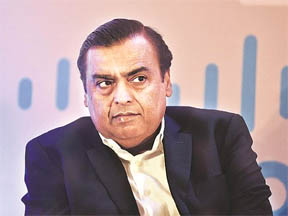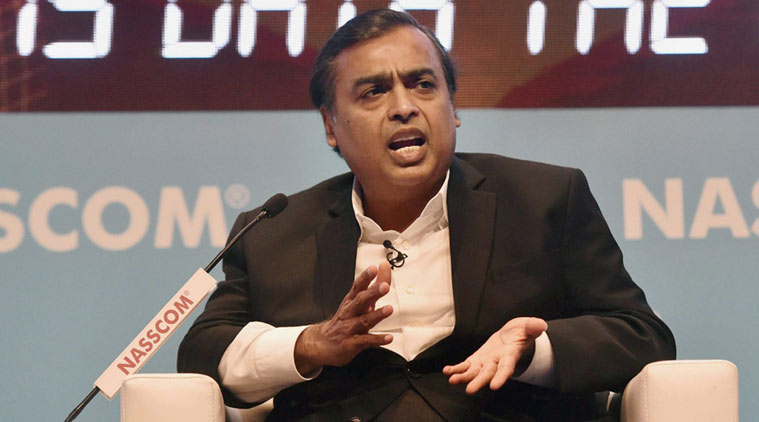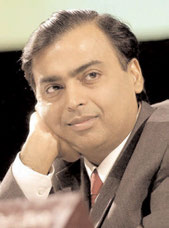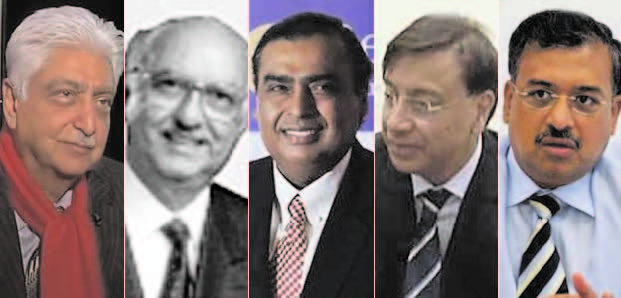
Mukesh Ambani, chairman of Reliance Industries, is planning to build what could become the world’s largest data centre in Jamnagar, Gujarat, according to a report by Bloomberg. The facility, expected to boast a total capacity of three gigawatts, would be a huge move in India’s tech landscape, easily outpacing current global benchmarks by a big margin. For comparison, the largest operational data centres today, mostly located in the United States, are under one gigawatt.
To support this ambitious move, Reliance is procuring advanced AI semiconductors from Nvidia Corporation. These high-performance chips are essential for the complex computations required by AI-driven tools, such as ChatGPT and other generative AI platforms.
The timing of Mukesh Ambani’s move is no coincidence. Globally, tech giants like Microsoft, Amazon, and Google have been spending billions of dollars on expanding data centre capacities to keep up with the high demand for AI services. Earlier this week, a consortium including OpenAI, SoftBank, and Oracle announced plans to invest up to $500 billion in AI infrastructure under a project called Stargate.
If this initiative goes ahead as planned, Ambani’s Jamnagar facility will not only surpass existing data centre capacities but also give India a competitive edge in the growing AI market. As of now, India’s total data centre capacity — just like the USA — is under one gigawatt. Tripling this capacity in one project would be a major milestone for the country, potentially accelerating its AI development.
While the scale of the project is unprecedented, so is its estimated cost. Building such a massive facility could require an investment of $20 to $30 billion, according to industry estimates. Although Reliance Industries has about $26 billion in cash reserves, funding such a project would still be a challenge. The company has not commented on the reports yet.
Ambani’s strategy appears similar to his approach in the telecom sector, where Reliance Jio disrupted the market by offering services at affordable prices. This time, the aim is to lower the cost of AI inferencing — the computational process behind running AI models — which can be prohibitively expensive for startups and established firms alike.
Jamnagar, already the site of Reliance’s oil refining and petrochemical operations, will now play a central role in the company’s push for renewable energy and AI. The data centre is expected to be powered largely by green energy, with Reliance building solar, wind, and green hydrogen projects nearby. However, experts point out that maintaining a continuous energy supply for such a massive facility may still require fossil fuels or large battery storage systems. Ambani has made it clear that his ultimate goal is to make AI accessible to everyone in India. “We want to offer the lowest AI inferencing costs in the world, making AI affordable and available to all,” he said last year.
Tag: Mukesh Ambani
-

Mukesh Ambani buys Nvidia AI chips, plans to build largest data centre in India: Report
-

The rise and contributions of the Indian diaspora
The Indian diaspora is one of the largest and most diverse global communities, with an estimated 32 million people of Indian origin living across the world. From the shores of the Caribbean islands to the bustling cities of North America, Europe, the Middle East, Southeast Asia, and beyond, Indians have built thriving communities that are often key to the economic, social, and cultural fabric of their host nations. Over the past few centuries, the Indian diaspora has experienced remarkable growth, playing an influential role in shaping the world’s geopolitical landscape, global markets, and cultural exchanges. This article aims to explore the rise of the Indian diaspora, their historical journey, the factors contributing to their migration, and their diverse and substantial contributions to their host countries and to India itself.
Historical Background of Indian Emigration
Early Waves of Migration
Indian migration has a rich history that spans centuries. The earliest recorded instances of Indian emigration occurred during the ancient and medieval periods, with Indians settling in Southeast Asia, Africa, and the Arabian Peninsula. Traders, scholars, and missionaries often traveled across the Indian Ocean, leaving behind traces of Indian culture and religion.
During the British colonial period (18th–20th centuries), however, emigration from India significantly increased. The indentured labor system, implemented by the British after the abolition of the transatlantic slave trade, became the primary mechanism for the large-scale migration of Indians. Millions of Indians were transported to various colonies such as Mauritius, Fiji, the Caribbean islands, and South Africa to work on sugar plantations, railways, and in other industries. This wave of migration laid the foundation for the development of vibrant Indian communities in these regions, some of which still maintain strong cultural ties to their Indian roots.
Post-Independence Migration
After India’s independence in 1947, migration patterns began to shift. Many Indians sought better economic opportunities abroad, especially in Western countries such as the United States, the United Kingdom, Canada, and Australia. The 1960s and 1970s saw the rise of skilled Indian professionals, including doctors, engineers, and IT specialists, migrating to meet labor shortages in these nations. By the 1980s and 1990s, the expansion of India’s global footprint, coupled with economic liberalization, further accelerated the migration of professionals seeking better opportunities in growing economies.
Factors Driving Indian Migration
Economic Opportunities
The most significant factor driving Indian migration has been the search for better economic prospects. As India’s population grew and its economic landscape evolved, many Indians faced limited opportunities for career advancement, education, and financial stability at home. Countries with burgeoning economies and labor shortages, such as the Gulf states, the United States, Canada, and the United Kingdom, offered higher wages, better living standards, and improved career prospects.
In the post-1991 liberalized economy, India’s economic growth allowed many to take advantage of international opportunities. The rise of the Indian information technology (IT) sector also played a crucial role in facilitating the migration of highly skilled professionals to countries like the United States and Canada.
Educational Pursuits
The pursuit of education has also been a driving force for migration. Indian students have flocked to institutions abroad for higher education, particularly in fields like engineering, medicine, management, and the sciences. The United States, United Kingdom, Australia, and Canada remain top destinations for Indian students, who not only benefit from quality education but also gain exposure to international networks, knowledge, and skills.
Political and Social Factors
In some cases, migration was driven by political instability, persecution, or limited opportunities in India. For example, during the period of political turmoil in India during the 1970s and 1980s, large numbers of people sought refuge or better prospects abroad. In countries like Uganda, Fiji, and Kenya, political events (such as Idi Amin’s expulsion of Indians from Uganda) forced many to leave.
Additionally, factors such as religious intolerance, caste-based discrimination, and economic inequalities led to waves of migration from certain regions within India to more developed countries, where better social mobility and opportunities were available.
Indian Diaspora’s Contribution to Global Economies
Economic Impact and Remittances
One of the most important contributions of the Indian diaspora has been in the form of remittances. According to the World Bank, India has been the largest recipient of remittances globally, receiving over $87 billion in 2020 alone. Remittances sent by Indian expatriates to their families back home have been a vital source of income for millions, contributing significantly to poverty alleviation, education, healthcare, and overall economic growth.
The economic footprint of the Indian diaspora extends beyond remittances. Indian entrepreneurs and professionals have made substantial investments in their host countries, contributing to the growth of industries ranging from technology to real estate, hospitality, and retail. The Indian diaspora has played a key role in the global technology boom, especially in sectors like software development, finance, and telecommunications.
Business and Entrepreneurship
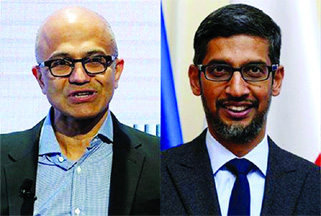
Indians have been instrumental in the development of several industries worldwide. In countries like the United States, the United Kingdom, Canada, and Australia, Indian entrepreneurs have built successful businesses that employ thousands of people. In Silicon Valley, Indian-origin entrepreneurs have become some of the most prominent figures in the tech industry, with individuals like Sundar Pichai (CEO of Google), Satya Nadella (CEO of Microsoft), and Vinod Khosla (co-founder of Sun Microsystems) leading major global tech firms.
In the United States, Indian immigrants have made their mark in the healthcare sector, particularly in the fields of medicine and biotechnology. Indian-origin doctors, researchers, and health professionals are highly respected for their expertise and have contributed to the development of cutting-edge medical technologies.
Indian businesses have also flourished in the Gulf states, where large communities of Indians work in construction, retail, and hospitality. Moreover, successful Indian businesspeople, such as Lakshmi Mittal, who heads ArcelorMittal, the world’s largest steel producer, and Mukesh Ambani, the chairman of Reliance Industries, have become global symbols of entrepreneurship.
Contributions to Culture and Society
Cultural Diplomacy and Soft Power
The Indian diaspora has been a powerful vehicle for the spread of Indian culture across the globe. Whether through Bollywood films, traditional dance forms like Bharatanatyam and Kathak, or global cuisine, the Indian diaspora has brought India’s rich cultural heritage to the forefront of global consciousness. Cultural festivals, such as Diwali and Holi, are celebrated by communities of Indian origin in many countries, fostering a greater understanding of Indian traditions and values.
In countries like the United States, the United Kingdom, Canada, and Australia, the Indian diaspora has been at the center of intercultural dialogues, promoting diversity, tolerance, and understanding. The popularity of yoga and meditation in the West is also largely attributed to the Indian diaspora’s efforts in sharing these practices with the world.
Philanthropy and Social Causes
Indian diaspora communities have also made significant contributions to charitable causes and social development, both in their host countries and in India. Many members of the Indian diaspora have been involved in philanthropy, supporting causes such as education, healthcare, and disaster relief.
The Indian diaspora has also been active in promoting educational initiatives, providing scholarships to students in need, and supporting schools and universities in India. The contributions of Indian-origin individuals to international organizations such as the United Nations and the World Health Organization further highlight the global impact of the Indian diaspora.
Political Influence and Advocacy
Engagement in Host Country Politics
The Indian diaspora’s political engagement has grown significantly over the years. In countries like the United States, the United Kingdom, Canada, and Australia, Indian-origin individuals have been elected to high political offices, contributing to the political landscape of their respective nations. Notable figures include Kamala Harris, the Vice President of the United States, and Priti Patel, the Home Secretary of the United Kingdom, both of whom have Indian heritage.
Indian-origin politicians have advocated for the interests of the diaspora, building bridges between their home country, India, and their adopted nations. In the United States, for example, Indian-Americans have emerged as a significant voting bloc, influencing political campaigns, policy decisions, and international relations.
Strengthening India’s Global Presence
The Indian diaspora has also played a crucial role in strengthening India’s global influence. By acting as a bridge between their host countries and India, the diaspora has contributed to enhancing India’s diplomatic, economic, and cultural ties with the world. Indian-origin politicians, business leaders, and community organizers have often acted as ambassadors for India, lobbying for greater trade and investment, fostering bilateral partnerships, and promoting India’s interests on the global stage.
The Future of the Indian Diaspora
As the world becomes increasingly interconnected, the role of the Indian diaspora is expected to grow even further. In the coming decades, the Indian diaspora will continue to be a critical factor in fostering India’s global standing. The rise of India as an economic powerhouse, along with its expanding influence in global politics, will provide new avenues for the diaspora to contribute to their home country’s growth.
Moreover, as the Indian diaspora becomes more integrated into the societies in which they live, their contributions will likely become more visible and impactful. The focus will likely shift from simple remittances and labor to more complex forms of collaboration, such as joint ventures, innovation partnerships, and global research initiatives. -

Apple eyes bigger slice of India’s streaming market with Airtel deal
Bengaluru (TIP)- Apple is tying up with India’s Airtel to offer the telecom firm’s premium customers its music and video streaming services for free, potentially giving the US firm access to thousands of consumers in a price-sensitive market. The move comes as competition tightens in India’s $28-billion entertainment market and an $8.5-billion merger of the Indian media assets of Reliance and Walt Disney faces close scrutiny from regulators.
“Apple TV+ will come bundled with premium Airtel WiFi and Postpaid plans,” Airtel said in a statement on Tuesday, though the companies did not disclose a deal value for the partnership or information on costs.
With mostly English-language content, Apple TV+ is a small player in the Indian market, where its rivals include Netflix , Amazon Prime Video, Disney+ Hotstar and billionaire Mukesh Ambani’s JioCinema. Apple is following competitors in bundling streaming services with telecom plans to grow its audience more quickly.
Premium users of Airtel’s broadband and postpaid services can access Apple TV+ and Apple Music later this year as part of their plans. Airtel will shut its music app Wynk in this process, two sources with direct knowledge of the matter said, speaking on condition of anonymity. Airtel has about 281 million subscribers for its India telecom offerings, while its top rival, Ambani’s Reliance Jio, has about 489 million.
Ambani announces suite of AI tools called ‘Jio Brain’
Reliance Jio is developing a suite of tools and applications that span the entire artificial intelligence (AI) lifecycle called ‘JioBrain,’ Reliance Industries’ Chairman Mukesh Ambani said during the conglomerate’s 47th Annual General Meeting (AGM) on Thursday, August 29.
The company will set AI-ready data centres at Jamnagar, in Gujarat powered by the company’s green energy, said Ambani. “We are also starting to use JioBrain to drive a similar transformation across other Reliance operating companies, and to fast-track their AI journey as well,” Ambani said.
“I anticipate that by perfecting JioBrain within Reliance, we will create a powerful AI service platform that we can offer to other enterprises as well,” he added.
JioBrain integrates 5G’s high speed, and low latency with machine learning capabilities such as anomaly detection, predictive forecasting and automation. The platform can train and apply machine learning (ML) models at the network edge and in the service provider cloud.
“This enables CSPs (cloud service providers) to apply machine learning to not only the network but also to a wide range of 5G services and industrial applications including image and video AI at the edge, probing at the edge, healthcare, education, gaming, and entertainment use cases,” as per Jio Brain’s website. -

Indian companies -Reliance, Tata, Serum Institute -on TIME’s list of world’s most influential companies
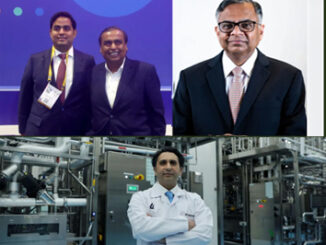
NEW YORK (TIP): Billionaire Mukesh Ambani’s Reliance Industries and Tata Group have made it to the prestigious TIME’s list of 100 World’s Most Influential Companies of 2024. TIME called Reliance ‘India’s Juggernaut’. Serum Institute is the only other company on the list.
This is the second time that Reliance has found its way into the TIME list. Jio Platforms, the firm that holds digital properties of the conglomerate, was included in the inaugural TIME 100 Most Influential Companies List of 2021.
TIME listed Reliance in the ‘Titans’ category (one of the five categories under which the companies were divided, other being Leaders, Disrupters, Innovators, and Pioneers).
Tata was listed in ‘Titan’s’ category while Serum under ‘Pioneers’.
“Reliance Industries was founded as a textile and polyester company 58 years ago by Dhirubhai Ambani. Today the sprawling conglomerate—which has aligned its growth with Indian Prime Minister Narendra Modi’s vision for a ‘self-reliant’ India—is the country’s most valuable company, with a market capitalization of more than USD 200 billion,” TIME said.
Now led by Dhirubhai’s son Mukesh, the Mumbai-based company has ventures in energy, retail, and telecommunications, among others, and has made its chairman Asia’s richest man, it said.
The publication went on to stated that in February, Reliance came out on top in a fiercely competitive race to dominate India’s burgeoning streaming market by striking a USD 8.5 billion merger deal with Disney’s India business.
“The deal will bring together more than 100 television channels and give the combined group around a 31 per cent share of India’s streaming market compared to rivals Netflix and Amazon Prime with 8 per cent each,” according to analytics firm Comscore.
Reliance has revolutionized several economic sectors in the world’s most populous country by making world-class products and services available at affordable prices with multiple innovations.
Under Mukesh Ambani, the firm’s telecom arm Jio revolutionized India’s digital landscape and drove digital inclusion on an unprecedented scale with the most affordable mobile data tariffs in the world.
It set up the world’s largest single location refining complex.
Reliance Retail is ranked among the top 100 retailers globally and in FY24 it registered 1.06 billion footfalls across its 18,800+ stores (67 per cent of which are in small towns and villages).
Reliance is investing USD 10 billion in building the most comprehensive ecosystem for new energy and new materials in India and has set an ambitious goal to reach net-zero carbon by 2035.
TIME described Serum as the world’s biggest vaccine maker, churning out billions of vaccines. The company makes 3.5 billion doses every year, including for measles, polio, and most recently, HPV.
“Serum’s CEO Adar Poonawalla says the company’s success can largely be chalked up to its private ownership. Not being beholden to shareholders allows it to keep vaccine prices low (the R21 will cost USD 4 a shot),” the publication said.
Tata Group, it said, was founded in 1868 and has a vast portfolio extending from steel, software, watches, subsea cables, and chemicals, to salt, grains, air-conditioners, fashion, and hotels.
“But as rivals have aggressively courted new businesses, it struggled to keep up with stiff competition. In 2017, after over a century of family management, N Chandrasekaran took over as chairman despite having no personal ties to the family—highly unusual when India’s business landscape is ruled by family succession plans,” TIME said.
As chair, he has transformed the group by investing in tech manufacturing, AI, and semiconductor chips.
In 2023, it became the first Indian company to assemble iPhones, and is building another plant, it said, adding that in September, Tata announced a partnership with Nvidia to develop an AI cloud in India.
“And this year, it announced plans for the country’s first major semiconductor manufacturing facility. The moves seem to be paying off: in February, Tata’s combined market capitalization reached a whopping USD 365 billion, more than the entire economy of India’s neighbor and rival, Pakistan,” it added.
This is the fourth edition of annual TIME100 Most Influential Companies list, highlighting companies making an extraordinary impact around the world. To assemble the list, TIME solicited nominations across sectors, and polled its global network of contributors and correspondents, as well as outside experts.
Then, TIME editors evaluated each on key factors, including impact, innovation, ambition, and success. The result is a diverse group of 100 businesses helping chart an essential path forward.
(Source: PTI) -

Twist in India’s election battle as Modi accuses rival of taking money from billionaires Adani and Ambani
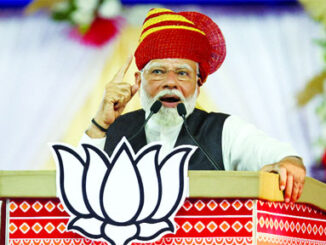
Indian prime minister Narendra Modi has claimed without evidence that his chief rival took “truckloads” of illegal money from billionaires Mukesh Ambani and Gautam Adani, in one of the most unexpected twists in the heated election battle.
Ambani and Adani, two of Asia’s richest men, are said to enjoy close ties to the prime minister. Modi arrived in Delhi for his first inauguration as prime minister in 2014 on a private jet emblazoned with Mr Adani’s logo, and his face accompanied frontpage advertisements announcing the formal launch of Ambani’s telecoms company Jio, which has since rapidly risen to become a major player in a highly lucrative and competitive market.
Mr Modi’s latest attack on Rahul Gandhi of the Congress party has triggered a debate about the sudden change of thrust in the prime minister’s campaign speeches, with analysts speculating that his party was doubtful of its performance in the election so far.
Addressing a rally in southern Telangana state on Wednesday, MrModi accused Mr Gandhi of striking a deal with the billionaires.
“For five years, the Congress prince abused Ambani and Adani and now suddenly you have stopped. Meaning, you have accepted truckloads of illegal funds. You will have to answer to the country about this,” Mr Modi said.
He was “sensing something fishy” as the Congress party’s attack on the two billionaires had stopped overnight, the prime minister added.
Mr Gandhi responded in a video statement saying Mr Modi was “nervous” about how the election was going.
He challenged the prime minister to send investigative agencies to prove his allegation.
“Modiji, are you nervous? Normally you speak of Adani and Ambani in closed rooms. It is for the first time you have taken their names in public,” Mr Gandhi said. “You even know they send money in truckloads, is that your personal experience?”
“Send CBI, ED to them, get a thorough inquiry done as soon as possible,” he said, referring to federal agencies Central Bureau of Investigation and Enforcement Directorate, both of which Mr Modi’s government has been accused of weaponising against opposition leaders.
“I want to repeat to the nation that the amount of money Modi has given to them, we are going to give the same amount to India’s poor,” he added, referring to Mr Ambani and Mr Adani.
Mr Modi’s attack came after Mr Gandhi’s consistent swipes at the prime minister and his Hindu nationalist Bharatiya Janata Party for allegedly having close links with business tycoons and championing policies favouring the wealthy over the poor.
Mr Ambani and Mr Adani come from Mr Modi‘s home state of Gujarat where their multinational corporations maintain major business operations.
Source: Independent -
Let Truth Prevail
On Modi’s accusation of “Chori ka Maal” (black money) being provided by Ambani and Adani to the Congress Party
In the midst of the ongoing political landscape in India, Prime Minister Narendra Modi made a significant accusation during an election rally in Telangana on May 8, alleging a possible nexus between the Congress party and major Indian businessmen Mukesh Ambani and Gautam Adani. Modi stated that the Congress party, which had been vocal in its criticism of the Modi government for allegedly benefitting Ambani and Adani, had gone silent on the issue. He implied that the silence was due to an understanding or deal between the Congress party and the two businessmen, hinting at possible truckloads of “dark money” being supplied by the businessmen to the Congress party.Such statements carry significant weight, as the Prime Minister is the head of the government and a key political figure in India. His allegations against the Congress party, Ambani, and Adani have sparked a debate on the accountability and evidence surrounding such claims.
Prime Minister Modi’s remarks suggest that the Congress party’s sudden silence on the Ambani-Adani issue is due to an undisclosed agreement between them. His suggestion that the Congress party may be receiving “tempoloads” (truckloads) of money from the businessmen implies a major breach of ethical conduct and potential criminal activity, particularly when the general elections are underway. .If the Prime Minister possesses evidence supporting his allegations, he should present it to the relevant authorities and initiate a proper investigation. The Central Bureau of Investigation (CBI) and the Enforcement Directorate (ED) are responsible for handling cases involving corruption and money laundering, respectively. Modi’s public accusations also place an onus on him to follow through with his statements by providing any evidence he may have.
If Modi’s allegations are indeed credible, it would be essential to investigate the claims for the sake of transparency and maintaining public trust in the country’s institutions. The nation deserves to know the truth behind such serious accusations.
Should the Prime Minister fail to provide evidence to back up his claims, the situation could take a different turn. Accusations without evidence could be seen as an attempt to defame the Congress party, as well as Ambani and Adani, damaging their reputations and creating unnecessary political tension.
On the other hand, if Modi does present substantial evidence and it leads to legal action against the Congress party, Ambani, and Adani, it would signify a major shift in the Indian political and economic landscape. Such a revelation would have profound implications for the relationships between the government, the opposition, and major corporate entities.
The nation deserves clarity on these serious accusations, which have the potential to impact the political, economic, and ethical landscape of the country. The Prime Minister must present the evidence to the appropriate agencies or face the possibility of legal consequences for making unsubstantiated claims. As the political landscape evolves, the nation watches closely, eager to see how this situation unfolds.
-

Mukesh Ambani reclaims top spot on Forbes list of India’s 100 Richest
New Delhi (TIP)- In a dramatic shift in the pecking order at the top, Mukesh Ambani has reclaimed the No 1 position on the 2023 Forbes list of India’s 100 Richest. The collective wealth of India’s 100 Richest is at $799 billion this year. India is on a high after hosting the G20 Summit in New Delhi this September and becoming the fourth country to land a spacecraft on the moon. Reflecting this sentiment, India’s stock market rose14 per cent since fortunes were last measured. However, that jump, tempered by a weaker rupee, was not reflected in the collective net worth of India’s 100 Richest, which flatlined at $799 billion. Mukesh Ambani, who transformed his Reliance Industries into a diversified conglomerate, reclaimed the No1 spot with a net worth of $92 billion.
The fortune of infrastructure magnate Gautam Adani, who rose meteorically to overtake Ambani as India’s richest person for the first time last year, reversed dramatically after a report by US shortseller Hindenburg Research in January sent his group’s shares tumbling. Source: IANS -

Campa Cola is back: Mukesh Ambani’s Reliance rolls out iconic beverage brand
Reliance Consumer Products (RCPL), the fast-moving consumer goods arm and subsidiary of Reliance Retail Ventures (RRVL), on Thursday, March 9, announced the launch of the iconic brand, Campa, made for a new-age India. The Campa portfolio will initially include Campa Cola, Campa Lemon and Campa Orange in the sparkling beverage category. The launch of this brand was in line with the company’s strategy to promote homegrown Indian brands that not only have a rich heritage but also boasted a deep-rooted connect with Indian consumers, Reliance Consumer Products (RCPL) said in a statement on Thursday, March 9.
The company said RCPL’s roll-out of its cold beverage portfolio across India, starting with Andhra Pradesh and Telangana, is aligned with the company’s overall vision of offering value and choice to Indian consumers through high-quality products at affordable price points.
With this launch, RCPL said it further strengthened its versatile FMCG portfolio which comprises heritage brands from Sosyo Hajoori, confectionary range from Lotus Chocolates, Sri Lanka’s leading biscuit brand Maliban, as well as daily essentials under its own brands including Independence and Good Life, among others.
Cryptocurrency transactions to come under Prevention of Money Laundering Act, says govt
Any participation in transactions involving virtual digital assets or cryptocurrency, would come under the Prevention of Money Laundering Act or PMLA, the Centre has said.
This was announced through a gazette notification, issued on March 7.
The step has been taken to tighten misuse of digital assets.
Government in the gazette has warned investors against “participation in and provision of financial services related to an issuer’s offer and sale of a virtual digital asset”.
“Exchange and transfer of virtual digital assets would also fall under PMLA laws,” the notification further said. -

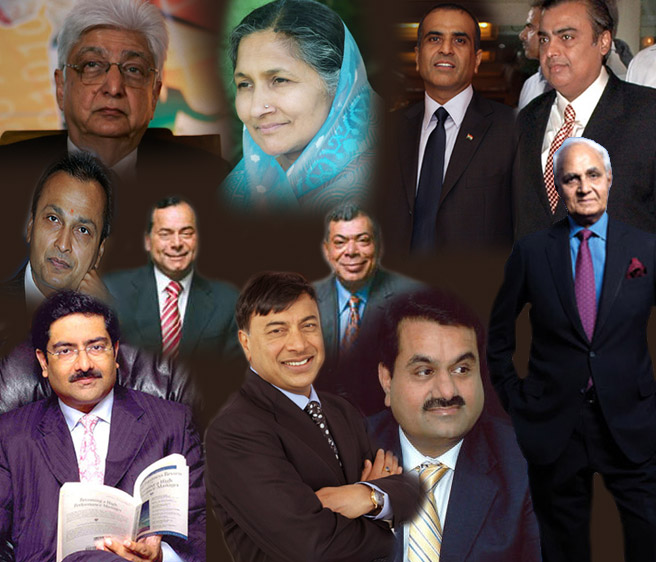
From Ambani to Birla, meet top 10 richest billionaires of India
We all know that wealth does not remain static and specially during the fluctuating industry scenario that we are facing due to the ongoing covid pandemic. But even in this tough situation where market continue to go up and down, India has produced several billionaires who occupy a significant number of slots on the list of wealthiest persons in the world today. And with just a few days left for the year 2021 to end, here is the list of the top 10 richest persons in India as per the Forbes.Mukesh Ambani
With a net worth of $92.7 billion, according to Forbes, the Chairman of Reliance Industries tops the list, yet again. During the lockdown period, Ambani raised $20 billion, by selling one-third of the stake of Jio to investors like Google and Facebook. He has remained at the top place for more than 10 years now.
Gautam Adani
The infrastructure tycoon has a net worth of $74.8 billion. Apart from infra, he has business interests in power generation and transmission, edible oil and real estate as well. Interestingly, Adani owns a 74 per cent stake in Mumbai International Airport.
Shiv Nadar
With a net worth of $31 billion, the co-founder of HCL ranks third this year. He is a leading philanthropist and has donated more than $662 million to his Shiv Nadar Foundation. His daughter, Roshni Nadar Malhotra, is the current Chairman of HCL Technologies.
Radhakishan Damani
Damani has a net worth of $29.4 billion. He owns 214 DMart stores across the country. In 2017, he became India’s retail king after a successful IPO of his supermarket chain Avenue Supermart.
Cyrus Poonawalla
The founder of Serum Institute of India, Poonawalla has a net worth of $19 billion. SII is the world’s largest vaccine maker. During and after Covid-19’s second wave, the majority of Indians got vaccinated with Covishield, a product of SII.
Lakshmi Mittal
The Chairman of ArcelorMittal, the world’s largest steel and mining company, Mittal has a net worth of $18.8 billion. He has been frequently featured on the list of richest Indians. In January 2021, Mittal gave the CEO’s position to his son Aditya Mittal.
Savitri Jindal
The Richest Indian woman, Jindal has a net worth of $18 billion. She is the Chairperson of Jindal Group, founded by her late husband, Om Prakash Jindal. In 2005, after Jindal’s sudden death, the group got divided among their four sons.
Uday Kotak
Founder of Kotak Mahindra Bank, Uday Kotak has a net worth of $16.5 billion. The bank, which is now among the top four private banks in the country, was converted to a bank from a finance firm that Kotak founded in 1985. He was, initially, backed by Anand Mahindra for the bank.
Pallonji Mistry
Famous construction and engineering giant Shapoorji Pallonji Group is virtually controlled by Mistry. He has a net worth of $16.4 billion. Interestingly, SP Group also owns the water purifier brand, Eureka Forbes.
Kumar Birla
Head of Aditya Birla Group, Birla has a net worth of $15.8 billion. In India, he is also called the ‘Commodity King’. He inherited the empire after the death of his father, Aditya Birla, in 1995.
Richest people on earth in 2021 : With a net worth of more than $296 billion as of November 27, 2021, Tesla CEO Elon Musk is the richest person in the world, followed by Amazon’s founder and former CEO Jeff Bezos. The businessman has a total net worth of approximately $201 billion.
LVMH’s Chairman and CEO, Bernard Arnault, is the 3rd-richest person in the world, with approximately $164 billion in current real-time total net worth. Microsoft mogul Bill Gates ranked 4th with a personal wealth of $136 billion, followed by Larry Page with $127 billion.
RANK NAME TOTAL NET WORTH COUNTRY INDUSTRY
1 Elon Musk $296 billion United States Technology
2 Jeff Bezos $201 billion United States Technology
3 Bernard $164 billion France Consumer
Arnault
4 Bill Gates $136 billion United States Technology
5 Larry Page $127 billion United States Technology
6 Mark $124 billion United States Technology
Zuckerberg
7 Sergey Brin $122 billion United States Technology
8 Steve Ballmer $117 billion United States Technology
9 Larry Ellison $112 billion United States Technology
10 Warren Buffett $103 billion United States Diversified
11 Mukesh $91.1 billion India Energy
Ambani
12 Francoise $90.1 billion France Consumer
Meyers
13 Gautam Adani $78.1 billion India Industrial
14 Zhong $75.1 billion China Diversified
Shanshan
15 Amancio $70.5 billion Spain Retail
Ortega
16 Michael $70 billion United States Media & Telecom
Bloomberg
17 Jim Walton $65.0 billion United States Retail
18 Rob Walton $64.5 billion United States Retail
19 Alice Walton $63.1 billion United States Retail
20 Phil Knight $62.9 billion United States Consumer
-

Reliance Retail to launch 7-Eleven stores in India
Adding to its burgeoning retail empire, billionaire Mukesh Ambani’s Reliance Retail will bring 7-Eleven convenience stores to India, days after Future Retail ended its deal with the US chain.
The first 7-Eleven store will open in Mumbai on October 9 and will be followed by a further “rapid rollout”, Reliance Retail said in a statement, without providing financial details. 7-Eleven will add to the expansion spree of Reliance, which already has around 13,000 stores across the country. “The 7-Eleven stores aim to provide shoppers with a unique style of convenience, offering a range of beverages, snacks and delicacies specifically curated to appeal to local tastes, along with a refill of daily essentials, having affordability and hygiene at its very core,” said RRVL.
-

RIL enters lithium battery biz via stake buy in US firm
New Delhi (TIP): Reliance New Energy Solar Ltd (RNESL), the newly floated renewable energy unit of Reliance Industries Ltd, along with Bill Gates and other investors have invested $144 million in Massachusetts-based Ambri Inc, which makes batteries for power grids.
RNESL would be investing $50 million in the $144 million financing round, which Ambri will use to build a manufacturing facility and commercialise its technology, the company said.
The investment, which will give RNESL 42.3 million shares of preferred stock in Ambri, adds another piece to billionaire Mukesh Ambani’s energy transition jigsaw.
In June, Ambani had announced a Rs 75,000-crore investment into clean energy, including four Giga factories.
Ambri, which can supply energy storage systems between 10 megawatt-hours to more than 2-gigawatt hours, will make calcium and antimony electrode-based cells that can last over 20 years with minimal degradation and are considered more economical than lithium-ion batteries. Source: PTI
-
Prosecute Modifor COVID Deaths in India

By Dave Makkar In last one year, rather than deploying resources in healthcare & vaccines; Prime Minister of India was busy in promoting himself, superstitions, quackery and mythology for Covid treatment like ringing of bells, banging of plates, clapping, lighting earthen lamps (diya) or candle, using Cow urine, Cow Dung, Quack Ramdev’s Coronil, his own minister Arjun Ram Meghwal’s Bhabhiji Pappad,and showering flower petals from helicopters on healthcare workers.
On April 21, 2021 India become number 1 country in the world for highest covid infections with 314,644 cases https://www.google.com/search?q=covid+infections+in+India+on+4-21-21&rlz=1C1CHBF_enUS879US879&oq=covid+infections+in+India+on+4-21-21&aqs=chrome..69i57.26014j0j7&sourceid=chrome&ie=UTF-8
AND 2,104deaths https://www.google.com/search?q=total+covid+deaths+on+Jan+8%2C+2021+in+USA&rlz=1C1CHBF_enUS879US879&oq=total+covid+deaths+on+Jan+8%2C+2021+in+USA&aqs=chrome..69i57j33i22i29i30.17870j0j7&sourceid=chrome&ie=UTF-8, beating USA with 300,669 infections & 3,895 deaths on Jan. 8, 2020 in a single day. On April 21,2021 Covid infections in USA haddropped to 64,853&879deaths for a single day.

300,000 plus covid positive cases on April 21, 2021. 
2,000 plus deaths on April 21, 2021. Trump lost elections because of his initial sloppy handling of Covid and rising Covid infections & deaths. Voters punished himfor that despite his administration worked on a war footing to get/develop vaccines by different Pharma companies for the entire world.Under Operation Warp Speed initiated in April-May 2020, billions of dollars were given to Pharma companies in USA, UK & EU countries for rapid development of a Vaccine. His administration totally revamped the healthcare infrastructure from testing tomedical supplies manufactured in USA, to availability of additional beds.
On Sep. 18, 2020, USA had 48,887 infections with 949 deaths and on that day, Indiahad peaked with 93,337 infections and 1,290 deaths. Think about it, India got almost a year. So did America. The second wave is hitting in America too, and the entire world. Entire universe knew about it that there will be a second and third wave. The only way humanity can be saved is rapid vaccination. Still Modi had no clear vision or plan or will or honesty on vaccinating Indians.
In USA, as of April 20, 2021 an average of 3.5 million shots are administered each day and nearly 1 in 4 adults are now fully vaccinated. According to CDC about 130 million or 50.4 % of the adult population have been vaccinated, 86.2 million or 33.5% of the adult population from 18 & above had been fully vaccinated. Vaccine doesn’t mean second wave won’t infect. Many have been infected despite being vaccinated. But the good of the bad, for which the second wave has not yet taken the form of an epidemic in America is the vaccine preparedness of this country. Today, America has 600 million Moderna and Pfizer vaccines in the special warehouses for its 340 million people. On top of that USA’s Fiscal response to Covid is $5.3 Trillion for 340 Million people with $12,900.00 direct cash payment to a family of 4 making less than $75,000.00 plus weekly Unemployment and Covid allowance. Modi’sfiscal response is $90 Billion (IMF data) for 1,400 Million people with no direct cash payment or unemployment to its citizens not even to poorest of the poor.
In May 2020, a European-led fund-raising effort brought $8 billion in pledges from the world’s governments, philanthropists and leaders for coronavirus vaccine research.By Aug 2020, US, UK & EU with a combined population of 800 million had placed orders for 850 million doses of vaccine. In contrast, India with 1,400 million population under Modi, placed its first order of 16.5 million doses in Jan. 2021 and later, 100 million to the domestic producer Serum Institute of India. A control-freak instinct took over Modi and he announced only Center would buy the vaccines. There will not be any private buying. Non-BJP ruled states like Punjab, Kerala, Maharashtra and Delhi have accused the Centre of not supplying enough vaccines. Modi “Nationalized” India’s private vaccine industry and now Indians are paying with their lives.
Since Modi had no clear vision or plan or will or honesty on vaccinating Indians; instead of vaccinating 1400 million Indians in the country, sent vaccines and medical supplies to 23 countries to assure India’s victory is all around! Knowingly that India is only 1 % fully vaccinated and 7 % has got one shot! Since Dec 2020 rate of infections was rapidly increasing and Modi ignored it, now when Covid has become epidemic, Modi is asking for Moderna and Pfizer vaccines from America! I mean Modi is forced!! The search for popularity is really a staircase to go down. Modi must understand that the procession of dead bodies cannot be stopped by promoting WhatsApp University. When the dead bodies will talk, can hisfans of WhatsApp University then stop this?

Prime Minister Narendra Modi’s visionary steps. In last one year, rather than deploying resources in healthcare & vaccines; Prime Minister of India was busy in promoting himself, superstitions, quackery and mythology for Covid treatment like ringing of bells, banging of plates, clapping, lighting earthenlamps (diya) or candle, using Cow urine, Cow Dung, Quack Ramdev’s Coronil,his own minister Arjun Ram Meghwal’s Bhabhiji Pappad and showering flower petalsfrom helicopters on healthcare workers.
Asia’s richest person Mukesh Ambani & his family were seen banging bells made of gold to scare Covid to go away on the call of Modi!
Unfortunately, Modi is surrounded by “Yes Men” although some of them are highly educated,not uneducated like Modi, but they also believe in superstitions, quackery, and mythology. Modi takes credit for every work including work done by previous administrations even going back to Nehru, and his own ministers. People around him worship him like a Deity, once his minister now Vice President Naidu said,“Modi is a gift to the nation from God”. Recently, Modi, to look taller than one of the founding fathers,Sardar Vallabh Bhai Patel, replaced Patel’s name with his at the biggest Stadium in India. Since Dec. 2020 the number of daily infections was going up. A spokesmanof Modi, citing that reason, announced that the Kumbh Mela will not start on Makar Sankrantion Jan 14, 2021 but on March 11 and will end on April 10, 2021. It was not that Modi cared about people getting infected and dying; he was more concerned about 5 state assembly elections and influencing Hindu voters with Kumbh Mela. In January 2021, the rate of infections was much higher, still in Feb 2021, BJP declared Victory on Covid under the able leadership of Modi by passing a resolution.

BJP declared Victory on Covid under the able leadership of Modi in a resolution, February,2021 That ebullient mood was communicated across the country. It is not that they wanted to get the economy going but wanted to get back to campaigning.
CEC, ignoring the infection numbers in Feb & partial March 2021 declared the election dates for 5 State assembly elections starting from March 27 and ending on April 29. The worst hit was West Bengal with voting in 8 phases from March 27 to April 29, followed by Assam in 3 phases and Kerala, Tamil Nadu & Puducherry on April 6 in a single phase.
An 8-phase election in Bengal for whole 1 monthand a 3 phase in Assam gave to BJP an edge to play Hindu-Muslim card. It also gave Virus a chance to skyrocketagain because of mega election rallies of BJP, being the 2nd super spreader after the Kumbh Mela that was attracting 1 million devotees a day with a total of 100 million celebrants in a month -long festivitieswith no mask andno social distancing!BJP gave a full-page advertisement in local and national newspapers with Modi’s picture to invite people for Kumbh Mela and election rallies. All of this was done when the country was already grappling with a COVID-19 exponential surge on day-to-day basis.

BJP gave a full-page advertisement in local and national newspapers with Modi’s picture to invite people for Kumbh Mela. (Image : Courtesy TheHindu, March 31,2021) 
Amit Shah at a road show in Bengal, April 21,2021
No mask, no social distancing!.. Compare this with a strict lockdown when India had just over 500 cases.Since 2014, there is a Hindu vs minority, including lower castes, Hindus and especially Muslims, narrative being promoted in India. It is a narrative to turn Indians against each other; to turn fellow countrymen against each other that they must hate each other based on their religion and caste. This is a sloppy, lazy and promiscuous argument that has been spreading in India since Modi took power in 2014. After the infections crossed 100,000 in a single day on April 6, 2021, Serum Institute asked for Rs 3,000 crore grant from the government so they can increase production. On April 21,2021, CEO of Serum Institute of India Adar Poonawalla told CNBC-TV18 on a question of price of vaccine. He said that GOI had only contracted for 100 million doses. Once the supplies were completed,SII revised the price. The new prices are Rs150 for the Center, Rs 400 for states and Rs 600 for Private Hospitals.
What Corona did last year –the first wave in India- that was just a trailer of a Tsunami. Because the first wave virus strain came from abroad. The basic immunity level of Indians is a little higher because 70-80% have been living in poor hygienic conditions, breathing foul air and drinking contaminatedwater. These are some of the benefitsof growing up in an immature country!
Modi ignored the warnings of epidemiologists who insisted that India would see a deadly second wave of Covid.The second wave has three major strains – they are so indigenous that they have mutated Indians in their immune system like in non-home ground adventure. It means, the Second Wave with domestic viruses ismuch more aggressive and much more infectious” and was now predominately affecting young people. Now it is people in their 20s and 30s who are having very severe symptoms and themortality rate among the young people is high. There is a shortage of beds, shortage of oxygen, shortage of drugs, shortage of vaccines, shortage of testing. Some have died waiting in the hospitals for want of oxygen. Some others died at the hospital entrances waiting to be admitted for necessary treatment.

India’s health scenario: 3 on a bed in a hospital. 
A Covid patient waits in a car for admittance to the hospital in Ahmedabad. India is going to have catastrophic loss of human lives in the coming months and Modi is responsible for all lives lost till now and the ones that will be lost. Modi’s incompetence to deal with the fearful situation can no longer be hidden. It speaks loud in his lack of any vision or plan to deal with the crisis, his criminal negligence of the urgent health care needs of the people in preference for his favorite sport-electioneering- and the mad desire to win elections. He should be held responsible forculpable homicide of thousands upon thousands of children, young men and young women,old men and old women of India. Will justice be done?
(Compiled & Edited by Dave Makkar)
-

NIA claims suspended Mumbai Police officer Vaze admitted to planting explosives
Mumbai (TIP): The suspended Mumbai police officer, Sachin Vaze, said that he is being made a scapegoat after an NIA officer claimed that he admitted to planting explosives outside Mukesh Ambani’s house in Mumbai. Sachin Vaze has been sent to NIA custody till April 3. Upon extension of custody, Vaze told the court that he is being made a scapegoat. “I have nothing to do with the crime,” he added.
During the hearing Vaze said: “I had investigated this case till I was in charge of it. Also, I wasn’t the only one, the crime branch and Mumbai Police did what they had to. Now, suddenly these charges have come up against me.”
The senior cop said that he had gone to the NIA all by himself but was suddenly arrested. “It is being said that I have accepted my crime. This is not true,” Vaze said.
Court has now asked Vaze to give his statement in writing.
Suspended Mumbai cop Sachin Vaze was today produced in the National Investigation Agency (NIA) court. He has been in NIA’s custody for his alleged role in planting an explosive-laden SUV near industrialist Mukesh Ambani’s residence Antilia in Mumbai on February 25.
Vaze’s NIA’s custody was supposed to end on march 25. Meanwhile, on Wednesday, the NIA had invoked provisions of the Unlawful Activities (Prevention) Act (UAPA) in the case.
Vaze, an assistant police inspector (API) with the Mumbai police, has been charged under sections 16 and 18 of the UAPA, sources said.
The NIA authority said that they have so far recorded statements of 35 people and their team is also scanning through 112TB of data. Meanwhile, sources saidNIA officers have also recorded the statement of the mysterious woman who was seen with Vaze.
‘Motive’
Investigating officer Vikram Khatale said: “During the probe, Sachin Vaze claimed that he wanted to be a super cop. He had planned to plant the explosives and later detect them. He wanted to make some name for himself.”
“We are, however, verifying his claim,” added the officer. Source: India Today
-
Ambani security scare: Two cars allegedly used by suspended Mumbai cop Vaze seized
Mumbai (TIP): The National Investigation Agency (NIA) on Thursday, March 18, seized two more luxury cars allegedly used by suspended Mumbai police officer Sachin Vaze, sources said. A Toyota Land Cruiser Prado was found parked outside Vaze’s residence in Saket area of adjoining Thane, an agency official said. A Mercedes car was also seized but it was not clear from where it was picked up.
The total number of vehicles seized has gone up to five, including another Mercedes, a Scorpio and an Innova.
The vehicles were brought to the NIA office at Cumballa Hill on Pedder Road here.
The NIA on Thursday called two policemen, including an aide of Vaze and a senior police inspector, for questioning, sources said. The NIA arrested Vaze on Saturday night in connection with the security scare outside the south Mumbai residence of industrialist Mukesh Ambani.
Under fire over handling of the bomb scare outside Ambani’s house, Maharashtra Government on Wednesday shifted Mumbai Police Commissioner Param Bir Singh to the Home Guard.
Senior IPS officer Hemant Nagrale has replaced Singh as Mumbai police commissioner.
The NIA on Tuesday seized a black Mercedes from the Crawford market area in Mumbai and recovered from it the original number place of the explosive-laden SUV that was placed outside billionaire Mukesh Ambani’s residence ‘Antilia’ on February 25.
A 27-year-old travel operator said on Wednesday he sold the Mercedes-Benz car in February to a website that deals in used vehicles. He said he did not know Vaze. Maharashtra Home Minister Anil Deshmukh on Thursday said Singh was transferred after some of his colleagues committed “serious and unforgivable mistakes”.
In his first public comments after Singh’s transfer, Deshmukh said he was shifted to ensure that the probe into police officer Sachin Vaze episode is conducted “properly and without hindrance”.
Deshmukh said the Maharashtra Anti-Terrorism Squad (ATS) and the NIA are conducting the probe into the episode “professionally”.
He said that action will be taken against whoever is found guilty in the respective probes by the NIA and ATS.
“This is not an administrative transfer (of Singh).
Some things have come to light through the probes conducted by the NIA and the ATS,” Deshmukh said.
“Some of the colleagues of the (former) Mumbai police chief (Singh) committed some serious mistakes. Those are unforgivable mistakes. Hence, he was transferred. Further action will be taken based on the probe report,” he added.
Asked about the BJP and the MNS’s allegation that political bosses of the officials are not being acted against, Deshmukh said, “The NIA and ATS are conducting the probe professionally. They will definitely find out whoever is guilty.” Vaze was arrested by the NIA on March 13 in the probe into recovery of explosives from the SUV. He was later suspended.
Vaze, an “encounter specialist”, has also been facing heat in the murder case of Thane-based businessman Mansukh Hiran, who was in possession of that SUV. Hiran was found dead in a creek in Thane district on March 5.
-

Ambani bomb scare case probe reaches Delhi
MUMBAI /NEW DELHI (TIP): In the latest development in the Mukesh Ambani bomb scare case, the Delhi Police Special Cell have questioned several inmates in the Tihar jail after they tracked the IP address of the device on which the telegram channel ‘jaishulhind’ was found operating from the jail premises.
On February 25, an SUV containing 20 gelatin sticks was found outside Mr. Ambani’s residence Antilia in Mumbai. On the next day, a group identified itself ‘Jaish-Ul-Hind’ had claimed responsibility.
A senior police officer said the organization was on their radar after it claimed the responsibility for the blast outside the Israel embassy in New Delhi. Their investigation also led them to Tihar, and the case was under investigation.
“Intelligence agencies working on terror have never come across the organization. There were no traces of funding or any link with terror groups. It appears that it has been created for extortion in the name of terror organization,” said the officer. After the group claimed planting bomb outside Mr. Ambani’s house, it came under the radar of the Mumbai police and their investigation also led them to Tihar. As per the investigation report, it was found that the group was operating through Tor Proxy (dark web). Upon further exploitation of the phone, it was found that the virtual number apps along with other anonymous communication apps were being used by the target. Through various exploits sent to the target identity, upon access and analysis of IP address fetched on February 26.
The investigation report further reads that it appeared that the person was using a sim card to run Internet on the device to operate telegram channel @jaishulhind. After resolving the IP address, it was found that the mobile number was likely being used which the Mumbai police or other agencies concerned may investigate further to extract more evidence. After tracking the location of the number, it is suspected that it is used near/inside the Tihar jail. A senior police officer said the Mumbai police never visited the Tihar jail to investigate the case. The investigation is on. The jail authorities have been instructed to be vigilant and ensure no mobile phone is used in jail premises.
-
Jio ranked 5th strongest brand globally
Billionaire Mukesh Ambani’s four-year-old telecom venture Reliance Jio has been ranked the fifth strongest brand globally behind the likes of Ferrari and Coca-Cola. The Brand Finance’s Global 500 ranking of the strongest brands globally, which determined the relative strength of brands, is topped by WeChat, according to its annual report on most valuable and strongest global brands. “Despite only being founded in 2016, Jio has quickly become the largest mobile network operator in India and the third-largest mobile network operator in the world, with almost 400 million subscribers,” it said. Jio was Mukesh Ambani’s re-entry into the telecom business, offering free voice calling and dirt cheap data for mobile phones. “Renowned for its incredibly affordable plans, Jio took India by storm through offering 4G to millions of users for free, simultaneously transforming how Indians consume the internet – known as the ‘Jio effect’,” said Brand Finance, the world’s leading brand valuation consultancy. It said brand strengths were determined through metrics of marketing investment, stakeholder equity and business performance. The assessment of stakeholder equity incorporates original market research data from over 50,000 respondents in nearly 30 countries and across more than 20 sectors.
-

Ambani terms Donald Trump “a blessing in disguise for India”
Donald Trump’s executive order on #TravelBAN may have left the US and the world shocked, but India’s richest businessman believes the new US president may be good for the world’s fastest-growing major economy.
“Actually, Trump might be a blessing in disguise. It (Trump’s appointment) will help Indian talent and Indian IT industry to focus on solving problems in India,” Reliance Industries chairman Mukesh Ambani said today (Feb. 16) and called for strengthening domestic capabilities..
“The domestic market is huge and this provides an opportunity to improve people’s quality of life and to make sure industries are more productive,” added Ambani at an event organized by Indian IT industry lobby Nasscom.
“We have a very big advantage in this new world of digitisation. It’s very very important to be open, to have partnerships and not be closed. That is really a strength we should build on, and continue to be open and never think whatever the world changes. The world might want to build walls around. I think it is very important for us not to be influenced by those developments, to make sure that we are always open, always connected,” he said.
India’s $150-billion IT outsourcing sector has a massive exposure to the US and could be the most vulnerable to Trump’s protectionist stance. Outsourcing firms based in the country, which get over 65% of their revenue from the US, depend heavily on US work visas. Over the last couple of months, at least two bills to tighten norms for issuing the H-1B, the long-term work visa, have been proposed in the American congress.
Around 9.5% of India’s GDP comes from the outsourcing industry, which employs nearly 3.7 million people. The proposed bills have battered the stocks of large companies like Infosys and Tata Consultancy Services.
-

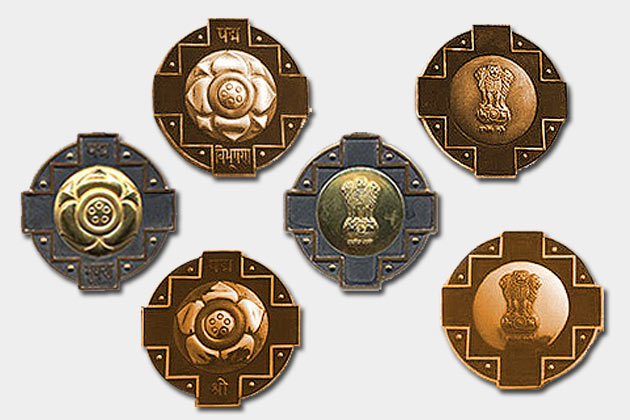
Rajinikanth, Vinod Rai among list of probable Padma awardees for 2016
NEW DELHI (TIP): The list of the prestigious Padma awardees is ready. As per practice, these awards are announced on Republic Day. These awards are given in three categories, viz., Padma Vibhushan, Padma Bhushan and Padma Shri.
The award seeks to recognize distinguished and exceptional service in all fields such as art, literature and education, sports, medicine, social work, Science and engineering, public affairs, civil service, trade and industry etc.
The current list contains 120 names across the three categories.
List of probable awardees
Vinod Rai – Retired IAS officer and former Comptroller and Auditor General of India, Vinod Rai is credited with being the face of the anti-corruption movement in India for his scathing reports on allocation of coal blocs and 2G licenses.R C Bhargava – R C Bhargava is the former CEO and current Chairman of Maruti Suzuki Ltd, one of India’s largest automobile manufacturers.
Cherukuri Ramoji Rao – Ranoji Rao is head of the Ramoji Group which owns Ramoji Film City, Eenadu newspaper, ETV, Priya Foods and Ushakiran Movies.
Ashok Malik – Ashok Malik is a New Delhi-based senior Indian media person and columnist. He holds a position as senior fellow at the Observer Research Foundation and writes for a number of national and international publications.
Pushpesh Pant – A noted Indian academic, food critic and historian, he retired as a professor of International relations from the Jawaharlal Nehru University, Delhi and is one of India’s leading experts on International Relations.
Sri Sri Ravi Shankar – He is a humanitarian leader, a spiritual teacher, and an ambassador of peace. Her spreads his vision of a stress-free, violence-free society through The Art of Living.Pallonji Shapoorji Mistry – He is an Irish Indian construction tycoon and chairman of Shapoorji Pallonji Group. Forbes estimates his wealth at US$16.3 billion as of November 2015. With his 18.4% stake in Tata Sons, he is the single largest shareholder in the Tata Group.
Dilip Sanghvi – Dilip Shanghvi is the founder and managing director of Sun Pharmaceuticals and one of the richest persons in India. As per the 2015 Forbes real time ranking, he is the richest Indian having surpassed Mukesh Ambani on the list.
Mahesh Chandra Mehta – He is a public interest attorney and has been recognised for his persistent fight against pollution-causing industries in courts. He was awarded the Goldman Environmental Prize in 1996 and the Ramon Magsaysay Award for Asia for Public Service in 1997.
Ujjwal Nikam – A lawyer by profession, Nikam is an Indian Public Prosecutor and has been involved in several high profile cases including the 1993 Bombay bombings, the Gulshan Kumar murder, the Pramod Mahajan murder and the 2008 Mumbai attacks.
Barjinder Singh Hamdard – He is the managing editor of the Punjabi newspaper Daily Ajit. He has also been a member of India’s upper house, Rajya Sabha.
Ram Vanji Sutar – A sculptor by profession and has created more than fifty monumental sculptures in the last forty years of his career. The government bestowed upon him the Padmashri Award in 1999.
Jaya Jaitly – A politician, social worker and former president of the erstwhile Samata Party. Became active in politics after the 1984 Sikh riots and joined the Janata Party. Jaitly and George Fernandes later went on to form the Samata Party.
Prof Panjab Singh – A noted academician, Professor Singh is a former vice-chancellor of the prestigious Banaras Hindu University.
Dr. Praveen Chandra – A leading cardiologist and Chairman of Interventional Cardiology at Medanta – The Medicity, Gurgaon, India, he is proficient in a lot of new devices and technologies.
Dr. Pradeep Chowbey – A pioneer in the cadre of laparoscopic surgeons in India, he was one of the first to perform Laparoscopic cholecystectomy in North India. He serves as Joint Managing Director, Chief – Surgery & Allied Surgical Specialities and Director – at Max Healthcare Institute Ltd.
Prof. D S Gambhir – Considered an icon in the field of Clinical as well as Interventional Cardiology in India. He currently serves as the Group Director of Cardiology, Kailash Group of Hospitals, New Delhi & Noida, and Director of Cardiology, Kailash Hospital & Heart Institute, Noida.
Piyush Pandey – India’s premiere adman, Piyush is an award-winning co-executive chairman and national creative director of Ogilvy & Mather India and vice-chairman of O&M Asia-Pacific. He has several successful ad campaigns to his credit.
Dhirendra Nath Bezbaruah – A senior journalist and former President of The Editors’ Guild of India, Bezbaruah was Editor of ‘The Sentinel’, a popular newspaper of the northeast.
Shri Tejomayananda – Swami Tejomayananda is the current Head of Chinmaya Mission Worldwide. He has been associated with the Chinmaya mission since 1993.
Rajinikanth – The Tamil movie star did not restrict himself to regional cinema. He debuted in the year 1975 with a Tamil movie and since then he has done movie in Bollywood, Telugu, Kannada, Malayalam, Hollywood and Bengali films as well. Apart from being a superstar whose movies run houseful, Rajinikanth philanthropic deeds prove why he is a real hero as well. Recently, on his 65th birthday on 12th December he called off celebrations to mourn the loss Chennai faced due to floods. He is likely to be honoured with the Padma Vibhushan.
Anupam Kher – He will be conferred with the Padma Bhushan. Anupam Kher is one of the few acclaimed Bollywood actors who have made their mark across the globe. He has featured in many Hollywood movies. Apart from acting in plays and movies, Anupam is a strong voice of India. He is an active participant in political debates and quite recently took it upon him to narrate the plight of Kashmiri Pandits in almost every eminent news channel of the country.
Priyanka Chopra – Bollwyood’s desi girl Priyanka Chopra won lauds from every corner of the globe with her debut American TV series ‘Quantico’. With this thriller, Priyanka became the first Bollywood actress to play the protagonist in an American show. She bagged the People’s choice award for best debutant. -

Mukesh Ambani India’s richest for 9th year
SINGAPORE (TIP): Industrialist Mukesh Ambani has retained the tag as India’s richest for the ninth year in a row with a net worth of$18.9 billion even as declining macroeconomic barometers flattened the fortunes of the country’s uber-rich.
As per Forbes magazine’s latest India rich list, Ambani was followed by Sun Pharma’s Dilip Shanghvi as second-richest with a net worth of$18 billion while Wipro’s Azim Premji retained his third place with $15.9 billion.
As many as 10 of them saw their net worth dip by over $1 billion each in one year, including Lakshmi Mittal, whose net worth dropped to $4.6 billion (ranked 8th with $11.2 billion). His rank too slipped three places.
In the top 10, Hinduja brothers were ranked 4th with $15.9 billion, followed by Pallonji Mistry at $14.7 billion, Shiv Nadar ($12.9 billion), Godrej family ($11.4 billion), Lakshmi Mittal ($11.2 billion), Cyrus Poonawala ($7.9 billion) and Kumar Mangalam Birla ($7.8 billion).
-

FOUR INDIANS FIGURE IN THE TOP 100 GLOBAL RICH LIST
LONDON (TIP): Four Indians have made it to the top 100 global rich list, as the country records for the first time more billionaires than Britain and Russia.
The world now has a record 2,089 billionaires with Mukesh Ambani being the richest Indian in the list.
The Reliance chief however ranks 41 in the top 100 global rich list.
The other Indians to figure in the top 100 are Dilip Sanghvi of Sun Pharma who is ranked 53, Pallonji Mistry & family who own Tata Sons ranked 60 and Wipro’s Azim Premzi who is ranked 74.
India has leapfrogged Russia and the UK to third place with 97 billionaires, 27 more than 2014. Manufacturing and Pharma are the preferred sectors with 23 and 14 billionaires respectively. Combined wealth of the Indian billionaires comes to $266 billion. Mumbai is headquarters to most of the Indian billionaires.
The latest Harun Global Rich List 2015 shows an additional 222 billionaires were created last year, almost a third of whom were in China. Bill Gates remains the world’s wealthiest individual increasing his wealth to $85 billion. Mexican tycoon Carlos Slim is second with $83bn, while Facebook founder Mark Zuckerburg breaks into the global top 10 for the first time.
The US still holds the crown for most mega-wealthy residents, at 537. But China is not far behind with 430, having acquired 72 new billionaires in 2014.
Russia has 93 billionaires and UK has 80.
New York remains the favourite city of the super-rich, with 91 billionaires while London is still fifth with 49.
But six cities in Asia now make the top 10: Mumbai, Hong Kong, Beijing, Shenzhen, Taipei and Shanghai.
The List ranked 2089 billionaires from 68 countries, up 222 from last year.
Mark Zuckerberg at 30 is the youngest member of the Top 10. His wealth soared 42%, moving him up 11 places to number 7.
The ‘Big Two’ in the list are the USA and China with 537 and 430 billionaires respectively, amounting to almost half of the billionaires on the planet. Russia had a bad year, losing 10 billionaires.