Tag: Nepal

  • CELEBRATIONS AROUND THE WORLD

    CELEBRATIONS AROUND THE WORLD

    Diwali is also celebrated outside of India mainly in Guyana, Fiji, Malaysia, Nepal, Mauritius, Myanmar, Singapore, Sri Lanka, Trinidad & Tobago, Britain, Indonesia, Japan, Thailand, Africa, Australia and the US among the Hindus across the world.

    Britain
    The Indians are the second largest ethnic minority in Britain. To get rid of the feeling of missing their homeland, especially during festival times, the Indians here celebrate most of the festivals. The occasion is marked by visit to the local temple to worship the shrine of Lakshmi, which they have made for Diwali. Eating special sweets, burning of incense sticks, lighting the home and surroundings and the blowing of the conch shell follows the prayer session in the Lakshmi temple. The festival here is celebrated according to the Hindu solar calendar hence it falls in the months of October-November, amongst the cold, damp and windy months in Britain. Still the enthusiasm of the festival celebration makes the task of leaving small lamps on windowsills or by open doorways possible ignoring the chill. The lamps and diyas play their part in maintaining the atmosphere of Diwali at home.

    Guyana
    Guyana, formerly known as British Guiana, is located on the northeast coast of South America. Guyana is 82,978 square miles in area and has a population of about 7,70,000. Hindus constitute 33% of Guyana’s total population. The Co-operative Republic of Guyana in Southern America celebrates Diwali according to the Hindu Solar calendar. The day of the festival is declared as a national holiday in the official calendar of Guyana. The tradition of celebrating the festival is believed to have been brought to Guyana in the year 1853 by the first indentured people from India. The legends related to the festival are similar to that of India. The celebration of the festival includes, distribution of sweets, illuminating the inside and outside of the house, exchange of greetings, cleaning of houses and wearing of new clothes. The celebrations hold special significance for the people of Guyana. The distribution of sweet signifies the importance of serving and sharing whereas exchange of greeting cards denotes the goodwill of each other. The sweets distributed mainly consist of pera, barfi, and kheer. The tradition of wearing new cloth for the people of Guyana is significant especially in this festival. They believe that wearing new cloth is the symbol of healthy souls in healthy bodies. Cleaning of their homes and keeping them well illuminated in and outside is a practice meant to illuminate the road for Goddess Lakshmi so that while goddess Lakshmi visits their home she faces no problem of light as the Diwali night is regarded as the darkest night of the year.

    Indonesia
    The name Indonesia came from two Greek words: “Indos” meaning Indian and “Nesos” meaning islands. The majority of population follows Islam. Hindus constituent about 2% of Indonesia’s total population. However, the Indonesian island of Bali is famous for celebrating the festival of Diwali, as a majority of the population here is that of Indians. It is one of the most revered festivals of the locals here. The celebration and rituals of the festival is mostly similar to that celebrated by their counterparts in India.

    Malaysia
    Fascinating in its diversity, Malaysia has many mesmerizing charms and attractions. With a population of about 20 million, comprising of a harmonious multi-ethnic mix of Malays, Malaysia promises a colorful potpourri of cultural traditions. Most are based on the various religious practices, beliefs and traditions influencing the costumes, festivals, ceremonies and rituals. The Hindu community of Malaysia constitutes about 8% of its total population .The community celebrates Diwali as a symbol of triumph of good over evil. The Malaysian people call Diwali as Hari Diwali. This festival is celebrated during the 7th month of the Hindu solar calendar. The south Indian traditional of oil bath precedes the festivities. The celebration includes visits to temples and prayers at household altars. Small lamps made from clay and filled with coconut oil and wicks are a common sight to signify the victory of Lord Rama, the hero of the Hindu epic Ramayana, over the demon king Ravana. Diwali is celebrated almost all over the Malaysia except in Sarawak & Federal Territory of Labuan.

    Mauritius
    Mauritius is an island in the Indian Ocean that lies to the east of Madagascar. This beautiful landmass is full of picturesque landscapes and enchanting spots. Mauritius accounts a 63% of Indian majority of which 80% follow Hinduism. Hence, celebration of almost all the Hindu festivals in this island is a common phenomenon. In Mauritius, Diwali celebration is an age-old tradition. It holds special significance for the natives, who believe that Diwali has been celebrated even long before the return of Lord Rama from 14 years of exile and his coronation as the king. The festival is marked by lightening of earthen lamps in rows making images out of the rows. Lakshmi is worshiped as the goddess of wealth and crackers are burnt to scare away evil spirits.

    Nepal
    Nepal is a landlocked country nestled in the foothills of the Himalayas. Nepal, a multi-ethnic and multi-lingual society is the only Hindu Kingdom of the world. Diwali is celebrated here with the usual Hindu festivities and rituals. Diwali in Nepal is known as Tihar. Just like most places in India Diwali is celebrated here to honor the goddess of wealth and god of prosperity Lakshmi and Ganesh respectively. The festival of light falls in the months of October or November on the day of Amavasya – the darkest day of the year. The festival here continues for five days. Every day has its special significance. The first day is dedicated to cows as they cook rice and feed the cows believing that goddess Lakshmi comes on cows. The second day is for Dogs as the Vahana of Bhairava. Preparation of delicious food especially meant for the dog is a typical characteristic of the day. Lights and lamps are lit to illuminate the entire surrounding and some of the specialty items are prepared to mark the third day of the festival. Fireworks, Lamps and crackers are widely used. The fourth day is dedicated to Yama, the Hindu God of Death. He is prayed for long life. The fifth final day is Bhhaya Dooj dedicated for the brothers who are wished long life and prosperity by their sisters.

    South Africa
    South Africa is located at the southern tip of the continent of Africa. It is a mix of cultures and has one of the largest immigrant Indian communities in the world. The country has almost one million immigrant Indians. Most of these Indian immigrants are concentrated in the eastern regions of Natal and Transvaal of the country. About 65% of Hindus, 15% of Muslims and 20% of Christians live in this area. Due to the majority of the Hindu population, a number of Hindu festivals are celebrated here. Diwali also holds an important place in the festival calendar of the region. The celebration is more or less same to that in India. Most of the Hindus here are from Gujarat and Tamil Nadu and continue to follow their regional variations of Hinduism.

    Trinidad & Tobago
    Trinidad is the most southern of the Caribbean islands, lying only seven miles off the Venezuelan coast, is one of the most exciting, colorful islands of the West Indies. Considered as the land of the Humming Bird, Trinidad and Tobago has a good number of Indian population. For that reason, Hindu festivals, customs, traditions and observances forms an integral part of the society, which comprises the unique beauty of the twin island state. The Diwali celebration has a unique flavor here in the Caribbean island nation. Here 43 per cent of the 1.3 million populations are ethnic Indians. The Diwali celebrations are usually marked as an occasion to unify the nation that consists of Hindus, Muslims, Christians, Indo-Trinidadians and Afro- Trinidadians. The festival day is regarded as a national holiday. The festival is also marked by scores of functions besides the usual rituals of the festivity. The functions and celebrations also have an official imprint as the Ministers of the Government also participate in the celebrations sometimes. The belief behind the festival is same as of India, which is, prevalence of good over evil. The celebrations continue for over a week and the headquarters of the National Council of Indian Culture at Diwali Nagar becomes the focal point.

    America
    Diwali is one of the biggest Hindu festivals celebrated among many people and communities in the United States. Many schools, community groups, Hindu associations, Indian organizations and corporate businesses get involved in celebrating Diwali. Politicians, including governors and past presidents, previously made public announcements expressing their greetings and well wishes to Hindus on Diwali. Many Indian stores sell jewelry and traditional outfits, such as chiffon saris, as well as statues of Hindu deities and incent sticks used in prayer around this time of the year. Many women and girls use mehendi, which is a temporary henna decoration, on their palms. It is also common to wear fine jewelry and silk outfits to celebrate this joyous festival.

  • Two Indians among three arrested in Nepal poll candidate murder

    Two Indians among three arrested in Nepal poll candidate murder

    KATHMANDU (TIP): Two Indian nationals were among three people arrested for the murder of a constituent assembly election candidate in Bara district in southern Nepal in October. Police said on Sunday that Mohamed Alam, a CPN (UML) candidate for the November 19 general elections was killed by a rival from his own party Ramchandra Pyasi Kushwaha with help from Indian nationals Atik Khan and Raju Srivastava. Alam was shot outside the a flour mill on October 4 by two men on a motorcycle with Indian license plates and died in hospital in Kathmandu without regaining consciousness a week later. Kushwaha is a former lawmaker while Khan runs a business in Birganj in Nepal and Srivastava is from Indian border city of Raxual. They hired professional assassins to kill Alam, a day after he was announced as a candidate from Bara – 4 constituency. According to the police, there had been two previous unsuccessful attempts to kill Alam. The general elections is expected to be marred by violence as the breakaway CPN-Maoist has declared that it will disrupt the polls and its main target will be candidates of it mother party UCPN (Maoist).

  • Army deployed for Nepal poll security

    Army deployed for Nepal poll security

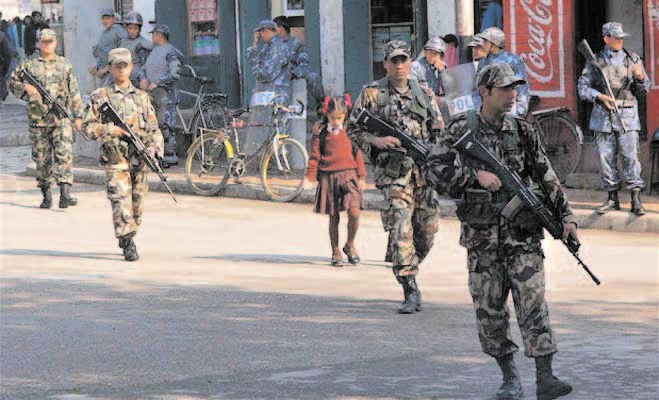
    KATHMANDU (TIP): The Nepal Army was deployed in the country on October 20 to ensure that the November 19 polls happen smoothly. According to army spokesman Brigadier General Jagdish Chandra Pokhrel, the army has been deployed as per the constitutional directive and will work together with other security forces. Two thirds of the 95,000 strong army will be deployed in 240 constituencies in 75 districts. The breakaway Maoist faction said that it will urge the people to boycott the elections. In pamphlets stuck in Kathmandu it said that since no party will win a majority, it will be allow India to interfere. The pro-monarchy Rastriya Prajatantra Party of Nepal is fighting the election on a nationalistic platform. It has called for referendum on status of monarchy and wants Nepal to again be a Hindu country. On the issue of federalism which was the sticking point the last time round, the Maoists have stuck to its ethnicity based provinces and an executive president directly elected by the people. The Nepali Congress wants a parliamentary system. Meanwhile the Communist Party of Nepal ( UML) has given a party ticket to Najma Khatun, the widow of Mohammed Alam who died of gunshot wounds earlier this month. Alam had been shot by men on a motorcycle with Indian number plates in southern Nepal.

  • India ends eightyear- old ban, starts supplying arms to Nepal

    India ends eightyear- old ban, starts supplying arms to Nepal

    KATHMANDU (TIP): Ending an eight-year-old ban on military supplies, India has handed over some of the equipment, including vehicles and arms, it had pledged to provide to Nepal ahead of crucial polls to be held next month. Over 360 vehicles, including 25 mine-protected vehicles, have already arrived while arms and ammunition, which are in the pipeline, will come soon, sources in the Nepalese army headquarters said on October 22. This is the first time that military equipment is being provided to Nepal by India after ending a ban on the supply of such gear, including lethal arms, that was imposed when former King Gyanendra seized executive powers in February 2005, said a statement issued by army headquarters. Nepal has said the equipment is needed by 62,000 troops who will provide security for the constituent assembly elections to be held on November 19. The country recently amended its constitution to allow the army to be mobilized to ensure free and fair polls. The equipment provided by India so far includes 216 light vehicles, 154 heavy vehicles and some arms. Among the heavy vehicles are 58 trucks with a capacity of 7.5 tonnes, four ambulances and 25 mine-protected vehicles, sources said. The assistance will help smoothen regular operations of the Nepal Army, modernize the force and increase its efficiency for military operations, the official statement said. “This will also help in strengthening and further deepening Nepal-India mutual cooperation,” it said. India had agreed to provide the equipment during the tenth meeting of the Bilateral Consultative Group on Security Issues in April.

  • Nepalese election contestant dies days after attack

    Nepalese election contestant dies days after attack

    KATHMANDU (TIP): A Nepalese constituent assembly election contestant died on Thursday a week after he was shot at in southern Nepal district of Bara adjoining Bihar. A pillion rider on a motorcycle with an Indian license plate had shot Mohammed Alam in his head while he was talking on phone last Friday outside a flour mill near the border town of Birgunjon. He had been unconscious and his survival chances were slim, doctors treating him at a Kathmandu hospital said The motorcycle used for the attack had skidded while the attackers were escaping from the scene. The attackers fired in the air after a witnesses tried to catch them. The motorcycle was later recovered within the Nepali territory. Following the shooting, other candidates from southern Nepal district have asked for additional security ahead of the November 19 election. Preliminary investigations have revealed “an international criminal group” was behind the shooting. Nepali media reports said Alam was allegedly associated with the Dawood Ibrahim gang and Pakistan’s ISI and was a target for the Chota Rajan gang Some Indian media had claimed his association with Yashin Batkal, arrested from the tourist town of Pokhara and taken to India last month.

  • 2 killed in Nepal ultra-light aircraft crash

    2 killed in Nepal ultra-light aircraft crash

    KATHMANDU: Two people, including a Chinese tourist, were killed on Thursday when an ultra-light aircraft crashed in bad weather in Nepal’s resort town of Pokhara. Pilot Stephen Shrestha and a Chinese national died when the ultra-light aircraft crashed after slamming into a hill near the Shanti Stupa in Pumdibhumdi village in Pokhara, 210 kilometres west from here, according to police. Ultra-light aircraft is popular among tourists for sightseeing in the Pokhara Valley and the Annapurna mountain range. The bodies have been sent for postmortem. It was raining and the sky was cloudy when the accident took place, eyewitnesses said. The ultra-light aircraft belongs to Avia Club Nepal, which has started the flight since 1997. Over 5,00,000 tourists visit Nepal every year, mostly from neighbouring India and China, and tourism is one of the major contributors to the economy of the impoverished Himalayan nation.

  • ‘Strong Fundamentals’

    ‘Strong Fundamentals’

    The truth about the economy is different
    The middle class today is feeling insecure because the public services are poor and most people are saving 30 per cent to 40 per cent of their incomes to face problems in the future. Many fear job losses, inflation and others feel worried about healthcare expenditure in case a family member falls sick. Then there is insecurity about the future of their children. Only expensive English medium schools can give a child a good future. Few will know or care about the strong fundamentals that the leaders talk about. Most only know about their daily problems of survival”, says the author.
    In India economic problems seem to sort themselves out on their own over time. Now the rupee is slowly climbing up and the stock market is also showing signs of rebound. At least temporarily – and the economic leaders of the country are once again harping on the ‘sound and strong fundamentals’ of the economy. One may not understand what these are. If it is GDP growth, 4.4 per cent per annum in the first quarter of the current fiscal is hardly indicative of ‘strong’ fundamentals. India needs at least 6 per cent growth in order to absorb the 12 million people who enter the job market every year. The recent data on employment show that only seven million jobs a year were created between 2009-10 and 2011-12. The developed countries can afford to grow at 1 or 2 per cent because they have their ‘fundamentals’ in place – high human development, efficient infrastructure, reliable institutional framework, round-theclock availability of power and clean drinking water from taps and a good quality of life.

    If the economic gurus are talking of the current account deficit, again 4.2 per cent of the GDP is high and now the government is talking of controlling the non-essential imports to reduce it. The rupee has depreciated 20 per cent in the last four months and imports have become expensive. Export growth has picked up no doubt but many exports contain imported parts and components and to the extent they use such parts, their costs will go up and they may suffer. Even in gems and jewelry exports for which India is known internationally, India has to import raw precious and semiprecious stones and pearls from abroad. These are cut or processed and made into jewelry. Gold too is imported. Thus there is some doubt whether export growth will pick up exponentially with the depreciation of the rupee. Some exports like software and business processing services will, however, become competitive. Another fundamental of the economy is industrial growth which unfortunately has been plunging and the latest data show a negative manufacturing growth (-1.2) and low mining sector growth. If manufacturing growth is shrinking, fewer jobs will be created and there will be a higher rate of unemployment.

    It is the only sector which absorbs semi-skilled labor. The service sector growth too has slowed down. The service sector contributes around 60 per cent of the GDP and its high growth had been the key driver of India’s GDP growth in the past. But the service sector does not create as many jobs as the manufacturing sector and it has few highly paid jobs and the rest are low-paid informal jobs. The high-end jobs comprise only 2 per cent of the entire service sector jobs like IT, business and financial services, insurance and real estate. Agricultural growth too has not been up to the mark of 4 per cent. There is widespread inequality in the agricultural sector because 80 per cent of the farmers are small and marginal. Unless agricultural growth rate picks up, farmers and farm labor would not be fully employed and there will be a pressure to migrate to towns and cities. Low agricultural productivity is keeping the incomes of small farmers low. Migration has its dark side as it leads to the growth of slums and 18 million people in India are living in slums in different metro cities. Mumbai has the biggest slum population in India. Another fundamental is the fiscal deficit of the country. Indeed to the credit of the Finance Minister, Mr. P. Chidambaram, the fiscal deficit has been contained at 4.8 per cent of the GDP. But how this has been achieved has not been spelt out. If it means the compression of important government expenditures, then the long-term impact may be disastrous.

    As compared to China, India’s foreign exchange reserves are small at $275 billion or equal to seven months’ imports. But recent reports suggest that India is in a vulnerable situation because the total external debt is $390 billion. Around $85 billion will be needed to cover the current account deficit and the corporate sector debt is around $172 billion. Inflation is another fundamental which is not totally in control especially if you take the food inflation or the Consumer Price Index into account. The Wholesale Price Index too is likely to go up further because of yet another diesel price hike soon which will have a cascading effect on all prices. Thus one wonders how the leaders are bandying about the strong fundamentals of the economy. In a recent book by Jean Dreze and Amartya Sen “India and its Contradictions: an Uncertain Glory” many serious problems of the economy have been discussed. Most importantly, the authors have pointed out the low achievements on the human development front, especially in gender, health and education in which inequalities in India seem to be more glaring than in Bangladesh and Nepal. In public healthcare especially there has been little progress so far. Even as private clinics and hospitals are sprouting all over metro cities, one is scared of entering them because no one knows how much they would charge.

    Exorbitant charges and unnecessary tests are the bane of private healthcare and patients remain helpless. No wonder India has one of the highest out-of-pocket expenditures on healthcare in the world. Public healthcare expenditure is still less than 3 per cent of the GDP. Another fundamental is infrastructure – roads, the Railways, the iron and steel sector, coal and power which can hardly be termed as world class. There is a huge power deficit and 80,000 villages remain without electricity. The delivery of public services remains dismal at most places – be it sanitation, sewage or availability of safe drinking water. If you ask an average person whether he or she feels secure in the present situation, the answer is likely to be ‘no’. Insecurity is also reflected in the behavior of the people who have been buying gold like never before. Why are people hoarding gold? Part of it is tradition but a lot of it is due to insecurity. The middle class today is feeling insecure because the public services are poor and most people are saving 30 per cent to 40 per cent of their incomes to face problems in the future. Many fear job losses, inflation and others feel worried about healthcare expenditure in case a family member falls sick. Then there is insecurity about the future of their children. Only expensive English medium schools can give a child a good future. Few will know or care about the strong fundamentals that the leaders talk about. Most only know about their daily problems of survival.

  • BHATKAL FLOWN TO DELHI, ADMITS HE HAS LINKS WITH PAKISTAN’S ISI

    BHATKAL FLOWN TO DELHI, ADMITS HE HAS LINKS WITH PAKISTAN’S ISI

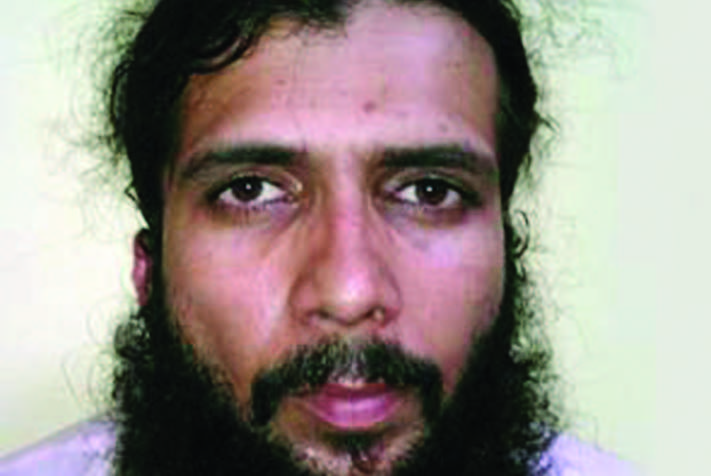
    NEW DELHI (TIP): Indian Mujahideen co-founder Yasin Bhatkal and his associate were flown to Delhi by a special plane on September 6 afternoon. The special plane with Bhatkal and his associate Asadullah Akhtar and NIA officials on board took off from the Jai Prakash Narayan International Airport, Patna at 12.38pm. Earlier, the duo with their faces covered was brought to the airport from the BMP camp under tight security arrangements. A small group of people raised slogans at the airport demanding capital punishment to Bhatkal and his associate. The NIA had on Thursday obtained a three-day transit remand of Bhatkal and his associate from a Motihari court.

    The two, who were brought to Patna from Motihari by road last night, were kept at the Bihar Military Police (BMP) campus near the Airport. NIA officials interrogated Bhatkal and Akhtar at BMP office again on September 6 morning before taking them to national capital. The top IM operative has confessed to his links with the Pakistan’s premier spy agency Inter Services Intelligence, which has been accused of sponsoring terror attacks against India, a news channel reported. A joint team of Bihar police and NIA had arrested Bhatkal and Akhtar, carrying a reward of Rs. 10 lakh each, from Nahar chowk in Raxual along Indo- Nepal border, around 225 km from the capital town of Patna, on September 4.

  • Yasin Bhatkal, founder of Indian Mujahideen, arrested

    Yasin Bhatkal, founder of Indian Mujahideen, arrested

    NEW DELHI (TIP): Yasin Bhatkal, the Indian Mujahideen mastermind and a key suspect in several terror blasts since 2008, has been arrested in a joint operation by the central intelligence agencies and the Bihar Police. “Yasin Bhatkal has been traced and detained at the India-Nepal border in Bihar. He is presently in the custody of Bihar Police. His interrogation is going on,” Union home minister Sushilkumar Shinde told newspersons here on August 29 morning. The Bihar Police are interrogating Yasin Bhatkal and will later produce him in a court for transit remand. The arrest of Yasin alias Ahmed Siddibappa alias Shahrukh is being seen as a major breakthrough in the agencies’ protracted efforts to break the back of the Indian Mujahideen, the Lashker-e-Taibabackedindigenous jihadi outfit behind the Mumbai, Delhi, Hyderabad, Bangalore, Ahmedabad, Pune and Jaipur blasts. “This is the biggest success after the Batla House operation, following which the IM was forced to slow down its activities,” said an intelligence official.

    Yasin Bhatkal, along with Riyaz Bhatkal, is a co-founder of the IM. Both hail from Bhatkal village in Karnataka. Yasin carried a Rs 10 lakh National Investigation Agency (NIA) reward on his head. Another IM operative, AsadullahAkhtar aliasHaddi, is reported to have been detained along with him. Bhatkal’s arrest comes close on the heels of key LeT man Abdul KarimTunda’s deportation from Nepal. NIA will seek Yasin Bhatkal’s custody. Sources said a joint team comprising central intelligence agencies and the Bihar Police had been camping in Darbhanga in Bihar for his arrest. The Research and Analysis Wing (RAW) and theIntelligence Bureau (IB) played a crucial role in tracing his whereabouts. Delhi Police special cell teams were stationed too on Bihar-Nepal border for last one week. Sources said Indian intelligence agencies and international agencies negotiated Yasin Bhatkal’s custody at Sanauli Border of Nepal near Gorakhpur.

    Though Yasin was earlier arrested by the West Bengal police in 2008, he managed to get bail due to a goof by the police officers who had apprehended him. The officers were unaware of his terror background. Yasin has since been operating from within India, unlike most IM brass who sought a safe haven in Pakistan. He is suspected to have planted the bomb in German Bakery blasts in Pune, where he was allegedly captured on CCTV footage, and this year’s Dilsukhnagar blasts in Hyderabad. The IM co-founder managed to give the intelligence and law enforcement agencies the slip many a times, by employing carefullychosen communication methods, such as always calling from a PCO and using chat services like Nimbus and Yahoo to pass instructions to the IM cadres.He even lived in the national Capital’s Shaheen Bagh in 2010 and married a local girl whose father operated an illegal weapons and ordnance factory in Meer Vihar. National security adviser Shivshankar Menon briefed Prime Minister this morning on Yasin Bhatkal’s arrest.

  • OBAMA AT 50TH ANNIVERSARY EMBODIES KING’S DREAM

    OBAMA AT 50TH ANNIVERSARY EMBODIES KING’S DREAM

    WASHINGTON (TIP): President Barack Obama was set to lead civil rights pioneers on Aug 28 in a ceremony for the 50th anniversary of the March on Washington, where Dr Martin Luther King’s “I Have a Dream” speech roused the 250,000 people who rallied there decades ago for racial equality. Large crowds gathered at the Lincoln Memorial, where the first black US president was expected to speak just after 1900 GMT _ the time when King delivered his spellbinding speech early in the turbulent 1960s.

    The landmark Civil Rights Act and Voting Rights Act to outlaw discrimination were signed into law in the next two years. Obama has said King is one of two people he admires “more than anybody in American history.” The other is Abraham Lincoln. Obama will be joined by former Presidents Jimmy Carter and Bill Clinton, with thousands of people expected to attend. Obama will offer his personal reflections on the civil rights movement, King’s speech, the progress achieved in the past 50 years and the challenges that demand attention from the next generation. International commemorations will be held at London’s Trafalgar Square, as well as in the nations of Japan, Switzerland, Nepal and Liberia. London Mayor Boris Johnson has said King’s speech resonates around the world and continues to inspire people as one of the great pieces of oratory.

    On Aug. 28, 1963, as King was ending his speech, he quoted from the patriotic song, “My Country `tis of Thee” and urged his audience to “let freedom ring.” “When we allow freedom to ring _ when we let it ring from every city and every hamlet, from every state and every city, we will be able to speed up that day when all of God’s children, black men and white men, Jews and Gentiles, Protestants and Catholics, will be able to join hands and sing in the words of the old Negro spiritual, `Free at last, free at last, great God almighty, we are free at last,” King said. The civil rights leader was assassinated five years later. The Rev Bernice King opened the celebration Wednesday at an interfaith service.

    King said that her father is often remembered as a freedom fighter for equal rights and human rights, but he was most importantly a man of faith. Obama considers the 1963 march part of his generation’s “formative memory.” A halfcentury after the march, he said, is a good time to reflect on how far the country has come and how far it still has to go, particularly after the recent acquittal of George Zimmerman in the fatal shooting of Trayvon Martin, an unarmed black teenager. Race isn’t a subject Obama likes to talk about in public, but the Martin case is one time he has done so. In an interview Tuesday on Tom Joyner’s radio show, Obama said he imagines that King “would be amazed in many ways about the progress that we’ve made.” He listed advances such as equal rights before the law, an accessible judicial system, thousands of African-American elected officials, African- American CEOs and the doors that the civil rights movement opened for Latinos, women and gays. “I think he would say it was a glorious thing,” he said.

    But Obama noted that King’s speech was also about jobs and justice. “When it comes to the economy, when it comes to inequality, when it comes to wealth, when it comes to the challenges that inner cities experience, he would say that we have not made as much progress as the civil and social progress that we’ve made, and that it’s not enough just to have a black president, it’s not enough just to have a black syndicated radio show host,” Obama said.

  • OFBJP Organizes Public Reception For BJP President Rajnath Singh

    OFBJP Organizes Public Reception For BJP President Rajnath Singh

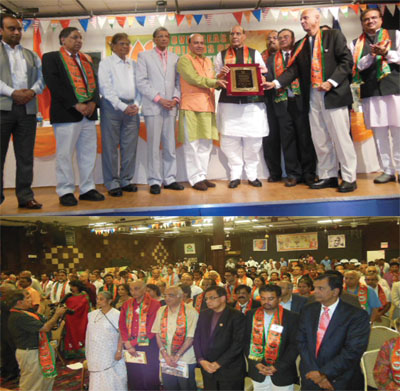
    EDISON, NJ (TIP): Indian American community of tri-state area (New Jersey, New York, and Connecticut) gave a rousing welcome to Rajnath Singh, President of Bharatiya Janata Party (BJP) and his BJP delegation Ananth Kumar, General Secretary; Sudhanshu Trivedi, National Spokesperson; and Vijay Jolly, Convener of Overseas Affairs and Overseas Friends of BJP (OFBJP) in TV Asia Studio Auditorium at Edison, NJ on Sunday July 21, 2013. The program was organized by OFBJP-USA as part of its community global outreach program.

    The program was broadcasted live on TV Asia across US reaching out to 1.5 million viewers. The program was also relayed live in India, Canada, UK, Europe and Middle East thru various channels. Addressing the jam-packed auditorium, Rajnath Singh said that he was elated by the warm welcome that had been accorded to him by the Indian Americans here in US. He said that trust and credibility have become a big problem in India and BJP is the only option. No party in India has grown bigger than Congress except the BJP.

    BJP is the only party that has not suffered a vertical split. Communists have lost relevance and Congress has no policy on any of the issues nor has any ideology. Since its inception in 1951 as Bharatiya Jan Sangh and later on as BJP, the party has been pursuing a policy of Nation first. He continued that Atal Behari Vajpayee led a 24 party coalition for 6 years and the NDA rule was far better than 55 years of Congress rule in every aspect.

    Corruption, Inflation and price rise are the signature of congress rule whereas NDA government controlled the inflation and price rise in spite of the prevailing severe drought and economic sanctions imposed by the entire West after Pokhran nuclear tests. NDA inherited a GDP growth of 4.8% and 10% inflation whereas BJP handed UPA a GDP of 8.4% and inflation 3.5% in 2004. Amidst applause from the audience he said that Pokhran test was a big step wherein the BJP led govt made India a nuclear power even though we knew economic sanctions were staring at us.

    Countries that are much smaller have become developed countries but India is still a backward country and not sure why 55 years of Congress rule did not change much. Congress has to answer as to how much time they need to make India better, to remove poverty. BJP invited FDI in telecom sector but encouraged Indian investors whereas Congress has opened up the telecom sector 100%, increased in the LIC sector from 26% to 49%. Foreign investors have pulled out $7.5 billion from India and no one is ready to invest.

    Even after 60 years of Independence we still have 67% of people who don’t get food and we need a food security bill. We need leaders with firm conviction and leaders with vision and when we come in power we will make India a super economic power in 10-15 years. National Highway development has seen tremendous growth during NDA rule. 50% of the highways that were built during 1980-2012 happened during 6 years of NDA rule and the other 50% were built during 26 years of non-BJP rule.

    Gujarat development has become a role model across the world. Madhya Pradesh agricultural growth (19%) is the highest in the world and very soon will be providing 24hrs of power supply. Chhattisgarh PDS system serves 90% of the population without any corruption and is a model for other states to emulate. Goa is the only state in India where Petrol is cheaper than Diesel. India has a GDP growth of 4.8% whereas BJP ruled states have 10% GDP growth. UPA government has no plan to tackle Naxalism or terrorism.

    Appeasement has become the state policy whereas BJP never links terrorism to any religion, caste or region. After Mumbai terror attack, Prime Minister made a statement that he will not talk to Pakistan until it gives an assurance that they will control terror activities and not support any groups that work against India but changed all that in a matter of few months. Our foreign policy is at its worst with no friendly neighbors around us. During NDA rule we maintained good relations with Russia and development excellent relations with US.

    We made US our strategic partner. He appealed to the US govt to lift the ban on visa to Narendra Modi, he said on one side US agencies rate Gujarat as the best state and Modiji as an excellent administrator and on the other hand they deny visa to him. It will be better if US takes a decision soon as they will be forced to take a decision anyway later. When BJP comes to power we will make India a power of Rishi and Krishi (knowledge and Prosperity), he said. Indian culture influenced the world for thousands of years.

    We never planned to dominate the world and even Swami Vivekananda came to Chicago on his own and had great influence on the world by his teachings. Citing the example of Newsweek columnist Lisa Miller who stated that by imbibing Yoga, Pranayam, Ayurveda and Organic farming people in the West are becoming Hindus whereas it is a crime in India if you say you are a Hindu.Talking on the recent controversy related to Narendra Modi statement that he is a Hindu and Nationalist, media created and pseudo secularists made a big fuss.

    Professing your Hindu culture became a communal word in India. He said that as per the Supreme Court, Hindutva is a way of a life. Hindutva teaches love not only for human beings but even for animals, plants, rivers, mountains etc. It is Hindutva that teaches us to serve milk to a snake and take care of animals like ants and birds. He called on the Indian American Community to support BJP to build a strong India.

    Shri Rajnath Singh was accorded standing ovation. Shri Rajnath Singh was honored by the OFBJP executive committee with a plaque for his contributions to the party and the country. Earlier, Ram Rakshpal Sood (Sr.Advisor, OFBJP) acting as the Emcee welcomed the audience, chief guests and the sponsors of the event. After the traditional lamp lighting ceremony amidst the chanting of Vedic mantras by Pandit Pravin Shastri and Chandrakant Trivedi and blowing of conch shell by Pravin Shashtri. Mrs. Vidya Labroo led the rendition of Vandemataram.

    Jayesh Patel (President, OFBJP) welcomed the distinguished guests and said that entire India is chanting Narendra Modi (NaMo) mantra and expressed hope that BJP will be able to get majority on its own merit in the next election. Ram Kamath (General Secretary, OFBJP) introduced Dr. Mahesh Mehta, National Coordinator of OFBJP-USA. Speaking on the occasion, Dr. Mehta said that mission 2014 is about transforming India into a global leader and Global Indians should contribute to be the part of this great movement that will eventually contribute to the development of India.

    Dr. Adapa Prasad (Immediate Past President) introduced Vijay Jolly, Convener of BJP Overseas Affairs and OFBJP, as a dynamic leader and former MLA who took on Delhi Chief Minister during the last election.

    In his electrifying speech, Vijay Jolly urged the audience to applaud for Rajnath Singh for honoring the feelings of the people by making NaMo as the chairman of the campaign committee. Stressing the fact the OFBJP is on a mission to develop leaders by inducting youth into the organization to dethrone the corrupt Congress regime in India. Stating that NRI’s have always made India proud, he said that OFBJP has setup its chapters in UK, Norway, Nepal, Kenya and other countries to work for the welfare of Indian diaspora.

    He got the past Presidents of OFBJP-USA honored by Rajnath Singh Introducing SudhanshuTrivedi, BJP National Spokesperson, Dr. Dinesh Agrawal (Former- President, OFBJP) said that as the national spokesperson, he is very active effective on TV channels spreading the message and its ideology of BJP. SudhanshuTrivedi reminded that July 21st the day of the program is a historical day when US astronauts landed on the moon. Edison town, the venue of the program, is also a historical town, named after the inventor of light bulb.

    Hence, he said that word Bharat stands for light and inspires us to take India to the pinnacle of glory. Stating that BJP is all set to form the next government is not based on hope but on facts. He concluded reciting a poem by A.B. Vajpayee. R.P. Singh (Org. Secretary, OFBJP) introduced Ananth Kumar, BJP general Secretary. Amidst thunderous applaud from the audience, Shri Ananth Kumar introduced himself as the Hanuman of South as Kishkinda, the birth place of Lord Hanuman is in Karnataka whereas Rajnath Singh is from U.P, the land of Ram. For Ram’s team to win we need Hanuman and he is there to lend services for the party and the country.

    India, he said is going through turbulent times and like A.B. Vajpayee model, we have Gujarat model of development under NaMo leadership and we will soon have NaMo model of governance. He said that BJP is already in battle mode, under NaMo and Rajnath Singh’s leadership we are all set to take on the corrupt congress government. Once in power, BJP will make India a global player not only in spirituality but in culture, strategic matters and will be a decisive player in the world. He urged the NRI’s to connect with their districts back home and work for BJP’s victory in 2014.

    Chandrakanth Patel introduced Rajnath Singh as a man of impeccable image in spite of being in political life for 40+ years. Born in a farmer’s family in Varanasi, he rose to be the president of BJYM. He was part of the J.P movement and became the Agricultural minister in A.B. Vajpayee’s government. He was the President of BJP between 2007-2009 and again became the President in January, 2013.

    Currently, he is a Member of Parliament from Ghaziabad, U.P. Earlier, the President of TV Asia and a well known community leader, Shri H.R.Shah addressed the gathering and said that TV Asia always supported India causes and he has been an admirer of Mahatma Gnadhi and Sardar Patel. He said he felt close to BJP principles and supported BJP. He wished that Narendra Modi would be elected as the Prime Minister. Krishna Reddy (Treasurer, OFBJP) presented the vote of Thanks.

  • Nepal’s Breakaway Maoists To Boycott Polls

    Nepal’s Breakaway Maoists To Boycott Polls

    KATHAMNDU (TIP): Nepal’s November 19 general elections have been cast to fresh doubts after the breakaway Maoist faction on july 25 announced that it will boycott election. “The present government is illegal and the election conducted by the government is not legal,” said chairman of the Communist Party of Nepal -Maoist Mohan Baidya at a press conference. The party has been demanding that the present government led by sitting chief justice Khilraj Regmi be dissolved before the party can think of participating in the elections.

    The other political parties have however rejected this demand. At a meeting between Baidya and chairman of UCPN (Maoist) Prachanda, Nepali Congress president Sushil Koirala and UML chairman Jhalnath Khanal earlier on Thursday, efforts made to find a common ground failed. Prachanda said that the structure of the government could be changed but did not agree to change its leadership. Nepali Congress president Sushil Koirala stressed on the need to hold elections for the constituent assembly that will prepare a new constitution on November 19.

    Baidya, who broke way from the UCPN (Maoist) last year, however said, “The constituent assembly will not be able to prepare a new constitution.” Nepal’s constituent assembly was dissolved last year was after the parties could not agree on the federal structure to be adopted in the new constitution. Meanwhile, the Election Commission has asked the agitating parties be brought to the election fold by mid August failing which the election schedule will be affected.

  • Bhattacharya Offers Specialized STEM Training To 250 Needy Students

    Bhattacharya Offers Specialized STEM Training To 250 Needy Students

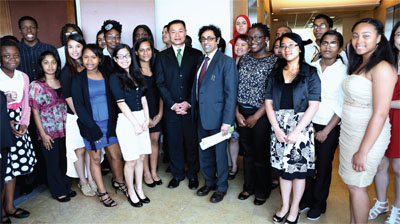
    NEW YORK (TIP): Over 250 under privileged students from lower strata of the society studying in eighth grade and above were inducted to undergo a one-year program to provide hands on experience on research in myriad fields in science, technology, math and engineering (STEM) stream.

    The students, drawn from 75 schools in New York City will work under mentors in leading Ivy League university research labs and centers such as Cornell and Columbia, institutes of higher learning such as Memorial Sloan Kettering and NASA to pursue careers in STEM stream after their graduation. The ambitious project of Harlem Children’s Society (HCS) founded by Indianorigin researcher and scholar Dr. Satyajit ‘Sat’ Bhattacharya from Kolkatta has benefited more than 2500 local economically backward and minority children so far by providing them with hands on experience on research in the past 13 years.

    Of the 250 students, about 40 percent are African-Americans, 40 percent are Hispanics and rest is immigrants from the lower strata of the society. Of the total students chosen, 65 percent are women. The students have been paid stipend up to $1500 a month for the program and the benefit of the internship range from helping prevent school drop outs to developing a scientific inquest into the young minds, he said.

    Bhattacharya, who is a renowned Research Scientist of Molecular Cancer Genetics at Memorial Sloan Kettering Cancer Center in New York, started this internship program 13 years ago when he moved to New York after completing his education in India. The skill-based learning program consists of hands on experience in research labs and scientific centers for four to five days in a week, attending lectures by Nobel Laureates and scientists, presentation of research papers to develop aptitude in conducting independent research and higher learning.

    The students find it easier to get jobs after their graduation thanks to their hands on experience in various disciplines. The practical training is followed up with web-based online training courses. The students are chosen from poor background struggling to complete high school education. The students often work in labs part-time after school and full time in summer and spring breaks.

    These internships helps the students to get into top universities and Ivy League institutions such as Cornell, Columbia, Stanford, MIT, Dartmouth, Penn State and others and also helps them in getting credit for their graduate studies. “It’s an open-ended program and it prevents school dropout rates very much. In the absence of scholarship they are forced to get jobs at the compulsion of their parents, Bhattacharya said.

    The broad spectrum of cutting-edge topics on which students have engaged in research so far include aerospace engineering, bio medicine and bio informatics, computer modeling, cybernetics, forensics, genetic engineering, green architecture, HIV/AIDS, nanotechnology, protein modeling, renewable energy among others. Students are also taught financial management and basic skills such as communication, public relations and resume writing.

    A number of school principals, science teachers, scientists, engineers and doctors from leading institutions – have joined in to support the endeavor of developing scientific pursuit among children. This is a very unique program sans classrooms as the students are placed as understudy in the network of 30,000 scientists, researchers and professors. The HCS flagship program was taken to Native American reservation in Hopi in Arizona where 15 students are chosen for skill-based development training.

    The students will be taught modern and scientific farming to help their parents besides basic healthcare training. The program was launched in 2004 and over 200 students from the Reservation were trained so far. Some of the alumnus of the program has reached new heights in their career. One such case is a student doing his MD/PhD program at Harvard Medical School in Boston thanks to his internship at Memorial Sloan Kettering Hospital.

    The students are chosen on the basis of merit, ambition and those hailing from economically weaker background of the society, he added. At the induction ceremony of the Harlem Children Society Class of 2013 held in Rosenthal Pavilion, Kimmel Center of New York University an array of speakers from public life heaped praise on the contribution of HCS to the society.

    New York Comptroller John Liu, New York State Democratic and Legislative Leader Senator Andrea Stewart-Cousins, Council Member and Manhattan Borough President Candidate Robert Jackson, New York Mayoral Candidate Joseph Lhota, New York City Public Advocate Candidate Reshma Saujani, 2013 National Spelling Bee champion Arvind Mahankali, UN Women Senior Policy Adviser Sumantara Guha and other dignitaries complimented Dr Bhattacharya and said HCS has provided a new ray of hope to underprivileged children.

    Pam Kwatra and Eric Kumar presented a proclamation from New York City Public Advocate and Mayoral candidate Bill de Blasio on the occasion. Students from the Hopi Reservation and also from Tanzania, Ethiopia, India and Nepal were inducted online and participated live thro video conference.

  • Sujatha Singh is new Foreign Secy

    Sujatha Singh is new Foreign Secy

    NEW DELHI (TIP): Adhering to the seniority principle, the government on July 3 named Indian Ambassador to Germany Sujatha Singh as the next Foreign Secretary to succeed Ranjan Mathai on his retirement on July 31. An IFS officer of the 1976 batch, Sujatha will be the third woman to navigate India’s foreign policy as the country’s top diplomat. Earlier, Chokila Iyer and Nirupama Rao have held the coveted post. Sujatha, who was due to retire in July next year, will now have a two-year term from August 1. Though she has not done any diplomatic posting in India’s neighbourhood, clearly an added qualification for any Foreign Secretary, she was Undersecretary in the External Affairs Ministry looking after Nepal in early 80s. Apart from Sujatha, there were four contenders for the Foreign Secretary’s post. They were S Jaishankar, India’s Ambassador to China, Jaimini Bhagwati, Indian High Commissioner to Britain, Sudhir Vyas, Secretary (West) in the External Affairs Ministry, and Pinak Ranjan Chakravarty, Secretary (Economic Relations) in the ministry.

  • Moneygram Gives U.S. Consumers Chance To Watch ICC Champion’s Trophy Final

    Moneygram Gives U.S. Consumers Chance To Watch ICC Champion’s Trophy Final

    Promotion lets MoneyGram users enter for a chance to win all-expense-paid trip to Birmingham, UK, for the final
    NEW YORK (TIP): It was an easy, nostrings- attached deal: U.S. consumers who sent money to India, Pakistan, Bangladesh, Sri Lanka and Nepal between April 19 and May 19 were entered to win a trip to watch the 2013 ICC Champion’s Trophy Cricket final. The ICC Champions Trophy match runs June 6 through June 23, and is second only in importance to the Cricket World Cup (the winners of this year’s trophy will snag an estimated $2 million, the most since the game’s inception).

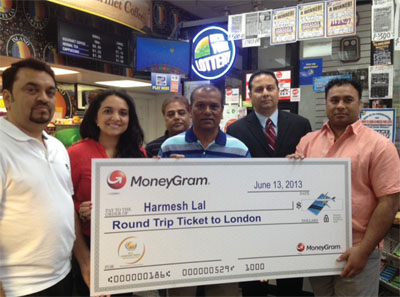
    The final game will be held June 23. All agent locations and online sends qualified for entry (consumers could also mail-in entry without purchase). The more transactions consumers made the more chances they had to win. Harmesh Lal from Bellerose, NY is the lucky winner. He sent money to his family in Hoshiarpur, India and was thrilled to learn that he would get a chance to experience the game up close.

    The transaction was sent at one of our top agent locations (Jai Hind) in the New York area, home to many immigrants using our services. The contest gave MoneyGram a chance to remind South Asian immigrants living in the U.S. that we are the official money transfer partner of the ICC. Plus, it promoted the sweepstakes and will send the lucky winner packing for one of the biggest games of the year.

    “Contests like these are a great way for MoneyGram to bring our consumers closer to the game of cricket and the memories they have of watching it in their home countries – it allows us to relate to our customers and give back to them a piece of what they might have left behind. It’s a way of thanking them for being a loyal consumer and increasing our brand awareness while doing so” says Zainab Ali, senior marketing manager.

    About MoneyGram MoneyGram, a leading money transfer company, enables consumers who are not fully served by traditional financial institutions to meet their financial needs. MoneyGram offers bill payment services in the United States and Canada and money transfer services worldwide through a global network of more than 300,000 agent locations – including retailers, international post offices and financial institutions – in 196 countries and territories. To learn more about money transfer or bill payment at an agent location or online, please visit moneygram.com or connect with us on Facebook.

  • Shed Illusions On China

    Shed Illusions On China

    India’s appeasement policy won’t help
    It is high time the PMO and the MEA gathered courage to speak on the South China Sea and the issues having a bearing on national security, particularly in forums like the East Asia Summit, with the same clarity as the Defense Minister did.

    During the past month China inflicted a national humiliation on India by intruding 19 kilometers across what has been the traditional border between Ladakh and Tibet since the 17th century and forcing India to not only pull back from its own territory in the Daulat Beg Oldi sector, but also to dismantle defense structures in the Chumar sector.

    China has consistently refused to define where the so-called “Line of Actual Control” lies and acted aggressively when it finds Indian defenses neutralize its tactical and strategic advantages by pushing its claims westwards and well beyond what its own maps had earlier depicted. Moreover, apart from violating all past agreements on the Ladakh-Tibet border, China’s territorial claims also violate the provisions of the Wen Jiabao – Manmohan Singh Agreement of 2005 on the guiding principles for a border settlement which state: “The (Sino-Indian) boundary should be along well defined and easily identifiable geographical features, to be mutually agreed upon”.

    India’s claims, based on historical data, also fulfill the provisions of the 2005 agreement as they set the western borders up to the Indus river watershed, with the Karakoram mountains forming the natural boundary. After being militarily humiliated, India chose to subject itself to diplomatic ridicule in the joint statement issued after the visit of Premier Li Keqiang.

    While the joint statement paid lip service to the 2005 guiding principles, there was no mention of the need for defining the LAC in accordance with these guiding principles. Unless we do this and insist on China furnishing its version of the LAC, the Chinese will continue to stall and obfuscate while placing our forces in an untenable position along the borders, with India meekly agreeing to pull down any defenses the Chinese demand.

    Worse still, India agreed to accept some ridiculous and one-sided provisions which are clearly detrimental to its national interests. The most astonishing provision of the joint statement was the sentence: “The two sides are committed to taking a positive view and support each other’s friendship with other countries”. This, in effect, was an endorsement of Chinese policies of “low cost containment” of India.

    Over the past three decades China has provided Pakistan designs for its nuclear weapon, allowed the use of its territory in 1990 by Pakistan for testing nuclear weapons, upgraded Pakistan’s enrichment centrifuges, provided unsafeguarded plutonium production and reprocessing facilities and violated its commitment to the MTCR, by providing Pakistan wherewithal for manufacturing medium and long-range ballistic and cruise missiles.

    China is also Pakistan’s largest arms supplier, providing equipment ranging from JF 17 fighters and T 90 tanks to modern frigates. General Musharraf had made it clear just after the visit of then Chinese Premier Zhu Rongji that the Gwadar port being built with Chinese assistance would be made available to China if there were tensions with India. Moreover, does our ill-advised endorsement of the nature of Sino-Pakistani collusion not suggest an endorsement of Chinese growing presence in POK and the Northern Areas of Gilgit-Baltistan? As the Chinese government mouthpiece, The Global Times, mockingly observed: “India must accept and adapt to the enviable friendship between China and Pakistan.

    China cannot scale down this partnership merely because of India’s feelings!” On May 28 President Rajapakse of Sri Lanka signed a “strategic cooperation partnership” agreement with President Xi Jinping in Beijing, in which the two sides agreed to strengthen defense cooperation while jointly cracking down on the “three challenges of terrorism, separatism and extremism” and expanding cooperation on “international and regional affairs”.

    Virtually every South Asian leader choosing to challenge India, ranging from President Waheed in the Maldives to Begum Khaleda Zia in Bangladesh and Prachanda in Nepal, has received a warm welcome at the highest levels in Beijing. Moreover, China is bent on blocking India’s entry into forums like the Nuclear Suppliers Group. Worse still, India grandiosely agreed to support a Chinese role in the Gulf of Aden, without getting similar Chinese endorsement for its maritime and energy interests in the South China Sea, most notably for its exploration projects in the Phu Khanh Basin off the coast of Vietnam.

    Interestingly, while commissioning the first squadron of carrier-based Mig 29 aircraft on May 13, the Defense Minster, Mr. A.K. Antony, asserted that there should be freedom of navigation in the South China Sea, adding that while India is not a party to disputes there, it believes that these disputes should be settled according to the UN Convention of the Law of the Seas (UNCLOS). Mr. Antony added the protection of the sea lanes of communications is imperative for India’s trade, commerce and economic development.

    Sadly, such clarity on Indian interests is not evident in other parts of South Block. Moreover, Mr. Antony believes that there can be no “miracles” in the development of India-China relations and has no intention of either taking up residence in Beijing or waxing eloquent on the serenity and tranquility surrounding Tiananmen Square! New Delhi has to understand that the appeasement of an assertive China is a recipe for global and regional marginalization.

    Given China’s territorial claims, which have expanded from just Tawang, to the entire state of Arunachal Pradesh and its activities in PoK, India should not merely stop voicing the inane mantra that “Tibet is an Autonomous Region of China,” but make it clear that we did not invite the Dalai Lama to India. We would be happy if he reached an agreement to return to Tibet, with China respecting the provisions of the 17-point agreement it signed with the Tibetans in 1951. Moreover, apart from acquiring berthing facilities for the Navy in Vietnam, India would be well advised to provide Vietnam the ability to protect its maritime interests by the supply of Brahmos cruise missiles, much in the manner that China provides Pakistan ballistic and cruise missiles.

    On river waters, India is well placed to work with lower riparian states in the Mekong basin and, indeed internationally, to isolate China on its refusal to engage in prior consultations on projects on the Brahmaputra river. It is also high time the PMO and the MEA gathered courage to speak on the South China Sea and issues having a bearing on national security, particularly in forums like the East Asia Summit, with the same clarity as the Defense Minister, instead of appearing apologetic, weak and vacillating. The statements made and cooperation envisaged when the Prime Minister visited Japan are a good beginning.

  • 5 climbers feared dead on world’s 3rd highest peak

    5 climbers feared dead on world’s 3rd highest peak

    KATHMANDU, NEPAL (TIP): A Nepalese official says five climbers are missing and feared dead on the world’s third highest mountain. The five disappeared on Monday on Mount Kanchenjunga, and bad weather was preventing a rescue helicopter from reaching the base camp.

    Mountaineering Department official Dipendra Poudel said Friday the climbers were descending from the summit when they were believed to have slipped at 7,900 meters (25,900 feet) altitude. Two climbers are Hungarian, two are Nepalese and another is Korean. Kanchenjunga is 8,586 meters (28,162 feet) high.

  • Mini Melts Ties Up With Honeybee Amusements For Its India Foray

    Mini Melts Ties Up With Honeybee Amusements For Its India Foray

    BANGALORE (TIP): US-headquartered Mini Melts the $200 million INC 500 company has tied up with Bangalore-based HoneyBee Amusements for a foray in to India’s Rs 2,500 crore organized ice-cream market. The domestic ice-cream sales, growing at 18-20%, has seen the entry of super premium international players such as Haagen-Dazs in the recent past.The local partner of Mini Melts would invest $16 million to develop the business in three years.

    The 20-year-old ice-cream manufacturer, which operates in over 20 countries across the world, differentiates itself from other international premium players by manufacturing ice-creams using liquid nitrogen, an ingredient used by chefs in molecular gastronomy. Liquid nitrogen is inert and tasteless.

    Mini Melts would set up kiosks in high footfall locations and kids cafes to gain a toehold in the local market, said Shoeab Salim, MD, HoneyBee Amusements. HoneyBee Amusements, owners of Q Cinemas and developers of the Delhi Eye are the sole franchisee for Mini Melts in India as well as neighbouring countries such as Sri Lanka, Nepal, and Bangladesh.

  • More Than 6,500 Indians Languish In Foreign Jails

    More Than 6,500 Indians Languish In Foreign Jails

    CHENNAI (TIP): More than 6,500 Indians are living an uncertain life in prisons in 80 foreign countries, half of them in three Gulf countries. The Gulf countries have the largest number of Indian prisoners, with 1,691 in Kuwait, 1,161 in Saudi Arabia and 1,012 in the UAE. Among the neighbours, Pakistan holds 253 Indians in its prisons, China has 157 of them and Sri Lanka 63. Languishing in the Nepal prisons are 377 Indians. Italy, a country that recently raised a huge uproar demanding special guest house and home-made food for its two citizens arrested on charges of killing two Indian fishermen off the Kerala coast, has 121 Indian citizens in its prisons. The United Kingdom has 426 Indian inmates in their jails, thanks to a fast growing migration of skilled and unskilled labourers.

    There are 155 Indians in the US prisons. The statistics, obtained through RTI by Kochi-based NGO Human Rights Defense Forum, shows 6,569 Indians are in foreign prisons. On Indian prisoners in 30 countries, the ministry of external affairs said it had ‘nil report.’ The RTI reply also says “this figure keeps changing,” and gives no details about the prisoners or the charges against them. In 2007, it was reported that the number of Indian prisoners abroad had come down from 6,730 in 2005 to around 6,000. The RTI reply given by the ministry last month shows the number has gone up again. T P Sreenivasan, former ambassador of India to the United Nations, said ordinary crimes, drug trafficking and domestic violence land Indians in jails in European countries.

    “But a large number of prisoners in the Gulf countries are arrested for badly formulated contracts, illegal stay and migration,” he said. In Malaysia (187 Indian prisoners) and Singapore (156), most of the Indians have been arrested for immigration violations and a few for criminal cases like drug trafficking. In Pakistan, Bangladesh and Sri Lanka, most of the arrests are made on charges of violation of immigration laws. Sreenivasan said different factors, including delay in ensuring justice, communication between the local government and the Indian offices abroad play a major role in the number and duration of detentions.

  • ‘Don’t despair; you can still buy a home!’ The Ace Real Estate Guy Kenny Singh says

    ‘Don’t despair; you can still buy a home!’ The Ace Real Estate Guy Kenny Singh says

    Early predictions in 2013 seem to point that the real estate market is on the road to recovery. Kenny Singh also
    advertises this fact. He says, “In 2012, we were doing okay but this year, I can confirm we are better off. The market
    is gradually improving by 6 to 7 percent. This is a strong indicator that the meltdown is soon to dissipate.”

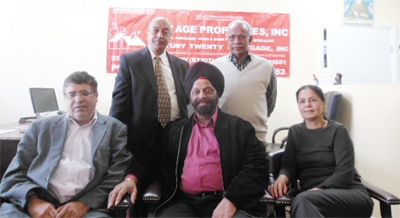
    After the terrible meltdown of 2008, some harsh truths came to the surface.Who cheated, who lied and who bent the rules to make quick money? But the biggest truth of it all was that those who remained true to the books, survived. Kenny Singh, founder and owner of New Age Properties, Inc. is a jack of many trades and master at real estate. Endowed with perhaps the most loyal and experienced staff, Kenny Singh has been able to face the meltdown without losing a lot. His knowledge in the real estate market of Long Island is perhaps unmatched and unquestioned. But before Kenny Singh learnt the nittygritty of real estate he was involved in many other trades. “I came in the United States in 1976 and that time I was working for an import and handicraft business. Soon after that, I worked with a tracking business. Then I worked in the retail industry in the garment section.

    I had heavy trades from Nepal and India. But the investment that I put in this trade was a sheer waste. Because, people from Nepal cheated me and I lost a lot of my hard earned money. I finally gave up. And in early 1990s, I changed my profession to real estate. From that time till now, I have been in this business,” says Singh. He made the switch to real estate for monetary reasons. Also, there was lower risk of direct investments in this profession. He made a sizeable amount in the 1990s as he soon began climbing the ladder of competition. He bent every competition from the time he established his own company in 1995. “There were not many contenders at that time during my rise in real estate. There was Usha Chandra and another, Salma in the Long Island area.


    img39

    I was number three at that time. But I learned the trade fast. I soon became a broker while my competitors were still agents.” While many mimic the work ethics and performances of other role models, Kenny does not believe in having any external inspiration. He was driven to derive the best of him and believed only in himself. “I learnt on my own from everywhere. I worked as an agent. No role model. Just me. And because I had faith in myself, by 1995, I was the unquestioned king in this sector at Long Island.” Since 1995, he has sold a couple of hundred houses. He never kept a record of the actual number in his memory. Everything was sailing perfectly.

    The 1990s were considered the effervescent period for the real estate market in the US. There was an uncontainable demand for housing which was made possible to due to a more lenient loaning options made plausible by financial institutions and the Federal government. But the loom of a meltdown was predicted by many real estate developers, brokers and agents. One among them was Kenny Singh. “In 2008, we faced the downturn. But I survived. I had good savings and I made wise decisions before the meltdown. Also the threat of the meltdown was foreseen by many of us. But there was very little we could do except make moves to encourage savings.

    Despite it all, even I faced a loss of over $500,000,” he says. Early predictions in 2013 seem to point that the real estate market is on the road to recovery. Kenny Singh also advertises this fact. He says, “In 2012, we were doing okay but this year, I can confirm we are better off. The market is gradually improving by 6 to 7 percent. This is a strong indicator that the meltdown is soon to dissipate.” Many theories and conspiracies have been spewed over the reasons for financial crisis of 2008. Kenny simplifies it for us. “The banks were lenient and did not conduct proper checking of the buyer. The prices kept increasing but it was very easy to lend money at that time. So if you had a good credit, you could buy a house with 0% down payment and 4 percent interest.

    Naturally, we slumped. The money was never being protected. It was being offered to anyone and the hawks in the real estate business that thrived on making quick money paved easier way to this.” The federal government has taken immediate measures to dissolve the crisis and to avoid a repetition. And therefore, the market trend has changed immensely. Kenny explains, “The market trend has changed so much recently.

    For example, I was showing a house recently to a few people.We got an offer of more than our asking price many of the buyers. Most buyers are paying in all cash these days. This is an upward trend. Also according to our preliminary research for this year, the houses in the market do not become available for more than 63 days. It doesn’t matter if it they are good houses or bad houses. They all are gone. At this time, last year’s research shows that not only did we sell lesser number of houses compared to this year but the houses stayed for as long as 110 days in the market.

    In Hicksville during last year, only 508 houses were sold by all brokers. And this year we have sold an additional of 26 houses already with the rest of the year still to go. So there has been a 25% increase in the buyers demand.” More people in the Long Island area are opting for no-mortgage payment options by paying full amounts in cash. Besides that, many other loopholes are found by our community members while buying houses. Kenny explains why, “Mortgage is of course a very difficult financial process.

    Besides, the rate of interest is low as of now. What used to 7-8 percent five years ago is now 3.75 percent. Also, mortgage is not very easily available these days either. In Long Island, we have a ‘no income-full asset’ concept. This means that the person who is applying for mortgage must be self-employed. They don’t show their full income on paper.

    So while the banks offer 1% higher rate of interest for these people and ask for 35% down payment, it is not an issue for them because they have the money and they are not bound by life-long payment of mortgage. This proves beneficial to the bank also because no matter what the 35% down payment ensures easier and lower risks of payment for the buyer. But of course, it is all possible if you have good credit record.” So if you have the money and good credit history, it is plausible to buy a house without the hassle of long bound mortgages? “Yes. Of course, you have to go to the right people for this. I strongly recommend a good company which has the expertise, experience and people who understand real estate better than anyone else.” Yet, after the meltdown that hit almost every corner of the world, it is almost impossible to not ask this question.Will we face another meltdown? Kenny is quick to respond. “No. There will not be any downturn anytime now.

    The changes made by the government are enough to make sure the market stays up. It now conducts proper checking of the buyer and it also has asserted a few conditions on financial institutions. Besides, the last meltdown before 2008 was in 1931. Meltdown is not a quarterly or a five year recurring factor.” The realtors at Long Island belong under the banner of Long Island Board of Realtors.

    It is a multiple listing service that controls all the members of its board. There are regular training conducted every 2 years and violations of any rule and regulation is penalized for $1000 or license revokes. Kenny Singh was born in Moga in Punjab. He completed Engineering in Instrumental Technology from Chandigarh. He is married to Paramjit . He has a son Rimpoo Singh, and two daughters Jessica Singh and Monica Singh and a nephew Jeffrey Jeet Singh. Kenny and his family live with his parents in Long Island.

  • Prachanda meets Xi, seeks more Chinese aid for Nepal

    Prachanda meets Xi, seeks more Chinese aid for Nepal

    BEIJING (TIP): Nepal’s Maoist leader PushpaKamalDahal alias Prachanda sought more financial and technical aid from China during his first meeting with the country’s new President Xi Jinping. Hailing the “traditional friendship” between the two countries, Prachanda thanked the Chinese side for its selfless assistance to Nepal, state-run Xinhua news agency reported. Known for his pro-China stance in Nepal, Prachanda who heads the Unified Communist Party of Nepal (Maoist) is visiting Beijing for the first time after Xi took over as the leader of the ruling Communist Party of China (CPC) and President. To take the Nepal-China friendship to a higher level, he looks forward to more financial and technical support from Beijing as well as more practical cooperation between the two sides on infrastructure, water conservancy projects and tourism, he said.

    China has scaled up its relations with its Himalayan neighbour in the recent years pumping in a lot of aid and resources. Nepal on its part is cracking down on the Tibetan refugees to prevent the spread of anti-China sentiments. Prachanda said Nepal will continue to firmly adhere to the one-China policy and he believes that the “Chinese dream” of national rejuvenation will be realised under the leadership of the Communist Party with Xi as the general secretary. Xi pledged to boost cooperation saying China attaches great importance to bilateral ties with Nepal. The China-Nepal friendship is not only in the fundamental interests of the two countries and peoples, but also conducive to stability and development in the region, he said. In pursuit of common development, Xi said China will continue to seek peaceful development and win-win cooperation with Nepal and other neighbouring countries. After his returns from Beijing, Prachanda is also likely to visit India.

  • Dev Ratnam-Integrity, Charity, Modesty Propel This Visionary

    Dev Ratnam-Integrity, Charity, Modesty Propel This Visionary

    I am passionate about doing well not only in career but also in my community. I won’t say it’s a passion but I am very keen on being an honorable member in our community. I believe in being a good representative of India. Whatever obligations I have with the government, banks, other financial institutions of US and other countries, I want to deal with them with honor. I never want to escape from that. I never want to fail India, or my state. Life will always force you to deal with breaks, be it good breaks or bad breaks. How you deal with it is your legacy.

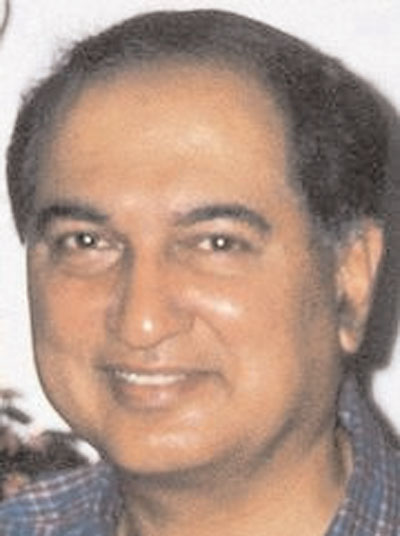
    Dev Ratnam began his career as a scientist. But he never wanted to be master at just one trick. He wanted to explore all the opportunities around him before settling into one. He tells us, “In true spirit, I am an entrepreneur, so I try many businesses. Though my education and experience is as a scientist from Penn state in 1977, I still wanted to venture beyond my degrees.” Dev graduated from Indian Institute of Science, Bangalore in Engineering and completed Masters in Engineering from Queens University, Canada and got a Ph.D. in Solid State Science from Penn State University in 1971. Yet, his dream was to always go back to India and set up his own business there. He tried his true best to fulfill that dream. Dev explains, “I was planning to buy a factory from Australia. The agent from Melbourne belonged to a big family.


    img12

    He used to be the Governor of Maharashtra and his son was my partner. We wanted to buy that factory and bring it to Chennai and set it up in India. But somehow the politics played its part after I reached Melbourne. I realized that I would be a minority party. And I had to walk away from my dream of setting up business in India. Of course, I tried to buy a factory from here and take the technology and equipment to India, but that never materialized. But in that search for a factory, I found a company in Long Island called Poly Mag Ink.

    A couple of partners and me bought it, but unforeseen factors didn’t allow it to be a big company. It still exists and it does have big clients like GM, Kodak, etc. Perhaps the location in Long Island was a disadvantage.” While many would give up and try to move on to something else, Dev Ratnam never stopped believing in himself. He defines himself as an eternal optimist and does not think giving up is an option. “I just never wanted to give up. In my years of experience, I have come through all the time. Yes, I did not perhaps see bright successes all over.

    But I have seen spurts of success and it was good with me.” Never to give up, even Dev Ratnam had to let go his dream of establishing business in India. But the blame for that lies on the political system of India. “I don’t want to sound negative, but in 40 years I have never succeeded with one project in India. But in China, South Korea or United States, it is entirely different. That does not make India bad.

    But I cannot recall one fruitful project, be in charity or investment in India.” His passion is what perhaps distinguishes him the most. He is a firm believer in the thought that a successful man is only successful enough if he can give back to his community. Dev explains, “I am passionate about doing not only well in career but also in my community.

    I won’t say it’s a passion but I am very keen on being an honorable member in our community. I believe in being a good representative of India. Whatever obligations I have with the government, banks, other financial institutions of US and other countries, I want to deal with them with honor. I never want to escape from that. I never want to fail India, or my state. Life will always force you to deal with breaks, be it good breaks or bad breaks. How you deal with it, is your legacy.” Dev Ratnam’s dreams and ambitions are just as extraordinary. His dream of helping others has paved the way for success in many people’s lives. He is on the Board of Interfaith Nutrition Network since 1995; had been a voice on the board on behalf of Indian community.

    He charts out a few of his projects. “I just want to do good things in life at this point. I have seen a couple of charitable programs that I want to take up. There is one in particular called Shri Chakra, which is an organization that concentrates on providing electricity through bicycle pedaling. It is on hold for now, due to some real-estate issues, but it’s a temporary hold. I want to provide electricity to rural parts of countries such as India, Afghanistan, Nepal, etc.

    That is my dream for sure. I am working with many major organizations. I am also working on some projects in my village in India too. My daughter is running for the marathon in Rwanda to commemorate the victims of the Rwandan massacre. I am helping her in this project through Rotary Hicksville. So I have a couple of such projects that I am extremely involved in.” Dev Ratnam was born in West Godavari in a small village in Andhra Pradesh and was the eldest son in his family. His father was the biggest influence on his life.


    img13

    Dev explains, “My father’s upbringing had a great impact on me. When he was 14, he had bought a car for marriage. He was a socialist. He too was involved in many ventures. He moved to Chennai with us and I completed my education there. I got a scholarship and went to Canada. From there, I moved here to the US and finished my PhD at Penn State. My father also had a tremendous passion to help people. He never had a formal education.

    Yet he went to Chennai and learnt English and began helping people in many ways. When he came to the US, he hand-drew the map of the US with all the 50 states and began learning about each state. Even before he came here, he knew about Edgar Allan Poe, an American writer and poet most Indians living here now don’t know about.

    But his thinking is what inspired me. Besides being a Socialist, he was able to understand the land of opportunity that United States really is.” Dev Ratnam’s biggest passion after social causes is perhaps traveling. His wife and he share a common interest in visiting and paying homage to the ancient civilizations of the world. “I am a citizen of the world. My wife and I love to travel. We have explored civilizations in Turkey, Greece, Cambodia and other places. We love to go to those places.

    Recently we went to Greece for a vacation. It was astounding to see the civilization there. We stood there and marveled at how the human culture evolved. We paid homage to all these cultures.” Dev admits that his ventures have not been a continual forerunner in their field. He only wishes that he had done his due diligence before beginning the investments. “Do I regret anything I have done? Well, maybe I was not too thorough. My son is 25 and he works for a venture cap holding. And when I see his company work, the immaculate attention to detail, I believe I did not do my due diligence. I guess that is my only regret. But on the other hand, almost all the real estate companies and other companies did just as bad since 2006. So I don’t know if it was just my choices.” He has a lot of praise for our community and believes that there is just as much misconduct in our community as in any other.

    But he commends our community’s foresight and achievements too. “They all belong to different strata. The ones who came in 70s came through education. They got good jobs and earned very well. So they are well adjusted in US. The ones who came in 80s came as immigrants, who basically were brought into the country by mainly extended relatives. They began setting up businesses. Now the people who belong to this group are becoming the core Indian community. They are aggressive, motivated and passionate about their ventures and see them succeeding. I believe they are easily the more successful than any other group of Indian community. So I would say this for our community, that we have an impeccable foresight. We know what can make us prosperous.” Dev Ratnam has an outstanding family too. His wife Prof.

    Runi Mukerji Ratnam is a dynamic leader in academics at SUNY in the entire New York State and a leader in several professional and social organizations. His daughter Romola Ratnam is an NYU graduate and is well known in the sports marketing field in Manhattan. She has also initiated several charity programs much like her father. His son Basudev graduated from Brown University and is an excellent tennis player. Dev Ratnam had ambitions to make his son a national level tennis player but unfortunately Basudev suffered a few injuries that dissuaded him from playing on national levels.

    At present, Basudev is working with a private equity company in Manhattan. Before I take leave, I ask him if he still has plans to move to India and realize his long lost dream. And to that he replies. “No it’s too late now. This is our home now.” From all the readers of The Indian Panorama we wish Mr. Dev Ratnam success in all his professional and social ventures.

  • Hero MotoCorp starts ops in Africa, LatAm

    Hero MotoCorp starts ops in Africa, LatAm

    NEW DELHI (TIP): The country’s largest twowheeler maker, Hero MotoCorp, said it had commenced operations in Africa, Latin and Central America. Pawan Munjal, managing director & chief executive officer, Hero MotoCorp, said: “We have started despatches to our new international markets in Central and Latin America and Africa. Our first consignments of twowheelers have already been shipped to Peru in Latin America, El Salvador, Guatemala and Honduras in Central America and to Burkina Faso and Ivory Coast in Africa.” The company is set to despatch the first lot of twowheelers to Kenya later this month. It has already appointed new distributors and channel partners in these markets, where retail sales of the Hero two-wheelers is likely to commence in the first quarter of this financial year. Hero motorcycles to be sold in these markets include a mix of models from the 100cc and 125cc range.

    Hero MotoCorp has earmarked Rs 1100 crore as capital expenditure for the current financial year. It includes an investment of about Rs 600 crore on the company’s upcoming fourth plant and global parts centre at Neemrana, and Rs 100-150 crore on a state-ofthe- art integrated R&D centre at Kukas (near Jaipur in Rajasthan). These initiatives are in line with Hero MotoCorp’s vision of reaching a total of 10-million unit volumes in a few years’ time, and garnering a million units — 10 per cent of that — from international business. The company currently registers around 2.5 per cent of its volumes from sales in overseas markets. To meet this objective, the company has already short-listed as many as 30 countries across Latin America, Central America, Africa and South East Asia. Colombia is the only country in Latin America where Hero MotoCorp currently exports to. The other international markets where Hero two-wheelers are sold include Sri Lanka, Bangladesh and Nepal.

  • First flight over Everest retraced 80 years later

    First flight over Everest retraced 80 years later

    KATHMANDU (TIP): Charles Douglas-Hamilton could feel the goosebumps as the Jetstream 41 aircraft approached the world’s tallest mountain. Exactly 80 years ago, his grandfather, Douglas Douglas- Hamilton had created history when he flew over Mt Everest along with fellow Scotsman David McIntyre in two open cockpit bi-planes fitted with a wooden propeller. They became the first people to fly over the iconic mountain. On Wednesday, Charles, a London-based geologist, relived what his grandfather and his companion might have felt like when he took a ride on the Jetstream 41 aircraft made by the same Scottish aviation company the two pioneers subsequently set up.

    Recalling the epic journey made on April 3, 1933, Charles, who has come to Nepal for the first time, says that the risks faced by the duo back then were great since there were high winds blowing and lack of oxygen “On top of that, theirs was a single engine aircraft. Plus, they had to have the right kind of fuel that would not freeze at such heights.” The flight over Everest, made 30 years after the Wright Brothers took to the skies, was the last frontier in aviation since planes had flown over the north and the south poles and across the Atlantic. All these records had been set by the Americans. Now, the British wanted to claim a piece of aviation history.

    Their chance came in 1933 when Douglas-Hamilton and McIntyre set up a scientific expedition to photograph the southern slopes of Everest. These pictures were later used by Edmund Hillary and Tenzing Norgay who became the first persons to climb Everest in 1953. Today tens of thousands take the commercial flights from Kathmandu to view Everest and back. But the tourists still do not do what the two Scotsmen achieved — flying over Everest since that would mean entering Chinese airspace.

  • As I See It-Making India Truly Incredible

    As I See It-Making India Truly Incredible

    Some scary happenings
    Incredible India is the Union Tourism Ministry’s sales pitch to attract more and more highspending tourists from across the world. But is anyone in authority worrying about the hugely negative impact the gangrape of a Swiss woman in Madhya Pradesh and the plight of a younger British woman who fractured both her legs while jumping from the balcony of an Agra hotel to escape molestation, all within three days, are bound to have on the inflow of tourists? This is disgraceful beyond words.

    However, there are tragedies of a different kind that should shake us no less. Indeed, these are making us a laughing stock. Only a few most recent examples should suffice. The first is the controversy, nay, blatant contradiction between the rival accounts of the same episode by the Delhi police, on the one hand, and both the government and the police of the state of Jammu and Kashmir, on the other.

    On Friday, March 22, after arresting an alleged Hizbul Mujahideen terrorist, Liyaquat Ali Shah, the Delhi police had patted itself on the back and claimed that it had averted a massive terrorist attack on the nation’s capital around Holi. It had also stated that it had recovered arms, including an AK-56 and grenades stored for Shah in a guesthouse close to Delhi’s Jama masjid. But Shah’s family in Kashmir, backed fully by the state police and the government, has declared this to be false. Shah, according to them, was a former militant who was returning home from Pakistan via Nepal, to partake in the state government’s policy to “rehabilitate” those militants that had gone to Pakistan or Pakistan-Occupied Kashmir for training but had later realized their mistake and were willing to surrender.

    The state authorities have also endorsed the Shah family’s assertion that it had already filed an application with the Kupwara police to seek “benefits” under the “rehabilitation policy”. This is not all. Sections of the Indian media have also been punching holes in the claims of the capital’s cops who still stick to their version.

    It was no surprise, therefore, that Kashmir’s Chief Minister Omar Abdullah traveled to Delhi to parley with Union Home Minister Sushilkumar Shinde and the latter reportedly agreed to his demand for a “time-bound inquiry” by the National Intelligence Agency. Since then both the warring sides have raised the ante. The official word from the Home Ministry is that it is examining whether the incident calls for a probe. Is this the measure of cooperation and coordination between the Centre and the government of a very sensitive state? What makes it even more disturbing is that the Congress that leads the ruling coalition at the Centre and the National Conference that heads the government in Kashmir are coalition partners in both New Delhi and Srinagar. Worse, the squalid episode is not a stray one. It is part of a pattern that was not altogether absent in the past but has assumed more worrisome proportions since the hanging of Afzal Guru. The state government, the Opposition and the bulk of the Kashmiri political class are talking in roughly the same language, which is critical of the Centre.

    The death of a young man during a firing by a Central police organization stirred the pot even further. And what happened after the first Pakistan-backed terrorist attack on Srinagar after an interval of three years in which five jawans of the Central Reserve Police Force were shot in cold blood has made the situation even more alarming. For, it was acknowledged only then that, under orders issued by Srinagar, the CRPF is no longer allowed to carry firearms and make do with lathis.

    The CRPF formation that came under the terrorist assault had only one rifle and a lot of lathis. The question is whether New Delhi had accepted this incredible restriction. Naturally, Parliament was very critical of this state of affairs whereupon the latest inanity of Shinde was:” Sometimes one has to fight with lathis.” Of several other recent events that do neither the country nor the polity any credit and sometimes ought to make us hang our heads in shame, let me mention just one more. It is the shocking and bizarre reaction to the Supreme Court’s judgment on the horrific 1993 serial bomb blasts in Bombay (now Mumbai) that killed 257 innocent people and wounded another 700. It is a perfectly legitimate comment on the Indian judicial and investigative systems that they have taken two long decades to bring this chilling case to a close.

    Indeed, come to think of it, the unspeakable outrage is not yet properly rounded off. For, the mastermind of the mass murder and his deputy, both Indian nationals – Bombay Mafia don, Dawood Ibrahim, and Yaqub Memon – have not yet been brought to justice. They are strutting around Pakistan, enjoying its hospitality and protection. They are Smart Alecs that demand that New Delhi must “intensify” its pressure on Pakistan to hand over Dawood and Menon who seem to be ignorant of Islamabad’s response to our repeated plea for appropriate action against the mastermind of 26/11, Hafiz Sayeed. There were 100 accused before the apex court. Of them 98 have been punished.

    One is to be hanged, 10 will undergo life imprisonment and others varying terms behind bars. Nobody has commented on these men, largely poor and unknown individuals, or even about the two young Muslims who have been acquitted. But this country’s elite, especially the uppermost of the upper crust – including politicians, judges, actors, corporate honchos and, above all, movie moghuls of Bollywood – are renting the sky with their tearful pleas that poor, little Sanjay Dutt, sentenced to five years imprisonment, be pardoned without a minute’s delay. Why? Because he alone is “one of us”, and to hell with the hoi polloi.

    The lament of the rich and the powerful is: “Our poor Sanju” has already spent 18 months in jail and suffered for two decades. What about the two innocent souls that have been acquitted, not convicted, by the apex court. They spent nearly 20 years in the slammer. In our country, the Constitution ensures equality of all before the law. Must it be converted into an Orwellian republic where all are equal but some always “more equal than the others”?