Tag: Nepal

  • Nepal govt files murder case against 13 Maoists

    Nepal govt files murder case against 13 Maoists

    KATHMANDU (TIP): Nepalese government has filed a case against 13 Maoist cadres for their alleged involvement in the murder of a 16-year-old school boy in 2004 during the decadelong civil strife in the country, prompting the Maoists to obstruct the Parliament. The Maoists were arrested for abducting and killing Krisna Prasad Adhikari after his parents Nanda Prasad Adhikari and Ganga Maya held a protest fast lasting 171 days, demanding action against the culprits.

    The condition of the parents is said to be critical and they are currently undergoing treatment at Bir Hospital. In spite of their condition, they have declined to end the hunger strike. They had suspended their hunger strike for a few days at the government’s request. In the case filed in Chitawan district court life imprisonment has been sought against 13 Maoists, including Chhabilal Poudyal, for their alleged involvement in the incident.

    The arrest comes in the wake of serious concerns raised by the UN over the govt’s move to table a bill in the Parliament giving amnesty to those accused of serious human rights violations during the civil war. To give amnesty for serious human rights violations would weaken the foundation for a genuine and lasting peace in Nepal, Navi Pillay, UN High Commissioner for Human Rights, had said in a statement in Geneva. The UCPN-Maoists today stalled the Constituent Assembly in protest against the government move to file the charge sheet against the party cadres.

    Constituent Assembly chairman Subash Chandra Nembang adjourned the House for an hour after the Maoist leaders stood from their seats and protested. The government has recently registered a bill for setting up of a Truth and Reconciliation Commission to look into human rights violations during the decade long civil conflict which claimed more than 16,000 lives. The UN Human Rights Council has prepared a profile of 9,000 cases of human rights abuses committed during the decade-long conflict by both the state and Maoists. The Maoists have warned they will disrupt Parliament and protest on the streets if the charge sheet is not withdrawn.

    The party also boycotted the all-party meeting called by Prime Minister Sushil Koirala yesterday. However, a senior minister has said the government is in no position to interfere with the court proceedings. “The government will not interfere with the court’s proceedings. So chances of withdrawing the cases against the Maoist cadres is slim,” senior leader of Nepali Congress Bimalendra Nidhi said.

  • USA acts to rebuild US-India Relationship: Ambassador Nancy Jo Powell Resigns

    USA acts to rebuild US-India Relationship: Ambassador Nancy Jo Powell Resigns

    America’s decisive action speaks volumes as to the importance of this bilateral relationship. Ambassador Nancy Jo Powell, following Ambassador April Glaspie’s catastrophic green-lighting Saddam Hussain’s invasion of Kuwait in 1990, green-lighted minor American functionaries to undertake two Devyani-related excessive actions: evacuation and arrest.

    These led to a bitter chill between genuine friends that history records, and destiny requires, to remain great friends. As for Ambassador Nancy Jo Powell, our former ambassador to Nepal who was given the honor of nurturing and expanding the US-India relationship, her resignation is a sign of her maturity to limit future damage from diplomatic malpractice, and I wish her Godspeed upon her retirement in the great state of Delaware – the state that gave us the ever loveable Joe Biden.

    Attorney Ravi Batra, ravibatralaw@aol.com

  • Indian Mujahideen’s next leadership ready to take over reins: Police

    Indian Mujahideen’s next leadership ready to take over reins: Police

    NEW DELHI (TIP): Even though the entire known leadership of Indian Mujahideen in India is in police net with the recent arrest of Tehsin Akhtar and Waqas, intelligence agencies are not patting their back as yet. Investigations have found out that IM has already prepared the next leadership for the outfit.

    At least two operatives who are fully trained, ready and close to the top bosses are out in the field to take reins of the outfit. While one of them, from Bihar, has been trained by Yasin Bhatkal and is said to be as sharp as Tehsin, another has been sent by Pakistan-based IM founder Riyaz Bhatkal. To make matters worse, Bodhgaya and Patna blast key accused Haidar Ali, who was indoctrinated by Tehsin, is yet to be caught.

    In fact, security agencies missed the operative from Bihar by whisker when they arrested IM’s former India boss Ahmed Siddibappa alias Yasin Bhatkal. The operative had been staying with Yasin in Pokhara, Nepal till days before he was arrested on August 29, 2013. “While Haidar is still out, there are two well-trained and high-ranking operatives we are still trying to track. It is likely one of them will now hold the reins of the group.

    Until they are out we cannot sit still,” said a senior security establishment officer. Investigations have revealed that sometime around March 2013 when Riyaz was trying to ship a consignment of sophisticated arms from Pakistan to India for an impending fidayeen attack, Yasin had prepared a resident of Bihar as the next top operative who was also to receive the weapons. In an internet chat Yasin told Riyaz that “the person who would receive the arms was from Bihar and he was trying to make him like Hassan (an alias of Tehsin Akhtar)”, notes a chargesheet filed by NIA against Yasin.

    Sources say the IM story is far from over as new recruits keep cropping up time and again and that agencies are aware of only those whose information has been provided by arrested accused such as Yasin and Tehsin. “There are still some very motivated and well-trained operatives such as Mirza Shadab Baig and Dr Shahnawaz staying in Pakistan. They would be sent to India in due course to fulfil the objectives of the outfit. After all Asadullah Akhtar was also sitting in Pakistan until he was sent to India to help Yasin,” said the officer.

  • Nepal mulls ban on foreigners climbing alone on Everest

    Nepal mulls ban on foreigners climbing alone on Everest

    KATHMANDU (tip): Nepal is considering banning foreign climbers from scaling Mount Everest alone in a bid to reduce accidents on the world’s highest peak, an industry official said March 26 Solo climbers would be forced to take a local guide up the mountain amid concerns of safety, overcrowding and piles of rubbish on the “roof of the world,” the president of the Nepal Mountaineering Association said.

    The proposed ban is likely to anger elite solo mountaineers, who enjoy the challenge of climbing alone, even eschewing bottled oxygen, and who blame a huge influx of commercial expeditions for littering the peak. The proposal is one of a string of measures being flagged ahead of the start of the climbing season in late April, and comes 12 months after a brawl on the mountain between three European climbers and local guides.

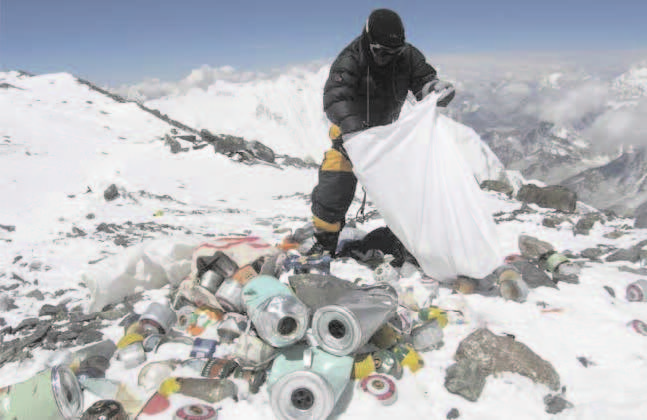
    “We are considering making it compulsory for individual foreign climbers to take along a local guide when they go to Everest, to reduce risks and prevent accidents,” said Ang Tshering Sherpa, whose association represents tourism promoters. “Most of the accidents that take place on Everest involve mountaineers from abroad who don’t use local guides,” Sherpa told AFP. Sherpa said the guides would also help climbers carry down garbage in line with new rules requiring each mountaineer to bring back eight kilograms (17.6 pounds) of rubbish from the mountain.

  • HOLI AROUND THE WORLD

    HOLI AROUND THE WORLD

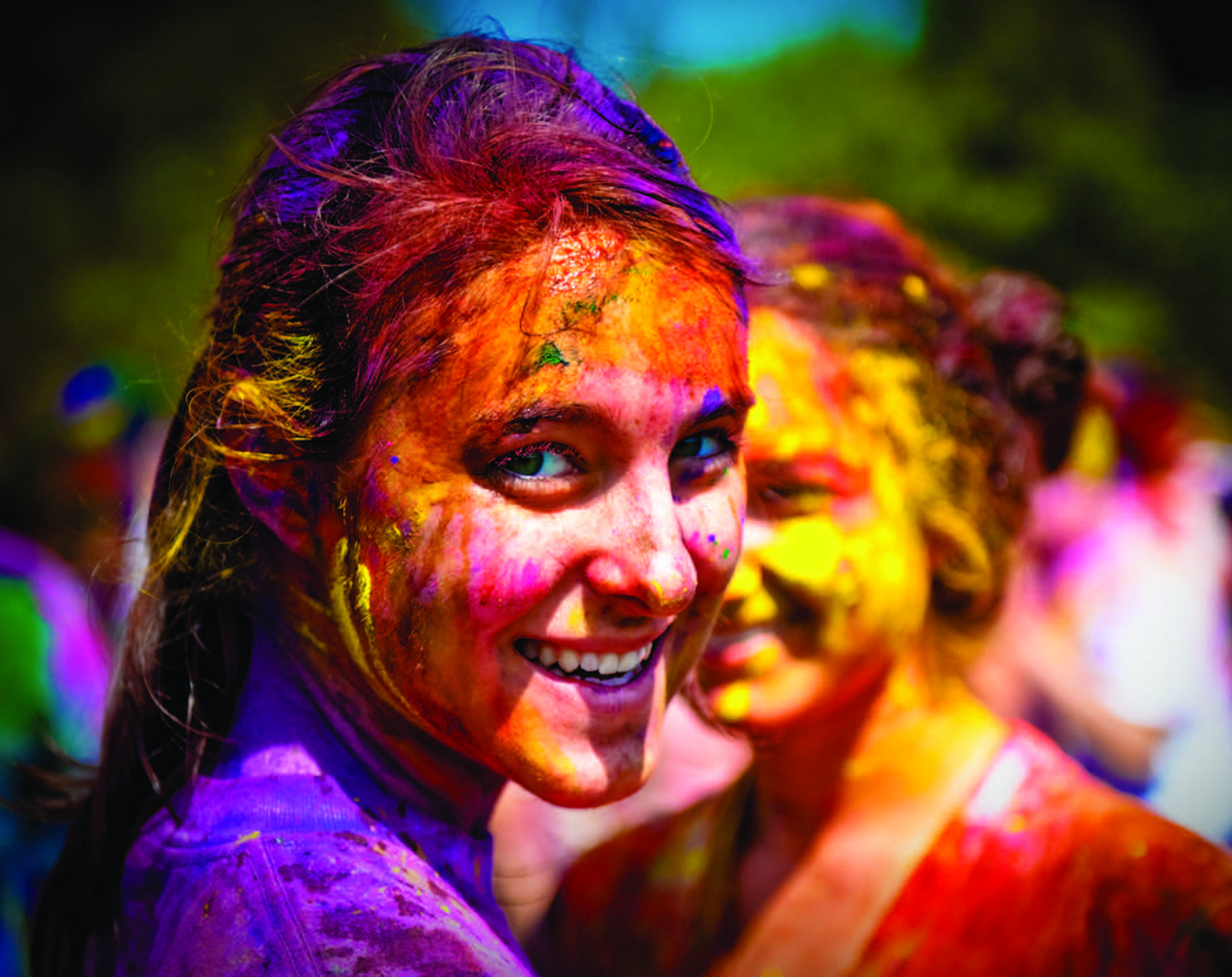
    Holi knows no bars, Holi knows no boundaries too. Across the world wherever Indians or people of Indian origin are present Holi is celebrated with gusto and bonhomie. People play with colours, light a bonfire called Holika and celebrate the victory of good over evil. Well, the essence of any festival is to take a break from the daily humdrum of life and make it interesting.

    The other major intention of celebrating festival is to bring people together and generate a feeling of brotherhood and spread harmony all around. Nobody realizes the importance of celebrating festivals than the Indians settled abroad away from their country and cultural roots. At times they are more eager to celebrate festivals than their Indian counterparts. For celebrating festivals is what binds the people of Indian origin together and also to their roots. Just as in India, people settled abroad meet their friends and exchange sweets and greetings. Of course, the revelry is no less when it comes to colours.

    Bangladesh
    Bengal region has a multifaceted culture due to the influence of Buddhist, Hindus and Muslim cultures. Though the country is Muslim dominated, Hindus too celebrate their festivals with gaiety. Of course, the pomp and show of Holi as witnessed in India is missing, nevertheless, celebrations do take place. Hindu community gather in temples and exchange greetings with each other and play with colours. Indian culture has influenced Bangladesh a lot as the country is nestled in the crook of the Bay of Bengal and is surrounded by India. It shares a border in the south-east with Myanmar and fronts onto the Bay of Bengal. The country is flat and dominated by the braided strands of the Ganges- Brahmaputra-Jamuna delta. Bangladesh’s Muslims and Hindus live in relative harmony.

    Guyana
    Located in the north-east coast of South America, Guyana celebrates Holi with great fan fair. Holi or Phagwa, as the Guyanese better know, is celebrated by the singing of special songs called Chowtaals and by the spraying of coloured powder (abrack) and water (abeer). Children take special delight in the festival and submerge any passerby with their colourful water jets called pichkaris. The season of Holi, starts a month before with the planting of the Holika, a castor oil plant.

    This plant is burnt one month later as Holika, commemorating Prahlad’s legendary devotion to Lord Shiva and also the triumph of good over evil. Holi happens to be a national holiday in Guyana as Hindus constitute about 33 per cent of the country’s population. Guyanese living overseas make special arrangement to be with the family at the time of Holi.


    11

    Mauritius
    Holi in MauritiusJust as the many other major Hindu festivals, the large Indian majority, (about 63 per cent) celebrate Holi with a lot of enthusiasm in the island of Mauritius. It is an official holiday in the country and therefore people get all the time to make merry and drench themselves in the spirit of Holi and of course, colour water. Hindus, here duly perform the tradition of Holika Dahan or lighting of bonfire on the eve of Holi and celebrate the victory of good over evil.

    Next day people revel and play with colours and drench everybody with water jets called pichkaris. While in the evening they greet each other with tilak and exchange sweets. Holi is also marked as a Spring Festival when the nature wears its best clothes and fields and flowers are in full bloom.

    Nepal
    Holi is celebrated with great pomp and show in Nepal. Celebrations lasts for a week in which the entire country gets drenched in the coloured water. Celebrations are of marked importance at Terai and also where Indian community mainly Marwaris have settled. Families and friends get together and celebrate the occasion with a lot of merry making. All over the streets people can be watched having fun, throwing colours and waterballoons, locally called ‘lolas’ on each other. Though play of colours takes place on the last day, a ceremonial pole called, ‘chir’ is installed on the first day.

    Chir is a bamboo pole fringed with strips of clothes representing good luck charms. As the pole is put up in the street at Basantapur, the festivities and worship commences for the week. At the end of the festivities chir is taken to a bonfire. There is a popular legend behind the installation of chir. The story is again about the mischievous nature of Krishna who just loved to pray pranks with the milkmaids or gopis. Playful as he was, it is said that once he seduced all the local girls with his dashing good looks. He then danced with them all and when they fully engrossed in him, then he thought they were ripe for a tease.

    He doused them in coloured water and stole all their clothes while they were bathing in the water of river Yamuna. Naughty Krishna then hung their clothes on a tree to bug them. Chir symbolizes that very tree. The other legends popular in India as that of Prahlad and his devilish father, Hiranyakashyap. Hiranyakashyap asked his sister, Holika to enter a blazing fire with Prahlad in her lap. However, Prahlad was saved for his extreme devotion by Lord Vishnu while Holika paid a price for her sinister desires.

    Every year just as in India people in Nepal light a bonfire- called Holika to mark the victory of good over evil. Also known is the legend of Pootana who tried to kill infant Krishna by feeding her poisonous milk on the direction of devil hearted uncle of Krishna called Kansa.

    Pakistan
    Hindus residing in Pakistan also celebrate holi, though, of course, in not as grand a fashion as seen in India. People celebrate the victory of good over evil forces by lighting bonfires called Holika. The tradition comes from the legend of Prahlad and Hiranyakashyap. In fact, people follow the same traditions and rituals as in India due to their roots in India. People clean their houses and prepare special delicacies like gujiyas, papri and dahi badas.

    They meet up with friends and play with the colours, dance and generally have good time. Hindus usually gather in temples and celebrate the Holi there. Much gaiety can be seen in temples located in cities which have a comparatively greater Hindu population. Such as in Lahore and Sindh region.

    United Kingdom
    Hindus settled in UK do not miss out the excitement of Holi celebrations and enjoy to the hilt. Zeal for the festival is particularly marked in this country as Indians constitute the second largest ethnic minority. Celebrating festivals help them to feel close to their families and cultural roots. The celebration of Holi is noticeable at places that witness a large congregation of Indians. The British city of Leicester is particularly known for its love for celebrating Indian festivals.

    Excitement reaches its peak when the occasion is that of celebrating a joyous festival like Holi. Children love to use their spray cans and colour each other. Holi parades are also carried and in the evening people visit their friends and relatives to exchange greetings and sweets. They hug each other and also apply the tilak as the meet Holi in a traditional manner.

    USA
    With a large population of Indians settled in the United States of America, Holi is celebrated with gaiety and lot of fanfare in this country. Different societies formed by the Indians and religious organisations help people to celebrate this joyous festival and feel close to their cultural roots. Music programmes and Holi Meets are also organised by them to mark the occasion. These meets help the new generation to identify with their cultural root.

    Children learn to understand the significance of celebrating festivals and know legends asociated with them. Great enthusiasm for the festival can be specially witnessed in cities where large number of Indians have settled. Holi celebrations are particularly marked in the city of New York.

  • Nepal mulls leasing Himalayan peaks to private tourism companies

    Nepal mulls leasing Himalayan peaks to private tourism companies

    KATHMANDU (TIP): Nepal is considering a plan to lease Himalayan peaks to private tourism companies, an official said on March 11, in a bid to ease traffic on Mount Everest and help jumpstart the economy.

    The proposal would involve hiring out some of the 326 Himalayan peaks that are currently open, in an attempt to lure climbers away from the main drawcard of Everest amid fears of congestion.It is one of several new measures, including lower mountaineering fees, designed to attract more climbers to the impoverished country, which counts tourism as a key revenue earner.

    “We have begun discussion on leasing unclimbed peaks to the private sector, to promote these mountains as new tourism products,” Mohan Krishna Sapkota, spokesman for the tourism ministry said. “We are open to both Nepalese and foreign private companies…we are confident that if the plan goes ahead, it will generate revenues for Nepal,” Sapkota told AFP. He declined to say when the government would implement the proposal, adding that the finance and tourism ministries were discussing the number of peaks that could be included and the length of leases.

  • Nepal to force Everest climbers to collect rubbish

    Nepal to force Everest climbers to collect rubbish

    KATHMANDU (TIP): Climbers scaling Mount Everest will have to bring back eight kilograms (17.6 pounds) of garbage under new rules designed to clean up the world’s highest peak, a Nepalese official said on Monday.

    The rule, one of several new measures for mountaineering in the Himalayan nation, will apply to climbers ascending beyond Everest’s base camp from April onwards, said tourism ministry official Madhusudan Burlakoti. “The government has decided in order to clean up Mount Everest, each member of an expedition must bring back at least eight kilos of garbage, apart from their own trash,” he said.

    Burlakoti said authorities would take legal action against climbers who failed to comply with the new rule, although it was unclear whether this would involve a fine or other penalty. Decades of mountaineering have taken a toll on the peak, which is strewn with rubbish from past expeditions, including oxygen cylinders, human waste and even climbers’ bodies, which do not decompose in the extreme cold. Expeditions will have to submit their trash to an office to be set up next month at base camp. It will also offer medical aid and resolve conflicts, after a brawl between European climbers and local guides last year.

  • Nepal plane crash kills 18 people

    Nepal plane crash kills 18 people

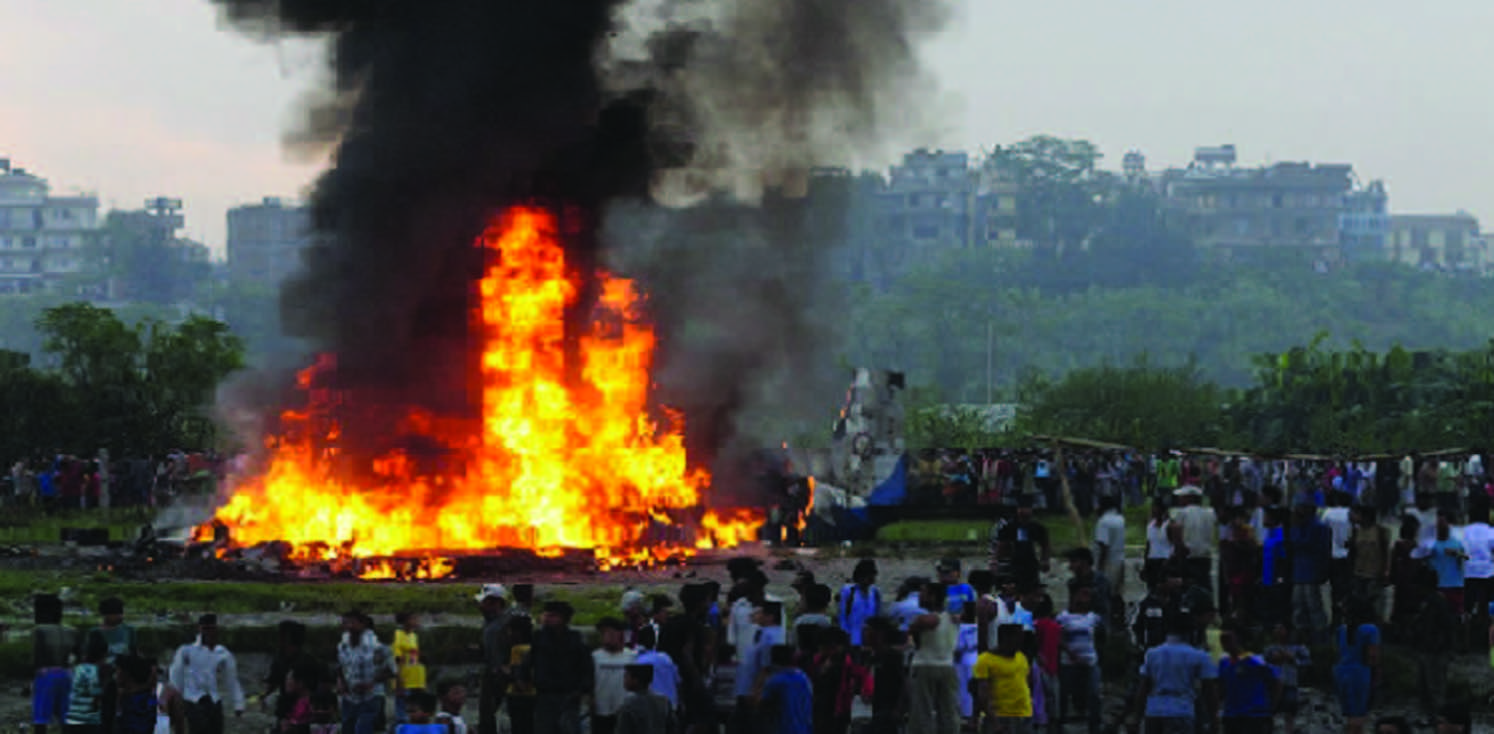
    KATHMANDU (TIP): All the 18 people on board a missing Nepalese aircraft have been found dead in the remote mountain area on Monday. The incident serves as a reminder of the poor aviation safety record in the country.

    The 40-year-old Twin Otter aircraft of the state-owned Nepal Airlines Corporation went missing on Sunday afternoon while flying from the tourist town of Pokhara to remote Jumla in western Nepal in poor weather conditions. Poor weather conditions obstructed search efforts on Sunday.

    The wreckage of the plane was found in a highland in Arghakanchi district about 350 kilometres west of Kathmandu and the bodies of the dead — some of them in unrecognizable condition and in pieces — after being alerted of the location by a mobile phone signal. Although there were no aircraft accidents in 2013, there have been two fatal ones each in 2010, 2011 and 2012.

    The government is expected form an investigation committee to find the cause of the accident, but it seems that the aircraft hit a mountain because visibility was poor and it was snowing, according to Bimlesh Karna, deputy director of the Civil Aviation Authority of Nepal.

    The plane had left Pokhara, about 200 kilometres west of Kathmandu, at 12.43pm on Sunday and was expected to land in Jumla, about 600 kilometres northwest of Kathmandu, an hour later. But it lost contact half an hour later, Karna said. About 150 police, army and paramilitary personnel and helicopters had been deployed to look for the aircraft from Sunday afternoon. The bodies of the dead have been brought to Kathmandu.

  • Nepalese party refuses to join ruling coalition

    Nepalese party refuses to join ruling coalition

    KATHMANDU (TIP): A day after Nepal got its new democratically elected prime minister, differences between two biggest political parties have surfaced over allocation of ministerial portfolios.

    The Communist Party of Nepal (Unified Marxist- Leninist), the main backer of Nepali Congress’s Sushil Koirala, 74, as prime minister, announced on Tuesday it would not join the government if it was not given powerful home ministry and deputy prime ministership. Following a meeting of the party’s standing committee, CPN-UML secretary Bishnu Poudel said his party would not join the government unless the portfolios were given to them as agreed earlier.

    There had been a seven-point agreement between the two parties on Sunday after which the CPN-UML agreed to support Koirala. With 196 seats in the 601- member parliament, Nepali Congress had to get the support of CPN-UML to form the government. In a parliamentary vote on Monday, Koirala got 405 votes. Although ministerial portfolio allocation was not one of the points of the agreement, the CPN-UML maintains there had been a verbal agreement over the home ministry.

    Nepali Congress general secretary Prakash Man Singh said there had been no such agreement. “The negotiating team from the two parties had given this responsibility to the top leaders.” He said talks will continue. “We will try to have them join the government.” Koirala was sworn in as prime minister on Tuesday with only Ram Sharan Mahat of Nepali Congress joining him in the cabinet without portfolio.

  • 14 killed as bus plunges into river in Nepal

    14 killed as bus plunges into river in Nepal

    KATHMANDU (TIP): At least 14 people were killed and seven others injured on Feb 6 when a passenger bus veered off a mountain highway and fell some 500 metres into a river.

    The bus, carrying 21 people, was en route to Bhirahawa from Pokhara when it skidded off the Siddhartha Highway in Palpa district and fell into the Bhalukhola river at around 2am (local time). All the deceased are men and their identities are yet to be established, Palpa DSP Shiva Shrestha said.

    “The bus might have lost control of the vehicle after the driver dozed off at the steering wheel leading to the accident,” he said. Shrestha said 12 people died on the spot and two others succumbed to injuries while undergoing treatment. The bus driver and bus owner were also killed in the mishap. At least seven persons, including two women, were injured in the accident.

    Of them, four are undergoing treatment at Mission Hospital, Bhusaldanda while others are being treated at Lumbini Teaching Hospital of the district, The Himalayan Times reported. Locals, police and army personnel are carrying out the rescue operation at the site of the accident.

  • Nepalese man dies after drinking whisky for bet

    Nepalese man dies after drinking whisky for bet

    KATHMANDU: A 47-year-old man in Nepal who downed a bottle of whisky after a bet with a friend has died from medical complications three weeks after the drinking challenge, officials said on February 6. Pancharam Bishwokarma, owner of a gold shop in the town of Gopetar 300 kilometres (186 miles) east of Kathmandu, agreed to drain a 750 millilitre bottle of Royal Stag on January 16 if his friend paid the bill.

    “Bishwokarma then left for home that afternoon. But by 8 pm, he was vomiting. He could not sleep and was rushed to a local hospital,” said local police officer Sanjeev Khadka. The doctors at the district hospital referred him to another hospital in a town in the southern plains. From there, he was again moved to a hospital in Siliguri, a town in the Indian state of West Bengal.

    “He was unconscious when he was brought here,” Pashupati Chaudhary, a doctor at the second hospital, BP Koirala Institute of Health Science in Dharan, said. “We found that he had consumed the concentrated alcohol, which was 42 percent, without any food, finishing it in five minutes. It damaged his vital organs,” Chaudhary said.

  • Vikas Khanna Launches Himalayan Cook Book ‘Return to the Rivers’

    Vikas Khanna Launches Himalayan Cook Book ‘Return to the Rivers’

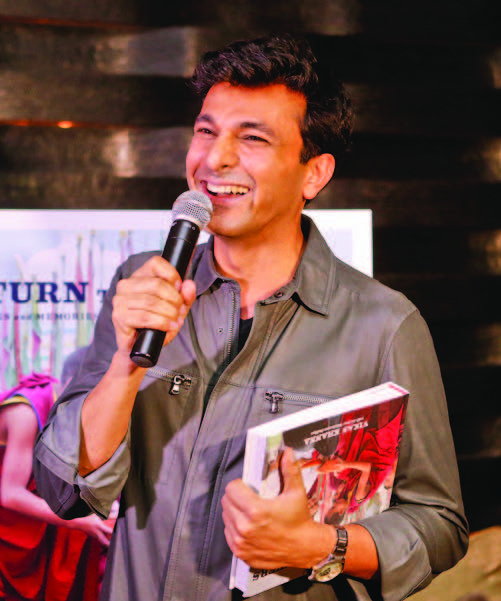
    NEW YORK (TIP): Vikas Khanna, an award-winning Michelin-starred Indian chef, restaurateur, filmmaker, humanitarian and the host of the TV show Master Chef India along with Lake Isle Press, launched his new book “Return to the Rivers” at an exclusive event on Tuesday, January 28 at Junoon Restaurant in New York City.

    Return to the Rivers boasts nearly 500 pages, and 100 full-color photographs of plated dishes, exotic travel experiences, and personal and thoughtful musings that preserve the traditions, values and simple gifts that the Himalayan people bestowed upon Khanna. Speaking at the launch event, in a personal interview Khanna said: The inspiration of the book came from within and it was the journey he had to take to explore himself.

    His spiritual and culinary journey through the Himalayan heartland brought foodies and travel enthusiasts some of the best recipes and culture from northern India, Bhutan, Nepal, Tibet and western China. Also 60% of his book revolves around vegetarians. Khanna’s book explores a wide variety of cultural delicacies, as it is organized by Street Foods; Soups and Noodles; Grains; Vegetables; Fish; Poultry, Eggs and Cheese; Meats; Breads; Condiments; Desserts; and Beverages.

    There’s even a section dedicated to the ever popular Momo, and the many ways in which to fold these iconic little dumplings. An exclusive evening Reception followed that evening at Junoon, attended by over 100+ people including several Media outlets. Guests enjoyed hand crafted appetizers and drinks while getting their books individually personalized from the author himself. The event was sponsored by Junoon Restaurant and organized by Jitin Hingorani of ZINGO Media.

    About the Author
    Born in India, Vikas Khanna learned to cook from his grandmother and opened his own catering company at a young age of seventeen. After apprenticing under the most renowned chefs of India, he moved to the United States in 2000 and has worked his way up to be one of New York City’s top-rated chefs. He was named one of StarChef’s “Rising Stars” in 2010 and is currently the Executive Chef of the Michelinstarred restaurant Junoon. Known to many as the host of MasterChef India and FOX Traveller’s Twist of Taste, Vikas is equally recognized for his humanitarian work with SAKIV, New York Chefs Cooking for Life and his documentary film series about food and religion, Holy Kitchens. Vikas currently resides in New York City.

  • London ‘Run for Unity’a Grand Success: Jolly

    London ‘Run for Unity’a Grand Success: Jolly

    Gujarat Leader Amit Thaker mandated for organizing ‘Run for Unity’ globally

    NEW DELHI (TIP): Encouraged by the success of London Run for Unity, OFBJP Convener Vijay Jolly announced January 29 that “Run for Unity” programs will be organized in various countries soon.

    Jolly mandated OFBJP Co-Convenor & Gujarat leader Amit Thaker to coordinate globally the “Run for Unity” programs. Thaker will plan, propose, organize & coordinate all such programs in close association with OFBJP units in USA, UK, Norway, Sweden, Denmark, Nepal, Mauritius, Canada, Kenya, Nigeria etc.

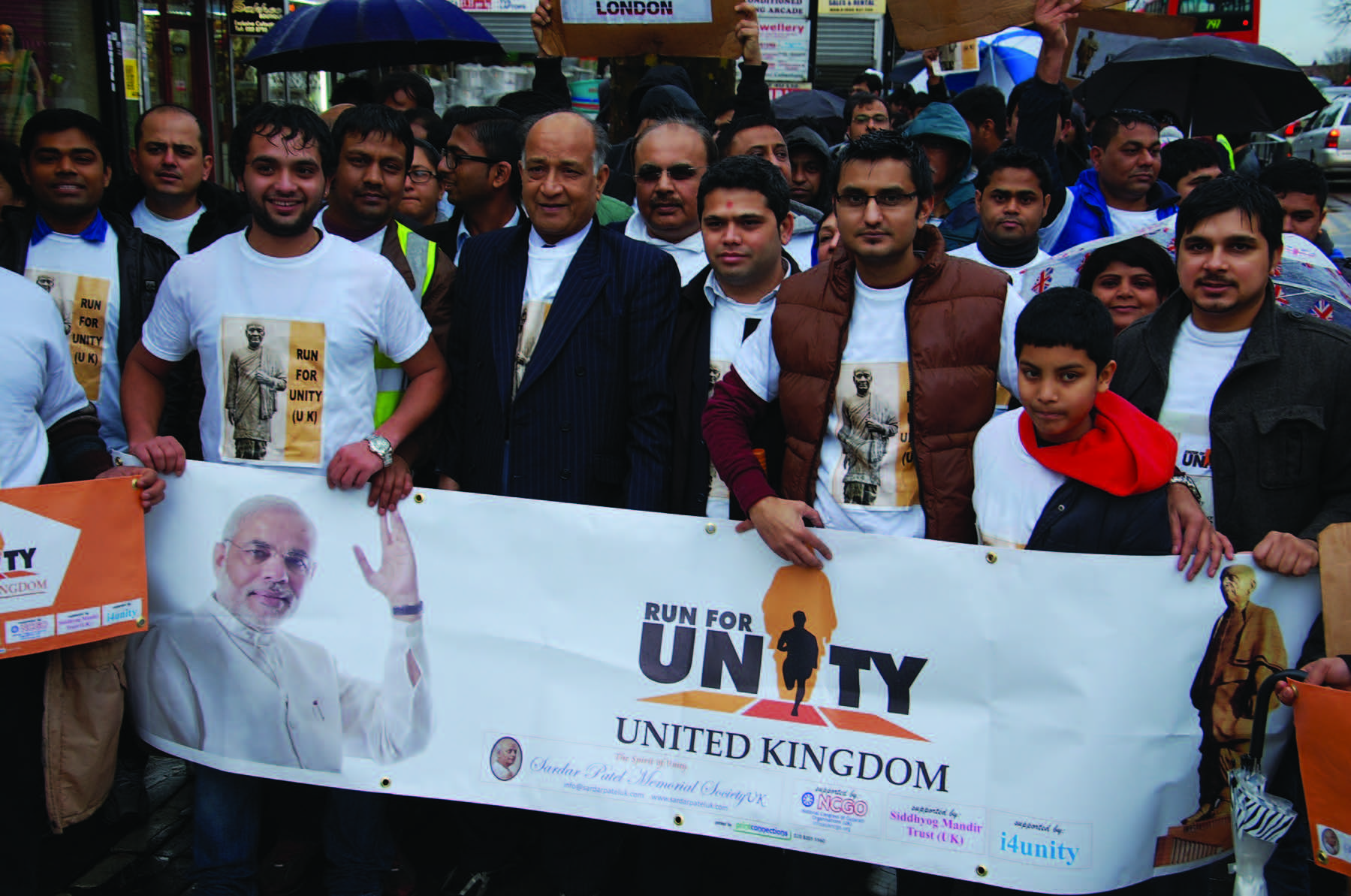
    Jolly claimed that “RUN FOR UNITY” recently organized in London attracted a large crowd of NRI’s. The UK program was organized by “14 – Unity” a young professional group in UK led by dynamic Nachiket Joshi, OFBJP Central Committee Member (Bharat) and permanently based in London. Gujarati, Punjabi and English British leaders participated along with young boys & girls.

    Over 1000 strong crowd and participants walked in pouring rain wearing raincoats & carrying umbrellas in severe cold London weather, stated OFBJP leader Vijay Jolly. Cheering for “Modi” and national unity, wearing T-shirt of Sardar Patel’s image, the ‘London Run for Unity’ was flagged off by Bob Blackman, British MP & Chairman of All Party Parliamentary Group for British Hindus.

    Bob, in his speech on the occasion pledged British support for Modi and hoped that trade between UK & India will increase “ten -times” in case Narendra Modi became PM of India. Muhammad Butt, leader of London Council, Lord Sardar Singh, Virendra Sharma South Hall MP, C.B. Patel Chairman Asian Voice & Gujarat Samachar, Lalu Bhai Parekh (OFBJP, UK President), Councilor Darshan Grewal (OFBJP-UK Vice President), P.G. Patel Chairman SPMS, UK, Mahendra Jadeja Sec. Gen. of NCGO, C.J. Robheru, Narendra Thakran, Vinod Halai, Dr. M. Ambekar etc. participated in the historic program in London.

  • Sushil Koirala leads race to become Nepal’s new PM

    Sushil Koirala leads race to become Nepal’s new PM

    KATHMANDU: Nepali Congress president Sushil Koirala January 28 became the favourite to be Nepal’s new prime minister after he was elected the leader of the Nepali Congress parliamentary party defeating his competitor Sher Bahadur Deuba, a three-time former prime minister.

    Nepali Congress emerged the largest party in the November elections with 196 seats in the 601- member Constituent Assembly that also acts as the parliament. Nepal’s interim constitution mandates for a national consensus government failing which a majority government will be formed

  • Nepal doctors’ strike continues despite SC order

    Nepal doctors’ strike continues despite SC order

    KATHMANDU (TIP): Strike by doctors in Nepal to push for reforms in medical education entered the third day on January 22 despite the Supreme Court ordering them to resume services in hospitals across the country.

    Tens of thousands of people had assess only to emergency services as doctors boycotted work in solidarity of a colleague on huger strike against the government appointment of a new dean at the state-run Tribhuvan University’s Institute of Medicine. Orthopaedic surgeon Govinda K C, who works at the Tribhuvan University Teaching Hospital, began a hunger strike 11 days ago to protest the alleged political appointment of the institution’s new dean.

    Doctors attending to him said his health is deteriorating. Dr KC said the appointment is part of a corruption conspiracy to give affiliation to new medical colleges which do not fulfill the basic standards to run medical courses and his protest is against the interference of a “medical mafia and politicians” in the Institute. On Monday, the Supreme Court had ordered doctors to resume services in hospitals but Nepal Medical Association (NMA) said only out-patient services have been suspended and patients have been provided services through emergency services. “Our protest will continue till Dr K C’s demands are met,” NMA senior vice president Dr Pashupati Regmi said.

  • FOREIGN RELATIONS OF INDIA

    FOREIGN RELATIONS OF INDIA

    India has formal diplomatic relations with most nations; it is the world’s second most populous country, the world’s mostpopulous democracy and one of the fastest growing major economies. With the world’s seventh largest military expenditure, ninth largest economy by nominal rates and third largest by purchasing power parity, India is a regional power, a nascent great power and a potential superpower.

    India’s growing international influence gives it a prominent voice in global affairs. The Economist magazine argues, however, that underinvestment in diplomacy and a lack of strategic vision have minimised India’s influence in the world. India is a newly industrialised country, it has a long history of collaboration with several countries and is considered one of the leaders of the developing world along with China, Brazil, Russia and South Africa (the BRICS countries). India was one of the founding members of several international organisations, most notably the United Nations, the Asian Development Bank, G20 industrial nations and the founder of the Non-aligned movement.


    32
    India has often represented the interests of developing countries at various international platforms. Shown here is Prime Minister Manmohan Singh with Dmitry Medvedev, Hu Jintao and Luiz Inácio Lula da Silva during BRIC summit

    India has also played an important and influential role in other international organisations like East Asia Summit, World Trade Organisation, International Monetary Fund (IMF), G8+5 and IBSA Dialogue Forum. Regionally, India is a part of SAARC and BIMSTEC. India has taken part in several UN peacekeeping missions and in 2007, it was the secondlargest troop contributor to the United Nations.[12] India is currently seeking a permanent seat in the UN Security Council, along with the G4 nations. India’s relations with the world have evolved since the British Raj (1857–1947), when the British Empire monopolised external and defence relations. When India gained independence in 1947, few Indians had experience in making or conducting foreign policy. However, the country’s oldest political party, the Indian National Congress, had established a small foreign department in 1925 to make overseas contacts and to publicise its freedom struggle.

    From the late 1920s on, Jawaharlal Nehru, who had a longstanding interest in world affairs among independence leaders, formulated the Congress stance on international issues. As a member of the interim government in 1946, Nehru articulated India’s approach to the world. India’s international influence varied over the years after independence. Indian prestige and moral authority were high in the 1950s and facilitated the acquisition of developmental assistance from both East and West. Although the prestige stemmed from India’s nonaligned stance, the nation was unable to prevent Cold War politics from becoming intertwined with interstate relations in South Asia.


    33

    In the 1960s and 1970s India’s international position among developed and developing countries faded in the course of wars with China and Pakistan, disputes with other countries in South Asia, and India’s attempt to balance Pakistan’s support from the United States and China by signing the Indo- Soviet Treaty of Friendship and Cooperation in August 1971. Although India obtained substantial Soviet military and economic aid, which helped to strengthen the nation, India’s influence was undercut regionally and internationally by the perception that its friendship with the Soviet Union prevented a more forthright condemnation of the Soviet presence in Afghanistan. In the late 1980s, India improved relations with the United States, other developed countries, and China while continuing close ties with the Soviet Union. Relations with its South Asian neighbours, especially Pakistan, Sri Lanka, and Nepal, occupied much of the energies of the Ministry of External Affairs.

    In the 1990s, India’s economic problems and the demise of the bipolar world political system forced India to reassess its foreign policy and adjust its foreign relations. Previous policies proved inadequate to cope with the serious domestic and international problems facing India. The end of the Cold War gutted the core meaning of nonalignment and left Indian foreign policy without significant direction. The hard, pragmatic considerations of the early 1990s were still viewed within the nonaligned framework of the past, but the disintegration of the Soviet Union removed much of India’s international leverage, for which relations with Russia and the other post-Soviet states could not compensate. After the dissolution of the Soviet Union, India improved its relations with the United States, Canada, France, Japan and Germany. In 1992, India established formal diplomatic relations with Israel and this relationship grew during the tenures of the Bharatiya Janata Party (BJP) government and the subsequent UPA (United Progressive Alliance) governments.

    In the mid-1990s, India attracted the world attention towards the Pakistan-backed terrorism in Kashmir. The Kargil War resulted in a major diplomatic victory for India. The United States and European Union recognised the fact that Pakistani military had illegally infiltrated into Indian territory and pressured Pakistan to withdraw from Kargil. Several anti-India militant groups based in Pakistan were labeled as terrorist groups by the United States and European Union. India has often represented the interests of developing countries at various international platforms. Shown here are Prime Minister Manmohan Singh with Dmitry Medvedev, Hu Jintao and Luiz Inácio Lula da Silva during BRIC summit in June, 2009. In 1998, India tested nuclear weapons for the second time which resulted in several US, Japanese and European sanctions on India.

    India’s then-defence minister, George Fernandes, said that India’s nuclear programme was necessary as it provided a deterrence to potential Chinese nuclear threat. Most of the sanctions imposed on India were removed by 2001. After the 11 September attacks in 2001, Indian intelligence agencies provided the U.S. with significant information on Al-Qaeda and related groups’ activities in Pakistan and Afghanistan. India’s extensive contribution to the War on Terror, coupled with a surge in its economy, has helped India’s diplomatic relations with several countries. Over the past three years, India has held numerous joint military exercises with U.S. and European nations that have resulted in a strengthened U.S.-India and E.U.-India bilateral relationship. India’s bilateral trade with Europe and United States has more than doubled in the last five years.

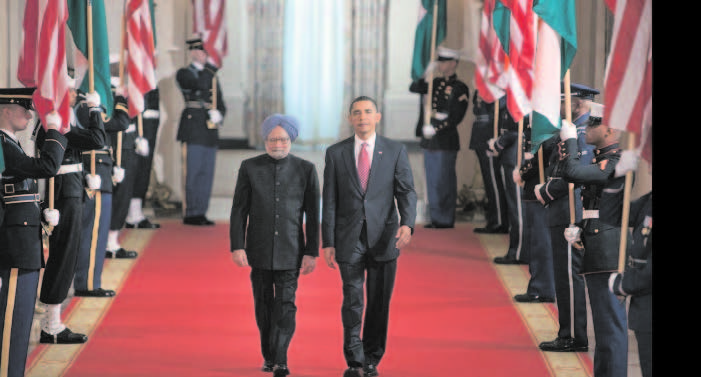
    India has been pushing for reforms in the UN and WTO with mixed results. India’s candidature for a permanent seat at the UN Security Council is currently backed by several countries including France, Russia,[50] the United Germany, Japan, Brazil, Australia and UAE. In 2004, the United States signed a nuclear co-operation agreement with India even though the latter is not a part of the Nuclear Non- Proliferation Treaty. The US argued that India’s strong nuclear non-proliferation record made it an exception, however this has not persuaded other Nuclear Suppliers Group members to sign similar deals with India. During a state visit to India in November 2010, US president Barack Obama announced US support for India’s bid for permanent membership to UN Security Council as well as India’s entry to Nuclear Suppliers Group, Wassenaar Arrangement, Australia Group and Missile Technology Control Regime.

  • IM PLANS TO USE ‘STICKY BOMBS’ ON OIL TANKERS

    IM PLANS TO USE ‘STICKY BOMBS’ ON OIL TANKERS

    NEW DELHI (TIP): The Indian Mujahideen is planning to turn oilcarrying tankers into fireballs using magnetic explosive device for spectacular strikes, counter-terror officials familiar with the revelations made by the terror outfit’s top operative, Yasin Bhatkal, have told HT. “Bhatkal has revealed that the plan is to convert an oil-carrying goods train into a mega-bomb,” a counter terror official told HT requesting anonymity. “Once one wagon explodes due to an IED (improvised explosive device) blast, other wagons will also blow up, turning the goods train into a big firestorm.” One can easily imagine the devastation such a train bomb would cause at a busy railway station, the official said. Sticky bombs are sophisticated, hard to detect and more lethal than IEDs. Used extensively to devastating effect in Afghanistan and in Iraq during the latter part of US occupation, sticky bombs are rare to India.

    The only known instance is when an Israeli embassy car was badly damaged in the Capital on February 13, 2012 after a sticky bomb stuck on the rear of the vehicle went off, injuring four people. The IM, sources said, had already conducted initial experiments when Bhatkal and his aide, Asadullah Akhtar, were picked up by Indian counter-terror officials from Pokhra in Nepal and formally arrested at the Indo-Nepal border on August 29. Two IM operatives Tehseen Akhtar, alias Monu, and Waqas were preparing magnetic IEDs when their hideout in Mangalore, Karnataka was raided after Bhatkal’s arrest. “More than 50 magnets were found at the hideout. When Yasin was asked about the magnets, he revealed the whole plan – of fabricating the IEDs with magnets and sticking them on oil tankers.” The outfit was also planning to convert oil tanker lorries into ‘smaller’ bombs, said the official. Monu and Waqas are on the run. Security agencies last spotted Monu in Pushkar, Rajasthan, working as a tourist guide.

  • Nepal’s Maoists agree to join assembly, ending impasse

    Nepal’s Maoists agree to join assembly, ending impasse

    KATHMANDU (TIP):
    Nepal’s Maoists have agreed to join the country’s constituent assembly, ending a weeks-long impasse after they initially rejected the result of last month’s elections, a senior party leader said on December 22. “We have agreed to join the assembly and help draft a constitution” after other parties agreed to investigate alleged poll-rigging, senior Maoist official Narayan Kaji Shrestha told AFP. The Maoists, who were routed at the polls, threw the country into turmoil when they denounced alleged cheating in the November 19 elections, which were seen as key to completing a peace process after a 10-year civil war. Millions of Nepalis voted at the elections, hoping to instal a constituent assembly that would write a constitution and end years of political instability in the impoverished Himalayan nation. The Maoists, who dominated post-war elections in 2008, won just 80 out of 575 seats and came a distant third behind the Nepali Congress and Unified Marxist-Leninist parties.

  • Pope is Time’s person of the year, gay activist runner-up

    Pope is Time’s person of the year, gay activist runner-up

    WASHINGTON (TIP): At a time India’s Supreme Court ruled, in effect, that consensual homosexual engagement in India is illegal, Time magazine has chosen Edith Windsor, the pioneering American lesbiangay rights activist, as its Person of the Year runner-up. The Person of the Year is Pope Francis, who himself has been more understanding of same-sex relationship. Windsor, who is now 84, showed America and the world that love is not limited by gender, much less age. At 77, she married her long time partner Thea Clara Spyer, with whom she had lived in New York City for nearly 45 years, after they found the latter was suffering from a debilitating heart condition.

    When Spyer died in 2009, Windsor, then 80, inherited her property. But the US government did not recognize the marriage under a 1996 law, as a result of which the Internal Revenue Service declined to treat Windsor as a surviving spouse and slapped a tax bill of about $360,000 that a spouse in an opposite-sex marriage would not have had to pay. Windsor sued, and in a cascade of rulings that followed, leading up to a landmark Supreme Court ruling in 2012, same-sex marriages came to be recognized as a legal union in many states. Windsor’s fight against the so-called DoMA ( Defense of Marriage Act), which outlawed same-sex unions, came at time when a majority of Americans — for the time in history, according to Gallup — supported legalizing gay marriage.

    It is uncertain whether a similar sentiment exists in India, or if the current imbroglio will engender such feelings in a country that has been historically tolerant. But on Wednesday, following the SC ruling, there was a surge of sympathy and support for India’s discriminated L-G community from activists in the US, with hopes that the reversal will be temporary. “Today’s ruling is a setback. But it doesn’t take away from the fact that the recent past has seen promise for LGBTQ rights in not just India, but also other South Asian countries, including Pakistan, Bangladesh, and Nepal. We stand in solidarity with the brave activists in South Asia and worldwide who have taken such huge leaps in recent years and know they will continue the fight for equality in spite of the disappointment we all feel today,” said Sapna Pandya, President of the Washington DC based Khush.

    GROUNDBREAKING POPE
    In Sept, the Pope said the Vatican must shake off an obsession with teachings on abortion, contraception and homosexuality, and become more merciful. In July, he said he was not in a position to judge homosexuals who are of good will and in search of God.

  • PARADISE ON EARTH— DARJEELING

    PARADISE ON EARTH— DARJEELING

    Darjeeling conjures visions of snow peaks, serenity of vibrant green hills steeped in splendour, a land of breathtaking beauty crowned by the majestic Himalayas. Darjeeling is one of the most magnificent hill resorts in the world. This heavenly retreat is bathed in hues of every shade. Flaming red rhododendrons, sparkling white magnolias, miles of undulating hillsides covered with emerald green tea bushes, the exotic forests of silver fir – all under the blanket of a brilliant azure sky dappled with specks of clouds, compellingly confounds Darjeeling as the QUEEN OF HILL STATIONS. The crest of Kanchenjunga shining in the first dawn light truly supports the title. Darjeeling beckons thousands today for a leisurely respite from the bustle of the madding crowd. The traveller – whether a tourist or a trekker, an ornithologist or a photographer, a botanist or an artist – will find in Darjeeling an experience which will remain etched in the memory – forever.


    23

    Toy Train (DHR)
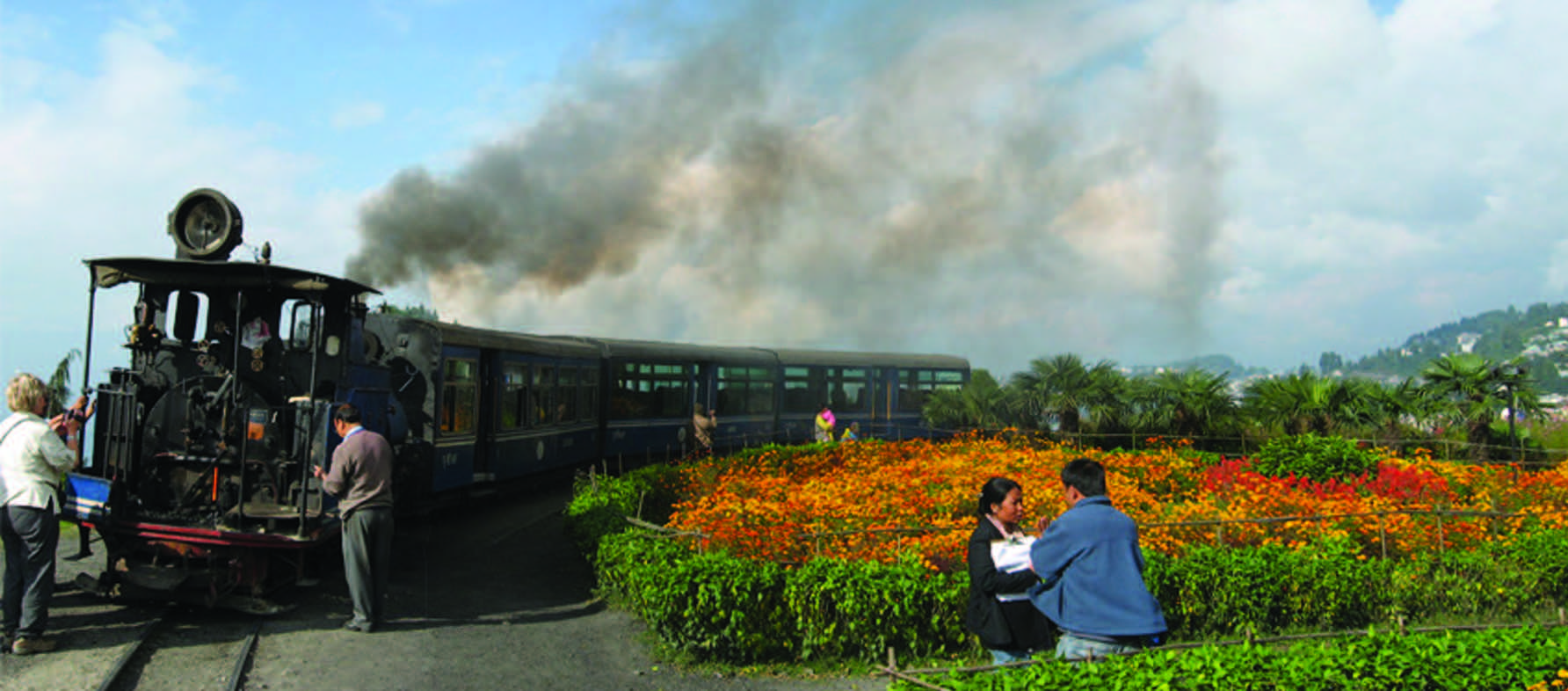
    Darjeeling Himalayan Railway (DHR), popularly known as the ‘Toy Train’ is one of the main attractions of the region. The track on which the train runs is only 600 millimeters wide. The size of the train is commensurate giving it the name `Toy Train`. Narrow Gauge trains are used in parts of India to travel to hill stations. The total area of the Narrow Gauge in India is about 4500 kilometers. Arguably, the most magnificent train journeys through the narrow gauge are the 88 kilometers through the gorgeous terrain to Darjeeling from Siliguri. UNESCO has declared the DHR as a World Heritage Site.

    Trekking
    Trekking in the Darjeeling Hills began almost a century ago. In fact, the first organised trekking route in India was setup here along the Sangalila range. The trek begins in Darjeeling and proceeds through Maneybhanjyang, Tonglu, Sandakphu and ends in Phalut. There are trekker huts under the management of Darjeeling Gorkha Hill Council Tourism Department all along the route to Sandakphu. For further information contact, Tourist Bureau, Darjeeling.

    Water Rafting
    The White Water Rafting on the river Teesta & Rangeet (Triveni), the scenic beauty of the banks, surrounding hills, its flora & fauna and sighting of several varieties of fishes is simply enchanting. A river trip is often an adventure. An amateur with a little sense of adventure can equally enjoy it.

    Birding Tours
    Eastern India is home to more than 850 species of birds and is considered as being the richest birding area in the country. The abrupt juxtaposition of many different biotopes or life zones – ranging from almost plains level to over 6000m, and from tropical heat to arctic cold, has given to the Eastern Himalayas a flora and fauna that for richness and variety is perhaps unequalled in the world. Sheltered in the rain-shadow lie dry practically rainless valleys adds to the ecological complexities of the jumbled habitats and make the area rich in birds, plant and insect life.

    Anybody who wants to start birding in the north-eastern India, could find birds such as the Eurasian Cuckoo, Oriental Cuckoo, Himalayan Griffon, Common Kestrel, Yellow-billed Blue Magpie, Greychinned Minivet, Yellow-bellied Fantail, Plain-backed Thrush, White-collared Blackbird, Eurasian Blackbird, Asian Brown Flycatcher, Rufous-gorgeted Flycatcher, Little Pied Flycatcher, Orangeflanked Bush Robin, Golden Bush Robin, Aberrant Bush Warbler, Yellowish-bellied Bush Warbler, Buff-barred Warbler, Greyhooded Warbler, White-throated Laughingthrush, Scaly Laughingthrush, Scaly-breasted Wren Babbler, Rufouscapped Babbler, Red-billed Leiothrix, Bluewinged Minla, Gould’s Shortwing, Goldenbreasted Fulvetta, Rufous-winged Fulvetta, Stripe-throated Yuhina, Black-throated Parrotbill, Green-tailed Sunbird, Firetailed Sunbird, Rufous-breasted Accentor, Maroon-backed Accentor, Dark-rumped Rosefinch, Gold-naped Finch. Tours are offered covering the best birding areas in Lava, Neora Valley National Park, Darjeeling, Tiger Hill, Sandakphu, Singalila National Park, etc.

    Butterflying Tours
    Eastern India is home to more than 1200 species of butterflies and is considered as being the richest butterflying area, not only in our country but in the entire oriental region. Butterflying Tours are offered covering the best possible areas to: Lava, Neora Valley National Park, Darjeeling, Tiger Hill, Sandakphu, Singalila National Park.

    How to Reach
    Darjeeling is well connected to Rest of India & Kolkata by air, road and train. AIR SERVICE: The nearest airport to Darjeeling is Bagdogra about 94-96 kms away from Darjeeling. There are direct flight connections with Delhi, Calcutta and Guwahati. Tourists heading for Darjeeling can get direct taxis/cabs to Darjeeling from Bagdogra or one can head towards Siliguri first and get a transport there. There are a number of transport facilities available from Siliguri – one can reserve a taxi or choose to go by paying per head (Rs. 80 – this varies from time to time) from the Bus Junction area. TRAIN SERVICE: Apart from Darjeeling Railway Station the two closest railway stations are Siliguri (80 kms) and New Jalpaiguri (88 kms) from Darjeeling. These railway stations have direct railway connections with Kolkata, Delhi, Guwahati, Varanasi and other major cities of India. ROAD SERVICE: The major access to Darjeeling by road is via Siliguri, which is connected to all the major cities. Darjeeling is also very well connected to Sikkim, Nepal, Bhutan and its surrounding hills. LOCAL TRANSPORT: Taxis of different models are available for sightseeing in and around Darjeeling at fixed rates. Ponies can also be availed at Chowrasta for local sightseeing.

  • Nepal Maoists demand postponement of vote counting

    Nepal Maoists demand postponement of vote counting

    KATHMANDU (TIP): Nepal’s Maoist party demanded a postponement in vote counting early Thursday, alleging conspiracy after tentative results showed them trailing in polls seen as key to cementing a postwar peace process. “Due to the conspiracy and unusual activities during the constituent assembly elections, counting did not go ahead as per people’s expectations and opinions, therefore, we demand that the vote counting be postponed,” the Maoist party said in a statement.

  • Nepal elections pass off peacefully

    Nepal elections pass off peacefully

    BIRGANJ (NEPAL) (TIP): Nepal went to polls on November 19 with over 50% of the electorate casting their votes till noon to elect the Constituent Assembly of the country hit by political stalemate, Maoist threats and violence. According to information received from the Election Commission, more than 50 per cent polling was reported on an average across Nepal till 1pm.

    The polling in Parsa district in Tarai region started at snail’s pace amid high security across the region which will decide the fate of 211 candidates of different political parties. Overall, more than 50% votes were polled in the district till 2pm, according to CDO of Parsa, Kailash Kumar Bajiman. He said election passed off peacefully. Madhesi voters lined up outside Vanijya Karyalaya polling centre in Birganj town without any fear as some parties had called for poll boycott. One Gauri Shankar Shresth (71) went inside the booth and met a natural death immediately after casting his vote.

    At Sirisiya in rural Parsa, a large number of women voters stamped their ballots. In this election, ballot papers are being used for the first time by Nepal election commission. Sarita Gurung, a young Madhesi woman teacher, said she voted in favour of a particular party because the Madhesi movement leaders were divided in a dozen factions and they failed to protect the interest and identity of Madhesis in Tarai region. She also said majority of Tarai voters were inclined towards CPN-UML and the Congress whose leaders, including Pushpa Kamal Dahal, known as Prachanda, admitted during campaign that no political equation was possible without Madhesis.

  • Nepal: Prachanda suffers defeat Maoists rejects elections

    Nepal: Prachanda suffers defeat Maoists rejects elections

    KATMANDU (TIP): The leader of Nepal’s Maoist party, who appears to have lost in this week’s national election, demanded on November 21 that the vote counting be stopped because of what he called massive irregularities. The irregularities occurred during transporting of ballot boxes and also during the counting, saidPushpa Kamal Dahal, better known as Prachanda, leader of the United Communist Party of Nepal Maoists.

    “We are demanding an immediate stop to the vote counting and an independent probe into the allegations,” Dahal said, adding his party could boycott the constituent assembly if its demands are not addressed. He said the party has reports of ballots boxes being hidden for hours, and of ballot boxes being switched while being transported to counting centers, and that several boxes had gone missing. Prachanda’s statement came as election officials announced that he lost in a Katmandu constituency, coming in third in what had been thought to be a Maoist stronghold.

    Prachanda lost by a huge margin in Katmandu’s No. 10 constituency but he is also contesting from Siraha in southern Nepal where he appear to be strong contender. It is not against the rules and common for top politicians to contest in two seats to boost their chances of winning. So far only two seats have been announced and both were won by Nepali Congress partycandidates, while initial counting in other districts showed that the Maoists were trailing the Nepali Congress party and the Communist Party of Nepal (United Marxist-Leninist). The Maoist party won the largest number of votes in the last election in 2008. Chief election commissioner Neel Kantha Upreti said there were no plans to stop the vote counting.

    The Maoists are former communist rebels who fought government troops between 1996 and 2006. They gave up their armed revolt, joined a peace process and mainstream politics, and their fighters have joined the national army. The constituent assembly, which was set up as part of the peace process, was first elected in 2008 but failed to complete the task of writing a new constitution. Tuesday’s election was to elect a new assembly to attempt again at writing a constitution. More than 70 percent of the 12 million eligible voters cast their votes during Tuesday’s election to choose the 601-member constituent assembly that would double as the parliament.

    Final election results will take at least a week. None of the political parties is predicted to win a majority and a coalition government is likely, which could take days to form after the final results are announced. The last assembly, elected in 2008, failed to come up with a constitution because of squabbling among political leaders over who got to lead the nation. They also disagreed on creating a federal system divided by ethnic groups or by geography. The resulting power vacuum has left Nepal without a proper constitution for nearly seven years.

  • CELEBRATIONS AROUND THE WORLD

    CELEBRATIONS AROUND THE WORLD

    Diwali is also celebrated outside of India mainly in Guyana, Fiji, Malaysia, Nepal, Mauritius, Myanmar, Singapore, Sri Lanka, Trinidad & Tobago, Britain, Indonesia, Japan, Thailand, Africa, Australia and the US among the Hindus across the world.

    Britain
    The Indians are the second largest ethnic minority in Britain. To get rid of the feeling of missing their homeland, especially during festival times, the Indians here celebrate most of the festivals. The occasion is marked by visit to the local temple to worship the shrine of Lakshmi, which they have made for Diwali. Eating special sweets, burning of incense sticks, lighting the home and surroundings and the blowing of the conch shell follows the prayer session in the Lakshmi temple. The festival here is celebrated according to the Hindu solar calendar hence it falls in the months of October-November, amongst the cold, damp and windy months in Britain. Still the enthusiasm of the festival celebration makes the task of leaving small lamps on windowsills or by open doorways possible ignoring the chill. The lamps and diyas play their part in maintaining the atmosphere of Diwali at home.

    Guyana
    Guyana, formerly known as British Guiana, is located on the northeast coast of South America. Guyana is 82,978 square miles in area and has a population of about 7,70,000. Hindus constitute 33% of Guyana’s total population. The Co-operative Republic of Guyana in Southern America celebrates Diwali according to the Hindu Solar calendar. The day of the festival is declared as a national holiday in the official calendar of Guyana. The tradition of celebrating the festival is believed to have been brought to Guyana in the year 1853 by the first indentured people from India.

    The legends related to the festival are similar to that of India. The celebration of the festival includes, distribution of sweets, illuminating the inside and outside of the house, exchange of greetings, cleaning of houses and wearing of new clothes. The celebrations hold special significance for the people of Guyana. The distribution of sweet signifies the importance of serving and sharing whereas exchange of greeting cards denotes the goodwill of each other.

    The sweets distributed mainly consist of pera, barfi, and kheer. The tradition of wearing new cloth for the people of Guyana is significant especially in this festival. They believe that wearing new cloth is the symbol of healthy souls in healthy bodies. Cleaning of their homes and keeping them well illuminated in and outside is a practice meant to illuminate the road for Goddess Lakshmi so that while goddess Lakshmi visits their home she faces no problem of light as the Diwali night is regarded as the darkest night of the year.

    Indonesia
    The name Indonesia came from two Greek words: “Indos” meaning Indian and “Nesos” meaning islands. The majority of population follows Islam. Hindus constituent about 2% of Indonesia’s total population. However, the Indonesian island of Bali is famous for celebrating the festival of Diwali, as a majority of the population here is that of Indians. It is one of the most revered festivals of the locals here. The celebration and rituals of the festival is mostly similar to that celebrated by their counterparts in India.

    Malaysia
    Fascinating in its diversity, Malaysia has many mesmerizing charms and attractions. With a population of about 20 million, comprising of a harmonious multi-ethnic mix of Malays, Malaysia promises a colorful potpourri of cultural traditions. Most are based on the various religious practices, beliefs and traditions influencing the costumes, festivals, ceremonies and rituals. The Hindu community of Malaysia constitutes about 8% of its total population .The community celebrates Diwali as a symbol of triumph of good over evil. The Malaysian people call Diwali as Hari Diwali.

    This festival is celebrated during the 7th month of the Hindu solar calendar. The south Indian traditional of oil bath precedes the festivities. The celebration includes visits to temples and prayers at household altars. Small lamps made from clay and filled with coconut oil and wicks are a common sight to signify the victory of Lord Rama, the hero of the Hindu epic Ramayana, over the demon king Ravana. Diwali is celebrated almost all over the Malaysia except in Sarawak & Federal Territory of Labuan.

    Mauritius
    Mauritius is an island in the Indian Ocean that lies to the east of Madagascar. This beautiful landmass is full of picturesque landscapes and enchanting spots. Mauritius accounts a 63% of Indian majority of which 80% follow Hinduism. Hence, celebration of almost all the Hindu festivals in this island is a common phenomenon. In Mauritius, Diwali celebration is an age-old tradition. It holds special significance for the natives, who believe that Diwali has been celebrated even long before the return of Lord Rama from 14 years of exile and his coronation as the king. The festival is marked by lightening of earthen lamps in rows making images out of the rows. Lakshmi is worshiped as the goddess of wealth and crackers are burnt to scare away evil spirits.

    Nepal
    Nepal is a landlocked country nestled in the foothills of the Himalayas. Nepal, a multi-ethnic and multi-lingual society is the only Hindu Kingdom of the world. Diwali is celebrated here with the usual Hindu festivities and rituals. Diwali in Nepal is known as Tihar. Just like most places in India Diwali is celebrated here to honor the goddess of wealth and god of prosperity Lakshmi and Ganesh respectively. The festival of light falls in the months of October or November on the day of Amavasya – the darkest day of the year. The festival here continues for five days. Every day has its special significance. The first day is dedicated to cows as they cook rice and feed the cows believing that goddess Lakshmi comes on cows. The second day is for Dogs as the Vahana of Bhairava.

    Preparation of delicious food especially meant for the dog is a typical characteristic of the day. Lights and lamps are lit to illuminate the entire surrounding and some of the specialty items are prepared to mark the third day of the festival. Fireworks, Lamps and crackers are widely used. The fourth day is dedicated to Yama, the Hindu God of Death. He is prayed for long life. The fifth final day is Bhhaya Dooj dedicated for the brothers who are wished long life and prosperity by their sisters.

    South Africa
    South Africa is located at the southern tip of the continent of Africa. It is a mix of cultures and has one of the largest immigrant Indian communities in the world. The country has almost one million immigrant Indians. Most of these Indian immigrants are concentrated in the eastern regions of Natal and Transvaal of the country. About 65% of Hindus, 15% of Muslims and 20% of Christians live in this area. Due to the majority of the Hindu population, a number of Hindu festivals are celebrated here. Diwali also holds an important place in the festival calendar of the region. The celebration is more or less same to that in India. Most of the Hindus here are from Gujarat and Tamil Nadu and continue to follow their regional variations of Hinduism.

    Trinidad & Tobago
    Trinidad is the most southern of the Caribbean islands, lying only seven miles off the Venezuelan coast, is one of the most exciting, colorful islands of the West Indies. Considered as the land of the Humming Bird, Trinidad and Tobago has a good number of Indian population. For that reason, Hindu festivals, customs, traditions and observances forms an integral part of the society, which comprises the unique beauty of the twin island state. The Diwali celebration has a unique flavor here in the Caribbean island nation. Here 43 per cent of the 1.3 million populations are ethnic Indians. The Diwali celebrations are usually marked as an occasion to unify the nation that consists of Hindus, Muslims, Christians, Indo-Trinidadians and Afro- Trinidadians.

    The festival day is regarded as a national holiday. The festival is also marked by scores of functions besides the usual rituals of the festivity. The functions and celebrations also have an official imprint as the Ministers of the Government also participate in the celebrations sometimes. The belief behind the festival is same as of India, which is, prevalence of good over evil. The celebrations continue for over a week and the headquarters of the National Council of Indian Culture at Diwali Nagar becomes the focal point.

    America
    Diwali is one of the biggest Hindu festivals celebrated among many people and communities in the United States. Many schools, community groups, Hindu associations, Indian organizations and corporate businesses get involved in celebrating Diwali. Politicians, including governors and past presidents, previously made public announcements expressing their greetings and well wishes to Hindus on Diwali. Many Indian stores sell jewelry and traditional outfits, such as chiffon saris, as well as statues of Hindu deities and incent sticks used in prayer around this time of the year. Many women and girls use mehendi, which is a temporary henna decoration, on their palms. It is also common to wear fine jewelry and silk outfits to celebrate this joyous festival.

  • The Essence of Diwali

    The Essence of Diwali

    The DFW Indian Cultural Society’s mega event-the Diwali Mela- is being organized on November 2 at Cotton Bowl. It will be the 8th super mela in a row. As our tribute to the grand event, we bring to our readers an article on Diwali specially written for The Indian Panorama by Mike Ghouse, a noted literateur and journalist. Read on.


    img8

    Diwali is the Indian festival of lights and is celebrated on a large scale throughout India and the Indian Diaspora. It is also celebrated in Nepal, Sri Lanka, Myanmar, Bangladesh, Malaysia, Singapore, Guyana, West Indies, Fiji, and of course, here in the United States. Thanks to the Gupta’s for placing Dallas on the World Map of Diwali Celebrations.

    I believe it is one of the biggest celebrations in the United States, if not the biggest in the western Hemisphere. Ramesh Gupta initiated the event eight years ago, fully supported, encouraged and funded by the Dallas billionaire couple Satish and Yasmin Gupta.

    DFW Indian Cultural Society (DFW ICS) made its debut on the Dallas scene with the very first “Diwali Mela 2006”, which drew over 38,000 people to Texas Stadium. . Attendance has been increasing every year and is currently at an impressive figure of over 70,000. Diwali Mela has become an annual signature event for DFW IC


    img10
    The inauguration of an earlier Diwali Mela

    DFW ICS has a strong commitment to the community which is reflected in the variety projects that it has undertaken, such as organizing the Diwali Mela, entertainment programs, sponsoring the Medical Clinics in Plano and Lewisville, for the uninsured and has recognized the contribution of teachers to the community by giving cash rewards.

    DFW ICS has supported multiple non-profit organizations throughout metropolis. Under the leadership of Satish Gupta, DFW ICS is moving forward by organizing various programs and dedicating itself to serving the needs of the communities in the Dallas Fort Worth area


    img9
    Huge gathering in Cotton Bowl

    Nearly 50,000 people attend the event. First it was held in Texas Stadium, former home of the Dallas Cowboys and now it is held at the Cotton Bowl Stadium in Fair Park, Dallas, where college football is played and home to Texas State Fair. There is nothing like it.

    Satish Gupta, president of the organizations writes this information on their website, http://www.dfwdiwalimela.com/, “This year again we have decided to pack all the fun for children, youth, adults and seniors. From Ram Leela and Bollywood singers to spectacular fireworks, elephant rides to slides, Cultural dances to mouth watering Indian food, all packed in one of the biggest Carnival of its kind in America. There will be three elephants and two camels available for the rides this year! We bring all this to you at a very minimal cost to you.”


    img11
    The moving spirit behind the Diwali Mela, Satish Gupta, President of DFW Indian Cultural Society

    “The large number of people the Carnival attracted in the past years is a testimony to its success. The number of attendees keeps growing and it presents an important platform for a quick reach to the Asian Community of Dallas Fort worth and the nearby cities of Texas.

    We would like to thank all our Sponsors who support us in this huge task. The purpose of this message is to request you to come with your family and friends and make the event a grand success. Your participation will go a long way in promoting our culture to the kids and youths of our community.” Diwali is spelled differently, and is called by many names.

    There is Divali among others, and Deepavali, meaning the festival of lights. Although Diwali is a Hindu tradition, people of all faiths participate in celebrations – Hindus, Jains, Muslims, Sikhs, Christians, Buddhists, Zoroastrians and others. People decorate their homes with lights and Rangoli, i.e., colorful drawing in the front yard of the home, sidewalks, even roads in India with colorful powders or colorful pieces of chalk.

    Women and Children look forward to express their artistic talent in this season. Their surroundings filled with colorful lights to enliven the day, to mark the dawn of a new era in one’s life. My childhood is filled with good memories of Diwali; the sparklers, the food and everything joyous you can imagine.

    A few years ago, Jyoti and Nishi Bhatia, former President of DFW Hindu Temple and President of Dallas Hindi Association respectively, asked me to speak about Diwali in a dinner gathering to a group of people from different faiths and cultures, and I cherished it, I love talking about Diwali, as its essence reflects the ideals of pluralism, and symbolizes hope and positive energy, victory of good over evil; a new beginning.

    It is indeed seeing the light at the end of tunnel. Diwali Celebration is a part of the epic Ramayana, and the Ram Lila is played out all night long in towns across India. I grew up watching it in front of my house, and my friends played different roles in the show. Indeed, one of my former relatives played Hanuman’s role.


    img12
    Ramayan being enacted

    It was a challenge for me to teach Ramayana to a group of people who knew nothing about it. It turned out to be a successful program. I prepared the nearly all white audience that I will be narrating the story through the power point and along will be reinforcing the names and roles of the key persons in the story and will ask them for feed back at the end.

    Friends, I cannot tell you the joy, the Bhatias and I felt when each one of them answered the questions from the story. They got it! It is a powerful story and takes about 30 minutes to narrate. The epic is filled with educative tales, edifying poems, and fables. It is probably through their constant retelling in the villages over centuries that Hinduism is most efficiently disseminated from generation to generation


    img13
    Ravana’s effigy is set on fire

    Whenever a society rots with adharma (wrong path), where no one cares about the other, lying, stealing and dishonesty become rampant, Lord Krishna says, I will emerge among you and restore the righteousness and trust in the society to function smoothly.

    Zarathustra, Moses, Jesus, Buddha, Muhammad, Krishna, Nanak, Mahavira, Confucius, Tao and others served the same purpose… it is almost like the laws of physics ; water finds its own level, and righteousness finds its own existence. Rama is one such incarnation who reestablished the moral code for social conduct and proper relation of mankind to divinity. He was truthful and a just king. Diwali symbolizes hope and positive energy

    ● People wear new clothes
    ● Share sweets as a symbol of happiness
    ● Renew the relationships
    ● Strengthen the bonds It signifies a new beginning, starting out fresh.
    ● for most businesses it is the new financial year
    ● An inventory of assets is taken
    ● An assessment of family and relationship
    ● Last harvest for the farmers
    ● New things are bought

    President Obama in his message last Diwali said it perfectly,
    “Many who observe this holiday will light the Diya, or lamp, which symbolizes the triumph of light over darkness and knowledge over ignorance.

    As that lamp is lit, we should all recommit ourselves to bring light to any place still facing darkness. Earlier this year, we were reminded of the evil that exists in the world when a gunman walked into the Sikh Gurdwara in Oak Creek, Wisconsin and opened fire.

    In the wake of that horrible tragedy, we saw the resilience of a community that drew strength from their faith and a sense of solidarity with their neighbors, Sikh and non-Sikh alike. We also saw compassion and love, in the heroic actions of the first responders and the outpouring of support from people across the country. Out of a day of sadness, we were reminded that the beauty of America remains our diversity, and our right to religious freedom. To those celebrating Diwali, I wish you, your families and loved ones Happy Diwali and Saal Mubarak.”


    img14

    Today, on this blessed day, we have a blank slate to start, let’s plan on filling it with doing good things for ourselves, to our family, friends, community, nation and the world until next Diwali. What are good things? Words and actions that bring peace, Mukti, salvation, Moksha, nirvana, Nijaat and freedom to us, yes us.

    There is so much of joy waiting to be had. If we can remove hatred and anger towards others, forgive others and ask for forgiveness (Michami Dukadam is a beautiful phrase the Jain’s use), then a blissful year is sure to come for each one of you and me.
    ● May this Diwali purge your heart, mind and soul from hate, malice, anger and ill-will;
    ● May this Diwali open your hearts and minds towards fellow being;
    ● May this Diwali brighten your life, and may this Diwali mark the dawn of a new era; Muslims are a big part of Diwali as well, and innumerable poets have written poetries and songs about Diwali.

    Here is my effort, I wrote this seven years ago on the occasion when Diwali and Ramadan were celebrated around the same time.

    A meri diwali hai, a meri eid hai donon may khushi hi khushi hai Diwali say naya saal shuru hota hai Ramzan ek naya insaan banata hai Diwali may ek baat ka hisab hota hai Ramzan may her baat ka review hota hai Diwali nayay saal ke liye clean slate deta hai Ramzan pichlay saal ki slate clean karta hai Baat hi baat may, my nay a sher likh diya Sahir Diwali aur Ramzan say subka acha hi hota hai Shubh kamnaein | Diwali Mubarak | Blessed Diwali. Happy Diwali to you my friends, may this Diwali bring happiness, serenity and peace to you. Amen!